Communication

Monoclonal Human Antibodies That Recognise the Exposed N and C Terminal Regions of the Often-Overlooked SARS-CoV-2 ORF3a Transmembrane Protein
1
Scottish Biologics Facility, Institute of Medical Sciences, School of Medicine, Medical Sciences and Nutrition, University of Aberdeen, Foresterhill, Aberdeen AB25 2ZP, UK
2
Aberdeen Fungal Group, Institute of Medical Sciences, School of Medicine, Medical Sciences and Nutrition, University of Aberdeen, Foresterhill, Aberdeen AB25 2ZD, UK
*
Authors to whom correspondence should be addressed.
Viruses 2021, 13(11), 2201; https://doi.org/10.3390/v13112201
Submission received: 24 September 2021 / Revised: 15 October 2021 / Accepted: 29 October 2021 / Published: 2 November 2021
(This article belongs to the Section SARS-CoV-2 and COVID-19)

Abstract

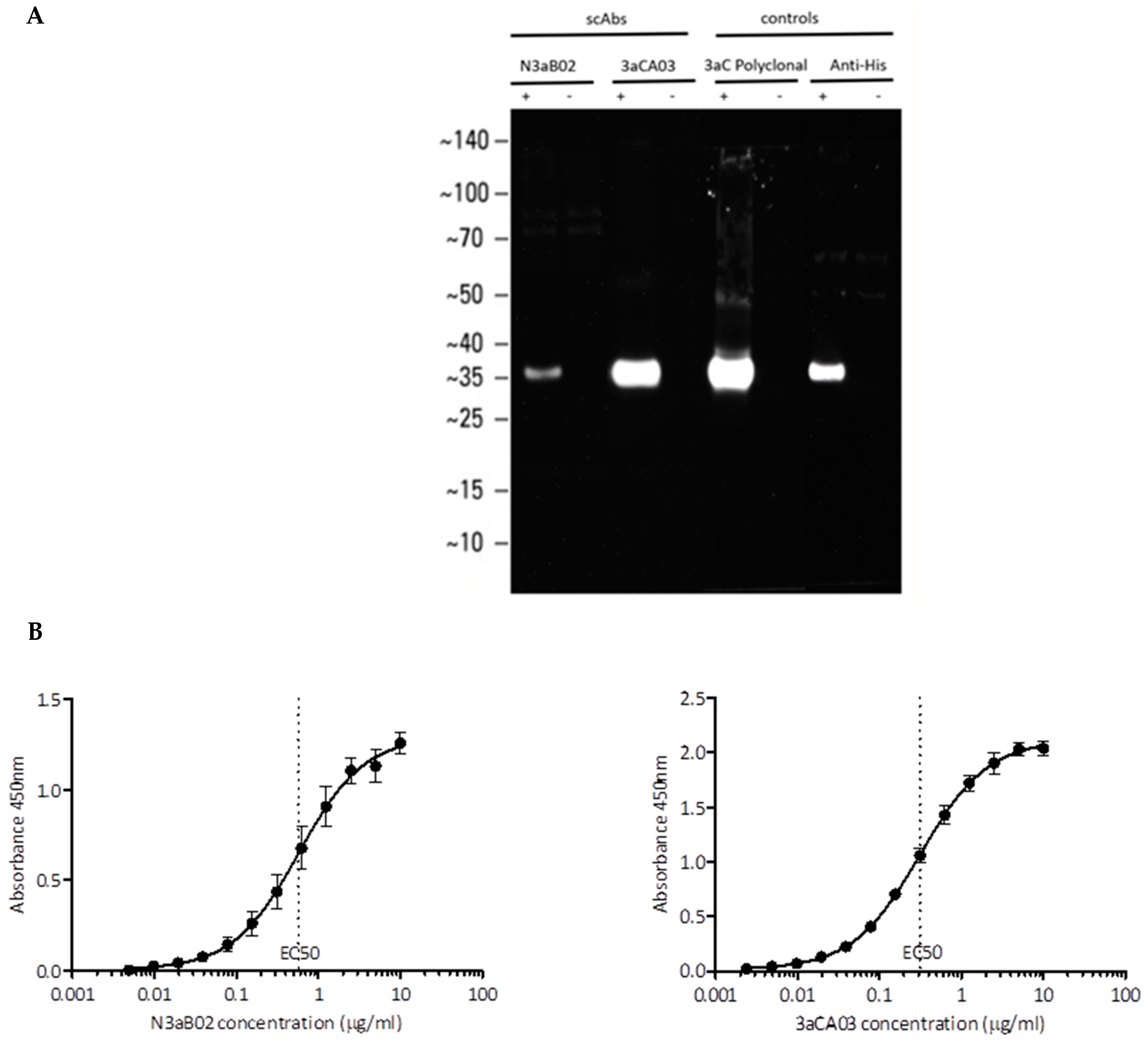
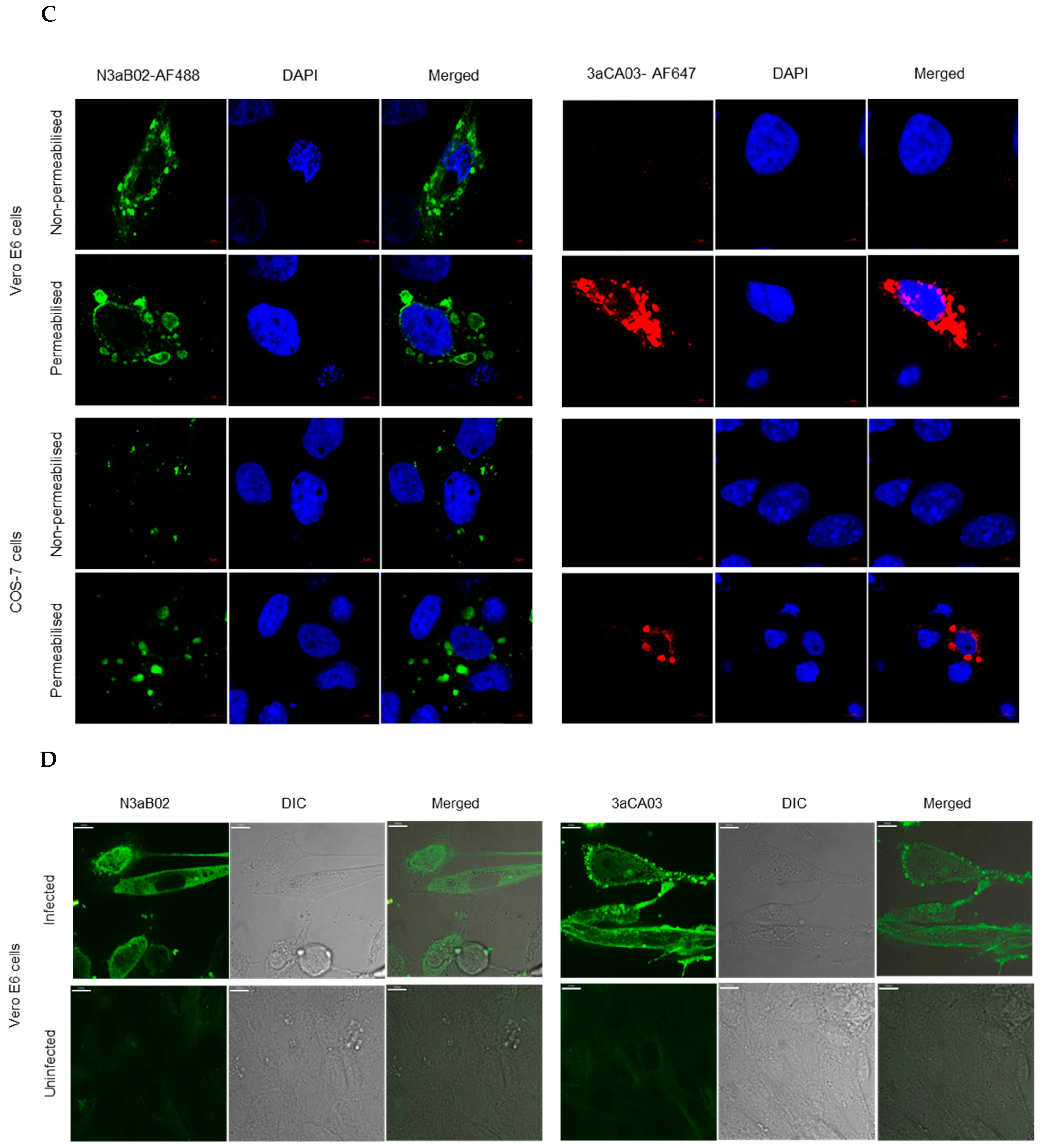
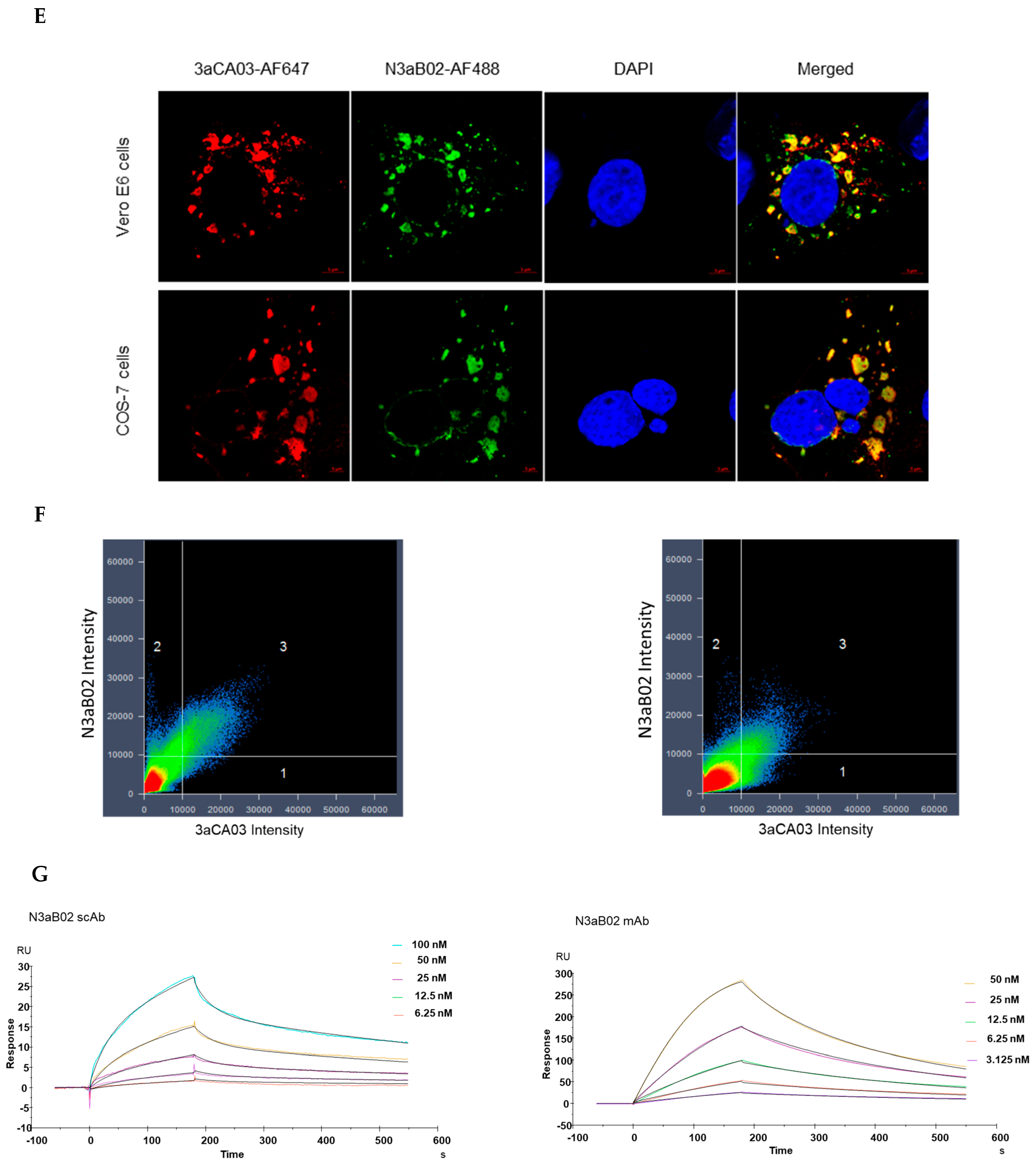
ORF3a has been identified as a viroporin of SARS-CoV-2 and is known to be involved in various pathophysiological activities including disturbance of cellular calcium homeostasis, inflammasome activation, apoptosis induction and disruption of autophagy. ORF3a-targeting antibodies may specifically and favorably modulate these viroporin-dependent pathological activities. However, suitable viroporin-targeting antibodies are difficult to generate because of the well-recognized technical challenge associated with isolating antibodies to complex transmembrane proteins. Here we exploited a naïve human single chain antibody phage display library, to isolate binders against carefully chosen ORF3a recombinant epitopes located towards the extracellular N terminal and cytosolic C terminal domains of the protein using peptide antigens. These binders were subjected to further characterization using enzyme-linked immunosorbent assays and surface plasmon resonance analysis to assess their binding affinities to the target epitopes. Binding to full-length ORF3a protein was evaluated by western blot and fluorescent microscopy using ORF3a transfected cells and SARS-CoV-2 infected cells. Co-localization analysis was also performed to evaluate the “pairing potential” of the selected binders as possible alternative diagnostic or prognostic biomarkers for COVID-19 infections. Both ORF3a N and C termini, epitope-specific monoclonal antibodies were identified in our study. Whilst the linear nature of peptides might not always represent their native conformations in the context of full protein, with carefully designed selection protocols, we have been successful in isolating anti-ORF3a binders capable of recognising regions of the transmembrane protein that are exposed either on the “inside” or “outside” of the infected cell. Their therapeutic potential will be discussed.
Keywords: SARS-CoV-2; ORF3a; viroporin; recombinant antibodies; anti-ORF3a mAbs SARS-CoV-2; ORF3a; viroporin; recombinant antibodies; anti-ORF3a mAbs