Article

Forest Ecological Compensation and Forest Farmers’ Willingness to Accept: Evidence from Nanping, China

1
School of Economics and Management, Sanming University, Sanming 365000, China
2
School of Economics and Management, Beijing Forestry University, Beijing 100083, China
*
Author to whom correspondence should be addressed.
Forests 2026, 17(9), 1073; https://doi.org/10.3390/f17091073
Submission received: 24 July 2026 / Revised: 30 August 2026 / Accepted: 5 September 2026 / Published: 8 September 2026
(This article belongs to the Section Forest Economics, Policy, and Social Science)

Abstract

This study adopts the contingent valuation method (CVM), Logit model, and quantile regression to evaluate the compensation level of public welfare forests and identify the influencing factors of compensation standards from the perspective of forest farmers’ willingness to accept compensation. The results show that the forest farmers’ expected compensation standard ranges from 1034 to 1128 CNY·ha−1·year−1, more than three times the current official compensation standard. Based on forest farmers’ willingness to accept, the current forest ecological compensation level only reaches 30.6%–33.4% of the expected standard, which is insufficient to mobilize the enthusiasm of forest farmers for forest management and protection. Therefore, it is necessary to further raise the public welfare forest compensation standard and implement diversified compensation measures that adapt to the differentiated demands of forest farmers. In addition, analysis of zero-willingness samples reveals that poor policy cognition is the main reason for zero compensation bids among partial respondents, rather than the overall sample. A better understanding of ecological compensation policies can significantly promote farmers’ willingness to accept compensation, suggesting that targeted policy publicity should be strengthened to improve forest protection awareness and policy satisfaction among forest farmers. Furthermore, household age, annual household income, forestland area, forest management cost, and policy understanding degree are core factors affecting compensation willingness. Quantile regression results indicate that these influencing factors show heterogeneous effects at different compensation levels, which provides evidence for the formulation of differentiated compensation schemes. The robustness test and heterogeneity analysis further confirm the reliability of the research conclusions. This study provides a practical reference for governments to optimize forest ecological compensation policies, balance household welfare, and promote sustainable forest resource protection.

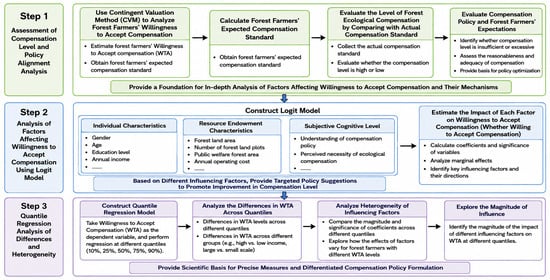
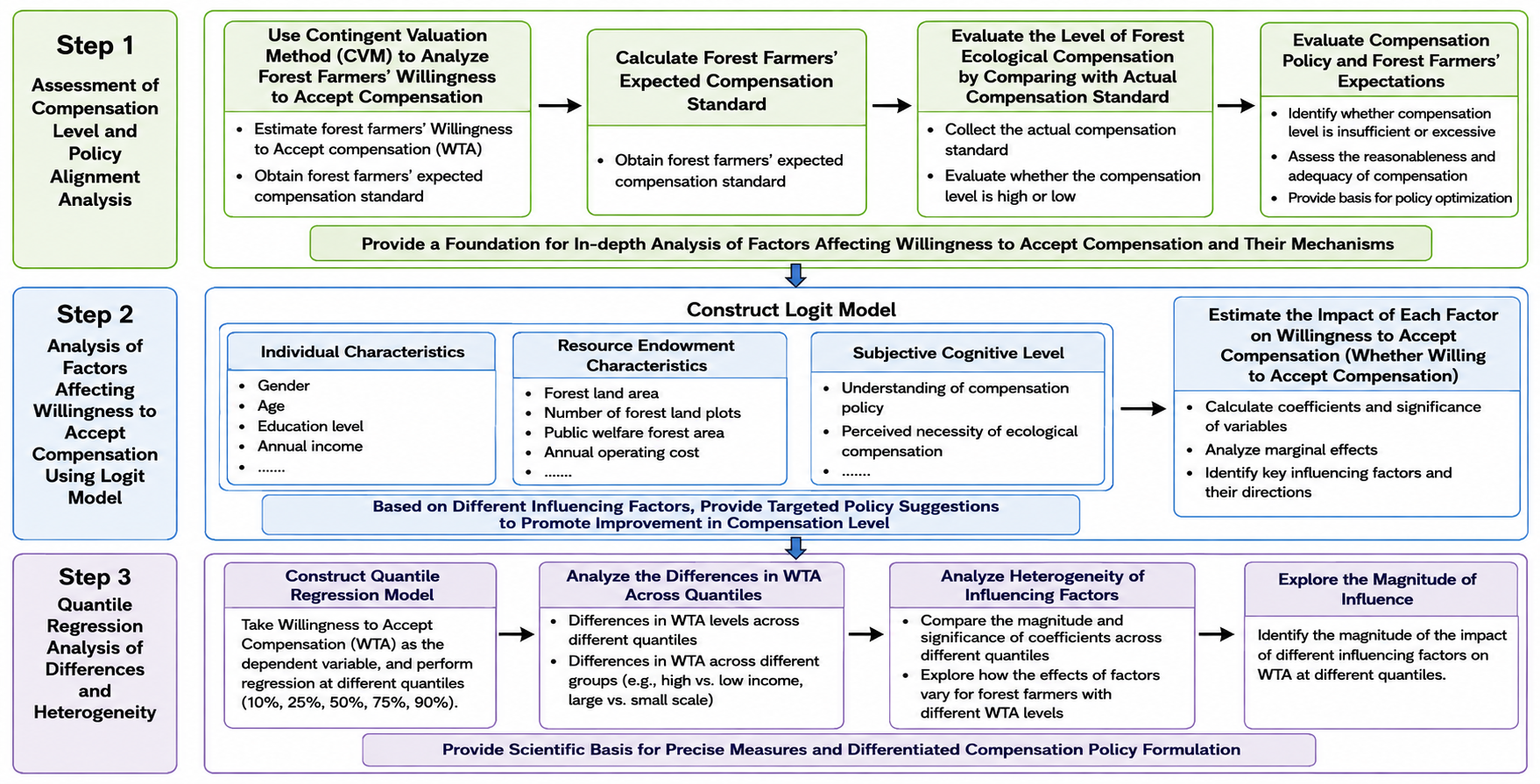
Graphical Abstract

1. Introduction

Ecological compensation is an important part of the ecological civilization system. Establishing and improving a forest ecological compensation mechanism allows beneficiaries to pay and protectors to receive reasonable compensation, which is conducive to the protection and rational use of forest resources and promotes sustainable ecological and economic development [1]. As an important natural resource, forest ecosystems not only provide an economic material supply function for timber and non-timber products [2] but also provide public welfare regulatory services such as clean water, biological carbon sequestration, soil and water conservation, windbreak, and sand fixation [3,4]. From the perspective of the economy and society, the protection of forest resources and the improvement of forest quality can be conducive to the development of forest ecological health and wellness, as well as new forms of understory economy such as planting and breeding under forests, thereby improving regional economic levels and achieving social benefits such as promoting local employment [5,6]. China’s current policy on public welfare forests aims to protect forest resources and limit the amount of timber harvested by forest farmers, resulting in lower incomes and higher costs for forest farmers. If ecological compensation policy is not implemented, the following challenges will be faced: the externalities of the forest ecosystem will be magnified, its social value will be much greater than the private value for forest farmers, the willingness of forest farmers to participate in ecological protection will be reduced, and the phenomena of excessive logging and destruction of forest ecosystems will reappear [7].
Although the ecological compensation projects that have been implemented in China have achieved certain results, the standard of forest ecological compensation is still determined according to the government’s financial situation and the cost of public welfare forest protection; therefore, there are still problems, such as insufficient compensation levels, poor policy effects, and low efficiency of compensation [8,9]. As the key to the implementation of the compensation policy, the determination of the ecological compensation standard can solve the existing compensation policy problems to a certain extent. Its calculation methods can be divided into three categories: benefit compensation, cost compensation, and willingness to pay [10,11]. The benefit compensation method is based on the calculated value of ecosystem services. It uses a market-oriented approach to solve the problem of compensating the interests of both the “upstream and downstream” [12]. The cost compensation method uses the direct or opportunity cost of protecting forest ecosystems as compensation criteria [13]. The willingness to pay approach evaluates payment criteria through surveying respondents’ willingness to pay or receive environmental products or services under different assumptions [14].
The compensation standards determined by the benefit compensation and cost compensation methods reflect the value of the resource itself or the value of its development, but may fail to reflect the actual needs of forest farmers. As participants and main stakeholders of the ecological compensation policy, the willingness of forest farmers to receive compensation will directly affect the downward implementation of the ecological compensation policy [15]. From the perspective of the market, if the cost of forest protection is higher than the compensation standard, it will lead to the excessive pursuit of short-term benefits, and the short-term effect will promote negative behaviors in forest farmers. Therefore, for determining whether the compensation standard formulated by the decision-maker is scientific and reasonable, the expected compensation standard of forest farmers needs to be considered; that is, the willingness of forest farmers to be compensated. The Contingent Valuation Method (CVM) is the most widely used and influential method for assessing the non-use value of environmental services [16]. In 1986, the US government codified the CVM as a method for resource assessment in regulations [17]. This method mainly uses direct inquiry to understand the respondents’ willingness to pay (WTP) and willingness to accept (WTA) regarding ecological and environmental protection. It is then used to estimate the economic benefits consumers obtain from consuming public goods [18]. In recent years, many scholars have applied this method to the field of ecological compensation to calculate the compensation standard, such as using the CVM to calculate the acceptable ecological compensation standard for residents in the river basin [19,20]. Some scholars have also used the CVM to measure farmers’ willingness to accept and pay for ecological compensation, using the latest data models to establish different types of compensation standards to quantify the coupling relationship between ecological compensation and ecosystem services [21]. The CVM has also been used for water offsetting [22] and payment for forest ecosystem services [23,24]. The above studies demonstrate the applicability of the method in the field of ecological compensation. Given the vast area of public-welfare forests in China and limited fiscal resources, this study intends to explore the minimum compensation amount acceptable to forest farmers, rather than the public’s maximum willingness to pay for forest ecological products. Therefore, from the perspective of willingness to be compensated, the compensation standard determined by the conditional value method reflects the minimum compensation amount that forest farmers can accept under the current socio-economic conditions.
Based on this, we calculated the expected compensation standard of forest farmers and manifested the current compensation degree by considering the individual differences of forest farmers, the heterogeneity of resource endowment, and the investigation of the individual cognitive behaviors of forest farmers. We further analyzed the factors affecting forest farmers’ compensation intentions to promote the optimization and improvement of forest ecological compensation policy. Based on the field survey data of 27 villages and towns in Jianyang County, Wuyishan County, and Shunchang County of Fujian Province, we used the CVM and Logit model to measure the standard range of forest ecological compensation that forest farmers can accept. We then evaluated the level of forest ecological compensation and considered the marginal utility of each influencing factor on the willingness to be compensated. This provides a reference for the formulation of a more reasonable forest ecological compensation system, helping to promote the protection and restoration of forest ecosystems, which is valuable in improving the ecological environment.

2. Theoretical Analysis and Framework

The Forest Law of the People’s Republic of China stipulates that public welfare forests and commercial forests shall be managed via classification, and forests on forest land with the main purpose of giving full play to ecological benefits shall be designated as public welfare forests. Therefore, the main purpose of the forest resources included in the scope of public welfare forests is to serve the needs of national ecological and environmental protection. The harvesting of timber by the main operators is restricted, resulting in a decrease in income and an inability to obtain a return on the cost of input. If there is no reasonable compensation and intervention for business entities, their willingness to participate in ecological protection will be reduced, and phenomena such as excessive logging and the destruction of forest ecosystems will re-emerge [7]. The current forest ecological compensation standard is based on administrative decisions and the government’s financial capacity, and the compensation standard is generally low [9]. As participants and main stakeholders of the ecological compensation policy, the willingness of forest farmers to receive compensation will directly affect the downward implementation of the ecological compensation policy [15]. Suppose the input cost of forest protection is higher than the compensation amount. In that case, it will lead to the excessive pursuit of short-term benefits, and the short-term effect will promote negative forest farmer behavior. The investigation of forest farmers’ willingness to be compensated is essentially the investigation and evaluation of the compensation standard, and it is found that a large proportion of forest farmers are dissatisfied with the current compensation standard; this indicates that the current compensation standard cannot reflect the actual needs of forest farmers. In this regard, it is necessary to respect the willingness of forest farmers to be compensated, study and analyze the level of the current compensation standard regarding forest farmers’ willingness to be compensated, and include it as a reference factor for formulating compensation standards to appropriately improve the compensation standard for public welfare forests. At the same time, the key factors affecting the willingness of forest farmers to be compensated can be discussed by integrating the individual characteristics, the resource endowment conditions, and the subjective cognitive level of forest farmers to provide more specific guidance for subsequent differentiated compensation.
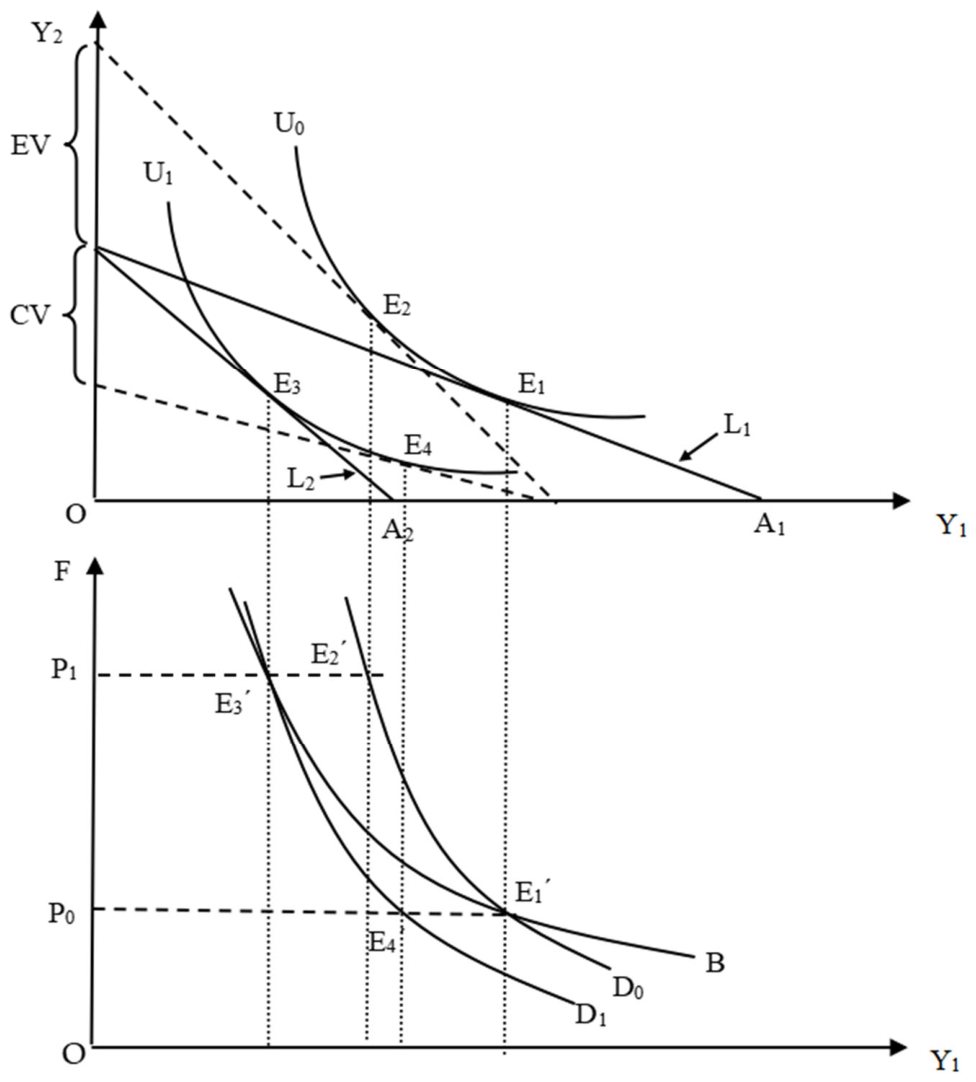
The operational structure of forest ecological compensation mainly includes the government, ecological protectors, and ecological beneficiaries [25]. Among them, the government is the main body of compensation and provides compensation funds, and forest farmers and other business entities act as ecological protectors to protect and manage forests. Therefore, if the implementation of forest ecological compensation can change forest farmers’ utility in managing commercial forests and public welfare forests, it can enhance the fairness and sustainability of the compensation system; that is, the willingness of forest farmers to be compensated is the minimum compensation to ensure that they maintain their utility before and after converting commercial forests into public welfare forests. In this study, the Hicks analysis [26] was used to measure the change in the effectiveness of forest farmers in participating in ecological compensation according to compensating variation (CV) and equivalent variation (EV). The forest resources managed by forest farmers are divided into two categories: public welfare forest management and commercial forest management, which correspond to environmental friendliness and resource utilization, respectively. After forest farmers convert commercial forests into public welfare forests, this act is conducive to improving the ecological environment. Still, management is limited, the opportunity cost of forest farmers is lost, and their economic benefits may be reduced. As shown in Figure 1, Y1 and Y2 represent the input of forest farmers’ forest land as commercial forest and public welfare forest, respectively. L1 and L2 represent the production possibility curve; U0 and U1 represent utility curves; B represents the budget curve; and D0 and D1 represent the Hicks compensation demand curve. If the utility level of the commercial forest is assumed to be E1 on U0, the following applies: the factor input to the forest land is reduced from OA1 to OA2, the reduced A1A2 is converted into ecological benefit, and the utility level of the forest farmer is reduced from E1 on U0 to E3 on U1. EV represents the minimum level of compensation required to restore the utility level of the forester from E3 to E1; that is, the amount of the forester’s willingness to be compensated. According to the Hicks compensation demand curve D0, the area of D0 and the longitudinal axis enclosing SE1′E2′P1P0 is the change in the utility level of forest farmers; that is, the magnitude of EV. Through the budget curve B, it can be seen that the area SE1′E3′P1P0 of the longitudinal axis is the increased cost of the utility level of forest farmers when restoring commercial forests, and it can also be understood as the opportunity cost of forest farmers operating public welfare forests. In the same way, it can be deduced that the beneficiaries of forest ecology are willing to pay for the ecological benefits of public welfare forests. Assuming that the initial utility level of forest ecological beneficiaries is E3 point on U1, the payment of compensation enacts the following: forest farmers change forest land from commercial forest to public welfare forest; the ecological benefits of forest land supply increase; and the utility level of ecological beneficiaries rises to the E1 point of U0 at the same time. At this point, CV can measure the maximum amount of compensation that forest ecological beneficiaries are willing to pay because of the increase in utility level brought about by the improvement of ecological benefits; that is, the willingness of ecological beneficiaries to pay and its size can be expressed by SE3′E4′P0P1.
In summary, it can be seen from Figure 1 that forest farmers’ willingness to be compensated (SE1′E2′P1P0), >opportunity cost of forest farmers’ loss in public welfare forests (SE1′E3′P1P0), >ecological beneficiaries’ willingness to pay (SE3′E4′P0P1). Therefore, in order to motivate forest farmers to protect and manage public welfare forests and ensure the effectiveness and sustainability of forest ecological compensation policies, it is necessary to give forest farmers compensation standards that are not lower than their willingness to be compensated.

3. Data Sources and Research Methods

3.1. Study Area and Data Sources

3.1.1. Study Area

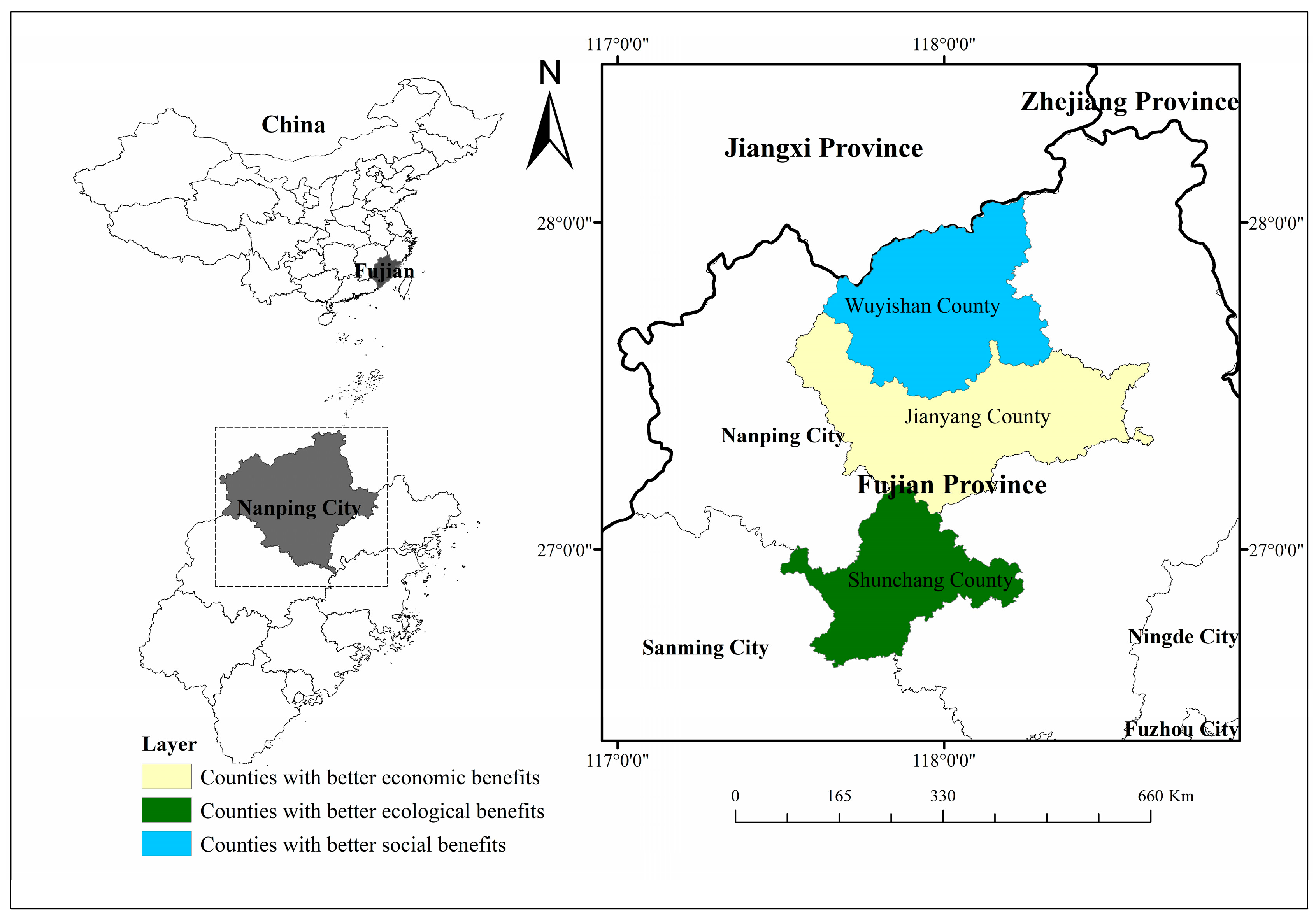
The data for this study are based on a field survey conducted in Jianyang County, Wuyishan County, and Shunchang County, Nanping City, Fujian Province, in October 2023. Jianyang County, Wuyishan County, and Shunchang County are the three county-level administrative units under Nanping City, Fujian Province, and the abundant forest resources of Shunchang County are higher than those of Jianyang County and Wuyishan County from the perspective of forest resources. From the perspective of economic development, Jianyang County’s GDP in 2023 ranked third in Nanping City, and its economic benefits are the most prominent among the three counties; Wuyishan County is rich in tourism resources, its geographical location is superior, and its social value is higher than that of the other two regions. Therefore, we selected the most representative counties under Nanping City from the three levels of economy, ecology, and society, and we selected three villages from each township and three villages in each county (a total of 27 villages), with 25 questionnaires given in each village. Due to the differences in the proportion of forest land, the per capita income of forest farmers, and the quality of forest land managed by forest farmers in different township areas, this study used the method of stratified sampling to investigate forest farmers. The geographical location of the study area is shown in Figure 2.

3.1.2. Variable Selection

In this study, 10 relevant variables were selected to measure the impact on forest farmers’ willingness to be compensated. First of all, considering various factors—including that men are the main labor force; there are few employment opportunities in rural areas; the male labor force generally moves out of the country for work, resulting in the outflow of the male labor force [27]; and individual attitudes and behaviors are affected by age and education—we used the indicators of the gender, age, and education level of forest farmers as the basic variables of individual characteristics. Secondly, the differences in resource endowment of forest farmers will also affect their acceptance of forest ecological compensation [28]. The resource endowment of forest farmers not only includes natural resources, such as forest land, cultivated land, and water land (contracted by them), but also takes into account economic and social factors, such as economic income and interpersonal relationships that can maintain the livelihood of forest farmers [29]. In this study, the annual income of forest farmers, the area of forest land contracted by forest farmers, the dispersion of forest land contracted by forest farmers, the number of acres of public welfare forests contracted by forest farmers, and the annual forest management cost of forest farmers were used as indicators to measure the differences in forest farmers’ resource endowment. Finally, the subjective cognitive level of forest farmers also impacts their willingness to be compensated, and the more that forest farmers know about ecological compensation policies, the greater their awareness of forest protection [30]. Therefore, this study measured the subjective factors of forest farmers by considering the degree to which they understand the ecological compensation policy and the necessity of ecological compensation. Table 1 describes the settings and descriptions of each variable.

3.1.3. Data Interpretation and Analysis

Jianyang County, Wuyishan County, and Shunchang County are the three county-level administrative units under Nanping City, Fujian Province. The quality of forest resources in Shunchang County is higher than that of Jianyang County and Wuyishan County from the perspective of the current status of forest resources. From the perspective of economic development, Jianyang District’s GDP in 2023 ranked third in Nanping City, and its economic benefits are the most prominent among the three counties. Wuyishan County is rich in tourism resources, its geographical location is superior, and its social value is higher than that of the other two regions. Therefore, this study selected the most representative counties (cities and districts) within the jurisdiction of Nanping City from the three levels of “ecology-economy-society”, and also followed “ecology-economy-society” to select 3 townships and towns in each county, 3 villages in each township, and 25 rural households in each village for the household questionnaire survey. Due to the differences in the proportion of forest land, the per capita income of forest farmers, and the quality of forest land managed by forest farmers in different township areas, we used the stratified sampling method to investigate forest farmers in 27 villages. A total of 675 questionnaires were distributed, and 620 valid samples were obtained, with an effective rate of 91.85%. The questionnaire was carefully structured and designed in multiple sections to systematically collect farmers’ basic information, forestland resource characteristics, policy cognition, and compensation willingness data. Before the formal survey, a pilot test was conducted among a small number of local forest farmers to revise ambiguous, repetitive, or confusing questions. The questionnaire was further validated in terms of content validity and logical rationality based on the pilot feedback. Potential biases were fully considered during the survey design and implementation. Specifically, hypothetical bias was reduced by providing clear and detailed policy background descriptions to respondents; sample selection bias was avoided through stratified random sampling; meanwhile, unified investigation standards and unified question explanation rules were strictly implemented to minimize measurement bias and ensure data reliability.
The individual characteristics of forest farmers in the survey data were integrated and summarized (Table 2); it was found that 55.16% of the survey group were males. From the perspective of the age distribution of the sample group, the majority were 46–65 years old, and the proportion of the group over 46 years old in the whole sample composition was 66.29%; this indicates that the outflow of young labor in the rural areas of Nanping City is clear, and the forestry workers mostly showed an aging trend. From the perspective of education level, more than one-third of the sample had the initial Chinese level, and the sample with less than a university education level accounts for 82.42%, which suggests that there may be shortcomings in policy cognition. The family size in the survey sample was concentrated in the range of 4–8 people, so too many family members directly affect forest farmers’ per capita household income.
Descriptive statistics were performed on the selected variables in this study, and the results are shown in Table 3. It can be seen from the table that the average value of Willingness, which represents the willingness to accept compensation, is 2.650, which is higher than 2.5 but lower than the median value; this indicates that for forest ecological compensation, forest farmers have a higher degree of support for the policy and a greater willingness to be compensated. However, in reality, forest farmers are affected by more factors, and the survey found that most forest farmers are not satisfied with the current compensation standards, believing that they cannot meet their psychological expectations.

3.2. Methods

3.2.1. Conditional Valuation

The Contingent Valuation Method (CVM) is an important method for assessing the non-market value of environmental goods, which is used in the accounting of ecological compensation and ecosystem service value; it measures the maximum amount that people are willing to pay when environmental improvement is carried out and the minimum compensation that people expect to receive when environmental damage is enacted by constructing a hypothetical reasonable market [31]. This method mainly uses direct inquiry to understand the respondents’ willingness to pay (WTP) and willingness to accept (WTA) for ecological and environmental protection. It is then used to estimate the economic benefits obtained by consumers from consuming public goods [18].
When using the CVM to survey forest farmers’ willingness to compensate, it is necessary to simulate real-world market trading scenarios through questionnaire design, such as describing specific protection measures for forest ecosystems and asking respondents to make hypothetical decisions about whether they are willing to pay compensation or accept compensation for losses [23,24]. In this study, the payment card method was used to obtain the WTA of forest farmers in Jianyang County, Wuyishan County, and Shunchang County. The formula for willingness to be compensated is
E W T A = i = 1 k V i P i
where V i is the value of the i th target, and P i is the probability of selecting the value of the i th target.

3.2.2. Logit Model

We explored the factors influencing forest farmers’ willingness to receive forest ecological compensation. The model generally showed that forest farmers’ willingness to accept forest ecological compensation = f (individual characteristics of forest farmers + differences in forest farmers’ resource endowment + individual cognitive behavior of forest farmers) + ε (random perturbation term). Forest farmers’ willingness to accept forest ecological compensation was taken as the explanatory variable in this study, and the willingness to receive compensation was defined within 1–5 degrees. When panel data are not used to study the problem of discrete variables, the regression models used are mainly Logit, Probit, and Tobit. The Tobit model is a form of linear regression that is independent of binary or discrete outcomes. In general, if regression is required for a continuous dependent variable, the Tobit model is used. The Logit and Probit models are more suitable for dealing with discrete problems where the characteristics of explanatory variables linearly affect the explained variable. In this study, the Logit model was used for empirical research [32].
Since the willingness of farmers to participate in forest ecological compensation is a typical decision-making problem, the Logit model was used to analyze the influencing factors. The specifics of the regression model are
P = F y = 1 1 + e y = 1 1 + e ( α + β x i )  
where P is the probability of farmers participating in forest ecological compensation; y denotes farmers participating in forest ecological compensation. After processing the above expressions, the binary Logit model expressions were obtained:
ln P 1 P = β 0 + β 1 X 1 i + β 2 X 2 i + + β n X n i + ε
In the formula, X n i represents the explanatory variables that affect farmers’ willingness to participate in forest ecological compensation, including individual characteristics, differences in farmers’ resource endowment, and so on; β is the regression coefficient of each explanatory variable; and P denotes the probability that the farmer will accept the compensation.

3.2.3. Percentile Regression Model

The current research mostly considers the overall impact of forest ecological compensation policy on forest farmers’ willingness to be compensated, and it ignores the differences embodied by the forest farmers themselves, who will have different levels of willingness to accept forest ecological compensation due to differences in their own family conditions and social networks. To explore the differences in the factors influencing forest farmers’ willingness to be compensated, quantile regression was used to analyze the stratification of forest farmers and explore the key factors affecting their acceptance of forest ecological compensation. The quantile regression model is expressed as
Q u a n t θ A i X i = γ θ X i
where X i is the explanatory variable affecting the willingness of forest farmers to be compensated, γ θ is the coefficient vector of the explanatory variable, and Q u a n t θ A i X i represents the conditional quantile corresponding to A i ’s quantile θ (0 < θ < 1) under a given X i .

4. Results and Analysis

4.1. Evaluation of Compensation Level and Policy Expectations Based on Forest Farmers’ Expectations

4.1.1. Calculation of Forest Farmers’ Expected Compensation Standard

Based on the working principle and survey methods of the CVM, we first conducted a preliminary policy review of China’s forest ecological compensation standards. Secondly, we used a comparative analysis of forest farmers’ recognition of the policy and their expected acceptance of forest ecological compensation standards in related studies and field surveys, providing a preset range of amounts for respondents to choose from to reduce the bias of open-ended questions [24] and dividing the range of forest farmers’ willingness to receive compensation. Finally, the willingness of forest farmers to be compensated was determined to be among 0, 15, 20, 25, 30, 35, 40, 50, 80, 100, 200, and 400 CNY·mu−1. As using mu as a unit during the survey made it easier for forest farmers to understand, the survey adopted this unit. In the subsequent analysis, the units in the entire text were unified and converted to hectares.
As shown in Table 4, a total of 91.61% of the forest farmers in the sample expected to receive compensation for public welfare forests, and the result of the CVM was 1128 CNY·ha−1·year−1. According to the Spike formula [33], the lower limit of the average value of forest farmers’ willingness to be compensated was 1128 × 91.61% ≈ 1034 CNY·ha−1·year−1. In summary, forest farmers expect to receive the government’s compensation standard for public welfare forests at 1034~1128 CNY·ha−1·year−1, which far exceeds the current compensation standard formulated by the state; it is about three times the current compensation standard (345 CNY·ha−1·year−1) in Nanping City, which shows that there is still a big gap between the current compensation standard and the willingness of forest farmers to be compensated.

4.1.2. Analysis of Forest Farmers’ Willingness to Receive Zero Payment

Analysis of the questionnaire reveals that 8.39% of forest farmers exhibit zero willingness-to-accept (WTA). Descriptive analysis is conducted on this subgroup to further explore the reasons for zero-WTA responses, so as to provide an in-depth interpretation of this subsample. The statistical results are sorted into roughly four factors leading to zero compensation-acceptance willingness among forest farmers. The specific causes of zero WTA are shown in Table 5. In the sample of forest farmers with zero willingness to accept compensation, 30.77% of them indicated that they had not yet understood China’s forest ecological compensation policy and had no concept of the compensation amount. Thus, they could not provide a standard for their psychological expectations. A total of 28.82% of the forest farmers said that their forest land is small in scale and has a low amount of time for independent management; most of the time, they work outside the home, and the compensation funds do not have much impact on their income, so they do not care about the related work of forest ecological compensation. A total of 21.21% of the forest farmers believe that the amount of forest land compensation cannot meet their psychological expectations, and they have doubts about the transparency of the compensation payment, believing that the financial expenditure for ecological compensation cannot be earmarked; this portion of the forest farmers also believes that the protection of public welfare forests should be the responsibility of government departments and should not be included in the scope of public welfare forests (on the grounds that the protection of forest resources will greatly reduce their own income). Another 19.2% of forest farmers realize the importance of forests regarding ecological environmental protection and believe that individuals have the responsibility to protect and manage forests to promote the improvement of the ecological environment; therefore, these forest farmers believe that the protection and management of public welfare forests should be free of charge. Through further analysis of this portion of the forest farmers with zero willingness to be compensated, combined with the calculation of the compensation standard expected by forest farmers, we see the unreasonable situation of the current forest ecological compensation policy and the forest farmers’ recognition that the normal forest ecological compensation from the government is insufficient.

4.1.3. Evaluation of Compensation Level Based on Forest Farmers’ Expectation

In this study, the forest ecological compensation level refers to the compensation degree of the current compensation standard in a certain dimension. Based on this concept, the expected compensation level of forest farmers in this study was calculated according to the ratio of the actual compensation standard to the calculated forest farmers’ expected compensation standard, and it emphasizes that it reflects the achievable compensation effect. From the perspective of forest farmers’ stated willingness-to-accept (WTA). From the above calculations, it can be seen that the expected compensation standard of forest farmers in Nanping City is 1034~1128 CNY·ha−1·year−1, and the current forest ecological compensation standard in Nanping City is 345 CNY·ha−1·year−12. Therefore, from the perspective of forest farmers’ willingness to be compensated, the current level of forest ecological compensation in Nanping City is only 30.6%~33.4%, which is quite different from the expectations of forest farmers. This indicates that the current forest ecological compensation standard implemented in Nanping City is low, and forest farmers are not satisfied with it, meaning it is difficult to motivate forest farmers to protect and restore public welfare forests through the current compensation level. At the same time, it shows that when the commercial forest managed by forest farmers is adjusted to a public welfare forest due to ecological protection area classification, the current forest ecological compensation standard alone cannot meet the expectations of forest farmers. In the long run, it is not conducive to the sustainable development of forest resources. It is necessary to further study and formulate more reasonable forest ecological compensation standards in combination with the factors that significantly impact the willingness of forest farmers to be compensated.

4.1.4. Evaluation of Forest Farmers’ Expectation of the Forest Ecological Compensation Policy

In the process of research, forest farmers made a brief evaluation of the current forest ecological compensation standard, among which 89.05% of them were dissatisfied with it; they believed that the current compensation standard is low and needs to be further improved, with 77.42% of the forest farmers believing that the current compensation standard should be increased to at least 35 CNY·mu−1 (525 CNY·ha−1·year−1); that is, the compensation level should be increased by at least 1.5 times. The remaining 10.95% believe that the current compensation standard is reasonable and does not need to be changed. At present, the forest ecological compensation funds mainly come from government financial transfer payments, which are relatively simple. Compared with the large number of public welfare forest resources, the compensation funds are extremely limited and far from making up for the opportunity cost of forest farmers. However, the survey of forest farmers found that they have a low level of awareness of the source of ecological compensation funds and only have a general understanding of the value and composition of ecological compensation funds. However, the forest farmers interviewed were strongly aware of ecological protection and knew that public welfare forest protection was closely related to ecological environment improvement. Therefore, it is urgent to optimize the path of forest ecological compensation, broaden the source channels of compensation funds to improve compensation standards, and/or explore more effective compensation methods to promote the improvement of the compensation effect.
From the survey of compensation methods, it was found that 64.29% of the interviewed forest farmers believed that the current financial compensation methods were more reasonable. Among the 35.71% of the groups who think that the current compensation method is unreasonable, the younger and more educated forest farmers are more inclined to choose to provide employment opportunities and skills training for compensation. Older forest farmers with higher annual incomes tend to choose to increase social security (e.g., pension insurance, etc.) for compensation. Forest farmers with higher annual income and higher subjective cognition believe that they can also be compensated by improving village public services (e.g., increasing physical exercise facilities, repairing rural roads, recycling garbage to improve the environment, etc.).

4.2. Analysis of Factors Affecting Forest Farmers’ Willingness to Receive Compensation

In this study, a binary logistic regression analysis was performed on 620 samples using Stata 16.0 to explore the influencing factors of forest farmers’ willingness to be compensated. The marginal effects of each explanatory variable were measured, and the marginal contribution of explanatory variables, such as the individual characteristics of forest farmers, to the selection probability of the forest ecological compensation willingness category was investigated. As shown in Table 6, there are five influencing factors that significantly affect forest farmers’ willingness to be compensated, including the age, annual income, area of forest land, the annual forest management cost, and the degree of understanding of the forest ecological compensation policy of forest farmers.

4.2.1. Influence of Individual Characteristic Variables on Forest Farmers’ Willingness to Receive Compensation

From the perspective of the individual characteristics of forest farmers, the proportion of men and women in the sample selection area tends to be the same. However, the current work on forest ecological compensation policy in rural science popularization is relatively comprehensive. Hence, the gender variable in the regression results of this study has no significant impact on forest farmers’ willingness to be compensated. The p value of the age variable was 0.001, so it passed the significance test at the 1% statistical level, and the odds ratio of greater than 1 was 1.024, indicating that the age variable would promote the regression results. Specifically, the older the forest farmers are, the stronger their willingness to accept compensation. This may be partly due to the reduced labor capacity of the elderly, leading to a decline in their ability to manage forest resources that are located in remote areas. At the same time, they show a stronger willingness to manage and protect public welfare forests that require less management. On the other hand, older individuals may be more willing to accept compensation and expect a lower amount due to their limited income sources compared to younger people. In addition, through marginal utility analysis, the probability of forest farmers participating in the public welfare forest compensation policy increases by 3.11% for each age level.
The annual income of forest farmers has a negative impact on their willingness to be compensated. From the regression results, the p value of annual income is 0.068, so it passes the significance test at the 10% statistical level, and its “odds ratio” is less than 1 at 0.875. The higher the annual income of forest farmers, the lower their dependence on forest ecological compensation funds and the lower their expectation of forest ecological compensation standards, so forest farmers’ income may be a factor that hinders them from participating in the public welfare forest compensation policy. However, if they participate in public welfare forest compensation, the expected compensation standard is also lower. From the perspective of marginal utility analysis, the probability of forest farmers participating in the public welfare forest compensation policy decreases by 1.4% for each level increase in their income. This is because when forest farmers’ income increases, their dependence on the economic value of forest land decreases, and they do not rely on logging for their livelihood, thus reducing their dependence on compensation.

4.2.2. The Influence of Resource Endowment Differences on Forest Farmers’ Willingness to Receive Compensation

From the perspective of the differences in forest farmers’ resource endowments, the area of forest land and the annual forest management cost to forest farmers positively impact their willingness to be compensated. In contrast, the annual income of forest farmers has a negative impact on their willingness to be compensated. The p values of forest land area and forest management cost to forest farmers are less than or equal to 0.001, so they pass the significance test at the 1% statistical level. The odds ratios of forest land area and forest management cost to forest farmers are 1.373 and 1.402, respectively, which are greater than 1, indicating that changes in forest land area and operating cost will promote forest farmers to participate in receiving compensation for public welfare forests. On the one hand, the higher the area of forest land of forest farmers, the greater their operating costs, and the slower the conversion rate of the economic value of forest resources, meaning the forest farmers cannot obtain economic benefits in the short term; thus, their willingness for forest management decreases, so they turn to other non-agricultural industries. On the other hand, the higher the area of forest land, the greater the total amount of compensation, so the greater the willingness to accept forest ecological compensation. From the perspective of marginal utility analysis, the probability of participating in the compensation policy of public welfare forests will increase by 3.3% for each level of forest land area, and the probability of participating in the compensation policy of public welfare forests will increase by 3.4% for each level of forest management cost.

4.2.3. Influence of Subjective Cognitive Level on Forest Farmers’ Willingness to Receive Compensation

From the perspective of the subjective cognitive level of forest farmers, the degree of understanding of the ecological compensation policy has a positive impact on the willingness to be compensated. In the regression results of forest farmers’ understanding of ecological compensation policy, the p value was less than 0.001, which passed the significance test at the 1% statistical level. The probability of forest farmers’ willingness to accept ecological compensation increased by 4.4% with each increase in the level of understanding of the ecological compensation policy. The “odds ratio” was 1.543, which was greater than 1, and the regression results showed that the higher the understanding of the ecological compensation policy, the higher the willingness of forest farmers to be compensated. This is because forest farmers have a strong sense of policy identity, indicating that they have recognized the important value of forest resources for current sustainable development. Therefore, they are more willing to devote themselves to protecting the environment, reducing the cutting down of forest resources, and showing a high willingness to participate in the compensation policy of public welfare forests. Therefore, an in-depth analysis of the basis for the formulation of forest ecological compensation standards and a more reasonable calculation of compensation standards can also strengthen forest farmers’ awareness level of forest ecological compensation, strengthening their willingness to be compensated and promoting the improvement of the quality of forest resources.

4.3. Robustness Test

In order to verify the robustness of the results of this study, the OLS regression model and the Probit regression model were used to re-perform the regression analysis on the study samples; the regression results are shown in Table 7. Through regression analysis, it was found that the significance and direction of the model did not change significantly whether the OLS regression model or the Probit regression model was used. Age, annual income, area of forest land, the annual forest management cost, and the degree of understanding of the ecological compensation policy of forest farmers had a significant impact on their willingness to be compensated, indicating that the results of the regression analysis of this study are robust.

4.4. Analysis of Differences in Forest Farmers’ Willingness to Receive Compensation

To further explore the differences in the influence of various factors on forest farmers’ willingness to be compensated under different conditions, the quantile regression model was used to regress the explanatory variables of the sample data from the 20%, 30%, 40%, 50%, 60%, 70%, 80%, and 90% quantiles of the sample data using Stata 16.0 software (see Table 8).
According to the quantile regression results, in terms of the individual characteristics of forest farmers, the age variable was significant at 20~90 points, and the significance was weak at the lower quantiles. The influence coefficients at other quantile points were not much different, which shows that the age variable in the current sample had an impact on the willingness to be compensated, and the level of compensation standard had a similar impact on the willingness of forest farmers to be compensated.
From the perspective of the difference in forest farmers’ resource endowment, the income of forest farmers passed the significance test at the 20~30 quantiles. The coefficients were quite different. Still, the impact was not significant at the low quantiles, so it can be inferred that if the compensation standard meets or is close to the expectations of forest farmers, even if there is a difference in the income of forest farmers, there is not much difference in their willingness to be compensated. The area of forest land variable passed the significance test at the middle and high quantiles, but the impact was not significant at the low quantiles, which shows that if the compensation standard is too low, even if there is a difference in the area of forest land among forest farmers, there will be no big difference in their willingness to be compensated. The influence coefficient at the middle quantile is significantly higher than that at the high quantile, indicating that the difference in forest land area has a greater impact on forest farmers’ willingness to be compensated under a certain interval of compensation standard. Therefore, if the compensation standard is raised, forest land area should be used as an important reference factor. The annual forest management cost of forest farmers has a significant impact on their willingness to be compensated at each quantile. The influence coefficient is different at different quantile levels, and its absolute value is not much different, meaning that, regardless of whether the compensation standard is high or low, these influencing factors have an impact on farmers’ willingness to be compensated, but the degree of influence is similar.
From the perspective of forest farmers’ subjective cognitive level, the variable of forest farmers’ understanding of ecological compensation policy has a significant impact on each quantile at each quantile level. The influence coefficient at the high quantile is significantly higher than that at the low quantile level, indicating that the higher the compensation standard, the greater the impact of forest farmers’ understanding of ecological compensation policy is on their willingness to be compensated.
The above analysis shows that formulating forest ecological compensation standards with reference to various influencing factors can provide some scientificity to compensation standards and promote the effectiveness and sustainability of forest ecological compensation policies.

4.5. Heterogeneity Analysis of Influencing Factors

According to previous research, it is concluded that five factors, including the age, annual income, the area of forest land, the annual forest management cost, and the degree of understanding of the ecological compensation policy of forest farmers, have a significant impact on the willingness of forest farmers to be compensated. The difference analysis shows that the influence of the five influencing factors on the willingness to be compensated varies under different compensation levels.
On this basis, five significant influencing factors were grouped (Table 9) to explore the impact of the differences of each influencing factor on forest farmers’ willingness to be compensated. The age category was divided into four groups: less than 35 years old, 36~45 years old, 46~65 years old, and older than 65 years old. The annual income of forest farmers is divided into a high-income group (higher than the average value) and a low-income group (calculated according to the weighted average of the average income), according to the information disclosed by residents in the local government report. The area of forest land was divided into three groups: small scale, medium scale, and large scale, and was evenly divided according to the range of positive values of the forest ground. According to the weighted average of the average operating cost per mu of the survey and the cost per mu of large-scale operation obtained from the interviews with government departments, the group with forest management costs higher than the average value was counted as the high-cost group, and the group with a forest management cost lower than the average value was counted as the low-cost group. In terms of forest farmers’ understanding of the ecological compensation policy, the forest farmers’ understanding of the ecological compensation policy was distinguished according to the five-point scale method when the questionnaire was designed; comparative understanding and high understanding were further divided into the high cognitive group, and the rest constituted the low cognitive group.
The regression results are shown in Table 10. The regression results of the 36~45-year-old age group are significant in the age group category, indicating that the forest farmers in this age group are more willing to accept the compensation policy; this may be due to the fact that this age group is the main group of migrant workers in Nanping City and has no time to carry out forest management activities. Because the income from forest management is low, this age group also has a high willingness to be compensated. In terms of annual income, the regression results of the high-income group were significantly negative, indicating that the income sources of the high-income group were complex. Because this group does not rely solely on the income from forest management, they rely less on ecological compensation, so their willingness to be compensated is low. Among the forest farmer area group, the regression results of the large-scale group were positive and significant, which further confirmed the view that “the higher the forest land area, the greater the operating cost, the higher the total amount of compensation, and the higher the willingness to be compensated.” The lower return on input led to the forest farmers being more inclined to accept ecological compensation. In the forest management cost group, the regression coefficient of the high-cost group was significantly positive, and the higher the forest management cost, the lower the net economic income, so their willingness to be compensated was higher. For the subjective cognition level of forest farmers, the regression result of the higher awareness level was significantly positive and passed the test at the level of 1%, indicating that if forest farmers have a higher degree of policy recognition, their willingness to be compensated is higher.

5. Discussion

As an important part of maintaining the stability of the ecological environment, protecting forest resources from destruction not only can bring public welfare ecological benefits to society, but also accelerates the green transformation of the economic development model by improving ecological products or services [34,35]. Internationally, Payments for Environmental Services (PES) have been widely implemented as incentive-driven conservation instruments, with representative practices in Costa Rica and Mexico, where payment schemes are designed to differentiate compensation levels according to ecosystem service types and deforestation risks. European PES-related practices further highlight the importance of matching compensation to local livelihood contexts and institutional conditions, rather than adopting a uniform payment standard across regions [36,37]. Although the institutional background differs substantially between China and these countries, their practical experience provides valuable references for optimizing differentiated public-welfare-forest compensation mechanisms in this study. China’s forest coverage rate is relatively high, and commercial forests account for nearly half of China’s forest stock. Forest farmers’ high awareness of environmental protection will be an important basis for the implementation of the forest ecological compensation policy. From an economic point of view, it is essential to design an effective compensation standard for the sustainable development of forests, and a reasonable compensation standard can effectively manage local forest resources. In previous studies, most of the forest ecological compensation standards were considered from the aspects of forest resource conservation costs [38] and ecosystem services [39], which involve the value of forest resources. However, in reality, the compensation standard is higher than that of forest farmers, and the willingness to be compensated can motivate forest farmers to actively manage their forests and reduce logging and tending behaviors [40]. Insufficient ecological compensation will lead to higher costs for forest farmers to comply with the law, and forest farmers will reduce forest resources by cutting down trees in pursuit of economic benefits. Therefore, when formulating compensation standards, the willingness of forest farmers to be compensated should be considered, and the compensation standards should be rationalized. The results show that the expected compensation standard is much higher than the current standard, so the government can diversify the compensation path and enrich the compensation methods (such as industrial compensation and education compensation) to reduce the financial pressure on itself.
It is very important to construct a scientific and reasonable compensation standard for the long-term realization of the ecological, economic, and social benefits of forest ecological compensation projects [41]. However, the calculation of compensation standards using the CVM focuses more on watershed compensation [42,43]; it rarely takes into account the individual characteristics of forest farmers, the resource endowments of forest farmers, and their subjective cognitive level for in-depth analysis. Considering the resource endowment of forest farmers, the annual income, the area of forest land, and the annual forest management cost of forest farmers will significantly affect their willingness to accept ecological compensation. The annual income and the area of forest land owned by forest farmers both show that there are differences in the resource endowment of forest farmers, so the current “one-size-fits-all” compensation policy cannot guarantee the ecological benefits of the current forest resources. It is also impossible to improve the economic benefits of forest farmers and make up for the actual differences in regional social levels. The compensation standard of forest ecological compensation should be improved through the appropriate adjustment of compensation payment, socio-economic conditions, forest farmers’ willingness to be compensated, and the ecological environment. The heterogeneity of forest farmers’ resource endowment should also be considered when carrying out ecological compensation work to help the design and implementation of ecological protection policies.
The results of this study show that the individual cognitive behavior of farmers can also affect their willingness to be compensated. When forest farmers have a higher understanding of the ecological compensation policy, they are more willing to be compensated, and farmers are more willing to accept compensation, give up forest felling and other business activities, and replace forestry management income with compensation. In this regard, the government should increase the publicity of compensation policies and forest environmental protection education, improve the environmental awareness of forest farmers, and restrain forest farmers from managing forests.
This study has several limitations that need to be acknowledged and improved in future research. First, this paper adopts the contingent valuation method (CVM) for empirical analysis. As a stated preference method, it is inevitably subject to inherent hypothetical bias. Meanwhile, the payment-card questionnaire adopted in this study with fixed value settings may cause slight anchoring and truncation bias, which may affect the accuracy of WTA estimation. Second, this study uses cross-sectional data for empirical analysis, which can only verify the correlation between variables rather than rigorous causal inference. In addition, core explanatory variables such as household income and forestland area may have potential endogeneity problems. Moreover, this study fails to incorporate institutional characteristic control variables, which cannot effectively avoid omitted variable bias and limits the comprehensive interpretation of the heterogeneous influencing mechanism of forest farmers’ willingness to accept. Future research can adopt panel data for long-term analysis, and combine objective quantitative indicators such as forest land opportunity cost and ecosystem service value to further optimize the compensation standard calculation system and improve the scientificity and robustness of research conclusions.

6. Conclusions and Recommendations

6.1. Conclusions

(1)
The sample size in this study was 675, with 620 valid samples, and the effective rate of the questionnaire was 91.85%. The compensation standard expected by farmers is in the range of 1034~1128 CNY·ha−1·year−1, which is about 3.00–3.27 times that of the current standard (345 CNY·ha−1·year−1). As such, the current level of forest ecological compensation is 30.6%~33.4%, indicating that the current compensation standard fails to meet the willingness of forest farmers to be compensated and the compensation amount should be reasonably adjusted.
(2)
This study classifies the factors affecting forest farmers’ willingness-to-accept (WTA) compensation into three dimensions: individual characteristics of forest farmers, differences in forest-resource endowments, and individual cognitive behaviors of forest farmers, covering a total of ten influencing indicators. Among them, forest farmers’ age, annual household income, forestland area, forest management cost, and forest farmers’ understanding of the ecological compensation policy exert significant effects on their willingness to accept forest ecological compensation, indicating that these five factors serve as key determinants of forest farmers’ WTA.
(3)
The results of the full quantile regression model constructed in this study showed that, under different compensation levels, the influence of each influencing factor on forest farmers’ willingness to be compensated is different, and differentiated compensation can be formulated according to the heterogeneity of influencing factors. The area of forest land contracted by forest farmers should be used as an important reference factor in the calculation of compensation standards.

6.2. Policy Recommendations

(1)
Reasonable compensation standards should also be accompanied by diversified sources of compensation. At present, most of the ecological compensation funds come directly from the central government’s finance, while the local government’s finance provides part of the funding. If the compensation standard is raised, it will cause a large amount of fiscal transfer payments and increase the financial burden. Therefore, it is important to establish cooperative funds with other stakeholders who benefit from forest resources (e.g., tourism companies or forest product-processing enterprises). In addition, industrial and educational compensation for forest farmers should be provided to allow for alternative livelihoods and other employment opportunities, thereby ultimately reducing their dependence on forests.
(2)
Forest ecological compensation projects should be included in the current rural revitalization goals through rural revitalization plans and ecological product value realization. For example, gross ecosystem product (GEP) accounting has recently been integrated into the United Nations System of Environmental–Economic Accounting–Ecosystem Accounting framework (SEEA-EA). In China, GEP accounting has recently been used in ecological compensation to verify the ecological benefits of forests, assess outgoing audits of government officials, improve spatial planning, and design policy tools for market trading mechanisms for forest ecological products. Finally, the economic benefits derived from the trading of ecosystem services can achieve common prosperity for forest farmers.
(3)
The guiding role of the government in market regulation should be enhanced, and forest ecological products and services should be developed. Ecotourism projects such as forest healthcare should be carried out, as well as developing understory space, developing the underforest economy, improving forest quality, developing forestry carbon sequestration trading, and increasing forestry public welfare positions, such as forest rangers and forestry technicians. The transformation of economic and ecological benefits to social benefits should be strengthened, and ecological compensation and environmental protection policies should be vigorously publicized. Finally, relevant actors should strive to enhance the sense of identity of forest farmers’ policies, make policy implementation transparent, and increase farmers’ satisfaction with policy.

Author Contributions

Conceptualization, L.W. and J.L.; Data curation, L.W. and J.L.; Funding acquisition, J.L.; Formal analysis, L.W. and Y.L.; Investigation, L.W. and B.Z. Methodology, L.W. and W.Z.; Supervision, Y.L. and W.Z.; Writing—original draft preparation, L.W., Y.L. and W.Z.; Writing—review and editing, L.W., B.Z. and W.Z. All authors have read and agreed to the published version of the manuscript.

Funding

This research was funded by the 2025 Natural Science Foundation of Fujian Province, grant number 2025J08094, for the project “Research on Accounting Technology of Forest Resource Assets in Fujian Province Based on Forest Ecological Compensation”.

Institutional Review Board Statement

Not applicable.

Informed Consent Statement

Not applicable.

Data Availability Statement

The data presented in this study are available on request from the first author.

Acknowledgments

We are indebted to the anonymous reviewers and editors.

Conflicts of Interest

The authors declare no conflicts of interest.

References

  1. Wei, H.; Ye, X.; Du, Z.; Fan, S.; Luo, B.; Liu, S.; Huang, C. Accelerate the construction of a new development pattern and strive to promote high-quality development of agriculture and rural areas—In-depth interpretation of the spirit of the 20th National Congress of the Communist Party of China by authoritative experts. China Rural Econ. 2022, 12, 2–34. [Google Scholar] [CrossRef]
  2. Chiabai, A.; Travisi, C.M.; Markandya, A.; Ding, H.; Nunes, P.A.L.D. Economic Assessment of Forest Ecosystem Services Losses: Cost of Policy Inaction. Environ. Resour. Econ. 2011, 50, 405–445. [Google Scholar] [CrossRef] [Scilit]
  3. Du, H.; Zhao, L.; Zhang, P.; Li, J.; Yu, S. Ecological compensation in the Beijing-Tianjin-Hebei region based on ecosystem services flow. J. Environ. Manag. 2023, 331, 301–4797. [Google Scholar] [CrossRef] [Scilit]
  4. Wang, A.; Zhou, X. Theoretical logic and practical path of “transforming green waters and green mountains into golden mountains and silver mountains”. Dongyue Trib. 2023, 44, 56–64. [Google Scholar] [CrossRef]
  5. Farooq, T.H.; Shakoor, A.; Wu, X.; Li, Y.; Rashid, M.; Zhang, X.; Gilani, M.; Kumar, U.; Chen, X.; Yan, W. Perspectives of plantation forests in the sustainable forest development of China. iForest-Biogeosci. For. 2021, 14, 166–174. [Google Scholar] [CrossRef] [Scilit]
  6. Yuan, W.; Qiao, D.; Ke, S.; Hou, Q.; Yan, R. How to improve the ecological compensation mechanism from the perspective of resource opportunity cost—A case study of welfare inversion in compensation for stop-logging in state-owned forest areas. China Rural Obs. 2022, 2, 59–78. [Google Scholar]
  7. Robert, N.; Stenger, A. Can payments solve the problem of undersupply of ecosystem services? For. Policy Econ. 2013, 35, 83–91. [Google Scholar] [CrossRef] [Scilit]
  8. Yang, W.; Lu, Q. Integrated evaluation of payments for ecosystem services programs in China: A systematic review. Ecosyst. Health Sustain. 2018, 4, 13. [Google Scholar] [CrossRef] [Scilit]
  9. Wang, X.; Herd, R. The System of Revenue Sharing and Fiscal Transfers in China; OECD Economics Department Working Papers; OECD Publishing: Paris, France, 2013. [Google Scholar]
  10. Sun, J.; Dang, Z.; Zheng, S. Development of Payment Standards for Ecosystem Services in the Largest Interbasin Water Transfer Projects in the World. Agric. Water Manag. 2017, 182, 158–164. [Google Scholar] [CrossRef] [Scilit]
  11. Ren, Y.; Lu, L.; Zhang, H.; Chen, H.; Zhu, D. Residents’ Willingness to Pay for Ecosystem Services and Its Influencing Factors: A Study of the Xin’an River Basin. J. Clean. Prod. 2020, 268, 122301. [Google Scholar] [CrossRef] [Scilit]
  12. Muradian, R.; Corbera, E.; Pascual, U.; Kosoy, N.; May, P.H. Reconciling theory and practice: An alternative conceptual framework for understanding payments for environmental services. Ecol. Econ. 2010, 69, 1202–1208. [Google Scholar] [CrossRef] [Scilit]
  13. Knoke, T.; Hildebrandt, P.; Klein, D.; Mujica, R.; Moog, M.; Mosandl, R. Financial compensation and uncertainty: Using mean-variance rule and stochastic dominance to derive conservation payments for secondary forests. Can. J. For. Res. 2008, 38, 3033–3046. [Google Scholar] [CrossRef] [Scilit]
  14. Alcon, F.; Tapsuwan, S.; Brouwer, R.; Yunes, M.; Mounzer, O.; Miguel, D. Modelling farmer choices for water security measures in the Litani river basin in Lebanon. Sci. Total Environ. 2018, 647, 37–46. [Google Scholar] [CrossRef] [Scilit]
  15. Zhang, C.; Robinson, D.; Wang, J.; Liu, J.; Liu, X.; Tong, L. Factors Influencing Farmers’ Willingness to Participate in the Conversion of Cultivated Land to Wetland Program in Sanjiang National Nature Reserve, China. Environ. Manag. 2011, 47, 107–120. [Google Scholar] [CrossRef] [Scilit]
  16. Venkatachalam, L. The contingent valuation method: A review. Environ. Impact Assess. Rev. 2004, 24, 89–124. [Google Scholar] [CrossRef] [Scilit]
  17. Mitchell, R.C.; Carson, R.T. Using Surveys to Value Public Goods: The Contingent Valuation Method; Resources for the Future: Washington, DC, USA, 1989; p. 484. [Google Scholar]
  18. Pignataro, G. Imperfect Information and Cultural Goods: Producers’ and Consumers’ Inertia; Springer: Dordrecht, The Netherlands, 1994. [Google Scholar]
  19. Jiang, X.; Liu, Y.; Zhao, R. A Framework for Ecological Compensation Assessment: A Case Study in the Upper Hun River Basin, Northeast China. Sustainability 2019, 11, 1205. [Google Scholar] [CrossRef] [Scilit]
  20. Hu, H.; Tian, G.; Wu, Z.; Xia, Q. A study of ecological compensation from the perspective of land use/cover change in the middle and lower Yellow River, China. Ecol. Indic. 2022, 143, 109382. [Google Scholar] [CrossRef] [Scilit]
  21. Jiang, Y.; Guan, D.; He, X.; Yin, B.; Zhou, L.; Sun, L.; Huang, D.; Li, Z.; Zhang, Y. Quantification of the coupling relationship between ecological compensation and ecosystem services in the Yangtze River Economic Belt, China. Land Use Policy 2022, 114, 105995. [Google Scholar] [CrossRef] [Scilit]
  22. Xu, L.; Yu, B.; Li, Y. Ecological compensation based on willingness to accept for conservation of drinking water sources. Front. Environ. Sci. Eng. 2015, 9, 58–65. [Google Scholar] [CrossRef] [Scilit]
  23. Iqbal, M.H.; Hossain, M.E. Tourists’ willingness to pay for restoration of Sundarbans Mangrove forest ecosystems: A contingent valuation modeling study. Environ. Dev. Sustain. 2023, 25, 2443–2464. [Google Scholar] [CrossRef] [Scilit]
  24. Guo, T.; Wu, S.; Zhang, X.; Zhang, C.; Yang, J.; Cheng, S. Measurement and influencing factors of willingness to accept payment for ecosystem service provision: A case study of a leading forest farm in China. Forests 2023, 14, 2417. [Google Scholar] [CrossRef] [Scilit]
  25. Nie, C.; Liu, X.; Jiang, Q.; Yang, L.; Wang, L. Exploration on the construction of ecological compensation model of multi-level composite market-oriented forest in our country based on cooperative governance theory. World For. Res. 2022, 35, 120–126. [Google Scholar] [CrossRef]
  26. Van Rien, H.R. Microeconomics: A Modern Perspective; Fei, F., Translator; Gezhi Press: Shanghai, China, 2015. [Google Scholar]
  27. Filipović, S.; Ignjatović, J. The effects of Chinese population policy on the labour market. Stanovnistvo 2023, 61, 69–89. [Google Scholar] [CrossRef] [Scilit]
  28. Qi, Y.; Zhang, T.; Cao, J.; Jin, C.; Chen, T.; Su, Y.; Su, C.; Sannigrahi, S.; Maiti, A.; Tao, S.; et al. Heterogeneity impacts of Farmers’ participation in payment for Ecosystem Services based on the collective action Framework. Land 2022, 11, 2007. [Google Scholar] [CrossRef] [Scilit]
  29. Li, Y.; Gong, P.; Ke, J. Development opportunities, forest use transition, and farmers’ income differentiation: The impacts of Giant panda reserves in China. Ecol. Econ. 2021, 180, 106869. [Google Scholar] [CrossRef] [Scilit]
  30. Li, X.; Guo, H.; Feng, G.; Zhang, B. Farmers’ Attitudes and Perceptions and the Effects of the Grain for Green Project in China: A Case Study in the Loess Plateau. Land 2022, 11, 409. [Google Scholar] [CrossRef] [Scilit]
  31. Zhang, S.; Yang, B.; Sun, C. Can payment vehicle influence public willingness to pay for environmental pollution control? Evidence from the CVM survey and PSM method of China. J. Clean. Prod. 2022, 365, 132648. [Google Scholar] [CrossRef] [Scilit]
  32. Anceschi, N.; Fasano, A.; Durante, D.; Zanella, G. Bayesian conjugacy in probit, tobit, multinomial probit and extensions: A review and new results. J. Am. Stat. Assoc. 2023, 118, 1451–1469. [Google Scholar] [CrossRef] [Scilit]
  33. Kristroem, B. Spike models in contingent valuation: Theory and illustrations. Arbetsrapport-Sver. Lantbruksuniversitet Institutionen Foer Skogsekom. (Swed.) 1995, 79, 1013–1023. [Google Scholar] [CrossRef] [Scilit]
  34. Ouyang, Z.; Song, C.; Zheng, H.; Polasky, S.; Xiao, Y.; Bateman, I.J.; Liu, J.; Ruckelshaus, M.; Shi, F.; Xiao, Y.; et al. Using gross ecosystem product (GEP) to value nature in decision making. Proc. Natl. Acad. Sci. USA 2020, 117, 201911439. [Google Scholar] [CrossRef] [Scilit]
  35. Jin, G.; Chen, T.K.; Liao, L.; Zhang, L.; Najmuddin, O. Measuring Ecosystem Services Based on Government Intentions for Future Land Use in Hubei Province: Implications for Sustainable Landscape Management. Landsc. Ecol. 2021, 36, 2025–2042. [Google Scholar] [CrossRef] [Scilit]
  36. Izquierdo-Tort, S.; Jayachandran, S.; Saavedra, S. Redesigning payments for ecosystem services to increase cost-effectiveness. Nat. Commun. 2024, 15, 9252. [Google Scholar] [CrossRef] [Scilit]
  37. Granado-Díaz, R.; Villanueva, A.J.; Colombo, S. Land manager preferences for outcome-based payments for environmental services in oak savannahs. Ecol. Econ. 2024, 220, 12. [Google Scholar] [CrossRef] [Scilit]
  38. Zhang, D. Payments for forest-based environmental services: A close look. For. Policy Econ. 2016, 72, 78–84. [Google Scholar] [CrossRef] [Scilit]
  39. Morgan, E.A.; Buckwell, A.; Guidi, C.; Garcia, B.; Rimmer, L.; Cadman, T.; Mackey, B. Capturing multiple forest ecosystem services for just benefit sharing: The Basket of Benefits Approach. Ecosyst. Serv. 2022, 55, 101421. [Google Scholar] [CrossRef] [Scilit]
  40. Gao, X.; Xu, W.; Hou, Y.; Ouyang, Z. Market-based instruments for ecosystem services: Framework and case study in Lishui City, China. Ecosyst. Health Sustain. 2020, 6, 14. [Google Scholar] [CrossRef] [Scilit]
  41. Ma, G.; Wang, J.; Yu, F.; Yang, W.; Ning, J.; Peng, F.; Zhou, X.; Zhou, Y.; Cao, D. Framework Construction and Application of China’s Gross Economic-Ecological Product Accounting. J. Environ. Manag. 2020, 264, 109852. [Google Scholar] [CrossRef] [Scilit]
  42. Yang, Y.; Zhu, Y.; Zhao, Y. Improving farmers’ livelihoods through the eco-compensation of forest carbon sinks. Renew. Sustain. Energy Rev. 2024, 198, 114401. [Google Scholar] [CrossRef] [Scilit]
  43. Gelo, D.; Koch, S.F. Contingent valuation of community forestry programs in Ethiopia: Controlling for preference anomalies in double-bounded CVM. Ecol. Econ. 2015, 114, 79–89. [Google Scholar] [CrossRef] [Scilit]
Figure 1. Hicks analysis of forest ecological compensation.
Forests 17 01073 g001
Figure 2. Geographical location of the study area.
Forests 17 01073 g002
Table 1. Description of sample variables.
Variable CategoryVariable NameVariable Interpretation
Explained variableWillingnessThe extent to which forest farmers are willing to accept compensation
Explanatory variableIndividual characteristicsGenderThe gender of forest farmers
AgeThe age of forest farmers
EduThe education level of forest farmers
IncomeAnnual income of forest farmers
Resource endowment characteristicsAreaArea of forest land contracted by forest farmers
DispersionDispersion of forest land contracted by forest farmers
BenareaNumber of mu of forest farmers contracting public welfare forest
CostAnnual forest management costs for forest farmers
Subjective cognitive levelUnderstandingForest farmers’ understanding of ecological compensation policies
NecessityForest farmers’ belief in the necessity of ecological compensation
Table 2. Basic characteristics of the sample.
VariableCategorySampleProportion
GenderMale34255.16%
Female27844.84%
AgeUnder 357812.58%
36–4513121.13%
46–6520633.23%
Over 66 years old20533.06%
Level of educationPrimary school11017.74%
Junior high school28846.45%
High school11318.23%
University and above10917.58%
Household populationUp to 3 people11117.90%
4–8 people44070.97%
More than 9 people6911.13%
Table 3. Descriptive statistics.
VariableNMeanP50MaxMinSD
Willingness6202.6503511.362
Gender6200.5511100.497
Age6202.0242411.452
Edu6202.7173411.074
Income6202.7122511.421
Area6202.0191501.345
Dispersion6201.5291400.833
Benarea6201.5051501.223
Cost6202.1882511.411
Understanding6203.1193511.493
Necessity6204.4385510.939
Table 4. Frequency distribution of forest farmers’ willingness to be compensated.
WTAAbsolute Frequency/PersonRelative Frequency
0528.39%
15315.00%
20193.06%
2560.97%
3091.45%
35223.55%
40619.84%
508914.35%
8014924.03%
10013621.94%
200315.00%
400152.42%
Table 5. Reasons for zero willingness to compensate.
Reason for Zero Compensation WillingnessPercentage
19.2%Protect forest land for free
21.21%The compensation amount cannot meet expectations, and I am worried that the government cannot earmark funds for special use
28.82%The woodland area is small and does not care about ecological compensation policies
30.77%No understanding of compensation policy
Table 6. Results of the regression of factors influencing forest farmers’ willingness to be compensated.
VariableCoefficientZ Valuep ValueOdds RatiosMarginal Effects
Gender−0.296−1.5590.1190.744−0.003
Age0.024 ***3.3090.0011.024 ***0.0311 ***
Edu0.0830.8020.4221.0860.009
Income−0.133 *−1.830.0680.875 *−0.014 *
Area0.317 ***3.2110.0011.373 ***0.033 ***
Dispersion−0.033−0.2140.8300.968−0.002
Benarea−0.080−0.7380.4610.923−0.009
Cost0.338 ***4.4950.0001.402 ***0.034 ***
Understanding0.434 ***6.4960.0001.543 ***0.044 ***
Necessity0.0420.4380.6611.0430.005
Log likelihood = −593.82404; R2 = 0.0829; N = 620; *** p < 0.01; * p < 0.1.
Table 7. Robustness test of regression results of factors affecting forest farmers’ willingness to receive compensation.
VariableOLS RegressionProbit Regression
WillingnessWillingness
Gender0.15040.1513
(1.200)(1.348)
Age0.0160 ***0.0143 ***
(3.346)(3.503)
Edu0.06050.0540
(0.904)(0.844)
Income−0.0854 *−0.0742 *
(−1.778)(−1.750)
Area0.1990 ***0.1809 ***
(3.039)(3.277)
Dispersion−0.0230−0.0214
(−0.230)(−0.238)
Benarea−0.0495−0.0353
(−0.731)(−0.518)
Cost0.2213 ***0.1961 ***
(4.522)(4.425)
Understanding0.2732 ***0.2545 ***
(6.581)(6.281)
Necessity0.04880.0257
(0.750)(0.450)
Constant0.0172
(0.035)
Observations620620
R-squared0.2240.083
N = 620; *** p < 0.01; * p < 0.1.
Table 8. Estimation results of the percentiles model.
QR_20QR_30QR_40QR_50QR_60QR_70QR_80QR_90
gender0.03120.15860.20590.27500.31560.30910.1466−0.0497
(0.249)(1.052)(1.107)(1.355)(1.485)(1.549)(0.983)(−0.255)
age0.0131 ***0.0117 *0.0171 **0.0150 ***0.0205 ***0.0174 *0.0144 ***0.0181 **
(3.020)(1.948)(2.170)(2.741)(3.114)(1.676)(3.256)(2.244)
edu0.1622 **0.08360.03800.05470.0699−0.0064−0.00690.0110
(2.200)(1.072)(0.335)(0.536)(0.543)(−0.051)(−0.091)(0.072)
income−0.0931 **−0.0956 *−0.0846−0.0504−0.0987−0.0764−0.0294−0.0851
(−2.399)(−1.804)(−1.205)(−0.738)(−1.230)(−1.323)(−0.579)(−0.862)
area0.04170.13890.1775 *0.3113 ***0.3178 ***0.2450 ***0.1991 ***0.1120
(0.483)(1.383)(1.740)(3.579)(4.794)(2.749)(2.780)(1.100)
dispersion0.17710.24440.1956−0.0724−0.2001 *−0.2255 *−0.11840.0173
(0.975)(1.643)(1.253)(−0.759)(−1.726)(−1.701)(−0.986)(0.093)
benarea−0.1396−0.2006 **−0.1137−0.1284−0.0351−0.00450.06440.0825
(−1.261)(−2.518)(−0.927)(−1.193)(−0.326)(−0.051)(0.895)(0.843)
cost0.1950 ***0.2361 ***0.2228 ***0.2626 ***0.2602 ***0.2955 ***0.2738 ***0.2405 **
(3.438)(3.360)(3.484)(3.922)(2.736)(4.788)(4.670)(2.267)
understanding0.1643 ***0.3014 ***0.3780 ***0.3498 ***0.3620 ***0.2760 ***0.3100 ***0.3642 ***
(2.654)(4.590)(5.570)(5.345)(5.535)(3.635)(6.804)(4.199)
necessity−0.0216−0.0142−0.01770.01700.05490.07690.16880.2860
(−0.272)(−0.156)(−0.168)(0.179)(0.566)(0.763)(1.421)(1.411)
Constant−0.3681−0.5258−0.6538−0.4162−0.41940.43960.39130.3759
(−0.586)(−0.866)(−1.137)(−0.758)(−0.728)(0.530)(0.557)(0.396)
Observations620620620620620620620620
N = 620; *** p < 0.01; ** p < 0.05; * p < 0.1.
Table 9. Grouping of significant influencing factors.
Significant Influencing FactorsGrouping
AgeUnder 35
36–45
46–65
Over 66 years old
Annual incomeLow-income group
High-income group
Woodland areaSmall scale
Medium
Large scale
Forest management costsLow-cost group
High-cost group
Understanding of ecological compensation policiesLow-cognition group
High-cognition group
Table 10. Analysis of sample heterogeneity.
Variable(1)(2)(3)(4)(5)
WillingnessWillingnessWillingnessWillingnessWillingness
Age (≤35)0.0520
(0.515)
Age (36–45)0.0696 **
(2.456)
Age (46–65)0.0118
(0.342)
Age (>65)0.2822
(1.555)
Income (low) 0.2118
(0.808)
Income (high) −0.2900 *
(−1.667)
Area (small) −0.3182
(−0.203)
Area (middle) 0.1247
(0.382)
Area (large) 0.6028 *
(1.661)
Cost (low) 0.3579
(1.412)
Cost (high) 0.3461 *
(1.784)
Understanding (low) 0.0922
(0.696)
Understanding (high) 0.9015 ***
(2.336)
*** p < 0.01; ** p < 0.05; * p < 0.1.
Disclaimer/Publisher’s Note: The statements, opinions and data contained in all publications are solely those of the individual author(s) and contributor(s) and not of MDPI and/or the editor(s). MDPI and/or the editor(s) disclaim responsibility for any injury to people or property resulting from any ideas, methods, instructions or products referred to in the content.