Article

Comparative Analysis of Acoustic Wave Velocity (AWV) and Ultrasonic Pulse Velocity (UPV) for Non-Destructive Evaluation of Fibre-Managed Eucalyptus nitens Logs and Recovered Samples

1
Centre for Sustainable Architecture with Wood (CSAW), University of Tasmania, Launceston, TAS 7250, Australia
2
School of Engineering, College of Science and Engineering, University of Tasmania, Hobart, TAS 7001, Australia
*
Author to whom correspondence should be addressed.
Forests 2026, 17(6), 670; https://doi.org/10.3390/f17060670
Submission received: 27 April 2026 / Revised: 28 May 2026 / Accepted: 30 May 2026 / Published: 31 May 2026

Abstract

Testing harvested logs is a critical step in the wood products supply chain. Non-destructive evaluation (NDE) methods are essential for grading and sorting logs, especially given variations associated with tree age. In this study, plantation-grown Eucalyptus nitens from two age groups were sourced from two Tasmanian harvesting sites for NDE and comparison with destructive stiffness testing. The key finding is that the correlation between dynamic modulus of elasticity (DMOE) and static modulus of elasticity (MOE) weakens with increasing age, particularly at the whole-log level. For further analysis, the radial location of recovered small clear samples (from pith to bark) was examined. Core samples (near the pith) showed the strongest correlation between DMOE and static MOE (R2 = 0.51), followed by middle (R2 = 0.46) and outer samples (R2 = 0.25). This study demonstrates that considering the radial location of recovered samples is a more effective approach for improving grading accuracy. Age is a key factor for initial segregation of logs before applying NDE for property analysis of both logs and recovered samples.

1. Introduction

The demand for wood and wood products is increasing rapidly, which has expanded plantation forestry mostly in the southern hemisphere [1,2]. In Australia, only plantation forests cover 1.82 million ha, or 1.8% of Australia’s total forest area [3], of which 0.739 million ha is hardwood plantations, while softwood plantations cover 1.06 million ha. The plantation hardwood, especially Eucalyptus, complements the softwood and native forest, thereby meeting the demand for wood products. Eucalyptus is the largest hardwood plantation genus, which alone constitutes 700,000 ha of the total hardwood plantation area [3].
Eucalyptus nitens is a predominant plantation hardwood species in Australia, especially in Tasmania, covering around 168,000 hectares of area [4]. For fibre production, E. nitens is managed under unthinned and unpruned silviculture practice with a rotation age between 15 to 18 years in the current scenario. Plantation E. nitens has shown the potential for engineered wood products (EWPs) as well as for structural products [2,5,6]. The wood density difference and prominent strength-reducing features (SRFs) impact the wood and end product performance. This issue creates the need for a reliable and accurate grading method which can batch logs and sawn boards throughout the supply chain [2,6,7].
In Australia, grading is typically done by visual stress grading (VSG) rules, where visual assessment of sawn boards categorises them into structural grades according to Australian standard AS 2082:2007 [8]. The combination of structural grading and the species’ mechanical properties forms the basis for classifying sawn boards into different stress grades (F-grades), each with corresponding design values used by timber engineers and architects [2]. This classification assumes that the visual characteristics of timber directly correlate with its structural properties, such as strength and stiffness [2,7].
The current grading standards were developed based on the testing and characterisation of native forest and old-growth forest, which are entirely different in terms of properties compared to plantation forest wood. While SRFs remain relevant for structural products, they may not necessarily limit the use of plantation timber in construction and other wood products. Research has shown that EWPs can effectively reduce the negative impacts of these features and still meet structural performance requirements [2,5].
Genetics and site conditions highly influence the plantation properties of E. nitens, such as stiffness, mean density and pulp yield. Properties like the basic density negatively correlates with wood cellulose content and the diameter of trees at the genetics level, whereas both the properties have a high positive correlation with fibre length [9].
In northeastern Tasmania, sites with high rainfall of high elevation produce trees with higher stiffness, whereas drier sites yield larger diameters and higher density. Stiffness tends to decline with increasing site productivity [10]. Wood properties vary radially and longitudinally, such as density, which differs from bark to sap wood compared to the pith of the tree to the heartwood but is stable from the base of the tree to the middle height [11]. Stiffness peaks in mid-height logs and is higher in sapwood than in heartwood. The strength declines toward the top, with the butt log showing the highest strength values [10]. Microfibril angle (MFA) values are greater near the pith, whereas they decrease toward the bark. In 15-year-old trees, MFA ranged from 20 to 30° in bark regardless of height [12,13]. Fiber length remains consistent from the butt of the tree to the middle of the tree but rapidly decreases toward the tip of the tree [14]. To address limitations of traditional visual grading, non-destructive evaluation (NDE) methods are gaining interest for assessing logs, boards, and veneers before and after processing [15].
Previous studies have shown that using NDE methods, specifically stress wave velocity (SWV) and pin penetration depth (PD), to pre-sort Sitka spruce resulted in reduced variability in the modulus of elasticity (MOE) when these indicators were combined [16]. A strong correlation was observed between velocity (by AWV) and the destructive testing results of E. nitens laminated veneer lumber (LVL), which supports AWV as an efficient method for log selection for improved wood quality [17]. Using the density and stiffness for a comparative study between two age classes of trees, from 13- to 15-year-old trees and 8-year-old trees, resulted in the older ones showing better structural properties, where middle logs showed a higher predicted stiffness than butt logs [18]. Using resonance and ultrasonic tools for the analysis of tropical hardwoods indicates that DMOE is dependent on density and mostly overvalues the actual stiffness, whereas with stiffness and density, MOR shows a strong positive correlation [19].
A comparative study between VSG- and AWV-based testing of 21-year-old plantation-grown E. nitens sawn boards shows that VSG (82.5%) had a larger error compared to AWV (45.2%) for sawn board segregation [2]. A longitudinal vibration-based tool slightly overestimated the MOE, whereas the transverse direction method underestimates it while testing on Chilean E. nitens [20]. Additionally, using AWV with green density is an effective method for predicting stiffness, which shows AWV to be a robust NDE grading tool [21].
NDE tools are comprehensive tool which estimate different key properties of wood, as mentioned above. Unlike traditional grading practices, which classify material, they provide detail with a higher accuracy of measurement, which makes them a more valuable method in the modern era of wood technology. In a broad sense, NDE techniques have the potential to examine the physical and mechanical properties of wood without modifying them. They are different from grading because grading is about classification, and evaluation is about detailed measurement and analysis.
This study investigates the correlation between NDE and destructive testing methods with the following objectives:
  • To find and analyse the correlation between DMOE measurement on logs using AWV and UPV tools and DMOE on small samples with static MOE.
  • To understand the correlation between NDE and destructive results based on the age of the logs and recovered small samples.
  • Based on the sample location inside the log, to analyse the correlation of DMOE and static MOE for small samples.

2. Materials and Methods

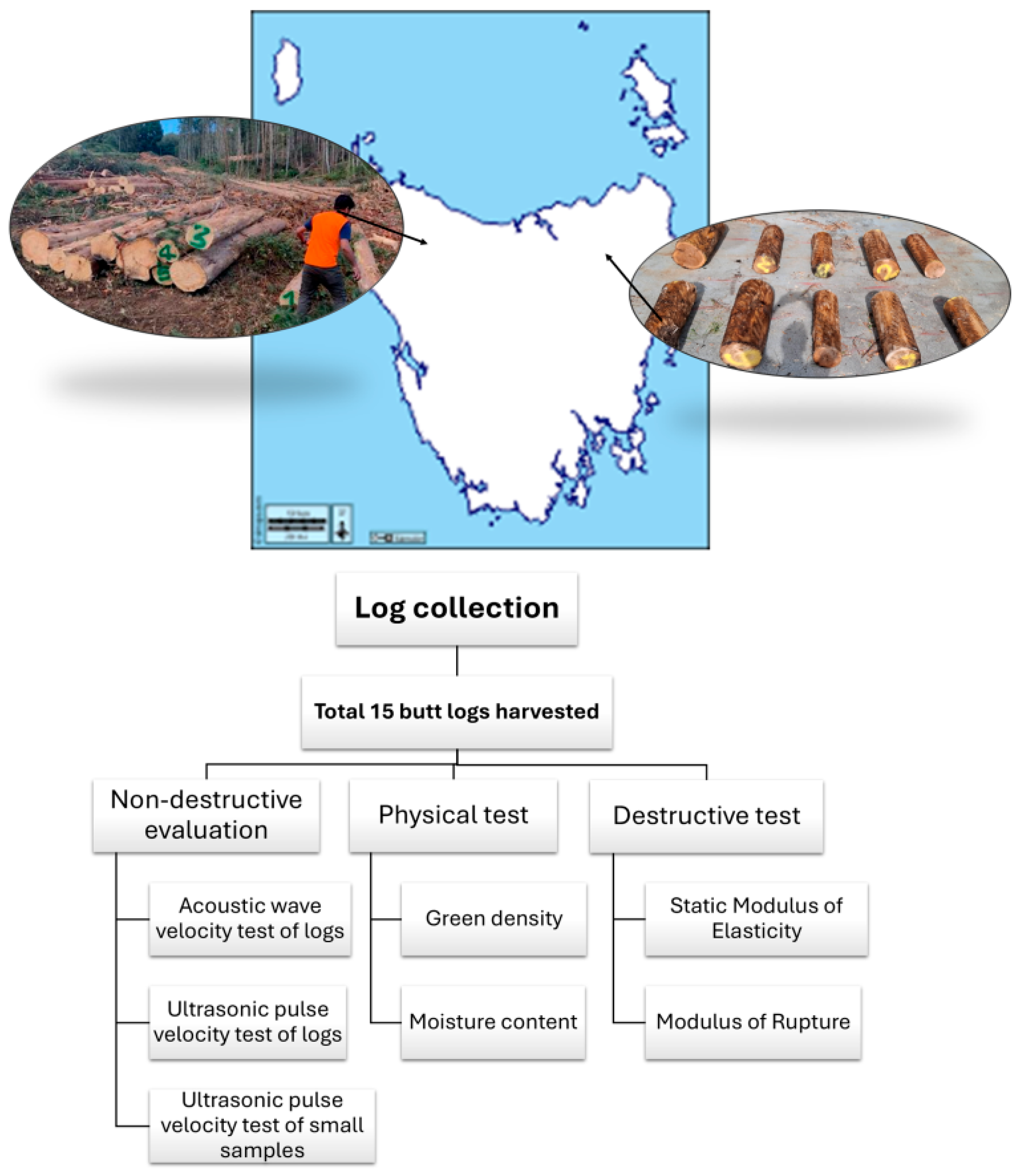
The materials used in this study were fibre-managed E. nitens logs sourced from two harvesting sites in Tasmania (see Figure 1). From Site 1, 5 butt logs of 26-year-old trees were sourced from the commercial harvesting site of Forico Future Fiber Private Limited, located in the Surrey Hills, northwestern Tasmania, located at 280 m above sea level, with an annual rainfall of 974.4 mm. The soil type of this site is basalt talus, with a maximum temperature of 17.1 °C and a minimum temperature of 7.2 °C. From Site 2, 10 butt logs of 18-year-old trees were sourced from the Reliance Forest Fibre Private Limited harvesting site at Ben Nevis, northeastern Tasmania, located at 720 m above sea level, with an annual rainfall of 842 mm. The soil type of the site is loamy soil under mixed rainforest, with a max./min. temperature of 24 °C/3 °C. From both sites, logs 5.5 m in length were selected with a variable diameter class. Serial numbers were marked using spray paint on each log for further identification.

2.1. NDT of Harvested Logs

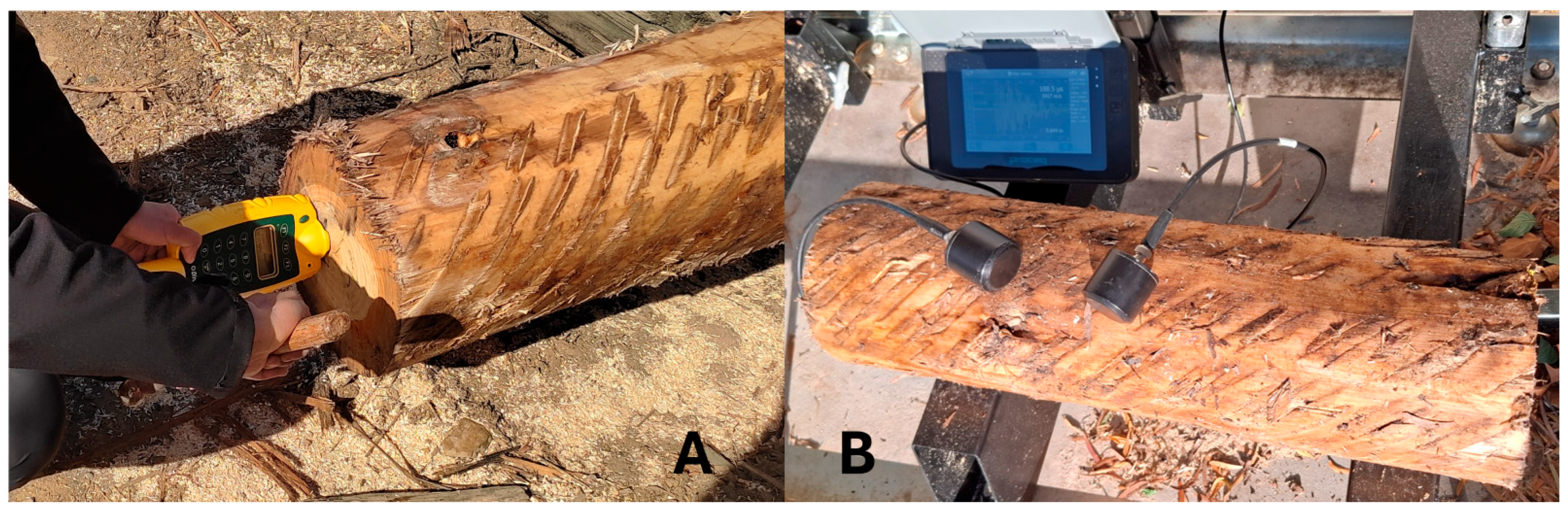
The AWV measurements were taken on the small end of log using a acoustic resonance device Director Hitman 200TM tool (Fibre-gen, New Zealand) (see Figure 2). The Hitman tool provided frequency data, which enabled calculation of the DMOE using log green density (kg/m3). After AWV data collection, a 0.8 m long log was docked from the small end of the harvested log for further UPV testing and milling in the sawmill.
On the same day as log harvesting, logs 0.8 m in length were transported to the laboratory for UPV testing. For UPV testing, a Proceq-Pundit Lab200+ (Proceq SA, Schwerzenbach, Switzerland) tool was used, which uses pulse-velocity ultrasonic waves, with a 54 kHz frequency sensor at the cross-section of the logs (see Figure 2).
The following formula was used to determine the DMOE of the logs based on velocity data from the AWV and UPV tools:
DMOE (GPa) = [ρ × (Velocity)2]/1000
where ρ = green density (kg/m3) of the log, Velocity = velocity taken on the logs by the AWV and UPV tools in km/sec, and DMOE values were measured in N/mm2; to convert them to GPa, the values were divided by 1000.

2.2. Sample Processing and Preparation

For wood property assessment, samples with a length of 400 mm and with a 20 × 20 mm cross-section size were recovered based on the Australian standard AS/NZ: 4063.1:2010 [22].
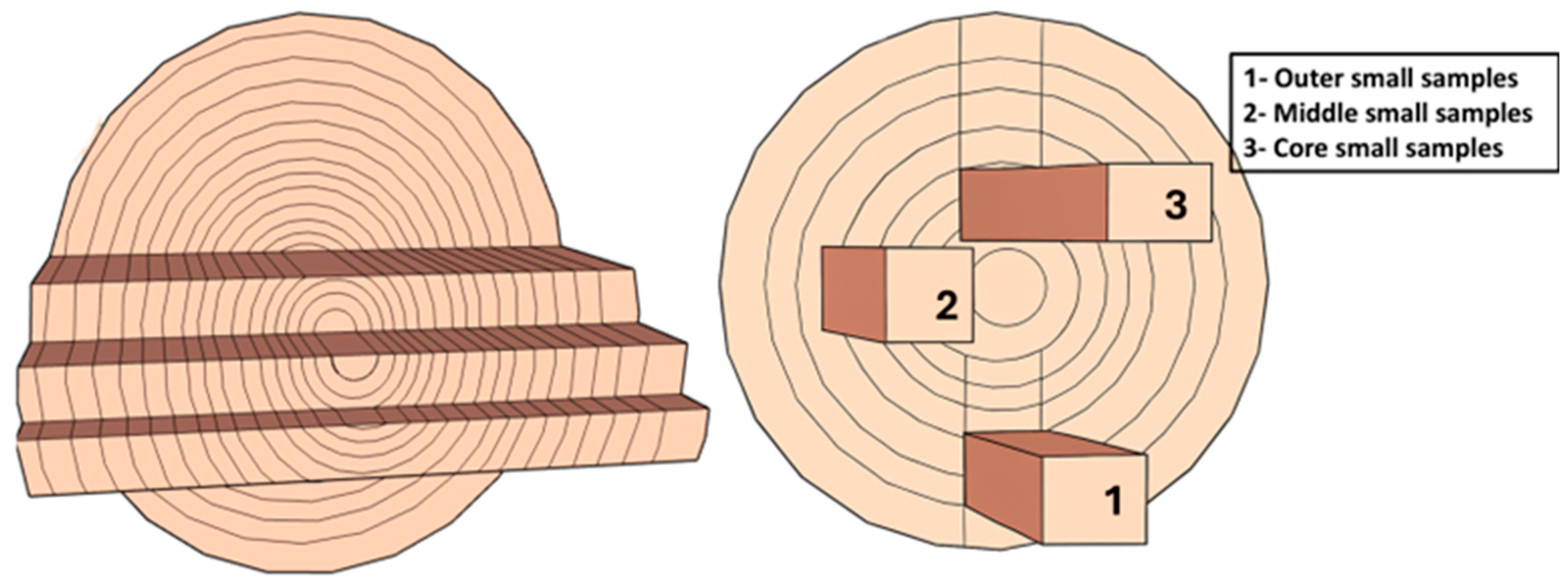
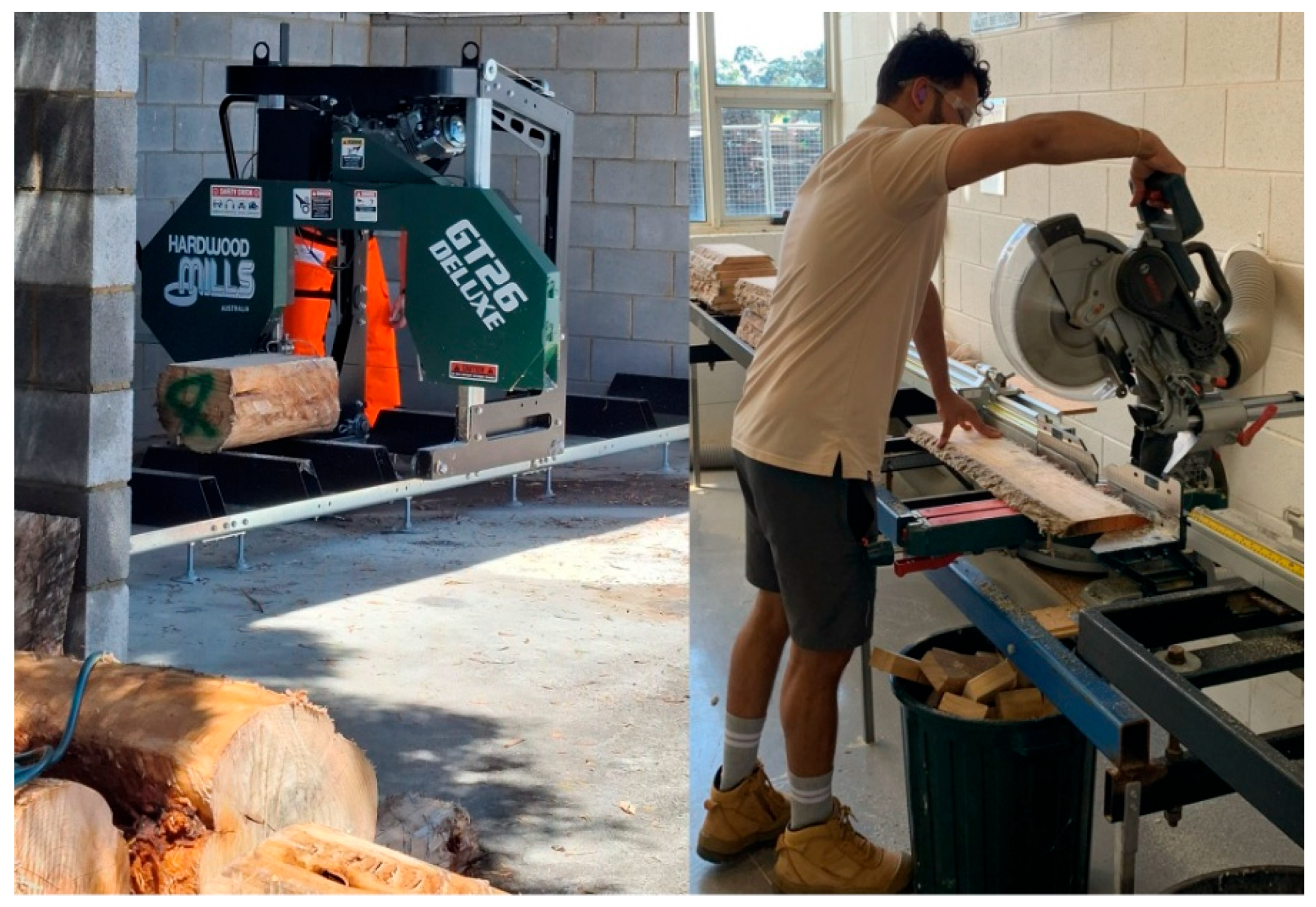
Based on the log diameter, three to four sawn boards with a nominal 25 mm thickness were ripped radially to recover samples (see Figure 3).
From each sawn board, small samples were recovered, as shown in Figure 4. The samples were recovered based on their location inside the log.
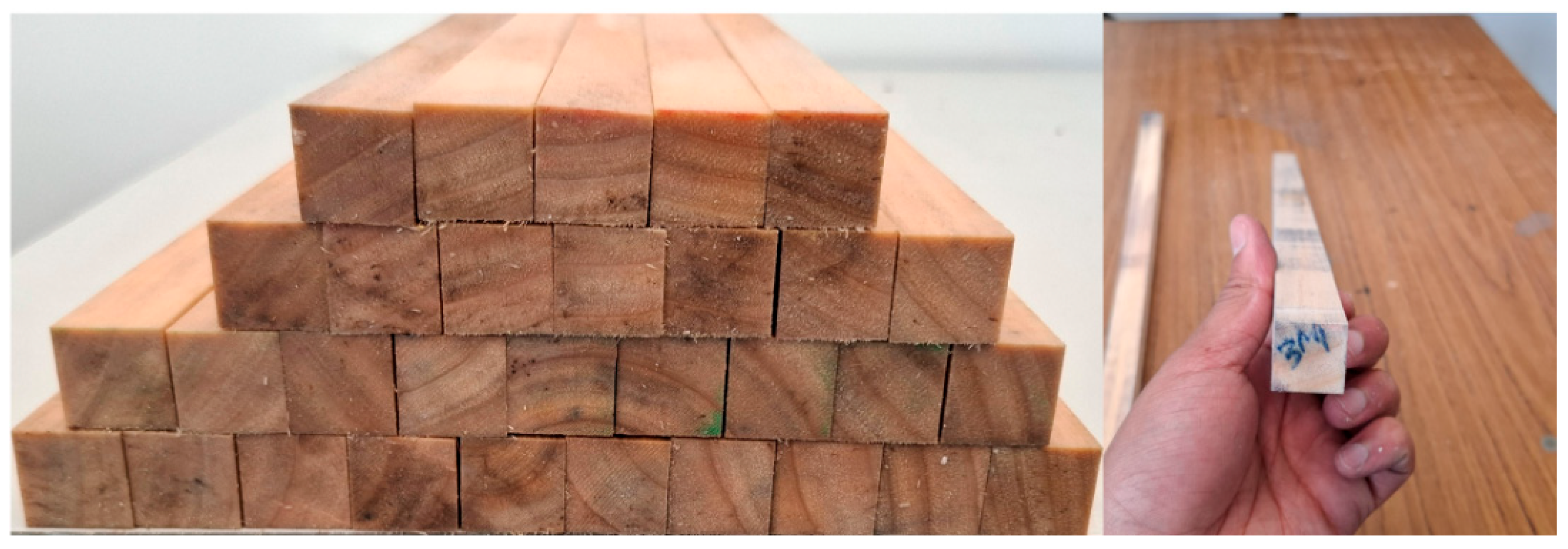
A total of 314 samples were recovered from all the logs as per the recovery for further testing (see Figure 5).

2.3. NDT of Recovered Small Samples

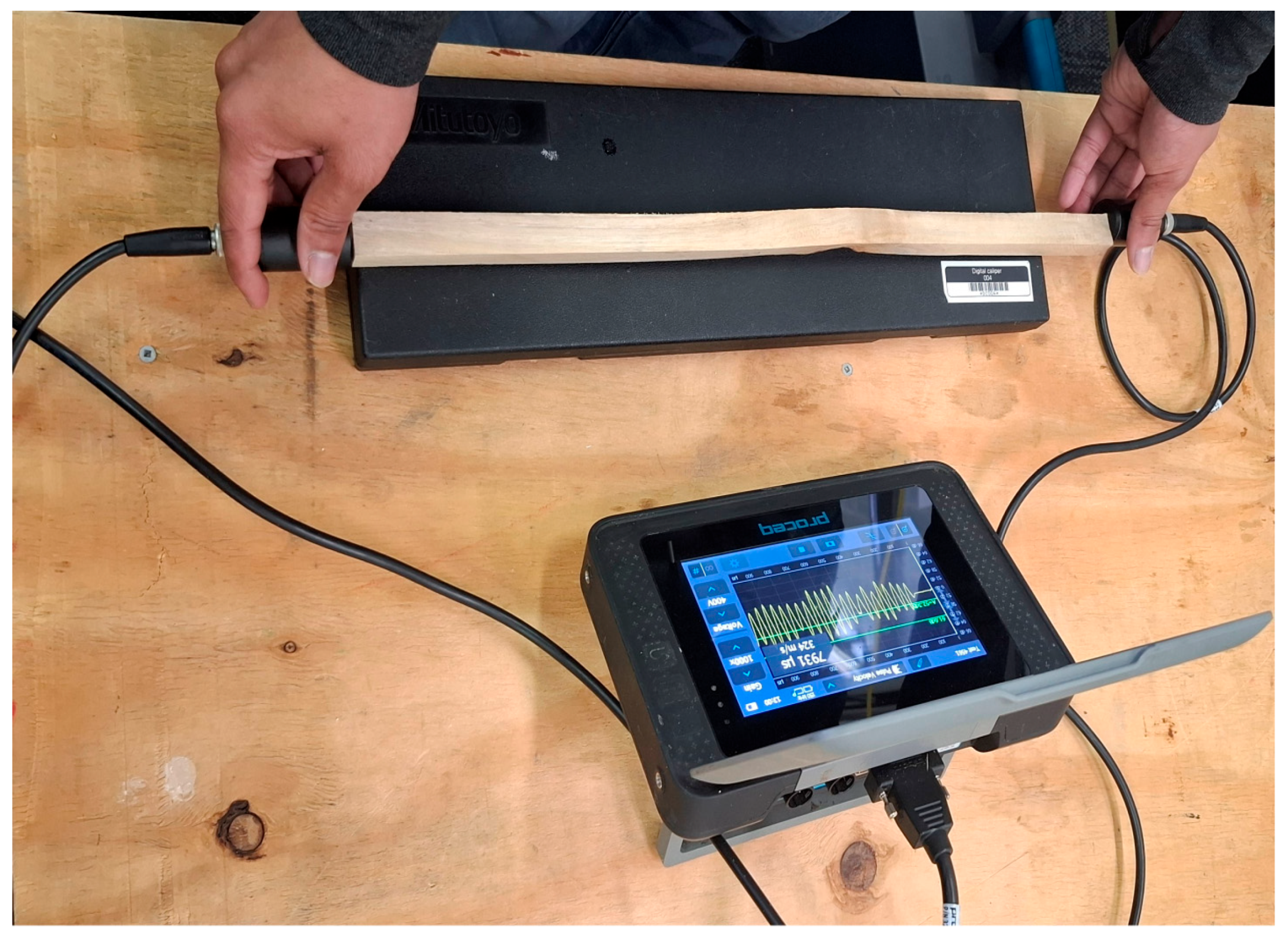
UPV testing of all the recovered small samples was carried out non-destructively (see Figure 6) using 150 KHz frequency sensors on the cross-sections of the samples. The 150 KHz frequency sensors were used for the small samples due to their small size and the suitability of this frequency for obtaining the data, whereas 54 KHz frequency sensors were unable to measure the velocity on the small samples. To calculate the DMOE of the small samples, DMOE Equation (1) was used.

2.4. Density (kg/m3) and Moisture Content (MC%) Measurement

From each small sample, the density and MC (%) measurements were taken with a cross-section size of 20 × 20 mm and a length of 25 mm (nominal) using the Australian standard AS/NZ: 1080.1 [23] based on the oven-dry MC (%) method.

2.5. Static Bending Test

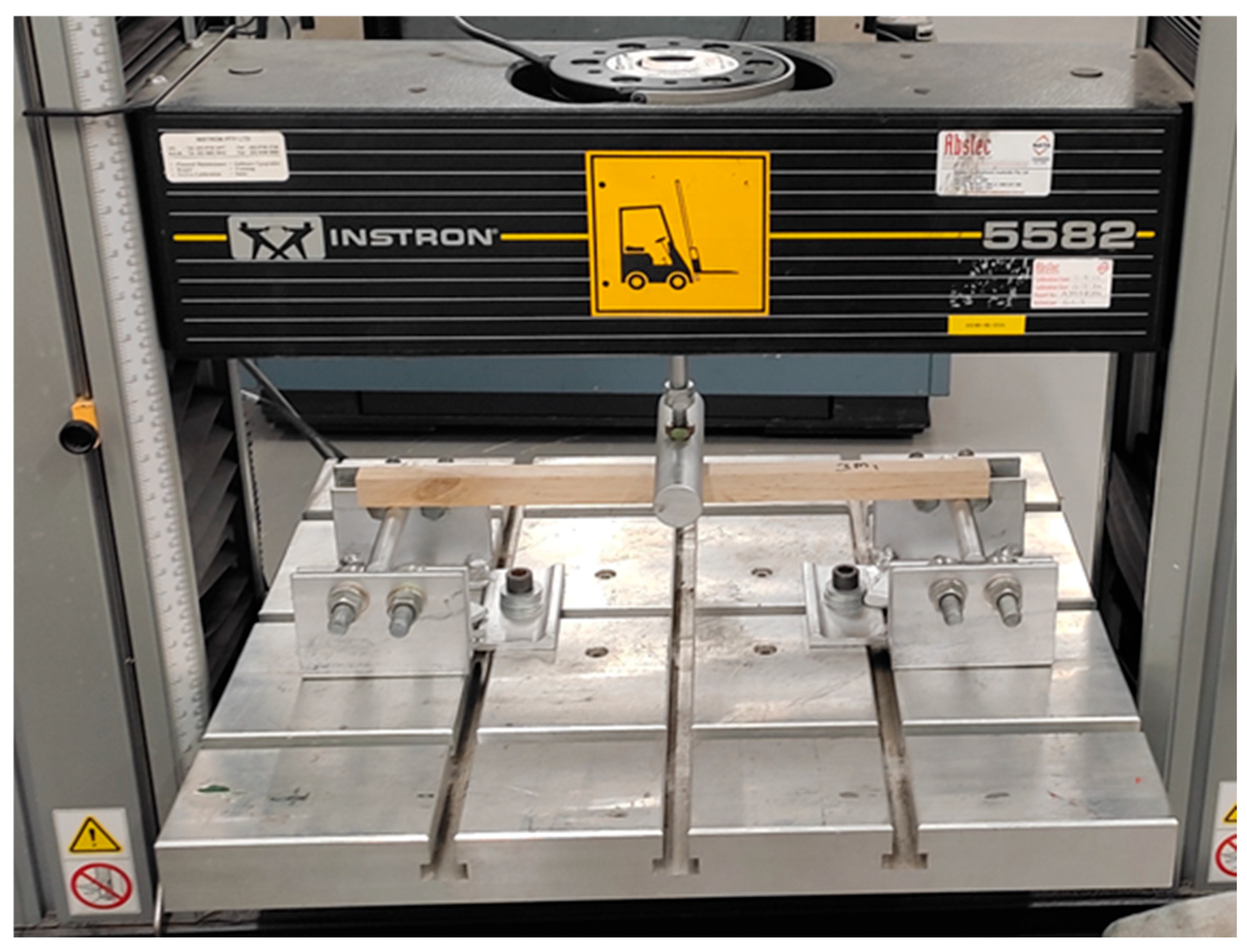
For mechanical testing of the small samples, a universal testing machine (UTM) was used, as shown in Figure 7, followed by the calculation of the static MOE and MOR as per AS/NZS 4063.1:2010 [22]. The length of the samples was 400 mm, with a span of 360 mm (18 times thickness) and a cross-sectional area (20 × 20 mm2). A continuous loading of 6 mm/min was used, as per the standard for the test.

2.6. Data Analysis and Statistical Methods

The IBM SPSS statistics 30 software was used for the analysis of the test results with the following stages:
  • Based on the regression analysis and correlation, the relationship between the actual stiffness (static MOE) and expected stiffness (DMOE) was examined according to the sample location and age of the logs.
  • Based on the small sample location inside the log, the final analysis looked at the overvaluation or undervaluation (%) of the static MOE by DMOE results.

3. Results

3.1. Traits of Harvested Logs

The traits of the Site 1 and Site 2 logs are summarised in Table 1. The green density of the logs at both sites showed a relatively narrow distribution, ranging from 1049 kg/m3 to 1125 kg/m3, while the basic density was between 456 kg/m3 and 550 kg/m3. The AWV values ranged from 3.07 to 3.88 km/s, and the UPV ranged from 3.26 to 3.90 km/s, with an average velocity of 3.63 km/s across both tools. Based on the UPV, the DMOE of the logs ranged between 11.57 and 17.08 GPa, whereas the AWV-derived DMOE values ranged between 10.42 and 16.94 GPa.

3.2. Traits of Recovered Small Samples

The traits of the small samples from both sites are summarised in Table 2. In the small samples, there was variation in the physical and mechanical properties compared to the logs, both due to the presence of SRFs in the small samples.
The green density showed variation between the samples, with a broad range from 792 to 1295 kg/m3, whereas the basic density ranged from 376 to 700 kg/m3. The MC (%) of both sites showed similar values, ranging from 130 to 135% for mean MC (%), with Site 2 showing greater variability in moisture distribution. The UPV of the small samples ranged between 1.92 and 4.11 km/s, and the DMOE of the small samples ranged from 4.06 to 18.11 GPa. The static MOE of the small samples ranged from 4.05 to 14.15 GPa, whereas the MOR ranged from 26.31 to 81.68 MPa.

3.3. Correlation Between NDE and Static MOE Results of Samples

To analyse the relationship between the DMOE and static MOE of the logs and small samples, two analytical scenarios were employed to assess the role of age. The first scenario incorporated the age of the samples as a factor, while the second excluded it, thereby allowing for a comparative evaluation of the effect of age on correlation outcomes. This approach was intended to determine whether age contributed significantly to the observed variability or whether the relationships among the predicted and actual stiffness values could be explained independently of age.

3.3.1. Correlation Between NDE and Static MOE Results Without Age

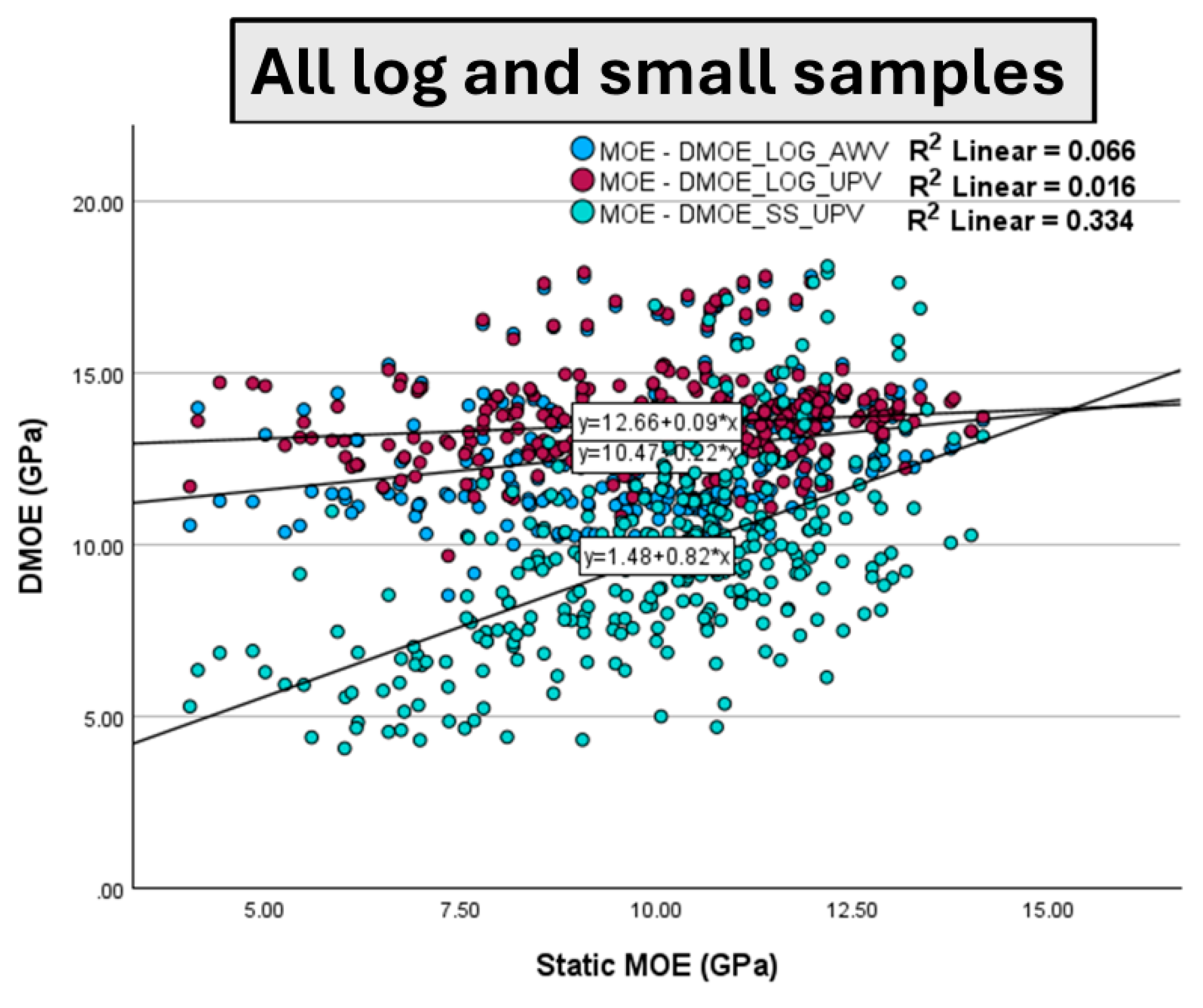
The DMOE data from the logs and small samples from both sites were compared with the static MOE data of the small samples, as shown in Figure 8. The correlation between the DMOE (AWV-based) and static MOE for the logs was very weak (R2 = 0.066). A similarly weak correlation was observed for the UPV-based DMOE for the logs (R2 = 0.016). For the small samples, the UPV-based DMOE showed a better, though still moderate, correlation with the static MOE (R2 = 0.334).

3.3.2. Correlation Between NDE and Static MOE Results Based on Age

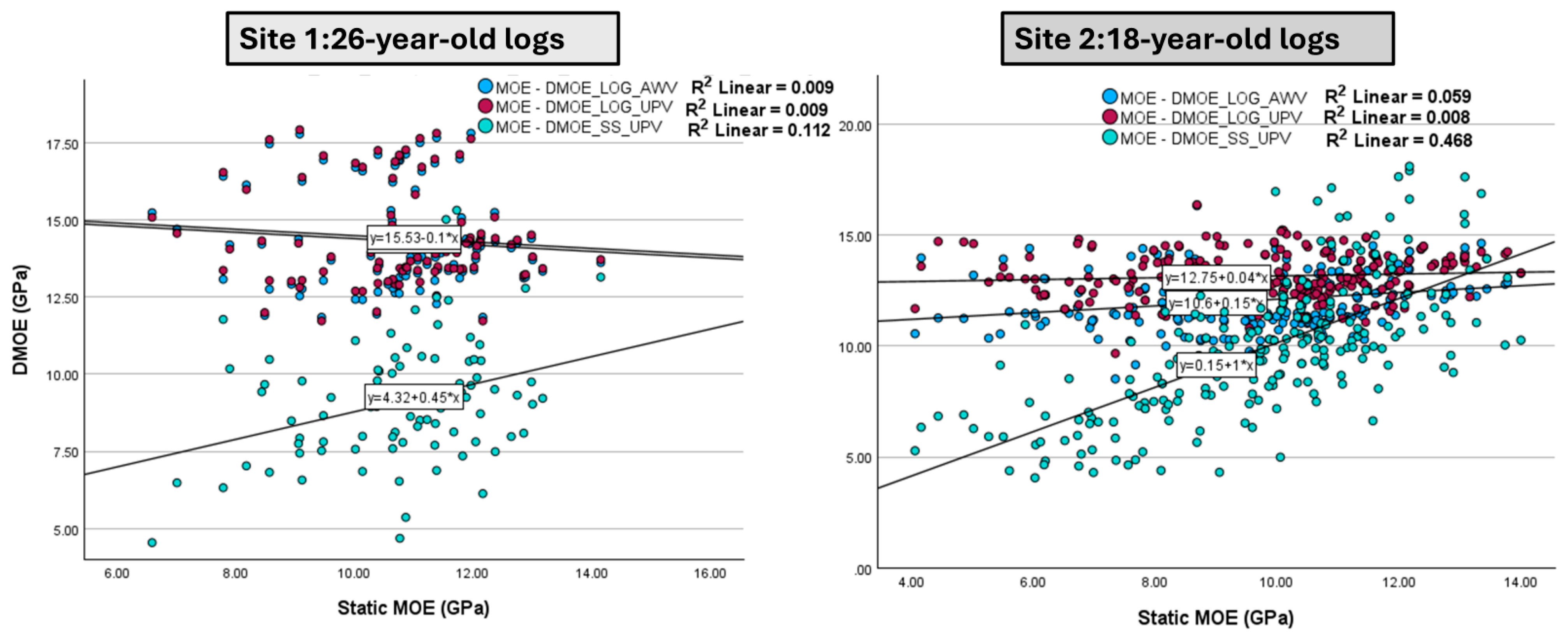
Using the age parameter, Site 1 logs (26-year-old samples) showed very weak correlations across all stages, including the DMOE of the logs by AWV (R2 = 0.009), the DMOE of the logs by UPV (R2 = 0.009), and the DMOE of the small samples by UPV (R2 = 0.112), as shown in Figure 9.
Overall, Site 1 showed a weak negative correlation between the DMOE and static MOE for all the samples, whereas Site 2 (18-years-old samples) showed similar trends at the log level using AWV and UPV tools. However, the small samples showed a moderate positive correlation (R2 = 0.468), indicating that with the increase in age, the correlation between the DMOE and static MOE decreases in small samples.

3.4. Correlation Between NDE and Static MOE Results Using the Sample Location Inside the Log

Using the location of the small samples, i.e., outer, middle and core, the relationship between the DMOE and static MOE results was analysed under a similar scenario, i.e., with and without the age parameter.

3.4.1. Correlation Between NDE and Static MOE Results Without Age

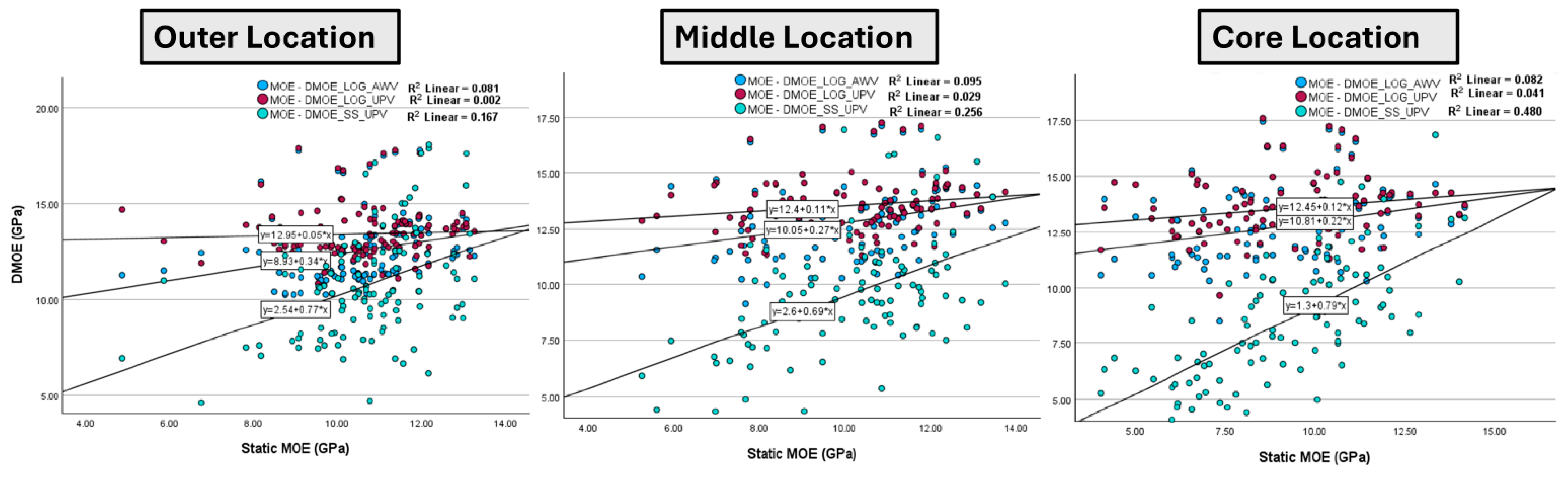
The results of the DMOE and static MOE were analysed based on the location of the small samples without considering the age parameter, as shown in Figure 10. In this scenario, the outer-location DMOE showed a very weak correlation with the static MOE based on log testing, while small samples achieved a slightly better but still weak correlation (R2 = 0.167).
In the middle location, a moderate correlation of 0.256 was found for the DMOE and static MOE for the small samples. In the core location, small samples also showed a positive correlation (R2 = 0.48), suggesting stronger alignment towards the pith, though only at the small-sample level.

3.4.2. Correlation Between NDE and Static MOE Results Based on Age

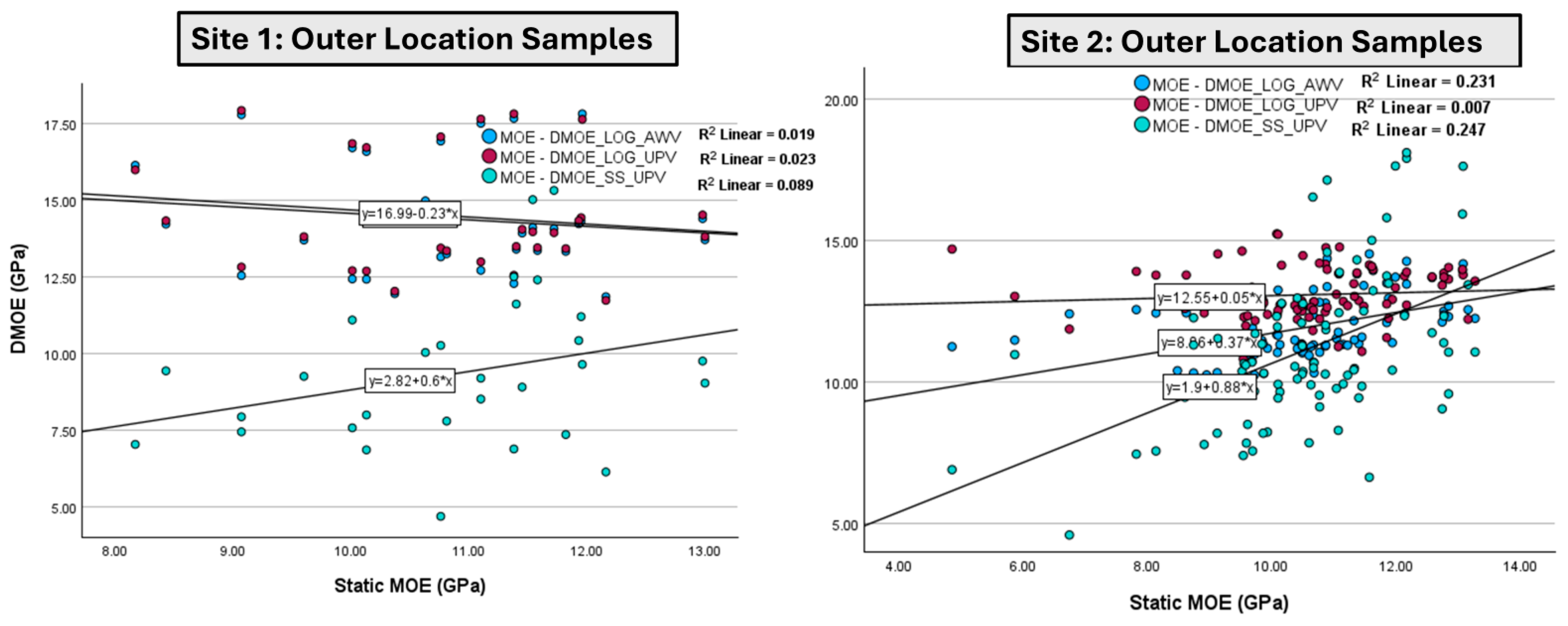
When age and location were combined, the trends diverged between sites in the outer location. At Site 1, correlations remained weak across all NDE tests of the logs and small samples, whereas in Site 2, the correlation remained weak for logs, but a modest improvement was observed for the small samples (R2 = 0.247), as shown in Figure 11.
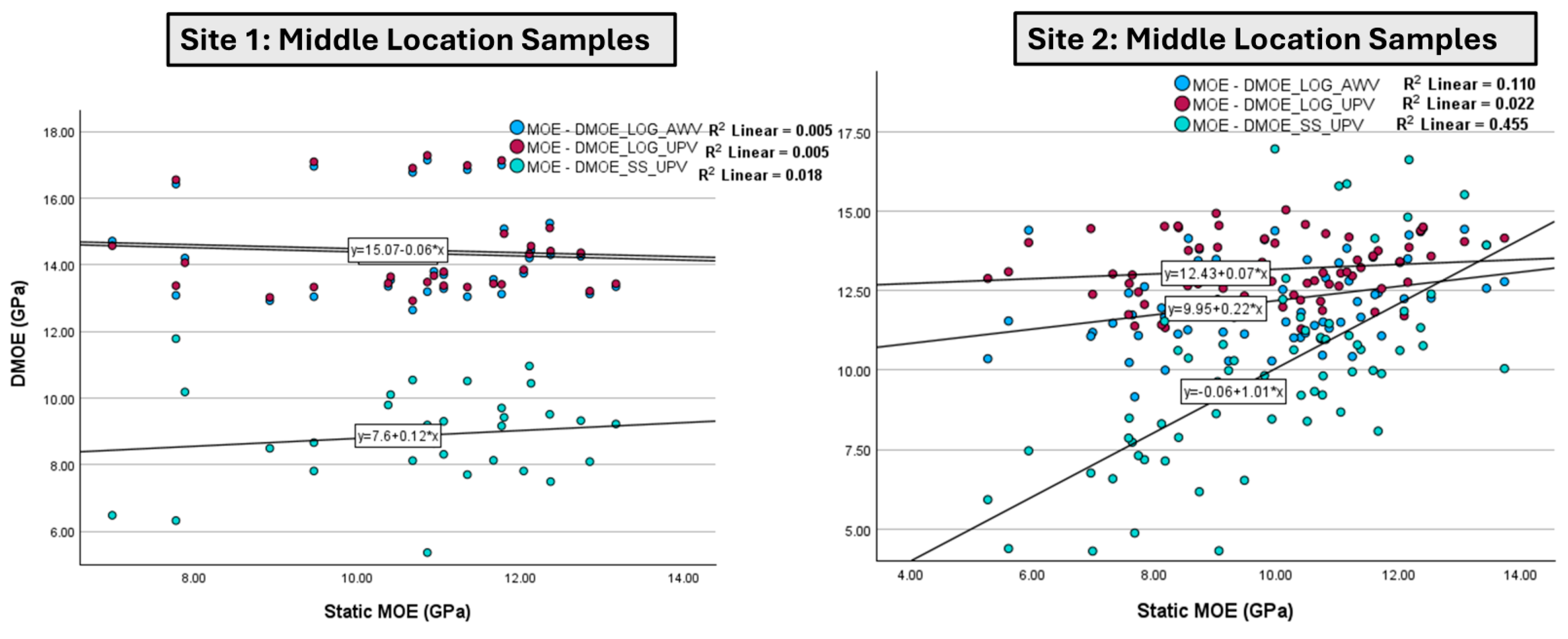
In the middle layer, both sites yielded results similar to those from the outer-location samples. At Site 1, the correlations were weak for both logs and small samples across all types of NDE tests. Similarly, at Site 2, weak correlations were observed for logs. However, small samples at Site 2 showed a moderate improvement, with an R2 value of 0.455 for the dynamic MOE (DMOE) compared to the static MOE, as illustrated in Figure 12.
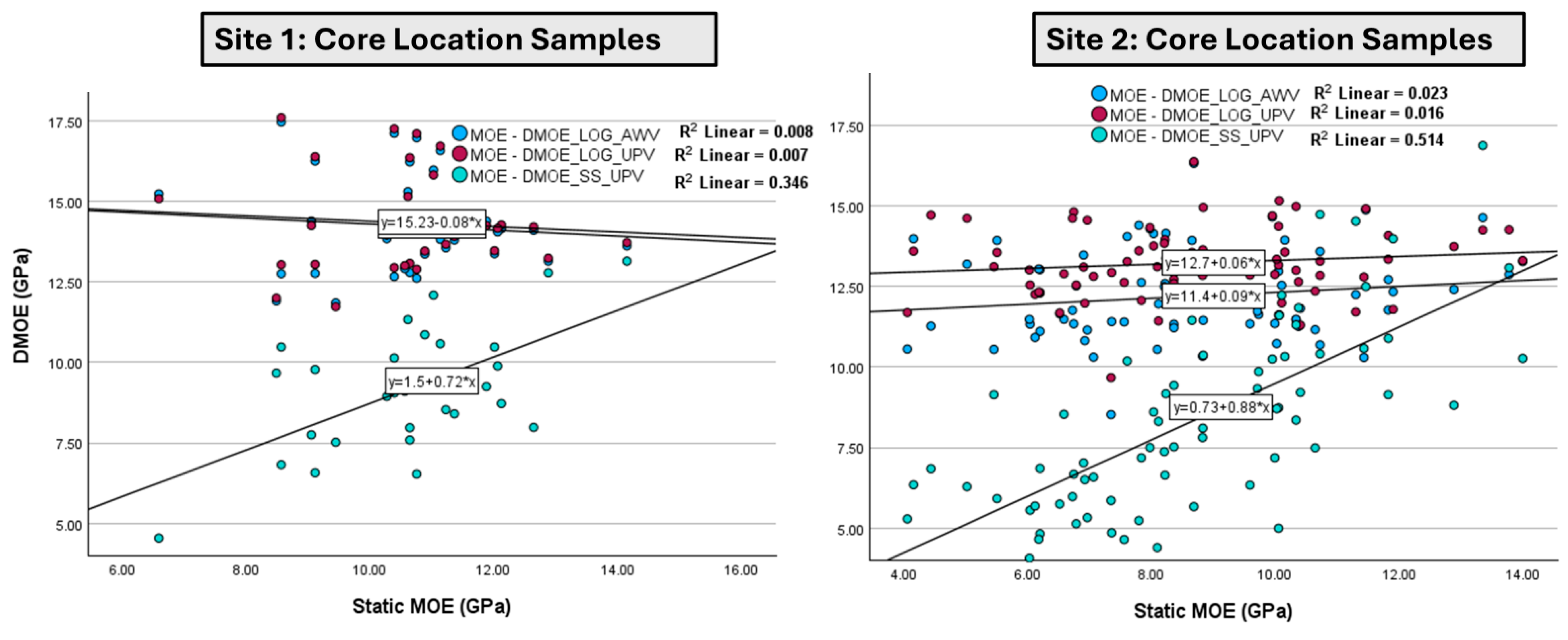
In the core location, samples exhibited trends similar to those in other locations, with some variations. At the log level, both sites displayed a weak negative correlation between the dynamic MOE (DMOE) and static MOE, consistent with logs from other locations. For small samples, Site 1 showed a moderate DMOE correlation (R2 = 0.346) compared to the DMOE results for other locations. In contrast, the small samples from Site 2 demonstrated a stronger, nearly positive correlation (R2 = 0.514), indicating that the core small samples had a higher correlation than those from other layers, as illustrated in Figure 13.

3.5. Comparative Analysis of NDE and Static MOE Results

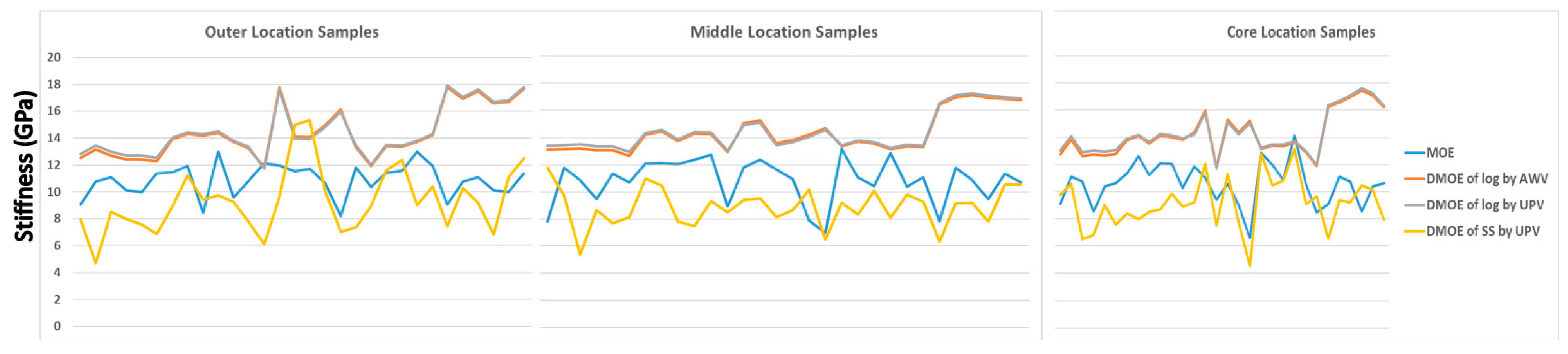
Using the location of the samples, the relationship between the static MOE and DMOE derived from AWV at the log level and UPV at both the log and small-sample levels was analysed. In Site 1 across all locations, the UPV-based predictions of the DMOE for logs and small samples showed a strong positive relation with one another, consistently remaining within a range of approximately 12–17 GPa, indicating a higher degree of stability and reliability in stiffness estimation. In contrast, the AWV-based DMOE results displayed greater variability and lower values, fluctuating between about 5 and 11 GPa, as shown in Figure 14.
The consistent alignment of the UPV-derived estimates with the MOE across different sample sets suggests a stronger correlation and higher predictive accuracy for ultrasonic methods. In contrast, acoustic velocity appears to be less precise and more scattered in its predictive capacity.
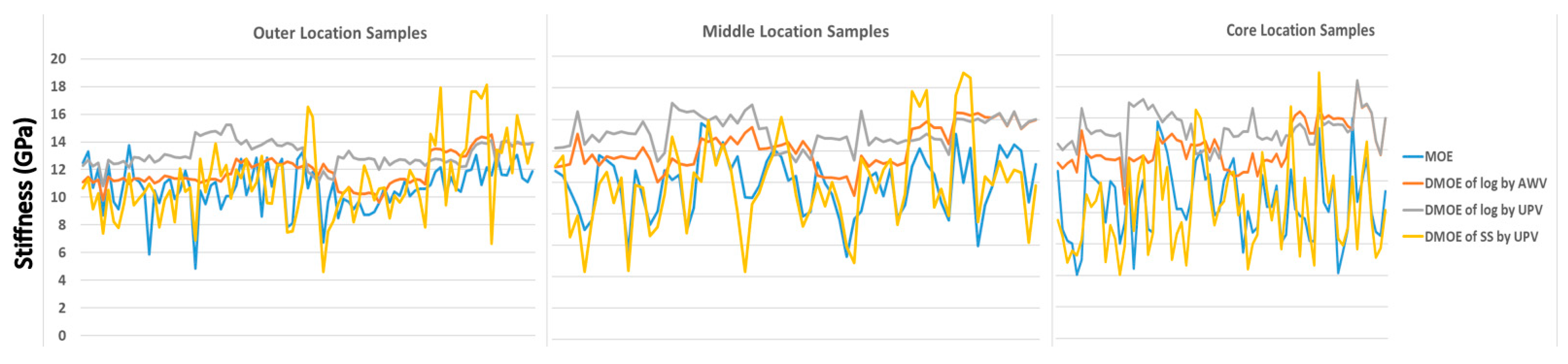
The results shown in Figure 15 show the relationship between the static MOE and DMOE derived from AWV and UPV tools used on the logs and small samples and the testing location in Site 2. Across all positions, the UPV-based predictions for the logs and small samples displayed strong consistency with one another, generally ranging between 12 and 15 GPa, and they followed a relatively stable trend across the static MOE range. In contrast, the AWV-based DMOE of the logs exhibited greater variability and fluctuation, with values showing more width and less similarity to MOE. This divergence is particularly evident at the outer and middle locations, where the AWV predictions scattered significantly, whereas the UPV results remained more closely aligned. The consistent overlap of the UPV-derived values across all locations suggests a stronger correlation and higher predictive reliability compared with AWV, thereby reinforcing ultrasonic velocity as a more robust method for estimating stiffness in logs and small samples.
Based on the results of the DMOE and static MOE, the difference between the results was analysed in terms of percentages. The outer samples had less overvaluation/undervaluation for both logs and small samples in terms of the DMOE. In Site 1, the outer-location DMOE of the logs (AWV and UPV) was nearly 40%, and the DMOE of the small samples determined by UPV showed a (−) 10.9% undervaluation for this site. In Site 2, the DMOE (AWV and UPV) values were between 15% and 27.5% for the logs and 6.25% for the small samples, as determined by UPV. In the middle location, the DMOE overvaluation for Site 1 logs was 36%, and for small samples, the DMOE undervaluation was (−) 16.11%, which is the highest underprediction for small samples among all the locations. In Site 2, the overvaluation of the DMOE for the logs was between 27.8% and 39.12%, and for small samples, it was 0.59%, which was the lowest overvaluation for both age groups. In the core location, Site 2 showed high overvaluation/undervaluation for both log-based DMOE (51.99 to 65.18%), which was the highest among all locations at the log level, and for the small-sample-based DMOE, it was (−) 2.65%, whereas in Site 1, it was near 38% for logs, and for small samples, it was (−) 13.11%.

4. Discussion

The two differently aged harvested logs showed relatively narrow ranges for green and basic density as well as for acoustic and ultrasonic velocities, suggesting a level of uniformity at the log level. However, when properties were examined in small samples, much wider ranges were observed for density, velocity, MOE, and MOR. This contrast highlights the averaging effect at the log level, where heterogeneity within the wood is present, compared to at the small-sample level. Apart from age, the difference between the static MOE values comes from different factors such as site factors, presence of defects, the environment and other tree-related factors [7]. These findings are consistent with previous research, which shows that recovered samples show true variability that governs mechanical behaviour in end-use applications [2]. The wide MOR range (26.31 to 81.68 MPa) further reinforces the effect of SRFs in reducing uniformity in strength compared with stiffness.

4.1. Correlation Between NDE and Static MOE Results

At the log level, both the AWV- and UPV-derived DMOE values showed negligible correlations with the static MOE (R2 = 0.066, 0.016), suggesting that velocity-based methods alone are not reliable predictors of stiffness in harvested logs. This is likely due to moisture distribution, SED of logs, and structural defects, all of which influence wave propagation. When examined in small samples, however, the UPV-derived DMOE showed a moderate correlation (R2 = 0.334), indicating that ultrasonic testing is more sensitive to local stiffness variation. This suggests that while NDE at the log scale provides limited predictive capacity for bending stiffness, testing small samples aligns more closely with destructive mechanical performance. This finding aligns with previous studies reporting that log-scale acoustic methods are useful for screening but require refinement to achieve accurate stiffness prediction using other NDE predictors. The AWV-based DMOE and density segregate the logs more significantly, allowing for the creation of different classes of logs. The results showed that the bottom logs had a lower DMOE than the middle ones [18]. With the two differently aged group stands (14 and 20 years), AWV as an indicator strongly correlates with the mechanical properties of LVL, such as static MOE and MOR. Logs with higher AWV generally yielded LVL with superior strength and stiffness [17]. The correlation between the DMOE (by AWV) and static MOE showed a positive correlation of 0.74 for E. nitens sawn boards [6].

4.2. Age and Site Effects

Age-related differences were evident between the two sites. For Site 1 (26 years), the DMOE of the logs obtained from both AWV and UPV exhibited a negligible correlation with the static MOE (R2 = 0.009, 0.009), while small samples also showed a weak correlation (R2 = 0.112). Site 2 (18 years) displayed a similar trend at the log scale, but small samples demonstrated a moderate positive correlation (R2 = 0.468). These findings suggest that younger material may display slightly stronger predictive relationships at smaller scales, but the log-level NDE remains weak in representing actual static stiffness across both age class sites. The stiffness of the wood increases with the age of the tree, which has been found in a large number of eucalyptus trees [24], where the heartwood of the wood matures with age and in a radial pattern, and stiffness increases from the pith to the bark direction [25]. However, the stiffness (MOE) increases from the first part of the tree [25,26,27], while another study found that a higher stiffness was noted in the second stem of the tree [10], whereas strength of the wood decreases from the base to the top of the tree [10]. The longitudinal change in stiffness is considerably influenced by the combination of MFA and wood density [28]. It was observed that in E. nitens, it first declines before rising toward the top [12].
Genetic variation was observed in E. nitens plantation trees, which are highly influenced by age, tree and site factors with the environment, which affects the MFA, density and stiffness of the tree between and within the site [29,30]. The density of the tree is highly influenced by climatic conditions, where the density of the wood responds to the availability of water. The availability of water directly influences the site productivity and density of the wood [31]. Higher-elevation locations with more rainfall produced trees with more stiff wood in northeastern Tasmania. On the other hand, trees with greater diameters and densities were found in drier areas. Remarkably, stiffness decreased as site productivity increased, indicating soil fertility, structure, and site quality [10]. Also, in dry conditions, a highly positive correlation (0.96) was found in studies between the DMOE and static MOE [32].

4.3. Radial Location Effects

The location of small samples across the outer, middle, and core regions significantly influenced the relationship between the DMOE and static MOE. In logs, correlations remained weak across all locations, reflecting averaging effects and acoustic signal interference. In small samples, however, stronger correlations were found in the middle (R2 = 0.455) and core regions (R2 up to 0.514 in Site 2). These results suggest that age, combined with radial position, influences predictive reliability, with younger wood (Site 2) showing better NDE-MOE alignment, particularly toward the core. In studies, it has been shown that ultrasonic DMOE has a high correlation (R2 = 0.704) with core samples in the longitudinal direction [33]. Also, testing towards the growth ring direction has a huge impact on testing, which is a better method for understanding the correlation [34].

4.4. Comparative Performance of AWV and UPV

Across all analyses, UPV consistently outperformed AWV in predicting stiffness. The UPV-derived DMOE values were closely aligned with the static MOE across different layers and sites, with a narrower and more stable range (12–17 GPa). In contrast, the AWV-derived values were scattered and prone to systematic over- or undervaluation, especially in the outer and middle layers. This divergence reflects the fundamental differences between the two techniques: AWV measures bulk wave propagation across the log, whereas UPV measures at shorter wavelengths and captures localised stiffness more effectively. The over-/undervaluation error analysis further confirmed that with age in Site 1, the overvaluation remained similar with a narrower range (36 to 40%) for all locations at the log level, whereas at the small-sample level, it varied from the outer to the core location in an increasing order from (−) 10.9 to (−) 13.11%). In Site 2, for the younger-age samples, it decreased from the core to the outer location (15 to 65%) at the log level and varied at the small-sample level (0.59 to 6.25%). A previous study reported both over-estimation and underestimation of 18.3% and 25% respectively for the static MOE compared to the DMOE of E. nitens sawn boards using AWV-based tools, which resulted in a total difference of 43.3% [2]. For North American hardwoods, the overestimation of the MOE was reported to be between 22%–32% [35], while for the E. delgatensis, it was reported to be nearly 29% [36]. A 15% overestimation obtained by the resonance flexure method for clear wood samples and a 14% overestimation were found for decayed Tasmanian oak [28]. Also, average density and stiffness exhibited more variability, with accuracy rates of nearly 70% and 60%, respectively, for density and stiffness for E. nitens logs [10]. With only density-based lumber grading, flatwise bending tests on CLT panels demonstrated that experimentally measured MOE values closely matched theoretical predictions derived from shear analogy and gamma theories. The relative errors were approximately 11.95% and (−) 7.21%, respectively, indicating acceptable prediction accuracy [37].
The difference is likely due to the viscoelastic nature of the wood. In terms of its vibration characteristics, the restoring elastic force is related to the velocity of deformation. When force is applied briefly, wood behaves like a solid with elastic properties. However, under prolonged force, it begins to exhibit behaviour similar to a viscous liquid [32]. The longitudinal vibration test overestimated the mean stiffness by 8.7% compared to the static MOE, whereas the transverse vibration test showed an underestimation of 8.9% compared to the static MOE for 19-year-old plantation-grown E. nitens sawn boards [20]. Previous studies have reported that the DMOE overestimates the static MOE by 31.05% when using longitudinal resonance methods and by approximately 20.6% when using flexural resonance methods [38], while the ultrasound method resulted in a 17%–20% overestimation in dry-treated samples [39]. With the ultrasonic-based DMOE, 9 to 11% overestimation of the static MOE was observed when using sonic waves on dry-treated samples [32], whereas in other studies, the DMOE was 125% higher than the static MOE using the ultrasonic method, followed by longitudinal and flexural vibrations [19]. The average static MOE varied by 41% at the tree level when SWV was used alone; however, when combined with the pin penetration depth, the variance decreased by up to 14% [16].

4.5. Implications for Non-Destructive Evaluation

Overall, these findings reinforce the limitations of log-scale AWV for direct prediction of stiffness and highlight UPV as a more robust tool, particularly when applied to smaller size samples. However, even UPV achieved only moderate-to-positive correlations, indicating that velocity-based DMOE must be combined with density information to achieve a grading accuracy that is suitable for structural applications. From a practical standpoint, the results suggest that UPV applied at the small-sample stage offers the greatest potential for segregating material into reliable stiffness classes, whereas AWV may serve better as a rapid screening tool at log yards and harvesting sites.

5. Conclusions

This study evaluated the NDE of E. nitens logs and the properties of recovered small samples, with data validation conducted by destructive means (bending stiffness). Based on the location of small samples in the log, the DMOE results at the log scale and those at the scale of recovered small samples, a correlation was found between the DMOE and static MOE of the small samples at the core location, which was quite positive. In contrast, the correlation was very poor in other layers. Based on the DMOE results for the logs, a very poor correlation was found between the DMOE (based on the AWV and UPV tools) and the static MOE for logs, whereas in the core layer, positive results were found in logs from Site 2 compared to logs from Site 1, which showed a lower correlation, indicating that the correlation decreased with age. The outer-location samples showed a high stiffness value (NDE and destructive both) compared to other layers at the log and small-sample levels, which shows that the outer-location samples have a low overprediction of stiffness for logs (15.44% to 40%) and for small samples (6.25%), whereas towards the core location, a high value of overestimation was found for logs and small samples (65.18% and −2.65%).
Additionally, the DMOE values for the small samples showed lower underestimation in predicting stiffness. The results concluded that the effect of age on overvaluation for the logs was nearly similar across all layers for the DMOE for logs, as demonstrated in Site 1. With a lower age, the outer-location samples showed less overvaluation for the DMOE for logs. Meanwhile, the Site 1 small samples showed high overvaluation compared to the Site 2 small samples.

Author Contributions

N.S.S.: Conceptualisation, methodology, validation, formal analysis, data curation, writing—original draft preparation, visualisation. N.K.: Conceptualisation, methodology, validation, writing—review and editing, resources, supervision, project administration. A.T.: Conceptualisation, methodology, validation, writing—review and editing, supervision. G.N.: Conceptualisation, methodology, validation, writing—review and editing, resources, supervision, project administration, funding acquisition. All authors have read and agreed to the published version of the manuscript.

Funding

This research was funded by the Regional Research Collaboration (RRC) program and supported by the Centre for Sustainable Architecture with Wood (CSAW) and the School of Architecture and Design, University of Tasmania.

Data Availability Statement

Dataset is available on request from the authors.

Acknowledgments

The authors acknowledge support from the Australian Government’s Regional Research Collaboration Program and the Centre for Sustainable Architecture with Wood (CSAW) in the School of Architecture and Design, University of Tasmania. The authors appreciate the technical support and sample preparation from the CSAW and the University of Tasmania School of Architecture and Design. The authors highly acknowledge industry partners Forico Future Fibre Private Limited and Reliance Forest for Fibre Private Limited for providing logs.

Conflicts of Interest

The industry partners (Forico Future Fibre Private Limited and Reliance Forest for Fibre Private Limited) were not involved in the study design, data collection, analysis, or the decision to publish the results. The authors declare that the research was conducted in the absence of any commercial or financial relationships that could be construed as a potential conflict of interest. The funders had no role in the design of the study; in the collection, analyses, or interpretation of data; in the writing of the manuscript; or in the decision to publish the results.

Abbreviations

The following abbreviations are used in this manuscript:
ABARESAustralian Bureau of Agricultural and Resource Economics and Sciences
AWVAcoustic Wave Velocity
UPVUltrasonic Pulse Velocity
DMOEDynamic Modulus of Elasticity
LVLLaminated Veneer Lumber
MLRModulus Linear Regression
MOEModulus of Elasticity
MORModulus of Rupture
NDENon-Destructive Evaluation
NDTNon-Destructive Testing
SRFsStrength-Reducing Features
SWVStress Wave Velocity
MFAMicrofibril Angle
PDPenetration Depth
VSGVisual Stress Grading
ASAustralian Standard
SEDSmall-End Diameter
MCMoisture Content
UTMUniversal Testing Machine

References

  1. Korhonen, J.; Toppinen, A.; Cubbage, F.; Kuuluvainen, J. Factors driving investment in planted forests: A comparison between OECD and non-OECD countries. Int. For. Rev. 2014, 16, 67–77. [Google Scholar] [CrossRef][Green Version]
  2. Balasso, M.; Hunt, M.; Jacobs, A.; O’Reilly-Wapstra, J. Development of non-destructive-testing based selection and grading strategies for plantation Eucalyptus nitens sawn boards. Forests 2021, 12, 343. [Google Scholar] [CrossRef]
  3. ABARES. Australia’s State of the Forests Report- Indicator 1.1a.iv (2023); Australian Goverment Department of Agriculture, Fisheries and Forestry—ABARES: Canberra, Australia, 2023.
  4. ABARES. Australian Plantation Statistics 2023 Update; ABARES: Canberra, Australia, 2023.
  5. Hou, J.; Taoum, A.; Nolan, G.; Kotlarewski, N. Study of the relationship between flatwise and edgewise modulus of elasticity of plantation fibre-managed E. nitens sawn boards. Constr. Build. Mater. 2022, 349, 128774. [Google Scholar] [CrossRef]
  6. Ettelaei, A.; Taoum, A.; Nolan, G. Assessment of different measurement methods/techniques in predicting modulus of elasticity of plantation Eucalyptus nitens timber for structural purposes. Forests 2022, 13, 607. [Google Scholar] [CrossRef]
  7. Derikvand, M.; Kotlarewski, N.; Lee, M.; Jiao, H.; Chan, A.; Nolan, G. Visual stress grading of fibre-managed plantation Eucalypt timber for structural building applications. Constr. Build. Mater. 2018, 167, 688–699. [Google Scholar] [CrossRef]
  8. AS 2082 2007; Timber—Hardwood—Visually Stress-Graded for Structural Purposes. Australia Standards: Sydney, Australia, 2007.
  9. Kube, P.D.; Raymond, C.A.; Banham, P.W. Genetic parameters for diameter, basic density, cellulose content and fibre properties for Eucalyptus nitens. For. Genet. 2001, 8, 285–294. [Google Scholar]
  10. Balasso, M.; Hunt, M.; Jacobs, A.; O’Reilly-Wapstra, J. Characterisation of wood quality of Eucalyptus nitens plantations and predictive models of density and stiffness with site and tree characteristics. For. Ecol. Manag. 2021, 491, 118992. [Google Scholar] [CrossRef]
  11. Gendvilas, V.; Neyland, M.; Rocha-Sepúlveda, M.F.; Downes, G.M.; Hunt, M.; Jacobs, A.; Williams, D.; Vega, M.; O’Reilly-Wapstra, J. Effects of thinning on the longitudinal and radial variation in wood properties of Eucalyptus nitens. Forestry 2022, 95, 504–517. [Google Scholar] [CrossRef]
  12. Evans, R.; Stringer, S.; Kibblewhite, R.P. Variation of microfibril angle, density and fibre orientation in twenty-nine Eucalyptus nitens trees. Appita J. 2000, 53, 450–457. [Google Scholar]
  13. Wimmer, R.; Downes, G.; Evans, R. Temporal variation of microfibril angle in Eucalyptus nitens grown in different irrigation regimes. Tree Physiol. 2002, 22, 449–457. [Google Scholar] [CrossRef]
  14. Raymond, C.A.; Schimleck, L.R.; Muneri, A.; Michell, A.J. Nondestructive sampling of Eucalyptus globulus and E. nitens for wood properties. III. Predicted pulp yield using near infrared reflectance analysis. Wood Sci. Technol. 2001, 35, 203–215. [Google Scholar] [CrossRef]
  15. Rayner, T.; Grams, W.; Scheinman, E. An automated log grading system based on computed tomography. In Proceedings of the First International Precision Forestry Cooperative Symposium; University of Washington, Institute of Forest Resources: Seattle, DC, USA, 2002; pp. 109–118. [Google Scholar]
  16. Simic, K.; Gendvilas, V.; O’Reilly, C.; Harte, A.M. Predicting structural timber grade-determining properties using acoustic and density measurements on young Sitka spruce trees and logs. Holzforschung 2019, 73, 139–149. [Google Scholar] [CrossRef]
  17. Blackburn, D.; Vega, M.; Nolan, G. Using acoustic wave velocity to select fibre-managed plantation Eucalyptus nitens logs for laminated veneer lumber products. South. For. J. For. Sci. 2019, 81, 223–234. [Google Scholar] [CrossRef]
  18. Farrell, R.; Innes, T.C.; Harwood, C.E. Sorting Eucalyptus nitens plantation logs using acoustic wave velocity. Aust. For. 2012, 75, 22–30. [Google Scholar] [CrossRef]
  19. Chauhan, S.; Sethy, A. Differences in dynamic modulus of elasticity determined by three vibration methods and their relationship with static modulus of elasticity. Maderas Cienc. Tecnol. 2016, 18, 373–382. [Google Scholar] [CrossRef]
  20. Opazo-Vega, A.; Rosales-Garcés, V.; Oyarzo-Vera, C. Non-destructive assessment of the dynamic elasticity modulus of eucalyptus nitens timber boards. Materials 2021, 14, 269. [Google Scholar] [CrossRef]
  21. Chauhan, S.; Walker, J. Variations in acoustic velocity and density with age, and their interrelationships in radiata pine. For. Ecol. Manag. 2006, 229, 388–394. [Google Scholar] [CrossRef]
  22. AS/NZS 4063.1; Characterisation of Structural Timber: Part 1: Test Methods. Australia Standards/Newzealand Standards: Sydney, Australia, 2010.
  23. AS 1080.1 2012; Timber: Methods of Test Moisture Content. Australia Standards: Sydney, Australia, 2012.
  24. Harding, K.; Hopewell, G.; Davies, M.; Zbonak, A. The Wood Properties of Subtropical and Tropical Hardwood Plantation Timber Grown for High-Value Products in Australia; Cooperative Research Centre for Forestry: Tasmania, Australia, 2012. [Google Scholar]
  25. McKenzie, H.; Turner, J.; Shelbourne, C. Processing young plantation-grown Eucalyptus nitens for solid-wood products. 1: Individual-tree variation in quality and recovery of appearance-grade lumber and veneer. N. Z. J. For. Sci. 2003, 33, 62–78. [Google Scholar]
  26. Hamilton, M.G.; Blackburn, D.P.; McGavin, R.L.; Baillères, H.; Vega, M.; Potts, B.M. Factors affecting log traits and green rotary-peeled veneer recovery from temperate eucalypt plantations: MG Hamilton et al. Ann. For. Sci. 2015, 72, 357–365. [Google Scholar] [CrossRef]
  27. Washusen, R.; Harwood, C.; Morrow, A.; Northway, R.; Valencia, J.C.; Volker, P.; Wood, M.; Farrell, R. Pruned plantation-grown Eucalyptus nitens: Effect of thinning and conventional processing practices on sawn board quality and recovery. N. Z. J. For. Sci. 2009, 39, 39–55. [Google Scholar]
  28. Yang, J.; Evans, R. Prediction of MOE of eucalypt wood from microfibril angle and density. Holz Roh Werkst. 2003, 61, 449–452. [Google Scholar] [CrossRef]
  29. Blackburn, D.; Hamilton, M.; Harwood, C.; Innes, T.; Potts, B.; Williams, D. Stiffness and checking of Eucalyptus nitens sawn boards: Genetic variation and potential for genetic improvement. Tree Genet. Genomes 2010, 6, 757–765. [Google Scholar] [CrossRef]
  30. Vega Rivero, M. Characterisation of Eucalyptus Nitens Plantations for Veneer Production. Ph.D. Thesis, University of Tasmania, Hobart, Australia, 2016. [Google Scholar]
  31. Downes, G.; Worledge, D.; Schimleck, L.; Harwood, C.; French, J.; Beadle, C. The effect of growth rate and irrigation on the basic density and kraft pulp yield of Eucalyptus globulus and E. nitens. N. Z. J. For. Sci. 2006, 51, 13. [Google Scholar]
  32. Karlinasari, L.; Wahyuna, M.; Nugroho, N. Non-destructive ultrasonic testing method for determining bending strength properties of Gmelina wood (Gmelina arborea). J. Trop. For. Sci. 2008, 20, 99–104. [Google Scholar]
  33. Bucur, V. An ultrasonic method for measuring the elastic constants of wood increment cores bored from living trees. Ultrasonics 1983, 21, 116–126. [Google Scholar] [CrossRef]
  34. Jaskowska-Lemańska, J.; Wałach, D. Impact of the direction of non-destructive test with respect to the annual growth rings of pine wood. Procedia Eng. 2016, 161, 925–930. [Google Scholar] [CrossRef][Green Version]
  35. Smulski, S.J. Relationship of stress wave-and static bending-determined properties of four northeastern hardwoods. Wood Fiber Sci. 1991, 23, 44–57. [Google Scholar]
  36. Ilic, J. Relationship among the dynamic and static elastic properties of air-dry Eucalyptus delegatensis R. Baker. Holz Roh Werkst. 2001, 59, 169–175. [Google Scholar] [CrossRef]
  37. Li, H.; Wang, L.; Wang, B.J.; Wei, P.; Yu, W.; Fan, Z.; Du, G. Preliminary evaluation of a density-based lumber grading method for hem-fir CLT manufacturing. Eur. J. Wood Wood Prod. 2021, 79, 967–975. [Google Scholar] [CrossRef]
  38. Baar, J.; Tippner, J.; Rademacher, P. Prediction of mechanical properties-modulus of rupture and modulus of elasticity-of five tropical species by nondestructive methods. Maderas Cienc. Tecnol. 2015, 17, 239–252. [Google Scholar] [CrossRef]
  39. De Oliveira, F.; De Campos, J.; Pletz, E.; Sales, A. Assessment of mechanical properties of wood using an ultrasonic technique. In Proceedings of the 13th International Symposium on Non-Destructive Testing of Wood; University of California, Berkeley Campus California: Berkeley, CA, USA, 2002. [Google Scholar]
Figure 1. Logs sourced from harvesting sites with flow charts of the log and small sample testing methodologies.
Forests 17 00670 g001
Figure 2. (A) AWV evaluation on the small end of a log using the Hitman 200TM tool. (B) UPV testing using the Proceq-Pundit Lab200+ tool on the small end of a 0.8 m log.
Forests 17 00670 g002
Figure 3. Conversion of logs into sawn boards and then into small samples.
Forests 17 00670 g003
Figure 4. Three-dimensional presentation of small sample conversion and processing.
Forests 17 00670 g004
Figure 5. Small samples after recovery from milling of logs and sawn boards.
Forests 17 00670 g005
Figure 6. UPV testing by a Punidt-Lab200+ device on a small sample.
Forests 17 00670 g006
Figure 7. Mechanical testing of the samples in the laboratory based on AS/NZS 4063.1:2010 [22].
Forests 17 00670 g007
Figure 8. Correlation between NDE and static MOE results. On the x-axis is the DMOE of logs and small samples measured through NDE tools.
Forests 17 00670 g008
Figure 9. Correlation between NDE and static MOE of 26- and 18-year-old logs and recovered samples.
Forests 17 00670 g009
Figure 10. Correlation between DMOE and static MOE of all small samples based on the sample location in the logs.
Forests 17 00670 g010
Figure 11. Correlation between NDE and static MOE of Site 1 and Site 2 outer-location samples.
Forests 17 00670 g011
Figure 12. Correlation between NDE and static MOE of Site 1 and Site 2 middle-location samples.
Forests 17 00670 g012
Figure 13. Correlation between NDE and static MOE of Site 1 and Site 2 core-location samples.
Forests 17 00670 g013
Figure 14. Comparative analysis between DMOE and static MOE results for Site 1 logs and recovered small samples based on sample location.
Forests 17 00670 g014
Figure 15. Comparative analysis between NDE and static MOE results for 18-year-old logs and recovered small samples (SSs) based on sample location.
Forests 17 00670 g015
Table 1. Traits of Site 1 and Site 2 logs with descriptive statistics.
ParameterSite No.MinimumMaximumMeanStd. Deviation
SED (cm)129.2541.9034.594.73
219.0025.0021.992.18
AWV (km/s)13.383.883.620.19
23.073.623.350.18
UPV (km/s)13.423.903.630.19
23.263.743.490.13
Green density (kg/m3)110611125108932.77
210491106108019.48
Basic density (kg/m3)146055051036.07
245655049626.37
DMOE (GPa) by AWV112.8416.9414.171.69
210.4214.0712.161.28
DMOE (GPa) by UPV113.1217.0814.411.58
211.5714.7913.150.93
Table 2. Traits of Site 1 and Site 2 recovered small samples with descriptive statistics.
ParameterSite No.MinimumMaximumMeanStd. Deviation
UPV (km/s)12.023.872.890.31
21.934.112.990.46
MC (%)183.77167.49130.0315.91
274.40193.27135.5946.17
Green density (kg/m3)18611295108961.89
27921282108150.63
Basic density (kg/m3)137669351052.53
238470049546.17
DMOE (GPa) by UPV14.5415.329.131.94
24.0618.119.893.01
MOE (GPa)16.5814.1510.771.46
24.0514.009.762.06
MOR (MPa)147.1278.3563.666.34
226.3181.6861.219.01
Disclaimer/Publisher’s Note: The statements, opinions and data contained in all publications are solely those of the individual author(s) and contributor(s) and not of MDPI and/or the editor(s). MDPI and/or the editor(s) disclaim responsibility for any injury to people or property resulting from any ideas, methods, instructions or products referred to in the content.