Article

Development of OSB Panels with Wood Residues from the Northern Region of Brazil

by
Isabella Imakawa Araújo
1,
Clara Gaspar Fossi de Souza
1,*,
Tiago Hendrigo Almeida
2,
André Luis Christoforo
3 and
Francisco Antonio Rocco Lahr
2
1
Department of Science and Materials Engineering, University of São Paulo, São Carlos 13563-120, Brazil
2
Department of Structural Engineering, University of São Paulo, São Carlos 13566-590, Brazil
3
Department of Civil Engineering, Federal University of São Carlos, São Carlos 13565-905, Brazil
*
Author to whom correspondence should be addressed.
Forests 2026, 17(6), 631; https://doi.org/10.3390/f17060631
Submission received: 17 April 2026 / Revised: 18 May 2026 / Accepted: 20 May 2026 / Published: 22 May 2026

Abstract

Wood-based panels such as oriented strand board (OSB) have gained increasing relevance in sustainable construction due to their favorable mechanical performance and efficient use of raw materials. This study evaluates the physical and mechanical properties of OSB panels manufactured from residues of five Brazilian tropical species, namely Cambará (Erisma sp.), Caixeta (Simarouba sp.), Cedroarana (Cedrelinga catenaeformis), Tatajuba (Bagassa guianensis), and Tauari (Couratari oblongifolia) bonded with castor oil-based polyurethane resin (12% by dry weight; 3-layer ratio 20:60:20). Seven formulations were tested (five monospecies; two mixed species) and characterized in accordance with EN 300, EN 310, EN 317, EN 319, EN 322, EN 323, ABNT NBR 14810-2, and ASTM D2719. Panel densities ranged from 0.685 to 0.813 g/cm3. Cedroarana and Caixeta panels achieved the highest mechanical performance: MOR of 44.04 MPa and 40.96 MPa, and MOE of 6741 MPa and 6287 MPa, respectively (parallel direction), both exceeding EN 300 OSB/4 thresholds. All panels met internal bond requirements (≥0.5 MPa). Compaction ratio emerged as the primary determinant of mechanical behavior. Mixed species panels performed comparably to monospecies configurations, confirming the viability of residue valorization without species segregation. The castor oil-based resin provided adequate bonding and moisture resistance, supporting its use as a formaldehyde free renewable alternative for structural-grade OSB.

1. Introduction

The abundance of forest resources in the Northern region of Brazil stands out, where the timber industry is focused on the production of sawn wood, resulting in a high generation of residues. This volume of by-products, originating from sawmills and other operations, still lacks effective reuse solutions that add value and mitigate environmental impacts [1,2]. In this context, OSB (Oriented Strand Board) panels emerge as a viable alternative for utilizing waste, particularly in civil construction, furniture, and packaging industries. Thus, the production of OSB from regional wood species residues represents an opportunity for innovation with high sustainability potential [3,4].
In Brazil, OSB production is predominantly based on Pinus spp., which remains the main industrial raw material due to its favorable processing characteristics and availability from planted forests [5,6]. More recently, Eucalyptus spp. has also been explored as an alternative feedstock, although its higher density and anatomical characteristics may impose processing challenges [7]. In contrast, the global OSB industry, particularly in North America and Europe, is also largely dependent on softwood species such as Aspen (Populus tremuloides), Scots Pine (Pinus sylvestris), and Spruce (Picea abies), reinforcing a relatively narrow raw material base [8,9]. In this context, the investigation of tropical residue species becomes especially relevant in Brazil, where biodiversity is high and a large number of species remain industrially underutilized [10].
Adhesives are critical to OSB performance. Conventional systems (UF, PF, and pMDI) provide effective bonding but present drawbacks, including formaldehyde emissions, high curing demands, and elevated cost [11,12]. These limitations have driven the development of bio-based alternatives, among which castor oil-based polyurethane stands out as a sustainable option with competitive mechanical performance [13].
The use of wood panels is widely recognized as a sustainable alternative to solid wood. Panels such as OSB make use of almost 90% of the raw material, requiring smaller tree diameters and allowing the use of materials that would otherwise be discarded [14,15]. OSB is made up of oriented particles, known as strands, bonded by adhesive and pressed together at high temperatures [16]. This structure gives the panel mechanical properties that make it suitable for a wide range of applications, such as structural reinforcement, wall cladding, slabs, and other uses in construction [17]. According to Grand View Research [18], the global oriented strand board (OSB) market is projected to reach USD 32.89 billion by 2025, with a compound annual growth rate (CAGR) of 14.3%.
In Brazil, concern about the sustainable use of wood grows in parallel with the development of new processing technologies. The production of panels using forest residues has already become established practice, and recent studies have been exploring different combinations of wood species and adhesives to enhance the mechanical performance and moisture resistance of the panels [19]. In this scenario, the use of castor oil-based polyurethane resin represents a sustainable advancement over traditional adhesives, as it is derived from renewable raw material and has a competitive cost [20,21]. This adhesive, combined with the use of wood residues, can reduce reliance on petrochemical raw materials and decrease the environmental impact of production processes.
Although Brazil has an expanding wood panel industry, currently concentrated in the South and Southeast regions [22], OSB production is still limited to a single factory in the country. The scarcity of alternatives in the market, coupled with the availability of underutilized forest residues, suggests significant potential for exploring new products using raw materials from the Northern region. Several tropical wood species such as Cambará, Caixeta, Tatajuba, Tauari, and Cedroarana present physical and mechanical characteristics that make them promising candidates for OSB production, although their potential remains underexplored.
Sawmill operations in the Brazilian Amazon generate large amounts of wood residues, corresponding to approximately 40%–55% of the processed log volume, much of which remains underutilized [23]. In Mato Grosso state, Erisma uncinatum (Cambará) is among the most processed species in regional sawmills, with 50,629 m3 harvested in 2020 [6]. Previous studies have investigated some of the evaluated species in isolated applications, including OSB production with phenol–formaldehyde resin, particleboards bonded with castor oil-based polyurethane resin, and structural characterization of tropical woods [6,24,25,26,27]. Additionally, Simarouba amara (Caixeta) has been studied regarding thermal modification for durability improvement [27]. However, no previous study has produced or evaluated OSB panels according to EN 300 [28] structural requirements using these five tropical species, either individually or combined, bonded with castor oil-based polyurethane resin, highlighting the novelty of the present research.
Despite the large volume of literature on tropical wood panels, no published study has systematically characterized OSB panels produced from residues of these five Northern Brazilian species bonded with castor oil-based polyurethane resin and evaluated against both European (EN 300 [28]) and Brazilian (ABNT NBR 14810-2 [29]) structural standards. Furthermore, the effect of mixed-species combinations simulating realistic sawmill residue streams without species segregation on panel performance remains unaddressed for this species set. The present work fills this gap, establishing a benchmark dataset and demonstrating a scalable, low-waste manufacturing approach for structurally graded panels.

2. Materials and Methods

2.1. Materials

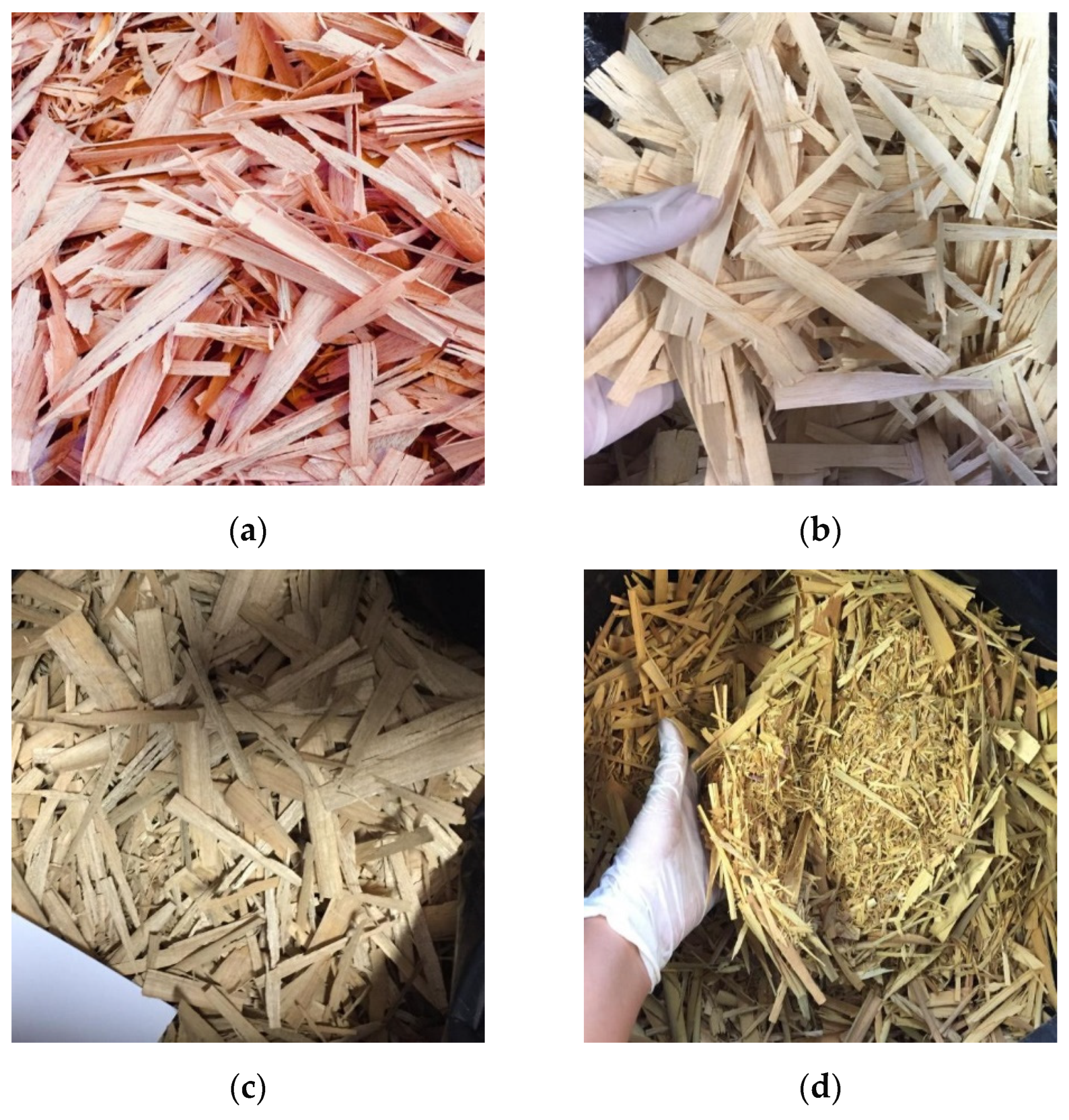
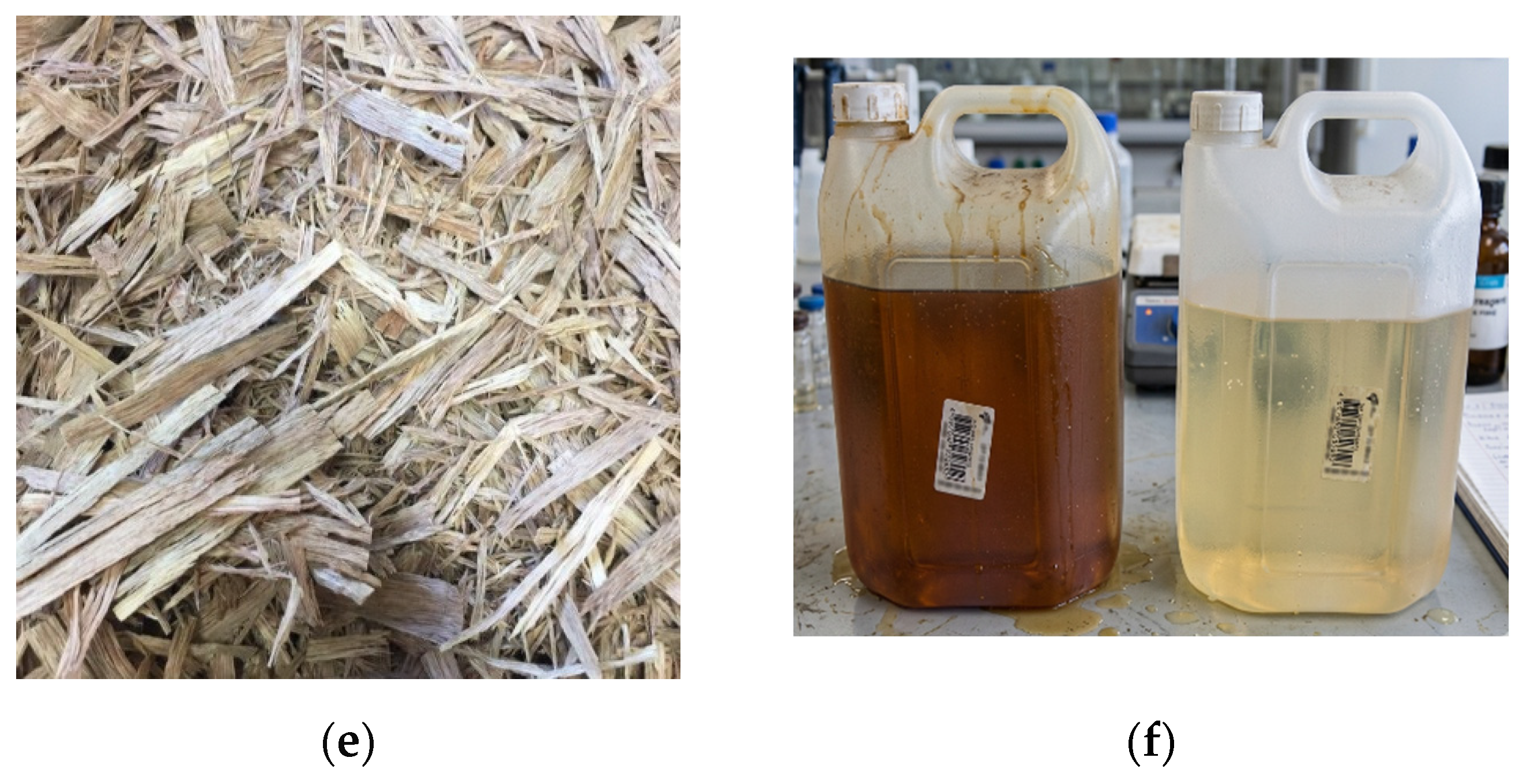
OSB panels were manufactured using industrial residues from five Amazonian species selected for their high availability and structural potential: Cambará (Erisma sp.) from Vera (MT), Caixeta (Simarouba sp.) from Juína (MT), Tauari (Couratari oblongifolia) from Cláudia (MT), Tatajuba (Bagassa guianensis) from Bonfim (RR), and Cedroarana (Cedrelinga catenaeformis) from Rorainópolis (RR). These residues, originating from structural timber processing in regional sawmills (Figure 1a–e), were bonded with a sustainable castor oil-based polyurethane adhesive to evaluate their performance in high-quality panel production (Figure 1f).
Seven different formulations of OSB panels were produced, five of which contained residues from a single wood species, while the last two formulations were mixtures of particles from the five species in varying proportions. In one mixed formulation, each species represented 20% of the total composition, while the other formulation had a random mixture of residues, simulating a more realistic situation where the wood species would not need to be separated (Table 1). The composition of the panels followed a three-layer ratio (20:60:20) with 12% adhesive applied based on the dry weight of the particles, as per previous research on OSB manufacturing.
The five studied species exhibit a high-density variation when compared to one another. This highlights yet another reason for producing a mixed-species panel, as anatomical characteristics of wood such as density and porosity directly influence its permeability and, consequently, its adhesion properties. Table 2 presents a comparative analysis of the anatomical characteristics of the wood species examined in this study.
The panels were characterized through physical and mechanical tests conducted in accordance with EN 300:2006 (European code for OSB panels), ABNT NBR 14810-2:2013 (Brazilian code for medium-density particleboards), and ASTM D2719:2013 (American code for structural panel shear) [32], as summarized in Table 3. The physical characterization comprised measurements of apparent density, moisture content, water absorption, and thickness swelling after 2 h and 24 h of water immersion. Mechanical performance was evaluated by static bending tests to determine the modulus of rupture (MOR) and modulus of elasticity (MOE) in both parallel and perpendicular directions relative to the particle alignment, screw withdrawal resistance on faces and edges, internal bonding strength, and panel shear strength.

2.2. Particle Processing

The panels were manufactured with dimensions of 400 × 400 × 10 mm and a nominal density of 0.60 g/cm3. This density was selected based on the typical density range adopted for industrially produced OSB panels in Brazil.

2.2.1. Particle Production

The wood beams, initially received with average lengths of approximately 250 cm, were conditioned until reaching a moisture content of 12%. Subsequently, they were sectioned into pieces measuring 90 mm in width and 45 mm in thickness, dimensions that defined the strand length and width, respectively. These dimensions were selected based on previous studies demonstrating improved OSB panel performance when using strands within this size range.
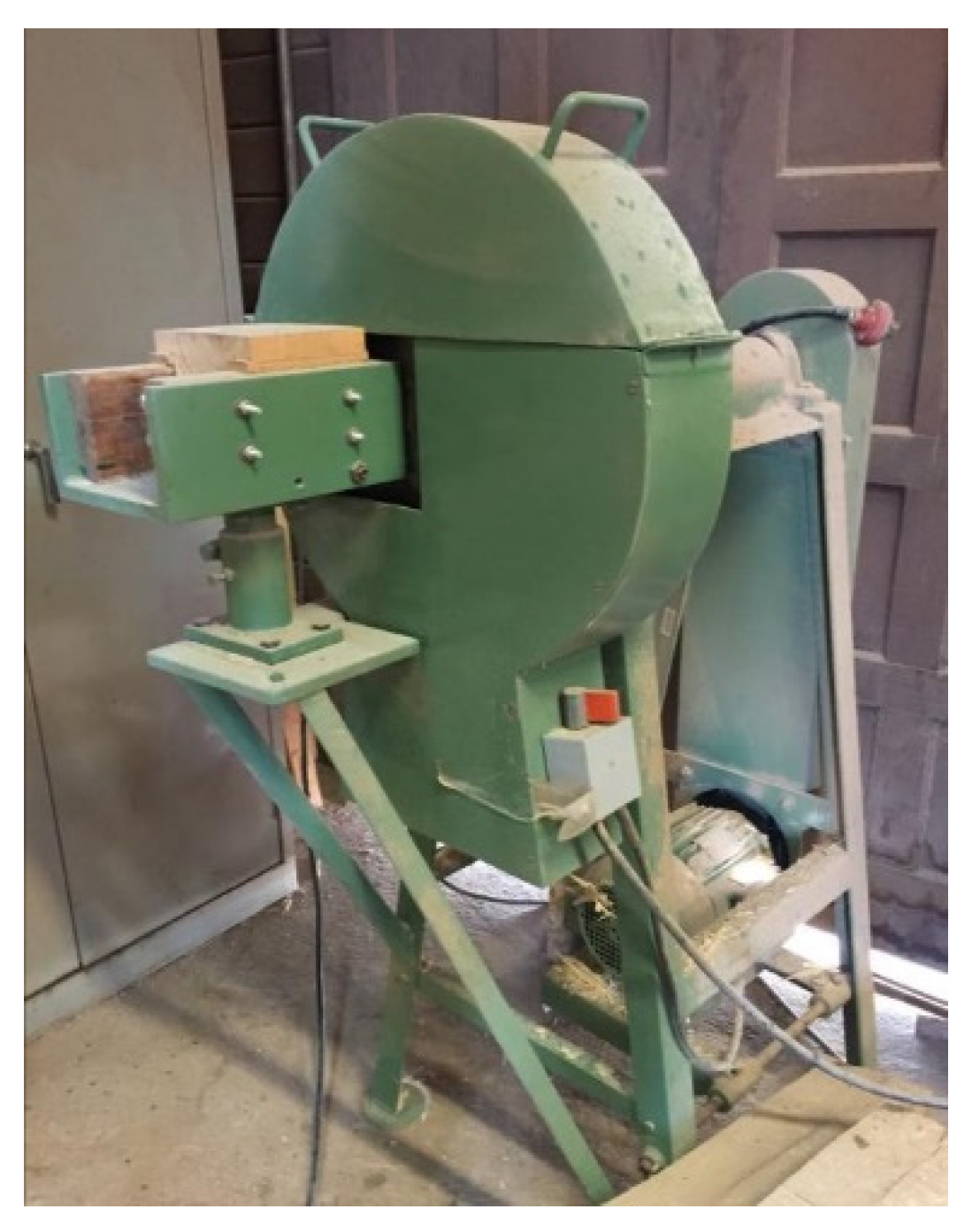
The prepared wood pieces were then processed in a disk flaker (Figure 2), whose knives were adjusted to produce strands with a nominal thickness of approximately 0.7 mm. The final particle geometry was established according to findings from earlier studies aimed at optimizing the mechanical performance and structural quality of OSB panels.

2.2.2. Adhesive Application

After production, the particles were oven-dried in a forced-air circulation chamber at 30 °C until reaching the target moisture content required for resin application, following procedures previously adopted by Ferro [33] and Souza [16].
Subsequently, the particles were weighed according to the target panel density, and the adhesive content corresponded to 12% of the dry particle mass. The adhesive used was a commercial two-component castor oil-based bio-polyurethane resin system (PU-castor oil resin), supplied by Kehl Indústria Química Ltda. (São Carlos, SP, Brazil). The system consists of two components: a polyol derived from castor oil and an isocyanate-based prepolymer formulated from diphenylmethane diisocyanate (MDI). The components were mixed at a 1:1 mass ratio immediately prior to application to ensure adequate homogenization and curing performance [34].
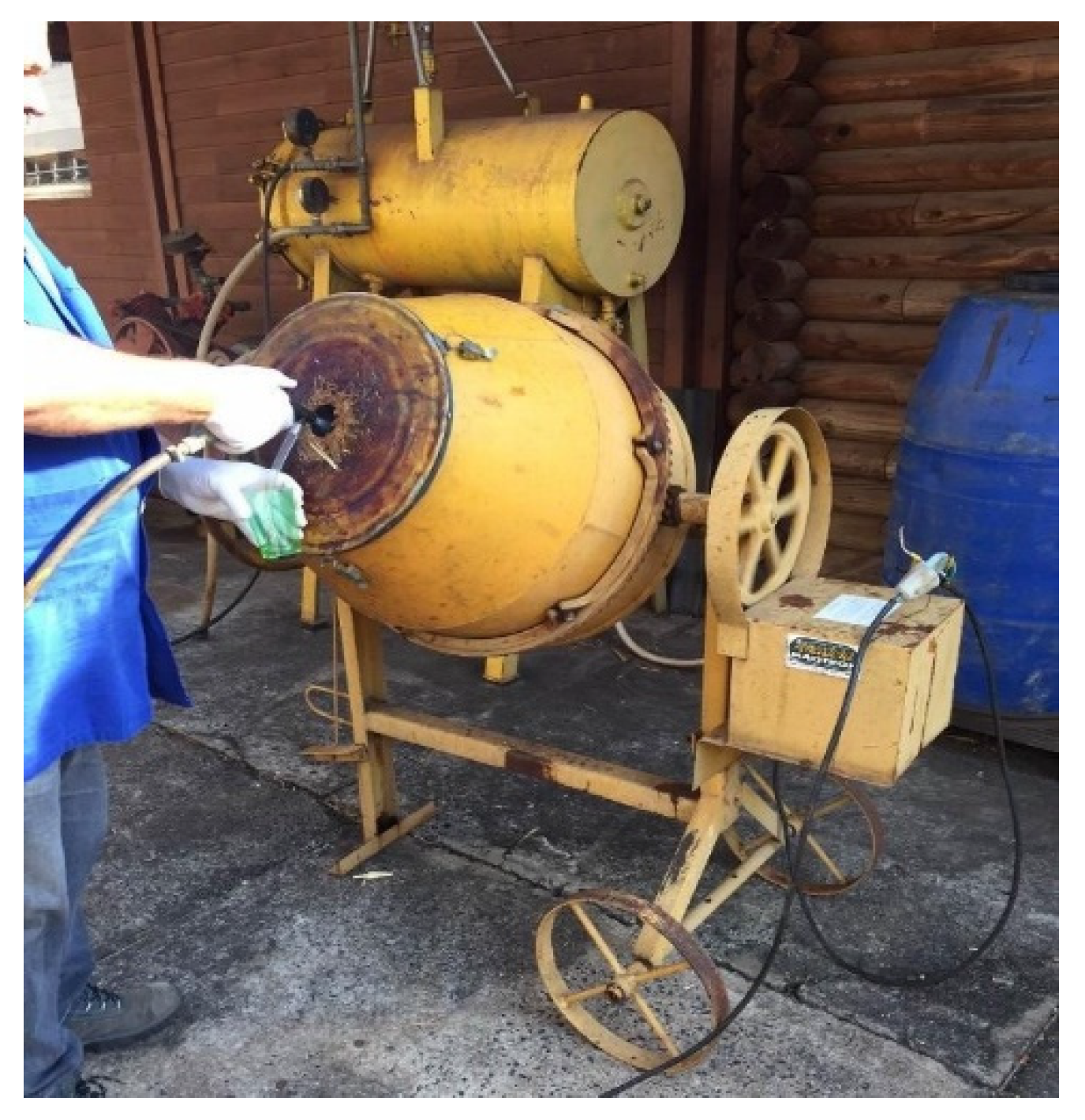
Resin application was carried out in an adapted rotary drum blender. The adhesive was sprayed onto the particles using an air compressor coupled to a spray gun, followed by homogenization for 5 min to ensure uniform distribution of the adhesive throughout the material (Figure 3).

2.2.3. Mat Formation

Based on the methodology proposed by Ferro [33], and aiming to obtain panels with improved perpendicular mechanical properties, the panels were manufactured in three layers at a 20:60:20 ratio for face/core/face.
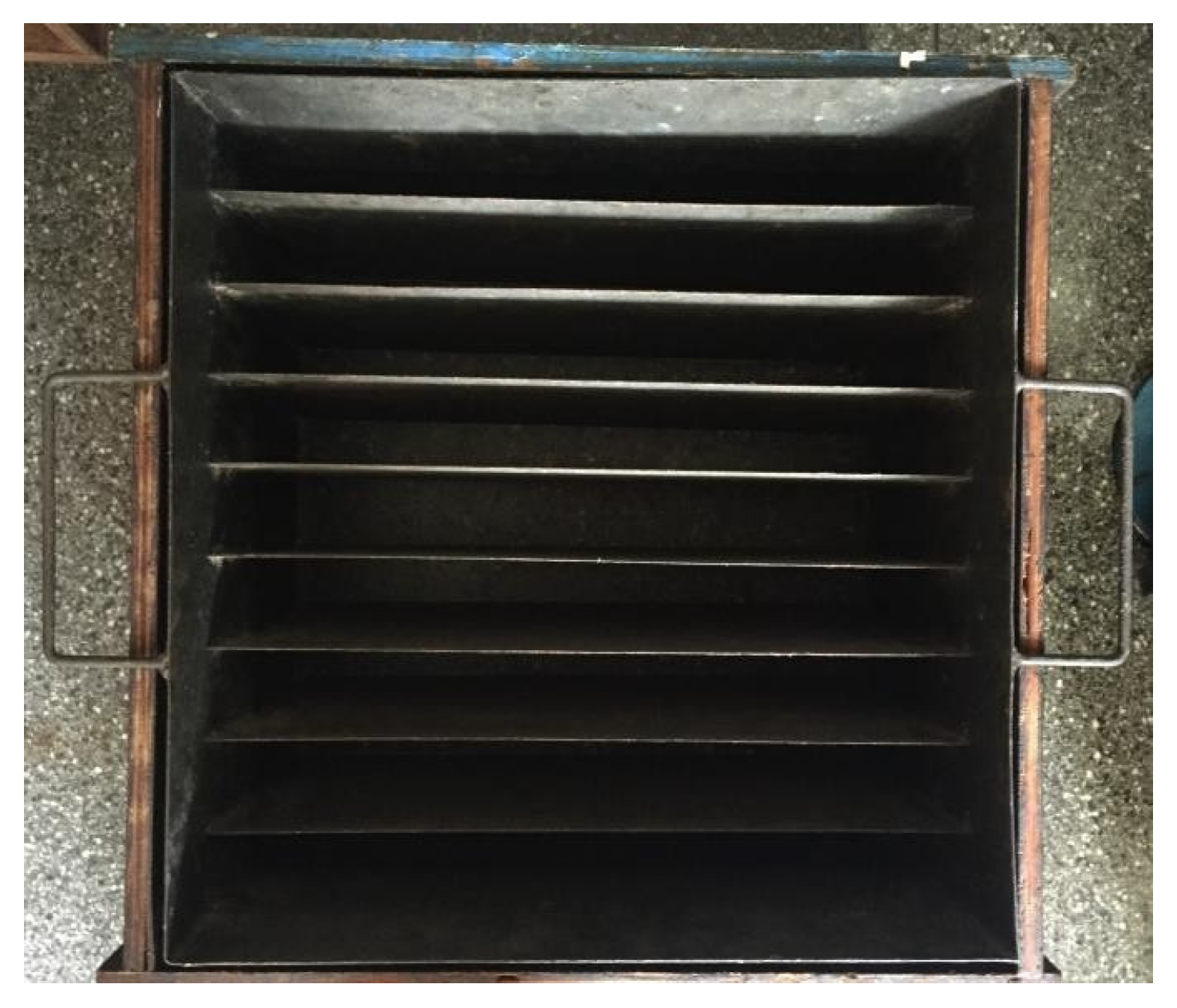
The particles in the outer layers were oriented in the same direction, whereas the particles in the inner layer were arranged perpendicular to the outer layers. To achieve this orientation, a separator composed of eight blades was used, in which the strands were deposited in a predetermined direction.
After the formation of the first layer, the separator was rotated in the opposite direction for the deposition of the particles in the inner layer. Subsequently, for the formation of the third layer, the separator was repositioned in the same initial orientation, ensuring the cross-oriented configuration of the particles between the layers (Figure 4).

2.2.4. Pressing

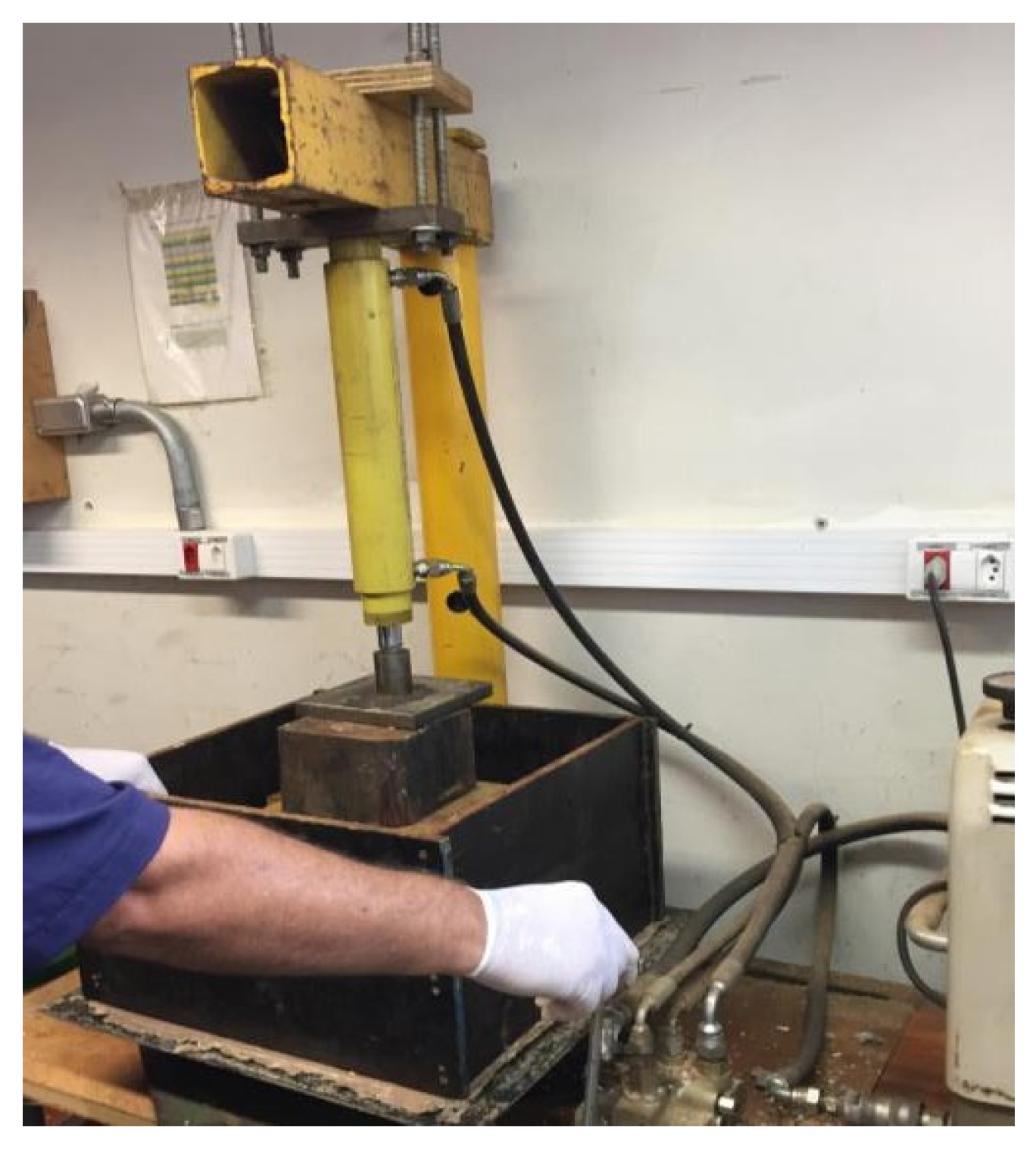
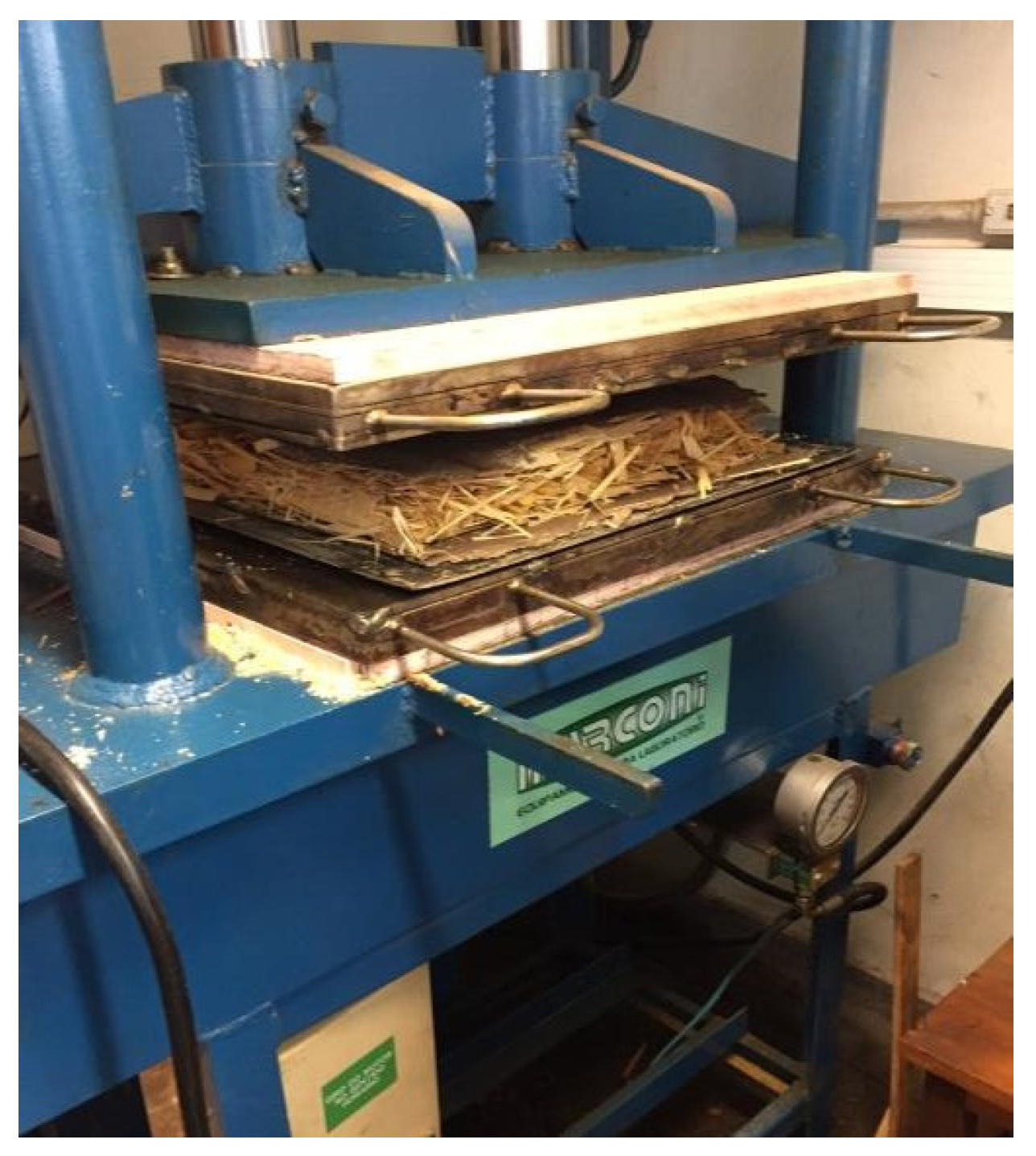
After mat formation, the mattress was subjected to a pre-pressing stage at a pressure of 0.01 MPa using a manual press for its pre-consolidation (Figure 5). This step aimed to reduce the initial thickness of the mat by removing a significant amount of air trapped between the particles, thereby facilitating the subsequent hot-pressing process. Subsequently, in the next stage, the mat was subjected to hot pressing at a temperature of 100 °C (Figure 6), under a pressure of 4 MPa for 10 min. These pressing parameters were established based on the studies conducted by Ferro [33] and Souza [16].

2.2.5. Conditioning

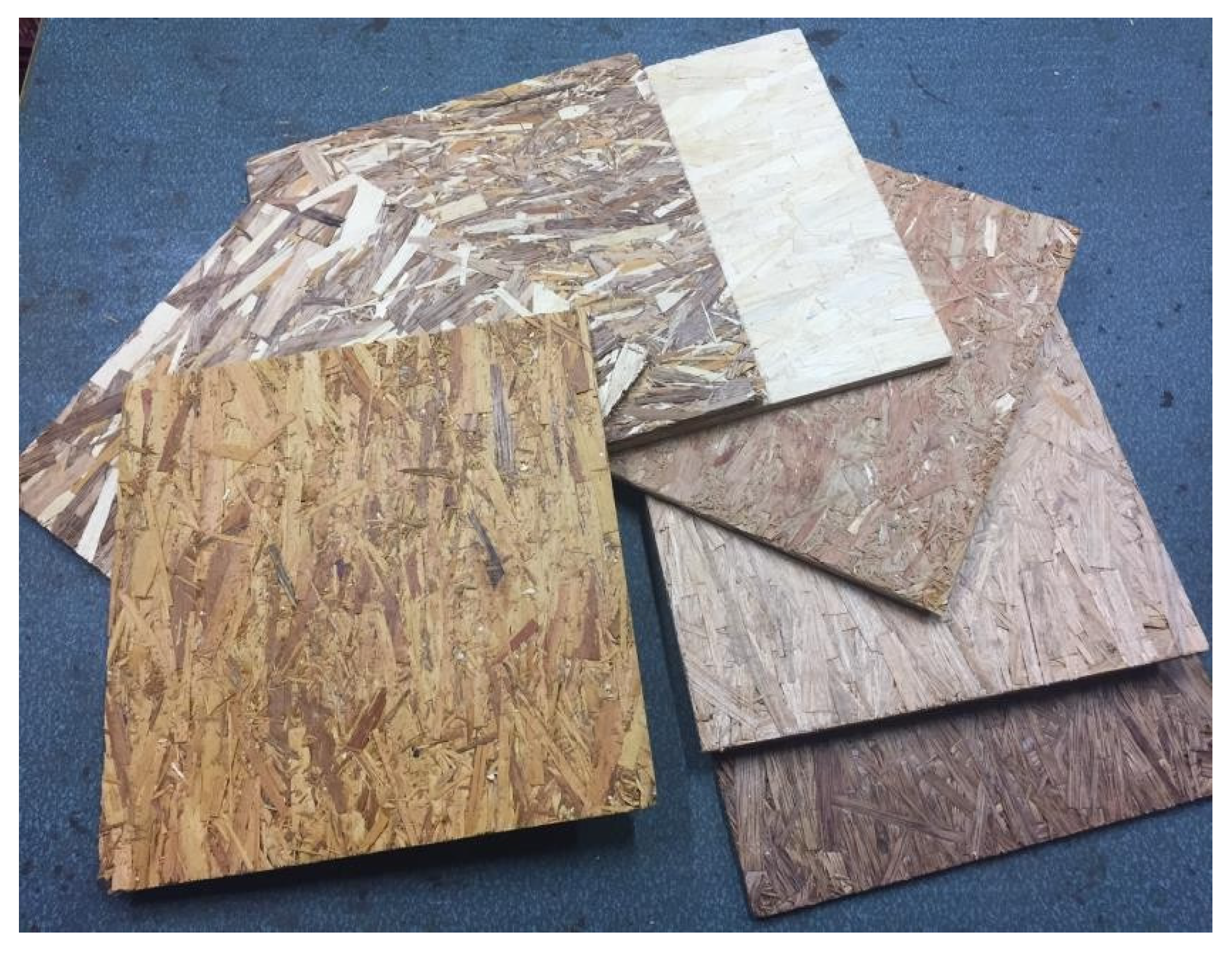
To ensure panel stabilization and complete adhesive curing, the panels were conditioned at room temperature for 48 h. Subsequently, the panels were trimmed and squared to final dimensions of 350 × 350 mm (Figure 7).

2.2.6. Test Specimens

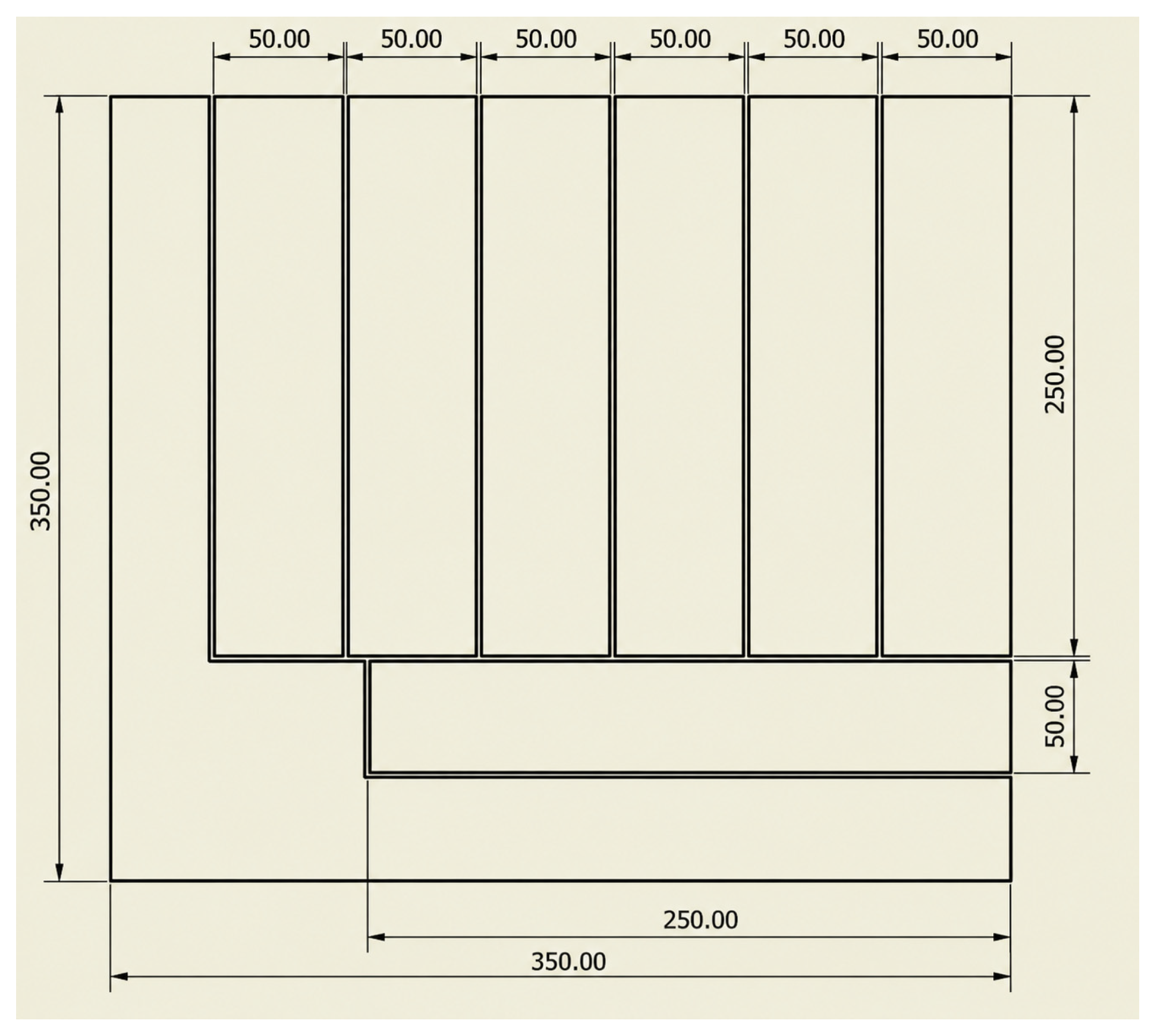
After trimming and squaring, the test specimens were cut according to the layout illustrated in Figure 8.
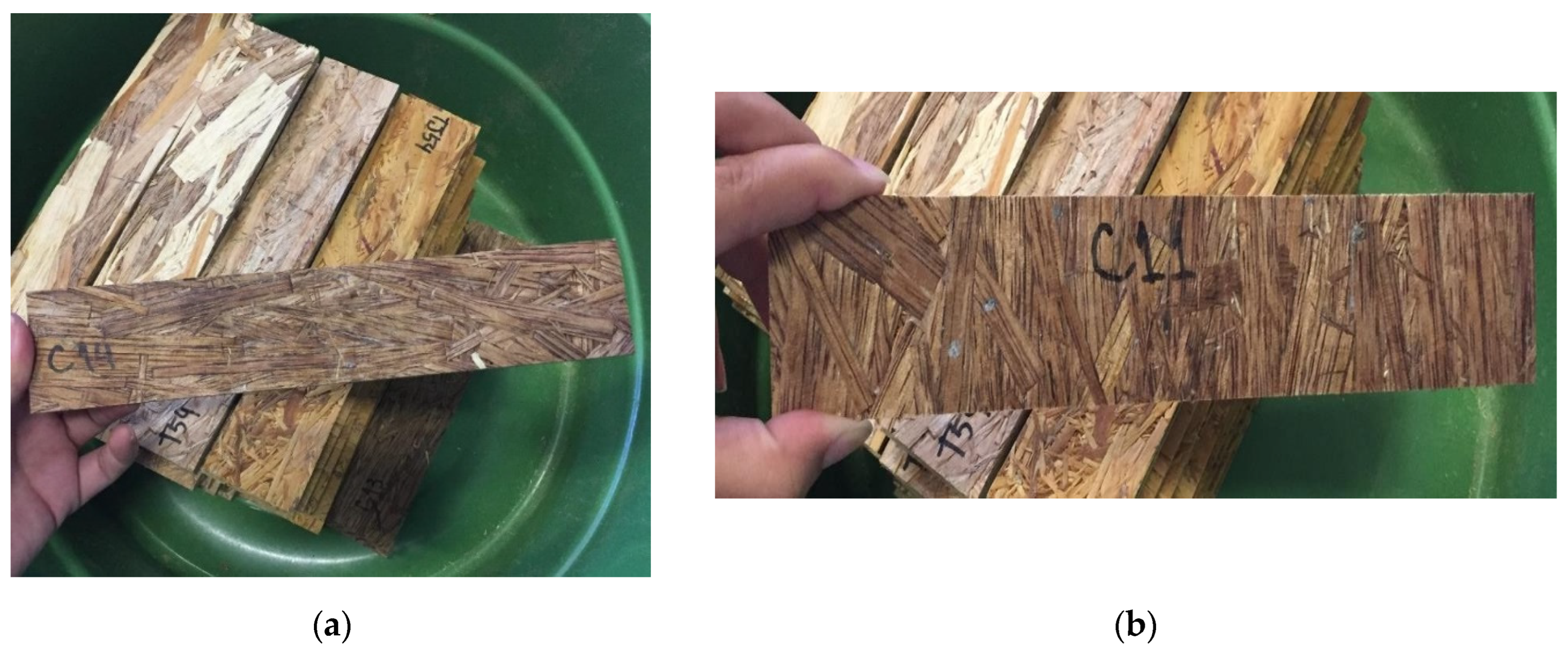
Initially, five panels were cut and the test specimens for the static bending test were obtained first (Figure 9a), followed by the extraction of specimens for the remaining tests. In total, 15 specimens were prepared for the bending tests and 10 specimens for each of the other tests, for every panel type produced. The additional five specimens used in the bending test corresponded to evaluations performed in the perpendicular direction (Figure 9b).
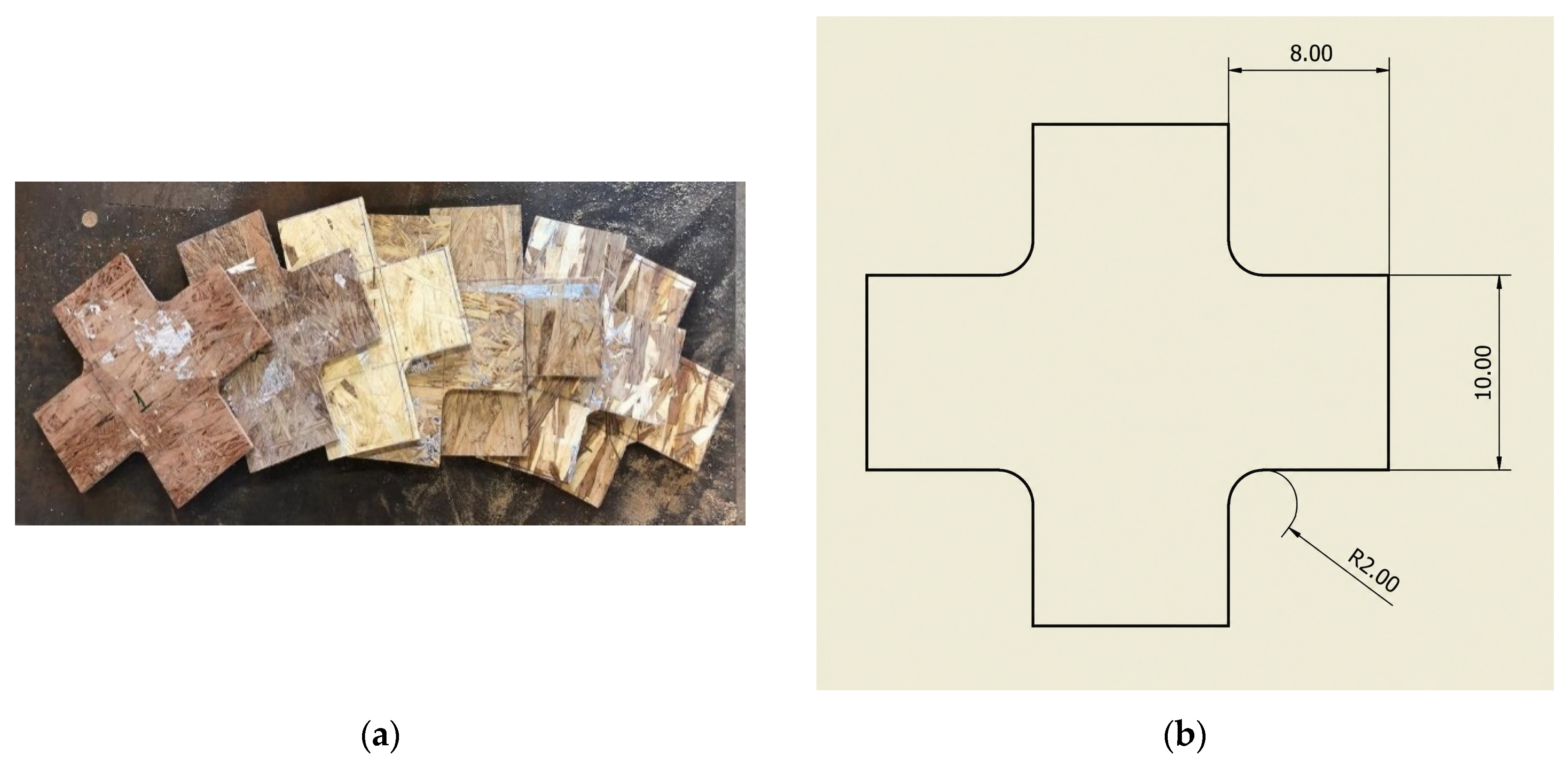
Additionally, new panels were manufactured for the shear strength tests, producing test specimens such as those illustrated in Figure 10a. The ASTM D2719:2013 standard does not specify the exact dimensions of the test specimen, stating only that the length (L) should not exceed 20 times the panel thickness and that the wooden blocks attached to the specimen should be made from a high-strength wood species, with thickness greater than 2.5 times and width greater than 5 times the panel thickness.
For this reason, preliminary tests were carried out to determine the most suitable dimensions for both the wooden blocks and the panel specimens, considering the available materials and the most appropriate bonding method between the blocks and the panel.
Based on the preliminary evaluations, the final specimens were manufactured with dimensions of 26 × 26 cm. The central section measured 10 cm, while each end section measured 8 cm (Figure 10b). The connection between the wooden blocks and the panel was achieved using both screws and adhesive. Two Chipboard screws (5 × 60 mm) were used in each wooden block, together with Cascophen adhesive and catalyst mixed at a 5:1 ratio.
The test results were subjected to statistical analysis to determine the influence of panel composition and wood species on their physical and mechanical properties. Analysis of variance (ANOVA) was performed, followed by Tukey’s post hoc test, both at a 5% significance level, to identify statistically significant differences among formulations and to determine which combinations of wood species and adhesives exhibited superior performance. Subsequently, the results were compared with the minimum requirements established by the relevant technical codes and with data reported in the literature to verify the technical feasibility of the proposed manufacturing approach.
The experimental methodology was designed to characterize the physical and mechanical properties of the panels, providing a dataset for the evaluation of their performance and potential industrial application. This study examines the integration of diverse Amazonian wood species with a castor oil-based polyurethane adhesive as a technical alternative for the valorization of regional sawmill residues. The approach targets the utilization of forest by-products and explores the feasibility of replacing conventional formaldehyde-based resins with renewable adhesive systems in wood panel production.

3. Results

3.1. Physical Properties

Table 4 presents data on density (D), moisture content (MC), thickness swelling after 2 and 24 h (TS 2 h and TS 24 h, respectively), and water absorption after 2 and 24 h (WA 2 h and WA 24 h) for different OSB panels produced from various wood species and mixtures.
The physical characteristics of the five studied tropical species, along with a comparison to standard species used globally for OSB production, are summarized in Table 5.
As shown in Table 5, the Amazonian species selected for this study exhibit a wider range of densities compared to traditional OSB raw materials, such as Aspen and Southern Yellow Pine. While species like Caixeta and Cedroarana have densities similar to traditional softwoods, the higher density of Tatajuba presents a technical challenge and an opportunity to investigate the compaction ratio and its effects on the final panel’s structural performance.

Compaction Ratio

The compaction ratio, defined as the ratio between the panel density and the density of the wood used, is presented in Table 6 for each OSB condition.

3.2. Mechanical Properties

Table 7 presents the mean values and corresponding code deviations for the Modulus of Rupture (MOR), Modulus of Elasticity (MOE), Internal Adhesion (IA), and Screw Withdrawal Resistance on the face (SWF) and edges (SWE) of the panels.

Shear

The shear property is of particular relevance for the panel evaluated in this study, as OSB is a structural product widely used in wood-frame construction. This property is critical for designing shear walls, which are key structural components in this building system [35]. The results of the shear tests are presented in Table 8.

3.3. Statistical Analysis

For the statistical analysis, Tukey’s test was applied at a 5% significance level using Matlab software version 18. In this test, the letters “A” to “D” were used to classify the panels, where “A” indicates the group with the highest mean value, “B” the second highest, and so forth. Identical letters denote groups with statistically equivalent means.
A more detailed statistical analysis will be presented in the following chapters, where each property is discussed individually. No statistical analysis was performed for the shear tests, as only one panel was evaluated for each formulation.
Table 9 and Table 10 illustrate the statistical analysis of the physical and mechanical properties of the OSB panels produced.

4. Discussion

4.1. Physical Properties

4.1.1. Density

According to ANSI/A1-280 [36] and Iwakiri [15], medium-density panels range from 0.59 to 0.80 g/cm3, while ABNT NBR 14810-2 [29] specifies 0.55 to 0.75 g/cm3. In this study, all panels met these criteria except conditions 3 and 4 (Cedroarana and Tatajuba), which, together with condition 6, fall within the high-density range. Statistical analysis confirmed significantly higher densities for these conditions compared with the others, and the ranking of panel densities mirrored the intrinsic densities of the wood species used.
Density is a key predictor of panel performance, influencing MOE, MOR, and internal bond strength [37]. The densities obtained align with literature reports for OSB panels manufactured from diverse raw materials and adhesives, which range from 0.30 g/cm3 for balsa panels [38] to 0.87 g/cm3 for Pinus panels with BOPP addition. The higher density of Cedroarana and Tatajuba panels reflects superior compaction during pressing, which is critical for enhancing physical and mechanical properties and achieving dimensional stability.

4.1.2. Thickness Swelling and Water Absorption

According to EN 300 [28], no specific limits are established for thickness swelling (TS) at 2 h or water absorption (WA) at 2 and 24 h. For thickness swelling at 24 h, the maximum requirements are 25% for OSB/1, 20% for OSB/2, 15% for OSB/3, and 12% for OSB/4. In this study, panels from conditions 1 and 3 met OSB/4 requirements, conditions 4, 5, and 6 met OSB/3, condition 7 met OSB/2, and condition 2 met OSB/1.
Previous studies report a wide variation in swelling and absorption performance. Barbirato et al. [38] produced OSB from balsa wood bonded with castor-oil-based polyurethane (11% and 15%) and 10 mm thickness, obtaining TS (24 h) between 18.5% and 33.6%. Zanuttini et al. [39] manufactured 18 mm OSB from Portuguese chestnut wood and poplar mixtures, achieving TS (24 h) between 6.6% and 10.9%.
Kask et al. [40] evaluated commercial OSB/3 (Swiss Krono, 12 mm) and reported TS (24 h) of 43.5%, which increased under repeated wetting–drying cycles. Ferro [33] reported TS (2 h) and TS (24 h) of 8.9% and 23.4%, respectively, for Schizolobium amazonicum OSB with castor-oil polyurethane, with WA (2 h) and WA (24 h) of 22.4% and 66.2%. Silva et al. [41] found TS (24 h) values ranging from 22.5% to 84.1% in Pinus OSB with phenol–formaldehyde adhesive, with or without heat treatment. Souza [16] reported TS (2 h) = 15.2%, TS (24 h) = 24.7%, WA (2 h) = 38.7%, and WA (24 h) = 56.6% for Pinus OSB panels.
Nascimento et al. [42] reported TS and WA ranges of 5.25%–14.40% and 9.45%–20.33% (2 h), and 27.58%–38.66% and 42.46%–64% (24 h), depending on the tropical wood species used with castor-oil polyurethane. Iwakiri et al. [43] produced OSB from low- to medium-density woods (Acrocarpus fraxinifolius, Grevillea robusta, Melia azedarach, Toona ciliata and mixtures) bonded with 6% phenol–formaldehyde and 1% paraffin, achieving TS (2 h) = 2.18%–4.02%, TS (24 h) = 6.12%–12.02%, WA (2 h) = 8.10%–15.86%, and WA (24 h) = 27.70%–39.25%. Hidayat [37] fabricated nine OSB types from three species with 7% MDI adhesive, reporting WA (2 h) = 5%–14%, WA (24 h) = 14%–28%, TS (2 h) = 2.3%–7%, and TS (24 h) = 7%–15%.
In the present study, statistical analysis indicated that all panels were equivalent for TS (2 h), with conditions 2 and 6 presenting the lowest values. For TS (24 h), the ranking shifted: condition 2 exhibited the least favorable result, followed by condition 7; conditions 4, 5, and 6 formed an intermediate group, while conditions 1 and 3 showed the best performance. For WA (2 h), conditions 1, 3, 4, and 5 were statistically equivalent with the lowest absorption, followed by conditions 2 and 6, and finally condition 7 with the highest value. WA (24 h) results mirrored this trend, with conditions 1 and 3 maintaining superior performance, followed by 4 and 5, then 6, and lastly 2 and 7.
Although condition 2 met normative requirements and showed consistency with previous studies, its higher porosity likely reduced its resistance to thickness swelling and water absorption, resulting in lower performance relative to other conditions.

4.1.3. Moisture Content

According to EN 300 [28], no specific moisture content (MC) limits are defined for OSB panels; however, EN 312 [44] recommends values between 5% and 13%, while ABNT NBR 14810-2 [29] specifies a range of 5% to 11%. As shown in Table 4, all panels produced in this study fall within these recommended limits. Statistical analysis indicated that conditions 2, 3, 5, 6, and 7 presented the highest MC values and were statistically equivalent, differing from conditions 1 and 4. Condition 2 overlapped both statistical groupings, highlighting its intermediate behavior.
These results are consistent with previous studies. Silva et al. [41] reported MC values ranging from 4.11% to 7.86% in six types of OSB manufactured from Pinus with and without thermal treatment using phenol–formaldehyde adhesive. Ferro [33] observed an average MC of 8.5% in panels containing 12% adhesive, while Souza [16] reported 10.3% for OSB made from Pinus sp. bonded with 12% castor-oil polyurethane. Surdi [45] found MC values ranging from 9.8% to 10.2% in OSB produced from hybrid Pinus elliottii × Pinus caribaea, and Okino et al. [46] obtained values between 10.53% and 11.3% in OSB made from Eucalyptus grandis and Cupressus glauca using urea–formaldehyde or phenol–formaldehyde resins. Macedo et al. [47] reported values between 4.55% and 9.90% for Pinus sp. OSB containing BOPP film, while Hidayat [37] documented MC ranging from 6.5% to 9% in OSB produced with mixed fast-growing species and MDI adhesive.
Overall, the MC values obtained in this study confirm adequate process control during pressing and conditioning, indicating that all conditions are suitable for use within the parameters defined by major international codes.

4.1.4. Compaction Ratio

Maloney [48] reported that the ideal compaction ratio (CR) ranges from 1.3 to 1.6, with up to 2.2 considered acceptable, ensuring adequate strand contact. As shown in Table 6, most CR values in this study fall outside this range, with conditions 1 and 4 below 1.0, indicating insufficient panel densification. Lower CR values impair bonding and strength, whereas higher values enhance contact between particles and adhesive [49]. Similar trends have been reported by Iwakiri et al. [43], who observed CR values between 0.85 and 1.46, and by Rosa et al. [50], Hellmeister [51], and Barbirato [52] for OSB made from different species and adhesives. In this study, condition 3 (Cedroarana) and condition 2 (Caixeta) exhibited the most suitable CR values, likely due to the moderate density of these species, which facilitates better densification during pressing.

4.2. Mechanical Properties

Although chemical characterization was not performed in the present study, this limitation may have influenced the observed results, since lignin, cellulose, hemicellulose, and extractives directly affect the physical and mechanical behavior of wood-based panels. Cellulose is mainly associated with mechanical resistance, while lignin contributes to dimensional stability and lower moisture sensitivity due to its hydrophobic nature [53]. In contrast, hemicellulose is highly hygroscopic and may increase water absorption and thickness swelling [54,55]. Extractives also play an important role in adhesive bonding by affecting surface wettability, acidity, and resin curing behavior, which may influence internal bond strength [53,56]. Because tropical wood species can present high variability in chemical composition, part of the differences observed among the evaluated panels may be associated not only with density and compaction ratio, but also with intrinsic chemical characteristics of the residues [53,57]. Therefore, future studies should include detailed chemical characterization to establish more robust correlations between wood chemistry and OSB panel performance.

4.2.1. Parallel Bending

For comparative purposes, the mechanical performance obtained in the present study was evaluated against values reported in the literature for conventional commercial OSB panels. According to Zegarra et al. [58], commercial OSB panels exhibited modulus of elasticity (MOE) values of 4.8 GPa and 1.4 GPa in the parallel and perpendicular directions, respectively, as well as modulus of rupture (MOR) values of 28 MPa and 17.2 MPa for the same directions. Salem et al. [59] reported values of 3.9 GPa for parallel MOE and 25.1 MPa for parallel MOR. The results obtained in the present research were higher than those reported in these studies, highlighting the strong potential of the evaluated tropical species for OSB manufacturing. In addition, all panels produced in this study satisfied the requirements established by the EN 300 standard and the Canadian CSA (1993) standard, confirming their suitability for structural applications.
EN 300 [28] specifies minimum parallel MOR and MOE values of 30 MPa and 4800 MPa, respectively, for OSB/4 panels. In this study, all conditions satisfied the MOE requirement, while only conditions 5 and 7 fell below the MOR threshold, meeting instead the OSB/3 criteria.
Statistical analysis separated the panels into two groups: Conditions 2 and 3 exhibited significantly higher bending performance, while the remaining conditions showed similar but lower values. The superior results of conditions 2 and 3 align with their higher compaction ratios, confirming that medium-density species provide better strand consolidation during pressing, leading to enhanced stiffness and strength.
These findings corroborate previous studies reporting MOR and MOE ranges of 20–40 MPa and 3000–5000 MPa for OSB from medium-density woods [39,41] and below 20 MPa MOR for low-density species such as Balsa [38]. Optimized processes or higher-density feedstocks can exceed 40 MPa MOR and 6000 MPa MOE [16,60].
Overall, results confirm that raw material density and compaction ratio are critical drivers of bending performance. Selecting species of intermediate density enables efficient densification without excessive resin use, improving mechanical behavior while supporting cost reduction and sustainable panel production. This approach provides a practical pathway to engineering OSB panels that meet or surpass OSB/4 requirements through targeted control of wood species and processing parameters.

4.2.2. Perpendicular Bending

EN 300 [28] specifies minimum values of 16 MPa and 1900 MPa for MOR and MOE in OSB/4 panels. In this study, only condition 1 failed to meet the MOR requirement, classifying as OSB/3, while conditions 1 and 4 fell below the MOE threshold. Statistical analysis ranked conditions 3 and 6 as superior for MOE, while MOR performance was highest in conditions 2, 3, and 6. Conditions with lower compaction ratios (1 and 4) consistently showed reduced strength and stiffness.
These trends corroborate previous findings that medium-density species improve strand consolidation and adhesive bonding, enhancing perpendicular bending properties without excessive resin consumption. In contrast, panels from low-density woods exhibit diminished performance, while high-density species or optimized pressing can surpass OSB/4 thresholds.
The clear relationship between compaction ratio and mechanical performance highlights its value as a predictive parameter for OSB design. Conditions 2 and 3, with favorable densification, consistently delivered the best overall results. This reinforces that selecting wood species within an optimal density range is critical for achieving structural-grade panels while maintaining material efficiency.

4.2.3. Strength in Tension Perpendicular to Faces

EN 300 [28] specifies a minimum internal bond (IB) strength of 0.5 MPa for OSB/4 panels with thicknesses of 6–10 mm. All panels in this study exceeded this requirement. Statistical analysis indicated that conditions 2, 3, 4, and 6 achieved the highest IB values, while conditions 1, 5, and 7 showed comparatively lower performance. The superior performance of conditions 2 and 3 aligns with their higher compaction ratios, which promote more effective wood–adhesive contact and improved bond quality.
The IB results are consistent with or exceed values reported in previous studies. Panels manufactured from medium-density species or optimized pressing conditions commonly reach IB values above code limits, as observed by [61], who reported 1.05–1.33 MPa for OSB panels of 12 mm thickness. In contrast, panels produced from low-density woods such as balsa often show reduced bond strength, with values between 0.17 and 0.46 MPa [38] or 0.2–0.4 MPa [39]. Studies on tropical and temperate species report IB values ranging from 0.5 to 1.9 MPa [16,33,43,45,47,62].
These findings reinforce that selecting wood species with moderate density and ensuring adequate densification during pressing are critical to achieving high IB strength, which directly affects the structural integrity and delamination resistance of OSB panels.

4.2.4. Screw Withdrawal

Screw withdrawal tests were performed following NBR 14,810 [29], as EN 300 [28] does not specify requirements for this property. Although the 2013 revision provides no reference values, the 2006 version specifies 1020 N and 800 N as benchmarks for face and edge screw withdrawal resistance, respectively.
Statistical analysis showed that, for face screw withdrawal, condition 1 achieved the highest mean value, followed by conditions 2, 3, 4, and 6, which were statistically equivalent, while conditions 5 and 7 exhibited the lowest performance. For edge screw withdrawal, conditions 1 and 3 reached the best results, followed by conditions 2, 4, 5, and 6 with intermediate values, and again conditions 5 and 7 ranked lowest. Notably, condition 5, composed entirely of Tauari particles, performed below the reference levels for both face and edge resistance.
These findings are comparable to literature results. Ferro [33] reported average screw withdrawal values of 1352.5 N (face) and 1386.6 N (edge), while Souza [16] found 1494.5 N and 1365.8 N, respectively. Hidayat [37], studying OSB made from mixed fast-growing species using CNS 2215:2006, reported a range of 844–1190 N.
Overall, the variation in performance observed among conditions reflects differences in wood species density and bonding efficiency, reinforcing that optimizing panel compaction and strand–adhesive contact is essential to meet or exceed benchmark withdrawal strengths for structural OSB applications.

4.2.5. Shear

For this test, two commercial OSB panels (designated C1 and C2) were included to provide an additional benchmark for comparison. As ASTM D2719:2013 does not specify reference values for shear properties, the analysis was conducted based on literature data.
As anticipated, panels 2 and 3 exhibited the highest shear modulus and shear strength, consistent with their optimal Compaction Ratio (CR), which is known to enhance mechanical performance, particularly shear behavior. This confirms the correlation between panel densification and improved structural performance.
Reported shear modulus values for commercial OSB/3 panels range from 1.78 to 2.20 GPa [63,64], while Wang et al. [65] found values between 1.08 and 1.48 GPa for 10 mm panels. In terms of shear strength, Collins et al. [66] reported an average of 8.4 MPa for 8.6 mm OSB panels used in gridshell structures, and Yu and Fan [67] reported ~1.57 GPa for panel shear tests in 18 mm OSB.
The present results align well with these reference ranges, while also demonstrating that panels fabricated from medium-density species (panels 2 and 3) achieve superior shear properties compared to other formulations and even comparable or higher performance relative to commercial benchmarks (C1 and C2). These findings reinforce the relevance of compaction control as a key parameter in OSB production to achieve optimal shear stiffness and strength.

5. Conclusions

The conclusions of this study are presented as follows:
  • The study confirmed the technical feasibility of producing OSB panels from wood residues of Amazonian species bonded with castor oil-based polyurethane resin.
  • All panels met national and international requirements for structural applications, with satisfactory mechanical performance and dimensional stability under humid conditions.
  • Denser species, particularly Tatajuba and Cambará, showed superior mechanical strength, while mixed-species panels also achieved adequate performance, representing a cost-effective alternative without the need for species segregation.
  • Adhesion and screw withdrawal resistance were consistent across all panel types, supporting their application in wood frame systems.
  • The use of a renewable, formaldehyde-free adhesive enhances environmental performance and reduces reliance on petrochemical inputs.
As a study limitation, it should be noted that the shear strength results are preliminary in nature, as only one panel per formulation was evaluated for this property; therefore, no statistical analysis was possible and these values should be interpreted with caution. Future studies should include replicated shear testing to allow robust statistical comparisons.

Author Contributions

Conceptualization, I.I.A., C.G.F.d.S., T.H.A., A.L.C. and F.A.R.L.; methodology, I.I.A., C.G.F.d.S. and T.H.A.; software, A.L.C.; validation, T.H.A., A.L.C. and F.A.R.L.; formal analysis, T.H.A., A.L.C. and F.A.R.L.; investigation, I.I.A. and C.G.F.d.S.; resources, I.I.A., C.G.F.d.S., T.H.A., A.L.C. and F.A.R.L.; data curation, T.H.A., A.L.C. and F.A.R.L.; writing—original draft preparation, I.I.A. and C.G.F.d.S.; writing—review and editing, I.I.A., C.G.F.d.S., T.H.A., A.L.C. and F.A.R.L.; supervision, T.H.A., A.L.C. and F.A.R.L. All authors have read and agreed to the published version of the manuscript.

Funding

This research was funded by National Council for Scientific and Technological Development (CNPq) process number 313198 2023 3, the Foundation for the Coordination of Improvement of Higher Education Personnel (CAPES) and the São Paulo Research Foundation (FAPESP) for their financial support process number 2024/01589-2.

Data Availability Statement

Data available on request from the authors.

Acknowledgments

Authors thank the Department of Science and Materials Engineering, the Department of Structural Engineering, of the University of São Paulo, for supplying the materials used in the experiments; and the National Council for Scientific and Technological Development (CNPq) process number 313198 2023 3, the Foundation for the Coordination of Improvement of Higher Education Personnel (CAPES) and the São Paulo Research Foundation (FAPESP) for their financial support process number 2024/01589-2.

Conflicts of Interest

The authors declare no conflicts of interest.

References

  1. Marchesan, R. Rendimento e Qualidade de Madeira Serrada de Três Espécies Tropicais. Master’s Thesis, Universidade Federal do Paraná, Curitiba, Brazil, 2012. [Google Scholar]
  2. Cardoso, R.M.; Miguel, E.P.; de Souza, H.J.; de Souza, Á.N.; Nascimento, R.G.M. Wood volume is overestimated in the Brazilian Amazon: Why not use generic volume prediction methods in tropical forest management? J. Environ. Manag. 2023, 350, 119593. [Google Scholar] [CrossRef]
  3. dos Santos, R.B.G.; da Costa, D.F.; Oliveira, L.d.S.; de Alencar, D.B.; Bezerra, C.M.V.O.; Bezerra, I.F.O. Constructive Process of using plates OSB (Oriented Strand Board) in sustainable structural systems in a Residential building in the city of Manaus. AM. Int. J. Adv. Eng. Res. Sci. 2019, 6, 85–91. [Google Scholar] [CrossRef]
  4. Ferro, F.S. Painéis de Partículas Orientadas (OSB) com Insumos Alternativos: Viabilidade Técnica e Proposta de Melhoria de Desempenho Ambiental. Ph.D. Thesis, Escola de Engenharia de São Carlos, Universidade de de São Paulo, São Carlos, Brazil, 2017; 178p. [Google Scholar]
  5. Akrami, A.; Barbu, M.C.; Fruehwald, A. Characterization of properties of oriented strand boards from beech and poplar. Eur. J. Wood Wood Prod. 2014, 72, 393–398. [Google Scholar] [CrossRef]
  6. Aguiar, D.L.; Bortoletto, G.; Jankowsky, I.P.; Candaten, L.; Karoline, A.; Cavalcante, D.L.; Klingenberg, D.; De Souza, E.C.; Surdi, P.; Hugo, V.; et al. Evaluation of the Oriented Strand Board Properties Produced Using Tropical Wood Mixtures. Forests 2023, 14, 2143. [Google Scholar] [CrossRef]
  7. Bufalino, L.; Corrêa, A.A.R.; De Sá, V.A.; Mendes, L.M.; Almeida, N.A.; Pizzol, V.D. Alternative compositions of oriented strand boards (OSB) made with commercial woods produced in Brazil. Maderas. Cienc. Tecnol. 2015, 17, 105–116. [Google Scholar] [CrossRef]
  8. Zhuang, B.; Cloutier, A.; Koubaa, A. Physical and Mechanical Properties of Oriented Strand Board Made from Eastern Canadian Softwood Species. Forests 2022, 13, 523. [Google Scholar] [CrossRef]
  9. Garcia, R.; Calvez, I.; Koubaa, A.; Landry, V.; Cloutier, A. Sustainability, Circularity, and Innovation in Wood—Based Panel Manufacturing in the 2020s: Opportunities and Challenges. Curr. For. Rep. 2024, 10, 420–441. [Google Scholar] [CrossRef]
  10. Dukarska, D.; Kawalerczyk, J.; Sedlia, J.; Antov, P.; Usina, M. Alternative Wood Raw Material Sources in Particleboard and OSB Production—Challenges and Perspectives. Polymers 2025, 17, 1760. [Google Scholar] [CrossRef]
  11. Núñez-decap, M.; Díaz-stuardo, F.; Vidal-vega, M.; Opazo-carlsson, C.; Moya-rojas, B.; Castillo-Hernández, V. Preliminary Investigation of the Properties of Oriented Strand Boards Produced Using Green Adhesives. Buildings 2025, 15, 1702. [Google Scholar] [CrossRef]
  12. Chávez-garcía, L.E.; Sánchez-badillo, J.A.; Espinoza-herrera, R.; Lopez-albarran, P. Development of Oriented Strand Boards Using Leftovers of Veneer-Wood and Non-formaldehyde Lignin or Tannin Adhesive Formulations. Cureus J. 2025, 2, es44388-025-08086-9. [Google Scholar] [CrossRef]
  13. Vamza, I.; Krigers, G.; Valters, K. A Review of Bio-Based Adhesives from Primary and Secondary Biomass for Wood Composite Applications. Environ. Clim. Technol. 2022, 26, 1350–1360. [Google Scholar] [CrossRef]
  14. Ferreira, B. Propriedades Físico-Mecânicas de Painéis Particulados de Eucalyptus Saligna e Casca de noz Macadâmia. Master’s Thesis, Faculdade de Engenharia do Campus de Guaratinguetá, Universidade Estadual Paulista, Guarating, Brazil, 2013; p. 77. [Google Scholar]
  15. Iwakiri, S. Painéis de Madeira Reconstituída; FUPEF: Curitiba, Brazil, 2005; 247p. [Google Scholar]
  16. Souza, A.M. Produção e Avaliação do Desempenho de Painéis de Partículas Orientadas (OSB) de Pinus sp com Inclusão de Telas Metálicas. Master’s Thesis, Universidade de São Paulo, São Carlos, Brazil, 2012; 116p. [Google Scholar]
  17. Benetto, E.; Becker, M.; Welfring, J. Life Cycle Assessment of Oriented Strand Boards (OSB): From Process Innovation to Ecodesign. Environ. Sci. Technol. 2009, 43, 6003–6009. [Google Scholar] [CrossRef]
  18. Grand View Research. Oriented Strand Board Market Size, Share & Trends Analysis Report by Application, by Region, and Segment Forecasts, 2020–2025; GVR (Grand View Research): San Francisco, CA, USA, 2019. [Google Scholar]
  19. Manafi-Dastjerdi, M.; Rohani, A.; Hosseinabadi, H.Z.; Ebrahimi-Nik, M. Transforming tree topping waste into flooring: A study on the production and evaluation of oriented strand board finish using urban and garden residues. Environ. Sci. Pollut. Res. 2023, 30, 103743–103759. [Google Scholar] [CrossRef] [PubMed]
  20. Duran, A.J.F.P.; Lyra, G.P.; Filho, L.E.C.; Martins, R.H.B.; Bueno, C.; Rossignolo, J.A.; Fiorelli, J. The Use of Castor Oil Resin on Particleboards: A Systematic Performance Review and Life Cycle Assessment. Sustainability 2025, 17, 3609. [Google Scholar] [CrossRef]
  21. Gama, N.; Ferreira, A.; Barros-Timmons, A. Cure and performance of castor oil polyurethane adhesive. Int. J. Adhes. Adhes. 2019, 95, 102413. [Google Scholar] [CrossRef]
  22. IBÁ, Indústria Brasileira de Árvores. Relatório Anual 2024; IBÁ: Brasília, Brazil, 2024. Available online: https://iba.org/relatorio2024.pdf (accessed on 31 May 2025).
  23. Stragliotto, M.C.; Oliveira, A.C.; Pereira, B.L.C.; Freitas, J.M. Yield in sawn wood and residue utilization of Qualea paraensis ducke and Erisma uncinatum warm. Floresta 2019, 49, 257–266. [Google Scholar] [CrossRef]
  24. Santos, W.L.F.; Da Silva, A.J.P.; Cabral, A.A.; Mercury, J.M.R. Particleboard manufactured from tauari (Couratari oblongifolia) wood waste using castor oil based polyurethane resin. Mater. Res. 2014, 17, 657–663. [Google Scholar] [CrossRef]
  25. Lima, T.F.P.; de Almeida, T.H.; de Almeida, D.H.; Christoforo, A.L.; Lahr, F.A.R. Physical and mechanical properties of tatajuba wood specie (Bagassa guianensis) from two different Brazilian regions. Rev. Mater. 2018, 23, e12185. [Google Scholar] [CrossRef]
  26. Aquino, V.B.d.M.; de Almeida, D.H.; de Almeida, T.H.; Panzera, T.H.; Christoforo, A.L.; Lahr, F.A.R. Physical and Mechanical Characterization of Cedrelinga catenaeformis Ducke Wood Specie. Int. J. Mater. Eng. 2018, 8, 97–100. [Google Scholar] [CrossRef]
  27. Soares, L.; Fraga, I.; Paula, L.; Arroyo, F.; Ruthes, H.; Aquino, V.; Molina, J.; Panzera, T.; Branco, L.; Chahud, E.; et al. Influence of moisture content on hysical and mechanical properties of Cedrelinga catenaeformis wood. BioResources 2021, 16, 6758–6765. [Google Scholar] [CrossRef]
  28. EN 300; Oriented Strand Boards (OSB)—Definitions, Classification and Specifications. IPQ: Caparica, Portugal, 2006.
  29. NBR 14810; Painéis de Partículas de Média Densidade. Parte 2: Requisitos e Métodos de Ensaio. ABNT, Associação Brasileira de Normas Técnicas: Rio de Janeiro, Brazil, 2013.
  30. Duarte, B.B. Influência de Componentes Químicos em Propriedades Mecânicas da Madeira. Ph.D. Thesis, Escola de Engenharia de São Carlos, Universidade de São Paulo, São Carlos, Brazil, 2017; 119p. [Google Scholar]
  31. IPT, Instituto de Pesquisas Tecnológicas do Estado de São Paulo. Fichas de Características das Madeiras Brasileiras, 2nd ed.; IPT: São Paulo, Brazil, 1989; 418p. [Google Scholar]
  32. ASTM D 2719: 2013; Standard Test Methods for Structural Panels in Shear Through-the-Thickness. American Society for Testing and Materials: West Conshohocken, PA, USA, 2013.
  33. Ferro, F.S. Painéis OSB com Madeira Schizolobium Amazonicum e Resina Poliuretana à Base de Óleo de Mamona: Viabilidade Técnica de Produção. Master’s Thesis, Universidade de São Paulo, São Carlos, Brazil, 2013. [Google Scholar]
  34. Christoforo, A.L.; Ferro, F.S.; Arroyo, F.N.; Araújo, V.A.; Icimoto, F.H.; Santos, H.F.; Lahr, F.A.R. Chromated copper borate influence on physical and mechanical properties of oriented strand boards using Schizolobium amazonicum wood specie. Constr. Build. Mater. 2022, 356, 129237. [Google Scholar] [CrossRef]
  35. Molina, J.C.; Junior, C.C. Sistema construtivo em “wood frame” para casas de madeira. Semin. Ciências Exatas Tecnol. 2010, 31, 143. [Google Scholar] [CrossRef]
  36. ANSI/A 208.1.1993; Mat-Formed Wood Particleboard: Specification. National Particleboards Association: Gaithersburg, MA, USA, 1993.
  37. Hidayat, W. Preparation and Properties Enhancement of Oriented Strand Board Made from Graduate Tropical Fast Growing Tree Species. Master’s Thesis, Institute of Forest Products Science, College of Agriculture, National Chiayi University, Chiayi, Taiwan, 2009. [Google Scholar] [CrossRef]
  38. Barbirato, G.H.A.; Junior, W.E.L.; Hellmeister, V.; Pavesi, M.; Fiorelli, J. OSB Panels with Balsa Wood Waste and Castor Oil Polyurethane Resin. Waste Biomass Valorization 2018, 11, 743–751. [Google Scholar] [CrossRef]
  39. Zanuttini, R.; Bonzano, E.; Negro, F.; Oreglia, G.L.; Cremonini, C. Preliminary Assessment of Sweet Chestnut and Mixed Sweet Chestnut-Poplar OSB. Forests 2020, 11, 496. [Google Scholar] [CrossRef]
  40. Kask, R.; Lille, H.; Kiviste, M.; Tamm, R.; Laane, J. Effect of wetting/drying on the properties of OSB/3 and birch Plywood. IOP Conf. Ser. Mater. Sci. Eng. 2019, 660, 012048. [Google Scholar] [CrossRef]
  41. Silva, J.V.F.; de Campos, C.I.; Ferreira, B.S.; Silva, M.F.F. Production and characterization of heat treated OSB made of Pinus taeda. Acta Sci. Technol. 2019, 41, 39505. [Google Scholar] [CrossRef]
  42. Nascimento, M.F.; Bertolini, M.S.; Panzera, T.H.; Christoforo, A.L.; Lahr, F.A.R. Painéis OSB fabricados com madeiras da caatinga do nordeste do Brasil. Ambient. Construído 2015, 15, 41–48. [Google Scholar] [CrossRef]
  43. Iwakiri, S.; Potulski, D.C.; Sanches, F.G.; da Silva, J.B.; Trianoski, R.; Pretko, W.C. Avaliação do potencial de uso da madeira de Acrocarpus fraxinifolius, Grevilea robusta, Melia azedarach e Toona ciliata para produção de painéis OSB. CERNE 2014, 20, 277–284. [Google Scholar] [CrossRef]
  44. EN 312; Particleboards Specifications. CEN: Bruxelas, Belgium, 2006.
  45. Surdi, P.G. Produção de Partículas Orientadas (OSB) a Partir da Madeira de Híbrido de Pinus elliottii var. Elliottii × Pinus caribea var. Hondurensis. Master’s Thesis, Universidade de São Paulo, Piracicaba, Brazil, 2012. [Google Scholar]
  46. Okino, E.Y.A.; Teixeira, D.E.; de Souza, M.R.; Santana, M.A.E.; de Sousa, M.E. Propriedades de chapas OSB de Eucalyptus grandis e de Cupressus glauca. Sci. Florestalis 2008, 36, 123–131. [Google Scholar]
  47. de Macedo, L.B.; da Silva, M.R.; César, A.A.d.S.; Panzera, T.H.; Christoforo, A.L.; Lahr, F.A.R. Painéis OSB de madeira Pinus sp. e adição de partículas de polipropileno biorientado (BOPP). Sci. For. 2016, 44, 887–894. [Google Scholar] [CrossRef]
  48. Maloney, T.M. Modern Particleboard and Dry-Process Fiberboard Manufacturing, 3rd ed.; M. Freeman: São Francisco, CA, USA, 1993. [Google Scholar]
  49. Kelly, M.W. Critical Literature Review of Relationships Between Processing Parameters and Physical Properties of Particleboard; Gen. Tech. Rep. FPL-10; U.S. Department of Agriculture, Forest Service, Forest Products Laboratory: Madison, WI, USA, 1977; 65p.
  50. da Rosa, T.S.; Trianoski, R.; Iwakiri, S.; Bonduelle, G.M.; de Souza, H.P. Utilização de Cinco Espécies de Eucalyptus para a Produção de Painéis OSB. Floresta Ambient. 2017, 24, e20160049. [Google Scholar] [CrossRef]
  51. Hellmeister, V. Painel OSB de Resíduo de Madeira Balsa (Ochroma pyramidale). Ph.D. Thesis, Universidade de São Paulo, Pirassununga, Brazil, 2017; 144p. [Google Scholar]
  52. Barbirato, G.H.A. Forro OSB de Madeira Balsa Residual Aplicado em Protótipo de Aviário. Master’s Thesis, Universidade de São Paulo, Pirassununga, Brazil, 2018. [Google Scholar]
  53. Neitzel, N.; Hosseinpourpia, R.; Walther, T.; Adamopoulos, S. Alternative Materials from Agro-Industry for Wood Panel Manufacturing—A Review. Materials 2022, 15, 4542. [Google Scholar] [CrossRef]
  54. Zhang, C.; Chen, M.; Keten, S.; Coasne, B.; Derome, D.; Carmeliet, J. Hygromechanical mechanisms of wood cell wall revealed by molecular modeling and mixture rule analysis. Sci. Adv. 2021, 7, eabi8919. [Google Scholar] [CrossRef] [PubMed]
  55. Kulasinski, K.; Salmén, L.; Derome, D.; Carmeliet, J. Moisture adsorption of glucomannan and xylan hemicelluloses. Cellulose 2016, 23, 1629–1637. [Google Scholar] [CrossRef]
  56. Leng, W.; Wang, J.; He, S.; Wang, X.; Zhai, S.; Li, W.; Quan, H.; Lu, B.; Shi, J.; Hafez, I.; et al. Dimensionally stable and durable wood by lignin impregnation. Int. J. Biol. Macromol. 2024, 268, 13168. [Google Scholar] [CrossRef]
  57. Tarigan, F.O.; Hakim, L.; Purwoko, A.; Sucipto, T.; Nasution, H.; Fatriasari, W.; Lubis, M.A.R.; Sutiawan, J.; Bakhsi, M.I.; Kim, N.H.; et al. Development and Characterization of Novel Hybrid Particleboard Made from Several Non-Wood Lignocellulosic Materials. Polymers 2025, 17, 512. [Google Scholar] [CrossRef] [PubMed]
  58. Zegarra, B.E.V.; Brito, F.M.S.; Pollito, P.A.Z.; Júnior, G.B.; Tomazello-Filho, M. Physical and mechanical properties of OSB (Oriented Strand Board) panels produced with Pinus taeda L. (Pinaceae). J. Eng. Res. 2022, 3, 2–6. [Google Scholar] [CrossRef]
  59. Salem, M.Z.M.; Böhm, M.; Šedivka, P.; Nasser, R.A.; Ali, H.M.; Elgat, W.A.A.A. Some physico-mechanical characteristics of uncoated OSB ECO-products made from Scots pine (Pinus sylvestris L.) and bonded with pMDI resin. BioResources 2017, 13, 1814–1828. [Google Scholar] [CrossRef]
  60. Guimarães, L.E.S.; Bussinguer, A.P.; Del Menezzi, C.H.S.; Siqueira, M.L.; Souza, M.R. Efeito do carregamento cíclico sobre as propriedades de flexão e ultrassom em madeiras de quatro espécies florestais Effect of cycling loading on the bending and ultrasound properties of four wood species. Sci. Florestalis 2012, 40, 473–481. [Google Scholar]
  61. Dumitrascu, A.-E.; Lunguleasa, A.; Salca, E.-A.; Ciobanu, V.D. Evaluation of selected properties of oriented strand boards made from fast growing wood species. BioResources 2019, 15, 199–210. [Google Scholar] [CrossRef]
  62. Febrianto, F.; Hidayat, W.; Samosir, T.P.; Lin, H.C.; Soong, H.D. Effect of Strand Combination on Dimensional Stability and Mechanical Properties of Oriented Strand Board Made from Tropical Fast Growing Tree Species. J. Biol. Sci. 2010, 10, 267–272. [Google Scholar] [CrossRef]
  63. Plenzler, R.; Ludwiczak-Niewiadomska, L.; Mielcarek, P. Shear and Bending Properties of Structural Oriented Strand Boards Osb/4. Wood Res. 2013, 58, 285–294. [Google Scholar]
  64. Plenzler, R.; Ludwiczak-Niewiadomska, L.; Strzeleck, P. Elastic and Strength Properties of OSB Layers. Drv. Ind. 2017, 68, 3–9. [Google Scholar] [CrossRef]
  65. Wang, Z.; Xie, W.; Lu, Y.; Li, H.; Wang, Z.; Li, Z. Dynamic and static testing methods for shear modulus of oriented strand board. Constr. Build. Mater. 2019, 216, 542–551. [Google Scholar] [CrossRef]
  66. Collins, M.; Cosgrove, T.; Mellad, A. Characterisation of OSB properties for application in gridshells. Mater. Struct. 2017, 50, 131. [Google Scholar] [CrossRef]
  67. Yu, Z.; Fan, M. Short- and long-term performance of wood based panel products subjected to various stress modes. Constr. Build. Mater. 2017, 156, 652–660. [Google Scholar] [CrossRef]
Figure 1. Raw materials used in OSB panel production: (ae) residual wood particles from Amazonian species (Cambará, Caixeta, Tauari, Tatajuba, and Cedroarana, respectively); and (f) castor oil-based polyurethane adhesive components, highlighting the light-yellowish polyol (left) and the dark-brownish prepolymer (right).
Forests 17 00631 g001aForests 17 00631 g001b
Figure 2. Disk flaker used for strand production.
Forests 17 00631 g002
Figure 3. Adhesive spraying during particle blending.
Forests 17 00631 g003
Figure 4. Separator used for particle orientation.
Forests 17 00631 g004
Figure 5. Manual pre-press used for mat pre-consolidation.
Forests 17 00631 g005
Figure 6. Semi-automatic press.
Forests 17 00631 g006
Figure 7. Panels after trimming and squaring.
Forests 17 00631 g007
Figure 8. Schematic representation of the test specimen extraction layout.
Forests 17 00631 g008
Figure 9. Test specimens and dimensions used for the static bending tests: (a) parallel bending test specimen; and (b) perpendicular bending test specimen.
Forests 17 00631 g009
Figure 10. Shear test specimens: (a) specimens prepared for the shear strength test; and (b) dimensions of the shear test specimen.
Forests 17 00631 g010
Table 1. Experimental Conditions.
ConditionsComposition
1100% Cambará
2100% Caixeta
3100% Cedroarana
4100% Tatajuba
5100% Tauari
620% Cambará, 20% Cedroarana, 20% Caixeta, 20% Tatajuba, 20% Tauari
7Random mixture of species
Table 2. Density and Porosity Data of Wood Species.
SpeciesDensity (g/cm3)Porosity (%)
Cambará0.7046.10
Caixeta0.4173.25
Cedroarana0.5772.04
Tatajuba0.9531.60
Tauari0.7261.90
Source: [30,31].
Table 3. Tests performed with the corresponding codes for each test.
TestAbbreviationCode
Static bendingFEN 310
Screw withdrawal—faceSWFNBR 14810
Screw withdrawal—edgeSWENBR 14810
Internal AdhesionIAEN 319
Water absorptionWAEN 317
Thickness swellingTSEN 317
Apparent densityDEN 323
Moisture contentMCEN 322
ShearSASTM D 2719
Table 4. Mean values and code deviations of the physical properties of the panels.
ConditionsPanelD
(g/cm3)
MC (%)TS 2 h
(%)
TS 24 h (%)WA 2 h (%)WA 24 h (%)
1Cambará0.6858.6705.7338.7808.20721.213
(0.021)(0.470)(1.916)(2.014)(1.896)(2.889)
2Caixeta0.7359.3378.51722.55617.46157.529
(0.049)(0.350)(4.044)(4.749)(5.153)(10.793)
3Cedroarana0.8139.9415.6729.56810.96025.238
(0.040)(0.650)(2.633)(3.535)(5.938)(9.600)
4Tatajuba0.8119.0605.06813.23310.21432.436
(0.114)(1.710)(3.549)(1.599)(2.790)(9.474)
5Tauari0.74310.2876.50312.75212.77338.939
(0.064)(0.479)(2.819)(5.233)(4.409)(11.490)
6Mix0.77510.0967.73014.69123.69746.723
(0.044)(0.414)(2.157)(3.716)(8.540)(9.442)
7Random Mix0.7109.87110.59917.91435.36558.226
(0.057)(0.421)(3.366)(4.444)(8.111)(9.792)
Values in parentheses represent the coefficient of variation (CV).
Table 5. Physical properties of the studied and traditional OSB wood species.
Species GroupCommon NameScientific NameWood Density (g/cm3)Geographic Origin
Studied SpeciesCambaráErisma sp.0.55–0.65Brazil (Amazon)
CaixetaSimarouba sp.0.35–0.45Brazil (Amazon)
TatajubaBagassa guianensis0.75–0.85Brazil (Amazon)
TauariCouratari sp.0.50–0.60Brazil (Amazon)
CedroaranaCedrelinga catenaeformis0.45–0.55Brazil (Amazon)
Traditional SpeciesSouthern Yellow PinePinus taeda0.45–0.55USA/Europe
AspenPopulus tremuloides0.35–0.45Canada/USA
Scots PinePinus sylvestris0.40–0.50Europe/Asia
Table 6. Compaction ratio of the panels.
ConditionsPanelDp (g/cm3)Dm (g/cm3)CR
1Cambará0.6850.700.98
2Caixeta0.7350.411.79
3Cedroarana0.8130.571.43
4Tatajuba0.8110.950.85
5Tauari0.7430.721.03
6Mix0.775
7Random Mix0.710
Dp = Panel density; Dm = Specie density; CR = Compaction ratio.
Table 7. Mean values and code deviations of the mechanical properties of the panels.
ConditionsPanelMOE
Parallel
(MPa)
MOR
Parallel
(MPa)
MOE
Perpendicular (MPa)
MOR
Perpendicular (MPa)
IA
(MPa)
SWF
(N)
SWE
(N)
1Cambará546330.2163812.160.6615571416
(899)(6.89)(159)(2.13)(0.33)(285.49)(266.15)
2Caixeta628740.96207326.660.931166.2725.2
(616)(5.72)(195)(4.12)(0.26)(326.5)(234.2)
3Cedroarana674144.04248531.391.171607.2813.4
(1802)(14.76)(336)(6.96)(0.41)(481.1)(310.08)
4Tatajuba583735.92163316.931.161112.3661.5
(1252)(10.43)(512)(6.9)(0.51)(656.61)(455.73)
5Tauari486326.35222422.750.67857.5506.33
(1191)(8.95)(386)(4.47)(0.22)(524.83)(242.54)
6Mix582833.85256128.031.081264.2793.8
(1068)(7.74)(239)(2.55)(0.43)(516.4)(291.08)
7Random Mix490328.18198922.080.79916.3553.7
(977)(5.71)(477)(5.73)(0.2)(521.67)(297.65)
Values in parentheses represent the coefficient of variation (CV).
Table 8. Results of the shear test.
ConditionsPanelRigidity Module (GPa)Shear Strength (MPa)
1Cambará2.177.61
2Caixeta3.6312.78
3Cedroarana3.3515.25
4Tatajuba3.869.11
5Tauari2.79.84
6Mix2.9612.68
7Randon Mix4.1511.39
C1Commercial 14.0511.63
C2Commercial 23.4810.88
Table 9. Results of the physical properties of OSB panels—Confidence interval with 95% reliability and 5% significance for the Tukey test.
Prop.CambaráCaixetaCedroaranaTatajubaTauariMixRandom Mix
DBBAABABB
MCBABABAAA
TS 2 hAABAAAABA
TS 24 hDADCCCB
WA 2 hCBCCCBA
WA 24 hDADCCBA
Table 10. Results of the mechanical properties of OSB panels—Confidence interval with 95% reliability and 5% significance for the Tukey test.
Prop.CambaráCaixetaCedroaranaTatajubaTauariMixRandom Mix
MOE par.BAABBBB
MOR par.BAABBBB
MOE per.BBABBAB
MOR per.CAACBAB
SWFABBBCBC
SWEABABCBBC
IABAAABAB
Disclaimer/Publisher’s Note: The statements, opinions and data contained in all publications are solely those of the individual author(s) and contributor(s) and not of MDPI and/or the editor(s). MDPI and/or the editor(s) disclaim responsibility for any injury to people or property resulting from any ideas, methods, instructions or products referred to in the content.