Article

Transverse Mechanical Properties of Moso Bamboo Internodes and Nodes: The Effects of Heat Treatment and Radial Gradient


1
Jiangsu Co-Innovation Center of Efficient Processing and Utilization of Forest Resources, Nanjing Forestry University, Nanjing 210037, China
2
Bamboo Industry Institute, Zhejiang A&F University, Hangzhou 311300, China
*
Authors to whom correspondence should be addressed.
Forests 2026, 17(5), 583; https://doi.org/10.3390/f17050583
Submission received: 6 April 2026 / Revised: 7 May 2026 / Accepted: 8 May 2026 / Published: 10 May 2026
(This article belongs to the Special Issue Functionalization and Valorization of Wood and Bamboo Materials)

Abstract

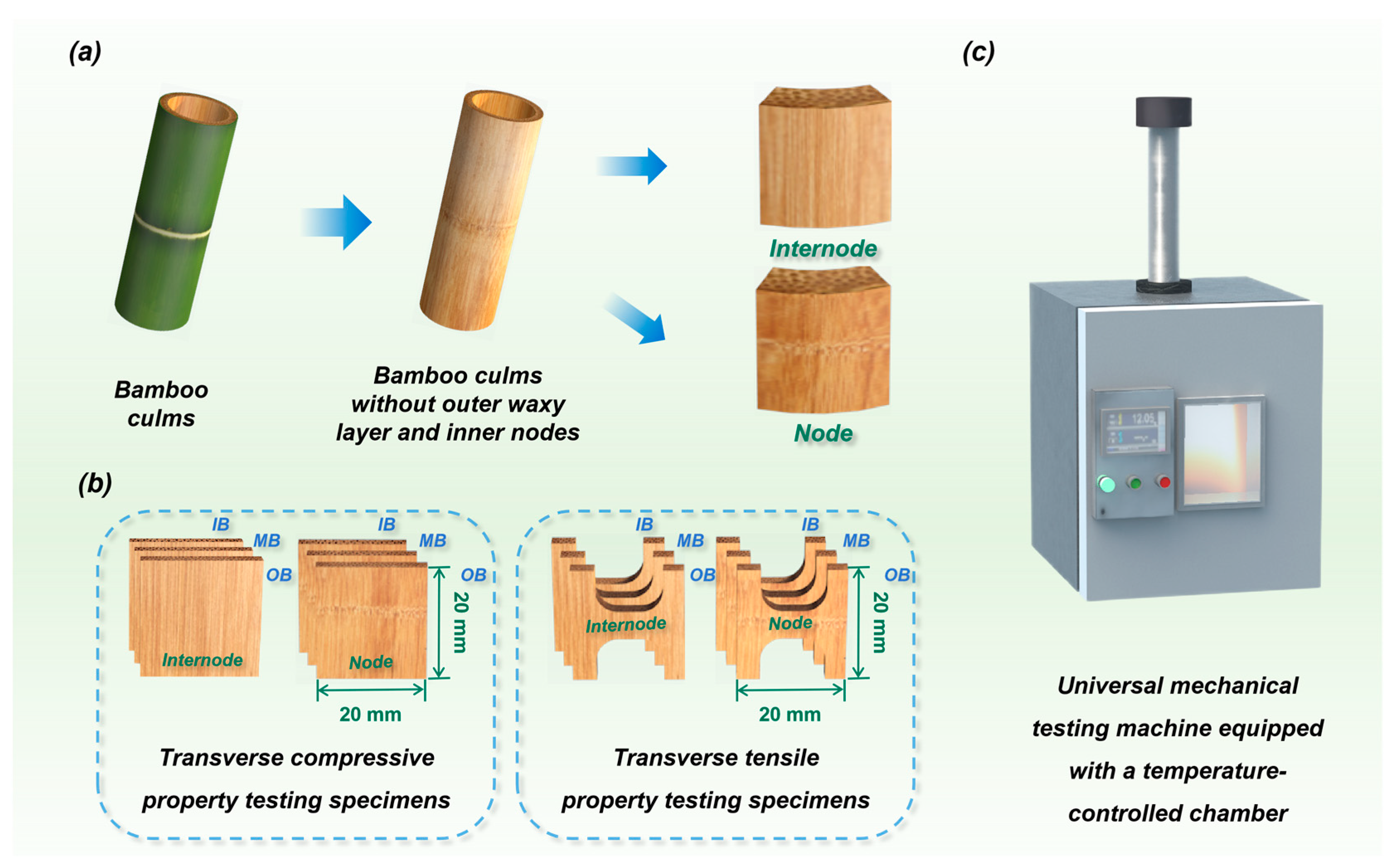
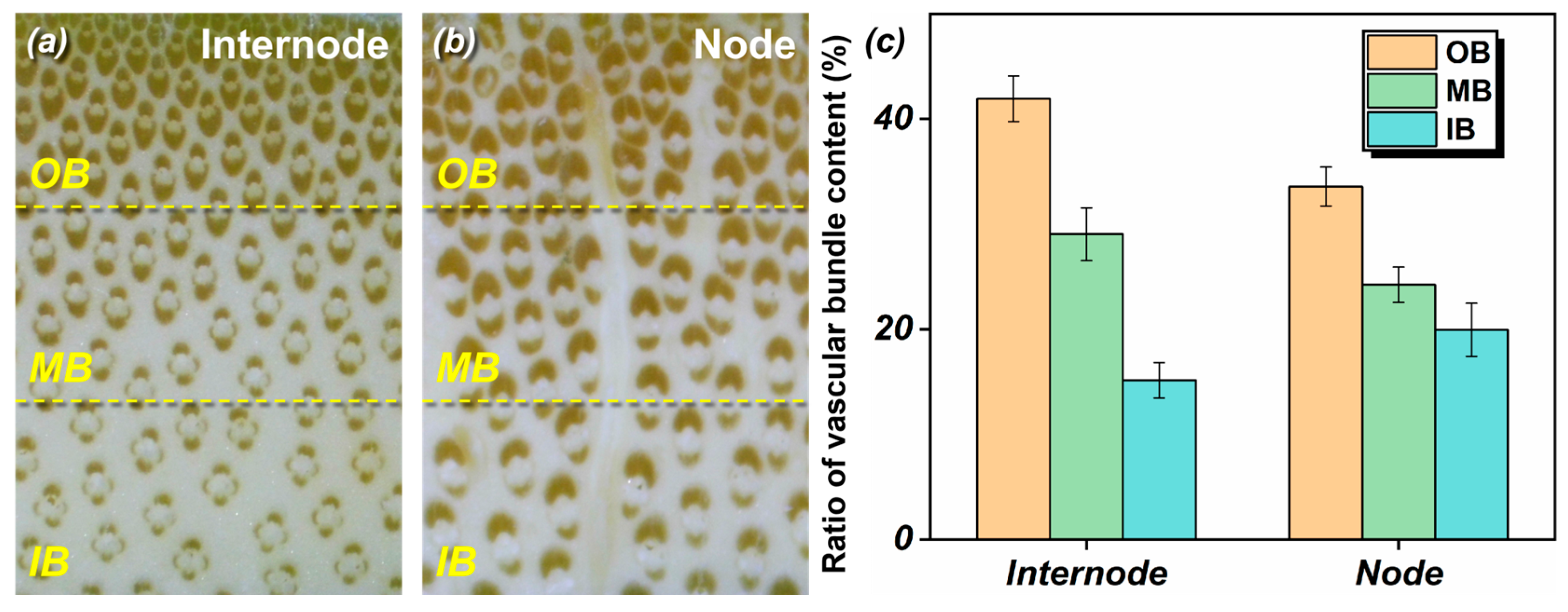
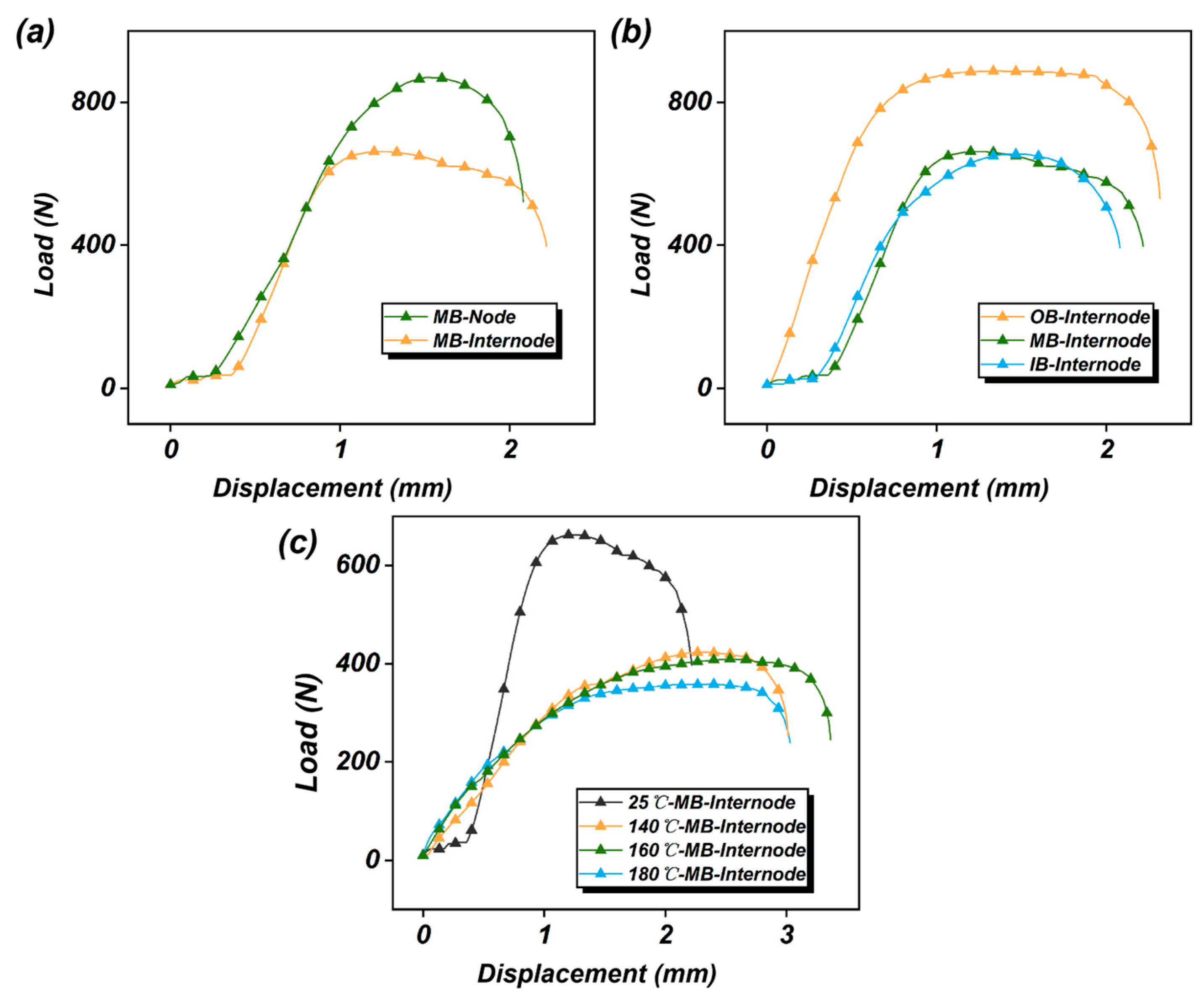
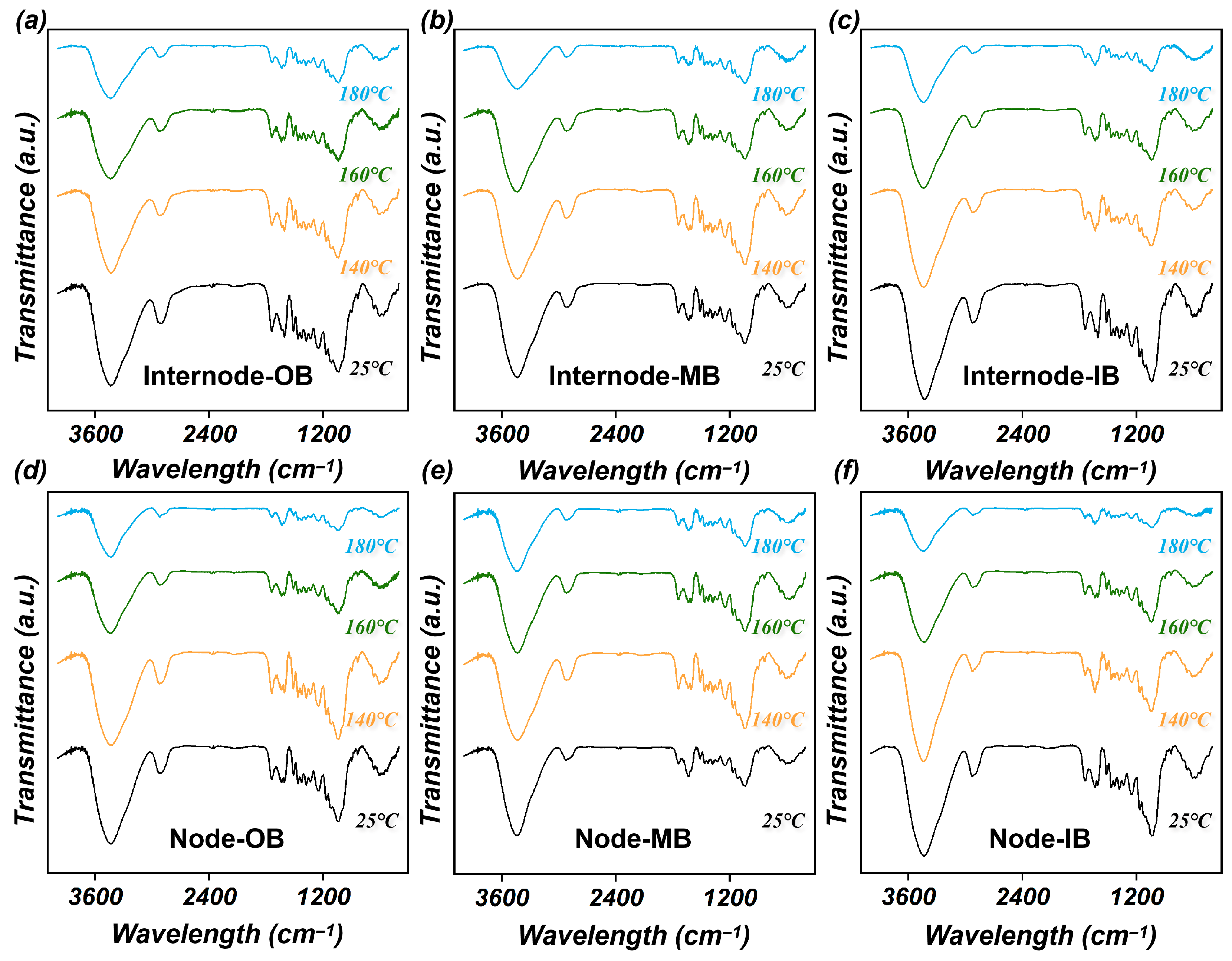
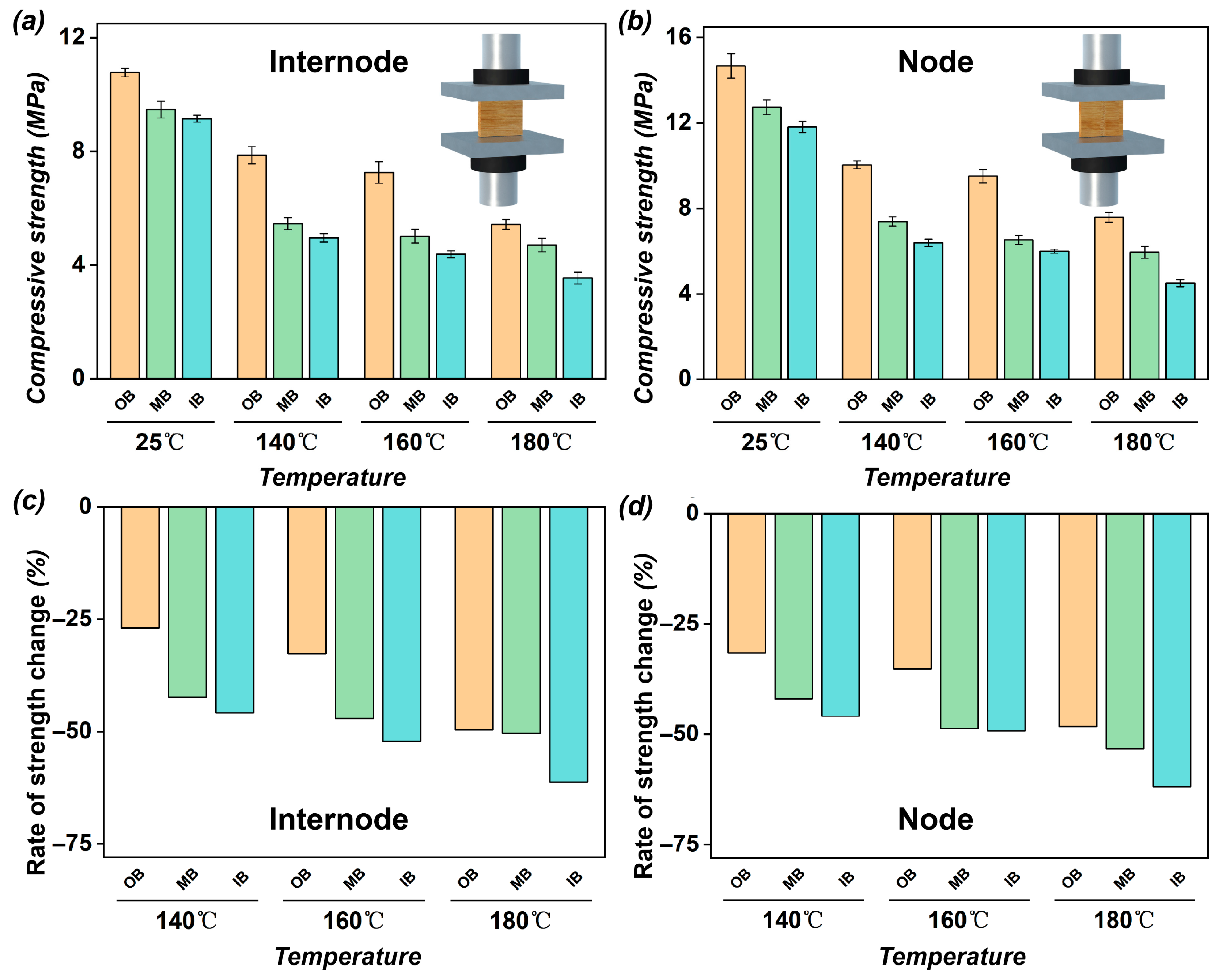
Bamboo flattening technology provides an efficient approach for improving bamboo utilization, but the heterogeneous stress response and the mechanism of bamboo nodes during the flattening process remain insufficiently understood. In this study, a universal mechanical testing machine equipped with a temperature-controlled chamber was used to simulate the stress state during the flattening process. The effects of different heat treatment temperatures on the transverse mechanical response and chemical properties of different layers of bamboo internodes and nodes were systematically investigated. The results showed that at room temperature, the transverse strength of bamboo exhibited a gradient characteristic of outer layer bamboo (OB) > middle layer bamboo (MB) > inner layer bamboo (IB). Nodes showed higher transverse strength than internodes. As the temperature increased, the transverse properties of all layers significantly declined, with transverse tensile strength showing higher sensitivity. The IB exhibited the poorest thermal stability. Chemical analysis revealed the continuous degradation of cellulose and hemicellulose, while the relative lignin content and relative crystallinity of cellulose increased. This study clarifies the mechanism of heat treatment temperature on the physicochemical characteristics of different parts of bamboo, providing a scientific theoretical basis for temperature control in the industrial production of crack-free flattened bamboo boards.
Keywords: bamboo flattening technology; bamboo node; transverse mechanical properties; physicochemical properties bamboo flattening technology; bamboo node; transverse mechanical properties; physicochemical properties