Article

The Effect of Simulated Acid Rain on the Decomposition Rate of Chinese Fir (Cunninghamia lanceolata) Litter Depends on Acid Rain Intensity and Litter Decomposition Stage


1
School of Geographical Sciences and Carbon Neutrality Future Technology, Fujian Normal University, Fuzhou 350117, China
2
Fujian Provincial Key Laboratory of Resources and Environment Monitoring and Sustainable Management and Utilization, Sanming University, Sanming 365004, China
3
Fujian Provincial Key Laboratory of the Development and Utilization of Bamboo Resources, Sanming University, Sanming 365004, China
4
CAS Key Laboratory of Forest Ecology and Management, Institute of Applied Ecology, Huitong Experimental Station of Forest Ecology, Shenyang 110016, China
5
College of Foreign Languages, Fujian Polytechnic Normal University, Fuzhou 350300, China
6
College of Finance, Fujian Jiangxia University, Fuzhou 350108, China
7
Sanming Forest Ecosystem National Observation and Research Station, Sanming 365002, China
*
Authors to whom correspondence should be addressed.
Forests 2026, 17(5), 539; https://doi.org/10.3390/f17050539
Submission received: 29 March 2026 / Revised: 24 April 2026 / Accepted: 27 April 2026 / Published: 29 April 2026
(This article belongs to the Section Forest Ecophysiology and Biology)

Abstract

Acid rain is a severe global environmental issue, and clarifying its impacts on litter decomposition and underlying mechanisms is critical for accurately forecasting future climate change. Litter consists of components (e.g., non-structural carbohydrates, lignin, cellulose, and hemicellulose) with distinct decomposition resistance, but how acid rain affects these components to modulate overall litter decomposition across different decomposition stages remains unclear. Therefore, a microcosm experiment was conducted to determine decomposition rates of Chinese fir (Cunninghamia lanceolata) litter and its components based on litter mass loss under different simulated acid rain intensities (pH 4.5, moderate acid rain, MA; pH 3.0, severe acid rain, SA; and pH ≈ 7.0, tap water, CK) over two decomposition stages (0–5 months: initial decomposition stage; 6–16 months: late decomposition stage). Meanwhile, to analyze the factors influencing the litter decomposition rate, soil samples were collected at 5 and 16 months of decomposition for soil property analysis. Results showed that MA had no significant effect on litter decomposition in either stage. Conversely, SA led to a significant 43.7% increase in the litter decomposition rate in the initial decomposition stage, driven by its acid dissolution effect that accelerated the decomposition of cellulose and hemicellulose. However, SA significantly decreased the decomposition rate by 42.0% in the late decomposition stage by inhibiting the decomposition of lignin, cellulose, and hemicellulose, which was due to the reduced activities of soil peroxidase and xylosidase under soil acidification. Notably, neither MA nor SA significantly affected the litter decomposition rate over the entire decomposition period (0–16 months). This study indicates that acid rain’s effect on litter decomposition depends on its intensity and decomposition stage, emphasizing the necessity of distinguishing litter components and decomposition stages to explore its underlying mechanisms and precisely predict global climate change.

1. Introduction

Litter decomposition is a key link in the global carbon cycle [1,2]. Through litter decomposition, some of the photosynthetic products are returned to the atmosphere in the form of CO2, and the remainder accumulates in the soil to form soil organic carbon [3,4]. Therefore, litter decomposition is an important carbon flux between terrestrial ecosystems and the atmosphere; an increase in this rate is likely to raise atmospheric CO2 concentration and thereby result in positive feedback to climate warming [2,4,5]. Additionally, the litter decomposition rate regulates the formation and stability of soil organic carbon [3,6]. In the initial litter decomposition stage, a higher litter decomposition rate leads to the release of more soluble components into the soil, which is conducive to microorganisms forming stable soil organic carbon fractions (e.g., mineral-associated organic carbon) [7]. In contrast, in the late litter decomposition stage, litter with a slow decomposition rate can retain more recalcitrant components, which is beneficial for the formation of particulate organic carbon [3,8]. Thus, alterations in litter decomposition rate represent a key factor regulating the capacity of the terrestrial carbon pool and its stability. Clarifying the mechanisms underlying litter decomposition is therefore conducive to accurately predicting climate change trends under global change scenarios.
Litter is composed of non-structural carbohydrates (NSC), lignin, cellulose, hemicellulose, and total phenols, each with distinct decomposition resistance [9]. Based on differences in decomposed substrates and their decomposability, the litter decomposition process can be divided into different stages [10,11]. In the initial litter decomposition stage, the breakdown of labile substances—including the leaching of water-soluble components and the decomposition of NSC and cellulose—is the major process driving litter decomposition [3,10]. In the late decomposition stage, however, the main processes shift to the decomposition of recalcitrant substances, such as lignin and total phenols [9,12]. Soil enzymes are an essential catalyst for litter decomposition [13,14,15]. As substrate quality varies across different litter decomposition stages, the types of soil enzymes that mediate litter decomposition also differ accordingly. In the initial litter decomposition stage, hydrolases (e.g., α-1,4-glucosidase, β-1,4-glucosidase, cellobiohydrolase) dominate litter decomposition; in the late decomposition stage, litter decomposition is dominated by oxidases such as phenol oxidase and peroxidase [13,16,17]. Enzyme secretion by microorganisms constitutes the major source of soil enzymes [18,19]. Thus, shifts in microbial composition can alter the types and activities of soil enzymes [16,19,20]. In the context of global change, the microbial composition has changed [16,19]. However, the mechanisms by which shifts in microbial communities drive the variations in soil enzyme types and activities, and thereby regulate the decomposition rates of litter and its components, remain to be clarified.
Acid rain has been a key environmental challenge amid global change since the 1970s [21,22]. Currently, its pollution has been alleviated in developed regions such as North America and Europe due to controlled acidic gas emissions, but it remains a pressing concern in fast-developing nations like China, India, and Brazil [21,22,23]. For instance, southern China has become the world’s third-largest acid rain region, where acid rain occurs at a frequency of approximately 60%, with pH values below 5.0 in most regions and as low as 3.6 in the most severely affected areas [21,24]. Despite this, research on the effect of acid rain on litter decomposition processes has received insufficient attention, with inconsistent findings across existing studies [25,26]. For example, after one year of exposure to simulated acid rain, Tang et al. reported that moderate-intensity simulated acid rain increased the litter decomposition rate of Chinese fir (Cunninghamia lanceolata (Lamb.) Hook.), while severe-intensity simulated acid rain decreased it [26]. Wang et al. reported that simulated acid rain had no effect on the litter decomposition rate in the initial litter decomposition stage, but reduced it in the late decomposition stage [27]. Additionally, these existing studies only investigated the effect of simulated acid rain on the overall litter decomposition rate. Since the decomposability of litter components (e.g., NSC, lignin, cellulose, hemicellulose) varies and they are decomposed in different stages as described above, investigating the effect of acid rain on different litter components across decomposition stages is the key to clarifying the mechanism underlying the divergent responses of litter decomposition rate to acid rain.
Chinese fir is the most important artificial forest tree species in China, with both its cultivated area and forest stock ranking first among Chinese artificial forests, and it plays an important role in the terrestrial carbon cycle [28]. Therefore, further insight into the effect of acid rain on the decomposition rate of Chinese fir litter and its components is fundamental to precisely predicting the trend of global climate warming under the background of acid rain. Here, we aimed to (1) examine how acid rain influenced the decomposition rates of Chinese fir litter components—and consequently the overall litter decomposition rate—across different decomposition stages, and (2) explore stage-specific changes in soil enzyme activities that mediate the response of these components and overall decomposition rates to acid rain.

2. Materials and Methods

2.1. Experimental Site

The experimental site is located in the Suburban State-owned Forest Farm of Sanming City, Fujian Province, China (117°33′ E, 26°12′ N). This site has a subtropical monsoon climate, with an annual average temperature of 19.5 °C and an annual average precipitation of approximately 1600 mm. The soil type is mountain red soil based on the Chinese soil classification system, and the native vegetation is subtropical evergreen broad-leaved forest. Chinese fir is the main tree species for artificial afforestation in this region [29]. The frequency of acid rain in Sanming City in 2022 was 81.4% [30]. According to field monitoring, the average pH of rainfall at the research site during the experimental period was 4.96 [31].

2.2. Experimental Design

The experiment adopted a randomized block design. In March 2022, four blocks were set up in a Chinese fir plantation. Within each block, three 2 m × 2 m subplots were established to evaluate the effects of three intensities of acid rain on the litter decomposition rate: moderate acid rain (MA, pH = 4.5), severe acid rain (SA, pH = 3.0), and tap water (pH ≈ 7.0) as the control treatment (CK). Referring to the molar ratio of sulfate (SO42−) to nitrate (NO3) in natural acid precipitation [32], simulated acid rain was prepared by mixing H2SO4 and HNO3 at a SO42−:NO3 molar ratio of 2:1. This mixture was diluted with tap water to achieve the target pH values (pH = 4.5 for MA and pH = 3.0 for SA). Each MA and SA subplot was sprayed with 40 L of the corresponding simulated acid rain using a sprayer each time, while CK subplots received an equal volume of tap water. Simulated acid rain treatments were applied twice a month from July 2022 to November 2023. The total volume of applied simulated acid rain accounted for approximately 15% of the annual precipitation in the study area.
To approximate natural conditions, microcosms were used to determine the decomposition rate of Chinese fir litter under simulated acid rain treatment. In March 2022, six holes (diameter and height were both 20 cm) were dug per subplot with a soil auger. Soil from these holes was collected per block. After removing roots and existing litter, the soil was homogenized to minimize soil heterogeneity before being backfilled into the original holes. A PVC pipe (16 cm in diameter, 5 cm in height) was inserted 3 cm deep into the homogenized soil to serve as a litter decomposition microcosm, with six such pipes installed per subplot. The homogenous soil and microcosms were left undisturbed for four months to reduce anthropogenic disturbance. In July 2022, 6.39 g of air-dried Chinese fir leaf litter (equivalent to 5.63 g dry weight) was added to each microcosm, based on the annual litter production in this area [33]. Each microcosm was covered with a 2 mm aperture nylon mesh to prevent contamination by exogenous litter.

2.3. Collection of Soil and Litter Samples

After 5 and 16 months of litter decomposition, three microcosms were randomly selected per subplot each time as parallel samples; the remaining litter in each microcosm was collected separately, corresponding to the initial (0–5 months) and late (6–16 months) stages of litter decomposition, respectively. Concurrently, 0–5 cm soil samples were collected using a soil auger. After removing the soil attached to the litter with a brush, the litter was oven-dried at 80 °C to calculate the litter decomposition rate. Subsequently, the dried litter was ground into powder using a ball mill (Retsch MM 400, Retsch GmbH, Haan, Germany). This litter powder was used to determine the concentrations of NSC, lignin, cellulose, hemicellulose, and total phenols. The soil was sieved through a 2 mm mesh and divided into two subsamples: one was stored at −20 °C for analysis of soil enzyme activity, ammonium nitrogen (NH4+-N) and nitrate nitrogen (NO3-N), and the other was air-dried for the determination of other soil chemical properties.

2.4. Analysis of Litter Components

NSC concentration is estimated by soluble sugars and starch concentrations. Soluble sugars and starch were extracted using the K-SUFRG and K-TSTA kits (Megazyme, Wicklow, Ireland), respectively, and their concentrations were measured with a UV/Vis spectrophotometer (Lambda 25, PerkinElmer Ltd., Singapore). The detailed determination procedures followed the methods described in Yang et al. [34] and Yang et al. [35]. The concentrations of lignin, cellulose, hemicellulose, and total phenols were determined by ELISA kits from Shanghai Enzyme-linked Biotechnology Co., Ltd., Shanghai, China (www.mlbio.cn). The major determination methods for concentrations of lignin, cellulose, and hemicellulose were as follows: litter powder was added to an ELISA plate and incubated at 37 °C for 30 min. A specific enzyme was then added, followed by a further 30 min incubation at 37 °C. A chromogenic solution was subsequently added, and the mixture was incubated at 37 °C for 10 min to allow color development. Immediately after color development, a stop solution was added. Finally, absorbance was measured by a UV/VIS spectrophotometer (Lambda 25, PerkinElmer Ltd., Singapore) within 15 min. The measurement procedure for total phenols was as follows: 2 mL of extracting solution was added to the litter powder, and the mixture was extracted in a shaking incubator at 60 °C for 2 h. The mixture was then centrifuged at 10000× g at 25 °C for 10 min to obtain the supernatant, whose absorbance was measured by a UV/VIS spectrophotometer (Lambda 25, PerkinElmer Ltd., Singapore).

2.5. Analysis of Soil Chemical Properties

Soil pH was measured in a 1:2.5 (weight:volume) mixture of soil and deionized water with a pH meter (ECPH70042S, EUtech Instruments Pte, Ltd., Singapore). Soil total carbon (TC) and total nitrogen (TN) were measured by an elemental analyzer (Elementar Vario EL III, Elementar Analysensysteme GmbH, Langenselbold, Germany). Soil available phosphorus (AP) was extracted using a mixture of 0.03 mol/L NH4F and 0.025 mol/L HCl at a soil-to-solution ratio of 1:10 (w/v). The concentration of AP was determined by a UV/VIS spectrophotometer (Lambda 25, PerkinElmer Ltd., Singapore). NH4+-N and NO3-N were extracted with 2 mol L−1 KCl solution and measured by a flow injection autoanalyzer (FIAS 100, PerkinElmer, Shelton, CT, USA).

2.6. Analysis of Soil Enzyme Activities

Nine soil enzyme activities were measured, namely α-1,4-glucosidase (AG), β-1,4-glucosidase (BG), cellobiohydrolase (CBH), β-1,4-xylosidase (XYL), β-1,4-N-acetylglucosaminidase (NAG), leucine aminopeptidase (LAP), acid phosphomonoesterase (ACP), phenol oxidase (POX), and peroxidase (POD). Activities of AG, BG, CBH, XYL, NAG, and ACP were analyzed fluorometrically using 4-methylumbelliferone substrates, and LAP was analyzed using L-leucine-7-amido-4-methylcoumarin. POX and POD were measured with L-3,4-dihydroxyphenylalanine and hydrogen peroxide as substrates, respectively. Detailed experimental procedures followed the methods described by Bell et al. [36] and Bach et al. [37].

2.7. The Equations for Calculating Decomposition Rates of Litter and Its Components

In the initial stage of Chinese fir litter decomposition, the decomposition rates of NSC, lignin, cellulose, hemicellulose, and total phenols were calculated using the following formula:
R   =   ( w o   ×   c o     w 5   ×   c 5 ) / 5   ×   12
where R is the decomposition rate (unit: mg·year−1); w o is the initial dry weight of the undecomposed litter (5.63 g); w 5 is the remaining dry weight of litter collected after 5 months of decomposition (unit: g); and c o and c 5 are the concentrations of NSC, lignin, cellulose, hemicellulose, and total phenols in undecomposed litter and litter decomposed for 5 months, respectively (unit: mg·g−1). The divisor “5” represents the decomposition duration (months) and “12” converts the rate to an annual value; the same applies below.
In the late stage of Chinese fir litter decomposition, the decomposition rates of the aforementioned components were calculated using the following formula:
R   =   ( w 5   ×   c 5     w 16   ×   c 16 ) / 11   ×   12
where R is the decomposition rate (unit: mg·year−1). w 5 and w 16 are the remaining dry weights of litter collected after 5 months and 16 months of decomposition, respectively (unit: g). c 5 and c 16 are the concentrations of the target components in litter decomposed for 5 months and 16 months, respectively (unit: mg·g−1). The divisor “11” represents the decomposition duration (months); the same applies below.
The overall litter decomposition rates in the initial and late stages were calculated using Equations (3) and (4), respectively.
R = ( w o w 5 ) / 5   ×   12
R = ( w 5     w 16 ) / 11   ×   12
where R is the overall litter decomposition rate (unit: g·year−1). w o , w 5 and w 16 are the litter dry weights of undecomposed litter, litter decomposed for 5 months and litter decomposed for 16 months, respectively (unit: g).

2.8. Statistical Analysis

One-way ANOVA was used to test the effects of simulated acid rain on the decomposition rates of litter and its components (NSC, lignin, cellulose, hemicellulose, and total phenols), soil chemical properties and soil enzyme activities. LSD was used for multiple comparisons of significant differences among different simulated acid rain intensities. Pearson correlation analysis was used to explore the relationships between soil enzyme activity and soil chemical properties. Statistical analyses were performed using SPSS 23.0 (IBM Corporation, Armonk, NY, USA). With the decomposition rates of litter and its components as response variables and soil enzyme activities as explanatory variables, redundancy analysis was performed using Canoco 5.0 (Microcomputer Power, Ithaca, NY, USA). Data were log-transformed to achieve normality where necessary. All the figures were generated using Origin 21 (OriginLab Corporation, Northampton, MA, USA). The data in figures were expressed as mean ± standard error (n = 4). The statistical significance level was set at p < 0.05.

3. Results

3.1. Response of Litter Decomposition Rate to Simulated Acid Rain

In the initial stage of litter decomposition (0–5 months), SA significantly increased the decomposition rate by 43.7% compared with CK (Figure 1a, p < 0.05). However, MA had no significant effect on litter decomposition (Figure 1a, p > 0.05). In the late stage of litter decomposition (6–16 months), SA significantly decreased the decomposition rate by 42.0% compared with CK (Figure 1a, p < 0.05), while MA had no significant effect on the decomposition rate (Figure 1a, p > 0.05). Over the entire decomposition period (0–16 months), neither MA nor SA had a significant effect on the litter decomposition rate (Figure 1b, p > 0.05).

3.2. Response of Decomposition Rates of Litter Components to Simulated Acid Rain

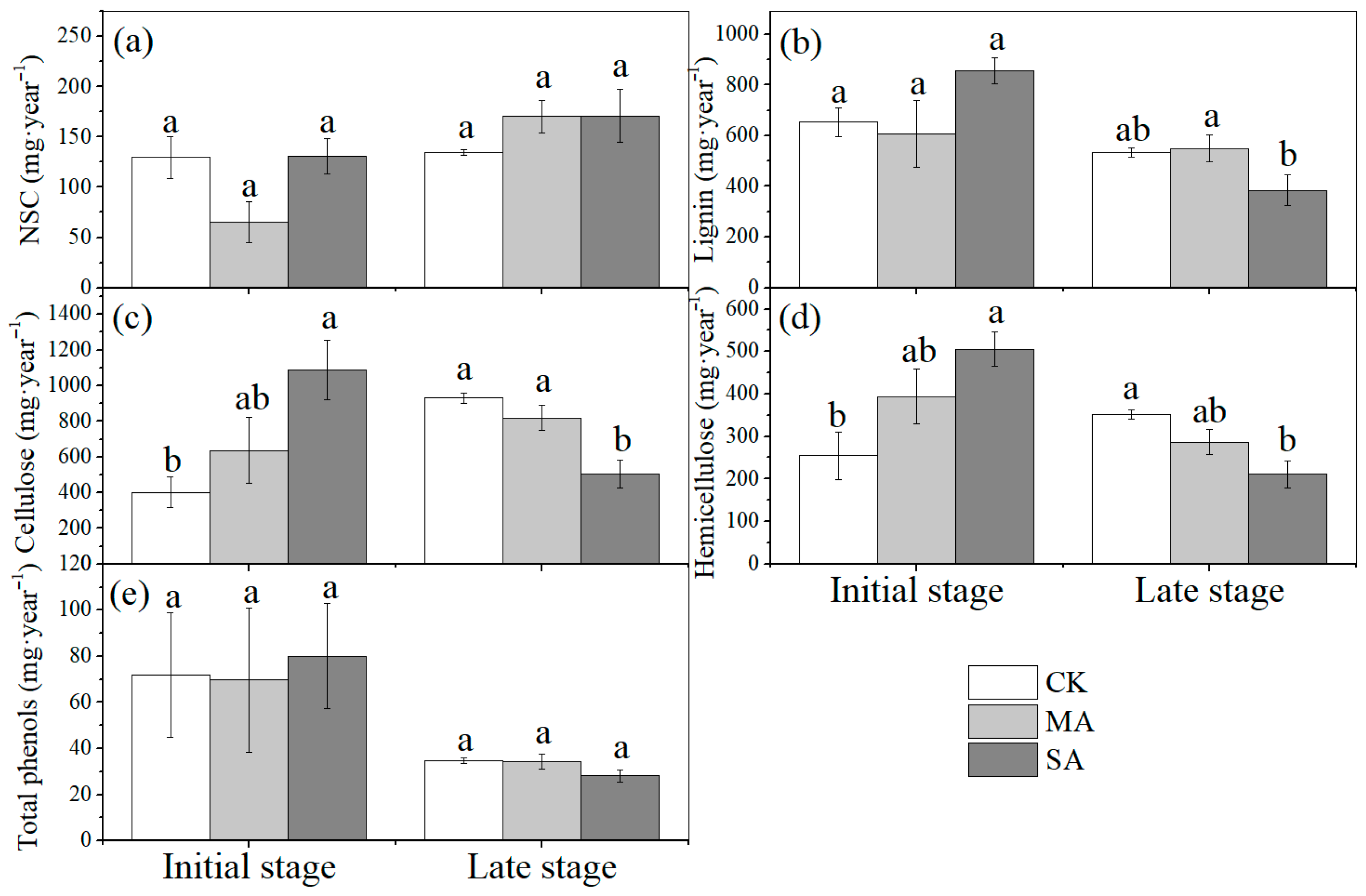
In the initial stage of litter decomposition, MA had no significant effect on the decomposition rates of NSC, lignin, cellulose, hemicellulose, and total phenols (Figure 2a–e, p > 0.05). SA significantly increased the decomposition rates of cellulose and hemicellulose by 170.5% and 98.2%, respectively (Figure 2c,d, p < 0.05). However, SA had no significant effect on the decomposition rates of NSC, lignin and total phenols (Figure 2a,b,e, p > 0.05).
In the late stage of litter decomposition, MA had no significant effect on the decomposition rates of NSC, lignin, cellulose, hemicellulose, and total phenols (Figure 2a–e, p > 0.05). SA significantly decreased the decomposition rates of cellulose and hemicellulose by 46.0% and 40.0%, respectively (Figure 2c,d, p < 0.05). SA decreased the decomposition rate of lignin by 27.8%, but the difference was not statistically significant (Figure 2b, p > 0.05). SA had no significant effect on the decomposition rates of NSC and total phenols (Figure 2a,e, p > 0.05).

3.3. Response of Soil Chemical Properties and Soil Enzyme Activity to Simulated Acid Rain

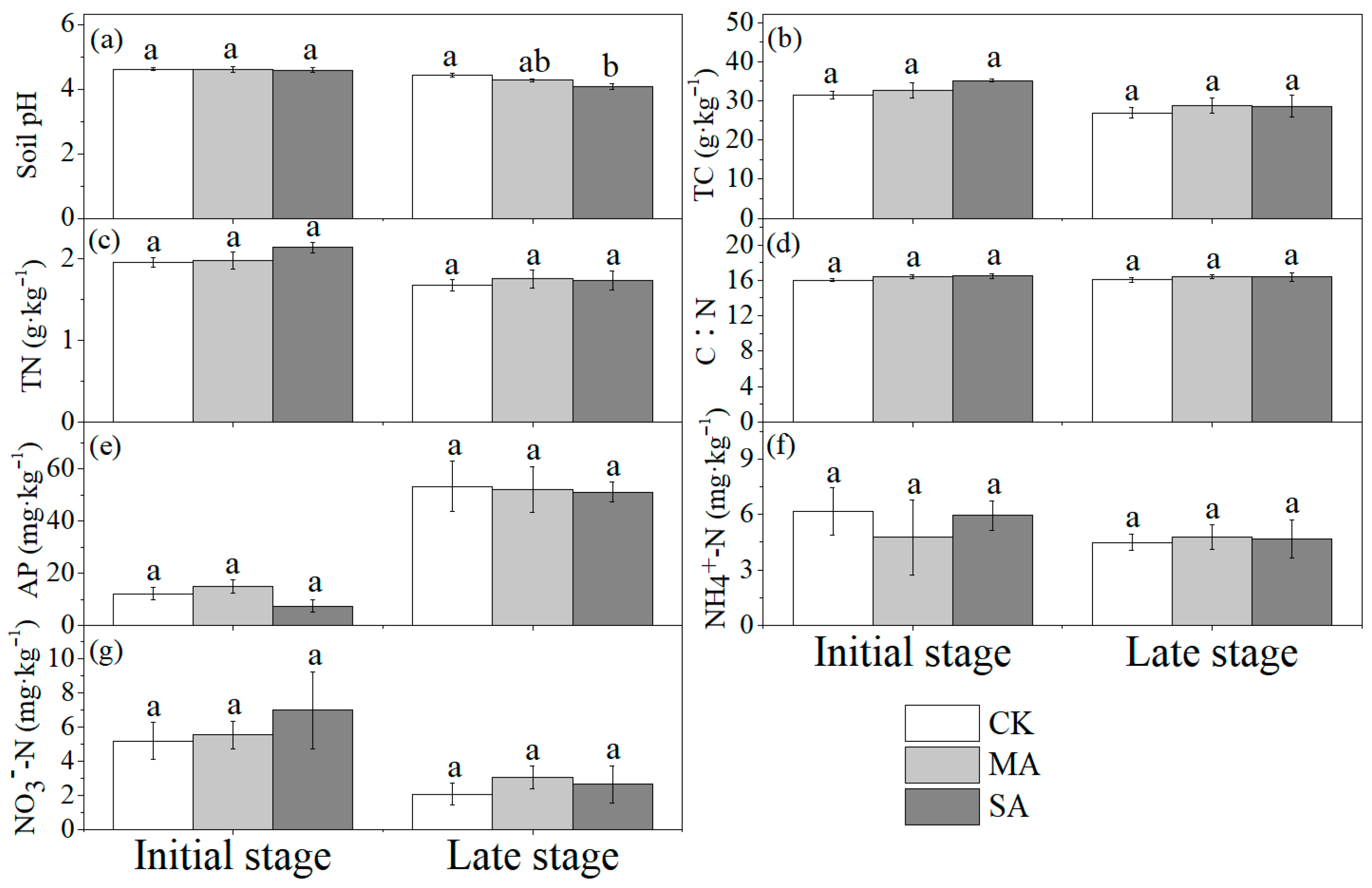
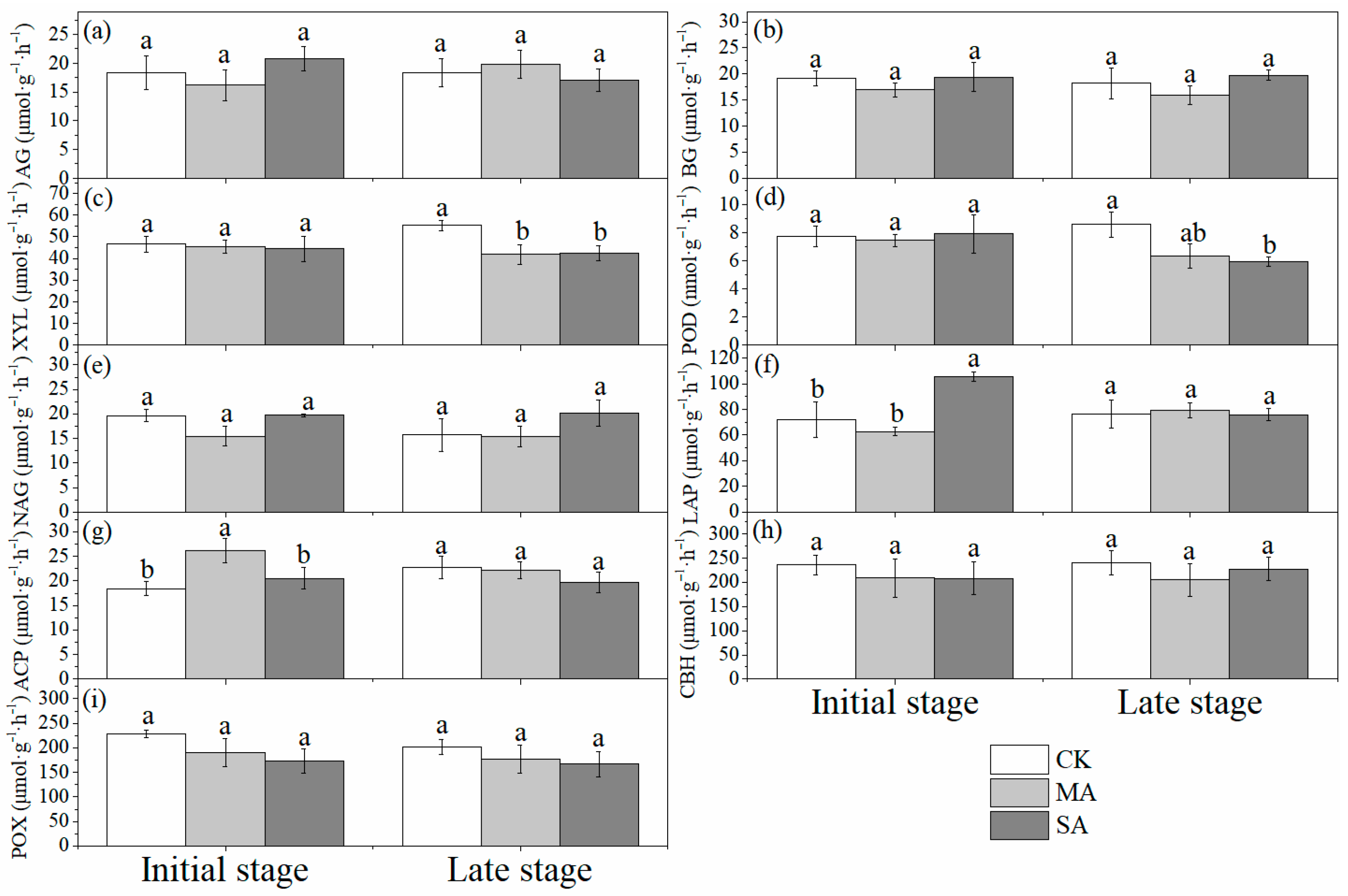
In the initial stage of litter decomposition, neither MA nor SA significantly affected soil pH, TC, TN, the ratio of TC to TN (C:N), AP, NH4+-N and NO3-N (Figure 3a–g, p > 0.05). MA significantly increased soil ACP activity by 41.9% (Figure 4g, p < 0.05). However, MA had no significant effect on the activities of AG, BG, XYL, POD, NAG, LAP, CBH, and POX (Figure 4a–f,h,i p > 0.05). SA significantly increased LAP activity by 46.0% (Figure 4f, p < 0.05), but had no significant effect on the activities of other soil enzymes (Figure 4a–e,g–i, p > 0.05).
In the late stage of litter decomposition, SA significantly decreased soil pH by 8.0% (Figure 3a, p < 0.05), while neither MA nor SA had a significant effect on other soil chemical properties (Figure 3a–g, p > 0.05). MA significantly decreased XYL activity by 24.3% (Figure 4c, p < 0.05), but had no significant effect on the activities of other soil enzymes (Figure 4a,b,d–i, p > 0.05). SA significantly decreased the activities of XYL and POD by 23.1% and 30.1%, respectively (Figure 4c,d, p < 0.05). SA had no significant effect on the activities of other soil enzymes (Figure 4a,b,e–i, p > 0.05).

3.4. Relationship Among Litter Decomposition, Litter Component Decomposition, and Soil Properties

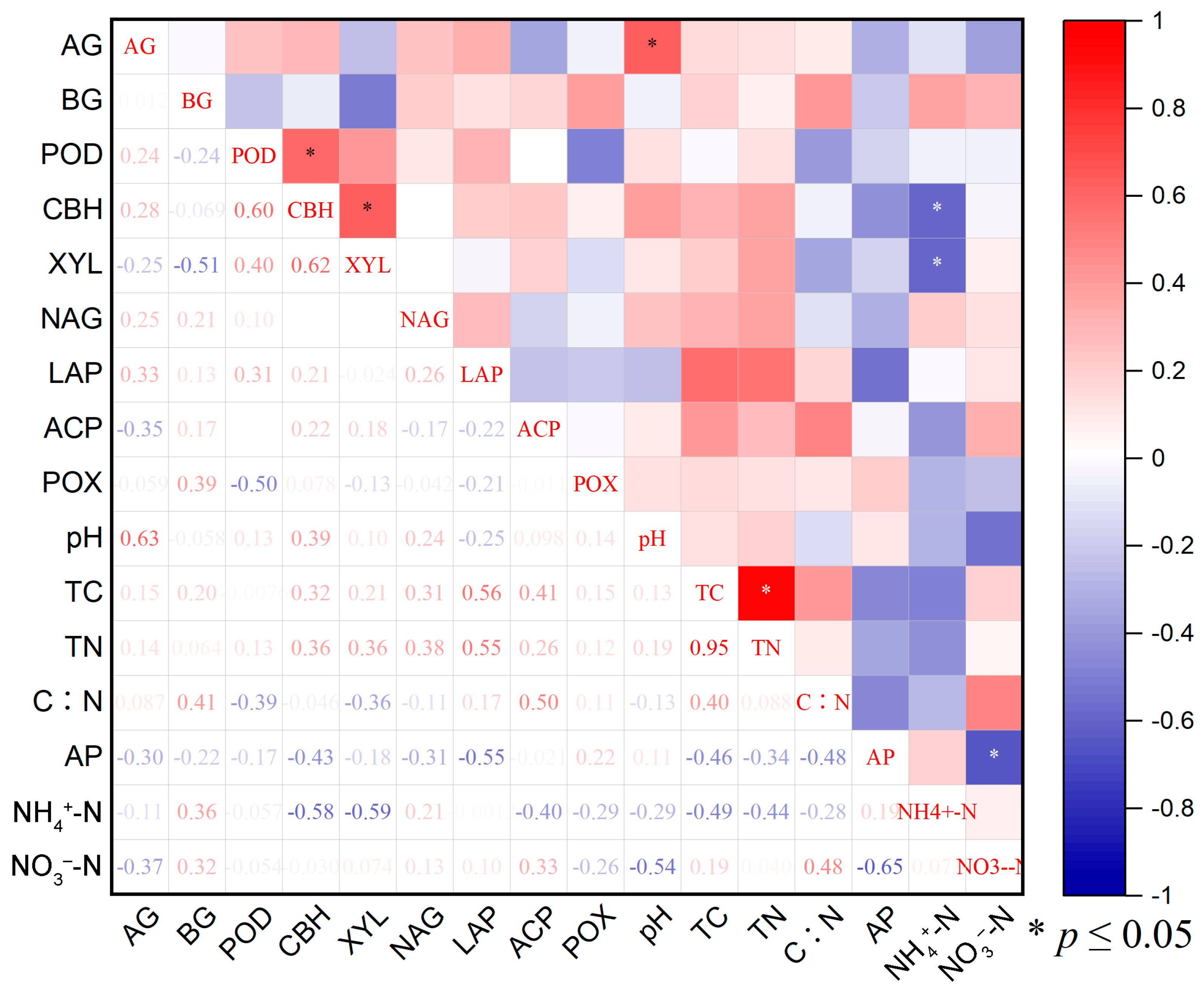
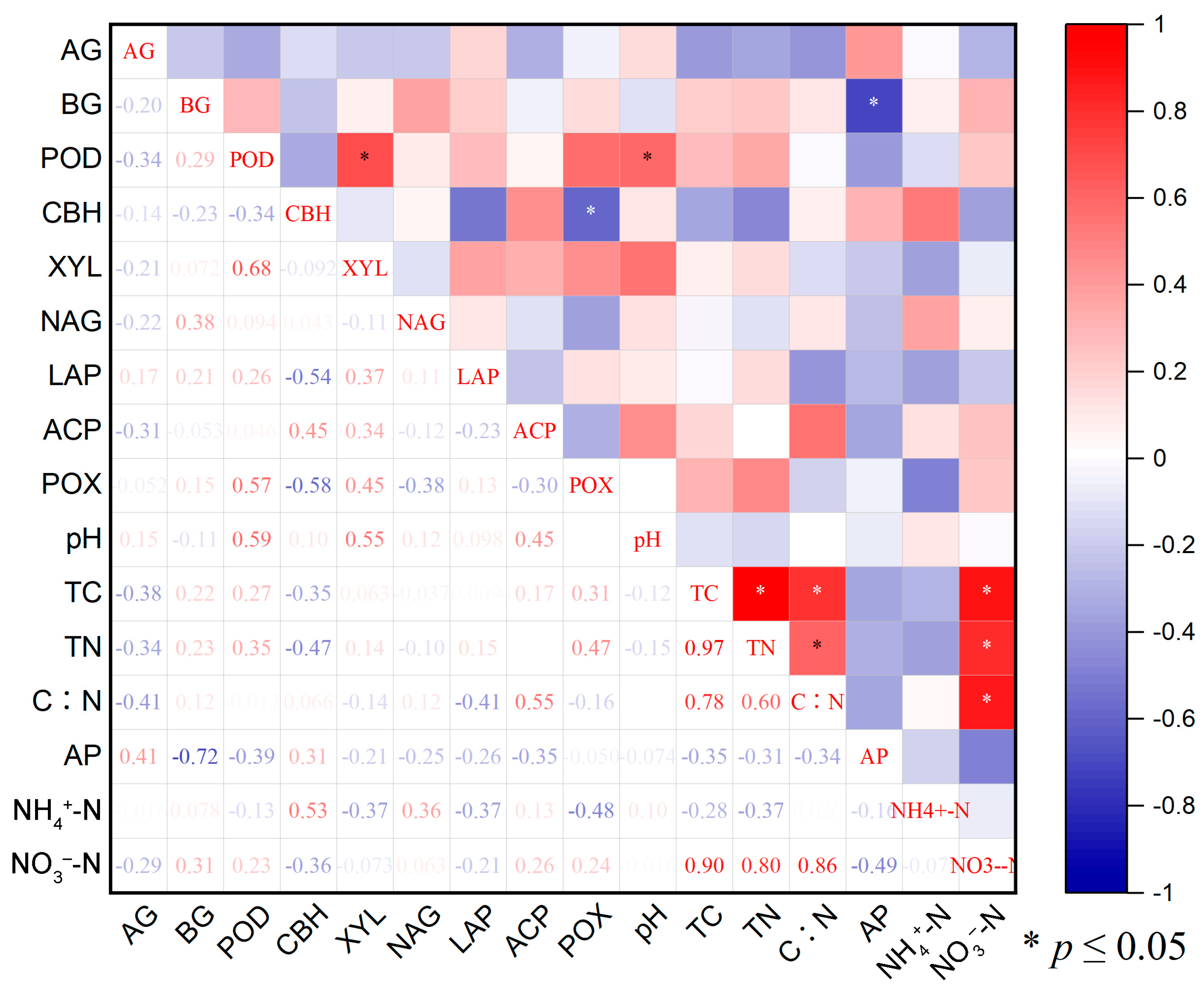
The result of Pearson correlation analysis showed that the AG activity was significantly positively related to soil pH, while the activities of CBH and XYL were significantly negatively related to NH4+-N in the initial litter decomposition stage (Figure 5). BG activity was significantly negatively related to AP, and POD activity was significantly positively related to soil pH in the late litter decomposition stage (Figure 6).
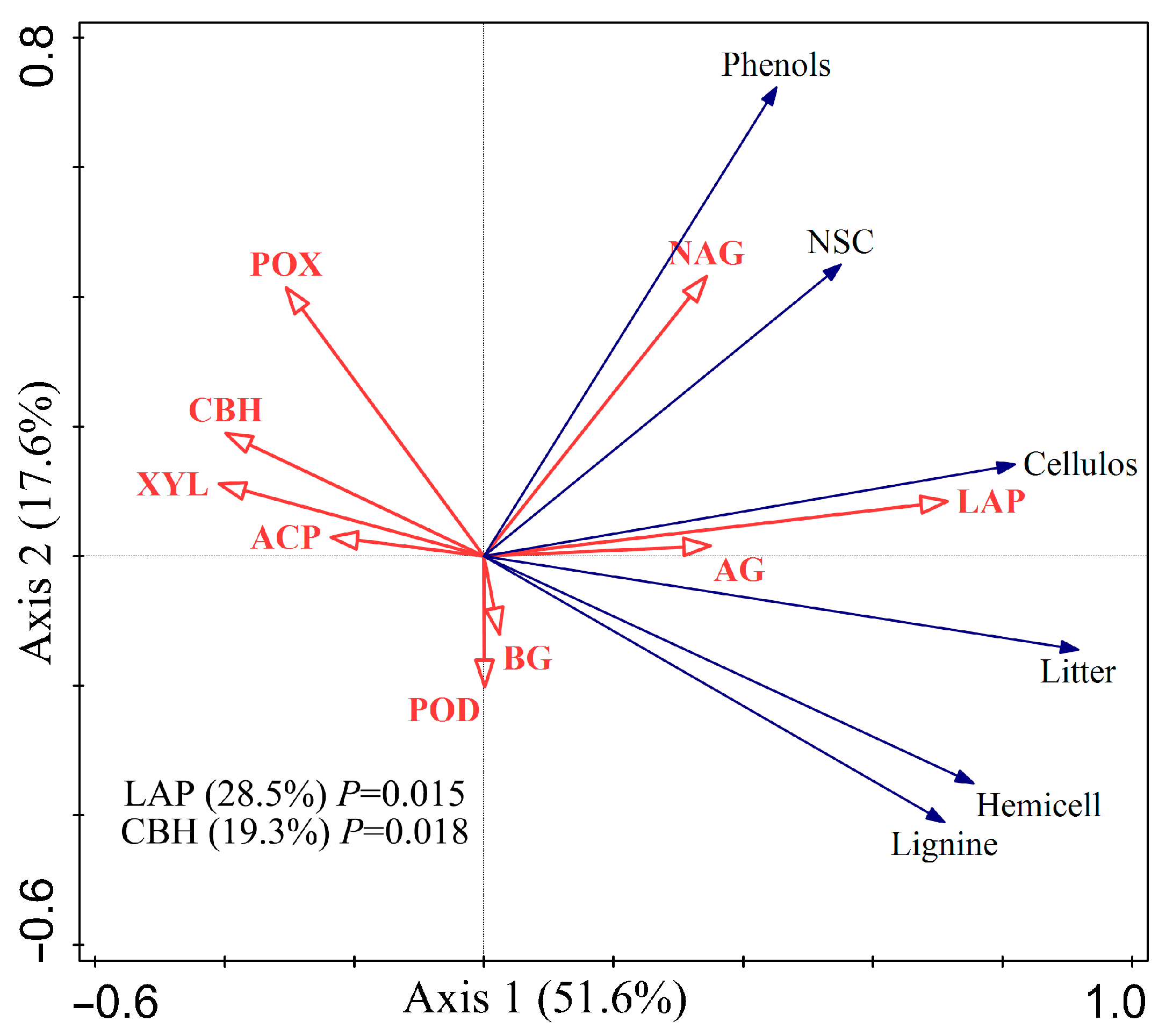
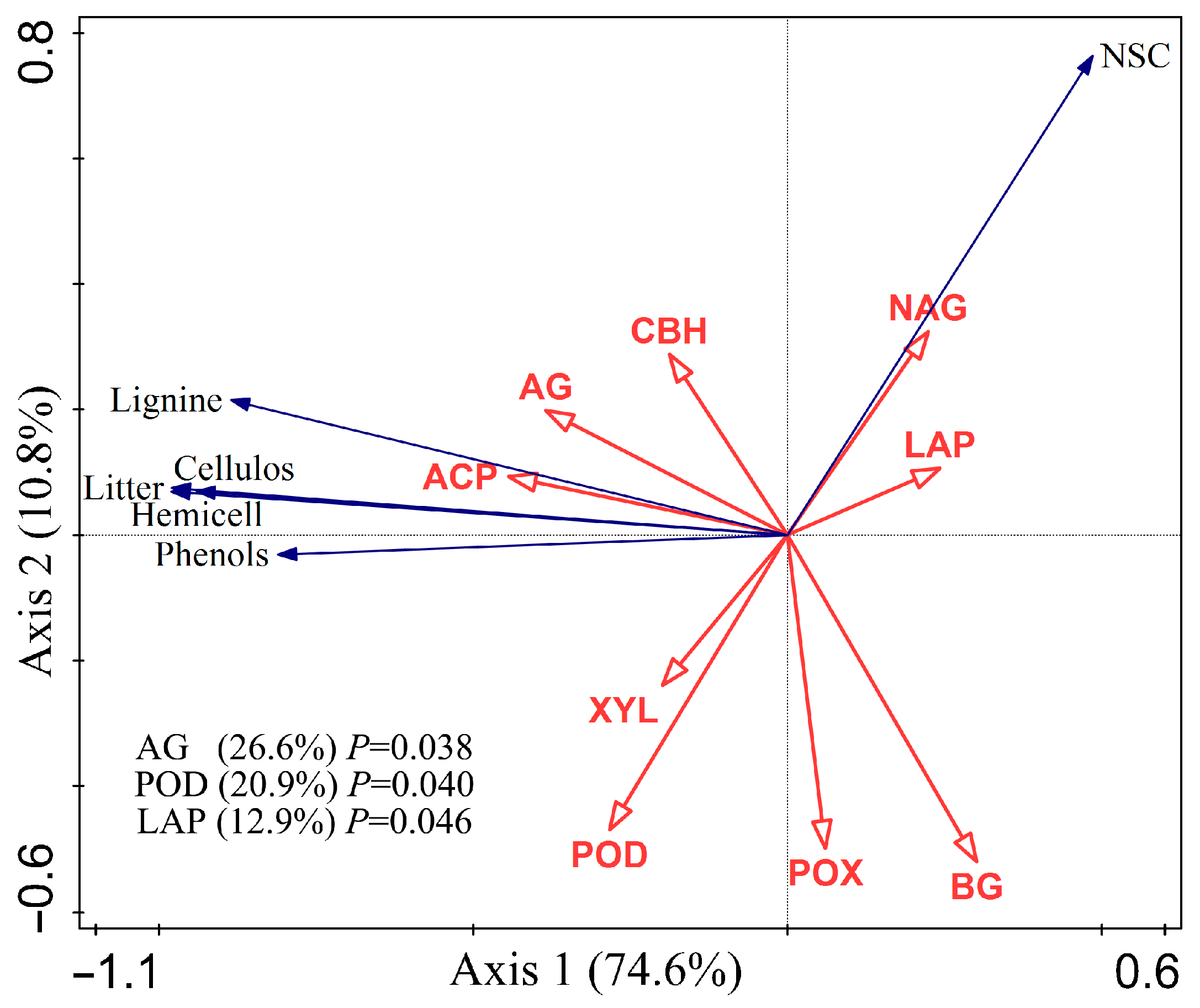
Using litter decomposition rate and litter component decomposition rates as response variables, and soil enzyme activities as explanatory variables, redundancy analysis was performed. The results showed that in the initial litter decomposition stage, the first axis and second axis explained 51.6% and 17.6% of the variation, respectively; litter decomposition rate was closely associated with the decomposition rates of cellulose and hemicellulose; LAP (p = 0.015) and CBH (p = 0.018) were the major soil enzymes responsible for litter decomposition, explaining 28.5% and 19.3% of the variation, respectively (Figure 7). In the late litter decomposition stage, the first axis and second axis explained 74.6% and 10.8% of the variation, respectively; the litter decomposition rate mainly depended on the decomposition rates of cellulose, hemicellulose, and lignin; AG (p = 0.038), POD (p = 0.040), and LAP (p = 0.046) were the major soil enzymes responsible for litter decomposition in the late decomposition stage, explaining 26.6%, 20.9%, and 12.9% of the variation, respectively (Figure 8).

4. Discussion

4.1. The Effect of Acid Rain on Litter Decomposition Rate Across Different Decomposition Stages

The effect of acid rain on litter decomposition is a complex process. After exposure to acid rain, NO3, SO42− and H+ are simultaneously input into soil, which can change the litter decomposition resistance, microbial community structure and soil enzyme activity and ultimately affect the litter decomposition rate [11,25,27]. Generally, in the initial litter decomposition stage, NO3 and SO42− can be regarded as fertilizers for alleviating microbial nutrient limitation (fertilization effect), resulting in an increase in decomposer activity and the litter decomposition rate [11]. In contrast, NO3 may reduce the synthesis of lignin-degrading enzymes and increase the biological stabilization of litter in the late litter decomposition stage, resulting in a decrease in litter decomposition rate [10,11]. The effect of H+ on litter decomposition rate is a progressive process that depends on the input amount of H+ and ultimately on its acidic dissolution effect on litter components and influence on soil pH. In the initial litter decomposition stage, soil pH usually remains unchanged due to the limited amount of H+ input and the acid buffering capacities of litter and soil [24,25]; thus, the effect of acid rain on soil pH and decomposer activity is limited. However, acid rain may increase the litter decomposition rate by enhancing acid dissolution of acid-soluble litter components, as these components mostly persist in litter during the initial stage of litter decomposition [10,38]. In the late litter decomposition stage, the cumulative input of H+ may result in a decrease in soil pH [25,39], thus the decrease in decomposer activity and the litter decomposition rate [26]. Consequently, the effect of acid rain on litter decomposition rate is the result of the acidic dissolution effect, the fertilization effect and the acidification effect, which depend on acid rain intensity and the decomposition duration. In this study, different intensities of acid rain had various effects on the litter decomposition rate across litter decomposition stages, which confirms this inference. The differing effects of acid rain on litter decomposition rate reported in existing studies may be attributed to two reasons. Firstly, the acid rain application rates varied among studies, and the acid buffering capacities of soil and litter were also different across research areas [24]. Secondly, the duration of litter decomposition varied among studies; thus, NO3 and H+ input exerted different effects on litter decomposition rate in different litter decomposition stages, as mentioned earlier.

4.2. Stage-Specific Effects of Simulated Acid Rain on Decomposition of Litter Components and the Underlying Mechanisms

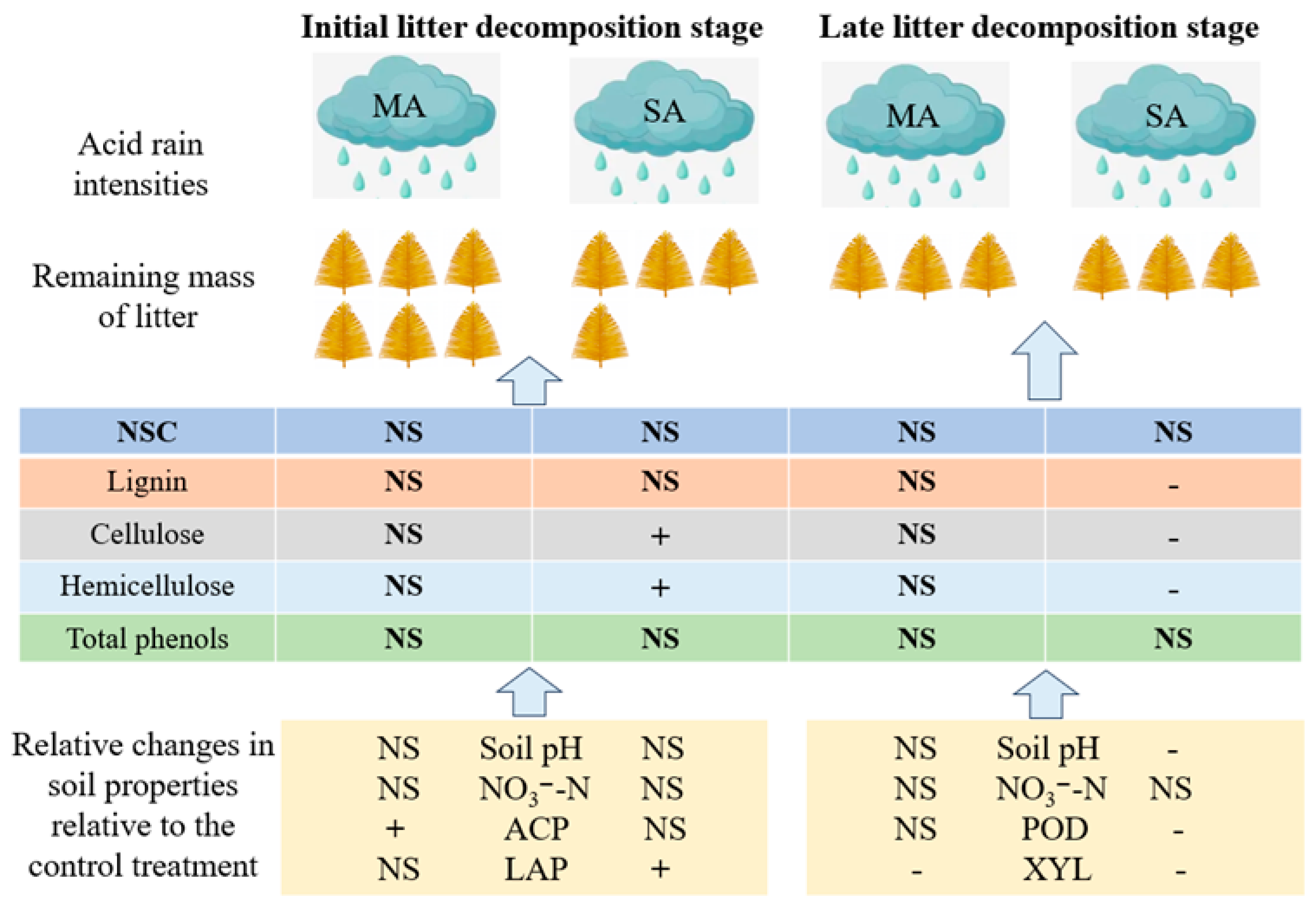
In the initial stage of litter decomposition, the overall litter decomposition rate was closely related to the decomposition rates of cellulose and hemicellulose (Figure 7). This result indicates that the decomposition of cellulose and hemicellulose is the major cause of mass loss in the initial decomposition stage, which is consistent with previous studies [3,10]. In this study, MA had no significant effect on the decomposition rates of cellulose and hemicellulose (Figure 2b,c, p > 0.05) and thus did not significantly affect the overall litter decomposition rate (Figure 1b, p > 0.05; Figure 9). In contrast, SA significantly increased the decomposition rates of cellulose and hemicellulose (Figure 2c,d, p < 0.05), and thus it can be inferred that the increase in the overall litter decomposition rate resulted from the elevated decomposition rates of cellulose and hemicellulose in the initial litter decomposition stage (Figure 9). However, the activities of BG, CBH, and XYL that dominate the decomposition of cellulose and hemicellulose remained unchanged following SA exposure (Figure 4b,c,h, p > 0.05). This suggests that the SA-induced increase in the decomposition rates of cellulose and hemicellulose likely originates from the enhanced acidic dissolution effect of acid rain, rather than from the catalytic activity of soil enzymes. Previous research has found that the mass loss from litter immersed in simulated acid rain solution was higher than that in deionized water [38]. This result supports our inference that acid rain can increase litter mass loss through its acidic dissolution effect. The decomposition of NSC is also considered a major contributor to mass loss in the initial decomposition stage [2]. However, this finding was not observed in the present study, which may be due to the following two reasons. Firstly, neither MA nor SA had a significant effect on the decomposition rate of NSC in this study (Figure 2a, p > 0.05). Secondly, Chinese fir litter is categorized as low-quality litter [26], and the proportion of NSC in this litter only accounts for 3.74% (Figure S1), rendering it insufficient to affect the overall litter decomposition rate during the initial decomposition stage.
In the late stage of litter decomposition, the decomposition rate of overall litter mainly depended on the decomposition rates of cellulose, hemicellulose, and lignin (Figure 8), a finding consistent with previous results [40]. SA reduced the mass loss of lignin, cellulose, and hemicellulose (Figure 2b–d, p < 0.05), thus decreasing the overall litter decomposition rate (Figure 9). Soil enzyme activity is a key factor regulating litter decomposition rates [17], and is modulated by soil pH [39,41]. Under SA treatment, the decline in soil pH led to reduced activities of XYL and POD, which in turn suppressed the decomposition of lignin, cellulose, and hemicellulose (Figure 3a; Figure 4c,d, p < 0.05), ultimately decreasing the overall litter decomposition rate (Figure 1b, p > 0.05). Although MA significantly decreased XYL activity (Figure 4c, p < 0.05), it had no significant effect on the decomposition rates of hemicellulose (Figure 2d, p > 0.05) or the overall litter (Figure 1b, p > 0.05). This is likely because most cellulose and hemicellulose in litter during the late decomposition stage are protected by lignin [11]; thus, effective litter decomposition in this stage requires the joint action of oxidases and hydrolases [10,42]. Consequently, the sole reduction in XYL activity induced by MA was insufficient to significantly alter the decomposition rates of litter components and the overall litter.
In this study, neither MA nor SA had a significant effect on the overall litter decomposition rate in the entire decomposition period (Figure 1b, p > 0.05), though MA and SA exerted distinct stage-specific effects on litter decomposition (Figure 1a,b). The lack of a significant effect of MA and SA on the overall litter decomposition over the entire decomposition period may be attributed to different reasons. As MA had no significant effect on the decomposition of the overall litter or litter components in either the initial or late decomposition stage, the fertilization effect, leaching effect, and acidification effect of low-intensity acid rain are insufficient to affect decomposer activity in either the initial or late decomposition stage, and ultimately the litter decomposition rate. The increase in litter decomposition rate in the initial litter decomposition stage and the decrease in the late decomposition stage canceled each other out under SA treatment. Namely, the fertilization effect, leaching effect, and acidification effect of acid rain canceled each other out under SA treatment in the entire decomposition period, ultimately resulting in the lack of a significant effect on the overall litter decomposition rate.

5. Conclusions

Over the entire litter decomposition period, neither MA nor SA had a significant effect on litter decomposition rate. However, when separating different decomposition stages, MA and SA had different effects on litter decomposition rate through various mediating mechanisms. MA had no significant effect on litter decomposition rate in either the initial or late decomposition stage, because this acid rain intensity is insufficient to affect decomposer activity or exert a significant acid dissolution effect. In the initial litter decomposition stage, SA significantly increased litter decomposition by increasing the decomposition of cellulose and hemicellulose through the acid leaching effect. In the late litter decomposition stage, SA significantly decreased the litter decomposition rate by decreasing the decomposition of lignin, cellulose and hemicellulose through the inhibition of POD and XYL under soil acidity. Given that the acceleration of litter decomposition in the initial decomposition stage and the deceleration in the late decomposition stage are conducive to the formation and stabilization of soil organic carbon, SA is more effective than MA in promoting the formation and stabilization of soil organic carbon, although neither MA nor SA had a significant effect on litter decomposition over the entire decomposition period. Thus, this study highlights the importance of distinguishing different stages and components of litter decomposition when investigating the effects of acid rain on litter decomposition in future research, which helps to elucidate the underlying mechanisms and improve the accuracy of predicting global climate change under acid deposition.

Supplementary Materials

The following supporting information can be downloaded at: https://www.mdpi.com/article/10.3390/f17050539/s1, Figure S1: The percentage of each litter component in total litter mass. Different lowercase letters indicate significant differences among litter components. Significance was determined by one-way ANOVA, followed by LSD multiple comparisons.

Author Contributions

Conceptualization: W.Z., X.Y. and F.W. Methodology: W.Z., X.Y. and F.W. Formal analysis: W.Z. and K.K. Investigation: M.W. and J.Z. Writing—original draft preparation: W.Z., X.Y. and X.Z. Writing—review and editing: W.Z., X.Y., H.S., X.Z. and F.W. All authors have read and agreed to the published version of the manuscript.

Funding

This research was supported by the National Natural Science Foundation of China (Grant No. 42007102), the China Postdoctoral Science Foundation (2023M730605), the Natural Science Foundation of Fujian Province (Grant No. 2023J011116), the Start-up Foundation for Advanced Talents in Sanming University (Grant Nos. 19YG13, 20YG04, 20YG06) and the Open Fund of the Key Laboratory of Humid Subtropical Eco-geographical Processes (Fujian Normal University), Ministry of Education.

Data Availability Statement

The data supporting this study are available from the corresponding author upon reasonable request.

Acknowledgments

We gratefully acknowledge the assistance of Qiwei Fan and Yu Long with the field experiment.

Conflicts of Interest

The authors declare that they have no competing interests.

References

  1. Bradford, M.A.; Berg, B.; Maynard, D.S.; Wieder, W.R.; Wood, S.A. Understanding the dominant controls on litter decomposition. J. Ecol. 2016, 104, 229–238. [Google Scholar] [CrossRef]
  2. Zhao, Y.; Lu, N.; Shi, H.; Huang, J.; Fu, B. Patterns and driving factors of litter decomposition rates in global dryland ecosystems. Glob. Change Biol. 2025, 31, e70025. [Google Scholar] [CrossRef] [PubMed]
  3. Cotrufo, M.F.; Soong, J.L.; Horton, A.J.; Campbell, E.E.; Haddix, M.L.; Wall, D.H.; Parton, W.J. Formation of soil organic matter via biochemical and physical pathways of litter mass loss. Nat. Geosci. 2015, 8, 776–779. [Google Scholar] [CrossRef]
  4. Wu, Q.; Ni, X.; Sun, X.; Chen, Z.; Hong, S.; Berg, B.; Zheng, M.; Zhu, J.; Ai, L.; Zhang, Y.; et al. Substrate and climate determine terrestrial litter decomposition. Proc. Natl. Acad. Sci. USA 2025, 122, e2420664122. [Google Scholar] [CrossRef]
  5. Gregorich, E.G.; Janzen, H.; Ellert, B.H.; Helgason, B.; Qian, B.; Zebarth, B.J.; Angers, D.A.; Beyaert, R.P.; Drury, C.F.; Duguid, S.D.; et al. Litter decay controlled by temperature, not soil properties, affecting future soil carbon. Glob. Change Biol. 2017, 23, 1725–1734. [Google Scholar] [CrossRef] [PubMed]
  6. Craig, M.E.; Geyer, K.M.; Beidler, K.V.; Brzostek, E.R.; Frey, S.D.; Grandy, A.S.; Liang, C.; Phillips, R.P. Fast-decaying plant litter enhances soil carbon in temperate forests but not through microbial physiological traits. Nat. Commun. 2022, 13, 1229. [Google Scholar] [CrossRef]
  7. Cotrufo, M.F.; Wallenstein, M.D.; Boot, C.M.; Boot, C.M.; Denef, K.; Paul, E. The microbial efficiency-matrix stabilization (MEMS) framework integrates plant litter decomposition with soil organic matter stabilization: Do labile plant inputs form stable soil organic matter? Glob. Change Biol. 2013, 19, 988–995. [Google Scholar] [CrossRef]
  8. Cotrufo, M.F.; Lavallee, J.M. Soil organic matter formation, persistence, and functioning: A synthesis of current understanding to inform its conservation and regeneration. Adv. Agron. 2022, 172, 1–66. [Google Scholar]
  9. Berg, B.; McClaugherty, C. Plant Litter: Decomposition, Humus Formation, Carbon Sequestration, 3rd ed.; Springer: Berlin/Heidelberg, Germany, 2014. [Google Scholar]
  10. Berg, B. Decomposition patterns for foliar litter—A theory for influencing factors. Soil Biol. Biochem. 2014, 78, 222–232. [Google Scholar] [CrossRef]
  11. Gill, A.L.; Schilling, J.; Hobbie, S.E. Experimental nitrogen fertilisation globally accelerates, then slows decomposition of leaf litter. Ecol. Lett. 2021, 24, 802–811. [Google Scholar] [CrossRef]
  12. Fioretto, A.; Di Nardo, C.; Papa, S.; Fuggi, A. Lignin and cellulose degradation and nitrogen dynamics during decomposition of three leaf litter species in a mediterranean ecosystem. Soil Biol. Biochem. 2005, 37, 1083–1091. [Google Scholar] [CrossRef]
  13. Waring, B.G. Exploring relationships between enzyme activities and leaf litter decomposition in a wet tropical forest. Soil Biol. Biochem. 2013, 64, 89–95. [Google Scholar] [CrossRef]
  14. Puissant, J.; Jones, B.; Goodall, T.; Mang, D.N.; Blaud, A.; Gweon, H.S.; Malik, A.; Jones, D.L.; Clark, I.M.; Hirsch, P.R.; et al. The pH optimum of soil exoenzymes adapt to long term changes in soil pH. Soil Biol. Biochem. 2019, 138, 107601. [Google Scholar] [CrossRef]
  15. Wu, J.; Zhang, Q.; Zhang, D.; Jia, W.; Chen, J.; Liu, G.; Cheng, X. The ratio of ligninase to cellulase increased with the reduction of plant detritus input in a coniferous forest in subtropical China. Appl. Soil Ecol. 2022, 170, 104269. [Google Scholar] [CrossRef]
  16. Tan, X.; Machmuller, M.B.; Cotrufo, M.F.; Shen, W. Shifts in fungal biomass and activities of hydrolase and oxidative enzymes explain different responses of litter decomposition to nitrogen addition. Biol. Fertil. Soils 2020, 56, 423–438. [Google Scholar] [CrossRef]
  17. Men, X.; Bao, Y.; Zhai, D.; Liao, C.; Wang, Y.; Wang, C.; Cheng, X. Different regulatory mechanisms on carbon-degrading enzyme activities under short-term litter input manipulations in subalpine coniferous and broad-leaved forest soils. Soil Biol. Biochem. 2024, 196, 109512. [Google Scholar] [CrossRef]
  18. Xiao, W.; Chen, X.; Jing, X.; Zhu, B. A meta-analysis of soil extracellular enzyme activities in response to global change. Soil Biol. Biochem. 2018, 123, 21–32. [Google Scholar] [CrossRef]
  19. Zhang, X.; Zeng, Q.; Yuan, X.; Zhang, Q.; Zhou, J.; Xu, M.; Sun, H.; Chen, L.; Gao, X.; Chen, Y. Soil dissolved organic matter quality and bacterial community composition regulate the substrate-binding affinity of hydrolytic enzymes under short-term nitrogen addition. Geoderma 2024, 445, 116885. [Google Scholar] [CrossRef]
  20. Kaiser, C.; Koranda, M.; Kitzler, B.; Fuchslueger, L.; Schnecker, J.; Schweiger, P.; Rasche, F.; Zechmeister-Boltenstern, S.; Sessitsch, A.; Richter, A. Belowground carbon allocation by trees drives seasonal patterns of extracellular enzyme activities by altering microbial community composition in a beech forest soil. New Phytol. 2010, 187, 843–858. [Google Scholar] [CrossRef] [PubMed]
  21. Duan, L.; Yu, Q.; Zhang, Q.; Wang, Z.; Pan, Y.; Larssen, T.; Tang, J.; Mulder, J. Acid deposition in Asia: Emissions, deposition, and ecosystem effects. Atmos. Environ. 2016, 146, 55–69. [Google Scholar] [CrossRef]
  22. Prakash, J.; Agrawal, S.B.; Agrawal, M. Global trends of acidity in rainfall and its impact on plants and soil. J. Soil Sci. Plant Nutr. 2023, 23, 398–419. [Google Scholar] [CrossRef] [PubMed]
  23. Larssen, T.; Lydersen, E.; Tang, D.; He, Y.; Gao, J.; Liu, H.; Duan, L.; Seip, H.M.; Vogt, R.D.; Mulder, J.; et al. Acid rain in China. Environ. Sci. Technol. 2006, 40, 418–425. [Google Scholar] [CrossRef]
  24. Zheng, W.; Li, R.; Yang, Q.; Zhang, W.; Huang, K.; Guan, X.; Wang, S. Short-term response of soil respiration to simulated acid rain in Cunninghamia lanceolata and Michelia macclurei plantations. J. Soils Sediments 2019, 19, 1239–1249. [Google Scholar] [CrossRef]
  25. Liu, X.; Zhang, B.; Zhao, W.; Wang, L.; Xie, D.; Hou, W.; Wu, Y.; Zhang, J. Comparative effects of sulfuric and nitric acid rain on litter decomposition and soil microbial community in subtropical plantation of Yangtze River Delta region. Sci. Total Environ. 2017, 601, 669–678. [Google Scholar] [CrossRef]
  26. Tang, L.; Lin, Y.; He, X.; Hang, G. Acid rain decelerates the decomposition of Cunninghamia lanceolata needle and Cinnamomum camphora leaf litters in a karst region in China. Ecol. Res. 2019, 34, 193–200. [Google Scholar] [CrossRef]
  27. Wang, X.; Xiong, X.; Zhang, H.; Zhao, M.; Hu, M.; Chu, G.; Meng, Z.; Zhang, D. Effects of simulated acid rain on litter decomposition and soil respiration in a low subtropical forest. Ecol. Environ. Sci. 2021, 30, 1805–1813. [Google Scholar]
  28. Zheng, W.; Li, R.; Yang, Q.; Zhang, W.; Huang, K.; Guan, X.; Chen, L.; Yu, X.; Wang, Q.; Wang, S. Allocation patterns of nonstructural carbohydrates in response to CO2 elevation and nitrogen deposition in Cunninghamia lanceolata saplings. J. For. Res. 2023, 34, 87–98. [Google Scholar]
  29. Wu, H.; Xiang, W.; Ouyang, S.; Xiao, W.; Li, S.; Chen, L.; Lei, P.; Deng, X.; Zeng, Y.; Zeng, L.; et al. Tree growth rate and soil nutrient status determine the shift in nutrient-use strategy of Chinese fir plantations along a chronosequence. For. Ecol. Manag. 2020, 460, 117896. [Google Scholar] [CrossRef]
  30. Sanming Municipal Bureau of Ecology and Environment. 2023 Sanming Municipal Ecological Environment Status Bulletin. 5 June 2023. Available online: http://shb.sm.gov.cn/gsgg/202306/t20230621_1917338.htm (accessed on 23 April 2025).
  31. Fan, Q.; Long, Y.; Yu, X.; Zhou, S.; Zhu, H.; Yu, H.; Zheng, W. Acid buffering capacity of fresh and withered leaf litter of 9 tree species. J. Fujian Agric. For. Univ. (Nat. Sci. Ed.) 2024, 53, 654–661. [Google Scholar]
  32. Yu, H.; He, N.; Wang, Q.; Zhu, J.; Xu, L.; Zhu, Z.; Yu, G. Wet acid deposition in Chinese natural and agricultural ecosystems: Evidence from national-scale monitoring. J. Geophys. Res. Atmos. 2016, 121, 10995–11005. [Google Scholar] [CrossRef]
  33. Lyu, M.; Nie, Y.; Giardina, C.P.; Vadeboncoeur, M.A.; Ren, Y.; Fu, Z.; Wang, M.; Jin, C.; Liu, X.; Xie, J. Litter quality and site characteristics interact to affect the response of priming effect to temperature in subtropical forests. Funct. Ecol. 2019, 33, 2226–2238. [Google Scholar] [CrossRef]
  34. Yang, Q.; Liu, L.; Zhang, W.; Xu, M.; Wang, S. Different responses of stem and soil CO2 efflux to pruning in a Chinese fir (Cunninghamia lanceolata) plantation. Trees 2015, 29, 1207–1218. [Google Scholar] [CrossRef]
  35. Yang, Q.; Zhang, W.; Li, R.; Xu, M.; Wang, S. Different responses of non-structural carbohydrates in above-ground tissues/organs and root to extreme drought and re-watering in Chinese fir (Cunninghamia lanceolata) saplings. Trees 2016, 30, 1863–1871. [Google Scholar] [CrossRef]
  36. Bell, C.W.; Fricks, B.E.; Rocca, J.D.; Steinweg, J.M.; McMahon, S.K.; Wallenstein, M.D. High-throughput fluorometric measurement of potential soil extracellular enzyme activities. J. Vis. Exp. 2013, 81, e50961. [Google Scholar] [PubMed]
  37. Bach, C.E.; Warnock, D.D.; Van Horn, D.J.; Weintraub, M.N.; Sinsabaugh, R.L.; Allison, S.D.; German, D.P. Measuring phenol oxidase and peroxidase activities with pyrogallol, l-DOPA, and ABTS: Effect of assay conditions and soil type. Soil Biol. Biochem. 2013, 67, 183–191. [Google Scholar] [CrossRef]
  38. Tang, L.; Lin, Y.; He, X. The patterns of responses of litter decomposition of Cunninghamia needles and Cinnamomum leaves to substrate acidolysis. Acta Ecol. Sin. 2017, 37, 6038–6052. [Google Scholar] [CrossRef]
  39. Liu, Z.; Shi, Z.; Wei, H.; Zhang, J. Acid rain reduces soil CO2 emission and promotes soil organic carbon accumulation in association with decreasing the biomass and biological activity of ecosystems: A meta-analysis. CATENA 2022, 208, 105714. [Google Scholar] [CrossRef]
  40. Talbot, J.M.; Treseder, K.K. Interactions among lignin, cellulose, and nitrogen drive litter chemistry-decay relationships. Ecology 2012, 93, 345–354. [Google Scholar] [CrossRef]
  41. Wu, J.; Xiong, X.; Hui, D.; Zhang, H.; Li, J.; Chang, Z.; Zhang, S.; Su, Y.; Li, X.; Zhang, D.; et al. Soil aggregate size distribution mediates microbial responses to prolonged acid deposition in a subtropical forest in south China. Soil Biol. Biochem. 2024, 198, 109544. [Google Scholar] [CrossRef]
  42. Krishna, M.P.; Mohan, M. Litter decomposition in forest ecosystems: A review. Energy Ecol. Environ. 2017, 2, 236–249. [Google Scholar] [CrossRef]
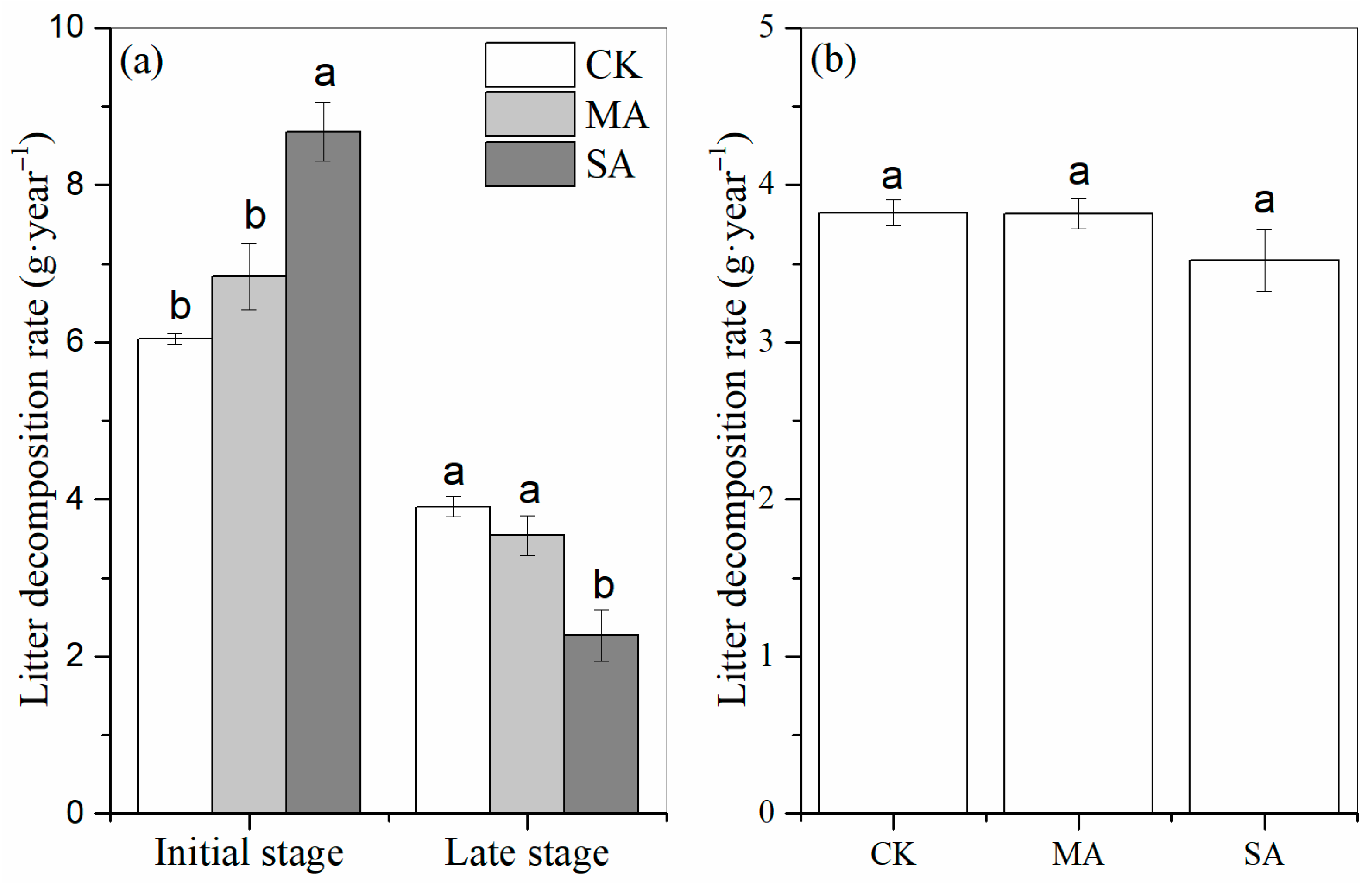
Figure 1. The response of litter decomposition rate to simulated acid rain in the initial stage and late stage (a), and in the entire stage (b) of decomposition. Values are mean ± SE (n = 4). Different lowercase letters indicate significant differences among acid rain treatments at p < 0.05 based on one-way ANOVA followed by LSD post hoc test. CK: control treatment; MA: moderate acid rain treatment; SA: severe acid rain treatment.
Forests 17 00539 g001
Figure 2. The response of decomposition rate of litter components to simulated acid rain in the initial and late stages of decomposition: (a) non-structural carbon (NSC); (b) lignin; (c) cellulose; (d) hemicellulose; (e) total phenols. Values are mean ± SE (n = 4). Different lowercase letters indicate significant differences among acid rain treatments at p < 0.05 based on one-way ANOVA followed by LSD post hoc test. CK: control treatment; MA: moderate acid rain treatment; SA: severe acid rain treatment.
Forests 17 00539 g002
Figure 3. Responses of soil chemical properties to simulated acid rain during the initial and late stages of litter decomposition: (a) soil pH; (b) total organic carbon (TC); (c) total nitrogen (TN); (d) carbon-to-nitrogen ratio (C:N); (e) available phosphorus (AP); (f) ammonium nitrogen (NH4+-N); (g) nitrate nitrogen (NO3-N). Values are mean ± SE (n = 4). Different lowercase letters indicate significant differences among acid rain treatments at p < 0.05 based on one-way ANOVA followed by LSD post hoc test. CK, control treatment; MA, moderate acid rain treatment; SA, severe acid rain treatment.
Forests 17 00539 g003
Figure 4. The response of soil enzyme activities to simulated acid rain in the initial and late stages of litter decomposition: (a) α-1,4-glucosidase (AG); (b) β-1,4-glucosidase (BG); (c) β-1,4-xylosidase (XYL); (d) peroxidase (POD); (e) β-1,4-N-acetylglucosaminidase (NAG); (f) leucine aminopeptidase (LAP); (g) acid phosphomonoesterase (ACP); (h) cellobiohydrolase (CBH); (i) phenol oxidase (POX). Values are mean ± SE (n = 4). Different lowercase letters indicate significant differences among acid rain treatments at p < 0.05 based on one-way ANOVA followed by LSD post hoc test. CK: control treatment; MA: moderate acid rain treatment; SA: severe acid rain treatment.
Forests 17 00539 g004
Figure 5. The results of Pearson correlation analysis between soil enzyme activities and soil properties in the initial stage of litter decomposition. The asterisk in the figure indicates a significance level of p ≤ 0.05, and the numbers in the figure are the correlation coefficients. AG: α-1,4-glucosidase; BG: β-1,4-glucosidase; XYL: β-1,4-xylosidase; POD: peroxidase; NAG: β-1,4-N-acetylglucosaminidase; LAP: leucine aminopeptidase; ACP: acid phosphomonoesterase; CBH: cellobiohydrolase; POX: phenol oxidase; pH: soil pH; TC: total organic carbon; TN: total nitrogen; C:N: carbon-to-nitrogen ratio; AP: available phosphorus; NH4+-N: ammonium nitrogen; NO3-N: nitrate nitrogen.
Forests 17 00539 g005
Figure 6. The results of Pearson correlation analysis between soil enzyme activities and soil properties in the late stage of litter decomposition. The asterisk in the figure indicates a significance level of p < 0.05, and the numbers in the figure are the correlation coefficients. AG: α-1,4-glucosidase; BG: β-1,4-glucosidase; XYL: β-1,4-xylosidase; POD: peroxidase; NAG: β-1,4-N-acetylglucosaminidase; LAP: leucine aminopeptidase; ACP: acid phosphomonoesterase; CBH: cellobiohydrolase; POX: phenol oxidase; pH: soil pH; TC: total organic carbon; TN: total nitrogen; C:N: carbon-to-nitrogen ratio; AP: available phosphorus; NH4+-N: ammonium nitrogen; NO3-N: nitrate nitrogen.
Forests 17 00539 g006
Figure 7. The results of redundancy analysis between the litter and its components’ decomposition rates and soil enzyme activities in the initial stage of litter decomposition. AG: α-1,4-glucosidase; BG: β-1,4-glucosidase; XYL: β-1,4-xylosidase; POD: peroxidase; NAG: β-1,4-N-acetylglucosaminidase; LAP: leucine aminopeptidase; ACP: acid phosphomonoesterase; CBH: cellobiohydrolase; POX: phenol oxidase; NSC: non-structural carbon; Cellulos: cellulose; Hemicell: hemicellulose; Phenols: total phenols.
Forests 17 00539 g007
Figure 8. The results of redundancy analysis between the litter and its components’ decomposition rates and soil enzyme activities in the late stage of litter decomposition. AG: α-1,4-glucosidase; BG: β-1,4-glucosidase; XYL: β-1,4-xylosidase; POD: peroxidase; NAG: β-1,4-N-acetylglucosaminidase; LAP: leucine aminopeptidase; ACP: acid phosphomonoesterase; CBH: cellobiohydrolase; POX: phenol oxidase; NSC: non-structural carbon; Cellulos: cellulose; Hemicell: hemicellulose; Phenols: total phenols.
Forests 17 00539 g008
Figure 9. Conceptual framework of litter decomposition rate response to different intensities of simulated acid rain (MA: moderate acid rain; SA: severe acid rain) across various decomposition stages. NSC: Non-structural carbon; NS: no significant effect; +: significantly increased; -: significantly decreased. NO3-N: soil nitrate nitrogen. ACP: acid phosphomonoesterase; LAP: leucine aminopeptidase; POD: peroxidase; XYL: β-1,4-xylosidase.
Forests 17 00539 g009
Disclaimer/Publisher’s Note: The statements, opinions and data contained in all publications are solely those of the individual author(s) and contributor(s) and not of MDPI and/or the editor(s). MDPI and/or the editor(s) disclaim responsibility for any injury to people or property resulting from any ideas, methods, instructions or products referred to in the content.