Article

Exploratory Analysis of Global TNFD Adoption and Strategic Implications for the Forestry and Environmental Sector

Division of Forest Management Research, National Institute of Forest Science, Seoul 02455, Republic of Korea
*
Author to whom correspondence should be addressed.
Forests 2026, 17(3), 394; https://doi.org/10.3390/f17030394
Submission received: 11 February 2026 / Revised: 18 March 2026 / Accepted: 19 March 2026 / Published: 23 March 2026

Abstract

The Taskforce on Nature-related Financial Disclosures (TNFD) refers to both the international organizing body and the disclosure framework it developed. Throughout this article, the term TNFD is used to encompass both the organization and the framework to ensure precision while maintaining conciseness. TNFD has emerged as a key mechanism for integrating nature-related risks and opportunities into corporate decision-making, extending the scope of existing environmental, social, and governance (ESG) and climate-related disclosures. As TNFD adoption remains at an early diffusion stage, empirical evidence on its global uptake and sectoral characteristics is still limited, particularly in nature-dependent industries such as forestry and environmental services. This study provides an exploratory mapping of global TNFD adoption patterns using the complete list of TNFD adopting organizations disclosed on the official TNFD platform as of June 2025. A total of 584 organizations across 54 countries were analyzed, with a focused examination of forestry- and environment-related entities. Rather than testing causal relationships, this research adopts a descriptive and structural analytical approach to identify geographic, institutional, and sectoral patterns of adoption. The results reveal a strong concentration of TNFD adoption in developed economies and corporate entities, while forestry-specific adopters remain limited in number. Notably, TNFD adoption does not appear to correlate with forest resource endowment, suggesting that governance capacity and financial disclosure readiness are more influential than ecological conditions. Based on these findings, the study discusses strategic implications for forestry and environmental organizations and proposes a conceptual framework for advancing nature-related financial disclosure in the sector. This research contributes an early-stage empirical foundation for understanding TNFD diffusion and offers practical insights for policymakers, corporations, and researchers seeking to operationalize nature-related disclosure frameworks.

1. Introduction

Corporate engagement with environmental sustainability has evolved substantially over the past three decades [1]. Since the early 1990s, companies have produced environmental sustainability performance reports primarily within the framework of voluntary corporate social responsibility (CSR), responding to increasing stakeholder expectations regarding social and environmental responsibility [2]. Over time, CSR reporting initially non-financial and discretionary has become more standardized and subject to stronger institutional requirements, reinforcing corporate transparency and accountability [3]. As awareness of environmental risks intensified, CSR reporting gradually evolved into formal sustainability reporting aimed at systematically managing and improving non-financial performance [4].
In recent years, this transition has accelerated alongside the global mainstreaming of environmental, social, and governance (ESG) frameworks [5]. A key milestone was the launch of the United Nations Principles for Responsible Investment (PRI) in 2006, which laid the foundation for integrating ESG considerations into investment decision-making [6]. Since then, institutional investors have increasingly emphasized ESG performance, exerting pressure on firms to actively manage and disclose sustainability-related risks and opportunities [7]. As a result, ESG-based financial disclosure has become a central component of corporate sustainability governance [8].
While climate-related risks have become relatively well integrated into corporate disclosure practices, particularly following the widespread adoption of the climate-related disclosure framework developed by the Task Force on Climate-related Financial Disclosures (TCFD), nature-related risks have remained largely underreported [9]. Biodiversity loss, ecosystem degradation, and declining ecosystem services pose material risks to corporate operations and value chains, yet companies continue to face significant challenges in identifying, measuring, and disclosing their dependencies, impacts, risks, and opportunities related to nature [10]. This gap became more pronounced after the adoption of the Kunming Montreal Global Biodiversity Framework (GBF) at the fifteenth Conference of the Parties to the Convention on Biological Diversity in 2022, which explicitly called for enhanced private-sector accountability and disclosure related to biodiversity and natural capital [11]. Despite growing policy attention, empirical evidence suggests that while approximately 60% of companies disclose climate-related information, only around 5% provide disclosures related to nature and biodiversity [12].
To address these challenges and establish an internationally consistent framework for nature-related risk management and disclosure, the Taskforce on Nature-related Financial Disclosures (TNFD) was launched in 2020, following the trajectory established by TCFD [13]. Closely aligned with TCFD, TNFD extends climate-focused financial disclosure to encompass natural capital, biodiversity, and ecosystem services, positioning nature as a material factor in financial decision-making [14]. However, as a relatively new framework, TNFD adoption remains uneven across regions and sectors, and empirical research on its global diffusion is still limited [15]. Moreover, nature-related disclosures present additional complexity compared to climate-related reporting, given difficulties in standardizing natural capital metrics and aligning diverse ecological guidelines [16].
Within the broader ESG architecture, TNFD functions as a specialized extension that refines the environmental pillar by providing a structured approach to identifying, assessing, managing, and disclosing nature-related risks and opportunities [17]. While ESG frameworks are broadly applicable across sectors, TNFD is particularly relevant for industries with strong dependencies on natural capital and ecosystem services [18]. Among these, the forestry and environmental sector occupies a critical position, as forests play a central role in biodiversity conservation, carbon sequestration, and the provision of essential ecosystem services [19]. Forestry-related industries are therefore inherently exposed to nature-related financial risks, making the TNFD adoption especially consequential for sustainability governance and risk management in this sector [20].
In the forestry domain, sustainability governance has long been institutionalized through certification systems such as the Forest Stewardship Council (FSC) and the Programme for the Endorsement of Forest Certification (PEFC). These schemes promote sustainable forest management through third-party verification, biodiversity safeguards, stakeholder participation, and periodic performance assessment. However, certification systems primarily operate at the forest management unit level and focus on compliance with operational standards. In contrast, TNFD functions at the corporate and financial disclosure level, aiming to translate nature-related dependencies, impacts, risks, and opportunities into decision-useful information for investors and capital markets. Therefore, TNFD does not replace forest certification systems but complements them by integrating biodiversity management outcomes into financial governance and risk disclosure frameworks.
Despite the growing importance of nature-related financial disclosure, research on TNFD remains scarce compared to the extensive literature on ESG and climate-related reporting [21]. In particular, systematic empirical analyses focusing on the forestry and environmental sector are lacking [22]. Responding to this gap, this study provides an exploratory global analysis of TNFD adoption, with a specific focus on forestry and environment-related organizations [23]. Rather than evaluating the effectiveness of TNFD implementation, the study aims to map current adoption patterns and derive strategic implications for nature-dependent sectors [24]. By analyzing the complete population of TNFD-adopting entities disclosed as of June 2025, this research establishes an early empirical baseline to inform future longitudinal, sector specific, and performance-oriented studies.
Accordingly, the objective of this study is to provide an analytical review of global implementation patterns of the Taskforce on Nature-related Financial Disclosures (TNFD) within forestry- and environment-related sectors, and to identify structural characteristics and emerging trends in adoption across different regions and institutional contexts.
Given the relatively short observation period and the early stage of TNFD implementation, this study adopts an exploratory approach and does not seek to establish definitive long-term trends, but rather to identify indicative patterns in the initial diffusion of nature-related financial disclosure.
By analyzing organizations that have adopted or participated in TNFD-related initiatives, this study aims to provide insights into emerging implementation trends and their strategic implications for forestry and environment-related industries.
In this study, the term “TNFD” is used to refer not only to the Taskforce on Nature-related Financial Disclosures as an initiative but also to the TNFD framework itself, unless otherwise specified.
To address this objective, the study is guided by the following research questions:
(1)
How are TNFD recommendations currently being implemented by organizations in the forestry and environment-related sectors?
(2)
What regional and institutional patterns can be identified in TNFD implementation?
(3)
What strategic implications can be derived to support the broader adoption of TNFD in forestry-related industries?

2. Conceptual Background

2.1. TNFD in Relation to ESG and TCFD Frameworks

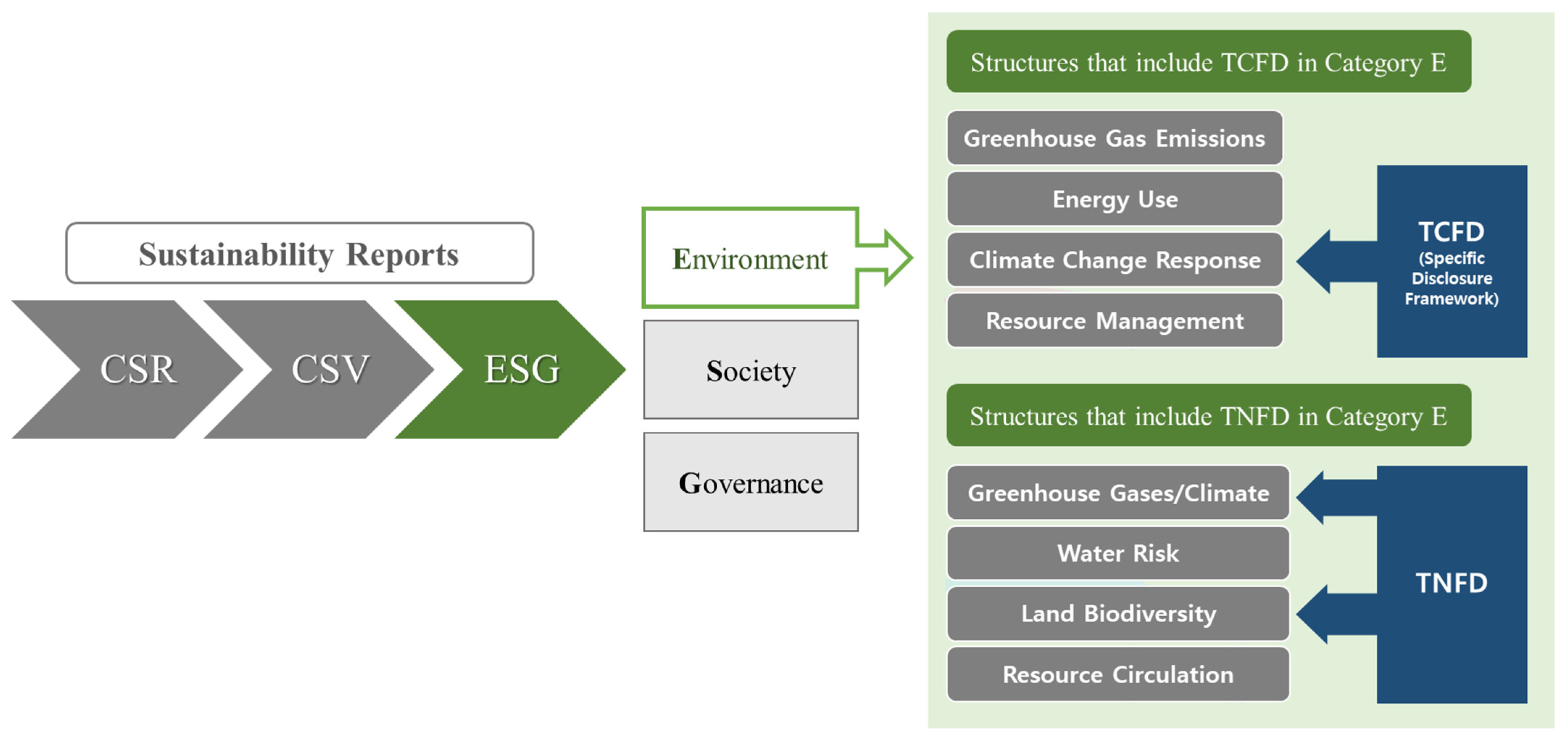
ESG frameworks provide a broad lens for evaluating corporate non-financial performance across environmental, social, and governance dimensions [25]. Within this structure, environmental disclosures have historically focused on emissions, energy use, and pollution, leaving biodiversity and ecosystem services underrepresented [26]. TCFD marked a turning point by explicitly linking climate risks to financial performance, thereby embedding environmental considerations into mainstream financial reporting [18].
TNFD builds on this precedent by extending disclosure requirements beyond climate to encompass nature related risks and opportunities [27]. While ESG serves as an overarching framework, TNFD refines the environmental pillar by focusing specifically on natural capital, biodiversity, and ecosystem services [28]. In this sense, TNFD can be understood not as a replacement for ESG, but as a complementary and deepening framework that enhances the financial relevance of nature-related issues (Figure 1).

2.2. The LEAP Approach: Locate, Evaluate, Assess, and Prepare

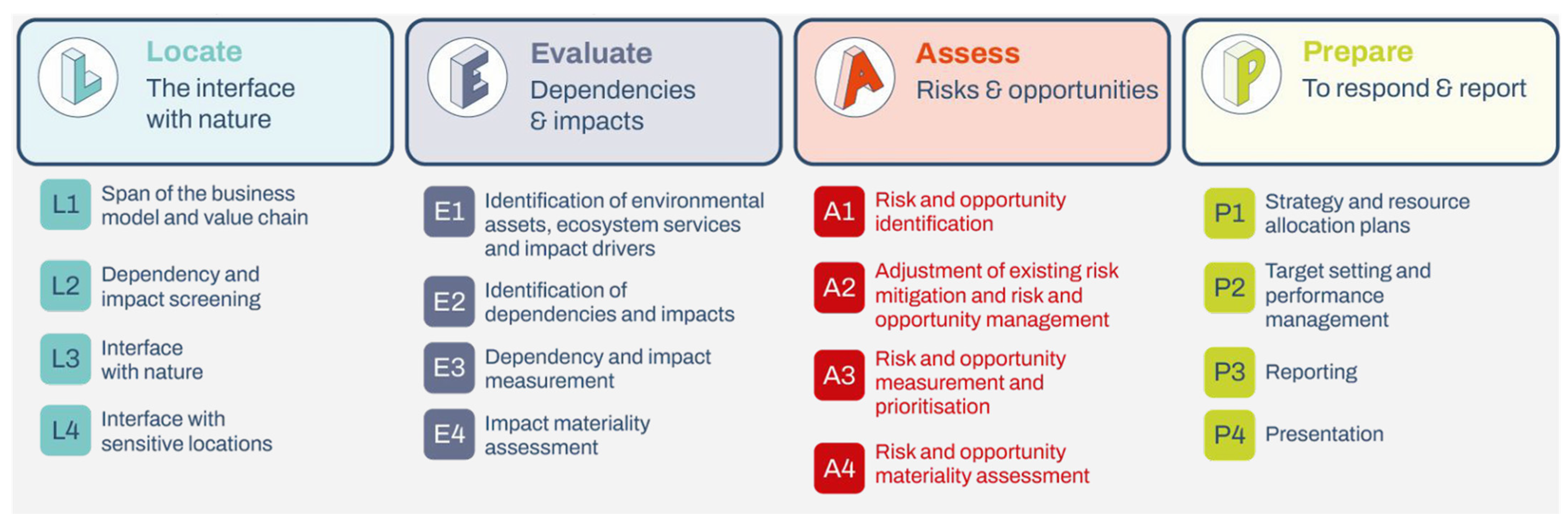
A core feature of the TNFD framework is the LEAP approach: Locate, Evaluate, Assess, and Prepare which provides a structured and systematic process for identifying and managing nature-related risks and opportunities [29]. The LEAP approach consists of four key stages: Locate, which identifies where an organization interacts with nature across its value chain; Evaluate, which diagnoses dependencies on and impacts to natural capital; Assess, which analyzes the risks and opportunities arising from these dependencies and impacts; and Prepare, which ensures that organizations are ready to respond to identified risks and opportunities and to disclose relevant information (Figure 2).
TNFD emphasizes the broader impacts of corporate activities on land, oceans, biodiversity, ecosystem services and seeks to support the quantification of these impacts on natural capital and the establishment of measurable targets for improvement [30]. Consequently, the application of the LEAP approach is strongly recommended for corporations and other entities preparing nature-related financial disclosures, as it functions as a comprehensive evaluation framework for integrating nature-related considerations into corporate decision-making processes [31]. This structured methodology enables organizations to systematically identify interactions with nature across the value chain, assess dependencies and impacts, and develop appropriate responses to nature-related risks and opportunities [32].
The relevance of the LEAP approach is particularly pronounced in the forestry and environmental sectors, where business operations are directly embedded within ecosystems and are highly dependent on ecosystem services [33]. By emphasizing spatially explicit analysis and ecosystem service dependencies, LEAP provides a practical mechanism for translating ecological complexity into decision relevant financial information [34].
To illustrate the practical application of the LEAP framework in the forestry sector, a conceptual example can be considered in which a forestry-related organization begins the Locate phase by identifying its operational sites in relation to ecologically sensitive areas using spatial biodiversity datasets and geospatial screening tools. In this context, LEAP serves as a key operational tool for implementing the TNFD recommendations.
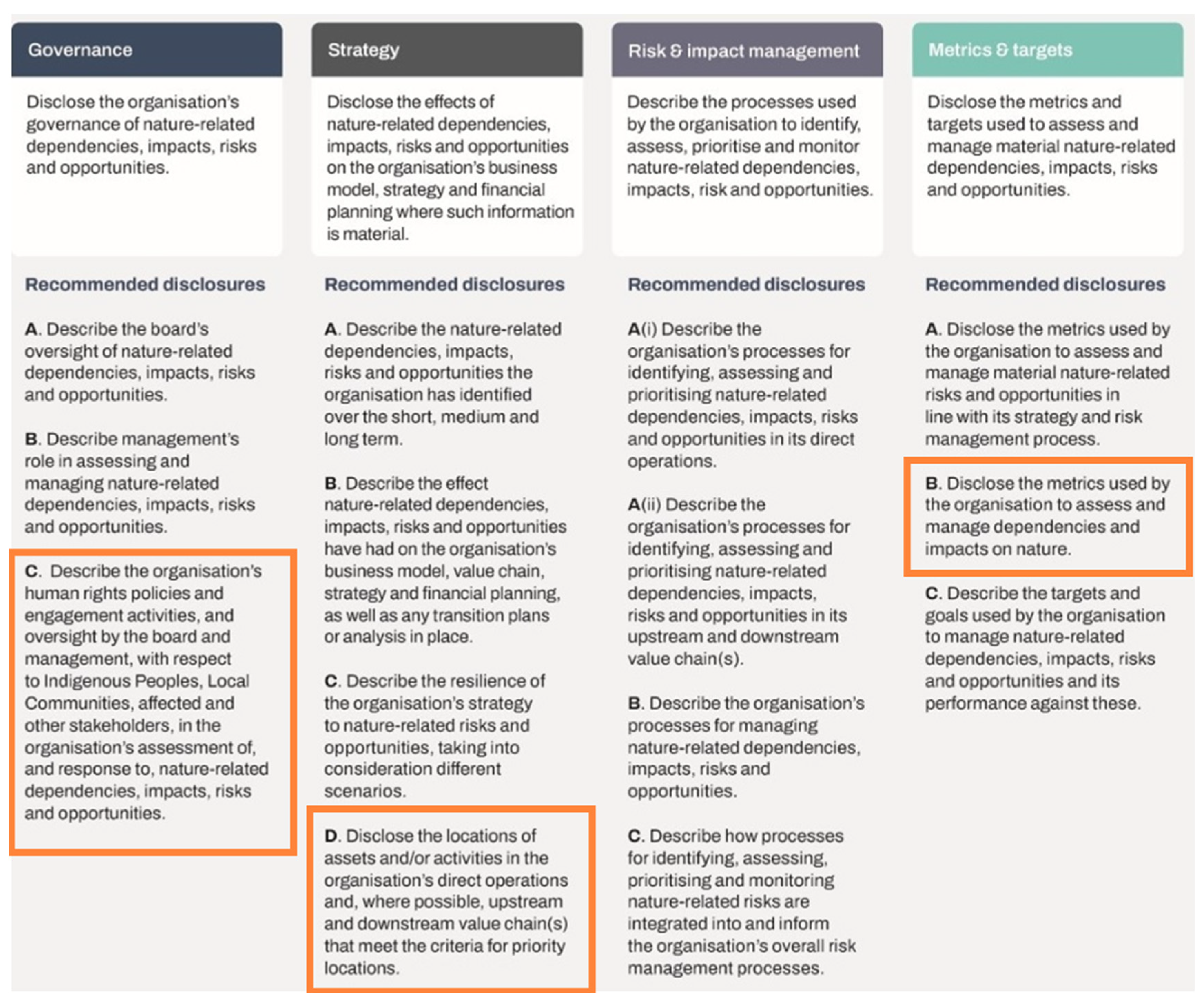
The TNFD disclosure framework builds upon the architecture of the climate-related disclosure framework developed by the Task Force on Climate-related Financial Disclosures (TCFD). While TNFD largely follows the structure of the 11 recommended disclosures proposed by TCFD, its terminology and analytical focus have been adapted to address nature-related dependencies, impacts, risks, and opportunities. In addition, TNFD introduces three additional disclosure elements related to natural capital [35], which are incorporated into the governance, strategy, and metrics and targets disclosure areas to support more systematic assessment and reporting of nature-related issues [36].
Through this integration, TNFD facilitates the incorporation of biodiversity and ecosystem considerations into corporate sustainability reporting, reinforcing the linkage between long-term business performance and environmental stewardship [18] (Figure 3).
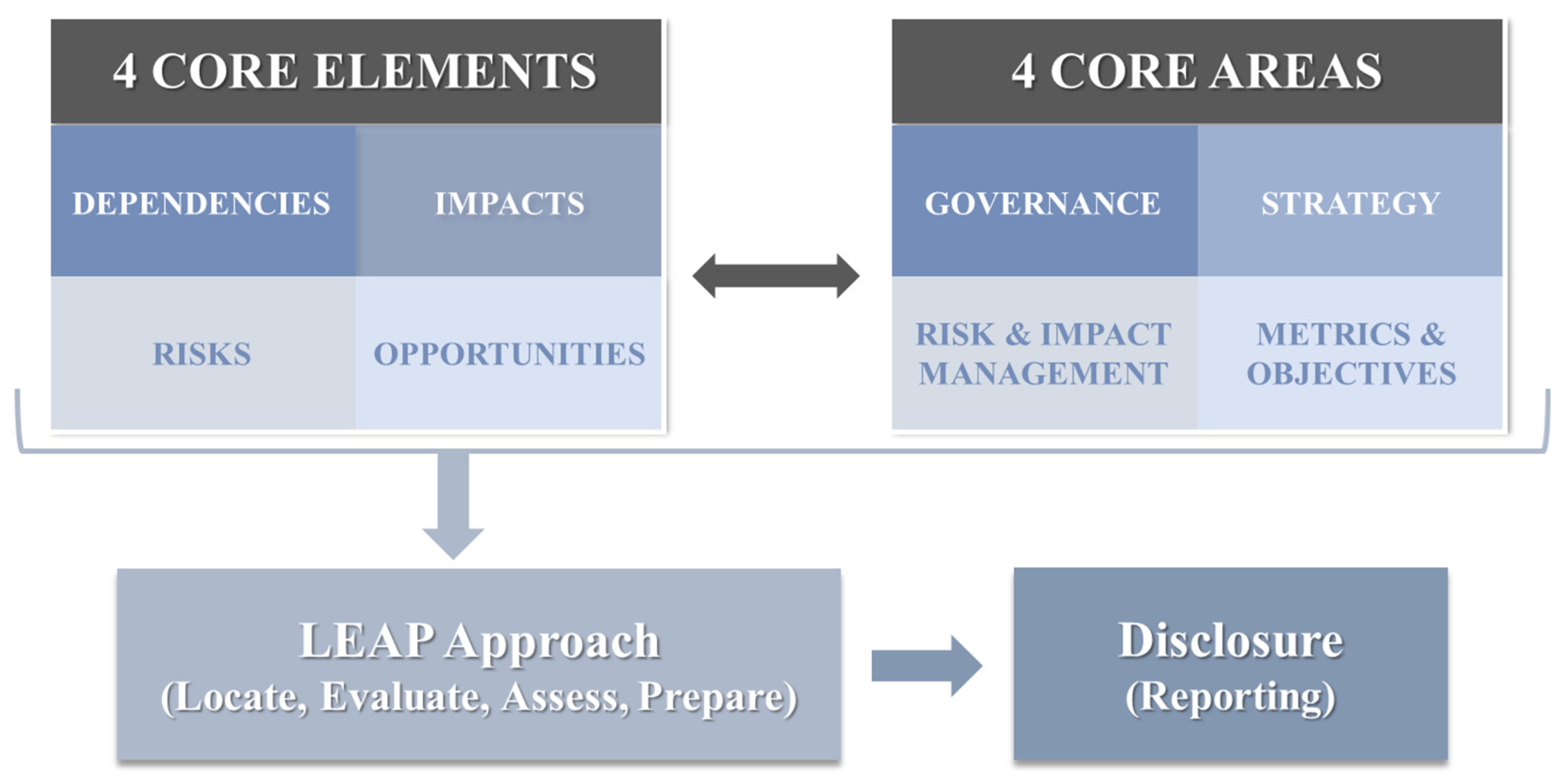
The Taskforce on Nature-related Financial Disclosures (TNFD) framework is structured as a sequential system that connects core analytical elements, disclosure areas, and implementation mechanisms to produce consistent nature-related financial disclosure [37,38]. The framework is designed to translate interactions between organizations and nature into decision-relevant reporting through a clearly defined analytical and procedural flow.
As illustrated in Figure 3, the orange boxes highlight selected recommended disclosure items that are particularly relevant to the operationalization of the TNFD framework, including those related to spatial prioritization, stakeholder engagement, and impact assessment. At the foundation of the TNFD framework are four core elements: dependencies, impacts, risks, and opportunities. Dependencies and impacts describe the direct interface between organizational activities and natural systems, capturing how organizations rely on ecosystem services and how their operations affect biodiversity and natural capital [39]. In particular, impacts on biodiversity—such as habitat degradation, species loss, and ecosystem fragmentation—represent critical pathways through which organizational activities can undermine ecosystem stability and resilience. These biodiversity-related impacts, in turn, generate nature-related risks, including regulatory, operational, and reputational risks, as well as systemic risks associated with ecosystem degradation and biodiversity loss. Conversely, they may also create opportunities for innovation, improved resource efficiency, and the development of nature-positive strategies. Together, these risks and opportunities influence organizational resilience, financial performance, and long-term value creation, underscoring the importance of integrating biodiversity considerations into nature-related financial disclosure and decision-making processes [40].
These four core elements are addressed and disclosed through four corresponding disclosure areas: governance, strategy, risk and impact management, and metrics and targets [41]. Governance focuses on oversight responsibilities and accountability structures through which nature-related issues are integrated into organizational decision-making processes [42]. Strategy addresses how identified nature-related risks and opportunities are incorporated into business planning over different time horizons. Risk and impact management refers to the processes used to identify, assess, and manage nature-related risks and impacts, while metrics and targets translate these considerations into measurable indicators that enable monitoring, comparability, and performance evaluation [43].
The operational linkage between the core elements and the disclosure areas is provided by the LEAP approach (Locate, Evaluate, Assess, and Prepare) which serves as the central implementation mechanism of the TNFD framework [44]. Through the LEAP approach, organizations systematically locate their interactions with nature across value chains, evaluate dependencies and impacts, assess associated risks and opportunities, and prepare appropriate management responses and disclosure strategies [45]. Importantly, the LEAP process primarily serves as an analytical mechanism for examining the four core elements of the TNFD framework—dependencies, impacts, risks, and opportunities. These elements are identified and assessed sequentially through the Locate, Evaluate, and Assess stages of the LEAP process.
The results generated through this analytical process are subsequently translated into the four disclosure areas—governance, strategy, risk and impact management, and metrics and targets. In other words, the LEAP approach does not analyze the eight elements independently; rather, it first evaluates the core elements and then links these findings to the corresponding disclosure areas during the Prepare stage. This structured linkage ensures analytical consistency and supports the integration of nature-related considerations into existing risk management and reporting systems [46].
Through this structured flow from core elements to disclosure areas, operationalized via the LEAP approach, the Taskforce on Nature-related Financial Disclosures framework enables organizations to produce coherent and comparable nature-related disclosures. This integrated structure provides the analytical foundation for examining early TNFD adoption patterns in the forestry and environmental sector, which is the focus of the empirical analysis in this study (Figure 4).
Overall, existing studies on TNFD have largely focused on the conceptual development of nature-related disclosure frameworks and methodological guidance for the LEAP approach. This review also highlights several gaps in the current literature on TNFD implementation, particularly regarding sector-specific applications, data limitations, and the integration of nature-related risks into corporate decision-making. While these studies provide important theoretical and methodological foundations, relatively limited research has examined how TNFD is being implemented in practice across different sectors and regions.
Therefore, a clear research gap remains in understanding the structural characteristics of TNFD implementation among organizations operating in nature-dependent sectors. This study aims to address this gap by analyzing global TNFD implementation patterns and identifying institutional and regional characteristics of participating organizations.

3. Methodology

3.1. Methodology and Research Flow

Given the early stage of diffusion of the Taskforce on Nature-related Financial Disclosures (TNFD), this study adopts an exploratory and descriptive research flow. Rather than testing hypotheses or estimating causal relationships, the primary objective is to map global TNFD adoption patterns and to identify structural characteristics of uptake across regions and institutional contexts. This approach is particularly suitable for emerging governance frameworks, such as TNFD, where adoption remains limited, heterogeneous, and uneven across sectors and geographies.
Within this research flow, the analysis proceeded through a five-stage classification process, as illustrated in Figure 5.
Stage 1 involved a global survey of TNFD-adopting institutions using the official TNFD platform to establish the overall dataset.
Stage 2 categorized adopting countries by continent in order to identify geographical distribution patterns.
Stage 3 classified adopting organizations according to institutional types, allowing comparison across different organizational forms.
Stage 4 examined adoption timing to identify temporal patterns in TNFD uptake.
Stage 5 conducted a focused analysis of organizations in the forestry and environmental sector to identify sector-specific adoption characteristics and structural tendencies.
This stepwise classification approach enhances analytical transparency and methodological consistency by clearly structuring the workflow and the handling of the dataset across all stages of the analysis.

3.2. Data Source

The analysis is based on the official list of TNFD-adopting organizations published on the official platform of the Taskforce on Nature-related Financial Disclosures (TNFD) as of June 2025 [47]. The dataset includes 584 organizations across 54 countries, encompassing corporate entities, financial institutions, government bodies, NGOs, and other organizations.

3.3. Classification Analysis

Given the early stage of diffusion of the Taskforce on Nature-related Financial Disclosures (TNFD), this study adopts classification analysis as its primary analytical approach. This method is particularly suitable for exploratory research aimed at identifying structural patterns and categorical distributions within emerging governance frameworks where causal relationships and performance outcomes remain unclear [48,49].
Given the limited sample size and the early stage of TNFD implementation, this study adopts a descriptive and manual classification approach rather than advanced statistical or machine learning techniques. This approach is considered appropriate for providing an initial exploratory mapping of global adoption patterns. Accordingly, the analysis relies on publicly available organizational information to identify structural implementation patterns.
Using the dataset described in Section 3.2, all TNFD-adopting organizations disclosed on the official platform of the Taskforce on Nature-related Financial Disclosures as of June 2025 were classified according to several analytical dimensions. These include geographic location (continent and country), institutional type, sectoral affiliation, and adoption timing (year of TNFD adoption). The classification allows for a systematic examination of how TNFD adoption is distributed across regions and organizational categories.
Within this analytical structure, forestry- and environment-related organizations were extracted as a focal sub-sample and analyzed separately to examine sector-specific adoption characteristics. The analysis emphasizes descriptive comparison and structural mapping rather than hypothesis testing, thereby establishing an empirical baseline for future longitudinal or inferential studies.
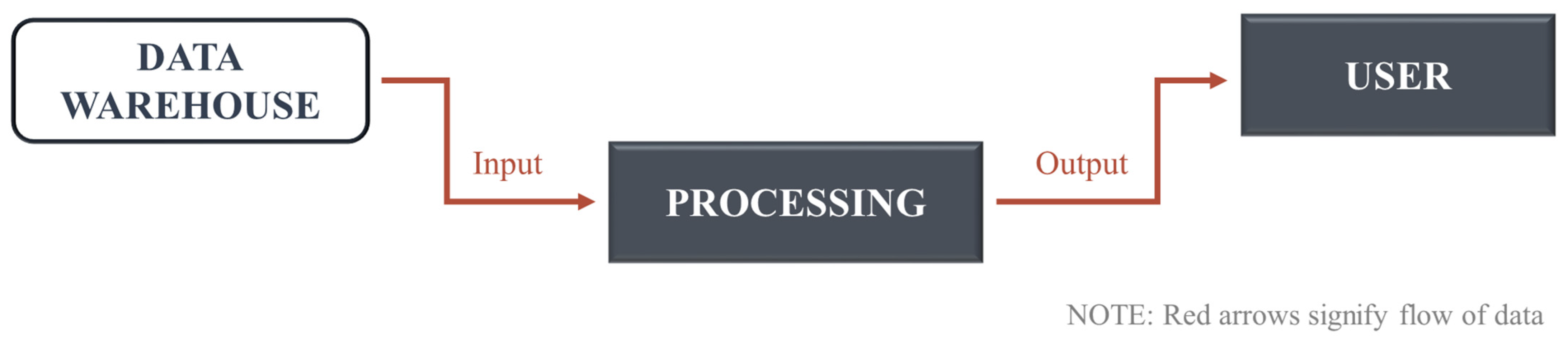
The selected classification dimensions were chosen based on their relevance to differences in policy capacity, exposure to nature-related risks, and organizational engagement with sustainability disclosure frameworks. These dimensions are commonly used in sustainability governance and ESG adoption studies to analyze institutional diffusion patterns and regional disparities in disclosure practices. The conceptual data processing structure underlying the classification analysis is illustrated in Figure 6.
In addition, adoption timing was classified into two temporal categories (2024 or earlier and 2025). This simplified categorization was applied because the official TNFD platform primarily reports adoption status based on the most recent reporting year, and detailed year-by-year adoption records for earlier adopters are not consistently available.
Therefore, the two-category structure enables a consistent comparison between earlier adopters and newly participating organizations while minimizing potential inconsistencies in historical reporting data.
This approach is appropriate for exploratory classification analysis, which aims to identify broad diffusion patterns rather than precise temporal dynamics.

4. Results

4.1. Global Overview of TNFD Adoption

The classification results reveal several structural patterns in the early global diffusion of TNFD adoption, particularly in terms of sectoral participation, geographic concentration, and institutional composition. Given the early stage of TNFD implementation, the analysis primarily aims to provide an exploratory overview of adoption patterns rather than to establish causal relationships. This perspective allows the study to highlight emerging structural characteristics in the global diffusion of nature-related financial disclosure.
As of June 2025, a total of 584 organizations across 54 countries were identified as adopters of the Taskforce on Nature-related Financial Disclosures (TNFD) based on the official TNFD registry.
To provide a clearer overview of the dataset structure, Table 1 presents the distribution of TNFD-adopting organizations by institutional type and year of adoption, distinguishing between organizations that adopted the framework in 2024 (or earlier) and those that joined in 2025. This classification provides an overview of the institutional composition of TNFD adopters and enables a comparison of adoption patterns between earlier adopters (2024 or earlier) and those that joined in 2025.
Early adopters indicate organizations that participated in the TNFD initiative during its earliest implementation phase prior to the broader 2024 adoption wave.
The results show that early adoption was concentrated in a limited number of countries, particularly Japan and the United Kingdom. Additional adopters emerged in 2025 across Europe, Asia, and South America.

4.2. TNFD Adoption in the Forestry and Environmental Sector

The organizations associated with the forestry and environmental sector are distributed across multiple continents, with Europe and Asia representing the largest shares, followed by North America and Oceania. Compared with the broader global adoption pattern, these sector-specific adopters are primarily concentrated in countries with well-developed forest industries and advanced financial markets, where sustainability disclosure frameworks are already well established.
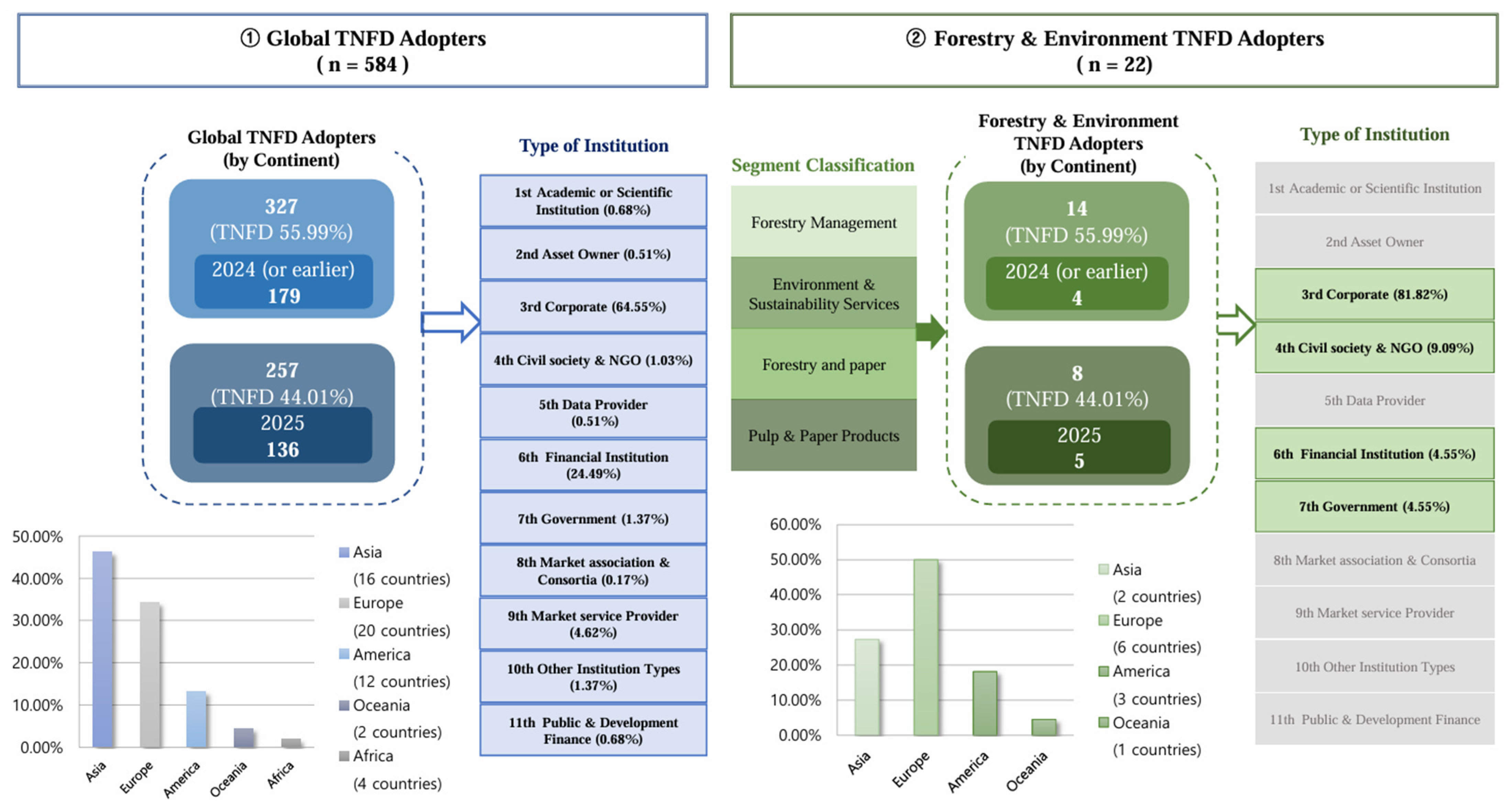
The left panel presents the overall distribution of global TNFD adopters (n = 584), including the temporal distinction between early adopters (2024 or earlier) and new adopters (2025), the geographic distribution by continent (54 countries), and the classification of participating institutions by type.
The right panel focuses on organizations associated with the forestry and environmental sector (n = 22), illustrating their continental distribution (12 countries), institutional composition, and their classification across forestry- and environment-related segments, including forestry management, environmental and sustainability services, forestry and paper, and pulp and paper products.
This comparative visualization highlights how TNFD adoption has expanded globally while also identifying the specific characteristics and institutional composition of forestry- and environment-related adopters (Figure 7).

4.2.1. Sector Overview

While Section 4.1 provided a global overview of TNFD adoption across all institutional categories, this subsection focuses specifically on the structural characteristics of adoption within the forestry and environmental sector. Rather than reiterating the overall adoption statistics, the analysis here highlights the sector-specific distribution and institutional patterns observed among forestry- and environment-related organizations.
Among the 584 TNFD adopters identified in this study, only 22 organizations were classified as belonging to the forestry and environmental sector, representing institutions from 12 countries. This limited representation suggests that the integration of nature-related financial disclosure within forest-based industries remains at an early stage of diffusion compared with other sectors such as finance or broader corporate groups.
Table 2 presents the detailed classification of forestry- and environment-related TNFD adopters by country, segment classification, institutional type, and adoption timing.
The sectoral composition of these adopters reveals a clear concentration in the pulp and paper industry. Companies operating in pulp and paper production account for the largest share of adopters, followed by organizations involved in forestry management and environmental or sustainability services. This pattern reflects the relatively high exposure of pulp and paper companies to nature-related risks, including raw material supply, biodiversity impacts, and regulatory scrutiny regarding forest resource management.
Institutionally, corporate actors dominate TNFD adoption within the forestry and environmental sector. Most identified adopters are private companies, while participation from government agencies, financial institutions, and civil society organizations remains comparatively limited. This distribution suggests that current engagement with TNFD in forest-based industries is primarily driven by corporate sustainability strategies and voluntary disclosure initiatives rather than by regulatory mandates or financial-sector pressure.
Geographically, adoption within the sector is concentrated in countries with well-established forest industries and mature sustainability governance frameworks, including Japan, the United Kingdom, Austria, Canada, and Finland. These countries have historically played prominent roles in global forest product markets and have been early participants in international sustainability reporting initiatives. Their participation in TNFD may therefore reflect an institutional environment that already supports advanced environmental disclosure practices.
Overall, the findings indicate that while TNFD adoption has begun to emerge within forestry- and environment-related industries, the scale of participation remains limited relative to the global adoption landscape. This suggests that the sector is still in the early stages of integrating nature-related financial disclosure frameworks, and broader participation may depend on the further development of reporting standards, regulatory alignment, and supply-chain level disclosure requirements.

4.2.2. Geographic Patterns

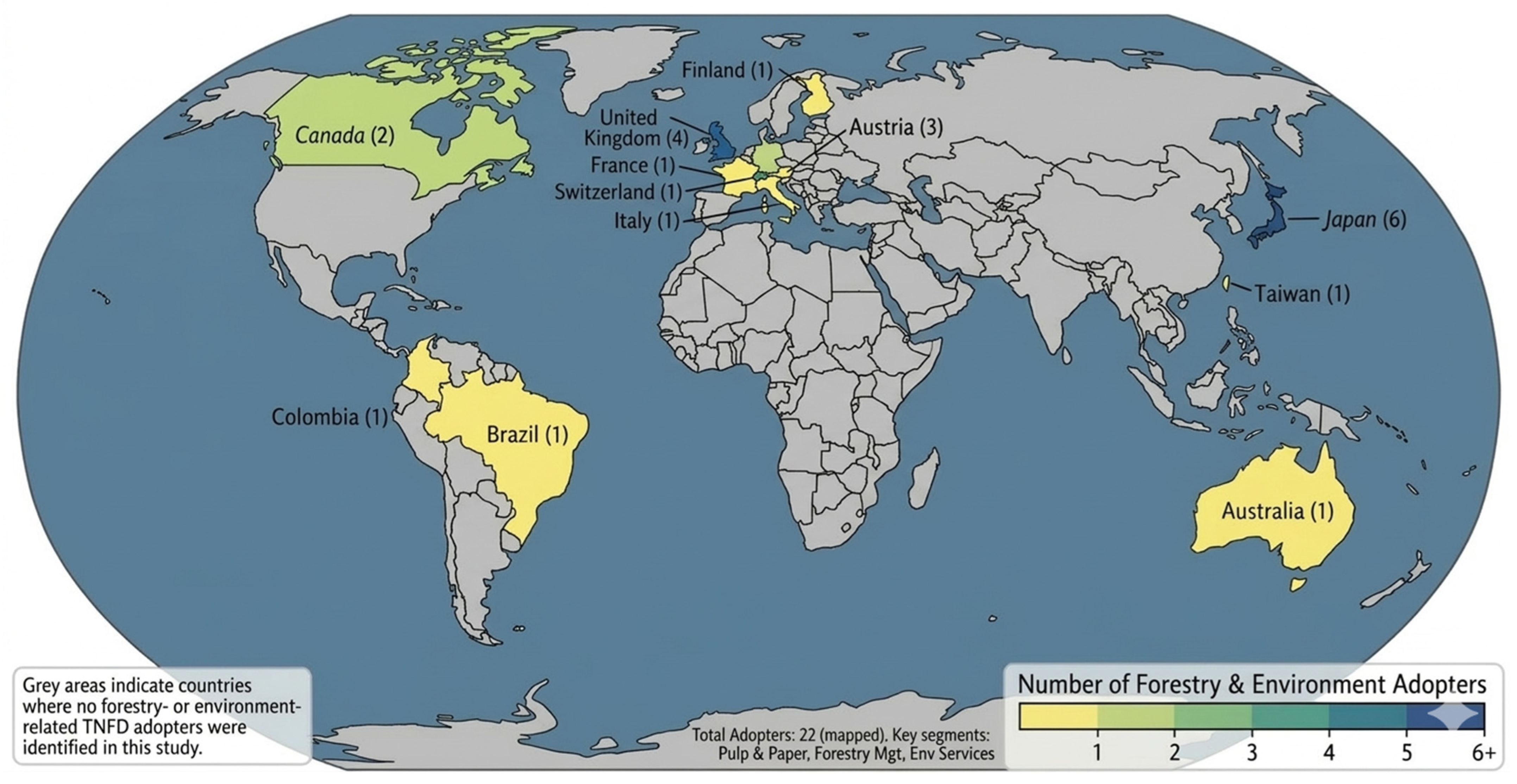
As of June 2025, TNFD adoption in the forestry and environmental sector was concentrated primarily in Asia and Europe. Japan and the United Kingdom accounted for a substantial share of adopters, followed by countries such as Austria, Canada, and Finland.
As illustrated in Figure 8, TNFD adoption remains concentrated in a limited number of developed economies, while many countries show no identified adopters within the forestry and environmental sector. This pattern highlights the uneven global distribution of early TNFD engagement and indicates that adoption is currently concentrated in a relatively small group of countries.
This geographic concentration suggests that TNFD diffusion is closely associated with regions characterized by advanced financial markets, well-established sustainability governance frameworks, and active ESG investment ecosystems.
Despite the global distribution of forest resources, no clear relationship was observed between forest resource endowment and TNFD adoption patterns. Countries with extensive forest ecosystems were not necessarily more active adopters of TNFD. This finding indicates that forest abundance alone does not determine engagement with nature-related financial disclosure frameworks. Instead, institutional capacity, policy alignment, and disclosure readiness appear to play a more decisive role.

4.2.3. Institutional and Sectoral Composition

Within the forestry and environmental sub-sample, corporate entities account for 81.82% of TNFD adopters, followed by civil society and NGO organizations (9.09%), financial institutions (4.55%), and government bodies (4.55%). This dominance of corporate adopters mirrors the broader institutional pattern observed across all TNFD adopters.
Within the forestry and environmental sub-sample, institutional participation is dominated by corporate entities. These actors can be classified into 11 institutional categories, including corporate entities, financial institutions, government bodies, civil society organizations, academic institutions, and service providers.
As summarized in Table 1, corporate entities constitute the largest group of TNFD adopters, accounting for approximately 64.6% of all organizations, while financial institutions represent the second-largest group at about 24.5%. The remaining share consists of market service providers, government bodies, civil society organizations, and several smaller institutional categories. Academic and scientific institutions, public and development finance institutions, and market associations account for relatively small shares.
Within the forestry- and environment-related sample, adoption is clearly concentrated in the pulp and paper industry, while forestry management organizations and environmental service providers account for smaller shares. This distribution suggests that downstream, market-oriented forestry industries have been more active in early TNFD adoption than upstream forest management entities, likely reflecting the stronger market exposure and disclosure incentives faced by downstream forest-based industries.

4.2.4. Adoption Characteristics and Emerging Trends

A temporal comparison reveals a steady increase in the number of participating institutions between 2024 (and earlier) and 2025. Participation expanded across multiple institutional categories, including corporate entities, financial institutions, and market service providers.
While financial institutions have received considerable attention in the TNFD discussion due to the growing recognition of nature-related financial risks and the integration of nature considerations into investment and lending decisions, the observed expansion is not limited to this group [18,50,51].
Other categories, particularly corporate entities and market service providers, have also demonstrated substantial growth during the same period. This pattern indicates that TNFD adoption is gradually diffusing across a wider range of economic actors rather than being concentrated within a single institutional sector.
As of 2024, 86 financial institutions had adopted the TNFD framework, including asset management companies, commercial banks, insurance companies, investment banks, and securities firms, with additional institutions joining in 2025.
The increasing participation of financial institutions reflects the growing demand from investors and regulators for standardized frameworks capable of identifying and disclosing nature-related financial risks and dependencies.
Historically, environmental initiatives within the forestry sector have often been framed as corporate social responsibility (CSR) activities focusing primarily on timber productivity, forest management, or carbon sequestration. As a result, systematic and quantitative disclosure of biodiversity impacts and ecosystem service dependencies has remained relatively limited in corporate reporting [50,51,52].
However, early TNFD adopters—defined here as organizations that began aligning with the TNFD framework prior to 2024, as presented in Table 2—increasingly seek to quantify their dependencies on and impacts on forest ecosystem services, including carbon sequestration, water regulation, and biodiversity conservation. These early adopters have played an important role in establishing initial disclosure practices and methodological approaches within the forestry and environmental sector.
At the same time, organizations that joined the TNFD initiative during 2024 and 2025 are increasingly incorporating these emerging disclosure practices, suggesting that the diffusion of TNFD-aligned reporting is expanding beyond the initial group of early adopters.
These developments are consistent with the core objectives of the TNFD framework, which encourages organizations to identify, assess, and disclose nature-related dependencies, impacts, risks, and opportunities within their operations and value chains [53].
From an environmental perspective, this shift represents an important step toward improving transparency in the management of ecosystem services and biodiversity-related risks within forest-based industries as well as environmental service organizations involved in sustainability assessment and ecosystem management. Enhanced disclosure of nature-related impacts contributes to strengthening the environmental component of sustainability reporting and supports more informed decision-making in forest resource governance and ecosystem management [50,52].

4.2.5. Structural Imbalances and Exploratory Insights

A descriptive comparison suggests that there is no clear pattern between national forest resource endowment and TNFD adoption. Countries with extensive forest ecosystems, particularly in developing regions, remain underrepresented among TNFD adopters.
For example, no African country had adopted TNFD as of June 2025, despite the global ecological significance of the Congo Basin rainforest. This disparity highlights structural barriers faced by forestry-rich developing countries, including limited data infrastructure, high disclosure costs, and regulatory uncertainty.
These observations underscore the exploratory nature of TNFD adoption and reveal several structural imbalances. First, the dominance of corporate adopters suggests that TNFD is currently perceived primarily as a strategic financial and risk-management tool rather than purely as an environmental policy instrument. Second, the lack of correlation between forest abundance and adoption challenges the assumption that nature-dependent sectors will automatically engage with nature-related disclosure frameworks.
Overall, the results indicate that TNFD adoption is not evenly distributed across regions and institutional types but instead reflects differences in governance capacity, regulatory environments, and sustainability-oriented financial markets. In particular, adoption is concentrated in developed economies and corporate entities, suggesting that institutional readiness plays a more important role than ecological endowment alone. These patterns indicate that TNFD diffusion remains uneven but is gradually expanding over time.

5. Discussion (Implications for Sustainable Management in the Forestry and Environmental Sector)

The discussion interprets the empirical findings presented in Section 4 and examines their implications for the diffusion of nature-related financial disclosure in the forestry and environmental sectors. In particular, the results reveal several structural characteristics of early TNFD adoption, including the relatively limited participation of forestry- and environment-related organizations, the geographic concentration of adopters in regions with advanced financial markets, and the dominant role of corporate actors in driving early implementation.
These findings highlight the emerging institutional dynamics through which nature-related disclosure frameworks are being integrated into forest-based industries and environmental governance systems.
The empirical results also reveal a downstream-driven adoption pattern within the forestry sector. Pulp and paper companies account for approximately 45% of forestry-related TNFD adopters, whereas upstream forest management organizations represent about 32%. This pattern suggests that early adoption of nature-related disclosure is being led primarily by market-facing industries that are more exposed to international supply chains, sustainability reporting pressures, and investor expectations.
While such engagement from downstream actors can accelerate the diffusion of disclosure practices, it may also indicate that current reporting efforts emphasize market-oriented metrics and supply chain transparency rather than fully addressing the complex biodiversity risks embedded in forest ecosystem management. Because upstream forest management organizations operate at the landscape scale where ecological dependencies and biodiversity impacts are most directly concentrated, their comparatively lower participation highlights a potential gap in the representation of ecosystem-level risks within emerging disclosure frameworks.
At the same time, environmental service organizations—such as sustainability assessment providers, environmental consultancies, and ecosystem monitoring institutions—play an important intermediary role in supporting nature-related disclosure by providing data, analytical tools, and methodological guidance. Their participation can help translate ecological information into standardized disclosure metrics and facilitate the integration of biodiversity considerations into corporate reporting practices.
This imbalance suggests the need for institutional mechanisms and policy support that encourage broader participation from forest management entities while also strengthening the role of environmental service providers in supporting the implementation of nature-related financial disclosure.
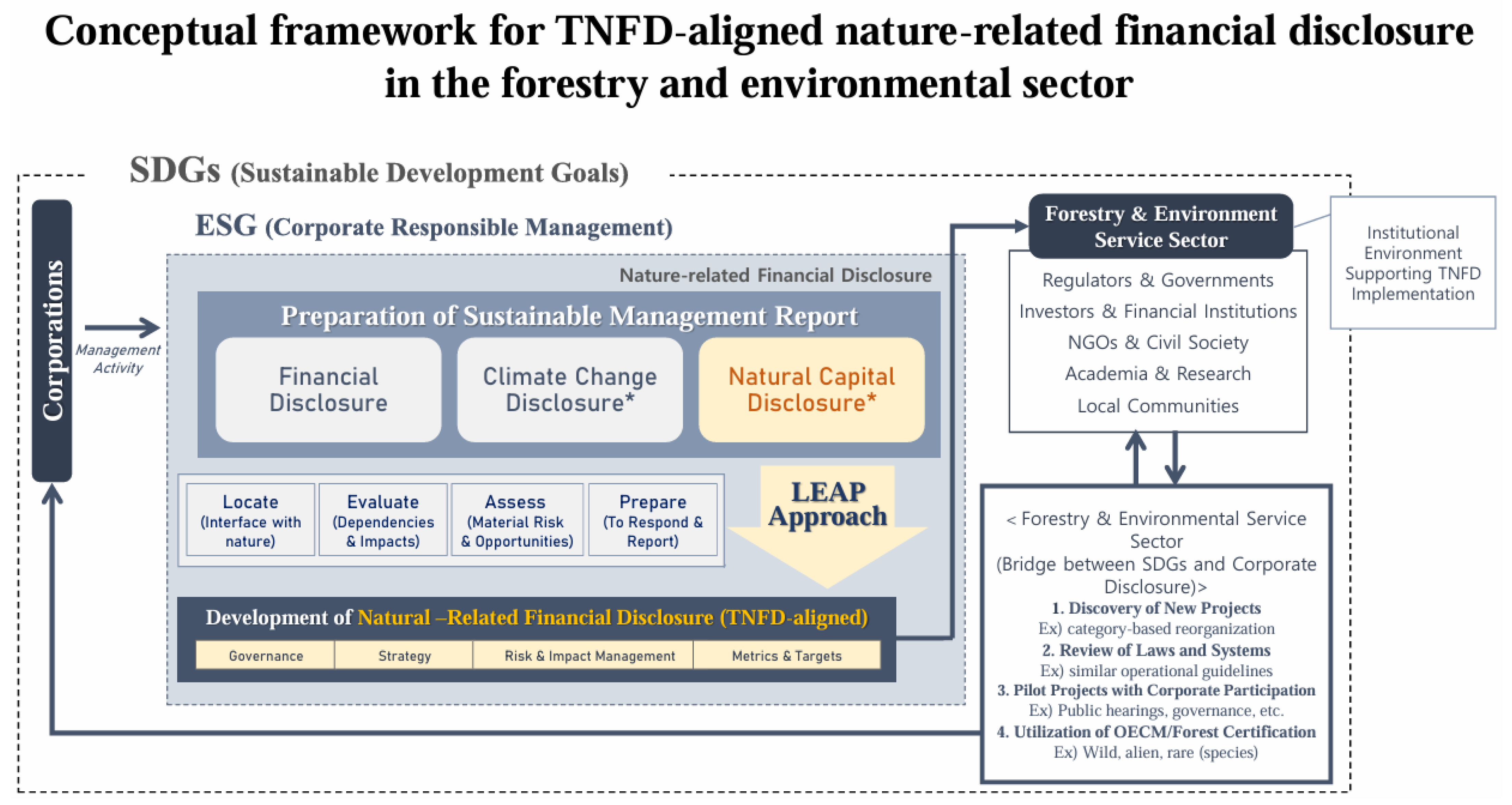
The conceptual framework developed in this study-which builds on the emerging natural capital disclosure architecture and is conceptually aligned with the TNFD framework-illustrates an integrated governance and disclosure architecture for natural capital, positioning the forestry and environmental service sector as a key intermediary between policy frameworks, corporate disclosure systems, and ecosystem-level sustainability outcomes. This perspective reflects the growing recognition that biodiversity loss and ecosystem degradation represent systemic economic risks that must be incorporated into financial decision-making and corporate governance structures [24,51].
Within this context, nature-related disclosure frameworks such as the Taskforce on Nature-related Financial Disclosures (TNFD) are increasingly viewed as institutional mechanisms capable of translating ecological dependencies and impacts into financially material information. The conceptual structure of this integrated governance and disclosure architecture is illustrated in Figure 9 which highlights the role of forestry and environmental service institutions as a central intermediary linking global sustainability frameworks, nature-related disclosure systems, and corporate management practices.
In this study, Natural Capital Disclosure is not proposed as an alternative to TNFD. Instead, it is conceptualized as the broader ecological information and governance context that supports the implementation of TNFD-based nature-related financial disclosures.
First, the framework highlights the evolving role of forestry and environmental services beyond conventional resource management toward active coordination of multi-stakeholder governance. Previous studies emphasize that effective natural capital governance requires institutional arrangements that integrate ecological science, regulatory policy, and corporate management practices [53,54]. The structure presented in this study suggests that forestry-related institutions can act as intermediaries that facilitate data generation, knowledge integration, and disclosure alignment across governments, corporations, non-governmental organizations, research institutions, and the broader public. In this regard, forestry organizations may function as enabling platforms for translating ecosystem-level information into standardized disclosure practices compatible with emerging sustainable finance frameworks.
Second, the staged implementation pathway identified in the framework—from project discovery and legal review to pilot implementation and eventual integration with forest certification systems and other area-based conservation mechanisms, such as Other Effective Area-Based Conservation Measures (OECMs) recognized under the Convention on Biological Diversity—highlights the importance of incremental institutional development in natural capital disclosure. The environmental governance literature has increasingly emphasized the value of experimental and adaptive policy approaches in addressing complex sustainability challenges [55]. Pilot programs and demonstration projects can play a crucial role in testing disclosure methodologies, reducing institutional uncertainty, and building technical capacity among participating organizations. For countries with extensive forest resources but limited experience with nature-related disclosure frameworks, such phased implementation strategies may provide a practical entry point for aligning national forestry governance with global sustainability reporting standards.
Third, the analysis clarifies the complementary relationship between forest certification systems and TNFD-based disclosure frameworks. Certification schemes such as the Forest Stewardship Council (FSC) and the Programme for the Endorsement of Forest Certification (PEFC) have historically focused on operational standards for sustainable forest management at the site or management-unit level [56]. While these systems provide important environmental and social safeguards, they do not necessarily translate ecological performance into enterprise-level financial risk assessments or investor-oriented reporting. By contrast, TNFD operates at the organizational level and explicitly seeks to integrate nature-related risks and opportunities into corporate governance, strategy, and financial reporting processes. From this perspective, TNFD can be interpreted as a meta-governance mechanism that incorporates ecological performance information generated through certification systems and translates it into financial materiality within capital markets.
Fourth, the framework underscores the strategic role of disclosure in linking corporate environmental management with financial decision-making. The growing convergence between climate-related disclosure initiatives and nature-related reporting frameworks reflects broader developments in sustainable finance governance. Since the establishment of the Task Force on Climate-related Financial Disclosures (TCFD), investors and regulators have increasingly recognized that environmental risks—including biodiversity loss—can have significant implications for long-term financial stability [52,57].
Therefore, ecosystem and natural capital information should be understood as foundational non-financial inputs that enable nature-related financial disclosure and risk assessment within the TNFD framework. In practical terms, the proposed natural capital disclosure module should analyze key dimensions such as (i) ecosystem dependencies associated with forest resources, (ii) biodiversity and habitat impacts arising from forestry operations and supply chains, (iii) ecosystem service flows including carbon sequestration and water regulation, (iv) spatial exposure to nature-related risks at the landscape level, and (v) governance and risk management mechanisms used to address these nature-related impacts and dependencies.
The increasing participation of financial institutions in the TNFD initiative further suggests that financial markets may play a catalytic role in accelerating the adoption of nature-related disclosure across nature-dependent industries. Banks, asset managers, and institutional investors are progressively incorporating biodiversity-related risks into lending policies, investment screening processes, and portfolio risk assessments. As these actors integrate nature-related considerations into capital allocation decisions, companies operating in forestry, pulp and paper, as well as environmental and sustainability service sectors, may face growing expectations to disclose information on ecosystem dependencies, biodiversity impacts, and location-specific environmental risks. In this respect, financial institutions can function as institutional catalysts that promote the diffusion of TNFD-aligned disclosure practices throughout the broader forestry and environmental value chain.
The integration of the TNFD LEAP approach within the proposed framework further strengthens analytical consistency by providing a structured method for identifying location-specific dependencies, impacts, risks, and opportunities associated with forest ecosystem services. This is particularly relevant for forestry-dependent sectors, where ecosystem interactions are spatially explicit and unfold over long ecological timescales that often extend beyond conventional corporate reporting cycles.
Finally, the alignment of natural capital disclosure with broader sustainability objectives suggests that TNFD has implications extending beyond corporate transparency. Biodiversity conservation, ecosystem service protection, and sustainable land-use management are central components of global sustainability agendas, including the Sustainable Development Goals (SDGs) and the Global Biodiversity Framework. Recent studies emphasize that nature-based governance approaches can simultaneously contribute to climate mitigation, biodiversity conservation, and socio-economic development when integrated across institutional scales [58,59]. Within this broader context, the framework presented in this study suggests that forestry and environmental service institutions may serve as key operational actors in translating global biodiversity commitments into practical disclosure and management mechanisms. Accordingly, natural capital disclosure should not be viewed solely as a reporting requirement but rather as an enabling mechanism for strengthening environmental governance, improving transparency in nature-dependent industries, and supporting the transition toward more sustainable economic systems.
Future research may further explore how TNFD-aligned disclosure practices evolve as regulatory frameworks, financial market incentives, and biodiversity governance mechanisms continue to develop.
Overall, the results indicate that TNFD adoption is not evenly distributed across regions and institutional types but instead reflects underlying differences in governance capacity, regulatory environments, and sustainability-oriented financial markets. In particular, the concentration of adopters in developed economies and corporate entities suggests that institutional readiness and disclosure capabilities play a more decisive role than ecological endowment alone. Furthermore, the observed differences between earlier adopters and more recent participants indicate that TNFD diffusion is gradually expanding but remains structurally uneven. These patterns highlight the importance of capacity-building, data infrastructure, and policy support in facilitating broader adoption of nature-related financial disclosure frameworks.

6. Conclusions

This analytical review examined trends in the early global adoption of the Taskforce on Nature-related Financial Disclosures (TNFD) among forestry- and environment-related organizations and proposed strategic directions for future implementation.
By examining the full population of publicly registered TNFD adopters, this research provides an exploratory global mapping of adoption patterns and establishes an empirical baseline for understanding the early diffusion of nature-related financial disclosure. Given that forests are increasingly recognized as critical assets for climate change mitigation and adaptation, the analysis of adoption dynamics offers meaningful implications for sustainability governance and environmental policy.
The results indicate that TNFD adoption increased substantially between 2024 (and earlier) and 2025 at the global level, including within forestry- and environment-related organizations. This expansion reflects the growing recognition of nature-related financial risks and the increasing relevance of structured disclosure frameworks in sustainable development. However, adoption remains strongly concentrated in developed economies and corporate entities, while forestry-specific organizations represent only a limited proportion of adopters. These findings suggest that governance capacity, financial disclosure readiness, and institutional resources play a more decisive role in TNFD uptake than ecological endowment alone.
The continental and institutional distribution of adopters further reveals structural imbalances in TNFD implementation. Although ecologically significant forest ecosystems are distributed globally, adoption is predominantly observed in economically advanced regions such as Europe, the Americas, and parts of Asia, with comparatively limited participation from Africa and Oceania. Similarly, corporate entities account for a substantially larger share of adopters than non-corporate institutions.
The absence of TNFD adopters in African countries may reflect several structural barriers that constrain the adoption of nature-related financial disclosure frameworks. First, the implementation of TNFD recommendations often requires substantial analytical capacity and financial resources, creating relatively high entry costs for organizations operating in developing financial systems. Second, TNFD reporting relies on access to environmental datasets, geospatial monitoring systems, and biodiversity assessment tools, which remain unevenly developed across regions. Third, compared with Europe and other advanced financial markets, regulatory and market pressures encouraging voluntary sustainability disclosure are relatively limited in many African financial systems.
These factors may collectively contribute to the observed gap between ecological importance and institutional participation in TNFD adoption, highlighting the importance of capacity-building, data infrastructure development, and policy support in enabling broader global engagement with nature-related disclosure frameworks.
These disparities suggest that economic capacity, policy environments, and sustainability-oriented financial markets are important enabling factors in the diffusion of nature-related financial disclosure frameworks.
From a methodological perspective, the patterns identified in this study are based primarily on descriptive classification and comparative analysis of adoption data rather than formal statistical testing. Consequently, the findings should be interpreted as indicative trends in the early diffusion of TNFD adoption, particularly at the global level. In this respect, they should be understood as indicative insights into early-stage diffusion patterns rather than definitive long-term trends. Within the forestry and environmental sector, clear causal relationships cannot yet be established, largely due to the limited number of sector-specific adopters and the early stage of TNFD implementation.
Based on these findings, this study highlights the need for further research on sector-specific and contextual factors influencing the adoption of the Taskforce on Nature-related Financial Disclosures (TNFD). As TNFD implementation is still at an early stage, future studies could benefit from longitudinal analyses of adoption dynamics, comparative assessments across industrial sectors, and qualitative investigations of organizational implementation processes. Such research would help clarify how TNFD recommendations are interpreted and operationalized within forestry- and environment-related organizations.
Given the early stage of TNFD diffusion and the limited availability of longitudinal data, this study should be understood as an initial empirical baseline for analyzing the global adoption of nature-related financial disclosure frameworks. The findings therefore provide an exploratory reference point for future research examining the long-term dynamics of TNFD adoption as more comprehensive datasets become available.
Importantly, the findings of this analytical review suggest that the TNFD framework alone may not be sufficient to fully capture the complex ecological dependencies and biodiversity risks associated with forest management activities. In particular, upstream forest management organizations operate at the ecosystem and landscape scale, where nature-related impacts are highly site-specific and difficult to standardize within existing disclosure structures. Therefore, this study highlights the need to complement TNFD with a more explicit natural capital disclosure approach, which can better account for ecosystem services, spatial ecological dynamics, and biodiversity-related risks. Integrating such approaches could enhance the relevance and applicability of disclosure frameworks for forest management entities and support more comprehensive nature-related risk assessment and governance.

Author Contributions

Conceptualization, S.K. and H.K.; Methodology, C.K.; Validation, H.K. and S.K.; Formal Analysis, C.K.; Investigation, S.K. and C.K.; Resources, H.K.; Data Curation, H.K.; Writing—Original Draft, C.K.; Writing—Review and Editing, S.K. and H.K. All authors have read and agreed to the published version of the manuscript.

Funding

This research was funded by the National Institute of Forest Science, under grant number FM0500-2024-02-2026.

Data Availability Statement

The original contributions presented in the study are included in the article, further inquiries can be directed to the corresponding author.

Conflicts of Interest

The authors declare no conflicts of interest.

References

  1. Jackson, G.; Bartosch, J.; Avetisyan, E.; Kinderman, D.; Knudsen, J.S. Mandatory non-financial disclosure and its influence on CSR: An international comparison. J. Bus. Ethics 2020, 162, 323–342. [Google Scholar] [CrossRef]
  2. Cho, C.H.; Michelon, G.; Patten, D.M.; Roberts, R.W. CSR disclosure: The more things change…? Account. Audit. Account. J. 2015, 28, 14–35. [Google Scholar] [CrossRef]
  3. Karwowski, M.; Raulinajtys-Grzybek, M. The application of corporate social responsibility (CSR) actions for mitigation of environmental, social, corporate governance (ESG) and reputational risk in integrated reports. Corp. Soc. Responsib. Environ. Manag. 2021, 28, 1270–1284. [Google Scholar] [CrossRef]
  4. Arvidsson, S.; Dumay, J. Corporate ESG reporting quantity, quality and performance: Where to now for environmental policy and practice? Bus. Strategy Environ. 2021, 31, 1091–1110. [Google Scholar] [CrossRef]
  5. Baratta, A.; Cimino, A.; Longo, F.; Solina, V.; Verteramo, S. The Impact of ESG Practices in Industry with a Focus on Carbon Emissions: Insights and Future Perspectives. Sustainability 2023, 15, 6685. [Google Scholar] [CrossRef]
  6. Yadav, P.; Prashar, A. Board gender diversity: Implications for environment, social, and governance (ESG) performance of Indian firms. Int. J. Product. Perform. Manag. 2022, 72, 2654–2673. [Google Scholar] [CrossRef]
  7. Sundarasen, S.; Kumar, R.; Krishna, T.; Ali, A.A.; Rajagopalan, U. From board diversity to disclosure: A comprehensive review on board dynamics and ESG reporting. Res. Glob. 2024, 9, 100259. [Google Scholar] [CrossRef]
  8. Argento, D.; Grossi, G.; Persson, K.; Vingren, T. Sustainability disclosures of hybrid organizations: Swedish state-owned enterprises. Meditari Account. Res. 2019, 27, 505–533. [Google Scholar] [CrossRef]
  9. Shin, H.S.; Kim, Y.H. Comparison of ESG approaches by company sizes in aspect of an environment. J. Environ. Policy Adm. 2023, 31, 89–114. [Google Scholar] [CrossRef]
  10. Jessie, W.; Kim, K.; Verdantix. Strategic Focus: The Connection Between the TCFD, TNFD and ESG Risk. Available online: https://www.verdantix.com/report/strategic-focus-the-connection-between-the-tcfd-tnfd-and-esg-risk (accessed on 15 October 2025).
  11. Ellili, N.O.D. Bibliometric analysis of sustainability papers: Evidence from environment, development and sustainability. Environ. Dev. Sustain. 2024, 26, 8183–8209. [Google Scholar] [CrossRef] [PubMed]
  12. Hiki, K.; Kito, K.; Niino, T.; Honda, H.; Ishimota, M.; Kawahara, S.; Iwasaki, Y. Harnessing the Taskforce on Nature-related Financial Disclosures (TNFD) for chemical risk management with integrated ecotoxicology and ecology. Environ. Toxicol. Chem. 2025, 44, 2. [Google Scholar] [CrossRef] [PubMed]
  13. Eco Daily. [Analysis] Why is TNFD Important for Large Companies? 2024. Available online: https://www.ecoday.kr/article/1065598434913088 (accessed on 23 March 2025).
  14. Impact on TCFD is Followed by TNFD. Natural Capital Must Also Be Managed. 2021. Available online: https://www.impacton.net/news/articleView.html?idxno=1877 (accessed on 21 May 2025).
  15. Macy, S. In-Depth Analysis of ESG: Key Strategies for Compiling High-Quality Taskforce on Nature-Related Financial Disclosures (TNFD) Report. CECEPEC. Available online: https://www.cecepec.com/en/news/info/id/1026.html (accessed on 30 November 2025).
  16. Mark Segal. TNFD Releases Framework for Reporting on Nature-Related Risks and Opportunities. Available online: https://www.esgtoday.com/tnfd-releases-framework-for-corporate-reporting-on-nature-related-risks-and-opportunities (accessed on 9 December 2025).
  17. Thanks Carbon. TNFD: Global ESG Indicators for Protecting Biodiversity and Ecosystems. 2024. Available online: https://thankscarbon.com/blog/tnfd (accessed on 9 May 2025).
  18. Taskforce on Nature-related Financial Disclosures. Recommendations of the Taskforce on Nature-Related Financial Disclosures (v1.0); TNFD: London, UK, 2023; Available online: https://tnfd.global/publication/recommendations-of-the-taskforce-on-nature-related-financial-disclosures/ (accessed on 30 June 2025).
  19. TSMC. Sustainability Report. 2022. Available online: https://esg.tsmc.com/download/file/2022_sustainabilityReport/english/e-all.pdf (accessed on 20 January 2026).
  20. TNFD (Taskforce on Nature-Related Financial Disclosures). The TNFD Nature-Related Risk and Opportunity Management and Disclosure Framework—Beta v0.2; TNFD: London, UK, 2022. [Google Scholar]
  21. Taskforce on Nature-related Financial Disclosures. Discussion Paper: A Landscape Assessment of Nature-Related Data and Analytics Availability. 2022. Available online: https://tnfd.global/wp-content/uploads/2022/03/TNFD_DataDiscussionPaper.pdf (accessed on 15 November 2025).
  22. Deweerdt, T.; Caltabiano, K.; Dargusch, P. Original Research: How Will the TNFD Impact the Health Sector’s Nature-Risks Management? Int. J. Environ. Res. Public Health 2022, 19, 13345. [Google Scholar] [CrossRef]
  23. Schimanski, T.; Senni, C.C.; Gostlow, G.; Ni, J.; Yu, T.; Leippold, M. Exploring Nature: Datasets and Models for Analyzing Nature-Related Disclosures. arXiv 2023, arXiv:2312.17337. [Google Scholar] [CrossRef]
  24. Purvis, A. Status and trends of biodiversity and ecosystems. In Global Assessment Report on Biodiversity and Ecosystem Services; Intergovernmental Science-Policy Platform on Biodiversity and Ecosystem Services (IPBES): Bonn, Germany, 2019; pp. 123–152. Available online: https://ipbes.net/global-assessment (accessed on 1 October 2025).
  25. Wang, R.; Zhou, S.; Wang, T. Corporate governance, integrated reporting and the use of credibility-enhancing mechanisms on integrated reports. Eur. Account. Rev. 2019, 29, 631–663. [Google Scholar] [CrossRef]
  26. TNFD. Nature in Scope. 2021. Available online: https://tnfd.global/wp-content/uploads/2021/07/TNFD-Nature-in-Scope-2.pdf (accessed on 24 November 2025).
  27. Abdou, H.; Ellelly, N.N.; Elamer, A.A.; Hussainey, K.; Yazdifar, H. Corporate Governance and Earnings Management Nexus: Evidence from the UK and Egypt Using Neural Networks. SSRN Electron. J. 2021, 26, 6281–6311. [Google Scholar] [CrossRef]
  28. Potter, B. Nature Meets Business: The TNFD Framework. 2023. Available online: https://tyndallam.com/wp-content/uploads/2024/10/Tyndall-AM-Nature-meets-business-Oct-2023-FINAL.pdf (accessed on 6 November 2025).
  29. Informal Technical Expert Group of the TNFD. Proposed Technical Scope Recommendations for the TNFD. 2021. Available online: https://tnfd.global/wp-content/uploads/2021/07/TNFD-%E2%80%93-Technical-Scope-3.pdf (accessed on 20 September 2025).
  30. Azizi, L.; Scope, C.; Ladusch, A.; Sassen, R. Biodiversity disclosure in the European finance sector. Ecol. Econ. 2025, 228, 108430. [Google Scholar] [CrossRef]
  31. Rudmana, H.; Hart, B.; English, M.; Turner, C.; Fuentes-Montemayor, E.; Reed, M.S. Traps, apps and maps: To what extent do they provide decision-grade data on biodiversity? Scot. Geogr. J. 2022, 138, 3–4. [Google Scholar] [CrossRef]
  32. Hoffmeister, O. Development Status as a Measure of Development. UN iLibrary. 22 June 2020. Available online: https://www.un-ilibrary.org/content/papers/27082814/8 (accessed on 1 December 2025).
  33. Geneva Association. Nature and the Insurance Industry: Taking Action Towards a Nature-Positive Economy; Geneva Association Publications: Zurich, Switzerland, 2022. [Google Scholar]
  34. Refinq. What Is TNFD? A Guide for Businesses and Investors. 2025. Available online: https://tnfd.global/publication/tnfd-v0-4-integrated-framework/ (accessed on 15 October 2025).
  35. Sustainable Finance Geneva, Interview of the Month: TNFD. Available online: https://sfgeneva.org/interview-of-the-month-tnfd/ (accessed on 7 November 2025).
  36. Urbano, F.; Viterbi, R.; Pedrotti, L.; Vettorazzo, E.; Movalli, C.; Corlatti, L. Enhancing biodiversity conservation and monitoring in protected areas through efficient data management. Environ. Monit. Assess. 2024, 196, 12. [Google Scholar] [CrossRef]
  37. Seol, M.Y.; Won, H.K.; Kwon, S.G. Trends of TNFD and Response Measures in the Forestry Sector. J. Korean Soc. Int. Agric. 2025, 37, 145–152. [Google Scholar] [CrossRef]
  38. Black Rock. Our Approach to Engagement on Natural Capital: Investment Stewardship; Black Rock: New York, NY, USA, 2023. [Google Scholar]
  39. Garnett, S.T.; Burgess, N.D.; Fa, J.E.; Fernández-Llamazares, Á.; Molnár, Z.; Robinson, C.J.; Watson, J.E.; Zander, K.K.; Austin, B.; Brondizio, E.S.; et al. A spatial overview of the global importance of Indigenous lands for conservation. Nat. Sustain. 2018, 1, 369–374. [Google Scholar] [CrossRef]
  40. Xie, J.; Nozawa, W.; Yagi, M.; Fujii, H.; Managi, S. Do environmental, social, and governance activities improve corporate financial performance? Bus. Strategy Environ. 2019, 28, 286–300. [Google Scholar] [CrossRef]
  41. Toppinen, A.; Hänninen, V.; Lähtinen, K. ISO 26000 in the assessment of CSR communication quality: CEO letters and social media in the global pulp and paper industry. Soc. Responsib. J. 2015, 11, 702–715. [Google Scholar] [CrossRef]
  42. Sanderson, H.; Irato, D.M.; Cerezo, N.P.; Duel, H.; Faria, P.; Torres, E.F. How do climate risks affect corporations and how could they address these risks? SN Appl. Sci. 2019, 1, 1720. [Google Scholar] [CrossRef]
  43. Qiu, Y.; Shaukat, A.; Tharyan, R. Environmental and social disclosures: Link with corporate financial performance. Br. Account. Rev. 2016, 48, 102–116. [Google Scholar] [CrossRef]
  44. Task Force on Climate-related Financial Disclosures (TCFD). Final Report: Recommendations of the Task Force on Climate-Related Financial Disclosures; Financial Stability Board: Basel, Switzerland, 2017. [Google Scholar]
  45. Lu, F.; Kozak, R.; Toppinen, A.; D’Amato, D.; Wen, Z. Factors influencing levels of CSR disclosure by forestry companies in China. Sustainability 2017, 9, 1800. [Google Scholar] [CrossRef]
  46. D’Amato, D.; Li, N.; Rekola, M.; Toppinen, A.; Lu, F.-F. Linking forest ecosystem services to corporate sustainability disclosure: A conceptual analysis. Ecosyst. Serv. 2015, 14, 170–178. [Google Scholar] [CrossRef]
  47. Taskforce on Nature-Related Financial Disclosures. TNFD Adopter List. Available online: https://tnfd.global/engage/tnfd-adopters-list/ (accessed on 30 June 2025).
  48. Creswell, J.W.; Creswell, J.D. Research Design: Qualitative, Quantitative, and Mixed Methods Approaches, 5th ed.; SAGE Publications: Thousand Oaks, CA, USA, 2017. [Google Scholar]
  49. Babbie, E. The Practice of Social Research; Cengage: Sydney, Australia, 2020. [Google Scholar]
  50. Dasgupta, P. The Economics of Biodiversity: The Dasgupta Review; HM Treasury: London, UK, 2021. Available online: https://www.gov.uk/government/publications/final-report-the-economics-of-biodiversity-the-dasgupta-review (accessed on 15 November 2025).
  51. Network for Greening the Financial System. Nature-Related Financial Risks: A Conceptual Framework to Guide Action by Central Banks and Supervisors; NGFS: Paris, France, 2022; Available online: https://www.ngfs.net/en/communique-de-presse/ngfs-publishes-report-nature-related-financial-risks (accessed on 23 December 2025).
  52. Taskforce on Nature-related Financial Disclosures. The TNFD Nature-Related Risk and Opportunity Management and Disclosure Framework (Beta v0.4); TNFD: London, UK, 2023. [Google Scholar]
  53. Guerry, A.D.; Polasky, S.; Lubchenco, J.; Chaplin-Kramer, R.; Daily, G.C.; Griffin, R.; Ruckelshaus, M.; Bateman, I.J.; Duraiappah, A.; Elmqvist, T.; et al. Natural capital and ecosystem services informing decisions: From promise to practice. Proc. Natl. Acad. Sci. USA 2015, 112, 7348–7355. [Google Scholar] [CrossRef]
  54. Reed, M.S.; Allen, K.; Attlee, A.; Dougill, A.J.; Evans, K.L.; Kenter, J.O.; Hoy, J.; McNab, D.; Stead, S.M.; Twyman, C.; et al. A place-based approach to payments for ecosystem services. Glob. Environ. Change 2017, 43, 92–106. [Google Scholar] [CrossRef]
  55. Kivimaa, P.; Hildén, M.; Huitema, D.; Jordan, A.; Newig, J. Experiments in climate governance—A systematic review of research on energy and built environment transitions. J. Clean. Prod. 2017, 169, 17–29. [Google Scholar] [CrossRef]
  56. Van der Ven, H.; Cashore, B. Forest certification: The challenge of measuring impacts. Curr. Opin. Environ. Sustain. 2018, 32, 104–111. [Google Scholar] [CrossRef]
  57. Bolton, P.; Kacperczyk, M.T. Carbon Disclosure and the Cost of Capital. 2021. Available online: https://papers.ssrn.com/sol3/papers.cfm?abstract_id=3755613 (accessed on 20 October 2025).
  58. IPBES. Summary for Policymakers of the Global Assessment Report on Biodiversity and Ecosystem Services; IPBES: Bonn, Germany, 2019. [Google Scholar]
  59. Seddon, N.; Smith, A.; Smith, P.; Key, I.; Chausson, A.; Girardin, C.; House, J.; Srivastava, S. Getting the message right on nature-based solutions to climate change. Glob. Change Biol. 2021, 27, 8. [Google Scholar] [CrossRef] [PubMed]
Figure 1. Conceptual relationship between ESG, TCFD, and TNFD frameworks. ESG refers to environmental, social, and governance considerations in corporate sustainability evaluation. TCFD (Task Force on Climate-related Financial Disclosures) provides a climate-related financial disclosure framework, while TNFD (Taskforce on Nature-related Financial Disclosures) extends this approach to nature-related risks and opportunities. CSV refers to Creating Shared Value, highlighting the linkage between corporate sustainability strategies and broader societal benefits (Source: Developed by the authors).
Forests 17 00394 g001
Figure 2. The LEAP approach (Locate, Evaluate, Assess, and Prepare) used in the TNFD framework (Source: TNFD, https://tnfd.global/).
Forests 17 00394 g002
Figure 3. TNFD recommended disclosures (Source: TNFD, https://tnfd.global/).
Forests 17 00394 g003
Figure 4. Conceptual structure of the TNFD disclosure procedure.
Forests 17 00394 g004
Figure 5. Analytical framework for classifying global TNFD adoption.
Forests 17 00394 g005
Figure 6. Data processing structure for the classification analysis of TNFD adoption.
Forests 17 00394 g006
Figure 7. Global distribution and institutional characteristics of organizations adopting the framework of the Taskforce on Nature-related Financial Disclosures (TNFD). Despite this gradual expansion, the overall number of forestry- and environment-related TNFD adopters remains modest.
Forests 17 00394 g007
Figure 8. Global distribution of forestry- and environmental-related TNFD adopters (2025).
Forests 17 00394 g008
Figure 9. Conceptual framework for TNFD-aligned sustainable management in the forestry and environmental sector (Author Concept and Context Summary). The asterisks (*) denote disclosure components that have been extended to incorporate natural capital considerations within the TNFD-aligned framework, distinguishing them from conventional financial and climate-related disclosures.
Forests 17 00394 g009
Table 1. Summary of worldwide institutional TNFD adoption in 2024 (or earlier) and 2025.
Institution Type2024 (or Earlier)2025Sum
Academic or Scientific Institution134
Asset Owner123
Corporate208169377
Civil Society and NGO426
Data Provider213
Financial Institution8657143
Government538
Market Association and Consortia1 1
Market Service Provider121527
Other448
Public and Development Finance314
Total327257584
Table 2. Classification of forestry- and environment-related organizations adopting TNFD in 2024 (or earlier) and 2025.
TNFD Adoption TimingCountrySegment ClassificationInstitution Type
2024 (or earlier)ColombiaForestry ManagementCivil Society and NGOs
United KingdomForestry ManagementGovernment
AustriaForestry ManagementCorporate
Japan
(Early Adopters)
Forestry ManagementCorporate
Austria
(Early Adopters)
Forestry and PaperCorporate
JapanPulp and Paper ProductsCorporate
ItalyPulp and Paper ProductsCorporate
JapanPulp and Paper ProductsCorporate
Austria
(Early Adopters)
Pulp and Paper ProductsCorporate
CanadaPulp and Paper ProductsCorporate
JapanPulp and Paper ProductsCorporate
Japan
(Early Adopters)
Pulp and Paper ProductsCorporate
FinlandPulp and Paper ProductsCorporate
AustraliaEnvironmental and Sustainability ServicesCivil Society and NGOs
2025United KingdomForestry ManagementFinancial
SwitzerlandForestry ManagementCorporate
CanadaForestry ManagementCorporate
Taiwan, Province of ChinaForestry and PaperCorporate
United KingdomPulp and Paper ProductsCorporate
BrazilPulp and Paper ProductsCorporate
FranceEnvironmental and Sustainability ServicesCorporate
United KingdomEnvironmental and Sustainability ServicesCorporate
Disclaimer/Publisher’s Note: The statements, opinions and data contained in all publications are solely those of the individual author(s) and contributor(s) and not of MDPI and/or the editor(s). MDPI and/or the editor(s) disclaim responsibility for any injury to people or property resulting from any ideas, methods, instructions or products referred to in the content.