Article

The Effects of Host Alternation on the Development of Spongy Moth (Lymantria dispar L.)

1
Department of Forest Economy, Forest Research Institute, University of Sopron, H-9400 Sopron, Hungary
2
Institute of Forest and Natural Resource Management, University of Sopron, H-9400 Sopron, Hungary
*
Author to whom correspondence should be addressed.
Forests 2026, 17(3), 374; https://doi.org/10.3390/f17030374
Submission received: 7 January 2026 / Revised: 10 March 2026 / Accepted: 14 March 2026 / Published: 16 March 2026
(This article belongs to the Section Forest Health)

Abstract

The spongy moth is a significant Lepidopteran species across Europe, where it occurs in oak stands. Tree species composition has a crucial effect on larval development, population density, and outbreaks. Host switching is more likely to occur in a mixed forest than in a monospecific forest. We aimed to better understand the effect of host alternation on the development of the spongy moth. In a laboratory, we reared spongy moth larvae on either (a) Turkey oak (Quercus cerris L.) or (b) European hornbeam (Carpinus betulus L.) only or on host plants that were changed from Turkey oak to European hornbeam (c) in the early (L3) or (d) late (L5) larval instar. Both Q. cerris and C. betulus proved suitable hosts for the spongy moth larvae. However, the larvae fed exclusively on Turkey oak leaves had better developmental indicators than the others. The groups that switched hosts had weaker developmental indicators than the larvae fed only on Turkey oak but showed better development than the group reared only on Hornbeam leaves. The results of our laboratory research on host switching may offer valuable insights into the developmental dynamics of spongy moths in monospecific forests versus those with higher biodiversity.

1. Introduction

The spongy moth (Lymantria dispar L.) is a notorious leaf-feeding insect in Central Europe due to its wide distribution and the significant damage it causes. Periodic mass outbreaks are common and result in heavy defoliation across large areas [1,2,3,4,5]. Although it is a polyphagous species with several hundred known host plants worldwide, some plant species are less favorable for larval development. Its primary hosts, such as Pedunculate oak (Quercus robur L.), Turkey oak (Quercus cerris L.), and hybrid poplars (Populus × euramericana), promote mass outbreaks of spongy moth in various ways [6]. Host plant metabolites determine larval development, pupation, and hatching and influence reproduction. The chemical contents of host plant leaves also affect the fecundity of the spongy moth and its population dynamics [7]. Continuous and less fragmented assemblages of primary host plants enhance the spread and population growth of the spongy moth [8]. In contrast, a mixed forest with a more diverse composition of tree species, including those that are less suitable hosts for the spongy moth, can be more resilient and better able to compensate for the negative effects of defoliation than monoculture forests dominated by a single primary host plant [9,10]. Such an environment also provides improved conditions for a natural enemy complex [5]. Spongy moth larvae thrive on their preferred host plants. When food becomes scarce and their primary host plant is depleted, larvae are more likely to switch to alternative host plants in mixed forests than in monocultures, where the preferred host plant is more abundant. We aimed to assess the effect of host alternation on the development of the spongy moth.

1.1. Host Plant Preference and Suitability Ranking of the Spongy Moth

Host plants are classified into three groups based on their suitability for spongy moth larval development [11]: (1) The first group consists of host plants that support mass multiplication of the larvae with low mortality rates. These tree species include Pedunculate oak (Quercus robur L.), Turkey oak (Quercus cerris L.), Common alder (Alnus glutinosa L.), Common hornbeam (Carpinus betulus L.), and hybrid Black poplar clones (Populus nigra L.). (2) The second group comprises host trees on which spongy moth larvae can fully develop but no complete defoliation or mass multiplication are observed. Lime (Tilia spp.) and Elm species (Ulmus spp.), Beech (Fagus sylvatica L.), Sessile oak (Quercus petraea Liebl.), Black locust (Robinia pseudoacacia L.), Scots pine (Pinus sylvestris L.), White poplar (Populus alba L.), and Balsam poplar species (Populus sect. Tacamahaca) belong to this group, as do some shrubs, including Hazel (Corylus spp.), Hawthorn (Crataegus spp.), Cornel (Cornus spp.), and Rose (Rosa spp.) species. (3) The third group includes species that spongy moth larvae do not consume at all, such as the European wild pear (Pyrus pyraster Burgsdorf), Common privet (Ligustrum vulgare L.), Yew (Taxus baccata L.), Tree of heaven (Ailanthus altissima Swingle), Black elder (Sambucus nigra L.), and Spindle species (Euonymus spp.).
Other studies have classified host plants according to their nutritional value for spongy moth larvae into four categories [12]. (1) The first category includes host plants that are highly preferred by the larvae, like Oaks (Quercus spp.), hybrid Poplars (Populus x euamericana), Beeches (Fagus spp.), Hazels (Corylus spp.), Alders (Alnus spp.), Mulberries (Morus spp.), and Larches (Larix spp.). (2) The second category consists of species that offer suitable nutrition in the late larval stages only, which are Hemlocks (Tsuga spp.), Pines (Pinus spp.), Spruces (Picea spp.), and Chestnuts (Castanea spp.). (3) The third group includes species that are not preferred by the spongy moth but on which they can still fully develop. These species are Bird cherry (Padus avium L.), Easter cottonwood (Populus deltoides W. Bartram ex Marshall), Silver maple (Acer saccharinum L.), Norway maple (Acer platanoides L.), American hornbeam (Carpinus caroliniana Walter), and some Elm species (Ulmus spp.). (4) Finally, the fourth group consists of species that do not provide suitable nutrition for the spongy moth at all, such as Common hackberry (Celtis occidentalis L.).
In addition to the host plants listed above, spongy moth caterpillars consume leaves of various other trees, shrubs, and herbaceous plants, including Apples (Malus spp.), Plums (Prunus spp.), Lettuce (Lactuca sativa L.), Potato (Solanum tuberosum L.), Cherry laurel (Prunus sect. Laurocerasus Benth. and Hook. f.), and Rhododendrons (Rhododendron spp.), to various degrees. The caterpillar does not eat Lilac (Syringa vulgaris L.) at all [13].
Further studies examined defoliation caused by the spongy moth in various host plant species. According to these articles, spongy moth larvae often feed on Norway spruce (Picea abies (L.) H. Karst), Blue spruce (Picea pungens Engelm), European larch (Larix decidua Miller), Blackthorn (Prunus spinosa L.), and Beech (Fagus slyvatica L.) [4,14,15,16,17]. Among fruit trees, the moth causes serious damage to Plums (Prunus spp.) and the Apricot (Prunus armeniaca L.) [18]. During an outbreak, spongy moth can consume the entire foliage of trees and shrubs, as well as the herbs in the understory [19]. Spongy moth caterpillars have also been observed to eat the larvae of certain gall-maker wasps, such as Biorhiza pallida L. [20].
Spongy moth does not harm Thujas (Thuja spp.), Horse chestnut (Aesculus hippocastanum L.), or Buckthorns (Rhamnus spp.). It avoids species with high essential oil and poison contents [16]. The caterpillars dislike Rhododendrons (Rhododendron spp.), Honey locust (Gleditsia triacanthos L.), Osage orange (Maclura pomifera C. K. Schneid), Catalpa (Catalpa spp.), American tulip tree (Liriodendron tulipifera L.), American coffee berry (Gymnocladus dioicus L.), and the Red mulberry (Morus rubra L.) [21]. Spongy moths do not consume Ash species (Fraxinus spp.) either [6,16]. However, according to the most recent publication, stress-induced food shortages can force spongy moth larvae to feed on the leaves of the European ash (Fraxinus excelsior L.) [22].

1.2. Host Plant Quality Determinants in the Feeding Ecology of the Spongy Moth

Studies have demonstrated a connection between the tree species preferred by the spongy moth and the nitrogen and protein contents of these trees. Hybrid Poplar species with a higher nitrogen content proved to be the best host for the larvae, enabling their optimal development [23]. In another experiment, Turkey oak (Quercus cerris L.), which has the highest soluble protein content and lowest C/N ratio, provided better conditions for larval development than the Sessile oak (Quercus petraea Liebl.) or Hungarian oak (Quercus frainetto Ten) [24]. The age of the leaves has a significant effect on herbivorous insects. Older leaves have lower water content and higher polyphenol and tannin contents, making them less favorable for insects [25]. This is confirmed by the observation of special seasonality in herbivore insects living in Hungarian oak stands, in which the highest number of species is found on fresh oak leaves at the beginning of the vegetation period [14]. Trees can be grouped based on when they produce new leaves. Quercus-type trees (e.g., Quercus robur and Prunus padus) grow mainly in the spring, while Populus-type trees (e.g., Populus, Betula, and Alnus) also produce foliage during the summer. As a result, larval development in herbivorous insects typically occurs in spring [26].
A plant uses various defense mechanisms to protect itself from herbivory. In this process, the plant faces a dilemma: how much of its resources should be used for protection or for growth to remain competitive among other plants [27]? Plants use both mechanical and chemical methods to protect themselves. Chemical protectants can either be produced consistently, as part of basic metabolism (constitutive), or as a reaction to herbivory [28,29]. Leaf consumption increases the phenol and hydrolyzed tannin contents, as well as the protein-binding ability of cells. These substances have a negative effect on the larval development of spongy moth. Therefore, plant responses can influence larval feeding behavior and affect population dynamics [30]. Turkey oak, for example, produces secondary metabolites in response to the spongy moth larvae’s chewing. Phenols cause distorted larval development and high mortality rates in the population. Ellagic acid and a 0.5% increase in tannin concentration have the strongest effect on larvae [31]. The quality of the nutrients provided by the host plant is also influenced by the CO2 concentration in the air [32].

1.3. Effects of Host Switching on Spongy Moth

In mixed forests, spongy moth larvae often encounter various tree species during their development and may switch hosts multiple times. Numerous field and laboratory studies have examined how feeding on different host plants in succession affects larval performance. Under favorable conditions, spongy moths generally adapt well to host switching, especially when the second host plant is also of high nutritional quality [33,34]. However, their development indices decline when they switch to an unfavorable host. Consequently, mixed forests, particularly those with a higher proportion of nutritionally poor host species, may reduce the risk of defoliation caused by spongy moths [35].
We examined how different host plant species influence the development of L. dispar by rearing caterpillars on either Turkey oak or Hornbeam. Additionally, we switched the hosts of two groups from Turkey oak to Hornbeam at various instars of larval development. All investigations were carried out under laboratory conditions. In our experiment, we assessed three main aspects: (1) how different host plants, specifically Turkey oak and Common hornbeam, affect the larval development of spongy moth; (2) whether changing the host plant during larval development influences the speed, success, and other characteristics of development; and (3) how the timing of host plant rotation impacts larval development. With this laboratory experiment, we aimed to contribute to the broader understanding of how a polyphagous species develops in both monospecific (without host plant switching) and mixed-species (with potential host plant switching) forest stands. Although our findings are based on controlled conditions, they offer valuable insights into host-related developmental dynamics that may occur in natural forest ecosystems.

2. Materials and Methods

2.1. The Origin of the Samples

Eggs were collected for the laboratory experiment from Turkey oaks (Quercus cerris L.) and Common hornbeams (Carpinus betulus L.) in forest stands near Sopron, Hungary (compartments 17/A and 49/B, respectively), in March. Egg masses were kept in the refrigerator at 4–6 °C until the study began in April.

2.2. The Sample Groups

Four sample groups of spongy moths were reared under laboratory conditions. In two sample groups, we exchanged the host plants during the rearing experiment, whereas the other two groups were reared on the same (original) host only (see Table 1). Leaves for caterpillar rearing were collected from an individual Turkey oak and an individual European hornbeam. Each sample group contained 30 larvae chosen at the second larval instar.

2.3. The Conditions of the Laboratory Experiment

The experiments were conducted in an insect-rearing chamber located in an air-conditioned room, with the temperature set to 20 °C and an 8 h dark/16 h light cycle. The caterpillars were fed leaves of the host plants, with the stems kept in Eppendorf tubes to preserve moisture.

2.4. The Course of the Experiment

Caterpillars hatching from egg masses were maintained together in one plastic box per host plant (Turkey oak or Common hornbeam). Individuals were chosen for the four sample groups in the second larval instar. We continued feeding three of the sample groups with Turkey oak and one with Hornbeam. At the third larval instar, we changed the host plant from Turkey oak to Hornbeam in one group. In another group (QC5), Turkey oak was exchanged for Hornbeam at the fifth larval instar. The caterpillars were kept in pairs as they progressed from the second to the fourth larval instar. After that, they were reared one by one until they pupated. Since individuals were assigned to the sample groups at L2, the earliest opportunity for host switching was at L3. The latest larval instar shared by both sexes is L5, so this instar was used for the late host-switching treatment.

2.5. The Measured Data

During rearing, the weight of the caterpillars was measured daily from the fourth larval instar until pupation. The weight of the pupae was measured at pupation. The weight of the leaves belonging to the Turkey oak and Common hornbeam trees was measured in the following conditions:
  • Wet weight: Measured before and after feeding (the leftovers).
  • Dry weight: The leftovers were dried in a desiccator and weighed.
  • Etalon weight: Each new portion of leaves was sampled, and both the wet and dry weights were recorded.
Furthermore, excrement was weighed at every larval stage. We also recorded the dates of egg hatching, larva molting, pupation, pupa hatching, and mating of the spongy moths.

2.6. The Calculated Data

The weight gain of the caterpillars was calculated at every larval instar with the following method:
Weight gain (g) = the maximum weight of the individual (g) − the weight of the individual on the first day (g)
We measured leaf consumption by weighing each leaf before and after exposure to the caterpillars. The remaining leaves were dried in an oven until they were completely dry, after which we measured the dry mass. To estimate the dry mass of the whole leaf, we dried and measured standard leaves. The dry weight of the consumed leaves, that is, dried leaf mass consumption, was calculated by subtracting the dry mass of the remaining leaves from the dry mass of the whole leaves.
We used nutritional indices such as the AD (approximate digestibility of leaf material in %), ECI (efficiency of converting ingested food into biomass in %), and ECD (efficiency of converting digested food into biomass in %), following the classical Waldbauer indices [36]. When calculating the indices, we used the fresh (i.e., not oven-dried) values of leaf mass consumption and frass mass. Regarding larval weight gain, no oven-dried mass data were available. The indices were calculated as follows:
AD = 100 × (leaf mass consumption (g) − weight of excrement (g))/weight of excrement (g),
ECI = 100 × growth of larval weight (g)/weight of excrement (g),
ECD = 100 × growth of larval weight (g)/(leaf mass consumption (g) − weight of excrement (g)).

2.7. The Method of Analyses

The analysis was conducted using Microsoft Excel 365 and TIBCO Statistica 14 software. We applied basic statistical methods, including calculating the average, standard deviation, and maximum and minimum values.
Differences in developmental indicators among the four sample groups were examined using the non-parametric Kruskal–Wallis test. The assumptions required for conducting an ANOVA were not fully met: although the normality assumption was satisfied, homogeneity of variance was violated according to Levene’s test. Considering the heterogeneity of variance and the limited sample sizes, the Kruskal–Wallis test was considered the most appropriate method for data analysis, since it is based on medians rather than means. Following the Kruskal–Wallis test, post hoc pairwise multiple comparisons of mean ranks between groups were performed.

3. Results

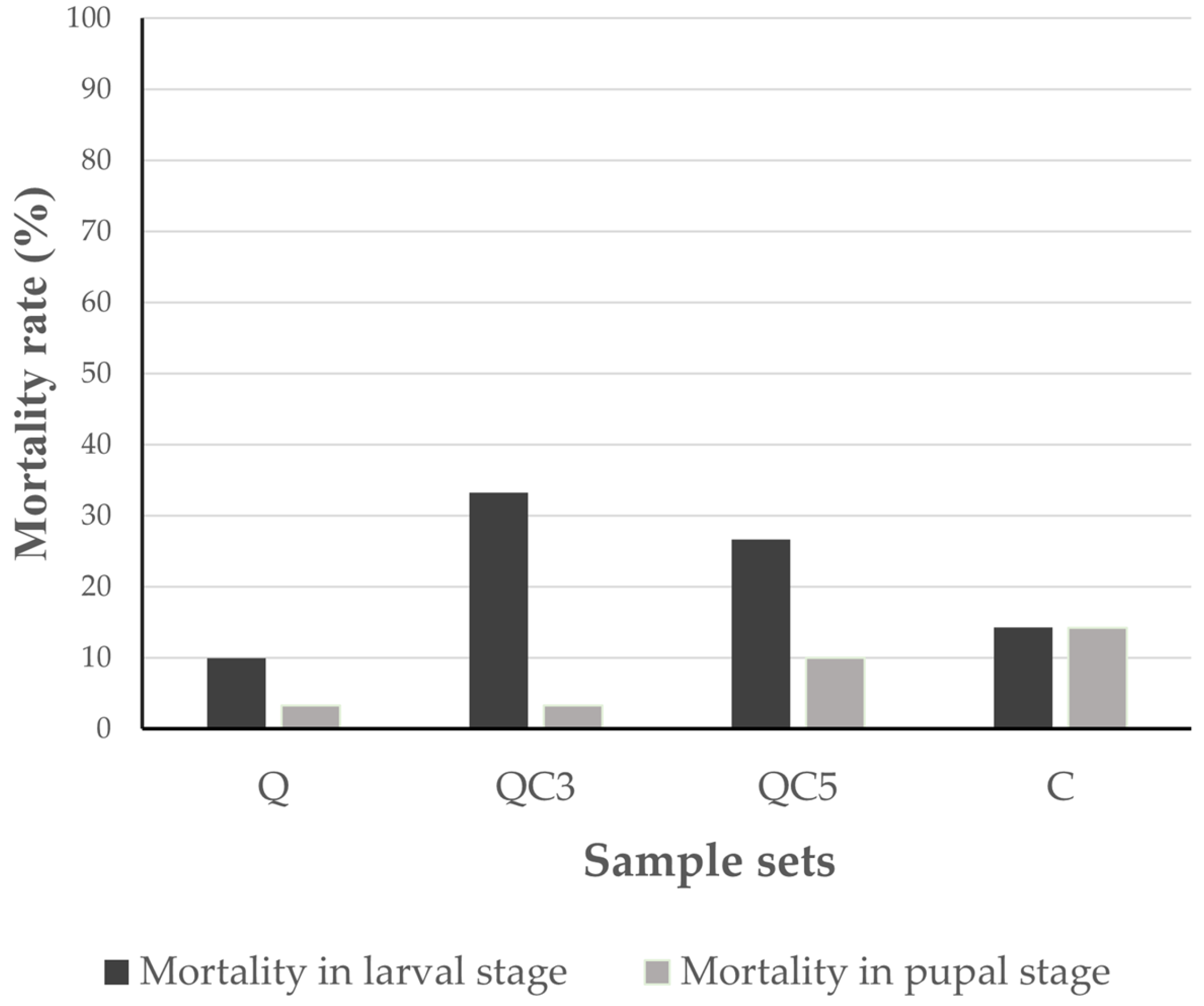
We observed substantial mortality in sample group C, where only 14 individuals reached the second larval instar (L2) and could be selected. From the second larval instar onwards, sample group Q exhibited the lowest mortality rates among the groups studied (see Figure 1). In contrast, the highest number of dead individuals was found in sample group QC3 during this period. Although group C showed high sensitivity up to L2, the mortality rate among the larvae that reached L2 was relatively low. However, the mortality rate in this sample group was also the highest during the pupal stage. In the following analyses, we focus exclusively on the individuals that later transformed into adult butterflies.
Examining the development of the caterpillars, the spongy moths from sample group Q exhibited the shortest development time, while the development time of those from sample group C was the longest (see Table 2). The Kruskal–Wallis test indicated that this difference between groups Q and C was statistically significant. This trend was observed for both sexes during the larval stage and throughout the entire developmental period. The caterpillars that switched host plants had a development time between the values of the sample groups Q and C. The average development time for males in the QC3 sample group was slightly slower than that of males in the QC5 group. Group Q exhibited the longest pupal development period, with a significant difference compared to sample groups QC3 and QC5 among females.
Larval weight gain from the fourth larval instar is recorded in Table 3. The larvae from sample group Q exhibited the highest average weight gain during development. In contrast, the smallest increase in weight was observed in sample group C among males and in sample group QC3 among females. Notably, the weight gain of the females in sample group Q was significantly different from that of the other groups. In sample group QC5, some individuals of both sexes required an additional larval instar.
We observed variations in pupal weight among the different sample groups (see Table 4). Sample group Q had the highest pupal weight, while sample group C had the lowest. The pupal weights of spongy moths from groups QC3 and QC5 were intermediate, falling between the weights of groups Q and C. The differences in pupal weight between sample group Q and the other groups were statistically significant, except for the comparison between males in sample groups Q and QC3.
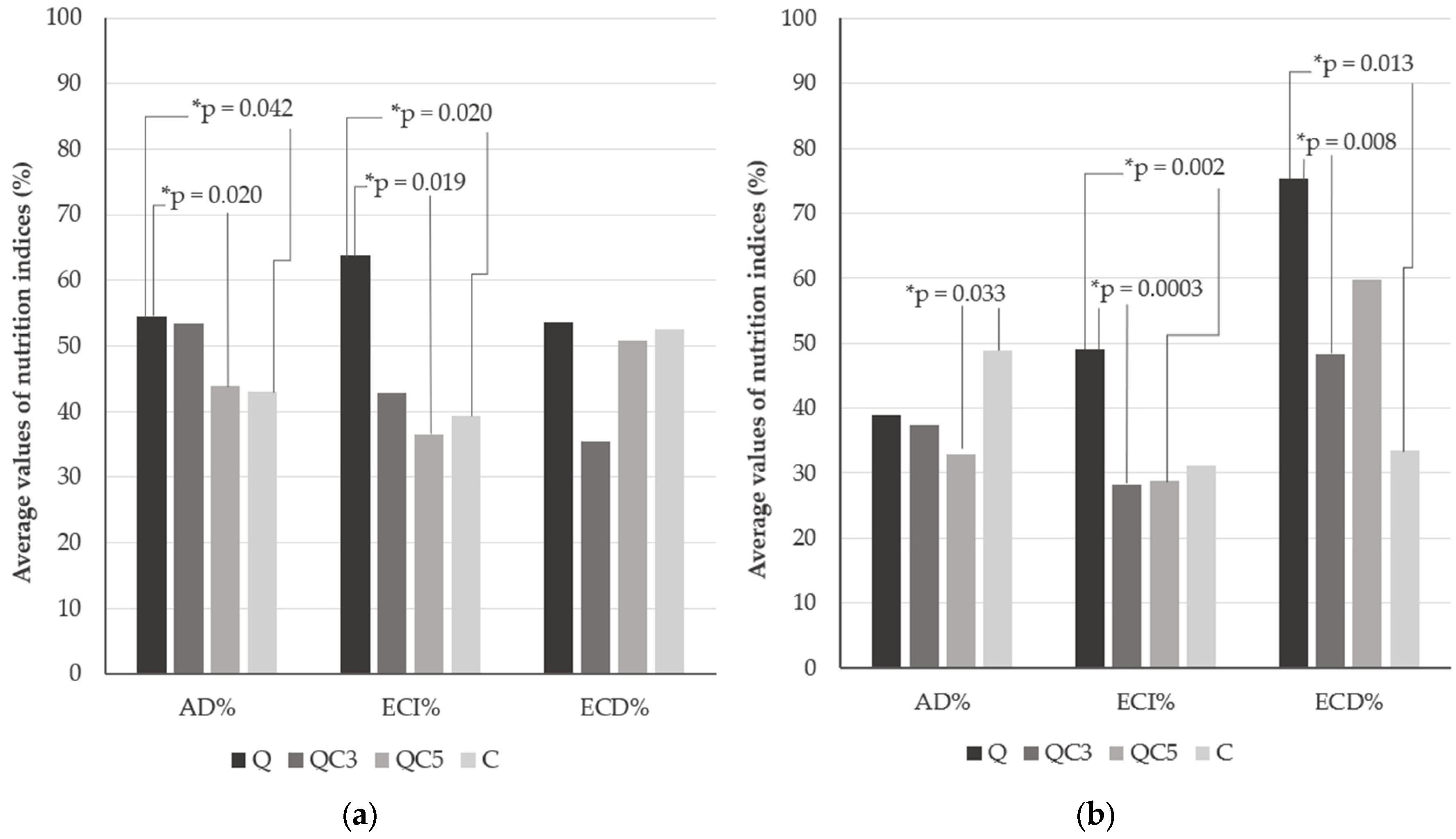
The dry weight of leaves consumed by the larvae was calculated (see Table 5). Notably, this value was the lowest in sample group Q, despite these caterpillars achieving the greatest increase in larval weight. This suggests that the spongy moth larvae are more efficient at utilizing the nutrients from the Turkey oak. We attempted to clarify this relationship using nutrition indices (see Figure 2).
We observed the highest approximate digestibility (AD) among males in the sample group Q, while sample group C had the lowest AD (see Figure 2). For females, the highest AD was observed in the group raised exclusively on Hornbeam (C). Sample group Q showed the highest values for both males and females when the formulas incorporated larval weight (ECI, ECD). The Kruskal–Wallis test indicated that the nutritional indices differed significantly among the sample groups, although the multiple comparisons did not indicate statistically significant differences between all groups.
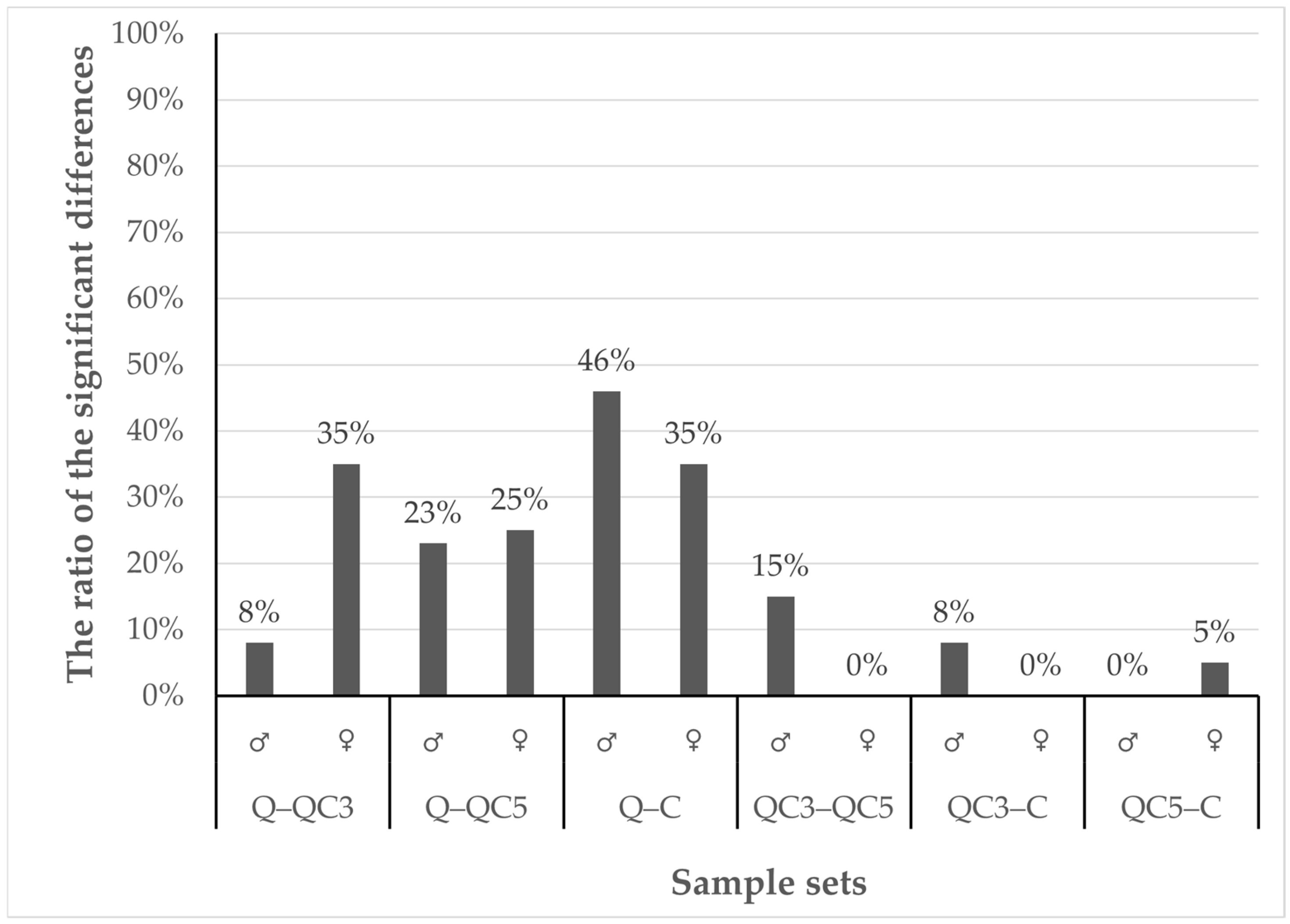
Our analyses revealed notable differences among the sample groups for several developmental variables, and these differences were not consistent between sexes. To summarize these patterns, we examined the proportion of developmental indicators showing statistically significant pairwise differences between sample groups based on post hoc comparisons following the Kruskal–Wallis test. This analysis synthesized previously identified statistically significant post hoc differences without additional testing. Most significant differences were observed between the Q sample group and the other groups, whereas the fewest differences occurred between QC3 and QC5 (see Figure 3).

4. Discussion

Our investigation aimed to explore how host switching influences the development of the spongy moth. To reduce the potential influence of less suitable host plant species on our results, we selected the primary host plants for the spongy moth based on Varga’s research [6]. Specifically, we chose the Turkey oak and the Common hornbeam, both of which were found in the same location where we collected the spongy moth eggs.
Turkey oak was an appropriate choice for the experiment, given both its role as a preferred host for the spongy moth and its superior drought tolerance compared to other important European oaks [37,38]. This drought resistance could enhance the significance of Turkey oak, particularly in the context of climate change [34]. As European forests undergo significant transformations, the distribution range of many tree species is expected to shift, with the Turkey oak’s range likely to expand [35]. These factors could make our results particularly relevant for forestry.
Significant differences were found in the mortality rate and several developmental indices of the sample groups. The group fed exclusively on Common hornbeam had the highest mortality. Only 14 specimens at L2 were obtained, and several larvae and pupae were lost during further rearing. Therefore, the number of available individuals was insufficient to perform host switching in the opposite direction. This situation was confusing because the Common hornbeam is reported to be of the main host plants for the spongy moth [6]. However, some references do not classify certain Hornbeam species as primary host plants for the spongy moth. The American hornbeam (Carpinus caroliniana Walter) has been classified in the second category in terms of host plant suitability [39]. Mosher [12] reported that first-instar larvae died before or upon reaching the third instar in his study; we had a similar experience. Different Hornbeam species have varied in their suitability ranking. According to Miller et al. [40], the Common hornbeam was ranked as more suitable than the American hornbeam in a survey. At the same time, a more recent study compared the suitability of Turkey oak, European beech, and Common hornbeam for the feeding and development of spongy moth (Lymantria dispar) larvae. Among these three tree species, Hornbeam was clearly the least favorable host based on larval developmental and nutritional performance indices. This finding refines earlier observations and may partly explain the patterns observed in our own experiments [41].
The leaves used to feed the caterpillars were collected from a single Turkey oak and a single European hornbeam. These trees do not represent all individuals of their respective species, as leaf quality can vary both among different trees and within the same tree [20]. To minimize this variability, we purposely avoided using leaves from multiple individuals. Therefore, while our results are suitable for analyzing the effects of host switching, they are less appropriate for evaluating and comparing the suitability of different tree species as host plants for the spongy moth.
Host plant switching can occur between generations and even within the same generation. In the former case, if the spongy moth finds a suitable nutritional source, it can develop properly, regardless of the different nutritional sources used by its previous generations. This was confirmed by our earlier feeding experiments [42]. Under laboratory conditions, we successfully reared a spongy moth population from various hosts (Populus x euamericana, Quercus ilex, and Quercus petraea) and locations (Hungary, Croatia, and Austria) with a low mortality rate by feeding them exclusively on Pannónia poplar. These findings align with results from other laboratory experiments in which three different subspecies of Lymantria dispar (L. dispar dispar, L. dispar asiatica, and L. dispar japonica) of six provenances (Greek, American, Russian, Chinese, Korean, and Japanese) were reared on North American coniferous tree species. In this context, differences in development, vigor, and survival were primarily attributed to different nutritional sources. However, provenance was a crucial factor influencing the spongy moth’s growth, vigor, and survival when the same host plant was used. The differences between subspecies were less pronounced and significant in such cases [43]. In this study, we examined the effect of host alternation within a generation on the development of the spongy moth.
A shift to a less suitable host species adversely affects the developmental performance of Lymantria dispar, whereas switching to a more favorable host can exert a beneficial influence on larval development [35]. Moreover, evidence indicates that host quality, rather than the number of host species consumed or the specific timing of host switching, is the primary determinant of performance outcomes in this insect species [33]. Our findings partially support the conclusions drawn in previous studies.
On one hand, we observed elevated mortality in the host-switched groups (QC3, QC5) from the second instar to pupation, particularly in the group whose host changed during the third instar (L3). These groups also exhibited poorer developmental indices compared with the larvae that fed exclusively on Turkey oak (Q), indicating that host switching can markedly influence developmental trajectories.
On the other hand, the pronounced performance differences among the sample groups may largely reflect that Turkey oak is a more suitable host than Common hornbeam under the conditions of our experiment. Consequently, the developmental performance of QC3 and QC5 generally exceeded that of the C group. This experience diverges from earlier observations in which larvae switched to a less suitable host exhibited reduced development compared with controls [35]. Notably, an additional larval stage was observed in two individuals from the QC5 sample group. Variation in the number of larval instars is a common phenomenon in insects, with supernumerary instars occurring more frequently under unfavorable developmental conditions [44]. Moreover, the quality of host plants has been shown to affect the number of larval instars in other foliage-feeding Lepidoptera [45].
We also investigated how the timing of host plant change influenced the outcomes based on the number of significant differences observed. The Kruskal–Wallis test revealed many significant differences between the Q sample group and the other groups (QC3, QC5, and C). However, fewer significant differences were observed between males in the QC3 and QC5 groups, and no differences were noted between females in the QC3 and QC5 groups. In conclusion, the development of the spongy moth is more significantly influenced by tree species and the occurrence of host plant changes than the timing of these changes.
One of our earlier studies [42] revealed significant differences in the development of male and female spongy moth larvae. In the current experiment, we observed that the two sexes reacted differently to changes in host plants. Female larvae demonstrated greater sensitivity to host alterations, as reflected in their weight gain and development time. In contrast, males exhibited more variability in the amount of leaf weight consumed. One possible explanation for the lower weight gain in female larvae is their flightlessness. Females may prefer a more permanent host due to their reduced ability to relocate. It has already been shown that females of the flightless subspecies (Lymantria dispar dispar) are more sensitive to their host plants, and they exhibit more active selection of plants compared to the flying subspecies (Lymantria dispar asiatica and Lymantria dispar japonica) [46].
There were notable differences in larval weight gain between the Q group and the host-switched groups. Female larvae in the QC3 group exhibited the lowest average weight gain. This reduced weight gain in female larvae may ultimately affect the number of viable eggs produced [47]. Consequently, it could lead to a decrease in the population size of the next generation. The compounds in host plants not only impact the larvae currently feeding on the plant but also influence their offspring. A lack of essential nutrients is negatively correlated with the number of eggs laid, which in turn reduces the cumulative nutrient content of the larvae [48]. Since these caterpillars have fewer nutrient reserves, they do not tolerate starvation well, resulting in a lower survival rate. This phenomenon is known as the “maternal effect.” Furthermore, the smaller weight gain observed in female larvae may suggest that flightless females prefer environmental constancy [49,50].
Our findings suggest that spongy moth larvae can develop on a lower leaf volume if they are feeding on suitable plants. This means that a preferred tree species could lose fewer leaves over the year. However, prior research [48] indicates that more suitable food conditions for spongy moths also have a favorable effect on reproductive capacity, which may lead to increased damage in subsequent years.
During outbreaks, when populations are sufficiently large, larvae can completely consume the foliage of their host tree. In such cases, the caterpillars may simply move on to another tree to continue feeding. In mixed forests, this behavior may force spongy moths to change their host plant, negatively affecting their growth. Consequently, feeding in a mixed stand is less advantageous for development than feeding in a homogenous stand. These factors contribute to a decline in population size, potentially resulting in reduced damage the following year.

5. Conclusions

Although the Turkey oak plays an important role in forestry, especially in the context of climate change, it is also essential to consider the benefits of mixed tree species. Our study indicates that the spongy moth, a dominant herbivorous species, thrives when feeding exclusively on Turkey oak. In a mixed forest, if the spongy moth switches to another tree species, such as European hornbeam, it may reduce damage caused by the next generation. Consequently, our study highlights the importance of biodiversity and the value of mixed forests.

Supplementary Materials

The following supporting information can be downloaded at: https://www.mdpi.com/article/10.3390/f17030374/s1, Table S1: Significant differences between the sample groups.

Author Contributions

Conceptualization, R.H., F.L. and K.T.; methodology, R.H. and K.T.; validation, F.L. and K.T.; formal analysis, R.H.; writing—original draft preparation, R.H. and K.T.; writing—review and editing, R.H. and F.L.; visualization, R.H.; supervision, R.H., F.L. and K.T.; project administration, R.H. and F.L. All authors have read and agreed to the published version of the manuscript.

Funding

Our research was supported by the GINOP project “Investigation of the conditions for the cultivation of wood biomass” (GINOP-2.3.3-15-2016-00039).

Data Availability Statement

The raw data supporting the conclusions of this article will be made available by the authors on request once all parts of the survey have been published.

Conflicts of Interest

The authors declare no conflicts of interest.

Abbreviations

The following abbreviations are used in this manuscript:
QThe experimental group in which larvae were continuously fed with Quercus (Turkey oak) throughout their development.
CThe experimental group in which larvae were continuously fed with Carpinus betulus (European hornbeam) throughout their development.
QC3Larvae initially fed with Quercus and then switched to Carpinus betulus at the third instar.
QC5Larvae initially fed with Quercus and then switched to Carpinus betulus at the fifth instar.
L1–L7The larval instars (developmental stages) of Lymantria dispar.

References

  1. Klein, H. Der Schwammspinner: Forstschädling Oder Bioindikator? 1994. Available online: http://www.waldklein.de/w-biol/schwammi-lang.pdf (accessed on 31 January 2026).
  2. Johnson, D.M.; Liebhold, A.M.; Bjørnstad, O.N.; McManus, M.L. Circumpolar variation in periodicity and synchrony among gypsy moth populations. J. Anim. Ecol. 2005, 74, 882–892. [Google Scholar] [CrossRef]
  3. McManus, M.; Csóka, G. History and impact of gypsy moth in North America and comparison to recent outbreaks in Europe. Acta Silv. Lignaria Hung. 2007, 3, 47–64. [Google Scholar] [CrossRef]
  4. Csóka, G.; Hirka, A. History and impact of gypsy moth in North America and comparison to recent outbreaks in Europe. Növényvédelem 2009, 45, 196–201. [Google Scholar]
  5. Csóka, G.; Hirka, A. A Gyapjaslepke (Lymantria dispar L.) Életmódja és Kártétele. 2013. Available online: https://portal.nebih.gov.hu/documents/10182/448777/Gyapjaslepke+eletmodja+es+kartetele+Magyarorszagon.pdf/6ec59615-7c9d-4ed7-be4c-50c5ca289487 (accessed on 31 January 2026).
  6. Varga, F. A Gyapjaspille (Lymantria dispar L.) Táplálkozás-Biológiája és Kártétele Magyarországon. Ph.D. Thesis, University of Forestry and Wood Sciences, Sopron, Hungary, 1975. [Google Scholar]
  7. Perkovich, C.; Ward, D. Protein: Carbohydrate ratios in the diet of gypsy moth Lymantria dispar affect its ability to tolerate tannins. J. Chem. Ecol. 2020, 46, 299–307. [Google Scholar] [CrossRef]
  8. Metz, R.; Tobin, P.C. Effects of temperature and host plant fragmentation on Lymantria dispar population growth along its expanding population front. Biol. Invasions 2022, 24, 2679–2691. [Google Scholar] [CrossRef]
  9. Bauhus, J.; Forrester, D.I.; Gardiner, B.; Jactel, H.; Vallejo, R.; Pretzsch, H. Ecological stability of mixed-species forests. In Mixed-Species Forests; Springer: Berlin/Heidelberg, Germany, 2017; pp. 337–382. [Google Scholar]
  10. Blanco-Rodríguez, M.Á.; Espelta, J.M. Tree species composition and management influence short-term resilience to defoliation by Lymantria dispar L. in oak forests. For. Ecol. Manag. 2022, 520, 120399. [Google Scholar] [CrossRef]
  11. Varga, F. Adatok a gyapjaspille (Lymantria dispar L.) táplálkozásbiológiájához és ennek összefüggése a tömegszaporodással. Erdészeti és Faipari Egyetem Tudományos Közleményei 1969, 1, 71–82. [Google Scholar]
  12. Mosher, F.H. Food Plants of the Gypsy Moth in America; USDA Bulletin No. 250; USDA: Washington, DC, USA, 1915.
  13. Tavaszi, J. A gyapjaslepke (Lymantria dispar L.) kártétele, táplálkozása és rajzásdinamikája. Erdészeti Lapok 1995, 141, 8–9. [Google Scholar]
  14. Csóka, G.; Ambrus, A.A. Erdei fa- és cserjefajok szerepe a herbivor rovarok fajgazdagságának fenntartásában. In Az Erdőgazdálkodás Hatása az Erdők Biológiai Sokféleségére; Korda, M., Ed.; Duna–Ipoly National Park Directorate: Budapest, Hungary, 2016; pp. 155–192. [Google Scholar]
  15. Csóka, G. Lombfogyasztó lepkék tömeges fellépései tölgyeseinkben az 1961–1993 közötti időszakban. Erdészeti Lapok 1995, 130, 331–333. [Google Scholar]
  16. Győrfi, J. Adatok a gyapjaspille (Lymantria dispar L.) táplálkozási biológiájához. Erdészeti Kutatások 1960, 56, 279–291. [Google Scholar]
  17. Győrfi, J. A gyapjaspille kártétele. Az Erdő 1958, 93, 350–353. [Google Scholar]
  18. Markóné Nagy, K. A tápnövény mint meghatározó tényező a gyapjaslepke (Lymantria dispar L.) tömegszaporodásában. Növényvédelem 2010, 46, 532–539. [Google Scholar]
  19. Jermy, T.; Balázs, K. A Növényvédelmi Állattan Kézikönyve 4/B.; Akadémiai Kiadó: Budapest, Hungary, 1993. [Google Scholar]
  20. Csóka, G.; Pödör, Z.; Nagy, G.; Hirka, A. Canopy recovery of pedunculate oak, turkey oak and beech trees after severe defoliation by gypsy moth (Lymantria dispar): Case study from Western Hungary. For. J. 2015, 61, 143–148. [Google Scholar] [CrossRef]
  21. Fite, K. Gypsy Moth Host Preferences. Technical Report; Bartlett Tree Research Laboratories. 2018. Available online: https://www.bartlett.com/dynamic/pdf/technical-reports/Tree-Host-Preferences-of-Gypsy-Moth.pdf (accessed on 31 January 2026).
  22. Milanovic, S.; Popovic, M.; Dobrosavljevic, J.; Kostic, I.; Lazarevic, J. Desperate times call for desperate measures: Short-term use of the common ash tree by gypsy moth larvae (Lepidoptera: Erebidae) under density and starvation stress. Arch. Biol. Sci. 2020, 72, 63–69. [Google Scholar] [CrossRef]
  23. Daryaei, M.G.; Darvishi, S.; Etebari, K.; Salehi, M. Host preference and nutrition efficiency of the gypsy moth, Lymantria dispar L. (Lymantriidae: Lepidoptera), on different poplar clones. Turk. J. Agric. For. 2008, 32, 469–477. [Google Scholar]
  24. Milanović, S.; Lazarević, J.; Popović, Z.; Miletić, Z.; Kostić, M.; Radulović, Z.; Karadžić, D.; Vuleta, A. Preference and performance of the larvae of Lymantria dispar (Lepidoptera: Lymantriidae) on three species of European oaks. Eur. J. Entomol. 2014, 111, 371–378. [Google Scholar] [CrossRef]
  25. Feeny, P. Seasonal changes in oak leaf tannins and nutrients as a cause of spring feeding by winter moth caterpillars. Ecology 1970, 51, 565–581. [Google Scholar] [CrossRef]
  26. Niemelä, P. Seasonal patterns in the incidence of specialism: Macrolepidopteran larvae on Finnish deciduous trees. Ann. Zool. Fennici 1983, 20, 199–202. [Google Scholar]
  27. Herms, D.A.; Mattson, W.J. The dilemma of plants: To grow or defend. Q. Rev. Biol. 1992, 67, 283–335. [Google Scholar] [CrossRef]
  28. Koricheva, J.; Nykänen, H.; Gianoli, E. Meta-analysis of trade-offs among plant antiherbivore defenses: Are plants jacks-of-all-trades, masters of all? Am. Nat. 2004, 163, E64–E75. [Google Scholar] [CrossRef]
  29. Ambrus, A. Pionír fafajok alkotta erdőtársulások szerepe domb- és hegyvidéki erdei életközösségek lombfogyasztó faegyütteseinek szemszögéből. In Az Erdőgazdálkodás Hatása az Erdők Biológiai Sokféleségére; Korda, M., Ed.; Danube–Ipoly National Park Directorate: Budapest, Hungary, 2016; pp. 193–202. [Google Scholar]
  30. Rossiter, M.; Schultz, J.C.; Baldwin, I.T. Relationships among defoliation, red oak phenolics, and gypsy moth growth and reproduction. Ecology 1988, 69, 267–277. [Google Scholar] [CrossRef]
  31. Markóné Nagy, K. A Gyapjaslepke (Lymantria dispar L.) Tömegszaporodásának (2003–2006) Elemzése, Valamint Táplálkozásbiológiai Vizsgálatok Gyapjaslepkével és Apácalepkével (Lymantria monacha L.). Ph.D. Thesis, University of West Hungary, Sopron, Hungary, 2013. [Google Scholar]
  32. Faidah, A.N.; Zhao, H.; Hasibagen; Sun, L.; Cao, C. Effects of elevated CO2 treatment of Populus davidiana × P. bolleana on growth and detoxifying enzymes in gypsy moth, Lymantria dispar. Comp. Biochem. Physiol. C 2021, 248, 109079. [Google Scholar] [CrossRef] [PubMed]
  33. Stoyenoff, J.L.; Witter, J.A.; Montgomery, M.E.; Chilcote, C.A. Effects of host switching on gypsy moth (Lymantria dispar (L.)) under field conditions. Oecologia 1994, 97, 143–157. [Google Scholar] [CrossRef] [PubMed]
  34. Stoyenoff, J.L.; Witter, J.A.; Montgomery, M.E. Nutritional indices in the gypsy moth (Lymantria dispar (L.)) under field conditions and host switching situations. Oecologia 1994, 97, 158–170. [Google Scholar] [CrossRef] [PubMed]
  35. Milanović, S.; Janković-Tomanić, M.; Kostić, I.; Kostić, M.; Morina, F.; Živanović, B.; Lazarević, J. Behavioural and physiological plasticity of gypsy moth larvae to host plant switching. Entomol. Exp. Appl. 2016, 158, 152–162. [Google Scholar] [CrossRef]
  36. Waldbauer, G.P. The consumption and utilization of food by insects. In Insect Physiology; Academic Press: Urbana, IL, USA, 1968; pp. 229–288. [Google Scholar]
  37. Móricz, N.; Illés, G.; Mészáros, I.; Garamszegi, B.; Berki, I.; Bakacsi, Z.; Kámpel, J.; Szabó, O.; Rasztovits, E.; Cseke, K.; et al. Different drought sensitivity traits of young sessile oak (Quercus petraea (Matt.) Liebl.) and turkey oak (Quercus cerris L.) stands along a precipitation gradient in Hungary. For. Ecol. Manag. 2021, 492, 119165. [Google Scholar] [CrossRef]
  38. Kostić, S.; Levanič, T.; Orlović, S.; Matović, B.; Stojanović, D.B. Turkey oak (Quercus cerris L.) is more drought tolerant and better reflects climate variations compared to pedunculate oak (Quercus robur L.) in lowland mixed forests in Northwestern Serbia: A stable carbon isotope ratio (Δ13C) and radial growth approach. Ecol. Indic. 2022, 142, 109242. [Google Scholar] [CrossRef]
  39. Liebhold, A.M.; Gottschalk, K.W.; Muzika, R.-M.; Montgomery, M.E.; Young, R.; O’Day, K.; Kelley, B. Suitability of North American Tree Species to Gypsy Moth: A Summary of Field and Laboratory Tests; USDA Forest Service: Asheville, NC, USA, 1995.
  40. Miller, F.; Wiegrefe, S. Susceptibility, preference, and suitability of Carpinus and Ostrya taxa for gypsy moth larvae (Lepidoptera: Lymantriidae). Great Lakes Entomol. 2021, 54, 5. [Google Scholar] [CrossRef]
  41. Milanović, S.; Miletić, Z.; Marković, Č.; Šešlija Jovanović, D.; Trailović, Z.; Jankovský, L.; Lazarević, J. Suitability of turkey oak, European beech, and hornbeam to gypsy moth feeding. Forests 2022, 13, 1006. [Google Scholar] [CrossRef]
  42. Hillebrand, R.; Tuba, K. Különböző tápnövényről származó gyapjaslepke (Lymantria dispar) populációk fejlődésmenete Pannónia nyáron. Növényvédelem 2013, 49, 101–109. [Google Scholar]
  43. Keena, M.A.; Richards, J.Y. Comparison of survival and development of gypsy moth Lymantria dispar L. (Lepidoptera: Erebidae) populations from different geographic areas on North American conifers. Insects 2020, 11, 260. [Google Scholar] [CrossRef]
  44. Esperk, T.; Tammaru, T.; Nylin, S. Intraspecific variability in number of larval instars in insects. J. Econ. Entomol. 2007, 100, 627–645. [Google Scholar] [CrossRef] [PubMed]
  45. Tanino-Springsteen, M.M.; Vyas, D.K.; Mitchell, A.; Durso, C.; Murphy, S.M. Investigating the effect of host plant identity on instar number in fall webworm, a common generalist herbivore. Environ. Entomol. 2024, 53, 188–194. [Google Scholar] [CrossRef]
  46. Clavijo McCormick, A.; Arrigo, L.; Eggenberger, H.; Mescher, M.C.; De Moraes, C.M. Divergent behavioural responses of gypsy moth (Lymantria dispar) caterpillars from three different subspecies to potential host trees. Sci. Rep. 2019, 9, 8953. [Google Scholar] [CrossRef]
  47. Hillebrand, R.; Tuba, K.; Hasulyó, P.; Lakatos, F. A lárvakori táplálkozás és a tojásprodukció összefüggése különböző gyapjaslepke (Lymantria dispar L.) populációkban. In A Magyar Agrár Felsőoktatás Aktuális Kérdései PhD-s Szemmel; Doktoranduszok Országos Szövetsége: Keszthely, Hungary, 2014. [Google Scholar]
  48. Varga, F. A gyapjaslepke (Lymantria dispar L.) erdeink veszélyes kártevője. Növényvédelem 1986, 22, 263. [Google Scholar]
  49. Keena, M.A.; Odell, T.M.; Tanner, J.A. Environmentally based maternal effects are the primary factor in determining the developmental response of gypsy moth (Lepidoptera: Lymantriidae) to dietary iron deficiency. Ann. Entomol. Soc. Am. 1998, 91, 710–718. [Google Scholar] [CrossRef]
  50. Diss, A.L.; Kunkel, J.G.; Montgomery, M.E.; Leonard, D.E. Effects of maternal nutrition and egg provisioning on parameters of larval hatch, survival and dispersal in the gypsy moth, Lymantria dispar L. Oecologia 1996, 106, 470–477. [Google Scholar] [CrossRef] [PubMed]
Figure 1. Mortality rate in larval (L2–L7) and pupal stages. Abbreviations: Q—fed with Quercus; QC3—fed with Quercus, switched to Carpinus at L3; QC5—fed with Quercus, switched to Carpinus at L5; C—fed with Carpinus.
Forests 17 00374 g001
Figure 2. Average values of nutrition indices of male (a) and female (b) spongy moths reared on different host plants throughout the entire larval development period measured. * Significant differences between sample groups based on the multiple comparisons (p ≤ 0.05) are indicated above the columns. Detailed results are provided in Supplementary Material Table S1. Abbreviations: Q—fed with Quercus; QC3—fed with Quercus, switched to Carpinus at L3; QC5—fed with Quercus, switched to Carpinus at L5; C—fed with Carpinus.
Forests 17 00374 g002
Figure 3. Ratio of significant differences regarding the examined development indices. The bars show the proportion of developmental variables with significant pairwise differences between sample groups, based on previously reported post hoc tests; no additional statistical testing was performed. Abbreviations: Q—fed with Quercus; QC3—fed with Quercus, switched to Carpinus at L3; QC5—fed with Quercus, switched to Carpinus at L5; C—fed with Carpinus.
Forests 17 00374 g003
Table 1. The main features of the dataset and their designations.
Sample Groups/Host PlantsTime of Changing Host PlantDataset Designations
Turkey oak 1Q
Turkey oak and Common
Hornbeam
L3 (L4)QC3
Turkey oak and Common
Hornbeam
L5QC5
Common hornbeam 2C
1 Turkey oak = Quercus cerris; 2 Common hornbeam = Carpinus betulus.
Table 2. Duration of development of spongy moths reared on different host plants.
Sample Sets 4Term of Larval Development (Days)Term of Pupal Development (Days)
NAverageMin 1Max 1SD 2NAverageMin 1Max 1SD 2
Males
Q154437534.6884151715201.3452
QC354644502.302251614191.9494
QC5114944543.8542111612171.5667
C75249552.267871514170.9759
Significant differences 3:L1–L3: Q–C, QC3–C; L5: Q–QC3; entire larval development time: Q–C; entire development time: Q–C.
Females
Q115042564.1187111513160.9244
QC3165446635.0658161311161.6533
QC5105442687.0087101311151.0541
C36358674.509231413140.5774
Significant differences 3:L1–L4: Q–C; entire larval development time: Q–C; development time of pupa: Q–QC3, Q–QC5; entire development time: Q–C.
1 end values; 2 standard deviation; 3 based on Kruskal–Wallis test (p ≤ 0.05) and post hoc pairwise comparisons of mean ranks. Detailed results are provided in Supplementary Material Table S1. 4 Q—fed with Quercus; QC3—fed with Quercus, switched to Carpinus at L3; QC5—fed with Quercus, switched to Carpinus at L5; C—fed with Carpinus.
Table 3. The weight gain of caterpillars from L4 to L7 larval instars.
Sample Set 4L4L5L6L7Entire Larval Development 2
NAverageNAverageNAverage NAverageMinMaxSD
Males
Q150.1311150.3274 150.45850.37520.59430.0641
QC350.128850.3063 50.43510.35220.54020.0747
QC5110.1016100.2945 110.39120.16160.69140.1556
10.110510.2407
C70.081970.2945 70.37640.29130.48990.0825
Significant differences 3:-
Females
Q 110.3576111.0752 111.43281.00081.89450.2931
QC3 160.2170160.6174 160.83440.51491.36670.2406
QC5 100.275990.5428 100.87670.64971.48660.2368
10.32890.5022
C 30.12673 10.4462 30.85980.58031.06040.2496
Significant differences 3:L5: Q–QC3, Q–C; L6: Q–QC3, Q–QC5, Q–C; Entirely growth of larva weight: Q–QC3, Q–QC5.
1 two L7 caterpillars were in the group. 2 larvae pupated at different instars were treated together. 3 based on the Kruskal–Wallis test (p ≤ 0.05) and the post hoc pairwise comparisons of mean ranks. Detailed results are provided in Supplementary Material Table S1. 4 Q—fed with Quercus; QC3—fed with Quercus, switched to Carpinus at L3; QC5—fed with Quercus, switched to Carpinus at L5; C—fed with Carpinus.
Table 4. Weight of spongy moth pupae reared on different host plants.
Sample Set 2N (db)Average Pupal WeightEnd Value of Pupal Weight (g)SD of Pupal Weight
gminmaxg
Males
Q150.42740.33210.54900.0604
QC350.36550.31520.42660.0458
QC5110.31800.20840.43220.0610
C70.30170.26800.33560.0301
Significant differences 1:Pupal weight: Q–QC3, Q–QC5, Q–C
Females
Q111.20270.84231.90820.3251
QC3160.61260.31330.82870.1300
QC5100.63180.52280.78660.0959
C30.52730.45000.57290.0673
Significant differences 1:Pupal weight: Q–QC5, Q–C
1 based on the Kruskal–Wallis test (p ≤ 0.05) and the post hoc pairwise comparisons of mean ranks. Detailed results are provided in Supplementary Material Table S1. 2 Q—fed with Quercus; QC3—fed with Quercus, switched to Carpinus at L3; QC5—fed with Quercus, switched to Carpinus at L5; C—fed with Carpinus.
Table 5. The dry weight of leaves consumed by spongy moths reared on different host plants.
Sample Set 4L4L5L6L7Entire Larval Development 2
NAverageNAverageNAverageAverageNAverageMinMaxSD
Males
Q150.1667150.5647 150.73150.53371.00640.1358
QC350.253950.9336 51.18760.87951.71010.3349
QC5110.1656100.8618 111.10750.72421.85240.3182
10.214810.8822
C70.167870.7725 70.94030.671.27040.2025
Significant differences 3:L5: Q–QC3; Q–QC5; Entire leaf weight consumed: Q–QC3; Q–QC5.
Females
Q 110.3278111.8027 112.13051.01262.86830.6951
QC3 160.4572161.957 162.41421.6253.32240.4841
QC5 100.473991.7126 102.2981.70242.96940.4336
10.81251.9271
C 30.22973 11.1416 32.60212.0023.45330.7576
Significant differences 3:-
1 two L7 caterpillars were in group C; 2 larvae pupated at different larval instars were treated together; 3 based on the Kruskal–Wallis test (p ≤ 0.05) and the post hoc pairwise comparisons of mean ranks. Detailed results are provided in Supplementary Material Table S1. 4 Q—fed with Quercus; QC3—fed with Quercus, switched to Carpinus at L3; QC5—fed with Quercus, switched to Carpinus at L5; C—fed with Carpinus.
Disclaimer/Publisher’s Note: The statements, opinions and data contained in all publications are solely those of the individual author(s) and contributor(s) and not of MDPI and/or the editor(s). MDPI and/or the editor(s) disclaim responsibility for any injury to people or property resulting from any ideas, methods, instructions or products referred to in the content.