Article

Correlation Between Rhizosphere Soil Properties and Microbial Communities of Different Coffea arabica Cultivars

1
College of Tropical Crops, Yunnan Agricultural University, Pu’er 665099, China
2
Yunnan Key Laboratory of Coffee, Yunnan Agricultural University, Pu’er 665099, China
3
Science and Technology Talent and Platform Program, Yunnan Province Coffee Green Processing and Quality Control Innovation Team, Yunnan Agricultural University, Kunming 650201, China
*
Author to whom correspondence should be addressed.
Forests 2026, 17(3), 291; https://doi.org/10.3390/f17030291
Submission received: 5 January 2026 / Revised: 10 February 2026 / Accepted: 13 February 2026 / Published: 26 February 2026
(This article belongs to the Section Forest Soil)

Abstract

This study investigated the differences in rhizosphere soil properties and their associations with microbial communities across eight Coffea arabica cultivars cultivated under uniform conditions at the Kangping Education and Research Base in Pu’er, Yunnan. We assessed arbuscular mycorrhizal fungi (AMF) colonization and spore density, analyzed soil chemical properties—including pH, organic matter (OM), total nitrogen (TN), total phosphorus (TP), total potassium (TK), alkali-hydrolyzable nitrogen (AN), available phosphorus (AP), available potassium (AK), and slowly available potassium (SK)—and characterized microbial communities via high-throughput sequencing. The findings of this study demonstrate that coffee variety significantly influences the contents of available nutrients (AN, AP, AK) and OM in the rhizosphere soil. Sequencing indicated that Ascomycota dominated the fungal community, Chloroflexi and Proteobacteria were the primary bacterial phyla, and Glomus and Sclerocystis were the predominant AMF genera. Analysis of alpha diversity showed that in the bacterial community, S8 exhibited the highest diversity and richness, while S6 showed the lowest. For the fungal community, S6 had the highest diversity, S2 displayed the highest richness, and S5 showed the lowest values for both diversity and richness. Within the AMF community, S8 demonstrated the highest diversity, S7 exhibited the highest richness, and S6 had the lowest diversity and richness values. Overall, bacterial diversity surpassed fungal diversity. Redundancy analysis identified AK as a common key factor influencing both bacterial and fungal communities. Besides AK, OM and TN were also significant drivers for the fungal and bacterial communities, respectively, while the AMF community was most strongly associated with SK

1. Introduction

Coffea arabica is one of the world’s major coffee species, and its cultivation in China is predominantly concentrated in Yunnan Province. China’s major coffee-growing regions include Yunnan and Hainan provinces, among which Yunnan accounts for over 98% of the nation’s total coffee planting area, output, and agricultural value [1,2]. However, the industry faces significant challenges threatening yield, quality, and sustainable development, including climate change [3,4], expansion of monoculture areas [5], soil degradation [6] and frequent disease outbreaks [7]. To address these challenges, it is essential to shift from a management model dependent on chemical inputs toward a systemic management strategy based on the regulation of rhizosphere microbial ecology. This necessitates a focused attention on the rhizosphere—a critical interface for interactions among plant roots, soil, and microorganisms, which plays a central role in plant health and ecosystem functioning.
The rhizosphere is a critical zone for plant–soil–microbiome interactions, playing vital roles in plant stress response, nutrient acquisition, and shaping the microbial community [8]. Soil physicochemical properties are key indicators of soil quality and fertility [9]. Essential nutrients like nitrogen, phosphorus, and potassium are fundamental for plant growth, with their availability directly influencing soil health and plant performance [10,11]. Soil pH and organic matter are interconnected properties crucially affecting the soil micro-ecology and plant growth [12,13]. Rhizosphere microorganisms, the communities inhabiting root-associated soil [14], are pivotal in material cycles and energy flows between plants and soil [15,16,17]. They significantly impact plant nutrient uptake [18], growth [19], and stress resilience [20]. Plants modify rhizosphere properties (e.g., available P, K, pH) via root exudates and nutrient absorption, thereby influencing microbial community structure [21,22]. Conversely, microbial activities feedback to affect soil properties and plant growth [23,24]. Rhizosphere bacteria contribute to nutrient cycling through nitrogen fixation, organic matter decomposition [25], and mineral weathering [26], while also enhancing plant resistance via induced systemic resistance [27] or antibiotic production [28]. Fungi aid plants by forming mycorrhizal symbioses [29] and accelerating litter decomposition [30]. Arbuscular mycorrhizal fungi (AMF), belonging to the Glomeromycota, form symbiotic associations with most land plants [31]. They extend a hyphal network into the soil, thereby enhancing plant access to water and mineral nutrients (especially phosphorus) [32], enhancing stress tolerance, and promoting growth, while relying on host-derived photosynthates [33,34]. Crucially, the formation and function of the rhizosphere microbiome are not passive processes, but can be actively regulated by the host plant itself [35].
Advances in molecular biology have accelerated research into plant–rhizosphere interactions. Studies report varietal differences in root exudates and soil enzyme activities influencing soil microbial communities [36,37]. Furthermore, beneficial microorganisms such as Trichoderma [38], Bacillus [39], and Actinomycetes [40] have been identified in the coffee rhizosphere. However, current research on coffee remains constrained within specific paradigms. Relevant studies typically focus on a single microbial group—for example, analyzing arbuscular mycorrhizal fungi and associated fungal communities under different management practices [41], or isolating specific biocontrol agents such as Trichoderma [38] or Actinomycetes [40]—or on a single environmental driver, such as assessing the response of bacterial communities to altitudinal gradients [42]. Consequently, there is a clear lack of systematic research that simultaneously investigates how multiple commercially important Coffea arabica cultivars shape the physicochemical environment of the rhizosphere and the integrated structure of bacterial, fungal, and arbuscular mycorrhizal fungal communities. This gap can be attributed to methodological evolution. Early culture-dependent methods [39,40] possess inherent limitations in capturing microbial community complexity, while the application of high-throughput sequencing technology for holistic microbiome analysis in coffee rhizosphere research has only recently been developed [41,42]. To elucidate the correlations and differences in rhizosphere soil physicochemical properties and microbial communities among different Coffea arabica cultivars, it is essential to conduct multi-cultivar, replicated field comparisons under uniform conditions. Nevertheless, studies adhering to such a rigorous design remain notably scarce.
To address this knowledge gap, the objectives of this study were as follows: (1) to examine the differences in arbuscular mycorrhizal fungi (AMF) colonization and spore density among different cultivars; (2) to assess the variations in rhizosphere soil properties and microbial diversity; and (3) to analyze the influence of soil properties on microbial community structure. To achieve these objectives, soil chemical analysis and high-throughput sequencing techniques were integrated within a uniformly designed field experiment.

2. Materials and Methods

2.1. Site Description

This study was conducted at the Kangping Education and Research Base (22.57° N, 101.48° E; 990.70 m asl) in Jiangcheng County, Pu’er, China. The region has a subtropical mountainous monsoon humid climate with distinct dry/wet seasons. According to the Administrative Divisions Dictionary of the People’s Republic of China (Yunnan Province Volume), the mean annual climate figures are 18.10 °C for temperature, 2212.00 mm for precipitation, and 1359.50 mm for evaporation. The soil is lateritic red soil derived from sandstone and shale. All sampled coffee plants were 5-year-old, visually robust, and exhibited uniform growth vigor, with comparable height and canopy size and no visible disease or pest damage. All agronomic practices, including fertilization, irrigation, and pruning, were consistent across the plantation. For this experiment, fine roots and rhizosphere soils were collected from eight Coffea arabica cultivars (S1: 132, S2: 370, S3: 363, S4: 366, S5: 011, S6: 39x, S7: 316, S8: 036). These cultivars represent the predominant commercial varieties extensively cultivated in the Pu’er region in recent years and encompass key genetic lines, including the Catuai series (316, yellow Catuai; 011, Catuai 140), the Sarchimor series (370, 363, 39X, 366), Castillo (036), and a yellow-fruited variant selection of MEXICO-9 (132).

2.2. Sampling

Sampling was conducted on 24 September 2023, during the late rainy season to capture a relatively stable rhizosphere microbial community. Soil and root samples were collected at a distance of 15 cm from the coffee plant base—targeting the rhizosphere zone with higher fine root density—and at a depth of 10–30 cm to encompass the main soil volume occupied by absorbing roots. To avoid overlap between the rhizosphere zones of adjacent plants, sampled coffee plants were spaced at least 3 m apart both within and between rows. Sampling points (15 cm from the plant base) were oriented away from neighboring plants to ensure that the collected rhizosphere soil originated exclusively from the target cultivar. A five-point sampling method was applied per cultivar. Samples from the five points were thoroughly mixed to form one composite replicate. Three biological replicates were prepared for each of the eight coffee cultivars, resulting in a total of 120 sampled plants (8 cultivars × 5 plants per composite sample × 3 replicates), i.e., 15 individual plants per cultivar. Before sampling, surface debris was removed. Soil within the target depth was then excavated using a small shovel. Roots were gently shaken to dislodge adhering soil, which was defined as the rhizosphere soil. Both the rhizosphere soil and the corresponding roots were separately placed into pre-labeled zip-lock bags. All samples were immediately stored in an icebox and transported to the laboratory.

2.3. Determination of AMF Colonization in Coffee Roots and Spore Density in Rhizosphere Soil

The root AMF colonization rate was determined using a modified lactic acid–glycerol method according to Phillips and Hayman (1970).
AMF colonization (%) = (number of colonized root segments/total number of root segments examined) × 100%
Spore isolation was performed using the wet-sieving and decanting technique described by Gerdemann and Nicolson (1963), followed by observation and counting under a stereomicroscope.
Spore density (spores/g) = Total number of spores counted/Dry weight of soil sample (g)

2.4. Determination of Rhizosphere Soil Physicochemical Properties of Different Coffee Cultivars

Soil physicochemical properties were determined according to standard methods described by Bao (2000) [43]. Specifically, soil pH was measured potentiometrically using a pH meter at a soil-to-water ratio of 1:2.5. Soil organic matter content was determined by the potassium dichromate volumetric method (external heating method). The total nitrogen content was analyzed using the Kjeldahl digestion method. Alkali-hydrolyzable nitrogen was measured by the alkali diffusion method. Total phosphorus content was quantified via sulfuric–perchloric acid digestion. Available phosphorus was extracted with the double acid method and determined by molybdenum–antimony spectrophotometry. Total potassium content was measured by NaOH fusion followed by flame photometry. Available potassium was extracted with ammonium acetate and quantified by flame photometry. Slowly available potassium was extracted with 1 mol/L hot nitric acid and measured by flame photometry.

2.5. Determination of Rhizosphere Soil Microbial Community Composition in Different Coffee Cultivars

High-throughput sequencing of the fungal community in the rhizosphere soil of different coffee cultivars was conducted by Novogene Co., Ltd. (Beijing, China). The ITS1 region of fungal ribosomal DNA was amplified using the primers ITS1F (5′-GGAAGTAAAAGTCGTAACAAGG-3′) and ITS2 (5′-GCTGCGTTCTTCATCGATGC-3′) [44]. The specific procedures included: total genomic DNA was extracted using a soil DNA extraction kit, followed by amplification with a pre-optimized high-fidelity PCR system (annealing at 55 °C for 30–35 cycles). The amplification products were purified using magnetic beads to construct sequencing libraries, which were ultimately sequenced on an Illumina NovaSeq platform using a paired-end strategy. Sequencing of the bacterial and arbuscular mycorrhizal fungal (AMF) communities was performed by Majorbio Bio-Pharm Technology Co., Ltd. (Shanghai, China). For bacteria, the V3–V4 region of the 16S rRNA gene was amplified in a single-step PCR using primers 338F (5′-ACTCCTACGGGAGGCAGCAG-3′) and 806R (5′-GGACTACHVGGGTWTCTAAT-3′) [45] (annealing at 55 °C for 25–30 cycles). For AMF, a nested PCR targeting a partial region of the 18S rRNA gene was employed. The first round of amplification used the universal primers AML1F/AML2R (annealing at 55 °C for 32 cycles), and the second round used the specific primers AMV4.5NF (5′-AAGCTCGTAGTTGAATTTCG-3′) and AMDGR (5′-CCCCAACTATCCCTATTAATCAT-3′) [46] (annealing at 55 °C for 25 cycles). All PCR products were verified by 2% agarose gel electrophoresis, and target bands were excised and purified for library construction. The resulting libraries were then subjected to paired-end sequencing on an Illumina MiSeq platform.

2.6. Data Processing and Analysis

Bioinformatics processing of raw sequencing data was performed as follows: primers and low-quality sequences were first removed using Cutadapt (v3.3); paired-end reads were then merged using FLASH (v1.2.11), followed by further quality control with fastp (v0.23.1). After chimera removal with VSEARCH (v2.16.0), denoising was conducted using the DADA2 module in QIIME 2 (v2022.2) to generate an amplicon sequence variant (ASV) table. Representative sequences for bacterial and fungal ASVs were taxonomically annotated via the feature-classifier plugin in QIIME 2 against the SILVA (v138) 16S rRNA database and the UNITE (v8.2) ITS database, respectively.
Alpha diversity indices (e.g., Chao1) and beta diversity (based on Bray–Curtis distance) were calculated in QIIME 2. Differences in community structure were visualized using principal coordinate analysis.
Statistical analysis was performed using SPSS 26.0 (IBM Corp, Armonk, NY, USA). One-way ANOVA was used to test the significance of differences in various indices among different coffee cultivars, followed by Tukey’s test for post hoc multiple comparisons (p < 0.05). Results are presented as mean ± standard deviation.

3. Results

3.1. Analysis of Rhizosphere Soil Physicochemical Properties Among Different Coffee Cultivars

Among the rhizosphere soil physicochemical properties of different coffee cultivars in the experimental site, except for pH (4.37–4.48) and TN (1.19–1.74), which showed no significant differences, all other indicators OM, TP, TK, AN, AP, and AK exhibited significant differences (p < 0.05). Among the cultivars, S6 had the highest AN contents, S7 showed the highest levels of OM, TN, TP, TK, and AP, and S8 had the highest pH. In contrast, S1 had the lowest pH, S2 had the lowest TP and TK contents, and S3 had the lowest contents of AK, AN, TN, and OM (Table 1).

3.2. Spore Density and Colonization of AMF in the Rhizosphere of Different Coffee Cultivars

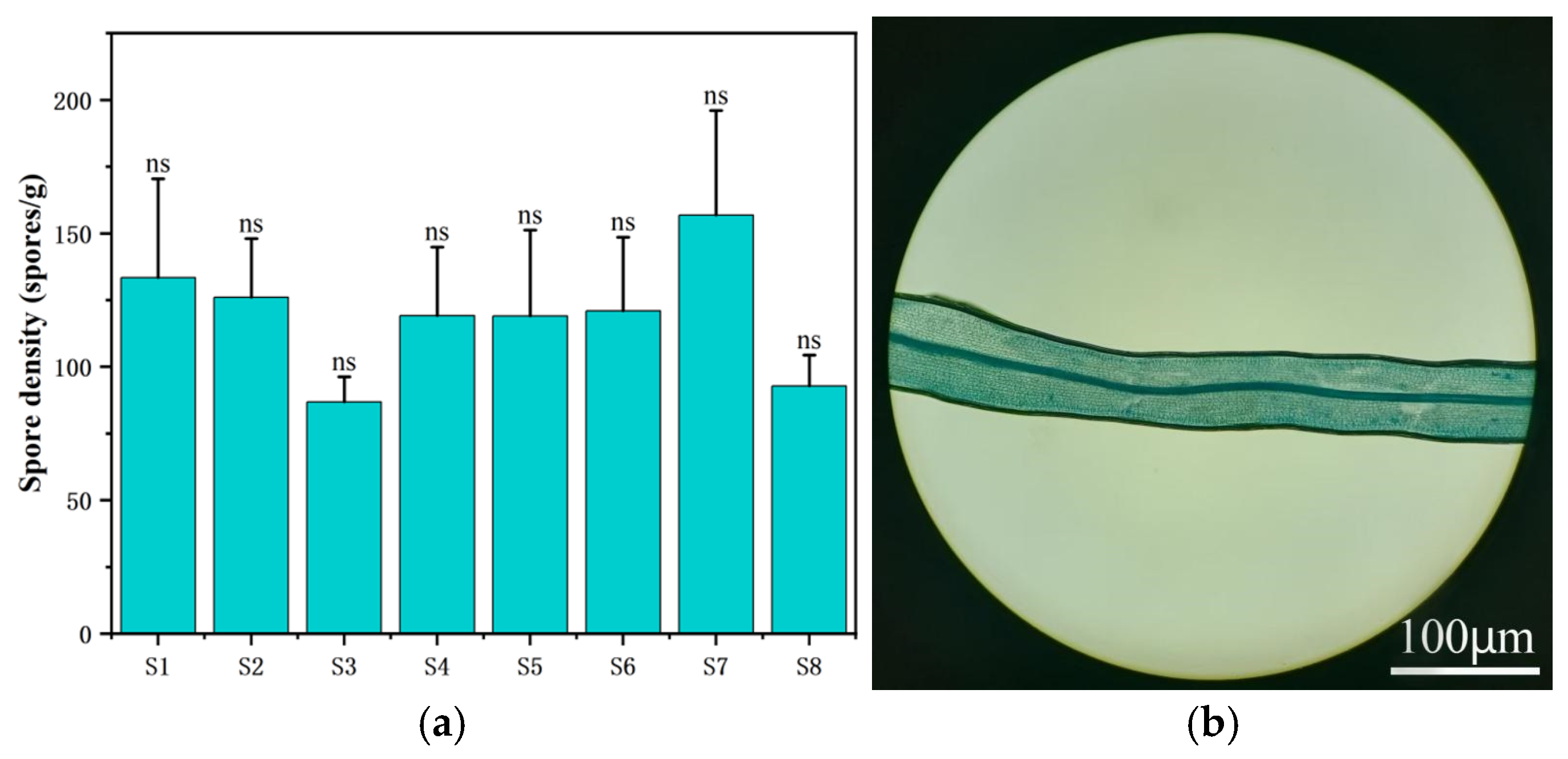
No significant differences (p > 0.05) were observed in the arbuscular mycorrhizal fungi (AMF) spore density in the rhizosphere soil among the different coffee cultivars in this experimental site. The average AMF spore density in the coffee rhizosphere soil was 123 spores per gram. Among the cultivars, S7 exhibited the highest spore density, while S3 showed the lowest. The AMF spore densities in the rhizosphere soil of the eight coffee cultivars were as follows: S7 (160 spores/g) > S1 (136 spores/g) > S2 (130 spores/g) > S6 (124 spores/g) > S4 (123 spores/g) > S5 (122 spores/g) > S8 (96 spores/g) > S3 (91 spores/g) (Figure 1a). Further analysis revealed a significant correlation between AMF spore density and the contents of soil organic matter (OM) and total nitrogen (TN) in the rhizosphere (Table 2).
No AMF colonization was observed in the root systems of any coffee cultivars examined in this trial (Figure 1b).

3.3. Analysis of Rhizosphere Soil Microbial Communities in Different Coffee Cultivars

Sequencing results of the rhizosphere soil microbial communities from the eight coffee cultivars revealed the following: For the fungal communities, the number of effective sequences in S1 was significantly higher than that in S6 (p < 0.05). Specifically, S1 had the highest number of effective sequences (100,947), while S6 had the lowest (63,886). For the bacterial communities, no significant differences were observed in the number of effective sequences among the cultivars (p > 0.05). Among them, S7 had the highest number (48,944), and S2 had the lowest (44,155). Regarding the AMF communities, the number of effective sequences in S1 was significantly higher than those in S4 and S8 (p < 0.05). S1 had the highest number (55,919), while S4 had the lowest (40,946) (Table 3).

3.3.1. Analysis of Rhizosphere Soil Microbial Community Composition in Different Coffee Cultivars

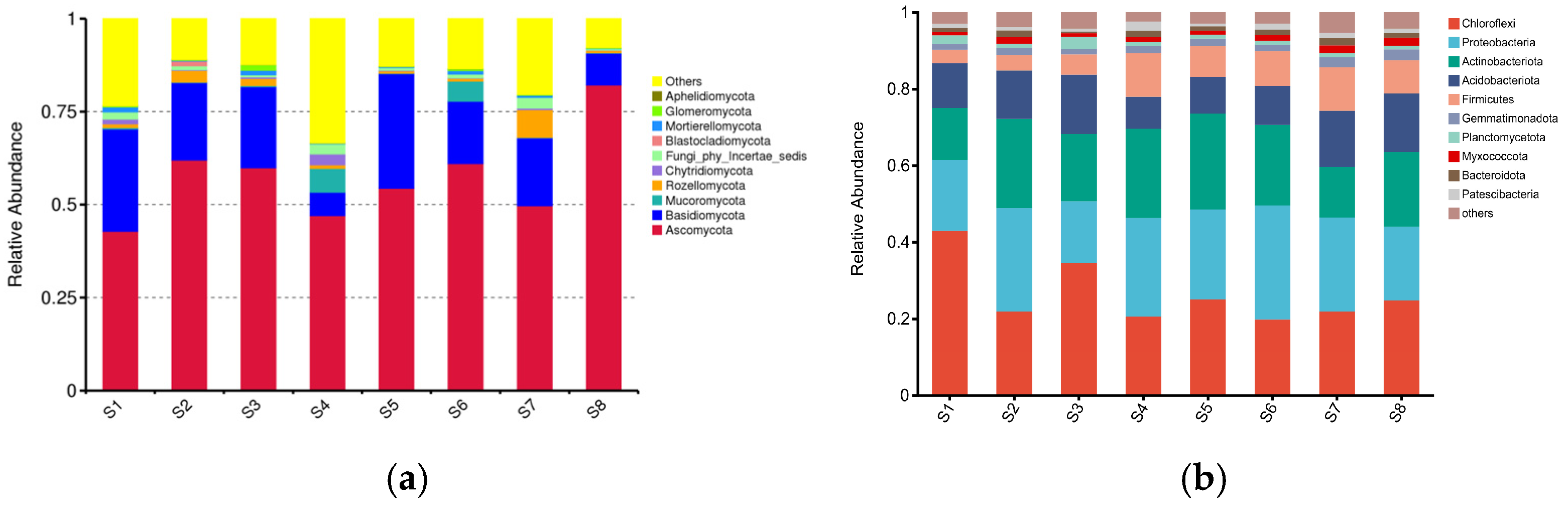
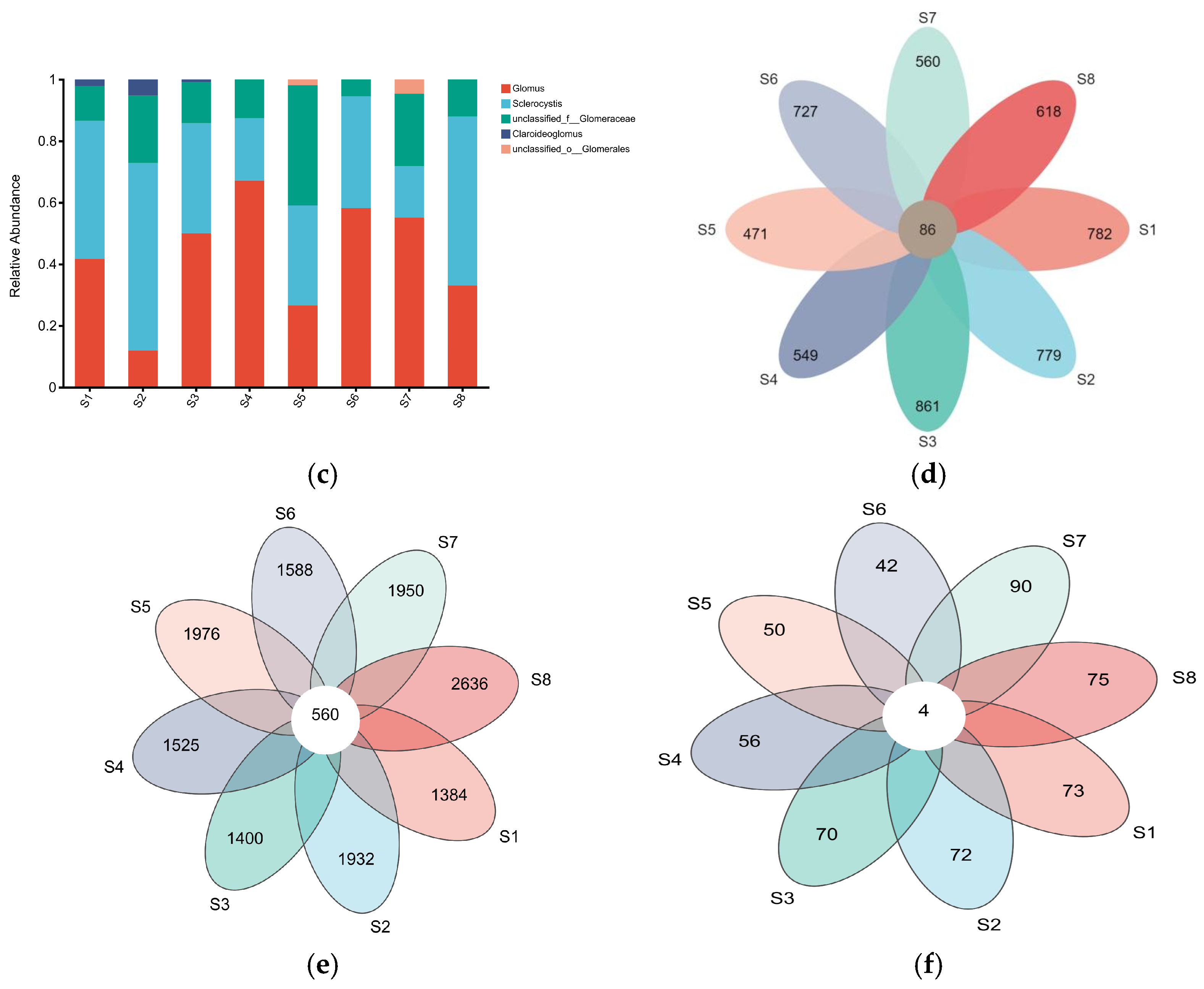
The predominant dominant fungal phylum in the rhizosphere soil of the eight coffee cultivars was Ascomycota, whose relative abundance was highest in S8 (82.20%) and lowest in S1 (42.83%). Other phyla with relatively high abundances were Basidiomycota, Rozellomycota, and Mucoromycota, with relative abundances ranging from 6.29% to 30.84%, 0.63% to 7.46%, and 0.08% to 5.42%, respectively. Blastocladiomycota was a unique phylum found only in S2, with a relative abundance of 1.26% (Figure 2a). The main dominant bacterial phyla in the bacterial communities were Chloroflexi, Proteobacteria, and Actinobacteriota. The relative abundance of Chloroflexi was highest in S1 (42.88%) and lowest in S6 (19.75%). Proteobacteria reached its highest relative abundance in S8 (29.70%) and was lowest in S3 (16.11%). The relative abundance of Actinobacteriota peaked in S5 (25.02%) and was lowest in S7 (13.28%). Other relatively abundant phyla included Acidobacteriota and Firmicutes, with relative abundances ranging from 8.34% to 15.57% and 3.54% to 11.40%, respectively (Figure 2b). The AMF communities included genera such as Glomus, Sclerocystis, and Claroideoglomus. The relative abundance of Glomus was highest in S4 (67.13%) and lowest in S2 (11.93%). Sclerocystis showed the highest relative abundance in S2 (60.92%), while its lowest relative abundance was observed in S7 (16.73%). Claroideoglomus was only detected in S1, S2, and S3, with its highest relative abundance in S2 (5.32%). At the species level, classifications included Sclerocystis sinuosa, among others. The relative abundance of Sclerocystis sinuosa was highest in S2 (60.92%) and lowest in S7 (16.73%) (Figure 2c).
The numbers of unique ASVs in the rhizosphere soil microbial communities of the eight coffee cultivars were as follows: Fungal community: S3 (861) > S1 (782) > S2 (779) > S6 (727) > S8 (618) > S7 (560) > S4 (549) > S5 (471) (Figure 2d). Bacterial community: S8 (2636) > S5 (1976) > S7 (1950) > S2 (1932) > S6 (1588) > S4 (1525) > S3 (1400) > S1 (1384) (Figure 2e). AMF community: S7 (90) > S8 (75) > S1 (73) > S2 (72) > S3 (70) > S4 (56) > S5 (50) > S6 (42) (Figure 2f). The number of unique ASVs common to all groups within each community type (560 for bacteria, 86 for fungi, 4 for AMF) was lower than the number of unique ASVs found in individual cultivars. This indicates substantial differences in ASV composition among the rhizosphere soil microbial communities of these eight coffee cultivars.

3.3.2. Alpha Diversity Analysis of Rhizosphere Soil Microbial Communities in Different Coffee Cultivars

Alpha diversity was evaluated using the Shannon, Chao, Pielou evenness (Pielou e), and coverage indices. The high sequencing coverage for all three microbial communities indicated that the data were accurate and reliable, effectively reflecting the diversity, richness, and evenness of the rhizosphere soil microbial communities across the different coffee cultivars. Overall, bacterial communities exhibited higher diversity and richness, whereas fungal communities showed relatively lower values. For the rhizosphere soil bacterial communities (Pielou e: 0.850–0.902), variety S8 had the highest Shannon, Chao, and Pielou e indices, indicating the greatest bacterial species diversity, richness, and evenness. In contrast, S6 showed the lowest Shannon and Chao indices, reflecting the lowest bacterial diversity and richness. In the fungal communities (Pielou e: 0.46–0.58), S6 recorded the highest Shannon and Pielou e indices, suggesting the highest fungal species diversity and evenness. S5 displayed the lowest Shannon, Chao, and Pielou e indices, indicating the lowest fungal diversity, richness, and evenness. S2 had the highest Chao index, representing the greatest fungal richness. For the AMF communities (Pielou e: 0.50–0.73), S8 exhibited the highest Shannon index, denoting the highest AMF species diversity. S7 showed the highest Chao index, indicating the greatest AMF species richness. S6 had the lowest Shannon and Chao indices, reflecting the lowest AMF diversity and richness (Table 4, Table 5 and Table 6).

3.3.3. Analysis of Differences in Rhizosphere Soil Microbial Communities Among Different Coffee Cultivars

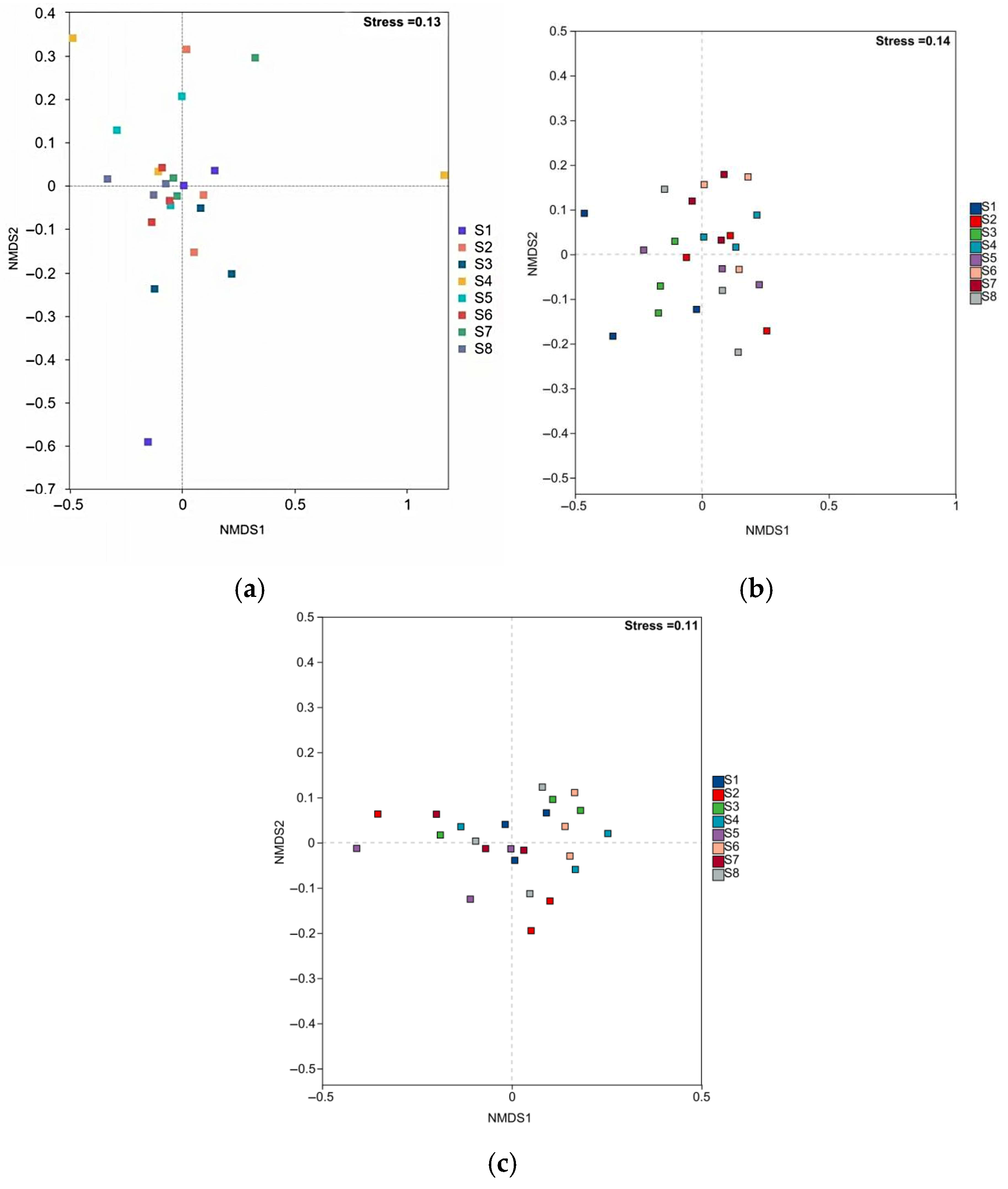
Non-metric multidimensional scaling (NMDS) based on Weighted Unifrac distance was performed to assess the fungal, bacterial, and arbuscular mycorrhizal fungal (AMF) communities in the rhizosphere soil of the eight coffee cultivars. The stress values for the fungal, bacterial, and AMF communities were 0.13, 0.14, and 0.11, respectively, indicating that the NMDS results accurately reflected the differences among samples. In the fungal communities, the within-group variation in community abundance was relatively highest in S4 and lowest in S6. The between-group differences in fungal community abundance were relatively larger between S3 and S5, and between S4 and S5 (Figure 3a). For the bacterial communities, the within-group variation was relatively highest in S1 and lowest in S4. Notable between-group differences were observed between S1 and S4, S1 and S6, and S1 and S7 (Figure 3b). In the AMF communities, the within-group variation was relatively highest in S5 and lowest in S1. The between-group differences in AMF community abundance were relatively larger between S5 and S6, and between S5 and S3 (Figure 3c).

3.3.4. Influence of Rhizosphere Soil Factors on Microbial Communities in Different Coffee Cultivars

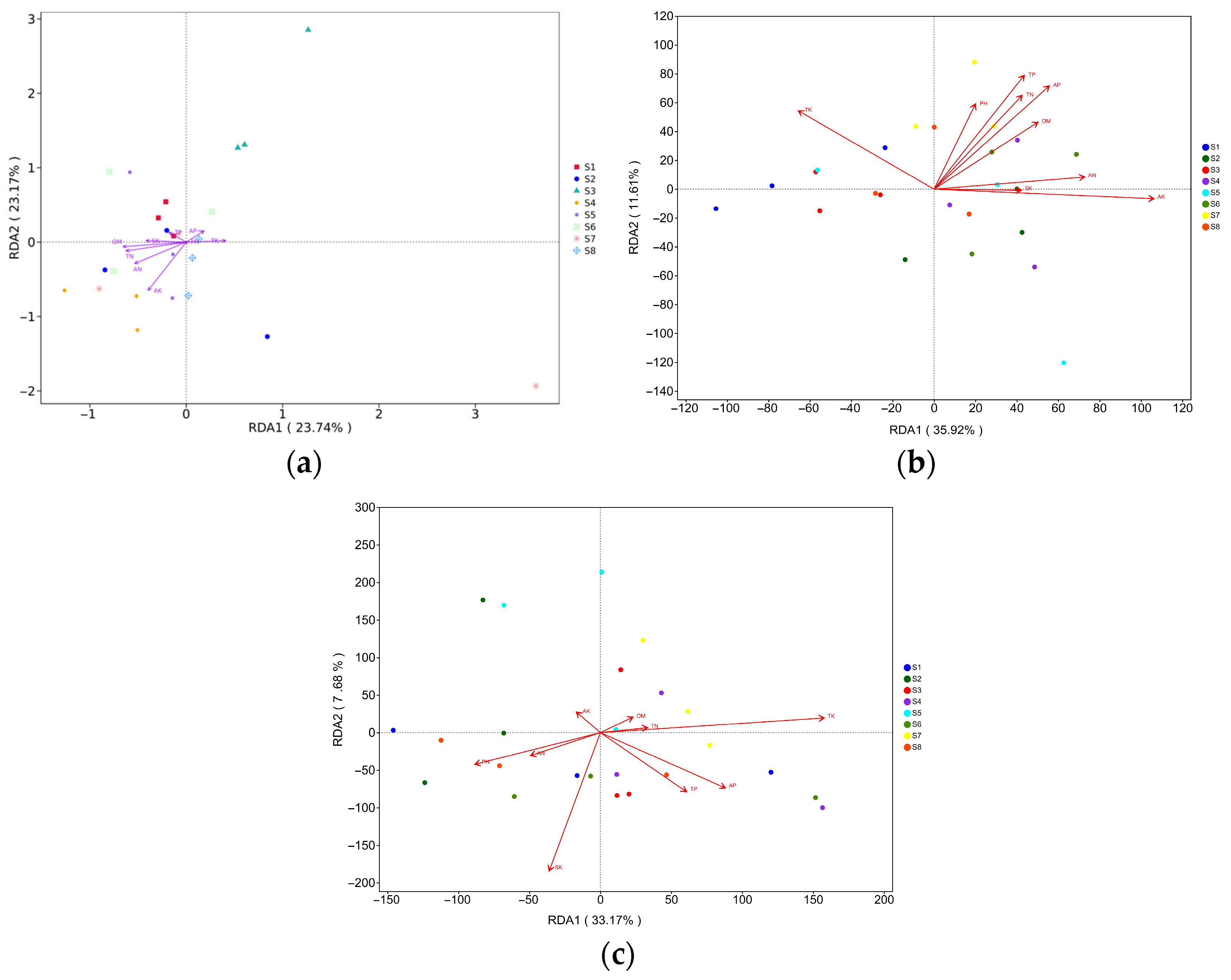
Redundancy analysis (RDA) of the rhizospheric soil fungal (phylum level), bacterial (phylum level), and AMF (genus level) communities from eight coffee cultivars against soil physicochemical properties revealed distinct drivers for each microbial group. For the fungal community, the soil factors were ranked by explanatory strength in the order: AK > OM > TN > AN > SK > TK > AP > TP > pH, among which AK, OM, TN, and AN exerted significant effects (Figure 4a). In the bacterial community, the influencing factors followed the sequence: AK > TK > AP > AN > TP > TN > OM > pH > SK, with AK, TK being identified as significant drivers (Figure 4b). Regarding the AMF community, soil variables were ordered as: TK > SK > AP > pH > TP > AN > TN > OM > AK, where TK, SK exerted a relatively stronger influence on AMF community composition (Figure 4c).

3.3.5. Functional Prediction of Rhizosphere Soil in Different Coffee Cultivars

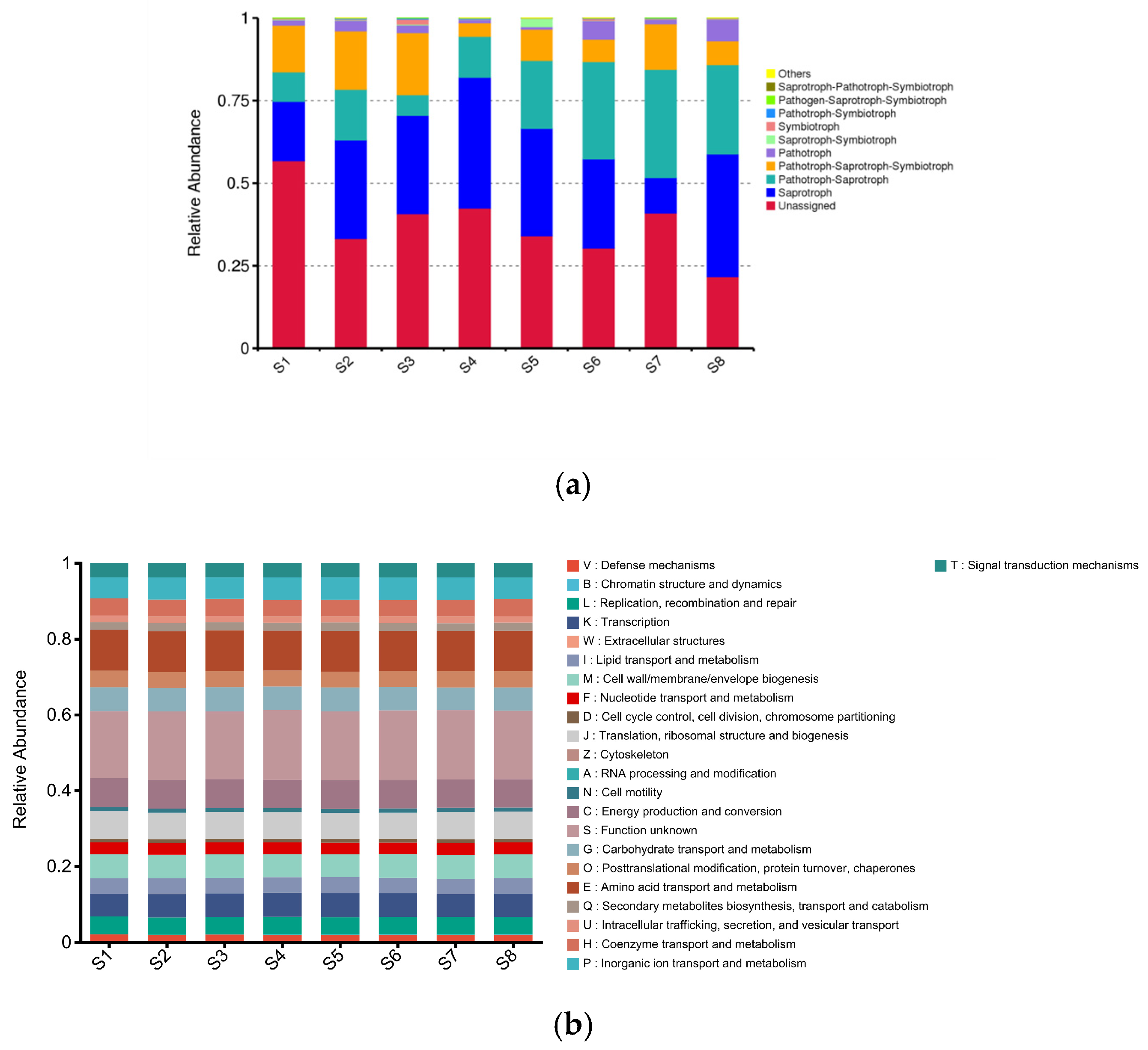
Functional prediction of the fungal communities in the rhizosphere soil of the eight coffee cultivars was performed using FunGuild. The top 10 trophic modes by relative abundance were identified as: Saprotroph–Pathotroph–Symbiotroph, Pathogen–Saprotroph–Symbiotroph, Pathotroph–Symbiotroph, Symbiotroph, Saprotroph–Symbiotroph, Pathotroph, Pathotroph–Saprotroph–Symbiotroph, Pathotroph–Saprotroph, Saprotroph, and Unassigned. Among these, Saprotroph (10.73%–39.58%), Pathotroph–Saprotroph (6.29%–32.79%), and Pathotroph–Saprotroph–Symbiotroph (4.18%–18.77%) displayed relatively high abundances. The Saprotroph–Pathotroph–Symbiotroph mode (0.0031%) was exclusively identified in S6 (Figure 5a).
PICRUSt2 analysis of the bacterial communities in the rhizosphere soils of the eight coffee cultivars revealed that the predominant COG functional categories by relative abundance were amino acid transport and metabolism (10.51%–10.77%), energy production and conversion (7.40%–7.68%), and translation, ribosomal structure and biogenesis (6.90%–7.31%), while the remaining categories—including V: defense mechanisms; B: chromatin structure and dynamics (typically eukaryotic/archaeal; bacteria may possess histone-like proteins such as HU protein); L: replication, recombination and repair; K: transcription; W: extracellular structures (mainly found in eukaryotes/bacterial secretion systems such as type IV pili); I: lipid transport and metabolism; M: cell wall (Figure 5b).

4. Discussion

In this study, a high density of AMF spores (91–160 spores/g) was found in the rhizosphere soil of eight coffee cultivars, yet no root colonization was observed. This apparent paradox may be explained by the combined effects of soil legacy and inhibited symbiosis. The spores likely represent a persistent “legacy bank” accumulated from past vegetation rather than from current-season association with coffee [47]. While soil organic matter could support the maintenance of this spore bank, the relatively high levels of available phosphorus and potassium probably suppressed symbiotic establishment. Since high phosphorus availability is a well-documented suppressor of AMF colonization, the elevated soil available phosphorus levels measured in this study (Table 1) likely constitute a major factor inhibiting colonization [48]. Under such nutrient-replete conditions, AMF may adopt a “persistence strategy”, allocating resources to dormant spores instead of costly hyphal growth aimed at host colonization [49]. This pattern is consistent with the distinct AMF dynamics shaped by long-term perennial cropping systems, where stable soil conditions allow spore banks to accumulate over time [50]. When AMF perceive an unfavorable soil environment (e.g., high phosphorus) or receive weak symbiotic signals from a host plant such as coffee—whose complex carbon allocation priorities as a perennial crop may reduce its dependence on AMF under certain conditions—the colonization process is aborted. The fungus may then revert to a “persistence strategy,” allocating resources to spore dormancy rather than to energetically costly and non-rewarded hyphal growth [41,51]. Additionally, it is important to acknowledge the methodological limitation of the trypan blue staining technique used, which may fail to detect early or low-intensity colonization events. Thus, the observed spore density reflects historical accumulation and a stress response to conditions unfavorable for symbiosis, rather than an indication of functional mycorrhizal activity.
The results indicate that the rhizosphere soils of all coffee cultivars were acidic, with pH values in the relatively low range of 4.37–4.78. This characteristic is likely the result of the combined effects of regional natural soil-forming processes and agricultural activities. First, the hot and humid tropical-subtropical climate of the study area leads to intense leaching of base cations, which is a key natural process shaping the inherently acidic soil matrix. Sampling at the end of the rainy season precisely captured the cumulative effect of this leaching process [52]. Second, long-term agricultural nitrogen input, particularly ammonium-based fertilizers, releases hydrogen ions through nitrification, which may further exacerbate the anthropogenic acidification process of the soil [53].
Analysis of the physicochemical properties in the rhizosphere soil of the eight coffee cultivars revealed significant differences in the contents of OM, TP, TK, AN, AP, AK, and ASK. This indicates varying requirements for soil chemical conditions among different coffee cultivars. Different plant cultivars, due to their genetic characteristics and differences in root exudates, necessitate distinct growth conditions. For example, plants with different genetic traits secrete varying types and quantities of enzymes, such as acid phosphatase, to enhance soil phosphorus activation, leading to differences in available phosphorus content and other physicochemical properties (e.g., P, Fe, pH) in the rhizosphere soil [54]. Some plants secrete organic acids (e.g., oxalic acid, acetic acid, citric acid) to mobilize insoluble phosphorus and potassium in the soil, thereby increasing their availability [55]. Alpha diversity analysis of the rhizosphere microbial communities of the eight cultivars indicated that bacterial communities exhibited higher diversity and richness than fungal communities. Specifically, S8 showed the highest bacterial and AMF community diversity, while S6 had the highest fungal diversity. Conversely, S6 displayed the lowest bacterial and AMF community diversity and richness. However, the differences in Alpha diversity indices among the cultivars were not significant (p > 0.05), which might be attributed to the non-significant differences in rhizosphere pH (4.37–4.78) (p > 0.05) and the influence of root exudates. For instance, although the Alpha diversity index (Chao1) of rhizosphere bacteria among maize inbred lines showed no significant differences, the abundance of the core community (e.g., Agrobacterium, Devosia) was significantly correlated with the host genotype, and Alpha diversity was more influenced by environmental factors such as pH [56]. Similarly, no significant differences were found in the Alpha diversity indices (Shannon, Simpson) of rhizosphere bacteria and fungi between highbush and rabbiteye blueberries, but significant differences in community structure were observed (p < 0.05). Research suggests that the non-significant differences in Alpha diversity are related to the regulation of microbial community evenness by the composition of root exudates (e.g., phenolic compounds) from different host cultivars [57].
In recent years, growing evidence has highlighted the close relationship between coffee rhizosphere soil factors and microbial communities. It should be noted that the redundancy analysis (RDA) conducted in this study reveals statistical correlations between soil variables and microbial community composition, but does not account for potential co-correlation among the explanatory variables. Our analysis identified that OM, TN, AK, ASK, and AN were significantly correlated with the fungal community; TP, AP, AK, and ASK showed significant correlations with the bacterial community; and TK was strongly correlated with the AMF community. In contrast, pH exhibited only a weak correlation with all communities. This pattern can be interpreted through the mechanism of coffee roots maintaining pH balance during growth by increasing NO3 uptake and HCO3 release or regulating the NH4+/NO3 uptake ratio [42]. Supporting this, studies on coffee rhizosphere soils at different altitudes found that OM content was significantly positively correlated with fungal diversity at high altitudes (1400 m–1600 m), while TN at low altitudes (800 m–1000 m) was associated with shifts in community composition, likely through promoting the proliferation of saprotrophic fungi (e.g., Trichoderma). ASK was linked to indirect effects on fungal community structure in acidic soils (pH 4.8–5.2) via regulating the activity of sulfur-oxidizing bacteria [58]. Similarly, research on rhizosphere soils of C. canephora and C. arabica in Malang, East Java, Indonesia, demonstrated that TP and AP were significantly correlated with bacterial community structure, potentially through promoting the proliferation of phosphate-solubilizing bacteria (e.g., Pseudomonas putida). In alkaline soils (pH 6.8–7.2), ASK was associated with enhanced bacterial mineralization of organic phosphorus, possibly by regulating the activity of sulfur-reducing bacteria [59].
This study revealed significant differences in rhizosphere soil physicochemical properties and microbial communities among different varieties of Yunnan Coffea arabica, providing new insights for varietal selection, soil quality regulation, and fertilizer reduction. Our findings demonstrate distinct differentiation in both rhizosphere nutrient profiles and microbial community characteristics across varieties. Specifically, S7 exhibited optimal levels of OM, TN, TP, TK, and AK, suggesting its potential for strong nutrient activation or enrichment capabilities that contribute to a comprehensively nutrient-rich rhizosphere environment. In contrast, S6 showed superior performance in AN and slowly available potassium, indicating possible specialization in microbial functions related to nitrogen and potassium cycling, potentially mediated through root exudate regulation. Regarding microbial community structure, S8 demonstrated the highest diversity in both bacterial and AMF communities, reflecting greater ecological complexity and stability in its rhizosphere microecosystem. S6 displayed optimal fungal diversity and evenness, suggesting a more stable fungal community structure with potentially enhanced functional capacity, environmental stress resistance, and resource utilization efficiency. The notable AMF species richness observed in S7 may synergize with its comprehensive soil nutrient status to promote efficient nutrient utilization. However, it should be noted that this study did not elucidate the regulatory mechanisms of variety-specific root exudates (such as organic acids and phenolic compounds) on microbial communities. Future research should integrate metabolomics to analyze root exudate composition with metagenomics to decipher microbial functional genes, thereby further clarifying the relationships between coffee varieties, root exudates, and microorganisms to establish a theoretical foundation for high-quality and efficient cultivation systems.

5. Conclusions

The findings of this study demonstrate that coffee variety significantly influences the nutrient contents in the rhizosphere soil, including OM, TP, and TK. The fungal communities across varieties were predominantly dominated by Ascomycota, while the bacterial communities were mainly composed of Chloroflexi and Proteobacteria. The AMF communities were primarily represented by Glomus and Sclerocystis. Redundancy analysis confirmed that soil OM, AK, and TN were key drivers shaping the distribution of both fungal and bacterial communities. These results elucidate the mechanisms by which genetic factors and soil properties collectively influence the rhizosphere microbial community of Coffea arabica, providing a theoretical basis for targeted variety selection and rhizosphere microenvironment management. Among the tested varieties, S7 (316: yellow Catuai) exhibited the most comprehensive nutrient profile with the highest overall element content, identifying it as a high-yielding genotype suitable for intensive cultivation systems. In contrast, S8 (036: Castillo) demonstrated superior microbial community stability and ecosystem robustness, characterizing it as an ecological genotype ideal for organic coffee production and sustainable farming practices. It is recommended that these two varieties be promoted as core genetic resources for future breeding programs and microbial ecology-based management strategies, thereby facilitating the dual objectives of high productivity and ecological sustainability in coffee cultivation. Thus, we recommend that these two varieties be prioritized as core subjects in future breeding programs that integrate rhizosphere ecology with yield evaluation, thereby exploring pathways toward the dual objectives of productivity and sustainability.

Author Contributions

Methodology, F.D.; Software, F.D.; Validation, R.M. and D.N.; Investigation, Z.L.; Resources, Z.L.; Data curation, R.M.; Writing—original draft, Y.S. and R.M.; Writing—review & editing, Y.S. and Y.W.; Visualization, X.D.; Supervision, X.L. and Y.W.; Project administration, Y.W.; Funding acquisition, X.L.; Formal analysis, Y.S. All authors have read and agreed to the published version of the manuscript.

Funding

This study was supported by Yunnan Key Laboratory of Coffee (202449CE340030), the Scientific Research Staring Foundation of College of Tropical Crop, Yunnan Agricultural University (A2032024904, A2032023916), and Yunnan Fundamental Research Projects (grant NO. 202501AU070028), Science and Technology Talent and Platform Program, Yunnan Province Coffee Green Processing and Quality Control Innovation Team (202505AS350016).

Data Availability Statement

Data will be made available on request.

Acknowledgments

The authors would like to express their sincere gratitude to all the funding bodies for their generous support in this research.

Conflicts of Interest

The authors declare no conflicts of interest.

References

  1. Lu, L.; Karunarathna, S.C.; Rajeshkumar, K.C.; Elgorban, A.M.; Jayawardena, R.S.; Hongsanan, S.; Suwannarach, N.; Kumla, J.; Xiong, Y.R.; Hyde, K.D.; et al. Unveiling fungal diversity associated with coffee trees in china using a polyphasic approach and a global review of coffee saprobic fungi. IMA Fungus 2025, 16, e144874. [Google Scholar] [CrossRef]
  2. Zhang, S.; Liu, X.; Li, R.; Wang, X.; Cheng, J.; Yang, Q.; Kong, H. AHP-GIS and Maxent for delineation of potential distribution of Arabica coffee plantation under future climate in Yunnan, China. Ecol. Indic. 2021, 132, 108339. [Google Scholar] [CrossRef]
  3. Zhu, Y.; Liu, Y.; Chen, Z.; Li, M.; Fan, L.; Zhang, M. Assessing the climate change impacts on coffee arabica cultivation regions in China. Theor. Appl. Climatol. 2024, 155, 7773–7791. [Google Scholar] [CrossRef]
  4. Li, X.; Wang, Z.; Wang, S.; Qian, Z. Maxent and marxan modeling to predict the potential habitat and priority planting areas of Coffea arabica in Yunnan, China under climate change scenario. Front. Plant Sci. 2024, 15, 1471653. [Google Scholar] [CrossRef]
  5. Jiang, Z.; Liu, X.; Sun, W.; Cui, N.; Guo, J.; Chen, H.; Huang, W. Fertilizer optimization combined with coffee husk returning to improve soil environmental quality and young coffee tree growth. J. Soil. Sci. Plant Nutr. 2024, 24, 650–665. [Google Scholar] [CrossRef]
  6. Chen, H.; Liu, X.; Xiao, Q.; Wu, L.; Cheng, M.; Wang, H.; Wang, X.; Hu, D.; Sun, Z.; Ma, X. Optimizing split-reduced drip fertigation schemes of arabica coffee based on soil microcosms, bean yield, quality and flavor in dry-hot region of southwest China. Sci. Hortic. 2024, 336, 113418. [Google Scholar] [CrossRef]
  7. Zhang, T.P.; Zhao, H.; Xue, Z.F.; Suo, Y.K.; Qin, S.W.; He, F.F. First report of alternaria alternata causing leaf spot on Coffea arabica in China. Plant Dis. 2024, 108, 1114. [Google Scholar] [CrossRef]
  8. Schmidt, J.E.; Vannette, R.L.; Igwe, A.; Blundell, R.; Casteel, C.L.; Gaudin, A.C.M. Effects of agricultural management on rhizosphere microbial structure and function in processing tomato plants. Appl. Environ. Microbiol. 2019, 85, e01064-19. [Google Scholar] [CrossRef] [PubMed]
  9. Nguemezi, C.; Tematio, P.; Yemefack, M.; Tsozue, D.; Silatsa, T.B.F. Soil quality and soil fertility status in major soil groups at the tombel area, south-west cameroon. Heliyon 2020, 6, e03432. [Google Scholar] [CrossRef]
  10. Xue, G.; Xiong, J.; Tang, L.; Zhang, Q.; Zeng, J.; Zhao, C.; Wu, J.; Dong, S.; Zhu, X. Effects of different altitudes on Castanopsis hystrix, the top community-building species in southern subtropical China: Rhizospheric soil chemical properties and soil microbiota. Forests 2024, 15, 187. [Google Scholar] [CrossRef]
  11. Sritongon, N.; Sarin, P.; Theerakulpisut, P.; Riddech, N. The effect of salinity on soil chemical characteristics, enzyme activity and bacterial community composition in rice rhizospheres in Northeastern Thailand. Sci. Rep. 2022, 12, 20360. [Google Scholar] [CrossRef]
  12. Wang, K.; Qiu, Z.; Zhang, M.; Li, X.; Fang, X.; Zhao, M.; Shi, F. Responses of rhizosphere soil chemical properties and bacterial community structure to major afforestation tree species in Xiong’an New Area. Forests 2022, 13, 1822. [Google Scholar] [CrossRef]
  13. Chen, X.-M.; Zhang, Q.; Zeng, S.-M.; Chen, Y.; Guo, Y.-Y.; Huang, X.-Z. Rhizosphere soil affects pear fruit quality under rain-shelter cultivation. Can. J. Plant. Sci. 2020, 100, 683–691. [Google Scholar] [CrossRef]
  14. Zhong, J.; Pan, W.; Jiang, S.; Hu, Y.; Yang, G.; Zhang, K.; Xia, Z.; Chen, B. Flue-cured tobacco intercropping with insectary floral plants improves rhizosphere soil microbial communities and chemical properties of flue-cured tobacco. BMC Microbiol. 2024, 24, 446. [Google Scholar] [CrossRef] [PubMed]
  15. Ren, H.; Hong, H.; Zha, B.; Lamlom, S.F.; Qiu, H.; Cao, Y.; Sun, R.; Wang, H.; Ma, J.; Zhang, H.; et al. Soybean productivity can be enhanced by understanding rhizosphere microbiota: Evidence from metagenomics analysis from diverse agroecosystems. Microbiome 2025, 13, 105. [Google Scholar] [CrossRef]
  16. Tripathi, B.M.; Piñeiro, J.; Dang, C.; Brzostek, E.; Morrissey, E.M. Mycorrhiza-saprotroph interactions and carbon cycling in the rhizosphere. Glob. Change Biol. 2025, 31, e70173. [Google Scholar] [CrossRef]
  17. Jing, M.; Wang, J.; Zhang, G.; Ou, X.; Wu, N.; Yao, K. Exploring the synergistic effects of soil nutrients, rhizosphere fungi, and endophytic fungi on the shaping of root metabolites in Angelica sinensis (oliv.) Diels. Fungal Biol. 2025, 129, 101533. [Google Scholar] [CrossRef] [PubMed]
  18. Ren, P.; Zhou, B.; Bi, Y.; Chen, X.; Yao, S.; Yang, X. Bacillus subtilis can promote cotton phenotype, yield, nutrient uptake and water use efficiency under drought stress by optimizing rhizosphere microbial community in arid area. Ind. Crops Prod. 2025, 227, 120784. [Google Scholar] [CrossRef]
  19. Nie, H.; Shi, Y.; Yang, X.; Zeng, J.; Tang, Y.; Liu, X.; Sun, L.; Zhou, Y.; Xu, X.; Liu, M.; et al. Microbial inoculant-induced modifications of rhizospheric metabolites and microbial communities enhance plant growth. Plant Soil. 2025, 512, 619–637. [Google Scholar] [CrossRef]
  20. Sharma, I.; Kashyap, S.; Agarwala, N. Biotic stress-induced changes in root exudation confer plant stress tolerance by altering rhizospheric microbial community. Front. Plant Sci. 2023, 14, 1132824. [Google Scholar] [CrossRef]
  21. Fan, X.; Ge, A.H.; Qi, S.; Guan, Y.; Wang, R.; Yu, N.; Wang, E. Root exudates and microbial metabolites: Signals and nutrients in plant-microbe interactions. Sci. China Life Sci. 2025, 68, 2290–2302. [Google Scholar] [CrossRef]
  22. Li, M.; Song, Z.; Li, Z.; Qiao, R.; Zhang, P.; Ding, C.; Xie, J.; Chen, Y.; Guo, H. Populus root exudates are associated with rhizosphere microbial communities and symbiotic patterns. Front. Microbiol. 2022, 13, 1042944. [Google Scholar] [CrossRef]
  23. Batista, A.M.; Pessoa, T.N.; Putti, F.F.; Andreote, F.D.; Libardi, P.L. Root influences rhizosphere hydraulic properties through soil organic carbon and microbial activity. Plants 2024, 13, 1981. [Google Scholar] [CrossRef]
  24. Zhao, L.; He, Y.; Zheng, Y.; Xu, Y.; Shi, S.; Fan, M.; Gu, S.; Li, G.; Tianli, W.; Wang, J.; et al. Differences in soil physicochemical properties and rhizosphere microbial communities of flue-cured tobacco at different transplantation stages and locations. Front. Microbiol. 2023, 14, 1141720. [Google Scholar] [CrossRef]
  25. Zuluaga, M.Y.A.; Lima Milani, K.M.; Azeredo Gonçalves, L.S.; Martinez De Oliveira, A.L. Diversity and plant growth-promoting functions of diazotrophic/N-scavenging bacteria isolated from the soils and rhizospheres of two species of Solanum. PLoS ONE 2020, 15, e0227422. [Google Scholar] [CrossRef] [PubMed]
  26. Wang, J.L.; Xiao, X.; Hu, A.Y.; Shen, R.F.; Zhao, X.Q. Yield gap of rice genotypes under N and P deficiencies: Evidence from differential recruitment of bacterial keystone taxa in the rhizosphere. Appl. Soil. Ecol. 2023, 184, 104791. [Google Scholar] [CrossRef]
  27. Igiehon, B.C.; Babalola, O.O.; Hassen, A.I. Rhizosphere competence and applications of plant growth-promoting rhizobacteria in food production—A review. Sci. Afr. 2024, 23, e02081. [Google Scholar] [CrossRef]
  28. Bhat, B.A.; Tariq, L.; Nissar, S.; Islam, S.T.; Islam, S.U.; Mangral, Z.; Ilyas, N.; Sayyed, R.Z.; Muthusamy, G.; Kim, W.; et al. The role of plant-associated rhizobacteria in plant growth, biocontrol and abiotic stress management. J. Appl. Microbiol. 2022, 133, 2717–2741. [Google Scholar] [CrossRef]
  29. Noguchi, M.; Toju, H. Mycorrhizal and endophytic fungi structure forest below-ground symbiosis through contrasting but interdependent assembly processes. Environ. Microbiome 2024, 19, 84. [Google Scholar] [CrossRef]
  30. He, Y.F.; Jia, B.B.; Wei, C.Q.; Fan, F.Y.; Wilschut, R.A.; Lu, X.M. Leaf litter presence in the non-growing season prolongs plant legacy effects on soil fungal communities and succeeding plant growth. J. Ecol. 2023, 111, 1997–2009. [Google Scholar] [CrossRef]
  31. Szada-Borzyszkowska, A.; Krzyżak, J.; Rusinowski, S.; Magurno, F.; Pogrzeba, M. Inoculation with arbuscular mycorrhizal fungi supports the uptake of macronutrients and promotes the growth of Festuca ovina L. and Trifolium medium L., a candidate species for green urban infrastructure. Plants 2024, 13, 2620. [Google Scholar] [CrossRef]
  32. Xiao, X.; Liao, X.; Yan, Q.; Xie, Y.; Chen, J.; Liang, G.; Chen, M.; Xiao, S.; Chen, Y.; Liu, J. Arbuscular mycorrhizal fungi improve the growth, water status, and nutrient uptake of cinnamomum migao and the soil nutrient stoichiometry under drought stress and recovery. J. Fungi 2023, 9, 321. [Google Scholar] [CrossRef]
  33. Zhang, M.; Shi, Z.; Gao, J.; Yan, J.; Xu, S.; Wang, S. Pulling nutrients from mo-polluted soil by arbuscular mycorrhizal fungi extraradical mycelia is quenching thirsty with poison. Plant Physiol. Biochem. 2025, 220, 109488. [Google Scholar] [CrossRef] [PubMed]
  34. Liao, X.; Chen, J.; Guan, R.; Liu, J.; Sun, Q. Two arbuscular mycorrhizal fungi alleviates drought stress and improves plant growth in Cinnamomum migao seedlings. Mycobiology 2021, 49, 396–405. [Google Scholar] [CrossRef] [PubMed]
  35. Liu, Y.; Shu, X.; Chen, L.; Zhang, H.; Feng, H.; Sun, X.; Xiong, Q.; Li, G.; Xun, W.; Xu, Z.; et al. Plant commensal type VII secretion system causes iron leakage from roots to promote colonization. Nat. Microbiol. 2023, 8, 1434–1449. [Google Scholar] [CrossRef]
  36. Xu, J.; Knight, T.; Boone, D.; Saleem, M.; Finley, S.J.; Gauthier, N.; Ayariga, J.A.; Akinrinlola, R.; Pulkoski, M.; Britt, K.; et al. Influence of fungicide application on rhizosphere microbiota structure and microbial secreted enzymes in diverse cannabinoid-rich hemp cultivars. Int. J. Mol. Sci. 2024, 25, 5892. [Google Scholar] [CrossRef]
  37. Thapa, V.R.; Ghimire, R.; Acosta-Martínez, V.; Marsalis, M.A.; Schipanski, M.E. Cover crop biomass and species composition affect soil microbial community structure and enzyme activities in semiarid cropping systems. Appl. Soil Ecol. 2021, 157, 103735. [Google Scholar] [CrossRef]
  38. Assefa, A.; Koyamo, R.; Kloos, H. Search for Trichoderma isolates from rhizosphere of coffea arabica for biocontrol against Gibberella xylarioides in some coffee growing area of southeastern ethiopia. Indian Phytopathol. 2021, 74, 1001–1014. [Google Scholar] [CrossRef]
  39. Kejela, T.; Thakkar, V.R.; Thakor, P. Bacillus species (BT42) isolated from Coffea arabica L. Rhizosphere antagonizes Colletotrichum gloeosporioides and Fusarium oxysporum and also exhibits multiple plant growth promoting activity. BMC Microbiol. 2016, 16, 277. [Google Scholar] [CrossRef] [PubMed]
  40. Nuguse, M.; Kejela, T. Actinomycetes isolated from rhizosphere of wild Coffea arabica L. Showed strong biocontrol activities against coffee wilt disease. PLoS ONE 2024, 19, e0306837. [Google Scholar] [CrossRef]
  41. Sternhagen, E.C.; Black, K.L.; Hartmann, E.D.L.; Shivega, W.G.; Johnson, P.G.; Mcglynn, R.D.; Schmaltz, L.C.; Asheim Keller, R.J.; Vink, S.N.; Aldrich-Wolfe, L. Contrasting patterns of functional diversity in coffee root fungal communities associated with organic and conventionally managed fields. Appl. Environ. Microbiol. 2020, 86, e00052-20. [Google Scholar] [CrossRef]
  42. Ge, Y.; Zhang, F.; Xie, C.; Qu, P.; Jiang, K.; Du, H.; Zhao, M.; Lu, Y.; Wang, B.; Shi, X.; et al. Effects of different altitudes on Coffea arabica rhizospheric soil chemical properties and soil microbiota. Agronomy 2023, 13, 471. [Google Scholar] [CrossRef]
  43. Bao, S.D. Soil Agricultural Chemical Analysis, 3rd ed.; China Agricultural Press: Beijing, China, 2000; pp. 25–108. ISBN 978-7-109-06644-1. [Google Scholar]
  44. Větrovský, T.; Morais, D.; Kohout, P.; Lepinay, C.; Algora, C.; Awokunle Hollá, S.; Bahnmann, B.D.; Bílohnědá, K.; Brabcová, V.; D’alò, F.; et al. Author correction: Globalfungi, a global database of fungal occurrences from high-throughput-sequencing metabarcoding studies. Sci. Data. 2020, 7, 308. [Google Scholar] [CrossRef]
  45. Thompson, L.R.; Sanders, J.G.; Mcdonald, D.; Amir, A.; Ladau, J.; Locey, K.J.; Prill, R.J.; Tripathi, A.; Gibbons, S.M.; Ackermann, G.; et al. A communal catalogue reveals earth’s multiscale microbial diversity. Nature 2017, 551, 457–463. [Google Scholar] [CrossRef]
  46. Parada, A.E.; Needham, D.M.; Fuhrman, J.A. Every base matters: Assessing small subunit rRNA primers for marine microbiomes with mock communities, time series and global field samples. Environ. Microbiol. 2016, 18, 1403–1414. [Google Scholar] [CrossRef] [PubMed]
  47. Öpik, M.; Davison, J. Uniting species- and community-oriented approaches to understand arbuscular mycorrhizal fungal diversity. Fungal Ecol. 2016, 24, 106–113. [Google Scholar] [CrossRef]
  48. Lucic-Mercy, E.; Mercy, L.; Jeschke, A.; Schneider, C.; Franken, P. Short-term artificial adaptation of Rhizoglomus irregulare to high phosphate levels and its implications for fungal-plant interactions: Phenotypic and transcriptomic insights. Front. Plant Sci. 2024, 15, 1385245. [Google Scholar] [CrossRef] [PubMed]
  49. Bever, J.D.; Schultz, P.A.; Pringle, A.; Morton, J.B. Arbuscular mycorrhizal fungi: More diverse than meets the eye, and the ecological tale of why. BioScience 2001, 51, 923–931. [Google Scholar] [CrossRef]
  50. Higo, M.; Isobe, K.; Yamaguchi, M.; Drijber, R.A.; Jeske, E.S.; Ishii, R. Diversity and vertical distribution of indigenous arbuscular mycorrhizal fungi under two soybean rotational systems. Biol. Fertil. Soils 2013, 49, 1085–1096. [Google Scholar] [CrossRef]
  51. Wu, S.; Fu, W.; Rillig, M.C.; Chen, B.; Zhu, Y.G.; Huang, L. Soil organic matter dynamics mediated by arbuscular mycorrhizal fungi—An updated conceptual framework. New Phytol. 2024, 242, 1417–1425. [Google Scholar] [CrossRef]
  52. Wei, B.; Peng, Y.; Jeyakumar, P.; Lin, L.; Zhang, D.; Yang, M.; Zhu, J.; Ki Lin, C.S.; Wang, H.; Wang, Z.; et al. Soil pH restricts the ability of biochar to passivate cadmium: A meta-analysis. Environ. Res. 2023, 219, 115110. [Google Scholar] [CrossRef]
  53. Lu, X.; Vitousek, P.M.; Mao, Q.; Gilliam, F.S.; Luo, Y.; Zhou, G.; Zou, X.; Bai, E.; Scanlon, T.M.; Hou, E.; et al. Plant acclimation to long-term high nitrogen deposition in an n-rich tropical forest. Proc. Natl. Acad. Sci. USA 2018, 115, 5187–5192. [Google Scholar] [CrossRef]
  54. Yu, P.; Hochholdinger, F. Chapter 13—Genetic and environmental regulation of root growth and development. In Marschner’s Mineral Nutrition of Plants, 4th ed.; Rengel, Z., Cakmak, I., White, P.J., Eds.; Academic Press: San Diego, CA, USA, 2023; pp. 523–543. [Google Scholar]
  55. Bais, H.P.; Weir, T.L.; Perry, L.G.; Gilroy, S.; Vivanco, J.M. The role of root exudates in rhizosphere interactions with plants and other organisms. Annu. Rev. Plant Biol. 2006, 57, 233–266. [Google Scholar] [CrossRef]
  56. Xiao, L.; Zhao, Q.; Deng, J.; Cui, L.; Zhang, T.; Yang, Q.; Zhao, S. Comparative analysis of rhizosphere microbiomes in different blueberry cultivars. Horticulturae 2025, 11, 696. [Google Scholar] [CrossRef]
  57. Dang, K.; Ji, L.; Slaughter, L.C.; Hou, J.; Shen, M.; Li, J.; Dong, Y. Synergistic changes of rhizosphere bacterial community and soil properties in greenhouse soils under long-term tomato monoculture. Appl. Soil. Ecol. 2023, 183, 104738. [Google Scholar] [CrossRef]
  58. Feng, H.; Fan, X.; Miller, A.J.; Xu, G. Plant nitrogen uptake and assimilation: Regulation of cellular pH homeostasis. J. Exp. Bot. 2020, 71, 4380–4392. [Google Scholar] [CrossRef] [PubMed]
  59. Suharjono, S.; Yuliatin, E. Bacteria communities of coffee plant rhizosphere and their potency as plant growth promoting. Biodiversitas 2022, 23, 5822–5834. [Google Scholar] [CrossRef]
Figure 1. (a) AMF spore density in rhizosphere soil of different coffee cultivars; (b) AMF colonization in the coffee rhizosphere.
Forests 17 00291 g001
Figure 2. (ac): Relative abundance of rhizosphere soil microbial communities across different coffee cultivars. (a) Relative abundance of fungal communities at the phylum level in rhizosphere soils of different coffee cultivars; (b) Relative abundance of bacterial communities at the phylum level in rhizosphere soils of different coffee cultivars; (c) Relative abundance of AMF communities at the genus level in rhizosphere soils of different coffee cultivars; (df): Unique and shared ASV analysis of rhizosphere soil microbial communities across different coffee cultivars. (d) Unique and shared ASVs of fungal communities in rhizosphere soils across different coffee cultivars; (e) Unique and shared ASVs of bacterial communities in rhizosphere soils across different coffee cultivars; (f) Unique and shared ASVs of AMF communities in rhizosphere soils across different coffee cultivars.
Forests 17 00291 g002aForests 17 00291 g002b
Figure 3. NMDS analysis of rhizosphere microbial communities across different coffee cultivars based on Weighted Unifrac distance. (a) NMDS analysis of fungal communities in rhizosphere soils of different coffee cultivars. (b) NMDS analysis of bacterial communities in rhizosphere soils of different coffee cultivars. (c) NMDS analysis of AMF communities in rhizosphere soils of different coffee cultivars.
Forests 17 00291 g003
Figure 4. Influence of rhizosphere soil factors on microbial communities across different coffee cultivars. (a) Influence of rhizosphere soil factors on phylum-level fungal communities across different coffee cultivars. (b) Influence of rhizosphere soil factors on phylum-level bacterial communities across different coffee cultivars. (c) Influence of rhizosphere soil factors on genus-level AMF communities across different coffee cultivars.
Forests 17 00291 g004
Figure 5. Functional prediction of rhizosphere soil microbial communities across different coffee cultivars. (a) FunGuild functional prediction (mode) of fungal communities in rhizosphere soils of different coffee cultivars. (b) PICRUSt2 functional prediction (COG) of bacterial communities in rhizosphere soils of different coffee cultivars.
Forests 17 00291 g005
Table 1. Rhizosphere soil physicochemical properties of different coffee cultivars.
Coffee
Cultivar
Measured Indices
PHOM g/kgTN g/kgTP g/kgTK g/kgAN mg/kgAP mg/kgAK mg/kgSK mg/kg
S14.37 ± 0.06 a26.77 ± 3.71 ab1.49 ± 0.22 a1.34 ± 0.12 ab30.82 ± 0.43 ab161.39 ± 39.70 ab267.50 ± 38.80 b336.00 ± 58.92 b205.33 ± 26.63 cef
S24.47 ± 0.52 a24.83 ± 4.79 ab1.39 ± 0.28 a1.08 ± 0.27 b28.69 ± 1.17 b191.27 ± 70.70 a213.75 ± 55.31 b474.67 ± 50.01 a224.00 ± 31.24 bcd
S34.48 ± 0.18 a21.21 ± 2.75 b1.19 ± 0.13 a1.30 ± 0.29 ab32.16 ± 1.20 a106.62 ± 11.77 b329.25 ± 173.42 b196.00 ± 17.44 c193.33 ± 19.73 cef
S44.54 ± 0.15 a28.58 ± 0.72 ab1.62 ± 0.03 a1.47 ± 0.07 ab30.60 ± 0.60 ab195.14 ± 15.25 a307.25 ± 59.51 b428.00 ± 39.40 ab238.67 ± 16.17 bc
S54.41 ± 0.18 a28.46 ± 3.14 ab1.48 ± 0.22 a1.56 ± 0.12 ab29.20 ± 1.40 b176.06 ± 40.52 a365.50 ± 20.25 ab420.00 ± 50.12 ab174.67 ± 15.14 ef
S64.47 ± 0.40 a30.45 ± 4.86 ab1.72 ± 0.33 a1.89 ± 0.51 a29.45 ± 2.23 b204.43 ± 14.10 a499.25 ± 130.19 a462.67 ± 74.87 a297.33 ± 36.30 a
S74.75 ± 0.19 a31.40 ± 10.56 a1.74 ± 0.58 a1.92 ± 0.66 a32.17 ± 0.69 a150.63 ± 33.98 ab521.50 ± 72.35 a340.00 ± 38.16 b158.67 ± 12.86 f
S84.78 ± 0.47 a25.40 ± 1.80 ab1.40 ± 0.09 a1.48 ± 0.18 ab30.17 ± 1.99 ab159.93 ± 21.61 ab307.50 ± 43.06 b345.33 ± 37.17 b257.33 ± 43.14 ab
Note: Data are presented as mean ± standard deviation (n = 3). Different lowercase letters within a row indicate significant differences among cultivars according to one-way ANOVA followed by Tukey’s HSD test (p < 0.05). Abbreviations: OM, organic matter; TN, total nitrogen; TP, total phosphorus; TK, total potassium; AN, alkali-hydrolyzable nitrogen; AP, available phosphorus; AK, available potassium; SK, slowly available potassium.
Table 2. Correlation between AMF spore density and soil factors.
SDOMTNANTPAPTKAKSK
SD1
OM0.637 **1
TN0.594 **0.987 **1
AN0.3610.634 **0.680 **1
TP0.4040.726 **0.691 **0.3011
AP0.1980.524 **0.509 *0.1350.867 **1
TK0.062−0.237−0.244−0.469 *−0.106−0.0661
AK0.0830.3850.421 *0.778 **0.0790.035−616 **1
SK−0.0310.2630.2940.505 *0.2150.063−0.440 *0.416 *1
Note: values in the table represent Pearson correlation coefficients; ** and * indicate significant correlation at the 0.01 and 0.05 levels (two-tailed), respectively. SD: spore density; OM: Organic matter; TN: Total nitrogen; AN: Alkali-hydrolyzable nitrogen; TP: Total phosphorus; AP: Available phosphorus; TK: Total potassium; AK: Available potassium; SK: Slowly available potassium.
Table 3. Microbial sequencing results of rhizosphere soil from different coffee cultivars.
CultivarFungal CommunitiesBacterial CommunitiesAMF Communities
Raw ReadsEffective ReadsRaw ReadsEffective ReadsRaw ReadsEffective Reads
S1109,723 ± 2966 a100,947 ± 1332 a56,919 ± 3856 a45,898 ± 2844 a61,083 ± 1548 a55,919 ± 2207 a
S2108,030 ± 3077 a87,200 ± 10,937 ab55,659 ± 1221 a44,155 ± 1222 a56,568 ± 4123 ab50,047 ± 2984 ab
S3103,753 ± 1651 a97,021 ± 1737 ab57,274 ± 4195 a45,895 ± 3270 a55,790 ± 1354 ab47,789 ± 456 abc
S4104,644 ± 1258 a96,964 ± 1499 ab60,678 ± 4322 a47,991 ± 2947 a49,293 ± 1233 b40,946 ± 2799 c
S5104,238 ± 1159 a96,709 ± 1678 ab63,689 ± 5260 a46,973 ± 2651 a56,963 ± 4584 ab49,555 ± 4161 ab
S6103,194 ± 553 a63,886 ± 27,424 b60,872 ± 5193 a46,645 ± 3357 a56,757 ± 3540 ab49,592 ± 2267 ab
S7103,449 ± 1241 a90,542 ± 668 ab63,153 ± 6004 a48,944 ± 3792 a60,020 ± 3114 a51,471 ± 2172 ab
S8108,815 ± 4405 a94,847 ± 3112 ab63,770 ± 1438 a48,336 ± 563 a54,040 ± 1634 ab47,474 ± 666 bc
Note: Fungal communities were sequenced on the Illumina NovaSeq platform, while bacterial and AMF communities were sequenced on the Illumina MiSeq platform. Due to differences in the technical parameters (e.g., read length and depth) of the sequencing platforms, the absolute read counts are not directly comparable across different microbial types (between columns). The data in this table are intended to demonstrate the sequencing depth and data quality among samples within the same microbial type. Data are presented as mean ± standard error (n = 3). Within each microbial type (column), different lowercase letters indicate statistically significant differences among cultivars based on one-way ANOVA followed by Tukey’s HSD test (p < 0.05) All subsequent analyses of community structure, diversity, and statistics were performed using standardized effective data.
Table 4. Alpha diversity indices of bacterial communities in rhizosphere soil from different coffee cultivars.
BacterialGroup
S1S2S3S4S5S6S7S8
Shannon6.4646.9416.7896.7246.7376.3866.9587.061
Chao1983.3112208.7762024.0022062.3962188.8941903.9792341.8312486.182
Pielou e0.8560.9020.8930.8830.8780.8500.8980.874
coverage0.9990.9990.9990.9980.9980.9980.9980.998
Note: The data in the table represent the mean values of Alpha diversity indices calculated from high-quality sequences. Fungal community data were derived from sequencing on the Illumina NovaSeq platform, while bacterial and AMF community data were derived from the Illumina MiSeq platform. Due to technical differences between the sequencing platforms, the absolute index values are not directly comparable across different microbial types (Bacteria, Fungi, AMF). All analyses and comparisons were performed within each respective microbial type. The Coverage index reflects the comprehensiveness of the sequencing in capturing the community’s species composition. For the same microbial type, different lowercase letters following the index values for different cultivars indicate statistically significant differences based on one-way ANOVA followed by Tukey’s HSD test (p < 0.05).
Table 5. Alpha diversity indices of fungal communities in rhizosphere soil from different coffee cultivars.
FungalGroup
S1S2S3S4S5S6S7S8
Shannon5.1384.6395.0004.3663.9305.3684.7954.307
Chao617.760623.731612.219437.129389.768592.001501.886467.983
Pielou e0.5600.5010.5420.5000.4570.5840.5360.487
coverage0.9990.9990.9991.0001.0000.9991.0000.999
Note: The data in the table represent the mean values of Alpha diversity indices calculated from high-quality sequences. Fungal community data were derived from sequencing on the Illumina NovaSeq platform, while bacterial and AMF community data were derived from the Illumina MiSeq platform. Due to technical differences between the sequencing platforms, the absolute index values are not directly comparable across different microbial types (Bacteria, Fungi, AMF). All analyses and comparisons were performed within each respective microbial type. The Coverage index reflects the comprehensiveness of the sequencing in capturing the community’s species composition. For the same microbial type, different lowercase letters following the index values for different cultivars indicate statistically significant differences based on one-way ANOVA followed by Tukey’s HSD test (p < 0.05).
Table 6. Alpha diversity indices of AMF communities in rhizosphere soil from different coffee cultivars.
AMFGroup
S1S2S3S4S5S6S7S8
Shannon1.8192.4672.4842.1412.5021.6682.4282.508
Chao37.08343.33344.33333.33332.11124.44448.06745.333
Pielou e0.4990.6330.6600.6140.7290.5200.6360.662
coverage1.0001.0001.0001.0001.0001.0001.0001.000
Note: The data in the table represent the mean values of Alpha diversity indices calculated from high-quality sequences. Fungal community data were derived from sequencing on the Illumina NovaSeq platform, while bacterial and AMF community data were derived from the Illumina MiSeq platform. Due to technical differences between the sequencing platforms, the absolute index values are not directly comparable across different microbial types (Bacteria, Fungi, AMF). All analyses and comparisons were performed within each respective microbial type. The Coverage index reflects the comprehensiveness of the sequencing in capturing the community’s species composition. For the same microbial type, different lowercase letters following the index values for different cultivars indicate statistically significant differences based on one-way ANOVA followed by Tukey’s HSD test (p < 0.05).
Disclaimer/Publisher’s Note: The statements, opinions and data contained in all publications are solely those of the individual author(s) and contributor(s) and not of MDPI and/or the editor(s). MDPI and/or the editor(s) disclaim responsibility for any injury to people or property resulting from any ideas, methods, instructions or products referred to in the content.