Article

Citizen Perception of Air Pollution and the Role of Urban Trees as Biomonitoring Agents of Cadmium and Lead in the Guadalajara Metropolitan Area, Jalisco, Mexico


by
Paulina Beatriz Gutiérrez-Martínez
1,
Blanca Catalina Ramírez-Hernández
2,*,
Marcela Mariel Maldonado-Villegas
1,
Sara Villanueva-Viramontes
2,3,*,
Hector Leal-Aguayo
2,
Laura Elizabeth Peña-García
2,
Javier García-Velasco
1,
Aurora Rosas-Ramírez
1,
Mónica Reynoso-Silva
4 and
Carlos Alvarez-Moya
4
1
Departamento de Ciencias Ambientales, Centro Universitario de Ciencias Biológicas y Agropecuarias, Universidad de Guadalajara, Zapopan 45200, Jalisco, Mexico
2
Departamento de Ecología Aplicada, Centro Universitario de Ciencias Biológicas y Agropecuarias, Universidad de Guadalajara, Zapopan 45200, Jalisco, Mexico
3
Secretaría de Ciencias, Humanidades, Tecnología e Innovación, Mexico City 03940, Mexico
4
Departamento de Biología Celular y Molecular, Centro Universitario de Ciencias Biológicas y Agropecuarias, Universidad de Guadalajara, Zapopan 45200, Jalisco, Mexico
*
Authors to whom correspondence should be addressed.
Forests 2026, 17(2), 218; https://doi.org/10.3390/f17020218
Submission received: 29 December 2025 / Revised: 21 January 2026 / Accepted: 2 February 2026 / Published: 5 February 2026
(This article belongs to the Special Issue Forest and Human Well-Being)

Abstract

Heavy metal pollution in urban environments and public understanding of these contaminants pose major challenges for air-quality management. Urban trees have been proposed as tools to mitigate air pollution; however, evidence integrating biophysical assessments and social perception is still limited in the Guadalajara Metropolitan Area (AMG), Mexico. This study evaluated Cd and Pb accumulation in the leaves of five common urban tree species and assessed residents’ perceptions of air pollution and the role of urban trees. Significant interspecific differences were found, with Citrus × aurantium L. showing the highest Cd concentration (2.60 mg kg−1) and Bauhinia variegata L. the highest Pb content (7.45 mg kg−1). Socially, 62% of respondents found the AMG to be one of the most polluted metropolitan areas in the country, and >90% acknowledged direct or indirect health impacts associated with air pollution; nevertheless, a marked knowledge gap persisted about specific contaminants such as Cd and Pb. This “perception paradox” highlights an opportunity to strengthen risk communication and environmental education and suggests that urban-tree biomonitoring can provide locally meaningful evidence to support public engagement and policy actions. Taken together, the environmental and social findings provide an interpretive, metropolitan-scale synthesis that informs air quality management and public health protection in the AMG.

1. Introduction

Air pollution is one of the most pressing environmental and public health challenges worldwide. The World Health Organization (WHO) estimates that nine out of ten people breathe air with pollution levels exceeding recommended limits, leading to significant deterioration of human health and substantial economic costs [1]. Epidemiological studies have shown that exposure to air pollution is associated with respiratory and cardiovascular diseases, mental health disorders, and premature mortality [2]. In 2016, ambient air pollution was estimated to cause 4.2 million premature deaths globally [1]. The composition of atmospheric pollutants is diverse, and their effects vary according to their chemical nature. Among them, particulate matter of 2.5 and 10 microns (PM2.5 and PM10) stands out due to the health risks it poses [3], as it holds heavy metals such as lead (Pb) and cadmium (Cd), elements with toxic effects on human and environmental health [4]. In densely populated urban areas, vehicular traffic is a critical source of these pollutants; different studies have reported associations between traffic intensity and heavy metal concentrations [5,6,7,8]. For example, in the city of Sarajevo, a strong correlation was seen between Cd and Pb concentrations and PM10 levels in areas with heavy traffic [9]. Given this environmental problem, monitoring through urban trees has appeared as an alternative, low-cost, and sustainable method for assessing heavy metal pollution [10]. Urban trees function as natural filters capable of intercepting atmospheric particles [11], which may be deposited directly onto leaves via dry or wet deposition, or absorbed through the roots [10]. This makes urban trees effective biomonitors for assessing spatial and temporal fluctuations of heavy metals in urban environments [12,13,14]. Additionally, their capacity to accumulate these contaminants contributes directly to mitigating air pollution [15].
Understanding air pollution, however, requires not only addressing its physicochemical dimension but also its social dimension, as people’s interpretations of their environment are shaped by cognitive and affective processes formed through individual and collective experiences [16]. Environmental perception—defined as the idea, belief, or image formed about a phenomenon [17]—is essential for understanding how citizens interpret air quality and associated risks. Social perception offers key insights into the societal processes linked to environmental issues and can inform awareness strategies and public policy development [18]. According to Alonso et al. [19], evidence writes that public participation and social adherence are crucial for the success of mitigation strategies. The way people perceive pollution directly influences their willingness to engage in and support environmental actions [19,20]. Likewise, public knowledge, awareness, and attitudes play a decisive role in behavior change and the effectiveness of environmental interventions [19,21]. In recent years, studies have incorporated participatory approaches to aligning pollution assessments with public concerns [22,23], reinforcing the need to integrate scientific evidence with citizens’ perspectives [24]. In this context, the joint evaluation of heavy metal presence and social perception allows for naming knowledge gaps, contrasting citizen experience with scientific evidence, and improving decision-making in public health and environmental management. In the Guadalajara Metropolitan Area (AMG, by its Spanish acronym), such integrated studies are still limited, creating an opportunity to advance interdisciplinary research that combines environmental and social evidence.
Considering the above, the objective of this study was to evaluate the capacity of five urban tree species (Bauhinia variegata L., Citrus × aurantium L., Casuarina equisetifolia L., Ficus benjamina L., and Fraxinus uhdei Lingelsh.) to accumulate Cd and Pb in their leaves, and to analyze respondents’ perceptions regarding air pollution, the relationship between air quality and health, and the role of urban trees as biomonitors of environmental contaminants.

2. Materials and Methods

This study was conducted in two phases: the first involved the analysis of heavy metals (Cd and Pb) in the leaves of five common urban tree species found in public spaces (B. variegata, C. equisetifolia, C. × aurantium, F. benjamina, and F. uhdei); the second consisted of a social perception study aimed at evaluating public knowledge and attitudes regarding air pollution and the role of urban trees in contaminant accumulation. Both approaches were considered jointly to provide an interpretative, metropolitan-scale comparison between measured foliar metal concentrations and respondents’ perceptions; no respondent-level spatial linkage or statistical association was performed.

2.1. Study Area and Sampling

This study was conducted in the Guadalajara Metropolitan Area (AMG), Jalisco, Mexico, which comprises the municipalities of Guadalajara, Zapopan, San Pedro Tlaquepaque, Tonalá, El Salto, and Tlajomulco de Zúñiga, as well as their external areas of influence, including Juanacatlán, Ixtlahuacán de los Membrillos, Acatlán de Juárez, and Zapotlanejo [25]. However, foliar sampling was restricted to municipalities found within the ring road that delineates the sampling area, a zone characterized by high vehicular traffic intensity. The choice of sampling points was based on data from the metropolitan priority road corridors network, which shows the main mobility axes and areas of concentrated vehicular flow, according to the Institute of Planning and Management for the Development of the Guadalajara Metropolitan Area [26]. This spatial delimitation allowed the choice of urban trees found along major traffic corridors within the Guadalajara Metropolitan Area (AMG) (Figure 1).
The choice of individuals from the distinct species was based on criteria of abundance and spatial distribution within the Guadalajara Metropolitan Area (AMG), according to the general composition of the urban tree cover documented in metropolitan planning instruments (Metropolitan Forest Management Program of Guadalajara [24]. Frequently occurring tree species were prioritized, which allowed for a homogeneous distribution across the study area and helped avoid biases associated with rare, isolated, or spatially restricted species. Trees were selected using a directed sampling approach, prioritizing individuals found along main avenues with high vehicular traffic. The sampled trees were found at variable distances from the road edge, figured out by the urban layout and the available trees, while keeping consistent selection criteria across species and sites. At each sampling site, approximately 200 g of mature leaves per species were collected (n = 10 individuals per species). Leaf sampling was conducted at an approximate height of 1.5–2.5 m above ground level, from accessible and exposed branches of the canopy. A manual pruning tool was used to detach individual leaves directly, without cutting branches or causing structural damage to the sampled trees. Leaves were collected from different orientations around each tree and combined into a single composite sample per individual. Only fully developed foliar material was selected, excluding leaves with visible physical damage or signs of pest or disease infestation. The samples were placed in properly labeled polyethylene bags and stored at −20 °C until processing and laboratory analysis.

2.2. Heavy Metal Determination

For determination of Cd and Pb, the samples were oven-dried at 80 °C until reaching a constant weight, and later ground and homogenized. The samples were subjected to an acid digestion process based on the dry calcination procedure described in standard NOM-117-SSA1-1994 [27] and AOAC [28]. Subsequently, 0.8 g of dry plant tissue were weighed and calcined at 550 °C for 2 h. The resulting ash was solubilized in a mixture of HCl and HNO3 (3:1) and kept at 95 °C for 3 h. Cd and Pb concentrations were determined by flame atomic absorption spectrometry (VARIAN AA240FS atomic absorption spectrometer; currently supported as 240FS AA by Agilent Technologies, Inc., Santa Clara, CA, USA) following the EPA Method 7000B [29] at the following wavelengths: Cd: 228.8 nm and Pb: 224.8 nm. Calibration curves were prepared with standard solutions of 0, 0.05, 0.2, 0.4, and 0.8 mg L−1.

2.3. Social Perception Study

In this phase, the analysis focused on the social perception of health risks associated with air pollution and the role of urban trees in contaminant accumulation within the AMG. Three key dimensions were evaluated: (1) public perception of the presence and effects of heavy metals in the urban environment; (2) perception of the capacity of urban trees to retain or accumulate these contaminants; and (3) the level of public knowledge and awareness regarding air pollution and the mitigation actions implemented in the region. The survey used in this study (Supplementary Material S1) was structured into the following sections: (1) a privacy and data-confidentiality statement ensuring the anonymity of responses and voluntary participation; (2) sociodemographic characteristics, including gender, age, educational level, and municipality of residence; (3) perception of air pollution, focused on the recognition of the problem and its perceived severity in the AMG; (4) perception of the presence of heavy metals and the role of urban trees, aimed at evaluating the level of public knowledge regarding bioaccumulation processes; and (5) opinions on whether municipal governments implement actions to mitigate air pollution, with the purpose of identifying public perceptions regarding institutional involvement in addressing this environmental issue.
In this study, the term gender is used to refer to the biological characteristics associated with the sex assigned at birth (female and male). Thus, the categories correspond to the biological variable sex, not to gender identity or sociocultural roles. This clarification is made to keep consistency with the demographic information collected and with the purpose of the study. The survey targeted individuals aged 18 years or older who live in one of the municipalities that make up the AMG. Participation was voluntary and needed informed consent. The sample size was calculated using Equation (1).
n = (p × q × Z2)/E2
where n is the required number of surveys; p is the proportion of affirmative responses; q is the proportion of negative responses; Z is the confidence level (1.96 for 95% confidence); and E is the margin of error (0.05). Based on this formula, a minimum sample size of 385 was determined. Additionally, a power analysis showed that 305 participants were sufficient to detect a medium effect size (d = 0.25) with 95% statistical power. The survey was distributed online via Google Forms © and social media. A total of 432 responses were received; after excluding participants who did not live in the AMG or sent incomplete questionnaires, 393 valid responses were kept for analysis.

2.4. Data Analysis

The results of heavy metal concentrations were expressed as mean ± standard deviation (SD). Data normality was verified using the Shapiro–Wilk test, and homoscedasticity was assessed using Levene’s test. The data met the assumptions of normality and homoscedasticity (p > 0.05); therefore, parametric tests were applied; an analysis of variance (ANOVA) followed by Tukey’s test was conducted to name significant differences among species.
Additionally, to visualize the spatial distribution patterns of Cd and Pb across the Guadalajara Metropolitan Area (AMG), heat maps were generated using Kernel Density Estimation (KDE) based on the concentration values obtained at each sampling point, using QGIS (v3.40.11). For each map, the corresponding metal concentration was used as a weighting field, so that areas of higher density reflected both the spatial proximity among sampling locations and the relative magnitude of the concentration values. The raster cell size (10 m) and the search radius (1500 m) were defined according to the spatial extent of the study area. The selected cell size allowed an adequate representation of spatial patterns without generating excessive raster noise [30], while the search radius was used as a smoothing parameter, and its selection was based on an exploratory evaluation of different values. Smaller radii produced surfaces with abrupt and fragmented spatial variations, while larger radii tended to attenuate or obscure relevant spatial patterns. The selected value allowed continuous spatial patterns to be highlighted at this scale, avoiding both extremes. Interpolation was performed without decay (decay = 0) using a quartic kernel, producing a continuous raster surface. It is important to note that these maps do not stand for a spatial interpolation of concentration values, but rather a density-weighted visualization aimed at highlighting areas where relatively higher Cd and Pb measurements are spatially concentrated. KDE maps for both metals were displayed using a common color scale, allowing direct visual comparison between Cd and Pb without implying a direct quantitative estimation of concentrations across space. The perception survey results were presented as percentages, and a one-way permutational multivariate analysis of variance (PERMANOVA) was applied, followed by pairwise comparisons to find differences among sociodemographic groups. Following the criteria of Gower 1971 [31], responses were transformed into binary presence–absence variables through a process of category decomposition. To ensure complete independence between response types, each survey question was expanded into three separate binary columns (one for ‘yes’, one for ‘no’, and one for ‘don’t know’). Consequently, a single response was represented as a unique binary vector —e.g., ‘yes’ was coded as (1,0,0), ‘no’ as (0,1,0), and ‘don’t know’ as (0,0,1)—, ensuring that ‘no’ and ‘don’t know’ were treated as distinct, non-overlapping attributes. This prevented the loss of information on respondent uncertainty and gave each category its own statistical weight. A similarity matrix was constructed using the Jaccard index, which is robust for binary data as it focuses on shared positive attributes, as set up in the framework of numerical ecology by Legendre & Legendre [32]. PERMANOVA was specifically selected because binary datasets inherently prevent a multivariate normal distribution, making traditional parametric tests (like MANOVA) unsuitable. As a non-parametric method based on permutations, PERMANOVA does not require the assumption of normality and is robust for analyzing dissimilarity-based matrices derived from categorical attributes [32,33].
Analyses were performed with 9999 permutations and Type III sums of squares using PRIMER (v6.1.11) and PERMANOVA+ (v1.01), following the methodologies of Anderson et al. [34] and Clarke and Gorley [35]. A Multiple Correspondence Analysis (MCA) was also performed to explore and visualize relationships among categorical variables from the survey, finding associations, clusters, and response patterns among sociodemographic factors (gender, age, and educational level) and perceptions about air pollution and the role of urban trees. This analysis was conducted in jamovi (v2.7.11), Jamovi Project [36], an open-source statistical platform based on R (v4.1); R Core Team [37]. Statistical significance was set at p ≤ 0.05. Finally, the open-ended question about the perceived health benefits of urban trees was analyzed through thematic content analysis using Atlas.ti (v25). Responses were inductively coded and grouped into conceptual categories to find discursive patterns and social representations associated with environmental and health-related benefits attributed to urban trees.

3. Results

3.1. Foliar Cadmium and Lead Accumulation Across Urban Tree Species

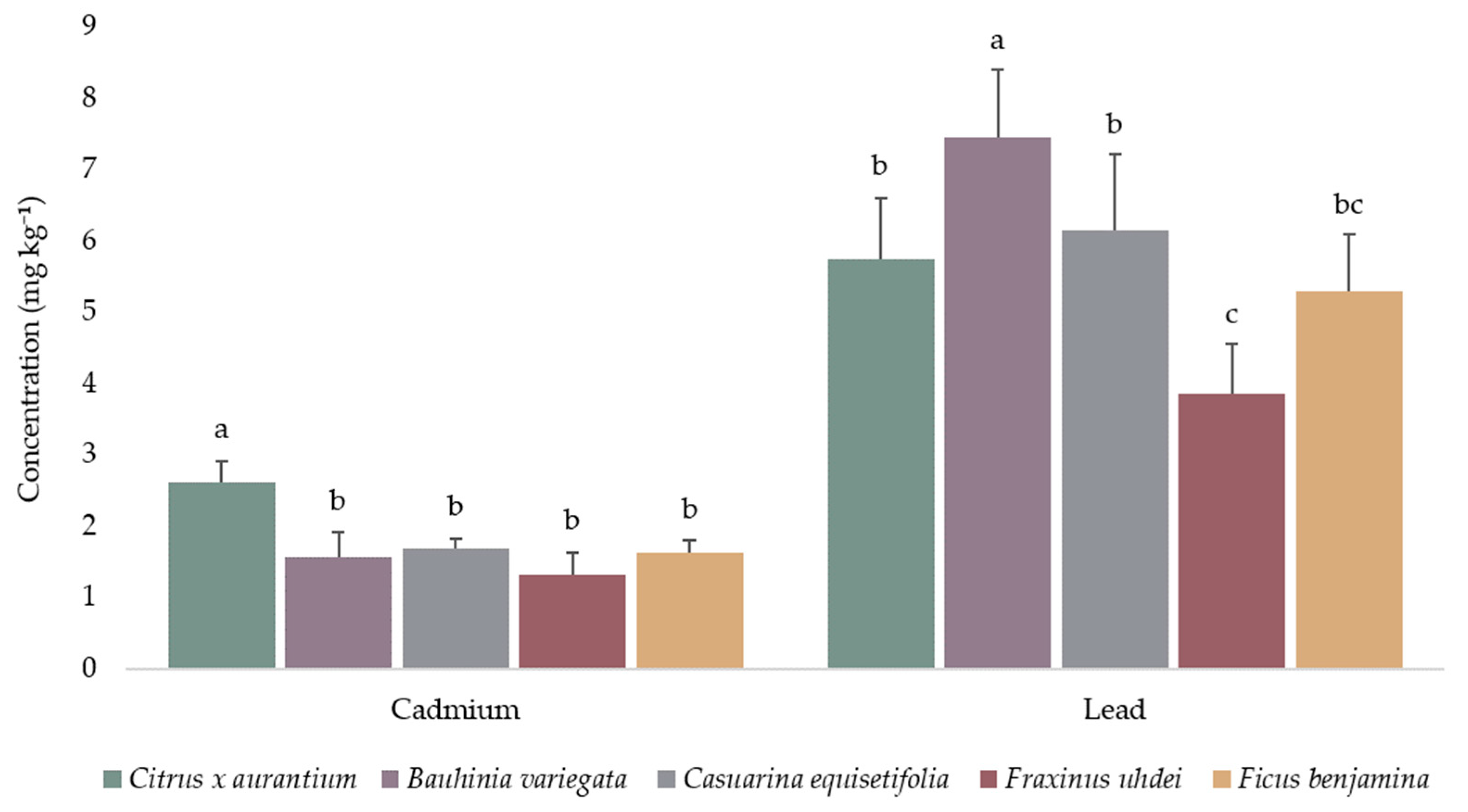
The results revealed significant differences in foliar concentrations based on species, the specific element analyzed, and the interaction between both factors. The two-way ANOVA showed a significant effect for species (F(4.98) = 38.70, p < 0.001), element (F(1.98) = 877.04, p < 0.001), and the species x element interaction (F(4.98) = 22.75, p < 0.001), indicating that the bioaccumulation pattern of Cd and Pb varies significantly depending on the tree’s species. Particularly for Cd, C. × aurantium exhibited the highest concentrations (2.60 ± 0.29 mg kg−1), which were significantly greater than those recorded for the other species (p < 0.001). In contrast, F. udhei showed the lowest Cd values (1.32 ± 0.28 mg kg−1), showing a reduced capacity for accumulating this metal. For Pb, B. variegata was the species with the highest accumulation (7.45 ± 0.94 mg kg−1), with concentrations significantly higher than those of all remaining species (p < 0.001). Similarly, F. udhei registered the lowest Pb concentrations (3.86 ± 0.69 mg kg−1), making it the species the lowest accumulation for both metals (Figure 2).
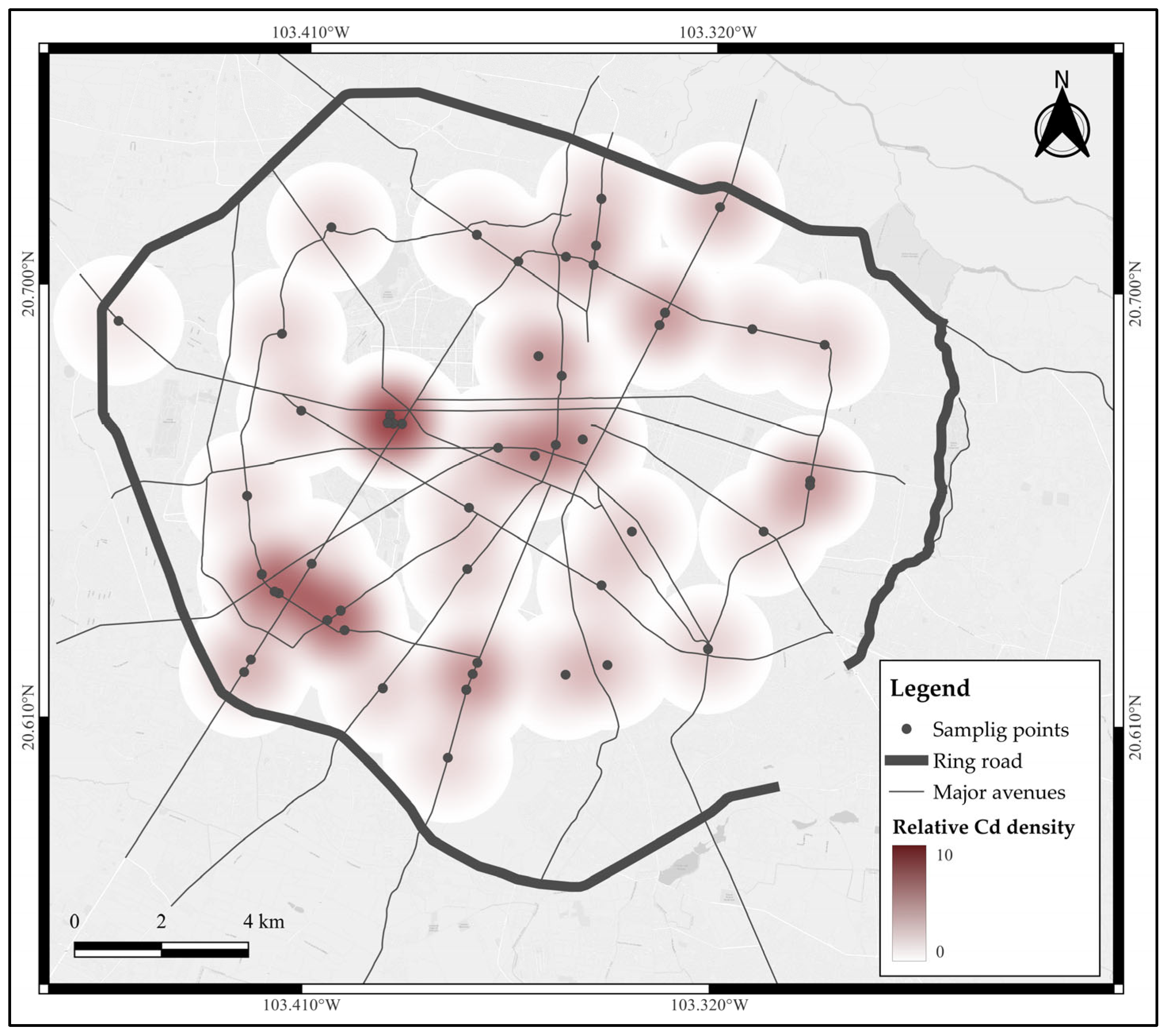
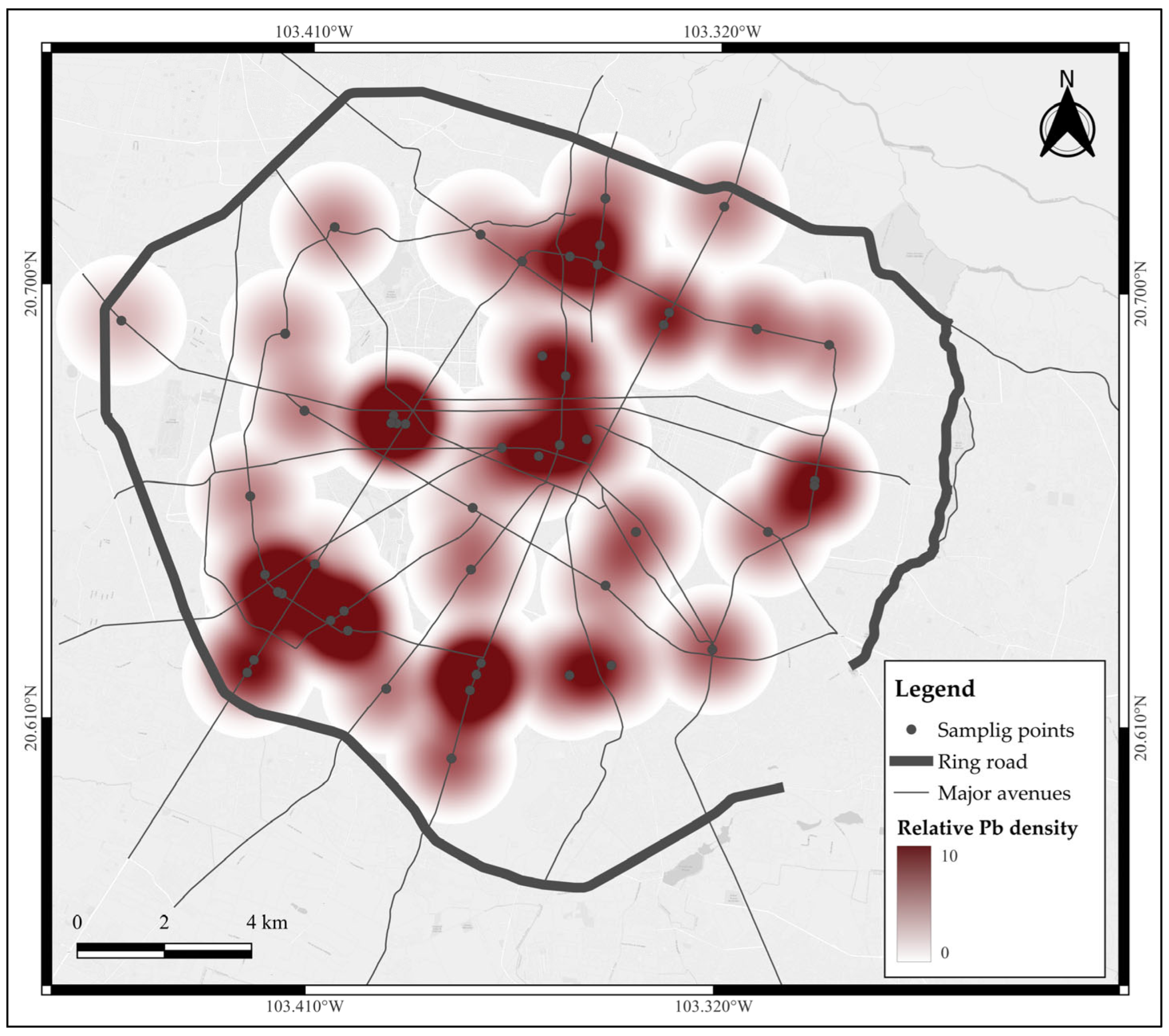
The heat maps revealed clear differences in the spatial distribution of Cd and Pb across the Guadalajara Metropolitan Area. For Cd, the pattern showed a relatively smooth and continuous gradient, with slightly higher concentrations in the central–southern sector of the study area. Spatial transitions between high and low values were gradual, showing moderate variation among sites and the absence of sharply defined hotspots (Figure 3). In contrast, the distribution of Pb displayed a more pronounced and segmented pattern. Areas with higher intensities were concentrated in specific central and southern zones of the AMG, forming more distinct clusters relative to their immediate surroundings. This writes that Pb shows greater spatial variability and a less uniform distribution compared to Cd (Figure 4).

3.2. Social Perception Survey Results

The sociodemographic characterization (Supplementary Material S2) shows a slightly higher participation of women (51%) compared to men (49%). About age distribution, the largest group corresponded to individuals between 18 and 30 years old (68%), followed by those aged 31–40 (13%), 41–50 (6%), 51–60 (10%), and participants over 61 years old (3%). In terms of educational level, 72% of respondents had undergraduate studies, 17% high school, 10% postgraduate education, and 1% basic education.
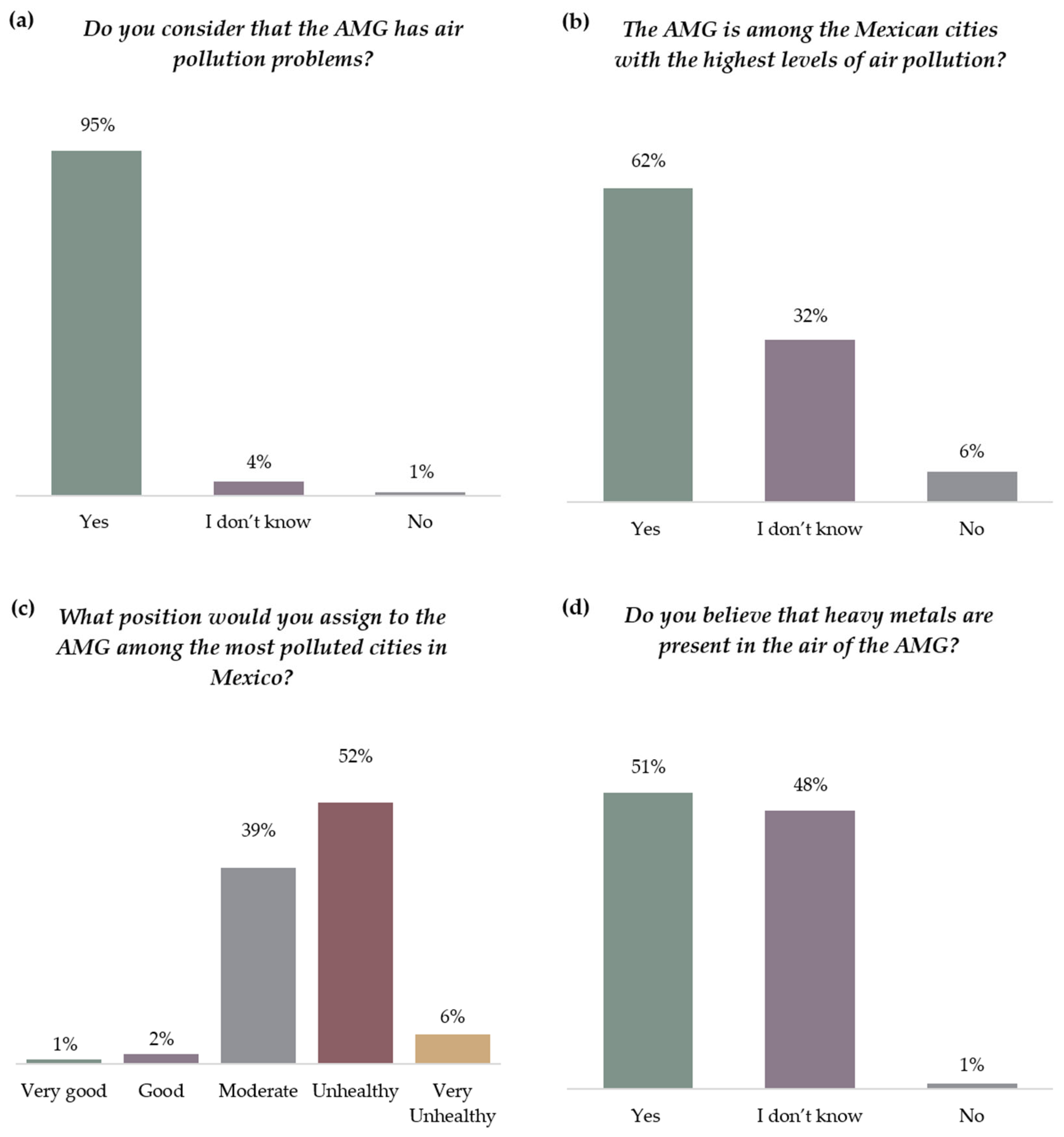
Concerning the perception of air quality in the Guadalajara Metropolitan Area (AMG), 95% of respondents showed that the AMG experiences air pollution problems (Figure 5a). This perception was consistent across sociodemographic groups, as the PERMANOVA analysis confirmed no significant differences among gender, age, or educational level, showing a generalized consensus.
About the perception that the AMG is among the most polluted cities in the country, 62% agreed, 32% reported not knowing, and only 6% disagreed (Figure 5b), with no significant differences among groups. When asked to rank the AMG among Mexico’s most polluted cities, responses shifted toward a negative evaluation: 52% classified it as “unhealthy” and 39% as “moderate” (Figure 5c). Significant differences were seen only for educational level (p = 0.016), particularly between respondents with high school and undergraduate education (p = 0.004) (Supplementary Material S2).
About the presence of heavy metals in the air, 51% believed these contaminants were present, while 48% said they did not know (Figure 5d). Despite this variation, no significant differences were detected among sociodemographic groups.
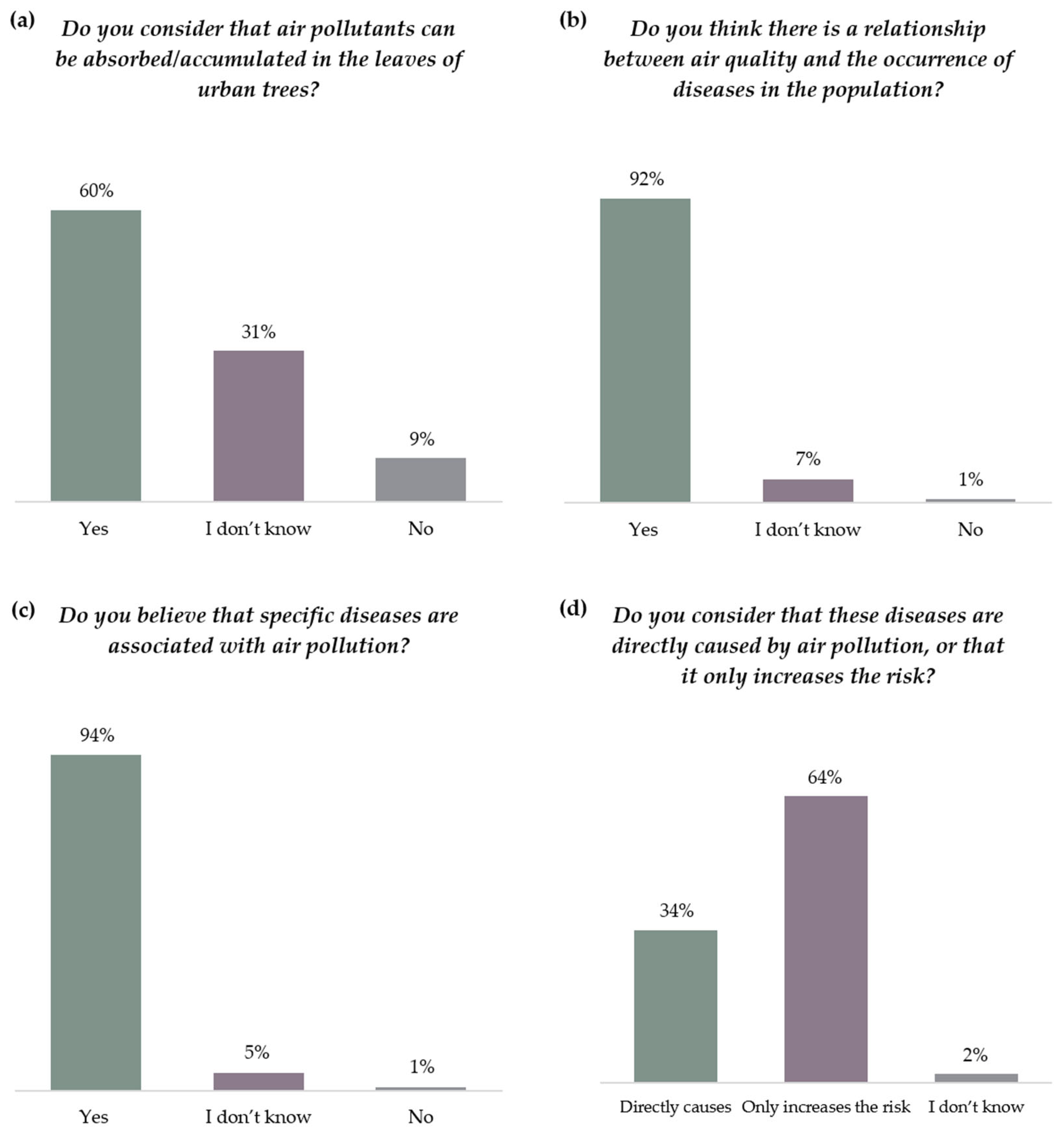
Concerning the capacity of urban trees to absorb and/or accumulate heavy metals, 60% of respondents showed that they do, 31% reported not knowing, and only 9% said that they do not (Figure 6a). PERMANOVA detected significant differences by gender (p = 0.005), with men more often responding “yes” (66%) compared to women (54%), while women selected the “I don’t know” category more often (37% in women vs. 25% in men) (Supplementary Material S2). Concerning the relationship between air quality and the occurrence of diseases, 92% of respondents perceived an association (Figure 6b). Similarly, 94% stated that certain diseases are linked to air pollution (Figure 6c); moreover, 34% believe that various diseases are caused directly by air pollution, while 64% consider that exposure mainly increases the risk (Figure 6d). For these three reasons, no significant differences were found among the sociodemographic groups evaluated.
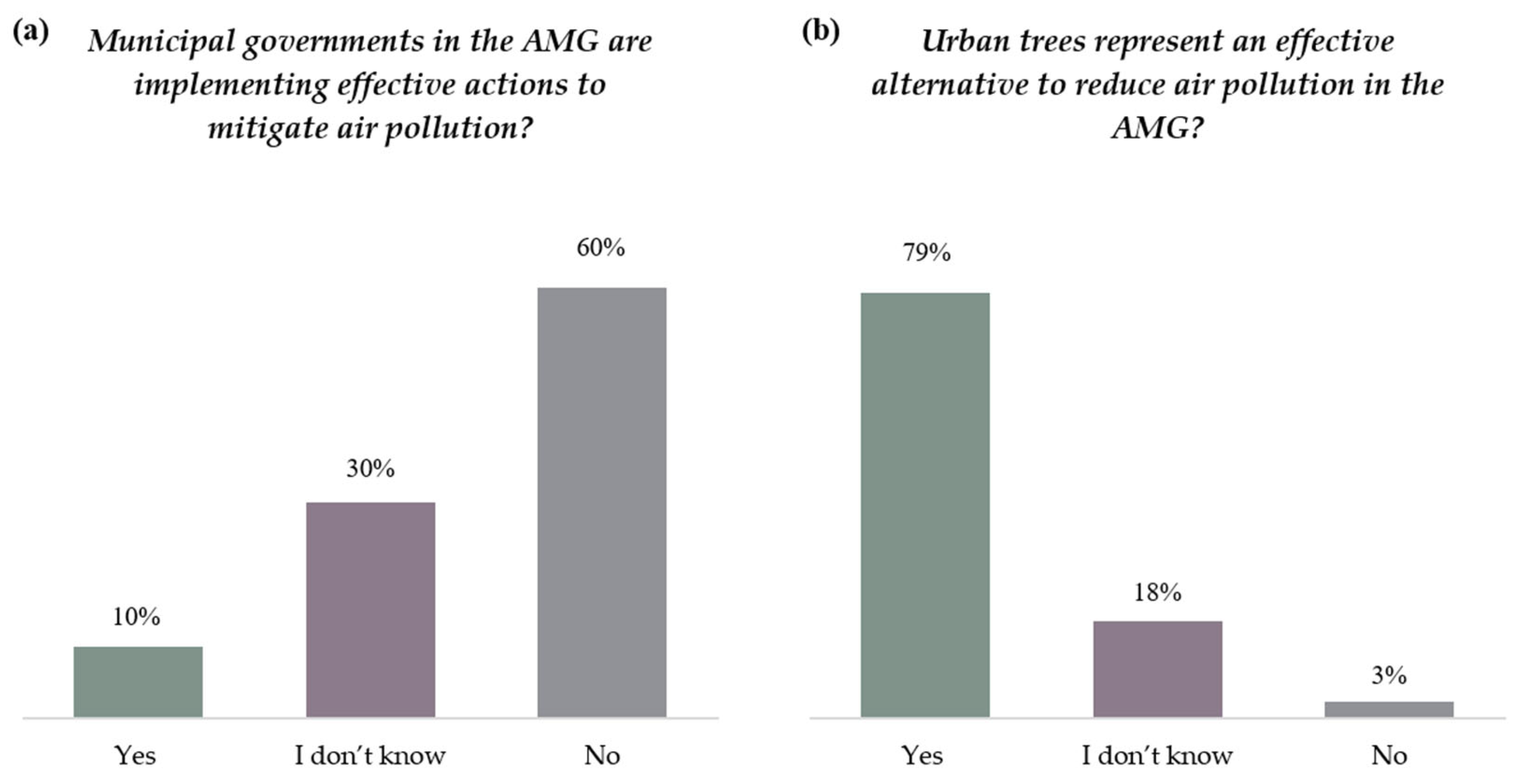
In relation to the role of municipal governments in controlling air pollution, 60% of respondents said that current actions are insufficient, 10% considered them adequate, and 30% reported non-knowing (Figure 7a), with no significant differences among sociodemographic groups. With respect to the effectiveness of urban trees as a strategy to reduce air pollution, 79% of respondents answered “yes,” showing a strong social consensus about the importance of urban vegetation in mitigating atmospheric contaminants (Figure 7b). Statistical analysis showed significant differences among age groups (p = 0.043): individuals aged 18–30 years reported 74% “yes” and 22% “not sure,” while respondents aged 31–40 years reported 87% “yes” and 13% “not sure” (p = 0.049). Differences were also seen with the 51–60 age group, in which nearly all participants perceived urban trees as effective (97% “yes,” 3% “not sure”; p = 0.0105). Furthermore, this group differed significantly from those aged over 61 years (81% “yes,” 19% “not sure”; p = 0.0134) (Supplementary Material S2). These patterns suggest that the perceived mitigating role of urban trees strengthens middle adulthood and becomes slightly more heterogeneous in older age groups.
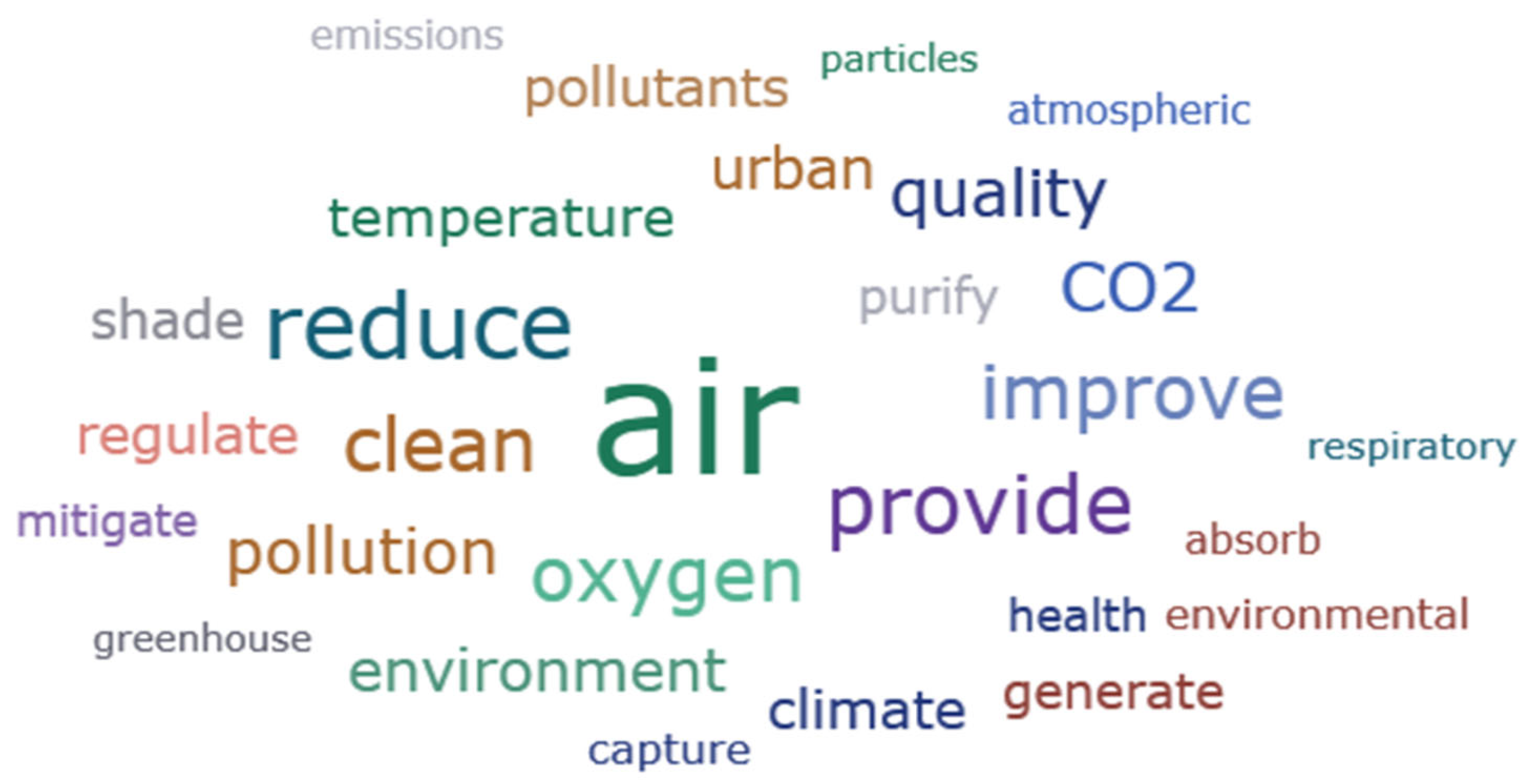
On the other hand, 99% of respondents said that urban trees do provide benefits to their health, while only 1% showed that such benefits are limited due to the insufficient tree cover in the city. The analysis of open-ended responses shows that social perception is primarily centered on improvements in air quality, which appeared as the most recurrent conceptual theme. The most frequent words found in the analysis were: air, reduce, oxygen, clean, CO2, temperature, pollutants, shade, environment, climate, and health, highlighting the key ideas that the surveyed sample associates with the presence of trees in urban environments (Figure 8).
Consistently, participants emphasized that trees help purify the air, capture CO2, reduce atmospheric pollutants, and produce oxygen—functions perceived as essential for human health. They also underscored their role in thermal regulation, noting the capacity of urban trees to lower temperatures, providing shade, and creating cooler, more comfortable microclimates, especially in densely urbanized areas. At the psycho-emotional level, various responses noted that treed spaces help reduce stress and provide recreational environments that contribute to better quality of life. However, respondents also expressed that the current level of tree cover is insufficient to counteract the elevated levels of urban pollution. Overall, the results reflect a broad consensus about the role of urban trees in physical, environmental, and emotional health, positioning them as a key element for improving living conditions in the city.
Finally, the multiple correspondence analysis (MCA) revealed a highly homogeneous pattern in public perceptions (Supplementary Material S3). Across the three evaluated models (gender, age, and educational level), both sociodemographic categories and response options were positioned close to the origin, with the first two dimensions explaining a limited proportion of the variability. No evidence of clustering or clear separation among groups was seen. Although PERMANOVA named isolated significant differences between certain groups, these variations were small and did not manifest in the geometric structure of the MCA, which confirms that perceptions do not form distinct clusters. Overall, both analyses write that, despite various statistical differences in specific items according to sociodemographic characteristics, the general pattern of perceptions is broadly uniform across the surveyed sample.

4. Discussion

4.1. Bioaccumulation and Spatial Distribution of Cadmium and Lead

The results show that the five evaluated species do not respond uniformly to the accumulation of Cd and Pb; rather, they display contrasting bioaccumulation patterns. For Cd, C. × aurantium exhibited the highest concentrations (2.60 mg kg−1), a pattern consistent with reports of other urban species showing comparable levels of accumulation, such as Syzygium cumini (L.) Skeels [38] and Millettia pinnata (L.) Panigrahi [14]. Bauhinia variegata, in turn, recorded the highest Pb accumulation (7.45 mg kg−1), making it the species with the highest foliar Pb concentrations under the studied conditions for this metal among those analyzed. Although the concentrations seen in this study are high, other works have documented even higher values in species such as Platanus acerifolia Willd. [11], Ficus religiosa L., and Calotropis procera W.T. Aiton [39]. These comparisons confirm that heavy metal accumulation depends not only on environmental conditions but also on genetic, anatomical, and morphological traits of each species—including leaf surface characteristics, cuticle roughness, presence of trichomes, leaf area, and stomatal density—which directly influence the capture and retention of atmospheric particles and contaminants [40]. In this study, species such as B. variegata and C. aurantium, which showed higher Cd and Pb concentrations, may show greater retention of contaminant particles associated with their larger leaf area, thereby increasing the surface available for contact with atmospheric particles. This pattern is consistent with the influence of foliar morphological traits on metal accumulation, while species showing lower accumulation levels may be associated with smaller leaf areas or with characteristics that limit contaminant retention, even under similar environmental conditions [40,41].
It is important to recognize that the accumulation of heavy metals in urban trees may occur through both root uptake and atmospheric deposition onto the leaf surface, either via dry or wet deposition [42]. This dual pathway makes it difficult to precisely distinguish the relative contribution of each process to the total metal content in leaves. Nevertheless, the approach adopted is consistent with various urban biomonitoring studies, in which foliar metal concentrations are interpreted primarily as an indicator of atmospheric exposure, particularly in urban environments characterized by high vehicular traffic intensity and elevated particle deposition [43]. Under this framework, the results allow for the evaluation of spatial patterns and comparisons of foliar accumulation among species, without excluding the direct uptake of these contaminants from the soil. Under this approach, urban trees serve as effective indicators for assessing the presence and distribution of contaminants, especially in densely populated cities with elevated levels of environmental pollution such as the AMG. Biomonitoring provides strategic information for finding areas with higher heavy-metal loads [44] and constitutes a valuable tool for guiding species choice in urban reforestation programs, prioritizing those with greater retention capacity and tolerance [7].
The heat maps generated from foliar Cd and Pb concentrations further enhanced the understanding of their spatial distribution across the AMG, providing more evidence of their urban variability. In these maps, areas of greater intensity represent locations where high values coincide and cluster spatially, without assuming continuity beyond the observed data. For Cd, the spatial pattern displayed a relatively homogeneous distribution, with gradual transitions and no sharply defined contrasts among sectors. Slightly higher values appeared in the central–southern part of the AMG, though without forming distinct clusters, suggesting that the Cd pattern may reflect more spatially diffuse urban influences distributed throughout the urban area. In contrast, Pb exhibited greater heterogeneity, with clearly defined sectors showing the highest concentrations, particularly within central and southern zones. This pattern aligns with the interspecific variability seen and with the presence of higher maximum values, showing that Pb may be more influenced by specific urban conditions or localized sources. Although the heat maps do not directly find emission sources, the presence of pronounced concentration areas is consistent with earlier studies documenting the use of biomonitoring to map metal pollution in urban environments [9]. While these maps are not interpolated and interpretation must be limited to the actual sampling locations, the use of plants as biomonitors enables a more detailed spatial understanding of urban pollution levels [10,45]. Taken together, the findings reinforce those urban trees not only function as natural filters by keeping particles and metals on leaf surfaces [46], contributing to pollutant retention and potential removal pathways, but also serve as effective tools for mapping the spatial variability of atmospheric contaminants in densely populated cities such as the AMG [47].

4.2. Social Perception

The limitation of this study is the demographic bias due to the higher participation of young people, likely associated with the digital divide that limits the inclusion of older age groups; therefore, the results should be interpreted primarily as trends within the young adult population of the Guadalajara Metropolitan Area (AMG). Nevertheless, this group (18–30 years old) is strategic for promoting communication, environmental education, and citizen participation in air pollution.
The survey results reveal a strong consensus about air pollution in the AMG and its effects on human health. Most respondents perceive the city’s air quality as poor, and 62% find the AMG one of the most polluted metropolitan areas in the country. However, when asked specifically about the presence of heavy metals in the air, it certainly decreased: although 51% believe they are present, 48% reported not knowing. This indicates that, while the surveyed sample recognizes air pollution as a general problem, knowledge about specific pollutants—such as heavy metals—is limited and that a valuable information gap remains.
This gap highlights the relevance of strengthening risk communication and environmental education, particularly because heavy metals are not readily detected through sensory cues and are therefore less likely to be recognized without accessible information. In practical terms, these results support the need for targeted initiatives such as: (i) disseminating local monitoring results in clear, non-technical formats (e.g., short summaries, infographics, and neighborhood-level updates where available); (ii) developing school- and community-based modules focused on pollutant types, exposure pathways, and health implications; and (iii) coordinating consistent municipal messaging that translates technical information into feasible preventive guidance for the public, with special attention to vulnerable groups. Importantly, the present study does not evaluate the effectiveness of such interventions; rather, they are presented as evidence-informed implications derived from the high proportion of uncertainty responses and as a priority line for future research integrating social perception, environmental education, and governance/legislative frameworks.
As other studies have shown, people often base their assessments on immediate sensory cues such as odor, visibility, or the presence of smoke [23,48], which explains why imperceptible contaminants like heavy metals tend to go unnoticed by the public. Regarding health risks, respondents demonstrated even stronger consensus: more than 90% acknowledged direct or indirect effects of air pollution on human health. Although only 34% attribute diseases directly to pollution, 64% believe poor air quality increases health risks, which aligns with previous evidence documenting high public awareness [49]. Moreover, perceptions of environmental risks are often strongly influenced by individual experiences and day-to-day interactions with the environment [23]. In terms of government action, 60% of respondents believe that municipal governments are not taking adequate measures to mitigate air pollution. This perception echoes findings by Xia et al. [50], who emphasize that subjective evaluations of air quality directly influence citizen satisfaction and that governments must communicate environmental progress more clearly and consistently. In the state of Jalisco—where the AMG is located—air quality policy is organized through the Jalisco “Respira” program, which aims to reduce emissions and protect public health through six strategic axes: atmospheric monitoring, emission control, sustainable mobility, intergovernmental coordination, citizen participation, and green infrastructure [51]. However, public perception suggests that these efforts are not sufficiently visible, reinforcing the need to strengthen governmental communication, transparency, and feedback mechanisms (e.g., regular reporting of actions and pout comes in accessible formats) [50].
With respect to urban trees, 60% of respondents believe that trees can absorb and/or accumulate heavy metals, and 79% state that they help reduce air pollution. These perceptions are consistent with studies recognizing urban trees as an essential nature-based solution for mitigating air pollution, particularly particulate matter, and heavy metals [52]. Responses related to the health benefits of urban trees further support this interpretation; terms such as air, oxygen, pollutants, temperature, shade, climate, and health indicate that people directly associate trees with air quality, environmental comfort, human well-being, and thermal regulation. Additionally, various respondents noted that the current tree cover is insufficient, reflecting a negative perception of existing green infrastructure.
The age-related pattern observed in the models—where the perceived mitigating role of urban trees tends to increase up to middle age and become slightly more variable in older groups—may reflect a combination of social and contextual factors. Middle-aged respondents may place greater emphasis on health- and family-related benefits and may also have more frequent interaction with commuting and outdoor exposures that heighten attention to urban environmental conditions [53]. In contrast, older age groups can be more heterogeneous in education, mobility, sources of information, health status, and daily exposure to green spaces, which may increase response variability [53,54,55,56]. Generational differences in exposure to recent environmental communication narratives and unequal access to updated information channels may also contribute to this dispersion [57,58,59,60]. These explanations are offered as plausible interpretations rather than causal mechanisms [61,62]; future studies incorporating additional variables (e.g., frequency of green-space use, information sources, neighborhood context, and health-related factors) would allow a more direct assessment of drivers behind this pattern.
Finally, the multiple correspondence analysis showed that environmental perceptions are broadly homogeneous as gender, age, and educational level did not produce distinct clusters. Although various statistically significant differences were detected in specific models, these did not translate into strong structural segmentation, suggesting that respondents share a largely unified perception of air quality, health risks, and the role of urban trees.

4.3. Integrated Analysis and Scope of the Study

The integration of scientific and social dimensions makes it possible to identify strategic points for designing and strengthening public policies aimed at improving air quality and protecting public health [23]. From the social perspective, public perception serves as an indicator of environmental awareness, as individuals construct their understanding of risk through everyday observations, sensory experiences, and cognitive and affective processes [63]. Such judgments are often based on visible cues rather than on imperceptible pollutants such as heavy metals [64]. This helps explain why knowledge about specific contaminants such as Cd and Pb remains limited, even though residents recognize air pollution as a public health issue.
From the scientific perspective, the results of this study indicate the occurrence of Cd and Pb in the urban environment as reflected by foliar concentrations, reinforcing the need to improve roadway design, update permissible limits, and promote green infrastructure that enhances the retention of particulate matter and heavy metals in the AMG. In this context, urban trees play not only an ecological role but also a social and health-related one, as they improve urban livability, contribute to well-being, and function as an environmentally symbolic element positively valued by residents [65]. This valuation is widely shared, and numerous studies highlight that public involvement is crucial for strengthening the social appreciation of the role of trees in mitigating air pollution [66].
Moreover, public perception is shaped by psychosocial factors such as habituation, sensory capacity, individual experiences, and cognitive biases [64]. For this reason, urban planners must acknowledge the multifaceted nature of public perception and incorporate these elements into policy design and risk communication strategies. Developing effective interventions requires consideration of the sociocultural context, local worldviews, institutional transparency, and the periodic dissemination of environmental information—elements consistently emphasized in the governance literature [23].
A joint analysis of both dimensions reveals that air-quality management cannot rely solely on instrumental measurements; it requires understanding how residents interpret risk, engage in environmental actions, and assign everyday meaning to pollution [67]. In this regard, understanding public perception is essential for designing more effective policies and interventions. Evidence shows that social perception directly influences acceptance of environmental measures, citizen participation, community monitoring, and the long-term success of institutional actions [66].
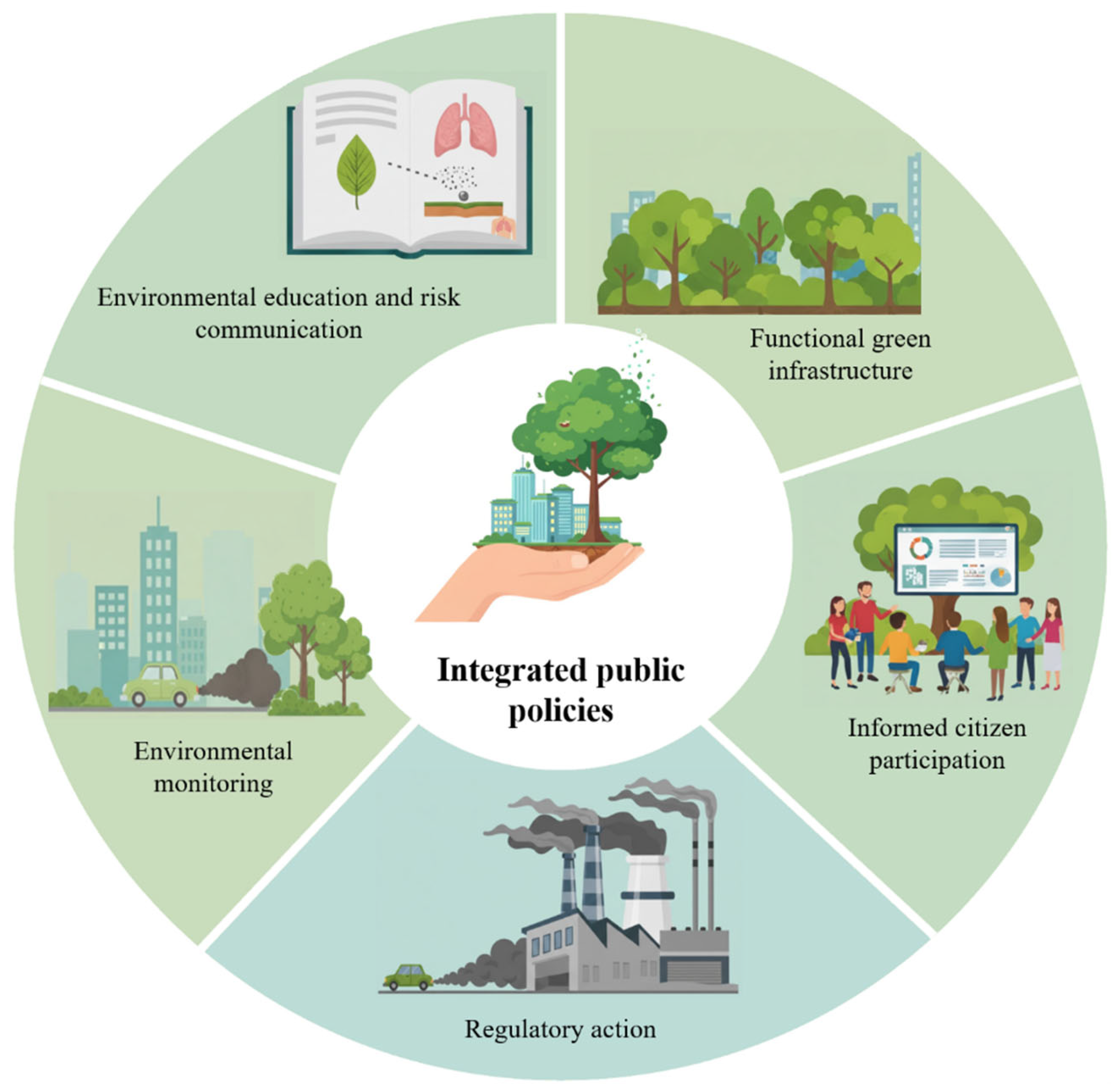
Residents acknowledge air pollution as a public health concern but demand clearer institutional communication and greater visibility of governmental actions. This aligns with international recommendations that emphasize transparency, risk communication, and the dissemination of environmental progress as key elements for strengthening social trust [23]. Taken together, the convergence between scientific and social evidence opens strategic opportunities for developing more comprehensive public policies capable of simultaneously addressing the physicochemical and sociocultural dimensions of air pollution. The results support a set of suggested measures to improve air quality and reinforce citizen involvement, including: (1) regulation of emission sources; (2) strategic green infrastructure based on species with high bioaccumulation capacity; (3) environmental education and risk-communication programs; (4) informed citizen participation; and (5) interdisciplinary environmental monitoring integrating biomonitoring and social studies (Figure 9).
The findings of this study underscore that air pollution requires integrating scientific data with social knowledge through a collaborative approach that legitimizes community-generated information and strengthens public participation [23,67].

5. Conclusions

The findings of this study show that the tree species analyzed exhibit differentiated responses in their capacity to accumulate heavy metals, confirming that the selection of species for green infrastructure should not be conducted randomly. Among the five species evaluated, C. × aurantium stood out as the showed the highest foliar concentrations of Cd (2.60 mg kg−1), while B. variegata exhibited the highest Pb accumulation (7.45 mg kg−1). The spatial distribution maps revealed contrasting patterns between the two metals: Cd displayed a relatively homogeneous distribution, whereas Pb clustered in specific areas of the central and southern AMG, possibly influenced by vehicular traffic and other localized sources. Taken together, these results confirm that urban trees function effectively as biomonitors by identifying critical pollution areas, supporting the selection of species with greater relevance for biomonitoring-based exposure mapping and green-infrastructure planning.
From a social perspective, an elevated level of public awareness regarding air quality was observed: 95% of respondents recognize that the AMG has poor air quality, regardless of gender, age, or educational level. However, limited knowledge persists about specific pollutants: although 51% believe heavy metals are present in the air, 48% reported not knowing, revealing a disconnect between perceived pollution and the actual composition of atmospheric contaminants. The observed “perception paradox”—high concern about air pollution but limited recognition of specific, often imperceptible contaminants—represents a clear opportunity for environmental education. Urban-tree biomonitoring can make local pollution burdens tangible and, when shared through community and school outreach in accessible formats, help bridge the gap between general awareness and informed understanding of exposure pathways and health risks. Although we did not evaluate intervention effectiveness, our findings highlight biomonitoring as a promising education and risk-communication interface and a priority direction for future research.
Likewise, urban trees are perceived as elements that can absorb or accumulate heavy metals; 79% recognize them as contributors to pollution mitigation, and 99% attribute direct health benefits to urban tree cover. These perceptions indicate that trees fulfill not only ecological functions but also symbolic, cultural, and psycho-emotional roles for urban residents. Additionally, 60% of respondents believe that municipal governments do not take sufficient action to address air pollution, suggesting the need for improved transparency, risk communication, and visibility of environmental efforts.
Through an interpretive integration of both components, we observe broad recognition of air pollution while a persistent gap remains in understanding specific pollutants such as Cd and Pb. This convergence demonstrates that air pollution management must address emission sources, design green infrastructure based on species showing higher foliar concentrations such as C. aurantium and B. variegata and strengthen communication processes that improve public understanding of environmental risks. Overall, this study shows that air pollution in the AMG is a technical, social, and cultural phenomenon that can only be effectively addressed through comprehensive policies grounded in scientific evidence, transparent communication, and informed citizen participation.

Supplementary Materials

The following supporting information can be downloaded at: https://www.mdpi.com/article/10.3390/f17020218/s1, Supplementary Material S1: Survey instrument used for the social perception study; Supplementary Material S2: Aggregated survey results by gender, age, and educational level; and Supplementary Material S3: Figures of Multiple Correspondence Analysis (MCA) show the association between sociodemographic variables and perception items.

Author Contributions

Conceptualization, P.B.G.-M., L.E.P.-G. and B.C.R.-H.; methodology, M.M.M.-V. and J.G.-V.; validation, P.B.G.-M., A.R.-R. and S.V.-V.; formal analysis, H.L.-A., M.R.-S. and C.A.-M.; investigation, M.M.M.-V., J.G.-V. and A.R.-R.; data curation, P.B.G.-M., M.R.-S. and H.L.-A.; writing—original draft preparation, P.B.G.-M., L.E.P.-G. and B.C.R.-H.; writing—review and editing, S.V.-V.; supervision, B.C.R.-H. and C.A.-M. All authors have read and agreed to the published version of the manuscript.

Funding

This research received no external funding.

Institutional Review Board Statement

The Institutional Bioethical Committee approved all protocols followed in this study on 16 December 2025 (CINV-C/078/2025; Centro Universitario de Ciencias Biológicas y Agropecuarias [CUCBA]).

Informed Consent Statement

Informed consent was obtained from all participants via an online questionnaire; participants were informed in accordance with the Declaration of Helsinki (1975, revised 2013) and could withdraw at any time without consequence. The survey did not collect identifying or sensitive personal data, and responses were recorded anonymously, posing minimal risk to participants.

Data Availability Statement

Data are contained within the article and Supplementary Material. Additional data can be obtained by contacting the corresponding author.

Acknowledgments

During manuscript preparation, the authors used Google Gemini (Flash 2.5) to assist with the creation of Figure 8. The authors reviewed and edited the output and take full responsibility for the final content.

Conflicts of Interest

The authors declare no conflicts of interest.

References

  1. World Health Organization. Ambient (Outdoor) Air Quality and Health. 2021. Available online: https://www.who.int/es/news-room/fact-sheets/detail/ambient-(outdoor)-air-quality-and-health (accessed on 14 November 2025).
  2. Tan, J.; Chen, N.; Bai, J.; Yan, P.; Ma, X.; Ren, M.; Maitland, E.; Nicholas, S.; Cheng, W.; Leng, X.; et al. Ambient air pollution and the health-related quality of life of older adults: Evidence from Shandong China. J. Environ. Manag. 2023, 336, 117619. [Google Scholar] [CrossRef] [Scilit] [PubMed]
  3. Zhang, Z.; Gong, J.; Li, Y.; Zhang, W.; Zhang, T.; Meng, H.; Liu, X. Analysis of the influencing factors of atmospheric particulate matter accumulation on coniferous species: Measurement methods, pollution level, and leaf traits. Environ. Sci. Pollut. Res. 2022, 29, 62299–62311. [Google Scholar] [CrossRef] [Scilit] [PubMed]
  4. Park, J.; Bui, H.; Lee, E.; Lim, H.; Lim, H.; Park, B. Accumulation of Particulate Matter, Heavy Metals, and Air Pollution Tolerance Index of 10 Species of Urban Forest Plants. Water Air Soil Pollut. 2025, 236, 234. [Google Scholar] [CrossRef] [Scilit]
  5. Yang, P.; Ge, J.; Yang, M. Identification of Heavy Metal Pollution Derived from Traffic in Roadside Soil Using Magnetic Susceptibility. Bull. Environ. Contam. Toxicol. 2017, 98, 837–844. [Google Scholar] [CrossRef] [Scilit]
  6. Sert, E.B.; Turkmen, M.; Cetin, M. Heavy metal accumulation in rosemary leaves and stems exposed to traffic-related pollution near Adana-İskenderun Highway (Hatay, Turkey). Environ. Monit. Assess. 2019, 191, 553. [Google Scholar] [CrossRef] [Scilit]
  7. Uka, U.N.; Belford, E.J.D.; Elebe, F.A. Effects of Road Traffic on Photosynthetic Pigments and Heavy Metal Accumulation in Tree Species of Kumasi Metropolis, Ghana. SN Appl. Sci. 2021, 3, 131. [Google Scholar] [CrossRef] [Scilit]
  8. Key, K.; Kulaç, Ş. Proof of concept to characterize historical heavy metal concentrations from annual rings of Corylus colurna: Determining the changes of Pb, Cr, and Zn concentrations in atmosphere in 180 years in North Turkey. Air Qual. Atmos. Health 2022, 15, 1623–1633. [Google Scholar] [CrossRef] [Scilit]
  9. Jurković, J.; Kovačević, S.; Wiggenhauser, M.; Bašić, F. Norway spruce (Picea abies) needles as potential indicator for heavy metal air pollution in Sarajevo. Environ. Monit. Assess. 2025, 197, 1011. [Google Scholar] [CrossRef] [Scilit]
  10. Alexandrino, K.; Viteri, F.; Rybarczyk, Y.; Andino, J.E.G.; Zalakeviciute, R. Biomonitoring of Metal Levels in Urban Areas with Different Vehicular Traffic Intensity by Using Araucaria heterophylla Needles. Ecol. Indic. 2020, 117, 106701. [Google Scholar] [CrossRef] [Scilit]
  11. Solomun, M.K.; Ilić, Z.H.; Kalantari, Z.; Eremija, S.; Čigoja, I.; Ferreira, C.; Češljar, G. Phytoremediation by Trees as a Nature-Based Solution for Mitigating Metal Contamination in Urban Soils. Environ. Sci. Pollut. Res. 2024, 31, 24936–24950. [Google Scholar] [CrossRef] [Scilit]
  12. Patel, K.; Tripathi, I.; Chaurasia, M.; Rao, K.S. Phytoremediation: Status and Outlook. In Pollutants and Water Management: Resources, Strategies, and Scarcity; Singh, P., Singh, R., Singh, V.K., Bhadouria, R., Eds.; John Wiley & Sons Ltd.: Hoboken, NJ, USA, 2021; pp. 67–94. [Google Scholar]
  13. Chaurasia, M.; Patel, K.; Tripathi, I.; Rao, K.S. Impact of Dust Accumulation on the Physiological Functioning of Selected Herbaceous Plants of Delhi, India. Environ. Sci. Pollut. Res. 2022, 29, 80739–80754. [Google Scholar] [CrossRef] [Scilit]
  14. Vashist, M.; Singh, S.K.; Kumar, T.V. Urban Trees as Nature-Based Solutions for Heavy Metal Biomonitoring: A Comparative and Uncertainty Analysis Assessment. Water Air Soil Pollut. 2025, 236, 769. [Google Scholar] [CrossRef] [Scilit]
  15. Singh, H.; Yadav, M.; Kumar, N.; Kumar, A.; Kumar, M. Assessing Adaptation and Mitigation Potential of Roadside Trees under the Influence of Vehicular Emissions: A Case Study of Grevillea robusta and Mangifera indica Planted in an Urban City of India. PLoS ONE 2020, 15, e0227380. [Google Scholar] [CrossRef] [Scilit] [PubMed]
  16. Marques, V. Environmental Perception: Notes on Transdisciplinary Approach. Sci. J. Biol. Life Sci. 2020, 1, 1–9. [Google Scholar] [CrossRef] [Scilit]
  17. Liu, H.; Liu, H.; Cheng, Y. Illustrating the Multi-Stakeholder Perceptions of Environmental Pollution Based on Big Data: Lessons from China. Reg. Sustain. 2022, 3, 12–26. [Google Scholar] [CrossRef] [Scilit]
  18. Ștefănuț, S.; Öllerer, K.; Ion, M.C.; Florescu, L.I.; Constantin, M.; Banciu, C.; Onete, M.; Manu, M.; Vicol, I.; Moldoveanu, M.M.; et al. Country-Scale Complementary Passive and Active Biomonitoring of Airborne Trace Elements for Environmental Risk Assessment. Ecol. Indic. 2021, 126, 107357. [Google Scholar] [CrossRef] [Scilit]
  19. Alonso, F.; Faus, M.; Esteban, C.; Useche, S.A. Who wants to change their transport habits to help reduce air pollution? A nationwide study in the Caribbean. J. Transp. Health 2023, 33, 101703. [Google Scholar] [CrossRef] [Scilit]
  20. Huang, J.; Yang, J.Z. Beyond under the dome: An environmental documentary amplified public risk perception about air pollution in China. J. Risk Res. 2020, 23, 227–241. [Google Scholar] [CrossRef] [Scilit]
  21. Wise, T.; Zbozinek, T.D.; Michelini, G.; Hagan, C.C.; Mobbs, D. Changes in Risk Perception and Self-Reported Protective Behaviour during the First Week of the COVID-19 Pandemic in the United States. R. Soc. Open Sci. 2020, 7, 200742. [Google Scholar] [CrossRef] [Scilit]
  22. Gignac, F.; Righi, V.; Toran, R.; Errandonea, L.P.; Ortiz, R.; Nieuwenhuijsen, M.; Creus, J.; Basagaña, X.; Balestrini, M. Co-creating a Local Environmental Epidemiology Study: The Case of Citizen Science for Investigating Air Pollution and Related Health Risks in Barcelona, Spain. Environ. Health 2022, 21, 11. [Google Scholar] [CrossRef] [Scilit]
  23. Boso, À.; Oltra, C.; Álvarez, B.; Garrido, J.; Hofflinger, Á.; Gálvez-García, G. Why Do We Misperceive Air Pollution? A Scoping Review of Key Judgmental Biases. Air Qual. Atmos. Health 2024, 18, 447–460. [Google Scholar] [CrossRef] [Scilit]
  24. Metropolitan Forest Management Program of Guadalajara (POFMET). Metropolitan Forest Management Program of the Guadalajara Metropolitan Area; POFMET: Guadalajara, Mexico, 2018; Available online: https://geoportal.fiprodefo.gob.mx/pofmet/ (accessed on 14 January 2026).
  25. Peniche-Camps, S.; Cortez-Huerta, M. La costumbre al envenenamiento: El caso de los contaminantes atmosféricos de la ciudad de Guadalajara, México. Rev. Cienc. Ambient. 2020, 54, 1–19. [Google Scholar] [CrossRef] [Scilit]
  26. Institute of Planning and Management for the Development of the Guadalajara Metropolitan Area (IMEPLAN). Metropolitan Priority Road Corridors. Guadalajara, Mexico. n.d. Available online: https://zoom.imeplan.mx/mapa (accessed on 14 January 2026).
  27. NOM-117-SSA1-1994; Norma Oficial Mexicana NOM-117-SSA1-1994, Método de Prueba para la Determinación de Cadmio, Plomo, Arsénico, Mercurio y Estaño en Alimentos. Secretaría de Salud (SSA): Mexico City, Mexico, 1994. Available online: https://www.ordenjuridico.gob.mx/Documentos/Federal/wo69541.pdf (accessed on 1 February 2026).
  28. AOAC International. Official Method 999.11: Determination of Lead, Cadmium, Copper, Iron, and Zinc in Foods. In Official Methods of Analysis of AOAC International, 18th ed.; AOAC International: Gaithersburg, MD, USA, 2005. [Google Scholar]
  29. United States Environmental Protection Agency (US EPA). Method 7000B: Flame Atomic Absorption Spectrometry; USEPA: Washington, DC, USA, 2007.
  30. Krisp, J.M.; Peters, S.; Murphy, C.E.; Fan, H. Visual Bandwidth Selection for Kernel Density Maps. Photogramm. Fernerkund.-Geoinf. 2009, 5, 445–454. [Google Scholar] [CrossRef] [Scilit]
  31. Gower, J.C. A General Coefficient of Similarity and Some of Its Properties. Biometrics 1971, 27, 857. [Google Scholar] [CrossRef] [Scilit]
  32. Anderson, M.J. A new method for non-parametric multivariate analysis of variance. Austral Ecol. 2001, 26, 32–46. [Google Scholar] [CrossRef] [Scilit]
  33. Legendre, P.; Legendre, L. Numerical Ecology, 3rd ed.; Elsevier: Amsterdam, The Netherlands, 2012. [Google Scholar]
  34. Anderson, M.J.; Gorely, R.N.; Clarke, K.R. PERMANOVA+ Primer: Guide to Software and Statistical Methods; PRIMER-E Ltd.: Plymouth, UK, 2008; p. 214. [Google Scholar]
  35. Clarke, K.R.; Gorley, R.N. PRIMER v6: User Manual/Tutorial; PRIMER-E: Plymouth, MA, USA, 2006; p. 866. [Google Scholar]
  36. Jamovi. n.d. Jamovi (Version 2.3). Available online: https://www.jamovi.org (accessed on 15 March 2025).
  37. R Core Team. R: A Language and Environment for Statistical Computing, version 4.1; R Foundation for Statistical Computing: Vienna, Austria, 2021; Available online: https://cran.r-project.org (accessed on 1 February 2026).
  38. Rahman, S.U.; Han, J.; Zhou, Y.; Huang, Y.; Ali, F.; Zhao, X.; Alharbi, S.A.; Alfarraj, S. Biomonitoring and Bioremediating Potential of Commonly Grown Tree Species against Trace Elements with Seasonal and Site Allocation: A Region-Based Study. BioMetals 2025, 38, 1747–1776. [Google Scholar] [CrossRef] [Scilit]
  39. Ghosh, P.; Saha, S.; Das, T.; Ghoshal, A. Assessment of Air Pollution Tolerance and Heavy Metal Bioaccumulation in Plants from Areas Surrounding Raniganj, India: Implications for Environmental Monitoring. Environ. Monit. Assess. 2025, 197, 1130. [Google Scholar] [CrossRef] [Scilit]
  40. Fang, T.; Jiang, T.; Yang, K.; Li, J.; Liang, Y.; Zhao, X.; Gao, N.; Li, H.; Lu, W.; Cui, K. Biomonitoring of heavy metal contamination with roadside trees from metropolitan area of Hefei, China. Environ. Monit. Assess. 2021, 193, 151. [Google Scholar] [CrossRef] [Scilit]
  41. Sæbø, A.; Popek, R.; Nawrot, B.; Hanslin, H.M.; Gawronska, H.; Gawronski, S.W. Plant species differences in particulate matter accumulation on leaf surfaces. Sci. Total Environ. 2012, 427–428, 347–354. [Google Scholar] [CrossRef] [Scilit]
  42. Turkyilmaz, A.; Sevik, H.; Cetin, M. The Use of Perennial Needles as Biomonitor for Recently Accumulated Heavy Metals. Landsc. Ecol. Eng. 2018, 14, 115–120. [Google Scholar] [CrossRef] [Scilit]
  43. Wang, J.M.; Jeong, C.; Hilker, N.; Healy, R.M.; Sofowote, U.; Debosz, J.; Su, Y.; Munoz, A.; Evans, G.J. Quantifying metal emissions from vehicular traffic using real world emission factors. Environ. Pollut. 2020, 268, 115805. [Google Scholar] [CrossRef] [Scilit] [PubMed]
  44. Bhadauria, S.; Dixit, A.; Singh, D. Estimation of Air Pollution Tolerance and Anticipated Performance Index of Roadside Plants along the National Highway in a Tropical Urban City. Environ. Monit. Assess. 2022, 194, 808. [Google Scholar] [CrossRef] [Scilit] [PubMed]
  45. Zalakeviciute, R.; Bastidas, M.; Buenaño, A.; Rybarczyk, Y. A Traffic-Based Method to Predict and Map Urban Air Quality. Appl. Sci. 2020, 10, 2035. [Google Scholar] [CrossRef] [Scilit]
  46. Fusaro, L.; Salvatori, E.; Winkler, A.; Frezzini, M.A.; De Santis, E.; Sagnotti, L.; Canepari, S.; Manes, F. Urban trees for biomonitoring atmospheric particulate matter: An integrated approach combining plant functional traits, magnetic and chemical properties. Ecol. Indic. 2021, 126, 107707. [Google Scholar] [CrossRef] [Scilit]
  47. Cavazzin, B.; MacDonell, C.; Green, N.; Rothwell, J. Air pollution biomonitoring in an urban-industrial setting (Taranto, Italy) using Mediterranean plant species. Atmos. Pollut. Res. 2024, 15, 102105. [Google Scholar] [CrossRef] [Scilit]
  48. Romarate, R.A.; Madarcos, J.R.V.; Pacilan, C.J.M.; Bacosa, H.P.; Torres, A.G. When Air Quality Matters: Awareness, Perception, and Attitude of the Residents in Metro Manila, Philippines. Environ. Dev. Sustain. 2024. early access. [Google Scholar] [CrossRef] [Scilit]
  49. Reames, T.G.; Bravo, M.A. People, Place and Pollution: Investigating Relationships between Air Quality Perceptions, Health Concerns, Exposure, and Individual- and Area-Level Characteristics. Environ. Int. 2019, 122, 244–255. [Google Scholar] [CrossRef] [Scilit]
  50. Xia, X.; Yu, Y.; Zou, Y. Air Pollution, Social Engagement and Subjective Well-Being: Evidence from the Gallup World Poll. Environ. Sci. Pollut. Res. 2022, 29, 52033–52056. [Google Scholar] [CrossRef] [Scilit]
  51. Gobierno del Estado de Jalisco. Environment and Territorial Development. 2025. Available online: https://semadet.jalisco.gob.mx/medio-ambiente/calidad-del-aire/jalisco-respira (accessed on 10 November 2025).
  52. Theophilo, C.Y.S.; Ribeiro, A.P.; Moreira, E.G.; Aranha, S.; Bollmann, H.A.; Santos, C.J.; De Oliveira, A.; Santos, S.D.; Saiki, M.; Saldiva, P.H.N.; et al. Biomonitoring as a Nature-Based Solution to Assess Atmospheric Pollution and Impacts on Public Health. Bull. Environ. Contam. Toxicol. 2021, 107, 29–36. [Google Scholar] [CrossRef] [Scilit]
  53. Padma, S.; Shukla, A.; Dogra, N. An evaluation of commuter’s perception of exposure to air pollution on a segment of Delhi Metro’s Magenta line. Discov. Atmos. 2025, 3, 43. [Google Scholar] [CrossRef] [Scilit]
  54. Lau, K.K.-L.; Yung, C.C.-Y.; Tan, Z. Usage and perception of urban green space of older adults in the high-density city of Hong Kong. Urban For. Urban Green. 2021, 64, 127251. [Google Scholar] [CrossRef] [Scilit]
  55. Liu, Z.; Kemperman, A.; Timmermans, H.; Yang, D. Heterogeneity in physical activity participation of older adults: A latent class analysis. J. Transp. Geogr. 2021, 92, 102999. [Google Scholar] [CrossRef] [Scilit]
  56. Badland, H.M.; Duncan, M.J. Perceptions of air pollution during the work-related commute by adults in Queensland, Australia. Atmos. Environ. 2009, 43, 5791–5795. [Google Scholar] [CrossRef] [Scilit]
  57. Rao, S.; Doherty, F.C.; Zhang, Y.; Traver, A.; Rademacher, E.; Sheldon, M.; Dabelko-Schoeny, H. Extreme Weather Information for Diverse Older Adults: Communication Preferences and Trusted Information Sources. Environ. Commun. 2025. early access. [Google Scholar] [CrossRef] [Scilit]
  58. Yang, R.; Gao, S.; Jiang, Y. Digital divide as a determinant of health in the U.S. older adults: Prevalence, trends, and risk factors. BMC Geriatr. 2024, 24, 1027. [Google Scholar] [CrossRef] [Scilit]
  59. Fang, Z.; Liu, Y.; Peng, B. Empowering older adults: Bridging the digital divide in online health information seeking. Humanit. Soc. Sci. Commun. 2024, 11, 1748. [Google Scholar] [CrossRef] [Scilit]
  60. Wu, Y.-H.; Ware, C.; Damnée, S.; Kerhervé, H.; Rigaud, A.-S. Bridging the digital divide in older adults: A study from an initiative to inform older adults about new technologies. Clin. Interv. Aging 2015, 10, 193. [Google Scholar] [CrossRef] [Scilit]
  61. Cori, L.; Donzelli, G.; Gorini, F.; Bianchi, F.; Curzio, O. Risk Perception of Air Pollution: A Systematic Review Focused on Particulate Matter Exposure. Int. J. Environ. Res. Public Health 2020, 17, 6424. [Google Scholar] [CrossRef] [Scilit]
  62. Wiernik, B.M.; Ones, D.S.; Dilchert, S. Age and Environmental Sustainability: A meta-analysis. J. Manag. Psychol. 2013, 28, 826–856. [Google Scholar] [CrossRef] [Scilit]
  63. Zhao, X.; Cao, N.Y.; Cheng, Z. Perception Matters: How Air Pollution Influences Life Satisfaction in China. Heliyon 2024, 10, e31927. [Google Scholar] [CrossRef] [Scilit]
  64. Noël, C.; Vanroelen, C.; Gadeyne, S. Qualitative research about public health risk perceptions on ambient air pollution: A review study. SSM-Popul. Health 2021, 15, 100879. [Google Scholar] [CrossRef] [Scilit] [PubMed]
  65. Chao, J.; Lin, J. The Impact of Perceived Social Benefits on Civic Advocacy for Urban Green Infrastructure: A Moderated Mediation Model of Collective Psychological Ownership. Urban For. Urban Green. 2025, 113, 129024. [Google Scholar] [CrossRef] [Scilit]
  66. Collins, C.M.T.; Cook-Monie, I.; Raum, S. What do people know? Ecosystem Services, Public Perception and Sustainable Management of Urban Park Trees in London, U.K. Urban For. Urban Green. 2019, 43, 126362. [Google Scholar] [CrossRef] [Scilit]
  67. Booker, D.; Walker, G.; Young, P.J.; Porroche-Escudero, A. A Critical Air Quality Science Perspective on Citizen Science in Action. Local Environ. 2022, 28, 31–46. [Google Scholar] [CrossRef] [Scilit]
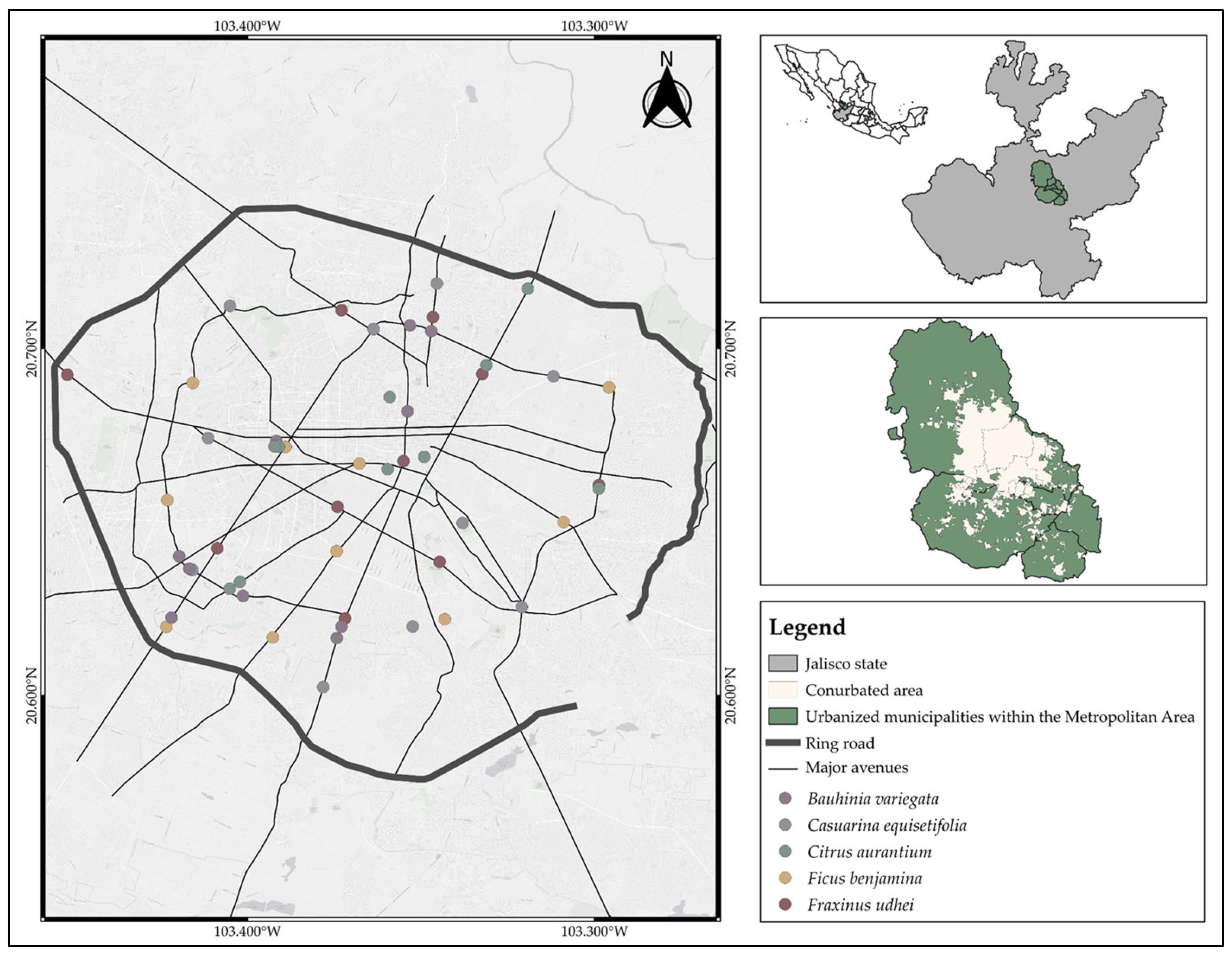
Figure 1. Sampling points of the selected tree species in the Guadalajara Metropolitan Area.
Forests 17 00218 g001
Figure 2. Cadmium and lead concentrations (mean ± SD, mg kg−1) in collected leaves. Different letters indicate significant differences.
Forests 17 00218 g002
Figure 3. Spatial distribution of cadmium (Cd) is estimated from foliar concentrations of the five analyzed tree species. Note: Heat maps were generated using Kernel Density Estimation (KDE). This representation does not constitute a spatial interpolation of concentration values but rather a density-weighted visualization that highlights areas where measurements with relatively higher contaminant levels are concentrated.
Forests 17 00218 g003
Figure 4. Spatial distribution of lead (Pb) is estimated from foliar concentrations of the five analyzed tree species. Note: Heat maps were generated using Kernel Density Estimation (KDE). This representation is not a spatial interpolation of concentration values but rather a density-weighted visualization that highlights areas where measurements with relatively higher contaminant levels are concentrated.
Forests 17 00218 g004
Figure 5. Social perception of air pollution and the presence of heavy metals in the air of the Guadalajara Metropolitan Area.
Forests 17 00218 g005
Figure 6. Social perception of the capacity of urban trees to absorb air pollutants and the relationship between air quality and population health in the Guadalajara Metropolitan Area.
Forests 17 00218 g006
Figure 7. Perception of government effectiveness and the role of urban trees in reducing air pollution in the Guadalajara Metropolitan Area.
Forests 17 00218 g007
Figure 8. Frequency of terms is associated with the health benefits of urban trees.
Forests 17 00218 g008
Figure 9. Diagram illustrates the integration between biomonitoring and social perception.
Forests 17 00218 g009
Disclaimer/Publisher’s Note: The statements, opinions and data contained in all publications are solely those of the individual author(s) and contributor(s) and not of MDPI and/or the editor(s). MDPI and/or the editor(s) disclaim responsibility for any injury to people or property resulting from any ideas, methods, instructions or products referred to in the content.