


Abstract
Murundus fields (wetland earth-mounds) represent a relatively understudied physiognomy in the Cerrado biome. This study aimed to evaluate the composition, life history, phytosociology, endemism, and conservation status of woody plant species in murundus fields in a forestry-dominated landscape in the Brazilian savanna. We established 40 plots, each measuring 50 × 20 m, where all live shrub-arboreal plants with a trunk diameter at the base of ≥1 cm and a height > 0.5 m were identified. Using these data, we calculated the absolute and relative values of density, dominance, and frequency, as well as the importance value index. In addition, we estimated Shannon’s and Simpson’s diversity indices and Pielou’s equability index. Our findings included 155 species, 69 genera, and 38 families in the study area. The invasive exotic species Pinus caribaea Morelet showed the highest importance value, followed by Jacaranda caroba (Vell.) DC., Miconia albicans (Sw.) Steud., Erythroxylum suberosum A.St.-Hil., and Miconia fallax DC. The pronounced presence of P. caribaea is a matter of concern and highlights the need for control measures, given its potential to hinder the regeneration of native species. We identified species occurring in various Cerrado phytophysiognomies, suggesting that murundus fields function as transitional habitats. This study underscores the importance of conserving species within the inadequately studied Cerrado physiognomy.
1. Introduction
The Cerrado Biome (Neotropical Savanna) is the second largest biome in Latin America, behind the Amazon Forest [1,2]. This biome occupies approximately 2000 km2 of Brazilian territory, covering 17 states in the Southeast, Midwest, Northeast and South regions of Brazil [1]. It is estimated that there are more than 12,000 plant species in the Cerrado, of which 44% are endemic [3,4]. The Cerrado is considered a global biodiversity hotspot because of its great diversity of species and high degree of endemism, and because approximately 50% of its original area has been deforested by anthropogenic activities [1,5,6].
Within the Cerrado, there is a landscape characterized by a repeated pattern of countless micro- and macro-mounds of rounded earth called murundus, which may be covered by woody plants (trees and shrubs) immersed in a field of grasses, locally known as “campos de murundus”, “monchões”, “cocurutus”, or “covais”, literally meaning “mound fields” or “earth-mounds” [7,8]. The origin of murundus fields is related to biotic and abiotic processes that can produce similar mound patterns in different environments [9]. For example, a biological process that can form such fields is the action of termites, whereas abiotic processes include geomorphological and hydromorphic formations, particularly those associated with the hydrology of the region that are closely related to the surfacing of groundwater during the rainy season [9,10,11,12,13]. In addition to the Cerrado, earth-mound fields are also found in the Pantanal [14], as well as in other ecosystems in Africa, Australia, and North America [15,16].
The hydromorphic formation of murundus fields, which can also be called covoais, occurs mainly in areas with seasonal water excess caused by groundwater or flooding [17]. Murundus fields create resource heterogeneity for plants and are capable of changing physiognomy, as Cerrado vegetation tends to possess different physiognomies at sites with greater water availability and/or soil fertility [7,18]. Furthermore, these fields are areas of water recharge that feed streams, rivers, and reservoirs [18]. Owing to these particularities, murundus fields constitute a complex and fragile ecosystem. They are complex because of the intimate relationship between flora and fauna and the humid environment, such as for germination, pollination, reproduction, feeding, and dispersion, which generate unique and important ecological interactions in these ecosystems [19,20]. They are fairly fragile because they are humid environments, and the expansion of agribusiness, mining, livestock production, and construction of drainage ditches into the fields and forests has resulted in the de-characterization of this landscape through soil erosion, physicochemical alterations, and water circulation [21,22,23].
Given the current biodiversity crisis [24], murundus fields are particularly vulnerable because of their unique characteristics [18]. The loss of these environments would cause a decrease in the diversity of endemic flora and fauna, as well as the loss of the ecosystem services they provide, such as carbon storage, regulation of water flow, and filtration and retention of sediments and contaminants [25]. Thus, expanding our understanding of this fragile and peculiar phytophysiognomy is fundamental for establishing conservation policies [18,26,27]. Addressing this knowledge gap is important for developing effective conservation strategies [27]. There have been publications on the floristic and community structures of murundus field plants [23,28,29,30,31]. However, the majority of these studies have been conducted on murundus fields in the Pantanal, which are located in flooded areas and thus differ from Cerrado murundus, which are non-flooded wetlands [32].
The objectives of this study were to: (1) inventory vascular plant species in murundus fields in a forestry-dominated landscape in the Brazilian savanna; (2) determine patterns of life history (dispersion and successional categories); (3) investigate community structure; (4) investigate endemism rates; and (5) assess the importance of these data for the conservation of these areas. In doing so, more information on the floristic composition of these areas will be generated, which will serve to highlight the importance of this phytophysiognomy and the need to develop measures for its conservation, especially in a biome with high anthropogenic pressure.
2. Materials and Methods
2.1. Study Area
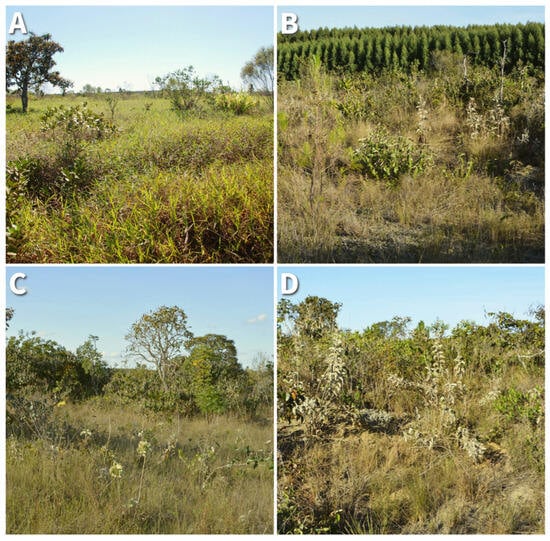
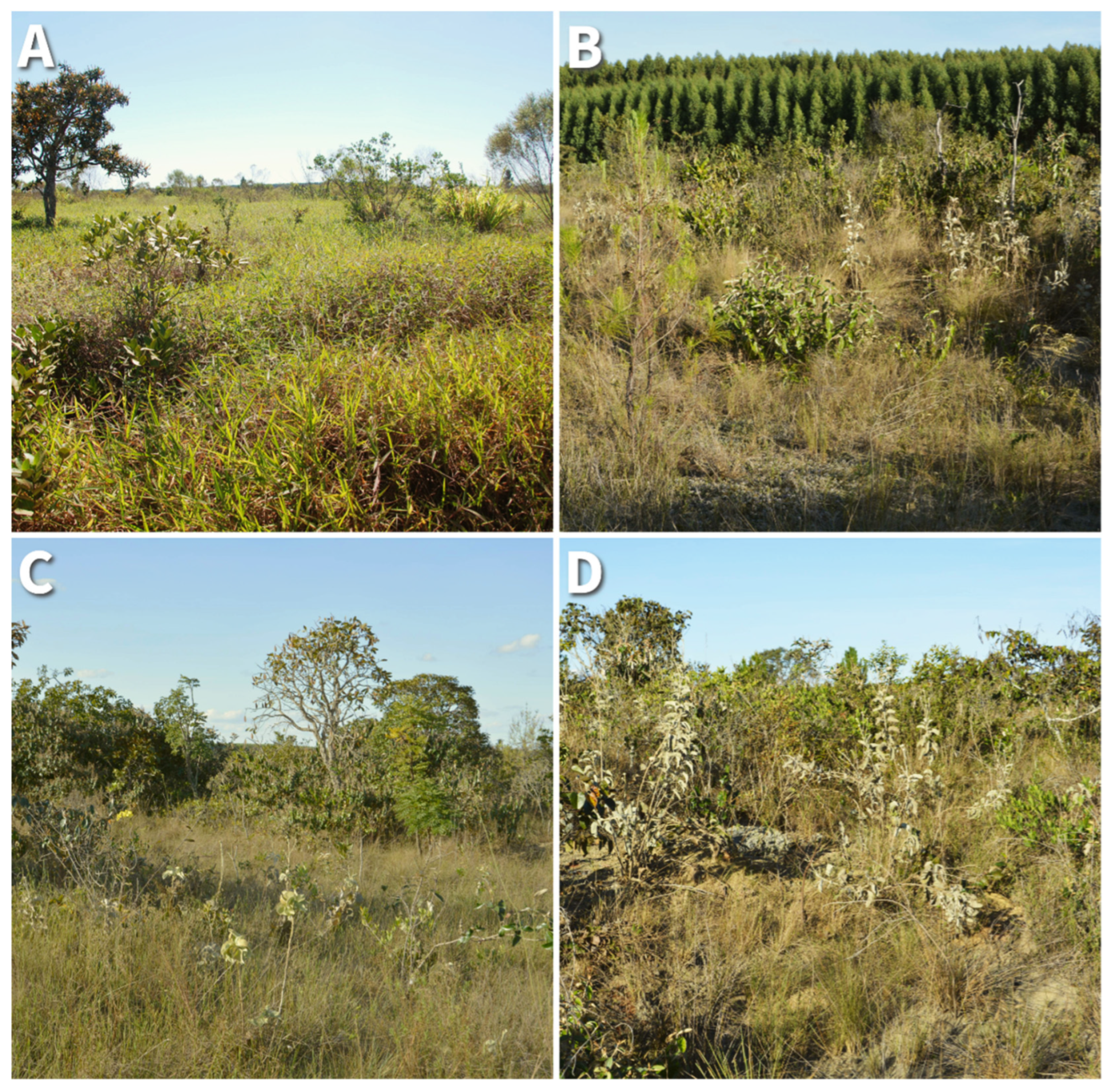
The present study was conducted at Nova Monte Carmelo farm (18°55′ S, 47°40′ W), which belongs to Dexco/Duratex S.A., São Paulo, SP, Brazil. This farm covers parts of five municipalities (Araguari, Estrela do Sul, Indianópolis, Nova Ponte and Romaria), in the state of Minas Gerais, Brazil. The farm spans 58,000 ha, with ~46,000 ha dedicated primarily to wood panel production via current Eucalyptus spp. plantations and former Pinus spp. stands, and ~12,000 ha of legal reserve and permanent preservation area comprising Cerrado vegetation lato sensu [32] (Figure 1). Native vegetation remnants include areas such as 20-year regenerating murundus fields from abandoned pastures (Figure 1), Cerrado sensu stricto, veredas (wetlands), and semideciduous seasonal forests [33].
Figure 1.
Photographic evidence of vegetation occurrence (murundus fields) in the study area (A–D), Nova Monte Carmelo Farm, Minas Gerais, Brazil. The figure shows a vegetation gradient with different stages of regeneration: initial (A), intermediate (B,C), and advanced (D).
The climate of the region is characterized as Aw, with hot and rainy summers, dry and cold winters, a mean precipitation of 1450 mm, and an average annual temperature between 20 and 22 °C [34]. In terms of soil composition, latosols are predominant in the Cerrado regions, occurring on both sedimentary and crystalline terrains, with extensive areas characterized by concretized soils [35,36].
2.2. Botanical Survey
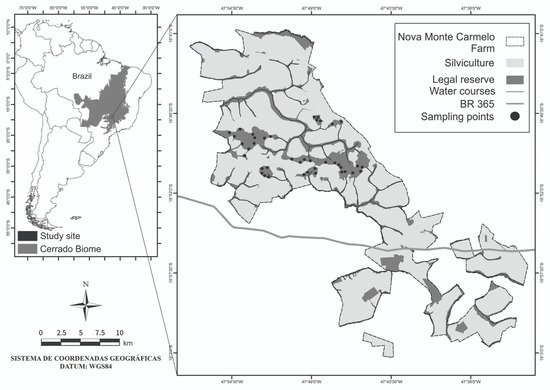
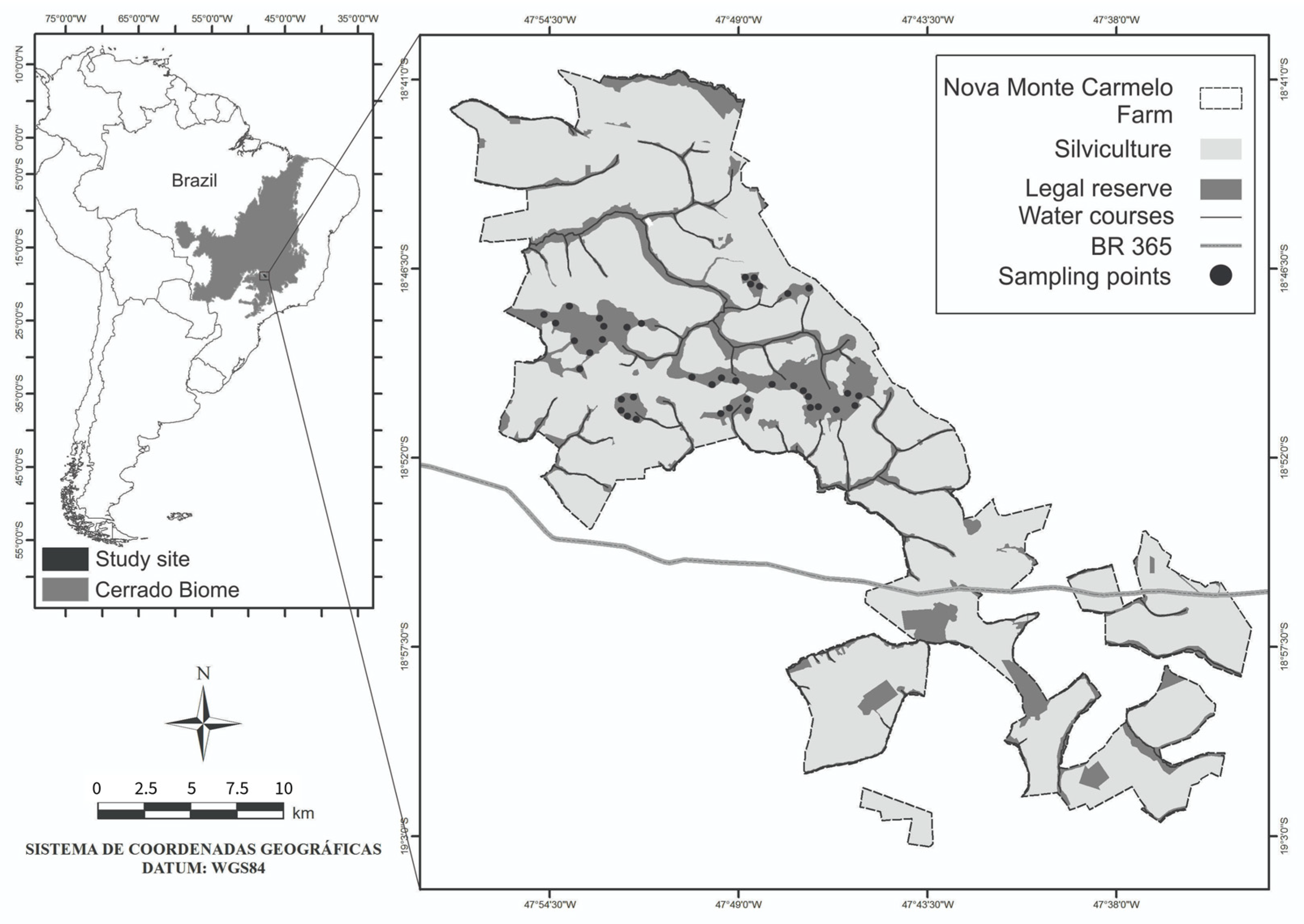
Botanical surveys were undertaken in murundus fields, where 40 plots of 20 × 50 m (0.1 ha) were allocated to a total sample area of 4 ha (Figure 2). The size of the plots used in this study was standardized according to the project “Biogeography of the Cerrado Biome” [37]. The plots were arbitrarily distributed at least 500 m from the edge and 500 m apart from each other. The survey was conducted between April 2016 and July 2017. All live shrub-arboreal individuals were sampled in each plot, and all individuals with a height ≥ 0.5 m and trunk diameter at the base (Db 30 cm) ≥ 1 cm were identified [38].
Figure 2.
Location of the study area and distribution of the 40 plots of 50 × 20 m in the murundus sampled fields in Nova Monte Carmelo Farm, in the state of Minas Gerais, Brazil.
All collected botanical materials were processed according to the standard methods for botanical studies. Taxonomic identification was performed by comparing the material with that from the Herbarium Uberlandense of the Federal University of Uberlândia (HUFU) and by consulting the specialized literature and experts. We used the Angiosperm Phylogeny Group IV classification system [39] and updated the names of taxa using the list of species on the Flora and Funga of Brazil website [40]. Among the specimens collected, those that were identified and had preserved reproductive structures were incorporated into HUFU and made available on the Reflora of Brazil website [41] under the codes HUFU00072519 to HUFU00072545, HUFU00072549, and HUFU00072552 to HUFU00072585.
2.3. Plant Life History
Changes in the functional signature of plants were examined using dispersion patterns (zoochory, anemochory, and autochory) and successional classes (pioneer and non-pioneer). Species were allocated based on a comprehensive review of floristic literature.
2.4. Data Analysis
The basic data obtained from the 40 sample plots of 0.1 ha each were analyzed to obtain phytosociological parameters that allow for an understanding of the structure, function, and dynamics of the plant community [42]. Relative density (RD), absolute density (AD), relative dominance (RDo), absolute dominance (ADo), relative frequency (RF), absolute frequency (AF), and importance value index (IVI) [38] were calculated using Fitopac version 2.1 [43]. The same software was used to estimate Shannon’s and Simpson’s diversity indices and Pielou’s equability index [44].
Species names and their degree of endemism were verified using Plantminer [45], which consults and corrects names through the list of species on the Flora of Brazil website [40]. Information on endemic species of conservation concern was obtained from the Brazilian Red List of Threatened Species [46,47]. Figures were generated using GraphPad Prism software version 10.6.0.
3. Results
3.1. Floristic Inventory
A total of 3734 shrub-arboreal individuals were sampled, distributed among 38 families, 69 genera, and 155 species. The family with the greatest number of species was Myrtaceae (27 spp.), followed by Malpighiaceae (25 spp.), Melastomataceae (15 spp.), Rubiaceae (12 spp.), Asteraceae and Fabaceae (with 11 spp. each). These six families accounted for approximately 65% of species richness in the sampled plots. The richest genera were Miconia and Psidium (with 12 spp. each), followed by Byrsonima (10 spp.), Myrcia (8 spp.), Banisteriopsis and Cordiera (with 6 spp. each), and Heteropterys (5 spp). These seven genera accounted for almost 40% of all species. Jacaranda caroba (Vell.) DC. (n = 465) was the most abundant species, followed by Miconia albicans (Sw.) Steud. (n = 413), Miconia fallax DC. (n = 313), Baccharis dracunculifolia DC. (n = 237), Erythroxylum suberosum A.St.-Hil. (n = 217), Ocotea sp3 (N = 146), and Chresta sphaerocephala DC. (n = 136) corresponded to almost 60% of the individuals sampled in the plots (Table 1).
Table 1.
Twenty most representative plant species sampled in murundus fields at the New Monte Carmelo Farm, Minas Gerais, Brazil. Species are classified into families and genera, respectively. SC—successional category (P: pioneer; NP: non-pioneer; NC: not classified); DS—dispersion syndrome (Zoo: zoochoric; Ane: anemochoric; Aut: autochoric; NC: not classified); NI—number of individuals per species; RA—rank-abundance; Sp—unidentified species. A complete list of all sampled species is provided in the Supplementary Material (Tables S1 and S2).
3.2. Life History
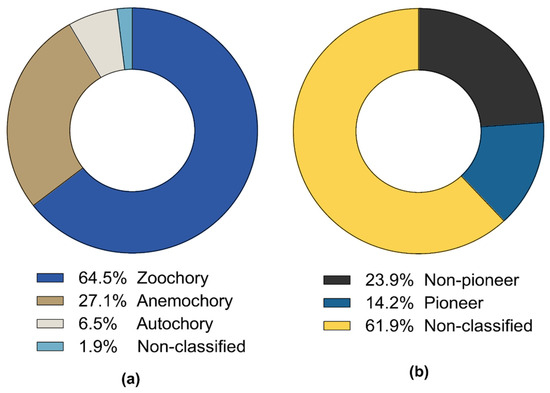
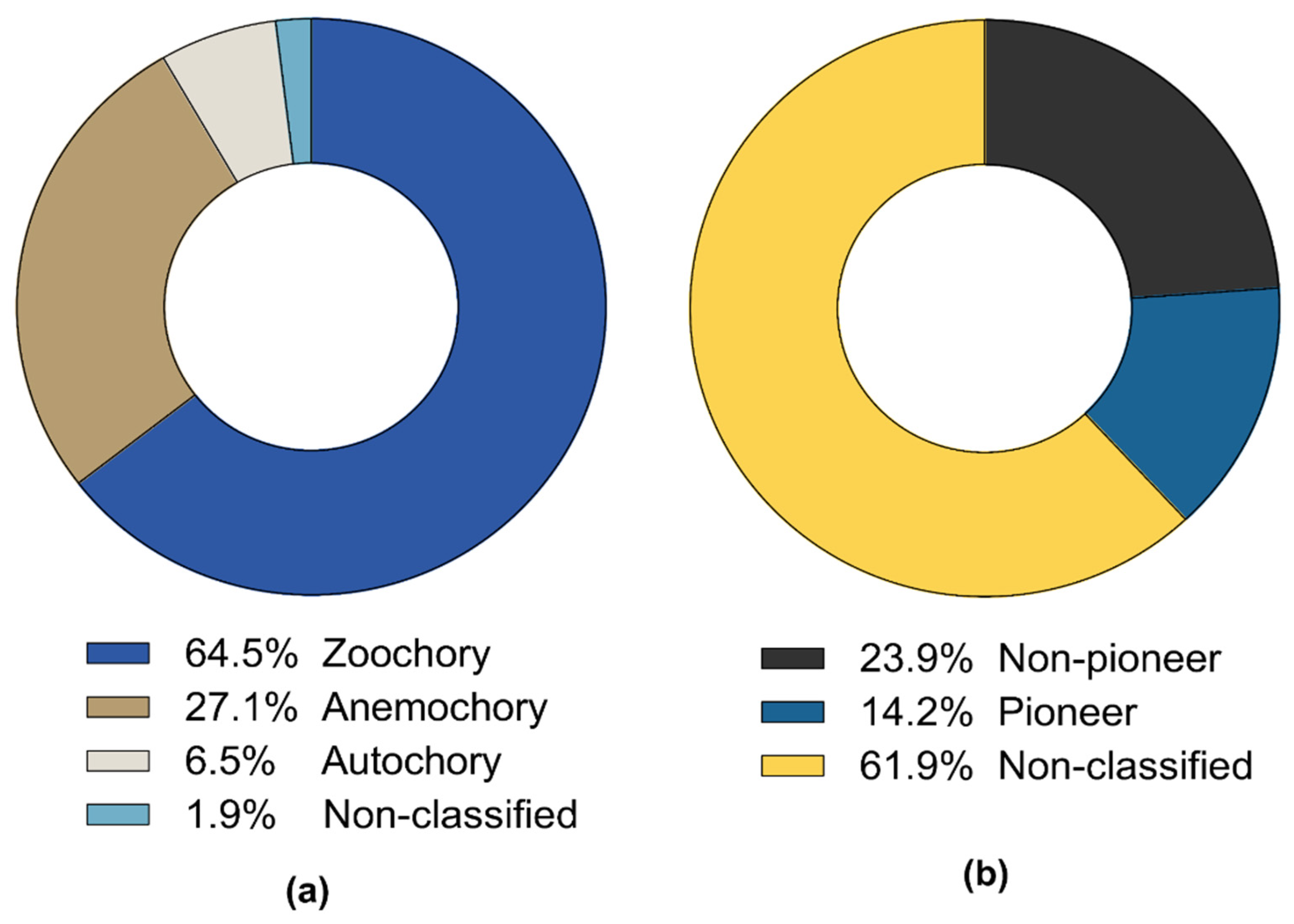
The main seed dispersal syndromes observed in the area were zoochory, which comprised 64.5% of the species (100 ssp.), followed by anemochory (27.1%, 42 ssp.), autochory (6.5%, 10 ssp.), and non-classified 1.9% (3 spp.) (Figure 3a). The non-pioneer successional class contributed 23.9% of the species (37 ssp.), the pioneers 14.2% (22 ssp.), and the non-classified species 61.9% (96 spp.) (Figure 3b).
Figure 3.
Distribution of plant species in murundus fields at the New Monte Carmelo Farm, Minas Gerais, Brazil: (a) by seed dispersal syndromes and (b) by successional classes.
3.3. Distribution, Endemism and Conservation
The distribution pattern of the flora of the murundus fields showed that a minority of species (8%) were exclusive to the Cerrado, while 91.4% co-occurred in the Cerrado and at least one other domain, and 0.6% were invasive exotic species. Of the 155 species, 73 were considered native to Brazil, one was an invasive exotic species (Pinus caribaea Morelet), and the remaining 81 lacked formal classification regarding their origin. Of the native species, 21 (29%) were endemic to Brazil, of which Bauhinia holophylla (Bong.) Steud., Chromolaena chaseae (B.L.Rob.), Dalbergia miscolobium Benth., Kielmeyera corymbosa Mart. & Zucc., and Myrcia uberavensis O.Berg only occurred in the Cerrado domain. Of the inventoried species, only Hortia brasiliana Vand. ex DC. is included in the Brazilian Red List of Threatened Species as Near Threatened (NT) [46,47].
3.4. Phytosociological Data (Community Structure)
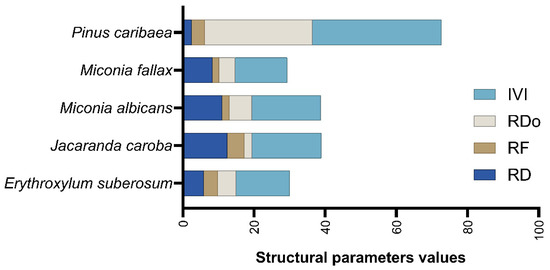
Data on the horizontal community structure are presented in Table 2 in descending order according to their importance value index (IVI). Among the 155 species sampled in the murundus fields, J. caroba, M. albicans, M. fallax, B. dracunculifolia, E. suberosum, Ocotea sp3, and C. sphaerocephala had the highest relative density and together contributed more than 50% to the total absolute density in the area (Figure 4).
Table 2.
Structural parameters of families, ordered by value of importance, sampled in the murundus field area at Nova Monte Carmelo Farm in Minas Gerais, Brazil. N—number of individuals, IVI—importance value index, AD—absolute density, RD—relative density, AF—absolute frequency, RF—real frequency, ADo—absolute dominance, RDo—relative dominance, and SN—number of species.
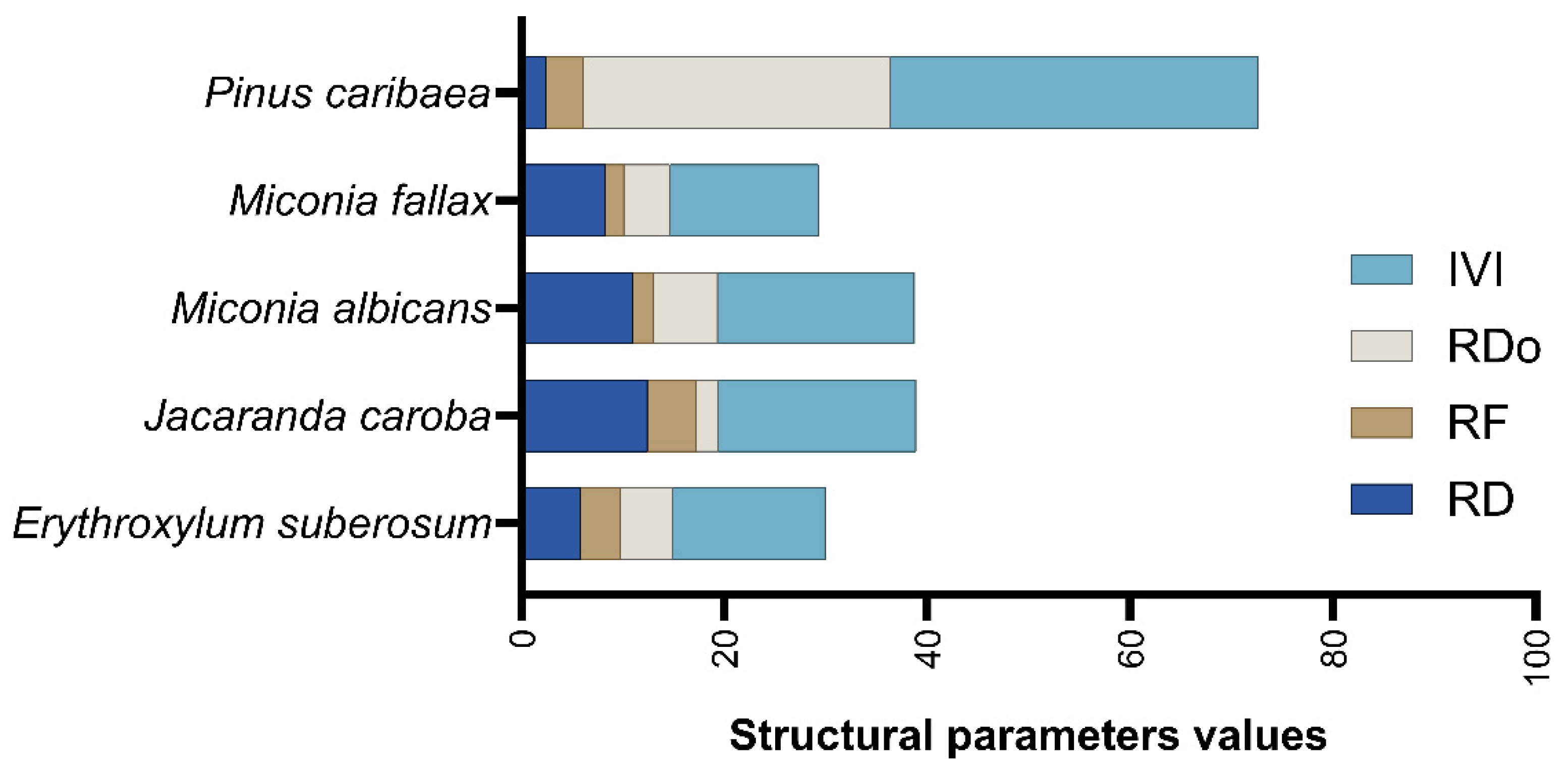
Figure 4.
The structural parameters of the five species with the highest importance value index were sampled in the murundus field at Nova Monte Carmelo Farm in Minas Gerais, Brazil. RD—relative density; RF—real frequency; RDo—relative dominance; and IVI—importance value index.
The species with the highest relative dominance were Pinus caribaea Morelet (30.27%), M. albicans (6.27%), E. suberosum (5.2%), and M. fallax (4.5%). Absolute dominance followed the same sequence as relative dominance, with P. caribaea contributing 31 m2/ha, M. albicans 6 m2/ha, E. suberosum 5 m2/ha, and M. fallax 5 m2/ha. With regard to the importance value index (IVI), five species were identified as species of importance with indexes above 10.00: P. caribaea (36.37), J. caroba (19.46), M. albicans (19.39), E. suberosum (15) and M. fallax (14.65).
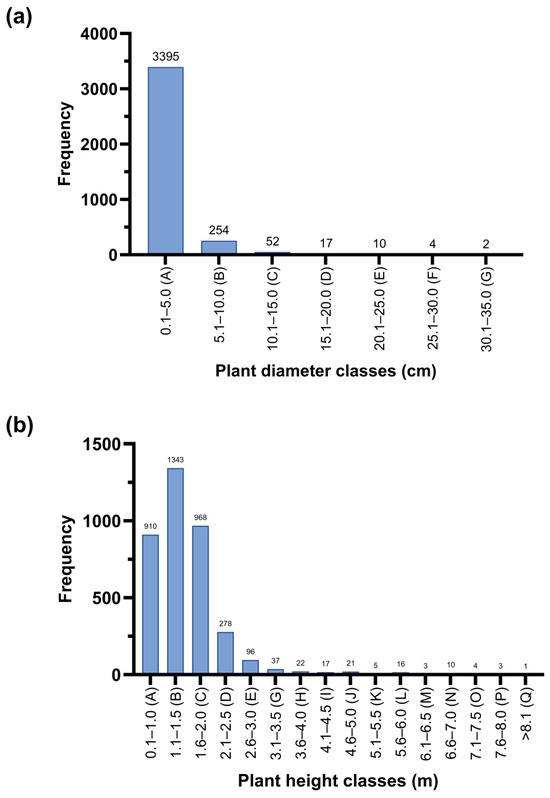
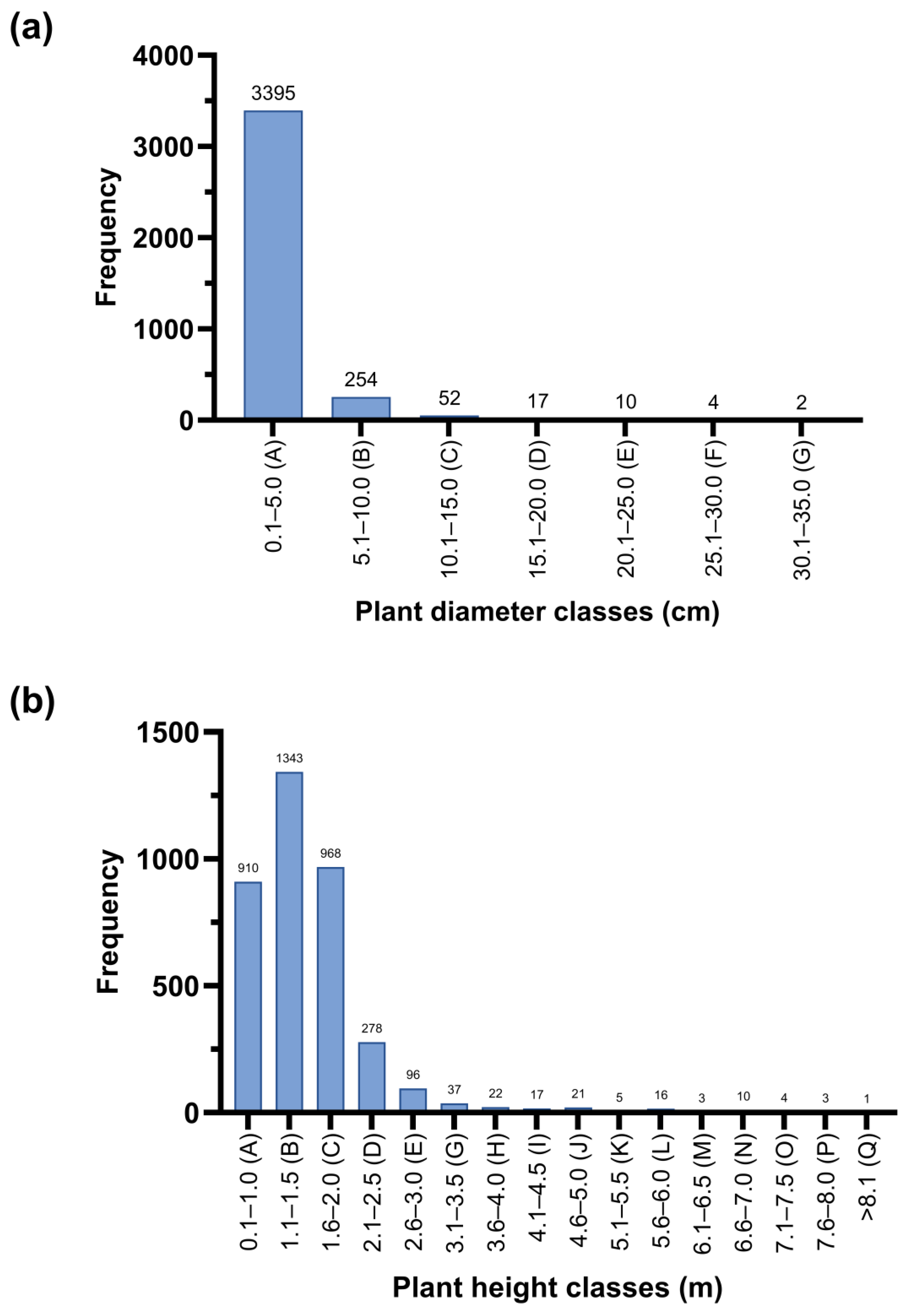
Figure 5a shows the diametric distribution of all individuals sampled in the study grouped into Db classes of 5 cm. The highest concentration of individuals (representing 90.9% of all individuals) was in the lowest Db classes, whereas individuals with larger diameters were present in increasingly smaller numbers; thus, there was a regular decrease in the number of individuals as the Db increased. The distribution of the height classes of all individuals sampled in the study, grouped according to 0.5-m Db classes, is shown in Figure 5b. The three initial height classes (A, B, and C) comprised 86.3% of all individuals studied. A complete list of all the sampled specimens is provided in the Supplementary Material (Table S2).
Figure 5.
Class distribution frequency of plant species sampled in murundus fields at Nova Monte Carmelo Farm in Minas Gerais, Brazil: (a) by diameter; (b) by plant height. The letters represent each size class.
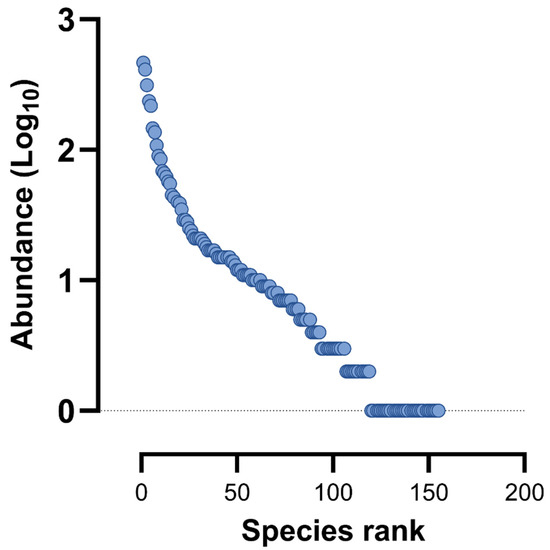
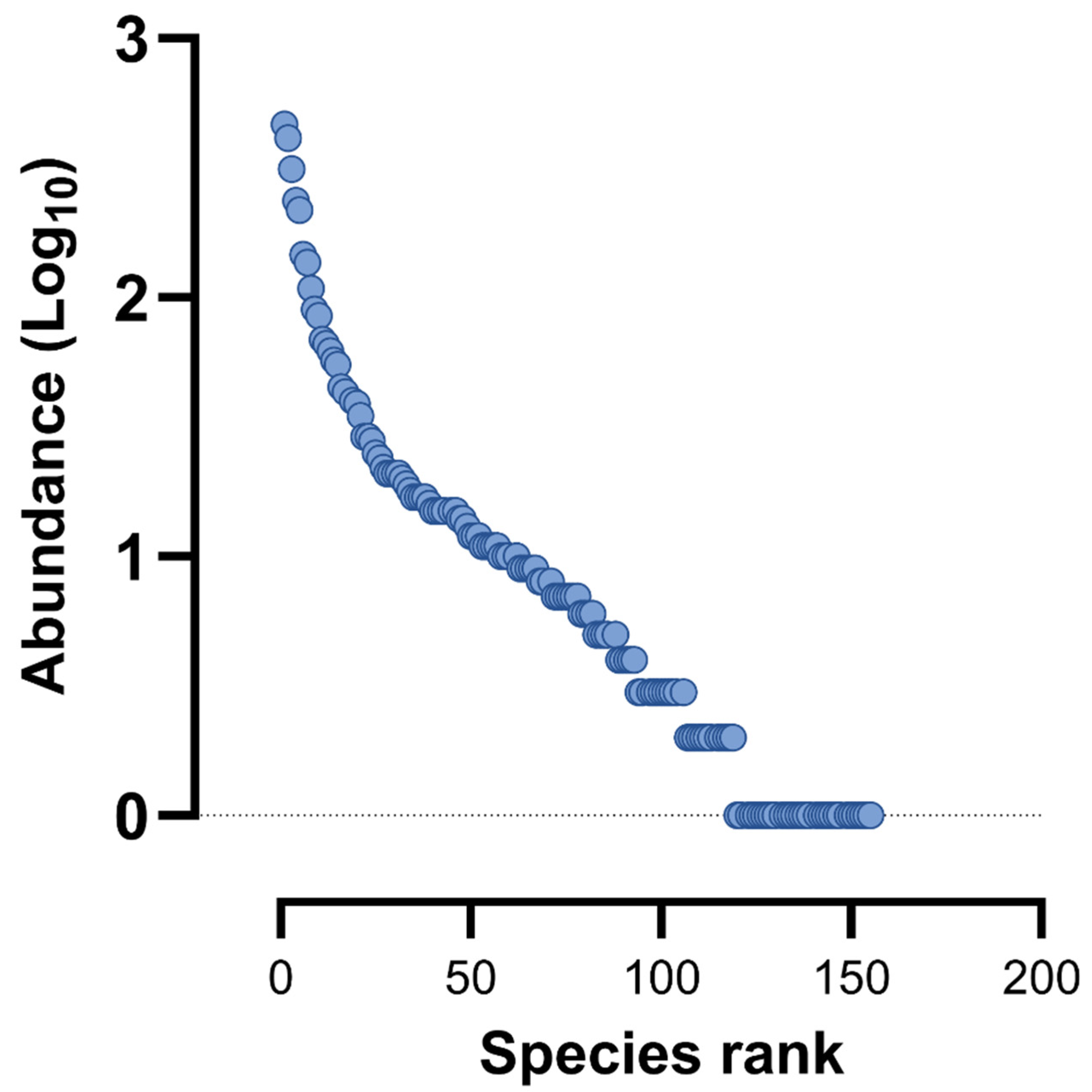
Figure 6 presents the rank–abundance curve for plant species sampled in murundus fields, revealing high heterogeneity, with most species exhibiting low abundance and few dominant species at high abundance. The steep initial slope indicates low evenness, which is typical of regenerating Cerrado communities under forestry pressure.
Figure 6.
Rank abundance (log scale) of plant species sampled in murundus fields at Nova Monte Carmelo Farm in Minas Gerais, Brazil.
The Shannon–Wiener diversity index (H′ = 3.721) indicates high species diversity, while the Simpson index (D = 0.050; 1/D = 20.083; 1 − D = 0.950) reflects low dominance and effective species number exceeding 20. The Pielou equitability index (J′ = 0.738) suggests moderate evenness among species. In addition, the equitability index indicates that this community shelter accounts for approximately 73.8% of the diversity in these areas.
4. Discussion
The most representative families for the evaluated murundus fields were Myrtaceae, Malpighiaceae, Melastomaraceae, Rubiaceae, Asteraceae and Fabaceae, which, according to Mendonça et al. (2008) [3], are among the 10 most important families for the Cerrado biome. The family richness of murundus fields accounts for approximately 25% (38 families) of the family richness found in the entire Cerrado biome [3]. In addition, when compared with other studies performed in the same phytophysiognomy of the region of this study, we observed 42 families, representing 28% of the family richness of the Cerrado, indicating similarity between the families found, with only four families of difference [9].
The most abundant families, in terms of the number of individuals, represented 65% of the families found in the area, which may be due to survival strategies and adaptations that favour their growth and development in disturbed and/or naturally regenerating areas. For example, Fabaceae, Myrtaceae, and Malpighiaceae are rich in the arboreal shrub components of the cerrado sensu stricto [48]. In addition, in studies that involve the shrub arboreal component of the cerrado sensu stricto, Fabaceae (Leguminosae) is of great importance to the composition and structure of the Cerrado [49]. Species from these families act as nucleators by attracting pollinators and seed dispersers, thus increasing the degree of connectivity between fragments and areas undergoing ecological restoration [50,51,52].
Life history factors, such as dispersion mode, are important for explaining the presence of these families in the environment studied. This is because the dispersal mode strongly influences species establishment, colonization success and spatial distribution [53,54]. In the present study, we observed that the richness of zoochoric species accounted for 65% of the species found in this area. The predominance of zoochoric species is typical of the Cerrado biome and has been reported in several studies of Cerrado physiognomy sensu stricto [55,56,57]. The proportion of dispersal syndromes found in the present study is consistent with that reported in another study conducted in two murundus field areas in the Cerrado [30]. This finding highlights the ecological relevance of murundus fields in supporting local fauna.
Given that the major families recorded in our results, such as Myrtaceae, Malpighiaceae, and Melastomataceae, are predominantly zoochoric, their dominance suggests strong ecological links with local frugivore guilds, particularly birds and bats, which are key seed dispersers in the savanna ecosystems. In the Neotropical savanna (Cerrado), animal-mediated seed dispersal is often the predominant dispersal mechanism, with zoochoric species representing a large proportion of the community [58]. Fruit- and seed-trait studies indicate that zoochorous species, such as those in Melastomataceae, produce fleshy, nutrient-rich seeds that favor dispersal by vertebrates and enhance germination success under Cerrado conditions [59]. Empirical evidence also demonstrates that bats contribute substantially to seed rain in remnant and modified savanna landscapes, facilitating recruitment and connectivity among plant populations [60]. Therefore, the high representation of zoochoric families in murundus fields likely reflects a functional dependency on diverse frugivore assemblages that mediate seed dispersal, colonisation of open patches, and long-term persistence of plant diversity. In addition, conserving both plant species and their animal dispersers is essential to maintain the ecological integrity of murundus fields in the Cerrado.
The successional class also reveals important aspects about the studied families, since pioneers are important for the process of regeneration because they are the most efficient in extreme luminosity conditions and on substrates with little available organic matter [61]. Among the species collected, 23% were non-pioneer species, and 14% were pioneers, but only 37% were classified as pioneers or non-pioneers because of the limits of the data available on species that were not identified to the genus or species. Additional data are needed to draw solid conclusions regarding the successional classification of species sampled in these areas.
Frequency, density, and dominance patterns are widely used to express the ecological importance of species in plant communities. In the present study, the invasive exotic species P. caribaea had the greatest expression in the community, reflecting the strong influence of the surrounding forestry-dominated landscape and local land-use history. The species had been previously introduced on the farm as part of standard agroforestry planting, which was subsequently replaced with eucalyptus. Following pasture abandonment and during the regeneration process, P. caribaea successfully invaded murundus fields, occurring in 62.5% of the sampled plots. Species of the genus Pinus are known to become dominant within a habitat and cause changes by producing large amounts of organic matter, delaying or impeding successional processes by suppressing native species, and altering natural ecosystems [62,63,64]. In this context, the high dominance observed in the community is consistent with disturbance-driven assembly processes associated with forestry activities and pasture abandonment. Therefore, controlling P. caribaea is necessary to allow the natural regeneration process to progress in the study area [65].
The most important native species was Jacaranda caroba, which occurred in 82.5% of the studied plots at a density of 12 individuals/ha. This species usually occurs in high abundance, which may be due to its status as a pioneer species with anemochoric dispersion syndrome (i.e., by wind) [66]. The species Miconia albicans, Erythroxylum suberosum, Miconia fallax, and Baccharis dracunculifolia also play important roles in this community. These species have been found in great numbers in other studies with floristic surveys of Cerrado, demonstrating their abundance in this biome.
The inverted “J” shape observed in the diameter and height distributions reflects a pattern typically found in natural forests, where the environment allows for the recruitment of new individuals. Moreover, these distributions were recorded in areas of natural regeneration, where there is a higher concentration of individuals in younger age classes and consequently lower diameter and height values [67]. Floristic diversity indices indicate that this is a heterogeneous area, as higher Shannon–Wiener and equitability values correspond to greater diversity and uniformity within the population. The values obtained in this study are similar to those reported for cerrado sensu stricto [68] and anthropic murundus areas in the study region [9], highlighting a similarity in diversity among these areas, even in the absence of human or agricultural interventions in the present study area for at least two decades. These results also suggest that, despite the structural dominance of P. caribaea, the community still maintains a considerable number of species with relatively balanced abundances, indicating that the invasion has altered the community structure but has not yet caused a strong homogenization.
Of the species identified in the present study, 12% were endemic to Brazil and 8% endemic to the Cerrado biome, highlighting the importance of studies of floristic composition for acquiring knowledge about areas that harbour endemic species. We found individuals of species that occur in several phytophysiognomies: cerrado, cerrado sensu lato, “cerradão”, “campo”, “mata de galeria”, “mata ciliar”, “vereda”, and “brejo”. The species E. suberosum, Miconia ligustroides and Gaylussacia brasiliensis occur in “brejo”; Pouteria ramiflora and Byrsonima pachyphylla in “vereda”; J. caroba, M. albicans, Baccharis dracunculifolia and 17 other species in “mata de galeria”; and 22 of the cataloged species occur in “campo”, which includes “campo sujo”, “campo limpo” and “campo rupestre”, with murundus, or “pedregoso” [3].
Because murundus fields house several species that occur in other phytophysiognomies, they may function as transition zones that serve to maintain the diversity of adjacent areas. The conservation of regenerating habitats is even more important because few studies have been conducted on the diversity and health of these areas [69]. In addition, the diversity found in these areas may be due to differentiation caused by previous anthropization, such as agriculture, cattle grazing, and fires. These factors may have favoured the occupation of species resistant to these impacts, generating the differentiation of habitats for which biodiversity is still little explored [70].
Murundus fields are characterized as wetlands that harbour a high diversity of species and require specific legislation to prevent their degradation and de-characterization [22,71]. However, the phytophysiognomy of murundus fields is not protected by any specific legislation and is, in most cases, considered a Cerrado area [26]. The lack of specific conservation policies for fragile ecosystems such as murundus fields may result in the alteration of the hydrology of these areas, changes in the characteristics of the soil, and the disappearance of important areas that have not yet been analyzed [22].
5. Conclusions
The murundus field studied in this study exhibited a plant assemblage composed of endemic and non-endemic species typical of Cerrado sensu stricto. The predominance of zoochorous species underscores the role of murundus fields as important habitats for the local fauna. Despite the scarcity of information on the successional classification of the recorded species, the area displays patterns typical of natural forests, with high recruitment of young individuals and heterogeneous vegetation characterized by substantial diversity and evenness. These results indicate that the area is undergoing natural regeneration after pasture abandonment.
However, the high dominance of the invasive exotic species P. caribaea is a matter of concern, as it may delay or even hinder the progress of this regeneration. These findings emphasize the need for the active monitoring and control of invasive Pinus species, particularly in regenerating murundus fields embedded within silvicultural landscapes. Our results highlight the importance of conserving murundus fields and reinforce the need for future studies and strategic actions aimed at managing and restoring these environments.
Supplementary Materials
The following supporting information can be downloaded at: https://www.mdpi.com/article/10.3390/f17010086/s1, Table S1: The complete list of all sampled species in murundus fields at the Nova Monte Carmelo Farm, Minas Gerais, Brazil. Species are classified into families and genera, respectively. SC—successional category (P: pioneer; NP: non-pioneer; NC: not classified); DS—dispersion syndrome (Zoo: zoochoric; Ane: anemochoric; Aut: autochoric; NC: not classified); NI—number of individuals per species; RA—rank-abundance; Sp—unidentified species; Table S2: Phytosociological inventory of woody plants in murundus fields at the Nova Monte Carmelo Farm, Minas Gerais, Brazil. The columns included scientific name (family, genus, species), height (m), height class (m), basal diameter (cm), and diameter class (cm).
Author Contributions
Conceptualization, A.C.C.S., W.R.d.A. and J.C.S.; methodology, A.C.C.S., W.R.d.A. and J.C.S.; software, A.C.C.S., W.R.d.A. and J.C.S.; validation, A.C.C.S., W.R.d.A. and J.C.S.; formal analysis, A.C.C.S., W.R.d.A. and J.C.S.; investigation, A.C.C.S., W.R.d.A. and J.C.S.; resources, J.C.S.; data curation, J.C.S.; writing—original draft preparation, A.C.C.S. and J.C.S.; writing—review and editing, A.C.C.S., W.R.d.A., G.R.D., D.O.R., A.M.d.S.-N., R.G.F., H.V. and J.C.S.; visualization, A.C.C.S., W.R.d.A., G.R.D., D.O.R., A.M.d.S.-N., R.G.F., H.V. and J.C.S.; supervision, J.C.S.; project administration, J.C.S.; funding acquisition, J.C.S. All authors have read and agreed to the published version of the manuscript.
Funding
This research was funded by Dexco/Duratex S.A., CAPES grant number 001, and CNPq grant numbers 313523/2025-8 and 153399/2024-4.
Data Availability Statement
Data are contained within the article or Supplementary Materials (Tables S1 and S2).
Acknowledgments
The authors wish to thank Dexco/Duratex S.A. for their financial support. We also thank FAPEMIG for granting the scholarships. We are also thankful to the Graduate Program in Ecology and Natural Resources Conservation and CAPES (0001) for the graduate scholarship provided. We also thank CNPq (grant processes 313523/2025-8 for J.C.S. and 153399/2024-4 for H.V.). We are also thankful to the Rosana Romero (Melastomataceae), Glein M. Araújo (distinct botanic families) and Jimi N. Nakajima (Asteraceae) who helped identify the collected botanical material. We would like to thank Cláudio H. Eurípedes de Oliveira, Michelle Lorene Pereira, and Hellen Cássia Pelegrini de Sousa for their field assistance.
Conflicts of Interest
The authors declare no conflicts of interest.
References
- Oliveira, P.S.; Marquis, R.J. (Eds.) The Cerrados of Brazil: Ecology and Natural History of a Neotropical Savanna; Columbia University Press: New York, NY, USA, 2002. [Google Scholar]
- Simoes, R.; Camara, G.; Queiroz, G.; Souza, F.; Andrade, P.R.; Santos, L.; Carvalho, A.; Ferreira, K. Satellite image time series analysis for big earth observation data. Remote Sens. 2021, 13, 2428. [Google Scholar] [CrossRef] [Scilit]
- Mendonça, R.C.; Felfili, J.M.; Walter, B.M.T.; Silva-Júnior, M.D.; Rezende, A.V.; Filgueiras-Nogueira, P.E. Flora Vascular do Cerrado. In Cerrado: Ambiente e Flora; Sano, S.M., Almeida, S.P., Eds.; EMBRAPA-CPAC: Planaltina, Brazil, 2008; pp. 289–556. [Google Scholar]
- BFG [Brazil Flora Group]. Brazilian Flora 2020: Leveraging the power of a collaborative scientific network. Taxon 2022, 71, 178–198. [Google Scholar] [CrossRef] [Scilit]
- Myers, N.; Mittermeier, R.A.; Mittermeier, C.G.; Fonseca, G.A.; Kent, J. Biodiversity hotspots for conservation priorities. Nature 2000, 403, 853–858. [Google Scholar] [CrossRef] [Scilit]
- Colli, G.R.; Vieira, C.R.; Dianese, J.C. Biodiversity and conservation of the Cerrado: Recent advances and old challenges. Biod. Conserv. 2020, 29, 1465–1475. [Google Scholar] [CrossRef] [Scilit]
- Miranda, H.S.; Bustamante, M.M.C.; Miranda, A.C. The fire factor. In The Cerrados of Brazil: Ecology and Natural History of a Neotropical Savanna; Oliveira, P.S., Marquis, R.J., Eds.; Columbia University Press: New York, NY, USA, 2002; pp. 51–68. [Google Scholar]
- Sales, J.C.; Bueno, G.T.; Rosolen, V.; Ferreira, M.E.; Furlan, L.M. The structure of an earth-mound field of the Brazilian Savanna. Geomorphology 2021, 386, 107752. [Google Scholar] [CrossRef] [Scilit]
- Resende, I.L.M.; Araújo, G.M.; Oliveira, A.P.A.; Oliveira, A.P.; Júnior, R.S.A. Plant community and abiotic characteristics of a murundu field in Uberlândia, MG. Acta Bot. Bras. 2004, 18, 9–17. [Google Scholar] [CrossRef] [Scilit]
- Oliveira-Filho, A.T. Floodplain ‘murundus’ of Central Brazil: Evidence for the termite-origin hypothesis. J. Trop. Ecol. 1992, 8, 1–19. [Google Scholar] [CrossRef] [Scilit]
- Oliveira-Filho, A.T. The vegetation of Brazilian ‘murundus’–the island-effect on the plant community. J. Trop. Ecol. 1992, 8, 465–486. [Google Scholar] [CrossRef] [Scilit]
- Chig, L.A.; Vieira, C.R.; Botelho, R.A.; Santos, C.R.V. Spatial characterization of hydromorphic soil in murundu field in the Pocone Pantanal-MT Sub-region. J. Environ. Social Manag. 2025, 19, e012805. [Google Scholar] [CrossRef] [Scilit]
- Malheiro, A.M.; Boeira, V.N.; Bueno, G.T.; Mantovani, J.R. Natural determinants of the earth-mound fields distribution in the southwest of the state of Goiás. Soc. Nat. 2023, 36, e69038. [Google Scholar] [CrossRef] [Scilit]
- Silva, R.J.; Alves da Silva, R.S.; Souza, T.; Correa, C.M.A.; Vaz-de-Mello, F.Z. Unraveling the biodiversity in the Brazilian wetlands: Dung beetle assemblage in different vegetation types in the Araguaia Pantanal. Stud. Neotrop. Fauna Environ. 2024, 59, 1054–1064. [Google Scholar] [CrossRef] [Scilit]
- Rahlao, S.J.; Hoffman, M.T.; Todd, S.W.; Mcgrath, K. Long-term vegetation change in the Succulent Karoo, South Africa following 67 years of rest from grazing. J. Arid Environ. 2008, 72, 808–819. [Google Scholar] [CrossRef] [Scilit]
- Silva, L.C.; Vale, G.D.; Haidar, R.F.; Sternberg, L.S.L. Deciphering earth mound origins in central Brazil. Plant Soil. 2010, 336, 3–14. [Google Scholar] [CrossRef] [Scilit]
- Oliveira, V.A.; Santos, G.G.; Ker, J.C.; Couto, E.G.; Jacomine, P.K.; Corrêa, G.R.; Curi, N.; Schaefer, C.E.G.R. Soils of Cerrados, the Brazilian savannas. In The Soils of Brazil; Springer International Publishing: Cham, Switzerland, 2023; pp. 129–173. [Google Scholar] [CrossRef] [Scilit]
- Durigan, G.; Munhoz, C.B.; Zakia, M.J.B.; Oliveira, R.S.; Pilon, N.A.; do Valle, R.S.T.; Walter, B.M.T.; Honda, E.A.; Pott, A. Cerrado wetlands: Multiple ecosystems deserving legal protection as a unique and irreplaceable treasure. Perspect. Ecol. Conserv. 2022, 20, 185–196. [Google Scholar] [CrossRef] [Scilit]
- Mitsch, W.J.; Gosselink, J.G. The value of wetlands: Importance of scale and landscape setting. Ecol. Econ. 2000, 35, 25–33. [Google Scholar] [CrossRef] [Scilit]
- Keddy, P.A. Wetland Ecology: Principles and Conservation; Cambridge University Press: Cambridge, UK, 2010. [Google Scholar]
- Ratter, J.A.; Bridgewater, S.; Ribeiro, J.F. Analysis of the floristic composition of the Brazilian cerrado vegetation III: Comparison of the woody vegetation of 376 areas. Edinb. J. Bot. 2003, 60, 57–109. [Google Scholar] [CrossRef] [Scilit]
- Ewing, J.M.; Vepraskas, M.J.; Broome, S.W.; White, J.G. Changes in wetland soil morphological and chemical properties after 15, 20, and 30 years of agricultural production. Geoderma 2012, 179, 73–80. [Google Scholar] [CrossRef] [Scilit]
- Guilherme, F.A.G.; Maricato, H.S.; Marimon, B.S.; Pereira, F.C.; Souza, L.F.; Coelho, C.P.; Ferreira, W.C.; Ferreira Júnior, A.; Pereira, K.A.R. Man-made soil drainage alters the vegetation structure and woody species distribution in campo de murundus. Acta Sci. Biol. Sci. 2020, 42, 1–8. [Google Scholar] [CrossRef] [Scilit]
- Keck, F.; Peller, T.; Alther, R.; Barouillet, C.; Blackman, R.; Capo, E.; Chonova, T.; Couton, M.; Fehlinger, L.; Kirschner, D.; et al. The global human impact on biodiversity. Nature 2025, 641, 395–400. [Google Scholar] [CrossRef] [Scilit] [PubMed]
- Gibbs, J.P. Wetland loss and biodiversity conservation. Conser. Biol. 2000, 14, 314–317. [Google Scholar] [CrossRef] [Scilit]
- Rosolen, V.; Oliveira, D.A.; Bueno, G.T. Vereda and Murundu wetlands and changes in Brazilian environmental laws: Challenges to conservation. Wetl. Ecol. Manag. 2015, 23, 285–292. [Google Scholar] [CrossRef] [Scilit]
- Medeiros, L.A.; Cunha, C.N.; Ribeiro-Silva, S. Áreas úmidas nas unidades de conservação do Cerrado: Subsídios para a gestão. Biodivers. Bras. 2024, 14, 32–50. [Google Scholar] [CrossRef] [Scilit]
- Marimon, B.S.; Marimon, B.H., Jr.; Mews, H.A.; Jancoski, H.S.; Franczak, D.D.; Lima, H.S.; Lenzai, E.; Rossetei, N.A.; Moresco, M.C. Floristics of floodplain “murundus” of the Pantanal of Araguaia, Mato Grosso, Brazil. Acta Bot. Bras. 2012, 26, 181–196. [Google Scholar] [CrossRef] [Scilit]
- Santos, F.A.Z.; Pierangeli, M.A.P.; Silva, F.L.; Serafim, M.E.; Souza, C.A.D. Chemical and physical attributes and calcium, magnesium, potassium, and phosphorus in the soil of murundu fields in Brazil. Acta Amaz. 2015, 45, 101–110. [Google Scholar] [CrossRef] [Scilit]
- Cássia-Silva, C.; Arruda, D.M.; Fonseca, R.S. Relação espécie-área em campos de murundus com diferentes históricos de perturbação. Rev. Biol. Neotrop. 2016, 13, 250–260. [Google Scholar] [CrossRef] [Scilit]
- Lenza, E.; Abadia, A.C.; Veríssimo, A.; Almada, H.K.; Gonçalves, L.A.; Carrijo, D. Relationships between soils and plant community composition and structure in a Neotropical savanna mosaic. Aust. J. Bot. 2022, 70, 549–559. [Google Scholar] [CrossRef] [Scilit]
- Soares, D.M.; Nascimento, A.R.T.; Silva, L.C.; Pinho-Júnior, G.V. Natural regeneration and biological invasion by Pinus caribaea Morelet in two vereda sites: Woody vegetation response. Am. J. Plant Sci. 2015, 6, 2708–2717. [Google Scholar] [CrossRef]
- Aguiar, J.J.M.; Anjos, D.V.; Carvalho, R.L.; Almeida, W.R.; Campos, A.C.C.; Santos, J.C. Plant richness drives ant diversity in Eucalyptus-dominated landscape on Brazilian savanna. Austral Ecol. 2022, 47, 17–25. [Google Scholar] [CrossRef] [Scilit]
- Alvares, C.A.; Stape, J.L.; Sentelhas, P.C.; Moraes, G.; Leonardo, J.; Sparovek, G. Köppen’s climate classification map for Brazil. Meteorol. Z. 2013, 22, 711–728. [Google Scholar] [CrossRef] [Scilit]
- Ab’saber, A.N. O domínio dos cerrados: Introdução ao conhecimento. Rev. Serv. Público 1983, 40, 41–55. [Google Scholar] [CrossRef] [Scilit]
- Lopes, A.S. Solos sob “Cerrado”: Características, Propriedades e Manejo (No 631.422/L864); Associação Brasileira para Pesquisa da Potassa e do Fosfato: Piracicaba, Brazil, 1984. [Google Scholar]
- Pinto, J.R.R.; Lenza, E.; Pinto, A.S. Composição florística e estrutura da vegetação arbustivo-arbórea em um cerrado rupestre, Cocalzinho de Goiás, Goiás. Rev. Bras. Bot. 2009, 32, 1–10. [Google Scholar] [CrossRef] [Scilit]
- Felfili, J.M.; Eisenlohr, P.V.; Melo, M.M.R.F.; Andrade, L.A.; Meira-Neto, J.A.A. (Eds.) Fitossociologia no Brasil: Métodos e Estudos de Casos; Editora da Universidade Federal de Viçosa: Viçosa, MG, Brazil, 2011. [Google Scholar]
- Byng, J.W.; Chase, M.W.; Christenhusz, M.J.; Fay, M.F.; Judd, W.S.; Mabberley, D.J.; Briggs, B. An update of the Angiosperm Phylogeny Group classification for the orders and families of flowering plants: APG IV. Bot. J. Linn. Soc. 2016, 181, 1–20. [Google Scholar] [CrossRef] [Scilit]
- Flora e Funga do Brasil. 2025. Jardim Botânico do Rio de Janeiro. Available online: http://floradobrasil.jbrj.gov.br/ (accessed on 11 November 2025).
- Reflora-Herbário Virtual. 2025. Jardim Botânico do Rio de Janeiro. Available online: https://floradobrasil.jbrj.gov.br/reflora/herbarioVirtual/ (accessed on 11 November 2025).
- Freitas, W.D.; Magalhaes, L.M.S. Métodos e parâmetros para estudo da vegetação com ênfase no estrato arbóreo. Floresta e Ambiente 2012, 19, 520–540. [Google Scholar] [CrossRef] [Scilit]
- Shepherd, G.J. Fitopac 2.1; Departamento de Botânica, Universidade Estadual de Campinas: Campinas, Brazil, 2010. [Google Scholar]
- Magurran, A.E. Measuring Biological Diversity; John Wiley & Sons: Hoboken, NJ, USA, 2003. [Google Scholar]
- Carvalho, G.H.; Cianciaruso, M.V.; Batalha, M.A. Plantminer: A web tool for checking and gathering plant species taxonomic information. Environ. Modell. Softw. 2010, 25, 815–816. [Google Scholar] [CrossRef] [Scilit]
- Messina, T. Hortia brasiliana (Rutaceae). Lista Vermelha da Flora Brasileira: Centro Nacional de Conservação da Flora/Instituto de Pesquisas Jardim Botânico do Rio de Janeiro, Rio de Janeiro, Brazil, 2012. Available online: https://proflora.jbrj.gov.br/html/Hortia%20brasiliana_2012.html (accessed on 6 January 2026).
- Martinelli, G.; Moraes, M.A. Livro Vermelho da Flora do Brasil; Jardim Botânico do Rio de Janeiro: Rio de Janeiro, Brazil, 2013. Available online: https://dspace.jbrj.gov.br/jspui/handle/doc/26 (accessed on 6 January 2026).
- Felfili, J.M.; Silva, P.E.N.D.; Silva-Júnior, M.C.D.; Marimom, B.S.; Delitti, W.B.C. Composição florística e fitossociologia do cerrado sentido restrito no município de Água Boa–MT. Acta Bot. Bras. 2002, 16, 103–112. [Google Scholar] [CrossRef] [Scilit]
- Santos, T.R.R.D.; Pinto, J.R.R.; Lenza, E.; Mews, H.A. The tree-shrub vegetation in rocky outcrop cerrado areas in Goiás State, Brazil. Braz. J. Bot. 2012, 35, 281–294. [Google Scholar] [CrossRef] [Scilit]
- Reis, A.; Bechara, F.C.; Tres, D.R. Nucleation in tropical ecological restoration. Sci. Agric. 2010, 67, 244–250. [Google Scholar] [CrossRef] [Scilit]
- Albuquerque, L.B.; Aquino, F.G.; Costa, L.C.; Miranda, Z.J.; Sousa, S.R. Melastomataceae Juss. species with potential use in ecological restoration of gallery riparian vegetation of cerrado/savana. Polibotánica 2013, 35, 1–19. [Google Scholar]
- Borgiani, R.; Grombone-Guaratini, M.T.; Vargas, B.C.; Martins, A.E.; Camargo, M.G.G.; Morellato, L.P.C. Floristic composition, pollination and seed-dispersal systems in a target cerrado conservation area. Biota Neotrop. 2022, 22, e20211318. [Google Scholar] [CrossRef] [Scilit]
- Nathan, R.; Schurr, F.M.; Spiegel, O.; Steinitz, O.; Trakhtebrot, A.; Tsoar, A. Mechanisms of long-distance seed dispersal. Trends Ecol. Evol. 2008, 23, 638–647. [Google Scholar] [CrossRef] [Scilit]
- Nilsson, C.; Brown, R.L.; Jansson, R.; Merritt, D.M. The role of hydrochory in structuring riparian and wetland vegetation. Biol. Rev. 2010, 85, 837–858. [Google Scholar] [CrossRef] [Scilit]
- Neri, A.V.; Campos, E.D.; Duarte, T.G.; Meira-Neto, J.A.A.; Silva, A.D.; Valente, G.E. Regeneração de espécies nativas lenhosas sob plantio de Eucalyptus em área de Cerrado na Floresta Nacional de Paraopeba, MG, Brasil. Acta Bot. Bras. 2005, 19, 369–376. [Google Scholar] [CrossRef] [Scilit]
- Dias, M.A.N.; Marinho, L.S.B.; Silva, S.A.B.; Luiz, J.R.S.; Gusmão, A.D.R.C.; Souza, P.A.; Santos, A.F. Efficiency and resilience of seed dispersal mechanisms in the cerrado biome: Adaptive strategies and contemporary challenges. Rev. Delos. 2025, 18, e3632. [Google Scholar] [CrossRef] [Scilit]
- Kuhlmann, M.; Ribeiro, J.F. Fruits and frugivores of the Brazilian Cerrado: Ecological and phylogenetic considerations. Acta Bot. Bras. 2016, 30, 495–507. [Google Scholar] [CrossRef] [Scilit]
- Ishara, K.L.; Maimoni-Rodella, R.D.C.S. Pollination and dispersal systems in a Cerrado remnant (Brazilian Savanna) in Southeastern Brazil. Braz. Arch. Biol. Technol. 2011, 54, 629–642. [Google Scholar] [CrossRef] [Scilit]
- Santos, A.M.; Jacobi, C.M.; Silveira, F.A. Frugivory and seed dispersal effectiveness in two Miconia (Melastomataceae) species from ferruginous campo rupestre. Seed Sci. Res. 2017, 27, 65–73. [Google Scholar] [CrossRef] [Scilit]
- Ragusa-Netto, J.; Santos, A.A. Seed rain generated by bats under Cerrado’s pasture remnant trees in a Neotropical savanna. Braz. J. Biol. 2015, 75, 25–34. [Google Scholar] [CrossRef] [Scilit] [PubMed]
- Hobbs, R.J.; Yates, C.J. Impacts of ecosystem fragmentation on plant populations: Generalising the idiosyncratic. Aust. J. Bot. 2003, 51, 471–488. [Google Scholar] [CrossRef] [Scilit]
- Abreu, R.C.; Durigan, G. Changes in the plant community of a Brazilian grassland savannah after 22 years of invasion by Pinus elliottii Engelm. Plant Ecol. Divers. 2011, 4, 269–278. [Google Scholar] [CrossRef] [Scilit]
- Brewer, J.S.; Souza, F.M.; Callaway, R.M.; Durigan, G. Impact of invasive slash pine (Pinus elliottii) on groundcover vegetation at home and abroad. Biol. Invasions 2018, 20, 2807–2820. [Google Scholar] [CrossRef] [Scilit]
- Cazetta, A.L.; Zenni, R.D. Pine invasion decreases density and changes native tree communities in woodland Cerrado. Plant Ecol. Divers. 2020, 13, 85–91. [Google Scholar] [CrossRef] [Scilit]
- Zanzarini, V.; Zanchetta, D.; Fidelis, A. Do we need intervention after pine tree removal? The use of different management techniques to enhance Cerrado natural regeneration. Perspect. Ecol. Conserv. 2019, 17, 146–150. [Google Scholar] [CrossRef] [Scilit]
- Tannus, J.L.; Assis, M.A.; Morellato, L.P.C. Fenologia reprodutiva em campo sujo e campo úmido numa área de cerrado no sudeste do Brasil, Itirapina-SP. Biota Neotrop. 2006, 6, 1–27. [Google Scholar] [CrossRef] [Scilit]
- Morais, F.M.; Pereira, R.S.; Rezendez, A.V.; Nappo, M.E.; Pinto, J. Estrutura e diversidade da vegetação arbórea e arbustiva em cerrado sensu stricto submetido a distúrbios antrópicos. Rev. Cient. Eletrônica Eng. Florest. 2011, 18, 53–70. [Google Scholar]
- Fidelis, A.T.; Godoy, S.A.P.D. Structure of cerrado stricto sensu at the Glebe Cerrado Pé-de-Gigante, Santa Rita do Passa Quatro, SP. Acta Bot. Bras. 2003, 17, 531–539. [Google Scholar] [CrossRef] [Scilit]
- Espírito-Santo, M.M.; Leite, M.E.; Silva, J.O.; Barbosa, R.S.; Rocha, A.M.; Anaya, F.C.; Dupin, M.G. Understanding patterns of land-cover change in the Brazilian Cerrado from 2000 to 2015. Philos. Trans R. Soc. Lond. B Biol. Sci 2016, 371, 20150435. [Google Scholar] [CrossRef] [Scilit]
- Arroyo-Rodríguez, V.; Rös, M.; Escobar, F.; Melo, F.P.; Santos, B.A.; Tabarelli, M.; Chazdon, R. Plant β-diversity in fragmented rain forests: Testing floristic homogenization and differentiation hypotheses. J. Ecol. 2013, 101, 1449–1458. [Google Scholar] [CrossRef] [Scilit]
- Marimon, B.S.; Colli, G.R.; Marimon, B.H., Jr.; Mews, H.A.; Eisenlohr, P.V.; Feldpausch, T.R.; Phillips, O.L. Ecology of floodplain Campos de murundus savanna in southern Amazonia. Int. J. Plant Sci. 2015, 176, 670–681. [Google Scholar] [CrossRef] [Scilit]

Disclaimer/Publisher’s Note: The statements, opinions and data contained in all publications are solely those of the individual author(s) and contributor(s) and not of MDPI and/or the editor(s). MDPI and/or the editor(s) disclaim responsibility for any injury to people or property resulting from any ideas, methods, instructions or products referred to in the content. |
© 2026 by the authors. Licensee MDPI, Basel, Switzerland. This article is an open access article distributed under the terms and conditions of the Creative Commons Attribution (CC BY) license.