This is an early access version, the complete PDF, HTML, and XML versions will be available soon.
Article

Remote Sensing-Enhanced Structural Equation Modeling for Evaluating the Health of Ancient Juglans regia L. in Tibetan Traditional Villages

1
School of Architecture, Southwest Jiaotong University, Chengdu 611756, China
2
School of Ecology and Environment, Tibet University, Lhasa 850000, China
3
Zhejiang Key Laboratory for Restoration of Damaged Coastal Ecosystems, Taizhou 318000, China
4
School of Life Sciences, Taizhou University, Taizhou 318000, China
5
School of Engineering, Tibet University, Lhasa 850000, China
*
Author to whom correspondence should be addressed.
Forests 2026, 17(1), 56; https://doi.org/10.3390/f17010056 (registering DOI)
Submission received: 20 November 2025 / Revised: 27 December 2025 / Accepted: 27 December 2025 / Published: 30 December 2025
(This article belongs to the Section Forest Inventory, Modeling and Remote Sensing)

Abstract

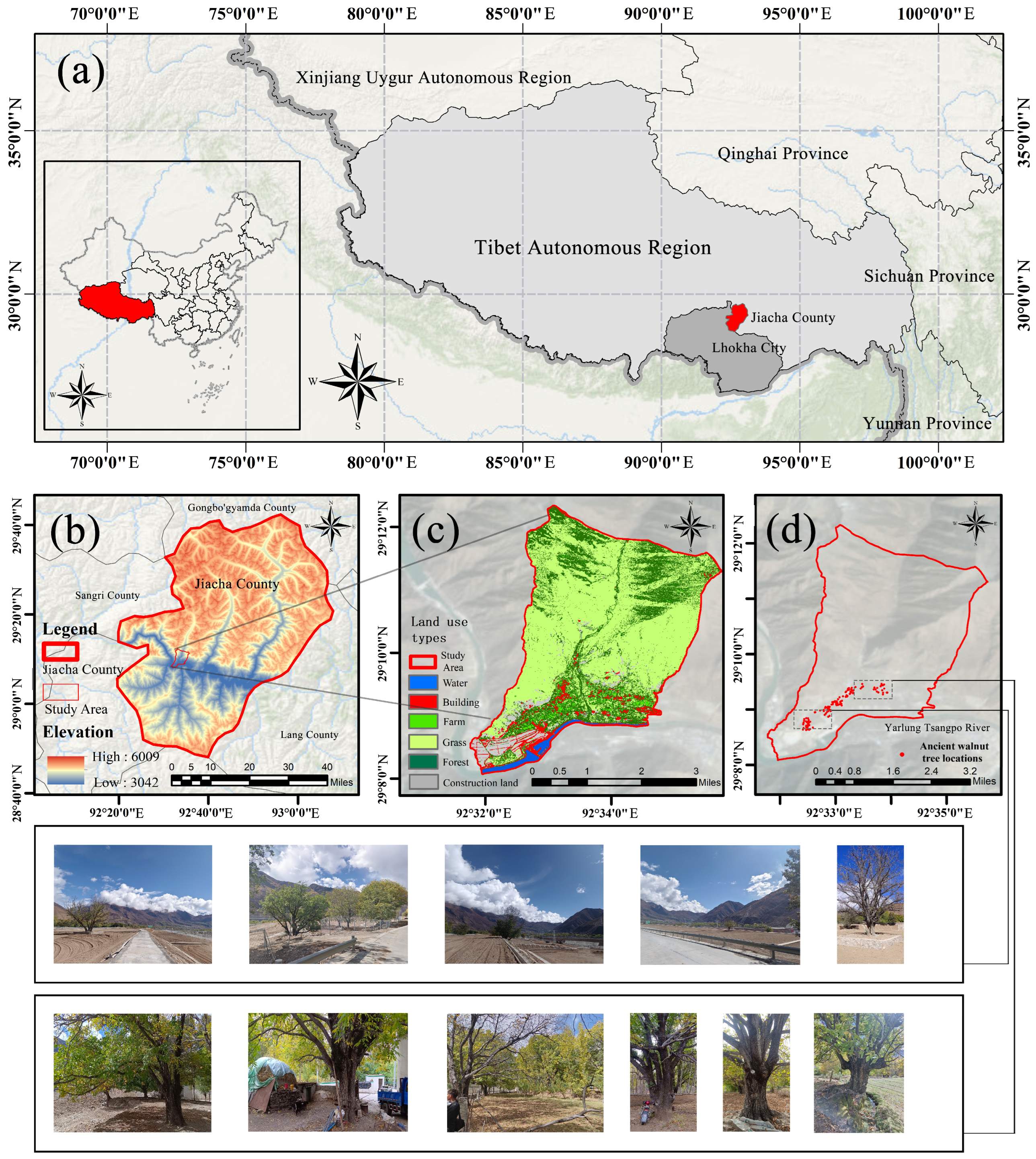
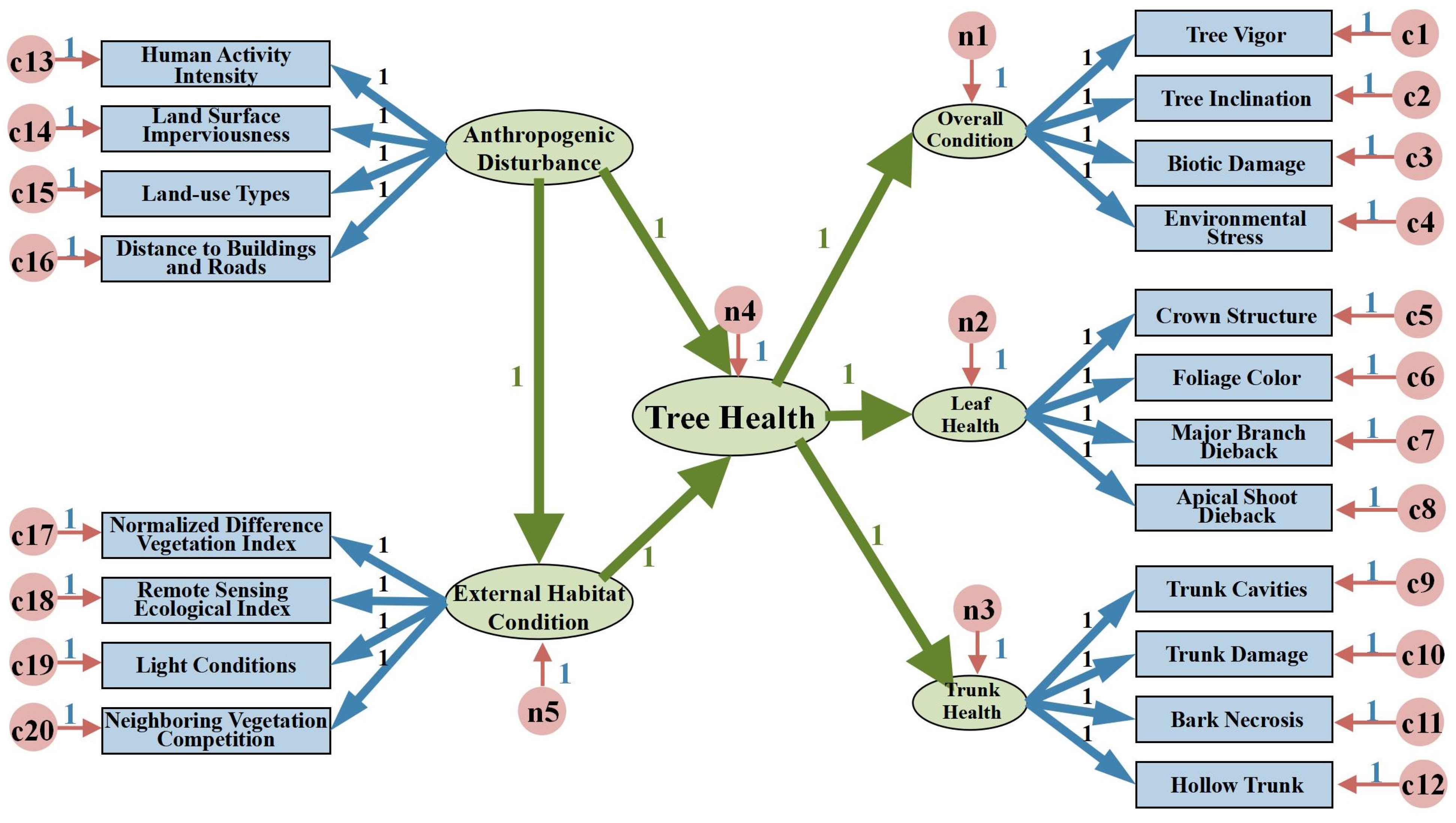
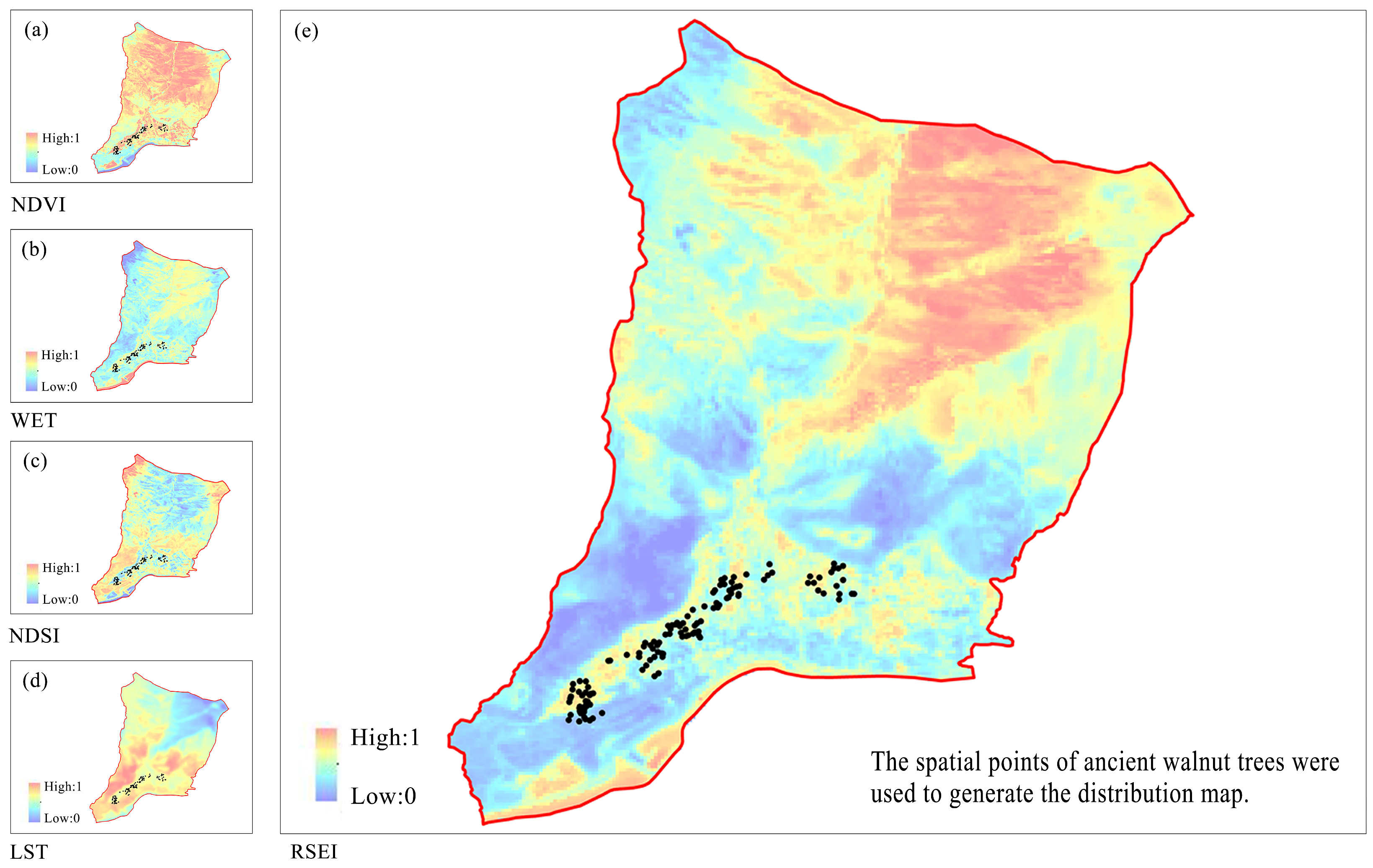
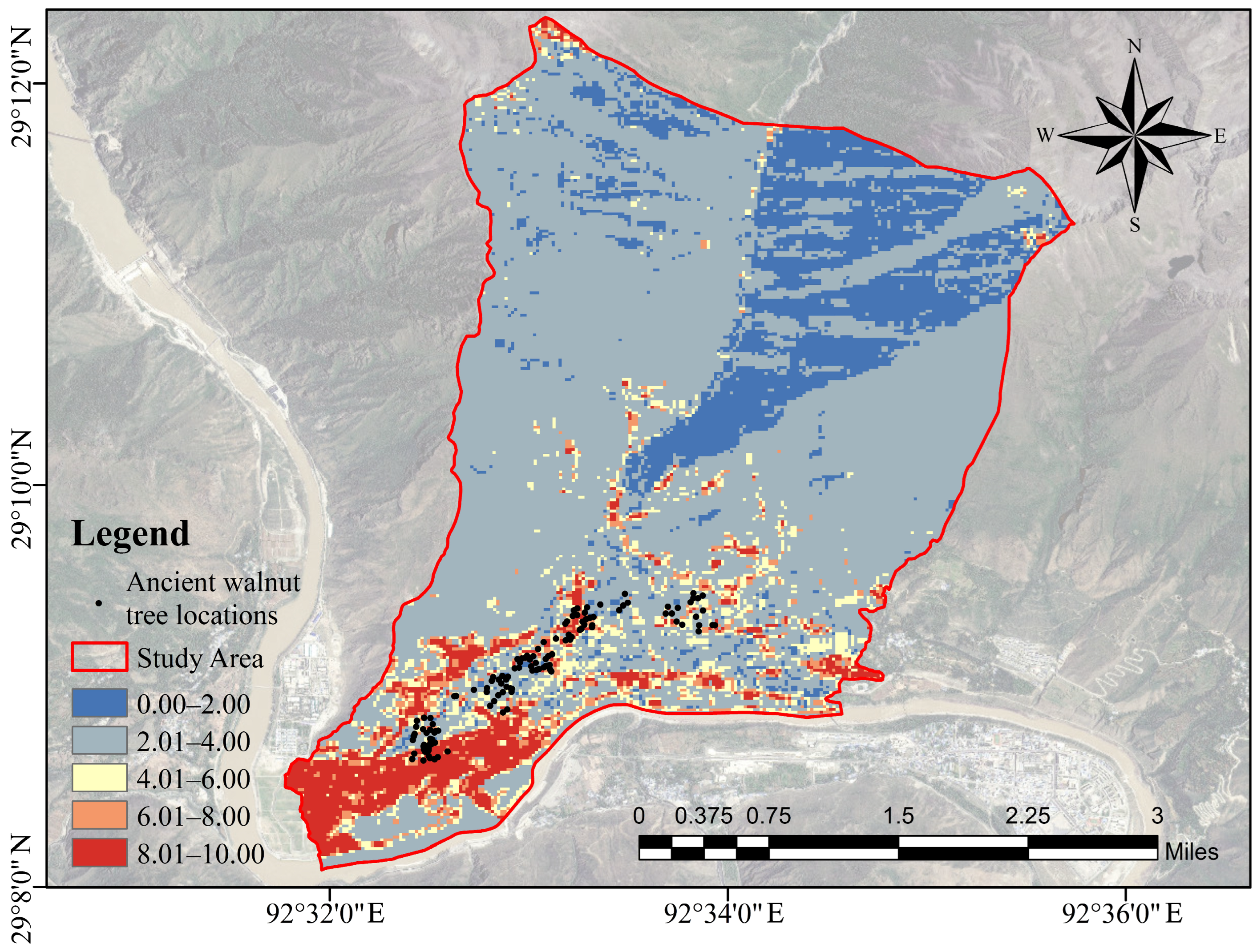
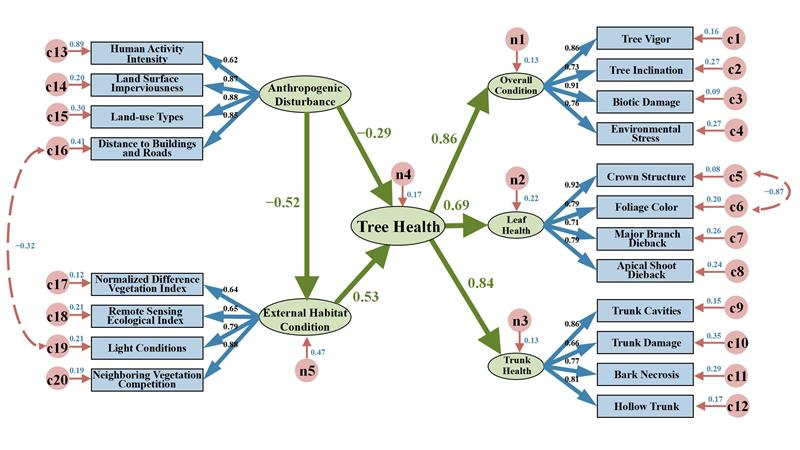
Ancient walnut trees (Juglans regia L.), revered as “cultural heritage in motion,” have coexisted harmoniously with dense clusters of Tibetan traditional villages for centuries. However, accelerating climate change and expanding human activities along the middle reaches of the Yarlung Tsangpo River have increasingly threatened their survival. To quantitatively evaluate the health of these ancient trees and identify the underlying driving mechanisms, this study developed a remote sensing-enhanced Structural Equation Model (SEM) that integrated satellite-derived ecological indices, land-use intensity, and field-measured morphological and physiological indicators. A total of 135 ancient walnut trees from villages such as Gamai in Jiacha County, Tibet, were examined. Key findings: (1) The SEM demonstrated an excellent model–data fit (Minimum Discrepancy Divided by Degrees of Freedom (CMIN/DF) = 1.372, Root Mean Square Error of Approximation (RMSEA) = 0.053, Tucker–Lewis Index (TLI) = 0.956, and Comparative Fit Index (CFI) = 0.962), confirming its robustness. (2) Among the latent variables, overall condition exerted the strongest influence (weight = 0.360), whereas foliage condition contributed least (0.289). (3) Approximately 35.56% of trees were healthy or sub-healthy, while 61.48% showed varying levels of decline. (4) Tree health was jointly shaped by intrinsic and extrinsic factors, with intrinsic drivers exhibiting stronger explanatory power. Externally, human disturbance negatively affected health, whereas ecological quality was positively associated. These results highlight the effectiveness of integrating remote sensing and SEM for ancient tree assessment and underscore the urgent need for long-term monitoring and adaptive conservation strategies to enhance ecological resilience.
Keywords: Tibetan traditional villages; ancient walnut trees; health assessment; structural equation modeling; land-use intensity; remote sensing ecological index (RSEI) Tibetan traditional villages; ancient walnut trees; health assessment; structural equation modeling; land-use intensity; remote sensing ecological index (RSEI)