Next Article in Journal
Oil Pollution in Mangroves: A Review
Previous Article in Journal
Influence of Post-Industrial Heap Conditions on Nutrient Accumulation in Silver Birch (Betula pendula Roth) Biomass
 
 
Due to scheduled maintenance work on our servers, there may be short service disruptions on this website between 11:00 and 12:00 CEST on March 28th.
Article

On the Roots of Secular Oaks (Quercus robur) from Cristian: A Social and Technical Perspective of a Community Symbol

by
Vasile Diana
1,
Raluca Enescu
2,
Dumitru-Dobre Constantin
1,
Simona Coman
1,
Nicoleta Emilia Martoiu
1 and
Andrei Apăfăian
1,*
1
National Institute for Research and Development in Forestry “Marin Dracea”, 500040 Brasov, Romania
2
Faculty of Silviculture and Forest Engineering, Transilvania University of Brasov, 500036 Brașov, Romania
*
Author to whom correspondence should be addressed.
Forests 2026, 17(1), 42; https://doi.org/10.3390/f17010042
Submission received: 19 November 2025 / Revised: 22 December 2025 / Accepted: 25 December 2025 / Published: 27 December 2025
(This article belongs to the Section Urban Forestry)

Abstract

Secular trees have an important contribution to today’s communities, not only due to cultural or historical reasons but also to recreational aspects. Management of such species can be done after a thorough analysis is done related to their health status. In most cases, a visual inspection to determine the health status can lead to unsatisfactory results. Modern technology, such as computer tomography, has results that are accurate and valid. A total of 17 secular oak trees (Quercus robur) were sampled and analyzed with Arbotom 2D (Arbotom 2D, Rinn Tech, Heidelberg, Germany) by using sensors on the tree trunks. Besides this, it is imperative to compare the results in the field with the view of the community related to their local symbol. Results revealed severe internal decay (75%–80% damaged wood) in eight oaks, while in the core of the trunk (10%–50% damaged wood), it was seen in seven oaks. Only two oaks have good health status. Survey results indicated the oaks as moderate healthy; only 18.8% respondents from the community consider the oaks unhealthy or in visible decline. This can lead to serious injuries to bystanders. The results have demonstrated a great link between technical and social research so decision-making stakeholders can apply a tailored management for their area.

1. Introduction

Old trees are a vital yet increasingly scarce feature of human-dominated landscapes. Their persistence is shaped by the combined influence of human activities and the biological characteristics specific to each species [1]. Since ancient times, wood has played a fundamental role in the development of human societies, serving as a primary material for construction, tools, transportation, art, and ritual objects. Early technological innovation and cultural expression across diverse civilizations were greatly influenced by the ability of wood to be carved [2].
Oak trees (Quercus robur) are a fundamental part of Europe’s natural and managed landscapes. They provide essential ecological functions, economic value, and cultural significance. However, a widespread phenomenon commonly referred to as oak decline has been increasingly reported across many European regions in recent decades [3].
Oak decline is usually caused by a combination of factors, rather than by a single pathogen or environmental stressor. These factors include predisposing factors such as site conditions, soil properties, and stand structure; inciting factors such as droughts, heat waves, and extreme climatic events; and contributing or secondary agents such as pathogenic fungi, insect pests, and opportunistic microorganisms [4]. Oak decline is manifested through a range of visible symptoms, including changes in leaf color, leaf loss, branch dieback, and bark lesions. These symptoms often precede internal damage that is not visible to the naked eye, such as disrupted water transport and weakened defense mechanisms. Collectively, these factors increase the tree’s susceptibility to decline [5]. Given the ecological and economic importance of oak species in Europe, the development of effective management strategies is critical, whether in urban environments or in the forest. Contemporary approaches emphasize preventive and adaptive forest management, beginning with the identification of decline symptoms at the earliest possible stage [6,7].
In this regard, it is necessary that a comprehensive evaluation of the health status of monumental trees is conducted to facilitate informed decision-making regarding their future management and preservation. Visual inspection is recommended in order to ascertain the tree’s health status [1]. This is determined by the position, shape, and size of the crown, the status of the trunk, the thickness of the branches, the self-weight of the tree, and external loads [8]. In addition to visual assessment, it is necessary to undertake a comprehensive evaluation of the internal structure of trees, particularly secular ones, utilizing contemporary technological methods. It is conceivable that the internal damage (i.e., decay, rot, the presence of saproxylic insects) may not be reflected by external symptoms [9].
The inspection of monumental trees necessitates a multifaceted approach, encompassing both visual assessments and computed tomography to facilitate a comprehensive evaluation of internal structural modifications [10]. Traditionally, such visual assessments are carried out visually by trained specialists. However, such visual observation and interpretation are influenced by the person who is doing such analysis. Also, interpretation depends on the professional experience, contextual understanding, and qualitative judgment. In contrast, automated assessment relies on algorithmic processing of data acquired through sensors. Automated approaches are valued for their capacity to deliver high levels of consistency, objectivity, and throughput, making them especially suitable for repetitive tasks and large datasets. Furthermore, automated systems have the capacity to operate continuously and process information at temporal and spatial scales that exceed human capability. In a nutshell, visual assessment is an inherently subjective process, and as such, is subject to a number of limitations. These include observer bias, variability between assessors, fatigue, and constrained scalability. These factors have the capacity to affect reproducibility, consistency, and efficiency, particularly in large-scale or time-sensitive assessment tasks. On the other hand, for modern technologies, the following factors must be considered: accuracy, reliability, cost, transparency, and operational context. It is becoming increasingly evident that hybrid approaches, which combine human expertise with automated tools, are being explored with a view to capitalizing on the strengths of both methods while mitigating their respective weaknesses [11].
In 1990, Tomikawa et al. investigated and detected the presence of decay in wooden poles using sonic tomography [12]. In 1994, Biagi et al. detected the presence of decay in wooden poles using sonic tomography [13]. In 2000, Comino et al. and Rust and Göcke applied sonic tomography to living trees to detect the presence of rot in the trunk [14,15]. It was thus determined that the sonic technique is a useful tool for the quantification of internal wood decay and minor defects within the tree trunk. The efficacy of this technique is contingent upon the sonic velocity, i.e., the wave propagation velocity through the wood. The propagation of stress waves in wood is known to be retarded in instances of decay or deterioration relative to sound wood [16,17]. The quantification of wood decay is on the entire stem cross-sections [18,19]. These techniques have been shown to facilitate a more profound comprehension of the internal decay processes occurring in both forest and urban tree species [20,21,22]. This understanding is of great importance, particularly in the context of managing trees in parks and green spaces, as it enables the timely detection of wood decay at its earliest stages [23,24]. Besides this, in many countries, the management of tree species that hold significant social and cultural value in order to maintain good health conditions against different factors is a critical aspect of modern environmental governance and heritage conservation [25].
In addition to the technical aspects, it is imperative to consider the perspective of the communities regarding secular trees that constitute a part of the historical or cultural heritage of a specific region [26,27]. This is also important when management is done when it comes to monumental trees [28] due to the fact that safety is a key factor for every community [29]. Indeed, a one-size-fits-all approach is not possible. This is the main reason community managers for different regions should target conservation policies specific to their area [30]. Furthermore, it is important for individuals from the community that are seeking recreational activities to know their perception about such areas [31], and if it is possible to involve in the participation when policies are issued [32]. Another aspect is that in the last years, it was demonstrated the benefits on human health recovery when it comes to walking in green spaces [33] or the medicinal potential of certain tree species [34]. Traditional knowledge of a community is of great importance in such directions [35]. Besides this, urban trees play a central role in sustaining ecosystem functions within cities, yet their capacity to deliver ecosystem services is strongly influenced by species-specific traits and structural characteristics [36]. The integration of questionnaire surveys and cutting-edge techniques has been demonstrated to facilitate enhanced comprehension and optimized management policies in areas encompassing secular trees [37]. This integration also enables the quantifiable assessment of the contributions of citizens residing within these communities. In addition, it is imperative that such trees are evaluated with regard to the risk they pose to citizens due to their advanced age, as well as in relation to the perception of citizens related to such risks, but also to community managers [38,39,40].
The objective of the present article was to (1) investigate the internal structure of the trunk of secular oak trees from the Dorobei area (Cristian village, Brașov County) using ultrasonic equipment in conjunction with a visual assessment, with a view to determining their health and mechanical status and (2) to identify and analyze citizens’ perceptions regarding the current state of secular oaks from their community.

2. Materials and Methods

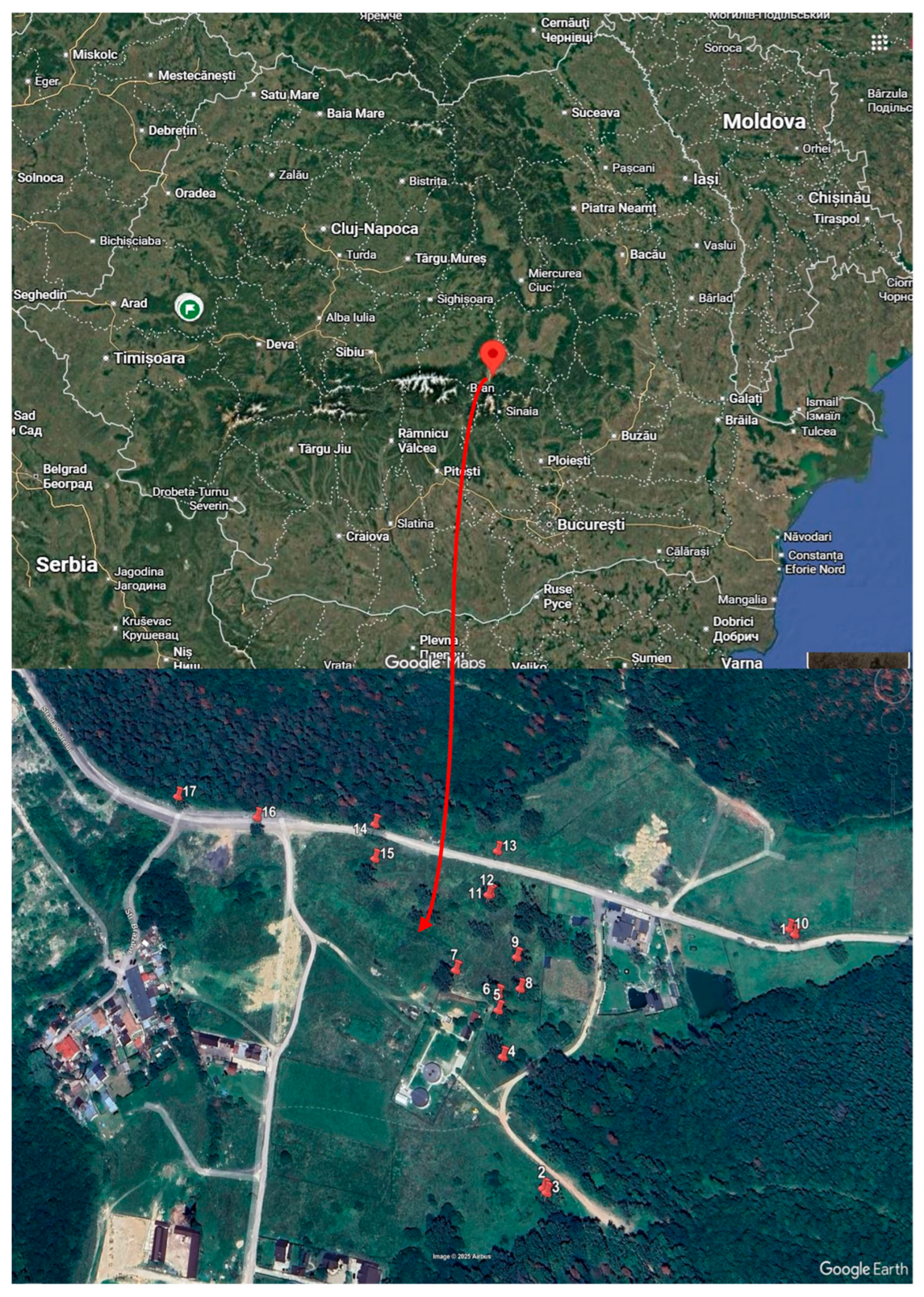
In the summer of 2022, a study was conducted on a total of 17 secular oaks (Quercus robur) located in the Dorobei area of Cristian village, which is situated in the southeastern part of Braşov county, at a distance of 13 km from Braşov city (Figure 1). The objective of the study was to evaluate the health status and structural stability of the trees.
The initial step in the procedure comprised a visual tree assessment, the purpose of which was to identify defects and decay, including but not limited to cavities, insect holes, cracks, cancers, and the presence of rot. This approach is regarded as the most elementary and cost-effective method for tree evaluation [41,42].
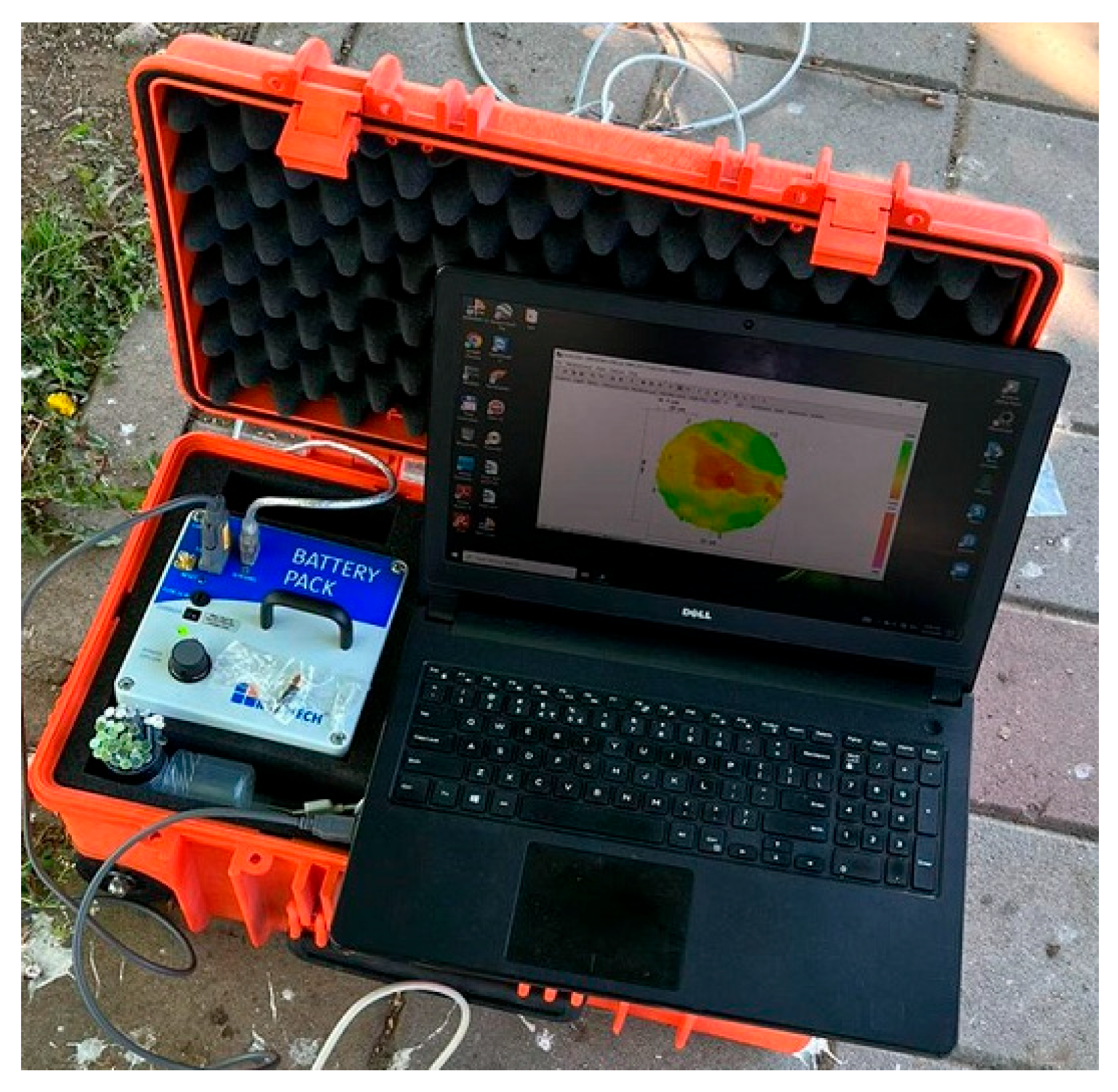
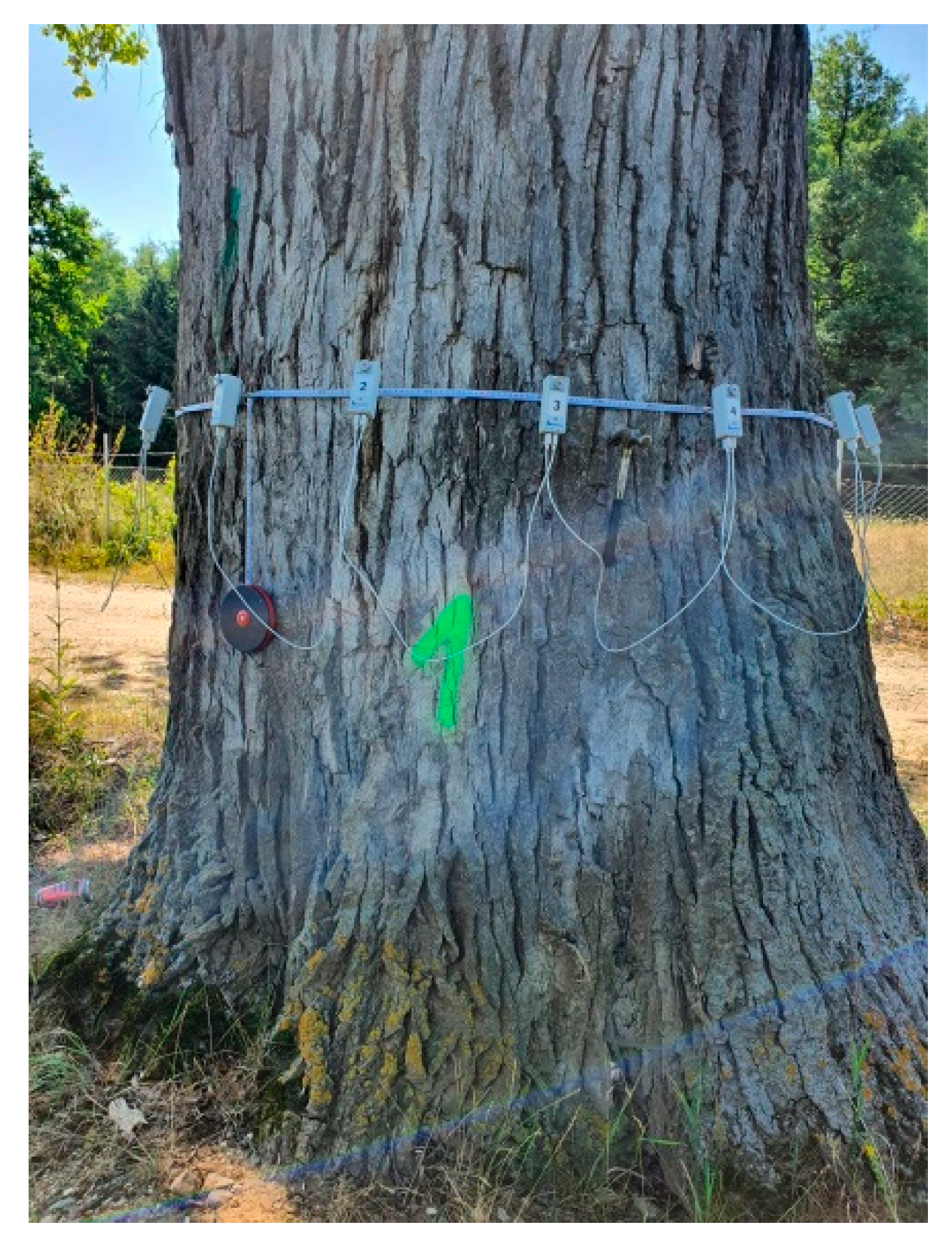
The Arbotom 2D ultrasonic equipment was utilised for the purpose of examining and analysing internal trunk defects, as well as the areas of stem decay (see Figure 2). The ultrasonic measurements on the tree trunks were carried out at equidistant points around the circumference of the tree. In the bark of each secular oak tree, sensors were driven at an angle of approximately 90 degrees between the nails and the trunk axis, at 130 cm above the ground level (Figure 3).
As demonstrated by Rust (2017) [43], the acoustic tomography of wood samples can be achieved by measuring the vibrations generated by hammer knocks, which are then recorded by sensors. This method provides a map of stress wave velocity, thus revealing the areas of healthy and decayed wood.
The wood density map is determined by the colour of the images obtained with the tomograph. The velocity of sound propagation within the trunk is dependent upon the density of the wood tissue and is represented on the tomogram by a range of colours [44].
The image on the tomogram can be interpreted as follows:
(a)
the transition from green to yellow signifies the progression of wood tissue towards a state of optimal health and vitality.
(b)
the presence of orange colouration is indicative of the onset of deterioration in the wood structure.
(c)
the colour change from red to purple is indicative of wood tissue degradation and the presence of hollows and cavities [45,46].
Research has indicated that the precision of the method is contingent on the number of sensors [47,48,49]. The number of sensors utilised is dependent upon the circumference and shape of the tree trunk. For this particular device, the maximum number of sensors is 16.
The dimensions of the oak trees were recorded through meticulous measurement. The circumference was determined at a height of 130 centimetres above ground level, utilising a tape measure, while the diameter of the canopy (m) and tree height (m) were also calculated. The GPS position was determined using the Avenza Maps programme.
Besides the field work to determine the health status, an online questionnaire was created in Google Forms and distributed via online groups from Cristian community (WhatsApp, Facebook) [50].
In order to understand how members of the Christian community relate to the centuries-old oak trees, a questionnaire was administered to a relevant sample of 150 people [51]. According to the INS census of 2021 [52], 51.5% of the population of Christians are female and 48.5% are male. The sample group includes 56.7% women and 43.3% men, with ages ranging up to 90 years. The distribution by age group reflects the dynamism of this community, given the proximity of Cristian to the city of Brașov, which attracts the population both for education and employment. The demographic composition of the sample after the questionnaire was completed is as follows: 8.7% of respondents are aged up to 20, 9.3% are aged between 21 and 30, and 18% are aged between 31 and 40. The majority of respondents (34.7%) fall within the 41–50 age bracket, with the 51–60 age group comprising 21.3% of the total. The demographic composition of the sample is as follows: 61–70-year-olds account for 6%, and the remaining 2% are individuals over 71 years of age. The average age of the subjects included in the sample is 42.7 years. With respect to the educational achievements of the sample population, the majority of respondents (34.7%) obtained a bachelor’s degree from a university, 32% completed a master’s programme, and 23.3% attained a high school diploma. The remaining 6% of the sample are individuals who have graduated from a vocational school, while 4% have graduated from a middle school or another category. Consequently, the sample is predominantly composed of active individuals aged between 31 and 60 (74%) with a higher education background (66.7%). The majority of the subjects in this sample have resided in the community of Christians for a period exceeding 10 years (62.7%), while 17.3% have been part of this community for 5–10 years, and 20.0% for less than 5 years.
The questionnaire was administered using the docs.google.com/forms tool and included a set of 14 questions with a variable number of answer options. The first four questions refer to general information about the respondents (gender, age, education, length of residence in the community). Of the remaining 10 questions, 5 referred to the level of knowledge about the existence and importance of the secular oaks in the community, the benefits they bring, and the time spent in the reserve by the respondent. The other five questions refer to the health of the secular oaks, possible safety concerns, and knowledge of accidents reported due to the secular oaks, as well as the respondents’ proposed conservation measures. The data collected from the 150 questionnaires were processed and exported in the first phase using the view analytics function and then processed and analysed in Excel and IBM SPSS Statistics (v.26).

3. Results

3.1. Visual Tree Assessment

Visual tree assessment is fundamental to the delivery of essential information regarding tree strength and stability. In the context of visual tree assessment, a multifaceted approach is employed, encompassing the consideration of dendrological parameters and phytosanitary status. This comprehensive evaluation encompasses the identification of signs attributable to biotic or abiotic factors [53].
The circumference of the seventeen secular oak trees ranged between 3.18 and 6.50 m, and the height ranged between 19.00 and 32.70 m (see Table 1). In the publication entitled “The Catalog of Monumental Trees from Romania” [54], seven of the tallest and thickest of these secular oaks are documented and are thus registered as monumental trees.

3.2. The Ultrasonic Measurements

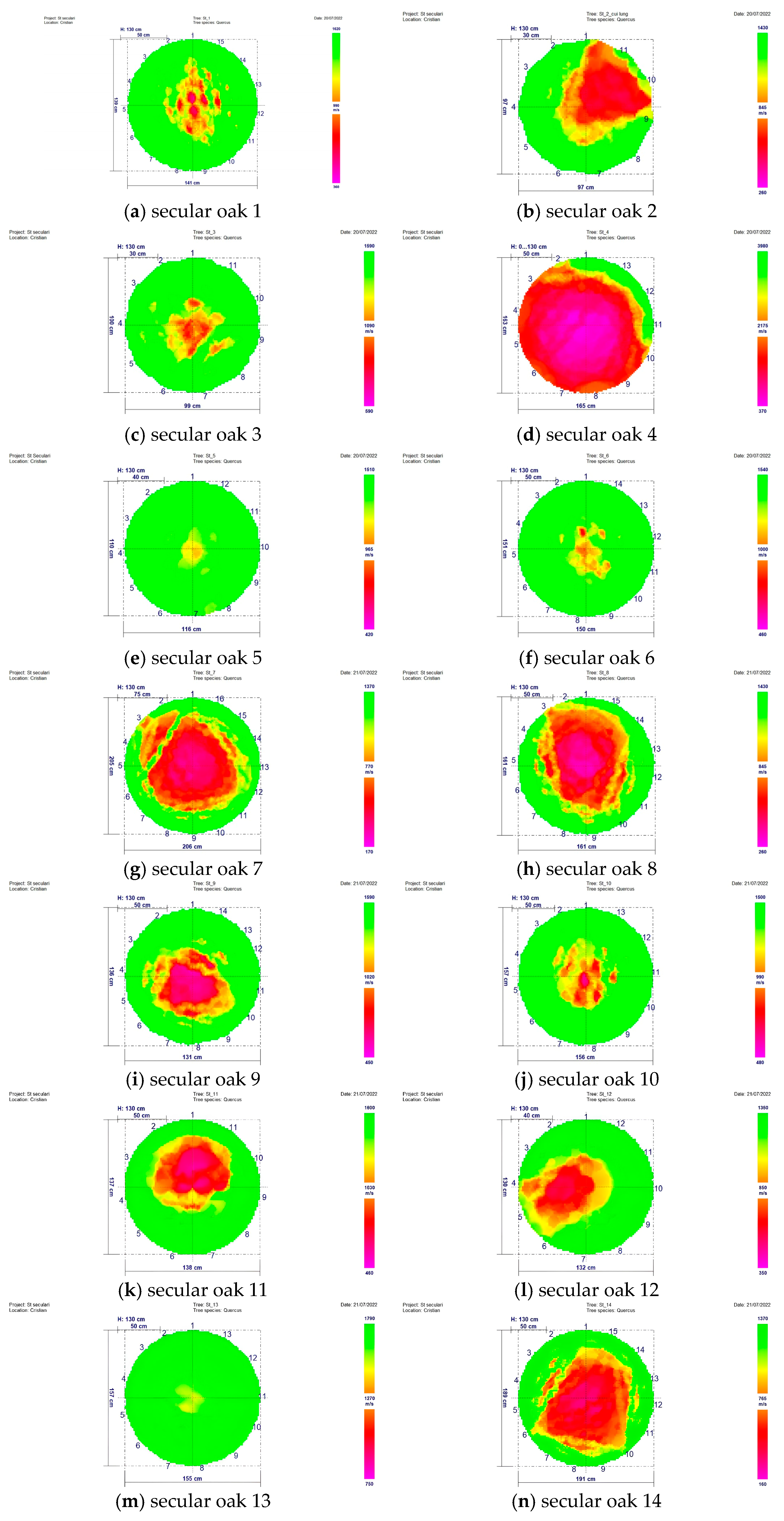
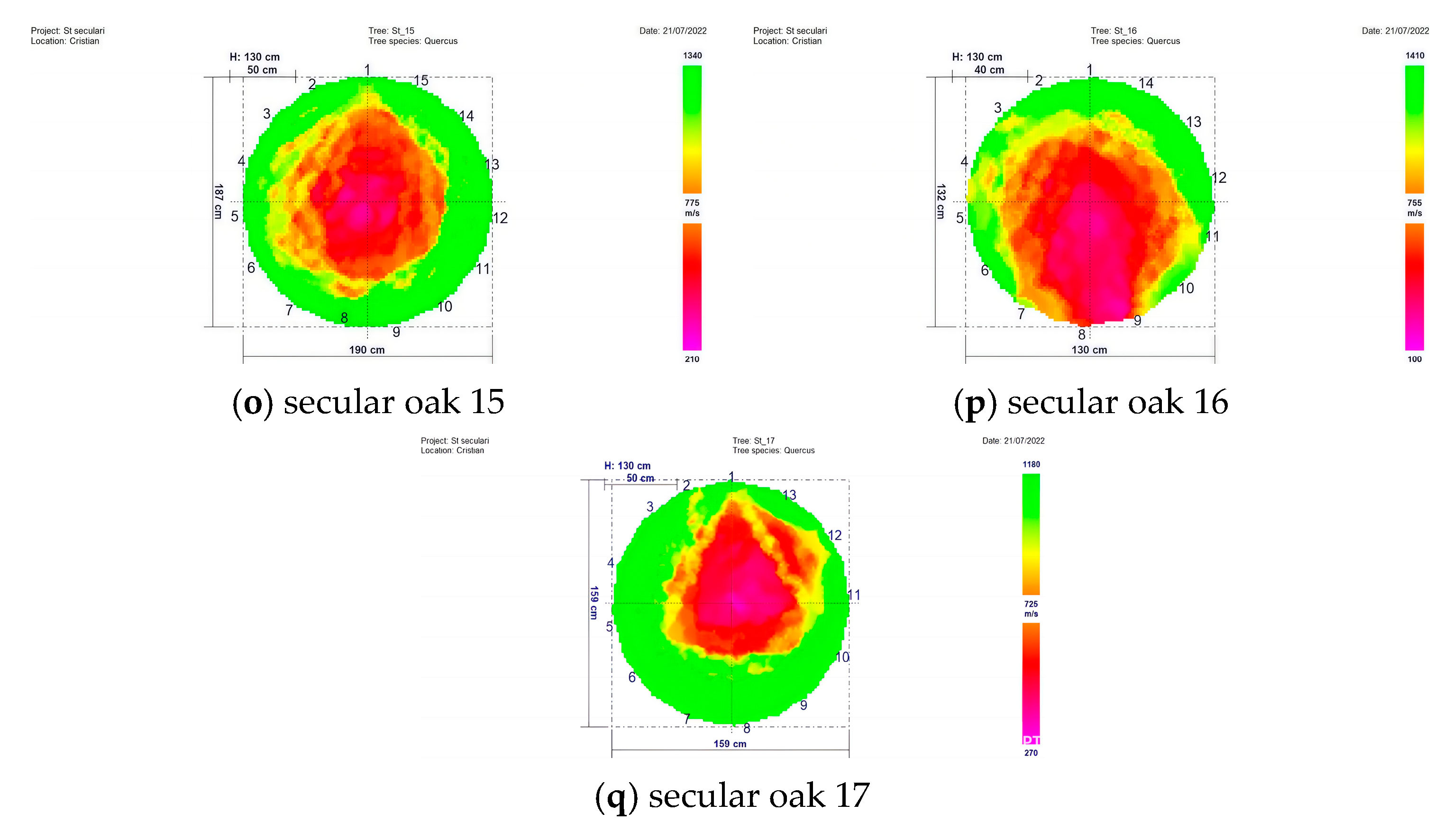
Acoustic tomography has been demonstrated to be the most useful and non-destructive technique for the discovery, location, and valuation of the size and shape of internal defects (especially rot) in secular oak wood [55,56]. It has been determined by other researchers that the acoustic tomography method demonstrates an 89% level of precision [57]. In Figure 4, the degree of affected wood from the secular oaks is shown.
The number of sensors utilized was in relation to the girth and shape of the secular oaks, ranging from 11 to 16. Following the tomographic examination, the results of the stress wave velocity tests revealed that the decomposition process had commenced in the core of the trunk of 14 of the secular oaks.

3.3. Questionnaire Results

By applying the questionnaire to a sample of 150 members of the Christian community, it was found that for the question, “Are you aware of the existence of secular oaks in your community”, 94% are aware of the existence of the centuries-old oak trees in this community. The remaining 6% stated that they were unaware of this subject. Of those who were unaware of the existence of the secular oak trees in the Christian community, 55.6% were women and 44.4% were men, the average age was 45, 66.7% had high school education, and 77.8% have been part of this community for less than 10 years.
For the question, “How important are the secular oaks for yourself”, a total of 149 subjects provided responses to the items pertaining to the awareness and significance of the secular oaks in Christianity. The majority (67.8%) of the subjects included in the sample consider the secular oaks to be of great importance to the community, with an additional 21.5% considering them to be very important. A negligible proportion of respondents consider the secular oak trees to be somewhat important (10.1%), and a minuscule percentage, 0.6%, believe that they are not very important.
In response to the question, “What benefits do you think the oak trees in your community bring”, respondents generally selected multiple answers. A significant proportion of the sample opted for all four types of benefits, namely: (a) cultural and historical; (b) visual (beautify the landscape); (c) habitat for biodiversity (birds, insects, etc.); (d) improve air quality.
The results of the questionnaire for the question, “Are the secular oaks contributing positively to the identity of the community”, indicate that the vast majority (95.3%) of respondents residing in the community are of the opinion that the secular oak trees have a beneficial effect on the community’s identity or image. This view is shared by 77.3% of respondents who strongly agree, and 18.0% of respondents who agree. A neutral attitude towards this issue is expressed by a small percentage of the sample (4.7%).
Regarding the question, “How often do you spend time in the secular oak reservation”, approximately half of the sample group stated that they rarely spend time in the secular oak reserve (44.7%), and 26% stated that they do so 1–2 times per month. Conversely, a smaller number of community members spend time there once a week (13.3%) or several times a week (7.3%). A mere 1.3% of the interviewed population reported spending time in the centuries-old oak reserve on a daily basis. Furthermore, a significant proportion of 7.3% of the interviewed population reported never spending time in the reserve.
Also, a very important aspect is highlighted by the question, “How informed are you regarding the impact of pests and diseases on the trees from the community”. Regarding the impact of diseases and pests on trees within the community, 38.7% of respondents reported never having heard of this subject, while 46.7% had heard of it but had limited knowledge on the subject. A mere 13.3% of respondents considered themselves to be fairly well informed, while a negligible 1.3% considered themselves to be very well informed.
Related to the question, “Evaluate the health status of the secular oaks”, the health status of the secular oak trees was assessed by 144 of the 150 subjects who constituted the sample. Of the respondents, 4.9% categorized the oaks as being in excellent health, 21.5% considered them to be largely healthy, and 54.8% regarded them as being moderately healthy. Concurrently, 13.9% of respondents regard the secular oaks to be unhealthy, and 4.9% consider the oaks to be in decline.
Safety is always important. Of the 150 subjects who completed the questionnaire, 145 of them provided a response to the item regarding, “safety concerns pertaining to secular oak trees”. Of these respondents, 28.3% expressed safety concerns relating to falling branches or trees, 7.6% articulated concerns regarding allergies, 17.9% voiced apprehensions concerning pests and animals, and the majority (72.4%) attested to their concern being the inadequate maintenance of the secular oaks. Concurrently, 19.3% of respondents expressed no concerns regarding the secular oak trees within their community.
Also related to safety is the question dealing with frequency of accidents: “Are you aware if accidents were recorded due to old trees in the community”. The question regarding accidents caused by old trees in the community was answered by 148 individuals from the sample. The majority of the subjects in the sample (64.2%) were unaware of the reporting of such accidents, and 35.1% indicated that none had been reported.
With regard to the “What conservation measures would you choose for the secular oaks” question, it was indicated by respondents that for the conservation of secular trees, 63.6% consider that dedicated legislation is necessary to protect them, 16.0% consider that education campaigns are needed, and 17.3% prefer monitoring and analysis of the data collected. Furthermore, a negligible proportion of respondents (2%) expressed the view that prohibiting access to the perimeter would be beneficial, while 1.3% asserted that no such measures were required.
Of the participants who stated that they knew about the existence of the ancient oak trees in the Cristian community, 50.7% spend time in the reserve more than once or twice a month, while 49.3% rarely or never do so. The responses to questions about how informed the respondents are about disease and pests that affect the trees, how they evaluate the trees’ health status, and what conservation measures they would choose were then analyzed for these two categories of subjects. Those who spend more time in the reserve have an average response, indicating that they have heard about the effect of diseases and pests on trees but do not know much about it. In contrast, those who rarely or never spend time in the reserve more often state that they have never heard about this topic. The health of the ancient trees was rated by both categories as moderately healthy on average, with a higher number of respondents stating that the trees are mostly healthy among participants who rarely or never spend time in the reserve (!). Both categories gave similar answers to questions about conservation issues, with a higher frequency for choosing dedicated legislation to protect them as a conservation measure.
Following the analysis of the group of those who are aware of the existence of the ancient oak trees (140 subjects), by reorganizing the responses for questions about disease and pests that affect the trees and the evaluation of the health status into three types of responses (by grouping responses that converge on the same idea), a tendency to assess the health of the trees as healthy was highlighted by participants who have heard and are informed about the effect of diseases and pests on trees. Thus, 54.5% of the subjects who have heard and are informed about the effect of diseases and pests on trees in the community assessed the health status of trees as healthy, and the remaining 45.5% assessed their health status as moderately healthy. At the same time, only 45.5% of those who do not know much about the effect of diseases and pests on trees assessed the trees as healthy, while the remaining 54.5% considered them to be moderately healthy. If we refer to subjects who have never heard of the effect of diseases and pests on trees, 40.8% rated the trees as healthy, and 59.2% consider them to be moderately healthy.

4. Discussion

4.1. Technical Results

The secular oak trees grow in relatively favorable habitat conditions. The centuries-old oaks of Christianity represent the last remnant of an ancient forest that stretched across this area; hence, the symbol on the Christian coat of arms. All of the trees under consideration are estimated to be approximately 200 years of age. Following a visual assessment, it was determined that only four of the oaks (oaks Nos. 2, 8, 9, and 16) exhibited signs of brown rot on the trunk or rotten branches. The health status of the 17 specimens was found to be influenced by age, with the exception of oak number 15, which was also influenced by the anthropic factor.
For all 17 of the secular oaks examined, the tomogram exhibited a range of colors, from green to red and purple, indicative of the varying degrees of wood decomposition observed in the cross-section. The spectrum of colors, ranging from orange to red and purple, is indicative of the extent of the rot in the trunk, as determined by the stress wave propagation velocity.
The stress wave maps reveal severe internal decay (75%–80% damaged wood) in almost identical locations in eight of the oaks. In addition, the wave maps indicate the onset of decay in the core of the trunk (10%–50% damaged wood) in seven oaks. The tomogram further revealed the position of the surface with rotten wood.
The tomogram of oak number 16 revealed a substantial degree of degradation of the wood (90% of the wood was damaged) in the central part of the trunk. The tomogram also demonstrated a significant weakening of the internal structure of the trunk, as well as the existence of a cavity with the potential to fracture the trunk.
Only two oaks, Nos. 13 and 5, respectively, have been identified as exhibiting good status of health. Analysis of their tomograms reveals a green color in the cross-section, with a pale-yellow tint observed exclusively in the core of the trunk. These are specific case examples with tomographic images, from which it can be observed with the help of the tomogram by the clean green color, that the oak is healthy versus tomogram no. 16 where the tomogram presents the bright red and purple color on 90% of the cross-section of the trunk, demonstrating the serious health status of this specimen due to the presence of hollows and cavities, respectively. The health status of the 17 oak trees was influenced by a number of factors, primarily their age. At present, these trees are approximately 200 years old. Fifteen specimens from the seventeen are in poor health (e.g., internal rot) following CT examinations that revealed significant changes in the middle of the trunk and a great wood decay ratio. This means that almost all individuals studied require monitoring at least twice a year. In contrast, the two oaks in good condition require monitoring only once a year.
Comparable outcomes were observed in the experiments conducted in Nitra, Slovakia, where fifteen trees of five different species were examined: In the study by Ostrovski et al. [58], acoustic tomography inspection revealed areas of damage to the wood in the trunks of a number of different tree species. These included Norway maple (Acer platanoides L.), European chestnut (Castanea sativa Mill.), Eastern red cedar (Juniperus virginiana L.), Japanese cherry (Cerasus serrulata (Lindl.) G. Don), and Western red cedar (Thuja plicata D. Don ex Lamb.).
Zuraw et al. [59] undertook a comprehensive evaluation of the health status of a selection of seven monumental trees, including White walnt (Juglans cinerea L.), Black pine (Pinus nigra J.F. Arnold), Eastern redchedar (Juniperus virginiana), Bald cypress (Taxodium distichum Rich.), Blue Douglas-Fir (Pseudotsuga menziesii var. glauca (Beissn.) Franco), Oak (Quercus robur, and London plane tree (Platanus × hispanica Mill ex Münchh). These trees, which constituted the remnants of gardens within the historic villas in the palace and park complex in Zwierzyniec (Poland), were subjected to a thorough analysis. The results of this study revealed that the health status of three trees was evaluated as good, while internal cavities were discovered within the trunks of four other trees.
An analysis was conducted on five trees of notable size in Lublin, Poland: two Black poplars (Populus nigra L.), two Small-leaved limes (Tilia cordata Mill.), and a European ash (Frassinopsis excelsior L.). The trees were assessed using acoustic tomography, a method that uses sound waves to create a three-dimensional image of the trees’ health conditions [60]. It was observed that all of the trees that were examined exhibited signs of wood damage in the trunk cross-section. Furthermore, it was noted that a number of these trees displayed evidence of progressive tissue degradation. It is, therefore, recommended that these trees be monitored to ensure their continued safety within their natural environment.

4.2. Social Results

Related to the community parts, a total of 149 people in the sample responded to the items referring to the knowledge and importance of the secular oak trees in Christianity. The majority (67.8%) of the people included in the sample consider that the secular oaks are very important for the community, and another 21.5% consider them to be very important. A small proportion of respondents consider the secular oak trees to be somewhat important (10.1%), and a tiny percentage, 0.6%, believes that they are not very important.
Of those who expressed a high level of importance regarding the secular oaks, 57.4% of respondents identified as female and 42.6% as male, with an average age of 45.5. The majority of respondents had received higher education (72.3%) and had resided in the Christian community for a minimum of 10 years (64.3%). In contrast, 43.7% of those who attributed low importance to the secular oaks were women, and 56.3% were men, they were generally young people aged between 15 and 45, with an average age of 28, and 56.3% had, at most, a high school education. The population is evenly split between those who have resided in the community for less than 10 years and those who have lived there for more than 10 years.
The demographic composition of the sample is as follows: 57.1% of the respondents identified as female, with an average age of 43.7 years. The majority of respondents (75%) possessed a higher level of education, and 60.4% of respondents had resided in the Christian community for a period exceeding 10 years. The remaining 42.9% of the subjects are male, and these individuals exhibit characteristics analogous to those of the women who provided the same response (average age 43.6 years, 75% with higher education, and 69.4% residing in the Christian community for a period exceeding 10 years). The preponderance of responses indicated that cultural and historical values constituted the primary benefit, with 80.7% of respondents designating this as the foremost benefit. The role of habitat for biodiversity was identified by 80.0% of respondents, with a further 19.3% of respondents designating it as the second most important benefit. A significant proportion of the sample group (74.7%) considers the community’s centuries-old oak trees to be aesthetically pleasing, with 70.0% perceiving them to have a beneficial effect on air quality. It is important to note that those with a neutral attitude are 57.1% women and 42.9% men, with an average age of 37.8 years, 57.1% of whom have at most a high school education and have lived in a Christian community for less than 5 years.
The demographic profile of the respondents reveals that 45.5% of the respondents identified as female and 54.5% as male, with an average age of 38.6 years. A maximum of high school education was reported in 54.5% of cases, and 63.6% of respondents had resided in a Christian community for less than 10 years. The majority of respondents who indicated infrequent engagement with the reserve were female (64.2%), with an average age of 41.3. A significant proportion of these respondents (60.5%) possessed higher education, and a substantial percentage (63.8%) had resided in the town for over a decade. Of those who engage with the reserve on a weekly basis or 1–2 times per month, 47.5% are female and 52.5% are male. The mean age of women in this category is 43.6 years, 71.4% of whom have received higher education, and 60.7% have resided in the community for a period exceeding 10 years. Conversely, men who provided the same response had a higher average age (46.0 years), a higher proportion had received a higher education (80.6%), and 71% had been members of the community for more than 10 years. Of those who spend time in the reserve on a daily basis or several times a week, 69.2% are women and 30.8% are men, with an average age of 45.0 years, 53.8% of whom have received higher education, and the majority of whom have resided in the community for more than 10 years (76.9%).
Of those who have never been aware of this topic, 58.6% are women with an average age of 43.5, 55.9% of whom have received higher education and 52.3% of whom have resided in the Christian community for more than 10 years. The remaining 41.4% of respondents are male and have not been exposed to this topic, with an average age that is lower than that of the female respondents who gave the same answer (36.7 years). A higher percentage of the male respondents (66.7%) have received a higher education, and a higher percentage of them (58.3%) have been part of the community for more than 10 years. On the contrary, individuals with a moderate-to-high level of knowledge about the topic are equally distributed between women and men, with a higher proportion of those with a university education (72.7%). The mean age of the respondents was 45 years, and they had resided in a Christian community for a minimum of 10 years, constituting 72.3% of the sample. Again, men exhibiting the same response have a higher average age (52.3 years) and have been part of the community for more than 10 years (81.8% of the time).
Of those who consider the secular oaks to be mostly healthy and moderately healthy, 56.4% are women with an average age of 41.3, 59.7% have higher education, and 54.8% have been part of the community for more than 10 years. In contrast, men who share the same opinion represent 43.6%, have an average age close to that of women with the same response (41.0 years), and have higher education and have been part of the community for more than 10 years in higher percentages than women (70.8% and 66.7%, respectively). Respondents who rated the oak trees as unhealthy or in decline comprised 48.1% women, with an average age of 46.5 years; 69.2% of them possessed higher education; and an overwhelming majority (92.3%) had been part of the community for more than 10 years. Men who gave the same answer represent 51.9% and have an average age of 47.2; 85.7% have higher education; and 64.3% have lived in the Christian community for more than 10 years.
Also, a correlation can be observed between the length of residence and the accuracy of the health judgement. It is assumed that the length of residence and the accuracy of evaluation of health status are connected. The more time spent in a place, the more likely it is that people will learn more about that place, understand the context better, and learn through experience. Almost two-thirds of inhabitants have residency of more than 10 years, while almost two-thirds state that their health status is moderate.
Multiple responses, combining all categories of concerns, were indicated by 4.8% of those who answered this question, representing 42.8% women and 57.2% men, with an average age of 42.1 years; 100% had higher education, and 57.2% had lived in a Christian community for more than 10 years. Among those who have no concerns about the centuries-old oak trees, it is interesting to note that 64.3% are women, with an average age of 41.7 years, and 66.7% have, at most, a high school education, while the remaining 35.7% are men with an average age of 38, 60.0% of whom have, at most, a high school education. Both women and men who gave this answer showed no differences in terms of community membership, with half of them having lived in the Christian community for more than 10 years in both cases.
Those who stated that no accidents caused by secular oak trees had been reported were equally divided between women and men who had lived in the Christian community for over 10 years, accounting for 65.4% of respondents. The women who gave this answer have an average age of 47.7, and 76.9% possess higher education, while the men have an average age of 41.5, and 61.5% possess higher education.
The subjects who indicated that dedicated legislation is necessary are 60% women and 40% men, with 63.1% having attained a higher education qualification. The women who provided this response had an average age of 45.0 and had been members of the community for over a decade (64.9%), while the men had an average age of 39.2, and a marginally higher proportion (71.1%) had been members of the community for over a decade. Solutions such as education campaigns or monitoring and analysis of collected data were indicated equally by women and men, with an average age of 44.4 years, 76.0% with higher education, and 56% being members of the Christian community for more than 10 years. The results can also be correlated with the degree of education of the respondents: 66.7% have a bachelor’s or master’s degree, while 63.3% of the respondents stated that dedicated legislation is a priority when it comes to protection measures.

5. Conclusions

The ultrasonic assessment of tree health, facilitated by the Arbotom 2D device, constitutes a non-invasive and original methodology for the analysis of internal tree trunk structures. In order to assess tree health conditions, the visual method is still employed; however, it should be noted that some internal defects in tree trunks do not manifest externally. Conversely, sonic tomography is capable of detecting such damage and the presence of rot within the trunk.
The employment of sonic tomography facilitated the evaluation of the health status of secular oaks in Dorobeiu (Cristian village). This analysis enabled the identification of 15 trees that presented a threat to security and necessitated monitoring.
This innovative technique facilitates the visualization of the entire cross-section of the trunk, thereby enabling the prevention and elimination of potential threats. Consequently, secular oaks can be protected and maintained for extended periods.
In relation to the community survey, it is imperative to consider the social aspect in order to gain a more profound comprehension of the technical outcomes. From the total number of respondents, it is evident that a significant proportion of the population is aware of the community symbol, with the majority of respondents expressing familiarity with it. Furthermore, it is evident that the general public is aware of the cultural, historic, biodiversity, and air-quality issues. The present research has highlighted a significant issue concerning the perception of secular oaks within the community. The majority of respondents consider them to be in a state of moderate health, with only 18.8% perceiving them to be unhealthy or in visible decline. It has been demonstrated that the potential for fatal injury to bystanders in the event of strong winds or unfavorable weather conditions is increased by the presence of old trees. In addition, two-thirds of respondents expressed a lack of awareness regarding accidents within their respective communities. The conclusion drawn from this analysis is that members of the public do not possess the expertise required to accurately assess the level of risk posed by a particular tree. Such approaches, incorporating a technical element and utilizing modern tools such as computer tomography in conjunction with community surveys, have the potential to significantly contribute to the evaluation of specific situations and the enhancement of community safety.

Author Contributions

Conceptualization, V.D. and R.E.; methodology, V.D.; software, S.C.; validation, A.A., V.D. and R.E.; formal analysis, V.D.; investigation, D.-D.C.; resources, N.E.M.; data curation, N.E.M.; writing—original draft preparation, V.D.; writing—review and editing, A.A.; visualization, A.A.; supervision, V.D.; project administration, V.D. All authors have read and agreed to the published version of the manuscript.

Funding

This research work was carried out with the support of the Romanian Ministry of Education and Research, within the FORCLIMSOC Nucleu Programme (Contract no. 12N/2023)/Project PN23090102.

Data Availability Statement

Data will be made available on request.

Acknowledgments

This work was supported by the National Institute of Research and Development in Forestry “Marin Dracea”, project no. 19070505 “Health status and conservation of monumental trees in Romania in the conditions of climate change”, within the BIOSERV program, financed by the Romanian Ministry of Research and Innovation.

Conflicts of Interest

The authors declare no conflicts of interest.

References

  1. Huang, L.; Jin, C.; Pan, Y.; Zhou, L.; Hu, S.; Guo, Y.; Meng, Y.; Song, K.; Pang, M.; Li, H.; et al. Human activities and species biological traits drive the long-term persistence of old trees in human-dominated landscapes. Nat. Plants 2023, 9, 898–907. [Google Scholar] [CrossRef]
  2. Melo Júnior, J.C.F.d.; Vicario, M.; Macchioni, N. Global Trends in Wood Heritage Research: A Bibliometric and Scientometric Analysis. Forests 2025, 16, 326. [Google Scholar] [CrossRef]
  3. Carluccio, G.; Benigno, A.; Panzavolta, T.; Vergine, M.; De Bellis, L.; Luvisi, A.; Moricca, S. Understanding Oak Decline in Europe: Ecological Factors, Symptoms, Causative Agents, and Management Strategies. Plant Dis. 2025, 109, 1805–1823. [Google Scholar] [CrossRef]
  4. Macháčová, M.; Nakládal, O.; Samek, M.; Baťa, D.; Zumr, V.; Pešková, V. Oak Decline Caused by Biotic and Abiotic Factors in Central Europe: A Case Study from the Czech Republic. Forests 2022, 13, 1223. [Google Scholar] [CrossRef]
  5. Lyubenova, A.; Baranowska, M.; Menkis, A.; Davydenko, K.; Nowakowska, J.; Borowik, P.; Oszako, T. Prospects for Oak Cultivation in Europe Under Changing Environmental Conditions and Increasing Pressure from Harmful Organisms. Forests 2024, 15, 2164. [Google Scholar] [CrossRef]
  6. Thomsen, S.; Reisdorff, C.; Gröngröft, A.; Jensen, K.; Eschenbach, A. Responsiveness of mature oak trees (Quercus robur L.) to soil water dynamics and meteorological constraints in urban environments. Urban Ecosyst. 2020, 23, 173–186. [Google Scholar] [CrossRef]
  7. Cannon, C.H.; Piovesan, G.; Munné-Bosch, S. Old and ancient trees are life history lottery winners and vital evolutionary resources for long-term adaptive capacity. Nat. Plants 2022, 8, 136–145. [Google Scholar] [CrossRef] [PubMed]
  8. Gross, W. European Treeworker; European Arboricultural Council (EAC): Bad Honnef, Germany; Patzer Verlag: Berlin/Hannover, Germany, 2002. [Google Scholar]
  9. Kubus, M. The Evaluation of Using Resistograph When Specifying the Health Condition of a Monumental Tree. Not. Bot. Hort. Agrobot. 2009, 37, 157–164. [Google Scholar]
  10. Konijnendijk, C.; Nilsson, K.; Randrup, T.B.; Schipperijn, J. Urban Forests and Trees; Springer: Berlin/Heidelberg, Germany, 2008; pp. 445–464. [Google Scholar]
  11. Budău, R.; Timofte, C.S.C.; Mirisan, L.V.; Bei, M.; Dinca, L.; Murariu, G.; Racz, K.A. Living Landmarks: A Review of Monumental Trees and Their Role in Ecosystems. Plants 2025, 14, 2075. [Google Scholar] [CrossRef]
  12. Tomikawa, Y.; Iwase, Y.; Arita, K.; Yamada, H. Nondestructive inspection of wooden poles using ultrasonic computed tomography. IEEE Trans. UFFC 1990, 33, 354–358. [Google Scholar] [CrossRef]
  13. Biagi, E.; Gatteschi, G.; Masotti, L.; Zanini, A. Tomografia ad ultrasuoni per la caratterizzazione difettologica del legno. Alta Freq. Riv. Elettron. 1994, 6, 48–57. [Google Scholar]
  14. Comino, E.; Socco, V.; Martinis, R.; Nicolotti, G.; Sambuelli, L. Ultrasonic tomography for wood decay diagnosis. In International Symposium on Plant Health in Urban Horticulture, Braunschweig, Germany, 22–25 May 2000; Backhaus, G.F., Balder, H., Idczak, E., Eds.; Biologischen Bundesanstalt für Land-und Forstwirtschaft: Braunschweig/Berlin, Germany, 2000; p. 279. [Google Scholar]
  15. Rust, S.; Göcke, L. PICUS sonic tomograph—A new device for nondestructive timber testing. In International Symposium on Plant Health in Urban Horticulture, Braunschweig, Germany, 22–25 May 2000; Backhaus, G.F., Balder, H., Idczak, E., Eds.; Biologischen Bundesanstalt für Land-und Forstwirtschaft: Braunschweig/Berlin, Germany, 2000; p. 300. [Google Scholar]
  16. Wang, X.; Divos, F.; Pilon, C.; Brashaw, B.K.; Ross, R.J.; Pellerin, R.F. Assessment of Decay in StandIng Timber using Stress Wave Timing Nondestructive Evaluation Tools: A Guide for Use and Interpretation; General Technical Report FPL-GTR-147; US Department of Agriculture: Washington, DC, USA; Forest Service: Washington, DC, USA; Forest Products Laboratory: Madison, WI, USA, 2004; pp. 1–12.
  17. Wang, X.; Allison, R.B. Decay detection in red oak trees using a combination of visual inspection, acoustic testing, and resistance microdrilling. Arboric. Urban For. 2008, 34, 1–4. [Google Scholar] [CrossRef]
  18. Chen, Z.-Q.; Karlsson, B.; Lundqvist, S.-O.; García, G.; Olsson, L.; Wu, H.X. Estimating solid wood properties using Pilodyn and acoustic velocity on standing trees of Norway spruce. Ann. For. Sci. 2015, 72, 499–508. [Google Scholar] [CrossRef]
  19. Gao, S.; Wang, X.; Wiemann, M.C.; Brashaw, B.K.; Ross, R.J.; Wang, L. A critical analysis of methods for rapid and non-destructive determination of wood density in standing trees. Ann. For. Sci. 2017, 74, 27. [Google Scholar] [CrossRef]
  20. Arciniegas, A.; Prieto, F.; Brancheriau, L.; Lasaygues, P. Literature review of acoustic and ultrasonic tomography in standing trees. Trees 2014, 28, 1559–1567. [Google Scholar] [CrossRef]
  21. Koeser, A.K.; Hauer, R.J.; Klein, R.W.; Miesbauer, J.W. Assessment of likelihood of failure using limited visual, basic, and advanced assessment techniques. Urban For. Urban Green. 2017, 24, 71–79. [Google Scholar] [CrossRef]
  22. Qin, R.; Qiu, Q.; Lam, J.H.M.; Tang, A.M.C.; Leung, M.W.K.; Lau, D. Health assessment of tree trunk by using acoustic-laser technique and sonic tomography. Wood Sci. Technol. 2018, 52, 1113–1132. [Google Scholar] [CrossRef]
  23. Nicolotti, G.; Socco, L.V.; Martinis, R.; Godio, A.; Sambuelli, L. Application and comparison of three tomographic techniques for detection of decay in trees. J. Arboric. 2003, 29, 66–78. [Google Scholar] [CrossRef]
  24. Yu, Y.; Dackermann, U.; Li, J.; Subhani, M. Condition assessment of timber utility poles based on a hierarchical data fusion model. J. Comput. Civ. Eng. 2016, 30, 20–25. [Google Scholar] [CrossRef]
  25. O’Brien, L.; Marzano, M.; Dandy, N.; Bates, S.; Hemery, G.; Petrokofsky, G.; Dunn, M.; Forster, J. Managing Trees Species of High Social and Cultural Value: Forest Manager Attitudes Towards Pest and Disease Risks to Oak in Britain. Forests 2024, 15, 1695. [Google Scholar] [CrossRef]
  26. Ostoić, S.K.; Konijnendijk van den Bosch, C.C.; Vuletić, D.; Stevanov, M.; Živojinović, I.; Mutabdžija-Bećirović, S.; Lazarević, J.; Stojanova, B.; Blagojević, D.; Stojanovska, M.; et al. Citizens’ perception of and satisfaction with urban forests and green space: Results from selected Southeast European cities. Urban For. Urban Green. 2017, 23, 93–103. [Google Scholar] [CrossRef]
  27. Kim, Y.S.; Singh, A.P. Waterlogged Archaeological Woods. Forests 2024, 15, 1333. [Google Scholar] [CrossRef]
  28. Barrell, J. TreeAH: A Method of Assessing the Suitability of Trees for Heritage Status (Version 06-270511). 2024. Available online: http://www.treeaz.com/downloads/TreeAH-Version06-270511-Published.pdf (accessed on 25 July 2025).
  29. Fröhlich, A.; Przepióra, F.; Drobniak, S.; Mikusiński, G.; Ciach, M. Public safety considerations constraint the conservation of large old trees and their crucial ecological heritage in urban green spaces. Sci. Total Environ. 2024, 948, 174919. [Google Scholar] [CrossRef] [PubMed]
  30. Wang, R.; Tian, Y.; Wang, Q.; He, C. How Livelihood Capital Shapes Farmers’ Cognition of Natural Forest Conservation Policy: Implications for Sustainable Forest Management. Forests 2025, 16, 1762. [Google Scholar] [CrossRef]
  31. Oprica, R.; Tudose, N.C.; Davidescu, S.O.; Zup, M.; Marin, M.; Comanici, A.N.; Crit, M.N.; Pitar, D. Gender inequalities in Transylvania’s largest peri-urban forest usage. Ann. For. Res. 2022, 65, 57–69. [Google Scholar] [CrossRef]
  32. Baldessari, S.; Paletto, A.; De Meo, I. Rethinking Public Participation in Forest Policies: A Literature Review of Participatory Techniques. Forests 2024, 15, 1514. [Google Scholar] [CrossRef]
  33. Duan, Y.; Bai, H.; Li, S. Human Physiological Responses to Sitting and Walking in Green Spaces with Different Vegetation Structures: A Seasonal Comparative Study. Forests 2024, 15, 1759. [Google Scholar] [CrossRef]
  34. Munteanu, D.; Murariu, G.; Lupoae, M.; Dinca, L.; Chira, D.; Popa, A.-S. Global Perspectives on the Medicinal Potential of Pines (Pinus spp.). Forests 2025, 16, 1772. [Google Scholar] [CrossRef]
  35. Ravaoarinorotsihoarana, L.A.; Ratefinjanahary, I.; Aina, C.; Rakotomahazo, C.; Glass, L.; Ranivoarivelo, L.; Lavitra, T. Combining Traditional Ecological Knowledge and Scientific Observations to Support Mangrove Restoration in Madagascar. Forests 2023, 14, 1368. [Google Scholar] [CrossRef]
  36. Liang, D.; Huang, G. Influence of Urban Tree Traits on Their Ecosystem Services: A Literature Review. Land 2023, 12, 1699. [Google Scholar] [CrossRef]
  37. Balram, S.; Dragićević, S. Attitudes toward urban green spaces: Integrating questionnaire survey and collaborative GIS techniques to improveattitude measurements. Landsc. Urban Plan. 2005, 71, 147–162. [Google Scholar] [CrossRef]
  38. Judice, A.; Gordon, J.; Abrams, J.; Irwin, K. Community Perceptions of Tree Risk and Management. Land 2021, 10, 1096. [Google Scholar] [CrossRef]
  39. Aiba, S.; Harada, K. Current status, attitude, and issues around preserved tree systems, identified through surveying the operators managing the trees. J. For. Plan. 2021, 27, 11–25. [Google Scholar] [CrossRef]
  40. Czaja, M.; Kołton, A.; Muras, P. The Complex Issue of Urban Trees—Stress Factor Accumulation and Ecological Service Possibilities. Forests 2020, 11, 932. [Google Scholar] [CrossRef]
  41. Matheny, N.; Clark, J.A. Photographic Guide to the Evaluation of Hazard Trees in Urban Areas; International Society of Arboriculture: Champaign, IL, USA, 1994; p. 85. [Google Scholar]
  42. Mattheck, C.; Breloer, H. Field guide for visual tree assessment (VTA). Arbor. J. 1994, 18, 1–23. [Google Scholar] [CrossRef]
  43. Rust, S. Accuracy and Reproducibility of Acoustic Tomography Significantly Increase with Precision of Sensor Position. J. For. Landsc. Res. 2017, 1, 1–6. [Google Scholar] [CrossRef]
  44. Dudkiewicz, M.; Durlak, W. Sonic Tomograph as a Tool Supporting the Sustainable Management of Historical Greenery of the UMCS Botanical Garden in Lublin. Sustainability 2021, 13, 9451. [Google Scholar] [CrossRef]
  45. Chomicz, E. Non-Invasive Methods of Detecting Defects Inside the Trunks of Standing trees (Picus Sonic and Picus Treetronic Tomograph). For. Res. Works 2007, 3, 117–121. [Google Scholar]
  46. Chomicz, E. Non-invasive diagnosis of the condition of historic trees with the use of Picus tomographs. Conserv. Cour. 2010, 8, 29–32. [Google Scholar]
  47. Lin, C.; Chang, T.; Juan, M.; Lin, T.; Tseng, C.; Wang, Y.; Tsai, M. Stress Wave Tomography for the Quantification of Artificial Hole Detection in Camphor Trees (Cinnamomum camphora). Taiwan. J. For. Sci. 2011, 26, 17–32. [Google Scholar]
  48. Li, L.; Wang, X.; Wang, L.; Allison, R.B. Acoustic tomography in relation to 2D ultrasonic velocity and hardness mappings. Wood Sci. Technol. 2012, 46, 551–561. [Google Scholar] [CrossRef]
  49. Martins, F.; Rollo, D.A.; Angelo, M.; Junior, S.; Viana, S.M.; Cavalcante, L.; Rollo, P.; Thadeu, H.; Ferreira, D. Comparison between resistography readings and tomographic images for internal assessment in trees trunks. Cerne 2013, 19, 331–337. [Google Scholar]
  50. Greene, A.M.; Bam, R.; Thagunna, K.S.; Bhatta, J.; Poudel, R.; Bhatta, L.D.; Puri, R.K. Linking Faith and Conservation in Sacred and Community Forests of Far Western Nepal. Religions 2025, 16, 480. [Google Scholar] [CrossRef]
  51. Osewe, E.O.; Popa, B.; Kagombe, J.K.; Osewe, I.; Abrudan, I.V. Ecosystem services values for local people in participatory forestry context: The case of karura urban forest reserve. Trees For. People 2025, 20, 100834. [Google Scholar] [CrossRef]
  52. National Statistics Institute Cesus of 2021. Available online: https://brasov.insse.ro/wp-content/uploads/2023/06/RECENSAMANTUL-POPULATIEI-SI-AL-LOCUINTELOR-2021.pdf (accessed on 18 November 2025).
  53. Lin, C.J.; Huang, Y.H.; Huang, G.S.; Wu, M.L.; Yang, T.H. Detection of termite damage in Hoop pine (Araucaria cunninghamii) trees using nondestructive evaluation techniques. J. Trop. For. Sci. 2016, 28, 79–87. [Google Scholar]
  54. Vasile, D.; Enescu, R.; Scărlătescu, V. Catalogul Arborilor Monumentali din România și Ghidul Pentru Managementul Arborilor Monumentali; Editura Silvică: Voluntari, Romania, 2022; p. 314. ISBN 978-606-8020-89-1. [Google Scholar]
  55. Lin, C.J.; Chang, T.T.; Juan, M.Y.; Lin, T.T. Detecting deterioration in royal palm (Roystonea regia) using ultrasonic tomographic and resistance microdrilling techniques. J. Trop. For. Sci. 2011, 23, 260–270. [Google Scholar]
  56. Linhares, C.S.F.; Gonçalves, R.; Martins, L.M.; Knapic, S. Structural Stability of Urban Trees Using Visual and Instrumental Techniques: A Review. Forests 2021, 12, 1752. [Google Scholar] [CrossRef]
  57. Gilbert, E.A.; Smiley, E.T. Picus Sonic Tomography for the Quantification of Decay in White Oak (Quercus alba) and Hickory (Carya spp.). J. Arboric. 2004, 30, 277–281. [Google Scholar]
  58. Ostrovski, R.; Kobza, M.; Gazo, J. Extensively damaged trees tested with acoustic tomography considering tree stability in urban greenery. Trees 2017, 31, 1015–1023. [Google Scholar] [CrossRef]
  59. Żuraw, B.; Durlak, W.; Dudkiewicz, M.; Nowak, D. Assessment of the health of monumental trees growing in a historic park in Zwierzyniec using an acoustic tomograph. Tech. Trans. Archit. 2016, 1, 217–236. [Google Scholar]
  60. Dudkiewicz, M.; Durlak, W. Sustainable Management of Very Large Trees with the Use of Acoustic Tomography. Sustainability 2021, 13, 12315. [Google Scholar] [CrossRef]
Figure 1. The location of secular oaks (Quercus robur) in the study area that is situated in the central part of Romania (Cristian, Brașov county) (https://www.google.com/maps), accessed on 1 September 2025.
Forests 17 00042 g001
Figure 2. Arbotom 2D that was used in the research.
Forests 17 00042 g002
Figure 3. The position of the sensors on the oak trunk.
Forests 17 00042 g003
Figure 4. Results of the computer tomography scan performed to 17 oaks that are transposed in color codes.
Forests 17 00042 g004aForests 17 00042 g004b
Table 1. Data from inventory oaks.
Secular OakHeight (m)The Circumference (1.30 m) (m)Diameter of the Canopy (m)Estimated Age (year)LocalizationPhytosanitary Status
124.104.5021.8520045.608637
25.487858
Dry branches in the canopy, four branches broken, a protuberance on a lateral branch; full mast.
222.703.2218.7020045.606772
25.484807
Dry branches in the canopy; brown rot on the trunk; full mast.
326.303.1817.5520045.606772
25.484807
Dry branches in the canopy; fruiting missing.
429.805.1819.9020045.607712
25.484370
Dry and broken branches in the canopy; two protuberances on the trunk; fruiting missing.
520.703.6718.6520045.608057
25.484328
Dry branches in the canopy; protuberances, injury on the trunk; fruiting missing.
630.404.7520.7520045.608172
25.484325
Dry and broken thick branches in the canopy; injury on the trunk; quarter-mast.
729.306.5020.5820045.608360
25.483825
Broken thick branches in the canopy; full mast.
831.105.1017.9020045.608217
25.484568
Dry branches in the canopy; injury and brown rot on the trunk; full mast.
920.804.3021.9520045.608460
25.484545
Dry and rotten branches and mistletoe (Loranthus europaeus) in the canopy; protuberances, injury and brown rot on the trunk; full mast.
1019.105.023.1020045.608648
25.484295
Some branches and the top of the canopy are dry; full mast.
1132.704.4015.6520045.608967
25.484243
Dry branches and mistletoe (Loranthus europaeus) in the canopy; perforated leaves; full mast.
1226.64.1517.5520045.608967
25.484243
Thin dry branches in the canopy; full mast.
1331.505.0320.7020045.609262
25.484297
Dry and broken thick branches in the canopy; fruiting missing.
1422.406.0823.6520045.609532
25.482833
Dry and broken branches in the canopy; frost-crack and protuberances on the trunk; the root at the soil surface; quarter-mast.
1524.706.025.0020045.609250
25.482845
One thick broken branch in the canopy; injuries and fire marks on the trunk; perforated leaves; full mast.
1621.04.1013.9520045.609622
25.481370
One thick broken branch in the canopy; a big cavity of 2 m on the trunk; quarter-mast.
1723.705.017.2520045.609782
25.480390
Thin dry branches and one cut thick branch; protuberances on the trunk; fruiting missing.
Disclaimer/Publisher’s Note: The statements, opinions and data contained in all publications are solely those of the individual author(s) and contributor(s) and not of MDPI and/or the editor(s). MDPI and/or the editor(s) disclaim responsibility for any injury to people or property resulting from any ideas, methods, instructions or products referred to in the content.