Article

Aluminum Stress Stimulates Growth in Phyllostachys edulis Seedlings: Evidence from Phenotypic and Physiological Stress Resistance


1
Hunan Academy of Forestry, Changsha 410004, China
2
International Center of Bamboo and Rattan, Beijing 100102, China
3
Changsha Forestry Bureau, Changsha 410001, China
*
Author to whom correspondence should be addressed.
Forests 2025, 16(12), 1855; https://doi.org/10.3390/f16121855 (registering DOI)
Submission received: 5 October 2025 / Revised: 1 December 2025 / Accepted: 10 December 2025 / Published: 14 December 2025
(This article belongs to the Section Forest Ecophysiology and Biology)

Abstract

The exacerbation of Aluminum (Al) toxicity is a leading cause of forest degradation. However, the effects of Al on clone bamboo are not well-characterized. This study examined the influence of Al on bamboo growth using one-year-old Phyllostachys edulis seedlings subjected to control Al treatments, which aim to provide theoretical support for improving the soil quality of bamboo forests. The results indicated that the Al content in the seedlings increased by 86.42% to 162.79% compared to the control. However, it remained within a relatively stable range, with the root being the primary site of accumulation. Among the treatments, the 0.3 mM Al group (Al3+) exhibited the highest values in biomass indexes (LB, RB and AGB). In contrast, the 2.0 mM Al treatment led to a significantly higher root-to-shoot ratio (RSR) than other groups. Physiological analyses revealed coordinated responses in key antioxidant enzymes (POD, SOD, CAT) and osmotic adjustment substances (Pro, SP, Bet). These findings demonstrate that P. edulis possesses considerable tolerance to Al, with a significant phenotypic inhibitory effect that was not observed with 2.0 mM Al treatment. Bamboo responds to Al stress through controlling Al absorption, optimizing resource reallocation, and enhancing adaptability physiology capacity, illustrating a comprehensive collaboration adaptive mechanism.

1. Introduction

Acidic soil is widespread in tropical and subtropical regions and is considered a major factor in the decline of agricultural and forest land productivity [1,2,3,4], with direct implications for crop yield and food security [5,6]. Beyond natural climatic influences, intensive agricultural practices—such as excessive fertilizer application, monocropping, and overgrazing—significantly contribute to accelerated soil acidification [7,8]. When the soil pH value is lower than 5.0, abundant solid aluminum minerals such as aluminosilicates and oxides in the earth’s crust will dissolve into toxic forms, such as Al (OH)2+, Al3+, Al (OH)2+ and Al (OH)4 [1,4,9,10]. These ions become mobile in the soil solution, are taken up by plants, and accumulate to toxic levels [11]. Among them, the trivalent Al3+ is the most phytotoxic, inhibiting plant growth and reducing productivity. Aluminum toxicity is recognized as a major limiting factor for crop cultivation in acidic soils. Globally, over 40% of soils are affected by Al toxicity due to progressive acidification [9]. As a result, understanding the mechanisms and effects of Al-induced phytotoxicity has become a central research theme in agricultural ecology and soil chemistry.
Aluminum (Al) is not an essential nutrient for plants and does not participate in any vital metabolic processes within living organisms [4]. Nevertheless, Al has been shown to exert beneficial effects on the growth and development of certain plant species, such as Camellia spp. and Symplocos paniculata [12,13,14]. Some studies indicated that Al could enhance phosphorus uptake, increased biomass, improve photosynthetic performance, and elevate leaf gas exchange rates in these plants [15]. However, a number of studies demonstrated the toxic effects of Al on most plant species [16,17]. For instance, soil acidification reduced microbial activity and slowed the decomposition of organic matter [18]. The accumulation of aluminum on the cell walls of root tips is a prerequisite for aluminum toxicity. By means of combing with negative ions on the cell walls, it disrupted the Ca2+ channels of the root protoplasmic membrane, affecting its information transmission [19,20], which would further alter the structure and function of the root cell protoplasmic membrane (affecting enzyme activity, disrupting the cytoskeleton, etc.) [21]. In addition, the binding of Mg2+ on the root apoplast was inhibited, which reduced the absorption of Mg [22,23]. Differences in the capacity for physiological and metabolic regulation reflect interspecific variations in plant tolerance to Al toxicity.
Aluminum toxicity also inhibits root growth, impairs nutrient uptake, and reduces photosynthetic efficiency [24]; therefore, the role of Al in plant physiology cannot be simplistically categorized as solely negative or positive; it is highly dependent on the Al tolerance of plant and physiological regulatory mechanisms. Under aluminum (Al) stress, the reactive oxygen species (ROS) concentration in plants increases, leading to membrane lipid peroxidation and an elevation in osmotic potential. This process exacerbates toxic effects. In response, plants enhanced antioxidant enzyme activity to scavenge ROS, maintained metabolic balance, and actively accumulated solutes to increase cell sap concentration. These adaptations improved the plant ability to uptake inorganic nutrient ions and retain water, thereby enhancing cellular stress tolerance [14,16,24]. Furthermore, when exposed to aluminum stress, plant roots can secrete various organic acids (malate, citrate, and oxalate) to form insoluble complexes with aluminum ions in the rhizosphere, thereby preventing their absorption [16]. This inhibitory mechanism is established within minutes after some plants come into contact [25,26], but the chelating ability of the secreted organic acids for aluminum ions varies depending on the type of organic acid, the plant species, and the age of the plant [20,27]. Differences in the capacity for physiological and metabolic regulation reflect interspecific variations in plant tolerance to Al toxicity.
Bamboo is one of the most important non-wood resources in the world, and it is widely distributed in acidic red-soil regions of tropical and subtropical areas [28]. Compared to other economic species, bamboo has advantages such as fast growth rate, rapid biomass accumulation, and well-developed rhizomes. However, long-term unreasonable fertilization has led to increased acidification of bamboo forests and an increase in active aluminum, causing bamboo forests to be poisoned by aluminum and becoming one of the important reasons for the decline of bamboo forests [29,30]. For instance, in a Phyllostachys praecox plantation amended with rice husk mulch for 15 years, soil pH decreased from 5.57 to 3.20 [31,32], and the pronounced acidification was primarily attributed to the release of organic acids from decomposing organic amendments and root exudates [33], which led to a significant observable increase in extractable aluminum (Al) fractions in long-term mulched P. praecox soils, leading to substantial Al accumulation in roots and subsequent inhibition of nutrient transport. Moreover, intensive management practices had been linked to reduced soil organic carbon pools, diminished microbial activity [18,34,35], and leaching of exchangeable base cations [36], ultimately resulting in declining bamboo shoot and timber quality and yield [37]; Gui et al. [38] demonstrated that the moso bamboo (P. edulis) seeds germination was inhibited by 2.0 mM. Despite these findings, which had predominantly focused on soil biochemical processes under Al toxicity and its impact on bamboo growth, there remains a scarcity of studies quantifying Al toxicity in bamboo and elucidating the corresponding physiological response strategies. This study employed P. edulis seedlings in an Al addition experiment to investigate growth and physiological responses to aluminum exposure. This study aims to (1) reveal the absorption characteristics of aluminum by P. edulis and its relationship with the gradient of external aluminum concentration, and attempt to explore the threshold value of aluminum for bamboo growth; (2) elucidate whether and how phenotypic plasticity, physiological enzyme activities, and osmotic adjustment substances in P. edulis seedlings exhibit a coordinated response to aluminum stress in order to provide a theoretical basis for rehabilitating bamboo forest soils and supporting sustainable management practices.

2. Materials and Methods

2.1. Study Area

The study was conducted in a greenhouse at the Changsha Forestry Seedling Center (113°02′30″ E, 28°18′54″ N); the greenhouse was covered with transparent plastic film to ensure that the treated individuals had a consistent environment, and the temperature is controlled below 35 °C by an automatic ventilation system.
The site is characterized by an elevation ranging from 50 to 108 m, with slopes less than 15°. It is located within a humid subtropical monsoon climate zone, with a mean annual temperature of 17.5 °C, an average annual precipitation of 1378 mm, a mean annual relative humidity of 81%, and total sunshine duration of 1814.8 h per year.

2.2. Experimental Design

One-year-old container-grown P. edulis seedlings with an average height of 93.3 cm ± 4.12 cm and an average stem diameter of 1.24 cm ± 0.05 cm were selected for this study. All seedlings were healthy, free from pests and diseases, and exhibited uniform growth, and the substrate consisted of a 8:2 mixture of peat and yellow-brown soil with pH 4.8; within the mean content, the organic matter was 413.7 g kg−1, the TAl (total Al content) and Ex-Al (exchangeable Al) were 39.12 g kg−1 and 92.94 mg kg−1, the mean value of TN (Total nitrogen content) and TP (Total phosphorus content) were 11.05 g kg−1 and 0.41 g kg−1, respectively.
An aluminum solution was prepared using Al2(SO4)3·18H2O, which could release Al3+ with hydrolyzation [39], and five concentration gradients were established with 0, 0.05, 0.3, 0.7, 2.0 mM (abbreviation of mmol L−1); therein, a pure water treatment served as the bank control (0 mM), the concentration gradient was selected based on our preliminary experiments, and the concentration of 0.05 mM was chosen to trigger early stress signals and physiological responses in young bamboo seedlings without causing significant growth retardation. The concentrations from 0.3 mM–0.7 mM targeted the key response ranges of root physiology and phenotype of the standing bamboo to aluminum stress, and the concentration of 2.0 mM represented the possible saturated stress concentration level that might be triggered. Each treatment gradient had three repetitions, and 30 pots (30 cm diameter × 28.5 cm height) as samples were allocated per repeating group, i.e., 90 pots were assigned to each treatment. All the groups were arranged with random block arrangement in the greenhouse. Each sample received 500 mL of the corresponding solution each time, and the solutions were applied evenly and slowly to the soil of the container seedlings to allow complete absorption by the substrate. Treatments were administered every 5 days over a total experimental period of 28 days, which is deemed adequate to evaluate the impact of aluminum on moso bamboo seedlings while avoiding confounding effects associated with prolonged or severe toxicity.

2.3. Sample Treatment

After the treatment period, 10 samples were randomly selected from each repeating group. The samples were rinsed with deionized water to remove surface soil and impurities, and then separated into roots, stems, and leaves using pruning shears. After air-drying to remove surface moisture, the fresh weight was recorded. After being dried in the air, root systems were divided into non-overlapping parts by scissors, and then root length (RL) was measured using Image J (v1.54f; National Institutes of Health, Bethesda, MD, USA). All plant parts were then oven-dried at 105 °C until constant weight was achieved. Leaf biomass (LB), stem biomass (SB), and root biomass (RB) were weighed, and the above-ground biomass (AGB) was the sum of LB and SB, root-to-shoot ratio (RSR) was calculated with RB/AGB, and specific root length (SRL) was calculated by RL/RB. Finally, the organ samples were ground and sieved (0.25 mm), and stored in a drying vessel for aluminum content analysis.
Besides that, the other 3 plants were randomly selected from each group for physiological indexes. In each sample, the 5–8 fully expanded and undamaged root systems from the basal of stem, which were basically in the same vertical position, were collected and immediately frozen with liquid nitrogen, then wrapped in self-sealing bags and stored at −40 °C. 0.1 g per sample was washed, cut into pieces, and ground into a homogenate in a pre-chilled mortar with 1.6 mL of 50 mM cold phosphate buffer (pH = 7.8) in an ice bath. The homogenate was centrifuged at 12,000 r min−1 for 20 min at 4 °C in a KH20R-II centrifuge (Xinlin Corp., Gongyi, China), and the supernatant was collected as the crude enzyme extract. The supernatant of the sample was used to analyze the antioxidant compounds’ (superoxide dismutase (SOD), peroxidase (POD), catalase (CAT)) activity, and the preparation methods of the measured liquids of osmotic adjustment substances (free proline (Pro), soluble protein (SP) and Betaine (Bet)) and MDA referred to the studies by [40,41,42].

2.4. Sample Analysis

After microwave digestion of the organ samples, the aluminum contents (TAl, mg kg−1) were determined by inductively coupled plasma mass spectrometry (ICP-MS, thermoelectric X-Series 2) [33]. AN ultraviolet and visible spectrophotometer (UV-3600i Plus, Shimadzu Corp., Kyoto, Japan) was used to identify the physiological metabolic indicators except for Betaine (Bet); therein, superoxide dismutase (SOD) activity (U g−1 FW) was determined using the nitrobluetetrazolium reduction method; peroxidase (POD) activity (U mg−1 FW) was measured via the guaiacol method; and catalase (CAT) activity (nmol min−1 g−1 FW) was assayed by ultraviolet absorption [40]. Malondialdehyde (MDA) content (nmol g−1 FW) was measured using the thiobarbituric acid (TBA) method. Soluble protein (SP) content (mg g−1) was determined via the Coomassie brilliant blue method. Free proline (Pro) content (μg g−1 FW) was assessed using ninhydrin colorimetry [41]. Soluble sugar (SS) content (mg g−1 FW) was measured using the anthrone–sulfuric acid method. Betaine (Bet) content (mg g−1) was quantified through LC-20A high-performance liquid chromatography (HPLC) (Shimadzu Corp., Kyoto, Japan) [42].

2.5. Statistical Analysis

All data were subjected to a homogeneity of variance test before implementing the specific statistical analysis procedures to meet the prerequisite assumptions for the subsequent analysis. For comparing the Al content in same bamboo organ among additive gradients or the various organs in each additive gradient, the mean values of three replicates were used for analysis with one-way ANOVA. Least significant difference (LSD) was used to examine the differences among gradients if the difference was significant. For correlation analysis between morphological/physiological indicators and aluminum content in P. edulis, a Shapiro–Wilk normality test on the continuous variables involved was conducted before correlation analysis, the results showed that their distributions significantly deviated from normality (p < 0.05), so the Spearman correlation analysis was further conducted. Statistical analyses, including one-way ANOVA, multiple comparisons using the LSD test, and Spearman correlation analysis, were performed with SPSS (v21.0, IBM Corp. Armonk, NY, USA). Figures were generated using Origin (v2021, OriginLab Corp., Northampton, MA, USA).

3. Results

3.1. Comparison of Aluminum Content in P. edulis Seedlings Among Treatments

The mean values of total aluminum (TAl) content in the seedlings ranged from 42.92 to 60.51 mg kg−1 across Al treatments (Figure 1), with the relative ratio of Al absorption to Ck increasing by 86.4% to 162.8%. No significant differences in TAl content were observed among the aluminum-added treatments; however, they were all significantly higher than the Ck (p < 0.05). The TAl content did not exhibit a concentration-dependent increase with higher aluminum application; therein, the TAl content of the leaf was from 20.13 mg kg−1 to 28.95 mg kg−1, root content was from 80.41 mg kg−1 to 121.3 mg kg−1, and the content of shoot was from 4.13 mg kg−1 to 4.87 mg kg−1. A comparison of TAl content among organs revealed that the root system accumulated significantly higher amounts of aluminum than the stems and leaves (p < 0.001). No significant difference was detected between stems and leaves. The order of TAl accumulation was root > stem > leaf, indicating that aluminum was primarily concentrated in the root system.

3.2. Differences in Growth Traits of P. edulis Seedlings with Aluminum Addition

The significant differences in LB, RB, RL, SRL, RSR, and AGB were observed between treatments and Ck (Table 1). Specifically, LB, RB, RL, and RSR were significantly higher in aluminum-treated seedlings than in Ck (p < 0.001), whereas SRL was significantly higher in Ck than in all treatments (p < 0.001). Among these, 0.3 mM treatment resulted in the highest values of LB, RB, and AGB, which were significantly greater than those in other treatments (p < 0.01). Meanwhile, 2.0 mM had the highest RSR, which was also significantly greater compared to other treatments (p < 0.001).

3.3. Physiological Responses of P. edulis Seedlings Under Aluminum Treatment

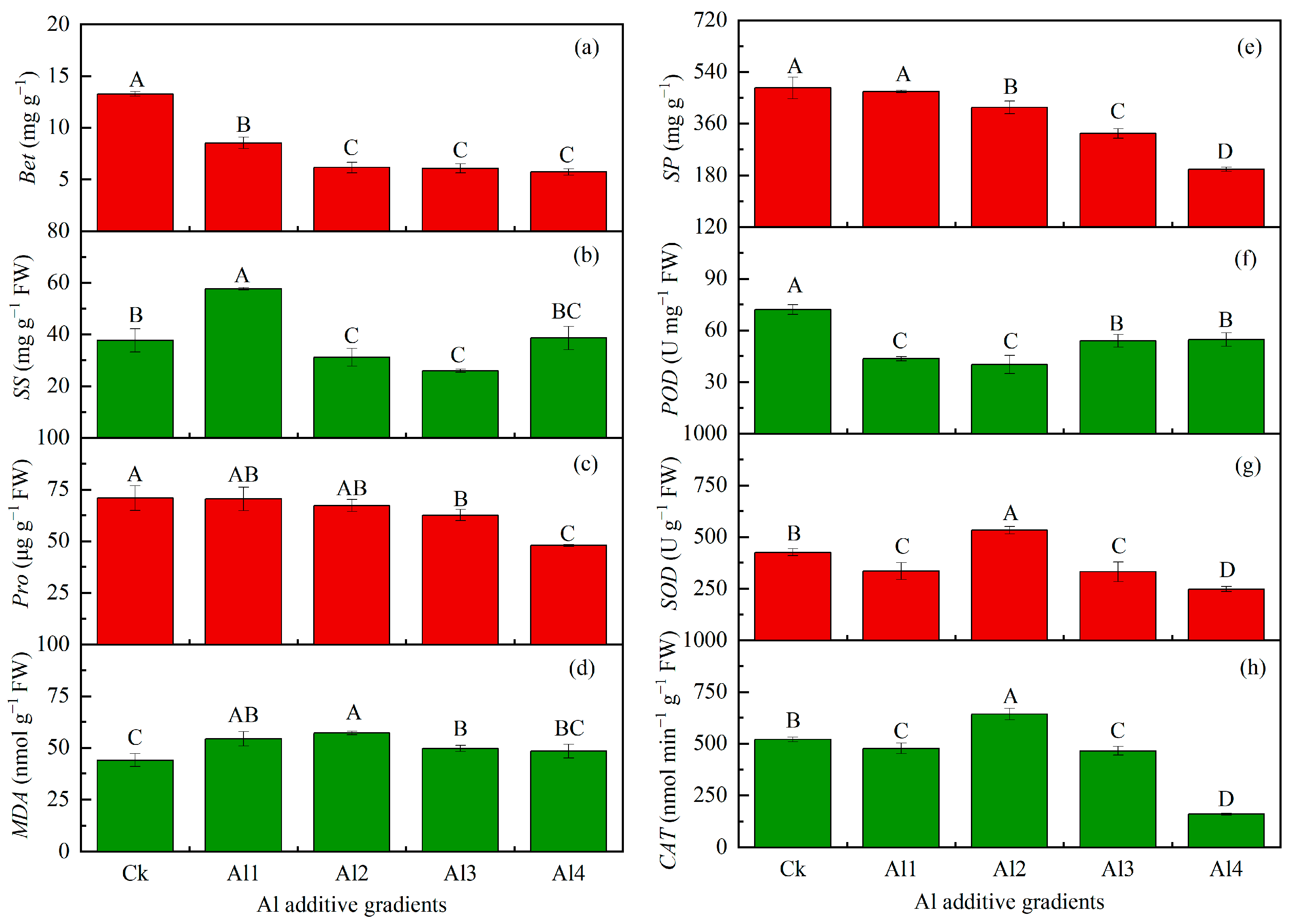
Among the treatments, significant differences were observed in antioxidant enzyme activities and osmotic regulation indices (p < 0.001) (Figure 2). Among the antioxidant enzymes, SOD activity initially decreased and then increased with rising aluminum concentration, while CAT and POD activities initially increased and then decreased, reaching their peak values at 0.3 mM. In contrast, SP content showed a gradual decreasing trend. Regarding osmotic regulators, MDA and SS contents generally increased first and then decreased, with maximum values observed at 0.3 mM and 0.05 mM, respectively. In comparison, Pro and Bet contents decreased with increasing aluminum concentration.

3.4. Correlation Between Morphological/Physiological Indicators and Aluminum Content in P. edulis

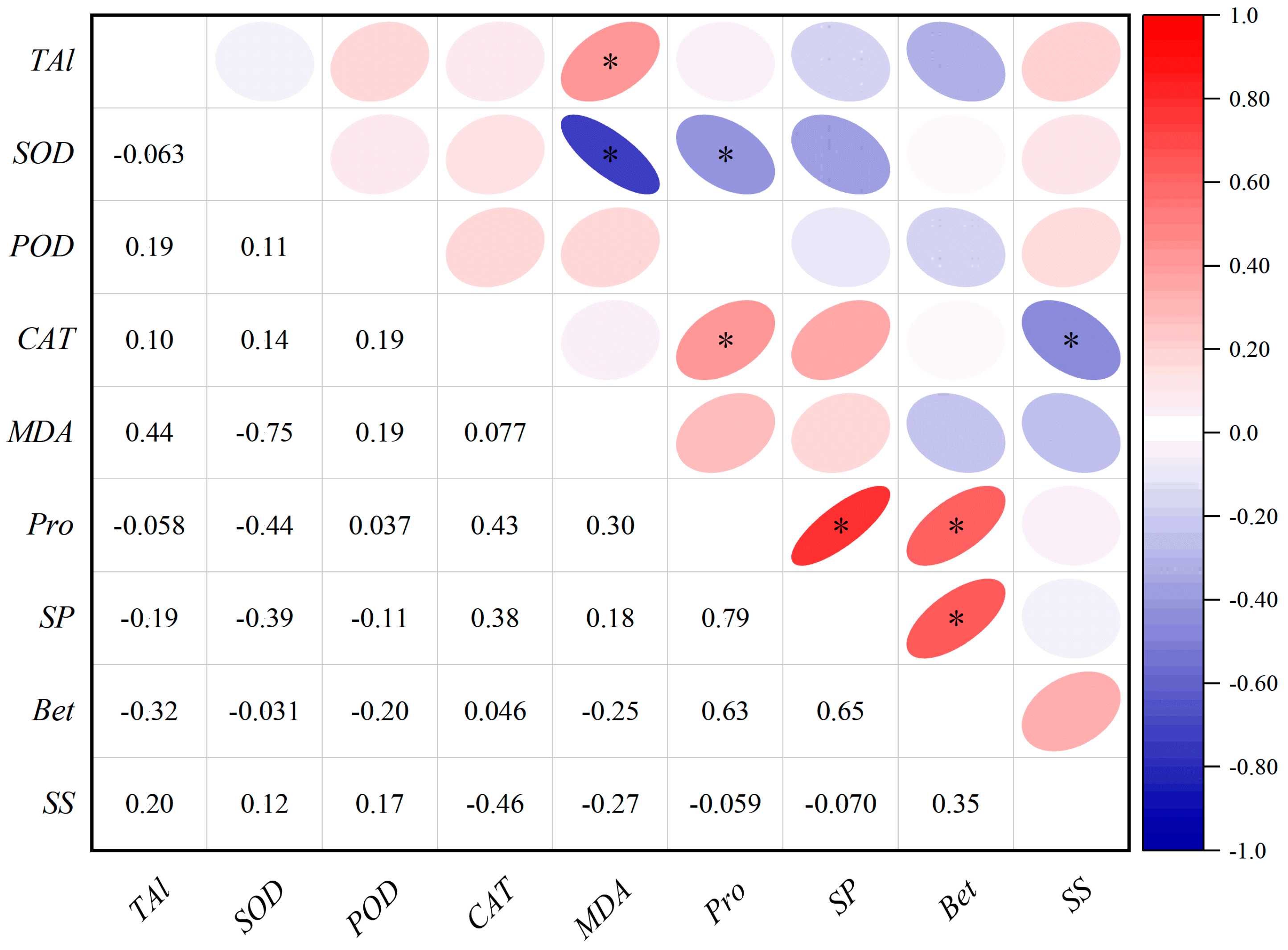
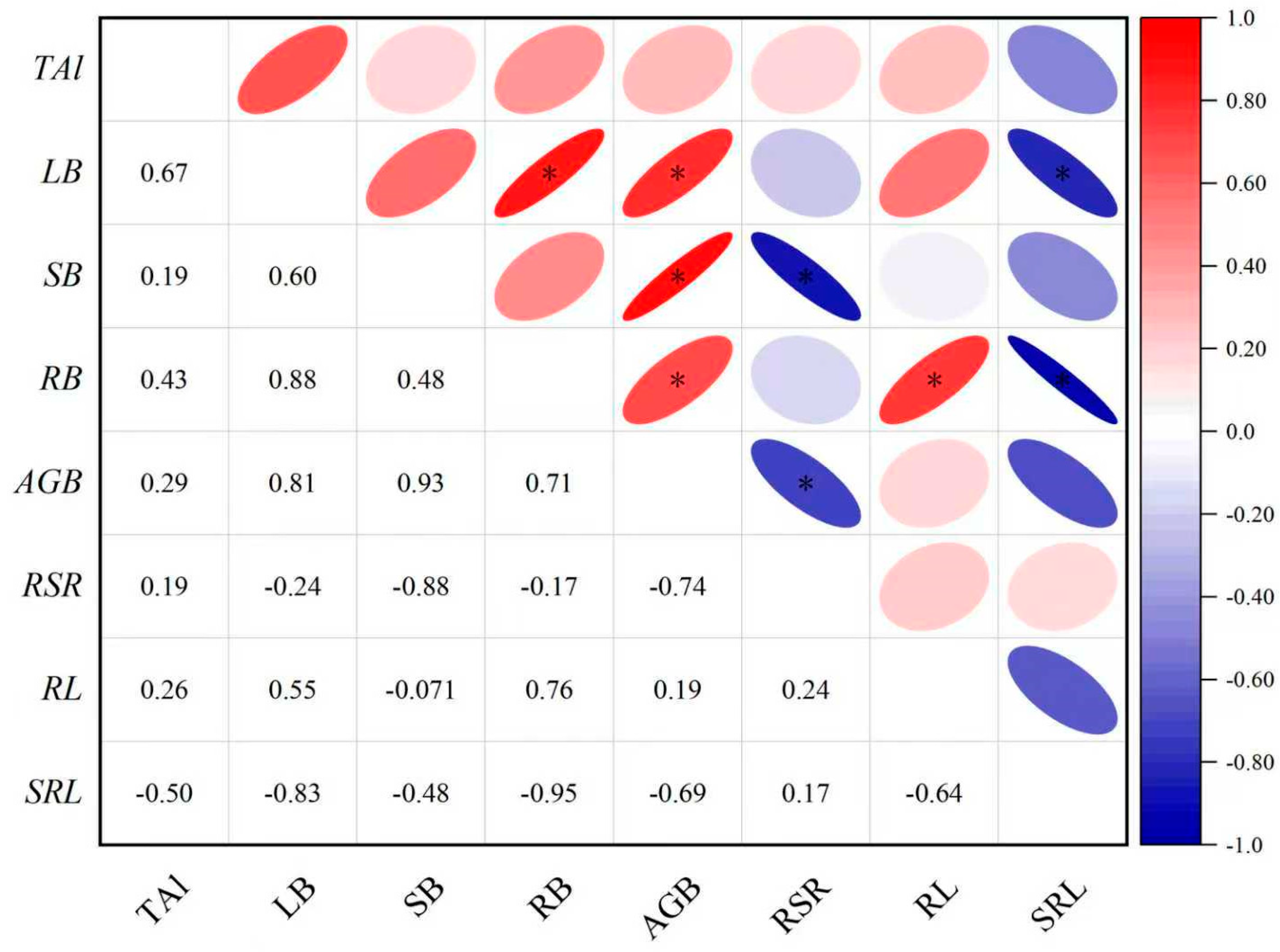
Analysis of the relationship between morphological and physiological indicators and TAl content (Figure 3 and Figure 4), revealed that aluminum concentrations in LTAl, STAl, and RTAl were positively correlated with organ biomass (LB, SB, RB), root-to-shoot ratio (RSR), and root length (RL), but negatively correlated with SRL. These results indicate that the addition of aluminum promotes biomass accumulation and root growth in the seedlings. Regarding physiological responses, aluminum content showed a non-significant inhibitory effect on SOD activity, while non-significant promoting effects were observed on POD and CAT activities.

4. Discussion

4.1. Spatial Distribution of Aluminum in P. edulis and Its Effect on Phenotype

Aluminum is dissolved into various toxic free ions at pH below 5.0 and absorbed by plants through root hairs [43]. This study found that the root system is the main site of aluminum accumulation (Figure 1), consistent with findings in P. praecox, Cunninghamia lanceolata, and Camellia spp. [14,44]. This study also revealed a spatially heterogeneous distribution of aluminum in one-year-old P. edulis seedlings, with concentrations gradually decreasing from the bottom to the top, which partially reflected the impact of aluminum on growth according to prolonged aluminum toxicity which reduces nutrient transport capacity in bamboo roots, leading to decreased aluminum content in stems, branches, and leaves [45]. Furthermore, the aluminum content in the seedlings did not increase with higher external aluminum concentrations but remained within a relatively stable range (mean values of 42.92–60.51 mg kg−1), consistent with the results reported by the previous studies [33,38,39,40,41,42,43,44,45,46], which suggested that P. edulis maintained a possible internal metabolic regulation for aluminum, although the precise mechanisms remain unclear. However, the present study showed (Table 1) that even at 2.0 mM, aluminum significantly promoted phenotypic traits except for specific root length (SRL). The decreasing SRL could be attributed to a lower growth rate of root length (RL) relative to root biomass (RB). The decrease in SRL reflected the decoupling between root length and biomass growth rate. Aluminum triggered physiological and growth adaptive changes in the roots. Under aluminum stress, the elongation of the most aluminum-sensitive fine roots were strongly inhibited, which may correspondingly promote thickening of root diameter and cell walls [8]. Meanwhile, aluminum stress disrupted the balance of plant hormones: the transport and signaling of auxin (IAA), which promoted elongation, was hindered, while the synthesis of hormones that promote thickening and lignification (such as ethylene and jasmonic acid) increased [20], which would reduce the investment in biomass, and such morphological changes reflect the shift in the growing strategy of moso bamboo from a “pioneering” type to a “conservative” type. However, it appeared to be inconsistent with previous studies [47], indicating that aluminum concentrations of up to 2.0 mM did not cause significant toxicity in P. edulis seedlings but stimulated growth instead, likely due to external stress. The increase in root-to-shoot ratio (RSR) further suggested that, under aluminum stress, resources are allocated preferentially to root growth (e.g., biomass and length), which might be to enhance mineral nutrient absorption (e.g., phosphorus and carbon) [15,48]. Thus, we concluded that P. edulis responds to aluminum stress through dynamic resource allocation between growth and defense, along with structural adaptability remodeling.

4.2. Physiological Responses of P. edulis to Aluminum Stress

Under prolonged aluminum stress, plants activate external exclusion or internal tolerance to mitigate aluminum toxicity [49,50]. In our study (Table 1), aluminum was absorbed and maintained within a certain concentration range, which aligned with the internal tolerance strategy. As Figure 3 showed, the three major antioxidant enzymes—SOD, CAT, and POD—exhibited non-uniform responses. SOD activity increased rapidly with rising aluminum concentration, while CAT and POD activities initially increased and then decreased. This pattern reflects a coordinated response among antioxidant enzymes in P. edulis. Under aluminum stress, the seedlings produced a large amount of superoxide anion radicals, which rapidly induced higher SOD activity to maintain reactive oxygen species (ROS) homeostasis [51]. During the early stages of aluminum exposure, CAT and POD were promptly induced to counteract transient accumulation of H2O2 and enhance physiological function through promoted lignin synthesis. However, excessively high aluminum concentrations significantly suppressed CAT and POD activities [52], leading to their subsequent decline. Furthermore, under pot-based experimental conditions with limited nutrient resources, plants prioritized fundamental defense mechanisms such as SOD, while reducing enzymes like POD and CAT [53].
With increasing aluminum concentration, Pro, SP, and Bet decreased (Figure 2 and Figure 3), which played crucial roles in maintaining cellular osmotic balance and protecting plasma membrane integrity under environmental stress [54]. The decline in Pro and SP might mean a metabolic shift involving carbon and nitrogen reallocation as part of the stress response. The reduction in Bet may indicate a transition in choline metabolism toward the synthesis of membrane-protective compounds. Previous studies have shown that rapid growth, lignification, and protective barrier construction in P. edulis consume substantial amounts of SP and Pro [55]. Additionally, aluminum-induced root exudation of citrate—an Al3+ chelator—inhibited the synthesis of Pro and Bet [48], reflecting complex regulatory physiology in response to aluminum. Malondialdehyde (MDA) is an important indicator for characterizing the severity of oxidative damage in plants. As shown in this article, the addition of Al to the soil caused significant oxidative damage to the seedlings of P. edulis, but this damage did not continue to increase with the increase in concentration. Instead, it decreased after 0.3 mM. And MDA largely returned to control levels at 2.0 mM treatment. Combined with the changes in the phenotypic traits of P. edulis seedlings, this further indicated that the antioxidant enzymes represented by SOD played a key role in this process. The lack of significant correlation between aluminum accumulation and the activities of antioxidant enzymes or osmotic regulators (Figure 4) further supported the high aluminum tolerance of one-year-old P. edulis seedlings. The variation in soluble sugar (SS) content was generally consistent with antioxidant enzyme activity. SS dynamics reflect membrane lipid peroxidation stress and act as important signaling molecules that regulate metabolic and physiological processes, thereby activating antioxidant mechanisms in response to stress [56]. Overall, the results demonstrated that P. edulis responds to aluminum stress by enhancing its internal antioxidant capacity and osmotic regulation in a concentration-dependent manner.

4.3. Analysis of Aluminum Tolerance in P. edulis

Although numerous studies have reported the toxic effects of aluminum (Al) on plants, these effects typically become significant only beyond a critical concentration threshold [57,58]. Many Al-sensitive plants exhibit damage at very low concentrations; for example, 40–60 μmol L−1 Al can harm barley (Hordeum vulgare) roots, and 50 µM Al inhibits root growth in Eleusine coracana [59]. In contrast, tea plants (Camellia spp.), which are typically Al-tolerant, show promoted accumulation of nutrients such as polyphenols and amino acids even at Al concentrations as high as 5.0 g L−1 [46,60]. A low Al concentration of 0.3 mM stimulated root biomass accumulation in Tabebuia chrysantha seedlings, whereas a high concentration (2.4 mM) caused inhibition. The critical Al tolerance concentrations for Triticum aestivum, Zea mays, and Glycine max were reported as 40, 48, and 52 mM, respectively [61], while the toxicity threshold for root growth in tomato seedlings was 1.25 mM [62]. In our study, growth traits of one-year-old P. edulis seedlings remained higher than those of the control even at 2.0 mM Al, suggesting that the toxicity threshold for these seedlings exceeds this concentration. Therefore, it is concluded that one-year-old P. edulis exhibits relatively high aluminum tolerance compared to many other plant species. However, due to inconsistencies in the age of plant materials across studies, effective interspecific comparisons of Al tolerance remain challenging.
Within the Al concentration range of 0–2.0 mM, aluminum significantly promoted both module biomass and root phenotypic traits in one-year-old P. edulis seedlings (Table 1). Only the specific root length (SRL) in the control group was significantly higher than in Al-treated groups. The reduction in SRL was associated with a relatively lower growth rate in root length compared to root biomass. Most phenotypic indicators were highest under the 0.3 mM Al treatment, suggesting that the concentration might be a critical threshold for one-year-old seedlings. Nevertheless, the Al concentrations applied in this study did not induce significant toxicity. Other studies have reported that Al concentrations as low as 0.2 mM inhibit seed germination and growth in P. edulis [38,63]. Additionally, Li et al. [64] found that exchangeable Al in soil of up to 200 mg kg−1 did not cause toxicity in P. praecox forests, though bamboo shoot production was significantly suppressed. These findings indicate that aluminum tolerance in P. edulis increases with age. It should be noted that current research on aluminum toxicity and tolerance has predominantly focused on seedlings and herbaceous plants, with limited studies on large herbaceous and woody species. Besides that, our study also had some limitations; for instance, the comparison on the various age of bamboo to aluminum stress, and the experiment duration should be extended to observe root development better, etc., and the underlying mechanisms and broader implications remain to be further elucidated.

5. Conclusions

This study reveals that moso bamboo (Phyllostachys edulis) exhibits heterogeneity in aluminum absorption across different spatial organs of standing culms, with the highest accumulation observed in the root system. It further demonstrates that aluminum supplementation stimulates growth-related plant traits, while indicating that aluminum concentrations of up to 0.2 mM do not exert significant stress on one-year-old moso bamboo. However, as a potent environmental signal, aluminum triggers physiological and growth adaptations in roots, shifting their strategy from a “pioneering” growth mode to a “conservative” survival approach. In response to aluminum stress, moso bamboo employs mechanisms, including regulated aluminum uptake, optimized resource reallocation, and enhanced osmotic and stress-resistant physiological efficiency, reflecting a comprehensive synergistic adaptation mechanism to aluminum stimulation. These insights into species-specific aluminum tolerance mechanisms contribute to a deeper understanding of moso bamboo’s adaptation to acidified soils and may inform sustainable bamboo forest management practices.

Author Contributions

Conceptualization, Z.H. and C.P.; Methodology, C.P.; Software, Z.H.; Validation, Z.H., C.P. and M.Y.; Formal analysis, J.T.; Investigation, Z.H. and B.Z.; Resources, C.P.; Data curation, Z.H. and B.Z.; Writing—original draft, B.Z.; Writing—review & editing, Z.H.; Visualization, M.L.; Supervision, Y.M.; Project administration, C.Z.; Funding acquisition, W.A. All authors have read and agreed to the published version of the manuscript.

Funding

This research was funded by the National Key R&D Program of China (2023YFD2201202).

Data Availability Statement

The original contributions presented in this study are included in the article. Further inquiries can be directed to the corresponding author.

Acknowledgments

We would like to thank the professional scientific editor and anonymous reviewer who assisted in refining this manuscript. Their expertise has significantly improved the clarity and readability of our work.

Conflicts of Interest

The authors declare no conflicts of interest. The funders had no role in the design of the study; in the collection, analyses, or interpretation of data; in the writing of the manuscript; or in the decision to publish the results.

Abbreviations

The following abbreviations are used in this manuscript:
LTAlLeaf total aluminum concentration
STAlShoot total aluminum concentration
RTAlRoot total aluminum concentration
RLRoot length
LBLeaf biomass
SBStem biomass
RBRoot biomass
AGBAbove-ground biomass
RSRRoot-to-shoot ratio
SRLSpecific root length
SODSuperoxide dismutase
PODPeroxidase
CATCatalase
MDAMalondialdehyde
SPSoluble protein
ProFree proline
BetBetaine
SSSoluble sugar

References

  1. Von Uexküll, H.R.; Mutert, E. Global extent, development and economic impact of acid soils. Plant Soil 1995, 171, 1–15. [Google Scholar] [CrossRef]
  2. Luo, C.; Zhang, J.; Liu, J. Researches on the threshold of aluminum toxicity and the decline of Chinese fir plantation in hilly area around the Sichuan basin. Sci. Silvae Sin. 2000, 36, 9–14. [Google Scholar] [CrossRef]
  3. Prakash, J.; Agrawal, S.B.; Agrawal, M. Global trends of acidity in rainfall and its impact on plants and soil. J. Soil Sci. Plant Nutr. 2022, 23, 398–419. [Google Scholar] [CrossRef] [PubMed]
  4. Ofoe, R.; Thomas, R.H.; Asiedu, S.K.; Wang-Pruski, G.; Fofana, B.; Abbey, L. Aluminum in plant: Benefits, toxicity and tolerance mechanisms. Front. Plant Sci. 2023, 13, 1085998. [Google Scholar] [CrossRef]
  5. Sullivan, L. Acid sulfate soils and their management: A global perspective. In Proceedings of the 7th Acid Sulfate Soil Conference, Vassa, Finland, 26 August–1 September 2012; pp. 127–129. [Google Scholar]
  6. Slessarev, E.W.; Lin, Y.; Bingham, N.L.; Johnson, J.E.; Dai, Y.; Schimel, J.P.; Chadwick, O.A. Water balance creates a threshold in soil pH at the global scale. Nature 2016, 540, 567–569. [Google Scholar] [CrossRef]
  7. Goulding, K.W.T.; de Varennes, A. Soil acidification and the importance of liming agricultural soils with particular reference to the United Kingdom. Soil Use Manag. 2016, 32, 390–399. [Google Scholar] [CrossRef]
  8. Rahman, R.; Upadhyaya, H. Aluminium toxicity and its tolerance in plant: A review. J. Plant Biol. 2020, 64, 101–121. [Google Scholar] [CrossRef]
  9. Kochian, L.V. Cellular mechanisms of aluminum toxicity and resistance in plants. Annu. Rev. Plant Physiol. Plant Mol. Biol. 1995, 46, 237–260. [Google Scholar] [CrossRef]
  10. Silva, T.F.; Ferreira, B.G.; dos Santos Isaias, R.M.; Alexandre, S.S.; França, M.G.C. Immunocytochemistry and density functional theory evidence the competition of aluminum and calcium for pectin binding in Urochloa decumbens roots. Plant Physiol. Biochem. 2020, 153, 64–71. [Google Scholar] [CrossRef]
  11. Singh, S.; Tripathi, D.K.; Singh, S.; Sharma, S.; Dubey, N.K.; Chauhan, D.K.; Vaculík, M. Toxicity of aluminium on various levels of plant cells and organism: A review. Environ. Exp. Bot. 2017, 137, 177–193. [Google Scholar] [CrossRef]
  12. Muhammad, N.; Zvobgo, G.; Zhang, G.-p. A review: The beneficial effects and possible mechanisms of aluminum on plant growth in acidic soil. J. Integr. Agric. 2019, 18, 1518–1528. [Google Scholar] [CrossRef]
  13. Liu, Y.; Tao, J.; Cao, J.; Zeng, Y.; Li, X.; Ma, J.; Huang, Z.; Jiang, M.; Sun, L. The beneficial effects of aluminum on the plant growth in Camellia japonica. J. Soil Sci. Plant Nutr. 2020, 20, 1799–1809. [Google Scholar] [CrossRef]
  14. Sun, C.; Lv, T.; Huang, L.; Liu, X.; Jin, C.; Lin, X. Melatonin ameliorates aluminum toxicity through enhancing aluminum exclusion and reestablishing redox homeostasis in roots of wheat. J. Pineal Res. 2020, 68, e12642. [Google Scholar] [CrossRef] [PubMed]
  15. Watanabe, T.; Jansen, S.; Osaki, M. The beneficial effect of aluminium and the role of citrate in Al accumulation in Melastoma malabathricum. New Phytol. 2004, 165, 773–780. [Google Scholar] [CrossRef]
  16. Kochian, L.V.; Piñeros, M.A.; Liu, J.; Magalhaes, J.V. Plant adaptation to acid soils: The molecular basis for crop aluminum resistance. Annu. Rev. Plant Biol. 2015, 66, 571–598. [Google Scholar] [CrossRef]
  17. Huang, C. Activation and activity of STOP1 in aluminium resistance. J. Exp. Bot. 2021, 72, 2269–2272. [Google Scholar] [CrossRef]
  18. Yang, M.; Li, Y.; Li, Y.; Xiao, Y.; Yue, T.; Jiang, P.; Zhou, G.; Liu, J. Effects of intensive management on soil C and N pools and soil enzyme activities in Moso bamboo plantations. Chin. J. Appl. Ecol. 2016, 27, 3455–3462. [Google Scholar] [CrossRef]
  19. Poschenrieder, C.; Gunsé, B.; Corrales, I.; Barceló, J. A glance into aluminum toxicity and resistance in plants. Sci. Total Environ. 2008, 400, 356–368. [Google Scholar] [CrossRef]
  20. Munyaneza, V.; Zhang, W.; Haider, S.; Xu, F.; Wang, C.; Ding, G. Strategies for alleviating aluminum toxicity in soils and plants. Plant Soil 2024, 504, 167–190. [Google Scholar] [CrossRef]
  21. Matsumoto, H. Cell biology of aluminum toxicity and tolerance in higher plants. Int. Rev. Cytol. 2000, 200, 1–46. [Google Scholar] [CrossRef]
  22. Rengel, Z.; Elliott, D.C. Mechanism of aluminum inhibition of net 45Ca2+ uptake by Amaranthus Protoplasts. Plant Physiol. 1992, 98, 632–638. [Google Scholar] [CrossRef] [PubMed]
  23. Bose, J.; Babourina, O.; Rengel, Z. Role of magnesium in alleviation of aluminium toxicity in plants. J. Exp. Bot. 2011, 62, 2251–2264. [Google Scholar] [CrossRef] [PubMed]
  24. Liu, Y.; Feng, H.; Sun, K. Effects of different aluminum stress on the growth of rice roots. Bulletia Bot. Res. 2011, 31, 293–299. [Google Scholar] [CrossRef]
  25. Zheng, S.J.; Yang, J.L.; He, Y.F.; Yu, X.H.; Zhang, L.; You, J.F.; Shen, R.F.; Matsumoto, H. Immobilization of aluminum with phosphorus in roots is associated with high aluminum resistance in buckwheat. Plant Physiol. 2005, 138, 297–303. [Google Scholar] [CrossRef]
  26. Li, X.F.; Ma, J.F.; Matsumoto, H. Pattern of aluminum-induced secretion of organic acids differs between rye and wheat. Plant Physiol. 2000, 123, 1537–1544. [Google Scholar] [CrossRef]
  27. Panda, S.; Singha, L.; Khan, M. Does aluminium phytotoxicity induce oxidative stress in greengram (Vigna radiata). Bulg. J. Plant Physiol. 2003, 29, 77–86. [Google Scholar]
  28. Canavan, S.; Richardson, D.M.; Visser, V.; Roux, J.J.L.; Vorontsova, M.S.; Wilson, J.R.U. The global distribution of bamboos: Assessing correlates of introduction and invasion. AoB Plants 2016, 9, plw078. [Google Scholar] [CrossRef]
  29. Li, Z.; Zhuang, S.; Gui, R.; Ji, H.; Li, G.; Zheng, K. Chemical properties and distribution of phytotoxic Al species in intensively cultivated soils of Phyllostachys praecox stands. J. Zhejiang A F Univ. 2011, 28, 837–844. [Google Scholar]
  30. Zhang, F.; Liu, Y.; Bo, M. Effects of different fertilizations on soil acidification of Phyllostachys heterocycla cv. Pubescens Stands. Zhejiang Acad. For. 2017, 37, 60–64. [Google Scholar] [CrossRef]
  31. Liu, G.; Li, G.; Gui, R.; Fang, W. Changes of aluminum form in Phyllostachy spraecox. Preveynalis soils with planting time. Soils 2008, 40, 1013–1016. [Google Scholar]
  32. Sun, X.; Zhuang, S.; Liu, G.; Li, G.; Gui, R.; He, G. Effect of lei bamboo plantation on soil basic properties under intensive cultivation managemen. Soils 2009, 41, 784–789. [Google Scholar]
  33. Ji, H.; Sun, X.; Gui, R.; Zhuang, S. Influence of intensive management on soil extractable Al and Phyllostachys praecox Al content. Sci. Silvae Sin. 2014, 50, 15–20. [Google Scholar]
  34. Zhang, T.; Li, Y.; Jiang, P.; Zhou, G.; Qing, H.; Lin, L. Effect of long-term intensive management of Phyllostachys praecox stands on carbon, nitrogen, and phosphorus pools in the soil. Acta Pedol. Sin. 2012, 49, 1170–1177. [Google Scholar] [CrossRef] [PubMed]
  35. Wang, N.; Wang, C.; Pan, X.; Bai, S. Effects of simulated acid rain on soil bacterial community diversity in buffer zone of broad-leaved forest invaded by moso bamboo. Res. Environ. Sci. 2020, 33, 1478–1487. [Google Scholar] [CrossRef]
  36. Yu, Y.; Ding, A.; Hu, Q.; Meng, L. Effects of simulated acid rain on soil acidification and base ions transplant. J. Nanjing For. Univ. (Nat. Sci. Ed.) 2001, 25, 39–42. [Google Scholar] [CrossRef]
  37. Yang, L.; Xie, Y.; Yu, W.; Chen, S.; Guo, Z.; Xu, S.; Gi, R. Effects of long-term mulching on appearance, nutrition and taste of bamboo shoots of Phyllostachys violascens. J. Bamboo Res. 2021, 40, 7–12. [Google Scholar] [CrossRef]
  38. Gui, R.; Leng, H.; Zhuang, S.; Zheng, K.; Fang, W. Aluminum Tolerance in Moso Bamboo (Phyllostachys pubescens). Bot. Rev. 2011, 77, 214–222. [Google Scholar] [CrossRef]
  39. Cai, M.; Liu, P.; Xu, G.; Shen, L. Comparism of Plasma Membrane Response to Al3+ Stress Between Polygonaceae Plants and Gramineae Plants. J. Soil Water Conserv. 2005, 19, 122–125. [Google Scholar] [CrossRef]
  40. Weydert, C.J.; Cullen, J.J. Measurement of superoxide dismutase, catalase and glutathione peroxidase in cultured cells and tissue. Nat. Protoc. 2009, 5, 51–66. [Google Scholar] [CrossRef]
  41. Carillo, P.; Gibon, Y. Protocol: Extraction and determination of proline. PrometheusWiki 2011, 2011, 1–5. [Google Scholar]
  42. Jack, C.N.; Rowe, S.L.; Porter, S.S.; Friesen, M.L. A high-throughput method of analyzing multiple plant defensive compounds in minimized sample mass. Appl. Plant Sci. 2019, 7, e01210. [Google Scholar] [CrossRef]
  43. Chowra, U.; Yanase, E.; Koyama, H.; Panda, S.K. Aluminium-induced excessive ROS causes cellular damage and metabolic shifts in black gram Vigna mungo (L.) Hepper. Protoplasma 2016, 254, 293–302. [Google Scholar] [CrossRef]
  44. Vitorello, V.A.; Capaldi, F.R.; Stefanuto, V.A. Recent advances in aluminum toxicity and resistance in higher plants. Braz. J. Plant Physiol. 2005, 17, 129–143. [Google Scholar] [CrossRef]
  45. Krstic, D.; Djalovic, I.; Nikezic, D.; Bjelic, D. Aluminium in acid soils: Chemistry, toxicity and impact on maize plants. Food Prod.–Approaches Chall. Tasks 2012, 13, 231–242. [Google Scholar] [CrossRef]
  46. Ma, X.; XIao, B.; Yan, L.; Suo, L.; Gao, T.; Xiao, X. Effects of aluminum from fertilization on qualities and aluminum contents of tea under different pH levels in South Shaanxi Province. J. Northwest A F Univ. 2012, 40, 187–191+196. [Google Scholar] [CrossRef]
  47. Zhao, H.; He, L.; Zhang, A.; Men, Y. Advance in the study of effects of aluminum stress on plant photosynthesis and its mechanism. J. Huazhong Agric. Univ. 2008, 27, 155–160. [Google Scholar] [CrossRef]
  48. Li, L.; Liu, Y.; Liu, Y.; He, B.; Wang, M.; Yu, C.; Weng, M. Physiological response and resistance of three cultivars of Acer rubrum L. to continuous drought stress. Acta Ecol. Sin. 2015, 35, 196–202. [Google Scholar] [CrossRef]
  49. Toufiq Iqbal, M. Effect of elevated Al and pH on the growth and root morphology of Al-tolerant and Al-sensitive wheat seedlings in an acid soil. Span. J. Soil Sci. 2014, 4, 61–77. [Google Scholar] [CrossRef]
  50. Yoshiyama, K.O.; Kobayashi, J.; Ogita, N.; Ueda, M.; Kimura, S.; Maki, H.; Umeda, M. ATM-mediated phosphorylation of SOG1 is essential for the DNA damage response in Arabidopsis. EMBO Rep. 2013, 14, 817–822. [Google Scholar] [CrossRef]
  51. Peng, Y.; Li, Y.; Yang, G.; He, G. Effects of aluminum stress on the activities of SOD, POD, CAT and the contents of MDA in the seedlings of different wheat cultivars. Biotechnology 2006, 16, 38–42. [Google Scholar] [CrossRef]
  52. Wang, P.; Zhang, J.; Liu, C.; Ma, H.; Chen, Y.; Lin, S. Physiological Response of Chinese Fir (Cunninghamia lanceolata) Seedlings Under Acid and/or Aluminum Stresses. Fujian J. Agric. Sci. 2019, 34, 852–857. [Google Scholar] [CrossRef]
  53. Zhuang, M. Physiological Responses of Phyllostachys edulis to the Elevated O3, and CO2 Alone and in Combination Concentration. Master’s Thesis, Chinese Academy of Forestry, Beijing, China, 2012. [Google Scholar]
  54. Shi, X.; Xue, L.; Ren, X.; Feng, H.; Zheng, W.; Fu, J. Preliminary study on drought resistance of four broadleaved seedlings under water stress in south China. For. Res. 2011, 24, 760–767. [Google Scholar] [CrossRef]
  55. Gui, M.; He, R.; Pan, K.; Bao, F.; Ying, Y. Analysis of differential metabolites of Phyllostachys edulis shoots at different growth stages by ultra-high performance liquid chromatography-tandem mass spectrometry. Food Sci. 2023, 44, 283–291. [Google Scholar] [CrossRef]
  56. Turkan, I. ROS and RNS: Key signalling molecules in plants. J. Exp. Bot. 2018, 69, 3313–3315. [Google Scholar] [CrossRef]
  57. Čiamporová, M. Morphological and Structural Responses of Plant Roots to Aluminium at Organ, Tissue, and Cellular Levels. Biol. Plant. 2002, 45, 161–171. [Google Scholar] [CrossRef]
  58. Chen, Z.; Huang, C.; Liu, G. Respnses to aluminum stress and critical aluminum concentration of Cynodon dactylon. Chin. J. Trop. Crops 2015, 36, 645–649. [Google Scholar]
  59. Haftom, B.; Edossa, F.; Teklehaimanot, H.; Kassahun, T. Threshold aluminium toxicity in finger millet. Afr. J. Agric. Res. 2017, 12, 1144–1148. [Google Scholar] [CrossRef]
  60. Rehmus, A.; Bigalke, M.; Valarezo, C.; Castillo, J.M.; Wilcke, W. Aluminum toxicity to tropical montane forest tree seedlings in southern Ecuador: Response of biomass and plant morphology to elevated Al concentrations. Plant Soil 2014, 382, 301–315. [Google Scholar] [CrossRef]
  61. Qin, F.; Chen, R. The aluminum toxicity of some crop seedlings in red soil of southern Hunan. J. Plant Nutr. Fertil. 1999, 5, 50–55. [Google Scholar] [CrossRef]
  62. Ofoe, R.; Gunupuru, L.R.; Wang-Pruski, G.; Fofana, B.; Thomas, R.H.; Abbey, L. Seed priming with pyroligneous acid mitigates aluminum stress, and promotes tomato seed germination and seedling growth. Plant Stress 2022, 4, 100083. [Google Scholar] [CrossRef]
  63. Leng, H.; Zheng, K.; Li, G.; Gui, Y. Aluminum stress with seed germination and seedling growth in Phyllostachys pubescens. J. Zhejiang For. Coll. 2010, 27, 851–857. [Google Scholar] [CrossRef]
  64. Li, G.; Gui, R.; Liu, G.; Zhuang, S.; Fang, W. Aluminum form and transformation in the soil of intensive farming bamboo forests of Phyllostachys praecox cv. Prevernalis. J. Bamboo Res. 2008, 27, 30–34. [Google Scholar]
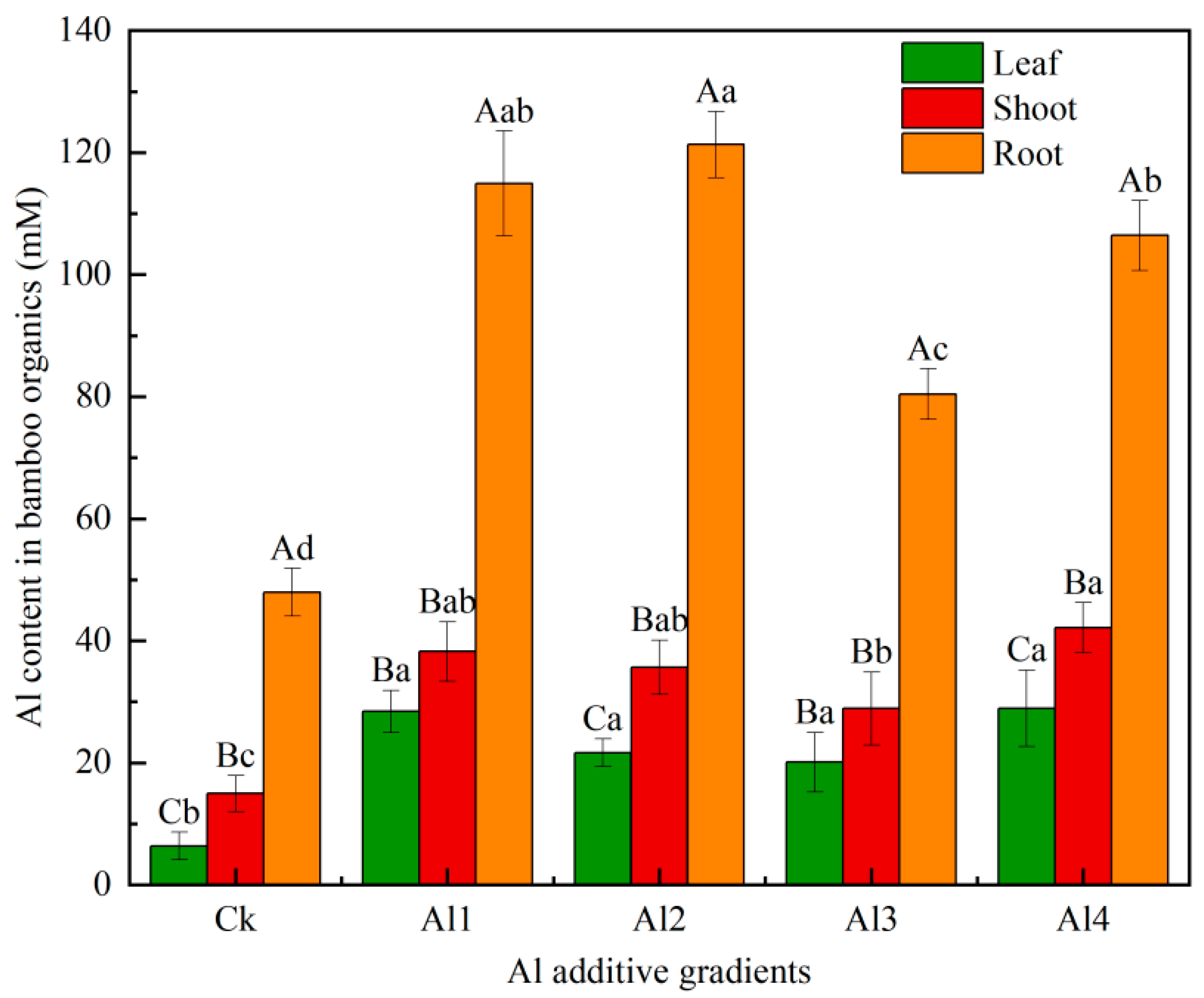
Figure 1. Distribution characteristics of Al content in organs of seedlings of moso bamboo after different treatments. 0, 0.05, 0.3, 0.7, 2.0 mM were substituted for Ck, Al1, Al2, A3, Al4. The analysis was conducted within 95% confidence interval; capital letters indicate that the difference between organs is extremely significant (p < 0.01), and lowercase letters indicate that the difference between TAl contents of the same organ is extremely significant (p < 0.01).
Forests 16 01855 g001
Figure 2. Response patterns of bamboo antioxidant enzymes and osmotic regulators to aluminum addition. Capital letters indicate that the difference between organs is highly significant (p < 0.01) and within the 95% confidence interval. (a) Bet contents changed with Al additive gradients; (b) SS contents changed with Al additive gradients; (c) Pro contents change with Al additive gradients; (d) MDA contents changed with Al additive gradients; (e) SP contents changed with Al additive gradients; (f) POD contents changed with Al additive gradients; (g) SOD contents changed with Al additive gradients; (h) CAT contents changed with Al additive gradients.
Forests 16 01855 g002
Figure 3. Correlation analysis between bamboo aluminum content and stress resistance physiological indexes with Spearman correlation analysis. * denotes that there is significant correlation between indexes (p < 0.05). TAl (total aluminum content); SOD (superoxide dismutase); POD (peroxidase); CAT (catalase); MDA (malondialdehyde); SP (soluble protein); Pro (free proline); SS (soluble sugar); Bet (Betaine).
Forests 16 01855 g003
Figure 4. Correlation between bamboo aluminum content and plant functional traits with Spearman correlation analysis. TAl (total aluminum content); LB (leaf biomass); SB (stem biomass); RB (root biomass); AGB (above-ground biomass); RSR (root–shoot ratio); RL (root length); SRL (specific root length).
Forests 16 01855 g004
Table 1. The comparison of the seedling traits of P. edulis among treatments. n = 10. The data in the table are presented by mean value ± standard errors. ** denotes the significant difference in treatments, *** denotes the highly significant difference in treatments (p < 0.001), lowercase letters indicate the significant differences between treatments with 95% confidence interval analysis. LB (leaf biomass); SB (stem biomass); RB (root biomass); AGB (above-ground biomass); RSR (root–shoot ratio); RL (root length); SRL (specific root length).
TreatmentLB (g)SB (g)RB (g)AGB (g)RSRRL (g)SRL (cm/g)
Ck1.71 ± 0.02 d4.31 ± 0.22 c4.75 ± 0.14 e6.02 ± 0.24 b0.79 ± 0.01 c20.52 ± 1.05 c4.32 ± 0.14 a
Al12.16 ± 0.45 cd3.54 ± 0.23 d10.72 ± 0.09 d5.7 ± 0.68 b1.9 ± 0.21 a21.89 ± 0.66 Bc2.04 ± 0.04 b
Al23.66 ± 0.02 a5.0 ± 0.29 b18.38 ± 0.21 a8.66 ± 0.31 a1.43 ± 0.03 b24.76 ± 1.09 a1.35 ± 0.06 d
Al32.36 ± 0.25 c4.08 ± 0.15 c11.92 ± 0.41 c6.44 ± 0.4 b1.85 ± 0.05 a24.21 ± 0.73 ab2.03 ± 0.02 b
Al43.02 ± 0.31 b5.9 ± 0.12 a12.51 ± 0.2 b8.92 ± 0.43 a1.4 ± 0.05 b22.72 ± 0.79 b1.82 ± 0.05 c
F values24.58355.3321259.036.33559.711.471697.73
p values<0.001 ***<0.001 ***<0.001 ***<0.001 ***<0.001 ***0.001 **<0.001 ***
Disclaimer/Publisher’s Note: The statements, opinions and data contained in all publications are solely those of the individual author(s) and contributor(s) and not of MDPI and/or the editor(s). MDPI and/or the editor(s) disclaim responsibility for any injury to people or property resulting from any ideas, methods, instructions or products referred to in the content.