Article

Effect of Phosphorus Addition on Rhizosphere Soil Microbial Diversity and Function Varies with Tree Species in a Subtropical Evergreen Forest
1
Jiangxi Provincial Key Laboratory of Subtropical Forest Resources Cultivation, College of Forestry, Jiangxi Agricultural University, Nanchang 330045, China
2
Jiulianshan National Observation and Research Station of Chinese Forest Ecosystem, Jiangxi Agricultural University, Nanchang 330045, China
3
Jiangxi Academy of Forestry, Nanchang 330045, China
4
School of Public Policy and Management, Nanchang University, Nanchang 330031, China
5
Qianyanzhou Ecological Station, Key Laboratory of Ecosystem Network Observation and Modeling, Institute of Geographic Sciences and Natural Resources Research, Chinese Academy of Sciences, Beijing 100101, China
*
Author to whom correspondence should be addressed.
Forests 2025, 16(12), 1832; https://doi.org/10.3390/f16121832
Submission received: 11 November 2025 / Revised: 3 December 2025 / Accepted: 5 December 2025 / Published: 8 December 2025
(This article belongs to the Section Forest Soil)

Abstract

Despite the fact that rhizosphere soil microorganisms play a critical role in nutrient cycling, the effects of phosphorus (P) addition on microbial diversity in subtropical evergreen forests remain insufficiently understood. In this study, we examined how P fertilization influences rhizosphere microbial communities and enzyme activities in two dominant tree species, Schima superba and Castanopsis fargesii, using colorimetric analyses and high-throughput sequencing. The results showed that P addition significantly increased microbial diversity in the rhizosphere of S. superba but not C. fargesii. This response in S. superba was associated with shifts in saprotrophic microorganisms. Although P addition increased the abundance of Acidobacteria and Zygomycota in both species, the mechanisms underlying the microbial responses differed, reflecting the contrasting nutrient acquisition strategies of their mycorrhizal types. Soil-available P primarily shaped bacterial community composition in S. superba, whereas total nitrogen and soil pH were key drivers in C. fargesii. P fertilization also altered several C- and N-cycling enzyme activities, which were driven by differential regulation of the soil microbial community in two species. Overall, our findings demonstrate that the effects of P addition on rhizosphere microbial diversity and function vary substantially between tree species, highlighting the importance of plant–microbe interactions in regulating nutrient cycling in subtropical forests.

1. Introduction

Phosphorus (P) is an important substance for ecosystem function in subtropical forests. Soil-available P is limited in soils due to the strong binding of P to metal oxides, which convert it into an organic P component [1,2]. In P-deficient soils, trees tend to enhance nutrient uptake efficiency by recruiting rhizosphere microorganisms and adjusting the soil enzymes’ activity [3]. However, with increasing atmospheric P deposition driven by anthropogenic activities, the extent to which these adaptive strategies persist and their ecological repercussions are still little understood. Therefore, investigating the effects of P addition on rhizosphere microorganisms and the enzymatic activities of dominant tree species in evergreen broad-leaved forests is essential for elucidating nutrient cycling processes and ecosystem function.
The structure and diversity of rhizosphere microbial communities are collaboratively shaped by the coordinated impacts of various factors, including environmental conditions, soil nutrient status, and plant characteristics [4,5,6]. Mycorrhizal type represents a crucial plant trait. Throughout the long evolutionary history of terrestrial plants, 85% of vascular plants engage in mutualistic associations with either arbuscular mycorrhizal (AM) fungi or ectomycorrhizal (EcM) fungi [7]. Tree species with different mycorrhizal types influence root microbial community structure by optimizing nutrient uptake methods. AM trees adopt an “inorganic nutrient” strategy, stimulating soil microbial activity through substantial secretion of carbohydrates, organic acids, and sugars to accelerate soil nutrient mineralization and meet their own nutritional demands [8,9]. Conversely, EcM species use an “organic nutrient” approach, taking nutrients from organic matter through mycorrhizal hyphae while vying with decomposer microbes for organic nitrogen (N), which inhibits their growth [10,11]. The synergistic/antagonistic relationships between these two types of mycorrhizal tree species and soil microorganisms profoundly influence the structure and function of terrestrial ecosystems; however, how microbial communities of different mycorrhizal tree species respond to P addition remains unknown.
Soil microbial communities govern the synthesis of extracellular enzymes that degrade unstable and resistant organic materials, aiding in the acquisition of energy and nutrients present in complex matrices [12]. Recent studies indicate a strong association between enzymatic functionality and microbial species richness [13]. Furthermore, it was reported that soil microbial shifts from r-strategists (rapidly growing, co-nutritive groups) to k-strategists (slow-growing, oligotrophic groups) were accompanied by a significant increase in β-glucosidase (BG) extracellular enzymes involved in soil carbon (C) transformation [14]. Saprophytic fungi, responsible for decomposing forest litter and soil organic matter, produce diverse C cycle enzymes [15]. EcM fungi exude extracellular enzymes that cleave complex macromolecules and solubilize inorganic nutrients, encouraging host plant development. Some studies indicate that extracellular enzymatic responses are more strongly governed by shifts in bacterial community structure and functional potential than by those in fungal assemblages [16,17]. Changes in soil microbial community composition may influence extracellular enzyme activity [18]. Thus, it is important to understand the links between ectoenzyme and the microbial community composition under altered soil P enrichment.
Several studies have been conducted to elucidate the effects of P addition on microorganisms in forest soils [19,20]. First, P inputs alleviate microbial P limitation by enhancing nutrient availability, thereby influencing microbial diversity [21]. Studies have shown that an increase in phosphorus (P) levels leads to changes in microbial communities’ composition by enhancing P accessibility and modifying the chemistry of soil and plants [22]. Furthermore, the addition of P can influence the diversity of soil microbes by controlling microbial interactions, such as the exchange, collaboration, and competition. Research indicates that reduced fungal richness in P-limited pristine forests is primarily associated with the intensity of negative interactions among microbial species [20].
Here, we aimed to explore the effects of P fertilizer on the stability of rhizosphere microorganisms. We collected the rhizosphere soil in two tree species, Schima superba and Castanopsis fargesii. We measured the physicochemical properties and enzyme activities in the rhizosphere soils, and performed 16S rDNA gene extraction, PCR amplification, and high-throughput sequencing on the soil microbial community to evaluate its diversity and composition. We aimed to determine the following: (1) due to different nutrient acquisition strategies of mycorrhizal fungi in Schima superba and Castanopsis fargesii, their microbial diversity and enzymes would have different responses to P addition; (2) how alterations in microbial diversity regulate soil enzyme activities; (3) which was the main driving factor in the soil microbial communities and enzyme activities under the P-enrichment condition.

2. Materials and Methods

2.1. Study Site

The site was located in Jiulianshan National Nature Reserve, Jiangxi province, Southeast China (24°34′46″ N, 114°26′10″ E). With a mean annual temperature of 16.4 °C and annual precipitation of approximately 2155.6 mm, this region is classified as subtropical climatically. This area belongs to natural secondary forest, with typical tree species including S. superba and C. fargesii. The experimental area recovered naturally for 37 years after selective cutting. This Ultisol soil is derived from parent materials of reddish-hued arenaceous and rudaceous strata [23].

2.2. Phosphorus Addition Experiment

This P fertilization study employed a matched design and was implemented in November 2015. In each paired experimental area, two 20 m × 20 m plots received three consecutive years of in situ P application (50 kg hm−2 year−1), while their counterparts remained untreated as control sites. A total of five replicates per treatment (P addition and control) were conducted across five independent mountainous hills. A buffer zone exceeding 10 m was maintained between all adjacent plots to prevent cross-contamination. NaH2PO4 was added twice a year (March and September) as a mixture of P and sand. To achieve an even distribution of NaH2PO4, we combined P with a tiny amount of sand (8 kg plot−1) and added sand to the control plots as well. To determine the date for fertilization, we typically selected a day that had no rain in the two days prior to or following it, consulting a local weather forecast.

2.3. Soil Sampling

During the peak growing season (July 2018), six healthy mature individual trees (three S. superba and three C. fargesii) were collected at random from the central point of each plot (adult tree species with a diameter at breast height of 10–12 cm). Rhizosphere and non-rhizosphere soil samples were collected from each tree at a consistent depth of 0–20 cm. The rhizosphere soil was specifically defined as the soil tightly adhering to the roots after gently shaking off the loose soil (i.e., the shaking-off method). In summary, the design included two fertilization treatments (P addition and control) and two soil compartments (rhizosphere and non-rhizosphere) for two tree species. For each plot and soil compartment (e.g., S. superba rhizosphere), soil samples from the three individual trees of the same species were thoroughly combined to form one composite sample per compartment per plot. This procedure resulted in a total of 40 composite soil samples (2 treatments × 5 replicate plots × 2 tree species × 2 soil compartments). Samples were bagged and transported on ice. Each composite sample was separated into three distinct parts: the initial half was air dried, ground, and sieved for determining soil physicochemical properties; the second part was used for determining soil enzyme activities; and the last part was stored at −80 °C for determining soil microbial community.

2.4. Soil Nutrient and Enzyme Measurement

Soil moisture was determined using mass loss to reach a consistent weight after drying at 105 °C. Soil pH was assessed digitally in a 1: 2.5 soil–water suspension. Soil organic C (SOC) was analyzed via H2SO4-K2Cr2O7 oxidation [24]. Dissolved organic C (DOC) contents were evaluated using a total organic C (TOC) analyzer (Liqui TOC II, Elementar, Langenselbold, Germany). The solution ratio was 1: 5 [25]. After soil solution was digested, soil total N (TN) and P (TP) were measured using a continuous-flow autoanalyzer (Auto Analyzer III, Bran + Luebbe GmbH, Hamburg, Germany). Concentrations of soil ammonium nitrogen ( N H 4 + -N), nitrate nitrogen ( N O 3 -N), and AP were analyzed with a SmartChem140 Discrete Analyzer (Westco Scientific, Danbury, CT, USA).
The activities of enzymes—including β-glucosidase (BG), cellobiohydrolase (CBH), β-xylosidase (β-xyl), β-N-acetylglucosaminidase (NAG), leucine aminopeptidase (LAP), and acid phosphatase (ACP)—were measured in 96-well microplates [26]. Fluorescence was recorded on a SpectraMax M2 fluorometer (excitation 365 nm, emission cutoff 450 nm, MDS Analytical Technologies, Sunnyvale, CA, USA). Enzyme activities were expressed in units of nmol h−1 g−1 [27].

2.5. Soil DNA Extraction, PCR Amplification, and Product Purification

Soil total DNA was isolated with the Power Soil DNA Isolation Kit (MoBio Laboratories Inc., Carlsbad, CA, USA). Concentration and quality (A260/A280) were determined using a NanoDrop 2000 spectrophotometer (Thermo Scientific, Waltham, MA, USA). Soil DNA served as the template for separately amplifying the bacterial 16S rRNA gene (primers 515F (5′-GTGCCAGCMGCGCGG-3′) and 907R (5′-CCGTCAATTCMTTTRAGTTT-3′); ~400 bp V4–V5 region) and the fungal ITS region (primers ITS5 (5′-GGAAGTAAAAGTCGTAACAAGG-3′) and ITS4 (5′-TCCTCCGCTTATTGATATGC-3′); ~600 bp). Amplicons were sequenced on an Illumina MiSeq platform (MBT, Shanghai, China). Sequences were processed in Mothur v.1.25.1 by removing ambiguous bases, ≥8 bp homopolymers, and sequences <200 bp. After barcode/primer removal, non-redundant sequences were aligned to the Silva 106 database. The fungal ITS1 subregion was extracted using ITS Extractor v.1.1 and assembled with CAP3. Operational taxonomic units (OTUs) were defined at 97% similarity with a ≥100 bp overlap. Representative sequences were selected from the UNITE and INSD databases. A distance matrix (threshold 0.2) was generated, and OTU clustering was performed at 97% similarity using average linkage.

2.6. Statistical Analyses

All data were checked for normality (Shapiro–Wilk test) and homogeneity of variances (Levene’s test). Where necessary, data were transformed by logarithmic or square-root transformations to satisfy the assumptions of the parametric tests. One-way analysis of variance (ANOVA) was conducted, followed by Tukey’s HSD post hoc test, to compare the differences between treatments using the SPSS 25.0 software package. The exact p-values are reported in the results and figures (SPSS Inc., Chicago, IL, USA). For α-diversity, OTU clusters were used with a 3% dissimilarity limit. The Bray–Curtis dissimilarity matrix was employed to assess microbial β diversity to evaluate the significant variation in microbial community composition between treatments. To characterize the ecological functions of fungal communities, we employed FunGuild (v1.0) [28], an open annotation tool, to classify fungal taxa into three trophic modes: saprotrophic, symbiotic, and pathogenic. This framework further delineates more specific functional groups, each comprising fungi with similar ecological strategies—such as animal pathogens, endophytes, and mycorrhizal fungi. Pearson’s correlation plots of the microbial community and soil properties were generated using the “corrplot” package [29]. Redundancy analysis (RDA) was analyzed by the “vegan” package [30] to test the relationships between soil enzymes and microbial community composition by constraining a Bray–Curtis dissimilarity matrix derived from OTU relative abundances.

3. Results

3.1. Soil Physicochemical Properties

A universal response to P addition was observed for several soil properties in the rhizosphere of both tree species, including significant increases in TN, DOC, and AP, and a decrease in N O 3 -N (p < 0.05). N O 3 -N and SOC responded in opposite directions, showing a significant decrease in S. superba but an increase in C. fargesii. Additionally, significant increases in soil pH and N H 4 + -N were exclusive to the rhizosphere of S. superba (Table 1), highlighting a differential impact of P fertilization on the two species.

3.2. Soil Enzyme Activities

BG and NAG enzymes increased in both tree species (Figure 1). The differences were that, compared with the control, CBH and β-xyl enzymes in the rhizosphere soil of S. superba treated with P addition significantly increased, while these decreased in C. fargesii (Figure 1); the LAP enzyme displayed the opposite (Figure 1). No significant alterations in ACP enzyme activity were observed (Figure 1).

3.3. Microbial Diversity and Community Composition

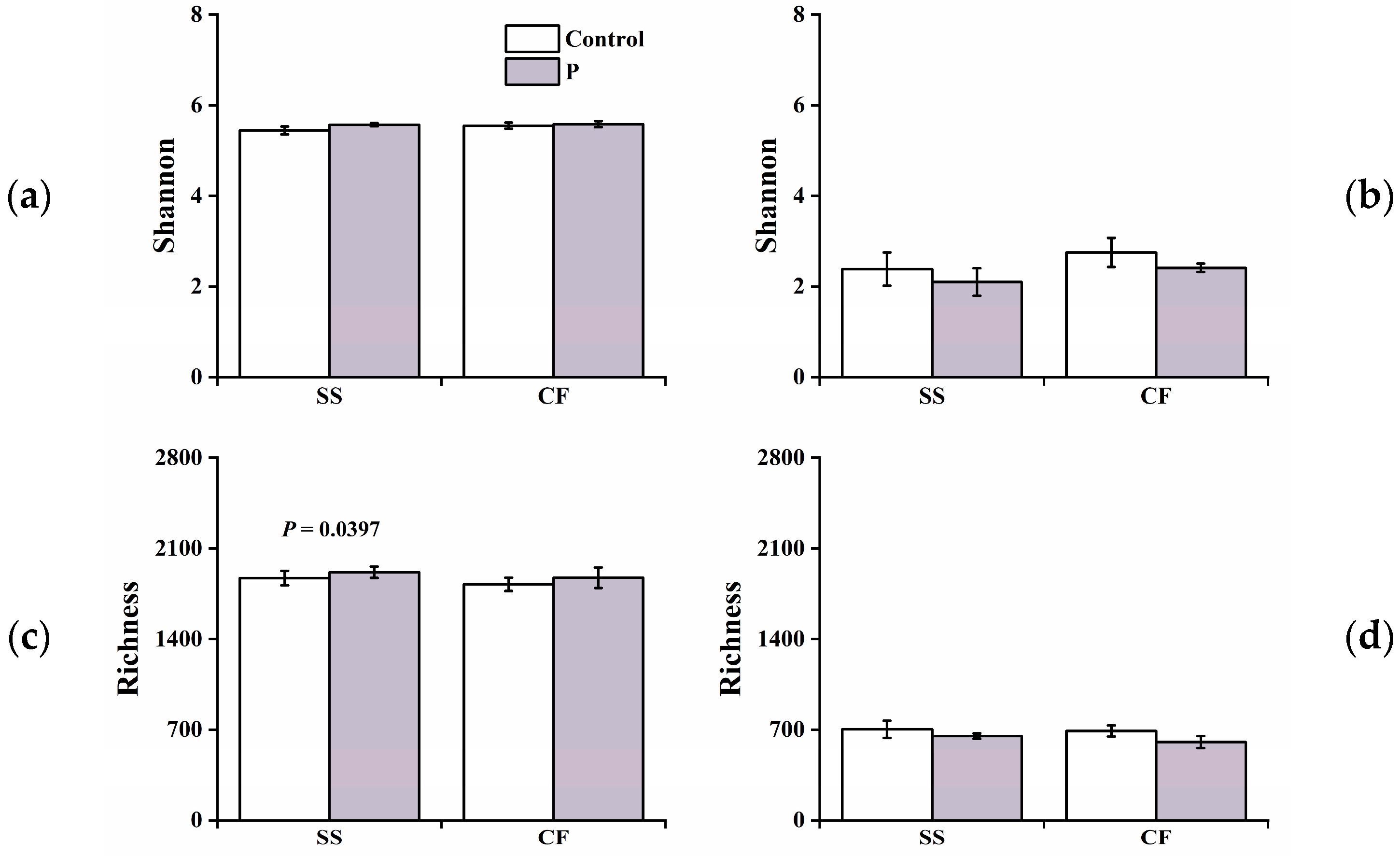
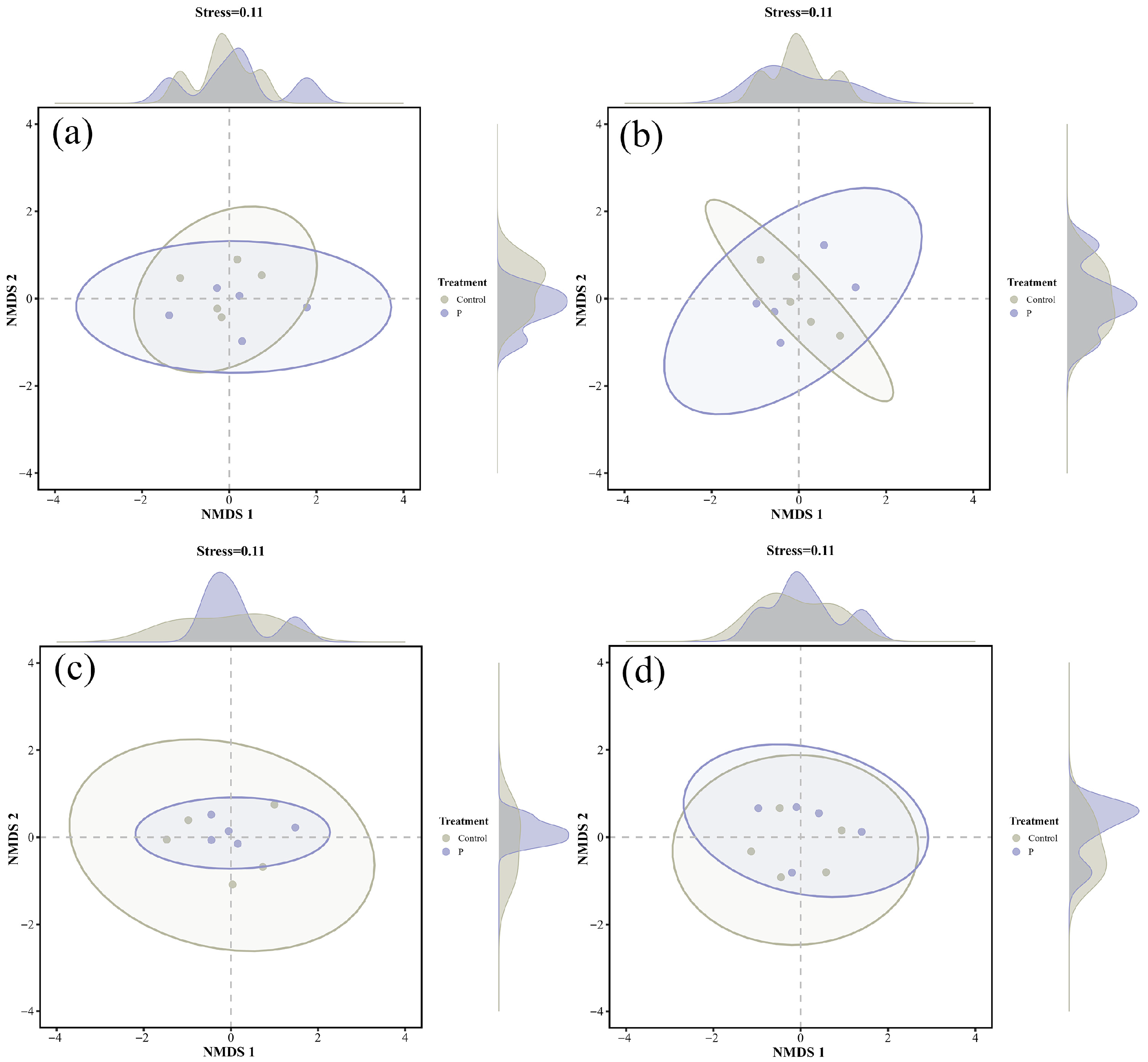
Regarding α-diversity, bacterial and fungal Shannon’s index did not show significant changes in the two tree species; only bacterial richness increased by P addition in S. superba (Figure 2). In addition, beta-diversity did not show significant differences (Figure 3).
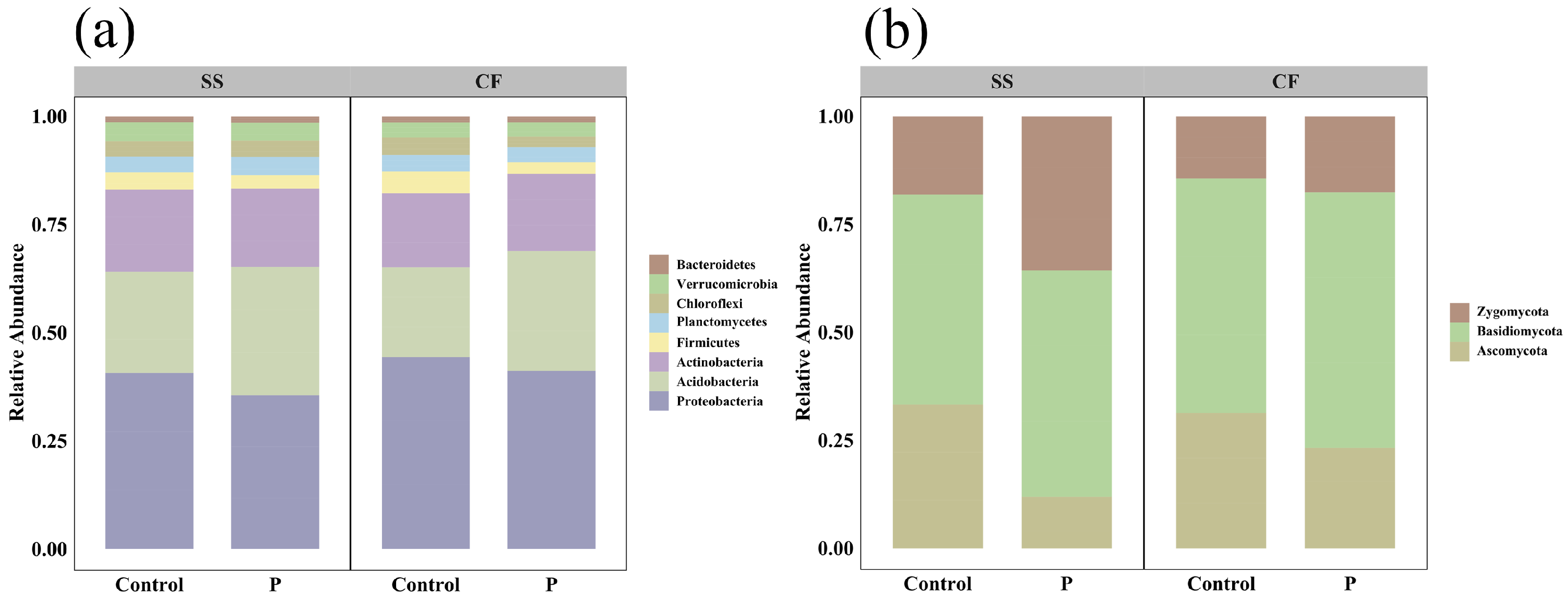
Among all the soil samples, the dominant phyla of bacterial communities on average were Proteobacteria (39.6%), followed by Acidobacteria (24.9%), Actinobacteria (17.7%), Firmicutes (3.7%), Planctomycetes (3.7%), Chloroflexi (3.5%), Verrucomicrobia (3.7%), and Bacteroidetes (1.4%); they accounted for over 95% (Figure 4 and Table 2). Specifically, the abundance of Acidobacteria significantly increased both in S. superba (27.07%) and in C. fargesii (33.99%) by P addition (p < 0.05, Table 2). Also, the abundance of Actinobacteria decreased in S. superba (4.8%) and increased in C. fargesii (3.6%).
For the fungal community composition, the dominant phyla included Basidiomycota (43.4%), Zygomycota (25.8%), and Ascomycota (18.1%), and they accounted for over 95% of the fungal community (Figure 4 and Table 2). The difference was mainly in the abundance of Zygomycota (which decreased by 18.5% in S. superba and increased by 57.7% in C. fargesii, Table 2).

3.4. Fungal Trophic Group and Its Correlation with Microbial Diversity

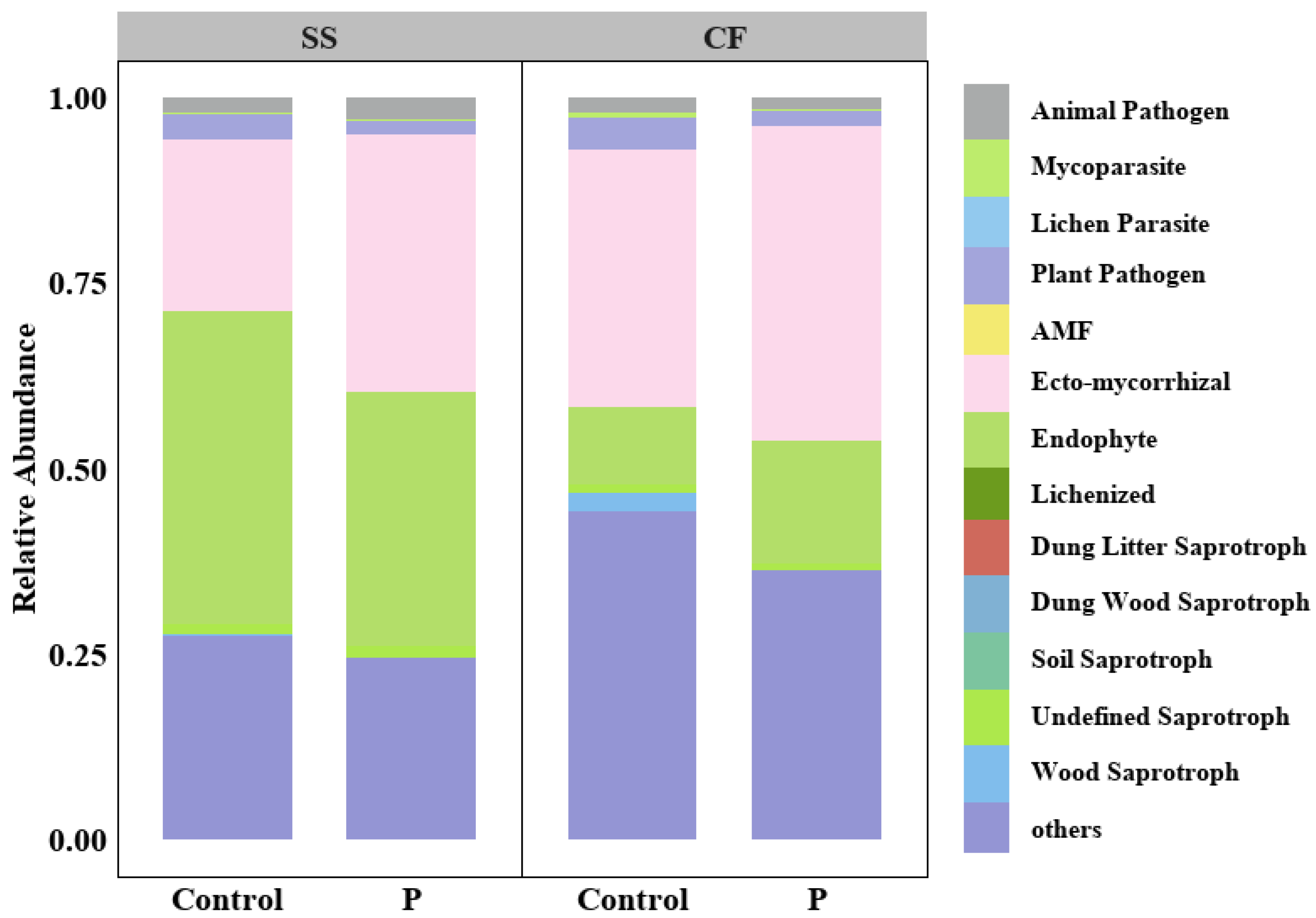
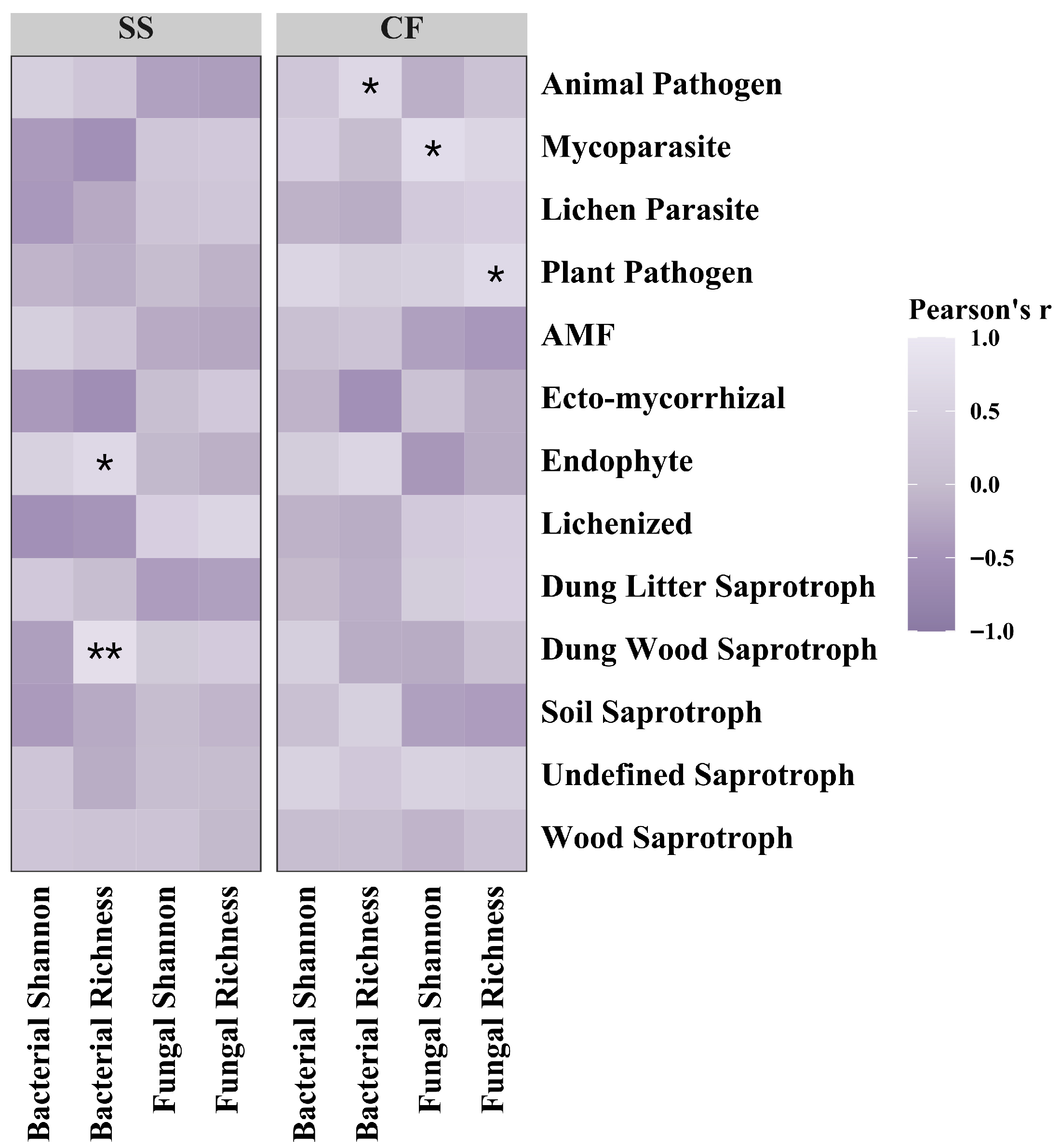
We grouped the fungal OTUs by trophic mode and refined the classification into specific ecological guilds. The two main functions in the rhizosphere soil of S. superba and C. fargesii in the two treatments were both endophyte and ectomycorrhizal, with no significant difference observed (Figure 5). Lichen parasite and lichenized fungi were significantly decreased with P addition in both tree species. Differently, dung/wood saprotrophs and dung/litter saprotrophs decreased in S. superba and C. fargesii, respectively. The soil saprotroph level was higher in S. superba, while it was increased in C. fargesii (Figure 5). Dung/wood saprotrophs and endophytes were significantly correlated with bacterial richness in S. superba (Figure 6). In addition, animal pathogens, mycoparasites, and plant pathogens were strongly correlated with bacterial richness, fungal Shannon’s index, and fungal richness in C. fargesii, respectively (Figure 6).

3.5. Relationships Between Soil Enzyme Activities, Microbial Community, and Physicochemical Properties

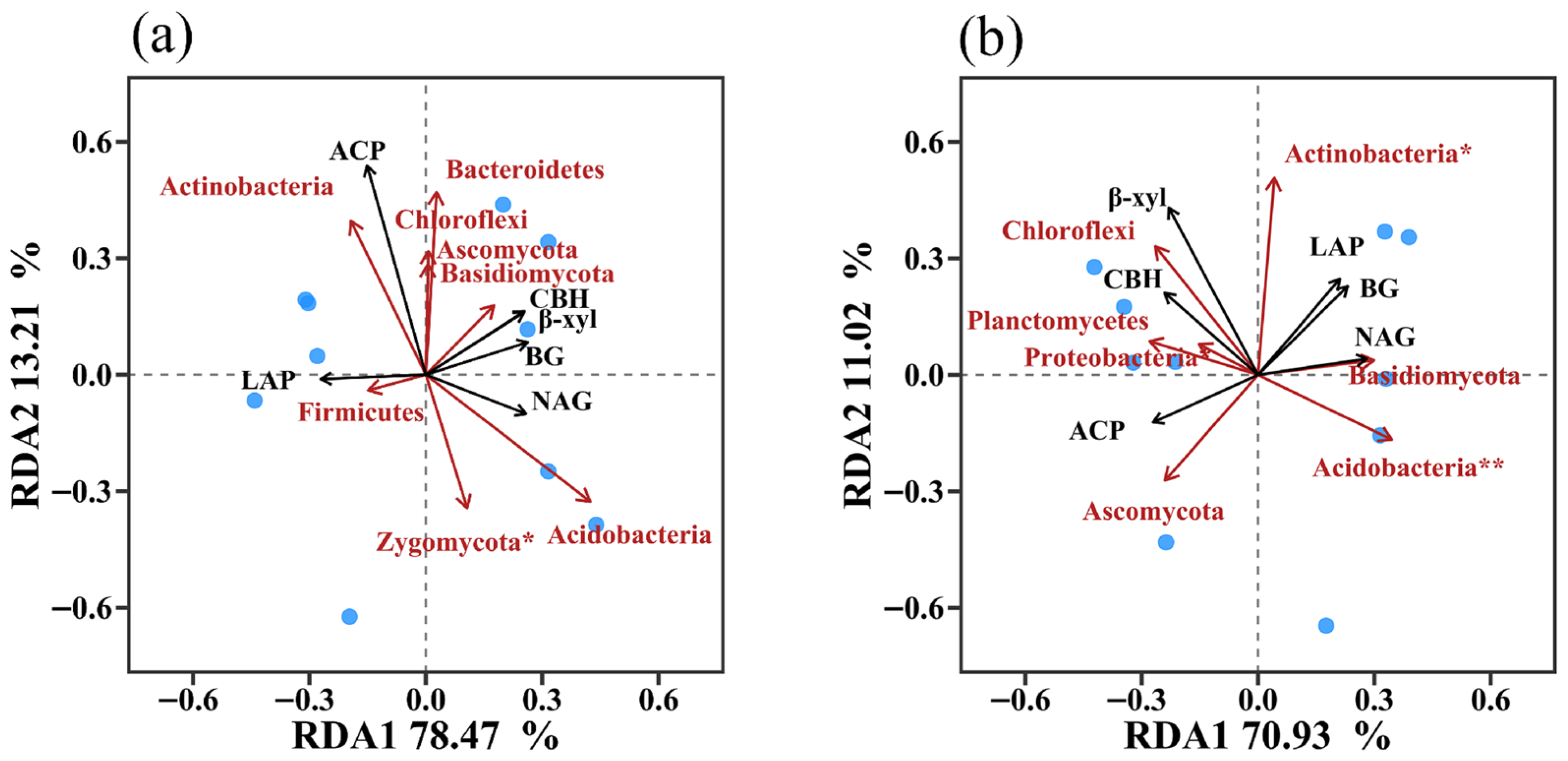
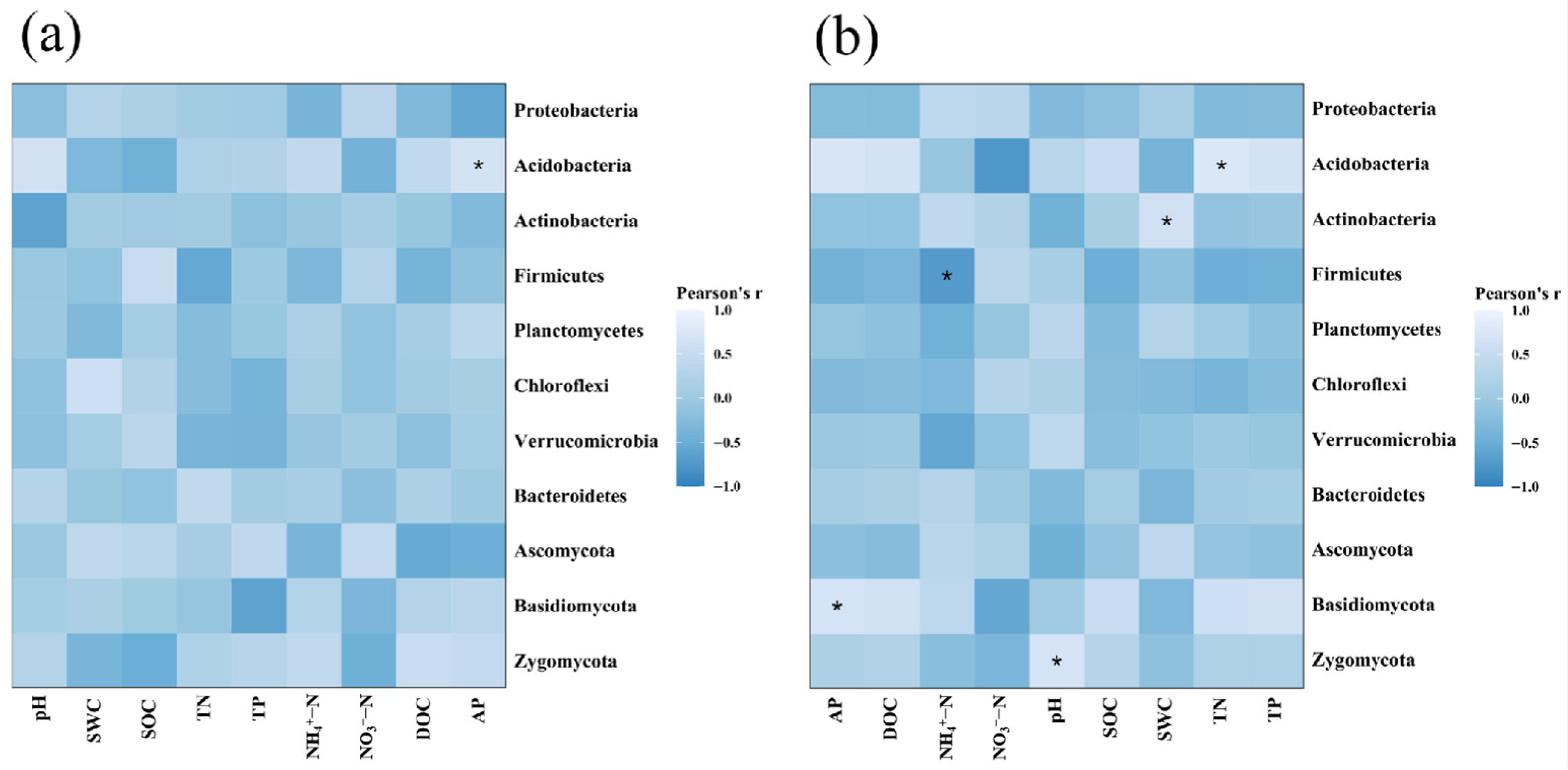
Our results showed that soil enzymes significantly correlated with microbial community composition rather than microbial diversity index (Table 3). For S. superba, the RDA axis explained 91.68% (78.47% and 13.21%) of the variance in enzymes within the microbial community. The relative abundance of Zygomycota was positively correlated with the NAG enzyme, while it negatively correlated with the ACP enzyme (Figure 7a). For C. fargesii, the RDA axis explained 81.95% (70.93% and 11.02%). The abundance of Acidobacteria was positively correlated with NAG enzyme, while it negatively correlated with CBH, β-xyl, and ACP enzymes. Also, the abundance of Actinobacteria was negatively correlated only with the ACP enzyme, while positively correlated with other enzymes (Figure 7b). Within the physicochemical factors, AP was positively significant with Acidobacteria in S. superba (Figure 8a). However, TN and pH had a significant correlation with Acidobacteria and Zygomycota in C. fargesii, respectively (Figure 8b).

4. Discussion

4.1. Effects of P Addition on Microbial Community in Two Tree Species

The results of microbial diversity showed that P addition increased bacterial richness in the rhizosphere soil of S. superba (Figure 2). The effect in S. superba may be attributed to a synergistic shift in fungal trophic groups [31]. Theoretically, AM fungi employ an indirect nutrient acquisition strategy. They primarily uptake soluble nutrients, but facilitate wider nutrient mobilization by exuding plant-derived C that stimulates free-living saprotrophic fungi and bacteria. The P input appears to have enriched this key saprotrophic functional group (as supported by the correlation we observed (Figure 6), activating its capacity to decompose complex organic matter) [32,33]. This synergy, established through AM hyphae that provide niches and saprotrophs that provide diverse C sources, collectively established heterogeneous microhabitats that promoted the observed increase in bacterial richness [34,35]. Conversely, the microbial diversity in C. fargesii remained unchanged (Figure 2). This stability is consistent with the direct nutrient acquisition strategy of EcM fungi. Many EcM fungi possess robust saprotrophic capabilities, allowing them to directly “mine” complex organic matter for nutrients [36]. This direct acquisition approach creates intense competition, leading to the competitive exclusion and suppression of free-living saprotrophs, which is recognized as the “Gadgil effect” [10,37]. In this EcM-dominated system, the nutrient cycle is internalized by the symbiont, reducing reliance on a diverse free-living microbial community. This recalcitrant system is, therefore, less responsive to the P-input pulse, resulting in the observed stability of microbial diversity. In brief, the divergent responses of rhizosphere microbial diversity to P input are fundamentally driven by the contrasting nutrient acquisition strategies and resultant community assembly mechanisms dictated by the dominant mycorrhizal type of each tree species.
How P addition alters the rhizosphere soil microbial community composition is profoundly structured by the dominant mycorrhizal association. The results showed that the abundance of Acidobacteria in the bacterial community and Zygomycota in the fungal community had significant changes induced by P input (Figure 8). In S. superba, the abundance of Acidobacteria in the rhizosphere was positively correlated with AP concentration, suggesting a coupled response between P enrichment and root–fungal nutrient dynamics. P input likely enhanced the activity of AM fungi, which adopt a nutrient acquisition strategy characterized by the rapid uptake of inorganic P through fine hyphal networks and the subsequent redistribution of labile P compounds in the rhizosphere [38,39]. This fungal-mediated mobilization of available P may have promoted the proliferation of Acidobacteria, a group well adapted to acidic environments with variable nutrient availability, by providing them with improved access to both mineral P and decomposable organic C sources [40]. To mediate these nutrient transformations, Acidobacteria likely utilize their diverse genetic potential to express high-affinity transporters and secrete extracellular enzymes (such as P and glycosyl hydrolases), which actively mineralize organic P and degrade complex plant-derived polysaccharides into bioavailable forms. In contrast, the relationship between Acidobacteria abundance and soil nutrients in C. fargesii may be governed by the nutrient acquisition strategy of EcM fungi. EcM symbionts primarily access organic-bound nutrients via oxidative enzymatic pathways and tend to regulate P acquisition conservatively through tight recycling within the mycorrhizosphere [41,42]. Such a strategy could stabilize nutrient fluxes and indirectly favor Acidobacteria that specialize in utilizing complex organic substrates under conditions of sufficient N nutrition [43]. This stability, therefore, reflects a balanced nutrient microenvironment maintained by EcM-mediated organic matter turnover and nutrient retention. Regarding Zygomycota, their influence on nutrient transformation is driven by their life strategy as rapid-growing saprotrophs. In C. fargesii, rather than functioning merely opportunistically, they mediate initial nutrient release by rapidly assimilating soluble C and excreting organic acids that acidify the microenvironment and solubilize recalcitrant mineral P [44,45]. The increase in S. superba following P addition could still be interpreted as increased competition for C sources, not with AMF directly, but with the highly enriched, AM-stimulated, free-living bacteria/saprotrophs now thriving under high-P conditions [8,46]. The mycorrhizal strategy dictates the community’s primary regulatory factor. The AM system in S. superba exhibits a coupled response where enhanced soil AP drives microbial proliferation and structural enrichment, whereas the EcM system in C. fargesii acts as a nutrient buffer, stabilizing the community and shifting its primary physicochemical association toward TN availability.

4.2. Linkage Between Soil Ectoenzyme and Microbial Diversity Under P Enrichment

Our results indicated that BG, CBH, β-xyl, and NAG enzyme activities in S. superba and BG, NAG, and LAP activities in C. fargesii were changed by P addition (Figure 1). Correlation analysis displayed no significant association between enzyme activity and microbial diversity indices (Table 3). The observed decoupling between enzyme activity and diversity index shifts challenges the simplistic view that a community shift towards the k-strategy is directly correlated with increased enzymatic function. This phenomenon could be theoretically explained by the contrasting source-specificity and functional redundancy dictated by the dominant mycorrhizal association [47]. For S. superba, the increased microbial taxa may largely belong to functionally redundant groups that share the capacity to produce generalist enzymes such as hydrolytic enzymes. In this microenvironment characterized by abundant C and soluble nutrients, although species richness increased, the overall enzymatic potential of the system may have already reached a saturated or functionally stable state [48]. In other words, the increase in diversity did not introduce novel or more efficient enzymatic pathways, leading to a decoupling between community structural changes and functional responses [47,49]. This decoupling suggests that diversity may serve primarily as a structural indicator rather than a direct functional driver. In the EcM-dominated rhizosphere of C. fargesii, the observed changes in enzyme activities primarily reflect the physiological demands and nutrient-acquisition strategies of the mycorrhizal fungi rather than structural shifts in the free-living microbial community [50]. The enzymatic activities of EcM fungi represent their specialized capacity to “mine” recalcitrant nutrient sources, a process largely independent of the diversity of free-living microbes that are competitively suppressed by EcM dominance [51]. Therefore, in AM-associated systems, the decoupling between diversity and enzyme activity arises from functional redundancy of the microbial community, whereas in ECM-associated systems, the decoupling results from the functional monopolization of key enzymatic processes by mycorrhizal symbionts [47]. Consequently, when interpreting correlations between microbial diversity and soil enzyme activities, mycorrhizal fungi should be recognized as the primary source and regulator of enzymatic function, rather than focusing solely on the composition of free-living microbial assemblages.
In addition, the results of RDA indicated that the microbial taxa significantly associated with changes in enzyme activities were Zygomycota for S. superba and Acidobacteria for C. fargesii (Figure 7). This suggests that the dominant fungal community primarily drove the variations in enzyme activities in S. superba, whereas bacterial communities played a dominant role in the rhizosphere soil of C. fargesii. The increase in the abundance of Zygomycota in the rhizosphere of S. superba may regulate extracellular enzyme activities by influencing C and N acquisition strategies. Under elevated P availability, Zygomycota likely experience a C:N imbalance, which stimulates the demand for organic N mineralization. This, in turn, leads to a significant increase in the activity of the NAG enzyme, a key enzyme involved in organic N mineralization [52]. Concurrently, the observed increase in BG activity may be associated with the microbial demand for decomposing relatively labile C sources [53]. Shifts in the abundance of Acidobacteria in the rhizosphere of C. fargesii primarily modulate extracellular enzyme activities by influencing resource-based microbial interactions [54]. For instance, Acidobacteria may engage in cross-feeding relationships with other microorganisms, such as providing NAG-derived products in exchange for the P nutrient. Such cooperative interactions could collectively enhance NAG activity in the rhizosphere [55]. These contrasting enzymatic patterns suggest that microbial functional shifts are closely aligned with the distinct mycorrhizal types of the tree species [56]. In conclusion, the increased abundance of Zygomycota drives coordinated elevation of enzyme activities through C:N imbalance-induced organic N mineralization and labile C decomposition in S. superba, while in C. fargesii, Acidobacteria enhance enzyme activity via cross-feeding interactions for P acquisition but reduce investment in complex C decomposition. Such differences underscore how mycorrhizal associations and microbial composition jointly regulate the enzyme activities in two tree species.

5. Conclusions

This study demonstrates that P addition drives variation in rhizosphere soil enzyme activities, microbial diversity, and community composition in S. superba and C. fargesii by altering fungal community functions and soil properties. Compared with the control, P addition significantly increased microbial diversity in S. superba rather than C. fargesii. Changes in the saprotrophs within the fungal functional community were significantly correlated with microbial diversity in S. superba. P addition increased the abundance of Acidobacteria and Zygomycota in both tree species. AP and TN significantly influenced the bacterial communities of S. superba and C. fargesii, respectively, whereas soil pH had an impact on the fungal community composition of C. fargesii. The activities of BG, CBH, β-xyl, and NAG enzymes in S. superba, and BG, NAG, and LAP in C. fargesii were significant. The changes in enzymes were related to fungal and bacterial communities in S. superba and C. fargesii, respectively. Overall, our research findings improve our comprehension of the effect of P-fertilizer application on the diversity and community composition of rhizosphere soil microorganisms in subtropical forest ecosystems.

Author Contributions

Conceptualization, F.C. and H.W.; methodology, S.W. and J.H.; software, X.H.; investigation, J.L. and X.W.; resources, K.Z. and F.W.; writing—original draft preparation, B.X.; writing—review and editing, F.W. All authors have read and agreed to the published version of the manuscript.

Funding

This research was funded by the National Natural Science Foundation of China (grant number: 32201533, 32471851, 32560308), the Jiangxi Talent Support Program—Cultivation Project for Academic and Technological Leaders in Key Disciplines (grant number 20243BCE51178) and the Jiangxi Provincial Natural Science Foundation (grant number 20252BAC240022).

Data Availability Statement

The data that support the findings of this study have been deposited into China National GeneBank Sequence Archive (CNSA, https://db.cngb.org/cnsa/ (accessed on 1 January 2020)) of the China National GeneBank DataBase (CNGBdb) with accession number CNP0001030.

Acknowledgments

We thank Yuandong Cheng and Zhiyu Zheng for the help with field sampling and laboratory analysis.

Conflicts of Interest

The authors declare no conflicts of interest.

References

  1. Shen, J.; Yuan, L.; Zhang, J.; Li, H.; Bai, Z.; Chen, X.; Zhang, W.; Zhang, F. Phosphorus Dynamics: From Soil to Plant. Plant Physiol. 2011, 156, 997–1005. [Google Scholar] [CrossRef]
  2. Wang, X.; Li, S.; Zhu, B.; Homyak, P.; Chen, G.; Yao, X.; Wu, D.; Yang, Z.; Lyu, M.; Yang, Y. Long-term nitrogen deposition inhibits soil priming effects by enhancing phosphorus limitation in a subtropical forest. Glol. Change Biol. 2023, 29, 4081–4093. [Google Scholar] [CrossRef]
  3. Ye, Z.; Ning, C.; Liu, T.; Yan, M.; Cai, W.; Xiao, J.; Yan, W. Impact of broadleaf tree introduction on rhizosphere fungal communities and root phosphorus-cycling genes in conifers of near-natural transformed plantations. For. Ecosyst. 2025, 14, 100378. [Google Scholar] [CrossRef]
  4. Zhang, N.N.; Chen, X.X.; Liang, J.; Zhao, C.; Xiang, J.; Luo, L.; Wang, E.T.; Shi, F. Rhizocompartmental microbiomes of arrow bamboo (Fargesia nitida) and their relation to soil properties in Subalpine Coniferous Forests. PeerJ 2023, 11, e16488. [Google Scholar] [CrossRef]
  5. Su, J.; Wang, Y.; Bai, M.; Peng, T.; Li, H.; Xu, H.J.; Guo, G.; Bai, H.; Rong, N.; Sahu, S.K.; et al. Soil conditions and the plant microbiome boost the accumulation of monoterpenes in the fruit of Citrus reticulata ‘Chachi’. Microbiome 2023, 11, 61. [Google Scholar] [CrossRef] [PubMed]
  6. Zhao, W.; Li, Y.; Yang, C.; Yang, Y.; Hu, Y. Rhizosphere Microbial Community and Metabolites of Susceptible and Resistant Tobacco Cultivars to Bacterial Wilt. J. Microbiol. 2023, 61, 389–402. [Google Scholar] [CrossRef] [PubMed]
  7. Brundrett, M.C.; Tedersoo, L. Evolutionary history of mycorrhizal symbioses and global host plant diversity. New Phytol. 2018, 220, 1108–1115. [Google Scholar] [CrossRef]
  8. Frey, S.D. Mycorrhizal Fungi as Mediators of Soil Organic Matter Dynamics. Annu. Rev. Ecol. Evol. Syst. 2019, 50, 237–259. [Google Scholar] [CrossRef]
  9. Zhang, L.; Zhou, J.; George, T.S.; Limpens, E.; Feng, G. Arbuscular mycorrhizal fungi conducting the hyphosphere bacterial orchestra. Trends Plant Sci. 2022, 27, 402–411. [Google Scholar] [CrossRef] [PubMed]
  10. Gadgil, R.L.; Gadgil, P.D. Mycorrhiza and Litter Decomposition. Nature 1971, 233, 133. [Google Scholar] [CrossRef]
  11. Smith, G.R.; Wan, J. Resource-ratio theory predicts mycorrhizal control of litter decomposition. New Phytol. 2019, 223, 1595–1606. [Google Scholar] [CrossRef]
  12. Li, Y.; Nie, C.; Liu, Y.; Du, W.; He, P. Soil microbial community composition closely associates with specific enzyme activities and soil carbon chemistry in a long-term nitrogen fertilized grassland. Sci. Total Environ. 2019, 654, 264–274. [Google Scholar] [CrossRef]
  13. Wang, C.; Xue, L.; Dong, Y.; Jiao, R. Effects of stand density on soil microbial community composition and enzyme activities in subtropical Cunninghamia lanceolate (Lamb.) Hook plantations. For. Ecol. Manag. 2021, 479, 118559. [Google Scholar] [CrossRef]
  14. Fierer, N.; Jackson, R.B.; Fierer, N.; Jackson, R.B. The diversity and biogeography of soil bacterial communities. Proc. Natl. Acad. Sci. USA 2006, 103, 626–631. [Google Scholar] [CrossRef]
  15. Midgley, M.G.; Phillips, R.P. Spatio-temporal heterogeneity in extracellular enzyme activities tracks variation in saprotrophic fungal biomass in a temperate hardwood forest. Soil Biol. Biochem. 2019, 138, 107600. [Google Scholar] [CrossRef]
  16. Carrara, J.E.; Walter, C.A.; Hawkins, J.S.; Peterjohn, W.T.; Averill, C.; Brzostek, E.R. Interactions among plants, bacteria, and fungi reduce extracellular enzyme activities under long-term N fertilization. Glol. Change Biol. 2018, 24, 2721–2734. [Google Scholar] [CrossRef]
  17. Liu, C.; Zhou, Y.; Qin, H.; Liang, C.; Shao, S.; Fuhrmann, J.J.; Chen, J.; Xu, Q. Moso bamboo invasion has contrasting effects on soil bacterial and fungal abundances, co-occurrence networks and their associations with enzyme activities in three broadleaved forests across subtropical China. For. Ecol. Manag. 2021, 498, 119549. [Google Scholar] [CrossRef]
  18. Luo, X.; Hou, E.; Zhang, L.; Zang, X.; Yi, Y.; Zhang, G.; Wen, D. Effects of forest conversion on carbon-degrading enzyme activities in subtropical China. Sci. Total Environ. 2019, 696, 133968. [Google Scholar] [CrossRef]
  19. Fang, J.; Wang, Y.B.; Sui, J.H.; Liu, C.S.; Liu, R.; Xu, Z.F.; Han, X.Y.; Zhang, T.; Zhang, Q.H.; Chen, C.B. Response of ginseng rhizosphere microbial communities and soil nutrients to phosphorus addition. Ind. Crops Prod. 2025, 226, 120687. [Google Scholar] [CrossRef]
  20. Ma, S.; Chen, X.; Su, H.; Xing, A.; Chen, G.; Zhu, J.; Zhu, B.; Fang, J. Phosphorus addition decreases soil fungal richness and alters fungal guilds in two tropical forests. Soil Biol. Biochem. 2022, 175, 108836. [Google Scholar] [CrossRef]
  21. Hu, Z.; Delgado-Baquerizo, M.; Fanin, N.; Chen, X.; Zhou, Y.; Du, G.; Hu, F.; Jiang, L.; Hu, S.; Liu, M. Nutrient-induced acidification modulates soil biodiversity-function relationships. Nat. Commun. 2024, 15, 2858. [Google Scholar] [CrossRef]
  22. Li, Y.; Tian, D.; Wang, J.; Niu, S.; Kang, J.G. Differential mechanisms underlying responses of soil bacterial and fungal communities to nitrogen and phosphorus inputs in a subtropical forest. PeerJ 2019, 7, e7631. [Google Scholar] [CrossRef]
  23. Chen, X.; Zhang, D.; Liang, G.; Qiu, Q.; Liu, J.; Zhou, G.; Liu, S.; Chu, G.; Yan, J. Effects of precipitation on soil organic carbon fractions in three subtropical forests in southern China. J. Plant Ecol. 2015, 9, 10–19. [Google Scholar] [CrossRef]
  24. Lefroy, R.D.B.; Blair, G.J.; Strong, W.M. Changes in soil organic matter with cropping as measured by organic carbon fractions and 13C natural isotope abundance. Plant Soil 1993, 155, 399–402. [Google Scholar] [CrossRef]
  25. Vance, E.D.; Brookes, P.C.; Jenkinson, D.S. An extraction method for measuring soil microbial biomass C. Soil Biol. Biochem. 1987, 19, 703–707. [Google Scholar] [CrossRef]
  26. Saiya-Cork, K.R.; Sinsabaugh, R.L.; Zak, D.R. The effects of long term nitrogen deposition on extracellular enzyme activity in an Acer saccharum forest soil. Soil Biol. Biochem. 2002, 34, 1309–1315. [Google Scholar] [CrossRef]
  27. German, D.P.; Weintraub, M.N.; Grandy, A.S.; Lauber, C.L.; Rinkes, Z.L.; Allison, S.D. Optimization of hydrolytic and oxidative enzyme methods for ecosystem studies. Soil Biol. Biochem. 2011, 43, 1387–1397. [Google Scholar] [CrossRef]
  28. Nguyen, N.H.; Song, Z.; Bates, S.T.; Branco, S.; Tedersoo, L.; Menke, J.; Schilling, J.S.; Kennedy, P.G. FUNGuild: An open annotation tool for parsing fungal community datasets by ecological guild. Fungal Ecol. 2016, 20, 241–248. [Google Scholar] [CrossRef]
  29. Wei, T.; Simko, V. R Package ‘Corrplot’: Visualization of a Correlation Matrix, version 0.95; SCIRP: Irvine, CA, USA, 2024.
  30. Oksanen, J.; Simpson, G.; Blanchet, F.; Kindt, R.; Legendre, P.; Minchin, P.; O’Hara, R.; Solymos, P.; Stevens, M.; Szoecs, E.; et al. Vegan: Community Ecology Package, version 2.6-10; ScienceOpen: Lexington, MA, USA, 2025.
  31. Haq, I.U.; Hillmann, B.; Moran, M.; Willard, S.; Knights, D.; Fixen, K.R.; Schilling, J.S. Bacterial communities associated with wood rot fungi that use distinct decomposition mechanisms. ISME Commun. 2022, 2, 26. [Google Scholar] [CrossRef] [PubMed]
  32. Mayer, M.; Rewald, B.; Matthews, B.; Sandén, H.; Rosinger, C.; Katzensteiner, K.; Gorfer, M.; Berger, H.; Tallian, C.; Berger, T.W. Soil fertility relates to fungal-mediated decomposition and organic matter turnover in a temperate mountain forest. New Phytol. 2021, 231, 777–790. [Google Scholar] [CrossRef]
  33. Yang, H.; Wang, Q.-C.; Jin, S.-S.; Lin, Y.; He, J.-Z.; Zheng, Y. Phosphorus addition predominantly influences the soil fungal community and functional guilds in a subtropical mountain forest. J. Sustain. Agric. Environ. 2024, 3, e12072. [Google Scholar] [CrossRef]
  34. Guhr, A.; Borken, W.; Spohn, M.; Matzner, E. Redistribution of soil water by a saprotrophic fungus enhances carbon mineralization. Proc. Natl. Acad. Sci. USA 2015, 112, 14647–14651. [Google Scholar] [CrossRef]
  35. Ballhausen, M.B.; Boer, W.D. The sapro-rhizosphere: Carbon flow from saprotrophic fungi into fungus-feeding bacteria. Soil Biol. Biochem. 2016, 102, 14–17. [Google Scholar] [CrossRef]
  36. Read, D.J.; Perez-Moreno, J. Mycorrhizas and nutrient cycling in ecosystems-a journey towards relevance? New Phytol. 2003, 157, 475–492. [Google Scholar] [CrossRef]
  37. Averill, C.; Bhatnagar, J.M.; Dietze, M.C.; Pearse, W.D.; Kivlin, S.N. Global imprint of mycorrhizal fungi on whole-plant nutrient economics. Proc. Natl. Acad. Sci. USA 2019, 116, 23163–23168. [Google Scholar] [CrossRef]
  38. Jiang, F.; Zhang, L.; Zhou, J.; George, T.S.; Feng, G. Arbuscular mycorrhizal fungi enhance mineralisation of organic phosphorus by carrying bacteria along their extraradical hyphae. New Phytol. 2021, 230, 304–315. [Google Scholar] [CrossRef] [PubMed]
  39. Smith, S.E.; Read, D.J. Mycorrhizal Symbiosis, 3rd ed.; Academic Press: New York, NY, USA, 2008; pp. 273–281. [Google Scholar] [CrossRef]
  40. De Chaves, M.G.; Silva, G.G.Z.; Rossetto, R.; Edwards, R.A.; Tsai, S.M.; Navarrete, A.A. Acidobacteria Subgroups and Their Metabolic Potential for Carbon Degradation in Sugarcane Soil Amended with Vinasse and Nitrogen Fertilizers. Front. Microbiol. 2019, 10, 1680. [Google Scholar] [CrossRef]
  41. Lindahl, B.D.; Tunlid, A. Ectomycorrhizal fungi—potential organic matter decomposers, yet not saprotrophs. New Phytol. 2015, 205, 1443–1447. [Google Scholar] [CrossRef]
  42. Fernandez, C.W.; Kennedy, P.G.; Clemmensen, K. Melanization of mycorrhizal fungal necromass structures microbial decomposer communities. J. Ecol. 2018, 106, 468–479. [Google Scholar] [CrossRef]
  43. Pellitier, P.T.; Zak, D.R. Ectomycorrhizal fungi and the enzymatic liberation of nitrogen from soil organic matter: Why evolutionary history matters. New Phytol. 2018, 217, 68–73. [Google Scholar] [CrossRef] [PubMed]
  44. Fierer, N.; Bradford, M.A.; Jackson, R.B. Toward an ecological classification of soil bacteria. Ecology 2007, 88, 1354–1364. [Google Scholar] [CrossRef]
  45. Nelson, M.B.; Martiny, A.C.; Martiny, J.B.H. Global biogeography of microbial nitrogen-cycling traits in soil. Proc. Natl. Acad. Sci. USA 2016, 113, 8033–8040. [Google Scholar] [CrossRef]
  46. Konvalinková, T.; Püschel, D.; Řezáčová, V.; Gryndlerová, H.; Jansa, J. Carbon flow from plant to arbuscular mycorrhizal fungi is reduced under phosphorus fertilization. Plant Soil 2017, 419, 319–333. [Google Scholar] [CrossRef]
  47. Rineau, F.; Courty, P.-E. Secreted enzymatic activities of ectomycorrhizal fungi as a case study of functional diversity and functional redundancy. Ann. For. Sci. 2011, 68, 69–80. [Google Scholar] [CrossRef]
  48. Maron, P.A.; Sarr, A.; Kaisermann, A.; Lévêque, J.; Mathieu, O.; Guigue, J.; Karimi, B.; Bernard, L.; Dequiedt, S.; Terrat, S.; et al. High Microbial Diversity Promotes Soil Ecosystem Functioning. Appl. Environ. Microbiol. 2018, 84, e02738-17. [Google Scholar] [CrossRef]
  49. Chen, H.; Ma, K.; Lu, C.; Fu, Q.; Qiu, Y.; Zhao, J.; Huang, Y.; Yang, Y.; Schadt, C.W.; Chen, H. Functional Redundancy in Soil Microbial Community Based on Metagenomics Across the Globe. Front. Microbiol. 2022, 13, 878978. [Google Scholar] [CrossRef]
  50. Fitch, A.A.; Lang, A.K.; Whalen, E.D.; Helmers, E.M.; Goldsmith, S.G.; Hicks Pries, C. Mycorrhiza Better Predict Soil Fungal Community Composition and Function than Aboveground Traits in Temperate Forest Ecosystems. Ecosystems 2023, 26, 1411–1427. [Google Scholar] [CrossRef]
  51. Nouwen, O.; Rineau, F.; Kohout, P.; Baldrian, P.; Eisenhauer, N.; Beenaerts, N.; Thijs, S.; Vangronsveld, J.; Soudzilovskaia, N.A. Towards understanding the impact of mycorrhizal fungal environments on the functioning of terrestrial ecosystems. FEMS Microbiol. Ecol. 2025, 101, fiaf062. [Google Scholar] [CrossRef]
  52. Dong, L.; Berg, B.; Gu, W.; Wang, Z.; Sun, T. Effects of different forms of nitrogen addition on microbial extracellular enzyme activity in temperate grassland soil. Ecol. Process. 2022, 11, 36. [Google Scholar] [CrossRef]
  53. Wang, W.; Li, Y.; Wang, H.; Zu, Y. Differences in the Activities of Eight Enzymes from Ten Soil Fungi and Their Possible Influences on the Surface Structure, Functional Groups, and Element Composition of Soil Colloids. PLoS ONE 2014, 9, e111740. [Google Scholar] [CrossRef]
  54. Lu, Z.; Zhou, Y.; Li, Y.; Li, C.; Lu, M.; Sun, X.; Luo, Z.; Zhao, J.; Fan, M. Effects of partial substitution of chemical fertilizer with organic manure on the activity of enzyme and soil bacterial communities in the mountain red soil. Front. Microbiol. 2023, 14, 1234904. [Google Scholar] [CrossRef] [PubMed]
  55. Keane, J.B.; Hoosbeek, M.R.; Taylor, C.R.; Miglietta, F.; Phoenix, G.K.; Hartley, I.P. Soil C, N and P cycling enzyme responses to nutrient limitation under elevated CO2. Biogeochemistry 2020, 151, 221–235. [Google Scholar] [CrossRef]
  56. Meeds, J.A.; Marty Kranabetter, J.; Zigg, I.; Dunn, D.; Miros, F.; Shipley, P.; Jones, M.D. Phosphorus deficiencies invoke optimal allocation of exoenzymes by ectomycorrhizas. ISME J. 2021, 15, 1478–1489. [Google Scholar] [CrossRef] [PubMed]
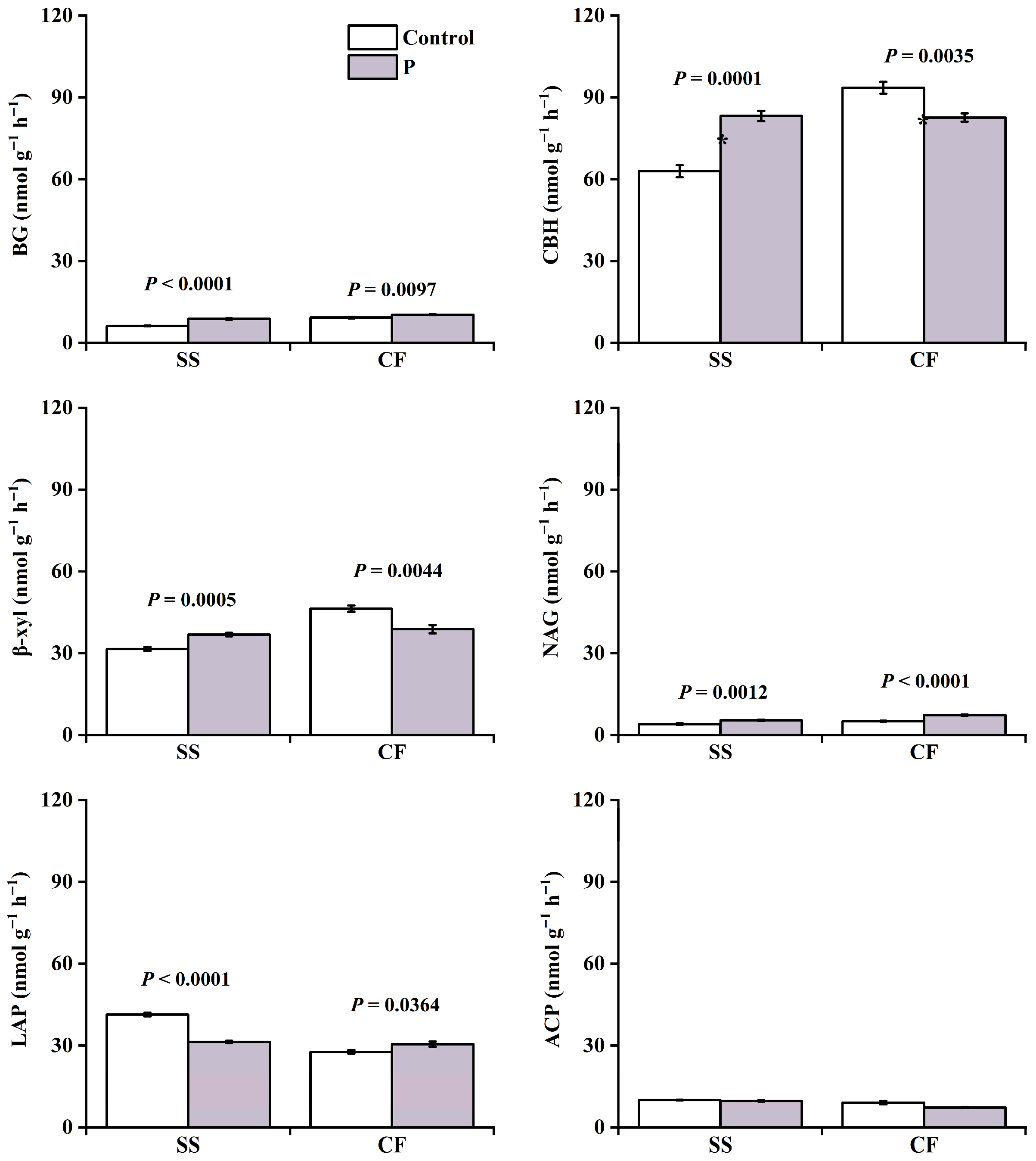
Figure 1. Tree species-specific responses of rhizosphere enzyme activities to phosphorus fertilization. Data are presented as mean ± standard deviation (n = 5). Significant differences between the P-addition and control groups within each panel are annotated with p-values.
Forests 16 01832 g001
Figure 2. Effects of phosphorus addition on soil microbial alpha-diversity: (a) bacterial Shannon’s index; (b) fungal Shannon’s index; (c) bacterial richness index; (d) fungal richness index. Values are presented as means ± standard deviation (n = 5). Significant differences between the P-addition and control groups within each panel are annotated with p-values.
Forests 16 01832 g002
Figure 3. Microbial beta-diversity between different fertilization schemes: (a) bacterial community of S. superba; (b) fungal community of S. superba; (c) bacterial community of C. fargesii; (d) fungal community of C. fargesii. NMDS of bacterial and fungal community compositions, 95% confidence ellipses in c are given for the samples grouped by degradation stages.
Forests 16 01832 g003
Figure 4. Relative abundance of (a) bacterial and (b) fungal phyla across fertilization schemes. The composition is based on the relative abundance of OTUs. Phyla with less than 1% abundance in all samples are grouped as “others”. The chart visualizes the comparative community structure between control and P-addition treatments.
Forests 16 01832 g004
Figure 5. Composition of fungal functional guilds under different fertilization schemes. Data represent the normalized relative abundance of guilds predicted by FunGuild. Guilds with less than 1% abundance are grouped as “others”. The chart compares the functional community structure between control and P-addition treatments.
Forests 16 01832 g005
Figure 6. Pearson’s correlation heatmap of soil microbial diversity indices and fungal functional guilds. Strength and significance of the observed relationships are displayed in the cells, highlighting key relationships between community diversity and ecological function (* p < 0.05, ** p < 0.01).
Forests 16 01832 g006
Figure 7. Redundancy analysis (RDA) between microbial community compositions and enzyme activities in (a) Schima superba; (b) Castanopsis fargesii. Microbial community compositions with significant effects on enzyme activities were analyzed by 999 permutation tests (** p < 0.01; * p < 0.05).
Forests 16 01832 g007
Figure 8. Pearson’s correlation heatmap of the microbial community compositions and soil properties in (a) Schima superba; (b) Castanopsis fargesii. Soil properties with significant effects on microbial community compositions were analyzed by 999 permutation tests (* p < 0.05).
Forests 16 01832 g008
Table 1. Rhizosphere soil properties of Schima superba and Castanopsis fargesii in subtropical evergreen broad-leaved forest of South China.
pHSWC
(%)
SOC
(g kg−1)
TN
(g kg−1)
TP
(g kg−1)
N H 4 + -N
(mg kg−1)
N O 3 -N
(mg kg−1)
DOC
(mg kg−1)
AP
(mg kg−1)
Schima
superba
Control4.61
(0.07)
40.65
(2.65)
87.38
(1.65)
4.91
(0.06)
0.80
(0.02)
47.41
(0.78)
51.93
(0.73)
34.14
(0.48)
4.08
(0.11)
P addition5.08
(0.14)
41.58
(3.11)
78.36
(0.76)
5.18
(0.05)
0.81
(0.01)
68.82
(0.98)
38.21
(0.91)
39.25
(0.39)
5.2
(0.04)
p value0.020 0.825 0.001 0.010 0.813 <0.001<0.001<0.001<0.001
Castanopsis fargesiiControl4.61
(0.05)
43.25
(2.88)
72.56
(1.06)
3.94
(0.06)
0.62
(0.01)
54.18
(1.28)
45.61
(0.25)
30.56
(0.78)
4.35
(0.07)
P addition4.63
(0.12)
42.9
(0.63)
89.38
(1.13)
4.9
(0.08)
0.79
(0.01)
56.36
(0.73)
39.79
(0.93)
36.39
(0.29)
5.26
(0.08)
p value0.8810.907 <0.001<0.001<0.0010.179 <0.001<0.001<0.001
Note. Data are means with standard deviations in parentheses (n = 5, p < 0.05). SWC: soil water content, SOC: soil organic carbon, TN: total nitrogen, TP: total phosphorus, N H 4 + -N: ammonium nitrogen, N O 3 -N: nitrate nitrogen, DOC: dissolved organic carbon, AP: available phosphorus.
Table 2. Variation in the relative abundances of the dominant phyla (>1%) in soil microbial communities between different fertilization schemes. Bold type denoted statistical significance (p < 0.05, t-test).
TaxonPhylumSchima superbaCastanopsis fargesii
ControlP-AdditionControlP-Addition
BacteriaProteobacteria0.399 (0.032)0.348 (0.023)0.435 (0.040)0.403 (0.012)
Acidobacteria0.229 (0.022)0.291 (0.031)0.203 (0.024)0.272 (0.019)
Actinobacteria0.187 (0.015)0.178 (0.023)0.168 (0.020)0.174 (0.018)
Firmicutes0.039 (0.009)0.031 (0.002)0.050 (0.015)0.026 (0.002)
Planctomycetes0.036 (0.009)0.041 (0.005)0.037 (0.010)0.034 (0.005)
Chloroflexi0.036 (0.004)0.038 (0.007)0.039 (0.014)0.025 (0.004)
Verrucomicrobia0.043 (0.009)0.040 (0.007)0.034 (0.007)0.031 (0.004)
Bacteroidetes0.013 (0.003)0.015 (0.003)0.014 (0.006)0.014 (0.002)
FungiAscomycota0.288 (0.054)0.114 (0.031)0.237 (0.045)0.217 (0.085)
Basidiomycota0.421 (0.137)0.504 (0.095)0.393 (0.123)0.551 (0.090)
Zygomycota0.157 (0.084)0.343 (0.096)0.104 (0.042)0.164 (0.067)
Table 3. Pearson’s correlations between enzyme activities and microbial diversity indices.
BGCBHβ-xylNAGLAPACP
Schima superbaBacteriaShannon0.4740.5800.4540.712−0.556−0.417
Richness0.2960.3210.2870.376−0.374−0.428
FungiShannon−0.091−0.063−0.502−0.1850.1770.165
Richness−0.204−0.243−0.516−0.1010.211−0.201
Castanopsis fargesiiBacteriaShannon−0.372−0.397−0.3270.1210.1510.234
Richness−0.282−0.184−0.1340.1670.4800.108
FungiShannon−0.260−0.1250.031−0.341−0.5420.217
Richness−0.5870.0750.406−0.3550.0090.516
Disclaimer/Publisher’s Note: The statements, opinions and data contained in all publications are solely those of the individual author(s) and contributor(s) and not of MDPI and/or the editor(s). MDPI and/or the editor(s) disclaim responsibility for any injury to people or property resulting from any ideas, methods, instructions or products referred to in the content.