Article

Extraction of Rubber Plantations on Hainan Island, China, Using Multi-Source Remote Sensing Images During 2021–2025

1
Key Laboratory of Earth Observation of Hainan, Hainan Aerospace Information Research Institute, Sanya 572029, China
2
Key Laboratory of Digital Earth Science, Aerospace Information Research Institute, Chinese Academy of Sciences, Beijing 100094, China
3
International Research Center of Big Data for Sustainable Development Goals, Beijing 100094, China
4
University of Chinese Academy of Sciences, Beijing 100049, China
5
Hainan State Farms Natural Resources Development Group Co., Ltd., Haikou 570106, China
*
Author to whom correspondence should be addressed.
Forests 2025, 16(12), 1773; https://doi.org/10.3390/f16121773
Submission received: 24 October 2025 / Revised: 24 November 2025 / Accepted: 24 November 2025 / Published: 25 November 2025
(This article belongs to the Section Forest Inventory, Modeling and Remote Sensing)

Abstract

Precise monitoring of rubber plantations is critical for effective management and ecological assessments, enabling optimal resource allocation, disease detection, and mitigation of environmental impacts. This study integrated multi-source remote sensing data—including Landsat 8, Sentinel-1/2, GaoFen-1 (GF-1) optical and SAR imagery, and DEM data of Hainan Island. The rubber plantation areas from 2021 to 2025 were extracted from the Google Earth Engine (GEE) platform by employing a multi-step threshold segmentation method, which utilized the Otsu algorithm to automatically determine optimal thresholds for distinguishing rubber plantations from other land covers. The overall accuracy of the extracted rubber plantations in this study was above 90%; the Kappa coefficient was greater than 0.85; and the F1-score surpassed 0.93. The resulting distribution maps reveal that rubber plantations on Hainan Island are predominantly concentrated in the northwestern and northern regions. The rubber plantation area of Hainan Island remained relatively stable from 2021 to 2023. During 2023–2024, the rubber plantation area experienced a decline. This reduction was particularly pronounced in 2024, when the area decreased by nearly 150 km2 compared to the previous year. However, in 2025, this downward trend reversed sharply with an increase of approximately 300 km2. These findings provide a critical scientific basis for sustainable rubber production, supporting informed decision-making in irrigation, pest control, and yield optimization. Furthermore, they offer valuable insights for strategic planning to balance economic returns with ecological conservation, thereby ensuring the long-term viability of the industry.

1. Introduction

Natural rubber is a vital global economic crop and raw material, widely used in various industries, such as automotive, aviation, construction, and healthcare [1]. The global rubber plantations are primarily distributed across tropical and subtropical regions, with a significant concentration in Southeast Asian countries, including Malaysia, Thailand, Indonesia, Vietnam, and China [2]. Accurate monitoring of rubber plantations is essential to ensuring a stable supply for industrial production and plays an important role in supporting economic growth.
In China, natural rubber is an important strategic material. Rubber plantations concentrate in Yunnan, Hainan, Guangdong, and Fujian provinces. With the increasingly prominent contradiction between supply and demand of natural rubber at home and abroad, the amount of China’s land resources suitable for rubber plantation is extremely limited; therefore, both now and in the future, maintaining a balance between supply and demand of natural rubber is facing a major challenge. Hainan Province is a major growing region of natural rubber in China, and rubber plantations have become a pillar of the agricultural economy in Hainan Province. In recent years, major severe weather events such as strong cold waves, typhoons and droughts have occurred frequently. These events have adversely affected rubber plantations in Hainan, resulting in significant fluctuation in planting area and yield. Therefore, accurately monitoring the dynamics of rubber plantation areas and providing timely data on crop health to governmental decision-makers is essential for informing strategies on disaster mitigation, land use planning, technology extension, and international trade.
Over the past two decades, remote sensing has proven to be a highly effective tool for monitoring rubber plantation distribution [3,4,5,6,7,8,9,10]. Numerous studies have employed a variety of satellite data for mapping rubber plantations. These include low-resolution sensors like the Moderate-Resolution Imaging Spectroradiometer (MODIS) [11,12,13], as well as medium-resolution platforms like Landsat and Sentinel-1/2 [14,15,16,17,18,19,20]. Low-resolution MODIS data provides extensive spatial coverage and high temporal resolution but suffers from mixed-pixel issues that reduce accuracy in complex landscapes. Conversely, medium-resolution data from Landsat 8 and Sentinel-2 are freely available on the Google Earth Engine (GEE) cloud platform, greatly facilitating the extraction of large-scale, long-time-series rubber plantation extents [21,22]. However, a major challenge in mapping rubber plantations is their location in cloudy, rainy tropical and subtropical zones. The resulting scarcity of cloud-free optical data significantly complicates the accurate extraction of plantation areas. Therefore, given the limitations of optical data alone, the integration of optical and Synthetic Aperture Radar (SAR) imagery has emerged as a critical approach for accurate rubber plantation mapping. This methodology is evidenced by several studies. For instance, Kou et al. (2015) successfully mapped rubber distribution in Xishuangbanna, China, by combining a PALSAR mosaic with multi-temporal Landsat imagery [23]. Similarly, Wang et al. (2024) effectively extracted the rubber plantations on Hainan Island using a fusion of Landsat with Sentinel-1 and Sentinel-2 data [24].
Beyond traditional classification techniques, the remote sensing of rubber plantations has been significantly advanced by the adoption of machine learning (ML) and deep learning (DL) algorithms [14,25,26,27,28,29]. These methods offer superior capabilities for modeling complex, non-linear relationships within satellite data. However, the performance of any given method is not universal; it varies significantly based on the specific study area and the characteristics of the input data. For instance, in topographically complex regions, variables such as elevation and slope have a pronounced impact on extraction accuracy. Consequently, the selection of a robust algorithm and the thoughtful incorporation of relevant features are critical to the success of a mapping project [30].
Hainan Island, as China’s primary rubber production area, is an ideal case study area to extract rubber plantation. Currently, the accuracy and applicability of remote sensing-based mapping for Hainan’s rubber plantations remain fundamentally limited by several persistent challenges. First, the high frequency of cloud cover over Hainan Island adversely affects optical remote sensing data, resulting in gaps and losses of critical phenological information. To mitigate cloud interference, studies often rely on annual composite imagery. However, this approach obscures the distinct phenological dynamics of rubber tree leaf-off and leaf-on cycles, causing significant spectral ambiguity with evergreen secondary forests and increasing misclassification. On the other hand, the developmental stages and planting patterns of rubber plantations pose a significant challenge to accurate remote sensing identification. Rubber trees at different stages (e.g., immature plantations vs. mature forests) exhibit distinct differences in canopy structure, biomass, and spectral response. Furthermore, multi-temporal, patchy planting patterns within the same area lead to asynchronous phenological signals across the rubber forest. Consequently, this variability not only impedes reliable discrimination of rubber plantations from secondary forests at varying succession stages but also challenges the efficacy of classification approaches based on fixed-threshold criteria. Therefore, effectively integrating multi-source data to capture complete phenological cycles and developing intelligent recognition models adaptable to variations in forest age and planting structures remain critical challenges.
In this study, we intend to combine various remote sensing data, including Landsat, Sentinel-1/2, GaoFen-1 (GF-1) optical and SAR data, as well as DEM data of Hainan Island, to calculate different indices and their thresholds, and utilize multi-step segmentation methods to extract the rubber plantation areas of Hainan Island during 2021–2025. The specific objectives of this study are (1) to propose and validate an operational workflow that leverages multi-source data on the GEE platform for efficient rubber plantation identification, and (2) to apply this workflow to create a comprehensive map series of Hainan Island’s rubber plantation from 2021 to 2025. The final output is intended to provide a robust scientific foundation for strategic decision-making in rubber plantation management and spatial optimization.

2. Materials and Methods

2.1. Study Area

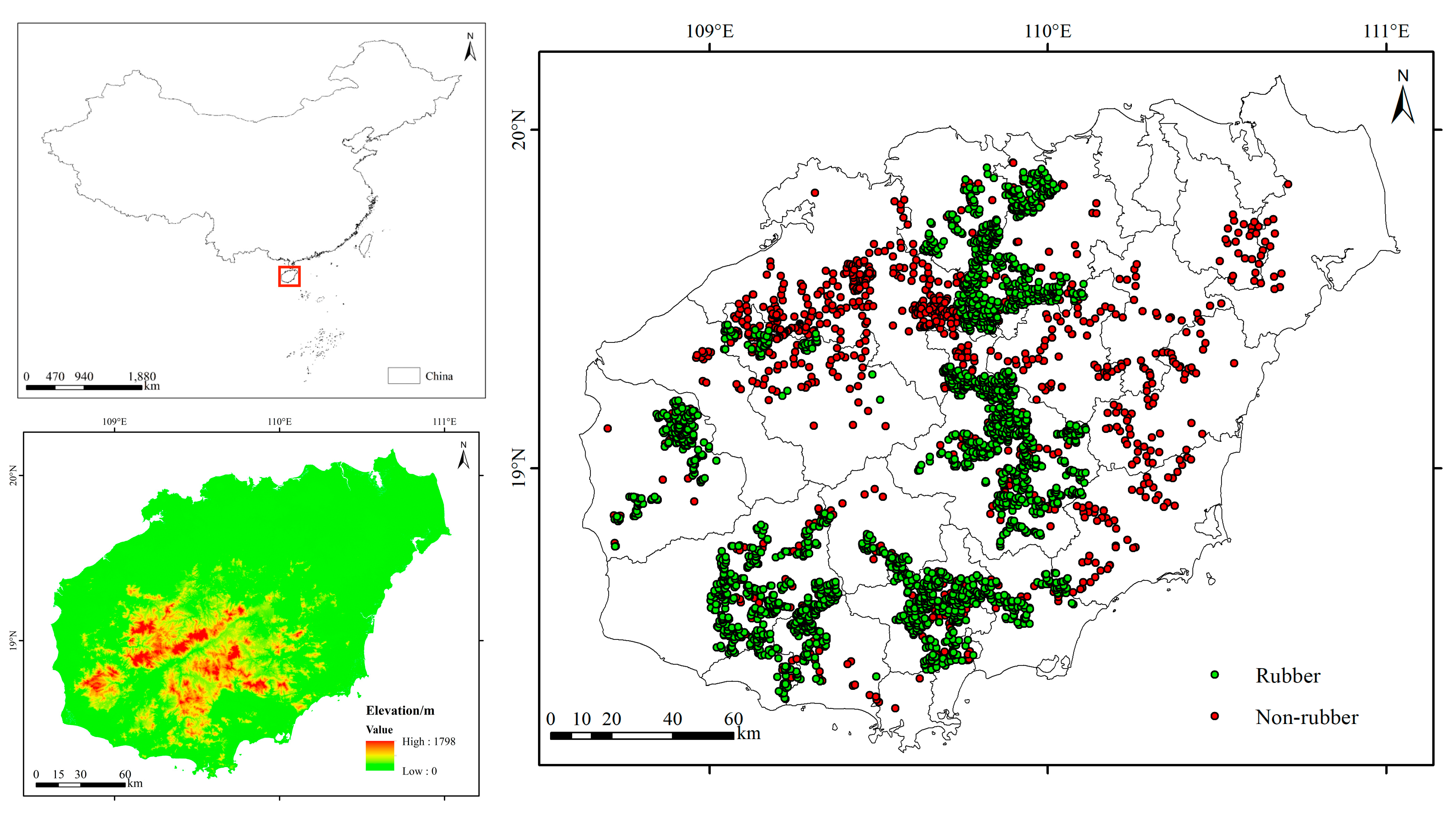
Hainan Island, the second largest island in China, is situated between 18°10′–20°10′ N and 108°37′–111°03′ E and covers a total area of approximately 33,900 km2 (Figure 1). Its topography is characterized by coastal plains and a mountainous, dome-shaped interior. The landscape comprises mountains, hills, plateaus, and plains, with mountains and hills collectively accounting for 38.7% of the total area [31]. Hainan experiences a maritime tropical monsoon climate, featuring distinct dry (November–April) and wet (May–October) seasons. The annual average temperature ranges from 22 °C to 27 °C, with sunshine duration between 1750 and 2650 h and annual rainfall of 1000–2600 mm. These favorable climatic conditions make Hainan a key region for rubber cultivation in China, second only to Yunnan Province. Geographically, rubber plantations are predominantly concentrated in the northwestern and central–southern parts of the Island, with major cultivation areas located in Danzhou City, as well as Qiongzhong, Baisha, and Chengmai Counties.

2.2. Data and Pre-Processing

2.2.1. Satellite Images

Landsat 8 Operational Land Imager (OLI) data, Sentinel-2 Multi-Spectral Instrument (MSI) data, Sentinel-1 C-band Synthetic Aperture Radar (SAR) data, and GaoFen-1 (GF-1) Panchromatic and Multi-Spectral (Pan/MSI) data were used in this study. Landsat 8, Sentinel-1/2 were available in the GEE platform, and the Landsat 8 and Sentinel-2 images were pre-processed for atmospheric correction, so the Landsat 8 and Sentinel-2 images of Hainan Island during 2021–2025 were cropped from these images archived in the GEE platform, and the corresponding bands were utilized to detect and remove the clouds in the images. For Sentinel-2 images, clouds in the images were detected using the QA60 band of the Sentinel-2 satellite, and the pixels with cloud coverage were removed. There are gaps in the single image obtained after cloud removal, and then the median method was used to merge the yearly images into one image by mosaicking, and the merged yearly image can fill the missing areas of data due to cloud removal by complementing each other with different images.
The peak growing season for rubber forests is generally from May to October each year. In this study, we used data from various sensors from March to October during 2021–2024 to extract the rubber planting areas, while in 2025, the data used only spanned January to July. According to statistical analysis, this study used multi-source data to supplement over 95% of the missing pixels caused by cloud removal each year, so the missing data has little impact on the extracted results. For the merged yearly image, we calculated the normalized difference vegetation index (NDVI) [32] using the following Equation (1):
N D V I = ( B n i r B r e d ) / ( B n i r + B r e d )
where B r e d and B n i r are red and near-infrared bands of Sentiel-2 image, respectively.
A key preprocessing step for the integration of Landsat 8 and Sentinel-2 was to address their differing spatial resolutions. The Landsat 8 imagery (30 m) was resampled to match the 10 m grid of Sentinel-2 using a bilinear interpolation method available in the GEE platform’s resample tool.
This study utilized Sentinel-1 Interferometric Wide Swath imagery from the GEE platform. The data was pre-processed to generate a calibrated, terrain-corrected backscatter coefficient (in dB) for both VV and VH polarizations. Subsequently, the images for each polarization were individually cropped and mosaicked to produce complete coverage of Hainan Island for the period 2021–2025.
GaoFen-1 (GF-1) imagery was acquired from the China Center for Resource Satellite Data and Application (http://www.cresda.cn, accessed on 12 October 2024). The GF-1 satellite has a 41-day revisit cycle and provides data at varying spatial resolutions: 2 m for the panchromatic band and 8 m for the multispectral bands. The pre-processing of GF-1 images was performed using ENVI 5.3 software. The procedure included radiometric calibration, atmospheric correction (using the FLAASH model), orthorectification, and projection definition. Subsequently, a Gram-Schmidt pan-sharpening technique [33] was applied to fuse panchromatic and multispectral bands, generating multispectral images at a 2 m spatial resolution. Finally, the processed data were imported into the GEE platform for mosaicking and cropping to produce seamless, multi-temporal GF-1 image composites of Hainan Island covering the period 2021–2025. The processed GF-1 images were used for visual interpretation to select verification samples and improve the extracted results.
To ensure spatial consistency, all datasets were georeferenced to the WGS84 coordinate system and unified under a common geographic framework. The specifications of the datasets used in this study are summarized in Table 1.

2.2.2. Auxiliary Data

A 30 m resolution Digital Elevation Model (DEM), obtained from the Geographic Remote Sensing Ecological Network Platform (http://www.gisrs.cn, accessed on 12 November 2024), was employed in this study to derive slope and elevation information for the study area. The data was obtained by splicing and correction processing using ASTER GDEM v3 in 2019 with the coordinate system of WGS84/EGM96. The DEM was first cropped to the extent of Hainan Island and subsequently resampled to 10 m resolution using a bilinear interpolation method within the GEE platform.
In addition, field survey data were collected from 2146 rubber planting sites across 29 farms on Hainan Island in 2022 to validate the extracted results. Figure 1 shows the distribution of this survey data.

2.3. Methods

2.3.1. Workflow

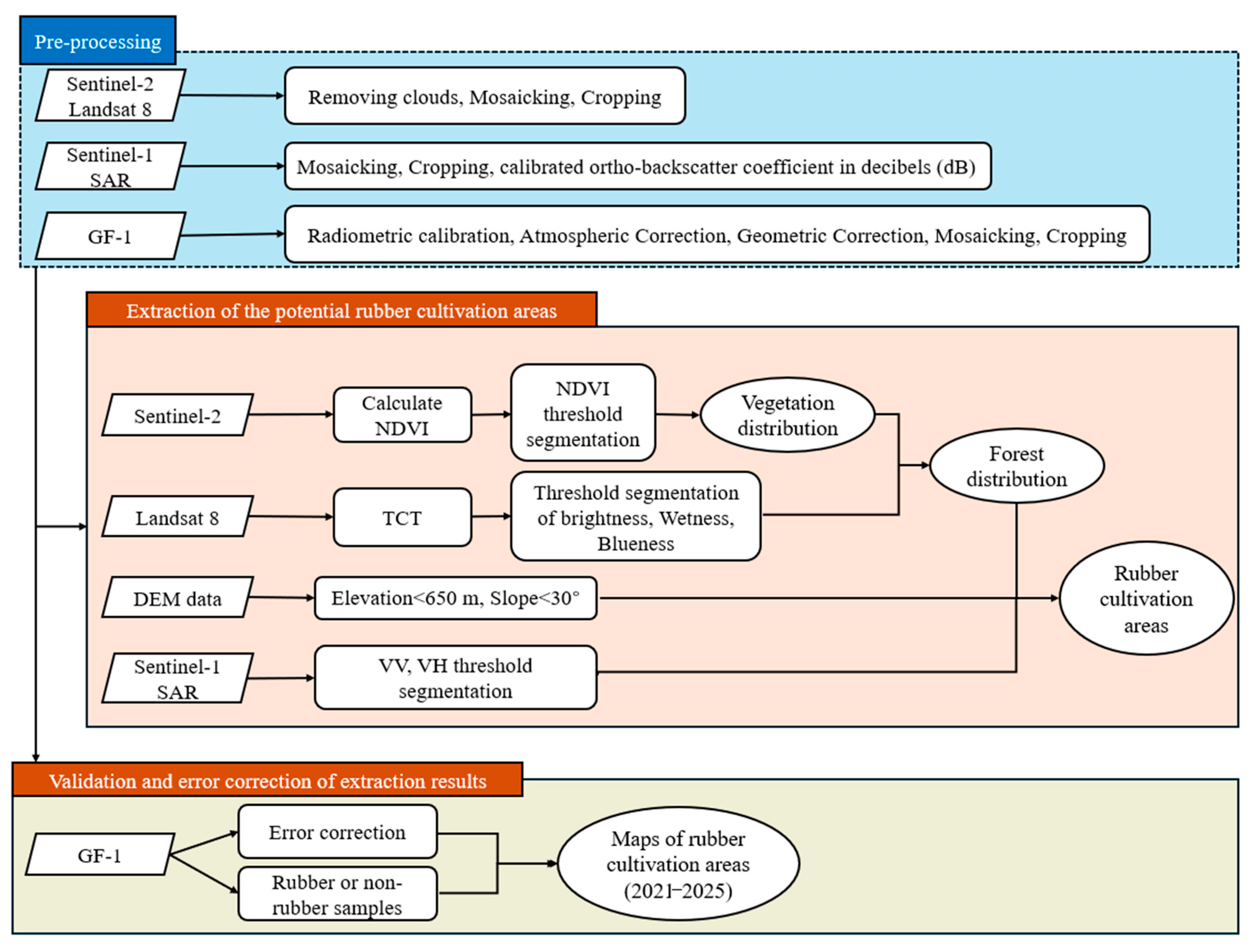
This study employed a multi-step segmentation methodology to map rubber plantations on Hainan Island from 2021 to 2025. The workflow illustrated in Figure 2 entailed calculating various indices and applying specific thresholds and comprised three main stages: (1) Data preprocessing: preparing the input datasets, including Sentinel-1/2, Landsat 8 and DEM data. (2) Rubber plantation extraction: executing a series of segmentations, including: NDVI thresholding of Sentinel-2 imagery using the Otsu algorithm [34], thresholding based on the Tasseled Cap Transformation (TCT) of Landsat 8 imagery [35], DEM-based terrain masking, and separate thresholding of Sentinel-1 VV and VH backscatter values. (3) Accuracy assessment: evaluating the precision and reliability of the final extraction results. This entire workflow was implemented within a single script on the GEE platform, enabling the efficient and automated extraction of multi-temporal rubber plantation maps.

2.3.2. Distinguishing Vegetation from Non-Vegetation Using NDVI Threshold Segmentation

In previous studies, it was noted that rubber forests have high NDVI values, while the NDVI values of paddy fields and drylands are very low, so it is possible to remove the disturbance of paddy fields, drylands, and sparse vegetation through the NDVI threshold segmentation [36]. In this study, the Otsu algorithm was used to threshold segmentation of NDVI calculated from Sentinel-2 images.
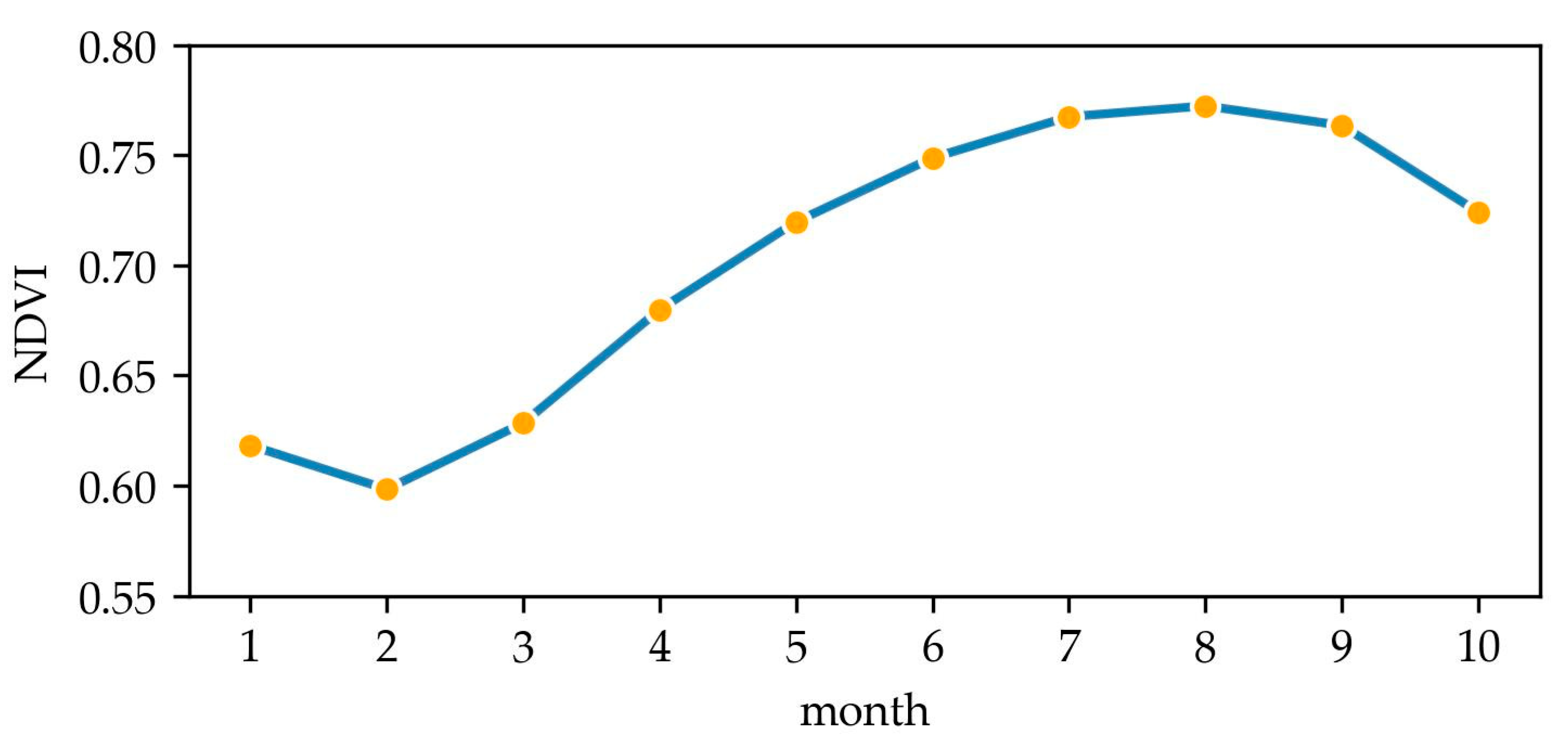
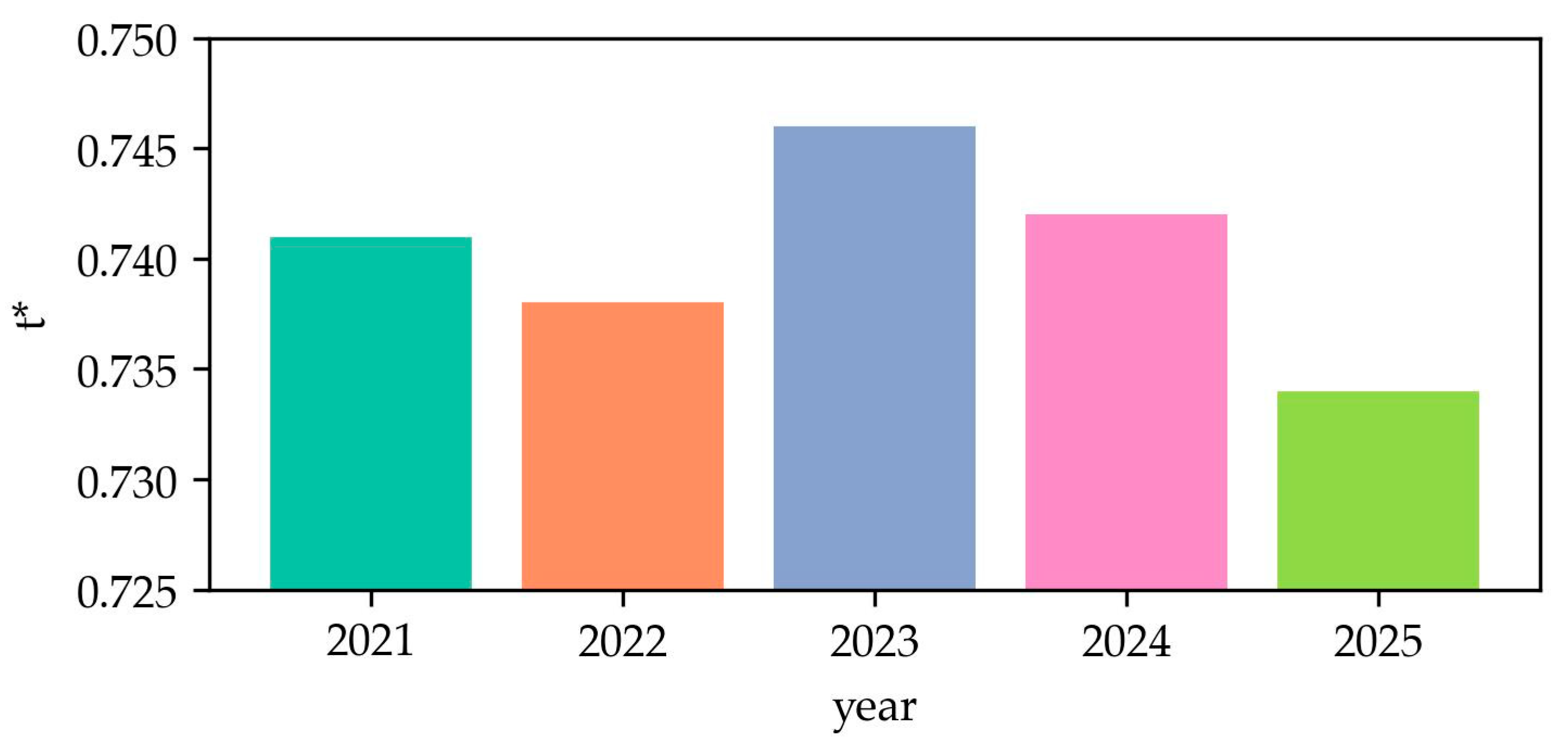
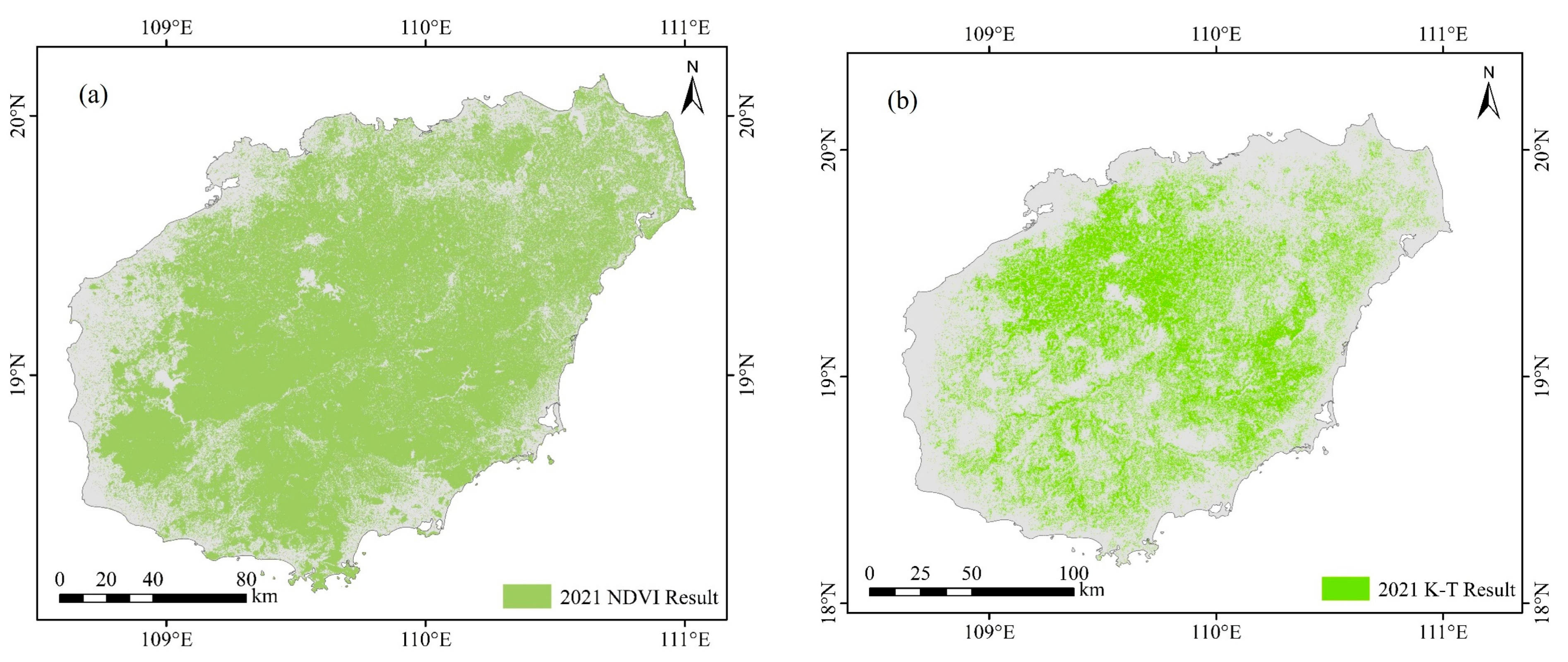
The Otsu algorithm establishes a functional relationship for a given band or band combination of a raster image, where the threshold t serves as the independent variable and the between-class variance as the dependent variable. The optimal threshold, denoted as t*, is identified as the value that maximizes this between-class variance [34]. In this study, the Otsu algorithm was applied to perform NDVI threshold segmentation on Sentinel-2 imagery of Hainan Island from 2021 to 2025. The optimal NDVI threshold range was determined to be 0.31–0.34, which effectively distinguishes between vegetation and non-vegetation areas. Subsequently, the Otsu algorithm was applied again to perform a secondary threshold segmentation on the vegetation areas. The optimal thresholds for different years ranged from 0.730 to 0.750, which effectively excluded agricultural land and sparse grassland, thereby enabling the extraction of target vegetation types such as other woodlands, dense grassland/shrubland, and rubber plantations. The interannual NDVI thresholds derived using the Otsu algorithm for 2021–2025 are presented in Figure 3. The threshold for 2025 is notably lower than that of the preceding years. The peak value occurred in 2023 (0.746), which is only 1.6% higher than the 2025 threshold. Although the 2021–2024 data span March to October and the 2025 data cover January to June, the observed interannual variation falls within a narrow range, suggesting that seasonal influences on the NDVI thresholds were limited in this study. Moreover, this study investigated the influence of phenological changes by analyzing monthly average NDVI values obtained from rubber plantation sample sites on Hainan Island from January to October 2022. As shown in the monthly NDVI variation graph (Figure 4), although NDVI values differ between the periods of January–March and April–October, the January–March imagery is used exclusively to fill out missing data. This study primarily utilized data from April and later, and the NDVI values of rubber trees remained between 0.65 and 0.80 from March to October. These minor fluctuations had a negligible impact on the remote sensing imagery used in this study.
A key limitation of the secondary threshold segmentation was its inability to reliably separate forested areas from dense grasslands and shrubs, although it effectively filtered out agricultural land and sparse grassland. This ambiguity indicates that spectral indices alone are inadequate, and the vegetation map must be supplemented with additional feature data for accurate discrimination.

2.3.3. Distinguishing Forested and Non-Forested Land Using the Tasseled Cap Transformation in Landsat 8 Imagery

The Tasseled Cap Transformation (TCT) is a variant of Principal Component Analysis (PCA). However, unlike standard PCA, the TCT uses a fixed transformation matrix. Using this fixed transformation matrix, the original image is transformed into three key components: Brightness, Greenness and Wetness. These components correspond to the characteristics of bare soil/rock, vegetation cover and moisture content, respectively. Thus, TCT effectively reduces data dimensionality while enhancing the interpretability of image information. Its equation is as follows:
Y = C X
where Y is the target image, C is the matrix of transform coefficients and X is the input image. Once the transformation matrix coefficients are determined, the TCT can be applied. These coefficients are sensor-specific, meaning that different satellite sensors require unique sets of coefficients for the transformation. In this study, we applied the TCT to annual Landsat 8 composite images from 2021 to 2025, using the at-satellite reflectance coefficients for Landsat 8 [35]. The transformation was implemented in the GEE platform using the arrayFlatten() method to derive the Brightness, Greenness, and Wetness components. Subsequently, we generated a Brightness–Greenness–Wetness pseudo-color composite for Hainan Island from the transformed results.
Based on Landsat 8 TCT imagery, Liu et al. [36] defined the characteristic values for rubber forests as Brightness > 140, Greenness > 20, and Wetness < −70. They validated these thresholds with field measurements, demonstrating their high reliability. In this study, the probe analysis tool in ENVI software was employed to detect the characteristic values of Brightness, Greenness, and Wetness at the rubber plantation survey sites. The results indicate that rubber forests exhibit high Brightness, very high Greenness, and low Wetness. This notably high Greenness serves as a key indicator to distinguish rubber forests from other vegetation types, such as farmland and shrubland. While rubber forests share a similar level of Greenness with other forests, they can be differentiated by their higher Brightness and lower Wetness. Although Wetness is relatively low for a forest ecosystem, it remains higher than that of croplands, such as paddy fields. The value ranges for these features across different land cover types are summarized in Table 2. Threshold segmentation based on these values provides an effective means to separate forested and non-forested areas.
Figure 5 presents a comparison of TCT and NDVI segmentation results for 2021. The analysis of Figure 5 indicates that rubber forests are characterized by Brightness > 132, Greenness > 20, and Wetness < −5. Consequently, these TCT thresholds can be applied to the NDVI-masked image to perform a subsequent segmentation. This process effectively mitigates interference from paddy fields, grasslands, and shrublands, thereby delineating rubber plantations. However, residual confusion with other forest types can still be present.

2.3.4. Accurate Extraction of Rubber Plantation Extent

To exclude mountain forests, we used DEM data, leveraging the preference of rubber plantations for flatter terrain. Areas with an elevation below 650 m and a slope under 30 degrees were classified as suitable for rubber plantations [36]. This terrain mask was created from the pre-processed Hainan Island DEM. It eliminated woodlands in steep, high-elevation areas. Thus, the only remaining woodlands that caused interference with the rubber extraction results were those in areas of gentle terrain and lower elevations.
According to Sari et al. [25], the backscattering coefficients of rubber plantations in Sentinel-1 imagery typically range from −8.5 dB to −6 dB for VV polarization and from −14 dB to −12 dB for VH polarization. These thresholds were determined through field work and analysis of key parameters such as planting density, tree height, and crown coverage. Consequently, rubber plantation areas were extracted by applying the Sentinel-1 VV and VH thresholds to the DEM-masked layer. This study utilized 2146 field-measured sample points to extract VV and VH backscatter values from Sentinel-1 satellite data in 2022. Statistical analysis showed that 1931 points (89.98% of the total) fell within the dB range of −8.5 to −6 for VV and −14 to −12 for VH. The high concentration of data within these ranges confirms that they are representative and reasonable. The resulting maps were then validated and refined through visual inspection against high-resolution GF-1 imagery, yielding an accurate final distribution of rubber plantations.

2.3.5. Accuracy Validation Method

The accuracy of the classification was quantified using a confusion matrix, a widely adopted verification method in remote sensing [26]. In this study, 2146 rubber plantation samples from 29 farms on Hainan Island in 2022 were used to evaluate classification accuracy. Using these samples in conjunction with those from annual stratified/visual interpretation of high-resolution Google Earth imagery, we performed a spatially independent validation on the same image sequence and subsequently calculated the extraction accuracy and confidence intervals. For the relatively stable rubber plantations, sample points for rubber were selected directly within established plantation farms. In contrast, due to the heterogeneous nature of non-rubber land covers, 1610 non-rubber samples were selected using a stratified random approach to ensure representative coverage. The accuracy of the extraction results was assessed using overall accuracy (OA), producer’s accuracy (PA), user’s accuracy (UA), the kappa coefficient, and the F1-score.

3. Results

3.1. Accuracy Assessment of Rubber Plantations

The accuracy of the rubber plantation extraction for Hainan Island from 2021 to 2025 was evaluated using a confusion matrix, with the results summarized in Table 3. As shown, the extraction achieved high accuracy across all years: with a Cls consistently above 97%, the Overall Accuracy exceeded 90%, the Kappa coefficient was greater than 0.85, and the F1-score surpassed 0.93.

3.2. Extraction Results of Rubber Plantation Areas

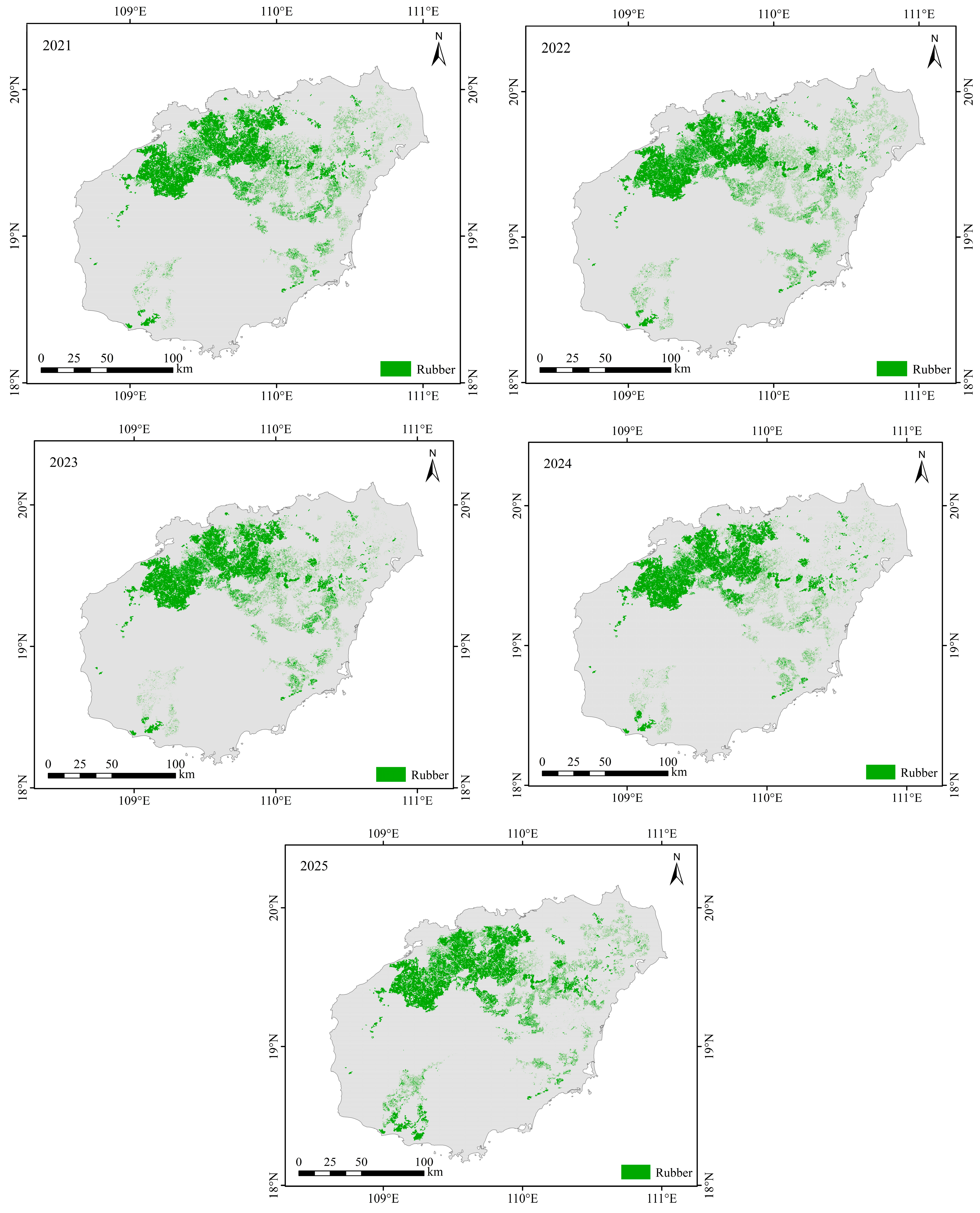
This study integrated multi-source remote sensing data—including Sentinel-2 NDVI, Landsat-8 TCT components (Brightness, Greenness, Wetness), Sentinel-1 backscattering coefficients (VV, VH), and DEM-derived topography—to map rubber plantations on Hainan Island from 2021 to 2025. We implemented a multi-stage threshold segmentation methodology, with results refined through manual correction using high-resolution GF-1 imagery. The resulting distribution maps (Figure 6) reveal that rubber plantations are predominantly concentrated in the northwestern and northern regions of the island.
The rubber plantation area on Hainan Island from 2021 to 2025 was quantified and is presented in Table 4. From the table, during the period spanning 2021 to 2022, the rubber plantation area of Hainan Island remained relatively stable, with minimal fluctuations observed, indicating a consistent state of cultivation and management practices during those two years. However, a notable shift occurred in the subsequent years, from 2023 to 2024, during which the rubber plantation area experienced a decline. This reduction was particularly pronounced in 2024, where the area decreased by nearly 150 km2 compared to the previous year, reflecting potential challenges such as environmental factors (e.g., typhoons), policy adjustments, or shifts in agricultural priorities. This downward trend reversed sharply in 2025, with an increase of approximately 300 km2, suggesting a resurgence in cultivation efforts, possibly driven by renewed investment, favorable climatic conditions, or strategic initiatives aimed at boosting rubber production on the island [37]. According to the 2024 Hainan Statistical Yearbook, the official rubber planting areas for 2021–2023 were 5126.13 km2, 5185.90 km2, and 5232.39 km2, with harvested areas of 4043.27 km2, 3960.32 km2, and 4113.75 km2. Compared to these official figures, our study’s estimates for total planting area and harvested area show differences of about 10% and 12%, respectively. The discrepancy between our results and the Statistical Yearbook can be attributed to two main factors. First, our study specifically extracts mature rubber plantations using remote sensing, whereas the Yearbook’s total planting area includes both mature and immature stands, leading to its higher figures. Conversely, due to the limited resolution and canopy penetration of optical imagery, our extraction may include non-productive features like forest roads or gaps within dense plantations. This could cause our estimated mature area to exceed the Yearbook’s harvested area, which solely represents productive mature rubber. Finally, our results align with the rubber area (4570.00 km2) reported by Chen et al. using MODIS data [38].
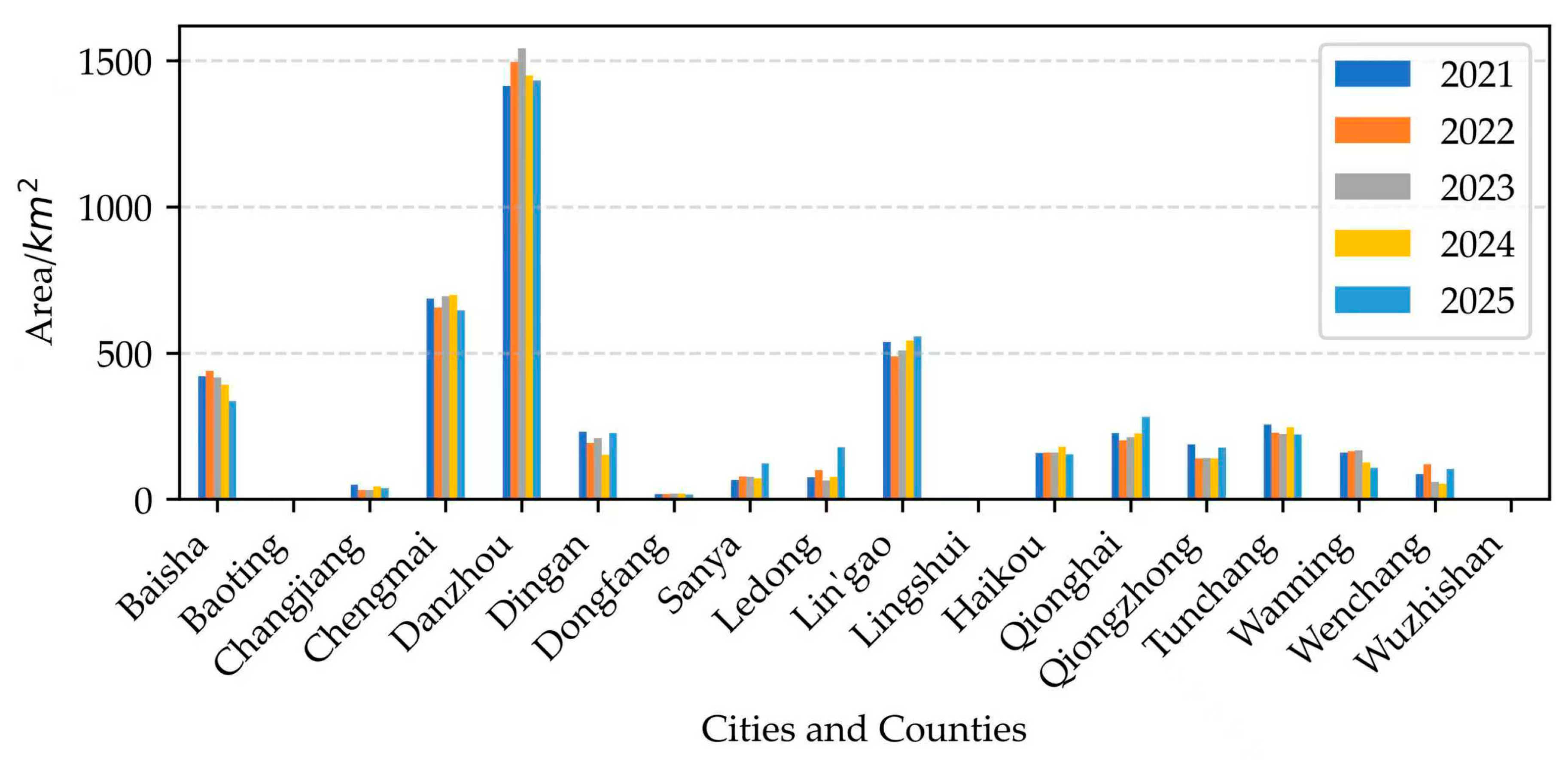
The statistics of rubber planting areas in various cities and counties in Hainan Province for 2021 to 2025 are shown in Figure 7.
Statistical analysis of rubber plantation areas across Hainan’s cities and counties for 2024 and 2025 shows that Danzhou accounted for the largest area, while regions like Baoting and Wuzhishan had minimal cultivation. This distribution correlates strongly with geographic, topographic, and industrial factors. For example, the rugged terrain of Wuzhishan makes planting and harvesting difficult, limiting its plantation area. Conversely, in Wenchang, the widespread aquaculture industry has displaced rubber plantations, reducing their extent.

4. Discussion

4.1. Applicability of Multi-Resolution Remote Sensing Data for Rubber Plantation Mapping

Many studies have shown that the area of a specific land cover type is closely linked to the satellite data utilized. The rubber plantation areas identified and produced by the Sentinel-2, Landsat 8, GF-1, and Sentinel-1 satellite systems exhibited significant differences. These variations were evident in the spatial coverage, accuracy of boundary delineation, and the level of detail captured in the resulting land cover maps. Sentinel-2, with its high-resolution multispectral imagery and frequent revisit time, provided more precise delineation of small to medium-sized rubber plots, capturing subtle variations in canopy structure and health. Landsat 8, offering a balance of spatial resolution and temporal coverage, delivered consistent large-scale mapping capabilities but sometimes struggled with distinguishing rubber plantations from adjacent agricultural lands in complex landscapes. GF-1 contributed detailed imagery that enhanced the detection of newly established rubber plantations, though cloud cover occasionally limited data availability. Sentinel-1, utilizing synthetic aperture radar (SAR) technology, proved invaluable for all-weather monitoring, penetrating cloud cover and vegetation to provide reliable information on rubber plantation extent even during rainy seasons or periods of persistent cloudiness. The differences in sensor characteristics—such as spectral bands, spatial resolution, revisit cycles, and penetration capabilities—led to discrepancies in area estimates, with some sensors overestimating or underestimating plantation size based on their ability to differentiate rubber trees from other land uses like forests, croplands, or bare soil. Additionally, variations in image processing algorithms and classification thresholds applied to each dataset further contributed to the observed differences, highlighting the importance of selecting appropriate satellite data sources based on specific mapping objectives and environmental conditions. With the increase in spatial resolution, the extraction results of rubber plantations became more detailed. Landsat 8 image at 30 m resolution may be insufficient to capture small-scale or fragmented rubber plantation areas, but the combined use of Sentinel-1, Sentinel-2, Landsat 8 and GF-1 can effectively extract the small-scale or fragmented rubber plantation areas.
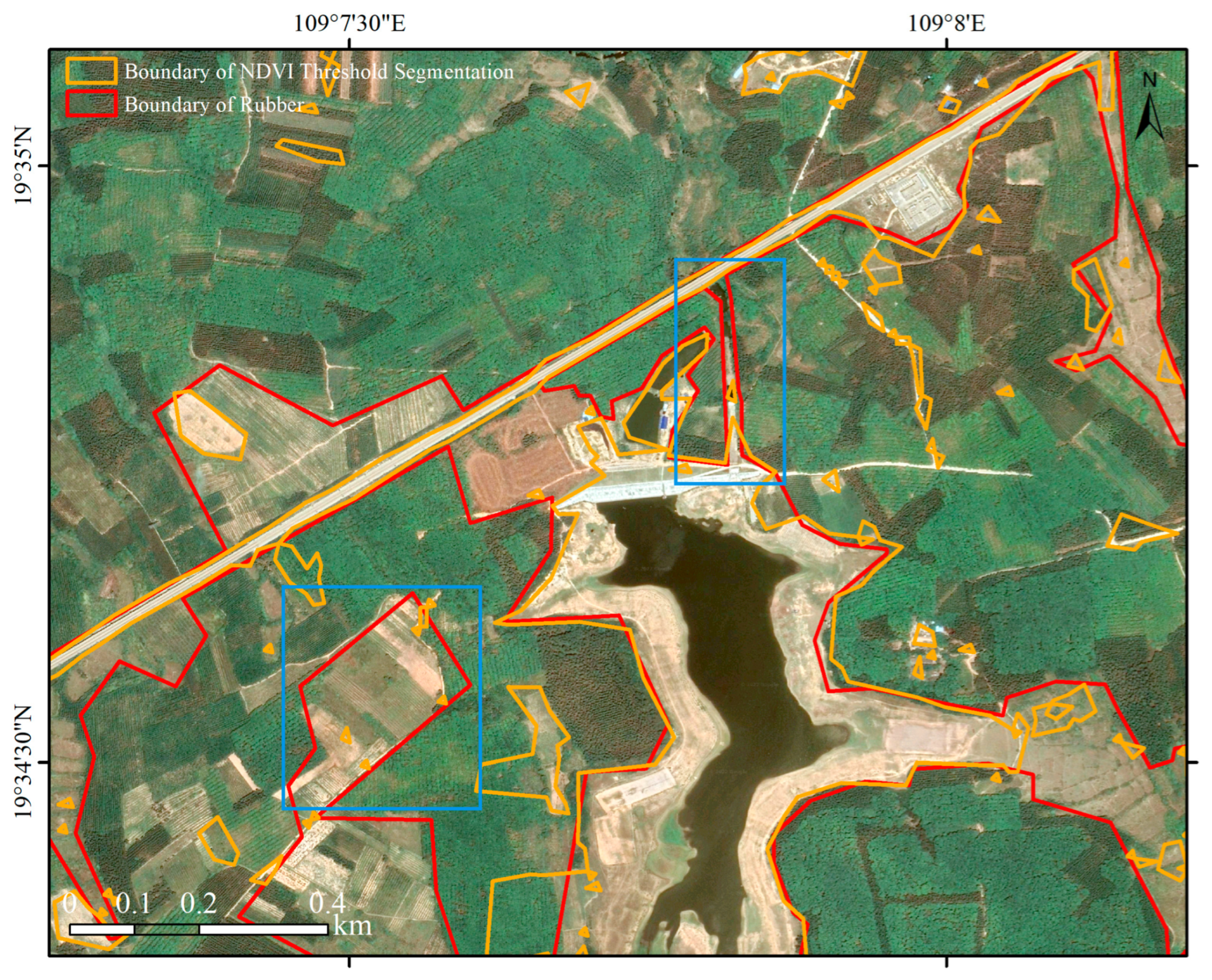
These multi-sensor datasets leverage complementary strengths in spatial resolution, temporal coverage, spectral diversity, and all-weather imaging to overcome individual limitations, thereby improving the accuracy and completeness of extracting small-scale or fragmented rubber plantation areas from complex landscapes. However, when data with different resolutions are used jointly, errors can occur in the fusion or registration process, thus affecting the accurate extraction of rubber plantation areas. For instance, high-resolution satellite imagery capturing detailed tree canopy structures may be misaligned with lower-resolution land cover maps that aggregate vegetation types over larger pixels, leading to spatial mismatches where rubber trees are incorrectly classified as other broadleaf species. These registration errors manifest as blurred boundaries between rubber stands and non-rubber vegetation, while fusion artifacts may result in overestimation of rubber area by merging partial canopy pixels from high-resolution data with broader land use categories from low-resolution datasets. Such inaccuracies propagate through subsequent analysis steps, undermining the reliability of rubber plantation extent maps used for monitoring deforestation, yield estimation, and sustainable management planning. For instance, the fusion of Landsat 8 with its 30 m spatial resolution and Sentinel-2 with 10 m resolution will introduce subtle yet significant variations in the delineation of rubber plantation boundaries, as each satellite sensor captures land cover features through distinct spectral bands and imaging geometries. These differences manifest in the way edges between rubber plantations and adjacent land uses are defined; Landsat 8’s coarser pixel size may blur transitional zones, while Sentinel-2’s higher resolution can capture more detailed textural patterns of rubber tree canopies, leading to discrepancies in the precise location of plantation edges. Such boundary variations, in turn, influence the ability of each dataset to accurately recognize and classify rubber plantation areas. Consequently, these differential recognition capabilities directly impact the accuracy of rubber plantation extraction results, with potential overestimation or underestimation of plantation extent. As shown in the blue box in Figure 8, the 2 m resolution GF-1 data supplies details such as narrow forest roads and patches of immature rubber forests characterized by shorter, lighter-colored vegetation canopies that could not be distinguished by the 10 m resolution Sentinel-2 data.
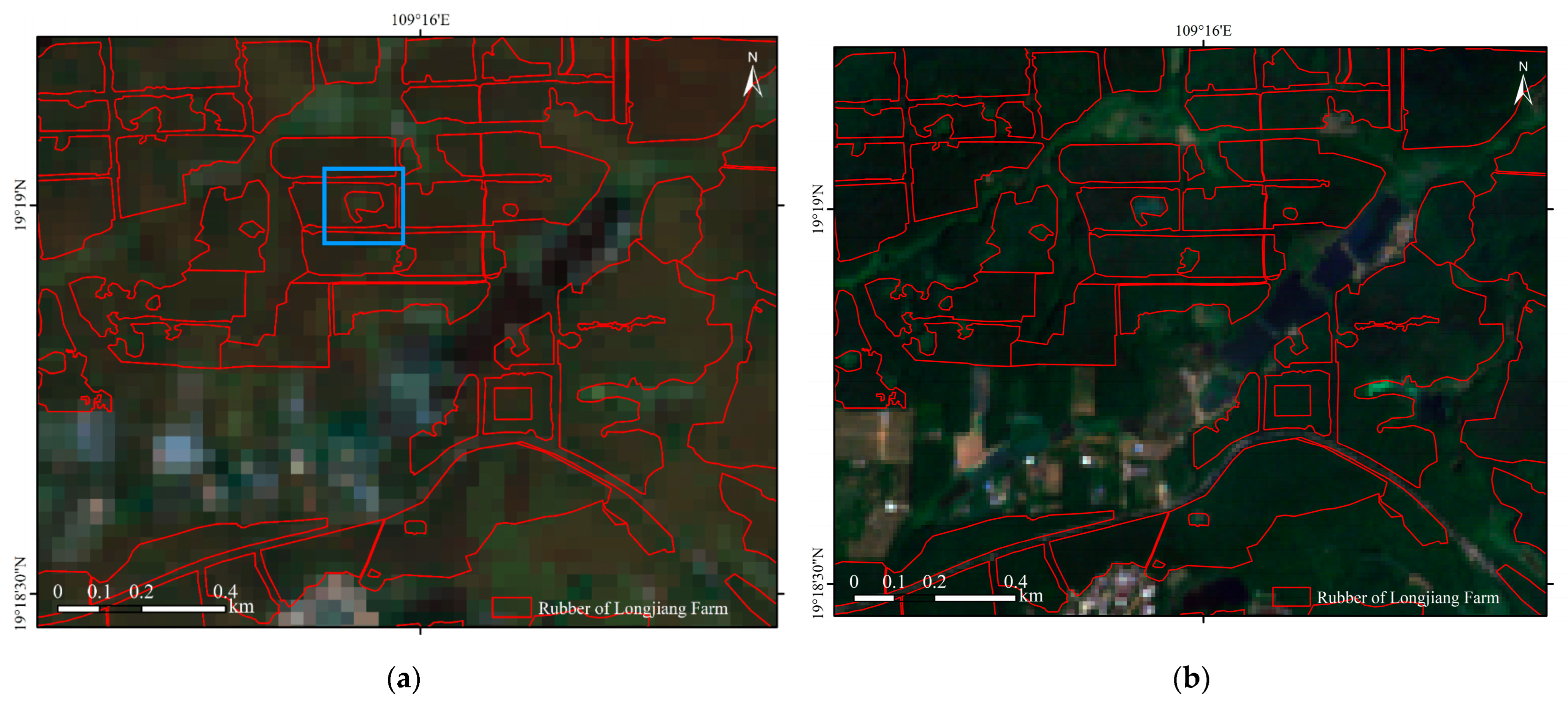
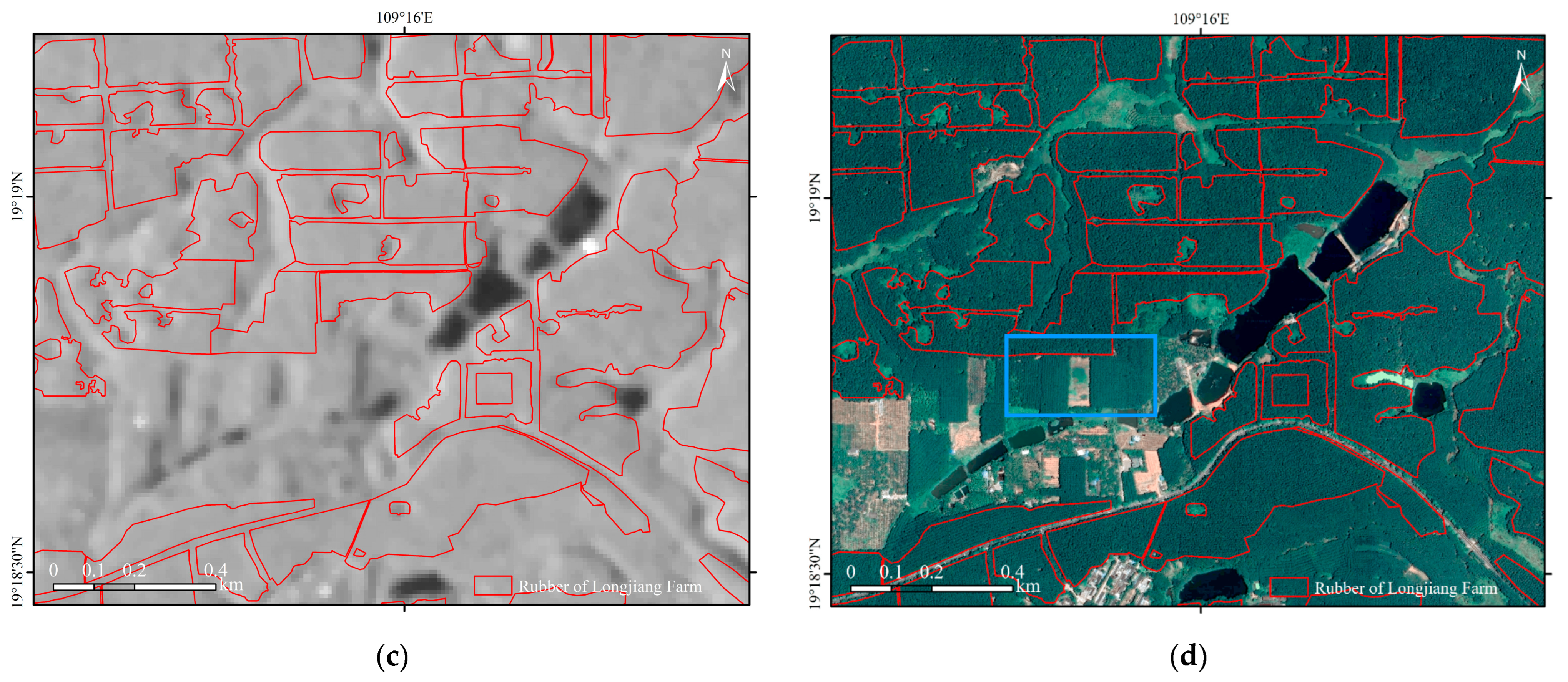
The accuracy of rubber plantation area extraction is influenced by several key properties of the remote sensing data. Critical considerations include spatial resolution, which determines the detectability of smallholder plots; spectral resolution, which affects the ability to discriminate rubber from other tree species [39,40]; and temporal resolution, which captures crucial phenological signals [41,42]. Furthermore, the typical patch size of the target plantations must be considered to ensure they are compatible with the sensor’s spatial resolution. While the 2 m GF-1 imagery, with its finer pixel size, renders rich spatial details ideal for visual interpretation and was consequently used to manually correct extraction errors in this study, its high spatial resolution introduces significant spectral variability within land cover classes. This inherent heterogeneity often compromises the performance of automated classification algorithms, thereby limiting GF-1’s advantage for the direct, automated extraction of rubber plantations. The fusion of multi-spectral Sentinel-2 and Landsat 8 imagery yielded a composite with 10 m spatial resolution that significantly enhanced the mapping of rubber plantations. This integrated approach leveraged complementary spectral information to capture subtle variations in vegetation structure and canopy density, leading to superior classification accuracy and more precise boundary delineation, particularly for continuous, large-scale plantations. The 10 m resolution proved optimal, balancing sufficient spatial detail for defining plantation edges with the rich spectral data necessary for reliable species discrimination. Moreover, frequent cloud cover poses a significant challenge for generating accurate and detailed images in tropical and subtropical regions. These clouds, which can range from wispy cirrus formations to dense cumulonimbus systems, frequently block the line of sight between satellite sensors and the ground, leading to gaps in the data collected over specific time periods. Such missing data for some time periods can affect the continuity of the time series, leading to uncertainty in the extraction of the rubber plantation. The comparison between each data source and the boundary of Longjiang Farm rubber plantation is shown in Figure 9. Comparing Figure 9a and Figure 9b, it is evident that Sentinel-2 has excluded some forest grasslands that were misclassified due to insufficient Landsat-8 resolution, as shown in the blue box in Figure 9a. The higher spatial resolution of Sentinel-2, with its 10 m pixel size, allows for more precise differentiation of vegetation types, capturing finer details of tree canopy structure and ground cover that Landsat-8’s 30 m resolution could not resolve, thereby reducing the inclusion of non-forest grassland areas that were incorrectly identified as forest in the lower-resolution data. Similarly, GF-1 and Sentinel-1 data provide visual interpretation references and backscatter coefficient characteristics for distinguishing between immature rubber forests or fully mature rubber forests, respectively, which can clearly distinguish between immature rubber forests and fully mature rubber forests. GF-1, with its high-resolution optical imagery, offers detailed visual cues such as leaf color, canopy density, and understory vegetation patterns, while Sentinel-1’s synthetic aperture radar (SAR) data provides backscatter coefficients that vary based on the structural properties of the rubber trees—immature trees typically have less dense canopies and smoother surfaces, leading to lower backscatter values [43], whereas mature trees with thicker, more textured canopies produce higher backscatter. The visual characteristics of immature rubber forests are smoother than those of mature rubber forests, as shown in the blue box in Figure 9d; immature stands exhibit a more uniform, less cluttered appearance with shorter, sparser foliage, while mature stands display a denser, more varied canopy with taller trees and a more complex vertical structure, creating a rougher visual texture when observed in high-resolution imagery.

4.2. Comparison of Classification Method Used in This Study with Other Methods

This study employed a multi-step threshold segmentation classification method to map rubber plantations on Hainan Island. To evaluate the extraction performance of our approach, we compared it with alternative classification methods such as Random Forest (RF) and Support Vector Machine (SVM). Using 2022 imagery and field measurements, we assessed the extraction accuracy of each method. Table 5 presents a comparison of the overall accuracy, Kappa coefficient and F1-score of rubber extraction in 2022 using this method with RF and SVM. Compared to other classification methods, the approach used in this study demonstrates consistency, with similar values for the OA, Kappa coefficient, and F1-score, while exhibiting a slight advantage. This indicates that the workflow developed in this study is feasible.

4.3. Influence of Rubber Plantation Patterns and Environments on Extraction Results

The similarity in spectral characteristics between rubber trees and other vegetation, such as other economic forests like tea plantations and oil palm groves, as well as various crops including sugarcane and maize, leads to confusion when extracting rubber plantation areas through remote sensing imagery. Rubber trees, with their broad, glossy leaves and dense canopy structure, often exhibit spectral reflectance patterns that closely resemble those of other evergreen or semi-evergreen tree species, making it challenging for automated classification algorithms to distinguish them based solely on color and texture cues. In addition, the phenological features of rubber forests vary with seasons, so the analysis of time series by year cannot accurately capture these variations, which may affect the extraction accuracy of rubber plantation areas. During the dry season, rubber trees may show reduced leaf moisture content, altering their near-infrared reflectance, while in the wet season, increased leaf expansion and chlorophyll content can shift their spectral signature towards that of other lush vegetation. These seasonal fluctuations, combined with the lack of high-frequency temporal data (e.g., monthly rather than annual observations), result in missed phenological windows that are critical for differentiating rubber from similar crops, thereby introducing errors in the delineation of rubber plantation boundaries and potentially undercounting or overcounting their actual extent. Furthermore, rubber plantation patterns (e.g., rubber monoculture or intercropping with other crops) and environments (e.g., plain planting or mountain planting) vary significantly in different regions, and the direct extraction of rubber plantation areas using trained models or validated algorithms may be limited by a variety of factors, which may lead to uncertainty in extraction results. These factors include spectral confusion with other broadleaf tree species, seasonal variations in leaf phenology affecting reflectance patterns, cloud cover and atmospheric interference in satellite imagery, complex topographic features altering image geometry, and the presence of mixed land use pixels where rubber trees are interspersed with non-rubber vegetation or agricultural fields. Therefore, the future study will address these limitations and impacts, focusing on obtaining high resolution images—such as those from advanced satellite sensors with sub-meter spatial resolution or unmanned aerial vehicle (UAV) imagery capturing detailed canopy textures and structural characteristics—and establishing more appropriate method for precise extraction of rubber plantation areas on Hainan Island, including integrating multi-source data (e.g., LiDAR for 3D canopy structure, hyperspectral data for species-specific spectral signatures, and ground-truth field surveys to calibrate models), developing region-specific machine learning algorithms tailored to Hainan’s unique ecological conditions, and validating results through rigorous cross-validation techniques to enhance accuracy and reduce uncertainty.

5. Conclusions

Since rubber production became a key indicator for evaluating the economic and social development of Hainan Province in 1978, its output has increased from 67,000 tons in 1978 to over 300,000 tons in recent years. As a result, accurately tracking rubber plantations and estimating their planted area have become increasingly important [31]. This study developed a workflow on the GEE platform to map rubber plantations via integrated multi-source remote sensing imagery and DEM data for Hainan Island. High-accuracy maps of rubber planting areas for Hainan Island during 2021–2025 were produced through a multi-step threshold segmentation method employing the Otsu algorithm. This approach achieved an extraction accuracy of over 90% for rubber plantations. Our findings indicate that integrating multi-source remote sensing data with a methodology customized to local terrain conditions is key to the successful extraction of rubber plantations. Furthermore, this study demonstrated that seasonal variation has little impact on the thresholds used in rubber extraction. For instance, the difference in NDVI thresholds between dry and wet seasons is merely 1.6%. The primary factors affecting extraction accuracy are the growth stage of the rubber forests and the algorithm employed. Consequently, special attention must be given to the treatment of immature rubber plantations during the extraction process. The mature rubber forest dataset generated in this study can support subsequent rubber production estimation [44], thereby providing valuable data for the development of Hainan’s rubber industry. The distribution map reveals a concentration of rubber plantations in Northwestern and Northern Hainan Island. This dataset provides a critical basis for sustainable management and ecological monitoring. When applying this method to other geographic regions for rubber plantation mapping, it is essential to incorporate local topographic data for corresponding parameter calibration. Furthermore, local validation must be conducted to verify that the thresholds for the TCT components (Brightness, Greenness, and Wetness) and VV/VH ratios are appropriate for the specific conditions of the target area.

Author Contributions

Conceptualization, J.L.; methodology, X.L. and J.L.; software, X.L.; validation, X.L. and R.J.; formal analysis, X.L., J.L. and R.J.; investigation, X.L., J.L. and R.J.; resources, J.L., H.Y. and L.T.; data curation, X.L.; writing—original draft preparation, X.L., J.L. and R.J.; writing—review and editing, X.L., J.L. and R.J.; visualization, X.L.; supervision, J.L.; project administration, J.L. and H.Y.; funding acquisition, J.L. and H.Y. All authors have read and agreed to the published version of the manuscript.

Funding

This work was supported by the Project of Hainan Province Science and Technology Special Fund (Grant No. ZDYF2025GXJS006, ZDYF2024XDNY196).

Data Availability Statement

The original contributions presented in this study are included in the article. Further inquiries can be directed to the corresponding author.

Acknowledgments

We would like to thank the anonymous reviewers for their constructive comments.

Conflicts of Interest

The author Lingling Teng was employed by the Hainan State Farms Natural Resources Development Group Co., Ltd. The remaining authors declare that the research was conducted in the absence of any commercial or financial relationships that could be construed as potential conflicts of interest.

References

  1. Grogan, K.; Pflugmacher, D.; Hostert, P.; Mertz, O.; Fensholt, R. Unravelling the link between global rubber price and tropical deforestation in Cambodia. Nat. Plants 2019, 5, 47–53. [Google Scholar] [CrossRef]
  2. Ziegler, A.D.; Fox, J.M.; Xu, J. The rubber juggernaut. Science 2009, 324, 1024–1025. [Google Scholar] [CrossRef] [PubMed]
  3. Blickensdörfer, L.; Schwieder, M.; Pflugmacher, D.; Nendel, C.; Erasmi, S.; Hostert, P. Mapping of crop types and crop sequences with combined time series of Sentinel-1, Sentinel-2 and Landsat 8 data for Germany. Remote Sens. Environ. 2022, 269, 112831. [Google Scholar] [CrossRef]
  4. Grogan, K.; Pflugmacher, D.; Hostert, P.; Kennedy, R.; Fensholt, R. Cross-border forest disturbance and the role of natural rubber in mainland Southeast Asia using annual Landsat time series. Remote Sens. Environ. 2015, 169, 438–453. [Google Scholar] [CrossRef]
  5. Azizan, F.A.; Kiloes, A.M.; Astuti, I.S.; Abdul Aziz, A. Application of Optical Remote Sensing in Rubber Plantations: A Systematic Review. Remote Sens. 2021, 13, 429. [Google Scholar] [CrossRef]
  6. Dibs, H.; Hussain, T.H. Estimation and Mapping the Rubber Trees Growth Distribution using Multi Sensor Imagery with Remote Sensing and GIS Analysis. J. Univ. Babylon Pure Appl. Sci. 2018, 26, 109–123. [Google Scholar]
  7. Hazir, M.H.; Muda, T.M. The viability of remote sensing for extracting rubber smallholding information: A case study in Malaysia. Egypt. J. Remote Sens. Space Sci. 2020, 23, 35–47. [Google Scholar] [CrossRef]
  8. Zhang, C.; Huang, C.; Li, H.; Liu, Q.; Li, J.; Bridhikitti, A.; Liu, G. Effect of Textural Features in Remote Sensed Data on Rubber Plantation Extraction at Different Levels of Spatial Resolution. Forests 2020, 11, 399. [Google Scholar] [CrossRef]
  9. Özdogan, M.; Baird, I.G.; Dwyer, M.B. The Role of Remote Sensing for Understanding Large-Scale Rubber Concession Expansion in Southern Laos. Land 2018, 7, 55. [Google Scholar] [CrossRef]
  10. Gao, S.; Liu, X.; Bo, Y.; Shi, Z.; Zhou, H. Rubber Identification Based on Blended High Spatio-Temporal Resolution Optical Remote Sensing Data: A Case Study in Xishuangbanna. Remote Sens. 2019, 11, 496. [Google Scholar] [CrossRef]
  11. Wang, Y.; Hollingsworth, P.M.; Zhai, D.; West, C.D.; Green, J.M.; Chen, H.; Hurni, K.; Su, Y.; Thomas, E.W.; Xu, J.; et al. High-resolution maps show that rubber causes substantial deforestation. Nature 2023, 623, 340–346. [Google Scholar] [CrossRef]
  12. Razali, S.M.; Marin, A.; Nuruddin, A.A.; Shafri, H.Z.M.; Hamid, H.A. Capability of Integrated MODIS Imagery and ALOS for Oil Palm, Rubber and Forest Areas Mapping in Tropical Forest Regions. Sensors 2014, 14, 8259–8282. [Google Scholar] [CrossRef]
  13. Li, Z.; Fox, J.M. Mapping rubber tree growth in mainland Southeast Asia using time-series MODIS 250 m NDVI and statistical data. Appl. Geogr. 2012, 32, 420–432. [Google Scholar] [CrossRef]
  14. Razak, J.A.B.A.; Shariff, A.R.B.M.; Ahmad, N.B.; Ibrahim Sameen, M. Mapping rubber trees based on phenological analysis of Landsat time series datasets. Geocarto Int. 2018, 33, 627–650. [Google Scholar]
  15. Chen, B.; Xiao, X.; Wu, Z.; Yun, T.; Kou, W.; Ye, H.; Lin, Q.; Doughty, R.; Dong, J.; Ma, J.; et al. Identifying establishment year and pre-conversion land cover of rubber plantations on Hainan Island, China using Landsat data during 1987–2015. Remote Sens. 2018, 10, 1240. [Google Scholar] [CrossRef]
  16. Ye, S.; Rogan, J.; Sangermano, F. Monitoring rubber plantation expansion using Landsat data time series and a Shapelet-based approach. ISPRS J. Photogramm. 2018, 136, 134–143. [Google Scholar] [CrossRef]
  17. Fan, H.; Fu, X.; Zhang, Z.; Wu, Q. Phenology-Based Vegetation Index Differencing for Mapping of Rubber Plantations Using Landsat OLI Data. Remote Sens. 2015, 7, 6041–6058. [Google Scholar] [CrossRef]
  18. Wang, D.; Ye, H.; You, Y.; Nie, C.; Wang, J.; Liao, J.; Wu, B.; Shen, L.; Peng, D. Extraction and Spatiotemporal Analysis of Rubber Plantations on Hainan Island, China (1990–2023) using Phenological and Multivariate Remote Sensing Features. IEEE J. STARS 2025, 18, 18303–18315. [Google Scholar] [CrossRef]
  19. Fu, Y.; Tan, H.; Kou, W.; Xu, W.; Wang, H.; Lu, N. Estimation of Rubber Plantation Biomass Based on Variable Optimization from Sentinel-2 Remote Sensing Imagery. Forests 2024, 15, 900. [Google Scholar] [CrossRef]
  20. Li, H.; Zhao, L.; Sun, L.; Li, X.; Wang, J.; Han, Y.; Liang, S.; Chen, J. Capability of Phenology-Based Sentinel-2 Composites for Rubber Plantation Mapping in a Large Area with Complex Vegetation Landscapes. Remote Sens. 2022, 14, 5338. [Google Scholar] [CrossRef]
  21. Li, Y.; Liu, C.; Zhang, J.; Zhang, P.; Xue, Y. Monitoring Spatial and Temporal Patterns of Rubber Plantation Dynamics Using Time-Series Landsat Images and Google Earth Engine. IEEE J. STARS 2021, 14, 9450–9461. [Google Scholar] [CrossRef]
  22. Gorelick, N.; Hancher, M.; Dixon, M.; Ilyushchenko, S.; Thau, D.; Moore, R. Google Earth Engine: Planetary-scale geospatial analysis for everyone. Remote Sens. Environ. 2017, 202, 18–27. [Google Scholar] [CrossRef]
  23. Kou, W.; Xiao, X.; Dong, J.; Gan, S.; Zhai, D.; Zhang, G.; Qin, Y.; Li, L. Mapping Deciduous Rubber Plantation Areas and Stand Ages with PALSAR and Landsat Images. Remote Sens. 2015, 7, 1048–1073. [Google Scholar] [CrossRef]
  24. Wang, X.; Chen, B.; Dong, J.; Gao, Y.; Wang, G.; Lai, H.; Wu, Z.; Yang, C.; Kou, W.; Yun, T. Early identification of immature rubber plantations using Landsat and Sentinel satellite images. Int. J. Appl. Earth Obs. Geoinf. 2024, 133, 104097. [Google Scholar] [CrossRef]
  25. Sari, I.L.; Weston, C.J.; Newnham, G.J.; Volkova, L. Developing Multi-Source Indices to Discriminate between Native Tropical Forests, Oil Palm and Rubber Plantations in Indonesia. Remote Sens. 2022, 14, 3. [Google Scholar] [CrossRef]
  26. Yang, J.; Xu, J.; Zhai, D.L. Integrating Phenological and Geographical Information with Artificial Intelligence Algorithm to Map Rubber Plantations in Xishuangbanna. Remote Sens. 2021, 13, 2793. [Google Scholar] [CrossRef]
  27. Sari, I.L.; Weston, C.J.; Newnham, G.J.; Volkova, L. Using Bayesian multitemporal classification to monitor tropical forest cover changes in Kalimantan, Indonesia. Int. J. Digit. Earth 2022, 15, 2061–2077. [Google Scholar] [CrossRef]
  28. Zhai, D.; Dong, J.; Cadisch, G.; Wang, M.; Kou, W.; Xu, J.; Xiao, X.; Abbas, S. Comparison of Pixel- and Object-Based Approaches in Phenology-Based Rubber Plantation Mapping in Fragmented Landscapes. Remote Sens. 2018, 10, 44. [Google Scholar] [CrossRef]
  29. Cui, B.; Huang, W.; Ye, H.; Chen, Q. The suitability of Planet Scope imagery for mapping rubber plantations. Remote Sens. 2022, 14, 1061. [Google Scholar] [CrossRef]
  30. Buchner, J.; Yin, H.; Frantz, D.; Kuemmerle, T.; Askerov, E.; Bakuradze, T.; Bleyhl, B.; Elizbarashvili, N.; Komarova, A.; Lewińska, K.E.; et al. Land-cover change in the Caucasus Mountains since 1987 based on the topographic correction of multi-temporal Landsat composites. Remote Sens. Environ. 2020, 248, 111967. [Google Scholar] [CrossRef]
  31. Hainan Provincial Bureau of Statistics. Hainan Yearbook; Hainan Press: Haikou, China, 2019.
  32. Tucker, C.J. Red and photographic infrared linear combinations for monitoring vegetation. Remote Sens. Environ. 1979, 8, 127–150. [Google Scholar] [CrossRef]
  33. Maurer, T. How to pan-sharpen images using the Gram-Schmidt pan-sharpen method—A recipe. Int. Arch. Photogramm. Remote Sens. Spat. Inf. Sci. 2013, 1, W1. [Google Scholar] [CrossRef]
  34. Xu, X.; Xu, S.; Jin, L.; Song, E. Characteristic Analysis of Otsu Threshold and Its Applications. Pattern Recognit. Lett. 2011, 32, 956–961. [Google Scholar] [CrossRef]
  35. Baig, M.H.A.; Zhang, L.; Shuai, T.; Tong, Q. Derivation of a tasselled cap transformation based on Landsat 8 at-satellite reflectance. Remote Sens. Lett. 2014, 5, 423–431. [Google Scholar] [CrossRef]
  36. Liu, X.; Feng, Z.; Jiang, L. Application of decision tree classification to rubber plantations extraction with remote sensing. Trans. Chin. Soc. Agric. Eng. 2013, 29, 163–172. (In Chinese) [Google Scholar]
  37. Department of Agriculture and Rural Affairs of Hainan Province. Hainan Province 2025 Implementation Plan for the Natural Rubber Subsidy Program on High-Quality Cultivars and Practices. 2025. Available online: https://agri.hainan.gov.cn/hnsnyt/xxgk/tzgg/xztz/202506/t20250625_3885823.html (accessed on 9 October 2025).
  38. Chen, H.; Chen, X.; Chen, Z.; Zhu, N.; Tao, Z. A Primary Study on Rubber Acreage Estimation From MODIS-Based Information in Hainan. Chin. J. Trop. Crops 2010, 7, 1181–1185. (In Chinese) [Google Scholar]
  39. Li, X.; Yue, C.; Yue, Z.; Zhang, G. Extraction of Rubber Plantations Based on SAR Data Backscatter and Optical Image Texture Features. For. Surv. Plan. 2018, 43, 1–7. (In Chinese) [Google Scholar]
  40. Jiang, Y.; Shi, Z.; Gao, S. Research on rubber plantation identification and suitable areas based on multi-source remote sensing data. For. Resour. Manag. 2020, 12, 54–60. (In Chinese) [Google Scholar]
  41. Chen, G.; Liu, Z.; Wen, Q.; Tan, R.; Wang, Y.; Zhao, J.; Feng, J. Identification of Rubber Plantations in Southwestern China Based on Multi-Source Remote Sensing Data and Phenology Windows. Remote Sens. 2023, 15, 1228. [Google Scholar] [CrossRef]
  42. Lai, H.; Chen, B.; Wang, G.; Yin, X.; Wang, X.; Yun, T.; Lan, G.; Wu, Z.; Jia, K.; Kou, W. Unraveling the Spatiotemporal Dynamics of Rubber Phenology in Hainan Island, China: A Multi-Sensor Remote Sensing and Climate Drivers Analysis. Remote Sens. 2025, 17, 2403. [Google Scholar] [CrossRef]
  43. Li, G.; Kou, W.; Chen, B.; Wu, Z.; Zhang, T.; Yung, T.; Ma, J.; Sun, R.; Li, Y. Spatio-temporal changes of rubber plantations in Hainan Island over the past 30 Years. J. Nanjing For. Univ. 2023, 47, 189. (In Chinese) [Google Scholar]
  44. Bhumiphan, N.; Nontapon, J.; Kaewplang, S.; Srihanu, N.; Koedsin, W.; Huete, A. Estimation of Rubber Yield Using Sentinel-2 Satellite Data. Sustainability 2023, 15, 7223. [Google Scholar] [CrossRef]
Figure 1. The distribution map of the location, elevation, and sample point on Hainan Island.
Forests 16 01773 g001
Figure 2. The workflow of this study.
Forests 16 01773 g002
Figure 3. Interannual NDVI threshold t* calculated by the Otsu algorithm during 2021–2025.
Forests 16 01773 g003
Figure 4. Monthly average NDVI of rubber sample points on Hainan Island from January to October 2022.
Forests 16 01773 g004
Figure 5. The comparison of threshold segmentation of Sentinel-2 NDVI and Landsat 8 TCT. (a) The result of threshold segmentation of NDVI from Sentinel-2 imagery. (b) The result of threshold segmentation of Landsat 8 after TCT.
Forests 16 01773 g005
Figure 6. The distribution of rubber plantations on Hainan Island during 2021–2025.
Forests 16 01773 g006
Figure 7. Statistics of rubber planting area in various cities and counties of Hainan Province during 2021–2025.
Forests 16 01773 g007
Figure 8. GF-1 data enables the identification of forest roads and small, immature rubber forests that are otherwise missed by lower-resolution datasets. (The blue box showed the narrow forest roads and patches of immature rubber forests can be identified).
Forests 16 01773 g008
Figure 9. Comparing the boundaries of rubber plantations in Longjiang Farm with various data sources, the base maps of (ad) are Landsat-8, Sentinel-2, Sentinel-1, and GF-1, respectively. The blue box in Figure 9a indicates that the land cover type cannot be distinguished. The blue box in Figure 9d indicates that the details of land cover can be distinguished.
Forests 16 01773 g009aForests 16 01773 g009b
Table 1. Summary of the characteristics of the remote sensing data used in this study.
Sensor NameSensor TypeDurationBandsResolution (m)
Landsat-8OpticalAll throughout 2021–2025Multi-spectral30
Sentinel-1C-band SARAll throughout 2021–2025VV + VH10
Sentinel-2OpticalAll throughout 2021–2025Multi-spectral10
GF-1OpticalAll throughout 2021–2025Panchromatic and multi-spectral2~8
Table 2. Range of empirical thresholds for brightness, greenness and wetness for land cover types.
TypeRubber ForestFarmlandWater BodyOther Forests
Brightness(132, Max)(94, Max)(Min, 78)(101, 132)
Greenness(20, Max)(−3, 8)(Min, −12)(6, Max)
Wetness(Min, −5)(Min, −5)(−5, Max)(Min, −5)
Table 3. Accuracy assessment of rubber plantations on Hainan Island during 2021–2025.
YearOA (%)PA (%)UA (%)KappaF1Cls (%)
202193.4590.0896.840.880.9497.88
202292.5289.6397.940.850.9397.88
202391.6589.8995.690.860.9498.65
202492.7890.1196.370.890.9597.99
202592.3190.3397.820.880.9498.73
Table 4. The rubber planting area in Hainan Island from 2021 to 2025 and the actual total planting area and harvest area given in the yearbook from 2021 to 2023.
YearArea/km2Total Planting Area/km2Harvest Area/km2
20214576.305126.134043.27
20224559.415185.903960.32
20234456.905232.394113.75
20244318.81
20254588.10
Table 5. Comparison of accuracy between this study and other classification methods in 2022.
MethodOA (%)KappaF1
This Study92.520.850.93
RF92.250.850.92
SVM90.140.840.92
Disclaimer/Publisher’s Note: The statements, opinions and data contained in all publications are solely those of the individual author(s) and contributor(s) and not of MDPI and/or the editor(s). MDPI and/or the editor(s) disclaim responsibility for any injury to people or property resulting from any ideas, methods, instructions or products referred to in the content.