


Abstract
Climate change is driving the need for forest management strategies that simultaneously enhance ecosystem resilience and contribute to climate change mitigation. Voluntary carbon markets (VCMs), regulated in the European Union by the Carbon Removal Certification Framework (CRCF), offer potential financial incentives for such management, but eligibility criteria—particularly biodiversity requirements—limit the applicability of certain species. This study assessed the ecological and economic outcomes of six alternative management scenarios for a 4.7 ha, 99-year-old Scots pine (Pinus sylvestris) stand in western Hungary, comparing them against a business-as-usual (BAU) regeneration baseline. Using field inventory data, species-specific yield tables, and the Forest Industry Carbon Model, we modelled living and dead biomass carbon stocks for 2025–2050 and calculated potential CO2 credit generation. Economic evaluation employed total discounted contribution margin (TDCM) analyses under varying carbon credit prices (€0–150/tCO2). Results showed that an extended rotation yielded the highest carbon sequestration (958 tCO2 above BAU) and TDCM but was deemed operationally unfeasible due to declining stand health. Black locust (Robinia pseudoacacia) regeneration provided high mitigation potential (690 tCO2) but was ineligible under CRCF rules. Grey poplar (Populus × canescens) regeneration emerged as the most viable option, balancing biodiversity compliance, climate adaptability, and economic return (TDCM = EUR 22,900 at €50/tCO2). The findings underscore the importance of integrating ecological suitability, market regulations, and economic performance in planning carbon farming projects, and highlight that regulatory biodiversity safeguards can significantly shape feasible mitigation pathways.
1. Introduction
Climate change is increasingly recognized as a critical factor shaping contemporary forest management [1,2]. Rising temperatures, altered precipitation patterns, and the increasing frequency of extreme weather events are placing unprecedented stress on forest ecosystems, affecting their health, productivity, and resilience [3]. In this context, forest managers are compelled to adopt strategies that not only maintain timber production but also enhance ecosystem stability and resilience.
Close-to-nature or nature-based forest management has gained attention as a promising approach to address these challenges [4,5,6,7]. By emulating natural processes and promoting structural and species diversity, this management paradigm can increase forest adaptability to climate change while supporting biodiversity conservation [8]. Moreover, forests play a crucial role in climate mitigation through their carbon sequestration capacity—the ability to absorb and store atmospheric carbon dioxide in biomass and soils—highlighting their potential contribution to both climate adaptation and mitigation strategies [9].
Forests contribute to climate change mitigation primarily through carbon sequestration and long-term carbon storage. Through the process of photosynthesis, trees absorb atmospheric CO2 and store it as carbon in various ecosystem pools, including living biomass, dead wood, litter, and soil. Effective forest management enhances this sink function by maintaining or increasing these carbon stocks over time [10]. Additionally, when trees are harvested sustainably, part of the carbon is stored ex situ in long-lived harvested wood products (HWPs), particularly in construction materials, thereby delaying atmospheric release [10,11,12]. Forest products can also contribute to climate mitigation indirectly through product and energy substitution effects, by replacing more carbon-intensive materials (e.g., concrete or steel) and fossil fuels [13]. Together, these mechanisms position forest management as a critical tool in achieving net-zero carbon targets.
Sustainable forest management requires balancing ecological, social, and economic objectives [1]. Economic sustainability, defined as the capacity to maintain productive and profitable forest operations over the long term, is intrinsically linked to environmental sustainability, as long-term economic viability depends on the continued provision of ecosystem services [14]. In this context, sustainable financing mechanisms, including market-based instruments, are increasingly relevant, enabling investments in forest management practices that generate both ecological and financial returns.
Voluntary carbon markets have emerged as one such mechanism, allowing forest managers to monetize carbon sequestration through the sale of carbon credits [15]. In 2021, the global voluntary carbon market was valued at around USD 2 billion (about EUR 1.7 billion), with projections indicating substantial growth to nearly USD 40 billion (about EUR 34 billion) by 2030 [16,17,18]. Forest-based carbon credits are expected to represent a significant share of this expansion. By 2022, 54% of newly registered projects were related to forestry and land-use activities [16,19], suggesting a growing future supply of credits from these sectors. In 2023, forestry projects accounted for 32.7% of all credits issued worldwide, making them the second-largest contributor after renewable energy (36.8%) [16,20]. Forest carbon offset projects therefore represent one of the most important mechanisms for mitigating climate change by sequestering carbon through activities such as afforestation/reforestation (A/R), avoided conversion (AC), and improved forest management (IFM). Despite their significance, relatively few studies have examined the carbon storage performance and co-benefits of the different types of forest carbon projects [16].
While voluntary carbon markets offer opportunities for additional revenue streams and climate mitigation, they also face challenges, including verification standards, market transparency, and long-term carbon permanence. To address these issues, the European Union has introduced the Carbon Removal Certification Framework (EU/2024/3012, CRCF) [21], which establishes regulatory standards for voluntary carbon markets, aiming to increase market integrity, reduce risks of over-crediting, and enhance transparency [22].
The decisions made by forest managers on a daily basis, such as the level and timing of forest harvest or the selection of tree species, influence the resilience of forest stands in the face of climate change, the revenue generated from timber, and the capacity for carbon sequestration. The significance of the latter is twofold: firstly, its climate mitigation effects are important, and secondly, depending on the conditions of various carbon markets, it may also provide opportunities to generate additional income from carbon markets.
This study examines six alternative forest management scenarios in a specific forest stand, evaluating their implications for adaptation, mitigation, and participation in carbon credit markets. By integrating ecological, economic, and regulatory perspectives, this analysis aims to provide practical insights for forest managers seeking to optimize management strategies under climate change while leveraging voluntary carbon market opportunities.
2. Materials and Methods
2.1. General Description of the Forestry Region
The study area is located in the Kemeneshát forestry region in Hungary. This region stretches along the Rába Valley, from the Szigetköz–Rábaköz area to the Őrség. The majority of its area lies in Vas County and Zala County, with an average elevation of 186 m above sea level.
Geologically, the region is underlain by Pannonian clay, overlain by fluvial sand deposits. The topography is varied, ranging from flat lowlands to hilly terrain. The landscape was primarily shaped by sedimentary rocks deposited by water and wind. The climate is temperate with adequate annual precipitation, although in recent decades, climatic changes have shifted conditions towards moderately warm and moderately dry, with a negative water balance.
The western part of the region belongs to the Rába catchment, the eastern part to the Marcal, and the southeastern part to the Zala catchment. Numerous streams and smaller rivers occur in the area; these rarely dry out, but their discharge fluctuates greatly. The region also contains several smaller lakes, with a combined surface area of about 20 ha. Groundwater is typically present only in valley bottoms, such as the Sárvíz Valley.
Over 85% of the area is covered by brown forest soils, of which more than 70% are clay-illuvial brown forest soils. Other soil types include pseudogleyic brown forest soils, brown earths, and chernozem brown forest soils. In areas with shallow groundwater, meadow chernozem and meadow soils are found.
The vegetation of the region is as diverse as its geomorphology. Phytogeographically, it belongs to the West Transdanubian floristic district. The herb layer is dominated by species of slightly calcifuge, dry forest habitats, such as Agrostis capillaris, Satureja hortensis, Ajuga genevensis, Veronica officinalis, and Rhinanthus serotinus. Native tree species of the Kemeneshát include pedunculate oak (Quercus robur), sessile oak (Quercus petraea), Turkey oak (Quercus cerris), European beech (Fagus sylvatica), Norway maple (Acer platanoides), field maple (Acer campestre), field elm (Ulmus minor), wild service tree (Sorbus torminalis), white poplar (Populus alba), trembling poplar (Populus tremula), and Scots pine (Pinus sylvestris) [23].
2.2. Description of the Forest Subcompartment
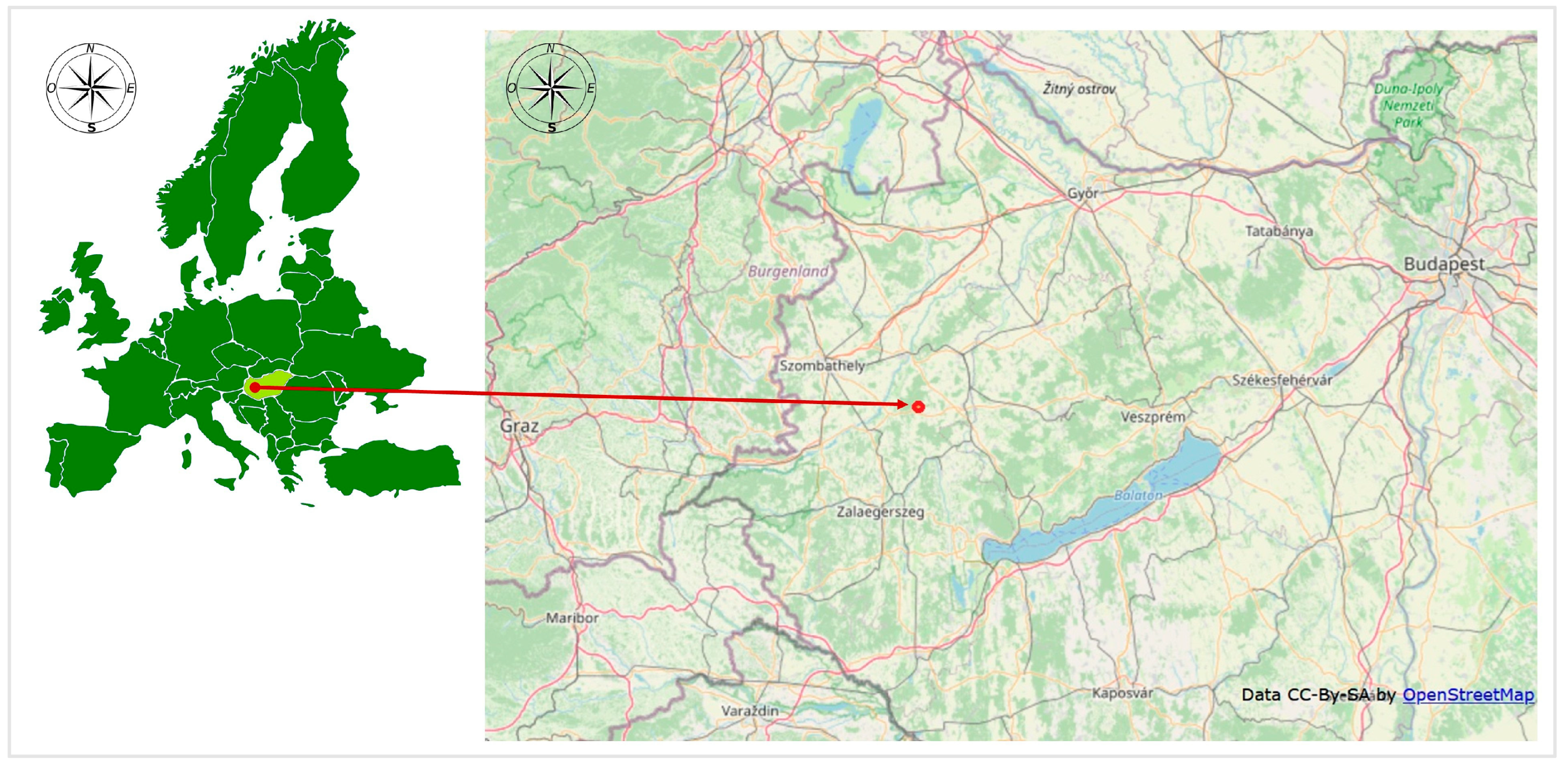
The Káld 75/C forest subcompartment, encompassing 4.7 hectares, is part of the larger Farkas Forest located near the village of Káld in western Hungary (Figure 1). Its designated primary function is timber production. The subcompartment is not under nature protection, nor is it included in the Natura 2000 network.
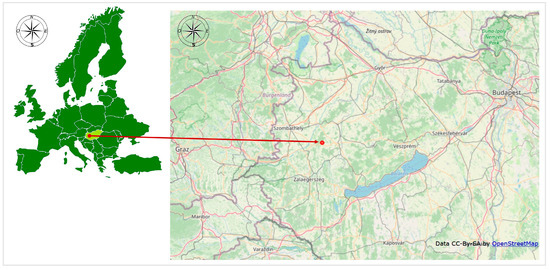
Figure 1.
The location of the study area.
The stand consists almost entirely of Scots pine (Pinus sylvestris) with a minimal lower layer of hornbeam (Carpinus betulus). There are no shrub and herbaceous layers, except along the edges of the stand. The Scots pine is 99 years old the hornbeam is 69. The cutting age was set at 90 years; so, the stand is now overmature. Field inspections revealed that the amount of deadwood and dieback has increased compared to the condition described in the forest management plan, and the health status shows a declining trend.
2.3. SiteViewer 3.0 Climate Change Projections and Associated Target Stand Recommendations
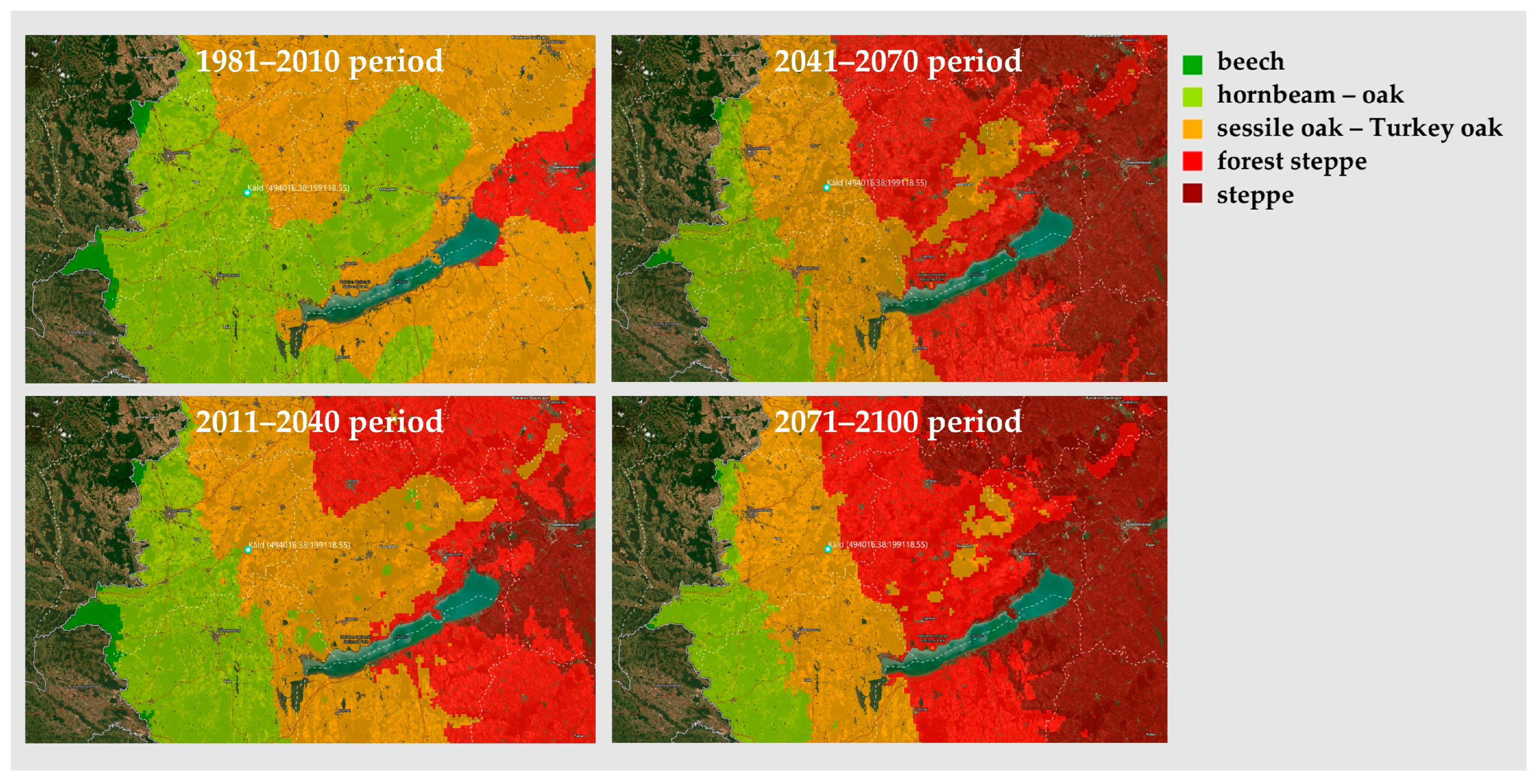
According to the SiteViewer 3.0 [24] decision support system [25], the study area falls into the hornbeam–oak (Querco petreae-Carpinetum) forestry climate zone based on the data from the 1981–2010 period. In the recent past, the site conditions were favourable for Scots pine (Pinus sylvestris) stands (Figure 2). For the period of 2011–2040 the area is predicted to classify as sessile oak-turkey oak forestry climate (Quercetum petreae-cerris), based on the RCP 4.5 climate change scenario. The preferred tree species of this forestry climate category are Scots pine, Turkey oak (Quercus cerris), Grey poplar (Populus × canescens), and Black locust (Robinia pseudoacacia). (Figure 2). Although further drying is predicted in the future—for the period of 2041–2070 and 2071–2100—the area is expected to remain in the same forestry climate class (Figure 2).
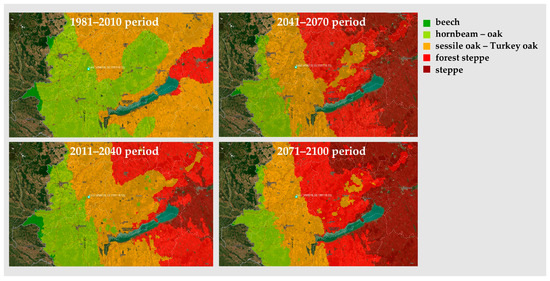
Figure 2.
Spatial distribution of forestry climate categories for the periods 1981–2010, 2011–2040, 2041–2070, and 2071–2100. Source: SiteViewer 3.0.
2.4. Field Measurement
In July 2022, a stem-by-stem survey of the tree stand was carried out in cooperation with the Forest Planning Department of the Sárvár Forestry Directorate. The height and diameter of each tree were measured. The survey served as the basis of the timber volume estimation, which was subsequently used for timber assortment planning.
The estimated timber volume in the estimation report largely matched the stand description in the National Forestry Database. Therefore, in our calculations we used the incremented 2024 values from the database.
2.5. Forest Management Scenarios
In this study, six forest management scenarios were tested from climate adaptation and climate mitigation points of view. The scenarios are summarized in Table 1. Climate adaptation was analyzed through evaluating to what extent the management options fit to the predicted climate scenario and what wood products will be possible to produce in the future. Climate mitigation was measured by the carbon sequestration potential, which was estimated based on yield tables.

Table 1.
Overview of forest management scenarios assessed in the study.
2.6. Principles and Regulatory Constraints Guiding Scenario Design
To ensure alignment with internationally accepted standards, the experimental scenarios in this study were designed based on key principles of forest carbon credit certification commonly applied in Voluntary Carbon Markets (VCMs), as well as the legally binding criteria set forth in the European Union’s Carbon Removal Certification Framework (CRCF, Regulation EU/2024/3012) [21].
The following core principles form the basis of credible carbon credit generation from forestry activities in VCMs:
- Additionality: Projects must demonstrate that carbon sequestration or emission reductions go beyond business-as-usual practices, legal obligations, and common industry standards.
- Permanence: Carbon removals should be long-lasting and resilient to reversal from natural disturbances or human interventions.
- Leakage Prevention: The project should not indirectly cause increased emissions elsewhere (e.g., displacement of timber harvesting).
- Do No Harm and Co-Benefits: Activities must not cause significant harm to ecosystems or biodiversity.
- Quantification: Carbon removals must be measurable, reportable, and verifiable using robust, transparent, and scientifically sound methodologies.
Forest carbon offset (FCO) projects in both compliance and voluntary markets are generally classified into three main categories: Afforestation/Reforestation (A/R), Avoided Conversion (AC) and Improved Forest Management (IFM). A/R projects aim to establish or restore forest cover either by planting trees, encouraging natural regeneration on previously non-forested lands, or rehabilitating areas severely disturbed by natural or human impacts. AC projects, on the other hand, are designed to conserve forestlands that face a high risk of conversion to agricultural croplands or urban development. IFM projects focus on enhancing carbon storage above baseline levels through improved management practices. These include extending rotation periods, implementing selective thinning, and adopting reduced-impact logging techniques, all of which contribute to greater long-term carbon sequestration in forest ecosystems [16].
In a typical VCM or regulatory scheme, the certification process begins with the project developer defining the activity and establishing a credible baseline scenario. Carbon benefits are then quantified using approved, scientifically robust methodologies. These calculations are subject to verification by an independent third-party auditor, who evaluates both the accuracy of the carbon accounting and compliance with quality and sustainability criteria. Upon successful verification, a certificate of compliance is issued. Following project implementation and periodic recertification, the corresponding certified carbon units are formally recorded in a registry.
The scenario development and carbon accounting procedures in this study were designed to reflect these standard certification steps and criteria, in alignment with the provisions of the EU CRCF Regulation. The CRCF Regulation establishes a Union-wide voluntary certification system for high-quality carbon removals. The experimental design and accounting procedures were aligned with CRCF provisions to ensure methodological consistency and regulatory relevance.
The following CRCF-specific aspects were considered:
Scope: The study falls under the category of an Improved Forest Management (IFM) project, a carbon farming activity type recognized within the CRCF. Under the Regulation, only carbon removals from forest-related activities are eligible, while harvested wood products (HWPs) and product substitution effects are excluded from the accounting. Consequently, the carbon balance of HWPs was not considered. Additionally, although the CRCF allows for the inclusion of soil carbon under certain conditions, it is treated as optional and was not considered in this study. Consequently, the carbon balance calculations focus solely on above- and belowground tree biomass, excluding both HWPs and soil carbon components.
Eligibility Requirements: The CRCF Regulation requires that certified activities comply with Articles 4 to 7. Article 4 mandates the use of robust, conservative, and science-based methods for quantifying carbon removals, including the need to account for uncertainties. Article 5 requires that all projects demonstrate clear additionality, meaning that the removals must exceed what would occur under regulatory or financial business-as-usual scenarios. Article 6 outlines the need for appropriate monitoring, reporting, and liability mechanisms to ensure transparency and accountability over time. Finally, Article 7 sets out the minimum sustainability safeguards, with particular emphasis on protecting biodiversity and maintaining or enhancing ecosystem services.
Baseline Definition and Emissions Accounting: As detailed methodological guidance is not yet available for Improved Forest Management under the CRCF, the baseline scenario in this study was constructed hypothetically based on current forest management practices as documented in the National Forestry Database. Importantly, any emissions that may occur during implementation (e.g., from harvesting or site preparation) are reflected in both the baseline and alternative scenarios. This ensures that such emissions are implicitly subtracted from the net carbon removal benefit and do not lead to overestimation of mitigation outcomes.
Biodiversity Criterion: In accordance with Article 7(1–2) of the CRCF, carbon farming projects must generate co-benefits for biodiversity and ecosystem restoration, and must not cause significant harm to the environment. This is further elaborated in Recital (24), which states that “practices that produce harmful effects on biodiversity, such as forest monocultures producing harmful effects on biodiversity, should not be eligible for certification”. In this study, the selected forest subcompartment is classified as having intermediate naturalness and contains a substantial presence of native hornbeam (Carpinus betulus), indicating a higher ecological value than artificial monocultures. Therefore, the scenario involving regeneration with black locust (Robinia pseudoacacia), a non-native species often associated with biodiversity degradation and monoculture formation, is not eligible for certification under CRCF sustainability rules.
Data Sources: Carbon accounting was performed using official yield tables and data from the Hungarian National Forestry Database, in line with methods used in the Hungarian National Greenhouse Gas Inventory (GHGI) [26]. This ensures consistency with national reporting standards.
Leakage Prevention: Leakage is minimized in this context due to Hungary’s strict forest legislation. The Forest Act mandates sustainable forest management practices across all forest lands, meaning that timber harvesting cannot simply shift to other areas with fewer environmental constraints. Consequently, leakage risk is considered negligible and was not included as a separate adjustment factor.
2.7. Overview of the Yield Tables Applied
The yield tables used in this study were selected based on their proximity and accuracy compared with the corresponding stand description sheets. The following tables were applied:
- Scots pine: Solymos Rezső yield table, 1966;
- Hornbeam: Kollár Tamás yield table, 2024;
- Black locust: Fekete Zoltán and Sopp László yield table, 1974;
- Native poplar: Palotás Ferenc, Szodfridt István, and Sopp László yield table, 1974;
- Turkey oak: Kollár Tamás yield table, 2023.
These yield tables were compared using an Excel-based application (v2024) developed by Kollár [27], which presents the parameterized versions of yield tables derived from the experimental network operated by the Forest Research Institute of the University of Sopron [28,29,30]. Using this application, the appropriate yield table was selected based on stand age and growing stock parameters.
2.8. Procedure for Carbon Balance Calculation
The purpose of the carbon balance calculation is to determine, for each scenario, the amount of carbon stored in the living tree biomass during each year of the study period. As a first step, changes in living biomass were determined based on timber harvest volumes and stand growth. From the aboveground biomass volume, derived from yield tables, the amount of belowground biomass was estimated using root-to-shoot ratios.
In the second step, the temporal changes in stored carbon were calculated by applying the carbon content per unit volume of timber. As wood density and the proportion of carbon in the dry mass vary among tree species, a separate conversion factor was used for each species. These factors—density, carbon fraction, and root-to-shoot ratio—are summarized in a table (Table 2). Since the stemwood volume data from the Hungarian National Forestry Database includes branches (i.e., over bark volume with branches), no Biomass Expansion Factor (BEF) was applied. This approach is consistent with the official Hungarian Greenhouse Gas Inventory and follows IPCC guidelines, ensuring that aboveground woody biomass is accurately represented.
Table 2.
Conversion factors for calculating carbon content.
To model the future carbon balance of biomass, and deadwood, we applied the Forest Industry Carbon Model (FICM) [34]. A detailed description of the FICM’s structure and key processes [13,35,36,37,38,39,40,41,42,43,44,45,46] is provided in Supplementary Materials. In accordance with the provisions of the CRCF Regulation, the carbon balance of harvested wood products was not taken into account in our calculations.
In our calculations, only the forest module was applied, as under the CRCF Regulation, neither the carbon balance of harvested wood products nor the effects of product substitution are eligible for accounting in carbon farming projects.
In the hazard scenario, a large amount of deadwood is generated. The decomposition of deadwood was modelled based on a literature source providing decomposition equations for Scots pine and hornbeam. For Scots pine, a sigmoid decomposition profile is recommended, whereas for hornbeam a linear profile is suggested [47].
2.9. Method for Calculating the Amount of Carbon Credit Generated
Carbon credits are generated when additional carbon storage is achieved compared to the BAU scenario. The first step in calculating CO2 credits is to define this reference baseline, which in the present case is the harvesting of the current stand followed by regeneration with Scots pine (Pinus sylvestris). The alternative scenarios were assessed relative to this baseline to determine how their carbon sequestration levels differ. The resulting CO2 surplus formed the basis for credit calculation. If sequestration exceeds the baseline level, credits are generated; if it is lower, the number of credits is zero. The basic unit of calculation is one ton of CO2, which corresponds to one carbon credit.
2.10. Financial Calculations
The purpose of the economic calculations is to compare forest management scenarios in terms of their financial impacts within the study timeline. The forestry interventions and growth processes associated with each scenario generate different cash flows, the combined effects of which are assessed. To perform the calculations, it is necessary to determine the revenues and costs of logging, the costs of forest regeneration, and the revenues from carbon credits.
Timber harvesting revenues consist of two main components: the net income from the sale of Scots pine sawlogs and the net income from the sale of low-grade roundwood (pulpwood and paperwood) (Table 3). Unit prices for the assortments were obtained from statistics published by the Ministry of Agriculture [48].
The second factor to be considered is the cost of forest regeneration incurred under the different scenarios. These data are provided in the Updated Forest Wildlife Damage Assessment and Evaluation Guide [49].
Table 3.
Input data for the economic calculations.
We calculated the Logging Contribution Margin (LCM) as the difference between total sales revenue and variable costs (logging and regeneration costs). Overhead costs were not accounted for.
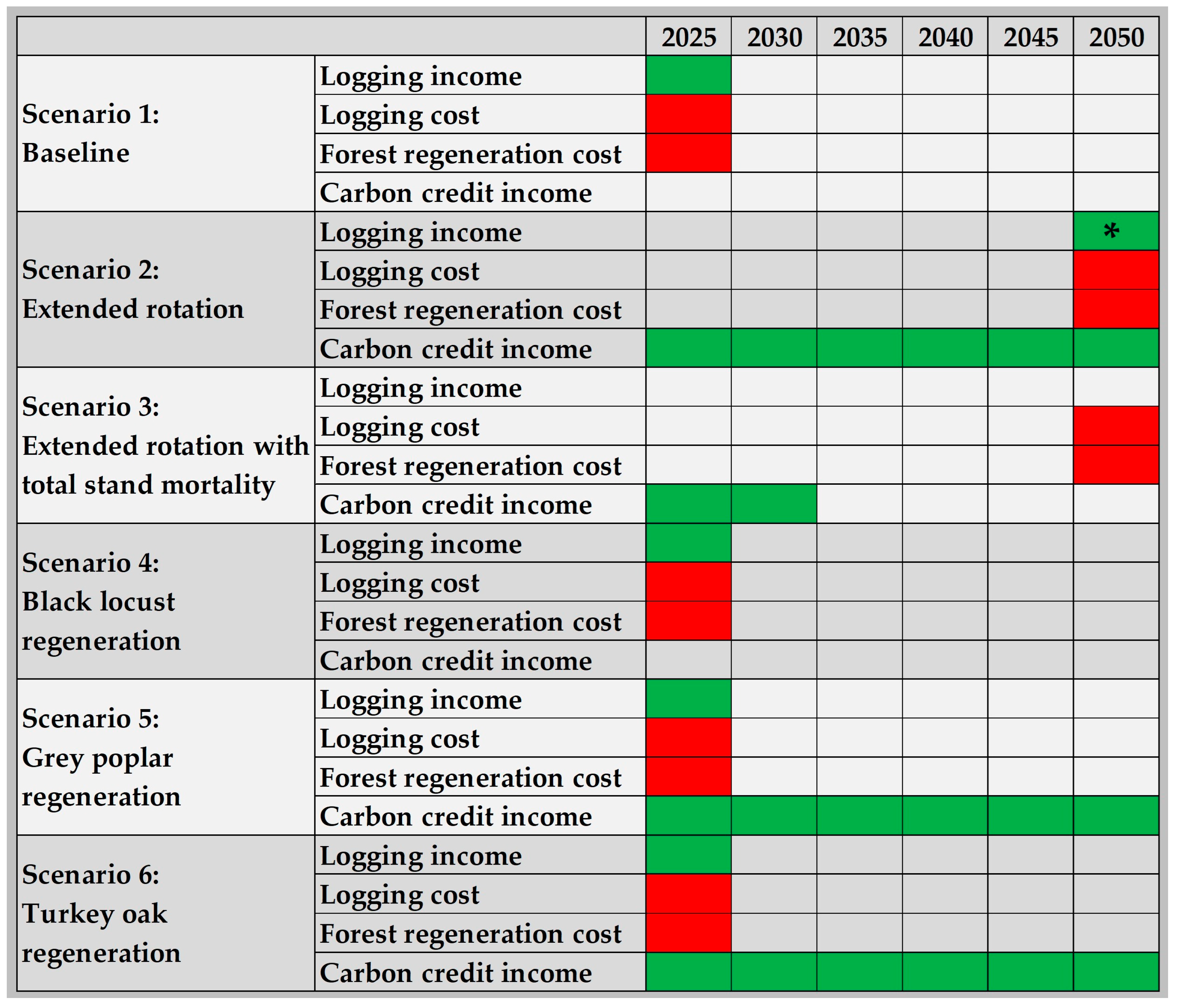
Scenario 1, 4, 5 and 6 start with logging and replanting with their respective species. This generates the exact same LCM in year 0. The extended forest rotation (Scenario 2) also involves a forest harvest at the end of the carbon farming project, in the year 26. Since the tree stand has reached the stage of over-maturation both the volume of standing timber and the value of the timber decline. To represent this in the calculations only 1/3 of the harvested timber is sold, and it is sold as low-grade roundwood. In Scenario 3, when the majority of the standing timber dies, the remaining standing timber needs to be harvested, and the area needs to be cleared before replanting. The quality of the timber harvested is supposed to be unsuitable for commercial purposes, therefore no income from logging is calculated.
The timing and distribution of revenues and costs across the scenarios are illustrated in Figure 3.
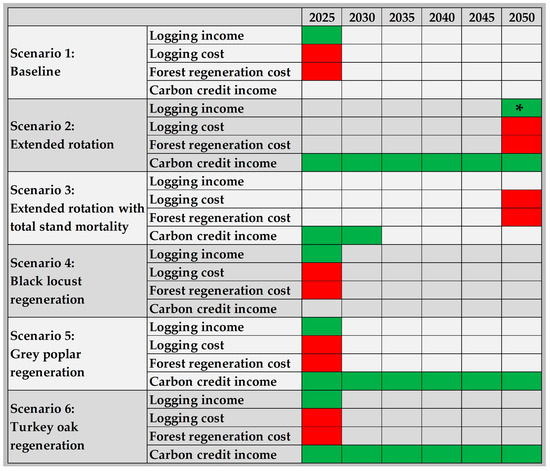
Figure 3.
Timeline of cash flows under the different forest management scenarios. Green cells indicate revenues (logging income, carbon credit income), while red cells indicate costs (logging costs, forest regeneration costs). The timeline shows the occurrence of these cash flows under each scenario, highlighting differences in timing. The asterisk (*) in the Extended rotation scenario (2050) indicates that, since the tree stand has reached the stage of over-maturation, both the standing timber volume and its value decline. To represent this in the calculations, only one-third of the harvested timber is assumed to be sold as low-grade roundwood.
In the calculations, the price of carbon credits was not treated as constant; instead, it was varied between €0 and €150 to examine the effect of price changes on total revenue. The financial comparison of the scenarios was based on the Total Discounted Contribution Margin (TDCM) calculated according to Formula (1). Since forest management is considered a low-risk business activity, the discount rate was set at 2% above inflation.
where
- TDCM: Total Discounted Contribution Margin;
- LCMt: Logging Contribution Margin;
- CCIt: Carbon Credit Income;
- r: discount rate;
- t: year variable and index;
- n: length of the study period.
From a revenue perspective, biodiversity as a criterion is a crucial factor, as it determines which tree species may be used for regeneration within a carbon farming project. According to the CRCF regulation, only projects that have a positive effect on biodiversity may enter the carbon market. For this reason, regeneration with black locust (Robinia pseudoacacia) would generate no additional carbon revenue, as it is a non-native species and thus excluded from the list of species eligible for accreditation in carbon sequestration projects.
3. Results
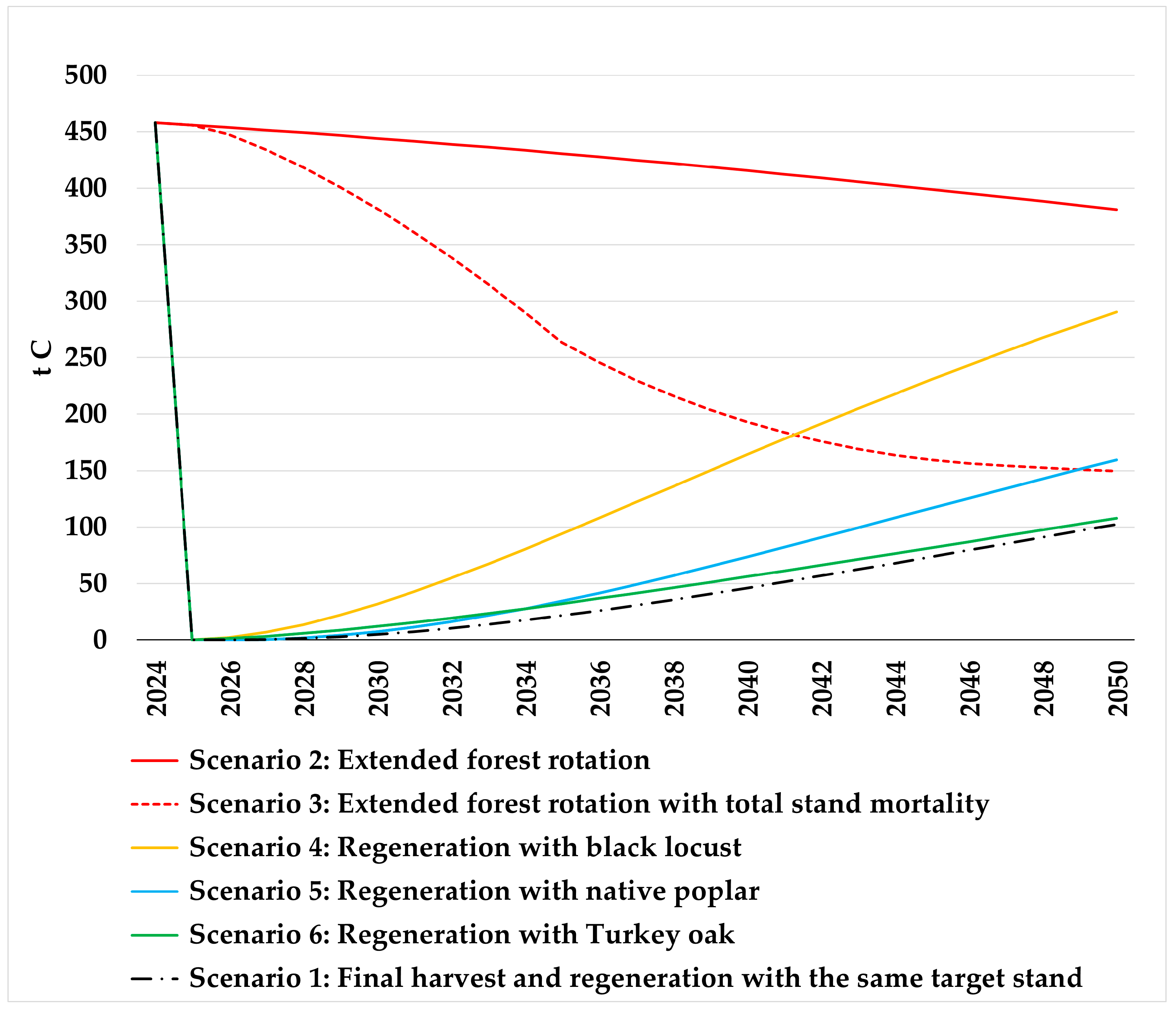
Based on the comparison of the different forest management scenarios (Figure 4), the combined carbon stock of living and dead biomass in the extended rotation cycle scenario remains the highest until the end of the study period. However, field observations and consultations with the forest manager indicate that a 100% mortality rate in the stand is likely to occur within the next 10 years. In this case, according to our modelling results, the carbon stock would decline sharply by 2050. Under these conditions, by 2042 the carbon stock in the black locust regeneration scenario would already exceed that of the standing dead Scots pine stand.
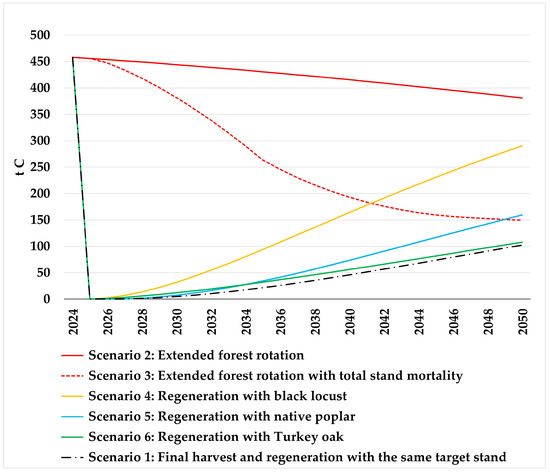
Figure 4.
Combined carbon stock of living and dead biomass carbon pools in the examined scenarios.
Black locust can be characterized by a substantial carbon sequestration capacity over a short period due to its rapid early growth. By the end of the study period, regeneration with native poplar would also result in higher carbon sequestration compared to the abandoned and dying Scots pine stand (total stand mortality scenario). In contrast, Turkey oak has a low sequestration capacity within the examined period due to its slow growth, and similarly, regeneration with Scots pine (baseline scenario) also results in lower sequestration compared to the other scenarios assessed.
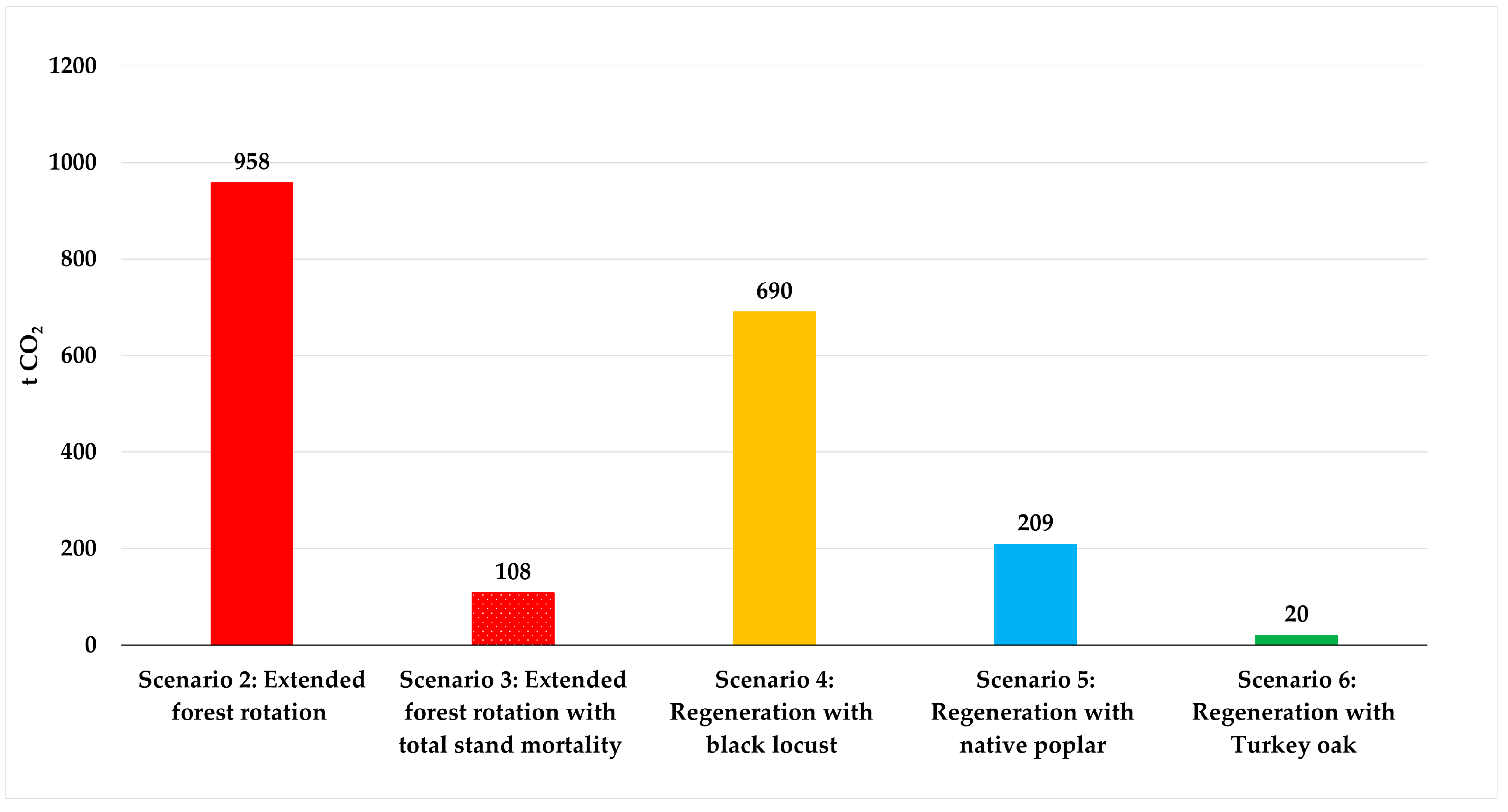
We assessed the mitigation potential of each scenario in comparison to the baseline scenario for the period up to 2050 (Figure 5). The extended rotation cycle showed the highest additional carbon sequestration, with 958 tCO2 above the baseline. In the total stand mortality scenario, we calculated only 108 tCO2 of additional sequestration. Regeneration with black locust resulted in an outstanding 690 tCO2 surplus; however, due to the biodiversity criterion, this amount cannot be accounted for as carbon credits. For native poplar, the additional sequestration of 209 tCO2 is eligible for crediting, although it remains significantly lower than that of black locust. Regeneration with Turkey oak produced the lowest additional sequestration during the study period, with 20 tCO2. Despite their varying magnitudes, these values all represent additional mitigation potential compared to the baseline scenario (regeneration with Scots pine with hornbeam admixture).
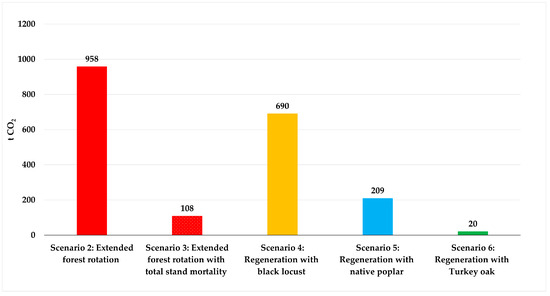
Figure 5.
Total mitigation effect compared to the baseline scenario.
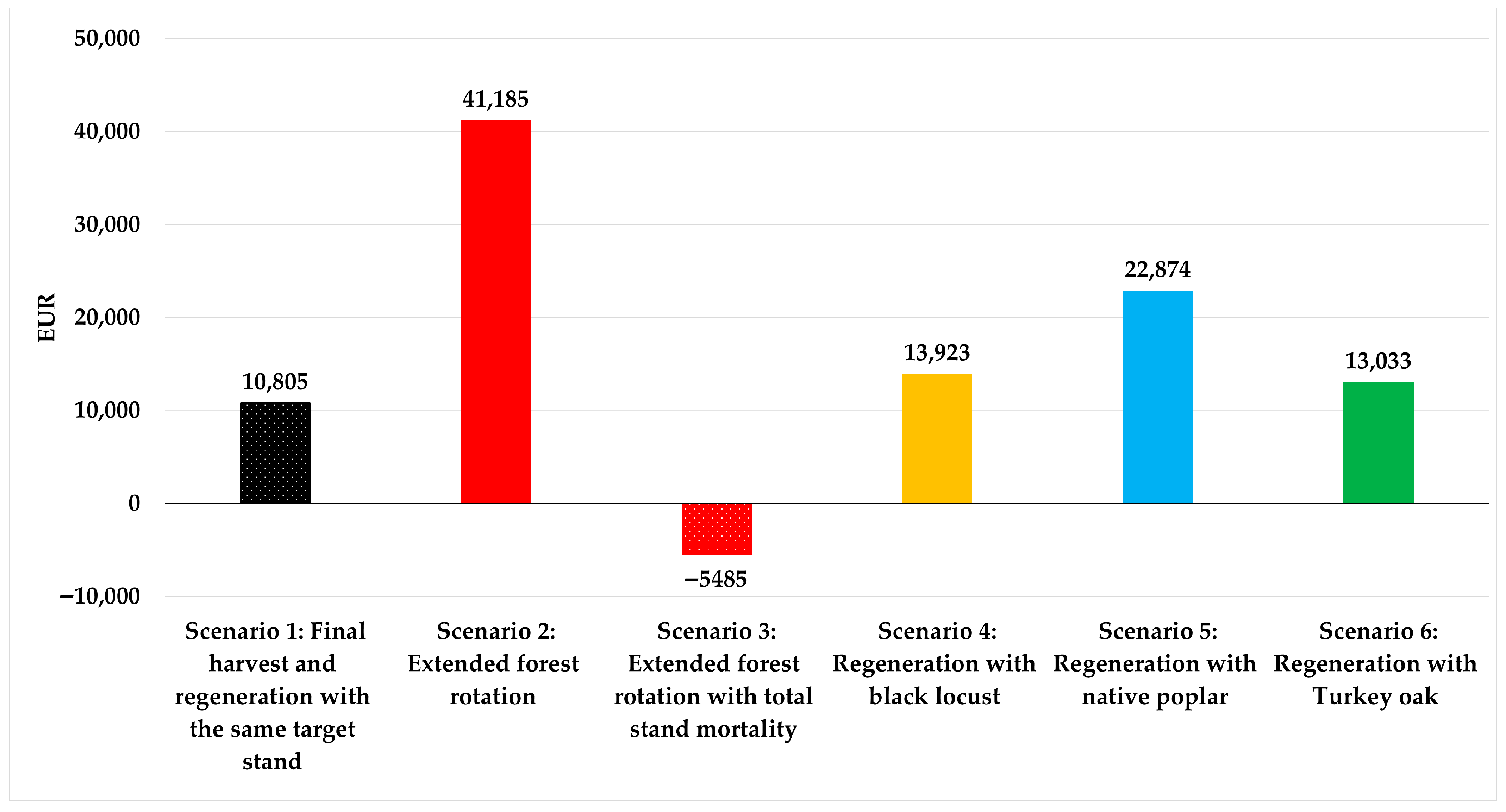
In the Scots pine regeneration baseline scenario, no revenue is generated from carbon credits; therefore, in Figure 6 only the difference between revenues from timber sales and the costs of logging and forest regeneration (net revenue) is shown, expressed as present value. In the extended rotation cycle scenario, in addition to substantial carbon credit revenues, income from timber sales at the end of the examined cycle can also be considered, after deducting regeneration and harvesting costs. This results in the highest total discounted contribution margin of EUR 41,200, assuming a carbon credit price of €50/tCO2.
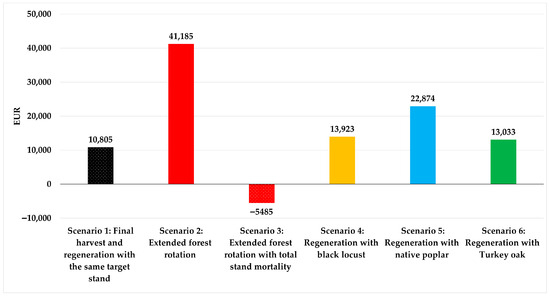
Figure 6.
Present value of total contribution margin considering the biodiversity criterion at a carbon credit price of 50 EUR/tCO2.
In the total stand mortality scenario, costs exceed revenues despite carbon credit income in the early years of the examined period. This is due to the absence of timber sales revenue at the end of the cycle compared to other scenarios.
In the black locust regeneration scenario, carbon credit revenues cannot be included because of the CRCF regulation’s biodiversity criterion; nevertheless, the total discounted contribution margin amounts to EUR 13,900.
For native poplar, revenue is generated from both the carbon market and timber production, resulting in a total discounted contribution margin of EUR 22,900. Among the scenarios examined, we recommend implementing this one, given that the substantially higher TDCM of the extended rotation cycle scenario is not considered feasible according to local forest management experience.
The total TDCM for Turkey oak regeneration is only EUR 13,000 due to its slow initial growth; however, at a carbon credit price of €50/tCO2, this value becomes comparable to that of black locust.
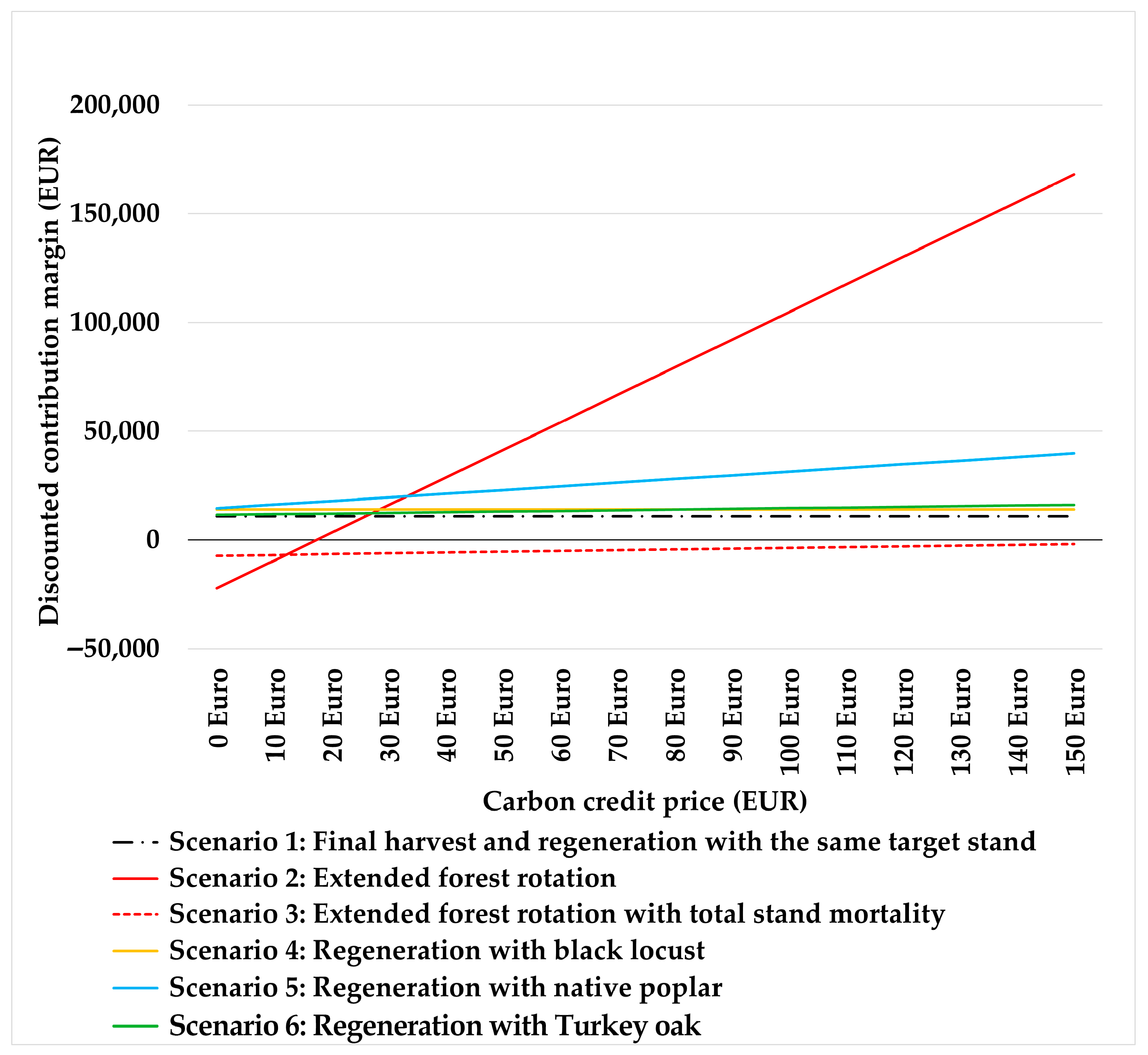
If the market price of carbon credits exceeds €30, the extended rotation cycle scenario can be characterized by the highest TDCM (Figure 7). However, as previously noted, this scenario is not realistically implementable according to forest management experience. Although its indicators are more modest, regeneration with native poplar appears to be the most favourable choice from an economic perspective. Regardless of the carbon credit price, the total TDCM of the Turkey oak regeneration scenario remains at a low level.
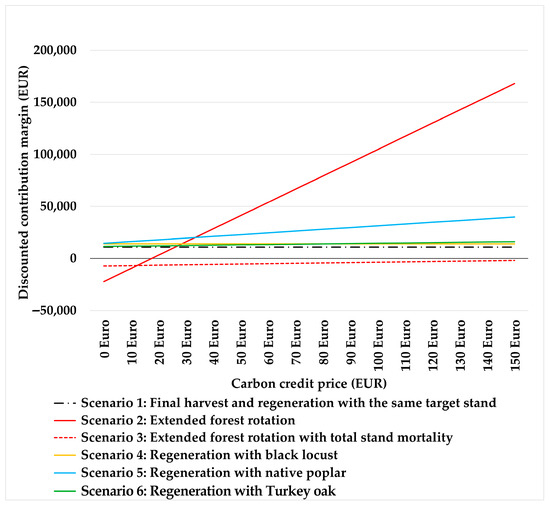
Figure 7.
Changes in the total discounted contribution margin as a function of carbon credit prices, considering the biodiversity criterion.
For black locust and Scots pine (baseline) regeneration scenarios, the TDCM is unaffected by the carbon credit price, as neither scenario generates revenue from carbon credits. For black locust, this is due to the biodiversity safeguard of the CRCF, which in this case excludes non-native species from eligibility; therefore, its TDCM is derived solely from timber revenues. For Scots pine, it functions as the baseline reference scenario against which the other management options are compared, and thus does not provide any additional carbon credit revenues. In the total stand mortality scenario, the TDCM remains negative even at the highest carbon credit price. The main characteristics of the presented scenarios and their most important results are summarized in Table 4.
Table 4.
Silvicultural and carbon-trading characteristics of the different forest management scenarios.
4. Discussion
4.1. Climate Adaptation Evaluation
The scope of the climate adaptation evaluation is to test the forest management scenarios against forest management objectives. These objectives are twofold: to maintain a stable tree stand that will likely survive under the drying climate, and to provide economic value to the forest manager.
In Scenario 1, the forest manager can make use of the current tree stand’s high financial value, and regeneration with the same species could be an obvious choice. However, the current health status of the tree stand indicates that the site conditions are getting less favourable to Scots pine, and the risk for significant forest damage is not neglectable. For this reason, Scenario 2 can be considered as a high-risk option that not only prolongs the realization of the financial value of the stand, but it could lead to severe financial losses. This is exactly what is represented by Scenario 3, in which the current tree stand gradually collapses and gets vanished in 10 years.
The rest of the scenarios (scenario 4–6) all consider an initial harvest of the current tree stand and a regeneration with different species. Black locust is a fast-growing species with a short rotation period (30–35 yrs). It is hardwood that is more durable than oaks and is widely used in landscape building. Its fuelwood is also in high demand. Its silviculture is straightforward, and it can be easily and quickly regenerated. Due to its wide environmental tolerance, it is likely to form a stable and viable tree stand. A serious drawback of this species is that it is an introduced species that is banned from protected areas and cannot replace native species. Thus, in this study, we only consider it because it could be an option elsewhere; however, in this specific case, it is not a legal choice.
Grey poplar is also relatively easy to cultivate, it can be quickly regenerated, and forest health issues are unlikely. However, its rotation period is medium-long (50–60 yrs), and its wood is a low-quality softwood. The less favourable wood quality results in less demand and lower prices.
A Turkey oak stand would most closely resemble the natural forest type in this area. However, it is more difficult to regenerate due to its slow growth and susceptibility to damage from wild game. This species can also grow in drier conditions, and we can expect a stable tree stand from it. However, it has a number of pests that can cause complete defoliation, although it is adapted to such events. Its rotation period is the longest among the above choices (80–90 yrs) and the value of its wood is low. It is mostly used as firewood.
To provide a concise overview, Table 5 summarizes how each forest management scenario aligns with the main objectives of stand viability and economic potential.
Table 5.
Summary of compliance of forest management scenarios to forest management objectives.
4.2. Climate Change Mitigation Potential of IFM Projects and Economic Trade-Offs
Research indicates that IFM projects can deliver substantial carbon storage benefits when effective practices are applied [51,52,53]. Kaarakka et al. [54] found that IFM projects generally maintain higher carbon densities both above- and belowground, though about 26% of these projects also carry a moderate wildfire risk. Similarly, Stapp et al. [55], in their assessment of 136 IFM projects, reported that such projects are typically situated in forests with exceptionally high carbon stocks—127% above regional averages—and in areas with relatively low historical disturbance, experiencing 28% fewer disturbances than regional norms. Together, these findings highlight the significant potential of IFM projects to enhance long-term carbon sequestration, while also underscoring the need to manage risks such as vulnerability to natural disturbances and the possibility of stand collapse.
Based on the scenarios examined in our study, we conclude that although the extended rotation cycle scenario offers the highest mitigation potential and the most favourable economic indicators, its actual implementation is highly unlikely. This is due to the fact that, at the time of the study, the stand had already exceeded its planned rotation age by nine years, showed a declining health trend, and, according to the stand inventory, the volume of deadwood and drying trees had increased compared to the condition described in the forest management plan. Given these factors, it is far more likely that the total stand mortality scenario would occur if final harvesting were not carried out.
Postponing final harvesting would result in negative economic consequences, as under the total stand mortality scenario, the total discounted contribution margin (TDCM) of returns remains negative even at the highest carbon credit price. Therefore, it is advisable to carry out final harvesting of the overmature Scots pine stand showing declining health, as this can be regarded as a form of damage mitigation.
Although black locust may offer considerable carbon sequestration potential and economic benefits, its use in regeneration is not permissible under the CRCF Regulation (EU/2024/3012) [21] in cases where the previous forest stand exhibited higher naturalness. According to Article 7(1–2) of the CRCF, certified carbon farming activities must generate co-benefits for biodiversity and ecosystem restoration and must not cause significant environmental harm. This is further clarified in Recital (24), which states that “practices that produce harmful effects on biodiversity, such as forest monocultures producing harmful effects on biodiversity, should not be eligible for certification”. In the Hungarian context, where many forest stands contain native tree species and are classified as having intermediate or higher naturalness, the introduction of black locust—a non-native species often associated with biodiversity loss and monoculture formation—is inconsistent with these sustainability criteria. As such, while black locust may be viable in purely degraded or artificial stands, it is not eligible for certification in areas with existing ecological value. This illustrates that the CRCF-regulated voluntary carbon market is designed not only to incentivize carbon removals, but also to uphold strict biodiversity safeguards.
Under the known regulatory conditions, the regeneration scenario using native poplar proved to be the most favourable. As a native species, it enhances biodiversity compared to Scots pine and offers an effective response to the modelled drying climate change scenarios. In the case of native poplar, revenues are generated both from the carbon market and from timber production, resulting in a TDCM of EUR 22,900 for this scenario.
Regarding regeneration with Turkey oak, we found that although it is a native species that improves biodiversity compared to Scots pine and is well-suited to the modelled climate change scenarios, its slow growth results in low carbon market revenues in the initial phase of management.
4.3. Uncertainty and Permanence Challenges in Carbon Farming Projects
Although the current health condition of the studied stand makes the successful implementation of an extended rotation cycle project unlikely, it can be concluded that in the case of rotation-age stands—where no significant decline in productivity, increase in mortality, or heightened risk of biotic or abiotic disturbances is anticipated over the coming decades—such a project could yield substantial additional revenue within the emerging carbon market. This underscores that carbon farming projects with long implementation horizons and strong dependence on natural processes inherently carry elevated levels of risk. Therefore, careful site-level assessment, detailed stand structure evaluation, and comprehensive cost–benefit and risk analyses are critical components of the planning process for any carbon farming initiative requiring a commitment of ten years or more. Furthermore, transparent communication of these uncertainties to forest managers is essential to ensure informed decision-making and long-term project viability.
In addition to planning challenges, long-term project success is also contingent on the resilience of carbon stocks to natural disturbances and external stressors. A critical challenge for forest-based carbon projects lies in the risk of unplanned carbon losses due to natural disturbances. Events such as wildfires, insect outbreaks, prolonged droughts, and other forms of unexpected stand mortality can significantly reduce carbon stocks and thereby compromise the permanence of credited removals. These risks are particularly acute in extended rotation scenarios, where older stands may be more vulnerable to biotic and abiotic stressors over time. Under the CRCF Regulation (EU/2024/3012) [21], such risks must be managed through regular monitoring and appropriate liability mechanisms, ensuring that any reversal of carbon sequestration is detected and accounted for [56]. From a project design perspective, this highlights the importance of integrating disturbance risk assessments into the crediting approach, including the use of risk buffers, adaptive management practices, and, where appropriate, insurance schemes to mitigate the potential impact of unforeseen carbon losses on both environmental integrity and financial viability.
Another important consideration is the challenge of accurately calculating the amount of carbon eligible for crediting, which is central to the integrity of any forest carbon project [15]. Under the CRCF Regulation, carbon removals can only be credited ex post, meaning that issuance of certified units requires demonstrated and verified sequestration rather than projections. This approach increases environmental credibility but also introduces technical and logistical complexity. The quantification of removals depends on multiple factors, including growth rates, stand structure, species-specific yield tables, and assumptions about decomposition and mortality—all of which carry inherent uncertainties. These uncertainties can be compounded by variability in field measurements, limitations in remote sensing data, and methodological constraints of modelling. To ensure compliance, projects must undergo periodic monitoring and third-party verification using scientifically sound and transparent methodologies.
Broader lessons from European carbon farming practice also underscore several challenges and design considerations relevant to CRCF-compliant forestry projects. A recent comprehensive review of 160 carbon farming schemes across Europe [57] highlights that most existing schemes struggle to meet the QU.A.L.ITY criteria set by the CRCF—particularly regarding robust quantification, additionality, permanence, and sustainability safeguards. For instance, few schemes provide long-term contracts or implement monitoring systems adequate to ensure permanence, and only a minority offer direct incentives for biodiversity or ecosystem co-benefits. Moreover, the study found that uncertainty in soil carbon measurements, limited access to reliable monitoring, reporting and verification (MRV) methodologies, and the absence of harmonized baselines hinder the credibility of many ongoing schemes. These findings support the approach taken in this study to focus solely on biomass carbon, given the unresolved complexities of soil carbon accounting. They also point to the importance of aligning national practices with CRCF standards to avoid fragmentation in certification outcomes and to ensure that future carbon farming initiatives are both environmentally sound and market-ready.
4.4. Study Limitations and Future Research Directions
While the findings of this study provide important insights into the design and feasibility of CRCF-compliant forest carbon farming projects, they are subject to certain limitations. Most notably, soil carbon dynamics were neither modelled nor measured, even though they represent a significant component of the forest carbon pool. This omission reflects both the lack of field data and the fact that soil carbon accounting is optional under the CRCF. Additionally, detailed methodological guidance for Improved Forest Management (IFM) projects under the CRCF Regulation has not yet been formulated, which limits the certainty with which baseline assumptions and eligibility rules can be applied. The study also did not examine other potential project types, such as conversion to Continuous Cover Forestry (CCF) or climate-adaptive structural transformation, which could offer further mitigation and resilience benefits. Future research should aim to include these alternative interventions, incorporate soil carbon measurements and modelling, and adapt baseline setting and scenario design as CRCF implementation rules evolve.
5. Conclusions
In this paper, we examined the potential inclusion of a 4.7-hectare, 99-year-old Scots pine stand, managed by the Sárvár Directorate of the Szombathely Forestry Company (Szombathely, Hungary), in a carbon farming project under various scenarios. The baseline scenario assumed regeneration with the same species, Scots pine, following final harvesting. Our aim was to select the scenario that would deliver the best economic outcome.
Among the six alternative scenarios analyzed, regeneration with native poplar emerged as the most viable option. It offers a favourable balance of biodiversity compliance, adaptability to projected climate conditions, and solid financial performance (TDCM of EUR 22,900 at €50/tCO2). While the extended rotation scenario presented the highest mitigation and economic potential, it was deemed infeasible due to high mortality risk. Although black locust showed significant sequestration and economic promise, it is excluded under CRCF rules due to its non-native status. These findings highlight the importance of integrating ecological, regulatory, and economic dimensions when designing carbon farming projects and demonstrate that biodiversity criteria, while ecologically sound, significantly limit the range of feasible forest management options.
Supplementary Materials
The following supporting information can be downloaded at: https://www.mdpi.com/article/10.3390/f16111724/s1.
Author Contributions
Conceptualization, Á.B.; methodology, Á.B., E.S. and É.K.; validation, E.S.; formal analysis, Á.B. and É.K.; investigation, Á.B.; data curation, É.K. and Á.B. writing—original draft preparation, Á.B., writing—review and editing, Z.K. and E.S.; visualization, Á.B.; supervision, E.S. All authors have read and agreed to the published version of the manuscript.
Funding
This article was made in the frame of the project TKP2021-NKTA-43, which has been implemented with the support provided by the Ministry of Culture and Innovation of Hungary from the National Research, Development and Innovation Fund, financed under the TKP2021-NKTA funding scheme.
Data Availability Statement
The information provided constitutes 3rd party data, and its availability or use may be subject to limitations. Data were obtained from the Szombathely Forestry Company and are available from the corresponding author with the permission of the Szombathely Forestry Company.
Conflicts of Interest
The authors declare no conflicts of interest.
References
- Verkerk, P.J.; Delacote, P.; Hurmekoski, E.; Kunttu, J.; Matthews, R.; Mäkipää, R.; Mosley, F.; Perugini, L.; Reyer, C.P.; Roe, S.; et al. Forest-Based Climate Change Mitigation and Adaptation in Europe; From Science to Policy 14; European Forest Institute: Joensuu, Finland, 2022; ISBN 978-952-7426-22-7. [Google Scholar]
- Korosuo, A.; Pilli, R.; Abad Viñas, R.; Blujdea, V.N.; Colditz, R.R.; Fiorese, G.; Grassi, G. The role of forests in the EU climate policy: Are we on the right track? Carbon Balance Manag. 2023, 18, 15. [Google Scholar] [CrossRef]
- IPCC. Climate Change 2023: Synthesis Report. Contribution of Working Groups I, II and III to the Sixth Assessment Report of the Intergovernmental Panel on Climate Change; Lee, H., Romero, J., Eds.; IPCC: Geneva, Switzerland, 2023; p. 184. [Google Scholar] [CrossRef]
- Csépányi, P.; Csór, A. Economic Assessment of European Beech and Turkey Oak Stands with Close-to-Nature Forest Management. Acta Silv. Lignaria Hung. 2017, 13, 9–24. [Google Scholar] [CrossRef][Green Version]
- Lundmark, T.; Bergh, J.; Nordin, A.; Fahlvik, N.; Poudel, B.C. Comparison of carbon balances between continuous-cover and clear-cut forestry in Sweden. Ambio 2016, 45 (Suppl. S2), 203–213. [Google Scholar] [CrossRef]
- Kuuluvainen, T.; Tahvonen, O.; Aakala, T. Even-aged and uneven-aged forest management in boreal Fennoscandia: A review. Ambio 2012, 41, 720–737. [Google Scholar] [CrossRef]
- Pukkala, T.; Lahde, E.; Laiho, O.; Pukkala, T. Continuous cover forestry in Finland—Recent research results. In Continuous Cover Forestry; Gadow, K., Ed.; Springer: Berlin/Heidelberg, Germany, 2012; pp. 85–128. [Google Scholar]
- Larsen, J.B.; Angelstam, P.; Bauhus, J.; Carvalho, J.F.; Diaci, J.; Dobrowolska, D.; Gazda, A.; Gustafsson, L.; Krumm, F.; Knoke, T.; et al. Closer-to-Nature Forest Management; From Science to Policy 12; European Forest Institute: Joensuu, Finland, 2022; ISBN 978-952-7426-19-7. [Google Scholar] [CrossRef]
- Pan, Y.; Birdsey, R.A.; Fang, J.; Houghton, R.; Kauppi, P.E.; Kurz, W.A.; Phillips, O.L.; Shvidenko, A.; Lewis, S.L.; Canadell, J.G.; et al. A large and persistent carbon sink in the world’s forests. Science 2011, 333, 988–993. [Google Scholar] [CrossRef]
- Nabuurs, G.-J.; Delacote, P.; Ellison, D.; Hanewinkel, M.; Lindner, M.; Nesbit, M. A New Role for Forests and the Forest Sector in the EU Post-2020 Climate Targets; From Science to Policy; European Forest Institute: Joensuu, Finland, 2015. [Google Scholar]
- Brunet-Navarro, P.; Jochheim, H.; Kroiher, F.; Muys, B. Effect of cascade use on the carbon balance of the German and European wood sectors. J. Clean. Prod. 2018, 170, 137–146. [Google Scholar] [CrossRef]
- Rüter, S. Projections of Net Emissions from Harvested Wood Products in European Countries; Work Report No. 2011/x of the Institute of Wood Technology and Wood Biology; Johann Heinrich von Thünen Institute (vTI): Hamburg, Gemany, 2011; 62p.
- Leskinen, P.; Cardellini, G.; González-García, S.; Hurmekoski, E.; Sathre, R.; Seppälä, J.; Smyth, C.; Stern, T.; Verkerk, P.J. Substitution effects of wood-based products in climate change mitigation. In From Science to Policy 7; European Forest Institute: Joensuu, Finland, 2018. [Google Scholar]
- Siiskonen, H. From economic to environmental sustainability: The forest management debate in 20th century Finland and Sweden. Environ. Dev. Sustain. 2013, 15, 1323–1336. [Google Scholar] [CrossRef]
- McDonald, H.; Bey, N.; Duin, L.; Frelih-Larsen, A.; Maya-Drysdale, L.; Stewart, R.; Pätz, C.; Hornsleth, M.N.; Heller, C.; Zakkour, P. Certification of Carbon Removals Part 2: A Review of Carbon Removal Certification Mechanisms and Methodologies. Umweltbundesamt GmbH. 2021. Available online: https://www.ecologic.eu/sites/default/files/publication/2022/50035-Certification-of-carbon-removal-part-2-web.pdf (accessed on 9 September 2025).
- Cho, S.; Baral, S.; Burlakoti, D. Afforestation/Reforestation and avoided conversion carbon projects in the United States. Forests 2025, 16, 115. [Google Scholar] [CrossRef]
- Shell; Boston Consulting Group. The Voluntary Carbon Market: 2022 Insights and Trends; Shell Energy: London, UK, 2022; Available online: https://www.shell.com/shellenergy/othersolutions/carbonmarketreports.html (accessed on 10 October 2025).
- Institute of International Finance. TSVCM Taskforce on Scaling Voluntary Carbon Markets. Final Report. 2021. Available online: https://www.iif.com/Portals/1/Files/TSVCM_Report.pdf (accessed on 10 October 2025).
- World Bank. State and Trends of Carbon Pricing 2023; World Bank: Washington, DC, USA, 2023; ISBN 978-1-4648-2006-9. [Google Scholar]
- Haya, B.K.; Abayo, A.; So, I.; Elias, M.V. Voluntary Registry Offsets Database V10; Berkeley Carbon Trading Project; Goldman School of Public Policy, University of California: Berkeley, CA, USA, 2023; Available online: https://gspp.berkeley.edu/faculty-and-impact/centers/cepp/projects/berkeley-carbon-trading-project/offsets-database (accessed on 10 October 2025).
- EU/2024/3012: Regulation (EU) 2024/3012 of the European Parliament and of the Council of 27 November 2024 Establishing a Union Certification Framework for Permanent Carbon Removals, Carbon Farming and Carbon Storage in Products. Available online: https://eur-lex.europa.eu/legal-content/EN/TXT/?uri=OJ:L_202403012 (accessed on 9 September 2025).
- Borovics, A.; Ábri, T.; Benke, A.; Illés, G.; Király, É.; Kovács, Z.; Schiberna, E.; Keserű, Z. Carbon credit revenue assessment for four shelterbelt projects following EU CRCF protocols. Agrofor. Syst. 2025, 99, 214. [Google Scholar] [CrossRef]
- Führer, E. Magyarország Erdészeti Tájai. V; Nyugat-Dunántúl Erdészeti Tájcsoport; Agrárminisztérium Nemzeti Földügyi Központ: Budapest, Hungary, 2022; 652p.
- SiteViewer 3.0. 2025. Available online: http://www.ertigis.hu/siteviewer.htm (accessed on 10 October 2025).
- Illés, G.; Fonyó, T.; Borovics, A. SiteViewer: A decision support tool for forest management. Hung. Agric. Res. Environ. Manag. Land Use Biodivers. 2024, 34, 11–14. [Google Scholar]
- NIR. National Inventory Report for 1985–2020. Hungary; Hungarian Meteorological Service: Budapest, Hungary, 2022.
- Kollár, T. Fatermési táblák és függvények paraméter készlete a magyarországi fafajok erdőállományinak becsléséhez. In Proceedings of the Erdészeti Tudományos Konferencia, Sopron, Hungary, 5–6 February 2024. [Google Scholar]
- Kollár, T. Új adatok a magyarországi gyertyánosok (Carpinus betulus) faterméséről. In Proceedings of the Erdészeti Tudományos Konferencia, Sopron, Hungary, 10 February 2022; Soproni Egyetem Kiadó: Sopron, Hungary, 2022; pp. 8, 109–116, 316. [Google Scholar]
- Kollár, T. Csertölgy (Quercus cerris) állományok fatermési függvénye és táblája az erti tartamkísérleti hálózatának adatbázisa alapján. Erdtud. Közlemények 2023, 13, 77–101. [Google Scholar] [CrossRef]
- Kollár, T.; Rédei, K. Parametrikus Fatermési Táblák; Soproni Egyetem Kiadó: Sopron, Hungary, 2025. [Google Scholar]
- Somogyi, Z. A hazai erdők üvegház hatású gáz leltára az IPCC módszertana szerint. Erd. Kut. 2008, 92, 145–162. [Google Scholar]
- IPCC. IPCC Guidelines for National Greenhouse Gas Inventories, Prepared by the National Greenhouse Gas Inventories Programme; Eggleston, H.S., Buendia, L., Miwa, K., Ngara, T., Tanabe, K., Eds.; IPCC: Geneva, Switzerland, 2006. [Google Scholar]
- IPCC. Good Practice Guidance for Land Use, Land-Use Change and Forestry; Penman, J., Gytarsky, M., Hiraishi, T., Krug, T., Kruger, D., Pipatti, R., Buendia, L., Miwa, K., Ngara, T., Tanabe, K., et al., Eds.; Institute for Global Environmental Strategies (IGES) for the IPCC: Yamato-shi, Japan, 2003; ISBN 4-88788-003-0. [Google Scholar]
- Borovics, A.; Király, É.; Kottek, P. Projection of the Carbon Balance of the Hungarian Forestry and Wood Industry Sector Using the Forest Industry Carbon Model. Forests 2024, 15, 600. [Google Scholar] [CrossRef]
- Borovics, A. ErdőLab: A Soproni Egyetem erdészeti és faipari projektje: Fókuszban az éghajlatváltozás mérséklése. Erd. Lapok 2022, 157, 114–115. [Google Scholar]
- Härtl, F.H.; Höllerl, S.; Knoke, T. A new way of carbon accounting emphasises the crucial role of sustainable timber use for successful carbon mitigation strategies. Mitig. Adapt. Strateg. Glob. Change 2017, 22, 1163–1192. [Google Scholar] [CrossRef]
- IPCC. Refinement to the 2006 IPCC Guidelines for National Greenhouse Gas Inventories; Calvo Buendia, E., Tanabe, K., Kranjc, A., Baasansuren, J., Fukuda, M., Ngarize, S., Osako, A., Pyrozhenko, Y., Shermanau, P., Federici, S., Eds.; IPCC: Geneva, Switzerland, 2019. [Google Scholar]
- Király, É.; Börcsök, Z.; Kocsis, Z.; Németh, G.; Polgár, A.; Borovics, A. A new model for predicting carbon storage dynamics and emissions related to the waste management of wood products: Introduction of the HWP-RIAL model. Acta Agrar. Debreceniensis 2023, 1, 75–81. [Google Scholar] [CrossRef]
- Király, É.; Börcsök, Z.; Kocsis, Z.; Németh, G.; Polgár, A.; Borovics, A. Climate change mitigation through carbon storage and product substitution in the Hungarian wood industry. Wood Res. 2024, 69, 72–86. [Google Scholar] [CrossRef]
- Knauf, M.; Joosten, R.; Frühwald, A. Assessing fossil fuel substitution through wood use based on long-term simulations. Carbon Manag. 2016, 7, 67–77. [Google Scholar] [CrossRef]
- Knauf, M.; Köhl, M.; Mues, V.; Olschofsky, K.; Frühwald, A. Modeling the CO2-effects of forest management and wood usage on a regional basis. Carbon Balance Manag. 2015, 10, 13. [Google Scholar] [CrossRef] [PubMed]
- Kottek, P. Hosszútávú Erdőállomány Prognózisok. Ph.D. Thesis, Roth Gyula Erdészeti és Vadgazdálkodási Tudományok Doktori Iskola, Soproni Egyetem, Sopron, Hungary, 2023; 142p. [Google Scholar]
- Kottek, P.; Király, É.; Mertl, T.; Borovics, A. The re-parametrization of the DAS model based on 2016–2021 data of the National Forestry Database: New results on cutting age distributions. Acta Silv. Lignaria Hung. Int. J. For. Wood Environ. Sci. 2023, 19, 61–74. [Google Scholar] [CrossRef]
- Myllyviita, T.; Soimakallio, S.; Judl, J.; Seppälä, J. Wood substitution potential in greenhouse gas emission reduction–review on current state and application of displacement factors. For. Ecosyst. 2021, 8, 42. [Google Scholar] [CrossRef]
- National Environmental Information System. 2024. Available online: http://web.okir.hu/en/ (accessed on 11 November 2025).
- Schweinle, J.; Köthke, M.; Englert, H.; Dieter, M. Simulation of forest-based carbon balances for Germany: A contribution to the ‘carbon debt’ debate. Wires Energy Environ. 2018, 7, e260. [Google Scholar] [CrossRef]
- Edelmann, P.; Weisser, W.W.; Ambarlı, D.; Bässler, C.; Buscot, F.; Hofrichter, M.; Hoppe, B.; Kellner, H.; Minnich, C.; Moll, J.; et al. Regional variation in deadwood decay of 13 tree species: Effects of climate, soil and forest structure. For. Ecol. Manag. 2023, 541, 121094. [Google Scholar] [CrossRef]
- OSAP. Erdészeti Ársatisztikák. 2024. Available online: https://agrarstatisztika.kormany.hu/erdogazdalkodas2 (accessed on 10 October 2025).
- Nagy, I. (Ed.) Megújított Erdei Vadkárfelvételi és Értékelési Útmutató, Készült a Magánerdő Tulajdonosok és Gazdálkodók Országos Szövetségének a Megbízásából; Erdészeti Tudományos Intézet (ERTI): Sopron, Hungary, 2023. [Google Scholar]
- Ministry of Agriculture Statistics Provided by the Ministry of Agriculture, Forestry. 2025. Available online: https://agrarstatisztika.kormany.hu/adatok-idosorok (accessed on 9 September 2025).
- Griscom, B.W.; Cortez, R. The case for improved forest management (IFM) as a priority REDD+ strategy in the tropics. Trop. Conserv. Sci. 2013, 6, 409–425. [Google Scholar] [CrossRef]
- Fargione, J.E.; Bassett, S.; Boucher, T.; Bridgham, S.D.; Conant, R.T.; Cook-Patton, S.C.; Ellis, P.W.; Falcucci, A.; Fourqurean, J.W.; Gopalakrishna, T.; et al. Natural climate solutions for the United States. Sci. Adv. 2018, 4, eaat1869. [Google Scholar] [CrossRef]
- Kaarakka, L.; Cornett, M.; Domke, G.; Ontl, T.; Dee, L.E. Improved forest management as a natural climate solution: A review. Ecol. Solut. Evid. 2021, 2, e12090. [Google Scholar] [CrossRef]
- Kaarakka, L.; Rothey, J.; Dee, L.E. Managing forests for carbon: Status of the forest carbon offset markets in the United States. PLoS Clim. 2023, 2, e0000158. [Google Scholar] [CrossRef]
- Stapp, J.; Nolte, C.; Potts, M.; Baumann, M.; Haya, B.K.; Butsic, V. Little evidence of management change in California’s forest offset program. Commun. Earth Environ. 2023, 4, 331. [Google Scholar] [CrossRef]
- Criscuoli, I.; Martelli, A.; Falconi, I.; Galioto, F.; Lasorella, M.V.; Maurino, S.; Dara Guccione, G. Lessons learned from existing carbon removal methodologies for agricultural soils to drive european union policies. Eur. J. Soil Sci. 2024, 75, e13577. [Google Scholar] [CrossRef]
- Thorsøe, M.H.; Facq, E.; Criscuoli, I.; Martínez-García, L.B.; Heidecke, C.; Gallardo, L.A.; Martelli, A.; Hagemann, N.; Smit, B.; van der Kolk, J.; et al. Carbon farming: The foundation for carbon farming schemes—Lessons learned from 160 European schemes. Land Use Policy 2025, 158, 107747. [Google Scholar] [CrossRef]
Disclaimer/Publisher’s Note: The statements, opinions and data contained in all publications are solely those of the individual author(s) and contributor(s) and not of MDPI and/or the editor(s). MDPI and/or the editor(s) disclaim responsibility for any injury to people or property resulting from any ideas, methods, instructions or products referred to in the content. |
© 2025 by the authors. Licensee MDPI, Basel, Switzerland. This article is an open access article distributed under the terms and conditions of the Creative Commons Attribution (CC BY) license (https://creativecommons.org/licenses/by/4.0/).