
Modeling the Impact of Climate Change on the Distribution of Populus adenopoda in China Using the MaxEnt Model

Abstract
1. Introduction
Theoretical Framework
2. Materials and Methods
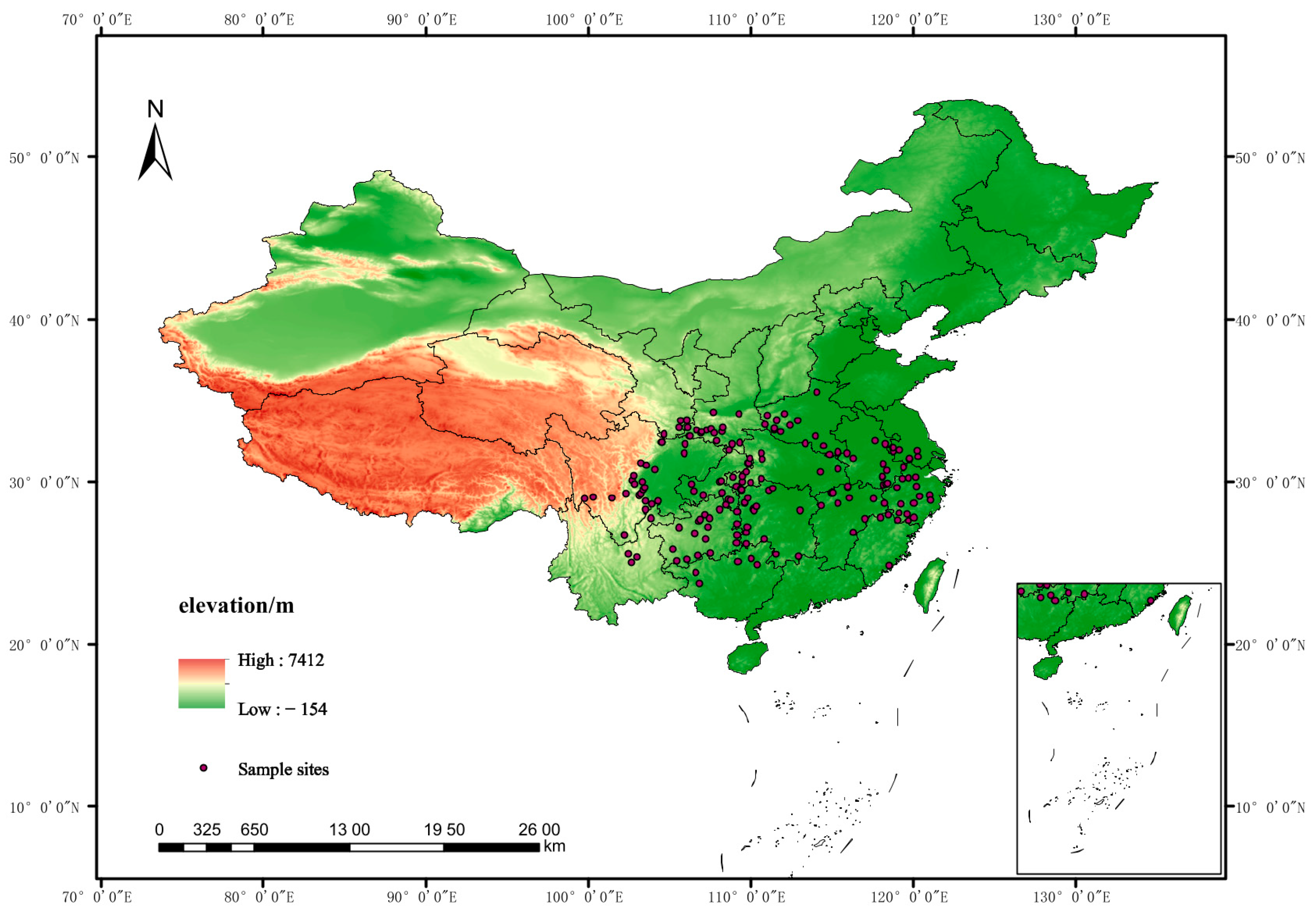
2.1. Collection and Screening of Distributed Data
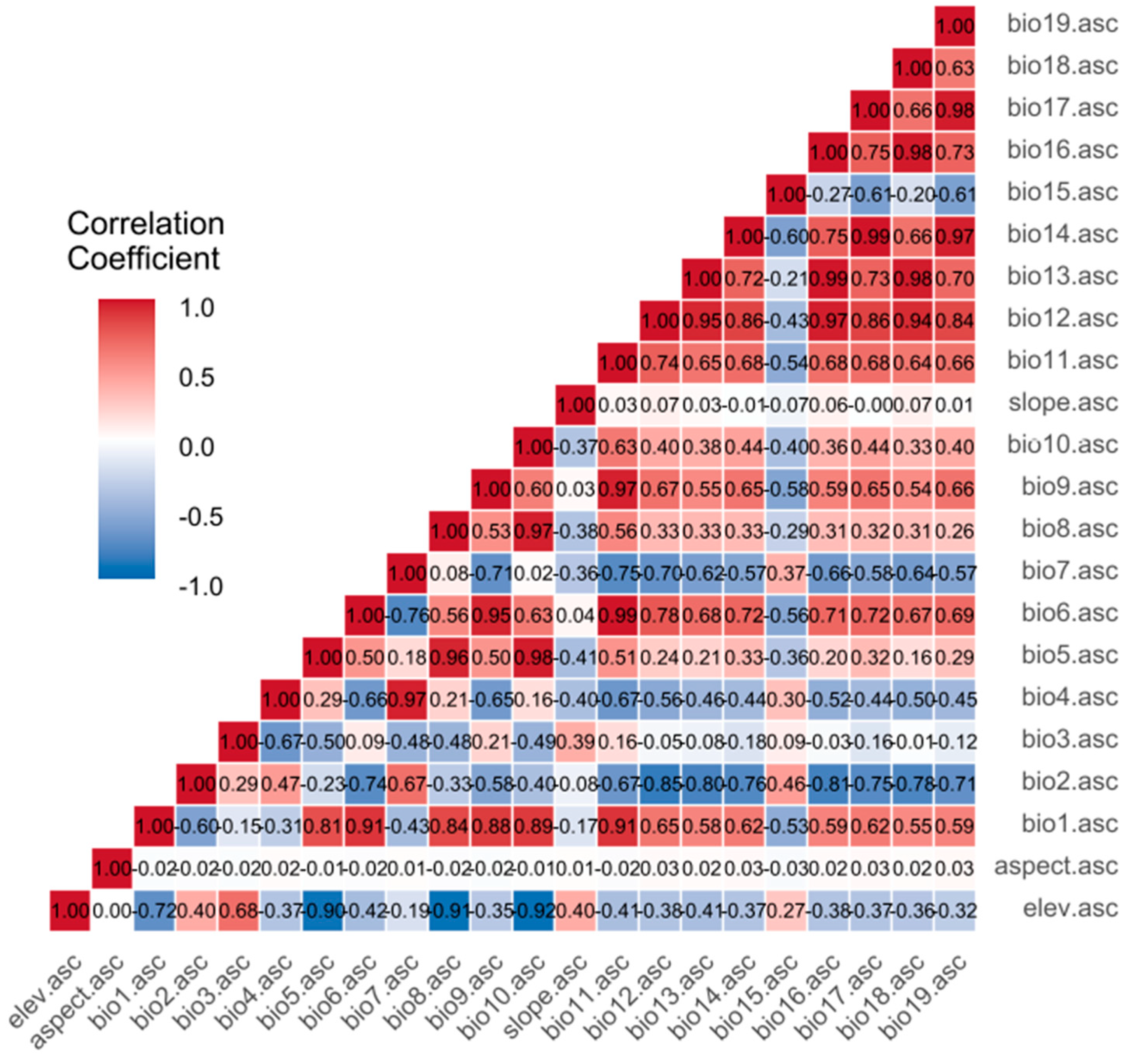
2.2. Environmental Variables
2.3. Construction and Evaluation of Species Distribution Model
2.4. Classification of Suitable Habitat and Calculation of Centroid Migration
- Habitat Expansion: Area suitable only in the future period.
- Habitat Contraction: Area suitable only in the current period.
- Unchanged Habitat: Area suitable in both periods.
3. Results
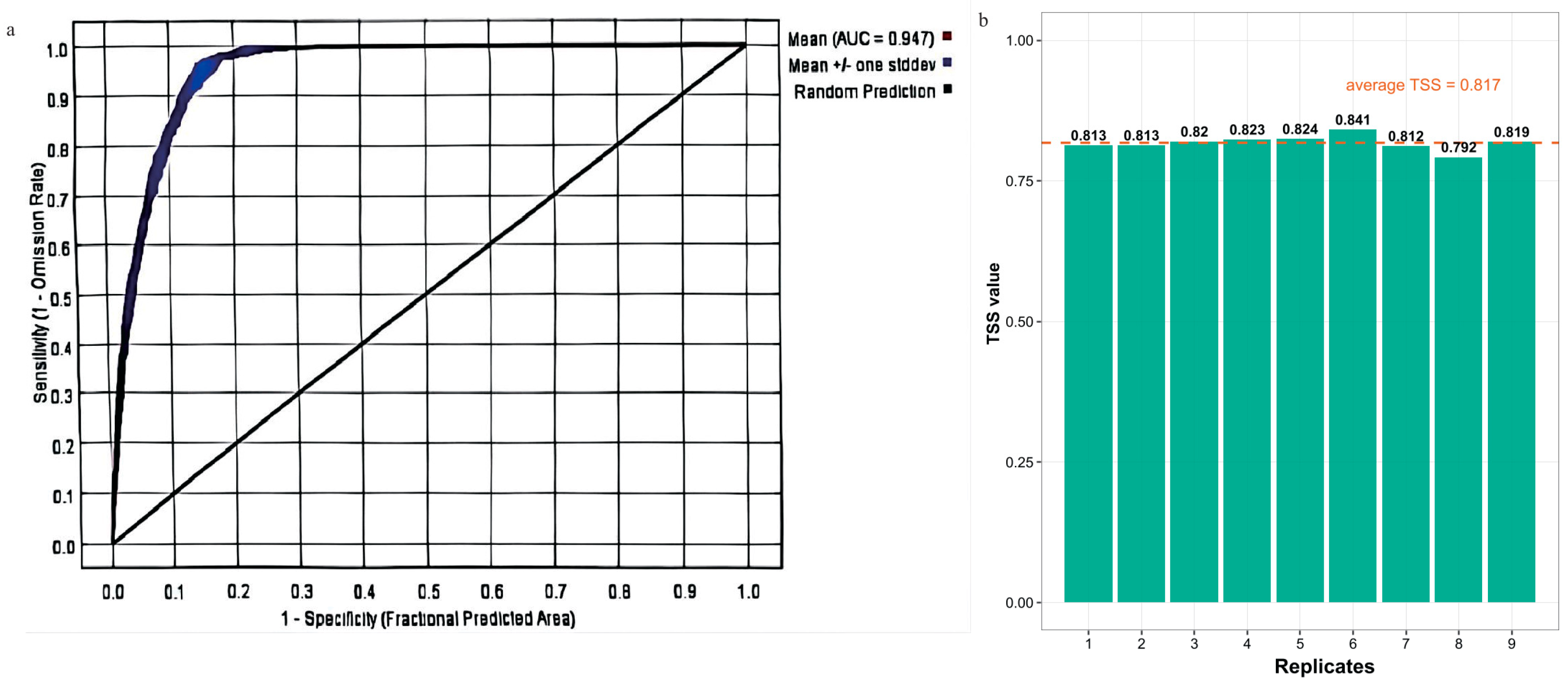
3.1. Model Optimization Results and Accuracy Evaluation
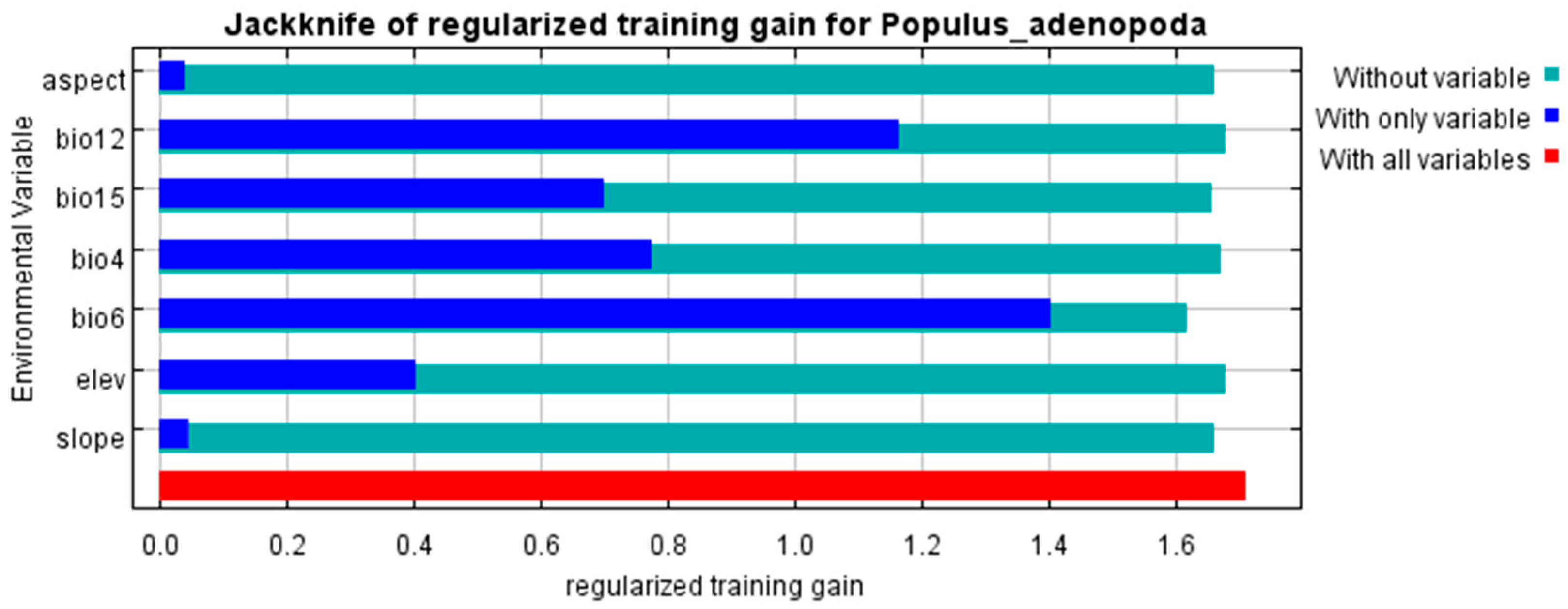
3.2. Environmental Variables Contribution
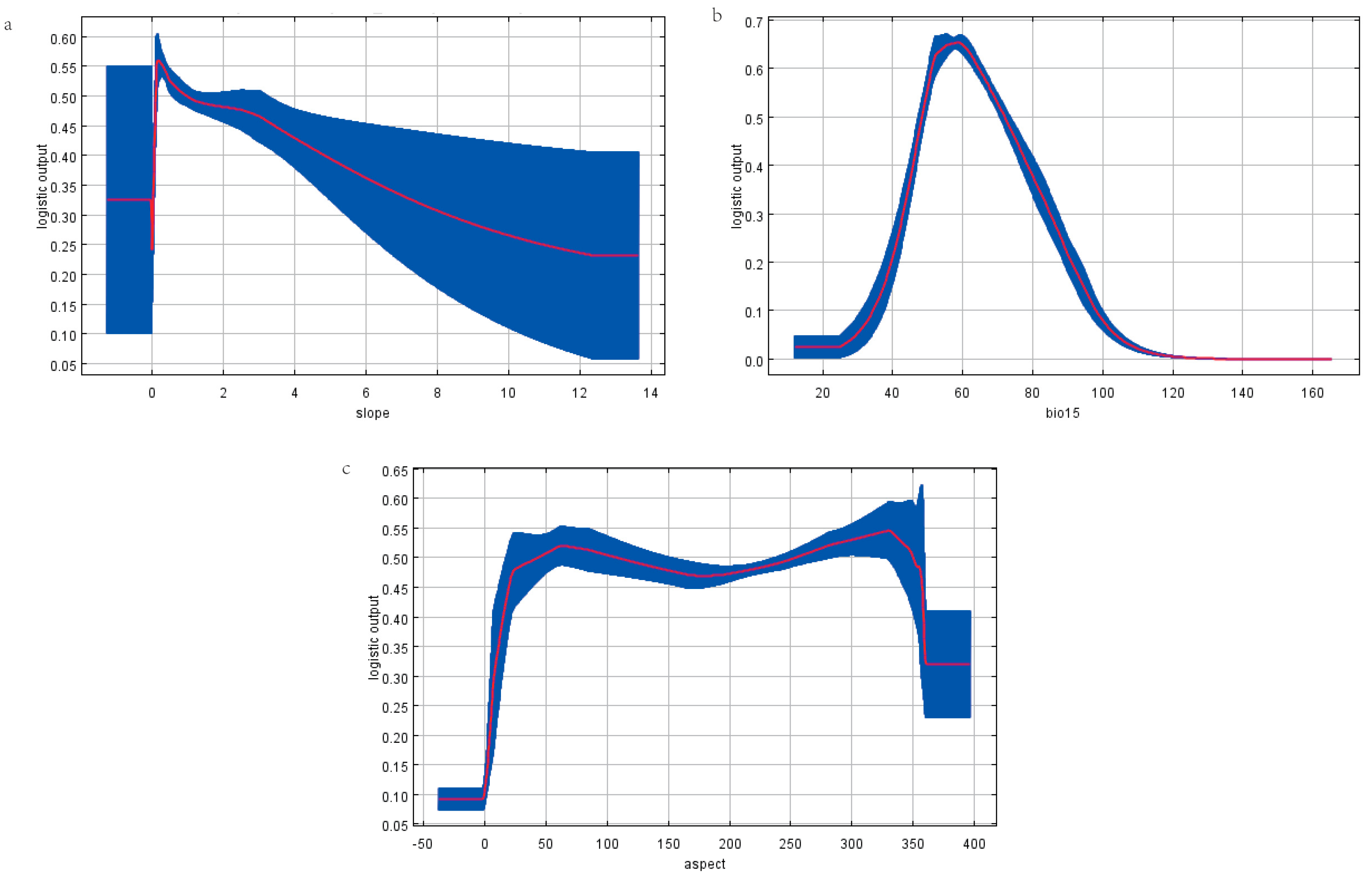
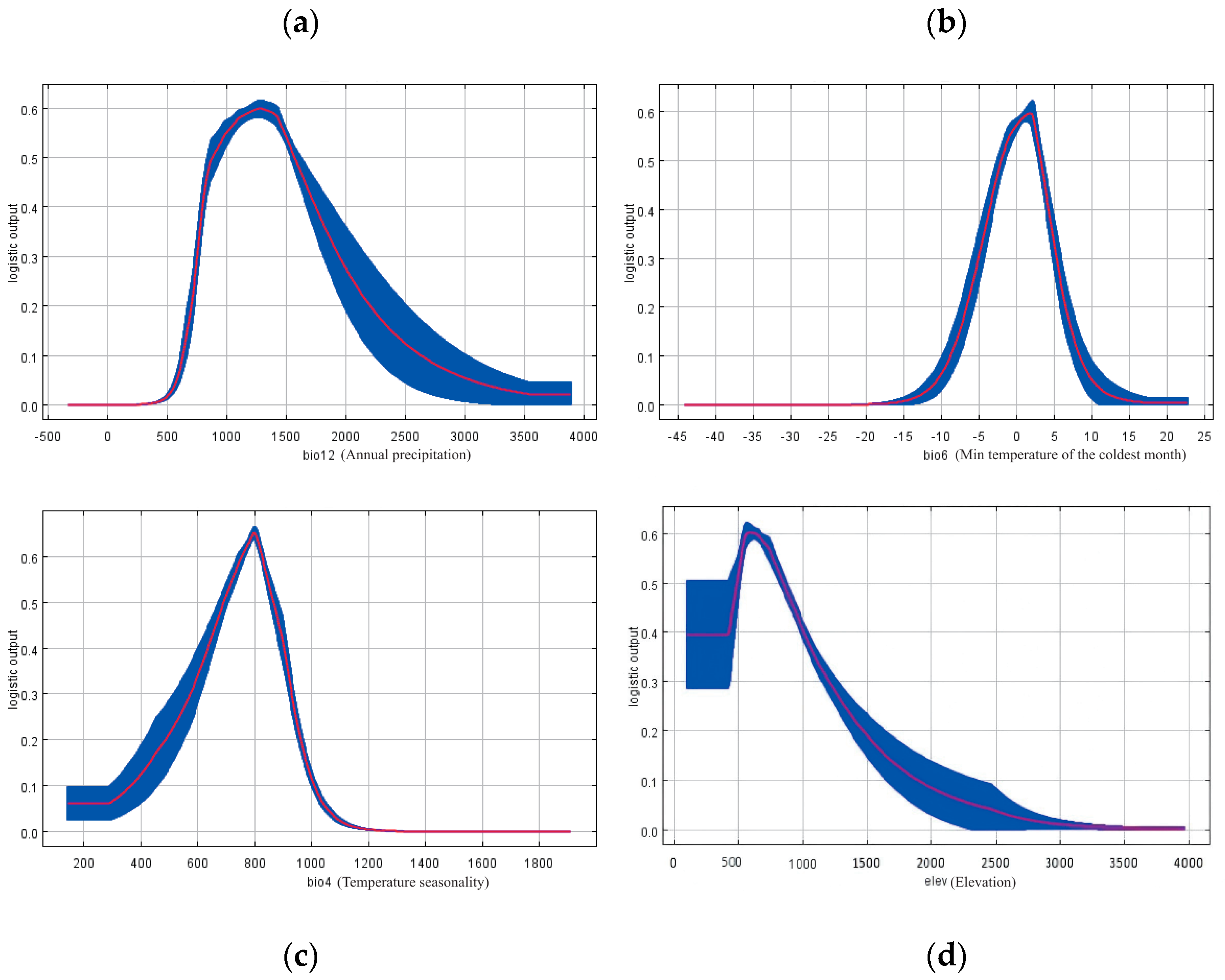
3.3. Relationship Between Distribution Probability and Dominant Environmental Factors
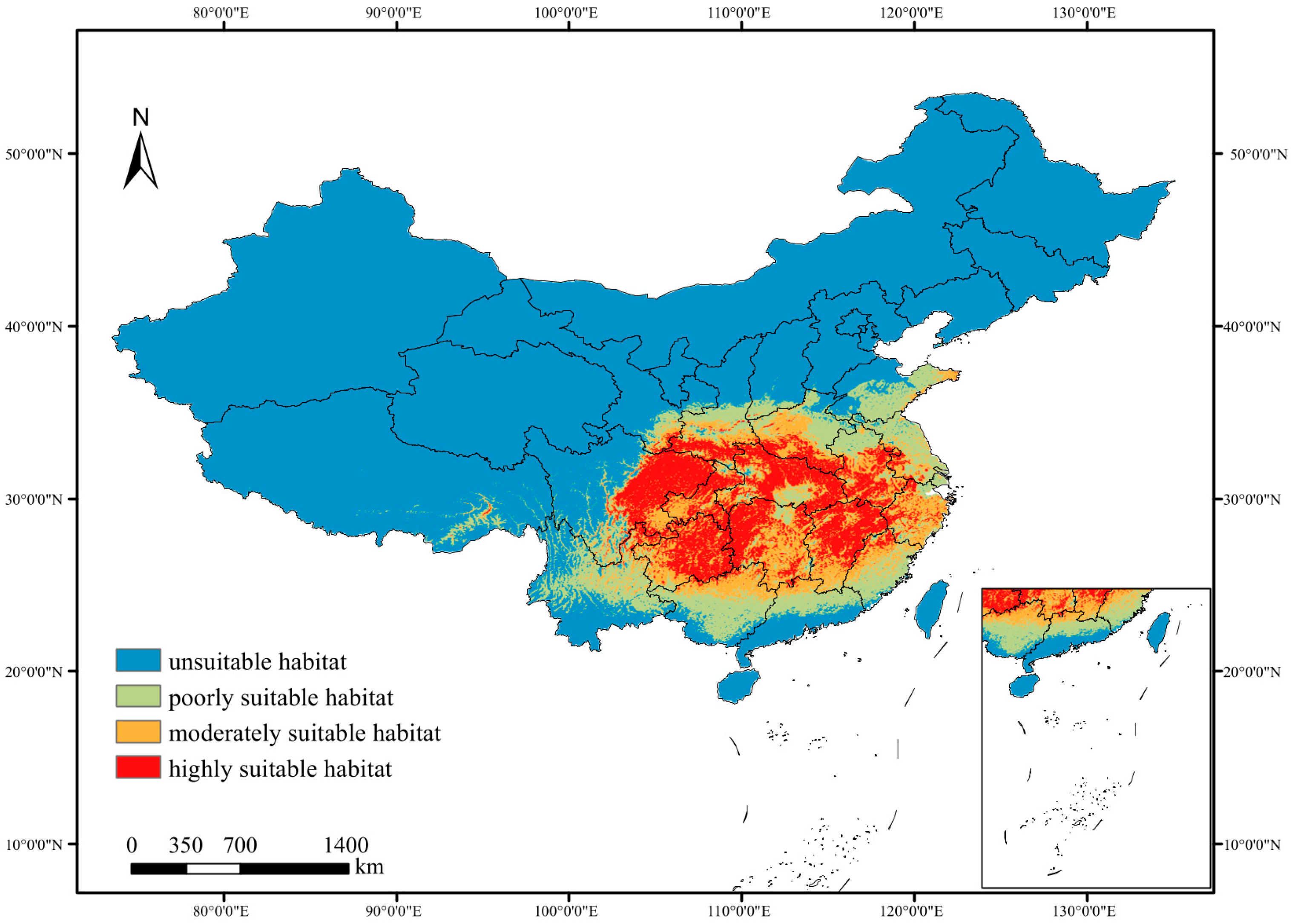
3.4. Distribution of Suitable Habitat of P. adenopoda Under Current Climate Scenario
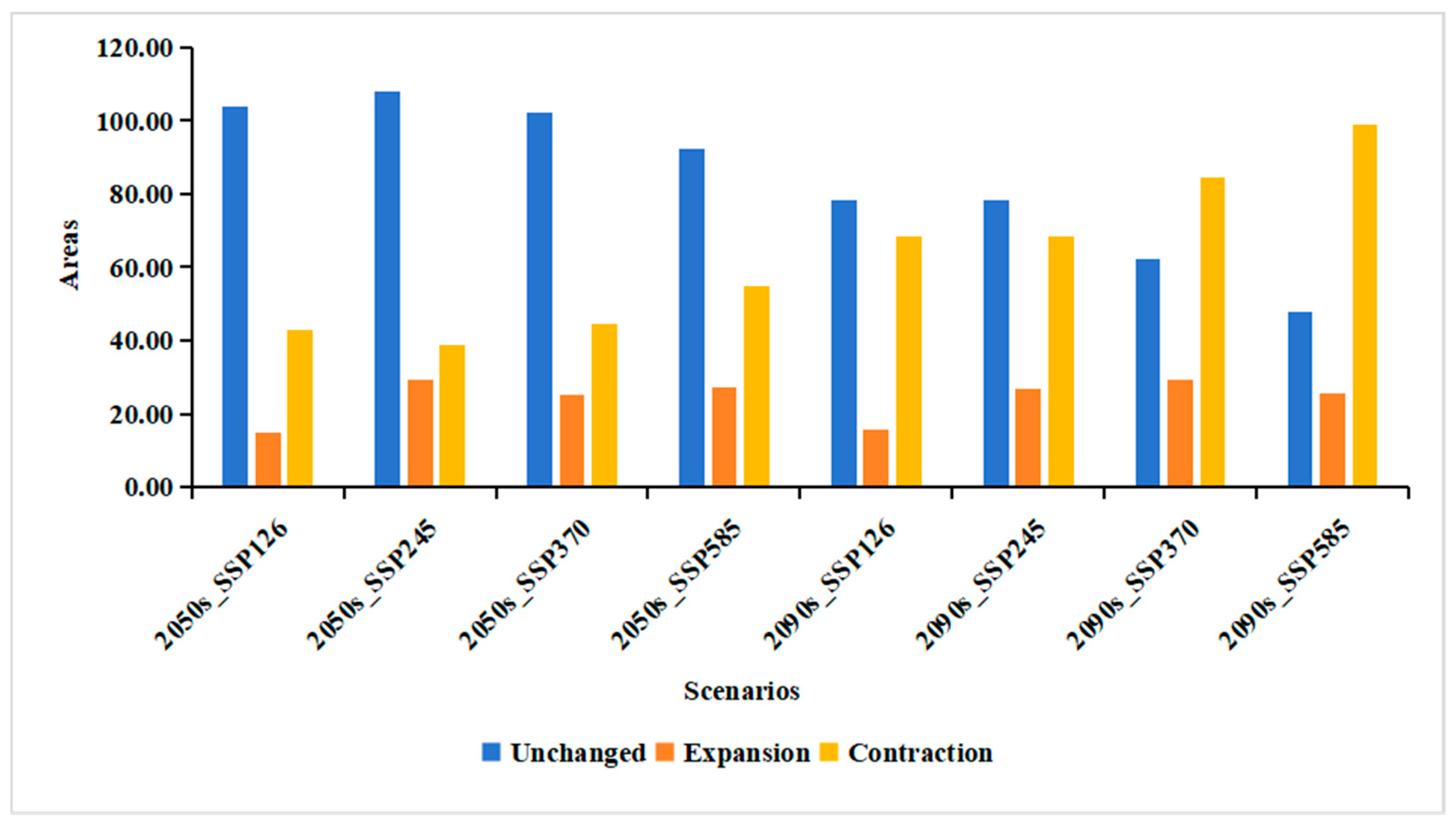
3.5. Prediction of Suitable Habitat in P. adenopoda Under Different Climate Scenarios in the Future
3.6. Centroid Migration of Suitable Habitat Under Future Climate Scenarios
4. Discussion
4.1. Mechanisms Underlying Distribution Shifts and Ecological Implications
4.2. Comparative Vulnerability and Conservation Context
4.3. Management Implications: From Projection to Action
4.4. Limitations and Future Research Directions
5. Conclusions
Author Contributions
Funding
Data Availability Statement
Conflicts of Interest
Appendix A

| Type | Code | Description | Unit |
|---|---|---|---|
| Climate | bio1 | Annual mean temperature | °C |
| bio2 | Mean diurnal range (Mean of monthly (max.temp. − min.temp.)) | °C | |
| bio3 | Isothermality (bio2/bio7) (×100) | ||
| bio4 | Temperature seasonality (standard deviation × 100) | ||
| bio5 | Max temperature of the warmest month | °C | |
| bio6 | Min temperature of the coldest month | °C | |
| bio7 | Temperature annual range (bio5–bio6) | °C | |
| bio8 | Mean temperature of the wettest quarter | °C | |
| bio9 | Mean temperature of the driest quarter | °C | |
| bio10 | Mean temperature of the warmest quarter | °C | |
| bio11 | Mean temperature of the coldest quarter | °C | |
| bio12 | Annual precipitation | mm | |
| bio13 | Precipitation of the wettest month | mm | |
| bio14 | Precipitation of the driest month | mm | |
| bio15 | Precipitation seasonality (Coefficient of variation) | ||
| bio16 | Precipitation of the wettest quarter | mm | |
| bio17 | Precipitation of the driest quarter | mm | |
| bio18 | Precipitation of the warmest quarter | mm | |
| bio19 | Precipitation of coldest quarter | mm | |
| topographical | elev | Elevation | m |
| slope | ° | ||
| aspect |
References
- Schipper, E.L.F.; Revi, A.; Preston, B.L.; Carr, E.R.; Eriksen, S.H.; Fernández-Carril, L.R.; Glavovic, B.; Hilmi, N.J.M.; Ley, D.; Mukerji, R.; et al. Climate Resilient Development Pathways. In Climate Change 2022: Impacts, Adaptation and Vulnerability. Contribution of Working Group II to the Sixth Assessment Report of the Intergovernmental Panel on Climate Change; Pörtner, H.-O., Roberts, D.C., Tignor, M.M.B., Poloczanska, E.S., Mintenbeck, K., Alegría, A., Craig, M., Langsdorf, S., Löschke, S., Möller, V., et al., Eds.; Cambridge University Press: Cambridge, UK, 2022. [Google Scholar]
- Fischer, E.M.; Knutti, R. Anthropogenic Contribution to Global Occurrence of Heavy-Precipitation and High-Temperature Extremes. Nat. Clim. Change 2015, 5, 560–564. [Google Scholar] [CrossRef]
- Allen, C.D.; Breshears, D.D.; McDowell, N.G. On Underestimation of Global Vulnerability to Tree Mortality and Forest Die-off from Hotter Drought in the Anthropocene. Ecosphere 2015, 6, art129. [Google Scholar] [CrossRef]
- Bernatchez, L.; Ferchaud, A.-L.; Berger, C.S.; Venney, C.J.; Xuereb, A. Genomics for Monitoring and Understanding Species Responses to Global Climate Change. Nat. Rev. Genet. 2024, 25, 165–183. [Google Scholar] [CrossRef]
- Hannah, L.; Roehrdanz, P.R.; Krishna Bahadur, K.C.; Fraser, E.D.G.; Donatti, C.I.; Saenz, L.; Wright, T.M.; Hijmans, R.J.; Mulligan, M.; Berg, A.; et al. The Environmental Consequences of Climate-Driven Agricultural Frontiers. PLoS ONE 2020, 15, e0228305. [Google Scholar] [CrossRef]
- Bolte, A.; Ammer, C.; Löf, M.; Madsen, P.; Nabuurs, G.-J.; Schall, P.; Spathelf, P.; Rock, J. Adaptive Forest Management in Central Europe: Climate Change Impacts, Strategies and Integrative Concept. Scand. J. For. Res. 2009, 24, 473–482. [Google Scholar] [CrossRef]
- Yousefpour, R.; Augustynczik, A.L.D.; Reyer, C.P.O.; Lasch-Born, P.; Suckow, F.; Hanewinkel, M. Realizing Mitigation Efficiency of European Commercial Forests by Climate Smart Forestry. Sci. Rep. 2018, 8, 345. [Google Scholar] [CrossRef]
- Fan, L.; Zheng, H.; Milne, R.I.; Zhang, L.; Mao, K. Strong Population Bottleneck and Repeated Demographic Expansions of Populus adenopoda (Salicaceae) in Subtropical China. Ann. Bot. 2018, 121, 665–679. [Google Scholar] [CrossRef] [PubMed]
- Yang, G.; Liu, N.; Zhang, X.; Zhou, H.; Hou, Y.; Wu, P.; Zhang, X. Prediction of the Potential Distribution of Chimonobambusautilis (Poaceae, Bambusoideae) in China, Based on the MaxEnt Model. Biodivers. Data J. 2024, 12, e126620. [Google Scholar] [CrossRef] [PubMed]
- Xiao, Q.; Shi, X.-D.; Shi, L.; Yao, Z.-Y.; Chen, Y.-H.; Yang, W.-Z.; Liao, Z.-Y.; Qi, Y. Enhanced Risk Assessment Framework Integrating Distribution Dynamics, Genetically Inferred Populations, and Morphological Traits of Diploderma Lizards. Zool. Res. 2025, 46, 15–26. [Google Scholar] [CrossRef] [PubMed]
- Mi, Y.; Li, S.; Wang, Z. Spatial Distribution and Topographic Gradient Effects of Habitat Quality in the Chang-Zhu-Tan Urban Agglomeration, China. Sci. Rep. 2024, 14, 22563. [Google Scholar] [CrossRef]
- Chen, Y.; Zhang, F.; Lin, J. Projecting Future Land Use Evolution and Its Effect on Spatiotemporal Patterns of Habitat Quality in China. Appl. Sci. 2025, 15, 1042. [Google Scholar] [CrossRef]
- Soberón, J.; Peterson, A.T. What Is the Shape of the Fundamental Grinnellian Niche? Theor. Ecol. 2020, 13, 105–115. [Google Scholar] [CrossRef]
- Sales, L.P.; Hayward, M.W.; Loyola, R. What Do You Mean by “Niche”? Modern Ecological Theories Are Not Coherent on Rhetoric about the Niche Concept. Acta Oecologica 2021, 110, 103701. [Google Scholar] [CrossRef]
- Grinnell, J. The Niche-Relationships of the California Thrasher. Auk 1917, 34, 427–433. [Google Scholar] [CrossRef]
- Grinnell, J. The Origin and Distribution of the Chestnut-Backed Chickadee. Auk 1904, 21, 364–382. [Google Scholar] [CrossRef]
- Guisan, A.; Chevalier, M.; Adde, A.; Zarzo-Arias, A.; Goicolea, T.; Broennimann, O.; Petitpierre, B.; Scherrer, D.; Rey, P.-L.; Collart, F.; et al. Spatially Nested Species Distribution Models (N-SDM): An Effective Tool to Overcome Niche Truncation for More Robust Inference and Projections. J. Ecol. 2025, 113, 1588–1605. [Google Scholar] [CrossRef]
- Melo-Merino, S.M.; Reyes-Bonilla, H.; Lira-Noriega, A. Ecological Niche Models and Species Distribution Models in Marine Environments: A Literature Review and Spatial Analysis of Evidence. Ecol. Model. 2020, 415, 108837. [Google Scholar] [CrossRef]
- Puglielli, G.; Hutchings, M.J.; Laanisto, L. The Triangular Space of Abiotic Stress Tolerance in Woody Species: A Unified Trade-off Model. New Phytol. 2021, 229, 1354–1362. [Google Scholar] [CrossRef]
- Cong, J.; Tao, Z.; Xu, Y.; Li, X. From Thermal Tolerance to Distribution Resilience: Physiology-Informed Species Distribution Models Moderated Range Shifts for an Intertidal Crab Species under Climate Change. Glob. Ecol. Conserv. 2025, 62, e03809. [Google Scholar] [CrossRef]
- Ren, J.W.F.; Coffman, G.C. Integrating the Resilience Concept into Ecosystem Restoration. Restor. Ecol. 2023, 31, e13907. [Google Scholar] [CrossRef]
- Li, Y.; Zhao, Z.; Fu, B.; Zhang, Y.; Lü, Y.; Li, T.; Liu, S.; Wu, G.; Zheng, X.; Wu, X. Ecological Restorations Enhance Ecosystem Stability by Improving Ecological Resilience in a Typical Basin of the Yangtze River, China. Geogr. Sustain. 2025, 6, 100357. [Google Scholar] [CrossRef]
- Nordling, K.; Fahrenbach, N.L.S.; Samset, B.H. Climate Variability Can Outweigh the Influence of Climate Mean Changes for Extreme Precipitation under Global Warming. Atmos. Chem. Phys. 2025, 25, 1659–1684. [Google Scholar] [CrossRef]
- De Kort, H.; Baguette, M.; Lenoir, J.; Stevens, V.M. Toward Reliable Habitat Suitability and Accessibility Models in an Era of Multiple Environmental Stressors. Ecol. Evol. 2020, 10, 10937–10952. [Google Scholar] [CrossRef] [PubMed]
- Elith, J.; Leathwick, J.R. Species Distribution Models: Ecological Explanation and Prediction Across Space and Time. Annu. Rev. Ecol. Evol. Syst. 2009, 40, 677–697. [Google Scholar] [CrossRef]
- Feng, L.; Sun, J.; El-Kassaby, Y.A.; Luo, D.; Guo, J.; He, X.; Zhao, G.; Tian, X.; Qiu, J.; Feng, Z.; et al. Planning Ginkgo biloba Future Fruit Production Areas under Climate Change: Application of a Combinatorial Modeling Approach. For. Ecol. Manag. 2023, 533, 120861. [Google Scholar] [CrossRef]
- Gao, X.; Lin, F.; Li, M.; Mei, Y.; Li, Y.; Bai, Y.; He, X.; Zheng, Y. Prediction of the Potential Distribution of a Raspberry (Rubus Idaeus) in China Based on MaxEnt Model. Sci. Rep. 2024, 14, 24438. [Google Scholar] [CrossRef]
- Zhao, Y.; O’Neill, G.A.; Coops, N.C.; Wang, T. Predicting the Site Productivity of Forest Tree Species Using Climate Niche Models. For. Ecol. Manag. 2024, 562, 121936. [Google Scholar] [CrossRef]
- Pearson, R.G.; Dawson, T.P. Predicting the Impacts of Climate Change on the Distribution of Species: Are Bioclimate Envelope Models Useful? Glob. Ecol. Biogeogr. 2003, 12, 361–371. [Google Scholar] [CrossRef]
- Phillips, S.J.; Anderson, R.P.; Schapire, R.E. Maximum Entropy Modeling of Species Geographic Distributions. Ecol. Model. 2006, 190, 231–259. [Google Scholar] [CrossRef]
- Zhao, R.; Wang, S.; Chen, S. Predicting the Potential Habitat Suitability of Saussurea Species in China under Future Climate Scenarios Using the Optimized Maximum Entropy (MaxEnt) Model. J. Clean. Prod. 2024, 474, 143552. [Google Scholar] [CrossRef]
- Wang, W.; Tang, X.; Zhu, Q.; Pan, K.; Hu, Q.; He, M.; Li, J. Predicting the Impacts of Climate Change on the Potential Distribution of Major Native Non-Food Bioenergy Plants in China. PLoS ONE 2014, 9, e111587. [Google Scholar] [CrossRef]
- Ru-Ru, W.U.; Mei-Zhen, L.I.U.; Xian, G.U.; Xin-Yue, C.; Li-Yue, G.U.O.; Gao-Ming, J.; Ru-Yi, Q.I. Prediction of Suitable Habitat Distribution and Potential Impact of Climate Change on Distribution Patterns of Cupressus Gigantea. Chin. J. Plant Ecol. 2024, 48, 445. [Google Scholar] [CrossRef]
- Zajac, Z.; Stith, B.; Bowling, A.C.; Langtimm, C.A.; Swain, E.D. Evaluation of Habitat Suitability Index Models by Global Sensitivity and Uncertainty Analyses: A Case Study for Submerged Aquatic Vegetation. Ecol. Evol. 2015, 5, 2503–2517. [Google Scholar] [CrossRef]
- Ji, Y.; Wei, X.; Li, D.; Zhao, J.; Li, J.; Feng, S. A Framework for Assessing Variations in Ecological Networks to Support Wildlife Conservation and Management. Ecol. Indic. 2023, 155, 110936. [Google Scholar] [CrossRef]
- Dong, S.; Wang, H.; Gao, C.; Yang, C. Potential Distribution of Tamarix boveana Bunge in Mediterranean Coastal Countries Under Future Climate Scenarios. Forests 2025, 16, 1053. [Google Scholar] [CrossRef]
- Shi, X.; Zhao, J.; Wang, Y.; Wu, G.; Hou, Y.; Yu, C. Optimized MaxEnt Modeling of Catalpa Bungei Habitat for Sustainable Management Under Climate Change in China. Forests 2025, 16, 1150. [Google Scholar] [CrossRef]
- Fick, S.E.; Hijmans, R.J. WorldClim 2: New 1-Km Spatial Resolution Climate Surfaces for Global Land Areas. Int. J. Climatol. 2017, 37, 4302–4315. [Google Scholar] [CrossRef]
- Eyring, V.; Bony, S.; Meehl, G.A.; Senior, C.A.; Stevens, B.; Stouffer, R.J.; Taylor, K.E. Overview of the Coupled Model Intercomparison Project Phase 6 (CMIP6) Experimental Design and Organization. Geosci. Model Dev. 2016, 9, 1937–1958. [Google Scholar] [CrossRef]
- De Marco, P.; Nóbrega, C.C. Evaluating Collinearity Effects on Species Distribution Models: An Approach Based on Virtual Species Simulation. PLoS ONE 2018, 13, e0202403. [Google Scholar] [CrossRef]
- Li, Y.; Shao, W.; Huang, S.; Zhang, Y.; Fang, H.; Jiang, J. Prediction of Suitable Habitats for Sapindus delavayi Based on the MaxEnt Model. Forests 2022, 13, 1611. [Google Scholar] [CrossRef]
- Wang, X.; Li, Z.; Zhang, L.; Wang, Y.; Liu, Y.; Ma, Y. The Optimized Maxent Model Reveals the Pattern of Distribution and Changes in the Suitable Cultivation Areas for Reaumuria songarica Being Driven by Climate Change. Ecol. Evol. 2024, 14, e70015. [Google Scholar] [CrossRef]
- Sallam, M.F.; Ahmed, A.M.A.; Abdel-Dayem, M.S.; Abdullah, M.A.R. Ecological Niche Modeling and Land Cover Risk Areas for Rift Valley Fever Vector, Culex Tritaeniorhynchus Giles in Jazan, Saudi Arabia. PLoS ONE 2013, 8, e65786. [Google Scholar] [CrossRef]
- Mechergui, K.; Jiang, M.; Qi, Z.; Alamri, S.M.; Alamery, E.R.; Faqeih, K.Y.; AlAmri, A.R.; Jaouadi, W.; Yan, X. The Effects of Climate Change on Distributions of Four Endemic and Medicinal Species in the North Africa Using MaxEnt Modeling and GIS Tools. Ind. Crops Prod. 2025, 235, 121766. [Google Scholar] [CrossRef]
- Phillips, S.J.; Dudík, M. Modeling of Species Distributions with Maxent: New Extensions and a Comprehensive Evaluation. Ecography 2008, 31, 161–175. [Google Scholar] [CrossRef]
- Raj, A.; Sharma, L.K.; Kumar, R.; Naik, R.; Divyansh, K. Assessing the Susceptibility for Potential Site Suitability and Distribution of Flamingos with Respect to Changing Climate Using Maxent Modelling. Environ. Sustain. Indic. 2025, 27, 100858. [Google Scholar] [CrossRef]
- Jung, J.B.; Park, G.E.; Kim, H.J.; Huh, J.H.; Um, Y. Predicting the Habitat Suitability for Angelica Gigas Medicinal Herb Using an Ensemble Species Distribution Model. Forests 2023, 14, 592. [Google Scholar] [CrossRef]
- Canturk, U.; Koç, İ.; Erdem, R.; Ozturk Pulatoglu, A.; Donmez, S.; Ozkazanc, N.K.; Sevik, H.; Ozel, H.B. Climate-Driven Shifts in Wild Cherry (Prunus avium L.) Habitats in Türkiye: A Multi-Model Projection for Conservation Planning. Forests 2025, 16, 1484. [Google Scholar] [CrossRef]
- Laughlin, D.C.; Delzon, S.; Clearwater, M.J.; Bellingham, P.J.; McGlone, M.S.; Richardson, S.J. Climatic Limits of Temperate Rainforest Tree Species Are Explained by Xylem Embolism Resistance among Angiosperms but Not among Conifers. New Phytol. 2020, 226, 727–740. [Google Scholar] [CrossRef] [PubMed]
- Chen, J.; Wu, L.; Yang, C.; Qiu, Q.; Wang, Y.; Li, Z.; Xia, C. Predicting Potential Habitats of the Endangered Mangrove Species Acanthus ebracteatus Under Current and Future Climatic Scenarios Based on MaxEnt and OPGD Models. Plants 2025, 14, 2827. [Google Scholar] [CrossRef]
- Zhou, L.; Ullah, F.; Zou, J.; Zeng, X. Molecular and Physiological Responses of Plants That Enhance Cold Tolerance. Int. J. Mol. Sci. 2025, 26, 1157. [Google Scholar] [CrossRef]
- Yu, L.; Dai, H.; Fang, L.; Korpelainen, H.; Niinemets, Ü.; Li, C. Sex-Specific Non-Structural Carbohydrate Variation and Hydraulics Explain Differences in Drought Resistance of Populus Euphratica Females and Males along an Aridity Gradient. Funct. Ecol. 2025, 39, 2925–2939. [Google Scholar] [CrossRef]
- Guo, Y.; Zhao, Z.; Wang, J. Projected Degradation of Quercus Habitats in Southern China under Future Global Warming Scenarios. For. Ecol. Manag. 2024, 568, 122133. [Google Scholar] [CrossRef]
- Cahill, A.E.; Aiello-Lammens, M.E.; Caitlin Fisher-Reid, M.; Hua, X.; Karanewsky, C.J.; Ryu, H.Y.; Sbeglia, G.C.; Spagnolo, F.; Waldron, J.B.; Wiens, J.J. Causes of Warm-Edge Range Limits: Systematic Review, Proximate Factors and Implications for Climate Change. J. Biogeogr. 2014, 41, 429–442. [Google Scholar] [CrossRef]
- Li, J.; Liu, G.; Lu, Q.; Zhang, Y.; Li, G.; Du, S. Future Climate Change Will Have a Positive Effect on Populus Davidiana in China. Forests 2019, 10, 1120. [Google Scholar] [CrossRef]
- Xu, Y.; Guan, B.-Q.; Chen, R.; Yi, R.; Jiang, X.-L.; Xie, K.-Q. Investigating the Distribution Dynamics of the Camellia Subgenus Camellia in China and Providing Insights into Camellia Resources Management Under Future Climate Change. Plants 2025, 14, 1137. [Google Scholar] [CrossRef]
- Xu, H.; Jiang, C.; Li, X.; Fan, H.; Wang, J.; Li, J. Optimized MaxEnt Modeling Reveals Major Decline and Shift of Giant Panda Habitat under CMIP6 Ensemble Projections. Ecol. Indic. 2025, 179, 114150. [Google Scholar] [CrossRef]
- Tonkin, J.D.; Altermatt, F.; Finn, D.S.; Heino, J.; Olden, J.D.; Pauls, S.U.; Lytle, D.A. The Role of Dispersal in River Network Metacommunities: Patterns, Processes, and Pathways. Freshw. Biol. 2018, 63, 141–163. [Google Scholar] [CrossRef]
- Malanson, G.P.; Cairns, D.M. Effects of Dispersal, Population Delays, and Forest Fragmentation on Tree Migration Rates. Plant Ecol. 1997, 131, 67–79. [Google Scholar] [CrossRef]
- Xu, D.; Peng, J.; Dong, J.; Jiang, H.; Liu, M.; Luo, Y.; Xu, Z. Expanding China’s Protected Areas Network to Enhance Resilience of Climate Connectivity. Sci. Bull. 2024, 69, 2273–2280. [Google Scholar] [CrossRef]
- Sun, Y.-W.; Hou, N.; Woeste, K.; Zhang, C.; Yue, M.; Yuan, X.-Y.; Zhao, P. Population Genetic Structure and Adaptive Differentiation of Iron Walnut Juglans Regia Subsp. in Sigillata Southwest China. Ecol. Evol. 2019, 9, 14154–14166. [Google Scholar] [CrossRef]
- Wang, C.; Zhou, T.; Qin, Y.; Zhou, G.; Fei, Y.; Xu, Y.; Tang, Z.; Jiang, M.; Qiao, X. Wuling Mountains Function as a Corridor for Woody Plant Species Exchange Between Northern and Southern Central China. Front. Ecol. Evol. 2022, 10, 837738. [Google Scholar] [CrossRef]
- Rosero, A.; Granda, L.; Berdugo-Cely, J.A.; Šamajová, O.; Šamaj, J.; Cerkal, R. A Dual Strategy of Breeding for Drought Tolerance and Introducing Drought-Tolerant, Underutilized Crops into Production Systems to Enhance Their Resilience to Water Deficiency. Plants 2020, 9, 1263. [Google Scholar] [CrossRef]
- Sharma, N.; Raman, H.; Wheeler, D.; Kalenahalli, Y.; Sharma, R. Data-Driven Approaches to Improve Water-Use Efficiency and Drought Resistance in Crop Plants. Plant Sci. 2023, 336, 111852. [Google Scholar] [CrossRef] [PubMed]
- AbdelRahman, M.A.E.; Saleh, A.M.; Arafat, S.M. Assessment of Land Suitability Using a Soil-Indicator-Based Approach in a Geomatics Environment. Sci. Rep. 2022, 12, 18113. [Google Scholar] [CrossRef]
- Akpoti, K.; Kabo-bah, A.T.; Zwart, S.J. Review—Agricultural Land Suitability Analysis: State-of-the-Art and Outlooks for Integration of Climate Change Analysis. Agric. Syst. 2019, 173, 172–208. [Google Scholar] [CrossRef]
- Booth, T.H. Why Understanding the Pioneering and Continuing Contributions of BIOCLIM to Species Distribution Modelling Is Important. Austral Ecol. 2018, 43, 852–860. [Google Scholar] [CrossRef]
- Peng, S.; Ellison, A.M.; Davis, C.C. Incorporating Responses of Traits to Changing Climates into Species Distribution Models: A Path Forward. New Phytol. 2025, 248, 38–49. [Google Scholar] [CrossRef] [PubMed]
- Jain, S.; Scaife, A.A.; Shepherd, T.G.; Deser, C.; Dunstone, N.; Schmidt, G.A.; Trenberth, K.E.; Turkington, T. Importance of Internal Variability for Climate Model Assessment. npj Clim. Atmos. Sci. 2023, 6, 68. [Google Scholar] [CrossRef]
- Niu, X.; Wang, S.; Tang, J.; Lee, D.-K.; Gutowski, W.; Dairaku, K.; McGregor, J.; Katzfey, J.; Gao, X.; Wu, J.; et al. Ensemble Evaluation and Projection of Climate Extremes in China Using RMIP Models. Int. J. Clim. 2018, 38, 2039–2055. [Google Scholar] [CrossRef]
- Fletcher, R.J., Jr.; Hefley, T.J.; Robertson, E.P.; Zuckerberg, B.; McCleery, R.A.; Dorazio, R.M. A Practical Guide for Combining Data to Model Species Distributions. Ecology 2019, 100, e02710. [Google Scholar] [CrossRef]
- Kirchhof, E.; Campos-Arguedas, F.; Arias, N.S.; Kovaleski, A.P. Thresholds for Spring Freeze: Measuring Risk to Improve Predictions in a Warming World. New Phytol. 2025, 248, 563–575. [Google Scholar] [CrossRef] [PubMed]

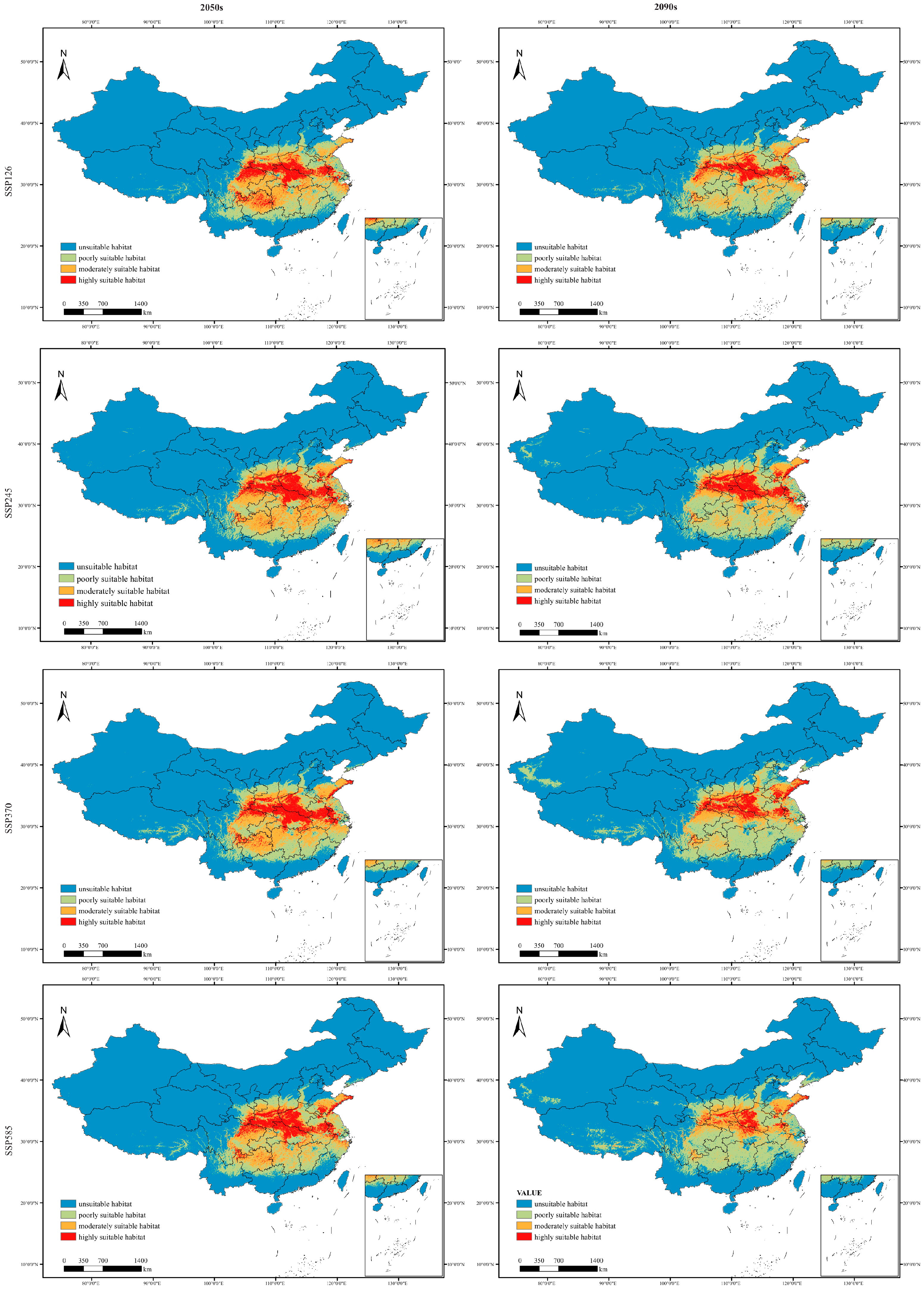
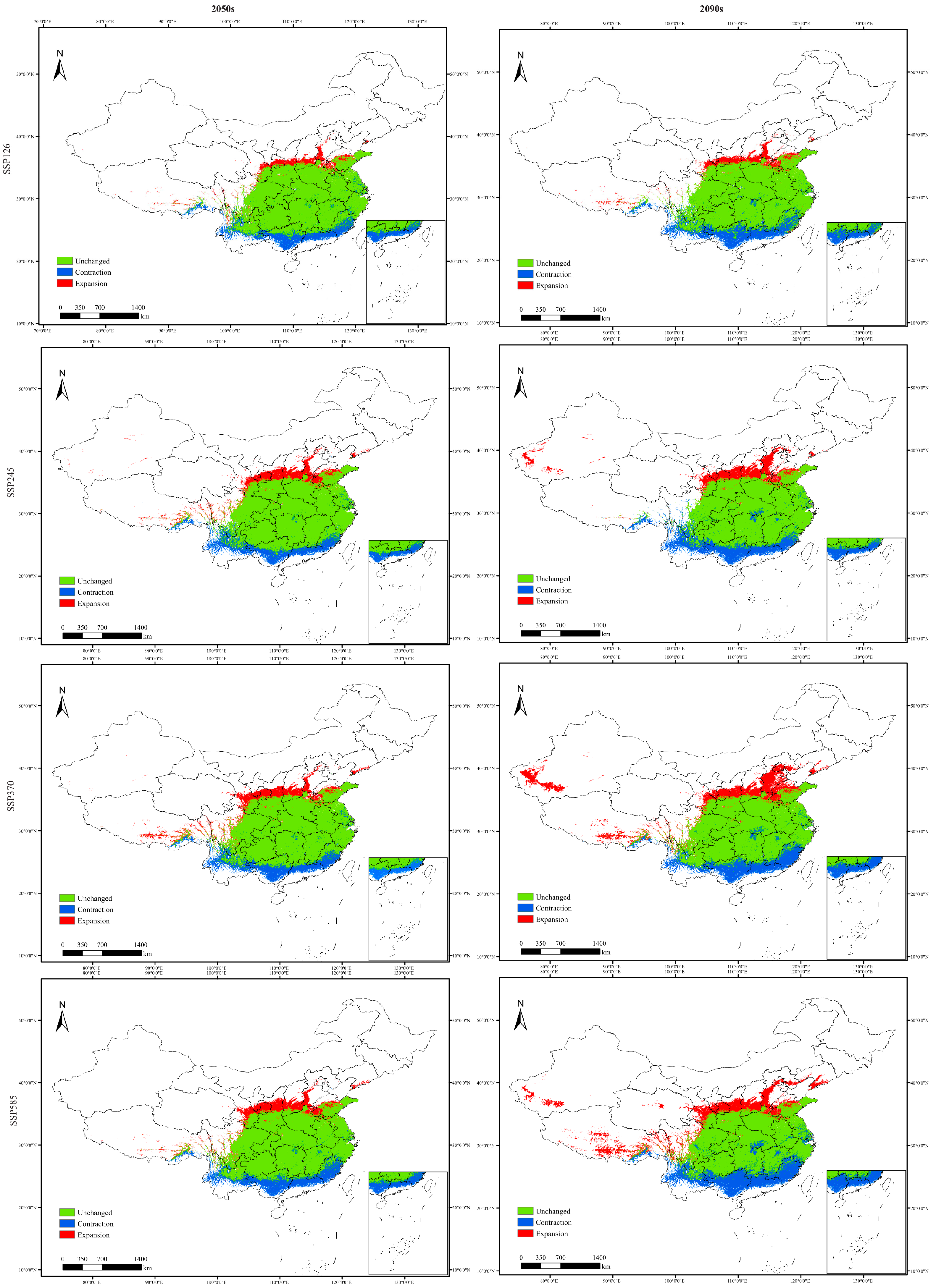
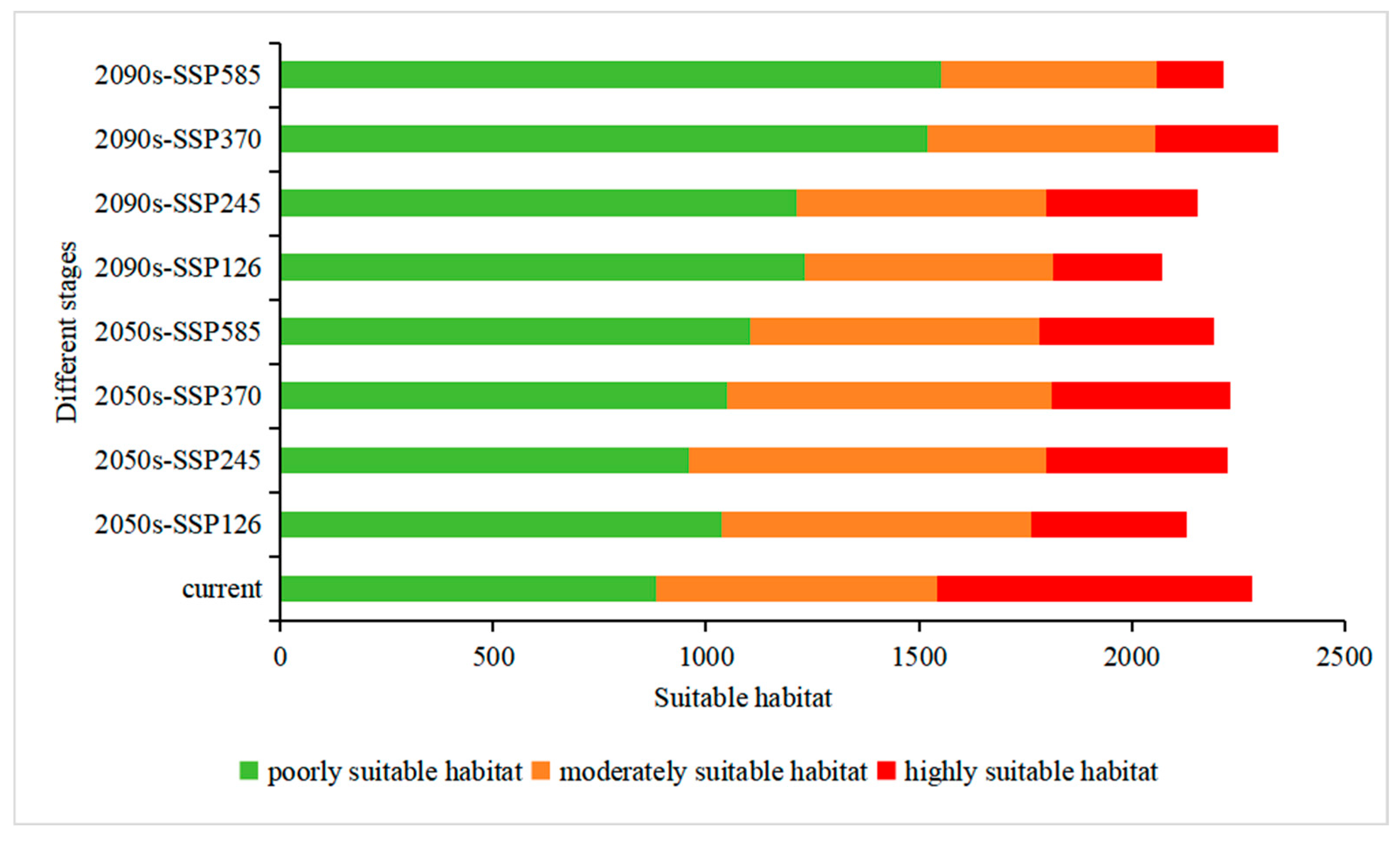
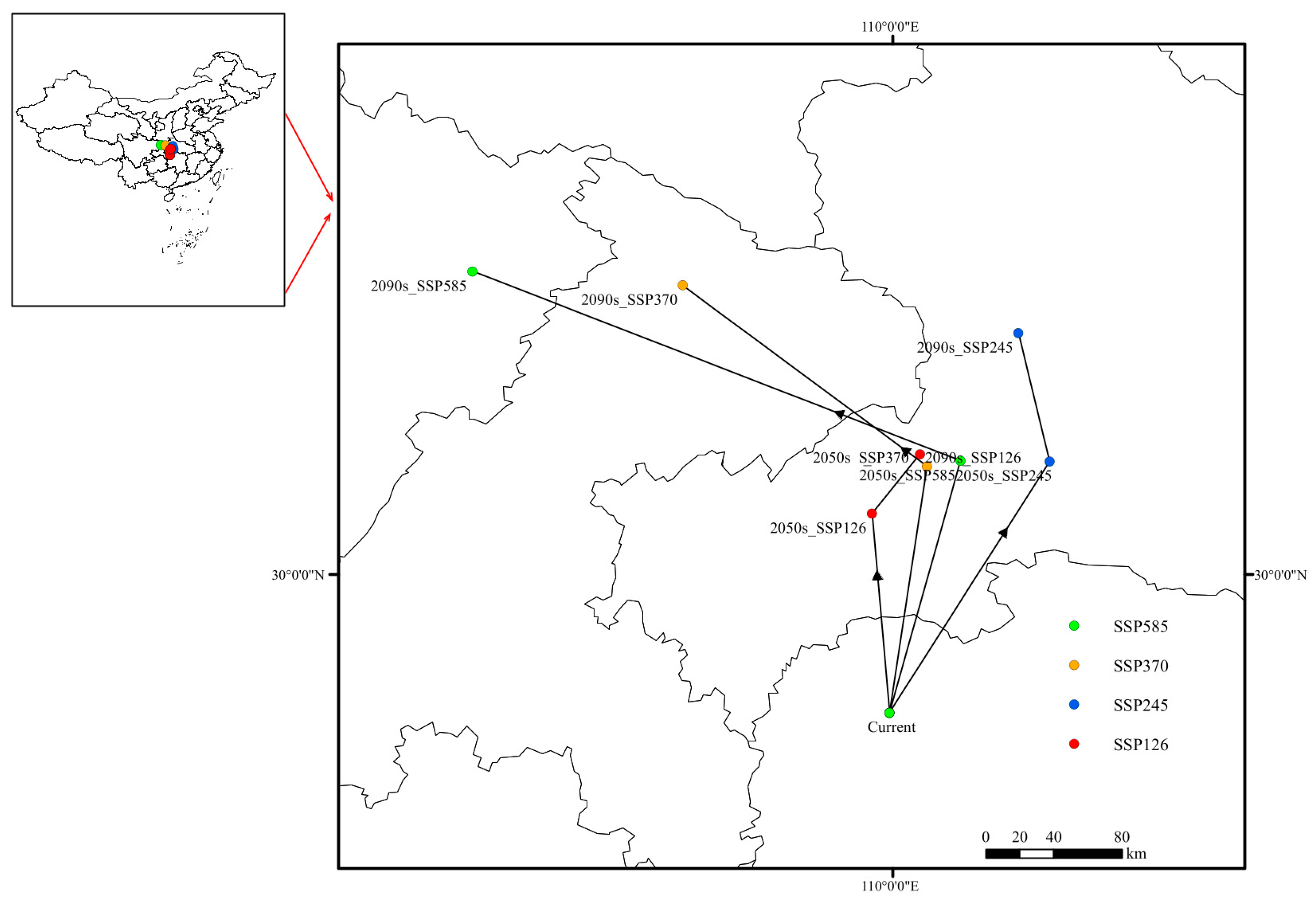
| Variables | Percent Contribution (%) | Permutation Importance (%) |
|---|---|---|
| bio12 | 42 | 8.4 |
| bio6 | 40.8 | 52.4 |
| bio4 | 8.5 | 15.2 |
| slope | 3.7 | 3.1 |
| bio15 | 2.2 | 4.3 |
| aspect | 2.1 | 2.4 |
| elev | 0.8 | 14.2 |
| Scenarios | Poorly Suitable Habitats | Moderately Suitable Habitats | Highly Suitable Habitats | Total Suitable Habitats |
|---|---|---|---|---|
| Current | 88.22 | 66.02 | 73.95 | 228.19 |
| 2050s_SSP126 | 103.75 | 72.71 | 36.51 | 212.97 |
| 2050s_SSP245 | 95.89 | 84.10 | 42.61 | 222.60 |
| 2050s_SSP370 | 104.81 | 76.30 | 42.05 | 223.16 |
| 2050s_SSP585 | 110.53 | 67.73 | 40.96 | 219.22 |
| 2090s_SSP126 | 123.35 | 58.12 | 25.84 | 207.31 |
| 2090s_SSP245 | 121.41 | 58.42 | 35.73 | 215.56 |
| 2090s_SSP370 | 152.14 | 53.45 | 28.91 | 234.50 |
| 2090s_SSP585 | 155.18 | 50.76 | 15.67 | 221.61 |
| Scenarios | Poorly Suitable Habitat | Changes (%) | Moderately Suitable Habitat | Changes (%) | Highly Suitable Habitat | Changes (%) |
|---|---|---|---|---|---|---|
| Current | 88.22 | 0 | 66.02 | 0 | 73.95 | 0 |
| 2050s_SSP126 | 103.75 | 17.61% | 72.71 | 10.13% | 36.51 | −50.63% |
| 2050s_SSP245 | 95.89 | 8.70% | 84.10 | 27.40% | 42.62 | −42.38% |
| 2050s_SSP370 | 104.81 | 18.83% | 76.30 | 15.57% | 42.05 | −43.14% |
| 2050s_SSP585 | 110.53 | 25.28% | 67.73 | 2.58% | 40.96 | −44.61% |
| 2090s_SSP126 | 123.35 | 39.84% | 58.12 | −11.97% | 25.84 | −65.06% |
| 2090s_SSP245 | 121.41 | 37.65% | 58.42 | −11.52% | 35.73 | −51.69% |
| 2090s_SSP370 | 152.14 | 72.49% | 53.45 | −19.05% | 28.91 | −60.92% |
| 2090s_SSP585 | 155.18 | 75.92% | 50.76 | −23.11% | 15.67 | −78.81% |
| Period | Longitude | Latitude | Distance/km |
|---|---|---|---|
| Current | 109.98° E | 29.26° N | |
| 2050s_SSP126 | 109.88° E | 30.31° N | 117.06 |
| 2090s_SSP126 | 110.14° E | 30.63° N | 42.58 |
| 2050s_SSP245 | 110.82° E | 30.59° N | 168.41 |
| 2090s_SSP245 | 110.66° E | 31.27° N | 76.93 |
| 2050s_SSP370 | 110.17° E | 30.56° N | 145.61 |
| 2090s_SSP370 | 108.88° E | 31.52° N | 162.44 |
| 2050s_SSP585 | 110.35° E | 30.59° N | 152.12 |
| 2090s_SSP585 | 107.77° E | 31.59° N | 269.44 |
Disclaimer/Publisher’s Note: The statements, opinions and data contained in all publications are solely those of the individual author(s) and contributor(s) and not of MDPI and/or the editor(s). MDPI and/or the editor(s) disclaim responsibility for any injury to people or property resulting from any ideas, methods, instructions or products referred to in the content. |
© 2025 by the authors. Licensee MDPI, Basel, Switzerland. This article is an open access article distributed under the terms and conditions of the Creative Commons Attribution (CC BY) license (https://creativecommons.org/licenses/by/4.0/).
Share and Cite
Tian, Y.; Song, J.; Cheng, B.; Wei, R.; Zeng, Y.; Zhang, J.; Zhang, J.; Wang, Z. Modeling the Impact of Climate Change on the Distribution of Populus adenopoda in China Using the MaxEnt Model. Forests 2025, 16, 1662. https://doi.org/10.3390/f16111662
Tian Y, Song J, Cheng B, Wei R, Zeng Y, Zhang J, Zhang J, Wang Z. Modeling the Impact of Climate Change on the Distribution of Populus adenopoda in China Using the MaxEnt Model. Forests. 2025; 16(11):1662. https://doi.org/10.3390/f16111662
Chicago/Turabian StyleTian, Yang, Jia Song, Baochang Cheng, Ruobing Wei, Yong Zeng, Jingkai Zhang, Jianguo Zhang, and Zhaoshan Wang. 2025. "Modeling the Impact of Climate Change on the Distribution of Populus adenopoda in China Using the MaxEnt Model" Forests 16, no. 11: 1662. https://doi.org/10.3390/f16111662
APA StyleTian, Y., Song, J., Cheng, B., Wei, R., Zeng, Y., Zhang, J., Zhang, J., & Wang, Z. (2025). Modeling the Impact of Climate Change on the Distribution of Populus adenopoda in China Using the MaxEnt Model. Forests, 16(11), 1662. https://doi.org/10.3390/f16111662