Article

Rates of Stemwood Carbon Accumulation Are Linked to Hydroclimate Variability in Mexican Conifers


by
Marín Pompa-García
1,
Eduardo D. Vivar-Vivar
1,
Ernesto A. Rubio-Camacho
2 and
Jesús Julio Camarero
3,*
1
Laboratorio de Dendroecología, Facultad de Ciencias Forestales y Ambientales, Universidad Juárez del Estado de Durango, Río Papaloapan y Blvd, Durango s/n, Col. Valle del Sur, Durango 34120, Durango, Mexico
2
Campo Experimental Centro Altos de Jalisco, Instituto Nacional de Investigaciones Forestales, Agrícolas y Pecuarias-Centro de Investigación Regional Pacífico Centro, Av. Biodiversidad 2470, Tepatitlán de Morelos 47600, Jalisco, Mexico
3
Instituto Pirenaico de Ecología (IPE-CSIC), Avda. Montaña 1005, 50192 Zaragoza, Spain
*
Author to whom correspondence should be addressed.
Forests 2023, 14(7), 1381; https://doi.org/10.3390/f14071381
Submission received: 18 May 2023 / Revised: 26 June 2023 / Accepted: 30 June 2023 / Published: 6 July 2023
(This article belongs to the Section Forest Meteorology and Climate Change)

Abstract

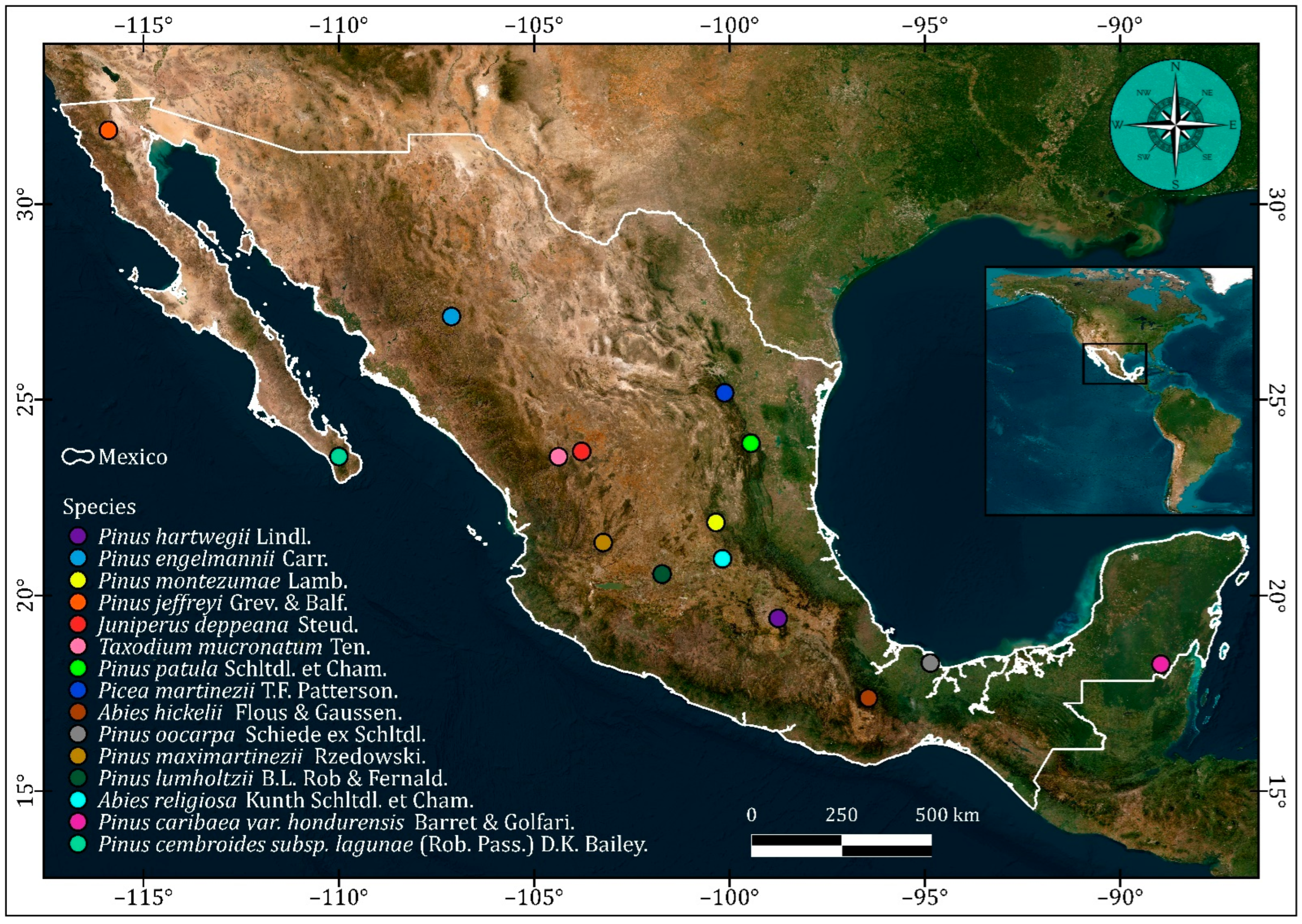
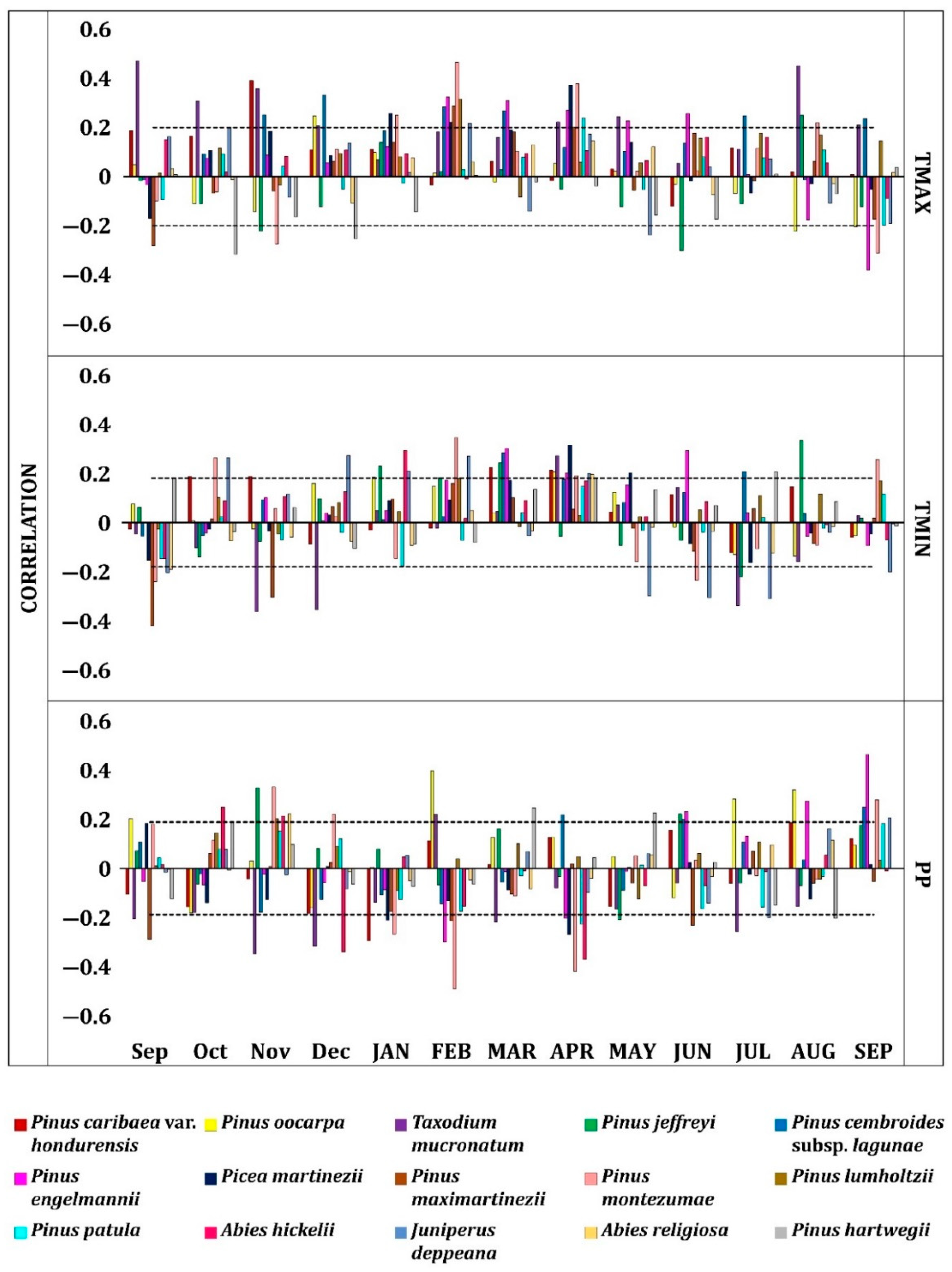
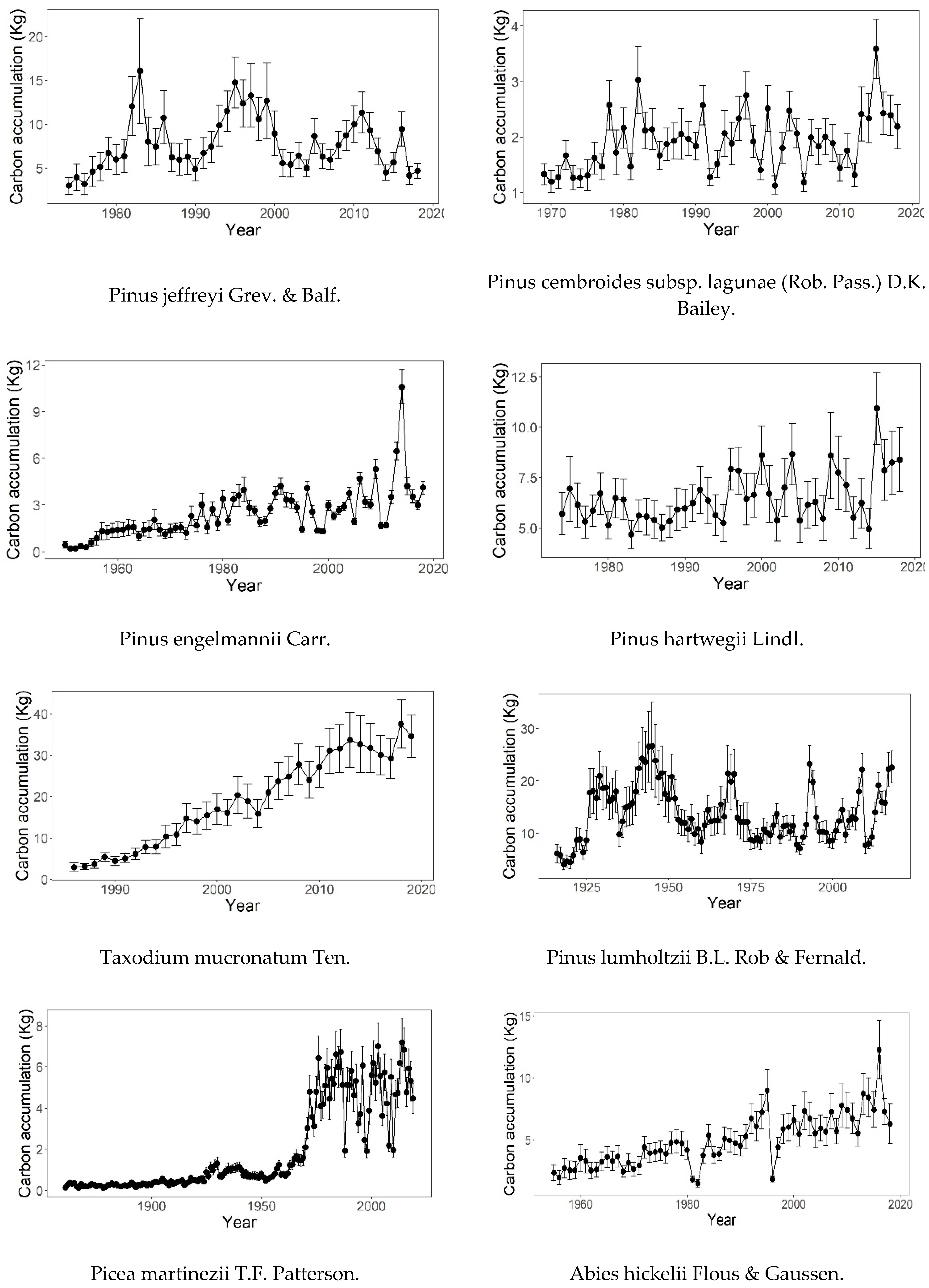
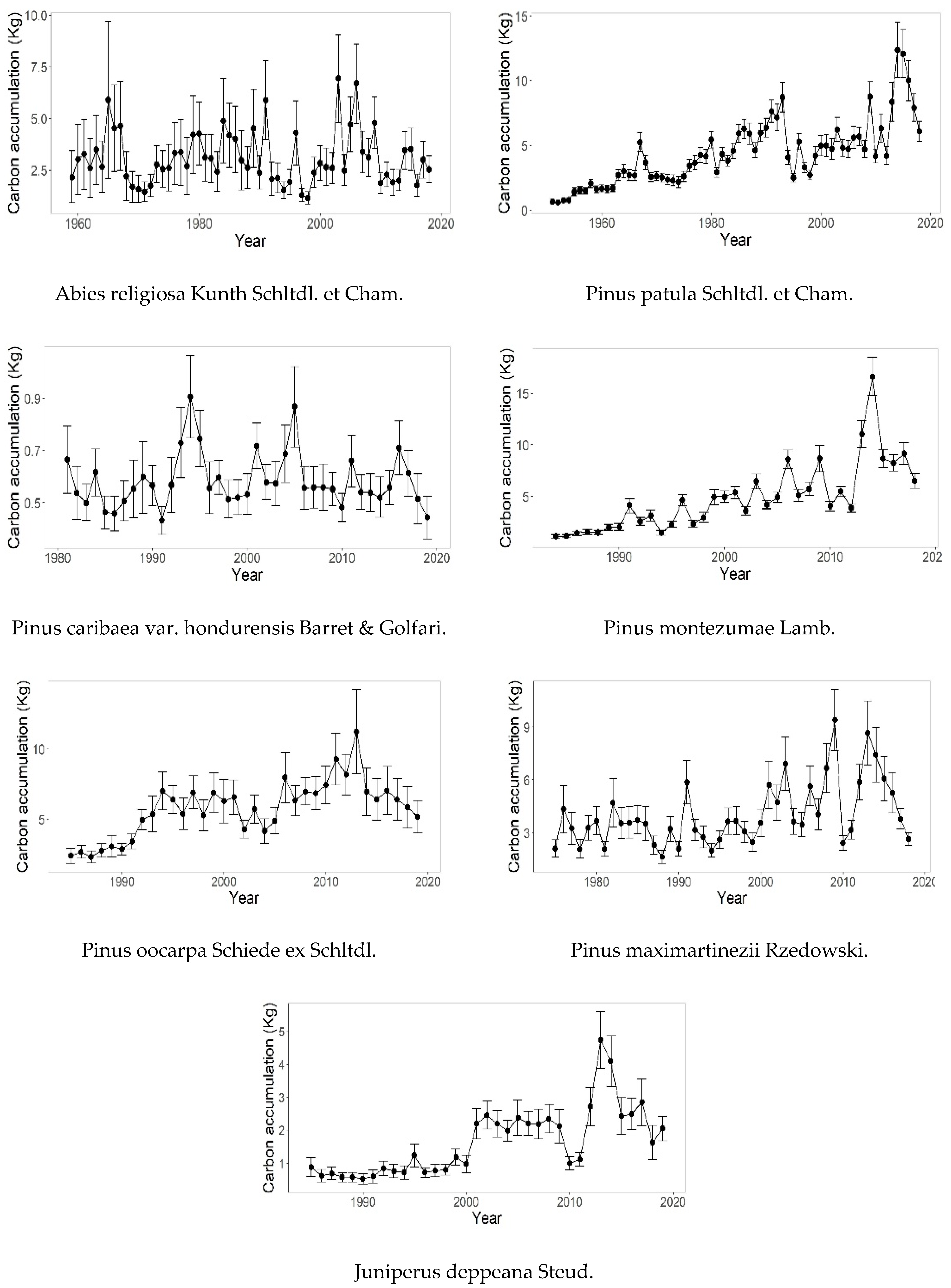
Evapotranspiration demand has increased rapidly as temperatures have risen, affecting forest productivity. Consequently, carbon (C) uptake by forests is being modified; therefore, a more refined knowledge of the relationships between C capture and hydroclimate variability is required, particularly in drought-prone regions. In this study, we analyzed the relationships between climate and C capture as stemwood through the dendroecological analyses of radial growth in 15 conifer species distributed along a broad bioclimatic gradient in Mexico. The C content was calculated using densitometry data; correlations and mixed models were then used to determine the influence of climatic variables (precipitation, mean maximum and minimum temperatures, SPEI drought index) on tree growth. Each species showed specific responses to the climate with Taxodium mucronatum being the most responsive species. Both precipitation and maximum temperature best explained changes in C capture, with minimum temperature and SPEI playing secondary roles. The winter before the growth period was the most important season for C capture, particularly through positive responses to wet-cool conditions. However, the climatic influences of the current fall and summer were also notable. Seasonal climatic influences have implications for C uptake and forest productivity in the face of the severe droughts that repeatedly affect the study region.
Keywords: tree ring; biomass; forest productivity; climate stress; drought tree ring; biomass; forest productivity; climate stress; drought