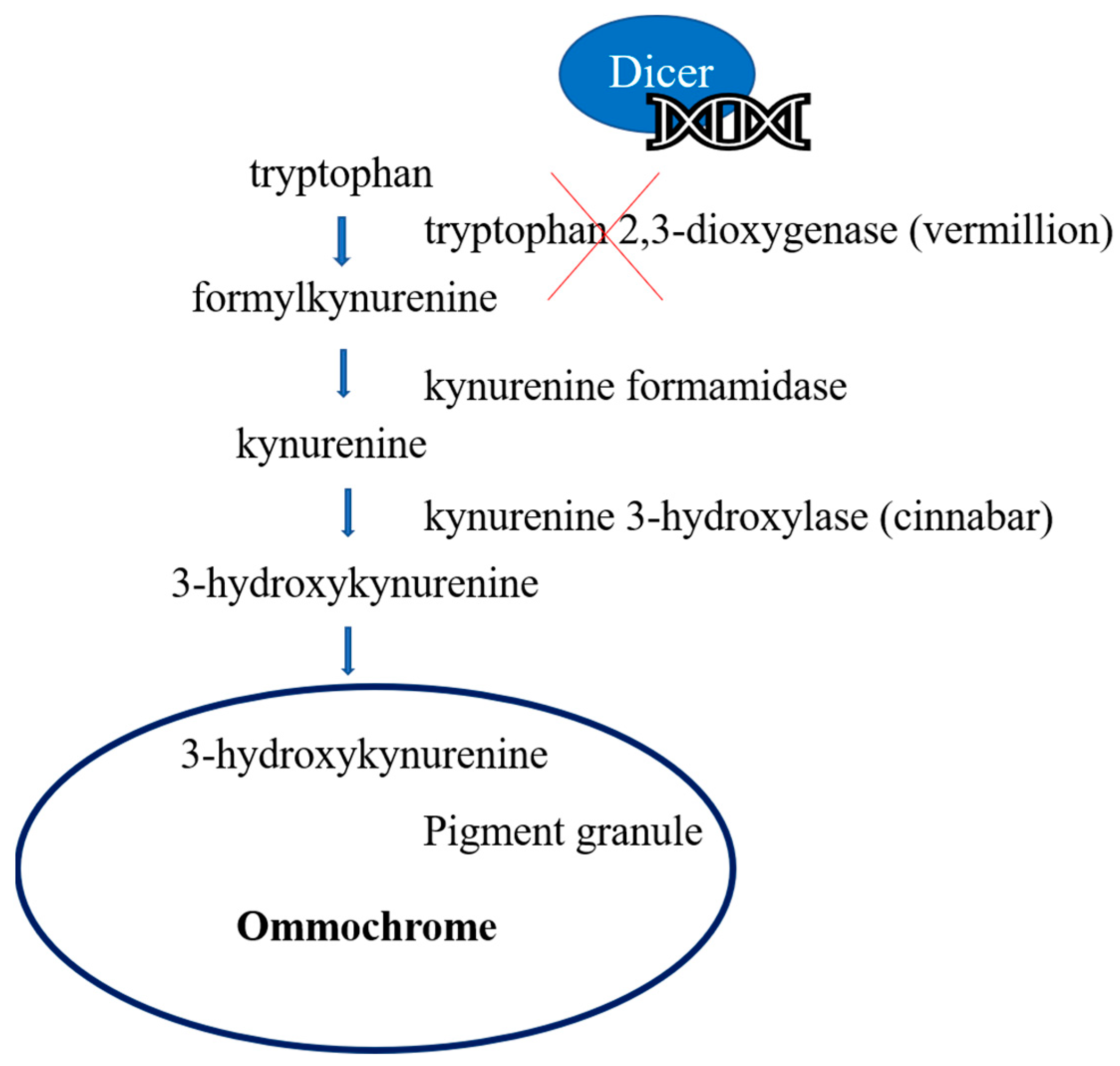

Function of Tryptophan 2,3-Dioxygenase in Monochamus alternatus Hope Revealed by RNA Interference

Abstract
Share and Cite
Sheng, L.-J.; Weng, X.-Q.; Weng, M.-Q.; Guo, Y.-J.; Carballar-Lejarazú, R.; Zhang, F.-P.; Wu, S.-Q. Function of Tryptophan 2,3-Dioxygenase in Monochamus alternatus Hope Revealed by RNA Interference. Forests 2023, 14, 215. https://doi.org/10.3390/f14020215
Sheng L-J, Weng X-Q, Weng M-Q, Guo Y-J, Carballar-Lejarazú R, Zhang F-P, Wu S-Q. Function of Tryptophan 2,3-Dioxygenase in Monochamus alternatus Hope Revealed by RNA Interference. Forests. 2023; 14(2):215. https://doi.org/10.3390/f14020215
Chicago/Turabian StyleSheng, Liang-Jing, Xiao-Qian Weng, Ming-Qing Weng, Ya-Jie Guo, Rebeca Carballar-Lejarazú, Fei-Ping Zhang, and Song-Qing Wu. 2023. "Function of Tryptophan 2,3-Dioxygenase in Monochamus alternatus Hope Revealed by RNA Interference" Forests 14, no. 2: 215. https://doi.org/10.3390/f14020215
APA StyleSheng, L.-J., Weng, X.-Q., Weng, M.-Q., Guo, Y.-J., Carballar-Lejarazú, R., Zhang, F.-P., & Wu, S.-Q. (2023). Function of Tryptophan 2,3-Dioxygenase in Monochamus alternatus Hope Revealed by RNA Interference. Forests, 14(2), 215. https://doi.org/10.3390/f14020215