Article

The Pattern of Genetic Variation, Survival and Growth in the Abies alba Mill. Population within the Introgression Zone of Two Refugial Lineages in the Carpathians


Faculty of Forestry, University of Agriculture, Al. 29 Listopada 46, 31-425 Cracow, Poland
*
Author to whom correspondence should be addressed.
Forests 2020, 11(8), 849; https://doi.org/10.3390/f11080849
Submission received: 2 July 2020 / Revised: 31 July 2020 / Accepted: 3 August 2020 / Published: 5 August 2020
(This article belongs to the Section Forest Ecophysiology and Biology)

Abstract

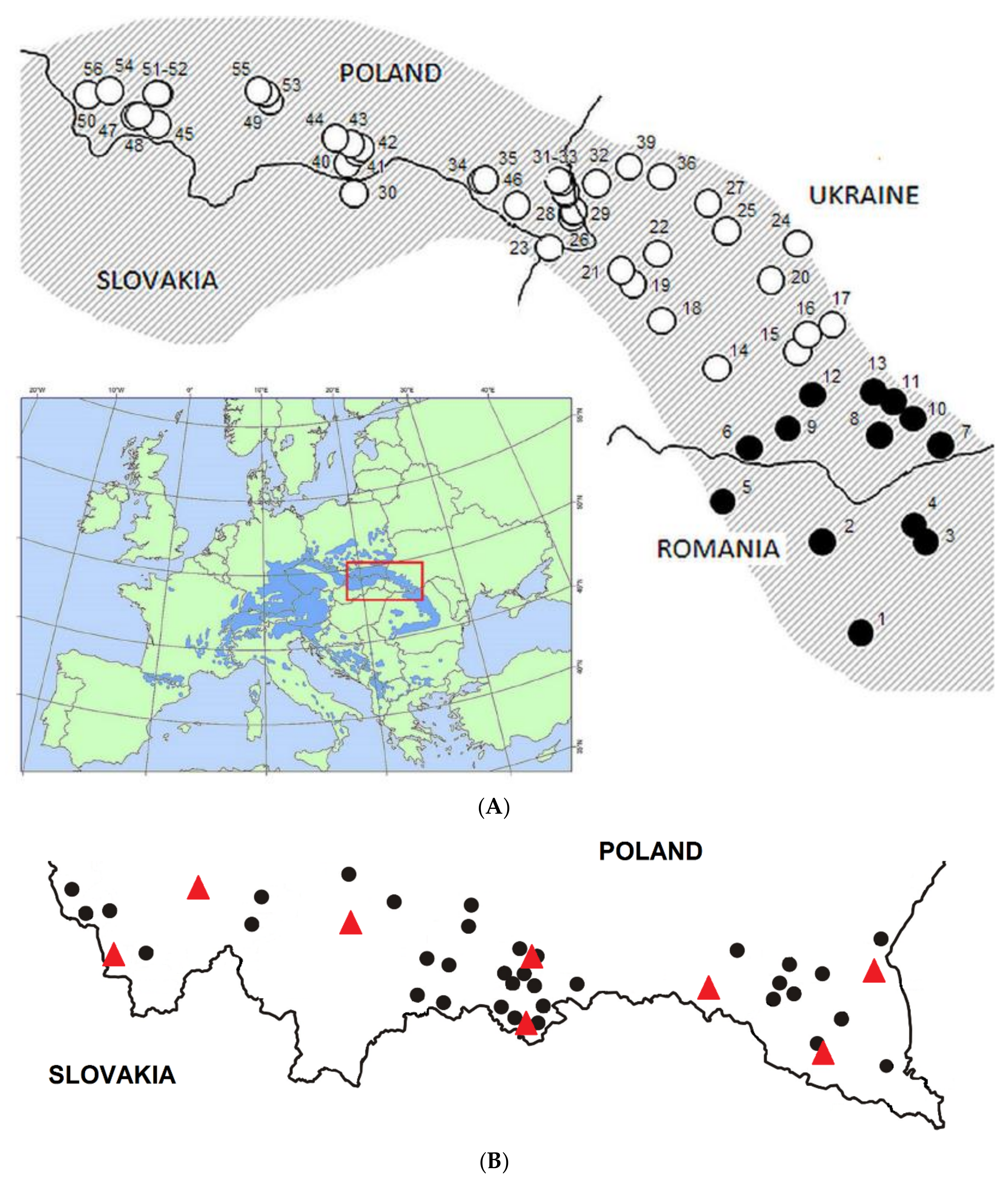
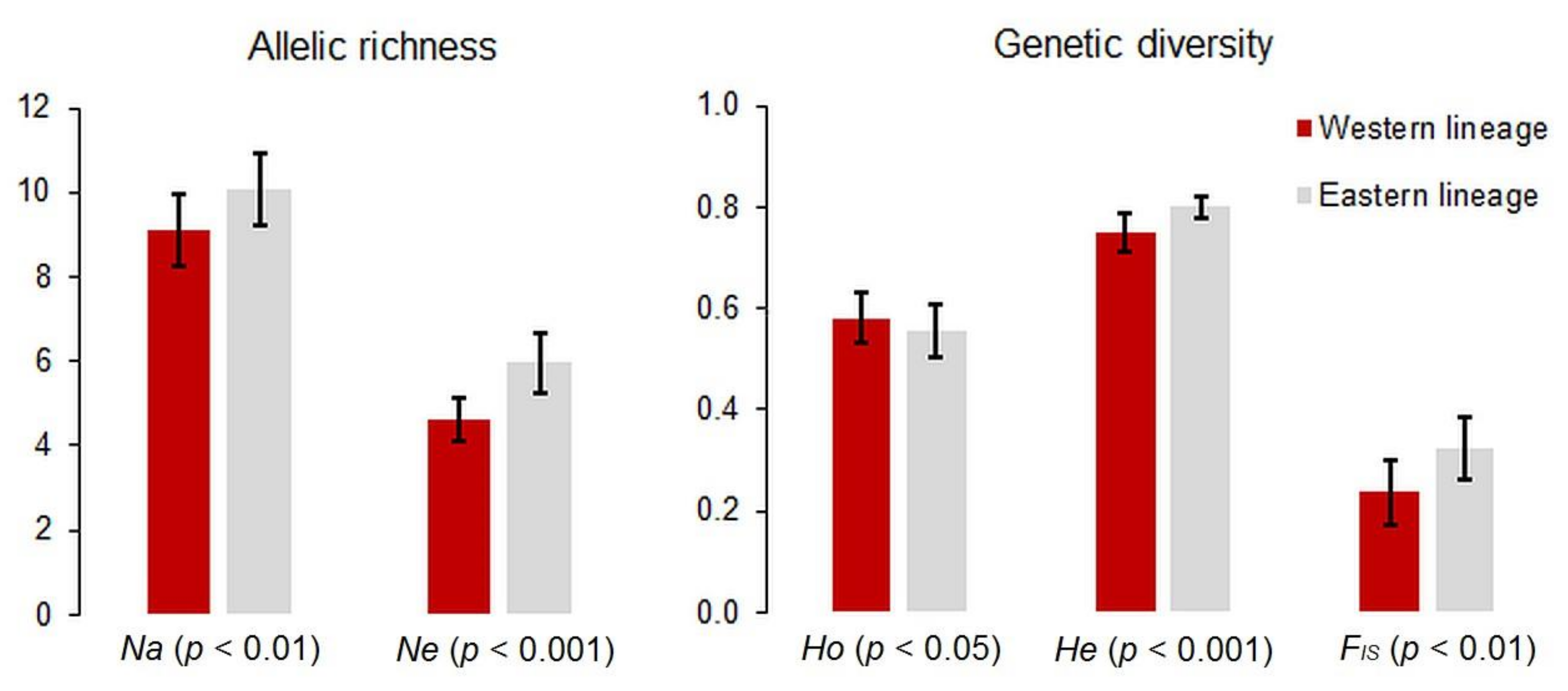
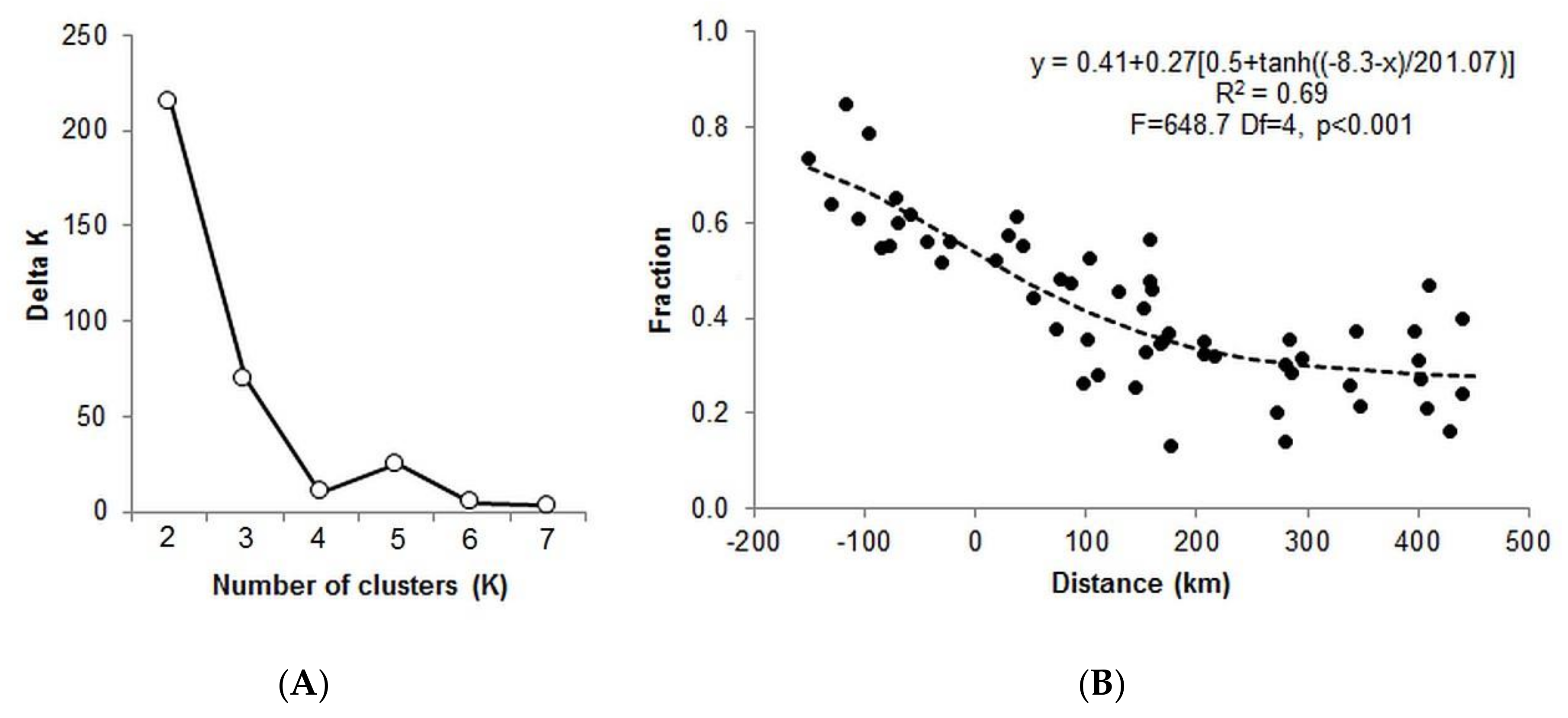
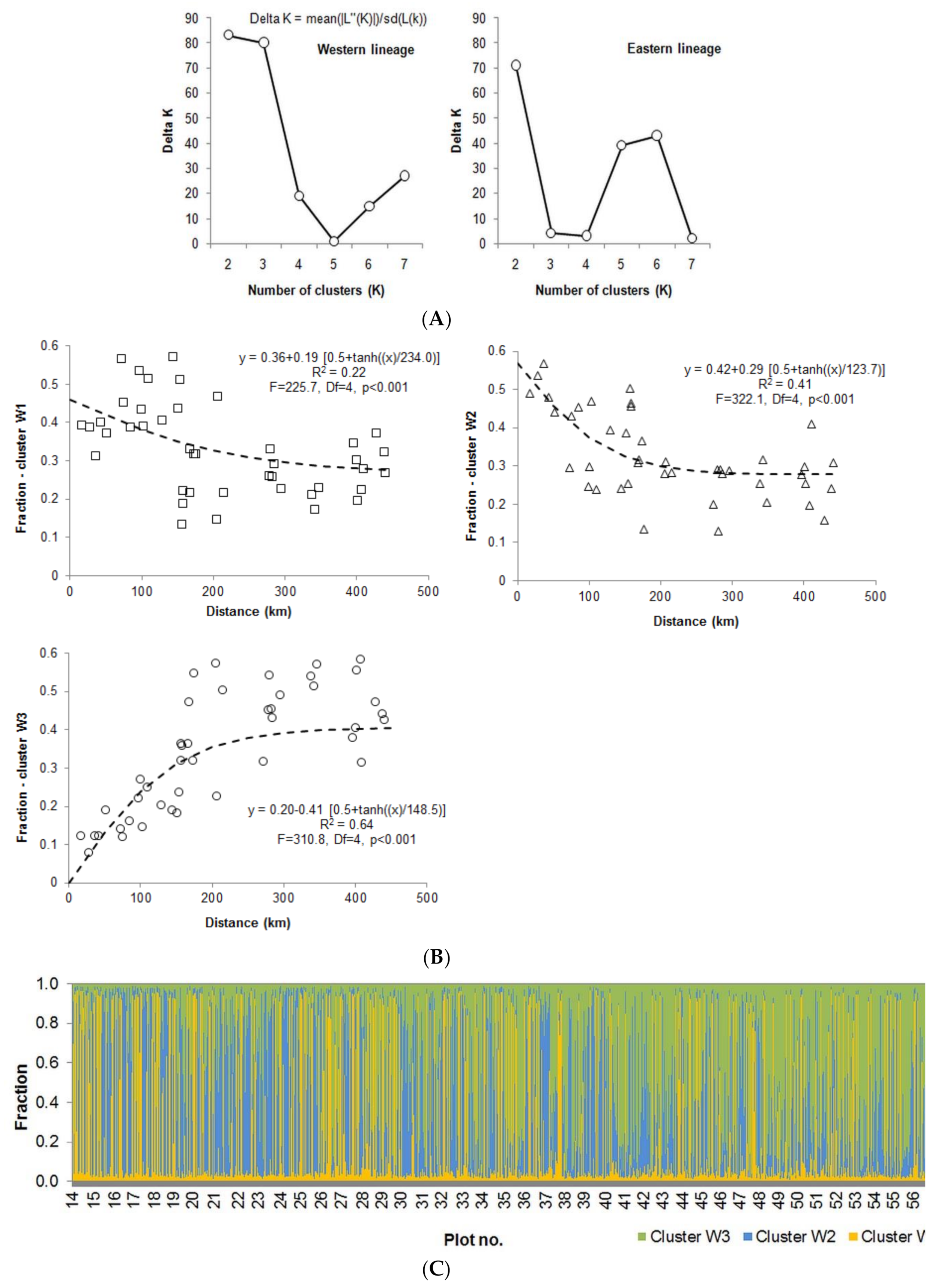
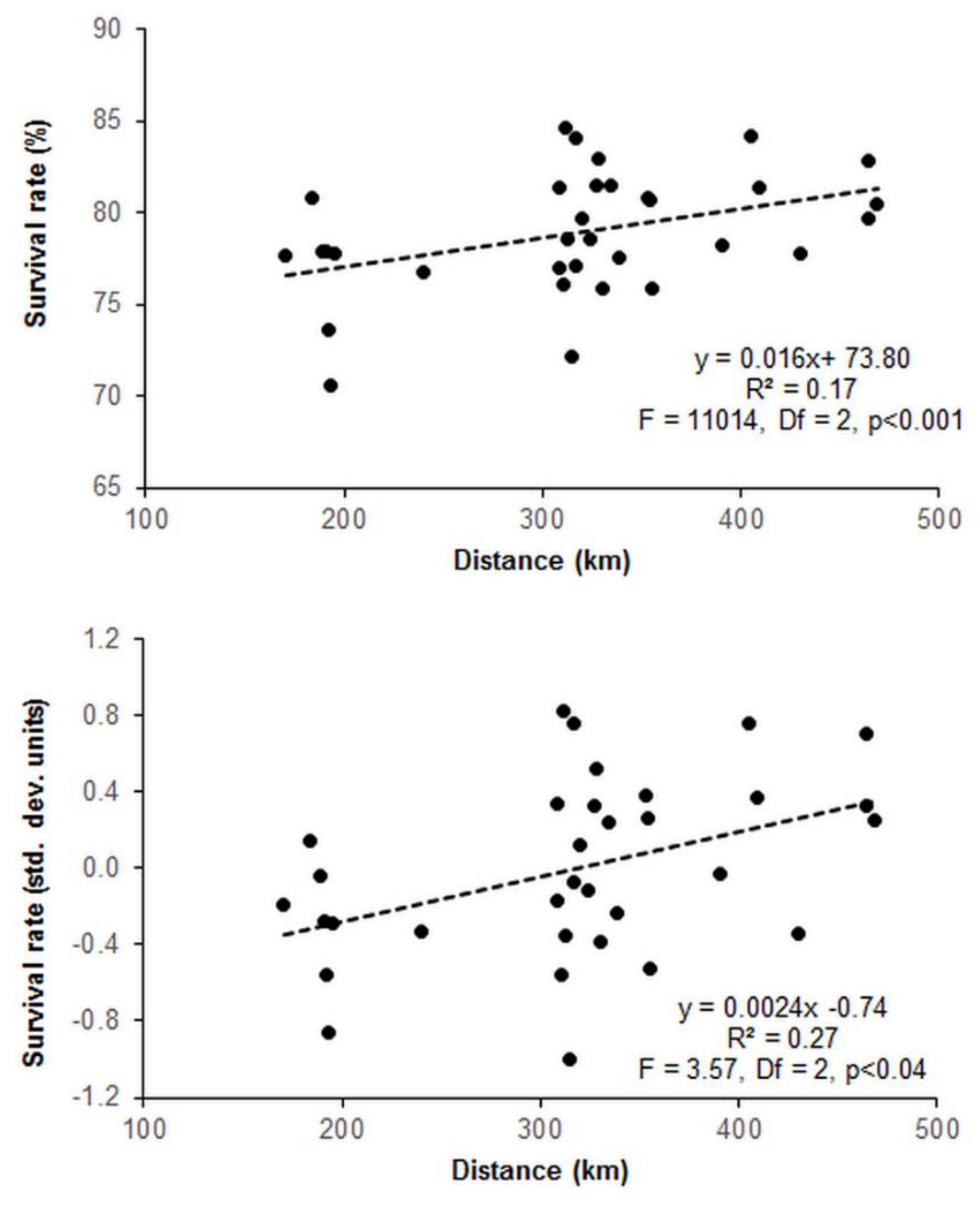
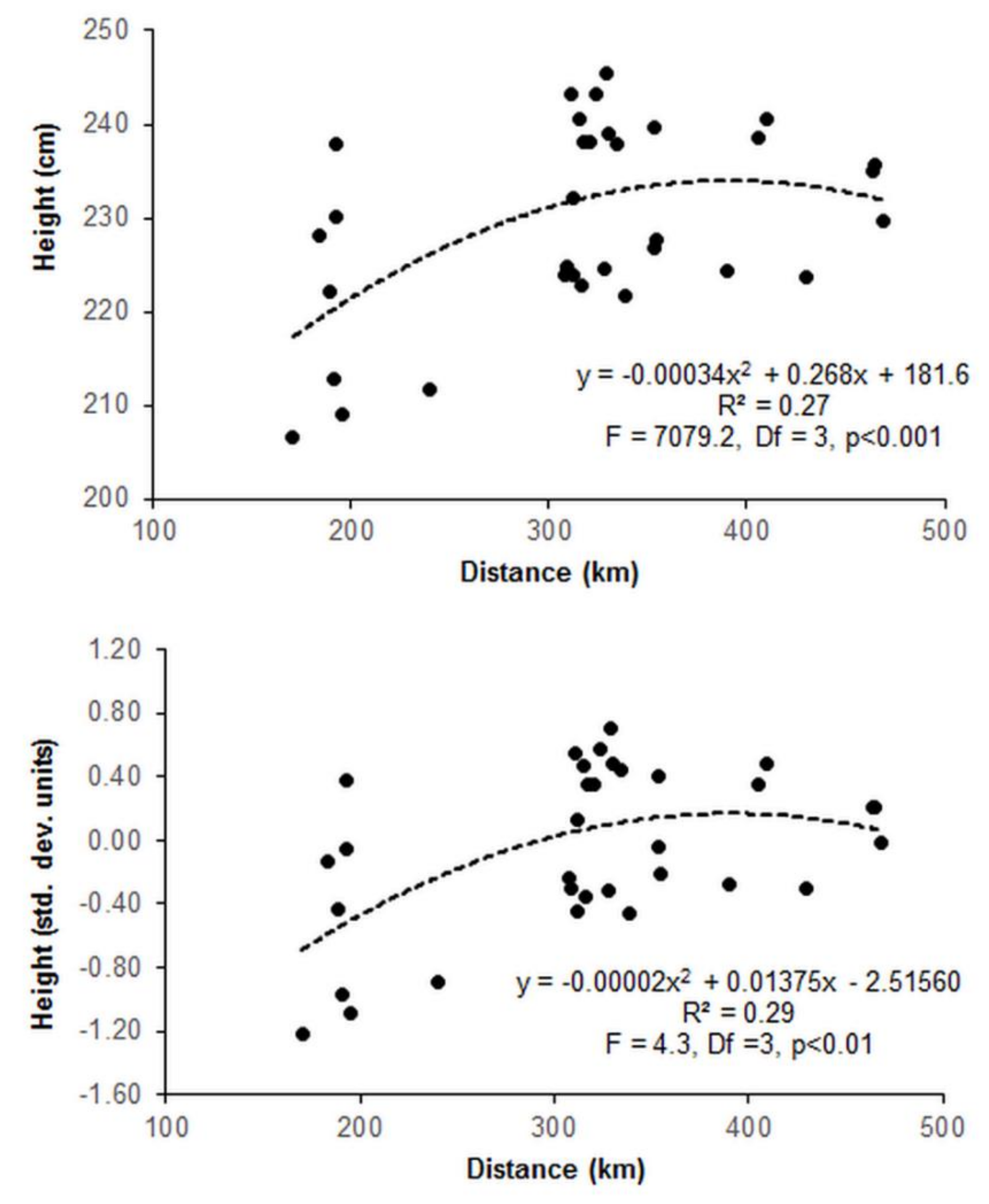
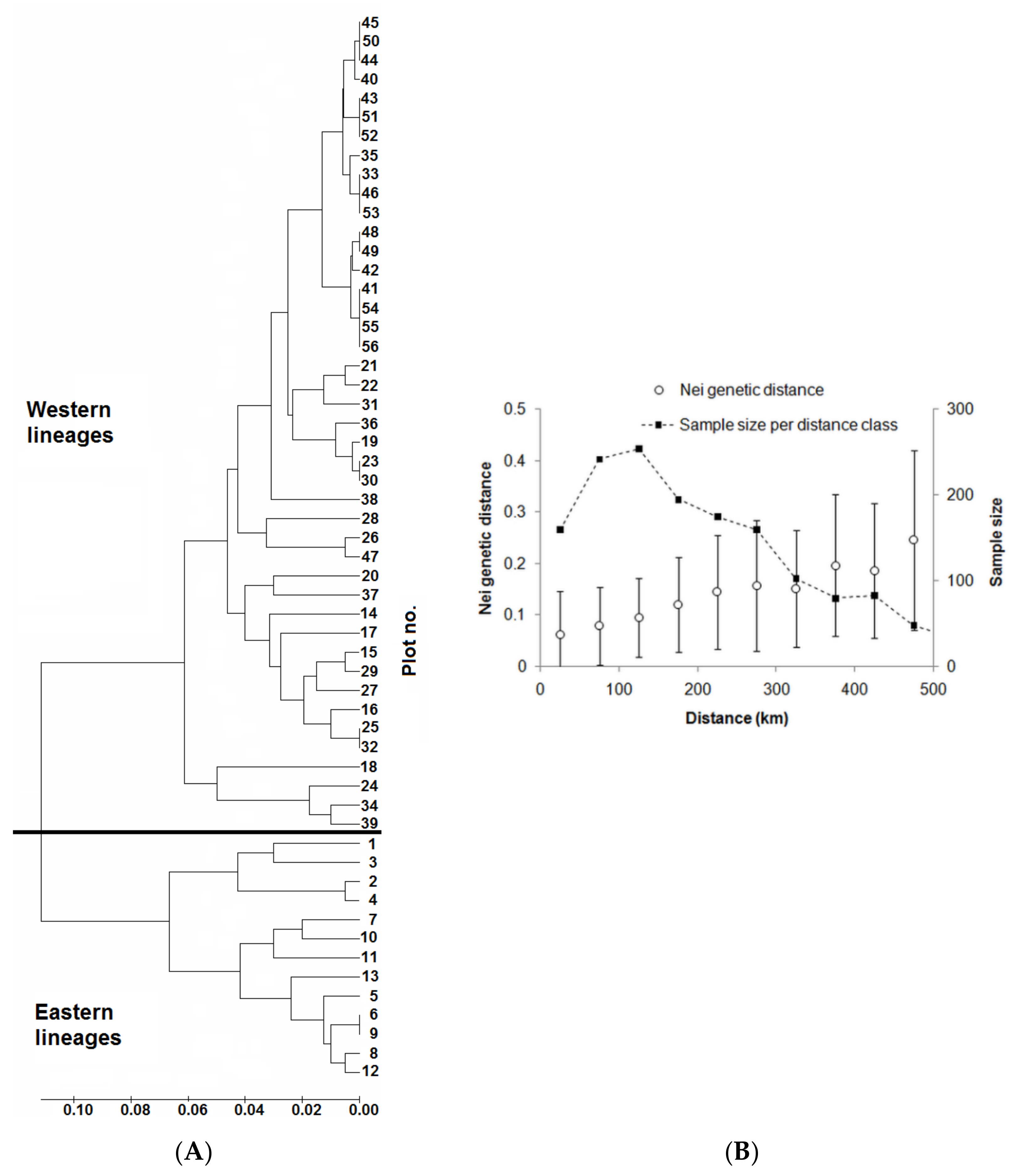
Background and Objectives: The contact zones of different refugial lineages, where mixing of genetic backgrounds leads to new gene combinations or pre-adaptations, represent hotspots of genetic diversity. The aim of the study was to compare patterns in the genetic structure of the Abies alba Mill. population in the Eastern and Western Carpathians (Eastern Europe) within the introgression zone of two refugial lineages and the growth response of provenances located in a gradient of pollen-mediated gene fluxes. Materials and Methods: The mitochondrial nad5-4 marker and five polymorphic microsatellite nuclear markers (nSSR) were analyzed in 56 subpopulations from Romania, Ukraine, Slovakia and Poland. The survival rate and height growth up to an age of 15 years were compared for 33 subpopulations, forming a distance gradient between 170 and 470 km from the meeting zone of the refugial lineages. Results: The results of the analysis of molecular variance indicated that 8.2% of the total genetic variation is attributable to the between-subpopulation level and 1.7% to the between-lineage level. The pollen-mediated influence of the eastern lineage was detectable at a distance of at least 300 km in the western direction. Eastern provenances with origin sites closer to the meeting zone of the refugial lineages were characterized by lower survival rate and lower heights (about 8% lower than the average tree height) compared to subpopulations from the central and western part of the studied region. Conclusions: Pollen-mediated gene flow between lineages appears to have been sufficient to cause a significant change in phenotypic traits related to tree growth. Subpopulations from the central and western parts of the studied region are better adapted to current climatic conditions. Nonetheless, given the increasing aridity of the regional climate, a safe guideline is to increase genetic mixing.
Keywords: silver fir; genetic diversity; allelic richness; gene flow; genetic lineages; provenance trial silver fir; genetic diversity; allelic richness; gene flow; genetic lineages; provenance trial