1. Introduction
Population aging is a global phenomenon that has generated new demands in health, education, and assistive technologies to promote active and healthy aging [
1]. Recent studies also highlight how smart medical devices within smart urban ecosystems are transforming older adult care through artificial intelligence, the Internet of Things (IoT), and real-time monitoring [
2]. Among these needs, strengthening speech skills is particularly relevant, as oral communication is a key factor in autonomy, social interaction, and the emotional well-being of older adults [
3]. Although many older adults do not present degenerative pathologies of the central nervous system, they do experience age-related changes such as reduced verbal fluency, articulatory difficulties, or vocal fatigue, which may limit their participation in everyday communicative activities [
4]. In this context, there is a clear need to develop accessible and inclusive technological solutions that support speech practice in an autonomous and motivating way and are adapted to the real capacities of this population.
Despite advances in educational technologies and digital tools, traditional speech-stimulation methods—based on face-to-face classes, repetitive exercises, or non-personalized practices—pose significant limitations when applied to older adults. Methodological rigidity, lack of timely feedback, and limited adaptation to this group’s cognitive and emotional characteristics often lead to demotivation and abandonment [
5]. Moreover, most existing technological systems are designed for younger populations or specialized clinical contexts, neglecting older adults who require guidance, simpler interactions, and digital environments that reduce technological anxiety [
6]. This lack of accessible tools restricts autonomous learning and the continuity of home-based practice, thereby perpetuating communication difficulties that negatively affect quality of life.
Recent literature reports several efforts to integrate voice recognition, conversational assistants, and gamification to promote interactive learning among older adults. For instance, Liu et al. [
7] evaluated voice recognition systems to support communication in older adults, showing that response speed and clarity of feedback are critical factors in reducing technological anxiety. Similarly, Wang et al. [
8] analyzed older adults’ interactions with social robots using automatic speech recognition (ASR), demonstrating that speech rate affects comprehension and highlighting the need for systems capable of dynamically adjusting the pace of interaction. In the field of conversational assistants, Kim [
9] examined the initial adoption of devices such as Alexa and the Google Assistant among older adults, identifying barriers including command recognition failures, unintuitive interfaces, and a lack of human support during use. Likewise, studies such as Jakob et al. [
10] have shown that personalized conversational assistants can improve social and communicative skills, although they still lack mechanisms for caregiver supervision.
From an engineering perspective, however, current voice-based and assistive systems for older adults present significant technical limitations. Most existing solutions rely on isolated components—such as standalone voice recognition modules, conversational interfaces, or gamified activities—without a unified system architecture that integrates interaction pacing, feedback mechanisms, personalization logic, and caregiver supervision within a single engineering framework [
10]. Additionally, these systems often lack modular designs that support adaptive workflows, role-based access, and continuous monitoring, which are critical for deployment in real-world gerontological contexts. The absence of hybrid web–mobile architectures further restricts scalability, configurability, and long-term system sustainability [
11]. Consequently, there is a clear engineering challenge in designing an integrated, accessible, and adaptable technological architecture that supports speech stimulation for older adults while accommodating user heterogeneity, interaction constraints, and caregiver involvement.
Beyond technical integration challenges, assistive systems for older adults must be designed in accordance with user-centered, accessibility-aware interaction principles [
12]. Age-related sensory and cognitive changes require simplified interfaces, an adaptable interaction pace, multimodal feedback, and low cognitive load to facilitate effective technology adoption [
13]. Furthermore, motivational mechanisms must incorporate behavior-change principles, such as personalization, progressive feedback, and guided participation, to foster sustained engagement over time [
14].
Regarding gamification, Koivisto et al. [
15] demonstrated that visual rewards, levels, and progressive challenges increase motivation among older adults in digital learning environments, while Barros-Pozo et al. [
16] and Gonzalez et al. [
17] warned that excessively fast-paced or visually complex dynamics may generate frustration in users with reduced perceptual abilities. However, these studies revealed significant gaps: many focused exclusively on speech recognition accuracy without considering user experience; others did not personalize the pace of interaction or adapt feedback to individual capabilities; and most did not incorporate caregivers as key actors in support and pedagogical adaptation. Furthermore, no hybrid (web–mobile) proposals specifically designed for older adults without neurodegenerative pathologies were identified that simultaneously integrated pronunciation exercises, immediate feedback, continuous monitoring, and gamified dynamics to sustain long-term motivation.
In response to these gaps, this study proposes a user-centered solution based on a modular web–mobile engineering architecture that integrates a mobile application for older adults with a web platform for caregiver configuration and monitoring.
The proposed system incorporates a deterministic workflow for adaptive speech evaluation and feedback, integrating controlled audio capture, cloud-based automatic speech recognition (ASR), pronunciation matching, rule-based decision mechanisms, and progression monitoring within a unified assistive environment. This workflow coordinates how pronunciation attempts are evaluated, how multimodal feedback is provided, and how exercise difficulty is progressively controlled over time, thereby offering a reproducible and extensible structure for guided speech practice tailored to the needs and interaction paces of older adults. Rather than introducing a novel speech recognition algorithm, the contribution of this work lies in the formal integration of a rule-based pronunciation evaluation, multimodal feedback, configurable progression control, and caregiver monitoring within an accessible hybrid web–mobile architecture for speech support in older adults. Accordingly, the objective of this research is to develop and evaluate a technological system based on voice recognition, immediate feedback, and gamification to support speech skills in older adults without degenerative pathologies, while integrating accessibility, usability, and caregiver support principles into its design.
Finally, the rest of this article is structured as follows.
Section 2 presents the related work and theoretical foundations supporting the proposal;
Section 3 describes the methodology used for the design, development, and evaluation of the system;
Section 4 reports the results obtained, including the technological product and usability testing;
Section 5 provides the discussion of findings; and
Section 6 presents the conclusions and future work.
2. Related Work
Several studies have examined how older adults interact with voice-based systems and conversational assistants. Liu et al. [
7] demonstrated that response speed and feedback clarity significantly influence comprehension and reduce technological anxiety among older users. This finding is critical, as it confirms that older adults require clear, slow-paced feedback supported by visual or auditory cues to avoid cognitive overload. In contrast, the present work extends this perspective by evaluating a system designed for repeated use that integrates progressive pronunciation exercises, immediate feedback, and caregiver support to promote continuity in speech stimulation.
Similarly, Wang et al. [
8] analyzed how speech rate affects interaction with conversational robots. The authors showed that older adults tend to reduce their speaking rate and expect the system to respond even more slowly, particularly when feedback includes instructions. This observation supports the need to dynamically adjust the pace of interaction in technological tools intended for this population. However, their study does not address personalizing response times based on individual capabilities, an aspect that the proposed system incorporates through caregiver-configurable exercises.
In a related vein, Kim [
9] examined older adults’ first interactions with smart speaker-type voice assistants. While the results indicate a generally positive initial disposition toward these devices, significant barriers were also identified, including unfamiliarity with command usage, difficulty initiating conversations, and privacy concerns. The study suggests that older adults require human support, usage cues, and guided environments to feel secure when interacting with technology. These findings support this research’s decision to include a web platform for caregivers to supervise, adapt, and contextualize activities for the older adult as the end user.
From a motivational perspective, gamification has emerged as an effective strategy to stimulate interest and participation in digital learning processes. An et al. [
18] highlight that playful elements—such as rewards, levels, and challenges—enhance self-confidence and promote persistence in educational activities. Although their conclusions are largely drawn from school contexts, these principles can be transferred to older adults, provided that the dynamics are adapted to their perceptual capabilities. Bennani et al. [
19], in a review of adaptive gamification, warn that overly fast or visually complex mechanics may generate frustration among populations with reduced sensory capacities. These observations are particularly relevant to the design decisions in the present work. Rather than implementing highly competitive or cognitively demanding gamification dynamics, the proposed system intentionally adopted simplified motivational mechanisms focused on gradual progression, positive reinforcement, and guided practice to reduce technological anxiety and cognitive overload among older adult users.
Another relevant contribution comes from Bevilacqua et al. [
20], who developed a conversational assistant to help older adults practice social skills. The system simulated real interactions and provided feedback on fluency and politeness, leading to improvements in self-confidence and willingness to communicate with others. While this initiative validates the use of conversational technologies in aging populations, it does not incorporate caregiver involvement or adapt the interface to sensory difficulties, representing a gap that the present work addresses through inclusive design and a dual approach (mobile application + web platform).
Finally, research on inclusive design and usability for older adults highlights the need for accessible systems featuring large buttons, legible text, simple navigation structures, and immediate multimodal feedback. Studies such as Nielsen [
21] indicate that usability testing with a small number of participants can identify most usability problems, thereby supporting the methodology adopted in this study and the usability evaluation process conducted. Beyond general usability principles, Petrovčič et al. [
12] analyzed mobile phone usability guidelines for the older adult population, identifying recurring difficulties with visual perception, tactile interaction, text legibility, and interface complexity. Similarly, Pak and McLaughlin [
13] synthesized decades of research on age-related sensory and cognitive changes, providing foundational recommendations for accessible displays and interaction mechanisms adapted for older adults. These studies collectively support the accessibility-oriented decisions adopted in the present work, including simplified interfaces, large visual elements, a progressive interaction flow, multimodal feedback, and caregiver-assisted configuration mechanisms.
Recent engineering-oriented research has also analyzed how behavior-change techniques mediated by digital technologies can foster sustained engagement and well-being among users. Del-Valle-Soto et al. [
14], through a comprehensive review of wearable devices and Internet of Things (IoT) technologies, identified feedback, personalization, self-monitoring, and gamification as key mechanisms to promote positive behavioral adaptation and long-term user engagement. Their findings emphasize that motivational technologies for health-related contexts must balance encouragement, simplicity, and adaptability to avoid cognitive overload and user frustration. This perspective is directly relevant to the present work, which incorporates adaptive multimodal feedback, progression control, and caregiver-supervised personalization to support continuous speech practice among older adults in an accessible and motivating manner.
In summary, the reviewed studies converge on four critical aspects for the design of systems targeting older adults: (1) the need for clear and slow-paced feedback, (2) the importance of accessible and guided interfaces, (3) the positive effects of adapted gamification, and (4) the requirement for conversational models that strengthen communicative self-confidence. However, the literature also reveals notable gaps, including limited integration of voice technologies and gamification, insufficient dynamic personalization, minimal caregiver involvement as mediators, and the absence of hybrid (web and mobile) systems specifically designed for speech stimulation.
The present work addresses these limitations through an integrated and accessible solution that combines speech recognition, immediate feedback, guided exercises, gradual gamification, and caregiver-configurable personalization within a hybrid web–mobile architecture. The proposed system was designed considering established user-centered design principles and technology-mediated behavior-change mechanisms adapted for older adults, including simplified interaction, low cognitive load, multimodal feedback, and progressive motivational support. In this context, the study’s contribution focuses on the reproducible integration of speech processing, rule-based deterministic evaluation, multimodal feedback, and caregiver supervision within a hybrid web–mobile architecture designed to support speech in older adults.
3. Materials and Methods
This section outlines the stages followed to define requirements, design web and mobile components, develop the technological product, and validate its usability with older adults and caregivers. It also explains the methods, techniques, and instruments applied throughout the process, including initial data collection, user-centered design, and interaction testing conducted to assess the system’s user experience.
3.1. Development of Technological Product
We developed the technological product using a structured process that combined information-gathering techniques, comparative analysis, user-centered design, and the iterative construction of web and mobile components. Given that this was an innovative solution aimed at cognitive and speech stimulation in older adults, a prototyping model was adopted to guide the design, early validation, and progressive refinement of the platform. This approach enabled adjustments to requirements based on real user feedback, reduced uncertainty in the early stages of development, and ensured that implemented functionalities effectively addressed the identified needs.
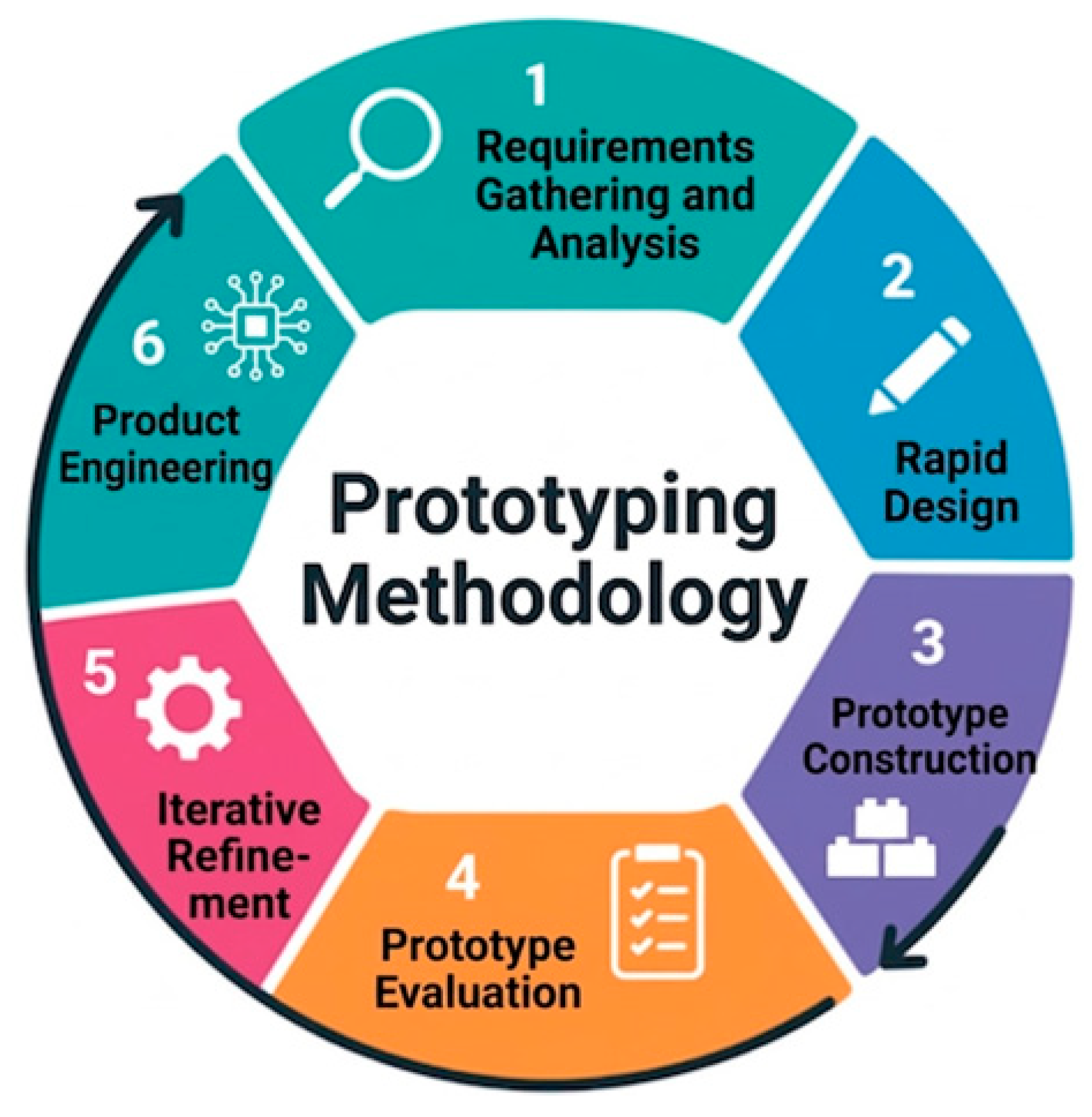
The prototyping methodology involves creating initial and evolving versions of the system that incorporate essential functionality to refine requirements based on user testing feedback. This strategy is particularly useful in projects with innovative approaches or broad scope, where it is not feasible to define all requirements from the outset. These preliminary versions are not the final product; they are a foundation for future improvements and subsequent validations. The prototyping process is structured into six phases: (i) requirements gathering and analysis, (ii) rapid design, (iii) prototype construction, (iv) prototype evaluation, (v) iterative refinement, and (vi) product engineering [
22], as illustrated in
Figure 1.
First, a comprehensive requirements-elicitation process was conducted through semi-structured interviews with caregivers at the gerontological center [
23]. These interviews enabled the identification of real needs related to pronunciation support, ease of use, technological barriers, and interaction preferences among older adults. The collected information was complemented by a review of the literature and prior studies on technologies for cognitive and speech stimulation in older populations. Based on these inputs, a matrix was developed to organize and classify the system’s functional and non-functional requirements.
Subsequently, the system requirements were structured for both platforms (web and mobile). At this stage, criteria related to accessibility, visual consistency, cognitive load, immediate feedback, level-based personalization, exercise management, and progress monitoring were analyzed, in line with user-centered design principles and usability guidelines for older adults. This requirements definition served as the basis for the system’s conceptual design.
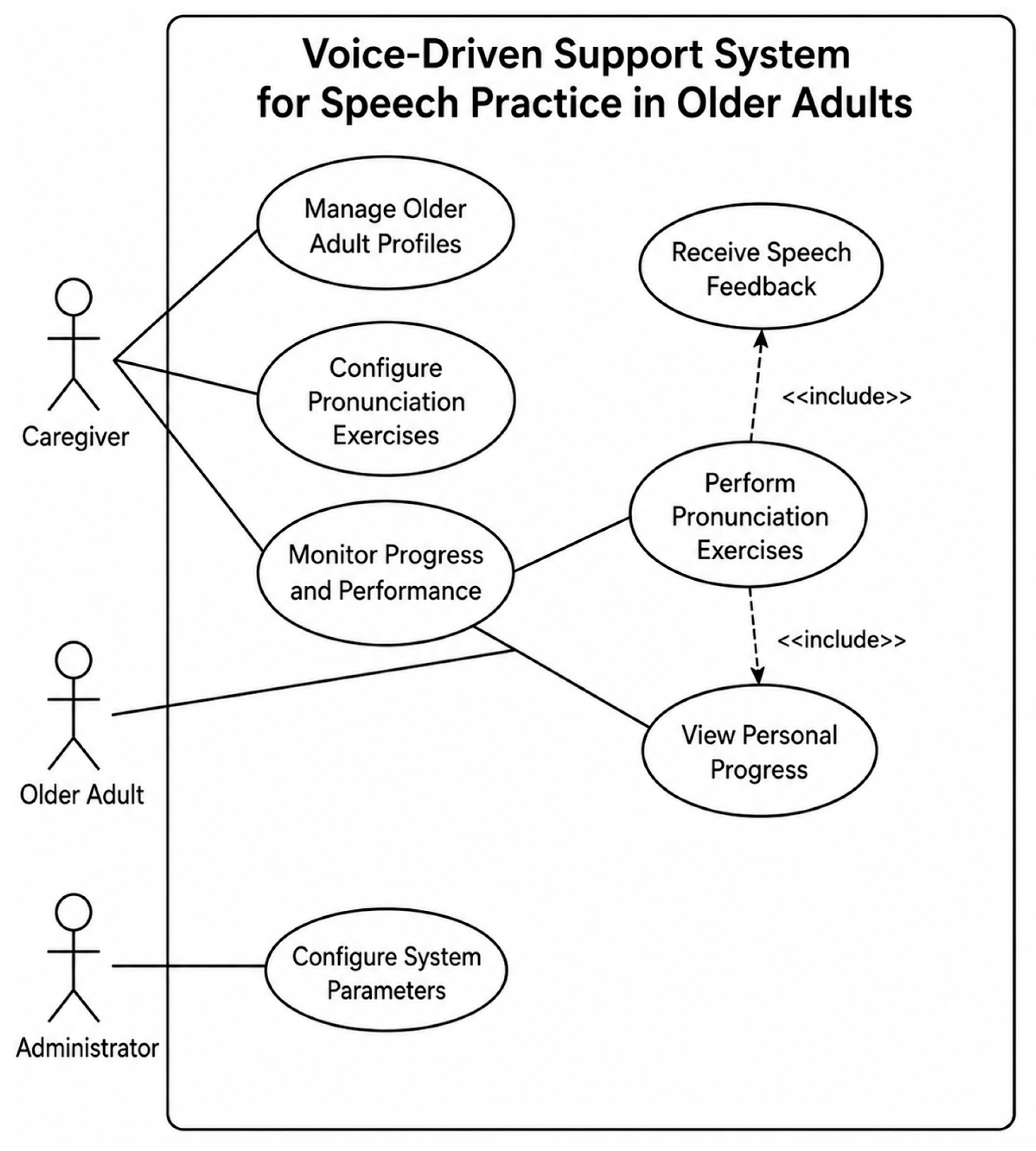
With the requirements established, analysis and design diagrams were developed to guide the overall architecture of the proposed solution. Among these, the use case diagram enabled us to identify and structure the system’s main functionalities and the interactions among the actors involved (administrator, caregiver, older adult, and voice analysis module). In parallel, the software architecture integrating a web application, a mobile application, a backend, and external voice analysis services was designed. This architecture specified a layered distribution, the modules that compose each client, authentication mechanisms, API-based communication, and integration with audio processing services.
The design phase also included developing high-fidelity prototypes that represent the visual appearance and interaction flow of each application (web and mobile). These prototypes were created to validate usability decisions, organize navigation, define key components, and anticipate the user experience for both caregivers and older adults.
3.2. Rule-Based Workflow for Speech Assessment
This study proposes a deterministic workflow for rule-based speech assessment, designed as a structured, rule-based process, integrated into the mobile application, and coordinated with the web platform for caregiver configuration. Its objective is to support guided speech practice through a sequence of well-defined operational stages, ensuring controlled audio capture, consistent evaluation, immediate feedback, and regulated progression across difficulty levels. The proposed workflow integrates controlled audio capture, cloud-based automatic speech recognition (ASR) services, deterministic pronunciation evaluation, multimodal feedback generation, and progression monitoring within a unified assistive architecture for older adults.
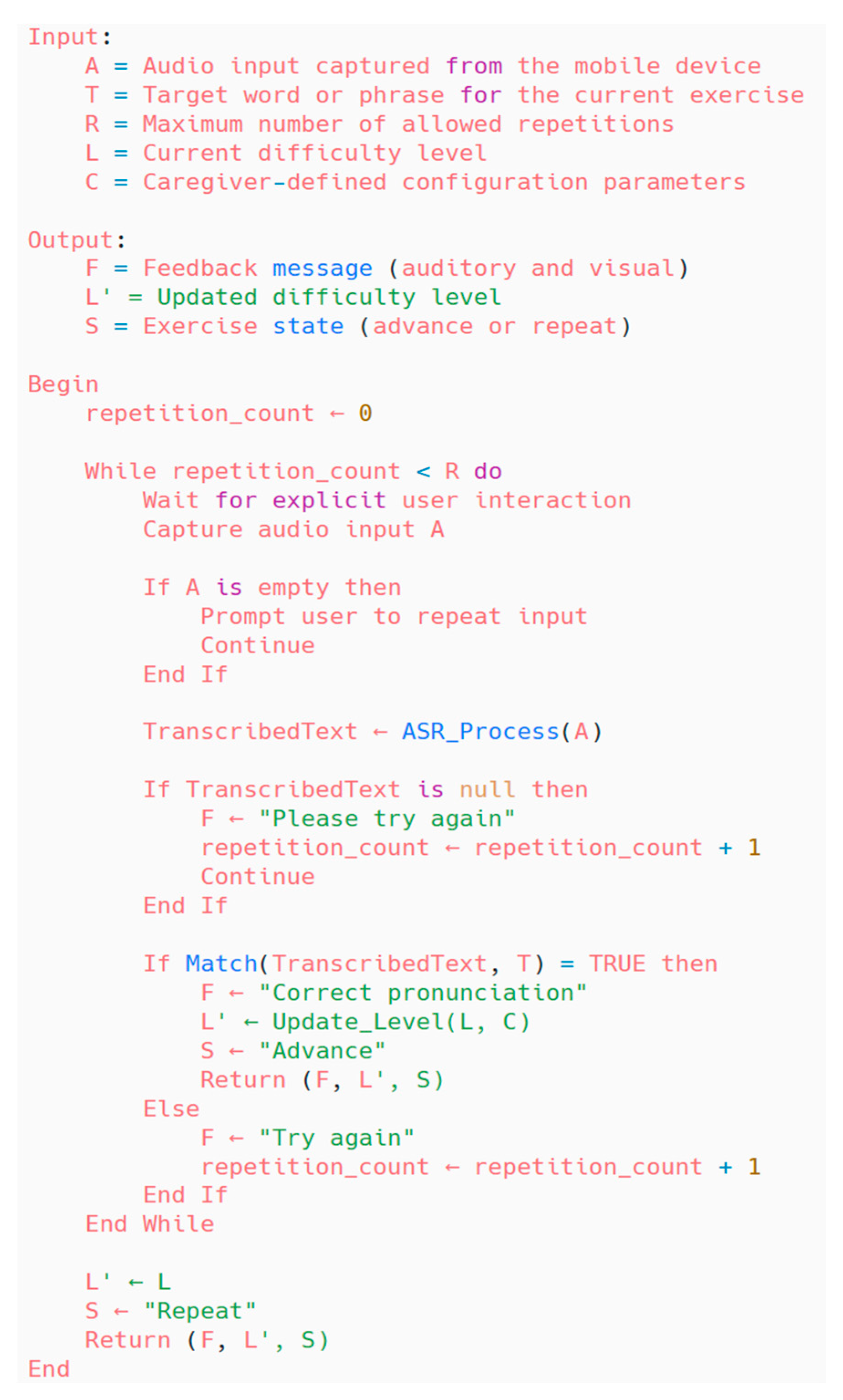
To formalize the proposed approach,
Figure 2 presents a formal workflow of the speech evaluation process, defining the input parameters, decision rules, and output generation. This representation highlights the sequential and deterministic structure of the process while ensuring clarity and reproducibility within the proposed assistive system. The workflow formalizes the interaction among speech capture, cloud-based speech recognition, pronunciation evaluation, feedback generation, and progression control within the system architecture.
To improve clarity and reproducibility, the main stages of the workflow are summarized in
Table 1, while the narrative description details the execution logic applied at each step of the system’s operation.
The proposed workflow begins with a controlled audio capture stage, in which the mobile application records the user’s speech only after an explicit interaction, ensuring that each audio input corresponds to a predefined pronunciation task. The captured audio is then processed by an automatic speech recognition (ASR) module, which converts the acoustic signal into its corresponding textual representation.
The speech processing component utilizes the Google Speech-to-Text API (Google LLC, Mountain View, CA, USA), specifically configured with the Spanish (Ecuador) language model. This technical choice ensures support for local phonetic variations and promotes standard practices for secure cloud-based speech processing. The captured audio is securely transmitted to the backend for asynchronous processing, where it is converted into text without storing permanent voice recordings on the server, thereby complying with ethical guidelines for participant data anonymization.
Next, the recognized text is systematically compared with the target word or phrase defined for each exercise using predefined matching rules. Based on this comparison, deterministic decision rules are applied to classify the pronunciation attempt as correct or The presentation layer includes the web frontend (Next.js, React, and Tailwind CSS) and the Flutter-based mobile applicationincorrect. Immediately after this classification, an auditory and visual feedback response is generated, guiding the user’s interaction and reinforcing correct pronunciation patterns.
Finally, the workflow controls the progression of the exercise sequence by either enabling advancement to subsequent tasks or triggering controlled repetition of the current exercise, as configured by the caregiver.
From an operational standpoint, the proposed workflow follows a sequential, deterministic structure with a limited number of allowed iterations. The execution cost increases linearly with the number of pronunciation attempts, as each interaction cycle performs speech processing, rule-based matching, feedback generation, and progression control. The use of deterministic matching rules ensures predictable execution behavior and low processing overhead, enabling real-time interaction in resource-constrained environments.
To further enhance methodological transparency and reproducibility, the rule-based pronunciation matching and decision logic implemented within the workflow are formally described below.
Pronunciation Matching and Decision Logic
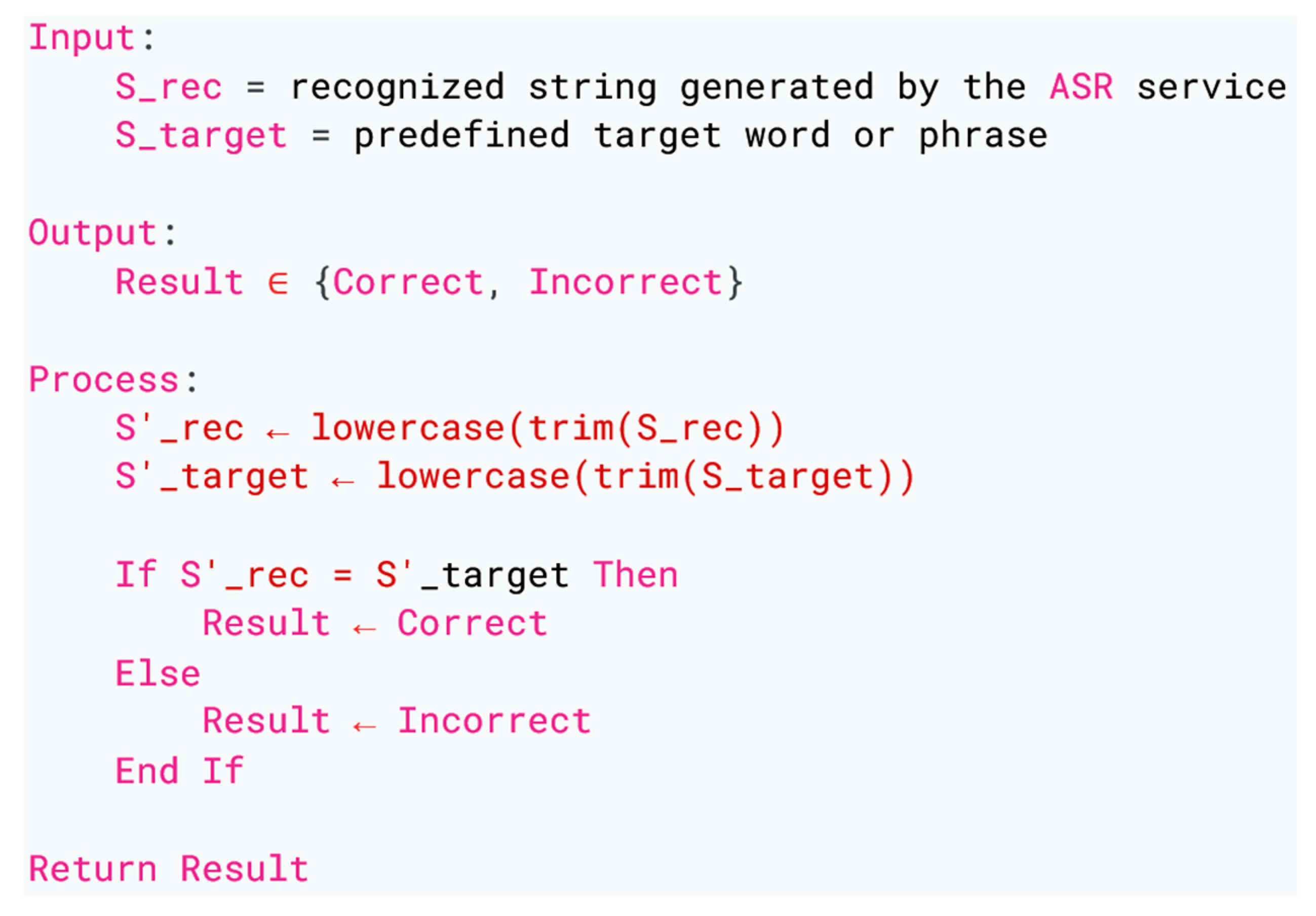
The pronunciation evaluation process applies a deterministic, rule-based comparison between the text generated by the automatic speech recognition (ASR) service and the predefined reference word or phrase associated with each exercise. Prior to the comparison, both the recognized text and the reference text undergo normalization, including conversion to lowercase and removal of leading and trailing whitespace. No semantic interpretations, probabilistic scores, or fuzzy matching mechanisms are applied.
Following normalization, the workflow performs an exact textual comparison between the recognized output and the predefined reference value. If both normalized strings match exactly, the pronunciation attempt is classified as correct; otherwise, it is classified as incorrect. This binary decision mechanism ensures predictable execution behavior, low computational overhead, and reproducibility across repeated interaction cycles. The rule-based decision logic implemented within the workflow is summarized in
Figure 3.
The binary classification mechanism used in the pronunciation evaluation can be formally represented as a deterministic decision function applied to the normalized strings generated during the matching phase. This function evaluates whether the normalized ASR output exactly matches the normalized reference word or phrase associated with the exercise. A value of 1 indicates a correct pronunciation classification, whereas a value of 0 indicates an incorrect classification:
where
norm(
s) represents the normalization function, which consists of converting uppercase letters to lowercase and removing whitespaces. This formulation ensures deterministic execution behavior and reproducible classification results across repeated interaction cycles.
The contribution of the proposed workflow is therefore not centered on developing a new speech-recognition model, but rather on orchestrating speech processing, deterministic evaluation logic, multimodal feedback coordination, and caregiver-supervised progression within a reproducible assistive interaction framework for older adults.
3.3. Usability Evaluation Procedure
The mobile application’s usability evaluation employed a mixed-methods approach, combining qualitative and quantitative methods to analyze user interactions with the system and assess the extent to which it was understandable, accessible, and easy to use for the target population. To this end, two complementary methods were employed: the Thinking-Aloud technique and the System Usability Scale (SUS) questionnaire.
First, the Thinking-Aloud technique was applied to five dyads consisting of an older adult and their caregiver. Participant selection was conducted in collaboration with caregivers and staff at the gerontological center. The inclusion criterion regarding older adults without neurodegenerative pathologies was established based on caregiver reports and institutional records, which indicated the absence of diagnosed neurodegenerative diseases or severe cognitive impairment at the time of evaluation. No formal cognitive screening instrument was used, as the study’s objective was limited to an exploratory evaluation of usability and operation under supervised conditions. Therefore, the participant characterization should not be interpreted as a clinical diagnosis or formal neurocognitive classification.
This procedure enabled the collection of qualitative information about the participants’ reasoning processes during interaction with the application, including spontaneous verbalizations, questions, perceived difficulties, and comments on task clarity. Prior to the evaluation, usage scenarios and task scripts were defined, including initial application setup, navigation between screens, and the execution of guided pronunciation exercises. During each session, caregiver and older adult performance was observed, interactions were documented, and usability incidents were recorded for subsequent analysis. The entire process followed the protocol described in the corresponding script.
Subsequently, the System Usability Scale (SUS) questionnaire was administered to five caregivers after they completed a brief set of representative tasks in the application. The instrument was administered immediately after the interaction session to ensure that responses reflected the user’s recent experience. The scale, consisting of ten items alternating between positive and negative statements, was scored according to the standard procedure: responses were transformed to values ranging from 0 to 4, the total score was calculated, and the final score was converted to an overall usability score on a 0–100 scale. In addition, individual item scores, adjusted values, and variability across participants were considered to obtain a comprehensive and consistent view of perceived usability.
Furthermore, item-specific scores, adjusted values, and variability among participants were considered to obtain a comprehensive and coherent overview of the perceived usability. Each caregiver completed the SUS questionnaire individually following the interaction sessions, without any discussion among participants or access to other responses. The researchers remained available solely to clarify procedural questions and did not intervene during the questionnaire’s completion.
The combination of these two methods (Thinking-Aloud and SUS) enabled a holistic analysis of usability. The Thinking-Aloud technique provided insights into actual user behavior and the obstacles encountered during interaction, while the SUS questionnaire offered a quantitative measure of satisfaction with the application. Both procedures were carried out in accordance with ethical criteria, including informed consent and data confidentiality.
4. Results
This section describes the developed technological product, the consolidated requirements, the diagrams that structure its operation, and the final interface prototypes. It also reports findings from usability testing conducted with caregivers and older adults, including both qualitative observations and quantitative metrics.
4.1. Developed Technological Product
The developed technological product comprises a mobile application and a web platform designed to support speech stimulation for older adults under caregiver supervision. This section presents the results obtained during the system development process, including requirements definition, technical design, the implemented architecture, and the final interface prototypes.
4.1.1. Definition and Structuring of System Requirements
The identification of system requirements was achieved through interviews with caregivers, a review of similar technological solutions, and an analysis of previous studies focused on older adults without degenerative pathologies of the central nervous system. The interviews enabled us to specify the essential functionalities required to ensure that the system effectively supports speech stimulation through personalized exercises, voice recognition, and real-time feedback [
24].
In addition, cognitive support platforms and gamified tools were analyzed as references to better understand approaches to accessibility, motivation, and adaptation for older adults. The collected results were synthesized in
Table 2, which presents the key themes identified, the findings expressed by caregivers, and their translation into functional and non-functional requirements.
Based on these inputs, the system requirements were consolidated and structured. This process included interviews, field observations, and a review of user-centered design guidelines, enabling the definition of precise requirements for both the mobile application and the web platform, primarily aimed at caregivers who configure exercises and monitor older adults’ progress.
The final requirements structuring ensured that the system: (i) facilitates the creation of personalized pronunciation exercises, (ii) integrates immediate feedback through voice recognition, (iii) guarantees visual and auditory accessibility through simple interfaces, (iv) incorporates configurable progression pathways according to user level, and (v) maintains a user experience aligned with the cognitive and motor capabilities of older adults. The implemented interfaces and interaction mechanisms were designed in accordance with established accessibility and user-centered design principles for older adults, as reported in the prior literature. In particular, simplified navigation structures, large visual elements, multimodal feedback, and reduced cognitive load were aligned with the usability recommendations discussed by Petrovčič et al. [
12] and Pak & McLaughlin [
13]. Likewise, the incorporation of progressive exercises, configurable repetition control, immediate feedback, and caregiver-supervised progression was informed by behavior-change mechanisms identified by Del-Valle-Soto et al. [
14] including personalization, self-monitoring, positive reinforcement, and guided user interaction. These principles directly influenced the design of the mobile interaction flow, progression-control mechanisms, and caregiver-oriented monitoring functionalities integrated into the proposed web–mobile architecture.
4.1.2. Diagrams Implemented in the System
Based on the functional and non-functional requirements gathered during the information-gathering stage, we developed technical diagrams that structure the operation of the web platform and the mobile application. These diagrams enable the visualization of user interactions, the internal system architecture, data organization, and the distribution of components within the execution environment.
The use case diagram in
Figure 4 summarizes the system’s core functionalities and illustrates how the different roles (administrator, caregiver, and older adult) interact within the proposed speech-support environment. The diagram highlights key functions, including pronunciation exercise configuration, guided speech practice, progress monitoring, speech feedback interaction, and system parameter management. In addition, it illustrates how older adults perform guided pronunciation exercises in the mobile application while caregivers monitor progress and interaction outcomes [
25].
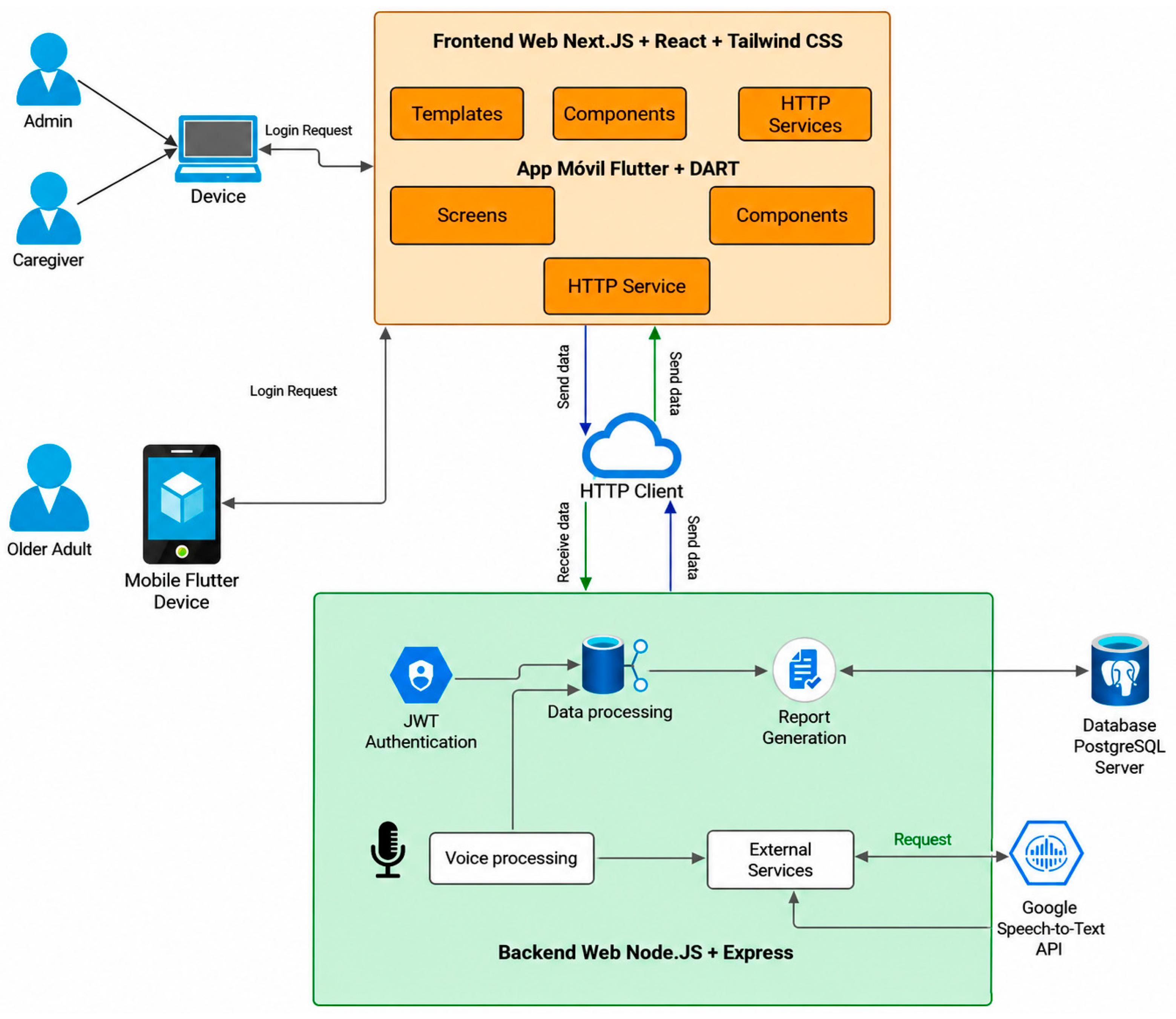
The software architecture depicted in
Figure 5 shows the system’s module organization. The presentation layer includes the web frontend (Next.js, Vercel Inc., San Francisco, CA, USA; React, Meta Platforms Inc., Menlo Park, CA, USA; and Tailwind CSS, Tailwind Labs Inc., San Francisco, CA, USA) and the Flutter-based mobile application (Google LLC, Mountain View, CA, USA), which communicates with the Node.js (OpenJS Foundation, San Francisco, CA, USA) and Express.js (OpenJS Foundation, San Francisco, CA, USA) backend. This server is responsible for authentication, business logic, speech processing, and storage within a PostgreSQL database (PostgreSQL Global Development Group, Bedford, IN, USA). The backend coordinates integration with external cloud-based automatic speech recognition (ASR) services via the Google Speech-to-Text API (Google LLC, Mountain View, CA, USA) for pronunciation evaluation, while optional Text-to-Speech (TTS) services are used to provide auditory feedback during the interaction. The ASR component serves as the core speech-processing mechanism in the proposed workflow, converting spoken input into textual representations for deterministic pronunciation evaluation and progression control. In contrast, the optional TTS component is used only to provide auditory feedback that reinforces user interaction during guided exercises.
4.1.3. High-Fidelity Prototypes of the Web Platform
As a result of the user-experience-centered interface design process, high-fidelity prototypes were developed that accurately reflect the system’s aesthetics, navigation, and key functionalities. Although the project generated a wide range of screens, this section presents only the most representative interfaces for both web and mobile applications, as they best reflect the main interaction flow between caregivers and older adults.
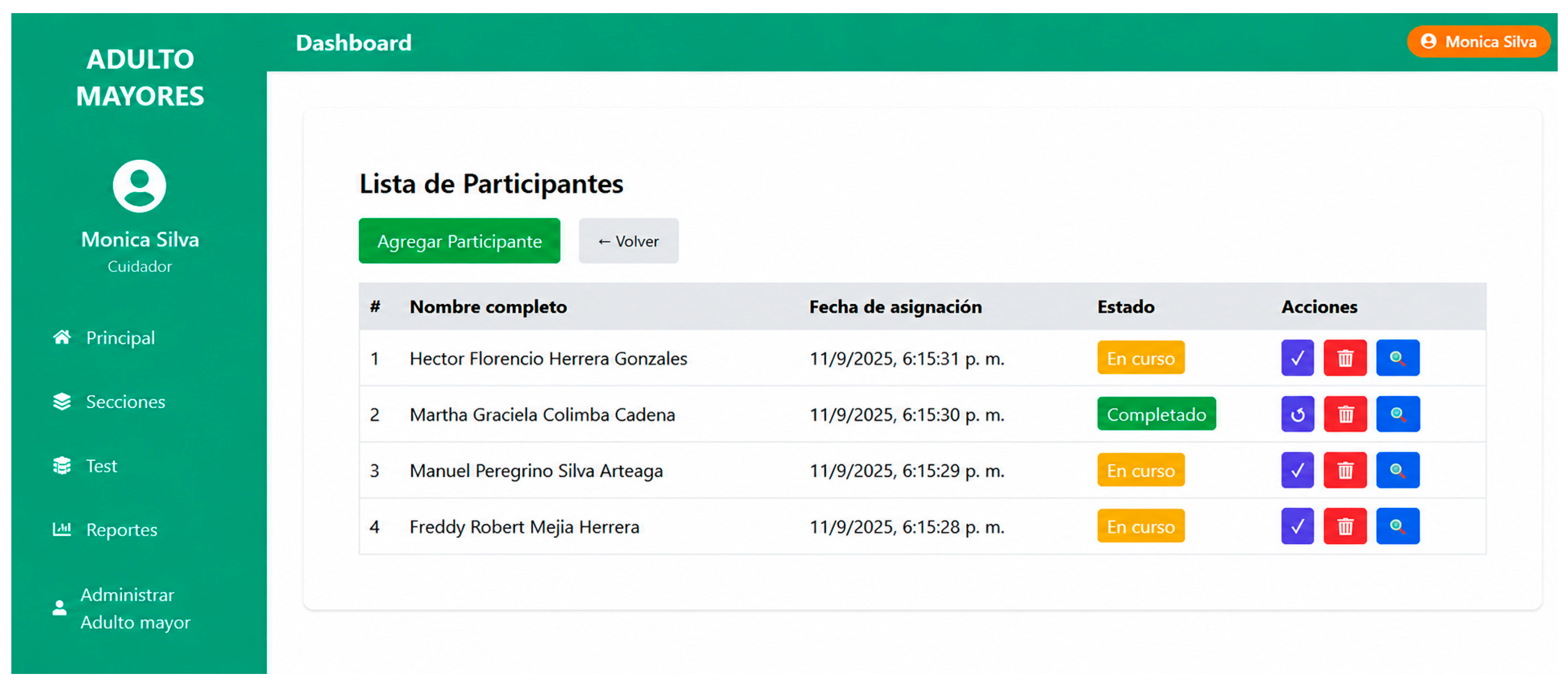
For the web platform,
Figure 6 shows the interface for the list of participants associated with a test. This interface allows caregivers to manage essential actions such as repeating a test, removing participants, or reviewing their progress within the assigned activities.
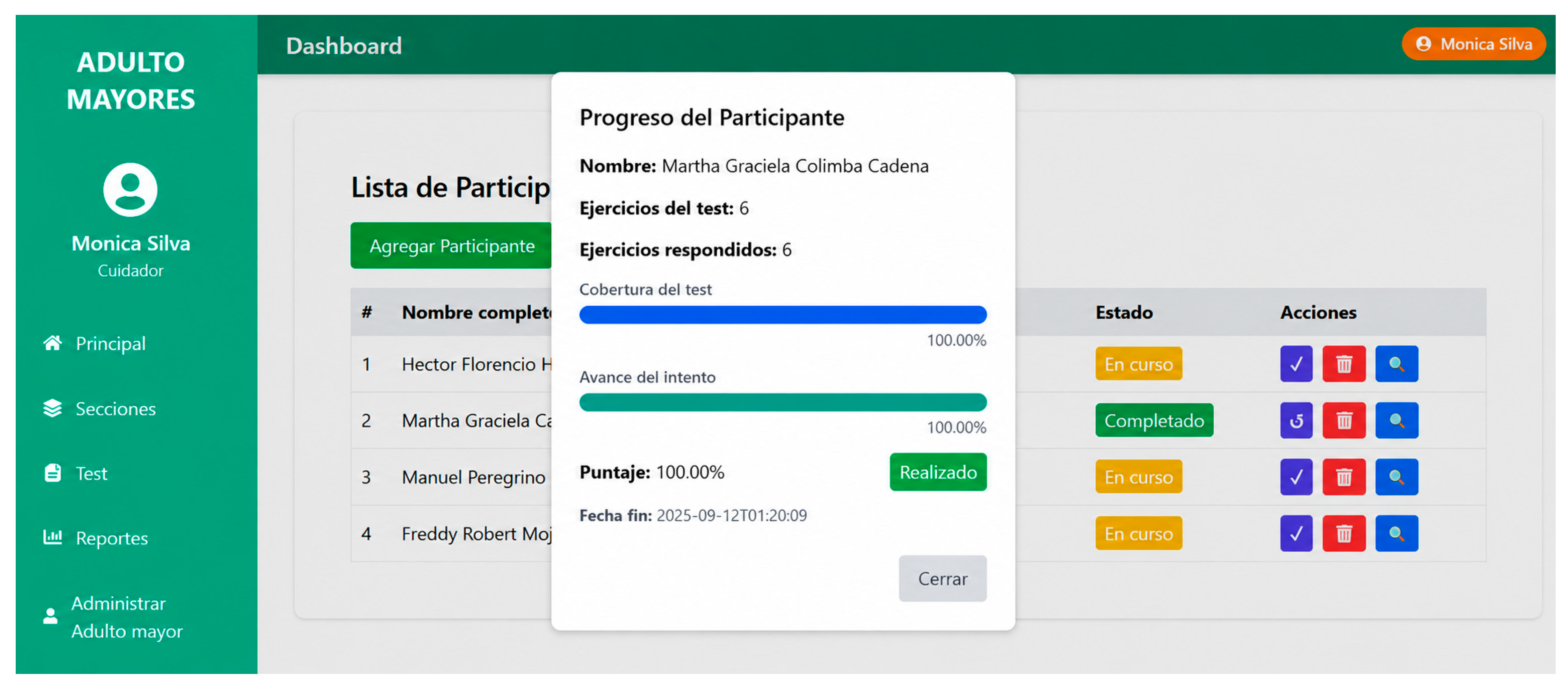
Figure 7, in turn, presents the participant progress view, which displays the completion percentage, the total number of exercises, and the results for each older adult. This interface is a core element of the system, as it synthesizes the feedback required for therapeutic monitoring.
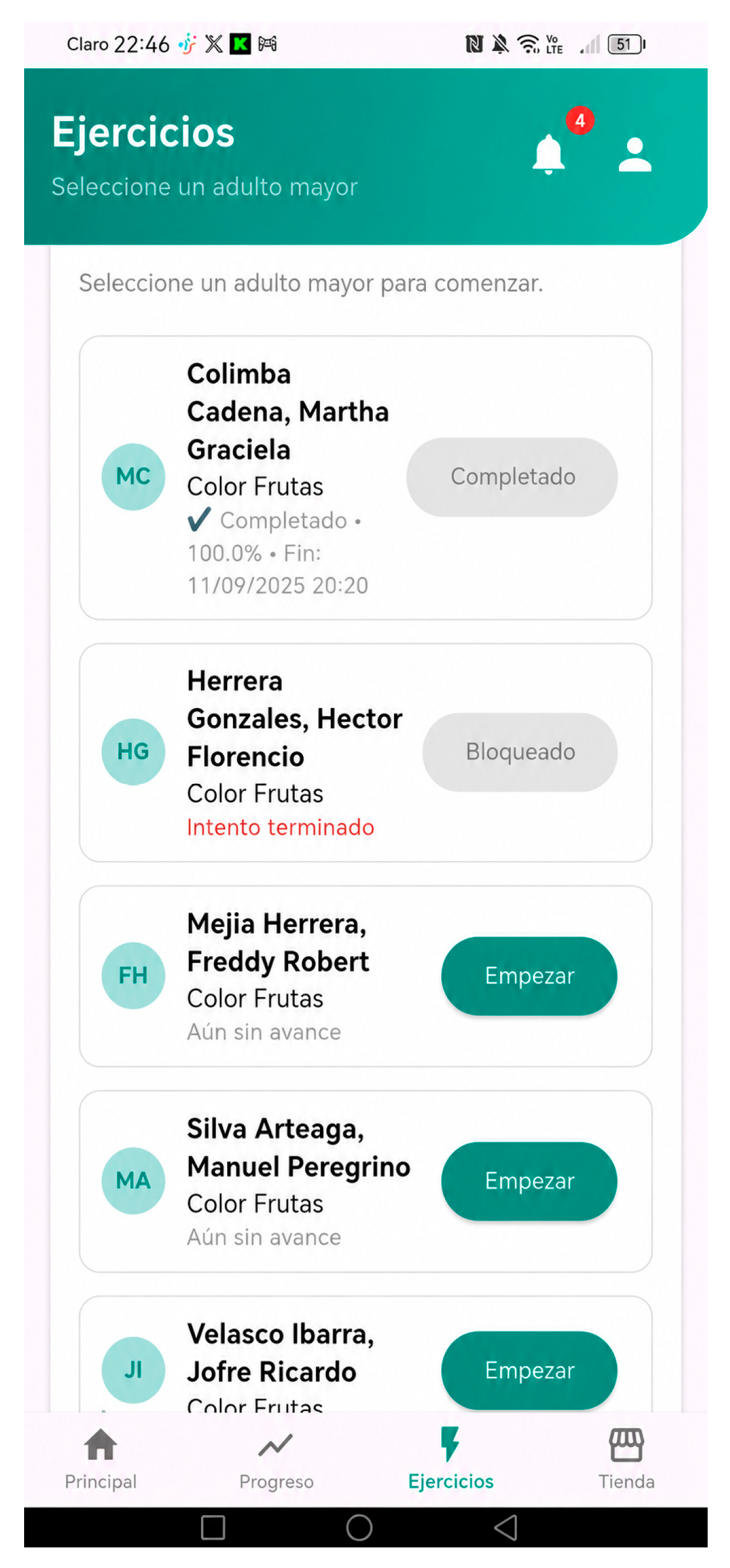
Regarding the mobile application,
Figure 8 shows the list of pending tests for each user. This interface organizes the activities that the older adult must complete, allowing pronunciation sessions to be initiated directly from the mobile environment with caregiver assistance.
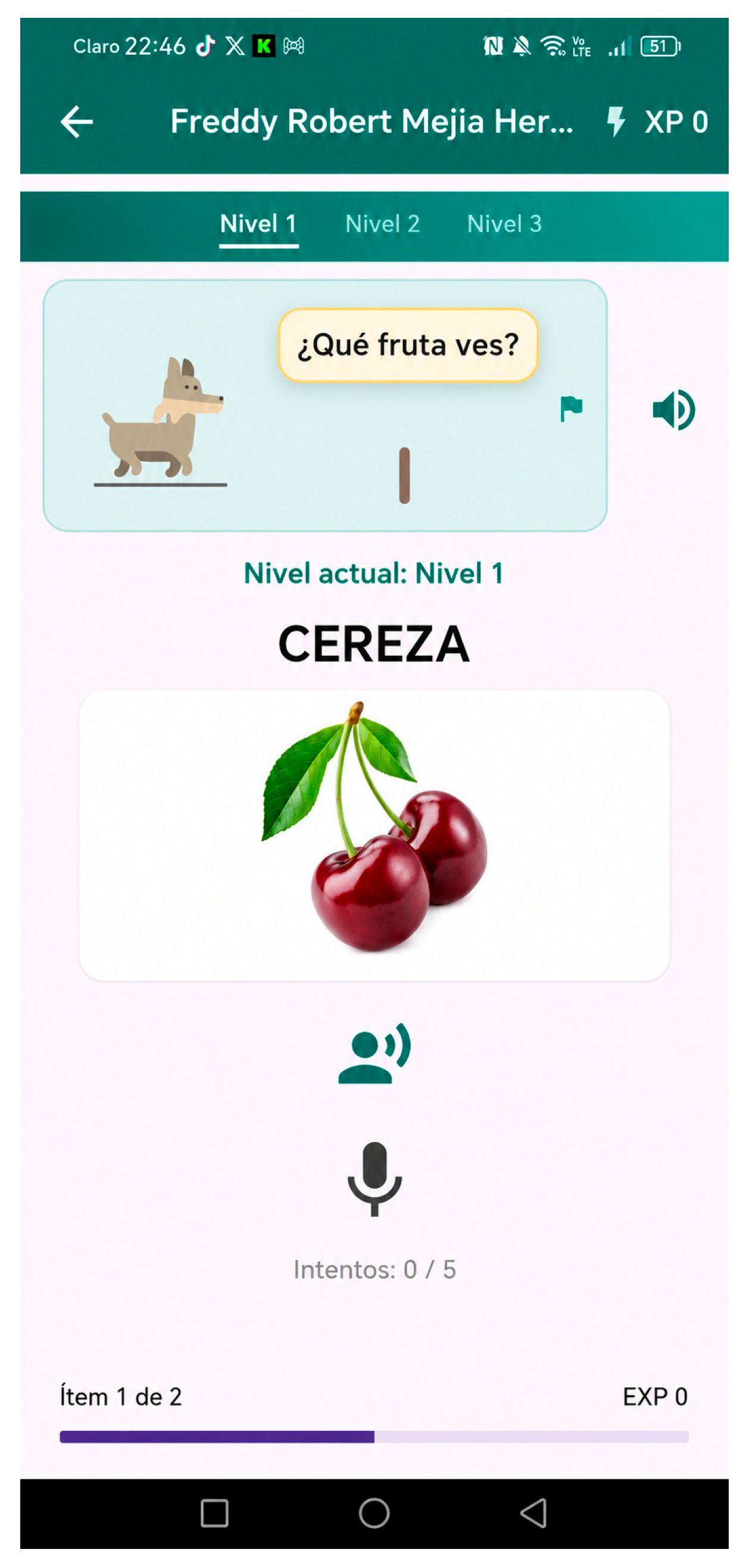
Finally,
Figure 9 presents the interface for executing the pronunciation exercise. On this screen, the user activates the microphone, performs each exercise, and progresses through levels based on performance, integrating both visual and auditory feedback.
4.2. Operational Results of the Speech Assessment Workflow
This section presents the operational results obtained after implementing and executing the proposed speech assessment workflow within the hybrid web–mobile assistive system.
4.2.1. Workflow Execution and Operational Behavior
The proposed workflow operated stably and consistently as a sequential and deterministic process, successfully completing all defined stages, from controlled audio capture to progression control within the mobile application. During execution, each pronunciation attempt followed the operational sequence defined in
Section 3.2, ensuring consistent audio acquisition in response to explicit user interaction and seamless processing by the automatic speech recognition (ASR) module.
The results confirm the correct orchestration of all workflow stages, including input acquisition, speech processing, decision-making, feedback generation, and progression control. This structured organization enabled predictable and reproducible behavior across repeated execution cycles.
From an interaction perspective, each pronunciation attempt followed a guided sequence (listen, speak, receive feedback, and repeat or advance), facilitating controlled and intuitive speech practice for older adult users.
Overall, the execution results demonstrate consistent and reliable workflow behavior under constant input conditions, maintaining stable decision outcomes across multiple interaction cycles. The operational evaluation confirmed proper coordination among speech processing, pronunciation evaluation, feedback generation, and progression control throughout interaction sessions conducted with older adult participants.
The recognition accuracy obtained during the workflow execution was calculated for each pronunciation attempt and corresponded to 50 interaction attempts generated by five older adult participants across predefined pronunciation exercises, including words and short phrases with varying levels of pronunciation complexity configured in the mobile application. The evaluation was conceived as an exploratory operational validation of the proposed workflow under controlled usage conditions, rather than a large-scale benchmark of speech recognition performance. Therefore, the reported recognition accuracy should not be interpreted as a large-scale benchmark of ASR robustness or generalization performance, but rather as a preliminary operational indicator supporting the feasibility of the proposed guided speech-assessment workflow under controlled interaction conditions.
4.2.2. Pronunciation Assessment, Feedback, and Progress Monitoring
The pronunciation assessment stage showed consistent performance in comparing recognized speech outputs with predefined target words using deterministic decision rules. Each attempt was classified unambiguously as correct or incorrect, enabling the reliable activation of subsequent actions. The decision logic remained stable across repeated executions, ensuring consistent classification regardless of exercise order or repetition frequency. This stability demonstrates the consistency of the rule-based evaluation mechanism. Based on the classification outcome, the system generated immediate auditory and visual feedback for each attempt. The response arrived without delay, enabling continuous interaction and supporting task execution.
In addition, the progression control mechanism effectively managed level transitions and repetition cycles throughout the interaction process. The system advanced users to subsequent exercises when predefined acceptance criteria were satisfied or activated controlled repetitions otherwise, ensuring consistent application of caregiver-defined configurations.
Table 3 summarizes the main operational outcomes observed during workflow execution.
4.2.3. Integration with System Configuration and Monitoring
The proposed workflow was fully integrated with the caregiver-configurable parameters defined in the web platform. Settings related to exercise sequences, difficulty levels, and repetition limits were correctly applied during mobile execution, ensuring alignment between configuration and runtime behavior.
Furthermore, execution events were synchronized with backend services, enabling data monitoring and persistence without affecting real-time interaction. This confirms effective integration between the speech assessment workflow, backend services, and the overall system architecture.
4.3. Technical Performance Evaluation
A technical performance assessment of the voice processing component was conducted. Two indicators were analyzed: system response latency and speech recognition accuracy during pronunciation exercises performed by older adults.
The performance evaluation was conducted under controlled interaction conditions within the gerontological center where the usability sessions took place. The mobile application was run on a standard Android smartphone connected to a wireless Internet network, and audio input was captured using the device’s built-in microphone, without external audio equipment. Speech processing and recognition were performed through a cloud-based automatic speech recognition (ASR) service integrated into the system backend. Network connectivity remained stable during testing, and no artificial background noise was introduced, ensuring that the evaluation environment reflected typical real-world conditions for older adults during supervised practice sessions.
Latency measurement: System latency was defined as the elapsed time from when the user completed the pronunciation attempt to when the system delivered the feedback response. Latency was measured across 50 pronunciation attempts executed during the evaluation sessions. The average response time was 1.82 s (SD = 0.41), ensuring a fluid interaction without perceptible delays for the user.
To provide a more detailed description of the system’s responsiveness, the total latency was broken down into the primary operational phases of the speech processing workflow: audio transmission, cloud-based ASR processing, and feedback generation (see
Table 4). The reported values correspond to average measurements obtained during the controlled evaluation sessions.
Recognition accuracy: To evaluate the effectiveness of the automatic speech recognition component, recognized outputs were compared with the predefined target words used in the exercises. A total of 50 pronunciation attempts were analyzed. The system correctly identified the target word in 45 cases, resulting in an overall recognition accuracy of 90%. Although the number of pronunciation attempts analyzed in this evaluation was limited, the objective of this test was to obtain an initial technical characterization of the system’s responsiveness and recognition behavior under real interaction conditions with older adults.
These results indicate that the system provides sufficiently fast responses and acceptable recognition performance for guided pronunciation practice in older adults. Although occasional misrecognitions occurred, they did not disrupt the flow of the interaction, as the system’s repetition and feedback mechanisms allowed users to retry the exercise.
Table 5 summarizes the results obtained.
The latency breakdown in
Table 4 and the overall metrics in
Table 5 confirm that the integration with Google Speech-to-Text delivers balanced performance. The cloud processing phase (0.97 s) remained within acceptable levels for guided real-time interaction, thereby achieving the recognition accuracy required for older adults’ speech patterns without adversely affecting interaction continuity during the evaluation sessions.
From an engineering perspective, the observed latency and recognition accuracy values indicate that the system operates within functional responsiveness thresholds for voice-based interactive applications. Although the sample size was limited to draw general clinical conclusions, these preliminary results suggest the technical feasibility of the proposed architecture as a functional prototype. These data serve as proof-of-concept of the workflow’s stability and lay the foundation for future large-scale longitudinal studies to further validate its effectiveness across diverse real-world assistive scenarios.
4.4. Usability Evaluation
The mobile application usability evaluation enabled us to identify how older adults and their caregivers interacted with the system, as well as the difficulties, perceptions, and usage patterns associated with pronunciation exercises and initial configuration tasks. The results are presented through findings from the Thinking Aloud technique and the standardized System Usability Scale (SUS) questionnaire.
4.4.1. Results of the Thinking Aloud Technique
To analyze real-time user experience, the Thinking Aloud technique was used, in which participants verbalized their thoughts, questions, and comments as they performed the assigned tasks. The evaluation was conducted with five dyads consisting of an older adult and their caregiver. Each dyad carried out previously defined usage scenarios, which included initial application setup and guided pronunciation exercises. The systematized results are presented in
Table 6, which records the observed difficulties, positive comments, and general observations for each dyad during interaction with the mobile application.
The data reveal consistent patterns in the user experience: older adults require initial support, but once familiar with the interface, can complete the exercises without difficulty. Specific issues were identified, such as initial navigation confusion (Dyad 2), difficulty reading small text (Dyad 3), and prolonged pauses when speaking aloud (Dyad 5). However, positive perceptions were also recorded regarding the clarity of the exercises, the motivational effect of voice feedback, and the overall simplicity of the interface.
Overall, these findings confirm that the application is intuitive, understandable, and adapted to the capabilities of older adults, meeting the accessibility and support criteria defined in the project.
4.4.2. Results of the SUS Questionnaire
To complement the qualitative evaluation, the System Usability Scale (SUS) questionnaire was administered to five caregivers after completing a set of representative tasks in the mobile application. This assessment provided a quantitative measure of perceived usability. The instrument was scored according to the standard procedure, transforming responses to a 0–4 scale and yielding an overall score ranging from 0 to 100. The system achieved a mean score of 86.00 points (SD = 2.85), indicating high usability and falling within the “excellent” range according to internationally recognized SUS interpretations. The item-specific values, along with their means and adjusted scores, are presented in
Table 7.
The analysis shows that the positive items (p1, p3, p5, p7, p9) had mean values above 4 on the original scale, indicating a favorable perception of ease of use, learning simplicity, and system consistency. In contrast, the negative items (p2, p4, p6, p8, p10) recorded low values, reflecting disagreement with statements related to complexity or inconsistency. The standard deviations (all below 0.55) indicate high consistency among participants, with minimal variability in their perceptions.
Overall, these quantitative results support the findings from the Thinking Aloud technique and confirm that the mobile application provides a solid, clear, and appropriate user experience for caregivers and older adults in pronunciation-support contexts.
5. Discussion
From a systems engineering perspective, the results of this study support the design decisions adopted in the proposed hybrid web–mobile architecture, particularly the integration of voice recognition, real-time feedback, and controlled interaction pacing within a unified framework. A key aspect of the proposed implementation is preserving interaction continuity during voice-based communication, even in the presence of network-dependent delays. The improvements observed in user interaction and task completion are due not only to interface usability but also to the coordinated operation of system components, including speech processing modules, feedback generation, and task coordination mechanisms. These findings suggest that responsiveness, interaction flow, and feedback consistency are important considerations in the design of conversational systems for older adults.
Integrating voice recognition with controlled response pacing proved essential for accommodating age-related speech patterns, such as slower articulation and frequent pauses. Consistent with Wang et al. [
8], modulating response timing influenced task comprehension and interaction continuity. From an engineering standpoint, the proposed workflow relies on deterministic decision rules, asynchronous speech processing, and lightweight audio transmission to coordinate pronunciation evaluation, feedback delivery, and progression control in a predictable manner. Although cloud-based speech recognition introduces network-dependent delays, the observed latency levels did not negatively affect user interaction during the evaluation sessions. While this design prioritizes transparency, reproducibility, and stable operational behavior under controlled conditions, its performance remains constrained by factors inherent to speech processing in aging populations, including accent variability, articulation imprecision, extended pauses, and fluctuations in vocal intensity.
Future enhancements may address interaction delays through optimized speech-processing coordination and more robust handling of network-dependent conditions, such as personalized acoustic modeling, speaker-specific calibration phases, or hybrid approaches that combine rule-based logic with learning-based components to improve robustness and generalization across varying network and speech conditions.
Regarding gamification, the results confirm that lightweight motivational elements—such as visual rewards, progress indicators, and gradual levels—can be integrated effectively without introducing additional computational overhead or noticeable interaction delays. Consistent with the findings of An et al. [
18] and Koivisto et al. [
15], overly complex or fast-paced dynamics may introduce unnecessary friction for older users. From an engineering perspective, these results highlight the importance of implementing gamification as a low-overhead control mechanism embedded within the system logic, rather than as an independent or resource-intensive layer, thereby preserving system responsiveness and interaction stability. These findings also align with accessibility-oriented and behavior-change design principles described in the prior literature on older adults, which highlight the importance of simplified interactions, progressive feedback, personalization, and low cognitive load to promote the continued use of assistive technologies [
12,
14]. In this regard, the proposed system combines motivational mechanisms with an accessibility-aware interaction design, tailoring technological functionality to the sensory and cognitive characteristics of older adult populations.
A central contribution of this work lies in integrating caregivers as active system actors via a dedicated web platform. Unlike previous approaches that prioritize fully autonomous use [
9,
10], the proposed architecture enables role-based access, personalized task configuration, and continuous monitoring. The adoption of this hybrid web–mobile architecture introduced several engineering trade-offs relevant to real-world deployment. While separating the mobile client for older adults from the web platform for caregivers increased modularity, configurability, and maintainability, it also required careful coordination through backend services to ensure secure communication, data consistency, and low-latency synchronization between system components. This design choice reflects a deliberate trade-off between architectural complexity and functional scalability, favoring extensibility and long-term sustainability over standalone solutions.
Usability evaluation using the Thinking Aloud method and the System Usability Scale (SUS) provided evidence that the proposed system architecture supports intuitive interaction and task execution. From an engineering standpoint, these results suggest that the architectural separation of concerns—interface presentation, business logic, and voice processing—contributes to system robustness and ease of refinement. In addition, the separation between interface-level interaction and backend speech-processing components enables interface-level optimizations without affecting core processing pipelines. Identified issues with text legibility and touch-element sizing highlight opportunities for interface-level optimization without requiring fundamental changes to the underlying system architecture, confirming the flexibility afforded by the modular design.
From a technological standpoint, the voice recognition module demonstrated adequate performance for basic pronunciation assessment; however, its effectiveness is constrained by factors inherent to speech processing in older adults, including accent variability, articulation imprecision, and fluctuations in vocal intensity. These factors may amplify the perceived effects of latency if not carefully managed, posing an engineering challenge for robustness and generalization across heterogeneous user populations. Addressing these constraints may require incorporating personalized acoustic modeling approaches, personalized calibration phases, or hybrid evaluation strategies that combine automated voice analysis with caregiver input, while maintaining acceptable response times in real-world use.
In addition to these considerations, the technical evaluation of the voice processing component further supports the proposed architecture’s feasibility. The system exhibited an average response latency of about 1.8 s between speech input and feedback delivery, supporting fluid interaction under the evaluated conditions. Furthermore, the speech recognition module achieved about 90% accuracy during pronunciation exercises with older adults, indicating consistent performance for guided practice while maintaining interaction continuity.
Although the system achieved an average response latency of 1.82 s during real-world interaction tests, the present study did not perform fine-grained profiling to separately quantify the contribution of individual operational stages such as audio capture, network transmission, cloud-based ASR processing, or feedback generation. The primary objective of this work was usability, accessibility, and functional validation for older adults rather than low-level performance benchmarking. Nevertheless, the observed latency remained acceptable for practical interaction within the evaluated context. Future work should incorporate detailed latency-decomposition analyses and controlled benchmarking across different network conditions to further characterize the performance behavior of the proposed architecture. The selected cloud-based ASR service was configured for Spanish-language recognition and integrated via secure API calls, with no permanent storage of voice recordings on the application server. The current implementation does not incorporate specialized latency-management mechanisms such as local fallback processing, adaptive timeout calibration, or dynamic network compensation strategies. Instead, interaction continuity was primarily supported through controlled interaction pacing, asynchronous speech processing, and simplified workflow coordination during guided speech exercises.
Overall, the findings of this research underscore the importance of accessible, configurable, and modular technological systems that can operate in resource-constrained, heterogeneous real-world contexts. The proposed hybrid architecture was designed to support stable voice-based interaction through asynchronous processing and coordinated feedback mechanisms, helping to preserve continuity of interaction for older adults during guided pronunciation activities. The proposed hybrid architecture and integrated supervision model address key gaps identified in prior work while providing a scalable foundation for future extensions. Likewise, the primary contribution of this study lies in integrating a deterministic workflow for speech assessment into an accessible hybrid web–mobile architecture for speech support in older adults. The approach prioritizes coordination among speech recognition, immediate feedback, and caregiver supervision mechanisms, providing a functional and reproducible foundation for future extensions and comparative evaluations in gerontological assistive scenarios.
Nevertheless, this study presents limitations due to its exploratory nature and sample size. Although the operational results were promising, the exploratory nature of the evaluation and the limited sample size suggest that additional large-scale and longitudinal studies are still required to further validate the robustness and generalizability of the proposed workflow across diverse real-world scenarios.
Furthermore, the supervised nature of the usability sessions and the small number of participants may have introduced compliance bias, social desirability bias, or limited variability in SUS questionnaire responses, especially given that the caregivers evaluated the system in the researchers’ presence during controlled interaction activities. Although the participants completed the questionnaires individually and without group discussion, future evaluations should incorporate larger samples, more independent evaluation conditions, and additional statistical analyses to strengthen the validity and generalizability of the usability results.
Future work should focus on longitudinal evaluations, comparative analyses using alternative ASR services and pronunciation assessment strategies, the incorporation of objective speech performance metrics, the systematic measurement of end-to-end latency, and the refinement of voice-processing components to enhance system robustness and generalizability across diverse gerontological settings.
6. Conclusions
This study demonstrates the feasibility of an integrated, structured, and configurable approach to support speech practice in older adults through a structured workflow that combines voice recognition, deterministic decision-making, immediate feedback, and caregiver supervision within a hybrid web–mobile environment. The proposed solution provides a functional technological alternative to traditional speech stimulation approaches by enabling both autonomous use by older adults and guided configuration and monitoring by caregivers within a unified system.
The implemented hybrid architecture enables personalized activities, guided interaction flows, and continuous follow-up, resulting in a more adaptable and inclusive technological solution. Rather than focusing solely on interface usability, the system offers an engineering-oriented framework that can be extended and adapted to similar assistive and gerontological contexts.
The incorporation of lightweight gamification elements was sufficient to sustain engagement without introducing unnecessary complexity, reinforcing the suitability of low-demand interaction strategies for assistive applications targeting aging populations. Similarly, the inclusion of caregivers as active users underscores the relevance of supervised and role-based technological models for potential real-world implementation, provided that large-scale validations are conducted to expand upon the current findings.
Usability evaluation results indicate that the system is understandable and usable for both older adults and caregivers, and reveal opportunities for incremental interface improvements. These findings support iterative refinement without requiring substantial changes to the core system design.
Despite the encouraging outcomes, this work is limited by its exploratory scope and sample size. Future research will focus on longitudinal validation, the integration of more robust and adaptive voice recognition models, and the incorporation of objective speech performance indicators. Additional work will also explore system scalability and deployment in broader institutional and community environments. Future work will focus on strengthening the technical evaluation by analyzing larger datasets and conducting longitudinal testing scenarios to improve statistical robustness and generalizability. In addition, future studies will incorporate standard speech recognition metrics, such as word error rate (WER) and sentence error rate (SER), to support more rigorous performance evaluation and facilitate comparison with other voice-based assistive technologies.




 ,
,