Article

PLS-SEM Algorithmic Modeling of High-Tech and High-Touch Hospitality Experiences with Moderating Roles of Employee Presence and Technology Identity


by
Ibrahim A. Elshaer
1,*,
Osman Elsawy
2,
Alaa M. S. Azazz
3,
Mohammed Ali R. Aldossary
1,
Mahmoud Ahmed Salama
4,5 and
Sameh Fayyad
4
1
Department of Management, College of Business Administration, King Faisal University, Al-Ahsa 31982, Saudi Arabia
2
Department of Human Resources Management, College of Business, King Khalid University, Abha 61471, Saudi Arabia
3
Department of Social Studies, Arts College, King Faisal University, Al-Ahsa 31982, Saudi Arabia
4
Hotel Management Department, Faculty of Tourism and Hotels, Suez Canal University, Ismailia 41522, Egypt
5
Faculty of Tourism and Hotel Service Technology, East Port Said University of Technology, North Sinai 45632, Egypt
*
Author to whom correspondence should be addressed.
Algorithms 2026, 19(4), 288; https://doi.org/10.3390/a19040288
Submission received: 15 March 2026 / Revised: 29 March 2026 / Accepted: 5 April 2026 / Published: 8 April 2026

Abstract

As tourism businesses increasingly integrate anthropomorphic and AI-impowered technologies into service functions, a key managerial and theoretical challenge is adjusting high-tech performance with high-touch human involvement. Addressing this issue, this paper applied a PLS-SEM algorithmic modeling method to explore how anthropomorphic technological experiences shape guests’ experiential sharing intentions (ESIs) within hospitality service environments. Drawing on social response theory and service experience theory, this research developed and practically evaluated a moderated–mediated model describing how anthropomorphic technological experiences can impact experiential sharing intentions (ESIs). Specifically, the model tested the direct and indirect impacts of anthropomorphic experience on ESI through affective experience (AF_EX) and perceived service innovation (PSI), while evaluating the moderating roles of employee presence and technology identity. The results offered strong evidence to support the developed framework. Anthropomorphic experience can positively impact guests’ affective experience, PSI, and ESI with others. Both AF_EX and PSI can act as significant predictors of ESI and can operate as complementary mediating mechanisms, implying that emotional involvement and innovation-signaling technologies reinforce guests’ advocacy through dual experiential pathways. Notably, the findings revealed a critical boundary setting. Technology identity can amplify the influence of anthropomorphic experience on both AE and PSI, signaling that guests who view technology as part of their self-concept exhibited greater levels of experiential value from human-like operations. By applying PLS-SEM algorithmic modeling to integrate anthropomorphism, perceived innovation, and experiential value within a moderated mediation framework, this paper advanced the theoretical understanding of high-tech–high-touch hospitality experiences and provided practical insights for developing synergistic technology-enabled service contexts.

1. Introduction

Anthropomorphism is the phenomenon of attributing human traits to non-human agents through appearance, speech, language, and content in the context of human–machine interaction [1] In the hospitality sector, anthropomorphic experiences include service robots, AI concierges, and smart assistants that are designed with human-like traits [2]. Hotels create anthropomorphic experiences when an AI concierge engages guests in a warm, human-like conversational style, or when service robots deliver amenities to rooms while displaying expressive, life-like gestures [3]. Through anthropomorphic experiences, features like human-like voices, gestures, and expressive displays enable technology to mimic social cues, turning impersonal service interactions into emotionally engaging encounters that resonate with guests’ hospitality expectations [4].
In the light of the Stimulus–Organism–Response (SOR) framework [5], an anthropomorphic service technology in hotels serves as stimuli. It consists of AI-powered interfaces, virtual concierges, and service robots that improve customer service. When technologies display human-like traits that attract guests and foster a sense of familiarity, they act as triggers of engagement [6]. These cues elicit emotional and cognitive reactions that influence the guest’s internal state, such as feelings of comfort, delight, and novelty [7]. As a result, clients view the service as cutting-edge, unique, and contemporary. In addition to increasing the experience’s worth and effect, this view makes it more memorable and improves the possibility that people will share it with others [8].
Despite their strategic relevance, the impact of anthropomorphic experiences on perceived innovation and sharing behavior remains unclear, with prior studies producing contradictory findings [9,10]. This reflects a gap in understanding the psychological and contextual mechanisms that determine whether such experiences are interpreted as innovative or share-worthy [11]. Most existing research has emphasized the functional benefits of smart technologies [12,13], while overlooking the symbolic and emotional dimensions of customer–technology interaction [14,15].
Moreover, the previous literature regularly proposes a uniform effect of anthropomorphic technologies, ignoring situational factors that can shape customer responses [16,17]. This is specifically significant in the hospitality industry, where the existence of staff can either foster or damage the perceived integrity of anthropomorphic features [18], and where people’s differences in technology identity might influence the strength of consumer reactions [19]. Yet, these interactive impacts remain underexplored, specifically in the service context where emotional delivery, innovation, and human warmth are strictly interwoven [20].
The “Person–Situation Interaction Theory” (PSIT) explains people’s behavior as the consequences of a dynamic interaction between situational factors and personality traits. As such, the interplay between anthropomorphic experiences and consumer behavior might be shaped by some moderators, such as technological identity as a personality trait [21]. Technology identity describes the level to which consumers align themselves with and feel secure employing technology, modeling the way they can perceive and explain anthropomorphic cues. As per Song et al. [22] consumers who have a high level of technology identity might react more positively to anthropomorphic experience and assume them as innovative, while guests who have a low level of technological identity might require more clues or support from employees to obtain the same impressions. Consistent with PSIT, “Social Presence Theory” explains the significance of staff presence as a contextual factor in technology-mediated connections [23]. The energetic contribution of staff can reinforce the feelings of comfort and supervision during guest–robot connections, fostering affective reactions and increasing the perceptions of innovation. Likewise, staff can contribute a supportive social environment that legitimizes and complements the human-like factor of technology, thus increasing its perceived innovativeness and credibility [24,25]. Overall, these moderating factors illustrate that consumers’ experiential sharing intentions (ESIs) are influenced not only by the anthropomorphic characteristics of technology but also by personal and situational elements that can shape the reactions in service encounters.
Referring to these gaps is essential, especially as hotels aim to balance technological adoption with guest satisfaction. Consequently, the purpose of this study is to investigate how anthropomorphic technology encounters emotional reactions and intentions for experiential sharing through service innovation, while specifically taking technology identity into account as a significant personal variable. The study also looks at how staff presence as a situational element and the moderating effects of technology identity influence these correlations. By doing this, the study contributes to a more context-sensitive and psychologically grounded understanding of how innovation is viewed and communicated in technology-mediated hotel service interactions.
This study can advance theory by integrating the SOR framework, PSIT, and “Social Presence Theory” to clarify how anthropomorphic experiences can shape guest consequences in the hospitality industry. It establishes that anthropomorphic cues can act as stimuli that influence innovation and affective experiences, which consequently drive experience-sharing behavior. The study emphasizes how these effects depend on individual characteristics, especially technology identity, which measures how much people view technology as a component of who they are and how psychologically connected they are to it. Customers’ interpretations and reactions to anthropomorphic technology cues are influenced by this human dimension. Furthermore, these impacts are further conditioned by situational factors like staff presence. The study challenges the notion that anthropomorphic factors function consistently across all customers and broadens the scope of current theories by including technology identity as a key explanatory element.
From a practical lens, the paper can offer some insights for hoteliers on how to structure guest-based service innovations. It demonstrates that anthropomorphic technologies can encourage guests to share their experiences when they induce both emotional engagement and feelings of novelty. To achieve this, hotel managers should customize service encounters to guests’ technology identity and strategically use staff presence to foster comfort, trust, and credibility. By doing so, hotels can enhance guest satisfaction, stimulate positive word-of-mouth, and optimize the balance between technological innovation and human service delivery.

2. Literature Review and Hypotheses Development

2.1. Underpinned Theories

2.1.1. Stimulus–Organism–Response (SOR Framework)

The Stimulus–Organism–Response (SOR) hypothesis holds that internal emotional or cognitive states (organisms) are triggered by external environmental signals (stimuli) [26], and that these organisms then influence behavioral outcomes (responses). Anthropomorphic experiences, in which technology is viewed as possessing human-like characteristics, are important cues that trigger users’ affective states, including enjoyment, empathy, and emotional attachment (organism). These emotional responses are hypothesized to enhance the perception of service innovation, as users interpret anthropomorphism as a signal of technological sophistication and novelty [27]. Furthermore, the theory posits that heightened affective states will translate into greater experiential sharing intentions, as consumers are more motivated to share emotionally engaging and innovative experiences (response) [28].

2.1.2. Person–Situation Interaction Theory

According to the Person–Situation Interaction Theory (PSIT), situational and personal elements interact to influence an individual’s behavior rather than either one acting alone. This theory suggests that behavior is context-dependent, and individuals interpret and react to the same situation differently based on their traits [29]. Applying this to the present model, PSIT supports the premise that moderators such as employee presence and technological identity influence how anthropomorphic experiences affect emotional and cognitive results. PSIT specifically endorses the hypothesis that people with a high level of technology identification will exhibit stronger emotional and innovation-related responses to anthropomorphic service features [30]. Similarly, differences in employee presence produce situational clues that might either amplify or diminish the experience’s apparent novelty or emotional resonance [31]. Thus, PSIT provides a theoretical basis for hypothesizing interactive effects where person-level and context-level variables jointly shape customer responses to service technologies.

2.1.3. Social Presence Theory

Social Presence Theory posits that the perception of others as real, warm, and socially engaging shapes emotional and behavioral outcomes [32]. Anthropomorphic technology, including AI concierges and service robots, improves social presence in the hotel industry by imitating human characteristics that encourage comfort and interaction. Yet, the presence of employees further enriches this anthropomorphic effect by validating and reinforcing the human-like cues of technology [33]. When employees interact alongside anthropomorphic technologies, they create a synergistic service environment where human authenticity amplifies technological novelty, making the technology appear more socially present and credible [10]. This enhanced social presence fosters more meaningful connections between customers, employees, and technology, enhances emotive experiences, and reinforces perceptions of innovation [34]. While PSIT suggests that the influence of anthropomorphism on innovative experiences is not direct but rather mediated by situational factors—such as the context in which technology is used, or the presence of other social cues—Social Presence Theory adds an important layer by clarifying the role of employee presence within this process.

2.2. Anthropomorphic Experience

Ding et al. [35] define anthropomorphism as the ascription of human traits to non-human creatures. It has emerged as a crucial tactic for improving guest contact with AI and hotel service robots. Many anthropomorphic strategies can be employed to simulate social presence and emotional connection. Facial anthropomorphism uses human-like characteristics (faces, eyes, and limbs) to promote familiarity and trust [36]. In order to increase the perception of warmth and intentionality, behavioral anthropomorphism uses gestures or motions [37]. According to Chung et al. [38], verbal anthropomorphism uses humor, natural language, and emotional expression to produce captivating dialogues. By enabling systems to react or express emotions, emotional anthropomorphism enhances affective experiences. According to Amin et al. [39], cognitive anthropomorphism, which shows that robots can “think” or remember visitor preferences, improves perceived intelligence and personalization. Finally, social role anthropomorphism shapes visitor expectations by giving robots human work duties (such as those of a concierge) [40]. In smart hotel settings, these forms work together to improve emotional engagement, mold perceptions of service innovation, and impact sharing habits.
Anthropomorphic technology, such as AI-powered concierges, service robots, and smart assistants, has revolutionized the way guests experience hospitality in hotels. Anthropomorphic experience refers to how consumers interpret human-like traits in nonhuman agents, such as voices, facial expressions, gestures, or emotional reactions [41]. According to the theory of anthropomorphism, individuals frequently endow these entities with human-like intentions and emotions, which improves the interactions’ familiarity, social connection, and engagement.
Human-like features are not purely functional; they shape customers’ affective experiences by eliciting positive emotions [42]. When hotel guests interact with a robot that smiles or uses polite language, they may feel comforted, delighted, or even surprised, as the encounter aligns with social scripts usually reserved for human employees. Anthropomorphic signals encourage warmth and trust by lowering the psychological gap between people and technology, which reinforces these feelings [43]. For example, a robot providing amenities with a happy face may arouse interest, while a pleasant AI concierge might create excitement and delight by customizing suggestions [44].
Anthropomorphic experience, which is based on the Stimulus–Organism–Response (SOR) paradigm, may be viewed as the stimulus that molds interior emotional states (the organism), which in turn affect consumer behaviors, including loyalty, satisfaction, and experiencing sharing [45]. Thus, anthropomorphic service interactions in hotel environments offer more than just technological efficiency; they produce emotionally charged encounters that improve the visitor experience [46]. Therefore, it can be assumed that:
H1. 
Anthropomorphic experience relates positively to experiential sharing intentions.
H2. 
Anthropomorphic experience relates positively to customer affective experience.
The degree to which consumers see services as innovative, practical, and significantly distinct from traditional offers is known as perceived service innovation [47]. Anthropomorphic experience, which has its roots in the Stimulus–Organism–Response (SOR) framework [48], is a salient stimulus that affects cognitive assessments of innovation. When AI technologies or service robots are designed with human-like qualities, including speech, facial expressions, empathy, or autonomy, they foster impressions of intelligence, modernity, and creative service delivery [36]. These characteristics might let hotel visitors know that the service is not simply automated but also creative in its design, functionality, and purpose. Additionally, customers may see the hotel as a leader in service innovation as anthropomorphic technology challenges traditional schemas of service delivery [49]. Therefore, anthropomorphic cues serve as strategic design features that influence how customers understand and value innovation in technologically improved hotel spaces, in addition to improving social interaction [50]. Building on this reasoning, the following hypothesis is proposed
H3. 
Anthropomorphic experience relates positively to perceived innovative experience.
Anthropomorphism in service technologies, such as human-faced robots, AI chatbots that utilize natural language, or smart assistants that communicate social cues, has its origins in the SOR structure and functions as a powerful external stimulus (S) [51]. When visitors think these technologies have human qualities, they are more likely to develop stronger emotional ties and view the interaction as more personal, amiable, and socially active [52]. Affective experiences (O) that go beyond straightforward functional evaluations are evoked by this attribution of human-like traits and include feelings of warmth, pleasure, laughing, and even trust [53]. Affective experiences brought on by anthropomorphic service technologies are therefore expected to be a key factor that increases customers’ experiential sharing intentions [54]. Visitors are therefore more inclined to tell others about their experiences (R), whether through word-of-mouth, social media posts, or online reviews [55]. It is consequently expected that anthropomorphic service technologies would play a significant role in enhancing visitors’ propensity to recommend their service experiences to others (customers’ experiential sharing intentions). Thus, the following hypothesis might be made:
H4. 
Affective experience is positively related to customers’ experiential sharing intentions.
H5. 
Perceived service innovation is positively related to customers’ experiential sharing intentions.
The affective dimension of customer experience refers to the emotional responses that guests generate during service encounters. Contemporary scholarship underscores its critical role in shaping how services are cognitively appraised, thereby influencing subsequent evaluative judgments and behavioral intentions [56]. Perceptions of innovation function as salient antecedents to such affective states, as novel and distinctive service features often elicit heightened emotional engagement. Anthropomorphic technologies, in particular, represent a marked departure from conventional hotel practices, frequently stimulating feelings of excitement, delight, and curiosity [57]. For example, interaction with a robot concierge capable of smiling and responding in a natural, human-like manner may evoke both surprise and joy, thereby enhancing the overall affective quality of the encounter [58]. In this sense, anthropomorphic service innovations are posited to convert routine service exchanges into emotionally engaging and memorable experiences, thereby reinforcing positive affective outcomes in hospitality contexts [59]. Overall, it can be assumed that:
H6. 
Customer-perceived innovative experience relates positively to affective experience.
Based on the justification of the previously direct relationships between anthropomorphic experience and experiential sharing intentions, affective experience, and perceived service innovation, as well as between affective experience and experiential sharing intentions, and between perceived service innovation and experiential sharing intentions, the following indirect hypotheses can be proposed:
H7. 
Affective experience mediates the relationship between anthropomorphic experience and customers’ experiential sharing intentions.
H8. 
Perceived service innovation mediates the relationship between anthropomorphic experience and customers’ experiential sharing intentions.

2.3. The Moderating Role of Technology Identity

According to Person–Situation Interaction Theory (PSIT), people’s reactions to outside stimuli like anthropomorphic service agents are influenced by how their own tendencies and the situational environment interact [60]. Technology identity, which measures how much people believe they are attuned to and at ease with technology, is a prominent personal aspect in the digital service environment [61]. This identity has the power to profoundly influence how consumers interpret anthropomorphic cues [62].
On the one hand, those who identify more strongly with technology are more inclined to view anthropomorphic traits such as realistic speech, expressive gestures, or emotional responsiveness as authentic indicators of creativity and intellect [63]. They frequently interact with technology in symbolic as well as functional ways, which improves their opinion of how creative the service is and makes them more likely to share their experiences with others, particularly in online settings [64]. For these individuals, anthropomorphism is congruent with their self-concept, thereby intensifying its impact.
On the other hand, consumers with a low technological identity may find anthropomorphic aspects to be uncomfortable, disconcerting, or even misleading. When robots try to “act human,” these people could be more critical or doubtful, possibly considering such characteristics superfluous or gimmicky [65]. As a result, they may consider the service as less creative and become less inclined to recommend it, especially if it deviates from their standards of what technology “should” be able to achieve [66].
Consequently, technological identity plays a crucial role in determining whether anthropomorphic experiences are interpreted as innovative enhancements or uncomfortable novelties. Technology identity filters anthropomorphic cues via a personal lens, influencing how people think and feel during electronically mediated service interactions [67]. Therefore, it can be hypothesized that:
H9a. 
Technology identity moderates the relationship between anthropomorphic experience and perceived service innovation, such that the relationship is stronger for individuals with high technology identity than for those with low technology identity.
H9b. 
Technology identity moderates the relationship between anthropomorphic experience and affective experience, such that the relationship is stronger for individuals with high technology identity than for those with low technology identity.

2.4. The Moderating Role of Employee Presence

The increasing anthropomorphism of service technologies invites users to attribute human-like qualities to non-human agents, which can evoke emotional and cognitive responses that shape their perceptions and behaviors [68]. However, the extent to which these anthropomorphic cues influence outcomes such as perceived service innovation and experiential sharing intention may not be universally consistent [69]. To account for such variability, the Person–Situation Interaction Theory (PSIT) posits that anthropomorphism does not exert a direct influence on innovative experiences; rather, its effect is shaped by situational contingencies, such as the technological context or the presence of relevant social cues [70]. Complementing this view, Social Presence Theory emphasizes how the presence of employees further enriches and clarifies this process.
According to Social Presence Theory, clients can receive extra levels of emotional warmth, relational authenticity, and reassurance from employees’ physical or virtual presence that technology cannot completely give [71]. Employees who are present validate anthropomorphic cues through their own actions, facial expressions, and conversations in addition to complementing them [63]. A synergistic effect is produced by this co-presence, which increases the emotional resonance of the service encounter, decreases doubt, and builds trust [72]. In other words, when workers are actively present and involved, anthropomorphism is more successful in evoking good affective experiences. On the other hand, anthropomorphic cues may seem flimsy or less credible in low-presence settings, such as in entirely automated services, which lessens their emotional impact [73,74]. Overall, it can be assumed that:
Anthropomorphic technologies contribute to customers’ perceptions of innovative experiences by signaling novelty, creativity, and technological advancement [69]. However, these innovative signals often require social reinforcement to be fully appreciated. Social Presence Theory suggests that employees play a critical role in shaping how customers interpret and evaluate service encounters [75]. In hospitality, employees can frame, explain, and contextualize anthropomorphic features, helping guests perceive them not merely as gimmicks but as meaningful and value-adding innovations [51]. Employee presence provides interpretive cues, enthusiasm, and legitimacy, thereby reinforcing the impression that anthropomorphism represents a credible and distinctive innovation [76]. Furthermore, employees can mediate potential resistance by normalizing the interaction, guiding guests, and highlighting the innovative aspects in ways that customers might not recognize on their own [77]. This process makes anthropomorphism appear more impressive, distinctive, and memorable, ultimately heightening innovation experiences [62]. In the absence of employee presence, however, customers may misinterpret or underappreciate anthropomorphic features, leading to weaker perceptions of innovation [78]. Consequently, the next set of hypotheses can be proposed:
H10a. 
Employee presence positively moderates the relationship between anthropomorphism and innovative experiences, such that the relationship is stronger when employee presence is high rather than low.
H10b. 
Employee presence positively moderates the relationship between anthropomorphism and effective experiences, such that the relationship is stronger when employee presence is high rather than low.
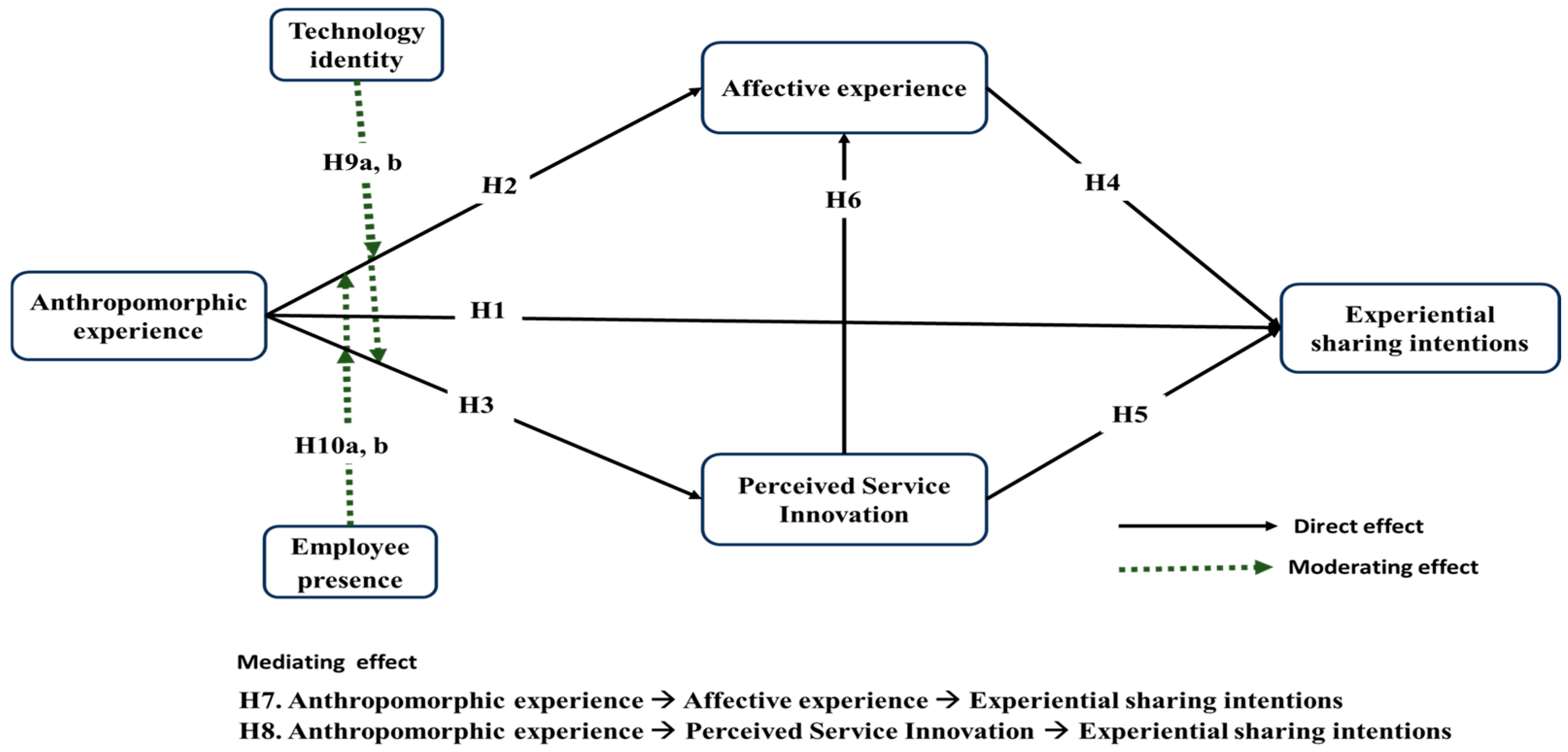
Based on the insights from previous literature, the current study introduced a conceptual framework that integrated the discussed constructs and hypothesized the proposed paths (Figure 1).

3. Materials and Methods

3.1. Instruments and Study Scales

This research tested the study relationships employing a quantitative research approach. Data was obtained through a structured instrument with two main sections. Section 1 aimed to collect the demographic characteristics. Section 2 was designed to collect information about the main factors under investigation. Anthropomorphic experience (AN_EX) was operationalized by four variables borrowed from Koo et al. [79]. The perceived service innovation (PSI) dimension was measured with a three-item scale as suggested by Dai et al. [80]. Similarly, affective experience (AF_EX) was measured by four items derived from Koo et al. [79]. Technology identity (TID) was operationalized by four items borrowed from Wu and Cheng [81]. The employee presence (EP) factor was measured using a four-item scale adapted from Collier et al. [82]. Finally, a five-item scale was used to gauge the experiential sharing intentions variable (ESI) [81]. The designed questionnaire was translated into Arabic employing the back-translation method [83]. Five academics and thirteen employees then reevaluated the designed instrument. Their feedback verified that the questionnaire items were valid, clearly articulated, and aligned with the study’s main objectives. All dimensions were operationalized on a five-point Likert scale from 1 (strongly disagree) to 5 (strongly agree).

3.2. Sampling and Participant Selection

The study sample consisted of customers from high-rated hotels in New Alamein City, the North Coast, and Sharm El-Sheikh, Egypt. These hotels are located in prominent tourist destinations, are designed according to modern architectural standards, and make extensive use of advanced technologies and AI-based services. Additionally, through coordination with our colleagues and graduates who facilitated the survey distribution, we verified that the hotels we sampled have integrated various AI applications into their operations. These technologies include intelligent chatbots for instant customer service and dynamic booking engines that analyze user behavior to deliver personalized offers. Additionally, the hotels use data analytics systems for revenue management and maintenance optimization, as well as smart hotel applications to streamline check-in and check-out processes. In some instances, service robots are also employed for the delivery of food and beverages. This process ensured that the customers surveyed had been directly exposed to these technologies. Primary data were obtained through an online questionnaire. A convenience sampling method was employed, with distribution facilitated by postgraduate colleagues from the authors’ faculties who were either employed at these hotels or affiliated with the inspection sector and the Egyptian Tourism Promotion Authority. Additionally, records from the alumni follow-up unit at the authors’ faculties were used to contact graduates who assisted in distributing the questionnaire. Collaborators received clear instructions on the academic and ethical procedures for survey distribution and were not compensated for their assistance. The study objectives were communicated to participants, and confidentiality and anonymity were emphasized. Respondents were informed that the data collected would be used exclusively for research purposes and that there were no right or wrong answers. The survey was conducted between April and August 2025, yielding 430 complete responses collected from customers across 23 hotels. Completeness was ensured through the electronic questionnaire’s mandatory response system. Following Krejcie and Morgan [84], the sample size was determined at a 95% confidence level with a 5% margin of error. When the population size is unclear, academic convention dictates using the most conservative estimate from reference tables. For populations of 100,000 or more, 384 participants are considered sufficient. This study’s 404 respondents exceed the threshold, strengthening the robustness and generalizability of the results. The demographic data revealed a sample of 430 participants, with a slight male majority (54.7%) compared to females (45.3%). The age distribution was skewed toward younger individuals, as 77.2% were under 35 years old, indicating a predominantly youthful population. Educationally, the majority held a bachelor’s degree (55.8%), followed by high school graduates (17.9%) and postgraduates (16.5%).

3.3. Statistical Methods

To evaluate any potential “common method bias” (CMB), “Harman’s single-factor method” (threshold < 50%) was implemented [85]. The results stated that a single dimension can explain 31.675% of the total variance, indicating that CMB is not an issue. In addition, all “variance inflation factors” (VIFs) ranged between 1.380 and 3.388 (VIFs should be <5.0; see Table 1) [86]. Furthermore, all inner VIF values were below the recommended limit of 3.3, ranging between 1.055 and 1.667 [87], implying no multicollinearity issues. Furthermore, the skewness and kurtosis values were allocated in the acceptable ranges (skewness between −0.682 and 0.253; kurtosis between −1.359 and −0.628; see Table 1), validating the assumption of normality.
The designed model included Anthropomorphic experience (AN_EX) as the predictor variable, Affective experience (AF_EX) and Perceived service innovation (PSI) as mediating variables, Technology identity (TID) and Employee presence (EP) as mediators and Experiential sharing intentions (ESI) as the dependent variable. Data were analyzed employing SmartPLS v.4 to assess the hypothesized interrelationships, while SPSS (Version 25) was used for descriptive statistics: “mean, standard deviation, skewness, and kurtosis”.

Algorithmic Perspective of PLS-SEM Modeling

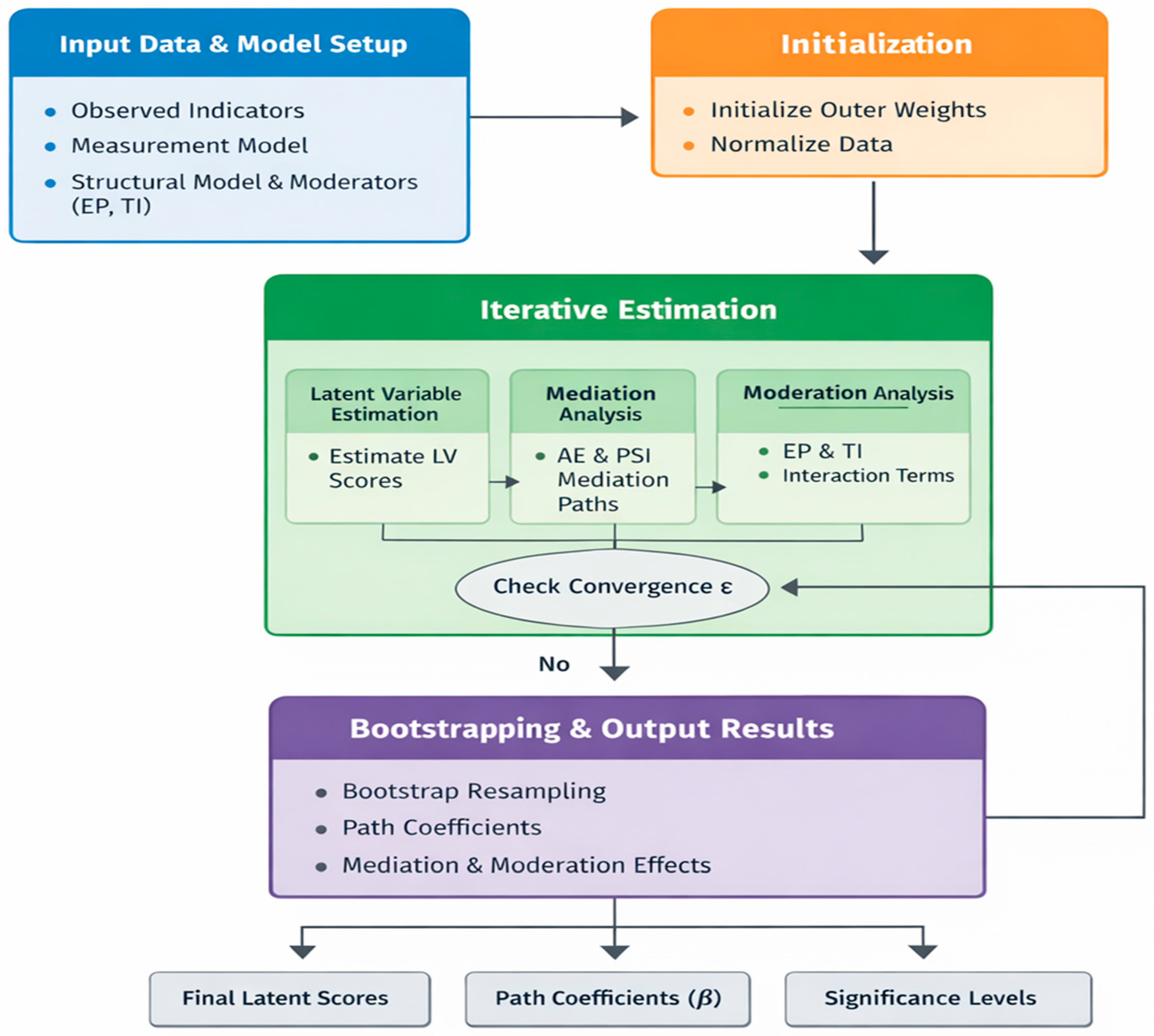
Unlike the covariance-based techniques, PLS-SEM is primarily an iterative algorithmic estimation approach that depends on a sequence of partial least squares regressions to estimate latent variable values. In this research, we obviously adopt an algorithmic perspective by designing the model (see Figure 2) as a structured computational workflow containing (A) outer model weight estimation, (B) inner model path estimation, and (C) iterative convergence through alternating least squares optimization. Based on these estimations, the current study tested a moderated–mediated algorithmic structure, where dual mediators (AE and PSI) and conditional interaction terms (EP and TI) are simultaneously evaluated within an integrated latent variable system. This configuration extended standard PLS-SEM approaches by operationalizing multi-layer dependency transmission and traditional path modulation within the iterative estimation procedures. This research contributed methodologically by reemploying PLS-SEM as an algorithmic modeling approach for complex service systems, rather than a purely statistical validation technique.
PLS-SEM with SmartPLS software v4 was conducted in two main phases. Phase one aimed to assess the measurement outer model for convergent validity (“Cronbach’s alpha, item loadings, composite reliability, and AVE”) and discriminant validity (“Fornell–Larcker criterion and the HTMT”). Phase two aimed to assess the structural model (path coefficients (β), R2, Q2, and t-values). The structural equation for the direct effects can be calculated as:
Y = β 1 X 1 + β 2 X 2 + β 3 X 3 + β 4 X 4 + β 5 X 5 + β 6 X 6 + β 7 M + ζ
where
  • Y = the dependent variable;
  • X 1 , X 2 , , X 6 are the independent variables;
  • M = moderator;
  • β i = path coefficients;
  • ζ = the residual term.
To assess moderation, interaction is calculated as follows:
Y = i = 1 6 β i X i + β 7 M + i = 1 6 β 7 + i ( X i × M ) + ζ

4. Results

4.1. Validity and Reliability Assessment

The reliability for every single factor was calculated by “Cronbach’s alpha” (λ), with values obtained from 0.792 to 0.899. These values were adequate (>0.7) [88]. Then, “convergent validity” (CV) was evaluated with “Composite Reliability” (CR should be >0.70), which ranged from 0.876 to 0.929, and “Average Variance Extracted” (AVE preferred to be >0.50), which ranged widely between 0.642 and 0.767 [89]. Consequently, the CV was adequate (see Table 1).
Likewise, “discriminant validity” (DV) was calculated by the “Fornell–Larcker matrix” and the “Heterotrait–Monotrait” (HTMT). In the “Fornell–Larcker matrix”, the √AVE for every single factor should be less than its correlations with all other factors [89]. As illustrated in Table 2, the √AVE scores (bold diagonal scores) are from 0.801 to 0.876, while the inter-factor correlations were less than them and were all under the value of 0.044.
Additionally, the HTMT scores should be <0.90 and preferably <0.85 [86]. This threshold was met, as depicted in Table 3, with the maximum HTMT score of 0.709. Consequently, DV was confirmed based on the results of the “Fornell–Larcker matrix and HTMT” results.

4.2. Hypotheses Testing (Inner Model)

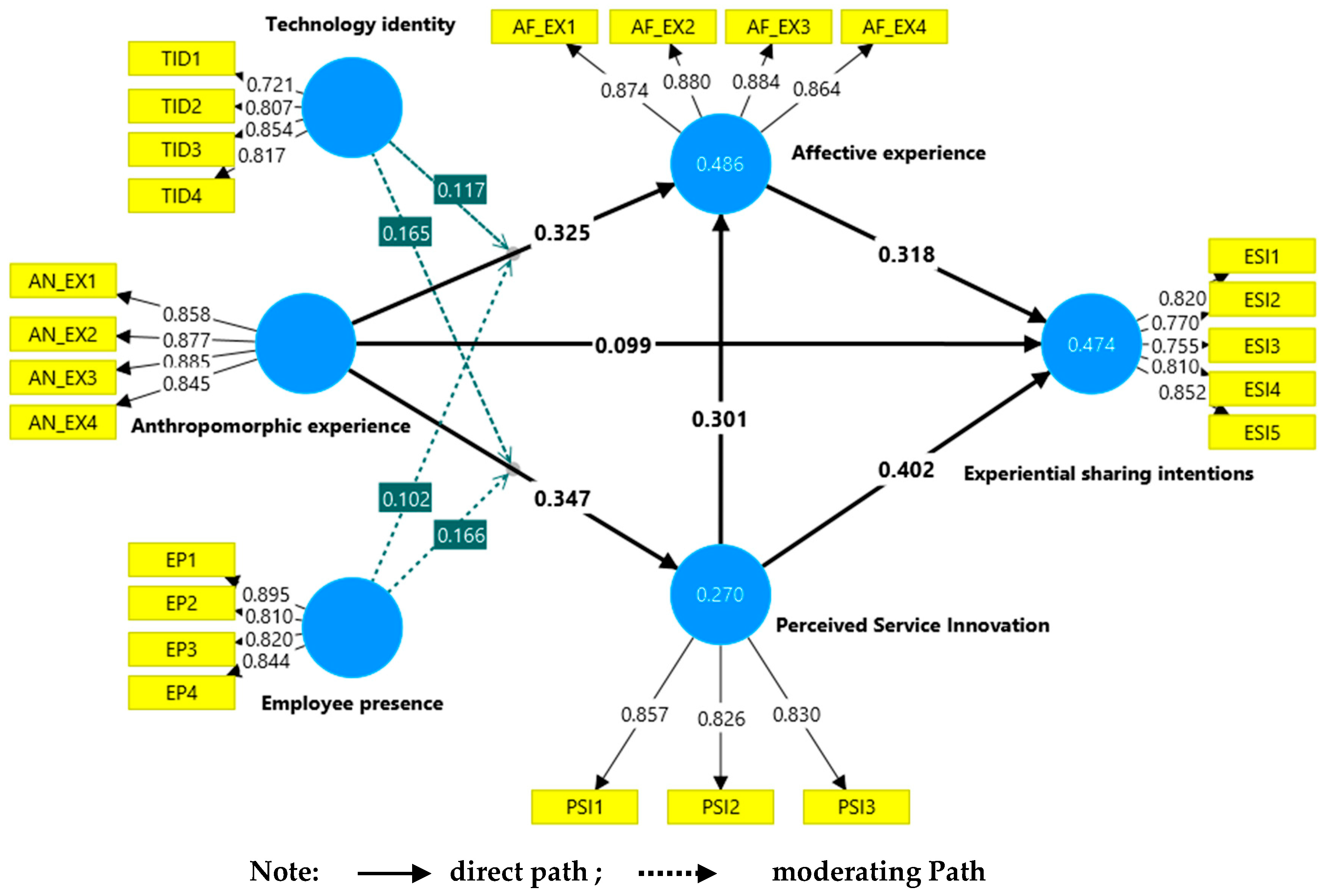
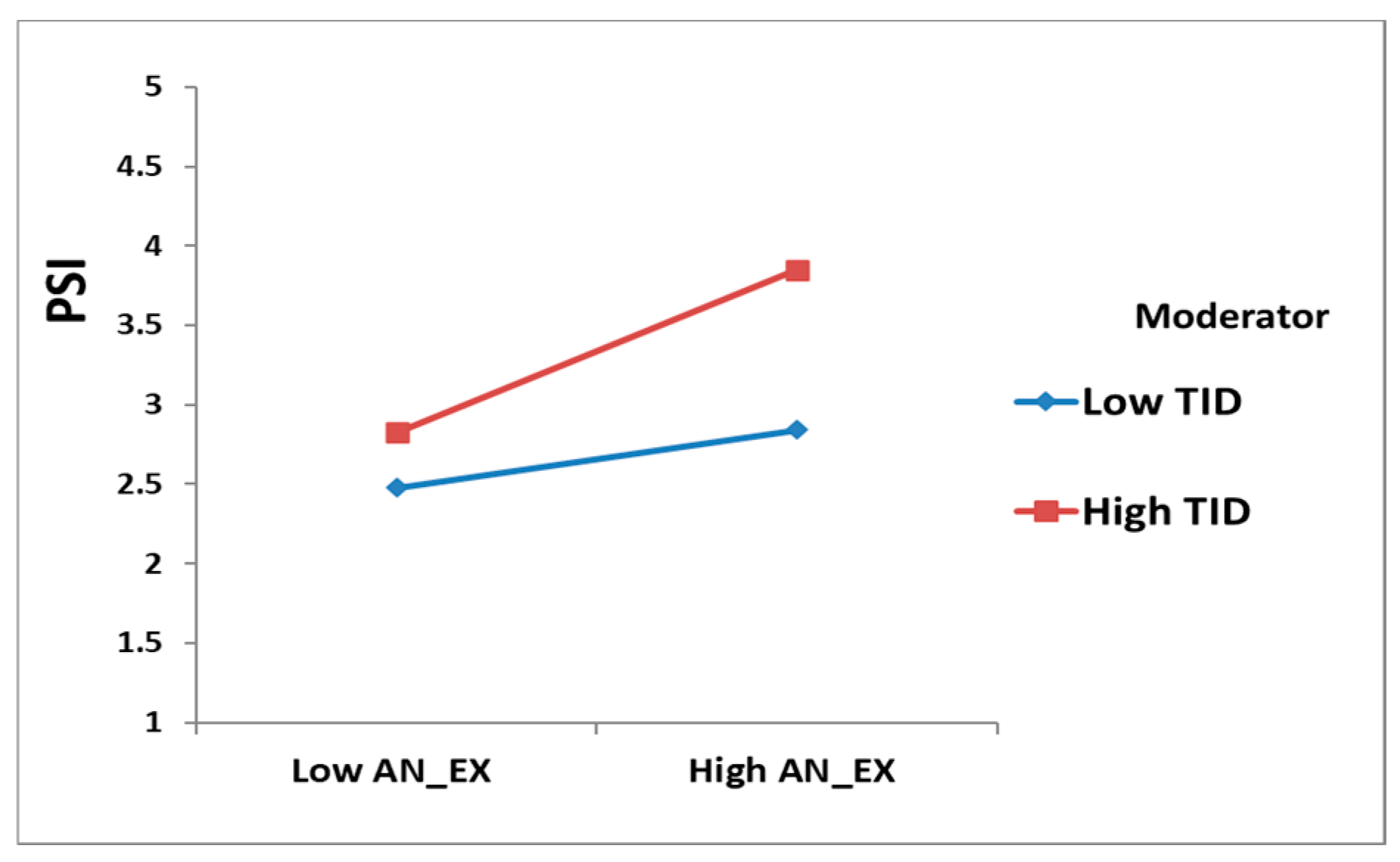
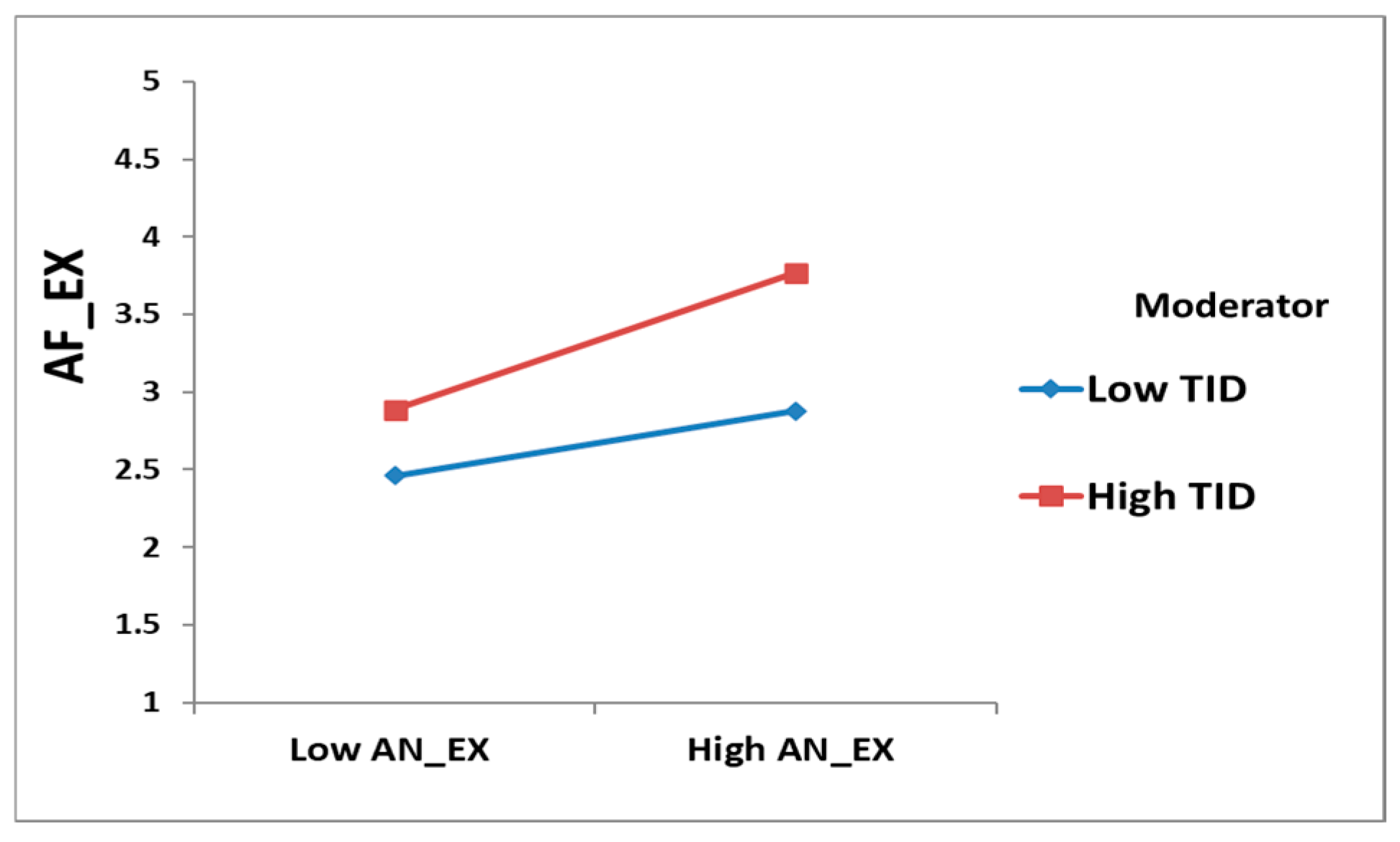
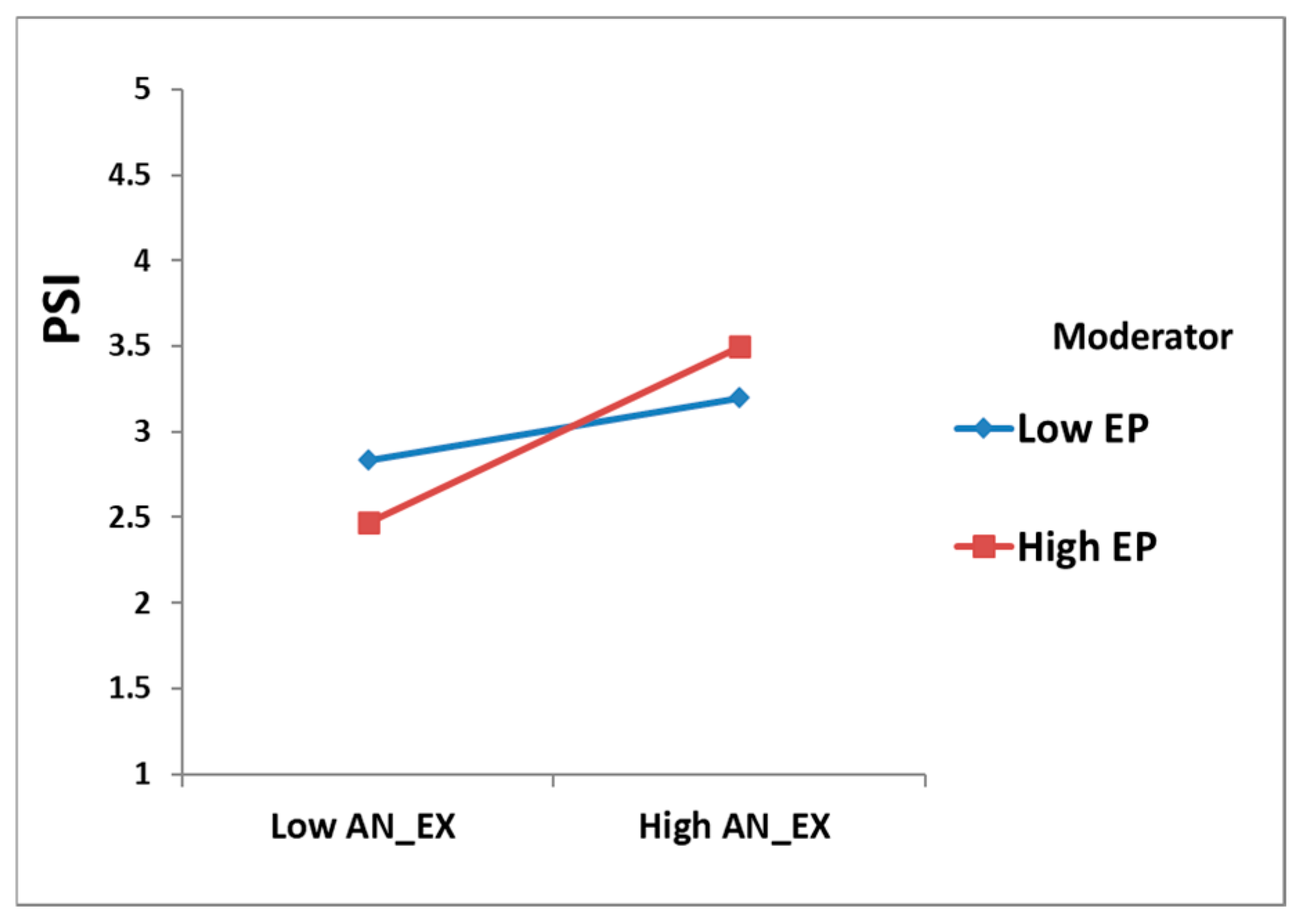
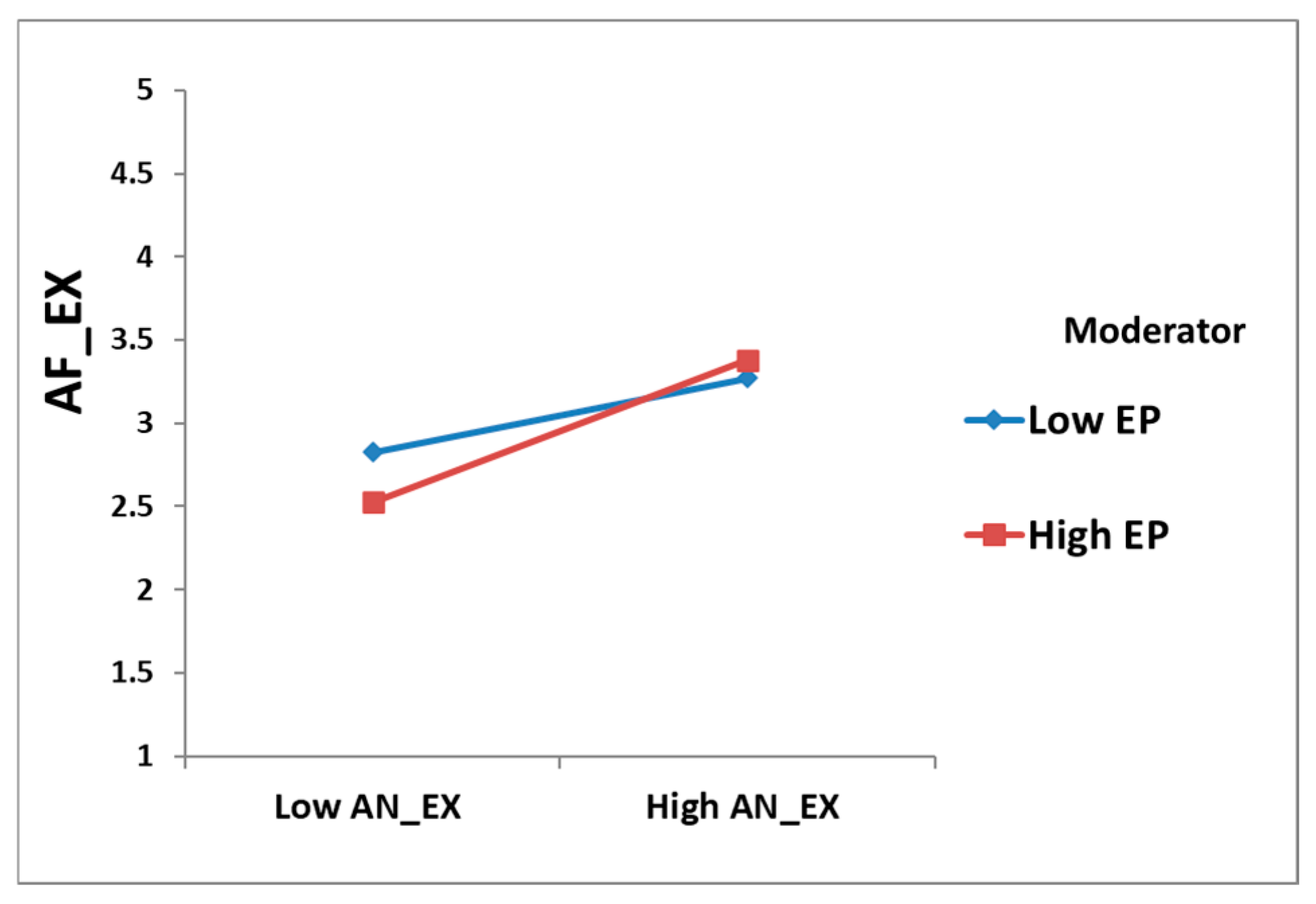
The results of the hypothesis testing presented in Table 4 and Figure 3 provide empirical support for all proposed relationships. Anthropomorphic experience (AN_EX) demonstrates significant direct effects on affective experience (H2, β = 0.325, t = 6.754, p < 0.001, F2 = 0.136), perceived service innovation (H3, β = 0.347, t = 6.277, p < 0.001, F2 = 0.123), and experiential sharing intentions (H1, β = 0.099, t = 2.087, p = 0.037, F2 = 0.014). Affective experience (H4, β = 0.318, t = 6.592, p < 0.001, F2 = 0.115) and perceived service innovation (H5, β = 0.402, t = 9.196, p < 0.001, F2 = 0.208) are identified as predictors of sharing intentions. Mediation analyses confirm that affective experience (H7, β = 0.103, t = 4.875, p < 0.001, F2 = 0.059, CI = 0.139) and perceived service innovation (H8, β = 0.140, t = 5.192, p < 0.001, F2 = 0.085, CI = 0.190) significantly mediate the relationship between anthropomorphic experience and sharing intentions, indicating dual mediating pathways. Moderation analyses indicate that technology identity strengthens the effects of anthropomorphic experience on both perceived service innovations (H9a, β = 0.165, t = 3.638, p < 0.001) and affective experience (H9b, β = 0.117, t = 3.133, p = 0.002). Additionally, employee presence as a moderator enhances these relationships (H10a, β = 0.166, t = 3.265, p = 0.001; H10b, β = 0.102, t = 2.335, p = 0.020), see Figure 4, Figure 5, Figure 6 and Figure 7.
The study additionally assesses the endogenous variable predictive power with R2 and Q2 values. The model showed acceptable explanatory power, with R2 scores of 0.486 (Affective experience), 0.474 (Experiential sharing intentions), and 0.270 (Perceived service innovation), revealing adequate levels of the explained variance. The adequacy level of R2 scores varies based on the research setting. As per Hair et al. [90], R2 scores of 0.75, 0.50, and 0.25 indicated substantial, moderate, and weak prediction power, respectively. Furthermore, Tavakol and Dennick [91] argued that within the field of human behavior, an R2 score of 0.20 can still be recognized as a strong value. Accordingly, the R2 scores range from weak to moderate, but, according to Tavakol and Dennick [91], they can be considered strong.
As shown in Table 4, the Q2 scores for all endogenous factors exceeded zero, further supporting the model’s predictive power [86]. To further assess the adequacy of the model fit within the PLS-SEM framework, both the “standardized root mean square residual” (SRMR) and the Bentler–Bonett “normed fit index” (NFI) were assessed, as recommended in the prior methodological literature. The SRMR value was 0.062, which is below the conventional threshold of 0.08, thereby indicating an acceptable level of model fit [92]. In addition, the NFI was employed to provide complementary evidence of fitness, with values between 0.60 and 0.90 generally considered appropriate [93,94]. The obtained NFI of 0.799 falls well within this range, further proving the adequacy of the developed model.

5. Discussion

5.1. Findings and Theoretical Contributions

The current paper describes how anthropomorphic experiences can be integrated with functioning technologies like chatbot-based reservation systems, digital concierges, and service robots to increase customers’ propensity to share their experiences.
In the light of the “Stimulus–Organism–Response model”, anthropomorphic cues in frontline service operations can act as a stimulus that activates two main internal states: innovative experience (e.g., perceptions of technological sophistication and operational modernity) and affective experience (e.g., enjoyment, emotional warmth during check-in or service delivery). The behavioral responses of sharing intention are consequently driven by these organismic states, especially in experience-driven hotel settings where memorable functional interactions repeatedly result in social media posts and online reviews.
While the statistical results of the hypothesized interrelationships provided initial support for the developed model, a deeper interpretation revealed some key behavioral mechanisms triggering high-tech–high-touch service encounters. Remarkably, anthropomorphic experience demonstrated a reasonably small direct impact on experiential sharing intentions (β = 0.099), indicating that its impact is not largely immediate or transactional. As an alternative, its influence unfolds through affective and cognitive processing paths, as reflected in the stronger paths toward affective experience (β = 0.325) and perceived service innovation (β = 0.347). These results indicated that visitors did not respond directly to anthropomorphic cues but rather interpreted them through emotional engagement and innovation perception, which subsequently drove sharing behavior.
A main evaluation of the effect sizes can further refine the interpretation of the tested model. According to established benchmarks, the direct effect of AN_EX on ESI is small (f2 = 0.014), whereas the effects on AF_EX (f2 = 0.136) and PSI (f2 = 0.123) are moderate. More prominently, the mediating paths exhibit meaningful indirect impacts (β = 0.103 and β = 0.140), revealing that the overall impact of AN_EX is substantially amplified through mediation. This pattern suggested a full or dominant mediation mechanism, where experiential and cognitive evaluations act as necessary transmission channels. Likewise, PSI exerts the strongest direct effect on sharing intentions (β = 0.402, f2 = 0.208), highlighting its key role as a main driver of customer advocacy in technology-enabled service environments.
The predictive relevance of the tested model was evaluated as well with Stone–Geisser’s Q2 values. The findings indicated a satisfactory predictive power for all endogenous variables (AF_EX Q2 = 0.343, SEI Q2 = 0.285, and PSI Q2 = 0.167), implying that the model is not only explanatory but also predictive in nature. Additionally, the R2 scores (ranging from 0.270 to 0.486) indicated a moderate explanatory power.
Based on “Person–Situation Interaction Theory” and “Social Presence Theory”, the findings demonstrated that the interaction between situational and personal characteristics can determine the impacts of anthropomorphic experience in hotel operations. In situations where staff enthusiastically participate in AI-mediated interactions, like a concierge assisting a service robot or a receptionist assisting passengers through an intelligent check-in kiosk, anthropomorphic technologies are viewed as enhancing rather than replacing human warmth. In service interactions, this cooperative human–AI setup enhances social presence, perceived inventiveness, and emotional involvement. On the other hand, human-like indications may lose relational credibility in highly automated environments with little staff interaction. At the personal level, technology-oriented visitors are more likely to absorb human-like AI interactions as immersive and self-congruent, converting them into stronger sensory reactions and sharing intents. Overall, experiential sharing in hospitality operations emerges from the interaction between technological design, service configuration, and guest characteristics. The following are insights into the theoretical contributions of the study.
First, previous limited studies have examined how anthropomorphic experience impacts guests’ experiential sharing intentions using the SOR paradigm [95], specifically in the hospitality domain, according to J. W. Jia et al. [96]. The present study illustrates the intricate interplay between anthropomorphic experience, perceived affective experience and innovation and, consequently, guests’ behavioral intentions, including experiential sharing intentions. Furthermore, this study expands the Stimulus–Organism–Response paradigm in hospitality operations by going beyond the conventional unidimensional treatment of the organism (such as pleasure or satisfaction). Although previous research has mostly focused on emotional responses as the main mediator between behavioral outcomes and technology stimuli [97,98], this study breaks down the organism into two separate mechanisms (affective experience and innovative experience), showing that anthropomorphic operational technologies provide both cognitive views of service innovativeness and emotional enrichment. In AI-enabled hospitality scenarios, this dual-path clarification improves the explanatory accuracy of SOR.
Second, this study enhances Social Presence Theory by redefining social presence beyond strictly human-to-human contact to AI-mediated hospitality activities. Previous studies frequently presented technology as having the potential to diminish interpersonal warmth [99,100]. By demonstrating how anthropomorphic design may include relationship cues into automated service procedures, this study challenges presumptions and resolves the high-tech vs. high-touch controversy in hospitality philosophy.
Third, the research transcends universalistic presumptions on anthropomorphic efficacy by integrating Person–Situation Interaction theory. Our results show that anthropomorphism’s effectiveness is dependent rather than universal, in contrast to previous research that mostly views it as positive [101]. The direction and strength of this relationship are systematically shaped by the interplay between situational parameters (e.g., personnel presence) and individual-level traits (e.g., visitors’ technological identity), as shown by the Person–Situation interplay hypothesis. Specifically, this interactionist perspective enables us to go beyond descriptive presumptions [27,63] and provides a deeper explanatory explanation for the success or failure of anthropomorphic design elements. In particular, the findings show that anthropomorphic cues are more successful when they complement the surrounding service design and guests’ inclinations toward technology, whereas misalignment might diminish or even reverse their beneficial impacts.
Therefore, by demonstrating that anthropomorphism is a context-dependent, interaction-driven process rather than a universally useful design element, the study adds new knowledge. By offering a more complex and boundary-sensitive understanding of technology adoption in the hospitality industry, this not only strengthens earlier theoretical claims but also expands the body of literature, emphasizing the significance of user characteristics and service environments fitting together to shape experiential outcomes.
Lastly, the study reframes hospitality operations as experience and symbolic value creators rather than efficiency-driven processes. It presents anthropomorphic technologies as catalysts of emotionally rich and innovative encounters that encourage the aim to share experiences, rather than considering AI tools as merely operational enhancers. By combining Social Presence Theory, PSIT, and SOR, the study provides a succinct yet multidimensional theoretical breakthrough in technology-mediated hospitality research.

5.2. Practical Implications

This study presents a number of significant practical consequences for hotel managers and service designers looking to successfully use anthropomorphic technology.
First, anthropomorphic AI (such as chatbots, service robots, and smart kiosks) should not be used by hotels just for operational reasons. Rather, these technologies ought to be developed as experience instruments that stimulate feelings of creativity as well as emotional involvement. To improve affective experience and encourage experiential sharing, managers should use human-like components like sympathetic language, tailored welcomes, recall of visitor preferences, and conversational tone.
Second, the findings highlight the critical role of employee presence as active involvement, not mere visibility. Hospitality firms should embrace a collaborative human–AI service paradigm in which staff members direct, enhance, and customize encounters mediated by AI. For instance, staff members can engage with service robots, follow up with chatbots, or introduce guests to AI systems. This integration enhances the perception of social presence and keeps technology from being seen as a substitute for human warmth. To bridge the gap between people and robots and enhance customer experience, managers should place a high priority on training staff members with strong social and emotional skills.
Third, different guests’ technological identities should be taken into account while developing segmentation tactics. Advanced anthropomorphic characteristics could be well received by tech-oriented guests, but less tech-identified people would need more staff assistance to feel at ease and socially involved. The degree of technological exposure and human assistance may be tailored to optimize the experience for all types of visitors.
Fourth, given that innovative and affective experiences activate experiential sharing intention, hospitality firms should actively promote post-experience sharing. This may involve encouraging visitors to post about their experiences interacting with robots or AI concierges on social media, using marketing hashtags, or developing aesthetically pleasing technological touchpoints that are easy to share.

5.3. Limitations and Future Research

Despite the theoretical and applied contributions of this study, it is not without some limitations, opening the door for future research. The study employed a cross-sectional design, which limits the ability to track changes in guests’ perceptions and behaviors over time. Therefore, future studies are suggested to adopt longitudinal designs to gain a deeper understanding of the evolving relationship between humanization and the intention to share the experience. Furthermore, the study utilized a convenience sample because of cost and accessibility constraints, which restricts the representativeness of the sample and limits the generalizability of the results. Future research should employ alternative data collection strategies to address these limitations.
Furthermore, the paper’s main focus was on the smart hotel context, which might limit the generalizability of the results to other service settings. Future studies could, therefore, evaluate the developed model in different contexts, such as airports, restaurants, or healthcare services, to validate the reliability of the tested relationships across diverse settings. Furthermore, the paper depended on self-reported data, which might expose the findings to likely cognitive biases. This suggests the employment of multiple research designs, such as field experiments or collecting actual objective data.
Finally, future research can expand the developed model by integrating other potential moderating or mediating variables, such as trust in technology, technological anxiety, or national culture, thus contributing to a deeper theoretical understanding of guest behavior in smart service environments.

Author Contributions

Conceptualization, I.A.E., S.F., M.A.R.A. and M.A.S.; methodology, I.A.E. and S.F.; software, S.F. and I.A.E.; validation, S.F., A.M.S.A. and O.E.; formal analysis, S.F.; investigation, A.M.S.A. and O.E.; resources, O.E. and S.F.; data curation, S.F.; writing—original draft preparation, I.A.E., O.E. and S.F.; writing—review and editing, I.A.E., S.F., O.E. and M.A.R.A.; visualization, A.M.S.A., S.F. and O.E.; supervision, I.A.E. and S.F.; project administration, I.A.E.; funding acquisition, I.A.E. and A.M.S.A. All authors have read and agreed to the published version of the manuscript.

Funding

This work was funded by the Deanship of Scientific Research, Vice Presidency for Graduate Studies and Scientific Research, King Faisal University, Saudi Arabia [Project No. KFU261739].

Institutional Review Board Statement

The study was conducted in accordance with the Declaration of Helsinki and approved by the deanship of the scientific research ethical committee, King Faisal University (Approval code KFU261739), with the approval granted on 25 July 2025.

Informed Consent Statement

Informed consent was obtained from all subjects involved in the study.

Data Availability Statement

The data presented in this study are available on request from the corresponding authors.

Conflicts of Interest

The authors declare no conflicts of interest.

References

  1. Nicolas, S.; Agnieszka, W. The Personality of Anthropomorphism: How the Need for Cognition and the Need for Closure Define Attitudes and Anthropomorphic Attributions toward Robots. Comput. Hum. Behav. 2021, 122, 106841. [Google Scholar] [CrossRef] [Scilit]
  2. Rana, N.P.; Begum, N.; Faisal, M.N.; Mishra, A. Customer Experiences with Service Robots in Hotels: A Review and Research Agenda. J. Hosp. Mark. Manag. 2025, 34, 145–174. [Google Scholar] [CrossRef] [Scilit]
  3. Kumar, S.; Poudyal, A.; Choudhury, S.; Jha, A. Analysing Customer Preferences for AI-Enabled Service Robot’s Physical Appearance in the Tourism and Hospitality Industry: Insights and Exploration. Tour. Plan. Dev. 2026, 23, 63–80. [Google Scholar] [CrossRef] [Scilit]
  4. Saputra, F.E.; Buhalis, D.; Augustyn, M.M.; Marangos, S. Anthropomorphism-Based Artificial Intelligence (AI) Robots Typology in Hospitality and Tourism. J. Hosp. Tour. Technol. 2024, 15, 790–807. [Google Scholar] [CrossRef] [Scilit]
  5. Alagarsamy, S.; Mehrolia, S.; Vijay, M. The Importance of Servicescapes in Maldivian Higher Education: Application of the Stimuli-Organism-Response(SOR) Framework. J. Facil. Manag. 2022, 20, 218–234. [Google Scholar] [CrossRef] [Scilit]
  6. Solakis, K.; Katsoni, V.; Mahmoud, A.B.; Grigoriou, N. Factors Affecting Value Co-Creation through Artificial Intelligence in Tourism: A General Literature Review. J. Tour. Futures 2024, 10, 116–130. [Google Scholar] [CrossRef] [Scilit]
  7. Ben Saad, S. The Digital Revolution in the Tourism Industry: Role of Anthropomorphic Virtual Agent in Digitalized Hotel Service. Int. J. Contemp. Hosp. Manag. 2024, 36, 3751–3773. [Google Scholar] [CrossRef] [Scilit]
  8. Lopes, J.M.; Gomes, S.; Nogueira, E.; Trancoso, T. AI’s Invisible Touch: How Effortless Browsing Shapes Customer Per-ception, Experience and Engagement in Online Retail. Cogent Bus. Manag. 2025, 12, 2440628. [Google Scholar] [CrossRef] [Scilit]
  9. Mordi, G.T.; Elsharnouby, M.H.; AbdElAziz, G.S.; Jayawardhena, C. Unveiling the two-sided effects of robotic anthropomorphism on consumers’ experience. J. Humanit. Appl. Soc. Sci. 2025, 1–20. [Google Scholar] [CrossRef] [Scilit]
  10. Huang, L.L.; Chen, R.P.; Chan, K.W. Pairing up with Anthropomorphized Artificial Agents: Leveraging Employee Crea-tivity in Service Encounters. J. Acad. Mark. Sci. 2024, 52, 955–975. [Google Scholar] [CrossRef] [Scilit]
  11. Khan, M.I.; Fatima, J.K.; Bahmannia, S.; Chatrath, S.K.; Dale, N.F.; Johns, R. Investigating the Influence of Perceived Humanization of Service Encounters on Value Creation of Chatbot-Assisted Services. J. Serv. Theory Pract. 2025, 35, 56–88. [Google Scholar] [CrossRef] [Scilit]
  12. Nimbalkar, S.; Supekar, S.D.; Meadows, W.; Wenning, T.; Guo, W.; Cresko, J. Enhancing Operational Performance and Productivity Benefits in Breweries through Smart Manufacturing Technologies. J. Adv. Manuf. Process. 2020, 2, e10064. [Google Scholar] [CrossRef] [Scilit]
  13. Lee, K.L.; Wong, S.Y.; Alzoubi, H.M.; Al Kurdi, B.; Alshurideh, M.T.; El Khatib, M. Adopting Smart Supply Chain and Smart Technologies to Improve Operational Performance in Manufacturing Industry. Int. J. Eng. Bus. Manag. 2023, 15, 18479790231200614. [Google Scholar] [CrossRef] [Scilit]
  14. Nanu, L. Redefining the Servicescape in Hospitality through Technology and Artificial Intelligence: A Conceptual Framework. Int. J. Contemp. Hosp. Manag. 2025, 37, 3042–3060. [Google Scholar] [CrossRef] [Scilit]
  15. Fang, S.; Han, X.; Zheng, Y.; Li, W. Investigating the Effect of Customer-Robot Interaction Experience on Customer En-gagement Behavior and Co-Creation Value: A Mixed Methods Study. J. Hosp. Mark. Manag. 2025, 34, 355–386. [Google Scholar] [CrossRef] [Scilit]
  16. Jia, Y.; Garg, A.; Balasubramanian, K. The Role of Service Robots in Restaurant Settings: A Meta-Analysis Study on Consumer Behavior and Intentions. Int. J. Hum. Comput. Interact. 2025, 41, 9505–9517. [Google Scholar] [CrossRef] [Scilit]
  17. George, S.R.; C, M.; Edward, M. Artificial Intelligence in Frontline Service Encounters: A Systematic Review and Research Agenda. Int. J. Consum. Stud. 2025, 49, e70048. [Google Scholar] [CrossRef] [Scilit]
  18. Kim, H.; Park, S.; Gim, J.; Kim, S. in Barista Robots with Human Appeal: Unraveling the Impact of Anthropomorphism, Human Presence, and Perceived Financial Constraints on Consumer Behavior. Int. J. Hosp. Manag. 2024, 122, 103849. [Google Scholar] [CrossRef] [Scilit]
  19. Chaturvedi, R.; Verma, S.; Srivastava, V.; Khot, S.S. Exploring the Frontier of Anthropomorphism in AI Agents: Trends and Way Forward. Bus. Soc. Rev. 2025, 130, 42–80. [Google Scholar] [CrossRef] [Scilit]
  20. Rony, M.K.K.; Kayesh, I.; Bala, S.D.; Akter, F.; Parvin, M.R. Artificial Intelligence in Future Nursing Care: Exploring Perspectives of Nursing Professionals—A Descriptive Qualitative Study. Heliyon 2024, 10, e25718. [Google Scholar] [CrossRef] [Scilit]
  21. Alkawsi, G.; Ali, N.; Baashar, Y. The Moderating Role of Personal Innovativeness and Users Experience in Accepting the Smart Meter Technology. Appl. Sci. 2021, 11, 3297. [Google Scholar] [CrossRef] [Scilit]
  22. Song, X.; Li, Y.; Leung, X.Y.; Mei, D. Service Robots and Hotel Guests’ Perceptions: Anthropomorphism and Stereotypes. Tour. Rev. 2024, 79, 505–522. [Google Scholar] [CrossRef] [Scilit]
  23. Almokdad, E.; Mouloudj, K.; Lee, C.H. Rehumanizing AI-Driven Service: How Employee Presence Shapes Consumer Perceptions in Digital Hospitality Settings. J. Theor. Appl. Electron. Commer. Res. 2025, 20, 209. [Google Scholar] [CrossRef] [Scilit]
  24. Rahman, M.S.; Sabbir, M.M.; Zhang, J.; Zhang, L. I sense my digital assistants! Assessing the impact of customers’ immersive experience and perceived social presence on purchase intention. Behav. Inf. Technol. 2025, 1–19. [Google Scholar] [CrossRef] [Scilit]
  25. Leiño Calleja, D.; Schepers, J.; Nijssen, E.J. Hybrid Human–Robot Teams in the Frontline: Automated Social Presence and the Role of Corrective Interrogation. J. Serv. Manag. 2025, 36, 578–602. [Google Scholar] [CrossRef] [Scilit]
  26. Hsiao, C.-H.; Tang, K.-Y. Who Captures Whom—Pokémon or Tourists? A Perspective of the Stimulus-Organism-Response Model. Int. J. Inf. Manag. 2021, 61, 102312. [Google Scholar] [CrossRef] [Scilit]
  27. So, K.K.F.; Kim, H.; Liu, S.Q.; Fang, X.; Wirtz, J. Service Robots: The Dynamic Effects of Anthropomorphism and Func-tional Perceptions on Consumers’ Responses. Eur. J. Mark. 2024, 58, 1–32. [Google Scholar] [CrossRef] [Scilit]
  28. Xie, G.; Wang, X. Sales through Note-Sharing: Influences on the Shopping Behavior of “Xiaohongshu” Users. Front. Psychol. 2025, 15, 1334637. [Google Scholar] [CrossRef] [Scilit] [PubMed]
  29. Kärner, T.; Kögler, K. Emotional States during Learning Situations and Students’ Self-Regulation: Process-Oriented Analysis of Person-Situation Interactions in the Vocational Classroom. Empir. Res. Vocat. Educ. Train. 2016, 8, 12. [Google Scholar] [CrossRef] [Scilit]
  30. Lee, Y.; Lee, S.; Kim, D.-Y. Exploring Hotel Guests’ Perceptions of Using Robot Assistants. Tour. Manag. Perspect. 2021, 37, 100781. [Google Scholar] [CrossRef] [Scilit]
  31. Konya-Baumbach, E.; Biller, M.; von Janda, S. Someone out There? A Study on the Social Presence of Anthropomorphized Chatbots. Comput. Hum. Behav. 2023, 139, 107513. [Google Scholar] [CrossRef] [Scilit]
  32. Chilcutt, A.; DuPont, C. The Presence Principle: Embodying Executive Presence to Lead with Impact; Routledge: Abingdon, UK, 2025. [Google Scholar] [CrossRef] [Scilit]
  33. Mallmann, G.L.; Maçada, A.C.G. The Mediating Role of Social Presence in the Relationship between Shadow IT Usage and Individual Performance: A Social Presence Theory Perspective. Behav. Inf. Technol. 2021, 40, 427–441. [Google Scholar] [CrossRef] [Scilit]
  34. Kim, T.; Sung, Y.; Moon, J.H. Effects of Brand Anthropomorphism on Consumer-Brand Relationships on Social Net-working Site Fan Pages: The Mediating Role of Social Presence. Telemat. Inform. 2020, 51, 101406. [Google Scholar] [CrossRef] [Scilit]
  35. Ding, A.; Lee, R.H.; Legendre, T.S.; Madera, J. Anthropomorphism in Hospitality and Tourism: A Systematic Review and Agenda for Future Research. J. Hosp. Tour. Manag. 2022, 52, 404–415. [Google Scholar] [CrossRef] [Scilit]
  36. Li, X.; Sung, Y. Anthropomorphism Brings Us Closer: The Mediating Role of Psychological Distance in User–AI Assistant Interactions. Comput. Hum. Behav. 2021, 118, 106680. [Google Scholar] [CrossRef] [Scilit]
  37. Murphy, J.; Gretzel, U.; Pesonen, J. Marketing robot services in hospitality and tourism: The role of anthropomorphism. In Future of Tourism Marketing; Routledge: Abingdon, UK, 2021; pp. 16–27. [Google Scholar]
  38. Chung, H.; Kang, H.; Jun, S. Verbal Anthropomorphism Design of Social Robots: Investigating Users’ Privacy Perception. Comput. Hum. Behav. 2023, 142, 107640. [Google Scholar] [CrossRef] [Scilit]
  39. Amin, M.; Parvez, M.O.; Rasool, S.; Aureliano-Silva, L.; Dang, A. Human–Robot Interaction Attributes at the Restaurants: Will It Enhance Revisit Intentions? J. Hosp. Tour. Technol. 2025, 16, 1024–1045. [Google Scholar] [CrossRef] [Scilit]
  40. Shin, H.H.; Jeong, M. Guests’ Perceptions of Robot Concierge and Their Adoption Intentions. Int. J. Contemp. Hosp. Manag. 2020, 32, 2613–2633. [Google Scholar] [CrossRef] [Scilit]
  41. Truong, T.T.H.; Chen, J.S. When Empathy Is Enhanced by Human–AI Interaction: An Investigation of Anthropomor-phism and Responsiveness on Customer Experience with AI Chatbots. Asia Pac. J. Mark. Logist. 2025, 37, 3908–3925. [Google Scholar] [CrossRef] [Scilit]
  42. Wan, E.W.; Chen, R.P. Anthropomorphism and Object Attachment. Curr. Opin. Psychol. 2021, 39, 88–93. [Google Scholar] [CrossRef] [Scilit]
  43. Collins, G.R. Improving Human–Robot Interactions in Hospitality Settings. Int. Hosp. Rev. 2020, 34, 61–79. [Google Scholar] [CrossRef] [Scilit]
  44. Mahalakshmi, S.; Bharath, H.; Kautish, S.; Singh, D. Virtual Storytelling for Sustainable Development: Engaging Audiences with SDG Narratives. In Metaverse and Sustainability: Business Resilience Towards Sustainable Development Goals; Springer: Cham, Switzerland, 2025; pp. 361–375. [Google Scholar]
  45. Premathilake, G.W.; Li, H.; Li, C.; Liu, Y.; Han, S. Understanding the Effect of Anthropomorphic Features of Humanoid Social Robots on User Satisfaction: A Stimulus-Organism-Response Approach. Ind. Manag. Data Syst. 2025, 125, 768–796. [Google Scholar] [CrossRef] [Scilit]
  46. Gursoy, D. Artificial Intelligence (AI) Technology, Its Applications and the Use of AI Powered Devices in Hospitality Service Experience Creation and Delivery. Int. J. Hosp. Manag. 2025, 129, 104212. [Google Scholar] [CrossRef] [Scilit]
  47. Meng, J.; Begum, M.; Na, M.; Shah Alam, S. The Impact of Innovative Culture on Adaptive Marketing and Service Innovation in Hospitality: A Strategic Perspective. J. Qual. Assur. Hosp. Tour. 2025, 1–38. [Google Scholar] [CrossRef] [Scilit]
  48. Mehrabian, A.; Russell, J.A. An approach to environmental psychology. In An Approach to Environmental Psychology; The MIT Press: Cambridge, MA, USA, 1974. [Google Scholar]
  49. Greilich, A.; Bremser, K.; Wüst, K. Consumer Response to Anthropomorphism of Text-Based AI Chatbots: A Systematic Literature Review and Future Research Directions. Int. J. Consum. Stud. 2025, 49, e70108. [Google Scholar] [CrossRef] [Scilit]
  50. Akdim, K.; Belanche, D.; Flavián, M. Attitudes toward Service Robots: Analyses of Explicit and Implicit Attitudes Based on Anthropomorphism and Construal Level Theory. Int. J. Contemp. Hosp. Manag. 2023, 35, 2816–2837. [Google Scholar] [CrossRef] [Scilit]
  51. Yang, Y.; Liu, Y.; Lv, X.; Ai, J.; Li, Y. Anthropomorphism and Customers’ Willingness to Use Artificial Intelligence Service Agents. J. Hosp. Mark. Manag. 2022, 31, 1–23. [Google Scholar] [CrossRef] [Scilit]
  52. Ponsignon, F.; Derbaix, M. The Impact of Interactive Technologies on the Social Experience: An Empirical Study in a Cultural Tourism Context. Tour. Manag. Perspect. 2020, 35, 100723. [Google Scholar] [CrossRef] [Scilit]
  53. Zittoun, T. The Pleasure of Thinking in Human Development. Eur. J. Dev. Psychol. 2025, 22, 375–394. [Google Scholar] [CrossRef] [Scilit]
  54. Husain, R. The Sentient Shift—A Systematic Literature Review and Future Research Agenda on Anthropomorphized Service Agents in Tourism and Hospitality Industry. Int. J. Tour. Res. 2025, 27, e70063. [Google Scholar] [CrossRef] [Scilit]
  55. Fan, Y.; Mohd Isa, S.; Yang, S.; Zhu, T. Exploring the Triggering Mechanism of Different Word-of-Mouth Intentions by Guest Experience and Well-Being Perception. Sage Open 2024, 14, 21582440241264015. [Google Scholar] [CrossRef] [Scilit]
  56. Godovykh, M.; Tasci, A.D.A. Customer Experience in Tourism: A Review of Definitions, Components, and Measurements. Tour. Manag. Perspect. 2020, 35, 100694. [Google Scholar] [CrossRef] [Scilit]
  57. Wang, J.; Fu, X. Unveiling the Human–Robot Encounter: Guests’ Perspectives on Smart Hotel Experience. J. Hosp. Tour. Technol. 2024, 15, 701–716. [Google Scholar] [CrossRef] [Scilit]
  58. Liu, S.Q.; Vakeel, K.A.; Smith, N.A.; Alavipour, R.S.; Wei, C.; Wirtz, J. AI Concierge in the Customer Journey: What Is It and How Can It Add Value to the Customer? J. Serv. Manag. 2024, 35, 136–158. [Google Scholar] [CrossRef] [Scilit]
  59. Moliner-Tena, M.Á.; Callarisa-Fiol, L.J.; Sánchez-García, J.; Rodríguez-Artola, R.M. Service Robots and Memorable Cus-tomer Experience: The Influence of Perceived Anthropomorphism. Future Bus. J. 2025, 11, 75. [Google Scholar] [CrossRef] [Scilit]
  60. Crolic, C.; Thomaz, F.; Hadi, R.; Stephen, A.T. Blame the Bot: Anthropomorphism and Anger in Customer–Chatbot In-teractions. J. Mark. 2022, 86, 132–148. [Google Scholar] [CrossRef] [Scilit]
  61. Reychav, I.; Beeri, R.; Balapour, A.; Raban, D.R.; Sabherwal, R.; Azuri, J. How Reliable Are Self-Assessments Using Mobile Technology in Healthcare? The Effects of Technology Identity and Self-Efficacy. Comput. Hum. Behav. 2019, 91, 52–61. [Google Scholar] [CrossRef] [Scilit]
  62. Husain, R.; Prentice, C. Anthropomorphism and Consumer Experience—Review and Future Research Agenda. Int. J. Consum. Stud. 2025, 49, e70117. [Google Scholar] [CrossRef] [Scilit]
  63. Blut, M.; Wang, C.; Wünderlich, N.V.; Brock, C. Understanding Anthropomorphism in Service Provision: A Meta-Analysis of Physical Robots, Chatbots, and Other AI. J. Acad. Mark. Sci. 2021, 49, 632–658. [Google Scholar] [CrossRef] [Scilit]
  64. Edwards, C.; Edwards, A.; Stoll, B.; Lin, X.; Massey, N. Evaluations of an Artificial Intelligence Instructor’s Voice: Social Identity Theory in Human-Robot Interactions. Comput. Hum. Behav. 2019, 90, 357–362. [Google Scholar] [CrossRef] [Scilit]
  65. Wang, X.; Wong, Y.D.; Li, K.X.; Yuen, K.F. This Is Not Me! Technology-Identity Concerns in Consumers’ Acceptance of Autonomous Vehicle Technology. Transp. Res. Part F Traffic Psychol. Behav. 2020, 74, 345–360. [Google Scholar] [CrossRef] [Scilit]
  66. Chen, H.; Yang, Z.; Lyu, T. Empirical Investigation of Digital Collectibles Purchase Intention: The Roles of Value, Risks, Identification, and Scarcity. Int. J. Hum. Comput. Interact. 2025, 41, 9861–9880. [Google Scholar] [CrossRef] [Scilit]
  67. Sfar, N.; Sboui, M.; Baati, O. The Impact of Chatbot Anthropomorphism on Customer Experience and Chatbot Usage Intention: A Technology Acceptance Approach. Int. J. Qual. Serv. Sci. 2025, 17, 168–194. [Google Scholar] [CrossRef] [Scilit]
  68. Xin, X.; Liu, W. Exploring the Balance between Functionality and Aesthetics: An Analytical Framework and Pragmatic Consideration of the Anthropomorphism of Service Robots. Front. Psychol. 2025, 16, 1555395. [Google Scholar] [CrossRef] [Scilit]
  69. Tian, M.; Yan, J.; Li, X. Anthropomorphism of Service-Oriented AI and Customers’ Propensity for Value Co-Creation. Mark. Intell. Plan. 2025, 43, 50–72. [Google Scholar] [CrossRef] [Scilit]
  70. Li, T.; Wang, M.; Wang, F. Anthropomorphism of Artificial Intelligence Service Agent and Consumer Responses: A Sys-tematic Literature Review and Future Research Agenda. Int. J. Consum. Stud. 2025, 49, e70066. [Google Scholar] [CrossRef] [Scilit]
  71. Xie, J.; Olajuwon-Ige, O.; Ranaweera, C.; Lee, S.; Kumari, V. Frontline Employee Competencies for Tech-nologically Complex Service Environments: A Conceptual Model of Mindfulness Orientation. J. Serv. Manag. 2025, 36, 311–334. [Google Scholar] [CrossRef] [Scilit]
  72. Xie, Y.; Chen, K.; Guo, X. Online Anthropomorphism and Consumers’ Privacy Concern: Moderating Roles of Need for Interaction and Social Exclusion. J. Retail. Consum. Serv. 2020, 55, 102119. [Google Scholar] [CrossRef] [Scilit]
  73. Reinders, M.J.; Dabholkar, P.A.; Frambach, R.T. Consequences of Forcing Consumers to Use Technology-Based Self-Service. J. Serv. Res. 2008, 11, 107–123. [Google Scholar] [CrossRef] [Scilit]
  74. Mo, L.; Zhang, L.; Sun, X.; Zhou, Z. Unlock Happy Interactions: Voice Assistants Enable Autonomy and Timeliness. J. Theor. Appl. Electron. Commer. Res. 2024, 19, 1013–1033. [Google Scholar] [CrossRef] [Scilit]
  75. Wang, B.; Han, Y.; Xie, F.; Kandampully, J.; Duan, Q. To Whom Does Service Robot Anthropomorphism Appeal? The Roles of Customer Social Context, Power, and Perceived Social Connectedness. Serv. Ind. J. 2026, 46, 183–216. [Google Scholar] [CrossRef] [Scilit]
  76. Feng, K.; Altinay, L.; Alrawadieh, Z. Social Connectedness and Well-Being of Elderly Customers: Do Employ-ee-to-Customer Interactions Matter? J. Hosp. Mark. Manag. 2023, 32, 174–195. [Google Scholar] [CrossRef] [Scilit]
  77. Mouloudj, K.; Aprile, M.C.; Bouarar, A.C.; Njoku, A.; Evans, M.A.; Oanh, L.V.L.; Asanza, D.M.; Mouloudj, S. Investigating Antecedents of Intention to Use Green Agri-Food Delivery Apps: Merging TPB with Trust and Electronic Word of Mouth. Sustainability 2025, 17, 3717. [Google Scholar] [CrossRef] [Scilit]
  78. Gong, T. Bridging the Gap: Exploring the Nexus of Service Robot Personalization, Customer Identification, and Citizen-ship Behaviors. J. Retail. Consum. Serv. 2025, 82, 104105. [Google Scholar] [CrossRef] [Scilit]
  79. Koo, B.; Curtis, C.; Ryan, B.; Chung, Y.; Khojasteh, J. Psychometric Approaches to Exploring the Characteristics of Smart Hotel Brand Experiences: Scale Development and Validation. J. Hosp. Tour. Manag. 2023, 56, 385–395. [Google Scholar] [CrossRef] [Scilit]
  80. Dai, A.; Zhang, J.; Pai, C.K.; Lee, T.J. The Impact of the Perception of Smart Hotel Attributes and Perceptions of Service Innovation on Tourist Happiness and Brand Loyalty. Int. J. Hosp. Manag. 2025, 127, 104107. [Google Scholar] [CrossRef] [Scilit]
  81. Wu, H.-C.; Cheng, C.-C. Relationships between Technology Attachment, Experiential Relationship Quality, Experiential Risk and Experiential Sharing Intentions in a Smart Hotel. J. Hosp. Tour. Manag. 2018, 37, 42–58. [Google Scholar] [CrossRef] [Scilit]
  82. Collier, J.E.; Moore, R.S.; Horky, A.; Moore, M.L. Why the Little Things Matter: Exploring Situational Influences on Customers’ Self-Service Technology Decisions. J. Bus. Res. 2015, 68, 703–710. [Google Scholar] [CrossRef] [Scilit]
  83. Brislin, R.W. Translation and Content Analysis of Oral and Written Materials. Methodology 1980, 5, 389–444. [Google Scholar]
  84. Krejcie, R.V.; Morgan, D.W. Determining Sample Size for Research Activities. Educ. Psychol. Meas. 1970, 30, 607–610. [Google Scholar] [CrossRef] [Scilit]
  85. Podsakoff, P.M.; MacKenzie, S.B.; Podsakoff, N.P. Sources of Method Bias in Social Science Research and Recommenda-tions on How to Control It. Annu. Rev. Psychol. 2012, 63, 539–569. [Google Scholar] [CrossRef] [Scilit]
  86. Hair, J.F.; Risher, J.J.; Sarstedt, M.; Ringle, C.M. When to Use and How to Report the Results of PLS-SEM. Eur. Bus. Rev. 2019, 31, 2–24. [Google Scholar] [CrossRef] [Scilit]
  87. Kock, N. Common Method Bias in PLS-SEM: A Full Collinearity Assessment Approach. Int. J. E-Collab. 2015, 11, 1–10. [Google Scholar] [CrossRef] [Scilit]
  88. Nunnally, J.C. Psychometric Theory 3E; McGraw-Hill: New York, NY, USA, 1994. [Google Scholar]
  89. Fornell, C.; Larcker, D.F. Evaluating Structural Equation Models with Unobservable Variables and Measurement Error. J. Mark. Res. 1981, 18, 39–50. [Google Scholar] [CrossRef] [Scilit]
  90. Hair, J.F.; Ringle, C.M.; Sarstedt, M. PLS-SEM: Indeed a Silver Bullet. J. Mark. Theory Pract. 2011, 19, 139–152. [Google Scholar] [CrossRef] [Scilit]
  91. Tavakol, M.; Dennick, R. Making Sense of Cronbach’s Alpha. Int. J. Med. Educ. 2011, 2, 53–55. [Google Scholar] [CrossRef] [Scilit]
  92. Henseler, J.; Ringle, C.M.; Sarstedt, M. A New Criterion for Assessing Discriminant Validity in Variance-Based Structural Equation Modeling. J. Acad. Mark. Sci. 2015, 43, 115–135. [Google Scholar] [CrossRef] [Scilit]
  93. Singh, R. Does My Structural Model Represent the Real Phenomenon?: A Review of the Appropriate Use of Structural Equation Modelling (SEM) Model Fit Indices. Mark. Rev. 2009, 9, 199–212. [Google Scholar] [CrossRef] [Scilit]
  94. Schuberth, F.; Rademaker, M.E.; Henseler, J. Assessing the Overall Fit of Composite Models Estimated by Partial Least Squares Path Modeling. Eur. J. Mark. 2023, 57, 1678–1702. [Google Scholar] [CrossRef] [Scilit]
  95. Gao, Y.; Liu, S.; Yang, L. Artificial Intelligence and Innovation Capability: A Dynamic Capabilities Perspective. Int. Rev. Econ. Financ. 2025, 98, 103923. [Google Scholar] [CrossRef] [Scilit]
  96. Jia, J.W.; Chung, N.; Hwang, J. Assessing the Hotel Service Robot Interaction on Tourists’ Behaviour: The Role of An-thropomorphism. Ind. Manag. Data Syst. 2021, 121, 1457–1478. [Google Scholar] [CrossRef] [Scilit]
  97. Aeron, S.; Rahman, Z. Emotion as Cause, Effect, Mediator, and Moderator in Marketing: An Integrative Review and Fu-ture Research Directions. J. Consum. Behav. 2025, 24, 470–498. [Google Scholar] [CrossRef] [Scilit]
  98. Tuerlan, T.; Li, S.; Scott, N. Customer Emotion Research in Hospitality and Tourism: Conceptualization, Measurements, Antecedents and Consequences. Int. J. Contemp. Hosp. Manag. 2021, 33, 2741–2772. [Google Scholar] [CrossRef] [Scilit]
  99. Weiss, D.; Liu, S.X.; Mieczkowski, H.; Hancock, J.T. Effects of Using Artificial Intelligence on Interpersonal Perceptions of Job Applicants. Cyberpsychol. Behav. Soc. Netw. 2022, 25, 163–168. [Google Scholar] [CrossRef] [Scilit] [PubMed]
  100. Söderlund, M. The Robot-to-Robot Service Encounter: An Examination of the Impact of Inter-Robot Warmth. J. Serv. Mark. 2021, 35, 15–27. [Google Scholar] [CrossRef] [Scilit]
  101. Tariq, M.Z.; Song, J.; Xie, Y. Anthropomorphism, acceptance and value co-creation with humanoid retail service robots: A moderated mediation model from cognitive and emotional trust perspective. Int. Rev. Retail. Distrib. Consum. Res. 2025, 1–31. [Google Scholar] [CrossRef] [Scilit]
Figure 1. Conceptual model of study.
Algorithms 19 00288 g001
Figure 2. Moderated–mediated PLS-SEM algorithmic workflow.
Algorithms 19 00288 g002
Figure 3. Estimation of developed model.
Algorithms 19 00288 g003
Figure 4. Moderation effects of TID on AN_EX towards PSI.
Algorithms 19 00288 g004
Figure 5. Moderation effects of TID on AN_EX towards AF.
Algorithms 19 00288 g005
Figure 6. Moderation outcomes of EP on AN_EX towards PSI.
Algorithms 19 00288 g006
Figure 7. Moderation outcomes of EP on AN_EX towards AF.
Algorithms 19 00288 g007
Table 1. Psychometric properties of the study constructs.
DimensionsλVIFμσSKKU
Anthropomorphic experience (AN_EX) (α = 0.890, CR = 0.923, AVE = 0.750)
AN_EX10.8582.4463.6001.351−0.572−0.876
AN_EX20.8772.8183.7071.289−0.628−0.695
AN_EX30.8852.7173.6911.352−0.682−0.780
AN_EX40.8451.8873.5771.452−0.580−1.035
Affective experience (AF_EX) (α = 0.899, CR = 0.929, AVE = 0.767)
AF_EX10.8742.4273.5791.425−0.547−1.060
AF_EX20.8802.6253.7211.291−0.659−0.628
AF_EX30.8842.7513.6911.315−0.645−0.708
AF_EX40.8642.5043.6701.346−0.650−0.761
Perceived service innovation (PSI) (α = 0.792, CR = 0.876, AVE = 0.701)
PSI10.8572.2073.5051.399−0.348−1.204
PSI20.8262.0883.6571.349−0.439−1.174
PSI30.8301.3803.1951.485−0.128−1.359
Experiential sharing intentions (ESI) (α = 0.861, CR = 0.900, AVE = 0.644)
ESI10.8202.1633.1931.269−0.154−0.904
ESI20.7701.7312.9931.2870.118−0.920
ESI30.7551.7142.8371.3170.253−0.945
ESI40.8101.9113.0511.3590.069−1.087
ESI50.8522.4953.1371.365−0.095−1.153
Technology identity (TID) (α = 0.813, CR = 0.877, AVE = 0.642)
TID10.7211.5103.6141.292−0.530−0.719
TID20.8071.6563.6951.234−0.489−0.740
TID30.8542.4493.7211.246−0.584−0.715
TID40.8172.2783.5701.176−0.280−0.753
Employee presence (EP) (α = 0.882, CR = 0.908, AVE = 0.711)
0.8951.7103.4811.279−0.352−0.857
0.8102.2533.2861.369−0.121−1.183
0.8203.3883.4721.316−0.278−1.075
0.8443.3443.5071.304−0.310−1.015
Note: Factor loadings = λ, Cronbach’s alpha coefficients = α, composite reliability = CR, average variance extracted = AVE, Skewness = SK, Kurtosis = KU, mean = μ, standard deviation = σ.
Table 2. Fornell–Larcker results.
123456
1. Affective experience0.876
2. Anthropomorphic experience0.4920.866
3. Employee presence0.0440.2080.843
4. Experiential sharing intentions0.5890.4060.0910.802
5. Perceived service innovation0.5540.3770.0520.6150.837
6. Technology identity 0.5130.3960.0970.4170.3910.801
Table 3. HTMT matrix.
12356
1. Affective experience
2. Anthropomorphic experience0.541
3. Employee presence0.0550.229
4. Experiential sharing intentions0.6660.4550.089
5. Perceived service innovation0.6440.4290.0500.709
6. Technology identity 0.5960.4500.1070.4930.473
Table 4. Tested hypotheses.
Hypothesisβt pF2Remark
Direct effect
H1: AN_EX → ESI0.0992.0870.0370.014
H2: AN_EX → AF_EX0.3256.7540.0000.136
H3: AN_EX → PSI0.3476.2770.0000.123
H4: AF_EX → ESI0.3186.5920.0000.115
H5: PSI → ESI0.4029.1960.0000.208
H6: PSI → AF_EX0.3016.3400.0000.129
Indirect mediating effectConfidence intervals
H7: AN_EX → AF_EX → ESI0.1034.8750.0000.0590.139
H8: AN_EX → PSI → ESI0.1405.1920.0000.0850.190
Moderating effects
H9a: AN_EX × TID → PSI0.1653.6380.000
H9b: AN_EX × TID → AF_EX0.1173.1330.002
H10a: AN_EX × EP → PSI0.1663.2650.001
H10b: AN_EX × EP → AF_EX0.1022.3350.020
Affective experience R20.486Q20.343
Experiential sharing intentions R20.474Q20.285
Perceived service innovation R20.270Q20.167
Note: Anthropomorphic experience = AN_EX; Affective experience = AF_EX; Perceived service innovation = PSI; Experiential sharing intentions = ESI; Technology identity = TID; Employee presence = EP; ✔ = supported.
Disclaimer/Publisher’s Note: The statements, opinions and data contained in all publications are solely those of the individual author(s) and contributor(s) and not of MDPI and/or the editor(s). MDPI and/or the editor(s) disclaim responsibility for any injury to people or property resulting from any ideas, methods, instructions or products referred to in the content.