Article

Investigating Social Contextual Factors in Remaining-Time Predictive Process Monitoring—A Survival Analysis Approach


School of Computer Science and Engineering, University of Westminster, London W1W 6UW, UK
*
Author to whom correspondence should be addressed.
Algorithms 2020, 13(11), 267; https://doi.org/10.3390/a13110267
Submission received: 17 September 2020 / Revised: 14 October 2020 / Accepted: 19 October 2020 / Published: 22 October 2020
(This article belongs to the Special Issue Process Mining and Emerging Applications)

Abstract

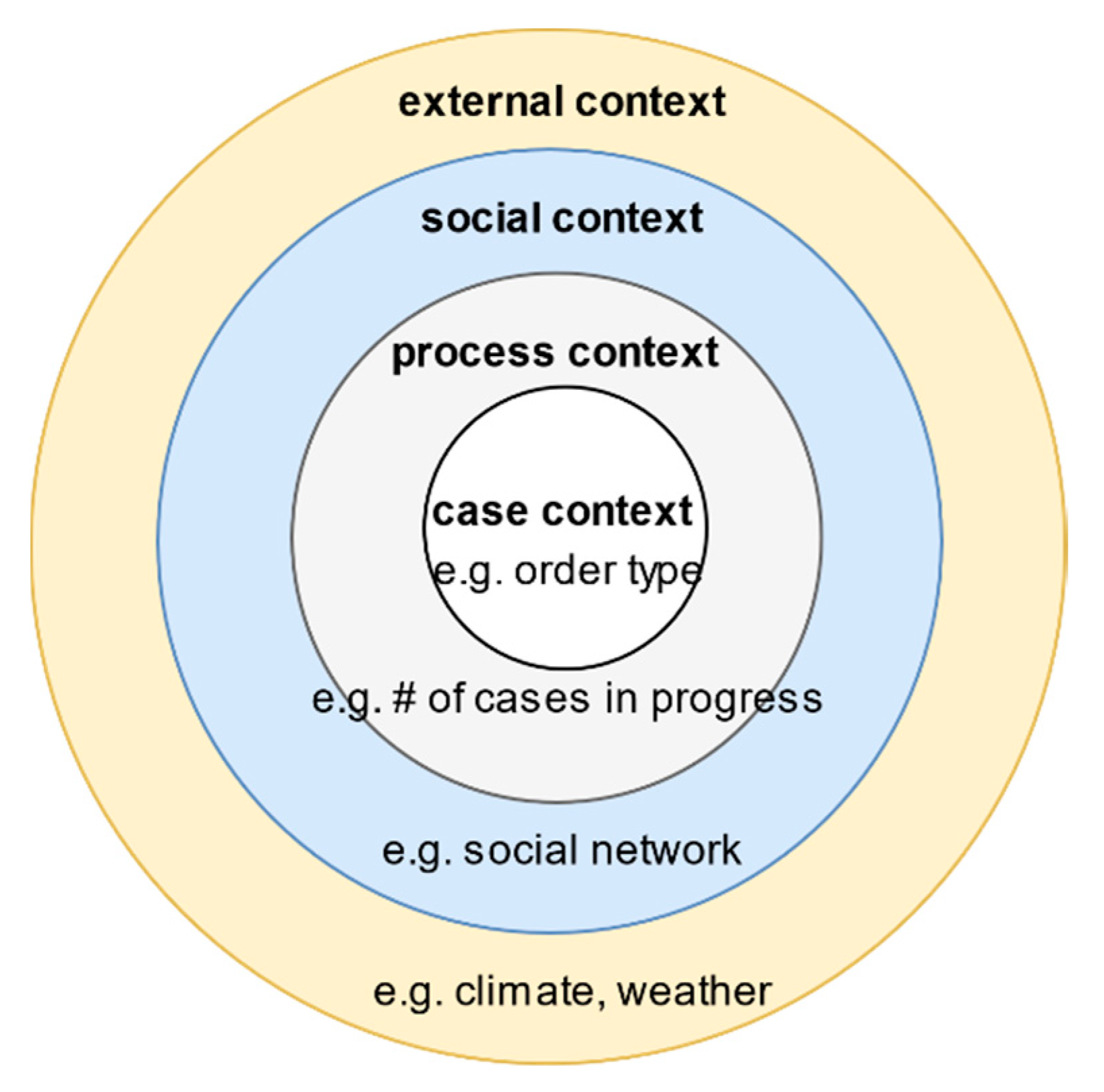
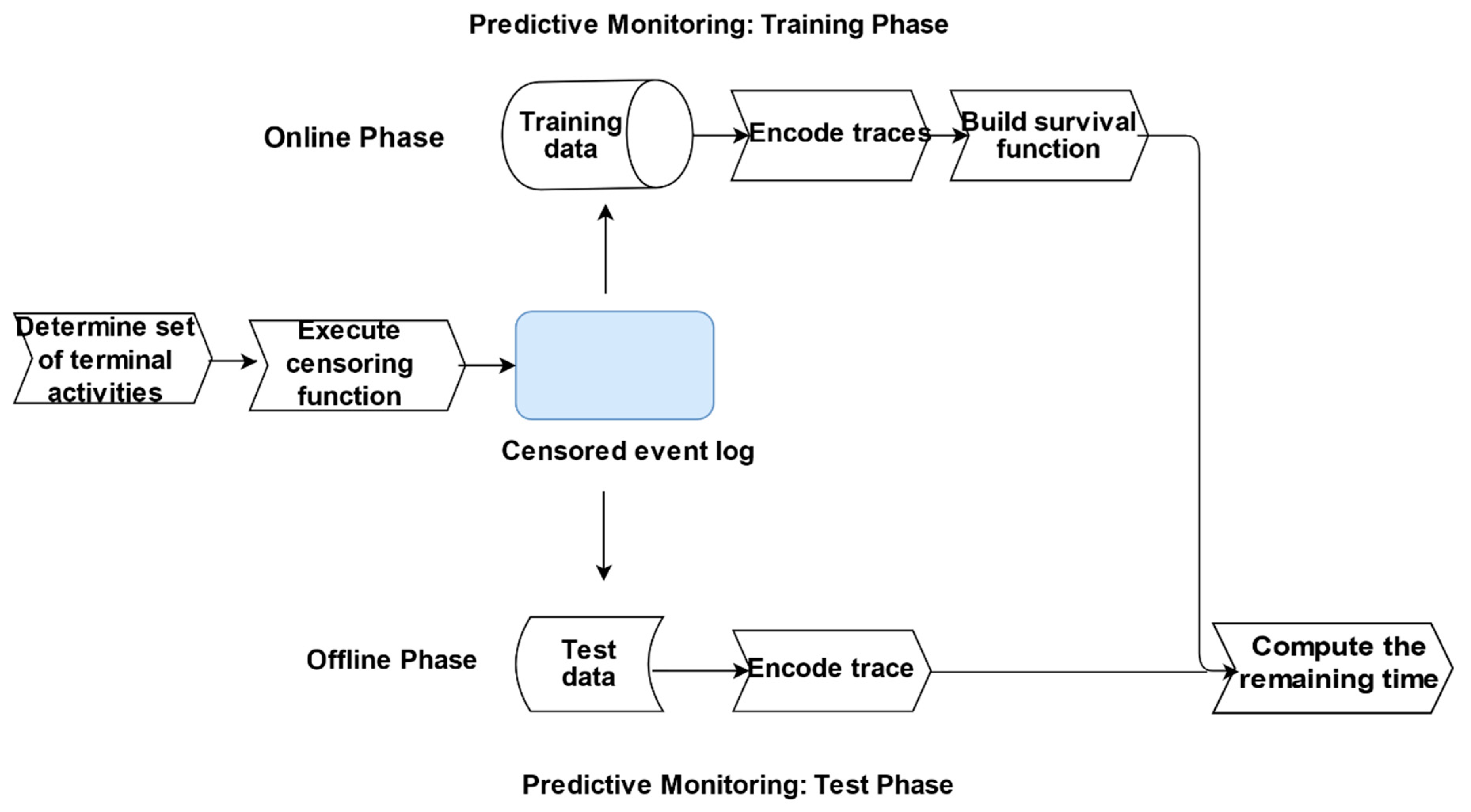
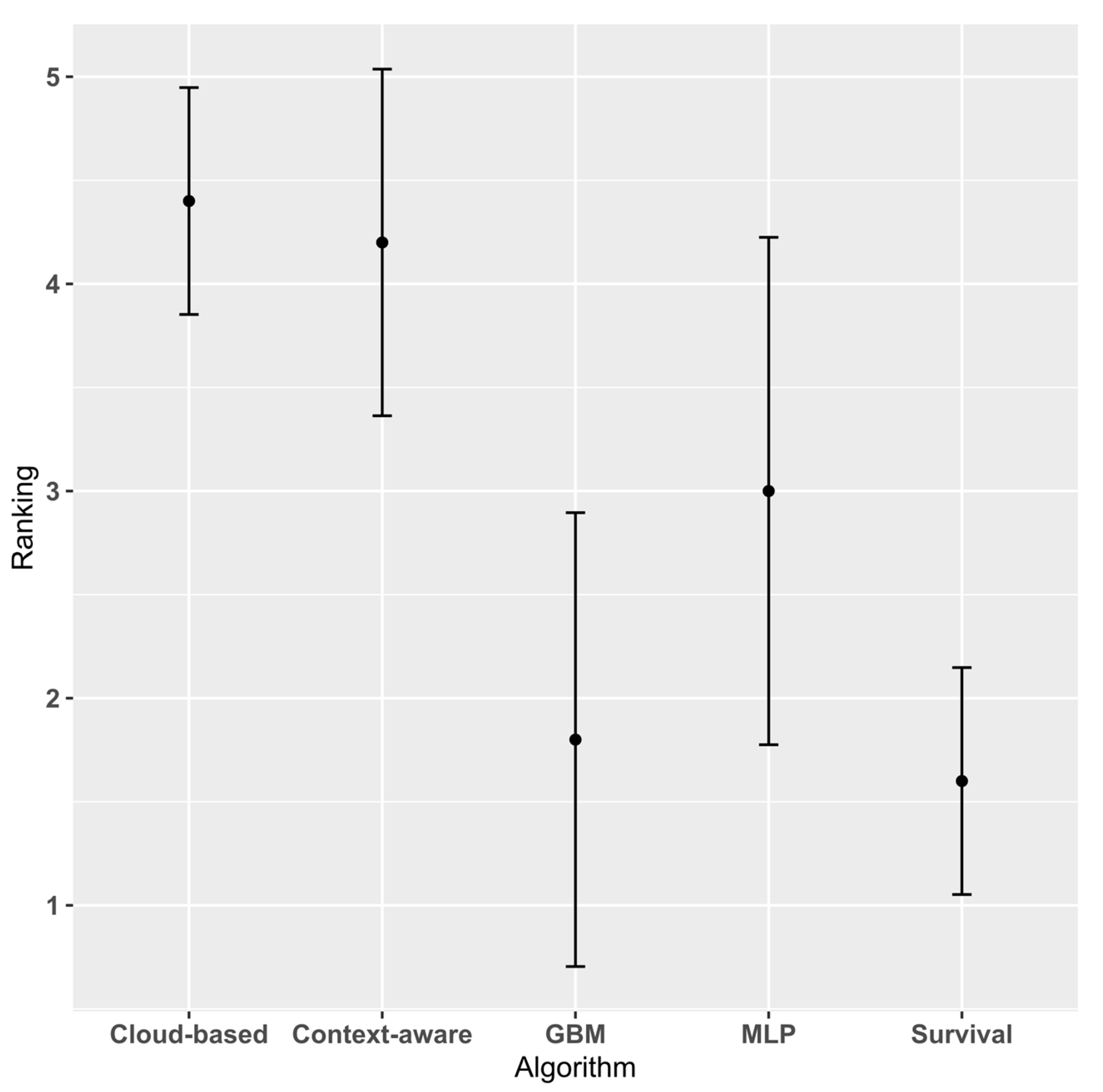
Predictive process monitoring aims to accurately predict a variable of interest (e.g., remaining time) or the future state of the process instance (e.g., outcome or next step). The quest for models with higher predictive power has led to the development of a variety of novel approaches. However, though social contextual factors are widely acknowledged to impact the way cases are handled, as yet there have been no studies which have investigated the impact of social contextual features in the predictive process monitoring framework. These factors encompass the way humans and automated agents interact within a particular organisation to execute process-related activities. This paper seeks to address this problem by investigating the impact of social contextual features in the predictive process monitoring framework utilising a survival analysis approach. We propose an approach to censor an event log and build a survival function utilising the Weibull model, which enables us to explore the impact of social contextual factors as covariates. Moreover, we propose an approach to predict the remaining time of an in-flight process instance by using the survival function to estimate the throughput time for each trace, which is then used with the elapsed time to predict the remaining time for the trace. The proposed approach is benchmarked against existing approaches using five real-life event logs and it outperforms these approaches.
Keywords: operational business process management; predictive process monitoring; remaining time predictive modelling; social context operational business process management; predictive process monitoring; remaining time predictive modelling; social context