Microstructure and Properties of Crack-Free Ti-Modified 6063 Aluminum Alloy TPMS Porous Structures Fabricated by LPBF

Abstract
1. Introduction
2. Materials and Methods
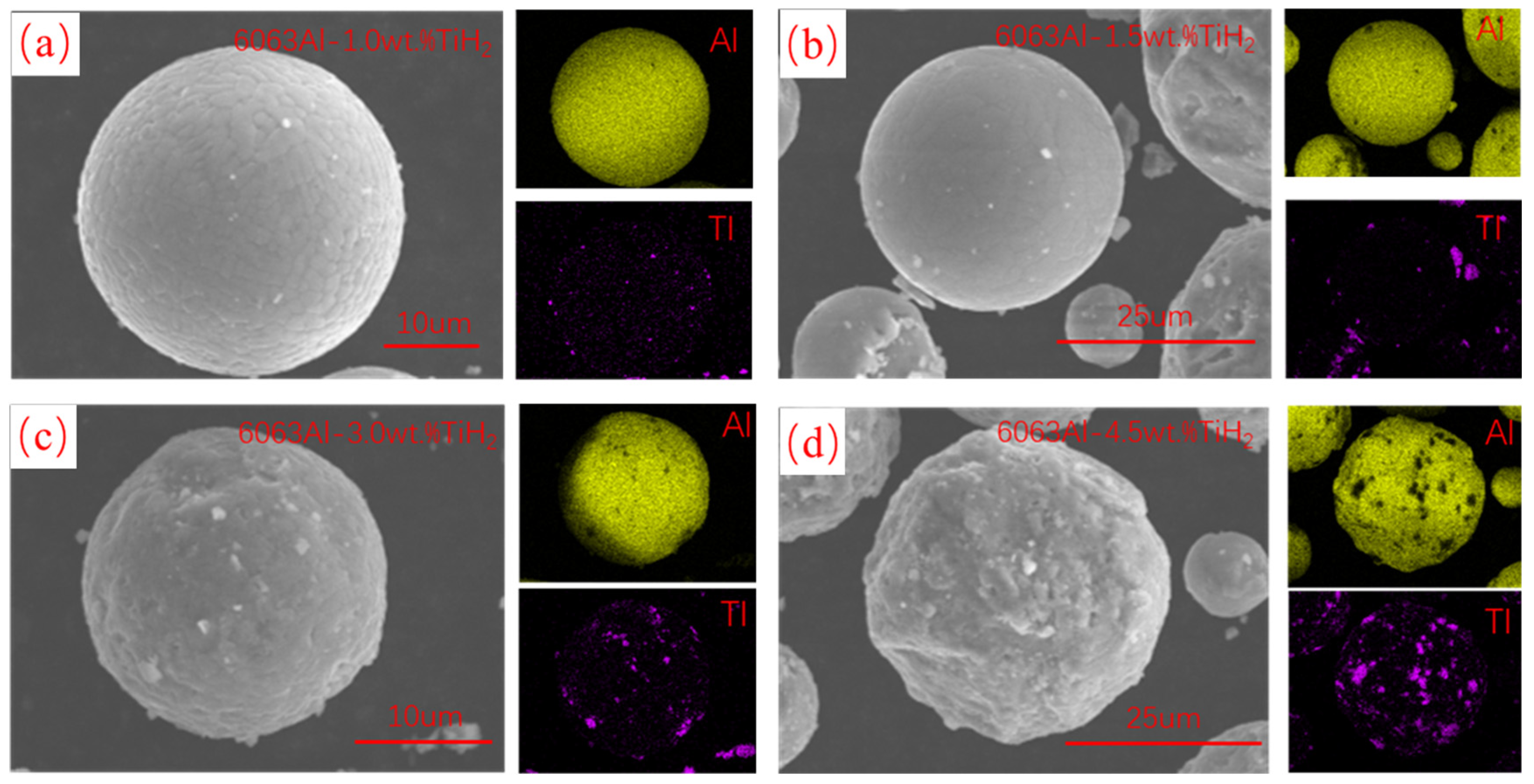
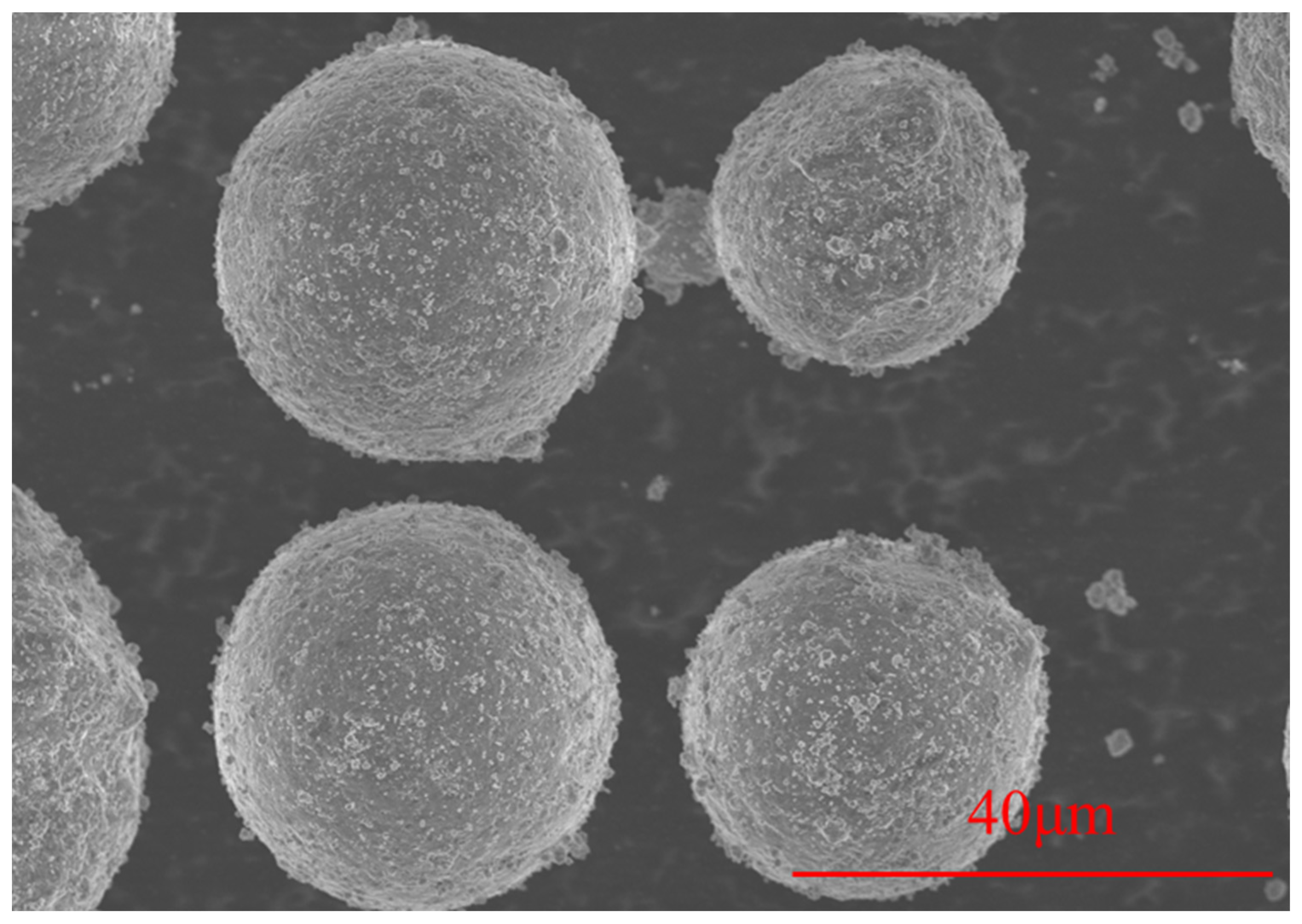
2.1. Powder Preparation
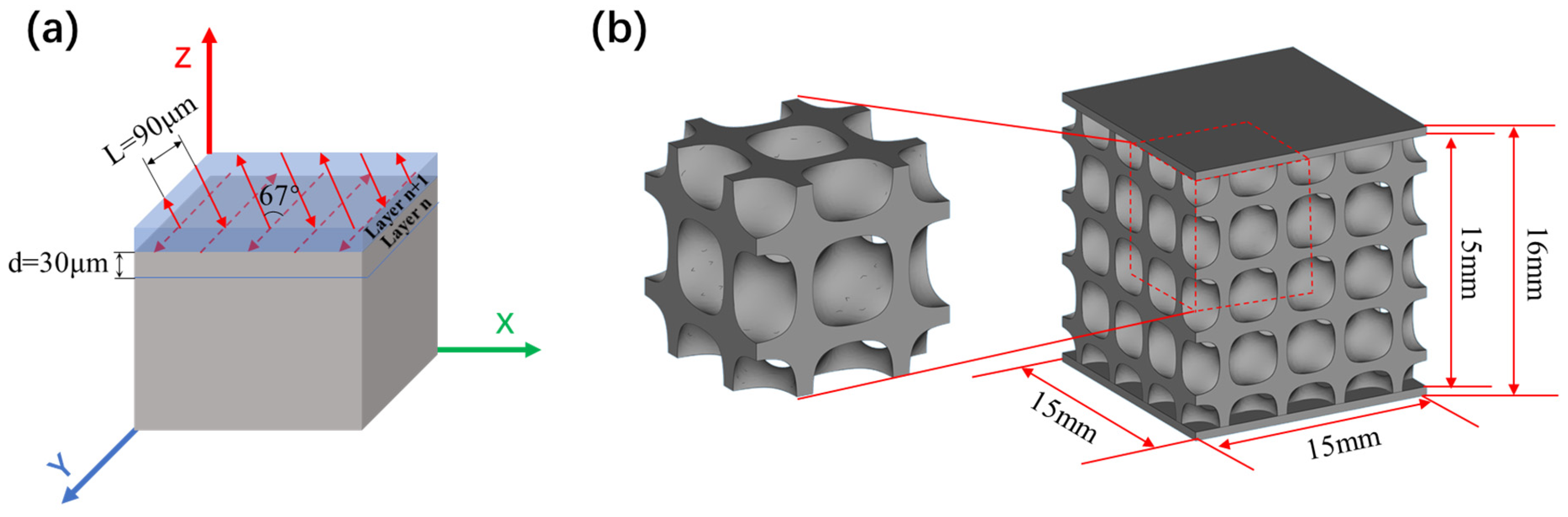
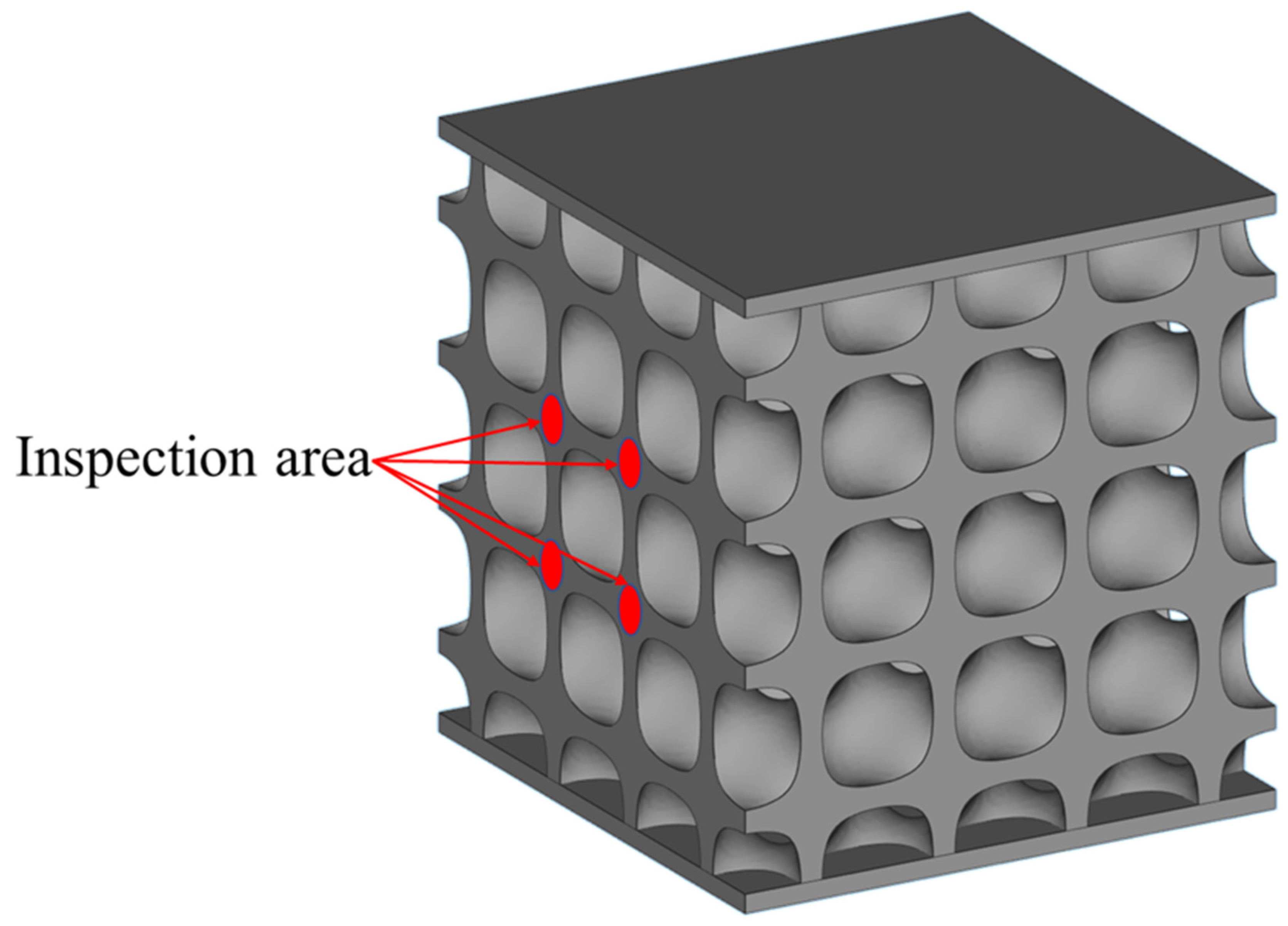
2.2. Modeling of the TPMS Porous Structures
2.3. Laser Powder Bed Fusion Process
2.4. Material Characterization
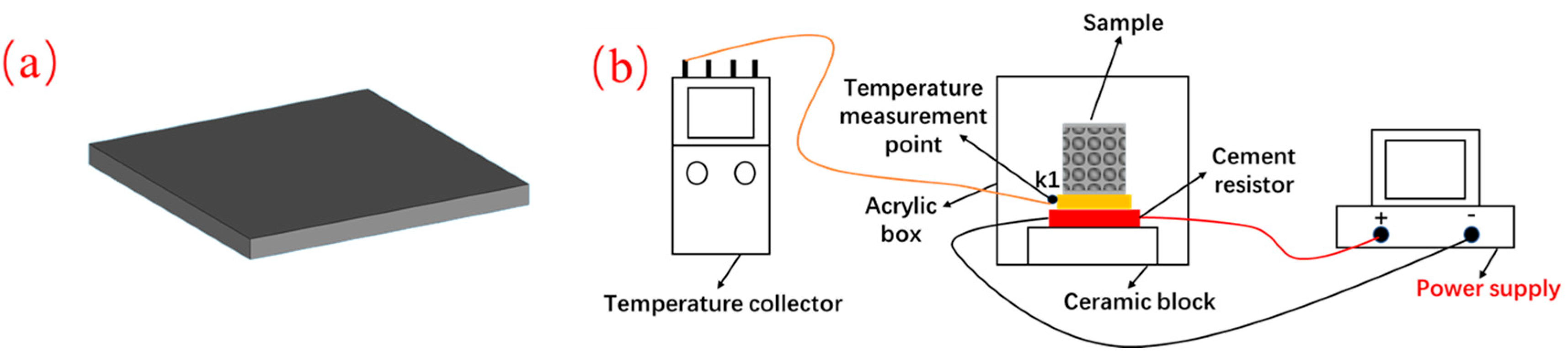
2.5. Thermal Performance Testing
2.6. Mechanical Properties Testing
3. Results and Discussion
3.1. Surface Morphology and Defect Analysis
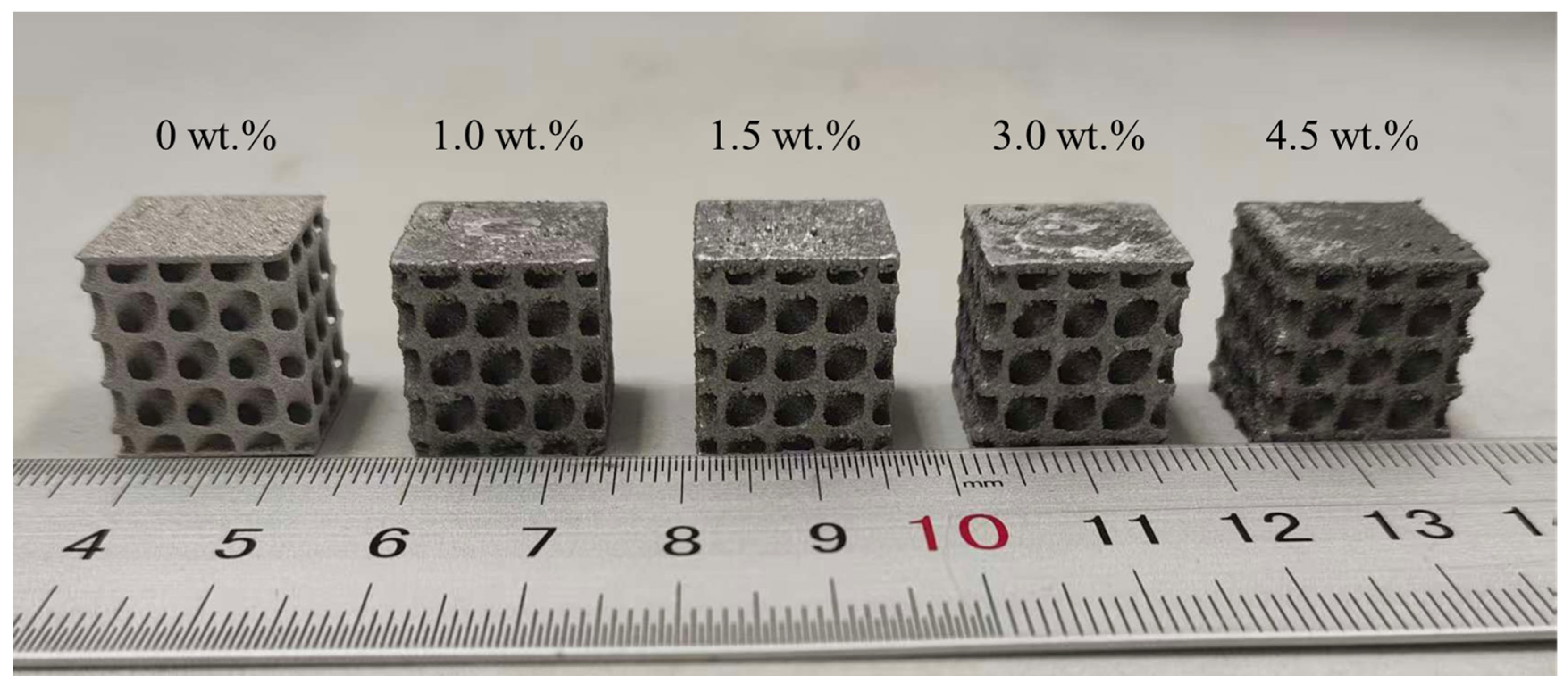
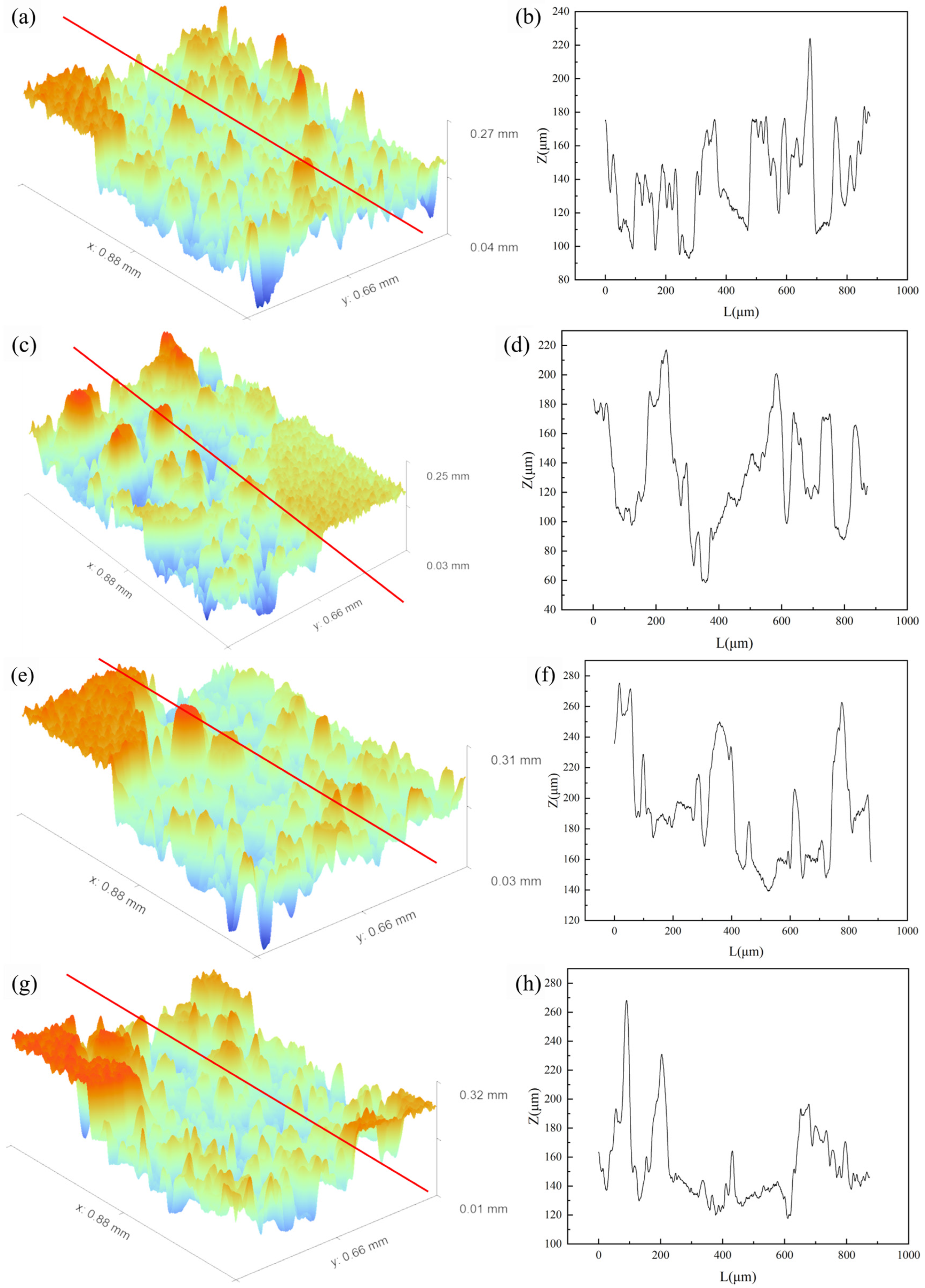
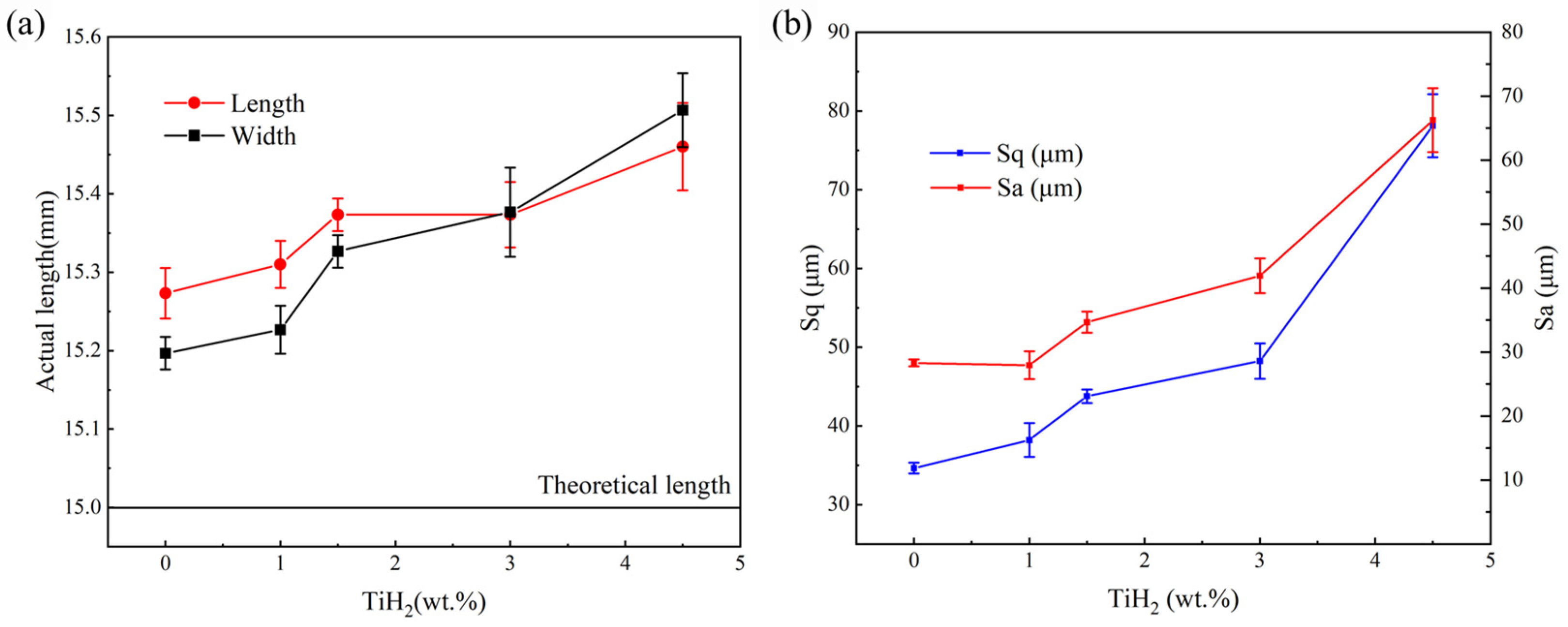
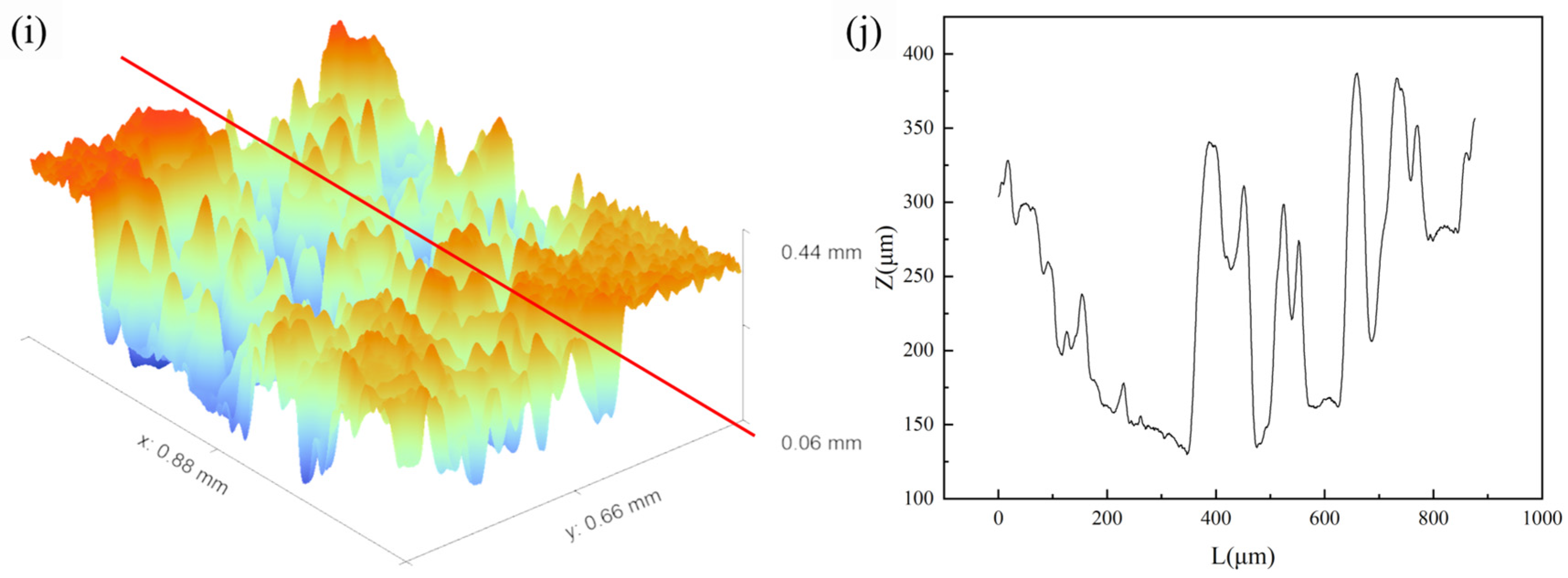
3.1.1. Macroscopic Dimensions and Surface Roughness
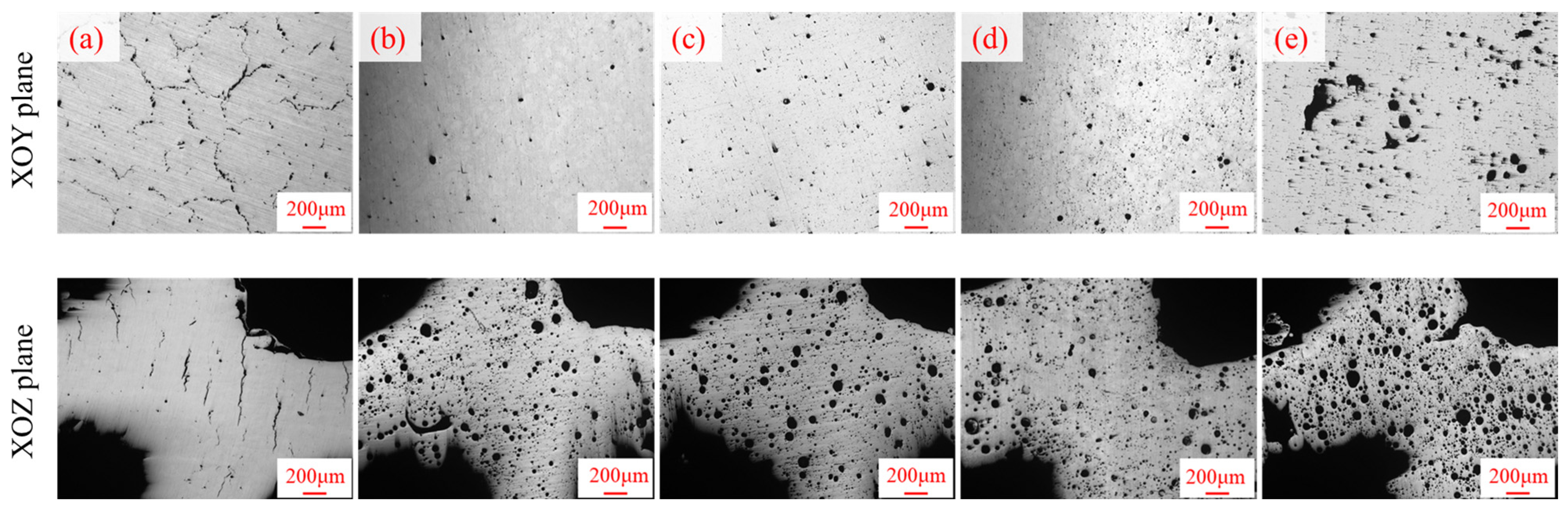
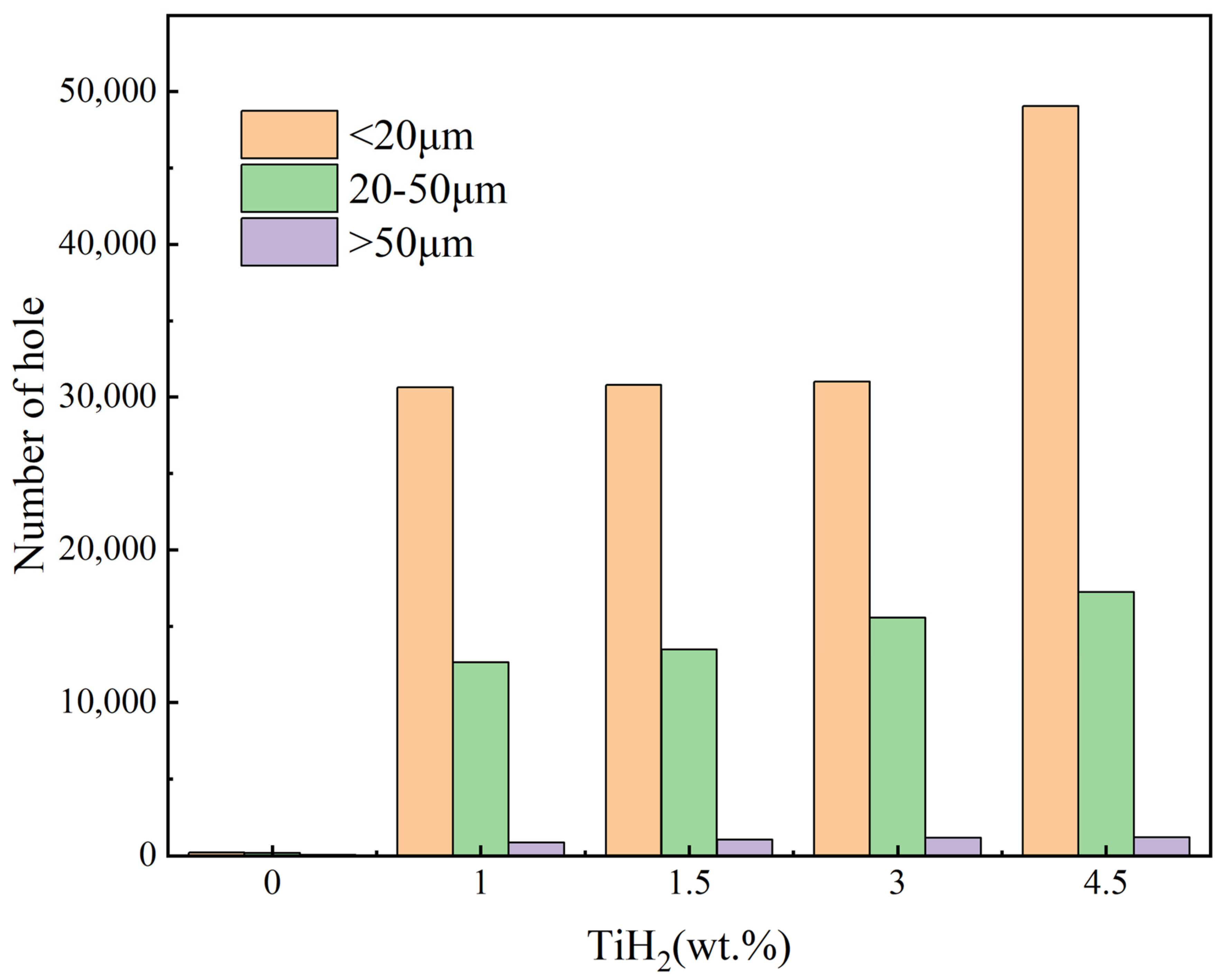
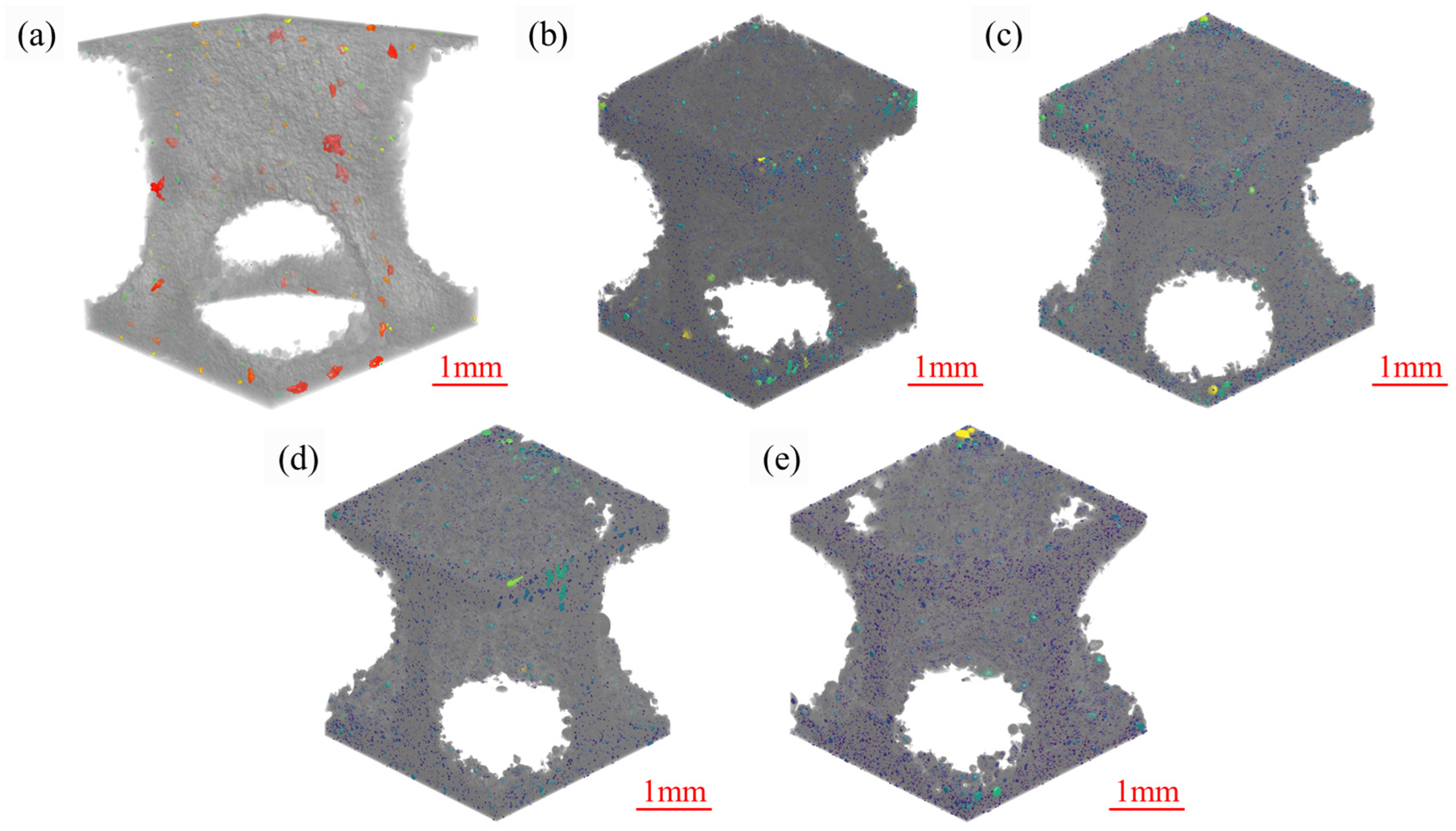
3.1.2. Metallographic Observation and Quantitative Porosity Analysis
3.2. Microstructural Evolution
3.2.1. Phase Composition and Grain Refinement Mechanism
3.2.2. Grain Boundary Characteristics and Residual Stress
3.3. Mechanical Properties and Strengthening Mechanisms
3.3.1. Compressive Deformation Behavior and Grain Refinement Strengthening Effect
3.3.2. Energy Absorption Characteristics
3.4. Thermal Conductivity and Heat Dissipation Performance
4. Conclusions
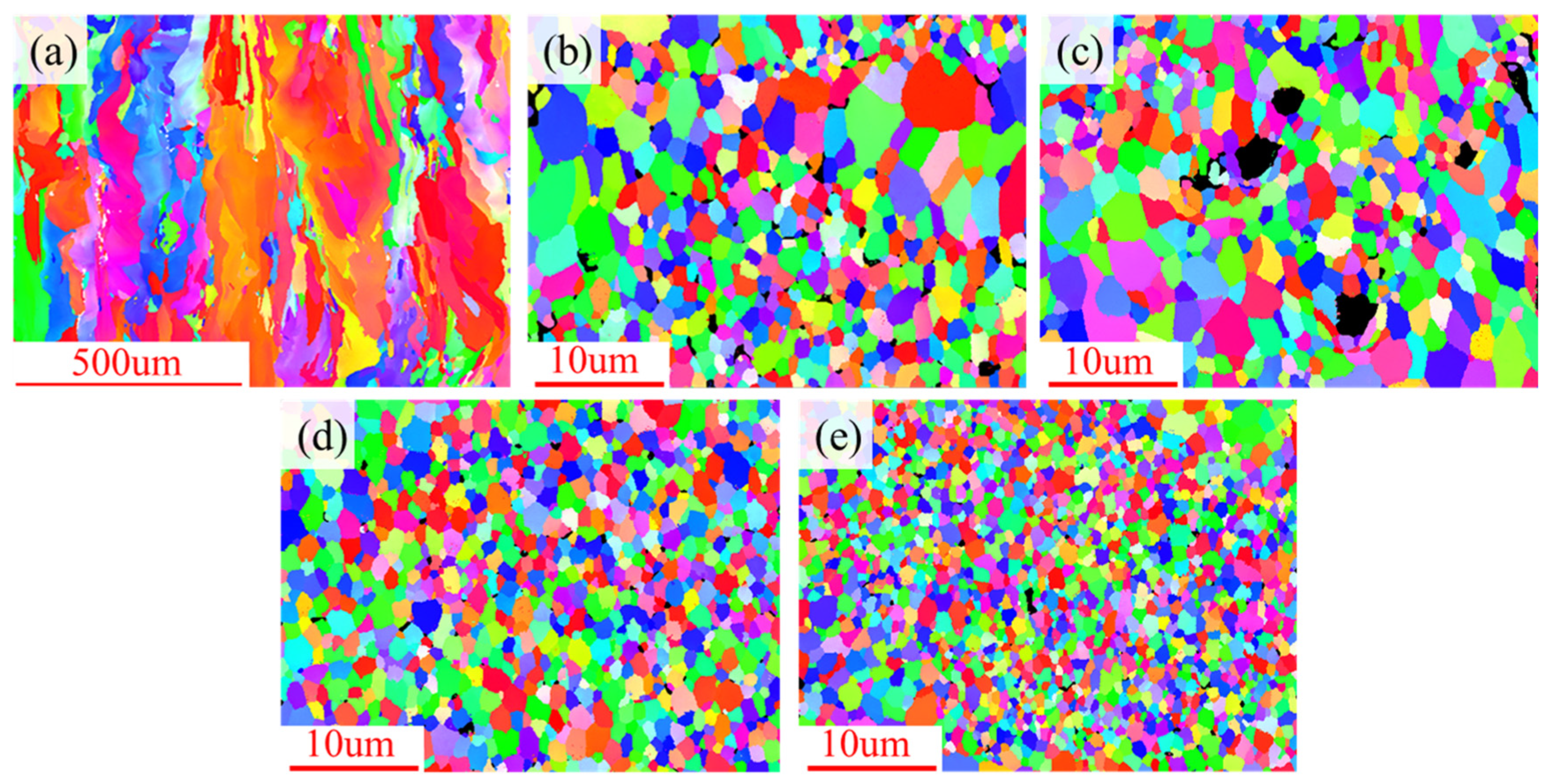
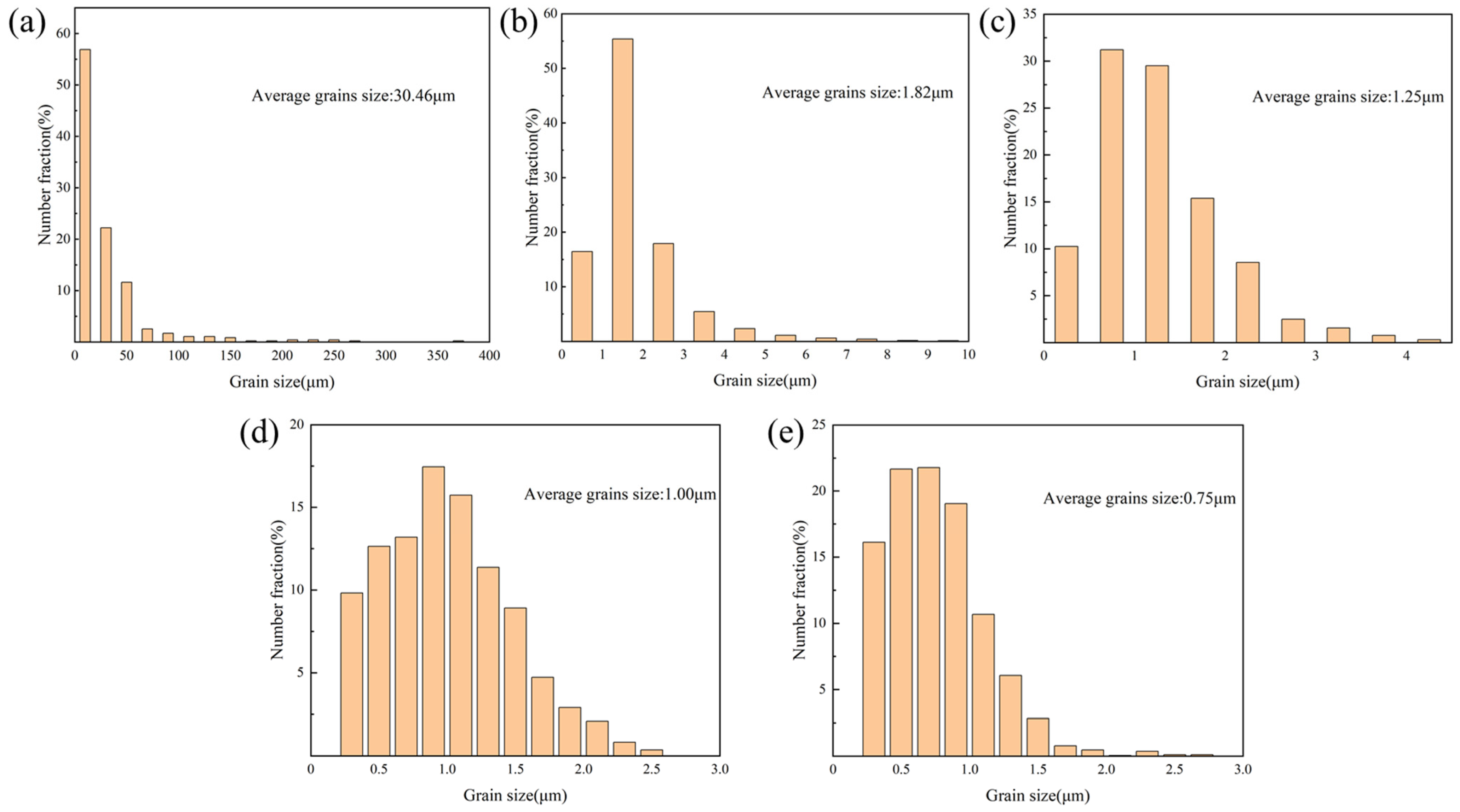
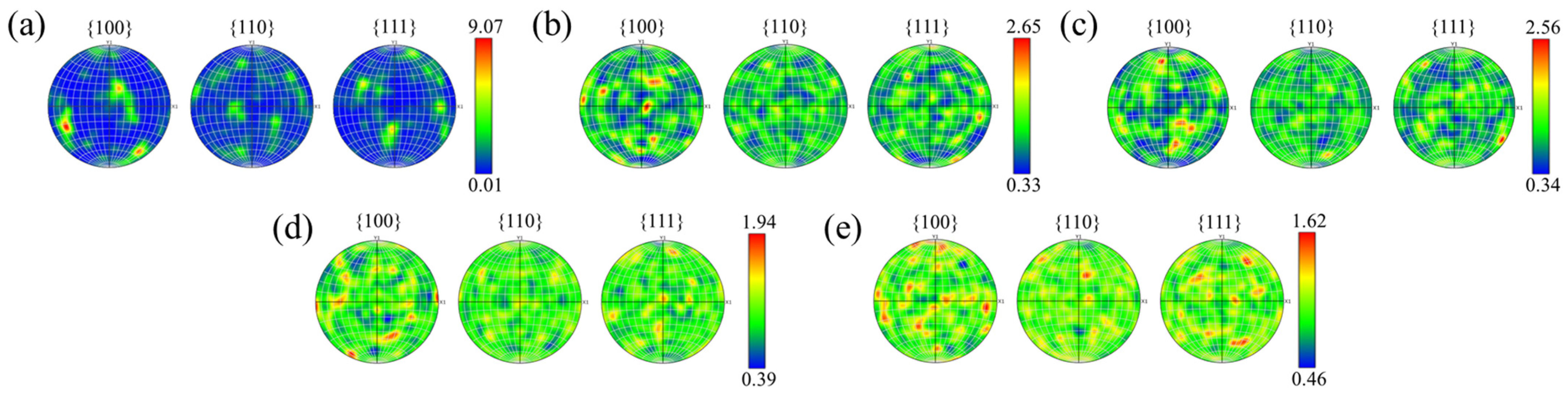
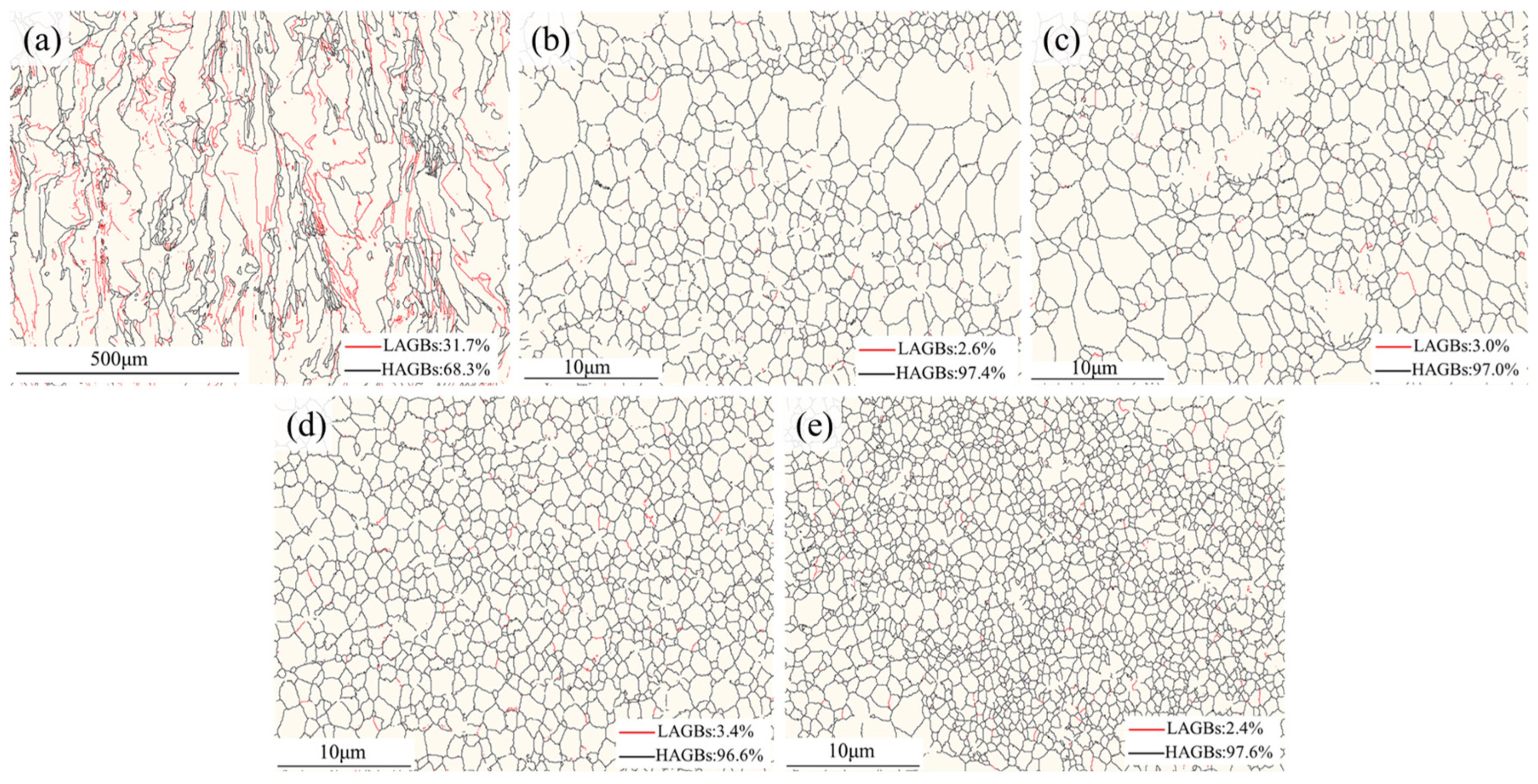
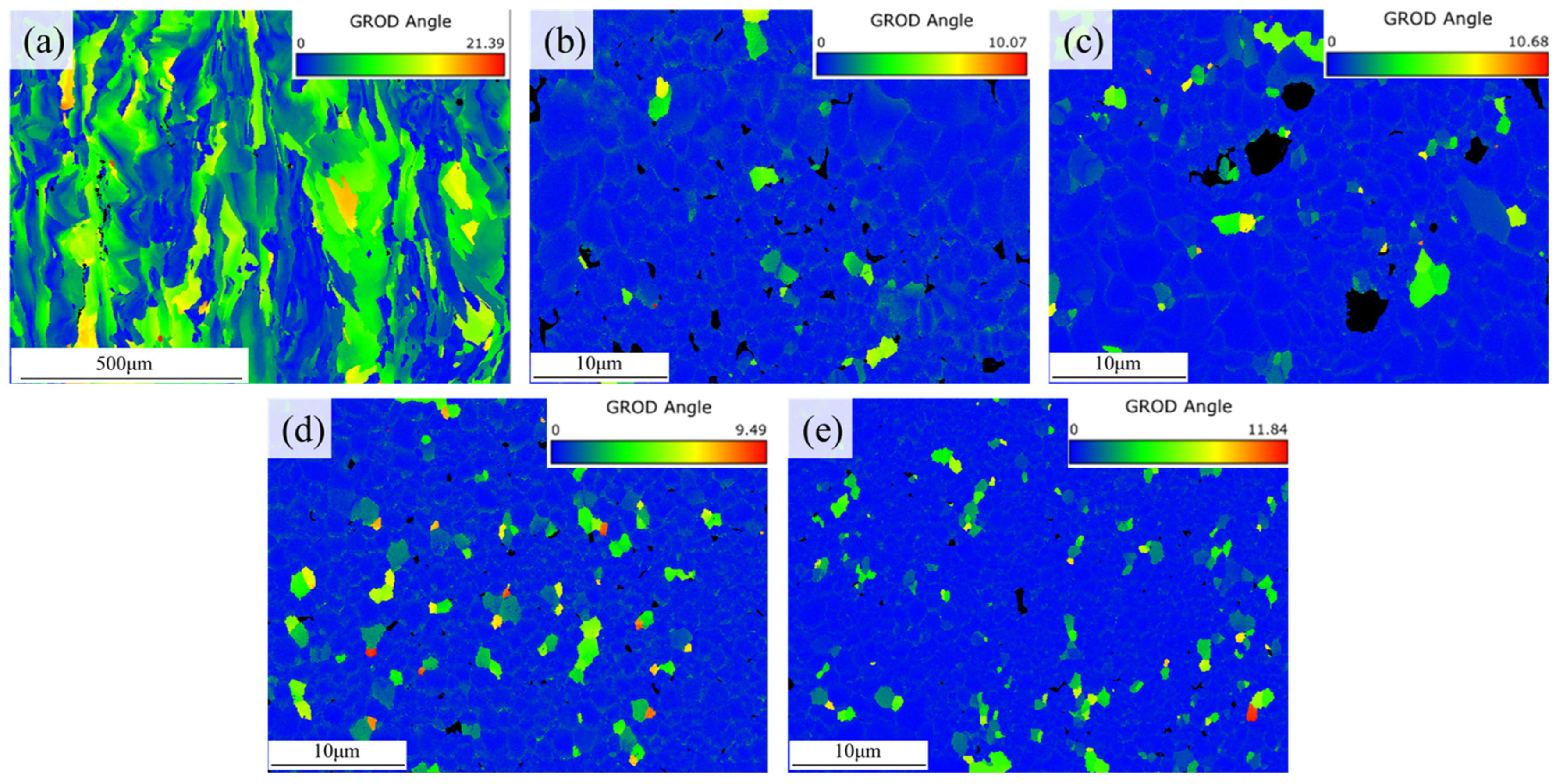
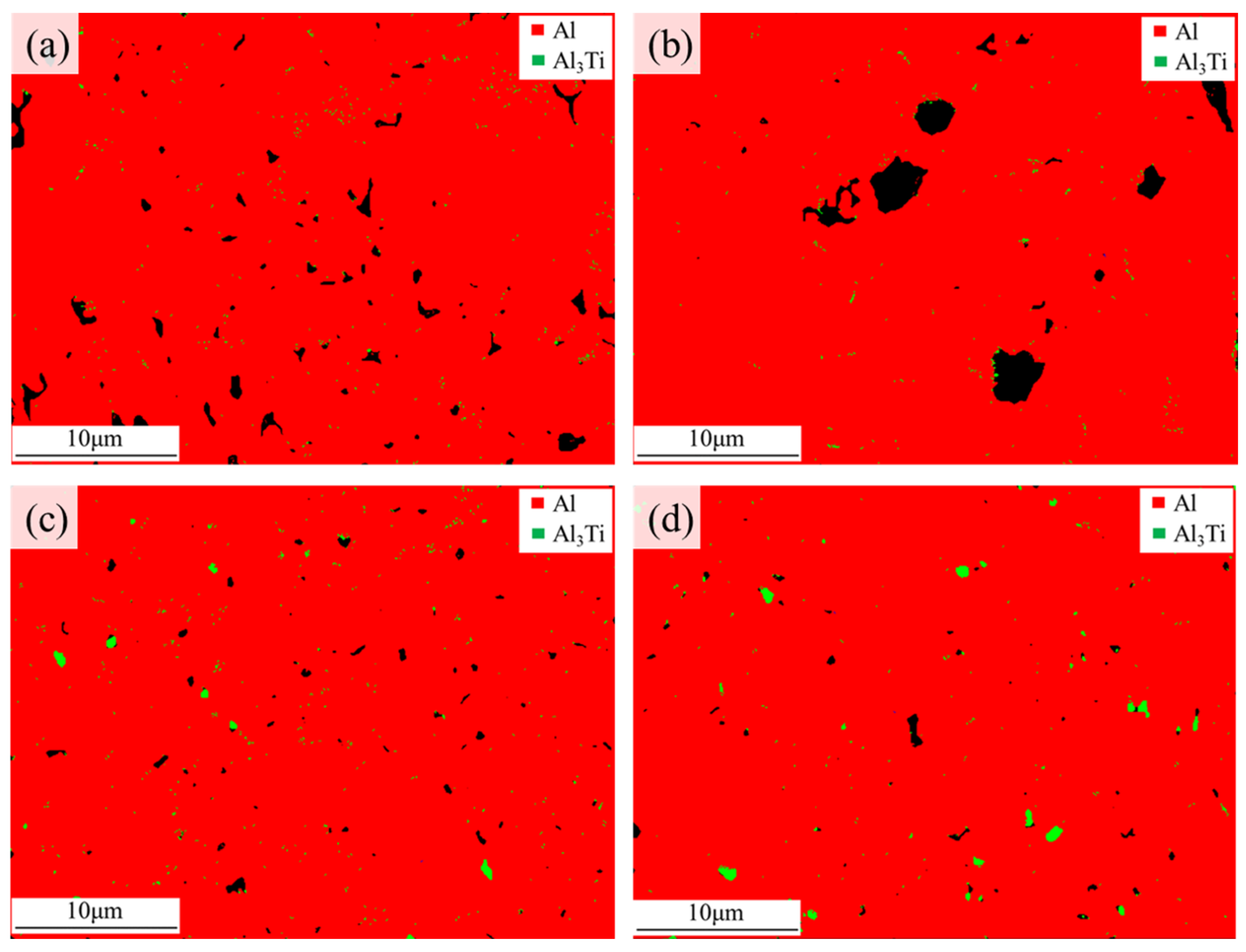
- CET and crystallographic mechanisms: Phase maps corroborated the in situ formation of Al3Ti particles. At appropriate doping levels, these particles served as effective heterogeneous nucleation sites, promoting grain refinement from 30.5 µm to approximately 1.0 µm and facilitating a significant columnar-to-equiaxed transition (CET). GROD analysis indicated that this fine equiaxed grain network mitigated residual thermal strain concentration (local misorientation reduced from 21.39° to 9.49°), thereby inhibiting the initiation of solidification cracks.
- Evolution of pore defects and physical trade-offs: Metallographic and CT quantitative statistics on the XOY plane revealed that internal microporosity remained at a low level within the 1.0–3.0 wt.% range. However, at 4.5 wt.%, the excessive dehydrogenation reaction caused the number of small hydrogen-induced pores (<20 µm) to surge to nearly 50,000. This was accompanied by the coarsening and agglomeration of Al3Ti particles and an increase in macroscopic surface roughness, with the Sa value rising to 56 µm.
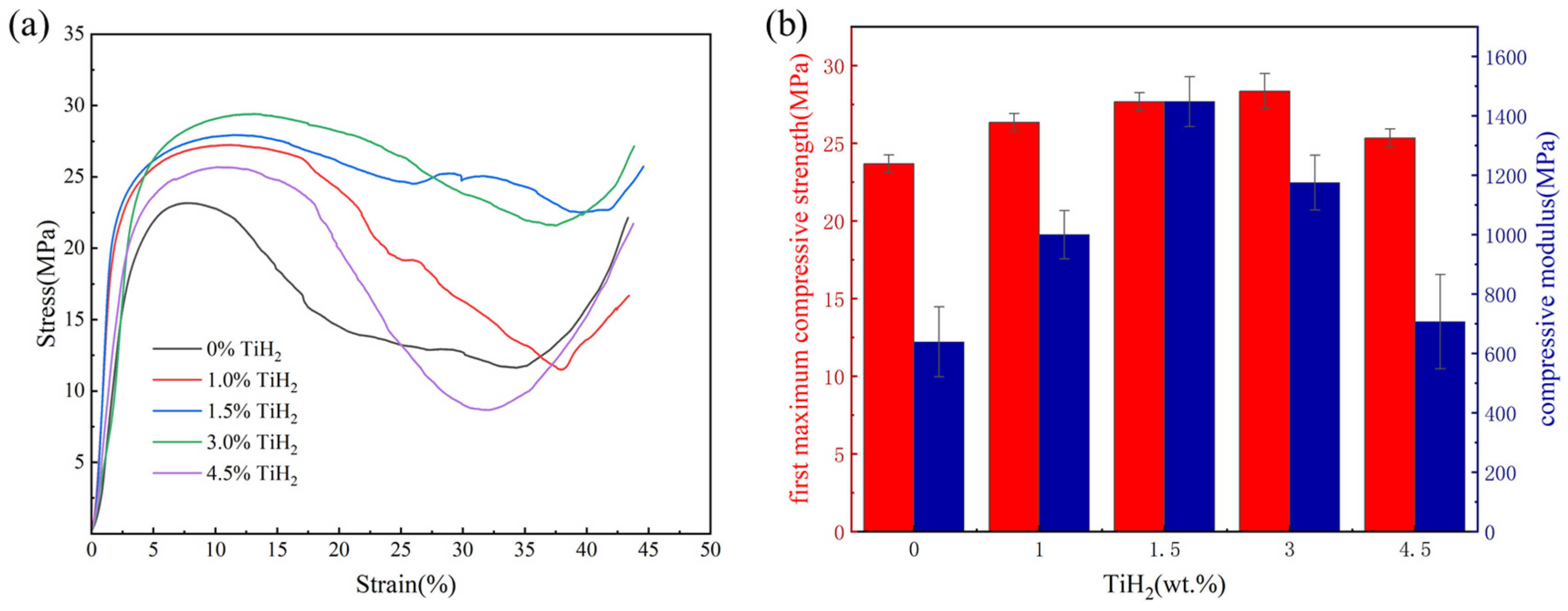
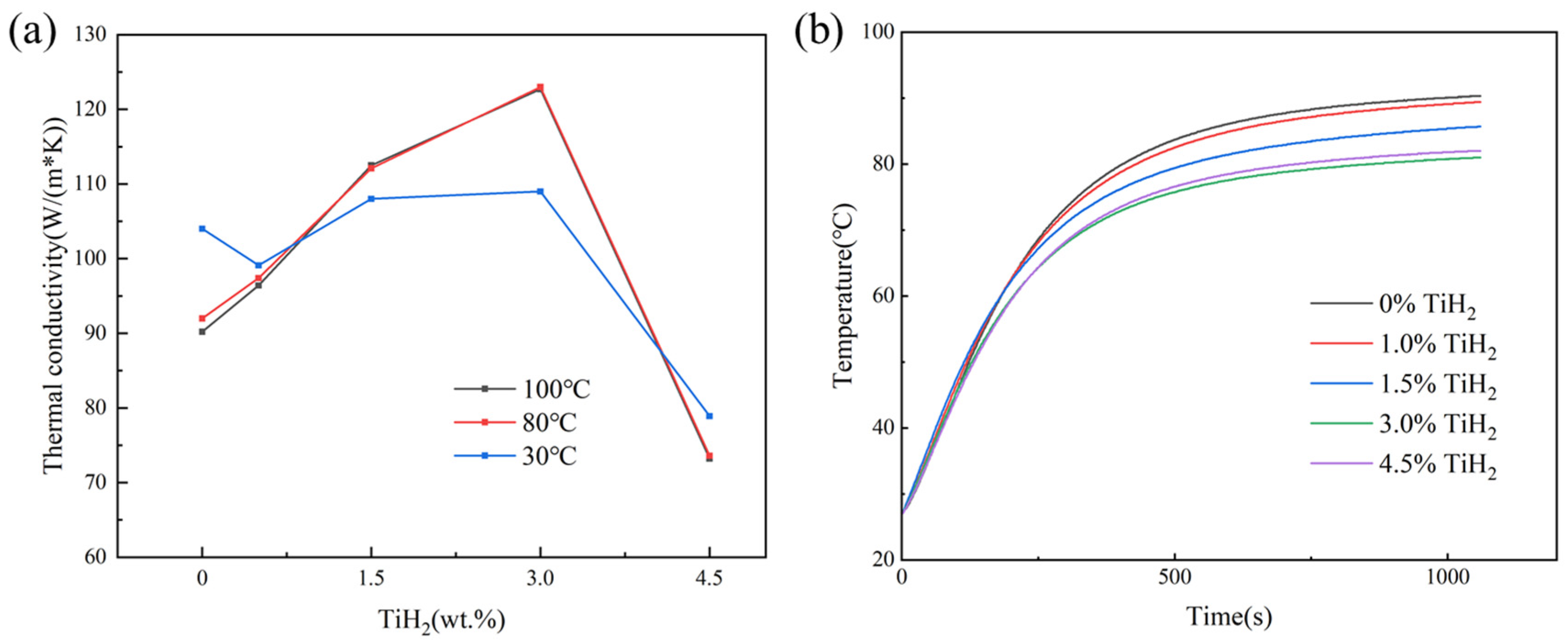
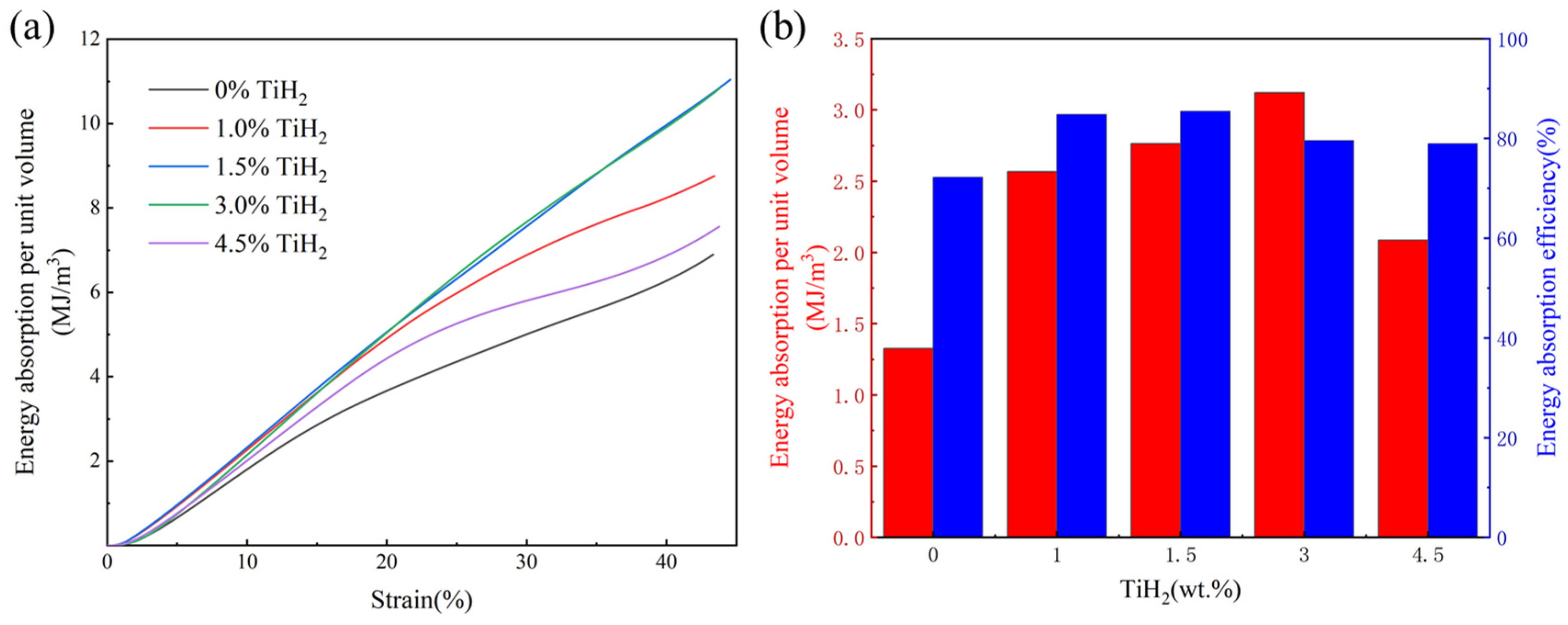
- Decoupling of thermo-mechanical properties and the optimal solution: The 1.5 wt.% group exhibited a high compressive elastic modulus and energy absorption efficiency due to minimal pore defects. Comprehensive evaluation identified 3.0 wt.% as the optimal addition level. Mechanically, it achieved synergistic Hall–Petch and Orowan strengthening via uniformly dispersed Al3Ti, yielding a high peak plateau stress (28.5 MPa) and cumulative energy absorption (3.1 MJ/m3). Thermally, the dual effects of crack healing (eliminating thermal resistance) and matrix purification (via extensive Al3Ti precipitation) enhanced the thermal conductivity to 123 W/(m·K) at 100 °C. In steady-state heat dissipation tests with a 4.0 W heat source, this group achieved a lower operating temperature (80.5 °C), supported by the enhanced convective heat transfer resulting from the increased surface roughness.
Author Contributions
Funding
Data Availability Statement
Conflicts of Interest
References
- Rashid, F.L.; Al Maimuri, N.M.L.; Al-Obaidi, M.A.; Eleiwi, M.A.; Ameen, A.; Ahmad, S.; Chibani, A.; Kezzar, M.; Agyekum, E.B. Enhancing Heat Transfer across Applications with Triply Periodic Minimal Surface (TPMS) Structures: A Comprehensive Review. Chem. Eng. Process.-Process Intensif. 2025, 216, 110460. [Google Scholar] [CrossRef]
- Wang, J.; Li, Y.; Liu, X.; Shen, C.; Zhang, H.; Xiong, K. Recent Active Thermal Management Technologies for the Development of Energy-Optimized Aerospace Vehicles in China. Chin. J. Aeronaut. 2021, 34, 1–27. [Google Scholar] [CrossRef]
- Ji, S.; Choi, J.; Hong, M.; Lee, J.; Choi, Y.; Kim, J.; Lee, J.; Choi, W. Recent Advances in Thermal Management via Additive Manufacturing. Eng. Sci. Addit. Manuf. 2025, 1, 025260016. [Google Scholar] [CrossRef]
- Ahmad, S.Z.; Masood, M.H.; Khattab, M.U.; Ahmad, S.S.; Zaidi, S.A.A.; Khan, S.Z. Recent Developments in Novel TPMS Lattice Materials: Design Optimization, Performance Control, and Applications in Biomimetic Scaffolds. Materials 2025, 18, 5209. [Google Scholar] [CrossRef]
- Jung, G.; Kim, J.; Choi, H.; Lee, H. Multi-Objective Optimization of an Offset Strip Fin Heat Exchanger Applied to Fuel Cell Electric Vehicles for Cooperative Cooling. Appl. Therm. Eng. 2025, 268, 125832. [Google Scholar] [CrossRef]
- Ma, D.; Pang, L.; Cao, X. Numerical Investigation on the Effect of Porosity Aluminum Foam on the Heat Transfer Characteristics of a Driven Cold Plate Water Sublimator. Appl. Therm. Eng. 2024, 250, 123547. [Google Scholar] [CrossRef]
- Boomsma, K.; Poulikakos, D.; Zwick, F. Metal Foams as Compact High Performance Heat Exchangers. Mech. Mater. 2003, 35, 1161–1176. [Google Scholar] [CrossRef]
- Feng, J.; Fu, J.; Yao, X.; He, Y. Triply Periodic Minimal Surface (TPMS) Porous Structures: From Multi-Scale Design, Precise Additive Manufacturing to Multidisciplinary Applications. Int. J. Extrem. Manuf. 2022, 4, 022001. [Google Scholar] [CrossRef]
- Chen, M.; Shi, Y.; Yang, L.; Yan, C.; Su, B.; Fu, H.; Dou, Z.; Chen, Y. Performance Evaluation for Additively Manufactured Heat Sinks Based on Gyroid-TPMS. Therm. Sci. Eng. Prog. 2025, 60, 103499. [Google Scholar] [CrossRef]
- Alteneiji, M.; Ali, M.I.H.; Khan, K.A.; Al-Rub, R.K.A. Heat Transfer Effectiveness Characteristics Maps for Additively Manufactured TPMS Compact Heat Exchangers. Energy Storage Sav. 2022, 1, 153–161. [Google Scholar] [CrossRef]
- Al-Ketan, O.; Abu Al-Rub, R.K. Multifunctional Mechanical Metamaterials Based on Triply Periodic Minimal Surface Lattices. Adv. Eng. Mater. 2019, 21, 1900524. [Google Scholar] [CrossRef]
- Samad, A.; Lai, W.-H. Experimental and Simulation Analysis of Heat Transfer in Gyroid Heat Exchangers with Variable Flow Channels. Int. J. Heat Mass Transf. 2025, 239, 126530. [Google Scholar] [CrossRef]
- Maskery, I.; Aboulkhair, N.T.; Aremu, A.O.; Tuck, C.J.; Ashcroft, I.A. Compressive Failure Modes and Energy Absorption in Additively Manufactured Double Gyroid Lattices. Addit. Manuf. 2017, 16, 24–29. [Google Scholar] [CrossRef]
- Wang, A.; Ni, X.; He, D.; Hu, Z.; Yang, W.; Deng, X.; Wu, S. Compression Behavior and Energy Absorption of TPMS Structures Prepared by Laser Powder Bed Fusion. Met. Mater. Trans. B 2025, 56, 4372–4380. [Google Scholar] [CrossRef]
- Zhang, L.; Hu, H.; Wang, Q.; Zhou, J.; Liu, Y.; Li, Z.; Zhang, Y.; Kui, Z.; He, Z.; Jiang, Y. Additively Manufactured Porous Ti6Al4V Alloy with Excellent Mechanical Properties, Corrosion Resistance, in vitro and in vivo Biocompatibility. J. Alloys Compd. 2024, 1009, 176982. [Google Scholar] [CrossRef]
- Papacharalampopoulos, A.; Foteinopoulos, P.; Karagianni, O.M.; Stavropoulos, P. A Human–AI Collaborative Framework for Additive Manufacturing Modeling and Decision-Making. Processes 2025, 13, 3877. [Google Scholar] [CrossRef]
- Guillen, D.; Wahlquist, S.; Ali, A. Critical Review of LPBF Metal Print Defects Detection: Roles of Selective Sensing Technology. Appl. Sci. 2024, 14, 6718. [Google Scholar] [CrossRef]
- Genc, M.; Eloi, P.; Blandin, J.-J.; Pascal, C.; Donnadieu, P.; De Geuser, F.; Lhuissier, P.; Desrayaud, C.; Martin, G. Optimization of the Strength vs. Conductivity Trade-off in an Aluminium Alloy Designed for Laser Powder Bed Fusion. Mater. Sci. Eng. A 2022, 858, 144139. [Google Scholar] [CrossRef]
- Li, F.; Zhang, T.; Wu, Y.; Chen, C.; Zhou, K. Microstructure, Mechanical Properties, and Crack Formation of Aluminum Alloy 6063 Produced via Laser Powder Bed Fusion. J. Mater. Sci. 2022, 57, 9631–9645. [Google Scholar] [CrossRef]
- Hyer, H.; Zhou, L.; Mehta, A.; Park, S.; Huynh, T.; Song, S.; Bai, Y.; Cho, K.; McWilliams, B.; Sohn, Y. Composition-Dependent Solidification Cracking of Aluminum-Silicon Alloys during Laser Powder Bed Fusion. Acta Mater. 2021, 208, 116698. [Google Scholar] [CrossRef]
- Uddin, S.Z.; Murr, L.E.; Terrazas, C.A.; Morton, P.; Roberson, D.A.; Wicker, R.B. Processing and Characterization of Crack-Free Aluminum 6061 Using High-Temperature Heating in Laser Powder Bed Fusion Additive Manufacturing. Addit. Manuf. 2018, 22, 405–415. [Google Scholar] [CrossRef]
- Qbau, N.; Nam, N.D.; Ca, N.X.; Hien, N.T. The Crack Healing Effect of Scandium in Aluminum Alloys during Laser Additive Manufacturing. J. Manuf. Process. 2020, 50, 241–246. [Google Scholar] [CrossRef]
- Pan, Q.; Zhang, F.; V Pillai, D.; Zhang, Z.; Zheng, Y.; Yuan, L.; Kapoor, M.; Carsley, J.; Lou, X. Insights into Grain Refinement of Al-Mn-Fe-Si Alloy via in Situ Reaction during Laser Directed Energy Deposition. J. Alloys Compd. 2025, 1016, 178983. [Google Scholar] [CrossRef]
- Mair, P.; Goettgens, V.S.; Rainer, T.; Weinberger, N.; Letofsky-Papst, I.; Mitsche, S.; Leichtfried, G. Laser Powder Bed Fusion of Nano-CaB6 Decorated 2024 Aluminum Alloy. J. Alloys Compd. 2021, 863, 158714. [Google Scholar] [CrossRef]
- Liu, Y.; Zhang, J.; Niu, R.; Bayat, M.; Zhou, Y.; Yin, Y.; Tan, Q.; Liu, S.; Hattel, J.H.; Li, M.; et al. Manufacturing of High Strength and High Conductivity Copper with Laser Powder Bed Fusion. Nat. Commun. 2024, 15, 1283. [Google Scholar] [CrossRef]
- Sun, T.; Chen, J.; Wu, Y.; Wang, M.; Fu, Y.; Wang, H.; Wang, H. Achieving Excellent Strength of the LPBF Additively Manufactured Al–Cu–Mg Composite via in-Situ Mixing TiB2 and Solution Treatment. Mater. Sci. Eng. A 2022, 850, 143531. [Google Scholar] [CrossRef]
- Matijasevic-Lux, B.; Banhart, J.; Fiechter, S.; Görke, O.; Wanderka, N. Modification of Titanium Hydride for Improved Aluminium Foam Manufacture. Acta Mater. 2006, 54, 1887–1900. [Google Scholar] [CrossRef]
- Maconachie, T.; Leary, M.; Lozanovski, B.; Zhang, X.; Qian, M.; Faruque, O.; Brandt, M. SLM Lattice Structures: Properties, Performance, Applications and Challenges. Mater. Des. 2019, 183, 108137. [Google Scholar] [CrossRef]
- Wang, H.; Zhao, C.; Liu, W.; Liu, Z.; Bian, H.; Zhang, K. Advances in Triply Periodic Minimal Surface Structures for Thermal Management Systems: A Comprehensive Review. Appl. Therm. Eng. 2025, 279, 127481. [Google Scholar] [CrossRef]
- AlMahri, S.; Santiago, R.; Lee, D.-W.; Ramos, H.; Alabdouli, H.; Alteneiji, M.; Guan, Z.; Cantwell, W.; Alves, M. Evaluation of the Dynamic Response of Triply Periodic Minimal Surfaces Subjected to High Strain-Rate Compression. Addit. Manuf. 2021, 46, 102220. [Google Scholar] [CrossRef]
- Wen, T.; Wang, J.; Li, Z.; Yang, F.; Liu, Z.; Yang, H.; Ji, S. Microstructural Evolution and Strengthening Mechanisms of a High-Strength Al-Mg-Si Alloy Processed by Laser Powder Bed Fusion and Ageing Treatment. Mater. Charact. 2024, 209, 113754. [Google Scholar] [CrossRef]
- Ziaie, B.; Niu, L.; Saleem, W.; Ni, L.; Rathore, M.F.; Velay, X. Characterization of Selective Laser Melted Ti6Al4V TPMS Porous Structures for Biomedical Applications. J. Alloys Compd. 2025, 1022, 180084. [Google Scholar] [CrossRef]
- Nudelis, N.; Mayr, P. Defect-Based Analysis of the Laser Powder Bed Fusion Process Using X-Ray Data. Int. J. Adv. Manuf. Technol. 2022, 123, 3223–3232. [Google Scholar] [CrossRef]
- Bembalge, O.B.; Panigrahi, S.K. Thermal Stability, Grain Growth Kinetics, and Mechanical Properties of Bulk Ultrafine-Grained AA6063/SiC Composites with Varying Reinforcement Sizes. Met. Mater. Trans. A 2019, 50, 4288–4306. [Google Scholar] [CrossRef]
- Hao, Z.; Zeng, X.; Zhou, D.; Kan, S.; Chen, P.; Liang, L.; Cao, Q.; Dong, L. Surface Modification for Radiative Heat Dissipation and Self-Cleaning on Aluminum Alloys. Surf. Interfaces 2026, 84, 108614. [Google Scholar] [CrossRef]
- Khanna, P.; Sood, S.; Mishra, P.; Bharadwaj, V.; Aggarwal, A.; Singh, S.J. Analysis of Compression and Energy Absorption Behaviour of SLM Printed AlSi10Mg Triply Periodic Minimal Surface Lattice Structures. Structures 2024, 64, 106580. [Google Scholar] [CrossRef]
- Yun, H.J.; Abolhasani, D.; Hwang, T.W.; Lee, T.; Kim, J.H.; Moon, Y.H. Fabrication of Porous Titanium Parts by Powder Bed Fusion of Ti–TiH2 Blended Powder. J. Mater. Res. Technol. 2020, 9, 3026–3037. [Google Scholar] [CrossRef]
- Yao, L.; Xiao, Z.; Ramesh, A.; Zhang, Y. On the Melt Pool Flow and Interface Shape of Dissimilar Alloys via Selective Laser Melting. Int. Commun. Heat Mass Transf. 2023, 145, 106833. [Google Scholar] [CrossRef]
- Martin, J.H.; Yahata, B.D.; Hundley, J.M.; Mayer, J.A.; Schaedler, T.A.; Pollock, T.M. 3D Printing of High-Strength Aluminium Alloys. Nature 2017, 549, 365–369. [Google Scholar] [CrossRef]
- Chen, Z.; Yan, K. Grain Refinement of Commercially Pure Aluminum with Addition of Ti and Zr Elements Based on Crystallography Orientation. Sci. Rep. 2020, 10, 16591. [Google Scholar] [CrossRef]
- Liu, X.; Liu, Y.; Zhou, Z.; Zhan, Q. Enhanced Strength and Ductility in Al-Zn-Mg-Cu Alloys Fabricated by Laser Powder Bed Fusion Using a Synergistic Grain-Refining Strategy. J. Mater. Sci. Technol. 2022, 124, 41–52. [Google Scholar] [CrossRef]
- Liu, X.; Liu, Y. Laser Powder Bed Fusion of Crack-Free 2024 Aluminum Alloy Enabled by in-Situ L12-Al3Ti Nucleants from TiH2: Effect of TiH2 Content. J. Alloys Compd. 2025, 1048, 185204. [Google Scholar] [CrossRef]
- Han, W.; Min, J.; Dai, G.; Guo, Y.; Chang, L.; Wang, Y.; Zhao, E.; Sun, Z.; Chang, H. Effect of Y2O3 Addition on Microstructure and Properties of Ti6Al4V by Laser Melting Deposition. Mater. Sci. Eng. A 2023, 886, 145694. [Google Scholar] [CrossRef]
- Xiao, Y.K.; Bian, Z.Y.; Wu, Y.; Ji, G.; Li, Y.Q.; Li, M.J.; Lian, Q.; Chen, Z.; Addad, A.; Wang, H.W. Effect of Nano-TiB2 Particles on the Anisotropy in an AlSi10Mg Alloy Processed by Selective Laser Melting. J. Alloys Compd. 2019, 798, 644–655. [Google Scholar] [CrossRef]
- Gao, S.; Hu, Z.; Duchamp, M.; Krishnan, P.S.S.R.; Tekumalla, S.; Song, X.; Seita, M. Recrystallization-Based Grain Boundary Engineering of 316L Stainless Steel Produced via Selective Laser Melting. Acta Mater. 2020, 200, 366–377. [Google Scholar] [CrossRef]
- Li, N.; Wang, T.; Zhang, L.; Zhang, L. Crack Initiation Mechanism of Laser Powder Bed Fusion Additive Manufactured Al-Zn-Mg-Cu Alloy. Mater. Charact. 2023, 195, 112415. [Google Scholar] [CrossRef]
- Mehta, A.; Zhou, L.; Huynh, T.; Park, S.; Hyer, H.; Song, S.; Bai, Y.; Imholte, D.D.; Woolstenhulme, N.E.; Wachs, D.M.; et al. Additive Manufacturing and Mechanical Properties of the Dense and Crack Free Zr-Modified Aluminum Alloy 6061 Fabricated by the Laser-Powder Bed Fusion. Addit. Manuf. 2021, 41, 101966. [Google Scholar] [CrossRef]
- Shinde, M.; Ramirez-Chavez, I.E.; Anderson, D.; Fait, J.; Jarrett, M.; Bhate, D. Towards an Ideal Energy Absorber: Relating Failure Mechanisms and Energy Absorption Metrics in Additively Manufactured AlSi10Mg Cellular Structures under Quasistatic Compression. J. Manuf. Mater. Process. 2022, 6, 140. [Google Scholar] [CrossRef]
- Yang, L.; Mertens, R.; Ferrucci, M.; Yan, C.; Shi, Y.; Yang, S. Continuous Graded Gyroid Cellular Structures Fabricated by Selective Laser Melting: Design, Manufacturing and Mechanical Properties. Mater. Des. 2019, 162, 394–404. [Google Scholar] [CrossRef]
- Li, Y.; Wang, X.; Li, X.; Dai, X.; Shi, Y.; Zhou, Y.; Wen, S.; Shi, Y. Laser Additive Manufacturing of ODS CuCrZr TPMS Lattice Structures with Enhanced Mechanical-Thermal Performance. J. Mater. Res. Technol. 2025, 37, 4198–4216. [Google Scholar] [CrossRef]
- Kladovasilakis, N.; Tsongas, K.; Kostavelis, I.; Tzovaras, D.; Tzetzis, D. Effective Mechanical Properties of Additive Manufactured Triply Periodic Minimal Surfaces: Experimental and Finite Element Study. Int. J. Adv. Manuf. Technol. 2022, 121, 7169–7189. [Google Scholar] [CrossRef]
- Liu, Y.; Wang, R.; Peng, C.; Cai, Z.; Zhou, Z.; Li, X.; Cao, X. Microstructural Evolution and Mechanical Performance of In-Situ TiB2/AlSi10Mg Composite Manufactured by Selective Laser Melting. J. Alloys Compd. 2021, 853, 157287. [Google Scholar] [CrossRef]
- Butler, C.; Babu, S.; Lundy, R.; O’Reilly Meehan, R.; Punch, J.; Jeffers, N. Effects of Processing Parameters and Heat Treatment on Thermal Conductivity of Additively Manufactured AlSi10Mg by Selective Laser Melting. Mater. Charact. 2021, 173, 110945. [Google Scholar] [CrossRef]
- Ghasemi, A.; Fereiduni, E.; Balbaa, M.; Elbestawi, M.; Habibi, S. Unraveling the Low Thermal Conductivity of the LPBF Fabricated Pure Al, AlSi12, and AlSi10Mg Alloys through Substrate Preheating. Addit. Manuf. 2022, 59, 103148. [Google Scholar] [CrossRef]
- Catchpole-Smith, S.; Sélo, R.R.J.; Davis, A.W.; Ashcroft, I.A.; Tuck, C.J.; Clare, A. Thermal Conductivity of TPMS Lattice Structures Manufactured via Laser Powder Bed Fusion. Addit. Manuf. 2019, 30, 100846. [Google Scholar] [CrossRef]
- Tang, W.; Zhou, H.; Zeng, Y.; Yan, M.; Jiang, C.; Yang, P.; Li, Q.; Li, Z.; Fu, J.; Huang, Y.; et al. Analysis on the Convective Heat Transfer Process and Performance Evaluation of Triply Periodic Minimal Surface (TPMS) Based on Diamond, Gyroid and Iwp. Int. J. Heat Mass Transf. 2023, 201, 123642. [Google Scholar] [CrossRef]
- Ventola, L.; Chiavazzo, E.; Calignano, F.; Manfredi, D.; Asinari, P. Heat Transfer Enhancement by Finned Heat Sinks with Micro-Structured Roughness. J. Phys. Conf. Ser. 2014, 494, 012009. [Google Scholar] [CrossRef]









| Element | Al | Mg | Si | Fe | O |
|---|---|---|---|---|---|
| Content (wt.%) | Bal. | 0.821 | 0.237 | 0.116 | 0.033 |
| Model Category | Model Design Volume Fraction (%) | The Actual Volume of the Model (mm3) | The Actual Volume Fraction of the Model (%) | Surface Area of the Model (mm2) |
|---|---|---|---|---|
| Diamond | 30 | 1007.661 | 29.837 | 3829.800 |
| Laser Power (W) | Scanning Velocity (mm/s) | Layer Thickness (μm) | Hatch Spacing (μm) | Hatch Angle (°) |
|---|---|---|---|---|
| 230 | 1400 | 30 | 90 | 67 |
| Mass Fraction of TiH2 (wt.%) | Average Grain Size (μm) | Peak Plateau Stress (MPa) | Energy Absorption Efficiency (%) | Thermal Conductivity (at 100 °C) (W/(m·K) | Steady-State Temperature (°C) |
|---|---|---|---|---|---|
| 0 | 30.46 | 23.7 | 72.2% | 90.2 | 90.8 |
| 1.0 | 1.82 | 26.3 | 84.8% | 96.4 | 89.4 |
| 1.5 | 1.25 | 27.6 | 85.5% | 112.5 | 85.7 |
| 3.0 | 1 | 28.5 | 79.6% | 123 | 80.5 |
| 4.5 | 0.75 | 25.3 | 78.9% | 73.2 | 82 |
Disclaimer/Publisher’s Note: The statements, opinions and data contained in all publications are solely those of the individual author(s) and contributor(s) and not of MDPI and/or the editor(s). MDPI and/or the editor(s) disclaim responsibility for any injury to people or property resulting from any ideas, methods, instructions or products referred to in the content. |
© 2026 by the authors. Licensee MDPI, Basel, Switzerland. This article is an open access article distributed under the terms and conditions of the Creative Commons Attribution (CC BY) license.
Share and Cite
Pan, Z.; Liu, Y.; Fan, Z.; Huang, M.; Jiang, W. Microstructure and Properties of Crack-Free Ti-Modified 6063 Aluminum Alloy TPMS Porous Structures Fabricated by LPBF. Materials 2026, 19, 1784. https://doi.org/10.3390/ma19091784
Pan Z, Liu Y, Fan Z, Huang M, Jiang W. Microstructure and Properties of Crack-Free Ti-Modified 6063 Aluminum Alloy TPMS Porous Structures Fabricated by LPBF. Materials. 2026; 19(9):1784. https://doi.org/10.3390/ma19091784
Chicago/Turabian StylePan, Zian, Yunzhong Liu, Zhenhua Fan, Mingsheng Huang, and Wenhao Jiang. 2026. "Microstructure and Properties of Crack-Free Ti-Modified 6063 Aluminum Alloy TPMS Porous Structures Fabricated by LPBF" Materials 19, no. 9: 1784. https://doi.org/10.3390/ma19091784
APA StylePan, Z., Liu, Y., Fan, Z., Huang, M., & Jiang, W. (2026). Microstructure and Properties of Crack-Free Ti-Modified 6063 Aluminum Alloy TPMS Porous Structures Fabricated by LPBF. Materials, 19(9), 1784. https://doi.org/10.3390/ma19091784