Simulation- and Metamodel-Based Multi-Objective Optimization for Sustainable Building Retrofit Across Climatic Conditions

 , ,
, , _Zhang.png) ,
,  and
and
Abstract
1. Introduction
2. Review Methodology
2.1. Data Collection and Search Strategy
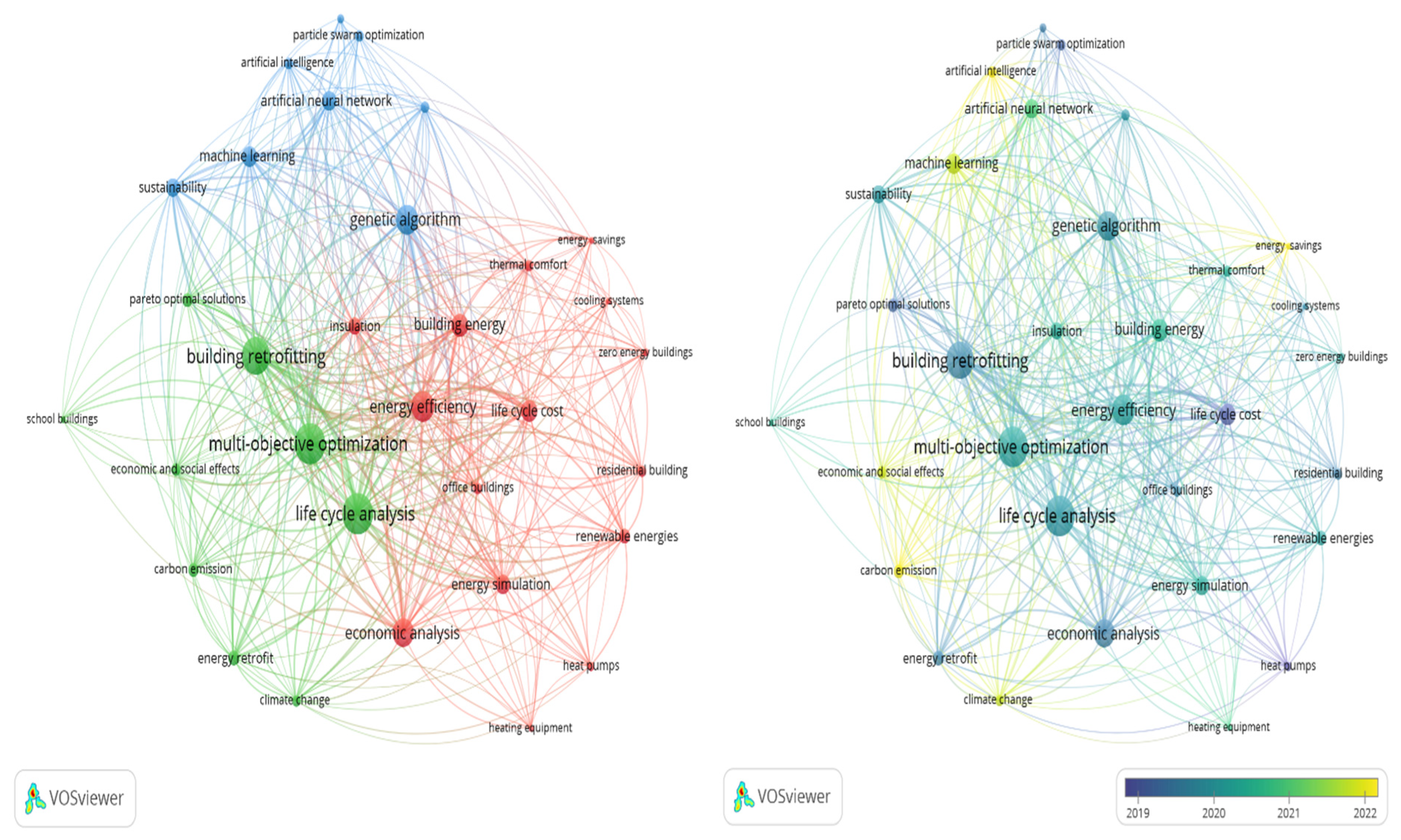
2.2. Bibliometric Analysis
3. Review of Retrofit Measures
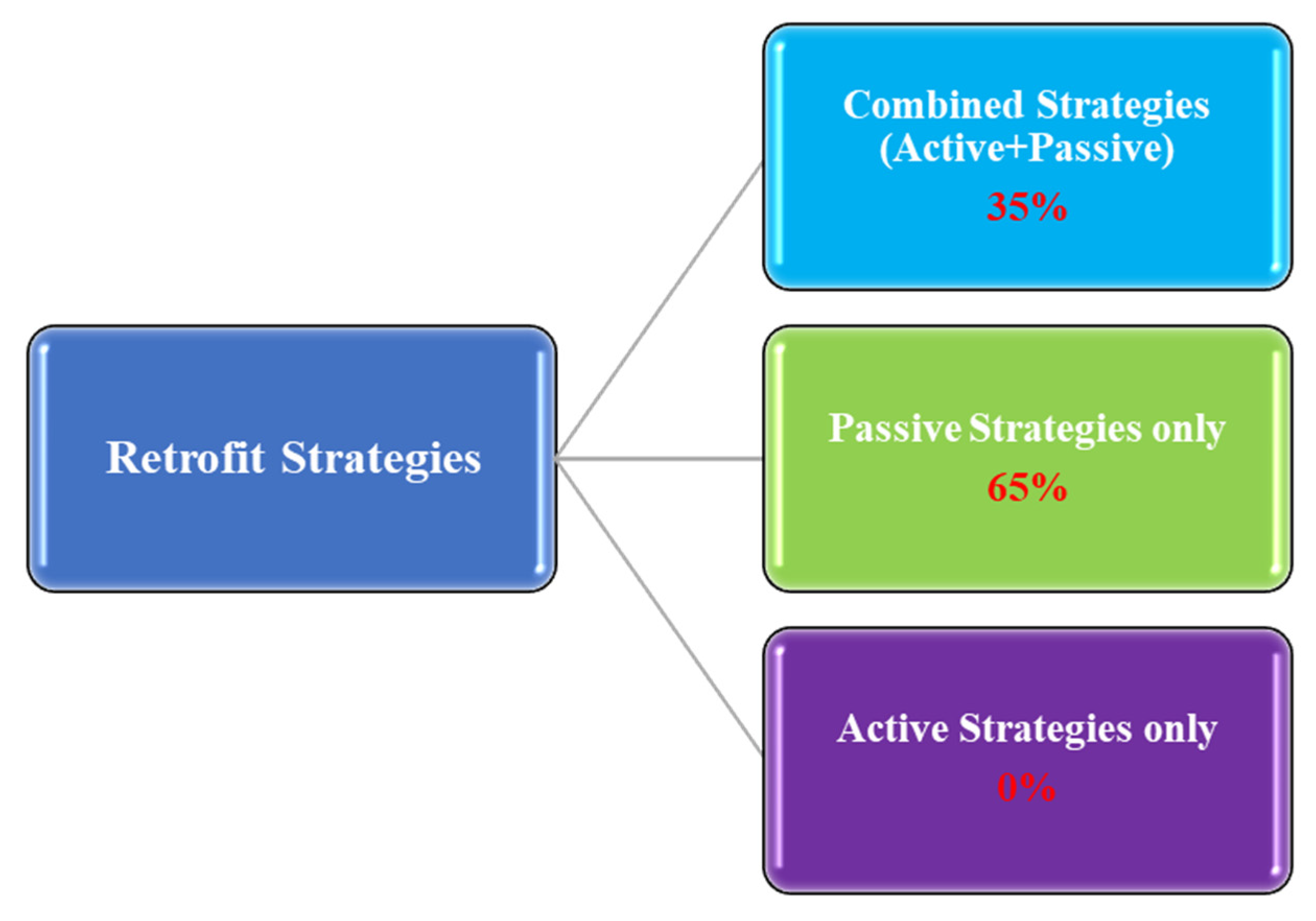
3.1. Retrofit Approaches: Passive, Active, and Combined
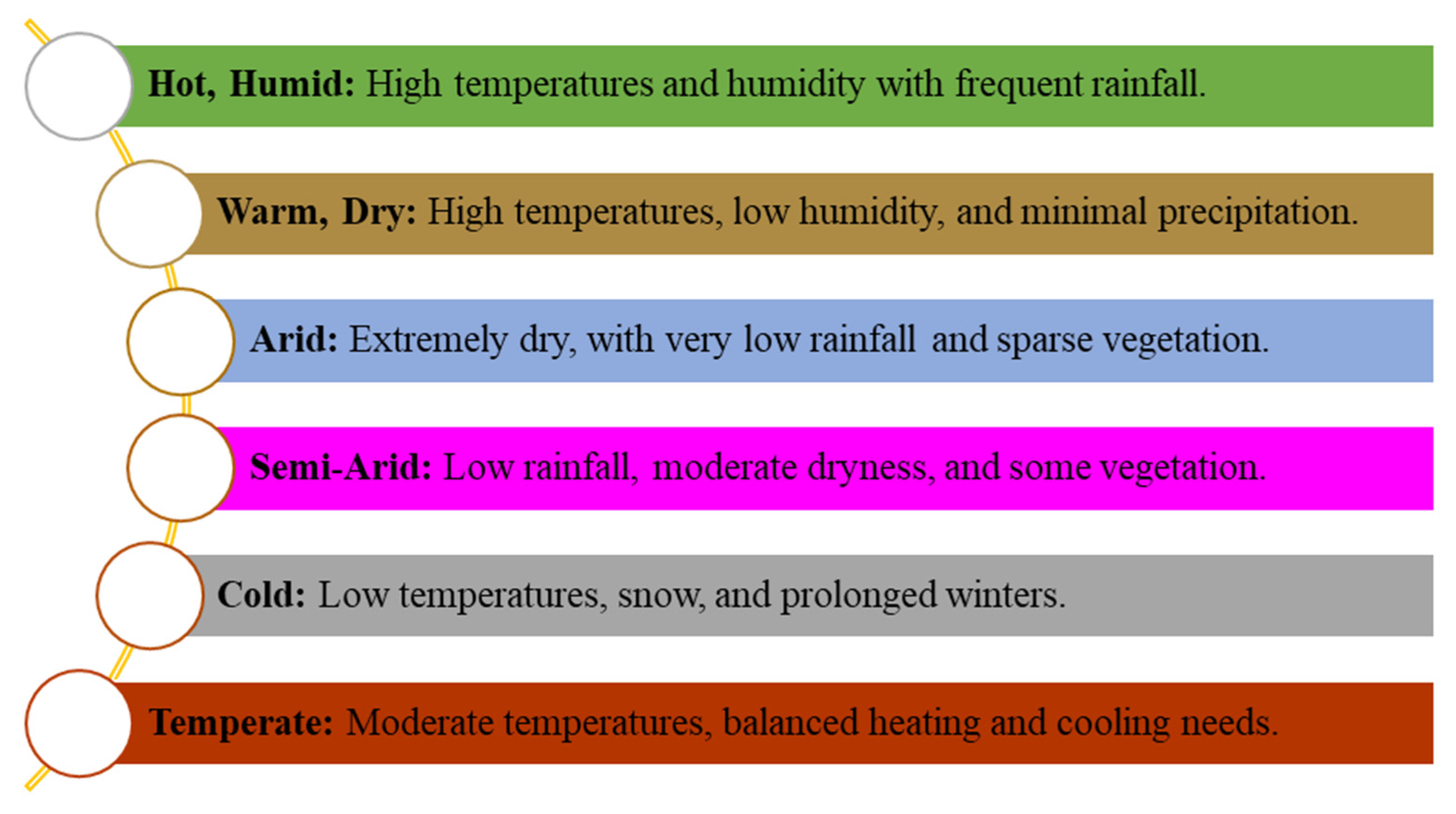
3.2. Choice of Retrofit Measures in Different Climatic Conditions
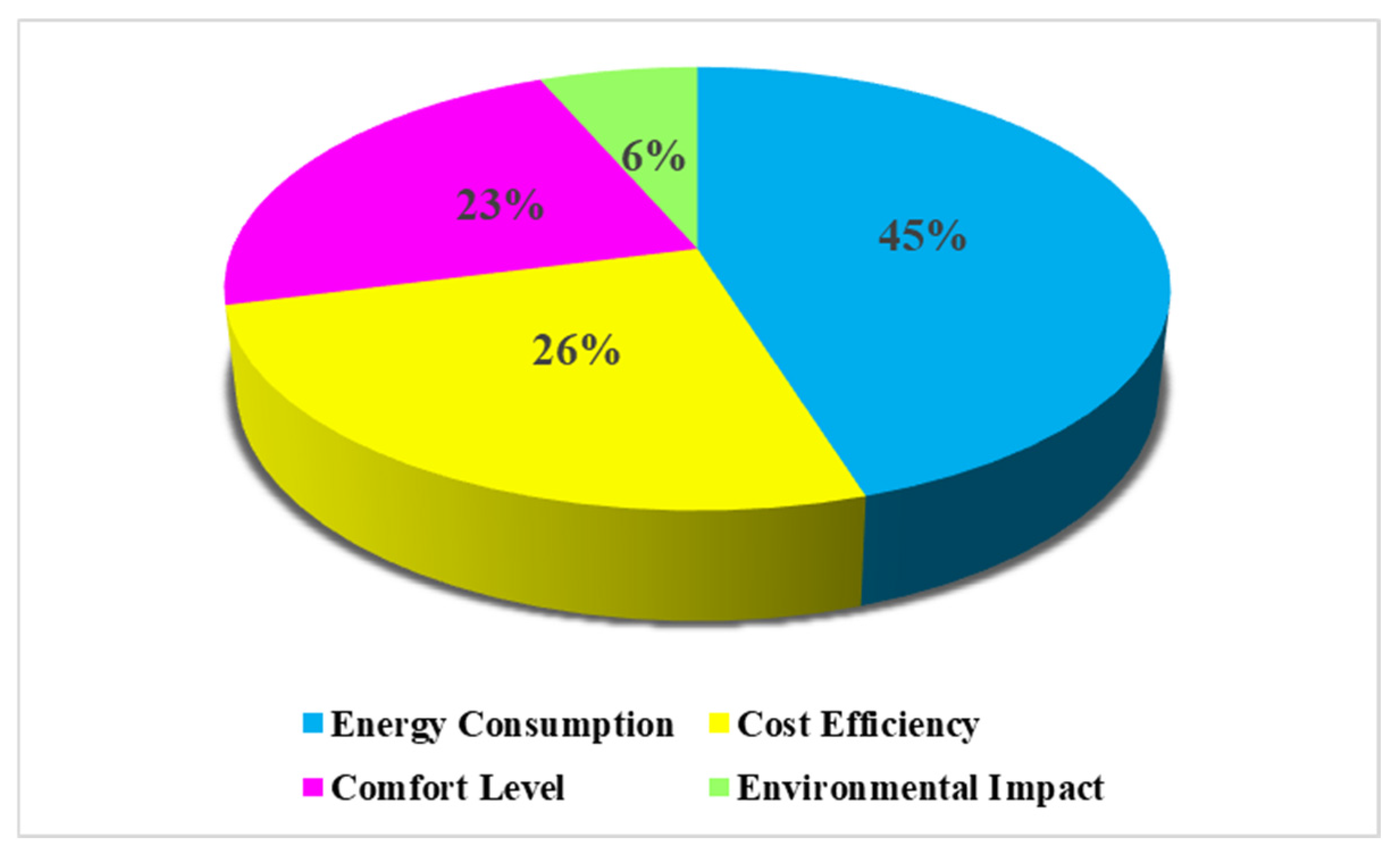
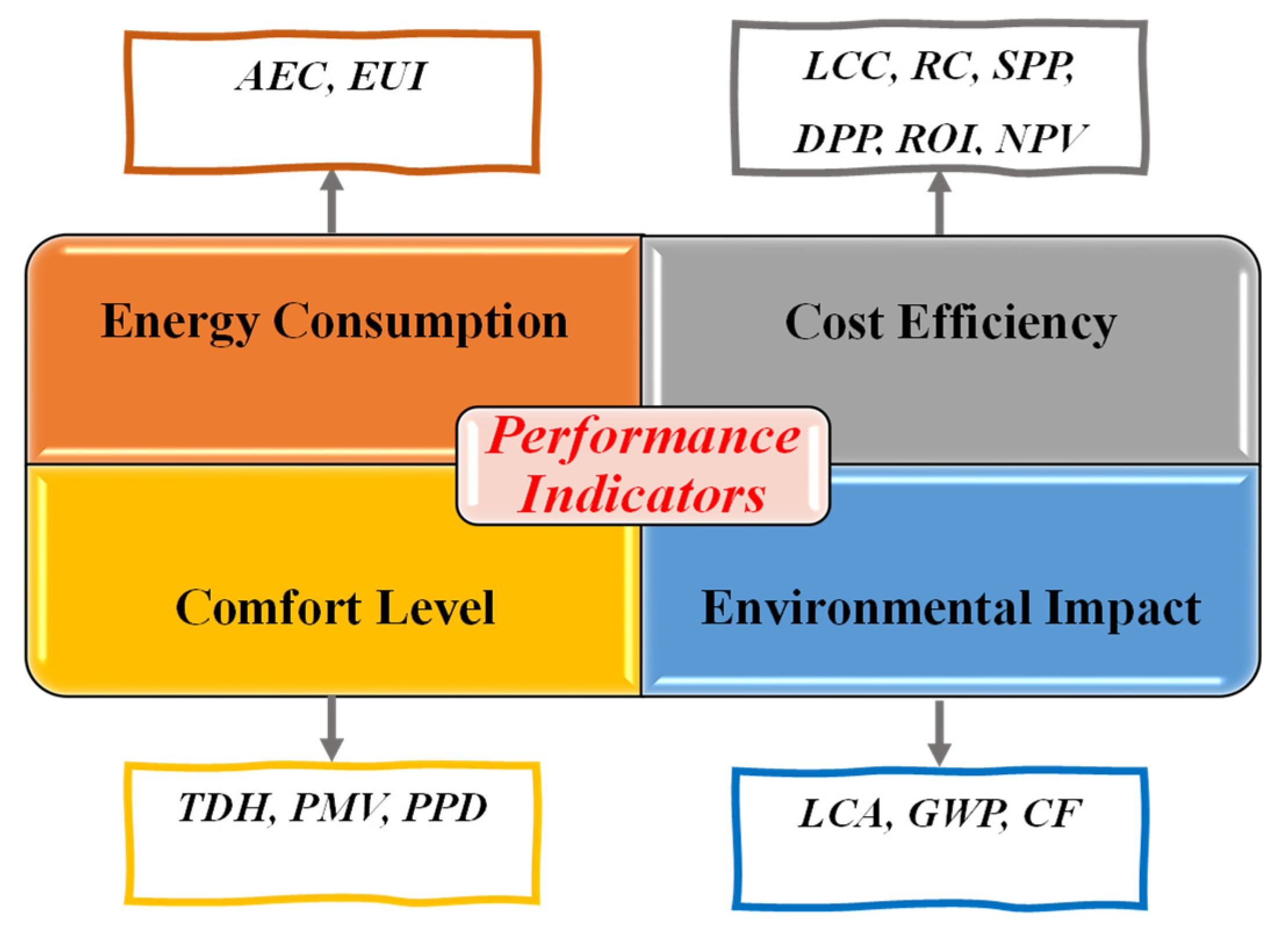
4. Performance Metrics in Building Retrofits
5. SBMOO vs. MBMOO in Building Retrofits
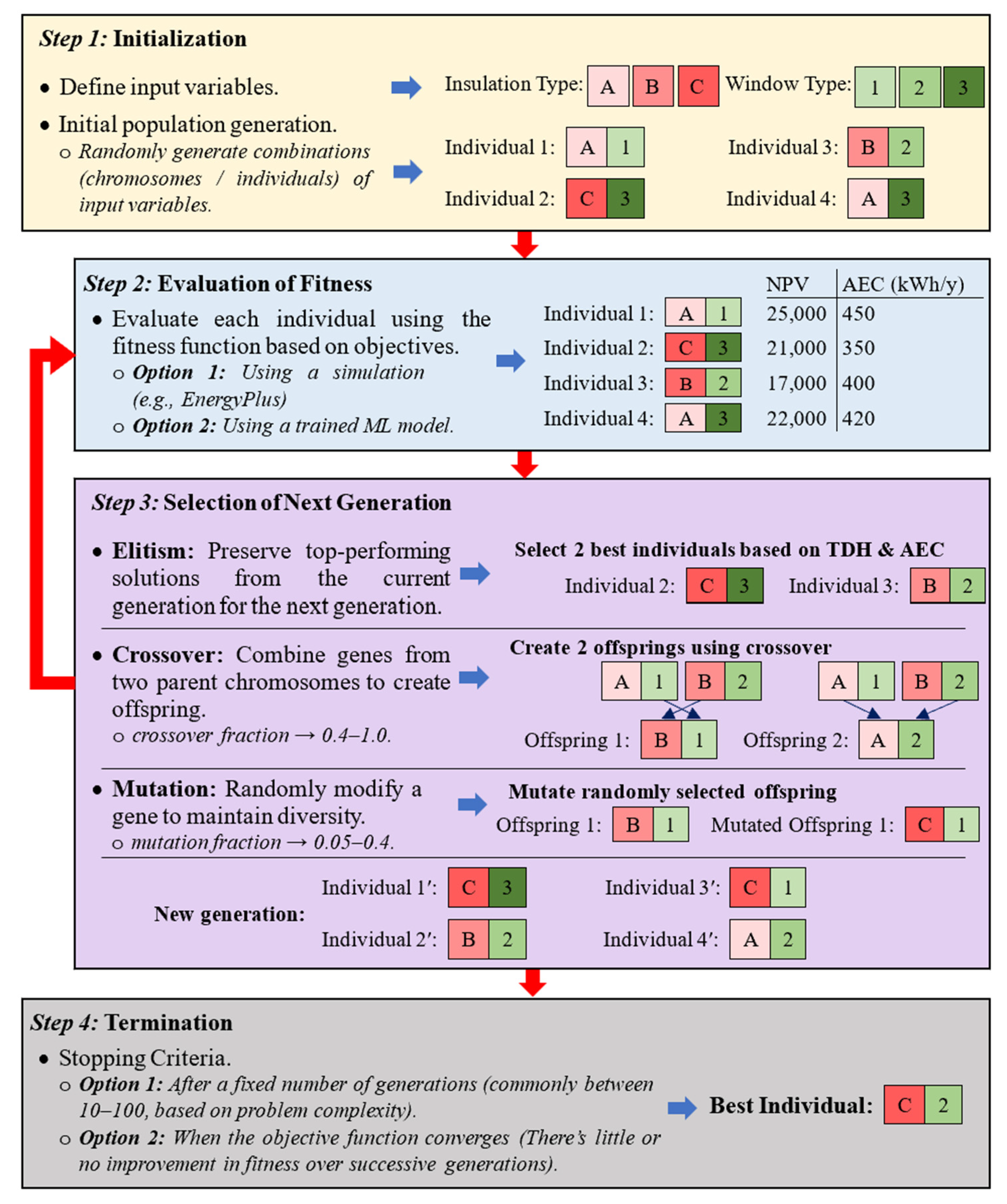
5.1. Key Concepts and Parameters of GAs in MOO Processes
5.2. Types of GAs in Building Retrofitting
5.3. Simulation-Based Multi-Objective Optimization (SBMOO) Approach
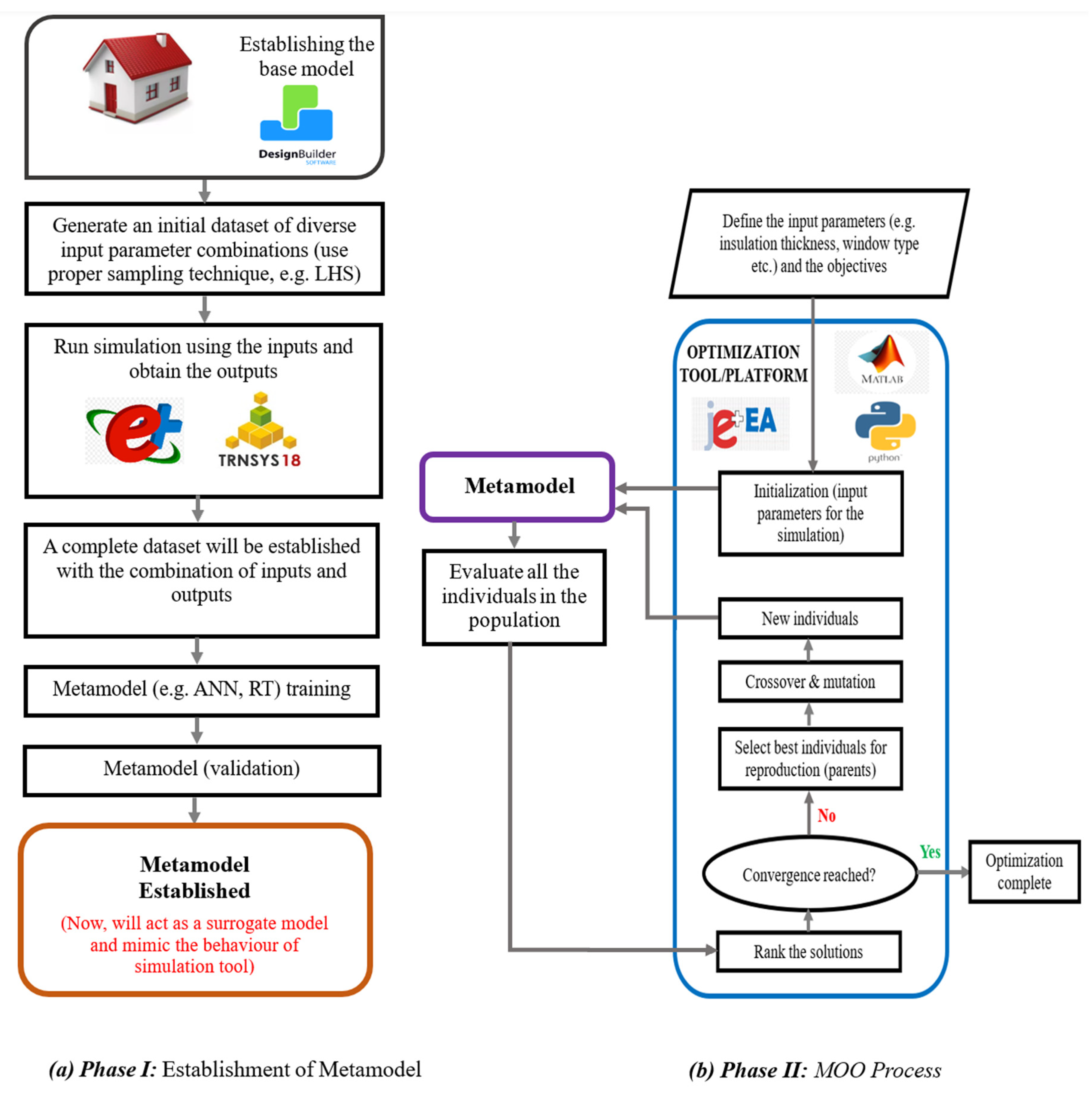
5.4. Metamodel-Based Multi-Objective Optimization (MBMOO) Approach
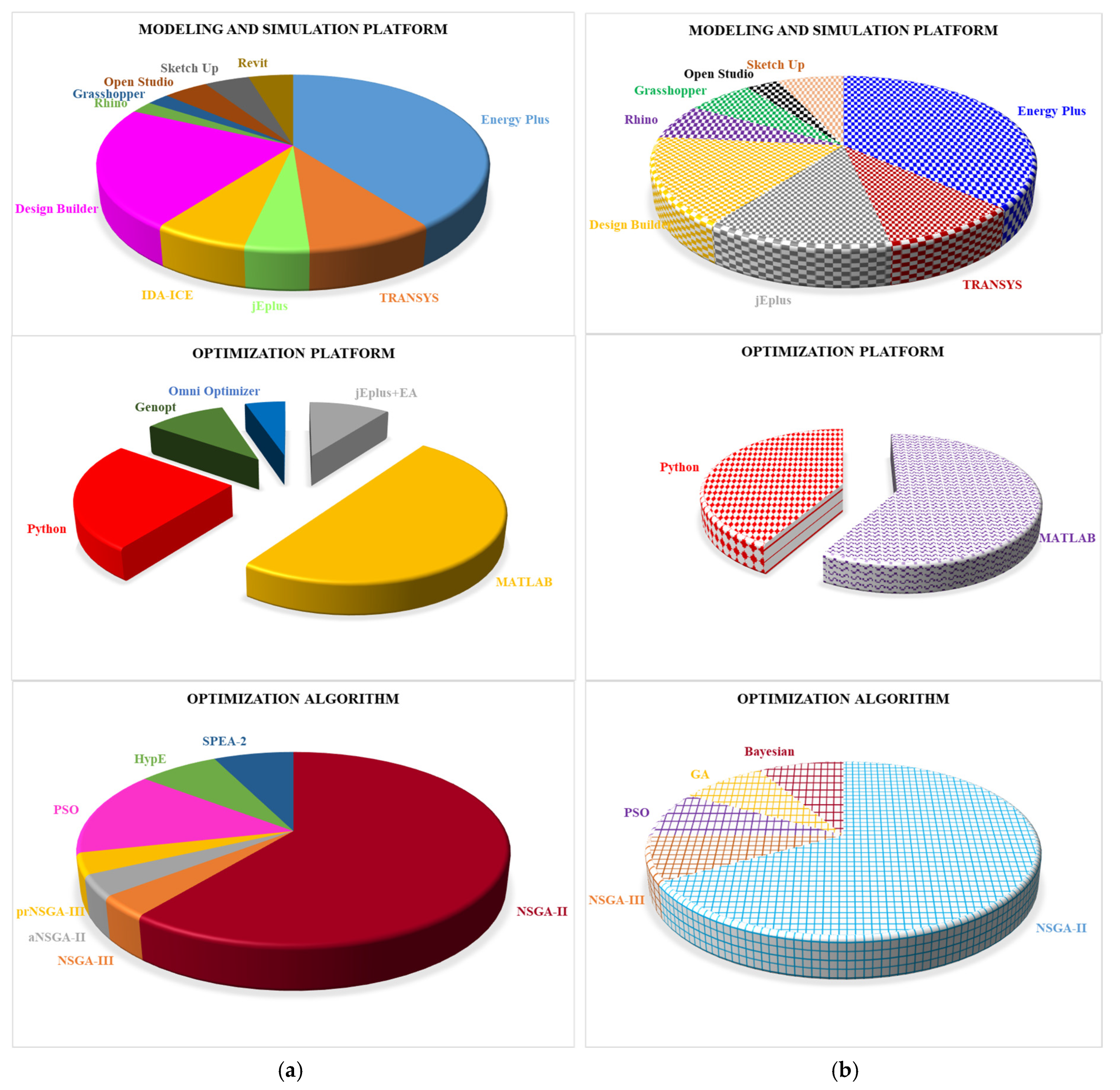
5.5. Simulation and Modeling Tools, MOO Algorithms, and Optimization Platforms Used in Building Retrofitting
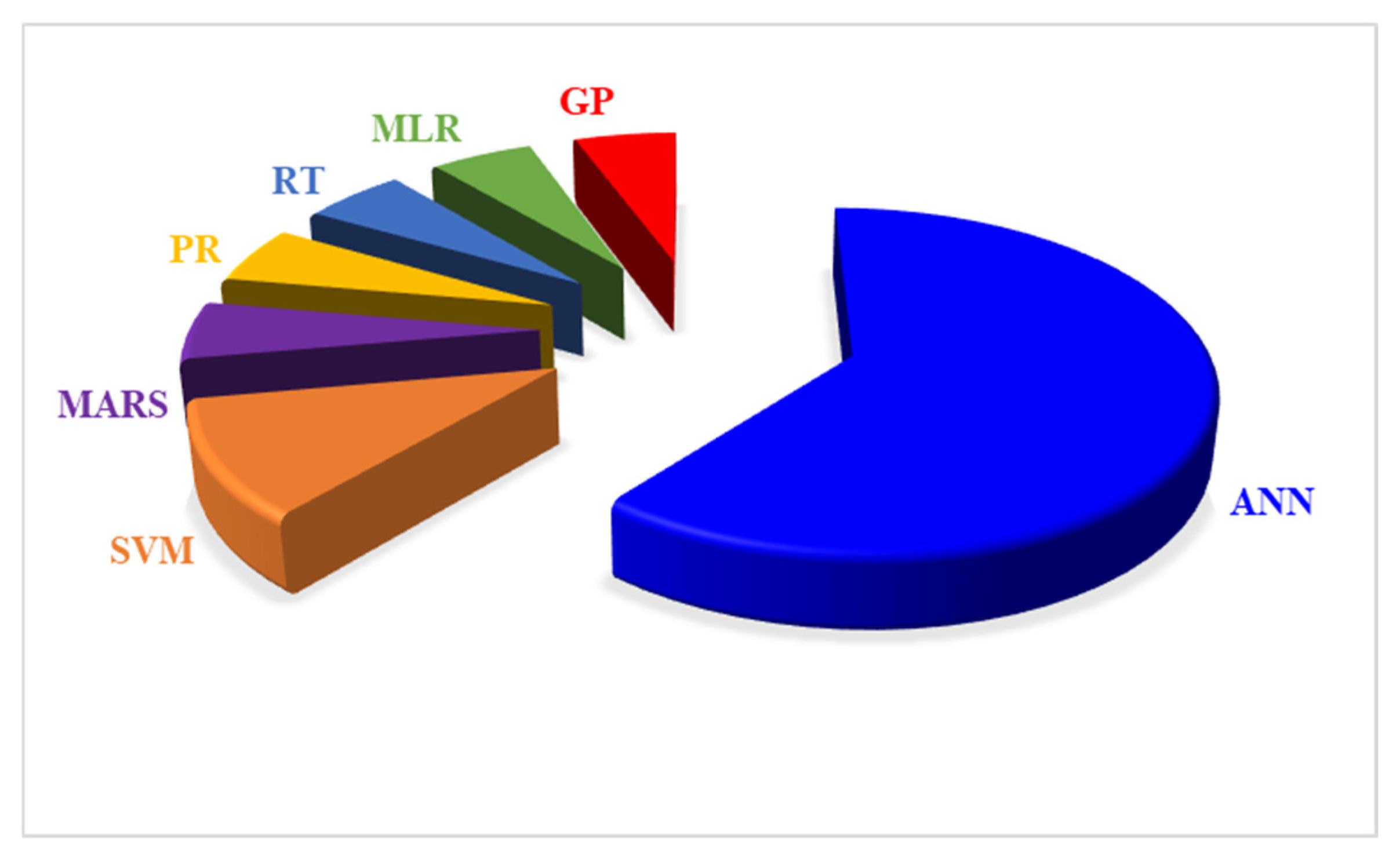
5.6. Different Machine Learning (ML) Models Used in the Metamodel-Based Approach
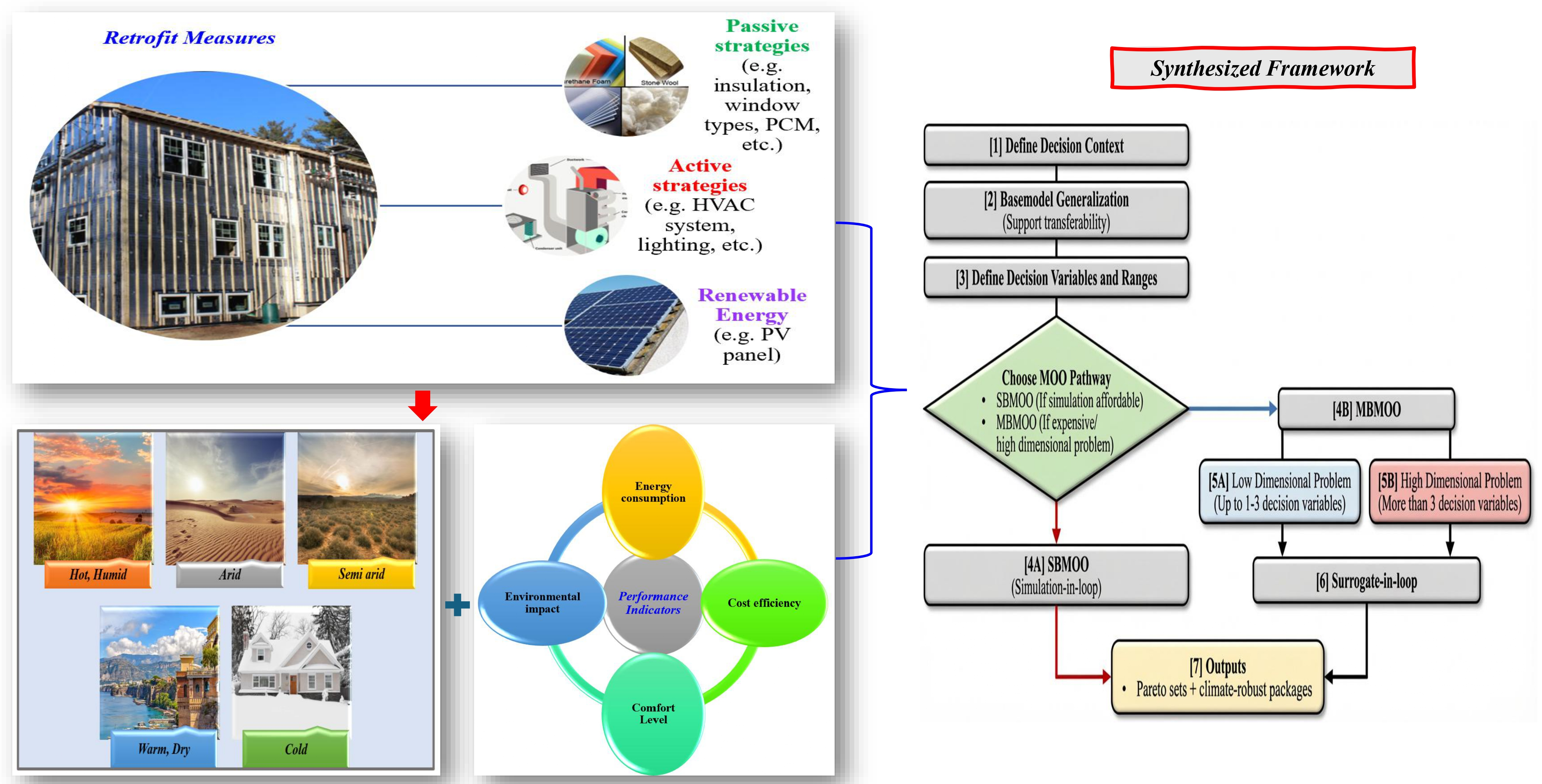
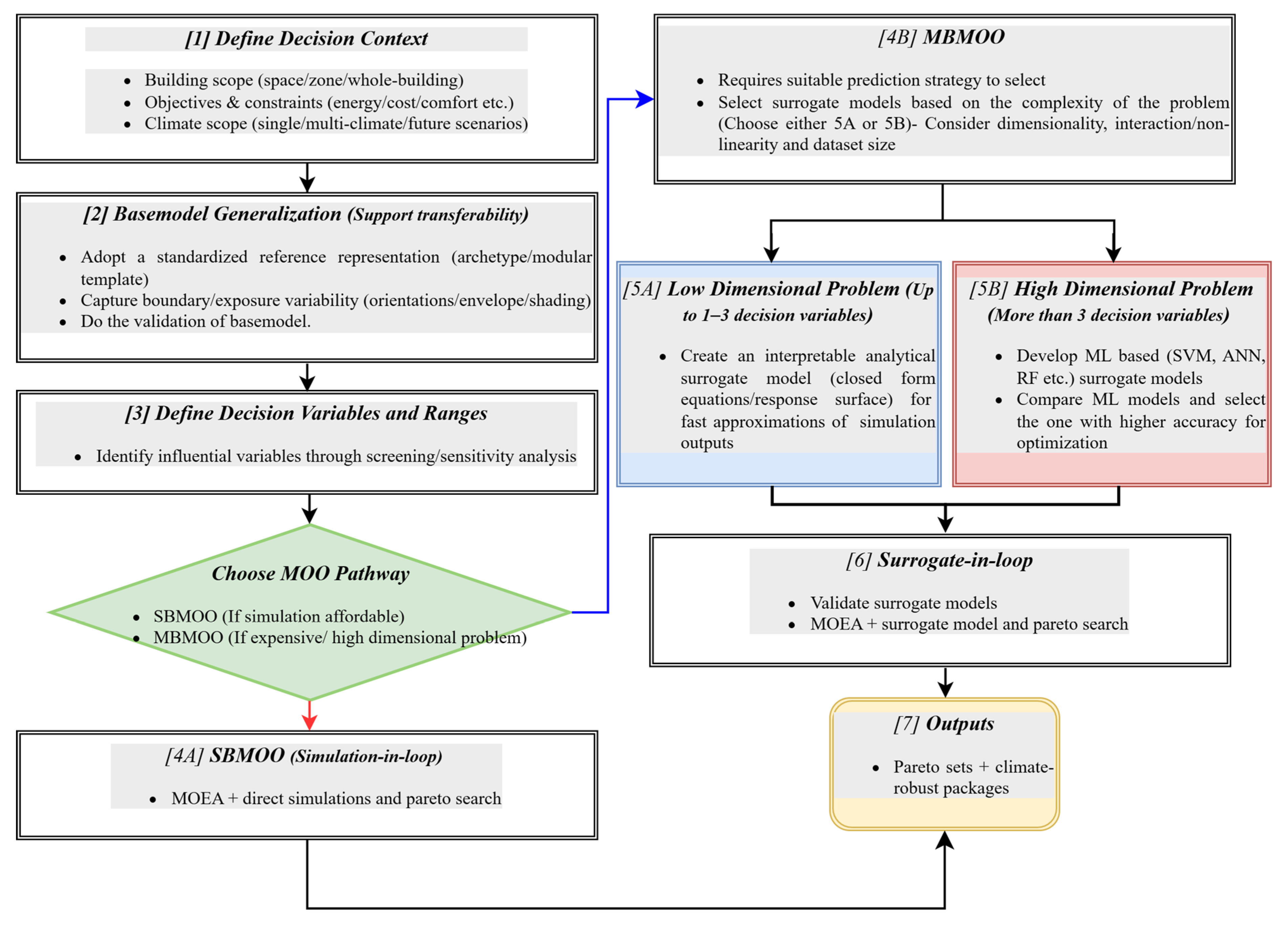
6. Synthesized Framework for Retrofit Optimization
7. Conclusions
Future Research Potential
- Future research should prioritize the development of more transferable retrofit decision pathways. The literature clearly demonstrates that most retrofit studies are case-specific, which limits their applicability across various spaces, geometries, and climates. High-performing models often rely on unique datasets, and the scarcity of data significantly restricts the potential for generalization. Retrofit decisions are predominantly driven by technical optimizations rather than homeowner preferences. Research consistently shows that stakeholders typically prioritize one or two affordable retrofit measures, frequently focusing on insulation upgrades due to financial constraints. This clearly underscores the need for simple, fast, and practical retrofit framework that reflect real-world retrofit practices. Moreover, the literature also indicates that an adaptable base model framework is necessary to quickly pinpoint the energy hot spots where retrofitting is essential.
- A second priority could be the broader integration of environmental and social objectives into retrofit optimization. Although energy and cost are widely considered, other important performance metrics such as LCA, including embodied and operational impact and social factors consisting of occupant behavior, indoor environmental quality, acoustic comfort, and visual comfort remain underexplored.
- There is also a need for comparative studies on SBMOO and MBMOO approaches in terms of practical usefulness, computational efficiency, and accuracy in building retrofits. Developing hybrid frameworks that combine the strengths of SBMOO and MBMOO could be transformative. Moreover, in MBMOO, a transferable prediction workflow is missing which can be served as preliminary optimization screening layer for selecting surrogate models before applying MBMOO. In addition, beyond standard climate zone weather files, future work should also consider future weather scenario for robust climate responsive retrofit studies.
Author Contributions
Funding
Data Availability Statement
Conflicts of Interest
References
- Pan, Y.; Zhu, M.; Lv, Y.; Yang, Y.; Liang, Y.; Yin, R.; Yang, Y.; Jia, X.; Wang, X.; Zeng, F. Building energy simulation and its application for building performance optimization: A review of methods, tools, and case studies. Adv. Appl. Energy 2023, 10, 100135. [Google Scholar] [CrossRef] [Scilit]
- Liu, C.; Sharples, S.; Mohammadpourkarbasi, H. A Review of Building Energy Retrofit Measures, Passive Design Strategies and Building Regulation for the Low Carbon Development of Existing Dwellings in the Hot Summer–Cold Winter Region of China. Energies 2023, 16, 4115. [Google Scholar] [CrossRef] [Scilit]
- Ali, U.; Bano, S.; Shamsi, M.H.; Sood, D.; Hoare, C.; Zuo, W.; Hewitt, N.; O’Donnell, J. Urban building energy performance prediction and retrofit analysis using data-driven machine learning approach. Energy Build. 2024, 303, 113768. [Google Scholar] [CrossRef] [Scilit]
- Sadineni, S.B.; Madala, S.; Boehm, R.F. Passive building energy savings: A review of building envelope components. Renew. Sustain. Energy Rev. 2011, 15, 3617–3631. [Google Scholar] [CrossRef] [Scilit]
- Arumugam, P.; Ramalingam, V.; Vellaichamy, P. Effective PCM, insulation, natural and/or night ventilation techniques to enhance the thermal performance of buildings located in various climates—A review. Energy Build. 2022, 258, 111840. [Google Scholar] [CrossRef] [Scilit]
- Żabowski, B.; Wronka, A.; Kowaluk, G. Selected Physical and Mechanical Properties of Particleboards Manufactured from Plantation Willow and Poplar Wood. Materials 2024, 17, 4069. [Google Scholar] [CrossRef] [Scilit]
- Fereidani, N.A.; Rodrigues, E.; Gaspar, A.R. A review of the energy implications of passive building design and active measures under climate change in the Middle East. J. Clean. Prod. 2021, 305, 127152. [Google Scholar] [CrossRef] [Scilit]
- Hu, X.; Xiang, Y.; Zhang, H.; Lin, Q.; Wang, W.; Wang, H. Active–passive combined energy-efficient retrofit of rural residence with non-benchmarked construction: A case study in Shandong province, China. Energy Rep. 2021, 7, 1360–1373. [Google Scholar] [CrossRef] [Scilit]
- Kamel, E.; Memari, A.M. Residential Building Envelope Energy Retrofit Methods, Simulation Tools, and Example Projects: A Review of the Literature. Buildings 2022, 12, 954. [Google Scholar] [CrossRef] [Scilit]
- Ma, Z.; Cooper, P.; Daly, D.; Ledo, L. Existing building retrofits: Methodology and state-of-the-art. Energy Build. 2012, 55, 889–902. [Google Scholar] [CrossRef] [Scilit]
- Jagarajan, R.; Asmoni, M.N.A.M.; Mohammed, A.H.; Jaafar, M.N.; Mei, J.L.Y.; Baba, M. Green retrofitting—A review of current status, implementations and challenges. Renew. Sustain. Energy Rev. 2017, 67, 1360–1368. [Google Scholar] [CrossRef] [Scilit]
- Robert, A.; Kummert, M. Designing net-zero energy buildings for the future climate, not for the past. Build. Environ. 2012, 55, 150–158. [Google Scholar] [CrossRef] [Scilit]
- Pérez-Lombard, L.; Ortiz, J.; Pout, C. A review on buildings energy consumption information. Energy Build. 2008, 40, 394–398. [Google Scholar] [CrossRef] [Scilit]
- Dziewit, P.; Rajkowski, K.; Płatek, P. Effects of Building Orientation and Raster Angle on the Mechanical Properties of Selected Materials Used in FFF Techniques. Materials 2024, 17, 6076. [Google Scholar] [CrossRef] [Scilit]
- Feng, Z.; Pan, H.; Wu, W.; Wang, Z.; Jiang, P. Impact of Heat Treatment and Building Direction on Selective Laser-Melted 316L Stainless Steel: Microstructure and Mechanical Properties. Materials 2024, 18, 32. [Google Scholar] [CrossRef] [Scilit]
- Nguyen, A.-T.; Reiter, S.; Rigo, P. A review on simulation-based optimization methods applied to building performance analysis. Appl. Energy 2014, 113, 1043–1058. [Google Scholar] [CrossRef] [Scilit]
- Bre, F.; Roman, N.; Fachinotti, V.D. An efficient metamodel-based method to carry out multi-objective building performance optimizations. Energy Build. 2020, 206, 109576. [Google Scholar] [CrossRef] [Scilit]
- Hashempour, N.; Taherkhani, R.; Mahdikhani, M. Energy performance optimization of existing buildings: A literature review. Sustain. Cities Soc. 2020, 54, 101967. [Google Scholar] [CrossRef] [Scilit]
- Izadi, A.; Sabery, S.M.; Farazjou, F.; Sanaieian, H. A Systematic Review of Multi-Objective Optimization Methods of Building Energy Performance. Iran Univ. Sci. Technol. 2023, 33, 1–20. [Google Scholar] [CrossRef]
- Harshalatha; Patil, S.; Kini, P.G. A review on simulation based multi-objective optimization of space layout design parameters on building energy performance. J. Build. Pathol. Rehabil. 2024, 9, 69. [Google Scholar] [CrossRef] [Scilit]
- Costa-Carrapiço, I.; Raslan, R.; González, J.N. A systematic review of genetic algorithm-based multi-objective optimisation for building retrofitting strategies towards energy efficiency. Energy Build. 2020, 210, 109690. [Google Scholar] [CrossRef] [Scilit]
- Luo, S.-L.; Shi, X.; Yang, F. A Review of Data-Driven Methods in Building Retrofit and Performance Optimization: From the Perspective of Carbon Emission Reductions. Energies 2024, 17, 4641. [Google Scholar] [CrossRef] [Scilit]
- Martek, I.; Amirkhani, M.; Khan, A.A. Retrofitting for Sustainable Building Performance: A Scientometric–PESTEL Analysis and Critical Content Review. Buildings 2025, 15, 4106. [Google Scholar] [CrossRef] [Scilit]
- Ghaleb, H.; Alhajlah, H.H.; Abdullah, A.A.B.; Kassem, M.A.; Al-Sharafi, M.A. A Scientometric Analysis and Systematic Literature Review for Construction Project Complexity. Buildings 2022, 12, 482. [Google Scholar] [CrossRef] [Scilit]
- van Eck, N.; Waltman, L. Software survey: VOSviewer, a computer program for bibliometric mapping. Scientometrics 2010, 84, 523–538. [Google Scholar] [CrossRef] [Scilit]
- Dodampegama, S.; Hou, L.; Asadi, E.; Zhang, G.; Setunge, S. Revolutionizing construction and demolition waste sorting: Insights from artificial intelligence and robotic applications. Resour. Conserv. Recycl. 2024, 202, 107375. [Google Scholar] [CrossRef] [Scilit]
- Hernández, G.; Cetina-Quiñones, A.J.; Bassam, A.; Carrillo, J.G. Passive strategies towards energy efficient social housing: A parametric case study and decision-making framework in the Mexican tropical climate. J. Build. Eng. 2024, 82, 108282. [Google Scholar] [CrossRef] [Scilit]
- Abdeen, A.; Mushtaha, E.; Hussien, A.; Ghenai, C.; Maksoud, A.; Belpoliti, V. Simulation-based multi-objective genetic optimization for promoting energy efficiency and thermal comfort in existing buildings of hot climate. Results Eng. 2024, 21, 101815. [Google Scholar] [CrossRef] [Scilit]
- Ji, Y.; Li, G.; Su, F.; Chen, Y.; Zhang, R. Retrofit Analysis of City-Scale Residential Buildings in the Hot Summer and Cold Winter Climate Zone. Energies 2023, 16, 6152. [Google Scholar] [CrossRef] [Scilit]
- Hinnells, M. Technologies to achieve demand reduction and microgeneration in buildings. Energy Policy 2008, 36, 4427–4433. [Google Scholar] [CrossRef] [Scilit]
- Ciardiello, A.; Dell’Olmo, J.; Ferrero, M.; Pastore, L.M.; Rosso, F.; Salata, F. Energy Retrofit Optimization by Means of Genetic Algorithms as an Answer to Fuel Poverty Mitigation in Social Housing Buildings. Atmosphere 2023, 14, 1. [Google Scholar] [CrossRef] [Scilit]
- Almeida, R.; Freitas, V. Multi-objective optimization for school buildings retrofit combining artificial neural networks and life cycle cost. In Proceedings of the 2nd Central European Symposium on Building Physics, Vienna, Austria, 9–11 September 2013. [Google Scholar]
- Hamdan, M.; Mirzaei, P.; Gillott, M. Life Cycle Cost Assessment and Retrofit in Community Scale: A Case Study of Jordan. E3S Web Conf. 2023, 396, 04012. [Google Scholar] [CrossRef] [Scilit]
- Dabous, S.A.; Hosny, F. A review of building envelope retrofitting methods for improving energy efficiency, aesthetic, and indoor environmental quality. Energy Nexus 2025, 18, 100407. [Google Scholar] [CrossRef] [Scilit]
- Carratt, A.; Kokogiannakis, G.; Daly, D. Resilience testing in thermal retrofit Optimisation: Maximising the benefits of passive strategies across Behavioural, Climatic, and extreme weather scenarios. Energy Build. 2025, 337, 115696. [Google Scholar] [CrossRef] [Scilit]
- Wang, Y.; Petrou, G.; Symonds, P.; Hsu, S.-C.; Milner, J.; Hutchinson, E.; Davies, M.; Macintyre, H.L. Investigating the impacts of home energy retrofit on the indoor environment through co-simulation: A UK case study. J. Build. Eng. 2025, 100, 111794. [Google Scholar] [CrossRef] [Scilit]
- Ferdyn-Grygierek, J.; Grygierek, K. Towards Climate-Resilient Dwellings: A Comparative Analysis of Passive and Active Retrofit Solutions in Aging Central European Housing Stock. Energies 2025, 18, 4386. [Google Scholar] [CrossRef] [Scilit]
- Ma’bdeh, S.N.; Ghani, Y.A.; Obeidat, L.; Aloshan, M. Affordability assessment of passive retrofitting measures for residential buildings using life cycle assessment. Heliyon 2023, 9, e13574. [Google Scholar] [CrossRef] [Scilit]
- Hermann, J.; Kachirayil, F.; Lohrmann, A.; Scheller, F.; Roskosch, D.; McKenna, R. A critical reflection on modelling approaches for heat pumps and building envelope retrofits in local energy system optimisations. Appl. Energy 2025, 400, 126525. [Google Scholar] [CrossRef] [Scilit]
- Montana, F.; Kanafani, K.; Wittchen, K.B.; Birgisdottir, H.; Longo, S.; Cellura, M.; Riva Sanseverino, E. Multi-Objective Optimization of Building Life Cycle Performance. A Housing Renovation Case Study in Northern Europe. Sustainability 2020, 12, 7807. [Google Scholar] [CrossRef] [Scilit]
- Shadram, F.; Bhattacharjee, S.; Lidelöw, S.; Mukkavaara, J.; Olofsson, T. Exploring the trade-off in life cycle energy of building retrofit through optimization. Appl. Energy 2020, 269, 115083. [Google Scholar] [CrossRef] [Scilit]
- Penna, P.; Prada, A.; Cappelletti, F.; Gasparella, A. Multi-objectives optimization of Energy Efficiency Measures in existing buildings. Energy Build. 2015, 95, 57–69. [Google Scholar] [CrossRef] [Scilit]
- Pungercar, V.; Zhan, Q.; Xiao, Y.; Musso, F.; Dinkel, A.; Pflug, T. A new retrofitting strategy for the improvement of indoor environment quality and energy efficiency in residential buildings in temperate climate using prefabricated elements. Energy Build. 2021, 241, 110951. [Google Scholar] [CrossRef] [Scilit]
- Rosso, F.; Ciancio, V.; Dell’Olmo, J.; Salata, F. Multi-objective optimization of building retrofit in the Mediterranean climate by means of genetic algorithm application. Energy Build. 2020, 216, 109945. [Google Scholar] [CrossRef] [Scilit]
- Kerdan, I.G.; Raslan, R.; Ruyssevelt, P. An exergy-based multi-objective optimisation model for energy retrofit strategies in non-domestic buildings. Energy 2016, 117, 506–522. [Google Scholar] [CrossRef] [Scilit]
- Ascione, F.; Bianco, N.; De Masi, R.F.; Mauro, G.M.; Vanoli, G.P. Energy retrofit of educational buildings: Transient energy simulations, model calibration and multi-objective optimization towards nearly zero-energy performance. Energy Build. 2017, 144, 303–319. [Google Scholar] [CrossRef] [Scilit]
- Dragonetti, L.; Papadaki, D.; Assimakopoulos, M.-N.; Ferrante, A.; Iannantuono, M. Environmental and Economic Assessment of Energy Renovation in Buildings, a Case Study in Greece. Buildings 2024, 14, 942. [Google Scholar] [CrossRef] [Scilit]
- Loche, I.; Recart, C.; Kuijer, L.; Loonen, R. Integrating residents’ heating practices into energy retrofit decision-making: A sufficiency-oriented approach. J. Build. Eng. 2025, 112, 113781. [Google Scholar] [CrossRef] [Scilit]
- Aruta, G.; Ascione, F.; Bianco, N.; Mauro, G.M. Sustainability and energy communities: Assessing the potential of building energy retrofit and renewables to lead the local energy transition. Energy 2023, 282, 128377. [Google Scholar] [CrossRef] [Scilit]
- Yang, X.; Chen, Z.; Zou, Y.; Wan, F. Improving the Energy Performance and Economic Benefits of Aged Residential Buildings by Retrofitting in Hot–Humid Regions of China. Energies 2023, 16, 4981. [Google Scholar] [CrossRef] [Scilit]
- Tokede, O.; Boggavarapu, M.K.; Wamuziri, S. Assessment of building retrofit scenarios using embodied energy and life cycle impact assessment. Built Environ. Proj. Asset Manag. 2023, 13, 666–681. [Google Scholar] [CrossRef] [Scilit]
- Fernandes, J.; Santos, M.C.; Castro, R. Introductory Review of Energy Efficiency in Buildings Retrofits. Energies 2021, 14, 8100. [Google Scholar] [CrossRef] [Scilit]
- Mostafazadeh, F.; Eirdmousa, S.J.; Tavakolan, M. Energy, economic and comfort optimization of building retrofits considering climate change: A simulation-based NSGA-III approach. Energy Build. 2023, 280, 112721. [Google Scholar] [CrossRef] [Scilit]
- Yang, X.; Zhao, L.; Bruse, M.; Meng, Q. An integrated simulation method for building energy performance assessment in urban environments. Energy Build. 2012, 54, 243–251. [Google Scholar] [CrossRef] [Scilit]
- Hu, M.; Zhang, K.; Nguyen, Q.; Tasdizen, T. The effects of passive design on indoor thermal comfort and energy savings for residential buildings in hot climates: A systematic review. Urban Clim. 2023, 49, 101466. [Google Scholar] [CrossRef] [Scilit]
- Alexakis, K.; Komninou, S.; Kokkinakos, P.; Askounis, D. Climate-Sensitive Building Renovation Strategies: A Review of Retrofit Interventions Across Climatic and Building Typologies. Sustainability 2025, 17, 8187. [Google Scholar] [CrossRef] [Scilit]
- Gupta, V.; Deb, C. Envelope design for low-energy buildings in the tropics: A review. Renew. Sustain. Energy Rev. 2023, 186, 113650. [Google Scholar] [CrossRef] [Scilit]
- Posani, M.; Veiga, R.; de Freitas, V.P. Retrofitting Historic Walls: Feasibility of Thermal Insulation and Suitability of Thermal Mortars. Heritage 2021, 4, 2009–2022. [Google Scholar] [CrossRef] [Scilit]
- Chung-Camargo, K.; González, J.; Austin, M.C.; Carpino, C.; Mora, D.; Arcuri, N. Advances in Retrofitting Strategies for Energy Efficiency in Tropical Climates: A Systematic Review and Analysis. Buildings 2024, 14, 1633. [Google Scholar] [CrossRef] [Scilit]
- Sun, X.; Gou, Z.; Lau, S.S.-Y. Cost-effectiveness of active and passive design strategies for existing building retrofits in tropical climate: Case study of a zero energy building. J. Clean. Prod. 2018, 183, 35–45. [Google Scholar] [CrossRef] [Scilit]
- Elaouzy, Y.; El Fadar, A. Energy, economic and environmental benefits of integrating passive design strategies into buildings: A review. Renew. Sustain. Energy Rev. 2022, 167, 112828. [Google Scholar] [CrossRef] [Scilit]
- Delgarm, N.; Sajadi, B.; Delgarm, S.; Kowsary, F. A novel approach for the simulation-based optimization of the buildings energy consumption using NSGA-II: Case study in Iran. Energy Build. 2016, 127, 552–560. [Google Scholar] [CrossRef] [Scilit]
- Zhang, H.; Hewage, K.; Prabatha, T.; Sadiq, R. Life cycle thinking-based energy retrofits evaluation framework for Canadian residences: A Pareto optimization approach. Build. Environ. 2021, 204, 108115. [Google Scholar] [CrossRef] [Scilit]
- Ascione, F.; Bianco, N.; Mauro, G.M.; Vanoli, G.P. A new comprehensive framework for the multi-objective optimization of building energy design: Harlequin. Appl. Energy 2019, 241, 331–361. [Google Scholar] [CrossRef] [Scilit]
- Bonamente, E.; Brunelli, C.; Castellani, F.; Garinei, A.; Biondi, L.; Marconi, M.; Piccioni, E. A life-cycle approach for multi-objective optimisation in building design: Methodology and application to a case study. Civ. Eng. Environ. Syst. 2018, 35, 158–179. [Google Scholar] [CrossRef] [Scilit]
- Huo, H.; Deng, X.; Wei, Y.; Liu, Z.; Liu, M.; Tang, L. Optimization of energy-saving renovation technology for existing buildings in a hot summer and cold winter area. J. Build. Eng. 2024, 86, 108597. [Google Scholar] [CrossRef] [Scilit]
- Alkhatatbeh, B.J.; Kurdi, Y.; Asadi, S. Multi-objective optimization of classrooms’ daylight performance and energy use in U.S. Climate Zones. Energy Build. 2023, 297, 113468. [Google Scholar] [CrossRef] [Scilit]
- Bagheri-Esfeh, H.; Dehghan, M.R. Multi-objective optimization of setpoint temperature of thermostats in residential buildings. Energy Build. 2022, 261, 111955. [Google Scholar] [CrossRef] [Scilit]
- Ascione, F.; Bianco, N.; De Masi, R.F.; Mauro, G.M.; Vanoli, G.P. Resilience of robust cost-optimal energy retrofit of buildings to global warming: A multi-stage, multi-objective approach. Energy Build. 2017, 153, 150–167. [Google Scholar] [CrossRef] [Scilit]
- Shi, Y.; Chen, P. Energy retrofitting of hospital buildings considering climate change: An approach integrating automated machine learning with NSGA-III for multi-objective optimization. Energy Build. 2024, 319, 114571. [Google Scholar] [CrossRef] [Scilit]
- Alimohamadi, R.; Jahangir, M.H. Multi-Objective optimization of energy consumption pattern in order to provide thermal comfort and reduce costs in a residential building. Energy Convers. Manag. 2024, 305, 118214. [Google Scholar] [CrossRef] [Scilit]
- Tavakolan, M.; Mostafazadeh, F.; Eirdmousa, S.J.; Safari, A.; Mirzaei, K. A parallel computing simulation-based multi-objective optimization framework for economic analysis of building energy retrofit: A case study in Iran. J. Build. Eng. 2022, 45, 103485. [Google Scholar] [CrossRef] [Scilit]
- Luo, X.J.; Oyedele, L.O. Life cycle optimisation of building retrofitting considering climate change effects. Energy Build. 2022, 258, 111830. [Google Scholar] [CrossRef] [Scilit]
- Thrampoulidis, E.; Mavromatidis, G.; Lucchi, A.; Orehounig, K. A machine learning-based surrogate model to approximate optimal building retrofit solutions. Appl. Energy 2021, 281, 116024. [Google Scholar] [CrossRef] [Scilit]
- Sharif, S.A.; Hammad, A. Simulation-Based Multi-Objective Optimization of institutional building renovation considering energy consumption, Life-Cycle Cost and Life-Cycle Assessment. J. Build. Eng. 2019, 21, 429–445. [Google Scholar] [CrossRef] [Scilit]
- Sood, D.; Alhindawi, I.; Ali, U.; Finn, D.; McGrath, J.A.; Byrne, M.A.; O’Donnell, J. Machine learning based multi-objective optimisation of energy consumption, thermal comfort and CO2 concentration in energy-efficient naturally ventilated residential dwellings. Build. Environ. 2025, 267, 112255. [Google Scholar] [CrossRef] [Scilit]
- Panadés, K.; Olbina, S.; Kohlman Rabbani, E.R. Social sustainability in building retrofit projects: A systematic literature review. Int. J. Build. Pathol. Adapt. 2025. ahead-of-print. [Google Scholar] [CrossRef] [Scilit]
- Kiss, B.; Szalay, Z. Sensitivity of buildings’ carbon footprint to electricity decarbonization: A life cycle–based multi-objective optimization approach. Int. J. Life Cycle Assess. 2023, 28, 933–952. [Google Scholar] [CrossRef] [Scilit]
- Obead, R.; Khaddour, L.; D’Amico, B. Historical Building Energy Retrofit Focusing on the Whole Life Cycle Assessment—A Systematic Literature Review. Architecture 2025, 5, 49. [Google Scholar] [CrossRef] [Scilit]
- Ruiz-Valero, L.; Makaremi, N.; Haines, S.; Touchie, M. Co-benefits of residential retrofits: A review of quantification and monetization approaches. Build. Environ. 2025, 270, 112576. [Google Scholar] [CrossRef] [Scilit]
- Cascone, Y.; Capozzoli, A.; Perino, M. Optimisation analysis of PCM-enhanced opaque building envelope components for the energy retrofitting of office buildings in Mediterranean climates. Appl. Energy 2018, 211, 929–953. [Google Scholar] [CrossRef] [Scilit]
- Kylili, A.; Fokaides, P.A.; Lopez Jimenez, P.A. Key Performance Indicators (KPIs) approach in buildings renovation for the sustainability of the built environment: A review. Renew. Sustain. Energy Rev. 2016, 56, 906–915. [Google Scholar] [CrossRef] [Scilit]
- Li, K.; Pan, L.; Xue, W.; Jiang, H.; Mao, H. Multi-Objective Optimization for Energy Performance Improvement of Residential Buildings: A Comparative Study. Energies 2017, 10, 245. [Google Scholar] [CrossRef] [Scilit]
- Wright, J.A.; Loosemore, H.A.; Farmani, R. Optimization of building thermal design and control by multi-criterion genetic algorithm. Energy Build. 2002, 34, 959–972. [Google Scholar] [CrossRef] [Scilit]
- Mortadi, M.; El Fadar, A. Performance, economic and environmental assessment of solar cooling systems under various climates. Energy Convers. Manag. 2022, 252, 114993. [Google Scholar] [CrossRef] [Scilit]
- Cabeza, L.F.; Rincón, L.; Vilariño, V.; Pérez, G.; Castell, A. Life cycle assessment (LCA) and life cycle energy analysis (LCEA) of buildings and the building sector: A review. Renew. Sustain. Energy Rev. 2014, 29, 394–416. [Google Scholar] [CrossRef] [Scilit]
- Sharma, A.; Saxena, A.; Sethi, M.; Shree, V.; Varun. Life cycle assessment of buildings: A review. Renew. Sustain. Energy Rev. 2011, 15, 871–875. [Google Scholar] [CrossRef] [Scilit]
- Nolan, T.; Saeedian, A.; Taherpour, P.; Aghamolaei, R. Integrated Life Cycle Assessment of Residential Retrofit Strategies: Balancing Operational and Embodied Carbon, Lessons from an Irish Housing Case Study. Sustainability 2025, 17, 8173. [Google Scholar] [CrossRef] [Scilit]
- Valentini, F.; Maracchini, G.; di Filippo, R.; Dorigato, A.; Bursi, O. A prospective life cycle assessment of insulation and window systems under evolving electricity and recycling scenarios for building energy retrofit in Italy. Energy Build. 2025, 347, 116245. [Google Scholar] [CrossRef] [Scilit]
- Schaffer, J.D. Multiple Objective Optimization with Vector Evaluated Genetic Algorithms. In Proceedings of the 1st International Conference on Genetic Algorithms, Pittsburgh, PA, USA, 24–26 July 1985; Lawrence Erlbaum Associates: Mahwah, NJ, USA, 1985; pp. 93–100. Available online: https://dblp.uni-trier.de/db/conf/icga/icga1985.html#Schaffer85a (accessed on 26 August 2024).
- Evins, R. A review of computational optimisation methods applied to sustainable building design. Renew. Sustain. Energy Rev. 2013, 22, 230–245. [Google Scholar] [CrossRef] [Scilit]
- Kerdan, I.G.; Raslan, R.; Ruyssevelt, P.; Gálvez, D.M. A comparison of an energy/economic-based against an exergoeconomic-based multi-objective optimisation for low carbon building energy design. Energy 2017, 128, 244–263. [Google Scholar] [CrossRef] [Scilit]
- He, Y.; Liao, N.; Bi, J.; Guo, L. Investment decision-making optimization of energy efficiency retrofit measures in multiple buildings under financing budgetary restraint. J. Clean. Prod. 2019, 215, 1078–1094. [Google Scholar] [CrossRef] [Scilit]
- Konak, A.; Coit, D.W.; Smith, A.E. Multi-objective optimization using genetic algorithms: A tutorial. Reliab. Eng. Syst. Saf. 2006, 91, 992–1007. [Google Scholar] [CrossRef] [Scilit]
- Wei, Y.; Zhang, X.; Shi, Y.; Xia, L.; Pan, S.; Wu, J.; Han, M.; Zhao, X. A review of data-driven approaches for prediction and classification of building energy consumption. Renew. Sustain. Energy Rev. 2018, 82, 1027–1047. [Google Scholar] [CrossRef] [Scilit]
- Asadi, E.; Sadjadi, S. Optimization methods applied to renewable and sustainable energy: A review. Uncertain Supply Chain Manag. 2017, 5, 1–26. [Google Scholar] [CrossRef] [Scilit]
- Ascione, F.; Bianco, N.; De Stasio, C.; Mauro, G.M.; Vanoli, G.P. A new methodology for cost-optimal analysis by means of the multi-objective optimization of building energy performance. Energy Build. 2015, 88, 78–90. [Google Scholar] [CrossRef] [Scilit]
- Carreras, J.; Boer, D.; Guillén-Gosálbez, G.; Cabeza, L.F.; Medrano, M.; Jiménez, L. Multi-objective optimization of thermal modelled cubicles considering the total cost and life cycle environmental impact. Energy Build. 2015, 88, 335–346. [Google Scholar] [CrossRef] [Scilit]
- Lartigue, B.; Lasternas, B.; Loftness, V. Multi-objective optimization of building envelope for energy consumption and daylight. Indoor Built Environ. 2014, 23, 70–80. [Google Scholar] [CrossRef] [Scilit]
- Marler, R.T.; Arora, J.S. The weighted sum method for multi-objective optimization: New insights. Struct. Multidiscip. Optim. 2010, 41, 853–862. [Google Scholar] [CrossRef] [Scilit]
- Deb, K.; Pratap, A.; Agarwal, S.; Meyarivan, T. A fast and elitist multiobjective genetic algorithm: NSGA-II. IEEE Trans. Evol. Comput. 2002, 6, 182–197. [Google Scholar] [CrossRef] [Scilit]
- Yu, W.; Li, B.; Jia, H.; Zhang, M.; Wang, D. Application of multi-objective genetic algorithm to optimize energy efficiency and thermal comfort in building design. Energy Build. 2015, 88, 135–143. [Google Scholar] [CrossRef] [Scilit]
- Asadi, E.; da Silva, M.G.; Antunes, C.H.; Dias, L.; Glicksman, L. Multi-objective optimization for building retrofit: A model using genetic algorithm and artificial neural network and an application. Energy Build. 2014, 81, 444–456. [Google Scholar] [CrossRef] [Scilit]
- Mirzaei, K.; Safari, A.; Jalilzadeh, S.; Mostafazadeh, F.; Tavakolan, M.; Safari, M. Environmental, Social, and Economic Benefits of Buildings Energy Retrofit Projects: A Case Study in Iran’s Construction Industry. In Construction Research Congress 2020: Infrastructure Systems and Sustainability; American Society of Civil Engineers: Reston, VA, USA, 2020; pp. 693–701. [Google Scholar] [CrossRef] [Scilit]
- Shao, Y.; Geyer, P.; Lang, W. Integrating requirement analysis and multi-objective optimization for office building energy retrofit strategies. Energy Build. 2014, 82, 356–368. [Google Scholar] [CrossRef] [Scilit]
- Son, H.; Kim, C. Evolutionary many-objective optimization for retrofit planning in public buildings: A comparative study. J. Clean. Prod. 2018, 190, 403–410. [Google Scholar] [CrossRef] [Scilit]
- Camporeale, P.E.; del Pilar Mercader Moyano, M.; Czajkowski, J.D. Multi-objective optimisation model: A housing block retrofit in Seville. Energy Build. 2017, 153, 476–484. [Google Scholar] [CrossRef] [Scilit]
- Mane, S.U.; Rao, M.R.N. A Non-dominated Sorting based Evolutionary Algorithm for Many-objective Optimization Problems. Sci. Iran 2021, 28, 3293–3314. [Google Scholar] [CrossRef] [Scilit]
- Bagheri-Esfeh, H. Multi-objective optimization of electrochromic windows in office buildings for different climatic conditions. Int. Commun. Heat Mass Transf. 2025, 162, 108669. [Google Scholar] [CrossRef] [Scilit]
- Zhao, J.; Du, Y. Multi-objective optimization design for windows and shading configuration considering energy consumption and thermal comfort: A case study for office building in different climatic regions of China. Sol. Energy 2020, 206, 997–1017. [Google Scholar] [CrossRef] [Scilit]
- Ghaderian, M.; Veysi, F. Multi-objective optimization of energy efficiency and thermal comfort in an existing office building using NSGA-II with fitness approximation: A case study. J. Build. Eng. 2021, 41, 102440. [Google Scholar] [CrossRef] [Scilit]
- Kubwimana, B.; Najafi, H. A Novel Approach for Optimizing Building Energy Models Using Machine Learning Algorithms. Energies 2023, 16, 1033. [Google Scholar] [CrossRef] [Scilit]
- Eskander, M.M.; Sandoval-Reyes, M.; Silva, C.A.; Vieira, S.M.; Sousa, J.M.C. Assessment of energy efficiency measures using multi-objective optimization in Portuguese households. Sustain. Cities Soc. 2017, 35, 764–773. [Google Scholar] [CrossRef] [Scilit]
- Bosco, F.; Lauria, M.; Puggioni, V.A.; Cornaro, C. A Full Automatic Procedure for the Evaluation of Retrofit Solutions of an Office Building Towards NZEB. In 2018 IEEE International Conference on Environment and Electrical Engineering and 2018 IEEE Industrial and Commercial Power Systems Europe (EEEIC/I&CPS Europe); IEEE: New York, NY, USA, 2018; pp. 1–6. [Google Scholar] [CrossRef] [Scilit]
- Wang, Z.; Liu, J.; Zhang, Y.; Yuan, H.; Zhang, R.; Srinivasan, R.S. Practical issues in implementing machine-learning models for building energy efficiency: Moving beyond obstacles. Renew. Sustain. Energy Rev. 2021, 143, 110929. [Google Scholar] [CrossRef] [Scilit]
- Prada, A.; Gasparella, A.; Baggio, P. On the performance of meta-models in building design optimization. Appl. Energy 2018, 225, 814–826. [Google Scholar] [CrossRef] [Scilit]
- Seyedzadeh, S.; Rahimian, F.P.; Glesk, I.; Roper, M. Machine learning for estimation of building energy consumption and performance: A review. Vis. Eng. 2018, 6, 5. [Google Scholar] [CrossRef] [Scilit]
- Saryazdi, S.M.E.; Etemad, A.; Shafaat, A.; Bahman, A.M. Data-driven performance analysis of a residential building applying artificial neural network (ANN) and multi-objective genetic algorithm (GA). Build. Environ. 2022, 225, 109633. [Google Scholar] [CrossRef] [Scilit]
- Johari, F.; Munkhammar, J.; Shadram, F.; Widén, J. Evaluation of simplified building energy models for urban-scale energy analysis of buildings. Build. Environ. 2022, 211, 108684. [Google Scholar] [CrossRef] [Scilit]
- Johari, F.; Peronato, G.; Sadeghian, P.; Zhao, X.; Widén, J. Urban building energy modeling: State of the art and future prospects. Renew. Sustain. Energy Rev. 2020, 128, 109902. [Google Scholar] [CrossRef] [Scilit]
- Castro, W.; Barrelas, J.; Mendes, M.P.; Reinhart, C.; Silva, A. Towards optimal energy efficiency: Analysing generalized and tailored retrofitting decisions. Discov. Appl. Sci. 2025, 7, 773. [Google Scholar] [CrossRef] [Scilit]
- Tian, Z.C.; Chen, W.Q.; Tang, P.; Wang, J.G.; Shi, X. Building Energy Optimization Tools and Their Applicability in Architectural Conceptual Design Stage. Energy Procedia 2015, 78, 2572–2577. [Google Scholar] [CrossRef] [Scilit]
- Araújo, G.R.; Gomes, R.; Ferrão, P.; Gomes, M.G. Optimizing building retrofit through data analytics: A study of multi-objective optimization and surrogate models derived from energy performance certificates. Energy Built Environ. 2024, 5, 889–899. [Google Scholar] [CrossRef] [Scilit]
- Curtis, J.; Grilli, G.; Lynch, M. Residential renovations: Understanding cost-disruption trade-offs. Energy Policy 2024, 192, 114207. [Google Scholar] [CrossRef] [Scilit]






| No | Purpose of the Selection | Aim | Search String |
|---|---|---|---|
| 1. | Types of retrofits | Retrofit measures | retrofitting OR “building retrofit*” OR “active strategies” OR “passive strategies” OR renovat* OR “building refurbishment” OR HVAC OR “photovoltaic panels” OR PV AND (retrofit* OR refurbish* OR renovat*) |
| 2. | Energy, environmental, and economic impacts of the retrofit measures. | Impact assessment | assessment OR analysis OR cost OR energy OR LCE OR LCA OR LCC OR “embodied phase” OR “operational phase” OR “demolition phase” OR “climate change” AND (life cycle* OR life-cycle*) |
| 3. | What types of optimizations are used to handle conflicting objectives? | Multi-objective optimization techniques | MOO OR “multi-objective optimi*” OR “genetic algorithm” OR GA OR “NSGA-II” OR “NSGA-III” OR PSO OR “particle swarm optimi*” AND (multi-objective* OR optimi* OR “GA*”) |
| 4. | What prediction strategies are related to building retrofit analysis? | Prediction techniques | “machine learning” OR ML OR “artificial neural network” OR ANN OR “support vector machine*” OR SVM OR “multiple linear regression” OR MLR OR “regression tree*” OR RT OR RF OR “random forest” |
| Combinations | No of Papers |
|---|---|
| (1.2.3.4) | 15 |
| (1.2.3.4) + (1.2.3) | 87 |
| (1.2.3.4) + (1.2.3) + (1.3.4) | 146 |
| (1.2.3.4) + (1.2.3) + (1.3.4) + (1.2.4) | 162 |
| Criteria Type | Description |
|---|---|
| Inclusion criteria |
|
| Exclusion criteria |
|
| Authors | Climate Type | Common PS | Common AS | Evidence Strength |
|---|---|---|---|---|
| [5,7,27,28,29,50,51,64,65,66,67,68] | Hot, humid | Wall and roof insulation, glazing/window types, shading, window overhangs, infiltration rate, PCM | Lighting, cooling system upgrades, Heating/cooling setpoint and setback control, PV panel | Strong |
| [51,64,65,68] | Warm, dry | Wall and roof insulation, window types, overhang specification | Lighting, Heating/cooling setpoint control | Moderate to strong |
| [5,7,69] | Arid | Wall and roof insulation, PCM | Heating/cooling setpoint control | Moderate |
| [7,69] | Semi-arid | Wall and roof insulation | Heating/cooling setpoint control | Moderate |
| [5,29,41,63,64,66,67,68,70] | Cold | Wall and roof insulation, glazing/window types, airtightness, PCM | Heating system upgrades, mechanical ventilation, lighting | Strong |
| [5,31,43] | Temperate | Wall and roof insulation, glazing, cladding, PCM | Heating pumps upgradation, PV panel | Moderate |
| [40,71,72,73,74,75] | Climate not explicitly mentioned | Insulation (wall, roof, floor), glazing/window types | Heating/cooling system upgrades, PV panel | Limited for climate-specific conclusions |
| Criteria | SBMOO | MBMOO |
|---|---|---|
| Computation time | High; typically, hours to days per simulation run. | Significantly lower; after initial training (70–90% reduction in simulation runs). |
| Dataset requirement | Moderate; runs simulations per scenario directly. | High; requires extensive initial simulation datasets (e.g., LHS sampling). |
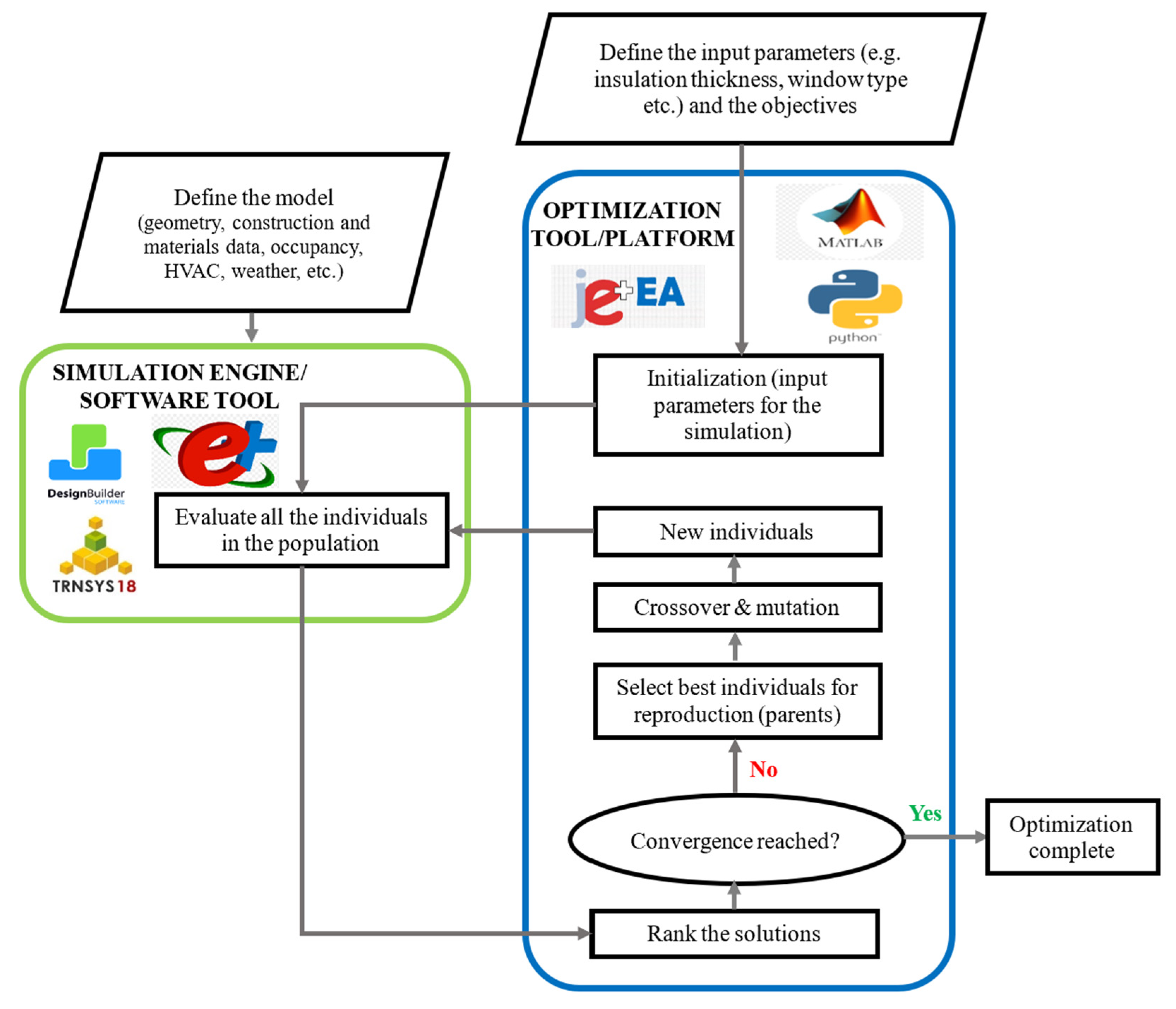
| Typical software tools | EnergyPlus, OpenStudio, Design Builder, Rhinoceros 3D, Grasshopper, Honeybee. | EnergyPlus, jEplus, integrated with ML platforms like MATLAB or Python. |
| Machine learning model | Not applicable. | ANN, SVM, MLR, Regression Trees (RT). |
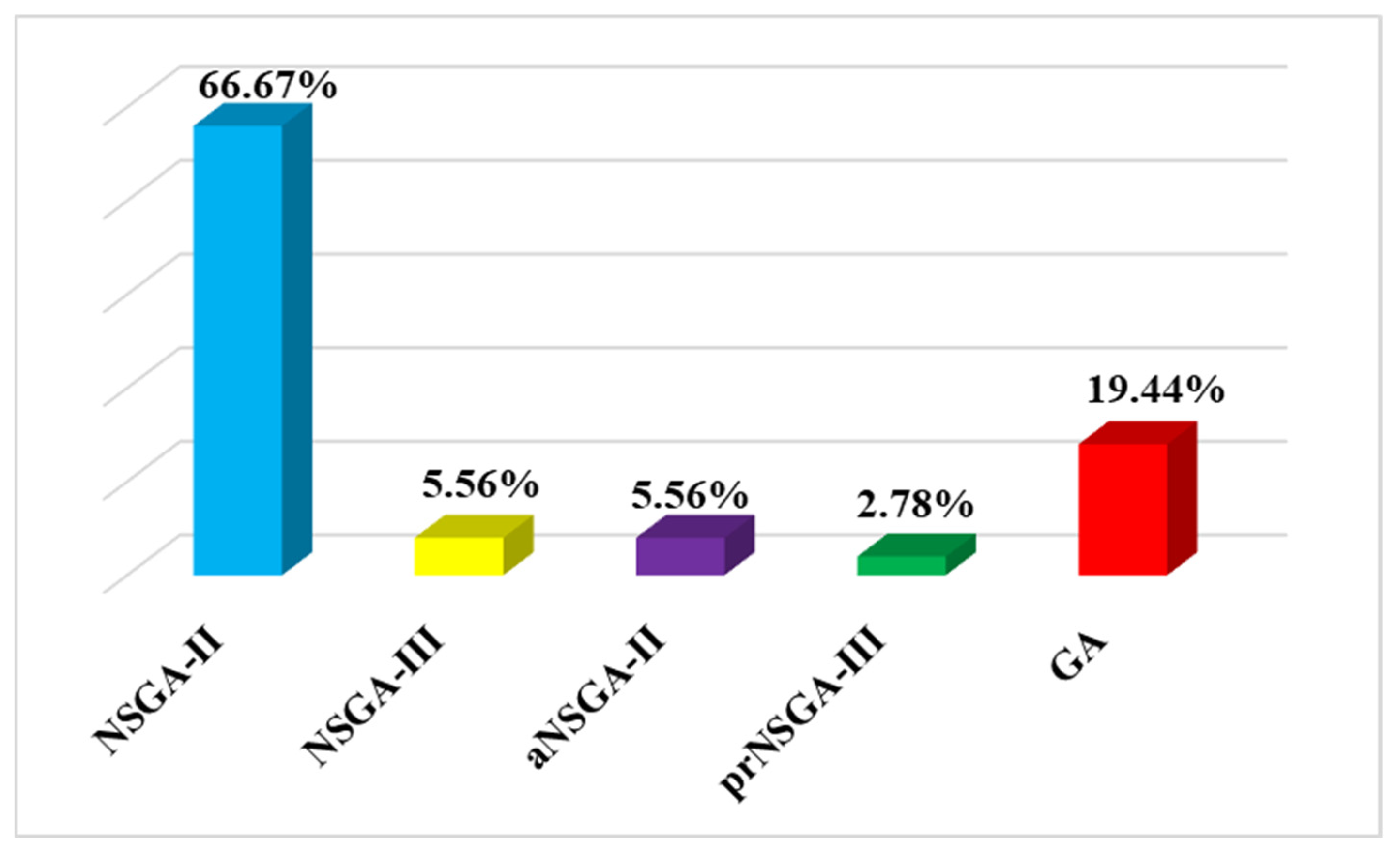
| Optimization algorithms used | GA, NSGA-II, prNSGA-III, aNSGA-II. | Like SBMOO, it is typically integrated with surrogate models. |
| Common objectives | Energy consumption, thermal comfort, cost optimization, and environmental impact. | Similar objectives (energy, comfort, environment), but easier inclusion of complex metrics can be done. |
| Accuracy and validation | Accurate outcomes via actual simulation. | A full simulation is needed to validate the results, depending on the dataset quality. |
| Adaptability for large studies | Less adaptable due to computational constraints. | Suitable for extensive parametric studies. |
| Application frequency | 65% of analyzed studies adopted this approach. Among this, 66.7% targeted residential buildings and 33.3% other types. | 35% of reviewed studies used this approach. Of the 35% MBMOO studies, residential buildings accounted for 56.3%, while other types comprised 43.8%. |
| Example countries | Italy, Canada, Sweden, Denmark, UAE, Jordan, Iran, China, and England. | China, Mexico, England, Switzerland, Portugal, Kuwait, USA, and Argentina. |
| Authors | Building Context | Baseline Model Type | Baseline Generalization | MOO Approach | Metamodel Selection Approach | Climate Scope |
|---|---|---|---|---|---|---|
| [109] | Office | Archetype (space-level) | Limited | MBMOO | Fixed ML model | Multiple |
| [28] | Residential | Real building (case study) | None | SBMOO | - | Single |
| [27] | Residential | Real building (case study) | None | MBMOO | ML Model comparison (accuracy-driven) | Single |
| [70] | Hospital | Archetype (whole-building) | Limited | MBMOO | Fixed ML model | Future Scenario |
| [123] | Residential | Real building (case study) | None | MBMOO | ML Model comparison (accuracy-driven) | None |
| [53] | Residential | Real building (case study) | None | SBMOO | - | None |
| [31] | Residential | Real building (case study) | None | SBMOO | - | Single |
| [67] | School | Archetype (whole-building) | Limited | SBMOO | - | Multiple |
| [50] | Residential | Real building (case study) | None | SBMOO | - | Single |
| [112] | Office | Real building (case study) | None | MBMOO | Fixed ML model | None |
| [111] | Office | Real building (case study) | None | MBMOO | Regression method | Single |
| [74] | Residential | Archetype (whole-building) | Moderate | MBMOO | Fixed ML model | None |
| [41] | Residential | Real building (case study) | None | SBMOO | - | Single |
| [66] | Residential | Real building (case study) | None | MBMOO | Fixed ML model | Multiple |
| [75] | University | Real building-space level (case study) | None | SBMOO | - | None |
| [118] | Residential | Real building (case study) | None | MBMOO | Fixed ML model | Single |
| [73] | Office | Real building (case study) | None | MBMOO | Fixed ML model | None |
| [62] | Office | Archetype (space-level) | Limited | SBMOO | - | Multiple |
| [51] | Residential | Real building (case study) | None | SBMOO | - | Single |
| [68] | Residential | Archetype (whole-building) | Moderate | MBMOO | Fixed ML model | Multiple |
| [17] | Residential | Real building (case study) | None | MBMOO | Fixed ML model | None |
Disclaimer/Publisher’s Note: The statements, opinions and data contained in all publications are solely those of the individual author(s) and contributor(s) and not of MDPI and/or the editor(s). MDPI and/or the editor(s) disclaim responsibility for any injury to people or property resulting from any ideas, methods, instructions or products referred to in the content. |
© 2026 by the authors. Licensee MDPI, Basel, Switzerland. This article is an open access article distributed under the terms and conditions of the Creative Commons Attribution (CC BY) license.
Share and Cite
Reza-E-Rabbi, S.; Bhuiyan, M.A.; Zhang, G.; Dodampegama, S.; Atapattu, K. Simulation- and Metamodel-Based Multi-Objective Optimization for Sustainable Building Retrofit Across Climatic Conditions. Materials 2026, 19, 1649. https://doi.org/10.3390/ma19081649
Reza-E-Rabbi S, Bhuiyan MA, Zhang G, Dodampegama S, Atapattu K. Simulation- and Metamodel-Based Multi-Objective Optimization for Sustainable Building Retrofit Across Climatic Conditions. Materials. 2026; 19(8):1649. https://doi.org/10.3390/ma19081649
Chicago/Turabian StyleReza-E-Rabbi, Sk., Muhammed A. Bhuiyan, Guomin Zhang, Shanuka Dodampegama, and Kanishka Atapattu. 2026. "Simulation- and Metamodel-Based Multi-Objective Optimization for Sustainable Building Retrofit Across Climatic Conditions" Materials 19, no. 8: 1649. https://doi.org/10.3390/ma19081649
APA StyleReza-E-Rabbi, S., Bhuiyan, M. A., Zhang, G., Dodampegama, S., & Atapattu, K. (2026). Simulation- and Metamodel-Based Multi-Objective Optimization for Sustainable Building Retrofit Across Climatic Conditions. Materials, 19(8), 1649. https://doi.org/10.3390/ma19081649