Functionalization of the Surface of Ti6Al4V Alloy Samples Printed Using Additive Technology DMLS for Orthopedic Applications Using Glow Discharge Treatment
 , , ,
, , ,  , and
, and
Abstract
1. Introduction
2. Materials and Methods
- Group I: As-built samples—samples in their initial state.
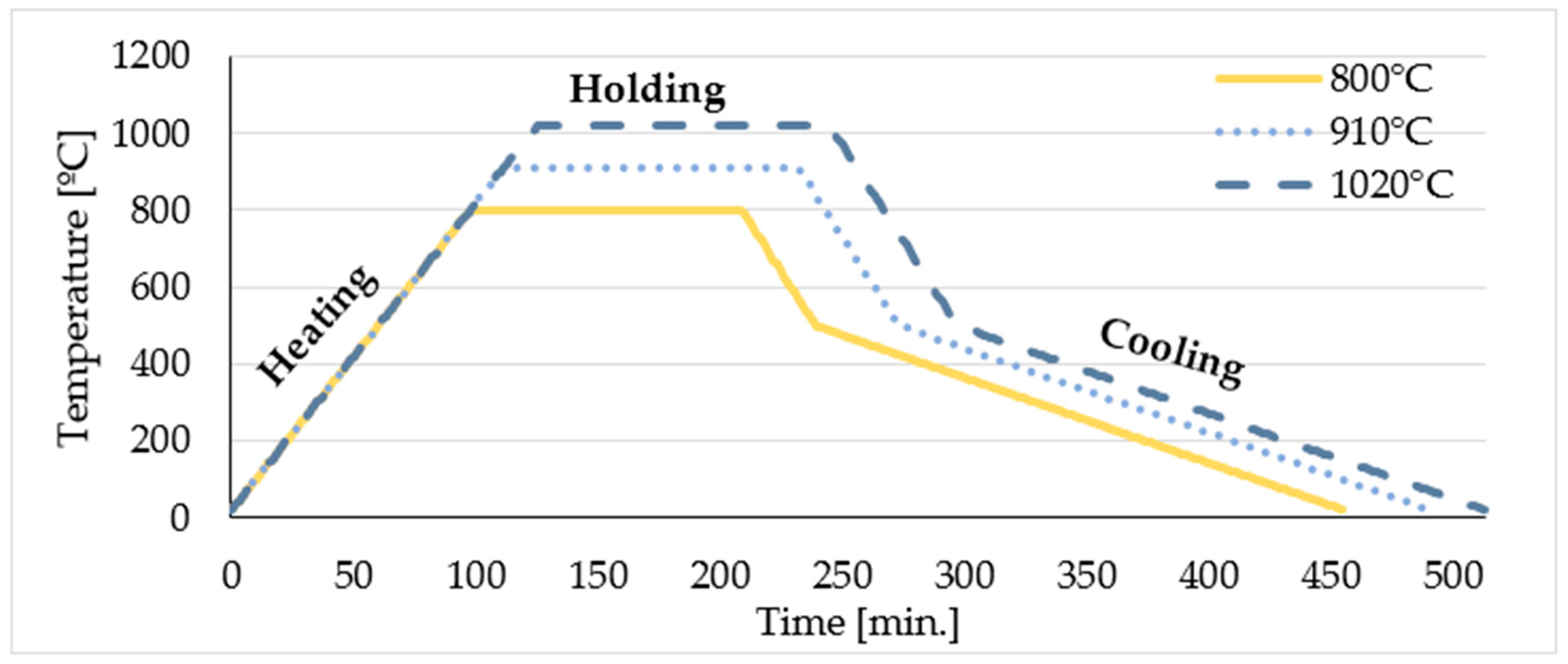
- Group II: The specimens were heat-treated in a vacuum furnace at a temperature of 800 ± 10 °C for 2 h, followed by rapid cooling in an expanding argon atmosphere to 500 °C. In the final stage, the samples were cooled together with the furnace to room temperature.
- Group III: The specimens were heat-treated in a vacuum furnace at a temperature of 910 ± 10 °C for 2 h, followed by rapid cooling in an expanding argon atmosphere to 500 °C. In the final stage, the samples were cooled together with the furnace to room temperature.
- Group IV: The specimens were heat-treated in a vacuum furnace at a temperature of 1020 ± 10 °C for 2 h, followed by rapid cooling in an expanding argon atmosphere to 500 °C. In the final stage, the samples were cooled together with the furnace to room temperature.
2.1. Material Structure
2.2. XRD Layer Structure Analysis
2.3. Surface Roughness
2.4. Wettability and Surface Energy
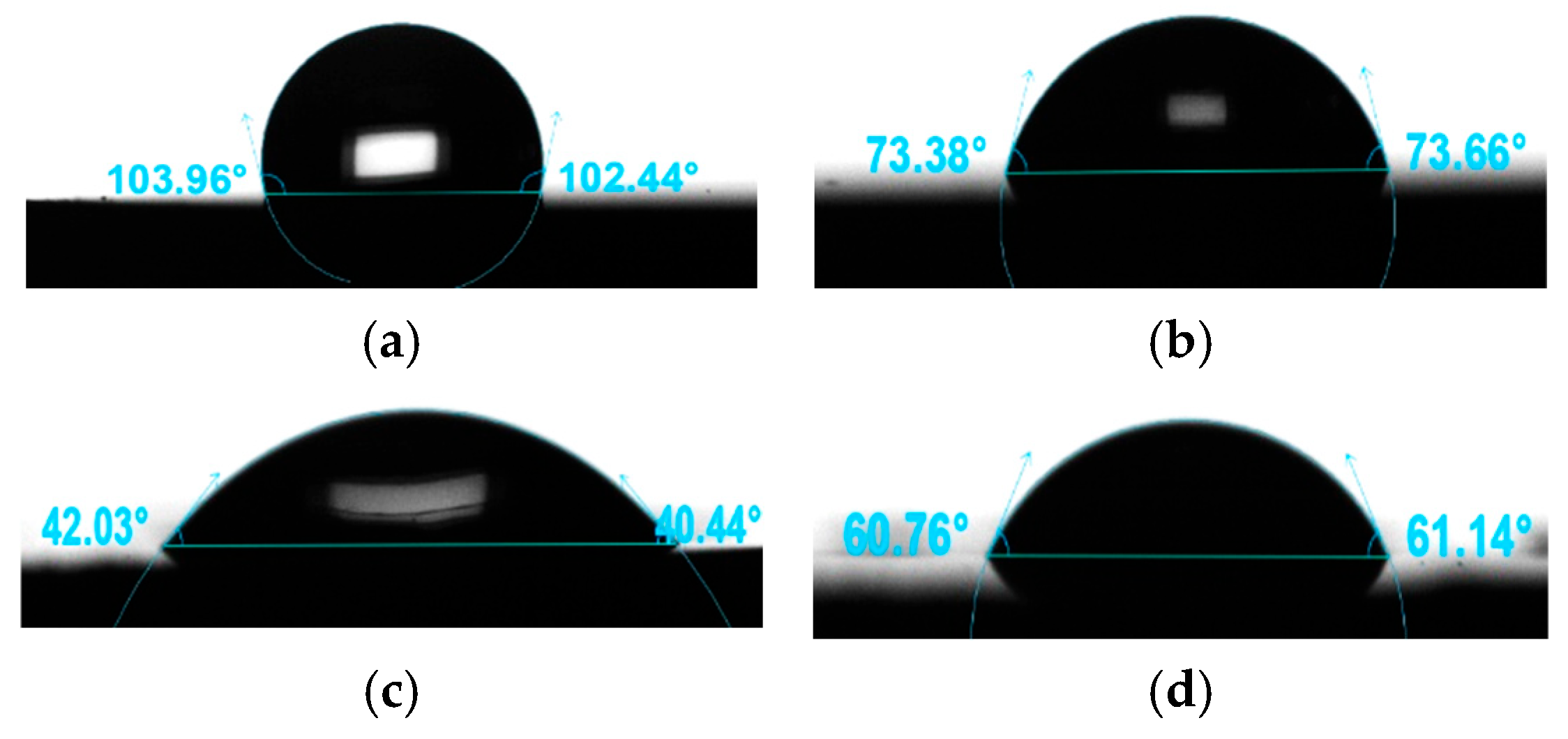
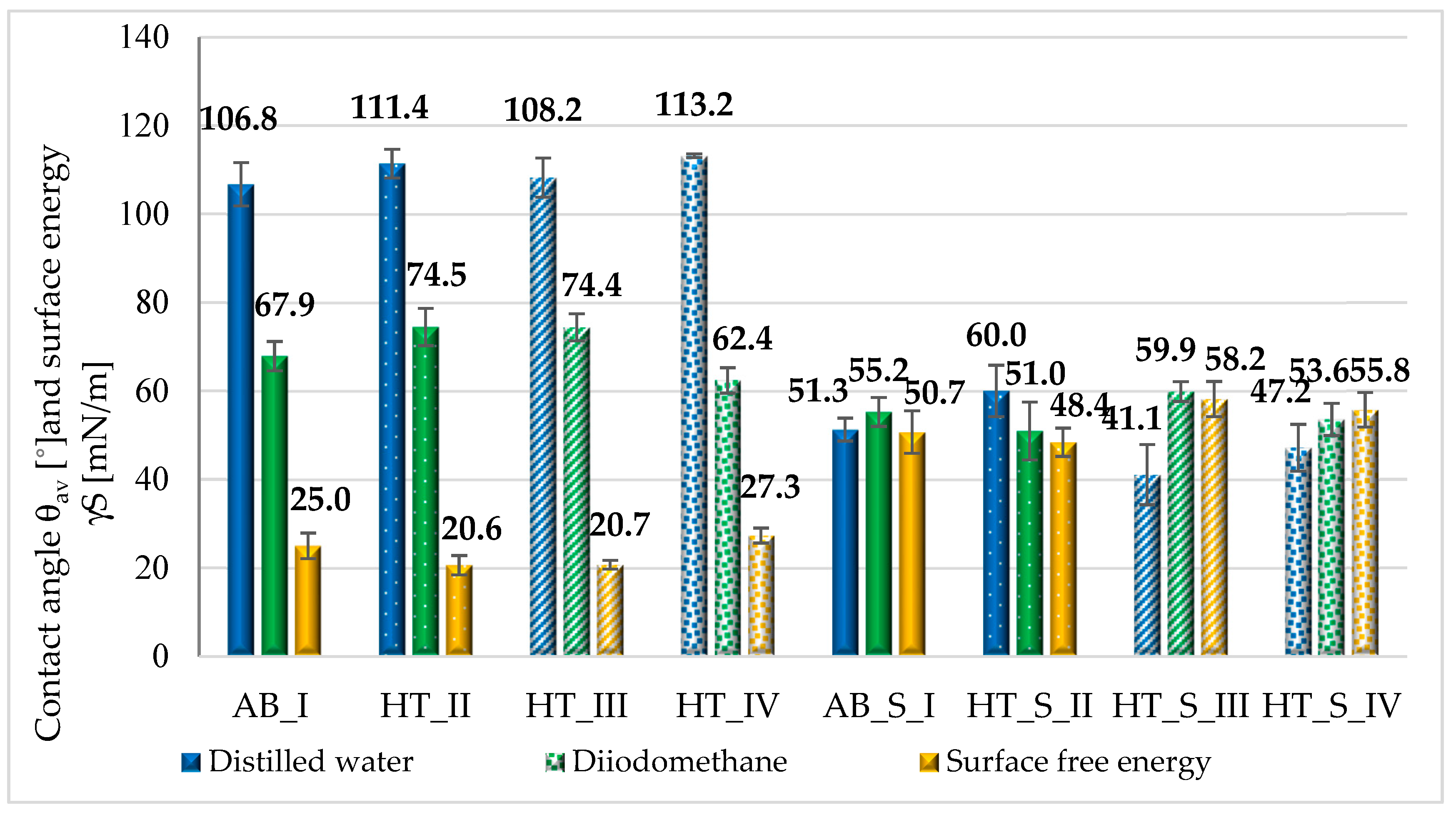
- For distilled water, the polar component is 51.0 mJ/m2, while the dispersion component is 21.8 mJ/m2,
- In the case of diiodomethane, the polar component is 6.7 mJ/m2, and the dispersion component is 44.1 mJ/m2.
2.5. Pitting Corrosion Resistance Testing
2.6. Macroscopic Observations
2.7. Hardness
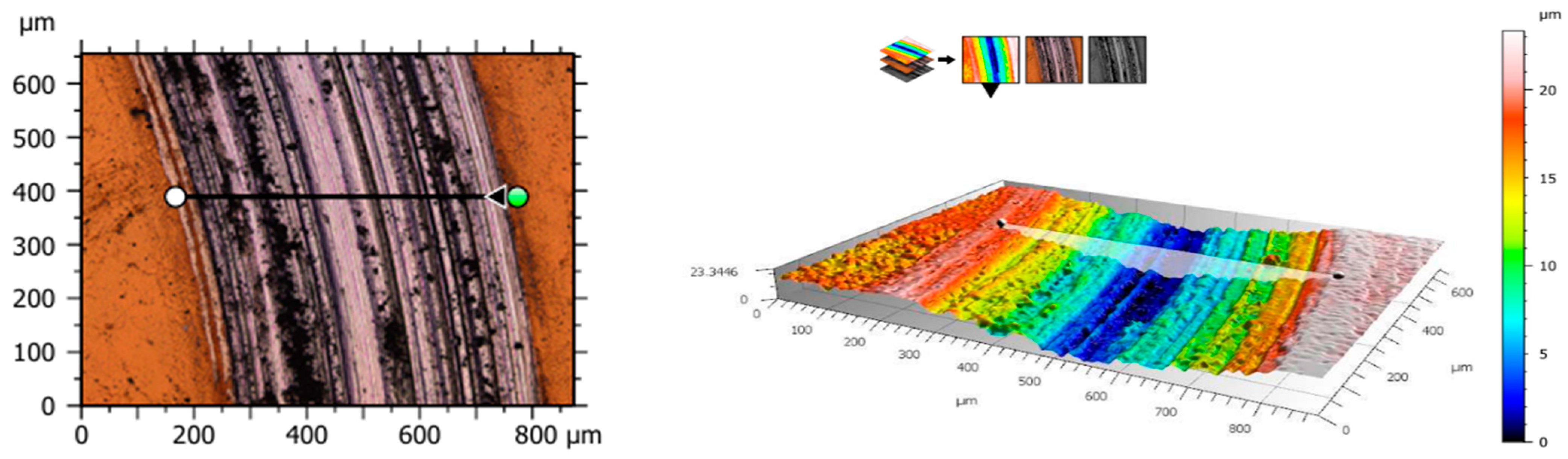
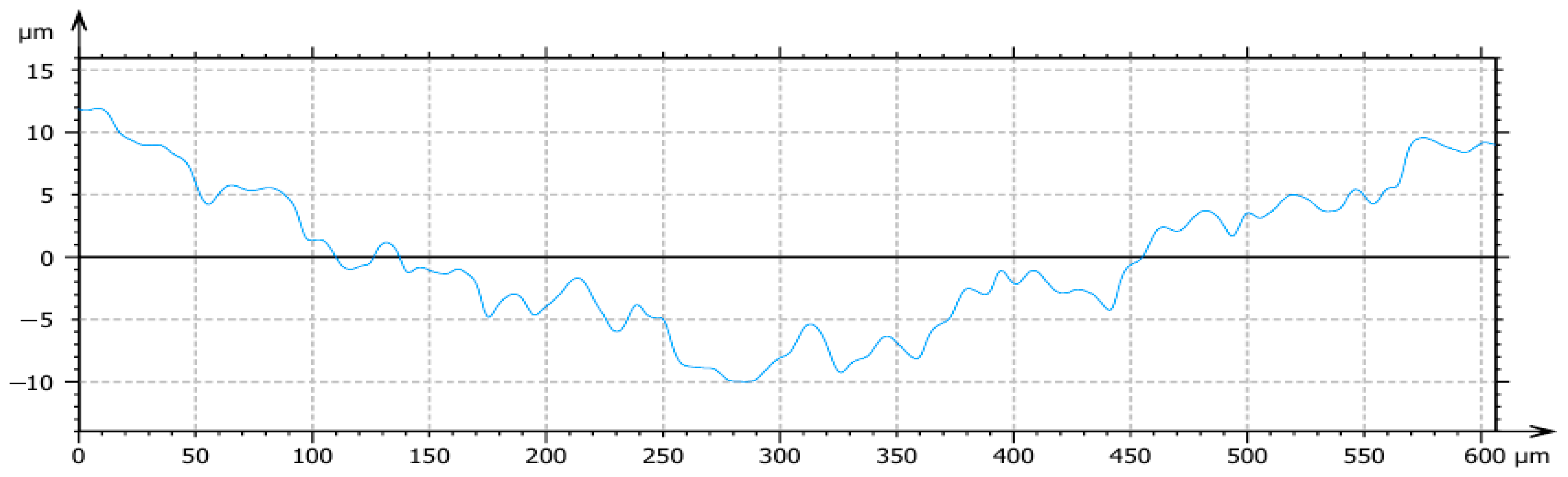
2.8. Tribological Testing
Abrasion Wear Resistance Test
2.9. Statistical Analysis
3. Results and Discussion
3.1. Material Structure—Results and Discussion
3.2. XRD Layer Structure Analysis—Results and Discussion
3.3. Surface Roughness—Results and Discussion
3.4. Wettability and Surface Energy—Results and Discussion
3.5. Pitting Corrosion Resistance Testing—Results and Discussion
3.6. Macroscopic Observations—Results and Discussion
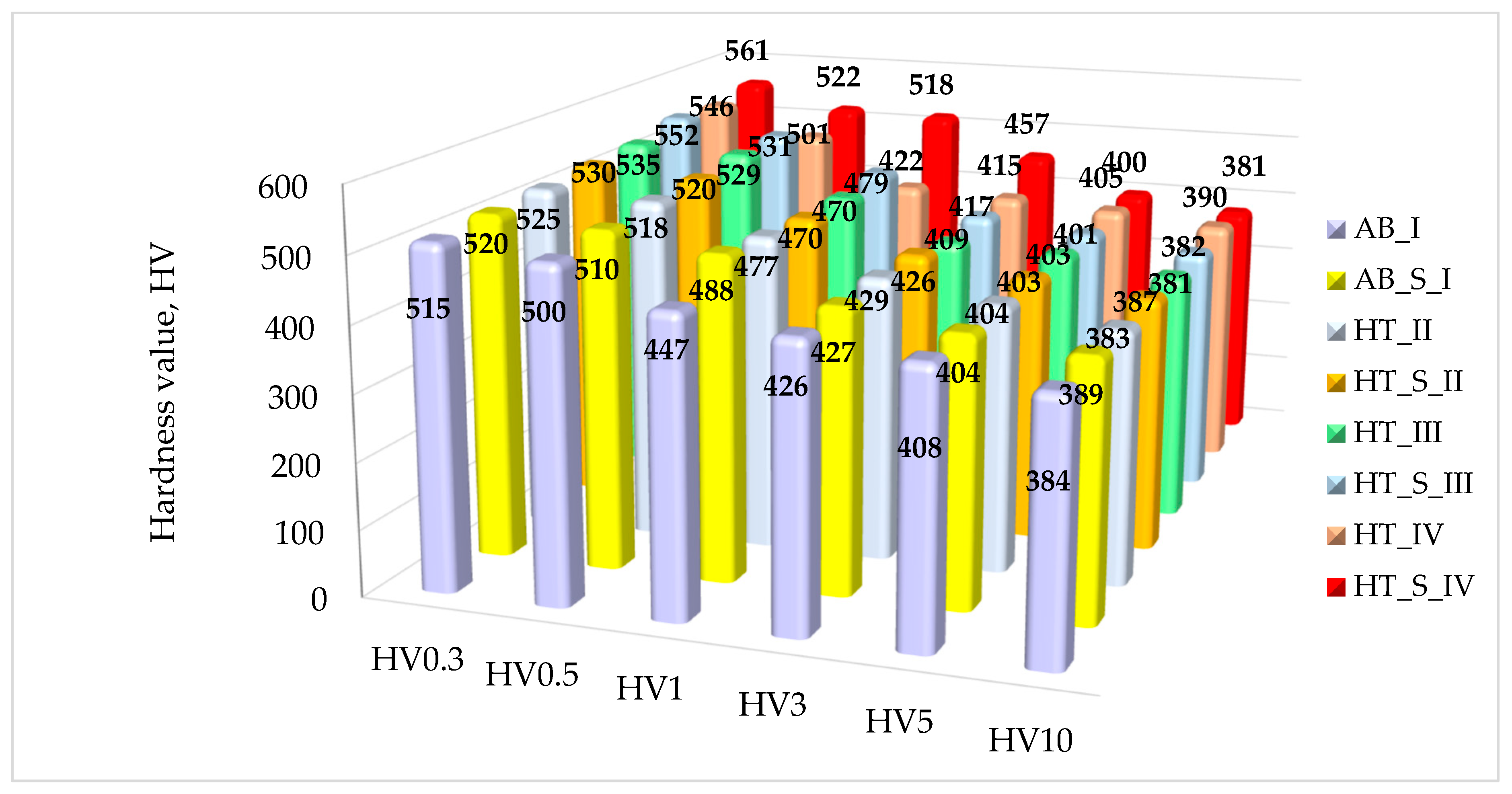
3.7. Hardness—Results and Discussion
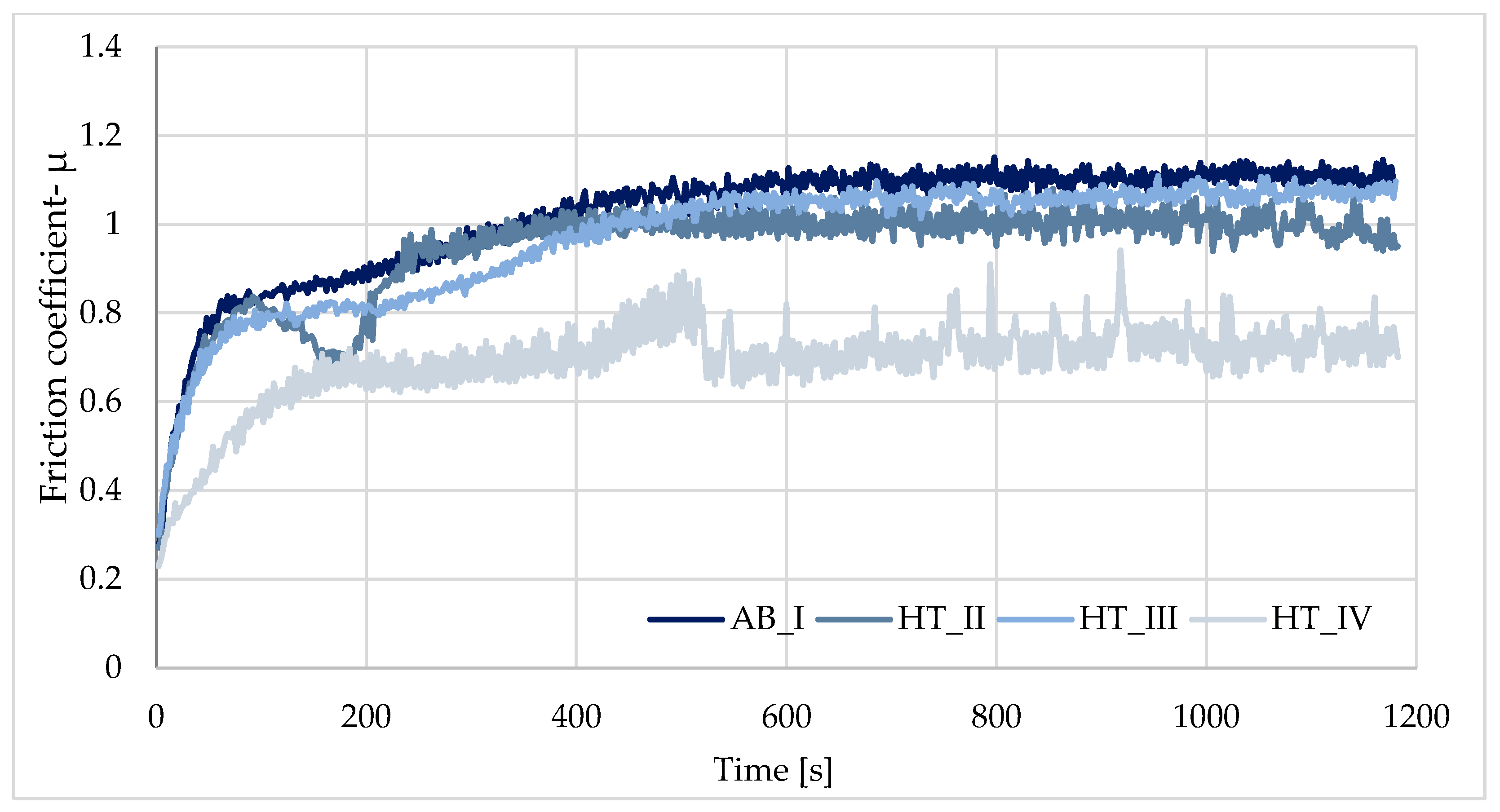
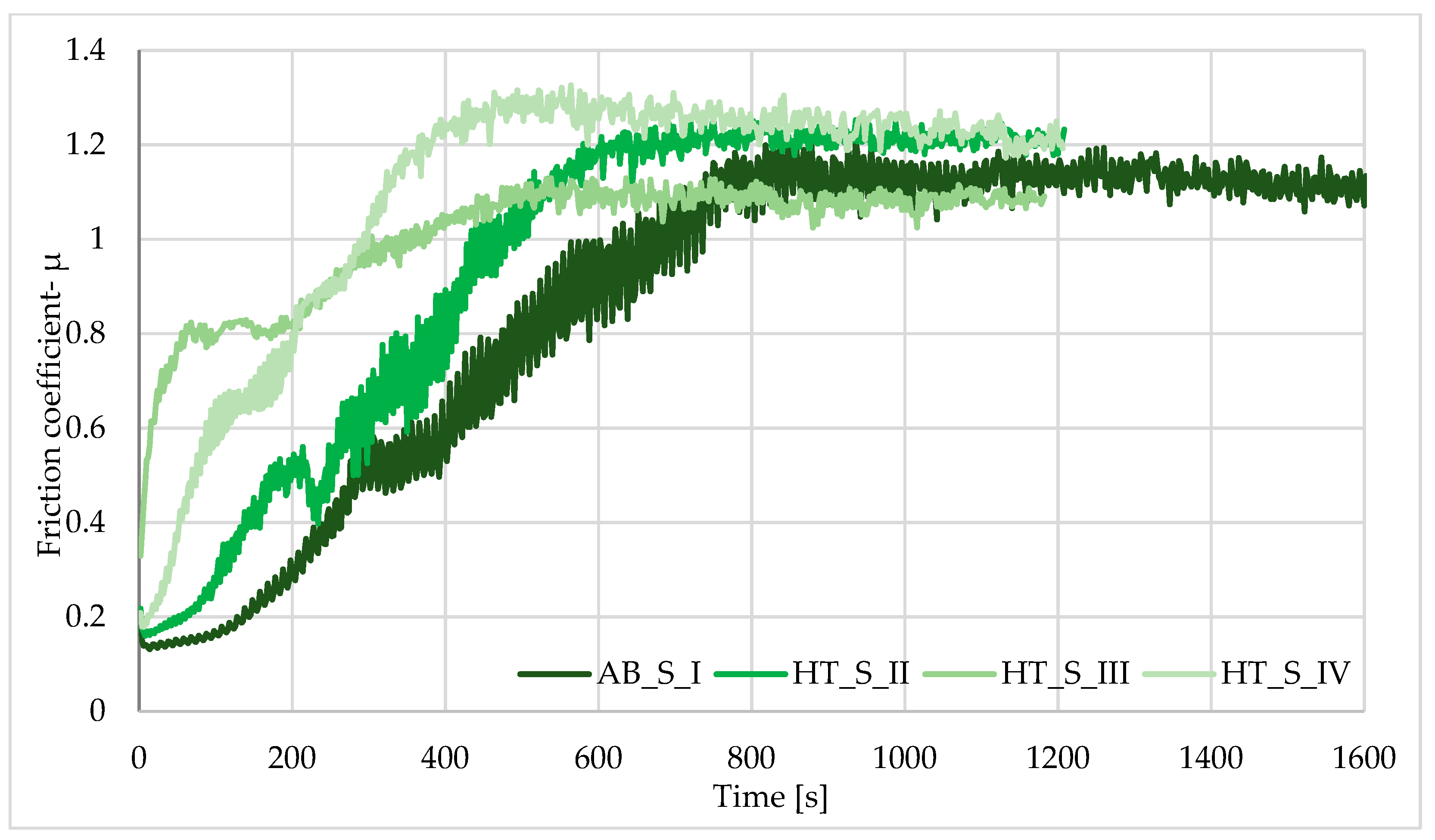
3.8. Tribological Testing—Results and Discussion
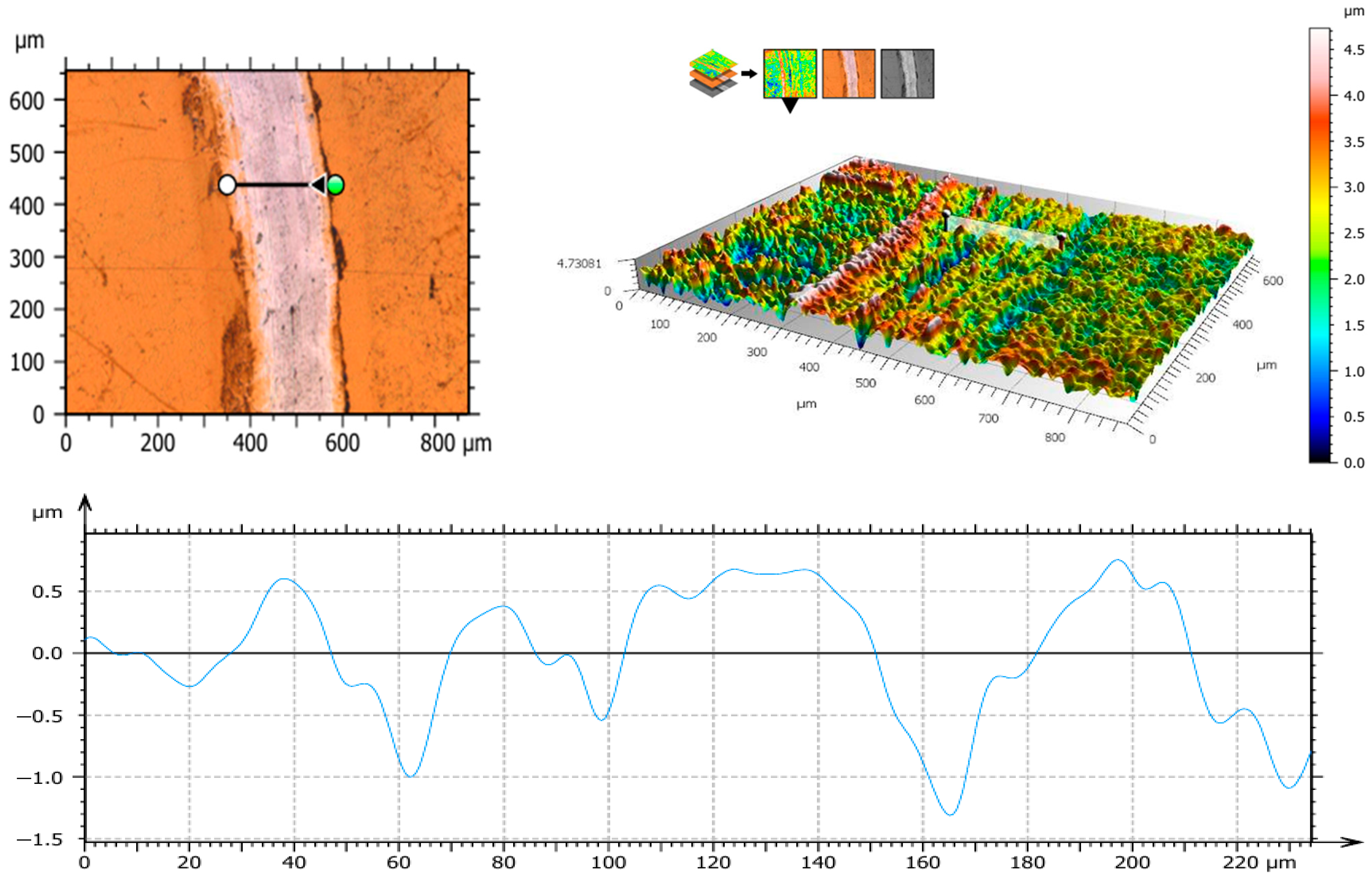
Abrasion Wear Resistance Test—Results and Discussion
4. Conclusions
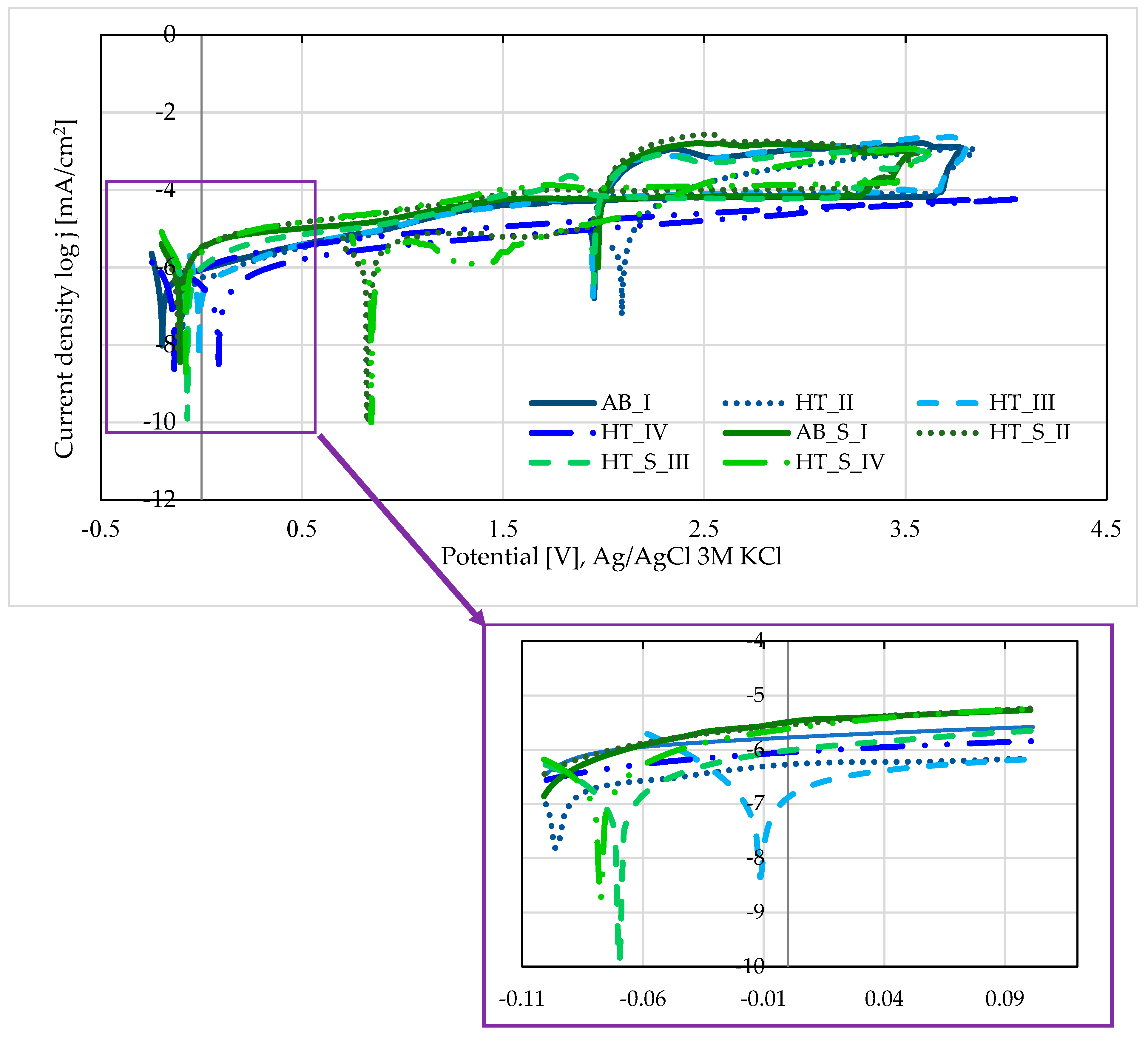
- The most favorable results were observed for samples with a diffusion nitrogen layer from the HT_S_III group (with heat treatment at 910 °C and steam sterilization). These samples exhibited the highest resistance to pitting corrosion and the best resistance to tribological wear. The results obtained indicate that the presence of a nitride layer leads to increased resistance to abrasive wear, which extends the implant’s lifespan within the patient’s body. Furthermore, the reduction in abrasive wear minimizes the generation of metallic particles into the surrounding tissues, thereby reducing the risk of inflammatory reactions in the human body.
- A two-phase α + β structure was observed. In the case where microstructure of the material in its initial state, the α-phase was predominant. The heat-treated material at 800 °C comprised an α-phase matrix and an interlamellar β-phase. However, heat treatment at 910 °C and 1020 °C increased the proportion of the β-phase. Nevertheless, rapid cooling of the material after heat treatment led to the transformation of the β-phase into a metastable α’-phase.
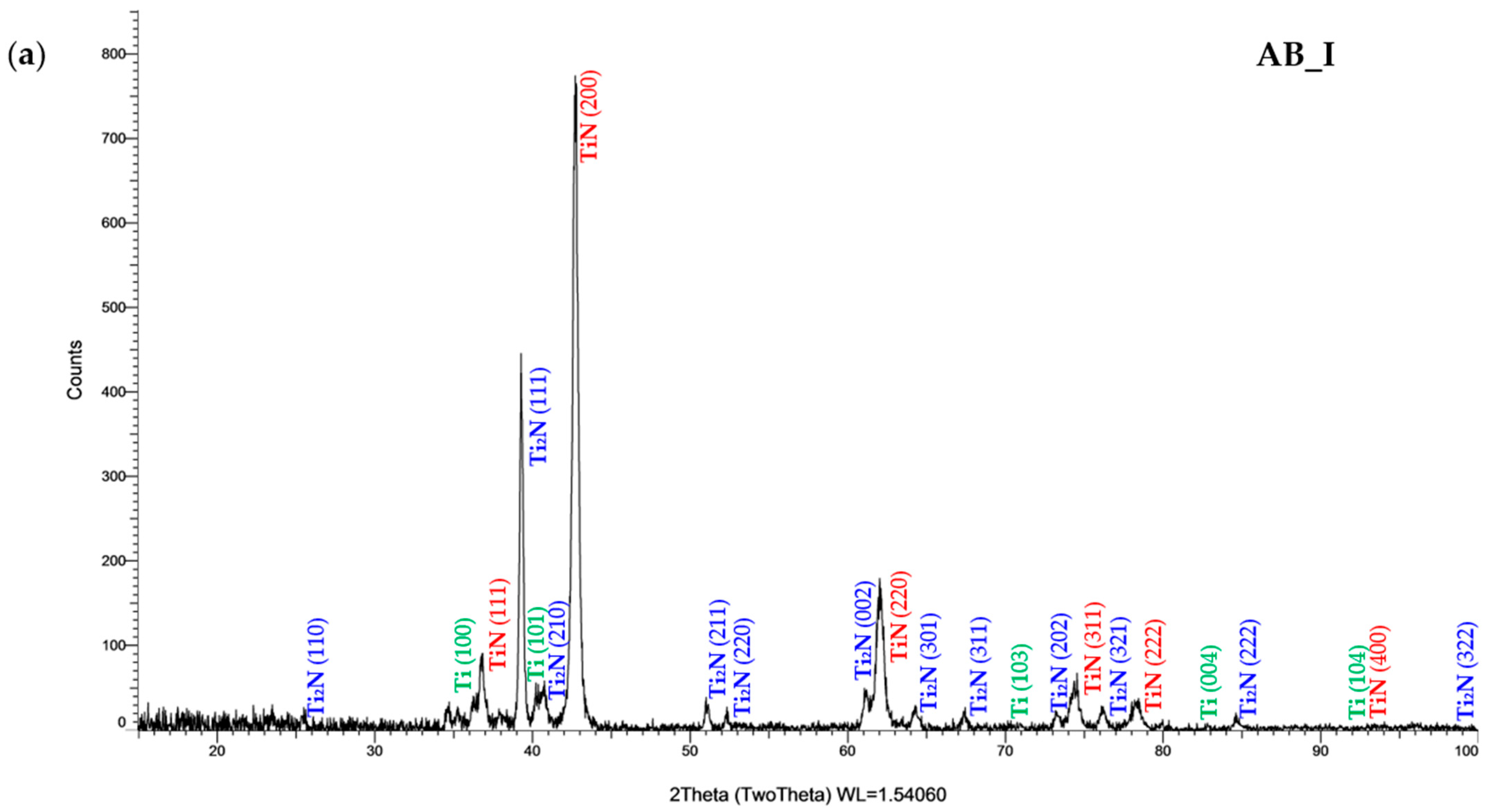
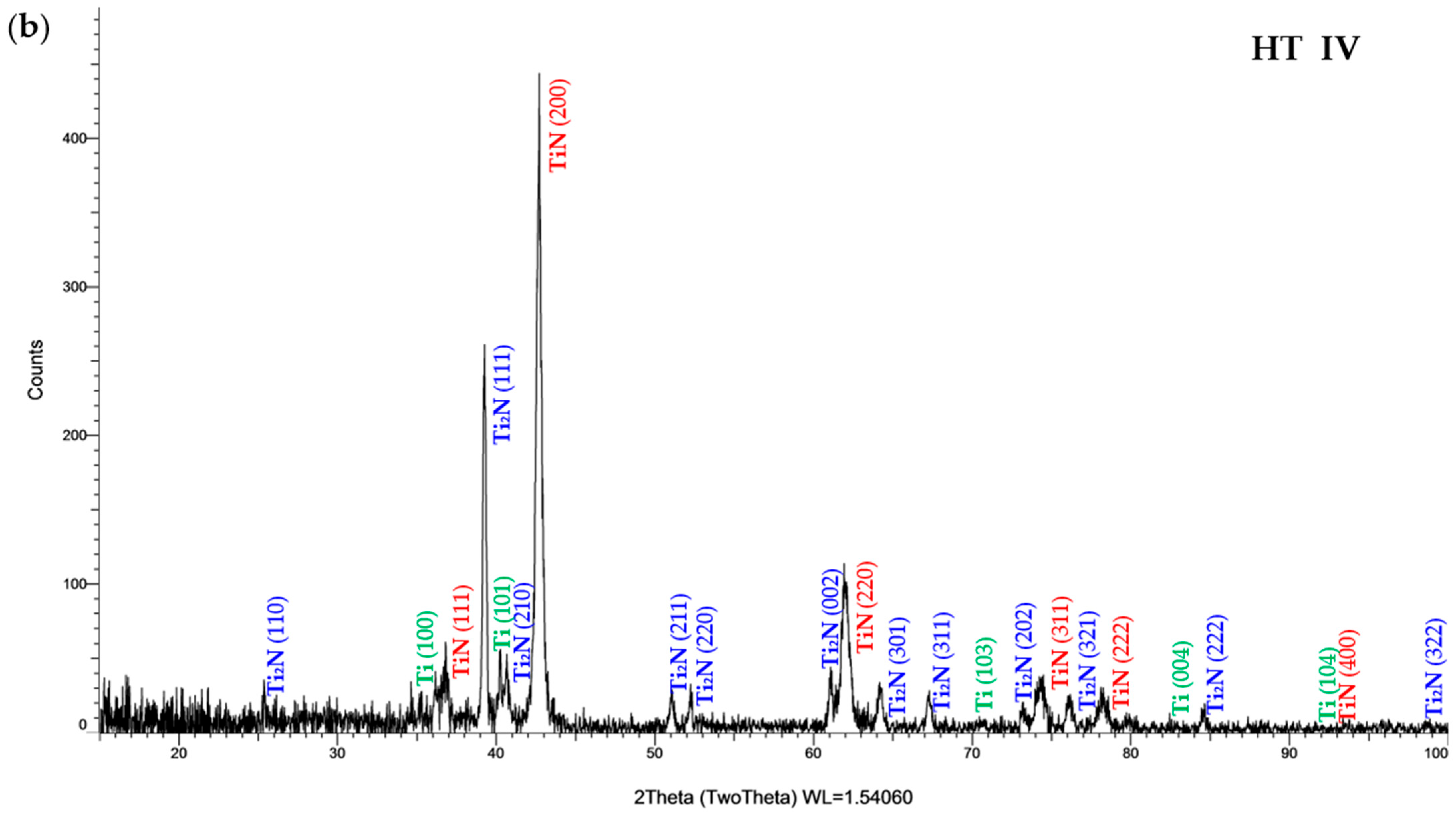
- Based on the phase analysis, it can be concluded that the tested sample surfaces did not differ in phase composition or in peak intensities. This shows that the heat treatment of the alloy at 1020 °C had no effect on the structure of the layer. Based on the diffractograms obtained, it can be concluded that the formation of the diffusion layer resulted in the formation of TiN and Ti2N nitride layers. The resulting layer acts as a protective barrier between the substrate and the external environment. This is evidenced by the higher intensity of the peaks corresponding to the nitride phases compared to the peaks characteristic of the titanium substrate, which indicates the dominant contribution of the layer to the analyzed diffraction signal. Based on the conducted studies, changes can be observed in the pitting corrosion resistance tests, surface topography, and hardness. The authors also compare these results with those in the article without the deposited layer (after mechanical polishing) [13].
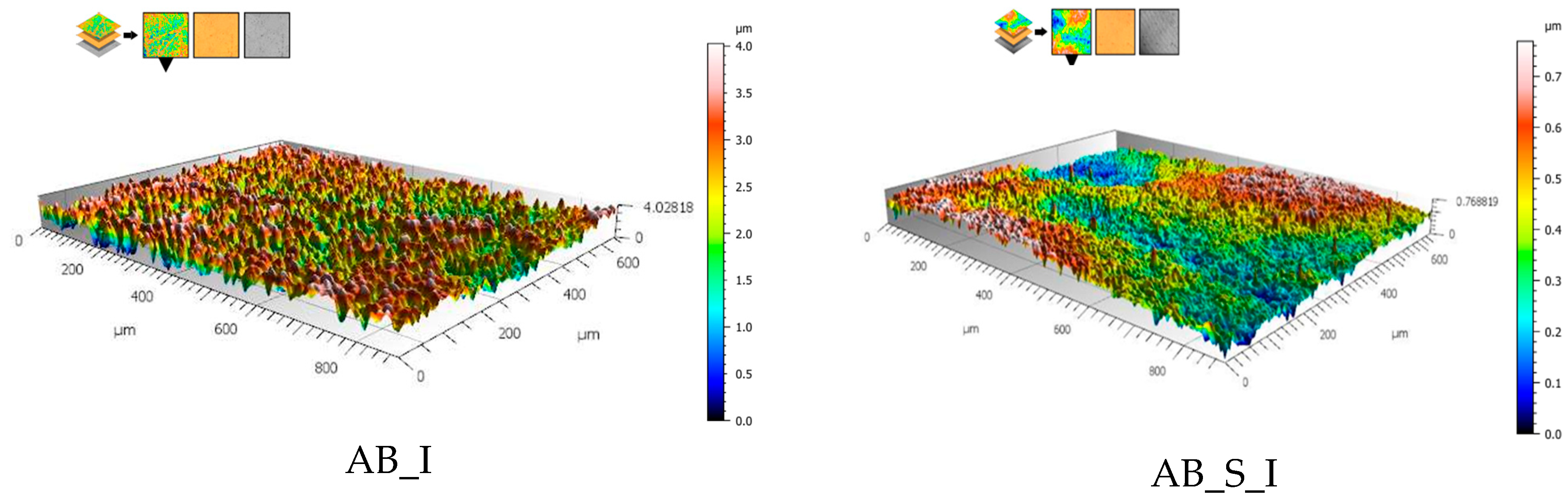
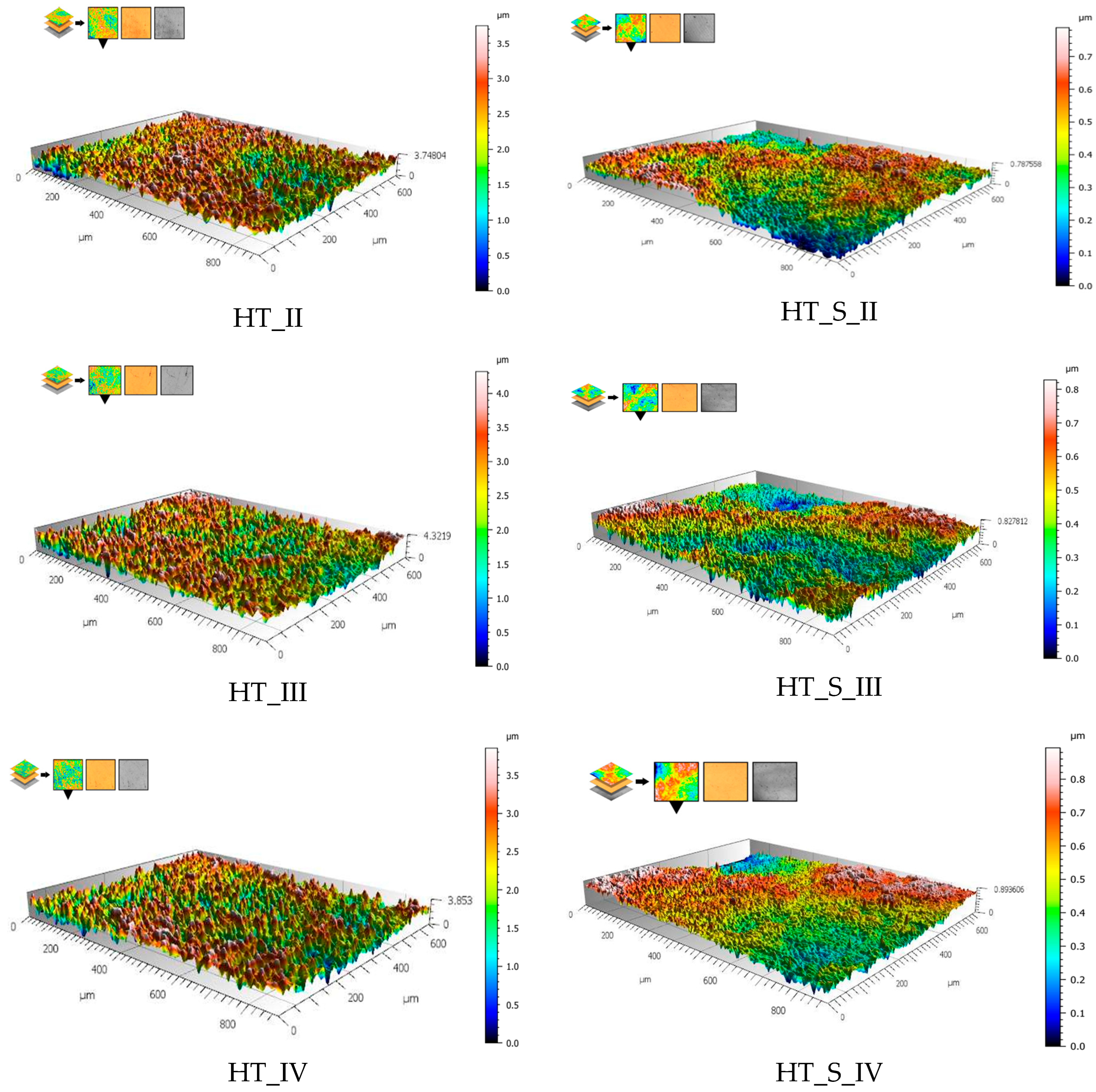
- The creation of a diffusion nitrogen layer significantly increased the Sa parameter value compared to the results of tests after mechanical polishing without a layer [13]. These values ranged from 0.52 μm to 0.56 μm. In the case of samples after steam sterilization, a decrease in this parameter was observed from 0.11 μm to 0.13 μm.
- The presence of a diffusion nitrogen layer increased the hardness and abrasion resistance of all sample groups analyzed, indicating the beneficial effect of the nitriding process on the mechanical properties of the surface layer. Furthermore, the examination of tribological testing only provided a qualification rather than a quantitative assessment of abrasion resistance.
- The steam sterilization process can affect the physicochemical properties of the materials under investigation, leading to changes in their surface structure. The main cause of these changes is the phenomenon of oxidation, which occurs on the surfaces of metal alloys. Furthermore, the selection of steam sterilization parameters has a significant impact on the surface structure of the samples, leading to changes in the thickness of the resulting layers [1].
Author Contributions
Funding
Data Availability Statement
Acknowledgments
Conflicts of Interest
References
- Kajzer, A.; Ceglarska, M.; Sura, N.; Kajzer, W.; Borowski, T.; Tarnowski, M.; Pilecki, Z. Effect of Nitrided and Nitrocarburised Austenite on Pitting and Crevice Corrosion Resistance of 316LVM Steel Implants. Materials 2020, 13, 5484. [Google Scholar] [CrossRef] [PubMed]
- Taratuta, A.; Antonowicz, M.; Goldsztajn, K.; Rynkus, B.; Lisoń-Kubica, J.; Juszczyk, J.; Kolasa, J.; Postava, K.; Major, R.; Major, Ł.; et al. Surface modification of NiTi alloys: Biological effects of tantalum oxide coatings. Ann. N. Y. Acad. Sci. 2025, 1550, 122–133. [Google Scholar] [CrossRef] [PubMed]
- Lisoń-Kubica, J.; Taratuta, A.; Wilk, K.; Kolasa, J.; Antonowicz, M.; Paszenda, Z.; Walke, W.; Gümüş, S.; Basiaga, M. The Effect of TiN Coating on the Physicochemical Properties of Ti-13Nb-13Zr Alloy for Biomedical Applications. Langmuir 2025, 41, 13264–13271. [Google Scholar] [CrossRef] [PubMed]
- Kajzer, A.; Gołombek, K.; Ziębowicz, B.; Borowski, T. Influence of sterilization and exposure to the Ringer’s solution on physicochemical properties of nitrocarburized 316 LVM steel. Acta Bioeng. Biomech. 2024, 26, 61–73. [Google Scholar] [CrossRef]
- Goldsztajn, K.; Godzierz, M.; Hercog, A.; Władowski, M.; Jaworska, J.; Jelonek, K.; Woźniak, A.; Kajzer, W.; Orłowska, A.; Szewczenko, J. Properties of biodegradable polymer coatings with hydroxyapatite on a titanium alloy substrate. Acta Bioeng. Biomech. 2024, 26, 121–132. [Google Scholar] [CrossRef]
- Marin, E.; Lanzutti, A. Biomedical Applications of Titanium Alloys: A Comprehensive Review. Materials 2024, 17, 114. [Google Scholar] [CrossRef] [PubMed]
- Yılmaz, E.; Findik, F. Investigation of titanium-based biomaterials used in implant applications. BME Horiz. 2024, 2, 1–13. [Google Scholar] [CrossRef] [PubMed]
- Rajesh, P. Verma, Titanium based biomaterial for bone implants: A mini review. Mater. Proc. 2020, 26, 3148–3151. [Google Scholar] [CrossRef]
- Baltatu, M.S.; Vizureanu, P.; Sandu, A.V.; Baltatu, I.; Burduhos-Nergis, D.D.; Benchea, M. Prospects on Titanium Biomaterials. Eur. J. Mater. Sci. Eng. 2023, 8, 201–212. [Google Scholar] [CrossRef]
- Gzik-Zroska, B.; Joszko, K.; Piątek, A.; Wolański, W.; Kawlewska, E.; Szarek, A.; Kajzer, W.; Stradomski, G. The Influence of Hot Isostatic Pressing on the Mechanical Properties of Ti-6Al-4V Samples Printed Using the LENS Method. Materials 2025, 18, 612. [Google Scholar] [CrossRef] [PubMed]
- Zwei-Chieng Chang, J.; Tsai, P.-I.; Yen-Ping Kuo, M.; Sun, J.-S.; Chen, S.-Y.; Shen, H.-H. Augmentation of DMLS Biomimetic Dental Implants with Weight-Bearing Strut to Balance of Biologic and Mechanical Demands: From Bench to Animal. Materials 2019, 12, 164. [Google Scholar] [CrossRef]
- Kajzer, W.; Wielgus, G.; Kajzer, A. Mechanical and Physicochemical Properties of Ti6Al4V Alloy After Plastic Working and 3D Printing Intended for Orthopedics Implants. Appl. Sci. 2024, 14, 11181. [Google Scholar] [CrossRef]
- Kajzer, A.; Wielgus, G.; Drobina, K.; Żurawska, A.; Kajzer, W. The Influence of Heat and Surface Treatment on the Functional Properties of Ti6Al4V Alloy Samples Obtained by Additive Technology for Applications in Personalized Implantology. Appl. Sci. 2025, 15, 8311. [Google Scholar] [CrossRef]
- Humnabad, P.; Das, I.; Tarun, R. An overview of direct metal laser sintering (DMLS) technology for metal 3D printing. J. Mines Met. Fuels 2022, 70, 127–133. [Google Scholar] [CrossRef]
- Koju, N.; Niraula, S.; Fotovvati, B. Additively Manufactured Porous Ti6Al4V for Bone Implants: A Review. Metals 2022, 12, 687. [Google Scholar] [CrossRef]
- Nelson, K.; Kelly, C.N.; Gall, K. Effect of stress state on the mechanical behavior of 3D printed porous Ti6Al4V scaffolds produced by laser powder bed fusion. Mater. Sci. Eng. B 2022, 286, 116013. [Google Scholar] [CrossRef]
- Klimiuk, P.A.; Kuryliszyn-Moskal, A. Choroba zwyrodnieniowa stawów. In Wielka Interna Reumatologia Wydanie II; Medical Tribune Polska: Warszawa, Poland, 2012; Volume 50, pp. 307–314. [Google Scholar]
- Bussayasripatt, P.; Poungsiri, K.; Yipyintum, C.; Charoenlap, C.; Hongsaprabhas, C.; Pataradool, K.; Tantimethanon, T.; Phetrattanarangsi, T.; Puncreobutr, C.; Lohwongwatana, B. Performance of additively Tantimethanon,6Al4V ELI finger joints: Biomechanical testing and evaluation for arthritis management. Mater. Test. 2023, 66, 1–8. [Google Scholar] [CrossRef]
- Tardelli, J.D.C.; Bolfarini, C.; Cândido Dos Reis, A. Comparative analysis of corrosion resistance between beta titanium and Ti-6Al-4V alloys: A systematic review. J. Trace Elem. Med. Biol. 2020, 62, 126618. [Google Scholar] [CrossRef] [PubMed]
- Moretti, B.; Pesce, V.; MacCagnano, G.; Vicenti, G.; Lovreglio, P.; Soleo, L.; Apostoli, P. Peripheral neuropathy after hip replacement failure: Is vanadium the culprit? Lancet 2012, 379, 1676. [Google Scholar] [CrossRef]
- Mirza, A.; King, A.; Troakes, C.; Exley, C. Aluminium in brain tissue in familial Alzheimer’s disease. J. Trace Elem. Med. Biol. 2017, 40, 30–36. [Google Scholar] [CrossRef]
- Krasicka-Cydzik, E. Anodic layer formation on titanium and its alloys for biomedical applications. In Titanium Alloys—Towards Achieving Enhanced Properties for Diversified Applications; IntechOpen: London, UK, 2012. [Google Scholar] [CrossRef][Green Version]
- Cimenoglu, H.; Gunyuz, M.; Kose, G.T.; Baydogan, M.; Ugurlu, F.; Sener, C. Micro-arc oxidation of Ti6Al4V and Ti6Al7Nb alloys for biomedical applications. Mater. Character. 2011, 62, 304–311. [Google Scholar] [CrossRef]
- Diamanti, M.V.; Del Curto, B.; Pedeferri, M. Anodic oxidation of titanium from technical aspects to biomedical applications. J. Appl. Biomater. Biomech. 2011, 9, 55–69. [Google Scholar] [CrossRef] [PubMed]
- Grzesik, W.; Małecka, J.; Kwaśny, W. Identification of oxidation process of TiALN coatings versus heat resistant aerospace alloys based on diffusion couples and tool wear tests. CIRP Ann. 2020, 69, 41–44. [Google Scholar] [CrossRef]
- Grajcar, A.; Kwaśny, W.; Zalecki, W. Microstructure–property relationships in TRIP aided medium-C bainitic steel with lamellar retained austenite. Mater. Sci. Technol. 2015, 31, 781–794. [Google Scholar] [CrossRef]
- Kwaśny, W.; Nuckowski, P.; Rdzawski, Z.; Głuchowski, W. Influence of RCS process on the structure and mechanical properties of CuSn6 alloy. Arch. Mater. Sci. Eng. 2013, 62, 60–66. [Google Scholar]
- Tarnowski, M.; Borowski, T.; Skrzypek, S.; Kulikowski, K.; Wierzchoń, T. Shaping the structure and properties of titanium and Ti6Al7Nb titanium alloy in low-temperature plasma nitriding processes. J. Alloys Compd. 2021, 864, 158896. [Google Scholar] [CrossRef]
- Czarnowska, E.; Wierzchoń, T.; Maranda, A.; Kaczmarewicz, E. Improvement of titanium alloy for biomedical applications by nitriding carbonitriding process under glow discharge conditions. J. Mater. Sci: Mater. Med 2000, 11, 73–81. [Google Scholar] [CrossRef] [PubMed]
- Czarnowska, E.; Morgiel, J.; Ossowski, M.; Major, R.; Wierzchoń, T. Microstructure biocompatibility of titanium oxides produced on nitrided surface layer under glow discharge conditions. J. Nanosci. Nanotechnol. 2011, 11, 8917–8923. [Google Scholar] [CrossRef]
- Sun, H.-Z.; Zheng, J.; Song, Y.; Chi, J.; Fu, Y.-D. Effect of the deformation on nitrocarburizing microstructure of the cold deformed Ti-6Al-4V alloy. Surf. Coat. Technol. 2019, 362, 234–238. [Google Scholar] [CrossRef]
- Wierzchoń, T.; Czarnowska, E.; Krupa, D. Inżynieria Powierzchni w Wytwarzaniu Biomateriałów Tytanowych; Oficyna Wydawnicza Politechniki Warszawskiej: Warszawa, Poland, 2004. [Google Scholar]
- Morgiel, J.; Wierzchoń, T. New estimate of phase sequence in diffusive layer formed on plasma nitrided Ti-6Al-4V alloy. Surf. Coat. Technol. 2014, 259, 473–482. [Google Scholar] [CrossRef]
- Sowińska, A.; Czarnowska, E.; Tarnowski, M.; Witkowska, J.; Wierzchoń, T. Structure and hemocompatibility of nanocrystalline titanium nitride produced under glow-discharge conditions. Appl. Surf. Sci. 2018, 436, 382–390. [Google Scholar] [CrossRef]
- Shen, H.; Wang, L. Enhancement of Wear and Corrosion Resistance of Ti6Al4V Alloy through Hollow Cathode Discharge-Assisted Plasma Nitriding. Materials 2024, 17, 4386. [Google Scholar] [CrossRef]
- Yetim, A.F.; Kovacı, H.; Uzun, Y.; Tekdir, H.; Çelik, A. A comprehensive study on the fatigue properties of duplex surface treated Ti6Al4V by plasma nitriding and DLC coating. Surf. Coat. Technol. 2023, 458, 129367. [Google Scholar] [CrossRef]
- Rościszewska, M.; Shimabukuro, M.; Ronowska, A.; Mielewczyk-Gryń, A.; Zieliński, A.; Hanawa, T. Enhanced bioactivity and mechanical properties of silicon-infused titanium oxide coatings formed by micro-arc oxidation on selective laser melted Ti13Nb13Zr alloy. Ceram. Int. 2024, 50, 43979–43993. [Google Scholar] [CrossRef]
- Sypniewska, J.; Szkodo, M.; Majkowska-Marzec, B.; Mielewczyk-Gryń, A. Effect of hybrid modification by ceramic layer formation in MAO process and laser remelting on the structure of titanium bio-alloy Ti13Nb13Zr. Ceram. Int. 2023, 49, 16603–16614. [Google Scholar] [CrossRef]
- Tillmann, W.; Dias, N.F.L.; Kokalj, D.; Stangier, D.; Hein, M.; Hoyer, K.-P.; Schaper, M.; Gödecke, D.; Oltmanns, H.; Meißner, J. Tribo-functional PVD thin films deposited onto additively manufactured Ti6Al7Nb for biomedical applications. Mater. Lett. 2022, 321, 132384. [Google Scholar] [CrossRef]
- EOS Titanium Ti64 Grade 23—Material Data Sheet, Metal Solutions. Available online: https://www.eos.info/metal-solutions/metal-materials/data-sheets/mds-eos-titanium-ti64-grade-23 (accessed on 11 April 2026).
- EOS Titanium Ti64 for EOS M 300-4—Material Data Sheet. Available online: https://www.eos.info/metal-solutions/data-sheets/titanium/pds-eos-titanium-ti64-grade23-eos-m-300-4-40um (accessed on 11 April 2026).
- ISO 25178-2:2021; Geometrical Product Specifications (GPS)—Surface Texture: ArealPart 2: Terms, Definitions and Surface Texture Parameters. ISO: Geneva, Switzerland, 2021.
- PN-EN ISO 10993-15; Biologiczna Ocena Wyrobów Medycznych—Część 1: Ocena i Badanie w Procesie Zarządzania Ryzykiem. Eurolab Laboratory Services: İstanbul, Turkey, 2025.
- PN-EN ISO 6507-1; Metale: Pomiar Twardości Sposobem Vickersa. Część 1 Metoda Badań. Polski Komitet Normalizacyjny: Warszawa, Poland, 2018.
- Osprey® Ti-6Al-4V-ELI (Grade 23). Available online: https://www.metalpowder.sandvik/en/webshop/metal-powders/titanium-alloys/osprey-ti-6al-4v-grade-23/ (accessed on 3 March 2026).
- Motyka, M.; Baran-Sadleja, A.; Garcarczyk, K. Decomposition of deformed α′(α″) martensitic phase in Ti–6Al–4V alloy. Mater. Sci. Technol. 2019, 35, 354–364. [Google Scholar] [CrossRef]
- Morgiel, J.; Maj, Ł.; Szymkiewicz, K.; Pomorska, M.; Ozga, P.; Toboła, D.; Tarnowski, M.; Wierzchoń, T. Surface roughening of Ti-6Al-7Nb alloy plasma nitrided at cathode potential. Appl. Surf. Sci. 2022, 574, 151639. [Google Scholar] [CrossRef]
- Szymkiewicz, K.; Morgiel, J.; Maj, Ł.; Pomorska, M.; Tarnowski, M.; Wierzchoń, T. TEM investigations of active screen plasma nitrided Ti6Al4V and Ti6Al7Nb alloys. Surf. Coat. Technol. 2020, 383, 125268. [Google Scholar] [CrossRef]
- Kajzer, A.; Paszenda, Z.; Basiaga, M.; Walke, W.; Kajzer, W. Influence of surface modification on physicochemical properties of titanium used for blood contacting implants. Eng. Biomater. 2014, 17, 126. [Google Scholar]
- Lekoadi, P.; Tlotleng, M.; Annan, K.; Maledi, N.; Masina, B. Evaluation of heat treatment parameters on microstructure and hardness properties/of high-speed selective laser melted Ti6Al4V. Metals 2021, 11, 255. [Google Scholar] [CrossRef]



| Sample | Sample Group | Marking of Material for Testing * |
|---|---|---|
| As-built | I | AB_I |
| +heat treatment | II | HT_II |
| III | HT_III | |
| IV | HT_IV | |
| As-built after sterilization | I | AB_S_I |
| +heat treatment | II | HT_S_II |
| III | HT_S_III | |
| IV | HT_S_IV |
| Parameters of the Test | Unit | Pin |
|---|---|---|
| Steel Ball—Sample | ||
| Load | N | 1 |
| Speed | cm/s | 2 |
| Number of cycles | - | 1000 |
| Frequency | Hz | 0.5 |
| Humidity | % | 26 |
| Temperature | °C | 23 ± 1 |
| Sample | Magnification | |
|---|---|---|
| 200× | 1000× | |
| AB_I |  |  |
| HT_II | 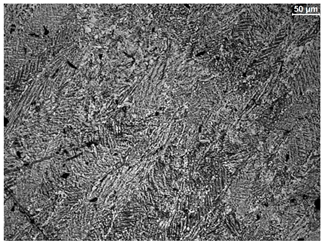 |  |
| HT_III |  |  |
| HT_IV |  |  |
| Sample | Sa [μm] | SD [μm] |
|---|---|---|
| AB_I | 0.62 | 0.005 |
| HT_II | 0.52 | 0.011 |
| HT_III | 0.65 | 0.006 |
| HT_IV | 0.60 | 0.009 |
| AB_S_I | 0.13 | 0.006 |
| HT_S_II | 0.11 | 0.008 |
| HT_S_III | 0.12 | 0.003 |
| HT_S_IV | 0.14 | 0.002 |
| Sample | [V] | Enp [V] | [V] | |||||
|---|---|---|---|---|---|---|---|---|
| Av. | SD | Av. | SD | Av. | SD | Av. | SD | |
| AB_I | −0.187 | 0.005 | 83.2 | 2.9 | 3.4 | 0.1 | 1.3 | 0.8 |
| HT_II | −0.101 | 0.005 | 72.9 | 1.2 | 3.8 | 0.2 | 1.2 | 1.3 |
| HT_III | −0.012 | 0.008 | 76.2 | 6.9 | 3.7 | 0.2 | 2.0 | 0.1 |
| HT_IV | −0.136 | 0.017 | 115.8 | 14.3 | 3.2 | 0.1 | 0.4 | 0.6 |
| AB_S_I | −0.105 | 0.001 | 43.0 | 6.0 | 3.4 | 0.04 | 1.9 | 0.02 |
| HT_S_II | −0.112 | 0.003 | 52.8 | 15.1 | 3.5 | 0.1 | 1.4 | 0.1 |
| HT_S_III | −0.062 | 0.007 | 60.6 | 7.4 | 3.5 | 0.1 | 2.1 | 0.3 |
| HT_S_IV | −0.119 | 0.067 | 39.0 | 3.8 | 3.5 | 0.2 | 0.8 | 0.1 |
| Sample | Before Pitting Corrosion Test | After Pitting Corrosion Test |
|---|---|---|
| AB_I |  |  |
| AB_S_I | 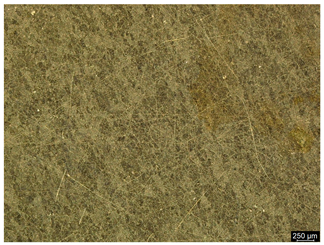 |  |
| HT_II |  |  |
| HT_S_II |  |  |
| HT_III |  |  |
| HT_S_III |  |  |
| HT_IV |  |  |
| HT_S_IV |  |  |
| Sample | Average Friction Coefficient |
|---|---|
| AB_I | 1.00 ± 0.03 |
| HT_II | 0.97 ± 0.04 |
| HT_III | 0.99 ± 0.02 |
| HT_IV | 0.77 ± 0.11 |
| AB_S_I | 0.94 ± 0.08 |
| HT_S_II | 0.76 ± 0.25 |
| HT_S_III | 0.72 ± 0.04 |
| HT_S_IV | 1.14 ± 0.06 |
Disclaimer/Publisher’s Note: The statements, opinions and data contained in all publications are solely those of the individual author(s) and contributor(s) and not of MDPI and/or the editor(s). MDPI and/or the editor(s) disclaim responsibility for any injury to people or property resulting from any ideas, methods, instructions or products referred to in the content. |
© 2026 by the authors. Licensee MDPI, Basel, Switzerland. This article is an open access article distributed under the terms and conditions of the Creative Commons Attribution (CC BY) license.
Share and Cite
Wielgus, G.; Kajzer, W.; Lisoń-Kubica, J.; Żurawska, A.; Wężowicz, J.; Borowski, T.; Adamczyk-Cieślak, B.; Kajzer, A. Functionalization of the Surface of Ti6Al4V Alloy Samples Printed Using Additive Technology DMLS for Orthopedic Applications Using Glow Discharge Treatment. Materials 2026, 19, 1604. https://doi.org/10.3390/ma19081604
Wielgus G, Kajzer W, Lisoń-Kubica J, Żurawska A, Wężowicz J, Borowski T, Adamczyk-Cieślak B, Kajzer A. Functionalization of the Surface of Ti6Al4V Alloy Samples Printed Using Additive Technology DMLS for Orthopedic Applications Using Glow Discharge Treatment. Materials. 2026; 19(8):1604. https://doi.org/10.3390/ma19081604
Chicago/Turabian StyleWielgus, Gabriela, Wojciech Kajzer, Julia Lisoń-Kubica, Aleksandra Żurawska, Jakub Wężowicz, Tomasz Borowski, Bogusława Adamczyk-Cieślak, and Anita Kajzer. 2026. "Functionalization of the Surface of Ti6Al4V Alloy Samples Printed Using Additive Technology DMLS for Orthopedic Applications Using Glow Discharge Treatment" Materials 19, no. 8: 1604. https://doi.org/10.3390/ma19081604
APA StyleWielgus, G., Kajzer, W., Lisoń-Kubica, J., Żurawska, A., Wężowicz, J., Borowski, T., Adamczyk-Cieślak, B., & Kajzer, A. (2026). Functionalization of the Surface of Ti6Al4V Alloy Samples Printed Using Additive Technology DMLS for Orthopedic Applications Using Glow Discharge Treatment. Materials, 19(8), 1604. https://doi.org/10.3390/ma19081604