3.1. Cryolite Ratio
Cryolite ratio is one of the core control parameters in the aluminum electrolysis process, directly affecting the physical and chemical properties and metallurgical chemical behavior of the electrolyte [
14]. Precise control of the cryolite ratio can significantly lower the electrolysis temperature, thereby reducing energy consumption, decreasing fluorine emissions, and enhancing current efficiency [
15]. It is necessary to balance its negative impact on the solubility/dissolution rate of alumina and the conductivity of the electrolyte.
For the determination of the cryolite ratio, physical and chemical property tests were conducted on the collected samples from the local aluminum industry corporation. This investigated the influence of these properties on the cryolite ratio. Measuring the surface tension and viscosity of these samples helped to determine the appropriate cryolite ratio in further experiments.
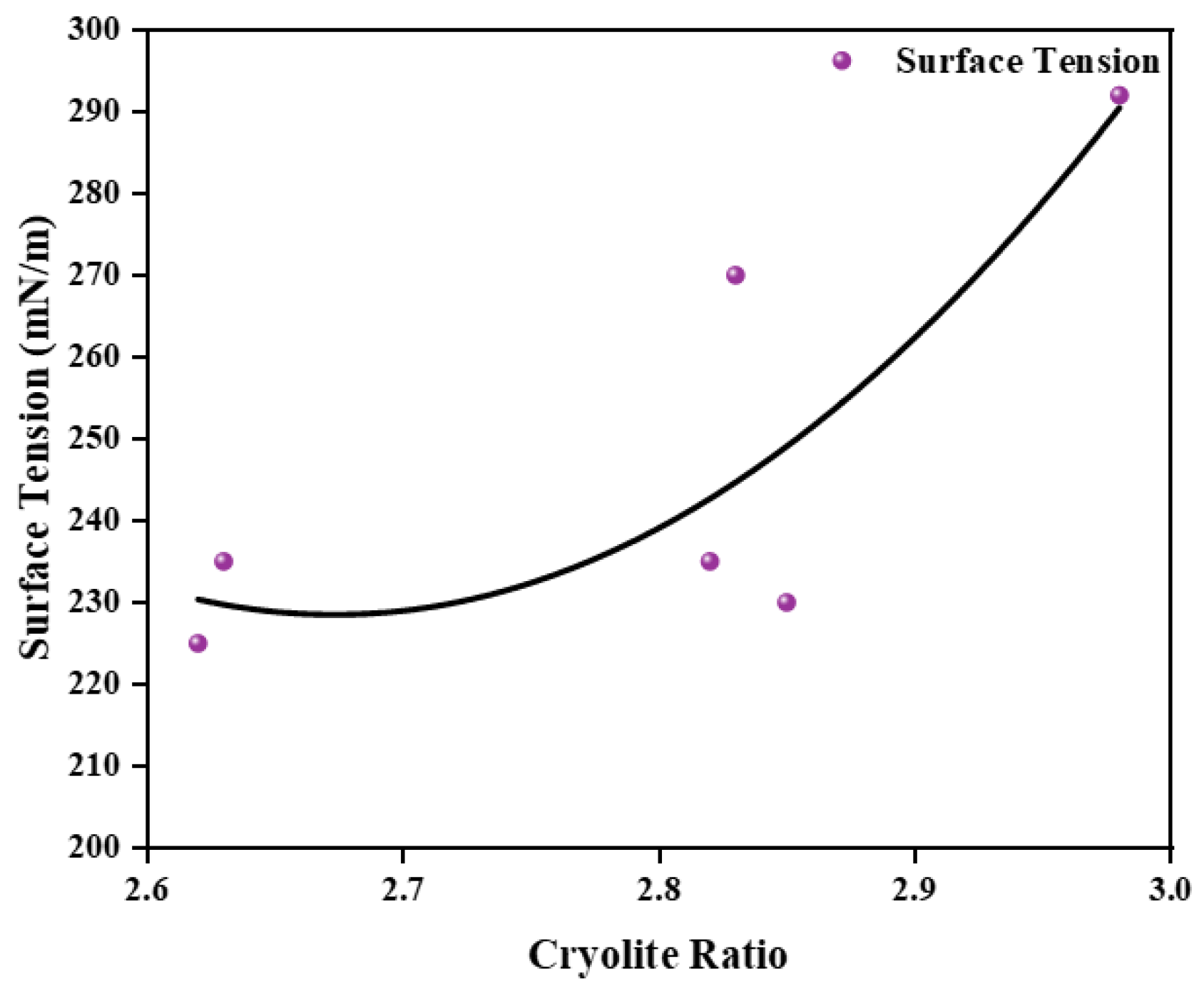
Based on the test results of the received samples, the simulation curve is shown in
Figure 2 to explain the relationship between the surface tension and cryolite ratio. As the cryolite ratio increased, the surface tension decreased. It increased after the inflection point, which was at 2.70. According to this curve, it can be inferred that the surface tension of electrolytes with a cryolite ratio of three was greater than that of electrolytes with a cryolite ration less than three. This phenomenon met the previous requirement, which was that high levels of Li and K electrolytes need high surface tension.
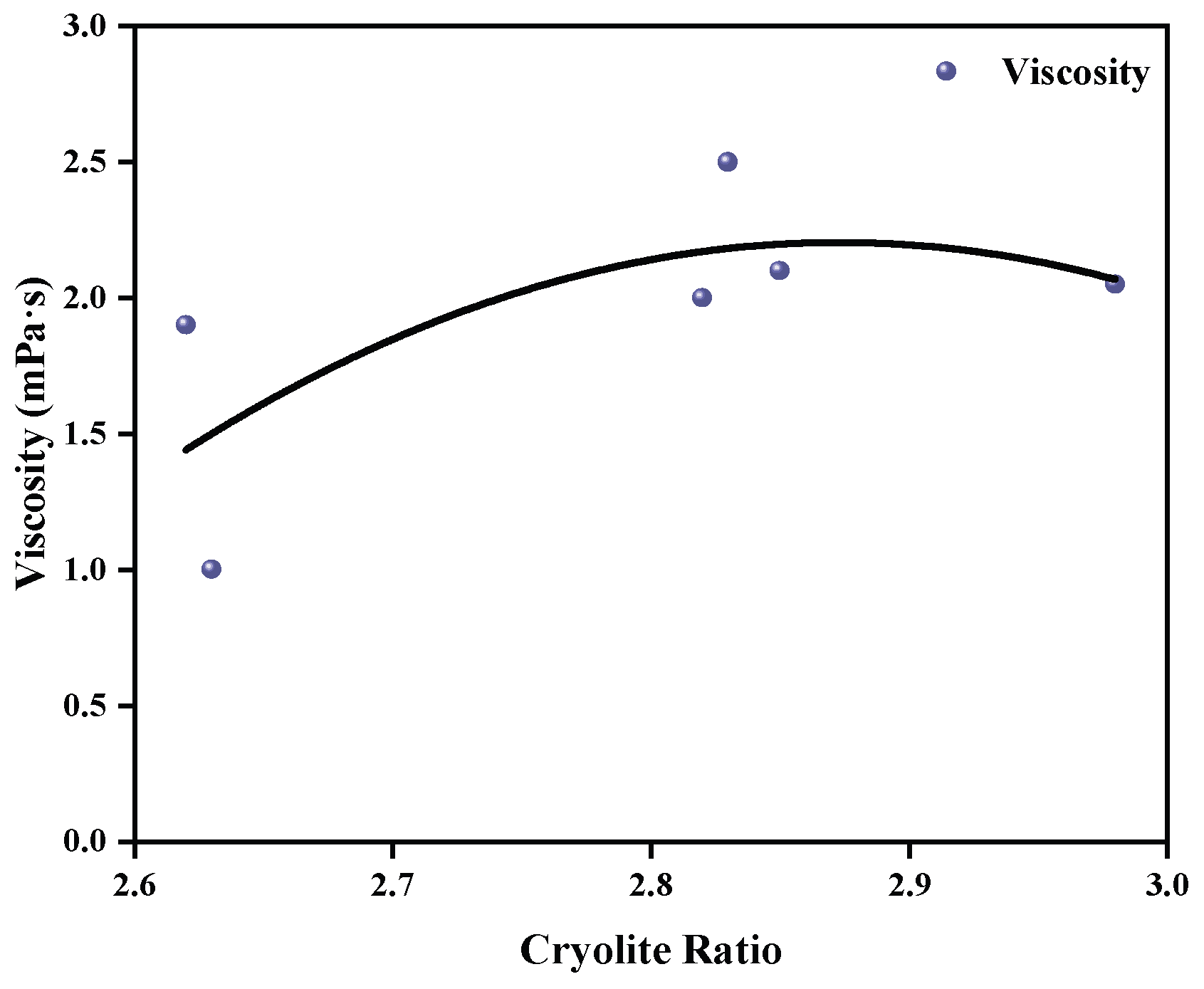
Similarly, viscosity tests were conducted on the same samples, and the fitting curve was obtained. The results are shown in
Figure 3. The viscosity of the samples was mostly maintained between two and three. As the cryolite ratio increased from 2.65 to 2.95, the viscosity of the samples first increased and then gradually decreased. The maximum viscosity value was 2.2 mPa·s at 2.825. According to this curve, it can be deduced that when the cryolite ratio reaches three, the viscosity is slightly lower than 2 mPa·s. These results meet the requirements of electrolytes enriched with high levels of Li and K. In conclusion, the electrolytes with a cryolite ratio of three have met the expectation of high surface tension and moderate viscosity after general investigation. Therefore, a cryolite ratio of three was considered an appropriate condition for subsequent experiments.
3.2. Experiments for Viscosity Testing
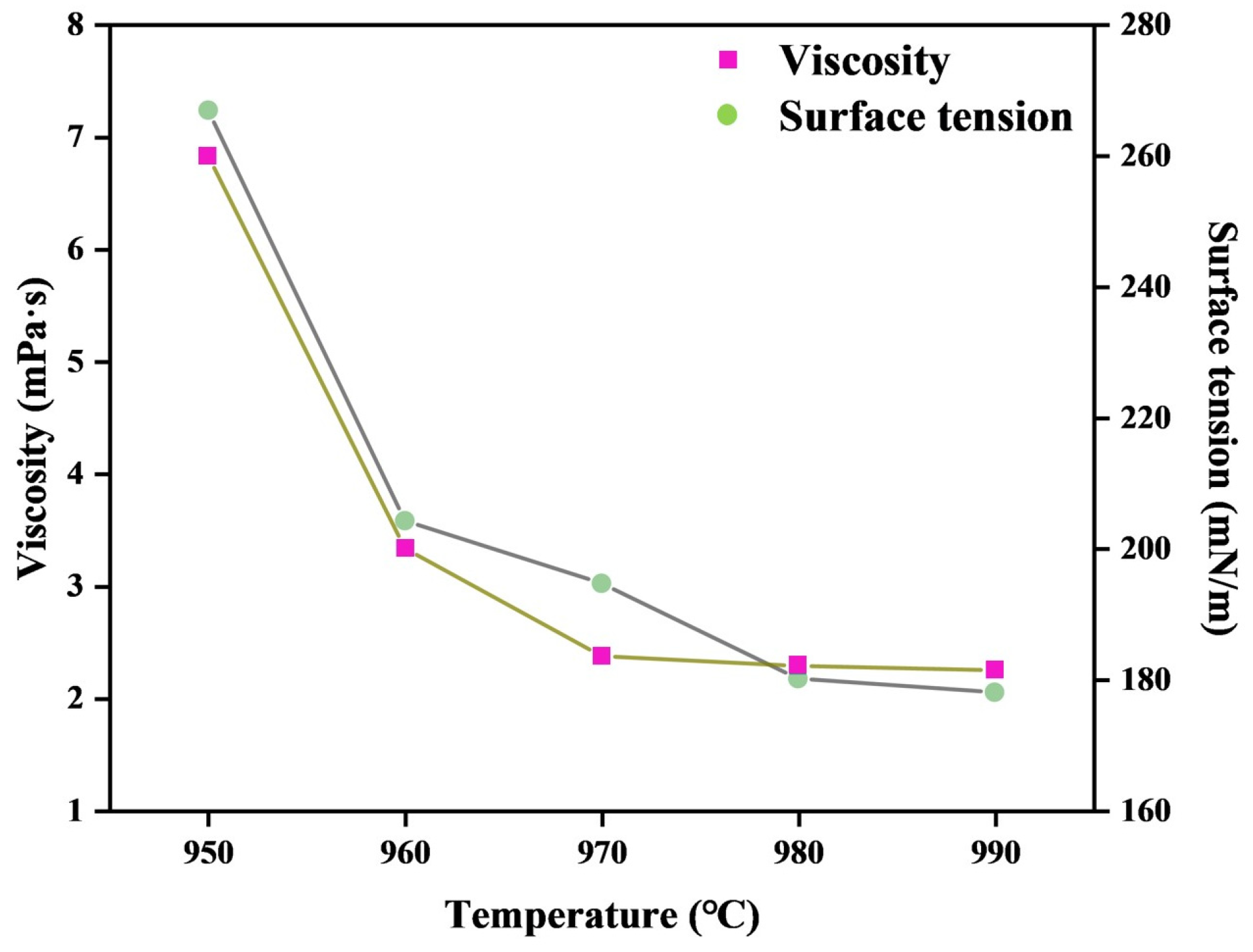
Following the determination of the electrolyte cryolite ratio as three, a reference sample consisting of 97 wt% sodium fluoroaluminate and 3 wt% alumina was prepared to establish baseline properties. The surface tension and viscosity of this reference electrolyte were measured across a range of temperatures. Results of
Figure 4 indicated that both surface tension and viscosity gradually decreased with increasing temperature. This trend could be attributed to the enhanced thermal motion of ions or molecules within the melt at higher temperatures, which weakened the intermolecular interactions. For the pure electrolyte system, complete melting was not achieved below 950 °C, a finding that aligned with actual industrial practice. It was also noted that the introduction of Li and K into the electrolyte lowered its melting point and consequently altered its viscosity and surface tension. Further investigation was focused on the effects of these compositional modifications on the physicochemical properties of the electrolyte.
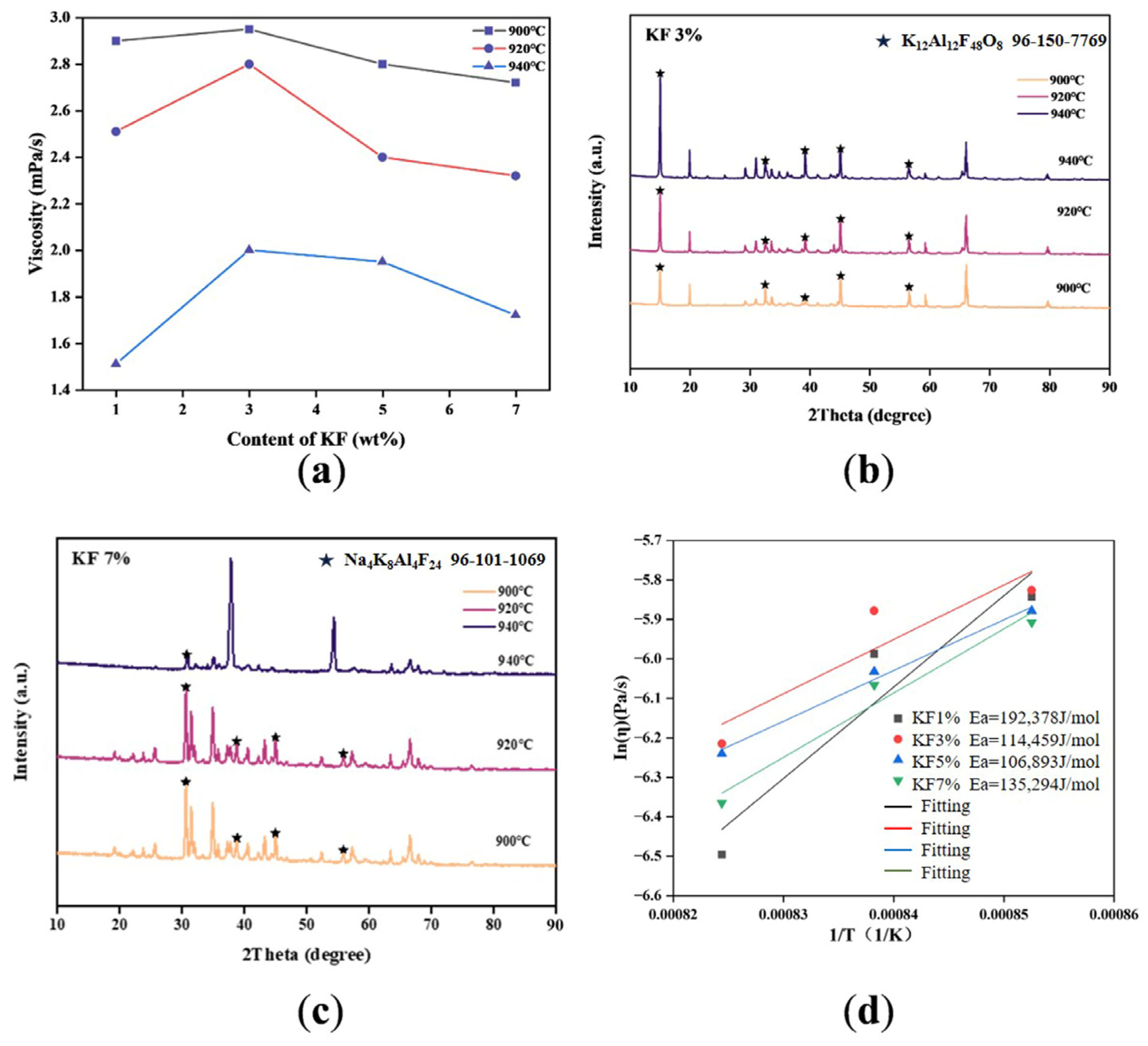
After the cryolite ratio of the simulated electrolyte was determined to be three, potassium fluoride with different molar ratios (1, 3, 5, and 7) was added to the electrolytes. These were tested at different temperatures (900, 920, and 940 °C) to obtain their viscosity. The results showed that the electrolyte viscosity for those containing only KF was the highest at 900 °C, and the viscosity gradually decreased with the temperature increase. It is speculated that the increase in temperature gave higher kinetic energy to molecules and ions, and the intermolecular force of the electrolyte gradually decreases [
16]. At the same temperature, with the increase in KF content, the viscosity increased first and then decreased, reaching the highest at 3 wt%. The shear activation energy calculated in
Figure 5 also depicted that with the increase in KF content, the shear activation energy generally showed a downward trend when the KF content was less than 2 wt%. This phenomenon can be attributed to the fact that the radius of the potassium ion is larger (138 pm), which disturbed the originally dominant ion (such as Na
+) network after entering the melt [
17]. In the early stage, a small amount of K
+ was embedded in the complex ion gap, such as [AlF
6]
3−. Due to the change in steric hindrance and electrostatic interaction, local ion migration was blocked, which showed a temporary increase in viscosity. Also, a smaller amount of K
+ may be involved in the formation of the K-Al-F transitional complex structure. The images of XRD gave exact proof of the existence of the K-Al-F structure. The diffraction peaks of KALOF and NaKAlF phases were shown clearly in XRD images at different temperatures and different KF contents, respectively. As the temperature rose, the crystal phase of the K-Al-F structure could not be detected in 7% KF content, and it can be speculated that the structure may be destroyed. These structures also showed less stability and larger volume in the researched literature, which temporarily increased the internal friction resistance of the melt [
18]. By adding more K
+ ions, the K-Al-F structure of the molten salt internal system was destroyed, which led to the viscosity reduction. This phenomenon is similar to the change rule of high coordination groups in molten salt, indicating that the viscosity of molten salt is directly affected by the change in coordination groups in the system [
19].
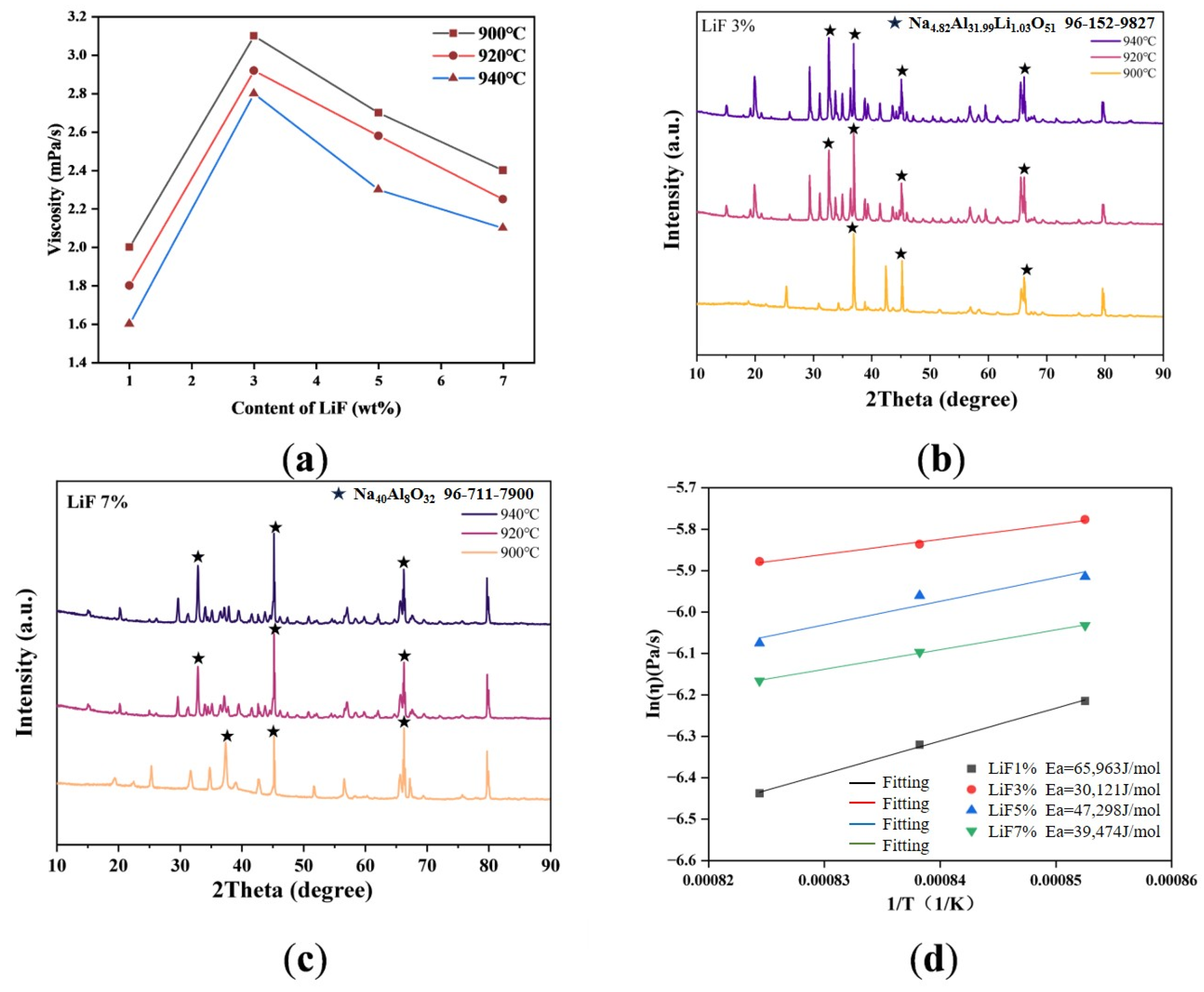
In the same case, a similar change rule was demonstrated for the viscosity of the electrolyte when LiF was present. As the temperature increased, the viscosity decreased. The viscosity increased first and then decreased at the same temperature, and 3 wt% is the inflection point of the curve. Different from KF, the viscosity changes of the electrolyte showed strong regularity, and the slope of the curve was large. From the fitting curve in
Figure 6, it can also be seen that with the increase in LiF content, the shear activation energy showed a decreased trend too. This may suggest that the initial addition of LiF to occupy the pores made the viscosity increase; however, the small ionic radius of lithium ions can break the anions with a high degree of polymerization ([AlF
6]
3−) in the cryolite melt due to the high charge density of increasing LiF content, which promotes its depolymerization into a smaller unit ([AlF
4]
−) [
20]. This process directly reduces the average ion size of the melt and the flow resistance, and thus regularly reduces the viscosity. It has also been proven in the literature that LiF has a certain effect on reducing viscosity. The disappearance of NaLiALO diffraction peaks and the appearance of NaAlO in the XRD image also proved that Li
+ changed into an ionic state in the melt. Due to the strong conductivity of Li
+, the electric mobility increased. This led to the free volume caused by Li
+ in the melt, and the disturbance to the melt structure was smaller, and the migration resistance was lower, which gave it a certain lubrication effect and further reduced the viscosity [
21].
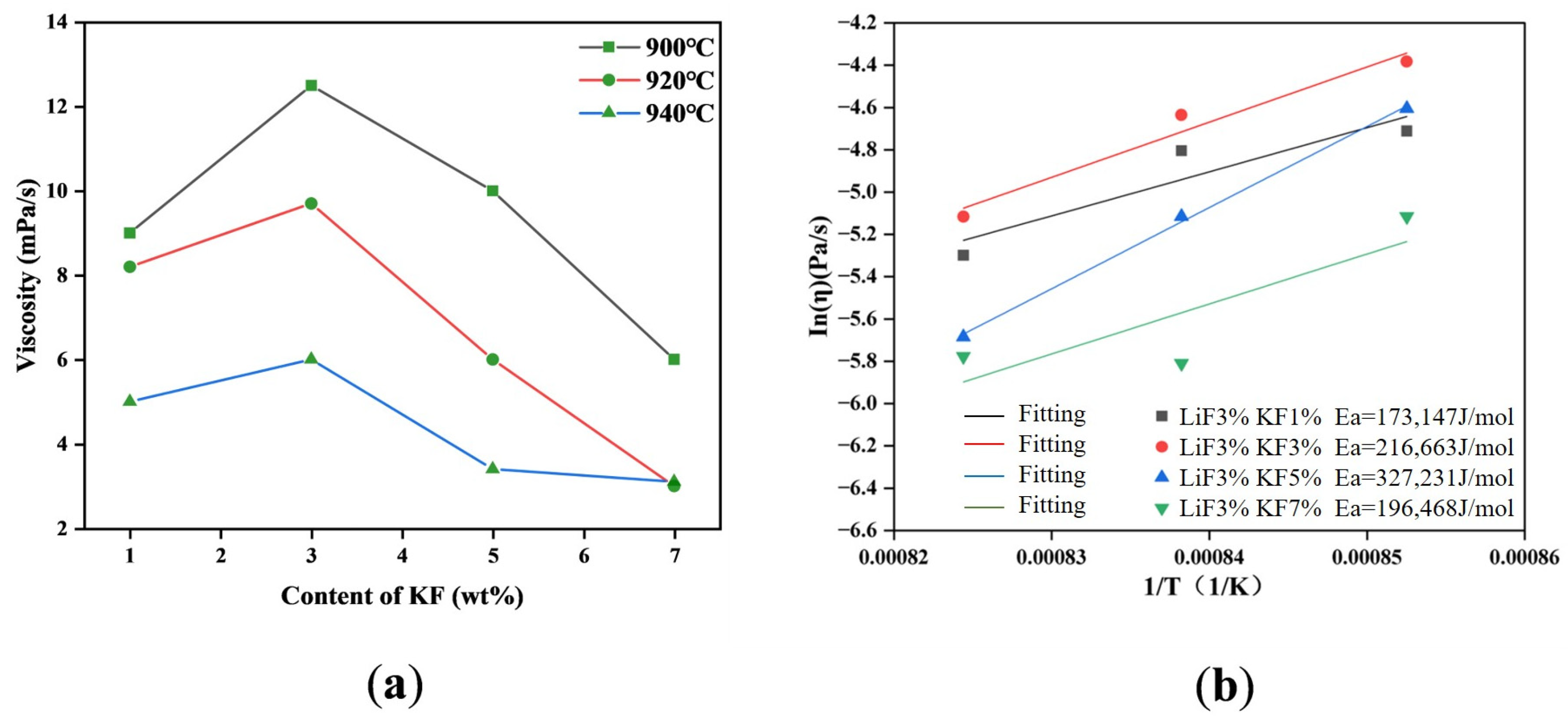
When the lithium fluoride content is fixed at 3 wt% with temperature change, the trend of viscosity with potassium fluoride content is shown in
Figure 7. Similarly, as the temperature increased, the viscosity decreased, and then viscosity increased first and then decreased at the same temperature, and 3wt% is the inflection point of the curve. It can also be seen from the fitting curve in
Figure 7 that under the combined effect of KF and LiF, the shear activation energy was more affected by KF, and only when the KF content was up to 5%, the shear activation energy decreased. This demonstrated that the presence of LiF and KF together affected the viscosity of the electrolyte analogously to the two existing alone. However, compared with a single component in the electrolyte, the viscosity increased greatly with a small amount of KF, which may be due to the ionic size effect of K
+. At the same time, LiF promoted the conductivity of the electrolyte, while KF was the opposite. This result also showed that the conductivity and lubrication of LiF were greatly affected by the existence of a small content of KF. Then, continuing to increase KF, viscosity decreased. This phenomenon may be attributed to the fact that excessive KF changed the original system; the free volume between the large ions (K
+) got larger, and the average distance between the ions increased, resulting in the electrostatic attraction becoming weaker, making the ion clusters easier to slide, so that the viscosity decreased. Furthermore, adding KF content to excess also meant adding F
− ions, and the [AlF
6]
3− in the electrolyte was more likely to change to the [AlF
4]
− with a smaller ionic radius. Thus, the main composition of the volume in the system, which was dominated by the larger radius anion ([AlF
6]
3−), transformed to one that was dominated by the larger radius cation (K
+) and the smaller radius anion ([AlF
4]
−, F
−). The following properties of [AlF
4]
−, such as less charge, smaller ionic resistance, and stronger mobility, finally led to the decrease in electrolyte viscosity with high KF content.
3.3. Experiments for Surface Tension Testing
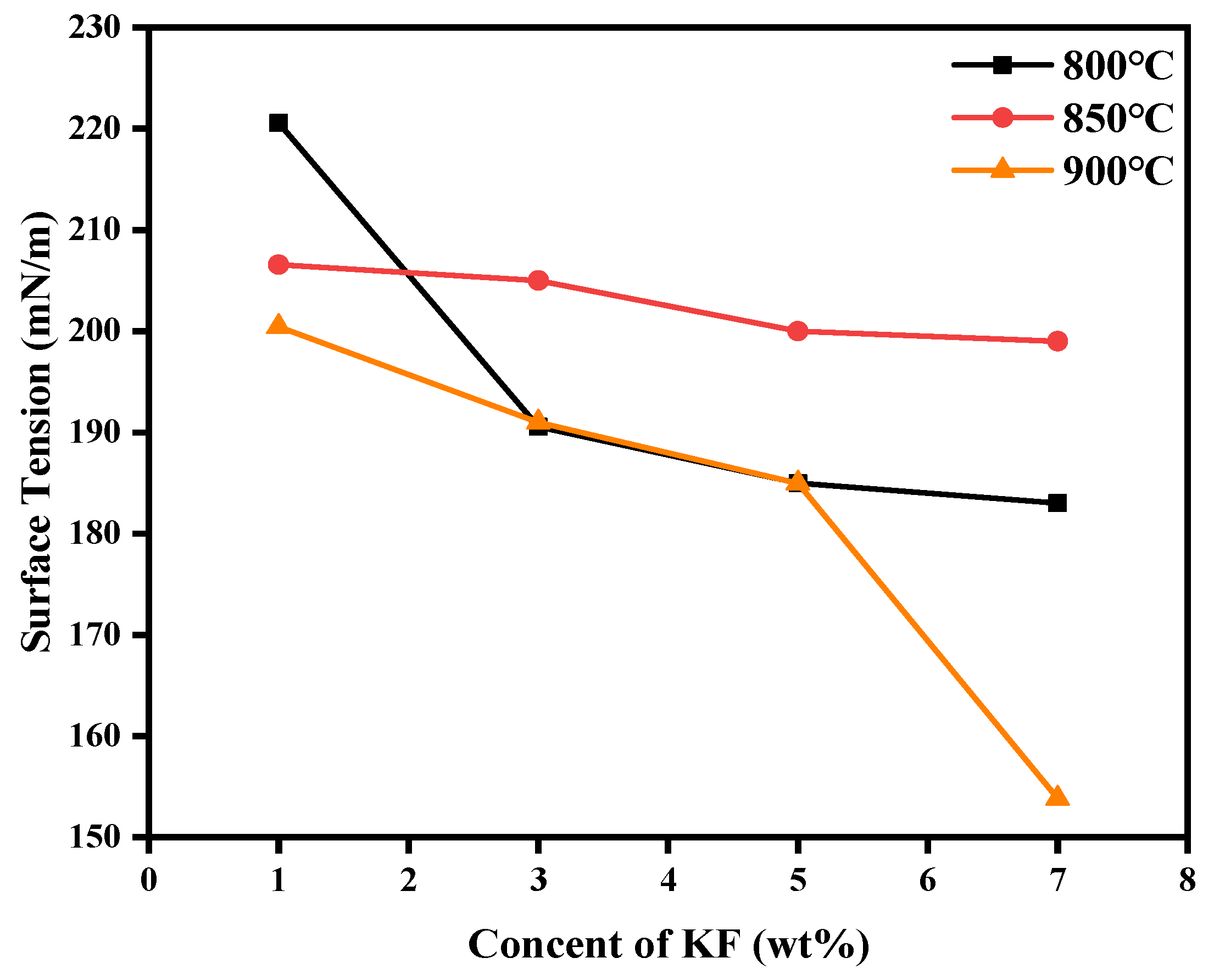
When measuring the surface tension of the electrolyte, first of all, the sample without LiF and KF melted completely, and its surface tension value was 168.954 mN/m at 940 °C. At this time, the surface tension of the electrolyte did not change significantly in a small temperature range (800–900 °C). In the literature we have reviewed, the addition of KF reduced the surface tension of the electrolyte. Therefore, the reduced temperature and increased temperature gradient were settled to explore the law between the surface tension and the electrolyte after adding KF at different temperatures. The results are shown in the
Figure 8. At the same temperature, as expected, the surface tension decreased with the increase in KF content. At 850 °C, the electrolyte maintained a high surface tension and changed slowly. At other temperatures, only the electrolyte containing excessive KF content (7 wt%) reduced the surface tension of the electrolyte below the sample without LiF and KF. This kind of phenomenon may be attributed to the following: At 850 °C, KF lost its function as a surfactant when CR equaled 3 at 850 °C. K
+ cannot be adsorbed by the melt surface effectively, so the surface tension was not sensitive to the change in KF concentration. At 800 °C, the melt structure may be more rigid, and the ion mobility is lower. Due to the difference in the interaction energy between main melt particles (Na
+, AlF
3−) and the added K
+ ion, the added K
+ ion is squeezed to the surface, thereby reducing the surface tension [
22]. As the temperature increased to 900 °C, the thermal motion of the melt was intense [
23]. The kinetic factor was the dominant influence: the K
+ ions obtained enough energy to overcome the energy barrier, and the process of migration and adsorption to the surface became easier. Thus, the surface activity effect of KF reemerged [
24].
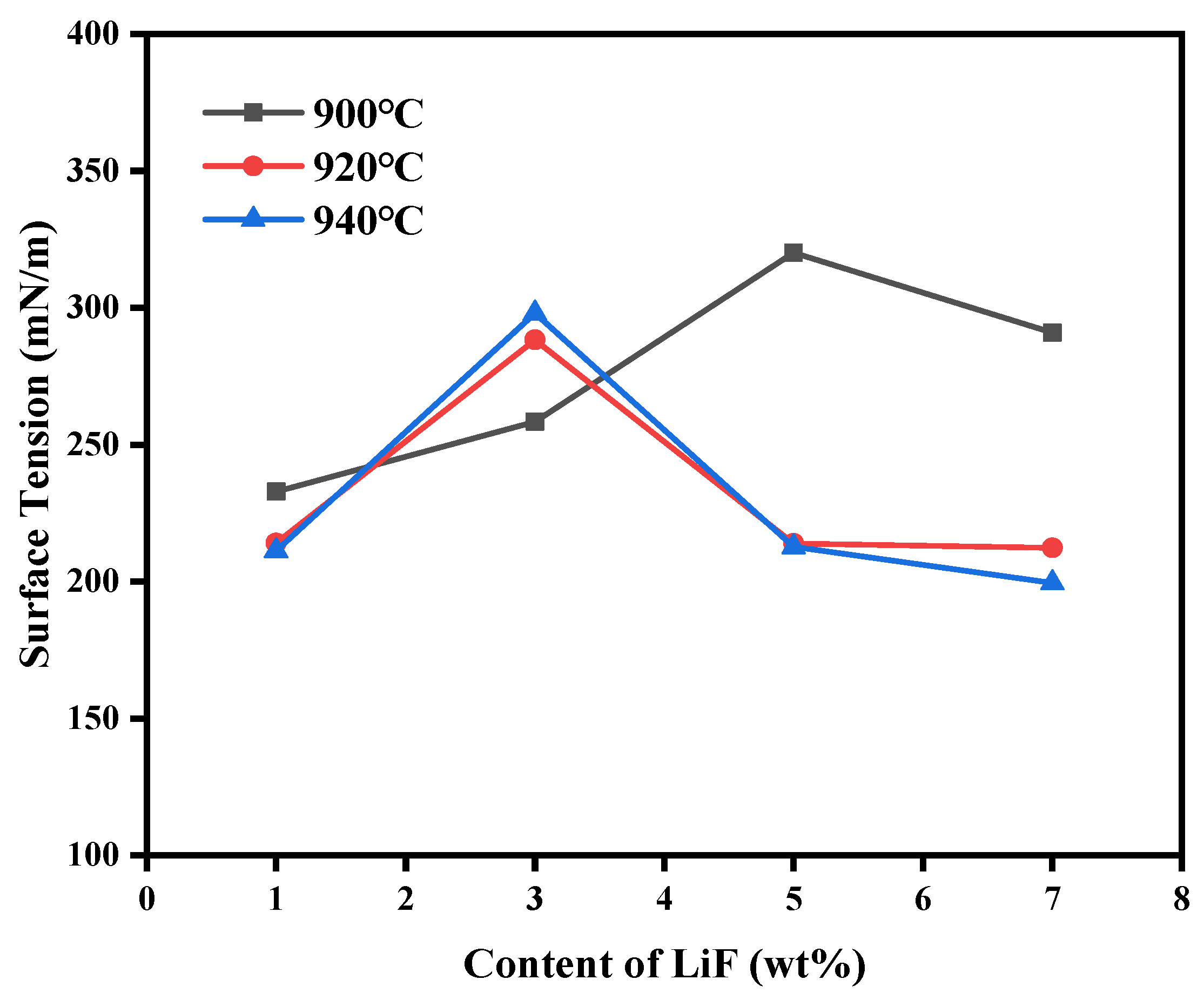
Similarly, this
Figure 9 shows the change in the surface tension of the electrolyte with different contents of LiF at different temperatures. It can be seen that with the increase in LiF at 900 °C, the surface tension increased by more than 100%, and the highest reached 323. This indicated that the addition of LiF increased the surface tension at low temperatures. This phenomenon may be attributed to the addition of LiF, which greatly enhanced the strength and cohesion of the ion network inside the melt through its strong galvanic interaction [
25]. The ions in the bulk phase were more tightly bound. They formed stronger and closer ion pairs with complex anions in the melt, resulting in a viscosity increase [
26]. Then, the change in surface tension at 920–940 °C is similar to that of viscosity under the same conditions; the surface tension increases first and then decreases with the increase in LiF concentration. This phenomenon may occur because the content of LiF in the melt is small, and the addition of a small amount of LiF significantly enhances the strength of the ion network inside the melt, which is far more than the limited destructive effect of F on the network. Therefore, the surface tension increases with the increase in LiF. When the content is more than 3%, the excessive F
− ions will destroy the original large aluminum oxyfluoride complex ion group in the melt and make it dissociate into smaller and simpler ion units. These small ions are more surface active and may tend to accumulate on the surface, thereby reducing the surface tension. Also, heat will aggravate the thermal motion of ions, thus strengthening the effect of high LiF content on reducing surface tension [
27].
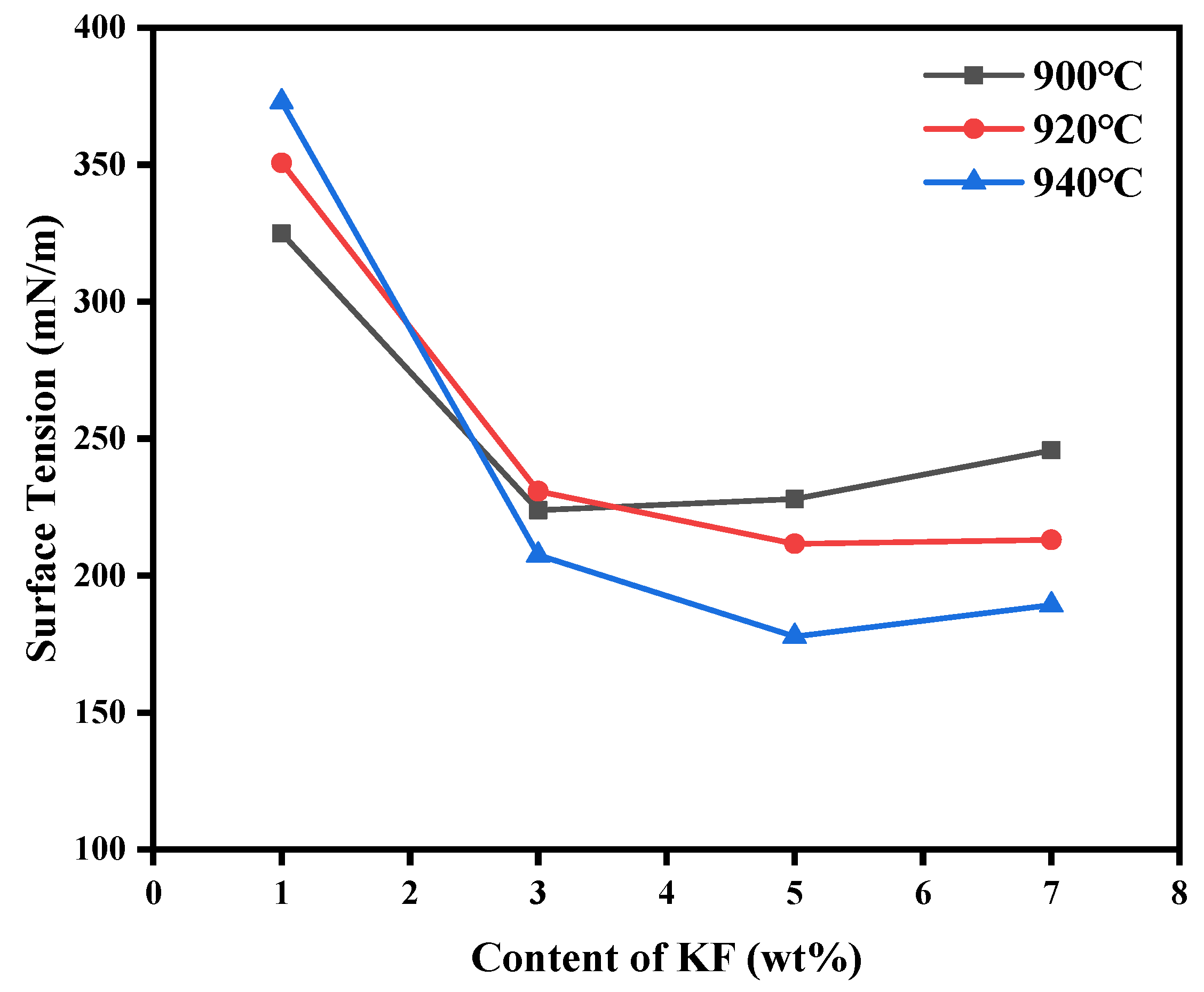
In order to explore the synergism of LiF and KF on the surface tension of the electrolyte, the content of LiF was fixed, and the figure was obtained by changing the mass fraction of KF. It can be seen from the
Figure 10 that all of the data in the experimental groups were higher than in the control group, indicating that the simultaneous addition of LiF and KF greatly improved the surface tension of the electrolyte [
28]. At different temperatures, all curves showed a decreasing trend of surface tension with the increase in KF content. At the same time, increasing the temperature resulted in obvious surface tension change, and the slope of the curve increased. This phenomenon may be attributed to the fact that when the KF concentration was lower, a small amount of K
+ had a weak interaction with complex anions in the melt (such as AlF
63−) due to its large ionic radius and low charge density. This made the K
+ ions more inclined to migrate and accumulate on the surface of the melt rather than remain in the bulk phase. This surface enrichment behavior changed the composition and structure of the surface layer, effectively reducing the surface energy, and thereby reducing the surface tension. The addition of LiF usually enhanced the strength of the ionic network inside the melt and tended to increase the surface tension. With the addition of KF, its F
− ions may destroy the original large aluminum oxyfluoride complex ion group in the melt and make it dissociate into smaller and simpler ion units. These smaller ionic units may be more active on the surface. At the same time, the solvation behavior of K
+ ions in the bulk phase may also change with the concentration. When the concentration of KF was high enough, its simplification and dilution effect on the melt structure dominated, thus jointly promoting the decrease in surface tension. The rising temperature aggravated the thermal motion of ions, making the melt structure more disordered. It also reduced the energy barrier of ion migration from the bulk phase to the surface. This phenomenon strengthened the surface adsorption process of K ions, making the effect of KF on reducing surface tension more significant [
29].