3.1. Phase and Structural Evolution of BTO NFs
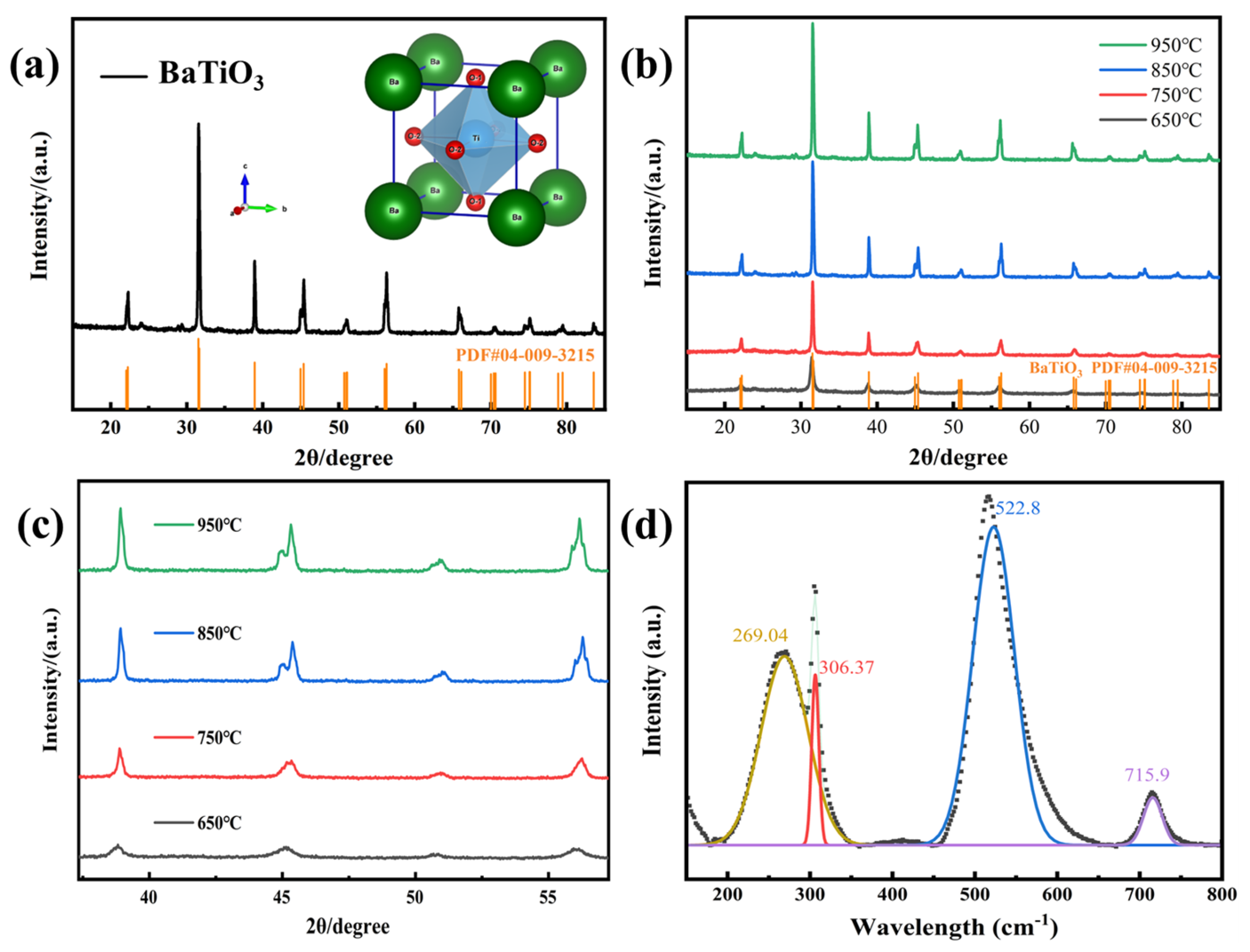
The crystal structure of the synthesized barium titanate nanofibers (BTO NFs) was systematically characterized using X-ray diffraction (XRD) and Raman spectroscopy. As shown in
Figure 5a, the XRD pattern of the sample calcined at 850 °C exhibits sharp diffraction peaks perfectly matching the standard card for tetragonal perovskite BaTiO
3 (PDF#04-009-3215). No impurity phases such as BaCO
3 or TiO
2 were detected, confirming the complete decomposition of the organic templates and the formation of a highly pure crystalline phase.
The dynamic effect of calcination temperatures (650–950 °C) on the phase evolution is illustrated in
Figure 5b,c. At 650 °C, the diffraction peaks are broad and symmetric, displaying typical pseudo-cubic characteristics. As the temperature increases, the crystallites grow significantly, leading to enhanced crystallinity. When the temperature reaches 850 °C and above, the characteristic single peak at 2θ ≈ 45° distinctly splits into a (002) and (200) doublet. This pronounced peak splitting directly evinces the elongation of the c-axis and the contraction of the a-axis, signifying the complete transition of the material from a centrosymmetric pseudo-cubic phase to a non-centrosymmetric tetragonal phase with intrinsic piezoelectric activity. To rule out potential interference from XRD peak broadening at the nanoscale, Raman spectroscopy—which is highly sensitive to local lattice distortions—was employed for further verification (
Figure 5d). The deconvoluted spectrum reveals distinct characteristic scattering peaks at 269.04, 306.37, 522.8, and 715.9 cm
−1. In particular, the sharp “fingerprint” peak at 306.37 cm
−1 directly reflects the internal asymmetry of the TiO
6 octahedra. The mutual corroboration between the XRD and Raman results fully demonstrates the excellent tetragonal phase purity of the prepared 1D BTO NFs, laying a solid microstructural foundation for the piezoelectric response of the subsequent flexible composite films.
Based on the (002) and (200) diffraction peaks around 45°, the calculated lattice parameters are c = 4.0293 Å and a = 3.9938 Å, yielding a tetragonality (c/a) = 1.009. Due to the inherent nanoscale size effect—driven by massive specific surface area and internal micro-stress—the lattice undergoes slight distortion, resulting in minor c-axis compression and a-axis expansion. Nevertheless, the BTO NFs maintain exceptionally high tetragonal purity.
The average microcrystalline size is calculated by the Scherrer equation:
where D denotes the microcrystalline size, K represents the shape factor, λ is the incident X-ray wavelength, β is the half-width at half maximum of the diffraction peak, and θ is the Bragg diffraction angle.
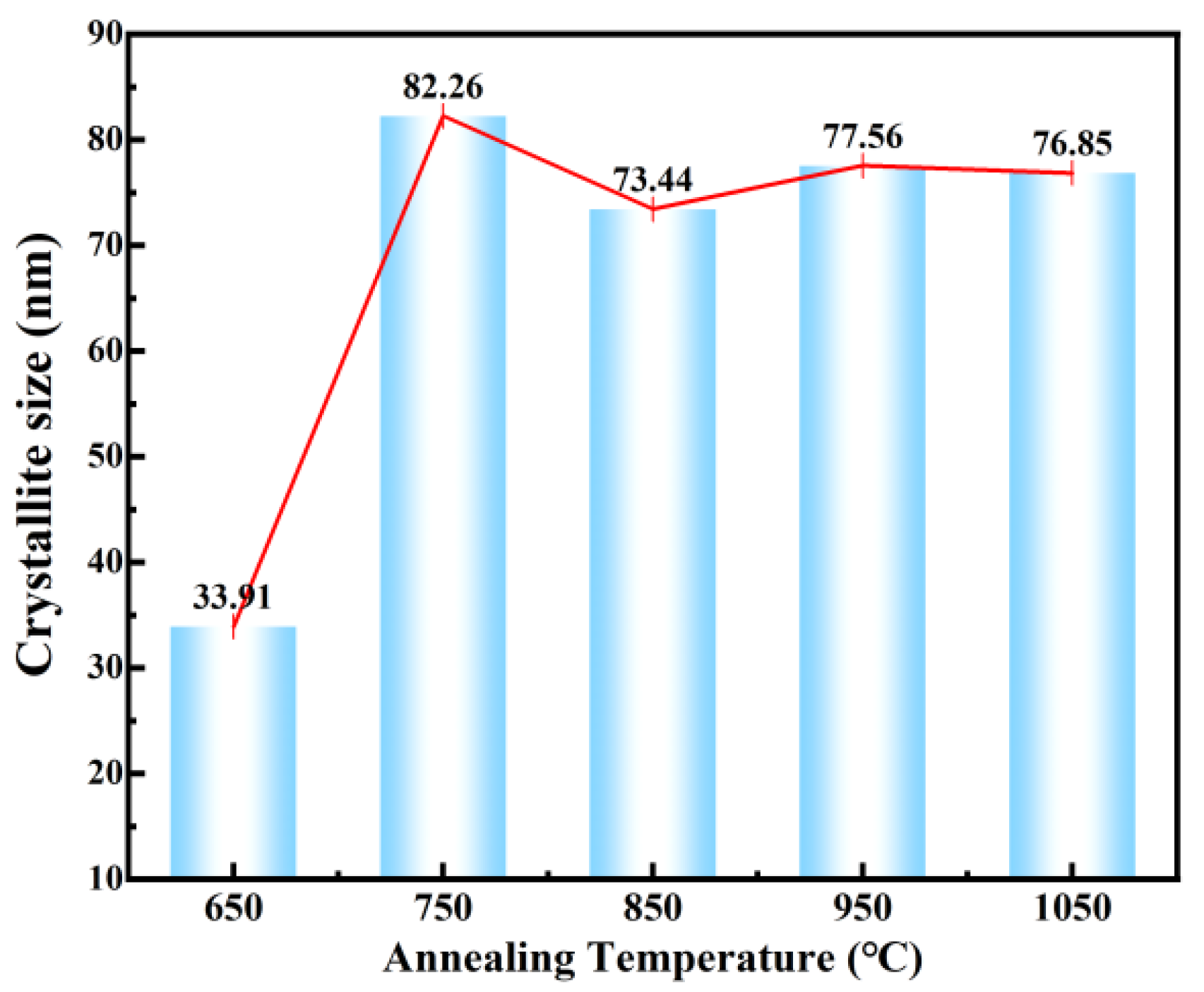
According to the Scherrer equation, the crystallite size increases sharply with calcination temperature, stabilizing at ~77 nm above 750 °C (
Figure 6). The slight apparent decline at elevated temperatures is not physical shrinkage, but rather results from peak splitting and broadening induced by the complete pseudo-cubic to tetragonal phase transition. Comparing this crystallite size (~77 nm) with the ~190 nm fiber diameter observed via next SEM indicates that these 1D nanofibers are dense polycrystalline structures assembled from multiple primary crystallites.
3.2. Morphological Optimization and Elemental Analysis
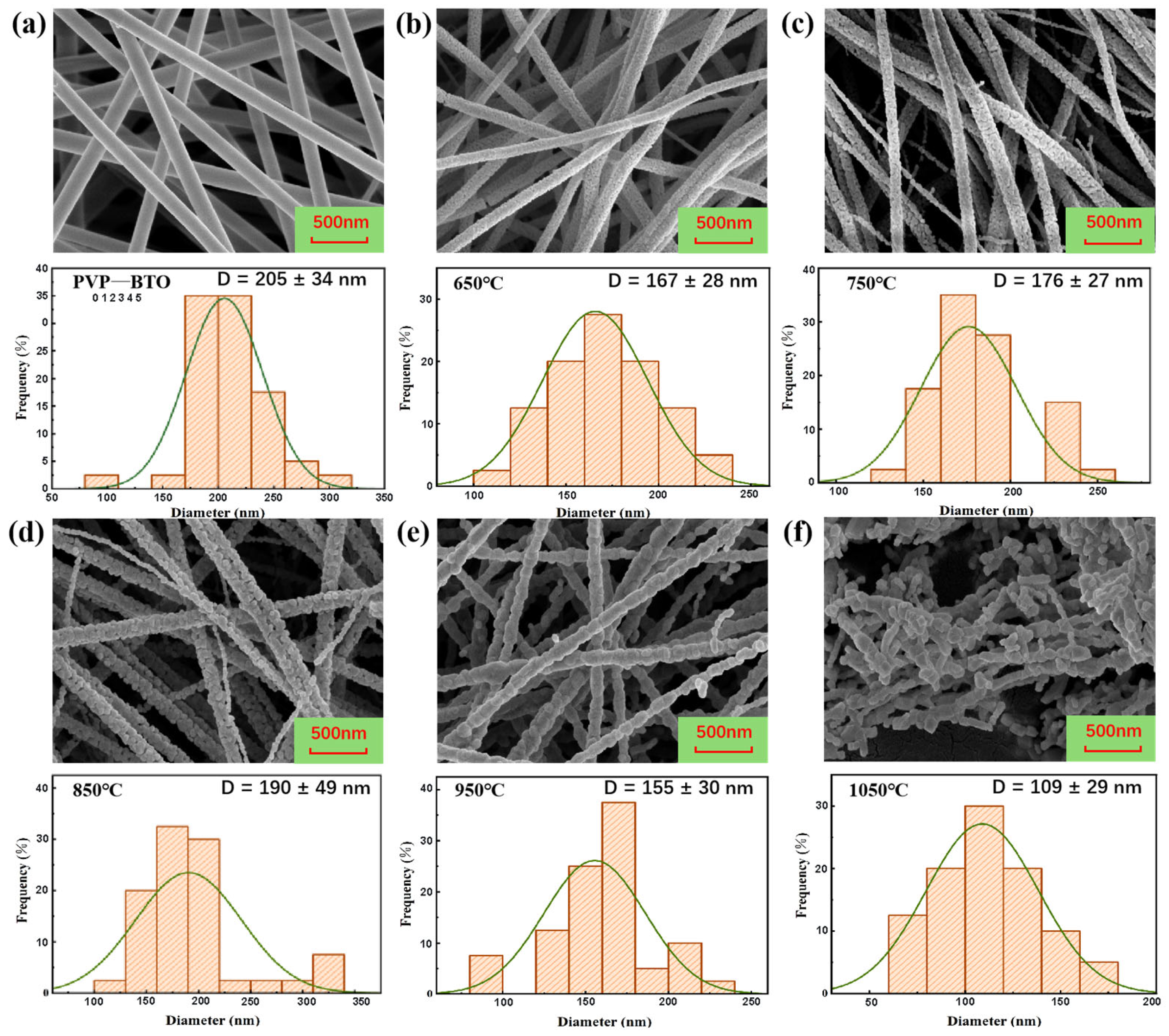
Following the confirmation of the optimal tetragonal phase purity at 850 °C, the morphological evolution and elemental composition of the nanofibers were systematically investigated. Scanning electron microscopy (SEM) reveals that the smooth PVP-BTO precursor fibers (average diameter 205 nm) undergo significant structural transformations upon calcination (
Figure 7a). At lower temperatures (650–750 °C), polymer decomposition and initial nucleation induce distinct radial shrinkage (
Figure 7b,c). At the optimal 850 °C, the BTO NFs develop a robust, continuous 1D “necklace-like” architecture assembled by primary nanocrystals, reaching an average diameter of 190 nm due to grain growth and Ostwald ripening (
Figure 7d). Conversely, excessive calcination at 1050 °C triggers Rayleigh instability to minimize surface energy (
Figure 7f), resulting in catastrophic fiber fracture and morphological collapse into short, agglomerated clusters (109 nm).
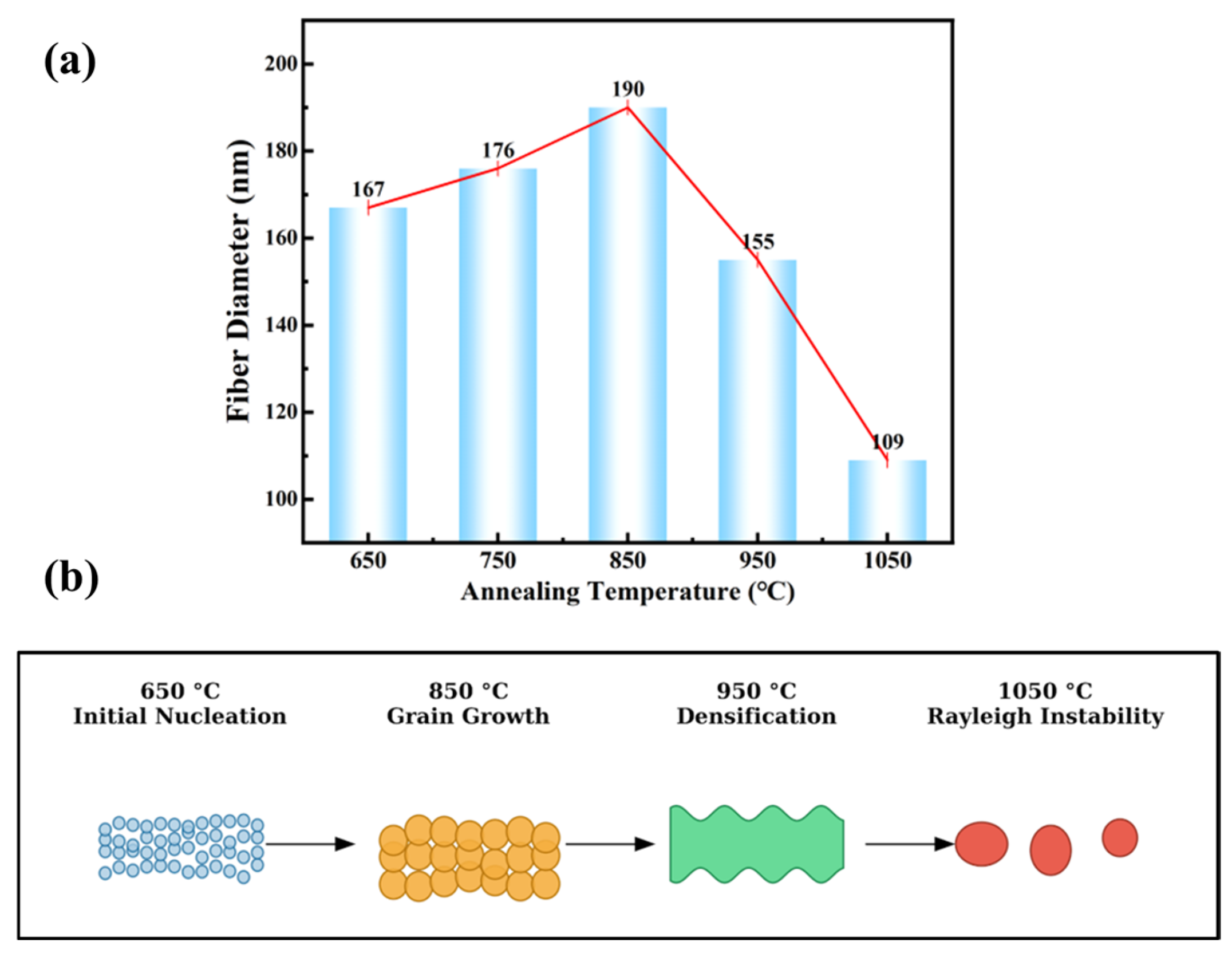
To elucidate the influence of thermal treatment on the macroscopic dimensions and microstructural stability of the 1D BTO nanofibers, the relationship between annealing temperature and fiber diameter was systematically analyzed. As depicted in
Figure 8a, the average diameter of the nanofibers exhibits a distinct non-monotonic trend—initially increasing from 167 nm (at 650 °C) to a peak of 190 nm (at 850 °C), before undergoing a sharp decline to 109 nm at 1050 °C.
This complex morphological evolution is governed by the competition between thermodynamic grain growth, sintering densification, and surface energy minimization. As schematically illustrated in
Figure 8b, the morphological evolution of BTO nanofibers is governed by different dominant thermodynamic mechanisms across different temperature ranges.
Between 650 °C and 850 °C, Ostwald ripening becomes the dominant process. At this stage, the average particle size increases and the number of particles decreases, but the particles remain separate from one another; radial grain growth within the 1D physical constraints expands the fiber diameter to a peak of 190 nm, yielding a rough, “necklace-like” structure.
From 850 °C to 950 °C, high-temperature sintering densification dominates. At high temperatures, grain boundaries form between adjacent particles. Through mass transfer processes such as atomic diffusion and grain boundary migration, the particles bond together, causing the pores to shrink and eventually disappear, ultimately forming a dense polycrystal. At this point, the diameter of the dense fibers decreases to 155 nm, but they still retain their one-dimensional continuity.
However, at an extreme 1050 °C, in this case, Rayleigh instability plays a dominant role in the sintering process. The high surface energy of the 1D morphology triggers Rayleigh instability, which leads to localized necking, spheroidization, and the catastrophic fragmentation of the continuous fibers into isolated particulate clusters (109 nm).
Consequently, 850 °C is identified as the optimal annealing temperature, as it perfectly balances sufficient crystallite development with the preservation of robust, continuous 1D structural integrity.
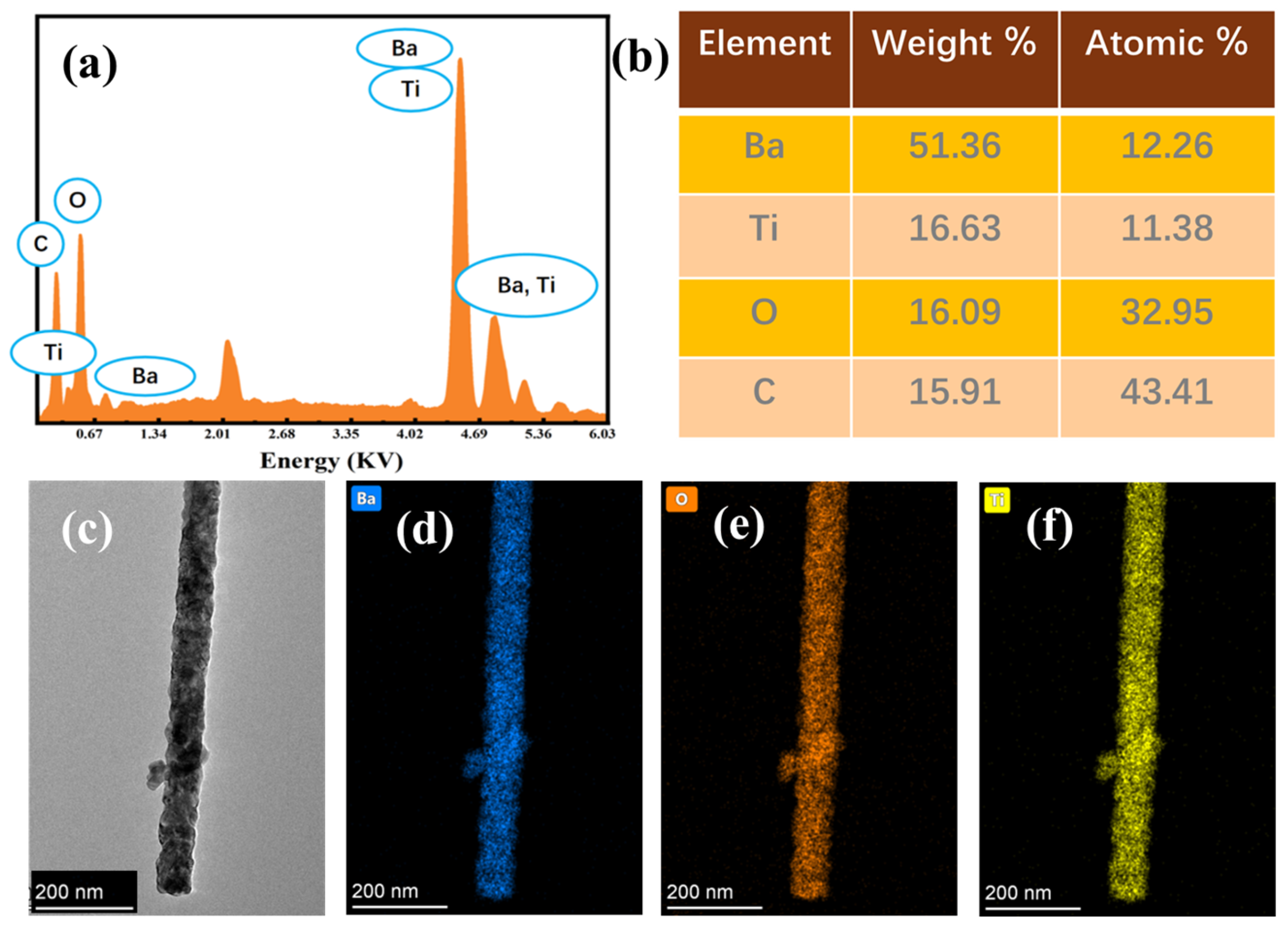
As shown in
Figure 9a,b, Energy-dispersive X-ray spectroscopy (EDS) analysis confirms the constituent elements, yielding an atomic Ba/Ti ratio of 1.08. This closely aligns with the ideal 1:1 stoichiometry of perovskite BTO, with the slight deviation attributed to minor surface barium segregation typical during high-temperature annealing. Focusing on the optimal 850 °C sample, transmission electron microscopy (TEM) elucidates a dense, highly continuous polycrystalline 1D skeleton without structural voids (
Figure 9c). Furthermore, corresponding EDS elemental mappings demonstrate a highly homogeneous spatial distribution of Ba, Ti, and O along both the radial and longitudinal axes of the nanofiber (
Figure 9d–f), strictly precluding any localized elemental segregation.
In summary, the combined SEM, TEM, and EDS analyses verify the successful synthesis of structurally intact, compositionally uniform, and highly continuous 1D BTO NFs at 850 °C. This optimal 1D geometry perfectly complements their high tetragonal crystallinity, providing an ideal microstructural foundation for constructing efficient stress-transfer networks in subsequent piezoelectric composites.
3.3. Construction and Mechanism of the Core-Shell PPy@PBT NFs
To overcome the inherent interfacial incompatibility between inorganic ferroelectric fillers and polymer matrices, a bio-inspired, two-step surface modification strategy was employed to construct one-dimensional core–shell PPy@PDA@BTO NFs (denoted as PPy@PBT NFs).
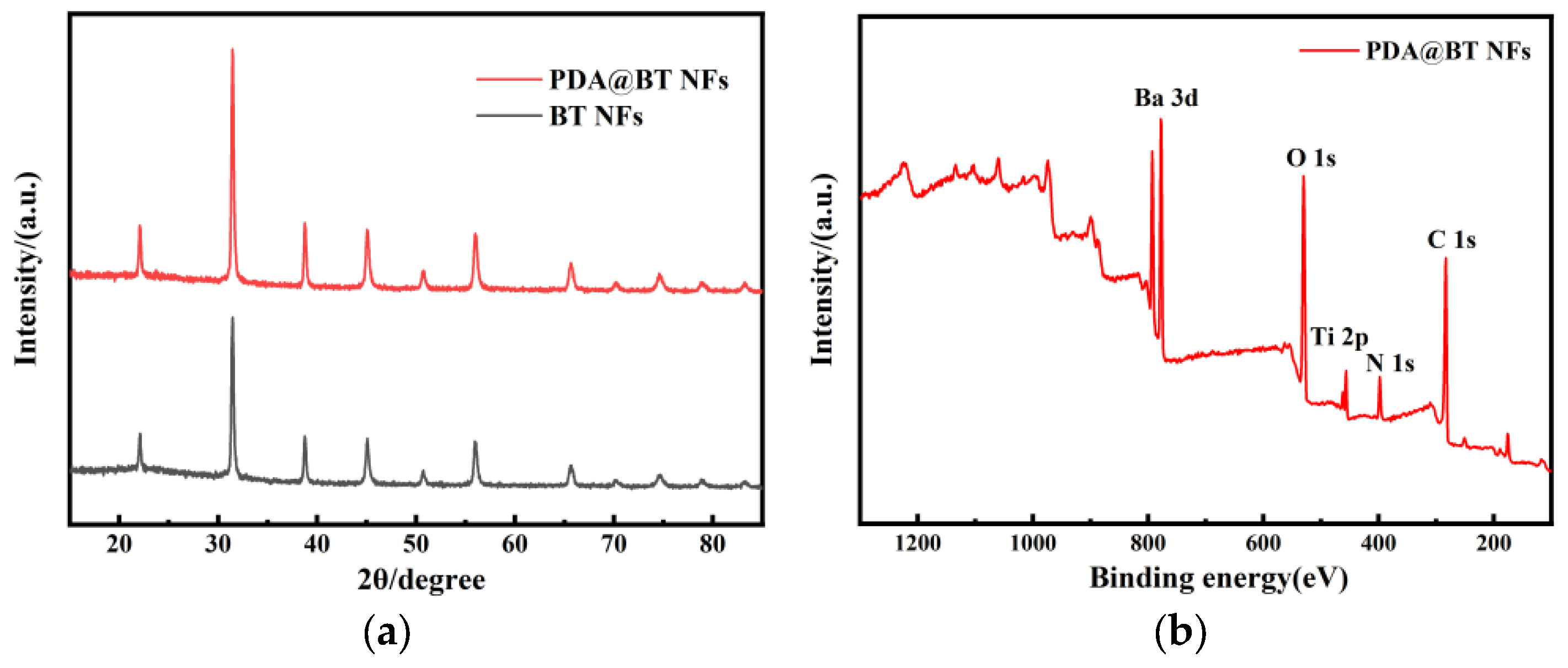
The successful conformal coating of the polydopamine (PDA) buffer layer was first verified. As shown in
Figure 10a, the XRD pattern of the PDA@BT NFs perfectly overlaps with that of pristine BTO NFs, indicating that the mild, weakly alkaline self-polymerization of dopamine completely preserves the non-centrosymmetric tetragonal lattice responsible for piezoelectricity. Since pristine BaTiO
3 contains no nitrogen, the distinct emergence of the N 1s peak in the XPS survey spectrum (
Figure 10b) provides definitive chemical evidence of the PDA coating.
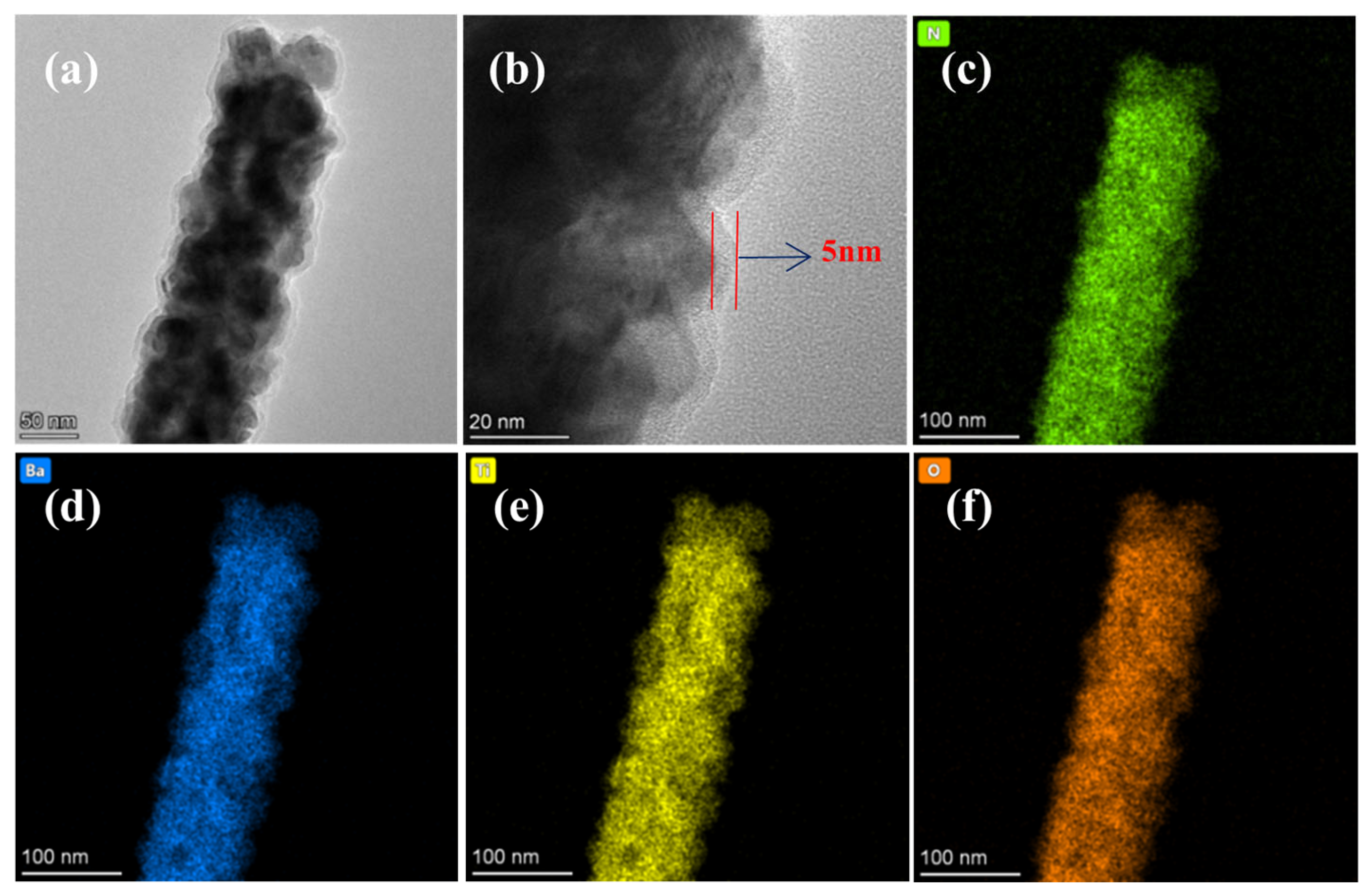
This is intuitively corroborated by the high-resolution TEM observations (
Figure 11a). The bright-field TEM image reveals a uniform, amorphous PDA shell with a thickness of 5 nm tightly wrapping the highly crystalline BTO core (
Figure 11b). Furthermore,
Figure 11c–f provided the corresponding EDS elemental mapping, demonstrating that the N element is distributed with exceptional homogeneity along the entire 1D skeleton, perfectly matching the spatial profiles of Ba, Ti, and O. As shown in
Figure 11c, the N signal from the thin PDA layer overlaps with the Ba, Ti, and O signals generated by the internal BTO NFs. This phenomenon is primarily attributed to the fact that the spatial resolution of EDS is limited by the volume of electron beam interaction and the sample thickness. The penetration depth of the electron beam can reach several hundred nanometers, and the excited volume exceeds the 5 nm thick PDA shell layer. Therefore, even if the PDA is strictly confined to the fiber surface, the signal obtained by EDS still represents the volume-averaged information of the entire fiber cross-section.
This proves that PDA undergoes conformal, in situ growth on the BTO surface rather than random precipitation.
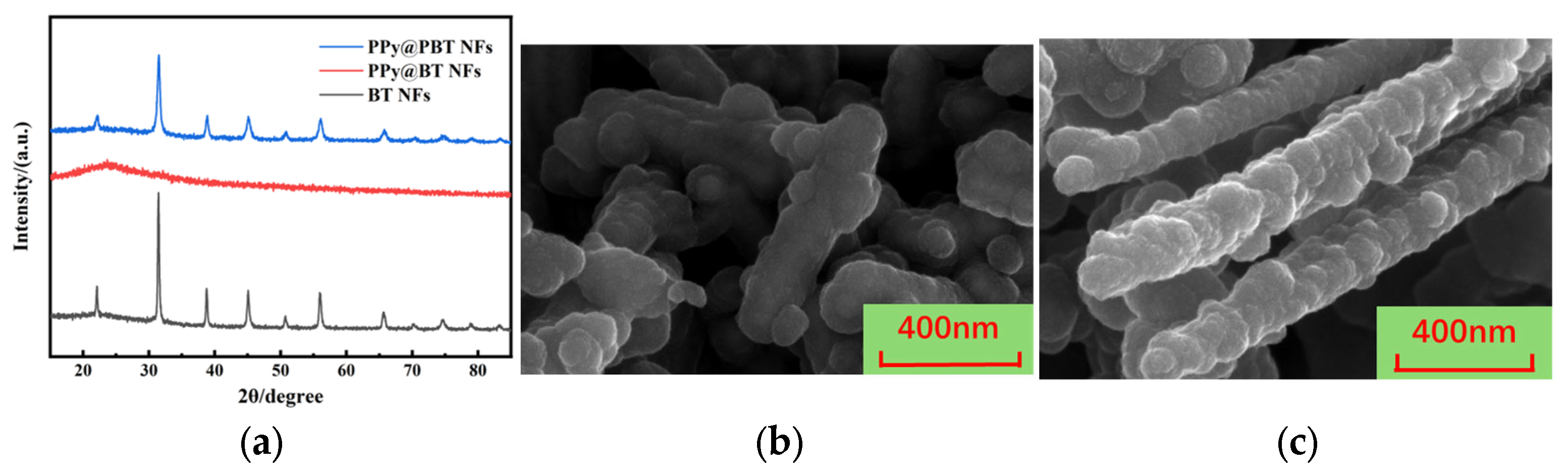
Crucially,
Figure 12 elucidates the indispensable protective mechanism of this PDA buffer layer during the subsequent deposition of the conductive polypyrrole (PPy) shell. When PPy is directly polymerized onto bare BTO NFs (PPy@BT NFs), the characteristic XRD diffraction peaks of the perovskite phase dramatically attenuate and virtually disappear into a broad amorphous halo (
Figure 12a).
Morphologically, the corresponding SEM image (
Figure 12b) reveals a catastrophic structural collapse, where the continuous 1D fibers are fractured and heavily agglomerated. The underlying mechanism for this destruction is severe acid etching. The in situ polymerization of pyrrole relies on FeCl
3 as an oxidant, which hydrolyzes to create a highly acidic environment. The pristine perovskite BTO lattice is highly susceptible to proton (H
+) attack, leading to the rapid dissolution of the inorganic skeleton and the permanent loss of its ferroelectric properties. In stark contrast, the PDA-buffered fibers (PPy@PBT NFs) perfectly retain the sharp, intense XRD peaks of tetragonal BTO (
Figure 12a). As evidenced by the SEM image in
Figure 12c, the 1D physical morphology remains remarkably intact, with nodular PPy conductive particles uniformly anchoring onto the fiber surface. In this synergistic architecture, the dense, cross-linked PDA shell effectively acts as a diffusion barrier, shielding the vulnerable BTO core from H
+ penetration during the acidic PPy polymerization. Simultaneously, the abundant catechol and amine functional groups on the PDA surface serve as highly active secondary nucleation sites, promoting the uniform deposition of PPy. Ultimately, this rational core–shell design seamlessly integrates the intrinsic piezoelectricity of the shielded BTO core with the interfacial conductivity of the PPy shell.
3.4. Performance Enhancement and Application Potential of PPy@PBT NFs/PVDF PEHs
Building upon the successful synthesis of the 1D core–shell PPy@PBT NFs, their application as multifunctional fillers within a PVDF matrix was investigated to fabricate flexible piezoelectric energy harvesters (PEHs). The incorporation of these hierarchical core–shell fillers dramatically enhances the electromechanical properties of the resulting composite films. Notably, doping the PVDF matrix with an optimal concentration of 4 wt% of the PPy@PBT NFs significantly improves both the intrinsic piezoelectric properties and the macroscopic electrical output performance of the films.
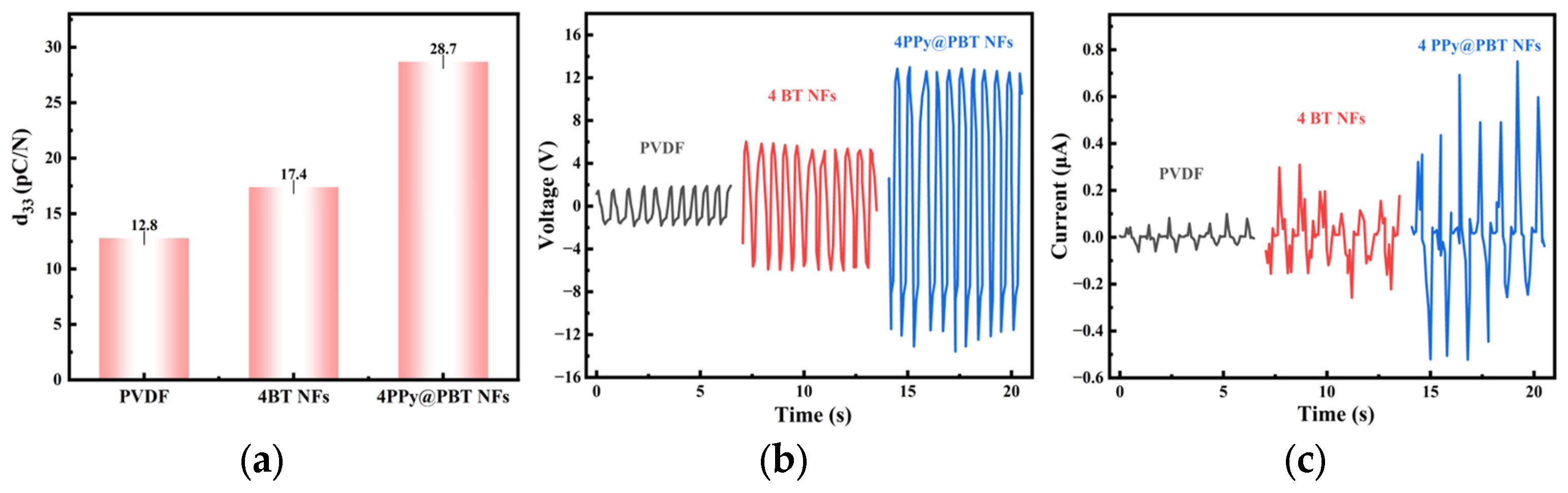
As quantitatively illustrated in
Figure 13, the PEH device based on 4 wt% PPy@PBT NFs exhibits a remarkable leap in electromechanical performance. The piezoelectric coefficient d
33 of the composite films was measured using a quasi-static piezoelectric coefficient tester (ZJ-4AN, Institute of Acoustics, Chinese Academy of Sciences, China). Prior to measurement, all samples were subjected to corona poling at 12 kV/mm and 80 °C for 30 min to align ferroelectric dipoles, followed by 24 h of relaxation at room temperature to eliminate residual surface charges. For each sample, five different positions were tested, and the average value was reported as the final d
33. As a result, the piezoelectric coefficient (d
33) of the optimized composite reaches 28.7 pC/N (
Figure 13a), which is significantly higher than that of the unmodified 4 wt% BTO NFs composite (17.4 pC/N) and pure PVDF (12.8 pC/N).
At the same time, the output voltage and current were measured using an electrometer (Keithley 6514) under a periodic compressive force generated by a linear motor-driven dynamic testing system. The applied force amplitude was 20 N at a frequency of 2 Hz. A preload of 5 N was applied for 30 s prior to each measurement to eliminate triboelectric contributions and ensure intimate contact between layers.
Correspondingly, the macroscopic electrical outputs under mechanical excitation are drastically amplified. The peak-to-peak output voltage and current of the 4 wt% PPy@PBT NFs device surge to approximately 13 V and 0.7 uA, respectively, vastly outperforming the bare BTO NFs doped counterparts (
Figure 13b,c). The slight fluctuation observed in the output current, particularly for the 4 wt% PPy@PBT NFs sample, is attributed to the micro-scale contact resistance variation between the conductive PPy shell and the PVDF matrix under dynamic deformation, as well as localized electric field inhomogeneity caused by minor filler aggregation.
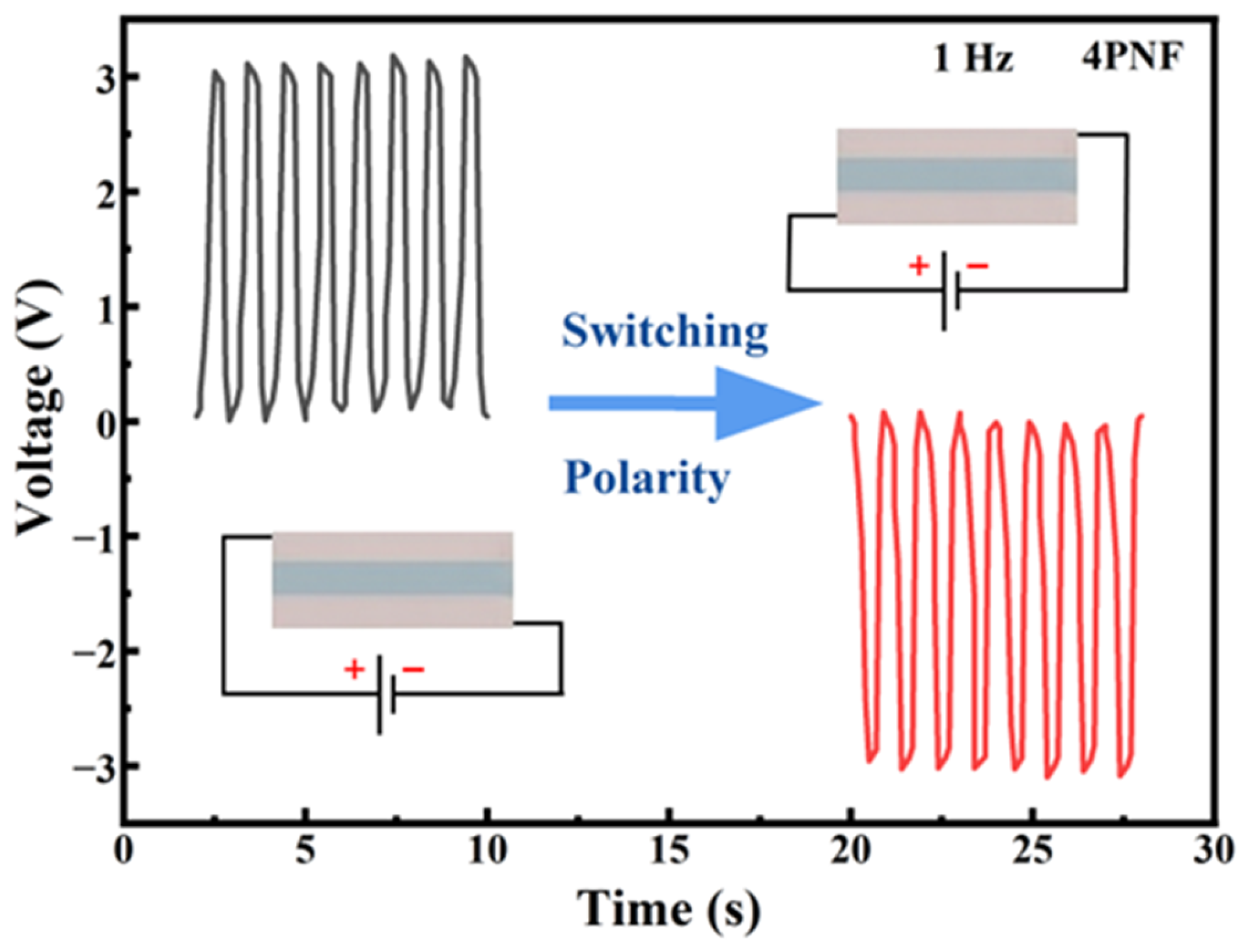
Meanwhile, in the dynamic testing of flexible sensors, non-piezoelectric factors such as triboelectric effects, electrostatic interference in the testing environment, or poor line contact often generate false voltage signals. To strictly prove that the electrical output obtained from the test is purely derived from the intrinsic piezoelectric effect of the 4PNF film, this study conducted a classic polarity reversal (Switching Polarity) test for verification.
As illustrated in
Figure 14, when the sensor is connected to the oscilloscope in the forward direction, the internal dipole is compressed the moment the device is pressed, inducing a positive charge on the electrode surface; the oscilloscope captures a positive voltage spike. When the pressure is released, the deformation elastically recovers, the charge flows back, and a negative voltage spike is generated. However, when the positive and negative terminals are intentionally swapped—that is, when the sensor is connected to the test terminal in the opposite direction—the output signal waveform undergoes a perfect mirror image reversal. This precise and symmetrical polarity reversal phenomenon completely eliminates interference from non-piezoelectric factors such as triboelectric charging.
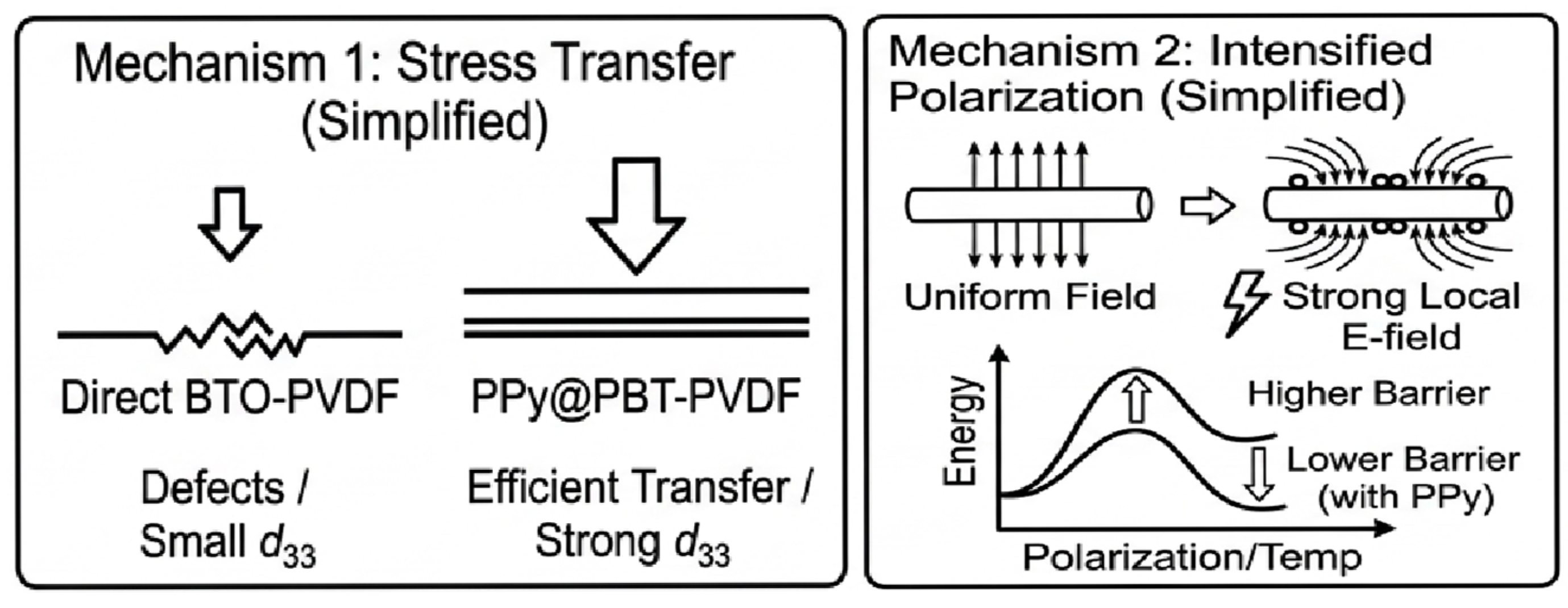
The enhancement mechanisms originate from two synergistic effects (
Figure 15):
Firstly, the flexible PDA buffer mitigates the elastic modulus mismatch between the rigid BTO core and the soft PVDF matrix. This minimizes interfacial defects and voids, ensuring that external mechanical stress is optimally transferred to the BTO core to maximize the intrinsic d33 response.
Secondly, the conductive PPy nanoparticles function as distributed micro-electrodes within the matrix. Under an applied field, they induce robust Maxwell-Wagner interfacial polarization, which concentrates the local electric field and significantly lowers the energy barrier for ferroelectric dipole alignment in both the BTO and PVDF.
Consequently, the synergistic integration of the robust 1D piezoelectric BTO skeleton, the flexible PDA buffer, and the conductive PPy network culminates in a highly responsive and efficient energy harvesting device. The exceptional performance achieved by the PPy@PBT NFs/PVDF PEHs validates the success of this multi-level in situ coating strategy, laying a solid and promising foundation for the future development and application of high-performance flexible piezoelectric composite materials in self-powered wearable electronics.
In addition,
Table 1 summarizes a comparison between this study and recently reported BTO/PVDF piezoelectric systems, including output voltage and filler content. The results indicate that our PPy@PBT/PVDF composite outperforms most previously reported systems in terms of performance, while the lower doping level further ensures the composite’s flexibility, thereby validating the effectiveness of the multi-step surface modification strategy.