Review

Engineering Design Strategies for Boosting Photocatalytic Activity: Theory-to-Data-Driven Perspective


by
Wilian Jesús Pech-Rodríguez
1,*,
Nihat Ege Şahin
2 and
Gladis Guadalupe Suarez-Velázquez
3
1
Department of Master’s Program, Engineering Science, Polytechnic University of Victoria, Ciudad Victoria 87138, Tamaulipas, Mexico
2
Department of Energy Conversion and Storage, Technical University of Denmark, 2800 Kongens Lyngby, Denmark
3
Department of Energy Engineering, Polytechnic University of Altamira, Nuevo Libramiento Altamira Km. 3, Santa Amalia, Altamira 89602, Tamaulipas, Mexico
*
Author to whom correspondence should be addressed.
Materials 2026, 19(7), 1472; https://doi.org/10.3390/ma19071472
Submission received: 10 February 2026 / Revised: 12 March 2026 / Accepted: 3 April 2026 / Published: 7 April 2026

Abstract

Photocatalysts have emerged as a promising approach for the treatment of contaminated water, particularly for the removal of dyes and pharmaceutical residues that pose risks to human health. In addition, they can be employed for the generation of chemical fuels such as H2 and oxidizers such as H2O2, which have been proposed as sustainable energy carriers to reduce reliance on fossil fuels. The first part of this brief review provides a detailed overview of the fundamental concepts of photocatalysis, including reaction pathways and reported mechanisms. The second part explores the main design strategies for enhancing photocatalytic performance, including morphology control and structural modification. Then, the third section highlights the benefits of theoretical modeling, including first-principles calculations and molecular simulations. The document culminates with a section on challenges and future perspectives, highlighting major issues in photocatalyst development such as large-scale synthesis, material stability, and reusability. This brief review is intended to provide young researchers with a concise understanding of the most effective strategies for enhancing photocatalytic performance, as well as the mechanisms influencing morphology and structural parameters. This work presents an integrated framework linking synthesis strategies, particle growth mechanisms, multidimensional nanostructures, in situ and operando characterization, and computational modeling to guide the rational design of next-generation photocatalysts.

1. Introduction

Photocatalytic materials are central to the development of low-carbon technologies that address global energy and environmental challenges [1,2,3]. By harnessing light energy to drive chemical transformations, these materials offer a route for sustainable fuel production and environmental remediation [4,5]. Among the most widely studied photocatalysts are zinc oxide (ZnO) and titanium dioxide (TiO2), due to their chemical stability, low toxicity, abundance, and relatively low cost [6]. These materials are characterized by their wide band gap, ~3.2–3.3 eV for ZnO and ~3.0–3.2 eV for TiO2 [7,8]. Both semiconductors have been widely applied in environmental remediation, achieving >80–95% degradation of model pollutants within 30–120 min of irradiation [9], and also in hydrogen production (100–1000 μmol h−1 g−1) and CO2 reduction [10]. Nevertheless, their overall efficiency remains limited by rapid electron-hole recombination. One of the main obstacles for photocatalytic materials is their low stability and declining performance in light harvesting under operational conditions, caused by multiple competing pathways or the presence of intermediates [11,12]. Consequently, several strategies have been proposed to maintain performance, including the synthesis of multi-element materials, doping, polymer incorporation, and the use of other advanced compounds [13,14,15]. Among these strategies, the construction of heterojunctions has emerged as one of the most effective approaches to enhance photocatalytic activity [16]. Heterojunctions formed between two or more semiconductors, such as type-II, Z-scheme, or S-scheme architectures, promote spatial separation of photogenerated electrons and holes by creating internal electric fields at the interface. In many cases, heterojunction photocatalysts exhibit 2–10 times higher degradation rates of organic pollutants compared with single-component materials. For example, Liu et al. reported that an Ag-modified TiO2/ZnO heterojunction showed an 8-fold increase in photocurrent [17]. Furthermore, heterostructures can improve photostability and catalytic durability, maintaining over 80–90% of their initial activity after 5–10 catalytic cycles [18]. Engineering design represents a feasible approach to enhance the photoactivity of developed materials, as it allows for the consideration from the outset of morphological, chemical, and surface effects on the photocatalytic process [19,20]. Furthermore, this approach can be supported by theoretical calculations, such as first-principles modeling, or by the application of advanced intelligent algorithms to elucidate effects at the atomistic scale [21,22].
Photocatalysts play a significant societal role, as they can be used to treat dyes, heavy metals, and pesticides present in industrial wastewater and agricultural effluents, which pose serious environmental and health risks [23]. In addition, photocatalysts can be employed for solar fuel generation, where sunlight is harnessed to drive reactions that produce value-added chemical products [24]. Another important application of photocatalysts is N2 fixation, a potential strategy for sustainable ammonia production, which plays a crucial role in both agriculture and industry [25]. Moreover, photocatalysis can enhance hydrogen production, positioning it as a promising fuel candidate for the electrification of industry and transportation [26,27]. Several original research studies on engineering design have been reported. For example, Zhang et al. synthesized pyrene-based covalent organic frameworks and tested them for H2O2 generation, achieving a rate of 2.961 mmol L−1 h−1 g−1 [28]. Meanwhile, RuO2/N,S-TiO2 photocatalysts exhibited 10.761 mmol L−1 h−1 g−1 of hydrogen with an apparent quantum yield of 10.0% in water containing glycerol [29]. Similarly, Shao et al. [30] investigated crystal-face regulation in porphyrin-based nanosheet photocatalysts for H2O2 production, observing that the exposed (400) surface achieved the highest rate of 29.33 mmol L−1 h−1 g−1, outperforming the (022) and (020) surfaces. In another study, conjugated microporous polymers were employed to develop a photocatalyst capable of producing hydrogen at a rate of 39.11 mmol L−1 h−1 g−1 under UV light in the presence of 1 wt.% Pt as cocatalysts [31].
This work aims to provide a comprehensive analysis of the primary engineering design strategies and their impact on enhancing the overall performance of photocatalytic materials. Although several reviews on photocatalytic materials have been published, most of them are extensive, covering multiple topics based on existing studies, yet they often lack comparative analysis from an engineering design perspective [32]. Some studies focus solely on a single design strategy, such as the single-atom photocatalysts approach [33], which may limit the understanding of beginners or practitioners in the field of photocatalysis. Thus, this study provides a comparative engineering perspective on multiple strategies and their impact on photocatalytic activity, stability, and charge transfer within an integrated framework.

2. Fundamentals of Photocatalysis

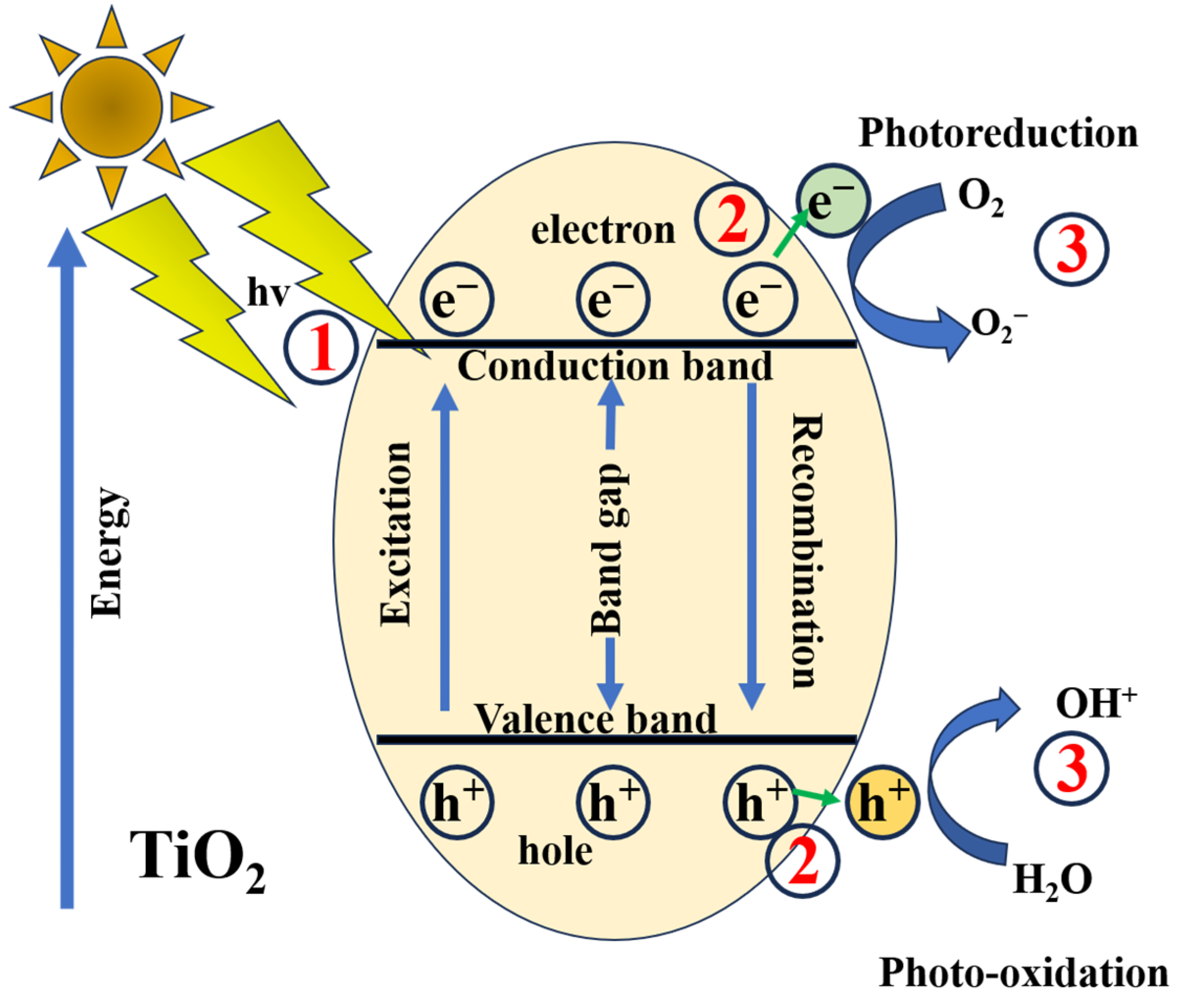
Over millions of years of evolution, nature has refined highly efficient mechanisms, with photosynthesis serving as a prime example. In this process, CO2 is converted into carbon-based compounds with the concomitant release of O2, a transformation that can be mimicked using photocatalysts [34,35]. As reported, the photocatalytic process can be divided into three key stages: (i) light absorption, (ii) charge separation, and (iii) reaction mechanisms [33]. Figure 1 displays a schematic diagram of the photocatalysis principle in TiO2 nanoparticles, illustrating these three stages. When the material is excited by light of sufficient energy, electrons are promoted from the valence band to the conduction band, leaving behind holes in the valence band. These two bands are separated by a forbidden energy region known as the band gap. The photogenerated charge carriers (electrons and holes) subsequently migrate to the surface of the material, where they participate in photo-oxidation and photoreduction reactions.
The photocatalytic mechanism of TiO2 under light irradiation consists of a series of chemical reactions driven by photogenerated charge carriers [38], which are summarized as follows:
Incident   energy :   T i O 2 + h v e + h +
Reduction :   2 h + + 2 e H 2 ;   E = 0   V
Oxidation :   2 H 2 O + 4 h + O 2 + 4 H + ;   E = 1.23   V
Overall :   2 H 2 O 2 H 2 + O 2 ;   G = + 237.2   kJmol 1
TiO2, a semiconductor with a band gap of approximately 3.2 eV for the anatase phase and 3.0 eV for the rutile phase, initiates photocatalytic reactions when incident photons possess sufficient energy to excite electrons from the valence band to the conduction band, corresponding to the material’s band gap. Achieving water splitting additionally requires a thermodynamic potential of 1.23 V [39]. Engineering is critical in optimizing these processes, as it enables enhanced light absorption through morphological tuning and structural modifications, while the band gap itself can be engineered to maximize photocatalytic efficiency. In conventional semiconductive materials, the band gap ranges from 1.4 to 4.7 eV [40]. However, overall performance is also influenced by factors such as recombination, selectivity toward desired redox reactions, and long-term material stability. To address these challenges, strategies including doping, surface modification, and heterojunction construction have been implemented and are discussed in detail in the following sections.

3. Synthesis Approaches and Particle Growth Mechanisms

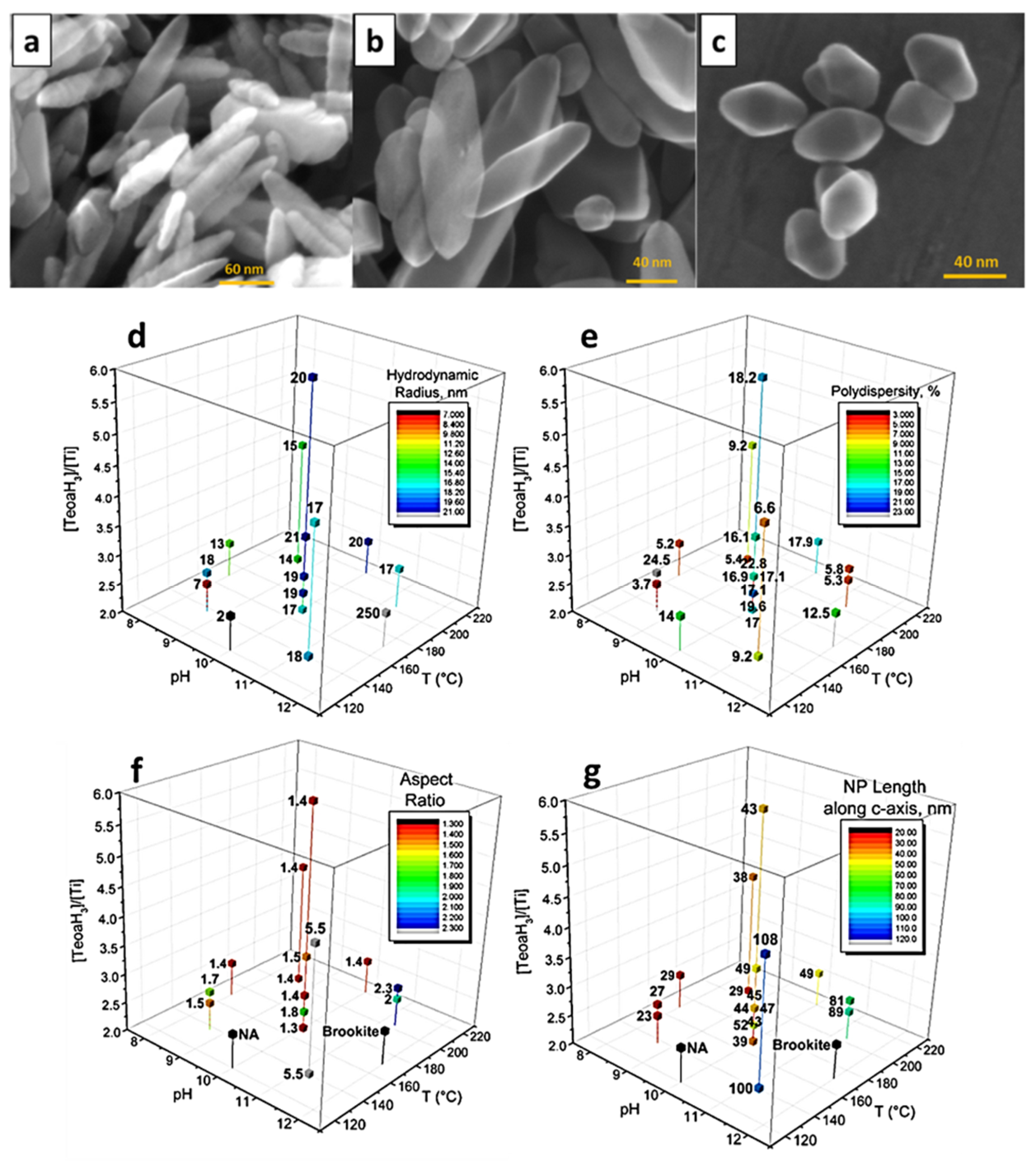
It has been extensively reported that the synthesis method plays a pivotal role in determining the final properties of nanostructures [41], as it allows control over particle growth and the achievement of desired morphologies through the adjustment of parameters such as temperature, pH, precursor concentration, and solvent type. Herein, we briefly discuss (i) hydrothermal synthesis, (ii) the sol-gel method, (iii) ball milling, (iv) solvothermal synthesis, and (v) the microwave-assisted hydrothermal process. Hydrothermal and solvothermal methods are the most commonly used approaches because they enable the formation of highly crystalline nanostructures with controlled morphology, such as nanorods, nanoplates, or nanocages, typically at temperatures between 120 and 200 °C [42]. The sealed autoclave environment promotes controlled nucleation and crystal growth, which is beneficial for generating materials with high surface area and abundant active sites for electrocatalysis. However, these techniques often require specialized high-pressure reactors and relatively long reaction times (several hours to days), which can increase operational costs and limit scalability [43]. An interesting study conducted by Ghamarpoor et al. comparing the main synthesis strategies revealed that the preparation route plays a decisive role in determining the structural and functional properties of ZnO/TiO2-based photocatalysts [44]. Their research concluded that hydrothermal synthesis produces highly crystalline nanostructures with well-defined morphologies such as nanorods, nanoflowers, and nanotubes, typically with particle sizes ranging from 10 to 50 nm. Similar findings were reported by Koozegar [45], who stated that hydrothermal synthesis of TiO2 promoted mixed crystalline phases, including both anatase and rutile, with slightly smaller crystallite sizes (~8–15 nm) compared to sol-gel (30–40 nm). Additionally, hydrothermal samples exhibit a significantly larger specific surface area of about 92 m2 g−1, while sol-gel materials have around 37 m2 g−1. Further comparative studies have highlighted that these structural differences strongly influence photoelectrocatalytic performance, particularly in terms of charge transport and recombination dynamics. For instance, several reports indicate that hydrothermally grown ZnO/TiO2 heterostructures exhibit superior photocurrent densities due to improved crystallinity and reduced defect-mediated recombination pathways [17].
Similarly, solvothermal synthesis provides excellent control over particle growth and morphology by tuning parameters such as solvent type, temperature, pressure, and precursor concentration, yielding well-defined nanoarchitectures with controlled crystallinity and exposed facets. For example, Rafiq et al. demonstrated that solvothermal growth of Ag2WO4/Sb2WO6 heterostructures in ethylene glycol significantly improved the charge transfer at the heterojunction interface, leading to enhanced photocatalytic degradation of organic pollutants compared to conventional hydrothermal samples [46]. Moreover, research on solvothermally synthesized ZnO and ZnFe2O4 nanoparticles demonstrates that uniform, nano-sized particulate structures (8–10 nm) produced by solvothermal routes show high photocatalytic degradation rates for dyes, highlighting the importance of controlled morphology and size distribution [47,48]. The main drawback of solvothermal synthesis is that it generally relies on organic solvents, such as ethanol or ethylene glycol, which can present environmental challenges and often require additional purification to remove residual solvents. In the case of the sol-gel method, it has been reported that it often produces more homogeneous thin films with good compositional control but tends to generate smaller pores and higher defect densities, which can act as charge recombination centers and limit photoelectrocatalytic efficiency [49]. Nevertheless, one drawback is that they frequently require post-synthesis thermal treatments (400–500 °C) to achieve adequate crystallinity, which increases energy consumption and may lead to particle agglomeration.
Other approaches, such as microwave-assisted hydrothermal synthesis, photodeposition, combustion, and sonochemical processes, can improve specific aspects of catalyst fabrication. For example, microwave-assisted methods significantly reduce synthesis time from hours to minutes [50], while photodeposition allows the selective incorporation of cocatalysts that improve electron transfer [51]. However, these techniques require specialized equipment, such as microwave reactors, irradiation sources, or ultrasonic systems, which increases the overall cost of implementation. Moreover, it is desired that synthesis methods employ deionized water as a solvent due to its low cost, low toxicity, and environmental compatibility. Even so, several methods, such as solvothermal synthesis, rely on organic solvents, including ethanol, acetone, methanol, or ethylene glycol, to control precursor solubility and particle growth [52]. The use of these solvents can introduce disadvantages, including higher material costs, solvent recovery requirements, environmental concerns, and additional purification steps. Finally, microwave-assisted hydrothermal synthesis offers significant advantages in terms of rapid heating and uniform nucleation, enabling the formation of smaller crystallites (around 10–15 nm) with narrow size distributions and improved crystallinity, ultimately leading to enhanced photocatalytic activity [53].
Once the advantages and disadvantages of the synthesis methods were discussed, the following lines focus on specific aspects highlighted by several authors, including procedure, temperature, chemical reagents, and other critical parameters. As mentioned above, the hydrothermal process is widely employed for the synthesis of nanomaterials due to its simplicity, scalability, and ability to produce well-defined nanostructures. For instance, Ortega et al. synthesized Eu-doped ceria with various morphologies, including nanoparticles, nanorods, nanocubes, and nanopolyhedra using a microwave-assisted hydrothermal method [54]. Morphology was controlled by varying only NaOH concentration and heating time. Nanorods were obtained using a 6 mol L−1 NaOH solution with a hydrothermal treatment of 8 min at 140 °C, whereas nanopolyhedrons were produced under the same duration at 180 °C. Characterization revealed that both morphology and structural parameters, such as lattice constants and defects, were affected, ultimately influencing the degradation efficiency of rhodamine B (RhB). The same synthesis approach was used to prepare bismuth tungstate (Bi2WO6) nanoplates by heating the precursor mixture at 180 °C for 15 h [55]. The reagents employed were 1 mmol L−1 sodium tungstate (Na2WO4) and 2 mmol L−1 of bismuth nitrate (Bi(NO3)3), dissolved in deionized water and HNO3, respectively, with the pH subsequently adjusted using NaOH solution. The resulting photocatalysts exhibited degradation efficiencies of 91.9% for RhB in 40 min and 87.2% for methyl orange (MO) in 210 min. As observed in the aforementioned examples, NaOH is commonly employed to adjust the pH and supply OH ions that promote hydrolysis and nucleation of metal precursors during hydrothermal synthesis. Consequently, the OH concentration strongly influences the nucleation rate and particle size: high alkalinity generally promotes rapid nucleation and the formation of smaller crystallites, whereas lower alkalinity favors slower growth and larger particles [56].
Solvothermal synthesis has also been applied to fabricate advanced nanostructures. For instance, tungsten trioxide (WO3) has been successfully obtained in both two-dimensional (2D) and 3D forms [57]. Morphological modulation of the 2D structures was obtained via hydrothermal synthesis assisted by the addition of oxalate or citric acid, whereas 3D structures were formed using a mixed solvent system of acetone and deionized water at a 2:5 volume ratio. Notably, decreasing particle size has been reported to shorten the diffusion length of photo-excited electrons and holes, consequently suppressing electron-hole recombination. Fe3O4 was successfully synthesized by Xu et al., who employed different urea concentrations as a dissolving agent in solvents such as ethylene glycol, water, and methanol [58]. The synthesis was carried out at 200 °C for reaction times ranging from 3 to 48 h. Similar conditions were employed to obtain CoFe2O4/Carbon nano composites, where glucose was dissolved in 35 mL benzyl alcohol, then 1 mmol cobalt acetate tetrahydrate and 2 mmol iron acetylacetonate were added and stirred for 2 h, and then heated at 200 °C for 24 h [59]. More notably, Bikerchalen et al. optimized the solvothermal synthesis of Bi24O31Cl10 in ethylene glycol by adjusting temperature, time, and pH to enhance photocatalytic performance [60]. They stated that the material synthesized at 160 °C for a period of 12 h exhibited optimal activity, achieving 99.98% degradation of Rhodamine B under visible light for 50 min. An interesting observation is that, in solvothermal synthesis, commonly used additives such as glucose, urea, and citric acid can significantly influence nucleation and growth rates, promote uniform morphology, and enhance both crystallinity and surface area.
On the other side, TiO2 was successfully synthesized via the sol-gel method by mixing deionized water, ethanol, and acetic acid. To control the morphology, sodium dodecyl sulfate (SDS), cetyltrimethylammonium bromide (CTAB), and polyethylene glycol (PEG) were added to the solvent, followed by the dropwise addition of 3.28 mmol L−1 titanium isopropoxide (Ti(OCH(CH3)2)4). The mixture was initially stirred at 25 °C for 24 h, and then the temperature was increased to 60 °C for an additional 24 h. The final step involves thermal treatment at 450 °C for 4 h. Characterization results revealed that anatase was the sole crystalline phase present, and the morphology strongly depended on the surfactant used. For instance, CTAB produces a worm-like morphology, whereas SDS yields spherical particles. Ortega et al. conducted a comprehensive study on the influence of the synthesis route on the performance of CoFe2O4 photocatalysts for hydrogen production, employing both chemical coprecipitation and ball milling techniques [61]. Briefly, in the coprecipitation method, a solution of Fe(NO3)3·9H2O and Co(NO3)2·6H2O was mixed with NaOH, and the recovered sample was thermally treated at 250 °C for 6 h, followed by 350 °C for 1 h. For mechanical milling, metallic Fe and Co3O4 were mixed in a molar ratio of 2:1, treated at 700 °C for 4 h, and subsequently subjected to mechanical milling for 12 h. X-ray diffraction (XRD) analysis revealed that the main crystalline phase in both materials was the CoFe2O4 spinel; however, the coprecipitation sample also contained a secondary Fe2O3 phase. Interestingly, the crystal size of the ball-milled sample was approximately 5 nm, about four times smaller than that obtained by coprecipitation. This reduction in crystal size, along with particle modifications, affected the band gap, which was 1.38 eV for the coprecipitation sample and 1.15 eV for the ball-milled sample, improving the H2 generation in the ball-milled sample, leading to nearly a fourfold enhancement in H2 generation for the latter. Ag-TiO2 provides another example in which the effect of the synthesis method was investigated by comparing photodeposition and formaldehyde-assisted microwave synthesis [62]. In this study, photodeposition exhibited superior photocatalytic performance; however, no significant differences were observed in terms of band gap or morphology, raising questions regarding which primary parameters are responsible for the improved activity. From the reviewed literature, it is evident that the hydrothermal method is the most commonly adopted synthesis approach due to its simplicity and cost-effectiveness. Table 1 provides a concise overview of selected synthesis methods, highlighting key factors such as solvent and capping agent, along with the resulting morphology and potential applications. It can be concluded that different preparation strategies and experimental parameters influence the structural characteristics of the obtained nanomaterials. In general, hydrothermal and solution-based methods are the most commonly employed approaches, typically using deionized water as the main solvent. Moreover, the synthesis conditions and the presence of additives such as NaOH, surfactants, or organic agents play a critical role in controlling the growth process, leading to a wide range of nanostructures, including nanorods, nanocubes, nanoplates, nanospheres, and irregular polyhedral particles.
On the other hand, capping agents are commonly employed during the synthesis of nanomaterials to control particle size and morphology, as they selectively adsorb onto specific crystal facets and thereby regulate crystal growth. A comprehensive and influential study was reported in 2017 by Phan et al., who proposed and validated the so-called penetrability model, which establishes a correlation between surfactant activity and particle growth [72]. To evaluate this model, a series of iron oxide nanoparticles was synthesized using eight cationic surfactants with an identical head group but varying hydrocarbon chain lengths, denoted as CnH2n+2(CH3)3NBr (n = 6, 8, 10, 12, 13, 14, 16, 18). Notably, the particle size decreased with increasing surfactant chain length, indicating that longer hydrocarbon tails provided stronger steric stabilization. Five years later, Ma and coworkers conducted a detailed study on the adsorption of three cationic surfactants with varying alkyl chain lengths on nanoparticles [73]. Zeta potential measurements were used to monitor changes in the isoelectric point, revealing that longer alkyl chains required lower surfactant concentrations to achieve similar effects. These results corroborate the observations reported by Phan et al., who also noted that surfactant behavior depends strongly on chain length.
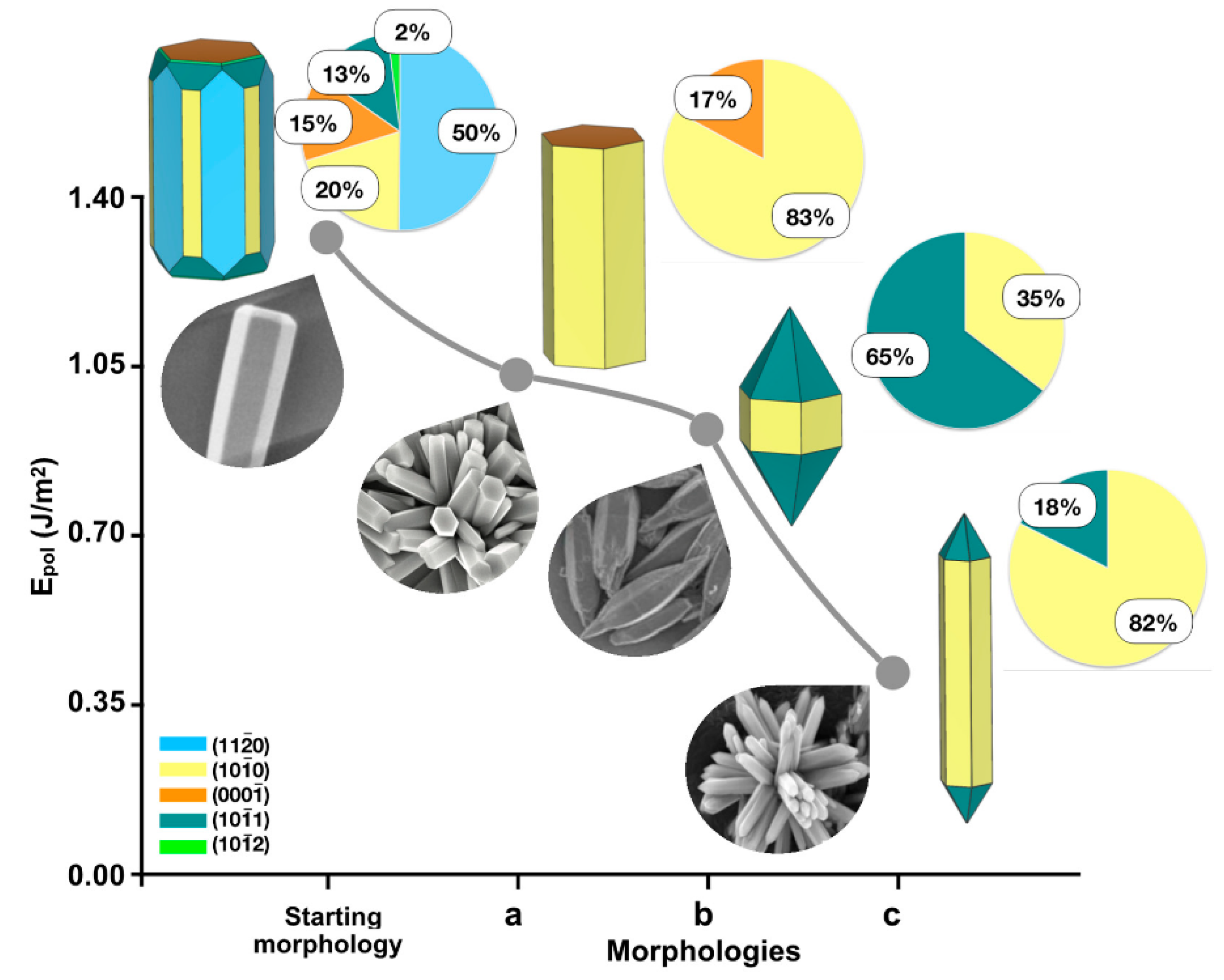
Beyond size control, surfactants can also influence particle size and morphology, as demonstrated in the synthesis of ZnS, where mercaptopropionic acid (MPA) and polyvinylpyrrolidone (PVP) yielded rod-like and spherical structures, respectively [74]. Although the underlying mechanism was not explicitly discussed in that study, it is well established that facet-selective adsorption plays a critical role as capping agents preferentially bind to specific crystal facets, thereby modifying their surface free energies and growth rates. Facets stabilized by capping agents grow more slowly and thus become more prominent in the final nanocrystal morphology. At elevated temperatures, thermodynamic control dominates, leading to the formation of equilibrium crystal shapes, whereas at lower temperatures, kinetic control prevails, often resulting in metastable morphologies [75]. Accordingly, the formation of distinct nanoparticle morphologies during synthesis is governed by a complex interplay of thermodynamic, kinetic, and chemical factors. Based on the literature, key particle growth mechanisms include Ostwald ripening, oriented attachment, and surface energy modulation by capping agents [76,77,78]. Ostwald ripening is a thermodynamically driven process occurring during nanoparticle growth, wherein smaller particles dissolve and redeposit onto larger ones, leading to an increase in average particle size. This phenomenon is closely related to the size-dependent solubility of spherical particles with radius r, which can be described by the Gibbs-Thomson equation [79,80]:
C r = C b e 2 γ V m r k B T
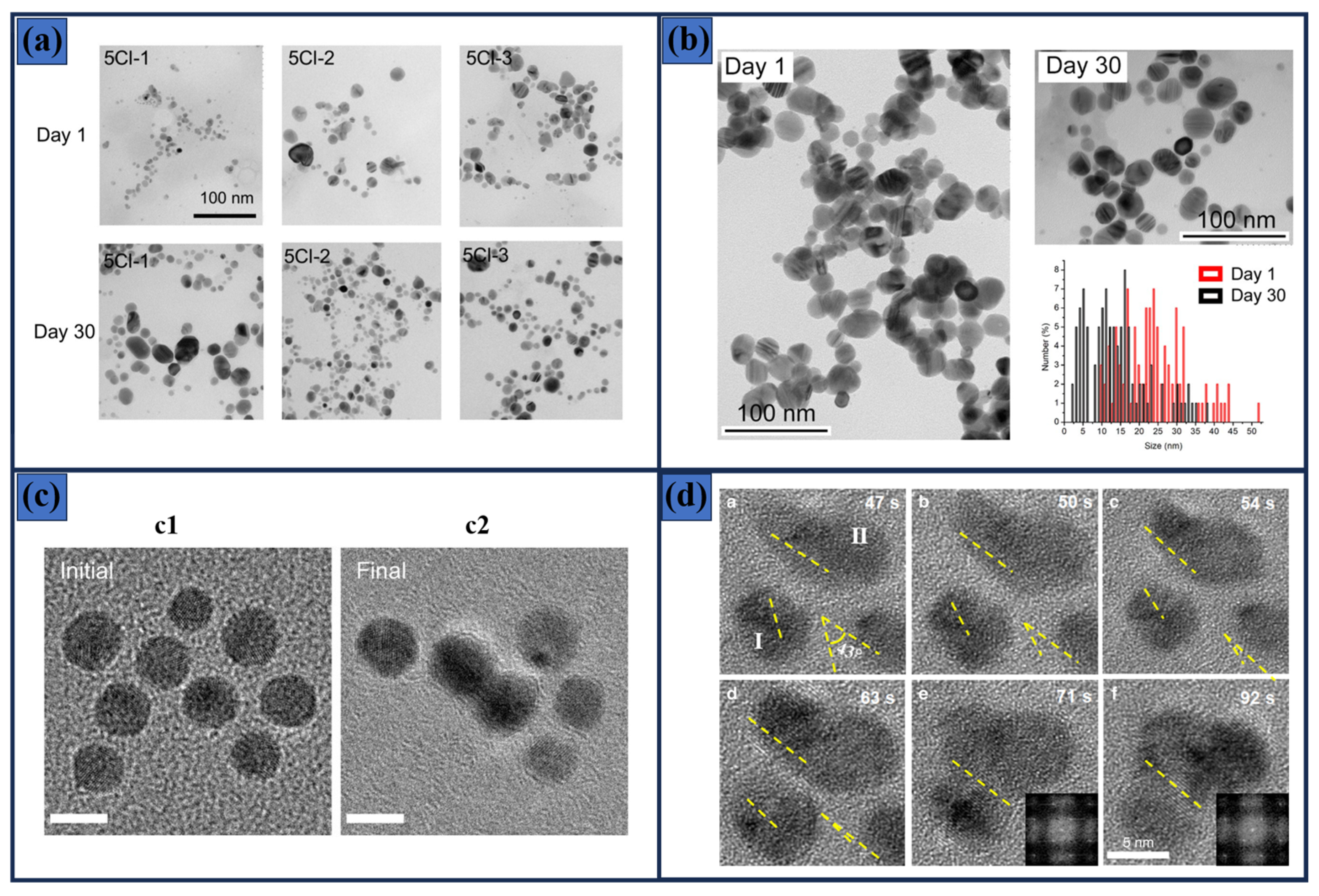
where Cr is the solubility as a function of r, T is the temperature, γ is the surface energy, Vm is the molar volume, and kB is the Boltzmann constant. The equation indicates that smaller nanoparticles exhibit higher solubility due to their larger surface-to-volume ratio, which increases their chemical potential. Figure 2a shows this effect, as observed by Alarcon et al. in freshly prepared Ag nanoparticle samples compared to those aged for 30 days. A clear increase in particle size was observed, which was attributed to the Ostwald ripening phenomenon [77].
In this regard, Ireneusz et al. investigated the photochemical growth of Ag nanoparticles on TiO2 coatings and found that the UV illumination time plays a critical role in determining particle size [83]. For instance, a short exposure of 20 s led to the formation of small nanoparticles, as confirmed by scanning electron microscopy (SEM), whereas extending the illumination by only 10 s resulted in particle coarsening and the formation of large particles. A similar trend was reported in ref. [77], where the authors monitored particle size evolution in freshly synthesized samples and after 30 days of aging, as depicted in Figure 2b. In this case, released Ag species interacted with existing nanoparticles, promoting their growth into larger structures, in accordance with the Ostwald ripening mechanism. Direct experimental evidence of this phenomenon was reported in 2023 by Alcorn et al. [81], who used a transmission electron microscope (TEM) equipped with a laser to excite a Au-Cu alloy sample. The plasmonic excitation favored Ostwald ripening, as illustrated in Figure 2c, where nanoparticles were observed to coalesce and form agglomerates. Oriented attachment (OA) is another process commonly observed in crystal growth, in which crystalline particles align their atomic lattices and merge along matching crystal planes to form larger, single-crystalline structures [84]. This process is energetically favorable as it reduces the overall surface energy of the system by eliminating high-energy interfaces, thereby stabilizing the growing crystal. In polar semiconductors such as ZnO, the mechanism is strongly influenced by electrostatic interactions associated with the polar (0001) facets, which create dipole moments capable of generating attractive torques between particles. Liu et al. conducted a real-time investigation using in situ TEM to observe this effect in ZnO nanoparticles, revealing that forces and torques arising from a combination of electrostatic and dipolar interactions govern particle behavior at the 5 nm scale [82]. The former is illustrated in Figure 2d, where individual ZnO nanoparticles dispersed in methanol containing 1 mM Zn2+ rotate to align their crystallographic axes (as observed in subfigures a–f) and eventually merge to form a single crystal after 92 s. Several representative studies have further expanded the understanding of this mechanism. Oriented attachment in semiconductor nanocrystals can occur through intermediate metastable assemblies, where particles first form loosely ordered aggregates before undergoing crystallographic fusion [84]. Also, OA contributes to the formation of ZnO nanorods and nanowires, particularly under hydrothermal conditions where the polar nature of ZnO surfaces favors directional growth along the c-axis [85].

4. Morphological and Structural Design

The influence of morphology on structural features of photocatalytic activity is well established and has been extensively explored across a wide range of materials [86]. Early work by Hu and co-workers demonstrated that MoS2 morphology and size critically affect visible light, the photocatalytic degradation of methyl orange (MO), with nanoslices (41 m2 g−1) outperforming nanoballs (19 m2 g−1) and bulk structures (6 m2 g−1) [87] and achieving nearly 90% decolorization of MO within 150 min, an effect attributed to quantum-confinement-induced-band-gap-modulation. In this sense, Cen et al. conducted an in-depth study on the morphology (microspheres and non-uniform nanoparticles) and crystallinity of (BiO)2CO3 during nitric oxide (NO) degradation under UV irradiation [88]. The microspheres exhibited a photocatalytic efficiency of 42.6%, whereas the nanoparticles achieved only 24.8%. This behavior was attributed primarily to differences in surface area and pore-size distribution. Specifically, the microspheres possessed a relatively large surface area of 34.5 m2 g−1, while the nanoparticle-based material showed minimal interaction with N2, indicating a lack of accessible porosity.
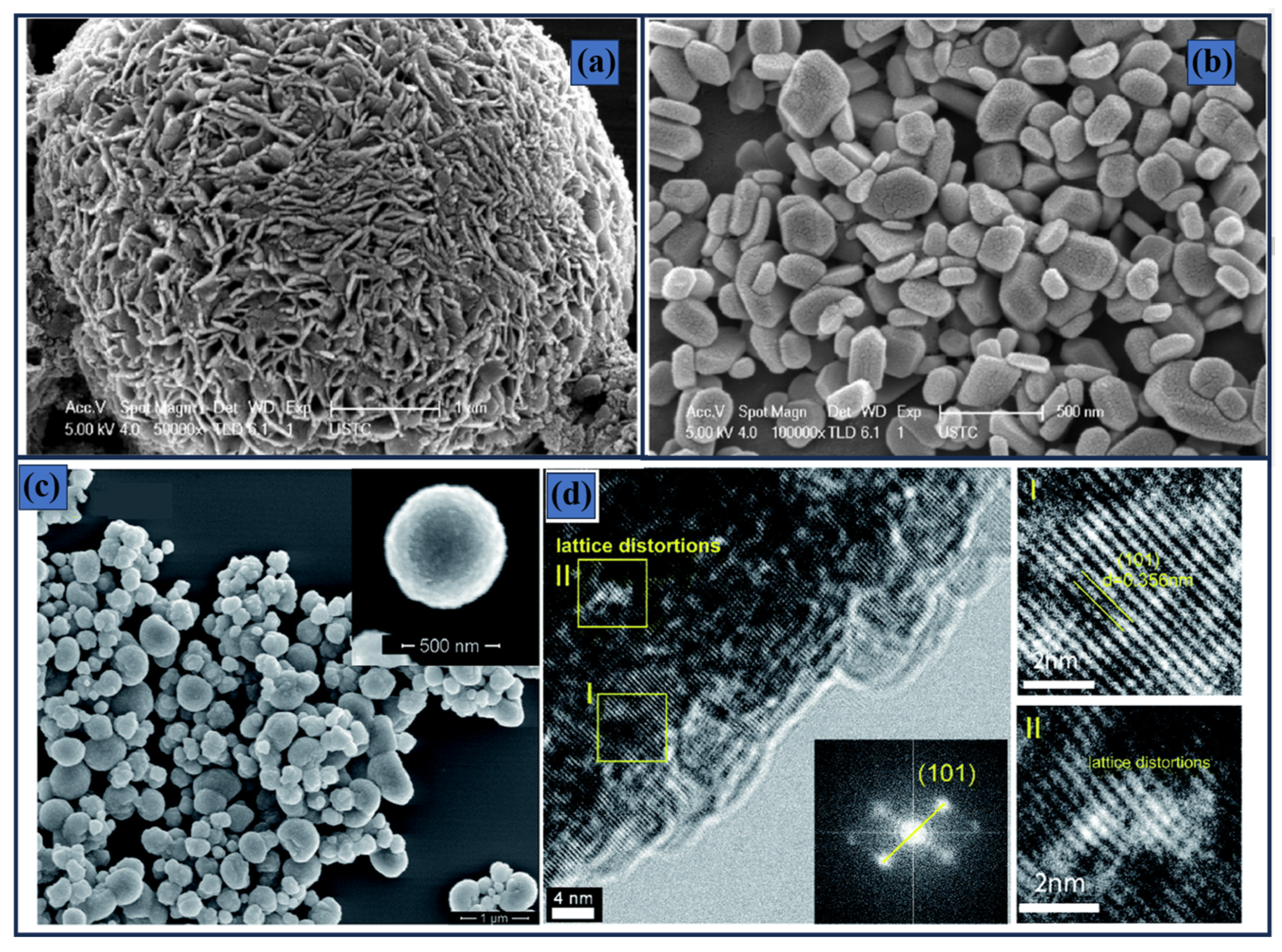
Notably, crystallinity was also identified as a critical factor, as the most efficient photocatalysts exhibited lower crystallinity, which promoted a red shift in absorption edge and resulted in a reduced band gap of 3.14 eV. Figure 3a,b shows the drastic changes in the morphology of (BiO)2CO3, revealing that a small sodium carbonate concentration leads to highly porous microspheres. This structural feature enhances reactant diffusion and promotes multiple light scattering, thereby improving light-harvesting efficiency. It is noteworthy that the NO degradation efficiency of (BiO)2CO3 remains relatively low compared with other photoelectrocatalysts, such as the optimized δ-MnO2 reported by Li et al., reaching removal efficiencies of up to 80% [89]. In that study, three MnO2 phases (δ-MnO2, α-MnO2, and γ-MnO2) were systematically investigated, exhibiting self-assembled folded nanosheets, rod-like structures, and urchin-like nanospheres, respectively. Detailed analysis revealed that structural parameters played a decisive role in determining photocatalytic performance. The TEM images confirmed the presence of the (001), (002), and (110) facets, influencing electron distribution along these planes, thus promoting the separation of photogenerated charge carriers. Moreover, lattice distortion was preferentially observed in δ-MnO2, indicating the formation of oxygen vacancies, a finding further supported by X-ray photoelectron spectroscopy (XPS) analysis. These features resulted in both a reduced band gap (1.38 eV) and a lower charge-transferresistance (Rct). Along similar lines, Xu et al. [90] reported that the introduction of Ti3+ defects into TiO2 microspheres induces pronounced lattice distortion, as confirmed by the TEM and high-resolution TEM (HRTEM) images shown in Figure 3c,d. The presence of these defects significantly enhances the photocatalytic activity of the material toward RhB degradation, achieving efficiencies of up to 75%. Furthermore, the photocurrent response increased dramatically from 1.78 to 53.78 μA cm−2, which was attributed to the suppression of electron and hole recombination. UV-vis diffuse reflectance spectroscopy revealed that the valence band maximum of pristine TiO2 lies 3.1 eV below the Fermi level, whereas the Ti3+-modified sample exhibited an upward shift of about 0.36 eV, indicating a noticeable modification of its structure.
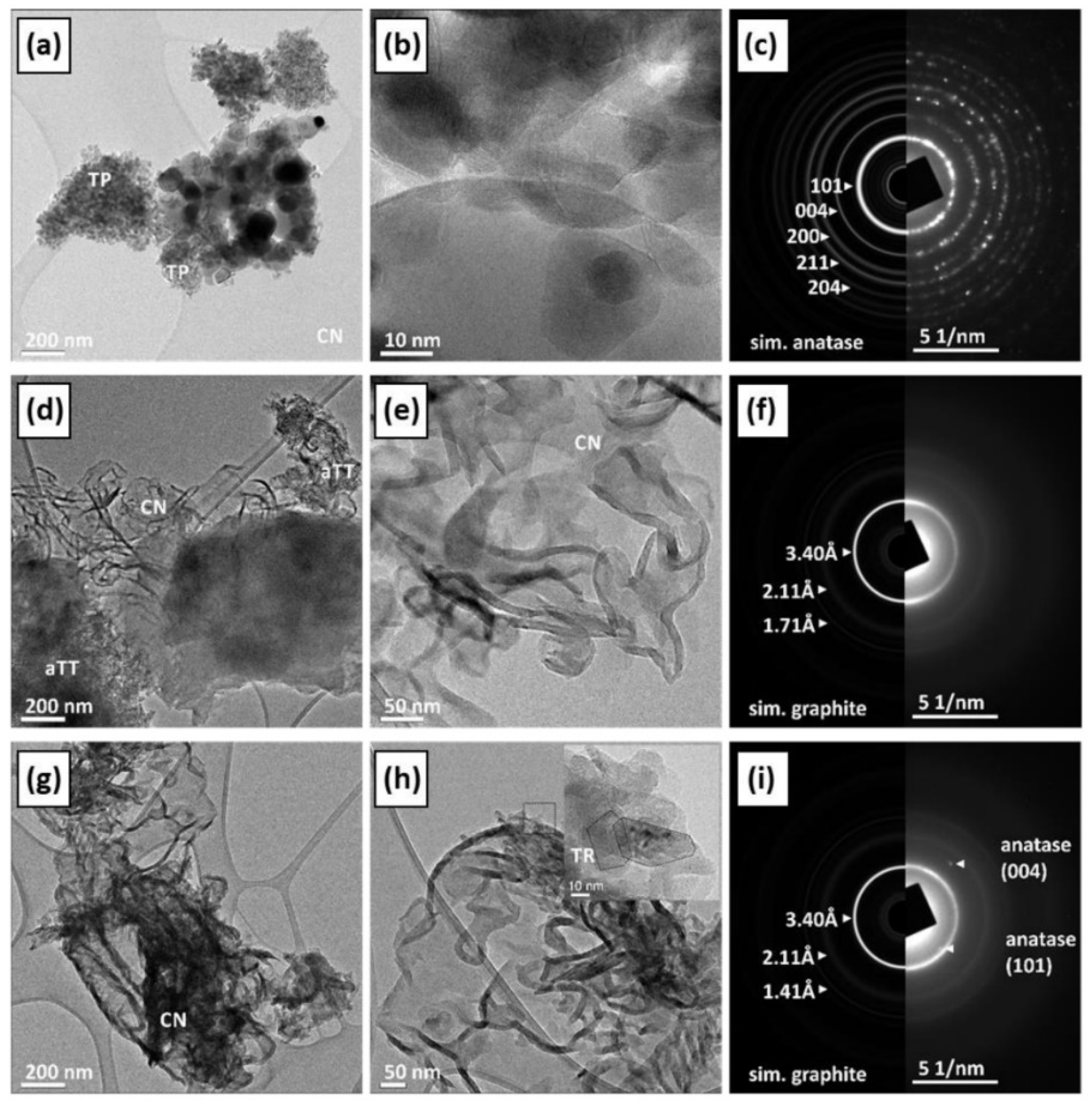
As mentioned above, controlling the morphology of photocatalysts is an effective strategy for enhancing photoactivity, as it can increase the surface area and create additional active sites. However, Cheng et al. reported that the highest-performing TiO2 material was not directly correlated with surface area but instead depended on the anatase-to-rutile phase ratio, with a 70:30 composition yielding superior photocatalytic performance [91]. These findings expose the complexity of the mechanisms governing photocatalytic activity and underscore the need for careful consideration when tailoring material properties. To further elucidate the influence of morphology on photocatalytic performance, particular attention is given to the study by Roškarič et al. [92], who compared three TiO2 morphologies: anatase nanoparticles (TPs), poorly crystalline anatase nanotubes (aTTs), and well-crystalline anatase nanorods (TRs), all comprising exclusively the anatase phase, for the degradation of bisphenol. By eliminating the phase effect, this study enabled a focused evaluation of morphology alone. Poorly crystalline nanotubes were prepared via hydrothermal treatment of commercial TiO2 (DT-51) using 10 mol L−1 NaOH, while nanorods were subsequently obtained by thermally treating the hydrothermally obtained sample at 500 °C for 2 h. Finally, the resulting samples were mixed with g-C3N4 in a 1:1 ratio using a mortar to fabricate the photocatalysts.
Figure 4 shows the TEM images of the synthesized materials, revealing pronounced morphological differences induced by thermal treatment. It is noteworthy that the authors reported nearly identical carbon and nitrogen contents across all samples. Therefore, the observed variations in photocatalytic activity can be attributed primarily to morphological effects. The bisphenol A degradation results show that the nanoparticle-based photocatalyst exhibits the lowest degradation efficiency (11.8%), whereas the nanorod-based material achieves the highest degradation efficiency (26%). These results are consistent with the electrochemical impedance spectroscopy (EIS), in which the nanorods exhibit the lowest Rct value (0.67 MΩ), thereby confirming the crucial role of morphology in governing photocatalytic performance following thermal treatment.
The incorporation of graphitic carbon nitride (g-C3N4) into the TiO2 matrix and other conventional photocatalysts has been widely adopted as an effective engineering design strategy. Deng et al. investigated the photocatalytic degradation of methylene blue (MB) using spherical, spindle-shaped, and cubic TiO2 nanoparticles supported on g-C3N4 [93]. Spherical TiO2 nanoparticles were synthesized via a hydrothermal process, whereas spindle- and cubic-shaped nanoparticles were obtained through the use of ethylenediamine and sodium oleate as shape-directing agents, respectively. From an engineering perspective, morphological control originates from the selective adsorption of these directing molecules during the nucleation and growth stage. Specifically, ethylenediamine preferentially adsorbs onto crystal planes parallel to the c-axis, promoting spindle-shaped TiO2, while sodium oleate selectively binds to the (001) and (100) facets, leading to the formation of cubic structures.
The described synthesis procedure exclusively favored the formation of the anatase phase, as confirmed by XRD analysis. The reported BET surface areas were measured to be 150, 86, and 99 m2 g−1 for spherical, spindle-shaped, and cubic TiO2, respectively. These materials were further mixed with g-C3N4 and used as a photocatalyst for methylene blue (MB) degradation. A key finding was that the cubic TiO2 structure exhibited lower photoluminescence (PL) intensity, indicating suppressed charge carrier recombination. Correspondingly, this photocatalyst achieved the highest MB degradation activity with a rate of 13.3 × 10⁻² h−1, despite not possessing a large surface area. To gain further insight, a detailed examination of the XRD patterns confirmed anatase as the sole crystalline phase in all samples. Notably, the cubic TiO2 structure exhibited superior crystallinity, as evidenced by the sharper and more defined (101) and (100) diffraction peaks compared with other morphologies. Furthermore, the authors reported that this material forms face-to-face (2D-2D) interfacial contact with g-C3N4, which is more favorable for efficient charge carrier migration.
It can be inferred that both morphology and structural characteristics significantly influence the efficiency of electrocatalysts, making it challenging to discern which factor is dominant. In this context, particular attention should be given to the study by Yin et al., who investigated this issue in detail [94]. Bi3Fe0.5Nb1.5O9 (BFNO) was synthesized by using both hydrothermal (BFNO-H) and solid-state (BFNO-S) methods, resulting in hierarchical and disordered micron-scale morphologies, respectively. Initially, the superior performance of BFNO-H was attributed to its larger specific surface area. However, even after normalizing the results to account for surface area, BFNO-H continued to outperform BFNO-S. XRD and TEM analyses indicated the presence of exposed (001) and (110) facets, which are conducive to efficient generation and transport of charge carriers.

5. Nanostructures Across Dimensions

5.1. Quantum Dots and 1D Nanostructures

Quantum dots and one-dimensional (1D) nanowires have been explored in photocatalysts [95]. Nonetheless, they are typically integrated with 2D or 3D structures rather than used independently [96]. Quantum dots generally require a supporting matrix to prevent agglomeration and to ensure efficient charge separation due to their extremely small size and high surface energy. For example, γ-Fe2O3 quantum dots were incorporated into a metal–organic framework-801 (MOF-801) porous matrix using a double-solvent method combined with an in situ reduction approach [97]. The resulting composite exhibited a degradation efficiency of 84.15% for Acid Orange 7 after 180 min of visible light irradiation, which was attributed to the reduced band gap of 3.1 eV, compared to 4.4 eV for pristine MOF-801. Similar behavior has been reported for other MOF-based composites in which semiconductor nanoparticles or quantum dots are embedded inside the porous framework. For instance, ZnO quantum dots confined within MOF-801 prepared by a double-solvent method exhibited a 2.35-fold increase in photocatalytic degradation rate compared with pristine MOF-801 due to improved charge separation and quantum confinement effects [98]. Likewise, MnO2-modified MOF-801 composites displayed enhanced visible-light photocatalytic activity as a result of band-gap narrowing and increased active surface area [99]. Other complex materials used carbon quantum dots (CQDs) deposited on BiVO4 to obtain an S-scheme heterojunction capable of absorbing visible light up to 750 nm [100]. This heterostructure also exhibited piezo-photocatalytic activity, showing efficient degradation of antibiotics. XRD analysis exposed that the incorporation of CQDs did not affect the crystallinity of BiVO4. No distinct diffraction peaks corresponding to CQDs were detected, owing to their amorphous nature. Nevertheless, their presence was verified by energy-dispersive X-ray spectroscopy (EDS) elemental mapping. Tetracycline (TC) degradation under visible light irradiation coupled with ultrasonic treatment exhibited a rate of 0.0517 min−1. In a related study, Zhao et al. [101] employed N-doped carbon quantum dots (N-CQDs) and graphitic carbon nitride quantum dots (CNQDs) to modify TiO2 photocatalysts via a hydrothermal synthesis, using ammonium citrate as a precursor in the presence and absence of urea. XPS revealed that both samples contained nitrogen species, which significantly enhanced photocatalytic activity. Notably, the C-N peak in the CNQDs sample accounted for 18.9%, compared with 16.5% in the CQDs sample. The study also highlighted that excessive quantum dot loading could reduce photocatalytic activity, as they competed with TiO2 for photon absorption, limiting the generation of photogenerated charge carriers and reducing charge transfer efficiency.
To further evaluate the effect of the quantum dot loading, the photocatalytic performance of Zn0.5Cd0.5S (ZCS) quantum dots deposited onto a flower-like BiOI was examined [102]. Incremental loading from 1% to 3% elicited a noticeable decline in photoactivity, indicating that 1% constitutes the optimal loading. At this concentration, the degradation rate of RhB reached 99.2% upon 75 min of irradiation. The reduction in activity at higher loadings is primarily ascribed to the intrinsically low photocatalytic efficiency of ZCS and has a deleterious effect on the crystallinity. In a similar context, Malitha et al. reported that augmenting the content of CQDs and ammonium persulfate in cobalt-zinc ferrite resulted in only a significant improvement in the degradation rate of Reactive Yellow 145, a phenomenon attributed to the concomitant reduction in the accessible active surface area of the ferrite [103]. A particularly effective strategy involved the use of CdS quantum dots to modify TiO2-anatase/silica core–shell nanostructures [104]. The resulting composite exhibited uniformly dispersed particles with an average diameter of approximately 1.8 nm and demonstrated remarkable photocatalytic activity, achieving 91% degradation of MB under UV irradiation within 240 min, corresponding to an apparent rate constant of 0.01 min−1. SEM and TEM analyses confirmed a dense and well-defined morphology. The authors reported that anatase nanoparticles nucleated and grew around the CdS quantum dots via the Ostwald ripening mechanism, while the hydrophobic tails of CTAB facilitated the formation of a SiO2 shell surrounding the composite. The synergetic interaction among the components resulted in a reduced band gap of 3.2 eV compared with 3.9 eV for the corresponding material without the silica core. Considering the works discussed above, it can be inferred that QDs can significantly enhance photocatalytic performance due to their quantum confinement effect, tunable band structure, and strong light absorption, which promote visible-light harvesting and improve charge separation in semiconductor heterostructures. However, their benefits strongly depend on controlled loading, since excessive QD content may compete for photon absorption, reduce charge transfer efficiency, and decrease active surface area, ultimately lowering photocatalytic performance.
In contrast, 1D nanostructures such as nanowires or nanotubes are frequently employed as scaffolds or electron transport pathways, providing mechanical stability and facilitating directional charge transfer when coupled with higher-dimensional architectures. Jawale et al. [105] reported the synthesis of TiO2 nanowires with diameters ranging from 7 to 10 nm, which evolved from spherical-wire-flake-like morphologies depending on the reaction time and temperature. The optimized nanowires exhibited outstanding photocatalytic performance, achieving 100% MB degradation within 30 min, with an apparent rate constant Kapp = 13.54 × 10⁻² min−1. This study emphasizes the importance of controlling synthesis conditions, as non-optimal parameters resulted in the formation of spherical nanoparticles or nanorods instead of nanowires. As mentioned above, TiO2 nanowires are typically not used alone but often combined with other elements to enhance their performance. For example, Giuffrida et al. doped TiO2 nanowires with Fe, obtaining a rutile phase, a noteworthy result, since most synthesis methods preferentially yield the anatase phase [106]. The incorporation of Fe via ion implantation improved film conductivity and tuned the band gap, as confirmed by the reduction from 3.2 eV in undoped TiO2 to 2.8 eV in the Fe-doped sample. More complex heterostructures have also been developed, such as CdS/g-C3N4 composite modified with Ni(OH2), where this was tested as a photocatalyst for H2 generation under visible light irradiation [107]. This material delivered a hydrogen generation rate of 115.18 μmol h−1 mg−1, which is approximately 26 times higher than that of the unmodified composite. Indeed, the distinction between nanowires and nanorods is often debated, with a practical criterion being the apparent aspect ratio, defined as the relationship between length and diameter (L/D), which typically exceeds 30 for structures to be classified as a nanowire [108].
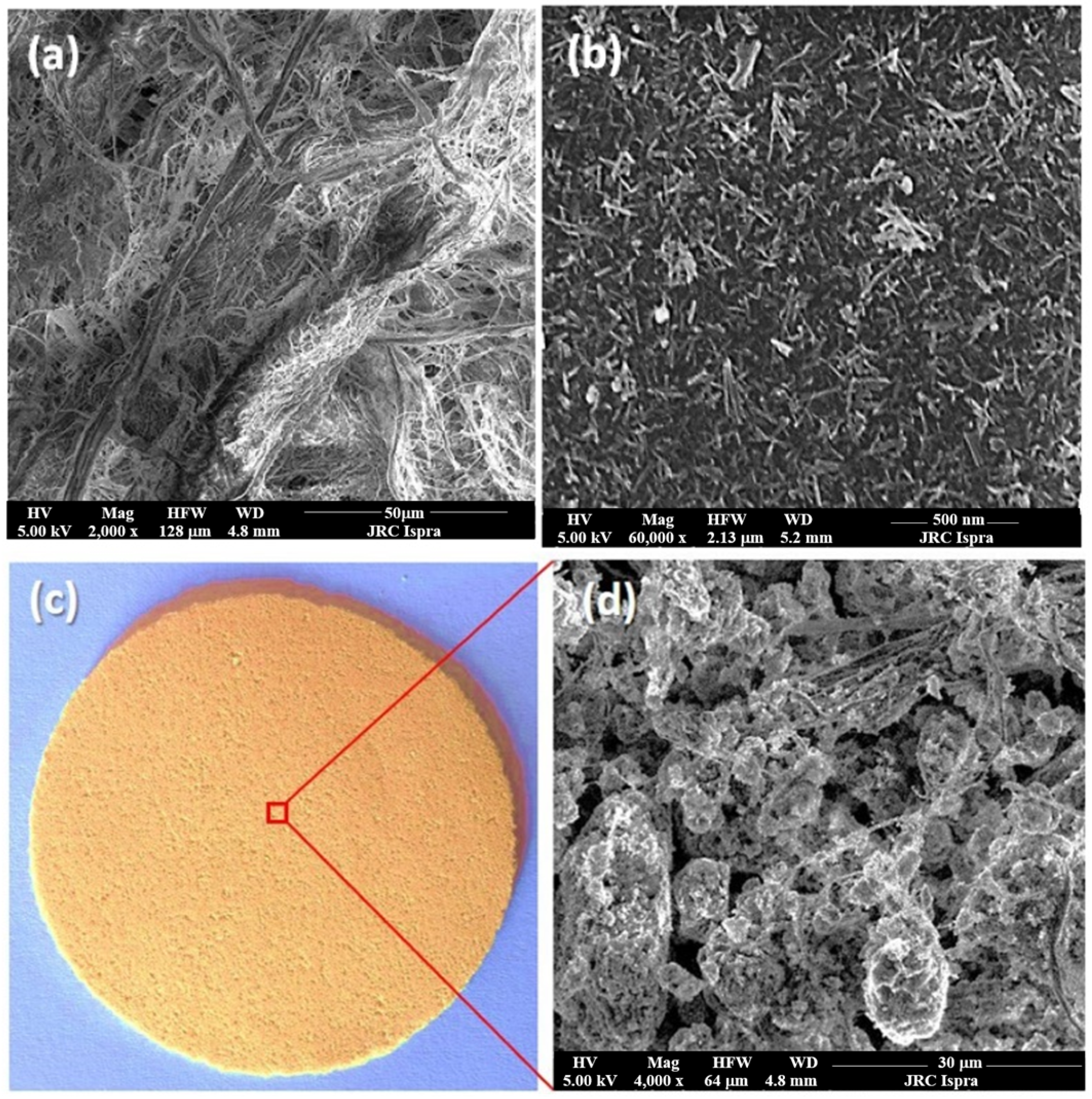
Hybrid structures have attracted considerable attention due to their potential to yield cost-effective materials. In this context, TiO2 nanowires were incorporated into membranes and evaluated for the degradation of MB under UV irradiation [109]. Commercial TiO2 was first transformed into nanowires via a solvothermal process, then washed with HCl and calcined at 500 °C, with the resulting morphology presented in Figure 5b. The obtained nanowires were then dispersed in an aqueous FeCl3·6H2O solution, transferred to an autoclave, and treated at 90 °C for 9 h. The product was subsequently washed with 0.1 M NaOH, dried at 50 °C for 12 h, and calcined at 500 °C for 2 h to yield TiO2 nanowires containing 5 wt% Fe2O3. The composite membrane was prepared by blending TiO2 NW@Fe2O3 with cellulose, followed by filtration and drying at 40 °C, see Figure 5c. Impressively, the membrane achieved 90% degradation of MB after 60 min of irradiation.

5.2. Two-Dimensional (2D) Nanostructures

Two-dimensional semiconductors such as nanosheets with large porosity have been effective photocatalysts due to enhanced charge transfer, efficient mass transport, abundant active sites, and improved light harvesting [110]. In this context, ZnV2O6 nanosheets were synthesized via a solvothermal method and evaluated for photocatalytic degradation of RhB [111]. A Central Composite Design (CCD) approach was adopted, considering pollutant dose, pH, photocatalyst loading, and irradiation time, to optimize a material capable of achieving 97% degradation efficiency. Although morphological and structural features were not explicitly considered in the CCD analysis, two distinct morphologies were observed: trapezoidal-shaped structures, corresponding to the monoclinic ZnV2O6 phase, and spherical particles associated with the monoclinic Zn2V2O7 phase. Morphology tuning of nanosheets was further addressed by Linh et al., who employed thermal polymerization assisted by a urea precursor to control the morphology of g-C3N4 [112]. By varying the annealing temperature, stacked-layer, porous, and ultrathin morphologies were obtained, with the ultrathin g-C3N4 achieving complete degradation of a 10 ppm RhB solution within 60 min under solar irradiation. Textural analysis revealed that increasing annealing time led to broadening and enhanced intensity of the (200) reflection peak, indicating thermal exfoliation, reduced layer thickness along the c-axis, and improved interlayer stacking of the aromatic structure. Band gap values were also affected, with annealing durations of 0.5, 1.5, 2.5, and 3.5 h yielding band gaps of 2.63, 2.57, 2.55, and 2.52 eV, respectively. Similarly, ballmilling for 24 h in the presence of solvents such as isopropanol, ethanol, and deionized water induced significant morphological changes in g-C3N4, leading to laminar structures with reduced particle size and a decrease in XRD peak intensity due to disruption of the interlayer structure from van der Waals bond breakage [113]. Wang et al. observed that the two-dimensional layered structure of g-C3N4 modified with CdS facilitates efficient electron transmission, and the high specific surface area increases active sites [114]. These studies reveal the crucial role of morphology in photoactive materials, as it not only influences the available surface area but can also contribute to band-gap tuning and charge transfer behavior.
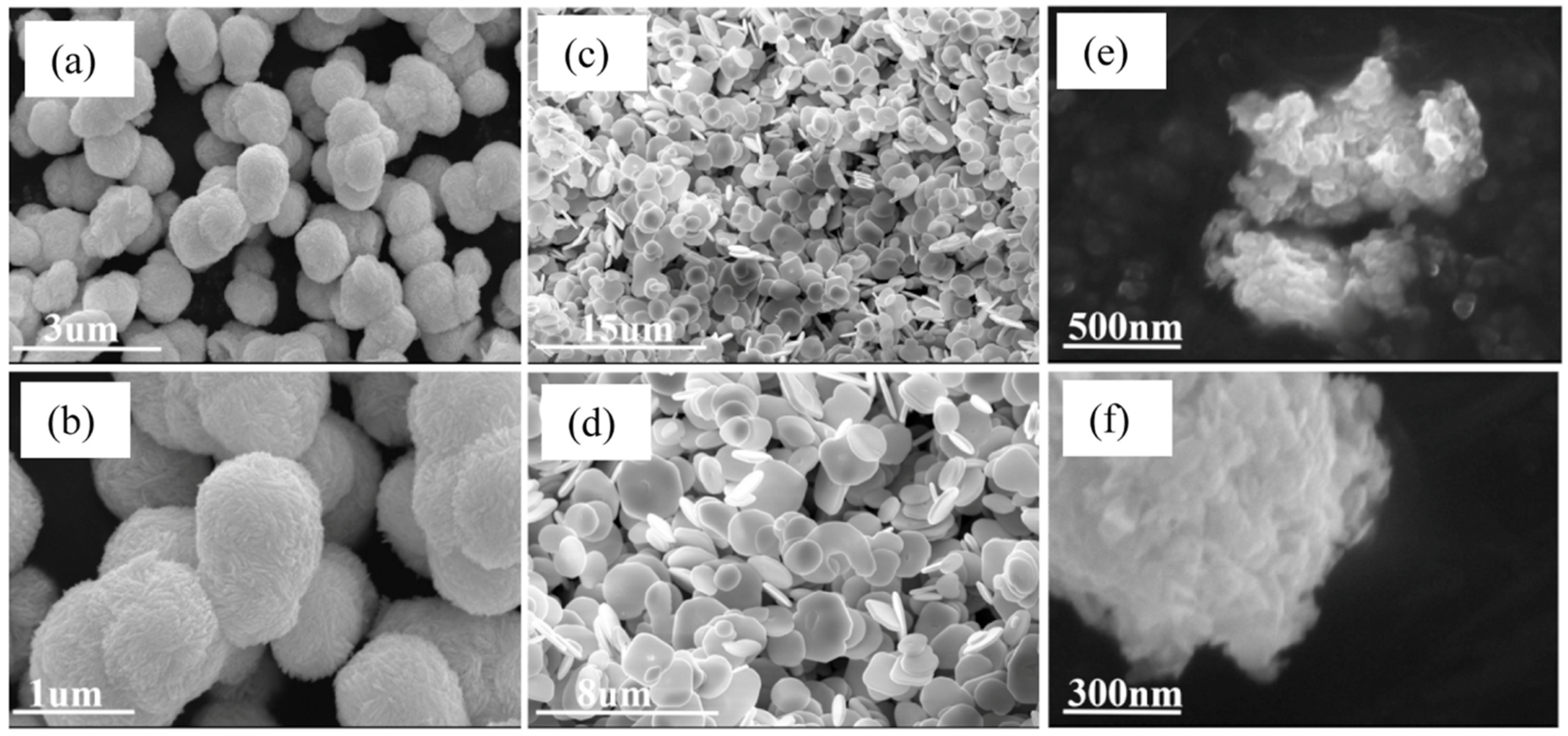
A critical issue in designing a 2D photocatalyst is the potential mismatch between elements or compounds incorporated into the system. Traditional noble and non-noble metals often exhibit lattice mismatch with 2D covalent organic frameworks [115]. For instance, Prussian Blue analog nanosheets composed of PdTCNi/HCFe were synthesized via a co-precipitation method and employed for the photocatalytic degradation of crystal violet [116]. The XRD of PdTCNi/HCFe displayed defined reflections with an estimated crystallite size of 29.25 nm, which is evidence of lattice distortion. Morphological observations showed a plate-like structure at low magnification, while higher magnifications revealed small spherical structures linking the nanosheets. Optical characterization indicated a band gap of 2.96 eV, with strong light-matter interaction attributed to the nanosheet morphology, arising from the large surface area and high aspect ratio. A similar behavior was reported by Luo et al., who investigated the transformation of BiOCl nanosheets (shown in Figure 6) into a cotton-like morphology [117].
The BiOCl sample prepared via the solvothermal method exhibited predominantly spherical particles with diameters of about 1 µm. In contrast, BiOCl-2 (synthesized via a hydrothermal route without surfactant) showed a morphology consisting of thin platelets ranging from 1 to 3 µm in diameter. Meanwhile, BiOCl-3 (obtained through the hydrothermal process in the presence of PVP) consisted of ultrathin nanosheets that assemble into a cotton-like structure, with individual diameters estimated between 20 and 50 nm. This morphological feature enhanced the specific surface area, increasing the number of active sites and thereby improving the photocatalytic performance.
More recently, Chen et al. developed a platinum single-atom-decorated MoS2/ZnIn2S4 (PtSA-MoS2/ZnIn2S4) heterostructure to enhance photocatalytic activity [118]. In this system, the intimate coupling of the two-dimensional components forms a well-aligned 2D/2D heterojunction that induces favorable band-structure modulation in ZnIn2S4, maximizes interfacial contact, and enhances transfer separation. Moreover, the presence of highly active platinum single-atom cocatalysts further promoted the hydrogen evolution reaction (HER) by lowering the reaction overpotential and providing abundant active sites.

5.3. Three-Dimensional (3D) Nanostructures

ZnO nanoflowers with an average crystallite size of about 55 nm were obtained by the hydrothermal method assisted by oleic acid, achieving high crystalline purity [119]. The authors reported that the additive concentration played a key role in determining the flower-like morphology by directing the anisotropic growth process. Furthermore, variations in oleic acid concentration were found to alter the degree of supersaturation, which in turn influenced structural parameters such as crystallographic plane orientation. Oleic acid acts as a capping and structure-directing agent due to its carboxylate group, which can coordinate with Zn2+ ions or adsorb on specific ZnO crystal facets, thereby modifying surface energies and selectively inhibiting growth along particular crystallographic directions [120]. This selective adsorption promotes anisotropic growth, favoring the formation of hierarchical assemblies such as nanorods or nanosheets that subsequently aggregate into flower-like architectures. In ZnO, the polar (0001) plane possesses higher surface energy than non-polar facets, which naturally drives preferential growth along the c-axis [121]. However, surfactants such as oleic acid can partially block these surfaces and redirect crystal growth laterally, facilitating the radial arrangement of nanorods characteristic of nanoflowers [122].
On the other hand, g-C3N4 was engineered into tubular structures through methanesulfonic acid-induced thermal polymerization of melem, which introduced carbon vacancies and consequently enhanced its photocatalytic activity for H2 generation, reaching 4035.8 μmol g−1 h−1 [123]. This enhancement was primarily attributed to a significant increase in the specific surface area to 105.2 m2 g−1, providing a greater number of active sites for the reaction. SEM and TEM analyses revealed a hollow, nanosheet-stacked tubular morphology, composed of multiple nanosheet layers aligned along the tube axis. Notably, X-ray photoelectron spectroscopy (XPS) analysis showed that high-resolution C, N, and O spectra exhibited a 68.38% decrease in the C/N atomic ratio, which was attributed to the formation of carbon defects during thermal treatment. Another critical factor contributing to the improved H2 evolution performance is the formation of carbon vacancies during thermal treatment. These defects can introduce localized electronic states within the band structure of g-C3N4, which promote charge separation and increase the density of catalytically active sites. Carbon vacancies are also known to enhance the adsorption and activation of reactant molecules and facilitate electron transfer processes, thus improving photocatalytic reduction reactions [124]. Nevertheless, although defect engineering significantly enhances photocatalytic performance, it must be considered that excessive defect formation can introduce deep trap states that act as recombination centers, reducing charge carrier lifetime [125].
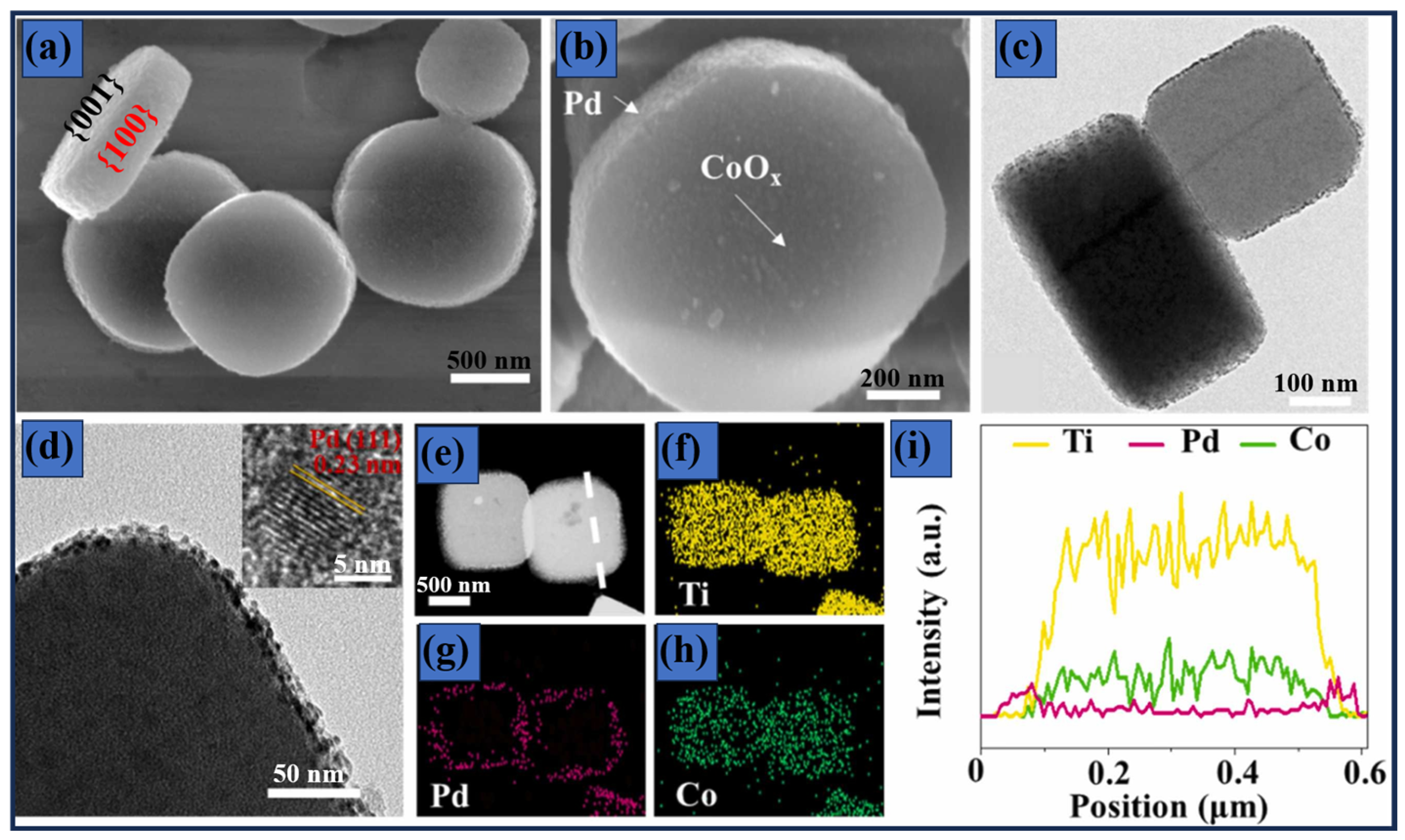
MOFs have been widely used as photocatalysts owing to their intrinsic semiconducting behavior, high specific surface area, tunable band gap, defect engineering capability, structural tunability, and other outstanding properties [126,127]. These features can be strategically tailored to enhance light harvesting, promote efficient charge separation, and suppress charge recombination, thereby improving photocatalytic activity [128]. Yuan et al. developed a Pd- and CoOx-based MOF photocatalyst for H2O2 production coupled with biomass oxidation [129]. A notable aspect of this work was the crystal facet-dependent spatial separation of the Pd and CoOx, where the (100) and (001) facets of the MOF promoted directional migration of photogenerated charge carriers. Facet engineering is a well-established strategy in photocatalytic materials research, as it enables a dual mechanism whereby photogenerated electrons accumulate on one facet while holes migrate to another [130]. In this study, Yuan and co-workers provided a detailed elucidation of the interaction between the cocatalyst and the MOF support, revealing that the preferential growth of Pd on the (100) facet and CoOx on the (001) facet (see Figure 7) is mainly driven by charge effects. For example, the (100) facets expose Ti4+ species that exhibit a strong affinity toward PdCl42− anions, a finding further corroborated by the elemental mapping analysis shown in Figure 7e and Figure 8.
More importantly, control experiments using methanol instead of diethylene glycol revealed a pronounced solvent effect on nucleation. Methanol favored rapid homogeneous nucleation in solution rather than heterogeneous nucleation on the support, resulting in non-selective particle adhesion to the substrate. Although the original study did not explicitly address the role of solvent properties in governing nucleation kinetics, extensive literature suggests that parameters such as polarity, viscosity, ionic strength, protic versus aprotic character, redox chemistry, and hydrogen bonding interactions critically influence nucleation processes [131,132,133]. These solvent-induced effects not only drive significant morphological alterations in the Pd- and CoOx-modified MOF but also trigger structural modifications that modulate the photocatalytic activity. As a result, H2O2 production was markedly enhanced, reaching 74.8 mmol g−1h−1, which substantially exceeds previously reported values, including 1.676 mmol g−1h−1 for functionalized conductive MOFs reported by Choi et al. [134] and 10.4 mmol g−1h−1 for Pd-anchored MOF [135].
As discussed previously, certain crystal facets are more favorable for nanoparticle nucleation and growth. From an engineering perspective, the rational design of supports that expose multiple facets can significantly enhance photocatalyst efficiency. In this context, Du et al. reported the synthesis of MIL-125-NH2 polyhedrons (MIL = Materials Institute Lavoisier) with well-defined (001)/(111) facet exposures [136], which exhibited a remarkable H2O2 production rate of 128.6 mmol L−1 g−1 h−1 upon modification with Pd0 and PdO. Structural characterization revealed that Pd preferentially grows on the top surfaces of the polyhedra, while PdO predominantly deposits on the lateral facets. Collectively, findings demonstrate that facet engineering plays a vital role in enhancing photocatalyst performance by modulating the electronic structure, improving charge-carrier transport, and increasing the exposure of catalytically active sites [137,138]. Alternative strategies have been proposed in MOF-based photocatalysts to address issues related to degradation rate and material recovery. For instance, a Cu-based MOF integrated into an alginate substrate [139], which not only enhanced photocatalytic efficiency but also contributed to the development of environmentally friendly materials. This material demonstrated 99% decolorization of Congo Red (CR) and maintained a high performance of 90% even after ten consecutive cycles. Hemdan et al. reported an outstanding study in which sodium alginate was incorporated to fabricate a Cu-BTC@Alg/Fe3O4 composite. In this system, BTC (1,3,5-benzenetricarboxylic acid) served as the organic binder for the synthesis of the Cu-based MOF [140]. The composite exhibited a specific surface area of 160 m2 g−1 and an adsorption capacity of 200 mg g−1, achieving a remarkable removal efficiency of 97% for RhB. SEM and TEM revealed a diverse morphology, an alginate fibrillar structure, Fe2O3 formed cubic or cuboid shapes, and Cu-MOF appeared as cubic crystals with sharp edges. Notably, distinct structures expose different crystal facets, which enhanced the adsorption process; this was further supported by studies investigating the effects of contact time, pH, and temperature.
Since material recyclability is a major challenge, Edirisooriya et al. conducted a detailed study on the recyclability and regeneration of Au/TiO2 and Pt/TiO2 [141]. They evaluated hydrogen production rates, turnover frequencies, and durability. Analysis of fresh, used, and regenerated catalysts showed that calcination-based regeneration greatly improved stability: Pt/TiO2 remained active for over 43 days, and Au/TiO2 for over 33 days across four cycles. The results suggest that catalyst deactivation was mainly caused by chemisorption, fouling, thermal degradation, sintering, and poisoning from synthesis residues and plastic byproducts. Moreover, it was observed that regeneration boosted catalytic activity by 20 times for Pt/TiO2 and 30 times for Au/TiO2. In the same context, Bockenstedt et al. proposed catalyst recovery, regeneration, and reuse, using gravity-assisted settling, centrifugation, and air plasma treatment [142]. The results showed that 77% of Aeroxide® P25 TiO2 nanoparticles and 57% of porous TiO2 nanowire photocatalysts could be recovered and reused.

6. Design Strategies for Heterojunctions

A heterojunction is defined as the interfacial region between two semiconductors with compatible energy band structures. This interface can be formed either through direct bonding of the respective surfaces or through the alignment of internal crystal planes [143]. Historically, at least five types of heterojunctions have been reported, which are listed in Table 2. The former summarizes the main types of heterojunctions in semiconductor systems, including their band alignment, charge transfer mechanisms, advantages, and limitations, while emphasizing how the relative positions of the conduction and valence bands govern the migration and separation of photogenerated charge carriers. In general, type I heterojunctions favor the accumulation of both electrons and holes in the same semiconductor, which enhances recombination and is more suitable for light-emission applications rather than photocatalysis. Type II and p-n heterojunctions are widely used because they promote spatial charge separation through band offsets or internal electric fields. On the other hand, the Z-scheme and S-scheme heterojunctions have become the most widely studied in the 21st century. The Z-scheme photocatalytic system, which mimics natural photosynthesis, can be constructed using two semiconductors without the need for mediators, and its main distinction from other heterojunctions lies in the electron transfer pathway [144]. Such systems have been extensively employed for the photodegradation of hazardous molecules. For example, Co0.08Cd0.92S and Bi2MoO6 were combined to form a Z-heterojunction (Bi2MoO6/Co0.08Cd0.92S) and tested for the MB degradation, achieving an efficiency of 97.3%, which exceeded that of individual components [145]. The presence of both materials was confirmed by XRD, showing enhanced peak intensities and a peak shift attributed to the enlargement of the (100) planes. Successful heterojunction formation was further supported by XPS analysis, where shifts in binding energy of Bi 4f, O 1s, Mo 3d, Cd 3d, and S 2p indicated strong interaction between Co0.08Cd0.92S and Bi2MoO6, confirming the formation of the heterojunction. A recent study investigated a CeO2/CoFe2O4@g-C3N4 ternary heterojunction for the visible-light degradation of enrofloxacin (ENF) [146]. The materials were synthesized by a hydrothermal method followed by ultrasonication, and their formation was confirmed by P-XRD and FTIR. Photocatalytic tests revealed 98.25% ENF removal in 60 min, outperforming CeO2/CoFe2O4 (73.63%) and CoFe2O4 (57.30%).
The formation of an S-scheme heterojunction typically optimizes the band structure, facilitating charge-carrier separation and enhancing the spatial distribution of photogenerated electron-hole pairs [152]. A wide range of chemical elements, including noble and non-noble metals as well as rare earths, has been employed in the synthesis of these materials. For example, CdS was anchored onto CuO to form a CuO/CdS S-scheme heterojunction, which was applied for the selective conversion of CO2 to CO [153]. While CuO exhibits a blade-like morphology, CdS forms small particles that grow and subsequently attach to the surface of the CuO nanosheets. Formation of the S-scheme heterojunction alters the photoluminescence spectra of CuO/CdS, showing a reduced intensity compared to that of the individual components, indicating that the heterojunction effectively suppresses the recombination of photogenerated electron-hole pairs. Notably, the limited H2 evolution rate of merely 1.28 mmol g−1 h−1 in a water-glycerol mixture. In an S-scheme CdS/La2O3 system, enhanced by a factor of 14.5 times [154]. In addition, anatase/rutile TiO2 S-heterojunction has demonstrated solar-to-hydrogen efficiency (STH) of 14.25% at a pH of 0 and 7 [155]. The former efficiency is relevant considering that Liu et al. reported a STH of only 0.44% and an apparent quantum yield (AQY) of 9.13% using a β-NiS/TiO2-x Ohmic junction [156]. Recent reports on S-scheme photocatalysts further illustrate this disparity. For example, CdS/Co3S4 S-scheme nanoboxes can achieve hydrogen evolution rates as high as 23.45 mmol g−1 h−1 with an AQY of 18.5%, largely due to improved light harvesting and shortened charge transport pathways [157]. Similarly, other S-scheme systems such as NiO/CdS heterojunctions have demonstrated hydrogen evolution rates of 7.89 mmol g−1 h−1, about 24.7 times higher than pristine CdS, highlighting the strong role of interfacial band alignment and built-in electric fields in enhancing carrier separation [158].
A similar effect was reported in [159], where CdSe was used for the reduction in hexavalent chromium (Cr(VI)); the formation of a CeO2/CdSe heterojunction enhanced photocatalytic activity by approximately 1.77-fold. The authors attributed this enhancement to the three-dimensional micronetwork structure of CeO2, which provides a robust support for CdSe nanoparticles via strong interparticle interactions, facilitating intimate interfacial contact and promoting the formation of an efficient heterojunction. The enhancement of photocatalytic activity in S-scheme heterojunctions is governed by multiple factors, among which morphology plays a pivotal role. For instance, Lee et al. reported that the efficiency of antibiotic degradation over CdS/BiOIO3 S-scheme hybrid heterojunction is strongly influenced by the 1D/2D interfacial contact, which facilitates enhanced charge transfer [160].
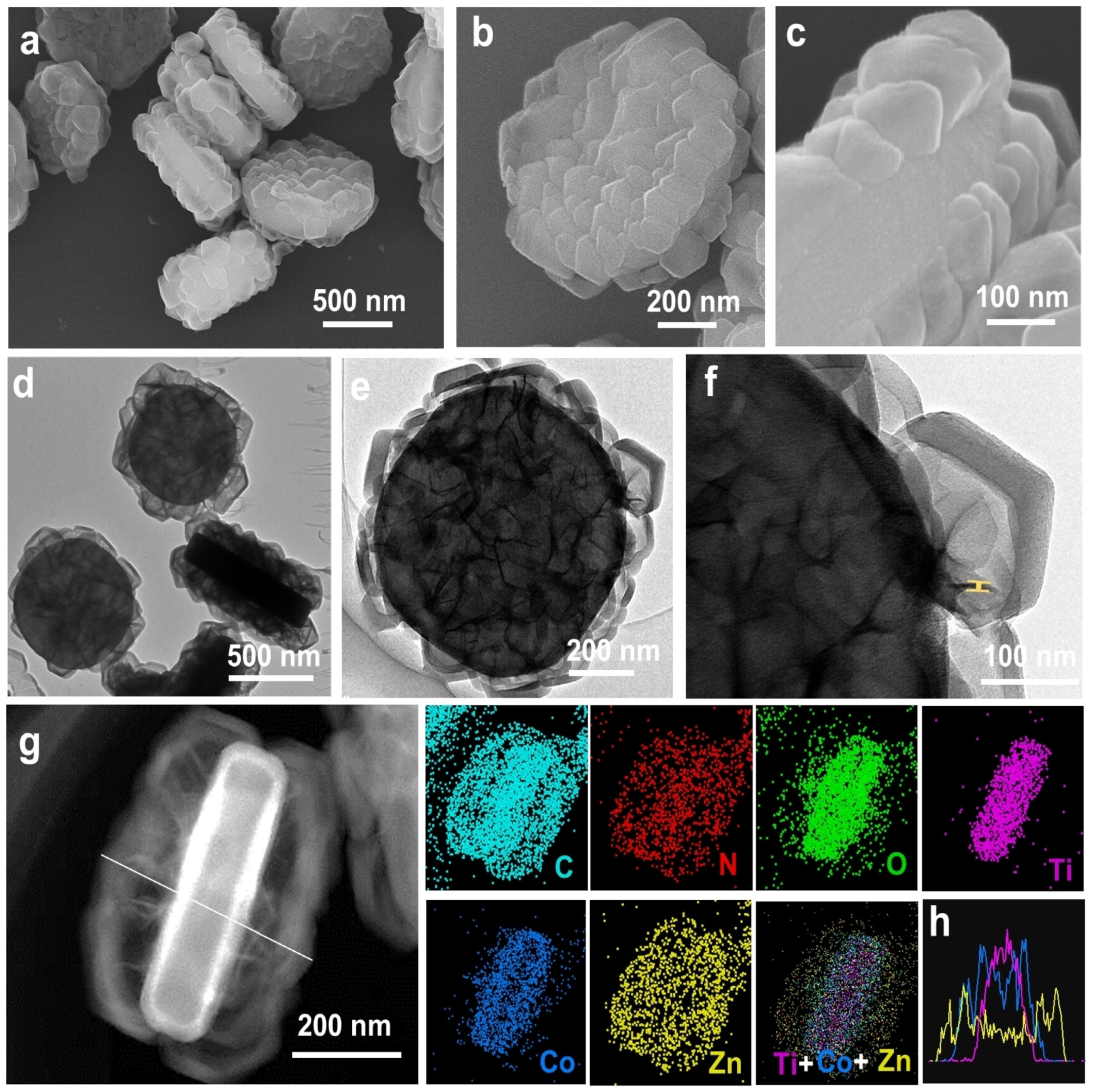
CdS/N-rGO composites prepared via hydrothermal synthesis have also been proposed as S-scheme heterojunctions, demonstrating promising photocatalytic performance for H2 evolution with a notable efficiency of 58.8 mmol h−1g−1 under visible light irradiation [161]. A key observation was that no significant changes in the reflection peaks were observed in the nitrogen-doped composite (CdS/N-rGO) compared with the undoped CdS/rGO. However, incorporation of rGO or N-rGO significantly affected both the crystallite size and lattice parameters, which can be ascribed to the formation of chemical bonds. In the case of N-rGO, nitrogen atoms may interact with S or Cd species, thereby modifying bond lengths. SEM images revealed that pure CdS tends to agglomerate, whereas the addition of N-rGO resulted in reduced particle size and a more uniform distribution. These structural changes are consistent with the UV-vis measurements, which showed a redshift in the band gap to 2.27 eV. Although no structural defects were observed in this study, strain is known to play a vital role in heterojunction photocatalysts. For example, reference [162] reported lattice strain in Cu-MOF/ZFO composite as an indicator of heterojunction formation. Analysis of the Tauc plot revealed a reduced band gap of 1.98 eV for the Cu-MOF/ZFO composite, smaller than that of ZFO (2.26 eV) and Cu-MOF (2.17 eV), further confirming the successful heterojunction formation. A significant contribution was achieved by Xi and coworkers, who employed nanoarchitectonic frameworks to develop a nanohouse-like S-scheme heterojunction [163]. This material was constructed using NH2-MIL-125 as the MOF, which exhibits a plate-like morphology, onto which Co(OH)2 nanosheets and hollow ZIF-8 cages were subsequently grown. SEM images (Figure 8a–c) show a solid cake-like morphology of the final material. However, TEM images (Figure 8d–f) reveal that it is composed of distinct structural components, further confirmed by HAADF-STEM (Figure 8g) and elemental mapping analyses. The floor consists of NH2-MIL-125, on which Co(OH)2 preferentially grows, while ZIF-8 forms an enclosing shell. This spatial distribution is further supported by the line scan profile shown in Figure 8h. The reported band gap S-scheme heterojunction is 2.7 eV, significantly narrower than that of ZIF-8 (5.17 eV), thereby greatly enhancing the NH4+ production.
Figure 8. Morphological and chemical characterization of the NMCZ sample. (ac) SEM micrographs. (df) TEM images. (g) HAADF-STEM image and corresponding elemental mapping. (h) Line scan profile of elemental distribution. © 2024 Wiley-VCH GmbH [163].
Materials 19 01472 g008
Beyond qualitative imaging techniques such as SEM or TEM, the characterization of heterojunction interfaces requires complementary spectroscopic and electrochemical methods to obtain quantitative information about interfacial interactions. Techniques such as XPS and ultraviolet photoelectron spectroscopy allow the determination of chemical states, band alignment, and work function differences between semiconductors, while photoluminescence (PL) and time-resolved PL spectroscopy provide insights into charge carrier recombination and lifetime. Additionally, electrochemical impedance spectroscopy (EIS) and transient photocurrent measurements can evaluate interfacial charge transfer resistance and carrier separation efficiency.

7. In Situ and Operando Techniques to Characterize the Photocatalyst

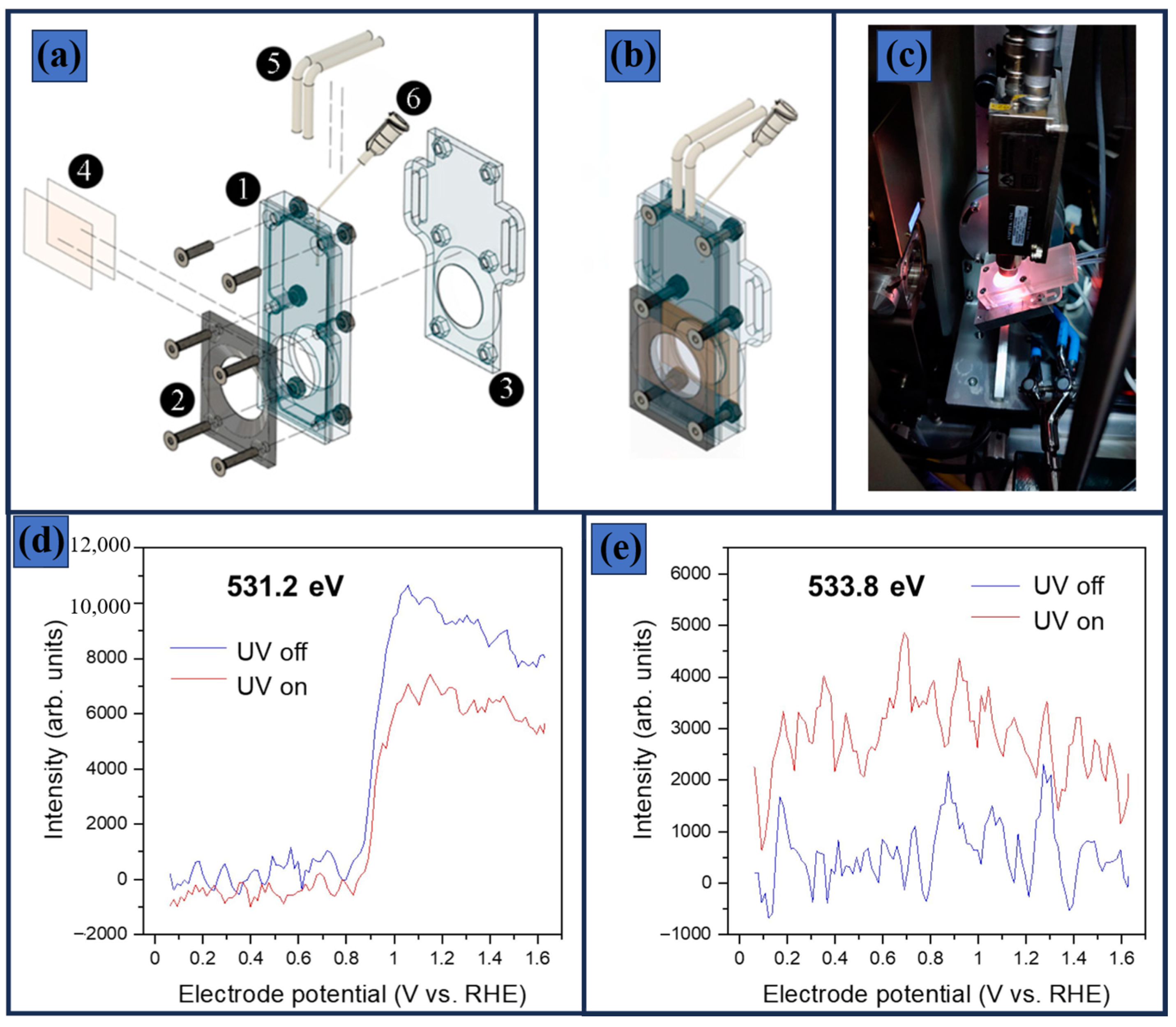
The most effective approach to elucidating the mechanisms and hidden processes in photocatalysts is the use of advanced characterization techniques performed under in situ and operando conditions. Kozyr et al. [164] used X-ray absorption spectroscopy (XAS) to elucidate structural changes in Pt/TiO2 during the deposition process and under UV light irradiation for H2 generation. The spectra were recorded using an R-XAS Looper (Rigaku, Japan) in fluorescence yield geometry using a Si (620) Johansson bent monochromator (ΔE = 1.5 eV at the Pt L3-edge, 11,564 eV). The incident beam was monitored with an Ar-filled (300 mbar) ionization chamber, and fluorescence was detected by a silicon drift detector. Figure 9 presents the cell designed by this group, which consisted of two transparent Scotch tape windows separated by 4.6 mm. One window contained the photocatalytic material, while the other served as the entry point for light irradiation. A key experimental parameter was the XAS configuration, which operated in fluorescence mode. In this setup, the X-ray beam impinged on the sample at an incident angle of approximately 45°, while the detector was positioned at 90° relative to the beam to collect the emitted fluorescence signal. In a related study, conventional TiO2 was investigated under real-time and operando conditions using soft-XAS to monitor the oxygen evolution reaction (OER) photocatalyst surface [165]. The measurements were achieved in fluorescence-yield wavelength-dispersive XAS, where a Teflon electrochemical cell enabled probing of the solid–liquid interface, with the electrolyte separated from the vacuum by a 200 nm Si3N4 window (3 × 1 mm). Notably, during measurements conducted under a swept potential, pronounced peaks at 531.2 and 533.8 eV were observed only when the system was exposed to UV light. Figure 9d,e presents the corresponding XAS spectra acquired during the electrochemical test under a swept potential. In particular, the signal intensity in the 531.2 eV region increased markedly at potentials above 0.9 V vs. RHE, indicating potential-dependent modifications of the oxygen electronic states. These changes may be associated with the formation of photoinduced surface species or alteration in the TiO2 electronic structure under operando conditions.
The authors highlighted that XAS analysis was enabled by the use of wavelength-dispersive XAS, in which absorption across all energies is measured simultaneously and spectra are recorded continuously with acquisition times ranging from 0.1 to 10 s. In the same context, Abudukade et al. [166] studied the water-splitting process on Ni-SrTiO3 photocatalysts by using in situ XAS, with the in situ performed at PETRA III (beamline P65) at DESY, Hamburg, and at ELETTRA Sincrotrone Trieste, where a sealed liquid-phase cell with a 6 μm Mylar window was used to allow X-ray and UV transmission while enabling gas analysis. However, this group identified an important limitation of the XAS operating mode: during simultaneous exposure to X-rays and UV light, no changes in the Ni oxidation state were detected. In contrast, when the X-ray irradiation was applied intermittently, a clear transformation from Ni(0) to Ni(II) was observed, corresponding to the formation of NiO and Ni(OH)2 phases. In another study, in situ X-ray absorption fine structure (XAFS) spectroscopy was adopted to investigate the mechanism responsible for the photothermal activity of commercial WO3 powder under combined light and thermal conditions [167]. One advantage of photothermal catalysts is that thermal energy can promote the reaction, while light irradiation induces photocharge generation. Beyond the scientific insights provided by these studies, the authors also emphasized key challenges in the design of in situ cells, including the choice between single or dual-chamber configurations, the development of an efficient gas injection system, and the selection of thin films versus nanocatalysts. Catalyst thickness was identified as a critical parameter, as the incident light enters from the denser side of the material and may interact predominantly with inactive regions. To overcome this limitation, the use of ultrathin catalyst film or nanomaterials with a high surface-area-to-volume ratio was recommended to ensure improved light penetration and effective activation of catalytic sites. Additionally, the authors presented the final cell design along with photographs, dimensions, and construction details, which greatly facilitate the replication of in situ measurements. Another technique used is Bragg coherent X-ray diffraction imaging (BCDI) that reveals the displacement field of a material, which is directly related to lattice strain [168]. A representative example is the in situ characterization of Au nanoparticles supported on TiO2 films, which revealed wavelength-dependent photocatalytic strain evolution [169]. In this study, changes in the Au lattice were quantified, showing no variation under pristine conditions but a gradual lattice expansion under light irradiation: green light (0.0017–0.0019 Å), UV light (0.0027–0.0032 Å), and combined green/UV irradiation (0.0038–0.0043 Å). The authors established a correlation between lattice expansion and the generation of reactive oxygen species (ROS), with tensile strain increasing from ~0.2% under green light to ~0.3% under UV light and ~0.4% under combined green/UV irradiation. Furthermore, under green light illumination, electron transfer from Au to TiO2 was observed, leading to hole formations that promoted the generation of OH radicals. More recently, BCDI has been applied to investigate strain evolution in Bi2WO6 under operational conditions [170]. At 40 °C, charge carriers become activated, exhibiting increased mobility and suppressed recombination. During this transformation, a new phase nucleated near defect sites and propagated in a spatially heterogeneous matter. Moreover, small cracks formed as a result of local strain and environmental cycling, increasing the surface area and creating new reactive sites that may enhance material performance. These findings demonstrate that BCDI is a powerful technique for tracking structural and strain-related changes in photocatalysts under operando conditions.
In situ FTIR spectroscopy has demonstrated broad versatility across a wide range of material applications, from fuel cells to photoelectrochemical systems [171,172]. Palharim et al. employed this technique in attenuated total reflection (ATR) mode to monitor the degradation of acetaminophen on WO3-AgCl photocatalysts [173]. ATR-IR experiments were performed in a cooled copper flow-through cell (≈170 μL) with a quartz window and Viton O-ring. A ZnSe internal reflection element (IRE) coated with the photocatalyst was mounted in the cell and analyzed using a Bruker Vertex 80v equipped with an MCT detector. Spectra were recorded under vacuum at 4 cm−1 resolution with 200 scans. Illumination was provided by a 300 W Xe arc lamp. A key challenge was encountered during the measurement of a low acetaminophen concentration (100 mg L−1), where the FTIR signal was too weak for reliable analysis due to detection limits. As a result, the concentration was increased to 500 mg L−1 to obtain measurable spectra. However, this concentration is considerably higher than those typically used in photocatalytic degradation experiments, which may limit the environmental relevance of the results. In another work, the gas-phase degradation of 1-butanol and methanol was investigated on homemade TiO2 photocatalysts and a commercial Hombikat-b sample [174]. In the case of Hombikat-b, a decrease in the band at 1075 cm−1 was observed during the initial minutes of illumination, accompanied by the emergence of new bands at 1715, 1570, 1532, and 1440 cm−1. These bands were attributed to surface-adsorbed carboxylate intermediates, likely formed during the oxidative degradation of 1-butanol into species such as butanoates, acetates, and formates. The photocatalytic degradation of toluene has also been investigated using in situ FTIR spectroscopy on a CaFe2O4 hollow composite, where the technique proved effective in elucidating the reaction mechanism and identifying intermediate species as well as final products [175]. The results revealed a decrease in the characteristic toluene absorption bands under visible-light irradiation, while the intensities of the bands at 2361 and 2340 cm−1 increased, indicating CO2 formation and confirming the mineralization of toluene.
In situ environmental transmission electron microscopy (eTEM) has been implemented to directly visualize structural transformations in iron-based photocatalysts during CO2 reduction [176]. In this study, a δ-FeOOH photocatalyst was subject to stepwise heating under an H2 atmosphere, while structural evolution was monitored by in situ eTEM. At room temperature, the δ-FeOOH showed two dominant lattice planes ascribed to (100) and (110) reflections, with interplanar spacing of 0.253 and 0.147 nm, respectively. Upon heating above 200 °C, an additional lattice plane with a spacing of 0.271 nm emerged, corresponding to the (104) plane of α-Fe2O3, thereby indicating the onset of a thermally induced phase transformation. At 250 °C, the conversion of α-Fe2O3 to Fe3O4 commenced and progressed with increasing temperature, reaching completion at approximately 300 °C. Further heating to 400 °C resulted in the exclusive presence of α-Fe, confirming complete reduction to metallic iron under the reducing H2 environment.

8. Computational Modeling and DFT Simulations, and Machine Learning Design

Based on practical experience, experimental development of photocatalysts can be both time-consuming and costly, slowing progress in the design of efficient nanostructures. In this context, computational modeling has increasingly been adopted to elucidate the mechanisms involved during both the synthesis process and the degradation of target pollutants. Atomic/scale modeling based on density functional theory (DFT) is a widely employed computational approach for understanding and predicting materials performance at the atomic level [177]. This methodology accounts for key parameters such as thermodynamic energies, bond lengths, atomic radii, electronic band structures, and density of states (DOS), among others [178]. The aforementioned factors are employed to interpret the structural, electronic, and catalytic properties of materials. Among the most extensively used computational platforms is the Vienna ab initio Simulation Package (VASP), which permits the specification of key parameters such as the exchange-correlation functional, plane-wave cutoff energy, k-point sampling within the Brillouin zone, and pseudopotentials for electron-ion interactions [179]. In addition, VASP supports the inclusion of spin polarization, Hubbard U corrections, and van der Waals interactions, allowing for accurate modeling of electronic structure, total energies, band gaps, and other critical material characteristics of a broad range of systems.
In a systematic study, Ribeiro et al. theoretically correlated the surface structure and morphology of Ag2O photocatalysts [180]. First-principles calculations demonstrated that the local coordination environment and electronic configuration of Ag species are responsible for the observed enhancement in photocatalytic activity, with electrons preferentially migrating to the (111) facets and holes to the (100) and (110) facets. Notably, these crystallographic planes in Ag2O are strongly influenced by particle shape and size, with cubic, octahedral, rhombic, dodecahedral, and rhombicuboctahedral morphologies identified as particularly favorable for achieving superior photocatalytic performance. The authors constructed a plot correlating the polyhedron energy (Epol) with three distinct reaction pathways for Ag2O. For reaction pathways A and B, the most stable morphologies were rhombicuboctahedral and cubic structures, which expose a higher proportion of (100) and (110) facets, thereby enhancing photoactivity. In contrast, when the relative contribution of the (111) surface increased with respect to (100) facets, a decrease in photocatalytic activity was observed. The dependency of materials properties on surface structure was further systematically investigated by Gouveia et al. [181], who developed an Epol-reaction pathway plot based on various morphologies reported in the literature. As can be seen from Figure 10, distinct tetradecahedral ZnO morphologies can be obtained by tuning the synthesis parameters, which in turn modulate the reaction pathway. The sample denoted as the initial stage was produced via a low-temperature hydrothermal process in the absence of surfactants, resulting in an early-growth ZnO structure. In contrast, the material exhibiting morphology-a (an elongated hexagonal form) was synthesized using the same hydrothermal synthesis route but with adjusted pH, increased temperature, and prolonged reaction time—conditions that promoted further crystal growth and facet development. Furthermore, morphologies -c and -d were obtained using a mixed water/alcohol solvent system, demonstrating the critical role of solvent composition in controlling nucleation dynamics and final particle morphology.
Huang et al. [182] employed DFT to investigate the effects of vacancies on the properties of Bi4O5Br2 composites. Their results demonstrated that the formation of oxygen or bromine vacancies is energetically more favorable than the formation of bismuth vacancies, the latter inducing only minor lattice distortion. Moreover, the presence of oxygen vacancies was found to narrow the band gap, which enhances visible/light harvesting and promotes more efficient charge carrier transport. These findings are in good agreement with the DFT results reported by Katai et al., who observed that oxygen vacancies in black TiO2 brookite reduce the optical band gap and enhance CO2 adsorption [183]. Similarly, DFT studies were conducted to examine oxygen vacancies and charge trapping on (101) and (001) surfaces, as well as in Ti33O33(2−δ) and Ti151O151(2−δ) nanoparticles [184]. In the case of nanoparticles, electrons associated with oxygen vacancies tend to localize Ti3+ species, which can be further reduced to Ti2+ under strongly reducing conditions. Ti3+ species were detected by electron paramagnetic resonance (EPR), while Ti2+ acts as a hidden charge trap. The authors stated that particle size significantly influenced reducibility, with smaller nanoparticles being more favorable for photocatalytic applications due to enhanced visible-light absorption and increased surface area. Saroar et al. [185] combine DFT calculations with experimental measurements to determine the electronic, optical, and phonon properties of γ-Bi2MoO6. The theoretical calculations accurately reproduced experimentally measured Raman and infrared spectra, confirming the power of DFT simulations. Meanwhile, the authors implement the Heyd-Scuseria-Ernzerhof (HSE06) hybrid functional, including van der Waals interactions and relativistic spin–orbit coupling corrections, to predict the band gap, which closely matched values obtained from diffuse reflectance spectroscopy. More complex materials have also been investigated using DFT, such as the double perovskite RbBa2Ti3O10, to gain insight into its structural, mechanical, and electronic properties [186]. This theoretical investigation revealed that the material exhibits a band gap of 1.66 eV and shows potential for water splitting processes.
Molecular dynamics (MD) is another computational approach used to simulate the photoactivity of target materials, helping to address uncertainties associated with surface reaction mechanisms. A comprehensive investigation of ZnO nanostructures, combining experimental and theoretical methods to elucidate morphology-dependent photoactivity and reaction pathways [187]. Experimentally, distinct morphologies were obtained by varying the Zn:KOH ratio, with nanostar-like structures exhibiting the highest photocatalytic activity toward methylene blue (MB) degradation. Complementarily, MD simulations were employed to investigate the interactions between oxygen species and MB, providing atomistic insight into the underlying reaction mechanism. In a similar study, Haounati et al. [188] combined MD simulations and experimental analysis to evaluate ZnO supported on Montmorillonite clay as a photocatalyst for rhodamine B (RhB) degradation. The theoretical simulations indicated that RhB adsorption onto the catalyst surface is thermodynamically favorable, as evidenced by the negative interaction energies associated with the exothermic adsorption process.
Beyond first-principles and molecular dynamics simulations, machine learning (ML) has gained significant attention as a consequence of digital transformation and advances in algorithm development, emerging as a powerful tool for addressing complex engineering problems [189]. Herein, it is necessary to highlight that ML models and DFT calculations differ in approach and purpose. ML models are data-driven tools that learn patterns from existing datasets to rapidly predict material properties and catalytic performance, while DFT calculations are first-principles quantum mechanical methods that describe the electronic structure of materials and provide mechanistic insights into processes. In this context, Li et al. [190] adopted dynamic ML to optimize microwave-assisted synthesis parameters, using quercetin loading, microwave irradiation time and power, H2SO4 volume, and ethanol volume as input variables, with catalyst yield as the output. Real-Time Guidance ML framework demonstrated robust predictive performance despite the limited size of the dataset. Guided by a trained model, the optimized photocatalyst was synthesized experimentally, achieving an H2O2 production rate of 11,544 μmol g−1 h−1. In a separate systematic study, ML-driven design strategy for covalent triazine frameworks was reported and subsequently validated through experimental synthesis and characterization, highlighting the potential of an ML-assisted material discovery in photocatalysts [191]. An orthogonal group SO(3)-invariant graph neural network was utilized as a predictor for the photocatalytic activity of the materials. The DimeNet++ (Directional Message Passing Neural Network++)-based model analyzed 14,920 structures and identified 45 potential candidates, achieving high predictive accuracy with an R2 value of 0.98. A notable strength of this model is its ability to simultaneously account for thermodynamic stability, the Perdew-Burke-Ernzerhof (PBE) band gap, band edge positions, and synthesizability. Within these ML frameworks, an Mn3O4-based photocatalyst has also been fabricated [192]. In addition to the band gap, determined from density functional theory, the effective mass was also used as a descriptor to obtain the optimal Al content in the AlxMn3-xO4/Ag3PO4 heterojunction. Interestingly, the model was trained using the C/C0 degradation rate measured after 2 h, where C represents the concentration of the MB solution, and C0 is its initial concentration. The dataset consisted of 30 materials synthesized via the sonication-assisted co-precipitation method with varying x and m values. ML optimization enables the identification of Al0.5Mn2.5O4/35 wt.% Ag3PO4 as the optimal composition, exhibiting a 27-fold enhancement.
A comprehensive study by Zhai et al. examined 13 variables across a dataset of 53 samples, which were analyzed by support vector regression (SVR) to design Bi2WO6/MIL-53(Al) nanocomposites [193]. In this work, a forward feature selection method was integrated into the SVR algorithm to identify key variables, while a radial basis function combined with virtual screening was used to determine the optimal synthesis parameters. The complete steps of the ML process are depicted in Figure 11a, beginning with dataset construction and concluding with sensitivity analysis. The ML analysis revealed that only four parameters were most critical for enhancing RhB degradation: the molar ratio of Bi2WO6 to MIL-53(Al), hydrothermal temperature, concentration of HNO3, and surfactant type. Figure 11b presents the individual effects of the four main parameters (concentration of HNO3, surfactant, hydrothermal temperature, and mole ratio) affecting the degradation rate. Among them, HNO3 concentration exhibits a positive correlation with degradation efficiency, indicating that higher concentrations of HNO3 lead to enhanced degradation performance. Although the implemented ML results in good precision, it can be observed that more complex ML with multiple layers has been adopted to further analyze large datasets. Figure 11c shows the ML workflow reported in [194], where more than 100 features were initially generated. To improve computational efficiency, a streamlined feature selection process was implemented using Random Forests (RFs), linear regression (or logistic regression for classification), least absolute shrinkage and selection operator (LASSO), recursive feature elimination (RFE), and extreme gradient boosting (XGBoost). Finally, Figure 11d presents the influence of ligands bonded to the metal (ηL) and the Pearson chemical hardness of the metal cation (ηM) on the obtained bandgap.
An important finding reported in [193] was the correlation between morphology and the combined effects of hydrothermal temperature and surfactant type, which led to the formation of 2D nanosheets. These results highlight the capability of ML to guide materials engineering by enabling control over morphology and structural properties to enhance photocatalytic activity. In this sense, a Gaussian process regression (GPR) model was adopted to predict the band gap of anatase TiO2, considering surface area and lattice parameters as descriptors [195]. A total of 60 samples were used to develop the GPR model in MATLAB, and its performance was evaluated using the root-mean-square error (RMSE) and mean absolute error (MAE). The exponential kernel with a constant basis function demonstrates good performance, yielding RMSE and MAE values of 0.0012 and 0.0010%, respectively. Initially, the authors focused on the effect of metal and non-metal ion incorporation into the TiO2 structure, which led to changes to lattice parameters and surface area. However, as highlighted in previous ML studies, even seemingly basic factors such as surfactants can influence crystal nucleation and growth.
An insightful study by Pellegrino et al. [196] employed ML to investigate the effect of triethanolamine, titanate (TeoaH3), initial pH, and operating temperature on the hydrothermal synthesis of TiO2 nanoparticles. The experimental design was based on a Box-Wilson central composite design that considers the four aforementioned parameters, with outputs focused on hydrodynamic radius, polydispersity, and aspect ratio. Figure 12 summarizes the effect of each factor on the final properties of the TiO2. From these results, it can be inferred that particle elongation is favored by high pH values across the entire temperature range. A similar trend is observed with increasing TeoaH3 concentration, further demonstrating that morphological changes are influenced by these synthesis parameters.
A more effective strategy combining first-principles calculations with ML was published by Chen et al., who investigated g-C3N4 combined with 3d transition metals as a potential photocatalyst for nitrogen fixation [197]. Herein, first-principles calculations were employed to determine intrinsic material properties such as light absorption, while ML techniques, including the backward elimination method, sure independence screening, and sparsifying operators, were used as advanced tools to narrow down and predict candidate materials with superior performance beyond conventional theoretical screening.
The Vienna ab initio simulation package was configured to model a g-C3N4 supercell containing 48 carbon atoms and 64 nitrogen atoms, with a Brillouin zone sampling performed using a 1 × 1 × 1 k-point grid centered at the γ(G) point. Although this integrated approach enables the identification of optimal materials even with limited datasets, a major obstacle remains the high level of expertise required from both researchers and practitioners. Table 3 presents a summary of representative works that applied machine learning to evaluate the degradation capability of photocatalysts.

9. Challenges and Future Perspectives

Despite considerable progress in photocatalyst development, several challenges continue to hinder their large-scale application. One major issue is the scalability of current synthesis strategies. Many widely used laboratory methods, such as hydrothermal, solvothermal, and template-assisted routes, often require strict control of temperature, pressure, and precursor concentrations, which complicates their translation to industrial-scale production. In large-scale systems, mass and heat transfer limitations, concentration gradients, and non-uniform nucleation conditions can significantly affect crystal growth, resulting in reduced reproducibility and inconsistent material properties. Therefore, scalable synthesis strategies such as continuous-flow hydrothermal reactors, flame spray pyrolysis, spray drying, and microreactor-based synthesis have been increasingly explored to enable better control over nucleation and growth. Additionally, green and cost-effective approaches, such as solvent-free methods, low-temperature synthesis, and the use of abundant precursors, are essential to reduce energy consumption and environmental impact during industrial production. Consequently, systematic investigations are needed to determine whether the structural, morphological, and electronic properties of photocatalysts can be preserved during scale-up while maintaining cost-effectiveness and reproducibility.
Another critical challenge concerns the long-term stability and recyclability of photocatalysts. Under prolonged irradiation and reactive environments, photocatalytic materials may undergo photocorrosion, structural degradation, or surface fouling, leading to a gradual loss of activity. Although some authors report the recyclability of photocatalysts via thermal treatment and air plasma, most studies lack a comprehensive cost-effectiveness analysis. Moreover, most reported photocatalytic studies are performed under controlled laboratory conditions using model pollutants and idealized light sources. However, real environmental systems often contain complex mixtures of contaminants, variable pH, and competing ions that can significantly affect catalytic performance. Future research should therefore focus on evaluating photocatalysts under realistic conditions, including natural sunlight irradiation and continuous-flow systems.
Another critical concern is the potential risk of secondary contamination, as some nanoparticle-based photocatalysts may partially dissolve in water, thereby introducing new pollutants. Furthermore, the complexity of real wastewater, which often contains multiple coexisting contaminants, significantly reduces photocatalytic efficiency. This reduction arises from competitive adsorption at active sites, light attenuation, and the scavenging of reactive oxygen species.
To address these challenges, future research should focus on designing photocatalysts based on earth-abundant and non-toxic chemical elements, as well as developing robust immobilization and recovery strategies. Importantly, these approaches must be evaluated under realistic wastewater conditions to generate reliable data for the material. In this regard, ML and modeling offer useful tools to accelerate catalyst development by enabling rapid predictions of catalyst behavior, identification of key governing parameters, and reduction in experimental workload.

10. Conclusions

This work presents a clear correlation between morphology, structure, and photocatalytic activity, demonstrating that precise control over parameters such as capping agents, solvent selection, synthesis conditions, and heterojunction engineering can optimize photocatalytic performance. According to the revision, hydrothermal and solution-based synthesis methods remain the most widely adopted due to their versatility, relatively low cost, and ability to produce a wide range of nanostructures. Furthermore, it is necessary to highlight that parameters such as temperature, pH, solvent composition, precursor concentration, and the presence of surfactants or capping agents strongly influence nucleation and crystal growth processes, which are governed by several mechanisms, including Ostwald ripening, oriented attachment, and surface energy modulation.
On the other hand, the adoption of tailored architectures, such as quantum dots, one-dimensional nanowires, and hierarchical structures, along with defect engineering, facet exposure, and the incorporation of heterostructures or supporting matrices, can be a reliable strategy to enhance light absorption, increase surface area, and promote efficient separation and transport of photogenerated charge carriers. Finally, the integration of in situ and operando characterization techniques with computational approaches, particularly density functional theory, is positioned as a powerful strategy for understanding the structure–property relationships governing photocatalytic activity, as these combined experimental and theoretical efforts provide valuable guidance for the rational design of advanced photocatalysts. Further studies are essential to evaluate the long-term stability, reusability, and industrial viability of these photocatalysts, as most current reports overlook cost-effectiveness and the potential environmental impact of regeneration methods such as thermal recycling or plasma treatment.

Author Contributions

W.J.P.-R.: Writing—original draft, writing—review and editing. investigation, formal analysis, conceptualization, visualization, and supervision. N.E.Ş.: Investigation, formal analysis, visualization, writing—review and editing. G.G.S.-V.: Investigation, writing—review and editing, investigation, visualization, and supervision. All authors have read and agreed to the published version of the manuscript.

Funding

This research received no external funding.

Institutional Review Board Statement

Not applicable.

Informed Consent Statement

Not applicable.

Data Availability Statement

No new data were created or analyzed in this study. Data sharing is not applicable to this article.

Acknowledgments

The authors thank the Polytechnic University of Victoria for the time and support provided to carry out this work.

Conflicts of Interest

The authors stated that they have no known competing financial or personal relationships that influence the presented work.

References

  1. Ralphs, K.; Liu, J.; Lan, L.; Hardacre, C.; Skillen, N.; Robertson, P.K.J. Photocatalytic valorisation of real-world substrates. RSC Sustain. 2025, 3, 2079–2110. [Google Scholar] [CrossRef]
  2. Naz, R.; Tahir, M. Recent Developments in Metal-free Materials for Photocatalytic and Electrocatalytic Carbon Dioxide Conversion into Value Added Products. Energy Fuels 2025, 39, 6127–6150. [Google Scholar] [CrossRef]
  3. Zhang, Z.; Qian, Z.; Chen, M.; Zhu, R.; Zhang, F.; Zhong, T.; Lin, J.; Ning, L.; Xie, W.; Creutzig, F.; et al. Worldwide rooftop photovoltaic electricity generation may mitigate global warming. Nat. Clim. Chang. 2025, 15, 393–402. [Google Scholar] [CrossRef]
  4. Jia, P.; Yu, Y.; Chen, T.; Huang, H. “Electricity”-Assisted Catalytic Solar-to-Fuel Processes. Angew. Chem. Int. Ed. 2025, 64, e202508809. [Google Scholar] [CrossRef]
  5. Xi, Z.; Liu, M. Advancing photoelectrochemical systems for sustainable energy and chemical production: Challenges and opportunities. npj Mater. Sustain. 2025, 3, 18. [Google Scholar] [CrossRef]
  6. Zaman, A.; Kausar, A.; Asim, S.; Mansha, A. Modified TiO2 and ZnO photocatalysts for microplastic degradation: Mechanisms, challenges, and recent advances. Photochem. Photobiol. Sci. 2026. [Google Scholar] [CrossRef]
  7. Kook, M.; Peterson, C.; Bhat, A.S.; Nefedova, A.; Vanetsev, A.; Ivask, A.; Kisand, V. Artificial aging induced changes in ZnO- and TiO2-based polyacrylic surface coatings. npj Mater. Degrad. 2026, 10, 28. [Google Scholar] [CrossRef]
  8. Atanacio-Sánchez, X.; Pech-Rodríguez, W.J.; Armendáriz-Mireles, E.N.; Castillo-Robles, J.A.; Meléndez-González, P.C.; Rocha-Rangel, E. Improving performance of ZnO flexible dye sensitized solar cell by incorporation of graphene oxide. Microsyst. Technol. 2020, 26, 3591–3599. [Google Scholar] [CrossRef]
  9. Chen, C.; Shenoy, S.; Chuaicham, C.; Trakulmututa, J.; Tian, Q.; Zhang, H.; Sasaki, K. Enhancing photocatalytic efficiency: Geopolymer-supported TiO2 composites for sustainable organic pollutant degradation. Opt. Mater. 2024, 150, 115165. [Google Scholar] [CrossRef]
  10. Singh, K.; Jhajharia, P.; Kumari, V.; Kumar, R.; Rawat, D.; Singh, P.P.; Joshi, R.; Sahu, P.K.; Kumar, V. Exploration of engineered ZnO-based photocatalysts for green hydrogen production and carbon dioxide conversion. J. Mol. Struct. 2025, 1346, 143139. [Google Scholar] [CrossRef]
  11. Pech-Rodríguez, W.J.; Şahin, N.E.; Suarez-Velázquez, G.G.; Meléndez-González, P.C. Semiconductor-Based Photoelectrocatalysts in Water Splitting: From the Basics to Mechanistic Insights—A Brief Review. Materials 2025, 18, 1952. [Google Scholar] [CrossRef]
  12. Hedrich, C.; Petit, R.R.; Minjauw, M.M.; Burson, A.R.; Haugg, S.; Furlan, K.P.; Detavernier, C.; Dendooven, J.; Blick, R.H.; Zierold, R. Impact of surface treatments on the photocatalytic performance of anodic aluminum oxide templates. Sci. Rep. 2025, 15, 15030. [Google Scholar] [CrossRef]
  13. Zhanfeng, Q.; Guancheng, L.; Xiuli, G. Multi-element synergy in photocatalytic materials integrated mechanism-design-preparation strategies. Mater. Res. Express 2025, 12, 062001. [Google Scholar] [CrossRef]
  14. Taneja, Y.; Dube, D.; Singh, R. Recent advances in elemental doping and simulation techniques: Improving structural, photophysical and electronic properties of titanium dioxide. J. Mater. Chem. C 2024, 12, 14774–14808. [Google Scholar] [CrossRef]
  15. Sohail, M.; Rauf, S.; Irfan, M.; Hayat, A.; Alghamdi, M.M.; El-Zahhar, A.A.; Ghernaout, D.; Al-Hadeethi, Y.; Lv, W. Recent developments, advances and strategies in heterogeneous photocatalysts for water splitting. Nanoscale Adv. 2024, 6, 1286–1330. [Google Scholar] [CrossRef] [PubMed]
  16. Liu, Y.; Xiong, Y.; Jin, C.; Chen, C.; Zhang, L.; Jiang, J.; Xie, J. Cu-Ce MOF-based heterojunction catalysts for the electrooxidation of 5-hydroxymethylfurfural. Ind. Crops Prod. 2025, 226, 120714. [Google Scholar] [CrossRef]
  17. Xu, K.; Liu, Z.; Qi, S.; Yin, Z.; Deng, S.; Zhang, M.; Sun, Z. Construction of Ag-modified TiO2/ZnO heterojunction nanotree arrays with superior photocatalytic and photoelectrochemical properties. RSC Adv. 2020, 10, 34702–34711. [Google Scholar] [CrossRef]
  18. Ke, S.; Naghizadeh, M.; Sun, L.; Jin, H.; Dong, S.; Huang, T. Highly reactive ZnFe2O4/TiO2 p-n heterojunction photocatalyst accelerates interfacial charge transfer for boosted photodegradation of ammonia nitrogen. Chem. Eng. Sci. 2025, 307, 121361. [Google Scholar] [CrossRef]
  19. Ashu Abey, S.; Reis, N.M.; Emanuelsson, E.A.C.; Expósito, A.J. Harnessing visible light: Advanced photocatalytic strategies for sustainable environmental reactions. Chem. Eng. J. 2025, 519, 164951. [Google Scholar] [CrossRef]
  20. Foo, J.J.; Chiah, Z.-J.; Ng, S.-F.; Ong, W.-J. Strategic facet engineering of bismuth-based photocatalysts for the applications in solar-to-chemical conversion. InfoScience 2024, 1, e12023. [Google Scholar] [CrossRef]
  21. Wang, S.; Mo, P.; Li, D.; Syed, A. Intelligent Algorithms Enable Photocatalyst Design and Performance Prediction. Catalysts 2024, 14, 217. [Google Scholar] [CrossRef]
  22. Li, K.; Du, H.; Liu, L.; Yang, H.; Fang, J.; Li, D. Research progress of machine learning in the field of photocatalysis applications. J. Ind. Eng. Chem. 2025, 151, 146–166. [Google Scholar] [CrossRef]
  23. Zhang, C.; Ahmad, I.; Ahmed, S.B.; Ali, M.D.; Karim, M.R.; Bayahia, H.; Khasawneh, M.A. A review of rare earth oxides-based photocatalysts: Design strategies and mechanisms. J. Water Process Eng. 2024, 63, 105548. [Google Scholar] [CrossRef]
  24. Chen, Q.; Wang, H.; Gu, M.; Zhang, X.; Wang, G. Reasonable design pentamerous artificial photosynthesis system for efficient overall CO2 reduction. Chem. Eng. J. 2024, 481, 148656. [Google Scholar] [CrossRef]
  25. Bao, T.; Xi, Y.; Zhang, C.; Du, P.; Xiang, Y.; Li, J.; Yuan, L.; Yu, C.; Liu, C. Highly efficient nitrogen fixation over S-scheme heterojunction photocatalysts with enhanced active hydrogen supply. Natl. Sci. Rev. 2024, 11, nwae093. [Google Scholar] [CrossRef]
  26. Zhang, K.; Wang, X.; Su, Y. Investigation of Two Novel Heterojunction Photocatalysts with Boosted Hydrogen Evolution Performance. Nanomaterials 2024, 14, 1947. [Google Scholar] [CrossRef] [PubMed]
  27. Liu, Y.; Jiang, Y.-n.; Zhang, M.; Zhang, X.; Ma, Y. Non-Noble-Metal-Doped Carbon Nitride Photocatalysts for Water Splitting Screened Out by Empty Defect States and the d-Band Center. ACS Appl. Mater. Interfaces 2024, 16, 12455–12466. [Google Scholar] [CrossRef]
  28. Zhang, M.; Liu, R.; Zhang, F.; Zhao, H.; Li, X.; Lang, X.; Guo, Z. Interfacial design of pyrene-based covalent organic framework for overall photocatalytic H2O2 synthesis in water. J. Colloid Interface Sci. 2025, 678, 1170–1180. [Google Scholar] [CrossRef] [PubMed]
  29. Musa, E.N.; Yadav, A.K.; Smith, K.T.; Jung, M.S.; Stickle, W.F.; Eschbach, P.; Ji, X.; Stylianou, K.C. Boosting Photocatalytic Hydrogen Production by MOF-Derived Metal Oxide Heterojunctions with a 10.0% Apparent Quantum Yield. Angew. Chem. Int. Ed. 2024, 63, e202405681. [Google Scholar] [CrossRef]
  30. Shao, Y.; Zhang, Y.; Chen, C.; Dou, S.; Lou, Y.; Dong, Y.; Zhu, Y.; Pan, C. Enhancement of H2O2 generation rate in porphyrin photocatalysts via crystal facets regulation to create strong internal electric field. Chin. J. Catal. 2024, 61, 205–214. [Google Scholar] [CrossRef]
  31. Saber, A.F.; Liao, H.-T.; Li, P.-J.; Chen, Y.-F.; Mabuti, L.; Kuo, S.-W.; Lüder, J.; El-Mahdy, A.F.M. Synergistic structural engineering of donor–acceptor–acceptor type conjugated microporous polymers as photocatalysts for boosting sunlight-driven hydrogen evolution. J. Colloid Interface Sci. 2025, 699, 138156. [Google Scholar] [CrossRef]
  32. Zhang, T.; Wang, P.; Yue, S.; Li, F.; Zhao, Z.; Zhan, S. Tailoring the surface and interface structures of photocatalysts to enhance hydrogen production. Sci. China Chem. 2024, 67, 1161–1174. [Google Scholar] [CrossRef]
  33. Luo, Y.; Wang, X.; Gao, F.; Jiang, L.; Wang, D.; Pan, H. From Single Atom Photocatalysts to Synergistic Photocatalysts: Design Principles and Applications. Adv. Funct. Mater. 2025, 35, 2418427. [Google Scholar] [CrossRef]
  34. Velasco-Garcia, L.; Casadevall, C. Bioinspired photocatalytic systems towards compartmentalized artificial photosynthesis. Commun. Chem. 2023, 6, 263. [Google Scholar] [CrossRef]
  35. Mohammadzadeh Kakhki, R. Beyond photosynthesis: Engineering self-healing photocatalytic systems for sustainability. Colloid Interface Sci. Commun. 2025, 67, 100842. [Google Scholar] [CrossRef]
  36. Chakravorty, A.; Roy, S. A review of photocatalysis, basic principles, processes, and materials. Sustain. Chem. Environ. 2024, 8, 100155. [Google Scholar] [CrossRef]
  37. Mandade, P. Chapter 5—Introduction, basic principles, mechanism, and challenges of photocatalysis. In Handbook of Nanomaterials for Wastewater Treatment; Bhanvase, B., Sonawane, S., Pawade, V., Pandit, A., Eds.; Elsevier: Amsterdam, The Netherlands, 2021; pp. 137–154. [Google Scholar]
  38. Sakar, M.; Mithun Prakash, R.; Do, T.-O. Insights into the TiO2-Based Photocatalytic Systems and Their Mechanisms. Catalysts 2019, 9, 680. [Google Scholar] [CrossRef]
  39. Ishaq, T.; Ehsan, Z.; Qayyum, A.; Abbas, Y.; Irfan, A.; Al-Hussain, S.A.; Irshad, M.A.; Zaki, M.E.A. Recent Strategies to Improve the Photocatalytic Efficiency of TiO2 for Enhanced Water Splitting to Produce Hydrogen. Catalysts 2024, 14, 674. [Google Scholar] [CrossRef]
  40. Zhang, J.; Shi, T.; Liu, T.; Gao, F.; Cai, D.; Liu, P.; Yang, S.; Zhang, Y. Design and synthesis of a UV–vis-NIR response heterostructure system: For efficient solar energy conversion and BPA photocatalytic degradation. Appl. Surf. Sci. 2024, 653, 159346. [Google Scholar] [CrossRef]
  41. Vinukonda, A.; Bolledla, N.; Jadi, R.K.; Chinthala, R.; Devadasu, V.R. Synthesis of nanoparticles using advanced techniques. Next Nanotechnol. 2025, 8, 100169. [Google Scholar] [CrossRef]
  42. Goswami, Y.C.; Bisauriya, R.; Goswami, R.; Hlaing, A.A.; Moe, T.T. Hydrothermal synthesis of SnO2/cellulose nanocomposites: Optical, Structural, and morphological characterization. Sci. Rep. 2025, 15, 9752. [Google Scholar] [CrossRef]
  43. Tazim, T.Q.; Kawsar, M.; Sahadat Hossain, M.; Bahadur, N.M.; Ahmed, S. Hydrothermal synthesis of nano-metal oxides for structural modification: A review. Next Nanotechnol. 2025, 7, 100167. [Google Scholar] [CrossRef]
  44. Ghamarpoor, R.; Fallah, A.; Jamshidi, M. A Review of Synthesis Methods, Modifications, and Mechanisms of ZnO/TiO2-Based Photocatalysts for Photodegradation of Contaminants. ACS Omega 2024, 9, 25457–25492. [Google Scholar] [CrossRef]
  45. Koozegar Kaleji, B.; Gorgani, M. Comparison of sol-gel and hydrothermal synthesis methods on the structural, optical and photocatalytic properties of Nb/Ag codoped TiO2 mesoporous nanoparticles. Int. J. Environ. Anal. Chem. 2022, 102, 3357–3372. [Google Scholar] [CrossRef]
  46. Rafiq, U.; Mehraj, O.; Lone, S.; Wahid, M.; Majid, K. Solvothermal synthesis of Ag2WO4/Sb2WO6 heterostructures for enhanced charge transfer properties and efficient visible-light-driven photocatalytic activity and stability. J. Environ. Chem. Eng. 2020, 8, 104301. [Google Scholar] [CrossRef]
  47. Wang, Y.; Yang, C.; Liu, Y.; Fan, Y.; Dang, F.; Qiu, Y.; Zhou, H.; Wang, W.; Liu, Y. Solvothermal Synthesis of ZnO Nanoparticles for Photocatalytic Degradation of Methyl Orange and p-Nitrophenol. Water 2021, 13, 3224. [Google Scholar] [CrossRef]
  48. Patil, M.S.; Sarvalkar, P.D.; Mulani, S.R.; Sheikh, A.D.; Devan, R.S.; Sharma, K.K.K. Effect of solvothermal reaction time on adsorption and photocatalytic activity of spinel ZnFe2O4 nanoparticles. J. Photochem. Photobiol. A Chem. 2025, 459, 116001. [Google Scholar] [CrossRef]
  49. Khan, M.I.; Bhatti, K.A.; Qindeel, R.; Bousiakou, L.G.; Alonizan, N.; Fazal-e-Aleem. Investigations of the structural, morphological and electrical properties of multilayer ZnO/TiO2 thin films, deposited by sol–gel technique. Results Phys. 2016, 6, 156–160. [Google Scholar] [CrossRef]
  50. García-Molina, R.; Suárez-Velázquez, G.G.; Pech-Rodríguez, W.J.; Ordóñez, L.C.; Melendez-Gonzalez, P.C.; Sánchez-Padilla, N.M.; González-Quijano, D. Soft chemistry synthesis of size-controlled ZnO nanostructures as photoanode for dye-sensitized solar cell. Rev. Mex. Ing. Quím. 2024, 23, 12. [Google Scholar] [CrossRef]
  51. Zhan, F.; Qi, J.; Li, R.; Zhao, H.; Liu, Y.; La, P. Synthesis, photocatalytic applications and future prospects of noble metal-modified semiconductors fabricated via photodeposition. Phys. Chem. Chem. Phys. 2025, 27, 13770–13792. [Google Scholar] [CrossRef] [PubMed]
  52. Xu, J.; Gu, X.; Zhang, N.; Wu, Z.; Du, Y. Solvothermal synthesis of PtPb nanoparticles with efficient alcohol oxidation performance. Nanoscale 2025, 17, 21756–21765. [Google Scholar] [CrossRef]
  53. Matias, M.L.; Reis-Machado, A.S.; Rodrigues, J.; Calmeiro, T.; Deuermeier, J.; Pimentel, A.; Fortunato, E.; Martins, R.; Nunes, D. Microwave Synthesis of Visible-Light-Activated g-C3N4/TiO2 Photocatalysts. Nanomaterials 2023, 13, 1090. [Google Scholar] [CrossRef] [PubMed]
  54. Ortega, P.P.; Amoresi, R.A.C.; Teodoro, M.D.; Longo, E.; Ponce, M.A.; Simões, A.Z. Relationship among morphology, photoluminescence emission, and photocatalytic activity of Eu-doped ceria nanostructures: A surface-type effect. Ceram. Int. 2023, 49, 21411–21421. [Google Scholar] [CrossRef]
  55. Al-Keisy, A.; Ahmed, D.S.; Abid, H.N. Impact of pH on the morphology and photocatalytic activity of Bi2WO6 nanoplates for the degradation of rhodamine and methylene orange. AIP Conf. Proc. 2025, 3169, 060005. [Google Scholar] [CrossRef]
  56. de Almeida, J.C.; Rodrigues, T.A.; da Silva, G.T.S.T.; Ribeiro, C.; de Mendonça, V.R. Unveiling the influence of alkaline modifiers in CuO synthesis on its photocatalytic activity for CO2 reduction. Mater. Adv. 2024, 5, 6479–6488. [Google Scholar] [CrossRef]
  57. Li, L.; Li, J.; Kim, B.H.; Huang, J. The effect of morphology and crystal structure on the photocatalytic and photoelectrochemical performances of WO3. RSC Adv. 2024, 14, 2080–2087. [Google Scholar] [CrossRef] [PubMed]
  58. Xu, Y.; Li, Y.; Hou, Q.; Gao, L.; Ding, Z. One-Step Solvothermal Synthesis of Fe3O4 Acicular Aggregates Induced by Reaction Medium and Urea for Photocatalytic Degradation of Azo Dyes. Nanomaterials 2025, 15, 341. [Google Scholar] [CrossRef]
  59. Shi, D.; Ma, Y.; Zhang, B. Solvothermal Synthesis of Magnetic CoFe2O4/Carbon Nanocomposites with Superior Visible Light Photocatalysis. Langmuir 2025, 41, 9548–9558. [Google Scholar] [CrossRef]
  60. Bikerchalen, S.; Mllaoiy, L.; Saddik, N.; Bakiz, B.; Villain, S.; Taoufyq, A.; Guinneton, F.; Valmalette, J.C.; Gavarri, J.R.; Benlhachemi, A. Optimization of solvothermal synthesis parameters for Bi24O31Cl10: Enhanced photocatalytic performance, degradation pathways, and mechanism of organic pollutants. J. Phys. Chem. Solids 2026, 209, 113267. [Google Scholar] [CrossRef]
  61. Ortega López, Y.; Medina Vázquez, H.; Salinas Gutiérrez, J.; Guzmán Velderrain, V.; López Ortiz, A.; Collins Martínez, V. Synthesis Method Effect of CoFe2O4 on Its Photocatalytic Properties for H2 Production from Water and Visible Light. J. Nanomater. 2015, 2015, 985872. [Google Scholar] [CrossRef]
  62. Nyankson, E.; Yeboah, N.; Jnr, S.O.; Onaja, S.; Mensah, T.; Efavi, J.K. The effect of synthesis route on the photocatalytic performance of Ag-TiO2 using rhodamine b dyes, pesticides, and pharmaceutical waste as model pollutants. Mater. Res. Express 2022, 9, 094001. [Google Scholar] [CrossRef]
  63. Estrada-Flores, S.; Martínez-Luévanos, A.; Perez-Berumen, C.M.; García-Cerda, L.A.; Flores-Guia, T.E. Relationship between morphology, porosity, and the photocatalytic activity of TiO2 obtained by sol–gel method assisted with ionic and nonionic surfactants. Bol. Soc. Esp. Cerám. Y Vidr. 2020, 59, 209–218. [Google Scholar] [CrossRef]
  64. Ebrahimi, A.; Haghighi, M.; Shabani, M. Design of novel solar-light-induced KBi6O9I/Ag–AgVO3 nanophotocatalyst with Ag-bridged Z-scheme charge carriers separation and boosted photo-elimination of hospital effluents. Environ. Pollut. 2024, 346, 123584. [Google Scholar] [CrossRef]
  65. Liu, X.; Li, H.; Xu, N.; Guo, Y.; Zhang, X.; Wang, X. Rational Design of Co(II)-Pyridine-Decorated Reduced Phosphomolybdate Photocatalysts for Efficient Aniline Oxidation under Mild Conditions. Chin. J. Chem. 2024, 42, 2970–2978. [Google Scholar] [CrossRef]
  66. Belik, Y.A.; Vergilessov, R.; Kovaleva, E.A.; Svetlichnyi, V.A.; Vodyankina, O.V. Design of heterostructure photocatalysts based on layered perovskite-like bismuth silicate. Appl. Surf. Sci. 2025, 682, 161733. [Google Scholar] [CrossRef]
  67. Zhong, R.; Liao, H.; Deng, Q.; Zou, X.; Wu, L. Preparation of a novel composite photocatalyst BiOBr/ZIF-67 for enhanced visible-light photocatalytic degradation of RhB. J. Mol. Struct. 2022, 1259, 132768. [Google Scholar] [CrossRef]
  68. Li, Y.-X.; Chen, X.; Jiang, Z.-Y.; Luan, J.; Guo, F. Rational Design and Synthesis of Fe-Doped Co-Based Coordination Polymer Composite Photocatalysts for the Degradation of Norfloxacin and Ciprofloxacin. Inorg. Chem. 2024, 63, 6514–6525. [Google Scholar] [CrossRef]
  69. Li, Y.; Gan, L.-H. NiS2/CdS photocatalysts with high specific surface area and excellent H2 evolution performance. Int. J. Hydrogen Energy 2024, 60, 1500–1508. [Google Scholar] [CrossRef]
  70. Lee, Y.; Kim, T.; Kim, B.; Choi, S.; Kim, K. Synthesis of TiO2/MoSx/Ag nanocomposites via photodeposition for enhanced photocatalysis and membrane fouling mitigation. J. Environ. Chem. Eng. 2023, 11, 109266. [Google Scholar] [CrossRef]
  71. Selvaraj, S.; Patrick, D.S.; Manikandan, V.S.; Vangari, G.A.; Mohan, M.K.; Navaneethan, M. Synergistic effects of La-doping on ZnO nanostructured photocatalysts for enhanced MB dye degradation. Surf. Interfaces 2024, 51, 104538. [Google Scholar] [CrossRef]
  72. Phan, C.M.; Nguyen, H.M. Role of Capping Agent in Wet Synthesis of Nanoparticles. J. Phys. Chem. A 2017, 121, 3213–3219. [Google Scholar] [CrossRef] [PubMed]
  73. Ma, L.; Zhu, M.; Liu, T. Effects of chain length of surfactants and their adsorption on nanoparticles on stability of CO2-in-water emulsions. Colloids Surf. A Physicochem. Eng. Asp. 2022, 644, 128877. [Google Scholar] [CrossRef]
  74. Aulakh, M.K.; Dua, J.; Pal, B. Influence of capping agents on morphology and photocatalytic response of ZnS nanostructures towards crystal violet degradation under UV and sunlight. Sep. Purif. Technol. 2022, 281, 119869. [Google Scholar] [CrossRef]
  75. Xia, Y.; Xia, X.; Peng, H.-C. Shape-Controlled Synthesis of Colloidal Metal Nanocrystals: Thermodynamic versus Kinetic Products. J. Am. Chem. Soc. 2015, 137, 7947–7966. [Google Scholar] [CrossRef]
  76. Yuan, S.; Heng, X.; Zhang, Q.; Hu, J. pH-induced aggregation growth of large Au nanoparticles from zwitterionic ligand-modified small Au nanoparticles. Colloids Surf. A Physicochem. Eng. Asp. 2016, 506, 6–12. [Google Scholar] [CrossRef]
  77. Alarcon, R.; Walter, M.; Paez, M.; Azócar, M.I. Ostwald Ripening and Antibacterial Activity of Silver Nanoparticles Capped by Anti-Inflammatory Ligands. Nanomaterials 2023, 13, 428. [Google Scholar] [CrossRef] [PubMed]
  78. Wayman, T.M.R.; Lomonosov, V.; Ringe, E. Capping Agents Enable Well-Dispersed and Colloidally Stable Metallic Magnesium Nanoparticles. J. Phys. Chem. C 2024, 128, 4666–4676. [Google Scholar] [CrossRef]
  79. Perez, M. Gibbs–Thomson effects in phase transformations. Scr. Mater. 2005, 52, 709–712. [Google Scholar] [CrossRef]
  80. Behrens, M.A.; Franzén, A.; Carlert, S.; Skantze, U.; Lindfors, L.; Olsson, U. On the Ostwald ripening of crystalline and amorphous nanoparticles. Soft Matter 2025, 21, 2349–2354. [Google Scholar] [CrossRef]
  81. Alcorn, F.M.; Chattoraj, M.; van der Veen, R.M.; Jain, P.K. Watching Plasmon-Induced Nanoparticle Ostwald Ripening. J. Phys. Chem. C 2023, 127, 16538–16544. [Google Scholar] [CrossRef]
  82. Liu, L.; Nakouzi, E.; Sushko, M.L.; Schenter, G.K.; Mundy, C.J.; Chun, J.; De Yoreo, J.J. Connecting energetics to dynamics in particle growth by oriented attachment using real-time observations. Nat. Commun. 2020, 11, 1045. [Google Scholar] [CrossRef] [PubMed]
  83. Piwoński, I.; Spilarewicz-Stanek, K.; Kisielewska, A.; Kądzioła, K.; Cichomski, M.; Ginter, J. Examination of Ostwald ripening in the photocatalytic growth of silver nanoparticles on titanium dioxide coatings. Appl. Surf. Sci. 2016, 373, 38–44. [Google Scholar] [CrossRef]
  84. Salzmann, B.B.V.; van der Sluijs, M.M.; Soligno, G.; Vanmaekelbergh, D. Oriented Attachment: From Natural Crystal Growth to a Materials Engineering Tool. Acc. Chem. Res. 2021, 54, 787–797. [Google Scholar] [CrossRef] [PubMed]
  85. Wu, D.; Wang, X.; Cao, K.; An, Y.; Song, X.; Liu, N.; Xu, F.; Gao, Z.; Jiang, K. ZnO Nanorods with Tunable Aspect Ratios Deriving from Oriented-attachment for Enhanced Performance in Quantum-dot Sensitized Solar Cells. Electrochim. Acta 2017, 231, 1–12. [Google Scholar] [CrossRef]
  86. Sarahan, M.C.; Osterloh, F.E.; Browning, N.D. Morphology Effects on Photocatalytic Activity of Niobate Materials. Microsc. Microanal. 2008, 14, 338–339. [Google Scholar] [CrossRef]
  87. Hu, K.H.; Hu, X.G.; Xu, Y.F.; Pan, X.Z. The effect of morphology and size on the photocatalytic properties of MoS2. React. Kinet. Mech. Catal. 2010, 100, 153–163. [Google Scholar] [CrossRef]
  88. Cen, W.; Xiong, T.; Tang, C.; Yuan, S.; Dong, F. Effects of Morphology and Crystallinity on the Photocatalytic Activity of (BiO)2CO3 Nano/microstructures. Ind. Eng. Chem. Res. 2014, 53, 15002–15011. [Google Scholar] [CrossRef]
  89. Li, L.; Jing, Y.; Zhang, J.; Guo, J. Photocatalytic degradation of NO by MnO2 catalyst: The decisive relationship between crystal phase, morphology and activity. J. Hazard. Mater. 2025, 487, 137228. [Google Scholar] [CrossRef]
  90. Xu, Y.; Wu, S.; Wan, P.; Sun, J.; Hood, Z.D. Introducing Ti3+ defects based on lattice distortion for enhanced visible light photoreactivity in TiO2 microspheres. RSC Adv. 2017, 7, 32461–32467. [Google Scholar] [CrossRef]
  91. Cheng, H.; Wang, J.; Zhao, Y.; Han, X. Effect of phase composition, morphology, and specific surface area on the photocatalytic activity of TiO2 nanomaterials. RSC Adv. 2014, 4, 47031–47038. [Google Scholar] [CrossRef]
  92. Roškarič, M.; Žerjav, G.; Zavašnik, J.; Finšgar, M.; Pintar, A. Effect of TiO2 Morphology on the Properties and Photocatalytic Activity of g-C3N4/TiO2 Nanocomposites Under Visible-Light Illumination. Molecules 2025, 30, 460. [Google Scholar] [CrossRef] [PubMed]
  93. Deng, Z.; Osuga, R.; Matsubara, M.; Kanie, K.; Muramatsu, A. Morphological effect of TiO2 nanoparticles in TiO2/g-C3N4 heterojunctions on photocatalytic dye degradation. Chem. Lett. 2024, 53, upae171. [Google Scholar] [CrossRef]
  94. Yin, X.; Li, X.; Gu, W.; Zou, W.; Liu, H.; Zhu, L.; Fu, Z.; Lu, Y. Morphology effect on photocatalytic activity in Bi3Fe0.5Nb1.5O9. Nanotechnology 2018, 29, 265706. [Google Scholar] [CrossRef] [PubMed]
  95. Cao, Q.; Feng, J.; Chang, K.T.; Liang, W.; Lu, H. Emerging Opportunities of Colloidal Quantum Dots for Photocatalytic Organic Transformations. Adv. Mater. 2025, 37, 2409096. [Google Scholar] [CrossRef]
  96. Gui, X.; Lu, Y.; Wang, Q.; Cai, M.; Sun, S. Application of Quantum Dots for Photocatalytic Hydrogen Evolution Reaction. Appl. Sci. 2024, 14, 5333. [Google Scholar] [CrossRef]
  97. Ghasemzadeh, R.; Akhbari, K. Band Gap Engineering of MOF-801 via Loading of γ-Fe2O3 Quantum Dots Inside It as a Visible Light-Responsive Photocatalyst for Degradation of Acid Orange 7. Cryst. Growth Des. 2023, 23, 6359–6368. [Google Scholar] [CrossRef]
  98. Ghasemzadeh, R.; Akhbari, K. Templated synthesis of ZnO quantum dots via double solvents method inside MOF-801 as emerging photocatalyst for photodegradation of Acid Blue 25 under UV light. J. Photochem. Photobiol. A Chem. 2024, 448, 115306. [Google Scholar] [CrossRef]
  99. Ishfaq, M.; Khan, S.A.; Nazir, M.A.; Ali, S.; Younas, M.; Mansha, M.; Shah, S.S.A.; Arshad, M.; ur Rehman, A. The in situ synthesis of sunlight-driven Chitosan/MnO2@MOF-801 nanocomposites for photocatalytic reduction of Rhodamine-B. J. Mol. Struct. 2024, 1301, 137384. [Google Scholar] [CrossRef]
  100. Lv, M.; Wang, S.; Shi, H. Carbon quantum dots/BiVO4 S-scheme piezo-photocatalysts improved carrier separation for efficient antibiotic removal. J. Mater. Sci. Technol. 2024, 201, 21–31. [Google Scholar] [CrossRef]
  101. Zhao, P.; Jin, B.; Zhang, Q.; Peng, R. Facile synthesis of quantum dots/TiO2 photocatalyst with superior photocatalytic activity: The effect of carbon nitride quantum dots and N-doped carbon dots. Res. Chem. Intermed. 2021, 47, 5229–5247. [Google Scholar] [CrossRef]
  102. Jiang, Z.; Feng, Q.; Hao, Y.; Xu, L.; Liu, C. Enhanced photocatalytic activity by loading Zn0.5Cd0.5S quantum dots onto flower-like BiOI under visible light. J. Ind. Eng. Chem. 2024, 129, 202–210. [Google Scholar] [CrossRef]
  103. Malitha, M.D.; Molla, M.T.H.; Bashar, M.A.; Chandra, D.; Ahsan, M.S. Fabrication of a reusable carbon quantum dots (CQDs) modified nanocomposite with enhanced visible light photocatalytic activity. Sci. Rep. 2024, 14, 17976. [Google Scholar] [CrossRef] [PubMed]
  104. Alshoaibi, A.; Islam, S.; Alamer, K. CdS Quantum Dot Encapsulated in Anatase/Silica Core–Shell Nanostructures: A Synergistic Approach for Efficient Photocatalytic Water Purification. Catalysts 2025, 15, 182. [Google Scholar] [CrossRef]
  105. Jawale, N.; Umarji, G.; Damkale, S.; Arbuj, S. Enhanced photocatalytic performance of hydrothermally synthesized TiO2 nanowires for H2 production via water splitting. Next Energy 2025, 6, 100205. [Google Scholar] [CrossRef]
  106. Giuffrida, F.; Calcagno, L.; Leonardi, A.A.; Cantarella, M.; Zimbone, M.; Impellizzeri, G. Enhancing the photocatalytic properties of doped TiO2 nanowires grown by seed-assisted thermal oxidation. Thin Solid Films 2023, 771, 139783. [Google Scholar] [CrossRef]
  107. Yan, Z.; Sun, Z.; Liu, X.; Jia, H.; Du, P. Cadmium sulfide/graphitic carbon nitride heterostructure nanowire loading with a nickel hydroxide cocatalyst for highly efficient photocatalytic hydrogen production in water under visible light. Nanoscale 2016, 8, 4748–4756. [Google Scholar] [CrossRef]
  108. Ji, Z.; Wang, X.; Zhang, H.; Lin, S.; Meng, H.; Sun, B.; George, S.; Xia, T.; Nel, A.E.; Zink, J.I. Designed Synthesis of CeO2 Nanorods and Nanowires for Studying Toxicological Effects of High Aspect Ratio Nanomaterials. ACS Nano 2012, 6, 5366–5380. [Google Scholar] [CrossRef]
  109. Shehab, M.A.; Sharma, N.; Valsesia, A.; Karacs, G.; Kristály, F.; Koós, T.; Leskó, A.K.; Nánai, L.; Hernadi, K.; Németh, Z. Preparation and Photocatalytic Performance of TiO2 Nanowire-Based Self-Supported Hybrid Membranes. Molecules 2022, 27, 2951. [Google Scholar] [CrossRef] [PubMed]
  110. Ding, Y.; Yang, G.; Xiang, Z.; Wang, C.; Chu, K.; Guo, W.; Han, N. Design of two-dimensional porous photocatalysts and their applications in solar fuel and valuable chemical production. J. Environ. Chem. Eng. 2024, 12, 113483. [Google Scholar] [CrossRef]
  111. El Ouardi, M.; Madigou, V.; Chevallier, V.; Merlen, A.; BaQais, A.; Saadi, M.; Ait Ahsaine, H.; Arab, M. Synthesis of ZnV2O6 nanosheet photocatalysts for efficient photodegradation of Rhodamine B: Experimental and RSM modeling. J. Environ. Chem. Eng. 2024, 12, 113505. [Google Scholar] [CrossRef]
  112. Linh, P.H.; Do Chung, P.; Van Khien, N.; Oanh, L.T.M.; Thu, V.T.; Bach, T.N.; Hang, L.T.; Hung, N.M.; Lam, V.D. A simple approach for controlling the morphology of g-C3N4 nanosheets with enhanced photocatalytic properties. Diam. Relat. Mater. 2021, 111, 108214. [Google Scholar] [CrossRef]
  113. Luo, X.; Dong, Y.; Wang, D.; Duan, Y.; Lei, K.; Mao, L.; Li, Y.; Zhao, Q.; Sun, Y. Facile synthesis of g-C3N4 nanosheets for effective degradation of organic pollutants via ball milling. Rev. Adv. Mater. Sci. 2023, 62, 20230123. [Google Scholar] [CrossRef]
  114. Wang, M.; Wang, M.; Peng, F.; Sun, X.; Han, J. Fabrication of g-C3N4 Nanosheets Anchored With Controllable CdS Nanoparticles for Enhanced Visible-Light Photocatalytic Performance. Front. Chem. 2021, 9, 746031. [Google Scholar] [CrossRef] [PubMed]
  115. Hu, H.; Sun, X.; Li, H.; Huang, H.; Ma, T. Rational design of dimensionally matched 2D/2D COF based photocatalysts for highly efficient noble-metal-free solar energy catalysis. J. Mater. Chem. C 2024, 12, 15224–15231. [Google Scholar] [CrossRef]
  116. Otaif, K.D.; Mnefgui, S.; Elgazzar, E. Development of Prussian blue analogue nanosheets as highly efficient photocatalysts for the degradation of organic pollutants in water sources. Inorg. Chem. Commun. 2025, 177, 114421. [Google Scholar] [CrossRef]
  117. Luo, Z.; Leo, C.P.; Guo, F.; Zhao, X.-y. Transition of BiOCl nanosheet into cotton-like clusters for piezoelectric enhanced photocatalytic degradation of dye and photocatalytic hydrogen production. Chem. Eng. J. Adv. 2025, 21, 100698. [Google Scholar] [CrossRef]
  118. Chen, X.-L.; Ni, M.; Li, Y.-R.; Pan, Y.-A.; Chi, C.; Yang, Y.; Li, S.-M.; Biswas, S.; Sun, Y.-B.; Xia, X.-H. Design of 2D/2D Pt SA-MoS2/ZnIn2S4 photocatalysts for boosting hydrogen production. Chem. Eng. J. 2025, 520, 165713. [Google Scholar] [CrossRef]
  119. Kouser, S.; Hezam, A.; Namratha, K.; Byrappa, K.; Khanum, S.A. Morphology effect on photocatalytic activity of self-doped ZnO nanoflowers. J. Iran. Chem. Soc. 2023, 20, 2561–2568. [Google Scholar] [CrossRef]
  120. Wang, H.; Lian, Y. A mechanistic study of oleic acid-mediated solvothermal shape controllable preparation of zinc oxide nanostructures. J. Alloys Compd. 2014, 594, 141–147. [Google Scholar] [CrossRef]
  121. Wang, Z.; Byun, J.; Lee, S.; Seo, J.; Park, B.; Kim, J.C.; Jeong, H.Y.; Bang, J.; Lee, J.; Oh, S.H. Vacancy driven surface disorder catalyzes anisotropic evaporation of ZnO (0001) polar surface. Nat. Commun. 2022, 13, 5616. [Google Scholar] [CrossRef]
  122. Zare, M.; Namratha, K.; Byrappa, K.; Surendra, D.M.; Yallappa, S.; Hungund, B. Surfactant assisted solvothermal synthesis of ZnO nanoparticles and study of their antimicrobial and antioxidant properties. J. Mater. Sci. Technol. 2018, 34, 1035–1043. [Google Scholar] [CrossRef]
  123. Lu, J.; Li, Z.; Wu, B.; Jiang, Z.; Pei, C. Nanosheet-Stacked g-C3N4 Tubes with Carbon Vacancies for Enhanced Photocatalytic H2 Evolution. ACS Appl. Nano Mater. 2025, 8, 6133–6143. [Google Scholar] [CrossRef]
  124. Li, R.; Zheng, M.; Zhou, X.; Zhang, D.; Shi, Y.; Li, C.; Yang, M. Carbon vacancies in porous g-C3N4 nanosheets induced robust H2O2 production for highly efficient photocatalysis-self-Fenton system for metronidazole degradation. Chem. Eng. J. 2023, 464, 142584. [Google Scholar] [CrossRef]
  125. Sun, Y.; Pei, X.; Wang, B.; Hau Ng, Y.; Zhu, R.; Zhang, Q.; Deng, J.; Liu, Y.; Jing, L.; Dai, H. Point defect engineering of elemental phosphorus for photocatalytic hydrogen evolution. Chem. Eng. J. 2023, 463, 142488. [Google Scholar] [CrossRef]
  126. He, H.; Zhai, W.; Liu, P.; Wang, J. Rational design of metal–organic framework based photocatalysts correlated with specific additives for driving gas–liquid-solid CO2 reduction. Mater. Today 2025, 83, 382–403. [Google Scholar] [CrossRef]
  127. Fabrizio, K.; Lazarou, K.A.; Payne, L.I.; Twight, L.P.; Golledge, S.; Hendon, C.H.; Brozek, C.K. Tunable Band Gaps in MUV-10(M): A Family of Photoredox-Active MOFs with Earth-Abundant Open Metal Sites. J. Am. Chem. Soc. 2021, 143, 12609–12621. [Google Scholar] [CrossRef] [PubMed]
  128. Ma, Q.; Li, Y.; Tan, Y.; Xu, B.; Cai, J.; Zhang, Y.; Wang, Q.; Wu, Q.; Yang, B.; Huang, J. Recent Advances in Metal-Organic Framework (MOF)-Based Photocatalysts: Design Strategies and Applications in Heavy Metal Control. Molecules 2023, 28, 6681. [Google Scholar] [CrossRef]
  129. Yuan, L.; Du, P.; Zhang, C.; Xi, Y.; Zou, Y.; Li, J.; Bi, Y.; Bao, T.; Liu, C.; Yu, C. Facet-dependent spatial separation of dual cocatalysts on MOF photocatalysts for H2O2 production coupling biomass oxidation with enhanced performance. Appl. Catal. B Environ. Energy 2025, 364, 124855. [Google Scholar] [CrossRef]
  130. Luo, Y.; Ni, C.; Zhao, J.; Cui, J.; Zhang, J.; Zhu, Q.; Fan, F.; Li, C. Intrafacet Charge Separation toward Efficient Overall Water Splitting on SrTiO3 Single Crystal Photocatalysts. J. Phys. Chem. Lett. 2025, 16, 2981–2986. [Google Scholar] [CrossRef]
  131. Mahto, B.; Ali, H.; Barhoi, A.; Hussain, S. Morphology engineering of inorganic nanocrystals with deep eutectic solvents (DESs): Current developments and future prospects. Coord. Chem. Rev. 2025, 527, 216406. [Google Scholar] [CrossRef]
  132. Wojnicki, M.; Luty-Błocho, M.; Kwolek, P.; Gajewska, M.; Socha, R.P.; Pędzich, Z.; Csapó, E.; Hessel, V. The influence of dielectric permittivity of water on the shape of PtNPs synthesized in high-pressure high-temperature microwave reactor. Sci. Rep. 2021, 11, 4851. [Google Scholar] [CrossRef]
  133. Liu, J.; Liang, C.; Zhu, X.; Lin, Y.; Zhang, H.; Wu, S. Understanding the Solvent Molecules Induced Spontaneous Growth of Uncapped Tellurium Nanoparticles. Sci. Rep. 2016, 6, 32631. [Google Scholar] [CrossRef] [PubMed]
  134. Choi, J.Y.; Check, B.; Fang, X.; Blum, S.; Pham, H.T.B.; Tayman, K.; Park, J. Photocatalytic Hydrogen Peroxide Production through Functionalized Semiconductive Metal–Organic Frameworks. J. Am. Chem. Soc. 2024, 146, 11319–11327. [Google Scholar] [CrossRef]
  135. Hao, Y.-C.; Chen, L.-W.; Li, J.; Guo, Y.; Su, X.; Shu, M.; Zhang, Q.; Gao, W.-Y.; Li, S.; Yu, Z.-L.; et al. Metal-organic framework membranes with single-atomic centers for photocatalytic CO2 and O2 reduction. Nat. Commun. 2021, 12, 2682. [Google Scholar] [CrossRef]
  136. Du, P.; Yuan, L.; Bao, T.; Xi, Y.; Li, J.; Bi, Y.; Yin, L.; Wang, J.; Liu, C. Facet effect of metal-organic frameworks on supporting co-catalysts for photocatalytic hydrogen peroxide production. Chin. Chem. Lett. 2025, 36, 110472. [Google Scholar] [CrossRef]
  137. Lei, H.; Zhang, J.; Wu, Z.; Ye, Y.; Li, Z.; Zhao, Y.; Chen, L.; Liu, Y.; Hong, M. Crystal Facet-Dependent Photocatalytic Hydrogen Evolution from Ultra-Stable Cu-Zr/Hf Heterobimetallic Metal–Organic Frameworks. Angew. Chem. Int. Ed. 2025, 64, e202509572. [Google Scholar] [CrossRef]
  138. Qi, Y.; Zhang, J.; Kong, Y.; Zhao, Y.; Chen, S.; Li, D.; Liu, W.; Chen, Y.; Xie, T.; Cui, J.; et al. Unraveling of cocatalysts photodeposited selectively on facets of BiVO4 to boost solar water splitting. Nat. Commun. 2022, 13, 484. [Google Scholar] [CrossRef]
  139. Li, Q.; Zhao, C.; Jia, S.; Chen, Q.; Li, X.; She, M.; Liu, H.; Liu, P.; Wang, Y.; Li, J. Design and fabrication of CuI/CuII-MOF-incorporated hydrogel photocatalysts for synergy removal of Cr(VI) and congo red. Chin. Chem. Lett. 2025, 36, 109936. [Google Scholar] [CrossRef]
  140. Hemdan, M.; Ragab, A.H.; Gumaah, N.F.; Mubarak, M.F. Sodium alginate-encapsulated nano-iron oxide coupled with copper-based MOFs (Cu-BTC@Alg/Fe3O4): Versatile composites for eco-friendly and effective elimination of Rhodamine B dye in wastewater purification. Int. J. Biol. Macromol. 2024, 274, 133498. [Google Scholar] [CrossRef] [PubMed]
  141. Edirisooriya, E.M.N.T.; Senanayake, P.S.; Xu, P.; Wang, H. Recyclability and regeneration of Au/TiO2 nanocomposite and Pt/TiO2 atom-nano composite catalysts in photo-reforming plastics for hydrogen production. J. Environ. Chem. Eng. 2025, 13, 116467. [Google Scholar] [CrossRef]
  142. Bockenstedt, J.; Vidwans, N.A.; Gentry, T.; Vaddiraju, S. Catalyst Recovery, Regeneration and Reuse during Large-Scale Disinfection of Water Using Photocatalysis. Water 2021, 13, 2623. [Google Scholar] [CrossRef]
  143. Yuan, G.; Tan, L.; Wang, P.; Wang, Y.; Wang, C.; Yan, H.; Wang, Y.-Y. MOF-COF Composite Photocatalysts: Design, Synthesis, and Mechanism. Cryst. Growth Des. 2022, 22, 893–908. [Google Scholar] [CrossRef]
  144. Li, X.; Wang, Q.; Sun, Y.; Sun, S.; Ge, L. Photogenerated charge carriers’ regulation strategies: Structure design, mechanism, and characterization technology. Int. J. Hydrogen Energy 2024, 69, 1341–1365. [Google Scholar] [CrossRef]
  145. Qi, S.; Wu, S.; Zhang, K.; Guan, L.; Hu, X.; Li, H. Design, preparation and mechanism of Bi2MoO6-modified cobalt-doped CdS solid solution photocatalysts. J. Alloys Compd. 2024, 1003, 175565. [Google Scholar] [CrossRef]
  146. Raza, Q.; Iqbal, S.; Bibi, F.; Aldosari, E.; Kalsoom, A.; Jamshaid, M.; Iqbal, R.; Lim, S. A novel g-C3N4 based CeO2 loaded ternary CeO2/CoFe2O4@g-C3N4 hetero-junction catalyst for the efficient removal of enrofloxacin from the veterinary wastewater. J. Sol-Gel Sci. Technol. 2025, 114, 532–548. [Google Scholar] [CrossRef]
  147. Yuan, L.; Du, P.; Yin, L.; Yao, J.; Wang, J.; Liu, C. Metal–organic framework-based S-scheme heterojunction photocatalysts. Nanoscale 2024, 16, 5487–5503. [Google Scholar] [CrossRef]
  148. Tian, H.; Li, Y.; Dai, Q.; Wei, S.; Qiu, Z.; Wang, W. P-N heterojunction to boost photoelectrochemical H2 evolution of CdS/AgVO3 nanorod arrays photoanode. J. Power Sources 2025, 632, 236341. [Google Scholar] [CrossRef]
  149. Qiao, S.; Di, M.; Jiang, J.-X.; Han, B.-H. Conjugated porous polymers for photocatalysis: The road from catalytic mechanism, molecular structure to advanced applications. EnergyChem 2022, 4, 100094. [Google Scholar] [CrossRef]
  150. Wang, Y.; Du, K.; Xu, R.; Cui, D.; Shi, Y.; Hao, W.; Du, Y. Bismuth-based semiconductor heterostructures for photocatalytic pollution gases removal. Curr. Opin. Green Sustain. Chem. 2023, 41, 100824. [Google Scholar] [CrossRef]
  151. Fang, W.; Wang, L. S-Scheme Heterojunction Photocatalyst for Photocatalytic H2O2 Production: A Review. Catalysts 2023, 13, 1325. [Google Scholar] [CrossRef]
  152. Zhi, Y.; Tian, J.; Sun, J.; Guo, H.; Sun, L.; Ma, P.; Li, M. Recent advances on Bi2XO6-based (X = W, Mo) S-scheme heterojunction photocatalysts: Design, synthesis, and photocatalytic performance of the systems for the degradation of organic pollutants. J. Alloys Compd. 2023, 965, 171377. [Google Scholar] [CrossRef]
  153. Yan, C.; Xu, M.; Li, J.; Chang, B.; Chen, Q.; Cao, W.; Xiao, W.; Wang, H.; Huo, P. Rational Construction of CuO/CdS for Highly Selective CO2 to CO Conversion with S-Scheme Photocatalysts. Energy Technol. 2025, 13, 2401137. [Google Scholar] [CrossRef]
  154. Ahmad, I.; Alfaifi, M.Q.; Alassmy, Y.A.; Abduljawad, M.M.; Khasawneh, M.A.; Ali, M.D.; Karim, M.R.; Ashraf, I.M. Design of S-scheme CdS/La2O3 heterojunction for excellent photocatalytic H2 evolution performance under simulated sunlight irradiation. Int. J. Hydrogen Energy 2025, 98, 1052–1066. [Google Scholar] [CrossRef]
  155. Li, D.; Li, R.; Zhou, D.; Qin, X.; Yan, W. The formation of S-scheme anatase/rutile TiO2 heterojunction and the enhancement of solar-to-hydrogen efficiency driven by dual electric field synergy. Fuel 2025, 388, 134237. [Google Scholar] [CrossRef]
  156. Liu, J.; Wan, Y.; Xie, Y.; Dong, F.; Yang, K.; Li, X. Boosting photocatalytic overall water splitting by β-NiS/TiO2-x Ohmic junction. Appl. Catal. B Environ. Energy 2025, 379, 125690. [Google Scholar] [CrossRef]
  157. Huang, H.; Cai, Y.; Xu, Q.; Xiong, M.; Ding, L.; Wang, X.; Jiang, Q.; Li, Q.; Han, X.; Hu, J.; et al. S-Scheme CdS/Co3S4 Double-Shelled Hollow Nanoboxes for Enhanced Photocatalytic Hydrogen Evolution. Small 2025, 21, 2501710. [Google Scholar] [CrossRef]
  158. Lu, Y.; Wan, Y.; Liu, J.; Hu, B.; Xie, Y.; Li, X. Robust photocatalytic hydrogen evolution performance of 0D/1D NiO/CdS S-scheme heterojunction. Sep. Purif. Technol. 2025, 358, 130126. [Google Scholar] [CrossRef]
  159. Li, L.; Wu, C.-q.; Zhang, Z.-x.; Zhang, N.; Huang, T.; Wang, Y. Rational Design of CeO2/CdSe Heterojunction Photocatalysts toward Enhanced Charge Separation for Efficient Photoreduction of Cr(VI) and Photodegradation of Tetracycline Hydrochloride. Langmuir 2025, 41, 18184–18199. [Google Scholar] [CrossRef] [PubMed]
  160. Lee, D.-E.; Mameda, N.; Reddy, K.P.; Abraham, B.M.; Jo, W.-K.; Tonda, S. Bifunctional S-scheme hybrid heterojunction comprising CdS nanorods and BiOIO3 nanosheets for efficient solar-induced antibiotic degradation and highly-selective CO2 reduction. J. Mater. Sci. Technol. 2023, 161, 74–87. [Google Scholar] [CrossRef]
  161. Zhao, F.; Ahmad, I.; AlFaify, S.; Alanezi, K.M.; Bayahia, H.; Aladsani, E.A.; Alshahrani, T. Synthesis of CdS/N-rGO S-scheme heterojunction photocatalyst for efficient H2 evolution. Mater. Sci. Semicond. Process. 2024, 182, 108716. [Google Scholar] [CrossRef]
  162. Ahmad, N.; Khan, A.R.; Siddiqui, M.R.; Khan, M.D.; Benamor, A.; Anwer, A.H.; Ahmad, N. Advanced porphyrin-integrated Cu-MOF/semiconductor hybrids for high-efficiency removal of micropollutant via photocatalytic and adsorptive pathways. J. Water Process Eng. 2025, 77, 108447. [Google Scholar] [CrossRef]
  163. Xi, Y.; Xiang, Y.; Bao, T.; Li, Z.; Zhang, C.; Yuan, L.; Li, J.; Bi, Y.; Yu, C.; Liu, C. Nanoarchitectonics of S-Scheme Heterojunction Photocatalysts: A Nanohouse Design Improves Photocatalytic Nitrate Reduction to Ammonia Performance. Angew. Chem. Int. Ed. 2024, 63, e202409163. [Google Scholar] [CrossRef]
  164. Kozyr, E.G.; Njoroge, P.N.; Chapek, S.V.; Shapovalov, V.V.; Skorynina, A.A.; Pnevskaya, A.Y.; Bulgakov, A.N.; Soldatov, A.V.; Pellegrino, F.; Groppo, E.; et al. Operando Laboratory X-ray Absorption Spectroscopy and UV–Vis Study of Pt/TiO2 Photocatalysts during Photodeposition and Hydrogen Evolution Reactions. Catalysts 2023, 13, 414. [Google Scholar] [CrossRef]
  165. Sakata, K.; Amemiya, K. Real-time and operando observation of intermediates on TiO2 photoelectrocatalysis by soft X-ray absorption spectroscopy. Electrochem. Commun. 2024, 165, 107771. [Google Scholar] [CrossRef]
  166. Abudukade, M.; Pinna, M.; Spanu, D.; De Amicis, G.; Minguzzi, A.; Vertova, A.; Recchia, S.; Ghigna, P.; Mul, G.; Altomare, M. In Situ X-ray Absorption Spectroscopy Study of the Deactivation Mechanism of a Ni-SrTiO3 Photocatalyst Slurry Active in Water Splitting. J. Phys. Chem. C 2024, 128, 16020–16031. [Google Scholar] [CrossRef] [PubMed]
  167. Mei, B.; Shen, D.; Wei, Y.; Ma, J.; Sun, F. In situ photothermal catalytic cell for X-ray absorption fine structure spectroscopy measurement. Mater. Today Catal. 2024, 7, 100071. [Google Scholar] [CrossRef]
  168. Vicente, R.A.; Neckel, I.T.; Sankaranarayanan, S.K.R.S.; Solla-Gullon, J.; Fernández, P.S. Bragg Coherent Diffraction Imaging for In Situ Studies in Electrocatalysis. ACS Nano 2021, 15, 6129–6146. [Google Scholar] [CrossRef]
  169. Park, S.H.; Kim, S.; Park, J.W.; Kim, S.; Cha, W.; Lee, J. In-situ and wavelength-dependent photocatalytic strain evolution of a single Au nanoparticle on a TiO2 film. Nat. Commun. 2024, 15, 5416. [Google Scholar] [CrossRef]
  170. Anderson, J.; Nazirkar, N.P.; Ndiaye, A.; Barringer, J.; Tran, V.; Bassène, P.; Cha, W.; Jiang, J.; Shi, J.; Harder, R.; et al. Real-Time Tracking of Nanoscale Morphology and Strain Evolution in Bi2WO6 via Operando Coherent X-Ray Imaging. Adv. Mater. 2025, 37, 2504445. [Google Scholar] [CrossRef]
  171. Pech-Rodríguez, W.J.; González-Quijano, D.; Vargas-Gutiérrez, G.; Morais, C.; Napporn, T.W.; Rodríguez-Varela, F.J. Electrochemical and in situ FTIR study of the ethanol oxidation reaction on PtMo/C nanomaterials in alkaline media. Appl. Catal. B Environ. 2017, 203, 654–662. [Google Scholar] [CrossRef]
  172. Elsheikh, A.; Torrero, J.; Rojas, S.; McGregor, J. In-situ FTIR spectroscopy investigation of carbon-supported PdAuNi electrocatalysts for ethanol oxidation. J. Electroanal. Chem. 2023, 928, 116985. [Google Scholar] [CrossRef]
  173. Palharim, P.H.; Wang, X.; Varesio, E.; Bürgi, T.; Teixeira, A.C.S.C. In Situ ATR-IR Spectroscopy for the Degradation of Acetaminophen on WO3–AgCl Photocatalysts. J. Phys. Chem. C 2024, 128, 20042–20052. [Google Scholar] [CrossRef]
  174. Illana, A.; Doña-Rodríguez, J.M.; Robles, A.; González-Díaz, Ó.M.; Pulido-Melián, E.; Azofra, L.M.; Araña, J. In-situ FT-IR study of alcohols degradation in the gas phase using different TiO2 composites. Catal. Today 2024, 432, 114603. [Google Scholar] [CrossRef]
  175. Yin, Z.; Liu, B.; Fan, S.; Wang, P.; Wang, X.; Long, D.; Zhang, L.; Yang, X.; Li, X. In situ FTIR spectra investigation of the photocatalytic degradation of gaseous toluene over a novel hedgehog-like CaFe2O4 hollow-structured materials. Catal. Commun. 2019, 130, 105754. [Google Scholar] [CrossRef]
  176. Ali, F.M.; Gouda, A.; Duchesne, P.N.; Hmadeh, M.; O’Brien, P.G.; Mohan, A.; Ghoussoub, M.; Tountas, A.A.; Ibrahim, H.; Perovic, D.D.; et al. In situ probes into the structural changes and active state evolution of a highly selective iron-based CO2 reduction photocatalyst. Chem Catal. 2024, 4, 100983. [Google Scholar] [CrossRef]
  177. Berdini, F.; Heffner, H.; Marchetti, J.M.; López-Corral, I.; Brigante, M. Theoretical-experimental design of TiO2 photocatalysts for removal of emerging pollutants from water: The effect of Ga doping on photodegradation of methyl orange. J. Water Process Eng. 2024, 68, 106426. [Google Scholar] [CrossRef]
  178. Alhasani, Z.A.A.; Ajeel, F.N. DFT investigations of structural and electronic properties of two-dimensional Y2C and Y2CF2 monolayers. Nano Trends 2025, 9, 100073. [Google Scholar] [CrossRef]
  179. Er, C.-C.; Putri, L.K.; Ang, Y.S.; Chai, S.-P. Unveiling fundamental first-principles insights into single-atom transition metal photocatalysts for carbon dioxide reduction. Fuel 2025, 382, 133746. [Google Scholar] [CrossRef]
  180. Ribeiro, R.A.P.; Oliveira, M.C.; Bomio, M.R.D.; de Lazaro, S.R.; Andrés, J.; Longo, E. Connecting the surface structure, morphology and photocatalytic activity of Ag2O: An in depth and unified theoretical investigation. Appl. Surf. Sci. 2020, 509, 145321. [Google Scholar] [CrossRef]
  181. Gouveia, A.F.; Lemos, S.C.S.; Leite, E.R.; Longo, E.; Andrés, J. Back to the Basics: Probing the Role of Surfaces in the Experimentally Observed Morphological Evolution of ZnO. Nanomaterials 2023, 13, 978. [Google Scholar] [CrossRef]
  182. Huang, B.; Liu, Y.; Zhang, Y.; Zhang, F.; Yang, Y.; Li, J. Effect of Vacancy Defects on the Electronic Structure and Optical Properties of Bi4O5Br2: First-Principles Calculations. Coatings 2024, 14, 1361. [Google Scholar] [CrossRef]
  183. Katai, M.; Edalati, P.; Hidalgo-Jimenez, J.; Shundo, Y.; Akbay, T.; Ishihara, T.; Arita, M.; Fuji, M.; Edalati, K. Black brookite rich in oxygen vacancies as an active photocatalyst for CO2 conversion: Experiments and first-principles calculations. J. Photochem. Photobiol. A Chem. 2024, 449, 115409. [Google Scholar] [CrossRef]
  184. Quirk, J.A.; Lazarov, V.K.; McKenna, K.P. First-Principles Modeling of Oxygen-Deficient Anatase TiO2 Nanoparticles. J. Phys. Chem. C 2020, 124, 23637–23647. [Google Scholar] [CrossRef]
  185. Saroar, S.; Sultana, S.; Nishat, S.S.; Hossain, Q.S.; Khan, M.N.I.; Islam, D.; Akhtar, U.S.; Shahriar Bashar, M.; Jahan, S.; Hossain, K.S.; et al. First-Principles Calculations on Electronic, Optical, and Phonon Properties of γ-Bi2MoO6. ACS Omega 2024, 9, 36314–36325. [Google Scholar] [CrossRef]
  186. Hussain, S.; Rehman, J.U.; Tahir, M.B.; Hussain, A. First-principles study of structural, mechanical, optical, and electronic properties of double perovskite RbBa2Ti3O10 material for photocatalytic applications. Int. J. Hydrogen Energy 2024, 78, 1123–1132. [Google Scholar] [CrossRef]
  187. Esbergenova, A.; Yusupov, M.; Ghasemitarei, M.; Jalolov, R.; Hojamberdiev, M.; Shaislamov, U. Understanding the effect of morphological change on photocatalytic activity of ZnO nanostructures and reaction mechanism by molecular dynamics. Colloids Surf. A Physicochem. Eng. Asp. 2023, 677, 132386. [Google Scholar] [CrossRef]
  188. Haounati, R.; Ighnih, H.; Malekshah, R.E.; Alahiane, S.; Alakhras, F.; Alabbad, E.; Alghamdi, H.; Ouachtak, H.; Addi, A.A.; Jada, A. Exploring ZnO/Montmorillonite photocatalysts for the removal of hazardous RhB Dye: A combined study using molecular dynamics simulations and experiments. Mater. Today Commun. 2023, 35, 105915. [Google Scholar] [CrossRef]
  189. Schossler, R.T.; Ojo, S.; Jiang, Z.; Hu, J.; Yu, X. A novel interpretable machine learning model approach for the prediction of TiO2 photocatalytic degradation of air contaminants. Sci. Rep. 2024, 14, 13070. [Google Scholar] [CrossRef] [PubMed]
  190. Li, J.; Wang, J.; He, T.; Li, Z.; Xu, H.; Fan, Z.; Liao, F.; Liu, Y.; Kang, Z. Dynamic Machine Learning-Driven Optimization of Microwave-Synthesized Photocatalysts for Enhanced Hydrogen Peroxide Production. ChemCatChem 2025, 17, e00341. [Google Scholar] [CrossRef]
  191. Wu, M.; Song, Z.; Cui, Y.; Fu, Z.; Hong, K.; Li, Q.; Lyu, Z.; Liu, W.; Wang, J. Machine Learning-Assisted Design of Nitrogen-Rich Covalent Triazine Frameworks Photocatalysts. Adv. Funct. Mater. 2025, 35, 2413453. [Google Scholar] [CrossRef]
  192. Mai, H.; Li, X.; Le, T.C.; Russo, S.P.; Winkler, D.A.; Chen, D.; Caruso, R.A. Rapid Design of Efficient Mn3O4-Based Photocatalysts by Machine Learning and Density Functional Theory Calculations. Adv. Energy Sustain. Res. 2025, 6, 2400397. [Google Scholar] [CrossRef]
  193. Zhai, X.; Chen, M. A machine learning-based nano-photocatalyst module for accelerating the design of Bi2WO6/MIL-53(Al) nanocomposites with enhanced photocatalytic activity. Nanoscale Adv. 2023, 5, 4065–4073. [Google Scholar] [CrossRef]
  194. Kumar, R.; Singh, A.K. Chemical hardness-driven interpretable machine learning approach for rapid search of photocatalysts. npj Comput. Mater. 2021, 7, 197. [Google Scholar] [CrossRef]
  195. Zhang, Y.; Xu, X. Machine Learning Band Gaps of Doped-TiO2 Photocatalysts from Structural and Morphological Parameters. ACS Omega 2020, 5, 15344–15352. [Google Scholar] [CrossRef] [PubMed]
  196. Pellegrino, F.; Isopescu, R.; Pellutiè, L.; Sordello, F.; Rossi, A.M.; Ortel, E.; Martra, G.; Hodoroaba, V.-D.; Maurino, V. Machine learning approach for elucidating and predicting the role of synthesis parameters on the shape and size of TiO2 nanoparticles. Sci. Rep. 2020, 10, 18910. [Google Scholar] [CrossRef] [PubMed]
  197. Chen, F.; Yang, Y.; Chen, X. A First-Principles and Machine Learning Study on Design of Graphitic Carbon Nitride-Based Single-Atom Photocatalysts. ACS Appl. Nano Mater. 2024, 7, 11862–11870. [Google Scholar] [CrossRef]
  198. Oh, S.-H.V.; Yoo, S.-H.; Jang, W. Small dataset machine-learning approach for efficient design space exploration: Engineering ZnTe-based high-entropy alloys for water splitting. npj Comput. Mater. 2024, 10, 166. [Google Scholar] [CrossRef]
Figure 1. Schematic representation of the basic principle of photocatalysis. Figure designed and constructed based on [11,36,37].
Materials 19 01472 g001
Figure 2. (a) TEM image for Ag nanoparticles synthesized in the presence of 5-chlorosalicylic acid with concentrations of 3 × 10⁻³ mol L−1, 1 × 10⁻³ mol L−1, and 1 × 10⁻⁴ mol L−1. (b) TEM image and particle size analysis for the as-synthesized AgNPs on the first day and after 30 days. Reproduced under the terms and conditions of the Creative Commons Attribution (CC BY) license (https://creativecommons.org/licenses/by/4.0/, accessed on 9 December 2025) [77]. (c) TEM image acquired before (c1) and after (c2) laser irradiation (4 mW or 7 mJ cm−2 per pulse for 7.5 min); the electron beam was off. Scale bars: 5 nm. Reproduced under the terms of The Journal of Physical Chemistry, Copyright © 2023, American Chemical Society [81]. (d) TEM image for ZnO particles showing the oriented attachment mechanisms. The yellow line shows particle rotation before contact. Reproduced under the terms of Creative Commons CC BY. Copyright © 2020 (http://creativecommons.org/licenses/by/4.0/, accessed on 12 December 2025) [82].
Materials 19 01472 g002
Figure 3. (a,b) SEM micrographs for (BiO)2CO3. (a) Microspheres obtained by using a low sodium carbonate concentration. (b) Non-uniform nanoparticles obtained by high sodium concentration in the hydrothermal synthesis. Reproduced under the terms of Industrial & Engineering Chemistry Research. Copyright © 2014, American Chemical Society [88]. (c) SEM image of TiO2 microspheres showing lattice distortion and defects. (d) HRTEM image highlighting lattice distortion, with FFT of area I and enlarged views of regions I and II. Reproduced under the terms of Creative Commons Attribution-NonCommercial 3.0 [90].
Materials 19 01472 g003
Figure 4. TEM pictures of the g-C3N4/TiO2 photocatalysts. (ac) g-C3N4 with TiO2 nanoparticles; (df) g-C3N4 with poorly crystalline TiO2; and (gi) g-C3N4 with TiO2 nanorods. Reproduced under the terms and conditions of the Creative Commons Attribution (CC BY) license (https://creativecommons.org/licenses/by/4.0/) [92].
Materials 19 01472 g004
Figure 5. TEM images for the TiO2 NW@Fe2O3 hybrid membrane. (a) Cellulose; (b) TiO2 nanowire TiO2; and (c,d) hybrid membrane containing TiO2 NW@Fe2O3. Reproduced under the terms and conditions of the Creative Commons Attribution (CC BY) license (https://creativecommons.org/licenses/by/4.0/) [109].
Materials 19 01472 g005
Figure 6. SEM micrographs of BiOCl samples at different magnifications: (a,b) BiOCl-1, (c,d) BiOCl-2, and (e,f) BiOCl-3. Reproduced under the Creative Commons CC-BY-NC license, © 2024 The Authors. Published by Elsevier B.V. [117].
Materials 19 01472 g006
Figure 7. Characterization of the modified MOF support with Pd and CoOx. (a,b) SEM micrographs, (c) TEM image, (d) HRTEM image, (eh) HAADF-STEM and corresponding element mapping images, and (i) line scan spectra of PMC. Reproduced under the term Creative Commons CC-BY, © 2024 The Author(s). Published by Elsevier B.V. [129].
Materials 19 01472 g007
Figure 9. (a,b) Schematic diagram of the designed operando photocatalytic cell; (c) real image of the cell installed in the Rigaku R-XAS spectrometer. Reproduced under the terms and conditions of the Creative Commons Attribution (CC BY) license (https://creativecommons.org/licenses/by/4.0/) [164]; (d,e) XAS spectra for the TiO2 photocatalysts measured during a potential sweep at two energies at 531.2 eV and 533.8 eV. This article is reproduced under the terms of the Creative Commons CC-BY-NC license. © 2024 The Authors. Published by Elsevier B.V. [165].
Materials 19 01472 g009
Figure 10. Analysis of polyhedron energy Epol depending on morphologies. Reproduced under the terms and conditions of the Creative Commons Attribution (CC BY) license (https://creativecommons.org/licenses/by/4.0/) [181].
Materials 19 01472 g010
Figure 11. (a) Complete workflow of the ML analysis for designing MLM-BWO/MIL. (b) Sensitive analysis of each key feature determined by ML. Reproduced under the terms of the Creative Commons Attribution-NonCommercial 3.0 Unported License [193]. (c) Diagram for the applied Shapley Additive exPlanations (SHAP) ML model to determine efficient 2D water-splitting photocatalysts. (d) Band gap variation of 2D materials according to the Perdew-Burke-Ernzerhof (PBE) function. Reproduced under a Creative Commons Attribution 4.0 International License (http://creativecommons.org/licenses/by/4.0/) [194].
Materials 19 01472 g011
Figure 12. (ac) SEM images of samples HT06, HT08, and HT16, selected as three representative cases from a total of 20 samples analyzed according to the experimental design. (dg) Effect of the 4 factors on each output parameter. Reproduced under a Creative Commons Attribution 4.0 International License (http://creativecommons.org/licenses/by/4.0/) [196].
Materials 19 01472 g012
Table 1. Overview of widely used photocatalyst synthesis methods and critical parameters.
MaterialSynthesis ProcessConditionsSolvent and Caping AgentMorphologyRef.
Ce1-(3/4)xEuxO2Microwave-assisted hydrothermal8 min irradiation to reach 100, 140, 180, or 200 °C.DI water, 2, 0.06, or 6 mol L−1, NaOH solution.Nanorods and nanocubes. [54]
TiO2Sol-gelStirring for 24 h at 25 °C and 60 °C. Calcined at 450 °C for 4 h, 1 °C min−1.DI water and ethanol. SDS, CTAB, and PEG.Spherical, semi-spherical and worm-like shapes.[63]
Bi2WO6 HydrothermalHydrothermal for 15 h at 180 °C.DI water and 20 mL of HNO3, NaOH solution.Nanoplates.[55]
WO3SolvothermalHeated at 120 °C for 12 h.Acetone: DI water, 2:5 v/v, oxalate or citric.Nanospheres and nanocages.[57]
KBi6O9I/Ag-AgVO3Combustion synthesis/sonochemicalAt 80 °C, the gel was obtained, heated at 300 °C, sonicated for 45 min, and treated at 180 °C for 24 h.DI water Irregular polygon-like surface structure.[64]
Co(II)-Pyridine-DecoratedHydrothermalReagent dissolved in H2O and pH adjusted by H3PO4 and NaOH, heated in a reactor at 160 °C for 4 days.DI waterUnevenly shaped blocks.[65]
Bi2O3-Bi2SiO5Sol-gelReagents were mixed with the solvents, and then the gel was calcinated at 400 °C for 2 h or 450 °C for 4 h.Ethylene glycol, tetraethoxysilane.Nanoparticles[66]
BiOBrSolvothermal and one-pot methodThe Bi-reagent was dissolved in ethylene glycol, and NaBr was added under stirring and heated at 170 °C for 6 h.Ethylene glycolFlower-like structure.[67]
Fe@Co-CP-2Hydrothermal method and ion-exchangeReagents were mixed with NaOH solution and heated at 130 °C for 4 days. Ion-exchange was achieved by mixing the obtained samples in a methanol solution. H2O, methanol solution.Irregular polyhedral.[68]
NiS2/CdSHydrothermal synthesis + Ultrasonic-assisted composite synthesisH2O2-CdS was dissolved in H2O2, DI water, and put in an autoclave at 180 °C for 10 h. For NiS2 the chemicals were dissolved in DI water and reacted at 80 °C for 12 h. DI water, H2O2, and ethanol.Cone shape to mesoporous particles.[69]
TiO2/MoSx/AgPhotodepositionTiO2/a-MoSx: TiO2 nanoparticles in DI water, then (NH4)2MoS4 in ethanol, was added and exposed to a Xe lamp. Ag nanoparticles: AgNO3 in ethanol was added and exposed to the Xe lamp.DI water, ethanolNanoparticles.[70]
La-doping ZnOCo-precipitationReagents dissolved in DI water, NaOH solution was added until the pH was 12. Then calcinated for 2 h at 500 °C.DI H2ODisrupted flower-like morphology.[71]
Table 2. Summary of heterojunctions along with their main characteristics.
HeterojunctionBand AlignmentCharge Transfer MechanismAdvantagesDisadvantagesRef.
Type I heterojunction (straddling gap).CB and VB of one material straddle between the bands of the other.Both electrons and holes migrate into the narrower bandgap semiconductor.Strong recombination process, useful for light emission.Poor charge separation, not ideal for photocatalysis.[147]
Type II heterojunction (staggered gap).CB of one is lower, VB of the other is higher.Electrons and holes are spatially separate in different materials.Efficient charge separation process.Reduced redox potential due to charge loss.[143]
p-n heterojunction.Fermi levels align at the interface, forming a depletion region.Built-in electric field drives the separation of electrons and holes.Simple design, strong internal field, scalable.Recombination at the interface is possible.[148,149]
Z-scheme heterojunction.Resembles natural photosynthesis.Only high-energy electrons and holes are retained.Strong redox ability mimics a natural process.Requires mediator (redox pair, solid bridge).[150]
S-scheme heterojunction.Band bending leads to selective recombination at the interface.Unfavorable electrons and holes recombine, leaving the most energetic ones.High redox ability, strong charge separation, no mediator needed.More complex design, less explored than other materials.[151]
Table 3. Representative studies using ML to analyze morphological and structural features of photocatalysts and predict photodegradation performances.
MaterialAlgorithm/DatasetRemarksConsiderationsRef.
Covalent triazine frameworksDimeNet++/14,920 CTFs structures.R2 > 0.98 and MAE < 0.008 eV or 0.0014 eV/atom.Thermodynamic stability, Perdew-Burke-Ernzerhof band gap, and band edge positions.[191]
Al0.5Mn2.5O4/35 wt. % Ag3PO4RF, EXT, GBR, KRR, and SVR/30 materials.For EXT R2 = 1.00Effective mass, band gap, and degradation efficiency.[192]
Bi2WO6/MIL-53(Al)SVR/53 samplesR = 0.823 for the degradation rate of RhB dye.Mole ratio, temperature, concentration of HNO3, surfactant, and nine other variables.[193]
TiO2GPR model/60 samplesRME: 0.0012%; MAE 0.0010%.Surface area and lattice parameter.[195]
TiO2Artificial Neural Network and Genetic algorithm/20 samples.Not definedTriethanolamine, titanatrane (TeoaH3), initial pH, and operating temperature.[196]
ZnTe-based alloysSure, independence screening, sparsifying operator, and the agreement approach/13 ternary component.RMESThe lattice constant, the equilibrium temperature of the compounds, and the band
edge positions.
[198]
Disclaimer/Publisher’s Note: The statements, opinions and data contained in all publications are solely those of the individual author(s) and contributor(s) and not of MDPI and/or the editor(s). MDPI and/or the editor(s) disclaim responsibility for any injury to people or property resulting from any ideas, methods, instructions or products referred to in the content.