

In Vitro Mechanical Evaluation of Prosthodontic Dental Acrylics Fabricated by Conventional and Additive Techniques

 , , ,
, , ,
Abstract
1. Introduction
2. Materials and Methods
- (1)
- 3D-printed acrylic—Nextdent Denture 3D+ Light Pink (NextDent, Vertex-Dental B.V., Soesterberg, The Netherlands)—group 1;
- (2)
- Heat-polymerized acrylic using the flask method—Villacryl H Plus (Everall7, Warsaw, Poland)—group 2;
- (3)
- Cold-polymerized acrylic using the pouring method into a silicone mold—Villacryl SP (Everall7, Warsaw, Poland)—group 3.
- -
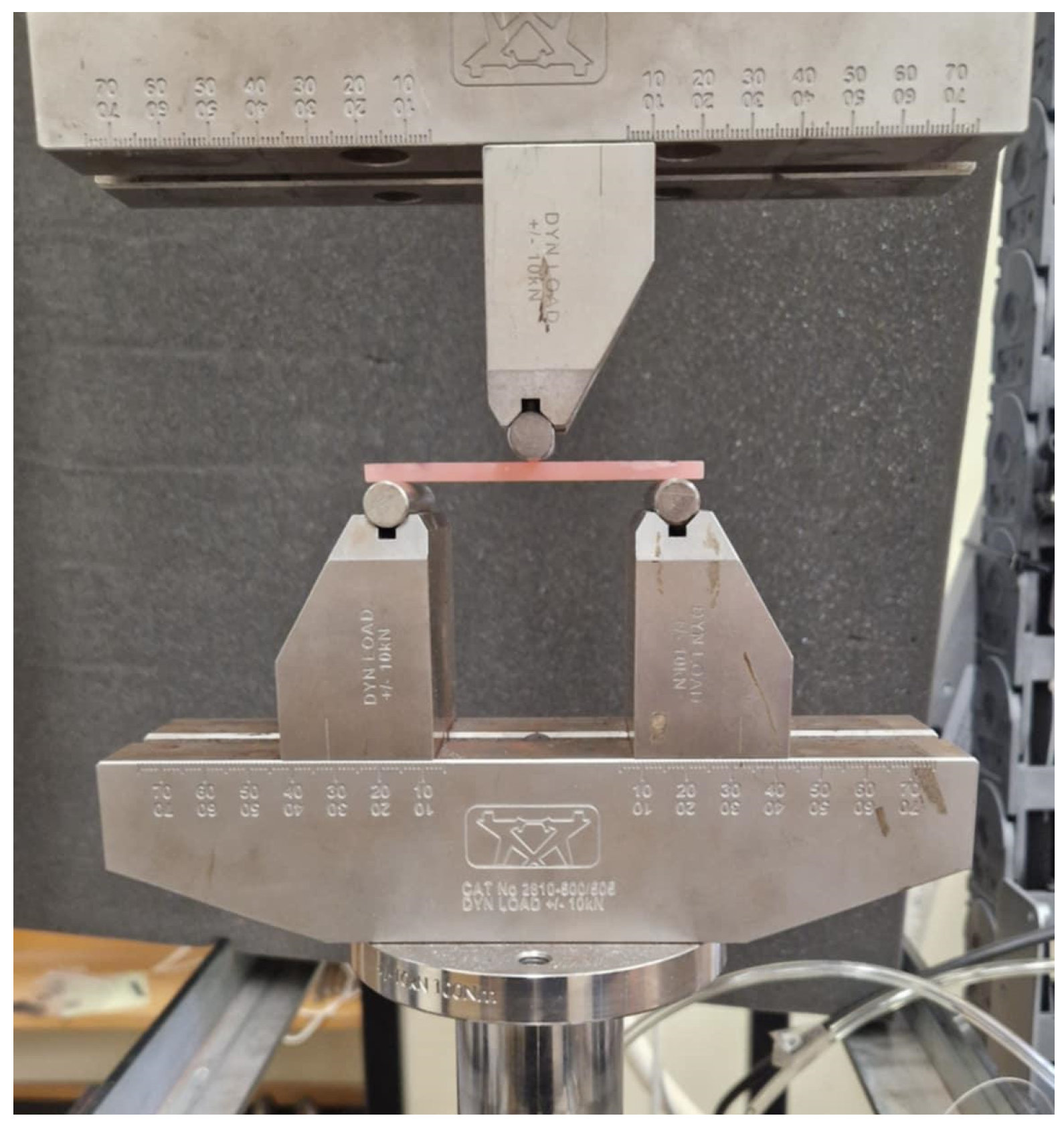
- bending strength (Young’s modulus calculated),
- -
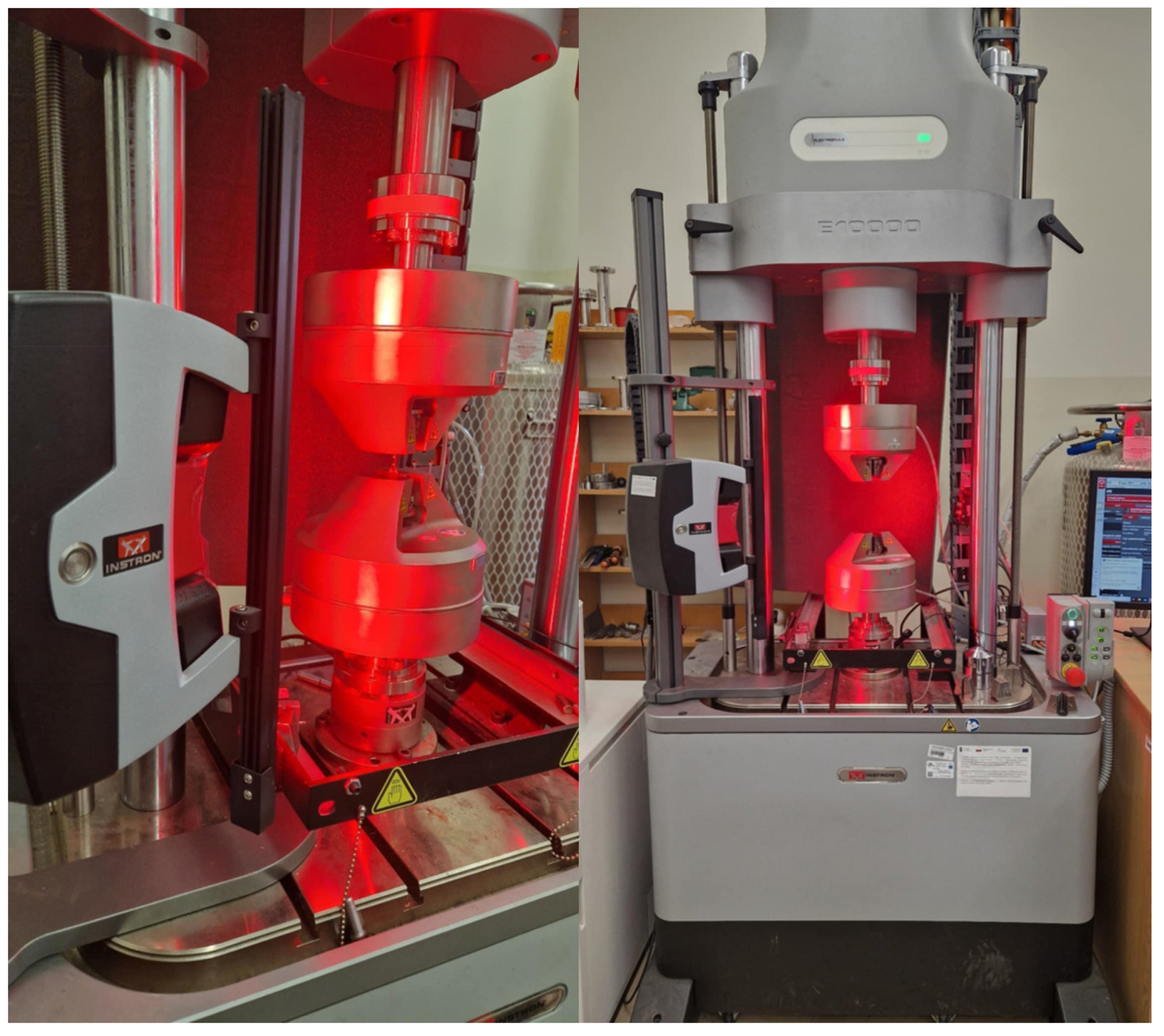
- tensile strength (Young’s modulus calculated),
- -
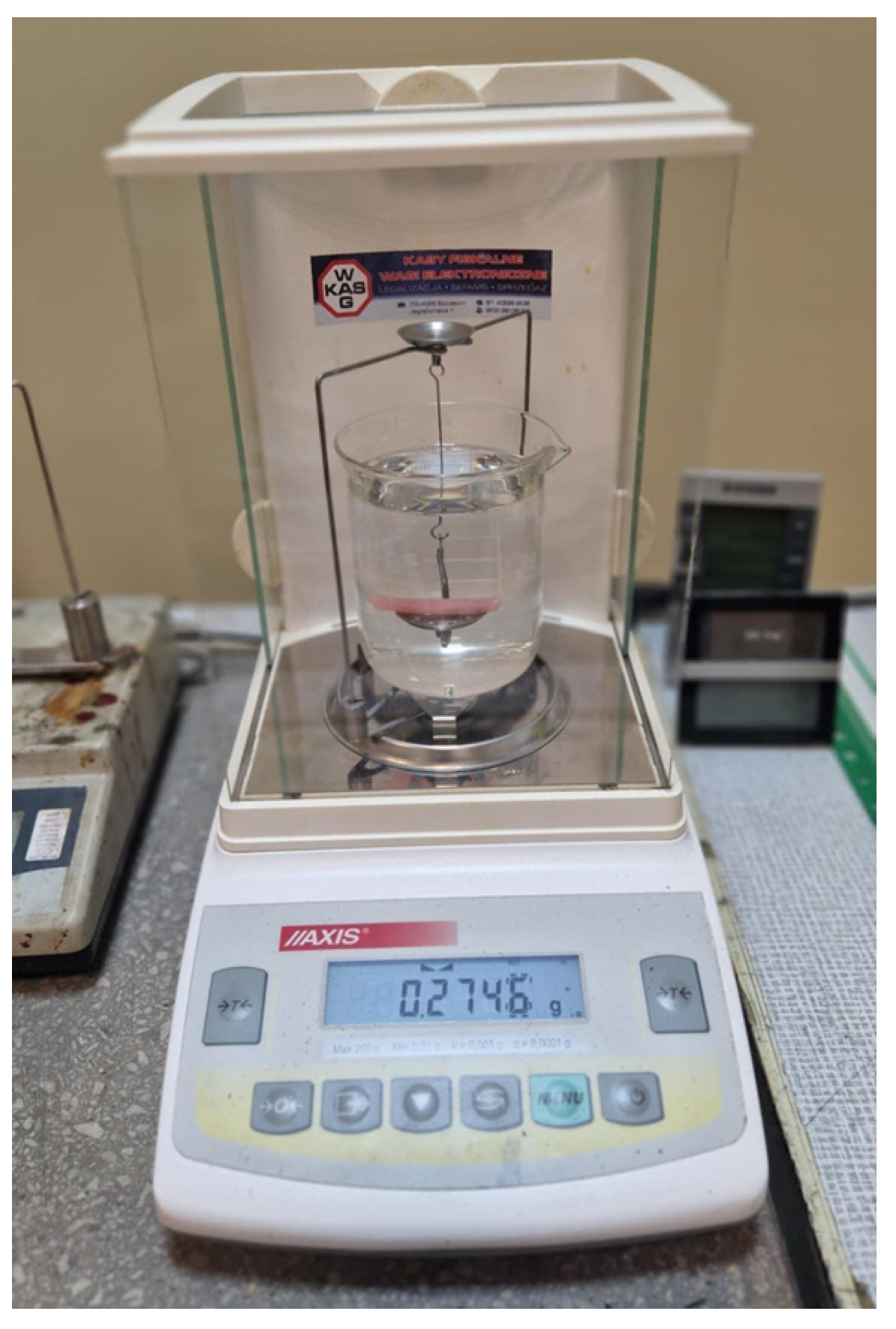
- density,
- -
- hardness,
- -
- impact strength.
2.1. Evaluation of Flexural Strength
2.2. Tensile Strength Assessment
2.3. Density Assessment
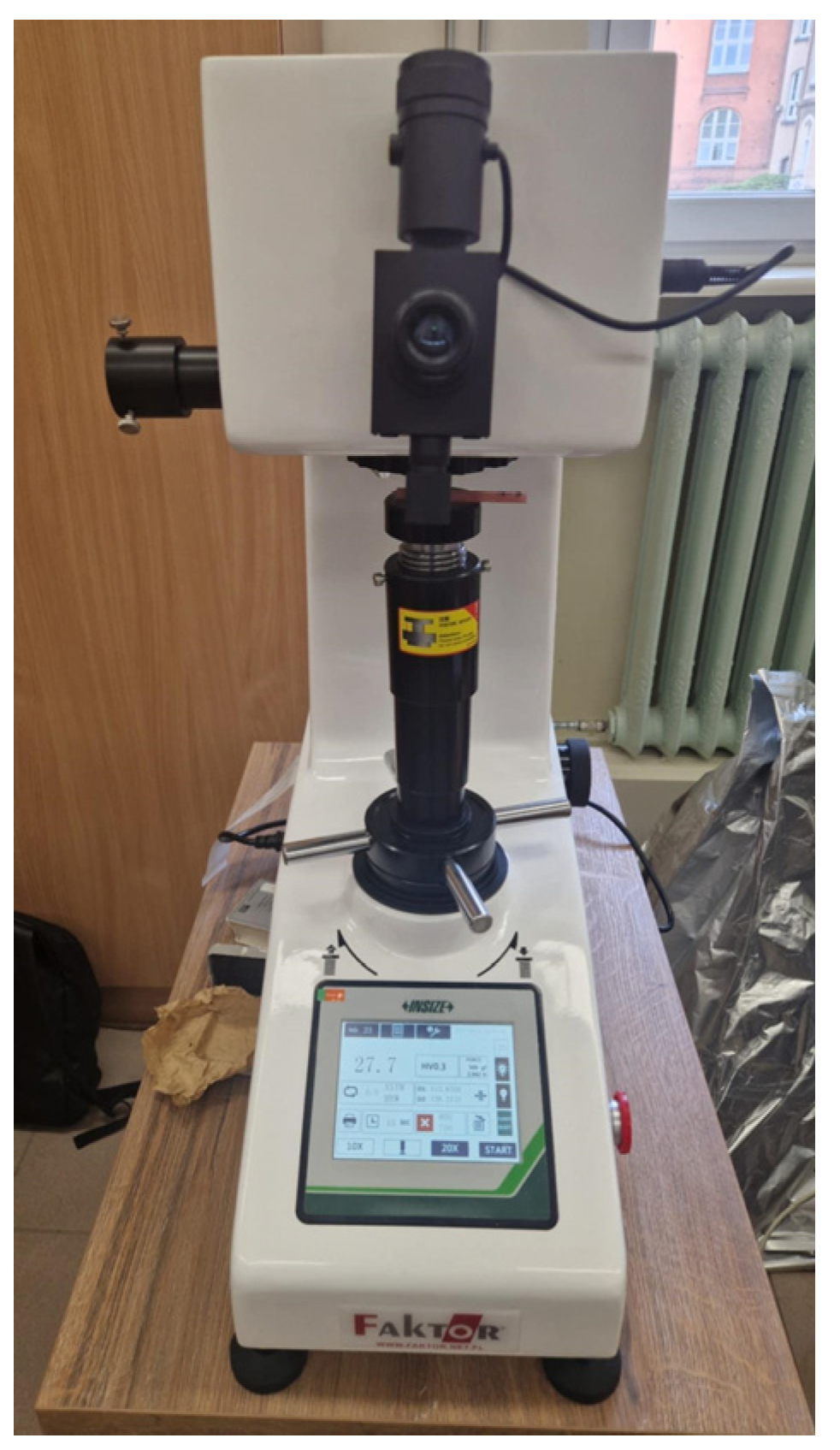
2.4. Hardness Assessment
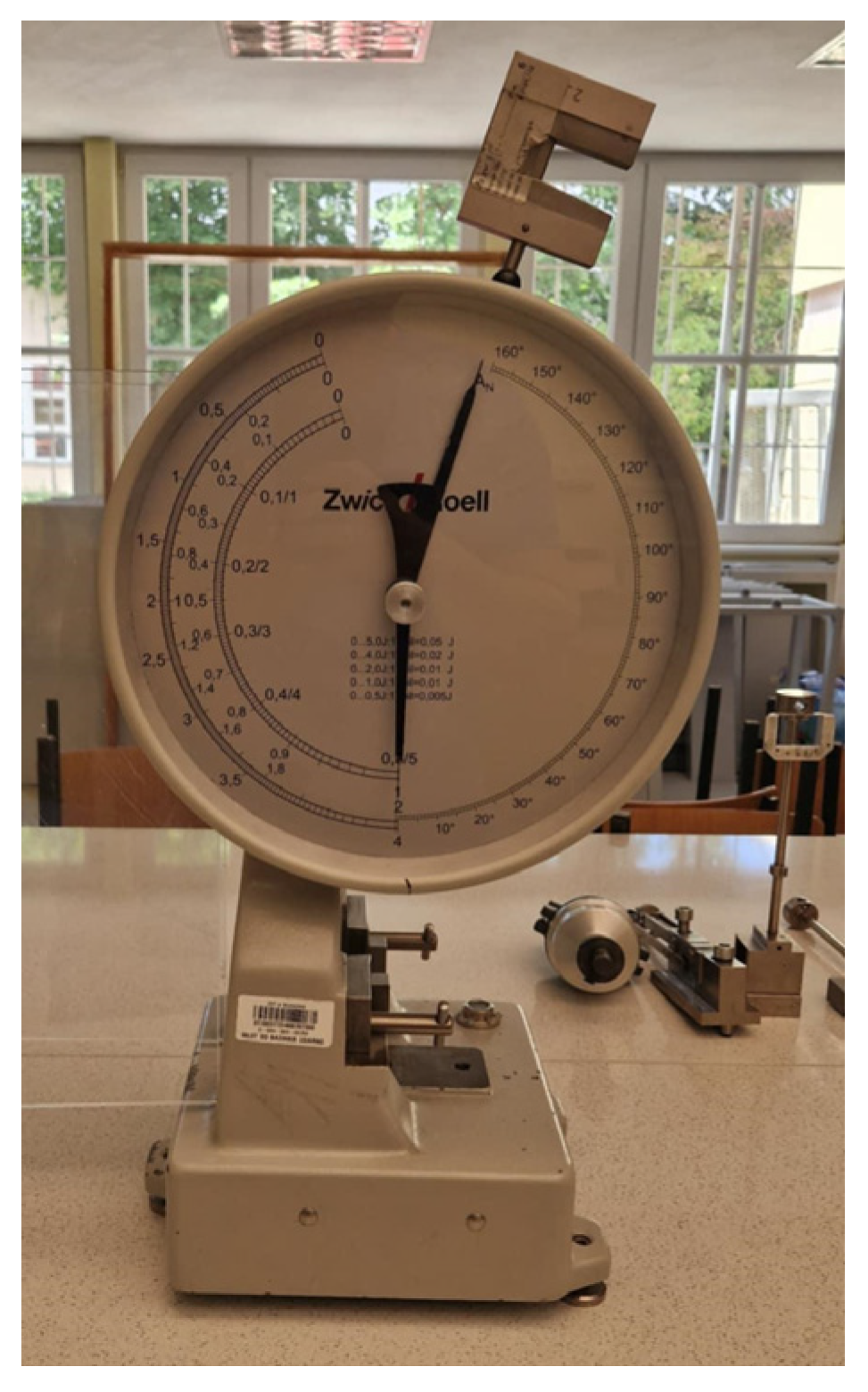
2.5. Impact Strength Assessment
- -
- W—work at fracture of the sample [J],
- -
- b, h—width and thickness of the sample [mm].
2.6. Statistical Analysis
3. Results
3.1. Evaluation of Flexural Strength
- -
- Group 1 (3D): 107 ± 5.69 MPa;
- -
- Group 2 (hot-cured): 96.1 ± 6.94 MPa;
- -
- Group 3 (cold-cured): 78.2 ± 6.03 MPa.
3.2. Tensile Strength Assessment
- -
- Group 1 (3D): 68.0 ± 0.43 MPa;
- -
- Group 2 (hot-cured): 64.1 ± 4.50 MPa;
- -
- Group 3 (cold-cured): 47.6 ± 0.41 MPa.
3.3. Density Assessment
- -
- Group 1 (3D): 1.280 g/cm3;
- -
- Group 2 (hot-cured): 1.185 g/cm3;
- -
- Group 3 (cold-cured): 1.177 g/cm3.
3.4. Hardness Assessment
- -
- Group 1 (3D): 21.39 ± 0.68 VHN;
- -
- Group 2 (hot-cured): 25.39 ± 1.81 VHN;
- -
- Group 3 (cold-cured): 17.66 ± 1.28 VHN.
3.5. Impact Strength Assessment
- -
- Group 1 (3D): 11.4 ± 2.98 kJ/m2;
- -
- Group 2 (hot): 8.7 ± 0.39 kJ/m2;
- -
- Group 3 (cold): 9.2 ± 1.49 kJ/m2.

| Sample Number | Group 1 (3D) | Group 2 (Hot-Cured) | Group 3 (Cold-Cured) | |||||||||
|---|---|---|---|---|---|---|---|---|---|---|---|---|
| Tensile Energy [J] | Tensile Stress at Maximum Force [MPa] | Relative Elongation at Maximum Stress [%] | Module (Segment 0.05–0.25%) [GPa] | Tensile Energy [J] | Tensile Stress at Maximum Force [MPa] | Relative Elongation at Maximum Stress [%] | Module (Segment 0.05–0.25%) [GPa] | Tensile Energy [J] | Tensile Stress at Maximum Force [MPa] | Relative Elongation at Maximum Stress [%] | Module (Segment 0.05–0.25%) [GPa] | |
| 1. | 0.117 | 68.7 | 3.19 | 3.64 | 0.128 | 66.8 | 3.65 | 3.12 | 0.0705 | 48.1 | 3.85 | 2.14 |
| 2. | 0.126 | 67.9 | 3.13 | 3.72 | 0.0811 | 59.0 | 2.67 | 3.42 | 0.0606 | 47.7 | 3.83 | 2.33 |
| 3. | 0.162 | 67.8 | 3.35 | 3.56 | 0.108 | 66.5 | 3.46 | 3.24 | 0.0717 | 47.6 | 3.98 | 2.29 |
| 4. | 0.186 | 67.5 | 3.64 | 3.58 | 0.131 | 68.8 | 4.08 | 3.16 | 0.0907 | 47.0 | 3.84 | 2.49 |
| 5. | 0.142 | 68.2 | 3.00 | 3.55 | 0.0807 | 59.6 | 2.64 | 3.33 | 0.127 | 47.3 | 3.80 | 2.59 |
| Mean | 0.147 | 68.0 | 3.26 | 3.61 | 0.106 | 64.1 | 3.30 | 3.25 | 0.0841 | 47.6 | 3.86 | 2.37 |
| Median | 0.142 | 67.9 | 3.19 | 3.58 | 0.108 | 66.5 | 3.46 | 3.24 | 0.0717 | 47.6 | 3.84 | 2.33 |
| Standard deviation | 0.03 | 0.43 | 0.25 | 0.07 | 0.02 | 4.50 | 0.63 | 0.12 | 0.03 | 0.41 | 0.07 | 0.18 |
| Coefficient of variation [%] | 19.0 | 0.6 | 7.5 | 2.0 | 23.1 | 7.0 | 19.2 | 3.7 | 31.4 | 0.9 | 1.8 | 7.4 |
| Sample Number | Group 1 (3D) | Group 2 (Hot-Cured) | Group 3 (Cold-Cured) | ||||||
|---|---|---|---|---|---|---|---|---|---|
| mp [g] | mw [g] | d [g/cm3] | mp [g] | mw [g] | d [g/cm3] | mp [g] | mw [g] | d [g/cm3] | |
| 1. | 1.75 | 0.387 | 1.281 | 1.749 | 0.276 | 1.185 | 1.702 | 0.259 | 1.177 |
| 2. | 1.629 | 0.358 | 1.279 | 1.773 | 0.281 | 1.186 | 1.393 | 0.212 | 1.177 |
| 3. | 1.593 | 0.352 | 1.281 | 1.69 | 0.266 | 1.184 | 1.69 | 0.256 | 1.176 |
| 4. | 1.896 | 0.418 | 1.280 | 1.538 | 0.243 | 1.185 | 1.669 | 0.254 | 1.177 |
| 5. | 1.801 | 0.397 | 1.280 | 1.743 | 0.275 | 1.185 | 1.54 | 0.235 | 1.178 |
| 6. | 1.796 | 0.395 | 1.279 | 1.726 | 0.271 | 1.184 | 1.766 | 0.269 | 1.177 |
| 7. | 1.777 | 0.392 | 1.280 | 1.569 | 0.248 | 1.185 | 1.651 | 0.252 | 1.178 |
| 8. | 1.667 | 0.367 | 1.280 | 1.747 | 0.276 | 1.185 | 1.54 | 0.234 | 1.177 |
| 9. | 1.842 | 0.406 | 1.280 | 1.631 | 0.257 | 1.185 | 1.566 | 0.238 | 1.177 |
| 10. | 1.964 | 0.433 | 1.280 | 1.604 | 0.253 | 1.185 | 1.512 | 0.23 | 1.177 |
| Sample Number | Group 1 (3D) | Group 2 (Hot-Cured) | Group 3 (Cold-Cured) | ||||||
|---|---|---|---|---|---|---|---|---|---|
| Measurement 1 | Measurement 2 | Mean | Measurement 1 | Measurement 2 | Mean | Measurement 1 | Measurement 2 | Mean | |
| 1. | 20.5 | 21.3 | 20.9 | 27.2 | 25.8 | 26.5 | 16.3 | 17 | 16.65 |
| 2. | 21.4 | 23.1 | 22.25 | 28.1 | 27.7 | 27.9 | 17.8 | 18.4 | 18.1 |
| 3. | 22.4 | 21.2 | 21.8 | 22.4 | 23.1 | 22.75 | 20.4 | 19.8 | 20.1 |
| 4. | 20.2 | 21.8 | 21 | 26.5 | 23 | 24.75 | 19.1 | 17.8 | 18.45 |
| 5. | 21.2 | 20 | 20.6 | 24.8 | 23.2 | 24 | 16.5 | 17.9 | 17.2 |
| 6. | 21 | 20.4 | 20.7 | 26.3 | 24.7 | 25.5 | 18.1 | 20.2 | 19.15 |
| 7. | 21.6 | 19.8 | 20.7 | 22.9 | 22.5 | 22.7 | 17.4 | 16.9 | 17.15 |
| 8. | 21.3 | 23.1 | 22.2 | 27.1 | 26.1 | 26.6 | 18.4 | 16.2 | 17.3 |
| 9. | 21.3 | 22.9 | 22.1 | 26.7 | 25 | 25.85 | 15.6 | 16.6 | 16.1 |
| 10. | 22 | 21.3 | 21.65 | 25.7 | 29 | 27.35 | 15.7 | 17.1 | 16.4 |
| Sample Number | Group 1 (3D) | Group 2 (Hot-Cured) | Group 3 (Cold-Cured) | |||||||||
|---|---|---|---|---|---|---|---|---|---|---|---|---|
| b | h | W | Impact Strength [kJ/m2] | b | h | W | Impact Strength [kJ/m2] | b | h | W | Impact Strength [kJ/m2] | |
| 1. | Width [mm] | Thickness [mm] | Work [J] | Width [mm] | Thickness [mm] | Work [J] | Width [mm] | Thickness [mm] | Work [J] | |||
| 2. | 9.4 | 3.97 | 0.49 | 13.13039 | 8.83 | 4.33 | 0.34 | 8.892632 | 9.1 | 4.1 | 0.37 | 9.9 |
| 3. | 9.39 | 3.97 | 0.53 | 14.21739 | 8.76 | 3.86 | 0.29 | 8.576431 | 9.27 | 4.11 | 0.29 | 7.6 |
| 4. | 9.4 | 4.01 | 0.39 | 10.34647 | 8.75 | 4.22 | 0.34 | 9.207854 | 9.2 | 3.7 | 0.38 | 11.2 |
| 5. | 9.38 | 3.96 | 0.29 | 7.807284 | 8.92 | 4.25 | 0.31 | 8.177262 | 9.37 | 3.89 | 0.29 | 8.0 |
| Mean | 9.41 | 3.99 | 0.29 | 7.723879 | 8.6 | 4.1 | 0.3 | 8.508225 | 9.36 | 4.07 | 0.32 | 8.4 |
| Median | 11.4 | 8.7 | 9.2 | |||||||||
| Standard deviation | 2.98 | 0.39 | 1.49 | |||||||||
| Coefficient of variation [%] | 26.2 | 4.5 | 16.3 | |||||||||
3.6. Statistical Analysis
4. Discussion
4.1. Flexural Strength
4.2. Tensile Strength
4.3. Density
4.4. Hardness
4.5. Impact Strength
4.6. Clinical Significance and Limitations of the Study
5. Conclusions
Author Contributions
Funding
Institutional Review Board Statement
Informed Consent Statement
Data Availability Statement
Conflicts of Interest
Abbreviations
| 3D | Three-Dimensional |
| CI | Confidence Interval |
| DLP | Digital Light Processing |
| ISO | International Organization for Standardization |
| MD | Mean Deviation |
| PMMA | Polymethyl Methacrylate |
| SD | Standard Deviation |
| SLA | Stereolithography |
| SLS | Selective Laser Sintering |
| STL | Stereolitography |
References
- Frazer, R.Q.; Byron, R.T.; Osborne, P.B.; West, K.P. PMMA: An essential material in medicine and dentistry. J. Long-Term Eff. Med. Implant. 2005, 15, 629–639. [Google Scholar] [CrossRef] [PubMed]
- Mayall, R.E.; Selecman, A.M.; Morrow, B.R.; Gullard, A.; Versluis, A. Mechanical properties of conventional versus microwave-polymerized denture base acrylic resins. J. Prosthet. Dent. 2024, 131, 1250.e1–1250.e8. [Google Scholar] [CrossRef]
- Shifman, A. Clinical applications of visible light-cured resin in maxillofacial prosthetics. Part I: Denture base and reline material. J. Prosthet. Dent. 1990, 64, 578–582. [Google Scholar] [CrossRef]
- Souza, L.F.B.; Pires, T.S.; Kist, P.P.; Valandro, L.F.; Moraes, R.R.; Özcan, M.; Pereira, G.K.R. 3D printed, subtractive, and conventional acrylic resins: Evaluation of monotonic versus fatigue behavior and surface characteristics. J. Mech. Behav. Biomed. Mater. 2024, 155, 106556. [Google Scholar] [CrossRef]
- Chung, R.W.; Clark, R.K.; Darvell, B.W. The bonding of cold-cured acrylic resin to acrylic denture teeth. Aust. Dent. J. 1995, 40, 241–245. [Google Scholar] [CrossRef]
- Knobloch, L.A.; Kerby, R.E.; Pulido, T.; Johnston, W.M. Relative fracture toughness of bis-acryl interim resin materials. J. Prosthet. Dent. 2011, 106, 118–125. [Google Scholar] [CrossRef] [PubMed]
- Hamouda, I.M.; Beyari, M.M. Addition of glass fibers and titanium dioxide nanoparticles to the acrylic resin denture base material: Comparative study with the conventional and high impact types. Oral Health Dent. Manag. 2014, 13, 107–112. [Google Scholar] [PubMed]
- Natarajan, P.; Kumar, S.M.; Natarajan, S.; Sridharan, D.K.S.; Narayana Kalkura, D.S. Nano-particle coated or impregnated acrylic resins in dental applications: A systematic review of in Vivo Evidence on mechanical properties, biocompatibility and clinical performance. J. Oral Biol. Craniofac. Res. 2025, 15, 1190–1199. [Google Scholar] [CrossRef]
- Majeed, H.F.; Hamad, T.I.; Bairam, L.R. Enhancing 3D-printed denture base resins: A review of material innovations. Sci. Prog. 2024, 107, 368504241263484. [Google Scholar] [CrossRef]
- Lang, R.; Kolbeck, C.; Bergmann, R.; Handel, G.; Rosentritt, M. Bond of acrylic teeth to different denture base resins after various surface-conditioning methods. Clin. Oral Investig. 2012, 16, 319–323. [Google Scholar] [CrossRef]
- Asal, S.A.; Al-AlShiekh, H.M. Heat-cured acrylic resin versus light-activated resin: A patient, professional and technician-based evaluation of mandibular implant-supported overdentures. Niger. J. Clin. Pract. 2017, 20, 1596–1603. [Google Scholar] [CrossRef]
- Kostoulas, I.; Kavoura, V.T.; Frangou, M.J.; Polyzois, G.L. Fracture force, deflection, and toughness of acrylic denture repairs involving glass fiber reinforcement. J. Prosthodont. 2008, 17, 257–261. [Google Scholar] [CrossRef] [PubMed]
- Sasany, R.; Jamjoom, F.Z.; Yilmaz, B. Mechanical and optical properties of additively manufactured denture base resin in different colors modified with antimicrobial substances: An in vitro study. J. Prosthet. Dent. 2025, 133, 890.e1–890.e8. [Google Scholar] [CrossRef] [PubMed]
- Raszewski, Z.; Nowakowska-Toporowska, A.; Nowakowska, D.; Więckiewicz, W. Update on Acrylic Resins Used in Dentistry. Mini Rev. Med. Chem. 2021, 21, 2130–2137. [Google Scholar] [CrossRef] [PubMed]
- Alghamdi, S.S.; John, S.; Choudhury, N.R.; Dutta, N.K. Additive Manufacturing of Polymer Materials: Progress, Promise and Challenges. Polymers 2021, 13, 753. [Google Scholar] [CrossRef] [PubMed]
- Boado-Cuartero, B.; Pérez-Álvarez, J.; Roibás-Millán, E. Material Characterization of High-Performance Polymers for Additive Manufacturing (AM) in Aerospace Mechanical Design. Aerospace 2024, 11, 748. [Google Scholar] [CrossRef]
- Chen, Y.; Wei, J. Application of 3D Printing Technology in Dentistry: A Review. Polymers 2025, 17, 886. [Google Scholar] [CrossRef]
- Heath, J.R.; Boru, T.K.; Grant, A.A. The stability of temporary prosthetic base materials II: Water sorption and its effects. J. Oral Rehabil. 1993, 20, 517–524. [Google Scholar] [CrossRef]
- Kobayashi, N.; Komiyama, O.; Kimoto, S.; Kawara, M. Reduction of shrinkage on heat-activated acrylic denture base resin obtaining gradual cooling after processing. J. Oral Rehabil. 2004, 31, 710–716. [Google Scholar] [CrossRef]
- Tomar, P.; Gope, P.; Chauhan, S. Enhancement of PMMA base Denture Material: A Review. Int. J. Mater. Manuf. Sustain. Technol. 2023, 2, 34–40. [Google Scholar] [CrossRef]
- Alhotan, A.; Yates, J.; Zidan, S.; Haider, J.; Silikas, N. Flexural Strength and Hardness of Filler-Reinforced PMMA Targeted for Denture Base Application. Materials 2021, 14, 2659. [Google Scholar] [CrossRef]
- Casucci, A.; Verniani, G.; Barbieri, A.L.; Ricci, N.M.; Ferrari Cagidiaco, E.; Ferrari, M. Flexural Strength Analysis of Different Complete Denture Resin-Based Materials Obtained by Conventional and Digital Manufacturing. Materials 2023, 16, 6559. [Google Scholar] [CrossRef]
- Gad, M.M.; Fouda, S.M.; Al-Harbi, F.A.; Näpänkangas, R.; Raustia, A. PMMA denture base material enhancement: A review of fiber, filler, and nanofiller addition. Int. J. Nanomed. 2017, 12, 3801–3812. [Google Scholar] [CrossRef]
- Choksi, R.H.; Mody, P.V. Flexural properties and impact strength of denture base resins reinforced with micronized glass flakes. J. Indian Prosthodont. Soc. 2016, 16, 264–270. [Google Scholar] [CrossRef] [PubMed]
- Fouda, S.; Ji, W.; Gad, M.M.; AlGhamdi, M.A.; Rohr, N. Flexural Strength and Surface Properties of 3D-Printed Denture Base Resins-Effect of Build Angle, Layer Thickness and Aging. Materials 2025, 18, 913. [Google Scholar] [CrossRef] [PubMed]
- Alshali, S.; Basunbul, G.; Basunbul, A.; Giordano, R., II. Comparison of the flexural strength of printed and milled denture base materials. BMC Oral Health 2024, 24, 929. [Google Scholar] [CrossRef] [PubMed]
- Öztürk, Z.; Tosun, B. Comparison of 3D printed and conventional denture base materials in terms of durability and performance characteristics. Sci. Rep. 2025, 15, 18234. [Google Scholar] [CrossRef]
- Kerby, R.E.; Knobloch, L.A.; Sharples, S.; Peregrina, A. Mechanical properties of urethane and bis-acryl interim resin materials. J. Prosthet. Dent. 2013, 110, 21–28. [Google Scholar] [CrossRef]
- Gegauff, A.G.; Wilkerson, J.J. Fracture toughness testing of visible light- and chemical-initiated provisional restoration resins. Int. J. Prosthodont. 1995, 8, 62–68. [Google Scholar]
- PN-ISO 37:2005; Rubber, Vulcanized or Thermoplastic—Determination of Tensile Stress-Strain Properties. Polish Committee for Standardization: Warsaw, Poland, 2005.
- ISO 1183-1:2025; Plastics—Methods for Determining the Density of Non-Cellular Plastics—Part 1. International Organization for Standardization, ISO: Geneva, Switzerland, 2025.
- ISO 179-1:2010; Plastics—Determination of Charpy Impact Properties—Part 1: Non-Instrumented Impact Test. International Organization for Standardization, ISO: Geneva, Switzerland, 2010.
- ISO 2854:1976; Statistical Interpretation of Data—Techniques of Estimation and Tests Relating to Means and Variances. International Organization for Standardization, ISO: Geneva, Switzerland, 1976.
- Altarazi, A.; Haider, J.; Alhotan, A.; Silikas, N.; Devlin, H. Impact of Artificial Aging on the Physical and Mechanical Characteristics of Denture Base Materials Fabricated via 3D Printing. Int. J. Biomater. 2024, 2024, 8060363. [Google Scholar] [CrossRef]
- Alqutaibi, A.Y.; Baik, A.; Almuzaini, S.A.; Farghal, A.E.; Alnazzawi, A.A.; Borzangy, S.; Aboalrejal, A.N.; AbdElaziz, M.H.; Mahmoud, I.I.; Zafar, M.S. Polymeric Denture Base Materials: A Review. Polymers 2023, 15, 3258. [Google Scholar] [CrossRef]
- Chander, N.G. Polymethyl metha acrylate denture base: An overview. J. Indian Prosthodont. Soc. 2018, 18, 87–88. [Google Scholar] [CrossRef]
- Singh, B.; Jain, S.; Bhasin, N.; Kaur, J.; Borse, P.; Longkumer, P. Comparative Evaluation of Surface Roughness, Wettability, and Hardness of Conventional, Heat-Polymerized, Computer-Aided Designed and Milled, and Three-Dimensionally Printed Polymethyl Methacrylate Denture Base Resins: An In Vitro Study. Cureus 2025, 17, e85008. [Google Scholar] [CrossRef]
- Zafar, M.S. Prosthodontic Applications of Polymethyl Methacrylate (PMMA): An Update. Polymers 2020, 12, 2299. [Google Scholar] [CrossRef] [PubMed]
- Heidari, B.; Firouz, F.; Izadi, A.; Ahmadvand, S.; Radan, P. Flexural Strength of Cold and Heat Cure Acrylic Resins Reinforced with Different Materials. J. Dent. 2015, 12, 316–323. [Google Scholar]
- Alqutaibi, A.Y.; Aljohani, R.; Almuzaini, S.; Alghauli, M.A. Physical-mechanical properties and accuracy of additively manufactured resin denture bases: Impact of printing orientation. J. Prosthodont. Res. 2025, 69, 461–471. [Google Scholar] [CrossRef]
- Dzhondrova, I.; Liondev, I.; Taneva, I.; Bogdanov, T.; Uzunov, T.; Kirov, D. Effect of Printing Orientation and Post-Curing Time on the Mechanical Properties of 3D-Printed Denture Base Resin. J. Funct. Biomater. 2025, 17, 1. [Google Scholar] [CrossRef] [PubMed]
- Jamayet, N.; Mousa, M.; Lynch, E.; Husein, A. Biomechanical stress in removable complete dental prostheses: A narrative review of finite element studies. J. Int. Oral Health 2020, 12, 413. [Google Scholar] [CrossRef]
- Deste, G.; Durkan, R.; Oyar, P. The Effect of Autoclave Polymerization on the Tensile Strength of Various Denture Base Materials. Cumhur. Dent. J. 2020, 23, 364–370. [Google Scholar] [CrossRef]
- Darbar, U.R.; Huggett, R.; Harrison, A. Denture fracture--a survey. Br. Dent. J. 1994, 176, 342–345. [Google Scholar] [CrossRef]
- Al-Ameri, A.; Alothman, Y.; Alsadon, O.; BHD. An In-Vitro Evaluation of Strength, Hardness, and Color Stability of Heat-Polymerized and 3D-Printed Denture Base Polymers After Aging. Polymers 2025, 17, 288. [Google Scholar] [CrossRef]
- Paranna, S.; Thosar, N.; Kanitkar, A. Effect of Build Orientation on Mechanical and Physical Properties of Additively Manufactured Resins Using Digital Light Processing Technology in Dentistry: A Systematic Review. J. Contemp. Dent. Pract. 2024, 25, 891–903. [Google Scholar] [PubMed]
- Imre, M.; Șaramet, V.; Ciocan, L.T.; Vasilescu, V.G.; Biru, E.I.; Ghitman, J.; Pantea, M.; Ripszky, A.; Celebidache, A.L.; Iovu, H. Influence of the Processing Method on the Nano-Mechanical Properties and Porosity of Dental Acrylic Resins Fabricated by Heat-Curing, 3D Printing and Milling Techniques. Dent. J. 2025, 13, 311. [Google Scholar] [CrossRef]
- Vallittu, P.K.; Ruyter, I.E.; Buykuilmaz, S. Effect of polymerization temperature and time on the residual monomer content of denture base polymers. Eur. J. Oral Sci. 1998, 106, 588–593. [Google Scholar] [CrossRef]
- Raszewski, Z. Influence of polymerization method on the cytotoxicity of three different denture base acrylic resins polymerized in different methods. Saudi J. Biol. Sci. 2020, 27, 2612–2616. [Google Scholar] [CrossRef]
- Kostić, M.; Igić, M.; Gligorijević, N.; Nikolić, V.; Stošić, N.; Nikolić, L. The Use of Acrylate Polymers in Dentistry. Polymers 2022, 14, 4511. [Google Scholar] [CrossRef]
- Oliveira, R.; Nogueira, F.; Mattos, B. Porosity, residual monomer and water sorption of conventional heat-cured, microwave-cured and cross-linked acrylic resins. Clin. Lab. Res. Dent. 2014, 20, 137–144. [Google Scholar] [CrossRef][Green Version]
- Lourinho, C.; Salgado, H.; Correia, A.; Fonseca, P. Mechanical Properties of Polymethyl Methacrylate as Denture Base Material: Heat-Polymerized vs. 3D-Printed—Systematic Review and Meta-Analysis of In Vitro Studies. Biomedicines 2022, 10, 2565. [Google Scholar] [CrossRef] [PubMed]
- Azab, A.; Abdelhady, W.A.; Elwakeel, E.; Ashraf, M.; Wally, R.; Soliman, A.; Mohamed, M.A.; Abozaid, D. Systematic review and meta analysis of mechanical properties of 3D printed denture bases compared to milled and conventional materials. Sci. Rep. 2025, 15, 29207. [Google Scholar] [CrossRef]
- Vuksic, J.; Pilipovic, A.; Pericic, T.P.; Kranjcic, J. The Influence of Contemporary Denture Base Fabrication Methods on Residual Monomer Content, Flexural Strength and Microhardness. Materials 2024, 17, 1052. [Google Scholar] [CrossRef]
- Al-Dwairi, Z.N.; Al Haj Ebrahim, A.A.; Baba, N.Z. A Comparison of the Surface and Mechanical Properties of 3D Printable Denture-Base Resin Material and Conventional Polymethylmethacrylate (PMMA). J. Prosthodont. 2023, 32, 40–48. [Google Scholar] [CrossRef]
- Dimitrova, M.; Corsalini, M.; Kazakova, R.; Vlahova, A.; Chuchulska, B.; Barile, G.; Capodiferro, S.; Kazakov, S. Comparison between Conventional PMMA and 3D Printed Resins for Denture Bases: A Narrative Review. J. Compos. Sci. 2022, 6, 87. [Google Scholar] [CrossRef]
- Elzahar, H.B.; El-Okaily, M.S.; Khedr, M.H.; Amgad Kaddah, M.; El-Shahawy, A.A.G. Novel Cold Cure Acrylic Denture Base with Recycled Zirconia Nano-Fillers That Were Functionalized by HEMA Agent Incorporation: Using the Sprinkle Approach. Int. J. Nanomed. 2022, 17, 4639–4658. [Google Scholar] [CrossRef] [PubMed]
- Díez-Pascual, A.M. PMMA-Based Nanocomposites for Odontology Applications: A State-of-the-Art. Int. J. Mol. Sci. 2022, 23, 10288. [Google Scholar] [CrossRef] [PubMed]
- Alifui-Segbaya, F.; Bowman, J.; White, A.R.; George, R.; Fidan, I. Characterization of the Double Bond Conversion of Acrylic Resins for 3D Printing of Dental Prostheses. Compend. Contin. Educ. Dent. 2019, 40, e7–e11. [Google Scholar]
- Hassanpour, M.; Narongdej, P.; Alterman, N.; Moghtadernejad, S.; Barjasteh, E. Effects of Post-Processing Parameters on 3D-Printed Dental Appliances: A Review. Polymers 2024, 16, 2795. [Google Scholar] [CrossRef]
- Sulaya, K.; Swapna, B.V.; Nayak, V.M. The science of printing and polishing 3D printed dentures. F1000Research 2025, 13, 1266. [Google Scholar] [CrossRef]
- Chhabra, M.; Nanditha Kumar, M.; RaghavendraSwamy, K.N.; Thippeswamy, H.M. Flexural strength and impact strength of heat-cured acrylic and 3D printed denture base resins- A comparative in vitro study. J. Oral Biol. Craniofac. Res. 2022, 12, 1–3. [Google Scholar] [CrossRef] [PubMed]
- Kristiana, D.; Parnaadji, R.; Adena, A.S.; Wulan, H.R. Impact strength of heat-cured acrylic resin after immersion in tobacco leaf (Nicotiana tabacum L.) effervescent tablets: An experimental study. J. Int. Oral Health 2024, 16, 110–116. [Google Scholar] [CrossRef]
- Ajaj-Alkordy, N.M.; Alsaadi, M.H. Elastic modulus and flexural strength comparisons of high-impact and traditional denture base acrylic resins. Saudi Dent. J. 2014, 26, 15–18. [Google Scholar] [CrossRef]
- Gad, M.M.; Fouda, S.M.; Abualsaud, R.; Alshahrani, F.A.; Al-Thobity, A.M.; Khan, S.Q.; Akhtar, S.; Ateeq, I.S.; Helal, M.A.; Al-Harbi, F.A. Strength and Surface Properties of a 3D-Printed Denture Base Polymer. J. Prosthodont. 2022, 31, 412–418. [Google Scholar] [CrossRef]
- Maroszek, M.; Hager, I.; Mróz, K.; Sitarz, M.; Hebda, M. Anisotropy of Mechanical Properties of 3D-Printed Materials—Influence of Application Time of Subsequent Layers. Materials 2025, 18, 3845. [Google Scholar] [CrossRef] [PubMed]
- Lee, J.; Belles, D.; Gonzalez, M.; Kiat-Amnuay, S.; Dugarte, A.; Ontiveros, J. Impact strength of 3D printed and conventional heat-cured and cold-cured denture base acrylics. Int. J. Prosthodont. 2022, 35, 240–244. [Google Scholar] [CrossRef] [PubMed]
- Nisar, S.; Moeen, F.; Hasan, U. Effect of Varying Curing Regimes and Powder-liquid Ratios on the Flexural Strength and Surface Porosities of Heat Cure Acrylic: An In-vitro Experiment. Int. J. Dent. Sci. Res. 2015, 3, 64–71. [Google Scholar]
- Singh, S.; Palaskar, J.N.; Mittal, S. Comparative evaluation of surface porosities in conventional heat polymerized acrylic resin cured by water bath and microwave energy with microwavable acrylic resin cured by microwave energy. Contemp. Clin. Dent. 2013, 4, 147–151. [Google Scholar] [CrossRef]
- Balos, S.; Milutinovic, M.; Potran, M.; Vuletić, J.; Puskar, T.; Pepelnjak, T. The Mechanical Properties of Moulded and Thermoformed Denture Resins. Stroj. Vestn. J. Mech. Eng. 2015, 61, 138–145. [Google Scholar] [CrossRef]
- Shawi, H.; Alhadi, H.; Qabbasa, R.; Nafda, A.; Abu Naama, A.; Ahmad, Z.A. Comparison of Fabrication Techniques for Removable Dentures Using Different Acrylic Resins: A Case Report. AlQalam J. Med. Appl. Sci. 2025, 8, 62–70. [Google Scholar] [CrossRef]
- Zandinejad, A.; Floriani, F.; Lin, W.S.; Naimi-Akbar, A. Clinical outcomes of milled, 3D-printed, and conventional complete dentures in edentulous patients: A systematic review and meta-analysis. J. Prosthodont. 2024, 33, 736–747. [Google Scholar] [CrossRef]
- Kasina, S.P.; Ajaz, T.; Attili, S.; Surapaneni, H.; Cherukuri, M.; Srinath, H.P. To evaluate and compare the porosities in the acrylic mandibular denture bases processed by two different polymerization techniques, using two different brands of commercially available denture base resins—An in vitro study. J. Int. Oral Health 2014, 6, 72–77. [Google Scholar]
- Rezaie, F.; Farshbaf, M.; Dahri, M.; Masjedi, M.; Maleki, R.; Amini, F.; Wirth, J.; Moharamzadeh, K.; Weber, F.E.; Tayebi, L. 3D Printing of Dental Prostheses: Current and Emerging Applications. J. Compos. Sci. 2023, 7, 80. [Google Scholar] [CrossRef]
- Jun, M.K.; Kim, J.W.; Ku, H.M. Three-Dimensional Printing in Dentistry: A Scoping Review of Clinical Applications, Advantages, and Current Limitations. Oral 2025, 5, 24. [Google Scholar] [CrossRef]
- Anadioti, E.; Odaimi, T.; O’Toole, S. Clinical Applications of 3D-Printed Polymers in Dentistry: A Scoping Review. Int. J. Prosthodont. 2024, 37, 209–219. [Google Scholar] [CrossRef] [PubMed]
- Abdelnabi, M.H.; Swelem, A.A. 3D-Printed Complete Dentures: A Review of Clinical and Patient-Based Outcomes. Cureus 2024, 16, e69698. [Google Scholar] [CrossRef]
- Ahmed Teama, E.M.; Amin Rashad, H.M.; Mohamed Shakal, E.A.E.; Hegazy, E.E. Clinical and microbial study of reinforced 3D-printed maxillary denture base resin: A randomized trial. BMC Oral Health 2025, 25, 1192. [Google Scholar] [CrossRef]
- Geiger, V.; Mayinger, F.; Hoffmann, M.; Reymus, M.; Stawarczyk, B. Fracture toughness, work of fracture, flexural strength and elastic modulus of 3D-printed denture base resins in two measurement environments after artificial aging. J. Mech. Behav. Biomed. Mater. 2024, 150, 106234. [Google Scholar] [CrossRef]
- Alotaibi, H.N. Patient Satisfaction with CAD/CAM 3D-Printed Complete Dentures: A Systematic Analysis of the Clinical Studies. Healthcare 2025, 13, 388. [Google Scholar] [CrossRef] [PubMed]




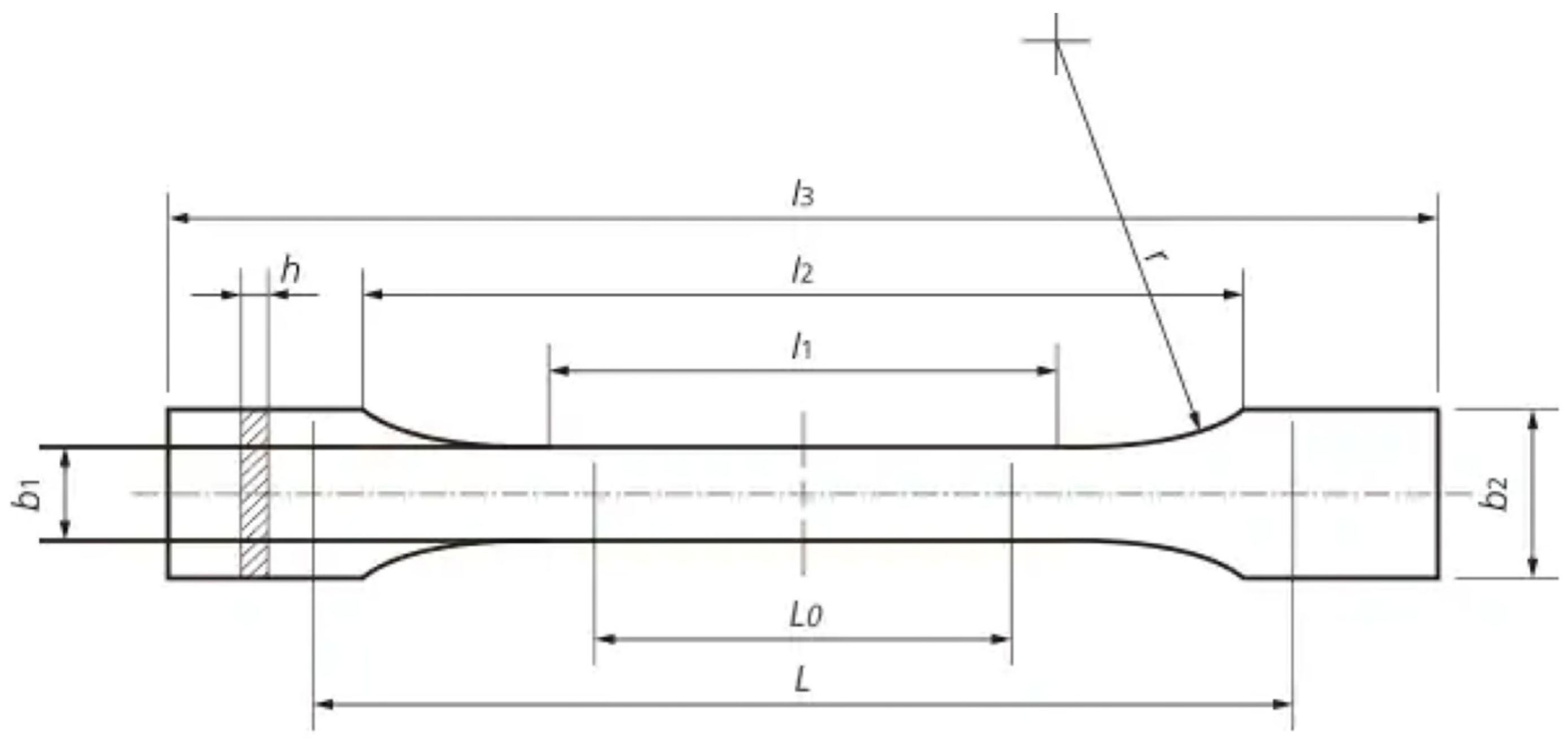
| Symbol | Explanation of the Symbol | Dimensions [mm] |
|---|---|---|
| l3 | Total length | 58 ± 0.5 |
| l2 | Distance between wide parallel parts | 32 ± 0.5 |
| l1 | The length of the part bounded by parallel lines | 19 ± 0.5 |
| r | Radius | ≥8 |
| b1 | Width of the narrow part | 4 ± 0.5 |
| b2 | Width at the ends | 10 ± 0.5 |
| h | Thickness | 2 |
| L0 | Measuring length | 15 ± 0.5 |
| L | The initial distance between the handles | 38 ± 0.5 |
| Sample Number | Group 1 (3D) | Group 2 (Hot-Cured) | Group 3 (Cold-Cured) | ||||||||||||
|---|---|---|---|---|---|---|---|---|---|---|---|---|---|---|---|
| Displacement at Maximum Force [mm] | Bending Deformation (Displacement) at Maximum Force [%] | Young’s Modulus Bending Stress 0.05–0.25%) [GPa] | Maximum Strength [N] | Bending Stress at Maximum Force [MPa] | Displacement at Maximum Force [mm] | Bending Deformation (Displacement) at Maximum Force [%] | Young’s Modulus Bending Stress 0.05–0.25%) [GPa] | Maximum Strength [N] | Bending Stress at Maximum Force [MPa] | Displacement at Maximum Force [mm] | Bending Deformation (Displacement) at Maximum Force [%] | Young’s Modulus Bending Stress 0.05–0.25%) [GPa] | Maximum Strength [N] | Bending Stress at Maximum Force [MPa] | |
| 1 | 5.71 | 3.30 | 3.77 | 163 | 107 | 5.39 | 3.20 | 3.13 | 128 | 87.0 | 8.10 | 4.30 | 2.78 | 109 | 86.1 |
| 2 | 5.96 | 3.49 | 3.64 | 168 | 109 | 6.50 | 4.02 | 3.16 | 167 | 100 | 9.42 | 5.56 | 2.64 | 133 | 82.8 |
| 3 | 5.14 | 2.97 | 3.64 | 150 | 98.6 | 6.54 | 4.21 | 3.24 | 185 | 105 | 6.28 | 3.38 | 2.76 | 99.3 | 76.1 |
| 4 | 5.51 | 3.18 | 3.70 | 159 | 105 | 5.68 | 3.51 | 3.31 | 157 | 94.9 | 6.18 | 3.50 | 2.54 | 103 | 71.8 |
| 5 | 6.46 | 3.73 | 3.72 | 173 | 114 | 5.71 | 3.45 | 3.21 | 150 | 93.2 | 5.75 | 3.40 | 2.71 | 116 | 74.2 |
| Mean | 5.76 | 3.33 | 3.70 | 162 | 107 | 5.96 | 3.68 | 3.21 | 158 | 96.1 | 7.15 | 4.03 | 2.69 | 112 | 78.2 |
| Median | 5.71 | 3.30 | 3.70 | 163 | 107 | 5.71 | 3.51 | 3.21 | 157 | 94.9 | 6.28 | 3.50 | 2.71 | 109 | 76.1 |
| Standard deviation | 0.50 | 0.29 | 0.06 | 8.98 | 5.69 | 0.53 | 0.42 | 0.07 | 21.01 | 6.94 | 1.56 | 0.94 | 0.10 | 13.21 | 6.03 |
| Coefficient of variation [%] | 8.65 | 8.77 | 1.56 | 5.53 | 5.34 | 8.81 | 11.48 | 2.16 | 13.34 | 7.22 | 21.81 | 23.26 | 3.59 | 11.78 | 7.71 |
| Flexural strength [MPa] | |||
| Group | Mean (MPa) | SD | 99% CI (mean) |
| 3D | 107 | 5.69 | 106.72 ± 12.52 |
| Hot-cured | 96.1 | 6.94 | 96.02 ± 14.27 |
| Cold-cured | 78.2 | 6.03 | 78.20 ± 12.43 |
| Tensile strength [MPa] | |||
| Group | Mean (MPa) | SD | 99% CI (mean) |
| 3D | 68.0 | 0.43 | 67.7–68.3 |
| Hot-cured | 64.1 | 4.50 | 59.8–68.4 |
| Cold-cured | 47.6 | 0.41 | 47.3–47.9 |
| Density [g/cm3] | |||
| Group | Mean (g/cm3) | ||
| 3D | 1.280 | ||
| Hot-cured | 1.185 | ||
| Cold-cured | 1.177 | ||
| Hardness [VHN] | |||
| Group | Mean (VHN) | SD | 99% CI (mean) |
| 3D | 21.39 | 0.68 | 20.1–22.7 |
| Hot-cured | 25.39 | 1.81 | 22.4–28.4 |
| Cold-cured | 17.66 | 1.28 | 15.0–20.3 |
| Impact strength [kJ/m2] | |||
| Group | Mean (kJ/m2) | SD | 99% CI (mean) |
| 3D | 11.4 | 2.98 | 5.2–17.6 |
| Hot-cured | 8.7 | 0.39 | 7.8–9.6 |
| Cold-cured | 9.2 | 1.49 | 5.9–12.5 |
Disclaimer/Publisher’s Note: The statements, opinions and data contained in all publications are solely those of the individual author(s) and contributor(s) and not of MDPI and/or the editor(s). MDPI and/or the editor(s) disclaim responsibility for any injury to people or property resulting from any ideas, methods, instructions or products referred to in the content. |
© 2026 by the authors. Licensee MDPI, Basel, Switzerland. This article is an open access article distributed under the terms and conditions of the Creative Commons Attribution (CC BY) license.
Share and Cite
Szymlet, P.; Frąckiewicz, W.; Kwiatkowski, K.; Królikowski, M.; Palczewska-Komsa, M.; Kozak, M.; Sobiraj-Daba’n, A.; Sobolewska, E. In Vitro Mechanical Evaluation of Prosthodontic Dental Acrylics Fabricated by Conventional and Additive Techniques. Materials 2026, 19, 1413. https://doi.org/10.3390/ma19071413
Szymlet P, Frąckiewicz W, Kwiatkowski K, Królikowski M, Palczewska-Komsa M, Kozak M, Sobiraj-Daba’n A, Sobolewska E. In Vitro Mechanical Evaluation of Prosthodontic Dental Acrylics Fabricated by Conventional and Additive Techniques. Materials. 2026; 19(7):1413. https://doi.org/10.3390/ma19071413
Chicago/Turabian StyleSzymlet, Paweł, Wojciech Frąckiewicz, Konrad Kwiatkowski, Marcin Królikowski, Mirona Palczewska-Komsa, Małgorzata Kozak, Alicja Sobiraj-Daba’n, and Ewa Sobolewska. 2026. "In Vitro Mechanical Evaluation of Prosthodontic Dental Acrylics Fabricated by Conventional and Additive Techniques" Materials 19, no. 7: 1413. https://doi.org/10.3390/ma19071413
APA StyleSzymlet, P., Frąckiewicz, W., Kwiatkowski, K., Królikowski, M., Palczewska-Komsa, M., Kozak, M., Sobiraj-Daba’n, A., & Sobolewska, E. (2026). In Vitro Mechanical Evaluation of Prosthodontic Dental Acrylics Fabricated by Conventional and Additive Techniques. Materials, 19(7), 1413. https://doi.org/10.3390/ma19071413