Statistical Modeling of Near-Surface Aggregate Size Distributions in Concrete



Abstract
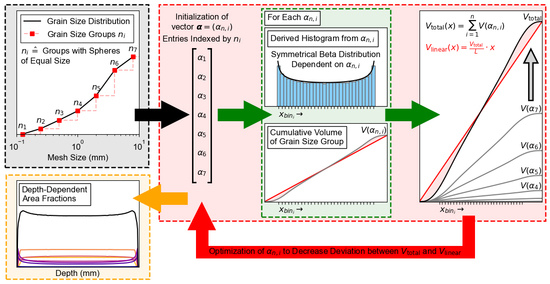
1. Introduction
2. Mesostructure Generation
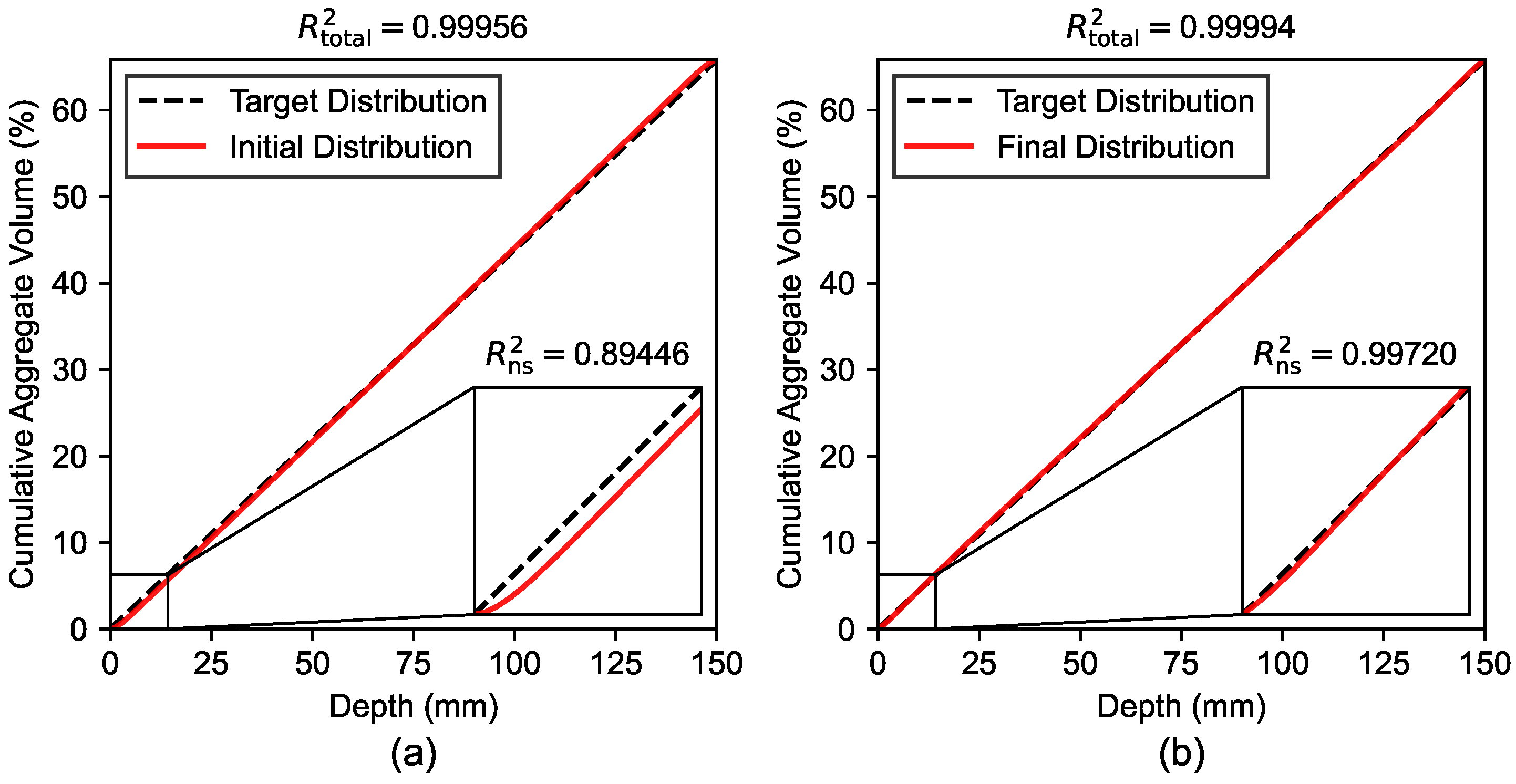
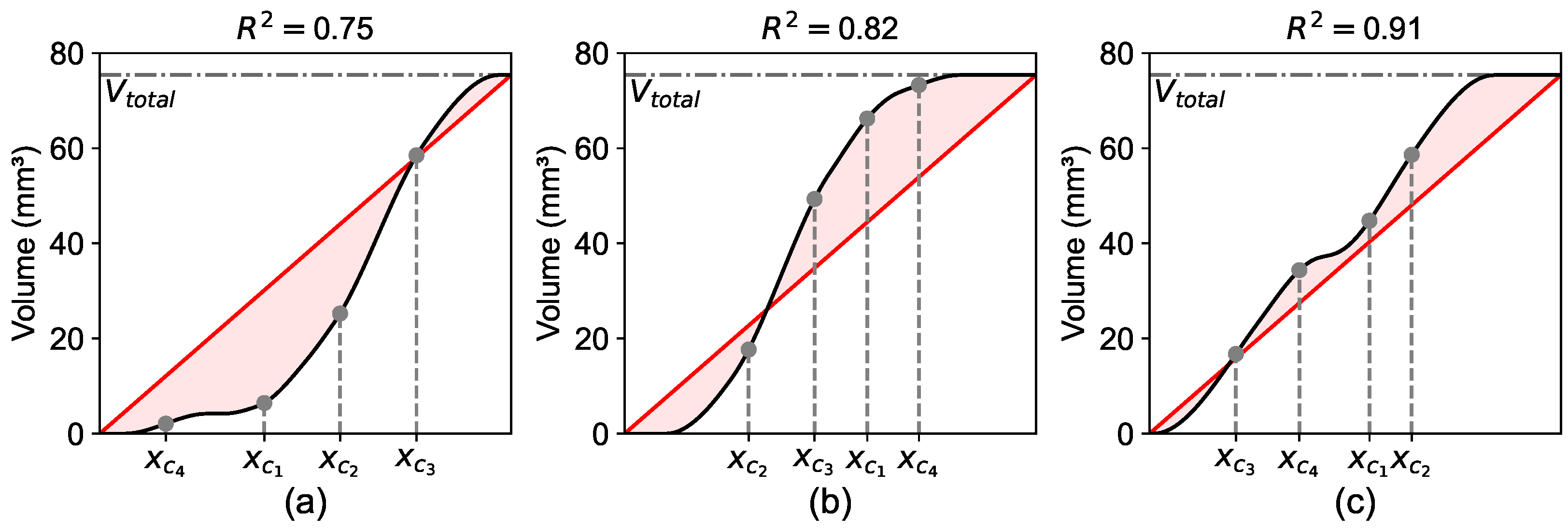
- : the coefficient of determination;
- : the y-value of the i-th point in the observed data;
- : the corresponding y-value on the fitted linear line (the predicted value);
- : the mean of the observed y-values, calculated as ;
- n: the total number of data points.
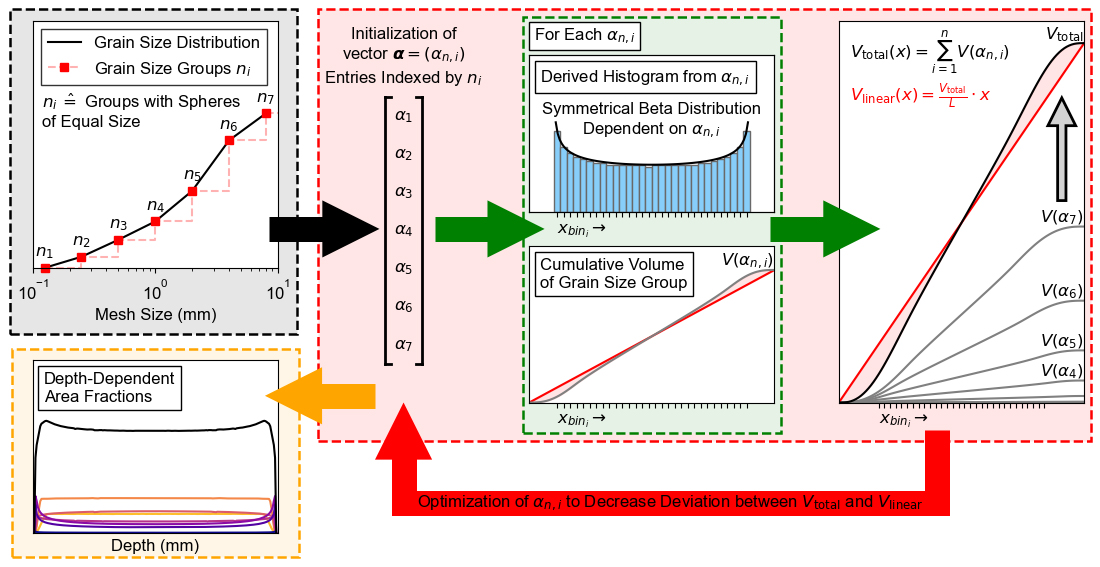
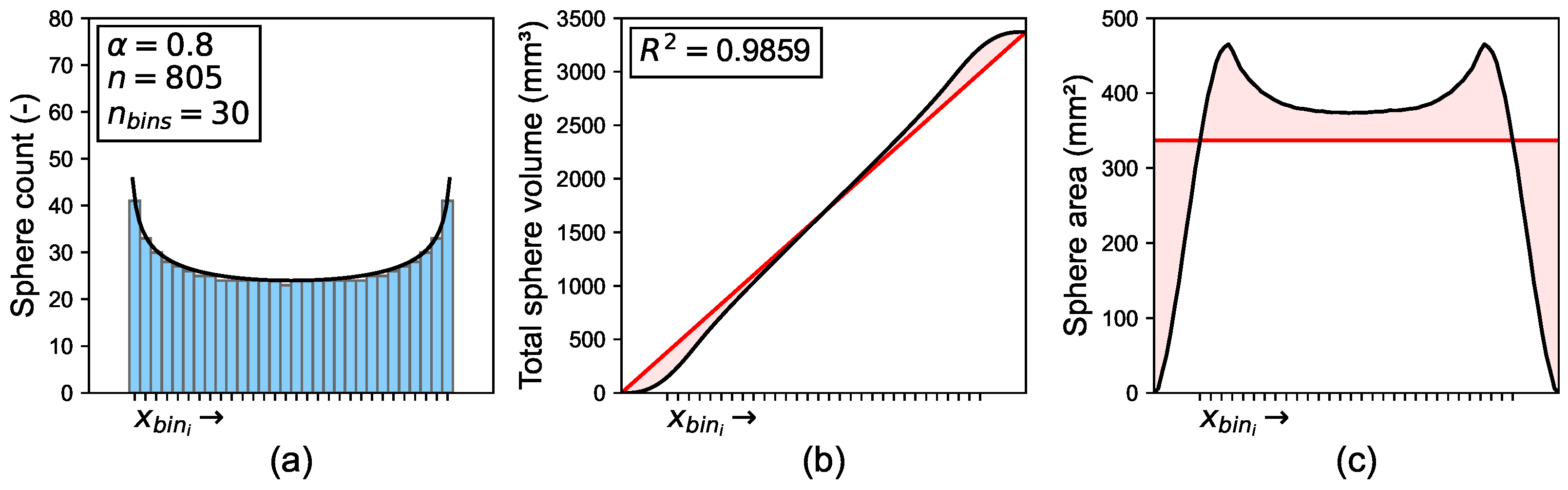
- : The probability density indicating the likelihood of an aggregate from a specific grain size group being located at normalized depth x.
- x: The normalized depth of the aggregate, defined as , where d is the physical depth and L is the total length of the sample ().
- : The shape parameter for the specific grain size group (). Due to the symmetry assumption (), this parameter controls the concentration of aggregates relative to the following boundaries:
- −
- If , aggregates concentrate toward the center of the sample (bell-shaped distribution);
- −
- If , aggregates concentrate toward the border zones (U-shaped distribution);
- −
- If , aggregates are uniformly distributed along the length L.
- : The Gamma function.
- : The vector containing the shape parameters for all grain size groups (i.e., ).
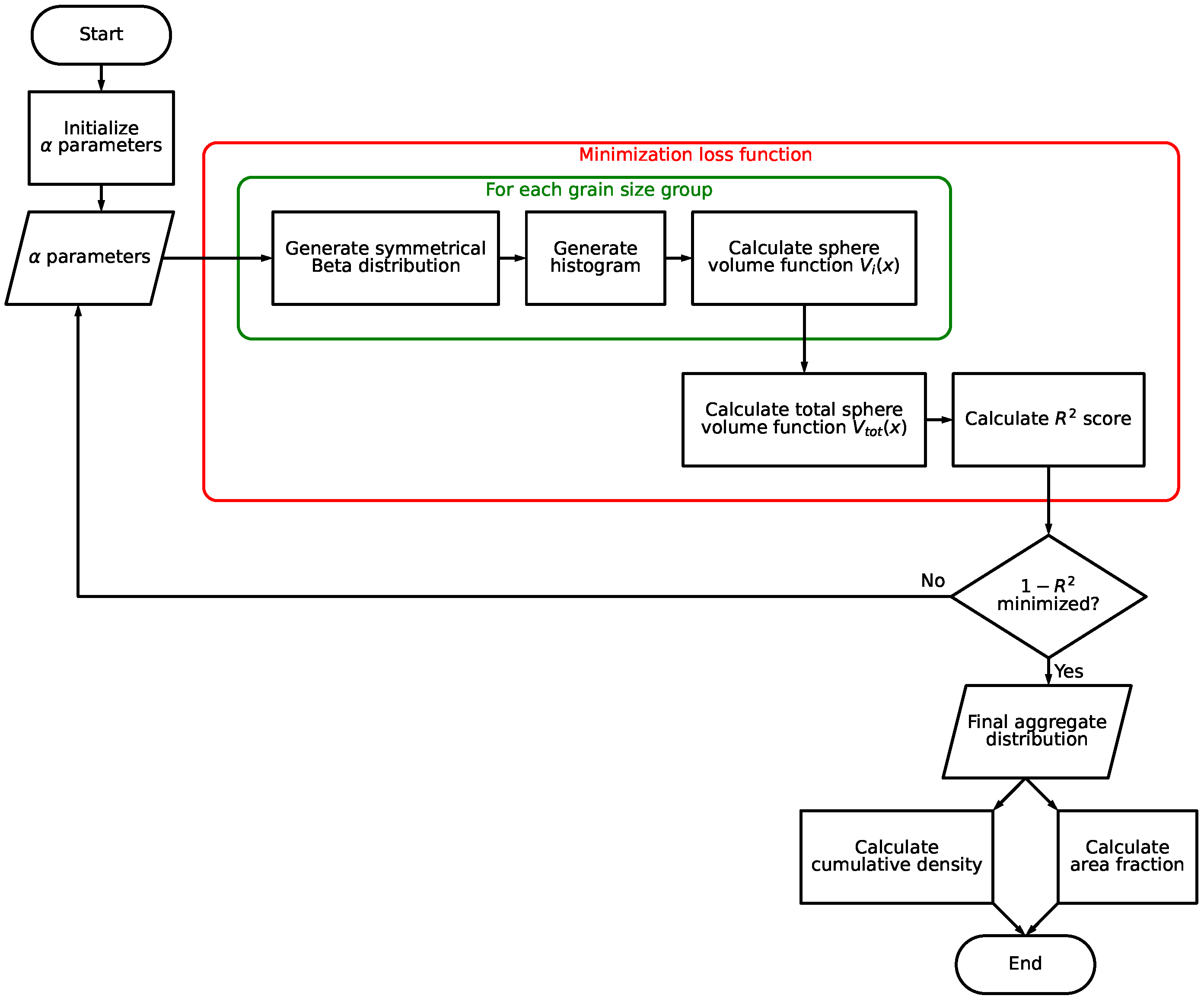
- : The search direction vector. In the initial steps, this vector isolates individual grain size groups (i.e., varying one parameter while keeping the others fixed). As the algorithm progresses, evolves into a combined direction, adjusting multiple shape parameters simultaneously.
- : The scalar step size that determines how far the algorithm moves the parameters along the direction to reach the minimum loss for that specific search step.
3. Experimental Validation
3.1. General
3.2. Materials
3.3. Methods
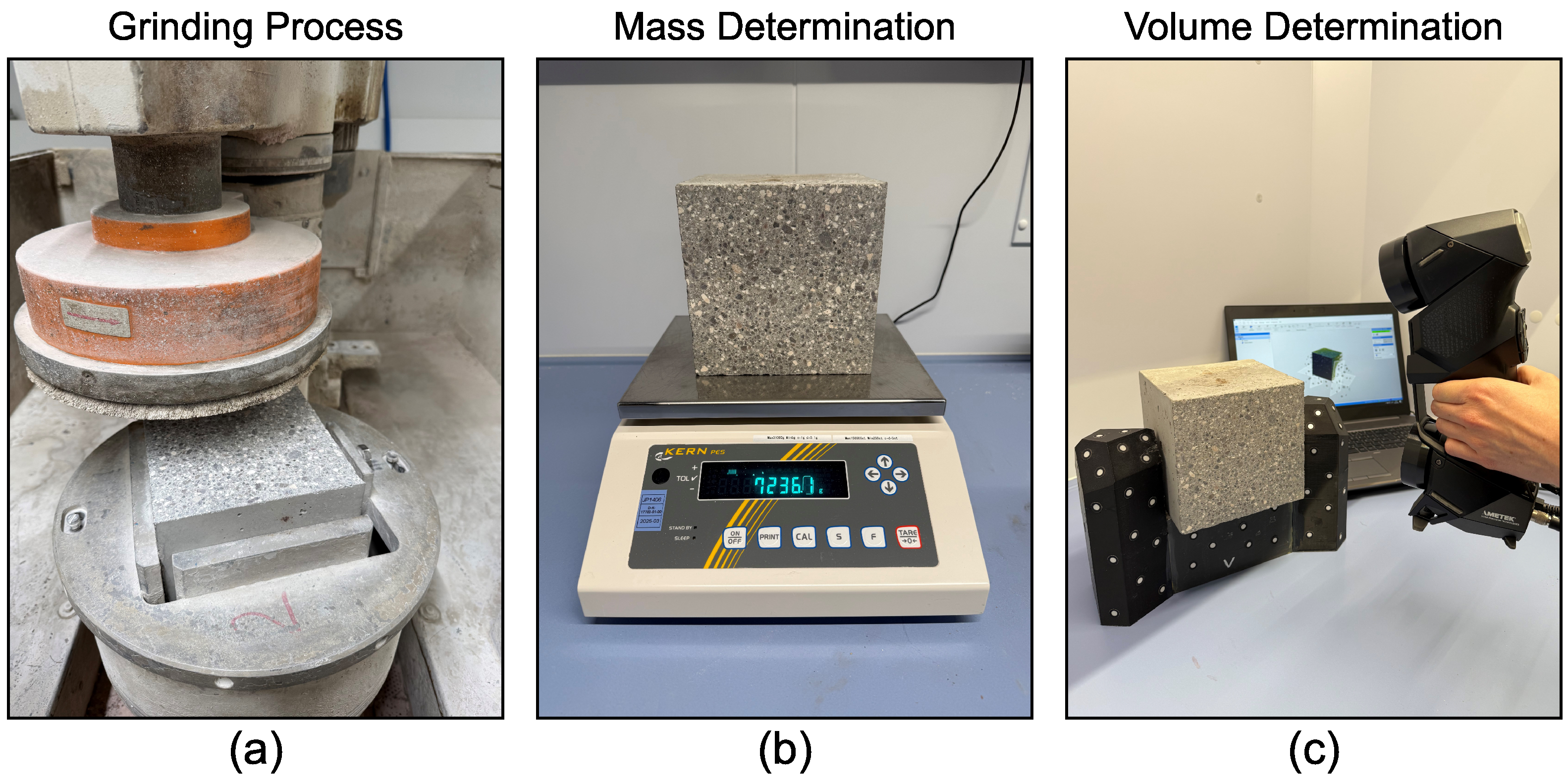
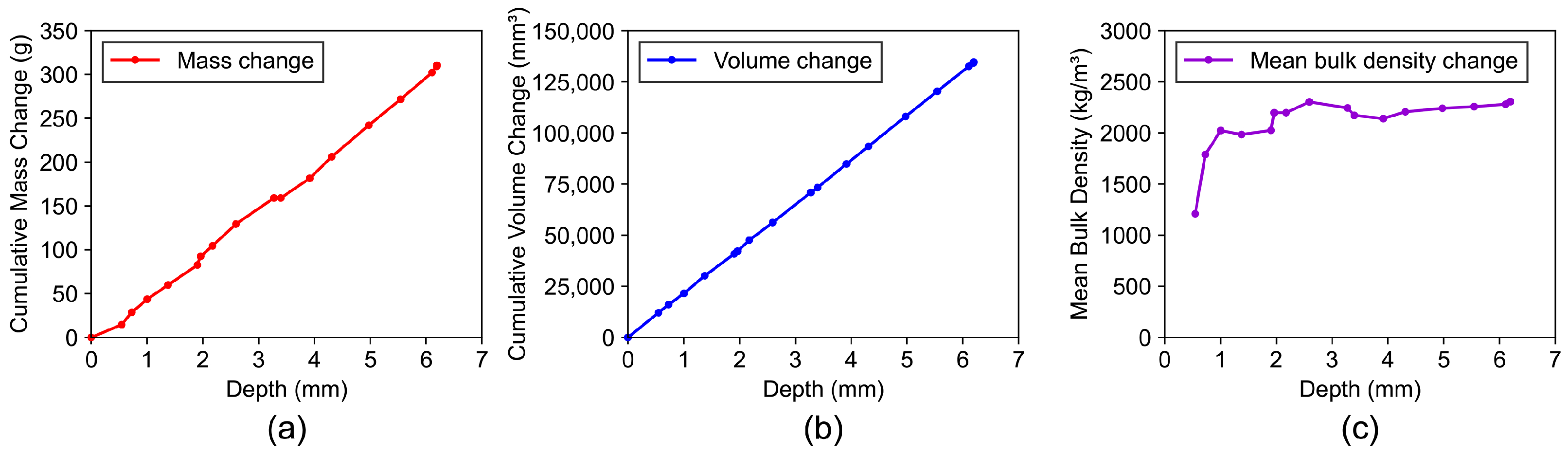
3.3.1. Experimental Determination of Depth-Dependent Density Change of Concrete
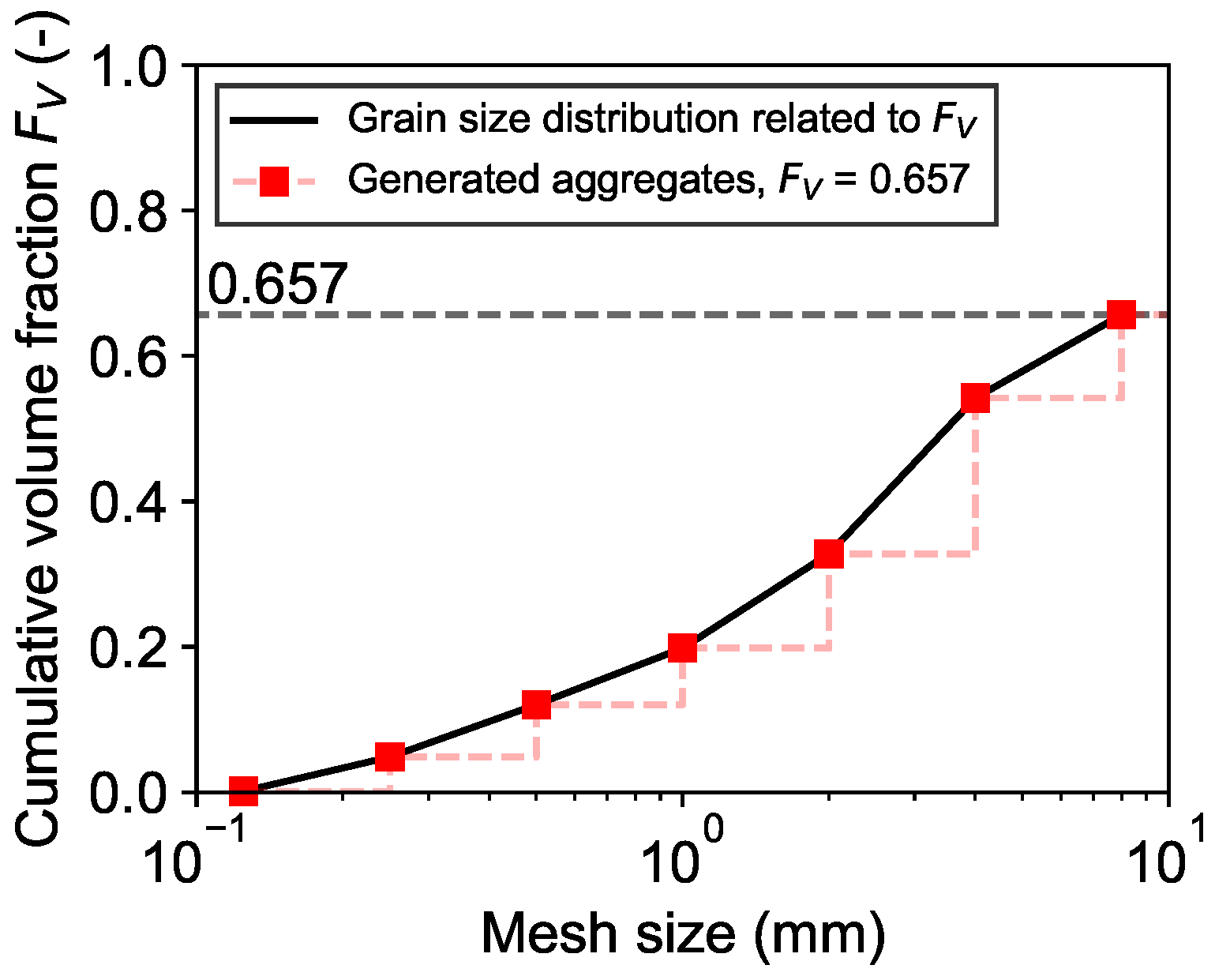
3.3.2. Generation of Mesostructure
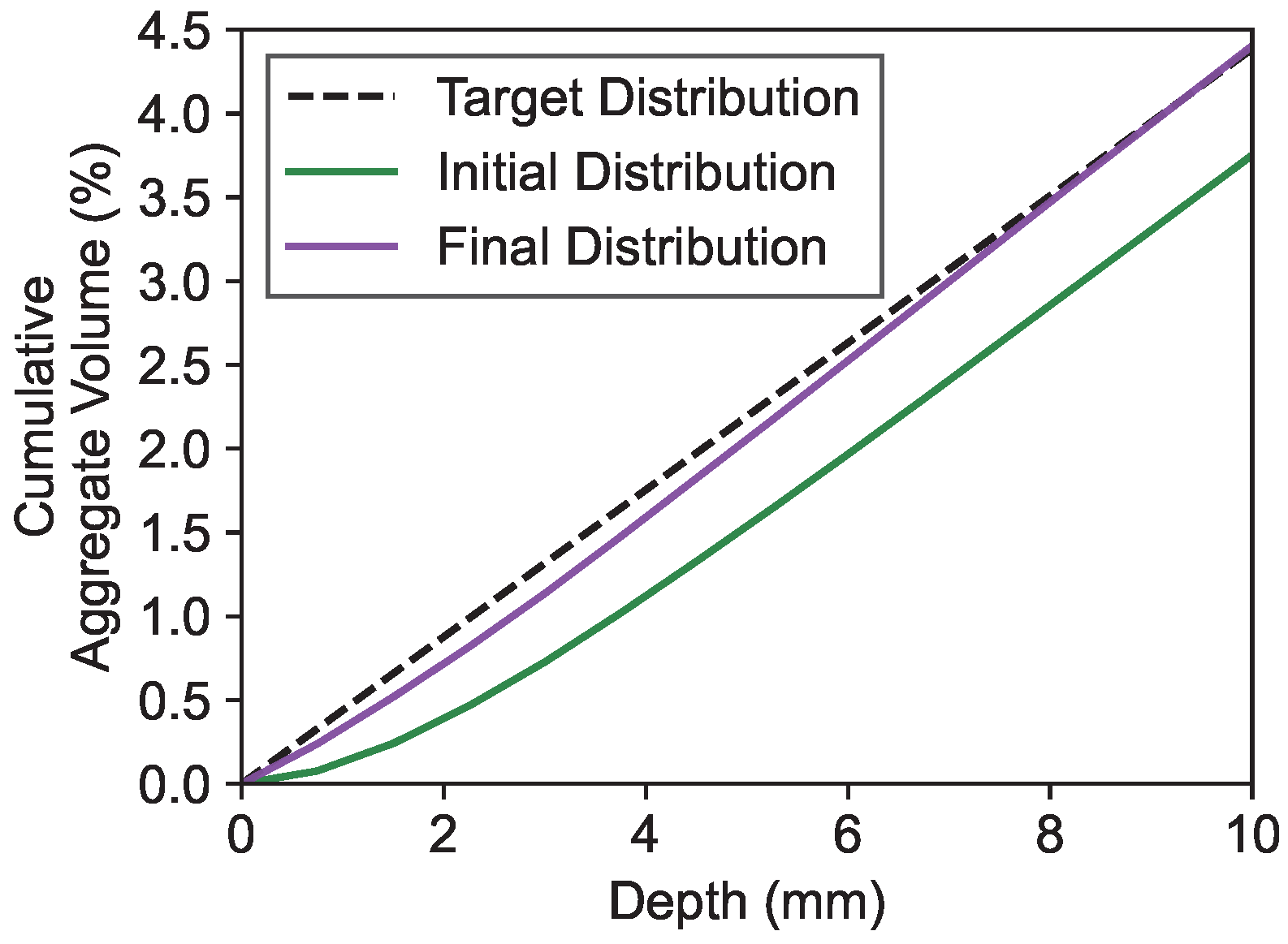
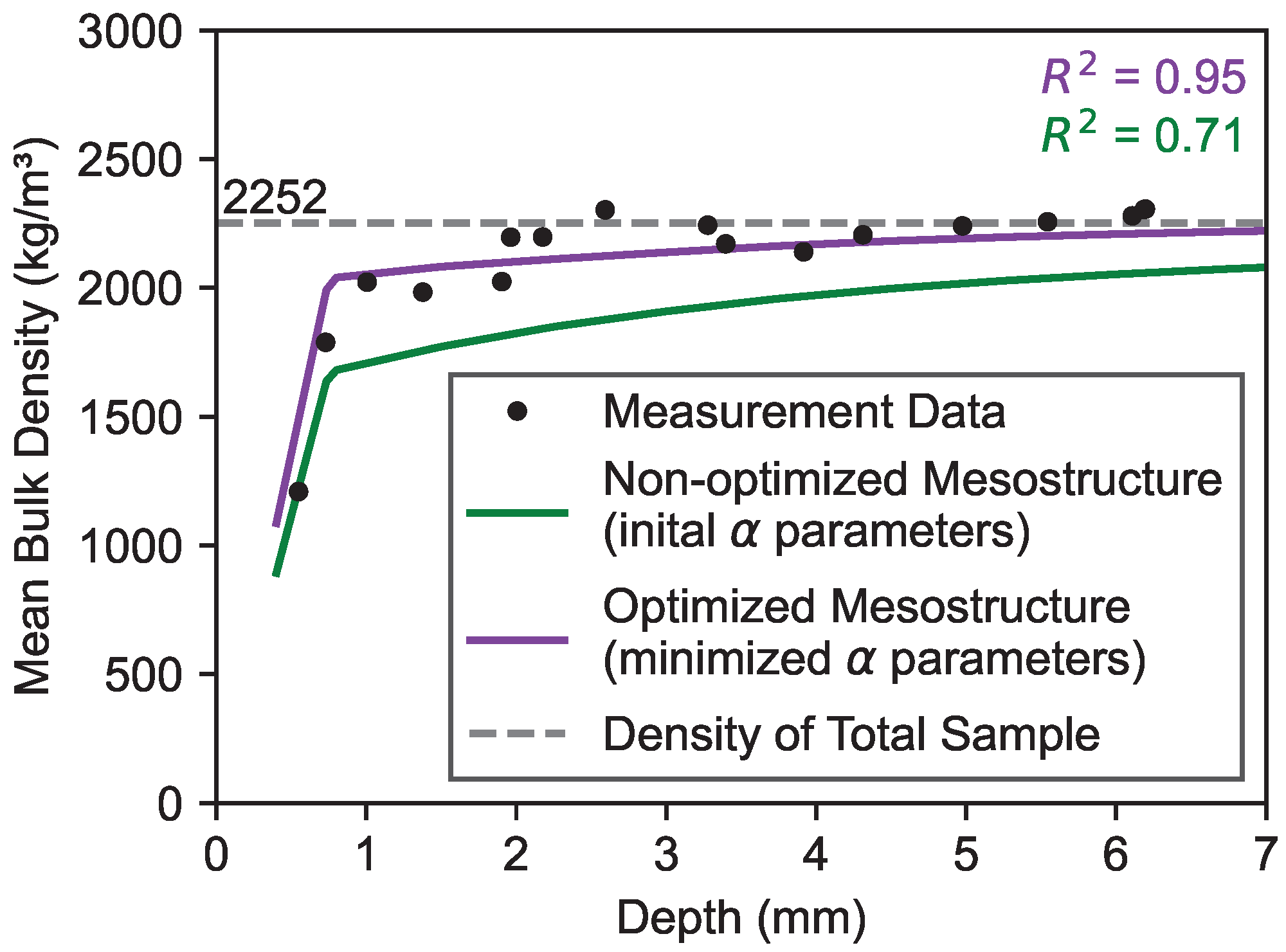
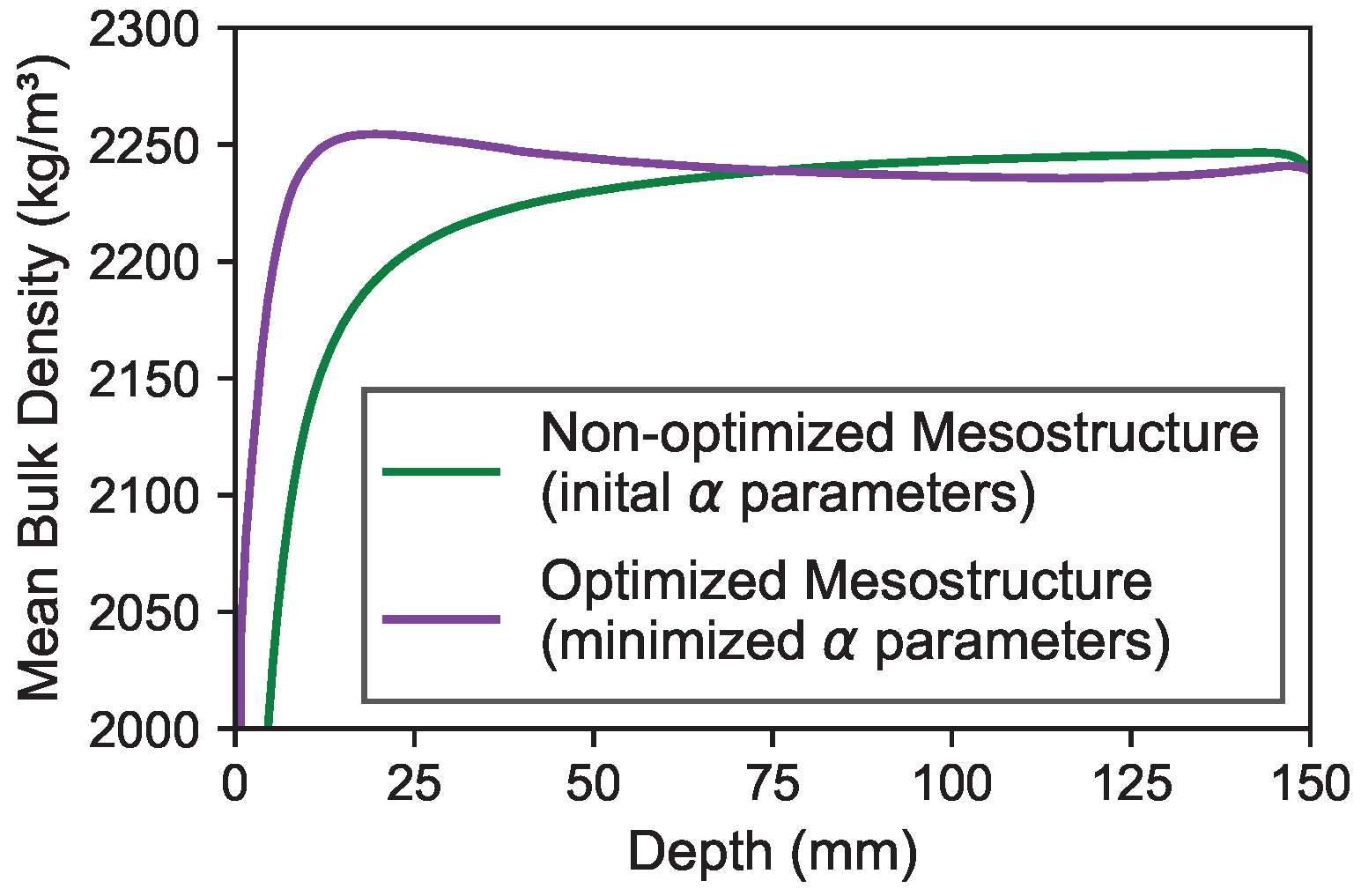
3.4. Comparison of Mean Bulk Densities
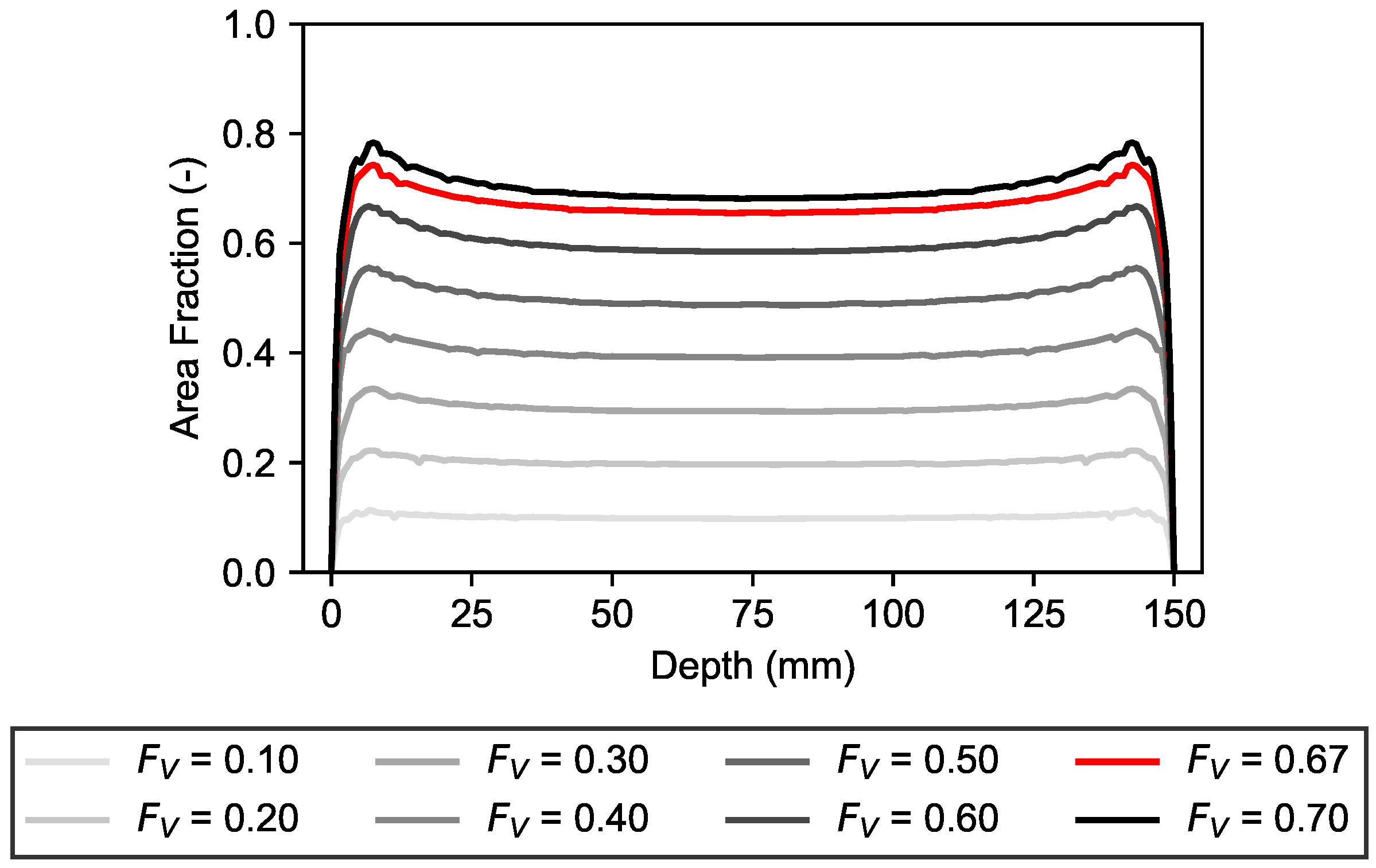
4. Comparison of Volume Fractions
5. Discussion
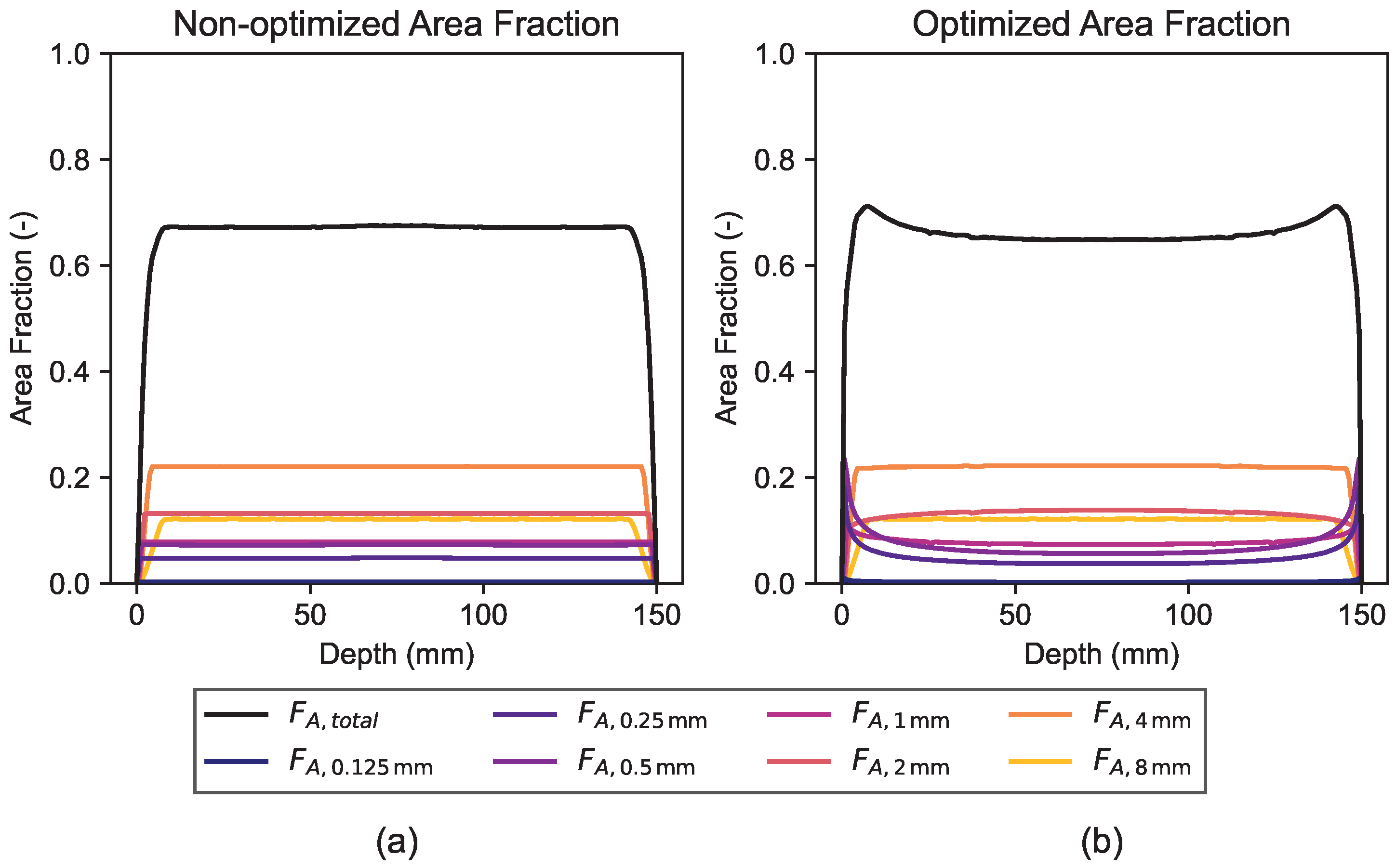
5.1. Geometric Origin of the Near-Surface Densification
5.2. Interpretation of the Experimental Agreement
5.3. Symmetry Assumption of Boundary Conditions
5.4. Limitation Regarding Maximum Packing Density
6. Conclusions
Author Contributions
Funding
Data Availability Statement
Acknowledgments
Conflicts of Interest
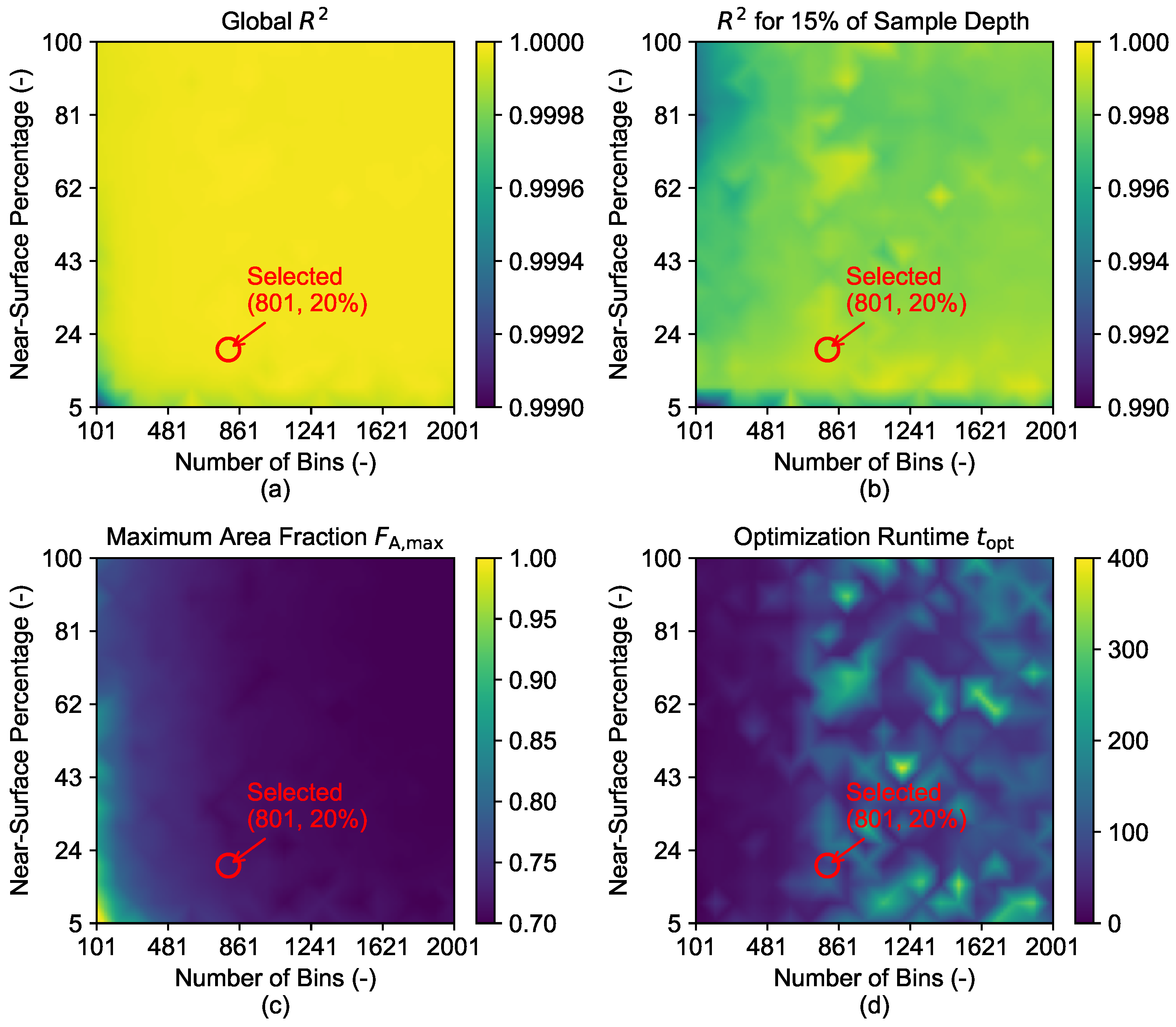
Appendix A. Parametric Sensitivity Analysis of Optimization Parameters

References
- Nguyen, V.P.; Stroeven, M.; Sluys, L.J. Multiscale failure modeling of concrete: Micromechanical modeling, discontinuous homogenization and parallel computations. Comput. Methods Appl. Mech. Eng. 2012, 201–204, 139–156. [Google Scholar] [CrossRef]
- Tasong, W.A.; Lynsdale, C.J.; Cripps, J.C. Aggregate-cement paste interface. Cem. Concr. Res. 1999, 29, 1019–1025. [Google Scholar] [CrossRef]
- Häfner, S.; Eckardt, S.; Luther, T.; Könke, C. Mesoscale modeling of concrete: Geometry and numerics. Comput. Struct. 2006, 84, 450–461. [Google Scholar] [CrossRef]
- Xiao, J.; Li, W.; Corr, D.J.; Shah, S.P. Effects of interfacial transition zones on the stress–strain behavior of modeled recycled aggregate concrete. Cem. Concr. Res. 2013, 52, 82–99. [Google Scholar] [CrossRef]
- Cluni, F.; Schiantella, M.; Faralli, F.; Gusella, V. Mesoscale analysis of concrete earth mixtures, from CT to random generation of RVE. Probabilistic Eng. Mech. 2025, 80, 103765. [Google Scholar] [CrossRef]
- Holla, V.; Vu, G.; Timothy, J.J.; Diewald, F.; Gehlen, C.; Meschke, G. Computational generation of virtual concrete mesostructures. Materials 2021, 14, 3782. [Google Scholar] [CrossRef] [PubMed]
- Ren, Q.; Pacheco, J.; de Brito, J.; Wang, Y.; Hu, J. A novel approach to refining mesoscale geometric modeling for segregation in concrete. Low-carbon Mater. Green Constr. 2024, 2, 27. [Google Scholar] [CrossRef]
- Ren, Q.; Pacheco, J.; de Brito, J. Methods for the modelling of concrete mesostructures: A critical review. Constr. Build. Mater. 2023, 408, 133570. [Google Scholar] [CrossRef]
- Sayyafzadeh, B.; Omidi, A.; Rasoolan, I. Mesoscopic Generation of Random Concrete Structure Using Equivalent Space Method. J. Soft Comput. Civ. Eng. 2019, 3, 82–94. [Google Scholar] [CrossRef]
- Liu, L.; Shen, D.; Chen, H.; Xu, W. Aggregate shape effect on the diffusivity of mortar: A 3D numerical investigation by random packing models of ellipsoidal particles and of convex polyhedral particles. Comput. Struct. 2014, 144, 40–51. [Google Scholar] [CrossRef]
- Lin, J.; Chen, H.; Zhang, R.; Liu, L. Characterization of the wall effect of concrete via random packing of polydispersed superball-shaped aggregates. Mater. Charact. 2019, 154, 335–343. [Google Scholar] [CrossRef]
- Naderi, S.; Zhang, M. A novel framework for modelling the 3D mesostructure of steel fibre reinforced concrete. Comput. Struct. 2020, 234, 106251. [Google Scholar] [CrossRef]
- Knezevic, M.; Drach, B.; Ardeljan, M.; Beyerlein, I.J. Three dimensional predictions of grain scale plasticity and grain boundaries using crystal plasticity finite element models. Comput. Methods Appl. Mech. Eng. 2014, 277, 239–259. [Google Scholar] [CrossRef]
- Quey, R.; Renversade, L. Optimal polyhedral description of 3D polycrystals: Method and application to statistical and synchrotron X-ray diffraction data. Comput. Methods Appl. Mech. Eng. 2018, 330, 308–333. [Google Scholar] [CrossRef]
- Zhu, Z.; Xu, W.; Chen, H. The fraction of overlapping interphase around 2D and 3D polydisperse non-spherical particles: Theoretical and numerical models. Comput. Methods Appl. Mech. Eng. 2019, 345, 728–747. [Google Scholar] [CrossRef]
- Tong, L.; Fu, L.; Wu, B.; Xu, C.; Lim, C.W.; Ding, H. Particle shape effect on creep and fluidity of granular packing. J. Eng. Mech. 2025, 151, 04025067. [Google Scholar] [CrossRef]
- Cui, Y.; Chen, S.; Li, L.; Wang, X.; Liu, J. Atomistic insights into the hydration behavior of N-A-S-H Gel via Ca2+ substitution: A molecular dynamics simulation study. J. Non Cryst. Solids 2026, 673, 123892. [Google Scholar] [CrossRef]
- Zheng, J.J.; Li, C.Q.; Zhao, L.Y. Simulation of two-dimensional aggregate distribution with wall effect. J. Mater. Civ. Eng. 2003, 15, 506–510. [Google Scholar] [CrossRef]
- Xu, W.X.; Lv, Z.; Chen, H.S. Effects of particle size distribution, shape and volume fraction of aggregates on the wall effect of concrete via random sequential packing of polydispersed ellipsoidal particles. Phys. A 2013, 392, 416–426. [Google Scholar] [CrossRef]
- Huang, Q.H.; Li, C.Z.; Song, X.B. Spatial distribution characteristics of ellipsoidal coarse aggregates in concrete considering wall effect. Constr. Build. Mater. 2022, 327, 126922. [Google Scholar] [CrossRef]
- Conn, A.R.; Scheinberg, K.; Vicente, L.N. Introduction to Derivative-Free Optimization; MPS-SIAM series on optimization; Society for Industrial and Applied Mathematics/Mathematical Programming Society: Philadelphia, MS, USA, 2009. [Google Scholar]
- Powell, M.J.D. An efficient method for finding the minimum of a function of several variables without calculating derivatives. Comput. J. 1964, 7, 155–162. [Google Scholar] [CrossRef]
- Powell, M.J.D. Direct search algorithms for optimization calculations. Acta Numer. 1998, 7, 287–336. [Google Scholar] [CrossRef]
- DIN EN 197-1:2011-11; Cement—Part 1: Composition, Specifications and Conformity Criteria for Common Cements. Beuth: Berlin, Germany, 2011.
- Haynack, A.; Timothy, J.J.; Kränkel, T.; Gehlen, C. Characterization of Cementitious Materials Exposed to Freezing and Thawing in Combination with Deicing Salts Using 3D Scans. Adv. Eng. Mater. 2023, 25, 2300265. [Google Scholar] [CrossRef]
- Shimamoto, D.S.; Yanagisawa, M. Common packing patterns for jammed particles of different power size distributions. Phys. Rev. Res. 2023, 5, L012014. [Google Scholar] [CrossRef]
- Meer, D.J.; Galoustian, I.; Manuel, J.G.d.F.; Weeks, E.R. Estimating random close packing density from circle radius distributions. Phys. Rev. E. 2024, 109, 064905. [Google Scholar] [CrossRef]
- Shi, Y.; Wang, Y.; Wang, L.N.; Wang, W.N.; Yang, T.Y. Bridge cable performance warning method based on temperature and displacement monitoring data. Buildings 2025, 15, 2342. [Google Scholar] [CrossRef]
- Shi, Y.; Wang, Y.; Wang, L.N.; Wang, W.N.; Yang, T.Y. Bridge tower warning method based on improved multi-rate fusion under strong wind action. Buildings 2025, 15, 2733. [Google Scholar] [CrossRef]
- Haynack, A.; Bartsch, L.; Timothy, J.J.; Kränkel, T.; Gehlen, C. Study on edge effects in salt frost scaling tests: Implications for surface degradation assessment. Case Stud. Constr. Mater. 2025, 23, e05658. [Google Scholar] [CrossRef]
- Hu, Z.; Yang, Y.; Zhang, H. Durability and damage evolution of steel fiber and Nano-SiO2 reinforced concrete under freeze-thaw and salt erosion environments based on acoustic emission and Computed Tomography analysis. J. Build. Eng. 2025, 115, 114595. [Google Scholar] [CrossRef]
- Stempkowska, A.; Gawenda, T.; Naziemiec, Z.; Adam Ostrowski, K.; Saramak, D.; Surowiak, A. Impact of the geometrical parameters of dolomite coarse aggregate on the thermal and mechanic properties of preplaced aggregate concrete. Materials 2020, 13, 4358. [Google Scholar] [CrossRef] [PubMed]
- Zheng, J.J.; Li, C.Q.; Jones, M.R. Aggregate distribution in concrete with wall effect. Mag. Concr. Res. 2003, 55, 257–265. [Google Scholar] [CrossRef]
- Ren, Q.; Pacheco, J.; de Brito, J. Calibration of wall effects in mesostructure modelling of concrete using marker-controlled watershed segmentation. Constr. Build. Mater. 2023, 398, 132505. [Google Scholar] [CrossRef]
- von Bronk, T.; Haist, M.; Lohaus, L. The influence of bleeding of cement suspensions on their rheological properties. Materials 2020, 13, 1609. [Google Scholar] [CrossRef]
- Yu, Z.; Dong, W.; Wang, F.; Huang, Y.; Ma, G. Enhancing concrete strength through precision vibration engineering: Aggregate settlement and pore stats. Constr. Build. Mater. 2025, 464, 140117. [Google Scholar] [CrossRef]
- Jiao, Y.; Stillinger, F.H.; Torquato, S. Optimal packings of superballs. Phys. Rev. E Stat. Nonlinear Soft Matter Phys. 2009, 79, 041309. [Google Scholar] [CrossRef] [PubMed]
- Stengel, T.; Wiese, F.; Obermeier, N. Random dense packing of continuous distributions of spherical particles—Use of particle packing model and discrete-particle-method to predict particle spacing factors. In Proceedings of the VIII International Conference on Particle-Based Methods, CIMNE, Milan, Italy, 9–11 October 2023. [Google Scholar] [CrossRef]


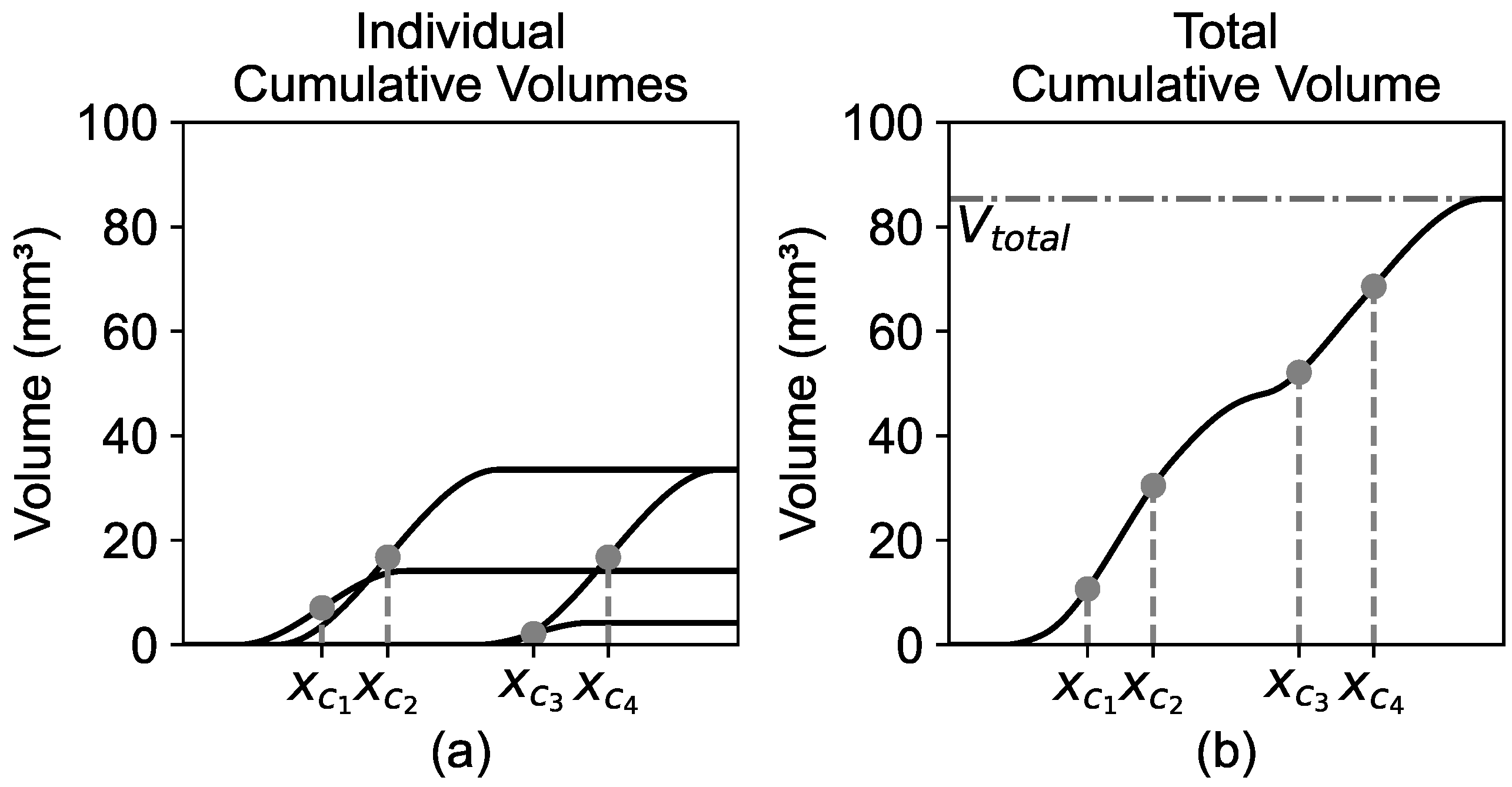







| Mesh size (mm) | 0.063 | 0.125 | 0.25 | 0.5 | 1 | 2 | 4 | 8 | 16 |
| Passing rate (wt%) | 0.17 | 0.36 | 7.39 | 18.13 | 29.74 | 49.11 | 81.1 | 98.2 | 100 |
| Cement (-) | w/c (-) | Cement (kg/m3) | Water (kg/m3) | Aggregates (kg/m3) | Volume Fraction (-) |
|---|---|---|---|---|---|
| CEM I | 0.55 | 362 | 199.1 | 1759 | 0.67 |
| Grain size group (mm) | 0.125 | 0.25 | 0.5 | 1 | 2 | 4 | 8 |
| Number of aggregates (−) | 4,201,204 | 19,430,557 | 3,710,601 | 501,398 | 104,566 | 21,587 | 1443 |
Disclaimer/Publisher’s Note: The statements, opinions and data contained in all publications are solely those of the individual author(s) and contributor(s) and not of MDPI and/or the editor(s). MDPI and/or the editor(s) disclaim responsibility for any injury to people or property resulting from any ideas, methods, instructions or products referred to in the content. |
© 2026 by the authors. Licensee MDPI, Basel, Switzerland. This article is an open access article distributed under the terms and conditions of the Creative Commons Attribution (CC BY) license.
Share and Cite
Haynack, A.; Kränkel, T.; Gehlen, C.; Timothy, J.J. Statistical Modeling of Near-Surface Aggregate Size Distributions in Concrete. Materials 2026, 19, 1395. https://doi.org/10.3390/ma19071395
Haynack A, Kränkel T, Gehlen C, Timothy JJ. Statistical Modeling of Near-Surface Aggregate Size Distributions in Concrete. Materials. 2026; 19(7):1395. https://doi.org/10.3390/ma19071395
Chicago/Turabian StyleHaynack, Alexander, Thomas Kränkel, Christoph Gehlen, and Jithender J. Timothy. 2026. "Statistical Modeling of Near-Surface Aggregate Size Distributions in Concrete" Materials 19, no. 7: 1395. https://doi.org/10.3390/ma19071395
APA StyleHaynack, A., Kränkel, T., Gehlen, C., & Timothy, J. J. (2026). Statistical Modeling of Near-Surface Aggregate Size Distributions in Concrete. Materials, 19(7), 1395. https://doi.org/10.3390/ma19071395