Article

Effects of Austenitizing Temperature and Deep Cryogenic Treatment on Microstructural Evolution and Mechanical Properties of a Microalloyed High-Carbon Steel

1
School of Materials Science and Engineering, Shanghai University, Shanghai 200444, China
2
State Key Laboratory of Advanced Special Steel, Shanghai University, Shanghai 200444, China
3
Shandong Zhongke Xiwang New Material Technology Research and Development Co., Ltd., Zouping 256209, China
*
Authors to whom correspondence should be addressed.
Materials 2026, 19(7), 1342; https://doi.org/10.3390/ma19071342
Submission received: 20 January 2026 / Revised: 16 February 2026 / Accepted: 18 February 2026 / Published: 28 March 2026
(This article belongs to the Section Metals and Alloys)

Abstract

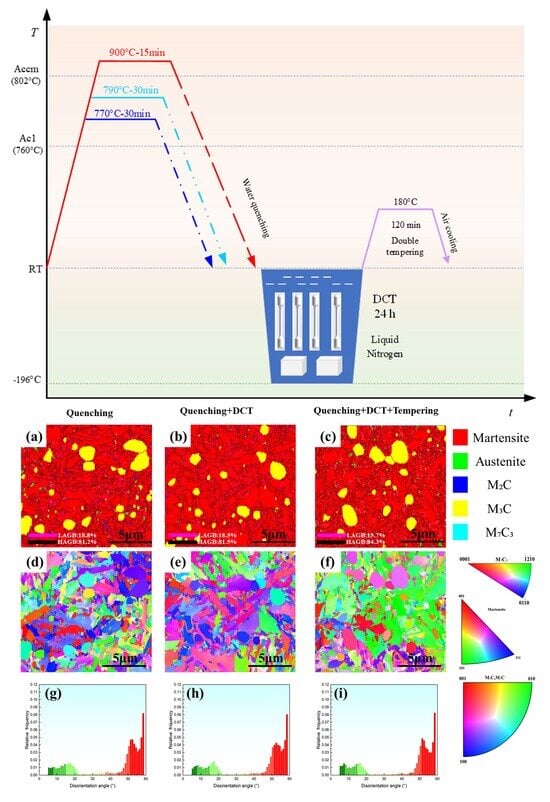
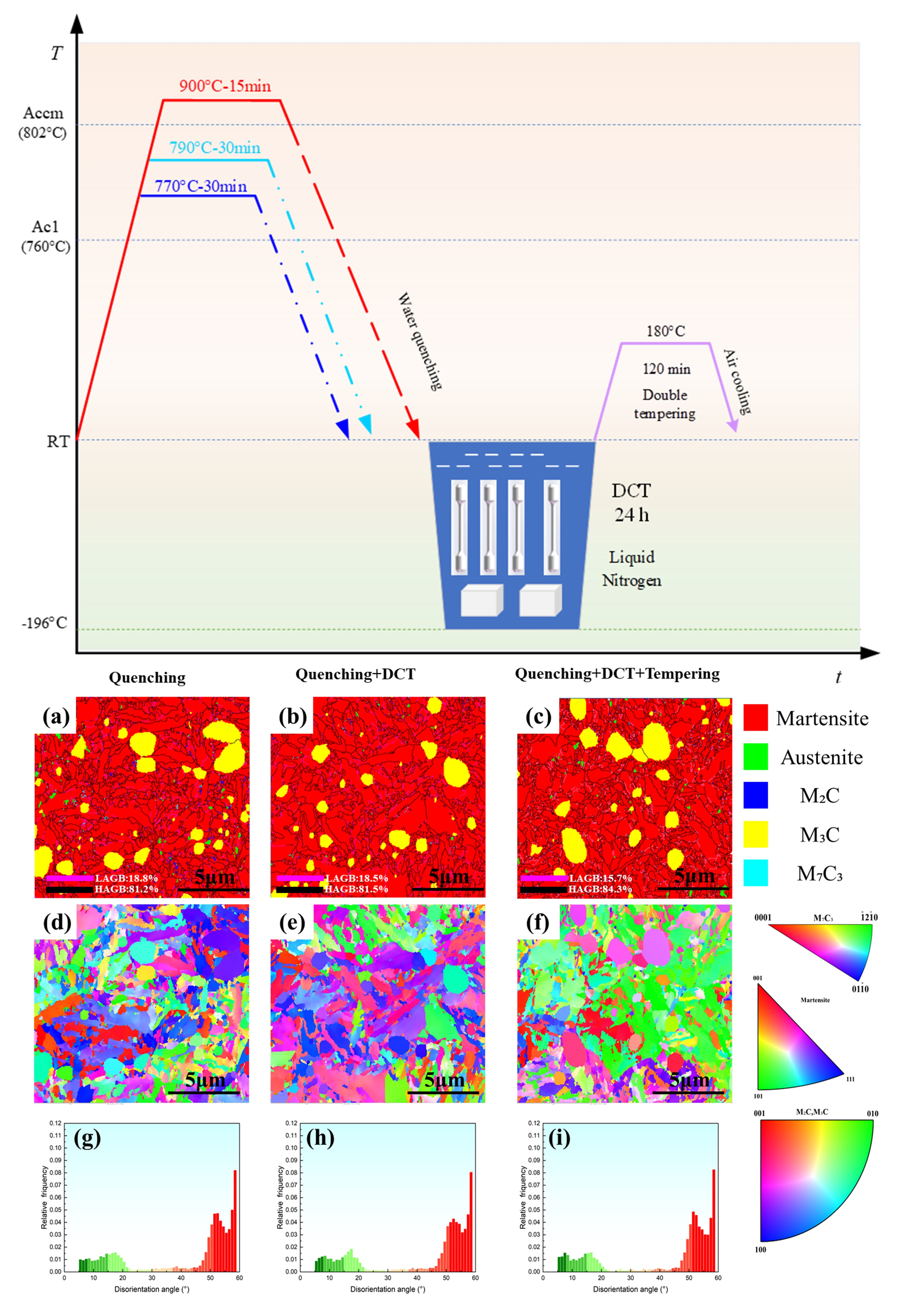
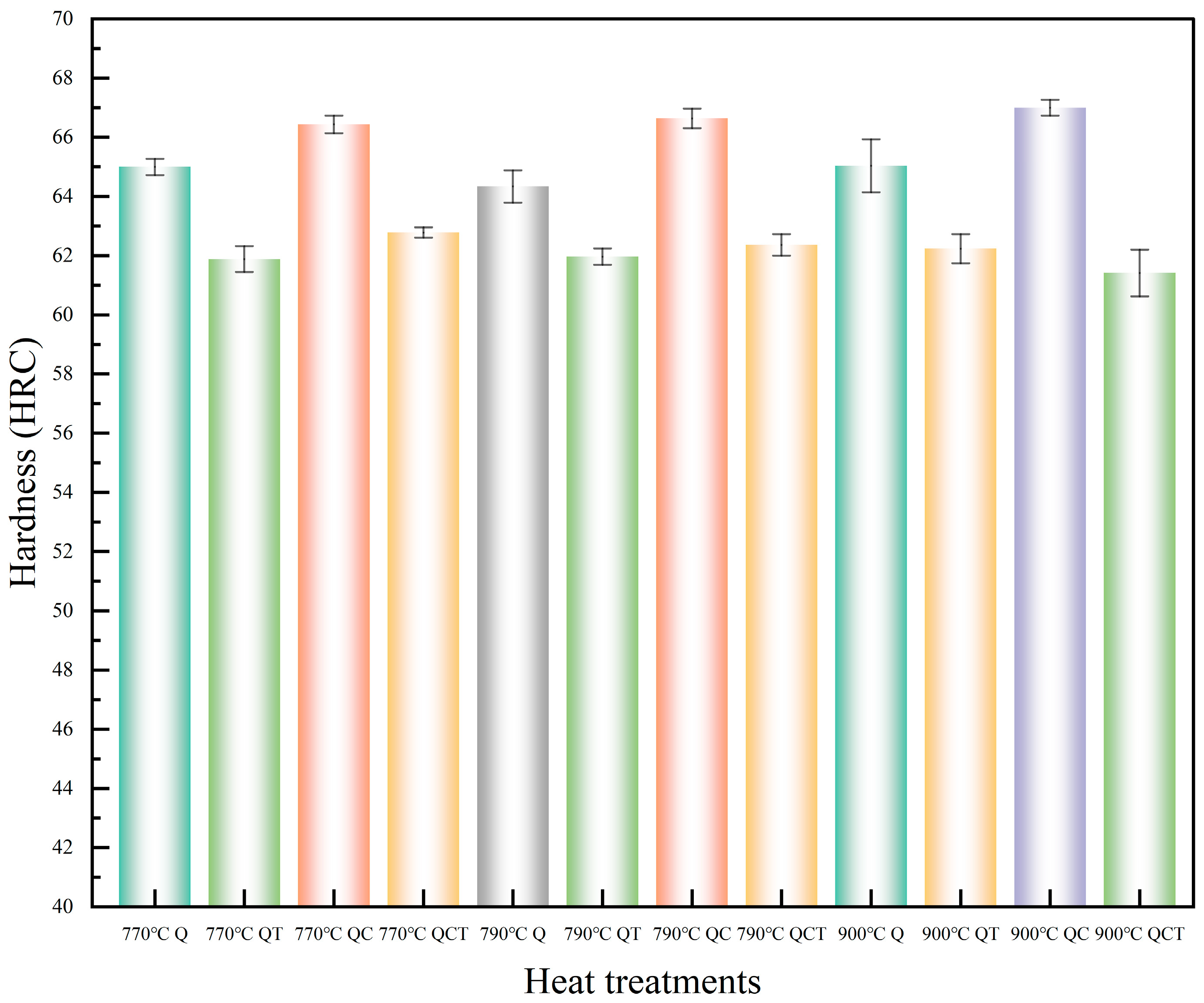
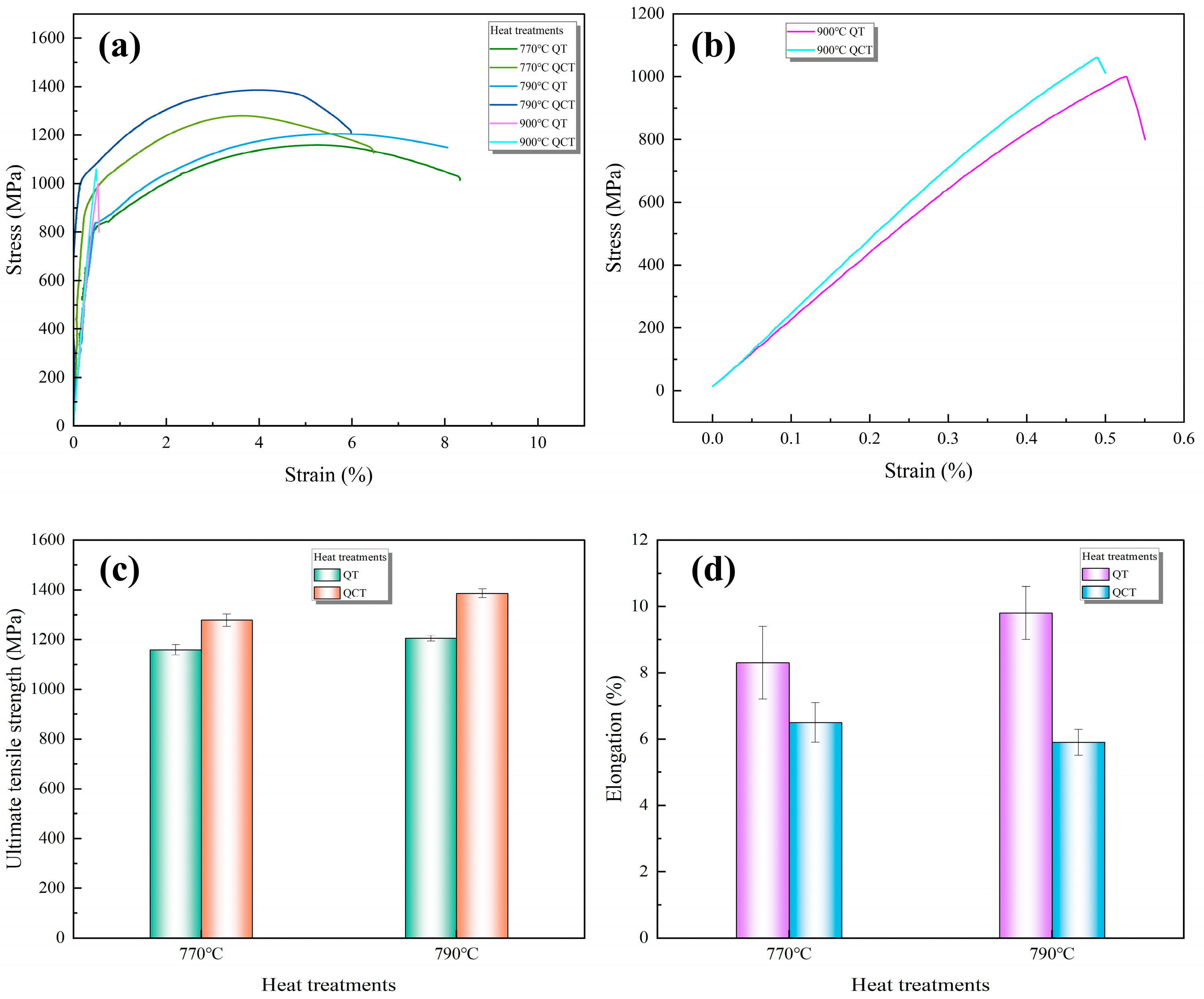
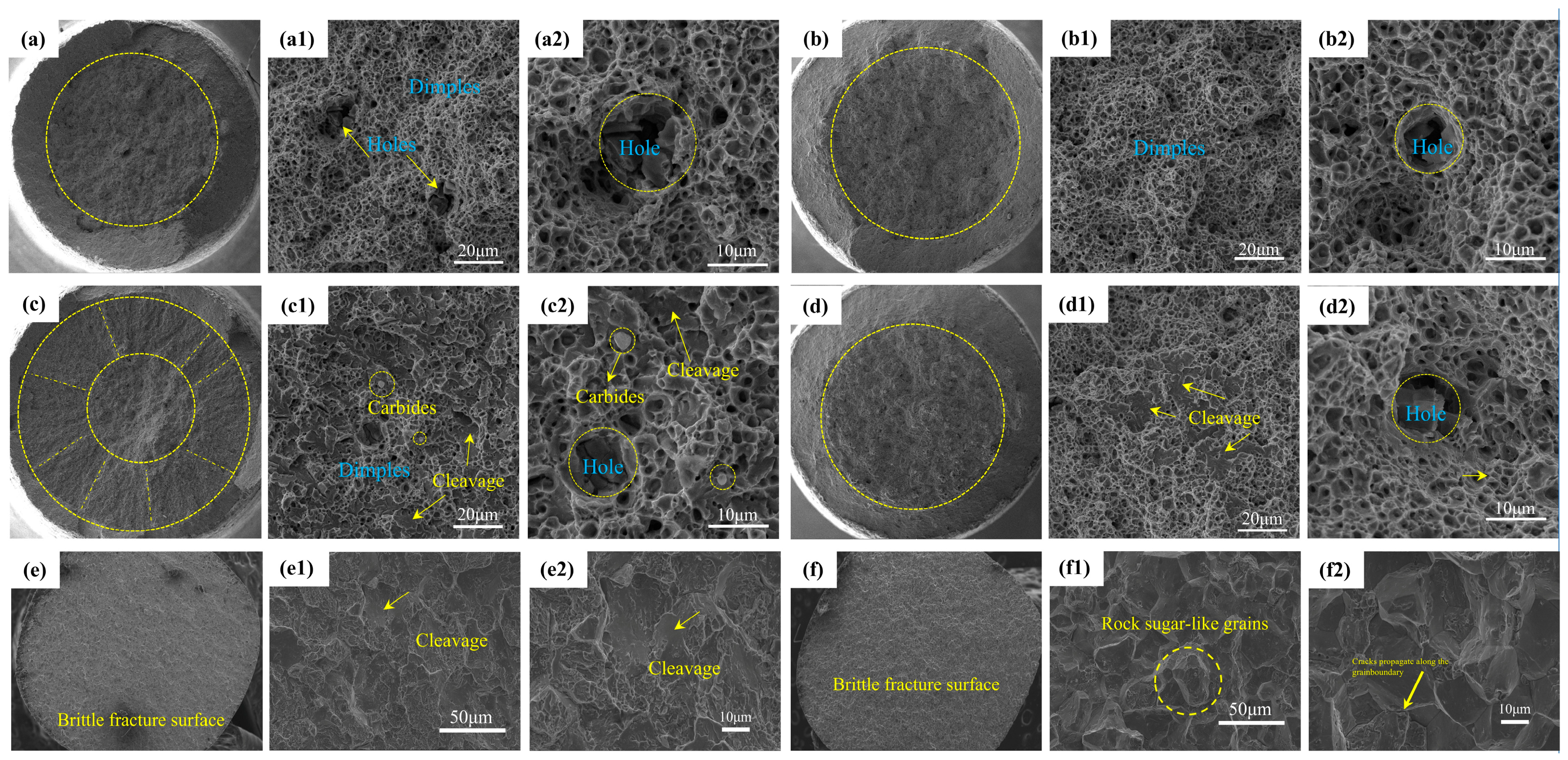
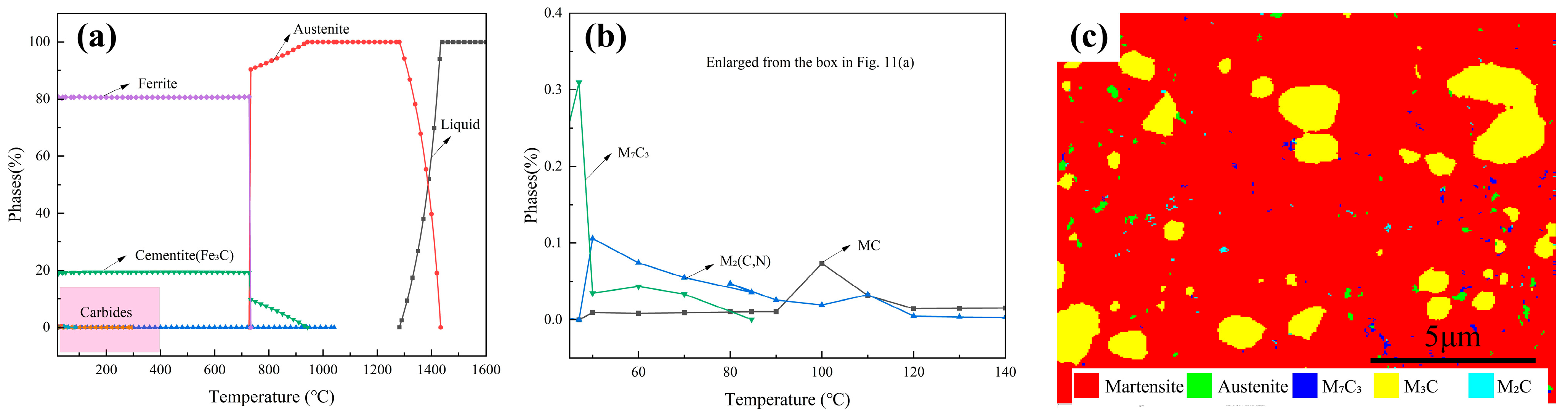
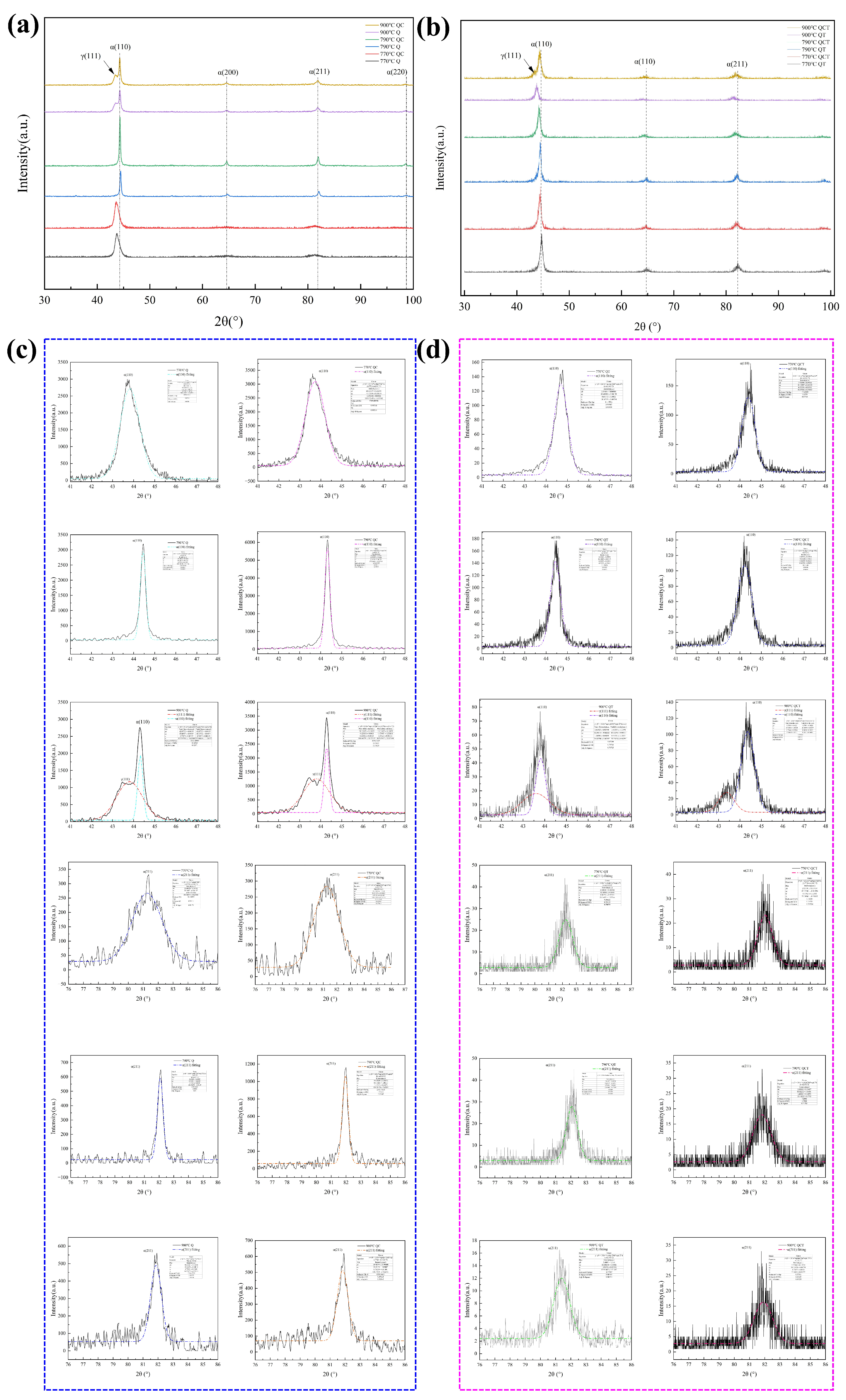
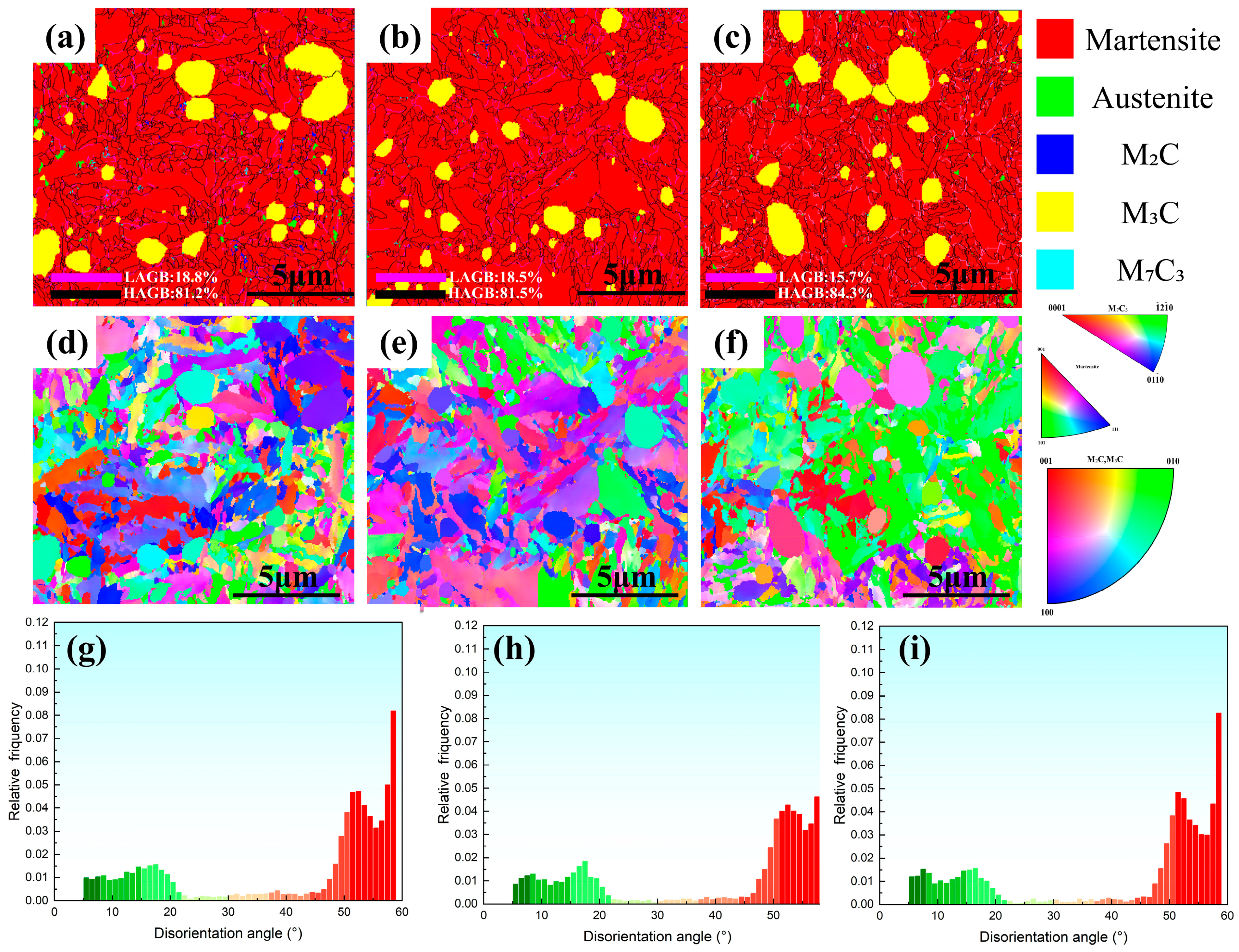
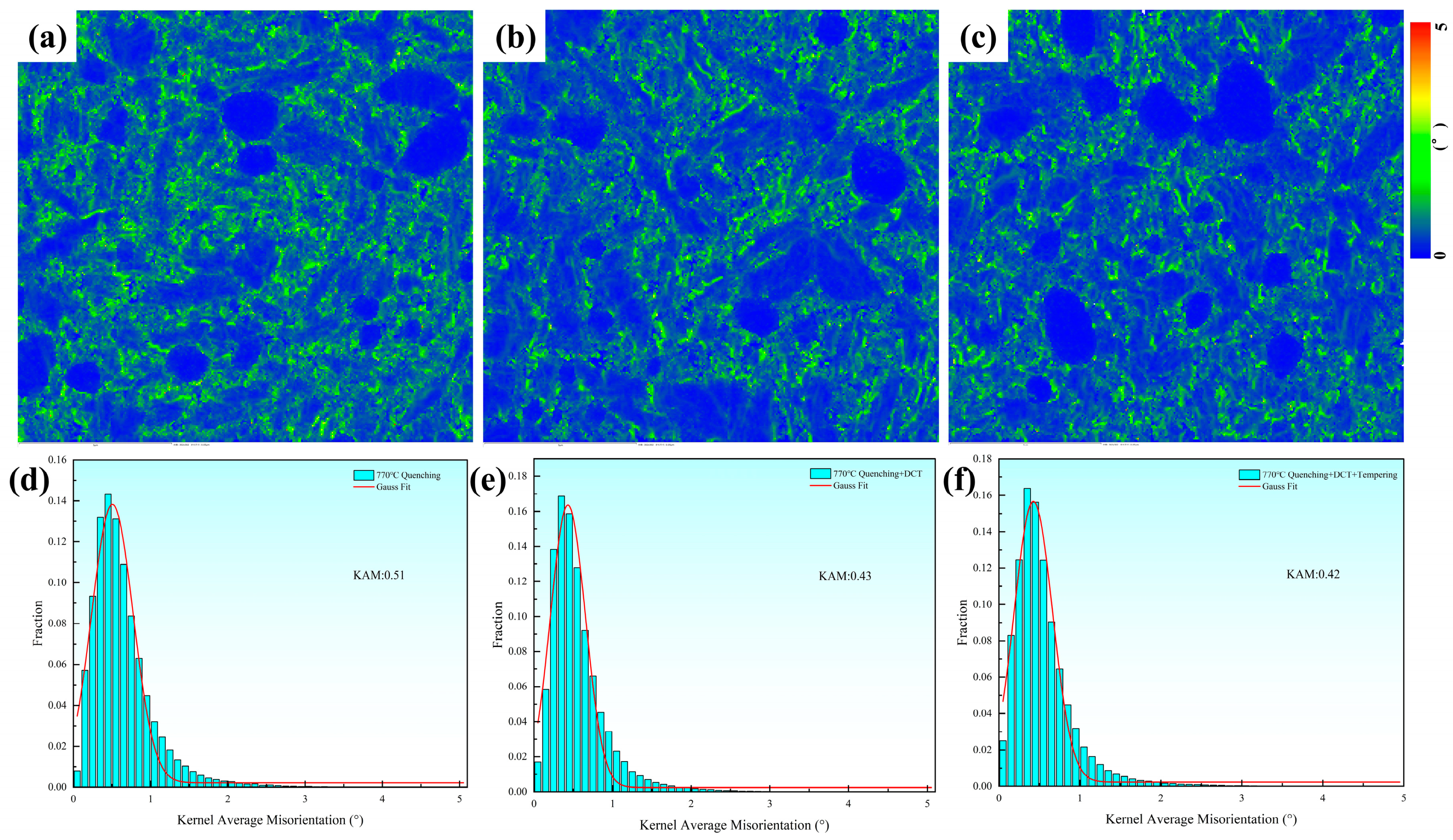
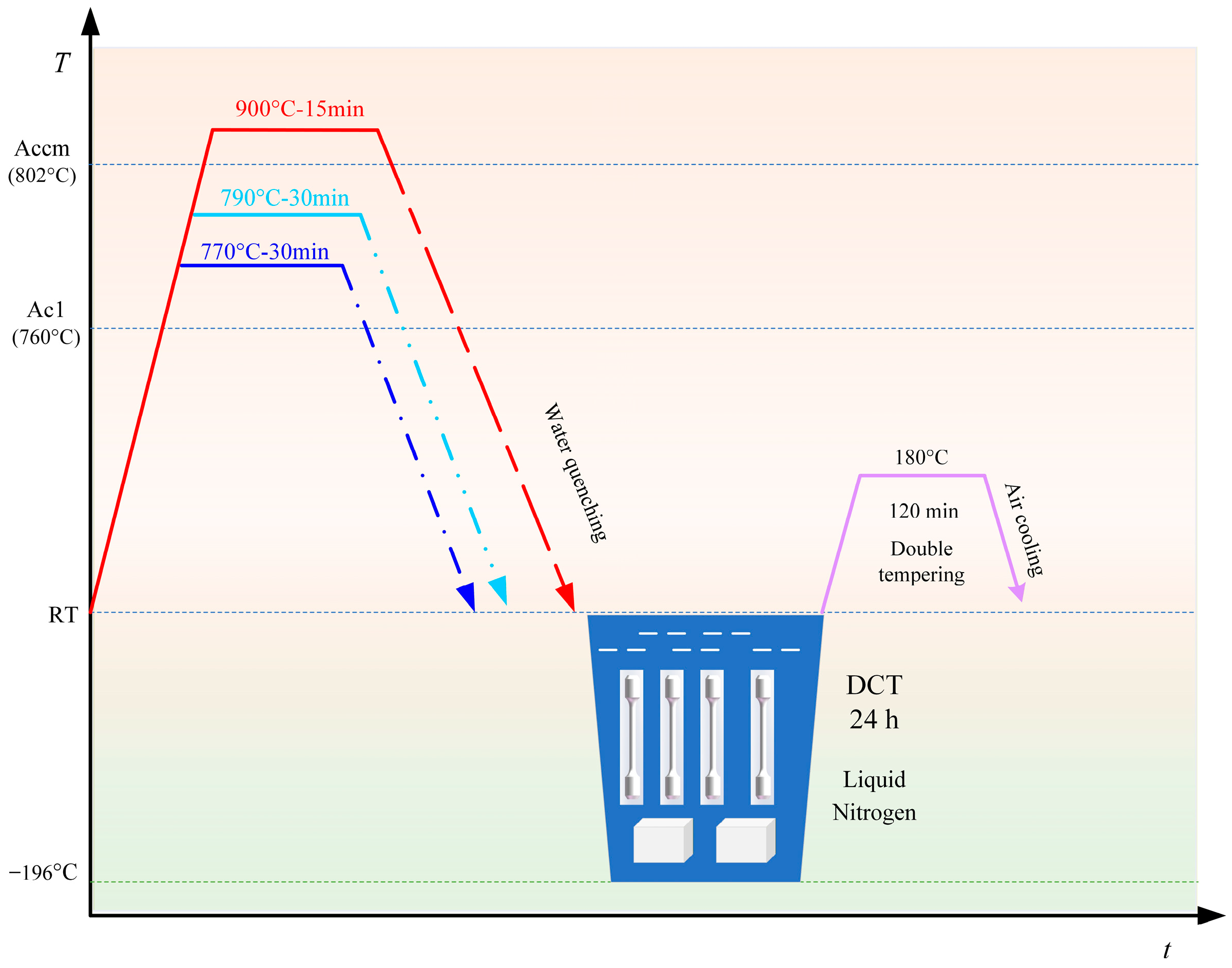
A microalloyed high-carbon low-alloy steel was designed to clarify the combined effects of austenitizing temperature and deep cryogenic treatment (DCT) on microstructural evolution and mechanical performance. Specimens were austenitized at 770–900 °C, water-quenched, subjected to DCT at −196 °C, and subsequently tempered at 180 °C. Microstructural characterization by XRD, EBSD, and TEM indicates that the quenched microstructure is dominated by martensite and cementite, with retained austenite below 1% at moderate austenitizing temperatures. DCT does not fundamentally alter the martensitic morphology but promotes the transformation of retained austenite and induces substructure fragmentation, dislocation reorganization, and a more homogeneous lattice strain distribution. Concurrently, carbon redistribution during cryogenic exposure facilitates the formation of finely dispersed carbides. After tempering, partial recovery and stabilization of the martensitic substructure lead to reduced lattice distortion while maintaining a high density of effective strengthening features. Mechanical testing shows that DCT combined with appropriate austenitizing (770–790 °C) improves hardness and ultimate tensile strength with acceptable ductility, whereas excessive austenitizing at 900 °C results in severe grain coarsening and intergranular brittle fracture. The results demonstrate that optimized integration of microalloying and DCT enables a favorable strength–toughness balance in high-carbon tool steels.
Keywords: microalloyed high-carbon steel; DCT; microstructural evolution; mechanical property; austenitizing temperature microalloyed high-carbon steel; DCT; microstructural evolution; mechanical property; austenitizing temperature
Graphical Abstract