Metal-Enhanced Fluorescence of Nanocomplexes

 , , ,
, , , 
Abstract
1. Introduction
2. Main Parameters of Localized Plasmon Resonance of Nanoparticles
3. Traditional Monochromatic Model of MEF
- (1)
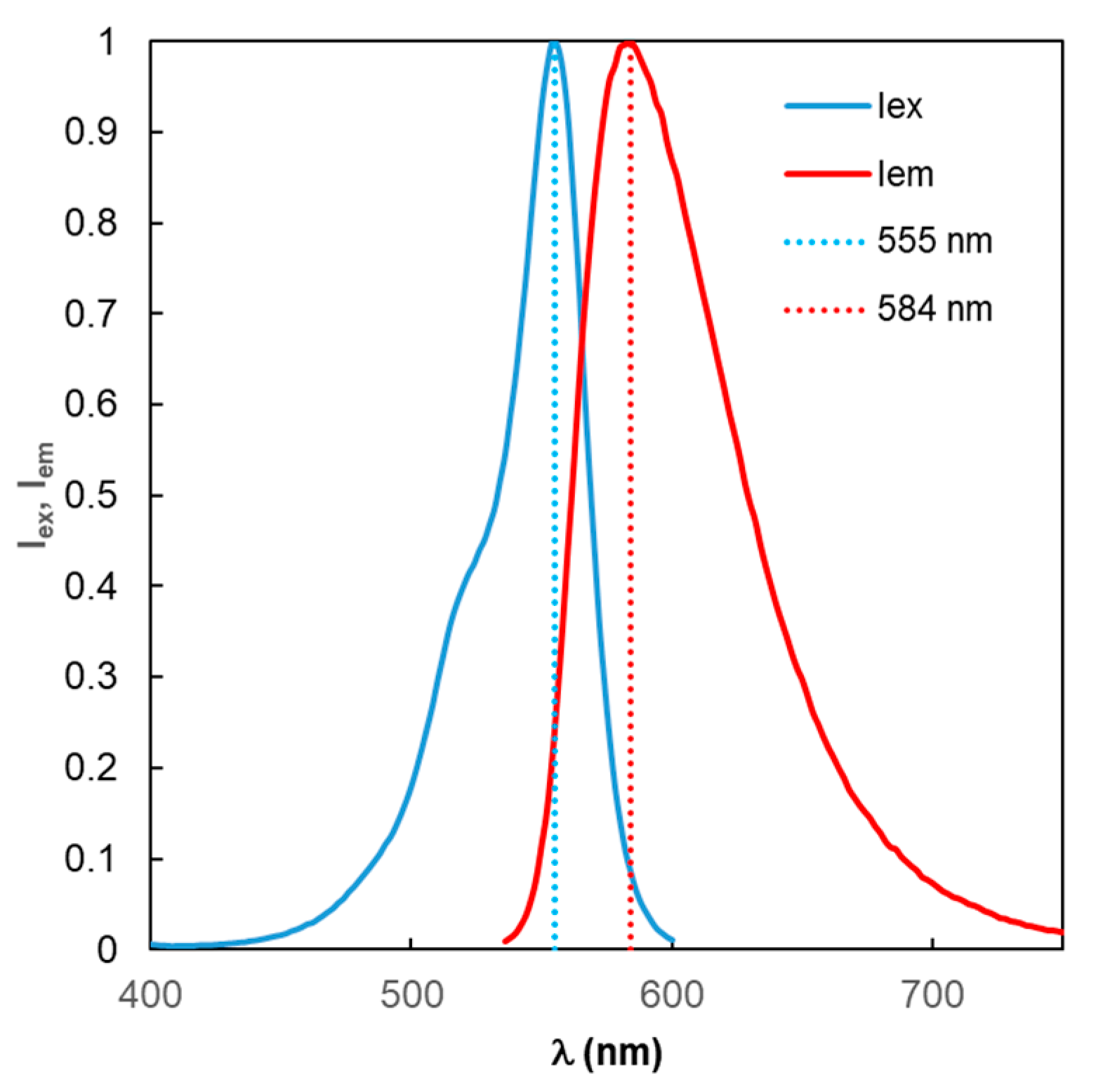
- Monochromatic excitation at a fixed wavelength λex, corresponding to the maximum of the experimental curve Iex.
- (2)
- Emission analysis at a fixed wavelength λem, corresponding to the maximum of the experimental curve Iem.
- (3)
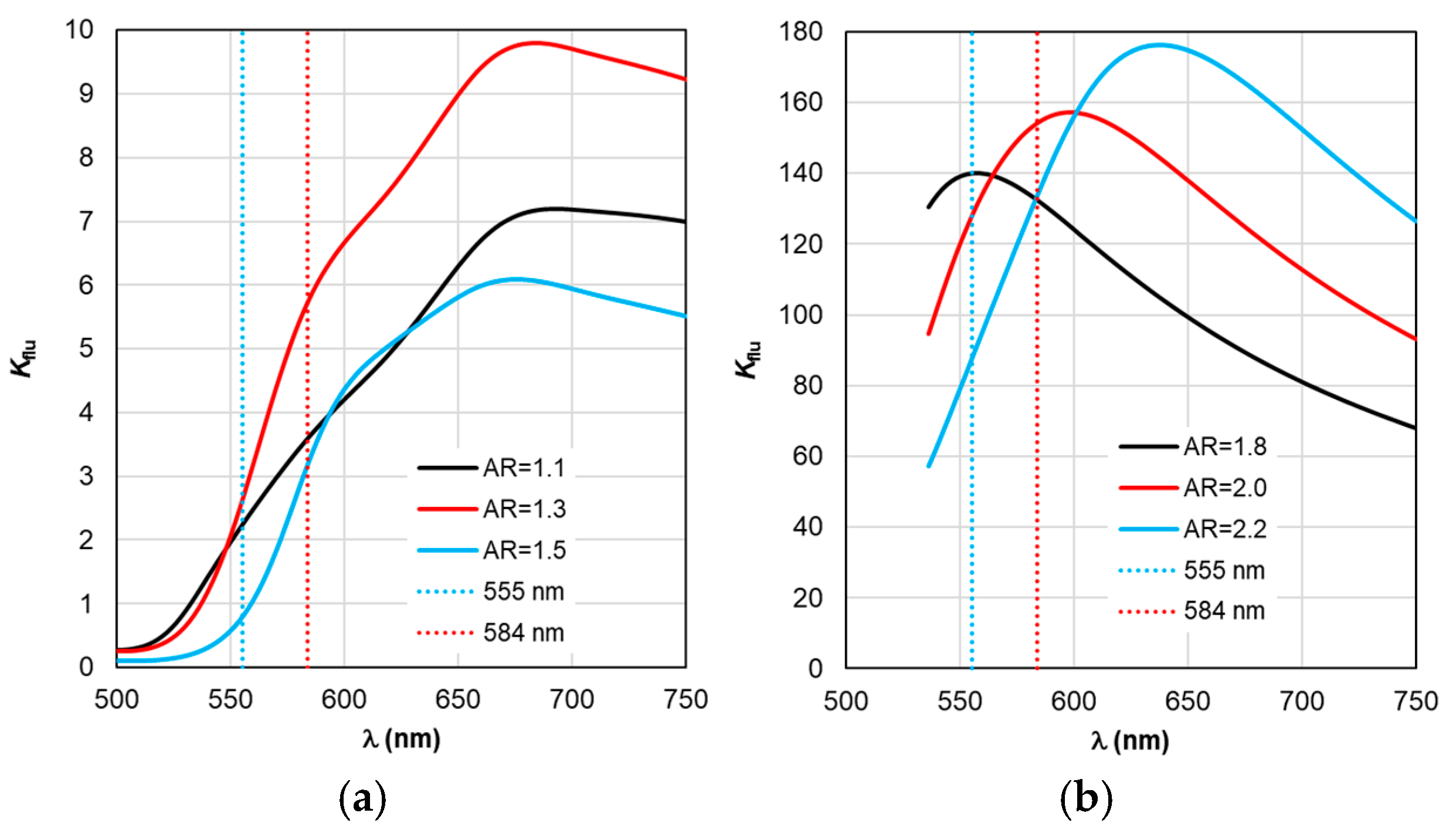
- Optimality criterion—the maximum fluorescence enhancement coefficient Kflu under constraints (1) and (2) specified above.
4. Development of a Model for Simulating the Spectral Fluorescence Response
- (1)
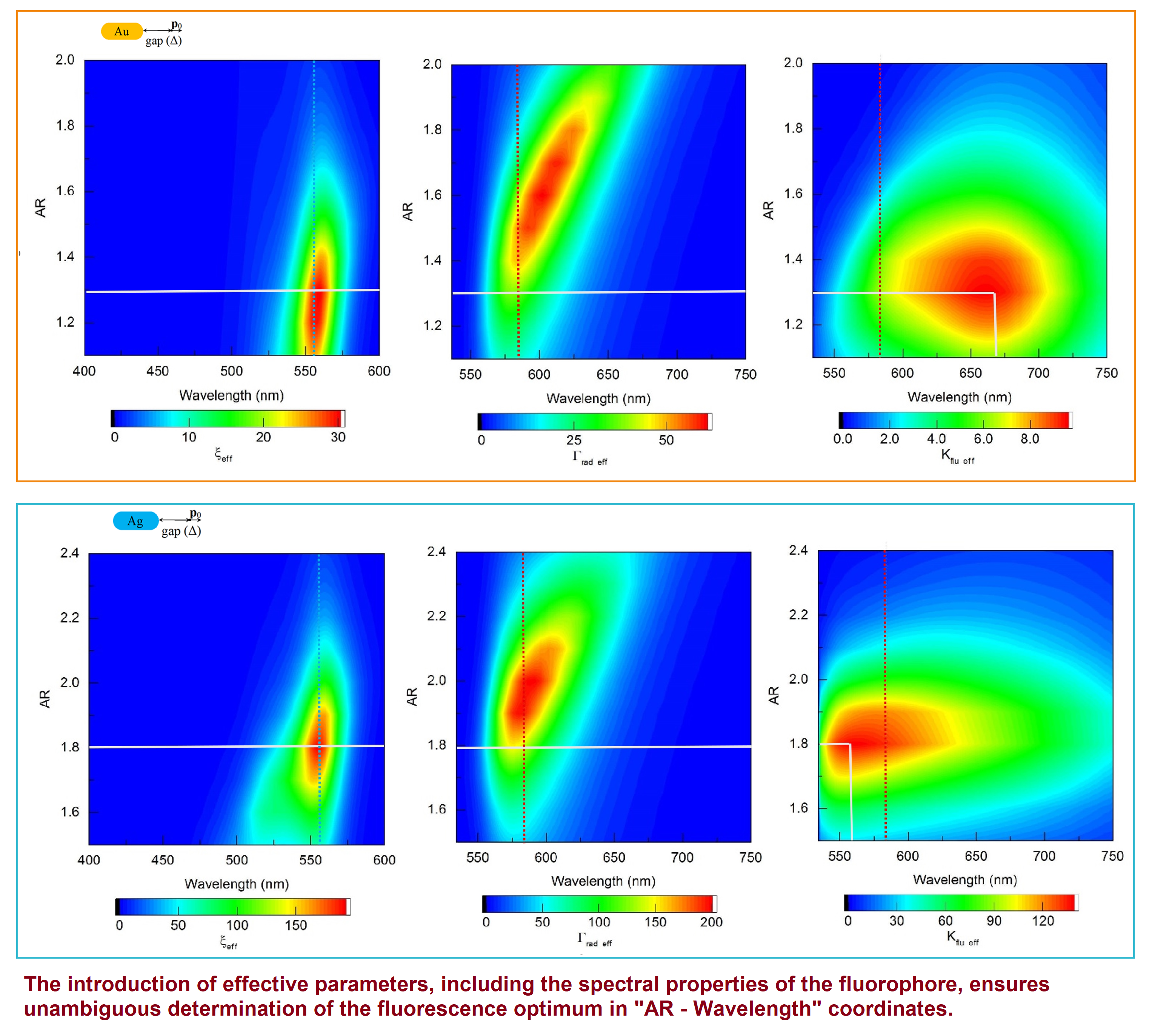
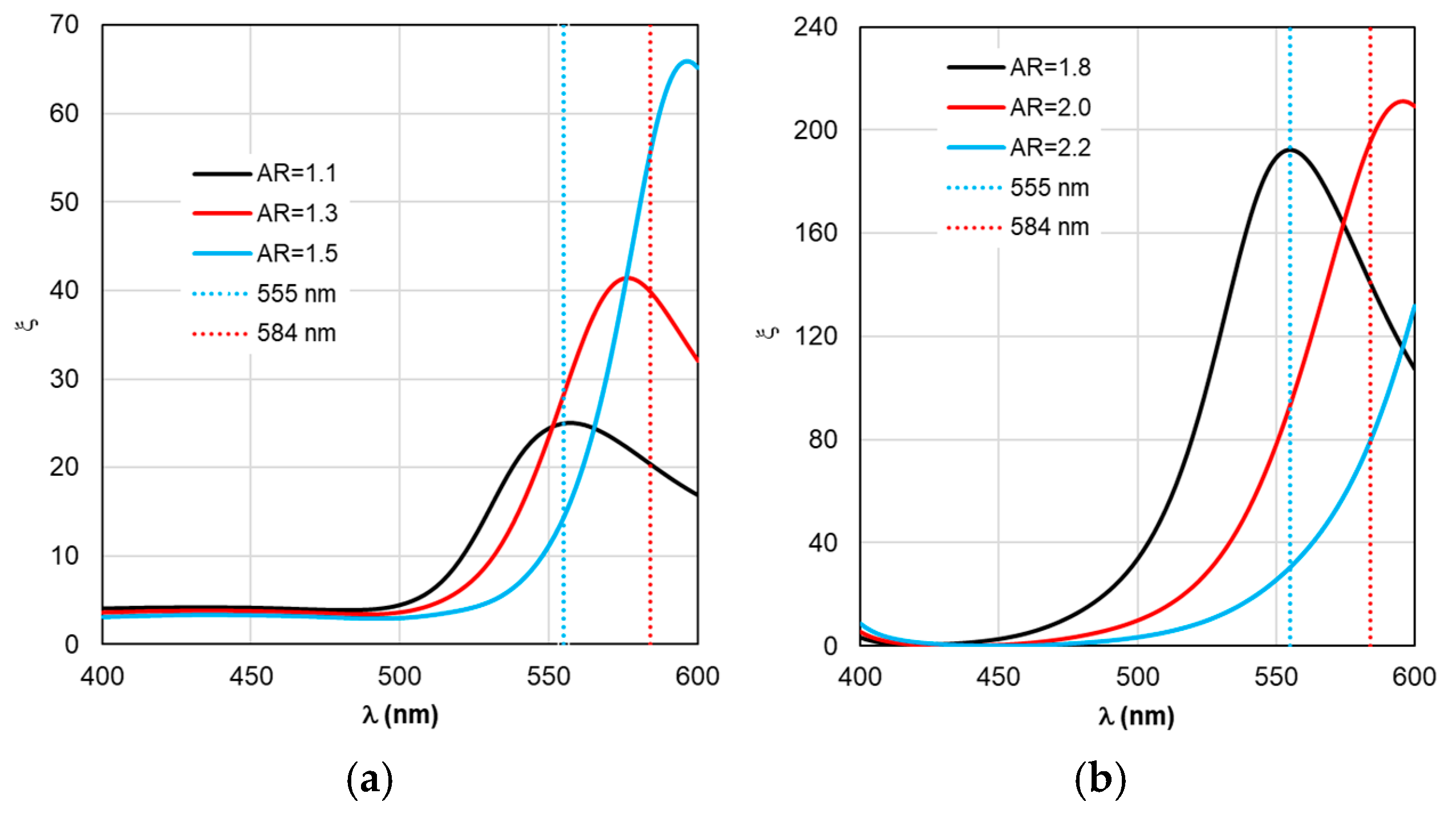
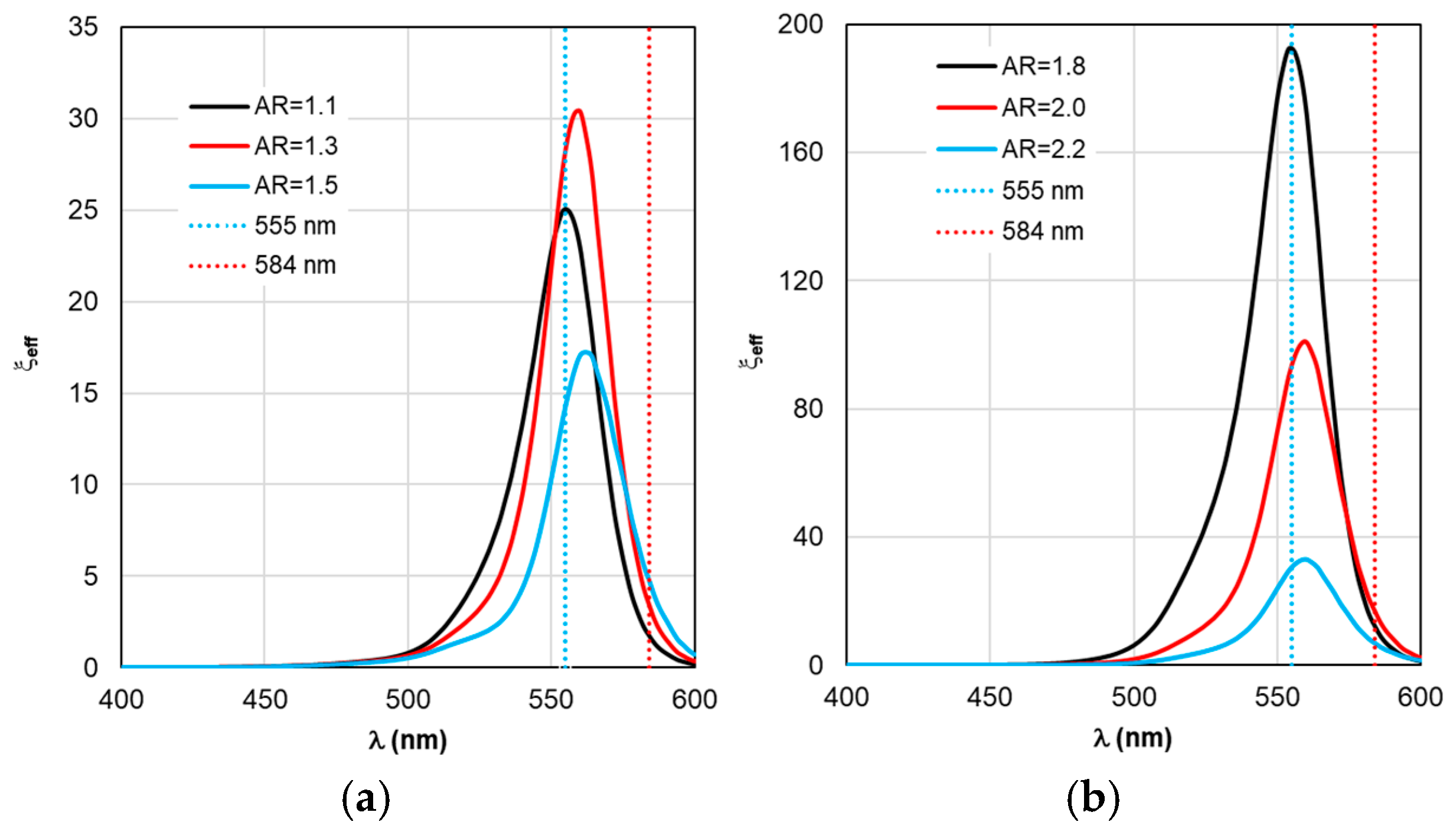
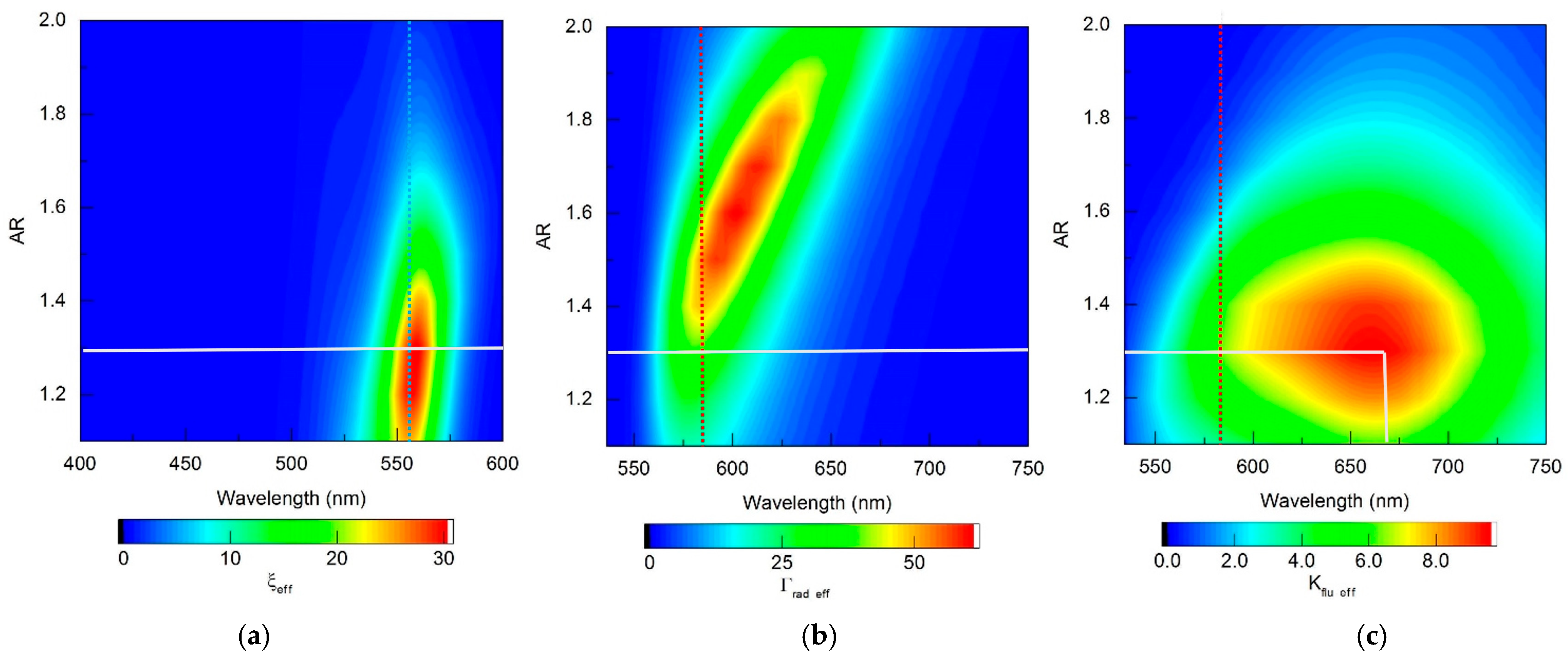
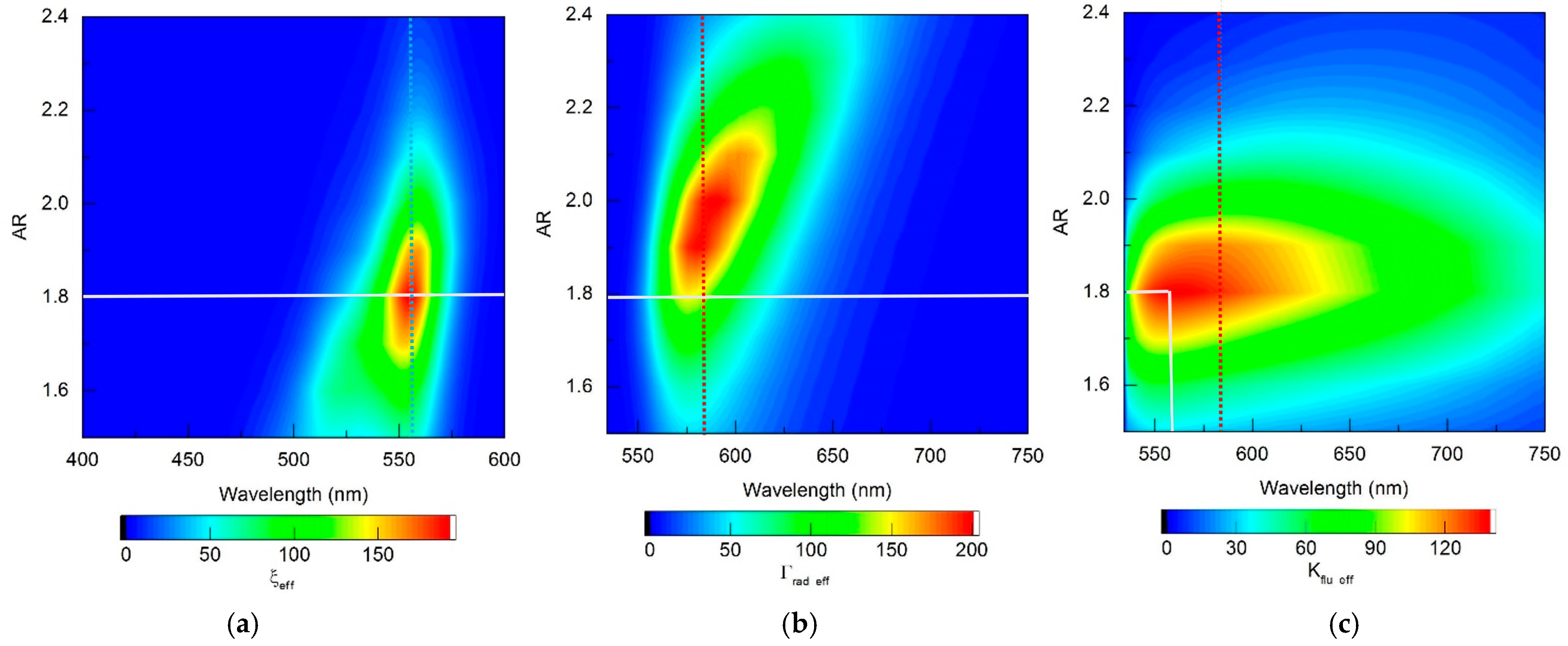
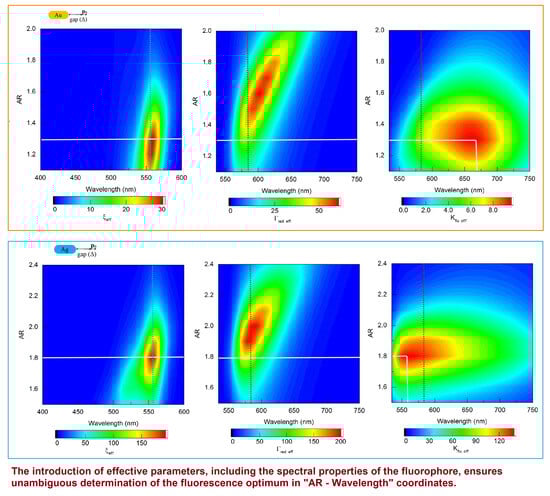
- Monochromatic excitation at a wavelength λ, determined based on the condition of achieving a maximum of the modified electric field intensity function ξeff = |E|2/|E0|2, determined taking into account the spectral excitation function of the fluorophore Iex, in the range of variation «excitation wavelength—the dimensional parameters of the plasmonic nanoparticle». We will call ξeff the effective field intensity enhancement factor.
- (2)
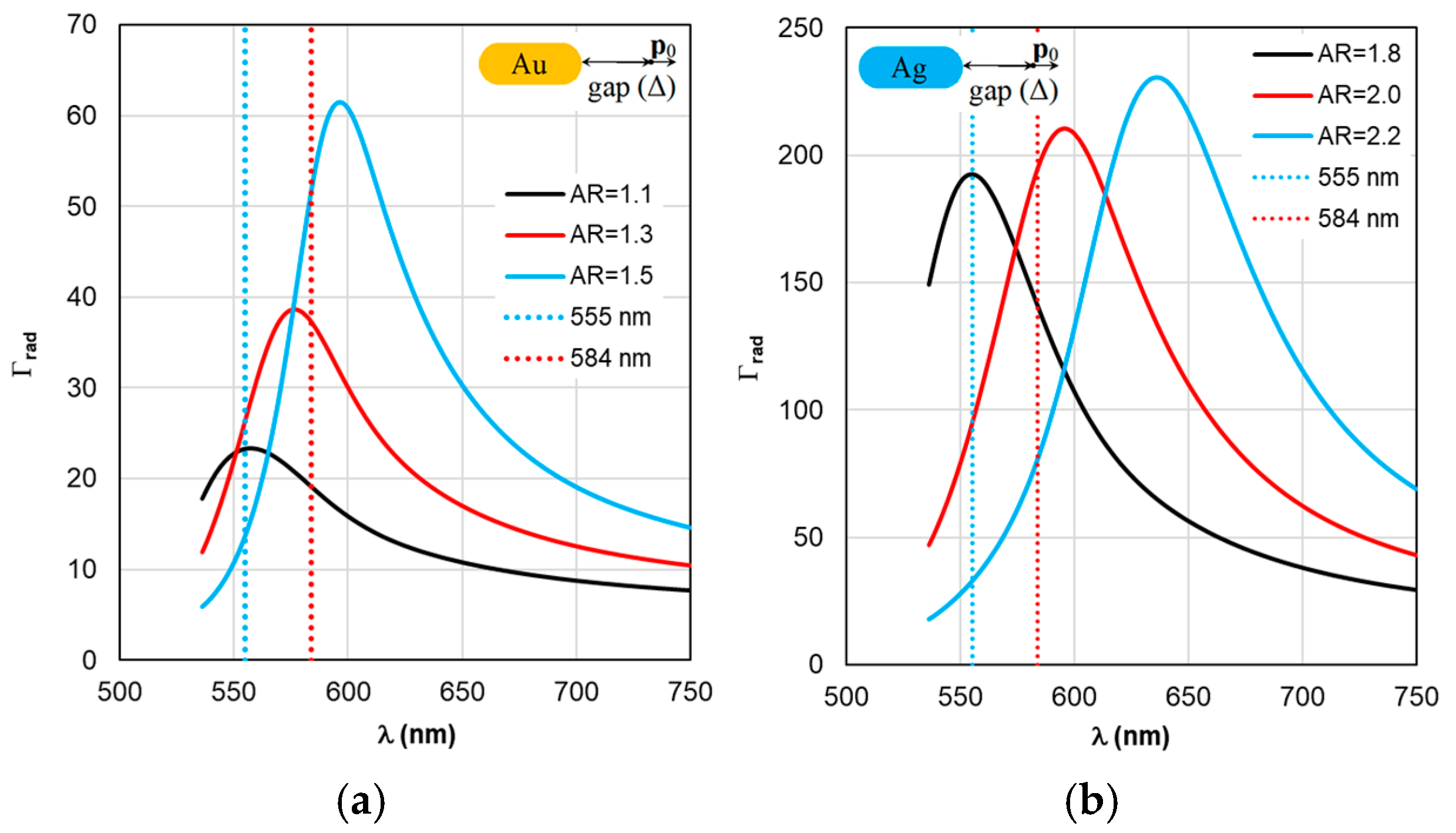
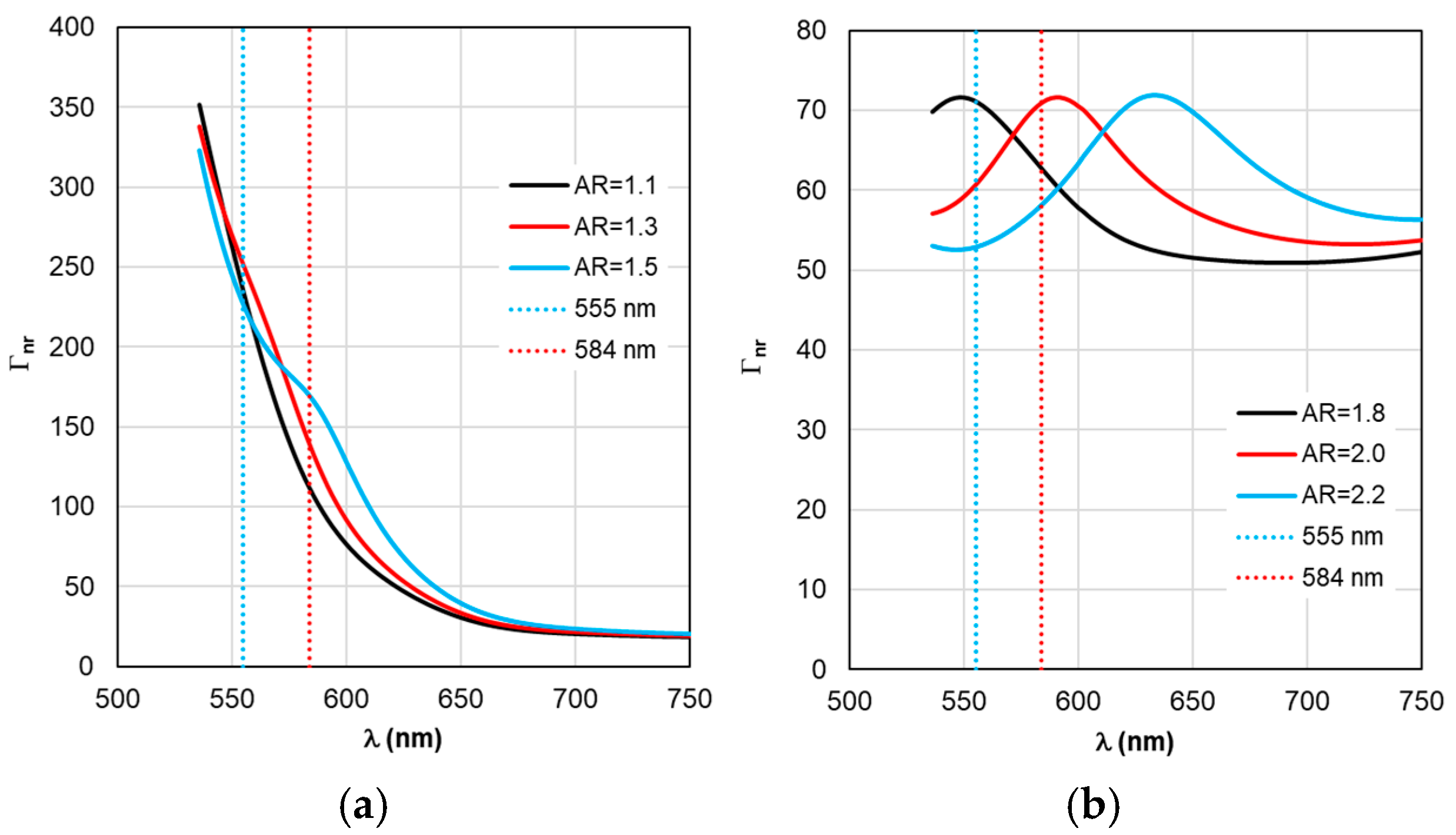
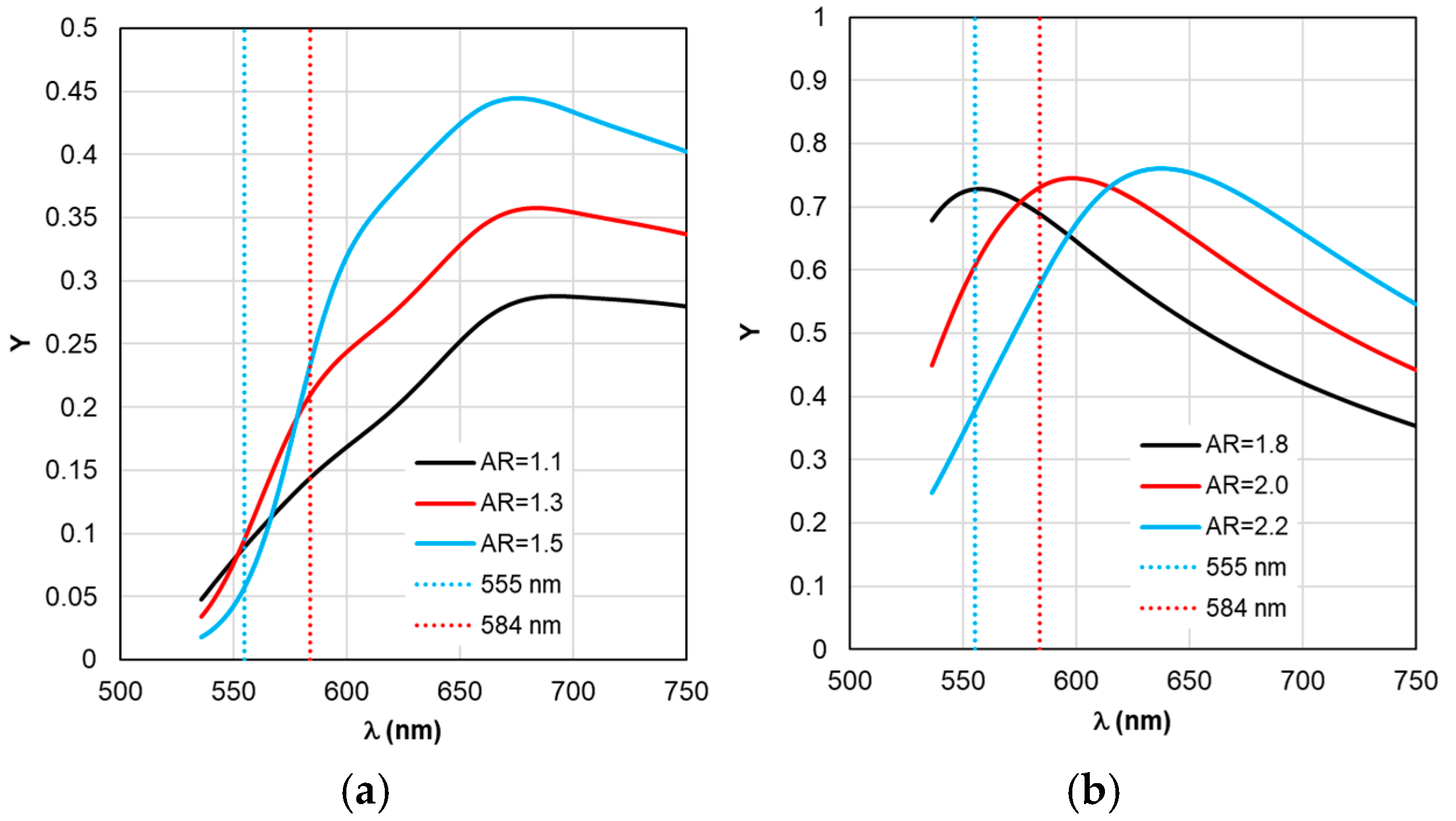
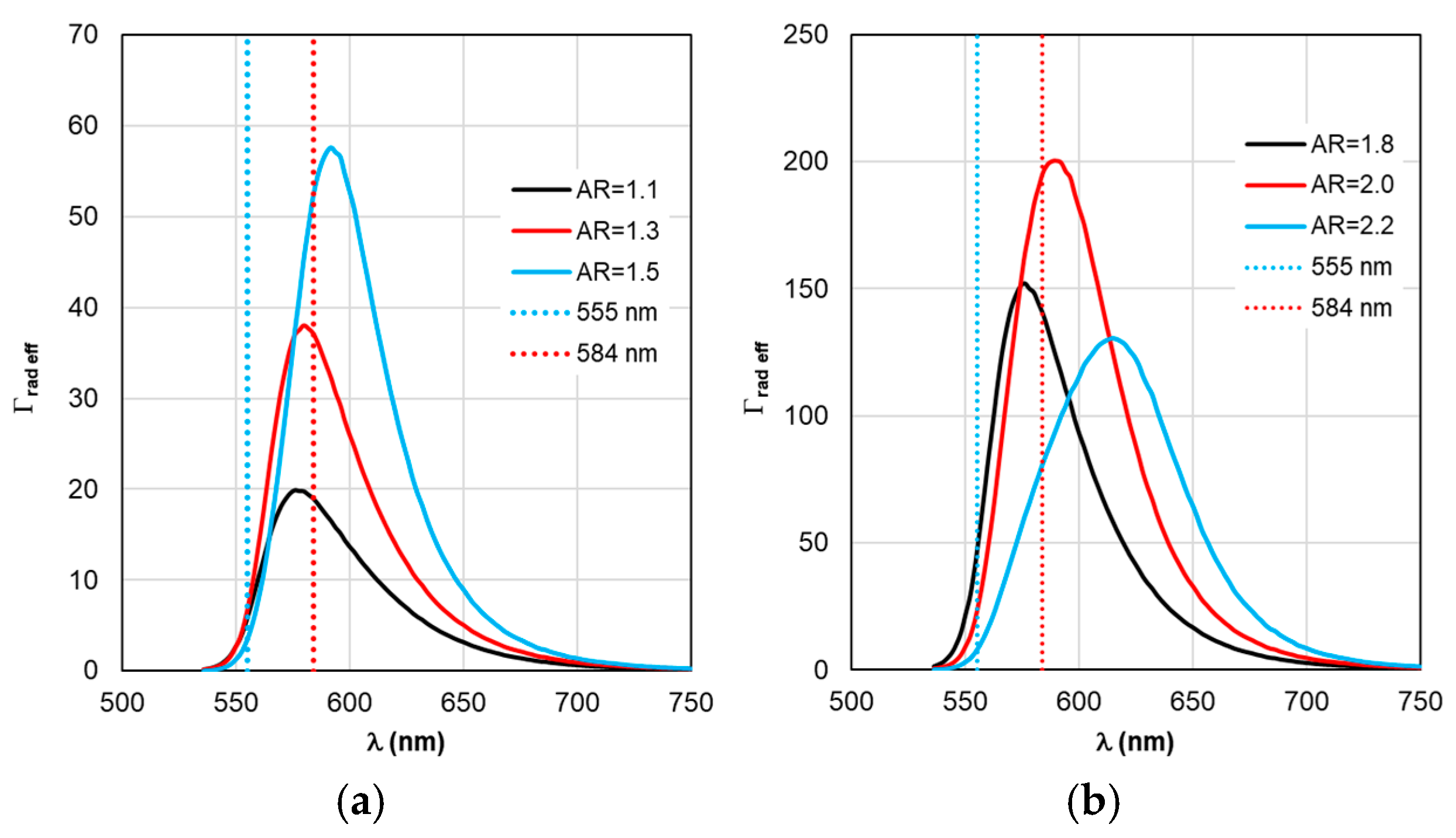
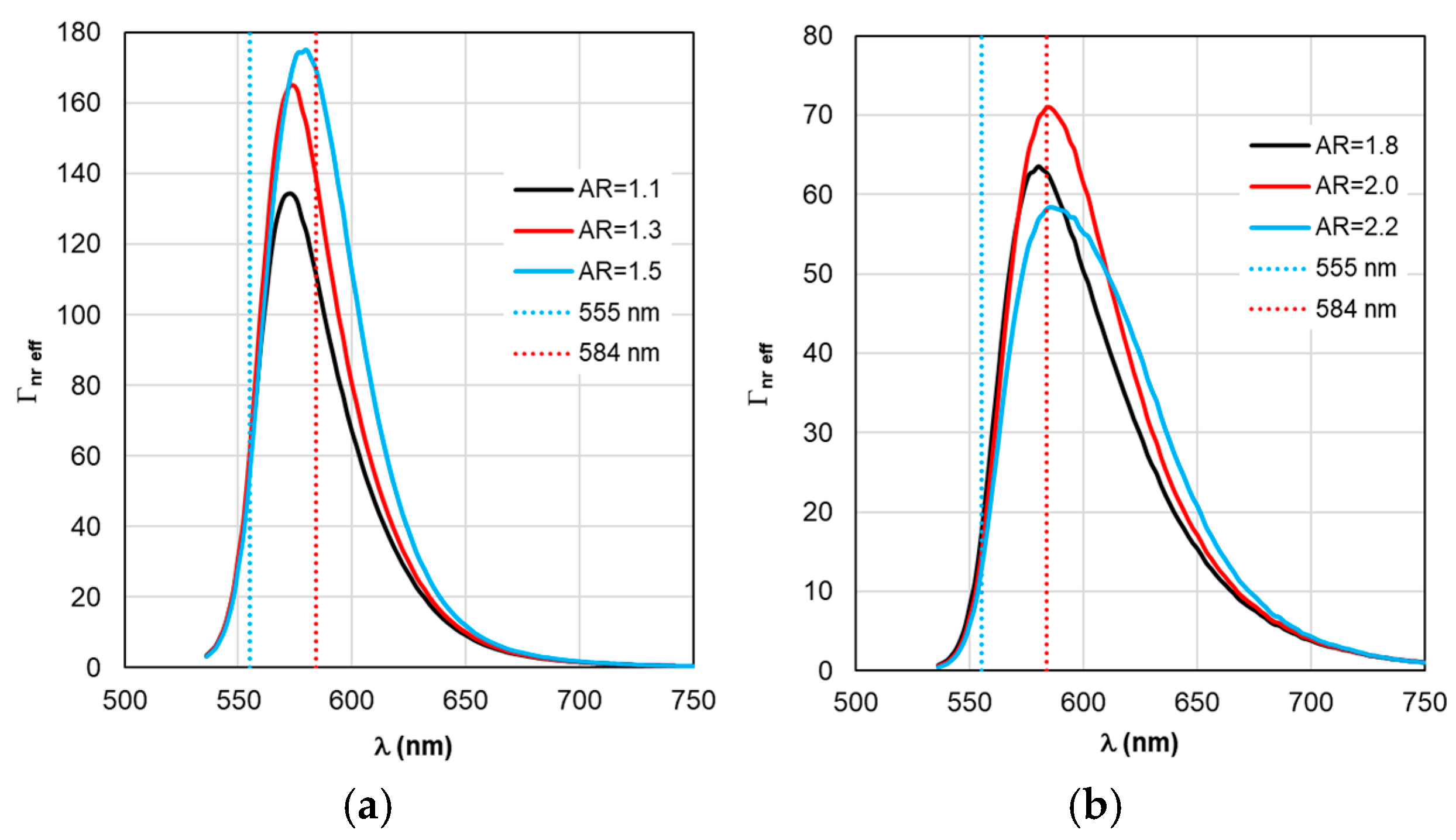
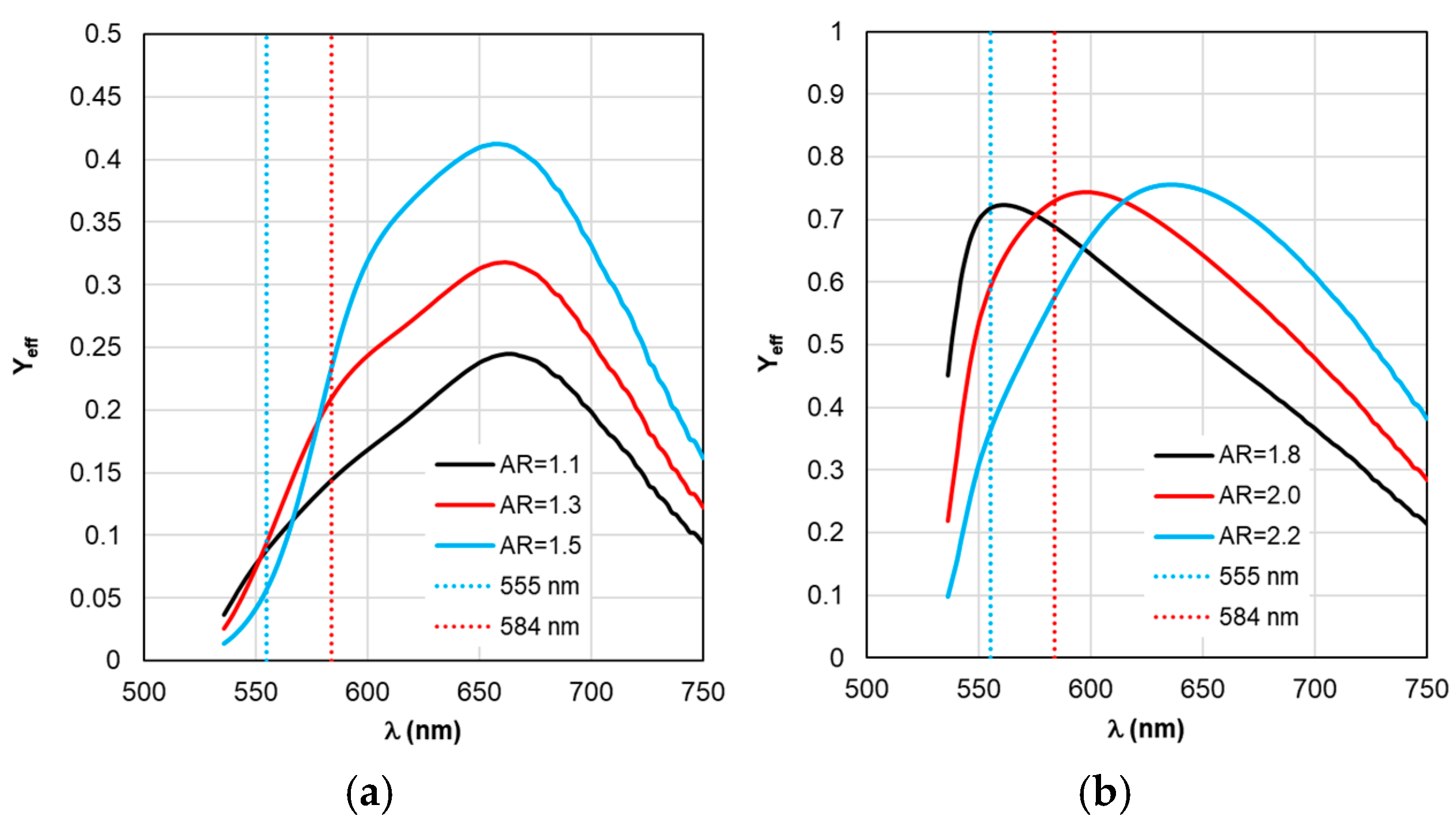
- Determination of the effective emission parameters (effective radiation losses Γrad eff, effective nonradiation losses Γnr eff, and effective quantum yield Yeff) in the fluorescence wavelength range, taking into account the spectral function Iem.
- (3)
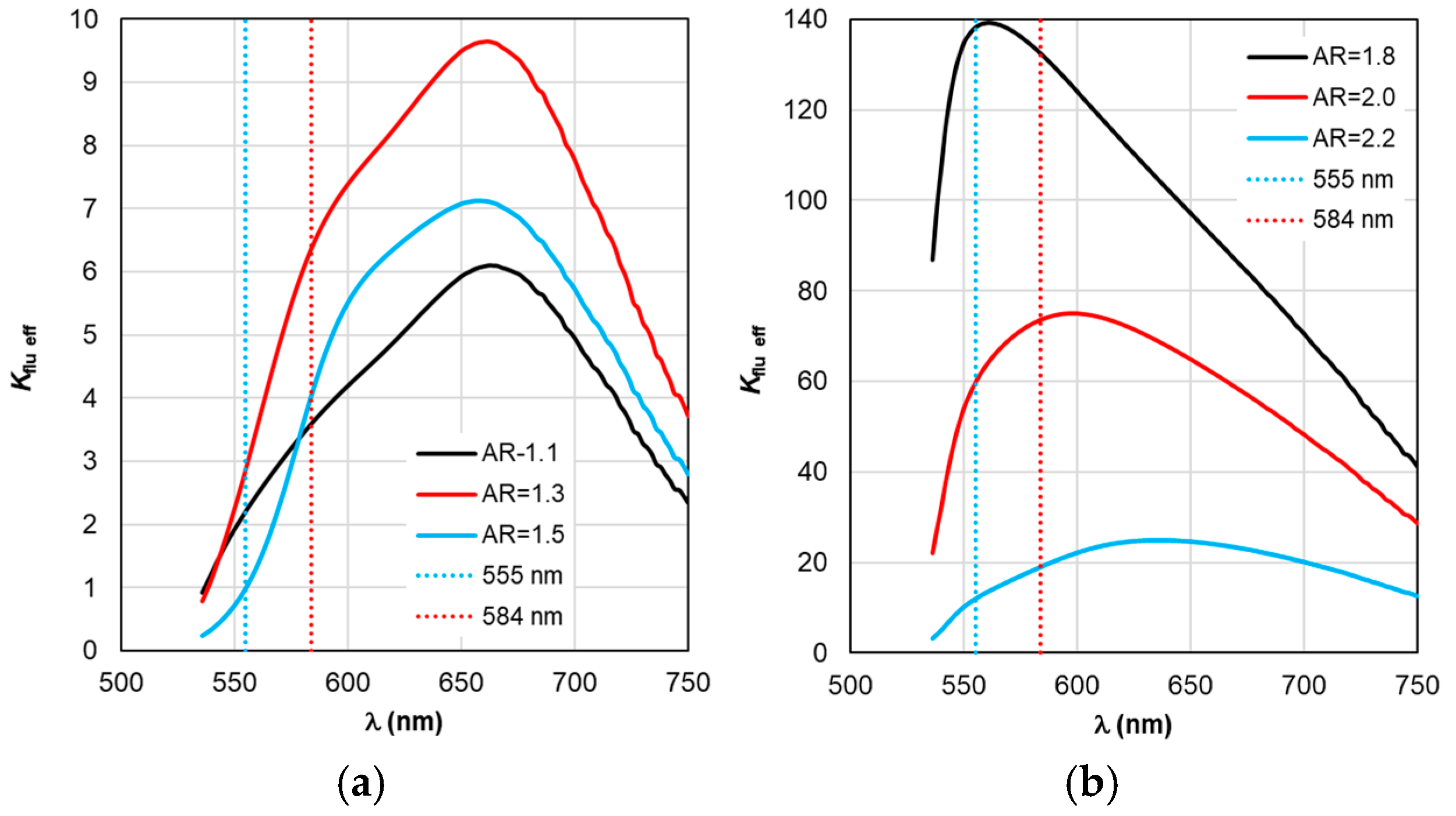
- The optimality criterion is the maximum fluorescence signal enhancement (effective fluorescence enhancement factor Kflu eff) in the range of variation «emission wavelength—the dimensional parameters of the plasmonic nanoparticle».
- (1).
- At the stage of excitation of the object by an irradiating field of intensity I0 with a given vector of complex amplitude E0 at a frequency ωex, the homogeneous equation (1) was solved (this is an equation with a zero right-hand side, i.e., at j0 = 0) and the distributions of local values of the vectors E, H and the corresponding energy characteristics (3)–(5) were calculated. If, within the scatterer, the irradiating field E0 can be locally approximated by a plane wave, then scattering and absorption are usually characterized by the corresponding cross-sections [21]. Namely, the scattering cross-section
- (2).
- At the stage of emission of the fluorescent signal at the frequency ωem, the inhomogeneous Equation (1) was solved, and the distributions of local values of the vectors E, H and the corresponding energy characteristics were calculated directly using Formulas (3)–(5). In contrast to the excitation stage, the fields E, H were induced not by the irradiating field with a given complex amplitude E0, but by a given (external) density of the conductivity current of the object j0. This is equivalent to setting the corresponding external dipole moment p0 [41], simulating the source of the fluorescent signal, which has a spontaneous nature and, as in works [9,21,25,42], is considered by us as a point object.
5. Numerical Simulation Results and Discussion
- -
- Determination by Formula (9) of the dependence of the amplification coefficient of the intensity of the exciting field ξ = |E|2/|E0|2 on the length λex when varying the dimensional parameters of the nanostructure (in our case, the AR is nanorod form factor) at a given gap Δ;
- -
- Determination of the dependence of the quantum yield Y on the emission of a dipole of a fluorophore molecule at a length of λ with varying dimensional parameters of the nanostructure and a given gap Δ, taking into account the intrinsic quantum yield of the molecule Y0.
- -
- Based on the found dependencies ξ and Y, the value of the dimensional parameter AR is determined, at which the maximum fluorescence gain coefficient Kflu is achieved.
- (i)
- spectral localization (the curves describing the dependences of the physical process parameters are defined strictly in the excitation/emission range of the fluorescent molecule);
- (ii)
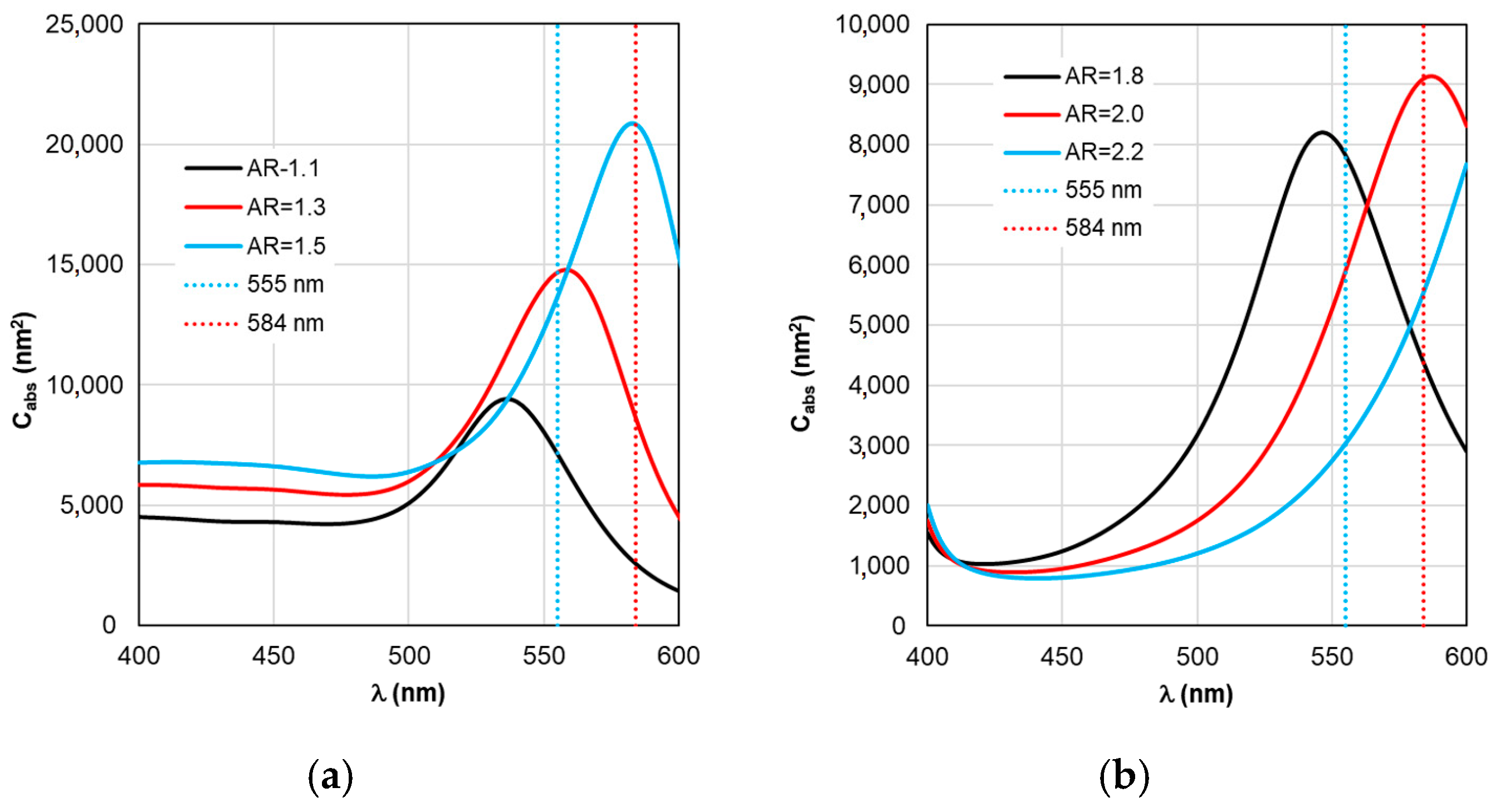
- a correlation between the shifts in the ξeff, Γrad eff, and Γnr eff peaks and the shifts in the Cabs peaks (see Figure 3) exists, but is expressed to a much lesser degree, while the differences in the actual values of the ξeff, Γrad eff, and Γnr eff maxima are significant;
- (iii)
- the physical interpretation of the obtained results corresponds to the description of the spectral sensitivity upon excitation and the spectral distribution of fluorescent radiation upon emission of fluorophore molecules.
6. Conclusions
- An RM is proposed that takes into account the spectral selectivity of the excitation/emission properties of a fluorophore in a finite wavelength range, which is universal with respect to arbitrary fluorophores used in the construction of fluorescent complexes.
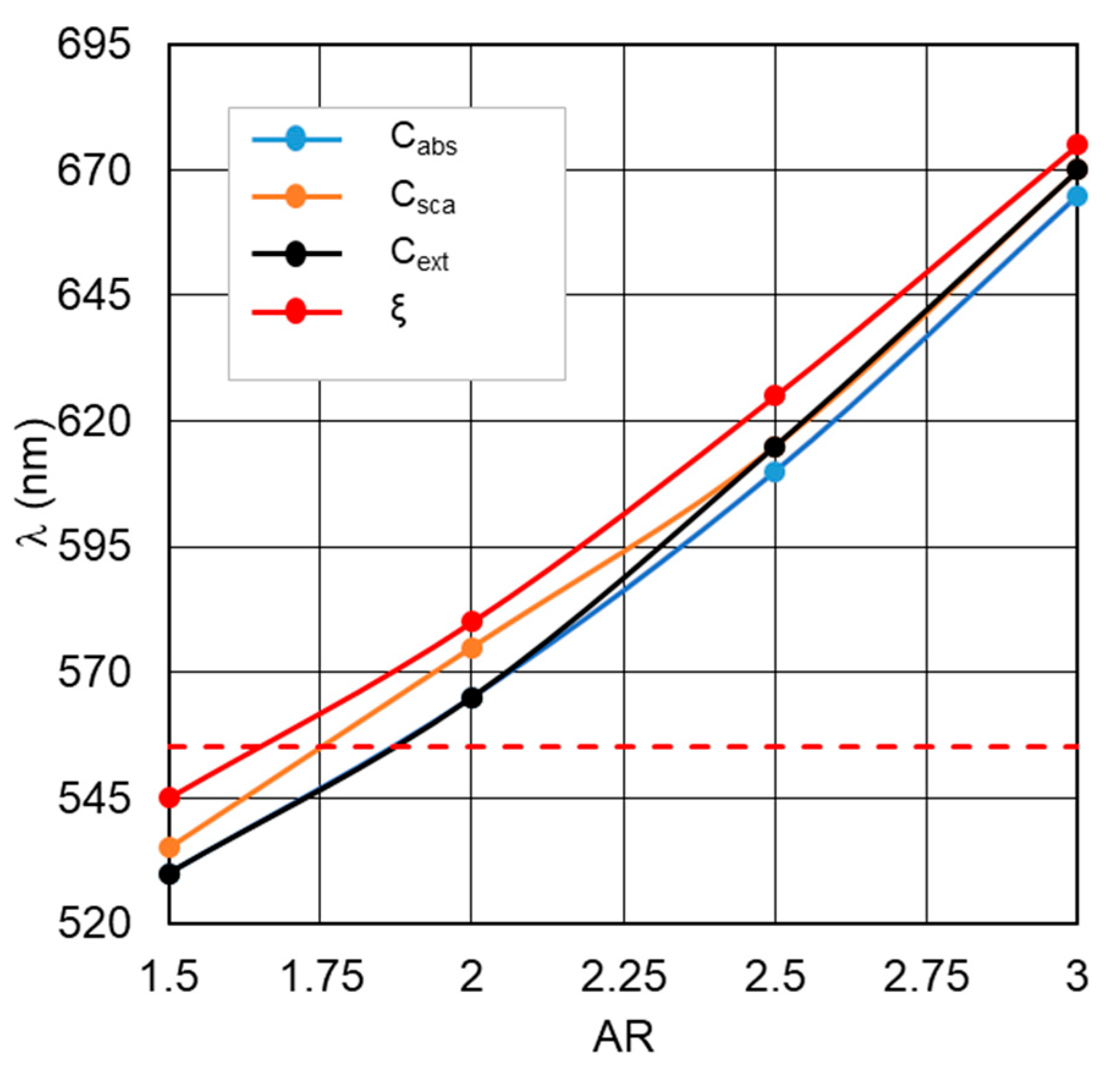
- The position of the maximum intensity of the LSPR field in the near zone, used for spectral tuning of the fluorescent complex, has a redshift relative to the Cabs peak: for the studied gold nanorods, it is 22 nm, and for silver nanorods, −8 nm. This information is important for precision tuning of the field maximum based on the results of experimental measurements of absorption parameters.
- The spectral sensitivity of the fluorophore molecule leads to the effect of spectral stabilization ξeff: the change in the position of the maximum of the ξ LSPR field intensity with a change in the nanorod form factor is several times greater than the change in the position of the maximum ξeff.
- The maxima of the spectral dependences of the field enhancement coefficient, radiative and non-radiative relaxation rates, found using RM, as a rule, do not coincide with the maxima of the functions Iex, Iem, and the nature of the curves corresponds to the physical meaning of the modeled processes.
- It is shown that recommendations for choosing optimal parameters of fluorescent nanocomplexes based on RM results can significantly (several times) improve the parameters of synthesized fluorescence nanocomplexes compared with ones obtained using the recommendations on TM. A positive factor of practical significance is information on the dependence of the fluorescence enhancement factor over the entire wavelength range of the fluorescence signal.
Supplementary Materials
Author Contributions
Funding
Institutional Review Board Statement
Informed Consent Statement
Data Availability Statement
Conflicts of Interest
Abbreviations
| MEF | Metal-enhanced fluorescence |
| DNA | Deoxyribonucleic acid |
| LSPR | Localized surface plasmon resonance |
| AR | Aspect ratio |
| TM | Traditional model |
| RM | Refined model |
References
- Yılmaz, F.; Çimen, D.; Denizli, A. Plasmonic Sensors for Point of Care Diagnostics. J. Pharm. Biomed. Anal. 2025, 265, 117042. [Google Scholar] [CrossRef]
- Ding, C.; Li, W.; Huang, X.; Tang, B.Z.; Huang, Y. Multifunctional Ultra-Bright Plasmonic Gold@ Fluorescence Nanoprobe for Biomedical Applications. Aggregate 2025, 6, e744. [Google Scholar] [CrossRef]
- Walker, I.; Li, H. Applications of metal enhanced fluorescence for the detection and quantification of extracellular vesicles. Colloids Surf. B Biointerfaces 2025, 260, 115385. [Google Scholar] [CrossRef]
- Wu, J.; Ko, S.; Lee, E.; Son, E.; Kang, G.; Hur, S.; Lee, J.-H.; Oh, J.-W.; Kim, Y. Gold nanoparticles in imaging: Advances, applications, and future perspectives. Appl. Spectrosc. Rev. 2025, 60, 978–1017. [Google Scholar] [CrossRef]
- Yang, J.; Zheng, K.; Chen, W.; Zeng, X.; Chen, Y.; Lin, F.; Li, D. Illuminating the Invisible: Fluorescent Probes as Emerging Tools for Micro/Nanoplastic Identification. Int. J. Mol. Sci. 2025, 26, 11283. [Google Scholar] [CrossRef]
- Sharma, P.; Ganguly, M. Selective and sensitive detection of aqueous contaminants via coinage metal-enhanced fluorescence with diiminic Schiff bases. Int. J. Environ. Sci. Technol. 2024, 21, 3345–3364. [Google Scholar] [CrossRef]
- Ece, E.; Aslan, Y.; Hacıosmanoğlu, N.; Inci, F. MicroMetaSense: Coupling Plasmonic Metasurfaces with Fluorescence for Enhanced Detection of Microplastics in Real Samples. ACS Sens. 2024, 10, 725–740. [Google Scholar] [CrossRef]
- Romero, M.R.; Veglia, A.V.; Amé, M.V.; Bracamonte, A.G. Multimodal Spectroscopy Assays for Advanced Nano-Optics Approaches by Tuning Nano-Tool Surface Chemistry and Metal-Enhanced Fluorescence. Crystals 2024, 14, 338. [Google Scholar] [CrossRef]
- Novotny, L.; Hecht, B. Principles of Nano-Optics, 2nd ed.; Cambridge University Press: New York, NY, USA, 2012; 564p. [Google Scholar]
- Maier, S.A. Plasmonics: Fundamentals and Applications, 1st ed.; Springer: New York, NY, USA, 2007; 224p. [Google Scholar] [CrossRef]
- Lakowicz, J.R.; Ray, K.; Chowdhury, M.; Szmacinski, H.; Fu, Y.; Zhang, J.; Nowaczyk, K. Plasmon-controlled fluorescence: A new paradigm in fluorescence spectroscopy. Analyst 2008, 133, 1308–1346. [Google Scholar] [CrossRef]
- Hong, D.; Jo, E.J.; Bang, D.; Jung, C.; Lee, Y.E.; Noh, Y.S.; Shin, M.G.; Kim, M.G. Plasmonic approach to fluorescence enhancement of mesoporous silica-coated gold nanorods for highly sensitive influenza A virus detection using lateral flow immunosensor. ACS Nano 2023, 17, 16607–16619. [Google Scholar] [CrossRef] [PubMed]
- Ransdell-Green, E.C.; Baranowska-Kortylewicz, J.; Wang, D. Advances in Fluorescence Techniques for the Detection of Hydroxyl Radicals near DNA and Within Organelles and Membranes. Antioxidants 2025, 14, 79. [Google Scholar] [CrossRef]
- Craciun, A.M.; Astilean, S.; Focsan, M.; de la Chapelle, M.L. Gold nanoparticles conjugated with fluorophore-labeled DNA: Overview of sensing and imaging applications. TrAC Trends Anal. Chem. 2024, 180, 117913. [Google Scholar] [CrossRef]
- Badshah, M.A.; Ju, J.; Lu, X.; Abbas, N.; Kim, S.M. Enhancing the sensitivity of DNA microarrays by metal-enhanced fluorescence using vertical nanorod structures. Sens. Actuators B Chem. 2018, 274, 451–457. [Google Scholar] [CrossRef]
- Badshah, M.A.; Koh, N.Y.; Zia, A.W.; Abbas, N.; Zahra, Z.; Saleem, M.W. Recent Developments in Plasmonic Nanostructures for Metal Enhanced Fluorescence-Based Biosensing. Nanomaterials 2020, 10, 1749. [Google Scholar] [CrossRef]
- Hohlbein, J.; Gryte, K.; Heilemann, M.; Kapanidis, A.N. Surfing on a new wave of single-molecule fluorescence methods. Phys. Biol. 2010, 7, 031001. [Google Scholar] [CrossRef] [PubMed]
- Philip, A.; Kumar, A.R. The performance enhancement of surface plasmon resonance optical sensors using nanomaterials: A review. Coord. Chem. Rev. 2022, 458, 214424. [Google Scholar] [CrossRef]
- Jeong, Y.; Kook, Y.M.; Lee, K.; Koh, W.G. Metal enhanced fluorescence (MEF) for biosensors: General approaches and a review of recent developments. Biosens. Bioelectron. 2018, 111, 102–116. [Google Scholar] [CrossRef] [PubMed]
- Ford, G.W.; Weber, W.H. Electromagnetic interactions of molecules with metal surfaces. Phys. Rep. 1984, 113, 195–287. [Google Scholar] [CrossRef]
- Sukharev, M.; Freifeld, N.; Nitzan, A. Numerical calculations of radiative and non-radiative relaxation of molecules near metal particles. J. Phys. Chem. C 2014, 118, 10545–10551. [Google Scholar] [CrossRef]
- Anger, P.; Bharadwaj, P.; Novotny, L. Enhancement and quenching of single-molecule fluorescence. Phys. Rev. Lett. 2006, 96, 113002. [Google Scholar] [CrossRef]
- Purcell, E.M. Spontaneous emission probabilities at radio frequencies. In Confined Electrons and Photons: New Physics and Applications; Burstein, E., Weisbuch, C., Eds.; Springer: Boston, MA, USA, 1995; p. 839. [Google Scholar] [CrossRef]
- Krasnok, A.E.; Slobozhanyuk, A.P.; Simovski, C.R.; Tretyakov, S.A.; Poddubny, A.N.; Miroshnichenko, A.E.; Kivshar, Y.S.; Belov, P.A. An antenna model for the Purcell effect. Sci. Rep. 2015, 5, 12956. [Google Scholar] [CrossRef]
- Bharadwaj, P.; Novotny, L. Spectral dependence of single molecule fluorescence enhancement. Opt. Express 2007, 15, 14266–14274. [Google Scholar] [CrossRef] [PubMed]
- Saleh, B.E.A.; Teich, M.C. Fundamentals of Photonics; Wiley: Hoboken, NJ, USA, 2007; Volume 2, 1200p. [Google Scholar]
- Chudakov, D.M.; Matz, M.V.; Lukyanov, S.; Lukyanov, K.A. Fluorescent proteins and their applications in imaging living cells and tissues. Physiol. Rev. 2010, 90, 1103–1163. [Google Scholar] [CrossRef] [PubMed]
- Chen, Y.; Munechika, K.; Ginger, D.S. Dependence of fluorescence intensity on the spectral overlap between fluorophores and plasmon resonant single silver nanoparticles. Nano Lett. 2007, 7, 690–696. [Google Scholar] [CrossRef]
- Abadeer, N.S.; Brennan, M.R.; Wilson, W.L.; Murphy, C.J. Distance and plasmon wavelength dependent fluorescence of molecules bound to silica-coated gold nanorods. ACS Nano 2014, 8, 8392–8406. [Google Scholar] [CrossRef]
- Guzatov, D.V.; Vaschenko, S.V.; Stankevich, V.V.; Lunevich, A.Y.; Glukhov, Y.F.; Gaponenko, S.V. Plasmonic enhancement of molecular fluorescence near silver nanoparticles: Theory, modeling, and experiment. J. Phys. Chem. C 2012, 116, 10723–10733. [Google Scholar] [CrossRef]
- Montaño-Priede, J.L.; Zapata-Herrera, M.; Esteban, R.; Zabala, N.; Aizpurua, J. An overview on plasmon-enhanced photoluminescence via metallic nanoantennas. Nanophotonics 2024, 13, 4771–4794. [Google Scholar] [CrossRef]
- Bohren, C.F.; Huffman, D.R. Absorption and Scattering of Light by Small Particles; John Wiley & Sons: New York, NY, USA, 2008; 530p. [Google Scholar]
- Zuloaga, J.; Nordlander, P. On the energy shift between near-field and far-field peak intensities in localized plasmon systems. Nano Lett. 2011, 11, 1280–1283. [Google Scholar] [CrossRef]
- Zar’kov, S.V.; Avetisyan, Y.A.; Yakunin, A.N.; Meerovich, I.G.; Fixler, D.; Savitsky, A.P.; Tuchin, V.V. Interaction of laser radiation and complexes of gold nanoparticles linked with proteins. Quantum Electron. 2021, 51, 52–63. [Google Scholar] [CrossRef]
- Pham, Q.T.; Ngo, G.L.; Nguyen, C.T.; Ledoux-Rak, I.; Lai, N.D. Unraveling the Dominant Size Effect in Polydisperse Solutions and Maximal Electric Field Enhancement of Gold Nanoparticles. Photonics 2024, 11, 691. [Google Scholar] [CrossRef]
- Chang, H.H.; Murphy, C.J. Mini gold nanorods with tunable plasmonic peaks beyond 1000 nm. Chem. Mater. 2018, 30, 1427–1435. [Google Scholar] [CrossRef]
- Zubova, N.N.; Bulavina, A.Y.; Savitsky, A.P. Spectral and physicochemical properties of green (GFP) and red (drFP583) fluorescent proteins. Usp. Biol. Khim. 2003, 43, 163–224. [Google Scholar]
- Marynich, N.K.; Gavshina, A.V.; Savitsky, A.P.; Meerovich, I.G. Targeted Diminution of the Immunogenicity of the Red Fluorescent Protein TagRFP. Mol. Genet. Microbiol. Virol. 2025, 40, 253–263. [Google Scholar] [CrossRef]
- FPbase. Available online: https://www.fpbase.org/protein/tagrfp/ (accessed on 18 February 2026).
- Nikolsky, V.V.; Nikolskaya, T.I. Electrodynamics and Propagation of Radio Waves; Science and Education Publishing: Moskow, Russia, 1989; 544p. [Google Scholar]
- Pryor, R.W. Multiphysics Modeling Using COMSOL®: A First Principles Approach; Jones & Bartlett Publishers: Mississauga, ON, Canada, 2009; 852p. [Google Scholar]
- Carminati, R.; Greffet, J.J.; Henkel, C.; Vigoureux, J.M. Radiative and non-radiative decay of a single molecule close to a metallic nanoparticle. Opt. Commun. 2006, 261, 368–375. [Google Scholar] [CrossRef]
- Bian, Y.; Liu, S.; Zhang, Y.; Liu, Y.; Yang, X.; Lou, S.; Wu, E.; Wu, B.; Zhang, X.; Jin, Q. Distance-Dependent plasmon-enhanced fluorescence of submonolayer rhodamine 6G by gold nanoparticles. Nanoscale Res. Lett. 2021, 16, 90. [Google Scholar] [CrossRef]
- Kato, R.; Uesugi, M.; Komatsu, Y.; Okamoto, F.; Tanaka, T.; Kitawaki, F.; Yano, T.A. Highly stable polymer coating on silver nanoparticles for efficient plasmonic enhancement of fluorescence. ACS Omega 2022, 7, 4286–4292. [Google Scholar] [CrossRef]
- Lee, S.A.; Link, S. Chemical Interface Damping of Surface Plasmon Resonances. Acc. Chem. Res. 2021, 54, 1950–1960. [Google Scholar] [CrossRef] [PubMed]
- Ahmed, R.D.; Jamieson, W.D.; Vitsupakorn, D.; Zitti, A.; Pawson, K.A.; Castell, O.K.; Watson, P.D.; Jones, D.D. Molecular dynamics guided identification of a brighter variant of superfolder Green Fluorescent Protein with increased photobleaching resistance. Commun. Chem. 2025, 8, 174. [Google Scholar] [CrossRef]
- Ming, T.; Zhao, L.; Yang, Z.; Chen, H.; Sun, L.; Wang, J.; Yan, C. Strong polarization dependence of plasmon-enhanced fluorescence on single gold nanorods. Nano Lett. 2009, 9, 3896–3903. [Google Scholar] [CrossRef]
- Lu, G.; Zhang, T.; Li, W.; Hou, L.; Liu, J.; Gong, Q. Single-molecule spontaneous emission in the vicinity of an individual gold nanorod. J. Phys. Chem. C 2011, 115, 15822–15828. [Google Scholar] [CrossRef]
- Mei, Z.; Tang, L. Surface-plasmon-coupled fluorescence enhancement based on ordered gold nanorod array biochip for ultrasensitive DNA analysis. Anal. Chem. 2016, 89, 633–639. [Google Scholar] [CrossRef] [PubMed]
- Szenes, A.; Bánhelyi, B.; Szabó, L.Z.; Szabó, G.; Csendes, T.; Csete, M. Enhancing diamond color center fluorescence via optimized plasmonic nanorod configuration. Plasmonics 2017, 12, 1263–1280. [Google Scholar] [CrossRef]
- Szenes, A.; Vass, D.I.; Bánhelyi, B.; Csete, M. Enhancing Diamond Color Center Fluorescence via Optimized Configurations of Plasmonic Core–Shell Nanoresonator Dimers. ACS Omega 2023, 8, 41356–41362. [Google Scholar] [CrossRef] [PubMed]


Disclaimer/Publisher’s Note: The statements, opinions and data contained in all publications are solely those of the individual author(s) and contributor(s) and not of MDPI and/or the editor(s). MDPI and/or the editor(s) disclaim responsibility for any injury to people or property resulting from any ideas, methods, instructions or products referred to in the content. |
© 2026 by the authors. Licensee MDPI, Basel, Switzerland. This article is an open access article distributed under the terms and conditions of the Creative Commons Attribution (CC BY) license.
Share and Cite
Yakunin, A.N.; Zarkov, S.V.; Avetisyan, Y.A.; Akchurin, G.G.; Tuchin, V.V. Metal-Enhanced Fluorescence of Nanocomplexes. Materials 2026, 19, 1258. https://doi.org/10.3390/ma19061258
Yakunin AN, Zarkov SV, Avetisyan YA, Akchurin GG, Tuchin VV. Metal-Enhanced Fluorescence of Nanocomplexes. Materials. 2026; 19(6):1258. https://doi.org/10.3390/ma19061258
Chicago/Turabian StyleYakunin, Alexander N., Sergey V. Zarkov, Yuri A. Avetisyan, Garif G. Akchurin, and Valery V. Tuchin. 2026. "Metal-Enhanced Fluorescence of Nanocomplexes" Materials 19, no. 6: 1258. https://doi.org/10.3390/ma19061258
APA StyleYakunin, A. N., Zarkov, S. V., Avetisyan, Y. A., Akchurin, G. G., & Tuchin, V. V. (2026). Metal-Enhanced Fluorescence of Nanocomplexes. Materials, 19(6), 1258. https://doi.org/10.3390/ma19061258