Vari Morph Cast Iron—A High IQ Material—Structure, Properties, Ultrasonic Control, Technology and Industrial Application


Abstract
1. Introduction
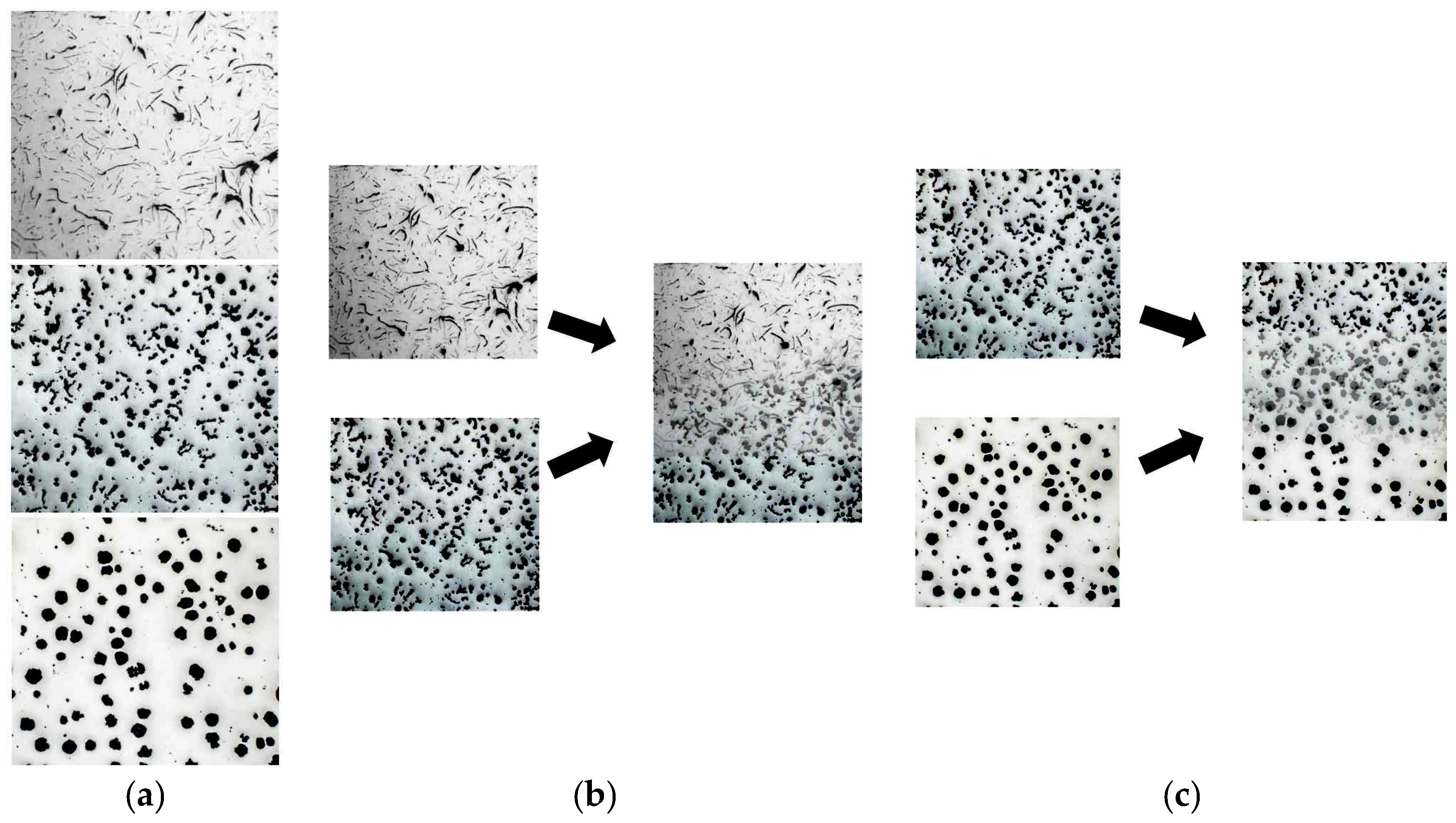
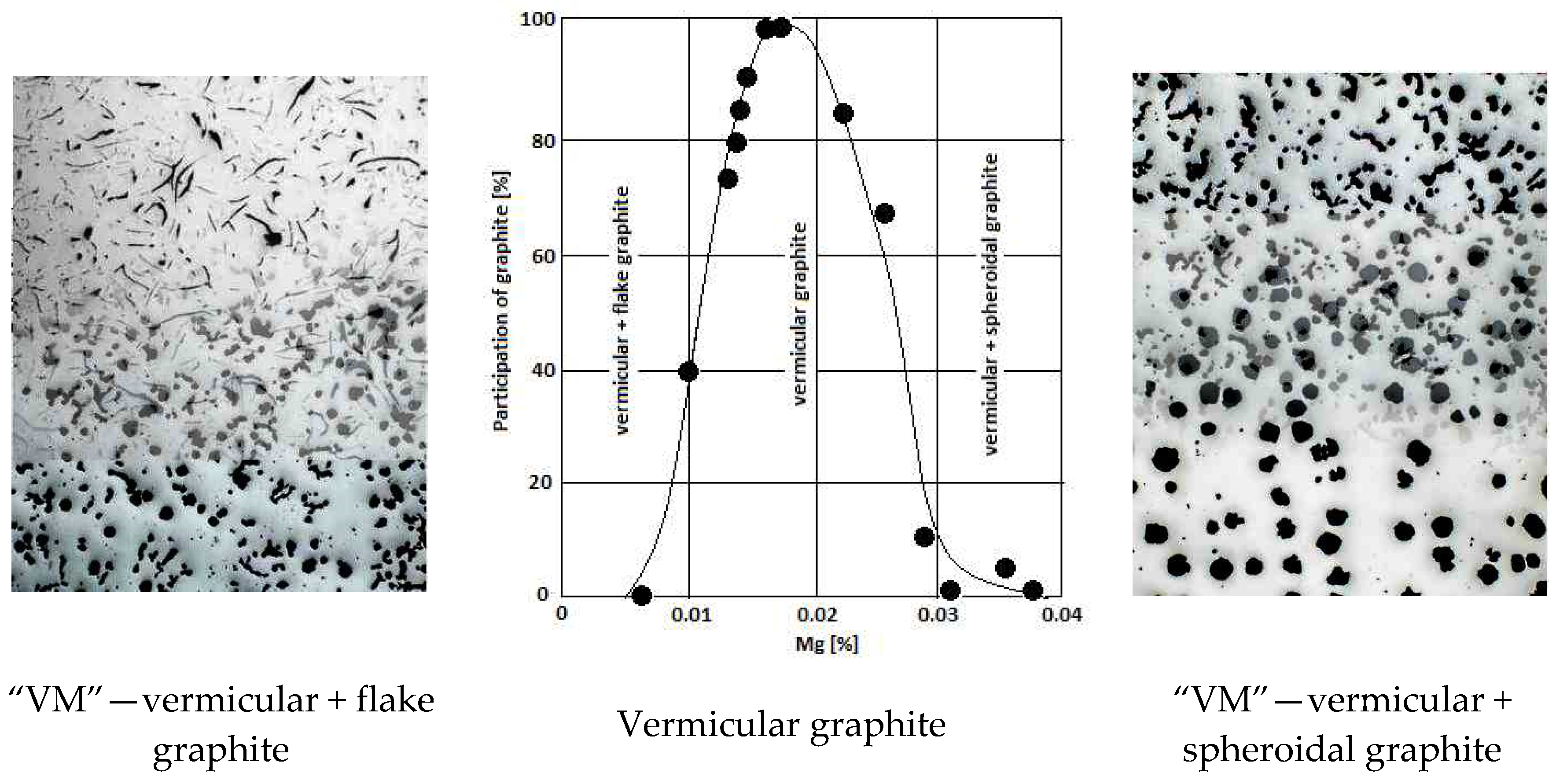
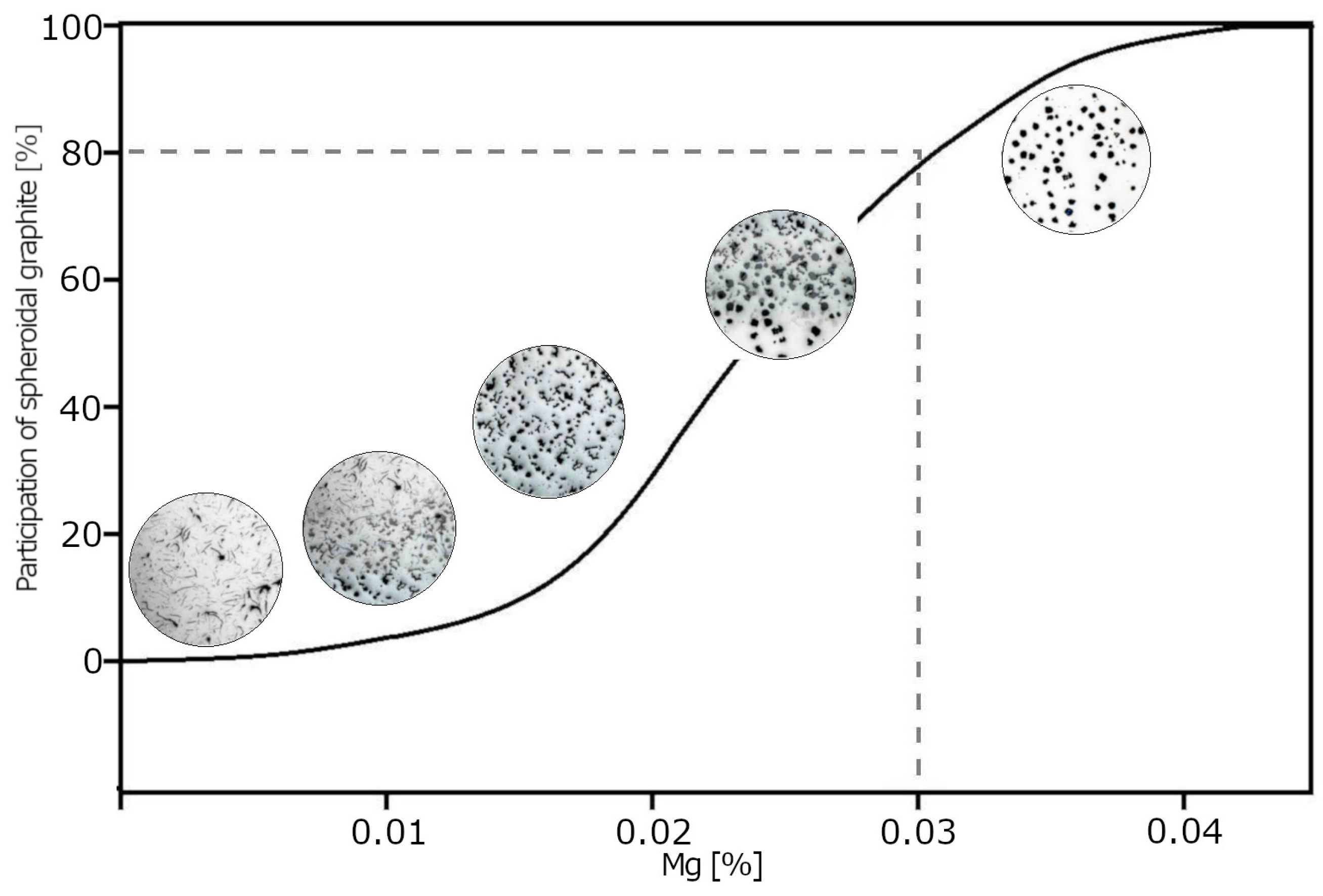
2. VM Manufacturing Technology—Method Selection
- Magnesium addition (controlled amount)
- Simultaneous addition of magnesium and titanium
- Addition of “Michmetal” alloy.
- Simultaneous addition of magnesium, cerium, aluminum, and calcium (Mg-Ce-Al-Ca).
- PQ-CGI Inmold process
- Method using Sinter-Cast technology
- Elkem method (COMPACTMAG magnesium-cerium mortar).
- ➢
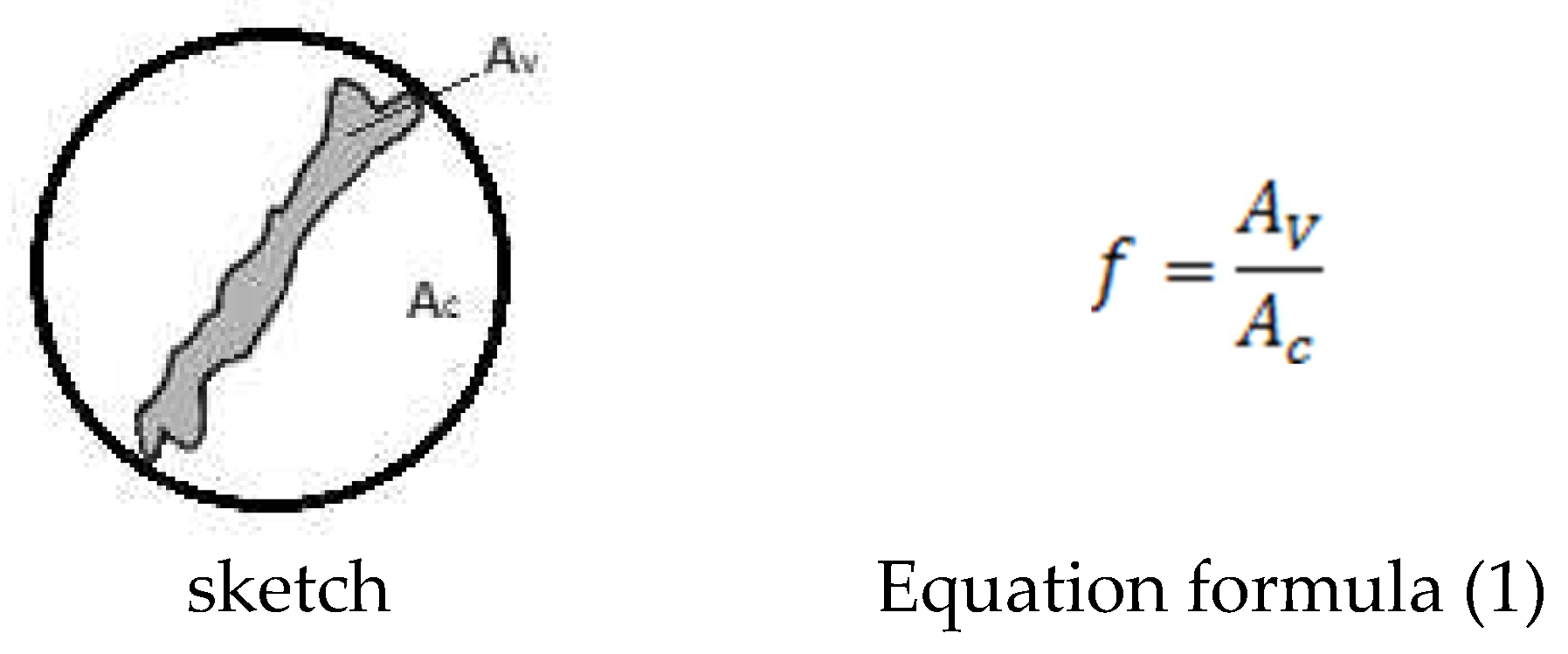
- f = 0.00–0.34 for flake graphite,
- ➢
- f = 0.35–0.64 for vermicular graphite,
- ➢
- f = 0.65–1.00 for spheroidal graphite.
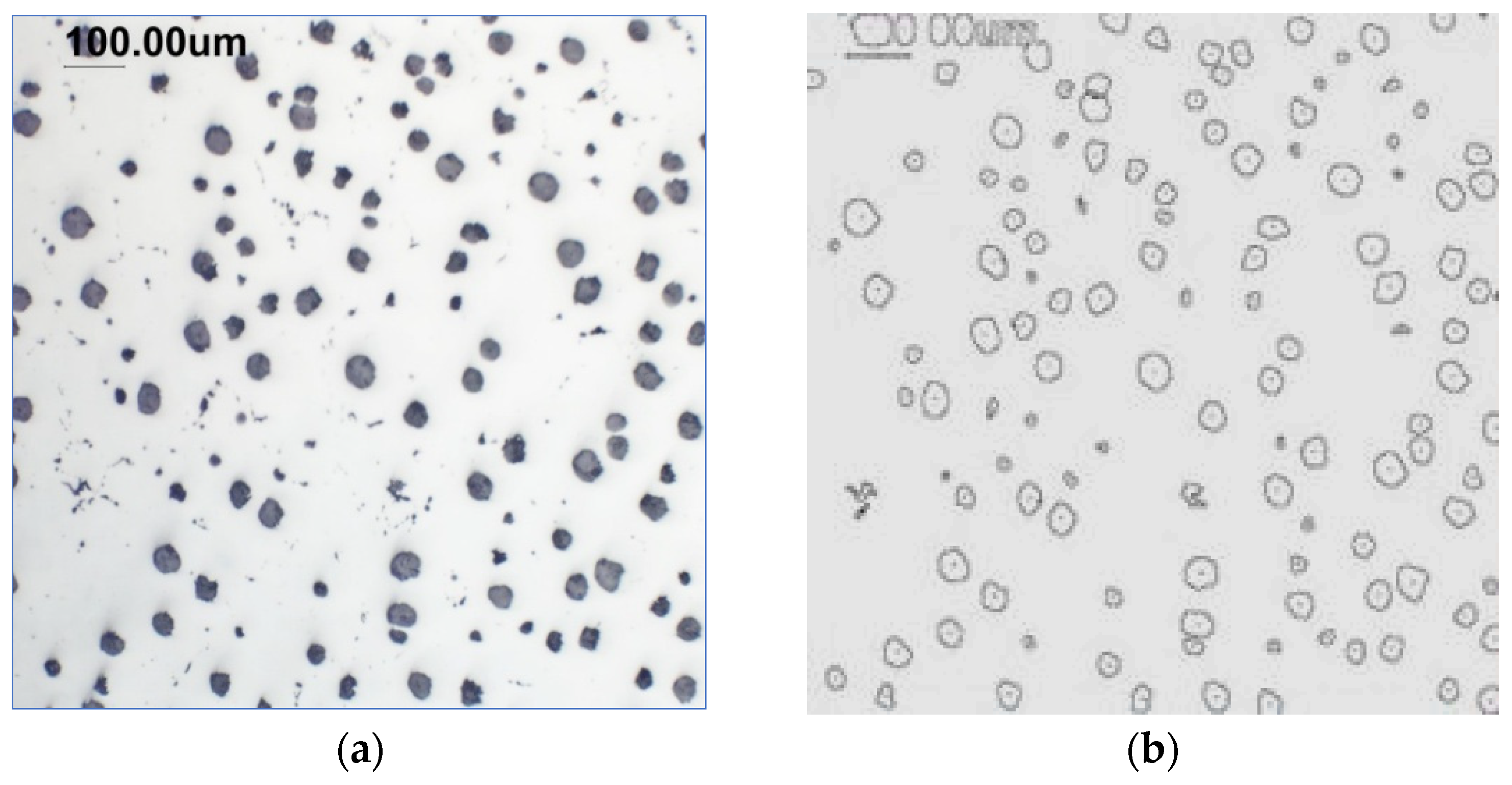
3. Research on the Structure of VM Cast Iron—Determination of the Graphite Shape Indicator
- 0.00–0.34—flake graphite
- 0.35–0.64—vermicular graphite
- 0.65–1.00—nodular graphite
- the average (weighted average) shape index of graphite “fK”
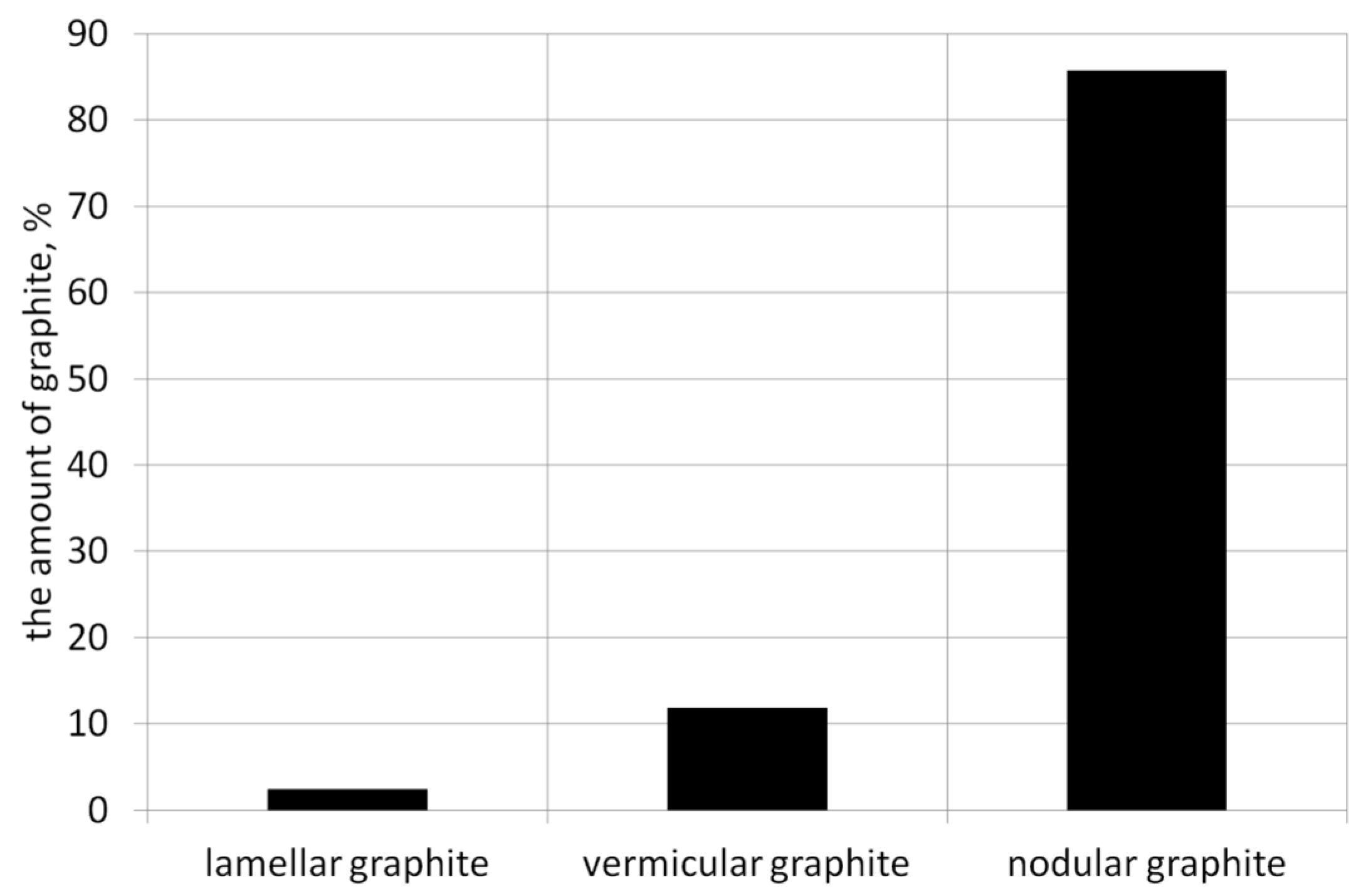
- the percentage of three graphite forms (Figure 8): flake, vermicular, and spherical.
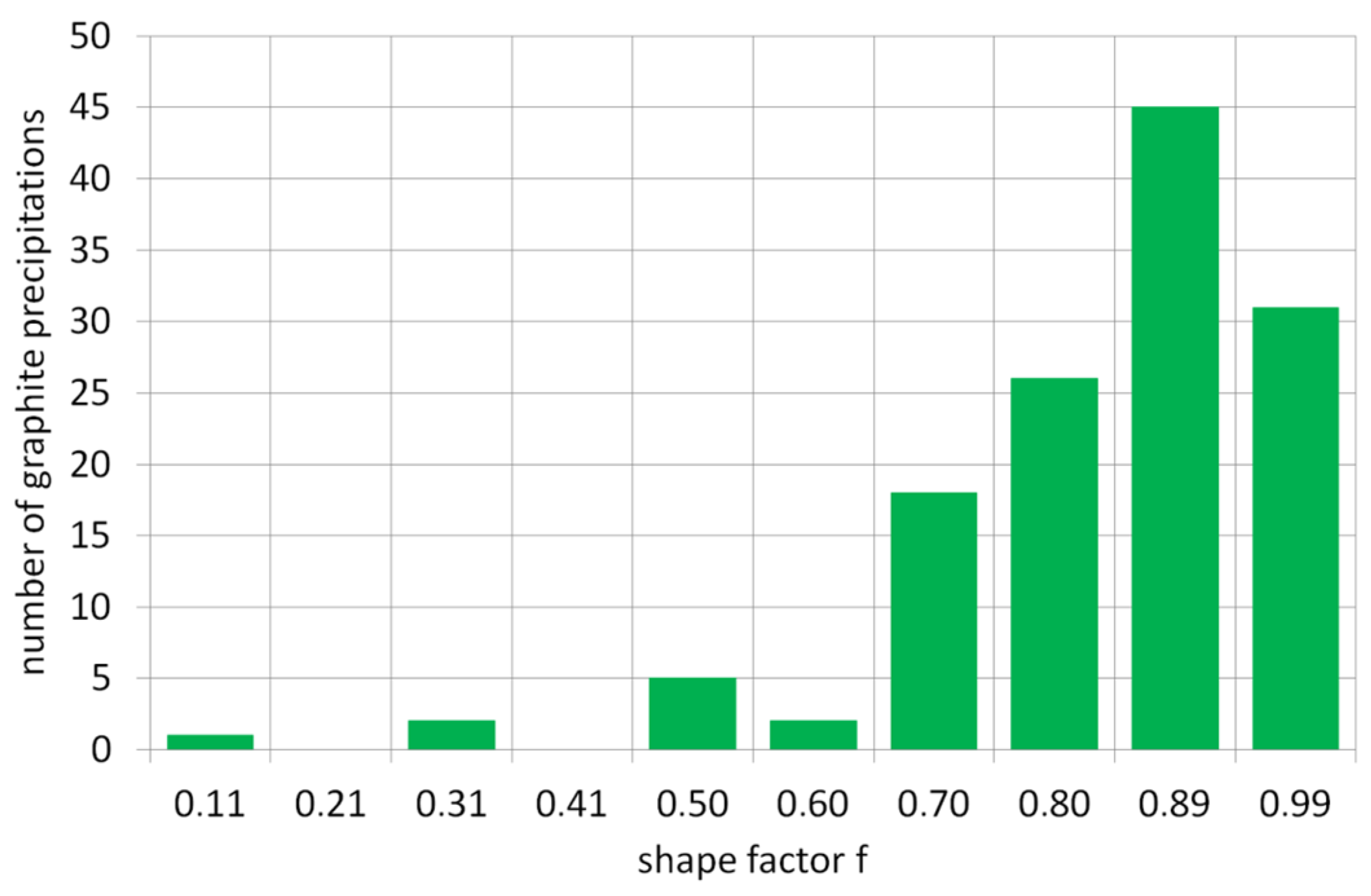
- the distribution of graphite precipitate amounts by the “f” index value (Figure 9).
- the degree of spheroidization of cast iron “N,” defined as the percentage of graphite precipitates with a shape close to a sphere (f > 0.65).
4. Vari Morph (VM) Cast Iron Production Technologies
- (a)
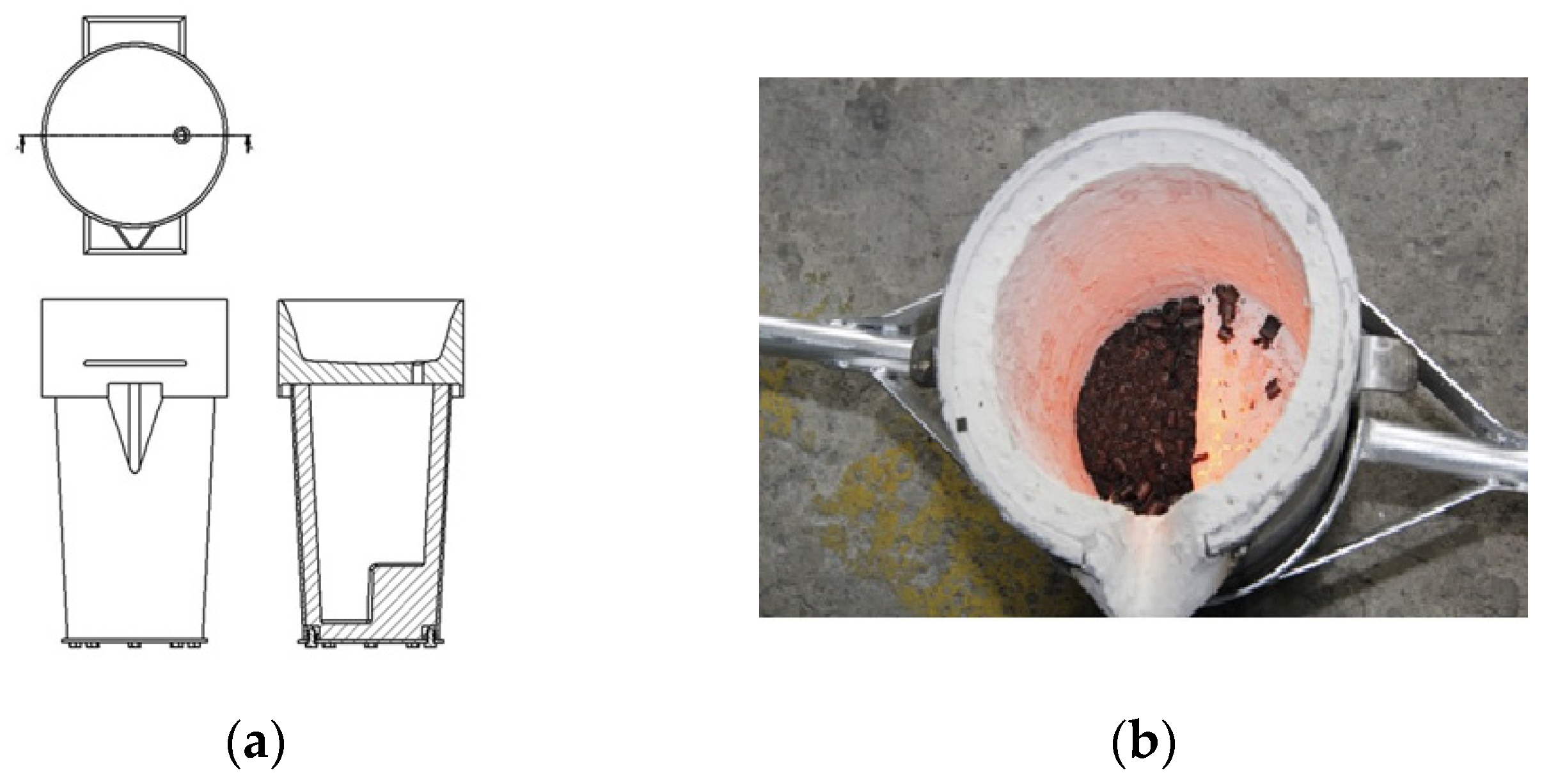
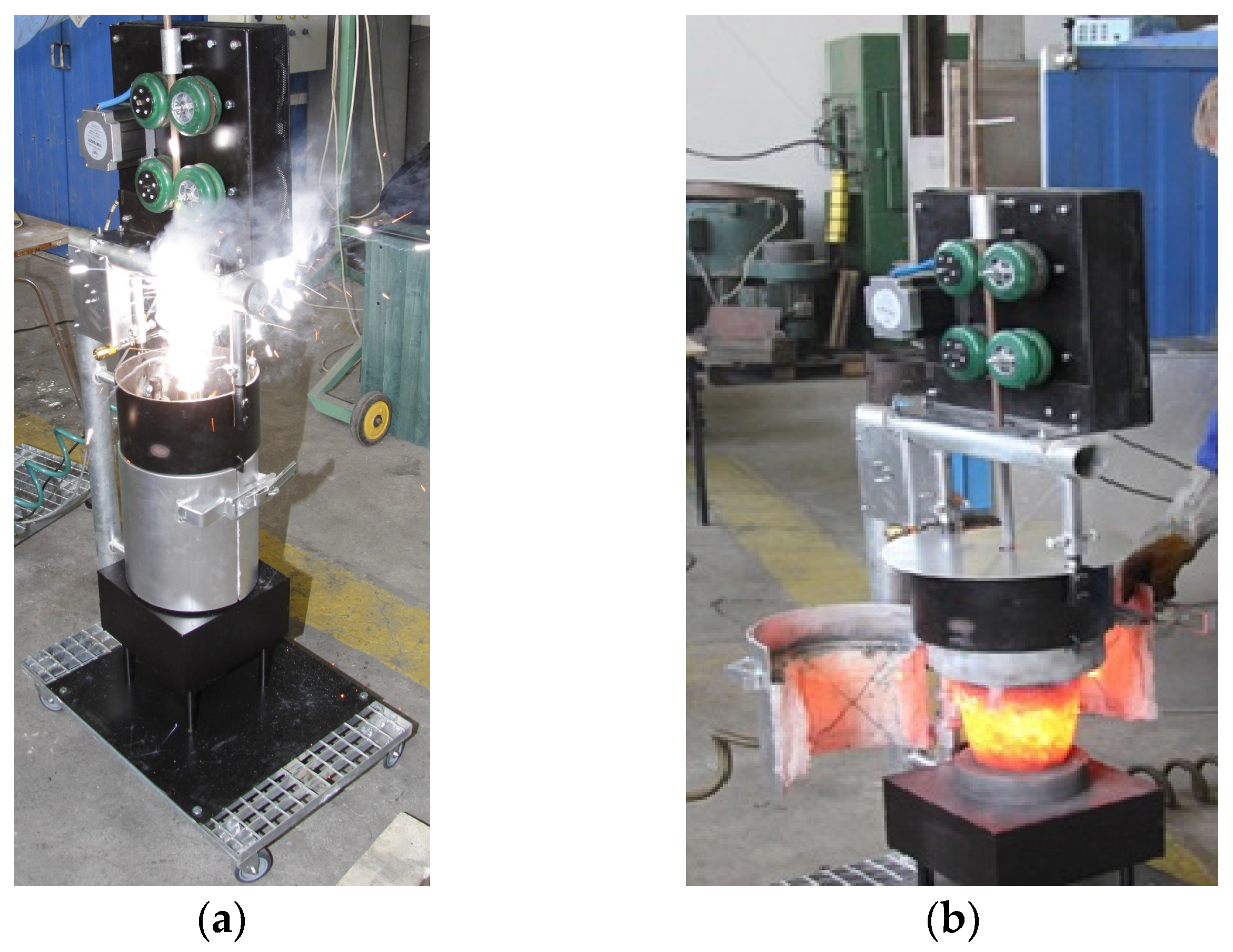
- PE rod method—using a flexible hose containing low-magnesium FeSiMg mortar introduced into a ladle with a lid.
- (b)
- Using low-magnesium mortars dosed to the bottom of tightly closed ladles (slim ladles—Tundish method).
- (c)
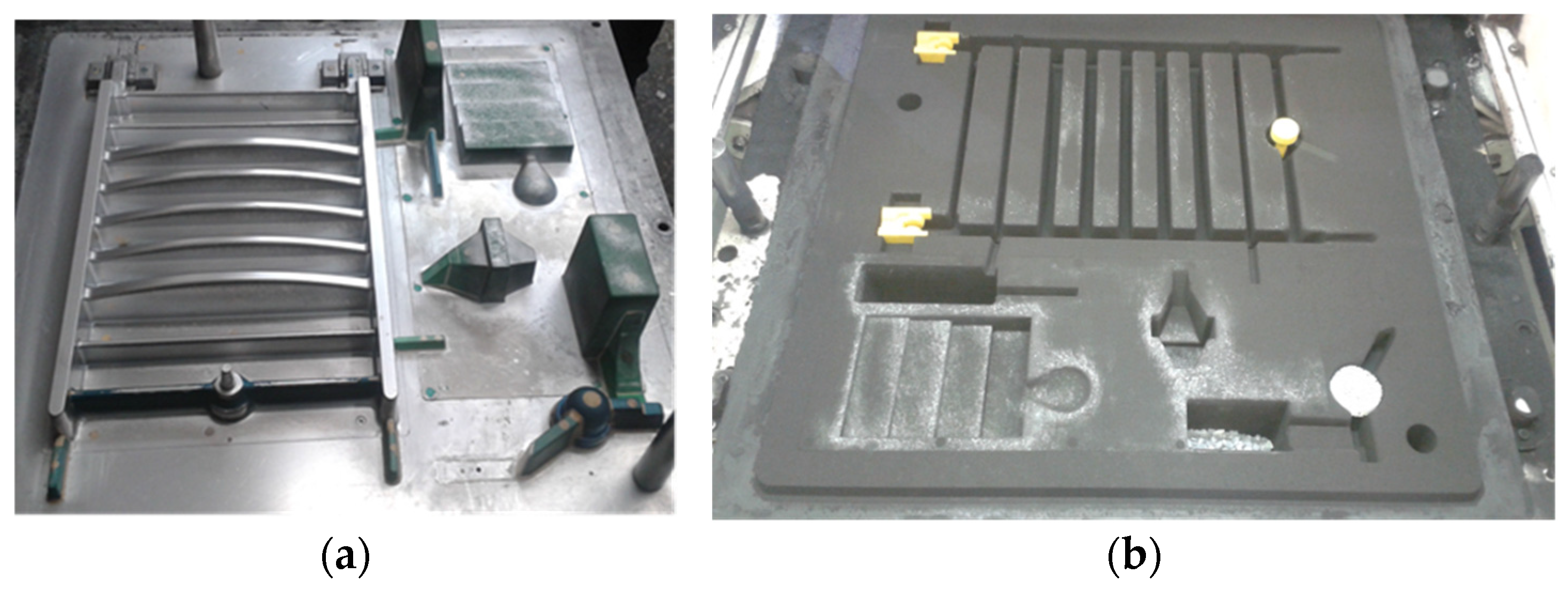
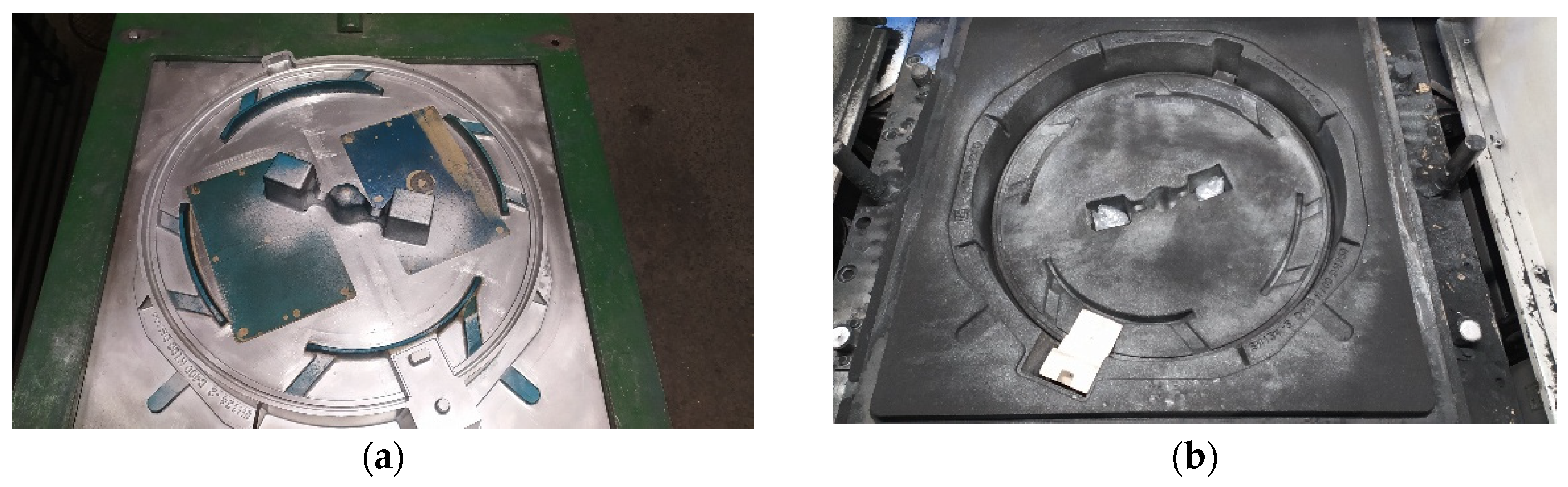
- Inmold technology, placing low-magnesium mortars in reaction chambers constructed in a casting mold.
4.1. Controlled Magnesium Content Method
4.2. Proprietary Technologies to Produce Vari Morph Cast Iron
5. Research Results
5.1. Preparation of Research Material
5.2. Determination of Empirical Dependencies
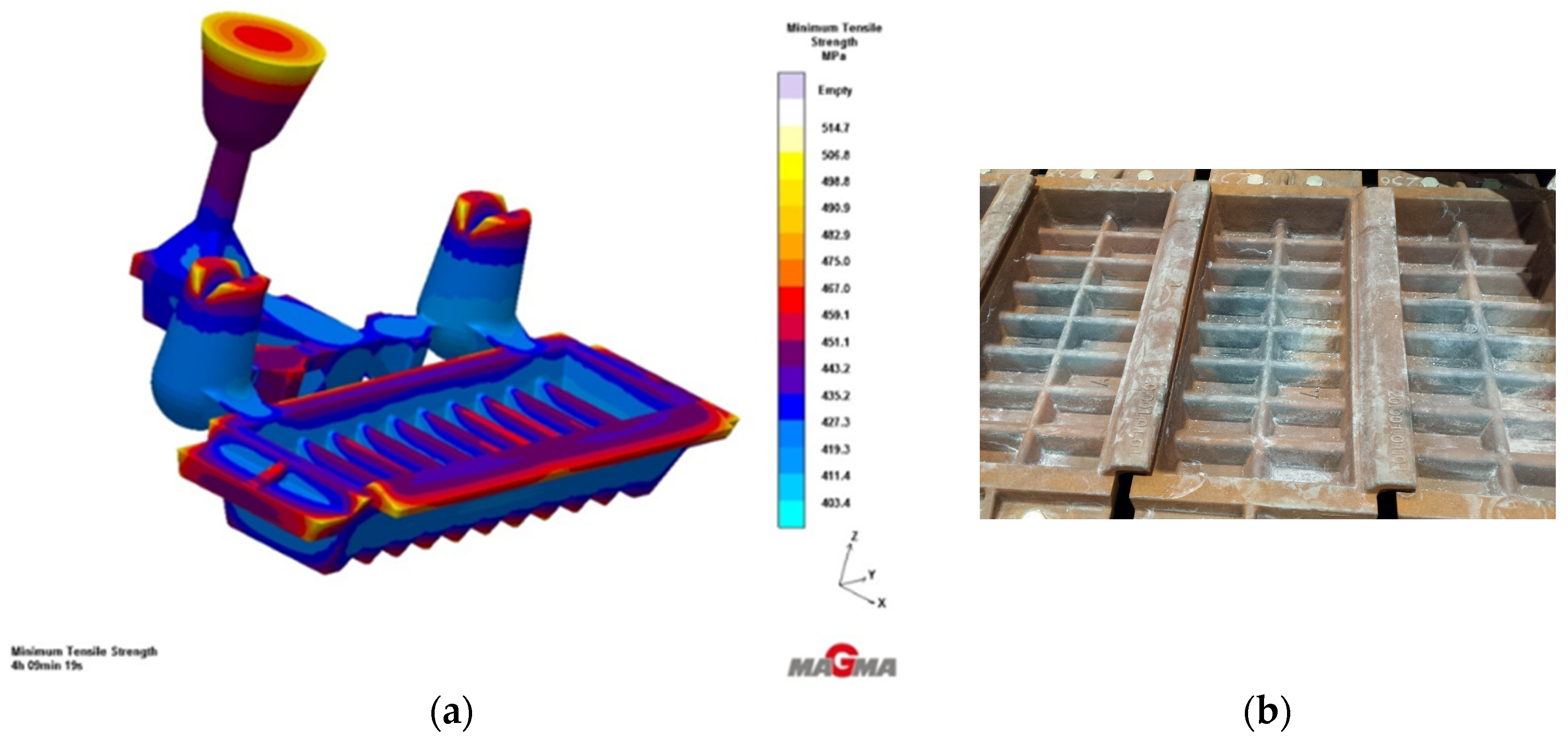
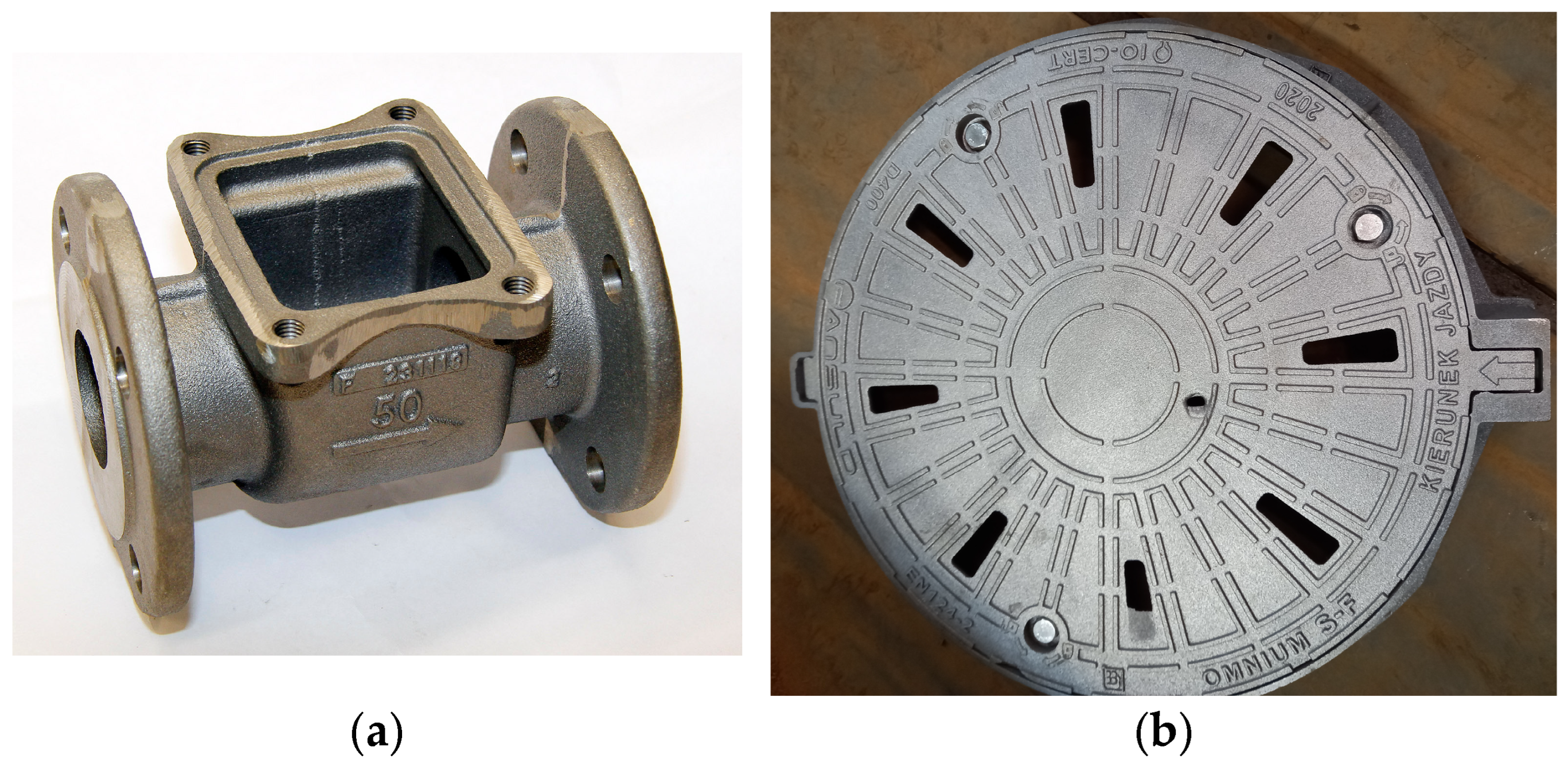
6. Examples of Mixed Graphite Iron Castings (Vari Morph)
7. Conclusions
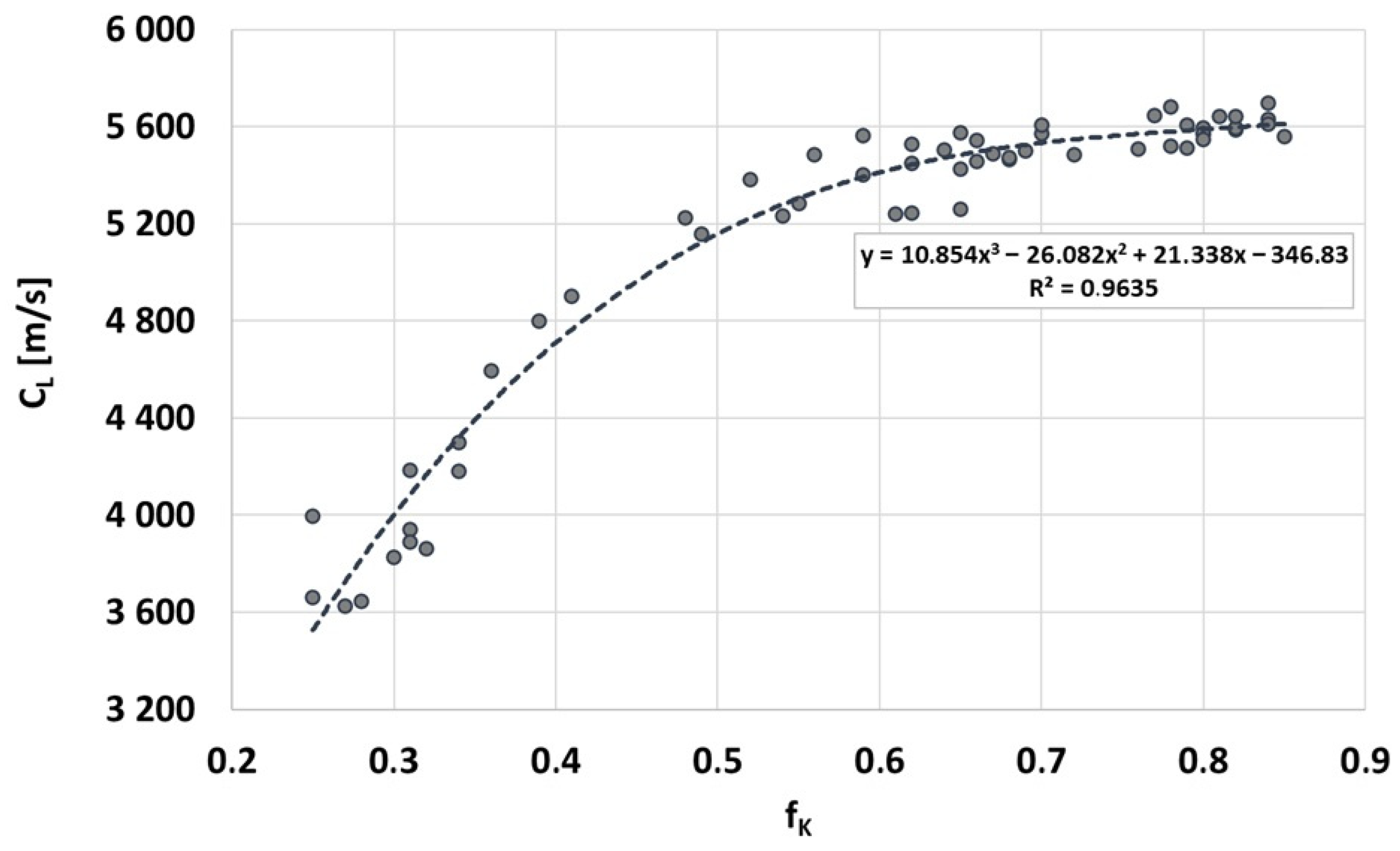
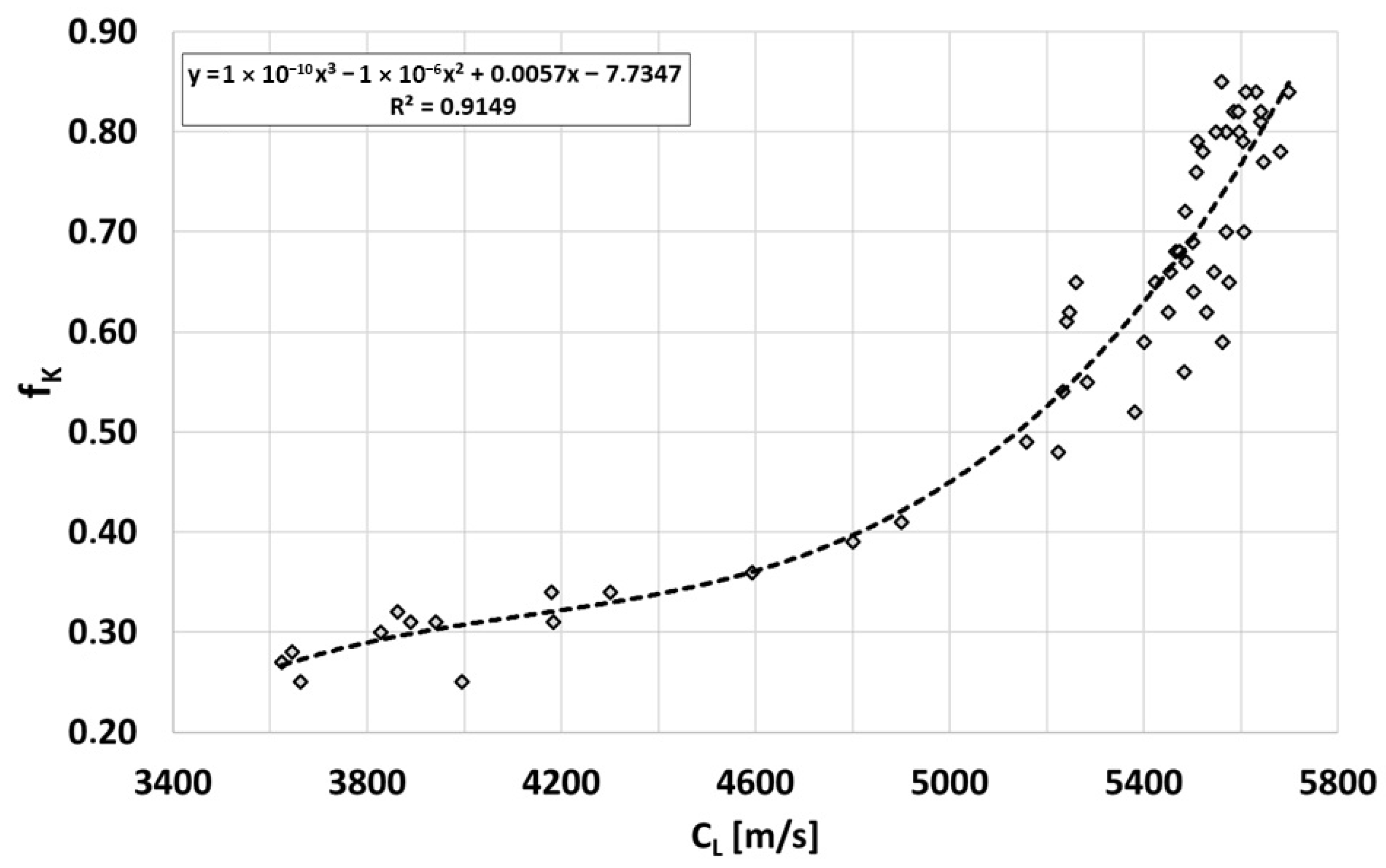
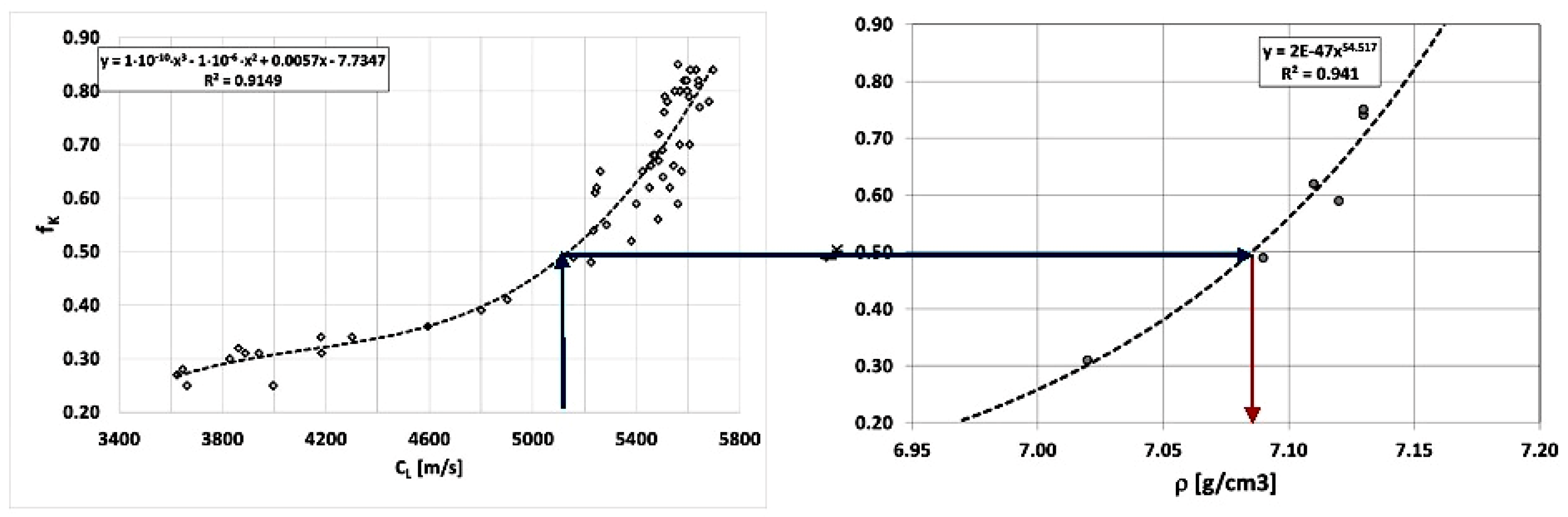
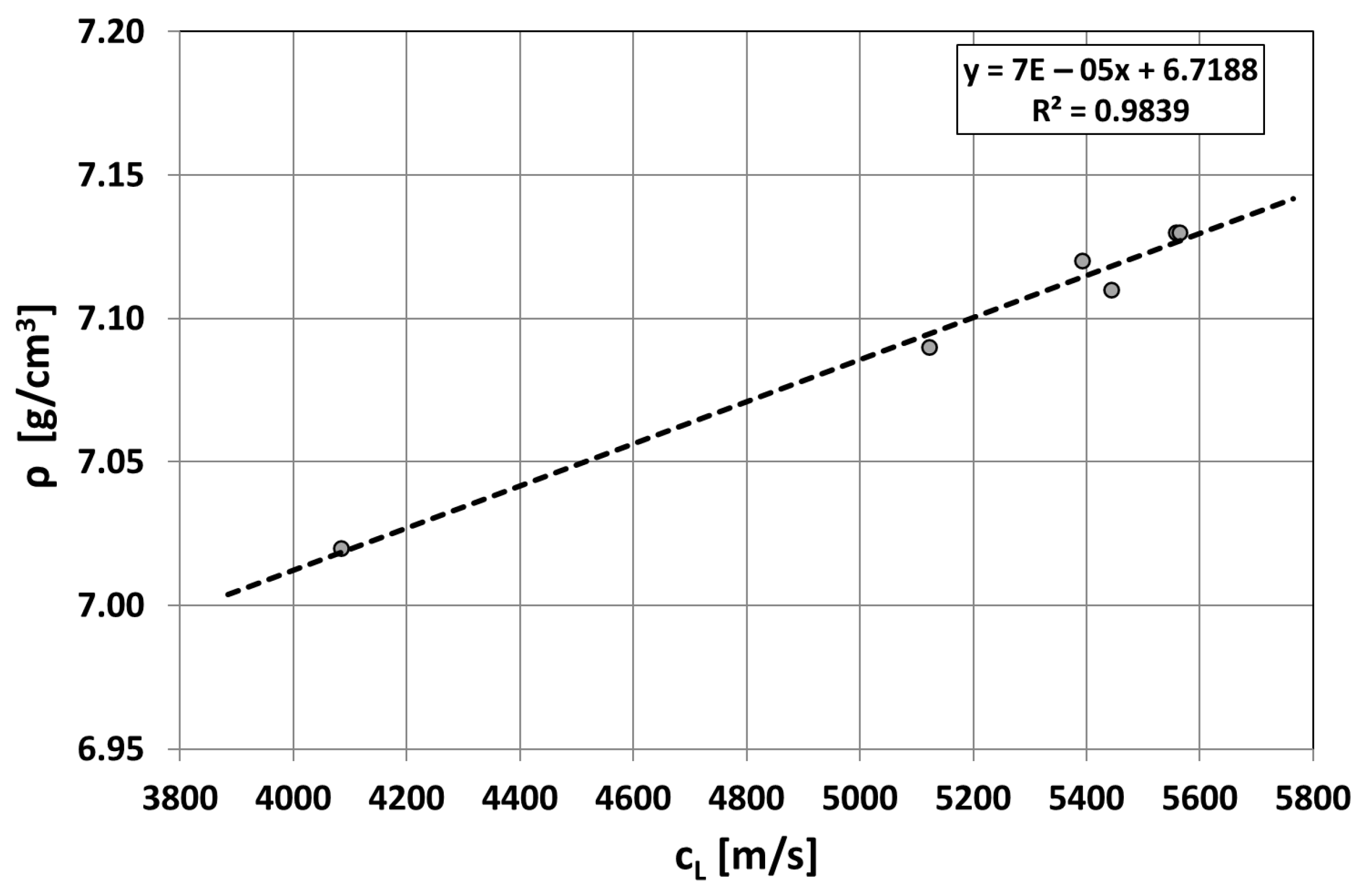
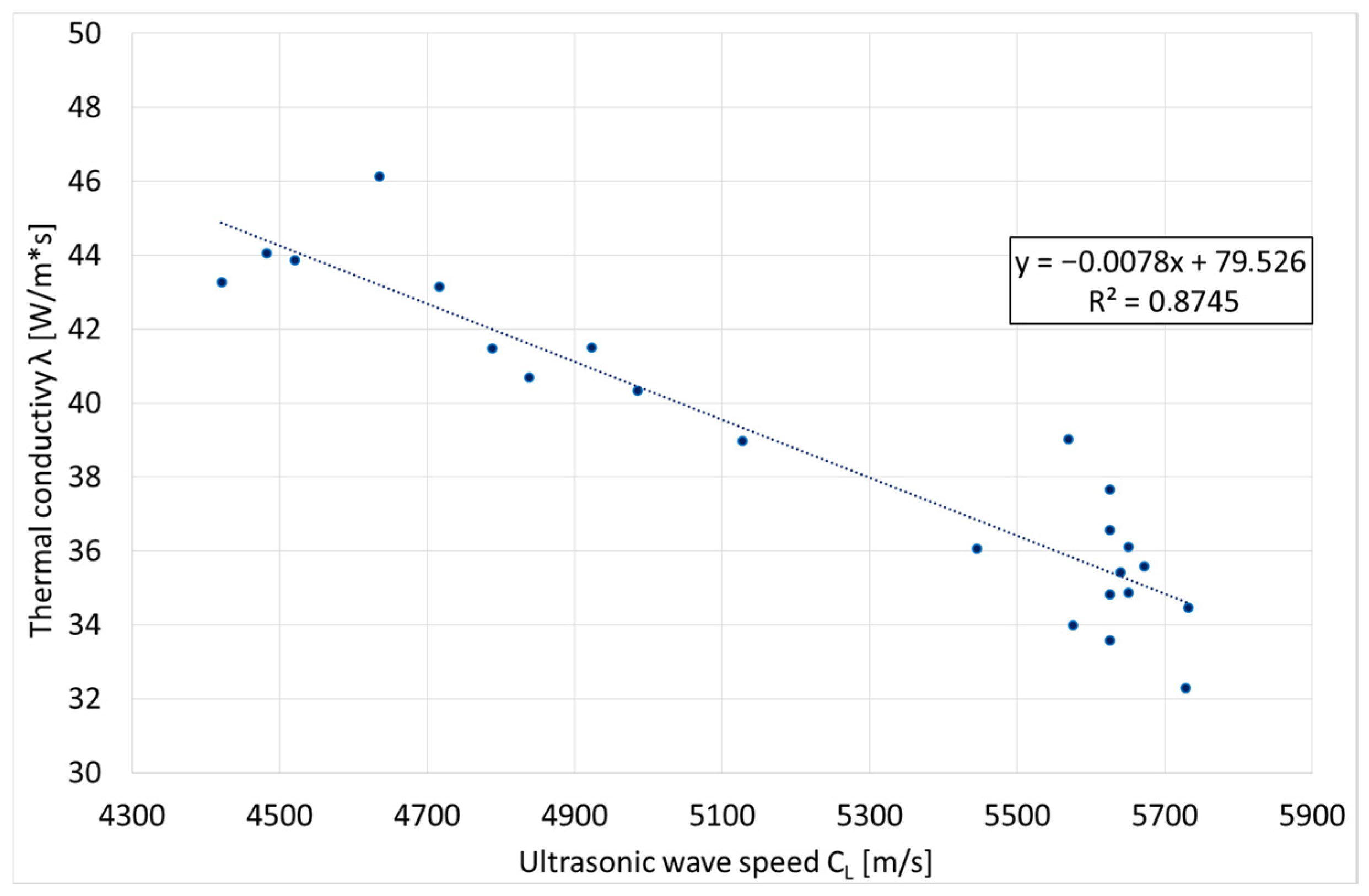
- physical properties (graphite shape indicator fK, specific density, thermal conductivity, ultrasound wave speed): fK = f(CL); ρ = f(CL); λ = f(CL),
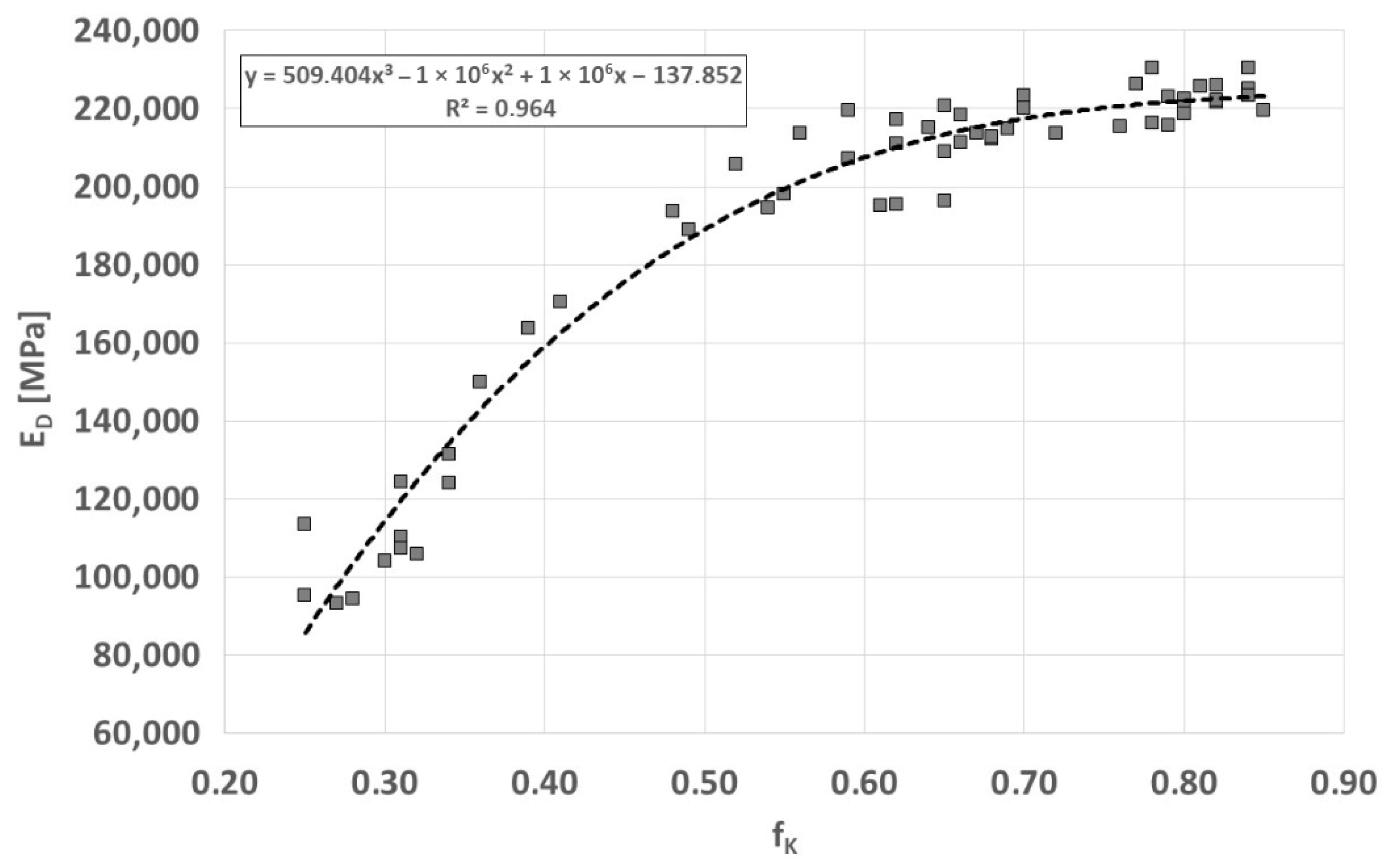
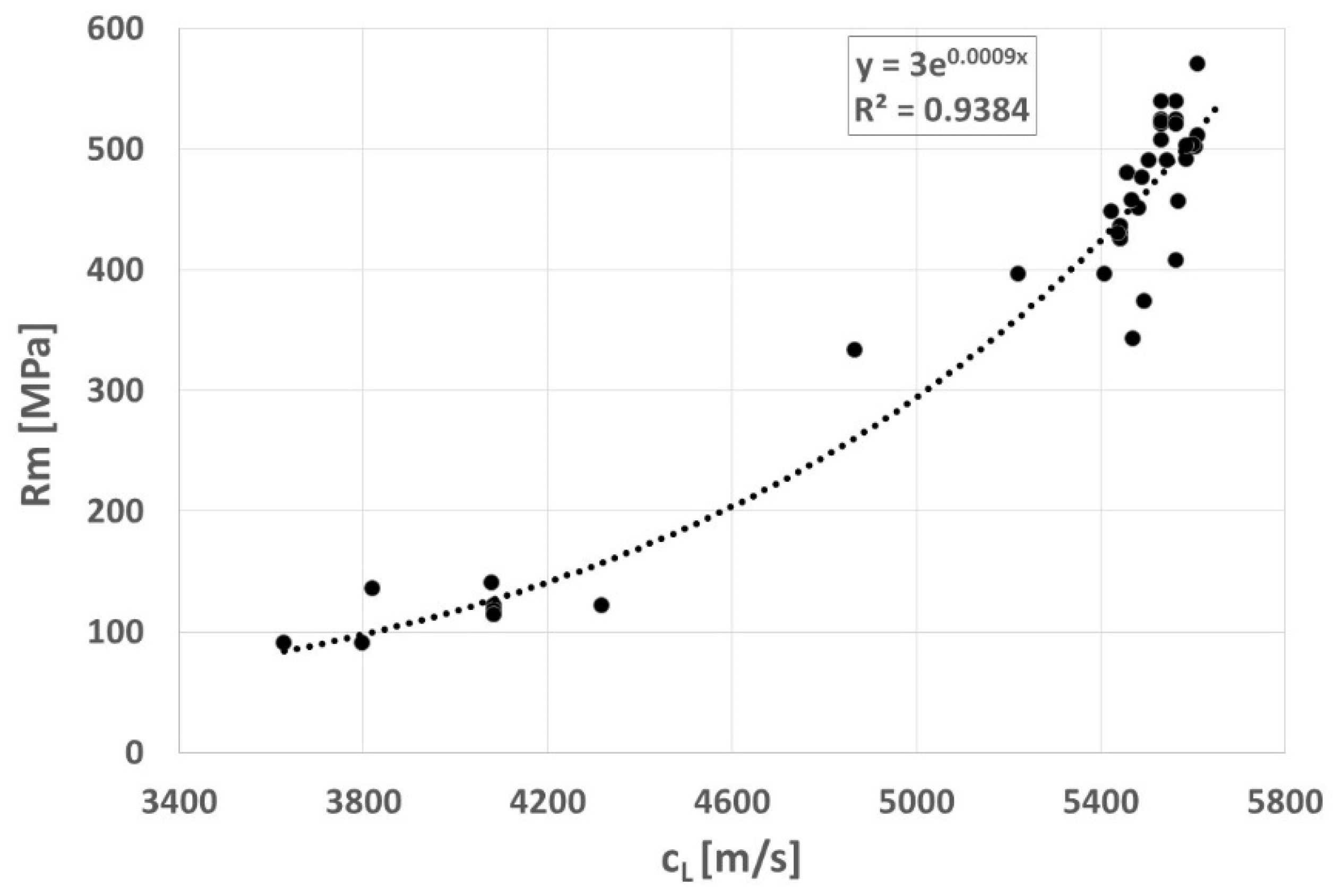
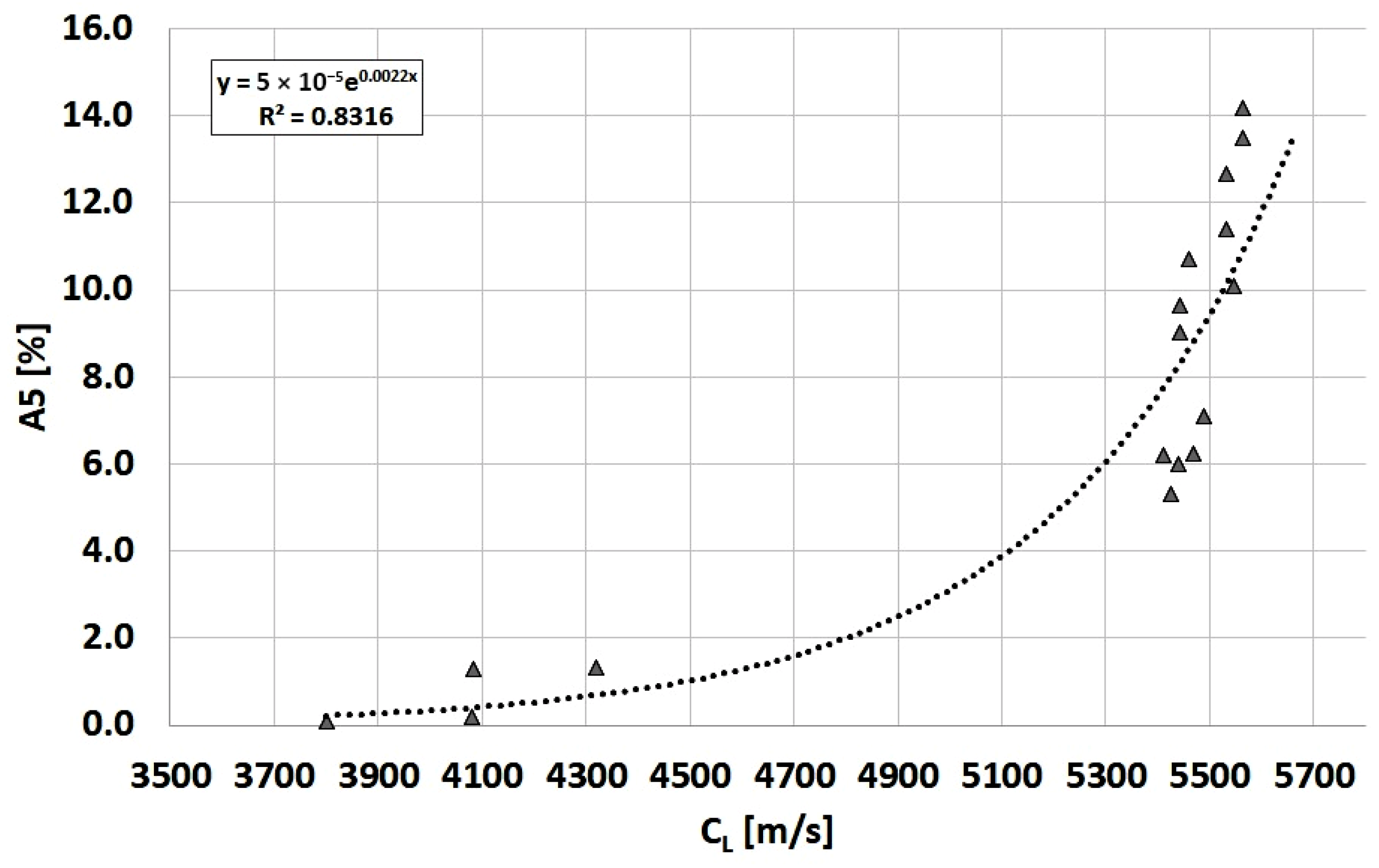
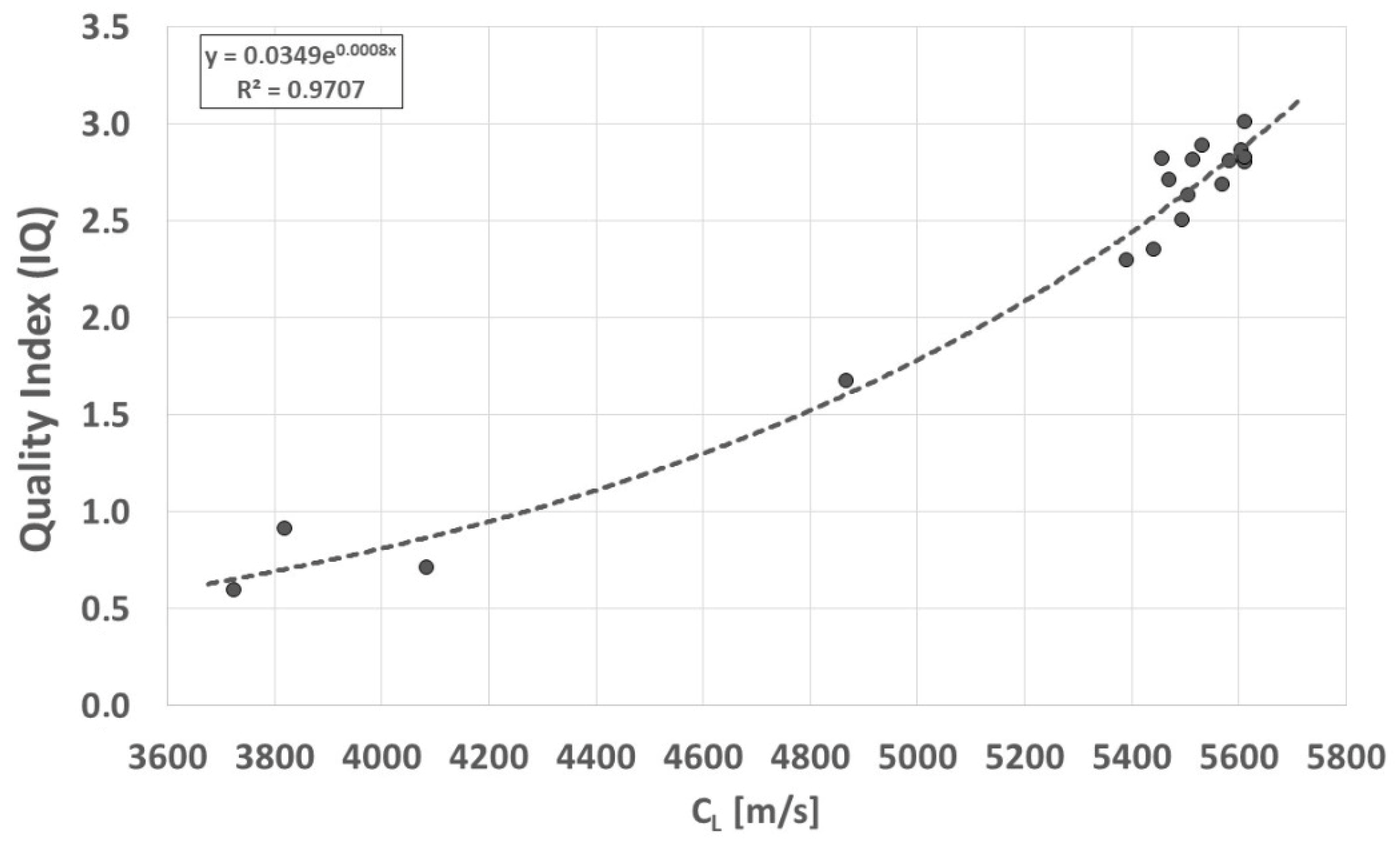
- mechanical properties (strength (Rm), A5, coefficient of elasticity ED, quality index IQ): Rm = f(CL); A5 = f(CL), ED = f(CL), IQ = f(CL),
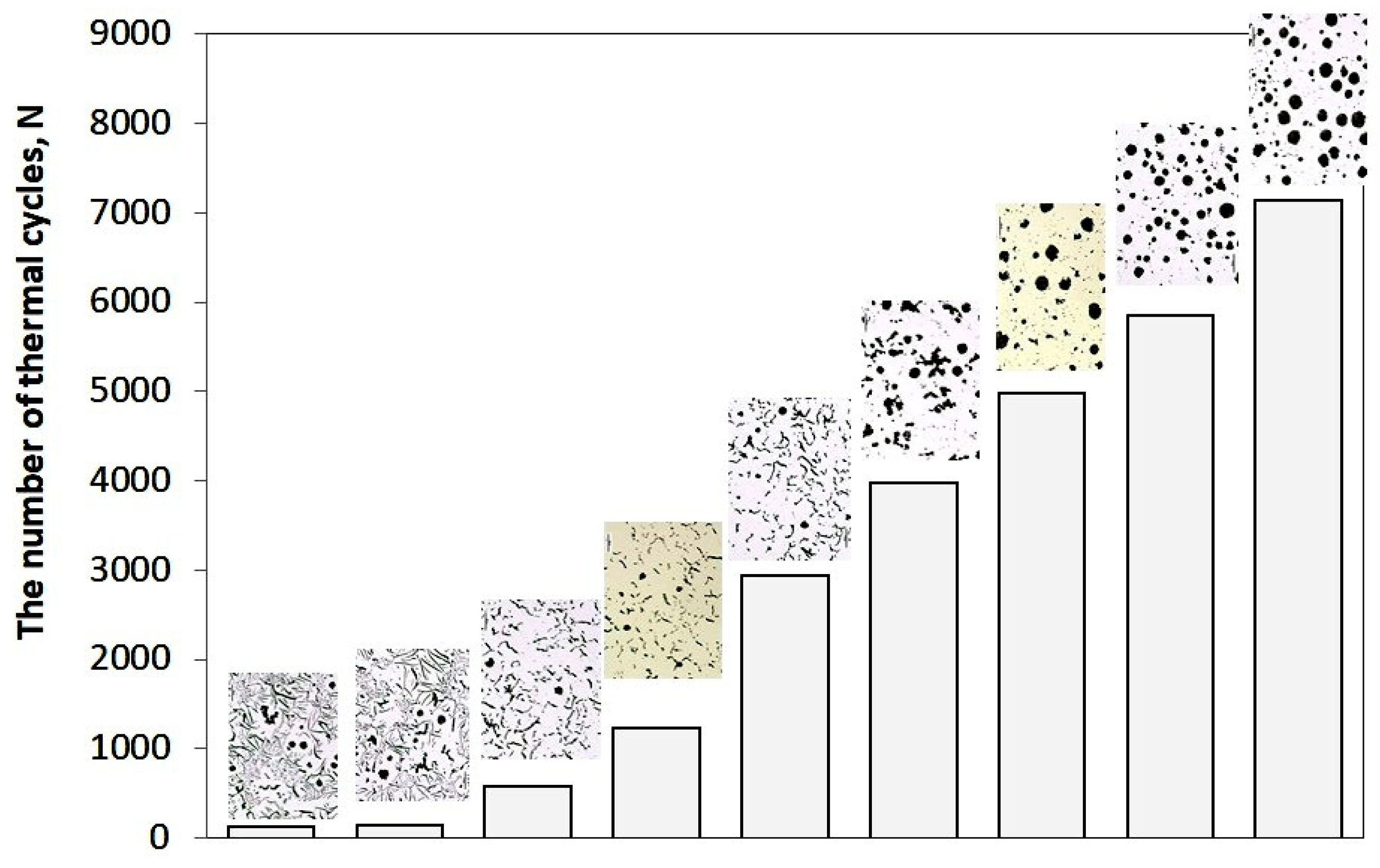
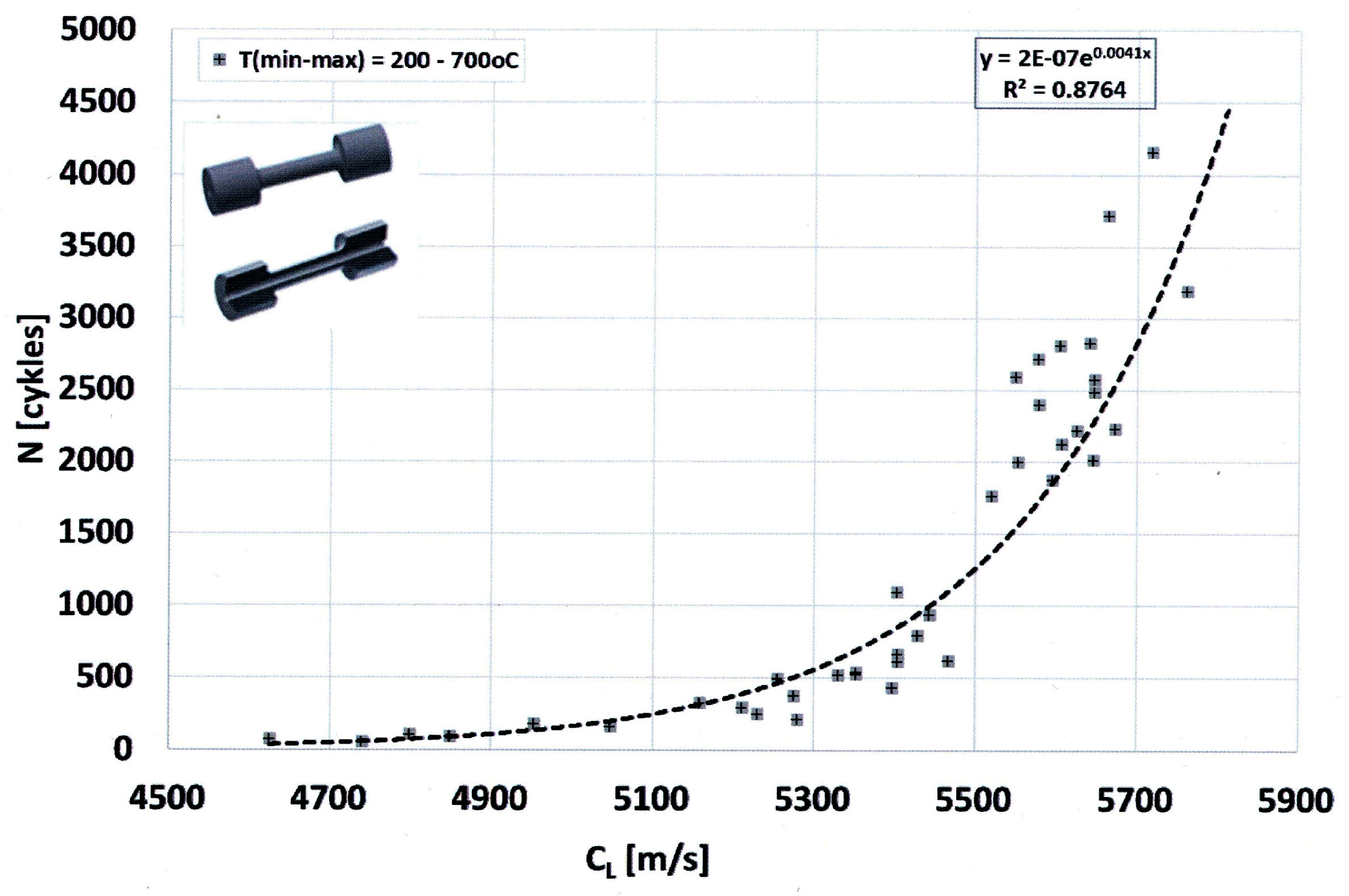
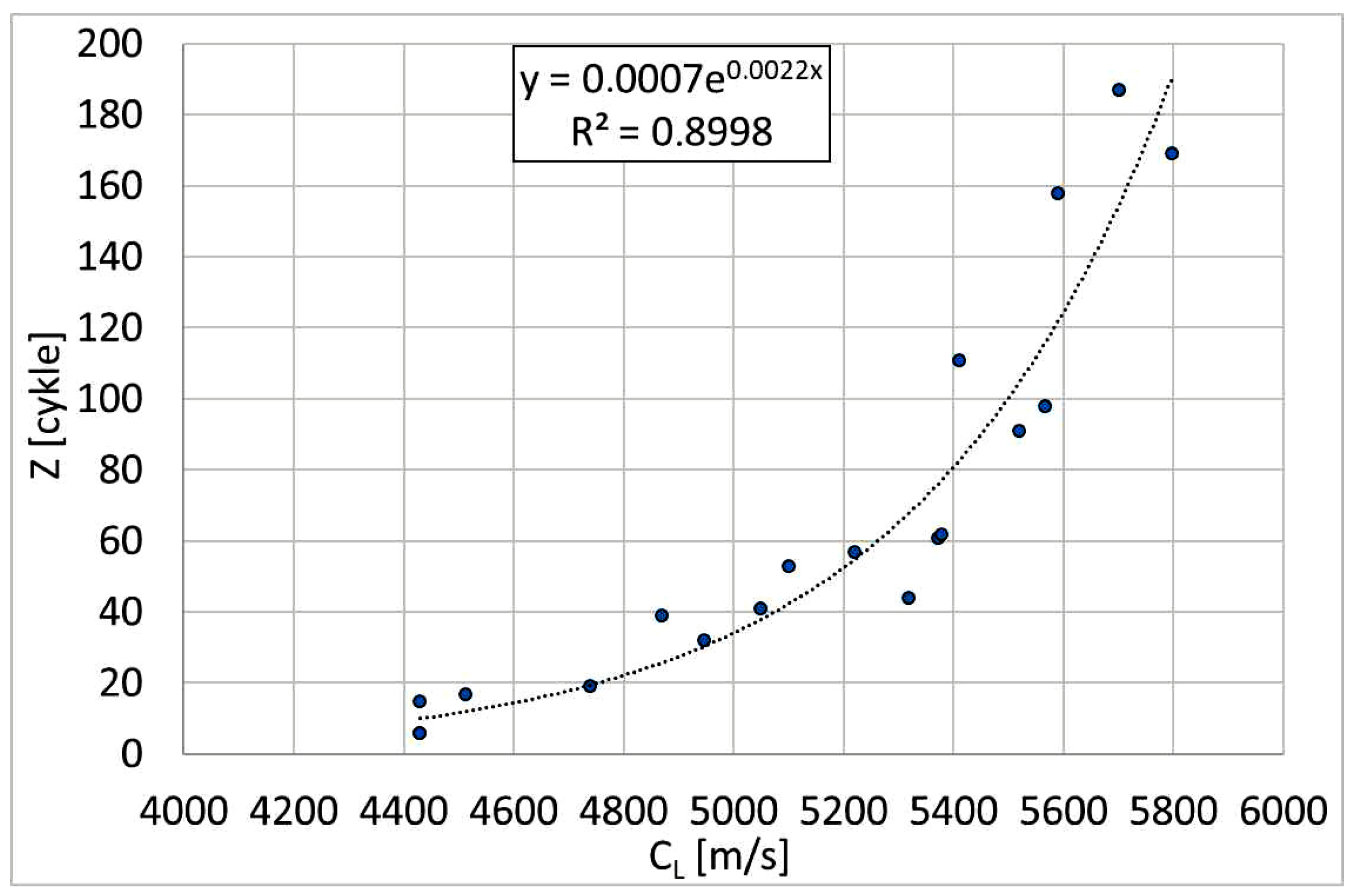
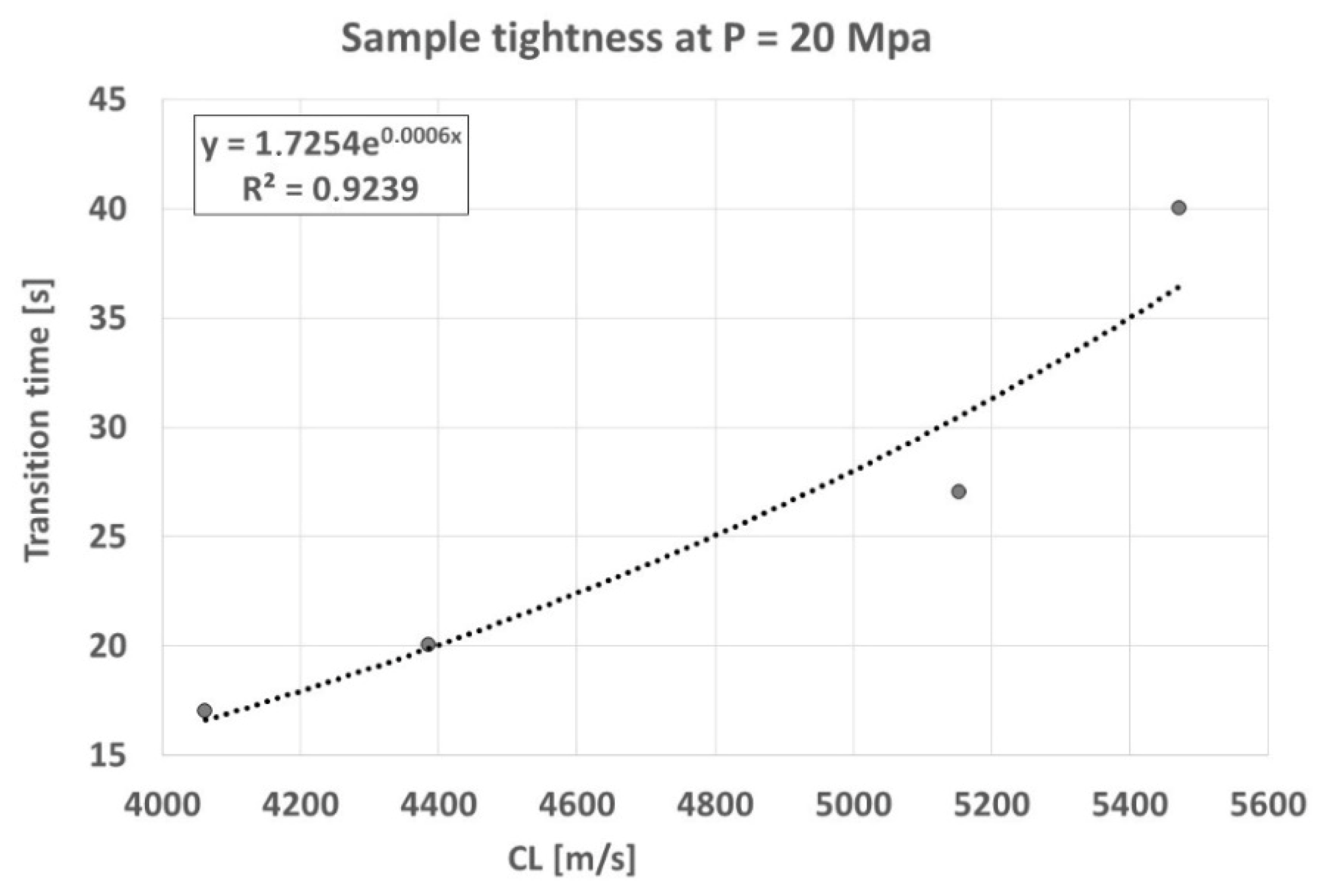
- functional properties (heat fatigue resistance (N), low-cycle mechanical fatigue Z, cast iron tightness H): N = f(CL); Zc = f(CL), Z = f(CL)
Author Contributions
Funding
Data Availability Statement
Conflicts of Interest
References
- Zych, J.; Postuła, J. Cast iron ‘Vari-Morph’ (VM) with Graphite of Several Forms—Material for Castings of Special Destinations. In Proceedings of the 73rd World Foundry Congress “Creative Foundry”, Krakow, Poland, 23–27 September 2018; Foundry Trade Journal Winton House: Lyonshall, UK, 2018; pp. 149–150. [Google Scholar]
- Zych, J.; Myszka, M.; Kaźnica, N. Control of Selected Properties of ‘Vari-Morph’ (VM) Cast Iron by Means of the Graphite Form Influence, Described by the Mean Shape Indicator. Arch. Foundry Eng. 2019, 19, 43–48. [Google Scholar] [CrossRef]
- Zych, J.; Myszka, M.; Snopkiewicz, T. Thermal Conductivity of ‘Vari-Morph’ (VM) Cast Iron with Graphite of Several Forms. In Proceedings of the International Conference of Metals, Ceramics and Composites, Warna, Bulgaria, 25–27 September 2019; pp. 27–28. [Google Scholar]
- Stanisław, Z.J.; Marcin, M.; Krzysztof, P. Determining the thermal conductivity in walls of cast iron castings by the ultrasound technique. J. Mater. Sci. Eng. A 2021, 11, 120–128. [Google Scholar] [CrossRef]
- Jerzy, Z.; Marcin, M.; Janusz, P. Chapter: “Vari-Morph’ (VM) Cast Iron with Several Forms of Graphite: Technology, Properties, Application”. In Casting Processes; Intech Open: London, UK, 2022. [Google Scholar]
- Marcin, M. Comprehensive Assessment of Cast Iron with Graphite in Many Forms Based on the Weighted Average Value of Its Shape Indicator. Doctoral Dissertation, AGH University of Kraków, Kraków, Poland, 2024. [Google Scholar]
- Postuła, J. Production of Cast Iron with Variable Graphite Morphology. Evaluation of Solidification Process, Study of Microstructure and Selected Physical, Mechanical and Utility Properties. Master’s Thesis, Department of Foundry, AGH University of Kraków, Kraków, Poland, 2017. [Google Scholar]
- Project: POIR 01.01.-00-0042/17. Available online: https://www.gov.pl/web/ncbr-en (accessed on 18 September 2023).
- Zych, J. The Impact of Some Selected Factors on Cast Iron Thermal Fatigue. Sci. Noteb.-AGH Metal. I Odlew 1989, 15, 131–145. [Google Scholar]
- Zych, J. The role of graphite morphology in forming thermal fatigue resistance of cast iron. Inżynieria Mater. 2015, 343–347. [Google Scholar]
- Zych, J. Cast iron thermal fatigue resistance—Influence of graphite shape. Seria Mech. 2015, 51–64. [Google Scholar]
- Zych, J.; Mocek, J. Problem of tightness of casting alloys and castings made from them—New research methods. Arch. Foundry Eng. 2025, 25, 159–167. [Google Scholar] [CrossRef]
- ISO/TR 945-1; Microstructure of Cast Irons—Part 1: Graphite Classification by Visual Analysis. ISO: Geneva, Switzerland, 2008.
- ISO/TR 945-2; Microstructure of Cast Irons—Part 2: Graphite Classification by Image Analysis. ISO: Geneva, Switzerland, 2011.
- Jura, S.; Jura, Z. Influence of Chemical Constitution and Graphite Spheroidization Grade on Mechanical Properties of Cast Iron. Arch. Foundry Eng. 2001, 1, 167–174. [Google Scholar]
- Jura, S.; Jura, Z. Influence of Stereological Functional Parameters of Graphite on Ductile Cast Iron’s Mechanical Properties. Arch. Foundry Eng. 2001, 1, 175–185. [Google Scholar]
- Stawarz, M.; Jura, S. Stereological Parameters of Graphite and Chemical Constitution Determining Ductile Cast Iron’s Mechanical Properties. Arch. Foundry Eng. 2002, 2, 446–453. [Google Scholar]
- Patiero, V.; Tosto, S.; Natale, E. Microstructural characterization mechanical properties of various grades of nodularity in, S.G. iron. In Proceedings of the 44 International Foundry Congress, Florence, Italy, 11–14 September 1977; p. 4. [Google Scholar]
- Walton, C.F.; Opar, T.J. Iron Castings Handbook: Covering Data on Gray, Malleable, Ductile, White, Alloy and Compacted Graphite Irons; Iron Castings Society: Columbus, OH, USA, 1981. [Google Scholar]
- Podrzucki, C. Cast Iron—Structure, Properties, Applications; ZG STOP Publishing House: Kraków, Poland, 1991. (In Polish) [Google Scholar]
- Żyrek, A. Obtaining Vermicular Cast Iron by the in-Mold Method Using Magnesium Mortars and Assessing Its Resistance to Thermal Fatigue. Doctoral Dissertation, AGH University of Kraków, Kraków, Poland, 2014. [Google Scholar]
- Nachtelberger, E.; Puhr, H.; Nesselrode, J.B.; Nakajuasu, A. Stand der Entwicklung von Gusseisen mit Vermiculagrahit—Herstellung, Eingenschaften und Anwendung; Giesserei-Praxis: Berlin, Germany, 1982; pp. 359–372. [Google Scholar]
- Guzik, E. Cast Iron Refining Processes—Selected Issues; Wydawnictwo Komisja Odlewnictwa PAN Katowice: Katowice, Poland, 2001. (In Polish) [Google Scholar]



 fK = 0.28 |  fK = 0.29 |  fK = 0.31 |  fK = 0.32 |
 fK = 0.42 |  fK = 0.50 |  fK = 0.59 |  fK = 0.62 |
 fK = 0.63 |  fK = 0.72 |  fK = 0.78 |  fK = 0.82 |
| Graphite section | Calculation formula |  |  |  |  |  |
|---|---|---|---|---|---|---|
| 90.8 | 79.5 | 57.5 | 34.6 | 12.7 | ||
| 0.91 | 0.80 | 0.58 | 0.35 | 0.13 | ||
| 0.080 | 0.070 | 0.060 | 0.045 | 0.030 |
| SEM Breakthrough Image | Image of a Metallographic Cross-Section |
|---|---|
 a/ |  b/ |
 c/ |  d/ |
 e/ |  f/ |
| Parameter | Value |
|---|---|
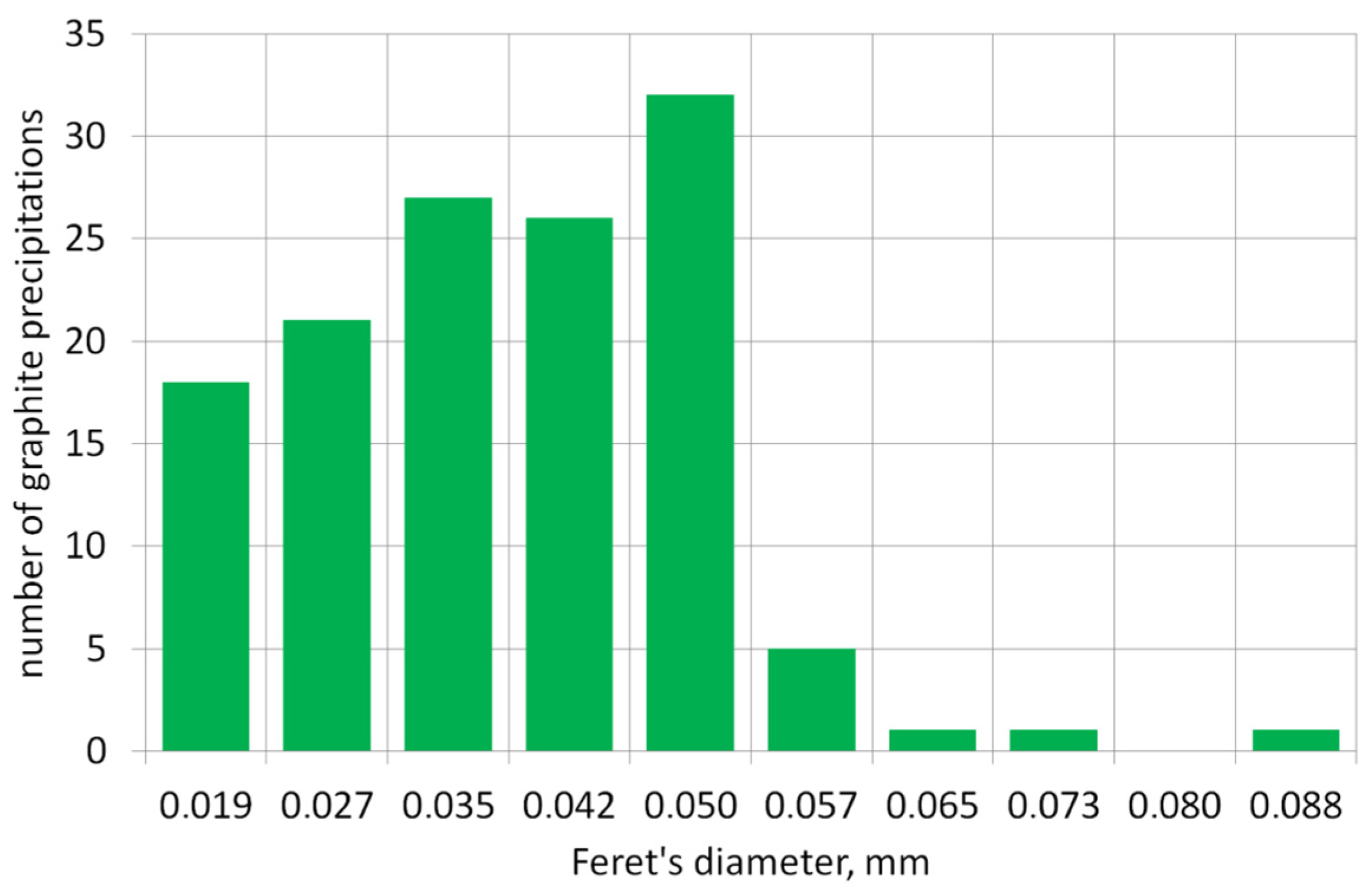
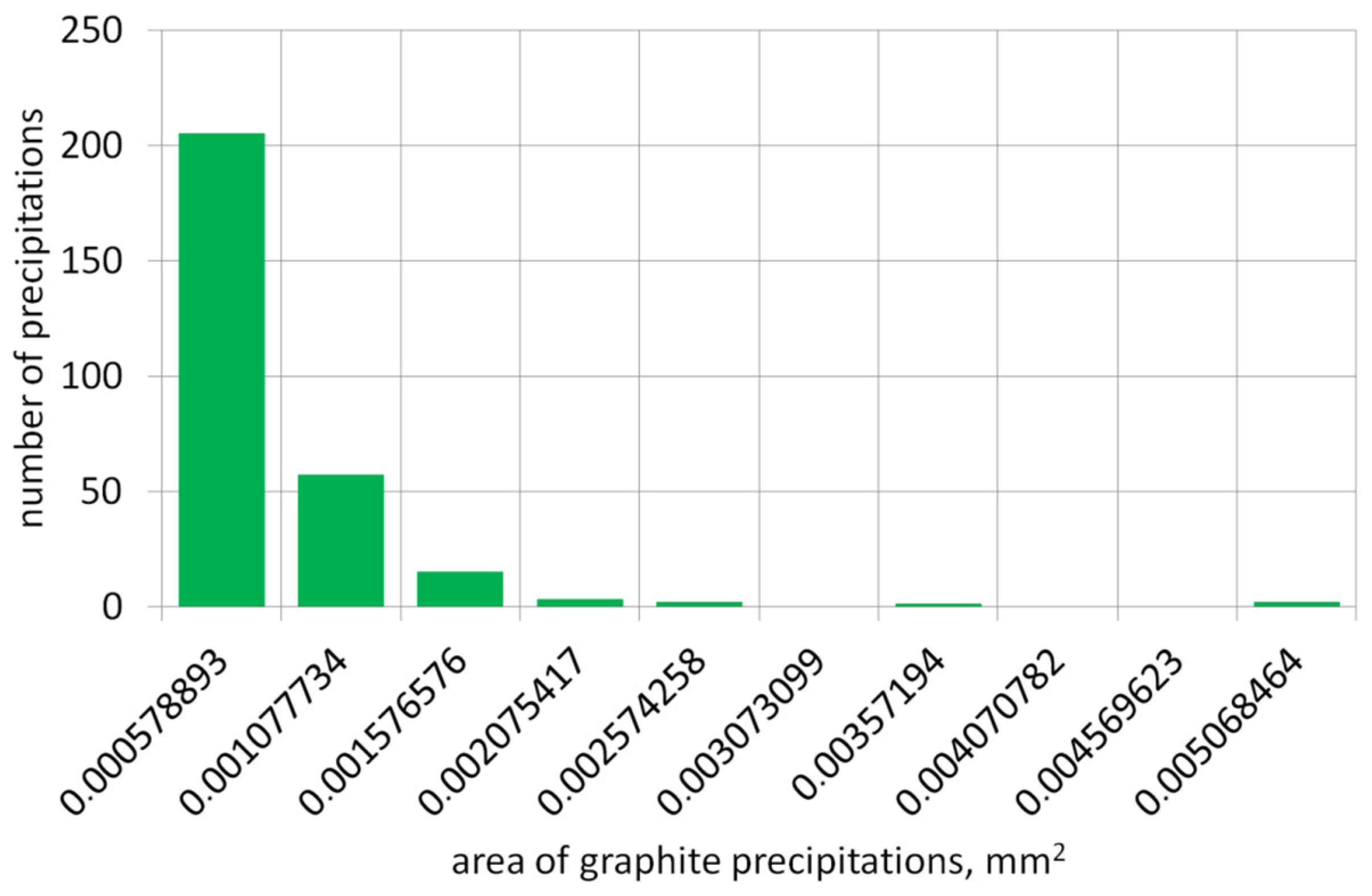
| Average number of precipitates per mm2 | 130 |
| Total surface area occupied by graphite precipitates | 10% |
| Average Feret diameter | 0.03529440 mm |
| Average precipitate circumference | 0.10759123 mm |
| 1 | 2 | 3 | 4 | 5 |
|---|---|---|---|---|
| Graphite Type | Number of Precipitates | Percentage Share [%] (Degree of Spheroidization N) | the Average Value of the “f” Index in the Range | “fK” Index (Weighted Average) |
| flake | 3 | 2.4 | 0.18 | 0.78 |
| vermicular | 15 | 11.9 | 0.56 | |
| spheroidal | 108 | 85.7 | 0.83 | |
| ∑ | 126 | 100% |
| C [%] | Si [%] | Mn [%] | P [%] | S [%] | Mg [%] |
|---|---|---|---|---|---|
| 3.3–3.6 | 2.6–2.95 | <0.1 | <0.02 | <0.01 | 0.005–0.065 |
Disclaimer/Publisher’s Note: The statements, opinions and data contained in all publications are solely those of the individual author(s) and contributor(s) and not of MDPI and/or the editor(s). MDPI and/or the editor(s) disclaim responsibility for any injury to people or property resulting from any ideas, methods, instructions or products referred to in the content. |
© 2026 by the authors. Licensee MDPI, Basel, Switzerland. This article is an open access article distributed under the terms and conditions of the Creative Commons Attribution (CC BY) license.
Share and Cite
Zych, J.S.; Myszka, M.; Postuła, J.; Kobyłecka, S. Vari Morph Cast Iron—A High IQ Material—Structure, Properties, Ultrasonic Control, Technology and Industrial Application. Materials 2026, 19, 1212. https://doi.org/10.3390/ma19061212
Zych JS, Myszka M, Postuła J, Kobyłecka S. Vari Morph Cast Iron—A High IQ Material—Structure, Properties, Ultrasonic Control, Technology and Industrial Application. Materials. 2026; 19(6):1212. https://doi.org/10.3390/ma19061212
Chicago/Turabian StyleZych, Jerzy Stanisław, Marcin Myszka, Janusz Postuła, and Sylwia Kobyłecka. 2026. "Vari Morph Cast Iron—A High IQ Material—Structure, Properties, Ultrasonic Control, Technology and Industrial Application" Materials 19, no. 6: 1212. https://doi.org/10.3390/ma19061212
APA StyleZych, J. S., Myszka, M., Postuła, J., & Kobyłecka, S. (2026). Vari Morph Cast Iron—A High IQ Material—Structure, Properties, Ultrasonic Control, Technology and Industrial Application. Materials, 19(6), 1212. https://doi.org/10.3390/ma19061212