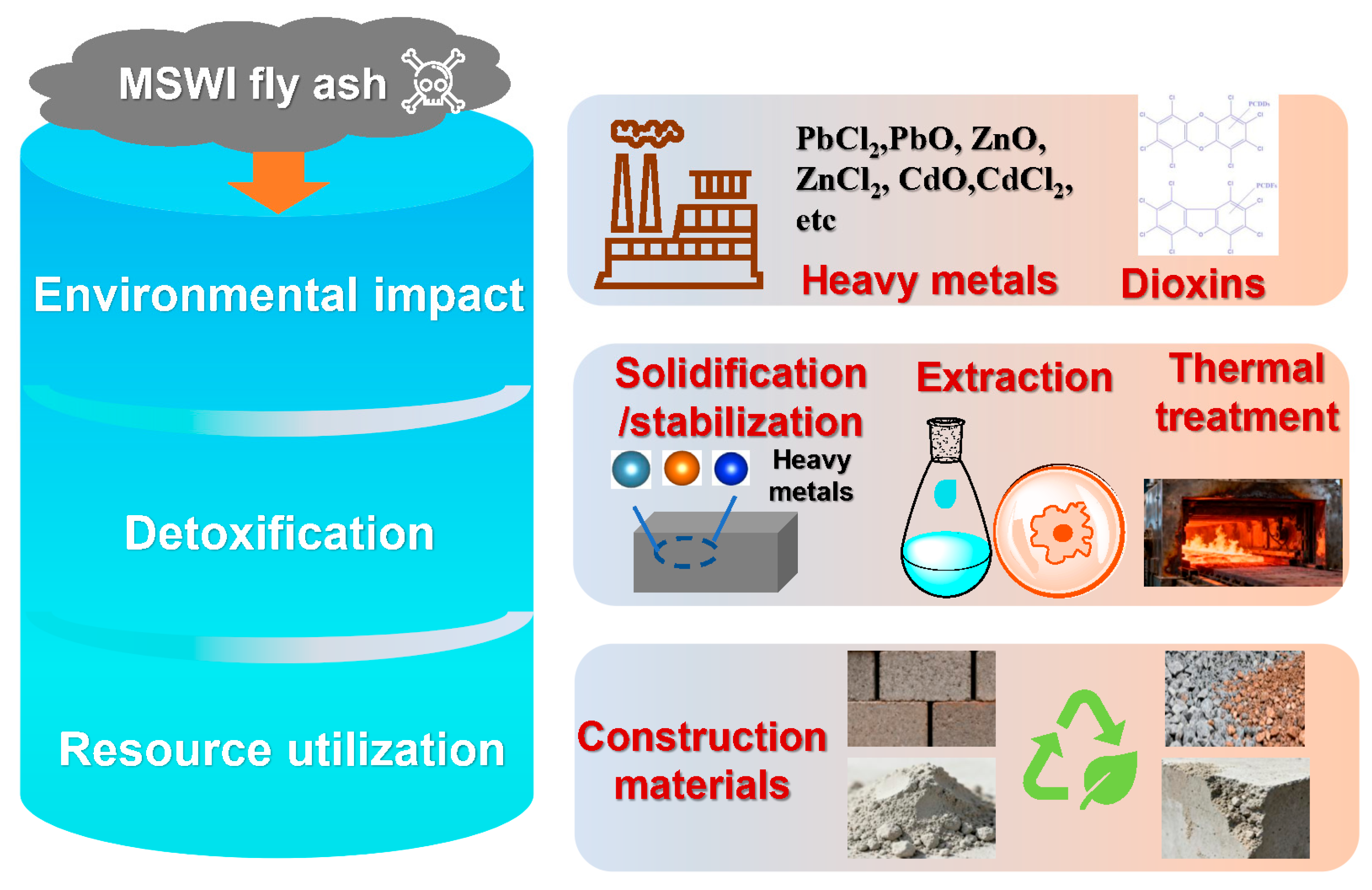
Advancements in Detoxification of Municipal Solid Waste Incineration Fly Ash: A Review of Hazardous Properties, Treatment Strategies, and Resource Utilization


Abstract
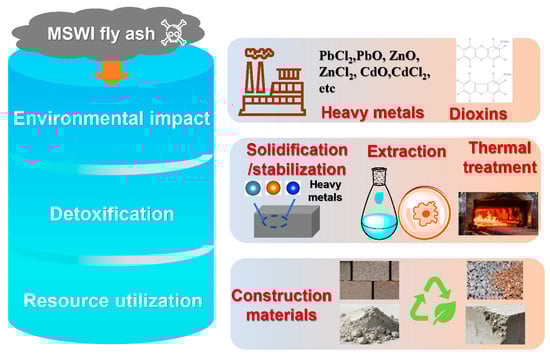
1. Introduction
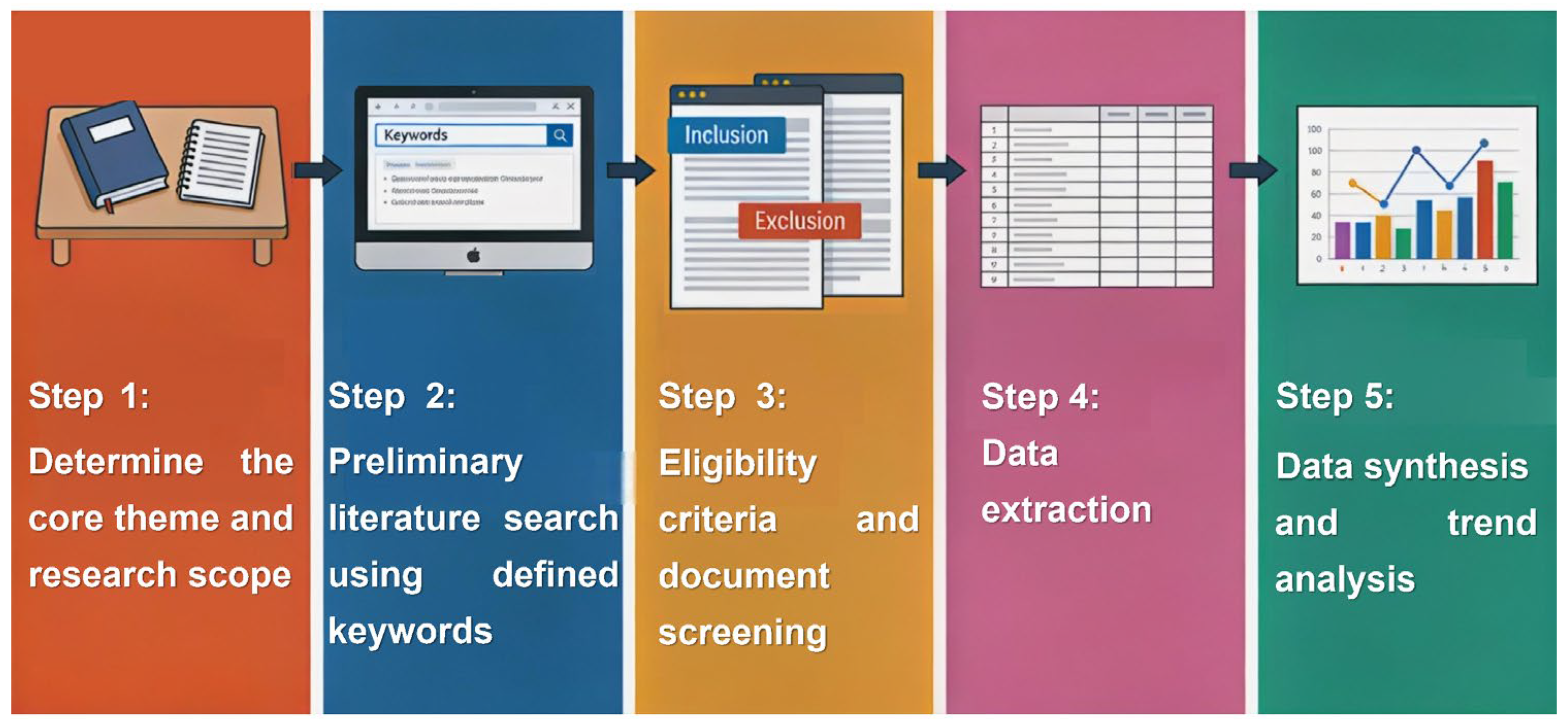
2. Review Methodology
3. Characteristics and Environmental Impact of MSWI Fly Ash
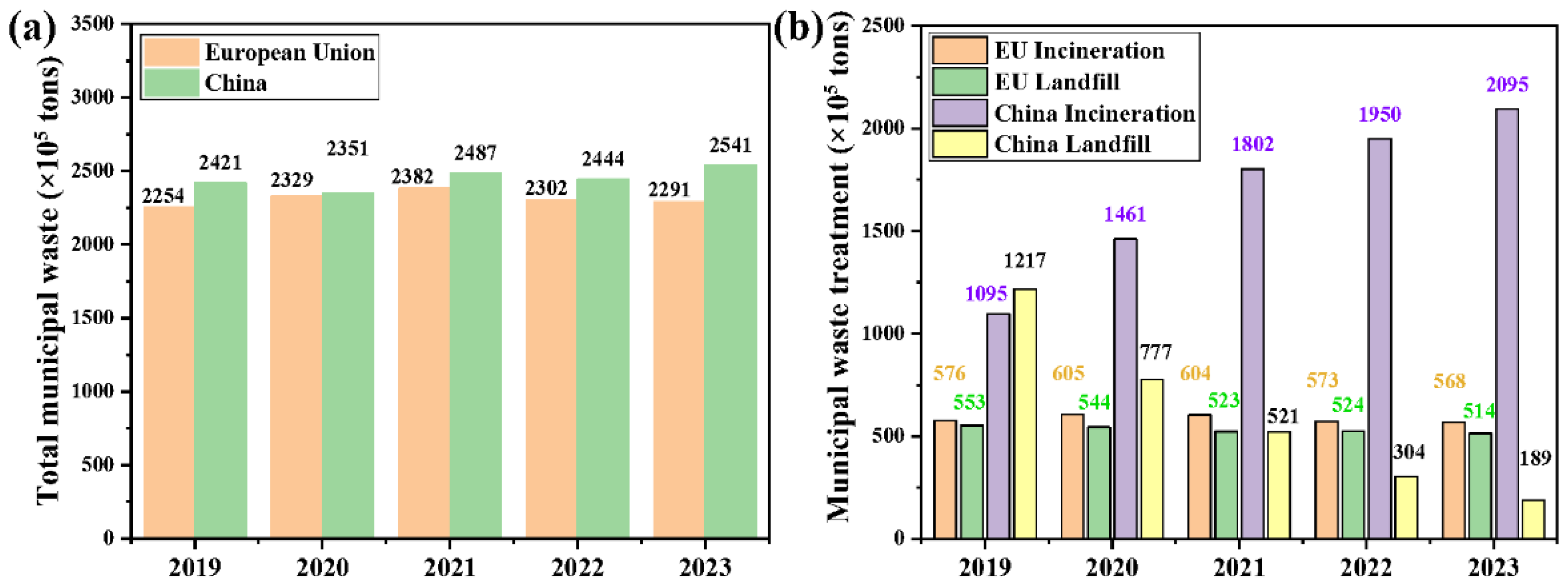
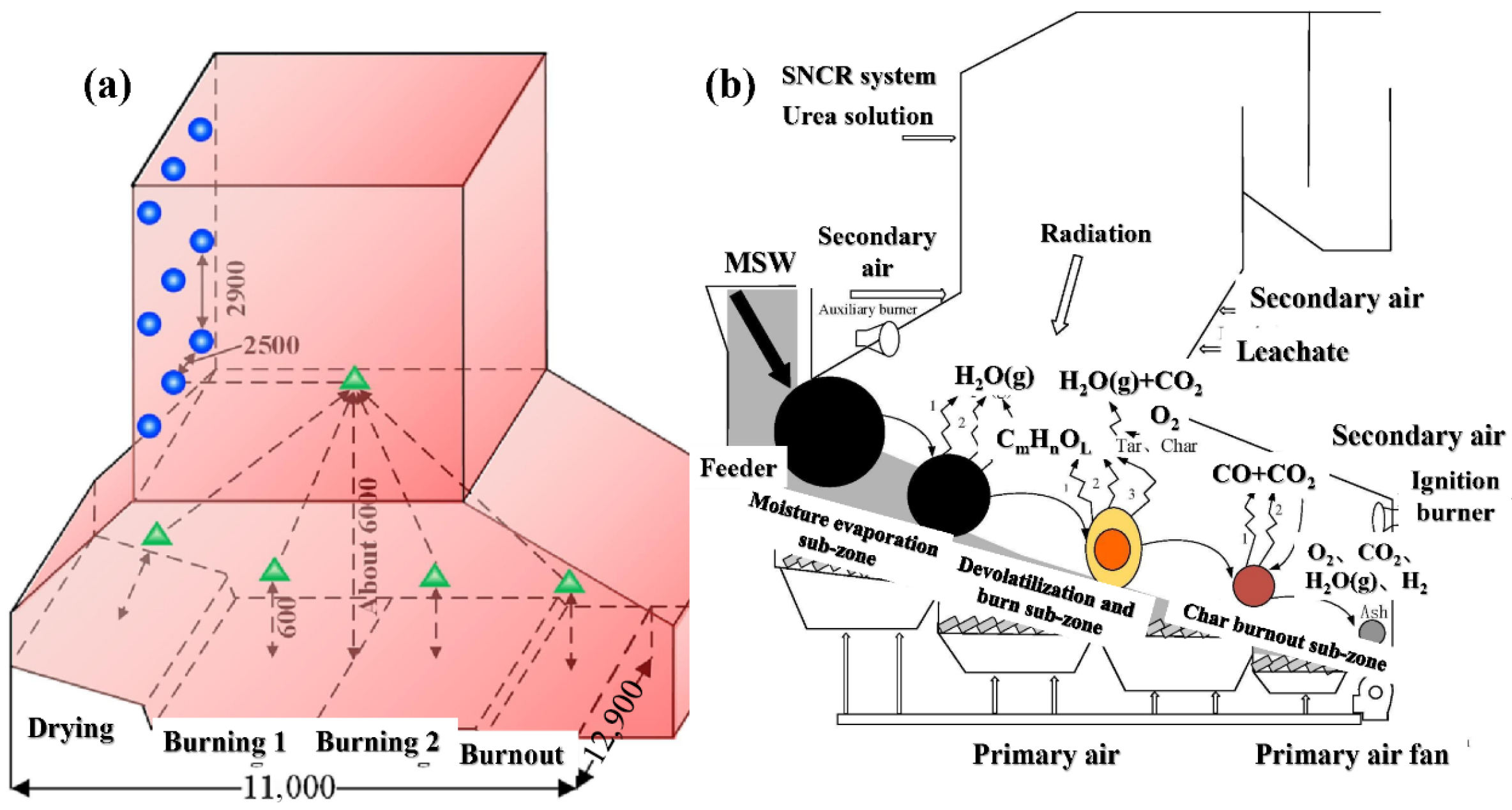
3.1. Generation and Characteristics of MSWI Fly Ash
3.2. Heavy Metals in MSWI Fly Ash
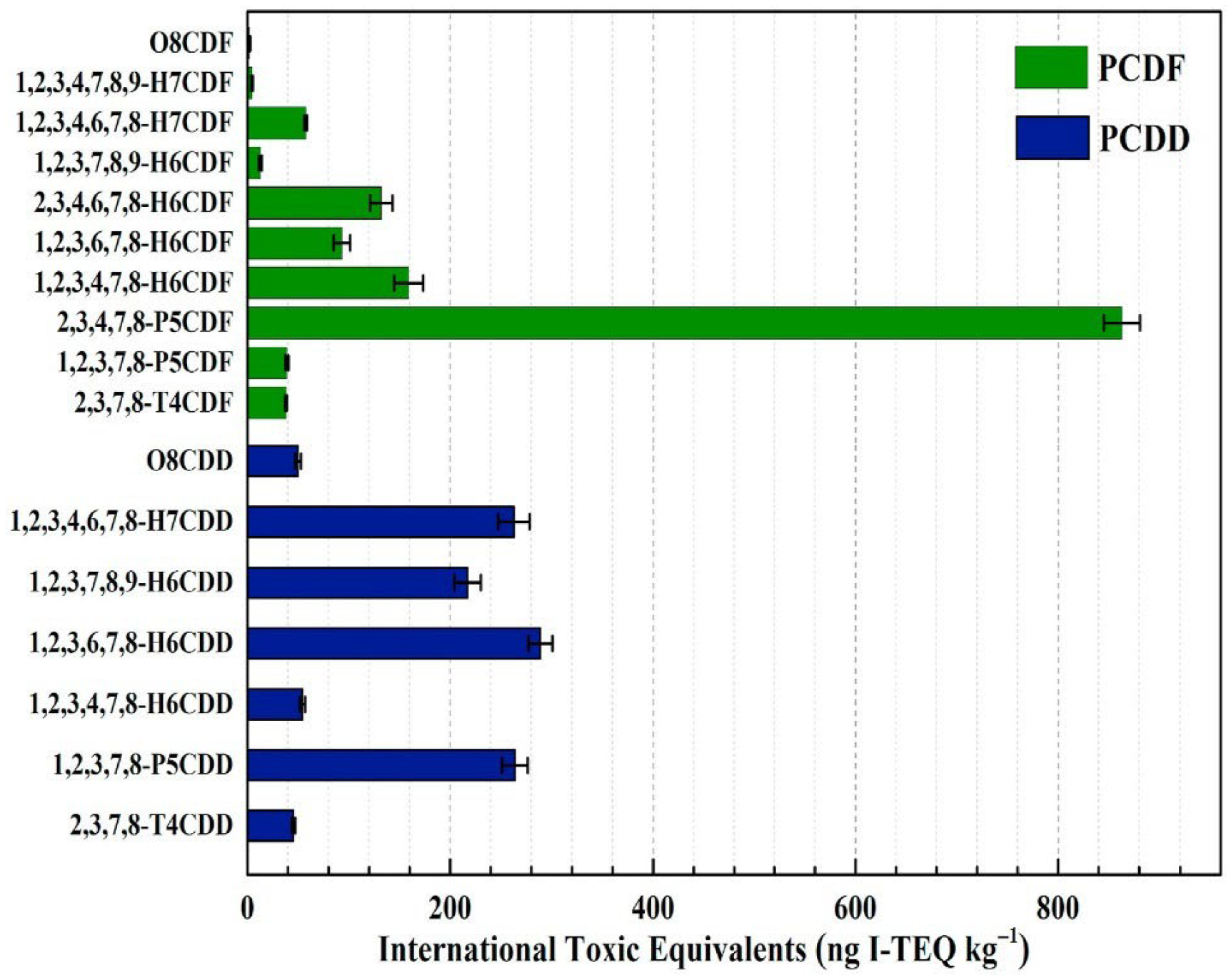
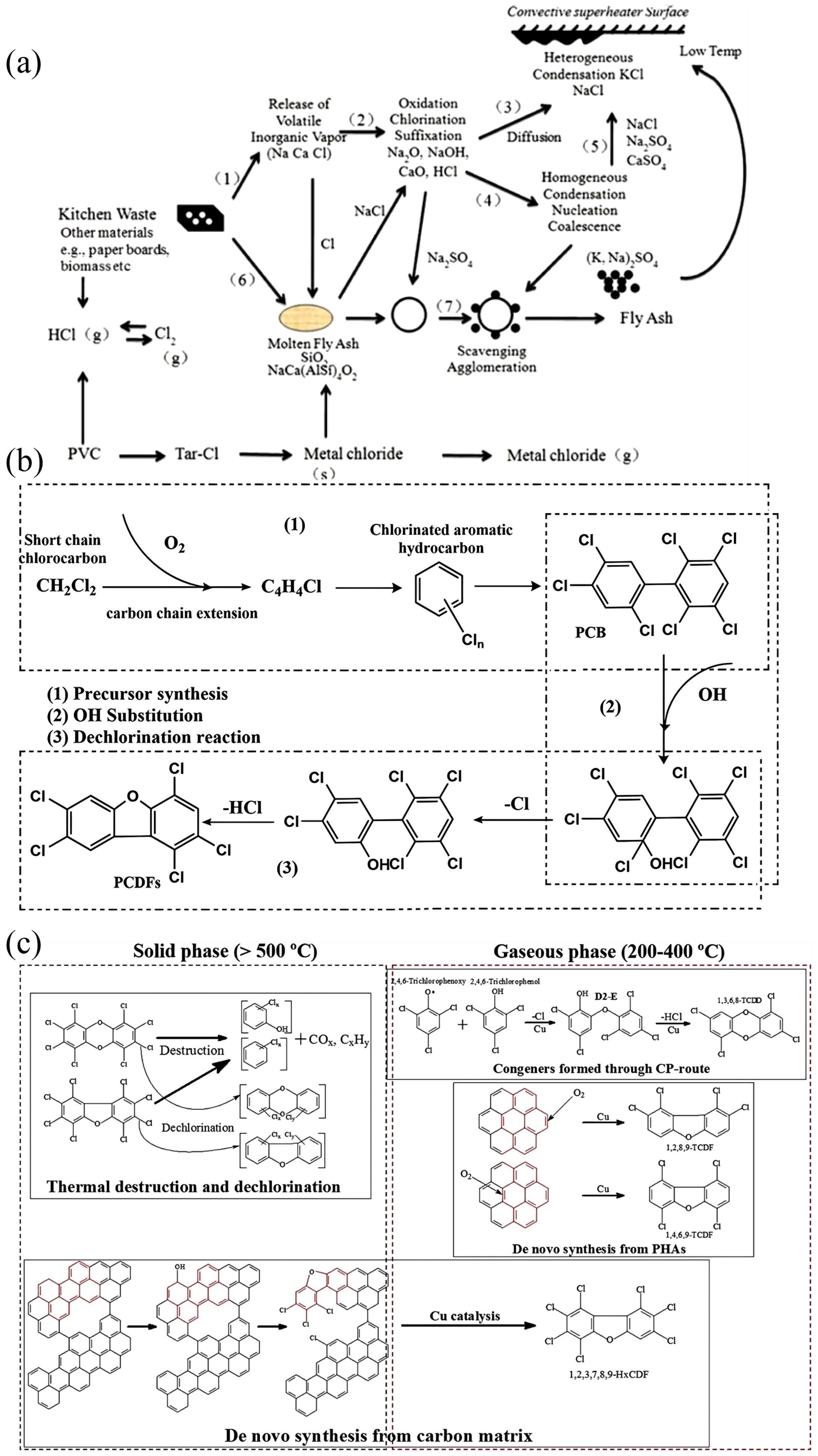
3.3. Dioxins in MSWI Fly Ash

- (1)
- Inherent dioxins in MSW
- (2)
- High-temperature homogeneous pathway
- (3)
- Low-temperature heterogeneous pathway

4. Harmless Disposal of MSWI Fly Ash
4.1. Solidification/Stabilization
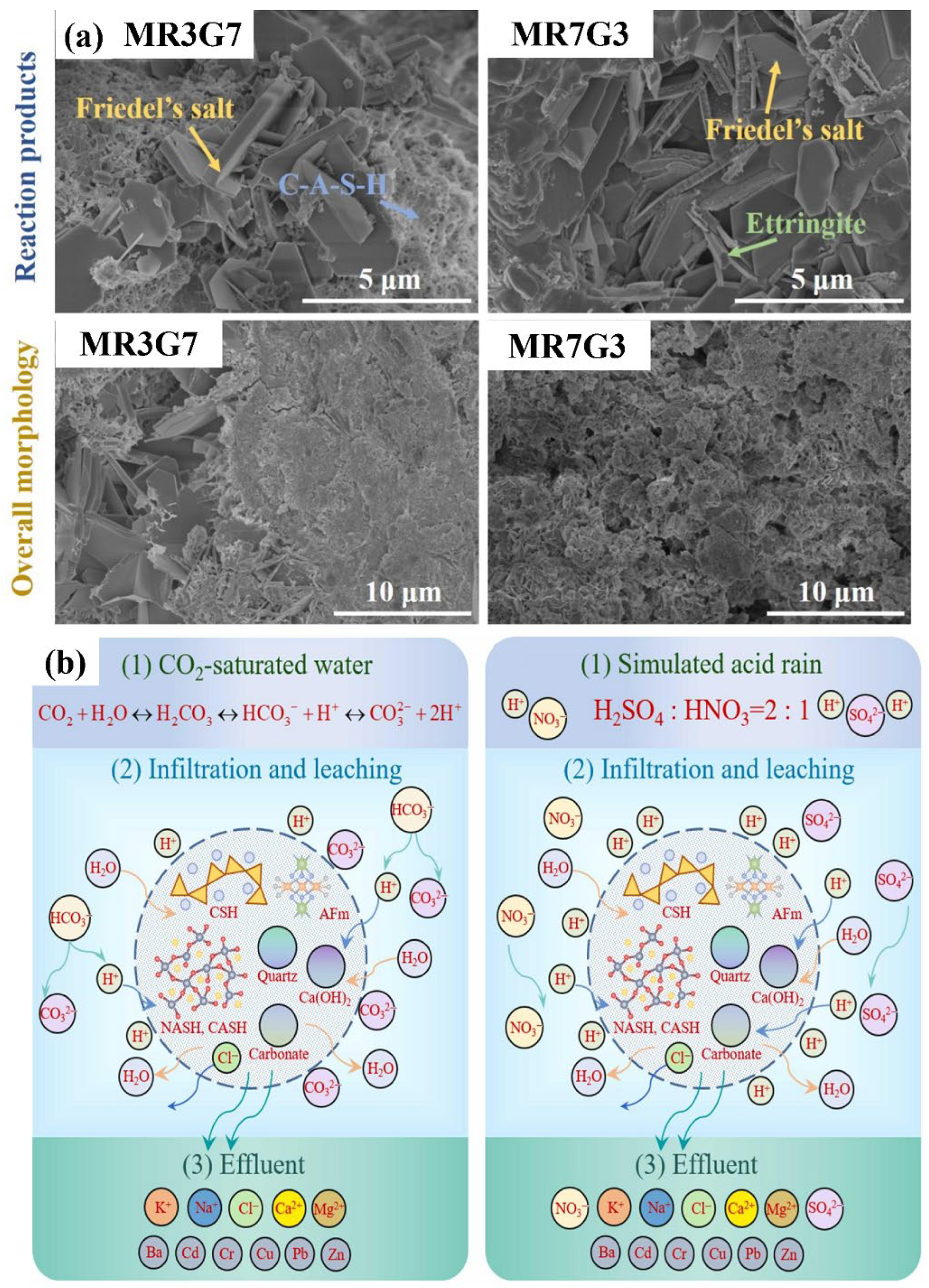
4.1.1. Cement Solidification
4.1.2. Geopolymer Solidification

4.1.3. Chemical Solidification/Stabilization
4.1.4. Analysis and Comparison of Solidification/Stabilization Technologies
4.2. Extraction
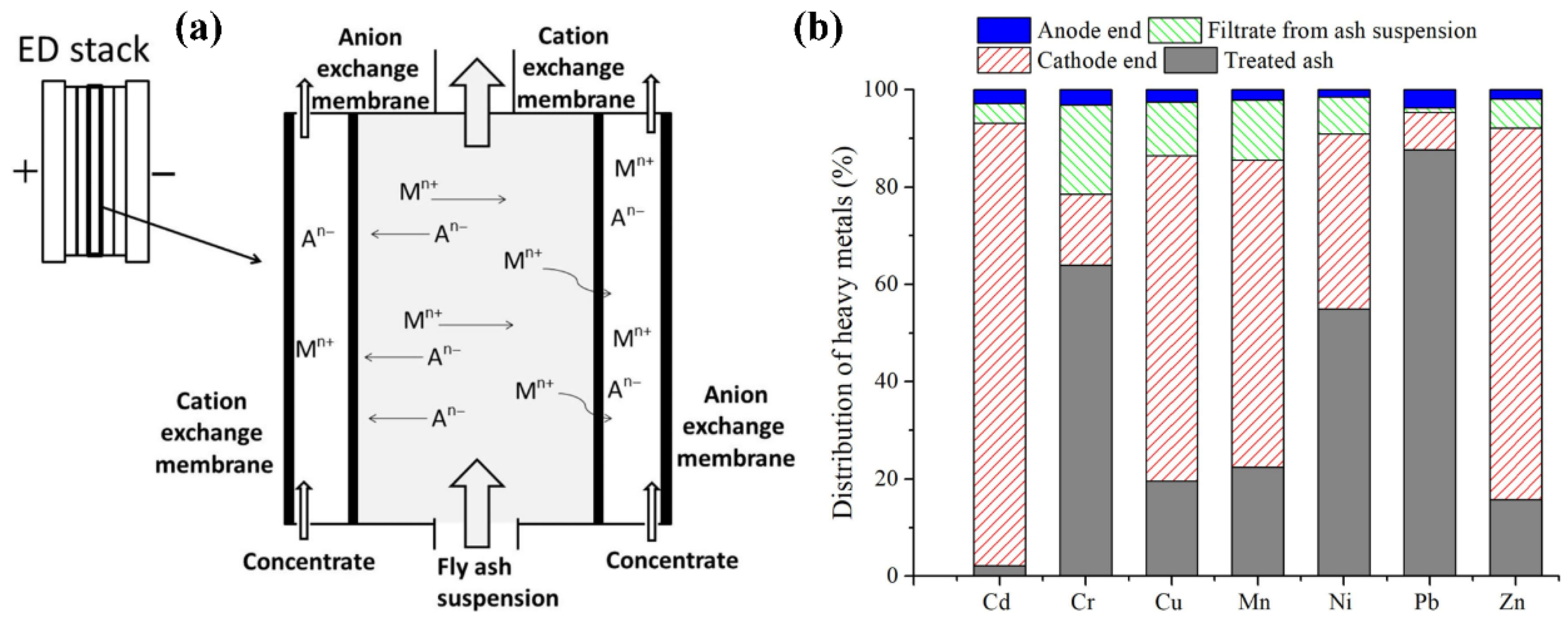
4.2.1. Electrodialytic Extraction

4.2.2. Chemical Extraction
4.2.3. Biological Extraction

4.3. Thermal Treatment
4.3.1. Sintering
4.3.2. Melting/Vitrification

5. MSWI Fly Ash Resource Utilization
5.1. Ceramic Bricks
5.2. Glass Ceramics
5.3. Glass Ceramic Foams

5.4. Road Substrates
5.5. Cement and Concrete

6. Conclusions, Prospect and Limitations
- (1)
- Stabilization, extraction, etc., have proved to be effective in realizing the solidification of heavy metals and the removal of dioxins in MSWI fly ash. However, there are a number of challenges with these technologies, including high costs, excessive energy use, inadequate scale, and secondary pollutants. Combining chemical stabilization with cement solidification enhances heavy metal long-term stability and reduces environmental hazards. Cement solidification emits ~0.9 t CO2/t, geopolymers offer lower CO2 footprint and better immobilization (e.g., Pb > 99.6%), but ash component variability hinders standardization.
- (2)
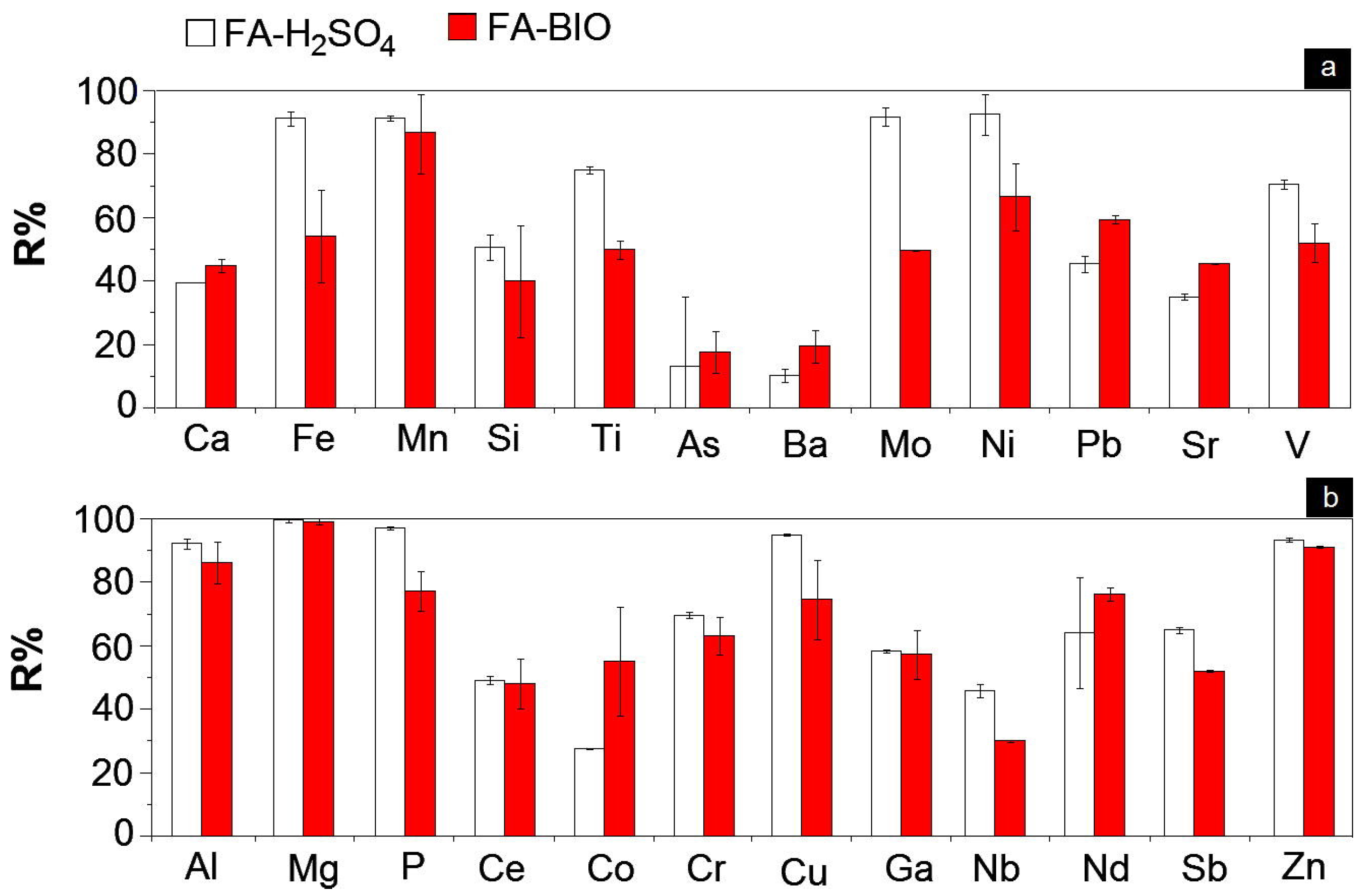
- Electrodialytic methods achieve high removal of Cd (98%) but it is limited for Pb (12%). However, its application to MSWI fly ash leachates is hampered by membrane fouling caused by colloidal silicates and aluminates. Bioleaching is promising for critical metals (e.g., Zn, Pb, Ni) but slow.
- (3)
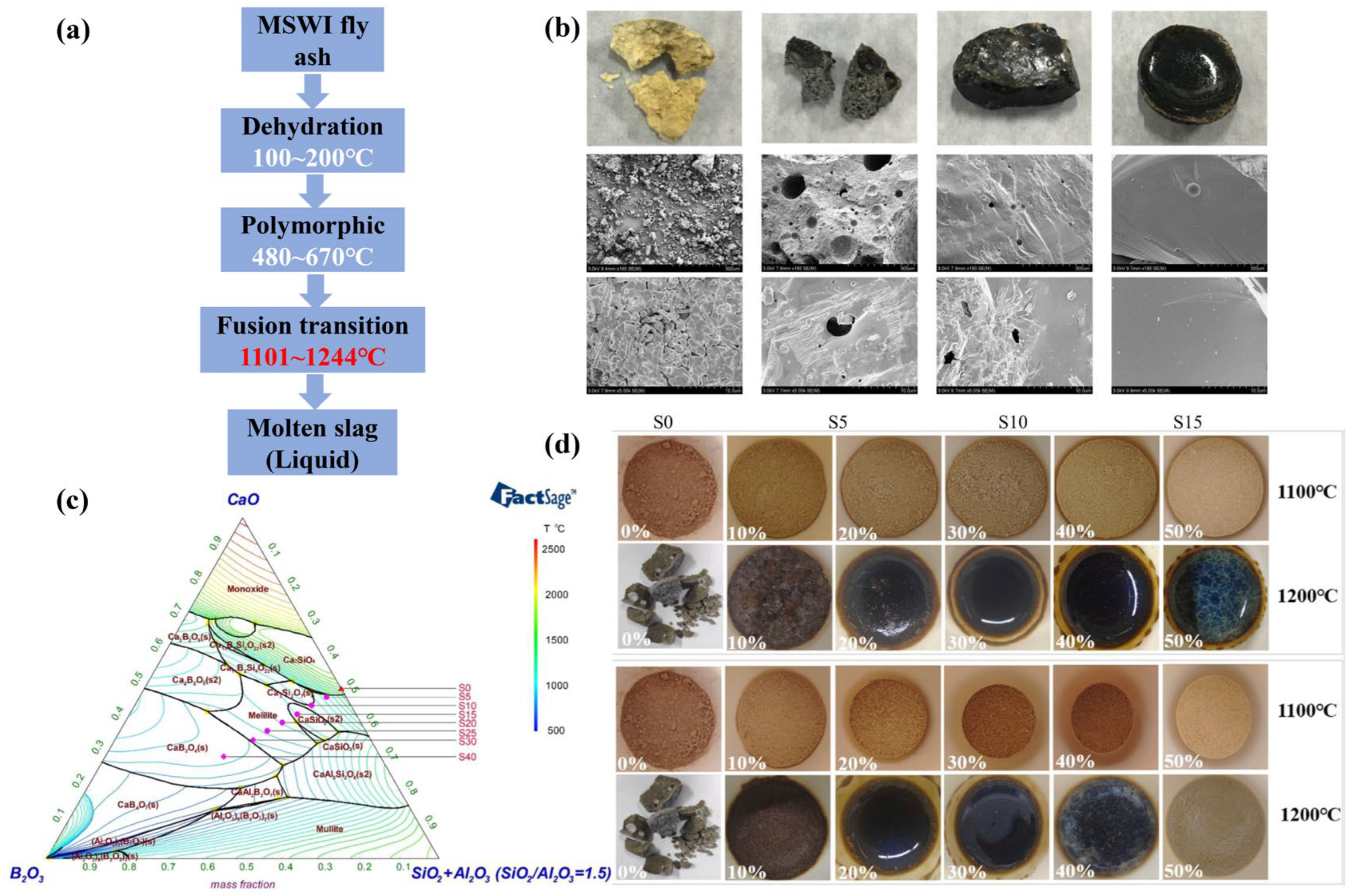
- Sintering and vitrification degrade dioxins (>99%) and stabilize heavy metals, but energy consumption is high (600–1000 kWh/t), which has become an important factor limiting its application. The chemical properties of the glass products are stable and the volume reduction effect is remarkable. Pre-treatment before sintering and adding fluxing agents to lower the melting point of the system during melting/vitrification are effective measures to improve economic feasibility.
- (4)
- MSWI fly ash serves as a raw material for ceramic bricks, glass ceramics, glass ceramic foams, road substrates, and concrete, but low-carbon, cost-effective integrated processes and long-term environmental stability needs further research. The conversion into ceramic bricks achieves dual goals of heavy metal stabilization and reuse. Incorporating MSWI fly ash into asphalt or concrete also improves crack resistance and service performance.
Author Contributions
Funding
Data Availability Statement
Acknowledgments
Conflicts of Interest
Abbreviations
| C-A-H | Calcium aluminate hydrate |
| C-A-S-H | Calcium aluminosilicate hydrate |
| C-S-H | Calcium silicate hydrate |
| DC | Direct current |
| EDSE | Electrodialytic separation |
| EDR | Electrodialytic remediation |
| EDTA | Ethylenediaminetetraacetic acid |
| EU | European Union |
| I-TEQ | International toxic equivalent |
| MSW | Municipal solid waste |
| MSWI | Municipal solid waste incineration |
| PCDD | Poly-chlorinated dibenzo-p-dioxin |
| PCDF | Poly-chlorinated dibenzofuran |
| PIC | Products of incomplete combustion |
| S/S | Solidification/stabilization |
| SEM | Scanning electron microscopy |
| TCLP | Toxicity characteristic leaching procedure |
| XRD | X-ray diffraction |
References
- Cao, C.; Zhang, Q.; Li, M.; Wang, S.; Liu, C.; Chen, Q. Intelligent air flow control in municipal solid waste incineration power plants: A novel approach integrating machine learning and physical-chemical models. Energy 2025, 335, 138318. [Google Scholar] [CrossRef]
- Kaza, S.; Yao, L.; Bhada-Tata, P.; Van Woerden, F. What a Waste 2.0: A Global Snapshot of Solid Waste Management to 2050; Urban Development Series; World Bank: Washington, DC, USA, 2018. [Google Scholar]
- Liu, S.-J.; Xi, B.-D.; Qiu, Z.-P.; He, X.-S.; Zhang, H.; Dang, Q.-L.; Zhao, X.-Y.; Li, D. Succession and diversity of microbial communities in landfills with depths and ages and its association with dissolved organic matter and heavy metals. Sci. Total Environ. 2019, 651, 909–916. [Google Scholar] [CrossRef]
- Fellner, J.; Lederer, J.; Purgar, A.; Winterstetter, A.; Rechberger, H.; Winter, F.; Laner, D. Evaluation of resource recovery from waste incineration residues–The case of zinc. Waste Manag. 2015, 37, 95–103. [Google Scholar] [CrossRef]
- Makarichi, L.; Jutidamrongphan, W.; Techato, K.-A. The evolution of waste-to-energy incineration: A review. Renew. Sustain. Energy Rev. 2018, 91, 812–821. [Google Scholar] [CrossRef]
- Yan, K.; Li, L.; Ge, D. Research on properties of bitumen mortar containing municipal solid waste incineration fly ash. Constr. Build. Mater. 2019, 218, 657–666. [Google Scholar] [CrossRef]
- OECD. Waste-Municipal Waste: Generation and Treatment. 2025. Available online: https://data-explorer.oecd.org/vis?fs[0]=Topic%2C1%7CEnvironment%20and%20climate%20change%23ENV%23%7CResource%20efficiency%20and%20circular%20economy%23ENV_REC%23&pg=0&fc=Topic&bp=true&snb=6&df[ds]=dsDisseminateFinalDMZ&df[id]=DSD_MUNW%40DF_MUNW&df[ag]=OECD.ENV.EPI&df[vs]=1.0&dq=.A.MUNICIPAL.T%2BKG_PS&pd=2015%2C&to[TIME_PERIOD]=false (accessed on 1 February 2026).
- National Bureau of Statistics of China. China Statistical Yearbook; China Statistics Press: Beijing, China, 2025.
- Guo, J.; Dong, Z.; Guo, W.; Yan, A. Robust stochastic configuration network based perception model for furnace temperature in municipal solid waste incineration process. Inf. Sci. 2025, 719, 122477. [Google Scholar] [CrossRef]
- Zhuang, J.; Tang, J.; Aljerf, L. Comprehensive review on mechanism analysis and numerical simulation of municipal solid waste incineration process based on mechanical grate. Fuel 2022, 320, 123826. [Google Scholar] [CrossRef]
- Chen, J.; Tang, J.; Xia, H.; Yu, W.; Qiao, J. Modelling the furnace temperature field of a municipal solid waste incinerator using the numerical simulation and the deep forest regression algorithm. Fuel 2023, 347, 128511. [Google Scholar] [CrossRef]
- De Boom, A.; Degrez, M. Belgian MSWI fly ashes and APC residues: A characterisation study. Waste Manag. 2012, 32, 1163–1170. [Google Scholar] [CrossRef] [PubMed]
- Wang, L.; Jin, Y.; Nie, Y. Investigation of accelerated and natural carbonation of MSWI fly ash with a high content of Ca. J. Hazard. Mater. 2010, 174, 334–343. [Google Scholar]
- Zhang, Y.; Ma, Z.; Fang, Z.; Qian, Y.; Zhong, P.; Yan, J. Review of harmless treatment of municipal solid waste incineration fly ash. Waste Dispos. Sustain. Energy 2020, 2, 1–25. [Google Scholar] [CrossRef]
- He, X.; Zhu, S.; Hwang, J.-Y. Physical and chemical properties of MSWI fly ash. Charact. Miner. Met. Mater. 2016, 2016, 451–459. [Google Scholar]
- Gollakota, A.R.; Volli, V.; Shu, C.-M. Progressive utilisation prospects of coal fly ash: A review. Sci. Total Environ. 2019, 672, 951–989. [Google Scholar] [CrossRef]
- Luch, A. Molecular, Clinical and Environmental Toxicology: Volume 3: Environmental Toxicology; Springer Science & Business Media: Berlin/Heidelberg, Germany, 2012; Volume 101. [Google Scholar]
- Zhao, H.; Yang, F.; Wang, Z.; Li, Y.; Guo, J.; Li, S.; Shu, J.; Chen, M. Chlorine and heavy metals removal from municipal solid waste incineration fly ash by electric field enhanced oxalic acid washing. J. Environ. Manag. 2023, 340, 117939. [Google Scholar] [CrossRef]
- Yin, K.; Chan, W.P.; Dou, X.; Ren, F.; Chang, V.W.-C. Cr, Cu, Hg and Ni release from incineration bottom ash during utilization in land reclamation–based on lab-scale batch and column leaching experiments and a modeling study. Chemosphere 2018, 197, 741–748. [Google Scholar] [CrossRef]
- Li, Q.; Meng, A.; Jia, J.; Zhang, Y. Investigation of heavy metal partitioning influenced by flue gas moisture and chlorine content during waste incineration. J. Environ. Sci. 2010, 22, 760–768. [Google Scholar] [CrossRef]
- Yue, Y.; Zhang, J.; Sun, F.; Wu, S.; Pan, Y.; Zhou, J.; Qian, G. Heavy metal leaching and distribution in glass products from the co-melting treatment of electroplating sludge and MSWI fly ash. J. Environ. Manag. 2019, 232, 226–235. [Google Scholar] [CrossRef] [PubMed]
- Mu, Y.; Saffarzadeh, A.; Shimaoka, T. Influence of ignition of waste fishbone on enhancing heavy metal stabilization in municipal solid waste incineration (MSWI) fly ash. J. Clean. Prod. 2018, 189, 396–405. [Google Scholar] [CrossRef]
- Wang, C.-Q.; Liu, K.; Huang, D.-M.; Chen, Q.; Tu, M.-J.; Wu, K.; Shui, Z.-H. Utilization of fly ash as building material admixture: Basic properties and heavy metal leaching. Case Stud. Constr. Mater. 2022, 17, e01422. [Google Scholar] [CrossRef]
- Luo, H.; Wu, Y.; Zhao, A.; Kumar, A.; Liu, Y.; Cao, B.; Yang, E.-H. Hydrothermally synthesized porous materials from municipal solid waste incineration bottom ash and their interfacial interactions with chloroaromatic compounds. J. Clean. Prod. 2017, 162, 411–419. [Google Scholar] [CrossRef]
- Tang, J.; Steenari, B.-M. Leaching optimization of municipal solid waste incineration ash for resource recovery: A case study of Cu, Zn, Pb and Cd. Waste Manag. 2016, 48, 315–322. [Google Scholar] [CrossRef]
- Zhao, B.; Hu, X.; Lu, J. Analysis and discussion on formation and control of dioxins generated from municipal solid waste incineration process. J. Air Waste Manag. Assoc. 2022, 72, 1063–1082. [Google Scholar] [CrossRef]
- Sun, J.; Hu, J.; Zhu, G.; Zhang, D.; Zhu, Y.; Chen, Z.; Li, J.; Zhang, H.; Tang, J.; Nie, J. PCDD/Fs distribution characteristics and health risk assessment in fly ash discharged from MSWIs in China. Ecotoxicol. Environ. Saf. 2017, 139, 83–88. [Google Scholar] [CrossRef]
- Liu, X.; Cao, W.; Liu, X.; Zhou, Y.; Wen, S. Associations between Maternal Polychlorinated Dibenzo-p-dioxin and Dibenzofuran Serum Concentrations and Pulse Pressure in Early Pregnancy: A Cross-Sectional Study. Int. J. Environ. Res. Public Health 2022, 19, 13785. [Google Scholar] [CrossRef] [PubMed]
- Faiad, W.; Soukkarieh, C.; Murphy, D.J.; Hanano, A. Effects of dioxins on animal spermatogenesis: A state-of-the-art review. Front. Reprod. Health 2022, 4, 1009090. [Google Scholar] [CrossRef] [PubMed]
- Peng, Y.; Lu, S.; Li, X.; Yan, J.; Cen, K. Formation, measurement, and control of dioxins from the incineration of municipal solid wastes: Recent advances and perspectives. Energy Fuels 2020, 34, 13247–13267. [Google Scholar] [CrossRef]
- Zhang, J.; Zhang, S.; Liu, B. Degradation technologies and mechanisms of dioxins in municipal solid waste incineration fly ash: A review. J. Clean. Prod. 2020, 250, 119507. [Google Scholar] [CrossRef]
- Gan, M.; Wong, G.; Fan, X.; Ji, Z.; Ye, H.; Zhou, Z.; Wang, Z. Enhancing the degradation of dioxins during the process of iron ore sintering co-disposing municipal solid waste incineration fly ash. J. Clean. Prod. 2021, 291, 125286. [Google Scholar] [CrossRef]
- Ying, Y.; Wang, X.; Song, W.; Ma, Y.; Yu, H.; Lin, X.; Lu, S.; Li, X.; Huang, W.; Zhong, L. Assessment of PCDD/Fs Emission during Industrial-Organic-Solid-Waste Incineration Process in a Fluidized-Bed Incinerator. Processes 2023, 11, 251. [Google Scholar] [CrossRef]
- Ma, W.; Wenga, T.; Frandsen, F.J.; Yan, B.; Chen, G. The fate of chlorine during MSW incineration: Vaporization, transformation, deposition, corrosion and remedies. Prog. Energy Combust. Sci. 2020, 76, 100789. [Google Scholar] [CrossRef]
- Chen, Z.; Zhang, S.; Lin, X.; Li, X. Decomposition and reformation pathways of PCDD/Fs during thermal treatment of municipal solid waste incineration fly ash. J. Hazard. Mater. 2020, 394, 122526. [Google Scholar] [CrossRef]
- Yu, J.; Qiao, Y.; Jin, L.; Ma, C.; Paterson, N.; Sun, L. Removal of toxic and alkali/alkaline earth metals during co-thermal treatment of two types of MSWI fly ashes in China. Waste Manag. 2015, 46, 287–297. [Google Scholar] [CrossRef]
- Chen, L.; Wang, Y.-S.; Wang, L.; Zhang, Y.; Li, J.; Tong, L.; Hu, Q.; Dai, J.-G.; Tsang, D.C. Stabilisation/solidification of municipal solid waste incineration fly ash by phosphate-enhanced calcium aluminate cement. J. Hazard. Mater. 2021, 408, 124404. [Google Scholar] [CrossRef] [PubMed]
- Wang, B.; Fan, C. Hydration behavior and immobilization mechanism of MgO–SiO2–H2O cementitious system blended with MSWI fly ash. Chemosphere 2020, 250, 126269. [Google Scholar] [CrossRef] [PubMed]
- Petersen, T.; Valdenaire, P.-L.; Pellenq, R.; Ulm, F.-J. A reaction model for cement solidification: Evolving the C–S–H packing density at the micrometer-scale. J. Mech. Phys. Solids 2018, 118, 58–73. [Google Scholar] [CrossRef]
- Zhou, X.; Zhou, M.; Wu, X.; Han, Y.; Geng, J.; Wang, T.; Wan, S.; Hou, H. Reductive solidification/stabilization of chromate in municipal solid waste incineration fly ash by ascorbic acid and blast furnace slag. Chemosphere 2017, 182, 76–84. [Google Scholar] [CrossRef]
- Yang, Z.; Tian, S.; Liu, L.; Wang, X.; Zhang, Z. Application of washed MSWI fly ash in cement composites: Long-term environmental impacts. Environ. Sci. Pollut. Res. 2018, 25, 12127–12138. [Google Scholar] [CrossRef] [PubMed]
- Zha, X.; Ning, J.; Saafi, M.; Dong, L.; Dassekpo, J.-B.M.; Ye, J. Effect of supercritical carbonation on the strength and heavy metal retention of cement-solidified fly ash. Cem. Concr. Res. 2019, 120, 36–45. [Google Scholar] [CrossRef]
- Chen, X.; Bi, Y.; Zhang, H.; Wang, J. Chlorides removal and control through water-washing process on MSWI fly ash. Procedia Environ. Sci. 2016, 31, 560–566. [Google Scholar] [CrossRef]
- Ekinci, E.; Kazancoglu, Y.; Mangla, S.K. Using system dynamics to assess the environmental management of cement industry in streaming data context. Sci. Total Environ. 2020, 715, 136948. [Google Scholar] [CrossRef]
- Risdanareni, P.; Ekaputri, J.J. The influence of alkali activator concentration to mechanical properties of geopolymer concrete with trass as a filler. Mater. Sci. Forum 2015, 803, 125–134. [Google Scholar] [CrossRef]
- Damanabi, A.T.; Servatan, M.; Mazinani, S.; Olabi, A.G.; Zhang, Z. Potential of tri-reforming process and membrane technology for improving ammonia production and CO2 reduction. Sci. Total Environ. 2019, 664, 567–575. [Google Scholar] [CrossRef] [PubMed]
- Al-Ghouti, M.A.; Khan, M.; Nasser, M.S.; Al-Saad, K.; Heng, O.E. Recent advances and applications of municipal solid wastes bottom and fly ashes: Insights into sustainable management and conservation of resources. Environ. Technol. Innov. 2021, 21, 101267. [Google Scholar] [CrossRef]
- Shehata, N.; Sayed, E.T.; Abdelkareem, M.A. Recent progress in environmentally friendly geopolymers: A review. Sci. Total Environ. 2021, 762, 143166. [Google Scholar] [CrossRef] [PubMed]
- Liu, Z.; Xia, Y.; Li, H.; Shi, Y.; Wu, J.; Yan, J.; Wang, L. Synergistic utilization of municipal solid waste incineration fly ash and red mud as low-carbon alkali-activators in one-part geopolymer. Chem. Eng. J. 2025, 522, 168140. [Google Scholar] [CrossRef]
- Ferraro, A.; Farina, I.; Race, M.; Colangelo, F.; Cioffi, R.; Fabbricino, M. Pre-treatments of MSWI fly-ashes: A comprehensive review to determine optimal conditions for their reuse and/or environmentally sustainable disposal. Rev. Environ. Sci. Bio/Technol. 2019, 18, 453–471. [Google Scholar] [CrossRef]
- Lan, T.; Meng, Y.; Ju, T.; Chen, Z.; Du, Y.; Deng, Y.; Song, M.; Han, S.; Jiang, J. Synthesis and application of geopolymers from municipal waste incineration fly ash (MSWI FA) as raw ingredient-A review. Resour. Conserv. Recycl. 2022, 182, 106308. [Google Scholar] [CrossRef]
- Zheng, L.; Wang, W.; Gao, X. Solidification and immobilization of MSWI fly ash through aluminate geopolymerization: Based on partial charge model analysis. Waste Manag. 2016, 58, 270–279. [Google Scholar] [CrossRef]
- Su, L.; Li, S.; Wu, S.; Liang, B.; Zhang, X. Preparation and heavy metal solidification mechanism of physically activated municipal solid waste incineration fly ash base geopolymer backfill. Process Saf. Environ. Prot. 2025, 201, 107522. [Google Scholar] [CrossRef]
- Fan, C.; Wang, B.; Ai, H.; Qi, Y.; Liu, Z. A comparative study on solidification/stabilization characteristics of coal fly ash-based geopolymer and Portland cement on heavy metals in MSWI fly ash. J. Clean. Prod. 2021, 319, 128790. [Google Scholar] [CrossRef]
- Singh, N.; Middendorf, B. Geopolymers as an alternative to Portland cement: An overview. Constr. Build. Mater. 2020, 237, 117455. [Google Scholar] [CrossRef]
- Liang, D.; Yan, J.; Wang, F.; Lv, G. The long-term leaching behavior of heavy metals in geopolymers and Portland cement bricks containing MSWI fly ash: A comparative study. J. Environ. Chem. Eng. 2024, 12, 112894. [Google Scholar] [CrossRef]
- Li, X.; Chen, Q.; Zhou, Y.; Tyrer, M.; Yu, Y. Stabilization of heavy metals in MSWI fly ash using silica fume. Waste Manag. 2014, 34, 2494–2504. [Google Scholar] [CrossRef] [PubMed]
- Du, B.; Li, J.; Fang, W.; Liu, J. Comparison of long-term stability under natural ageing between cement solidified and chelator-stabilised MSWI fly ash. Environ. Pollut. 2019, 250, 68–78. [Google Scholar] [CrossRef] [PubMed]
- Ma, W.; Chen, D.; Pan, M.; Gu, T.; Zhong, L.; Chen, G.; Yan, B.; Cheng, Z. Performance of chemical chelating agent stabilization and cement solidification on heavy metals in MSWI fly ash: A comparative study. J. Environ. Manag. 2019, 247, 169–177. [Google Scholar] [CrossRef]
- Chen, W.; Wang, F.; Li, Z.; Li, Q. A comprehensive evaluation of the treatment of lead in MSWI fly ash by the combined cement solidification and phosphate stabilization process. Waste Manag. 2020, 114, 107–114. [Google Scholar] [CrossRef]
- Lu, L.; Dong, F.; Fu, Q.; Wang, J.; Xu, Z.; Liu, M.; Shang, C. Solidification of chloride-rich MSWI fly ash with sulfoaluminate cement and leaching behavior of solidified products. Constr. Build. Mater. 2025, 494, 143503. [Google Scholar] [CrossRef]
- Sun, C.; Ge, W.; Zhang, Y.; Wang, L.; Xia, Y.; Lin, X.; Huang, Q.; Lu, S.; Tsang, D.C.W.; Yan, J. Designing low-carbon cement-free binders for stabilization/solidification of MSWI fly ash. J. Environ. Manag. 2023, 339, 117938. [Google Scholar] [CrossRef]
- Jin, M.; Wu, J.; Zheng, X.; Hu, M.; Tong, F. Formulation and durability of slag/metakaolin-based geopolymers with 70% municipal solid waste incineration fly ash (MSWI FA). Process Saf. Environ. Prot. 2024, 188, 807–820. [Google Scholar] [CrossRef]
- Long, L.; Zhao, Y.; Lv, G.; Duan, Y.; Liu, X.; Jiang, X. Improving stabilization/solidification of MSWI fly ash with coal gangue based geopolymer via increasing active calcium content. Sci. Total Environ. 2023, 854, 158594. [Google Scholar] [CrossRef]
- Zhang, W.; Xie, G.; Hu, J.; Niu, R.; Wang, Z.; Liu, J.; Xing, F. Hazardous wastes used as hybrid precursors for geopolymers: Cosolidification/stabilization of MSWI fly ash and Bayer red mud. Chem. Eng. J. 2023, 474, 145966. [Google Scholar] [CrossRef]
- Li, B.; Guo, X.; Zhang, X.; Leng, S.; Ma, N.; Wu, X. A new strategy to stabilize the heavy metals in carbonized MSWI-fly ash using an acid-resistant oligomeric dithiocarbamate chelator. J. Hazard. Mater. 2024, 467, 133686. [Google Scholar] [CrossRef]
- Wang, H.; Fan, X.; Wang, Y.-n.; Li, W.; Sun, Y.; Zhan, M.; Wu, G. Comparative leaching of six toxic metals from raw and chemically stabilized MSWI fly ash using citric acid. J. Environ. Manag. 2018, 208, 15–23. [Google Scholar] [CrossRef]
- Tang, J.; Petranikova, M.; Ekberg, C.; Steenari, B.-M. Mixer-settler system for the recovery of copper and zinc from MSWI fly ash leachates: An evaluation of a hydrometallurgical process. J. Clean. Prod. 2017, 148, 595–605. [Google Scholar] [CrossRef]
- Tang, J.; Steenari, B.-M. Solvent extraction separation of copper and zinc from MSWI fly ash leachates. Waste Manag. 2015, 44, 147–154. [Google Scholar] [CrossRef] [PubMed]
- Liu, H.; Wang, C.; Guo, G.; Pan, Z.; Gong, L.; Xu, L.; Hu, H. A novel process for the desalination of MSWI fly ash via in-situ leachate concentrate washing and residue solution electrolysis. Desalination 2024, 572, 117149. [Google Scholar] [CrossRef]
- Kirkelund, G.M.; Jensen, P.E. Electrodialytic treatment of Greenlandic municipal solid waste incineration fly ash. Waste Manag. 2018, 80, 241–251. [Google Scholar] [CrossRef]
- Nancharaiah, Y.; Mohan, S.V.; Lens, P. Metals removal and recovery in bioelectrochemical systems: A review. Bioresour. Technol. 2015, 195, 102–114. [Google Scholar] [CrossRef] [PubMed]
- Jensen, P.E.; Kirkelund, G.M.; Pedersen, K.B.; Dias-Ferreira, C.; Ottosen, L.M. Electrodialytic upgrading of three different municipal solid waste incineration residue types with focus on Cr, Pb, Zn, Mn, Mo, Sb, Se, V, Cl and SO4. Electrochim. Acta 2015, 181, 167–178. [Google Scholar] [CrossRef]
- Zhan, X.; Kirkelund, G.M. Electrodialytic remediation of municipal solid waste incineration fly ash as pre-treatment before geopolymerisation with coal fly ash. J. Hazard. Mater. 2021, 412, 125220. [Google Scholar] [CrossRef]
- Chen, W.; Kirkelund, G.M.; Jensen, P.E.; Ottosen, L.M. Comparison of different MSWI fly ash treatment processes on the thermal behavior of As, Cr, Pb and Zn in the ash. Waste Manag. 2017, 68, 240–251. [Google Scholar] [CrossRef]
- Pedersen, K.B.; Kirkelund, G.M.; Ottosen, L.M.; Jensen, P.E.; Lejon, T. Multivariate methods for evaluating the efficiency of electrodialytic removal of heavy metals from polluted harbour sediments. J. Hazard. Mater. 2015, 283, 712–720. [Google Scholar] [CrossRef]
- Li, H.; Marie Kirkelund, G. Pulsed stirring for energy efficiency improvements during electrodialytic extraction of As, Cd, Cr, Cu, Pb, and Zn from municipal solid waste incineration fly ash and air pollution control residue. Sep. Purif. Technol. 2022, 290, 120835. [Google Scholar] [CrossRef]
- Huang, T.; Zhou, L.; Yao, J.; Zhang, S.-W.; Li, H. Participation influence of silicate on the temporal and spatial distribution of chloride electromigration in the electrokinetics of municipal solid waste incineration fly ashes. J. Environ. Chem. Eng. 2023, 11, 110694. [Google Scholar] [CrossRef]
- Kirkelund, G.M.; Skevi, L.; Ottosen, L.M. Electrodialytically treated MSWI fly ash use in clay bricks. Constr. Build. Mater. 2020, 254, 119286. [Google Scholar] [CrossRef]
- Lassesson, H.; Fedje, K.K.; Steenari, B.-M. Leaching for recovery of copper from municipal solid waste incineration fly ash: Influence of ash properties and metal speciation. Waste Manag. Res. 2014, 32, 755–762. [Google Scholar] [CrossRef] [PubMed]
- Nordmark, D.; Lagerkvist, A. Controlling the mobility of chromium and molybdenum in MSWI fly ash in a washing process. Waste Manag. 2018, 76, 727–733. [Google Scholar] [CrossRef]
- Zhang, H.Y.; Ma, G.X. Leaching of heavy metals from municipal solid waste incineration (MSWI) fly ash using nitric acid. Appl. Mech. Mater. 2013, 249–250, 918–921. [Google Scholar] [CrossRef]
- Tang, J.; Su, M.; Wu, Q.; Wei, L.; Wang, N.; Xiao, E.; Zhang, H.; Wei, Y.; Liu, Y.; Ekberg, C.; et al. Highly efficient recovery and clean-up of four heavy metals from MSWI fly ash by integrating leaching, selective extraction and adsorption. J. Clean. Prod. 2019, 234, 139–149. [Google Scholar] [CrossRef]
- Van Truong, T.; Perumal, P.; Kokko, M.; Pesonen, J.; Lassi, U.; Illikainen, M. Two-step process to recover metal and mineral residues from municipal solid waste incinerated (MSWI) ashes. Constr. Build. Mater. 2024, 456, 139341. [Google Scholar] [CrossRef]
- Kang, D.; Son, J.; Yoo, Y.; Park, S.; Huh, I.-S.; Park, J. Heavy-metal reduction and solidification in municipal solid waste incineration (MSWI) fly ash using water, NaOH, KOH, and NH4OH in combination with CO2 uptake procedure. Chem. Eng. J. 2020, 380, 122534. [Google Scholar] [CrossRef]
- Li, P.; Shimaoka, T. Recovery of Zn and Cu from municipal solid waste incineration fly ash by integrating ammonium leaching and ammonia removal. Waste Manag. 2024, 178, 115–125. [Google Scholar] [CrossRef]
- Yin, K.; Giannis, A.; Wong, A.S.; Wang, J.-Y. EDTA-enhanced thermal washing of contaminated dredged marine sediments for heavy metal removal. Water Air Soil Pollut. 2014, 225, 2024. [Google Scholar] [CrossRef]
- Yin, K.; Li, P.; Chan, W.P.; Dou, X.; Wang, J.-Y. Characteristics of heavy metals leaching from MSWI fly ashes in sequential scrubbing processes. J. Mater. Cycles Waste Manag. 2018, 20, 604–613. [Google Scholar] [CrossRef]
- Fedje, K.K.; Ekberg, C.; Skarnemark, G.; Steenari, B.-M. Removal of hazardous metals from MSW fly ash—An evaluation of ash leaching methods. J. Hazard. Mater. 2010, 173, 310–317. [Google Scholar] [CrossRef]
- Funari, V.; Mäkinen, J.; Salminen, J.; Braga, R.; Dinelli, E.; Revitzer, H. Metal removal from Municipal Solid Waste Incineration fly ash: A comparison between chemical leaching and bioleaching. Waste Manag. 2017, 60, 397–406. [Google Scholar] [CrossRef]
- Bajestani, M.I.; Mousavi, S.; Shojaosadati, S. Bioleaching of heavy metals from spent household batteries using Acidithiobacillus ferrooxidans: Statistical evaluation and optimization. Sep. Purif. Technol. 2014, 132, 309–316. [Google Scholar] [CrossRef]
- Zhang, L.; Li, Z.; Fan, Y.; Ye, Z.; Zeng, F.; Ren, L.; Zhou, H.; Zhang, J. Leaching behaviour and chemical speciation changes of heavy metals in mixed electroplating sludge during ferrous oxidation-assisted two-stage bioleaching. Miner. Eng. 2025, 229, 109371. [Google Scholar] [CrossRef]
- Lindberg, D.; Molin, C.; Hupa, M. Thermal treatment of solid residues from WtE units: A review. Waste Manag. 2015, 37, 82–94. [Google Scholar] [CrossRef]
- Yang, G.C.; Chuang, T.-N.; Huang, C.-W. Achieving zero waste of municipal incinerator fly ash by melting in electric arc furnaces while steelmaking. Waste Manag. 2017, 62, 160–168. [Google Scholar] [CrossRef] [PubMed]
- Min, Y.; Liu, C.; Shi, P.; Qin, C.; Feng, Y.; Liu, B. Effects of the addition of municipal solid waste incineration fly ash on the behavior of polychlorinated dibenzo-p-dioxins and furans in the iron ore sintering process. Waste Manag. 2018, 77, 287–293. [Google Scholar] [CrossRef] [PubMed]
- Zhou, Y.; Yu, P.; Yang, H.; Xia, X.; He, S.; Huang, X. Utilization of municipal solid waste incinerator fly ash under high temperature sintering and alkali excitation for use in cementitious material. J. Build. Eng. 2024, 94, 110005. [Google Scholar] [CrossRef]
- Wang, X.; Ji, Z.; Huang, B.; Fan, X.; Gan, M.; Sun, Z.; Chen, X. Co-treatment of water-washed MSWI fly ash in iron ore sintering process: Removal behavior of typical heavy metals and regulation technology. J. Environ. Chem. Eng. 2025, 13, 118783. [Google Scholar] [CrossRef]
- Shen, H.; Liu, B.; Lou, B.; Zhang, J.; Zhang, X.; Shen, H.; Liu, J.; Zhang, S. Separation of heavy metals from municipal solid waste incineration fly ash: A review. Ecotoxicol. Environ. Saf. 2025, 299, 118363. [Google Scholar] [CrossRef] [PubMed]
- Huang, B.; Gan, M.; Ji, Z.; Fan, X.; Zhang, D.; Chen, X.; Sun, Z.; Huang, X.; Fan, Y. Recent progress on the thermal treatment and resource utilization technologies of municipal waste incineration fly ash: A review. Process Saf. Environ. Prot. 2022, 159, 547–565. [Google Scholar] [CrossRef]
- Yang, G.; Ren, Q.; Zhou, L.; Li, P.; Lyu, Q. Effect of Si/Al additives on Cl fate during MSWI fly ash thermal treating process. Fuel Process. Technol. 2022, 231, 107230. [Google Scholar] [CrossRef]
- Li, R.; Wang, L.; Yang, T.; Raninger, B. Investigation of MSWI fly ash melting characteristic by DSC–DTA. Waste Manag. 2007, 27, 1383–1392. [Google Scholar] [CrossRef]
- Zhao, W.; Wang, Y.; Liu, W.; Guo, J.; Huang, J.; Zhang, Y.; Fang, Y. Enhancing waste treatment: Co-melting of MSWI fly ash and biomass ash for lower melting point and efficient vitrification. J. Energy Inst. 2025, 120, 102102. [Google Scholar] [CrossRef]
- Gao, J.; Dong, C.; Zhao, Y.; Hu, X.; Qin, W.; Wang, X.; Zhang, J.; Xue, J.; Zhang, X. Vitrification of municipal solid waste incineration fly ash with B2O3 as a fluxing agent. Waste Manag. 2020, 102, 932–938. [Google Scholar] [CrossRef]
- Xu, M.; Li, Z.; Zou, H.; Mao, L. Solidification/stabilization of municipal solid waste incineration (MSWI) fly ash during fired brick manufacturing by pelleting confinement and phase transformation. Constr. Build. Mater. 2025, 463, 140087. [Google Scholar] [CrossRef]
- Deng, Y.; Gong, B.; Chao, Y.; Dong, T.; Yang, W.; Hong, M.; Shi, X.; Wang, G.; Jin, Y.; Chen, Z.-G. Sustainable utilization of municipal solid waste incineration fly ash for ceramic bricks with eco-friendly biosafety. Mater. Today Sustain. 2018, 1, 32–38. [Google Scholar] [CrossRef]
- Ponsot, I.; Bernardo, E.; Bontempi, E.; Depero, L.; Detsch, R.; Chinnam, R.K.; Boccaccini, A.R. Recycling of pre-stabilized municipal waste incinerator fly ash and soda-lime glass into sintered glass-ceramics. J. Clean. Prod. 2015, 89, 224–230. [Google Scholar] [CrossRef]
- Chen, X.; Tan, Y.; Yan, H.; Shi, J.; Wu, J.; Ding, B. A review of cleaner production of glass-ceramics prepared from MSWI fly ash. J. Environ. Manag. 2024, 370, 122855. [Google Scholar] [CrossRef] [PubMed]
- Ding, B.; Wang, H.; Zhu, X.; He, X.-Y.; Tan, Y.; Liao, Q. Phase Change Cooling and Crystallization Characteristics of Blast Furnace Slags with Various MgO/Al2O3 Ratios. Energy Fuels 2017, 31, 10212–10221. [Google Scholar] [CrossRef]
- Li, C.; Zhang, P.; Zeng, L.; Yu, L.; Li, D. Study on preparation of glass-ceramics from municipal solid waste incineration (MSWI) fly ash and chromium slag. J. Build. Eng. 2023, 68, 106080. [Google Scholar] [CrossRef]
- Zhang, P.; Zhu, N.; Li, F.; Li, F.; Leng, W.; Xi, Y.; Wu, P.; Zhang, S. Preparation of microcrystalline glass by municipal solid waste incineration fly ash: Heavy metals crystallization mechanism. Environ. Res. 2025, 277, 121567. [Google Scholar] [CrossRef]
- Zhao, S.; Liu, B.; Ding, Y.; Zhang, J.; Wen, Q.; Ekberg, C.; Zhang, S. Study on glass-ceramics made from MSWI fly ash, pickling sludge and waste glass by one-step process. J. Clean. Prod. 2020, 271, 122674. [Google Scholar] [CrossRef]
- Zhao, S.; Wen, Q.; Zhang, X.; Liu, B.; Zhang, S. Migration, transformation and solidification/stabilization mechanisms of heavy metals in glass-ceramics made from MSWI fly ash and pickling sludge. Ceram. Int. 2021, 47, 21599–21609. [Google Scholar] [CrossRef]
- Zhang, J.; Liu, B.; Zhang, S. A review of glass ceramic foams prepared from solid wastes: Processing, heavy-metal solidification and volatilization, applications. Sci. Total Environ. 2021, 781, 146727. [Google Scholar] [CrossRef]
- Liu, Y.; Yang, J.; Shen, H.; Zhang, J.; Li, W.; Zhang, X.; Liu, J.; Liu, B.; Zhang, S. Synthesis of porous glass ceramics with hierarchical and interconnected pores from secondary aluminum dross and waste glass. Ceram. Int. 2022, 48, 34364–34373. [Google Scholar] [CrossRef]
- Barracco, F.; Demichelis, F.; Sharifikolouei, E.; Ferraris, M.; Fino, D.; Tommasi, T. Life cycle assessment for the production of MSWI fly-ash based porous glass-ceramics: Scenarios based on the contribution of silica sources, methane aided, and energy recoveries. Waste Manag. 2023, 157, 301–311. [Google Scholar] [CrossRef]
- Liu, Y.; Shen, H.; Zhang, J.; Li, W.; Liu, J.; Liu, B.; Zhang, S. High strength porous ceramics and its potential in adsorption and building materials: A short process to co-disposal secondary aluminum dross and quicklime. Constr. Build. Mater. 2023, 395, 132292. [Google Scholar] [CrossRef]
- Rincón, A.; Desideri, D.; Bernardo, E. Functional glass-ceramic foams from ‘inorganic gel casting’ and sintering of glass/slag mixtures. J. Clean. Prod. 2018, 187, 250–256. [Google Scholar] [CrossRef]
- Zhang, J.; Deng, J.; Shen, H.; Zhang, D.; Simões, M.F.; Antunes, A.; Liu, B. Transforming MSWI fly ash and waste glass into hierarchical pores of foam glass-ceramics for effective adsorption. Constr. Build. Mater. 2025, 494, 143510. [Google Scholar] [CrossRef]
- Zhang, J.; Simões, M.F.; Wen, Q.; Shen, H.; Zhang, X.; Liu, B.; Antunes, A.; Zhang, S. Co–upcycling hazardous solid wastes of MSWI fly ash and secondary aluminum ash into iron and glass ceramic foams. Resour. Conserv. Recycl. 2025, 215, 108082. [Google Scholar] [CrossRef]
- Zhang, J.; Zhang, X.; Yuan, J.; Liu, B.; Shen, H.; Liu, J.; Zhang, S. Hierarchically porous glass–ceramics by alkaline activation and crystallization from municipal solid waste incineration ashes. J. Clean. Prod. 2022, 364, 132693. [Google Scholar] [CrossRef]
- Qiang, T.; Yu, Z.; Yufeng, G.; Fan, G. Use of cement-chelated solidified (MSWI) fly ash for pavement material: Mechanical and environmental evaluations. Can. Geotech. J. 2017, 54, 1553–1566. [Google Scholar]
- Li, X.; Sun, Y.; Li, W.; Nie, Y.; Wang, F.; Bian, R.; Wang, H.; Wang, Y.-N.; Gong, Z.; Lu, J.; et al. Solidification/stabilization pre-treatment coupled with landfill disposal of heavy metals in MSWI fly ash in China: A systematic review. J. Hazard. Mater. 2024, 478, 135479. [Google Scholar] [CrossRef] [PubMed]
- Zhao, D.; Wang, H.; Xue, C.; Zhao, Q.; Qi, W.; Tian, Y. Investigation on the Cl− and heavy metals stabilization of MSWI fly ash by incorporating Portland cement and carbonation. Cem. Concr. Compos. 2025, 160, 106043. [Google Scholar] [CrossRef]
- Yan, K.; Gao, F.; Sun, H.; Ge, D.; Yang, S. Effects of municipal solid waste incineration fly ash on the characterization of cement-stabilized macadam. Constr. Build. Mater. 2019, 207, 181–189. [Google Scholar] [CrossRef]



| Process Mode | Country | Disposal Method |
|---|---|---|
| Secured landfill | USA | Co-disposed with bottom ash in MSWI residue-exclusive landfills |
| Canada | Disposal in hazardous waste landfills after treatment | |
| Germany | Disposal in underground sites like abandoned salt mines | |
| Solidified and stabilized before landfill | France | Disposal by hydraulic binders (such as cement, lime, furnace slag, etc.) and then stored in specific landfills |
| China | ||
| Italy | ||
| Resource utilized before landfill | Japan | Pretreated by melting and used in road construction |
| Heavy Metals | Important Source | Existing Form |
|---|---|---|
| Hg | Residues from caustic soda production processes, pigments from plastics, thermometers, electronic components, and batteries | HgCl2 |
| Cr | Stainless steel, dye, paint | Cr2O3, CrO3 |
| Zn | Galvanized materials, electronic products, paper, environmental drugs | ZnO, ZnCl2, 2ZnCO3·3Zn(OH)2 |
| Cd | Coatings, batteries, stabilizers/softeners | CdO, CdCl2, Cd(OH)2 |
| Pb | Pigments, plastics and batteries and some alloys | PbCl2, PbO, PbCO3 |
| Ni | Stainless steel, nickel battery, etc. | NiO |
| Chemical Agent | Cd | Cr | Cu | Ni | Pb | Zn | ||||||
|---|---|---|---|---|---|---|---|---|---|---|---|---|
| N | A | N | A | N | A | N | A | N | A | N | A | |
| Phosphate | - | - | + | - | - | + | - | + | - | + | - | - |
| Silicate | / | / | / | / | - | - | / | / | - | - | - | - |
| Sulfide | - | / | + | / | + | / | - | / | - | + | - | / |
| Iron oxide | - | - | + | / | - | / | / | / | - | - | - | - |
| Thiourea | - | / | - | / | / | / | / | / | - | / | / | / |
| Dithiocarbamate | - | - | + | + | - | - | - | + | - | + | - | + |
| Dithiocarbamic acid dipotassium | - | / | / | / | / | / | - | / | - | / | / | / |
| Thiourea | - | / | / | / | / | / | - | / | - | / | / | / |
| S/S Style | Addition Materials | MSWI Fly Ash Content | Major S/S Product | Heavy Metals S/S Efficiency | Ref. |
|---|---|---|---|---|---|
| Cement | Sulfoaluminate cement, sand | 0–20% | Friedel’s salt, anhydrite | 100% retention efficiency for Hg, Cu, Zn, Pb, and Cd | [61] |
| CaO, MgO, blast furnace slag | 50–90 wt.% | Calcium silicate hydrate, magnesium silica hydrate | 99.8% for Zn and 99.7% for Pb | [62] | |
| 42.5 Portland cement | 20% | Quartz, calcite, ettringite and hydrocalumit | Cd, Cr, Pb, Se, Zn and Ba met Chinese standard | [56] | |
| Geopolymer | RM, blast furnace slag | 0–52.5 wt.% | Calcium aluminosilicate hydrate, Friedel’s salt, ettringite | 99.6% for Pb | [49] |
| Metakaolin, NaOH, sodium silicate | 70% | Quartz, gehlenite, gypsum | 89% for Cr, >92% for the others heavy metals | [63] | |
| Coal gangue, NaOH, sodium silicate | 30–60% | Quartz, gismodine, calcite, portlandite | Cu and Zn can be solidified but stabilization ability of Cd and Pb was limited. | [64] | |
| RM, NaOH, sodium silicate | 20–80% | Sodium aluminosilicate, pyrophyllite, calcite, | Cd, Cr, Cu, Ni, Pb and Zn met the USEPA limits | [65] | |
| Liquid water glass, sodium hydroxide, slag, coal gangue, fly ash | 20–40% | Calcite, quartz, hydrocalumite, ettringite, | Maximum curing rates of Cd, Pb and Cr were 80.97%,87.90% and 76.68% | [53] | |
| Blast furnace slag, construction and demolition waste, Na2O | 20% | Quartz, calcite, calcium silicate hydrate, calcium aluminosilicate hydrate, | Cd, Cr, Pb, Se, Zn and Ba met Chinese standard | [56] | |
| Chemical | Oligomeric dithiocarbamate | 66.6% | CaCO3, CaSiO3, NaCl, KCl | Cd, Pb and Zn met landfill standards in China | [66] |
| Sodium diethyldithiocarbamate, phosphate | <50 wt.% | NaCl, KCl, CaCO3, CaSO4, CaSi2O5 | Phosphate can decrease the leaching of Zn, Cd and Cr | [67] |
Disclaimer/Publisher’s Note: The statements, opinions and data contained in all publications are solely those of the individual author(s) and contributor(s) and not of MDPI and/or the editor(s). MDPI and/or the editor(s) disclaim responsibility for any injury to people or property resulting from any ideas, methods, instructions or products referred to in the content. |
© 2026 by the authors. Licensee MDPI, Basel, Switzerland. This article is an open access article distributed under the terms and conditions of the Creative Commons Attribution (CC BY) license.
Share and Cite
Li, K.; Deng, J.; Zhang, J.; Shen, H.; Liu, B. Advancements in Detoxification of Municipal Solid Waste Incineration Fly Ash: A Review of Hazardous Properties, Treatment Strategies, and Resource Utilization. Materials 2026, 19, 1157. https://doi.org/10.3390/ma19061157
Li K, Deng J, Zhang J, Shen H, Liu B. Advancements in Detoxification of Municipal Solid Waste Incineration Fly Ash: A Review of Hazardous Properties, Treatment Strategies, and Resource Utilization. Materials. 2026; 19(6):1157. https://doi.org/10.3390/ma19061157
Chicago/Turabian StyleLi, Kun, Jixin Deng, Junjie Zhang, Hanlin Shen, and Bo Liu. 2026. "Advancements in Detoxification of Municipal Solid Waste Incineration Fly Ash: A Review of Hazardous Properties, Treatment Strategies, and Resource Utilization" Materials 19, no. 6: 1157. https://doi.org/10.3390/ma19061157
APA StyleLi, K., Deng, J., Zhang, J., Shen, H., & Liu, B. (2026). Advancements in Detoxification of Municipal Solid Waste Incineration Fly Ash: A Review of Hazardous Properties, Treatment Strategies, and Resource Utilization. Materials, 19(6), 1157. https://doi.org/10.3390/ma19061157