Article

Potential Utilization of Municipal Solid Waste Ash in Concrete Blends in Israel Part A: Municipal Waste Combustion in the Laboratory

1
Department of Chemical Sciences, Ariel University, Ariel 40700, Israel
2
Department of Chemical Engineering, Ariel University, Ariel 40700, Israel
3
Department of Chemistry, Ben Gurion University of the Negev, Beer Sheva 84105, Israel
4
Department of Civil Engineering, Ariel University, Ariel 40700, Israel
*
Authors to whom correspondence should be addressed.
Materials 2026, 19(5), 969; https://doi.org/10.3390/ma19050969
Submission received: 19 January 2026 / Revised: 12 February 2026 / Accepted: 22 February 2026 / Published: 3 March 2026

Abstract

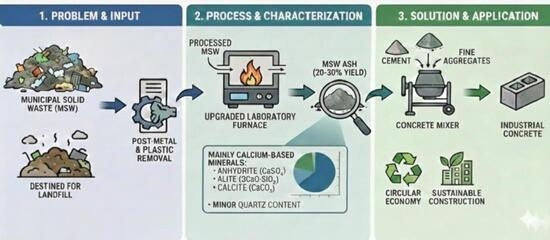
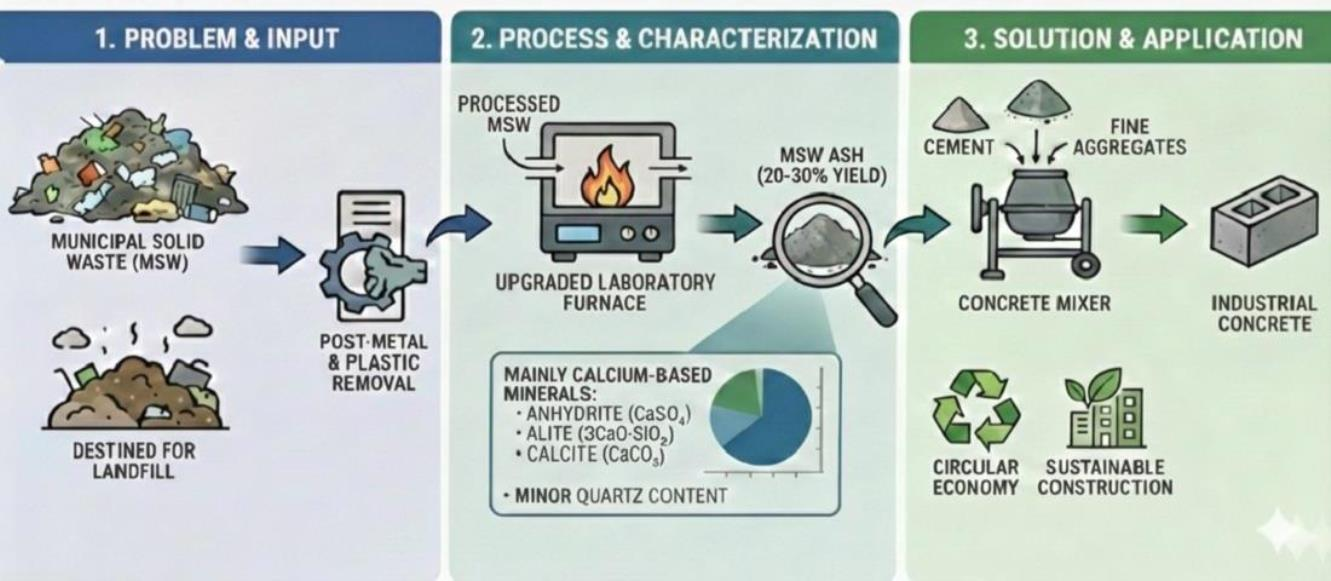
This study investigated the potential use of ash derived from Municipal Solid Waste (MSW), typically destined for landfill in Israel, as a partial replacement for cement and aggregates in concrete mixtures, aligning with circular economy and sustainable construction objectives. MSW samples (post-metal and large plastic remains removal), supplied by the Dudaim Reclamation Center in Israel, were incinerated under controlled conditions in an upgraded laboratory furnace to produce ash. The ash content in the Israeli MSW was 18% ash. The ash consisted mainly of calcium-based minerals, including anhydrite (CaSO4), alite (3CaO·SiO2), and calcite (CaCO3), with minor quartz content, indicating potential pozzolanic behavior. The characterization results showed that appreciable amounts of ash produced from MSW incineration in Israel can be used as a partial replacement for cement and fine aggregates when properly treated. This study successfully established a laboratory-scale incineration process for Israeli MSW. The resulting ash was characterized, confirming its potential as a raw material for concrete applications, thereby paving the way for future studies on its performance as a partial substitute for cement and fine aggregates in concrete blends.

Graphical Abstract

1. Introduction

The burgeoning global population and accelerated industrialization have led to an unprecedented increase in waste generation, posing significant environmental and resource management challenges worldwide. This escalating waste output, projected to increase by 70% globally by 2050 [1], necessitates innovative solutions beyond traditional disposal methods, which substantially contribute to greenhouse gas emissions [2]. One promising approach involves the valorization of waste materials, particularly municipal solid waste (MSW) ash, as a partial replacement for cement or fine aggregates in concrete mixtures, thereby aligning with circular economy principles and mitigating environmental impact [3,4]. A circular economy approach, which emphasizes the continuous use of products through recycling and reuse, is critical for sustainable development and reducing the negative environmental impacts associated with conventional construction practices [5]. By substituting Portland cement with MSW ash, this approach not only alleviates the environmental burden of cement manufacturing, such as significant CO2 emissions [6], but also addresses waste disposal challenges, creating a dual environmental benefit while conserving natural resources for power production using MSW and repurposing waste materials [7]. The increasing volume of waste generated owing to rapid population growth and technological advancements underscores the urgency of identifying sustainable waste management strategies [8]. The use of industrial by-products, such as MSW ash, as replacements for cement and fine aggregates in concrete production offers the dual benefit of minimizing waste-disposal challenges and reducing the environmental impact of cement manufacturing. In Israel, there is an increased problem of poor supply of fine aggregates [9], and if the MSW ash can also be used as a substitute, this would help in reducing the environmental damage accompanying the production of fine aggregates [10].
In parallel with the growing interest in MSW ash utilization, other major fractions of municipal solid waste have already been extensively investigated as secondary raw materials in cementitious systems. MSW is inherently heterogeneous and typically comprises organic matter, plastics, paper and cardboard, metals, textiles, and glass, with waste glass representing a significant and relatively stable inorganic fraction of urban waste streams. While color-sorted glass can be recycled, large quantities of mixed or contaminated waste glass are unsuitable for remelting and are therefore commonly landfilled or downcycled [11]. Consequently, finely crushed waste glass powder has attracted considerable attention as a construction material. Numerous recent studies [12,13,14] have examined urban waste glass as a reactive precursor or filler in alkali-activated materials (AAMs) and geopolymers, where its high amorphous silica content promotes dissolution under alkaline conditions and contributes to gel formation and strength development. In ordinary Portland cement (OPC) systems, ground waste glass has been widely studied as a supplementary cementitious material (SCM), while coarser fractions have been explored as fine aggregates [15]. When appropriate particle sizes and replacement levels are employed, waste glass can exhibit pozzolanic behavior and acceptable mechanical performance while mitigating alkali–silica reaction [16]. These studies establish crushed urban waste glass as one of the most mature and well-documented MSW-derived materials for OPC and AAM applications, thereby providing a useful benchmark for assessing less-explored MSW residues, such as municipal solid waste incineration ash.
Municipal solid waste incineration (MSWI) has become a well-established practice across the European Union, with 512 operational facilities reported in 2016 [17]. In conjunction with composting, recycling, and other waste management strategies, MSWI contributed to a reduction of nearly 60% (approximately 85 Mt) in the volume of municipal waste sent to landfills within the EU-28 countries, declining from 146 Mt in 1995 to 62 Mt in 2015 [17]. Over the same period, the total quantity of incinerated municipal solid waste in the EU-28 increased substantially, rising from 67 Mt to 137 Mt [18]. Currently, over 40% of MSW in the European Union, along with most of the incineration facilities, is utilized for energy recovery in the form of heat and electricity generation [19].
From a global perspective, it is crucial to examine specific national approaches. In Israel, for example, the predominant method for managing municipal waste, after the extraction of metals and plastics, is landfilling, with two large treatment and landfill sites located in the southern part of Israel in Dudaim and Efeh [20]. In Israel, the plan is to shift municipal solid waste treatment from reclamation to incineration as a better approach for MSW utilization.
The incineration of MSW produces two main types of solid residues: bottom ash and fly ash. The total ash produced is approximately 30% (by weight) of the incoming solid waste [21]. Typically, both ash types comprise CaO, SiO2, Al, Fe, Mg, Na, K, and Cl compounds, along with potentially toxic elements such as Cr, Ni, Cu, Zn, Cd, Hg, and Pb [21]. The final composition of the ash is largely determined by the nature of the waste mixture and the incineration process, which may vary by country. Given these diverse chemical and physical characteristics, MSW ash can be used as a suitable substitute for cement and aggregates in concrete. The municipal waste is not homogeneous, but the MSW ash produced via incineration is mixed, and thus the composition will be the same when large amounts of the MSW are incinerated.
Today, there is almost no practical implementation of ash generated from MSW incineration in the concrete industry, despite its demonstrated potential. Fly ash mainly contains lime, silicates, and alumina-silicates, which impart pozzolanic reactivity, enabling its use as a supplementary cementitious material in partial replacement of Portland cement [22]. Similarly, bottom ash has a granular texture and lower density than natural aggregates, allowing it to be processed into lightweight pellets or sintered products for use as coarse or fine aggregates. Experimental studies have shown that concrete incorporating treated MSW bottom ash can achieve compressive strengths of 20–25 MPa after 28 days [23]. In addition, the utilization of MSW ash in concrete offers significant environmental benefits by reducing landfill disposal, lowering raw material consumption, and promoting sustainable waste management practices [24]. However, there is still a lack of systematic laboratory-scale studies that correlate controlled incineration parameters with the chemical and physical properties of MSW ash relevant to concrete applications. Moreover, the composition of the ash is dependent on the nature of the municipal waste incinerated, and thus it is essential to study the typical municipal waste incineration in Israel. Two experimental incineration facilities (up to 300,000 tons of MSW per year) are planned to be built within the next 10 years. Laboratory studies are therefore essential to ensure a successful transition from reclamation to incineration in Israel, particularly to understand the unique characteristics of ash derived from local MSW incineration under controlled conditions. Accordingly, we developed and employed a reconstructed, improved laboratory incineration furnace to systematically investigate key combustion parameters and determine the quality of the resulting ash as a potential concrete component, thereby laying the groundwork for larger-scale assessments.
The results of the laboratory study are summarized in this publication.

2. Experimental Section

2.1. Materials

The Dudaim Reclamation Center supplied municipal solid waste (MSW) for this study. (post separation of the metal waste and large plastic pieces), as shown in Figure 1.

2.2. Analysis and Methods

XRF analysis: The ash samples were analyzed using a Zetium XRF spectrometer by Panalytical Company (Malvern, UK) at the laboratory of Environmental Services Company Ltd. (Neot Hovav, Israel).
SEM analysis: The ash samples were analyzed using an Ultra-High Resolution Maia 3 FE-SEM microscope by Tescan Company (Brno, Czech Republic) at the Surface Laboratory of Ariel University. The microscope operates at an accelerating voltage of approximately 10 kV with a secondary electron detector.
XRD analysis: The ash samples were analyzed using an X’pert Pro X-ray diffractometer by PANalytical Company (Malvern, UK) at the Surface Laboratory of Ariel University. XRD patterns were collected using a Cu Kα radiation source (λ = 1.5406 Å) in θ–2θ geometry over a 2θ range of 5–70°, with a step size of 0.01° and a counting time of 1 s per step (scan rate 0.6° min−1). Measurements were performed at room temperature using fixed divergence and receiving slits.
As there is an essential problem of homogeneity of the municipal waste, the incineration process of the municipal waste has been checked in several samples (including the moisture content of the waste prior to the incineration), whereas the initial incineration process was in all experiments at the same 850 °C and the air flux into the quartz reactor was kept constant, and indeed the results had some variations (see Section 3), and thus we have averaged the resulting parameters (e.g., moisture content, ash content, etc.).

3. Results and Discussion

In order to incinerate MSW, the regular furnace available could not be used and had to undergo substantial changes. Also, the moisture content of the MSW interferes with the operation of the upgraded furnace, and thus drying of the moisture in the MSW had to be performed before the incineration process.

3.1. Incineration Furnace

To use ash as a partial replacement for cement and aggregates in concrete, preliminary experiments were conducted in a laboratory furnace and a semi-industrial incinerator (detailed in part B), in which MSW destined for landfills was used. The initial incineration temperature of the furnace is 850 °C, and it is increased to ~1000 °C at the end of the process due to the heat produced by the exothermic process.

3.2. MSW Incineration in a Laboratory Furnace

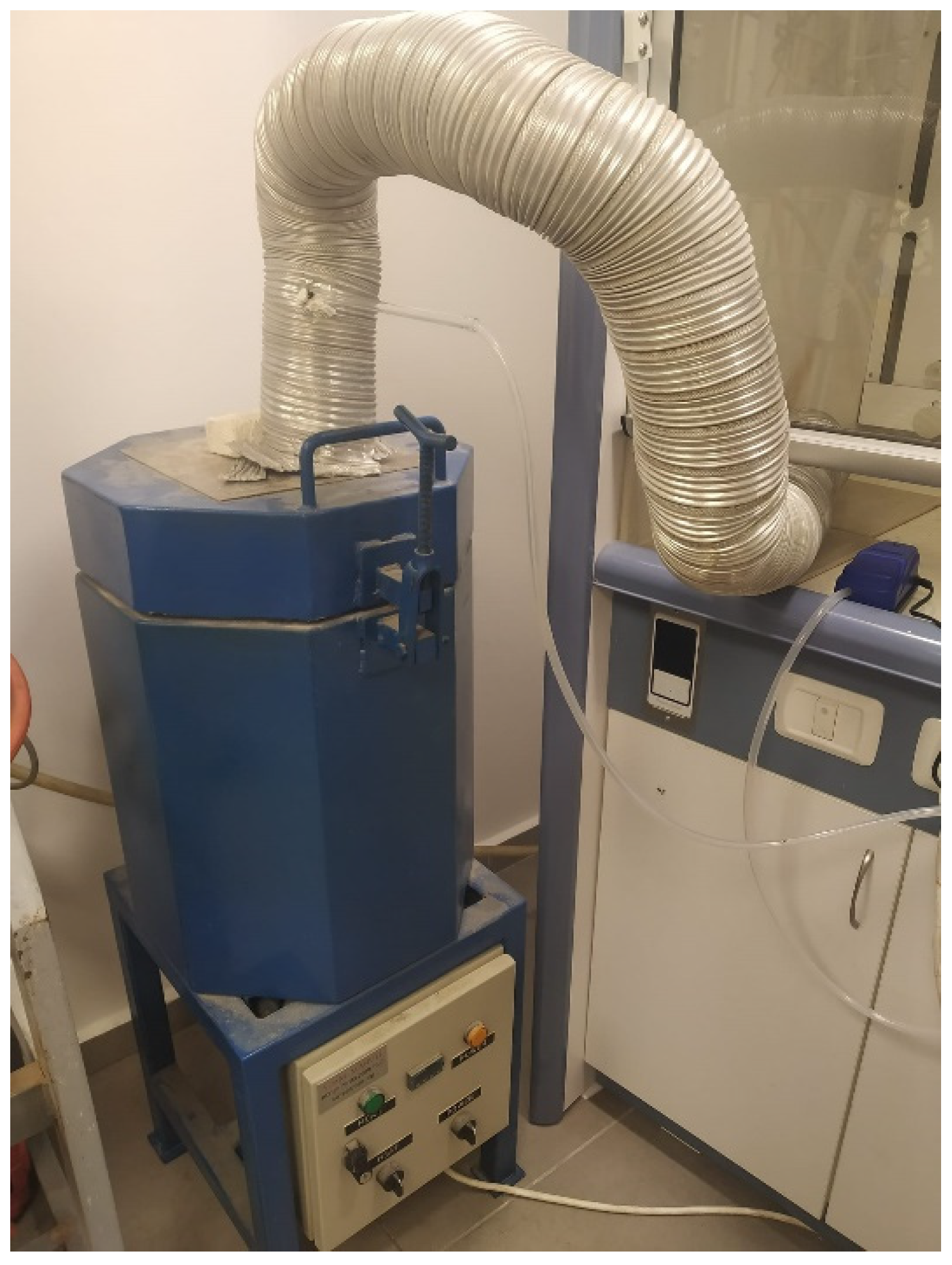
To conduct initial combustion experiments, a laboratory furnace (Electric Furnaces type 10-12-5 by Adam Mandel company, Be’er Ya’akov, Israel) was upgraded to enable the safe combustion of municipal solid waste. The exhaust gases were transferred through a flexible stainless-steel pipe to the hood. Additionally, the furnace was connected to an air supply unit to ensure a continuous flow of oxygen required for combustion. A photograph of the laboratory furnace during operation is presented in Figure 2.
Before incineration, the MSW was dried in a drying oven at 100 or 130 °C for 2 or 4 h to remove moisture, as shown in Table 1.
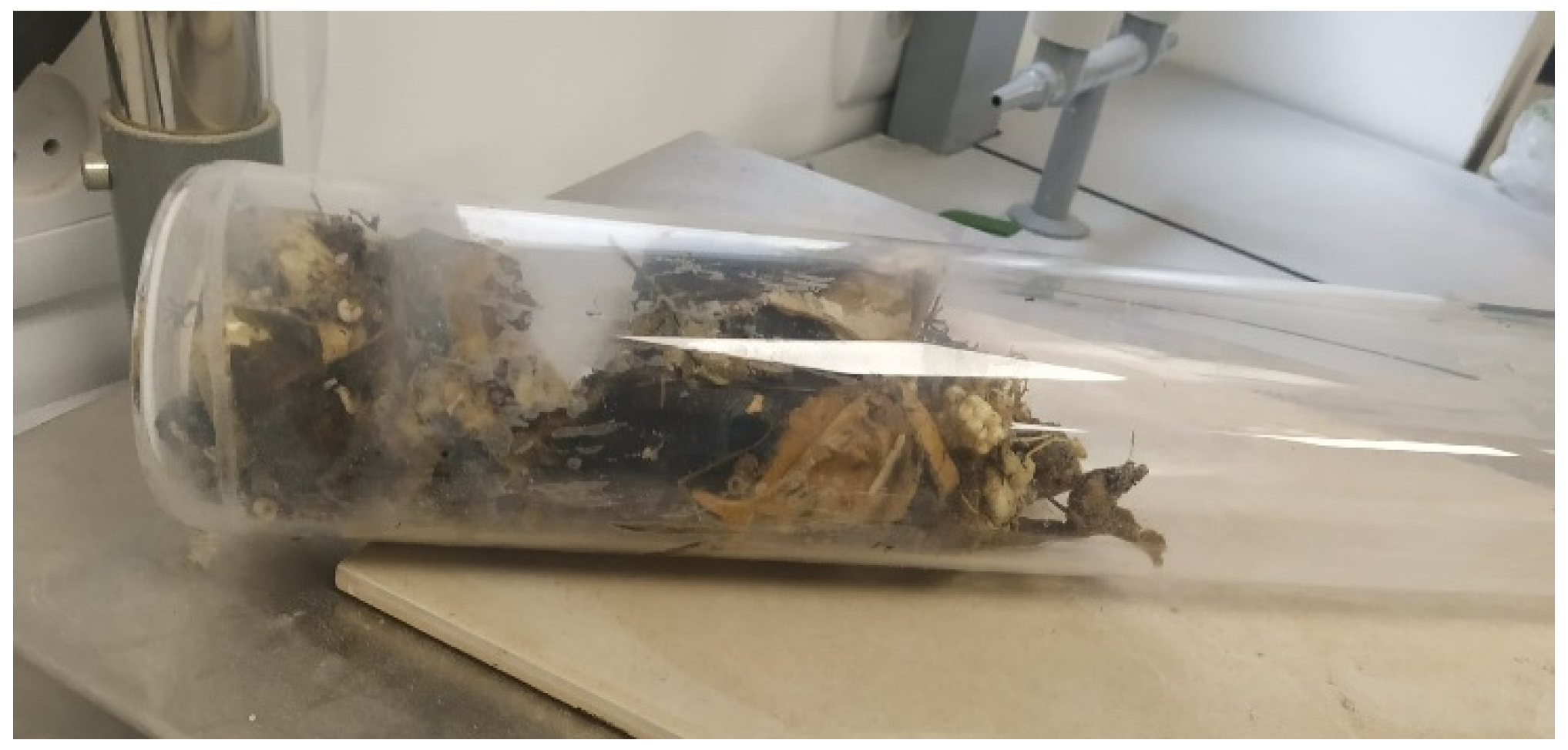
The results indicate that the moisture content was in the range of 35–70% with a mean value of 46.1 ± 11.3%. After the drying process, the MSW (100–150 g) was placed in a quartz container (withstanding temperatures of up to 1500 °C, Figure 3), and the quartz container with the MSW was placed in the laboratory furnace for incineration. When the container is inserted into the hot furnace at 850 °C, there is a process of evaporation of gases (seen in the hood at the outlet of the flexible stainless steel pipe) and pyrolysis of the MSW in the quartz container to produce flammable or even explosive gases (such as hydrogen or low molecular weight hydrocarbons, e.g., methane and C2 or C3 gases), resulting in self-ignition and a flame. A series of small explosions occur (these processes occur during the first 4–5 min post insertion of the quartz container, and then the incineration of all the organic content lasts for about 20 min; to ensure complete incineration, the sample was left in the furnace for an additional 2–4 h).
In a typical incineration process experiment, approximately 100 g of MSW was incinerated in the upgraded laboratory furnace at a temperature of 850 °C.
It is planned to add a unique online monitoring of the gas content of the flue gases (e.g., low molecular hydrocarbon gases, carbon monoxide, molecular hydrogen, etc., via mass spectrometry, FTIR spectroscopy, and gas chromatography). However, as the main subject of the present study was the MSW produced, and we have ensured complete oxidation of the organic content of the municipal waste, it is not essential to this study.

3.3. Results of the Incineration of the MSW

Table 2 presents the results from MSW combustion experiments conducted in a laboratory furnace, showing that the ash content was, on average, 18% of the original MSW weight. All experiments were performed at the inlet temperature in the range of 815–890 °C. Upon inserting the quartz incineration container into the furnace, the temperature decreases, and it takes several minutes for the temperature to stabilize at the process temperature. Though most of the incineration process occurred in the first 20 min of the procedure (as almost no emission of extra smoke is observed post this period), we have kept the incineration process to 2 or 4 h (Table 2) to achieve complete oxidation of the organic content of the municipal waste.
Table 2 provides additional insights into the behavior of MSW during the combustion process. The wide variation in ash percentages suggests that the heterogeneity of MSW plays a dominant role in determining the final ash yield, more so than incineration time or temperature alone. Although samples incinerated for longer periods (4 h) sometimes produced higher ash percentages, this trend was not consistent across all samples, indicating that differences in waste composition were likely the primary factor. Overall, the average ash content across all samples was linearly correlated with the initial mass of MSW and the ash mass produced, highlighting that the inorganic components of waste primarily determine ash generation. Additionally, while most samples were incinerated at similar temperature conditions, particularly with discharge temperatures approaching 1000 °C, variations in ash yield still occurred, suggesting that even small differences in composition can significantly influence the outcome.

3.4. Characterization of the Ash

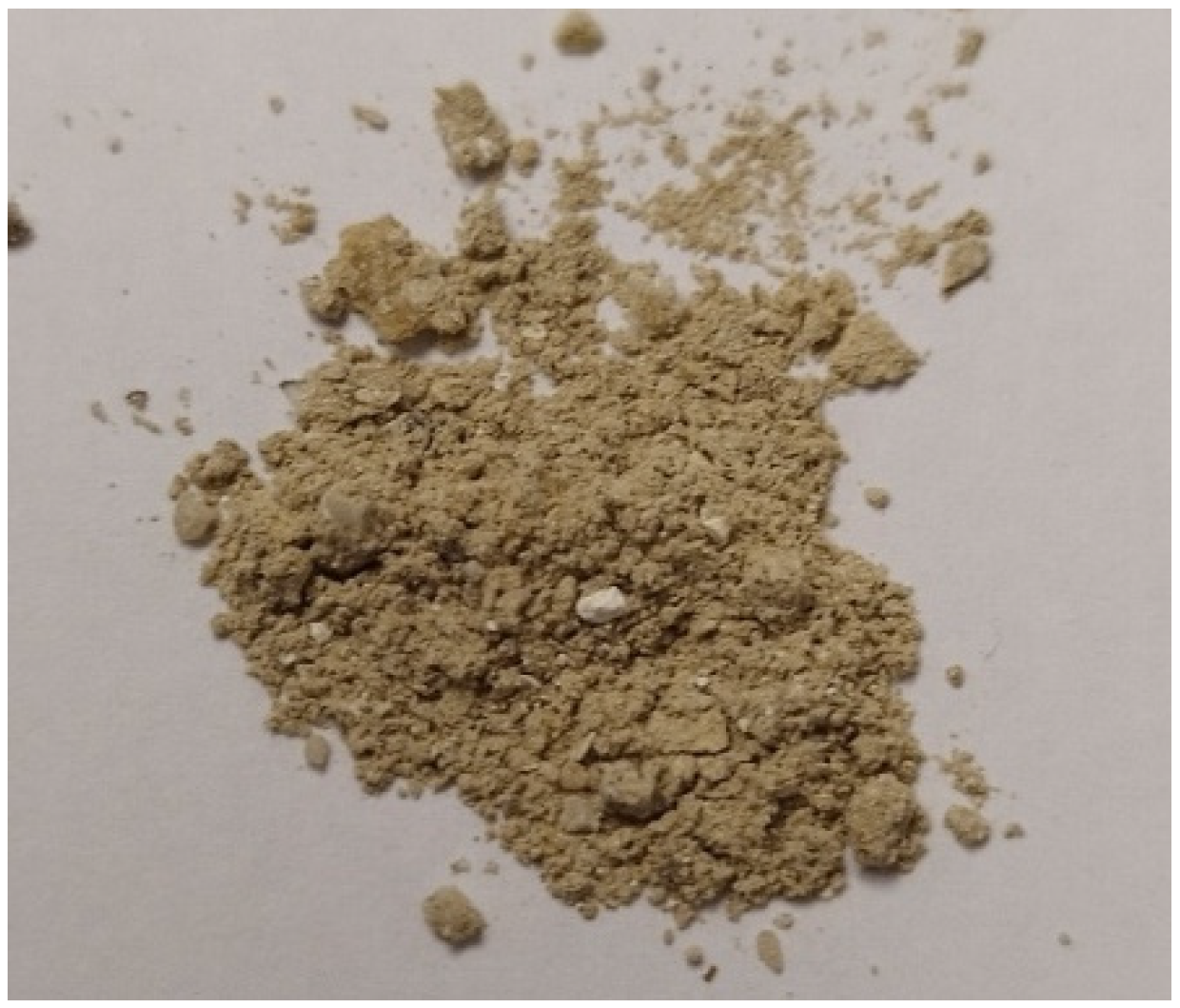
The MSW ash consisted of brown particles. A photograph of untreated MSW ash is presented in Figure 4.
Elemental composition analysis was conducted on the ash using an XRF device on a sample of the ash. The results are presented in Table 3.
XRF analysis revealed notable differences in the elemental compositions between samples 1 and 2. Both samples were dominated by calcium, with comparable concentrations (22.7 wt% and 23.5 wt%, respectively). Sample 2 showed higher levels of silicon and magnesium, indicating increased contributions from mineral or glassy components. Elements such as iron and potassium exhibited similar concentrations in both samples, suggesting a consistent source in the waste stream. In contrast, the barium and strontium contents were markedly higher in Sample 2, potentially reflecting the variability in specific waste fractions. Trace-element analysis (PPM) indicated a higher zinc content in Sample 2, whereas manganese and nickel were reported only for Sample 1. Overall, the observed differences suggest heterogeneity in MSW composition.
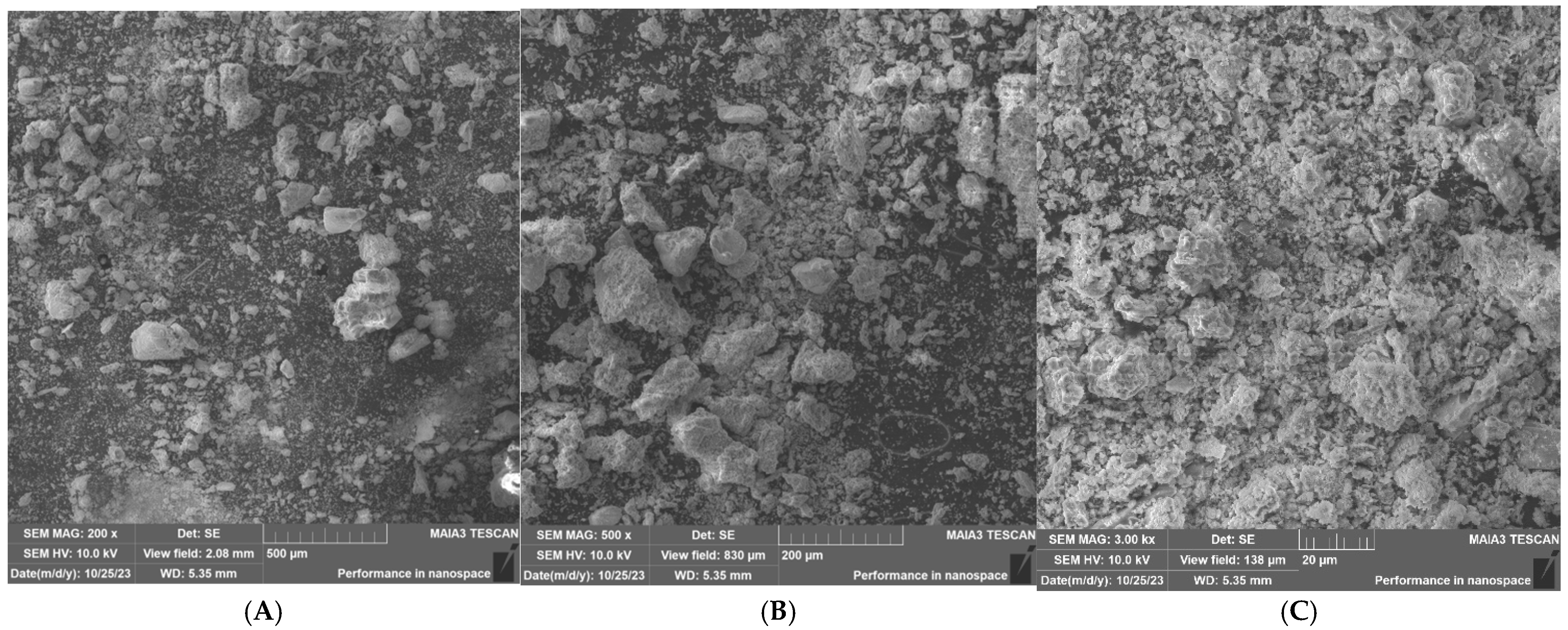
In addition, XRD and SEM analyses were performed and are presented in Table 4 and Figure 5. The XRD table (Table 4) shows the composition of the corresponding compounds found in the analysis.
The XRD results indicated that the main mineral component of the ash (approximately 95%) was calcium minerals composed of anhydrite CaSO4, alite 3CaO·SiO2, calcite CaCO3, and a small amount of quartz SiO2 (approximately 5%), which corresponds to the results obtained in XRF (Table 3), in which we observed a large content of Ca. The presence of alite (3CaO·SiO2) is particularly noteworthy, as it is a primary constituent of Portland cement, suggesting inherent cementitious properties in the ash.
Figure 5 reveals irregularly shaped particles with a wide distribution, which is characteristic of incinerated waste. Figure 5C (20 µm magnification) shows porous structures and angular fragments, suggesting the potential for mechanical interlocking if used as an aggregate or increased surface area for pozzolanic reactions if finely ground. The absence of identifiable organic residues indicates that the organic content of the MSW was effectively combusted.

3.5. Potential Utilization of Treated Municipal Waste Ash in Concrete Blends

A concrete mixture mainly consists of cement, aggregates, and natural sand. Cement is a major and expensive component and a primary source of environmental pollution, with significant carbon dioxide emissions. In addition, fine aggregates and natural sand are essential components of concrete. Owing to their widespread use, these materials have a significant environmental impact. In Israel, there is a significant shortage of fine aggregates. As a by-product, ash has considerable potential to replace natural sand and partially replace cement. Due to its high ash fineness (as shown in Figure 5), ash can partially replace natural sand, thereby increasing the packing density of the concrete and improving the properties of both fresh and hardened concrete. In addition, according to the XRD results (Table 4), the ash, as a combustion product, contains glassy components and therefore can be a good pozzolanic component. It also includes components identical to those of cement and thus can undergo hydration, thereby partially replacing cement. The potential of ash to partially replace sand and cement may improve the properties of fresh concrete, such as increasing density, reducing air content, and enhancing workability, and in addition, improving the properties of hardened concrete, such as increasing its strength due to the pozzolanic and hydration reactions of ash, thereby increasing the CSH content of the concrete. Despite the advantages of using MSW ash, there are several risks that may affect the properties of fresh and hardened concrete. For example, due to the ash’s high porosity, increased water consumption and a corresponding decrease in strength may occur, requiring fine grinding to increase the ash’s reactivity and reduce the risk of ASR. The next article will review the properties of fresh and hardened concrete incorporating ash derived from Municipal Solid Waste (MSW). The performances of the concrete mixtures were tested according to the relevant standards, SI 118 [25], in order to evaluate the possibility of using the concrete mixtures with ash in the concrete industry. However, despite the risks, the potential benefits of using and upgrading the ash to the desired grade represent a significant advantage in the concrete industry.
In other words, using ash as a by-product can be an essential component that reduces concrete costs, improves its technological properties, and mitigates its environmental impact. Furthermore, we have shown in recent publications [26,27,28,29] that thermal or chemical treatments can upgrade the ash quality as a potential substitute for cement and fine aggregates.

4. Conclusions

This study confirms the potential of using MSW ash as a partial replacement for cement and aggregates, thereby supporting sustainable construction and circular economy objectives.
The MSW ash has good properties to be utilized as a partial substitute for cement and fine aggregates in concrete blends.
This investigation highlights the environmental benefits of diverting the need to find solutions to MSW ash safe storage in reclamation sites to a good economic solution, thus changing the attitude towards it from an environmental hazard to a useful commodity. Thus, contributing to waste reduction and resource conservation.
In addition, this study successfully established a laboratory-scale incineration process for Israeli MSW, yielding an average ash content of 18%. The resulting ash was characterized by XRF, XRD, and SEM, revealing its primary mineralogical composition to be calcium-based minerals such as anhydrite, alite, and calcite, in addition to quartz. These findings provide a foundational understanding of Israeli MSW ash, paving the way for Part B, which investigates MSW combustion in a semi-industrial incinerator and the performance of MSW ash in concrete blends.
In the second Pt B presentation, the utilization of MSW ash was studied and proved to be a good potential compound for use in concrete blends.

Author Contributions

Methodology, S.N. and S.B.; Resources, H.C.; Writing—original draft, S.N.; Writing—review & editing, H.C. and Y.K.; Supervision, H.C. and Y.K.; Project administration, H.C.; Funding acquisition, H.C. and Y.K. All authors have read and agreed to the published version of the manuscript.

Funding

The research was funded by the Environmental Services Company and FUTUREWISE (budget number RA2200000136), which was established with the support of the Planning and Budgeting Committee of the Council for Higher Education.

Data Availability Statement

The original contributions presented in this study are included in the article. Further inquiries can be directed to the corresponding authors.

Conflicts of Interest

The authors declare that this study received funding from Environmental Services Company and FUTUREWISE. The funder was not involved in the study design, collection, analysis, interpretation of data, the writing of this article or the decision to submit it for publication.

References

  1. Chen, D.M.C.; Bodirsky, B.L.; Krueger, T.; Mishra, A.; Popp, A. The world’s growing municipal solid waste: Trends and impacts. Environ. Res. Lett. 2020, 15, 074021. [Google Scholar] [CrossRef]
  2. Haigh, R.; Sandanayake, M.; Bouras, Y.; Vrcelj, Z. A review of the mechanical and durability performance of kraft-fibre reinforced mortar and concrete. Constr. Build. Mater. 2021, 297, 123759. [Google Scholar] [CrossRef]
  3. Netinger Grubeša, I.; Šamec, D.; Juradin, S.; Hadzima-Nyarko, M. Utilizing Agro-Waste as Aggregate in Cement Composites: A Comprehensive Review of Properties, Global Trends, and Applications. Materials 2025, 18, 2195. [Google Scholar] [CrossRef] [PubMed]
  4. Wijesinghe, K.A.P.; Lanarolle, G.; Gunasekara, C.; Law, D.W.; Hidallana-Gamage, H.D.; Wang, L. Thermal and acoustic performance of solid waste incorporated cement based composites: An analytical review. Arch. Civ. Mech. Eng. 2025, 25, 106. [Google Scholar] [CrossRef]
  5. Al-Hamrani, A.; Kucukvar, M.; Alnahhal, W.; Mahdi, E.; Onat, N.C. Green concrete for a circular economy: A review on sustainability, durability, and structural properties. Materials 2021, 14, 351. [Google Scholar] [CrossRef]
  6. Siddique, R. Use of municipal solid waste ash in concrete. Resour. Conserv. Recycl. 2010, 55, 83–91. [Google Scholar] [CrossRef]
  7. Wang, J.; Zheng, K.; Cui, N.; Cheng, X.; Ren, K.; Hou, P.; Feng, L.; Zhou, Z.; Xie, N. Green and durable lightweight aggregate concrete: The role of waste and recycled materials. Materials 2020, 13, 3041. [Google Scholar] [CrossRef]
  8. Mandal, P.; Kundu, A.K.; Mondal, A. Innovations in Waste Management: A Review. In Sustaninble Chemical Insight in Biological Exploration; Lincoln University College: Kota Bharu, Malaysia, 2024; pp. 58–71. [Google Scholar]
  9. State of Israel State Comptroller and Ombudsman Annual Report 70A|2020 Advancing the Mining and Quarrying Industry in Israel. 2020. Available online: https://library.mevaker.gov.il/sites/DigitalLibrary/Documents/2020/70a/EN/203-energy-Taktzir-EN.pdf (accessed on 30 November 2025).
  10. Lu, J.; Yang, X.; Lai, Y.; Wan, X.; Gao, J.; Wang, Y.; Tan, L.; Deng, F. Utilization of municipal solid waste incinerator bottom ash (MSWIBA) in concrete as partial replacement of fine aggregate. Constr. Build. Mater. 2024, 414, 134918. [Google Scholar] [CrossRef]
  11. Kazmi, D.; Williams, D.J.; Serati, M. Waste glass in civil engineering applications—A review. Int. J. Appl. Ceram. Technol. 2019, 17, 529–554. [Google Scholar] [CrossRef]
  12. Xiao, R.; Jiang, X.; Wang, Y.; He, Q.; Huang, B. Experimental and Thermodynamic Study of Alkali-Activated Waste Glass and Calcium Sulfoaluminate Cement Blends: Shrinkage, Efflorescence Potential, and Phase Assemblages. J. Mater. Civ. Eng. 2021, 33, 04021312. [Google Scholar] [CrossRef]
  13. Tran, N.P.; Wang, T.; Nguyen, T.N.; Jin, H.; Ngo, T.D. High-volume recycled glass cementitious and geopolymer composites incorporating graphene oxide. Constr. Build. Mater. 2024, 450, 138476. [Google Scholar] [CrossRef]
  14. Lancellotti, I.; Cannio, M.; Bollino, F.; Catauro, M.; Barbieri, L.; Leonelli, C. Geopolymers: An option for the valorization of incinerator bottom ash derived “end of waste”. Ceram. Int. 2014, 41, 2116–2123. [Google Scholar] [CrossRef]
  15. Kuri, J.; Hosan, A.; Shaikh, F.; Biswas, W. The Effect of Recycled Waste Glass as a Coarse Aggregate on the Properties of Portland Cement Concrete and Geopolymer Concrete. Buildings 2023, 13, 586. [Google Scholar] [CrossRef]
  16. Tong, G.; Pang, J.; Shen, J.; Tang, B.; Jiang, Z.; Li, B.; Huang, J.; Zou, J.; Wang, H. Response tests on the effects of particle size of waste glass sand and glass powder on the mechanical and durability performance of concrete. Sci. Rep. 2024, 14, 25445. [Google Scholar] [CrossRef]
  17. Scarlat, N.; Fahl, F.; Dallemand, J.F. Status and Opportunities for Energy Recovery from Municipal Solid Waste in Europe. Waste Biomass Valorization 2019, 10, 2425–2444. [Google Scholar] [CrossRef]
  18. Valentim, B.; Guedes, A.; Kuźniarska-Biernacka, I.; Dias, J.; Predeanu, G. Variation in the Composition of Municipal Solid Waste Incineration Ash. Minerals 2024, 14, 1146. [Google Scholar] [CrossRef]
  19. Grammelis, P. Report on Current Waste Management Systems in Europe. Life Project Number LIFE09 ENV/GR/000307. 2011. Available online: https://webgate.ec.europa.eu/life/publicWebsite/project/LIFE09-ENV-GR-000307/energy-exploitation-of-non-recyclable-urban-waste-in-a-sustainable-waste-to-energy-market (accessed on 25 July 2024).
  20. Daskal, S.; Ayalon, O.; Shechter, M. The state of municipal solid waste management in Israel. Waste Manag. Res. 2018, 36, 527–534. [Google Scholar] [CrossRef]
  21. Manyele, S.V.; Kagonji, I.S.; Mrisho, J. Assessment of Medical Waste Incinerator Performance Based on Physical Characteristics of Ashes. Engineering 2011, 3, 1045–1053. [Google Scholar] [CrossRef][Green Version]
  22. Chousidis, N.; Batis, G. Calcium-Rich Fly Ash as a Sustainable Supplementary Cementitious Material for Enhanced Sulfate Resistance and Durability of Cementitious Composites: Experimental and Microstructural Perspectives. Materials 2025, 18, 4238. [Google Scholar] [CrossRef]
  23. Gražulytė, J.; Vaitkus, A.; Šernas, O.; Žalimienė, L. The impact of MSWI bottom ash as aggregate on concrete mechanical performance. Int. J. Pavement Eng. 2022, 23, 2903–2911. [Google Scholar] [CrossRef]
  24. Lam, C.H.K.; Barford, J.P.; McKay, G. Utilization of municipal solid waste incineration ash in Portland cement clinker. Clean Technol. Environ. Policy 2011, 13, 607–615. [Google Scholar] [CrossRef]
  25. SI 118; Concrete—Specification, Performance and Production. The Standards Institution of Israel (SII): Tel Aviv, Israel, 2022.
  26. Nov, S.; Cohen, H.; Knop, Y. Treated Oil Shale Ashes as a Substitute for Natural Aggregates, Sand, and Cement in Concrete. Isr. J. Chem. 2020, 60, 638–643. [Google Scholar] [CrossRef]
  27. Nov, S.; Barak, S.; Cohen, H.; Knop, Y. Treated Oil Shale Ashes as Cement and Fine Aggregates Substitutes for the Concrete Industry. ACS Omega 2023, 8, 46608–46613. [Google Scholar] [CrossRef]
  28. Nov, S.; Hassid, A.; Barak, S.; Cohen, H.; Knop, Y. Neutralization of Acidic Industrial Wastes and Fixation of Trace Element by Oil Shale Ash: Formation of a Green Product. ACS Omega 2023, 8, 21506–21513. [Google Scholar] [CrossRef]
  29. Nov, S.; Barak, S.; Cohen, H.; Knop, Y. Improved concrete via upgraded oil shale ash. World J. Adv. Eng. Technol. Sci. 2024, 12, 411–420. [Google Scholar] [CrossRef]
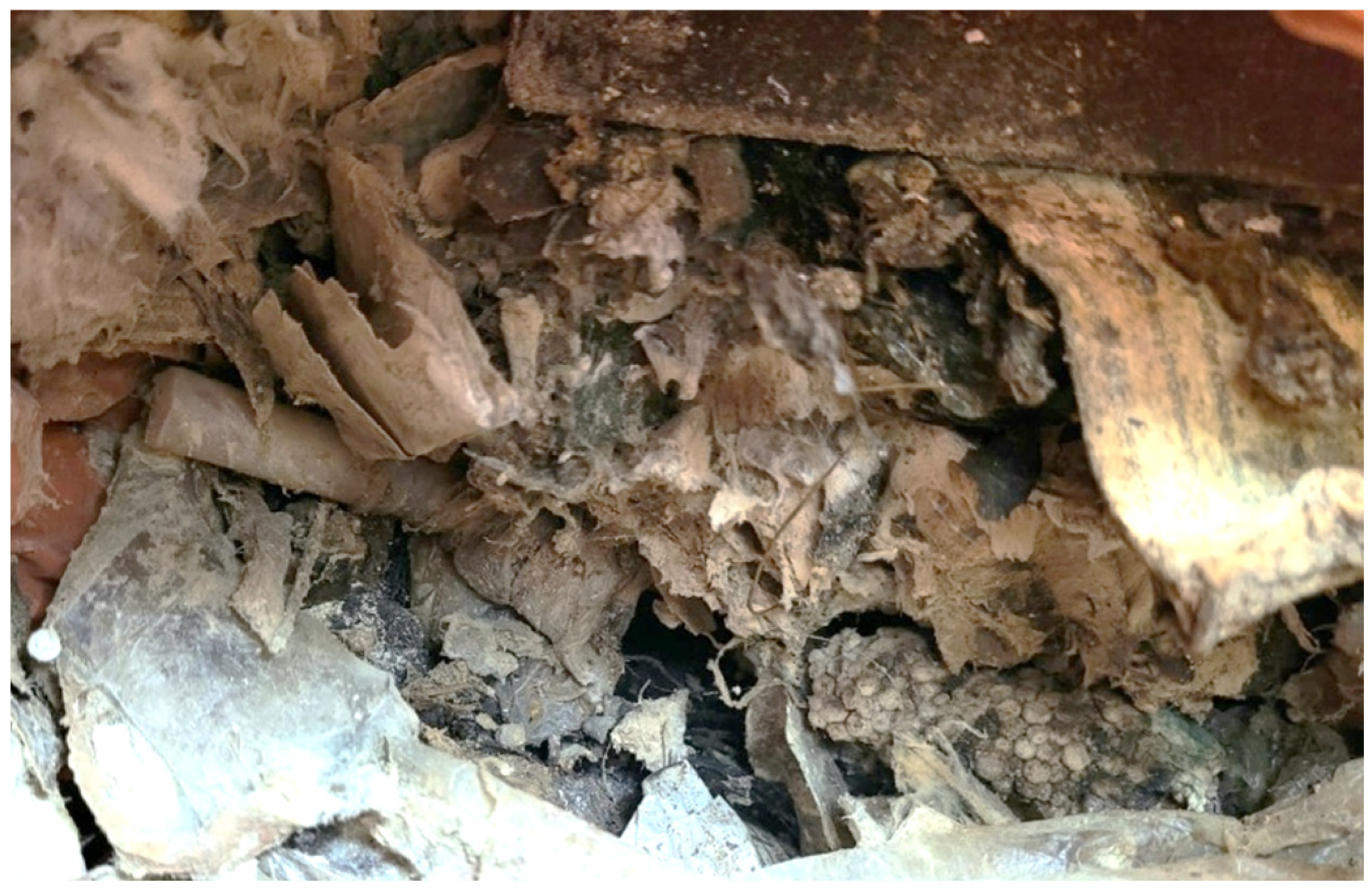
Figure 1. A sample of MSW intended for landfill at the Dudaim site.
Materials 19 00969 g001
Figure 2. Laboratory furnace.
Materials 19 00969 g002
Figure 3. Quartz container with MSW.
Materials 19 00969 g003
Figure 4. Untreated MSW ash.
Materials 19 00969 g004
Figure 5. SEM images of MSW ash at various magnifications. (A). Magnification of 500 µm, (B). Magnification of 200 µm, (C). Magnification of 20 µm.
Materials 19 00969 g005
Table 1. MSW drying experiments *.
Weight Before Drying
(Grams)
Weight After Drying
(Grams)
Temp
(°C)
Drying Time
(Hours)
Weight Loss (%)Total Moisture Content of the Sample
(%)
1a1209610022039.4
1b8871100219.4
2a9062130231.260.1
2b5942130228.9
3a9368100226.943.1
3b6857100216.2
410058130242-
59152100442.9-
6277133130452-
79662130235.5-
8213126130240.9-
9389116130470.1-
10162105130535.2-
* Samples with the same number and different letter indices: “a” represents the first drying, and “b” represents another drying of the same sample.
Table 2. MSW combustion experiments in a laboratory furnace *.
MSW Weight Before Burning
(Grams)
Ash Weight After Burning
(Grams)
MSW
Inlet Temperature
(°C)
Ash Discharge Temperature
(°C)
Incineration Time
(Hours)
Ash Percentage (%)
1103789096126.7
215327825964217.6
39416815991417
4110248631000421.8
57898771000411.5
698328431000432.6
7114258641000421.9
* The inlet temperature is the temperature at which the oven stabilizes after sample insertion.
Table 3. XRF analysis of untreated MSW ash.
ElementSample 1Sample 2
Weight %Weight %
Ti0.370.143
Ca22.723.5
Si4.395.41
Cl1.25-
Fe1.131.2
P1.683-
K0.3230.401
Mg2.23.04
S1.24-
Al2.562.12
W0.1040.104
Ba0.0711.58
Sr0.05850.185
Zn0.009690.0115
Ni0.00052-
Mn0.0224-
Table 4. XRD analysis of untreated MSW ash.
Weight PercentageNon-Treated
Anhydrite—CaSO437%
Alite—3CaO·SiO235%
Calcite—CaCO323%
Quartz—SiO25%
Disclaimer/Publisher’s Note: The statements, opinions and data contained in all publications are solely those of the individual author(s) and contributor(s) and not of MDPI and/or the editor(s). MDPI and/or the editor(s) disclaim responsibility for any injury to people or property resulting from any ideas, methods, instructions or products referred to in the content.