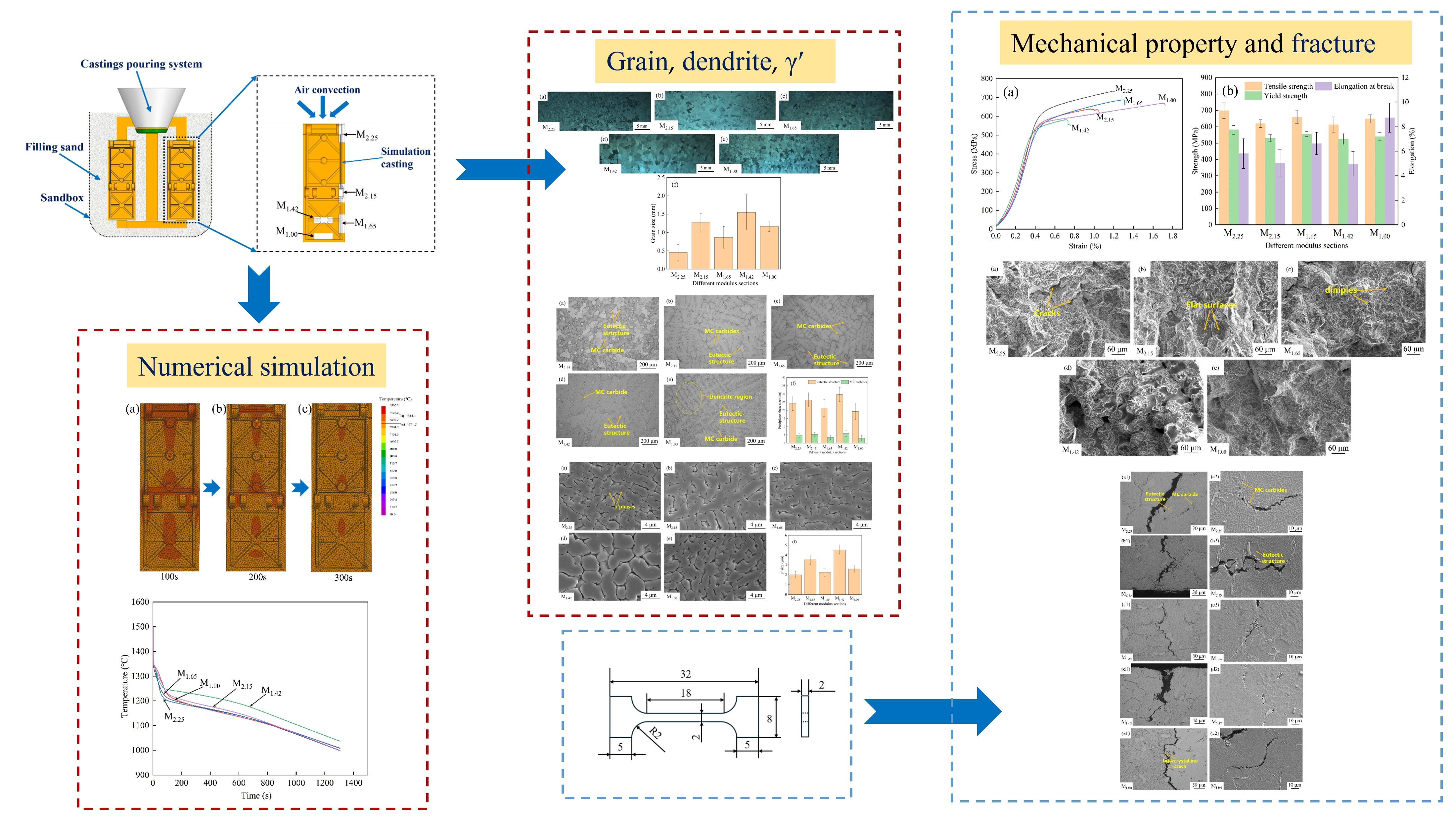
Microstructure and Properties of Different Modulus Sections in JG4246A Alloy Characteristic Simulation Castings
Abstract
1. Introduction
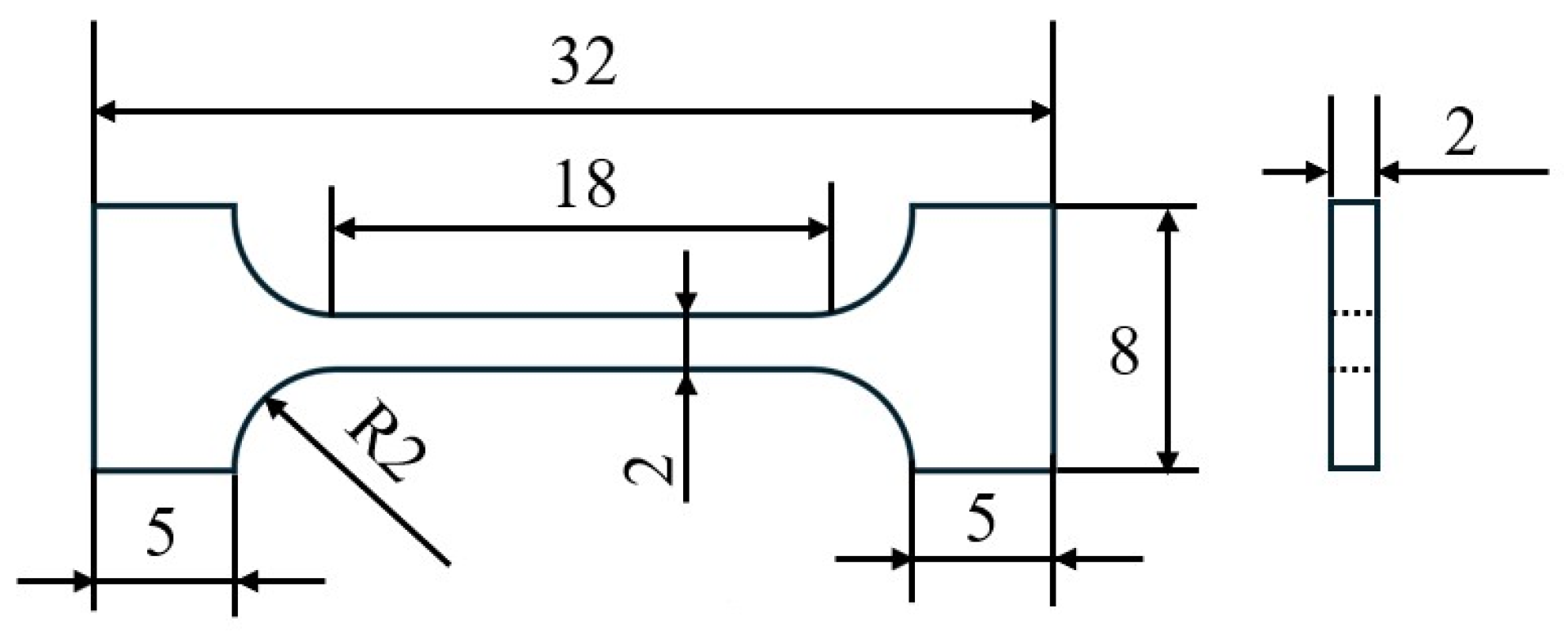
2. Materials and Methods
3. Results
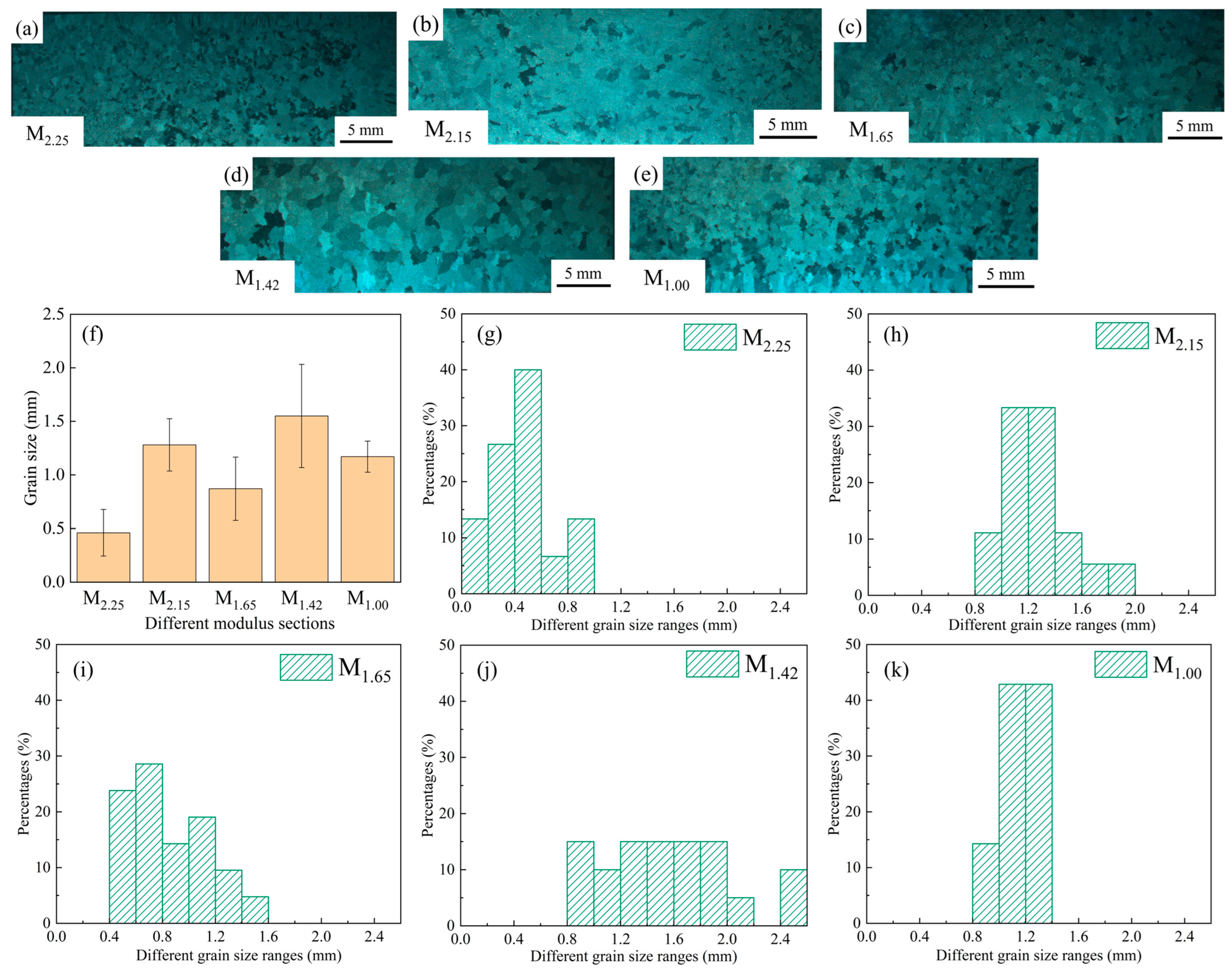
3.1. Grain Morphology and Size
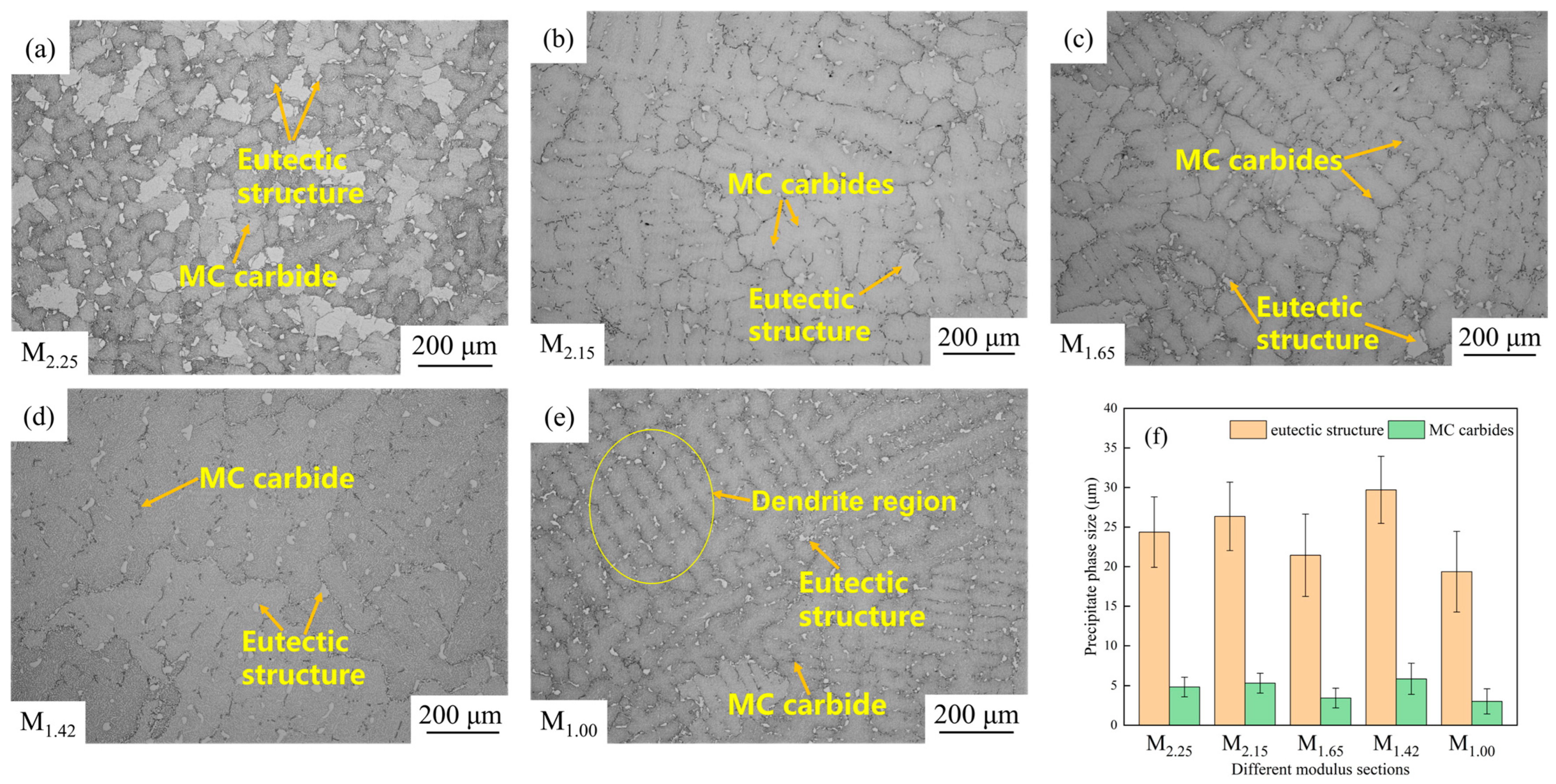
3.2. Dendrite Morphology, Eutectic Structure and MC Carbides Size
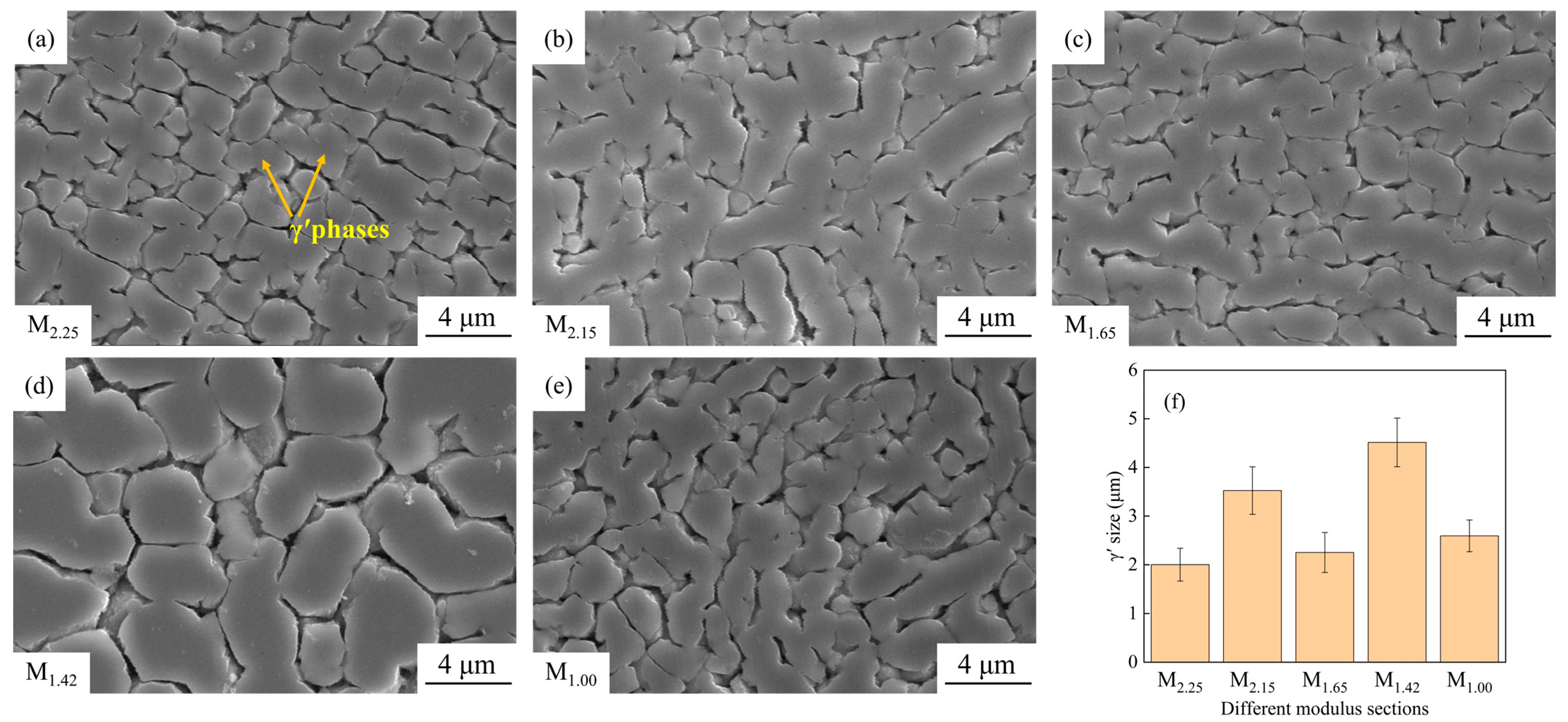
3.3. γ′ Size and Morphology
3.4. Mechanical Properties
4. Discussion
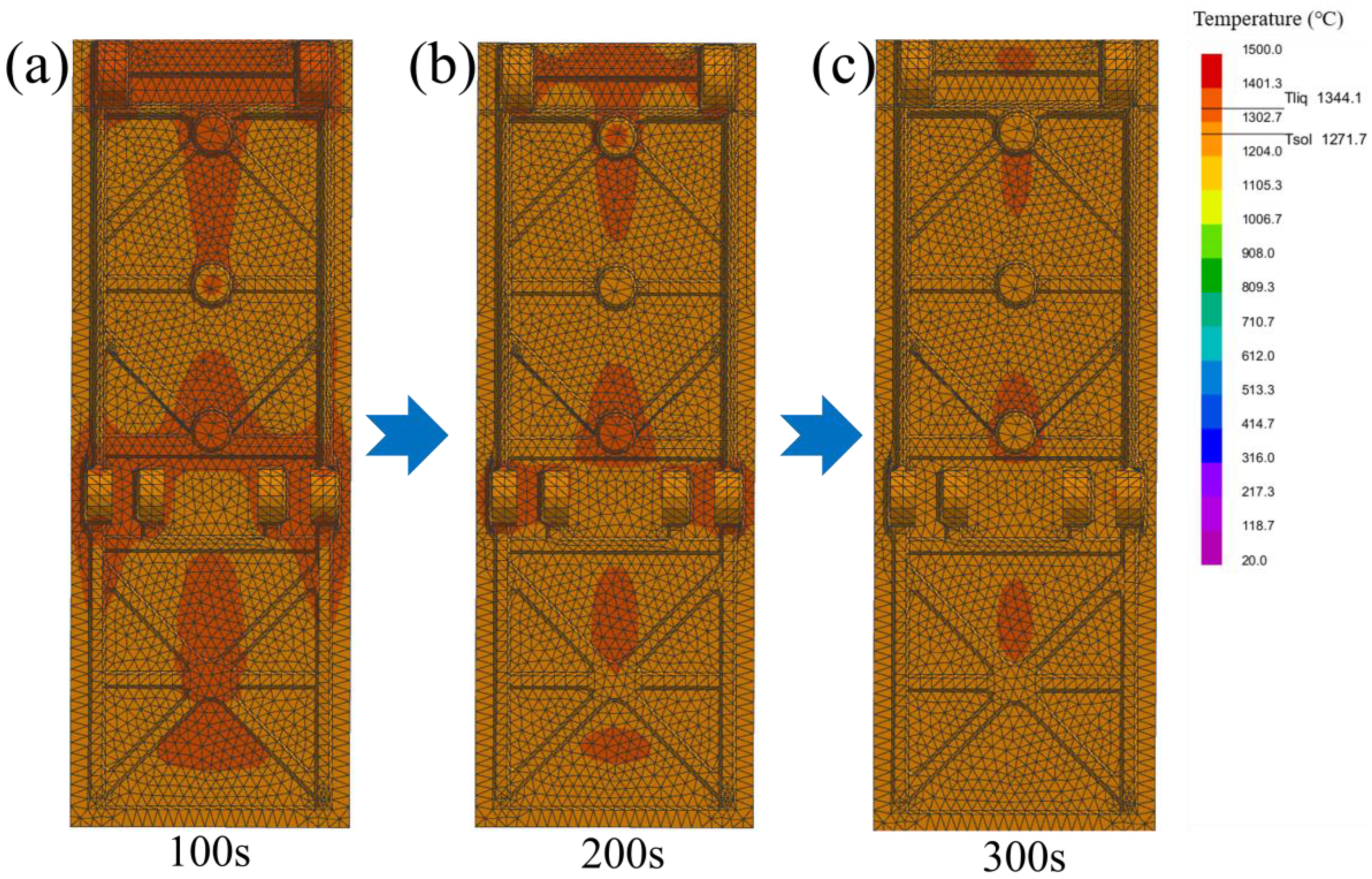
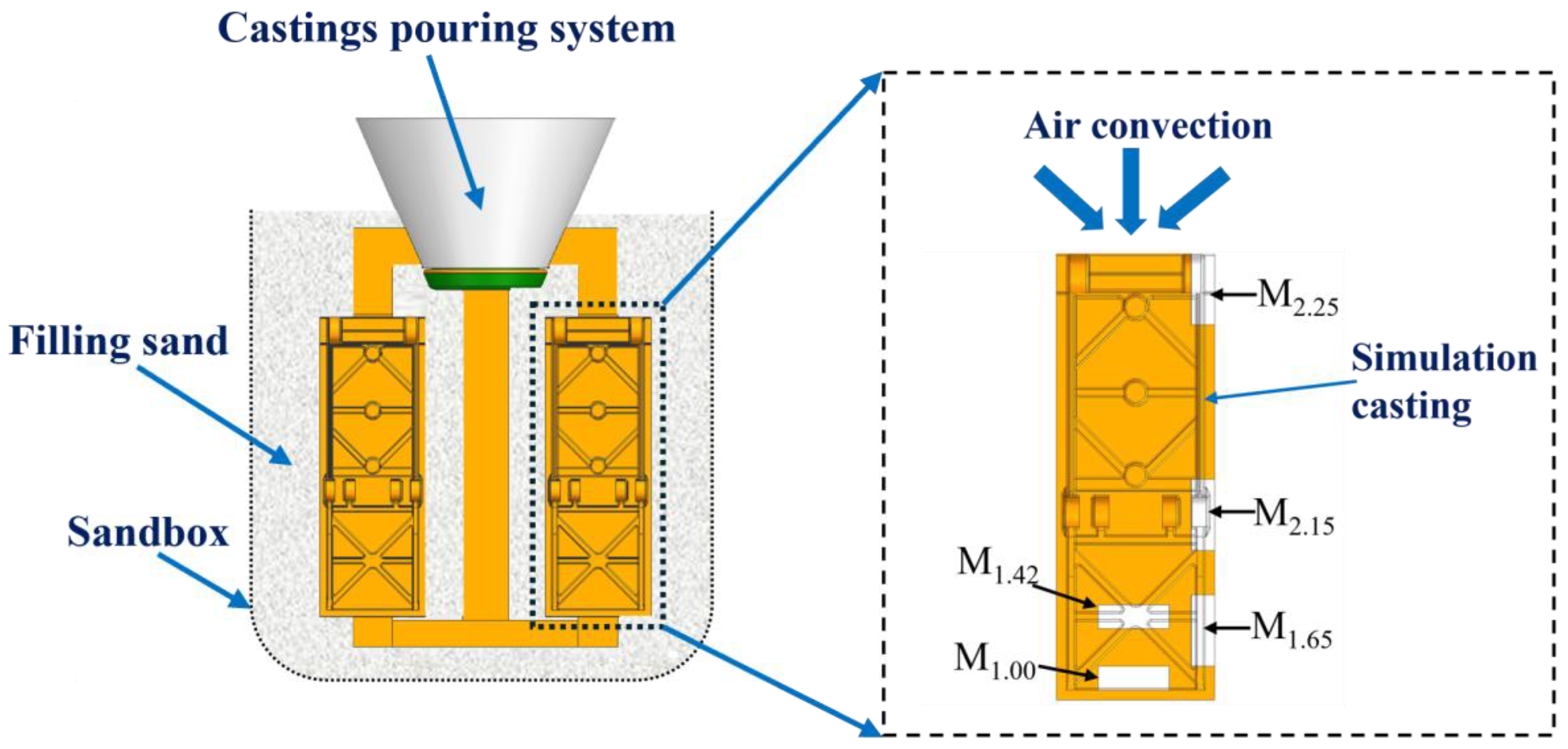
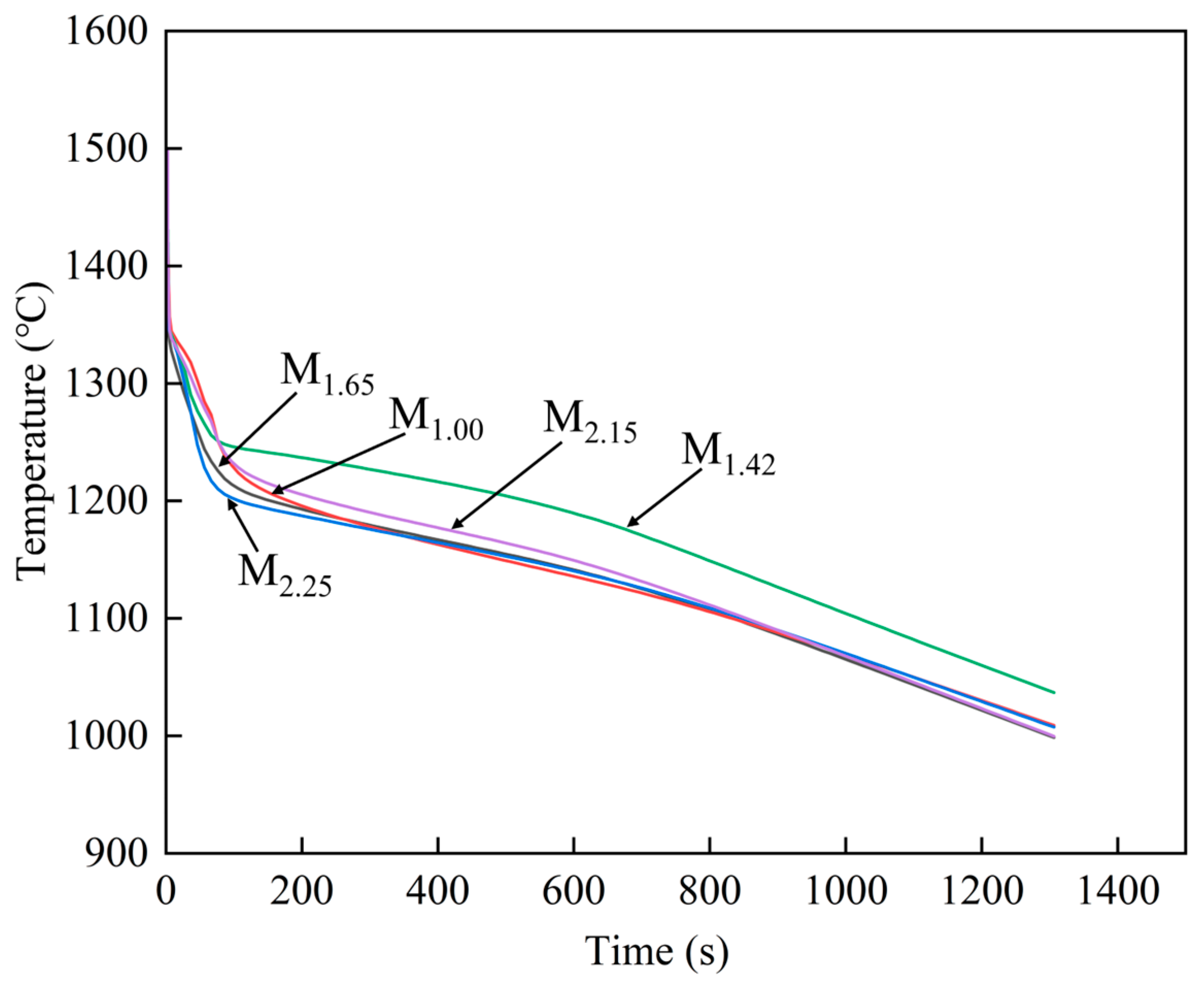
4.1. Numerical Simulation Analysis
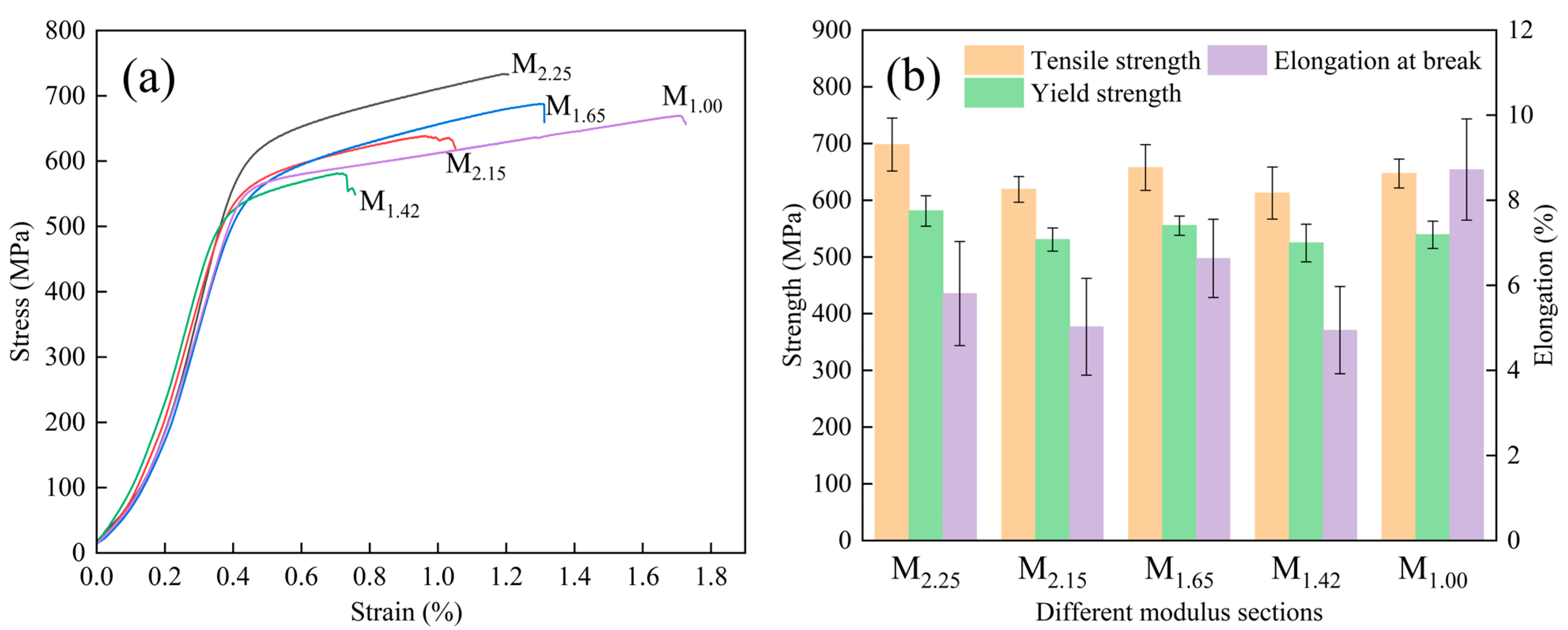
4.2. The Correlation Between Microstructure and Mechanical Properties
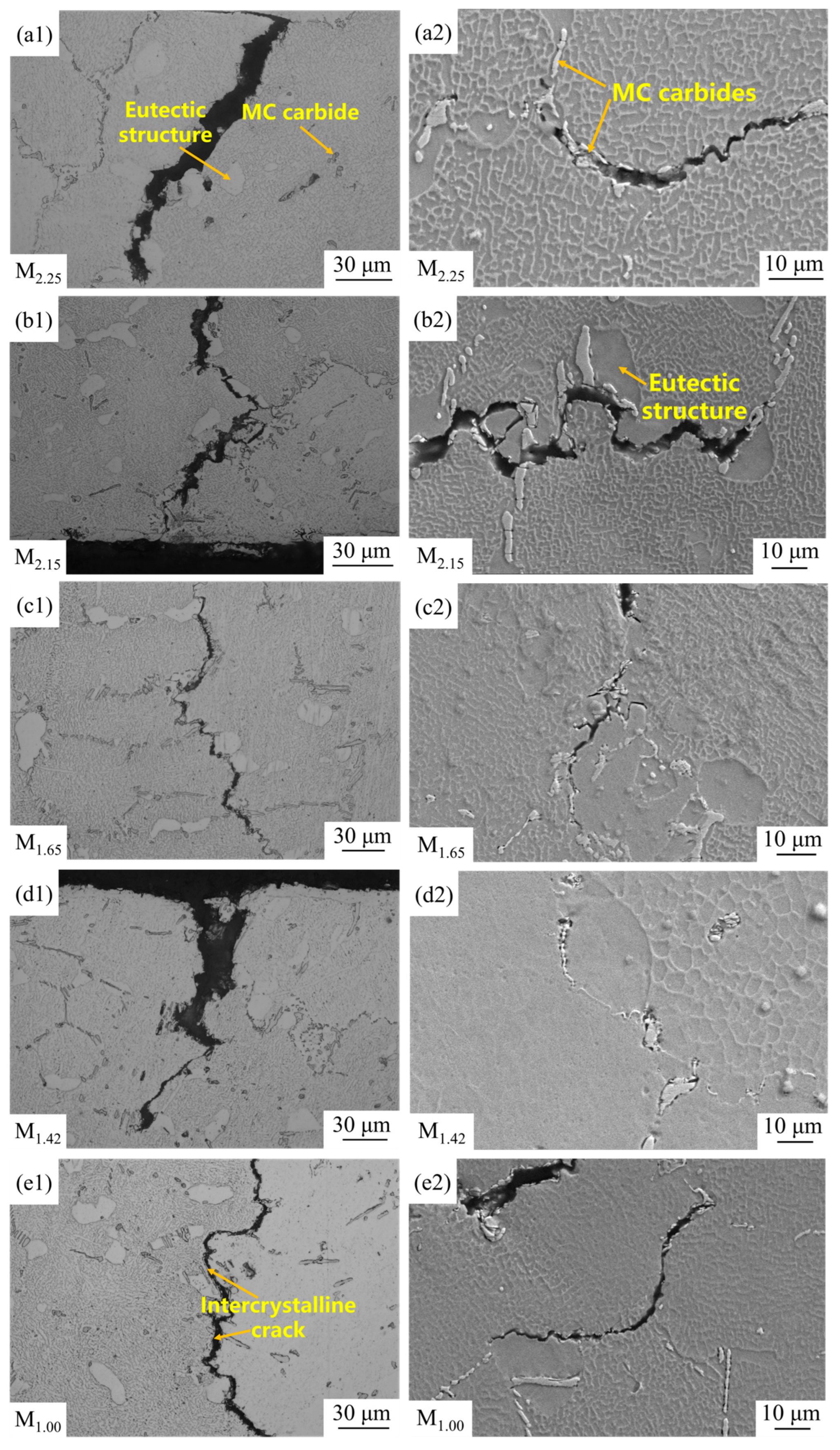
4.3. Microstructure Analysis near the Fracture Surface
5. Conclusions
- (1)
- The grain sizes of different modulus parts are controlled by the local cooling rates, and the cooling rates are related to moduli and the spatial position distributions. The tensile and yield strengths of the alloy are negatively correlated with the grain sizes. The cooling rate at the M2.25 area is the fastest, the grains are the finest, and the tensile and yield strengths are the highest. The cooling rate at the M1.42 section is the slowest, the grains are the coarsest, and the strength is the worst.
- (2)
- The tensile and yield strengths of the alloy are negatively correlated with the sizes of the γ′ phases. A fine γ′ phase has a stronger dislocation hindrance capacity, resulting in greater tensile and yield strengths. The average size of γ′ phases at the M2.25 part is the smallest, which leads to its maximum strength. The average size of γ′ phases at the M1.42 part is the largest, which leads to its minimum strength.
- (3)
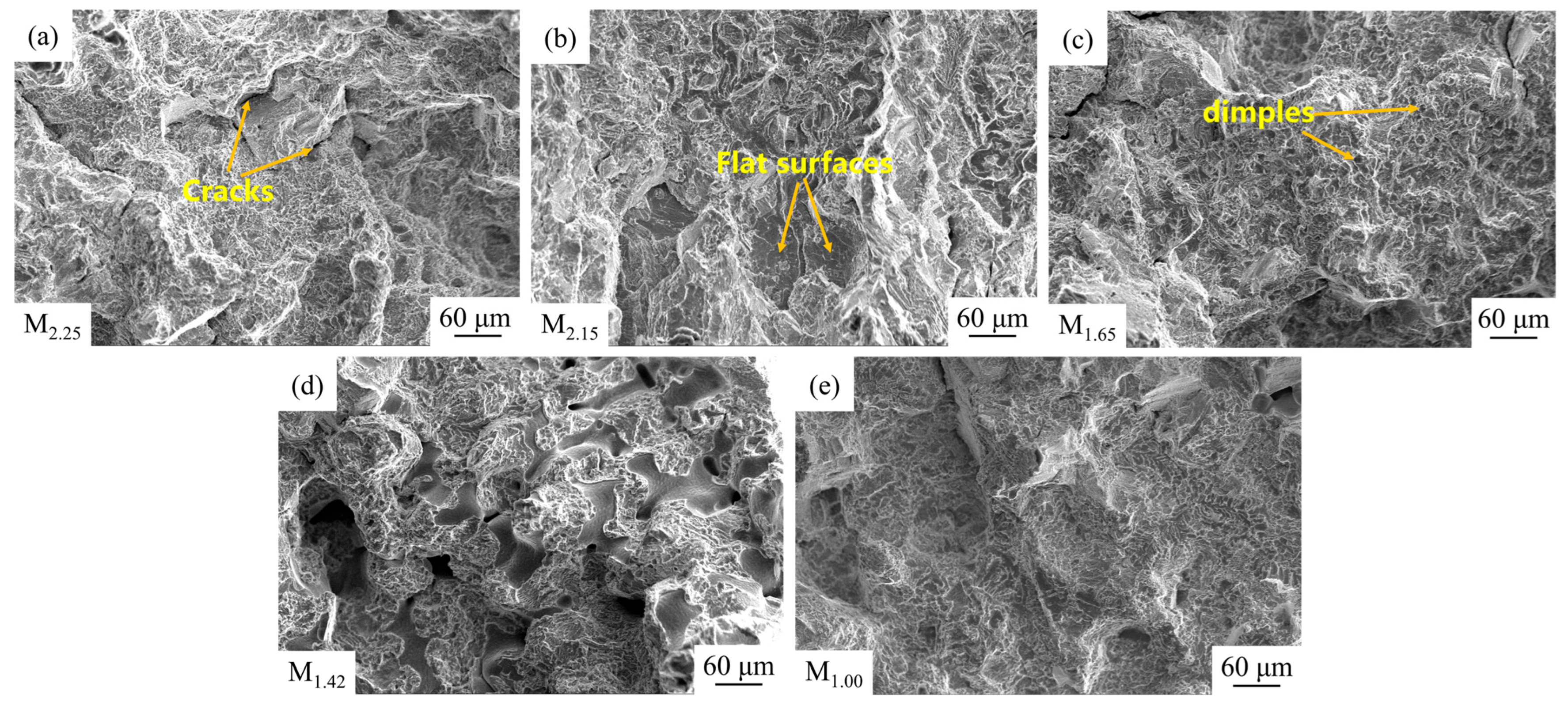
- Elongation is related to the sizes of eutectic structure and MC carbides. Larger sizes of eutectic structure and MC carbides will intensify the tendency to fracture and reduce the plasticity of the alloy, and lead to a decrease in elongation. The elongation at the M1.42 part is the smallest and its plasticity is the worst, while the elongation at the M1.00 part is the largest and its plasticity is the best. When stretched at room temperature, cracks preferentially initiate at the eutectic structure and MC carbides in the vicinity of dendrites and grain boundaries.
Author Contributions
Funding
Data Availability Statement
Conflicts of Interest
References
- Lee, D. Thermal Aging Effects on the Microstructure, Oxidation Behavior, and Mechanical Properties of As-Cast Ni3Al Alloys. Ph.D. Thesis, The University of Tennessee, Knoxville, TN, USA, 2004. [Google Scholar]
- Sikka, V.; Deevi, S.; Viswanathan, S.; Swindeman, R.; Santella, M. Advances in processing of Ni3Al-based intermetallics and applications. Intermetallics 2000, 8, 1329–1337. [Google Scholar] [CrossRef] [Scilit]
- Jozwik, P.; Polkowski, W.; Bojar, Z. Applications of Ni3Al Based Intermetallic Alloys—Current Stage and Potential Perceptivities. Materials 2015, 8, 2537–2568. [Google Scholar] [CrossRef] [Scilit]
- Chen, D.; Luo, F.; Lou, X.; Qing, Y.; Zhou, W.; Zhu, D. Comparison of thermal insulation capability between conventional and nanostructured plasma sprayed YSZ coating on Ni3Al substrates. Ceram. Int. 2017, 43, 4324–4329. [Google Scholar] [CrossRef] [Scilit]
- Wu, Y.; Liu, Y.; Li, C.; Xia, X.; Huang, Y.; Li, H.; Wang, H. Deformation behavior and processing maps of Ni3Al-based superalloy during isothermal hot compression. J. Alloys Compd. 2017, 712, 687–695. [Google Scholar] [CrossRef] [Scilit]
- Zhang, L.; Chang, Q.; Sun, Z.; Xue, Q.; Feng, J. Effects of boron and silicon on microstructural evolution and mechanical properties of transient liquid phase bonded GH3039/IC10 joints. J. Manuf. Process. 2019, 38, 167–173. [Google Scholar] [CrossRef] [Scilit]
- Yonghua, K.; Long, L.; Shigen, Z.; Guosheng, C. Study on the Microstructure and Properties of Different Parts of GH4169 Alloy Forgings. Rare Met. Mater. Eng. 2010, 39, 405–408. [Google Scholar]
- Li, Z.; Qin, H.; Zhao, G.; Tian, Q.; Li, X. Microstructural and Performance Evolution of Different Parts of Large GH4742 Alloy Wheel Forgings. J. Iron Steel Res. 2025, 37, 950–959. [Google Scholar]
- Zhang, Z.; Pan, Y.; Dong, A.; Chen, Z.; Sui, D. Numerical simulation-driven optimization of the counter-gravity adjusted-pressure casting process for large thin-wall Ni-based superalloy combustion chamber casings. J. Mater. Res. Technol. 2025, 37, 1029–1104. [Google Scholar] [CrossRef] [Scilit]
- Liu, W.-T.; Wu, Y.-D.; Gao, L.; Chen, J.-Y.; Xiao, C.-B.; Hui, X.-D. Pronounced impact of size and shape effects on creep rupture life of a K439B superalloy combustion chamber casting simulator. China Foundry 2025, 22, 215–221. [Google Scholar] [CrossRef] [Scilit]
- GB/T 13298-2015; Methods for Metallographic Examination. China Standards Press: Beijing, China, 2015.
- GB/T 228.1-2021; Metallic Materials—Tensile Testing—Part 1: Method of Test at Room Temperature. China Standards Press: Beijing, China, 2021.
- ISO 6892-1:2019; Metallic Materials—Tensile Testing—Part 1: Method of Test at Room Temperature. International Organization for Standardization: Geneva, Switzerland, 2019.
- Niklas, A.; Abaunza, U.; I Fernández-Calvo, A.; Lacaze, J. Relationship Between Casting Modulus and Grain Size in Cast A356 Aluminium Alloys. IOP Conf. Ser. Mater. Sci. Eng. 2012, 27, 012003. [Google Scholar] [CrossRef] [Scilit]
- Zhai, Q. Fundamentals of Metal Solidification Structure Refinement; Science Press: Beijing, China, 2018; pp. 26–27. [Google Scholar]
- Wang, H.; Zhang, J. Effect of Cooling Rate on the Growth Morphology of MC carbides in Rapidly Solidified Single-Crystal Nickel-Based Superalloys. J. Mech. Eng. 1993, 29, 47–51. [Google Scholar]
- Cui, Y.; Liu, L.; Ren, J.; Zhang, Y.; Lou, L. Effect of Aluminium and Titanium Content on the Properties of Nickel-Based Cast High-Temperature Alloys. J. Iron Steel Res. 2003, 15, 244–248. [Google Scholar]
- Babu, S.; Miller, M.; Vitek, J.; David, S. Characterization of the microstructure evolution in a nickel base superalloy during continuous cooling conditions. Acta Mater. 2001, 49, 4149–4160. [Google Scholar] [CrossRef] [Scilit]
- Singh, A.; Nag, S.; Chattopadhyay, S.; Ren, Y.; Tiley, J.; Viswanathan, G.; Fraser, H.; Banerjee, R. Mechanisms related to different generations of γ′ precipitation during continuous cooling of a nickel base superalloy. Acta Mater. 2013, 61, 280–293. [Google Scholar] [CrossRef] [Scilit]
- Sahu, S.K.; Mishra, D.K.; Behera, A.; Dalai, R.P. An overview on the effect of heat-treatment and cooling rates on Ni-based superalloys. Mater. Today Proc. 2021, 47, 3309–3312. [Google Scholar] [CrossRef] [Scilit]
- Everitt, S.; Starink, M.J.; Pang, H.T.; Wilcock, I.M.; Henderson, M.B.; Reed, P.A.S. A comparison of high temperature fatigue crack propagation in various subsolvus heat treated turbine disc alloys. Mater. Sci. Technol. 2007, 23, 1419–1423. [Google Scholar] [CrossRef] [Scilit]
- Telesman, I.J.; Gabb, T.P.; Bonacuse, P.; Gayda, J. Effect of microstructure on time dependent fatigue crack growth behavior in a P/M turbine disk alloy. In Proceedings of the 11th International Symposium Superalloys 2008, Warrendale, PA, USA, 14–18 September 2008. [Google Scholar]
- Alabbasian, F.; Boutorabi, S.M.A.; Kheirandish, S. Effect of inoculation and casting modulus on the microstructure and mechanical properties of ductile Ni-resist cast iron. Mater. Sci. Eng. A 2016, 651, 467–473. [Google Scholar] [CrossRef] [Scilit]
- Kuznetsov, G.V.; Sheremet, M.A. Numerical simulation of turbulent natural convection in a rectangular enclosure having finite thickness walls. Int. J. Heat Mass Transf. 2010, 53, 163–177. [Google Scholar] [CrossRef] [Scilit]
- Sylwestrowicz, W.; Hall, E.O. The deformation and ageing of mild steel. Proc. Phys. Soc. 1951, 64, 495–502. [Google Scholar] [CrossRef] [Scilit]
- Shin, K.-Y.; Kim, J.-H.; Terner, M.; Kong, B.-O.; Hong, H.-U. Effects of heat treatment on the microstructure evolution and the high-temperature tensile properties of Haynes 282 superalloy. Mater. Sci. Eng. A 2019, 751, 311–332. [Google Scholar] [CrossRef] [Scilit]
- Hou, K. Study on Deformation Mechanism and η Phase Precipitation Behavior of K4750 Nickel-Based Superalloy. Ph.D. Thesis, University of Science and Technology of China, Hefei, China, 2022. [Google Scholar]
- Barat, K.; Ghosh, M.; Sivaprasad, S.; Kar, S.K.; Tarafder, S. High-Temperature Low-Cycle Fatigue Behavior in HAYNES 282: Influence of Initial Microstructure. Metall. Mater. Trans. A 2018, 49, 5211–5226. [Google Scholar] [CrossRef] [Scilit]
- Xu, Y.; Xiao, H.; Wang, C.; Huang, S.; Lian, X.; Dong, H. Effect of Grain Size on the Microstructure and Mechanical Properties of GH4706 High-Temperature Alloy. Shanghai Met. 2024, 46, 27–32. [Google Scholar]
- Jing, G.-Y.; Li, A.-Q.; Sun, X.; Jin, L.; Zhou, C.; Zhan, D.-P.; Li, J.-H. Effect of melt superheating on solidification microstructure and mechanical properties of K424 superalloy. China Foundry 2025, 22, 252–262. [Google Scholar] [CrossRef] [Scilit]
- Wen, X.; Meng, X.; Lyu, S.; Xie, X.; Qu, J. Microstructural Evolution and Mechanical Properties of GH4720Li Superalloy Disk Forgings in Different Deformation Zones. Forg. Technol. 2025, 50, 11–18. [Google Scholar]
- Ding, J.; Jiang, S.; Li, Y.; Wu, Y.; Wu, J.; Peng, Y.; He, X.; Xia, X.; Li, C.; Liu, Y. Microstructure evolution behavior of Ni3Al (γ′) phase in eutectic γ-γ′ of Ni3Al-based alloy. Intermetallics 2018, 98, 28–33. [Google Scholar] [CrossRef] [Scilit]
- Yuan, X.; Wu, J.; Li, J.; Li, W.; Zhao, J.; Yan, P. Effects of initial microstructures on the microstructural evolution and corresponding mechanical property of K424 superalloy after overheating exposure. Mater. Sci. Eng. A 2019, 743, 40–56. [Google Scholar] [CrossRef] [Scilit]
- Xin, X.; Wenru, S.; Zhongyuan, D.; Feng, Q.; Weihong, Z.; Fang, L.; Hongcai, Y.; Zhuangqi, H. Effect of Nb and Al Content on the Microstructure and Mechanical Properties of GH706 Alloy. Rare Met. Mater. Eng. 2011, 40, 1946–1950. [Google Scholar]
- Han, Y.; Xue, X.; Zhang, T.; Hu, R.; Kou, H.; Li, J. Forged Microstructure and Tensile Properties of Ni-20Cr-18W Based Alloy. Rare Met. Mater. Eng. 2015, 44, 2314–2317. [Google Scholar]







| Element | C | Cr | Mo | Ti | Al | Hf | W | Ni |
|---|---|---|---|---|---|---|---|---|
| composition | 0.12 | 7.79 | 4.86 | 0.95 | 8.00 | 0.65 | 2.03 | Bal. |
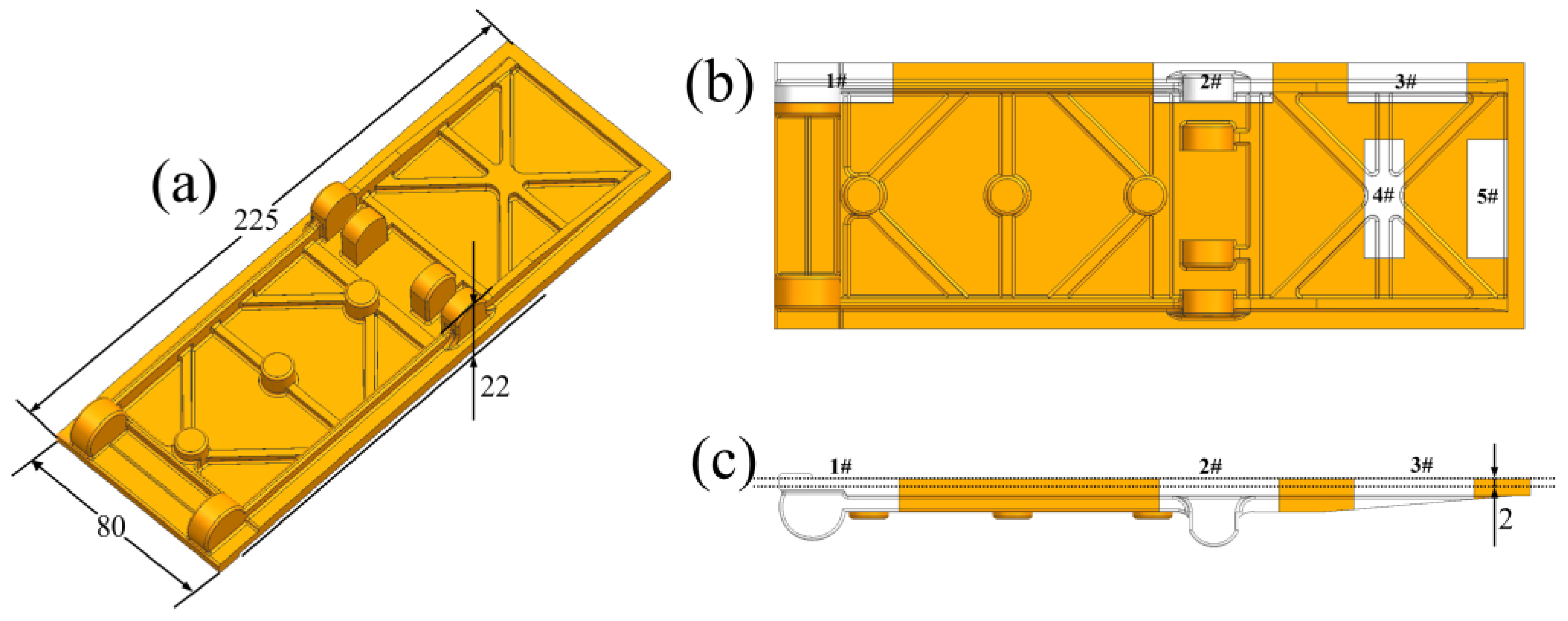
| Area | Maximum Wall Thickness/mm | Modulus M/mm |
|---|---|---|
| 1# | 20 | 2.25 |
| 2# | 20.5 | 2.15 |
| 3# | 9 | 1.65 |
| 4# | 5 | 1.42 |
| 5# | 2 | 1.00 |
Disclaimer/Publisher’s Note: The statements, opinions and data contained in all publications are solely those of the individual author(s) and contributor(s) and not of MDPI and/or the editor(s). MDPI and/or the editor(s) disclaim responsibility for any injury to people or property resulting from any ideas, methods, instructions or products referred to in the content. |
© 2026 by the authors. Licensee MDPI, Basel, Switzerland. This article is an open access article distributed under the terms and conditions of the Creative Commons Attribution (CC BY) license.
Share and Cite
Jiang, H.-T.; Jin, L.; Jing, G.-Y.; Li, P.; Fan, B.-Z.; Li, Y.-P.; Ma, L.-B.; Li, A.-Q.; Liu, T.-Y.; Sun, X.; et al. Microstructure and Properties of Different Modulus Sections in JG4246A Alloy Characteristic Simulation Castings. Materials 2026, 19, 915. https://doi.org/10.3390/ma19050915
Jiang H-T, Jin L, Jing G-Y, Li P, Fan B-Z, Li Y-P, Ma L-B, Li A-Q, Liu T-Y, Sun X, et al. Microstructure and Properties of Different Modulus Sections in JG4246A Alloy Characteristic Simulation Castings. Materials. 2026; 19(5):915. https://doi.org/10.3390/ma19050915
Chicago/Turabian StyleJiang, Hai-Tao, Lei Jin, Gao-Yang Jing, Peng Li, Bing-Zheng Fan, Yi-Peng Li, Lan-Bo Ma, Ao-Qi Li, Tian-Yv Liu, Xun Sun, and et al. 2026. "Microstructure and Properties of Different Modulus Sections in JG4246A Alloy Characteristic Simulation Castings" Materials 19, no. 5: 915. https://doi.org/10.3390/ma19050915
APA StyleJiang, H.-T., Jin, L., Jing, G.-Y., Li, P., Fan, B.-Z., Li, Y.-P., Ma, L.-B., Li, A.-Q., Liu, T.-Y., Sun, X., & Guan, Y. (2026). Microstructure and Properties of Different Modulus Sections in JG4246A Alloy Characteristic Simulation Castings. Materials, 19(5), 915. https://doi.org/10.3390/ma19050915