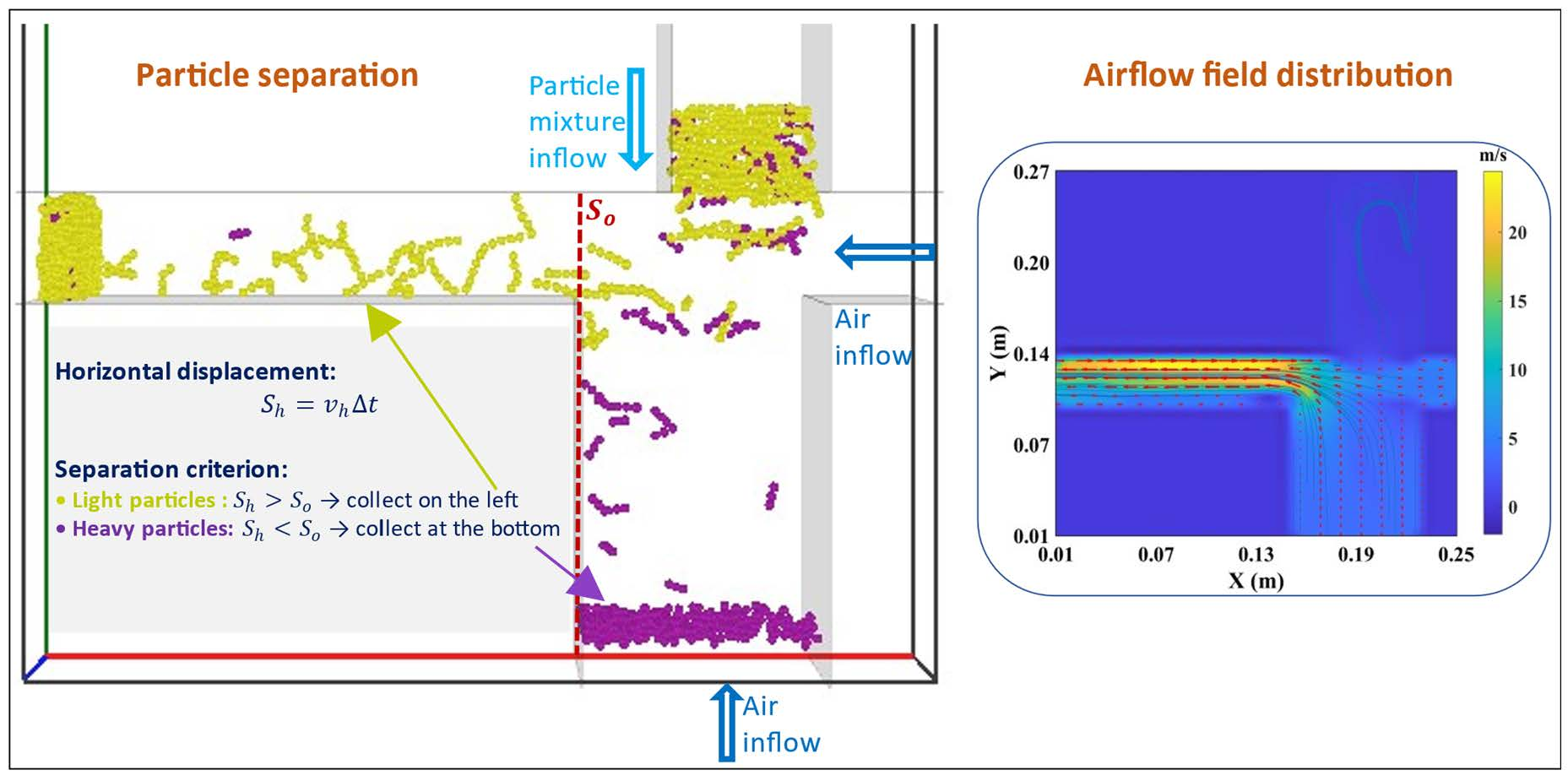
Separation of Flexible Rod-like Particle Mixtures by Intersecting Air Flow




Abstract
1. Introduction
2. The DEM-CFD Method
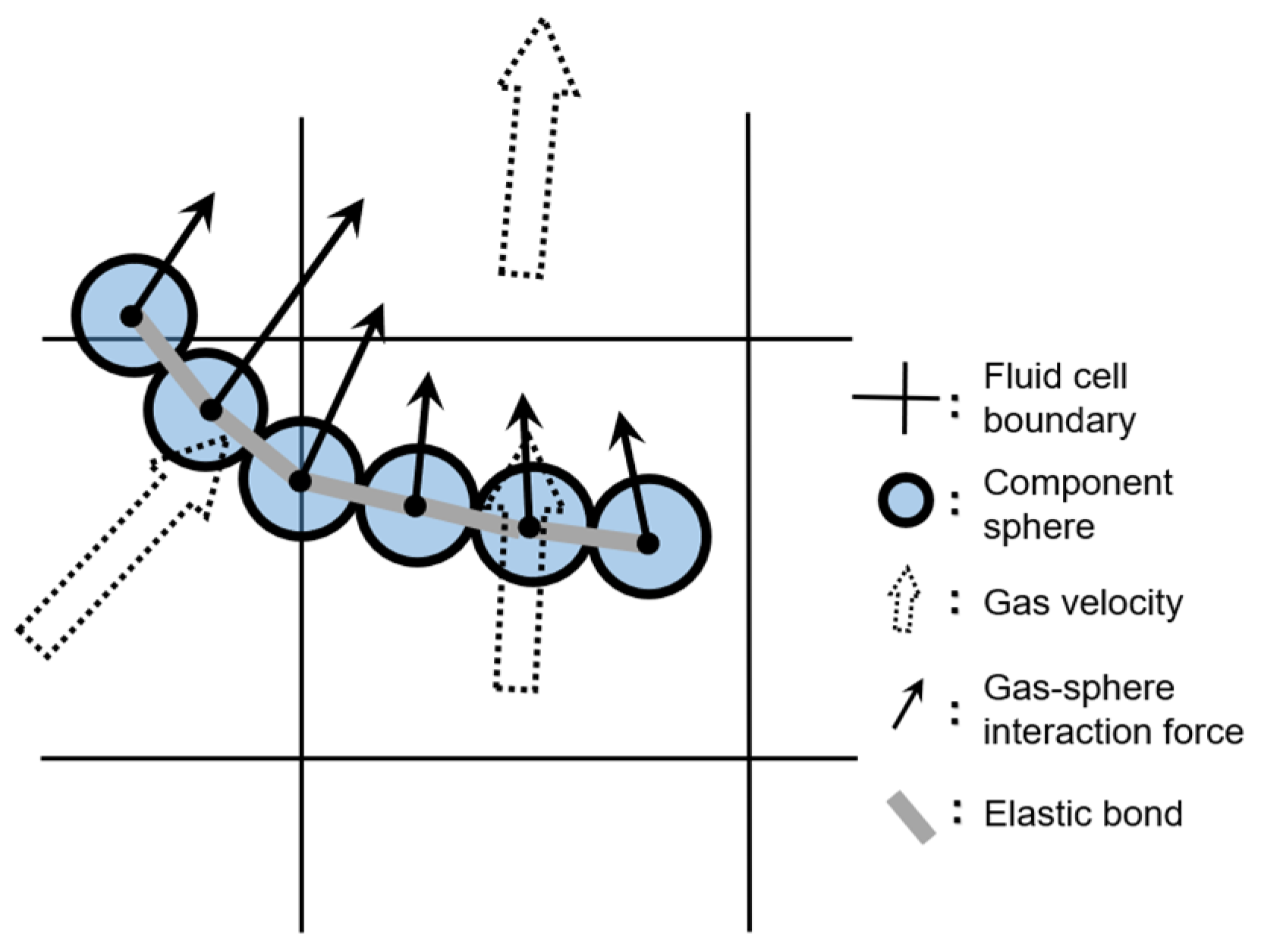
2.1. Flexible Fiber Model
2.2. Gas-Phase Governing Equations
2.3. Time Step
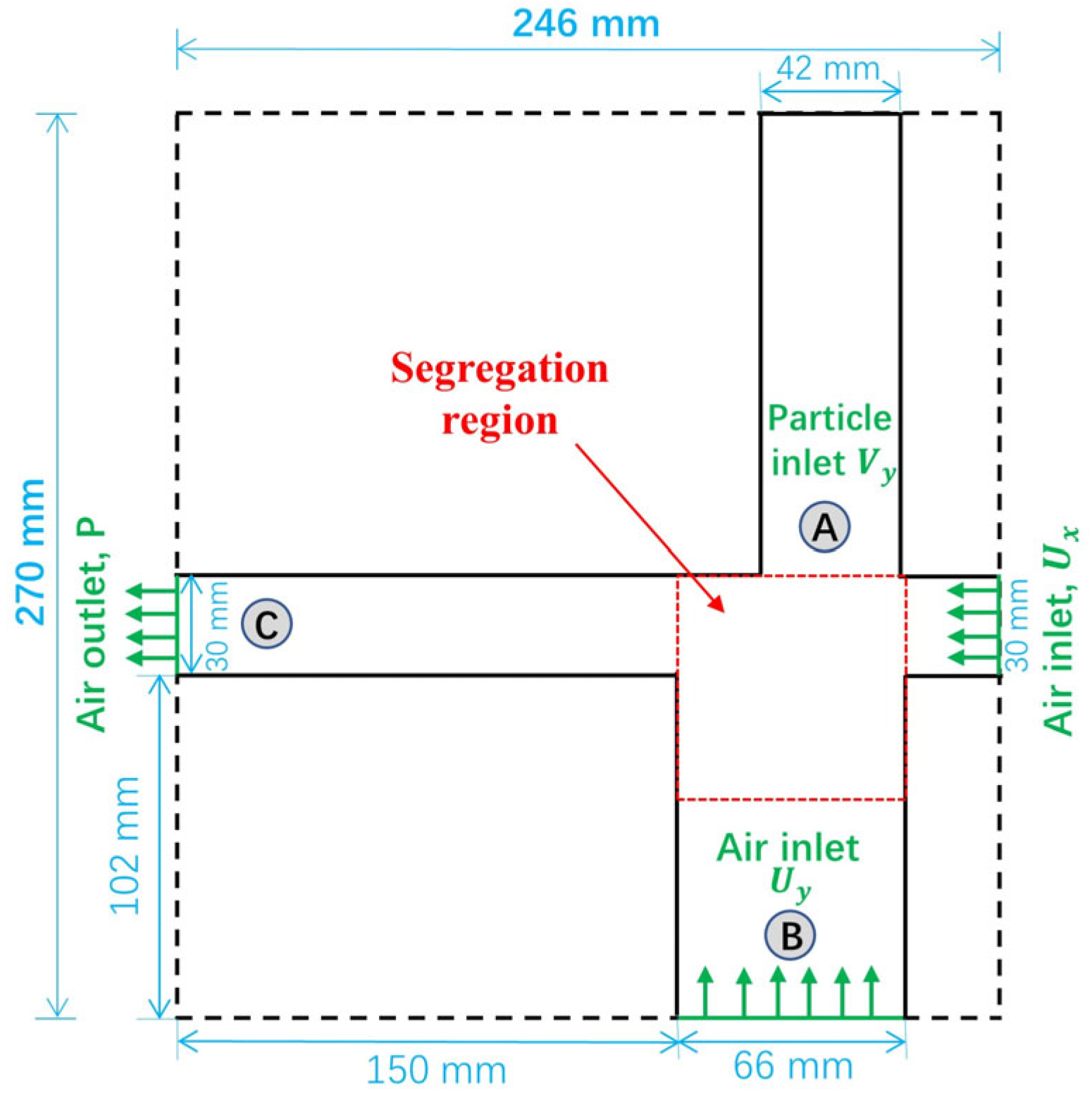
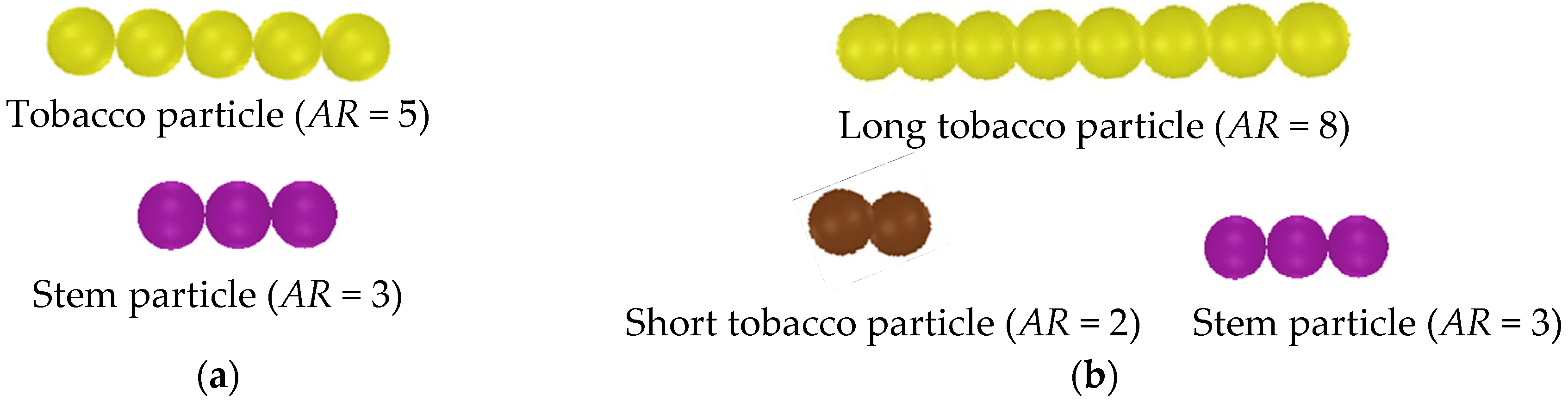
3. Numerical Model of Particle Separation in an Air Separator
4. Results and Discussion
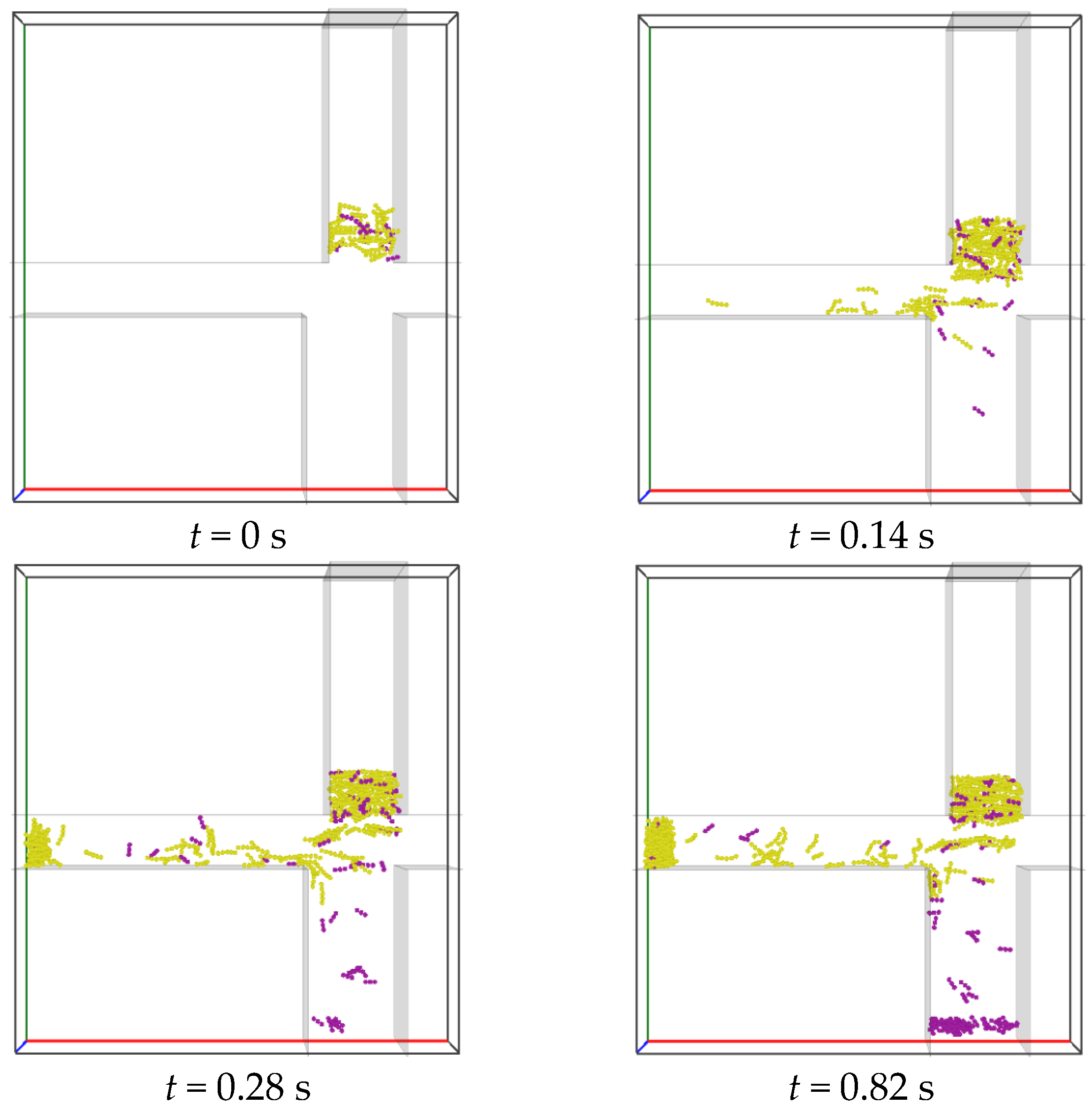
4.1. Separation Mechanism by Air Flow
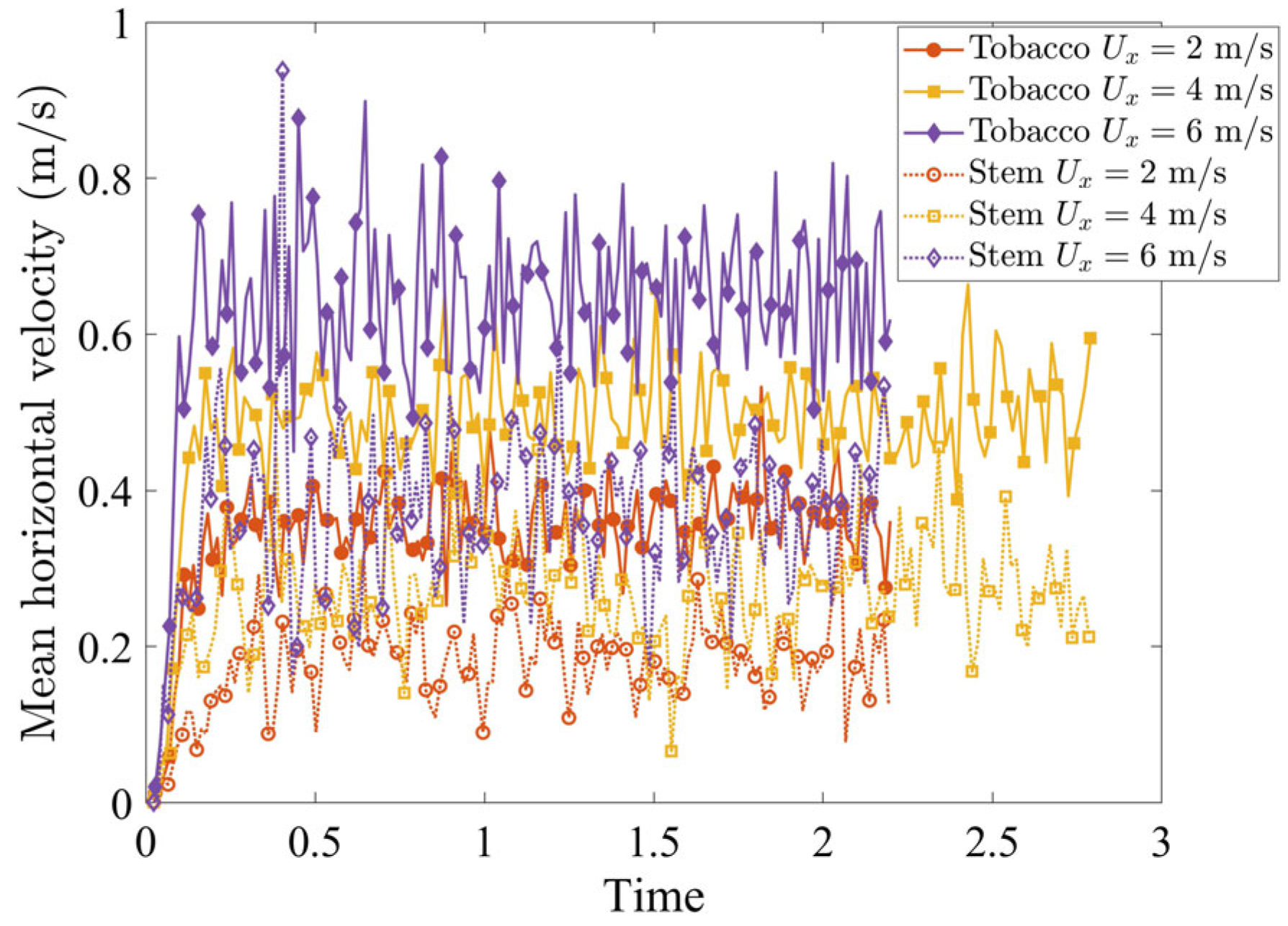
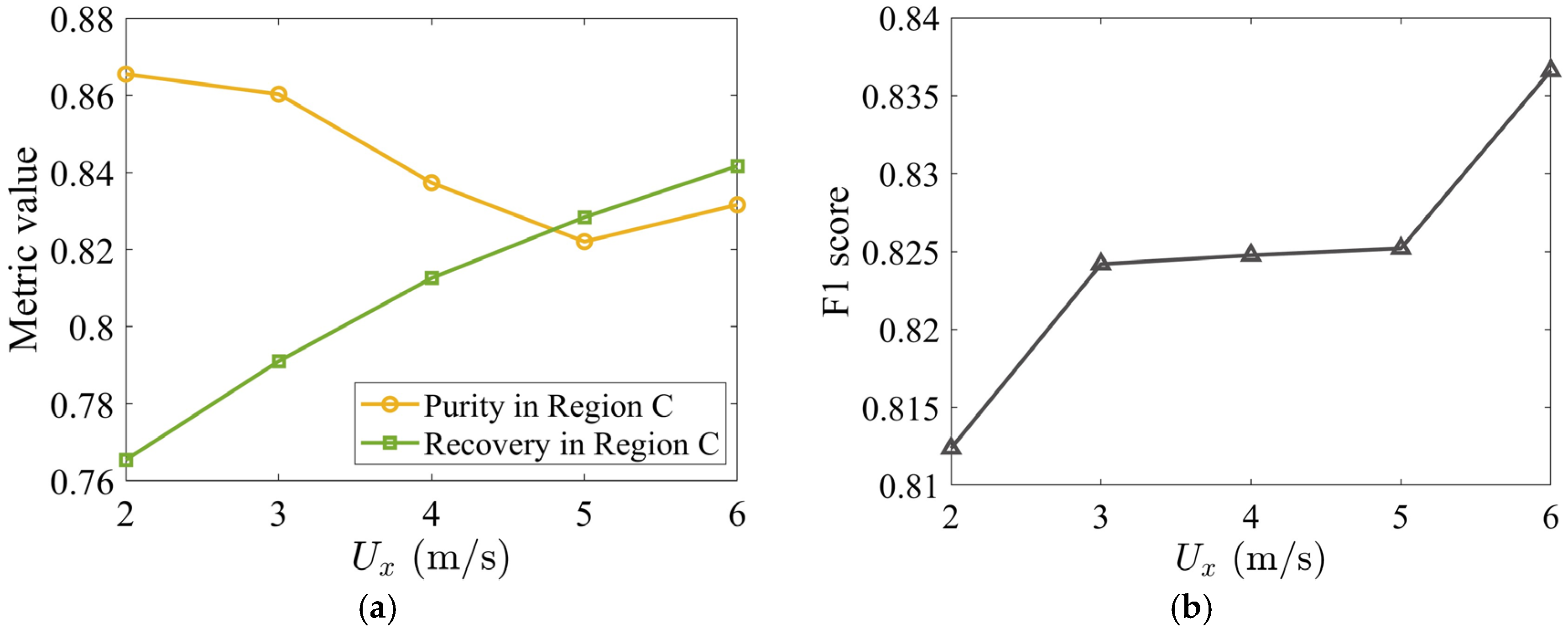
4.2. Effect of Horizontal Air Velocity
4.3. Effect of Vertical Air Velocity
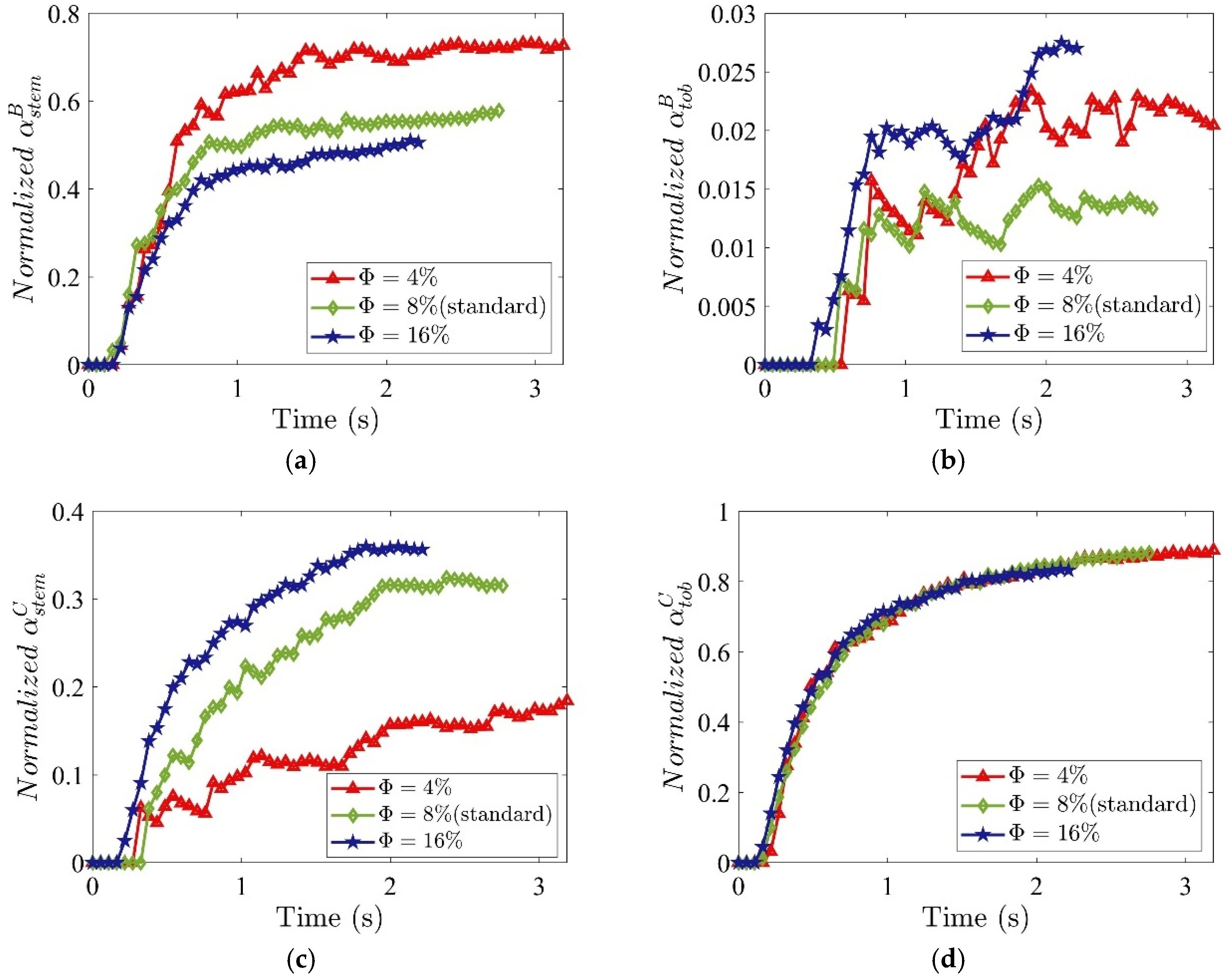
4.4. Effect of Initial Packing Density
4.5. Effect of Volume Fraction of Stem Particles in the Mixture
4.6. Separation of Ternary Mixture Versus Binary Mixture
4.7. Effect of Geometry of Separator
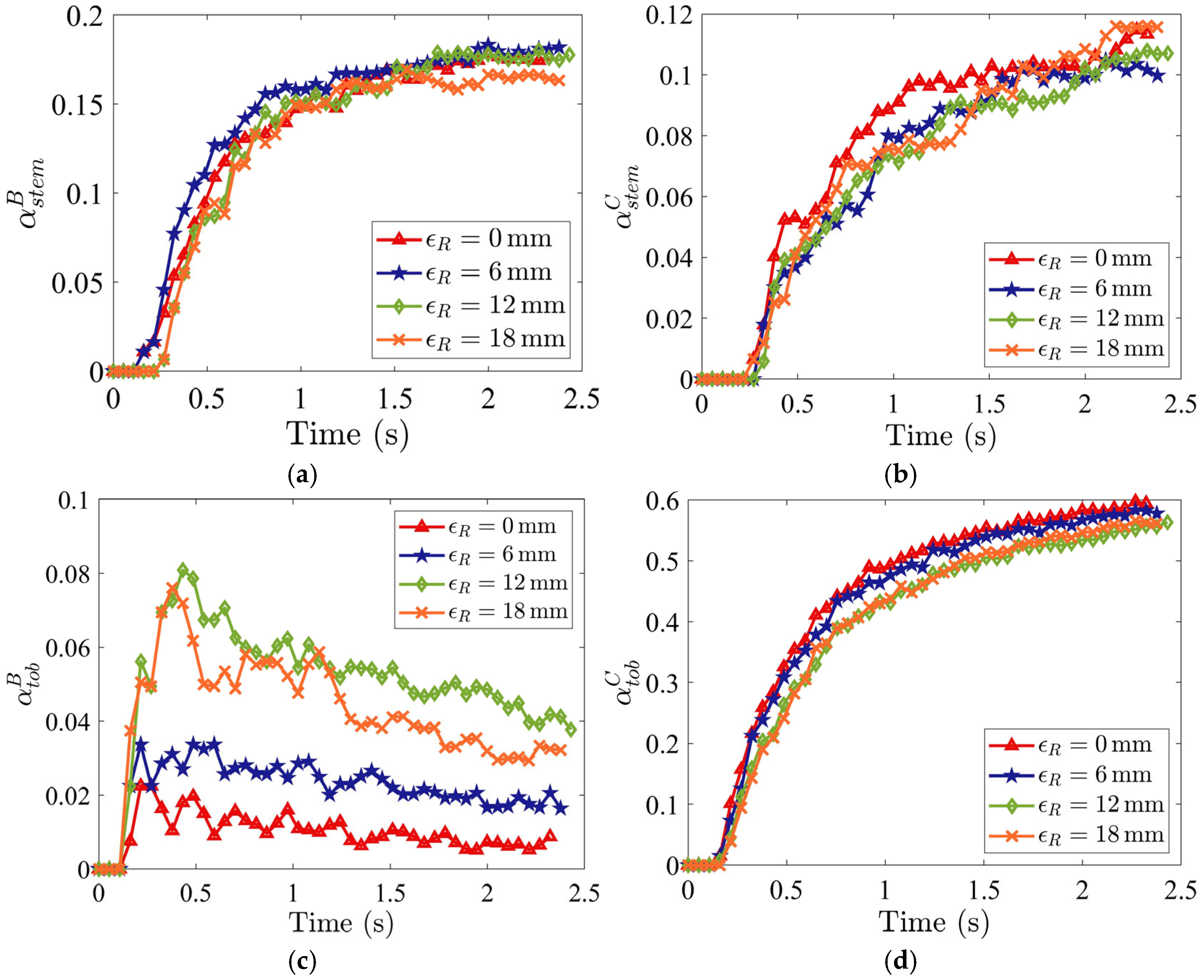
4.7.1. Staggered Distance on Trailing Side
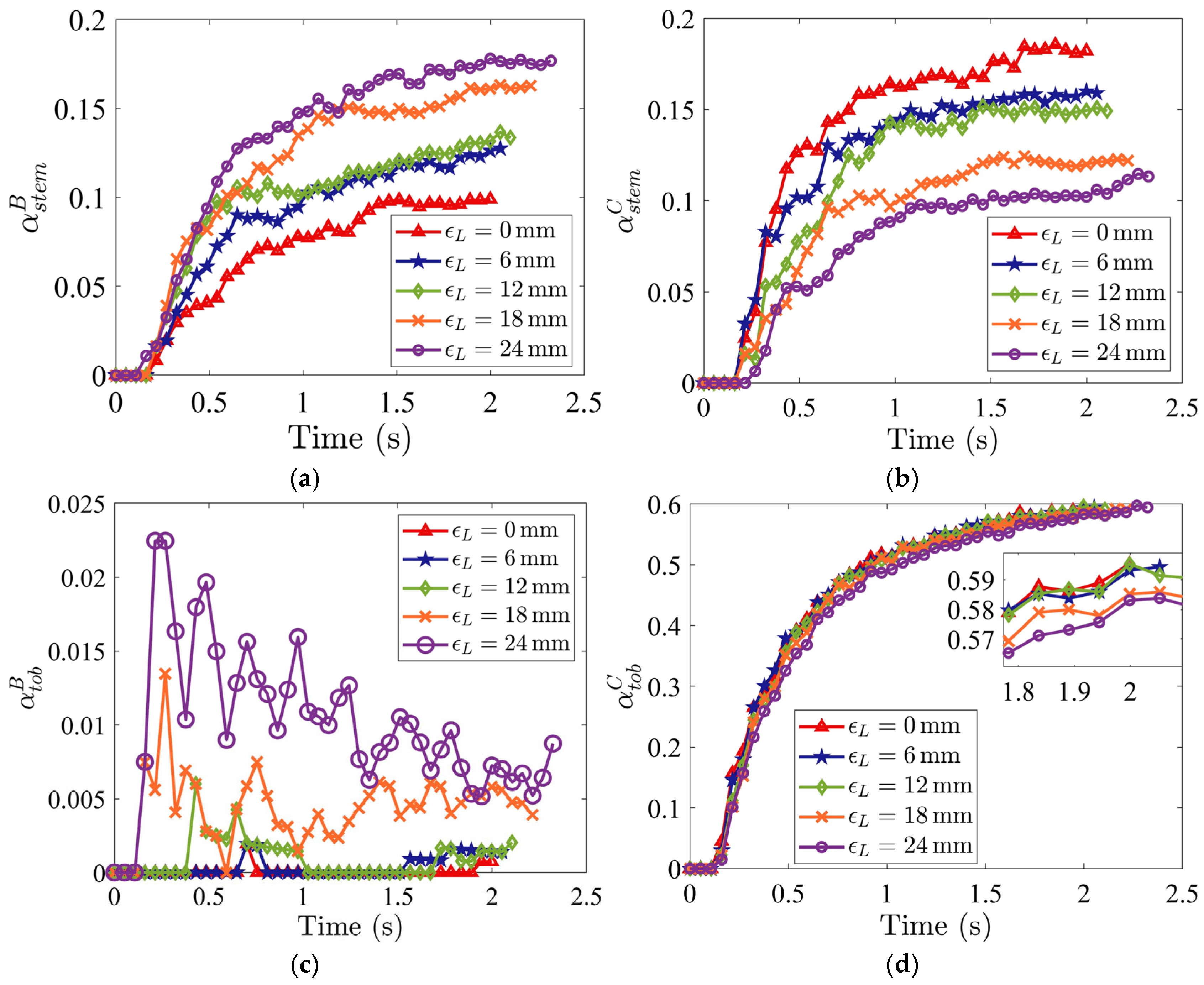
4.7.2. Staggered Distance on Leading Side
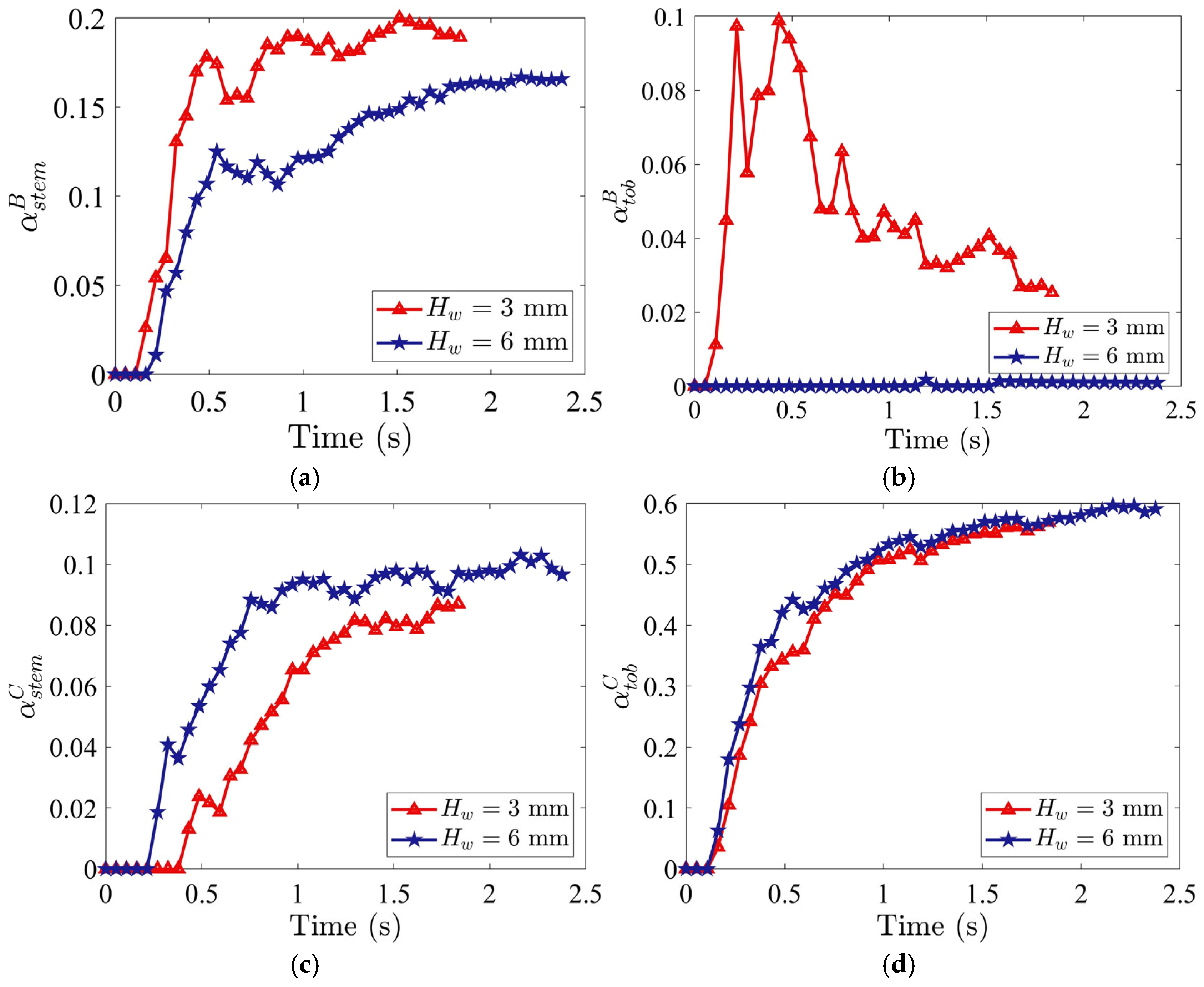
4.7.3. Height of Horizontal Channel
4.8. Summary of Optimal Separation Conditions
5. Conclusions
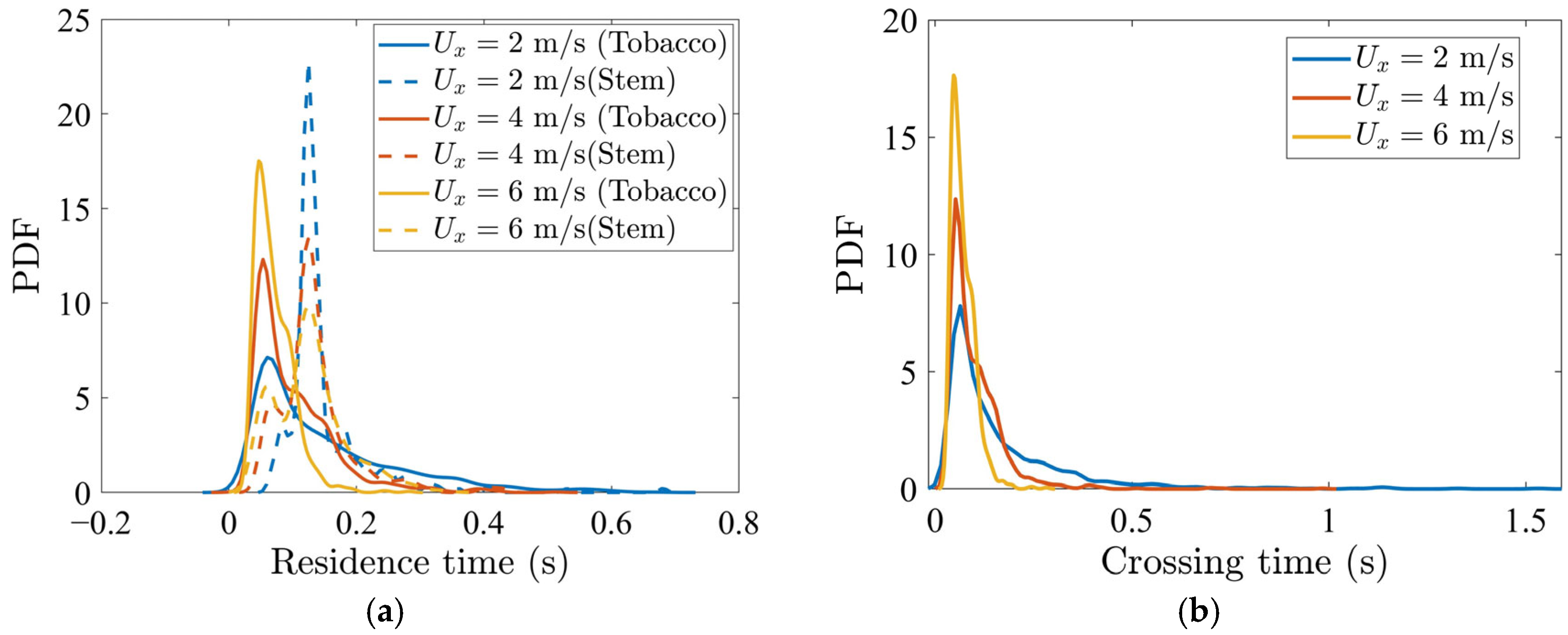
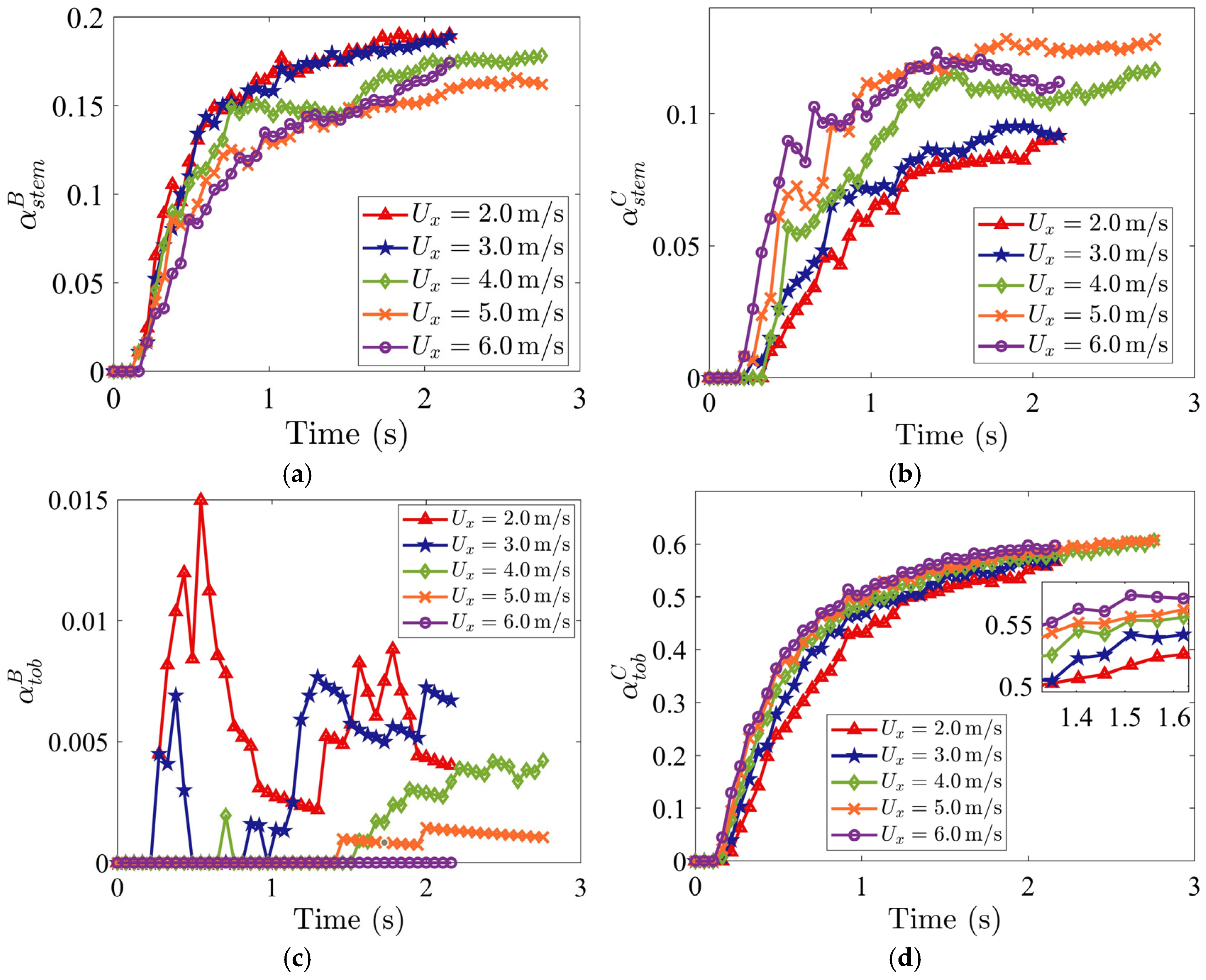
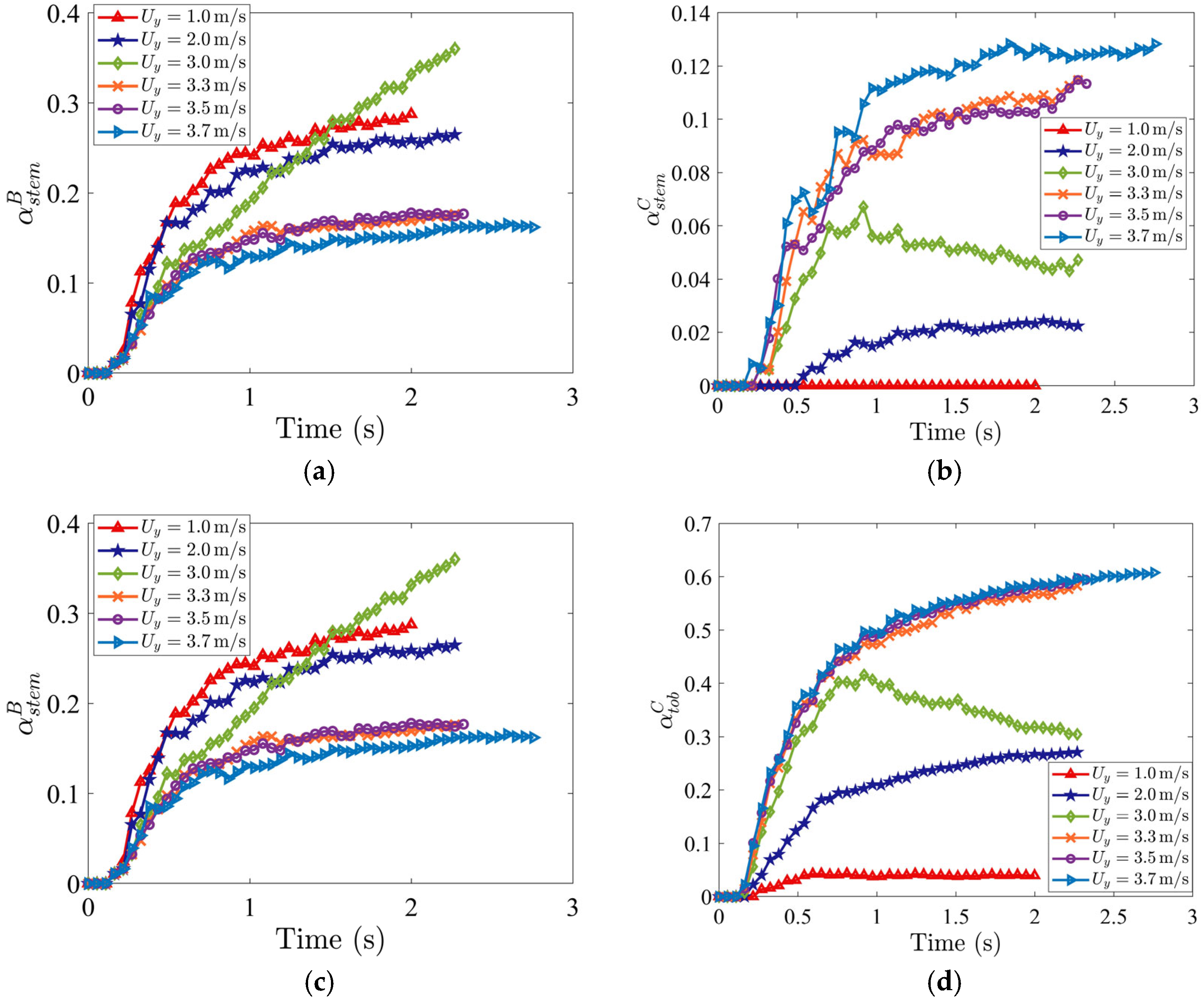
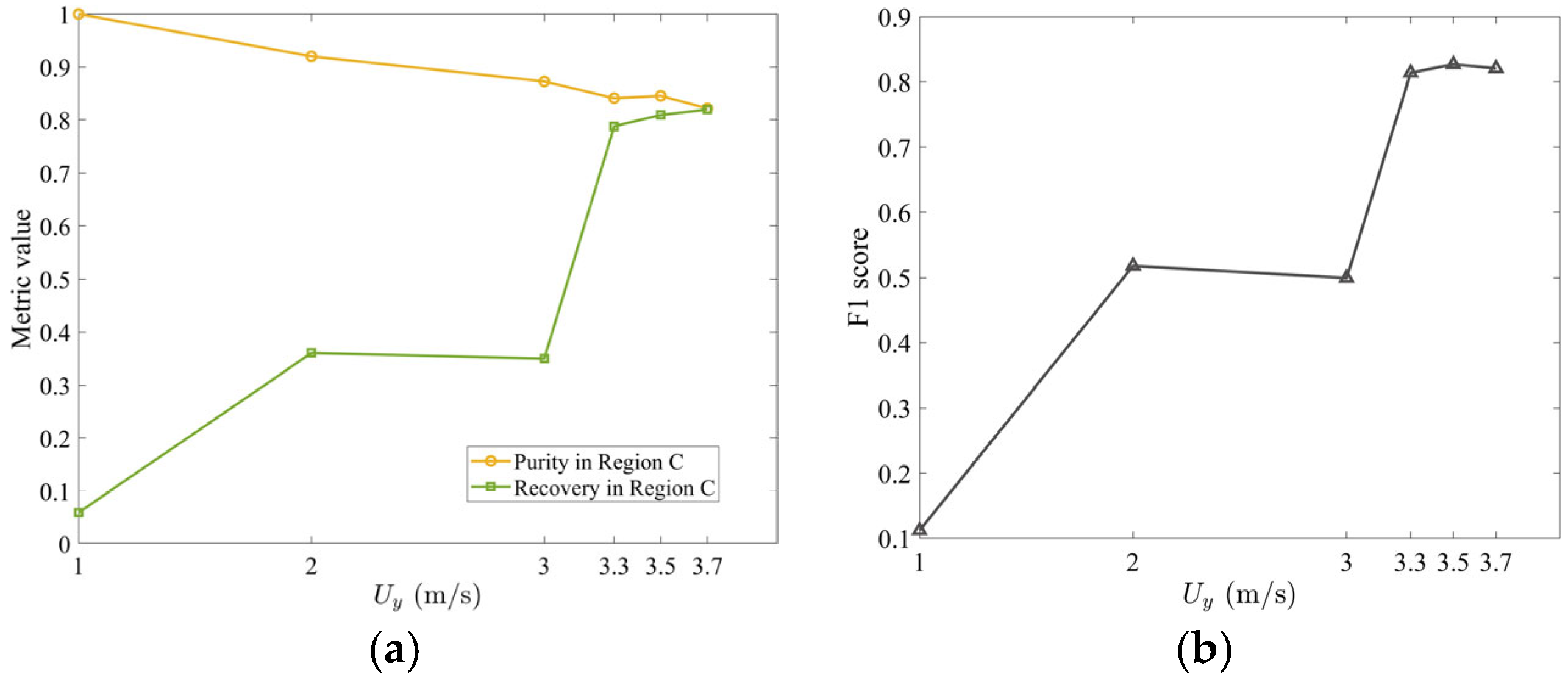
- Segregation depends significantly on both inflow air velocities that govern the trade-off between tobacco loss and stem contamination. Smaller or increases tobacco loss to the stem collector, while larger or improves recovery but reduces purity. Optimal values are and .
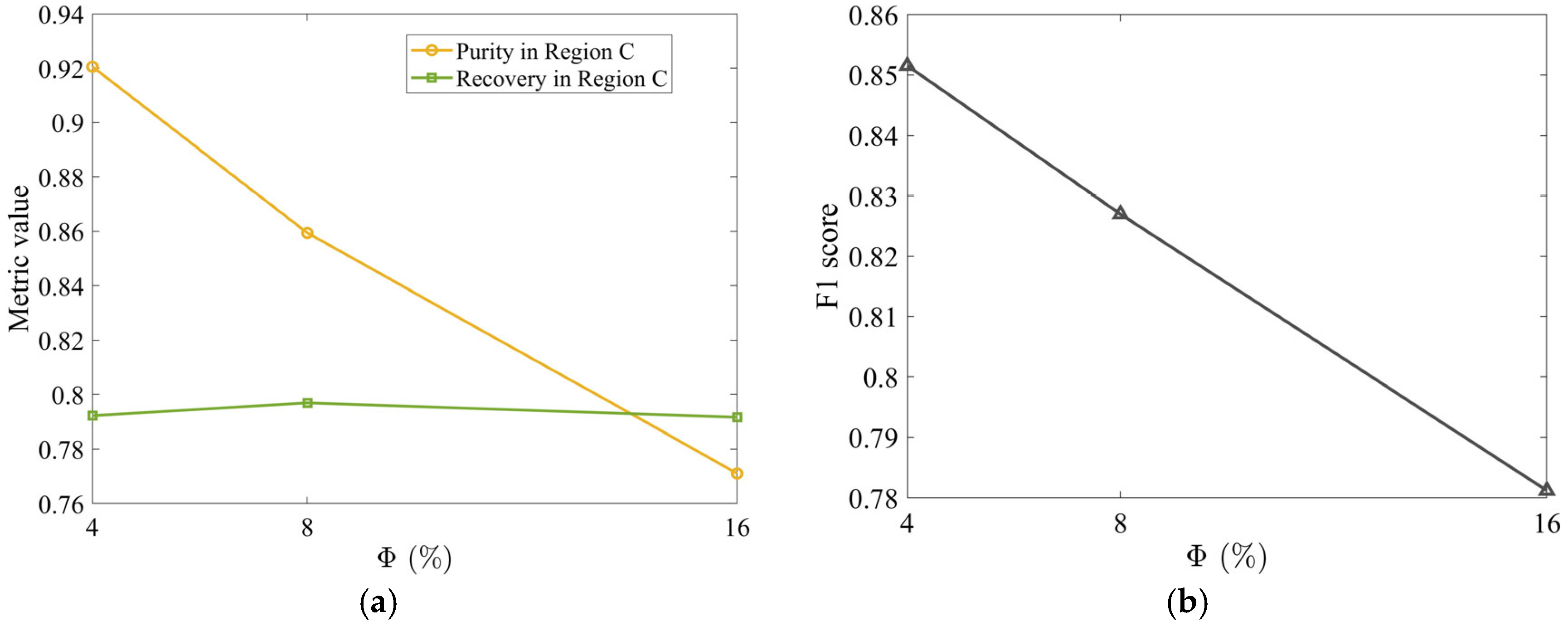
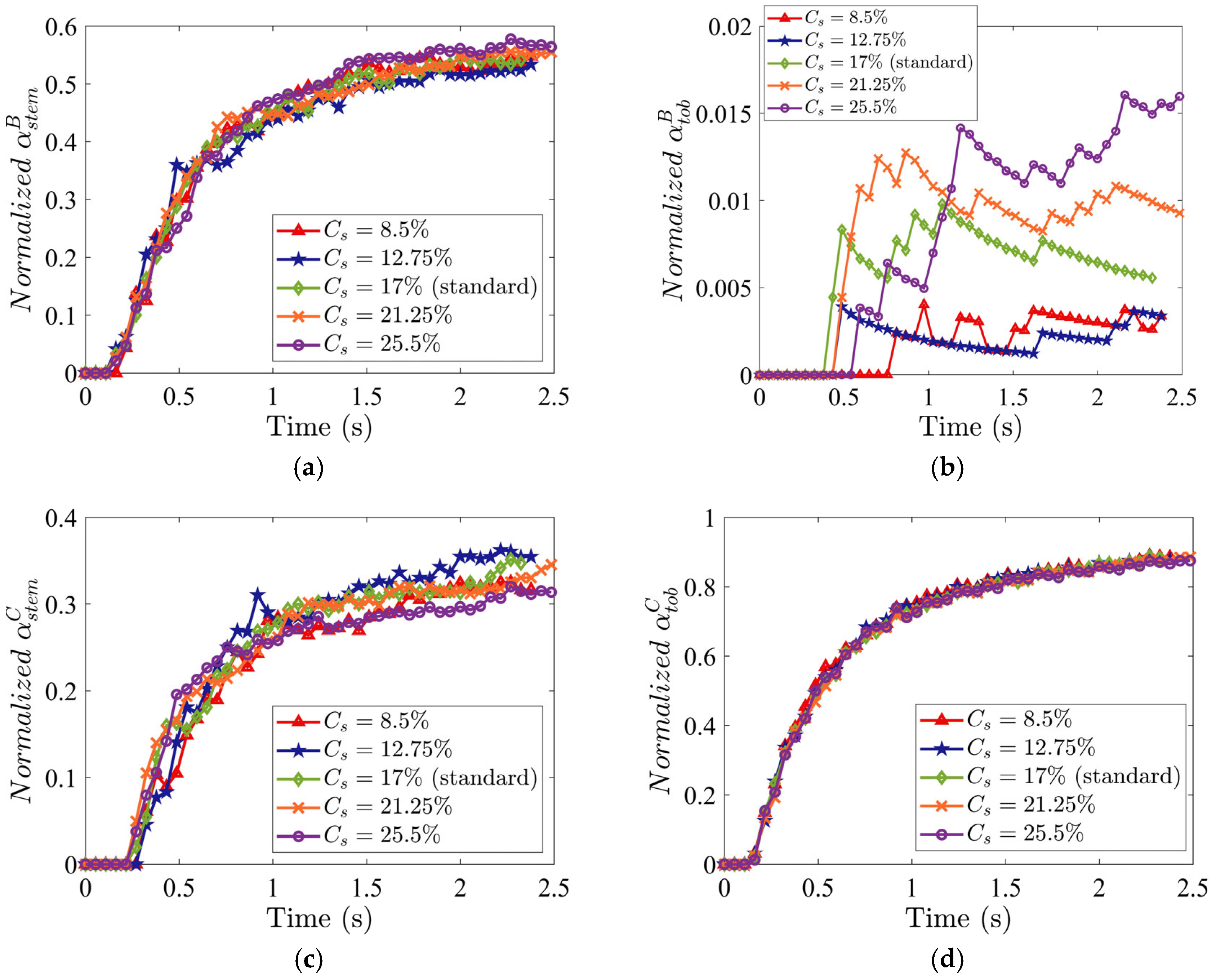
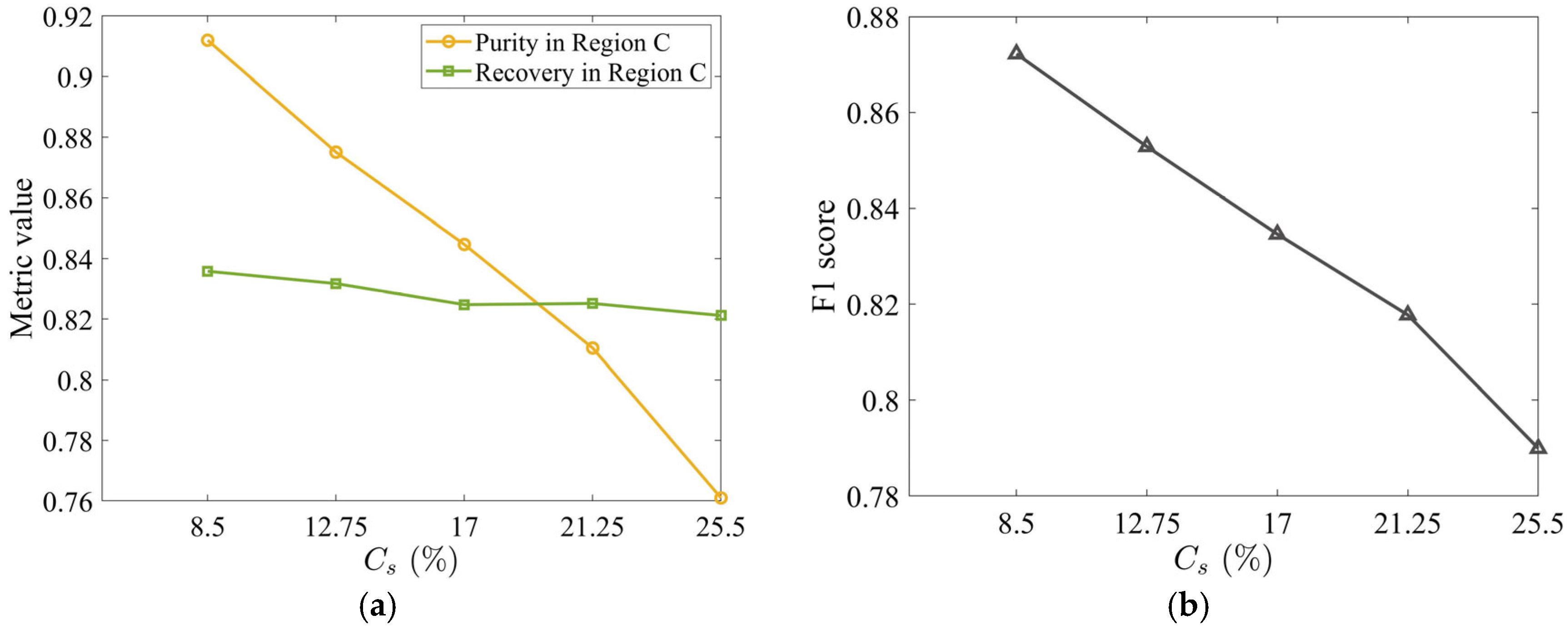
- A higher initial solid volume fraction () results in poorer segregation, with more stems translating into the tobacco collector, and more tobacco particles falling into the stem collector. This deterioration is caused by the increased particle collisions that restrict relative particle motion and thus separation. A higher stem particle volume fraction, also increases tobacco loss. The best performance is obtained at the lowest tested and .
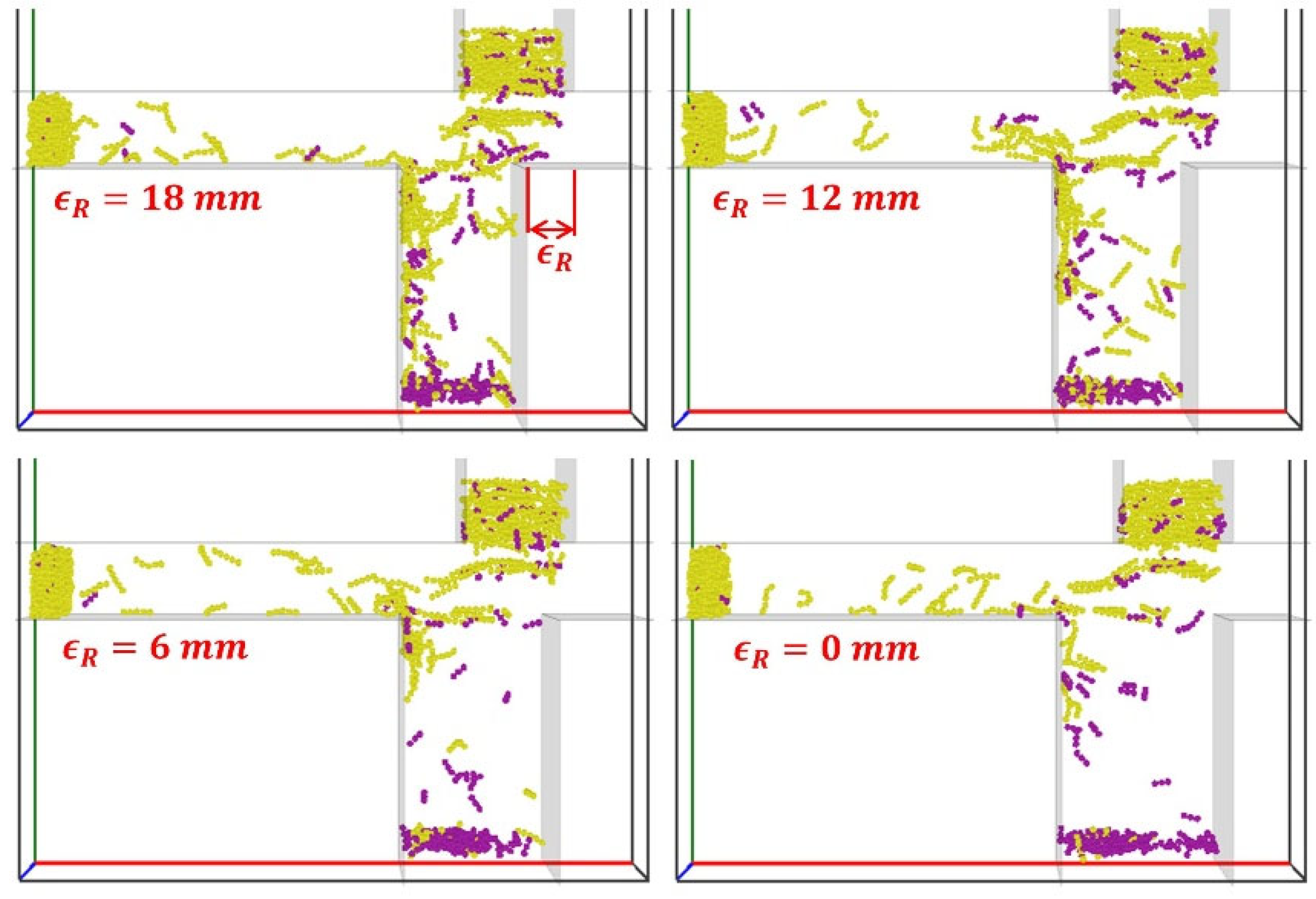
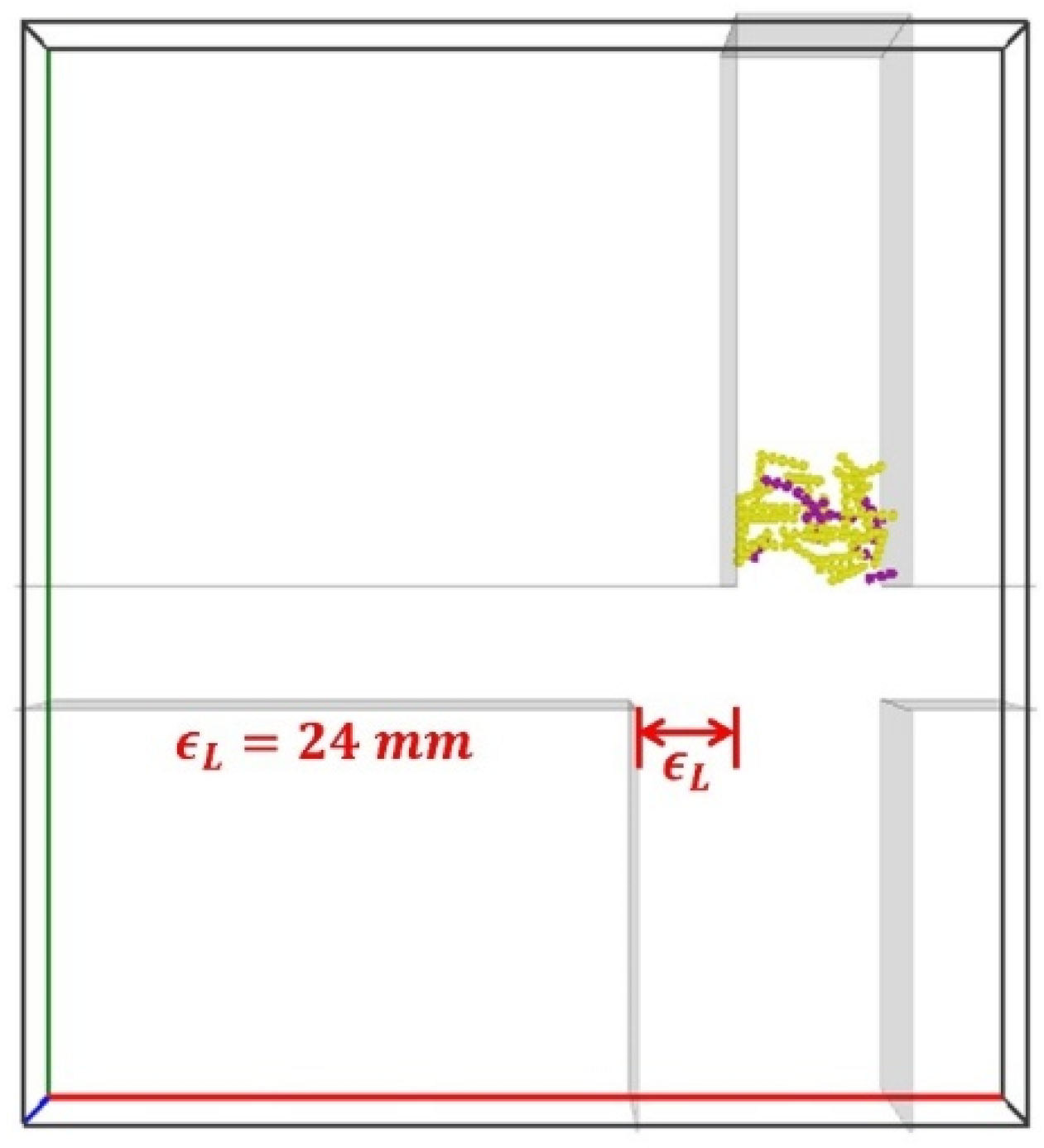
- Flow field geometry affects air–particle interactions and separation performance. Increasing the trailing side staggered distance reduces tobacco recovery, while increasing the leading side staggered distance improves tobacco purity but reduces recovery. Optimal performance is achieved at and .
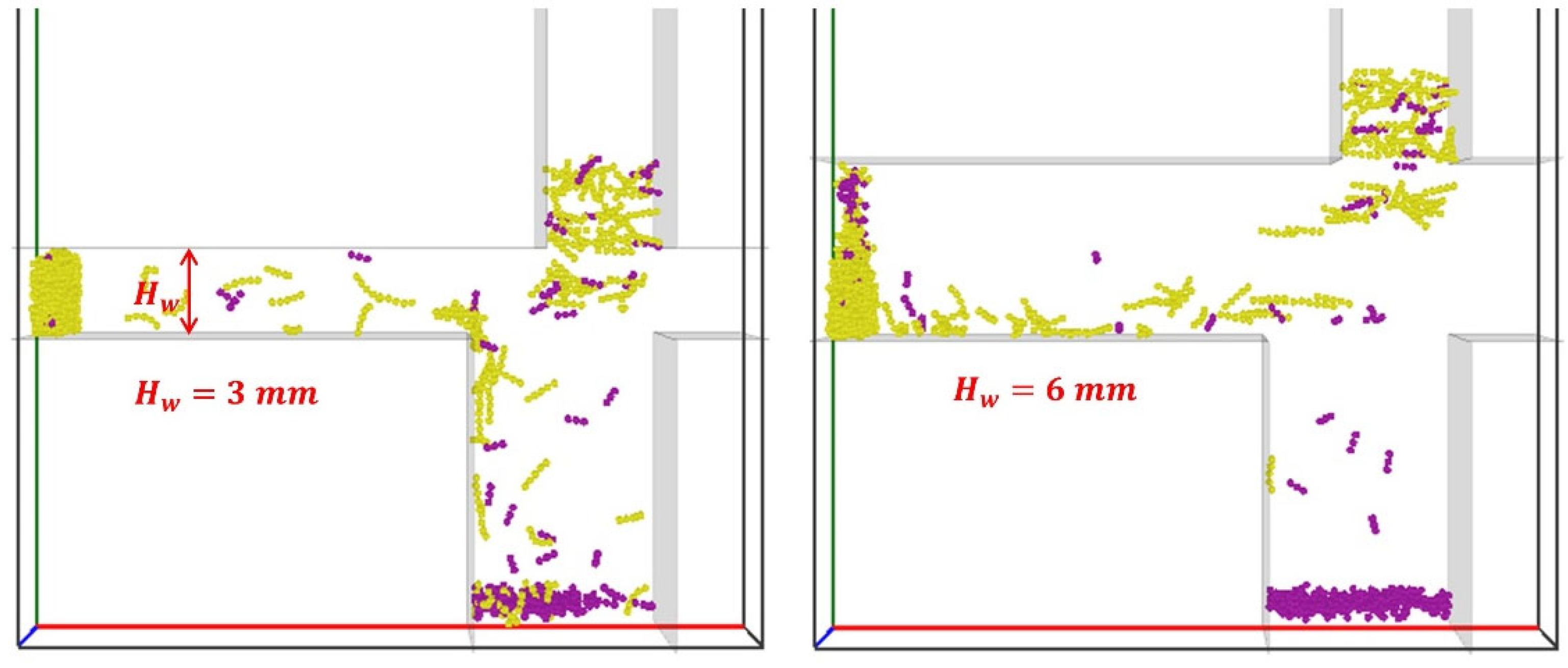
- Increasing horizontal channel width enhances airflow flux in the segregation region and significantly reduces tobacco loss to the stem collector, with only a slight increase in stem contamination. However, yields a higher F1 score, indicating this configuration is favorable for enhancing overall separation efficiency.
Author Contributions
Funding
Data Availability Statement
Acknowledgments
Conflicts of Interest
References
- He, S.Y.; Gan, J.Q.; Pinson, D.; Yu, A.B.; Zhou, Z.Y. Particle shape-induced axial segregation of binary mixtures of spheres and ellipsoids in a rotating drum. Chem. Eng. Sci. 2021, 235, 116491. [Google Scholar] [CrossRef] [Scilit]
- Kumar, S.; Khatoon, S.; Parashar, S.; Dubey, P.; Yogi, J.; Anand, A. Effect of aspect ratio of ellipsoidal particles on segregation of a binary mixture in a rotating drum. Powder Technol. 2023, 427, 118682. [Google Scholar] [CrossRef] [Scilit]
- Formisani, B.; Girimonte, R.; Longo, T. The fluidization pattern of density-segregating binary mixtures. Chem. Eng. Res. Des. 2008, 86, 344–348. [Google Scholar] [CrossRef] [Scilit]
- Sahu, V.K.; Kumawat, S.; Agrawal, S.; Tripathi, A. Particle force-based density segregation theory for multi-component granular mixtures in a periodic chute flow. J. Fluid Mech. 2023, 956, A8. [Google Scholar] [CrossRef] [Scilit]
- Hildebrandt, C.; Gopireddy, S.R.; Scherließ, R.; Urbanetz, N.A. Simulation of particle size segregation in a pharmaceutical tablet press lab-scale gravity feeder. Adv. Powder Technol. 2018, 29, 765–780. [Google Scholar] [CrossRef] [Scilit]
- Zhao, L.-L.; Duan, C.-L.; Jiang, H.-S.; Li, H.-X.; Zhao, Y.-M.; Zheng, Q.-J. DEM simulation of size segregation of binary mixtures of cohesive particles under a horizontal swirling vibration. Powder Technol. 2022, 404, 117456. [Google Scholar] [CrossRef] [Scilit]
- Brito, R.; Enríquez, H.; Godoy, S.; Soto, R. Segregation induced by inelasticity in a vibrofluidized granular mixture. Phys. Rev. E 2008, 77, 061301. [Google Scholar] [CrossRef] [Scilit]
- Brito, R.; Soto, R. Competition of Brazil nut effect, buoyancy, and inelasticity induced segregation in a granular mixture. Eur. Phys. J. Spec. Top. 2009, 179, 207–219. [Google Scholar] [CrossRef] [Scilit]
- Džiugys, A.; Navakas, R. The role of friction in mixing and segregation of granular material. Granul. Matter 2009, 11, 403. [Google Scholar] [CrossRef] [Scilit]
- Plantard, G.; Saadaoui, H.; Snabre, P.; Pouligny, B. Surface-roughness–driven segregation in a granular slurry under shear. Europhys. Lett. 2006, 75, 335–341. [Google Scholar] [CrossRef] [Scilit]
- Alade, J.; Bada, S.O.; Schmitz, W. Computer-Aided Design and Fabrication of a Dry Wind-Sifter Separator. ACS Omega 2021, 6, 20309–20320. [Google Scholar] [CrossRef] [Scilit]
- Kaas, A.; Mütze, T.; Peuker, U.A. Review on Zigzag Air Classifier. Processes 2022, 10, 764. [Google Scholar] [CrossRef] [Scilit]
- Shapiro, M.; Galperin, V. Air classification of solid particles: A review. Chem. Eng. Process. Process Intensif. 2005, 44, 279–285. [Google Scholar] [CrossRef] [Scilit]
- Roloff, C.; Lukas, E.; van Wachem, B.; Thévenin, D. Particle dynamics investigation by means of shadow imaging inside an air separator. Chem. Eng. Sci. 2019, 195, 312–324. [Google Scholar] [CrossRef] [Scilit]
- Hagemeier, T.; Glöckner, H.; Roloff, C.; Thévenin, D.; Tomas, J. Simulation of Multi-Stage Particle Classification in a Zigzag Apparatus. Chem. Eng. Technol. 2014, 37, 879–887. [Google Scholar] [CrossRef] [Scilit]
- Zhao, L.; Chen, L.; Yuan, F.; Wang, L. Simulation Study of Rice Cleaning Based on DEM-CFD Coupling Method. Processes 2022, 10, 281. [Google Scholar] [CrossRef] [Scilit]
- Yuan, J.; Wu, C.; Li, H.; Qi, X.; Xiao, X.; Shi, X. Movement rules and screening characteristics of rice-threshed mixture separation through a cylinder sieve. Comput. Electron. Agric. 2018, 154, 320–329. [Google Scholar] [CrossRef] [Scilit]
- Ma, X.; Zhao, L.; Guo, B.; Dang, H. Simulation and experiment of rice cleaning in air-separation device based on DEM-CFD coupling method. Int. J. Agric. Biol. Eng. 2020, 13, 226–233. [Google Scholar] [CrossRef] [Scilit]
- Dai, F.; Song, X.; Guo, W.; Zhao, W.; Zhang, F.; Zhang, S. Simulation and test on separating cleaning process of flax threshing material based on gas-solid coupling theory. Int. J. Agric. Biol. Eng. 2020, 13, 73–81. [Google Scholar] [CrossRef] [Scilit]
- Ali, A.; Shen, K.; Pan, Z.; Wang, S.Y.; Lin, J.Z.; Guo, Y. Air-induced segregation of flexible rod-like particles in a winnower. Powder Technol. 2025, 465, 121344. [Google Scholar] [CrossRef] [Scilit]
- He, D.; Baosheng, Z.; Xuedong, M.; Rongbiao, H.; Zhengxi, Z.; Weiqi, C. Simulating research on cyclone grain cleaning device based on CFD-DEM coupling. J. Chin. Agric. Mech. 2020, 41, 86–91. [Google Scholar]
- Wang, P.; Han, J.W.; Wang, S.Y.; Guo, Y. Mechanical Behavior of Flexible Fiber Assemblies: Review and Future Perspectives. Materials 2024, 17, 6042. [Google Scholar] [CrossRef] [Scilit] [PubMed]
- Zhou, L.; Elemam, M.A.; Agarwal, R.K.; Shi, W. Discrete Element Method for Multiphase Flows with Biogenic Particles; Springer: Berlin/Heidelberg, Germany, 2024. [Google Scholar]
- Jiang, Y.Y.; Guo, Y.; Yu, Z.S.; Hua, X.; Lin, J.Z.; Wassgren, C.R.; Curtis, J.S. Discrete element method-computational fluid dynamics analyses of flexible fibre fluidization. J. Fluid Mech. 2021, 910, A8. [Google Scholar] [CrossRef] [Scilit]
- Zhong, L.X.; Xu, D.D.; Jiang, Y.Y.; Guo, Y. A numerical study on gas-fluidized beds of wet flexible fibers. Powder Technol. 2022, 399, 117094. [Google Scholar] [CrossRef] [Scilit]
- Xu, D.D.; Wang, B.; Yu, Z.S.; Guo, Y. Clustering in gas-fluidized riser flows of flexible fibers. Aiche J. 2023, 69, e18024. [Google Scholar] [CrossRef] [Scilit]
- Wang, S.; Shen, K.; Xiong, H.; Lin, J.; Guo, Y. A numerical investigation on segregation in gas-fluidized beds of short, flexible fibers. Adv. Powder Technol. 2024, 35, 104304. [Google Scholar] [CrossRef] [Scilit]
- Potyondy, D.O.; Cundall, P.A. A bonded-particle model for rock. Int. J. Rock Mech. Min. Sci. 2004, 41, 1329–1364. [Google Scholar] [CrossRef] [Scilit]
- Hertz, H. Ueber die Berührung fester elastischer Körper. J. Die Reine Angew. Math. 1882, 1882, 156–171. [Google Scholar] [CrossRef] [Scilit]
- Mindlin, R.D.; Deresiewicz, H. Elastic Spheres in Contact Under Varying Oblique Forces. J. Appl. Mech. 1953, 20, 327–344. [Google Scholar] [CrossRef] [Scilit]
- Thornton, C.; Yin, K.K. Impact of elastic spheres with and without adhesion. Powder Technol. 1991, 65, 153–166. [Google Scholar] [CrossRef] [Scilit]
- Kafui, K.D.; Thornton, C.; Adams, M.J. Discrete particle-continuum fluid modelling of gas–solid fluidised beds. Chem. Eng. Sci. 2002, 57, 2395–2410. [Google Scholar] [CrossRef] [Scilit]
- Anderson, T.B.; Jackson, R. Fluid Mechanical Description of Fluidized Beds. Equations of Motion. Ind. Eng. Chem. Fund. 1967, 6, 527–539. [Google Scholar] [CrossRef] [Scilit]
- Di Felice, R. The voidage function for fluid-particle interaction systems. Int. J. Multiph. Flow 1994, 20, 153–159. [Google Scholar] [CrossRef] [Scilit]
- Guo, Y.; Wassgren, C.; Hancock, B.; Ketterhagen, W.; Curtis, J. Validation and time step determination of discrete element modeling of flexible fibers. Powder Technol. 2013, 249, 386–395. [Google Scholar] [CrossRef] [Scilit]
- Han, J.; Shen, K.; Guo, Y.; Xiong, H.; Lin, J. Discrete element simulations of flexible ribbon-like particles. Powder Technol. 2023, 429, 118950. [Google Scholar] [CrossRef] [Scilit]









| Air Parameters | Values |
|---|---|
| 1.204 | |
| Initial air pressure (Pa) | 101,325.0 |
| Temperature (K) | 293.0 |
| Bulk viscosity (Pa.s) | 0.0 |
| Shear viscosity (Pa.s) | |
| (m/s) | 2.0–6.0 |
| (m/s) | 1.0–3.7 |
| Fluid cell size (mm) | 6 |
| Number of fluid cells | 7380 |
| Properties | Tobacco Particle | Stem Particle |
|---|---|---|
| Length (mm) | 5.4 (AR = 2), 13.5 (AR = 5), and 21.6 (AR = 8), | 8.1 |
| Diameter (mm) | 2.7 | 2.7 |
| Particle aspect ratio, AR | 2, 5, and 8 | 3 |
| 264 | 639.8 | |
| Poisson’s ratio, ζ (−) | 0.2 | 0.2 |
| Elastic modulus for fiber-fiber contact, Ec (Pa) | 1.0 × 10¹⁰ | 1.0 × 10¹⁰ |
| (Pa) | 1.0 × 10¹⁰ | 1.0 × 10¹⁰ |
| Elastic modulus for bond bending, Eb (Pa) | 4.4 × 10³ | 5.0 × 10⁸ |
| Shear modulus for bond shearing and twisting, Gb (Pa) | 1.83 × 10³ | 2.08 × 10⁸ |
| Contact damping coefficient, βc (−) | 1.63 × 10⁻² | 1.63 × 10⁻² |
| Bond damping coefficient, βb (−) | 3.35 × 10⁻² | 3.35 × 10⁻² |
| (−) | 0.45 | 0.45 |
| (−) | 0.59 | 0.59 |
| Volume fraction of stem particles in the mixture (−) | ||
| Initial packing density of particle mixture (−) | ||
| Parameter | Optimal Value | Purity (%) | Recovery (%) | F1 Score (%) |
|---|---|---|---|---|
| 6.0 m/s | 83.2 | 84.2 | 83.7 | |
| 3.5 m/s | 84.5 | 80.9 | 82.7 | |
| 4% | 92.1 | 79.2 | 85.2 | |
| 8.5% | 91.2 | 83.6 | 87.2 | |
| 0 mm | 84.5 | 82.5 | 83.5 | |
| 24 mm | 84.5 | 82.5 | 83.5 |
Disclaimer/Publisher’s Note: The statements, opinions and data contained in all publications are solely those of the individual author(s) and contributor(s) and not of MDPI and/or the editor(s). MDPI and/or the editor(s) disclaim responsibility for any injury to people or property resulting from any ideas, methods, instructions or products referred to in the content. |
© 2026 by the authors. Licensee MDPI, Basel, Switzerland. This article is an open access article distributed under the terms and conditions of the Creative Commons Attribution (CC BY) license.
Share and Cite
Ali, A.; Shi, G.; Guo, Y. Separation of Flexible Rod-like Particle Mixtures by Intersecting Air Flow. Materials 2026, 19, 908. https://doi.org/10.3390/ma19050908
Ali A, Shi G, Guo Y. Separation of Flexible Rod-like Particle Mixtures by Intersecting Air Flow. Materials. 2026; 19(5):908. https://doi.org/10.3390/ma19050908
Chicago/Turabian StyleAli, Ashiq, Gaoyan Shi, and Yu Guo. 2026. "Separation of Flexible Rod-like Particle Mixtures by Intersecting Air Flow" Materials 19, no. 5: 908. https://doi.org/10.3390/ma19050908
APA StyleAli, A., Shi, G., & Guo, Y. (2026). Separation of Flexible Rod-like Particle Mixtures by Intersecting Air Flow. Materials, 19(5), 908. https://doi.org/10.3390/ma19050908