Study on the Properties of Multi-Layer Cumulative Rolling-Prepared High-Chromium Cast Iron Powder/Low-Carbon Steel Composites


Highlights
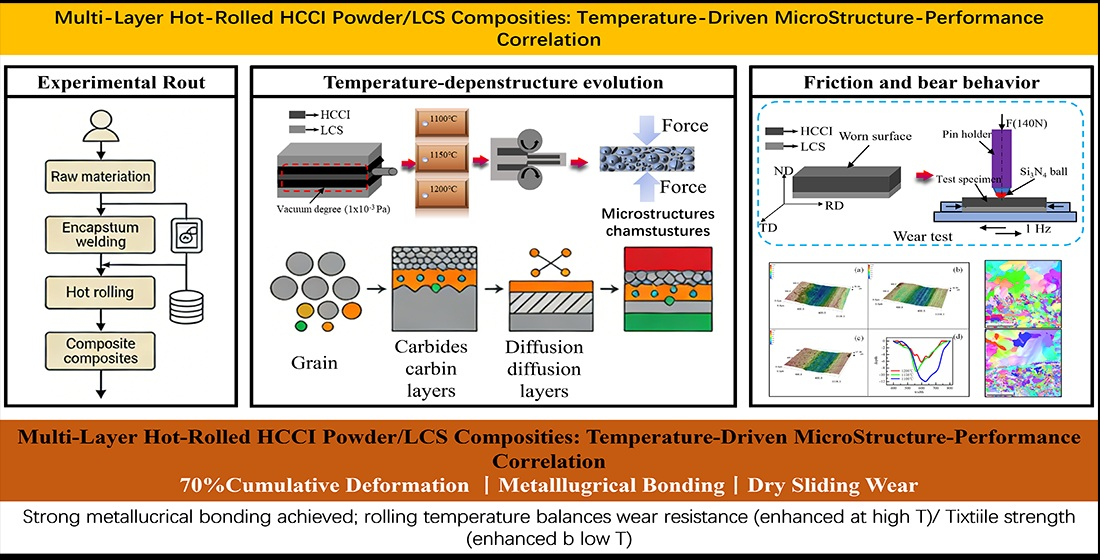
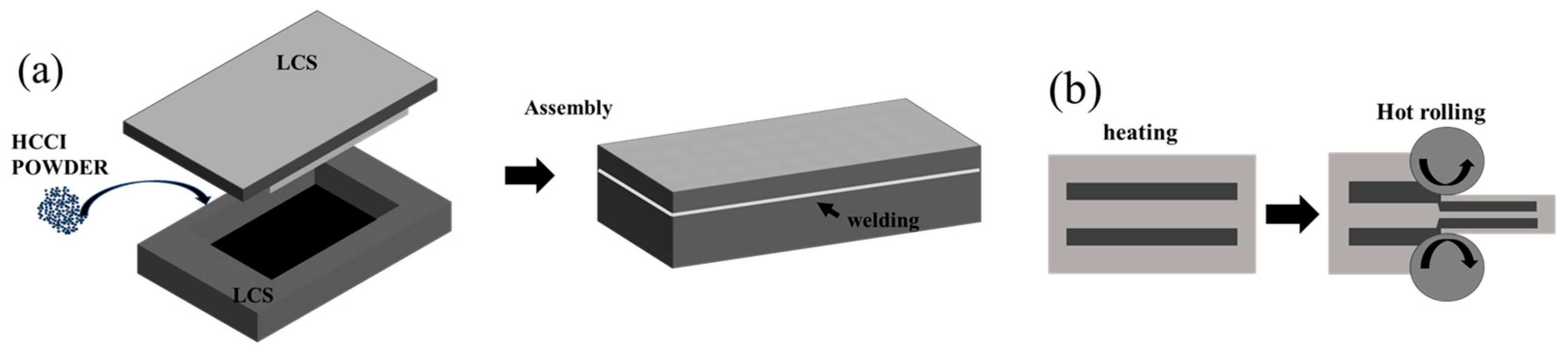
- Multi-pass hot rolling (with a total thickness reduction of 70%) was successfully employed to fabricate high-chromium cast iron (HCCI) powder/low-carbon steel multilayer composites.
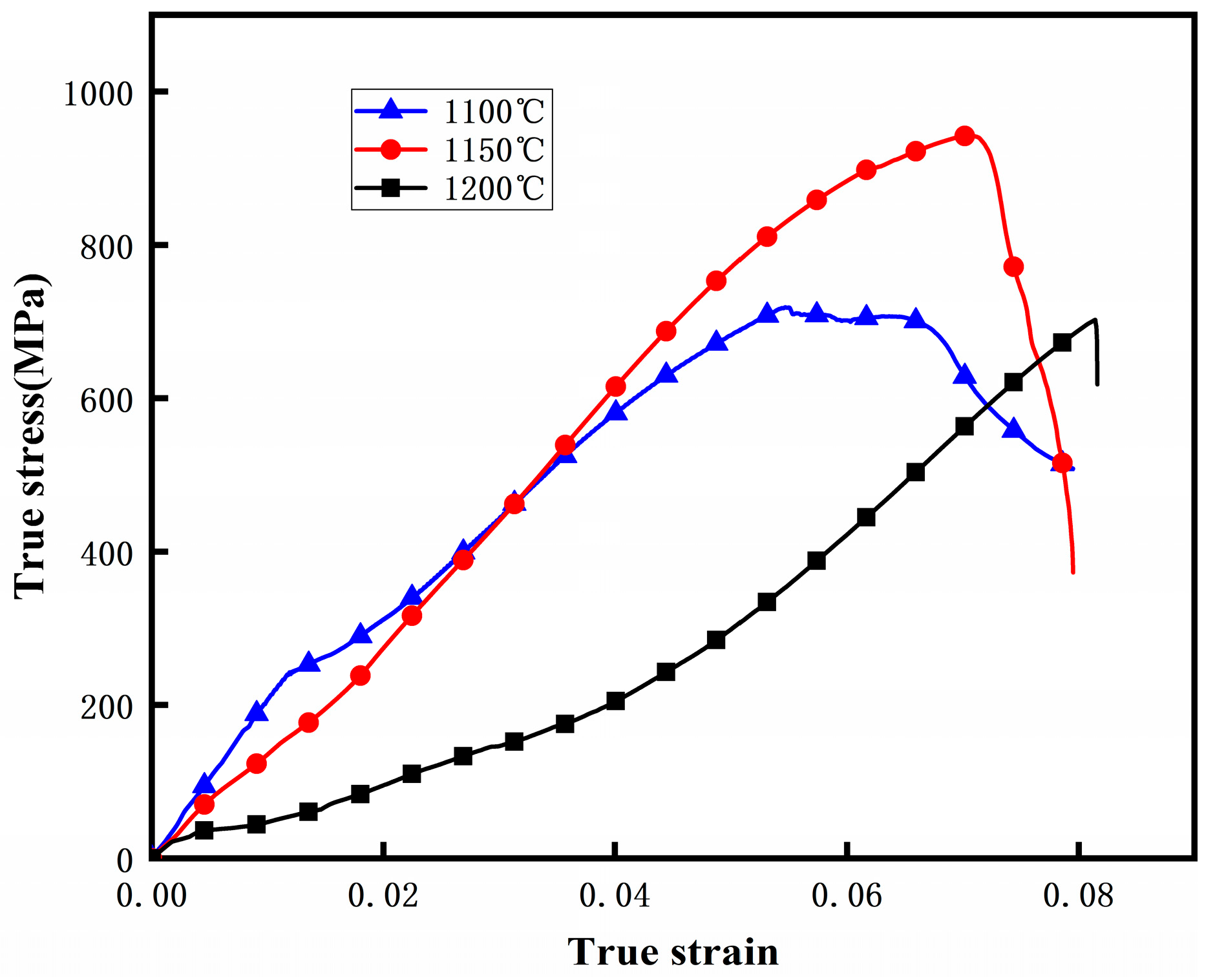
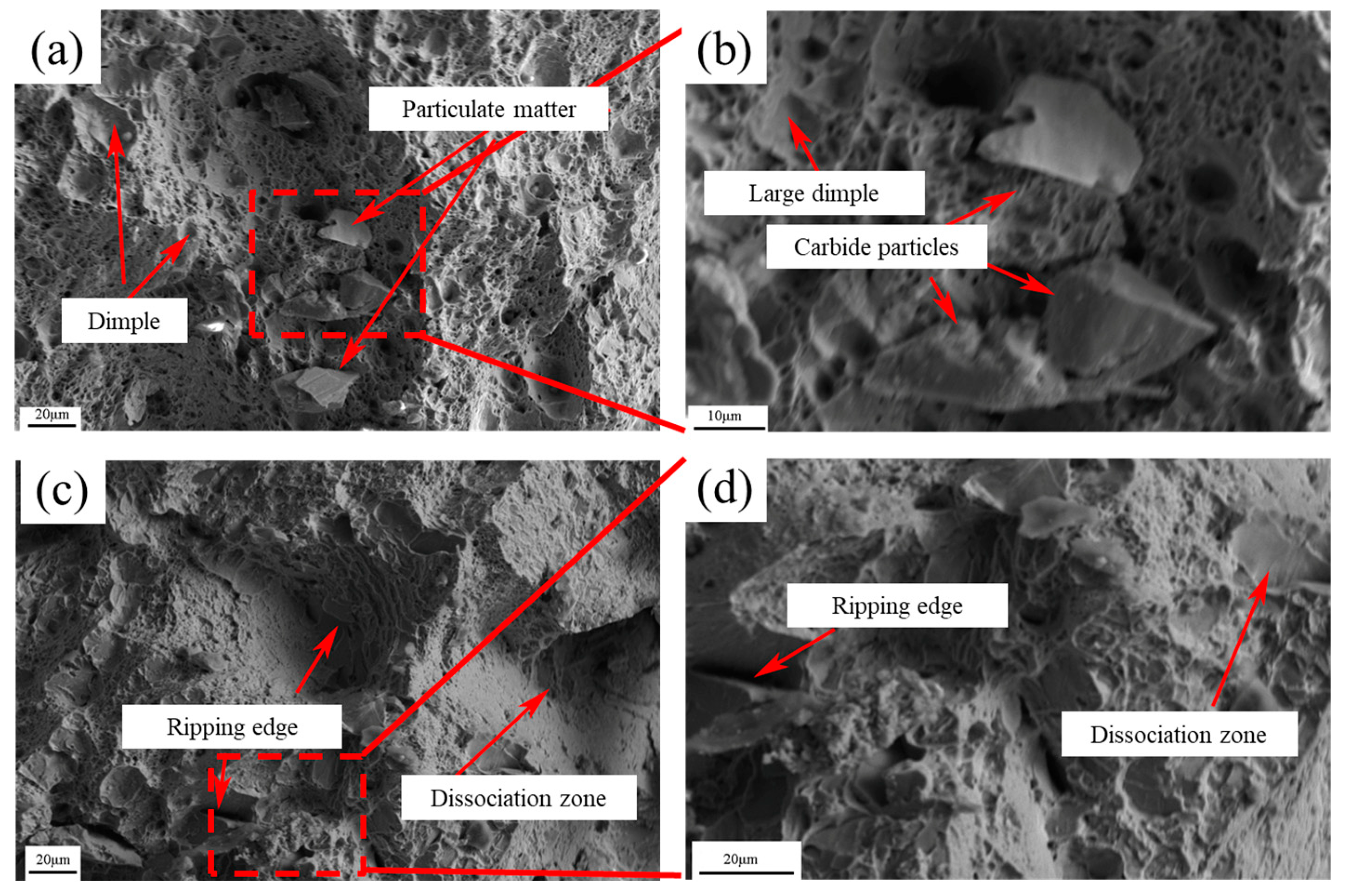
- The tensile strength exhibited a non-monotonic variation with temperature, peaking at approximately 810 MPa at 1150 °C. The composite showed very limited macroscopic plasticity and underwent brittle fracture, with cracks initiating in the HCCI layer.
- A rolling temperature of 1150 °C was identified as optimal, offering the best combination of mechanical properties and interfacial bonding.
- This work provides benchmark parameters for the development of similar bimetallic wear-resistant composites.
- The study demonstrates a low-cost and feasible route for producing wear-resistant composites via hot rolling of coarse powder.
- It also offers a valuable research paradigm for the study of other powder metallurgy-based laminated composites.
Abstract
1. Introduction
2. Materials and Methods
2.1. Material Preparation
2.2. Mechanical and Tribological Properties Testing
2.3. Microstructural Observation
3. Results and Conclusions
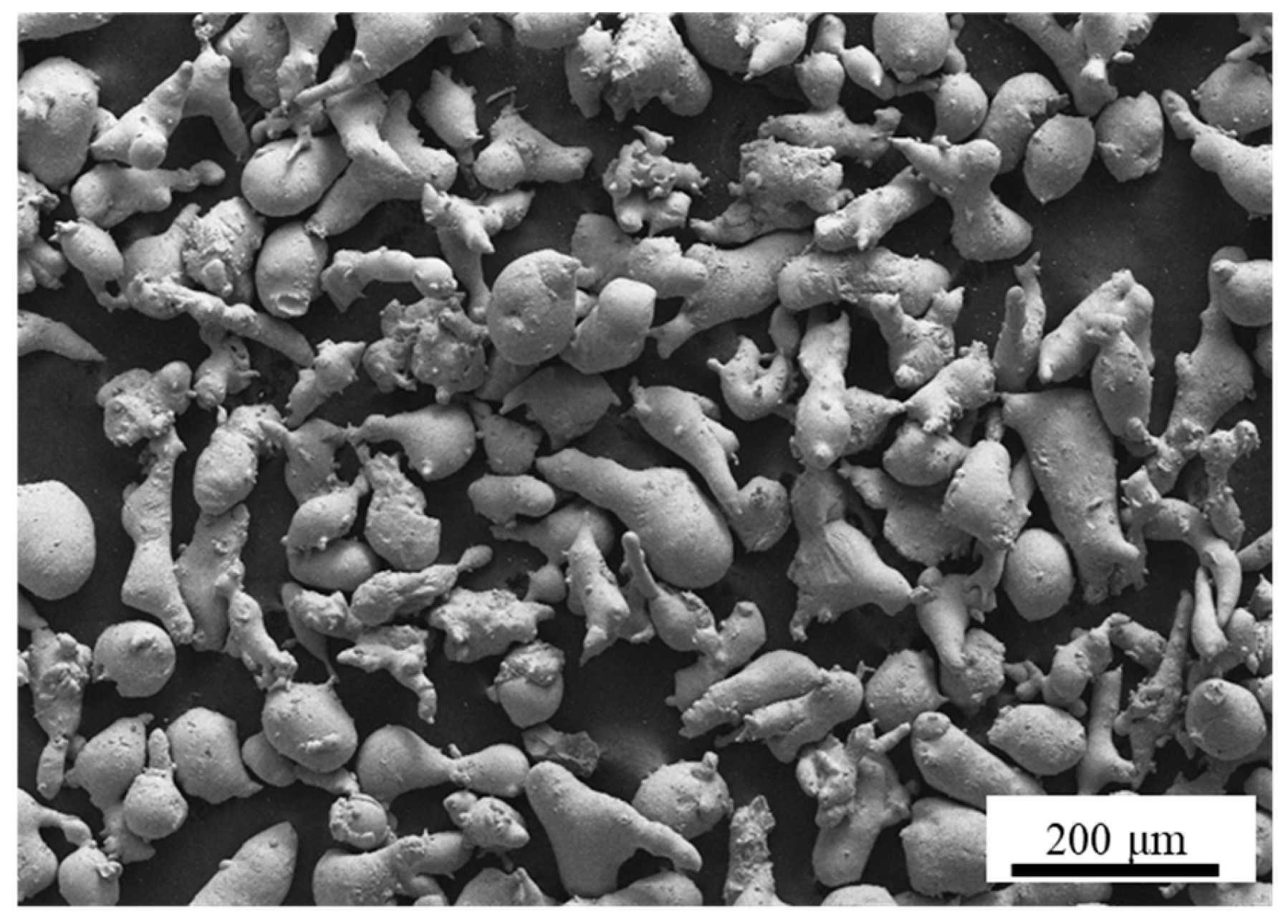
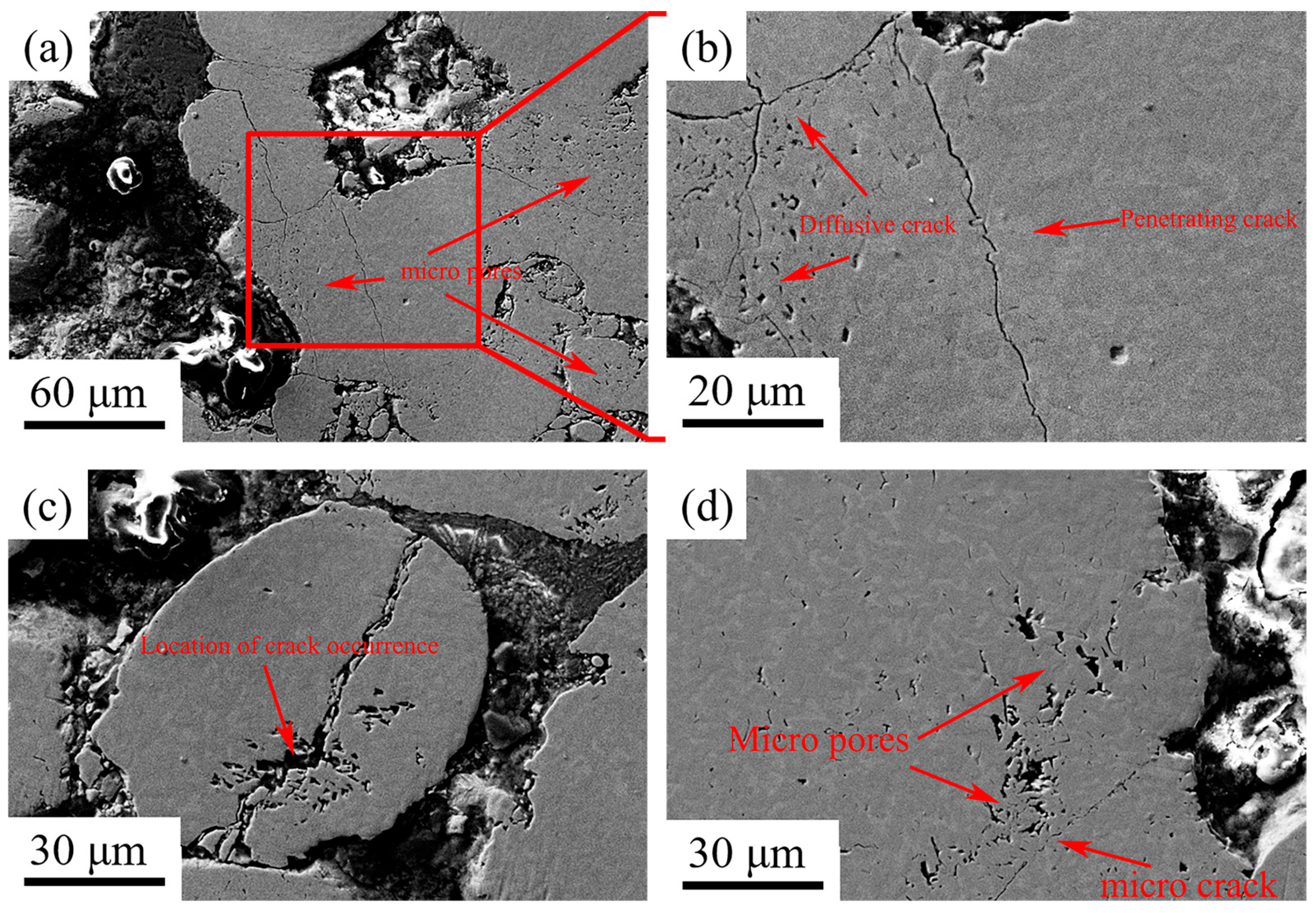
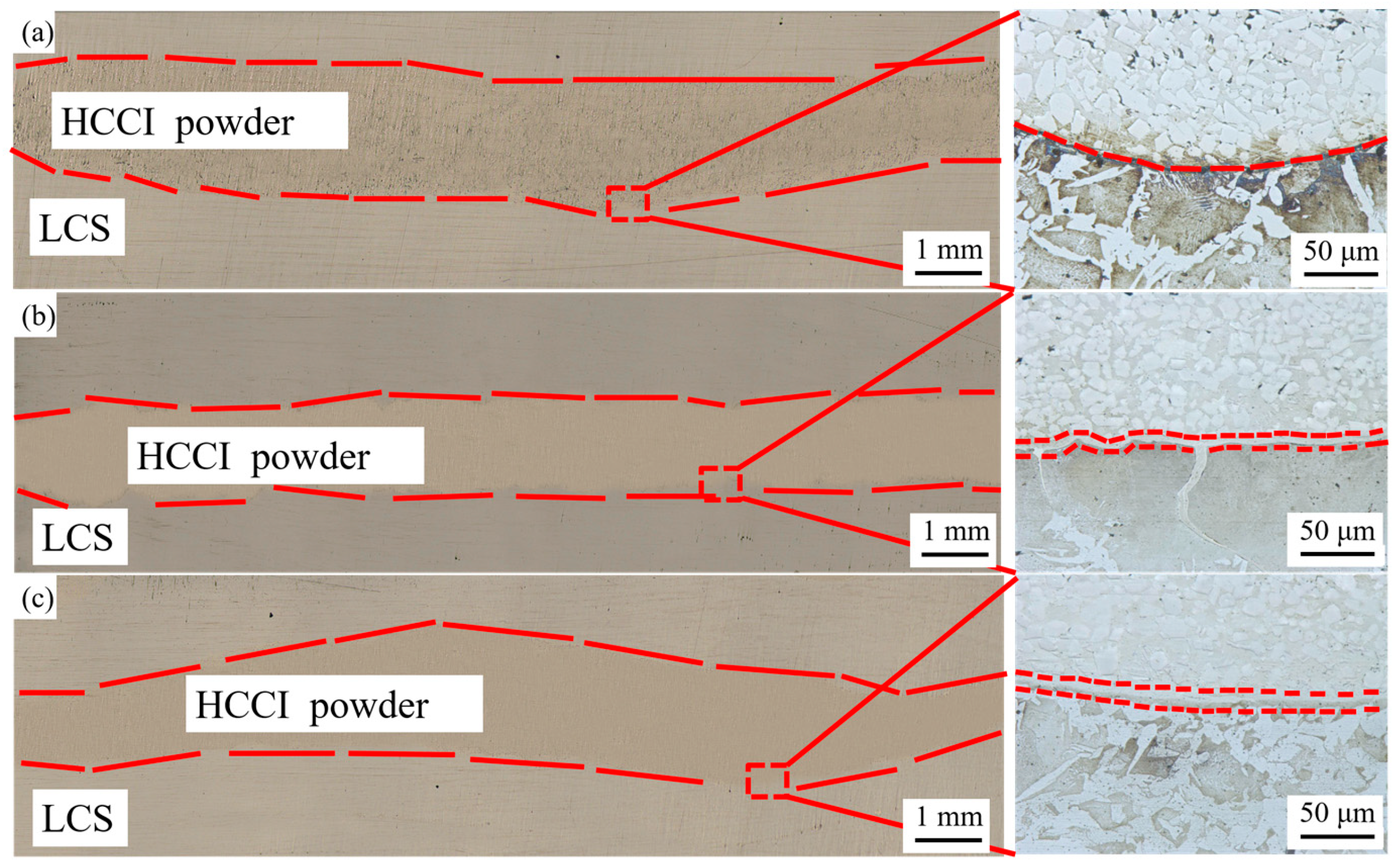
3.1. Deformation of High-Chromium Cast Iron Powder Inside the Sleeve
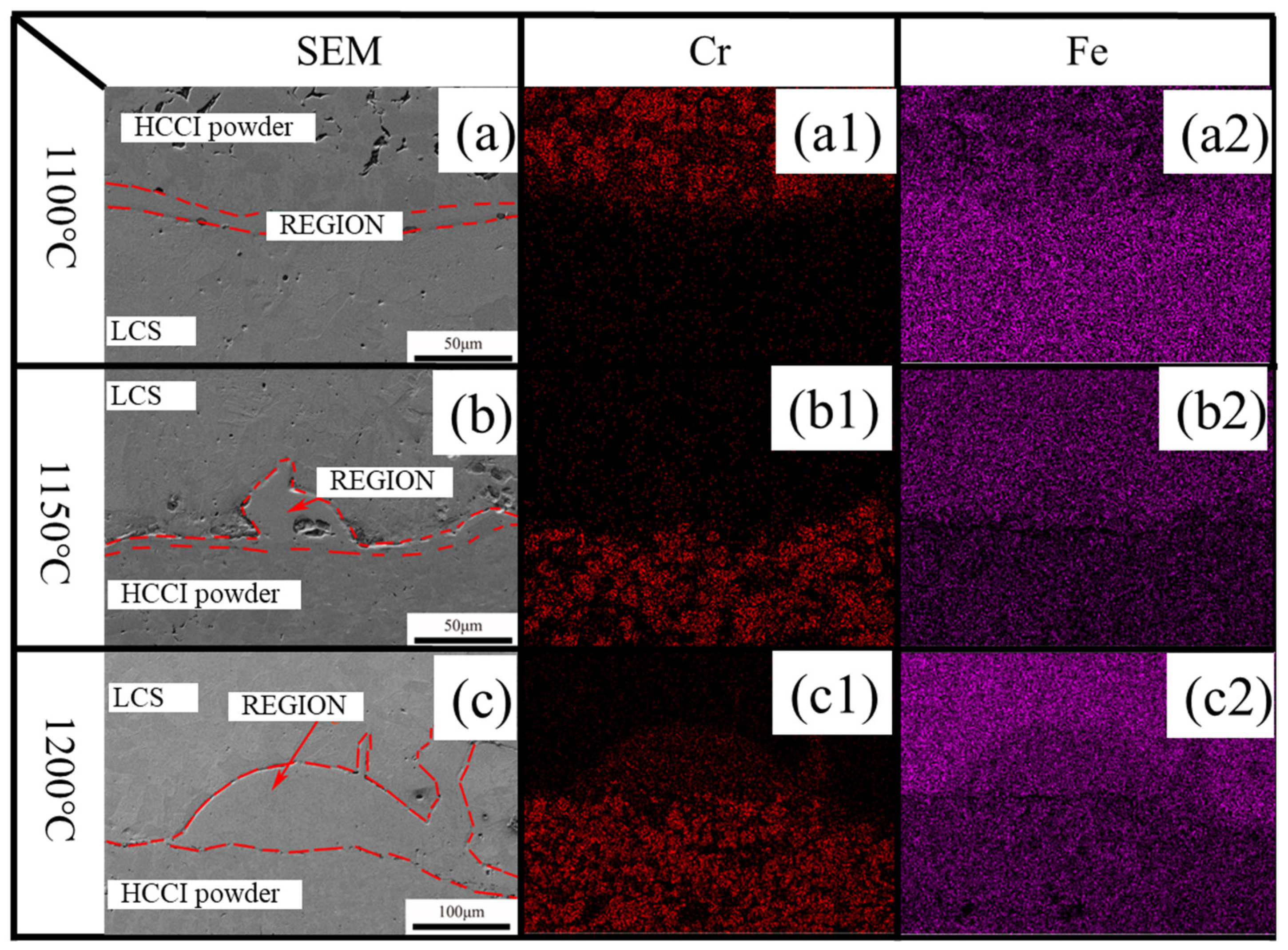
3.2. Diffusion Behavior at Interface Elements
3.3. Research and Analysis of Friction and Wear Properties
3.4. Study on Mechanical Properties
4. Conclusions
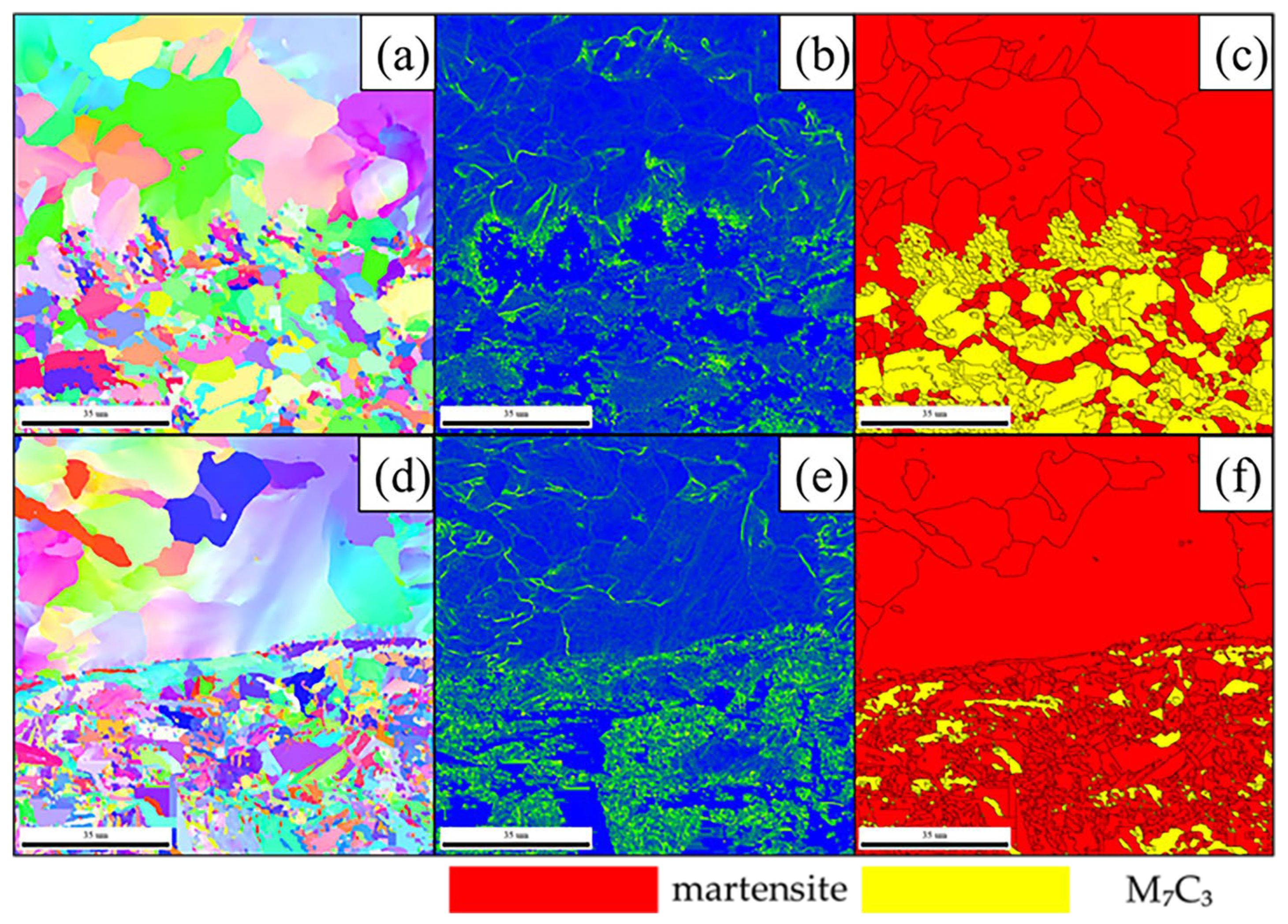
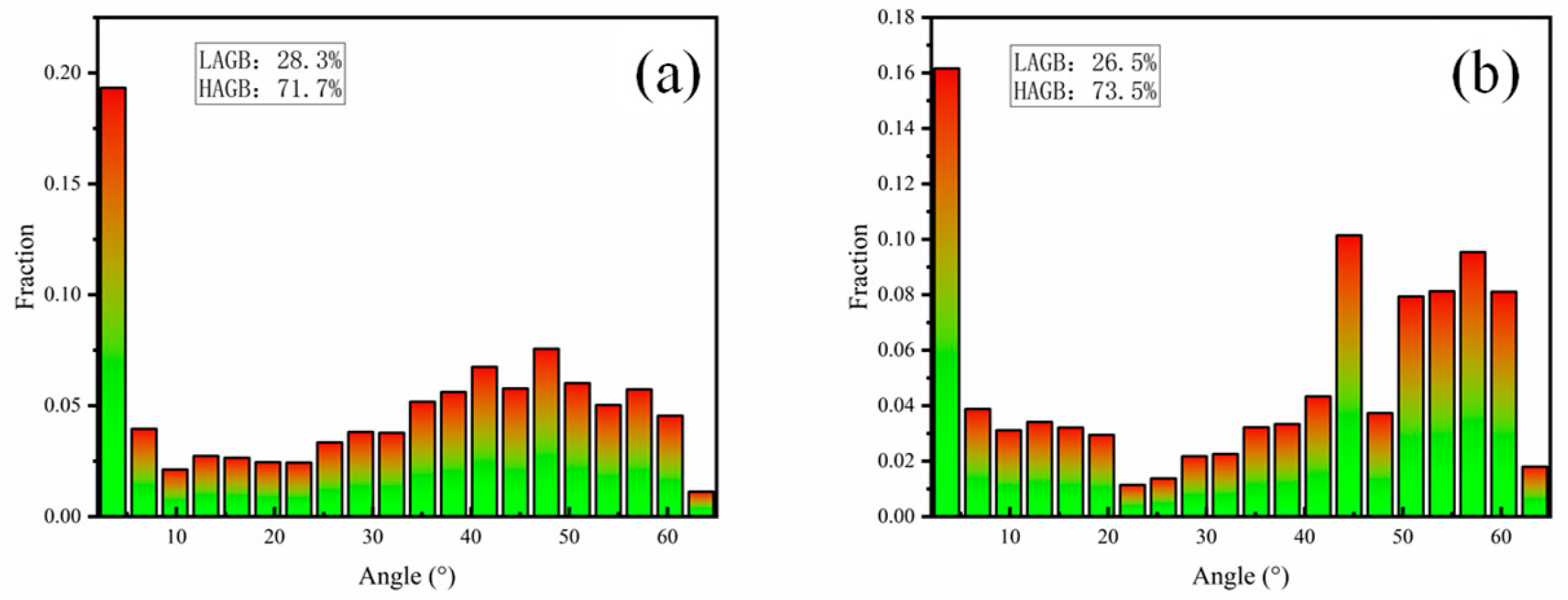
- Hot rolling at 1150 °C and 1200 °C produced dense, defect-free interfaces with continuous compositional gradients, confirming atomic-scale bonding between the HCCI powder and the LCS matrix. Nevertheless, the brittle nature of the HCCI layer prevented direct measurement of the interfacial bond strength via tensile testing. The observed fracture mode—crack initiation in HCCI followed by propagation across the interface—indirectly indicates that the interface is not the weakest link in the composite. Elemental interdiffusion, particularly of chromium, occurred across the interface to a depth of approximately 8–10 µm. Following rolling, the HCCI regions retained high levels of stored strain energy and dislocation density.
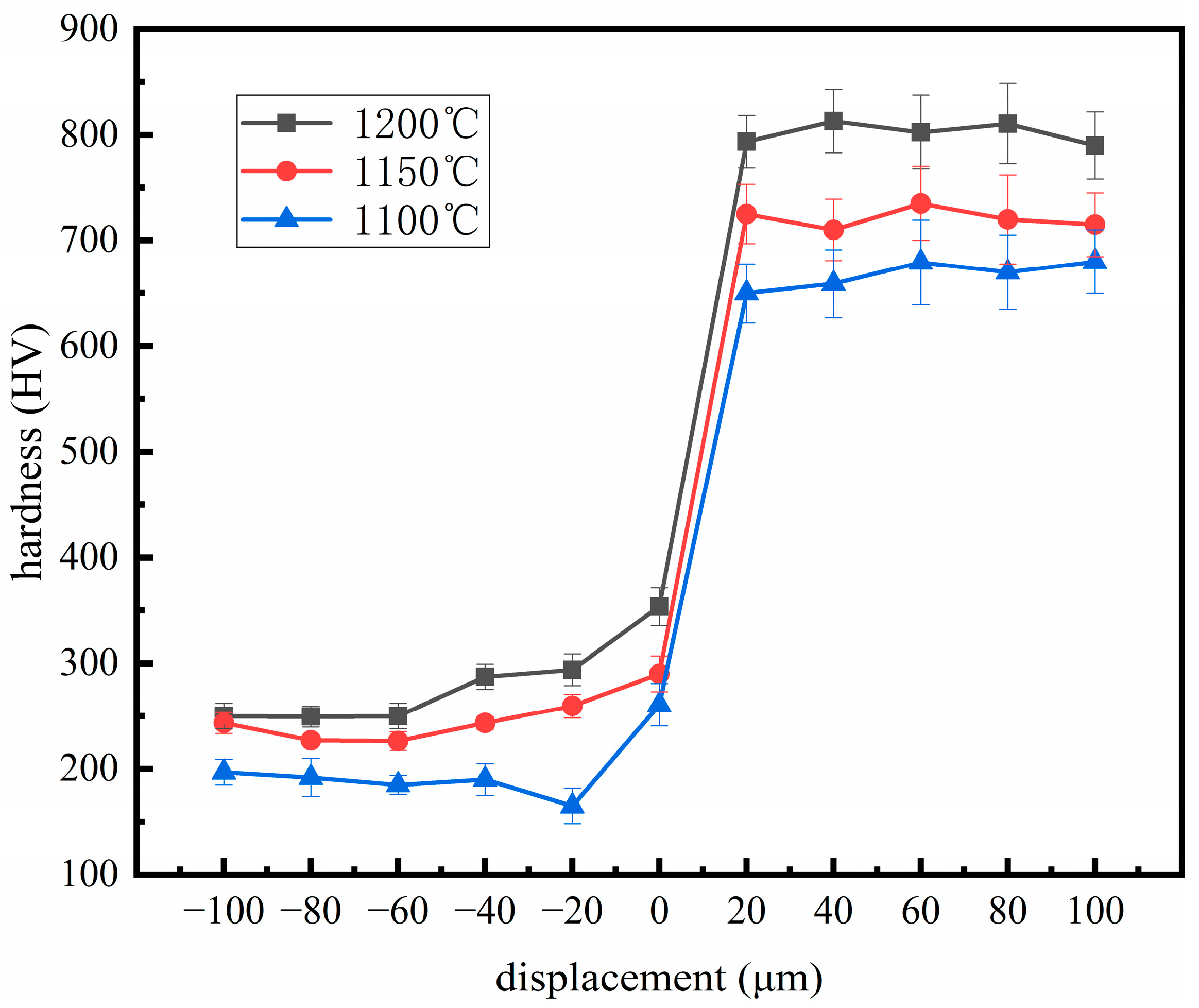
- The material exhibited a distinct hardness gradient, decreasing progressively from the high-chromium cast iron side (hardness > 800 HV) to the low-carbon steel side (hardness ~185.4 HV). The peak hardness was attained after rolling at 1200 °C, primarily due to the retention of the highest fraction of undissolved carbides. The effect of rolling temperature on tensile strength is non-monotonic. The highest strength achieved at 1150 °C results from improved interfacial metallurgy and deformation coordination. Beyond this temperature, strength decreases, possibly due to microstructural over-aging or interface embrittlement.
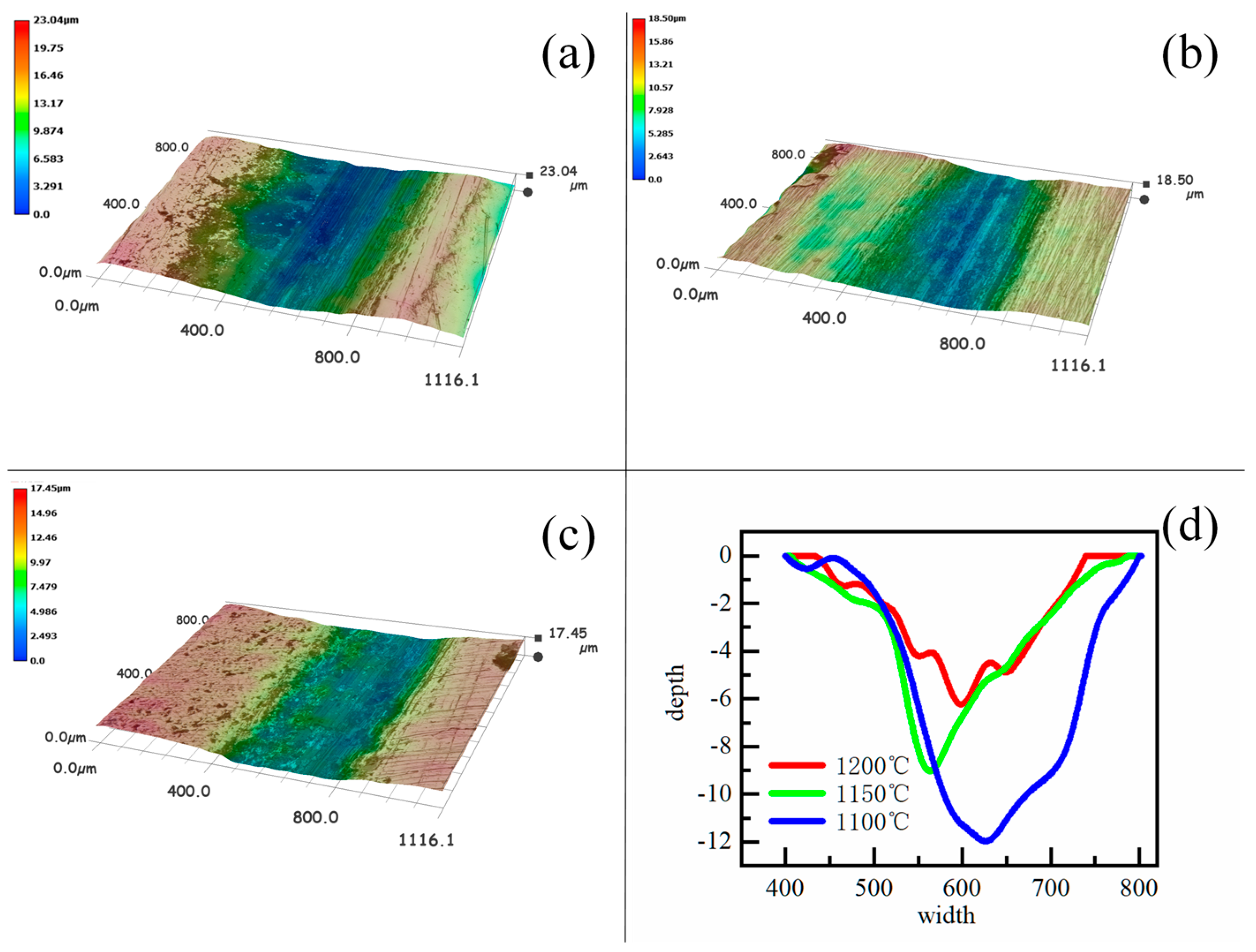
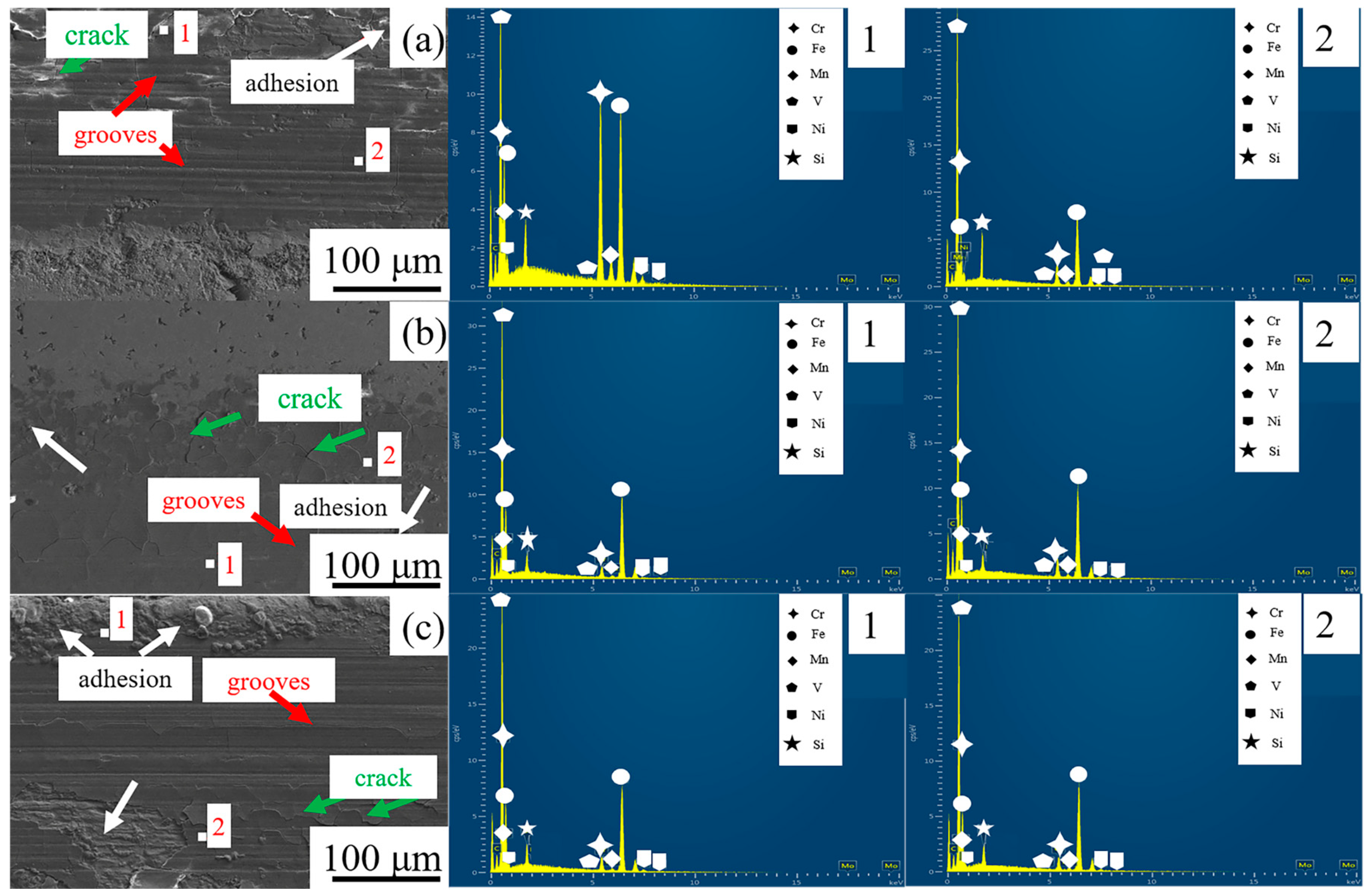
- Dry sliding wear tests indicated that abrasive wear was the dominant failure mechanism. The relatively low content of retained austenite, combined with the intrinsic brittleness of the carbides, promoted carbide spalling, thereby exacerbating wear damage.
- Based on a comprehensive evaluation of interfacial quality, mechanical performance, and microstructural homogeneity:
- 1150 °C is identified as the optimal rolling temperature for achieving the best combination of interfacial bonding, tensile strength, and hardness. This temperature provides sufficient atomic mobility for diffusion bonding while avoiding excessive carbide coarsening or interfacial degradation.
- 1200 °C is suitable when maximum hardness and interfacial diffusion are prioritized, but the trade-off in tensile strength should be considered.
- 1100 °C is less preferable for structural applications requiring high strength, as the interfacial bonding and densification are incomplete at this temperature.
Author Contributions
Funding
Data Availability Statement
Conflicts of Interest
Abbreviations
| HCCI | high-chromium cast iron |
| LCS | low-carbon steel |
References
- Xiao, X.F.; Zhou, X.G.; Ye, S.P.; Yin, W.X.; Zhou, X.G.; Xue, Q. High chromium cast iron/carbon steel liquid composite liner by lost foam casting with liquid-liquid composite process. Foundry 2011, 60, 632634. [Google Scholar]
- Qin, J.S.; He, B.L. Plane casting technology for high chromiumcast/carbon steel composite plate. Hot Working Technol. 2004, 33–34. [Google Scholar]
- Li, S.; Cheng, X.; Zhang, J.; Fu, H. Research progress in improving wear resistance of high chromium cast iron by alloying. China Foundry Equip. Technol. 2024, 59, 11–19. [Google Scholar]
- Kexing, G. Research Progress on wear resistance of high chromium cast iron. Heat Treat. 2023, 38, 1–5. [Google Scholar]
- Gucai, X.; Liang, J.; Feng, X.; Lu, B. Application of high chromium cast iron. J. Shanghai Marit. Univ. 2001, 4, 57–62. [Google Scholar]
- Jaramillo, R.; Zambrano, D.F.; Valenzuela, P.; Rosenkranz, A. Tribological Performance of High-Chromium Cast Irons: Effect of Chromium Content, Amount of Chromium Carbides (M7C3) and Loading Conditions on Wear Resistance. Tribol. Lett. 2025, 73, 103. [Google Scholar] [CrossRef]
- Oh, H.; Lee, S.; Jung, J.; Ahn, S. Correlation of microstructure with the wear resistance and fracture toughness of duocast materials composed of high-chromium white cast iron and low-chromium steel. Metall. Mater. Trans. A 2001, 32, 515. [Google Scholar] [CrossRef]
- Kim, C.K.; Lee, S.; Jung, J.Y. Effects of heat treatment on wear resistance and fracture toughness of duo-cast materials composed of high-chromium white cast iron and low-chromium steel. Metall. Mater. Trans. A 2006, 37, 633–643. [Google Scholar] [CrossRef]
- Sallam, H.E.M.; EI-Aziz, K.A.; EI-Raouf, H.A.; Elabanna, E.M. Failure analysis and flexural behavior of high chromium white cast iron and AISI4140 Steel bimetal beams. Mater. Des. 2013, 52, 974–980. [Google Scholar] [CrossRef]
- Xiao, X.F.; Ye, S.P.; Yin, W.X.; Xue, Q. HWCI/carbon steel bimetal liner by liquid–liquid compound lost foam casting. J. Iron Steel Res. Int. 2012, 19, 13–19. [Google Scholar] [CrossRef]
- Xiong, B.W.; Cai, C.C.; Wan, H.; Lu, B.P. Fabrication of high chromium cast iron and medium carbon steel bimetal by liquid–solid casting in electromagnetic induction field. Mater. Des. 2011, 32, 2978–2982. [Google Scholar] [CrossRef]
- Jilleh, A.; Babu, N.K.; Thota, V.; Anis, A.L.; Harun, M.K.; Talari, M.K. Microstructural and wear investigation of high chromium white cast iron hardfacing alloys deposited on carbon steel. J. Alloys Compd. 2021, 857, 157472. [Google Scholar] [CrossRef]
- Jia, R.N.; Liu, S.L.; Luo, Z.C.; Ning, J.P.; Wang, H.Y.; Luo, T.G.; Zhu, Y.S.; Yuan, X.S.; Wang, Z. Microstructure and Wear Resistance of WC and High Chromium Cast Iron Hardfacing Layers. Coatings 2020, 10, 852. [Google Scholar] [CrossRef]
- Javaheri, V.; Rastegari, H.; Naseri, M. Fabrication of plain carbon steel/high chromium white cast iron bimetal by a liquid–solid composite casting process. Int. J. Miner. Metall. Mater. 2015, 22, 950–955. [Google Scholar] [CrossRef]
- Liu, F.; Jiang, Y.H.; Xiao, H.; Tan, J. Study on fragmentation and dissolution behavior of carbide in a hot-rolled hypereutectic high chromium cast iron. J. Alloys Compd. 2015, 618, 380–385. [Google Scholar] [CrossRef]
- Sakurai, I.; Maedono, H.; Matsuo, K.; Momono, T.; Katayama, H.G. Diffusion bonding of high chromium cast iron to cast steel in air. J. Jpn. Foundry Eng. Soc. 1996, 68, 43–48. [Google Scholar]
- Xiong, B.W.; Cai, C.C.; Lu, B.P. Effect of volume ratio of liquid to solid on the interfacial microstructure and mechanical properties of high chromium cast iron and medium carbon steel bimetal. J. Alloys Compd. 2011, 509, 6700. [Google Scholar] [CrossRef]
- Eroglu, M.; Kurt, B. Diffusion bonding between high chromium white iron and low carbon steel. Mater. Sci. Technol. 2007, 23, 171–176. [Google Scholar] [CrossRef]
- Li, Y.C.; Gong, M.Y.; Wang, K.; Li, P.; Yang, X.; Tong, W.P. Diffusion behavior and mechanical properties of high chromium cast iron/low carbon steel bimetal. Mater. Sci. Eng. A 2018, 718, 260–266. [Google Scholar] [CrossRef]
- Yuan, G.; Yan, C.; Wu, H.; Zhao, S.; Yu, Z. Study on microstructure and hot deformation behavior of high chromium cast iron/low carbon steel laminate. Arch. Metall. Mater. 2025, 70, 609–616. [Google Scholar] [CrossRef]
- Al-Hammadi, R.A.; Zhang, R.; Cui, C.; Zhou, Z.; Zhou, Y. Effects of temperature on superplastic and fracture behaviors of a Ni-Co-based superalloy. J. Alloys Compd. 2023, 958, 170524. [Google Scholar] [CrossRef]
- Al-Hammadi, R.A.; Zhang, R.; Cui, C.; Zhou, Z.; Zhou, Y. Effect of strain rate on microstructure evolution of a fine-grained γ + γ′ Ni-Co-base superalloy during superplasticity. Mater. Charact. 2023, 203, 113112. [Google Scholar] [CrossRef]


| Materials | C | Si | Cr | Mn | P | S | Ni | Fe |
|---|---|---|---|---|---|---|---|---|
| HCCL | 3.5 | 1.1 | 26 | 1.0 | 0.02 | 0.03 | 0.9 | Balance |
| LCS | 0.15 | 0.1 | 1.5 | 0.01 | 0.002 | Balance |
Disclaimer/Publisher’s Note: The statements, opinions and data contained in all publications are solely those of the individual author(s) and contributor(s) and not of MDPI and/or the editor(s). MDPI and/or the editor(s) disclaim responsibility for any injury to people or property resulting from any ideas, methods, instructions or products referred to in the content. |
© 2026 by the authors. Licensee MDPI, Basel, Switzerland. This article is an open access article distributed under the terms and conditions of the Creative Commons Attribution (CC BY) license.
Share and Cite
Xing, Y.; Gao, W.; Wang, X.; Zhu, Y.; Yu, M. Study on the Properties of Multi-Layer Cumulative Rolling-Prepared High-Chromium Cast Iron Powder/Low-Carbon Steel Composites. Materials 2026, 19, 839. https://doi.org/10.3390/ma19050839
Xing Y, Gao W, Wang X, Zhu Y, Yu M. Study on the Properties of Multi-Layer Cumulative Rolling-Prepared High-Chromium Cast Iron Powder/Low-Carbon Steel Composites. Materials. 2026; 19(5):839. https://doi.org/10.3390/ma19050839
Chicago/Turabian StyleXing, Yulin, Wenbo Gao, Xiaogang Wang, Yunlong Zhu, and Mantang Yu. 2026. "Study on the Properties of Multi-Layer Cumulative Rolling-Prepared High-Chromium Cast Iron Powder/Low-Carbon Steel Composites" Materials 19, no. 5: 839. https://doi.org/10.3390/ma19050839
APA StyleXing, Y., Gao, W., Wang, X., Zhu, Y., & Yu, M. (2026). Study on the Properties of Multi-Layer Cumulative Rolling-Prepared High-Chromium Cast Iron Powder/Low-Carbon Steel Composites. Materials, 19(5), 839. https://doi.org/10.3390/ma19050839