Article

Residual Mechanical and Structural Properties of Non-Calcined Hwangto Concrete After Exposure to High Temperatures

Department of Fire and Disaster Prevention, Semyung University, Jecheon 27136, Republic of Korea
*
Author to whom correspondence should be addressed.
Materials 2026, 19(4), 724; https://doi.org/10.3390/ma19040724
Submission received: 20 January 2026 / Revised: 9 February 2026 / Accepted: 11 February 2026 / Published: 13 February 2026

Abstract

This study evaluated the residual mechanical properties of concrete in which Ordinary Portland Cement (OPC) was partially replaced with non-calcined Hwangto (NHT). Specimens were prepared with two water-to-binder (W/B) ratios (0.41 and 0.33) and three NHT replacement levels (0%, 15%, and 30%). The specimens were exposed to elevated temperatures of 20, 100, 200, 300, 500, and 700 °C at a heating rate of 1 °C/min. The results indicated that while the initial compressive strength at room temperature decreased with increasing NHT content, the residual mechanical performance at high temperatures significantly improved. Notably, temporary strength recovery was observed in the 200–300 °C range due to the internal autoclaving effect. At 700 °C, the NHTC (non-calcined Hwangto concrete)-30 series exhibited the highest thermal stability, retaining 28.2% of its initial compressive strength, whereas the Plain (OPC Concrete) and NHTC-15 series retained only 23.6% and 22.4%, respectively. Regarding energy absorption, the dissipated energy varied with the W/B ratio. In the W/B 41 series, the NHTC-30 specimen demonstrated superior ductility and energy dissipation capacity at 700 °C, outperforming the Plain specimen. This enhanced post-peak performance is attributed to the thermal activation of kaolinite into metakaolin, which preserves microstructural integrity by mitigating the severe degradation of hydration products and inhibiting crack propagation. These findings suggest that incorporating NHT effectively enhances the fire resistance and residual structural integrity of concrete, particularly in normal-strength matrices.

1. Introduction

Concrete is the most widely used construction material globally. However, its conventional reliance on cement poses significant environmental challenges. With the growing urgency to mitigate greenhouse gas emissions, which are key drivers of extreme weather events, international organizations have established ambitious targets such as “Net Zero by 2050” [1].
Cement production is carbon-intensive, generating approximately 0.58 tons of CO2 per ton of cement. A substantial portion (60–65%) of these emissions originates from the calcination of limestone to produce CaO, with the remainder largely attributed to the thermal energy required to maintain kiln temperature at 1450 °C [2]. To address this, the immediate global strategy involves reducing the clinker factor by incorporating mineral admixtures. These admixtures, which include industrial by-products and pozzolans like kaolin and clay, replace a portion of the cement in concrete. Beyond reducing carbon emissions, they can enhance mechanical properties and durability by promoting pozzolanic reactions and refining pore structures to inhibit chloride penetration. Furthermore, their economic feasibility makes them attractive candidates for high-performance, cost-effective concrete [3,4,5,6,7,8,9].
In densely populated regions like South Korea, the prevalence of high-rise residential buildings has heightened fire safety concerns. To improve energy efficiency, Exterior Insulation Finishing Systems (EIFSs) using combustible materials (e.g., EPS, XPS) have been widely adopted. However, these materials can accelerate fire spread, as evidenced by numerous recent incidents [10]. Fire exposure degrades concrete by altering its mechanical properties and energy dissipation capacity, complicating post-fire structural assessment. Therefore, evaluating the residual mechanical properties of concrete after high-temperature exposure is critical for ensuring structural safety and preventing disasters [11].
Research on material failure mechanisms and energy dissipation is fundamental to disaster prevention, extending beyond construction to fields such as rock mechanics. For instance, Lin et al. investigated the failure characteristics of coal under dynamic loading to mitigate geological disasters [12]. They visualized the failure process in four distinct stages: the proliferation of micro-cracks, the formation of macro-cracks, crack propagation, and final collapse [12].
Analogous to these failure mechanisms, high temperatures typically induce macro- and micro-cracking in concrete due to the differential thermal expansion between cement paste and aggregates, leading to mechanical deterioration [13,14,15,16,17]. The degree of damage depends on mix parameters such as the water-to-binder (W/B) ratio and the type of binder or aggregate used. Notably, certain mineral admixtures with lower thermal expansion coefficients than Ordinary Portland Cement (OPC) are being investigated for their potential to improve fire resistance. For instance, Poon et al. found that concrete with 5% metakaolin outperformed mixes with fly ash or silica fume, although higher replacement levels (10–20%) reduced residual strength [15]. Similarly, Saridemir reported that concrete containing ground pumice and metakaolin maintained residual strengths comparable to or higher than those of OPC [16]. Most existing studies on kaolin-based materials have focused on calcined kaolin, which has demonstrated excellent residual mechanical properties [17,18,19,20,21,22,23].
Hwangto, a kaolinitic mineral covering approximately 10% of the Earth’s surface, is another potential silica-rich pozzolan. However, its application in concrete has been limited by low strength development, attributed to high water absorption and the agglomeration of unreacted particles that weaken interfacial bonds [24]. Despite this, Hwangto exhibits high heat resistance, as it chemically decomposes at temperatures higher than those of cement hydrates [25,26].
While previous research has focused heavily on calcined kaolin or clay, there is a pressing need to investigate non-calcined materials to eliminate the energy consumption and emissions associated with the sintering process. Although non-calcined materials typically exhibit lower initial strength, it is hypothesized that high-temperature exposure may induce thermal effects that enhance their mechanical performance, like the behavior of calcined kaolin. Therefore, this study analyzes the high-temperature mechanical properties of concrete incorporating non-calcined Hwangto (NHT) as a mineral admixture.

2. Experimental Procedure

2.1. Experimental Program

Table 1 summarizes the experimental program. Cylindrical concrete specimens (Φ100 × 200 mm) were prepared by replacing Ordinary Portland Cement (OPC) with NHT. The experimental variables included three NHT replacement ratios (0%, 15%, and 30%), two water-to-binder (W/B) ratios (0.41 and 0.33), and six target temperatures, including ambient temperature. The heating rate was set at 1 °C/min, followed by a 60 min holding period at the target temperature. After exposure to elevated temperatures, the residual mechanical properties of each specimen, including unit weight, compressive strength, stress–strain relationship, and dissipated energy, were evaluated. To ensure statistical reliability, three replicate specimens were tested for each mix proportion and target temperature. The results presented in this study represent the average values of these three measurements.

2.2. Materials

Table 2 and Table 3 present the physical and chemical properties of the materials used in this experiment, respectively. Ordinary Portland Cement (Yeongwol, Republic of Korea) with a density of 3.15 g/cm3 and fineness of 3200 cm2/g was used as the binder. Non-calcined Hwangto (Yeongam, Republic of Korea), incorporated as a mineral admixture to partially replace cement, had a density of 2.50 g/cm3 and a fineness of 3300 cm2/g. Crushed granite with a maximum aggregate size of 20 mm was used as the coarse aggregate; it had a density of 2.68 g/cm3, a fineness modulus of 7.03, and a water absorption rate of 0.68%. River sand was used as the fine aggregate, with a density of 2.54 g/cm3, a fineness modulus of 2.54, and a water absorption rate of 1.60%. A polycarboxylate-based superplasticizer was added to ensure consistent workability.

2.3. Mix Proportions

Table 4 summarizes the mix proportions for the six concrete mixtures. To investigate the effect of NHT on mechanical properties, two water-to-binder (W/B) ratios (0.41 and 0.33) were selected, with corresponding sand-to-aggregate (S/a) ratios fixed at 46% and 43%, respectively. NHT was used to replace cement at three levels: 0%, 15%, and 30% by weight. The replacement ratios for NHT were determined based on previous studies regarding kaolin-based mineral admixtures. For instance, Mo et al. reported that incorporating 10–15% calcined kaolin clay (CKC) into ultra-high-performance concrete (UHPC) yields optimal mechanical strength, whereas higher dosages (e.g., 20%) can lead to performance degradation due to the adverse effects of excessive mineral admixture incorporation [8]. Conversely, regarding high-volume replacement, Du et al. demonstrated that a 30% substitution of cement with calcined clay and limestone in high-performance concrete (HPC) results in mechanical properties comparable to Ordinary Portland Cement (OPC) after 7 days, validating 30% as a feasible upper threshold for sustainable binder design [9]. Guided by these findings, this study selected 15% to represent the optimal dosage for mechanical enhancement and 30% to evaluate the viability of high-volume utilization for maximizing carbon reduction. Furthermore, adopting these established replacement ratios facilitates a direct comparison with the existing literature on calcined clays, allowing for a critical assessment of the “in situ thermal activation” efficiency of NHT under fire conditions. The resulting mixtures were designated as Plain, NHTC-15, and NHTC-30. Cylindrical specimens (Φ100 × 200 mm) were cast for all mixtures. After 24 h of casting, the specimens were demolded and water-cured for 28 days. Subsequently, they were air-cured in a controlled environment (20 ± 2 °C, 60 ± 5% RH) until the testing age of 91 days. The testing age of 91 days was selected to evaluate the long-term pozzolanic contribution of NHT. Unlike Ordinary Portland Cement (OPC), which achieves most of its hydration within 28 days, mineral admixtures typically exhibit slower reaction kinetics. Extending the curing period to 91 days allows for the sufficient development of secondary C-S-H gels through the reaction between NHT and calcium hydroxide, ensuring a stable and mature microstructure prior to high-temperature exposure.

2.4. Heating and Testing Methods

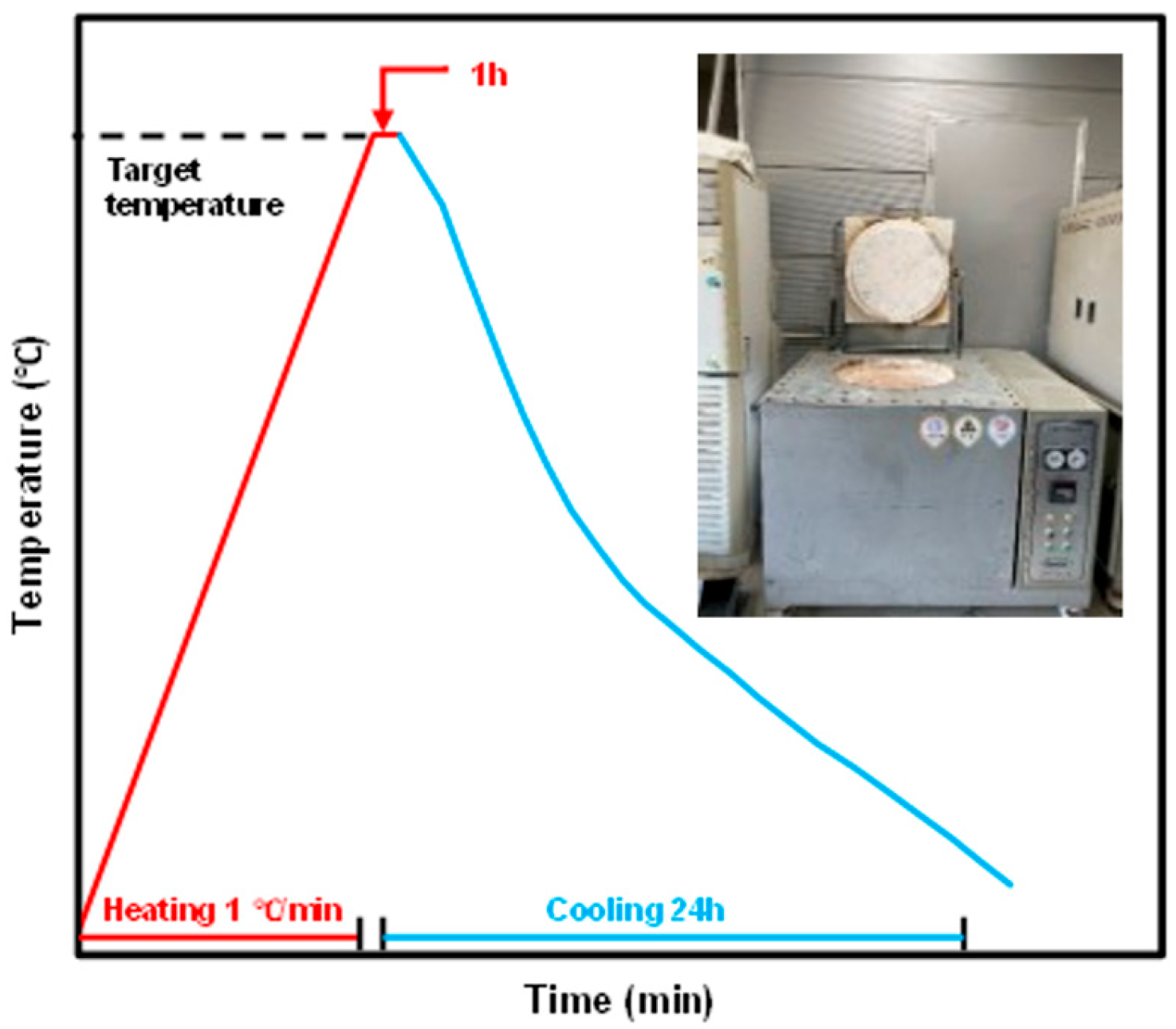
Figure 1 illustrates the electric furnace and heating method used to evaluate high-temperature mechanical properties. The target temperatures were set at six levels: 20 °C (ambient), 100 °C, 200 °C, 300 °C, 500 °C, and 700 °C. A heating rate of 1 °C/min was maintained to ensure uniform temperature distribution within the specimens, followed by a 60 min holding period at the target temperature.
The measured parameters included unit weight, compressive strength, stress–strain relationship, and dissipated energy. All mechanical tests were conducted at a concrete age of 91 days, with compressive strength measured in accordance with ASTM C39/39M.
To evaluate the energy absorption capacity of specimens exposed to high temperatures, the dissipated energy was calculated based on previous studies [26,28]. In this study, dissipated energy is defined as the area under the stress–strain curve up to the peak stress (ultimate strain) where macroscopic cracking initiates. Although this method is typically applied to fiber-reinforced or reinforced concrete, it was adapted here to compare the residual energy absorption capacity of unreinforced concrete containing different NHT ratios under identical thermal conditions. Since unreinforced concrete is inherently brittle, the energy calculation was strictly limited to the pre-peak region of the stress–strain curve.

3. Results

3.1. TGA and Unit Weight

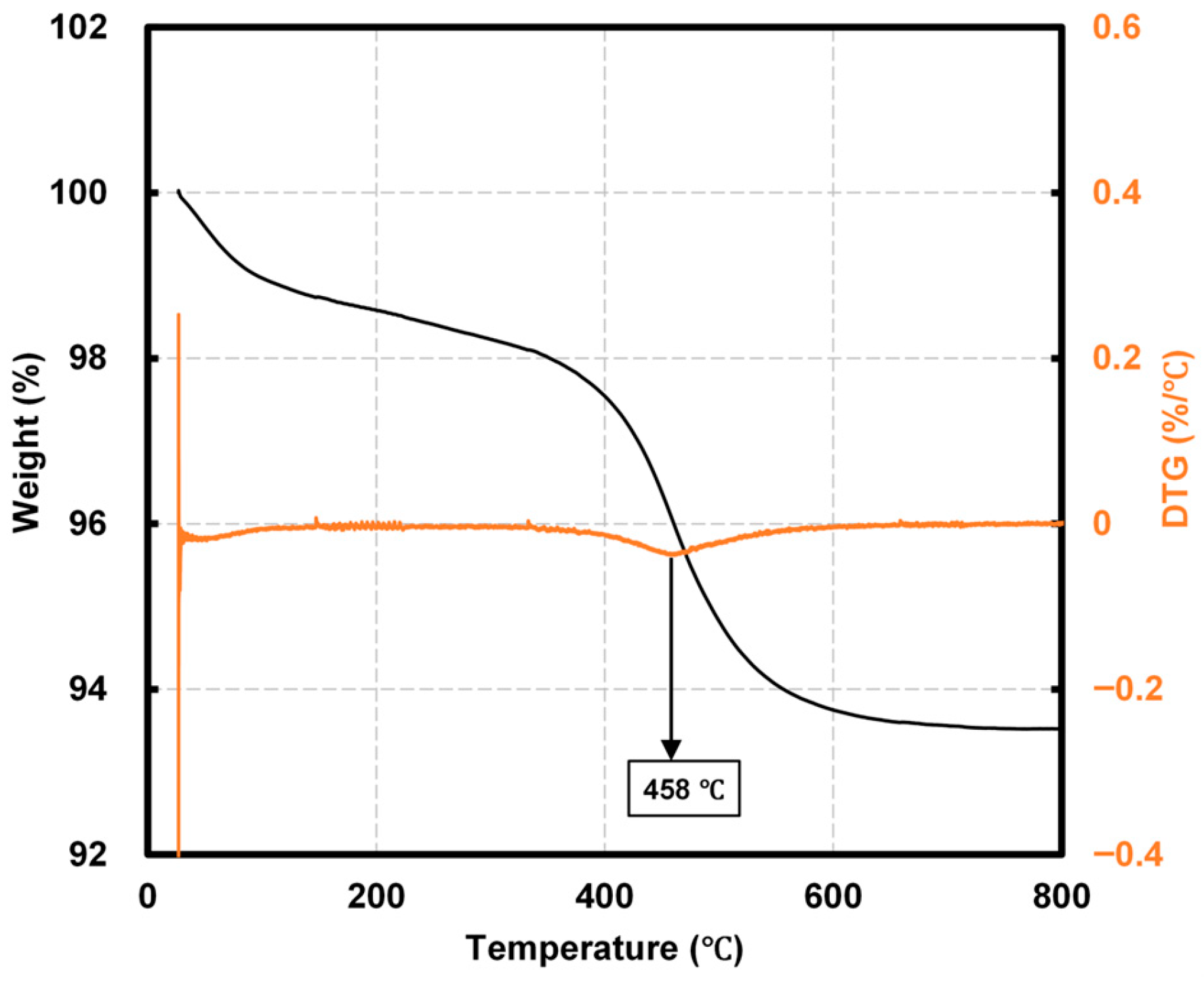
Figure 2 presents the Thermogravimetric Analysis (TGA) results for NHT. Up to 200 °C, a weight loss of approximately 1.41% was observed, which is attributed to the evaporation of absorbed water from the surface of the Hwangto particles. Between 200 °C and 400 °C, a further weight loss of about 2.45% occurred, accompanied by slight fluctuations in the Derivative Thermogravimetry (DTG) curve. A distinct DTG peak appeared at approximately 458 °C, followed by a rapid weight reduction up to 600 °C, resulting in a total weight loss of 6.47%. Azizi et al. reported that rapid weight loss in the 400–600 °C range is closely associated with the dehydroxylation of kaolinite, a process critical for metakaolin formation and pozzolanic activity [29]. According to Kim et al., high-purity (95%) kaolinite typically exhibits a DTG peak between 500 and 600 °C and a weight loss of approximately 12% in the 600–800 °C range—significantly higher temperatures and mass loss than those observed in this study [30]. Consequently, the relatively lower weight loss of NHT suggests that it consists of lower-purity kaolinite containing a substantial amount of heat-resistant impurities.
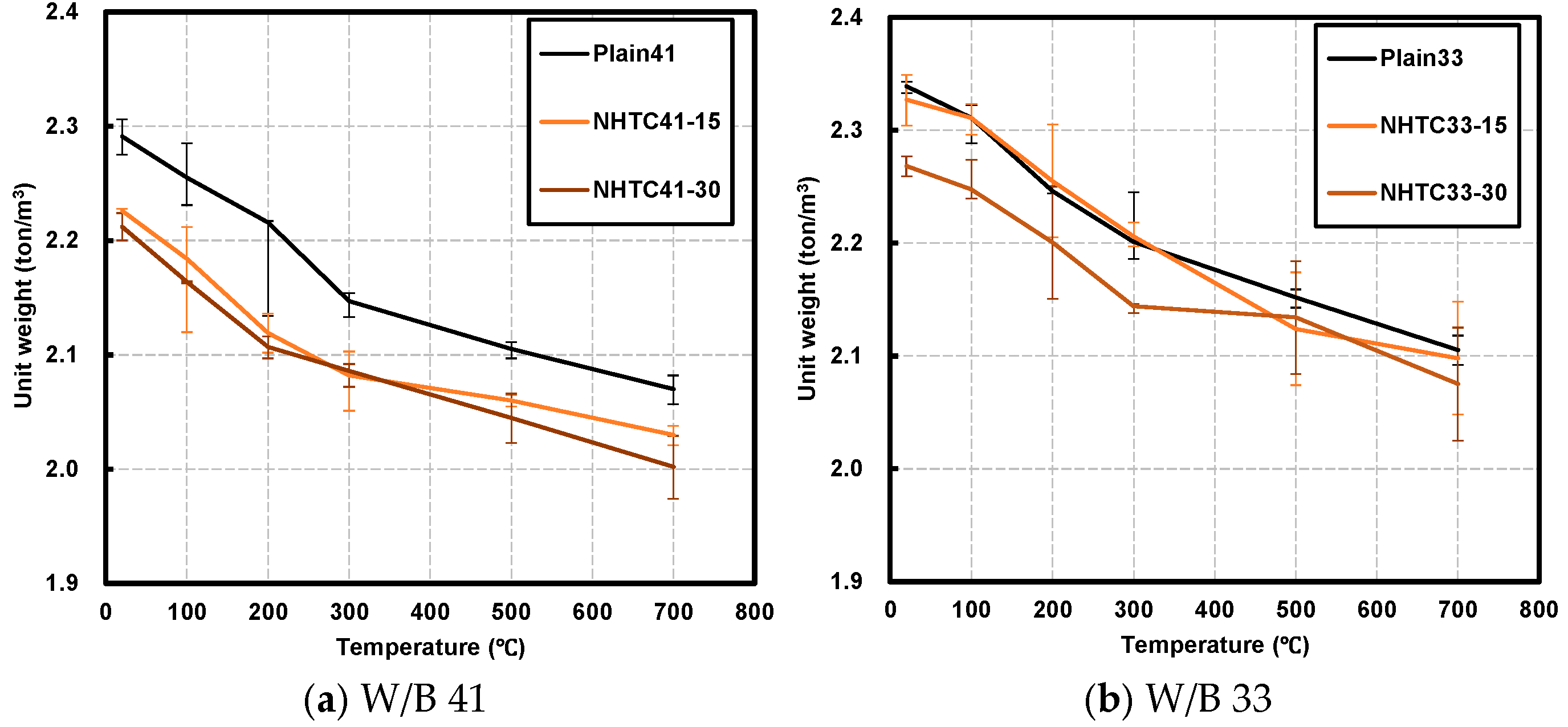
Figure 3 illustrates the variations in the unit weight of the heated concrete specimens. Due to the lower specific gravity of NHT (2.50) compared to OPC (3.15), the initial unit weight decreased as the NHT replacement level increased.
In the W/B 41 series, the unit weight reductions for the Plain, NHTC-15, and NHTC-30 specimens were 1.6%, 1.9%, and 2.2% at 100 °C; 3.3%, 4.8%, and 4.7% at 200 °C; 6.3%, 6.5%, and 5.7% at 300 °C; 8.1%, 7.5%, and 7.5% at 500 °C; and 9.6%, 8.8%, and 9.5% at 700 °C, respectively. Similarly, the W/B 33 series exhibited reductions of 1.2–0.9% at 100 °C, 4.0–3.0% at 200 °C, 5.9–5.5% at 300 °C, 8.0–5.9% at 500 °C, and 10.0–8.5% at 700 °C.
A significant mass loss was observed around 200 °C, which is primarily attributed to the evaporation of free and physically bound water within the concrete matrix. Furthermore, a pronounced mass loss occurred at approximately 500 °C. For the OPC control, this is mainly due to the decomposition of hydration products such as calcium hydroxide (portlandite) [20]. However, in the NHT-incorporated specimens, this reduction is likely intensified by the dehydroxylation of kaolinite, consistent with the DTG peak at 458 °C observed in Figure 2. The average unit weight reductions for the W/B 41 series at the target temperatures (100–700 °C) were 1.9%, 4.8%, 6.2%, 7.7%, and 9.3%, whereas the W/B 33 series showed lower reductions of 0.9%, 3.4%, 5.5%, 7.5%, and 9.5%. The W/B 41 series exhibited higher reduction rates at all temperatures except 700 °C. This is likely due to its more porous microstructure compared to the W/B 33 series, which facilitated the escape of internal moisture [31].

3.2. Residual Compressive Strength

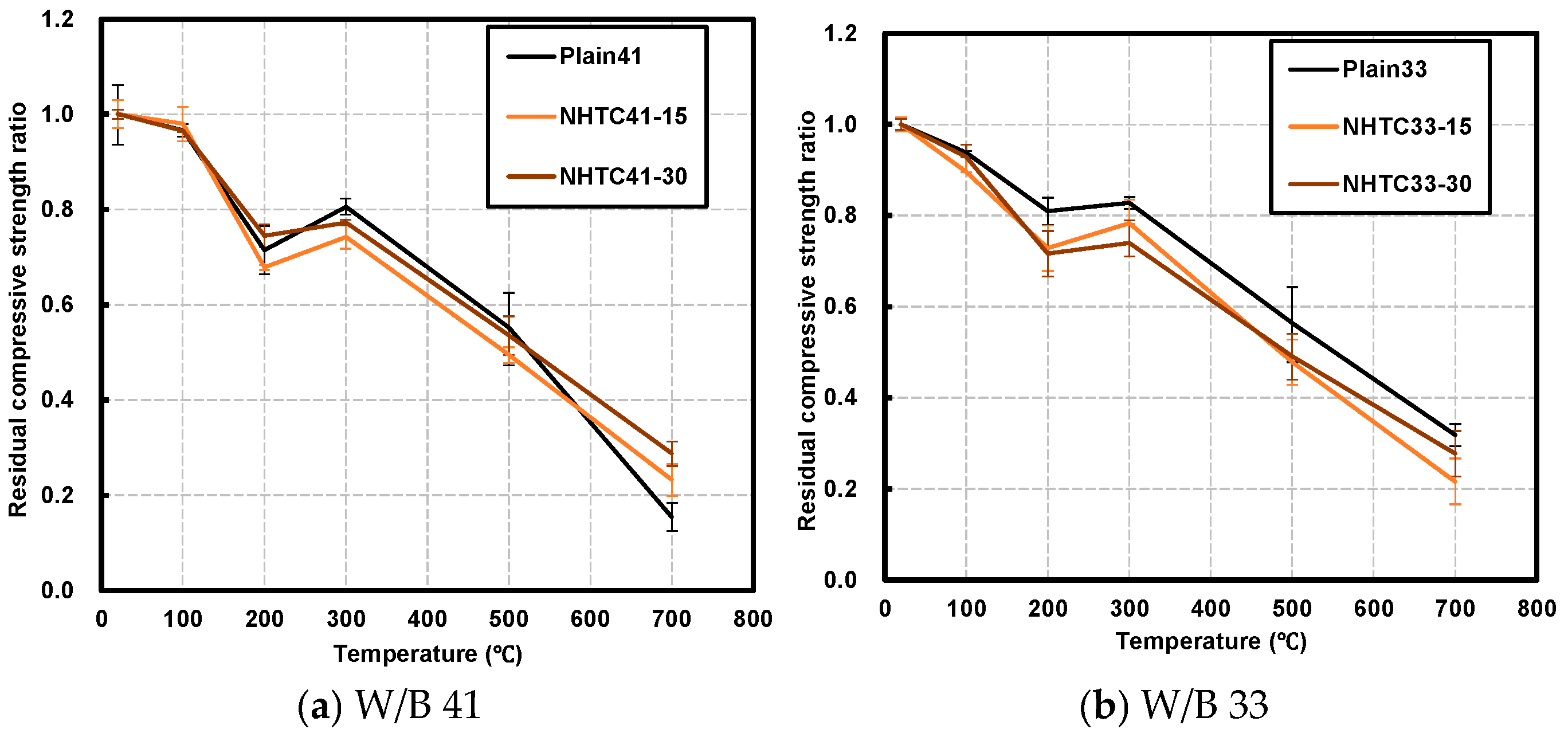
Figure 4 presents the variation in the compressive strength of the specimens with respect to the target temperature. Generally, compressive strength decreased as the temperature increased relative to ambient temperature (20 °C). However, a temporary increase in compressive strength was observed in the temperature range of 200–300 °C.
Specifically, in the W/B 41 series, the NHTC-15 and NHTC-30 specimens exhibited strength increases of 6.7% and 2.0%, respectively. This trend was more pronounced in the W/B 33 series, where the NHTC-15 and NHTC-30 specimens showed increases of 7.2% and 4.6%, respectively. Consistent with previous findings by Xu [32], the strength gain was greater at the lower W/B ratio. This phenomenon is attributed to the internal autoclaving effect, where high-temperature and high-pressure steam within the concrete promotes the hydration of unhydrated cement grains or the dry hardening of the cement paste [16,23,33,34].
Beyond 400 °C, strength degradation became significant due to the dehydration of calcium hydroxide (portlandite) and the decomposition of C–S–H gel. The rate of C–S–H decomposition peaked at 700 °C, leading to severe strength loss [35,36].
Notably, specimens with higher NHT content demonstrated higher residual compressive strength at elevated temperatures. At 700 °C, the residual strength ratios for the Plain, NHTC-15, and NHTC-30 series were 23.6%, 22.4%, and 28.2%, respectively. This aligns with the study by Karatas et al. [19], which reported that while kaolin-incorporated mortar may have lower initial strength, it exhibits improved residual strength at high temperatures due to the increased pozzolanic reactivity of kaolin. Furthermore, Abdelmelek [22] noted that the optimal metakaolin replacement ratio for compressive strength depends on the W/B ratio, supporting the variations observed in this study.
The enhanced residual performance of the NHTC-30 series at 700 °C can be further explained by the phase transformation mechanism of clay minerals. According to Wang et al. [37], kaolinite (Al2O3∙2SiO2∙2H2O), the primary mineral in coal gangue and Hwangto, undergoes dehydroxylation within the temperature range of 550–750 °C. This process removes structural hydroxyl groups and collapses the crystalline lattice, transforming inert kaolinite into highly reactive amorphous metakaolin (Al2O3∙2SiO2). Although the NHT used in this study was non-calcined, the exposure to 700 °C during the fire test effectively acted as an “in situ thermal activation” process. The newly formed metakaolin then reacts with calcium hydroxide (Ca(OH)2) in the matrix to form secondary C-S-H and C-A-S-H gels, refining the pore structure and reinforcing the matrix. This mechanism aligns with the finding that thermally activated kaolinite-based materials significantly improve mechanical properties and microstructural density [37].

3.3. Stress–Strain Characteristics

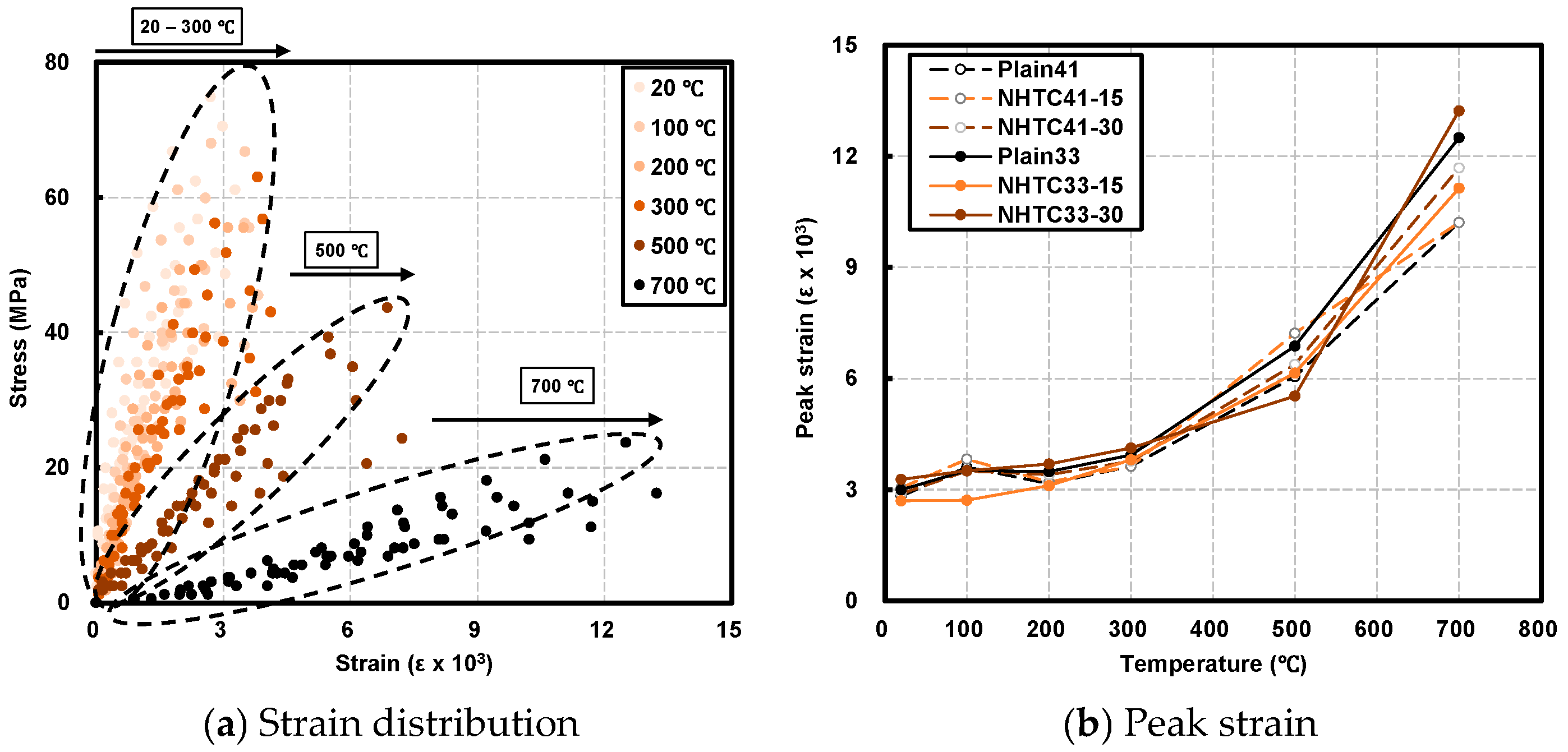
Figure 5a illustrates the stress–strain characteristics of the specimens, while Figure 5b presents the variations in peak strain. As the target temperature exceeded 300 °C, the slope of the stress–strain curve became noticeably flatter, indicating a reduction in stiffness due to decreased peak stress and increased strain.
In the temperature range of 20–300 °C, the peak strain remained relatively constant, ranging from 0.003 to 0.004. However, at temperatures above 500 °C, a significant increase was observed, reaching approximately 0.006–0.007 at 500 °C and 0.010–0.013 at 700 °C. Consequently, the specimens exhibited brittle failure characteristics below 300 °C, transitioning to a more ductile failure mode at temperatures above 500 °C [38,39].
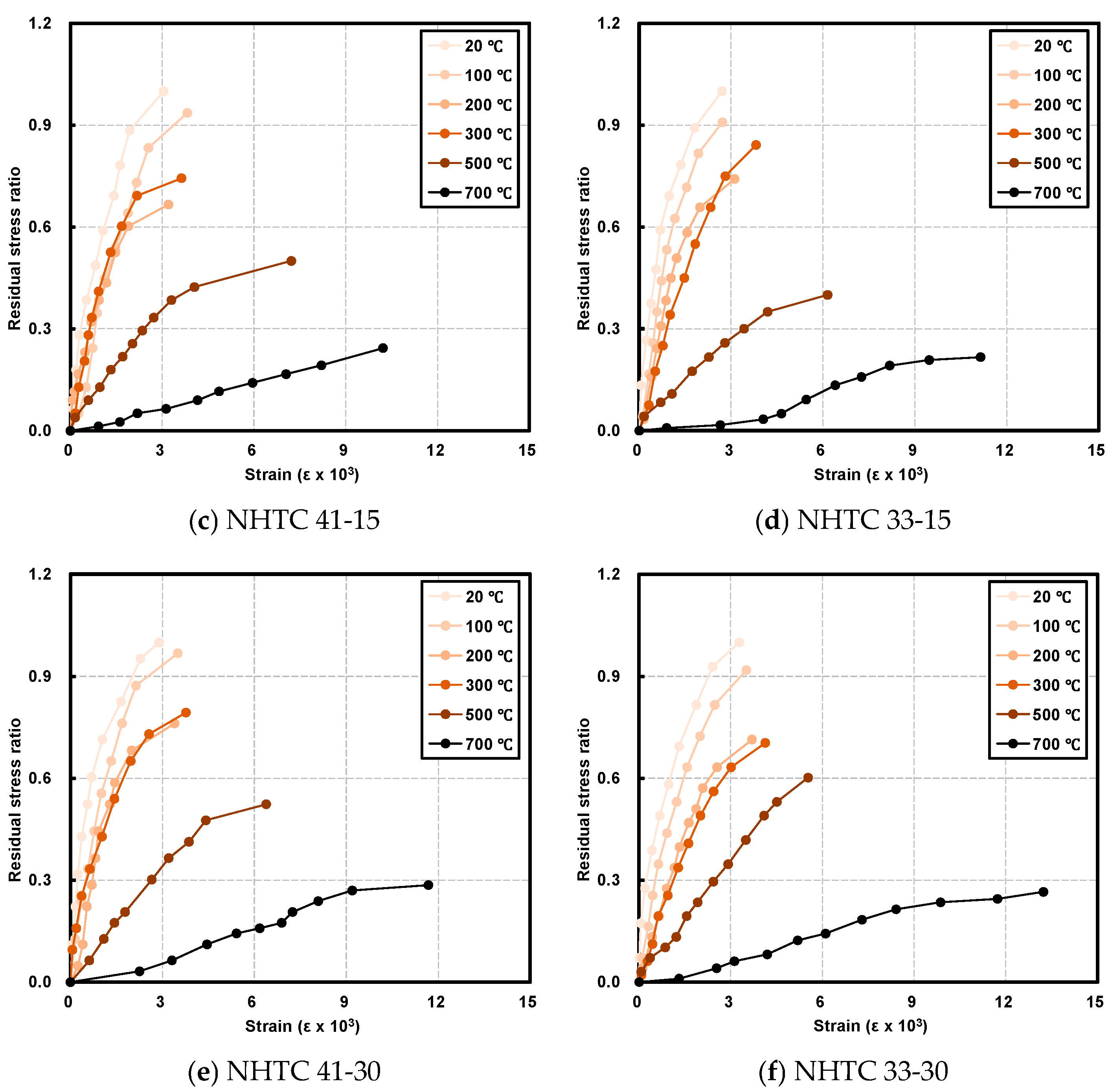
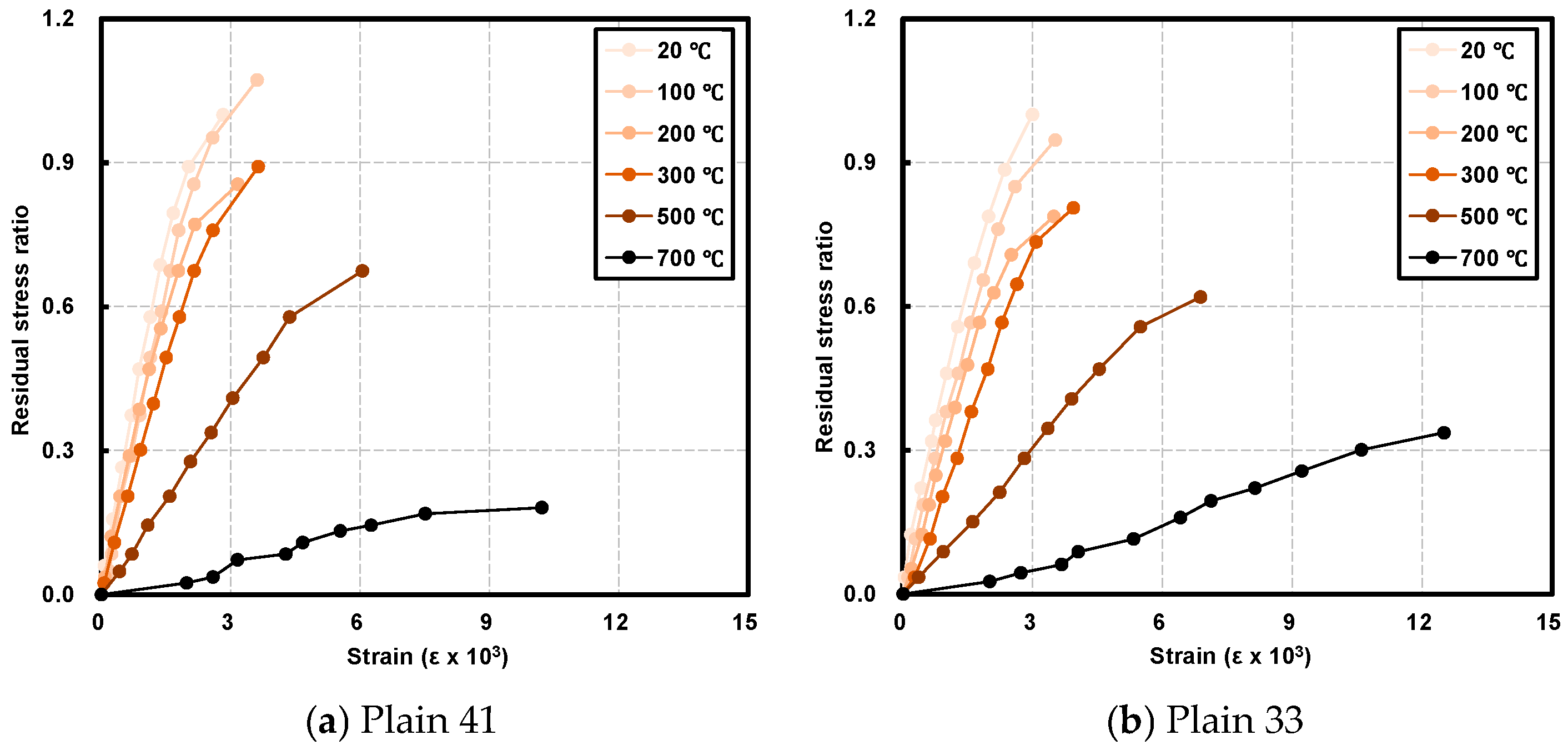
Figure 6a–f show the stress–strain relationships of each specimen at the target temperatures. To interpret the deformation behavior, the damage evolution model proposed by Lin et al. [12] can be applied. They categorized the stress–strain curve into a “linear elasticity” stage, where strain increases linearly with loading, and an “elastoplasticity” stage, characterized by the loss of linearity due to micro-crack proliferation and macroscopic crack nucleation.
Applying this framework to the current study, distinct trends were observed with increasing temperature. As the target temperature rose, the linear elasticity region contracted, while the elastoplasticity region significantly expanded. Specifically, below 300 °C, linear behavior was maintained up to approximately 76.6–84.0% of the peak strain. However, at 500 °C and 700 °C, the linear limit retreated, and the quasi-linear (elastoplastic) behavior extended to ranges of approximately 52.3–88.9% and 60.4–90.0%, respectively. This prolongation of the elastoplastic phase indicates increased ductility driven by extensive crack development at elevated temperatures [38].

3.4. Dissipated Energy and Microstructure

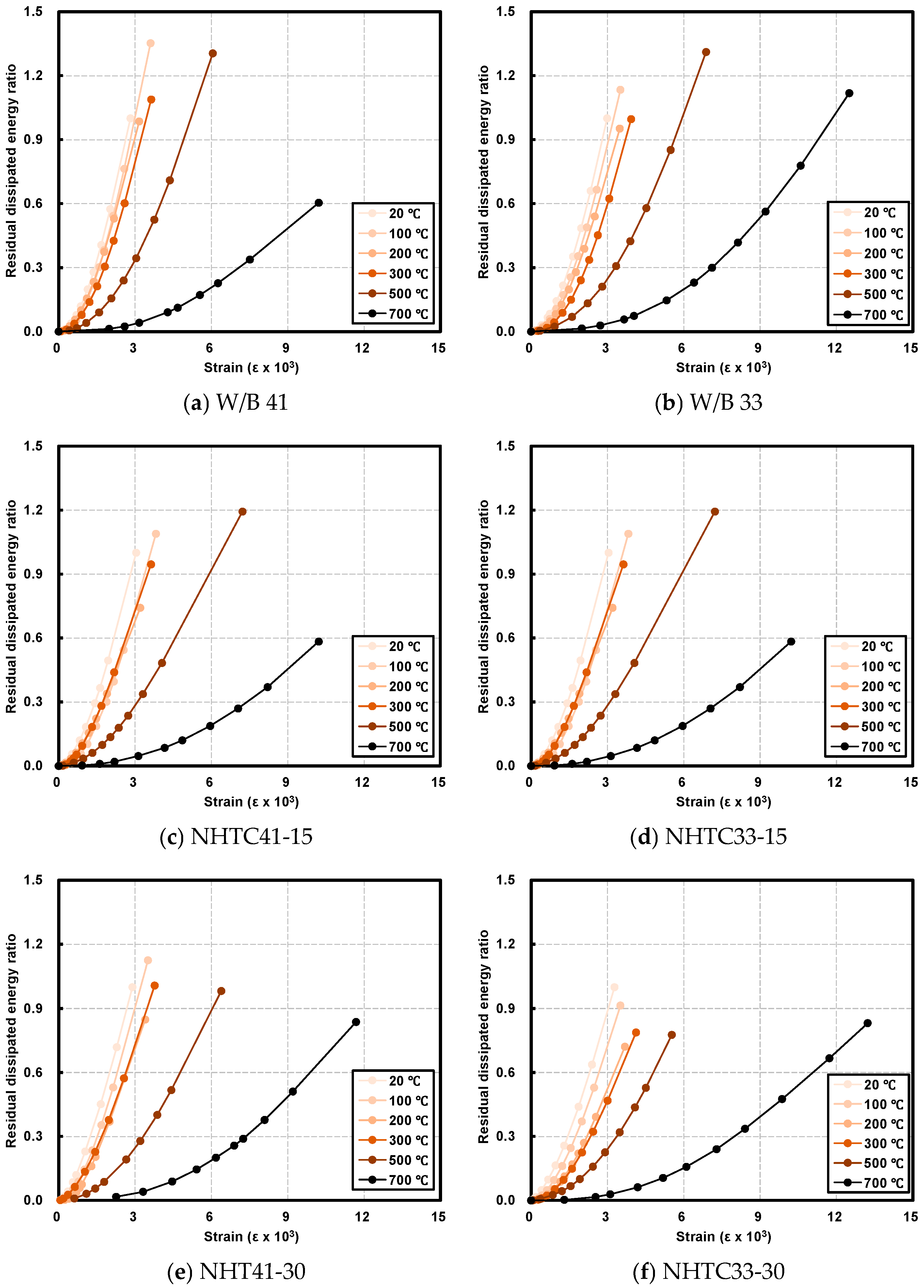
Table 5 summarizes the dissipated energy, while Figure 7 illustrates the relative dissipated energy trends at target temperatures. Generally, the relative dissipated energy decreased as the temperature increased. However, the NHT-incorporated series exhibited higher values compared to the Plain series, attributed to the increased ductility imparted by NHT.
In the W/B 41 series, the dissipated energy remained comparable to or higher than room temperature values up to 500 °C. Specifically, the Plain series recorded residual energy ratios of 134.7% (100 °C), 129.6% (500 °C), and 58.2% (700 °C). The NHTC-15 series showed 108.7–121.8% up to 500 °C, dropping to 57.6% at 700 °C. Notably, the NHTC-30 series maintained stable energy absorption, recording 112.7% at 100 °C and 83.8% at 700 °C. While the Plain specimen exhibited the highest energy up to 500 °C, the NHTC-30 specimen outperformed all others at 700 °C, demonstrating superior residual performance at extreme temperatures.
Conversely, in the W/B 33 series, the Plain specimen maintained high dissipated energy ratios (95.9–130.9%) across most temperatures and, unlike other specimens, showed an increase at 700 °C (112.2%). In contrast, the NHTC-15 and NHTC-30 series generally exhibited lower residual dissipated energy compared to room temperature. This discrepancy suggests that in lower-strength matrices (W/B 41), the relative contribution of NHT to energy retention is more pronounced than in high-strength matrices (W/B 33). However, at 700 °C, the NHTC-30 series consistently showed higher residual dissipated energy than the NHTC-15 series, confirming that higher NHT content contributes to enhanced energy absorption capacity under high-temperature conditions.
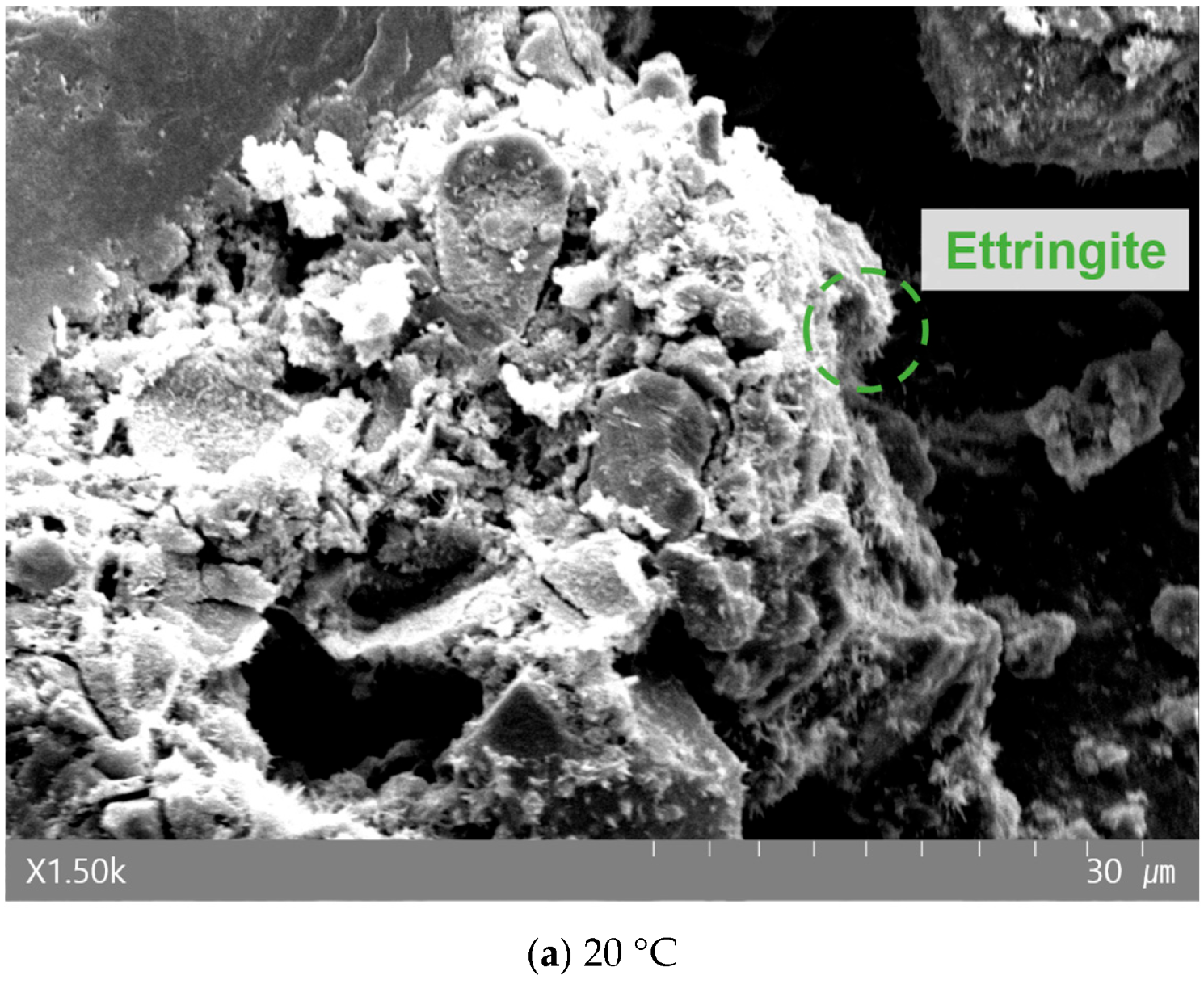
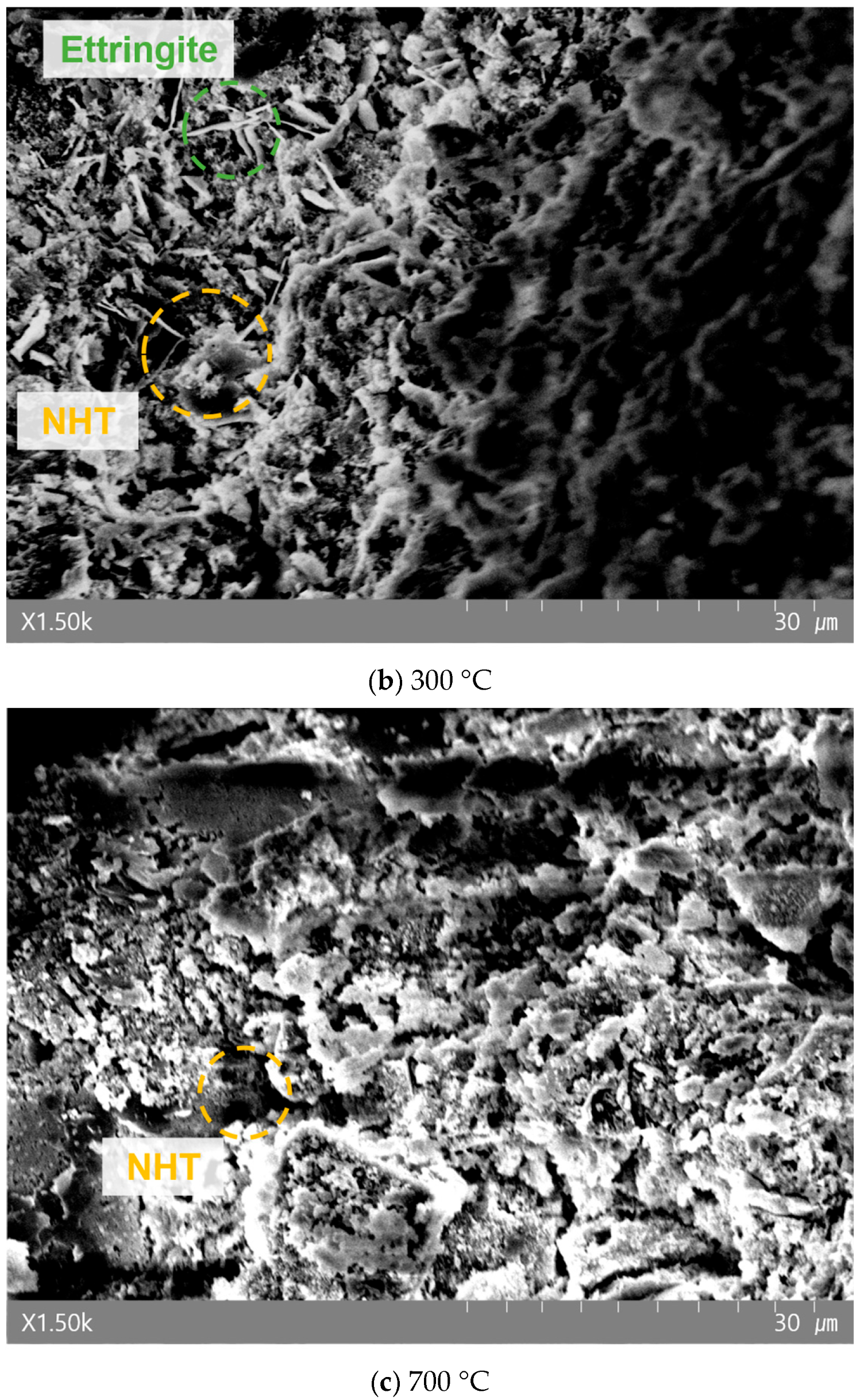
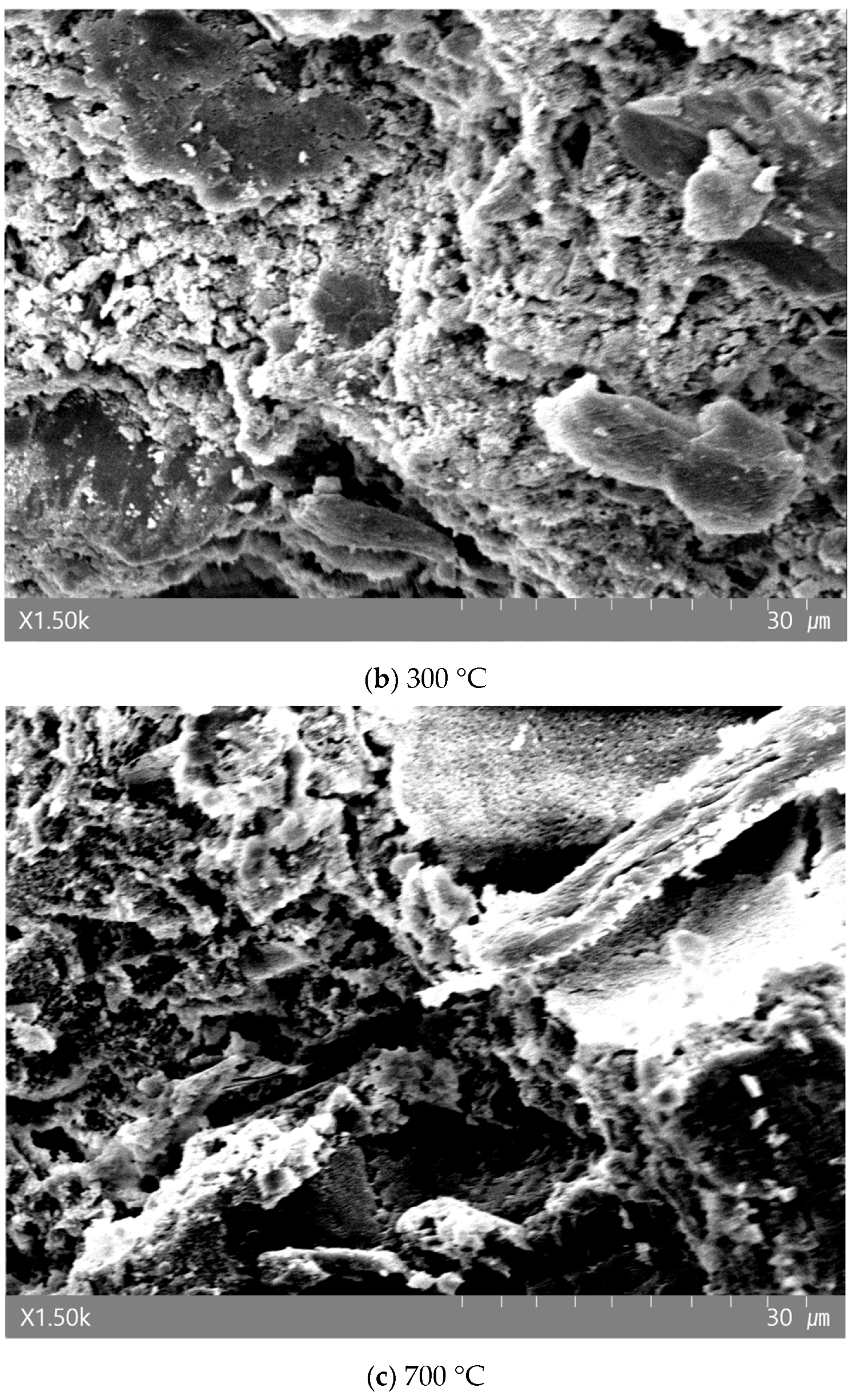
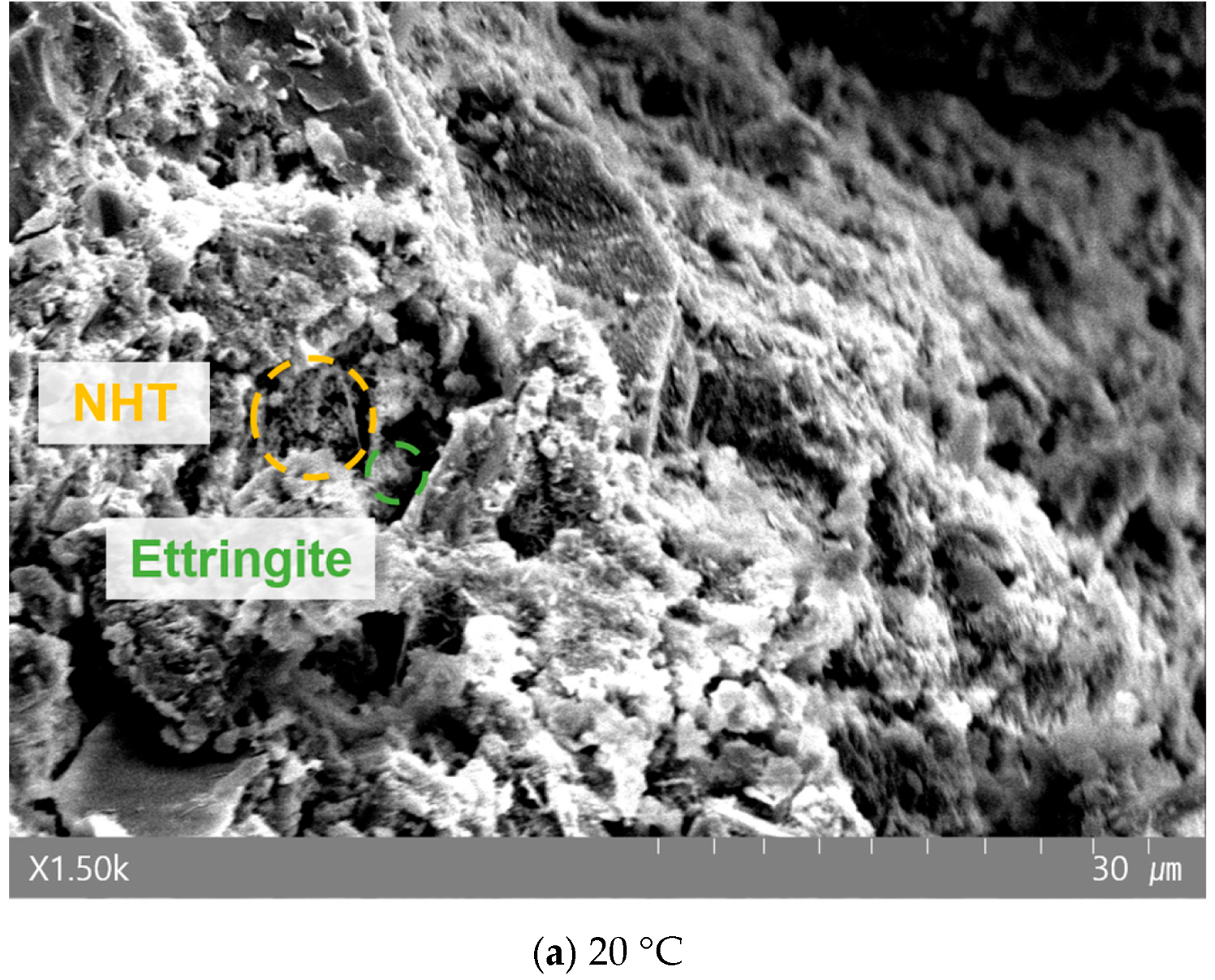
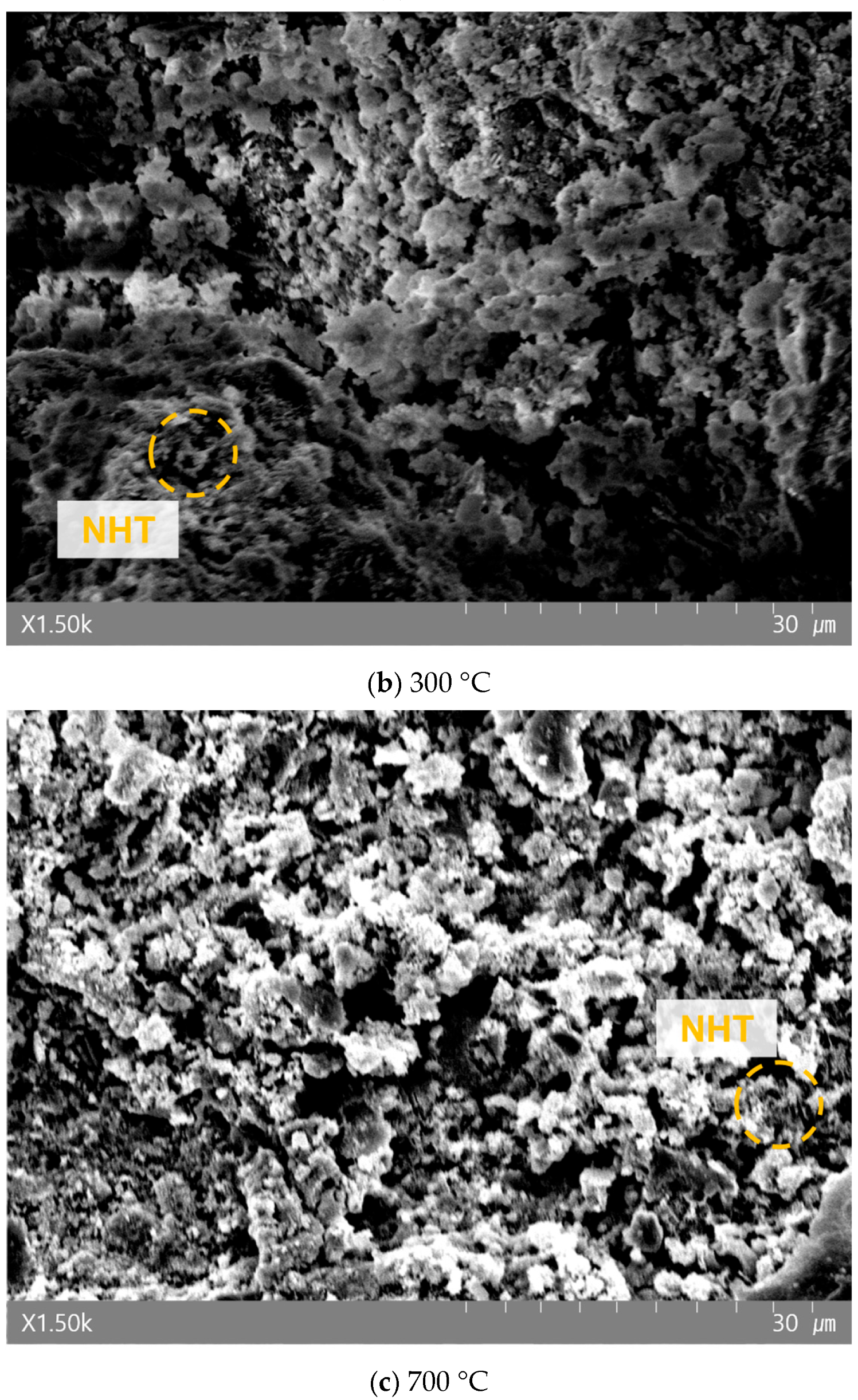
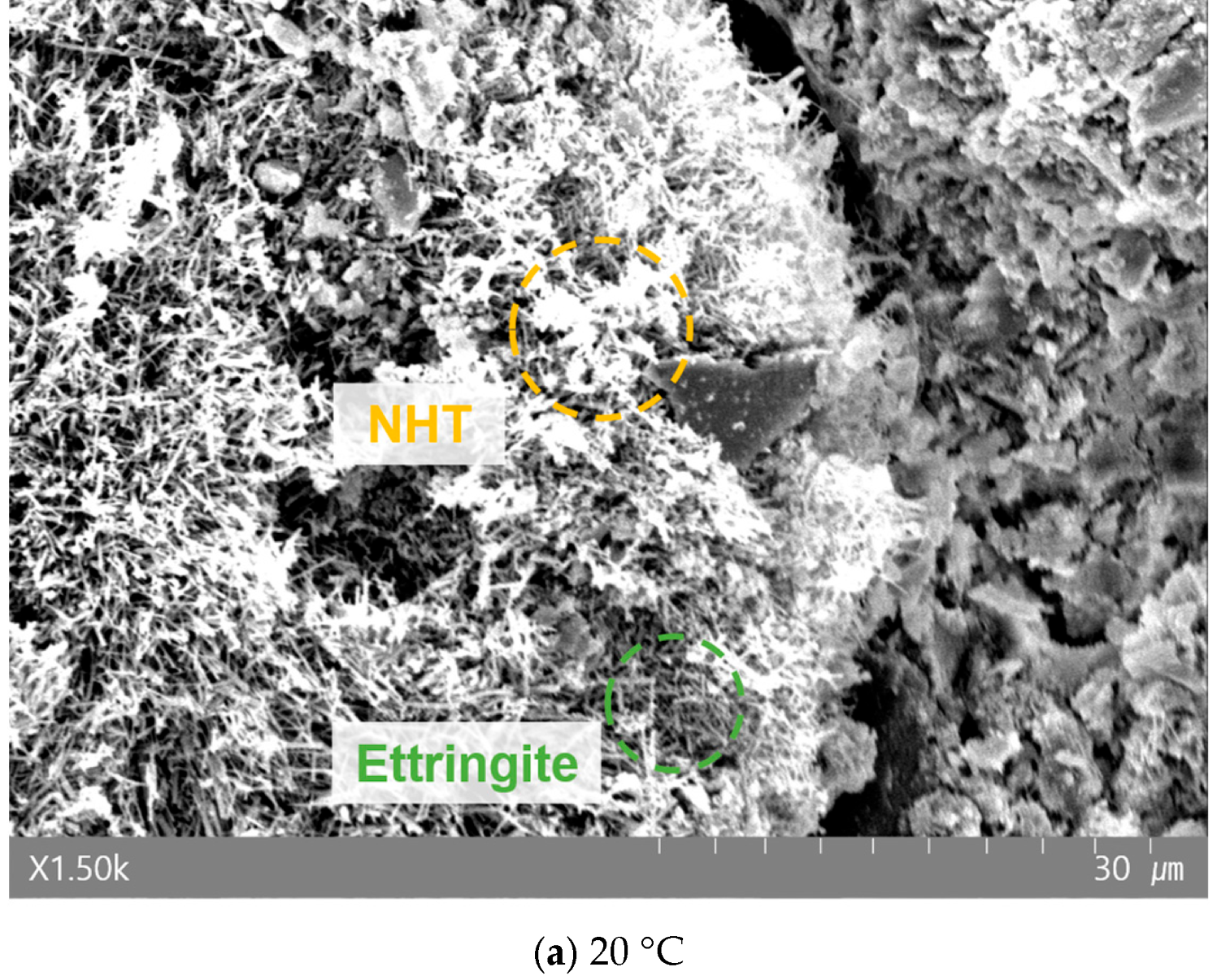
Figure 8, Figure 9 and Figure 10 present the morphological changes in the microstructure analyzed via SEM. At 20 °C, needle-shaped crystals, identified as ettringite, were clearly observed with increasing NHT content. However, in specimens heated to 700 °C, these crystalline structures were absent. This is consistent with the established literature stating that ettringite thermally decomposes and loses its crystalline structure in the range of approximately 70–100 °C [40]. Typically, exposure to 700 °C induces significant coarsening of the pore structure and micro-cracking due to the dehydration of C–S–H gel. However, the SEM micrographs of the NHT-incorporated specimens at 700 °C exhibit a relatively more cohesive structure with fewer visible macro-cracks compared to the Plain specimen. This phenomenon can be attributed to the thermal transformation of kaolinite in NHT into metakaolin (approx. 450–600 °C), which may participate in secondary reactions or induce a localized sintering effect that partially fills the voids [15,41]. Although quantitative porosimetry (e.g., MIP) was not conducted in this study, these morphological observations provide qualitative support for the superior residual mechanical performance and energy dissipation capacity observed in the NHTC-30 series.

4. Conclusions

This study investigated the potential of using non-calcined Hwangto (NHT) as a sustainable mineral admixture to enhance the fire resistance of concrete. By evaluating the residual mechanical properties of concrete containing NHT under elevated temperatures up to 700 °C, this study provides critical insights into the “in situ activation” effect of clay-based materials during fire exposure. The key findings and contributions are summarized as follows:
  • Thermal Stability and Mass Retention: NHT incorporation effectively mitigated mass loss at elevated temperatures. Specifically, the NHTC-30 series exhibited the lowest unit weight reduction rate above 300 °C. This suggests that the inclusion of NHT contributes to maintaining the material’s physical stability under thermal stress, outperforming the Plain concrete in high-temperature ranges.
  • Mechanism of Residual Strength Enhancement: While non-calcined NHT resulted in lower initial strength at room temperature, it demonstrated a remarkable “strength reversal” capability at high temperatures. At 700 °C, the NHTC-30 series retained the highest residual compressive strength ratio (28.2%), surpassing the Plain series (23.6%). This improvement is attributed to the thermal transformation of kaolinite in NHT into reactive metakaolin at approximately 550–750 °C, which subsequently promoted pozzolanic reactions and densified the microstructure even under severe thermal degradation.
  • Ductility and Deformation Characteristics: The stress–strain analysis revealed a distinct transition from brittle to ductile failure modes with increasing temperature. The NHTC-30 series showed the highest peak strain at 700 °C, indicating superior deformability. This characteristic is crucial for preventing sudden structural collapse during fire incidents, thereby enhancing the overall safety margin of the structure.
  • Energy Dissipation Capacity: The energy absorption capability varied with the matrix strength (W/B ratio). Notably, in normal-strength concrete (W/B 41), the NHTC-30 series demonstrated the highest dissipated energy at 700 °C, confirming its superior post-peak resistance. This finding highlights that a sufficient replacement level of NHT (30%) is beneficial for maximizing energy absorption in fire scenarios.
In conclusion, this research demonstrates that non-calcined Hwangto is not merely an inert filler but a functional admixture that becomes thermally activated during fire exposure. By converting the weakness of “non-calcination” into a “high-temperature activation” advantage, NHT incorporation offers a sustainable solution for improving the residual structural integrity and fire safety of concrete structures.

Author Contributions

Conceptualization, T.L.; methodology, W.K.; software, T.K. and H.I.; validation, T.L. and W.K.; formal analysis, W.K. and H.I.; investigation, T.K. and H.I.; resources, W.K.; data curation, T.K. and H.I.; writing—original draft preparation, T.K. and W.K.; writing—review and editing, T.K.; visualization, T.L.; supervision, W.K.; project administration, T.L. All authors have read and agreed to the published version of the manuscript.

Funding

This paper was supported by the Semyung University Research Grant of 2024.

Data Availability Statement

The original contributions presented in this study are included in the article. Further inquiries can be directed to the corresponding author.

Conflicts of Interest

The authors declare no conflicts of interest. The funders had no role in the design of the study; in the collection, analyses, or interpretation of data; in the writing of the manuscript; or in the decision to publish the results.

References

  1. International Energy Agency (IEA). Net Zero by 2050; IEA: Paris, France, 2021. [Google Scholar]
  2. International Energy Agency (IEA). Direct Emissions Intensity of Cement Production in the Net Zero Scenario 2015–2030; IEA: Paris, France, 2023. [Google Scholar]
  3. Medjigbodo, G.; Rozière, E.; Charrier, K.; Izoret, L.; Loukili, A. Hydration, Shrinkage, and Durability of Ternary Binders Containing Portland Cement, Limestone Filler and Metakaolin. Constr. Build. Mater. 2018, 183, 114–126. [Google Scholar] [CrossRef]
  4. Meddah, M.S.; Ismail, M.A.; El-Gamal, S.; Fitriani, H. Performances Evaluation of Binary Concrete Designed with Silica Fume and Metakaolin. Constr. Build. Mater. 2018, 166, 400–412. [Google Scholar] [CrossRef]
  5. Uysal, M.; Sumer, M. Performance of Self-Compacting Concrete Containing Different Mineral Admixtures. Constr. Build. Mater. 2011, 25, 4112–4120. [Google Scholar] [CrossRef]
  6. Uysal, M.; Yilmaz, K. Effect of Mineral Admixtures on Properties of Self-Compacting Concrete. Cem. Concr. Compos. 2011, 33, 771–776. [Google Scholar] [CrossRef]
  7. Yoon, M.; Kim, G.; Choe, G.C.; Lee, Y.; Lee, T. Effect of Coarse Aggregate Type and Loading Level on the High Temperature Properties of Concrete. Constr. Build. Mater. 2015, 78, 26–33. [Google Scholar] [CrossRef]
  8. Mo, Z.; Wang, Y.; Guo, F.; Cui, H.; Han, Y.; Zhuang, W.; Gao, X. Study on Mechanical Properties and Microstructures of UHPC Containing Calcined Kaolin Clay at Elevated Temperature. Constr. Build. Mater. 2024, 450, 138668. [Google Scholar] [CrossRef]
  9. Du, H.; Pang, S.D. High-Performance Concrete Incorporating Calcined Kaolin Clay and Limestone as Cement Substitute. Constr. Build. Mater. 2020, 264, 120152. [Google Scholar] [CrossRef]
  10. Kim, M.; Kim, T.; Yeo, I.-H.; Lee, D.; Cho, H.; Kang, K.-I. Improvement of Standards on Fire Safety Performance of Externally Insulated High-Rise Buildings: Focusing on the Case in Korea. J. Build. Eng. 2021, 35, 101990. [Google Scholar] [CrossRef]
  11. Demir, U.; Green, M.F.; Ilki, A. Postfire Seismic Performance of Reinforced Precast Concrete Columns. PCI J. 2020, 65, 62–80. [Google Scholar] [CrossRef]
  12. Lin, H.; Zhang, W.; Guo, S.; Zhang, X.; Wang, L.; Zhang, J. Study on the Energy Evolution Mechanism and Fractal Characteristics of Coal Failure under Dynamic Loading. ACS Omega 2025, 10, 54710–54719. [Google Scholar] [CrossRef]
  13. Aleem, S.A.E.; Heikal, M.; Morsi, W.M. Hydration Characteristic, Thermal Expansion and Microstructure of Cement Containing Nano-Silica. Constr. Build. Mater. 2014, 59, 151–160. [Google Scholar] [CrossRef]
  14. Li, Q.; Wang, M.; Sun, H.; Yu, G. Effect of Heating Rate on the Free Expansion Deformation of Concrete during the Heating Process. J. Build. Eng. 2021, 34, 101896. [Google Scholar] [CrossRef]
  15. Poon, C.-S.; Azhar, S.; Anson, M.; Wong, Y.-L. Performance of Metakaolin Concrete at Elevated Temperatures. Cem. Concr. Compos. 2003, 25, 83–89. [Google Scholar] [CrossRef]
  16. Saridemir, M.; Severcan, M.H.; Ciflikli, M.; Celikten, S.; Ozcan, F.; Atis, C.D. The Influence of Elevated Temperature on Strength and Microstructure of High Strength Concrete Containing Ground Pumice and Metakaolin. Constr. Build. Mater. 2016, 124, 244–257. [Google Scholar] [CrossRef]
  17. Arslan, F.; Benli, A.; Karatas, M. Effect of High Temperature on the Performance of Self-Compacting Mortars Produced with Calcined Kaolin and Metakaolin. Constr. Build. Mater. 2020, 256, 119497. [Google Scholar] [CrossRef]
  18. Gunjal, S.M.; Kondraivendhan, B. High Temperature Impact on Calcined Clay-Limestone Cement Concrete (LC3). Mater. Today Proc. 2022, 61, 386–391. [Google Scholar] [CrossRef]
  19. Karatas, M.; Benli, A.; Arslan, F. The Effects of Kaolin and Calcined Kaolin on the Durability and Mechanical Properties of Self-Compacting Mortars Subjected to High Temperatures. Constr. Build. Mater. 2020, 265, 120300. [Google Scholar] [CrossRef]
  20. Nikhila, C.J.; Kumar, J.C. Partial Replacement of Cement with Metakaolin in High Strength Concrete. Int. J. Eng. Res. Sci. Technol. 2015, 4, 336–349. [Google Scholar]
  21. Morsy, M.S.; Al-Salloum, Y.A.; Abbas, H.; Alsayed, S.H. Behavior of Blended Cement Mortars Containing Nano-Metakaolin at Elevated Temperatures. Constr. Build. Mater. 2012, 35, 900–905. [Google Scholar] [CrossRef]
  22. Abdelmelek, N.; Lubloy, E. Evaluation of the Mechanical Properties of High-Strength Cement Paste at Elevated Temperatures Using Metakaolin. J. Therm. Anal. Calorim. 2021, 145, 2891–2905. [Google Scholar] [CrossRef]
  23. Sabir, B.B.; Wild, S.; Bai, J. Metakaolin and Calcined Clays as Pozzolans for Concrete: A Review. Cem. Concr. Compos. 2001, 23, 441–454. [Google Scholar] [CrossRef]
  24. Wang, S.; Sun, Q.; Wang, N.; Luo, T.; Zhang, H. High-Temperature Response Characteristics of Loess Porosity and Strength. Environ. Earth Sci. 2021, 80, 547. [Google Scholar] [CrossRef]
  25. Zhang, F.; Kong, R.; Peng, J. Effects of Heating on Compositional, Structural, and Physicochemical Properties of Loess under Laboratory Conditions. Appl. Clay Sci. 2018, 152, 259–266. [Google Scholar] [CrossRef]
  26. Nataraja, M.C.; Dhang, N.; Gupta, A.P. Stress–Strain Curves for Steel-Fiber Reinforced Concrete Under Compression. Cem. Concr. Compos. 1999, 21, 383–390. [Google Scholar] [CrossRef]
  27. Kim, T.; Kim, W.; Jeong, K.; Lee, T. Evaluation of Energy Dissipated by Non-Sintered Hwangto Concrete after Exposure to Elevated Temperatures. Int. J. Fire Sci. Eng. 2024, 38, 20–26. [Google Scholar] [CrossRef]
  28. Kim, Y.; Lee, T.; Kim, G. An Experimental Study on the Residual Mechanical Properties of Fiber Reinforced Concrete with High Temperature and Load. Mater. Struct. 2013, 46, 607–620. [Google Scholar] [CrossRef]
  29. Azizi, K.; Maissara, J.; Elmahi Chbihi, M.; Naimi, Y. Thermal Transformation of Kaolinite Clays: Analyzing Dehydroxylation and Amorphization for Improved Pozzolanic Performance. Int. J. Chem. Biochem. Sci. 2024, 25, 1070–1077. [Google Scholar] [CrossRef]
  30. Kim, N.-I.; Jo, J.-H.; Goo, S.-S.; Hwang, Y.-S. Preliminary Study on the Quantitative Analysis of Kaolinite based on Standard Mixed Samples. Resour. Recycl. 2025, 34, 29–37. [Google Scholar] [CrossRef]
  31. Mindeguia, J.-C.; Pimienta, P.; Noumowé, A.; Kanema, M. Temperature, Pore Pressure and Mass Variation of Concrete Subjected to High Temperature—Experimental and Numerical Discussion on Spalling Risk. Cem. Concr. Res. 2010, 40, 477–487. [Google Scholar] [CrossRef]
  32. Xu, Y.; Wong, Y.L.; Poon, C.S.; Anson, M. Impact of High Temperature on PFA Concrete. Cem. Concr. Res. 2001, 31, 1065–1073. [Google Scholar] [CrossRef]
  33. Babalola, O.E.; Awoyera, P.O.; Le, D.-H.; Bendezú Romero, L.M. A Review of Residual Strength Properties of Normal and High Strength Concrete Exposed to Elevated Temperatures: Impact of Materials Modification on Behaviour of Concrete Composite. Constr. Build. Mater. 2021, 296, 123448. [Google Scholar] [CrossRef]
  34. Gallucci, E.; Zhang, X.; Scrivener, K.L. Effect of Temperature on the Microstructure of Calcium Silicate Hydrate (C-S-H). Cem. Concr. Res. 2013, 53, 185–195. [Google Scholar] [CrossRef]
  35. Ingham, J.P. Application of Petrographic Examination Techniques to the Assessment of Fire-Damaged Concrete and Masonry Structures. Mater. Charact. 2009, 60, 700–709. [Google Scholar] [CrossRef]
  36. Kim, W.; Choi, H.; Lee, T. Residual Compressive Strength Prediction Model for Concrete Subject to High Temperatures Using Ultrasonic Pulse Velocity. Materials 2023, 16, 515. [Google Scholar] [CrossRef]
  37. Wang, Y.; Zhu, L.; Xue, Y. A Comprehensive Review on Dual-Pathway Utilization of Coal Gangue Concrete: Aggregate Substitution, Cementitious Activity Activation, and Performance Optimization. Buildings 2026, 16, 302. [Google Scholar] [CrossRef]
  38. Kim, W.; Jeong, K.; Lee, T.; Park, S. A Study on Correlation between Ultrasonic Pulse Velocity Method and Coarse Aggregate for Estimating Residual Modulus of Elasticity of Concrete Exposed to High Temperatures. Appl. Sci. 2022, 12, 6644. [Google Scholar] [CrossRef]
  39. Benali, F.; Hamidouche, M.; Belhouchet, H.; Bouaouadja, N.; Fantozzi, G. Thermo-Mechanical Characterization of a Silica-Alumina Refractory Concrete Based on Calcined Algerian Kaolin. Ceram. Int. 2016, 42, 9703–9711. [Google Scholar] [CrossRef]
  40. Taylor, H.F.W. Cement Chemistry, 2nd ed.; T. Telford: London, UK, 1997. [Google Scholar]
  41. Rashad, A.M. Metakaolin as Cementitious Material: History, Scours, Production and Composition—A Comprehensive Overview. Constr. Build. Mater. 2013, 41, 303–318. [Google Scholar] [CrossRef]
Figure 1. The heat rate and furnace used in the test [27].
Materials 19 00724 g001
Figure 2. TGA results for NHT.
Materials 19 00724 g002
Figure 3. Unit weight after exposure to target temperature.
Materials 19 00724 g003
Figure 4. Residual compressive strength after exposure to target temperature.
Materials 19 00724 g004
Figure 5. Overview of strain properties.
Materials 19 00724 g005
Figure 6. Stress–strain curve after exposure to target temperature.
Materials 19 00724 g006aMaterials 19 00724 g006b
Figure 7. Dissipated energy after exposure to target temperature.
Materials 19 00724 g007
Figure 8. SEM image of Plain after exposure to each temperature.
Materials 19 00724 g008aMaterials 19 00724 g008b
Figure 9. SEM image of NHTC-15 after exposure to each temperature.
Materials 19 00724 g009aMaterials 19 00724 g009b
Figure 10. SEM image of NHTC-30 after exposure to each temperature.
Materials 19 00724 g010aMaterials 19 00724 g010b
Table 1. Experimental program.
ClassificationProgram
Specimen dimensionΦ100 × 200 mm
CementOrdinary Portland Cement
Mineral admixtureNon-calcined Hwangto (0%, 15%, 30%)
W/B41.3, 33.0
Curing conditionsWater; Room temperature: 20 ± 2 °C; Humidity: 60 ± 5%
Temperature20, 100, 200, 300, 500, 700 °C
Heating rate1 °C/min
Holding time60 min
Test itemsUnit weight, Compressive strength, Stress–strain,
Dissipated energy
Table 2. The physical properties of the materials [27].
MaterialsProperties
CementType I Ordinary Portland Cement
Density: 3.15 g/cm3; Fineness: 3200 cm2/g
Mineral admixtureNon-calcined Hwangto
Density: 2.50 g/cm3; Fineness: 3300 cm2/g
Coarse aggregateCrushed granite aggregate
Density: 2.68 g/cm3; Fineness modulus: 7.03
Absorption: 0.68%; Maximum size: 20 mm
Fine aggregateRiver sand
Density: 2.54 g/cm3; Fineness modulus: 2.54
Absorption: 1.6%
SuperplasticizerPolycarboxylic-based acid
Table 3. Chemical properties of binder.
MaterialsChemical Composition (%)
CaOSiO2Al2O3Fe2O3MgOSO3K2OOthersL.O.I 1
OPC60.3419.824.853.303.832.881.080.863.02
NHT 20.9340.0032.907.791.54-0.7616.6213.7
1 Loss of ignition. 2 Non-calcined Hwangto.
Table 4. Mix proportions of Plain and NHTC.
IDW/BS/aUnit Weight (kg/m3)
WCNHTSG
Plain4141.346.0165400-799758
NHTC41-1534060794752
NHTC41-30280120788747
Plain3333.043.0500-711762
NHTC33-1542575705755
NHTC33-30350150699748
Table 5. Dissipated energy after exposure to target temperature.
Temperature (°C)Dissipated Energy (KPa)
Plain41NHTC41-15NHTC41-30Plain33NHTC33-15NHTC33-30
2093.0 ± 5.8 (1)
[63.6] (2)
101.8 ± 3.0
[68.7]
83.3 ± 0.8
[73.2]
126.3 ± 2.0
[59.9]
144.5 ± 2.3
[71.4]
143.4 ± 1.7
[71.5]
100125.3 ± 1.6
[62.4]
110.7 ± 4.0
[63.6]
93.8 ± 0.3
[70.4]
144.3 ± 0.6
[61.5]
122.4 ± 1.9
[66.3]
130.9 ± 1.8
[66.4]
20091.2 ± 4.6
[65.0]
75.2 ± 0.4
[72.3]
71.4 ± 1.7
[70.2]
121.1 ± 3.6
[62.6]
117.5 ± 5.9
[68.0]
130.5 ± 5.2
[64.1]
300100.0 ± 1.7
[59.5]
95.4 ± 2.3
[72.6]
83.9 ± 0.5
[71.4]
125.9 ± 1.6
[56.3]
148.7 ± 4.0
[61.9]
113.2 ± 4.5
[63.8]
500120.5 ± 9.2
[57.0]
124.0 ± 2.1
[70.6]
81.6 ± 3.3
[62.0]
165.3 ± 8.3
[55.0]
118.3 ± 5.9
[64.3]
112.2 ± 5.6
[55.1]
70054.1 ± 1.6
[56.6]
58.6 ± 2.0
[48.4]
69.8 ± 1.8
[53.1]
141.7 ± 3.4
[47.8]
86.4 ± 4.3
[47.8]
119.3 ± 6.0
[55.6]
(1) Dissipated energy (KPa); (2) relative dissipated energy ratio (%).
Disclaimer/Publisher’s Note: The statements, opinions and data contained in all publications are solely those of the individual author(s) and contributor(s) and not of MDPI and/or the editor(s). MDPI and/or the editor(s) disclaim responsibility for any injury to people or property resulting from any ideas, methods, instructions or products referred to in the content.