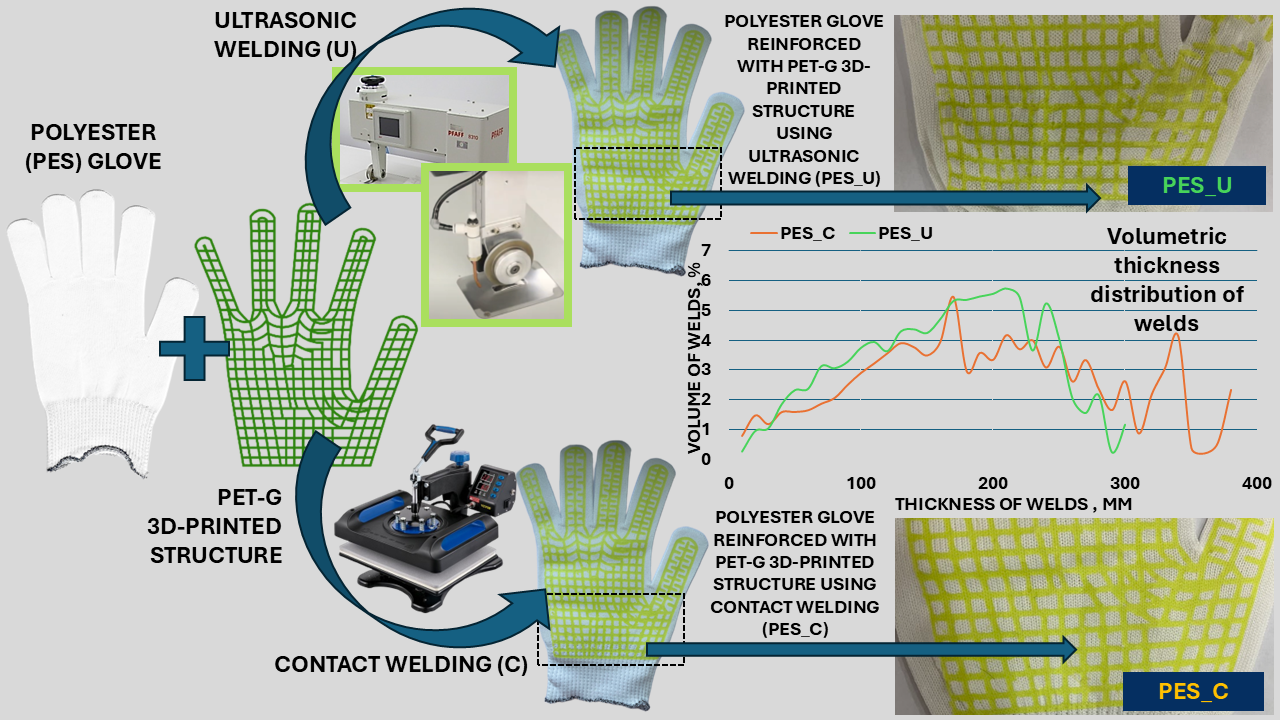
Extended Study on the Development of 3D-Printed Overlay Structures in Protective Gloves Using Ultrasonic and Contact Welding with Additional Fatigue Bending Tests

 , , , and
Abstract
1. Introduction
2. Materials and Methods
2.1. Welding Methods
- Material type and thickness;
- Vibration frequency and amplitude;
- Welding time and pressure.
2.1.1. Contact Welding Method
- ▪
- Placing the knitted fabric (PA, PES, or cotton) on a stationary table.
- ▪
- Positioning the PET-G overlay structure on the fabric.
- ▪
- Covering the assembly with baking paper to prevent contamination.
- ▪
- Applying the heated platen and pressing with a clamp for 35 s.
- ▪
- Adjusting the temperature by substrate: 160 °C for cotton, PA and PES.
2.1.2. Ultrasonic Welding Method
2.2. X-Ray Microtomography (Micro-CT)
2.3. Bending Fatigue Test
- 0—no cracks;
- A—cracks on the surface or in the top layer, without delamination from the substrate.
3. Results
3.1. Ultrasonic and Contact Welding on X-Ray Microtomography (Micro-CT)
3.1.1. Analysis of Surface Contact Area and Surface Development of Welds
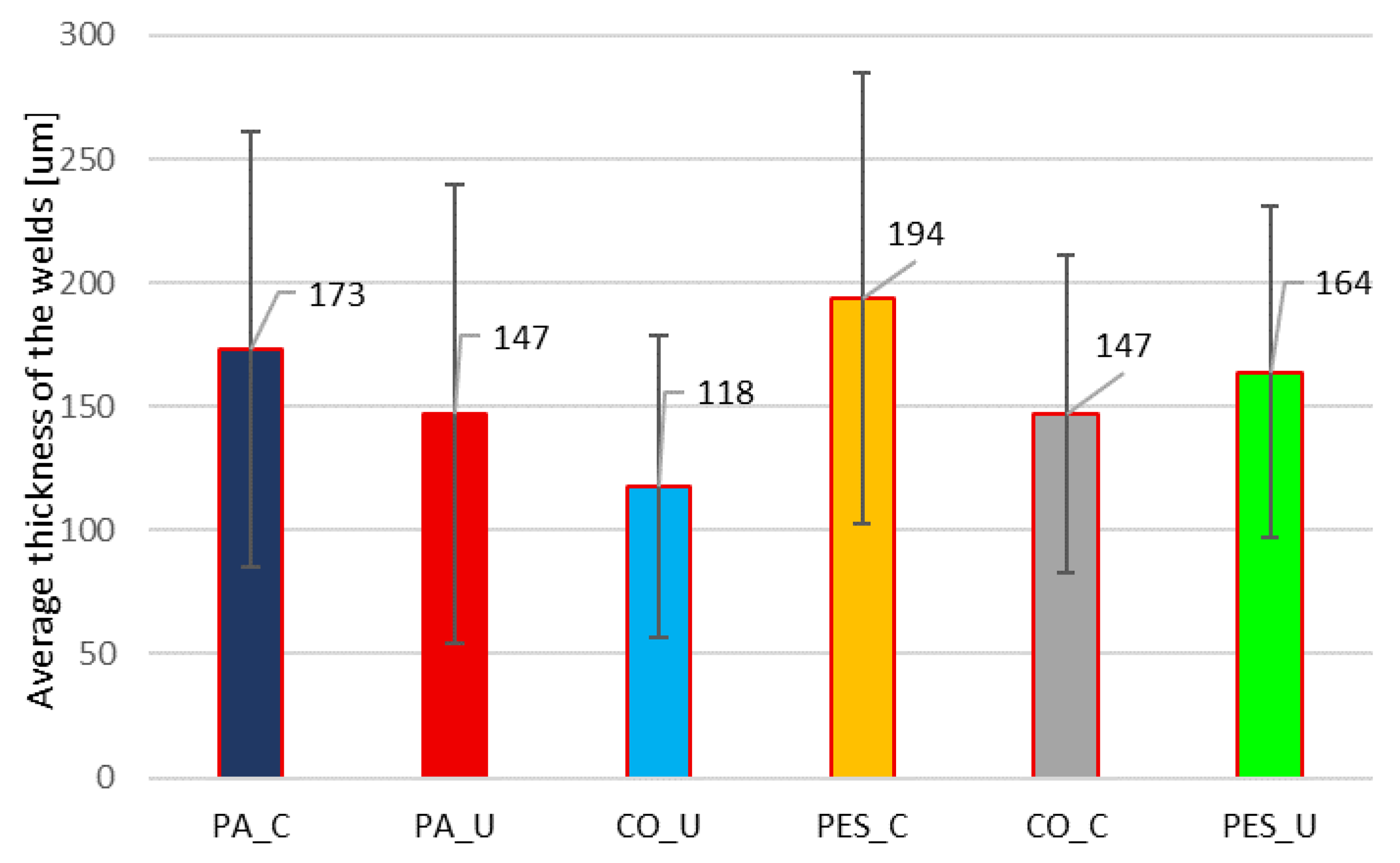
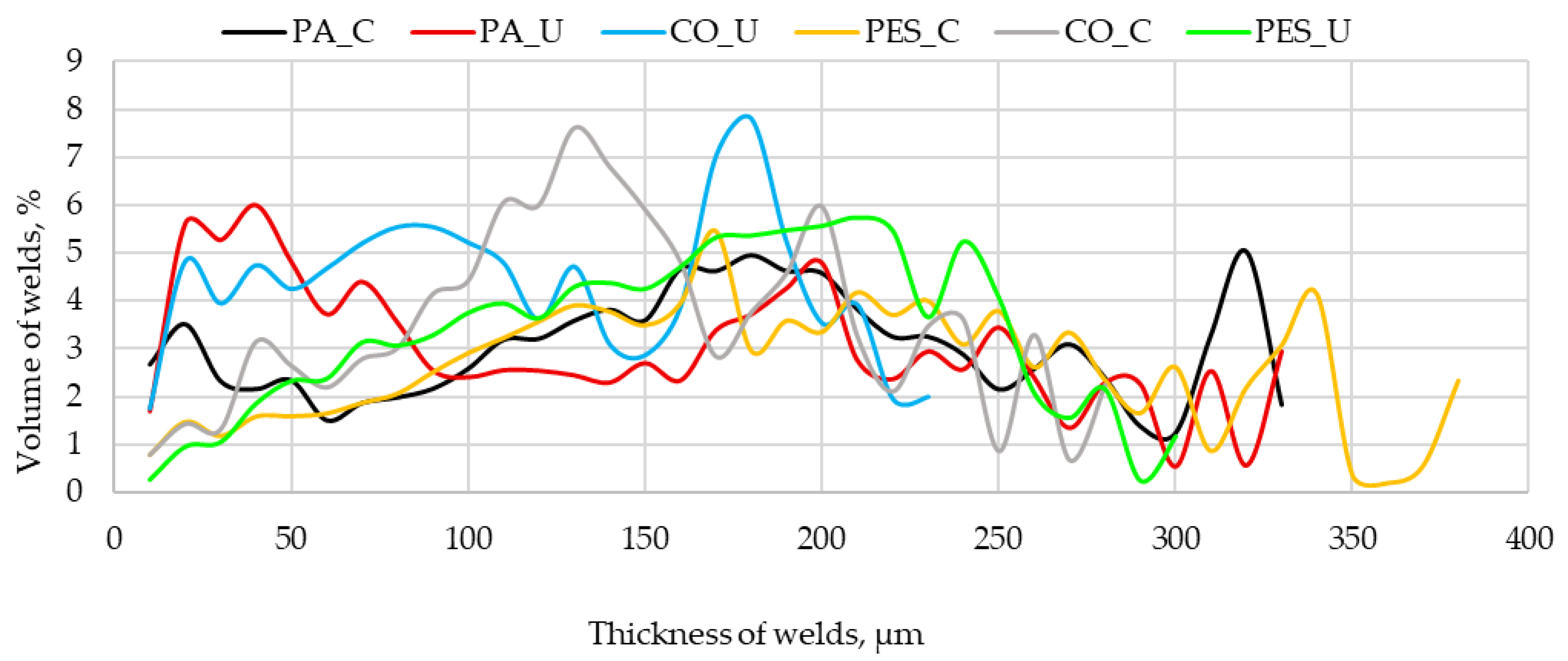
3.1.2. Analysis of Weld Thickness Distributions
3.2. Bending Fatigue Test
4. Discussion
5. Conclusions
Supplementary Materials
Author Contributions
Funding
Institutional Review Board Statement
Informed Consent Statement
Data Availability Statement
Acknowledgments
Conflicts of Interest
References
- Dolez, P.I.; Marsha, S.; McQueen, R.H. Fibers and Textiles for Personal Protective Equipment: Review of Recent Progress and Perspectives on Future Developments. Textiles 2022, 2, 349–381. [Google Scholar] [CrossRef]
- Shi, J.; Li, H.; Xu, F.; Tao, X. Materials in Advanced Design of Personal Protective Equipment: A Review. Mater. Today Adv. 2021, 12, 100171–100181. [Google Scholar] [CrossRef]
- Dolez, P.I.; Vu-Khanh, T. Recent Developments and Needs in Materials Used for Personal Protective Equipment and Their Testing. Int. J. Occup. Saf. Ergon. 2009, 15, 347–362. [Google Scholar] [CrossRef]
- Gilewicz, P.; Cichocka, A.; Frydrych, I. Underwear for Protective Clothing Used by Foundry Workers. Fibres Text. East. Eur. 2016, 24, 96–99. [Google Scholar] [CrossRef]
- Frydrych, I.; Cichocka, A.; Adamczyk, P.; Dominiak, J. Comparative Analysis of the Thermal Insulation of Traditional and Newly Designed Protective Clothing for Foundry Workers. Polymers 2016, 8, 348. [Google Scholar] [CrossRef]
- Kropidłowska, P.; Jurczyk-Kowalska, M.; Irzmańska, E.; Płociński, T.; Laskowski, R. Effects of Composite Coatings Functionalized with Material Additives Applied on Textile Materials for Cut Resistant Protective Gloves. Materials 2021, 14, 6876. [Google Scholar] [CrossRef]
- Żyłka, E.; Irzmańska, E.; Saramak, J.; Jurczyk-Kowalska, M. Functional 3D-Printed Polymeric Materials with Metallic Reinforcement for Use in Cut-Resistant Gloves. Materials 2024, 17, 90. [Google Scholar] [CrossRef]
- Kropidłowska, P.; Irzmańska, E.; Sawicki, J. Preliminary Experimental Investigation of Cut-Resistant Materials: A Biomimetic Perspective. Autex Res. J. 2022, 22, 411–418. [Google Scholar] [CrossRef]
- Karim, N.; Afroj, S.; Lloyd, K.; Oaten, L.C.; Andreeva, D.V.; Carr, C.; Farmery, A.D.; Kim, I.D.; Novoselov, K.S. Sustainable Personal Protective Clothing for Healthcare Applications: A Review. ACS Nano 2020, 14, 12313–12340. [Google Scholar] [CrossRef]
- Brisbine, B.R.; Radcliffe, C.R.; Jones, M.L.H.; Stirling, L.; Coltman, C.E. Does the Fit of Personal Protective Equipment Affect Functional Performance? A Systematic Review across Occupational Domains. PLoS ONE 2022, 17, e0278174. [Google Scholar] [CrossRef]
- Irzmańska, E.; Cichocka, A.; Puszkarz, A.K.; Olejnik, O.; Kropidłowska, P. A New Approach to Implementing 3D-Printed Material Structures for Protective Gloves with the Use of Ultrasonic and Contact Welding Processes: A Preliminary Study. Materials 2024, 17, 5404. [Google Scholar] [CrossRef]
- Shi, W.; Little, T. Mechanisms of ultrasonic joining of textile materials Available to Purchase. Int. J. Cloth. Sci. Technol. 2000, 12, 331–350. [Google Scholar] [CrossRef]
- Yıldız, E.Z. The Effect of Fabric Structure and Ultrasonic Welding Process on the Performance of the Spunlace Surgical Gowns. Tekst. Konfeksiyon 2023, 33, 45–55. [Google Scholar] [CrossRef]
- Jevšnik, S.; Eryürük, S.H.; Kalaoğlu, F.; Kayaoğlu, B.K.; Komarkova, P.; Golombikova, V.; Stjepanovič, Z. Seam Properties of Ultrasonic Welded Multilayered Textile Materials. J. Ind. Text. 2017, 46, 1193–1211. [Google Scholar] [CrossRef]
- Quintino, L. Introduction to Joining Methods in Medical Applications. In Joining and Assembly of Medical Materials and Devices; Elsevier Ltd.: Amsterdam, The Netherlands, 2013; pp. 28–46. [Google Scholar]
- Qiu, J.; Zhang, G.; Sakai, E.; Liu, W.; Zang, L. Thermal Welding by the Third Phase between Polymers: A Review for Ultrasonic-weld Technology Developments. Polymers 2020, 12, 759. [Google Scholar] [CrossRef]
- Harrabi, L.; Dolez, P.I.; Vu-Khanh, T.; Lara, J.; Tremblay, G.; Nadeau, S.; Larivière, C. Characterization of protective gloves stiffness: Development of a multidirectional deformation test method. Saf. Sci. 2008, 46, 1025–1036. [Google Scholar] [CrossRef]
- Hur, P.; Rosengren, K.S.; Horn, G.P.; Smith, D.L.; Hsiao-Wecksler, E.T. Effect of Protective Clothing and Fatigue on Functional Balance of Firefighters, Human Performance and Comfort in Protective Clothing and Sportswear. J. Ergon. 2013, S2, 1–7. [Google Scholar] [CrossRef]
- Jafferson, J.M.; Pattanashetti, S. Use of 3D printing in production of personal protective equipment (PPE)—A review. Mater. Today Proc. 2021, 46, 1247–1260. [Google Scholar] [CrossRef]
- Bharti, N.; Singh, S. COVID-19: The Use of 3D Printing to Address PPE Short age during a Pandemic—A Safety Perspective. ACS Chem. Health Saf. 2020, 27, 335–340. [Google Scholar] [CrossRef] [PubMed]
- Luchini, K.; Sloan, S.N.B.; Mauro, R.; Sargsyan, A.; Newman, A.; Persaud, P.; Hawkins, D.; Wolff, D.; Staudinger, J.; Creamer, B.A. Sterilization and sanitizing of 3D-printed personal protective equipment using polypropylene and a Single Wall design. 3D Print. Med. 2021, 7, 16. [Google Scholar] [CrossRef]
- Agarwal, R. The personal protective equipment fabricated via 3D printing technology during COVID-19. Ann. 3D Print. Med. 2022, 5, 100042–100049. [Google Scholar] [CrossRef]
- Khanlari, P.; Ghasemi, F.; Heidarimoghdam, R. Protective gloves, hand grip strength, and dexterity tests: A comprehensive study. Heliyon 2023, 9, e13592. [Google Scholar] [CrossRef]
- Sorock, G.S.; Lombardi, D.A.; Peng, D.K.; Hauser, R.; Eisen, E.A.; Herrick, R.F.; Mittleman, M.A. Glove Use and the Relative Risk of Acute Hand Injury: A Case-Crossover Study. J. Occup. Environ. Hyg. 2010, 1, 182–190. [Google Scholar] [CrossRef]
- Lim, J.; Cho, J.; Kim, J.; Kang, S. Workers’ Injury Risks Focusing on Body Parts in Reinforced Concrete Construction Projects. Int. J. Environ. Res. Public Health 2024, 21, 1655. [Google Scholar] [CrossRef]
- Cichocka, A.; Frydrych, I.; Zawadzki, P.; Kaczmarek, Ł.; Irzmanska, E.; Kropidłowska, P. Basalt-Based Composite with Reduced Graphene Oxide (rGO)—Preliminary Study on Anti-Cut Properties. Materials 2025, 18, 5513. [Google Scholar] [CrossRef]
- Ehrmann, A. Adhesion of New Thermoplastic Materials Printed on Textile Fabrics. Tekstilec 2023, 66, 57–63. [Google Scholar] [CrossRef]
- Han, Y.; Yun, C. Effect of substrate fabric characteristics on the peel strength of 3D-printed composite fabrics. Fash. Text. 2024, 11, 40. [Google Scholar] [CrossRef]
- Silvestre, R.; Garcia-Breijo, E.; Ferri, J.; Montava, I.; Bou-Belda, E. The Influence of the Structure of Cotton Fabrics on the Adhesion of Conductive Polymer Printed with 3D Printing Technology. Polymers 2023, 15, 668. [Google Scholar] [CrossRef]
- PN-EN-ISO 7854:2002; Rubber- or Plastics-Coated Fabrics—Determination of Resistance to Damage by Flexing. Polish Committee for Standardization: Warsaw, Poland, 2002.
- Renard, M.; Machnowski, W.; Puszkarz, A.K. Assessment of Thermal Performance of Phase-Change Material-Based Multilayer Protective Clothing Exposed to Contact and Radiant Heat. Appl. Sci. 2023, 13, 9447. [Google Scholar] [CrossRef]
- Pabjańczyk-Wlazło, E.K.; Puszkarz, A.K.; Bednarowicz, A.; Tarzyńska, N.; Sztajnowski, S. The Influence of Surface Modification with Biopolymers on the Structure of Melt-Blown and Spun-Bonded Poly(Lactic Acid) Nonwovens. Materials 2022, 15, 7097. [Google Scholar] [CrossRef] [PubMed]
- Wankhede, B.; Bisaria, H.; Ojha, S.; Dakre, V.S. A review on cotton fibre-reinforced polymer composites and their applications. Proc. Inst. Mech. Eng. Part L J. Mater. Des. Appl. 2022, 237, 1347–1362. [Google Scholar] [CrossRef]
- Zhou, Y.; Fan, M.; Chen, L. Interface and bonding mechanisms of plant fibre composites: An overview. Compos. Part B 2016, 101, 31–45. [Google Scholar] [CrossRef]
- Li, M.; Mao, A.; Guan, Q.; Saiz, E. Nature-inspired adhesive systems. Chem. Soc. Rev. 2024, 53, 8240–8305. [Google Scholar] [CrossRef]
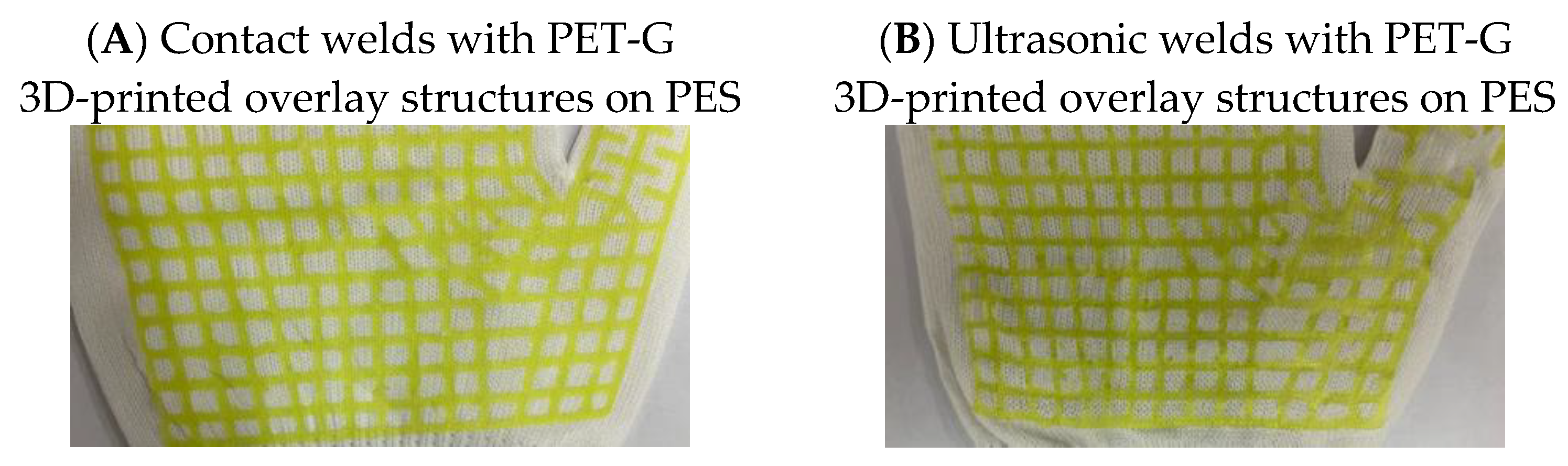

| Knit Fabric Description | Knit Fabric Weight [g/m2] | Weave |
|---|---|---|
| PA | 231.9 | Jersey (resultant yarn count: 50.01 tex (3 ends of 75 den/2)) |
| PES | 222.1 | Jersey (resultant yarn count: 50.01 tex (3 ends of 75 den/2)) |
| Cotton | 201.8 | Jersey (resultant yarn count: 50.01 tex (3 ends of 75 den/2)) |
| Substrates_Welds [C—Contact] [U—Ultrasonic] | Contact Surface Area of Welds Substrates [mm2] | Surface Development [%] |
|---|---|---|
| PA_C | 48.72 | 903 |
| PA_U | 36.87 | 662 |
| CO_U | 10.95 | 627 |
| CO_C | 27.54 | 696 |
| PES_C | 26.90 | 539 |
| PES_U | 20.27 | 428 |
| Sample of Knit Fabric | 3D-Printed Overlay Structures Welds on Knit Fabric Before Bending Fatigue Test | 3D-Printed Overlay Structures Welds on Knit Fabric After Bending Fatigue Test | Number of Cycles with No Cracks |
|---|---|---|---|
| PA_C | 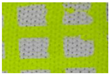 | 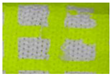 | 300 |
| PA_U |  | 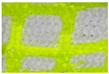 | 400 |
| CO_U | 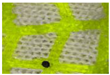 |  | 800 |
| CO_C | 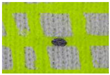 | 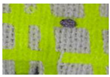 | 600 |
| PES_C | 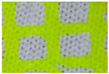 | 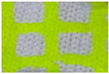 | 200 |
| PES_U | 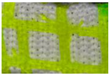 | 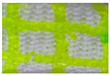 | 300 |
Disclaimer/Publisher’s Note: The statements, opinions and data contained in all publications are solely those of the individual author(s) and contributor(s) and not of MDPI and/or the editor(s). MDPI and/or the editor(s) disclaim responsibility for any injury to people or property resulting from any ideas, methods, instructions or products referred to in the content. |
© 2026 by the authors. Licensee MDPI, Basel, Switzerland. This article is an open access article distributed under the terms and conditions of the Creative Commons Attribution (CC BY) license.
Share and Cite
Cichocka, A.; Olejnik, O.; Irzmańska, E.; Kropidłowska, P.; Saramak, J. Extended Study on the Development of 3D-Printed Overlay Structures in Protective Gloves Using Ultrasonic and Contact Welding with Additional Fatigue Bending Tests. Materials 2026, 19, 700. https://doi.org/10.3390/ma19040700
Cichocka A, Olejnik O, Irzmańska E, Kropidłowska P, Saramak J. Extended Study on the Development of 3D-Printed Overlay Structures in Protective Gloves Using Ultrasonic and Contact Welding with Additional Fatigue Bending Tests. Materials. 2026; 19(4):700. https://doi.org/10.3390/ma19040700
Chicago/Turabian StyleCichocka, Agnieszka, Olga Olejnik, Emilia Irzmańska, Paulina Kropidłowska, and Jakub Saramak. 2026. "Extended Study on the Development of 3D-Printed Overlay Structures in Protective Gloves Using Ultrasonic and Contact Welding with Additional Fatigue Bending Tests" Materials 19, no. 4: 700. https://doi.org/10.3390/ma19040700
APA StyleCichocka, A., Olejnik, O., Irzmańska, E., Kropidłowska, P., & Saramak, J. (2026). Extended Study on the Development of 3D-Printed Overlay Structures in Protective Gloves Using Ultrasonic and Contact Welding with Additional Fatigue Bending Tests. Materials, 19(4), 700. https://doi.org/10.3390/ma19040700