Modeling and Mechanistic Analysis of Molten Pool Evolution and Energy Synergy in Laser–Cold Metal Transfer Hybrid Additive Manufacturing of 316L Stainless Steel


Highlights
- Developed a self-adaptive CMT arc heat source for laser–CMT hybrid modeling.
- Provided insight into orientation-governed thermal and flow field mechanisms.
- Revealed orientation-dependent molten pool flow and temperature evolution.
- Enables higher simulation fidelity in predicting complex multiphysics interactions for hybrid directed energy deposition.
- Provides practical guidelines for optimizing process parameters and scanning strategies to control deposition quality.
Abstract
1. Introduction
2. Experimental Design and Numerical Modeling
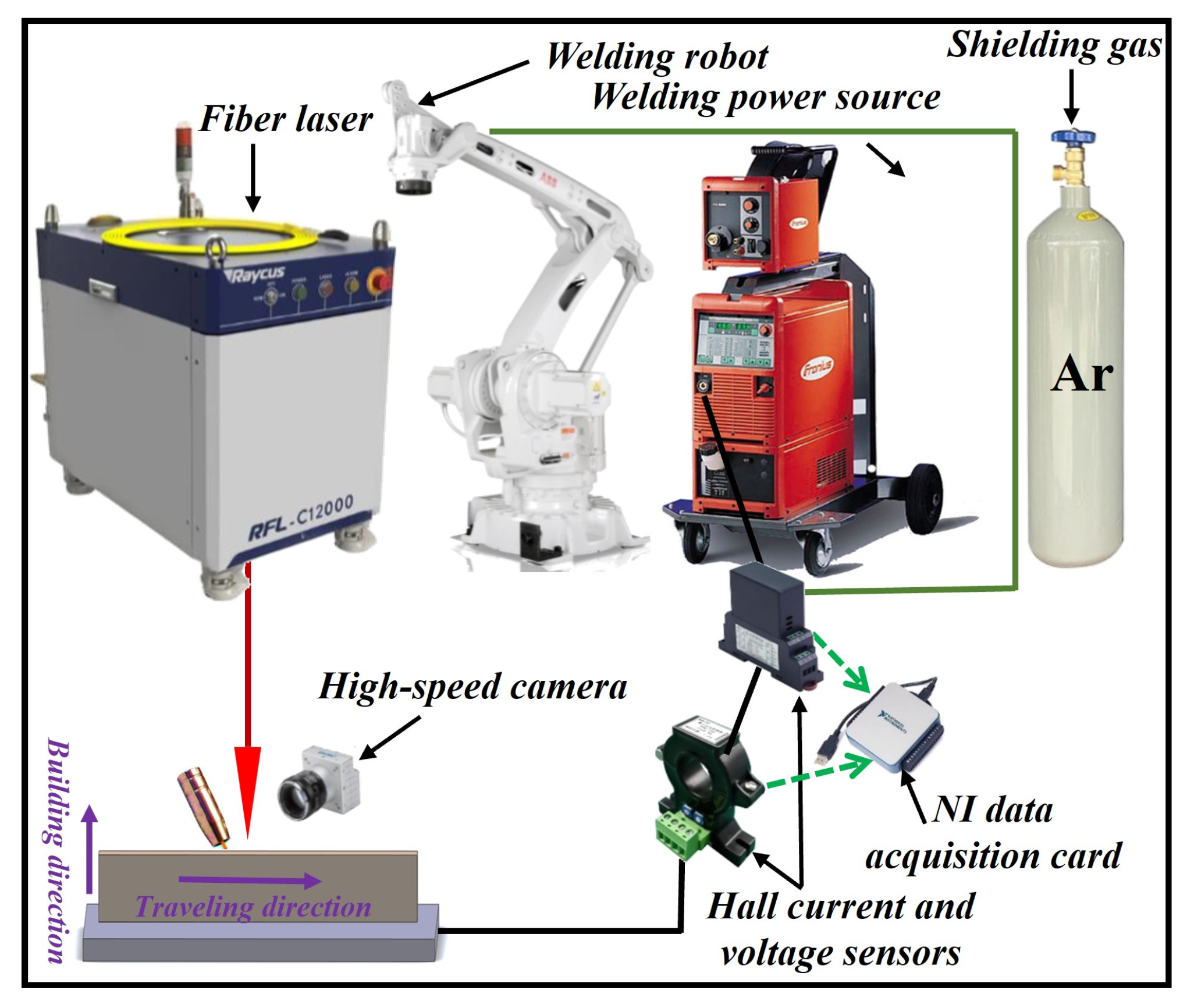
2.1. Experimental Setup
2.2. Numerical Model
2.2.1. Base Assumptions
- (1)
- The molten metal was modeled as an incompressible Newtonian fluid, with laminar flow conditions assumed.
- (2)
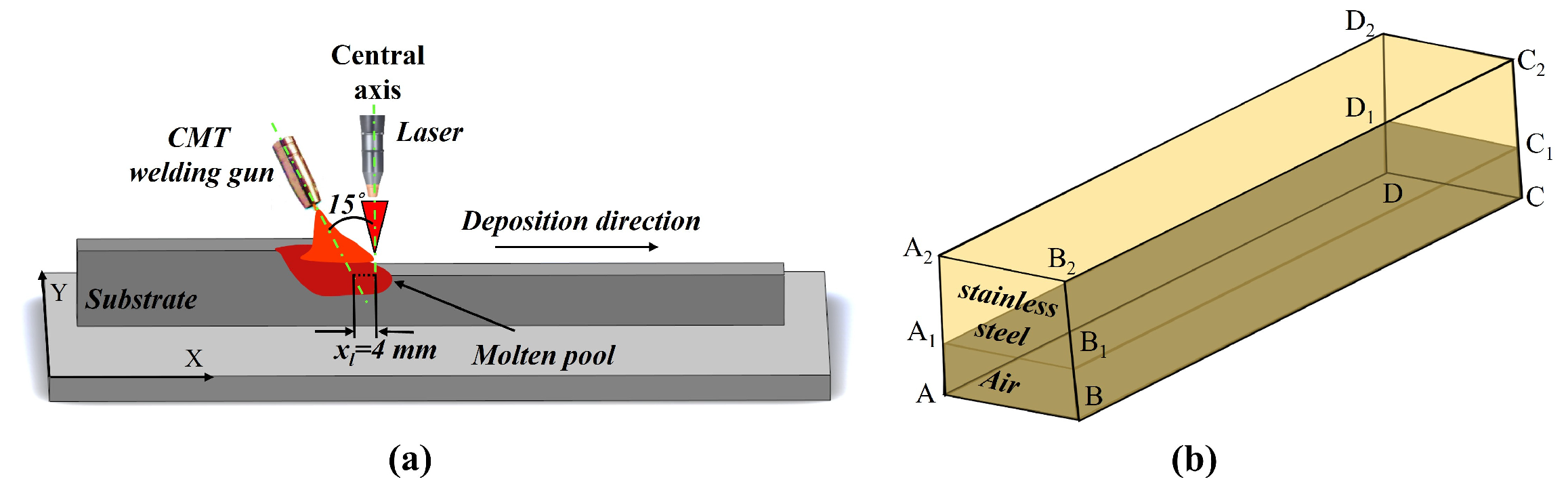
- The filler wire and substrate were considered to have the same chemical composition and thermophysical properties.
- (3)
- Effects of the shielding gas on the molten pool and keyhole formation were neglected.
- (4)
- Metal evaporation and spatter losses were not taken into account.
2.2.2. Governing Equations
- (1)
- Electromagnetic force (r ≠ 0)
- (2)
- Arc pressure
- (3)
- Recoil pressure
- (4)
- Surface tension
- (5)
- Buoyancy
- (6)
- Vapor shear stress
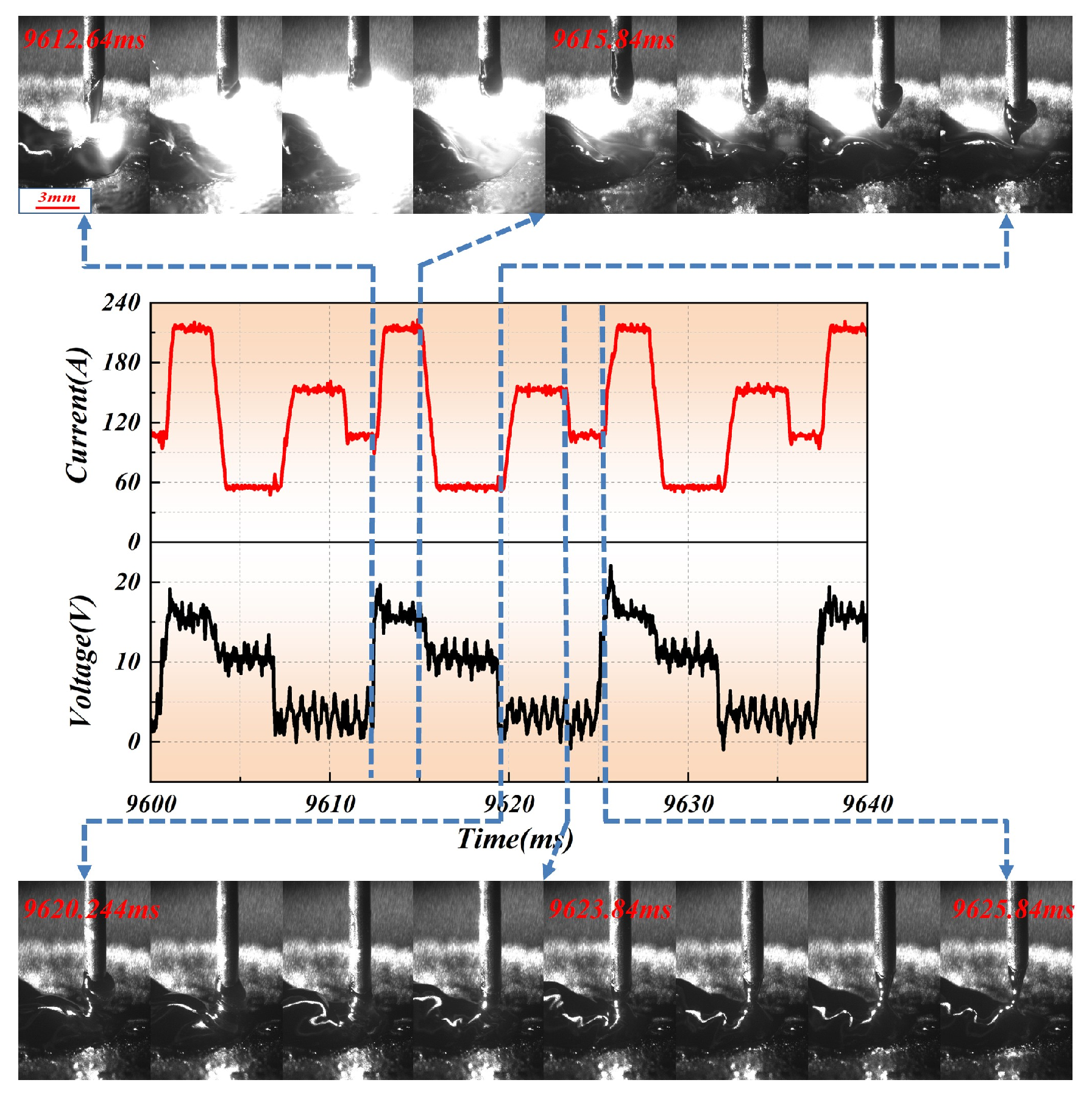
2.2.3. CMT Heat Source Model
2.2.4. Laser Heat Source Model

| Thermophysical Property | Value |
|---|---|
| Density (kg/m3) | 7680 |
| Thermal conductivity (W/(m·K)) | 29.4 |
| Viscosity (kg/(m·s)) | 5.9 × 10⁻³ |
| Surface tension (N/m) | 1.87 |
| Temperature coefficient of surface tension (N/(m·K)) | −0.4 × 10⁻³ |
| Specific heat (J/(kg·K)) | 722 |
| Latent heat of melting (J/kg) | 2.6 × 10⁵ |
| Latent heat of vaporization (J/kg) | 7.34 × 10⁶ |
| Liquidus temperature (K) | 1697.15 |
| Solidus temperature (K) | 1674.15 |
| Volume thermal expansion coefficient (1/K) | 4.48 × 10⁻⁵ |
| Heat transfer coefficient (W/(m2·K)) | 1.0 × 10⁻⁸ |
| Surface radiation coefficient | 0.4 |
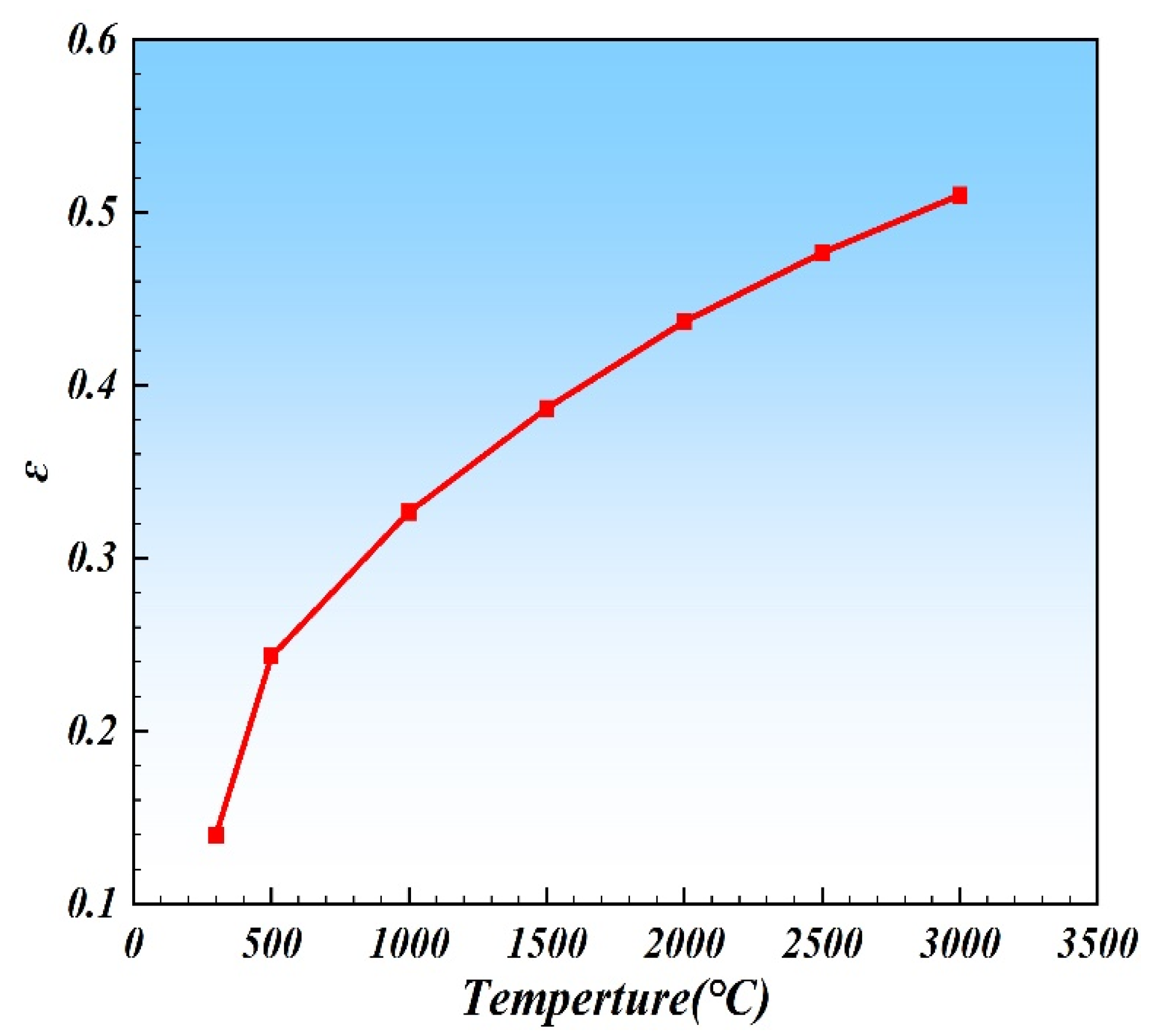
2.2.5. Material Properties and Boundary Conditions
- (1)
- Top surface
- (2)
- Symmetry plane
- (3)
- Other surfacesConvective and radiative heat losses were considered:
2.3. Experimental and Simulation Parameters
3. Results and Discussion
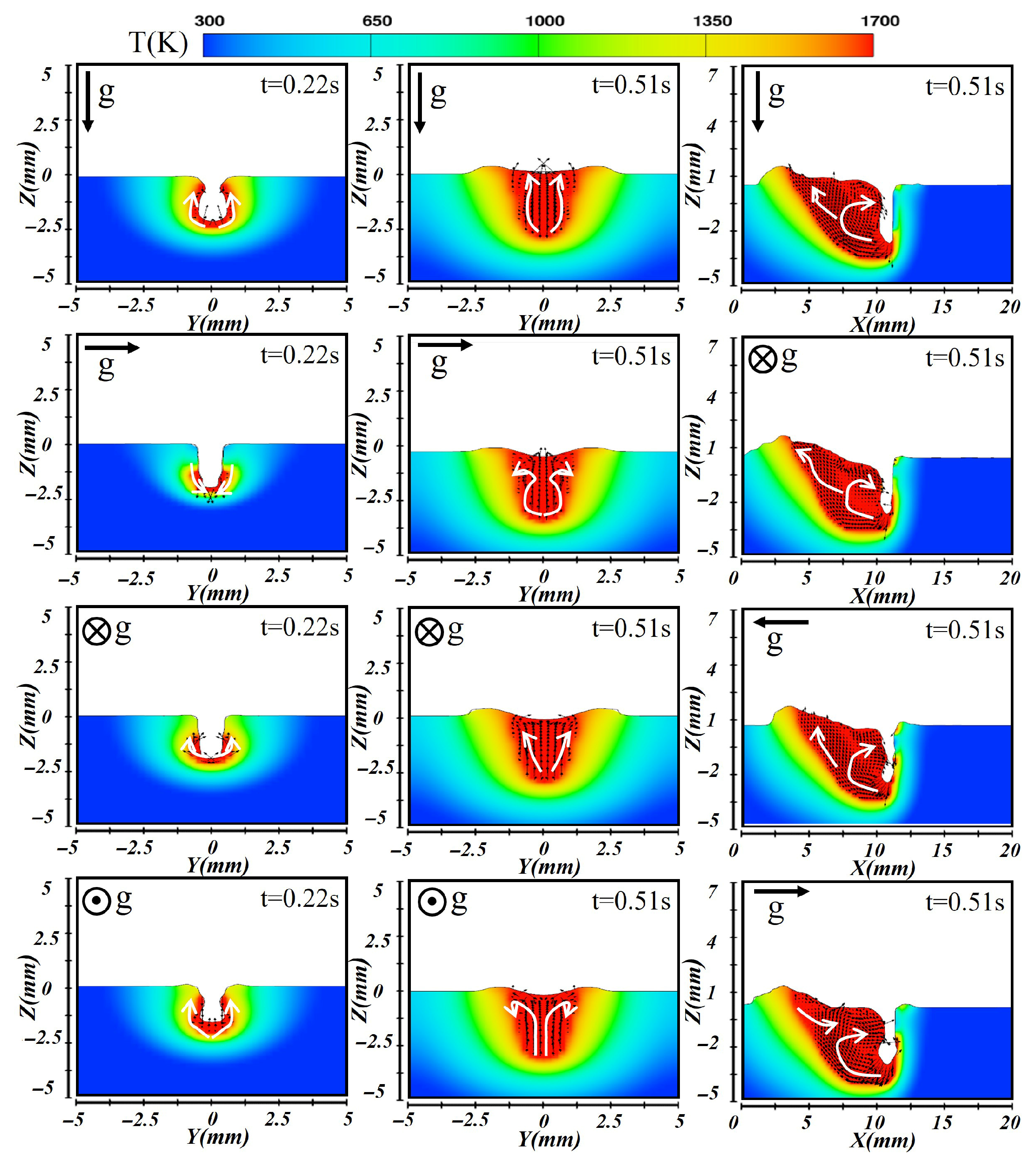
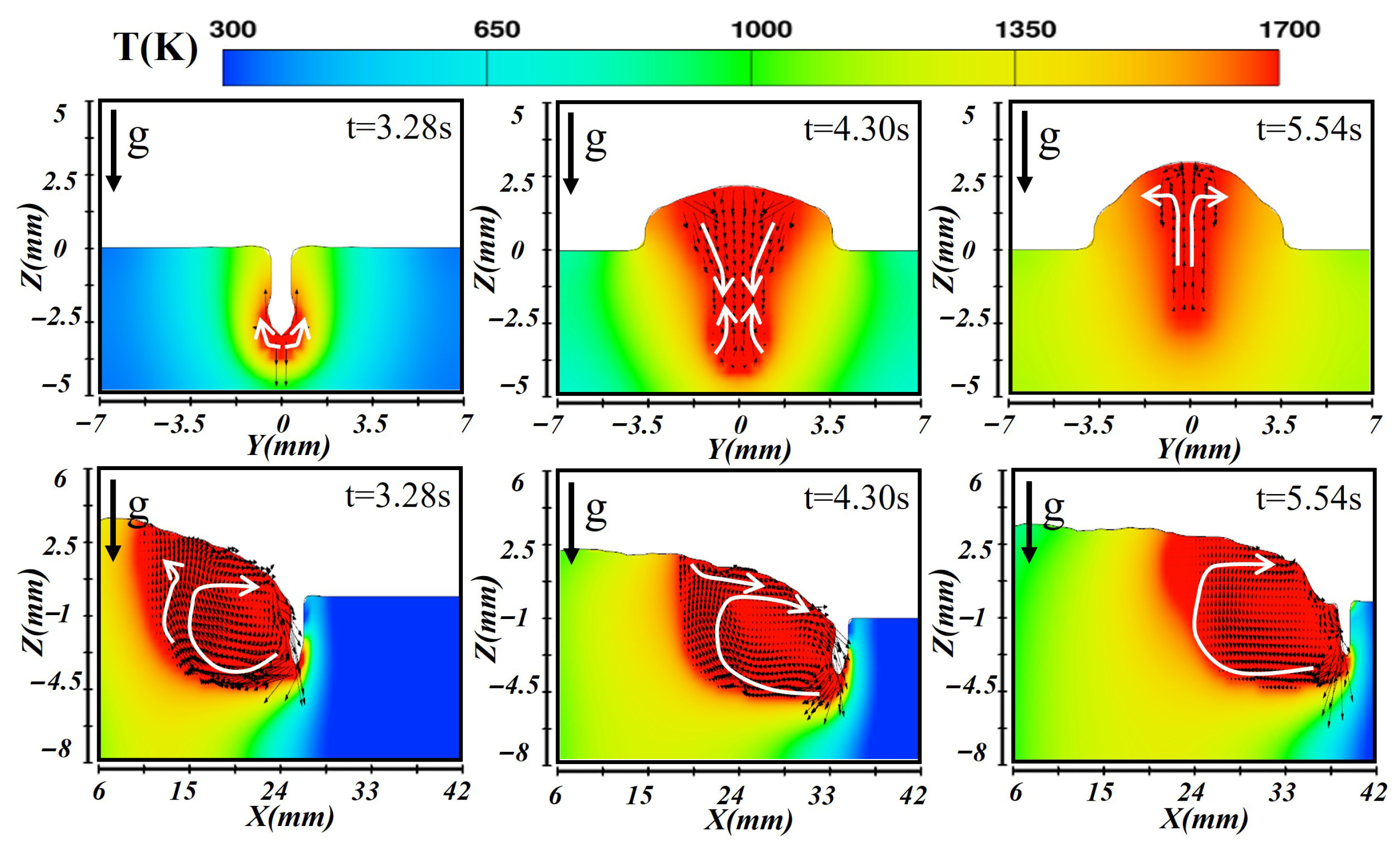
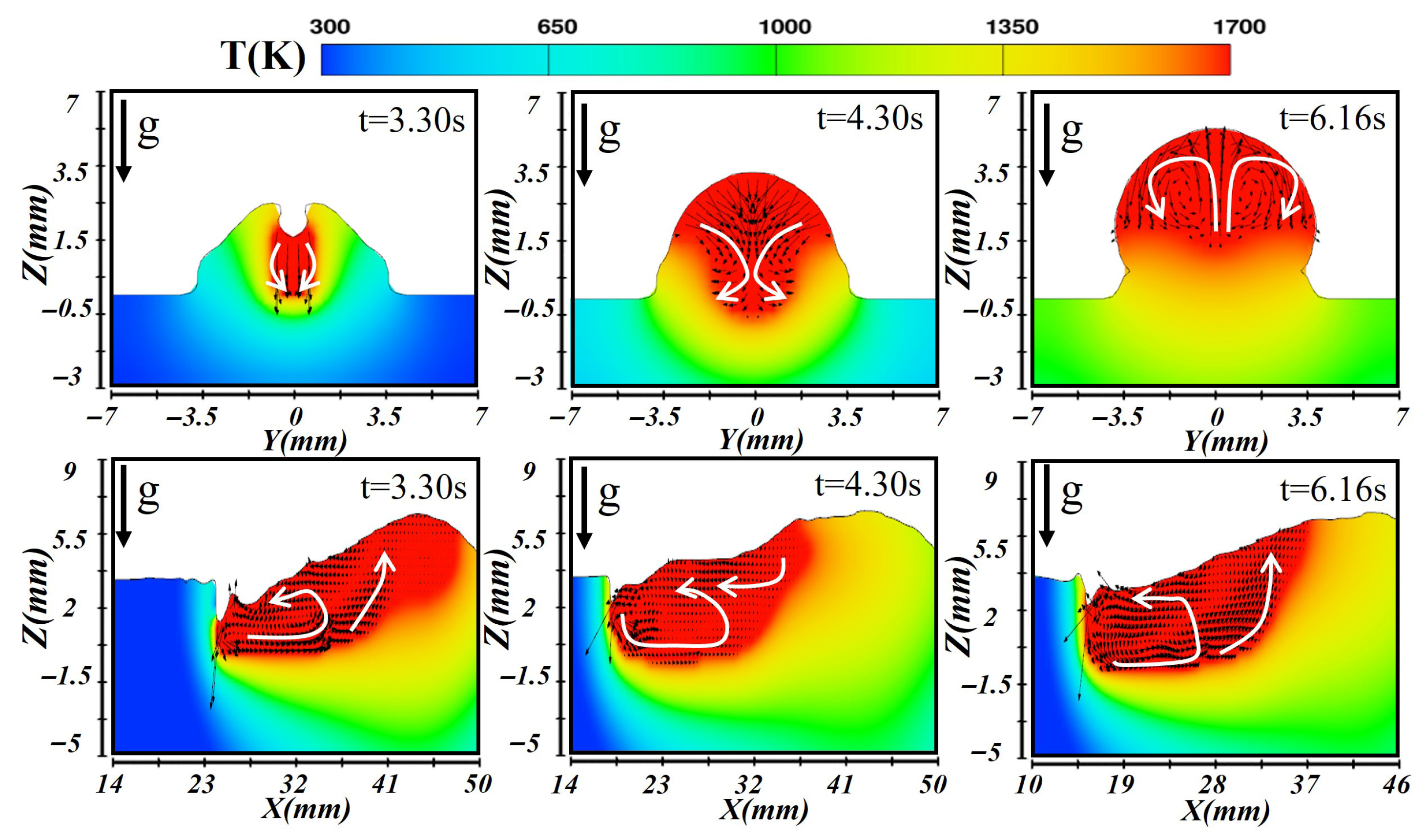
3.1. Molten Pool Dynamic Behavior in Horizontal Orientation
3.2. Molten Pool Dynamic Behavior in Transverse Orientation
3.3. Molten Pool Dynamic Behavior in Vertical-Up Orientation
3.4. Molten Pool Dynamic Behavior in Vertical-Down Orientation
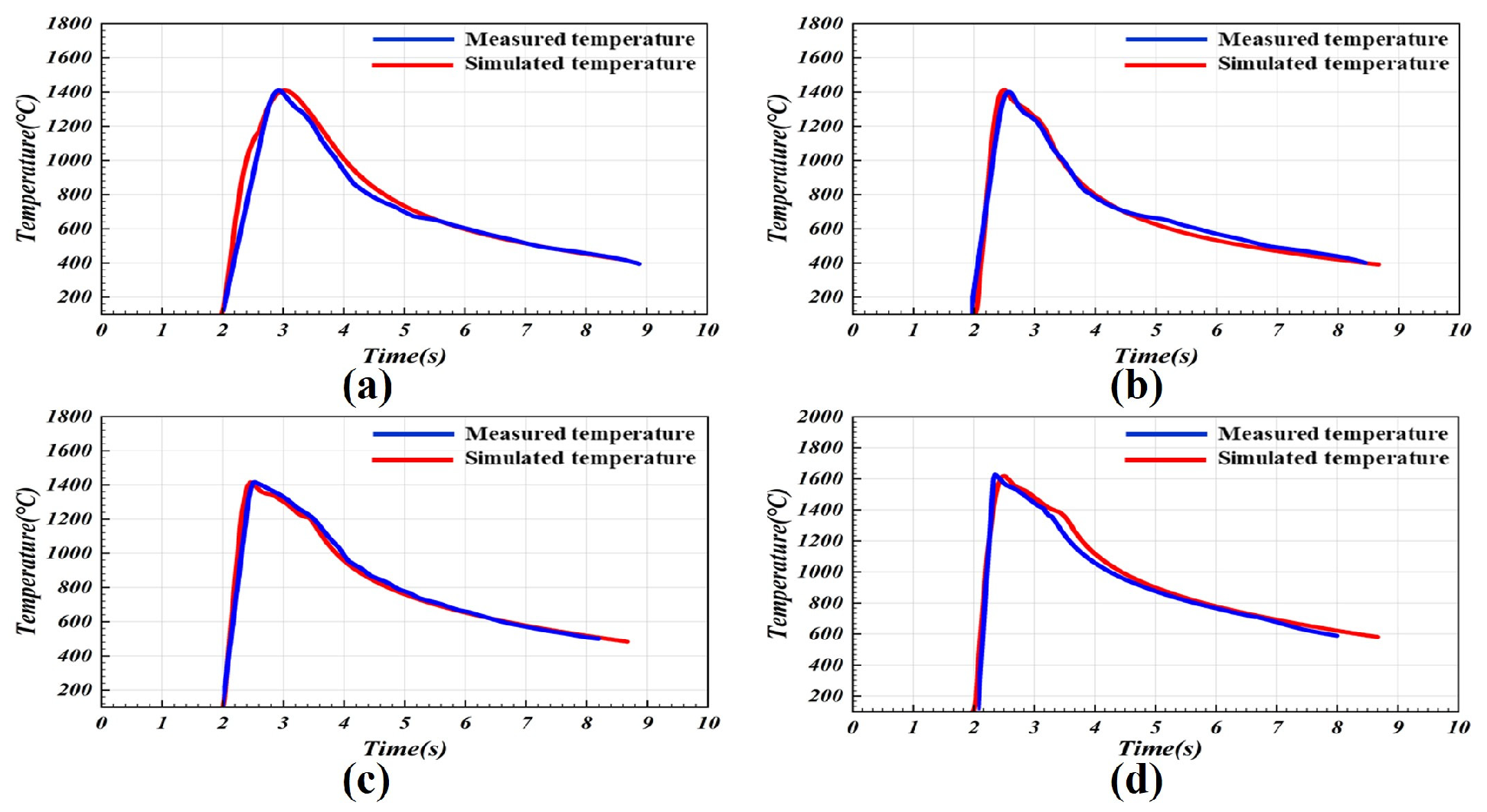
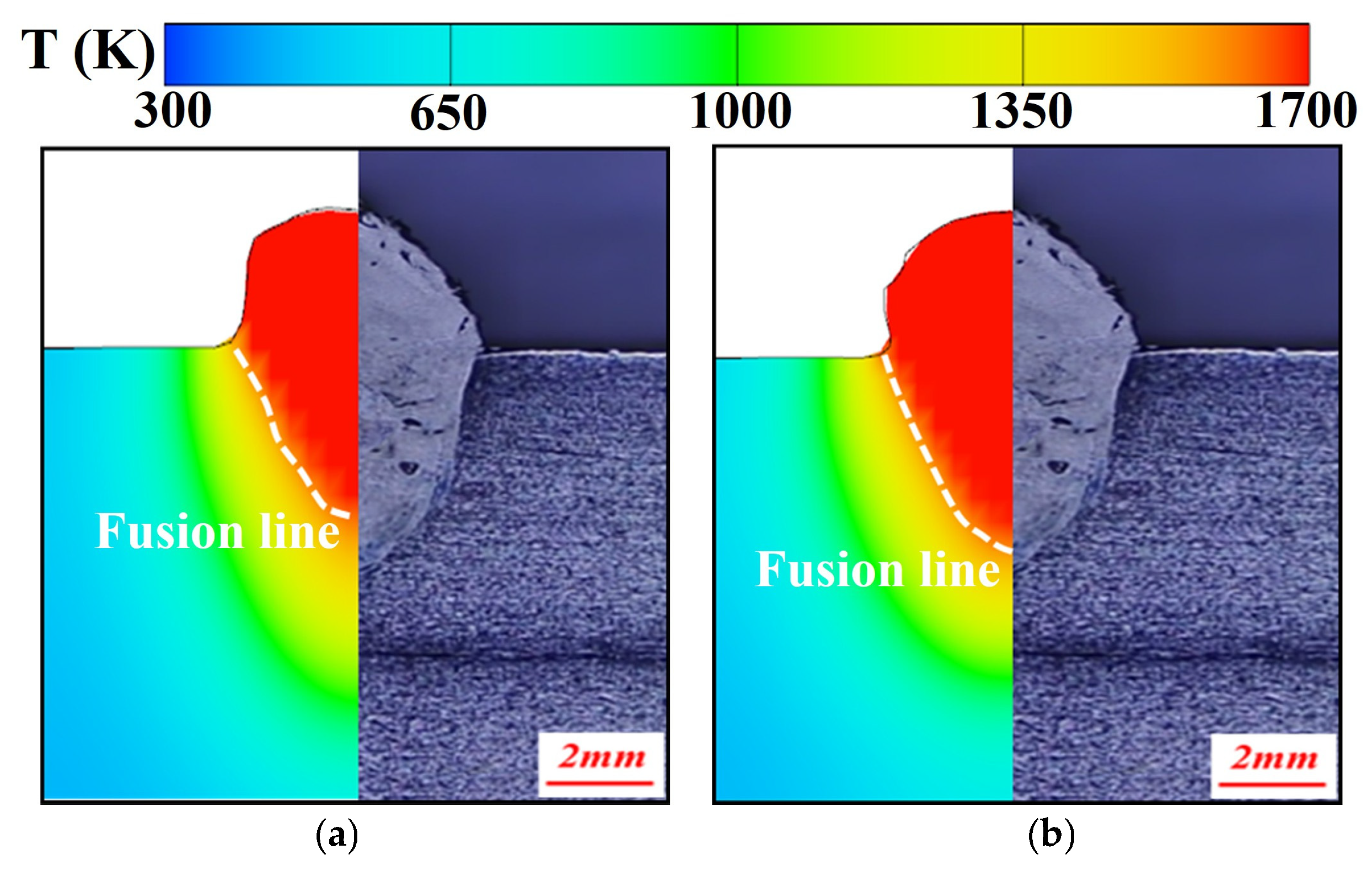
3.5. Model Validation
4. Conclusions
- (1)
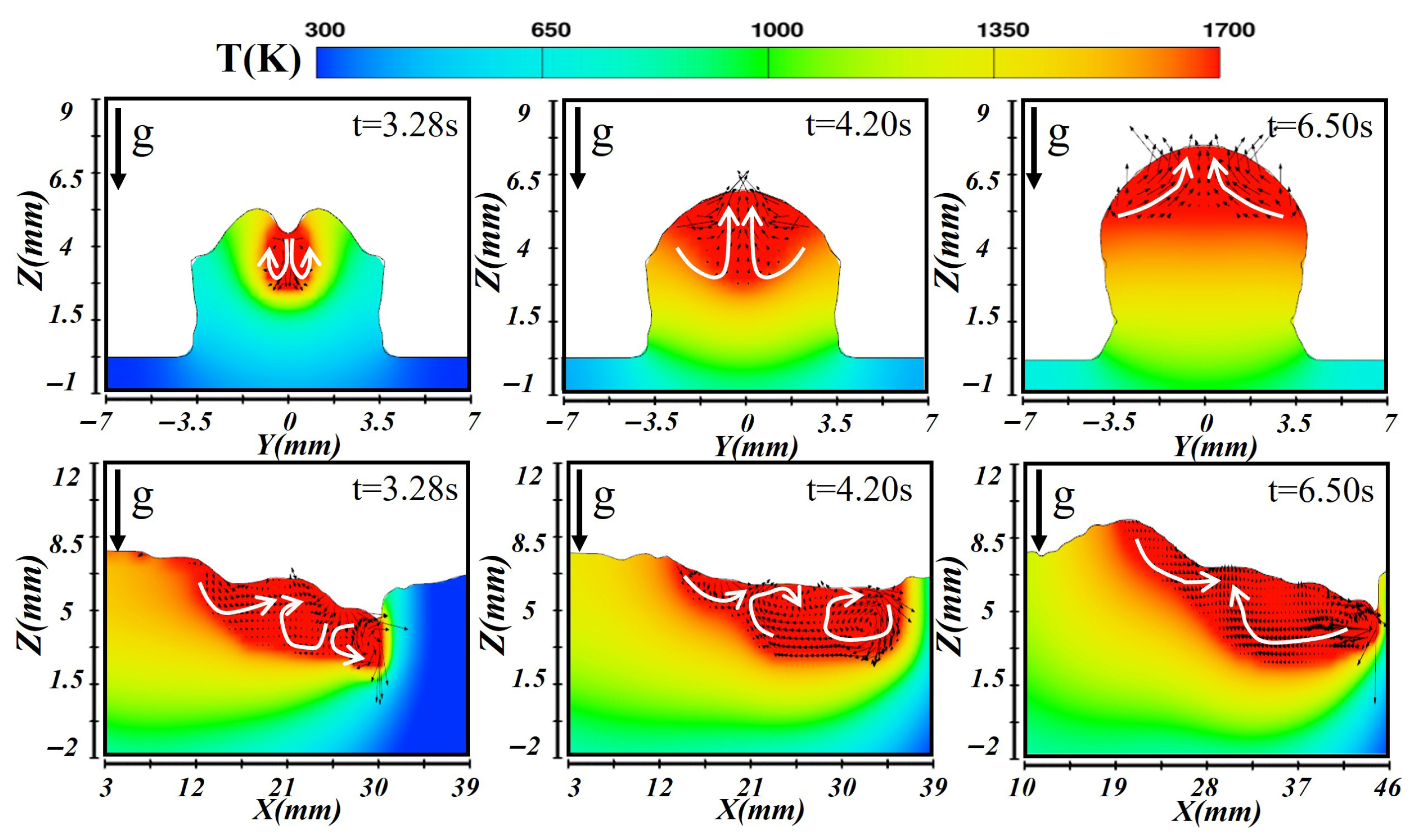
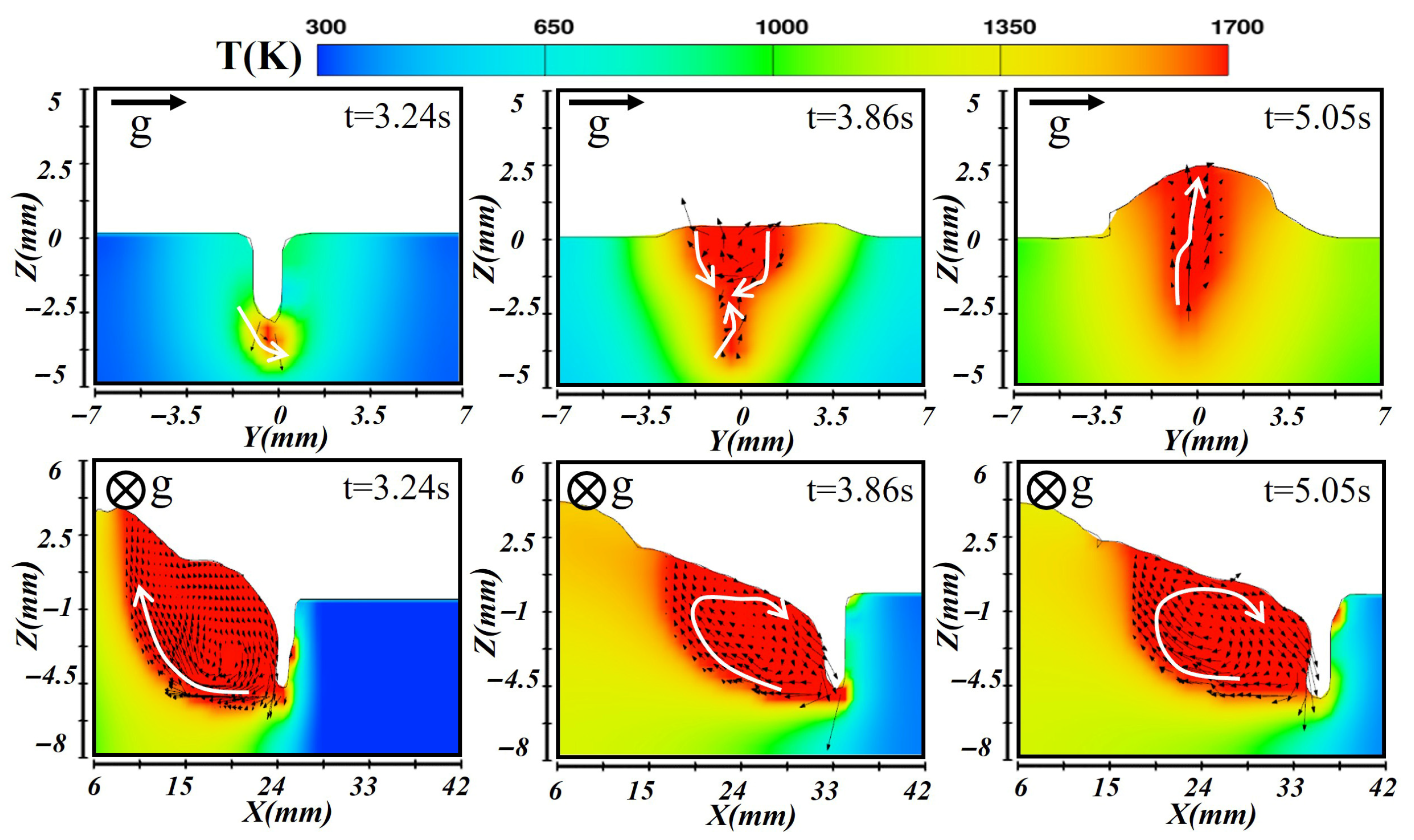
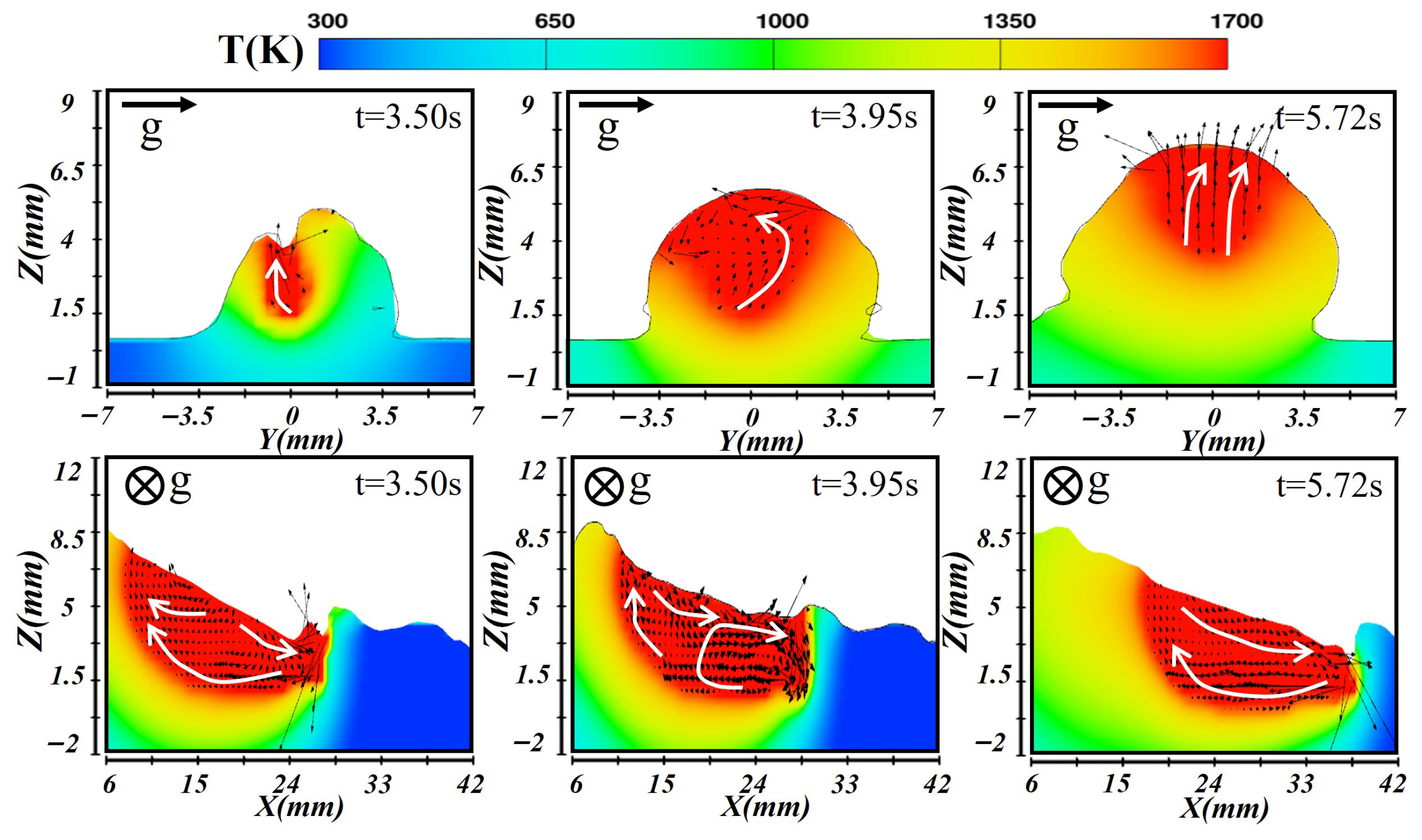
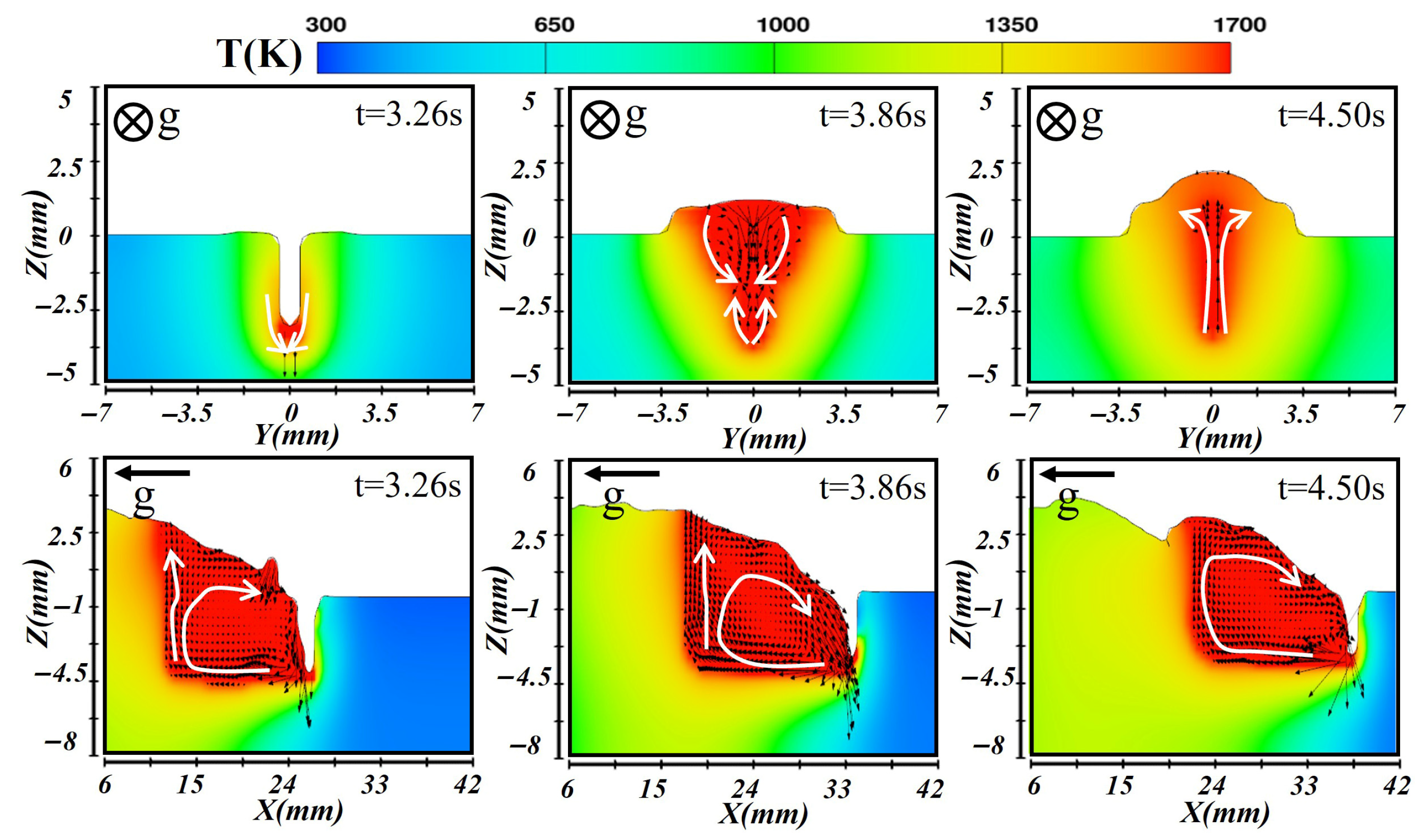
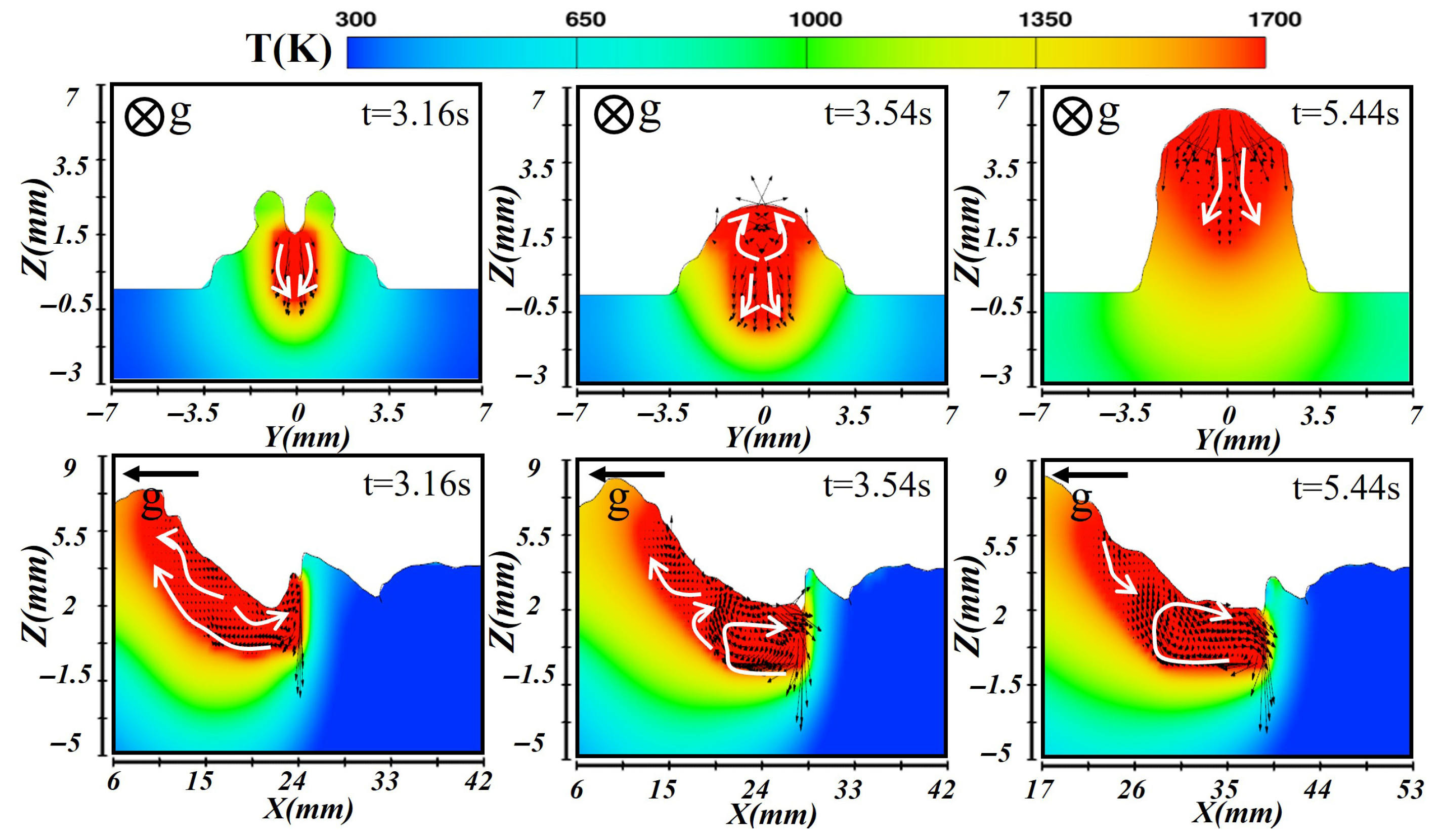
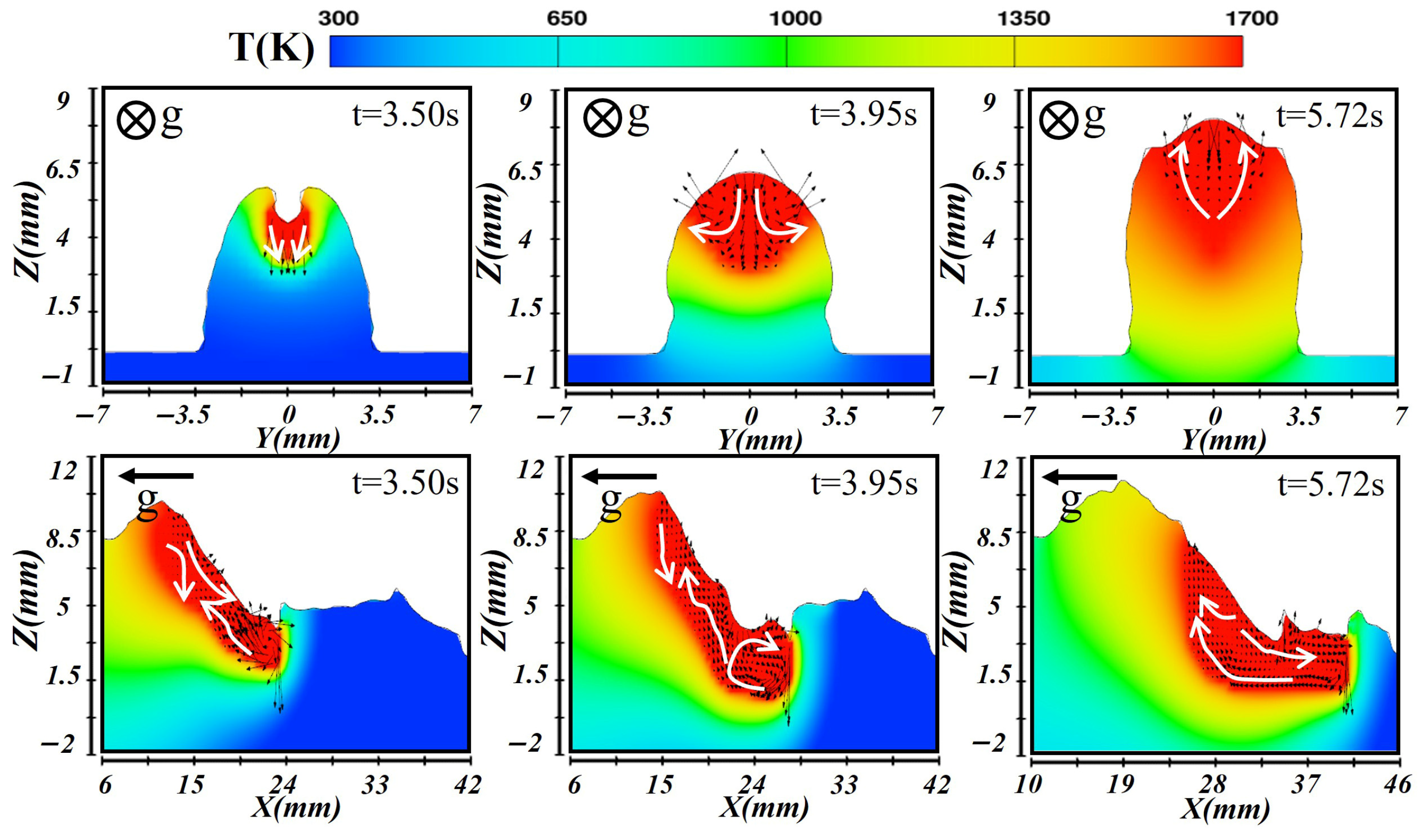
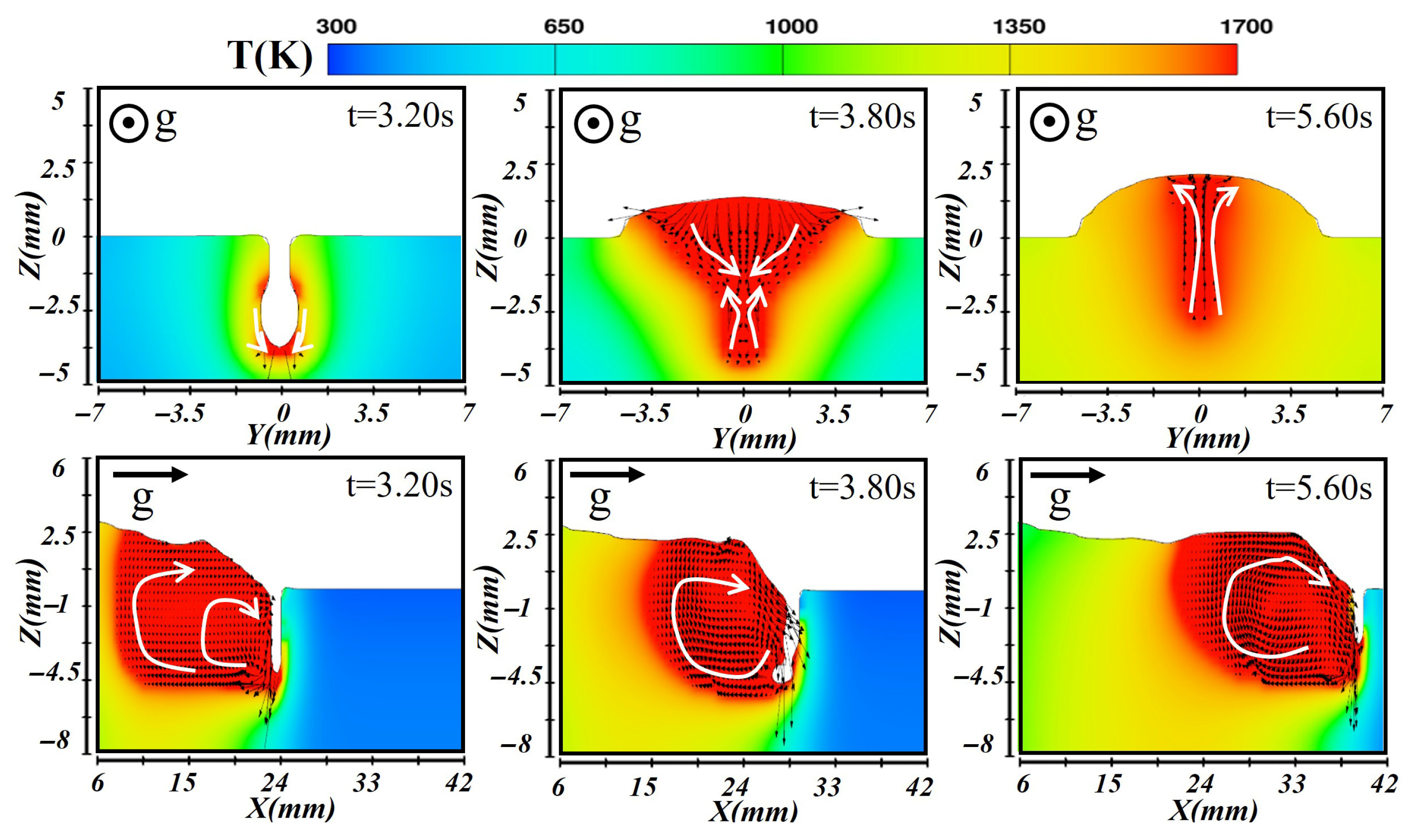
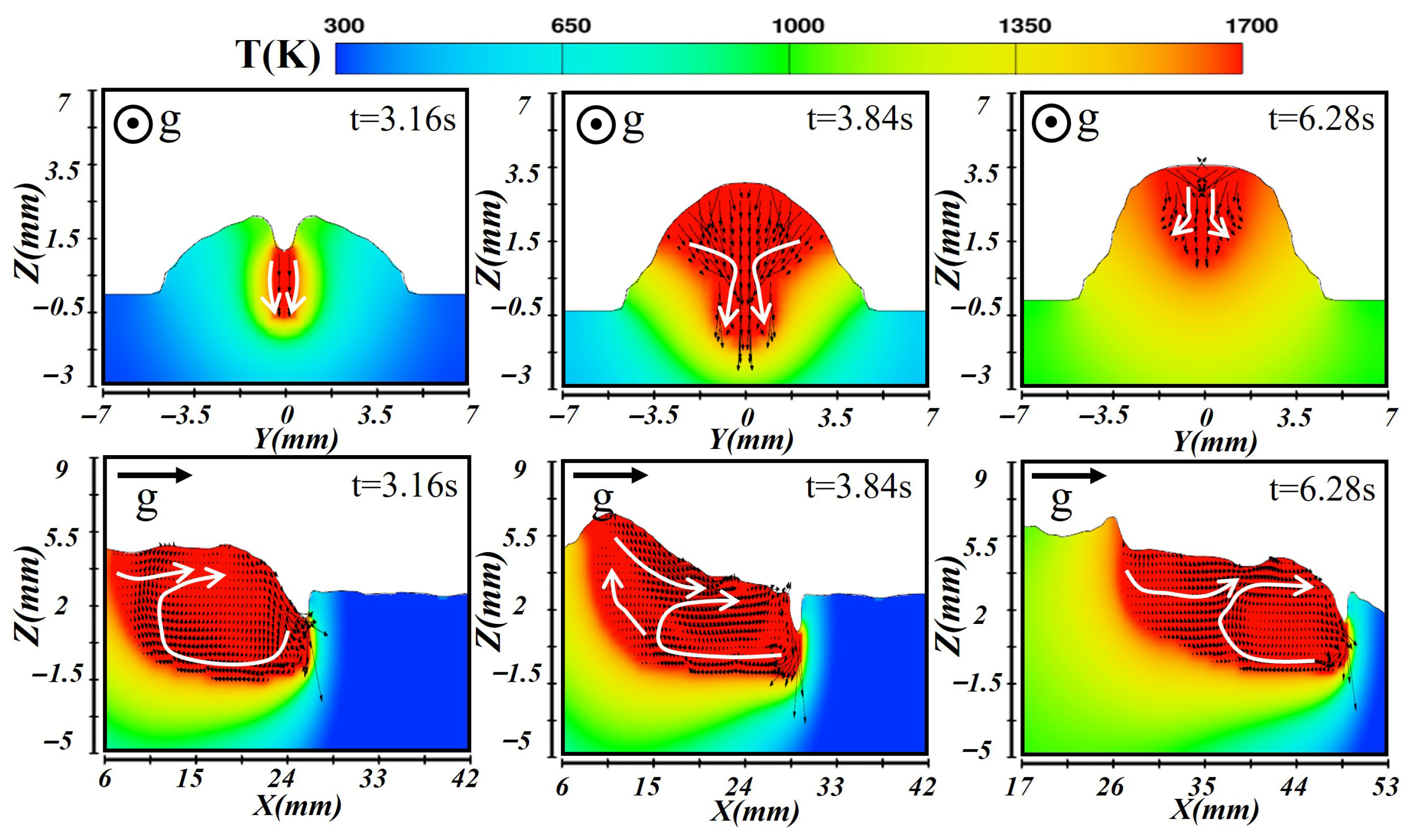
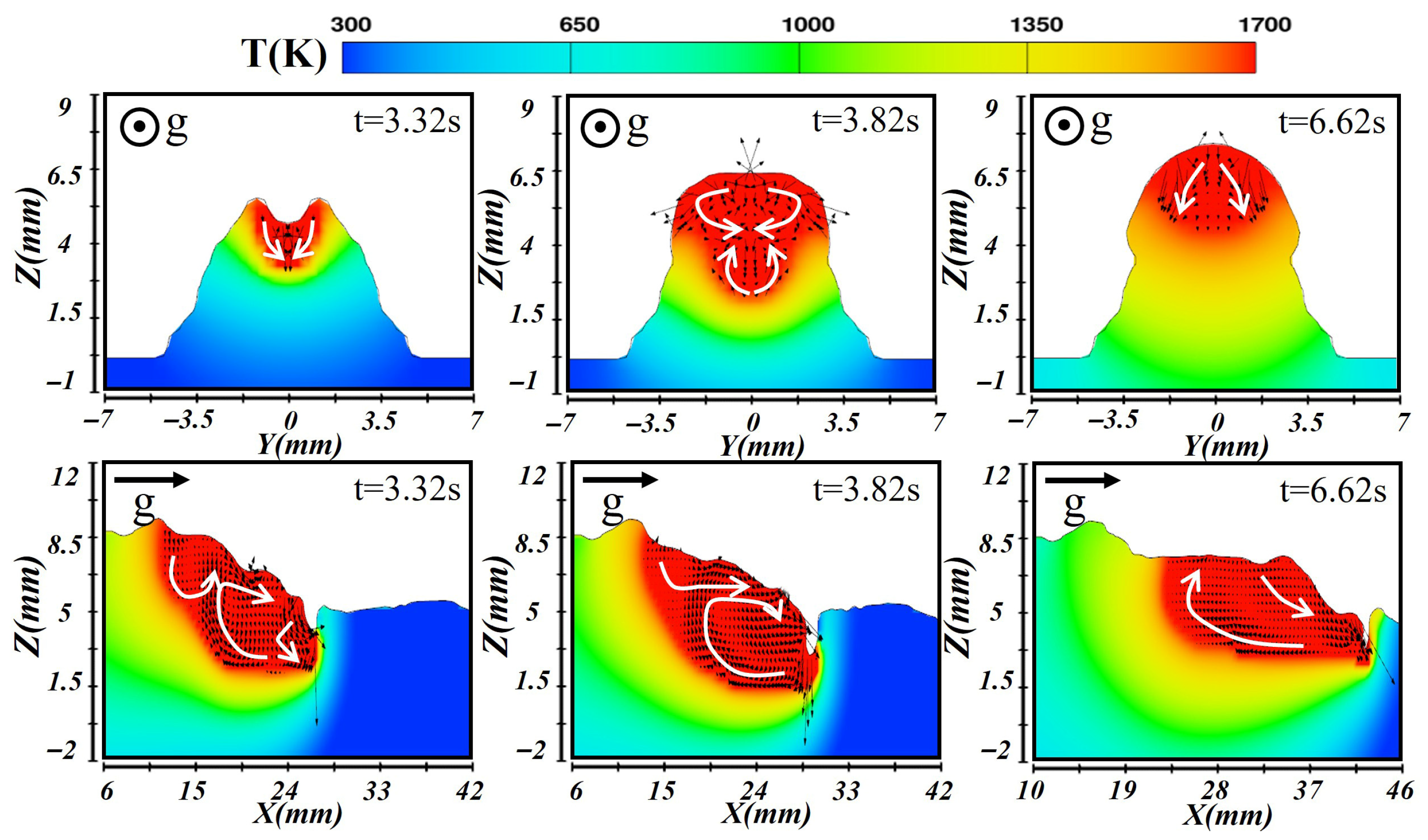
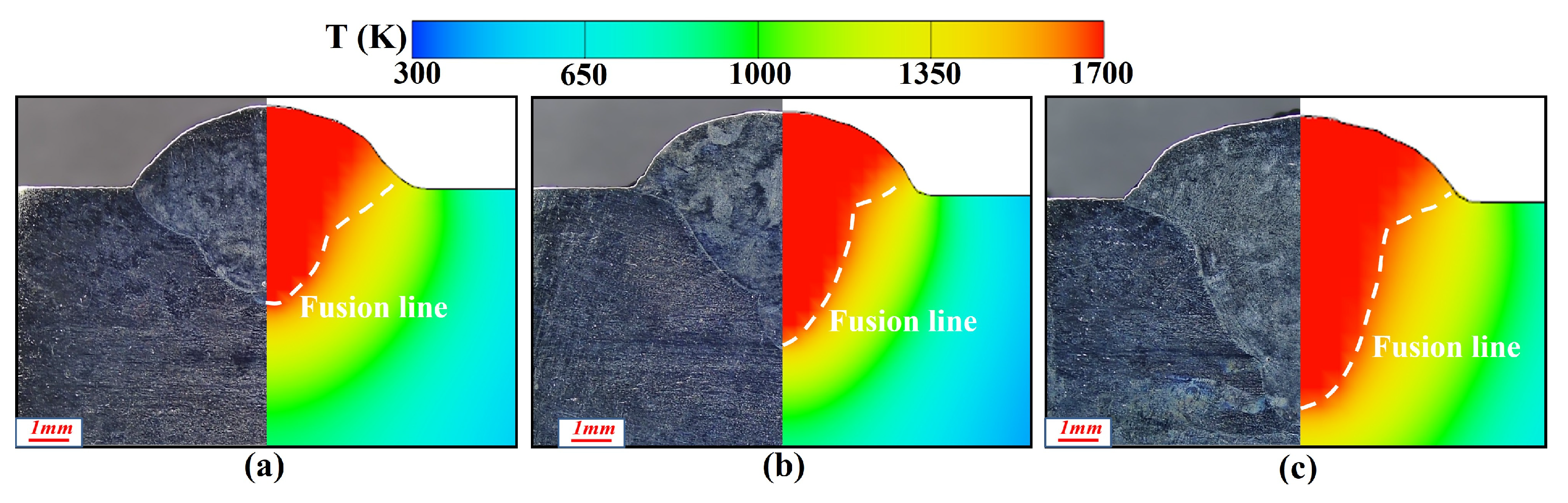
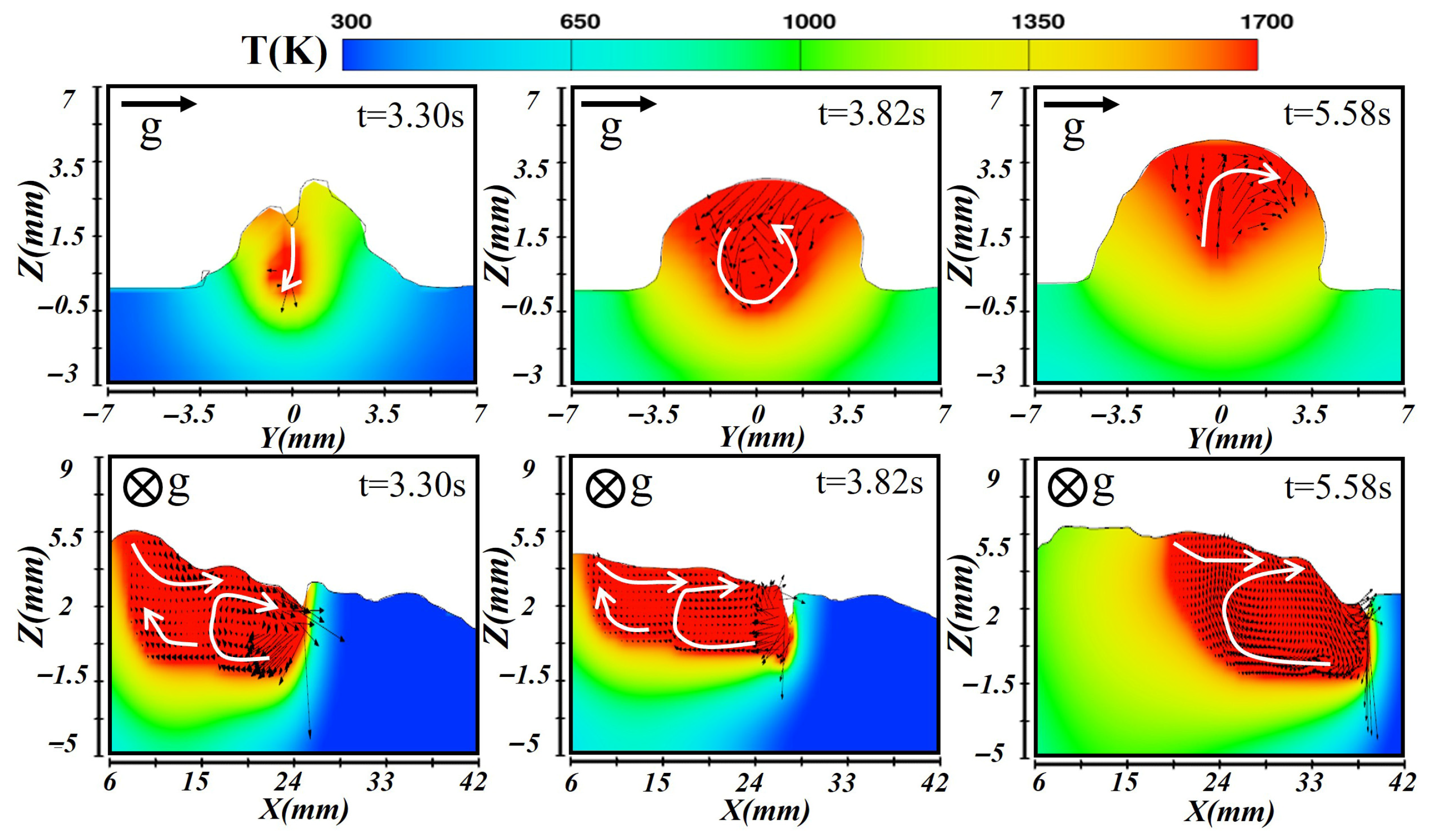
- Numerical simulations revealed that spatial orientation significantly influenced molten pool temperature distribution and flow behavior. In transverse deposition, molten metal migrated toward the gravity side; in vertical-up deposition, gravity limited lateral spreading and increased bead reinforcement; while in vertical-down deposition, gravity enhanced lateral flow but reduced penetration depth. Multi-layer deposition further enlarged the molten pool volume due to heat accumulation and slower cooling.
- (2)
- Despite the variation in orientation, gravity had a limited impact on overall molten pool morphology in laser–CMT hybrid additive manufacturing. The keyhole formation and internal convection were primarily governed by laser power, vapor recoil pressure, and arc-induced forces, with spatial position exerting only minor influence on the global temperature and flow fields.
- (3)
- During layer-by-layer deposition, the molten pool evolved from a keyhole-dominated mode at higher laser power (2000 W) in the first layer to a heat-conduction-dominated mode at reduced power (1500 W) in subsequent layers. The accumulated heat in multi-layer buildup effectively slowed the cooling rate, ensuring stable interlayer bonding and improved bead uniformity.
- (4)
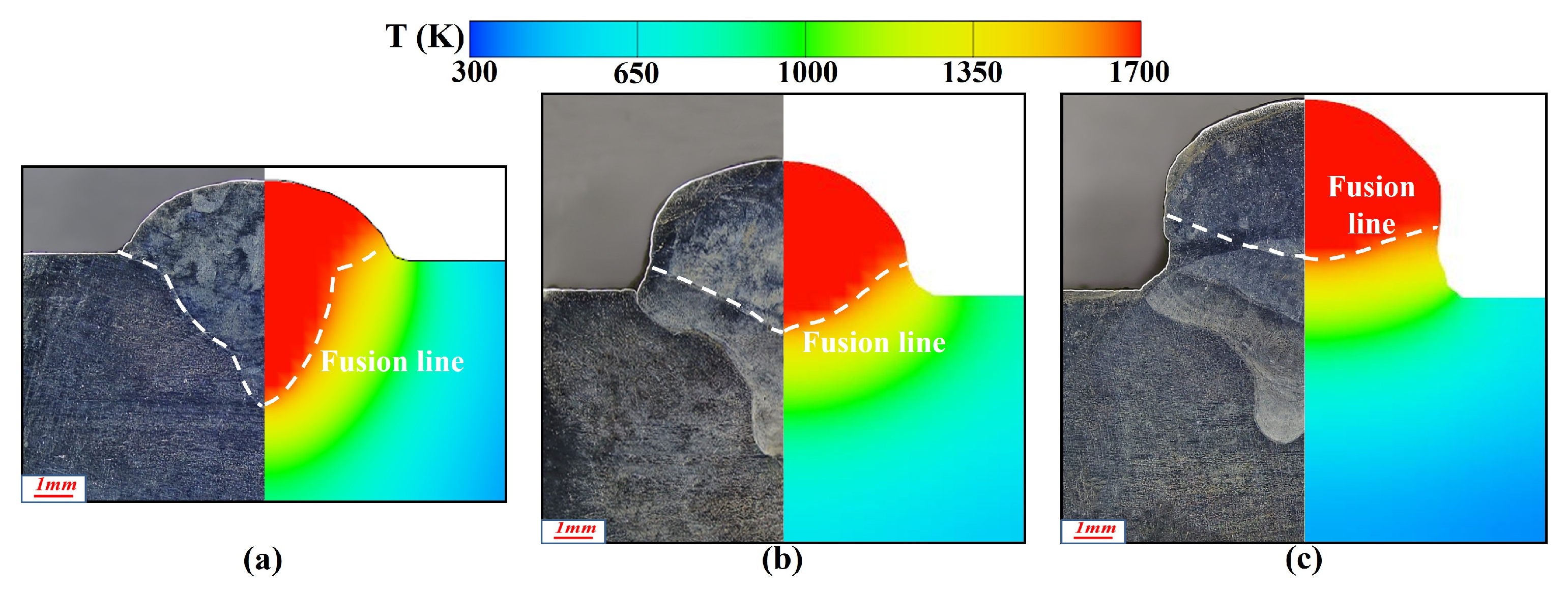
- The simulations demonstrated that variations in scanning speed, wire feed spacing, and defocusing distance jointly influenced bead morphology, temperature gradients, and internal flow structures. These findings provide a reliable numerical basis for optimizing process parameters and developing adaptive heat source models for high-precision laser–CMT hybrid additive manufacturing.
- (5)
- From an engineering perspective, starting with a laser power of 2000 W and a wire feed speed of 6.7 m/min ensures stable keyhole formation and deep penetration in the first layer. Reducing the laser power to 1500 W and wire feed speed to 5.3 m/min in subsequent layers maintains a stable conduction mode, preventing overheating and interlayer defects. With a scanning speed of 0.36 m/min, 4 mm wire feed spacing, and zero defocusing, these parameters balance heat input and layer uniformity, leading to consistent bead formation and improved build quality in multilayer deposition.
Author Contributions
Funding
Data Availability Statement
Conflicts of Interest
References
- Wang, Z.; Gong, M.; Zhou, L.; Gao, M. A review of numerical simulation of laser–arc hybrid welding. Materials 2023, 16, 3561. [Google Scholar] [CrossRef]
- Simonds, B.J.; Sowards, J.; Hadler, J.; Pfeif, E.; Wilthan, B.; Tanner, J.; Harris, C.; Williams, P.; Lehman, J. Time-resolved absorptance and melt pool dynamics during intense laser irradiation of a metal. Phys. Rev. Appl. 2018, 10, 044061. [Google Scholar] [CrossRef]
- Yue, W.; Zhang, Y.; Zheng, Z.; Lai, Y. Hybrid laser additive manufacturing of metals: A review. Coatings 2024, 14, 315. [Google Scholar] [CrossRef]
- Liu, M.; Ma, G.; Liu, D.; Zhang, Y.; Gong, M. Microstructure and mechanical properties of aluminum alloy prepared by laser–arc hybrid additive manufacturing. J. Laser Appl. 2020, 32, 022052. [Google Scholar] [CrossRef]
- Gao, M.; Cen, L.; Jiang, L.; Zhao, S.; Gong, M. Oscillating laser–arc hybrid additive manufacturing of AZ31 magnesium alloy. Appl. Sci. 2023, 13, 897. [Google Scholar] [CrossRef]
- Liu, D.; Wu, D.; Wang, Y.; Chen, Z.; Ge, C.; Zhao, Q.; Niu, F.; Ma, G. Enhanced high-temperature mechanical properties of laser-arc hybrid additive manufacturing of Al–Zn–Mg–Cu alloy via microstructure control. J. Mater. Sci. Technol. 2024, 169, 220–234. [Google Scholar] [CrossRef]
- Gong, M.; Meng, Y.; Zhang, S.; Zhang, Y.; Zeng, X.; Gao, M. Laser-arc hybrid additive manufacturing of stainless steel with beam oscillation. Addit. Manuf. 2020, 33, 101180. [Google Scholar] [CrossRef]
- Zhang, Z.; Wang, Q.; He, Y.; Wang, X.; Yuan, S.; Song, G. Microstructure and properties of multi-layer and multi-bead parts of 316 stainless steel fabricated by laser-arc hybrid additive manufacturing. Opt. Laser Technol. 2024, 168, 109903. [Google Scholar] [CrossRef]
- Gong, M.; Zhang, S.; Lu, Y.; Wang, D.; Gao, M. Effects of laser power on texture evolution and mechanical properties of laser-arc hybrid additive manufacturing. Addit. Manuf. 2021, 46, 102201. [Google Scholar] [CrossRef]
- Pardal, G.; Martina, F.; Williams, S. Laser stabilization of GMAW additive manufacturing of Ti–6Al–4V components. J. Mater. Process. Technol. 2019, 272, 1–8. [Google Scholar]
- Chen, Z.; Liang, Y.; Li, C.; Zhang, X.; Kong, J.; Fan, J.; Wang, K.; Peng, Y. Hybrid fabrication of cold metal transfer additive manufacturing and laser metal deposition for Ti–6Al–4V: The microstructure and dynamic/static mechanical properties. Materials 2024, 17, 1862. [Google Scholar] [CrossRef]
- Xie, L.; Shi, W.; Wu, T.; Gong, M.; Cai, D.; Han, S.; He, K. Effect of hybrid laser arc welding on the microstructure and mechanical and fracture properties of 316 L sheet welded joints. Metals 2022, 12, 2181. [Google Scholar] [CrossRef]
- Su, J.; Dong, J.; Luo, Z.; Yang, Y.; Bi, Y.; Zhang, Y. Effect of laser–arc synergy on melting energy in laser–CMT hybrid welding of aluminum alloy. Optik 2023, 292, 171406. [Google Scholar] [CrossRef]
- Kapil, A.; Kayarthaya, N.; Sharma, V.; Sharma, A. Capturing droplet flight and impingement behavior in plasma–MIG process for metal droplet-on-demand applications. J. Mater. Process. Technol. 2023, 316, 117955. [Google Scholar] [CrossRef]
- Biester, K.; Budde, L.; Barroi, A.; Lammers, M.; Hermsdorf, J.; Overmeyer, L. Investigation of deposition welding in vertical and horizontal position with a coaxial laser wire welding head. Int. J. Adv. Manuf. Technol. 2022, 120, 5399–5410. [Google Scholar] [CrossRef]
- Hoffmann, M.; Heinrich, L.; Paramanathan, M.; Fillingim, K.B.; Elwany, A.; Feldhausen, T. Hybrid additive manufacturing of AISI 316 L via asynchronous powder and hot-wire laser directed energy deposition. J. Manuf. Process. 2024, 127, 446–456. [Google Scholar]
- Wu, X.; Su, C.; Zhang, K. 316L stainless steel thin-walled parts hybrid-layered manufacturing process study. Materials 2023, 16, 6518. [Google Scholar] [CrossRef]
- King, W.E.; Barth, H.D.; Castillo, V.M.; Gallegos, G.F.; Gibbs, J.W.; Hahn, D.E.; Kamath, C.; Rubenchik, A.M. Observation of keyhole-mode laser melting in laser powder-bed fusion additive manufacturing. J. Mater. Process. Technol. 2014, 214, 2915–2925. [Google Scholar]
- Kouraytem, N.; Li, X.; Cunningham, R.; Zhao, C.; Parab, N.; Sun, T.; Rollett, A.D.; Spear, A.D.; Tan, W. Effect of laser-matter interaction on molten pool flow and keyhole dynamics. Phys. Rev. Appl. 2019, 11, 064054. [Google Scholar] [CrossRef]
- Wang, C.; Sun, Y.; Chen, G.; Chen, X.; Ding, J.; Suder, W.; Diao, C.; Williams, S. A simplified modelling approach for thermal behaviour analysis in hybrid plasma arc-laser additive manufacturing. Int. J. Heat Mass Transf. 2022, 195, 123157. [Google Scholar] [CrossRef]
- Jin, Q.; Jung, J.; Cheon, J.; Ji, C.; Lee, W. Melt pool simulation of dual laser beam-arc hybrid welding of aluminum alloy using finite element method. Materials 2024, 18, 135. [Google Scholar] [CrossRef]
- Deng, J.; Yan, C.; Cui, X.; Wei, C.; Chen, J. Mechanistic insights into spatially resolved molten pool dynamics and energy coupling in CMT-WAAM of 316 L stainless steel. Metals 2025, 15, 1317. [Google Scholar] [CrossRef]
- Mascolo, I.; Guarracino, F.; Sarfarazi, S.; Della Corte, G. A proposal for a simple characterization of stainless steel connections through an equivalent yield strength. Structures 2024, 68, 107043. [Google Scholar] [CrossRef]
- Li, Y.; Yun, Z.; Zhang, W.; Long, X.; Zhu, J. 3D modelling of layer-by-layer heat and mass transfer in wire arc additive manufacturing. Addit. Manuf. Front. 2024, 3, 200159. [Google Scholar] [CrossRef]
- Modest, M.F. Radiative Heat Transfer, 3rd ed.; Academic Press: Cambridge, MA, USA, 2013. [Google Scholar]
- Cho, J.H.; Na, S.J. Three-dimensional analysis of molten pool in GMA-laser hybrid welding. Weld. J. 2009, 88, 35–43. [Google Scholar]
- Sun, Y.; Niu, D.; Sun, J. Temperature and carbon content dependence of electrical resistivity of carbon steel. In Proceedings of the 2009 4th IEEE Conference on Industrial Electronics and Applications, Xi’an, China, 25–27 May 2009; pp. 368–372. [Google Scholar]
- Sohail, M.; Han, S.-W.; Na, S.-J.; Gumenyuk, A.; Rethmeier, M. Numerical investigation of energy input characteristics for high-power fiber laser welding at different positions. Int. J. Adv. Manuf. Technol. 2015, 80, 931–946. [Google Scholar] [CrossRef]
- Bogaard, R.H.; Desai, P.D.; Li, H.H.; Ho, C.Y. Thermophysical properties of stainless steels. Thermochim. Acta 1993, 218, 373–393. [Google Scholar] [CrossRef]





| Process Parameter | Value |
|---|---|
| Laser power (kw) | 1.5~2.1 |
| Wire feeding speed (m/min) | 4.2~6.7 |
| Welding current (A) | 150~210 |
| Scanning speed (m/min) | 0.24~0.48 |
| Horizontal position (θ) | −90~90 |
| Vertical-up position (θ) | −90~0 |
| Vertical-down position (θ) | 0~90 |
| Temperature (K) | 300 | 500 | 1000 | 1500 | 2000 | 2500 | 3000 |
|---|---|---|---|---|---|---|---|
| Electrical resistivity (Ω·m) | 7.52 × 10⁻⁷ | 2.25 × 10⁻⁶ | 3.75 × 10⁻⁶ | 5.25 × 10⁻⁶ | 6.75 × 10⁻⁶ | 8.25 × 10⁻⁶ | 9.75 × 10⁻⁶ |
| Electrical conductivity (S/m) | 1.33 × 10⁶ | 4.44 × 10⁵ | 2.67 × 10⁵ | 1.90 × 10⁵ | 1.48 × 10⁵ | 1.21 × 10⁵ | 1.03 × 10⁵ |
| 0.02 | 0.07 | 0.11 | 0.15 | 0.19 | 0.23 | 0.26 | |
| 0.14 | 0.26 | 0.33 | 0.39 | 0.44 | 0.48 | 0.51 |
Disclaimer/Publisher’s Note: The statements, opinions and data contained in all publications are solely those of the individual author(s) and contributor(s) and not of MDPI and/or the editor(s). MDPI and/or the editor(s) disclaim responsibility for any injury to people or property resulting from any ideas, methods, instructions or products referred to in the content. |
© 2026 by the authors. Licensee MDPI, Basel, Switzerland. This article is an open access article distributed under the terms and conditions of the Creative Commons Attribution (CC BY) license.
Share and Cite
Deng, J.; Yan, C.; Cui, X.; Wei, C.; Chen, J. Modeling and Mechanistic Analysis of Molten Pool Evolution and Energy Synergy in Laser–Cold Metal Transfer Hybrid Additive Manufacturing of 316L Stainless Steel. Materials 2026, 19, 292. https://doi.org/10.3390/ma19020292
Deng J, Yan C, Cui X, Wei C, Chen J. Modeling and Mechanistic Analysis of Molten Pool Evolution and Energy Synergy in Laser–Cold Metal Transfer Hybrid Additive Manufacturing of 316L Stainless Steel. Materials. 2026; 19(2):292. https://doi.org/10.3390/ma19020292
Chicago/Turabian StyleDeng, Jun, Chen Yan, Xuefei Cui, Chuang Wei, and Ji Chen. 2026. "Modeling and Mechanistic Analysis of Molten Pool Evolution and Energy Synergy in Laser–Cold Metal Transfer Hybrid Additive Manufacturing of 316L Stainless Steel" Materials 19, no. 2: 292. https://doi.org/10.3390/ma19020292
APA StyleDeng, J., Yan, C., Cui, X., Wei, C., & Chen, J. (2026). Modeling and Mechanistic Analysis of Molten Pool Evolution and Energy Synergy in Laser–Cold Metal Transfer Hybrid Additive Manufacturing of 316L Stainless Steel. Materials, 19(2), 292. https://doi.org/10.3390/ma19020292