Mechanical Properties and Microstructure of Bonded Joints and Hybrid Structures with a 3D-Printed Honeycomb Core Modified with an Epoxy Matrix Filled with Recycled Polyurethane Foam

 , , , ,
  and
and
Abstract
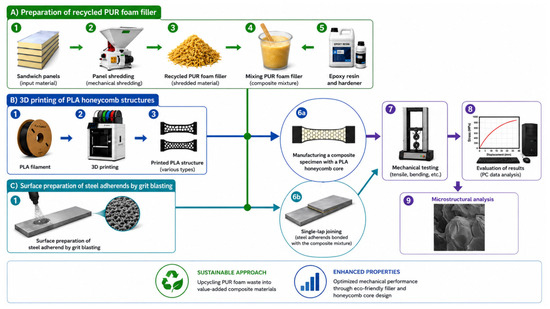
1. Introduction
2. Materials and Methods
2.1. Experimental Procedure
2.2. Preparation of the Filler
2.3. Preparation of Printed Universal Test Specimens
2.4. Preparation of Samples for Overlapped Joints
2.5. Preparation of the Composite Mixture and the Application of the Mixture
2.6. Testing of Mechanical Properties
2.7. SEM Analysis
3. Results
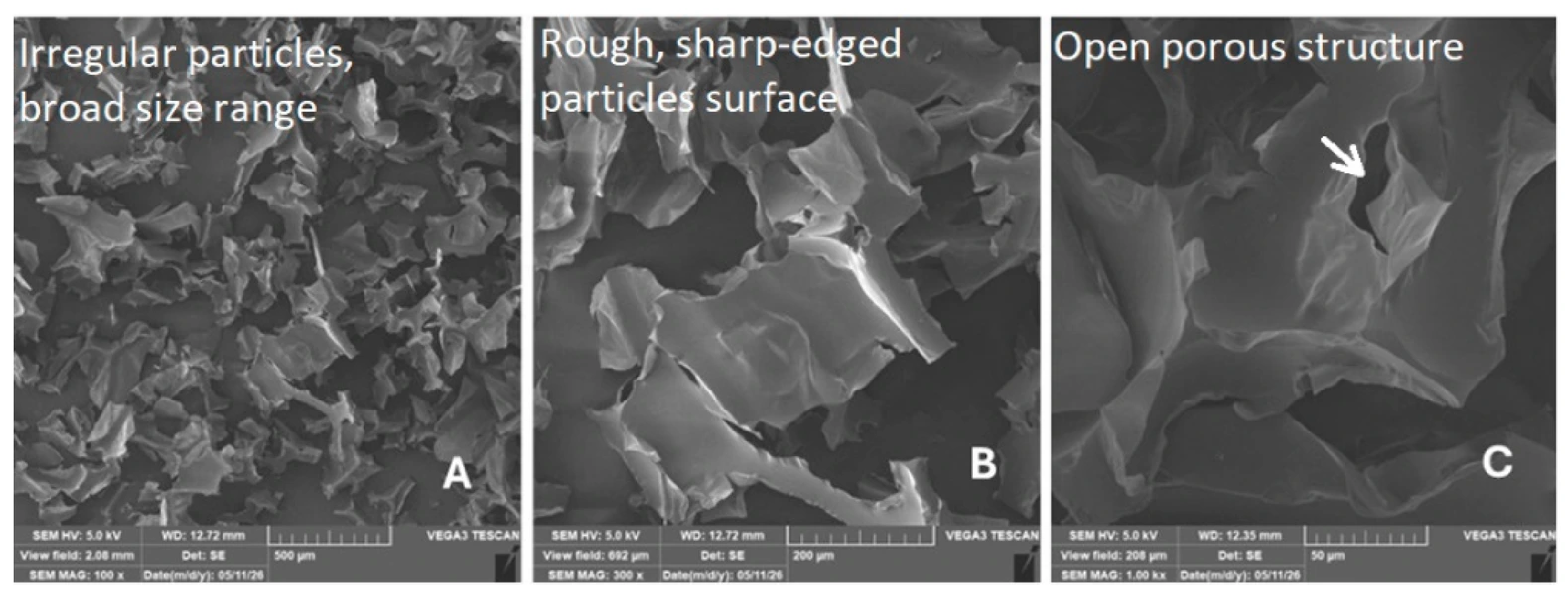
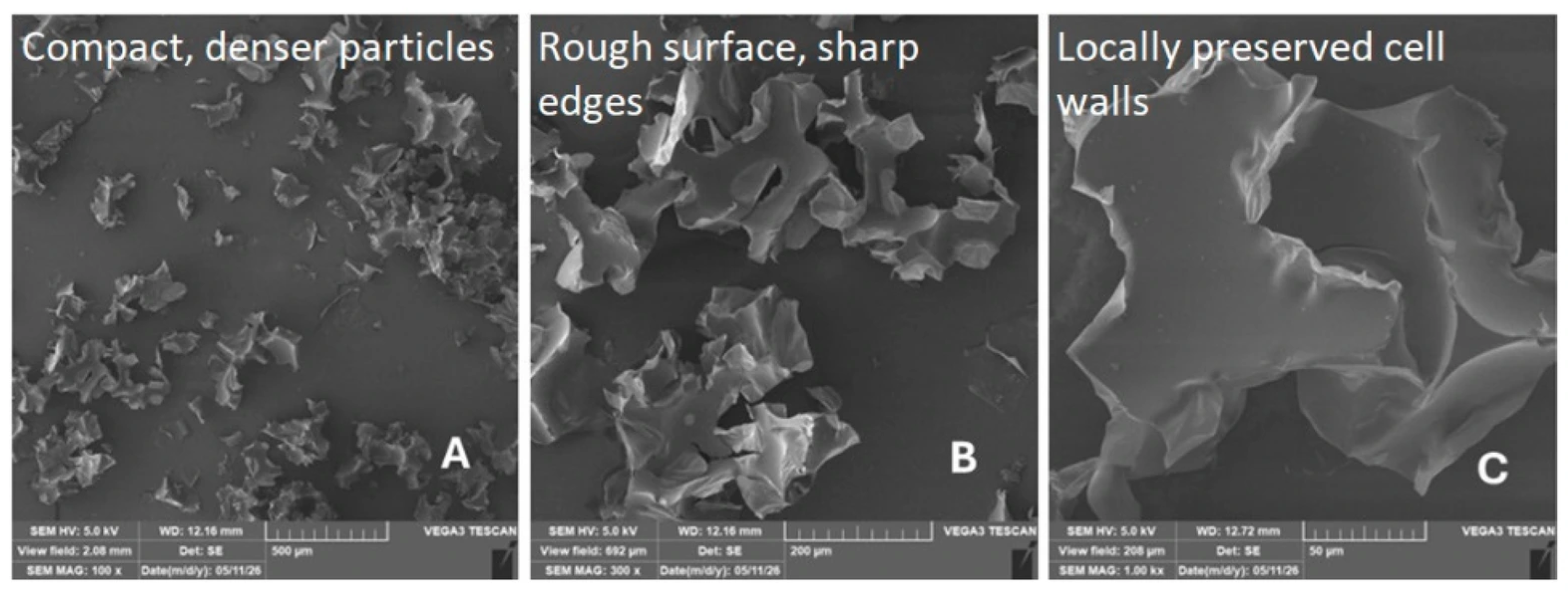
3.1. Morphology of Recycled Polyurethane Filler
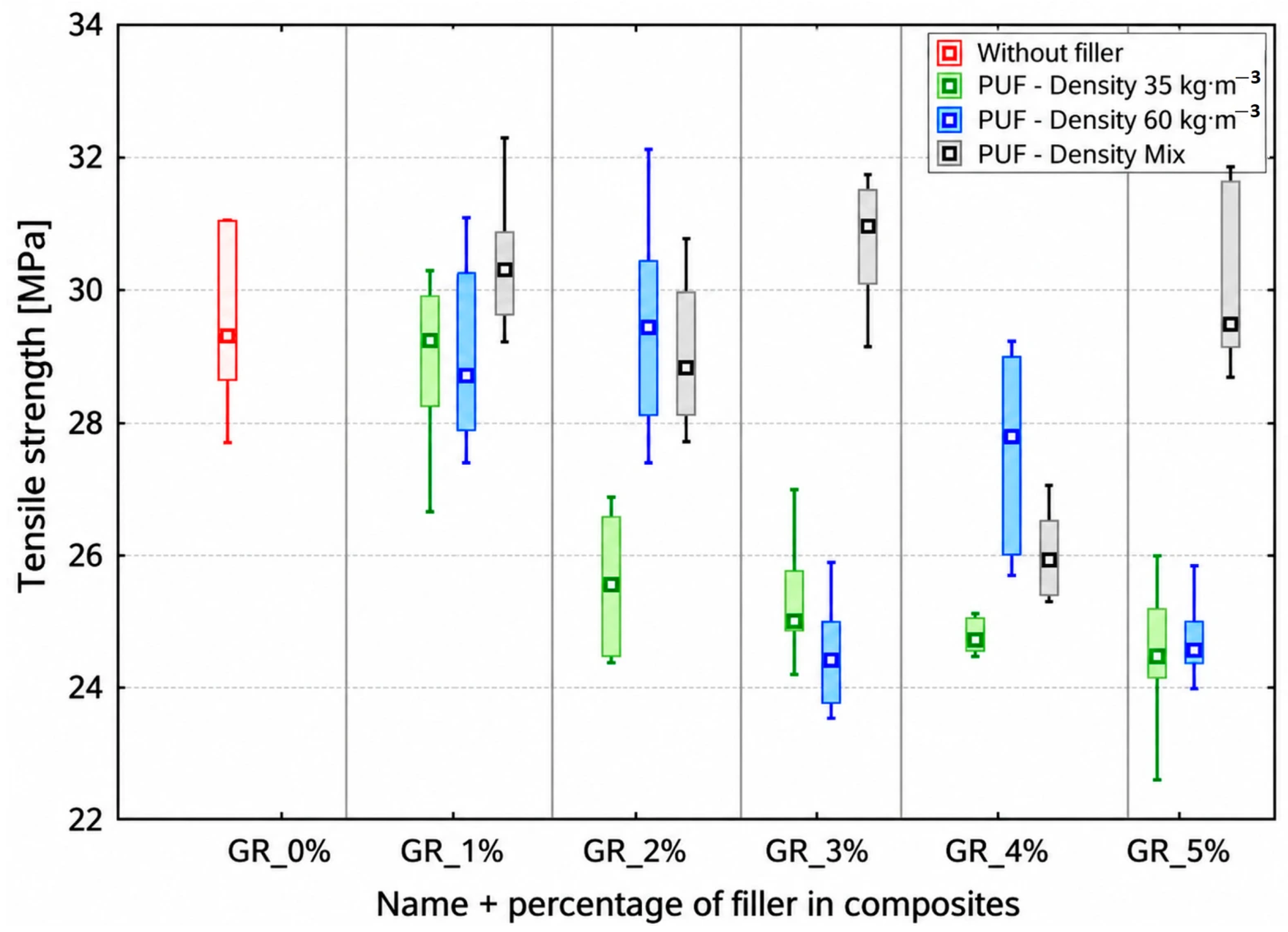
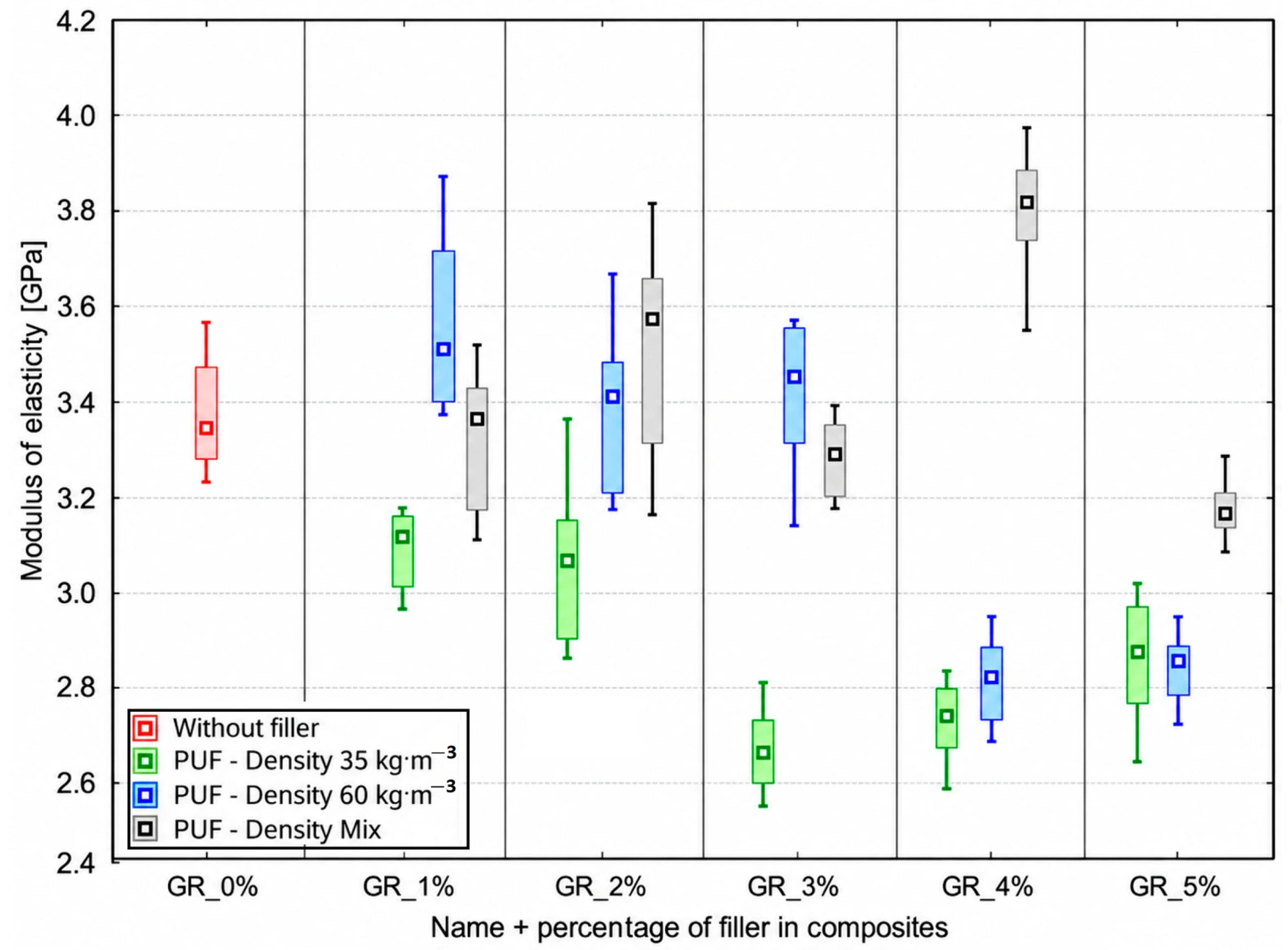
3.2. Rectangular Honeycomb Core (Grid)—Tensile Strength and Modulus of Elasticity
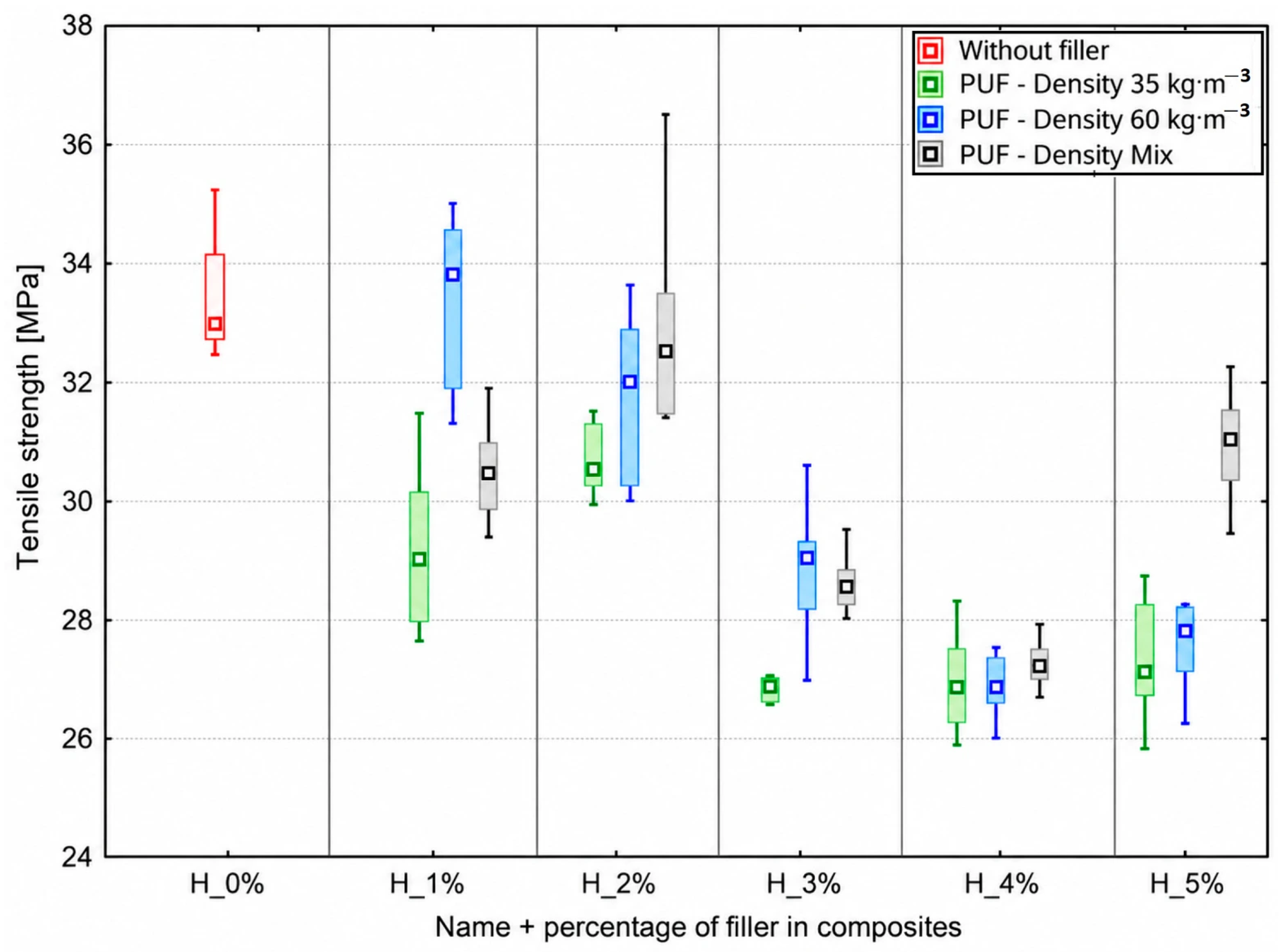
3.3. Hexagonal Honeycomb Core (Honeycomb)—Tensile Strength and Modulus of Elasticity
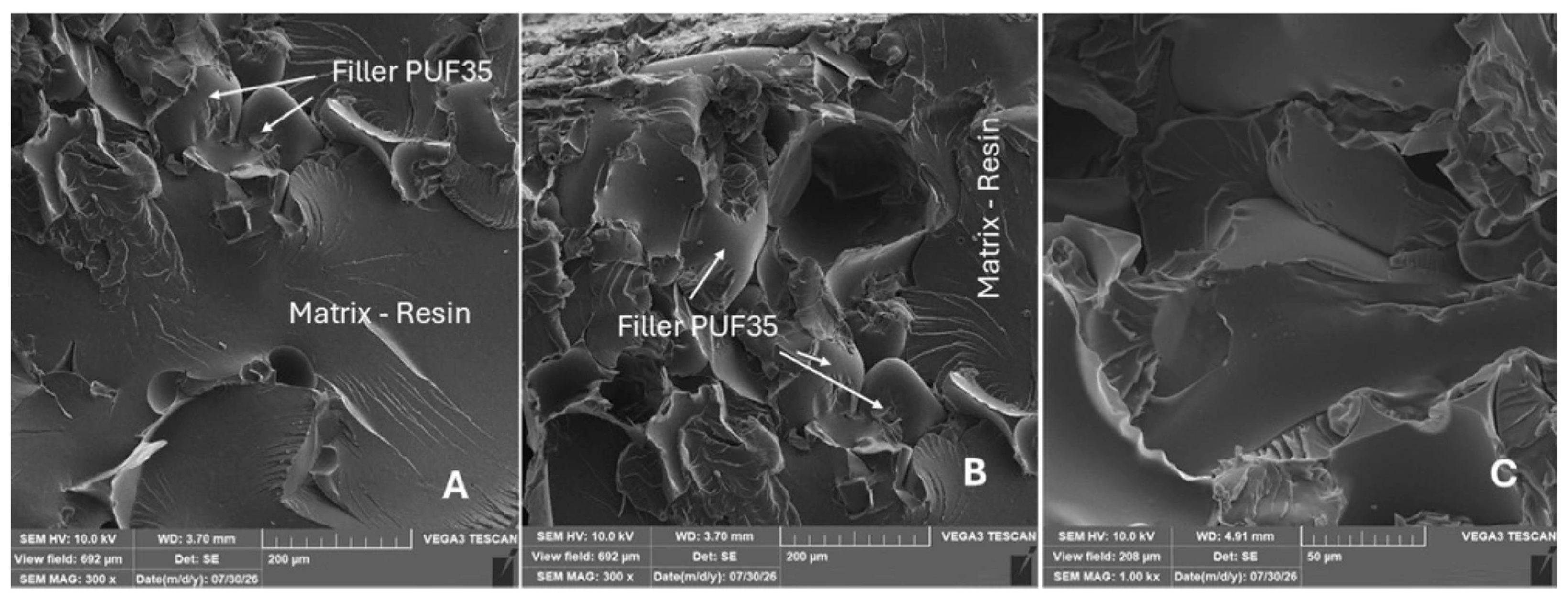
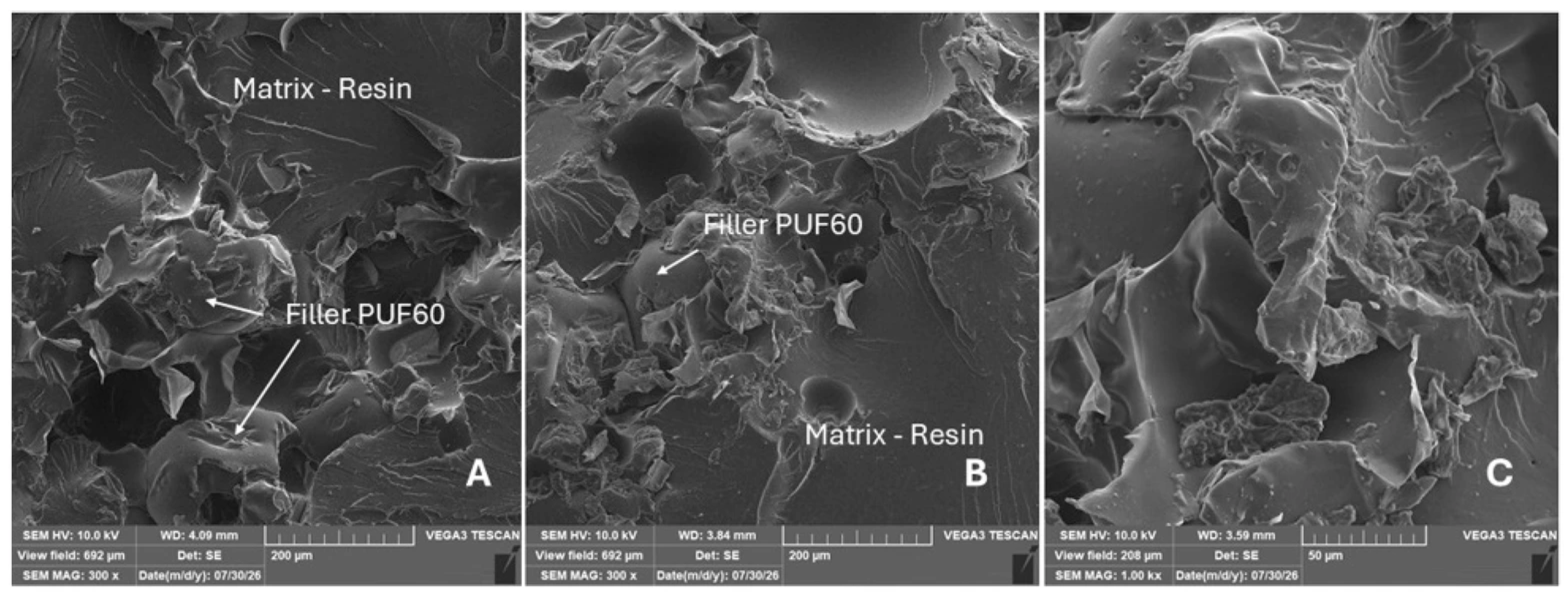
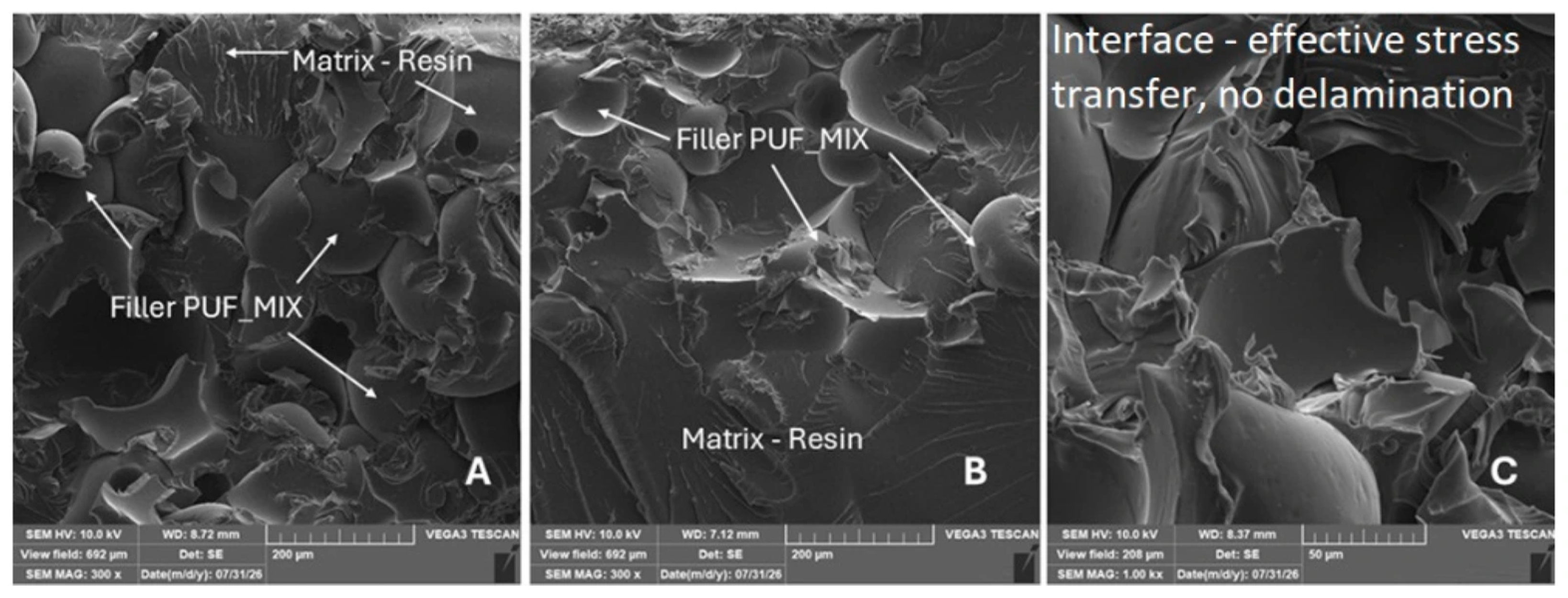
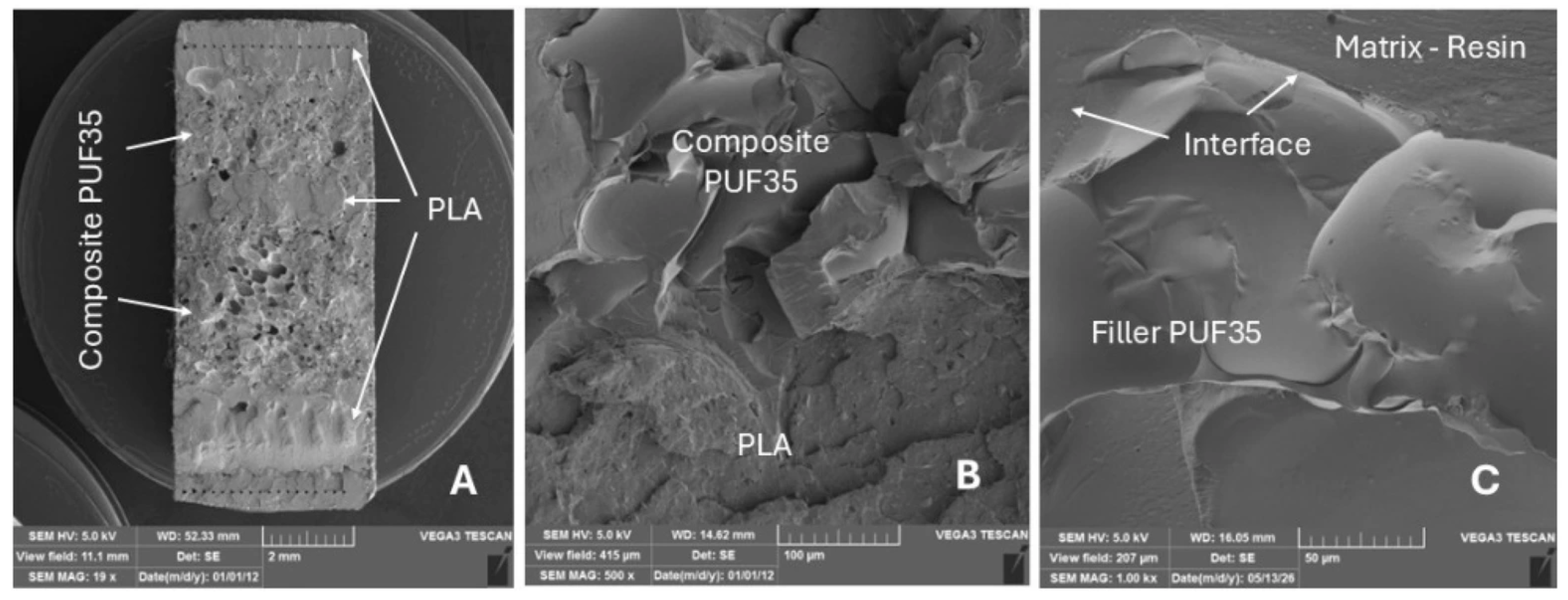
3.4. Microstructural Analysis of Fracture Surfaces (SEM)
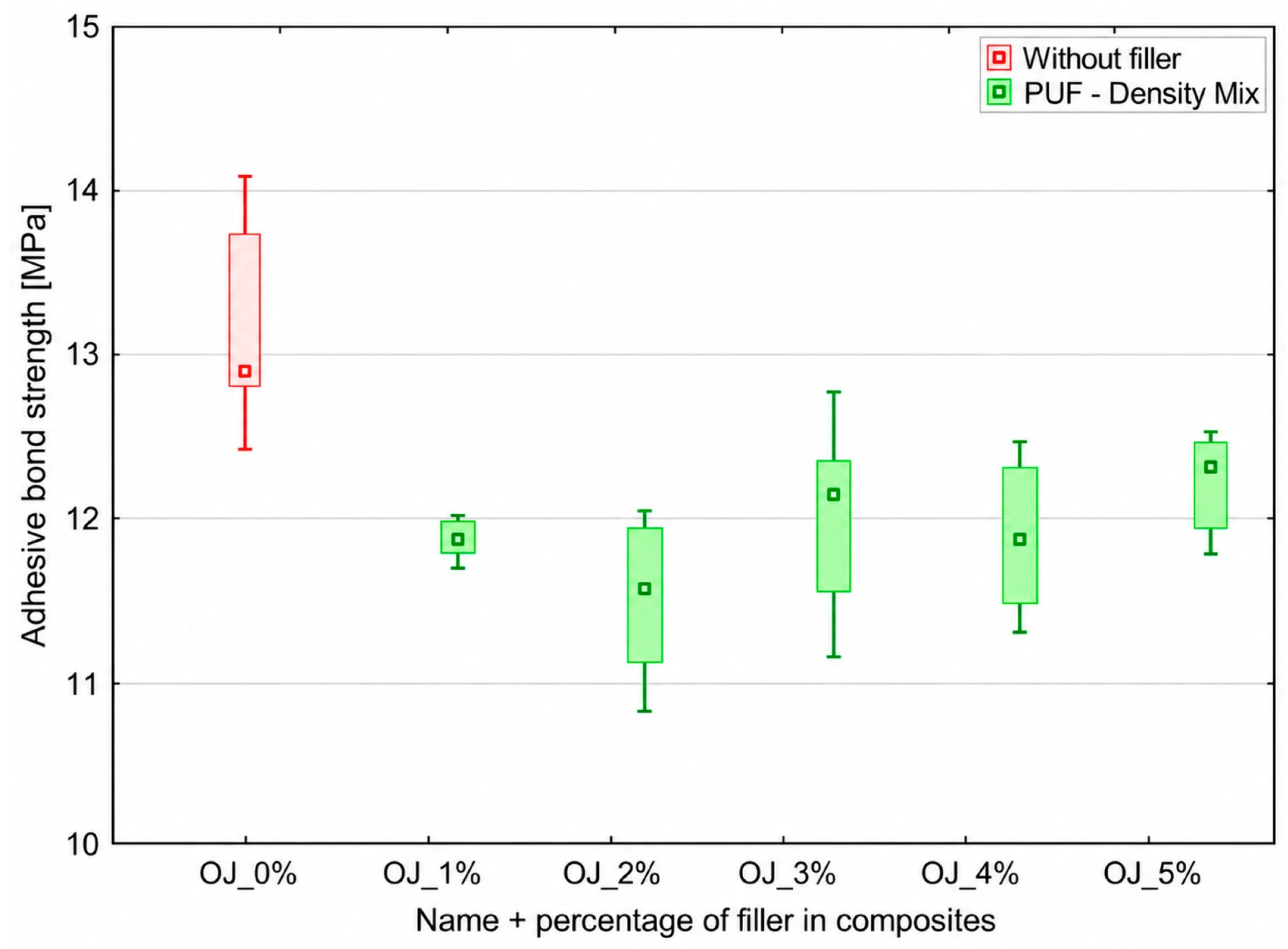
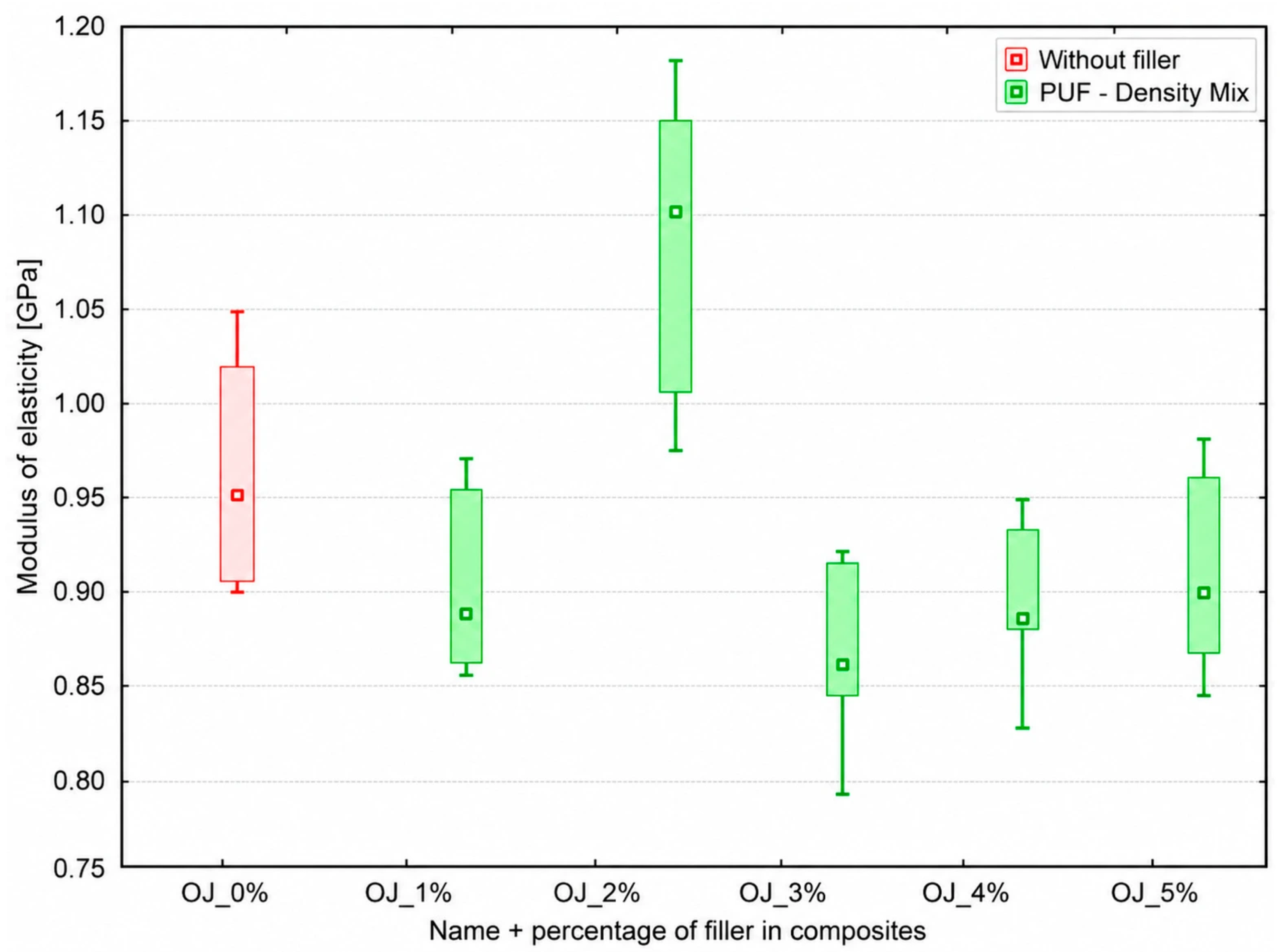
3.5. Overlapped Joints—Adhesive Bond Strength and Modulus of Elasticity
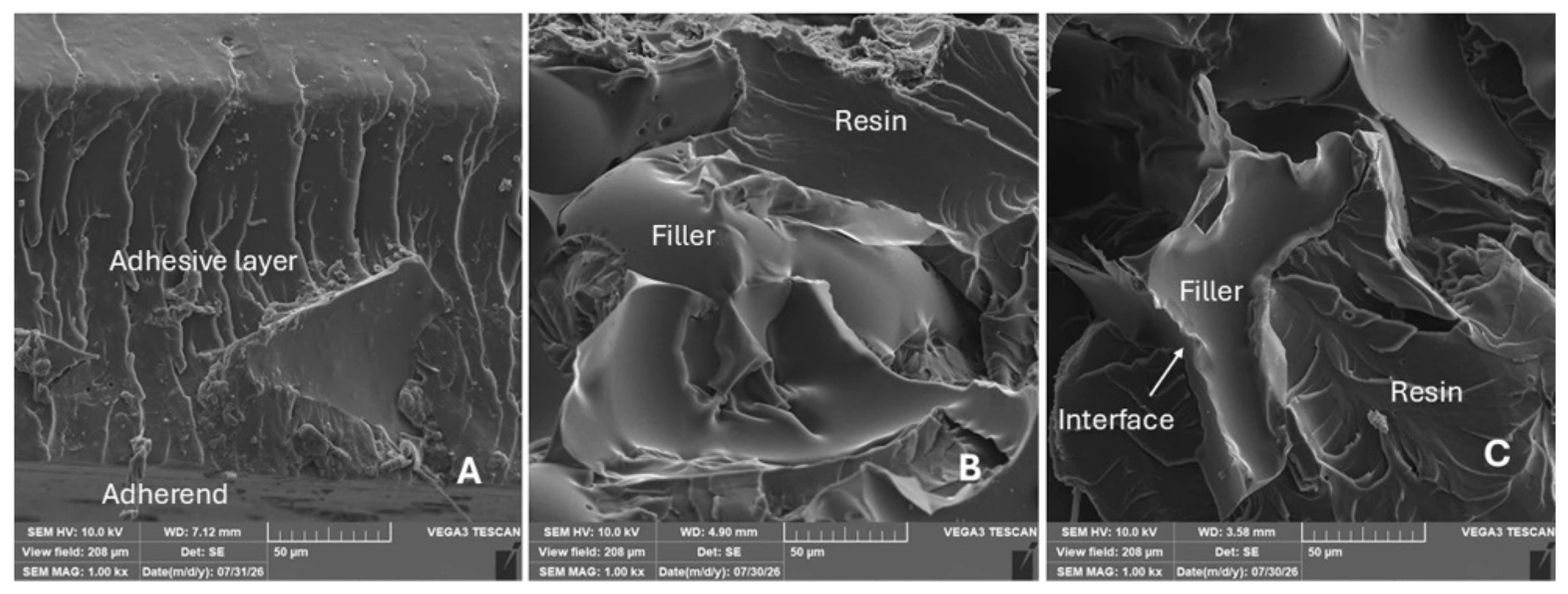
3.6. SEM Analysis of Overlapped Joints
4. Discussion
4.1. Effect of Recycled PUF Morphology on Interfacial Interactions
4.2. Effect of Recycled PUF on the Mechanical Behaviour of Rectangular-Core Composites
4.3. Effect of Recycled PUF on the Mechanical Behaviour of Hexagonal-Core Composites
4.4. Effect of Microstructural Characteristics on the Mechanical Behaviour of Hybrid Composites
4.5. Effect of Recycled PUF on the Mechanical Behaviour of Overlapped Joints
4.6. Fracture Behaviour and Interfacial Characteristics of Overlapped Joints
4.7. Dispersion and Interfacial Bonding Mechanism of Recycled PUF in the Epoxy Matrix
5. Conclusions
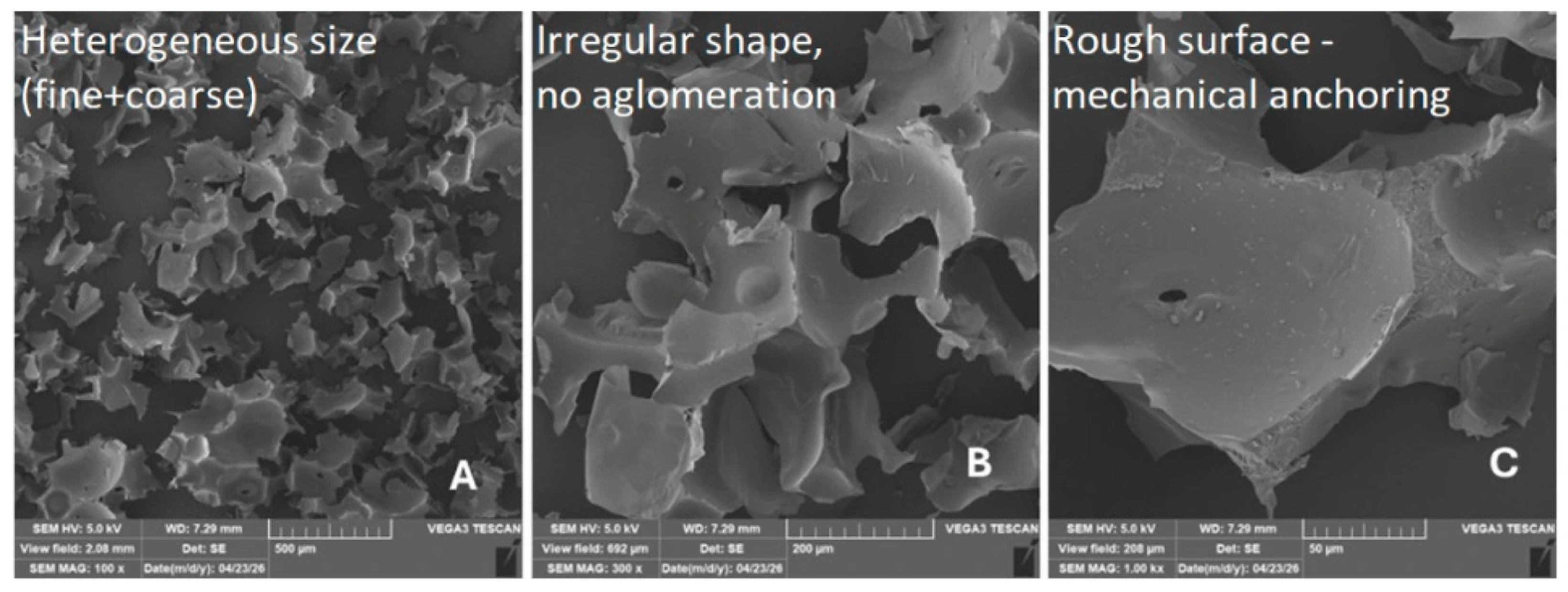
- Filler morphology and dispersion: SEM analysis showed relatively homogeneous dispersio3.5n of PUF35, PUF60, and PUF35/60 without significant agglomeration. The irregular and rough particle morphology supported mechanical interlocking and good adhesion within the epoxy matrix.
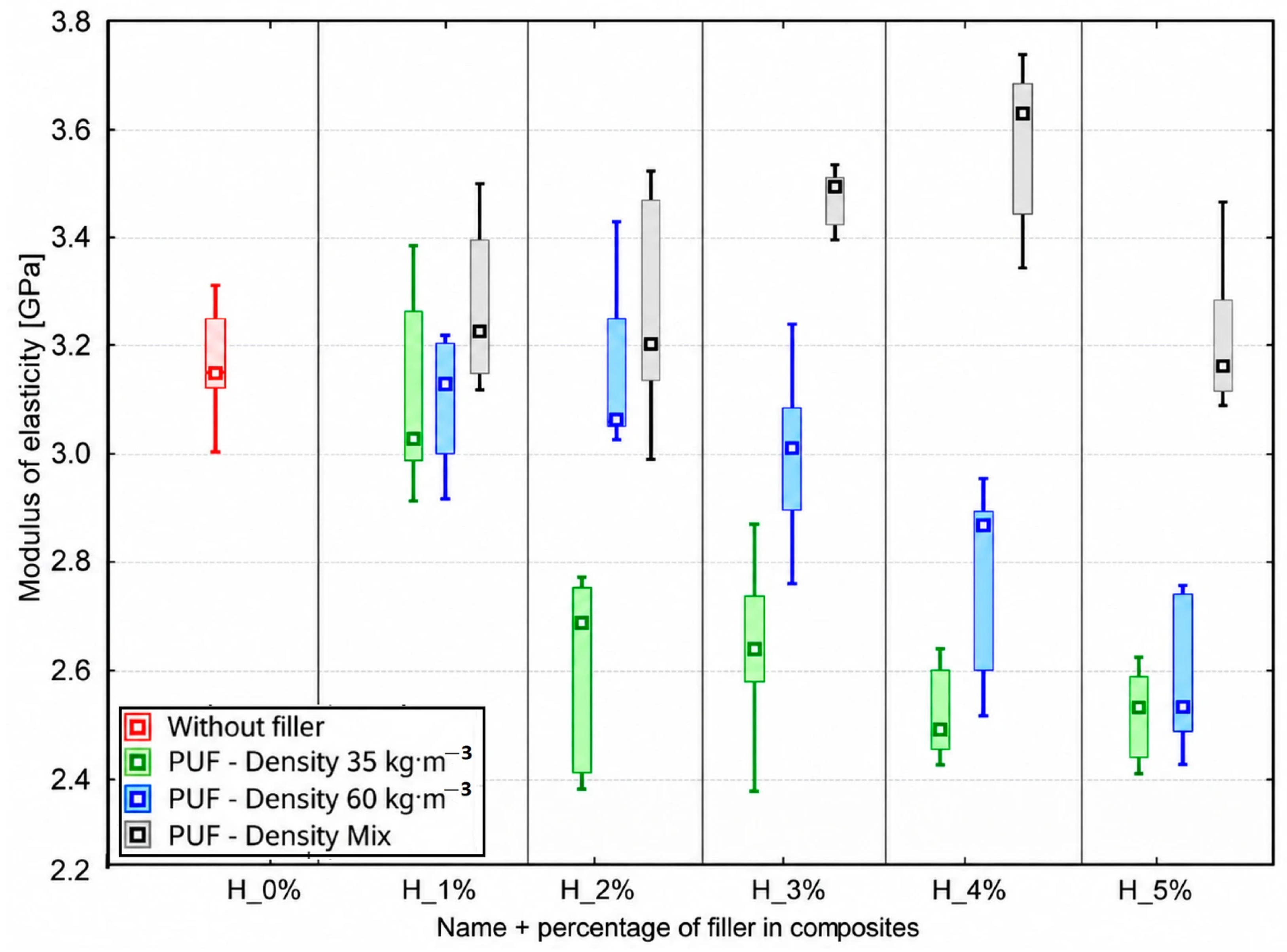
- Hybrid composite structures: The mechanical performance was influenced by filler content and core geometry. PUF35/60 provided the most favourable results. At 4 wt% PUF35/60, the modulus of elasticity increased by approximately 12.8% for the rectangular core and 13.9% for the hexagonal honeycomb core compared with the unfilled reference composites. At 3 wt% PUF35/60, the tensile strength of the rectangular-core composite increased by approximately 4.4%, while the tensile strength of the hexagonal-core composite remained at the reference level. Statistical analysis confirmed significant relationships between PUF content and mechanical properties for most PUF35 and PUF60 variants, while PUF35/60 generally exhibited weaker relationships.
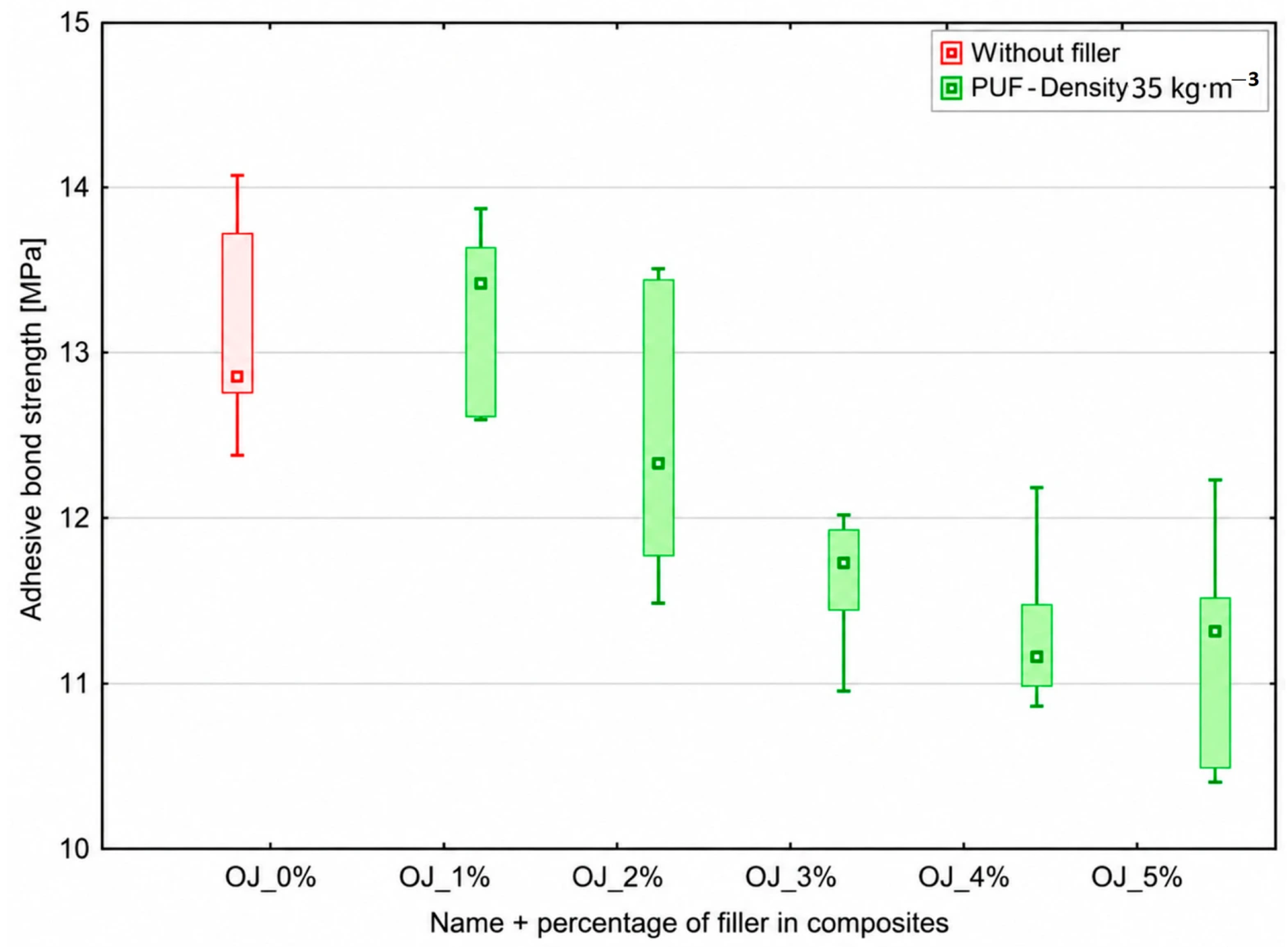
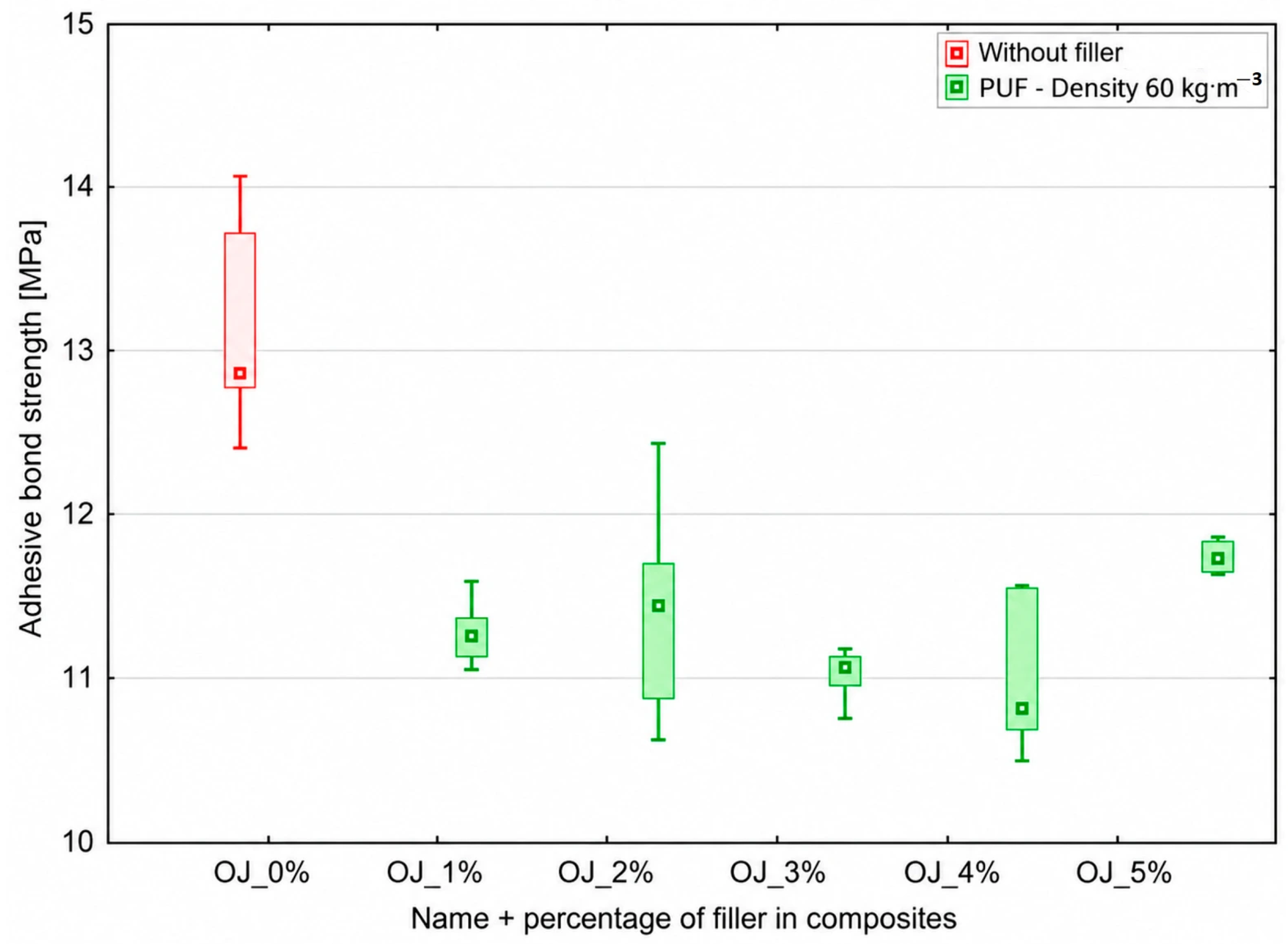
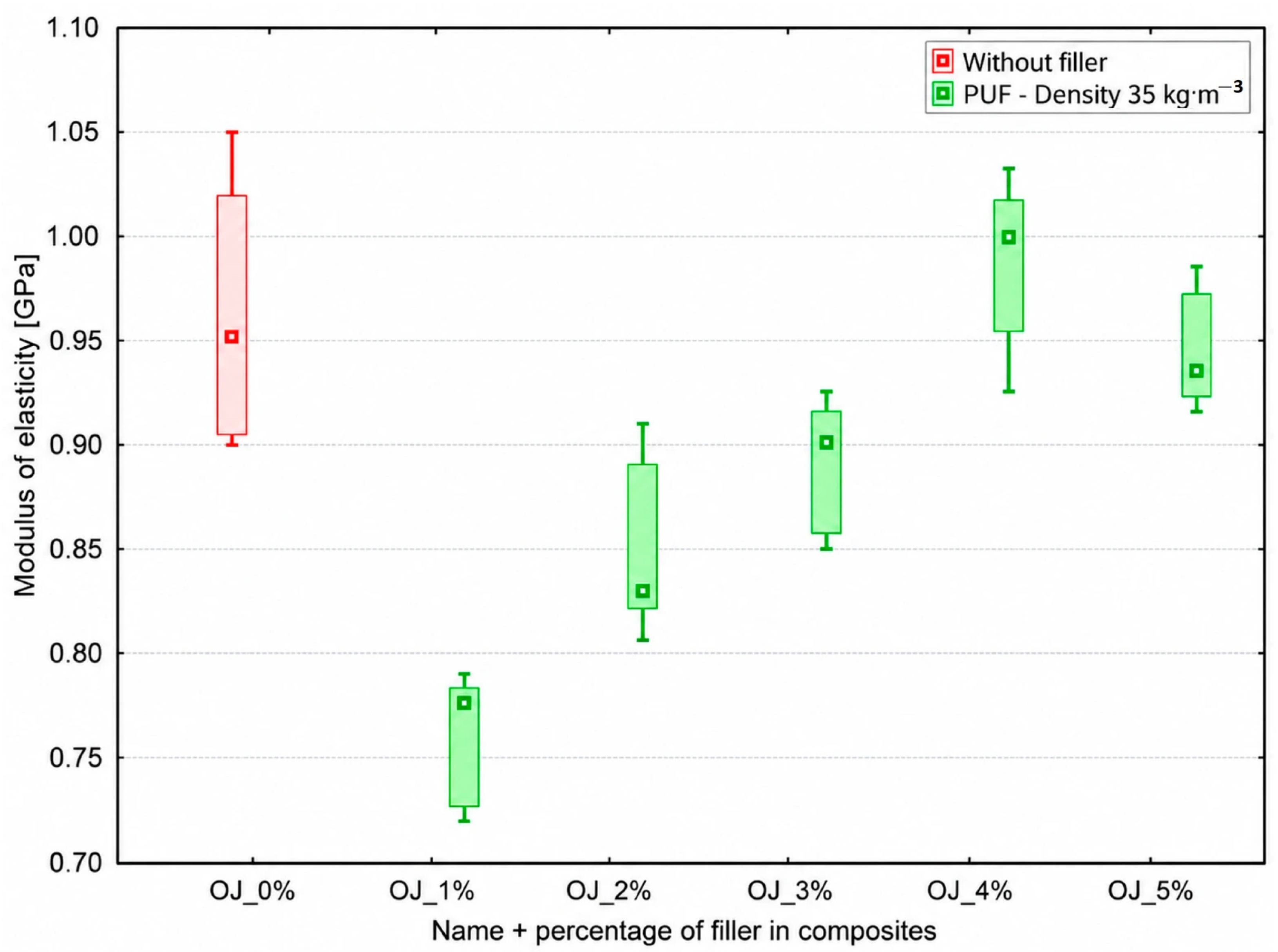
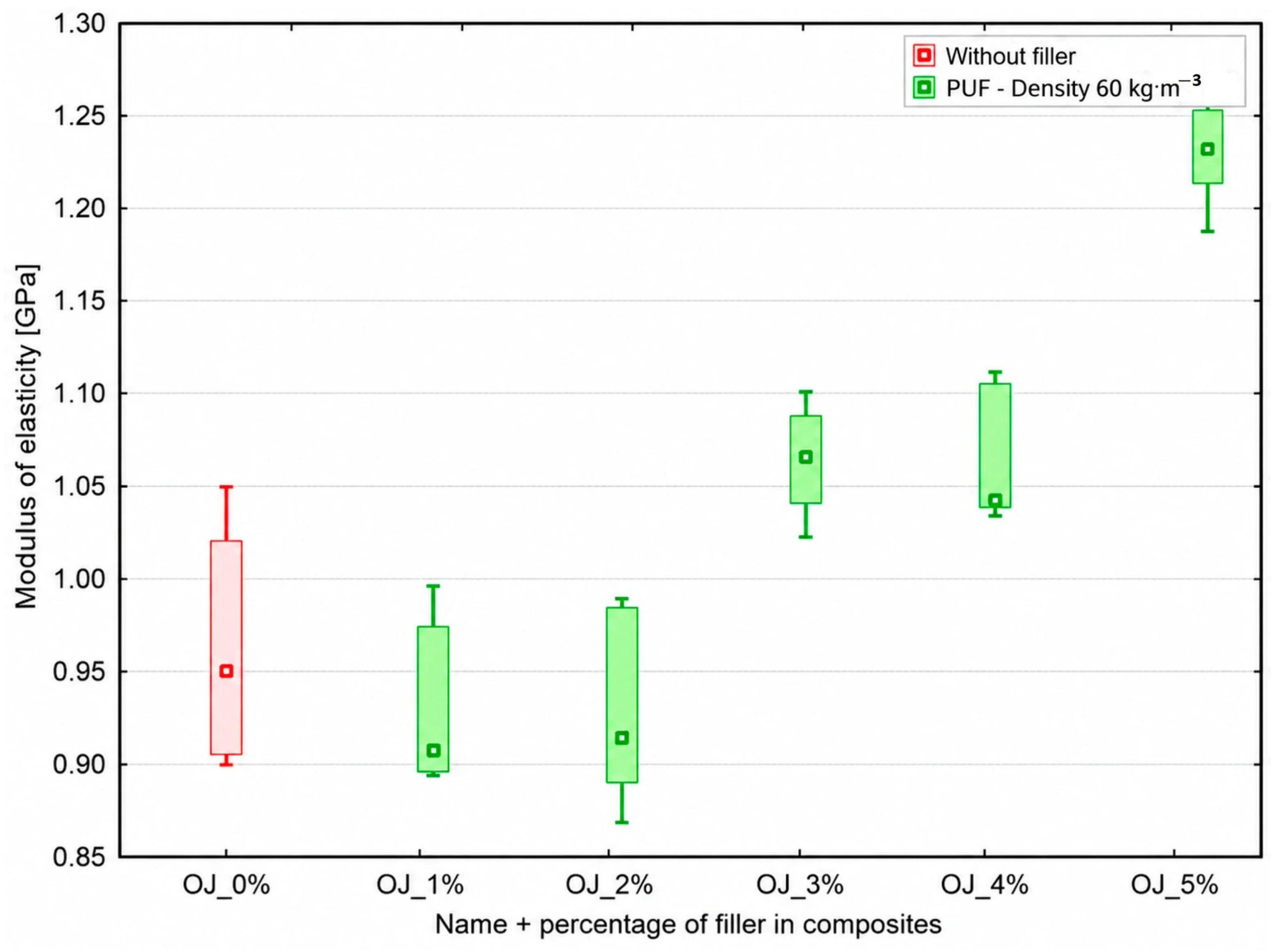
- Bonded joints: Recycled PUF did not significantly improve adhesive bond strength. For 1 wt% PUF35, the bond strength remained at the reference level, while 5 wt% PUF35 resulted in an approximately 14.5% decrease. For 5 wt% PUF60, the decrease was also approximately 10.7%, while 5 wt% PUF35/60 resulted in an approximately 6.9% decrease. Statistical analysis confirmed significant relationships for PUF35 and PUF60 in shear strength, while a significant increase in the modulus of elasticity was observed only for PUF60. These results indicate that the benefits of recycled PUF are more pronounced in hybrid composite structures than in thin adhesive layers.
Author Contributions
Funding
Data Availability Statement
Acknowledgments
Conflicts of Interest
References
- Rossignolo, G.; Malucelli, G.; Lorenzetti, A. Recycling of polyurethanes: Where we are and where we are going. Green Chem. 2024, 26, 1132–1152. [Google Scholar] [CrossRef] [Scilit]
- Gama, N.; Godinho, B.; Marques, G.; Silva, R.; Barros-Timmons, A.; Ferreira, A.J. Recycling of polyurethane scraps via acidolysis. Chem. Eng. J. 2020, 395, 125102. [Google Scholar] [CrossRef] [Scilit]
- Kemona, A.; Piotrowska, M. Polyurethane Recycling and Disposal: Methods and Prospects. Polymers 2020, 12, 1752. [Google Scholar] [CrossRef] [Scilit] [PubMed]
- Hýsek, Š.; Sedivka, P.; Böhm, M.; Schönfelder, O.; Beran, R. Influence of Using Recy-cled Polyurethane Particles as a Filler on Properties of Polyurethane Adhesives for Gluing of Wood. BioResources 2018, 13, 2592–2601. [Google Scholar] [CrossRef] [Scilit]
- Beran, R.; Zarybnicka, L.; Machova, D. Recycling of rigid polyurethane foam: Micromilled powder used as active filler in polyurethane adhesives. J. Appl. Polym. Sci. 2020, 137, 49095. [Google Scholar] [CrossRef] [Scilit]
- Xi, W.; Qian, L.; Li, L. Flame Retardant Behavior of Ternary Synergistic Systems in Rigid Polyurethane Foams. Polymers 2019, 11, 207. [Google Scholar] [CrossRef] [Scilit] [PubMed]
- Bhatti, H.; Ahmad, I. Methods for polyurethane and polyurethane composites, recycling and recovery: A review. React. Funct. Polym. 2007, 67, 675–692. [Google Scholar] [CrossRef] [Scilit]
- Gama, N.; Godinho, B.; Madureira, P.; Marques, G.; Barros-Timmons, A.; Ferreira, A. Polyurethane Recycling Through Acidolysis: Current Status and Prospects for the Future. J. Polym. Environ. 2024, 32, 4777–4793. [Google Scholar] [CrossRef] [Scilit]
- Grdadolnik, M.; Drincic, A.; Oreski, A.; Onder, O.C.; Utrosa, P.; Pahovnik, D.; Zagar, E. Insight into Chemical Recycling of Flexible Polyurethane Foams by Acidolysis. ACS Sustain. Chem. Eng. 2022, 10, 1323–1332. [Google Scholar] [CrossRef] [Scilit] [PubMed]
- Banik, J.; Chakraborty, D.; Rizwan, M.; Shaik, A.H.; Chandan, M.R. Review on disposal, recycling and management of waste polyurethane foams: A way ahead. Waste Manag. Res. 2023, 41, 1063–1080. [Google Scholar] [CrossRef] [Scilit] [PubMed]
- Zarezadeh, E.; Tangestani, M.; Jafari, A.J. A systematic review of methodologies and solutions for recycling polyurethane foams to safeguard the environment. Heliyon 2024, 10, e40724. [Google Scholar] [CrossRef] [Scilit] [PubMed]
- Selvaraj, V.K.; Subramanian, J.; Mouleswaran, S.; Keerthan, T.K.; Muneeswaran, T.; Nath, A.K.; Raju, M.P. Sustainable development of bioepoxy composites reinforced with recycled rigid polyurethane foam for mechanical, thermal, acoustic, and electromag-netic applications in a circular economy approach. Sci. Rep. 2025, 15, 8295. [Google Scholar] [CrossRef] [Scilit] [PubMed]
- Schyns, Z.O.G.; Shaver, M.P. Mechanical Recycling of Packaging Plastics: A Review. Macromol. Rapid Commun. 2021, 42, e2000415. [Google Scholar] [CrossRef] [Scilit] [PubMed]
- Deng, Y.; Dewil, R.; Appels, L.; Ansart, R.; Baeyens, J.; Kang, Q. Reviewing the thermo-chemical recycling of waste polyurethane foam. J. Environ. Manag. 2021, 278, 111527. [Google Scholar] [CrossRef] [Scilit] [PubMed]
- Yang, W.; Dong, Q.; Liu, S.; Xie, H.; Liu, L.; Li, J. Recycling and Disposal Methods for Polyurethane Foam Wastes. Procedia Environ. Sci. 2012, 16, 167–175. [Google Scholar] [CrossRef] [Scilit]
- Günther, M.; Lorenzetti, A.; Schartel, B. Fire Phenomena of Rigid Polyurethane Foams. Polymers 2018, 10, 1166. [Google Scholar] [CrossRef] [Scilit] [PubMed]
- Guo, L.; Wang, W.; Guo, X.; Hao, K.; Liu, H.; Xu, Y.; Liu, G.; Guo, S.; Bai, L.; Ren, D.; et al. Recycling of Flexible Polyurethane Foams by Regrinding Scraps into Powder to Replace Polyol for Re-Foaming. Materials 2022, 15, 6047. [Google Scholar] [CrossRef] [Scilit] [PubMed]
- Simón, D.; Rodríguez, J.F.; Carmona, M.; Serrano, A.; Borreguero, A.M. Glycolysis of advanced polyurethanes composites containing thermoregulating microcapsules. Chem. Eng. J. 2018, 350, 300–311. [Google Scholar] [CrossRef] [Scilit]
- Simón, D.; Borreguero, A.M.; de Lucas, A.; Rodríguez, J.F. Glycolysis of flexible polyurethane wastes containing polymeric polyols. Polym. Degrad. Stab. 2014, 109, 115–121. [Google Scholar] [CrossRef] [Scilit]
- Calvo-Correas, T.; Ugarte, L.; Trzebiatowska, P.J.; Sanzberro, R.; Datta, J.; Corcuera, M.Á.; Eceiza, A. Thermoplastic polyurethanes with glycolysate intermediates from polyurethane waste recycling. Polym. Degrad. Stab. 2017, 144, 411–419. [Google Scholar] [CrossRef] [Scilit]
- Simón, D.; Borreguero, A.M.; de Lucas, A.; Rodríguez, J.F. Recycling of polyure-thanes from laboratory to industry, a journey towards the sustainability. Waste Manag. 2018, 76, 147–171. [Google Scholar] [CrossRef] [Scilit] [PubMed]
- Gama, N.V.; Ferreira, A.; Barros-Timmons, A. Polyurethane Foams: Past, Present, and Future. Materials 2018, 11, 1841. [Google Scholar] [CrossRef] [Scilit] [PubMed]
- Eling, B.; Tomović, Ž.; Schädler, V. Current and Future Trends in Polyurethanes: An Industrial Perspective. Macromol. Chem. Phys. 2020, 221, 2000114. [Google Scholar] [CrossRef] [Scilit]
- Salino, R.E.; Catai, R.E. A study of polyurethane waste composite (PUR) and recycled plasterboard sheet cores with polyurethane foam for acoustic absorption. Constr. Build. Mater. 2023, 387, 131201. [Google Scholar] [CrossRef] [Scilit]
- Mark, F.E.; Kamprath, A. Recycling & Recovery Options for PU Seating Material: A Joint Study of ISOPA/Euro-Moulders. In Proceedings of the 2000 SAE Total Life Cycle Conference and Exposition, Detroit, MI, USA, 26–28 April 2000; Available online: https://saemobilus.sae.org/papers/recycling-recovery-options-pu-seating-material-a-joint-study-isopa-euro-moulders-2000-01-1514 (accessed on 15 August 2026). [CrossRef] [Scilit]
- Chen, S.; Wang, F.; Peng, Y.; Chen, T.; Wu, Q.; Sun, P. A Single Molecular Diels–Alder Crosslinker for Achieving Recyclable Cross-Linked Polymers. Macromol. Rapid Commun. 2015, 36, 1687–1692. [Google Scholar] [CrossRef] [Scilit] [PubMed]
- Wieczorek, K.; Bukowski, P.; Stawiński, K.; Ryłko, I. Recycling of Polyurethane Foams via Glycolysis: A Review. Materials 2024, 17, 4617. [Google Scholar] [CrossRef] [Scilit] [PubMed]
- Hosgor, E.; Martinho, R.P.; Hoogland, J.S.; Jia, Y.; Morales Gomez, A.; Verboom, W.; Lange, J.P.; Huskens, J. Polyurethane depolymerization by dialkyl carbonates: Toward sustainable chemical recycling. Green Chem. 2025, 27, 11782–11793. [Google Scholar] [CrossRef] [Scilit]
- Delavarde, A.; Savin, G.; Derkenne, P.; Boursier, M.; Morales-Cerrada, R.; Nottelet, B.; Pinaud, J.; Caillol, S. Sustainable polyurethanes: Toward new cutting-edge opportunities. Prog. Polym. Sci. 2024, 151, 101805. [Google Scholar] [CrossRef] [Scilit]
- Mansouri, H.R.; Pizzi, A. Recycled micronized polyurethane powders as active extenders of UF and PF wood panel adhesives. Holz Als Roh Werkst. 2007, 65, 293–299. [Google Scholar] [CrossRef] [Scilit]
- Qu, C.B.; Huang, G.W.; Li, N.; Li, M.; Ma, J.-L.; Liu, Y.; Xiao, H.M. Improving cryogenic mechanical properties of carbon fiber reinforced composites based on epoxy resin toughened by hydroxyl-terminated polyurethane. Compos. Part B Eng. 2021, 210, 108569. [Google Scholar] [CrossRef] [Scilit]
- Seo, J.; Lee, D.; Ji, H.; Yang, S.B.; Baek, Y.; Shin, P.S.; Kim, M.T.; Kwon, D.J. Enhanced interlaminar adhesion and stab resistance in recycled composites using waste prepreg and milled waste polyurethane foam. Compos. Part B Eng. 2026, 317, 113606. [Google Scholar] [CrossRef] [Scilit]
- Liang, F.; Chen, Q.; Shi, Z.; Dan, R.; Liang, H.; Feng, X.; Tang, C.; Yu, X.; Shang, X.; Zhang, D.; et al. Multifunctional composites made from waste polyester cotton fabric and waste rigid polyurethane foam for potential building wall material applications. Energy Build. 2025, 329, 115274. [Google Scholar] [CrossRef] [Scilit]
- Xia, P.; Liu, Q.; Fu, H.; Yu, Y.; Wang, L.; Wang, Q.; Yu, X.; Zhao, F. Mechanical properties and energy absorption of 3D printed double-layered helix honeycomb under in-plane compression. Compos. Struct. 2023, 315, 116982. [Google Scholar] [CrossRef] [Scilit]
- Townsend, S.; Adams, R.; Robinson, M.; Hanna, B.; Theobald, P. 3D printed origami honeycombs with tailored out-of-plane energy absorption behavior. Mater. Des. 2020, 195, 108930. [Google Scholar] [CrossRef] [Scilit]
- Kendall, P.; Sun, M.; Wowk, D.; Mechefske, C.; Kim, I.Y. Experimental Investigation of Adhesive Fillet Size on Barely Visible Impact Damage in Metallic Honeycomb Sandwich Panels. Compos. Part B Eng. 2020, 184, 107723. [Google Scholar] [CrossRef] [Scilit]
- Jiang, H.; Ji, Y.; Hu, Y.; Hu, X.; Ren, Y. Interfacial Design and Flexural Property of CFRP/Aluminum-Honeycomb Sandwich with Aramid-Pulp Micro/Nano-Fiber Inter-lays. Compos. Struct. 2022, 289, 115486. [Google Scholar] [CrossRef] [Scilit]
- Pereira, A.B.; Fernandes, F.A.O. Sandwich Panels Bond with Advanced Adhesive Films. J. Compos. Sci. 2019, 3, 79. [Google Scholar] [CrossRef] [Scilit]
- Zebrine, D.; Anders, M.; Centea, T.; Nutt, S. Path-Dependent Bond-Line Evolution in Equilibrated Core Honeycomb Sandwich Structures. Adv. Manuf. Polym. Compos. Sci. 2020, 6, 127–141. [Google Scholar] [CrossRef] [Scilit]
- Mahović Poljaček, S.; Donevski, D.; Tomašegović, T.; Vrabič Brodnjak, U.; Leskovšek, M. Mechanical Properties of 3D-Printed PLA Structures Observed in Framework of Different Rotational Symmetry Orders in Infill Patterns. Symmetry 2025, 17, 466. [Google Scholar] [CrossRef] [Scilit]
- Lalegani Dezaki, M.; Mohd Ariffin, M.K.A. The Effects of Combined Infill Patterns on Mechanical Properties in FDM Process. Polymers 2020, 12, 2792. [Google Scholar] [CrossRef] [Scilit] [PubMed]
- Ćwikła, G.; Grabowik, C.; Kalinowski, K.; Paprocka, I.; Ociepka, P. The influence of printing parameters on selected mechanical properties of FDM/FFF 3D-printed parts. IOP Conf. Ser. Mater. Sci. Eng. 2017, 227, 012033. [Google Scholar] [CrossRef] [Scilit]
- Galeja, M.; Hejna, A.; Kosmela, P.; Kulawik, A. Static and Dynamic Mechanical Properties of 3D Printed ABS as a Function of Raster Angle. Materials 2020, 13, 297. [Google Scholar] [CrossRef] [Scilit] [PubMed]
- Wang, S.; Pei, W.; Jin, S.; Yu, H. Numerical and theoretical analysis of the out-of-plane crushing behavior of a sinusoidal-shaped honeycomb structure with tunable mechanical properties. Structures 2024, 61, 106147. [Google Scholar] [CrossRef] [Scilit]
- Song, X.; Hong, S.; Wang, J.; Zhu, X.; Guo, S.; Fu, Y.; Yang, Y.; Yang, M.; He, W.; Tang, Y.; et al. Mechanical Properties of a Honeycomb Structure Dispersed with 3D-Printed Fe3O4 Nanomaterials. ACS Omega 2024, 9, 14287–14296. [Google Scholar] [CrossRef] [Scilit] [PubMed]
- Jin, T.; Zhou, Z.; Wang, Z.; Wu, G.; Shu, X. Experimental study on the effects of specimen in-plane size on the mechanical behavior of aluminum hexagonal honeycombs. Mater. Sci. Eng. A 2015, 635, 23–35. [Google Scholar] [CrossRef] [Scilit]
- Song, S.; Xiong, C.; Tao, F.; Yin, J.; Zhang, Y.; Zhang, S. Size effect of composite Kagome honeycomb sandwich structure rein-forced with PMI foams under quasi-static bending: Experiment tests and numerical analysis. Compos. Struct. 2022, 296, 115832. [Google Scholar] [CrossRef] [Scilit]
- Yang, X.; Ma, J.; Sun, Y.; Yang, J. Ripplecomb: A novel triangular tube reinforced corrugated honeycomb for energy absorption. Compos. Struct. 2018, 202, 988–999. [Google Scholar] [CrossRef] [Scilit]
- Qi, J.; Li, C.; Tie, Y.; Zheng, Y.; Duan, Y. Energy absorption characteristics of origami-inspired honeycomb sandwich structures under low-velocity impact loading. Mater. Des. 2021, 207, 109837. [Google Scholar] [CrossRef] [Scilit]
- Du, Z.H.; Ma, S.B.; Han, G.Q.; Wei, X.; Han, J.C.; Zhang, K.F. The parameter optimization and mechanical property of the honeycomb structure for Ti2AlNb based alloy. J. Manuf. Process. 2021, 65, 206–213. [Google Scholar] [CrossRef] [Scilit]
- Müller, M.; Jirků, P.; Šleger, V.; Mishra, R.K.; Hromasová, M.; Novotný, J. Effect of Infill Density in FDM 3D Printing on Low-Cycle Stress of Bamboo-Filled PLA-Based Material. Polymers 2022, 14, 4930. [Google Scholar] [CrossRef] [Scilit] [PubMed]
- Lalegani Dezaki, M.; Ariffin, M.K.; Serjouei, A.; Zolfagharian, A.; Hatami, S.; Bodaghi, M. Influence of Infill Patterns Generated by CAD and FDM 3D Printer on Surface Roughness and Tensile Strength Properties. Appl. Sci. 2021, 11, 7272. [Google Scholar] [CrossRef] [Scilit]
- Jirků, P.; Muller, M.; Mishra, R.K.; Svobodová, J. Effect of Recycling and UV Ageing on the Properties of PLA-Based Materials Used in Additive Manufacturing. Polymers 2025, 17, 1862. [Google Scholar] [CrossRef] [Scilit] [PubMed]
- ČSN EN ISO 527-1 (640604); Plasty—Stanovení Tahovych Vlastností—část 1: Obecné Principy. Czech Agency for Standardization: Prague, Czech Republic, 2020. Available online: https://www.technicke-normy-csn.cz/csn-en-iso-527-1-640604-211895.html (accessed on 10 August 2026).
- ČSN-EN 1465:2009; Adhesives—Determination of Tensile Lap-Shear Strength of Bonded Assemblies. iTeh, Inc.: Newark, DE, USA, 2009. Available online: https://standards.iteh.ai/catalog/standards/cen/57415b90-b458-4e84-95a1-fb04074f0099/en-1465-2009 (accessed on 10 August 2026).
- Rudawska, A. Surface Treatment in Bonding Technology; Academic Press: Amsterdam, The Netherlands, 2019. [Google Scholar]
- van Dam, J.P.B.; Abrahami, S.T.; Yilmaz, A.; Gonzalez-Garcia, Y.; Terryn, H.; Mol, J.M. Effect of surface roughness and chemistry on the adhesion and durability of a steel-epoxy adhesive inteface. Int. J. Adhes. Adhes. 2020, 96, 102450. [Google Scholar] [CrossRef] [Scilit]
- Müller, M.; Svobodová, J.; Hrabě, P.; Mishra, R.K.; Valášek, P.; Rudawská, A. Research on an innovative nettle-based filler in the field of hybrid adhesive joints. J. Adhes. Sci. Technol. 2026, 1–33. [Google Scholar] [CrossRef] [Scilit]
- Hedjazi, L.; Belhabib, S.; D’Orlando, A.; Guessasma, S. Breaking Material Symmetry to Control Mechanical Performance in 3D Printed Objects. Symmetry 2023, 15, 28. [Google Scholar] [CrossRef] [Scilit]
- Song, S.; Xiong, C.; Yin, J.; Zhang, S. Mechanical property of all-composite diamond honeycomb sandwich structure based on interlocking technology: Experimental tests and numerical analysis. Mech. Adv. Mater. Struct. 2024, 31, 973–989. [Google Scholar] [CrossRef] [Scilit]
- Cabreira, V.; Santana, R. Effect of infill pattern in Fused Filament Fabrication (FFF) 3D Printing on materials performance. Matér. Rio Jan. 2020, 25, e12826. [Google Scholar] [CrossRef] [Scilit]
- Cojocaru, V.; Frunzaverde, D.; Miclosina, C.-O. On the Behavior of Honeycomb, Grid and Triangular PLA Structures under Symmetric and Asymmetric Bending. Micromachines 2023, 14, 120. [Google Scholar] [CrossRef] [Scilit] [PubMed]
- Xu, H.H.; Luo, H.C.; Zhang, X.G.; Jiang, W.; Teng, X.C.; Chen, W.Q.; Yang, J.; Xie, Y.M.; Ren, X. Mechanical properties of aluminum foam filled reentrant honeycomb with uniform and gradient designs. Int. J. Mech. Sci. 2023, 244, 108075. [Google Scholar] [CrossRef] [Scilit]
- Abbasi, Z.; Jazani, O.M.; Sohrabian, M. Designing of high-performance epoxy adhesive with recycled polymers and silica nano particles (SNPs) in epoxy/carbon fiber composite-steel bonded joints: Mechanical properties, thermal stability and toughen-ing mechanisms. J. Taiwan Inst. Chem. Eng. 2021, 123, 310–327. [Google Scholar] [CrossRef] [Scilit]
- Ogrodniczek, J.; Rudawska, A.; Müller, M. Comparative analysis of compressive strength of epoxy adhesive compounds containing fillers. J. Adhes. 2025, 101, 331–355. [Google Scholar]
- Fan, T.; Hu, R.; Zhao, Z.; Liu, Y.; Lu, M. Surface micro-dissolve method of imparting self-cleaning property to cotton fabrics in NaOH/urea aqueous solution. Appl. Surf. Sci. 2017, 400, 524–529. [Google Scholar] [CrossRef] [Scilit]
- Müller, M.; Valášek, P.; Rudawska, A. Mechanical properties of adhesive bonds reinforced with biological fabric. J. Adhes. Sci. Technol. 2017, 31, 1859–1871. [Google Scholar] [CrossRef] [Scilit]
- Banea, M.D.; da Silva, L.F.M. Adhesively bonded joints in composite materials: An overview. Proc. Inst. Mech. Eng. Part J. Mater. Des. Appl. 2009, 223, 1–18. [Google Scholar] [CrossRef] [Scilit]
- Kinloch, A.J. Interfacial Fracture Mechanical Aspects of Adhesive Bonded Joints—A Review. J. Adhes. 1979, 10, 193–219. [Google Scholar] [CrossRef] [Scilit]
















Disclaimer/Publisher’s Note: The statements, opinions and data contained in all publications are solely those of the individual author(s) and contributor(s) and not of MDPI and/or the editor(s). MDPI and/or the editor(s) disclaim responsibility for any injury to people or property resulting from any ideas, methods, instructions or products referred to in the content. |
© 2026 by the authors. Licensee MDPI, Basel, Switzerland. This article is an open access article distributed under the terms and conditions of the Creative Commons Attribution (CC BY) license.
Share and Cite
Penc, M.; Müller, M.; Marčan, J.; Mishra, R.K.; Svobodová, J.; Jirků, P.; Rudawska, A.; Valášek, P. Mechanical Properties and Microstructure of Bonded Joints and Hybrid Structures with a 3D-Printed Honeycomb Core Modified with an Epoxy Matrix Filled with Recycled Polyurethane Foam. Materials 2026, 19, 3935. https://doi.org/10.3390/ma19183935
Penc M, Müller M, Marčan J, Mishra RK, Svobodová J, Jirků P, Rudawska A, Valášek P. Mechanical Properties and Microstructure of Bonded Joints and Hybrid Structures with a 3D-Printed Honeycomb Core Modified with an Epoxy Matrix Filled with Recycled Polyurethane Foam. Materials. 2026; 19(18):3935. https://doi.org/10.3390/ma19183935
Chicago/Turabian StylePenc, Michal, Miroslav Müller, Jiří Marčan, Rajesh Kumar Mishra, Jaroslava Svobodová, Petr Jirků, Anna Rudawska, and Petr Valášek. 2026. "Mechanical Properties and Microstructure of Bonded Joints and Hybrid Structures with a 3D-Printed Honeycomb Core Modified with an Epoxy Matrix Filled with Recycled Polyurethane Foam" Materials 19, no. 18: 3935. https://doi.org/10.3390/ma19183935
APA StylePenc, M., Müller, M., Marčan, J., Mishra, R. K., Svobodová, J., Jirků, P., Rudawska, A., & Valášek, P. (2026). Mechanical Properties and Microstructure of Bonded Joints and Hybrid Structures with a 3D-Printed Honeycomb Core Modified with an Epoxy Matrix Filled with Recycled Polyurethane Foam. Materials, 19(18), 3935. https://doi.org/10.3390/ma19183935