Tailoring Low-Temperature Tempering to Dramatically Enhance Compressive Ductility and Fatigue Contact Wear Resistance in High-Carbon Bearing Steel

Abstract
1. Introduction
2. Materials and Methods
3. Results and Discussion
3.1. Microstructure and Mechanical Properties
3.2. Fatigue-Wear Behavior
3.3. Mechanisms of Strengthening and Wear Resistance
4. Conclusions
- (1)
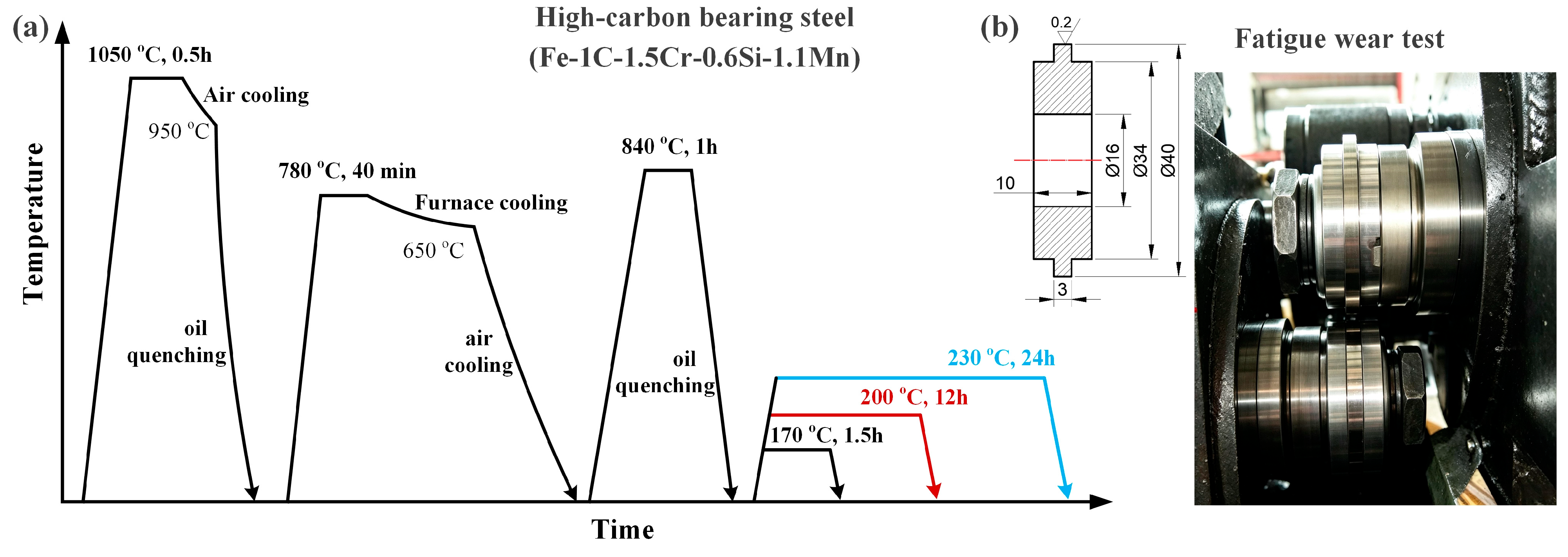
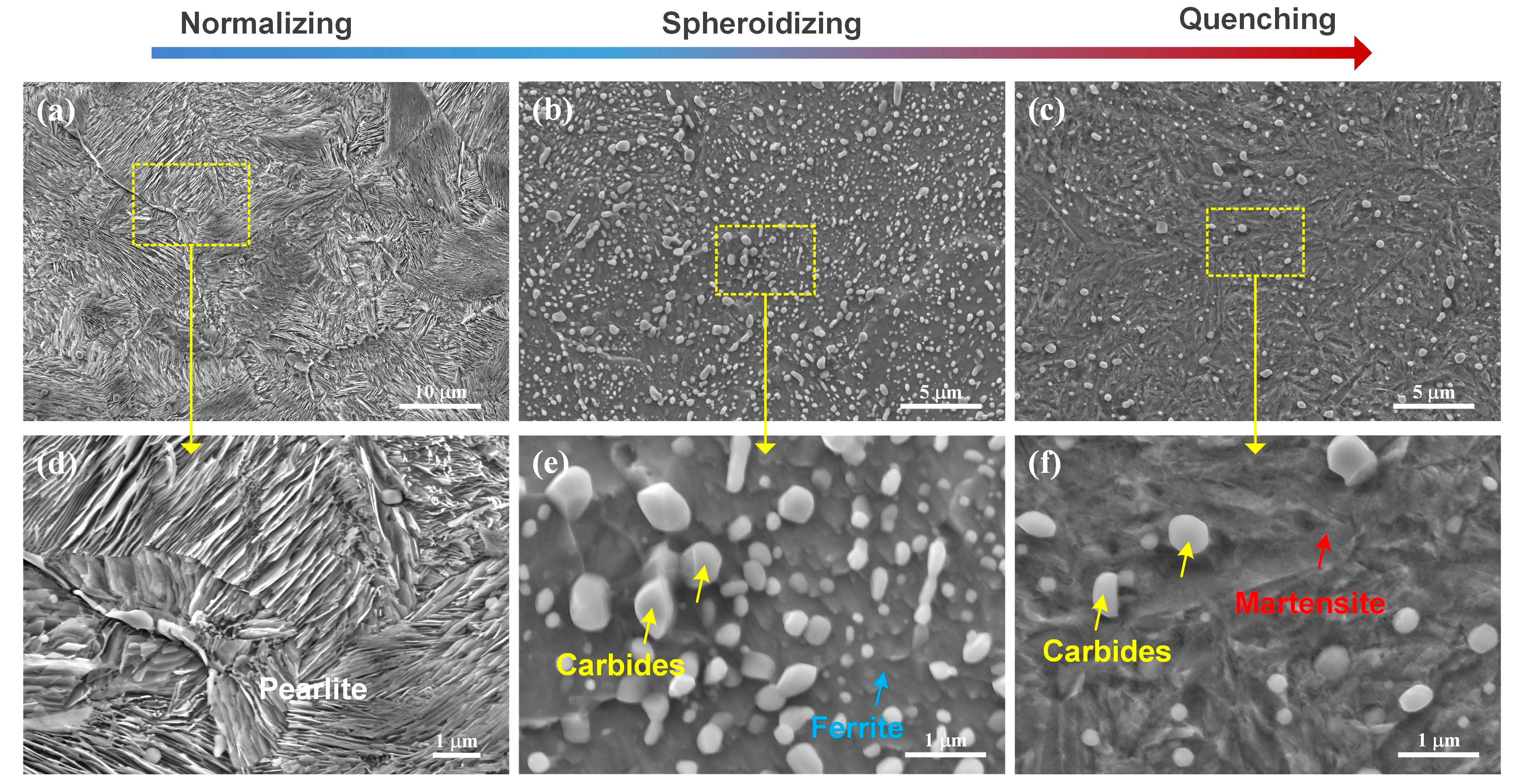
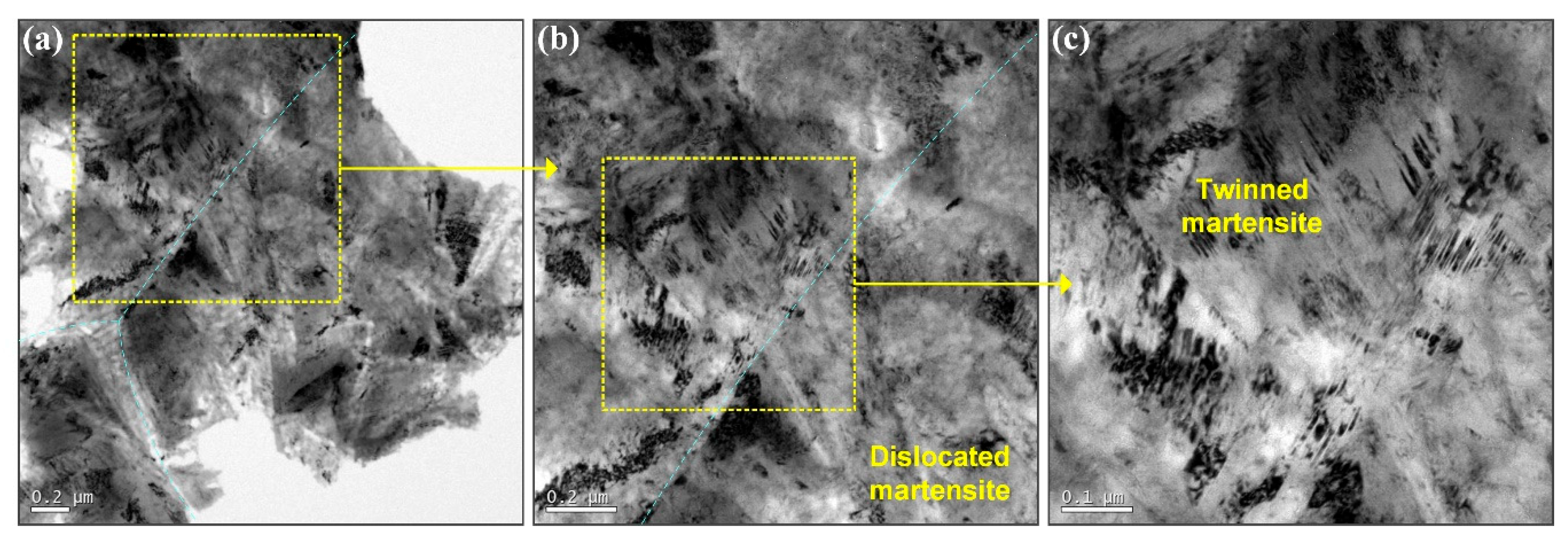
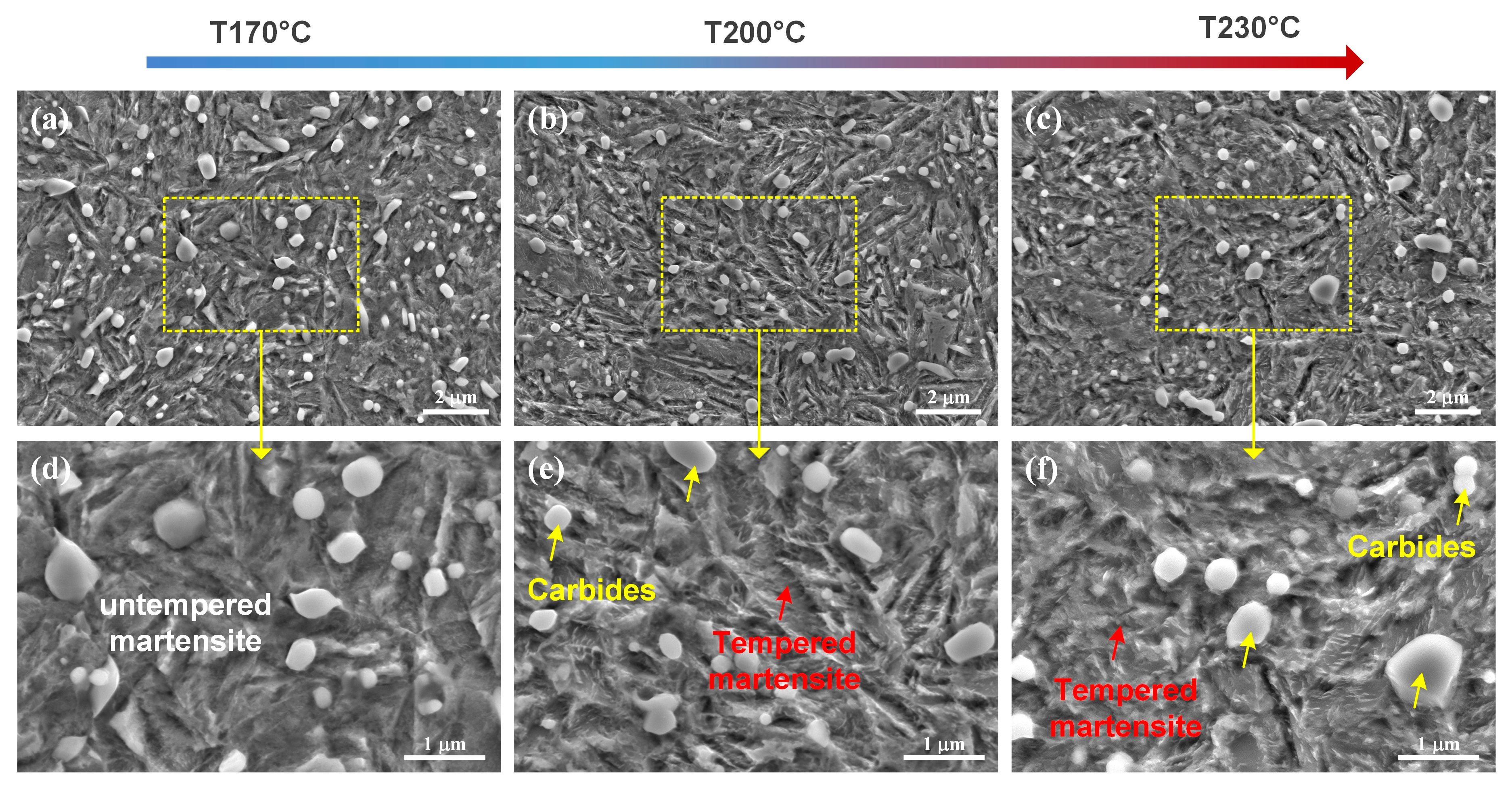
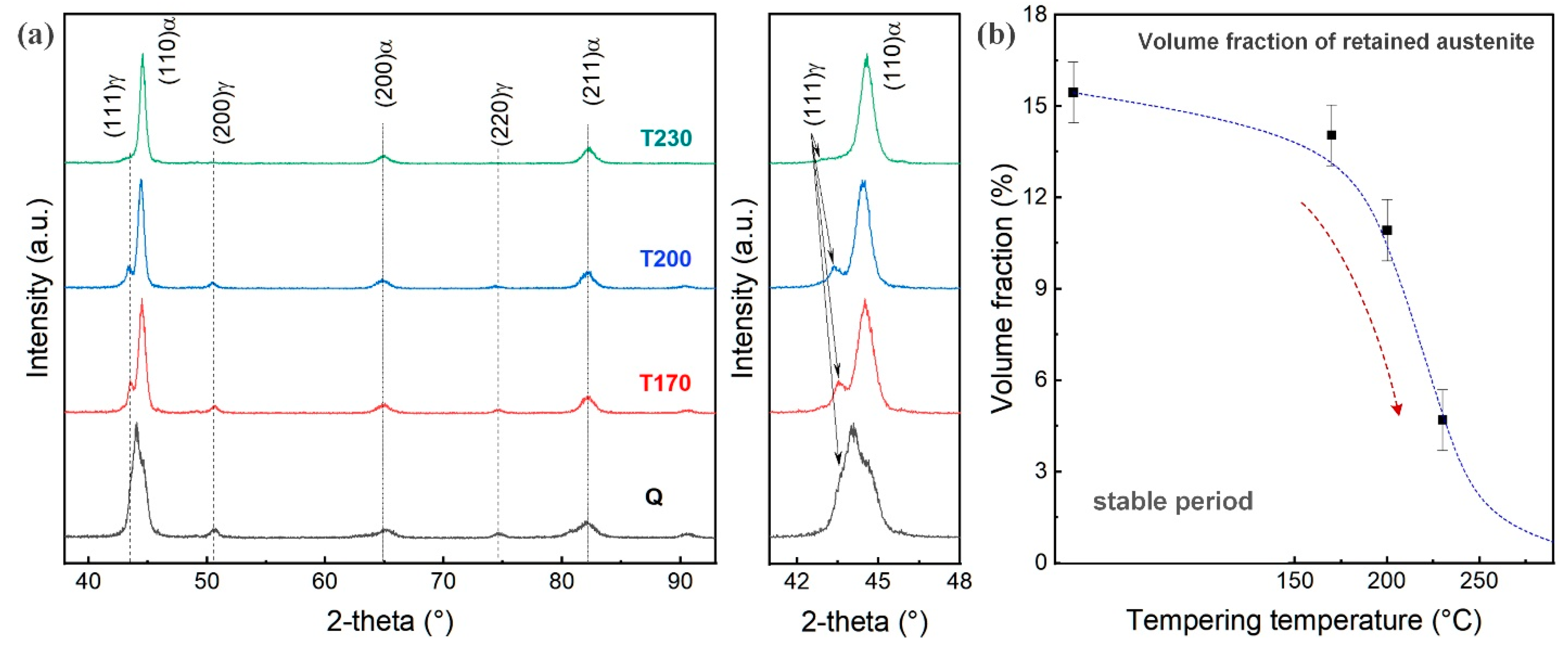
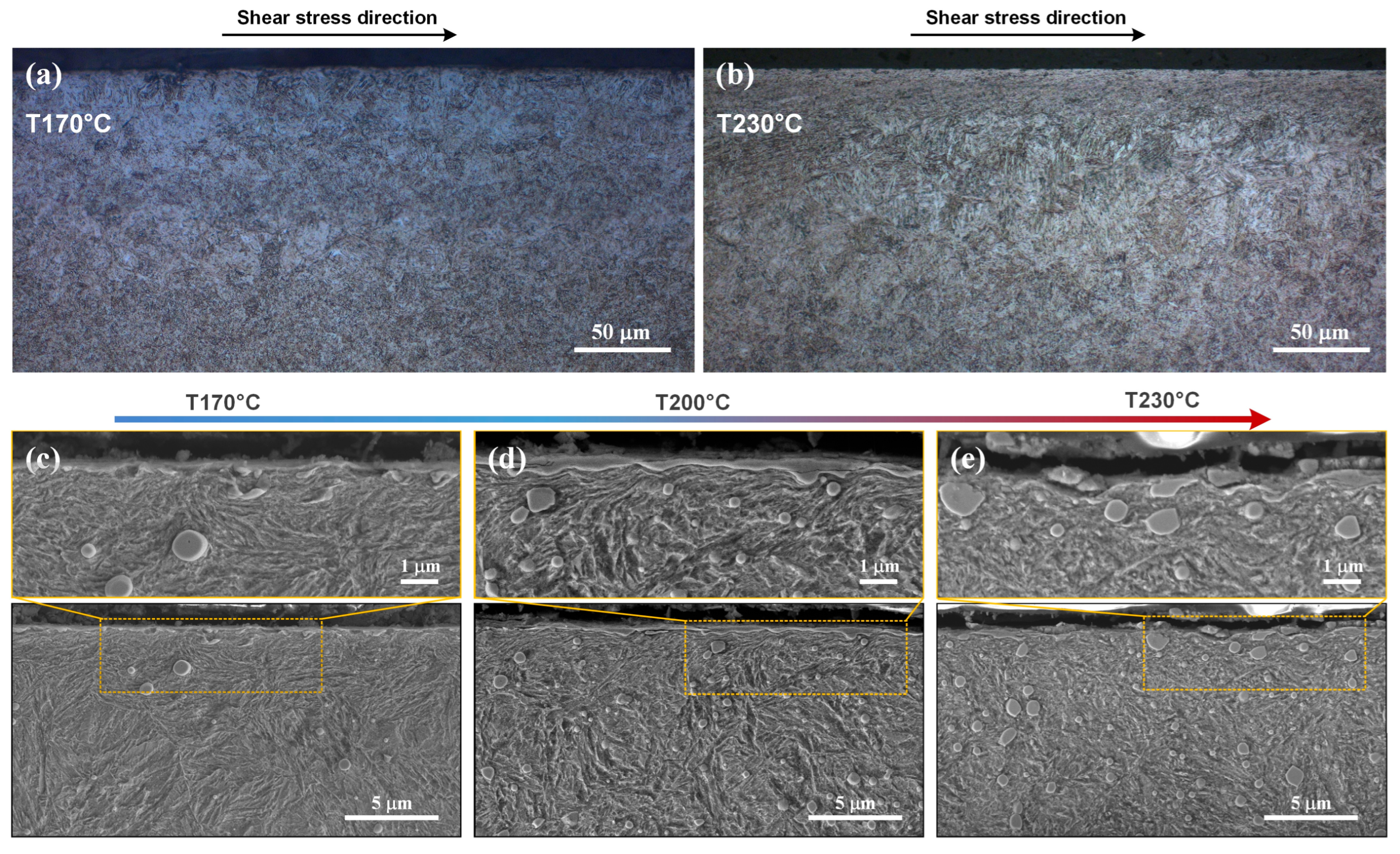
- After spheroidizing annealing and quenching, the microstructure of the high-carbon bearing steel consists of high-carbon martensite and retained austenite, containing a high density of dislocations and fine twins. Low-temperature tempering promotes the decomposition of retained austenite into tempered martensite and the precipitation of fine carbides from the martensitic matrix. Higher tempering temperatures lead to more complete decomposition of retained austenite and more pronounced carbide precipitation.
- (2)
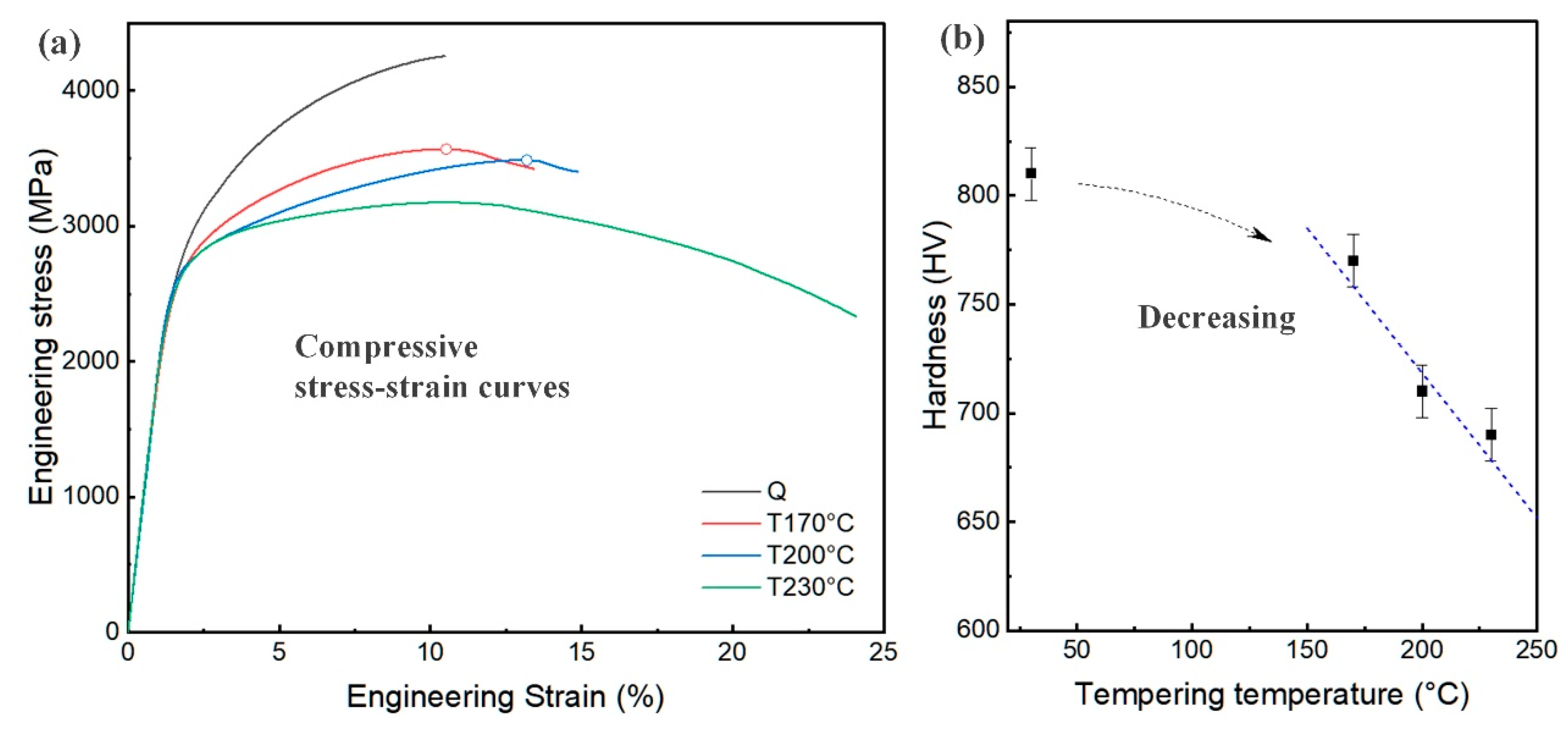
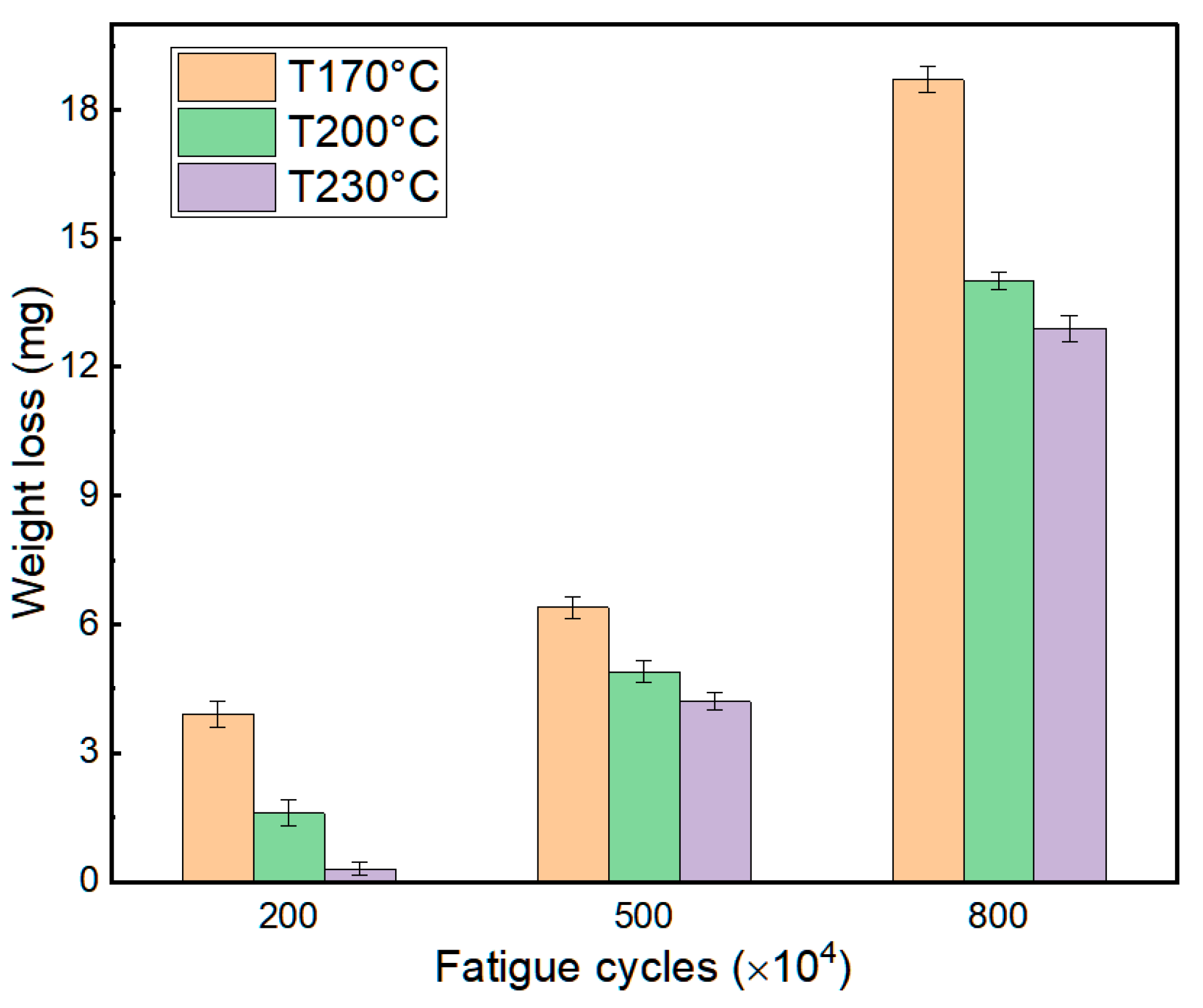
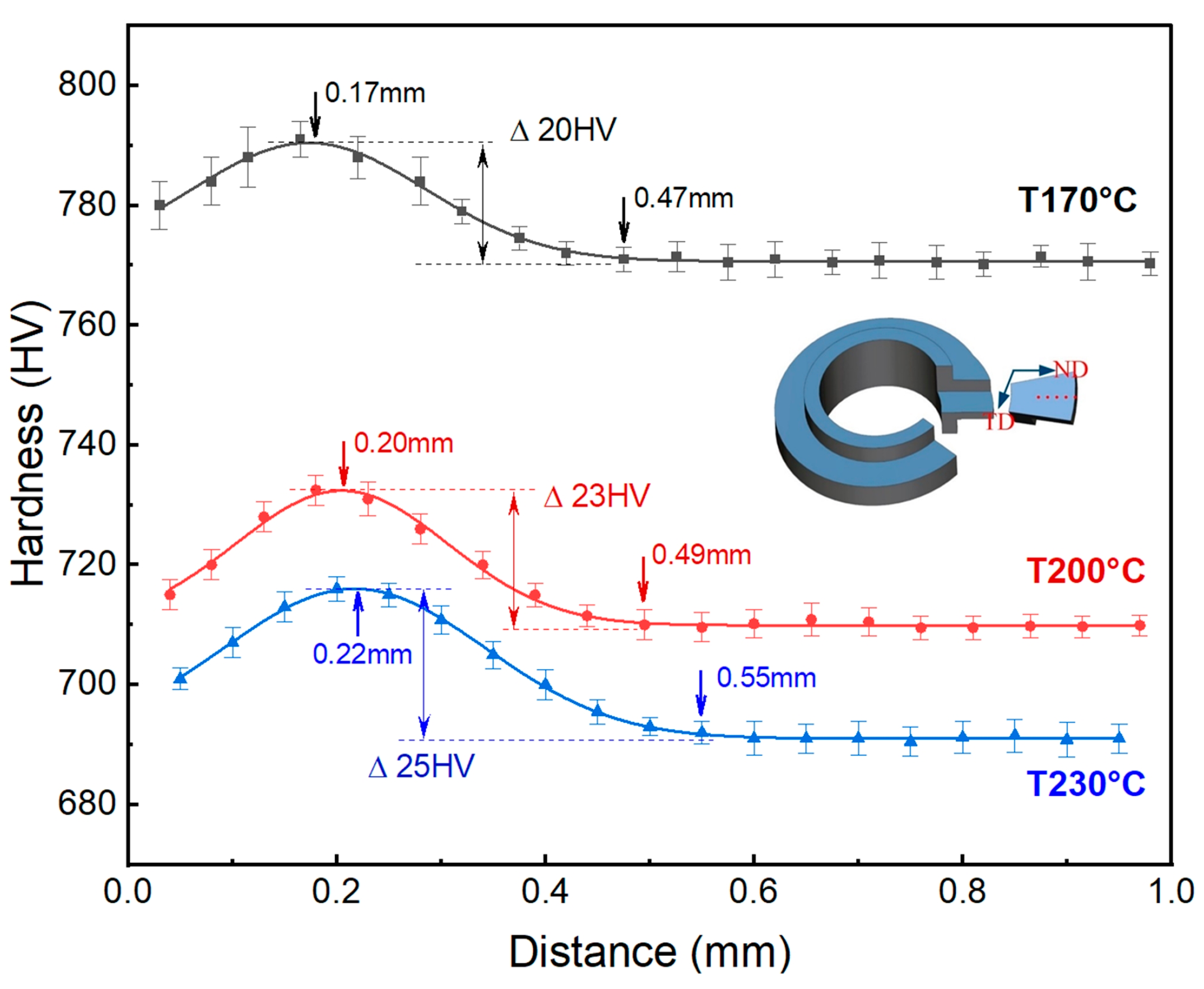
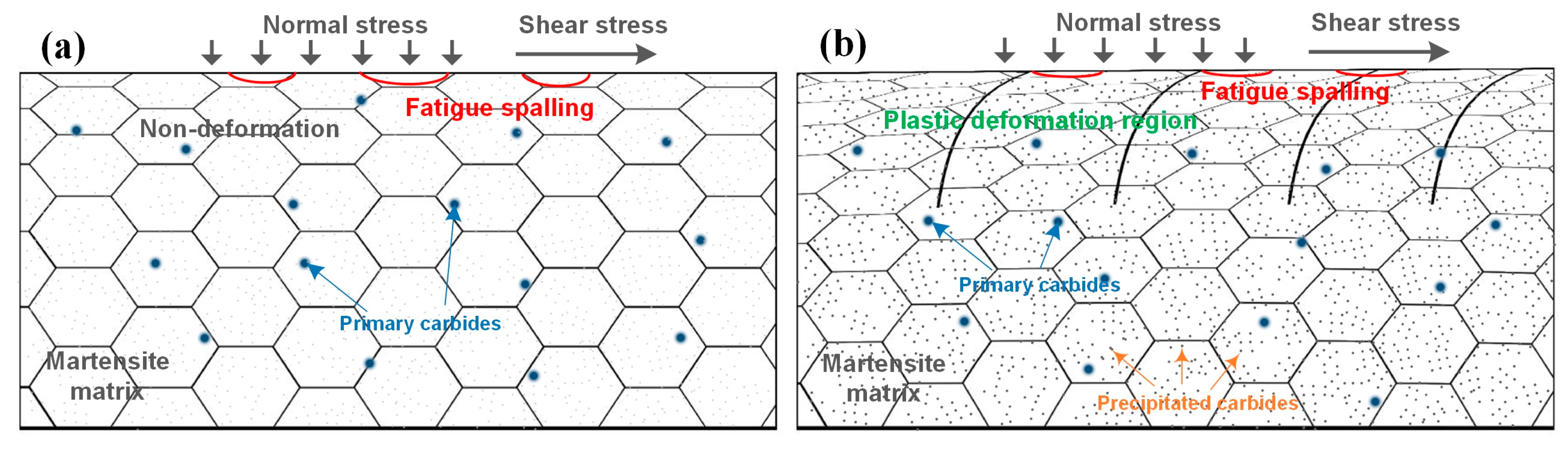
- Compared to the as-quenched condition, low-temperature tempering reduces hardness and compressive strength but increases the compressive failure strain, indicating enhanced ductility and toughness. However, with increasing low-temperature tempering temperature, a distinct plastic deformation zone forms in the near-surface region under cyclic contact stress. This is accompanied by a significant reduction in fatigue wear mass loss, demonstrating improved resistance to fatigue wear.
- (3)
- During the low-temperature tempering stage, the decrease in strength is primarily attributed to the reduction in solid-solution carbon content in the martensite matrix, leading to diminished solid-solution and dislocation strengthening. Under cyclic contact stress, the well-tempered martensitic matrix can accommodate more long-range dislocation slip, exhibiting better plasticity and toughness. When dislocation slip and pile-up reach a critical limit, fatigue crack nuclei are considered to form, ultimately resulting in fatigue spallation. The occurrence of plastic deformation in the near-surface region signifies a greater capacity to absorb the strain energy from contact stress. Consequently, under the same stress level, the onset of fatigue spallation is delayed, which corresponds to superior fatigue wear resistance.
Author Contributions
Funding
Data Availability Statement
Conflicts of Interest
References
- Bhadeshia, H.K.D.H. Steels for bearings. Prog. Mater. Sci. 2012, 57, 268–435. [Google Scholar] [CrossRef]
- Wu, J.; Wei, P.; Zhu, C.; Zhang, P.; Liu, H. Development and application of high strength gears. Int. J. Adv. Manuf. Technol. 2024, 132, 3123–3148. [Google Scholar] [CrossRef]
- Barrow, A.T.W.; Kang, J.H.; Rivera-Díaz-del-Castillo, P.E.J. The ϵ→η→θ transition in 100Cr6 and its effect on mechanical properties. Acta Mater. 2012, 60, 2805–2815. [Google Scholar] [CrossRef]
- Wang, J.; El-Fallah, G.M.A.M.; Chang, X.; Peng, Y.; Tao, Q. Achieving 2.7 GPa tensile strength in ultrastrong high-carbon steel through prolonged low-temperature tempering. Mater. Charact. 2024, 215, 114241. [Google Scholar] [CrossRef]
- Huang, Q.-X.; Wang, J.-M.; Ma, L.-F.; Zhao, C.-J. Fatigue Damage Mechanism of Oil Film Bearing Sleeve. J. Iron Steel Res. Int. 2007, 14, 60–63. [Google Scholar] [CrossRef]
- Popescu, G.; Gabelli, A.; Espejel, G.M.; Wemekamp, B. Micro-Plastic Material Model and Residual Fields in Rolling Contacts. In Bearing Steel Technology-Advances and State of the Art in Bearing Steel Quality Assurance: 7th Volume; Beswick, J.M., Ed.; ASTM International: West Conshohocken, PE, USA, 2007. [Google Scholar]
- Bower, A.F.; Johnson, K.L. Plastic flow and shakedown of the rail surface in repeated wheel-rail contact. Wear 1991, 144, 1–18. [Google Scholar] [CrossRef]
- Warhadpande, A.; Sadeghi, F.; Evans, R.D. Microstructural Alterations in Bearing Steels under Rolling Contact Fatigue Part 1—Historical Overview. Tribol. Trans. 2013, 56, 349–358. [Google Scholar] [CrossRef]
- Martin, J.A.; Borgese, S.F.; Eberhardt, A.D. Microstructural Alterations of Rolling—Bearing Steel Undergoing Cyclic Stressing. J. Basic Eng. 1966, 88, 555–565. [Google Scholar] [CrossRef]
- Yin, H.; Wu, Y.; Liu, D.; Zhang, P.; Zhang, G.; Fu, H. Rolling Contact Fatigue-Related Microstructural Alterations in Bearing Steels: A Brief Review. Metals 2022, 12, 910. [Google Scholar] [CrossRef]
- Fu, H.; Wang, W.; Lu, Y.; Zhang, J.; Zhang, C.; Zhang, H.; Rivera-Díaz-del-Castillo, P.E.J. The origin of microstructural alterations in M50 bearing steel undergoing rolling contact fatigue. Int. J. Fatigue 2023, 175, 107807. [Google Scholar] [CrossRef]
- Bai, M.K.; Pang, J.C.; Wang, G.D.; Yi, H.L. Martensitic transformation cracking in high carbon steels for bearings. Mater. Sci. Technol. 2016, 32, 1179–1183. [Google Scholar] [CrossRef]
- Foster, D.; Paladugu, M.; Hughes, J.; Kapousidou, M.; Barcellini, C.; Daisenberger, D.; Jimenez-Melero, E. Comparative micromechanics assessment of high-carbon martensite/bainite bearing steel microstructures using in-situ synchrotron X-ray diffraction. Materialia 2020, 14, 100948. [Google Scholar] [CrossRef]
- Zhang, F.; Yang, Z. Development of and Perspective on High-Performance Nanostructured Bainitic Bearing Steel. Engineering 2019, 5, 319–328. [Google Scholar] [CrossRef]
- Stormvinter, A.; Hedström, P.; Borgenstam, A. A Transmission Electron Microscopy Study of Plate Martensite Formation in High-carbon Low Alloy Steels. J. Mater. Sci. Technol. 2013, 29, 373–379. [Google Scholar] [CrossRef]
- Syn, C.K.; Lesuer, D.R.; Sherby, O.D. Influence of microstructure on tensile properties of spheroidized ultrahigh-carbon (1.8 Pct C) steel. Metall. Mater. Trans. A 1994, 25, 1481–1493. [Google Scholar] [CrossRef]
- Teng, H.; Qian, S.; Xie, J.; Zhao, H.; Wei, X.; Dong, H. Effect of Spheroidizing Annealing Process on Microstructure and Properties of Quenching and Tempering 60Cr16MoMA Martensitic Stainless Steel. Steel Res. Int. 2024, 95, 2300781. [Google Scholar] [CrossRef]
- Li, C.-S.; Li, Z.-X.; Ren, J.-Y.; Tu, X.-Y.; Li, B.-Z. Microstructure and Properties of 1.0C–1.5Cr Bearing Steel in Processes of Hot Rolling, Spheroidization, Quenching, and Tempering. Steel Res. Int. 2019, 90, 1800470. [Google Scholar] [CrossRef]
- Wu, H.Y.; Han, D.X.; Du, Y.; Gao, X.H.; Du, L.X. Effect of initial spheroidizing microstructure after quenching and tempering on wear and contact fatigue properties of GCr15 bearing steel. Mater. Today Commun. 2022, 30, 103152. [Google Scholar] [CrossRef]
- Speer, J.; Matlock, D.K.; De Cooman, B.C.; Schroth, J.G. Carbon partitioning into austenite after martensite transformation. Acta Mater. 2003, 51, 2611–2622. [Google Scholar] [CrossRef]
- Qin, S.; Liu, Y.; Hao, Q.; Zuo, X.; Rong, Y.; Chen, N. Ultrahigh Ductility, High-Carbon Martensitic Steel. Metall. Mater. Trans. A 2016, 47, 4853–4861. [Google Scholar] [CrossRef]
- Wang, H.; Liu, D.; Yuan, Y.; Zhang, Z.; Zhang, F.; Wang, J.; Yang, Y. Improving the ultimate tensile strength without loss of plasticity of quenching-partitioning steel by introducing hot deformation. Mater. Lett. 2022, 306, 130877. [Google Scholar] [CrossRef]
- Hutchinson, B.; Hagström, J.; Karlsson, O.; Lindell, D.; Tornberg, M.; Lindberg, F.; Thuvander, M. Microstructures and hardness of as-quenched martensites (0.1–0.5%C). Acta Mater. 2011, 59, 5845–5858. [Google Scholar] [CrossRef]
- Kwiatkowski da Silva, A.; Inden, G.; Kumar, A.; Ponge, D.; Gault, B.; Raabe, D. Competition between formation of carbides and reversed austenite during tempering of a medium-manganese steel studied by thermodynamic-kinetic simulations and atom probe tomography. Acta Mater. 2018, 147, 165–175. [Google Scholar] [CrossRef]
- Li, Z.-X.; Li, C.-S.; Kim, S.-H.; Suh, D.-W. Influence of Initial Pearlite Morphology on the Microstructure Evolution During Heat Treatment of 1.0C–1.5Cr Steel. Met. Mater. Int. 2019, 25, 9–17. [Google Scholar] [CrossRef]
- Shu, C.; Zhang, S.; Yao, M.; Ding, P.; Zhang, J.; Tao, X.; Zhu, X.; Yu, S.; Gu, Q.; Hua, L.; et al. Heterogeneous microstructures of martensite and pearlite achieving excellent mechanical properties in high carbon chromium steel by multi-cycle flash heating treatment. Mater. Sci. Eng. A 2025, 931, 148214. [Google Scholar] [CrossRef]
- Shtansky, D.V.; Nakai, K.; Ohmori, Y. Pearlite to austenite transformation in an Fe–2.6Cr–1C alloy. Acta Mater. 1999, 47, 2619–2632. [Google Scholar] [CrossRef]
- Li, D.; Zhao, X.; Zhang, H.; Li, J.; Han, H. The effect of network cementite dissolution on the nucleation and growth of prior austenite grains in high carbon low alloy steels. J. Mater. Res. Technol. 2024, 30, 565–579. [Google Scholar] [CrossRef]
- Wang, J.; Tao, Q.; Fan, J.; Fu, L.; Shan, A. Enhanced mechanical properties of a high-carbon martensite steel processed by heavy warm rolling and tempering. Mater. Sci. Eng. A 2023, 872, 144958. [Google Scholar] [CrossRef]
- Maruyama, N.; Tabata, S. Room Temperature Aging of Autotempered Fe–C Martensite. ISIJ Int. 2024, 64, 235–244. [Google Scholar] [CrossRef]
- Kawahara, Y.; Kaneko, K.; Sawada, H.; Takahashi, J. Transition from carbon clusters to ε, θ-carbides in a quenched and aged low-carbon ferritic steel. Acta Mater. 2023, 252, 118919. [Google Scholar] [CrossRef]
- Zhang, Y.; Marusawa, K.; Kudo, K.; Morooka, S.; Harjo, S.; Miyamoto, G.; Furuhara, T. Multi-aspect Characterization of Low-temperature Tempering Behaviors in High-carbon Martensite. ISIJ Int. 2024, 64, 245–256. [Google Scholar] [CrossRef]
- Enoki, M.; Sato, Y.; Ohtani, H. Thermodynamic Analysis of the Formation Mechanism of Metastable Carbides during Tempering of Fe–C Martensite. ISIJ Int. 2024, 64, 257–267. [Google Scholar] [CrossRef]
- Zhang, J.; Dai, Z.; Zeng, L.; Zuo, X.; Wan, J.; Rong, Y.; Chen, N.; Lu, J.; Chen, H. Revealing carbide precipitation effects and their mechanisms during quenching-partitioning-tempering of a high carbon steel: Experiments and Modeling. Acta Mater. 2021, 217, 117176. [Google Scholar] [CrossRef]
- Arakere, N.K. Gigacycle rolling contact fatigue of bearing steels: A review. Int. J. Fatigue 2016, 93, 238–249. [Google Scholar] [CrossRef]
- Li, H.-F.; Zhao, X.-Y.; Yang, S.-P.; Wei, J.-L.; Gu, X.-H.; Liu, Y.-Q.; Liu, P.-F.; Duan, S.-Y.; Wang, X.-D. Fatigue failure mechanism of high-speed train bearing steel after long-term service. Eng. Fail. Anal. 2024, 165, 108777. [Google Scholar] [CrossRef]
- Krauss, G. Deformation and fracture in martensitic carbon steels tempered at low temperatures. Metall. Mater. Trans. B 2001, 32, 205–221. [Google Scholar] [CrossRef]
- Gladman, T. Precipitation hardening in metals. Mater. Sci. Technol. 1999, 15, 30–36. [Google Scholar] [CrossRef]
- Hu, T.; Wu, R.; Li, F.; Min, N.; Li, W. Effect of Mo-Related Precipitation Behavior on the Strengthening and Thermal Stability of 4Cr5Mo2V Die Steel. J. Mater. Eng. Perform. 2022, 31, 10213–10224. [Google Scholar] [CrossRef]
- Litwinchuk, A.; Kayser, F.X.; Baker, H.H.; Henkin, A. The Rockwell C hardness of quenched high-purity iron-carbon alloys containing 0.09 to 1.91% carbon. J. Mater. Sci. 1976, 11, 1200–1206. [Google Scholar] [CrossRef]
- Krauss, G. Martensite in steel: Strength and structure. Mater. Sci. Eng. A 1999, 273–275, 40–57. [Google Scholar] [CrossRef]
- Mughrabi, H. Cyclic Slip Irreversibilities and the Evolution of Fatigue Damage. Metall. Mater. Trans. B 2009, 40, 431–453. [Google Scholar] [CrossRef]
- Zhang, R.; Zheng, C.; Chen, C.; Lv, B.; Gao, G.; Yang, Z.; Yang, Y.; Zhang, F. Study on fatigue wear competition mechanism and microstructure evolution on the surface of a bainitic steel rail. Wear 2021, 482–483, 203978. [Google Scholar] [CrossRef]



| Samples | Processing | US (MPa) | TS (%) | PSS (GPa·%) | Hardness (HV) |
|---|---|---|---|---|---|
| Q | Quenching | 4250 | 10.5 | 35.86 | 810 |
| T170 °C | Tempering at 170 °C | 3566 | 13.5 | 41.79 | 770 |
| T200 °C | Tempering at 200 °C | 3480 | 14.8 | 45.43 | 710 |
| T230 °C | Tempering at 230 °C | 3168 | 24.1 | 68.35 | 690 |
Disclaimer/Publisher’s Note: The statements, opinions and data contained in all publications are solely those of the individual author(s) and contributor(s) and not of MDPI and/or the editor(s). MDPI and/or the editor(s) disclaim responsibility for any injury to people or property resulting from any ideas, methods, instructions or products referred to in the content. |
© 2026 by the authors. Licensee MDPI, Basel, Switzerland. This article is an open access article distributed under the terms and conditions of the Creative Commons Attribution (CC BY) license.
Share and Cite
Li, H.; Song, X.; Tao, Q.; Wang, Z.; Huang, Q.; Xu, W.; Li, Q.; Wang, J. Tailoring Low-Temperature Tempering to Dramatically Enhance Compressive Ductility and Fatigue Contact Wear Resistance in High-Carbon Bearing Steel. Materials 2026, 19, 3343. https://doi.org/10.3390/ma19153343
Li H, Song X, Tao Q, Wang Z, Huang Q, Xu W, Li Q, Wang J. Tailoring Low-Temperature Tempering to Dramatically Enhance Compressive Ductility and Fatigue Contact Wear Resistance in High-Carbon Bearing Steel. Materials. 2026; 19(15):3343. https://doi.org/10.3390/ma19153343
Chicago/Turabian StyleLi, Hui, Xiangkun Song, Qing Tao, Zhenqian Wang, Qiulai Huang, Weipeng Xu, Qingliang Li, and Jian Wang. 2026. "Tailoring Low-Temperature Tempering to Dramatically Enhance Compressive Ductility and Fatigue Contact Wear Resistance in High-Carbon Bearing Steel" Materials 19, no. 15: 3343. https://doi.org/10.3390/ma19153343
APA StyleLi, H., Song, X., Tao, Q., Wang, Z., Huang, Q., Xu, W., Li, Q., & Wang, J. (2026). Tailoring Low-Temperature Tempering to Dramatically Enhance Compressive Ductility and Fatigue Contact Wear Resistance in High-Carbon Bearing Steel. Materials, 19(15), 3343. https://doi.org/10.3390/ma19153343