Experimental and Theoretical Insights on the Use of Expired Furosemide as Corrosion Inhibition for Cu in NaCl

 , , , ,
  and
and
Abstract
1. Introduction
2. Materials and Methods
2.1. Testing Material
2.2. Weight-Loss Measurements
2.3. Electrochemical Techniques
2.4. Quantum Chemical Calculations
3. Results and Discussion
3.1. Weight Loss Tests
3.2. Adsorption Isotherm
3.3. Thermodynamic Parameters
3.4. Open Circuit Potential Measurements
3.5. Potentiodynamic Polarization Curves
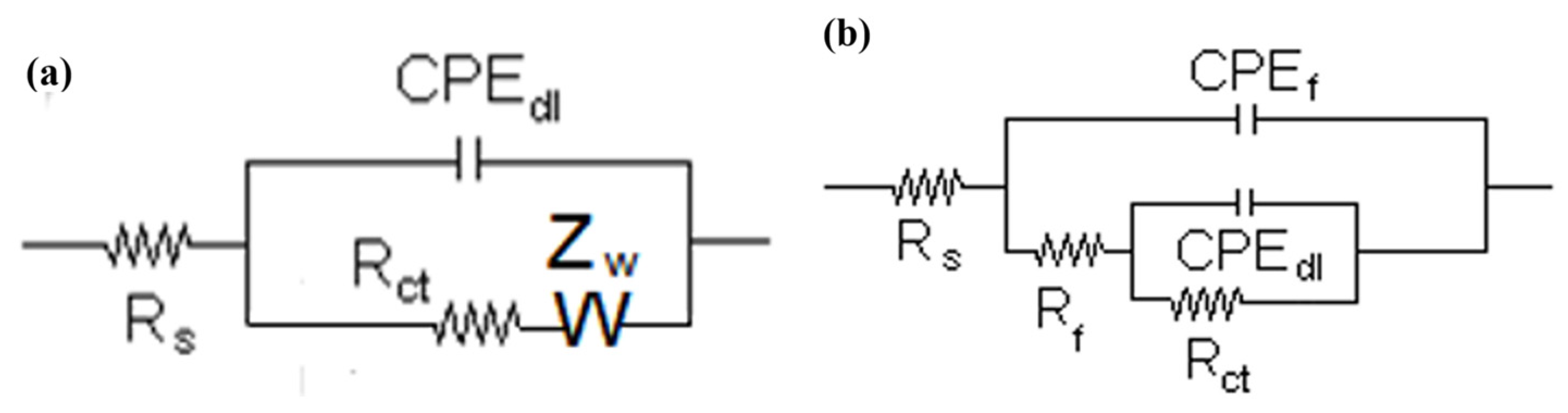
3.6. Electrochemical Impedance Spectroscopy Tests
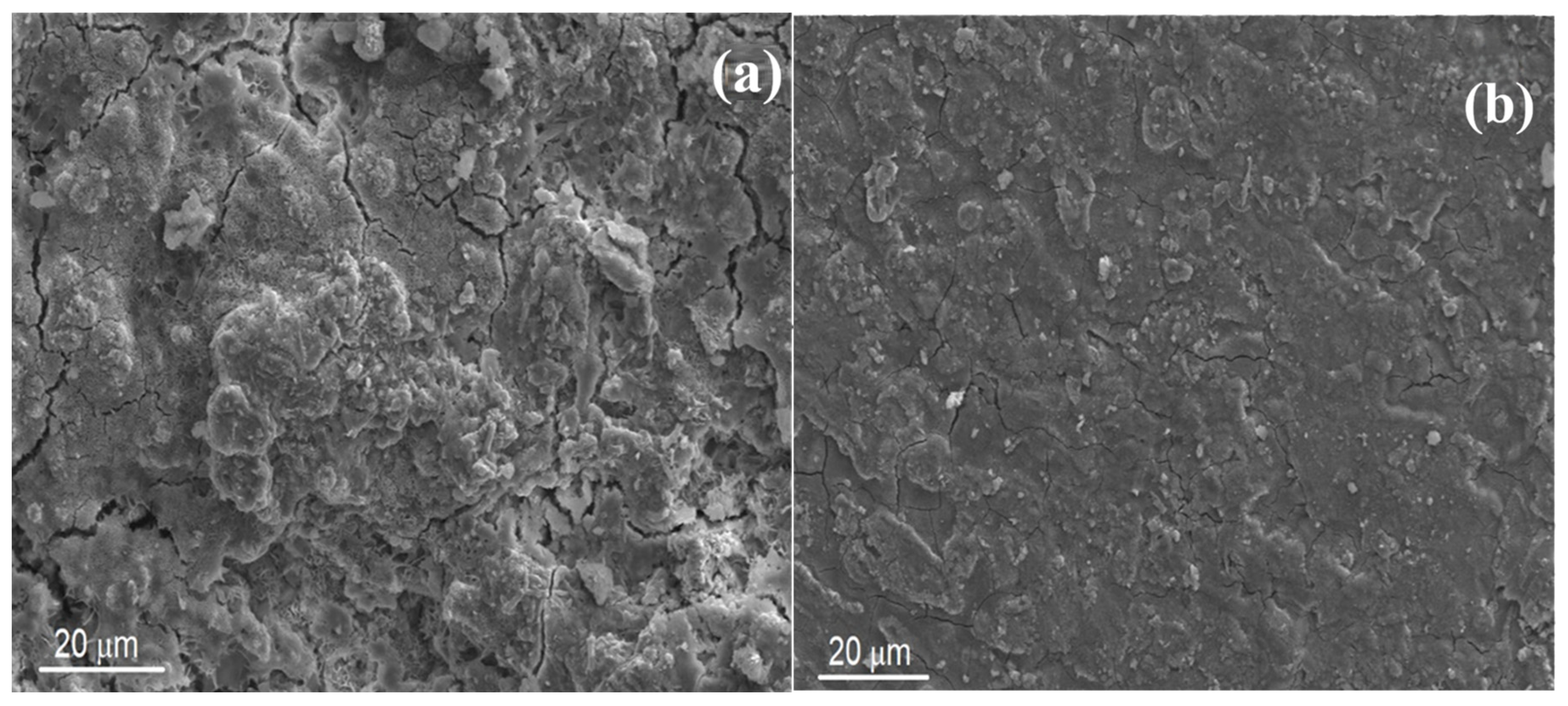
3.7. Surface Analysis
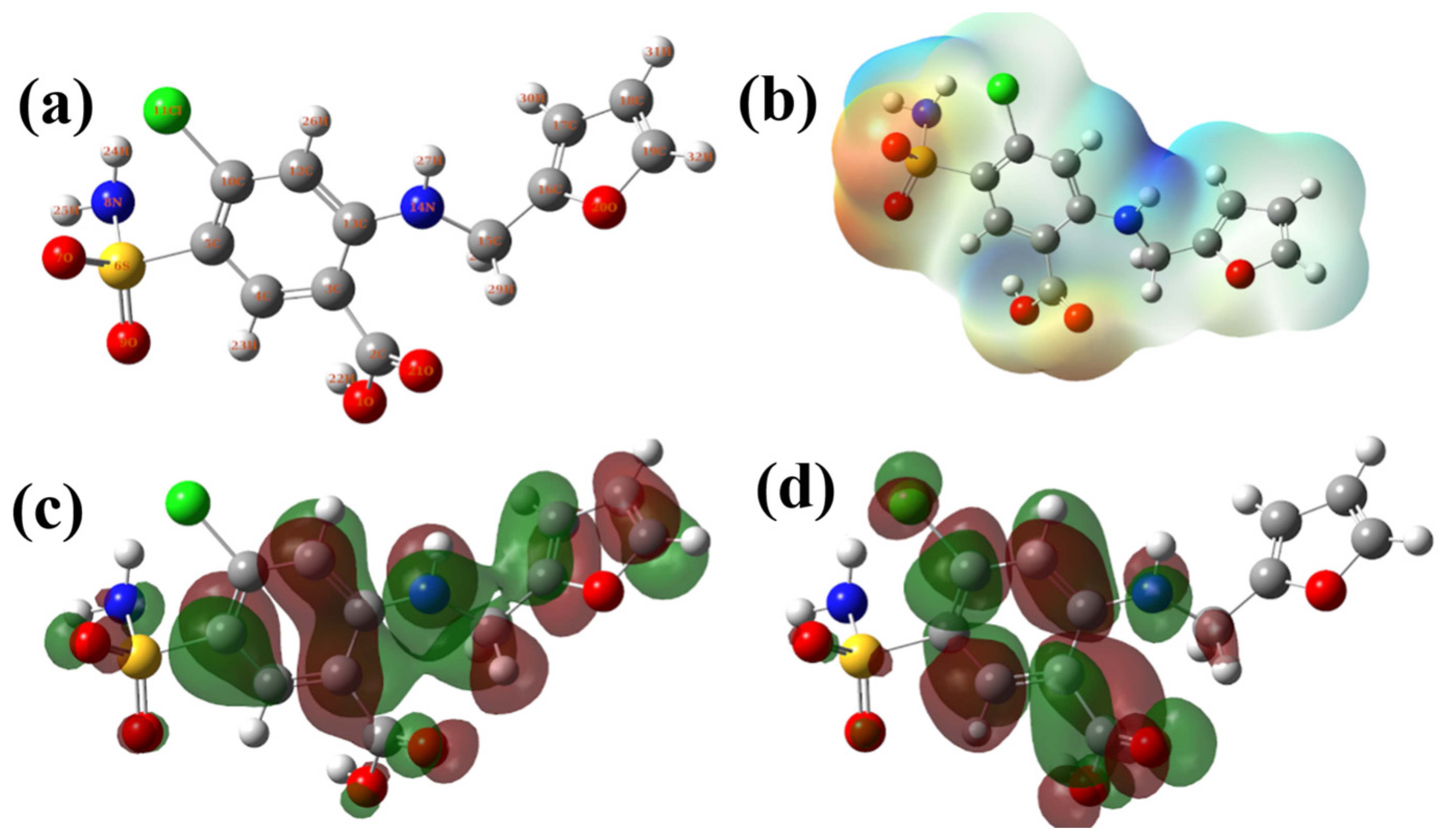
3.8. Theoretical Calculations
4. Conclusions
Author Contributions
Funding
Data Availability Statement
Acknowledgments
Conflicts of Interest
References
- Feng, L.; Yang, H.; Wang, F. Experimental and theoretical studies for corrosion inhibition of carbon steel by imidazoline derivative in 5% NaCl saturated Ca(OH)2 solution. Electrochim. Acta 2011, 58, 427–436. [Google Scholar] [CrossRef]
- Zhang, J.; Qiao, G.; Hu, S.; Yan, Y.; Ren, Z.; Yu, L. Theoretical evaluation of corrosion inhibition performance of imidazoline compounds with different hydrophilic groups. Corros. Sci. 2011, 53, 147–152. [Google Scholar] [CrossRef]
- Adeloju, S.; Hughes, H. The corrosion of copper pipes in high chloride-low carbonate mains water. Corros. Sci. 1986, 26, 851–870. [Google Scholar] [CrossRef]
- Odermatt, A.; Suter, H.; Krapf, R.; Solioz, M. Primary structure of two P-type ATPases involved in copper homeostasis in Enterococcus hirae. J. Biol. Chem. 1993, 268, 12775–12779. [Google Scholar] [CrossRef]
- Antonijević, M.; Milić, S.; Dimitrijević, M.; Petrović, M.; Radovanović, M.; Stamenković, A. Influence of pH and chlorides on electrochemical behavior of copper in the presence of benzotriazole. Int. J. Electrochem. Sci. 2009, 4, 962–979. [Google Scholar] [CrossRef]
- Ćurković, H.; Stupnišek-Lisac, E.; Takenouti, H. The influence of pH value on the efficiency of imidazole-based corrosion inhibitors. Corros. Sci. 2010, 52, 398–405. [Google Scholar] [CrossRef]
- Lasri, M.; Fawzi, M.; Zakir, O.; Hasnaoui, A.; Idouhli, R.; Maatallah, M.; Mohyeddine, K.; Itto, M.Y.A.; Auhmani, A.; Abouelfida, A. Exploring the effectiveness of two triazole derivatives as copper corrosion inhibitors in NaCl solution: A combined approach of quantitative chemistry and dynamic molecular simulations. J. Mol. Struct. 2024, 1303, 137593. [Google Scholar] [CrossRef]
- Liu, Z.; Fan, B.; Zhao, J.; Yang, B.; Zheng, X. Benzothiazole derivatives-based supramolecular assemblies as efficient corrosion inhibitors for copper in artificial seawater: Formation, interfacial release and protective mechanisms. Corros. Sci. 2023, 212, 110957. [Google Scholar] [CrossRef]
- Fawzy, A.; Alduaij, O.K.; Al-Bahir, A.; Alshammari, D.A.; Alqarni, N.; Eldesoky, A.M.; Farag, A.A.; Toghan, A. A comparative study of pyridine and pyrimidine derivatives based formamidine for copper corrosion inhibition in nitric acid: Experimental and computational exploration. Int. J. Electrochem. Sci. 2024, 19, 100403. [Google Scholar] [CrossRef]
- Lasri, M.; Ait-karra, A.; Zakir, O. Copper Corrosion in Chloride Environments: Key Inhibitors and Strategies. J. Bio- Tribo-Corros. 2025, 60, 60–68. [Google Scholar]
- Guo, X.; Shi, B.; Fu, Z.; Yang, G.; Li, Y.; Wang, L.; Lu, L.; Ma, L.; Zhang, D. Atom-scale insight into the adsorption behavior of imidazole corrosion inhibitors at defective copper/water interfaces. Corros. Sci. 2025, 246, 112744. [Google Scholar] [CrossRef]
- Rahimi, S.; Chermahini, A.N.; Farrokhpour, H.; Hajipour, A.R. Corrosion inhibition of copper by oxalohydrazide and its methylated derivatives: A theoretical study. J. Mol. Graph. Model. 2025, 138, 109038. [Google Scholar] [CrossRef] [PubMed]
- Hammi, M.; Lazrak, C.; Ziat, Y.; Ifguis, O.; Belkhanchi, H. Experimental studies of the inhibitory effect of thiamazole on copper corrosion in near neutral 3% sodium chloride solution. S. Afr. J. Chem. Eng. 2023, 44, 265–275. [Google Scholar] [CrossRef]
- Abbasov, V.M.; Abd El-Lateef, H.M.; Aliyeva, L.I.; Qasimov, E.E.; Ismayilov, I.T.; Khalaf, M.M. A study of the corrosion inhibition of mild steel C1018 in CO2-saturated brine using some novel surfactants based on corn oil. Egypt. J. Pet. 2013, 22, 451–470. [Google Scholar] [CrossRef]
- Alemnezhad, M.M.; Hosseini, M.; Panahimeh, M. Green corrosion protection of copper in chloride media with Calystegia sepium extract using electrochemical and GC-MS/MS analyses. Sci. Rep. 2026, 16, 11267. [Google Scholar] [CrossRef] [PubMed]
- Tan, B.; Xiang, B.; Zhang, S.; Qiang, Y.; Xu, L.; Chen, S.; He, J. Papaya leaves extract as a novel eco-friendly corrosion inhibitor for Cu in H2SO4 medium. J. Colloid Interface Sci. 2021, 582, 918–931. [Google Scholar] [CrossRef] [PubMed]
- Tan, B.; Liu, Y.; Gong, Z.; Zhang, X.; Chen, J.; Guo, L.; Xiong, J.; Liu, J.; Marzouki, R.; Li, W. Pyracantha fortuneana alcohol extracts as biodegradable corrosion inhibitors for copper in H2SO4 media. J. Mol. Liq. 2024, 397, 124117. [Google Scholar] [CrossRef]
- Tan, B.; He, J.; Zhang, S.; Xu, C.; Chen, S.; Liu, H.; Li, W. Insight into anti-corrosion nature of Betel leaves water extracts as the novel and eco-friendly inhibitors. J. Colloid Interface Sci. 2021, 585, 287–301. [Google Scholar] [CrossRef] [PubMed]
- Gaber, G.A.; Soliman, M.M.; Nasr, Z.A.; Hyba, A.M. Comprehensive investigation of sustainable corrosion inhibitors on Cu–Zn alloy in simulated cooling water: Electrochemical explorations, SEM/EDX analysis, and DFT/molecular simulations utilizing expired Bepotastine-B as a green inhibitor. Sustain. Chem. Pharm. 2024, 37, 101340. [Google Scholar] [CrossRef]
- Jabbar, A.H.; Kamona, S.M.H.; Abbood, S.K.; Hussein, T.K.; Al-Saidi, D.N.; Hameed, S.M.; Kadhim, M.M. The effective and sustainable application of a green amino acid-based corrosion Inhibitor for Cu metal. Chem. Phys. Impact 2023, 7, 100316. [Google Scholar] [CrossRef]
- Tan, B.; Fu, A.; Guo, L.; Ran, Y.; Xiong, J.; Marzouki, R.; Li, W. Insight into anti-corrosion mechanism of Dalbergia odorifera leaves extract as a biodegradable inhibitor for X70 steel in sulfuric acid medium. Ind. Crops Prod. 2023, 194, 116106. [Google Scholar] [CrossRef]
- Atiba, J.O.; Fayomi, O.S.; Ogbuozobe, G.O. Evaluation of Vernonia amygdalina extract as a green inhibitor for copper corrosion in acidic media: Adsorption mechanisms, electrochemical behaviour, and thermodynamic analysis. Prog. Eng. Sci. 2025, 2, 100106. [Google Scholar] [CrossRef]
- Montaser, A.A.; El-Mahdy, M.S.; Mahmou, E.E.E.; Fouda, A.S. Recycling of expired ciprofloxacin in synthetic acid rain (SAR) solution as a green corrosion inhibitor for copper: A theoretical and experimental evaluation. J. Appl. Electrochem. 2024, 54, 439–456. [Google Scholar]
- Varvara, S. Reusing a Drug as a Sustainable Corrosion Inhibitor for Bronze in 3.5% NaCl and Simulated Acid Rain Solutions. Appl. Sci. 2025, 15, 6637. [Google Scholar] [CrossRef]
- Fawzy, A.; Toghan, A.; Al Bahirc, A.; Masoud, E.M.; Zakib, M.E.A.; Huang, M.; Farag, M.A.; Gadow, H.S. Reusing expired streptomycin and neomycin drugs as potential corrosion inhibitors for high brass alloys in NaCl solution: Quantum, chemical, surface and electrochemical investigations. RSC Adv. 2025, 15, 39123–39147. [Google Scholar] [CrossRef] [PubMed]
- Njoku, C.N.; Enendu, B.N.; Okechukwu, S.J.; Igboko, N.; Anyikwa, S.O.; Ikeuba, A.I.; Onyeachu, I.B.; Etim, I.-I.N.; Njoku, D.I. Review on anti-corrosion properties of expired antihypertensive drugs as benign corrosion inhibitors for metallic materials in various environments. Res. Eng. 2023, 18, 101183. [Google Scholar] [CrossRef]
- Wang, D.; Xiang, B.; Liang, Y.; Song, S.; Liu, C. Corrosion control of copper in 3.5 wt.% NaCl Solution by Domperidone: Experimental and Theoretical Study. Corros. Sci. 2014, 85, 77–86. [Google Scholar] [CrossRef]
- Kadhim, N.J.; Farhan, A.M.; Jassim, R.A.; Sando, M.S.; Abdulkareem, H.M.; Salman, T.A. Studying the Corrosion Inhibition Ability of Metoclopramide Drug on the Copper Surface in Seawater and Theoretical Studies. Baghdad Sci. J. 2025, 22, 3601–3609. [Google Scholar] [CrossRef]
- Tasić, Ž.Z.; Mihajlović, M.B.P.; Radovanović, M.B.; Antonijević, M.M. Electrochemical investigations of copper corrosion inhibition by azithromycin in 0.9% NaCl. J. Mol. Liq. 2018, 265, 687–692. [Google Scholar] [CrossRef]
- Tasić, Ž.Z.; Mihajlović, M.B.P.; Radovanović, M.B.; Simonović, A.T.; Antonijević, M.M. Experimental and theoretical studies of paracetamol as a copper corrosion inhibitor. J. Mol. Liq. 2021, 327, 114817. [Google Scholar] [CrossRef]
- Esmaeilzadeh Khabazi, M.; Najafi Chermahini, A. DFT Study on Corrosion Inhibition by Tetrazole Derivatives: Investigation of the Substitution Effect. ACS Omega 2023, 8, 9978–9994. [Google Scholar] [CrossRef] [PubMed]
- Amini Baghbadrani, P.; Najafi Chermahini, A. Theoretical investigation of corrosion inhibition by 5-hydrazino tetrazole tautomers using DFT calculations and Monte Carlo simulation. Res. Chem. 2026, 22, 103087. [Google Scholar] [CrossRef]
- Ayuba, A.M.; Iorhuna, F.; Nyijime, A.T. Corrosion Inhibition Activities of Acridine Derivatives on Aluminium Using Fukui Function and Molecular Dynamic. Prog. Chem. Biochem. Res. 2024, 7, 453–471. [Google Scholar]
- El Maksoud, S.A.; Fouda, A.E.; Badawy, H. Furosemide drug as a corrosion inhibitor for carbon steel in 1.0 M hydrochloric acid. Sci. Rep. 2024, 14, 9052. [Google Scholar] [CrossRef] [PubMed]
- Toghan, A.; Alduaij, O.K.; Attia, A.; Al Bahir, A.; Masoud, E.M.; Alhussain, H.; Eldesoky, A.M.; Farag, A.A.; Fawzy, A. Exploring the inhibitory performance of expired moxifloxacin and norfloxacin on copper corrosion in saline environment. J. Electrochem. Sci. Eng. 2025, 15, 2646. [Google Scholar] [CrossRef]
- Sarkar, T.K.; Yadav, M.; Obot, I.B. Mechanistic evaluation of adsorption and corrosion inhibition capabilities of novel indoline compounds for oil well/tubing steel in 15% HCl. Chem. Eng. J. 2022, 431, 133481. [Google Scholar] [CrossRef]
- Behpour, M.; Ghoreishi, S.M.; Soltani, N.; Salavati-Niasari, M.; Hamadanian, M.; Gandomi, A. Electrochemical and theoretical investigation on the corrosion inhibition of mild steel by thiosalicylaldehyde derivatives in hydrochloric acid solution. Corros. Sci. 2008, 50, 2172–2181. [Google Scholar] [CrossRef]
- Al-Shomar, S.M.; Farag, A.A.; Hedhili, F.; Albaqawi, H.S.; Al-Shammari, N.A.; Abdel-Azim, K.M.; Abdelshafi, N.S. Aminopyridine Schiff Bases as Eco-Friendly Corrosion Inhibitors for Carbon Steel in Acidic Media: Experimental and Quantum Chemical Insights. J. Electrochem. Sci. Eng. 2025, 15, 2769. [Google Scholar] [CrossRef]
- El-Dossoki, F.; Abedelhady, S.; Abedalhmeed, M.; Abdel-Raouf, M.; Ali, A. Micellization Properties, Molal Volume and Polarizability of Newly Synthesized Gemini-Cationic Surfactants. Egypt. J. Chem. 2022, 65, 585–599. [Google Scholar] [CrossRef]
- Bockris, J.O.M.; Reddy, A.K.N. Modern Electrochemistry; Plenum Press: New York, NY, USA, 1977. [Google Scholar]
- Abd El Rehim, S.S.; Hassan, H.H.; Amin, M.A. The corrosion inhibition study of sodium dodecyl benzene sulphonate to aluminium and its alloys in 1.0 M HCl solution. Mater. Chem. Phys. 2003, 78, 337–348. [Google Scholar] [CrossRef]
- Ahuir-Torres, J.I.; Al-Mahdy, A.; Sharp, M.C.; Opoz, T.T.; Zhu, G.; Bashir, M.; Kotadia, H.R. The influence of texture density and free surface energy on the corrosion resistance of laser-textured 316L stainless steel. npj Mater. Degrad. 2025, 9, 115. [Google Scholar] [CrossRef]
- Ahuir-Torres, J.I.; Liu, X.; Chadwick, J.; Öpöz, T.T. An Electrochemical Study of the Corrosion Behaviour of the Polished Atomic Diffusion Additive Manufactured 17-4PH Stainless Steel Using Centrifugal Mass Finishing Method in Saltwater. Materials 2025, 18, 5148. [Google Scholar] [CrossRef] [PubMed]
- Tan, B.; Ren, H.; Liu, Y.; Li, X.; Wang, R.; Sun, J.; Cao, X.; Dai, Q.; Guo, L.; Liu, H.; et al. Insight into the anti-corrosion performance of crop waste as a degradable corrosion inhibitor for copper in sulfuric acid medium. Ind. Crops Prod. 2024, 222, 119654. [Google Scholar] [CrossRef]
- Zhao, W.; Wan, R.; Sun, X.; Wang, Z.; Gong, Z.; Guo, L.; Marzouki, R.; Luo, M.; Li, A.; Ning, H.; et al. Inhibition mechanism of phosphorus-doped carbon quantum dots on anodic corrosion in neutral Mg-air batteries. J. Alloys Compd. 2025, 1037, 182609. [Google Scholar] [CrossRef]
- Tan, B.; Sun, X.; Zhou, Z.; Luo, X.; Gong, Z.; Li, X.; Guo, L.; Marzouki, R.; Yang, Q. Sesame oil cake extract as corrosion inhibitor for Cu in H2SO4 medium. Appl. Surf. Sci. 2026, 728, 166085. [Google Scholar] [CrossRef]
- Free, M.L. Understanding the effect of surfactant aggregation on corrosion inhibition of mild steel in acid medium. Corros. Sci. 2002, 44, 2865–2870. [Google Scholar] [CrossRef]
- Jafarzadegan, Z.; Najafi Chermahini, A.; Farrokhpour, H.; Mir Mohammad Sadeghi, M. A theoretical study on the corrosion inhibition of Cu surfaces using 4-amino-3-thioxo-6-methyl-1,2,4-triazine-5-one and its derivatives. Sci. Rep. 2025, 15, 37481. [Google Scholar] [CrossRef] [PubMed]
- Garcia-Rosas, D.; Martinez-Gonzalez, J.J.; Ramirez-Arteaga, A.M.; Lopez-Sesenes, R.; Galvez-Larios, A.K.; Porcayo-Calderon, J.; Saldarriaga-Noreña, H.A.; Gonzalez-Rodriguez, J.G. Electrochemical explorations, surface analysis and DFT simulation of expired Cinitapride drug as green corrosion inhibitor for Cu in NaCl. Res. Chem. 2026, 29, 103637. [Google Scholar] [CrossRef]
- Bourzi, H.; Oukhrib, R.; El Ibrahimi, B.; Oualid, H.A.; Abdellaoui, Y.; Balkard, B.; El Issami, S.; Hilali, M.; Bazzi, L.; Len, C. Furfural Analogs as Sustainable Corrosion Inhibitors—Predictive Efficiency Using DFT and Monte Carlo Simulations on the Cu(111), Fe(110), Al(111) and Sn(111) Surfaces in Acid Media. Sustainability 2020, 12, 3304. [Google Scholar] [CrossRef]
- Yamin, A.A.; Ali Eh Sheet, E.; Al-Amiery, A. Statistical analysis and optimization of the corrosion inhibition efficiency of a locally made corrosion inhibitor under different operating variables using RSM. Int. J. Corros. Scale Inhib. 2020, 9, 502–518. [Google Scholar] [CrossRef]
- Tigori, M.; Kouyaté, A.; Kouakou, V.; Niamien, P.; Trokourey, A. Inhibition Performance of Some Sulfonylurea on Copper Corrosion in Nitric Acid Solution Evaluated Theoretically by DFT Calculations. Open J. Phys. Chem. 2020, 10, 139–157. [Google Scholar]
- Stuyver, T.A.O.; Shaik, S.A.O. Unifying Conceptual Density Functional and Valence Bond Theory: The Hardness-Softness Conundrum Associated with Protonation Reactions and Uncovering Complementary Reactivity Modes. J. Am. Chem. Soc. 2020, 142, 20002–20013. [Google Scholar] [CrossRef] [PubMed]



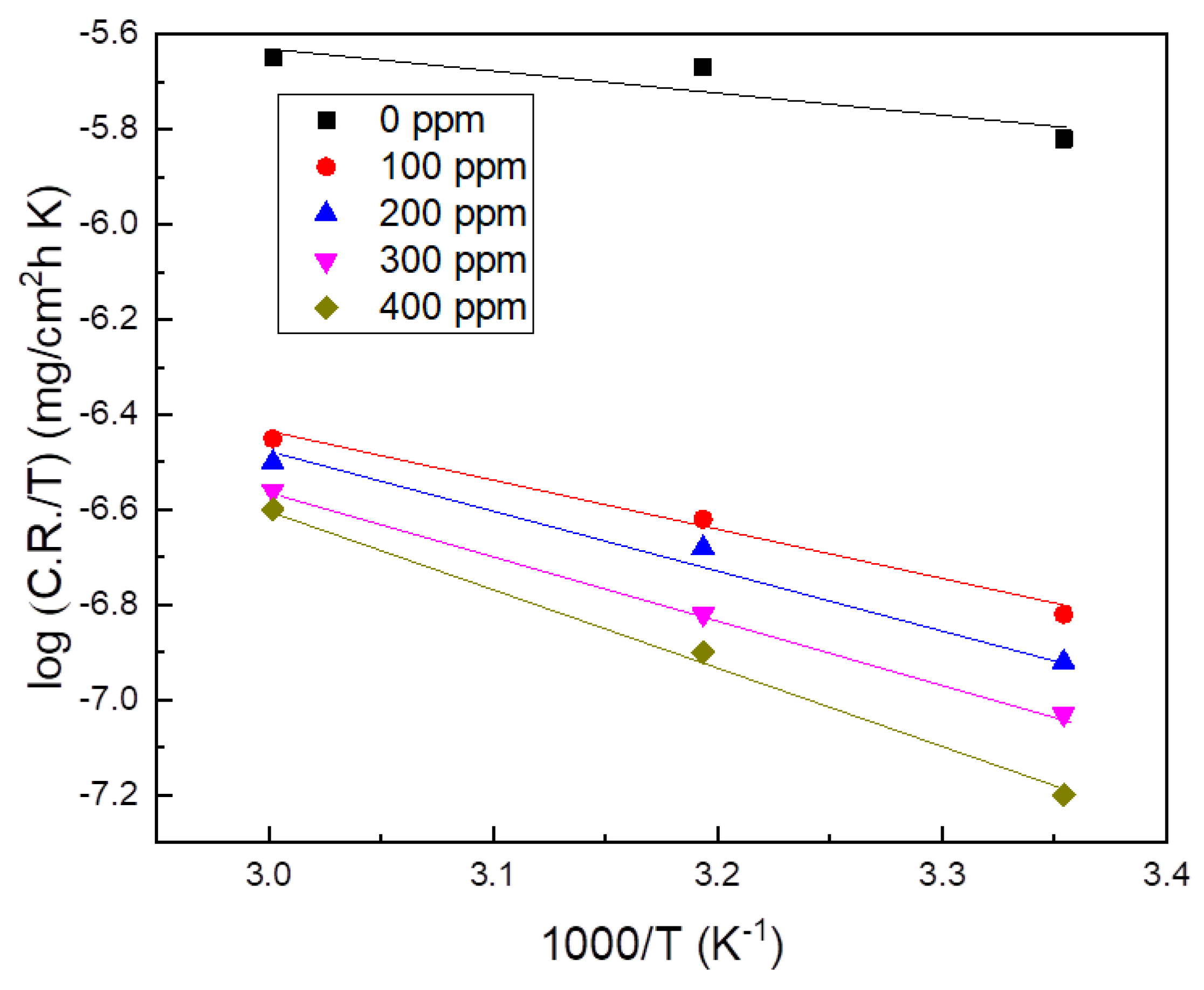
| Cinh (ppm) | Ea kJ mol−1 | ΔH* kJ mol−1 | ΔS* J mol−1K−1 |
|---|---|---|---|
| 0 | 16.2 | 7.1 | −32.1 |
| 100 | 19.1 | 8.0 | −28.1 |
| 200 | 22.6 | 8.7 | −22.7 |
| 300 | 31.1 | 12.3 | −16.7 |
| 400 | 34.8 | 14.0 | −12.4 |
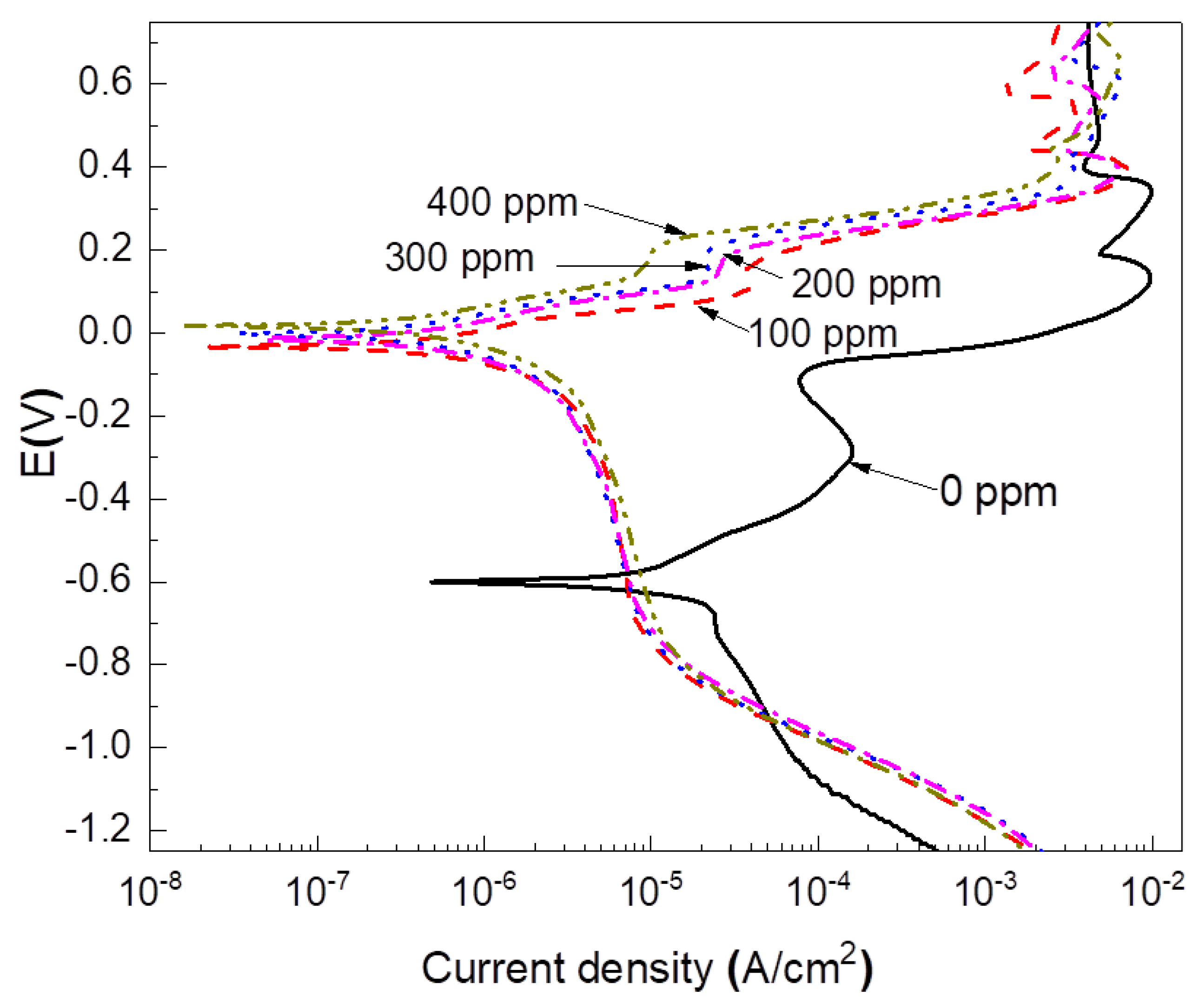
| Cinh (ppm) | Ecorr (mV) | Icorr (mA/cm2) | βa (mV/dec) | βc (mV/dec) | Rp (ohm cm2) | I.E. (%) | θ |
|---|---|---|---|---|---|---|---|
| 0 | −600 | 2.0 × 10⁻⁵ | 170 | 660 | 6648 | 0 | 0 |
| 100 | −30 | 6.0 × 10⁻⁶ | 80 | 600 | 30,827 | 70 | 0.7 |
| 200 | −15 | 4.0 × 10⁻⁶ | 65 | 555 | 43,857 | 80 | 0.8 |
| 300 | 5 | 3.0 × 10⁻⁶ | 55 | 540 | 83,973 | 85 | 0.85 |
| 400 | 20 | 2.0 × 10⁻⁶ | 45 | 520 | 95,473 | 90 | 0.9 |
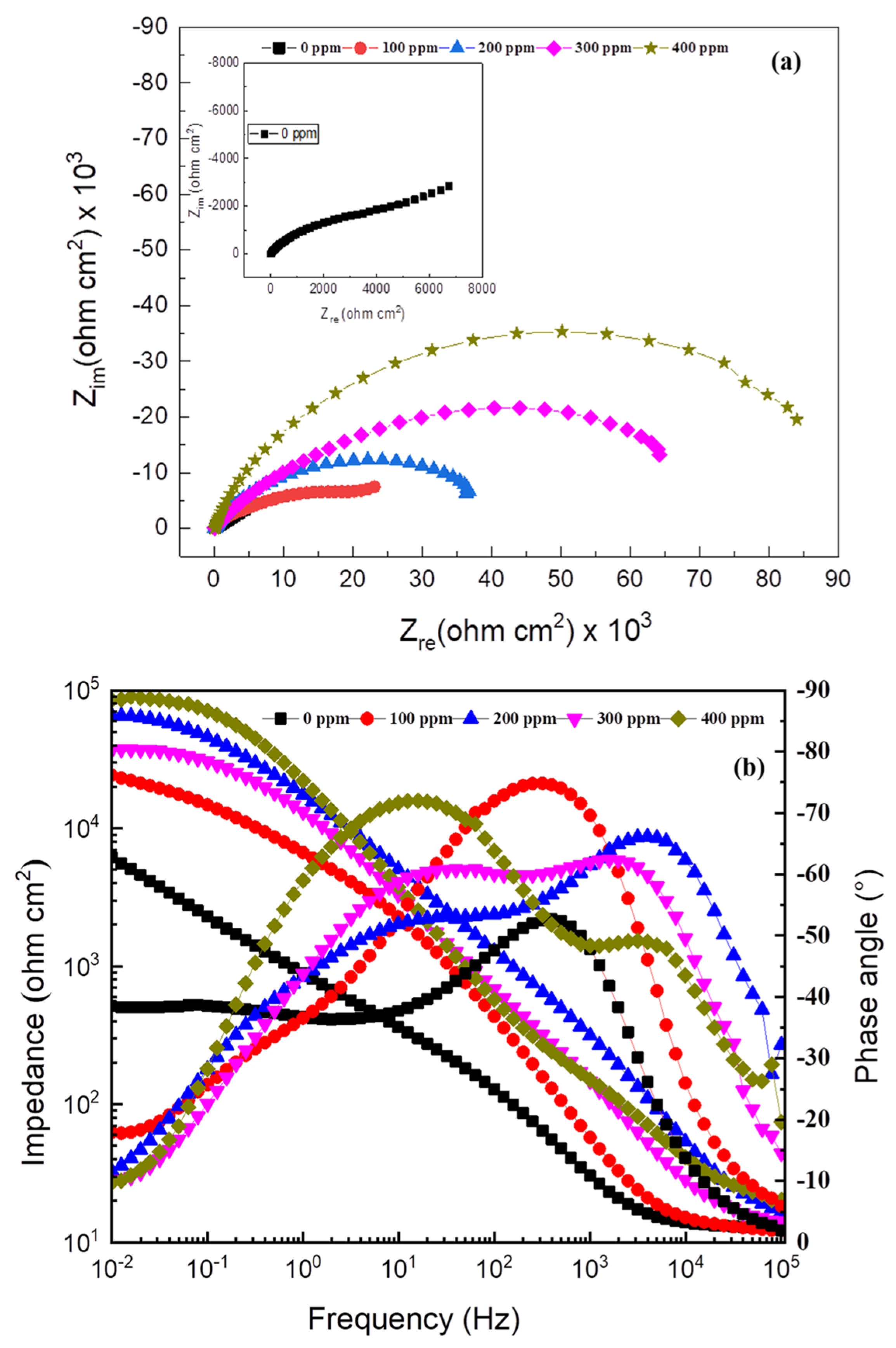
| Cinh (ppm) | χ2 | Rct (ohm cm2) | Ydl (ohm−1 cm−2 sn) | nct | RW (ohm cm2) | Rf (ohm cm2) | Yf (ohm−1 cm−2 sn) | nf | I.E. (%) |
|---|---|---|---|---|---|---|---|---|---|
| 0 | 3.76 × 10⁻⁵ | 150 | 3.18 × 10⁻⁵ | 0.9 | 6404 | ----- | ----- | ---- | ---- |
| 100 | 1.54 × 10⁻⁴ | 550 | 6.06 × 10⁻⁶ | 0.9 | 30,227 | ----- | ----- | ---- | --- |
| 200 | 8.11 × 10⁻⁵ | 790 | 3.03 × 10⁻⁶ | 0.9 | ------- | 42,617 | 1.60 × 10⁻⁵ | 0.6 | 81 |
| 300 | 1.13 × 10⁻⁴ | 1150 | 1.31 × 10⁻⁶ | 0.9 | ------- | 82,741 | 1.57 × 10⁻⁵ | 0.6 | 87 |
| 400 | 1.07 × 10⁻⁴ | 1500 | 8.26 × 10⁻⁶ | 0.7 | ----- | 98,094 | 1.66 × 10⁻⁶ | 0.9 | 90 |
| EHOMO (eV) | ELUMO (eV) | ΔEgap (eV) | A (eV) | I (eV) | μ (eV) | χ (eV) | η (eV) | σ (eV−1) | Ω (eV) | ε (eV−1) | ΔN |
|---|---|---|---|---|---|---|---|---|---|---|---|
| −6.290 | −1.659 | 4.631 | 1.659 | 6.290 | −3.9745 | 3.9745 | 2.3155 | 0.432 | 3.411 | 0.293 | 0.2128 |
| Atom | qk (N − 1) | qk (N + 1) | qk (N) | |||
|---|---|---|---|---|---|---|
| 1O | 0.7421 | 0.675 | −0.6952 | 0.0202 | 0.0469 | 0.0267 |
| 2C | 0.6756 | 0.7705 | 0.7733 | −0.0028 | 0.0977 | 0.0949 |
| 3C | −0.2892 | −0.1361 | −0.2223 | 0.0863 | 0.0669 | −0.0194 |
| 4C | −0.2424 | −0.1374 | −0.1409 | 0.0035 | 0.1015 | 0.098 |
| 5C | −0.2681 | −0.1741 | −0.2674 | 0.0933 | 0.0007 | −0.0926 |
| 6S | 1.8275 | 1.835 | 1.8393 | −0.0043 | 0.0117 | 0.0075 |
| 7O | −0.8742 | −0.8251 | −0.8516 | 0.0265 | 0.0227 | −0.0038 |
| 8N | −0.9603 | −0.9394 | −0.9501 | 0.0107 | 0.0102 | −0.0005 |
| 9O | −0.8798 | −0.8427 | −0.8629 | 0.0202 | 0.0168 | −0.0034 |
| 10C | −0.0863 | 0.017 | 0.0239 | −0.0069 | 0.1102 | 0.1033 |
| 11Cl | −0.1042 | 0.0221 | −0.0183 | 0.0404 | 0.0859 | 0.0455 |
| 12C | −0.3477 | −0.1603 | −0.2475 | 0.0873 | 0.1002 | 0.0129 |
| 13C | 0.2263 | 0.2449 | 0.2647 | −0.0198 | 0.0384 | 0.0186 |
| 14N | −0.5798 | −0.3642 | −0.5399 | 0.1757 | 0.0399 | −0.1358 |
| 15C | −0.2395 | −0.2656 | −0.2405 | −0.0251 | −0.001 | −0.0241 |
| 16C | 0.2863 | 0.3318 | 0.2762 | 0.0556 | −0.0102 | −0.0455 |
| 17C | −0.296 | −0.2242 | −0.2835 | 0.0593 | 0.0126 | −0.0467 |
| 18C | −0.2961 | −0.2643 | −0.2939 | 0.0296 | 0.0022 | −0.0274 |
| 19C | 0.1019 | 0.2024 | 0.1119 | 0.0906 | 0.01 | −0.0806 |
| 20 | −0.4872 | −0.472 | −0.483 | 0.011 | 0.0042 | −0.0068 |
| 21O | −0.7063 | −0.5603 | −0.5946 | 0.0343 | 0.1117 | 0.0774 |
Disclaimer/Publisher’s Note: The statements, opinions and data contained in all publications are solely those of the individual author(s) and contributor(s) and not of MDPI and/or the editor(s). MDPI and/or the editor(s) disclaim responsibility for any injury to people or property resulting from any ideas, methods, instructions or products referred to in the content. |
© 2026 by the authors. Licensee MDPI, Basel, Switzerland. This article is an open access article distributed under the terms and conditions of the Creative Commons Attribution (CC BY) license.
Share and Cite
Garcia-Rosas, D.; Brito-Franco, A.; Saldarriaga-Noreña, H.A.; Lopez-Sesenes, R.; Ramirez-Arteaga, A.M.; Galvez-Larios, A.K.; Porcayo-Calderon, J.; Gonzalez-Rodriguez, J.G. Experimental and Theoretical Insights on the Use of Expired Furosemide as Corrosion Inhibition for Cu in NaCl. Materials 2026, 19, 3274. https://doi.org/10.3390/ma19153274
Garcia-Rosas D, Brito-Franco A, Saldarriaga-Noreña HA, Lopez-Sesenes R, Ramirez-Arteaga AM, Galvez-Larios AK, Porcayo-Calderon J, Gonzalez-Rodriguez JG. Experimental and Theoretical Insights on the Use of Expired Furosemide as Corrosion Inhibition for Cu in NaCl. Materials. 2026; 19(15):3274. https://doi.org/10.3390/ma19153274
Chicago/Turabian StyleGarcia-Rosas, Dalia, Alfredo Brito-Franco, Hugo Albeiro Saldarriaga-Noreña, Roy Lopez-Sesenes, America Maria Ramirez-Arteaga, Ana Karen Galvez-Larios, Jesus Porcayo-Calderon, and Jose Gonzalo Gonzalez-Rodriguez. 2026. "Experimental and Theoretical Insights on the Use of Expired Furosemide as Corrosion Inhibition for Cu in NaCl" Materials 19, no. 15: 3274. https://doi.org/10.3390/ma19153274
APA StyleGarcia-Rosas, D., Brito-Franco, A., Saldarriaga-Noreña, H. A., Lopez-Sesenes, R., Ramirez-Arteaga, A. M., Galvez-Larios, A. K., Porcayo-Calderon, J., & Gonzalez-Rodriguez, J. G. (2026). Experimental and Theoretical Insights on the Use of Expired Furosemide as Corrosion Inhibition for Cu in NaCl. Materials, 19(15), 3274. https://doi.org/10.3390/ma19153274