Failure Analysis of Acid-Thinned Coiled Tubing Under HTBH Conditions: Role of Inhibitor Depletion and Corrosion Asymmetry




Highlights
- External wall loss was ~12 times greater than internal loss in the final operation.
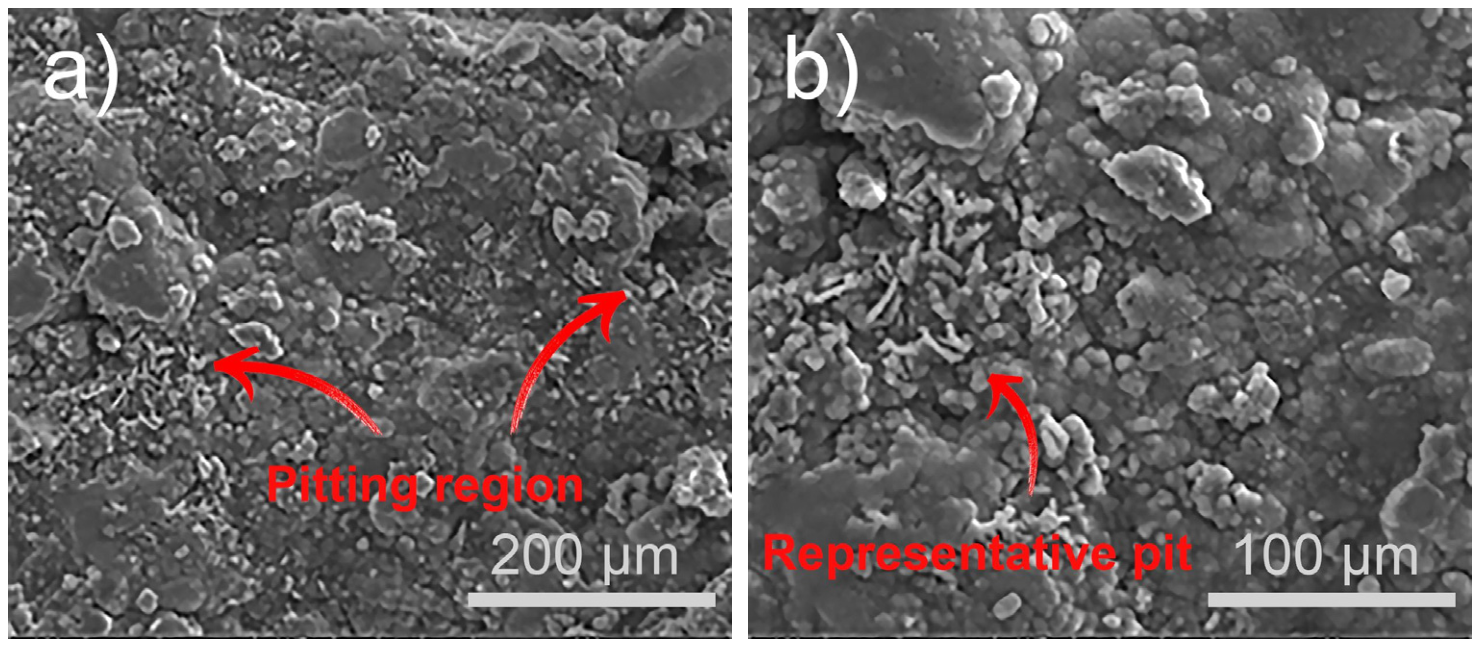
- Spent-acid backflow caused uniform external corrosion; internal attack was pitting.
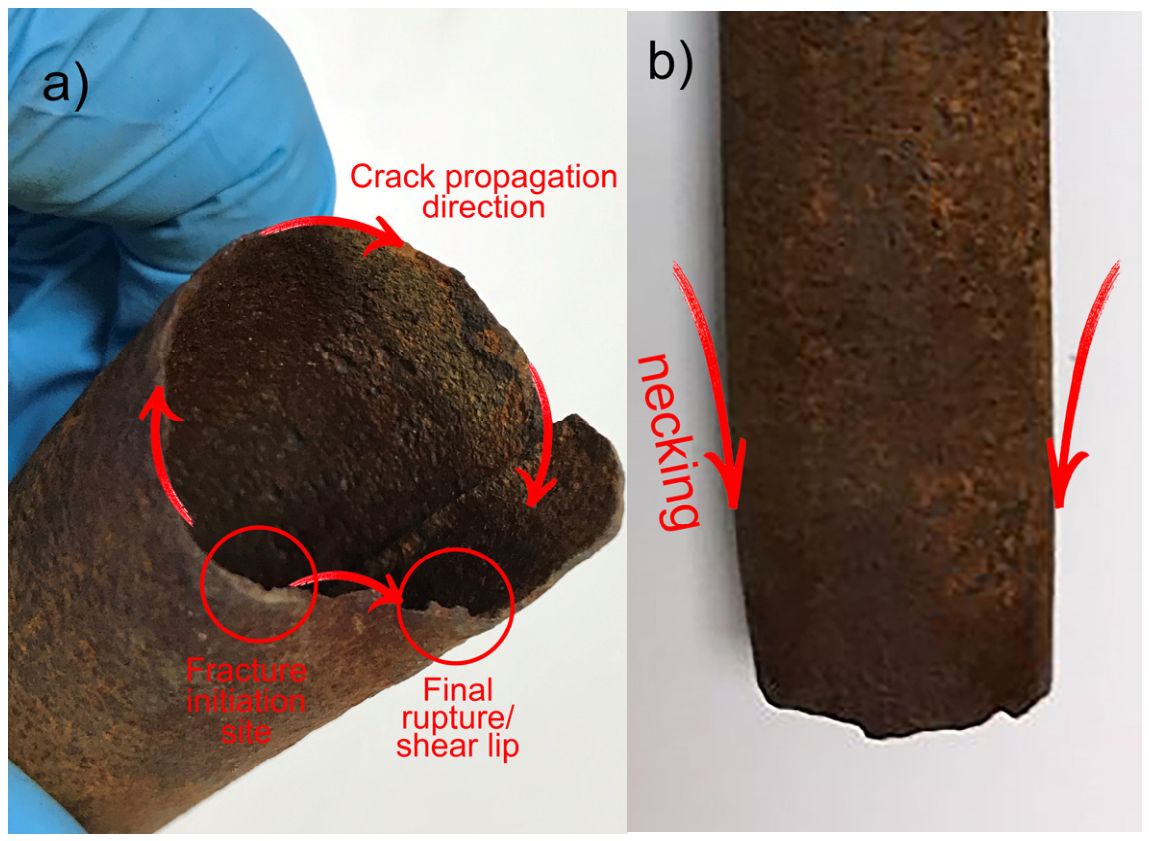
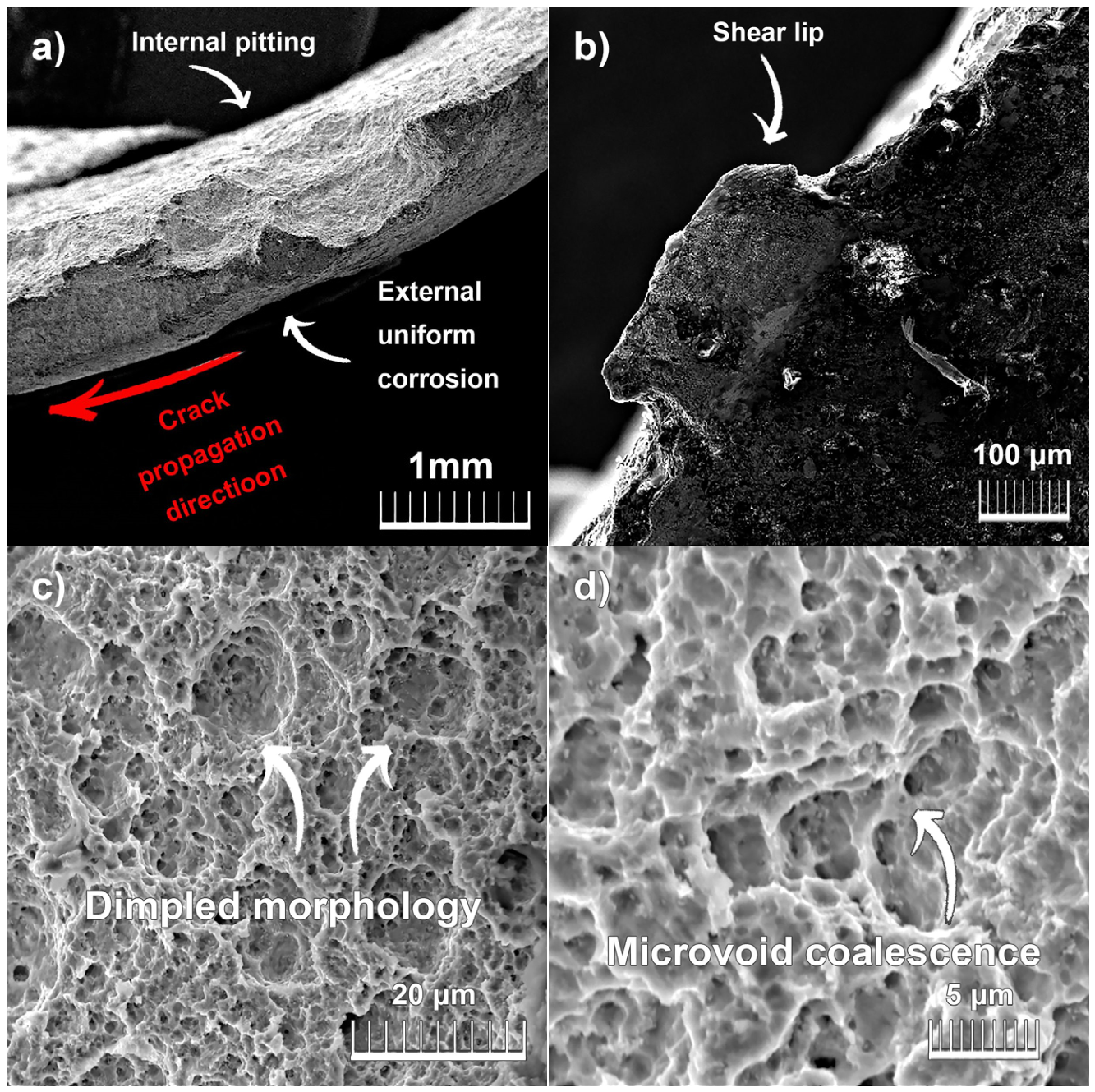
- The tubing failed by ductile overload of a corrosion-thinned section.
- HTBH inhibitor testing should reproduce spent-acid backflow conditions.
- Inner and outer tubing surfaces should be assessed separately.
- Wall thickness and pit depth should be checked before tubing reuse.
Abstract
1. Introduction
2. Materials and Methods
2.1. Operational Background and Field-Failure Conditions
2.2. Sample Appearance and Dimensional Analysis
2.3. Laboratory Analyses
3. Results and Discussion
3.1. Chemical Composition and Microstructure
3.2. Cross-Section Microhardness
3.3. SEM/EDS Analysis of Corroded Surfaces
3.4. FT-IR Analysis of Corrosion Products
3.5. Fracture Analysis
4. Conclusions
- The failure developed in a severely and asymmetrically corrosion-thinned section of the CT-80 tubing. The outer wall was affected predominantly by uniform corrosion, whereas the inner wall exhibited localized pitting. During the final acidizing operation, the external wall loss was approximately 11.8 times greater than the internal wall loss, indicating markedly different exposure conditions on the two surfaces.
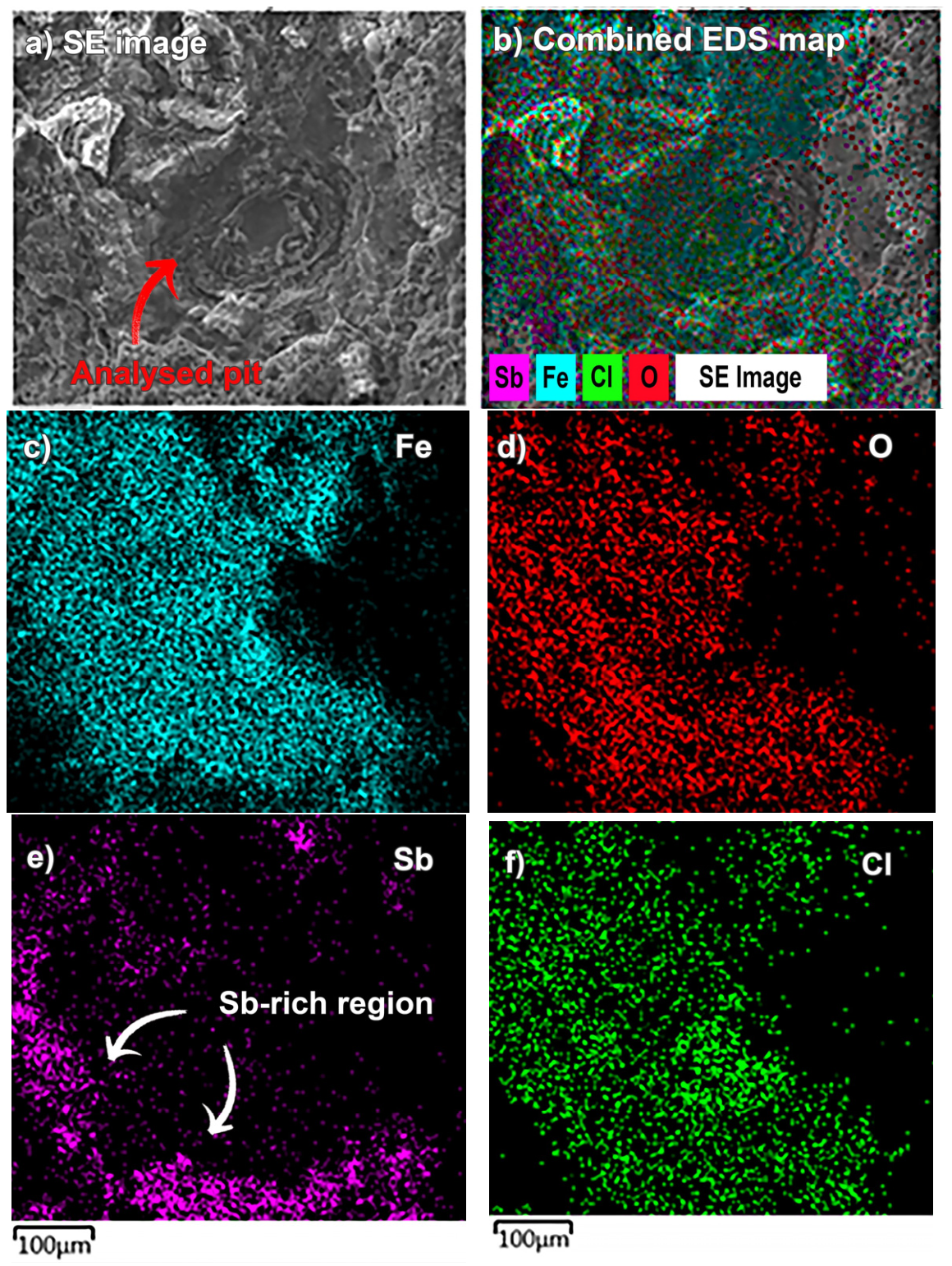
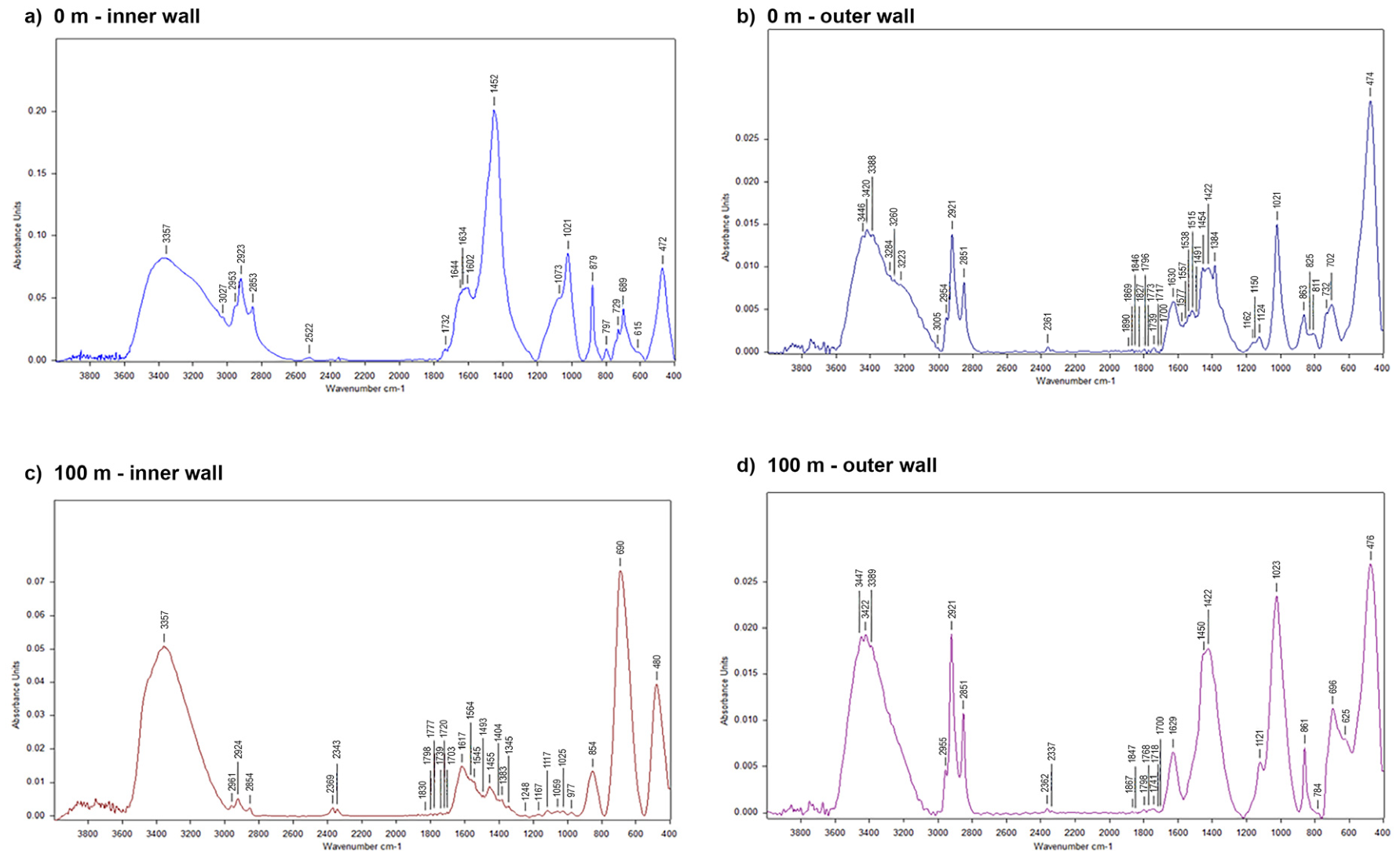
- The combined dimensional, SEM/EDS, and FT-IR results are consistent with reduced inhibitor protection during spent-acid backflow and incomplete protection of the inner surface at 196 °C. Sb-rich deposits around individual pits may have contributed to local electrochemical acceleration of corrosion; however, this mechanism remains interpretative because galvanic coupling was not measured directly.
- Necking, diameter reduction, and dimpled microvoid coalescence indicate that the primary failure mode was ductile overload during retrieval through the gooseneck after corrosion had substantially reduced the load-bearing cross-section. Hydrogen may have contributed to the measured hardness increase or to a limited reduction in ductility, but a hydrogen-assisted brittle fracture mechanism was not demonstrated.
- For HTBH acidizing operations, inhibitor qualification should reproduce not only exposure to fresh inhibited acid but also the spent-acid backflow stage under realistic temperature, exposure time, H2S/CO2 chemistry, and acid-volume-to-metal-surface-area conditions. Inspection protocols should assess the inner and outer tubing surfaces separately and include both remaining wall-thickness and pit-depth measurements before further tubing reuse.
Author Contributions
Funding
Data Availability Statement
Conflicts of Interest
References
- Amosa, M.K.; Mohammed, I.A.; Yaro, S.A. Sulphide Scavengers in Oil and Gas Industry–A Review. Nafta 2010, 61, 85–98. Available online: https://hrcak.srce.hr/49124 (accessed on 8 January 2025).
- Zhao, X.; Huang, W.; Li, G.; Feng, Y.; Zhang, J. Effect of CO2/H2S and Applied Stress on Corrosion Behavior of 15Cr Tubing in Oil Field Environment. Metals 2020, 10, 409. [Google Scholar] [CrossRef] [Scilit]
- Finšgar, M.; Jackson, J. Application of corrosion inhibitors for steels in acidic media for the oil and gas industry: A review. Corros. Sci. 2014, 86, 17–41. [Google Scholar] [CrossRef] [Scilit]
- Fink, J. (Ed.) Chapter 17–Fracturing Fluids. In Petroleum Engineer’s Guide to Oil Field Chemicals and Fluids, 2nd ed.; Gulf Professional Publishing: Waltham, MA, USA; Oxford, UK, 2015. [Google Scholar] [CrossRef] [Scilit]
- Ahmad, Z. Principles of Corrosion Engineering and Corrosion Control; Butterworth-Heinemann: Oxford, UK, 2006. [Google Scholar] [CrossRef] [Scilit]
- Sato, N. Basics of Corrosion Chemistry. In Green Corrosion Chemistry and Engineering; Wiley-VCH: Weinheim, Germany, 2011. [Google Scholar] [CrossRef] [Scilit]
- Chilingarian, G.V.; Robertson, J.O., Jr.; Kumar, S. Surface Operations in Petroleum Production, II. In Developments in Petroleum Science; Elsevier: Amsterdam, The Netherlands, 1989; Volume 19, Part B. [Google Scholar] [CrossRef] [Scilit]
- Chkolny, N.; Burns, J.; Maley, D.; Wiggins, C. Investigating the Interaction of Brine Solutions and Diluted Inhibited HCl Acid on Coiled Tubing Steel Corrosion. In Proceedings of the CORROSION 2020, Houston, TX, USA, 15–19 March 2020; p. NACE-2020-14596. [Google Scholar]
- Pickles, B.D. Understanding the Corrosivity of the Flowback Fluid Following an Acid Job. PhD Thesis, University of Leeds, Leeds, UK, 2017. EThOS ID: uk.bl.ethos.739795. [Google Scholar]
- Faes, W.; Lecompte, S.; Ahmed, Z.Y.; Van Bael, J.; Salenbien, R.; Verbeken, K.; De Paepe, M. Corrosion and corrosion prevention in heat exchangers. Corros. Rev. 2019, 37, 131–155. [Google Scholar] [CrossRef] [Scilit]
- Palanisamy, G. Corrosion Inhibitors. In Corrosion Inhibitors; Singh, A., Ed.; IntechOpen: London, UK, 2019. [Google Scholar] [CrossRef] [Scilit]
- Harek, Y.; Larabi, L. Corrosion Inhibition of Mild Steel in 1 mol dm−3 HCl by Oxalic N-Phenylhydrazide N’-Phenylthiosemicarbazide. Kem. Ind. 2004, 53, 55–61. [Google Scholar]
- Revie, R.W.; Uhlig, H.H. Corrosion and Corrosion Control, 4th ed.; John Wiley & Sons: Hoboken, NJ, USA, 2008. [Google Scholar]
- Piccolo, E.; Scoppio, L.; Cheldi, T.; Nakamura, K.; Ueda, M. Corrosion and stress corrosion behavior of CRAs and low alloyed steels in stimulation acids environments. Metall. Ital. 2008, 100, 13–18. [Google Scholar]
- Ogunleye, O.; Arinkoola, A.; Eletta, O.; Agbede, O.; Osho, Y.; Morakinyo, A.; Hamed, J. Green corrosion inhibition and adsorption characteristics of Luffa cylindrica leaf extract on mild steel in HCl. Heliyon 2020, 6, e03205. [Google Scholar] [CrossRef] [Scilit] [PubMed]
- Singh, A.; Quraishi, M.A. Acidizing corrosion inhibitors: A review. J. Mater. Environ. Sci. 2015, 6, 224–235. [Google Scholar]
- El-Haddad, M.A.M.; Radwan, A.B.; Sliem, M.H.; Hassan, W.M.I.; Abdullah, A.M. Highly efficient eco-friendly corrosion inhibitor for mild steel in 5 M HCl at elevated temperatures. Sci. Rep. 2019, 9, 3695. [Google Scholar] [CrossRef] [Scilit] [PubMed]
- Zhu, Y.; Free, M.; Woollam, R.; Durnie, W. A Review of Surfactants as Corrosion Inhibitors and Associated Modeling. Prog. Mater. Sci. 2017, 90, 159–223. [Google Scholar] [CrossRef] [Scilit]
- Fink, J. (Ed.) Chapter 6–Corrosion Inhibitors. In Petroleum Engineer’s Guide to Oil Field Chemicals and Fluids, 2nd ed.; Gulf Professional Publishing: Waltham, MA, USA; Oxford, UK, 2015. [Google Scholar] [CrossRef] [Scilit]
- Tedeschi, R.J. Acetylene. In Encyclopedia of Physical Science and Technology, 3rd ed.; Academic Press: Cambridge, MA, USA, 2003; pp. 55–89. [Google Scholar]
- Chaubey, N.; Savita; Qurashi, A.; Chauhan, D.S.; Quraishi, M.A. Frontiers and advances in green and sustainable inhibitors for corrosion applications. J. Mol. Liq. 2021, 321, 114385. [Google Scholar] [CrossRef] [Scilit]
- El-Taib Heakal, F.; Elkholy, A.E. Gemini surfactants as corrosion inhibitors for carbon steel. J. Mol. Liq. 2017, 230, 395–407. [Google Scholar] [CrossRef] [Scilit]
- El Ibrahimi, B.; Guo, L. Azole-Based Compounds as Corrosion Inhibitors for Metallic Materials; IntechOpen: London, UK, 2020. [Google Scholar] [CrossRef] [Scilit]
- Trotuş, I.-T.; Zimmermann, T.; Schüth, F. Catalytic Reactions of Acetylene: A Feedstock for the Chemical Industry Revisited. Chem. Rev. 2013, 114, 1761–1782. [Google Scholar] [CrossRef] [Scilit] [PubMed]
- Marzorati, S.; Verotta, L.; Trasatti, S.P. Green Corrosion Inhibitors from Natural Sources and Biomass Wastes. Molecules 2018, 24, 48. [Google Scholar] [CrossRef] [Scilit] [PubMed]
- Hermas, A.A.; Morad, M.S. A comparative study on the corrosion behaviour of 304 austenitic stainless steel in sulfamic and sulfuric acid solutions. Corros. Sci. 2008, 50, 2710–2717. [Google Scholar] [CrossRef] [Scilit]
- Heydari, M.; Ravari, F.; Dadgarineghad, A. Corrosion inhibition of propargyl alcohol on low alloy Cr steel in 0.5 M H2SO4. Gazi Univ. J. Sci. 2011, 24, 507–515. [Google Scholar]
- Khadom, A.A.; Yaro, A.S.; Musa, A.H.; Mohamad, A.B.; Kadhum, A.A.H. Corrosion Inhibition of Copper-nickel Alloy. J. Korean Chem. Soc. 2012, 56, 406–415. [Google Scholar] [CrossRef] [Scilit]
- Bockris, J.O.; Khan, S.U.M. Some Electrochemical Aspects of the Stability of Materials. In Surface Electrochemistry; Springer: Berlin/Heidelberg, Germany, 1993. [Google Scholar] [CrossRef] [Scilit]
- Al-Amiery, A.A.; Binti Kassim, F.A.; Kadhum, A.A.H.; Mohamad, A.B. Synthesis and characterization of a novel eco-friendly corrosion inhibitor for mild steel in 1 M HCl. Sci. Rep. 2016, 6, 19890. [Google Scholar] [CrossRef] [Scilit] [PubMed]
- Fuchs-Godec, R. The adsorption, CMC determination and corrosion inhibition of some N-alkyl quaternary ammonium salts on carbon steel surface in 2 M H2SO4. In Colloids and Surfaces; Elsevier: Amsterdam, The Netherlands, 2006. [Google Scholar] [CrossRef] [Scilit]
- Tamjidi, S.; Moghadas, B.K.; Esmaeili, H.; Shakerian Khoo, F.; Gholami, G.; Ghasemi, M. Improving the surface properties of adsorbents by surfactants and their role in the removal of toxic metals from wastewater. Process Saf. Environ. Prot. 2021, 148, 775–795. [Google Scholar] [CrossRef] [Scilit]
- Lösler, S.; Schlief, S.; Kneifel, C.; Thiel, E.; Schrezenmeier, H.; Rojewski, M.T. Antimony-trioxide- and arsenic-trioxide-induced apoptosis in myelogenic and lymphatic cell lines. Ann. Hematol. 2009, 88, 1047–1058. [Google Scholar] [CrossRef] [Scilit] [PubMed]
- Karlsson, T. Studies on the Recovery of Secondary Antimony Compounds from Waste. Doctoral Thesis, Chalmers University, Gothenburg, Sweden, 2017. [Google Scholar]
- Karlsson, T.; Forsgren, C.; Steenari, B.M. Recovery of Antimony: Thermal Decomposition and Carbothermal Reduction of Sb(III), Bi(III), Zn(II) Oxides and Antimony Compounds. J. Sustain. Metall. 2018, 4, 194–204. [Google Scholar] [CrossRef] [Scilit]
- Speight, J.G. Fouling in Refineries; Gulf Professional Publishing: Waltham, MA, USA; Oxford, UK, 2015. [Google Scholar] [CrossRef] [Scilit]
- Meyer, B. Chapter 5–Occurrence and Sources of Sulfur. In Sulfur, Energy, and Environment; Elsevier: Amsterdam, The Netherlands, 1977. [Google Scholar] [CrossRef] [Scilit]
- Marafi, M.; Stanislaus, A.; Furimsky, E. Chapter 11–Metal Reclamation from Spent Hydroprocessing Catalysts. In Handbook of Spent Hydroprocessing Catalysts; Elsevier: Amsterdam, The Netherlands, 2010. [Google Scholar] [CrossRef] [Scilit]
- Kohl, A.L.; Nielsen, R.B. Chapter 9–Liquid Phase Oxidation Processes for Hydrogen Sulfide Removal. In Gas Purification, 5th ed.; Gulf Professional Publishing: Waltham, MA, USA; Oxford, UK, 1997. [Google Scholar]
- Ebrahimzadeh, M. Estimates of safety distances for hydrogen sulfide leak emission from gas refinery. Sigurnost 2016, 58, 219–225. [Google Scholar] [CrossRef] [Scilit]
- Asmara, Y.P. The Roles of H2S Gas in Behavior of Carbon Steel Corrosion in Oil and Gas Environment: A Review. J. Tek. Mesin Mercu Buana 2018, 7, 37–43. [Google Scholar] [CrossRef] [Scilit]
- Perez, T.E. Corrosion in the Oil and Gas Industry: An Increasing Challenge for Materials. JOM 2013, 65, 1033–1042. [Google Scholar] [CrossRef] [Scilit]
- Han, Y.; Li, C.; Zhang, H.; Li, Y.; Zhu, D. Analysis of Corrosion Behavior on External Surface of 110S Tubing. Mater. Sci. Forum 2020, 993, 1242–1250. [Google Scholar] [CrossRef] [Scilit]
- Eliaz, N.; Shachar, A.; Tal, B.; Eliezer, D. Characteristics of hydrogen embrittlement, stress corrosion cracking and tempered martensite embrittlement in high-strength steels. Eng. Fail. Anal. 2002, 9, 167–184. [Google Scholar] [CrossRef] [Scilit]
- Pantazopoulos, G.A. A Short Review on Fracture Mechanisms of Mechanical Components Operated under Industrial Process Conditions. Metals 2019, 9, 148. [Google Scholar] [CrossRef] [Scilit]
- HRN EN ISO 6507-1:2023; Metallic Materials—Vickers Hardness Test—Part 1: Test Method. Croatian Standards Institute: Zagreb, Croatia, 2023.
- Lake, L.W.; Clegg, J.D. Petroleum Engineering Handbook, Volume IV: Production Operations Engineering; Society of Petroleum Engineers: Richardson, TX, USA, 2007; pp. 105–148. [Google Scholar]
- Kaijalainen, A.J.; Suikkanen, P.; Karjalainen, L.P.; Jonas, J. Effect of Austenite Pancaking on the Microstructure, Texture, and Bendability of an Ultrahigh-Strength Strip Steel. Metall. Mater. Trans. A 2014, 45, 1273–1283. [Google Scholar] [CrossRef] [Scilit]
- Bracke, L.; De Knijf, D.; Gerritsen, C.; Hojjati Talemi, R.; Diaz Gonzalez, E. Development of Direct Quenched Hot Rolled Martensitic Strip Steels. Metals 2017, 7, 326. [Google Scholar] [CrossRef] [Scilit]
- Hampson, R.; Moir, C.G.; Timothy, F. Working With Coiled Tubing in H2S and CO2 Wells: A Global Perspective. In Proceedings of the SPE/ICoTA Coiled Tubing & Well Intervention Conference, The Woodlands, TX, USA, 31 March–1 April 2009. [Google Scholar] [CrossRef] [Scilit]
- Sun, J.; Jiang, T.; Sun, Y.; Wang, Y.; Liu, Y. A lamellar structured ultrafine grain ferrite-martensite dual-phase steel and its resistance to hydrogen embrittlement. J. Alloys Compd. 2017, 698, 390–399. [Google Scholar] [CrossRef] [Scilit]
- Djukic, M.B.; Sijacki Zeravcic, V.; Bakic, G.; Sedmak, A.; Rajicic, B. Hydrogen embrittlement of low carbon structural steel. Procedia Mater. Sci. 2014, 3, 1167–1172. [Google Scholar] [CrossRef] [Scilit]
- McCoy, T.H. SSC Resistance of QT-900 Coiled Tubing. SPE 93786-MS; In Proceedings of the SPE/ICoTA Coiled Tubing Conference; SPE: Richardson, TX, USA, 2005. [Google Scholar] [CrossRef]
- Zamani, S.M.; Hassanzadeh-Tabrizi, S.A.; Sharifi, H. Failure analysis of drill pipe: A review. Eng. Fail. Anal. 2016, 59, 605–623. [Google Scholar] [CrossRef] [Scilit]
- Cornell, R.M.; Schwertmann, U. The Iron Oxides: Structure, Properties, Reactions, Occurrences and Uses, 2nd ed.; Wiley-VCH: Weinheim, Germany, 2003. [Google Scholar] [CrossRef] [Scilit]
- Cody, C.A.; DiCarlo, L.; Darlington, R.K. Vibrational and thermal study of antimony oxides. Inorg. Chem. 1979, 18, 1572–1576. [Google Scholar] [CrossRef] [Scilit]
- Neff, D.; Reguer, S.; Bellot-Gurlet, L.; Dillmann, P.; Bertholon, R. Structural Characterization of Corrosion Products on Archaeological Iron: An Integrated Analytical Approach to Establish Corrosion Forms. J. Raman Spectrosc. 2004, 35, 739–745. [Google Scholar] [CrossRef] [Scilit]
- Cook, D.C. Spectroscopic Identification of Protective and Non-Protective Corrosion Coatings on Steel Structures in Marine Environments. Corros. Sci. 2005, 47, 2550–2570. [Google Scholar] [CrossRef] [Scilit]
- Lia, N.; Zhu, L.; Cong, S.; Feng, Y. Fracture Failure Analysis of Ζ50.8 mm Coiled Tubing. Mater. Sci. Forum 2020, 993, 1235–1241. [Google Scholar]
- Jones, R.H. Stress-Corrosion Cracking; ASM International: Materials Park, OH, USA, 1992. [Google Scholar]
- ASM International. ASM Handbook 11: Failure Analysis and Prevention; ASM International: Materials Park, OH, USA, 2008. [Google Scholar]



| Wall Thickness 0 m from Fracture/mm | Wall Thickness 100 m from Fracture/mm | Outer Diameter 0 m from Fracture/mm | Outer Diameter 100 m from Fracture/mm |
|---|---|---|---|
| 1.101 ± 0.085 | 2.018 ± 0.048 | 29.357 ± 0.346 | 30.940 ± 0.337 |
| Parameter | Unit | Cumulative (All Operations) | Final Operation (2.5 h Exposure) |
|---|---|---|---|
| Total wall loss | mm | 1.489 | 1.166 |
| External wall loss | mm | 1.196 | 1.074 |
| Internal wall loss | mm | 0.292 | 0.091 |
| Ratio (ext/int) | — | ~4.1× | ~11.8× |
| C (%) | Mn (%) | Si (%) | P (%) | S (%) | Mo (%) | Ni (%) | Cr (%) | Cu (%) |
| 0.163 | 0.743 | 0.371 | 0.010 | 0.0021 | 0.124 | 0.146 | 0.574 | 0.277 |
| W (%) | Al (%) | Ti (%) | Co (%) | Nb (%) | Sn (%) | As (%) | Zr (%) | |
| 0.0038 | 0.0375 | 0.014 | 0.0025 | 0.0187 | 0.0051 | 0.0063 | 0.0019 |
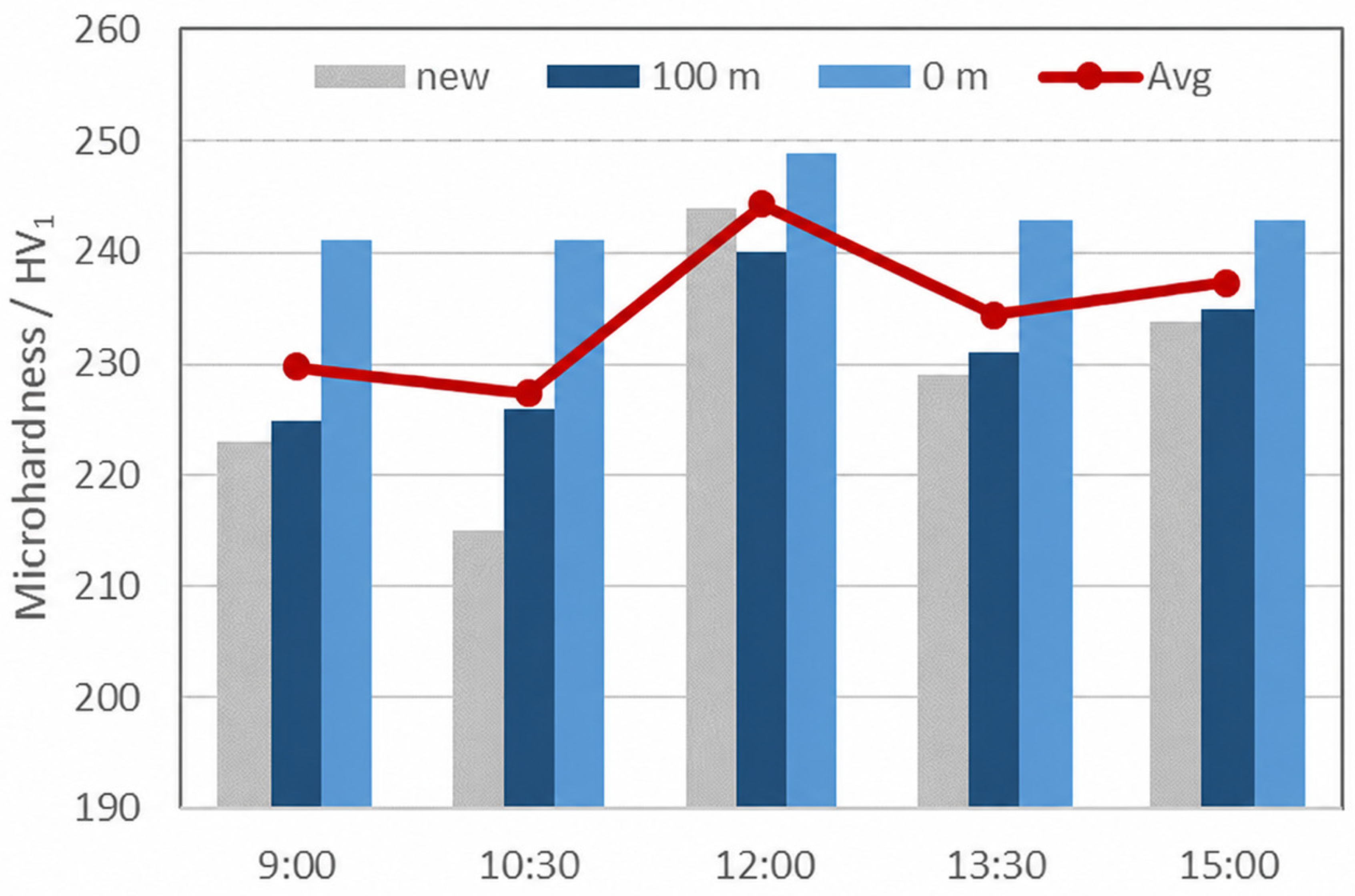
| Position (Clock-Face) | New Tubing (HV1) | 100 m from Fracture (HV1) | 0 m from Fracture (HV1) | Increase (New → 0 m) |
|---|---|---|---|---|
| 09:00 | 223 | 225 | 241 | +8.1% |
| 10:30 | 215 | 226 | 241 | +12.1% |
| 12:00 (seam) | 244 | 240 | 249 | +2.1% |
| 13:30 | 229 | 231 | 243 | +6.1% |
| 15:00 | 234 | 235 | 243 | +3.8% |
| Mean value | 229 | 231.4 | 243.4 | +6.3% |
| Position/Location | Point | C (%) | O (%) | Cl (%) | S (%) | Cr (%) | Fe (%) | Cu (%) | Sb (%) |
|---|---|---|---|---|---|---|---|---|---|
| 0 m inner | SP9 | 6.28 | 39.14 | 0.41 | — | — | 50.23 | — | 3.00 |
| 0 m inner | SP10 | 8.95 | 39.57 | 0.31 | — | — | 36.32 | — | 14.85 |
| 0 m inner | SP11 | — | 41.78 | 0.61 | — | — | 50.72 | — | 5.74 |
| 0 m outer | SP1 | 5.64 | 43.47 | — | 1.73 | 1.28 | 46.39 | 0.55 | — |
| 0 m outer | SP3 | 6.68 | 35.59 | — | — | — | 57.73 | — | — |
| 0 m outer | SP4 | 8.17 | 35.56 | — | — | 1.28 | 52.24 | — | 2.75 |
| 100 m inner (pit) | SP23 | — | 17.29 | 7.36 | — | — | 75.35 | — | — |
| 100 m inner (pit) | SP25 | 10.69 | 26.36 | 1.95 | — | — | 29.98 | — | 31.02 |
| 100 m outer (dark) | — | 12.67 | 21.26 | — | 6.25 | 6.63 | 40.37 | 2.91 | 6.88 |
Disclaimer/Publisher’s Note: The statements, opinions and data contained in all publications are solely those of the individual author(s) and contributor(s) and not of MDPI and/or the editor(s). MDPI and/or the editor(s) disclaim responsibility for any injury to people or property resulting from any ideas, methods, instructions or products referred to in the content. |
© 2026 by the authors. Licensee MDPI, Basel, Switzerland. This article is an open access article distributed under the terms and conditions of the Creative Commons Attribution (CC BY) license.
Share and Cite
Kršulja, M.; Liverić, L.; Karabaić, D.; Špada, V. Failure Analysis of Acid-Thinned Coiled Tubing Under HTBH Conditions: Role of Inhibitor Depletion and Corrosion Asymmetry. Materials 2026, 19, 3200. https://doi.org/10.3390/ma19153200
Kršulja M, Liverić L, Karabaić D, Špada V. Failure Analysis of Acid-Thinned Coiled Tubing Under HTBH Conditions: Role of Inhibitor Depletion and Corrosion Asymmetry. Materials. 2026; 19(15):3200. https://doi.org/10.3390/ma19153200
Chicago/Turabian StyleKršulja, Marko, Lovro Liverić, Damir Karabaić, and Vedrana Špada. 2026. "Failure Analysis of Acid-Thinned Coiled Tubing Under HTBH Conditions: Role of Inhibitor Depletion and Corrosion Asymmetry" Materials 19, no. 15: 3200. https://doi.org/10.3390/ma19153200
APA StyleKršulja, M., Liverić, L., Karabaić, D., & Špada, V. (2026). Failure Analysis of Acid-Thinned Coiled Tubing Under HTBH Conditions: Role of Inhibitor Depletion and Corrosion Asymmetry. Materials, 19(15), 3200. https://doi.org/10.3390/ma19153200