Enhancing Durability and Efficiency of Electrochemical Energy Devices (Batteries and Solid Oxide Cells) Through Thermal Spray Coating Technologies: A Review
___2018_Amrinder_Photo_With_date.jpg)
 ,
,  , , and
Highlights
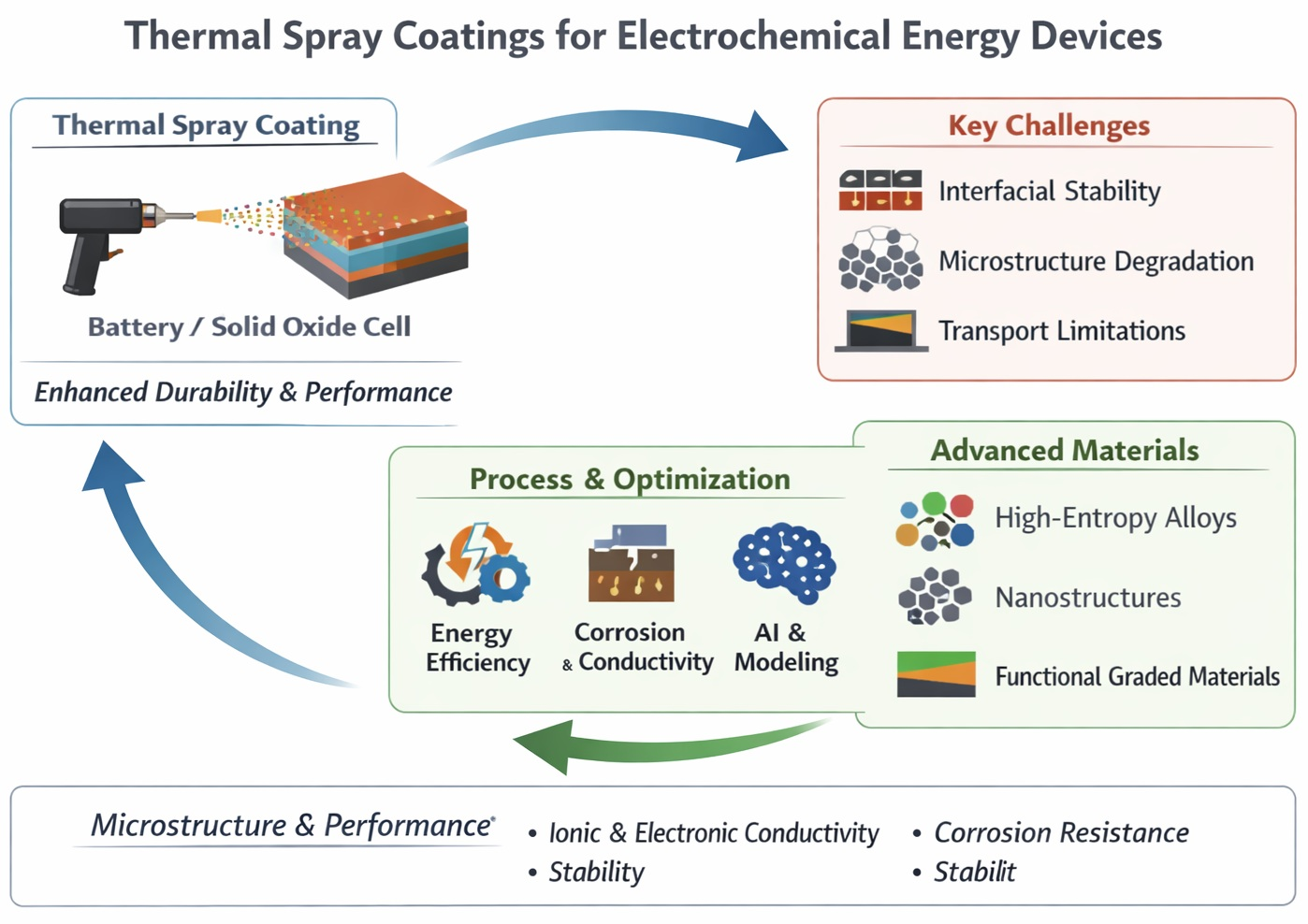
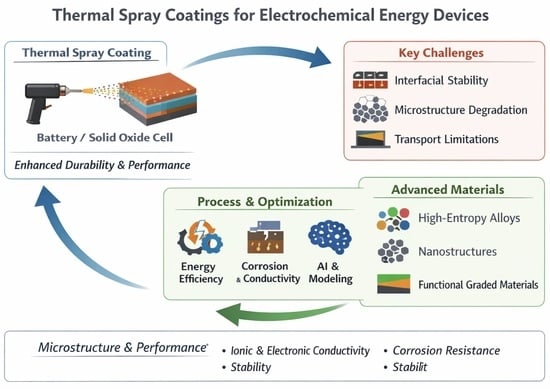
- Coatings of thermo spray increase electrochemical stability and battery resilience.
- Transport and degradation are controlled by the microstructure (porosity, splats, and phases).
- HEAs, FGMs, and nanostructures make performance-customized interfaces.
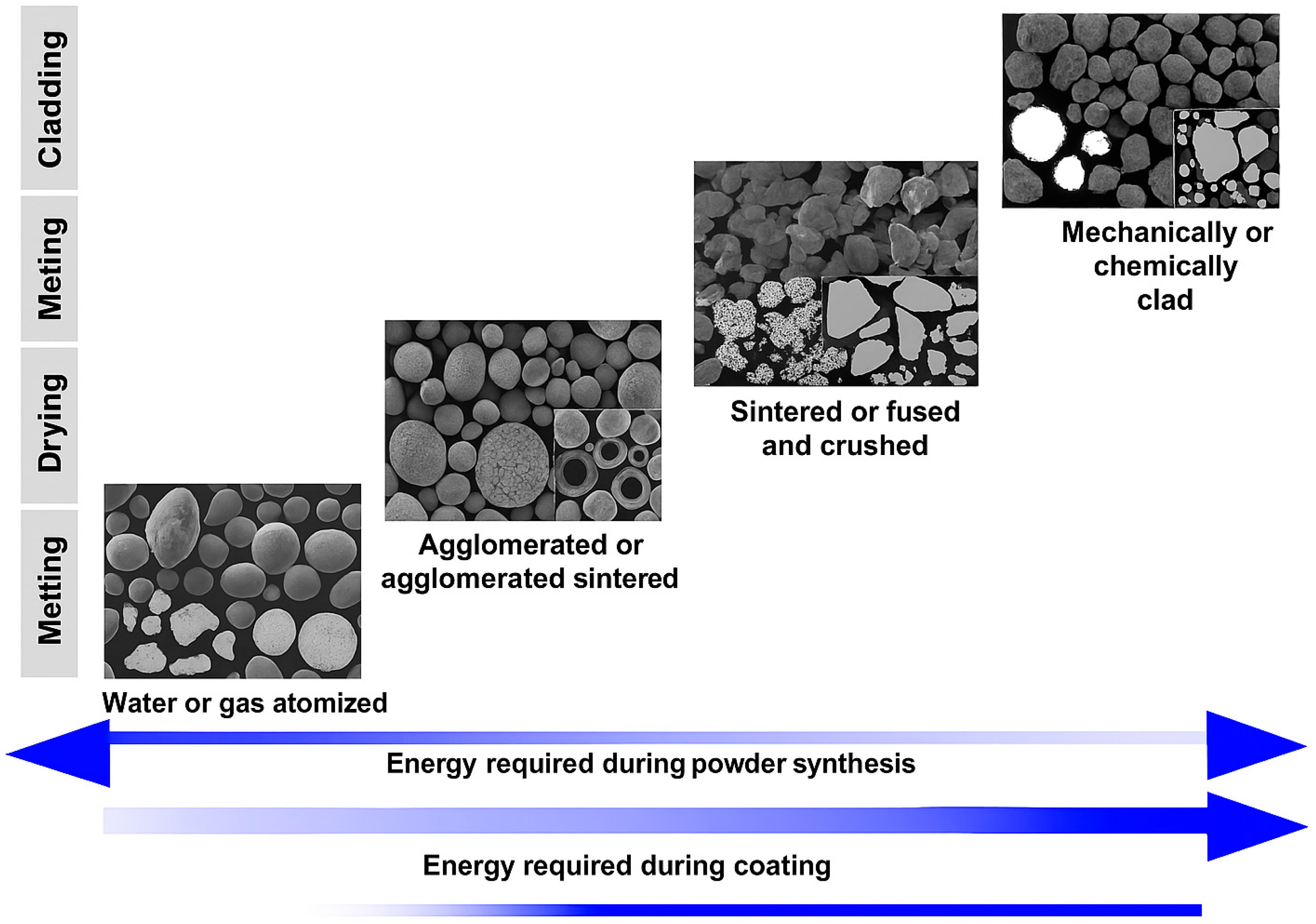
- The balance of energy in the process of powder synthesis is connected with the performance of the coating.
- The use of longer-life energy devices is made possible by interface-engineered coatings. Scalable battery manufacture is assisted by design-based spray techniques.
- The optimization and reliability of the coating are enhanced by AI and modeling.
- Favors the next-generation batteries and solid oxide.
Abstract
1. Introduction
Analysis of Technology Methods
2. Fundamentals of Thermal Spray Evolution
3. Applications in Electrochemical Devices
3.1. Critical Comparison
3.2. Battery Systems
3.3. Solid Oxide Cells
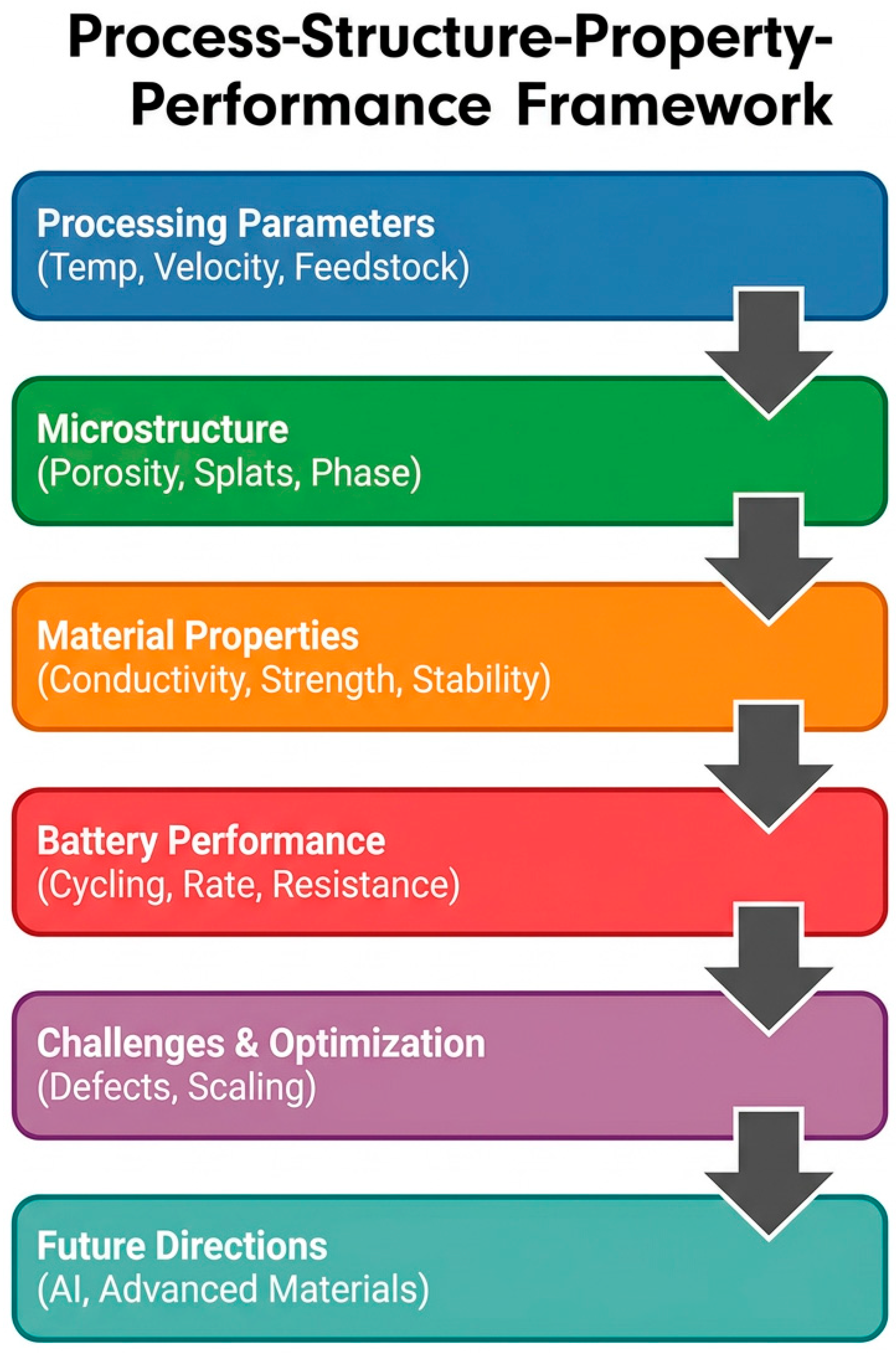
4. Process–Structure–Performance Relationships
5. Cross-Cutting Challenges
5.1. Porosity and Gas Tightness
5.2. Interfacial Bonding and Mechanical Integrity
6. Future Directions and Emerging Trends
6.1. Advanced Coating Materials
6.2. New Application Areas
6.3. Artificial Intelligence for Electrochemical Energy Storage
7. Computational Modeling and AI-Driven Design of Thermal Spray Coatings
7.1. Density Functional Theory (DFT) and Atomistic Modeling
7.2. Multiscale Modeling and Process–Structure–Performance Correlation
7.3. Artificial Intelligence and Machine Learning Approaches
7.4. Machine Learning Approaches
8. Conclusions
- Thermal spray is used to enhance the performance of batteries. They assist in the stability of cycling, rate ability, interfacial resistance, ionic transport and long-term electrochemical stability. This is achieved through the enhancement of the electrode–electrolyte interfaces even when subjected to harsh conditions.
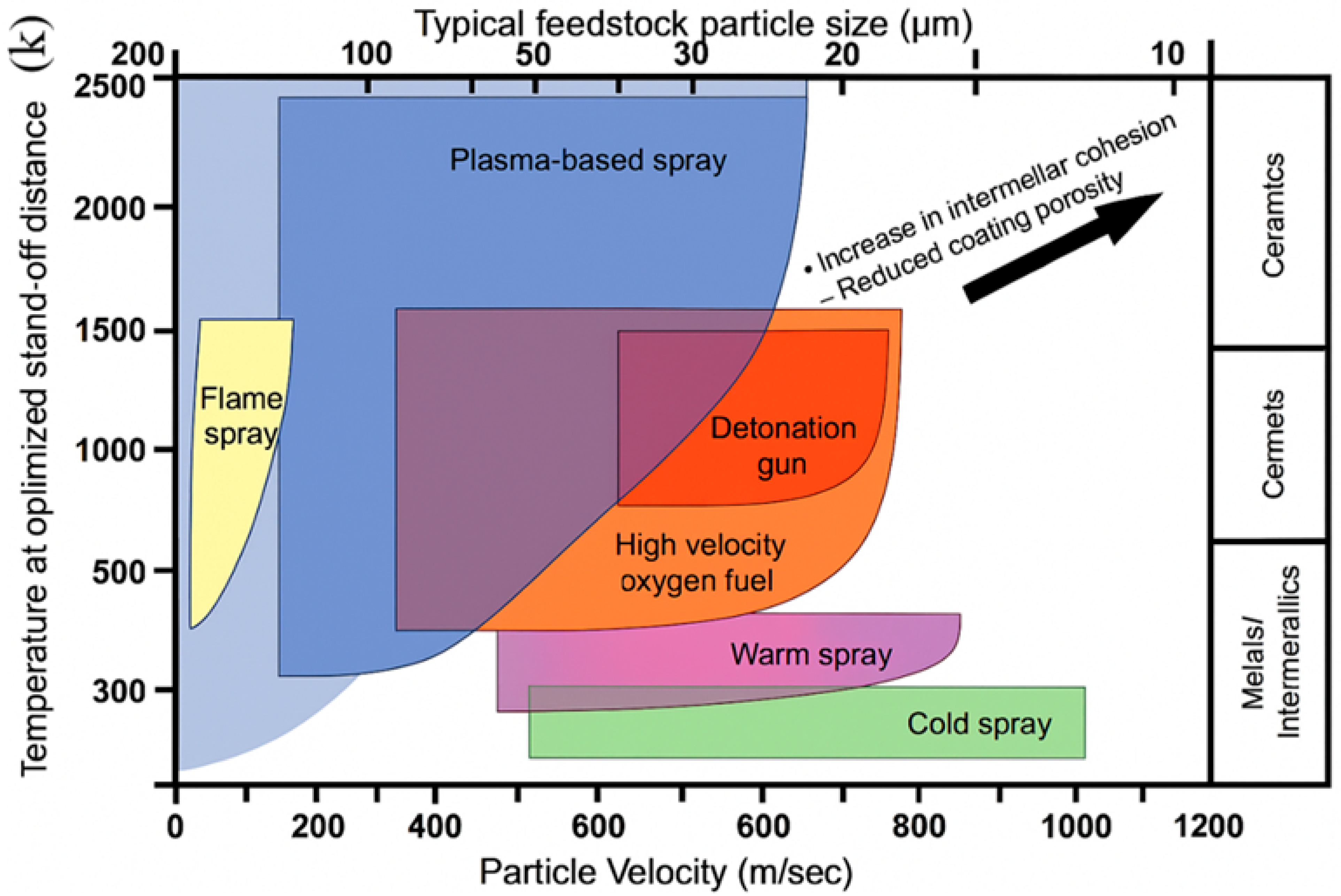
- When porosity is around 10–30%, it helps ions move better. Strong bonds between splats, over 70 MPa, make the material last longer and work well over time.
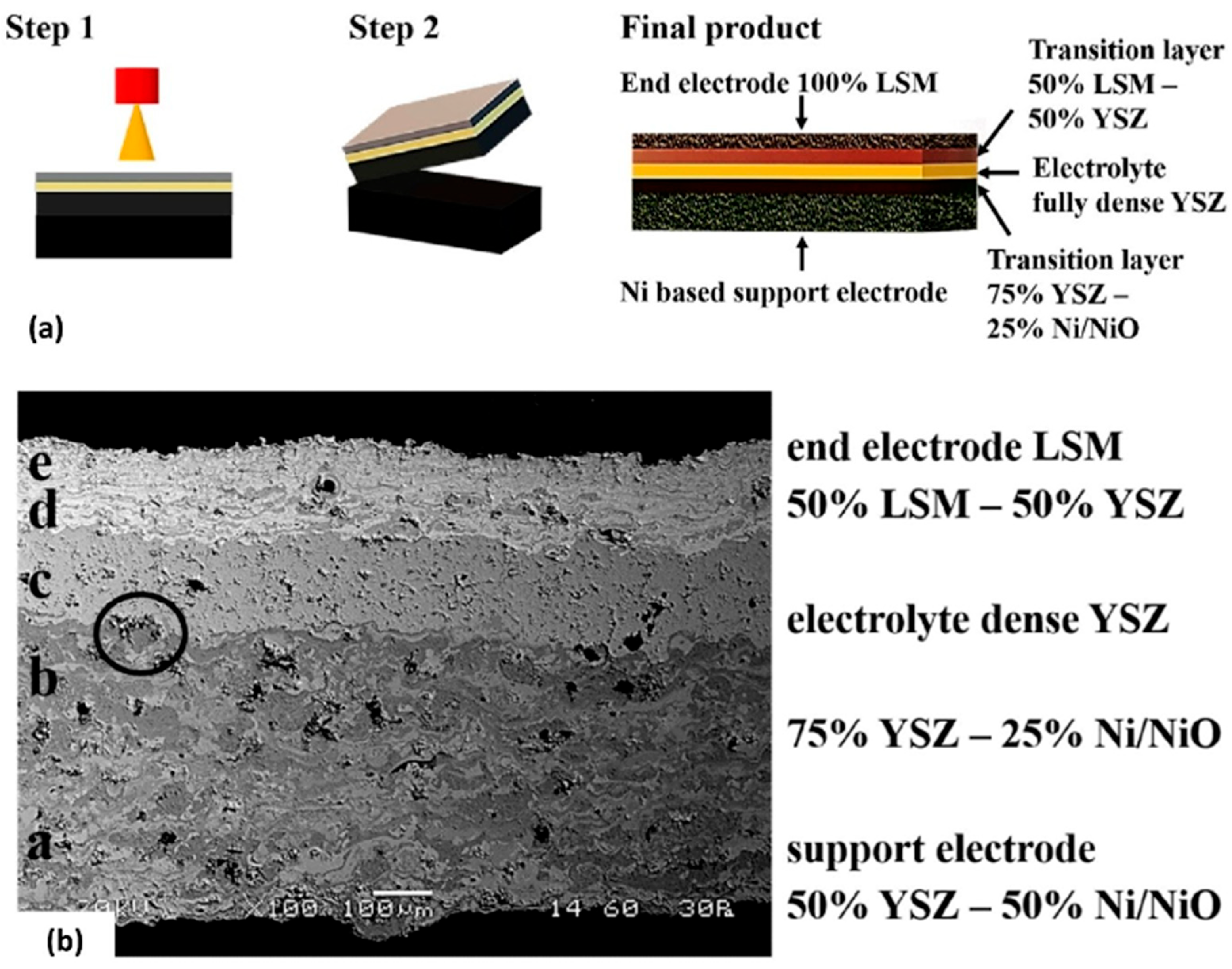
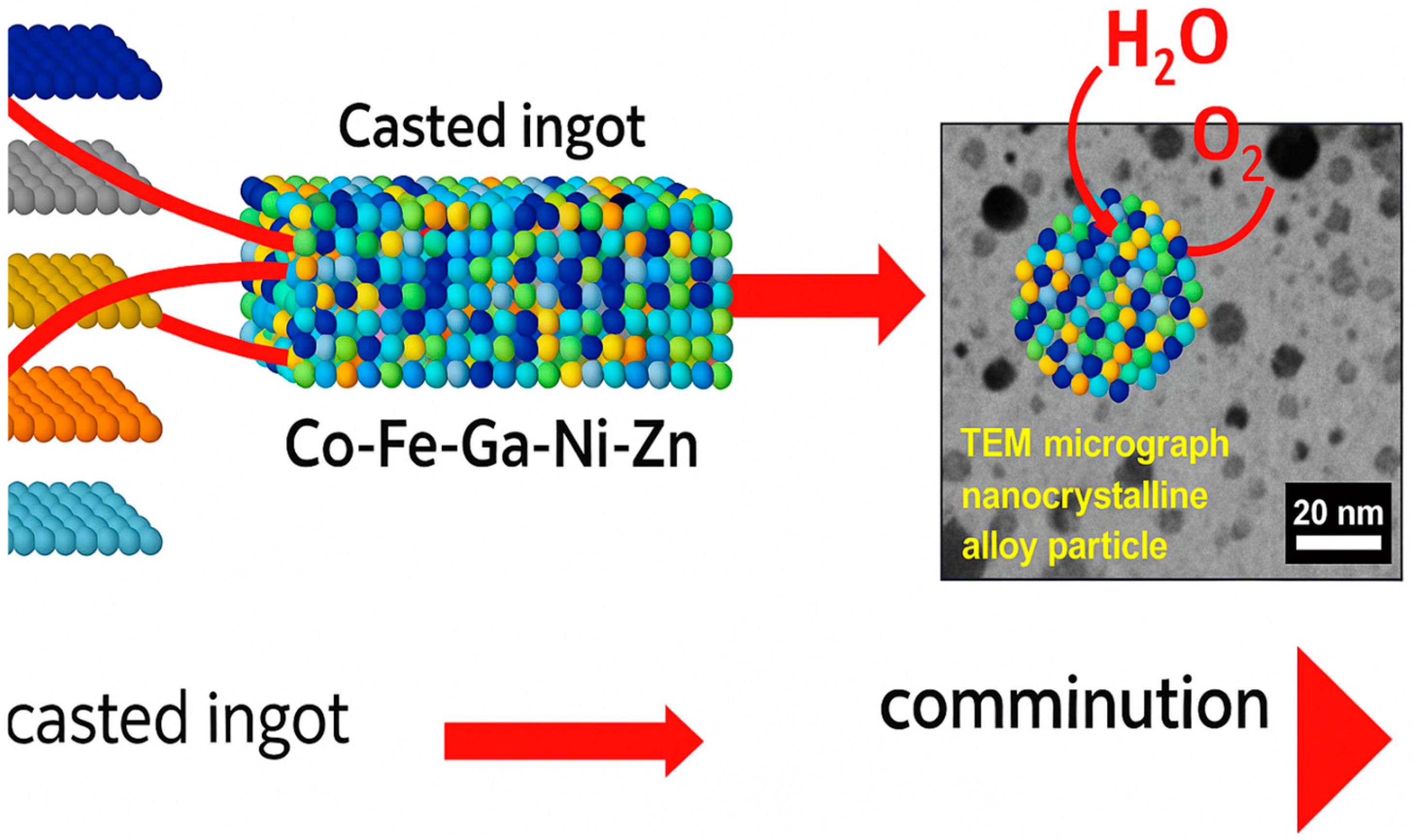
- More recent materials, including high-entropy alloys (HEAs), functionally graded materials (FGMs), and nanostructured feedstocks, exhibit improved stability, stress resistance, and enhanced electrochemical reactions. These properties are useful in the creation of new interfaces and electrodes.
- Microstructural details affect outcomes like lower resistance, better charge transfer, and improved capacity retention.
- It is significant to use energy prudently when making coatings. It is the process of the trade-off between energy expended in powder production and implementation. This has an influence on the quality of the coating, the way its structure varies, and the effectiveness of the functioning and durability of the device.
- New computer and data methods, like ab initio modeling, density functional theory (DFT), and machine learning, help predict how materials will behave.
- Artificial intelligence, enabled by multiphasic simulations, enhances thermal spray coating. It enables real-time modifications, minimizes errors, and simplifies scalability. This method reduces trial-and-error experiments and ensures uniformity of findings.
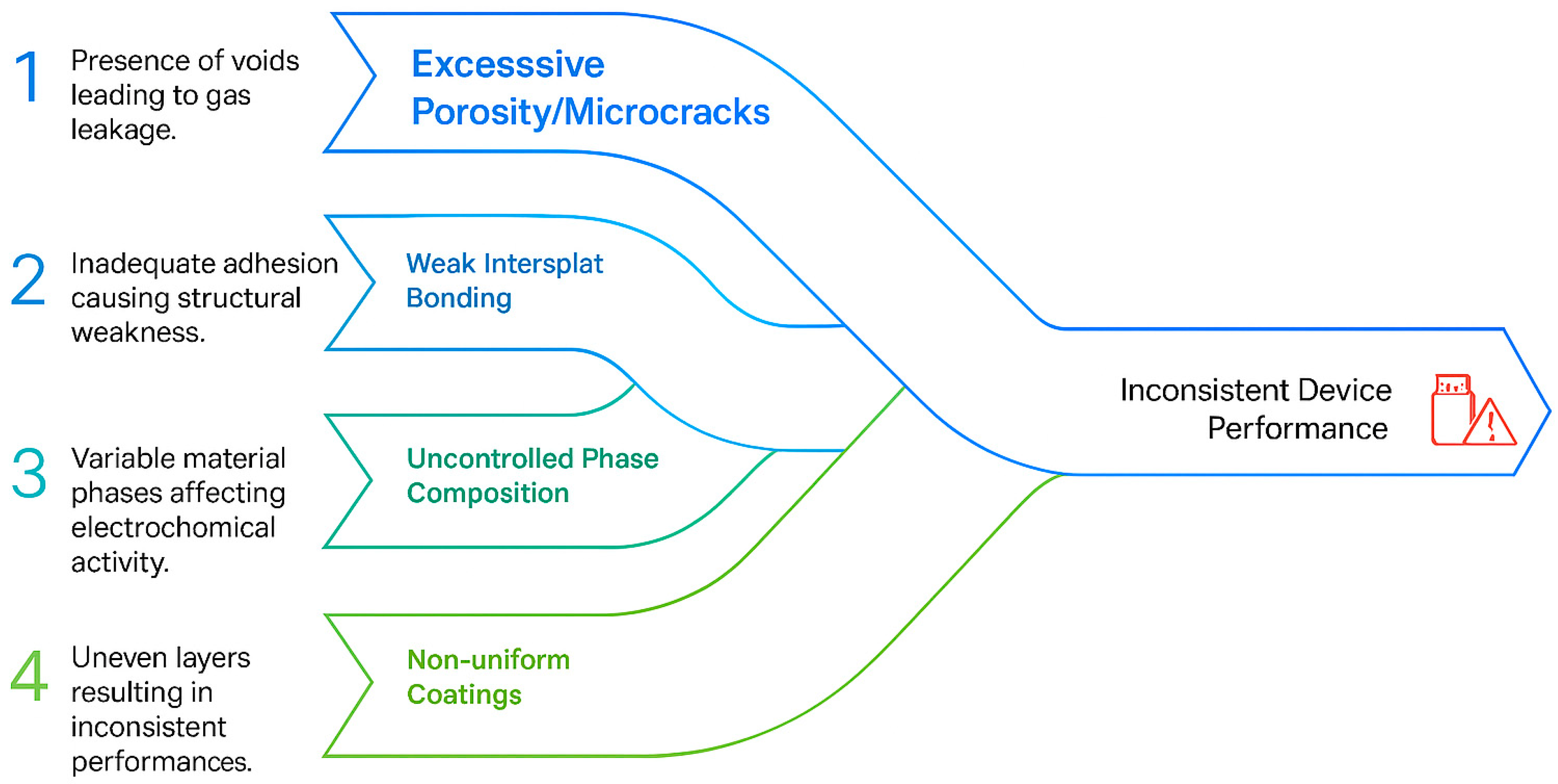
- Remaining challenges include minute defects (such as excessive holes, cracks, and weak links), variations in the process, and restrictions on the quantity that can be produced. These problems may damage the stability of connections and the lifetime of electrochemical systems.
- Future studies are warranted to investigate interface improvements, different scales of models, and combinations of different coatings. This can be achieved via thermal spraying with advanced thin-film methods for enhanced control over the structure and functionality of materials.
- Lithium-ion, sodium-ion, solid-state batteries, and solid oxide cells are new energy systems that are enhanced by thermal spray coatings. They render these energy appliances more efficient, durable and environmentally friendly.
Author Contributions
Funding
Institutional Review Board Statement
Informed Consent Statement
Data Availability Statement
Acknowledgments
Conflicts of Interest
References
- Li, X.; Wang, H.Y.; Yang, H.; Cai, W.; Liu, S.; Liu, B. In situ/operando characterization techniques to probe the electrochemical reactions for energy conversion. Small Methods 2018, 2, 1700395. [Google Scholar] [CrossRef] [Scilit]
- Zhao, W.; Lin, X.; Zhang, T.; Ding, Y. Large-scale energy storage for carbon neutrality: Thermal energy storage for electrical vehicles. Carbon Neutrality 2024, 3, 30. [Google Scholar] [CrossRef] [Scilit]
- Buttler, A.; Spliethoff, H. Current status of water electrolysis for energy storage, grid balancing and sector coupling via power-to-gas and power-to-liquids: A review. Renew. Sustain. Energy Rev. 2018, 82, 2440–2454. [Google Scholar] [CrossRef] [Scilit]
- Janani, G.; Surendran, S.; Choi, H.; An, T.-Y.; Han, M.-K.; Song, S.-J.; Park, W.; Kim, J.K.; Sim, U. Anchoring of Ni12P5 Microbricks in Nitrogen- and Phosphorus-Enriched Carbon Frameworks: Engineering Bifunctional Active Sites for Efficient Water-Splitting Systems. ACS Sustain. Chem. Eng. 2022, 10, 1182–1194. [Google Scholar] [CrossRef] [Scilit]
- Yu, F.; Zhou, H.; Huang, Y.; Sun, J.; Qin, F.; Bao, J.; Goddard, W.A.; Chen, S.; Ren, Z. High-performance bifunctional porous non-noble metal phosphide catalyst for overall water splitting. Nat. Commun. 2018, 9, 2551. [Google Scholar] [CrossRef] [Scilit]
- Mohammadipour, E. Influence of current density on the microstructural, mechanical, and electrochemical properties of hydroxyapatite coatings fabricated by micro-arc oxidation. Results Surf. Interfaces 2026, 22, 100712. [Google Scholar] [CrossRef] [Scilit]
- Liu, L.; Zhu, M. Modeling of SEI layer growth and electrochemical impedance spectroscopy response using a thermal-electrochemical model of Li-ion batteries. Electrochem. Soc. Trans. 2014, 61, 43–61. [Google Scholar]
- Djara, R.; Lacour, M.-A.; Merzouki, A.; Cambedouzou, J.; Cornu, D.; Tingry, S.; Holade, Y. Iridium and ruthenium modified polyaniline polymer leads to nanostructured electrocatalysts with high performance regarding water splitting. Polymers 2021, 13, 190. [Google Scholar] [CrossRef] [Scilit]
- Lee, W. Synchrotron-based X-ray techniques for probing electronic and structural dynamics in energy storage materials. J. Electrochem. Sci. Technol. 2025, 16, 249–266. [Google Scholar] [CrossRef] [Scilit]
- Stangl, A.; Muñoz-Rojas, D.; Burriel, M. In situ and operando characterisation techniques for solid oxide electrochemical cells: Recent advances. J. Phys. Energy 2021, 3, 012001. [Google Scholar] [CrossRef] [Scilit]
- Kiape, S.; Glava, M.; Georgatis, E.; Kamnis, S.; Matikas, T.E.; Karantzalis, A.E. CoCrFeMnNi0.8V/Cr3C2-Ni20Cr High-Entropy Alloy Composite Thermal Spray Coating: Comparison with Monolithic CoCrFeMnNi0.8V and Cr3C2-Ni20Cr Coatings. Coatings 2024, 14, 402. [Google Scholar] [CrossRef] [Scilit]
- Shang, K.; Gao, J.; Yin, X.; Ding, Y.; Wen, Z. An Overview of Flexible Electrode Materials/Substrates for Flexible Electrochemical Energy Storage/Conversion Devices. Eur. J. Inorg. Chem. 2021, 2021, 606–619. [Google Scholar] [CrossRef] [Scilit]
- Chade, D.; Berlouis, L.; Infield, D.; Nielsen, P.T.; Mathiesen, T. Deactivation mechanisms of atmospheric plasma spraying Raney nickel electrodes. J. Electrochem. Soc. 2016, 163, F308. [Google Scholar] [CrossRef] [Scilit]
- Lettenmeier, P.; Wang, R.; Abouatallah, R.; Saruhan, B.; Freitag, O.; Gazdzicki, P.; Morawietz, T.; Hiesgen, R.; Gago, A.S.; Friedrich, K.A. Low-cost and durable bipolar plates for proton exchange membrane electrolyzers. Sci. Rep. 2017, 7, 44035. [Google Scholar] [CrossRef] [Scilit] [PubMed]
- Kassner, H.; Siegert, R.; Hathiramani, D.; Vassen, R.; Stoever, D. Application of suspension plasma spraying (SPS) for manufacture of ceramic coatings. J. Therm. Spray Technol. 2008, 17, 115–123. [Google Scholar] [CrossRef] [Scilit]
- Faisal, N.H.; Prathuru, A.; Ahmed, R.; Rajendran, V.; Hossain, M.; Venkatachalapathy, V.; Katiyar, N.K.; Li, J.; Liu, Y.; Cai, Q. Application of thermal spray coatings in electrolysers for hydrogen production: Advances, challenges, and opportunities. ChemNanoMat 2022, 8, e202200384. [Google Scholar] [CrossRef] [Scilit]
- Nzaba Madila, E.E.; Makhsoos, A.; Shanbhag, M.M.; Pollet, B.G. Advancements in electrolyser stack performance: A comprehensive review of Latest technologies and efficiency strategies. Int. J. Hydrogen Energy 2025, 144, 1168–1189. [Google Scholar] [CrossRef] [Scilit]
- Nugroho, A.; Daud, S.; Puranto, P.; Mamat, R.; Bo, Z.; Ghazali, M.F. Next-generation thermal spray coatings for military use: Innovations, challenges, and applications (bibliometric review 2015–2025). Digit. Chem. Eng. 2025, 17, 100259. [Google Scholar] [CrossRef] [Scilit]
- Faisal, N.H.; Rajendran, V.; Prathuru, A.; Hossain, M.; Muthukrishnan, R.; Balogun, Y.; Pancholi, K.; Hussain, T.; Lokachari, S.; Horri, B.A. Thermal spray coatings for molten salt facing structural parts and enabling opportunities for thermochemical cycle electrolysis. Eng. Rep. 2024, 6, e12947. [Google Scholar] [CrossRef] [Scilit]
- Rauscher, T.; Bernäcker, C.I.; Loos, S.; Vogt, M.; Kieback, B.; Röntzsch, L. Spark-plasma-sintered porous electrodes for efficient oxygen evolution in alkaline water electrolysis. Electrochim. Acta 2019, 317, 128–138. [Google Scholar] [CrossRef] [Scilit]
- Mehta, A.; Vasudev, H. Advancements in ceramic-coated metals: Enhancing thermal spray coatings for improved performance in aerospace applications using surface treatments. Results Surf. Interfaces 2025, 18, 100387. [Google Scholar] [CrossRef] [Scilit]
- Gago, A.S.; Lettenmeier, P.; Stiber, S.; Ansar, A.S.; Wang, L.; Friedrich, K.A. Cost-effective PEM electrolysis: The quest to achieve superior efficiencies with reduced investment. ECS Trans. 2018, 85, 3. [Google Scholar] [CrossRef] [Scilit]
- Aksoy, Ö.F.; Lemieszek, B.; Murutoğlu, M.; Karczewski, J.; Jasiński, P.; Molin, S. Developing high-performance oxygen electrodes for intermediate solid oxide cells (SOC) prepared by Ce0.8Gd0.2O2−δ backbone infiltration. Appl. Phys. A 2024, 130, 779. [Google Scholar] [CrossRef] [Scilit]
- Zhang, B.; Zhu, S.; Zhang, C.; Tao, X.; Xie, C.; Xu, Z. Study on the role of Nb addition on the tribological behavior of CoNiCrMo-based high entropy amorphous alloy coatings fabricated by HVAF. Tribol. Int. 2026, 216, 111573. [Google Scholar] [CrossRef] [Scilit]
- Hu, K.; Fang, J.; Ai, X.; Huang, D.; Zhong, Z.; Yang, X.; Wang, L. Comparative study of alkaline water electrolysis, proton exchange membrane water electrolysis and solid oxide electrolysis through multiphysics modeling. Appl. Energy 2022, 312, 118788. [Google Scholar] [CrossRef] [Scilit]
- Karthik, K.; Selvabharathi, R. Effect of isothermal annealing and plasma arc coating on mechanical properties for titanium stainless steel using laser welding. Can. Metall. Q. 2026, 1–16. [Google Scholar] [CrossRef] [Scilit]
- Chade, D.; Berlouis, L.; Infield, D.; Cruden, A.; Nielsen, P.T.; Mathiesen, T. Evaluation of Raney nickel electrodes prepared by atmospheric plasma spraying for alkaline water electrolysers. Int. J. Hydrogen Energy 2013, 38, 14380–14390. [Google Scholar] [CrossRef] [Scilit]
- Bobzin, K.; Zhao, L.; Heinemann, H.; Olesch, E. Highly Porous Titanium Coatings for Proton Exchange Membrane Water Electrolysis Application by HVOF. In Proceedings of the ITSC 2024, Milan, Italy, 29 April–1 May 2024; pp. 291–297. [Google Scholar]
- Fakourihassanabadi, M.; Guerreiro, B.; Gaudet, J.; Martin, M.H.; Abbasi, S.; Thorpe, S.; Guay, D. Fabrication of a Ti-based 3D porous transport layer for PEMWEs using ShockWave-induced spraying and cold spray. Surf. Coat. Technol. 2024, 477, 130353. [Google Scholar] [CrossRef] [Scilit]
- Karimzadeh, S.; Safaei, B.; Yuan, C.; Jen, T.-C. Emerging Atomic Layer Deposition for the Development of High-Performance Lithium-Ion Batteries. Electrochem. Energy Rev. 2023, 6, 24. [Google Scholar] [CrossRef] [Scilit]
- Seo, B.G.; Koo, J.; Jeong, H.J.; Park, H.W.; Kim, N.I.; Shim, J.H. Performance Enhancement of Polymer Electrolyte Membrane Fuel Cells with Cerium Oxide Interlayers Prepared by Aerosol-Assisted Chemical Vapor Deposition. ACS Sustain. Chem. Eng. 2023, 11, 10776–10784. [Google Scholar] [CrossRef] [Scilit]
- Kausar, A. Polymer coating technology for high performance applications: Fundamentals and advances. J. Macromol. Sci. Part A 2018, 55, 440–448. [Google Scholar] [CrossRef] [Scilit]
- Tang, C.; Yao, Y.; Wang, N.; Zhang, X.; Zheng, F.; Du, L.; Luo, D.; Aoki, Y.; Ye, S. Green hydrogen production by intermediate-temperature protonic solid oxide electrolysis cells: Advances, challenges, and perspectives. InfoMat 2024, 6, e12515. [Google Scholar] [CrossRef] [Scilit]
- Yuvaraj, A.L.; Santhanaraj, D. A systematic study on electrolytic production of hydrogen gas by using graphite as electrode. Mater. Res. 2014, 17, 83–87. [Google Scholar] [CrossRef] [Scilit]
- Qiu, L.; Wang, Y.; Li, H.; Cao, G.; Ouyang, F.; Zhu, R. Photocatalytic oxidation of toluene on fluorine doped TiO2/SiO2 catalyst under simulant sunlight in a flat reactor. Catalysts 2018, 8, 596. [Google Scholar] [CrossRef] [Scilit]
- Abdullah, A.M.; Gracia-Pinilla, M.Á.; Pillai, S.C.; O’Shea, K. UV and visible light-driven production of hydroxyl radicals by reduced forms of N, F, and P codoped titanium dioxide. Molecules 2019, 24, 2147. [Google Scholar] [CrossRef] [Scilit]
- Shen, J.-H.; Chuang, H.-Y.; Jiang, Z.-W.; Liu, X.-Z.; Horng, J.-J. Novel quantification of formation trend and reaction efficiency of hydroxyl radicals for investigating photocatalytic mechanism of Fe-doped TiO2 during UV and visible light-induced degradation of acid orange 7. Chemosphere 2020, 251, 126380. [Google Scholar] [CrossRef] [Scilit]
- Li, N.; Che, Y.; Liu, S.; Wang, J.; Cui, X.; Xiong, T. Corrosion-resistant thermal spray coatings for low-alloy steel in contact with molten nitrate salts in solar power plants. Sol. Energy Mater. Sol. Cells 2023, 259, 112432. [Google Scholar] [CrossRef] [Scilit]
- Bieniek, M.; Sadecka, K.; Szulakowska, L.; Hawrylak, P. Theory of excitons in atomically thin semiconductors: Tight-binding approach. Nanomaterials 2022, 12, 1582. [Google Scholar] [CrossRef] [Scilit]
- Löffler, T.; Ludwig, A.; Rossmeisl, J.; Schuhmann, W. What makes high-entropy alloys exceptional electrocatalysts? Angew. Chem. Int. Ed. 2021, 60, 26894–26903. [Google Scholar] [CrossRef] [Scilit]
- Ossiansson, M.; Gupta, M.; Löbel, M.; Lindner, T.; Lampke, T.; Joshi, S. Assessment of CrFeCoNi and AlCrFeCoNi high-entropy alloys as bond coats for thermal barrier coatings. J. Therm. Spray Technol. 2022, 31, 1404–1422. [Google Scholar] [CrossRef] [Scilit]
- Dvorak, M.; Wei, S.-H.; Wu, Z. Origin of the variation of exciton binding energy in semiconductors. Phys. Rev. Lett. 2013, 110, 016402. [Google Scholar] [CrossRef] [Scilit] [PubMed]
- Viswanathan, V.; Katiyar, N.K.; Goel, G.; Matthews, A.; Goel, S. Role of thermal spray in combating climate change. Emergent Mater. 2021, 4, 1515–1529. [Google Scholar] [CrossRef] [Scilit]
- Meghwal, A.; Anupam, A.; Murty, B.S.; Berndt, C.C.; Kottada, R.S.; Ang, A.S.M. Thermal spray high-entropy alloy coatings: A review. J. Therm. Spray Technol. 2020, 29, 857–893. [Google Scholar] [CrossRef] [Scilit]
- George, N.; Mahon, M.; McDonald, A. Bactericidal Performance of Flame-Sprayed Nanostructured Titania-Copper Composite Coatings. J. Therm. Spray Technol. 2010, 19, 1042–1053. [Google Scholar] [CrossRef] [Scilit]
- Zhang, G.; Sheng, H.; Chen, D.; Li, N.; Xu, Q.; Li, H.; He, J.; Lu, J. Hierarchical Titanium Dioxide Nanowire/Metal–Organic Framework/Carbon Nanofiber Membranes for Highly Efficient Photocatalytic Degradation of Hydrogen Sulfide. Chem.—A Eur. J. 2018, 24, 15019–15025. [Google Scholar] [CrossRef] [Scilit]
- Ang, A.S.M.; Berndt, C.C. A review of testing methods for thermal spray coatings. Int. Mater. Rev. 2014, 59, 179–223. [Google Scholar] [CrossRef] [Scilit]
- Singh, H.; Sidhu, T.S.; Kalsi, S.B.S.; Karthikeyan, J. Development of cold spray from innovation to emerging future coating technology. J. Braz. Soc. Mech. Sci. Eng. 2013, 35, 231–245. [Google Scholar] [CrossRef] [Scilit]
- Kumar, H.; Singh, A.; Manikandan, S.G.K.; Kamaraj, M.; Shiva, S. 8—Thermally-sprayed high-entropy alloy coating: Mechanisms, properties and applications. In Powder Metallurgy; Prasad, M.A., Salunkhe, S., Davim, J.P., Eds.; Woodhead Publishing: Cambridge, UK, 2026; pp. 177–205. [Google Scholar]
- Liu, Z.; Fan, J.; Pang, Y.; Wang, X. Numerical Investigation of Flame Characteristics and Particle Behavior in HVOF Thermal Spraying Using a Non-premixed Combustion Model. J. Therm. Spray Technol. 2026. [Google Scholar] [CrossRef] [Scilit]
- Kahraman, F.; Yılançalı, M.B. Low-Pressure Cold Spray Deposition and Characterization of CNT-Reinforced Nanocomposite Coatings. J. Therm. Spray Technol. 2026, 35, 297–307. [Google Scholar] [CrossRef] [Scilit]
- Wang, Y.; Wang, W.; Fang, H.; Yu, J.; Zhou, P.; He, X.; Pu, J.; Nishimura, K. Tailoring coatings architecture by controlling the suspension characteristics: A case study of suspension plasma spraying (SPS) Al2O3 coatings. Powder Technol. 2026, 469, 121772. [Google Scholar] [CrossRef] [Scilit]
- Dong, Y.; Li, J. Oxide cathodes: Functions, instabilities, self healing, and degradation mitigations. Chem. Rev. 2022, 123, 811–833. [Google Scholar] [CrossRef] [Scilit]
- Yang, T.; Wang, W.; Tang, Z.; Liu, Y.; Li, K. Structural optimization for porous thermal barrier coating and analysis of thermomechanical properties by experimental and computational investigation. Surf. Coat. Technol. 2023, 458, 129347. [Google Scholar] [CrossRef] [Scilit]
- Ning, H.-L.; Liang, C.-P.; Qiang, S.-S.; Li, J.-X.; Tang, S.; Li, Y.-T.; Sun, W.; Yang, Y. Gold-doped iron disulfide as cathode materials for enhanced electrochemical performance in thermal batteries. Rare Met. 2025, 44, 1687–1700. [Google Scholar] [CrossRef] [Scilit]
- Sun, K.; Bi, R.; Huang, W.; Zhou, Z.; Zhu, Z.; Li, J.; Shen, T.; Liu, F. Effect of WB doping on microstructure and mechanical properties of HVOF sprayed Fe-based amorphous coatings under irradiation environment. J. Alloys Compd. 2025, 1021, 179572. [Google Scholar] [CrossRef] [Scilit]
- Mehdi, H.; Singh, J.; Singh Gautam, R.K.; Nikhil, B.; Roshindas, M.P.; Kumar, G. Improvement of metallurgical and wear properties of the different substrate by high-velocity oxygen fuel (HVOF) coating: A critical review. J. Adhes. Sci. Technol. 2025, 1–45. [Google Scholar] [CrossRef] [Scilit]
- Jose, S.A.; Kasar, A.K.; Menezes, P.L. Cold spray deposition of cermets: Insights into bonding mechanism and critical parameters. Int. J. Adv. Manuf. Technol. 2024, 133, 1–23. [Google Scholar] [CrossRef] [Scilit]
- Li, W.; Wu, H.; Chu, X.; Xie, Y.; Deng, S.; Bagherifard, S. Outlook of Industry 4.0 Integrated Technologies in Thermal Spray Processes and Applications. J. Therm. Spray Technol. 2025, 34, 3022–3051. [Google Scholar] [CrossRef] [Scilit]
- Huang, W.; Yang, F.; Jiang, D.; Cao, L.; Wang, G.; Tang, Z.; Liu, A. Surface texture processing methods of medical nitinol alloy and tribological characteristics: A review. Surf. Topogr. Metrol. Prop. 2026, 14, 013004. [Google Scholar] [CrossRef] [Scilit]
- Joshi, S.; Markocsan, N.; Nylén, P.; Sivakumar, G. New-Generation Ceramic Coatings for High-Temperature Applications by Liquid Feedstock Plasma Spraying. In Handbook of Advanced Ceramics and Composites: Defense, Security, Aerospace and Energy Applications; Mahajan, Y.R., Johnson, R., Eds.; Springer International Publishing: Cham, Switzerland, 2020; pp. 1371–1412. [Google Scholar]
- Yuan, K.; Zhu, J.; Dong, W.; Yu, Y.; Lu, X.; Ji, X.; Wang, X. Applying Low-Pressure Plasma Spray (LPPS) for coatings in low-temperature SOFC. Int. J. Hydrogen Energy 2017, 42, 22243–22249. [Google Scholar] [CrossRef] [Scilit]
- Lance, M.J.; Haynes, J.A.; Pint, B.A. Performance of vacuum plasma spray and HVOF bond coatings at 900° and 1100 °C. Surf. Coat. Technol. 2018, 337, 136–140. [Google Scholar] [CrossRef] [Scilit]
- Yang, C.H.; Tsai, C.H.; Chang, C.L. Effect of Spray Distance on the Microstructure and Electrochemical Performance of LiCoO2 Cathodes Fabricated by Atmospheric Plasma Spraying. J. Therm. Spray Technol. 2026. [Google Scholar] [CrossRef] [Scilit]
- Jordan, E.H.; Jiang, C.; Gell, M. The Solution Precursor Plasma Spray (SPPS) Process: A Review with Energy Considerations. J. Therm. Spray Technol. 2015, 24, 1153–1165. [Google Scholar] [CrossRef] [Scilit]
- Ramesh Kannan, C.; Santhosh, V.; Faisal, M.H.; Soundararajan, S.; Kumar, A.; Daniel Das, A.; Subramanian, M.; Devaraj, L.; Vallimanalan, A. Tailored AlCoCrNiMo0.3 High Entropy Alloy Coatings for Advanced Corrosion Protection. Mater. Corros. 2026, 77, 290–298. [Google Scholar] [CrossRef] [Scilit]
- Rafiq, S.; Gondal, M.A.; Arshad, F.; Almessiere, M.A. Electrodeposited Medium- and High-Entropy Alloys: A Review of Recent Advances in Electrochemical Energy-Related Applications. Arab. J. Sci. Eng. 2026, 51, 353–393. [Google Scholar] [CrossRef] [Scilit]
- Lalegani Dezaki, M.; Leng, K.; Hastak, V.; Curry, N.; Villanueva, N.C.; Evans, B.; Hussain, T. Functionally graded tungsten–copper coatings produced by axial injection shrouded atmospheric plasma spray. Surf. Coat. Technol. 2026, 521, 133109. [Google Scholar] [CrossRef] [Scilit]
- Gildersleeve, E.J.; Vaßen, R. Thermally Sprayed Functional Coatings and Multilayers: A Selection of Historical Applications and Potential Pathways for Future Innovation. J. Therm. Spray Technol. 2023, 32, 778–817. [Google Scholar] [CrossRef] [Scilit]
- Wu, B.; Wu, Y.; Wan, X.; Cai, L.; Jiang, H.; Hu, Y.; Li, C. Highly-dispersed high-entropy oxide nanoparticles prepared by flame spray pyrolysis as a coating for enhancing the electrochemical stability of layered lithium-ion battery cathodes. Chem. Eng. J. 2026, 531, 173450. [Google Scholar] [CrossRef] [Scilit]
- Zhang, Y.; Liu, N. Nanostructured Electrode Materials for High-Energy Rechargeable Li, Na and Zn Batteries. Chem. Mater. 2017, 29, 9589–9604. [Google Scholar] [CrossRef] [Scilit]
- Nadiia, P.; Fernández, V.I.; Odinsen, E.; Lamb, J.J. Contemporary Micro-Battery Technologies: Advances in Microfabrication, Nanostructuring, and Material Optimisation for Lithium-Ion Batteries. Appl. Sci. 2026, 16, 173. [Google Scholar] [CrossRef] [Scilit]
- Tesar, T.; Musalek, R.; Lukac, F.; Dudik, J. External Hybrid Deposition: A Novel Method for Thermal Spraying of Thermally Sensitive Materials. J. Therm. Spray Technol. 2024, 33, 572–582. [Google Scholar] [CrossRef] [Scilit]
- Houdková, Š.; Zahálka, F.; Kašparová, M.; Berger, L.M. Comparative Study of Thermally Sprayed Coatings Under Different Types of Wear Conditions for Hard Chromium Replacement. Tribol. Lett. 2011, 43, 139–154. [Google Scholar] [CrossRef] [Scilit]
- Seitov, B.; Kurbanbekov, S.; Baltabayeva, D.; Kakimzhanov, D.; Katpayeva, K.; Temirbekov, A.; Bekbayev, S.; Mussakhan, N. Review of physical and mechanical properties, morphology, and phase structure in Cr3C2-NiCr composite coatings sprayed by HVOF method. Coatings 2025, 15, 479. [Google Scholar] [CrossRef] [Scilit]
- Neudeck, S.; Mazilkin, A.; Reitz, C.; Hartmann, P.; Janek, J.; Brezesinski, T. Effect of low-temperature Al2O3 ALD coating on Ni-rich layered oxide composite cathode on the long-term cycling performance of lithium-ion batteries. Sci. Rep. 2019, 9, 5328. [Google Scholar] [CrossRef] [Scilit] [PubMed]
- Hidalgo, M.Á.; Lavela, P.; Tirado, J.L.; Aranda, M. Modification of layered cathodes of sodium-ion batteries with conducting polymers. Batteries 2024, 10, 93. [Google Scholar] [CrossRef] [Scilit]
- Singh, D.P.; Birkholzer, Y.A.; Cunha, D.M.; Dubbelink, T.; Huang, S.; Hendriks, T.A.; Lievens, C.; Huijben, M. Enhanced cycling and rate capability by epitaxially matched conductive cubic TiO coating on LiCoO2 cathode films. ACS Appl. Energy Mater. 2021, 4, 5024–5033. [Google Scholar] [CrossRef] [Scilit] [PubMed]
- Heist, A.; Hafner, S.; Lee, S.-H. High-energy nickel-rich layered cathode stabilized by ionic liquid electrolyte. J. Electrochem. Soc. 2019, 166, A873–A879. [Google Scholar] [CrossRef] [Scilit]
- Wu, Q.; Xu, Z.; Yu, Y.; Peng, M.; Gao, J.; Nie, L.; Cheng, Y.-J.; Müller-Buschbaum, P.; Xia, Y. Surface coating of NCM523 cathode electrodes by the difunctional block copolymer/lithium salt composites. Langmuir 2024, 40, 14863–14871. [Google Scholar] [CrossRef] [Scilit]
- Aghaee, M.; Verheyen, J.; Stevens, A.A.; Kessels, W.M.; Creatore, M. TiO2 thin film patterns prepared by chemical vapor deposition and atomic layer deposition using an atmospheric pressure microplasma printer. Plasma Process. Polym. 2019, 16, 1900127. [Google Scholar] [CrossRef] [Scilit]
- Yang, J.; Wang, Y.; Li, W.; Wang, L.; Fan, Y.; Jiang, W.; Luo, W.; Wang, Y.; Kong, B.; Selomulya, C. Amorphous TiO2 shells: A vital elastic buffering layer on silicon nanoparticles for high-performance and safe lithium storage. Adv. Mater. 2017, 29, 1700523. [Google Scholar] [CrossRef] [Scilit]
- Mauer, G.; Du, L.; Vaßen, R. Atmospheric plasma spraying of single phase lanthanum zirconate thermal barrier coatings with optimized porosity. Coatings 2016, 6, 49. [Google Scholar] [CrossRef] [Scilit]
- Muhoza, S.P.; Lee, S.; Song, X.; Guan, B.; Yang, T.; Gross, M.D. Enhancing Activity, Charge Transport, Power Production, and Stability of Commercial Solid Oxide Fuel Cells with Yttria-Stabilized Zirconia Nanoparticles. J. Electrochem. Soc. 2020, 167, 024517. [Google Scholar] [CrossRef] [Scilit]
- Yang, G.; Wu, M.; Wang, C. Ultrathin Zn2(OH)3VO3 nanosheets: First synthesis, excellent lithium-storage properties, and investigation of electrochemical mechanism. ACS Appl. Mater. Interfaces 2016, 8, 23746–23754. [Google Scholar] [CrossRef] [Scilit] [PubMed]
- Li, C.-J.; Luo, X.-T.; Dong, X.-Y.; Zhang, L.; Li, C.-X. Recent Research Advances in Plasma Spraying of Bulk-Like Dense Metal Coatings with Metallurgically Bonded Lamellae. J. Therm. Spray Technol. 2022, 31, 5–27. [Google Scholar] [CrossRef] [Scilit]
- Liang, S.; Yan, W.; Wu, X.; Zhang, Y.; Zhu, Y.; Wang, H.; Wu, Y. Gel polymer electrolytes for lithium ion batteries: Fabrication, characterization and performance. Solid State Ion. 2018, 318, 2–18. [Google Scholar] [CrossRef] [Scilit]
- Xia, R.; Zhao, K.; Kuo, L.Y.; Zhang, L.; Cunha, D.M.; Wang, Y.; Huang, S.; Zheng, J.; Boukamp, B.; Kaghazchi, P. Nickel niobate anodes for high rate lithium-ion batteries. Adv. Energy Mater. 2022, 12, 2102972. [Google Scholar] [CrossRef] [Scilit]
- Shiva Kumar, S.; Lim, H. An overview of water electrolysis technologies for green hydrogen production. Energy Rep. 2022, 8, 13793–13813. [Google Scholar] [CrossRef] [Scilit]
- Østli, E.R.; Tesfamhret, Y.; Wenner, S.; Lacey, M.J.; Brandell, D.; Svensson, A.M.; Selbach, S.M.; Wagner, N.P. Limitations of ultrathin Al2O3 coatings on LNMO cathodes. ACS Omega 2021, 6, 30644–30655. [Google Scholar] [CrossRef] [Scilit] [PubMed]
- Yin, R.; Xu, W.; Zhao, Z. Atomic-modulated LiMn2O4 via dual γ-Al2O3 coating/Al3+ doping enables ultra-stable cycling and efficient Li+ recovery from complex brine. Desalination 2026, 620, 119647. [Google Scholar] [CrossRef] [Scilit]
- Salimi, P.; Gottardi, G.; Morais, W.G.; Bartali, R.; Laidani, N.; Macchi, E.G. Improving Lithium-Ion Battery Performance: Nano Al2O3 Coatings on High-Mass Loading LiFePO4 Cathodes via Atomic Layer Deposition. Batteries 2024, 10, 304. [Google Scholar] [CrossRef] [Scilit]
- Hou, J.; Lu, L.; Wang, L.; Ohma, A.; Ren, D.; Feng, X.; Li, Y.; Li, Y.; Ootani, I.; Han, X. Thermal runaway of Lithium-ion batteries employing LiN (SO2F)2-based concentrated electrolytes. Nat. Commun. 2020, 11, 5100. [Google Scholar] [CrossRef] [Scilit]
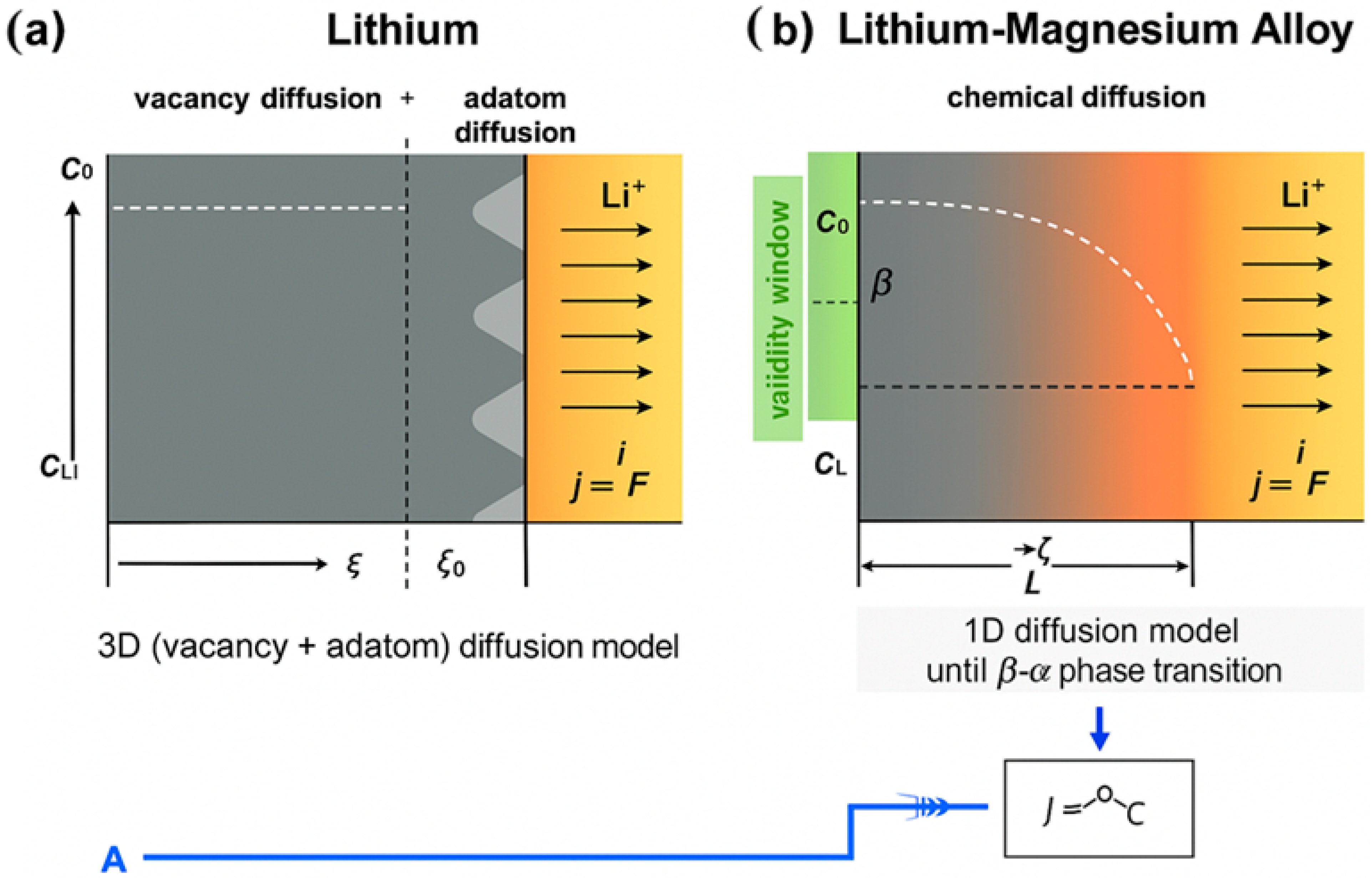
- Krauskopf, T.; Mogwitz, B.; Rosenbach, C.; Zeier, W.G.; Janek, J. Diffusion limitation of lithium metal and Li–Mg alloy anodes on LLZO type solid electrolytes as a function of temperature and pressure. Adv. Energy Mater. 2019, 9, 1902568. [Google Scholar] [CrossRef] [Scilit]
- Kim, J.W.; Kim, D.H.; Oh, D.Y.; Lee, H.; Kim, J.H.; Lee, J.H.; Jung, Y.S. Surface chemistry of LiNi0.5Mn1.5O4 particles coated by Al2O3 using atomic layer deposition for lithium-ion batteries. J. Power Sources 2015, 274, 1254–1262. [Google Scholar] [CrossRef] [Scilit]
- Zhou, S.; Li, M.; Wang, P.; Cheng, L.; Chen, L.; Huang, Y.; Cao, B.; Yu, S.; Liu, Q.; Wei, J. Liquid metal as an efficient protective layer for lithium metal anodes in all-solid-state batteries. Carbon Energy 2024, 6, e462. [Google Scholar] [CrossRef] [Scilit]
- He, X.; Ji, X.; Zhang, B.; Rodrigo, N.D.; Hou, S.; Gaskell, K.; Deng, T.; Wan, H.; Liu, S.; Xu, J. Tuning interface lithiophobicity for lithium metal solid-state batteries. ACS Energy Lett. 2021, 7, 131–139. [Google Scholar] [CrossRef] [Scilit]
- Wu, C.; Emley, B.; Zhao, L.; Liang, Y.; Ai, Q.; Chen, Z.; Robles Hernández, F.C.; Wang, F.; Risal, S.; Guo, H. Understanding the chemomechanical function of the silver–carbon interlayer in sheet-type all-solid-state lithium–metal batteries. Nano Lett. 2023, 23, 4415–4422. [Google Scholar] [CrossRef] [Scilit]
- Raj, V.; Venturi, V.; Kankanallu, V.R.; Kuiri, B.; Viswanathan, V.; Aetukuri, N.P.B. Direct correlation between void formation and lithium dendrite growth in solid-state electrolytes with interlayers. Nat. Mater. 2022, 21, 1050–1056. [Google Scholar] [CrossRef] [Scilit] [PubMed]
- Fan, Z.; Chao, C.-C.; Hossein-Babaei, F.; Prinz, F.B. Improving solid oxide fuel cells with yttria-doped ceria interlayers by atomic layer deposition. J. Mater. Chem. 2011, 21, 10903–10906. [Google Scholar] [CrossRef] [Scilit]
- Vardavoulias, M.; Gkomoza, P.; Arkas, M.; Niakolas, D.K.; Neophytides, S.G. Thermal Spray Multilayer Ceramic Structures with Potential for Solid Oxide Cell Applications. Coatings 2021, 11, 682. [Google Scholar] [CrossRef] [Scilit]
- Rizvandi, O.B.; Noponen, M.; Frandsen, H.L.; Sun, X. Numerical investigation of electrochemical performance of commercial solid oxide cell stacks. Int. J. Hydrogen Energy 2025, 102, 830–844. [Google Scholar] [CrossRef] [Scilit]
- Wang, J.; Sun, Z.; Xue, J.; He, J.; Du, X.; Yan, Y.; Wang, X.; Wu, J.; Sun, B.; Sun, Z.; et al. Research Progress on Optimization of External Physical Fields for Enhancing Energy Storage System Performance. Adv. Funct. Mater. 2026, 36, e13504. [Google Scholar] [CrossRef] [Scilit]
- He, J.; Bi, Y.; Deng, J.; Xie, Z.; Zhao, H.; Qiu, J.; Ding, Y.; Qin, Y. Microstructure and properties of TiWN composite coatings by plasma spraying Ti/W and Ti/WO3 powders. J. Manuf. Process. 2026, 164, 535–547. [Google Scholar] [CrossRef] [Scilit]
- Ashokkumar, M.; Thirumalaikumarasamy, D.; Sonar, T.; Ivanov, M.; Deepak, S.; Rajangam, P.; Barathiraja, R. Effect of post-processing treatments on mechanical performance of cold spray coating–an overview. J. Mech. Behav. Mater. 2023, 32, 20220271. [Google Scholar] [CrossRef] [Scilit]
- Rifai, M.; Mujamilah; Sulungbudi, G.T.; Insani, A.; Prasetya, A.D.; Mulyani, E.; Taufik. Spray-pass effects on microstructure and mechanical properties of APS ZrO2–Al2O3 coating on SUS304 steel. Int. J. Appl. Ceram. Technol. 2026, 23, e70102. [Google Scholar] [CrossRef] [Scilit]
- Afranie, E.O.; Kang, S.W.; Koomson, S.; Baik, K.H. Scalable Ni-Al-Fe and Ni-Al-Mo electrocatalyst coatings via atmospheric plasma spraying for efficient and durable alkaline water electrolysis. J. Power Sources 2026, 670, 239513. [Google Scholar] [CrossRef] [Scilit]
- Hui, R.; Wang, Z.; Kesler, O.; Rose, L.; Jankovic, J.; Yick, S.; Maric, R.; Ghosh, D. Thermal plasma spraying for SOFCs: Applications, potential advantages, and challenges. J. Power Sources 2007, 170, 308–323. [Google Scholar] [CrossRef] [Scilit]
- Mahato, N.; Banerjee, A.; Gupta, A.; Omar, S.; Balani, K. Progress in material selection for solid oxide fuel cell technology: A review. Prog. Mater. Sci. 2015, 72, 141–337. [Google Scholar] [CrossRef] [Scilit]
- Dwivedi, S. Solid oxide fuel cell: Materials for anode, cathode and electrolyte. Int. J. Hydrogen Energy 2020, 45, 23988–24013. [Google Scholar] [CrossRef] [Scilit]
- Shri Prakash, B.; Senthil Kumar, S.; Aruna, S.T. Properties and development of Ni/YSZ as an anode material in solid oxide fuel cell: A review. Renew. Sustain. Energy Rev. 2014, 36, 149–179. [Google Scholar] [CrossRef] [Scilit]
- Chen, Y.; Zhou, W.; Ding, D.; Liu, M.; Ciucci, F.; Tade, M.; Shao, Z. Advances in Cathode Materials for Solid Oxide Fuel Cells: Complex Oxides without Alkaline Earth Metal Elements. Adv. Energy Mater. 2015, 5, 1500537. [Google Scholar] [CrossRef] [Scilit]
- Joshi, B.; Samuel, E.; Kim, Y.i.; Yarin, A.L.; Swihart, M.T.; Yoon, S.S. Electrostatically sprayed nanostructured electrodes for energy conversion and storage devices. Adv. Funct. Mater. 2021, 31, 2008181. [Google Scholar] [CrossRef] [Scilit]
- Nakajo, A.; Rinaldi, G.; Caliandro, P.; Jeanmonod, G.; Navratilova, L.; Cantoni, M.; Van Herle, J. Evolution of the morphology near triple-phase boundaries in Ni–Yttria stabilized zirconia electrodes upon cathodic polarization. J. Electrochem. Energy Convers. Storage 2020, 17, 041004. [Google Scholar] [CrossRef] [Scilit]
- Lu, X.; Heenan, T.M.M.; Bailey, J.J.; Li, T.; Li, K.; Brett, D.J.L.; Shearing, P.R. Correlation between triple phase boundary and the microstructure of solid oxide fuel cell anodes: The role of composition, porosity and Ni densification. J. Power Sources 2017, 365, 210–219. [Google Scholar] [CrossRef] [Scilit]
- Wang, Y.-p.; Gao, J.-t.; Chen, W.; Li, C.-x.; Zhang, S.-l.; Yang, G.-j.; Li, C.-j. Development of ScSZ electrolyte by very low pressure plasma spraying for high-performance metal-supported SOFCs. J. Therm. Spray Technol. 2020, 29, 223–231. [Google Scholar] [CrossRef] [Scilit]
- Xie, J.; Zhang, X.; Li, C.-X.; Zhang, S.-L. Plasma-Sprayed La0.2Sr0.8MnO3-La0.3Sr0.7TiO3 Bilayer Coatings Along with the Interface Healing Processing Applied as the High Dense Interconnector for Tubular Solid Oxide Fuel Cells. J. Therm. Spray Technol. 2024, 33, 2711–2722. [Google Scholar] [CrossRef] [Scilit]
- Chen, Y.; Yang, L.; Ren, F.; An, K. Visualizing the Structural Evolution of LSM/xYSZ Composite Cathodes for SOFC by in-situ Neutron Diffraction. Sci. Rep. 2014, 4, 5179. [Google Scholar] [CrossRef] [Scilit] [PubMed]
- Zhang, X.; Kulczyk-Malecka, J.; Carr, J.; Xiao, P.; Withers, P.J. 3D characterization of porosity in an air plasma-sprayed thermal barrier coating and its effect on thermal conductivity. J. Am. Ceram. Soc. 2018, 101, 2482–2492. [Google Scholar] [CrossRef] [Scilit]
- Tarasi, F.; Medraj, M.; Dolatabadi, A.; Oberste-Berghaus, J.; Moreau, C. Effective parameters in axial injection suspension plasma spray process of alumina-zirconia ceramics. J. Therm. Spray Technol. 2008, 17, 685–691. [Google Scholar] [CrossRef] [Scilit]
- Arora, H.S.; Perumal, G.; Rani, M.; Grewal, H.S. Facile and green engineering approach for enhanced corrosion resistance of Ni–Cr–Al2O3 thermal spray coatings. ACS Omega 2020, 5, 24558–24566. [Google Scholar] [CrossRef] [Scilit]
- Dutton, R.; Wheeler, R.; Ravichandran, K.S.; An, K. Effect of heat treatment on the thermal conductivity of plasma-sprayed thermal barrier coatings. J. Therm. Spray Technol. 2000, 9, 204–209. [Google Scholar] [CrossRef] [Scilit]
- Harder, B.J.; Zhu, D.; Schmitt, M.P.; Wolfe, D.E. Microstructural effects and properties of non-line-of-sight coating processing via plasma spray-physical vapor deposition. J. Therm. Spray Technol. 2017, 26, 1052–1061. [Google Scholar] [CrossRef] [Scilit]
- Hardwicke, C.U.; Lau, Y.-C. Advances in thermal spray coatings for gas turbines and energy generation: A review. J. Therm. Spray Technol. 2013, 22, 564–576. [Google Scholar] [CrossRef] [Scilit]
- Znamirowski, Z.; Nitsch, K.; Pawłowski, L. The electric charge transport in titania–alumina composite cold cathodes made using atmospheric plasma spraying and laser engraving. Surf. Coat. Technol. 2013, 220, 271–275. [Google Scholar] [CrossRef] [Scilit]
- Jamil Akhtar, M.D.; Singari, R.M.; Murtaza, Q. A critical review of mechanical behavior, cavitation, and metallurgical properties of high-velocity oxygen fuel (HVOF) coating on different materials. J. Adhes. Sci. Technol. 2025, 39, 2577–2627. [Google Scholar] [CrossRef] [Scilit]
- Winnicki, M.; Małachowska, A.; Baszczuk, A.; Rutkowska-Gorczyca, M.; Kukla, D.; Lachowicz, M.; Ambroziak, A. Corrosion protection and electrical conductivity of copper coatings deposited by low-pressure cold spraying. Surf. Coat. Technol. 2017, 318, 90–98. [Google Scholar] [CrossRef] [Scilit]
- Kumar, S.S.; Thangarasu, M.; Roy, S.; Aruna, S.T. 10—Plasma-sprayed ceramic coatings for solid oxide fuel cells. In Advanced Ceramic Coatings for Emerging Applications; Gupta, R.K., Motallebzadeh, A., Kakooei, S., Nguyen, T.A., Behera, A., Eds.; Elsevier: Amsterdam, The Netherlands, 2023; pp. 213–238. [Google Scholar]
- Raza, A.; Ahmad, F.; Badri, T.M.; Raza, M.R.; Malik, K. An Influence of Oxygen Flow Rate and Spray Distance on the Porosity of HVOF Coating and Its Effects on Corrosion—A Review. Materials 2022, 15, 6329. [Google Scholar] [CrossRef] [Scilit]
- Castro, D.; Jaeger, P.; Baptista, A.C.; Oliveira, J.P. An overview of high-entropy alloys as biomaterials. Metals 2021, 11, 648. [Google Scholar] [CrossRef] [Scilit]
- Kumar, P.; Sharma, S.K.; Singh, R.K.R. Recent trends and future outlooks in manufacturing methods and applications of FGM: A comprehensive review. Mater. Manuf. Process. 2023, 38, 1033–1067. [Google Scholar] [CrossRef] [Scilit]
- Hajizadeh-Oghaz, M.; Razavi, R.S.; Ghasemi, A.; Valefi, Z. Na2SO4 and V2O5 molten salts corrosion resistance of plasma-sprayed nanostructured ceria and yttria co-stabilized zirconia thermal barrier coatings. Ceram. Int. 2016, 42, 5433–5446. [Google Scholar] [CrossRef] [Scilit]
- Mamun, K.; Stokes, J. Development of a semi automated dual feed unit to produce FGM coatings using the HVOF thermal spray process. S. Pac. J. Nat. Appl. Sci. 2014, 32, 18–26. [Google Scholar] [CrossRef] [Scilit]
- Bacchelli, B.; Giavaresi, G.; Franchi, M.; Martini, D.; De Pasquale, V.; Trirè, A.; Fini, M.; Giardino, R.; Ruggeri, A. Influence of a zirconia sandblasting treated surface on peri-implant bone healing: An experimental study in sheep. Acta Biomater. 2009, 5, 2246–2257. [Google Scholar] [CrossRef] [Scilit] [PubMed]
- He, B.; Zhang, L.; Yun, X.; Wang, J.; Zhou, G.; Chen, Z.; Yuan, X. Comparative Study of HVOF Cr3C2–NiCr Coating with Different Bonding Layer on the Interactive Behavior of Fatigue and Corrosion. Coatings 2022, 12, 307. [Google Scholar] [CrossRef] [Scilit]
- Assadi, H.; Kreye, H.; Gärtner, F.; Klassen, T. Cold spraying–A materials perspective. Acta Mater. 2016, 116, 382–407. [Google Scholar] [CrossRef] [Scilit]
- Ganeshkumar, S.; Kumar, A.; Maniraj, J.; Babu, Y.S.; Ansu, A.K.; Goyal, A.; Kadhim, I.K.; Saxena, K.K.; Prakash, C.; Altuijri, R. Exploring the potential of nano technology: A assessment of nano-scale multi-layered-composite coatings for cutting tool performance. Arab. J. Chem. 2023, 16, 105173. [Google Scholar] [CrossRef] [Scilit]
- Sharma, L.; Katiyar, N.K.; Parui, A.; Das, R.; Kumar, R.; Tiwary, C.S.; Singh, A.K.; Halder, A.; Biswas, K. Low-cost high entropy alloy (HEA) for high-efficiency oxygen evolution reaction (OER). Nano Res. 2022, 15, 4799–4806. [Google Scholar] [CrossRef] [Scilit]
- Sajjad, A.; Bakar, W.Z.W.; Basri, S.; Jamaludin, S.N.S. Functionally graded materials: An overview of dental applications. World J. Dent. 2017, 9, 137–144. [Google Scholar] [CrossRef] [Scilit]
- Wang, J.; Wang, H.; Jia, S.; Zhao, Q.; Zheng, Q.; Ma, Y.; Ma, T.; Li, X. Recent advances in inhibiting shuttle effect of polysulfide in lithium-sulfur batteries. J. Energy Storage 2023, 72, 108372. [Google Scholar] [CrossRef] [Scilit]
- Al-mahmodi, A.F.; Atta, M.R.; Esmaiel, H.; Al-Shawesh, G.A.M.; Alammar, M.M.; Baarimah, A.O. Single-atom catalysts for next-generation energy storage and conversion. Alex. Eng. J. 2025, 132, 218–238. [Google Scholar] [CrossRef] [Scilit]
- Han, Z.; Zhao, S.; Xiao, J.; Zhong, X.; Sheng, J.; Lv, W.; Zhang, Q.; Zhou, G.; Cheng, H.M. Engineering d-p orbital hybridization in single-atom metal-embedded three-dimensional electrodes for Li–S batteries. Adv. Mater. 2021, 33, 2105947. [Google Scholar] [CrossRef] [Scilit]
- Dierickx, S.; Joos, J.; Weber, A.; Ivers-Tiffée, E. Advanced impedance modelling of Ni/8YSZ cermet anodes. Electrochim. Acta 2018, 265, 736–750. [Google Scholar] [CrossRef] [Scilit]
- Gao, T.; Lu, W. Machine learning toward advanced energy storage devices and systems. iScience 2021, 24, 101936. [Google Scholar] [CrossRef] [Scilit]
- Mohammadi Lanbaran, N.; Naujokaitis, D.; Kairaitis, G.; Jenciūtė, G.; Radziukynienė, N. Overview of startups developing artificial intelligence for the energy sector. Appl. Sci. 2024, 14, 8294. [Google Scholar] [CrossRef] [Scilit]
- Łach, Ł.; Svyetlichnyy, D. Advances in numerical modeling for heat transfer and thermal management: A review of computational approaches and environmental impacts. Energies 2025, 18, 1302. [Google Scholar] [CrossRef] [Scilit]
- Keyes, D.E.; McInnes, L.C.; Woodward, C.; Gropp, W.; Myra, E.; Pernice, M.; Bell, J.; Brown, J.; Clo, A.; Connors, J. Multiphysics simulations: Challenges and opportunities. Int. J. High Perform. Comput. Appl. 2013, 27, 4–83. [Google Scholar] [CrossRef] [Scilit]
- Perez, I. Ab initio methods for the computation of physical properties and performance parameters of electrochemical energy storage devices. Phys. Chem. Chem. Phys. 2023, 25, 1476–1503. [Google Scholar] [CrossRef] [Scilit]
- Zheng, Z.; Zhou, J.; Zhu, Y. Computational approach inspired advancements of solid-state electrolytes for lithium secondary batteries: From first-principles to machine learning. Chem. Soc. Rev. 2024, 53, 3134–3166. [Google Scholar] [CrossRef] [Scilit] [PubMed]
- Zavatski, S.; Neilande, E.; Bandarenka, H.; Popov, A.; Piskunov, S.; Bocharov, D. Density functional theory for doped TiO2: Current research strategies and advancements. Nanotechnology 2024, 35, 192001. [Google Scholar] [CrossRef] [Scilit]
- Abubakar, A.A.; Arif, A.F.M. A hybrid computational approach for modeling thermal spray deposition. Surf. Coat. Technol. 2019, 362, 311–327. [Google Scholar] [CrossRef] [Scilit]
- Sundararaman, R.; Vigil-Fowler, D.; Schwarz, K. Improving the Accuracy of Atomistic Simulations of the Electrochemical Interface. Chem. Rev. 2022, 122, 10651–10674. [Google Scholar] [CrossRef] [Scilit]
- Madhura, B.; Patel, P.R.; Vetrivendan, E.; Rao, C.J.; Ningshen, S. Experimental Study and Numerical Simulation of Y2O3 Coatings Deposited by Plasma Spraying at Different Torch Powers. J. Therm. Spray Technol. 2023, 32, 2661–2682. [Google Scholar] [CrossRef] [Scilit]
- Martínez-García, J.; Martínez-García, V.; Killinger, A. Multi-Scale Modelling of Residual Stress on Arbitrary Substrate Geometry in Atmospheric Plasma Spray Process. Coatings 2025, 15, 723. [Google Scholar] [CrossRef] [Scilit]
- Lee, J.H.; Kim, J.G.; Kim, S.J.; Song, J.Y.; Kong, B.D. Ultralow-Power Real-Time On-Chip Thermal Prediction via Finite Element Method–Machine Learning Codesign and Field-Programmable Gate Array Deployment. Adv. Intell. Syst. 2026, e202501108. [Google Scholar] [CrossRef] [Scilit]
- Ashtari, P.; Gholizadeh, T. Electrodeposition of gradient Ni/SiO2 nanocomposite coatings on St.37 steel: Microstructure, mechanical properties, and corrosion resistance. Int. J. Electrochem. Sci. 2025, 20, 101226. [Google Scholar] [CrossRef] [Scilit]
- Radhika, N.; Sabarinathan, M.; Sivaraman, S. Utilization of Ensemble Techniques in Machine Learning to Predict the Porosity and Hardness of Plasma-Sprayed Ceramic Coating. IEEE Access 2025, 13, 136160–136174. [Google Scholar] [CrossRef] [Scilit]
- Chang, C.-L.; Tsai, C.-H.; Yang, C.-S.; Yang, C.-Y.; He, H.-X.; Wu, S.-H.; Wu, Y.-J. Fabrication and electrochemical performance of reversible metal-supported solid oxide cells via atmospheric plasma spraying. Electrochim. Acta 2025, 536, 146727. [Google Scholar] [CrossRef] [Scilit]
- Garg, A.; Zheng, W.; Raman, R.; Li, L. Machine Learning in Functionally Graded Materials and Nano FGMs: A Comprehensive Review of Predictive Modeling for Mechanical Behavior. Arch. Comput. Methods Eng. 2026, 33, 533–575. [Google Scholar] [CrossRef] [Scilit]
- Xue, Z.; Zhou, T.; Xu, Z.; Yu, S.; Dai, Q.; Fang, L. Fully forward mode training for optical neural networks. Nature 2024, 632, 280–286. [Google Scholar] [CrossRef] [Scilit]
- Olivetti, E.A.; Cole, J.M.; Kim, E.; Kononova, O.; Ceder, G.; Han, T.Y.-J.; Hiszpanski, A.M. Data-driven materials research enabled by natural language processing and information extraction. Appl. Phys. Rev. 2020, 7, 041317. [Google Scholar] [CrossRef] [Scilit]
- Zhou, W.; Liu, Z.; Chen, W.; Sun, X.; Luo, M.; Zhang, X.; Li, C.; An, Y.; Song, S.; Wang, K. A review on thermal behaviors and thermal management systems for supercapacitors. Batteries 2023, 9, 128. [Google Scholar] [CrossRef] [Scilit]
- Wen, Y.; Huang, K. Predicting the Rate of Degradation Related to Oxygen Electrode Delamination in Solid Oxide-Ion Electrolyzers. J. Electrochem. Soc. 2024, 171, 034510. [Google Scholar] [CrossRef] [Scilit]





| Technology /Method | Electrolysis Type | Key Findings | Splat Bonding/Interfacial Integrity Implications | Opportunities |
|---|---|---|---|---|
| Comprehensive Review—APS, VPS, HVOF, SPS | Alkaline, PEM, SOEC | Thermal spraying facilitates the large-scale manufacturing of electrolyzer components, thereby enabling precise control over their microstructure and porosity. | The quality of splat bonding depends a lot on the temperature and speed of the particles. VPS and SPS help the splats stick together better and reduce oxide layers, which improves the connection at the interfaces. | Scalable manufacturing, cost reduction, advanced materials development, and hybrid approaches [16,17,18]. |
| SPS, HVOF, Cold Spray | Alkaline Water Electrolysis | Nickel electrodes featuring three-dimensional fin arrays demonstrated low overpotentials and high current densities in alkaline environments. | High-kinetic-energy techniques, such as HVOF and cold spray, produce intense bonds because the materials are tightly interlocked. At an extremely small design, SPS assists in attaching materials more effectively. | Enhanced surface area, improved catalytic activity, and cost-effective manufacturing [19,20,21]. |
| Vacuum Plasma Spraying (VPS) | PEM Electrolysis | VPS Ti coatings applied to stainless steel demonstrated excellent conductivity and corrosion resistance for use in bipolar plates. | Controlled atmosphere prevents oxidation, leading to high splat substrate bonding as well as interfacial resistance. | Cost reduction through stainless steel substrates, improved corrosion resistance [22]. |
| Thermal Spraying-Sintering | SOEC | The thermal spray-sintering technique produced gas-impermeable electrolyte layers with a power density of 0.73 W/cm2. | Inter-splat bonds are filled in by post-spray sintering, interfaces are densified, and interlayer bonding is much enhanced. | Single-step processing, reduced sintering requirements, material conservation [23,24]. |
| Various Thermal Spray Techniques | Alkaline, PEM, SOEC | Thermal spraying offers benefits for mass production in energy storage applications owing to the versatility of materials. | The area linkage can be strong or not. If the process is not regulated, it may lead to weak bonds and small cracks. | Industrial scale-up, novel material combinations, process integration [25,26]. |
| Atmospheric Plasma Spraying (APS) | Alkaline Water Electrolysis | NiAlMo coatings applied via plasma spraying exhibited performance comparable to that of noble catalysts in facilitating oxygen evolution. | APS may experience splat bonding and oxidation; therefore, optimizing the spray parameters is important to maintain electrical continuity. | Noble metal replacement, improved durability, automated production [27]. |
| HVOF Spraying | PEM Electrolysis | HVOF titanium coatings with a porous structure exhibited porosity levels ranging from 24% to 40% for transport layers in PEM electrolyzers. | The splat bonding is excellent because of high particle velocity regardless of porosity and the mechanical integrity. | Manufacturing cost reduction, improved mass transport, and automated processing [28,29]. |
| Atomic Layer Deposition (ALD) | Batteries, PEM | Ultrathin conformal coatings (e.g., Al2O3, TiO2) improve interfacial stability and suppress degradation. | Atomic-level uniformity ensures excellent interface control without splat formation; strong chemical bonding dominates. | Precise thickness control, improved cycling stability, interface engineering [30]. |
| Chemical Vapor Deposition (CVD) | Batteries, SOFC | Produces dense, uniform coatings with controlled composition and crystallinity. | Strong chemical bonding to the substrate; minimal defects but possible thermal stress owing to high processing temperatures. | High-quality thin films, improved conductivity, scalable for thin coatings [31]. |
| Polymer-Based Coatings | Batteries | Flexible coatings enhance electrode stability and accommodate volume changes. | No splat bonding; the connection is controlled by how well the adhesive and polymer work with the electrode. It might have weak mechanical strength. | Flexible devices, low-cost processing, improved safety and stability [32]. |
| Method | Best Use | Advantage | Limitation | Battery Metric Impact |
|---|---|---|---|---|
| APS | Cathode coatings, protective oxide layers | High versatility, scalable, controlled porosity | Oxidation, microcracks | Improves ionic transport and rate capability; may increase interfacial resistance if oxidation occurs [53,54,55] |
| HVOF | Current collectors, transport layers | Dense, Strong bonding | Lower porosity limits ion transport | Enhances electrical conductivity and reduces interfacial resistance; improves power density [56,57] |
| Cold Spray | Metallic conductive layers, anode protection | No oxidation, high adhesion | Limited ceramic deposition | Improves cycling stability and mechanical durability; reduces delamination [58,59]. |
| SPS | Nanostructured electrodes, high-surface-area cathodes | High surface area, nano-features | Complex parameter control | Enhances electrochemical activity, ionic transport and reaction kinetics [60,61]. |
| LPPS (Low Pressure Plasma Spray) | Solid oxide cell electrodes, bipolar plates | Controlled atmosphere, dense coatings | High cost, complex setup | Reduces interfacial resistance; improves long-term stability and corrosion resistance [62,63]. |
| SPPS (Solution Precursor Plasma Spray) | Electrolyte layers, thin functional coatings | Fine microstructure, compositional control | Process instability | Enhances ionic conductivity and interface uniformity [64,65]. |
| HEA-based Thermal Spray | Electrode stabilization, corrosion-resistant coatings | High durability, phase stability | Complex composition control | Improves long-term cycling stability and degradation resistance [66,67]. |
| FGM Coatings (APS-based) | Interface layers (electrode/electrolyte) | Stress gradient control | Fabrication complexity | Enhances interfacial stability and cycling life [68,69]. |
| Nanostructured Feedstock Spraying | High-rate electrodes | Enhanced kinetics, large surface area | Grain growth instability | Improves rate capability and ionic transport [70,71]. |
| Suspension/Hybrid Spray | Advanced electrode architectures | Tailored microstructure | Equipment complexity | Optimizes ionic transport, interfacial resistance and cycling stability [72,73]. |
| Coating Property | Microstructural Feature | Battery Metric Affected | Mechanism |
|---|---|---|---|
| Porosity (10–30%) | Interconnected pores | Ionic transport, rate capability | Enhances electrolyte penetration but excessive porosity reduces conductivity [108]. |
| Adhesion strength (>70 MPa) | Strong splat bonding | Cycling stability | Prevents delamination during volume expansion [109]. |
| Phase composition | Stable crystalline phases | Long-term stability | Reduces degradation and phase transformation [110]. |
| Surface roughness | High interface area | Interfacial resistance | improves the electrode–electrolyte contact [111]. |
| Electrical conductivity | Dense splat network | Rate capability | Enables efficient electron transport [112]. |
| Thermal Spray Technology/Application | Key Challenges | Dominant Battery Metric Affected | Dominant Battery Metric Affected | Mechanistic Interpretation |
|---|---|---|---|---|
| Atmospheric Plasma Spraying (APS)—Cathode/Anode Coatings | Oxide formation, weak inter-splat bonding, microcracking | Ionic conductivity; Cycling stability | Ionic conductivity; Cycling stability | High porosity improves electrolyte penetration, but weak inter-splat bonding reduces mechanical integrity [125] |
| High-Velocity Oxygen Fuel (HVOF)—Current Collectors, Transport Layers | Porosity control vs. mass transport, residual stresses | Interfacial resistance; Electrical conductivity | Interfacial resistance; Electrical conductivity | Dense coatings improve electron pathways and reduce contact resistance [126] |
| Cold Spray—Anode Protection Layers | Limited ceramic deposition, high residual stress | Cycling stability; Mechanical durability | Cycling stability; Mechanical durability | Strong adhesion and ductility prevent delamination during volume changes [127] |
| Suspension Plasma Spraying (SPS)—Active Cathode Layers | Nanostructure retention, phase stability | Rate capability; Ionic transport | Rate capability; Ionic transport | Nano-features shorten diffusion paths and increase active surface area [128] |
| Liquid Precursor HVOF—Functional Interlayers | Precursor decomposition, coating uniformity | Interfacial resistance; Stability | Interfacial resistance; Stability | Uniform coatings improve interface continuity and charge transfer [129] |
| High-Entropy Alloy (HEA) Coatings—Electrode Stabilization | Phase control, compositional segregation | Long-term cycling stability | Long-term cycling stability | High configurational entropy improves phase stability and suppresses degradation [130] |
| Functionally Graded Materials (FGMs)—Interface Layers | Gradient design complexity, process control | Interfacial stability; Stress tolerance | Interfacial stability; Stress tolerance | Gradients reduce thermal and mechanical mismatch at interfaces [131] |
| Nanostructured Ceramic Coatings—Protective Barriers | Grain growth, thermal instability | Ionic transport; Reaction kinetics | Ionic transport; Reaction kinetics | Fine grains enhance diffusion and electrochemical reactivity [132] |
Disclaimer/Publisher’s Note: The statements, opinions and data contained in all publications are solely those of the individual author(s) and contributor(s) and not of MDPI and/or the editor(s). MDPI and/or the editor(s) disclaim responsibility for any injury to people or property resulting from any ideas, methods, instructions or products referred to in the content. |
© 2026 by the authors. Licensee MDPI, Basel, Switzerland. This article is an open access article distributed under the terms and conditions of the Creative Commons Attribution (CC BY) license.
Share and Cite
Mehta, A.; Vasudev, H.; Prasad, B.; Singh, S.; Kumar, M.; Sirohi, S. Enhancing Durability and Efficiency of Electrochemical Energy Devices (Batteries and Solid Oxide Cells) Through Thermal Spray Coating Technologies: A Review. Materials 2026, 19, 3175. https://doi.org/10.3390/ma19153175
Mehta A, Vasudev H, Prasad B, Singh S, Kumar M, Sirohi S. Enhancing Durability and Efficiency of Electrochemical Energy Devices (Batteries and Solid Oxide Cells) Through Thermal Spray Coating Technologies: A Review. Materials. 2026; 19(15):3175. https://doi.org/10.3390/ma19153175
Chicago/Turabian StyleMehta, Amrinder, Hitesh Vasudev, Brijesh Prasad, Suresh Singh, Manoj Kumar, and Sachin Sirohi. 2026. "Enhancing Durability and Efficiency of Electrochemical Energy Devices (Batteries and Solid Oxide Cells) Through Thermal Spray Coating Technologies: A Review" Materials 19, no. 15: 3175. https://doi.org/10.3390/ma19153175
APA StyleMehta, A., Vasudev, H., Prasad, B., Singh, S., Kumar, M., & Sirohi, S. (2026). Enhancing Durability and Efficiency of Electrochemical Energy Devices (Batteries and Solid Oxide Cells) Through Thermal Spray Coating Technologies: A Review. Materials, 19(15), 3175. https://doi.org/10.3390/ma19153175