Interfacial Characteristics of a Fly Ash-Based Artificial Aggregate


Abstract
1. Introduction
2. Materials and Methods
2.1. Raw Materials
2.2. Preparation of Fly Ash-Based Artificial Aggregates and Concrete Without Fine Aggregate
2.2.1. Preparation of Fly Ash-Based Artificial Aggregates
2.2.2. Preparation of Concrete Without Fine Aggregate
2.3. Test Methods
2.3.1. Mechanical Property Testing of Aggregates and Concrete Without Fine Aggregate
2.3.2. Microstructural Testing
2.3.3. Micro-Mechanical Testing of the Interface
3. Results and Discussion
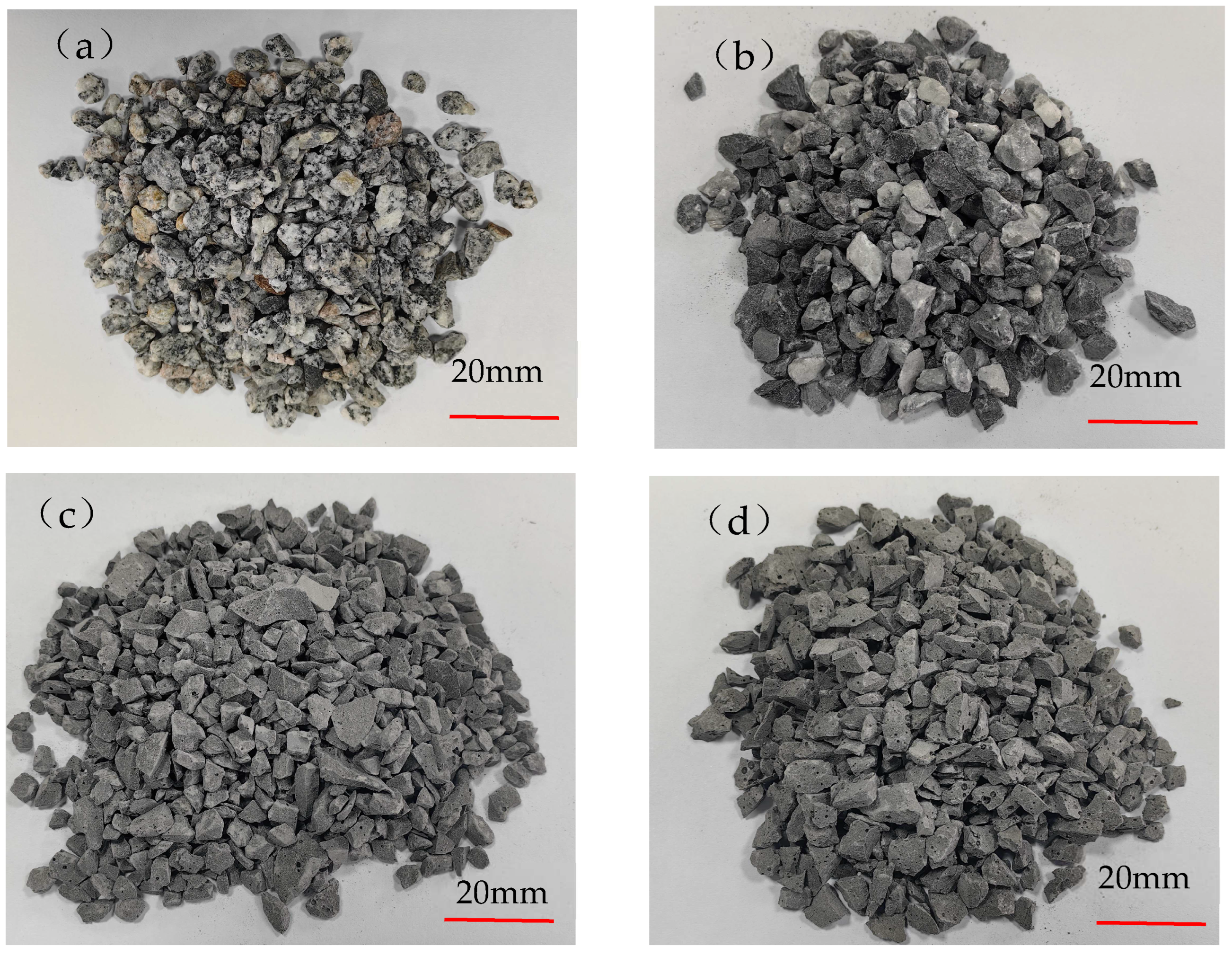
3.1. Basic Properties of Different Types of Aggregate
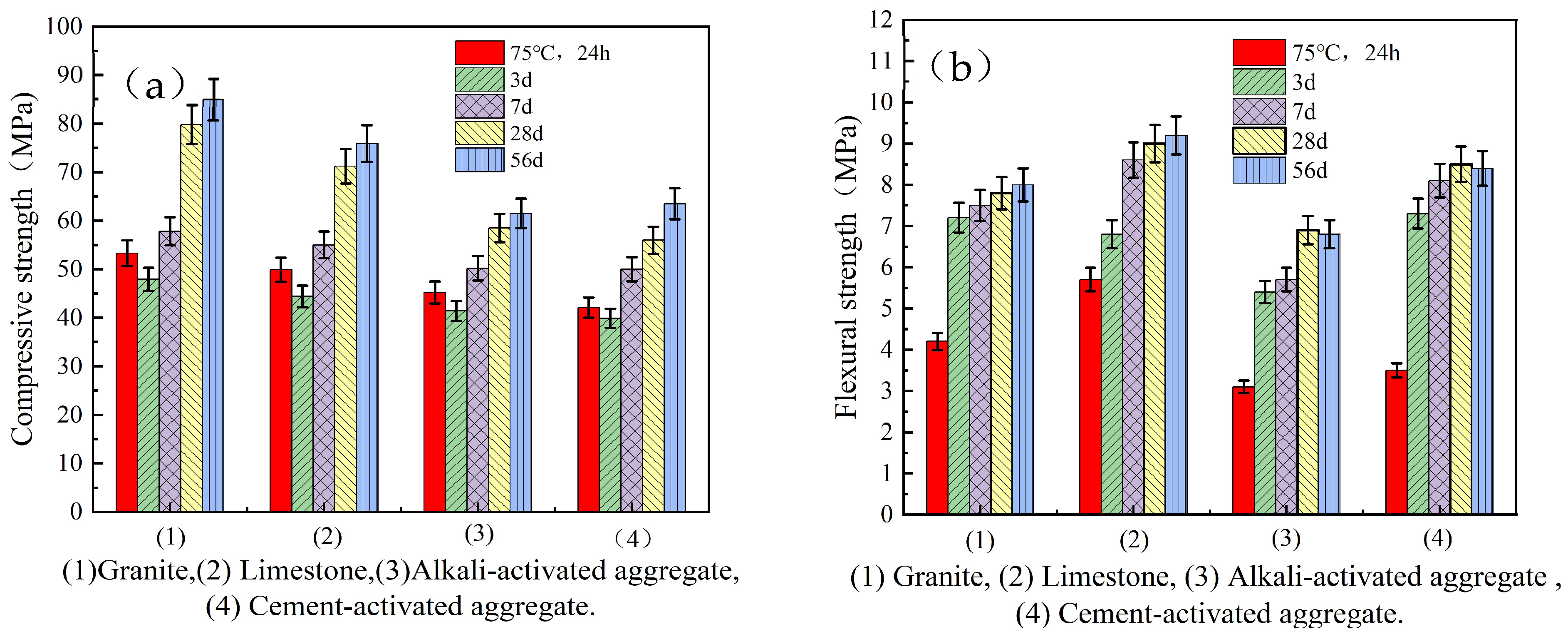
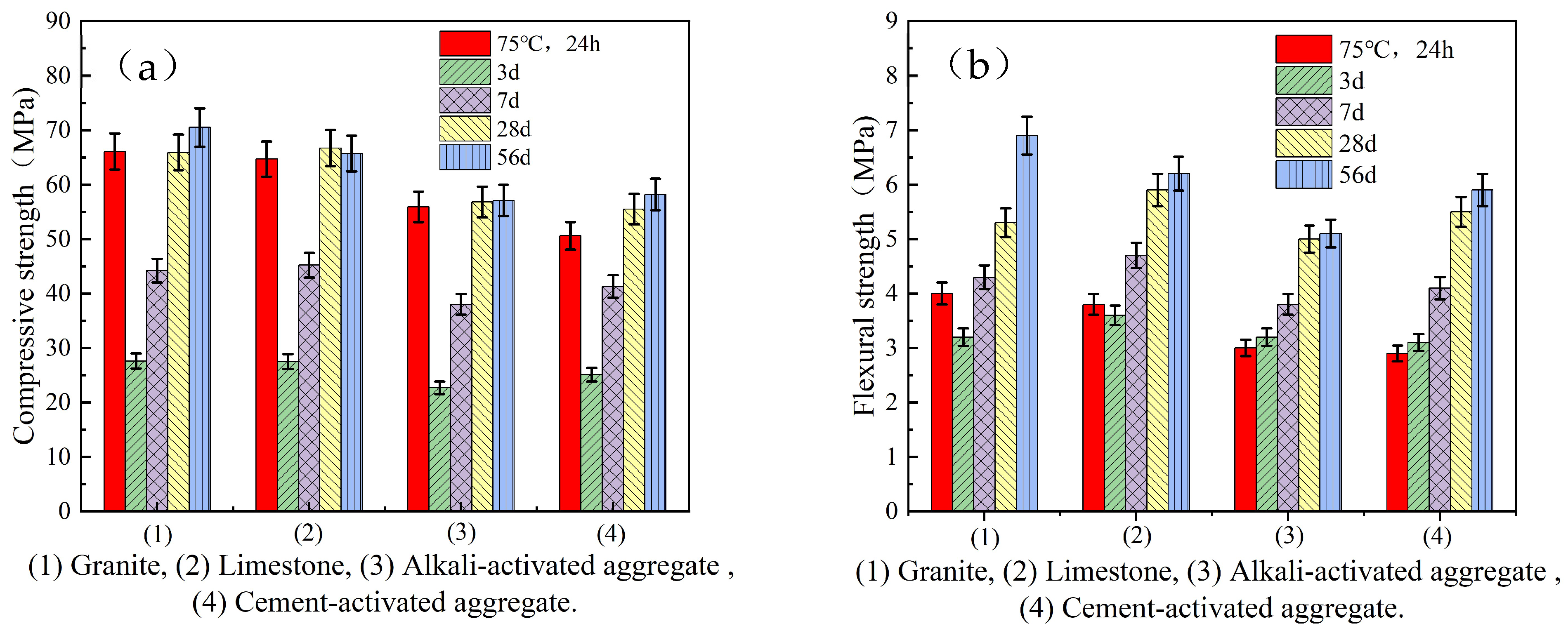
3.2. Mechanical Properties of Cement Concrete Without Fine Aggregate and Alkali-Activated Concrete
3.3. Morphological Analysis of the Interfacial Transition Zone (ITZ) for Cement Concrete
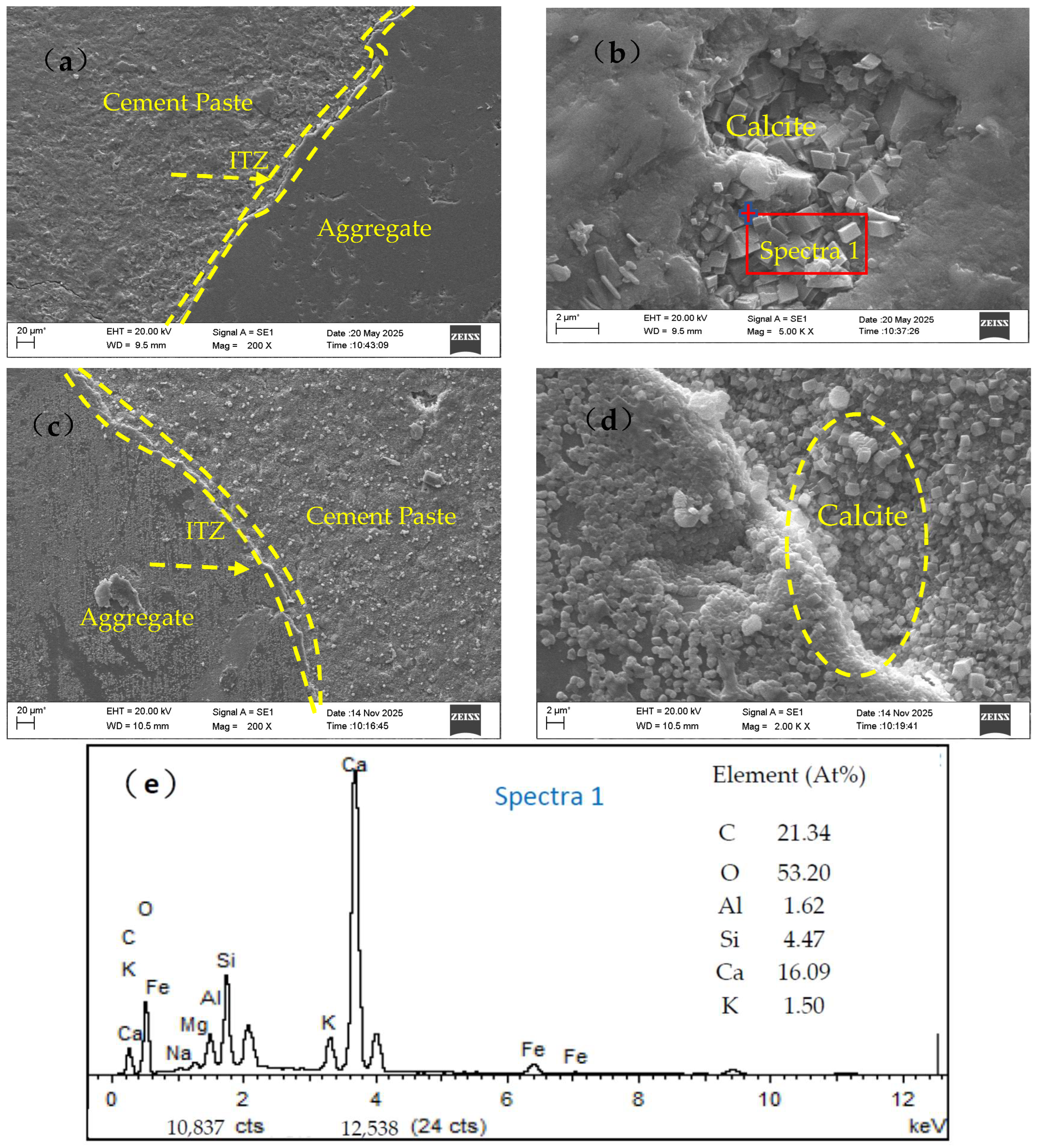
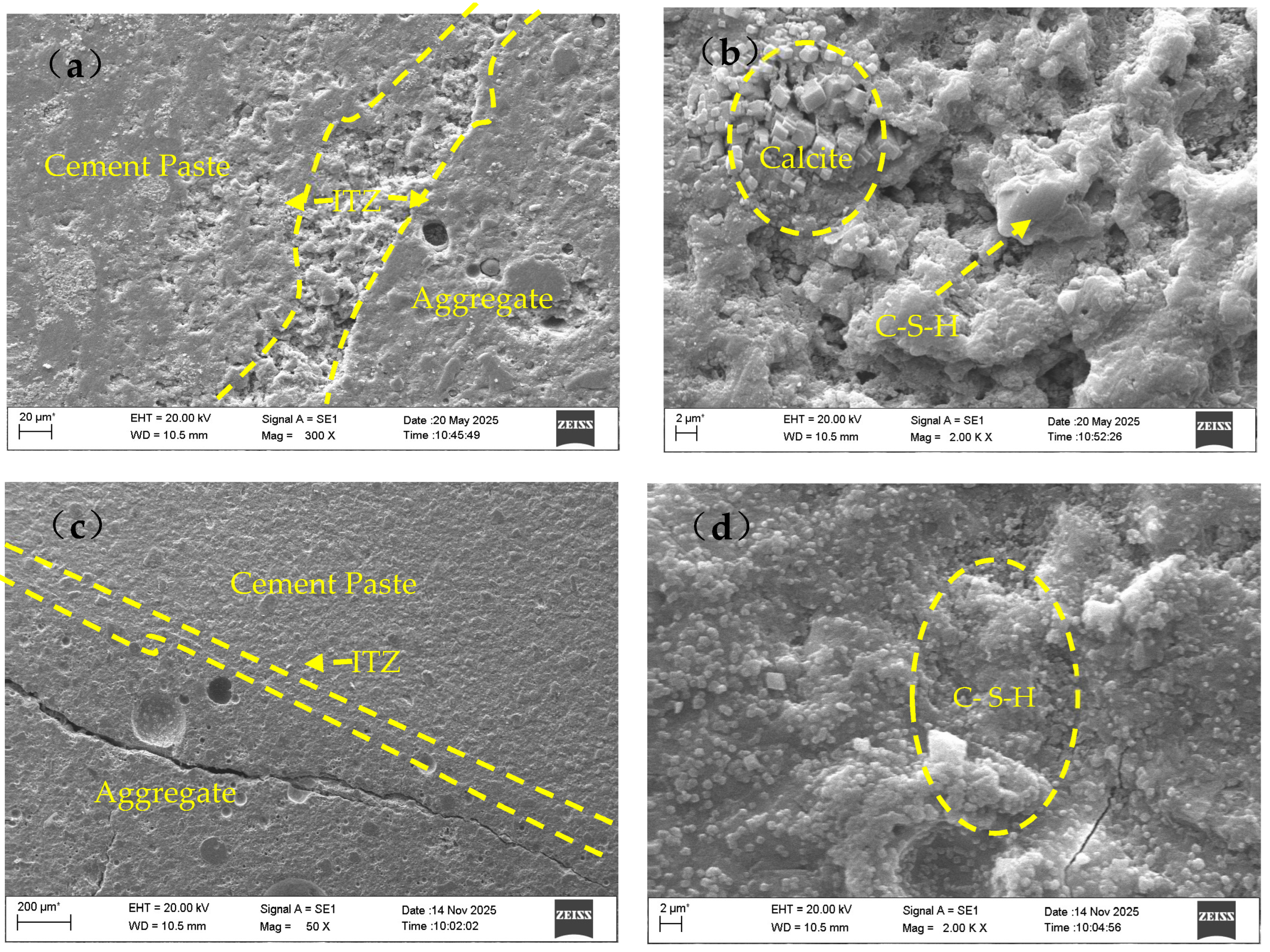
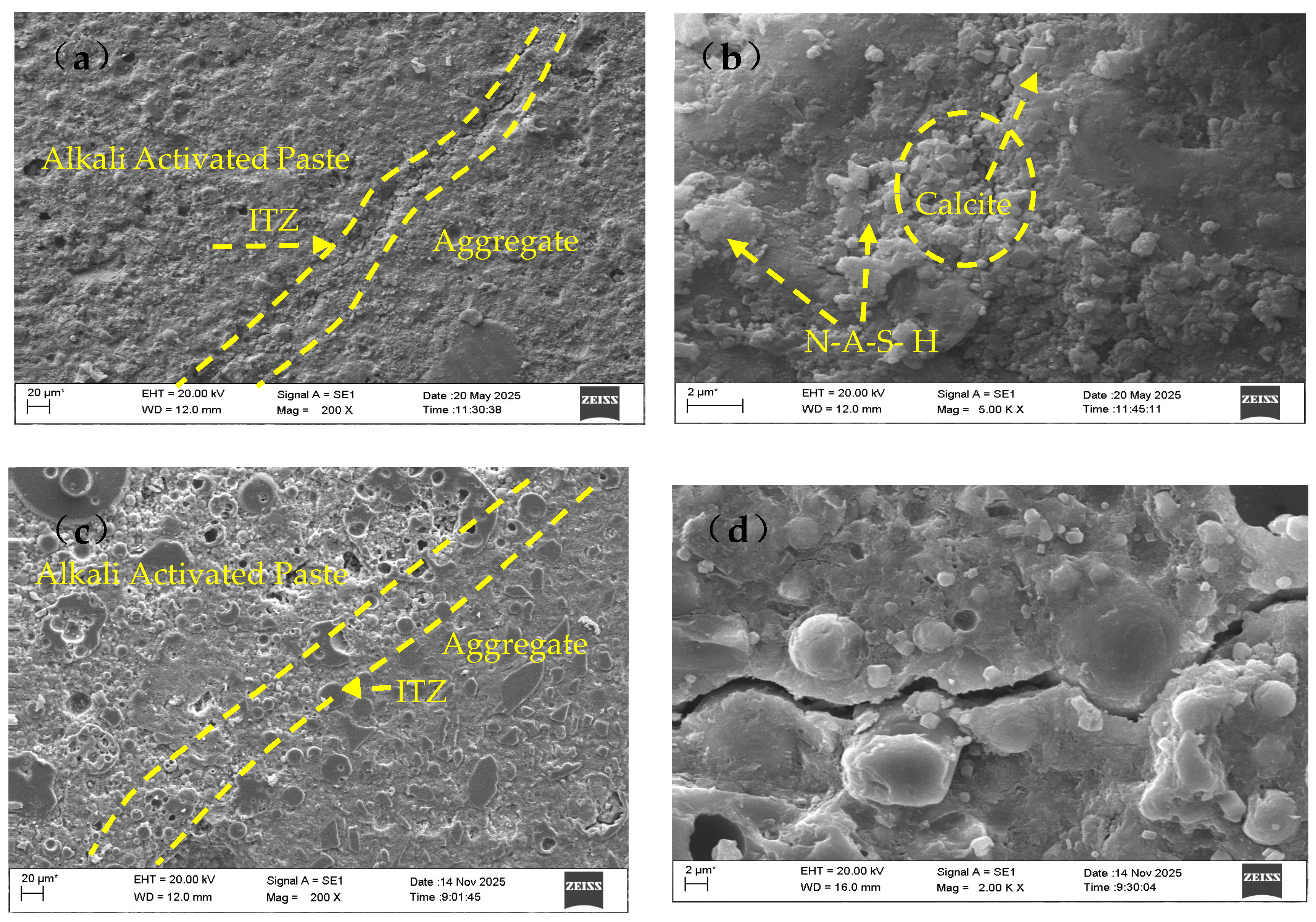
3.3.1. Characteristics of the ITZ Between Cement Paste and Natural Aggregate
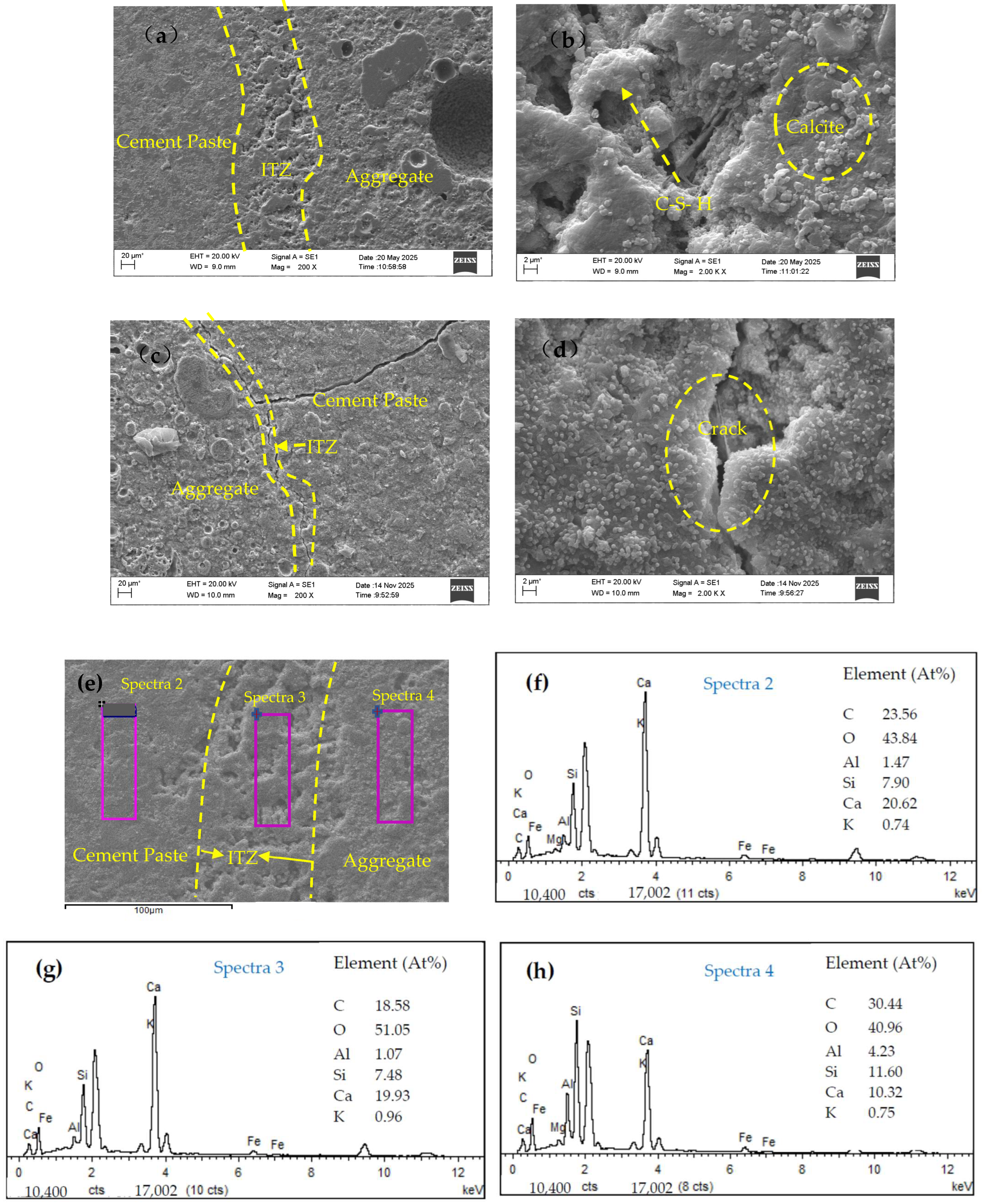
3.3.2. Characteristics of the ITZ Between Cement Paste and Artificial Aggregate
3.4. Morphological Analysis of the Interfacial Transition Zone (ITZ) for Alkali-Activated Concrete
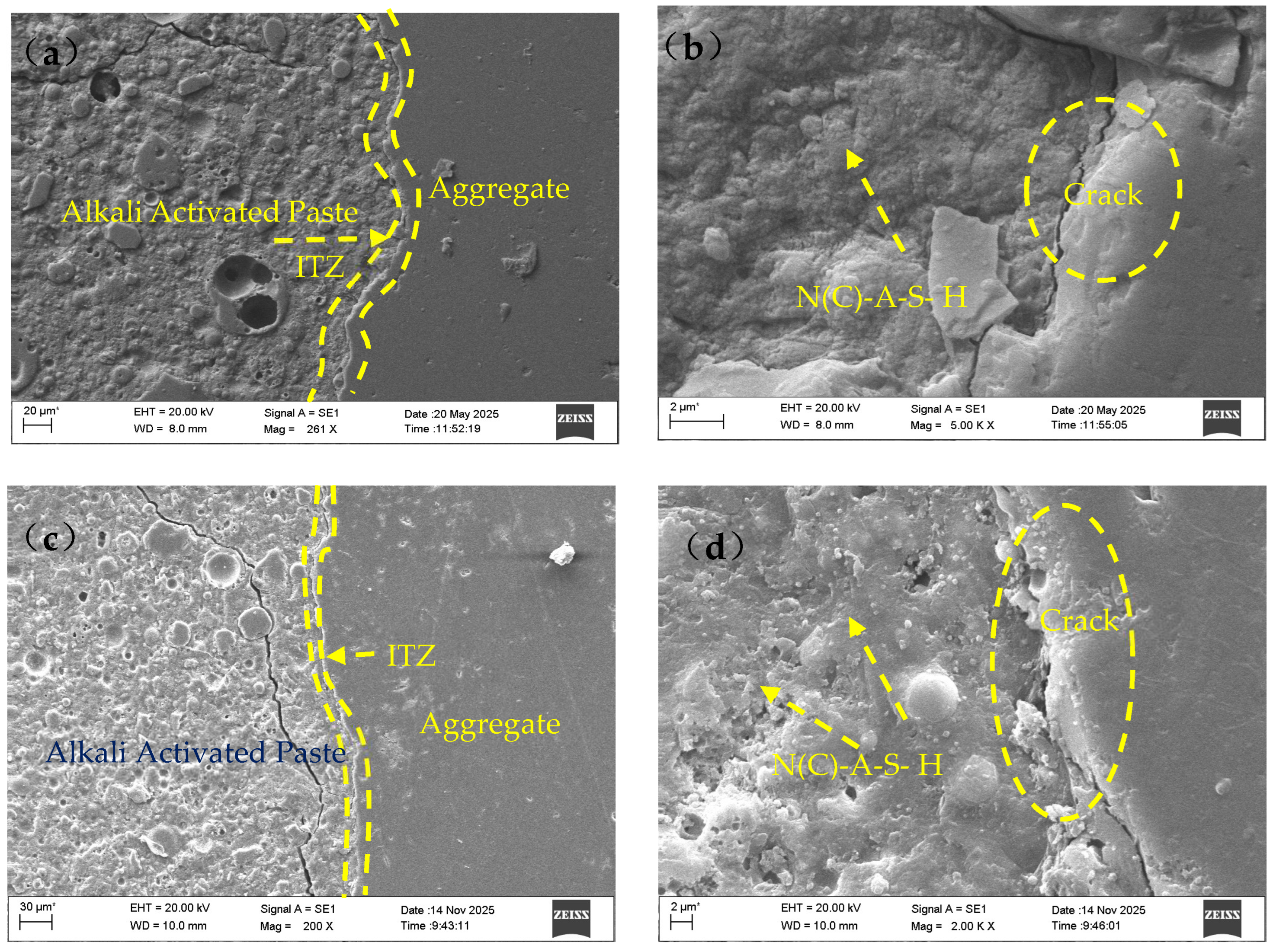
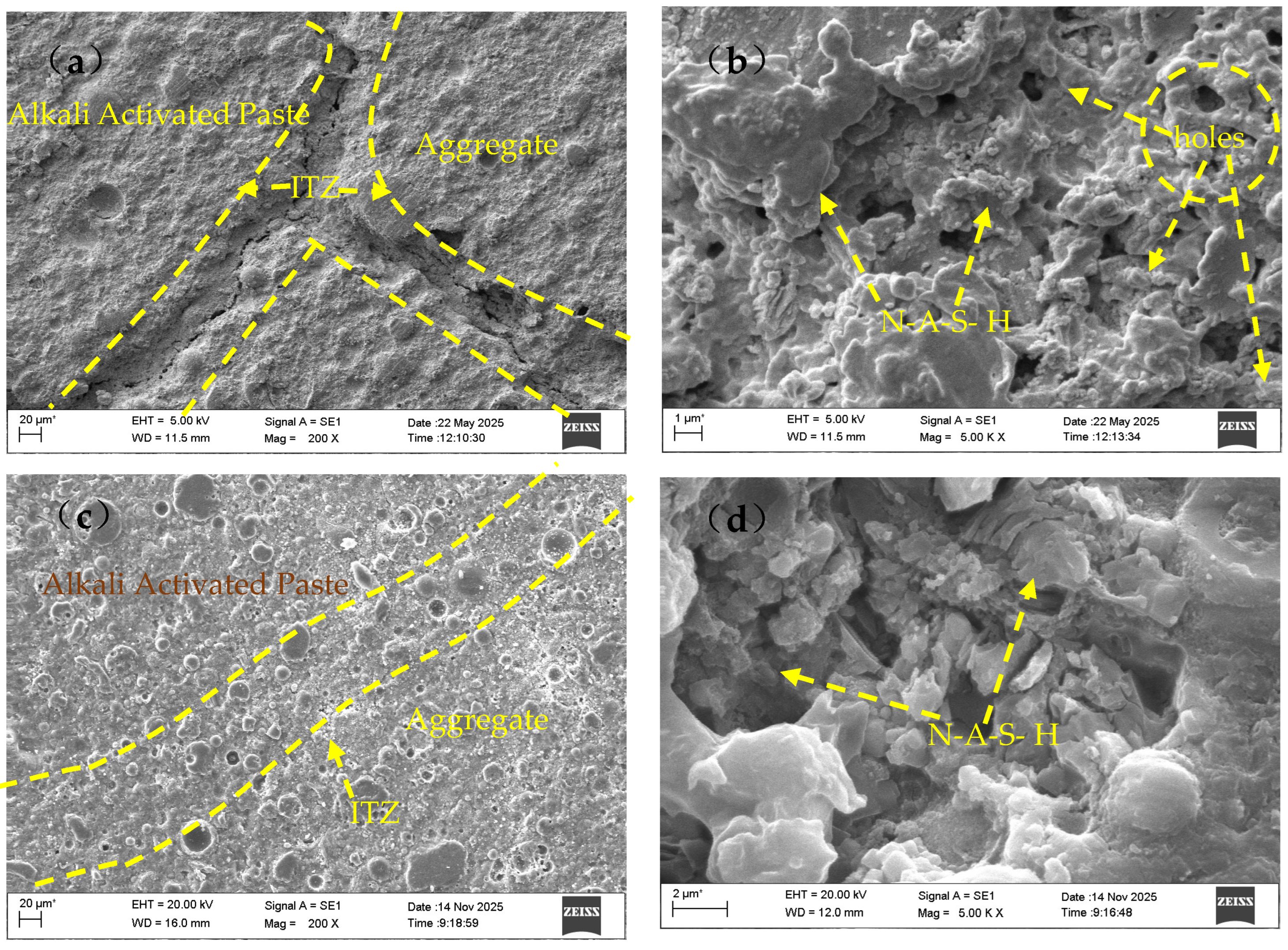
3.4.1. Characteristics of the ITZ Between Alkali-Activated Paste and Natural Aggregate
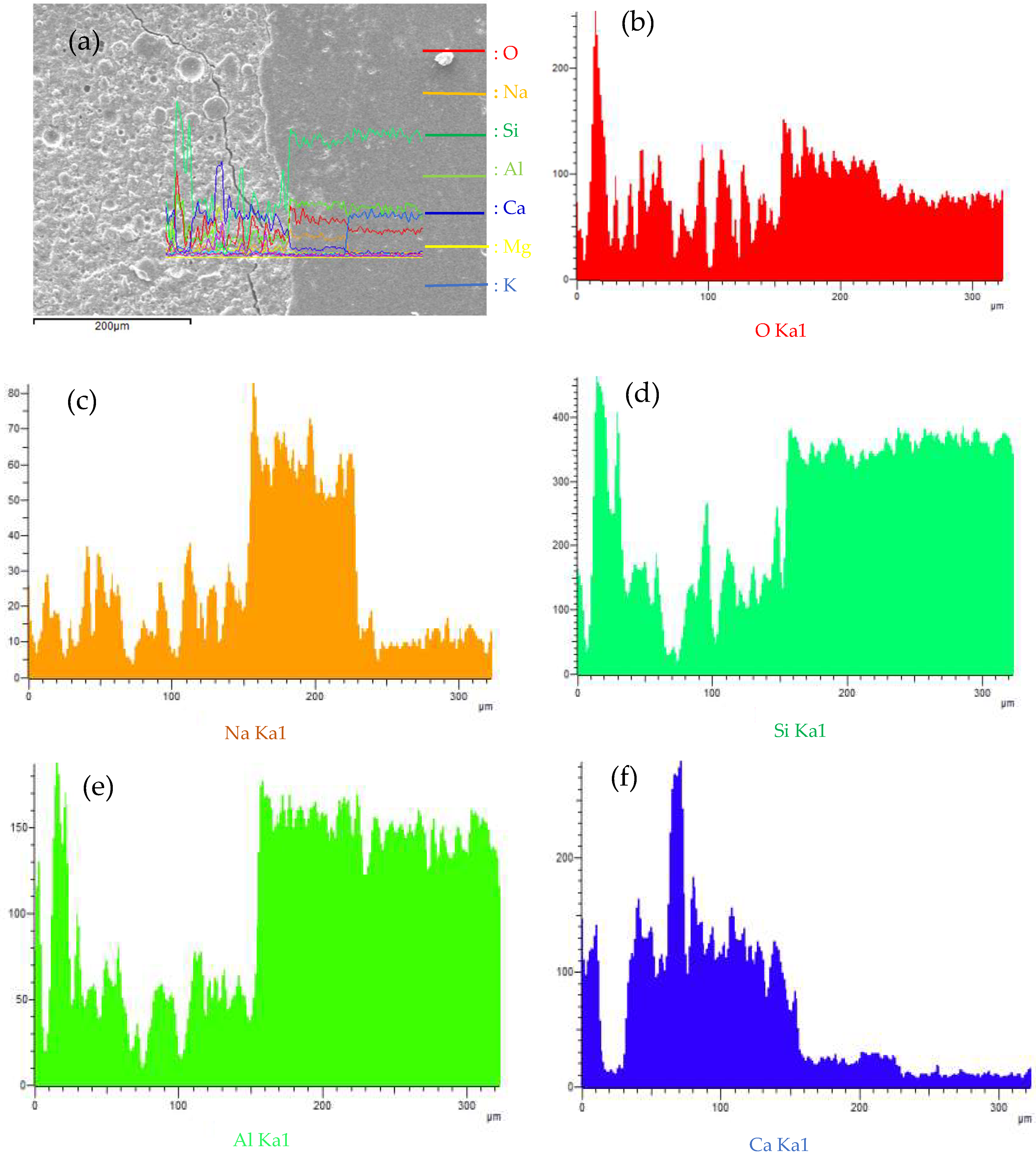
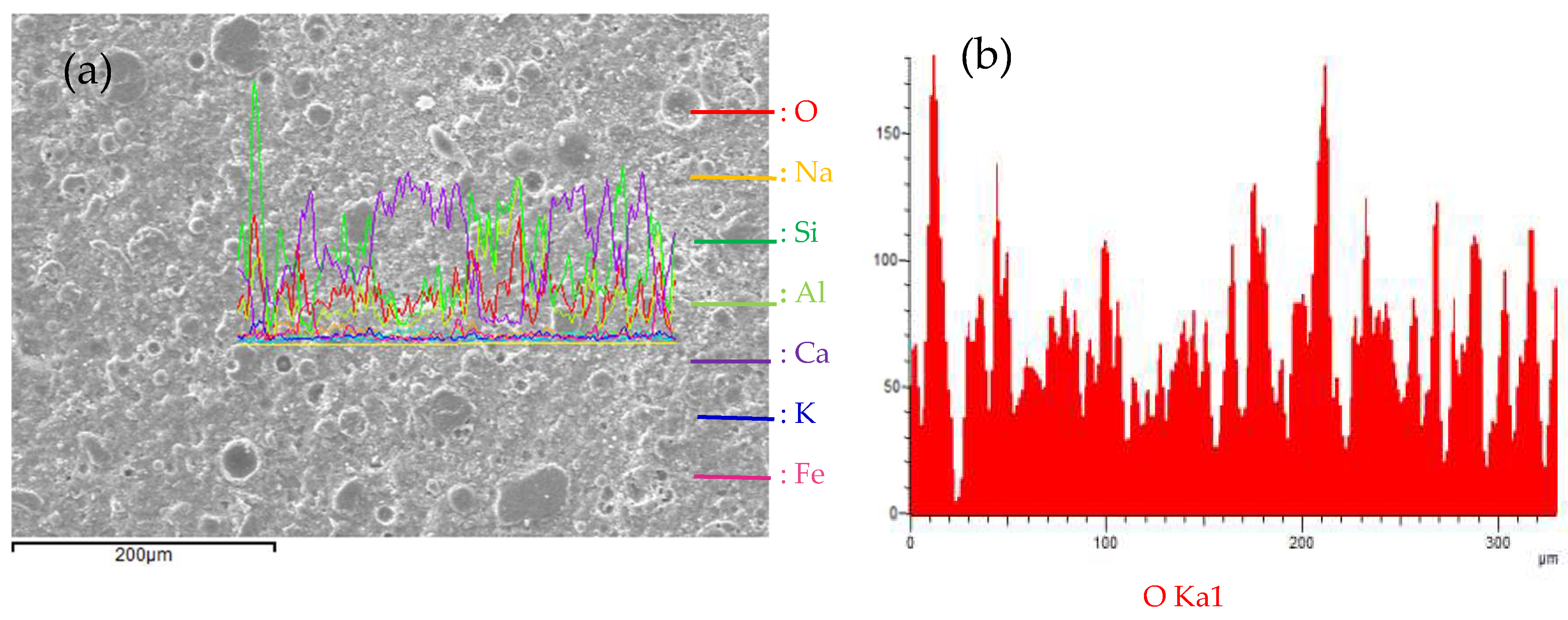
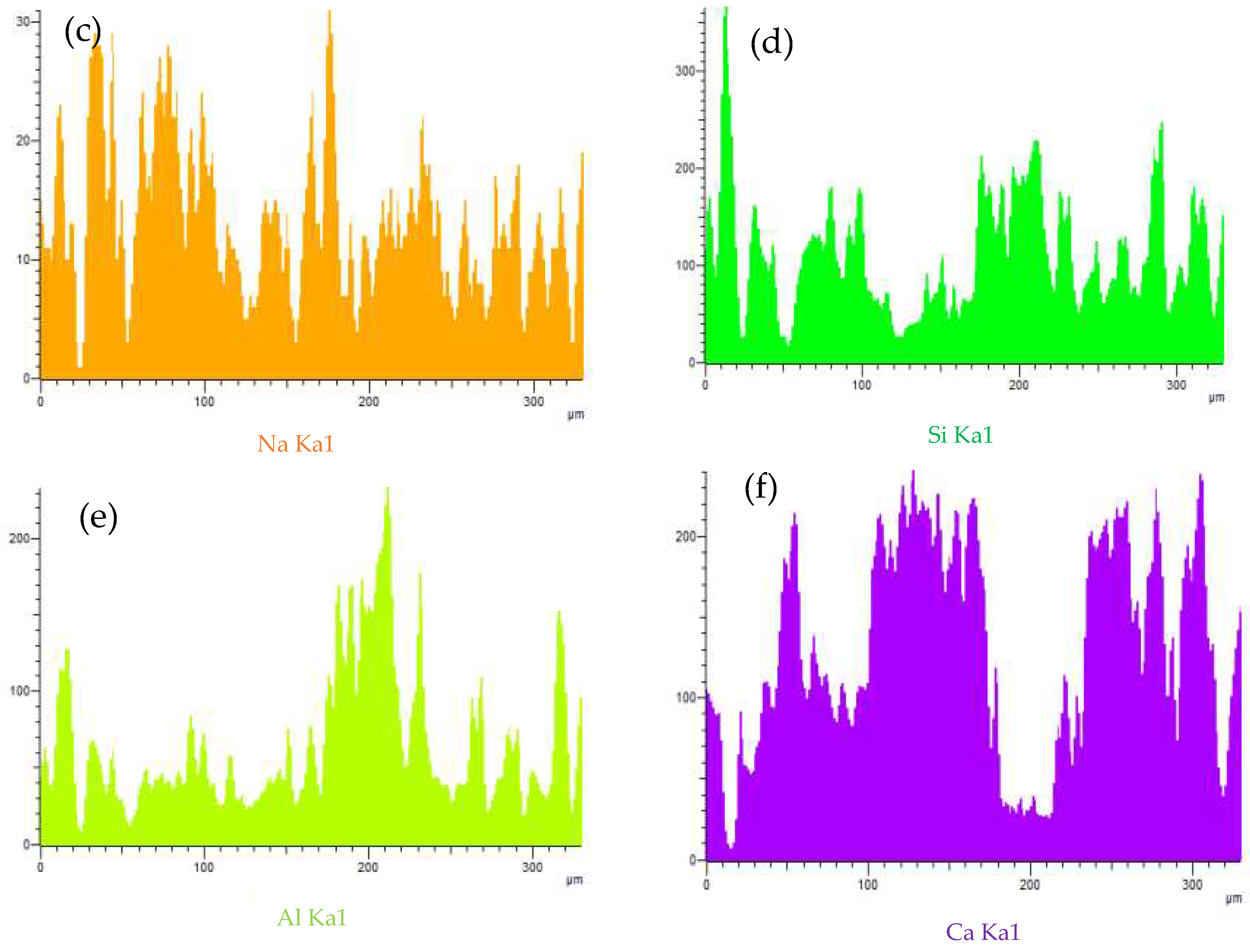
3.4.2. Characteristics of the ITZ Between Alkali-Activated Paste and Artificial Aggregate
3.5. Mechanical Properties of the ITZ in Cement and Alkali-Activated Concrete
4. Conclusions
- (1)
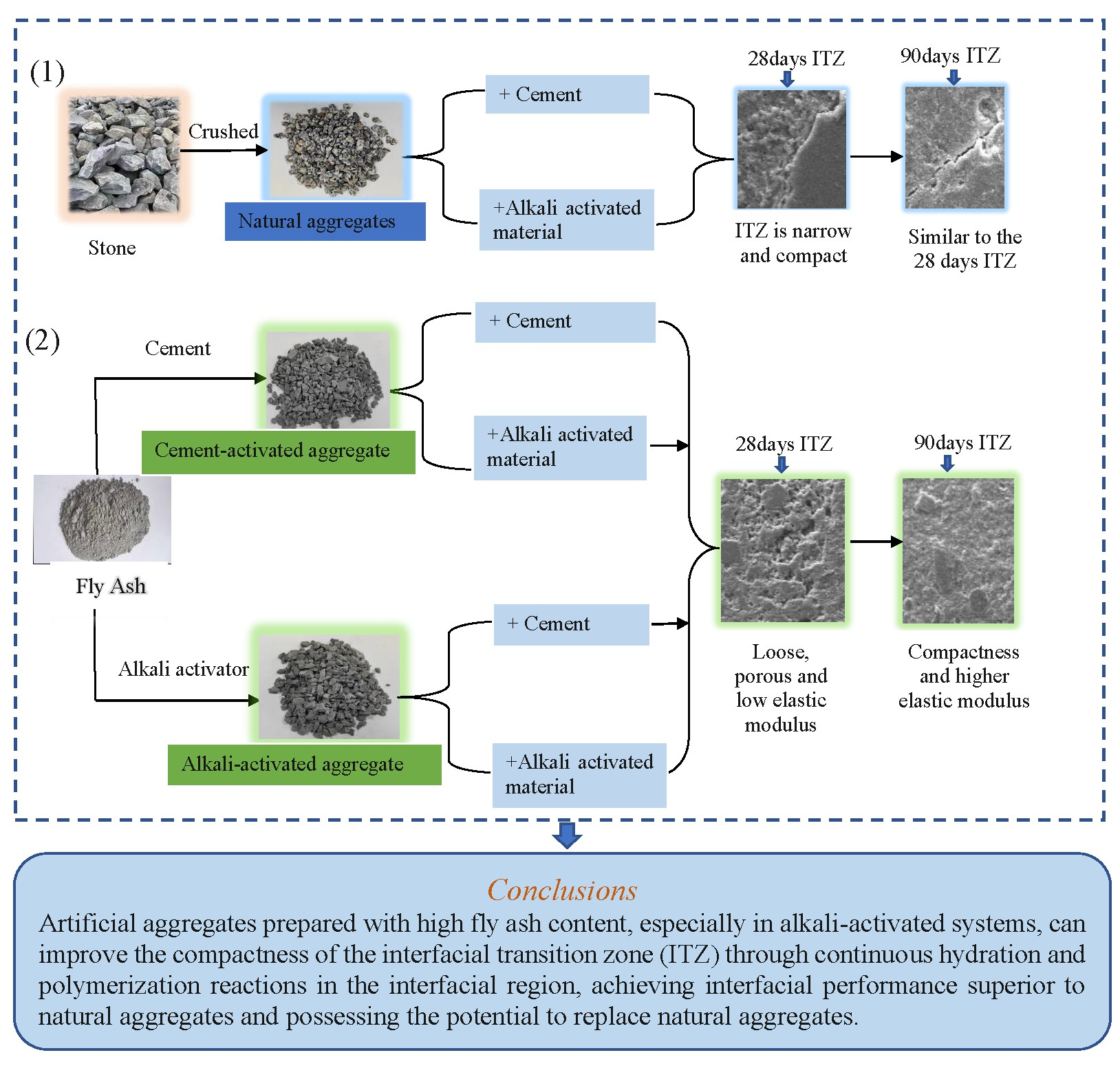
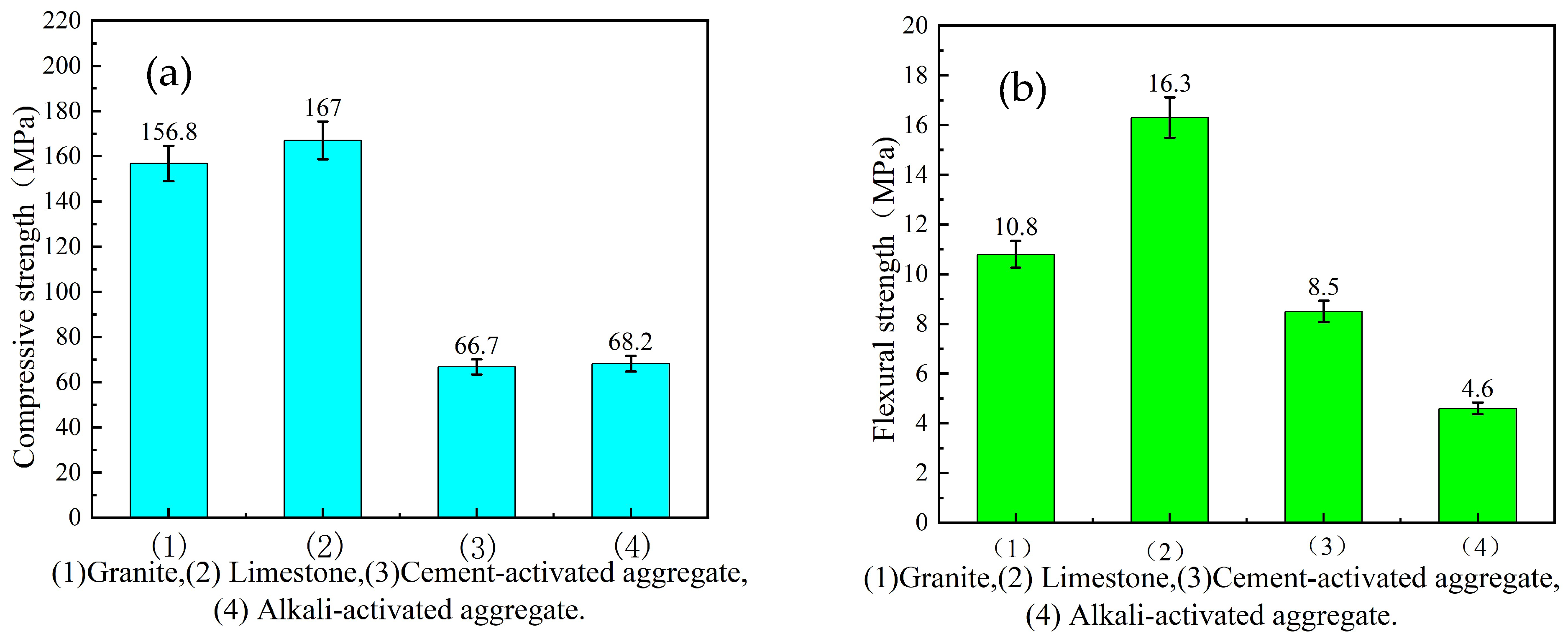
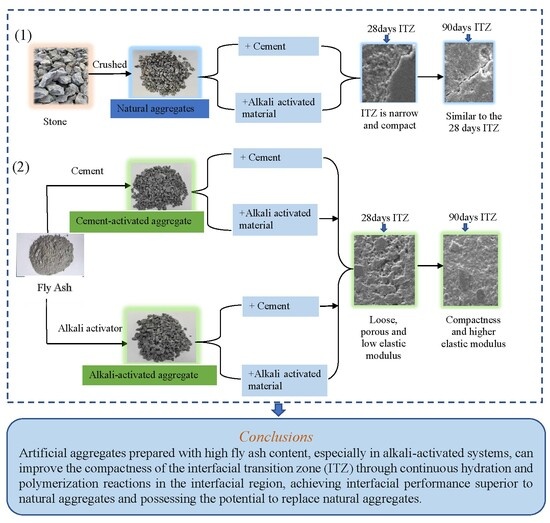
- Fly ash-based artificial aggregates with compressive strengths > 60 MPa were prepared via cement activation and alkali activation, using >75% FA as the principal raw material. Cement concrete with a compressive strength of 77.2 MPa and alkali-activated FA concrete with a compressive strength of 58.2 MPa could be obtained using artificial aggregate as a substitute for natural granite and limestone aggregates. The mechanical properties of cement-activated FA aggregates were superior to those of alkali-activated FA aggregates. Qualitative and quantitative analyses revealed the formation mechanisms of artificial and natural aggregates in different matrices. Through continuous hydration and polymerization reactions, artificial aggregates gradually form narrower and denser interfacial transition zones with different matrices, especially in alkali-activated matrices. The continuously improved performance of the ITZ makes it less prone to forming cracks between the ITZ and the artificial aggregate. The weaknesses of artificial aggregate concrete exist not only in the ITZ but are also inherent in the aggregates themselves, resulting in lower mechanical properties and a large number of microcracks. Improving the mechanical properties of artificial aggregates can lead to the production of concrete with higher strength.
- (2)
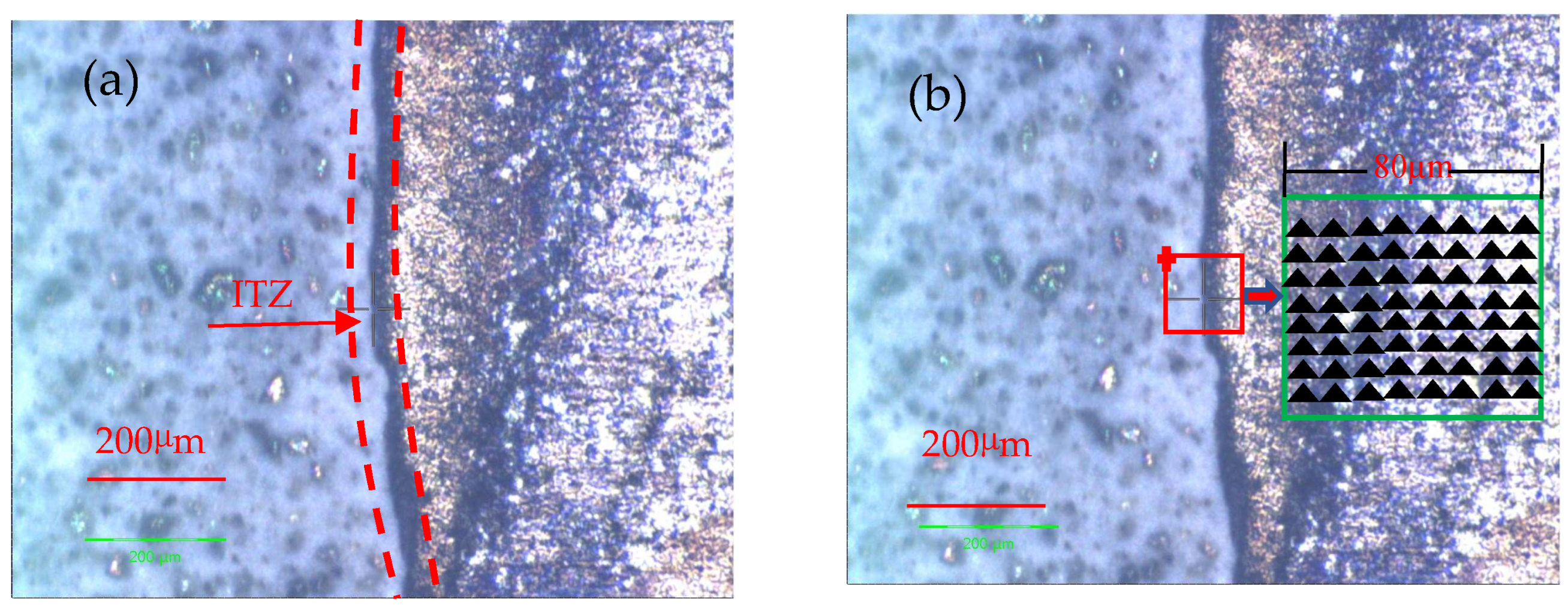
- The ITZs between cement paste and natural aggregates (e.g., granite and limestone) exhibited tight bonding. The elastic modulus at 28 d was >10 GPa, which increased slightly at 90 d. The ITZ width was 20–30 µm, and the principal hydration products were calcite crystals and C-S-H gel. The ITZ between cement paste and artificial aggregate at 28 d exhibited a relatively loose structure; its elastic modulus was more than 10 GPa and increased slightly at 90 d. The ITZ width was 30–40 µm at 28 d; it became narrower and denser at 90 d owing to ongoing chemical reactions, which improved the ITZ properties. The principal hydration products included C-S-H gel and calcite crystals.
- (3)
- The ITZ between the alkali-activated paste and the limestone aggregate exhibited a dense structure. The elastic modulus of the ITZ at 28 d was 6.39 GPa, which increased rapidly to >10 GPa at 90 d. The ITZ width was 20–30 µm; N-A-S-H and C-A-S-H were the principal hydration products within the ITZ between the paste and the limestone aggregate. The ITZ between the alkali-activated paste and the artificial aggregate at 28 d exhibited a relatively loose structure with numerous pores; the elastic modulus was nearly 6.0 GPa and increased to more than 10 GPa at 90 d. The width of the ITZ was 30–40 µm at 28 d; the structures on both sides of the ITZ became more similar at 90 d, and the ITZ became much narrower and denser. The main difference in the ITZs formed by fly ash-based artificial aggregates in different matrices is that cracks are less likely to form in alkali-activated material matrices. Alkali-activated materials improved the properties of the ITZ and formed a denser, mechanically improved ITZ with fly ash-based artificial aggregates. The interfacial region exhibited significantly reduced porosity and improved micromechanical properties compared to natural aggregates, challenging the conventional view of the ITZ as inherently weaker in all cases.
- (4)
- Several limitations of this study should be acknowledged. First, only one fly ash source was used; results may not generalize to all fly ash types. Second, the accelerated curing (75 °C, 100% RH) simulates precast production but not cast-in-place concrete. Third, the 1:1 aggregate-to-cementitious ratio was chosen for characterization purposes and differs from structural concrete proportions. Fourth, the maximum curing age was 90 days; longer-term behavior (>1 year) remains unknown. Fifth, SEM and nanoindentation alone cannot definitively prove complete ITZ disappearance—our conclusion is one of substantial densification and property convergence, not elimination. Finally, field performance under actual environmental and loading conditions was not evaluated. Future work should address these gaps. The use of fly ash-based artificial aggregates contributes to industrial waste valorization and reduces reliance on natural aggregate mining. Future work should also address durability (e.g., freeze–thaw, chloride ingress, and fire resistance), long-term performance under environmental loading, and a comprehensive life-cycle assessment (LCA) to quantify the environmental benefits of fly ash-based artificial aggregates relative to natural aggregates.
Author Contributions
Funding
Institutional Review Board Statement
Informed Consent Statement
Data Availability Statement
Conflicts of Interest
References
- Tam, V.W.Y.; Soomro, M.; Evangelista, A.C.J. A review of recycled aggregate in concrete applications (2000–2017). Constr. Build. Mater. 2018, 172, 272–292. [Google Scholar] [CrossRef]
- Hu, Y.Y.; Zhang, P.; Zhao, J. Current problems and countermeasures of sand and gravel industry in China. China Build. Mater. 2021, 1, 128–130. [Google Scholar]
- Katz, A. Properties of concrete made with recycled aggregate from partially hydrated old concrete. Cem. Concr. Res. 2003, 33, 703–711. [Google Scholar] [CrossRef]
- Qian, L.P.; Huang, B.T.; Xu, L.Y.; Dai, J.G. Concrete made with high-strength artificial geopolymer aggregates: Mechanical properties and failure mechanisms. Constr. Build. Mater. 2023, 367, 130318. [Google Scholar] [CrossRef]
- Han, D.D.; Chen, Y.H.; Kong, G.Q.; Chen, G.; Chen, L. Mechanical properties of solid waste based artificial aggregate concrete. J. Build. Mater. 2025, 28, 449–457. [Google Scholar]
- Zhao, J.; Li, Y.X.; Li, X.P.; Lei, B.B. Properties of waste brick powder-based artificial fine aggregate and its application in concrete. J. Build. Eng. 2024, 98, 111466. [Google Scholar]
- Shang, X.Y.; Huang, W.Y.; Fang, Z.Y.; Chen, Y.Q.; Zhang, B. Preparation and properties of artificial cold-bonded lightweight aggregate high-strength concrete. Acta Mater. Compos. Sin. 2025, 42, 1005–1013. [Google Scholar]
- Huang, J.L.; Hou, J.; Zheng, P.Q.; Wang, J.W.; Tao, W.D.; Duan, G.B.; Zhang, X.Z. Preparation and properties of fly ash-ground granulated blast furnace slag based artificial lightweight aggregate. Mater. Rep. 2024, 38, 23010034-9. [Google Scholar]
- Bolina, F.L.; Henn, A.S. Eco-friendly reinforced concrete beams exposed to standardized fire: A thermal finite element analysis. Materials 2025, 175, 2951. [Google Scholar]
- Chen, Q.Q.; Zhang, J.; Wang, Z.Y.; Zhao, T.T.; Wang, Z.H. A review of the interfacial transition zones in concrete: Identification, physical characteristics, and mechanical properties. Eng. Fract. Mech. 2024, 300, 109979. [Google Scholar] [CrossRef]
- Branch, J.L.; Epps, R.; Kosson, D.S. The impact of carbonation on bulk and ITZ porosity in microconcrete materials with fly ash replacement. Cem. Concr. Res. 2018, 103, 170–178. [Google Scholar] [CrossRef]
- Shi, Y.; Yang, H.Q.; Chen, X.; Li, X.; Zhou, S.H. Influence of aggregate variety on pore structure and microscopic interface of concrete. J. Build. Mater. 2015, 18, 133–138. [Google Scholar]
- Su, J.; Dong, Y.; Yang, H.Q. Influence of aggregate variety on interface structure and property of concrete. Concrete 2019, 351, 97–100. [Google Scholar]
- Wang, Y.L.; Zhang, W.Y.; Wang, J.J.; Huang, R.; Lou, G.H.; Luo, S.Q. Effects of coarse aggregate size on thickness and micro-properties of ITZ and the mechanical properties of concrete. Cem. Concr. Compos. 2024, 154, 105777. [Google Scholar] [CrossRef]
- Zhang, Y.X.; Lou, Z.K.; Zhang, Z.; Wang, Y.Y. Influence of aggregate size effect on elastic modulus and strength of interfacial transition zone of concrete. Concrete 2017, 333, 7–10. [Google Scholar]
- Saez del Bosque, I.F.; Zhu, W.; Howind, T.; Matías, A.; Sánchez de Rojas, M.I.; Medina, C. Properties of interfacial transition zones (ITZs) in concrete containing recycled mixed aggregate. Cem. Concr. Compos. 2017, 81, 25–34. [Google Scholar] [CrossRef]
- Geng, J.; Sun, J.Y.; Mo, L.W.; Zhang, G.L. Micro-structure characteristics of recycled fine aggregates and its concrete. J. Civ. Archit. Environ. Eng. 2013, 35, 135–140. [Google Scholar]
- Lu, C.G.; Yu, Q.j.; Wei, J.X.; Niu, Y.F.; Zhang, Y.F.; Li, C.; Chen, P.X.; Shi, C.; Yang, P.F. Influence of interface transition zones(ITZ) and pore structure on the compressive strength of recycled aggregate concrete. Constr. Build. Mater. 2024, 456, 139299. [Google Scholar]
- Xu, L.Y.; Huang, B.B.; Li, V.C.; Dai, J.G. High-strength high-ductility engineered/strain-hardening cementitious composites (ECC/SHCC) incorporating geopolymer fine aggregates. Cem. Concr. Compos. 2022, 125, 104296. [Google Scholar]
- Luo, M.; Bai, J.Q.; Jing, K.; Ding, Z.Q.; Yang, D.Y.; Qian, C.X. Self-healing of early-age cracks in cement mortars with artificial functional aggregates. Constr. Build. Mater. 2021, 272, 121846. [Google Scholar]
- Branch, J.L.; Epps, R.; Kosson, D.S. Comparison on the properties of ITZs in fly ash-based geopolymer and Portland cement concretes with equivalent flowability. Cem. Concr. Res. 2021, 143, 106392. [Google Scholar] [CrossRef]
- Cai, Y.J.; Xiong, B.B.; Zhao, B.J. Evolution of the interfacial transition zone of alkali-activated concrete with aging. Constr. Build. Mater. 2025, 489, 142364. [Google Scholar] [CrossRef]
- Fang, G.H.; Wang, Q.; Zhang, M.Z. Micromechanical analysis of interfacial transition zone in alkali-activated fly ash-slag concrete. Cem. Concr. Compos. 2021, 119, 103990. [Google Scholar]
- BS EN 196-2:2013; Method of Testing Cement Part 2: Chemical Analysis of Cement. British Standards Institution: London, UK, 2013.
- Rovnaník, P. Effect of curing temperature on the development of hard structure of metakaolin-based geopolymer. Constr. Build. Mater. 2010, 24, 1176–1183. [Google Scholar] [CrossRef]
- Yang, S.Y.; Zhao, R.D.; Jin, H.S.; Li, F.H.; Hu, D.H. Research on influence parameters of early strength of fly ash-based geo polymer mortar. Adv. Eng. Sci. 2020, 52, 162–169. [Google Scholar]
- Oderji, S.Y.; Chen, B.; Jaffar, S.T.A. Effects of relative humidity on the properties of fly ash-based geopolymers. Constr. Build. Mater. 2017, 153, 268–273. [Google Scholar] [CrossRef]
- JC/T 958-2005; Flow Table for Determine Mortar Fluidity. China Building Materials Academy Press: Beijing, China, 2005.
- GB/T 39701-2020; Limit and Test Method of Ammonium Ion Content in Fly Ash. Standards Press of China: Beijing, China, 2020.
- Kong, X.Z.; Chen, G.X.; Liu, Y.X.; Zhang, S.J.; Wu, K. Effect of ammonium in denitration fly ash on the performance of hydraulic concrete. Water Resour. Hydropower Eng. 2020, 51, 216–223. [Google Scholar]
- Suwan, T.; Fan, M.; Wong, H.S.; Jitsangiam, P.; Hansapinyo, C.; Chindaprasirt, P. Influence of ammonia-contaminated fly ash from selective catalytic reduction process on the properties of Portland-fly ash blended cement and geopolymer composites. Case Stud. Constr. Mater. 2025, 22, e04563. [Google Scholar]
- Kovalchuk, G.; Fernández-Jiménez, A.; Palomo, A. Alkali-activated fly ash: Effect of thermal curing conditions on mechanical and microstructural development–Part II. Fuel 2007, 86, 315–322. [Google Scholar]
- Xie, Z.L.; Li, X. Effect of curing temperature and curing time on compressive strength of fly ash geopolymer Concrete. Concrete 2014, 6, 55–58. [Google Scholar]
- Aydin, S.; Baradan, B. Effect of activator type and content on properties of alkali-activated slag mortars. Compos. Part B 2014, 57, 166–172. [Google Scholar] [CrossRef]
- Zhang, B.; Zhu, H.; Cheng, Y.Z.; Huseien, G.F.; Shah, K.W. Shrinkage mechanisms and shrinkage-mitigating strategies of al kali-activated slag composites: A critical review. Constr. Build. Mater. 2022, 318, 125993. [Google Scholar]
- Zhao, R.D.; Wang, Y.B.; Yuan, Y.; Zhao, C.G.; Qin, P.J. Review on shrinkage of geopolymer concrete. Bull. Chin. Ceram. Soc. 2020, 39, 1695–1702. [Google Scholar]
- Jiang, Y.; Ling, T.C.; Shi, M. Strength Enhancement of Artificial Aggregate Prepared with Waste Concrete Powder and its Impacton Concrete Properties. J. Clean. Prod. 2020, 257, 120515. [Google Scholar]
- Han, J.D.; Pan, G.H.; Sun, W. Applications of nanoindentation techniques in cementitious materials. Concrete 2011, 4, 1–8. [Google Scholar]
- Huo, W.W.; Zhang, S.P.; Zhu, Z.D.; Sun, H.; Yu Wan, Y.; Chen Zhang, C.; Yang, L. ITZs characterization in full-component geopolymer recycled concrete based on quantitative BSE-EDS images and nanoindentation techniques. Constr. Build. Mater. 2025, 465, 140249. [Google Scholar]



| Materials | SiO2 | Al2O3 | Fe2O3 | CaO | MgO | Na2O | K2O | SO3 |
|---|---|---|---|---|---|---|---|---|
| OPC | 20.18 | 4.77 | 3.6 | 64.22 | 1.25 | 0.18 | 0.45 | 1.89 |
| GGBS | 34.14 | 14.2 | 1.0 | 40.14 | 7.54 | 0.42 | 0.41 | 0.07 |
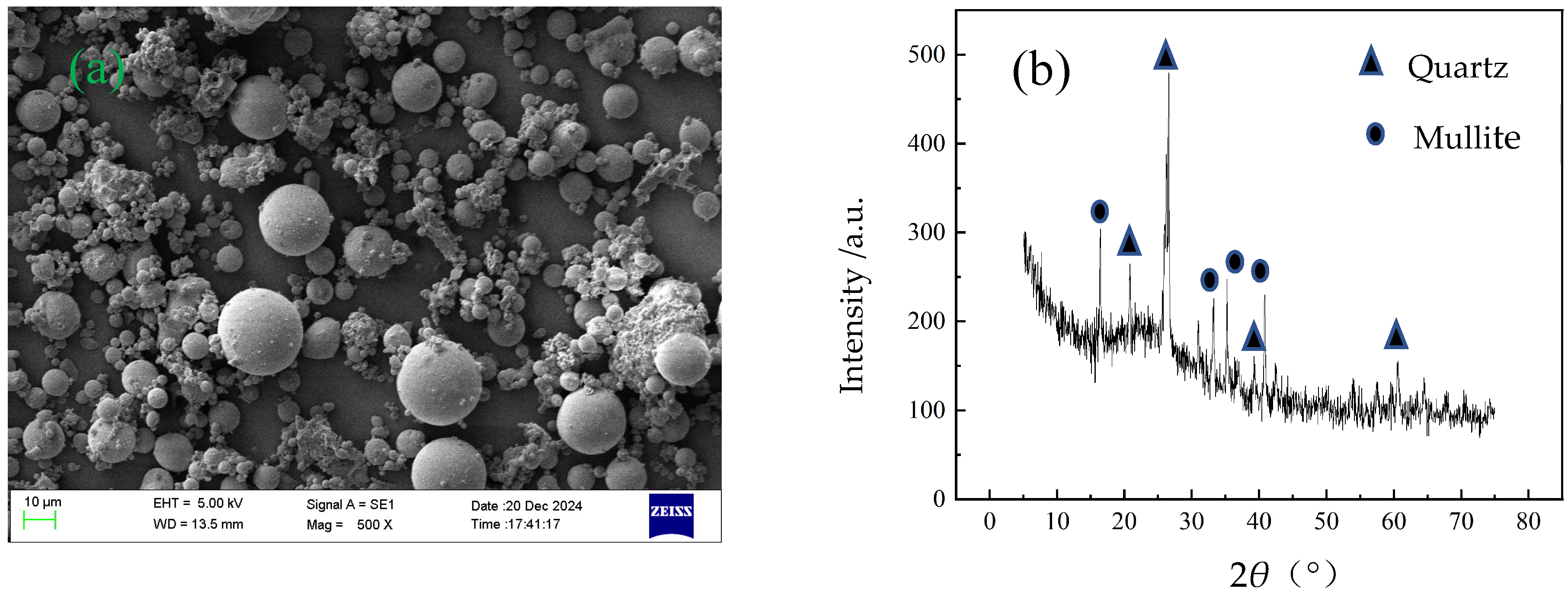
| FA | 46.14 | 21.6 | 10.85 | 12.03 | 5.48 | 1.21 | 1.04 | 1.48 |
| Sample No. | Cement/% | Fly Ash/% | W/C | Additives (SKY8588)/% |
|---|---|---|---|---|
| CFA | 25 | 75 | 0.22 | 0.5 |
| Sample No. | Slag Powder/% | Fly Ash/% | W/C | Alkali Content/% | BaCl2/% |
|---|---|---|---|---|---|
| AAFA | 20 | 80 | 0.30 | 6.0 | 0.5 |
| Sample No. | Cement | Aggregate | Water | Water–Cement Ratio |
|---|---|---|---|---|
| NFC-GA | 950 | 950 | 360 | 0.38 |
| NFC-LA | 950 | 950 | 360 | 0.38 |
| NFC-CA | 950 | 690 | 360 | 0.38 |
| NFC-AA | 950 | 690 | 360 | 0.38 |
| Sample No. | Slag Powder | Fly Ash | Aggregate | Water | W/C | Alkali Content/% | Modulus/Ms |
|---|---|---|---|---|---|---|---|
| NFAAC-GA | 190 | 760 | 950 | 285 | 0.30 | 6.0 | 1.3 |
| NFAAC-LA | 190 | 760 | 950 | 285 | 0.30 | 6.0 | 1.3 |
| NFAAC-CA | 190 | 760 | 690 | 285 | 0.30 | 6.0 | 1.3 |
| NFAAC-AA | 190 | 760 | 690 | 285 | 0.30 | 6.0 | 1.3 |
| Sample No. (Refer to Table 4 and Table 5) | Age and Location | |||||
|---|---|---|---|---|---|---|
| 28 d | 90 d | |||||
| Matrix | ITZ | Aggregate | Matrix | ITZ | Aggregate | |
| NFC-GA | 22.05 ± 2.85 | 10.23 ± 2.59 | 54.66 ± 6.61 | 31.06 ± 9.25 | 10.58 ± 3.16 | 62.28 ± 5.75 |
| NFC-CA | 25.71 ± 5.48 | 11.32 ± 3.30 | 32.43 + 5.24 | 26.96 ± 7.60 | 12.09 ± 3.43 | 30.10 + 4.44 |
| NFC-AA | 26.13 ± 4.29 | 11.51 ± 1.92 | 38.60 ± 5.02 | 30.36 ± 7.16 | 11.81 ± 3.83 | 39.30 + 7.60 |
| NFAAC-LA | 20.16 ± 4.31 | 6.39 ± 0.79 | 58.68 ± 8.49 | 23.65 ± 6.67 | 12.02 ± 1.91 | 64.14 ± 8.69 |
| NFAAC-CA | 19.67 ± 3.94 | 5.58 ± 2.10 | 31.85 ± 5.69 | 21.91 ± 3.64 | 12.60 ± 2.42 | 35.88 ± 7.84 |
| NFAAC-AA | 20.46 ± 4.79 | 5.71 ± 2.43 | 31.25 ± 7.39 | 25.87 ± 4.02 | 10.61 ± 1.92 | 32.87 ± 1.79 |
Disclaimer/Publisher’s Note: The statements, opinions and data contained in all publications are solely those of the individual author(s) and contributor(s) and not of MDPI and/or the editor(s). MDPI and/or the editor(s) disclaim responsibility for any injury to people or property resulting from any ideas, methods, instructions or products referred to in the content. |
© 2026 by the authors. Licensee MDPI, Basel, Switzerland. This article is an open access article distributed under the terms and conditions of the Creative Commons Attribution (CC BY) license.
Share and Cite
Zeng, X.; Yu, Q.; Wei, J.; Zhang, F.; Sun, Q. Interfacial Characteristics of a Fly Ash-Based Artificial Aggregate. Materials 2026, 19, 2886. https://doi.org/10.3390/ma19132886
Zeng X, Yu Q, Wei J, Zhang F, Sun Q. Interfacial Characteristics of a Fly Ash-Based Artificial Aggregate. Materials. 2026; 19(13):2886. https://doi.org/10.3390/ma19132886
Chicago/Turabian StyleZeng, Xiaoxing, Qijun Yu, Jiangxiong Wei, Fang Zhang, and Qian Sun. 2026. "Interfacial Characteristics of a Fly Ash-Based Artificial Aggregate" Materials 19, no. 13: 2886. https://doi.org/10.3390/ma19132886
APA StyleZeng, X., Yu, Q., Wei, J., Zhang, F., & Sun, Q. (2026). Interfacial Characteristics of a Fly Ash-Based Artificial Aggregate. Materials, 19(13), 2886. https://doi.org/10.3390/ma19132886