Article

One-Step Lithium Bioleaching from a Mineral Concentrate: Comparison Between Consortium and Isolated Native Strains


by
María Guadalupe Quezada-Aldaco
1,
Gloria Abigail Martinez-Rodriguez
1,
Juan Antonio Rojas-Contreras
1,
Perla Guadalupe Vázquez-Ortega
1,
Hiram Medrano-Roldán
1,
Damián Reyes-Jáquez
1,*,
Norma Urtiz-Estrada
2,
Karla Torres-Fraga
3,
David Enrique Zazueta-Álvarez
3,*,
Grisel Fierros-Romero
4 and
Alma Karina Tamez-Castrellón
5
1
Departamento de Ingenierías Química y Bioquímica, TecNM/Instituto Tecnológico de Durango, Blvd. Felipe Pescador 1830 Ote., Durango 34080, Mexico
2
Facultad de Ciencias Químicas, Universidad Juárez del Estado de Durango, Av. Veterinaria s/n. Circuito Universitario, Col. Valle del Sur, Durango 34120, Mexico
3
Departamento de Ingeniería en Tecnología Ambiental, Universidad Politécnica de Durango, Carretera Durango-México Km. 9.5, Durango 34300, Mexico
4
TecNM/Instituto Tecnológico Superior de Ciudad Hidalgo, Av. Ing. Carlos Rojas Gutierrez 2120, Fracc. Valle de la Herradura, Ciudad Hidalgo 61100, Mexico
5
Unidad de Posgrado e Investigación y Desarrollo Tecnológico, Instituto Tecnológico de Durango, Blvd. Felipe Pescador 1830 Ote., Col. Nueva Vizcaya., Durango 34080, Mexico
*
Authors to whom correspondence should be addressed.
Materials 2026, 19(13), 2855; https://doi.org/10.3390/ma19132855
Submission received: 2 June 2026 / Revised: 29 June 2026 / Accepted: 1 July 2026 / Published: 3 July 2026

Highlights

  • Native microbial consortia enabled one-step lithium bioleaching from mineral concentrates.
  • Maximum lithium recovery (99%) was achieved at pH 8, 10% pulp, and no agitation.
  • Microbial consortia outperformed individual bacterial strains in lithium solubilization.
  • Mineralogical changes confirmed bioleaching feasibility for sustainable lithium extraction.

Abstract

The increasing global demand for energy has intensified the need for lithium, a critical component in rechargeable batteries and electric vehicles. However, conventional lithium extraction methods are associated with significant environmental impacts. In this study, a one-step bioleaching approach for lithium recovery from mineral concentrates was evaluated using native microbial consortia and isolated bacterial strains. A suitable culture medium was selected, individual strains were isolated, and bioleaching experiments were conducted using a Box–Behnken experimental design. Lithium solubilization and cell density were assessed under different agitation conditions, pulp concentrations, and initial pH values. The highest lithium solubilization (99%) was achieved under non-agitated conditions, with a pulp concentration of 30% and an initial pH of 6. Three bacterial strains (ITDB101, ITDR102, and ITDN103) were identified. The native microbial consortium and the biotic control exhibited the highest lithium solubilization efficiencies (94.5% and 96.3%, respectively), outperforming the individual strains, which achieved solubilization values ranging from 91.73% to 93.27%. X-ray diffraction analysis identified five mineral phases in the concentrate, and comparisons among treatments revealed changes in these phases following bioleaching, supporting the potential of this process as an environmentally friendly alternative for lithium extraction.

1. Introduction

Lithium is a highly reactive element and is only found in nature as part of mineral compounds such as spodumene, lepidolite, and petalite [1]. It is a silvery-white metal with a low density (0.531 g/cm3) and an atomic weight of 6.941. Among alkali metals, lithium has the highest melting point (186 °C) and boiling point (1336 °C), as well as a high energy density of 0.784 cal/g°C at 0 °C [2]. These properties make lithium essential for a range of technological applications, including high-energy-density rechargeable batteries [3], aluminium–lithium alloys in the aerospace industry [1], and pharmaceutical applications, particularly for the treatment and maintenance of bipolar disorder [4]. Recent projections indicate that global lithium demand may exceed supply by 2030, driven by the rapid expansion of battery technologies and increasingly ambitious decarbonization targets [5].
Lithium is widely distributed in nature and occurs in igneous, volcanic, and sedimentary rocks at concentrations ranging from 20 to 70 ppm, with an average abundance of approximately 65 ppm in the Earth’s crust. It is also present in oceans, thermal fluids, and brines, where concentrations can reach up to 1000 ppm. Although lithium has been identified in more than 140 minerals, only a limited number contain concentrations that are economically viable for extraction [6]. In mineral deposits, lithium is commonly associated with magnesium, potassium, sodium, and boron [7]. Globally, lithium resources are classified into three main categories: brine-type, hard rock-type, and clay-type deposits. Among these, the primary commercial sources are natural brines formed through intense evaporation and hard rock deposits rich in lithium-bearing minerals such as lithium-cesium-tantalum pegmatites [8]. Brine-type resources represent approximately 65% of global lithium reserves and are mainly distributed within the “Lithium Triangle” [9]. The increasing demand for lithium has intensified traditional mining activities, which often lead to adverse environmental impacts. These include water contamination from toxic discharges and the emission of volatile pollutants that can affect surrounding communities [10]. In response, the mining industry has increasingly adopted environmentally sustainable alternatives such as mineral biotechnology, which uses microorganisms or their metabolites to recover metals from ores, concentrates, rocks, and solutions [11].
One promising technique within mineral biotechnology is bioleaching. This method employs microorganisms to recover metals from low-grade ores, often increasing efficiency while reducing processing time and environmental impact [12,13]. Compared to conventional pyro- and hydrometallurgical methods, such as smelting, roasting, leaching, and oxidation processes, bioleaching has demonstrated significant potential for metal recovery due to its lower energy and chemical requirements, reduced capital costs, simpler processing, and lower environmental impact [14,15].
Bioleaching microorganisms are classified according to their metabolic pathways (chemotrophs, chemoorganotrophs) and nutrient requirements. Some use mineral dissolution products as energy sources, while chemolithotrophs grow in inorganic media, oxidizing iron and sulfur compounds [13,16]. Bioleaching relies on microbial metabolic products, including organic acids, inorganic acids, and iron oxides, to extract metals from, while acidophilic and heterotrophic microorganisms contribute by secreting organic acids that form metal complexes and enhance solubilization [17]. In process design, critical factors include the selection of suitable microorganisms, often native strains, that are already adapted to survive and thrive in toxic or extreme conditions. Mixed cultures can outperform pure cultures due to synergistic interactions established among different microorganisms [18]. Recent studies have further highlighted microbial consortia as promising systems for enhancing bioleaching efficiency and metal recovery through complementary microbial interactions [19]. These microorganisms may exist in free-floating (planktonic) cells or surface-adhered (biofilm) forms. Biofilms help bacteria attach to solid substrates and resist environmental stress by producing extracellular polymeric substances (EPS) such as polysaccharides, proteins, and lipids [20,21].
Microorganisms such as Acidithiobacillus ferrooxidans have been used for the extraction of lithium from lepidolite and jadarite, reaching concentrations of approximately 12 mg/L in 30 days and more than 120 mg/L in 21 days, respectively. Throughout the experiment, a sustained release of lithium was observed compared to the abiotic control [22].
Meanwhile, a consortium consisting of autotrophic bacteria (A. ferrooxidans and A. thiooxidans), the heterotrophic fungus Aspergillus niger, and the yeast Rhodotorula mucilaginosa has been evaluated for the bioleaching of lithium from lepidolite. Under nutrient-limited conditions, the bacterial consortium proved to be the most effective, with a recovery of 11 mg/L of lithium after 336 days. The bioleaching percentages obtained were 8.8% for the bacterial consortium, 0.2% for A. niger, and 1.1% for R. mucilaginosa [23].
Finally, lithium bioleaching from spodumene has been applied using native heterotrophic microorganisms such as Penicillium purpurogenum, Aspergillus niger, and Rhodotorula rubra. In 30 days, P. purpurogenum bioaccumulated 10.8 mg of lithium per gram of dry weight (mg/g dw) and solubilized 1.26 ppm of lithium. R. rubra showed the highest bioaccumulation capacity, with 16.7 mg/g dw and solubilization of 1.53 ppm, while A. niger retained 5.1 mg/g dw, with 0.75 ppm of lithium found in the bioleaching liquor [24]. These findings demonstrate the potential of microorganisms for lithium recovery from minerals, both individually and through their synergistic action in a consortium.
One-step bioleaching is a process in which microorganisms and the mineral substrate are inoculated simultaneously into the culture medium, allowing microbial growth and mineral dissolution to occur concurrently. Although this approach may require a longer processing time than conventional multi-step strategies, it offers the advantage of reducing operational complexity and overall processing costs [16]. Despite these advances, few studies have directly compared the bioleaching performance of native microbial consortia and bacterial strains isolated from the same mineral source under identical experimental conditions. Such comparisons are essential for understanding the contribution of microbial interactions to lithium recovery and for selecting efficient bioleaching strategies. The present study compares the performance of a native microbial consortium and bacterial strains isolated from the same mineral concentrate in a one-step biohydrometallurgical process for lithium recovery. To this end, the bioleaching performance of the enriched consortium and the isolated bacterial strains was evaluated under identical experimental conditions using a Box–Behnken response surface design. The results provide insight into the potential of native microbial communities and individual bacterial isolates for lithium recovery through a single-stage bioleaching process.

2. Materials and Methods

2.1. Sample

The lithium-bearing mineral sample consisted of a mineral concentrate provided by Bacanora Minerals (Calgary, AB, Canada) from the “Lithium Project” located in the state of Sonora, in northeastern Mexico, approximately 11 km south of Bacadehuachi, 180 km northeast of Hermosillo, and approximately 170 km south of the US-Mexico border. The mineral concentrate had a particle size of 50 mesh and was derived from the clay mineral species polylithionite [KLi2Al(Si4O10)(F, OH)2] [25].

2.2. Preparation of the Microbial Enrichment System

Two culture media were evaluated to determine the most suitable conditions for the development of the native microbial consortium: 9K medium, designed for acidic environments, and API sulfate medium, formulated for alkaline conditions. The 9K medium, prepared according to Silverman et al. [26], consisted of (NH4)2SO4, KCl, K2HPO4, MgSO4·7H2O, Ca(NO3)2, and FeSO4·7H2O, with ferrous sulfate sterilized separately at 121 °C for 15 min. Meanwhile, the API sulfate medium, based on Vargas Rubio et al. [27], consisted of C6H8O6, NaCl, K2HPO4, MgSO4, (NH4)2Fe(SO4)6·H2O, and sodium lactate (NaC3H5O3). All salts were dissolved in distilled water and heated under constant stirring to prevent precipitation, and the complete medium was sterilized in an autoclave at 121 °C for 15 min. Both media were prepared according to their original formulations without pH adjustment. The experimental treatments with each medium were performed in triplicate at 30 °C and 180 rpm for a period of 30 days, using a mineral pulp density of 10% (w/v). Cell density was assessed every 24 h using a Neubauer dark-field chamber (Paul Marienfeld GmbH & Co. KG, Lauda-Königshofen, Germany) and a LEICA CME 1349521X optical microscope (40× objective, Leica Microsystems Inc., Buffalo, NY, USA) to monitor bacterial growth under each condition.

2.3. Isolation of Native Strains

The native bacterial strains present in the consortium were isolated using the serial dilution technique, using the medium in which the microbial consortium supported the highest microbial growth. A concentrated stock culture was subjected to tenfold dilutions. A volume of 100 μL from the 10−6 and 10−7 dilutions was plated using the surface-spreading method described by Puente-Flores [28]. The inoculated plates were incubated at 30 °C for 48 h. After incubation, the colonies were visually examined to determine their morphological characteristics, and representative colony types were selected for isolation. Each morphologically different strain was purified using repeated cross-streaking and incubated under the same conditions. The isolated strains were characterized based on their microscopic and macroscopic morphology; molecular identification was not performed, so their taxonomic classification is not included. The isolated strains were stored for further use [29].

2.4. Design of Bioleaching Experiments

Lithium bioleaching from the mineral concentrate was carried out using two approaches: a native microbial consortium and isolated native strains.

2.4.1. Lithium Bioleaching by Native Microbial Consortium

Lithium recovery was evaluated using a Box–Behnken experimental design. Three factors were studied at three levels: stirring speed (0, 100, and 200 rpm), pulp density (10%, 20%, and 30%), and initial pH (6, 8, and 10). The response variables were lithium solubilization (%) and cell density (cells/mL). All treatments followed a one-step bioleaching approach, in which the mineral pulp was directly inoculated with a microbial consortium at 10% (v/v) in the selected culture medium. Each treatment was conducted in 250 mL baffled Erlenmeyer flasks. For the agitated treatments (100 and 200 rpm), the flasks were incubated in a LabTech LSI-3016A orbital shaker (LabTech, Anyang, Republic of Korea). The non-agitated treatments (0 rpm) were incubated statically in Felisa FE-29 incubators (Fabricantes Feligneo S.A. de C.V., Zapopan, Mexico). All bioleaching experiments were maintained at 30 °C for 18 days, a period selected to maintain favorable conditions for microbial growth and metabolic activity. All experimental runs were performed in triplicate, and the reported values correspond to the mean ± standard deviation.
After completion of the experimental design, numerical optimization was performed using Design-Expert® version 13.0 software. The significance of the evaluated factors on lithium solubilization and cell density was determined by analysis of variance (ANOVA) at a significance level of p < 0.05. Numerical optimization was then carried out using the response surface superimposition method. The optimization criteria were defined as maximizing lithium solubilization and pulp density, minimizing agitation speed, and maintaining the initial pH and incubation time within the evaluated ranges.

2.4.2. Bioleaching by Isolated Native Strains

Based on the optimal conditions identified in Section 2.4.1, bioleaching treatments were conducted, including a biotic control (BC), an abiotic control (AC), and each of the strains isolated from the microbial consortium. For the abiotic control and the isolated-strain treatments, the mineral concentrate was sterilized by autoclaving before incubation. The abiotic control was maintained without microbial inoculation, whereas each isolated strain was evaluated individually under identical experimental conditions. The bioleaching was performed by a one-step bioleaching approach in API sulfate culture medium. All treatments were incubated at 30 °C for 18 days under the optimized conditions determined in Section 2.4.1.

2.5. Lithium Solubilization Analysis

Lithium concentrations in the mineral samples were determined by atomic absorption spectrometry (AAS) following the procedure described by Ferreira et al. [30]. Analyses were performed using an Analyst 900Z spectrometer (PerkinElmer®, Shelton, CT, USA) equipped with a transversely heated graphite atomizer and a lithium hollow cathode lamp. Background correction was performed using the Zeeman effect to improve measurement accuracy.
Lithium solubilization (%) was calculated using Equation (1):
Lithium solubilization (%) = [(CiCr)/Ci] × 100
where Ci is the initial lithium concentration in the mineral concentrate, and Cr is the residual lithium concentration in the solid residue after bioleaching.

2.6. X-Ray Diffraction Analysis

The effect of the bioleaching treatments on the mineralogical composition of the samples was evaluated by X-ray diffraction (XRD). Analyses were performed with a Rigaku Miniflex 600 diffractometer (Rigaku Corporation, Tokyo, Japan), operating in a 2θ angular range of 5–90° with a step size of 0.02°. Before analysis, the samples were ground and sieved to a particle size smaller than 200 mesh, homogenized, and mounted on the sample holder to ensure uniform exposure to the X-ray beam.

2.7. Comparison of Diffraction Patterns

Diffraction patterns were compared using Match! version 3.16 Build 283 software. First, a database containing the diffraction patterns obtained from the XRD analyses was generated. Subsequently, the diffraction pattern of the blank sample was incorporated and compared with the diffraction patterns of the samples obtained after bioleaching with each isolated native bacterial strain. This comparison allowed the similarities and differences between the diffraction patterns of the treated samples and the reference blank to be evaluated.

3. Results and Discussion

3.1. Comparison of Culture Media

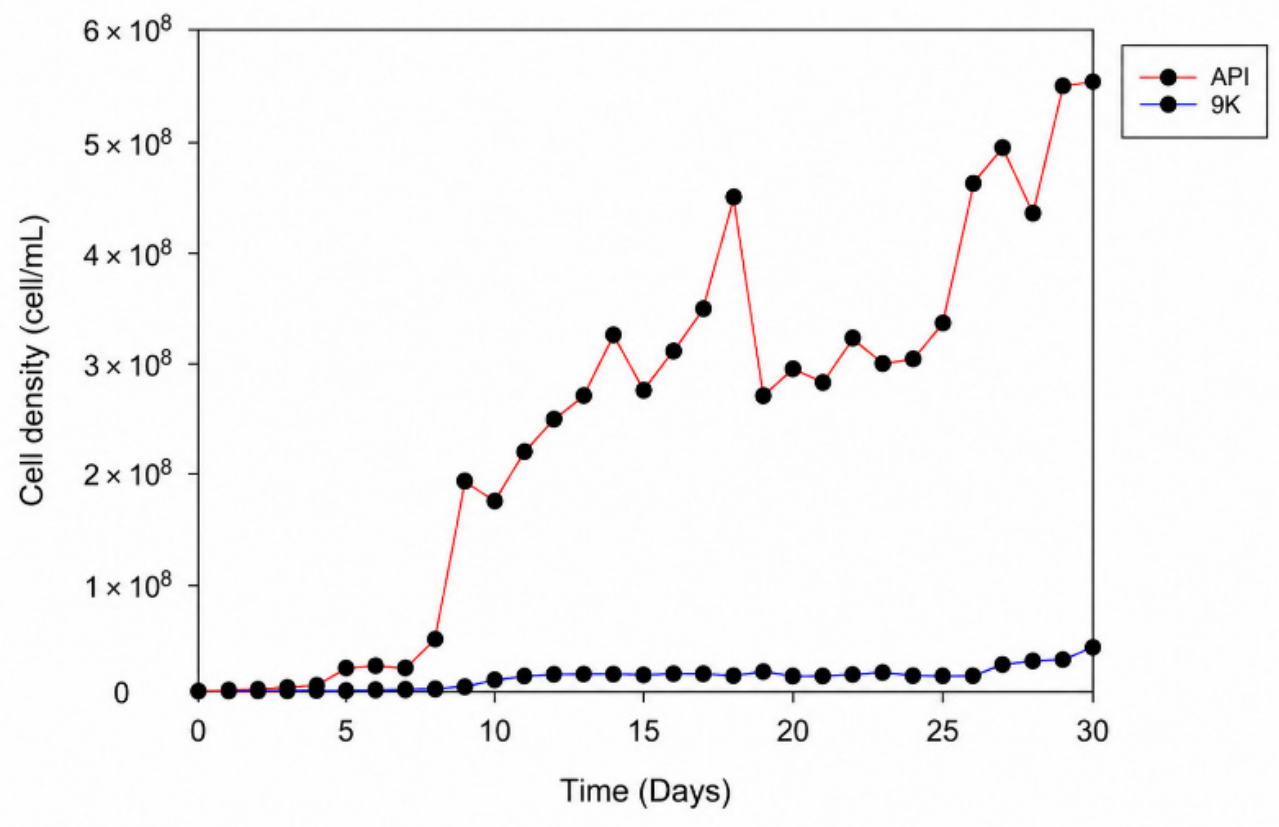
After 30 days of incubation, the API sulfate medium supported a substantially higher cell density (5.48 × 10⁸ cells/mL) than the 9K medium (3.97 × 10⁷ cells/mL) (Figure 1). Although the 9K medium was originally formulated for acidic environments, the addition of the mineral concentrate resulted in near-neutral pH values, whereas the API sulfate medium remained under slightly alkaline conditions throughout the experiment.
Previous studies have shown that environmental pH is an important factor influencing bacterial growth dynamics [31,32]. However, under the conditions evaluated in this study, pH did not appeared to be the main factor governing microbial growth, since both media maintained relatively stable pH values throughout the incubation period. Instead, the higher cell density observed in the API sulfate medium is more likely attributable to differences in medium composition. It has been reported that culture medium composition strongly influences microbial growth and metabolic performance, leading to variations in microbial activity and process efficiency depending on nutrient availability and medium formulation [33]. Therefore, the higher cell density achieved in the API sulfate medium suggests that its nutritional composition and physicochemical characteristics provided a more favorable environment for the development of the native microbial community than the 9K medium. Based on these results, the API sulfate medium was selected for all subsequent bioleaching experiments.

3.2. Isolation of Native Strains

Native microbial strains were isolated from the microbial using serial dilution followed by cross-streaking techniques. After incubating the diluted samples, three morphologically distinct colonies were identified and designated ITDB101, ITDR102, and ITDN103. These isolates were differentiated according to their colony morphology, following the criteria described in Bergey’s Manual of Systematic Bacteriology [34], including colony shape, elevation, margin, color, texture, and Gram-staining characteristics (Table 1). The purified isolates were subsequently preserved and used to evaluate their bioleaching performance.
The strains were named based on their pigmentation. Characteristics evaluated in solid medium after 48 h of incubation at 30 °C.

3.3. Evaluation of the Operational Parameters of Bioleaching by the Microbial Consortium

3.3.1. pH

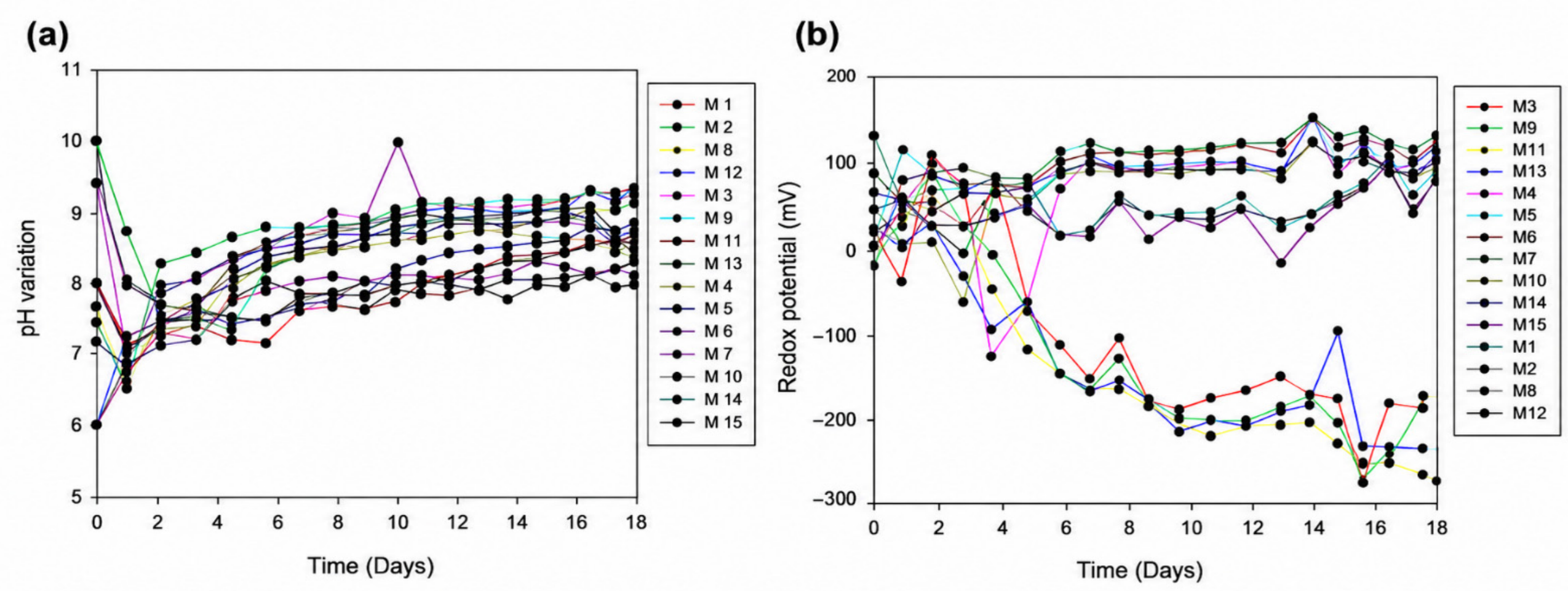
During the 18-day bioleaching process, the pH of the culture medium showed a gradual increase all treatments. Although initial pH values were adjusted to 6, 8, or 10 according to the experimental design, most treatments converged to a final pH of 7.5 to 9.5, with stabilization occurring after approximately the third day of incubation (Figure 2a). In some treatments, an abrupt increase or decrease in pH was observed during the first 48 h, followed by a stable phase for the remainder of the experiment.
Despite these initial fluctuations, the final pH values were relatively similar among treatments, and no significant differences in lithium solubilization were detected among the evaluated pH levels (p > 0.05). Similar pH stabilization has been reported in other bioleaching systems, where microbial activity, together with the physicochemical properties of the culture medium, contributes to pH regulation [35].

3.3.2. Redox Potential

During the 18-day bioleaching process, redox potential (Eh) values ranged from approximately +150 mV to −180 mV. Treatments M1–M13 correspond to the experimental conditions evaluated in this study. As shown in Figure 2b, the non-agitated treatments (M2, M3, M8, M11, and M13) developed more negative Eh values, frequently below −100 mV, whereas agitated treatments generally maintained values above +50 mV. This behavior reflects the lower oxygen availability under static conditions, which favors the establishment of a more reducing environment that may influence both microbial activity and mineral transformations.
According to Magaña & Rojas [36], negative redox potentials have been associated with the accumulation of ferrous ions (Fe2+) and reduced sulfur species, including thiosulfates and polythionates, generated during mineral reduction processes. Likewise, the black precipitate observed in the static treatments may be related to the formation of reduced iron- or sulfur-containing compounds under low redox conditions. Similar observations have been reported in anaerobic environments, where reducing conditions have been associated with hydrogen sulfide production and the activity of sulfate-reducing bacteria [36].
Although no direct relationship was observed between redox potential and lithium solubilization, these findings indicate that static conditions promoted a more reducing environment, which may influence the biochemical mechanisms involved in the bioleaching process. Similar effects of redox potential on metal mobility have also been reported by Moazzam et al. [16].

3.4. Cell Density Development During Bioleaching by the Microbial Consortium

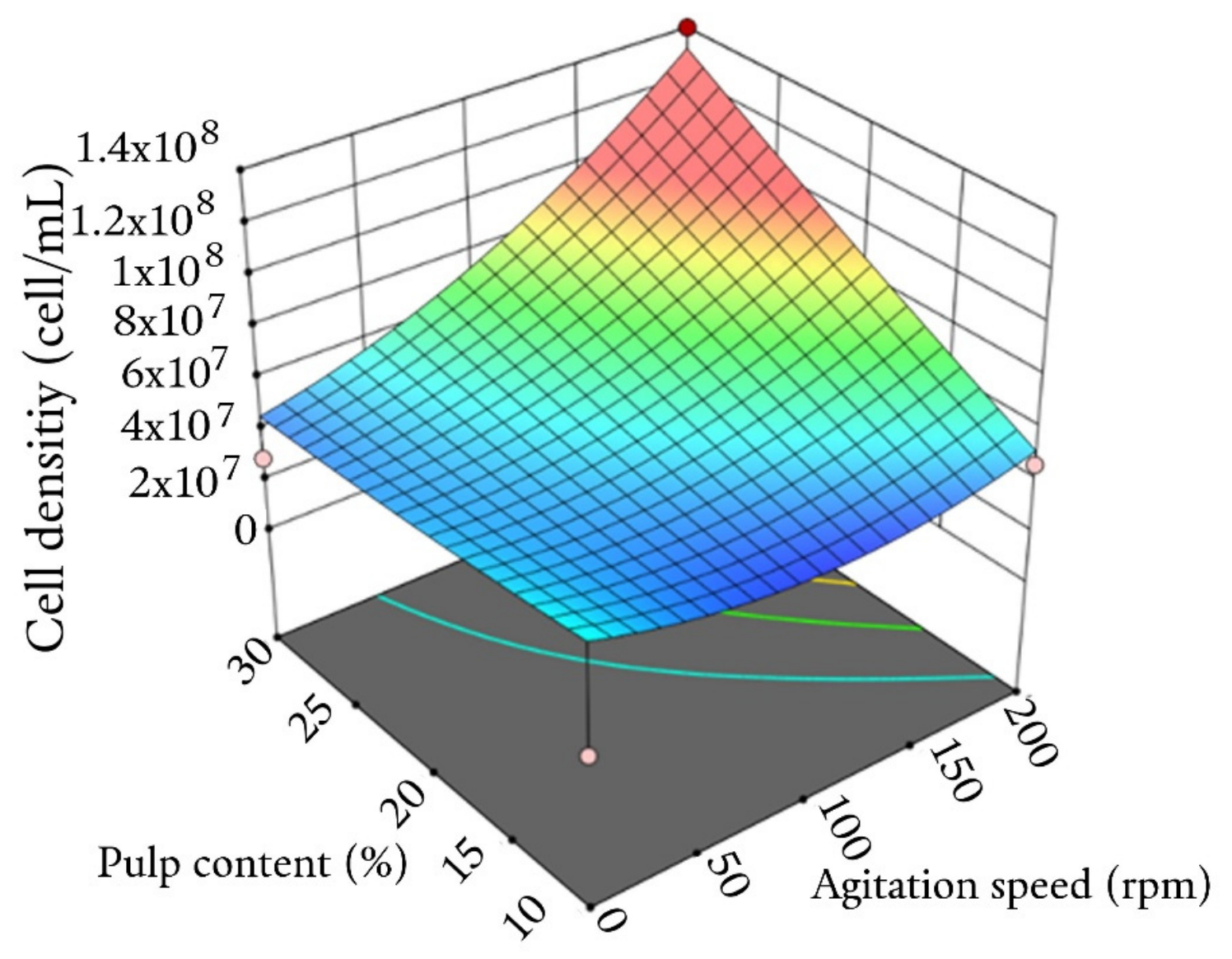
According to the ANOVA results and response surface shown in Figure 3, both pulp content and agitation speed had a statistically significant effect on cell density (p < 0.05). Increasing agitation speed resulted in higher cell densities, most likely because of improved oxygen transfer, nutrient distribution, and heat dissipation within the culture medium [37]. These conditions favor the growth of planktonic bacteria, which exhibit greater metabolic activity in well-mixed suspension systems [20]. In contrast, under low-agitation or static conditions, microbial growth appeared to shift toward biofilm formation. Although this reduced the abundance of planktonic cells, it likely enhanced nutrient exchange at the solid–liquid interface [38,39]. This dual response reflects the adaptive strategies of the native microbial consortium under different hydrodynamic conditions and may explain the variation in cell density observed among treatments.

3.5. Lithium Solubilization by the Microbial Consortium

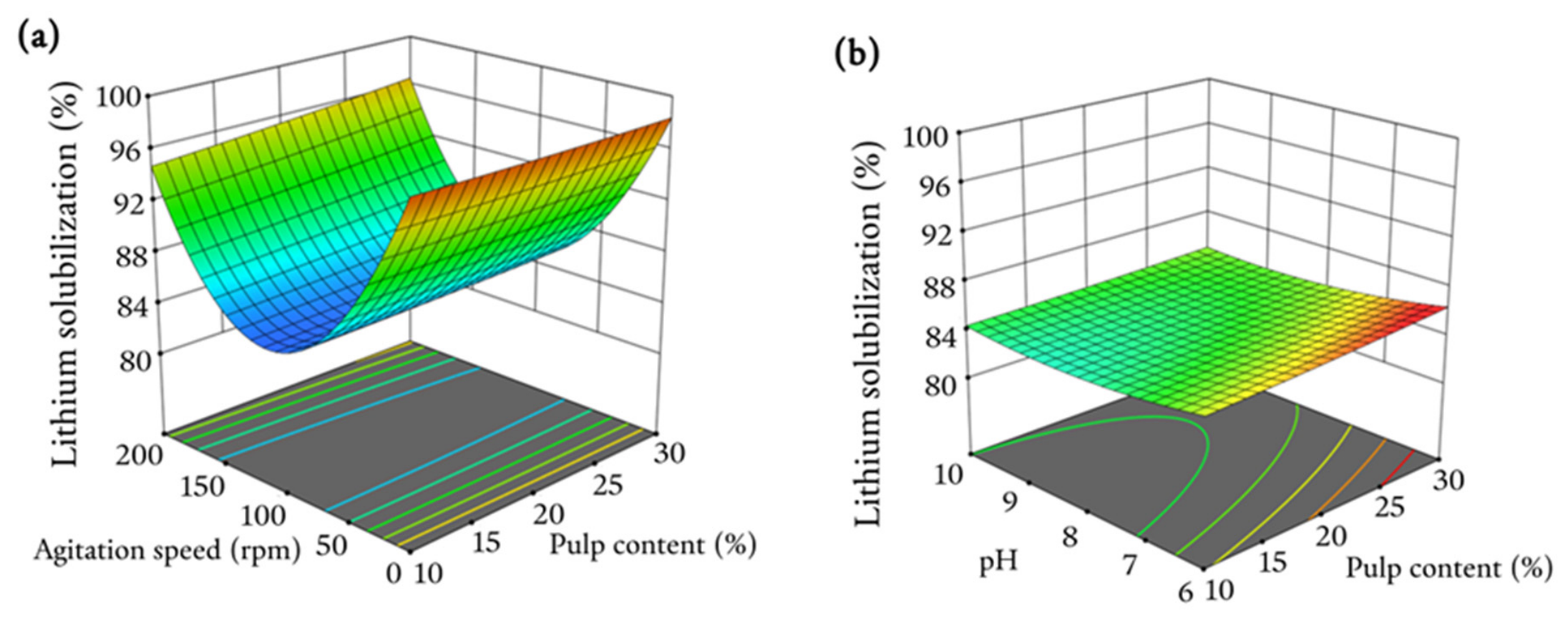
The analysis of variance indicated that the regression model was statistically significant (p = 0.0023), with an R2 value of 0.972 and a coefficient of variation (CV) of 2.05%, demonstrating an excellent model fit. Among the evaluated factors, the quadratic term for agitation speed had a statistically significant effect on lithium solubilization (p < 0.0001). This effect is also evident in the response surface shown in Figure 4a, which reveals a non-linear relationship between agitation speed and lithium recovery. The highest lithium solubilization efficiencies (>90%) were obtained under both static conditions (0 rpm) and high agitation (200 rpm), whereas intermediate agitation (100 rpm) resulted in lower solubilization values (<85%). This behavior may be explained by the different metabolic strategies adopted by the microbial consortium under distinct hydrodynamic conditions. Under static conditions, biofilm formation may promote direct mineral solubilization through ion exchange processes and the production of hydrogen sulfide, facilitating mineral dissolution by biogenic acids [20,40]. In contrast, under high agitation, enhanced oxygen transfer may stimulate microbial activity under aerobic or microaerobic conditions, favoring indirect solubilization mechanisms involving the production of organic acids [41,42].
Regarding pulp density, the highest lithium recovery was obtained at a pulp density of 30%, followed by 10%, whereas 20% resulted in lower recovery efficiency (Table 2). The response surfaces presented in Figure 3 and Figure 4a further indicate that increasing pulp density promoted both microbial growth and lithium solubilization. This behavior may be attributed to the greater availability of mineral substrate, which provides additional nutrients and stimulates microbial activity [43]. However, excessive solid loading may also restrict oxygen diffusion and interfere with cell-mineral interactions, highlighting the importance of optimizing pulp density for efficient bioleaching.
In contrast, the initial pH did not have a statistically significant effect on lithium solubilization within the evaluated range (p > 0.05), as indicated by the ANOVA results (Table 2) and the relatively flat response surface shown in Figure 4b. Although all experiments were conducted under alkaline conditions, lithium recovery remained relatively stable across the evaluated pH values. This observation is consistent with the findings of Li et al. [44], who reported that lithium extraction using Na3PO4 increased as the pH shifted toward alkaline conditions and stabilized at approximately 80% when the pH exceeded 8. According to those authors, this behavior is associated with acidification reactions that promote the formation of LiH2PO4, a compound with greater water solubility, thereby increasing the concentration of dissolved Li+ in solution. Consequently, pH plays a critical role during the chemical precipitation stage, making the identification of an optimal pH essential for maximizing lithium recovery [45].
Although all experiments were conducted using an actual lithium-bearing mineral concentrate, the bioleaching performance observed in this study may vary when different mineral resources or waste matrices are evaluated. Differences in mineralogical composition, buffering capacity, and pH dynamics can influence bacterial growth and metabolic activity, ultimately affecting lithium recovery efficiency. Consequently, additional studies are needed to evaluate and optimize the proposed bioleaching process using a broader range of mineral and waste matrices.

3.6. Evaluation of Lithium Bioleaching Under Optimal Conditions by Isolated Native Strains

A numerical optimization was performed using the experimental data, and the model identified the following conditions as optimal: a pulp density of 30%, an initial pH of 6, static incubation (0 rpm), and an incubation period of 12 days at 30 °C. Based on the second-order response surface model, an empirical equation (coded factors) was generated to predict lithium solubilization (%), as shown in Equation (2).
Li solubilization (%) = 84.36 + 0.4350 × A + (−0.5775) × B + (−1.40) × C + (−0.1925) × AB + 0.4775 × AC + 0.9625 × BC + 0.0813 × A2 + 0.7513 × B2 + 12.58 × C2
where A represents pulp density (%), B is the initial pH, and C is the agitation speed (rpm).
The optimized conditions were subsequently validated under laboratory conditions to verify the model predictions. The optimization aimed to maximize lithium solubilization by maximizing pulp density, minimizing agitation speed, and maintaining the initial pH within the evaluated range. These operating conditions were applied to both the native microbial consortium and the isolated bacterial strains, and the corresponding results are presented in the following sections.

3.6.1. pH Variation During Lithium Bioleaching by Isolated Native Strains

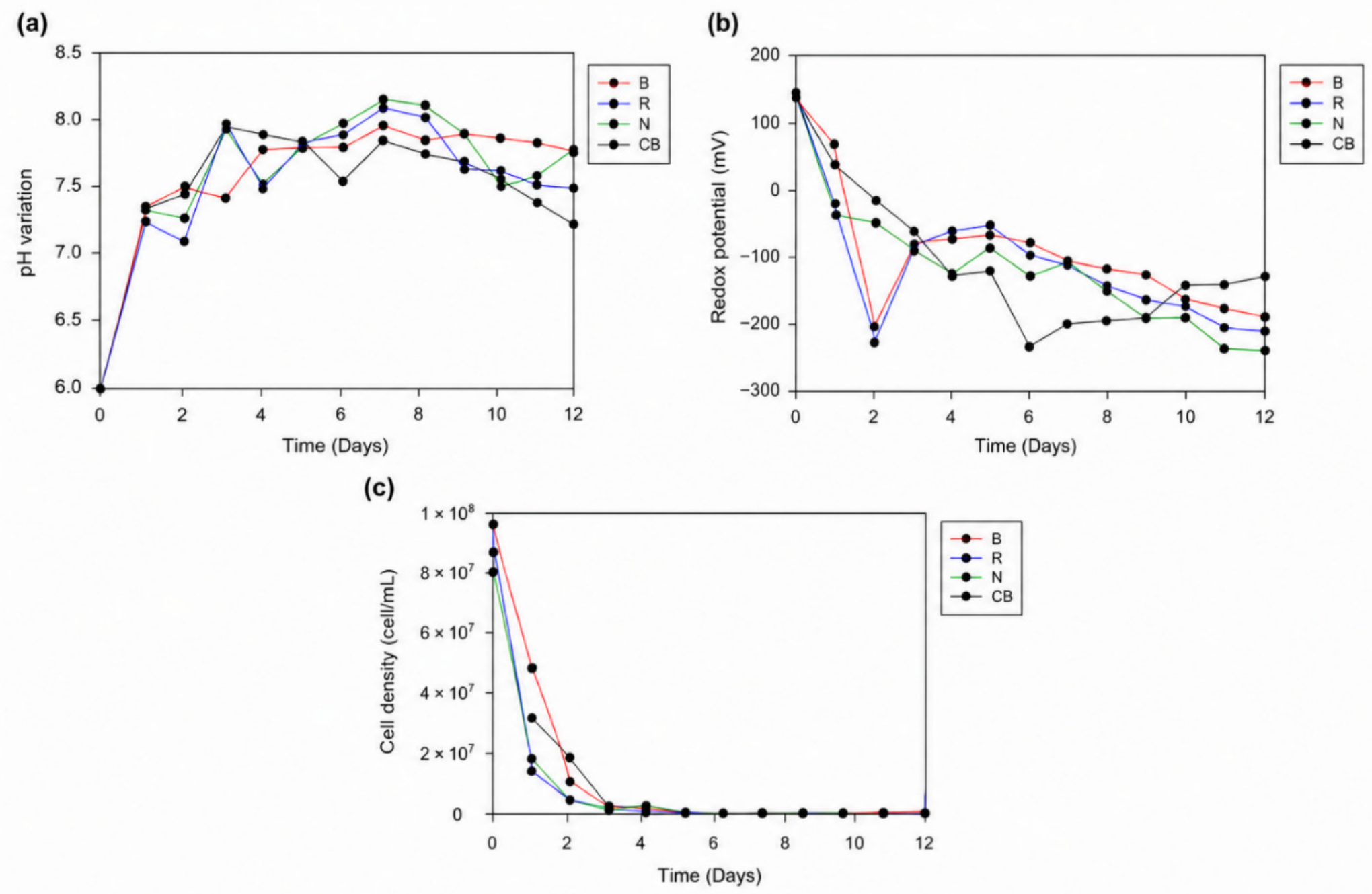
Under the optimized conditions, the pH remained relatively stable, ranging from 7.0 to 8.2 despite an initial value of 6 (Figure 5a). This behavior is consistent with the findings of [46], who reported that sulfate-reducing bacteria (SRB) exhibit optimal metal-solubilizing activity under neutral pH conditions. Within this range, microbial growth is favored, and the reduction of sulfate to sulfide promotes the release of metal ions. The hydrogen sulfide (H2S) produced reacts with dissolved metals, contributing to both metal mobilization and a gradual increase in medium alkalinity. Consequently, pH plays a fundamental role in bioleaching by regulating both microbial metabolic activity and metal solubility [47].

3.6.2. Redox Potential Behavior During Lithium Bioleaching by Isolated Native Strains

Under the optimized conditions, the redox potential remained within a negative range, consistent with the values observed in static treatments (Figure 5b). The absence of agitation likely limited oxygen transfer, creating reducing conditions that favor the activity of sulfate-reducing bacteria (SRB) and other anaerobic or microaerophilic microorganisms involved in metal solubilization [13]. Under these conditions, sulfate serves as the terminal electron acceptor during anaerobic respiration. Once transported into the cell, sulfate is activated by ATP sulfurylase, forming adenosine phosphosulfate (APS) and pyrophosphate [48]. APS, a high-energy intermediate, is subsequently reduced to sulfite, which is then converted into sulfide ions through metabolic intermediates such as metabisulfite, dithionite, trithionate, and thiosulfate [48,49]. These sulfide species contribute to the reductive dissolution of metal-bearing minerals by transferring electrons to insoluble oxides and promoting the formation of soluble metal complexes, while simultaneously increasing the alkalinity of the medium. The black precipitate observed during the experiment is consistent with the formation of ferrous sulfide (FeS), a product of microbial sulfate reduction under reducing conditions [50].

3.6.3. Cell Density Development During Lithium Bioleaching by Isolated Native Strains

As shown in Figure 5c, cell density progressively decreased after the second day of incubation, coinciding with the onset of biofilm formation. This decline suggests a transition from planktonic growth to biofilm-associated cells, as microorganisms attached to the mineral surface and established biofilm communities. By the third day, the appearance of a black precipitate indicated the production of hydrogen sulfide (H2S), which reacted with iron compounds in the medium to form ferrous sulfide (FeS) [50]. Biofilm formation represents a critical stage in the bioleaching process because it enables microorganisms to establish microenvironments that promote the concentration and solubilization of metal ions through direct metabolic activity and physicochemical interactions with the mineral surface [51].
Although the observed bioleaching performance suggests the involvement of both direct and indirect mineral dissolution mechanisms, this study did not include the identification of intermediate metabolites or reaction byproducts generated during the process. Therefore, the proposed mechanisms are inferred from the experimental conditions and supported by previous studies reporting the participation of biofilms, organic acids, and sulfur-containing metabolites in mineral dissolution, as discussed throughout this section. Additional studies, including metabolite profiling and detailed mineralogical characterization of the residues, are needed to confirm the specific pathways responsible for lithium solubilization in this system.
Furthermore, the possible formation of microbial metabolites and the co-solubilization of other elements may influence the selectivity of lithium recovery and the efficiency of subsequent purification processes. Accordingly, further characterization of dissolved species and secondary metabolites would provide valuable insight into their potential effects on lithium recovery and purification.

3.7. Comparison of Lithium Bioleaching Between Isolated Native Strains and the Microbial Consortium

Under the optimal conditions predicted by the response surface model (30% pulp density, initial pH 6, static incubation at 0 rpm, and 12 days at 30 °C), the experimental validation confirmed a lithium solubilization of 94.5% by the native microbial consortium (Table 3), in close agreement with the value predicted by the model. This result validates the optimization strategy and demonstrates the predictive capability of the response surface model.
As shown in Table 3, all biotic treatments achieved lithium solubilization values exceeding 90%, whereas the abiotic control showed significantly lower recovery. The highest lithium solubilization was obtained with the native microbial consortium (biotic control), which outperformed the treatments inoculated with the individual bacterial strains (ITDB101, ITDR102, and ITDN103). These findings indicate that the native microbial consortium provided a more favorable environment for bioleaching than the isolated strains under the evaluated conditions. Native bacteria isolated from mineral-rich environments are generally well adapted to toxic and nutrient-limited conditions, enabling them to maintain metabolic activity and promote mineral dissolution under environmental stress [18]. Additionally, several studies have reported that mixed microbial cultures achieve greater metal recovery than pure strains, because of cooperative interactions, including substrate exchange, pH regulation, and complementary metabolic roles [18,52]. Collectively, these findings support the use of native microbial consortia as effective and environmentally sustainable strategy for lithium recovery.

3.8. X-Ray Diffraction Analysis

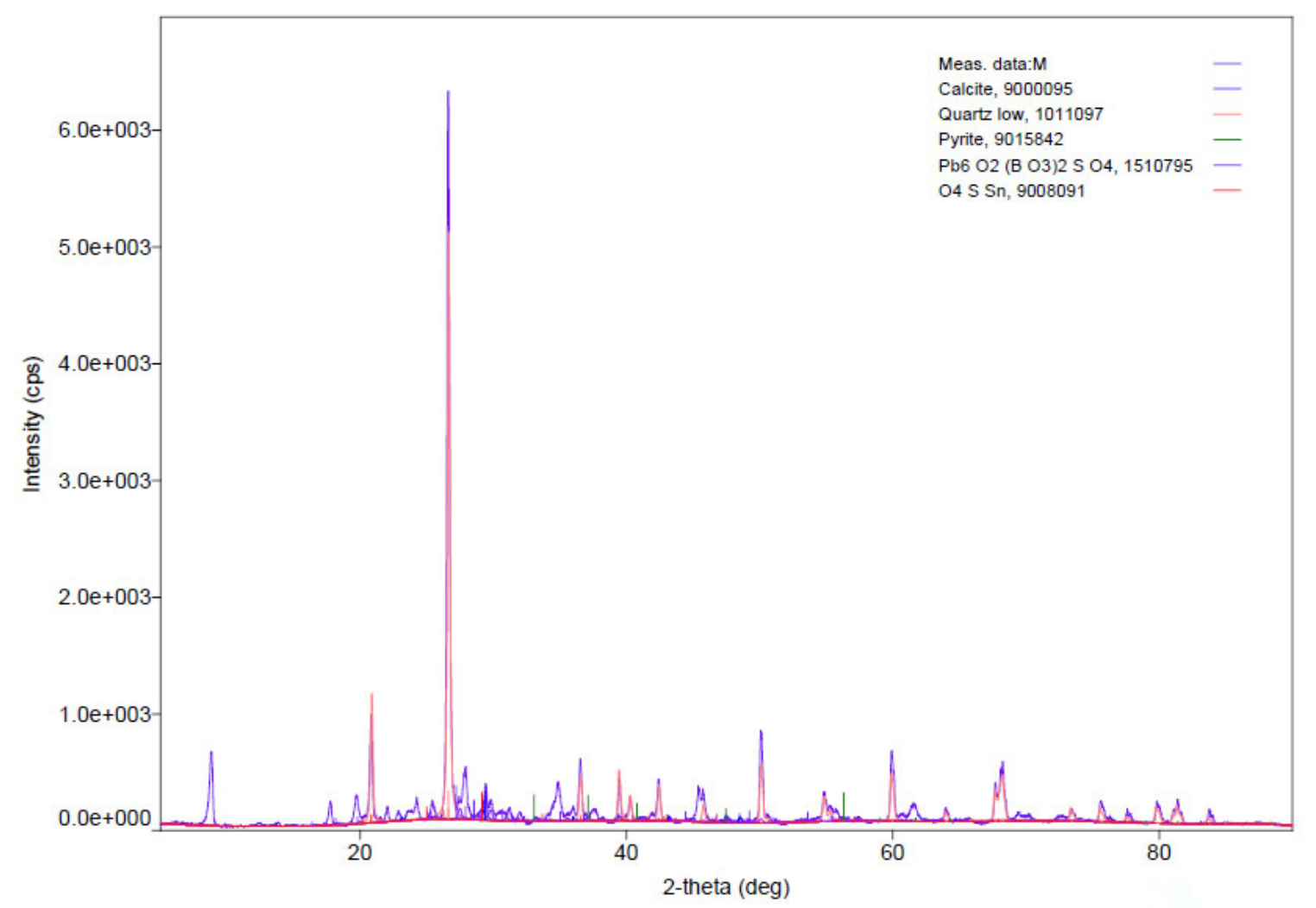
X-ray diffraction (XRD) analysis of the mineral concentrate identified five major crystalline phases: quartz (SiO2), calcite (CaCO3), tin oxide (SnO2), pyrite (FeS2), and Pb6O2(BO3)2SO4. The corresponding diffraction pattern is presented in Figure 6, which shows the characteristic diffraction peaks of the identified mineral phases. Quantitative phase analysis by the Reference Intensity Ratio (RIR) method indicated that quartz and calcite were the predominant crystalline components, accounting for approximately 92% and 5.4% of the total crystalline content, respectively.

3.9. Comparison of Diffraction Patterns

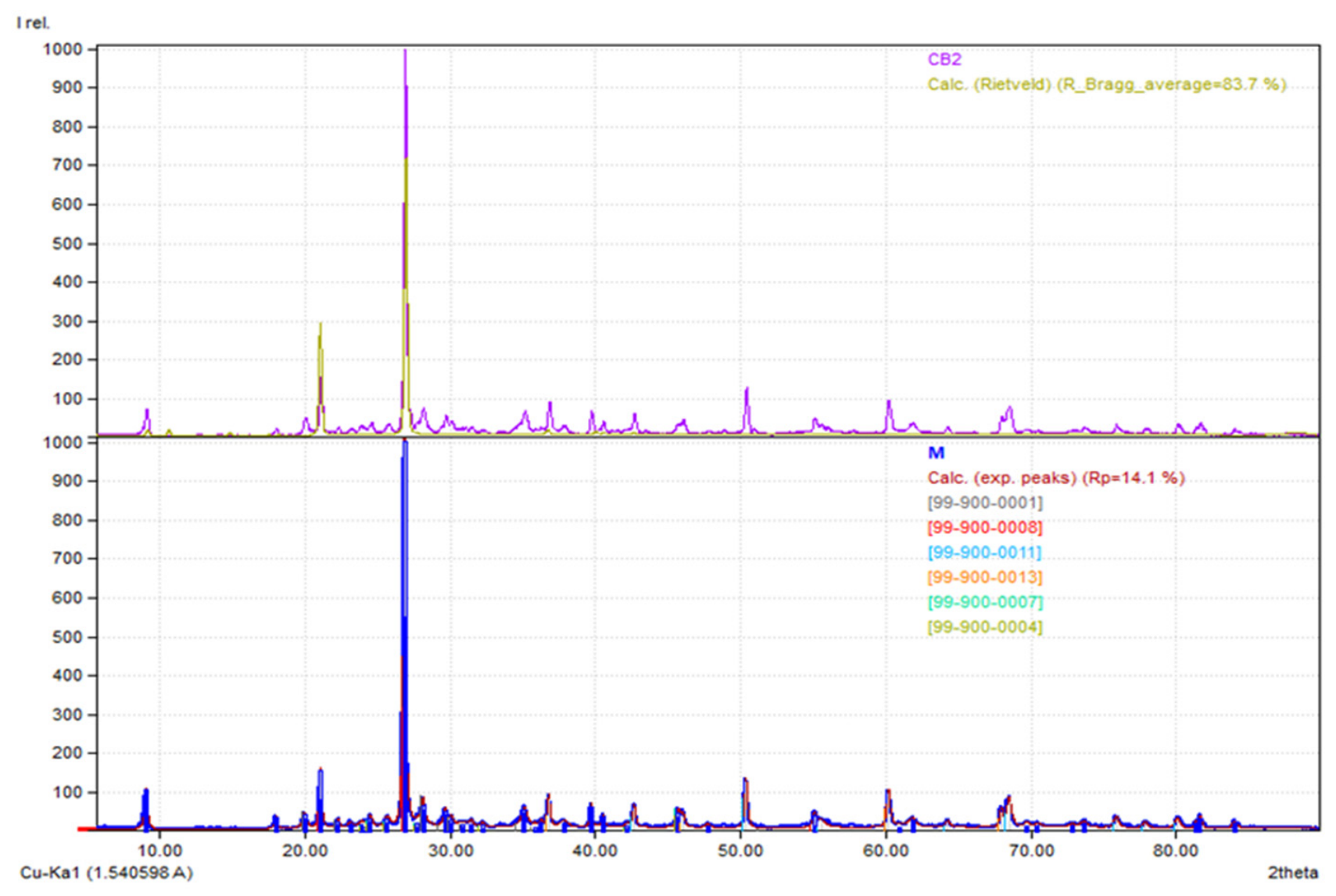
Atomic absorption spectrometry (AAS) analysis of the mineral concentrate used in this study determined a lithium concentration of 0.0052%, which is well below the approximate detection limit of X-ray diffraction (XRD), estimated at approximately 0.5%. This explains the absence of diffraction peaks associated with lithium-bearing phases. According to information provided by the mining company and supported by previous mineralogical studies, the concentrate corresponds to a polylithionite-type clay, [KLi2Al(Si4O10)(F, OH)2] [25], in which lithium is structurally bound within a silicate matrix. Although lithium could not be detected directly by XRD, comparison of the diffraction patterns of the untreated sample (blank) and the optimized biotic treatment revealed clear differences in the mineralogical composition. As shown in Figure 7, both patterns exhibited a convergence index of 83.7%, indicating that measurable mineralogical changes occurred following the bioleaching treatment. These changes may reflect the partial dissolution or transformation of mineral phases resulting from microbial activity during the bioleaching process.
Despite the relatively low lithium concentration in the mineral concentrate, high lithium solubilization efficiencies were achieved during bioleaching. This behavior may be attributed to microorganism-mediated modification of the mineral surface through ion-exchange processes and the production of metabolites that promote mineral dissolution. These mechanisms may progressively destabilize the main mineral phases, exposing lithium-containing species associated with more abundant elements, including aluminum-bearing minerals [53]. However, since the dissolution of other metallic elements was not monitored, the selectivity of the process toward lithium could not be determined. Therefore, future studies should evaluate the simultaneous solubilization of additional elements to assess the selectivity of the bioleaching process and its implications for downstream lithium recovery.

4. Conclusions

The results of this study demonstrate the technical feasibility of recovering lithium from mineral concentrates through a one-step bioleaching process using a native bacterial consortium. The consortium, obtained through in situ enrichment and cultivation in API sulfate medium, achieved higher lithium solubilization than the individual bacterial strains. Under the optimized conditions (30% pulp density, an initial pH of 6, and static incubation), lithium solubilization exceeded 90%, with the highest recovery obtained using the complete native consortium. Throughout the process, the system stabilized under alkaline and reducing conditions that favored biofilm formation and the production of metabolites, including organic acids and sulfide species, which are known to promote mineral dissolution. X-ray diffraction analysis also revealed changes in the crystalline phases of the mineral matrix following bioleaching, supporting the occurrence of bioleaching-induced mineral transformations during the process. Overall, these findings demonstrate the potential of native microbial consortia as an effective and environmentally sustainable alternative for lithium recovery from mineral concentrates. This approach may be particularly valuable for the treatment of low-grade or mineralogically complex lithium resources, where conventional extraction methods are often less efficient. Further studies focused on metabolite characterization, process selectivity, and the recovery of co-solubilized elements will contribute to improving the understanding and practical application of this bioleaching strategy.

Author Contributions

Conceptualization, D.R.-J., D.E.Z.-Á., H.M.-R. and M.G.Q.-A.; methodology, G.A.M.-R. and M.G.Q.-A.; software, P.G.V.-O., J.A.R.-C., D.R.-J. and M.G.Q.-A.; validation, P.G.V.-O., J.A.R.-C. and A.K.T.-C.; formal analysis, H.M.-R., H.M.-R., N.U.-E., K.T.-F., A.K.T.-C. and G.F.-R.; investigation, D.E.Z.-Á., M.G.Q.-A. and G.A.M.-R.; resources, D.R.-J., P.G.V.-O. and J.A.R.-C.; data curation, M.G.Q.-A., G.F.-R. and D.E.Z.-Á.; writing—original draft preparation, M.G.Q.-A. and G.A.M.-R.; writing—review and editing, D.R.-J., D.E.Z.-Á. and H.M.-R.; visualization, P.G.V.-O. and J.A.R.-C.; supervision, D.R.-J., D.E.Z.-Á. and H.M.-R.; project administration, D.R.-J., D.E.Z.-Á., H.M.-R. and P.G.V.-O.; funding acquisition, J.A.R.-C., P.G.V.-O., H.M.-R., D.R.-J., N.U.-E., K.T.-F., D.E.Z.-Á., G.F.-R. and A.K.T.-C. All authors have read and agreed to the published version of the manuscript.

Funding

This research received no external funding.

Data Availability Statement

The original contributions presented in this study are included in the article. Further inquiries can be directed to the corresponding authors.

Conflicts of Interest

The authors declare no conflicts of interest.

Abbreviations

The following abbreviations are used in this manuscript:
ITDInstituto Tecnológico de Durango
EPSExtracellular polymeric substances
APISulfate-Reducing Bacteria Broth
BCBiotic control
ACAbiotic control
AASAtomic absorption spectrometry
XRDX-ray diffraction
EhRedox potential
M1-M13Mineral treatments
Fe2+Ferrous ions
H2SHydrogen sulfide
SRBSulfate-reducing bacteria
APSAdenosine phosphosulfate
FeSFerrous sulfide
BStrain B
NStrain N
RStrain R
SiO2Quartz
CaCO3Calcite
SnO2Tin oxide
FeS2Pyrite
RIRRietveld refinement

References

  1. Witker Velásquez, J. Derecho Minero, 2nd ed.; Márquez Romero, R., Rocha Cacho, W.V., Eds.; Solar, Servicios Editoriales, S.A. de C.V.: Ciudad de México, México, 2021. [Google Scholar]
  2. Valencia Giraldo, A. La Era Del Litio. Rev. Colomb. Mater. 2016, 9, 1–14. Available online: https://bibliotecadigital.udea.edu.co/entities/publication/67b8a36f-c9d6-43c4-a5bd-838c4e5364a9 (accessed on 30 June 2026).
  3. Gundermann, H.; Göbel, B. Comunidades Indígenas, Empresas del Litio y Sus Relaciones en el Salar de Atacama. Chungará 2018, 50, 471–486. [Google Scholar] [CrossRef] [Scilit]
  4. Gitlin, M.; Bauer, M. Lithium: Current State of the Art and Future Directions. Int. J. Bipolar Disord. 2024, 12, 40. [Google Scholar] [CrossRef] [Scilit] [PubMed]
  5. Yu, H.; Phuntsho, S.; Naidu, G.; Askari, M.; Shon, H.K. Advances in Capacitive Deionization for Selective Lithium Recovery from Brines: Mechanisms, Strategies, and Future Perspectives. Desalination 2026, 629, 120098. [Google Scholar] [CrossRef] [Scilit]
  6. Ali, A.; Afrin, S.; Asif, A.H.; Arafat, Y.; Azhar, M.R. A Comprehensive Review on the Recovery of Lithium from Lithium-Ion Batteries and Spodumene. J. Environ. Manag. 2025, 391, 126512. [Google Scholar] [CrossRef] [Scilit] [PubMed]
  7. Meroño Esparza, E. Estudio del Mineral Litio en Chile y Otros Países. Bachelor’s Thesis, Universidad Politécnica de Cartagena, Maule, Chile, 2019. [Google Scholar]
  8. Quille Calizaya, G. Obtención de Carbonato de Litio Mediante Proceso de Lixiviación, Concentración, Evaporación y Precipitación. Rev. Investig. 2022, 11, 79–93. [Google Scholar] [CrossRef] [Scilit]
  9. Liu, Z.; Cheng, Y.; Ma, Y.; Pan, T.; Li, Z.; Deng, L.; He, M.; Luo, J.; Rao, H.; Wen, J.; et al. Different Phase Lithium Isotopic Geochemistry of Clay Minerals in Qinghai-Tibet Plateau Lithium-Rich Salt Lakes: Implications for Lithium Enrichment Mechanisms and Resource Potential. Ore Geol. Rev. 2026, 193, 107317. [Google Scholar] [CrossRef] [Scilit]
  10. SEMARNAT. Información Adicional al Trámite SEMARNAT 07 035 B Propuesta de Remediación Modalidad B Pasivo Ambiental. Available online: https://www.gob.mx/semarnat/documentos/tramite-semarnat-07-035-b#:~:text=Se%20consideran%20pasivo%20ambiental%20a,implican%20una%20obligaci%C3%B3n%20de%20remediaci%C3%B3n (accessed on 20 May 2026).
  11. Misari Chuquipoma, F.S. BIOLIXIVIACIÓN: Tecnología de la Lixiviación Bacteriana de Minerales, 1st ed.; Organismo Supervisor de la Inversión en Energía y Minería, Ed.; IAKOB Comunicadores y Editores S.A.C: Lima, Perú, 2016; ISBN 978-612-46124-8-0. [Google Scholar]
  12. Wu, W.; Liu, X.; Zhang, X.; Li, X.; Qiu, Y.; Zhu, M.; Tan, W. Mechanism Underlying the Bioleaching Process of LiCoO2 by Sulfur-Oxidizing and Iron-Oxidizing Bacteria. J. Biosci. Bioeng. 2019, 128, 344–354. [Google Scholar] [CrossRef] [Scilit] [PubMed]
  13. González Romo, E.A. Biorreducción de Especies Solubles e Insolubles de Hierro. Ph.D. Thesis, Universidad Complutense de Madrid, Madrid, Spain, 2015. [Google Scholar]
  14. Amar, A.; Castro, C.; Bernardelli, C.; Costa, C.S.; Donati, E. Influence of UVA Radiation on Growth, Biofilm Formation and Bioleaching Capacity of Leptospirillum Ferrooxidans. Hydrometallurgy 2021, 201, 105574. [Google Scholar] [CrossRef] [Scilit]
  15. Danaee, S.; Vo, P.H.N.; Malik, S.; Ralph, P.J. Can Bioleaching of Critical Metals from Secondary Resources Be a Sustainable Extraction Solution? J. Ind. Eng. Chem. 2026, 157, 36–56. [Google Scholar] [CrossRef] [Scilit]
  16. Moazzam, P.; Boroumand, Y.; Rabiei, P.; Baghbaderani, S.S.; Mokarian, P.; Mohagheghian, F.; Mohammed, L.J.; Razmjou, A. Lithium Bioleaching: An Emerging Approach for the Recovery of Li from Spent Lithium Ion Batteries. Chemosphere 2021, 277, 130196. [Google Scholar] [CrossRef] [Scilit] [PubMed]
  17. Yang, X.; Jia, X.; Sun, J.; Shang, B.; Yang, D.; Wu, Y.; Wang, S.; Zhu, L.; Wang, Z.; Liu, J. Sustainable Recycling Technologies for Lithium-Ion Battery Cathode Materials: Recent Progress. Green Technol. Sustain. 2026, 4, 100380. [Google Scholar] [CrossRef] [Scilit]
  18. Sethurajan, M.; Gaydardzhiev, S. Bioprocessing of Spent Lithium Ion Batteries for Critical Metals Recovery–A Review. Resour. Conserv. Recycl. 2021, 165, 105225. [Google Scholar] [CrossRef] [Scilit]
  19. Rehman, H.; Debik, E.; Ulucan-Altuntas, K.; Manav-Demir, N.; Canci, B.; Iqbal, M.; Barros, R.; Rehman, W.u.; Mohanty, S.K.; Khan, A.H.A. Bioleaching of Waste-Derived Rare Earth Elements: An Integrated Approach with Meta-Analysis and Predictive Analytics for Scale-Up. Results Eng. 2025, 28, 107720. [Google Scholar]
  20. Saavedra, A.; Cortón, E. Biotecnología Microbiana Aplicada a La Minería. Quim. Viva 2014, 13, 148–163. [Google Scholar]
  21. Vardanyan, A.; Vardanyan, N.; Khachatryan, A.; Zhang, R.; Sand, W. Adhesion to Mineral Surfaces by Cells of Leptospirillum, Acidithiobacillus and Sulfobacillus from Armenian Sulfide Ores. Minerals 2019, 9, 69. [Google Scholar] [CrossRef] [Scilit]
  22. Kirk, R.D.; Newsome, L.; Falagan, C.; Hudson-Edwards, K.A. Bioleaching of Lithium from Jadarite, Spodumene, and Lepidolite Using Acidiothiobacillus Ferrooxidans. Front. Microbiol. 2024, 15, 1467408. [Google Scholar] [CrossRef] [Scilit] [PubMed]
  23. Sedlakova-Kadukova, J.; Marcincakova, R.; Luptakova, A.; Vojtko, M.; Fujda, M.; Pristas, P. Comparison of Three Different Bioleaching Systems for Li Recovery from Lepidolite. Sci. Rep. 2020, 10, 14594. [Google Scholar] [CrossRef] [Scilit] [PubMed]
  24. Rezza, I.; Salinas, E.; Calvente, V.; Benuzzi, D.; Tosetti, M.I.S. de Extraction of Lithium from Spodumene by Bioleaching. Lett. Appl. Microbiol. 1997, 25, 172–176. [Google Scholar] [CrossRef] [Scilit] [PubMed]
  25. Alatorre Campos, A.E.; Santillán Alcántara, Y. Yacimientos de Litio. Geomimet 2020, 47, 17–20. [Google Scholar]
  26. Silverman, M.P.; Lundgren, D.G. Studies on the Chemoautotrophic Iron Bacterium Ferrobacillus ferrooxidans II. J. Bacteriol. 1959, 78, 326–331. [Google Scholar] [CrossRef] [Scilit] [PubMed]
  27. Vargas Rubio, K.I.; Medrano Roldán, H.; Reyes Jáquez, D. Molecular Dynamics Simulation of a Nanocluster Obtained from the Mining Industry. Acta Univ. 2021, 31, 1–10. [Google Scholar] [CrossRef] [Scilit]
  28. Puente Flores, M.A. Aislamiento y Caracterización de Cepas Nativas de Bacterias Benéficas Para Maíz a Partir de Maíces Criollos. Doctoral Thesis, Universidad Autónoma Agraria Antonio Narro, Torreón, México, 2016. [Google Scholar]
  29. Bou, G.; Fernández-Olmos, A.; García, C.; Sáez-Nieto, J.A.; Valdezate, S. Métodos de Identificación Bacteriana En El Laboratorio de Microbiología. Enferm. Infecc. Microbiol. Clin. 2011, 29, 601–608. [Google Scholar] [CrossRef] [Scilit] [PubMed]
  30. Ferreira, S.L.C.; Bezerra, M.A.; Santos, A.S.; dos Santos, W.N.L.; Novaes, C.G.; de Oliveira, O.M.C.; Oliveira, M.L.; Garcia, R.L. Atomic Absorption Spectrometry–A Multi Element Technique. Trends Anal. Chem. 2018, 100, 1–6. [Google Scholar] [CrossRef] [Scilit]
  31. Grosso, F.; Bååth, E.; De Nicola, F. Bacterial and Fungal Growth on Different Plant Litter in Mediterranean Soils: Effects of C/N Ratio and Soil PH. Appl. Soil Ecol. 2016, 108, 1–7. [Google Scholar] [CrossRef] [Scilit]
  32. García-Viñola, V.; Ezenarro, J.; Reguant, C.; Rozès, N.; Malfeito Ferreira, M. Interaction Effects of Fumaric Acid, PH and Ethanol on the Growth of Lactic and Acetic Acid Bacteria in Planktonic and Biofilm States. Food Microbiol. 2025, 131, 104808. [Google Scholar] [CrossRef] [Scilit] [PubMed]
  33. Chandakhiaw, T.; Teaumroong, N.; Piromyou, P.; Songwattana, P.; Tanthanuch, W.; Tancharakorn, S.; Khumkoa, S. Efficiency of Penicillium Sp. and Aspergillus Sp. for Bioleaching Lithium Cobalt Oxide from Battery Wastes in Potato Dextrose Broth and Sucrose Medium. Results Eng. 2024, 24, 103170. [Google Scholar] [CrossRef] [Scilit]
  34. De vos, P.; Garrity, G.M.; Jones, D.; Krieg, N.R.; Ludwig, W.; Rainey, F.A.; Shleifer, K.-H.; Whitman, W.B. Bergey’s Manual of Systematic Bacteriology, 2nd ed.; Whitman, W.B., Ed.; Springer: Athens, Georgia, 2009; Volume 3, ISBN 978-0-387-95041-9. [Google Scholar]
  35. Álvarez Márquez, D.E. Principales Microorganismos Sulfato Reductores (MSR) de Reactores Anaerobios Alimentados Con Efluentes Ácidos, Una Revisión Bibliográfica. Rev. Colomb. Biotecnol. 2022, 24, 62–76. [Google Scholar] [CrossRef] [Scilit]
  36. Magaña-Haynes, M.E.; Rojas-Vargas, A. Aplicación de La Velocidad de Aeración Para La Lixiviación Amoniacal de Ni y Co a Escala Industrial. Tecnol. Quím. 2013, 33, 46–58. [Google Scholar]
  37. Mustafa, H.K.; Anwer, S.S.; Zrary, T.J. Influence of PH, Agitation Speed, and Temperature on Growth of Fungi Isolated from Koya, Iraq. Kuwait J. Sci. 2023, 50, 657–664. [Google Scholar] [CrossRef] [Scilit]
  38. Crouzet, M.; Le Senechal, C.; Brözel, V.S.; Costaglioli, P.; Barthe, C.; Bonneu, M.; Garbay, B.; Vilain, S. Exploring Early Steps in Biofilm Formation: Set-up of an Experimental System for Molecular Studies. BMC Microbiol. 2014, 14, 253. [Google Scholar] [CrossRef] [Scilit] [PubMed]
  39. Zhou, Y.; Kiely, P.D.; Kibbee, R.; Ormeci, B. Effect of Polymeric Support Material on Biofilm Development, Bacterial Population, and Wastewater Treatment Performance in Anaerobic Fixed-Film Systems. Chemosphere 2021, 264, 128477. [Google Scholar] [CrossRef] [Scilit] [PubMed]
  40. Roy, J.J.; Cao, B.; Madhavi, S. A Review on the Recycling of Spent Lithium-Ion Batteries (LIBs) by the Bioleaching Approach. Chemosphere 2021, 282, 130944. [Google Scholar] [CrossRef] [Scilit] [PubMed]
  41. Pudi, A.; Rezaei, M.; Signorini, V.; Andersson, M.P.; Baschetti, M.G.; Mansouri, S.S. Hydrogen Sulfide Capture and Removal Technologies: A Comprehensive Review of Recent Developments and Emerging Trends. Sep. Purif. Technol. 2022, 298, 121448. [Google Scholar] [CrossRef] [Scilit]
  42. Ghassa, S.; Farzanegan, A.; Gharabaghi, M.; Abdollahi, H. Novel Bioleaching of Waste Lithium Ion Batteries by Mixed Moderate Thermophilic Microorganisms, Using Iron Scrap as Energy Source and Reducing Agent. Hydrometallurgy 2020, 197, 105465. [Google Scholar] [CrossRef] [Scilit]
  43. Kushkevych, I. Bacterial Nutrition and Growth. In Bacterial Physiology and Biochemistry; Elsevier: Amsterdam, The Netherlands, 2023; pp. 91–150. [Google Scholar]
  44. Li, H.; Li, H.; Liang, J.; Yan, H.; Cai, Z. Study on the Synergistic Extraction of Lithium from Spent Lithium Cobalt Oxide Batteries by Molten Salt Electrolysis and Two-Step Precipitation Method. Crystals 2021, 11, 1163. [Google Scholar] [CrossRef] [Scilit]
  45. Garcia, L.V.; Ho, Y.-C.; Myo Thant, M.M.; Han, D.S.; Lim, J.W. Lithium in a Sustainable Circular Economy: A Comprehensive Review. Processes 2023, 11, 418. [Google Scholar] [CrossRef] [Scilit]
  46. Steed, V.S.; Suidan, M.T.; Gupta, M.; Miyahara, T.; Acheson, C.M.; Sayles, G.D. Development of a Sulfate-Reducing Biological Process to Remove Heavy Metals from Acid Mine Drainage. Water Environ. Res. 2000, 72, 530–535. [Google Scholar] [CrossRef] [Scilit]
  47. Hien Hoa, T.; Liamleam, W.; Annachhatre, A. Lead Removal through Biological Sulfate Reduction Process. Bioresour. Technol. 2007, 98, 2538–2548. [Google Scholar] [CrossRef] [Scilit] [PubMed]
  48. Feria Jiménez, D.D. Evaluación Del Recuento de Bacterias Por El Método de Dilución Por Extinsión-Método API Rp38 Para El Uso de Biocidas en la Planta de Tratamiento Carrizo Lote X. Bachelor’s Thesis, Universidad Nacional de Piura, Castilla, Peru, 2019. [Google Scholar]
  49. Madigan, M.T.; Martinko, J.M.; Bender, K.S.; Buckley, D.H.; Stahl, D.A. Diversidad Metabólica de Los Microorganismos. In Brock. Biología de los Microoganismos; Martín-Romo, M., Ed.; Pearson: Madrid, Spain, 2015; pp. 419–420. ISBN 9788490352809. [Google Scholar]
  50. Corrales, L.C.; Antolinez Romero, D.M.; Bohórquez Macías, J.A.; Corredor Vargas, A.M. Bacterias Anaerobias: Procesos Que Realizan y Contribuyen a La Sostenibilidad de La Vida En El Planeta. Nova 2015, 13, 55–81. [Google Scholar] [CrossRef] [Scilit]
  51. Bellenberg, S.; Huynh, D.; Poetsch, A.; Sand, W.; Vera, M. Proteomics Reveal Enhanced Oxidative Stress Responses and Metabolic Adaptation in Acidithiobacillus Ferrooxidans Biofilm Cells on Pyrite. Front. Microbiol. 2019, 10, 592. [Google Scholar] [CrossRef] [Scilit] [PubMed]
  52. Sajjad, W.; Zheng, G.; Ma, X.; Xu, W.; Ali, B.; Rafiq, M.; Zada, S.; Irfan, M.; Zeman, J. Dissolution of Cu and Zn-Bearing Ore by Indigenous Iron-Oxidizing Bacterial Consortia Supplemented with Dried Bamboo Sawdust and Variations in Bacterial Structural Dynamics: A New Concept in Bioleaching. Sci. Total Environ. 2020, 709, 136136. [Google Scholar] [CrossRef] [Scilit] [PubMed]
  53. Aylmore, M.G.; Merigot, K.; Rickard, W.D.A.; Evans, N.J.; McDonald, B.J.; Catovic, E.; Spitalny, P. Assessment of a Spodumene Ore by Advanced Analytical and Mass Spectrometry Techniques to Determine Its Amenability to Processing for the Extraction of Lithium. Miner. Eng. 2018, 119, 137–148. [Google Scholar] [CrossRef] [Scilit]
Figure 1. Cell density kinetics for sulfate API and 9K culture media. Rapid and exponential growth was observed in the sulfate API medium.
Materials 19 02855 g001
Figure 2. pH (a) and redox potential (b) behavior over time for the experimental treatments (M1–M13). The pH remained stable in most trials, while the Eh decreased in the tests without agitation (M2, M3, M8, M11, and M13).
Materials 19 02855 g002
Figure 3. Response surface plot of the combined effect of pulp content (%) and agitation speed (rpm) on cell density (cell/mL).
Materials 19 02855 g003
Figure 4. Three-dimensional response surface plots showing the effects of the evaluated factors on lithium solubilization. (a) Combined effect of agitation speed (rpm) and pulp content (%); and (b) combined effect of pH and pulp content (%).
Materials 19 02855 g004
Figure 5. Kinetics of pH (a), redox potential (b), and cell density (c) for the optimal treatments, including the biotic control (BC) and the isolated strains: B (strain B), N (strain N), and R (strain R). The treatments were carried out at 30 °C, with a pulp content of 30%, and an initial pH of 6 without agitation.
Materials 19 02855 g005
Figure 6. Diffraction pattern of the mineral concentrate before biolixiviation. Five major crystalline phases were identified: quartz (SiO2), calcite (CaCO3), tin oxide (SnO2), pyrite (FeS2), and Pb6O2(BO3)2SO4.
Materials 19 02855 g006
Figure 7. Comparison of the diffraction pattern between the blank and the BC sample (biotic control) with a convergence between phases of 83.7%.
Materials 19 02855 g007
Table 1. Colonial and cellular morphological characteristics of isolated bacterial strains.
StrainColony FormBorderTransparencyBrightnessColourTextureElevationConsistencyCell FormGroupingGram
BCircularEntireTransparentBrilliantNon-pigmentedSmoothFlatSoftCocoNo groupingNegative
NIrregularCorrugatedTransparentBrilliantslightly orangeRuggedUmbonateHardCocoNo groupingNegative
RIrregularCorrugatedTransparentBrilliantslightly pinkRuggedPulvinateHardCocoNo groupingNegative
Table 2. Effect of the pH, pulp density, and agitation on the cell density and lithium solubilization.
Experimental RunpHPulp Density (%)Agitation (rpm)Lithium Solubilization (%)Cell Density (Cell/mL)
181020095.004.84 × 107
283020095.009.01 × 107
3830098.081.85 × 107
4103010085.004.60 × 107
5 *82010083.854.74 × 107
6 *82010083.464.07 × 107
761010085.002.35 × 107
862020095.778.23 × 107
91020097.692.01 × 107
1063010088.084.43 × 107
11620099.232.55 × 107
12102020098.087.16 × 107
138100100.001.17 × 107
14101010082.692.31 × 107
15 *82010085.774.87 × 107
* Central points replicated in the Box–Behnken design (runs 5, 6, and 15). These treatments showed an average lithium solubilization of 84.36 ± 1.24% and a cell density of (4.56 ± 0.51) × 107 cells/mL.
Table 3. Comparison of the percentage of Li solubilization for the optimal treatments with the native microbial consortium and isolated strains.
ConditionLithium Solubilization (%)
ITDN10391.92
ITDB10193.27
ITDR10291.73
Biotic control96.35
Abiotic control14.74
Disclaimer/Publisher’s Note: The statements, opinions and data contained in all publications are solely those of the individual author(s) and contributor(s) and not of MDPI and/or the editor(s). MDPI and/or the editor(s) disclaim responsibility for any injury to people or property resulting from any ideas, methods, instructions or products referred to in the content.